
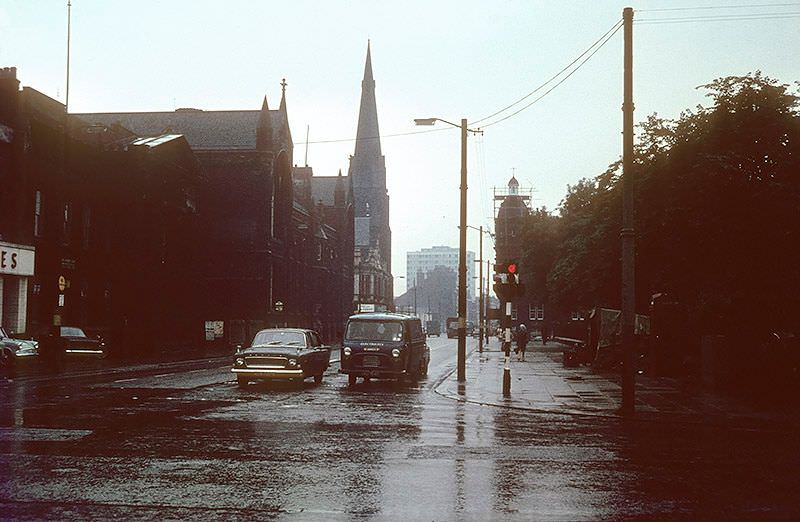
Manchester in the 1960s was a city in the middle of a dramatic transformation. Heavy industry, cotton processing, and trading — the pillars that had built the city — were all in sharp decline. The result was widespread unemployment and a shrinking population. Between 1961 and 1983, Manchester lost 150,000 manufacturing jobs. Over the same period, the city’s population dropped from 662,000 to 544,000. The streets looked different, the skyline was changing, and daily life carried the weight of economic uncertainty.
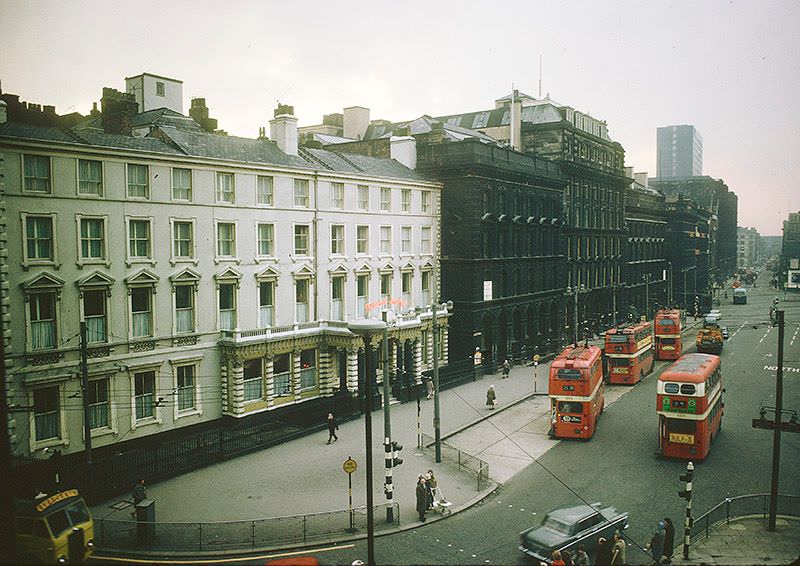
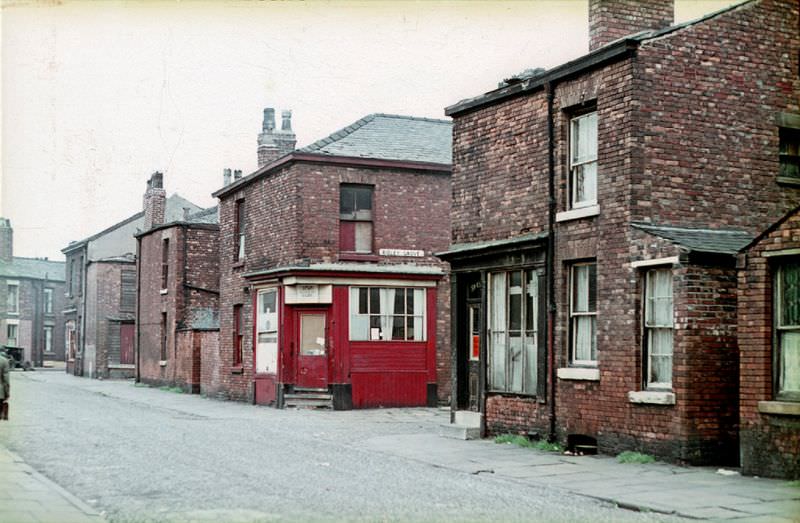
While jobs were disappearing, the city’s physical landscape was being rebuilt from the ground up. Overcrowded, run-down housing was cleared away to make room for tall new blocks of flats. Planners believed that clean, modern tower blocks were the answer to the city’s housing problems. New districts of flats rose across Manchester, replacing the tight-packed terraces that generations of working families had called home.
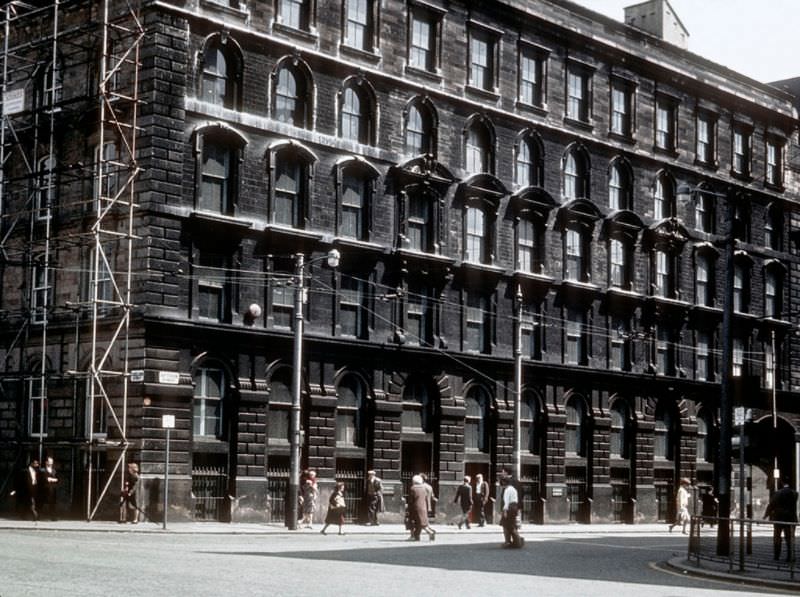
One of the most striking symbols of this new era was the CIS Tower, completed in 1962. At the time of its construction, it was the tallest building in the world. It stood as a bold statement that Manchester was looking forward, even as traditional industries crumbled beneath it. The tower joined a wave of ambitious building projects that reshaped the city’s skyline throughout the decade.
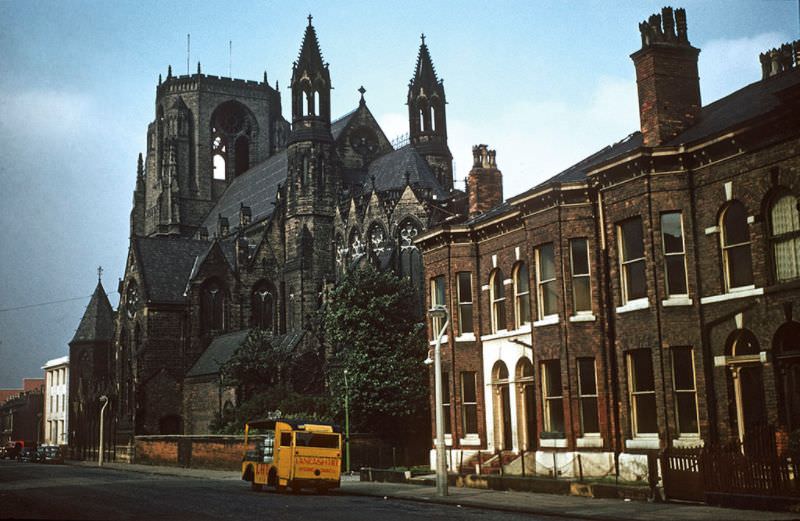
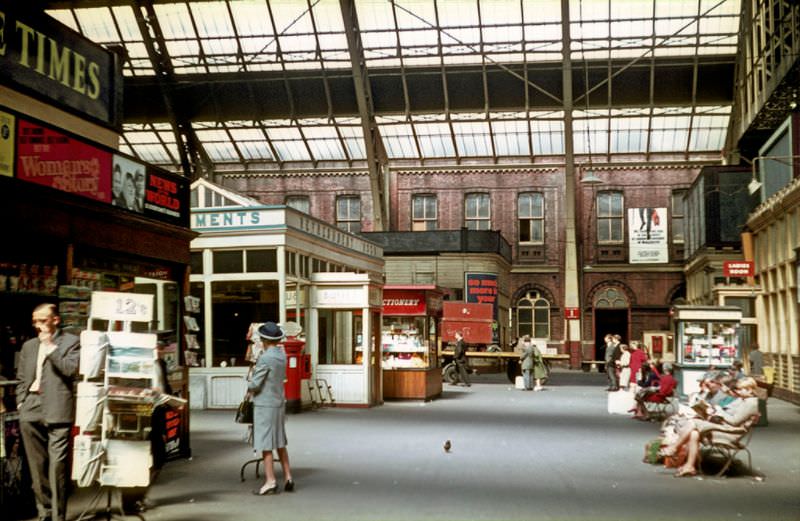
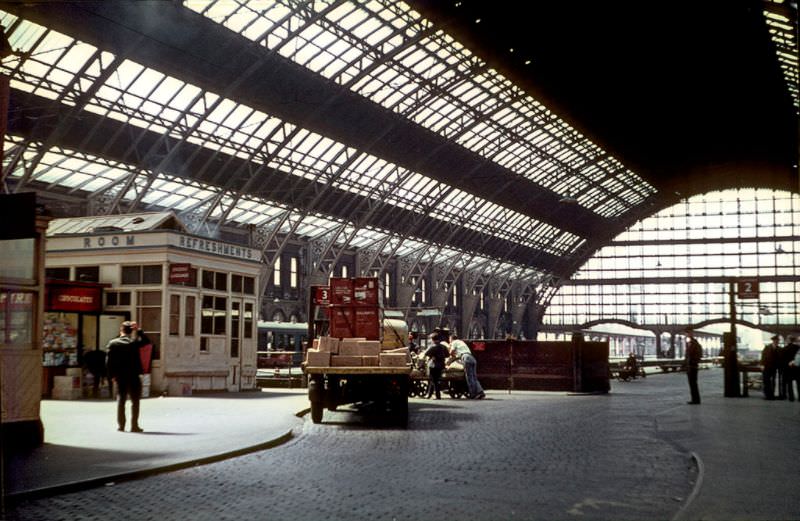
Central Station was one of Manchester’s great Victorian landmarks. During the 1960s, it still stood as a hub of movement and activity, its vast iron-and-glass roof sheltering passengers from the northern rain. These two photographs capture the station from different angles, offering a rare close look at its architecture during what would prove to be its final years of active use as a railway terminal.
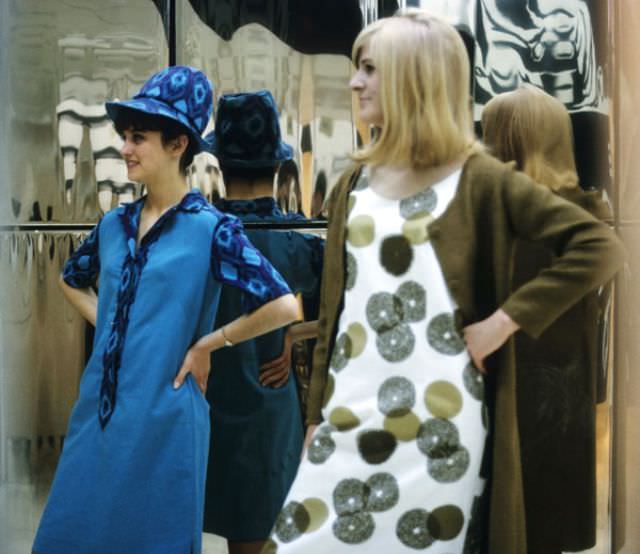
Not everything in 1960s Manchester was grim. The city had a thriving creative scene. The Manchester College of Art and Design produced students who were pushing into fashion, industrial design, and the visual arts. This photograph shows a fashion photoshoot staged by students — a glimpse of the ambition and energy that ran through the city’s younger generation, even in difficult times.
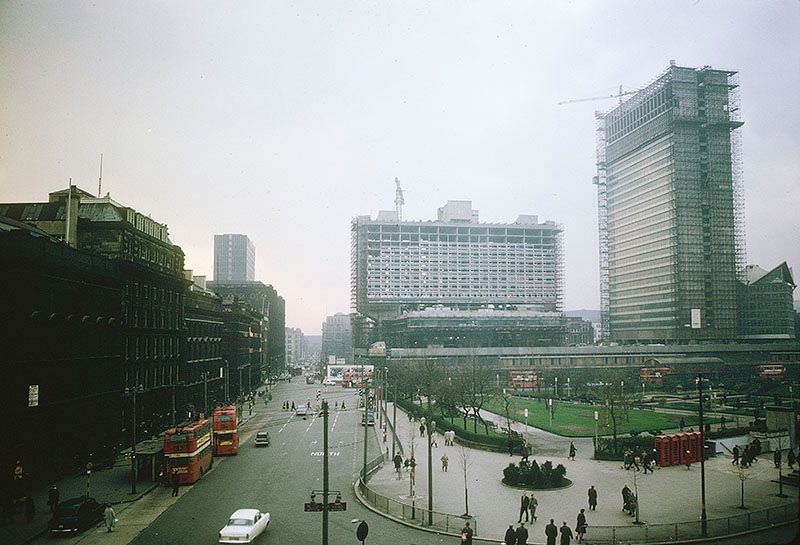
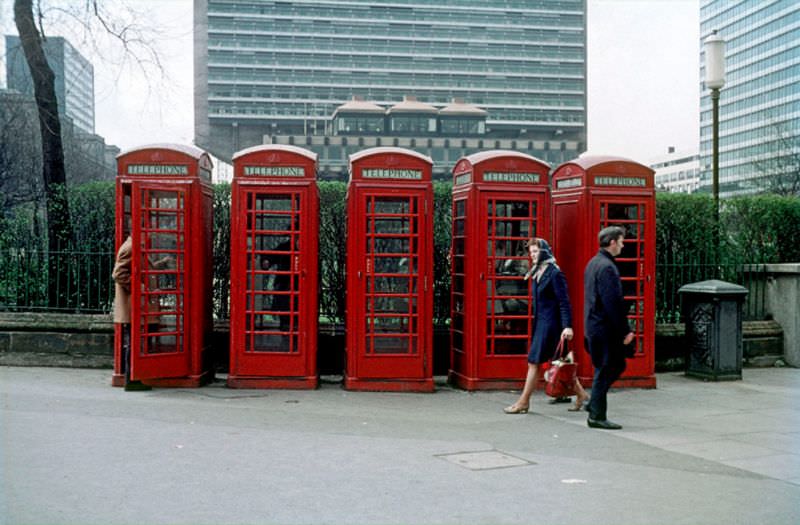
Piccadilly was one of the busiest parts of the city. Piccadilly Gardens served as a green gathering point in the heart of the urban centre, while the newly built Piccadilly Plaza — a large modern development of hotels, offices, and shops — reflected the decade’s appetite for redevelopment. The red phone boxes that lined the streets near Piccadilly were as much a part of the scene as the buses and shoppers that moved through every day.
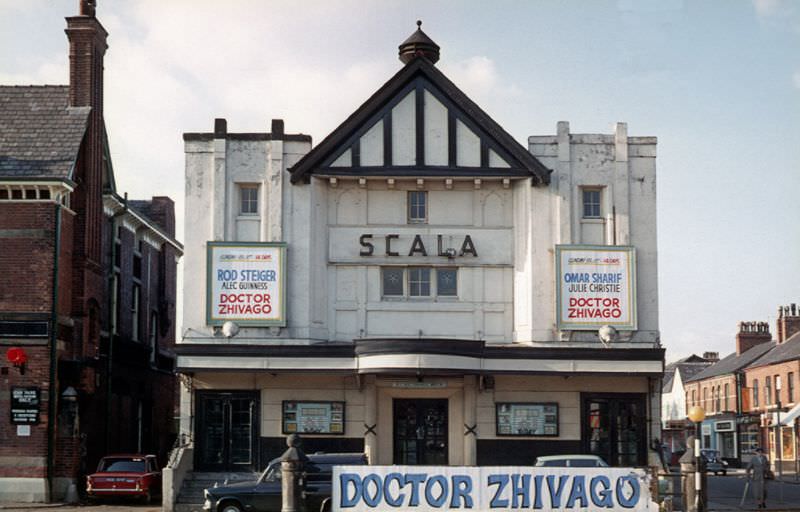
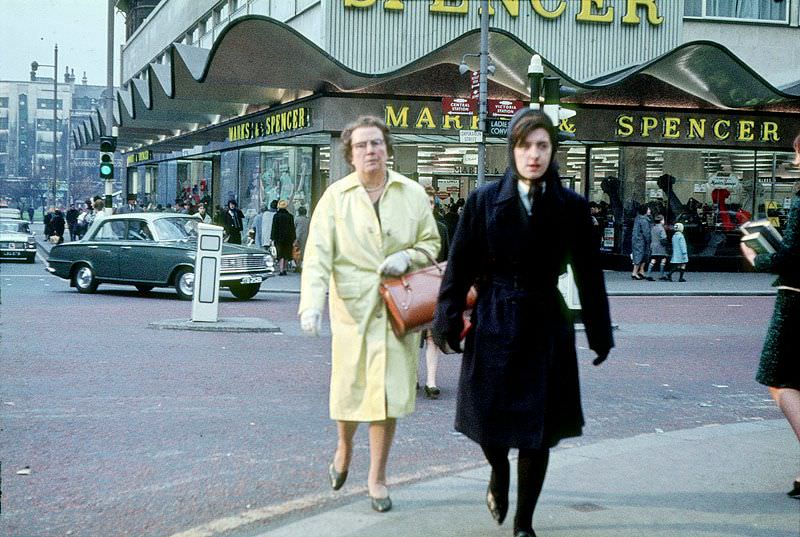
Entertainment and retail gave the city its rhythm. The Scala cinema on Wilmslow Road drew local audiences, while Marks & Spencer on the high street was a fixture of everyday shopping life. These weren’t glamorous scenes, but they were honest ones — ordinary Manchester people going about their day against a backdrop of a city in flux.
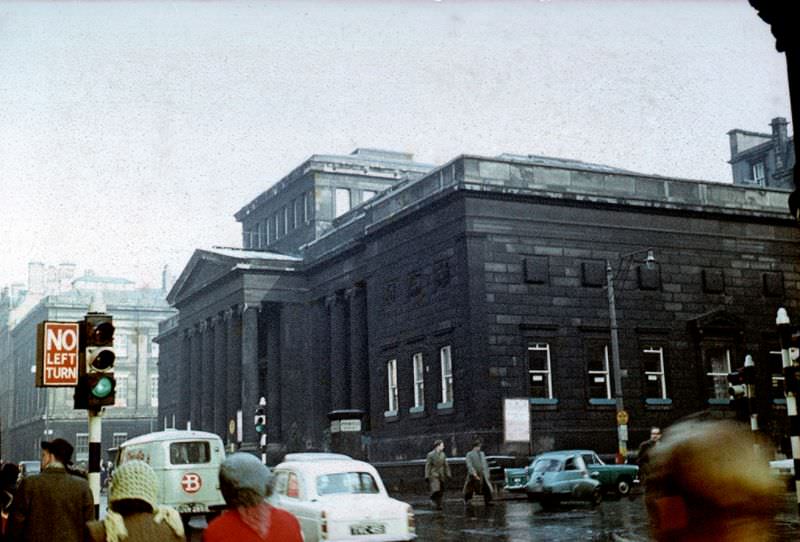
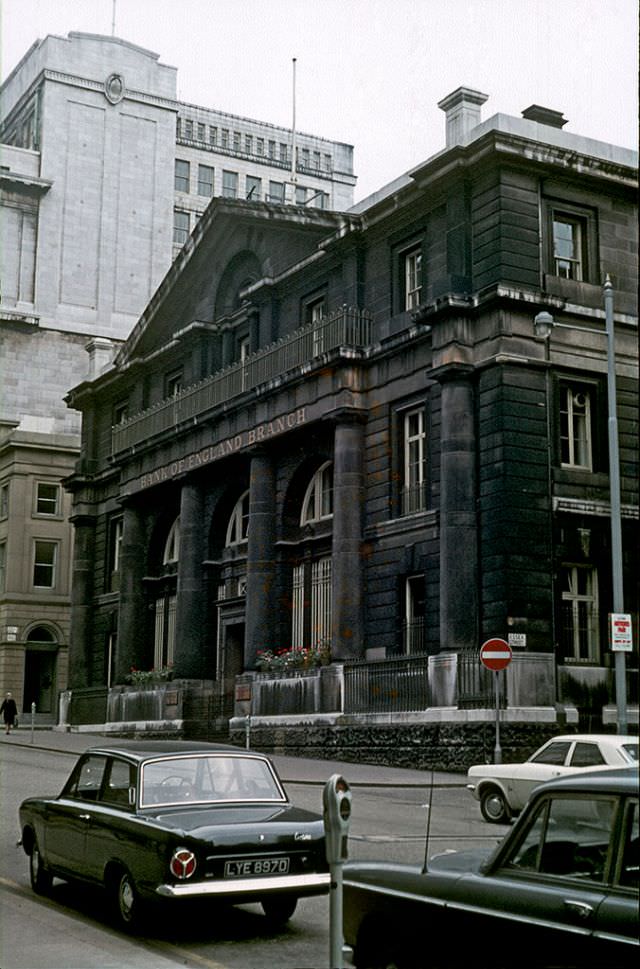
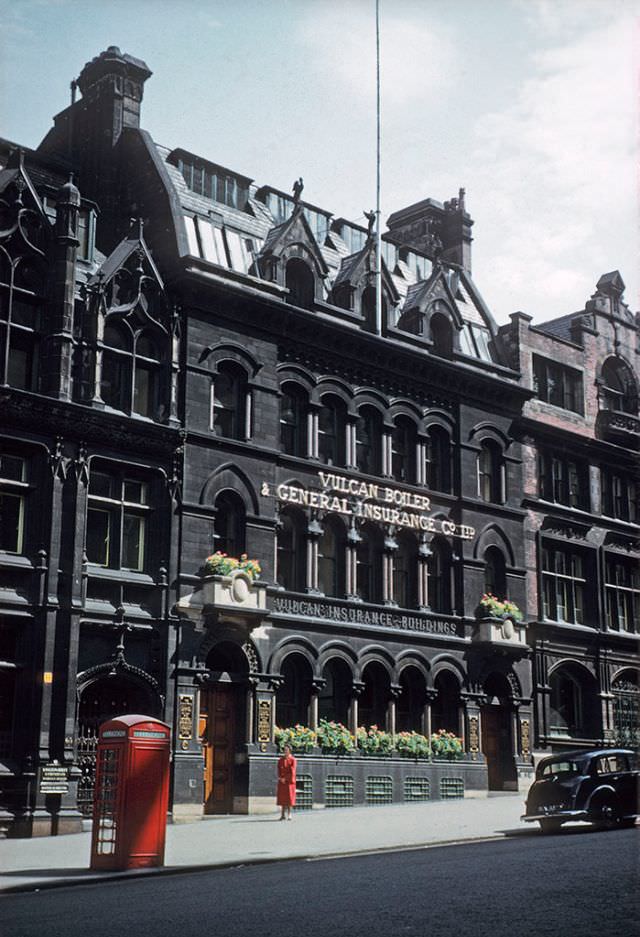
Manchester’s cultural and financial institutions stood firm through the decade’s upheaval. The City Art Gallery continued to serve the public, and the Bank of England’s branch office on King Street remained an anchor of the city’s commercial district. King Street itself was lined with Victorian office buildings — sturdy stone structures that contrasted sharply with the glass-and-concrete towers rising nearby.
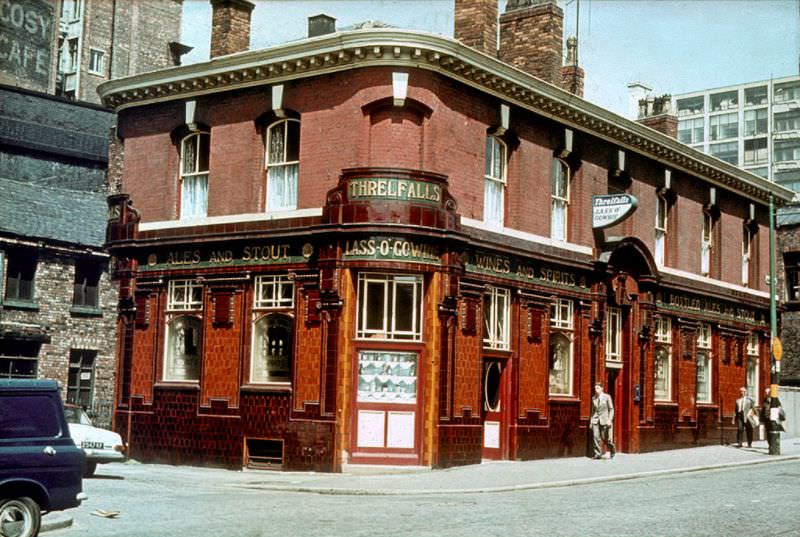
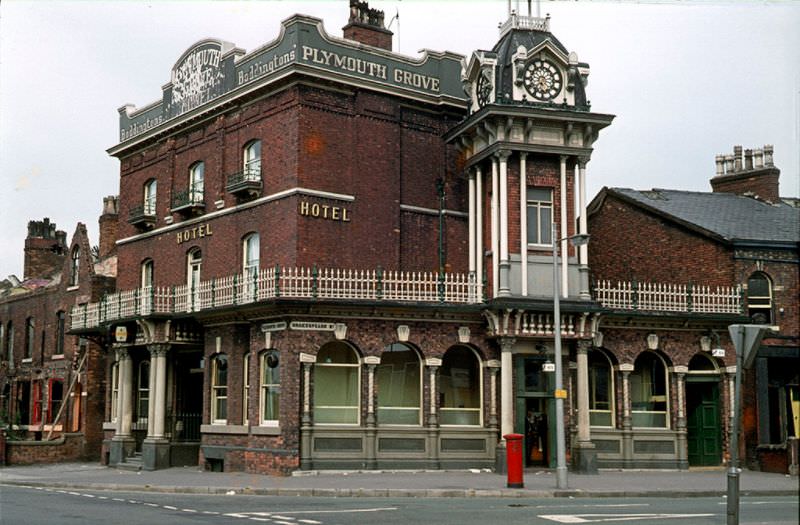
Neighbourhood pubs like the Lass O’ Gowrie on Charles Street were central to working-class Manchester life. A short distance away, the Plymouth Grove Hotel served its own corner of the city. These local establishments were gathering places — spaces where communities held together even as the economy and the housing stock around them changed rapidly.
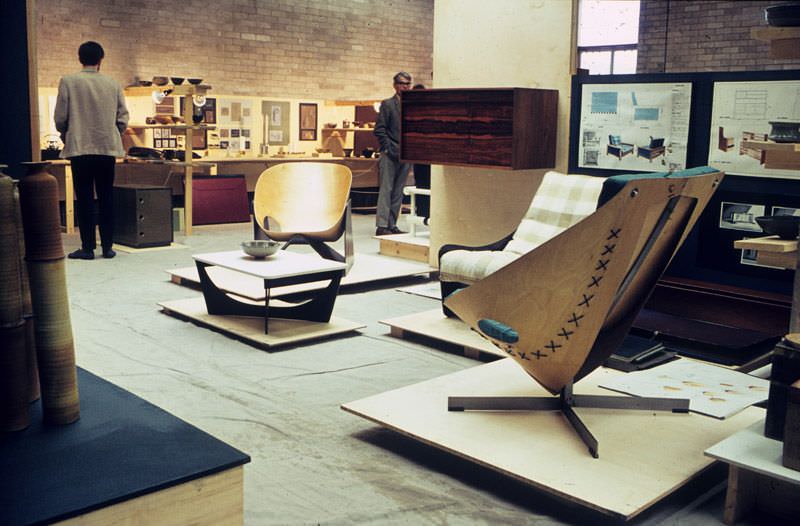
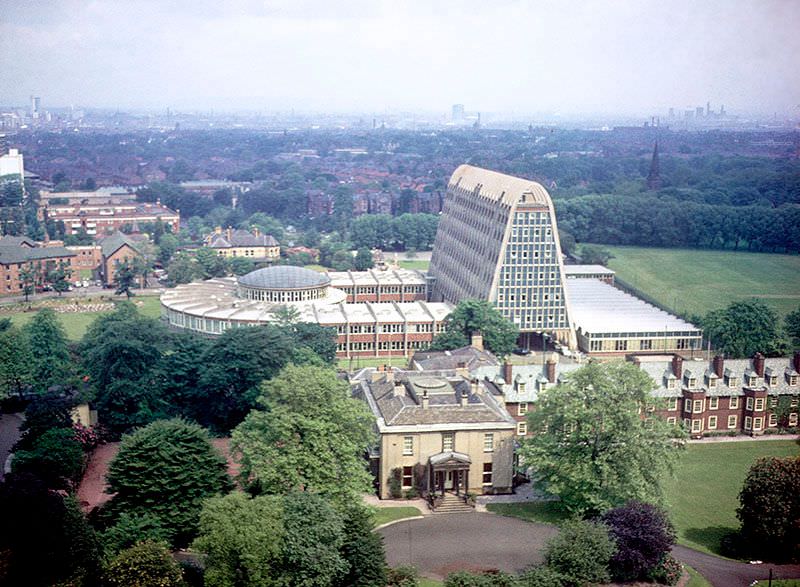
The Manchester College of Art and Design continued to make its mark beyond fashion. Its annual diploma show featured the work of Industrial Design students, presenting finished projects to the public and to industry. Meanwhile, the Hollings Building — photographed here from the tower of Owen’s Park student residences — stood as one of the decade’s most distinctive pieces of architecture, its circular form earning it the local nickname “the toast rack.”
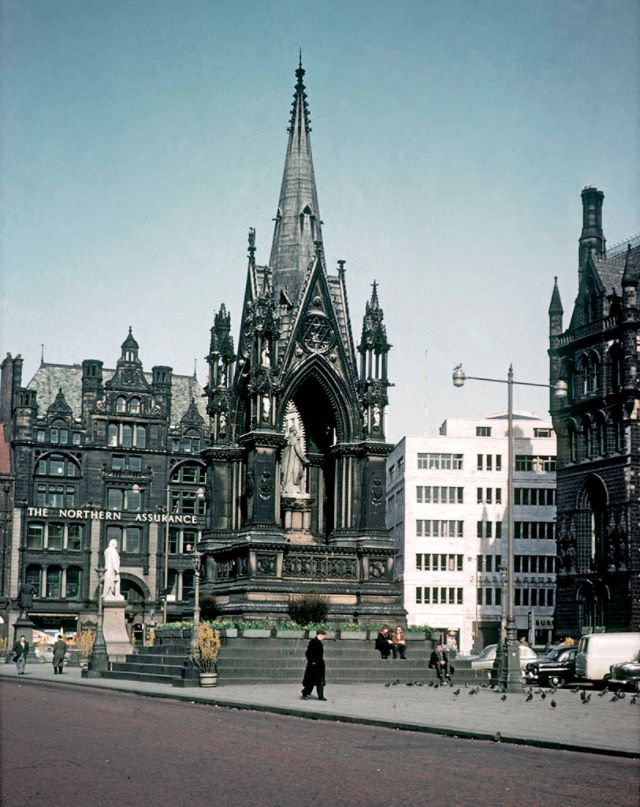
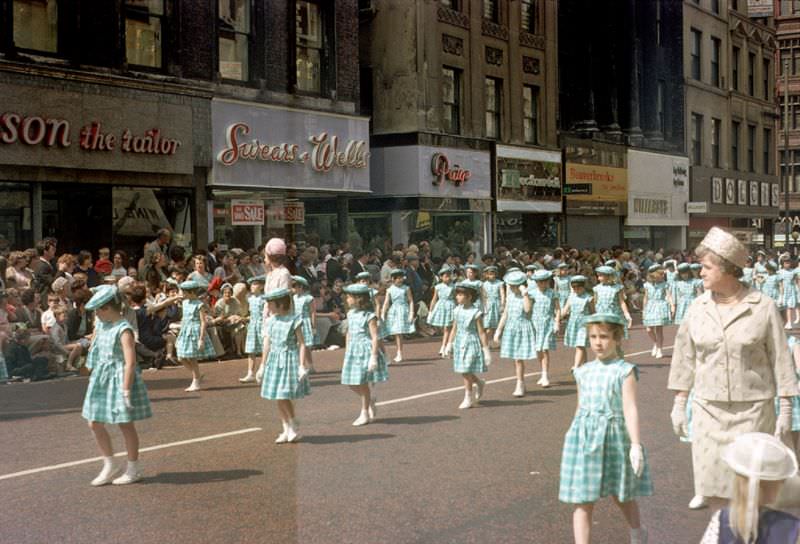
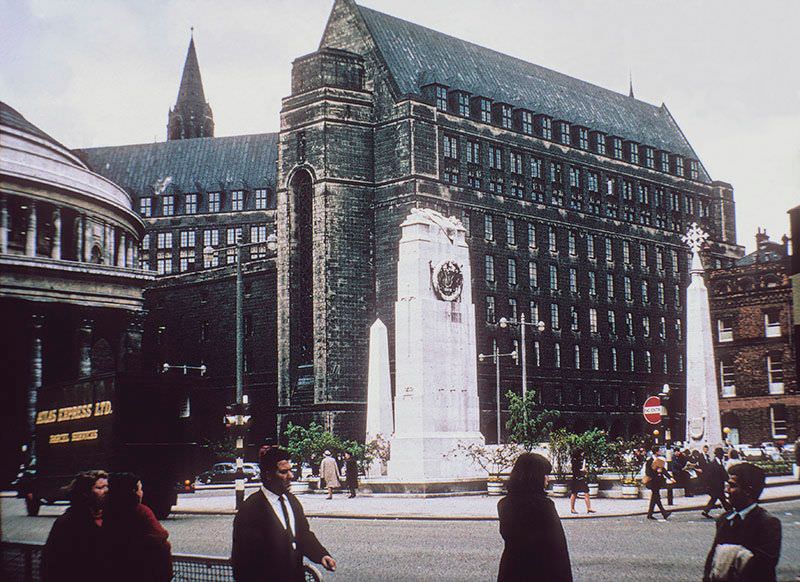
Public life still had its grand moments. Albert Square, dominated by the neo-Gothic Town Hall and the Albert Memorial, remained a focal point for civic ceremony. The Whit Walks — traditional Whitsuntide processions that wound through Manchester’s streets each year — drew large crowds along Market Street, keeping alive a tradition that dated back generations. St Peter’s Square, with its cenotaph and tram lines, completed the picture of a city that held onto its past even while tearing much of it down.
These photographs come from Manchester Metropolitan University Special Collections and offer a rare window into the city during one of its most turbulent decades.





How sooty were those buildings!
Whilst these images are a great snapshot of Manchester of that era, it was a very different place. Even in the ‘90s town was a ghost town after 6pm.
And Piccadilly Gardens in the ‘60s had the sinister addition of Myra Hindley.
Not everything in the past was better.