Mallorca — also spelled Majorca — is the largest of Spain’s Balearic Islands and one of the most visited places in the entire Mediterranean. Its capital, Palma, also serves as the capital of the Balearic Islands autonomous community, a status the region has held since 1983. The island is defined by its rugged limestone mountains, hidden coastal coves, sun-drenched beaches, Spanish Gothic architecture, and a long tradition of winemaking and farming. But before the mass tourism boom fully transformed it, Mallorca in the 1950s was still a place of donkey carts, open-air markets, handmade crafts, and tightly knit village life. These photographs from 1950 to 1959 document that world in extraordinary detail.
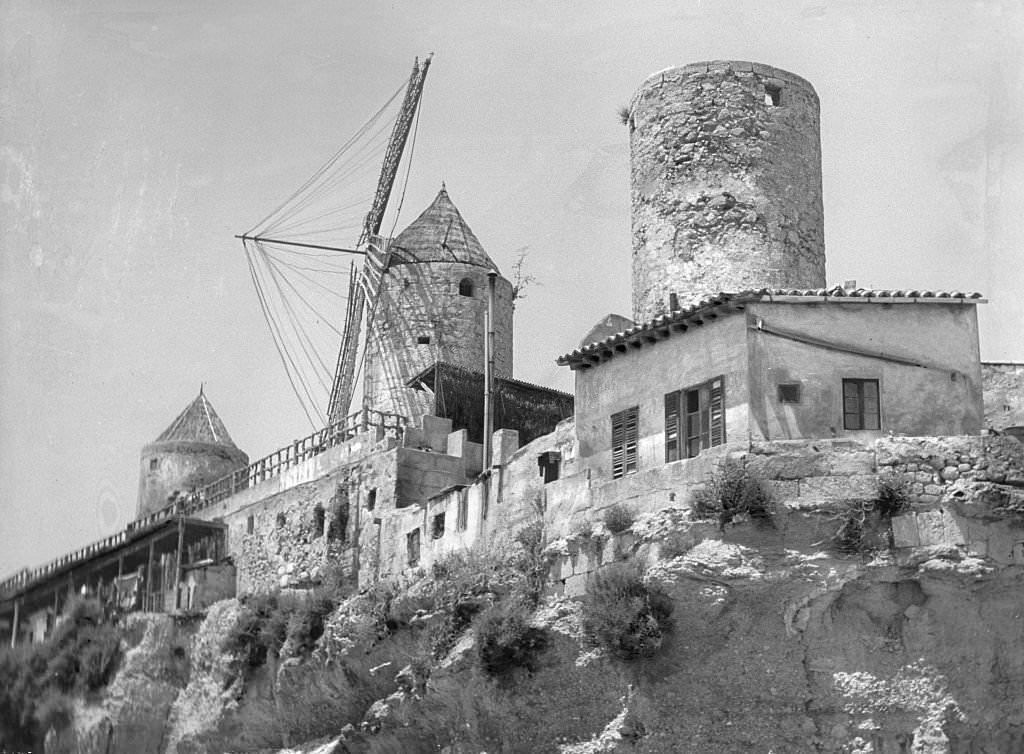
Windmill in Palma, Mallorca, 1950s
Windmills were a defining feature of the Mallorcan landscape throughout the mid-20th century. They were not decorative — they were functional, used primarily to pump water from underground to irrigate the island’s agricultural land. Farmers across the interior relied on them to keep their crops alive through dry Mediterranean summers. The sight of their spinning sails against a wide open sky was as common as a church tower in almost any rural part of the island.
Typical Wind turbine in Mallorca (these windmills used for pumping water for irrigation of agricultural land), 1950 in Majorca.
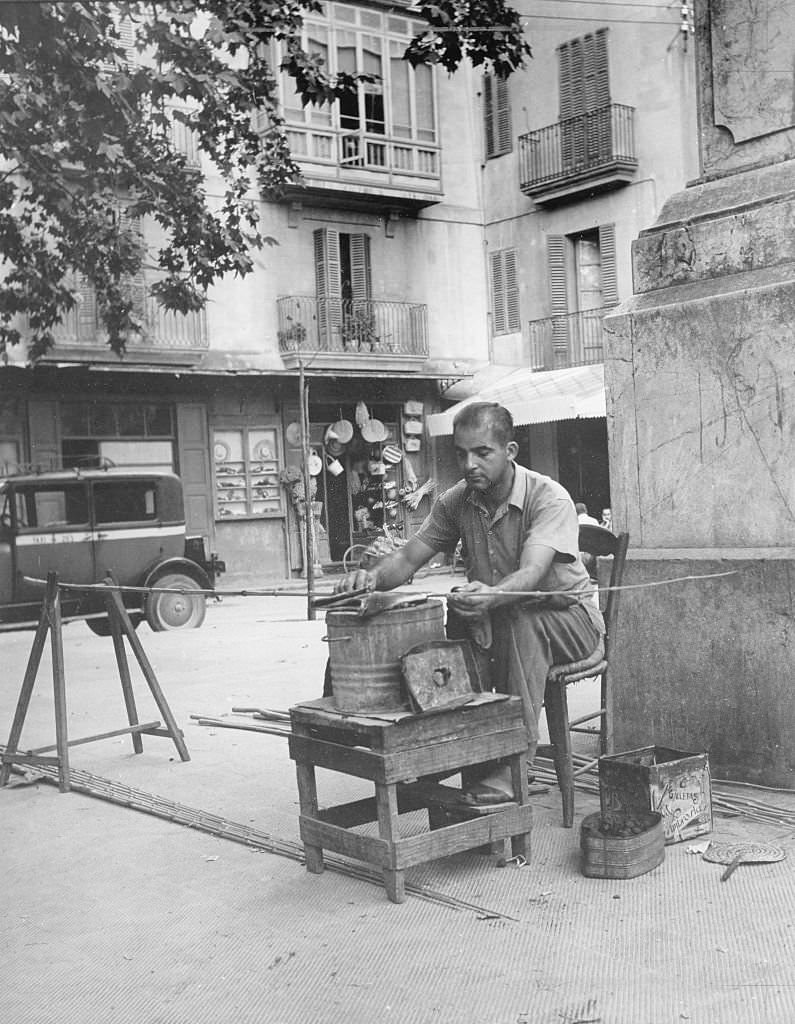
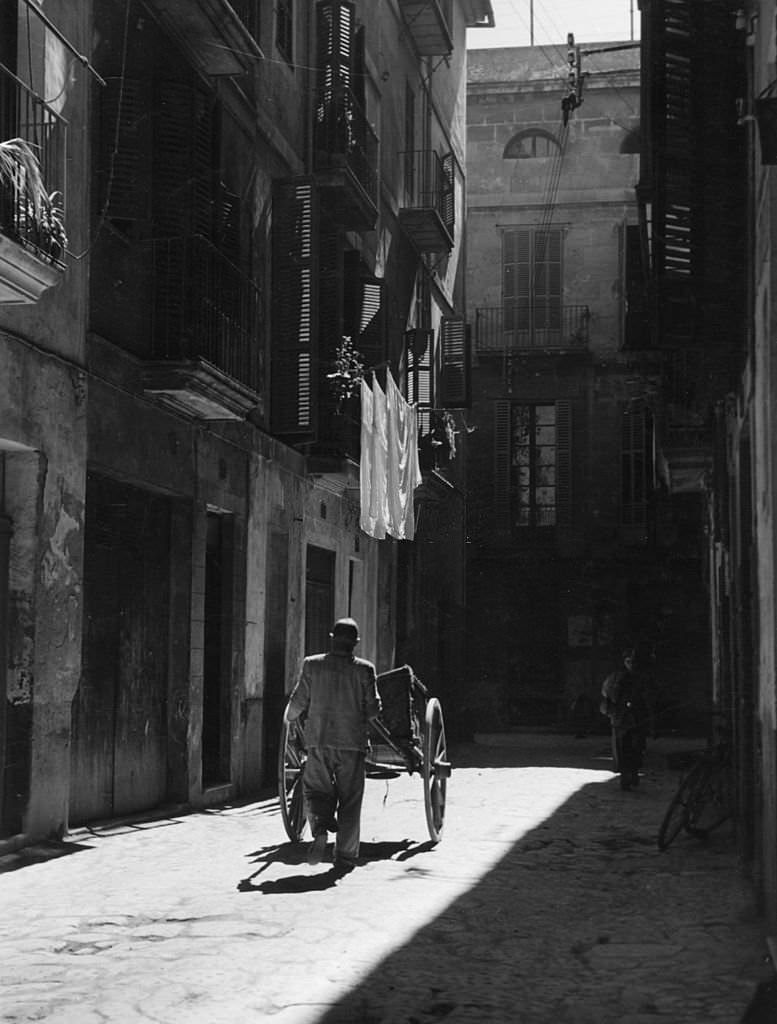
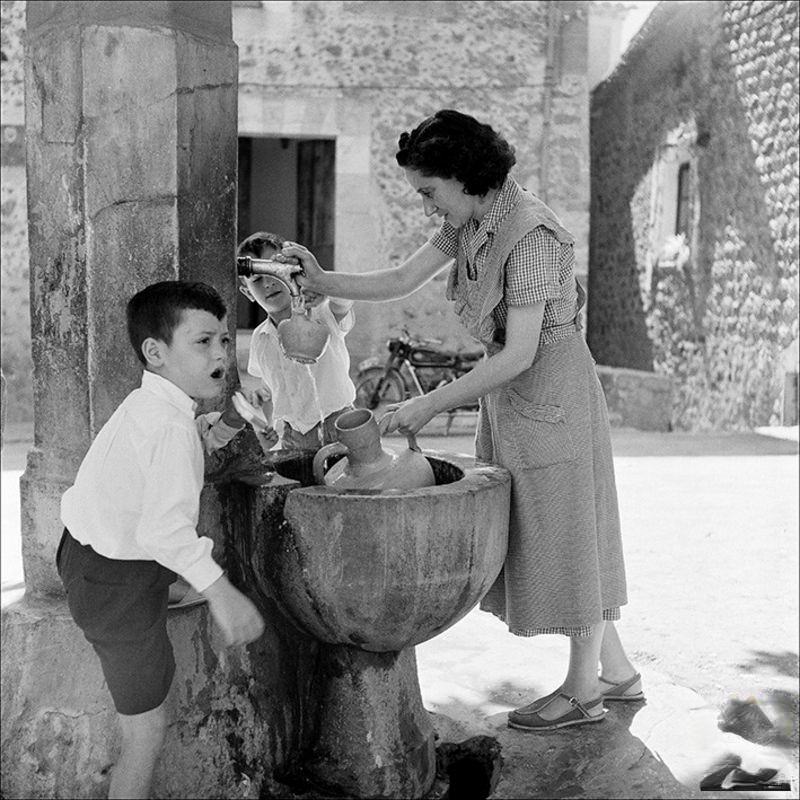
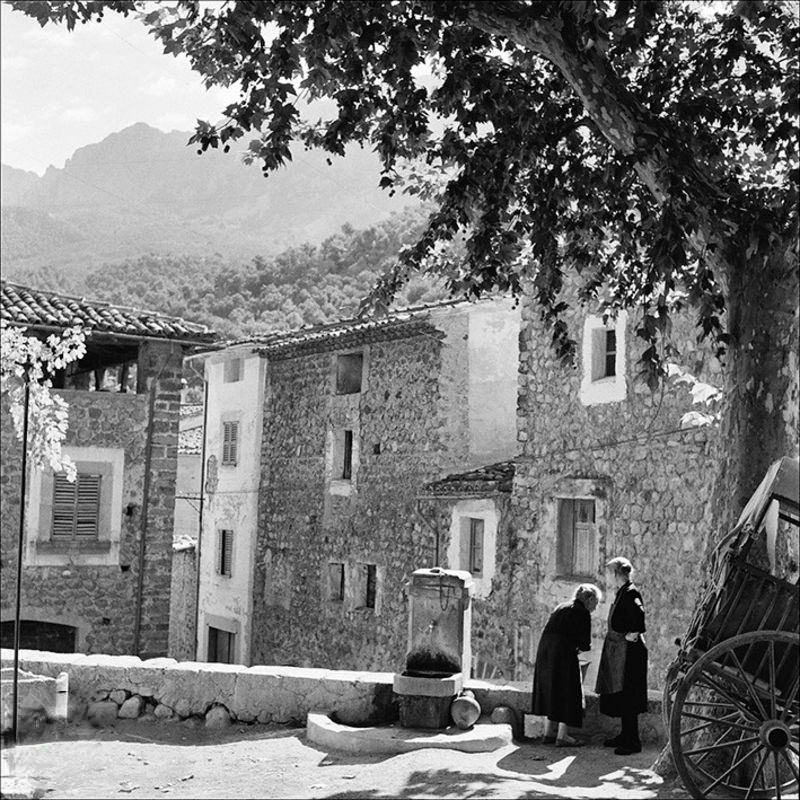
Daily life in Palma, the island’s capital, mixed the ancient with the modern. Craftsmen still worked directly on the street, selling their wares to passersby. Narrow side streets in the old city saw men pushing wooden carts loaded with goods. The Plaza Mayor district connected down to the waterfront through lanes of stone buildings that had stood for centuries. Public fountains were still in regular use — women and children gathered at them to collect water, just as they had for generations.
Palma de Mallorca, a craftsman works on the street, Mallorca, 1950
A man pushing a cart down a quiet side street in Palma de Majorca, 1950
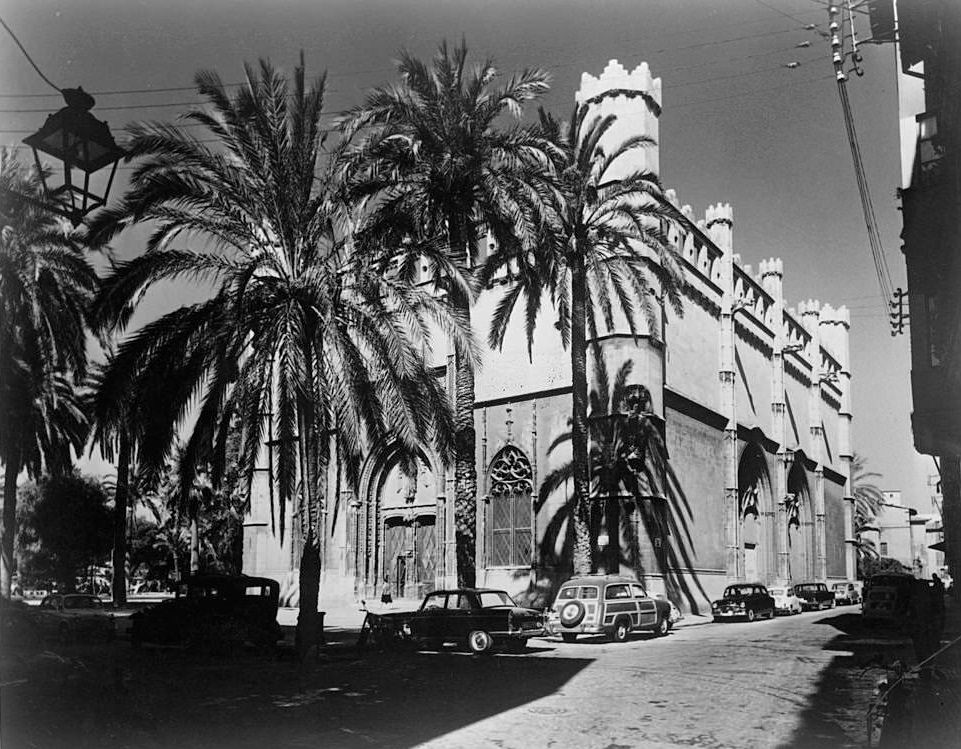
A view of the La Lonja in Palma, Spain, 1950.A street in the Old City of Palma de Majorca, Majorca, Spain, August 1957. The street leads down from the Plaza Mayor district to the waterfront.
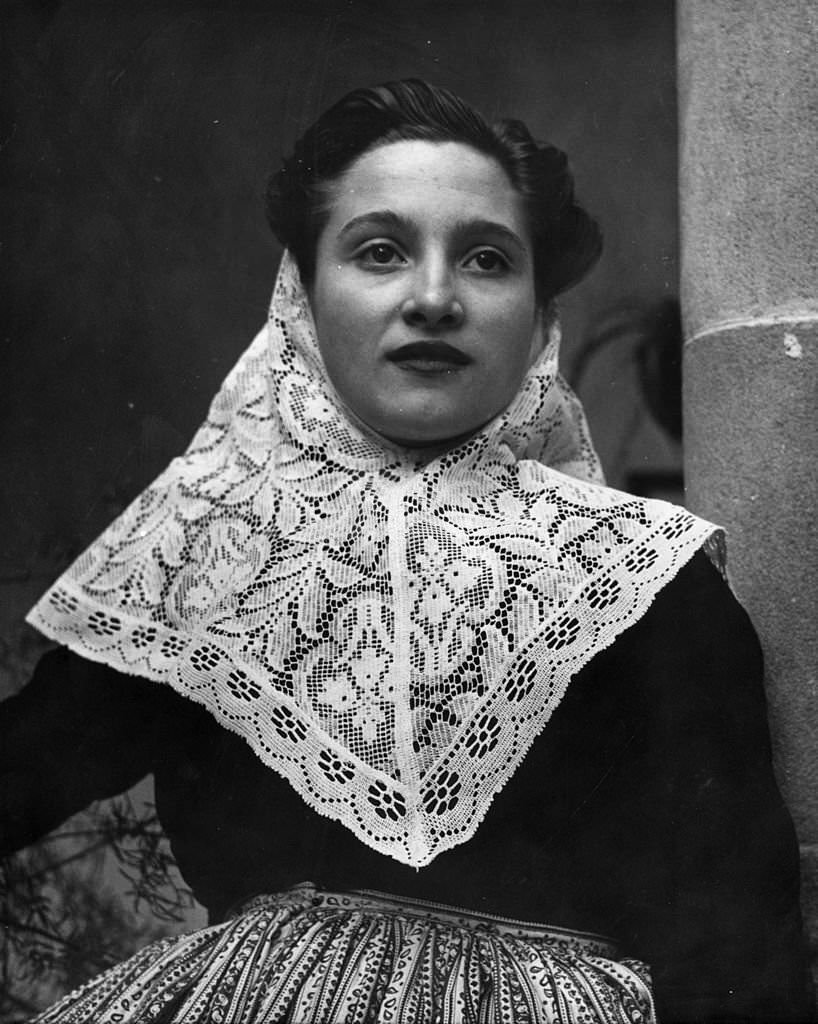
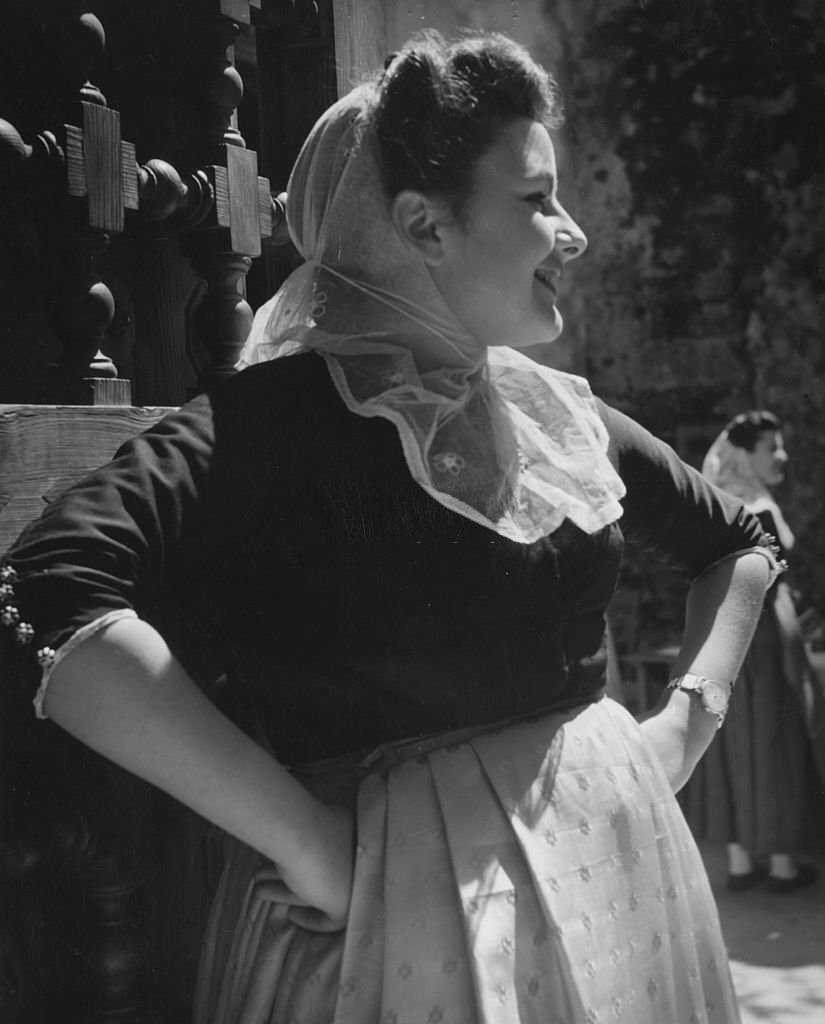
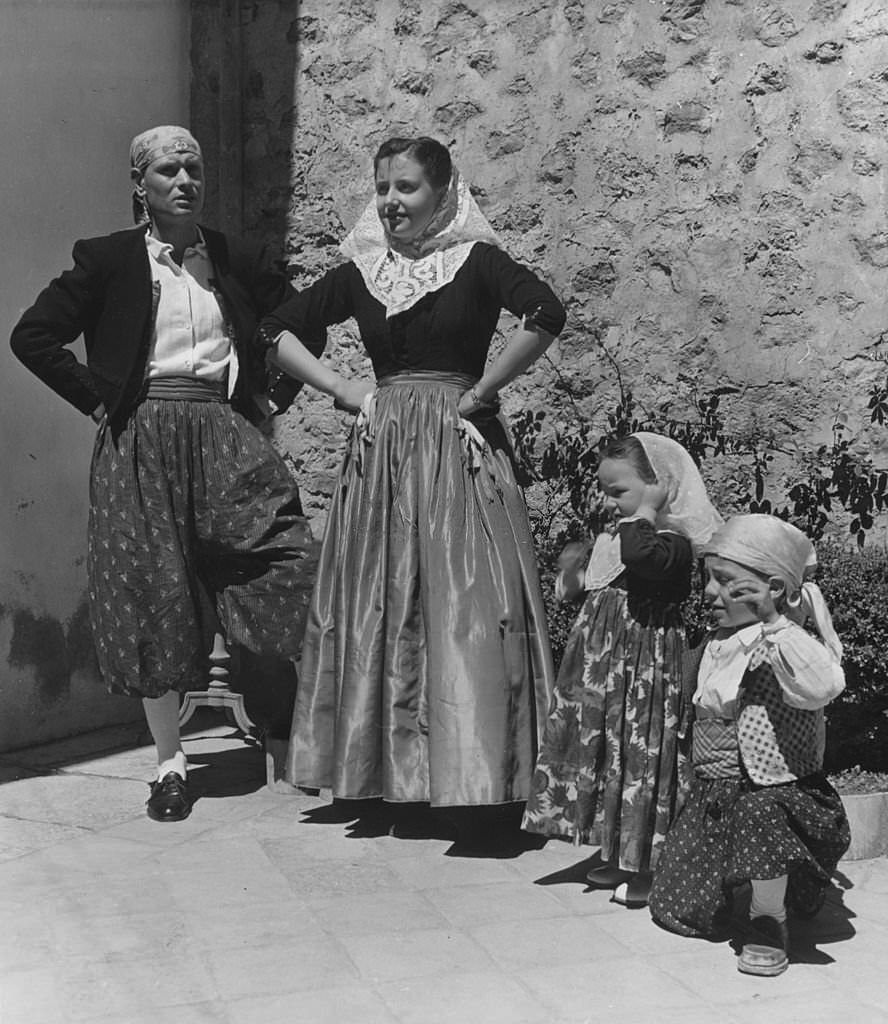
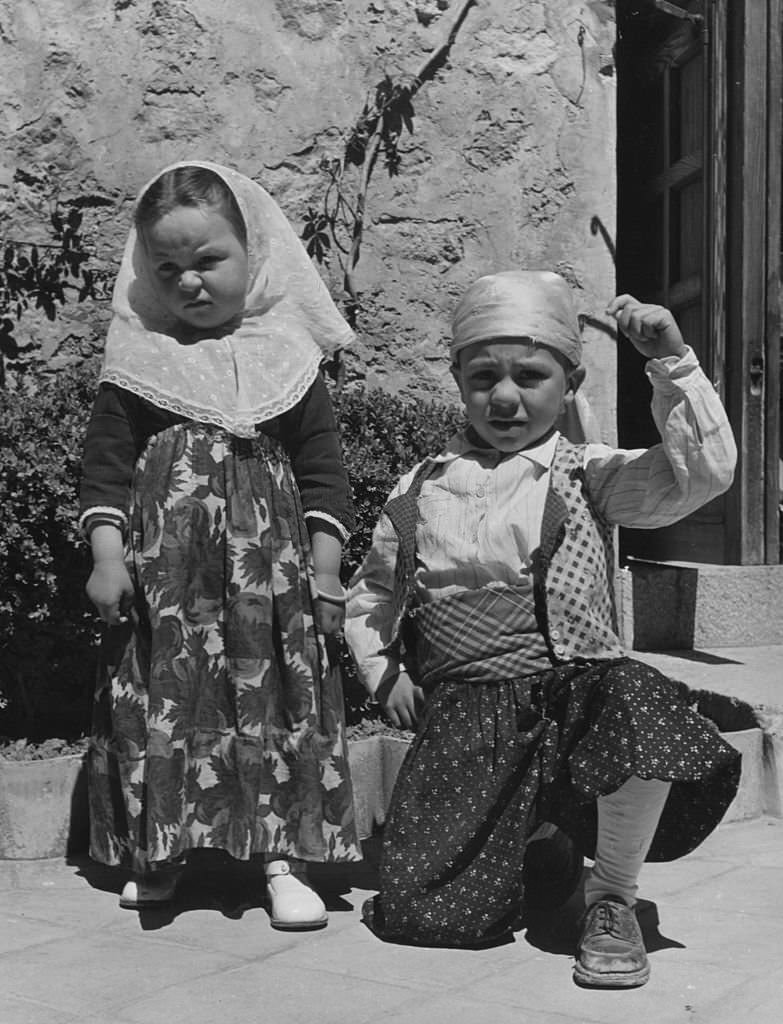
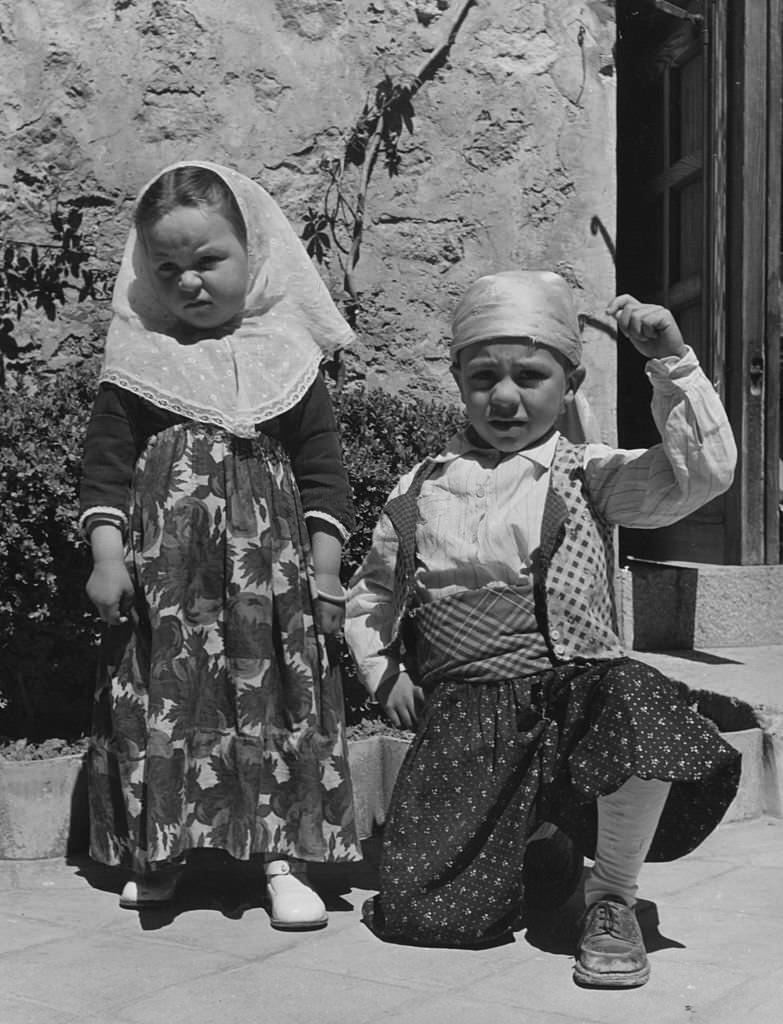
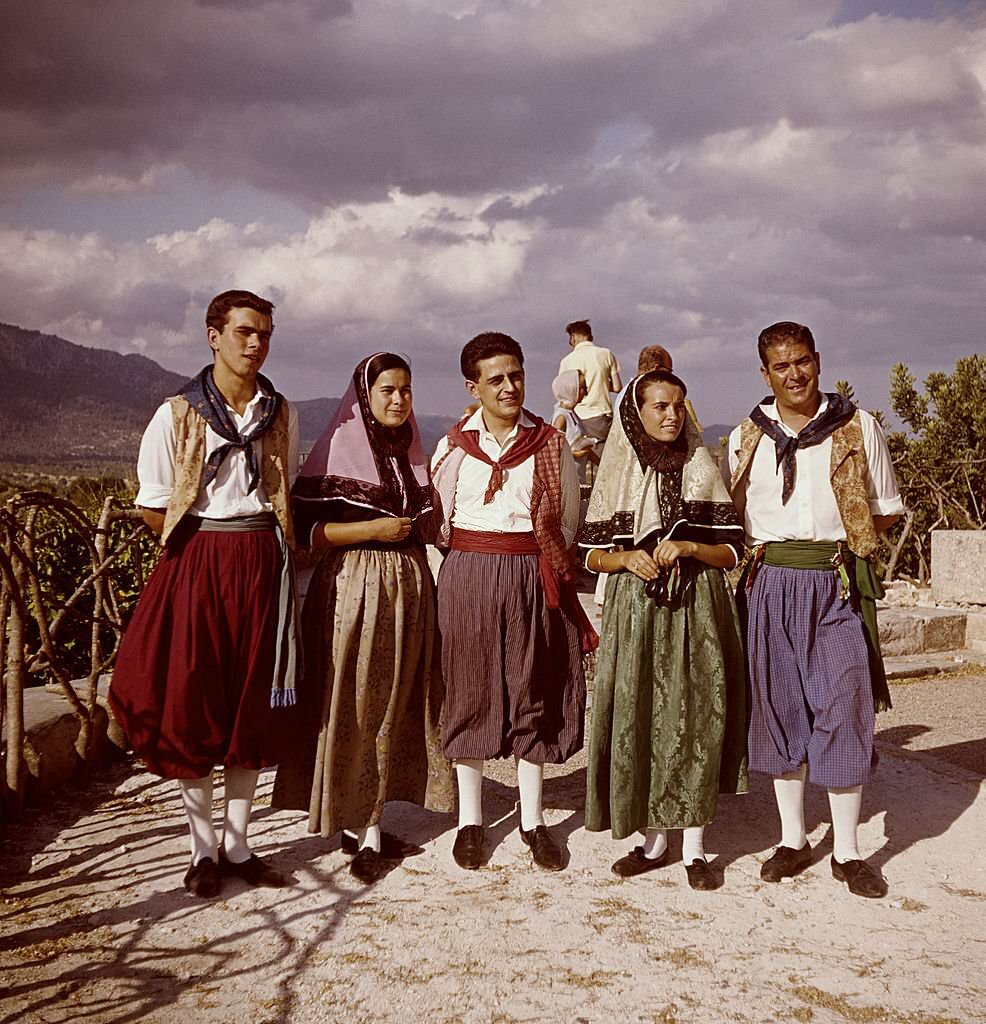
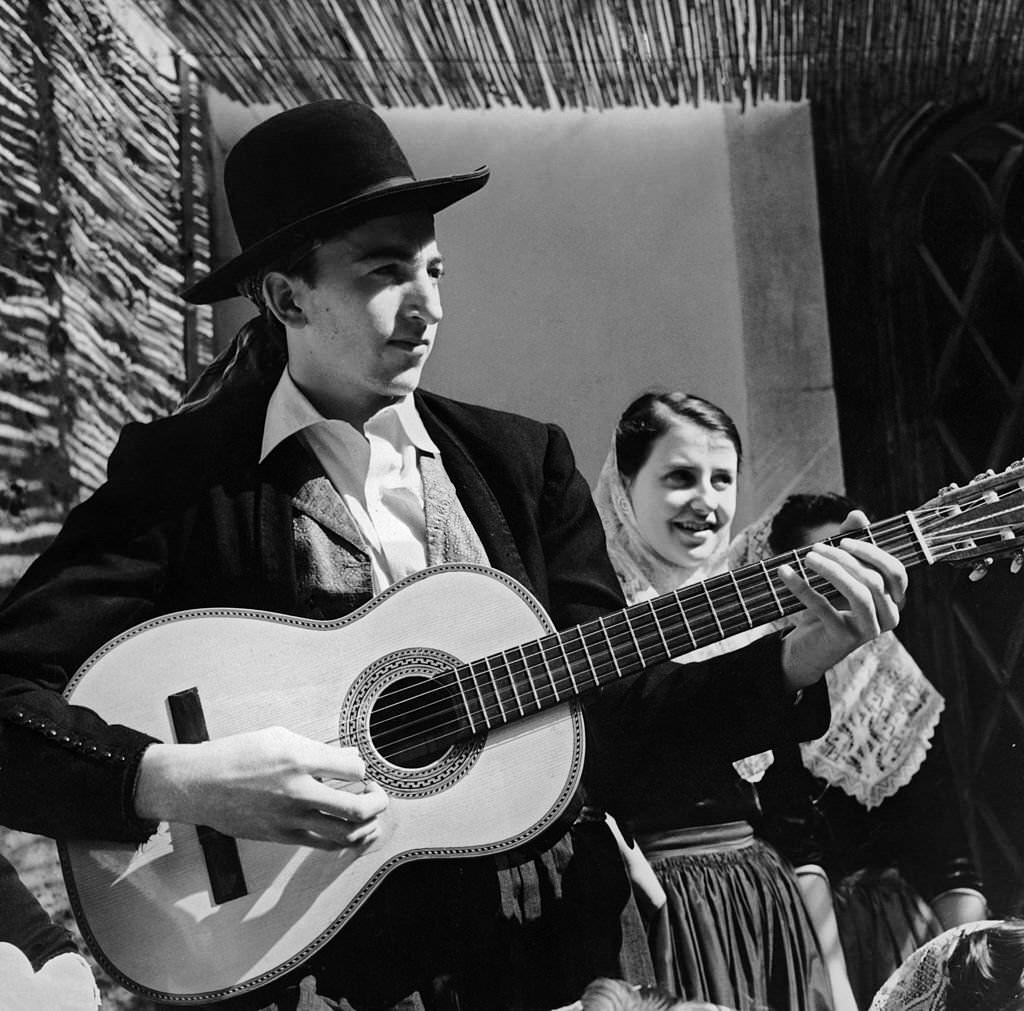
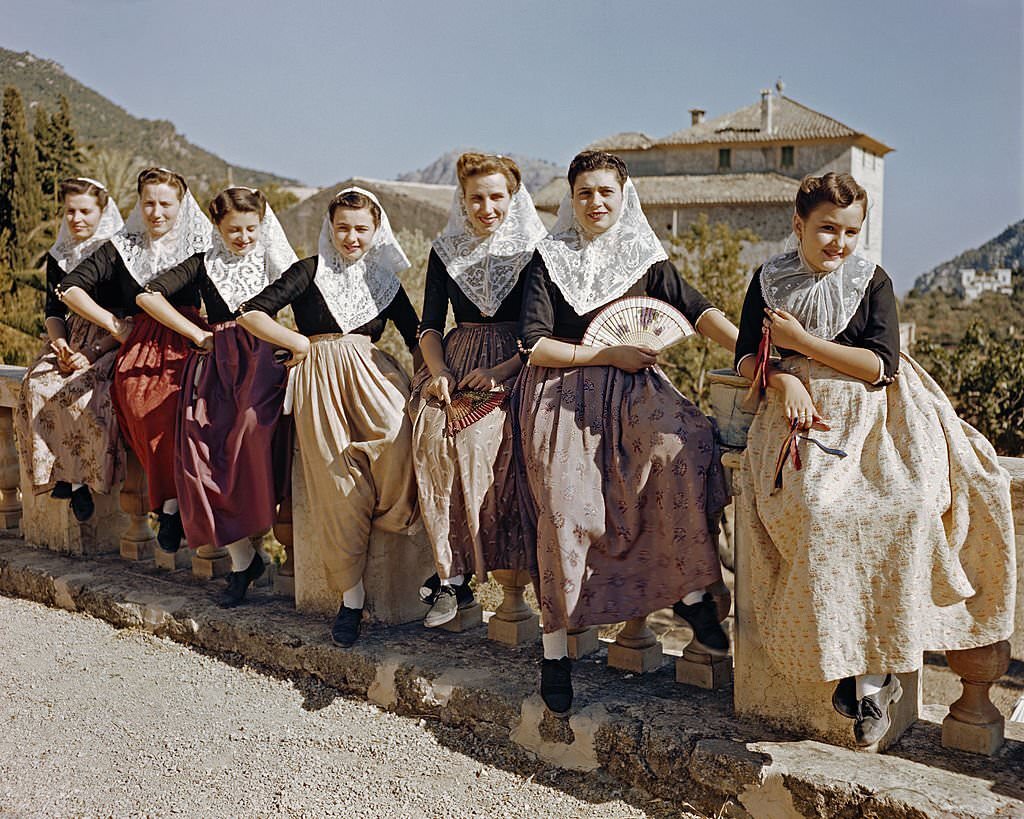
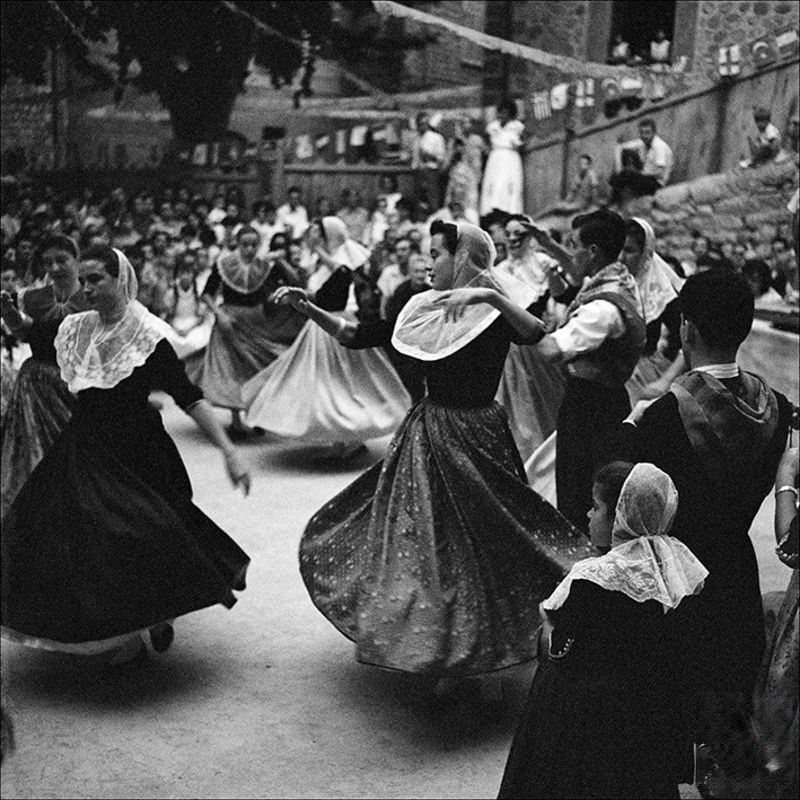
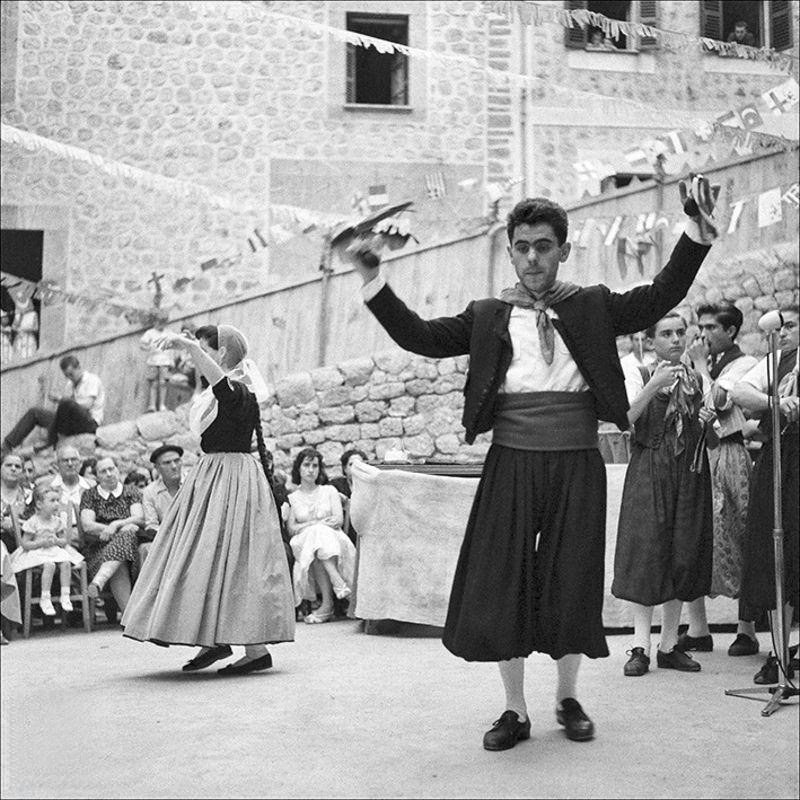
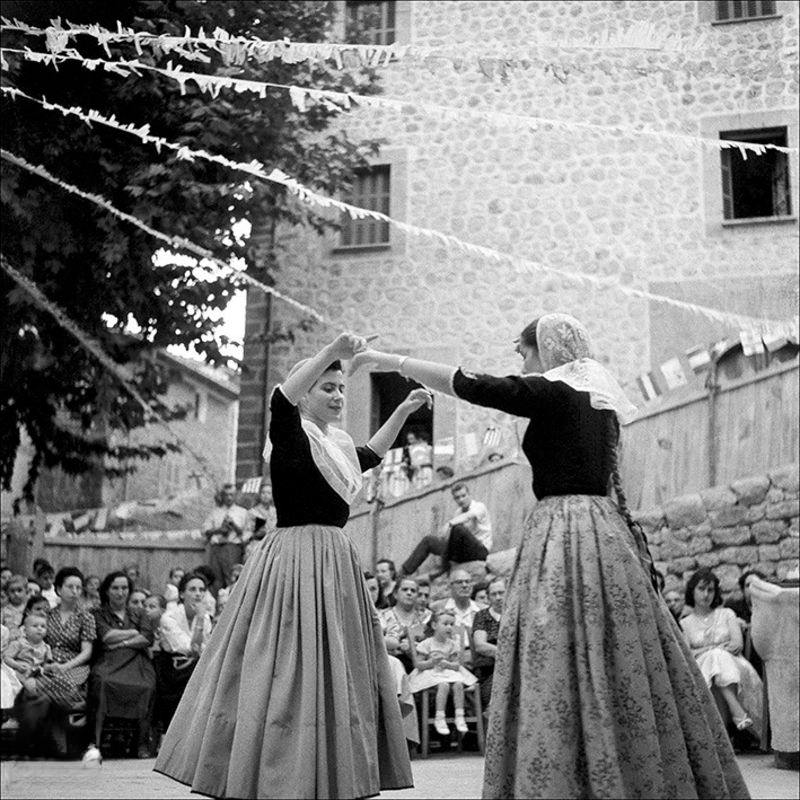
Traditional dress and folk culture were still very much alive in the island’s villages during this period. Women wore lace headscarves and embroidered costumes that marked their regional identity. In Valldemossa — one of the most scenic mountain villages on the island — folk dancers performed in full national costume, keeping alive dances and musical traditions that dated back centuries. Guitarists accompanied singers and dancers at village celebrations, and the atmosphere at these events was a central part of community life.
A Majorcan woman wearing a lace headscarf, Mallorca, 1950
A woman in national costume from Valledemosa in Majorca, 1950
Dancers in national costume from Valledemosa in Majorca, 1950
Children in national costume from Valledemosa in Majorca, 1950
Children in national costume from Valledemosa in Majorca, 1950A group of folk dancers in Majorca, 1955.A Spanish guitarist and two young women in folk costumes from the Balearic island of Majorca, 1955.A group of folk dancers from Valldemossa, a village on the Balearic island of Majorca, 1955.
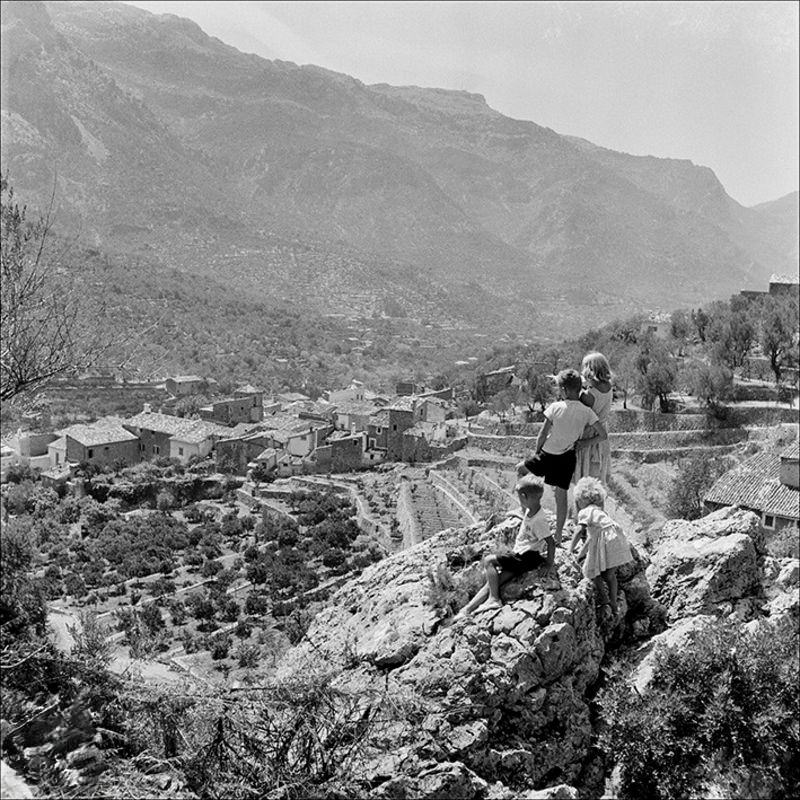
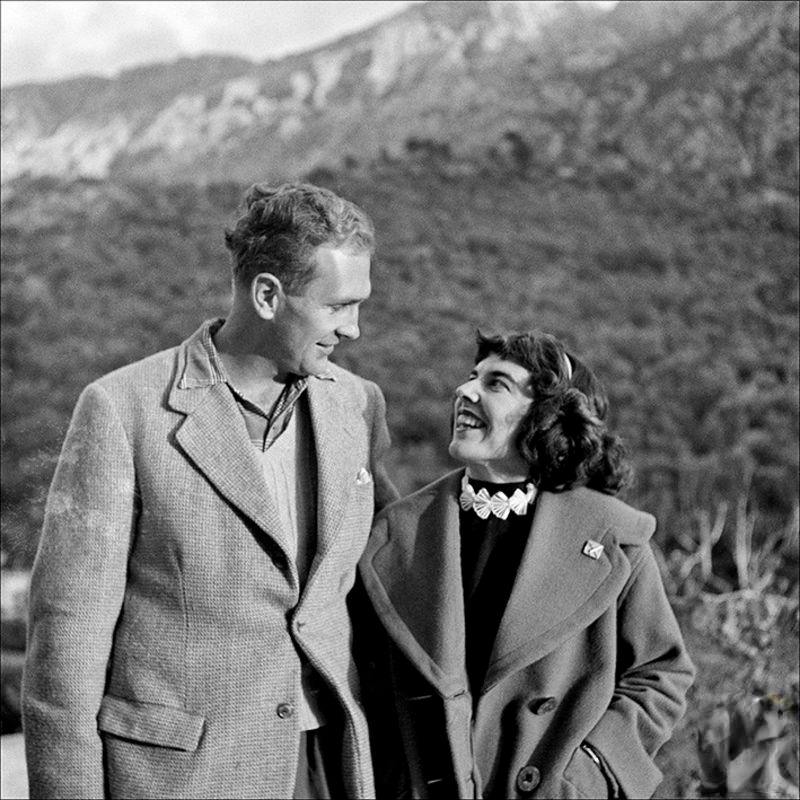
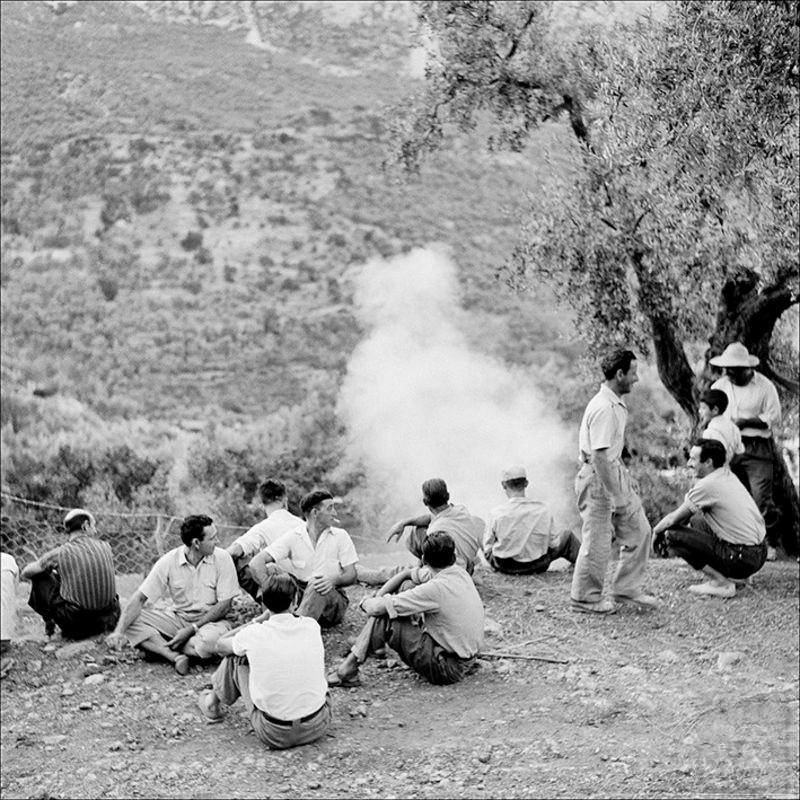
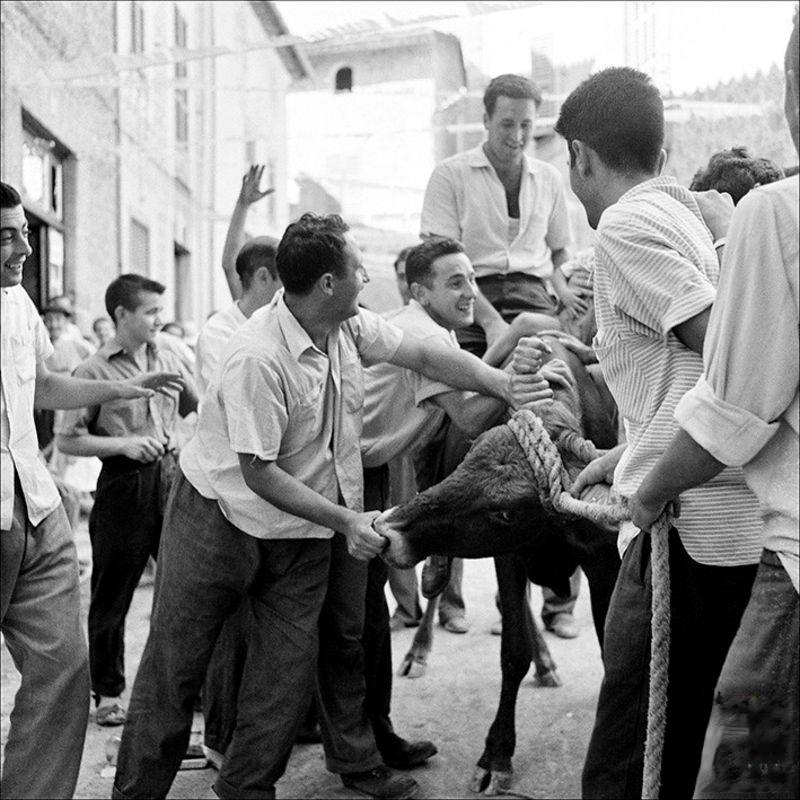
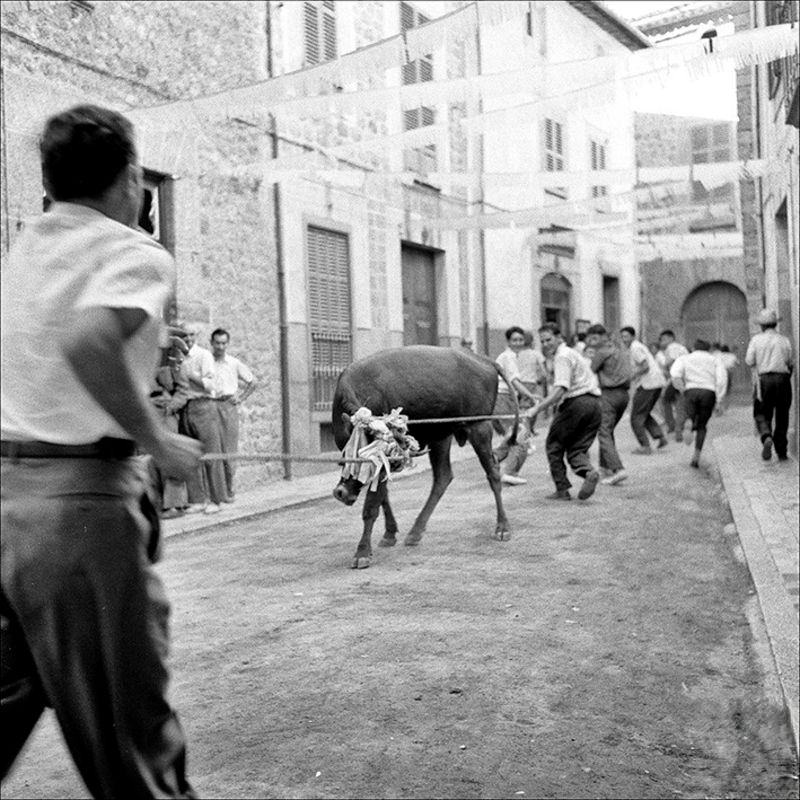
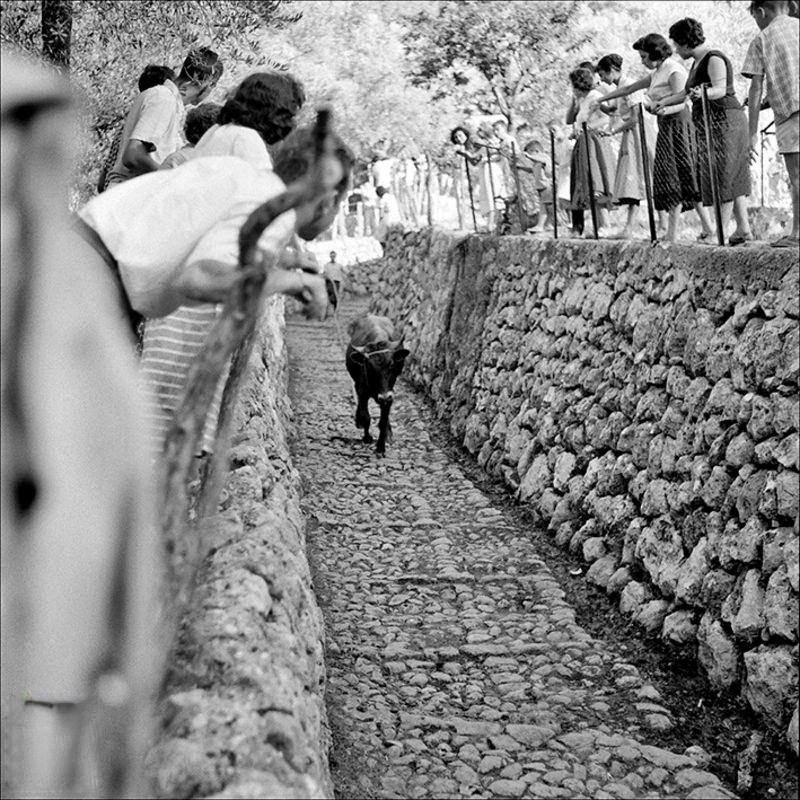
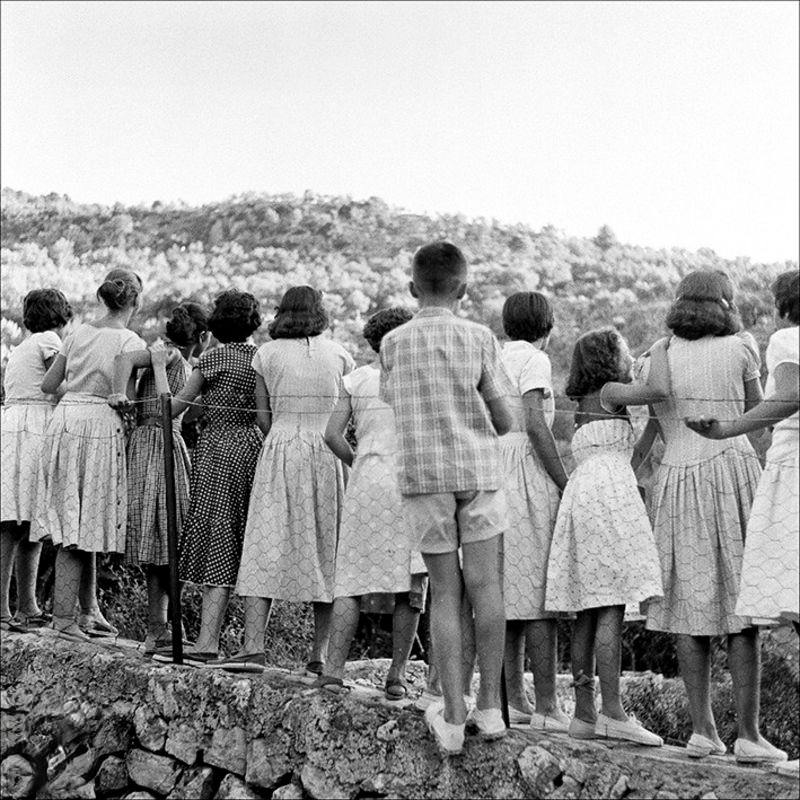
The northern village of Fornalutx — one of the most picturesque in all of Spain — appeared frequently in photographs from 1956 and 1957. Children looked out over its rooftops from surrounding hillsides, couples strolled its stone-paved streets, and during the bull festivals, the entire community gathered to watch bulls descend through the village lanes. These running-bull events were social occasions that drew crowds of onlookers pressing against walls and doorways as the animals charged past.
Children looking towards the village of Fornalutx, 1956A couple in Fornalutx, 1956Group of men waiting at the Fornalutx bull’s party, 1957Group of people photographed looking at the descent of the Fornalutx bull, 1957Men and bull in a street in Fornalutx, 1957Men and bull in a street in Fornalutx, 1957People watching the descent of the Fornalutx bull, 1957Group of people dancing in Fornalutx, 1957Couple dancing with people around in FornalutxWomen dancing boots with people looking around in Fornalutx, 1957
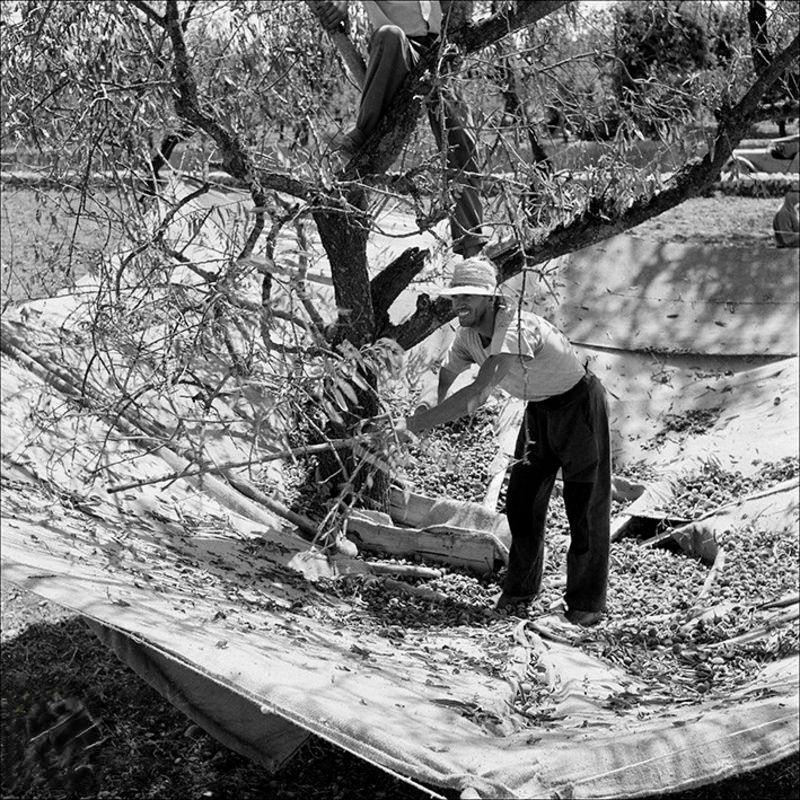
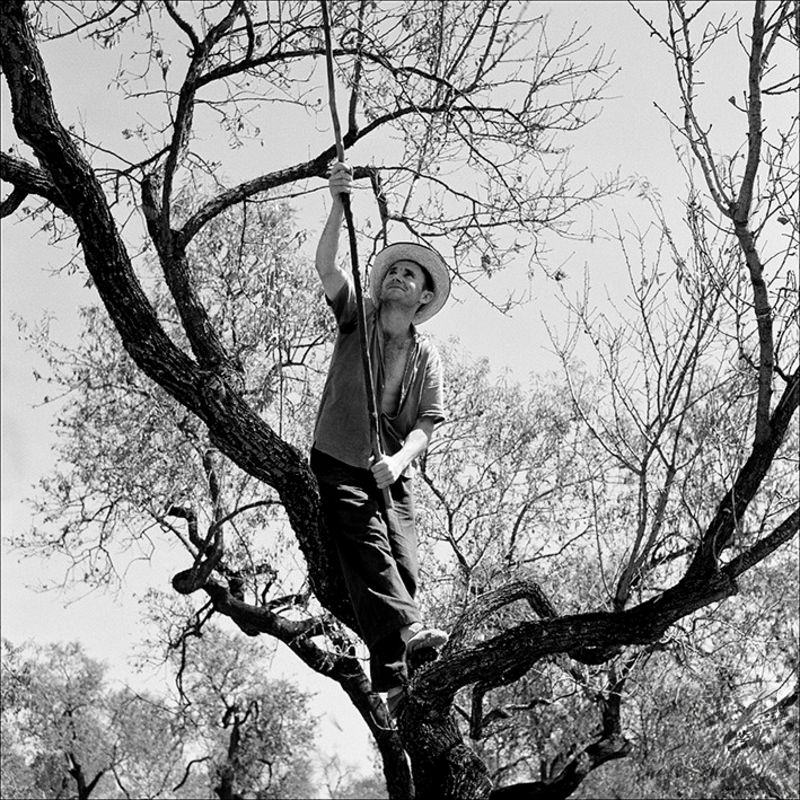
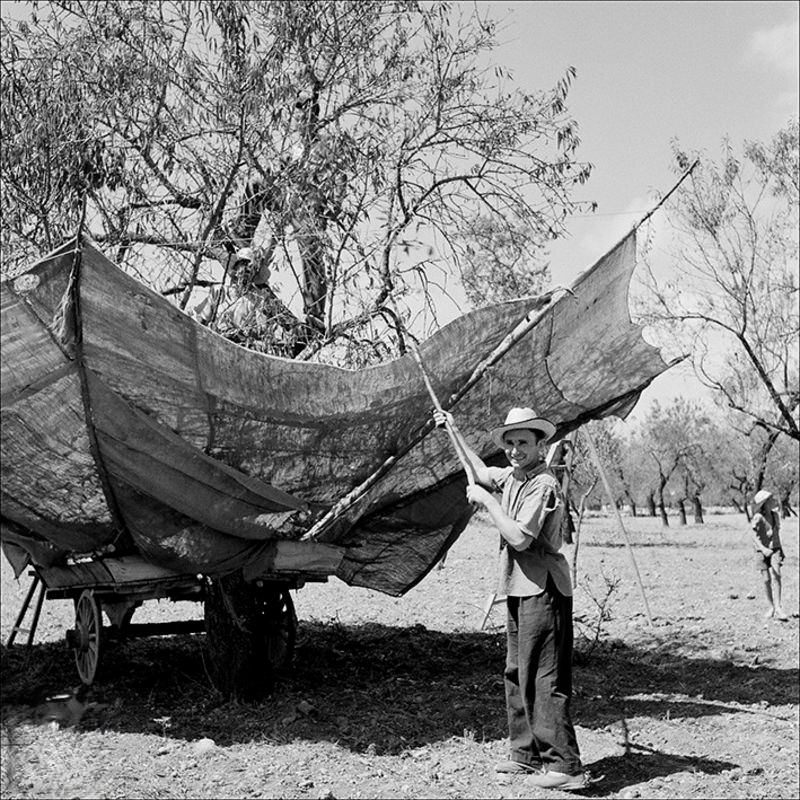
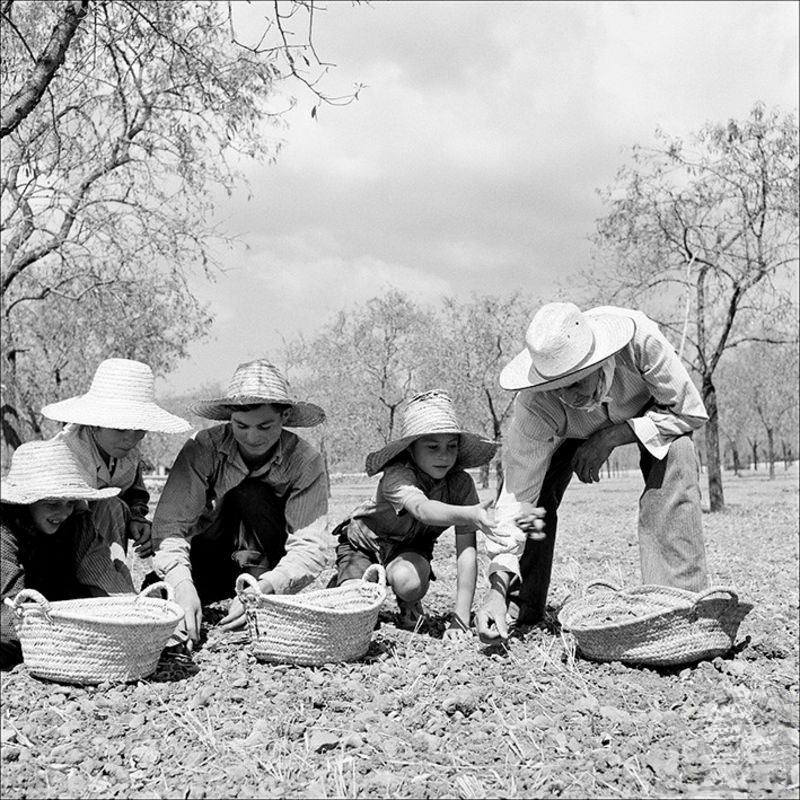
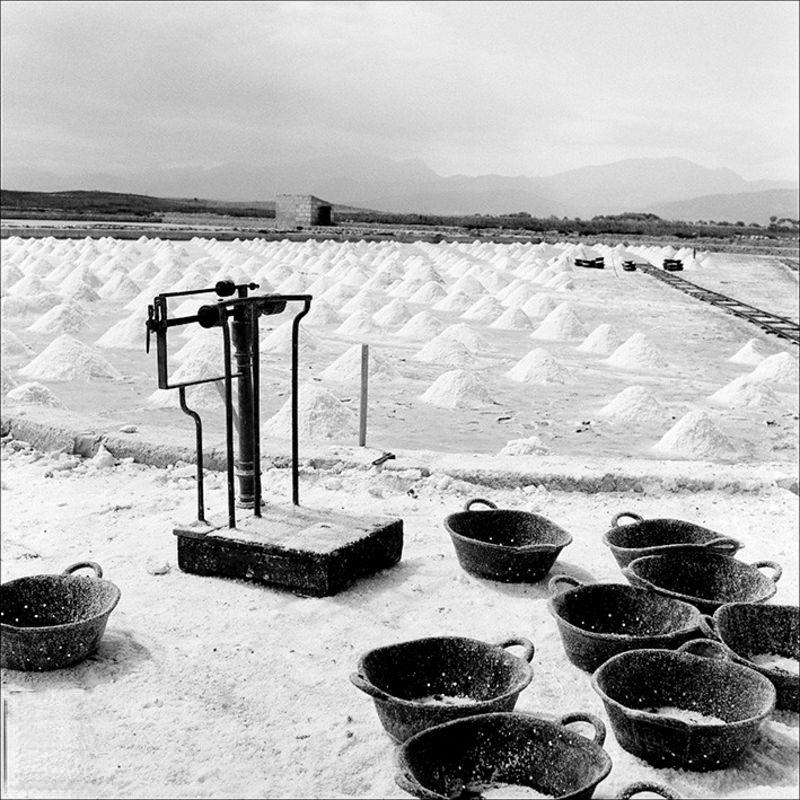
Beyond the festivals, Mallorca’s economy in the 1950s was rooted in agriculture and small-scale industry. Near the town of Inca, in the island’s interior, almond harvesting was a major seasonal occupation. Workers beat the trees with long sticks to knock the almonds loose, then gathered them from the ground by hand. It was labor-intensive work done by whole families, including children. Salt production was another key industry, with workers harvesting salt from the island’s evaporation flats and stacking it into large mounds.
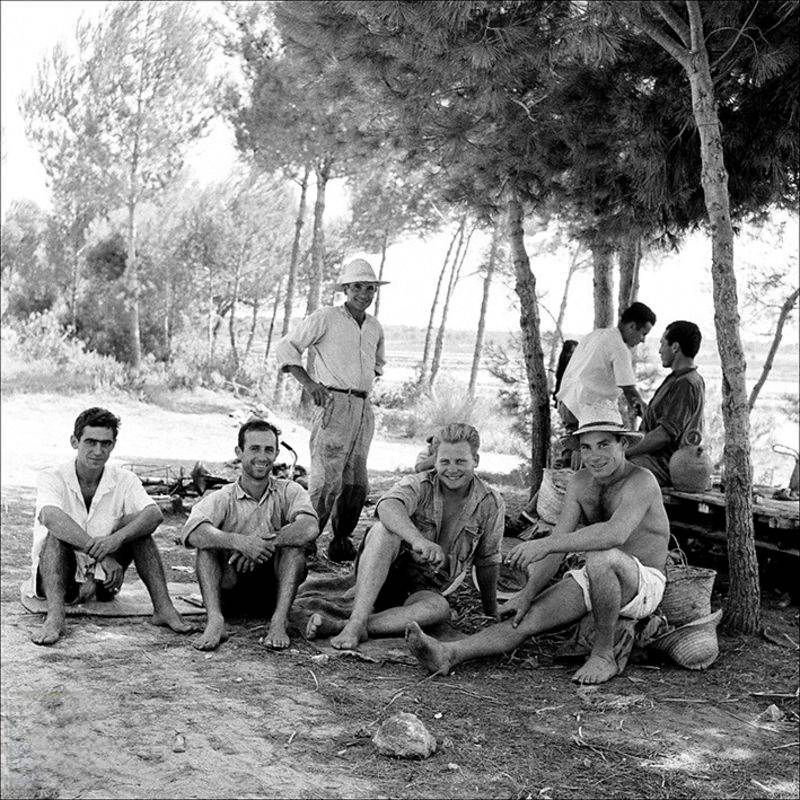
Man hitting a tree near Inca, 1957Almond gatherers near Inca, 1957Almond gatherers near Inca, 1957People holding almonds from the ground near Inca, 1957Mountains of salt, 1957Salt workers, 1957
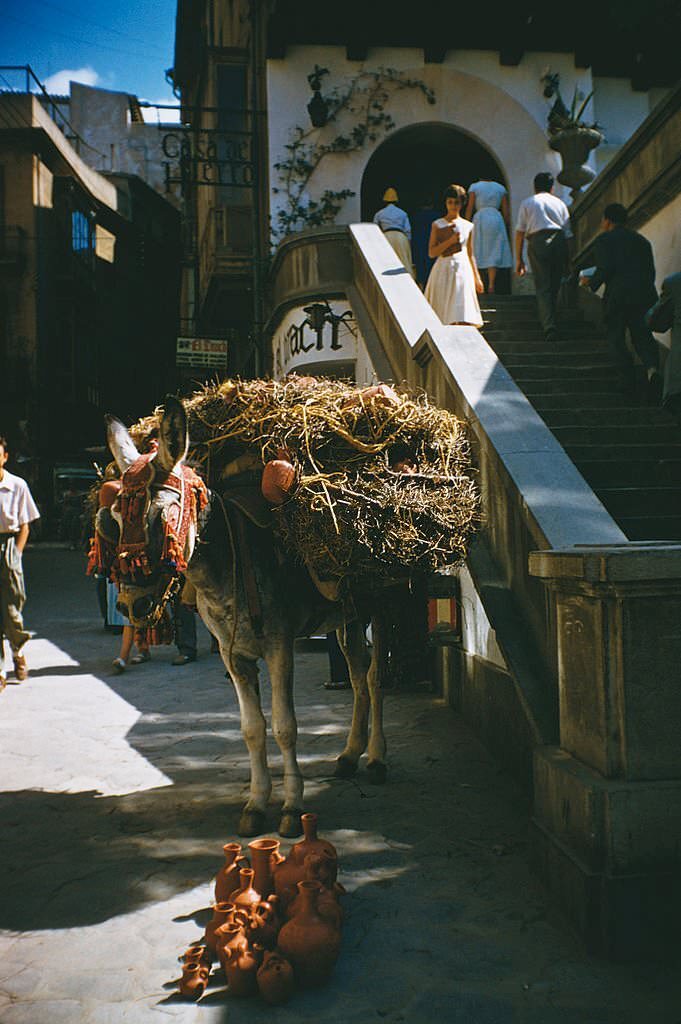
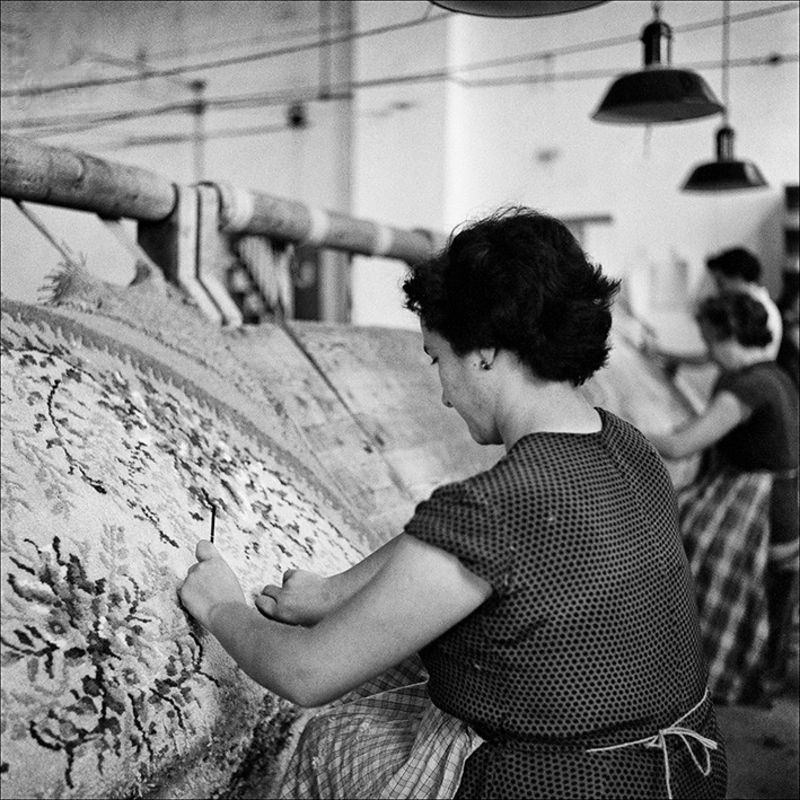
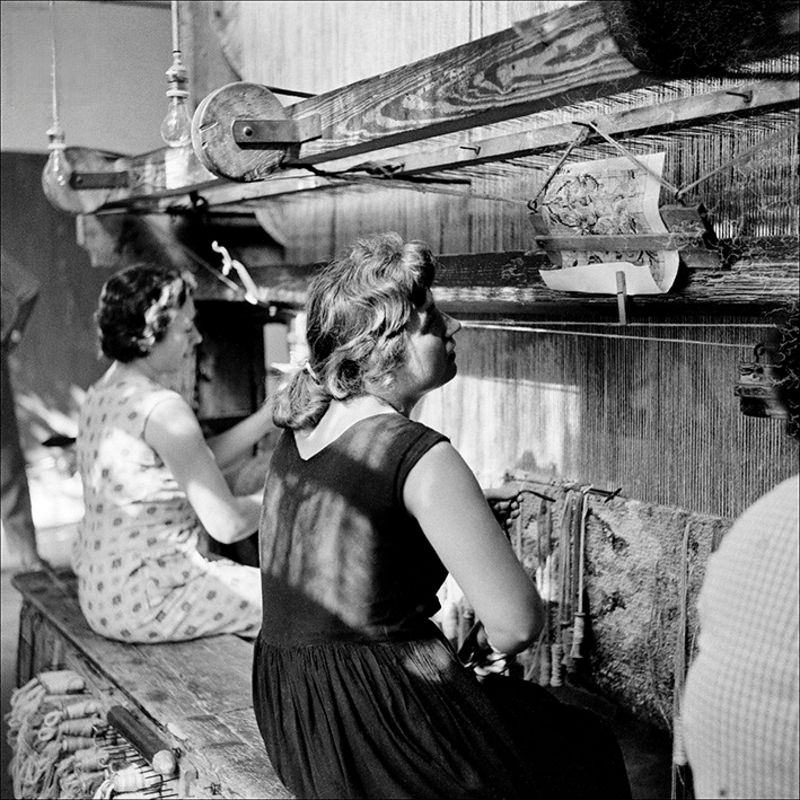
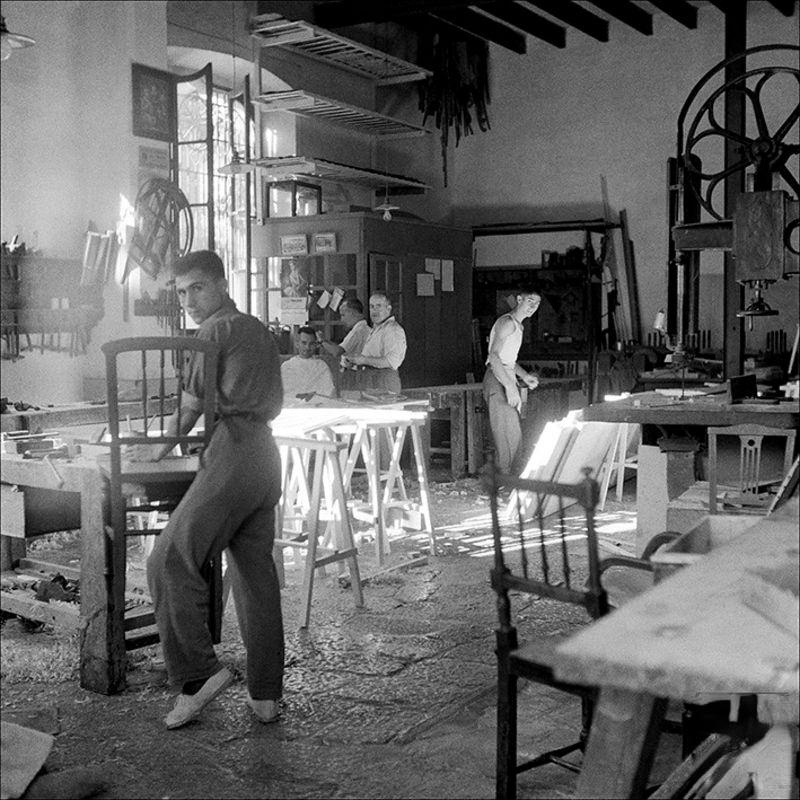
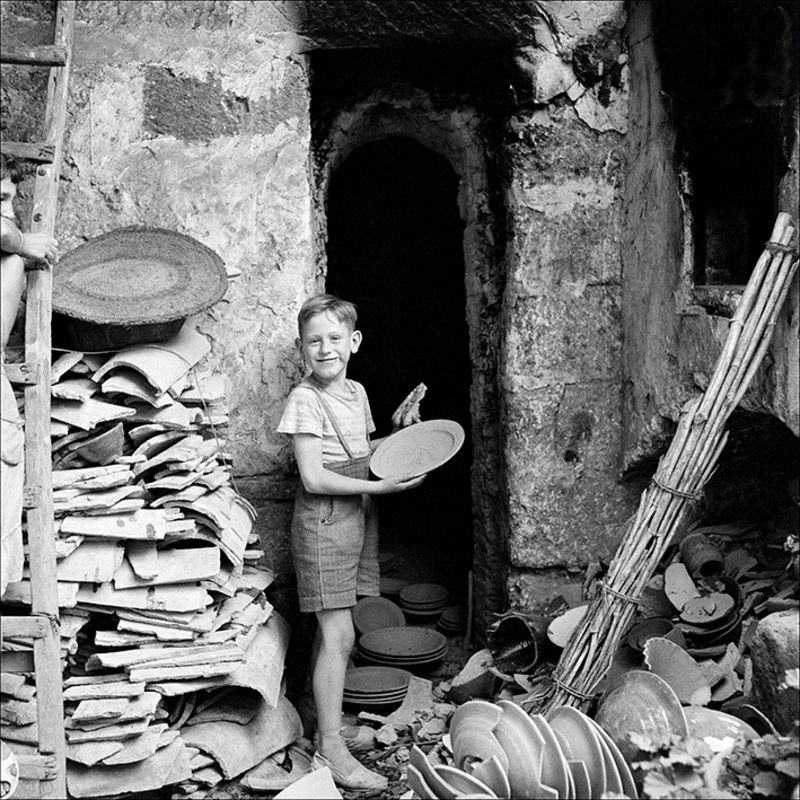
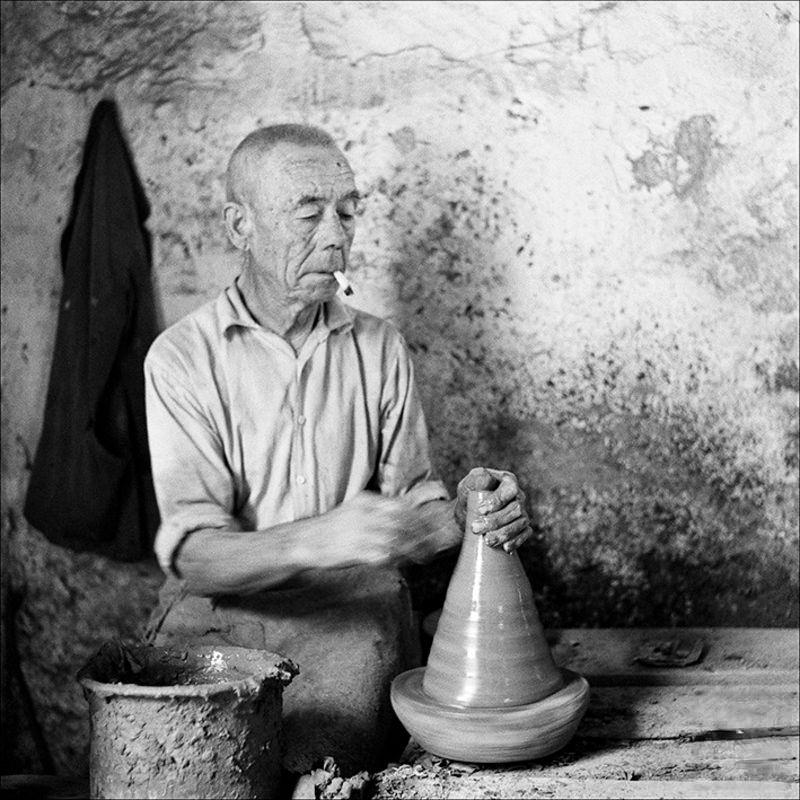
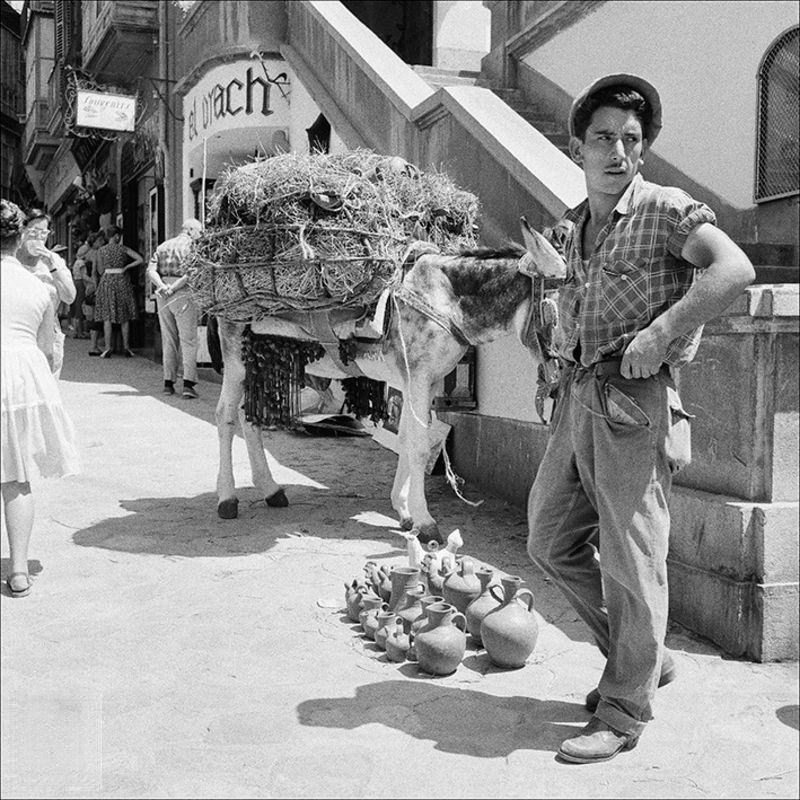
Manufacturing also played a role in local life. In Alcúdia, carpet factories employed rows of workers who wove textiles by hand. Chair factories and ceramic workshops operated throughout the island, with skilled artisans producing goods the same way they had for decades. A child photographed at a ceramic factory in 1957 represents the degree to which craft traditions were passed down from an early age. Pottery was not just a trade — it was part of daily life, with vendors selling clay pots directly from street stalls.
Carpet factory, Alcúdia, 1957Carpet factory, Alcúdia, 1957People working in a chair factory, 1957Portrait of a child in a ceramic factory, 1957Portrait of a ceramist, 1957Man selling pots with handle at the back, 1956
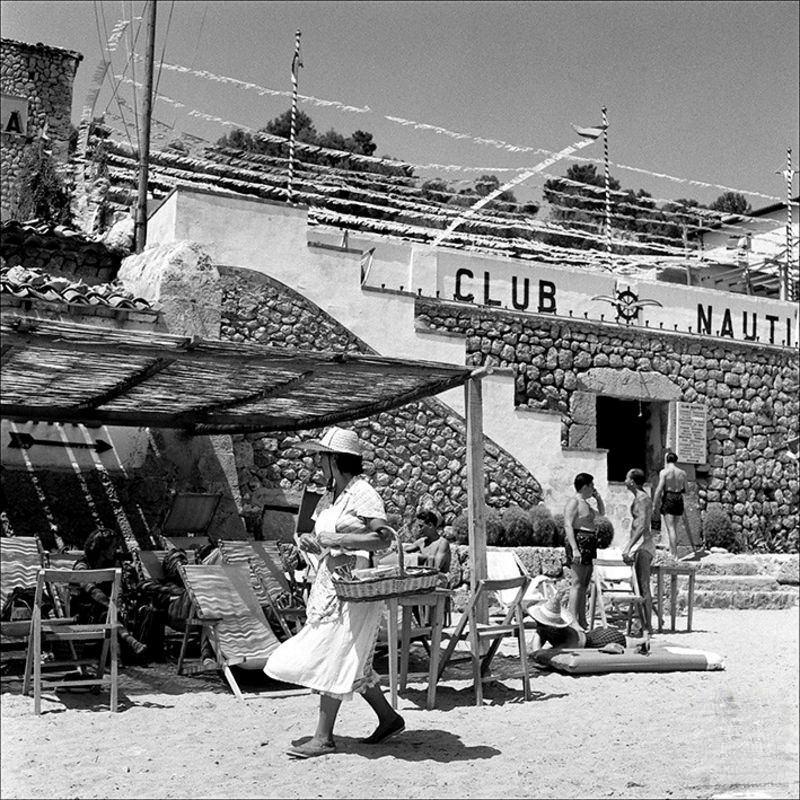
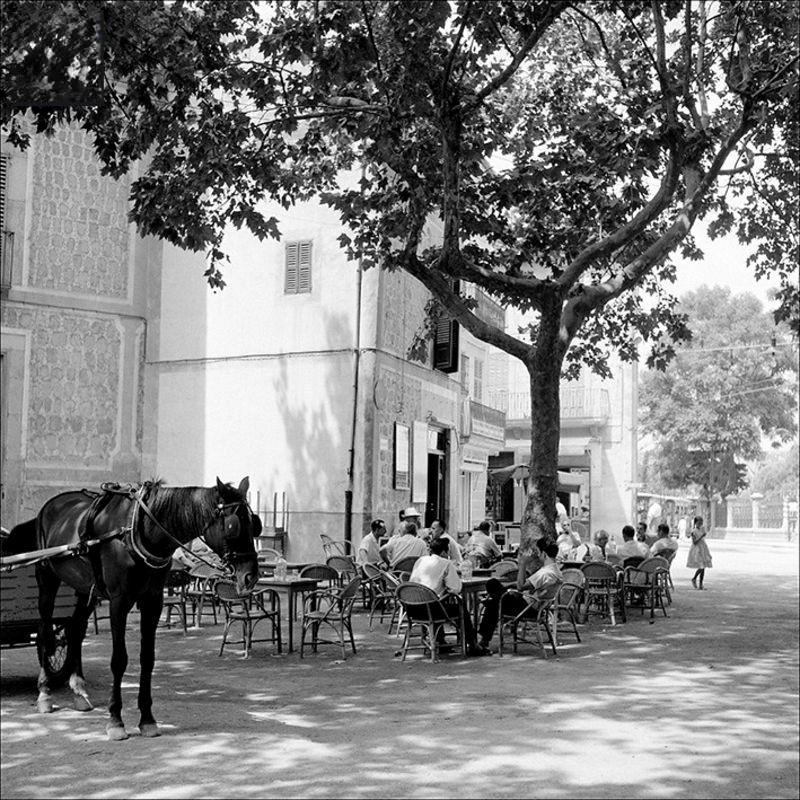
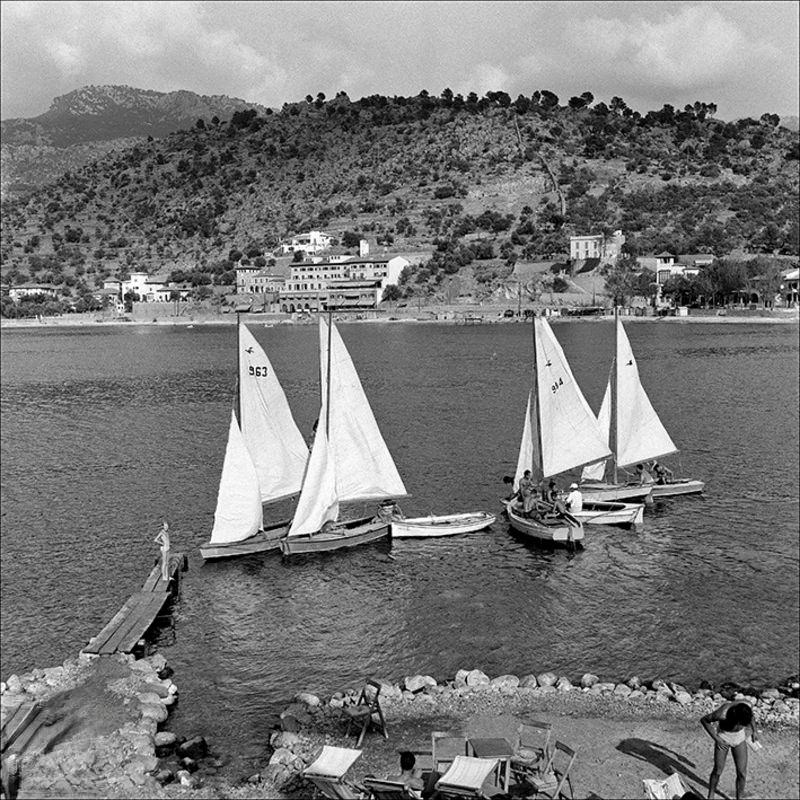
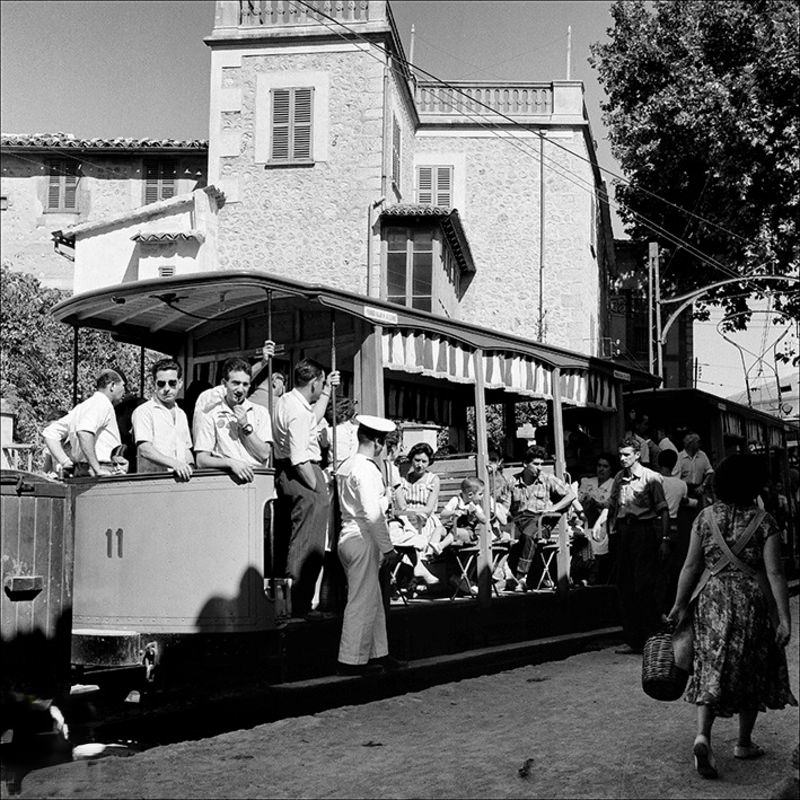
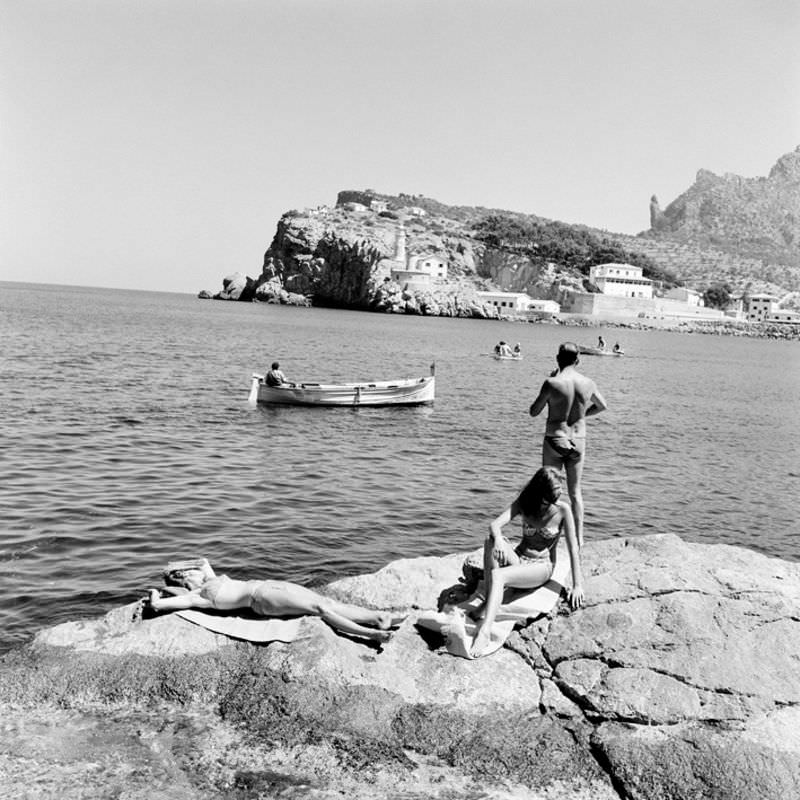
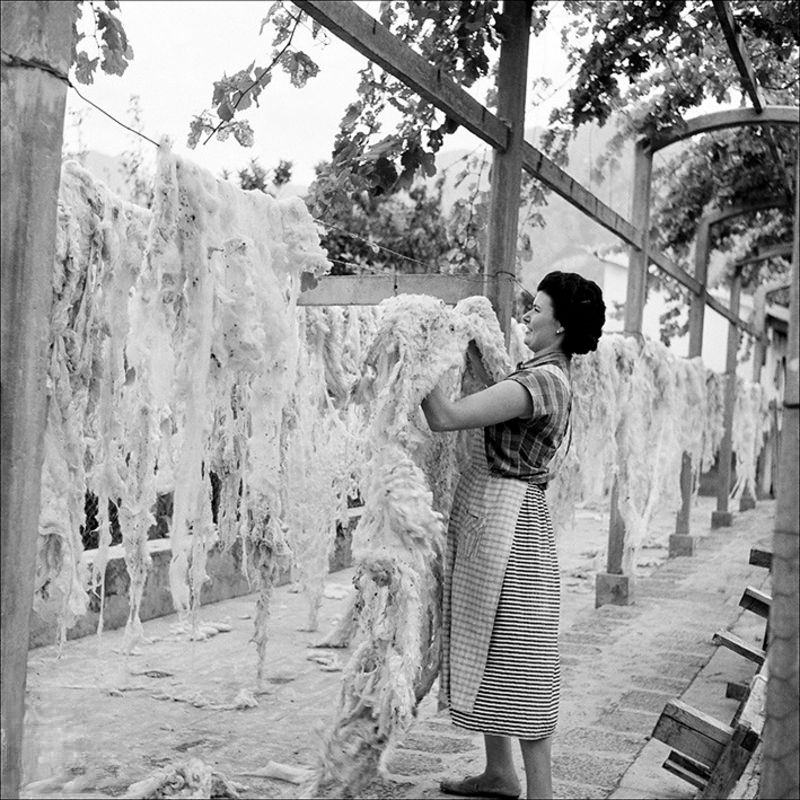
The town of Sóller, nestled in a valley on the island’s northwest coast, had its own distinct rhythm. Its sailing club was a gathering point for locals, and residents sat on terraces in the warm afternoon sun. Wool was hung out to dry in the open air, and the port saw regular activity from fishing and small commercial vessels. Sóller was also connected to Palma by one of Mallorca’s most beloved pieces of infrastructure — a vintage wooden tram that ran between the port and the town center, packed with passengers in photographs from 1957.
People in the sailing club of Sóller, 1956People sitting on a terrace in Sóller, 1956Ships in the Port of Sóller and people in the dock, 1956People in the tram of Sóller, 1957People sunbathing in the port of Sóller, 1957Wool drying in Sóller, 1957
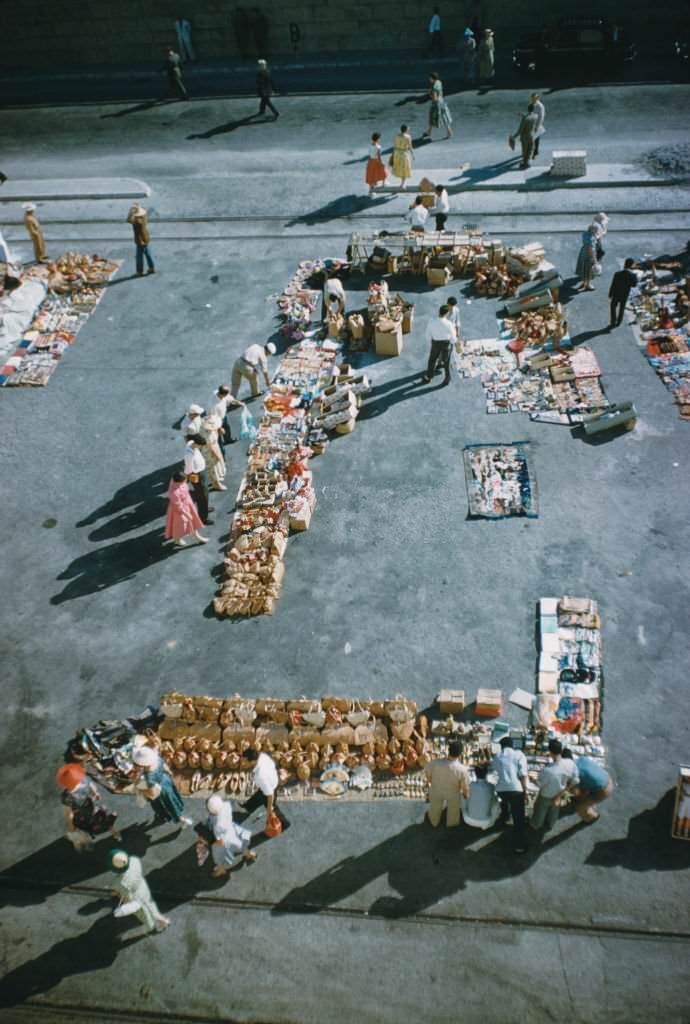
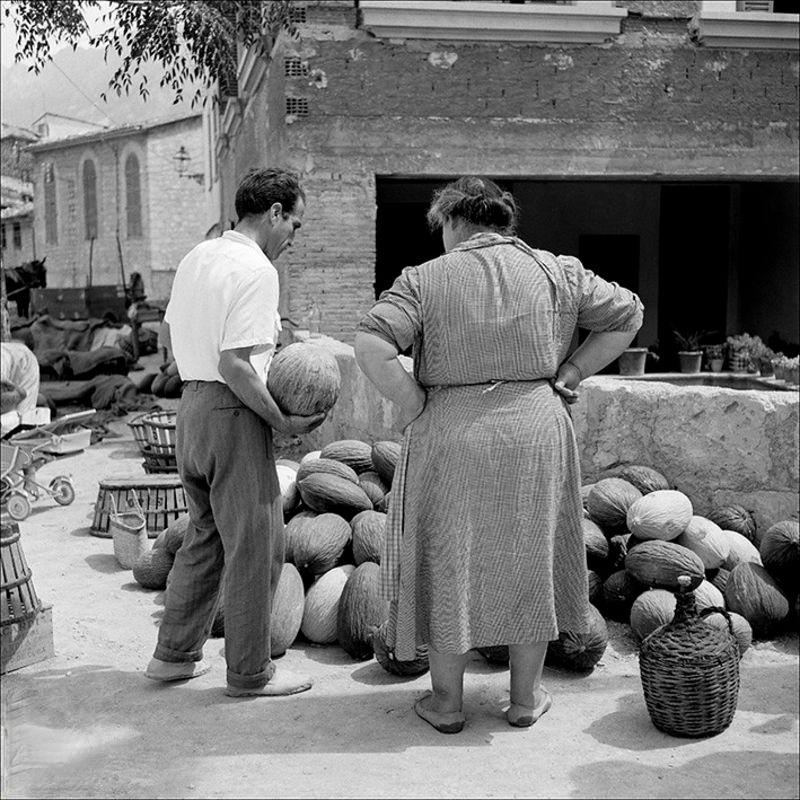
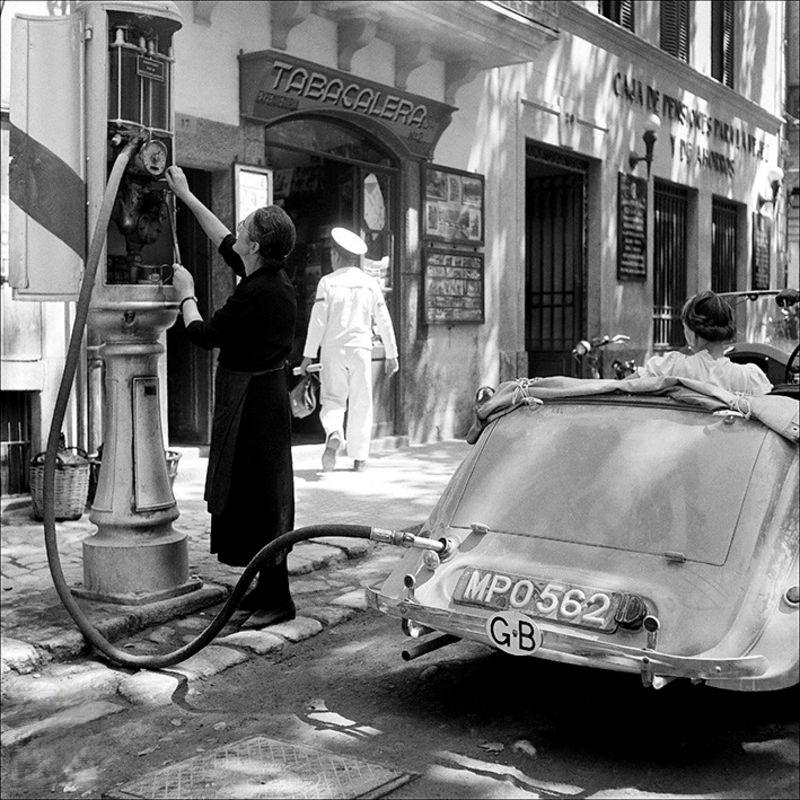
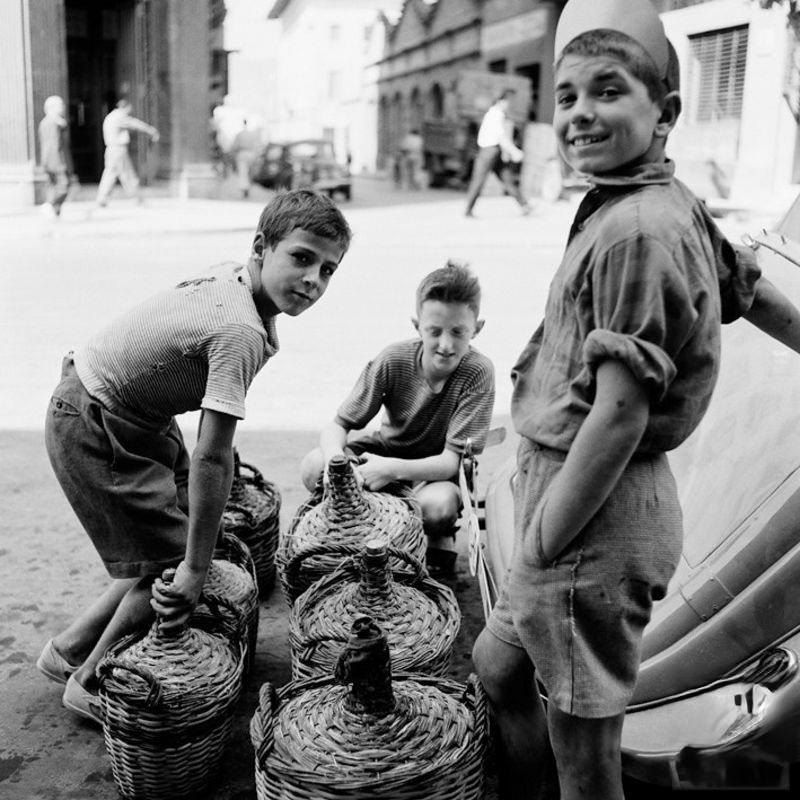
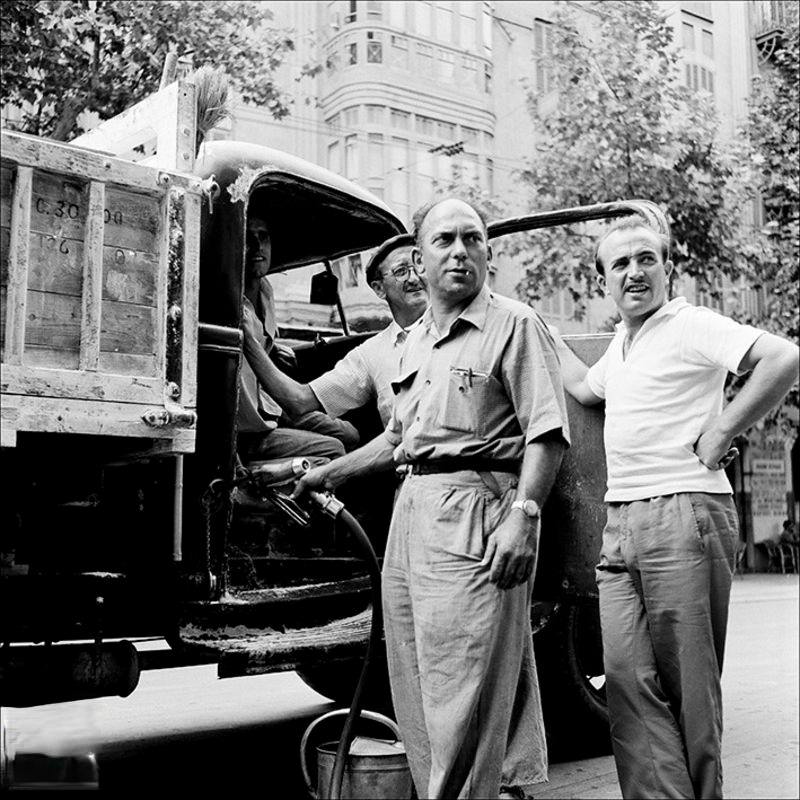
Street markets were the heartbeat of commerce across the island. Vendors sold everything from fresh melons to handmade goods, and stalls lined the streets of major towns. In Palma, groups of decorative dolls were displayed on sidewalks for sale. The street market in July 1957 captured the density of activity — shoppers, sellers, carts, and baskets all competing for space. Petrol stations were a newer fixture in Mallorcan life, and photographs from 1956 and 1957 show women refueling at pumps and boys queuing with containers — a sign of the island’s slow but steady modernization.
A street market in Majorca, Spain, July 1957.Group of dolls on a street in Palma, 1956Man and woman in a stall of melons, 1956Woman refilling at a petrol station, 1956Boys waiting in queue for petrol, 1957Filling lorry with petrol, 1957
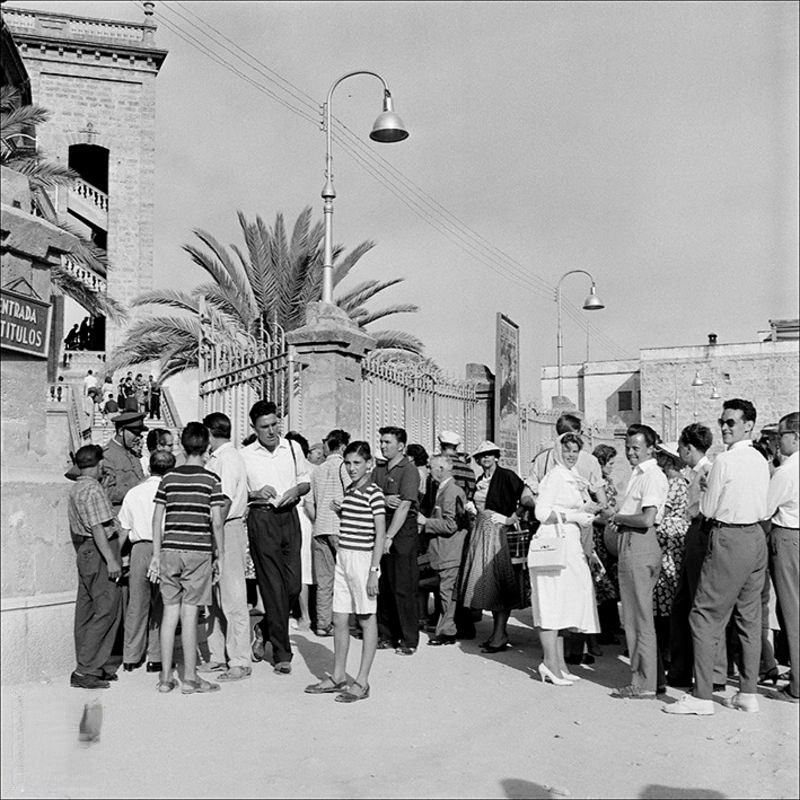
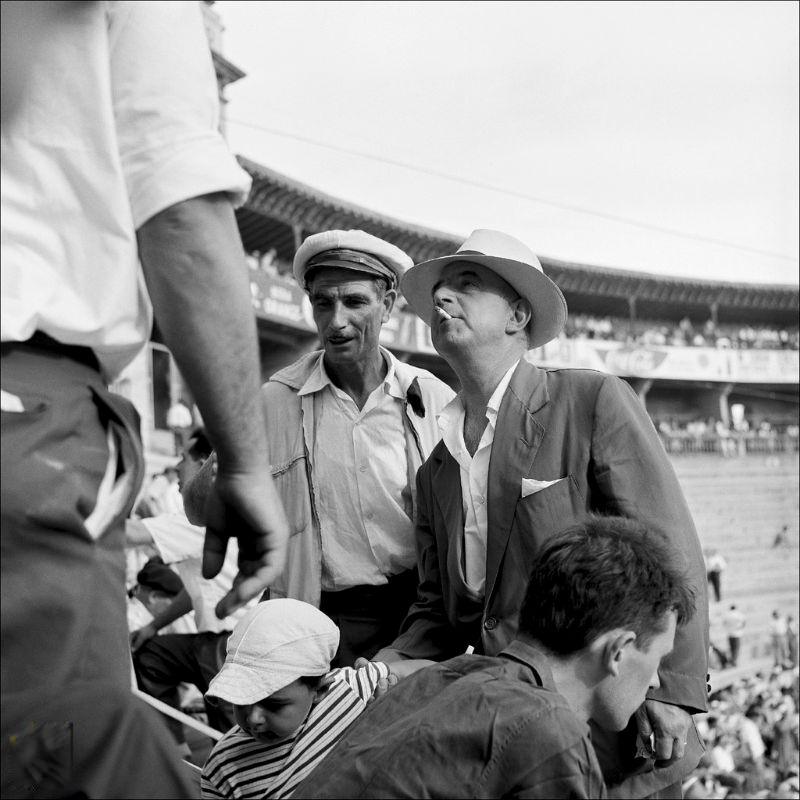
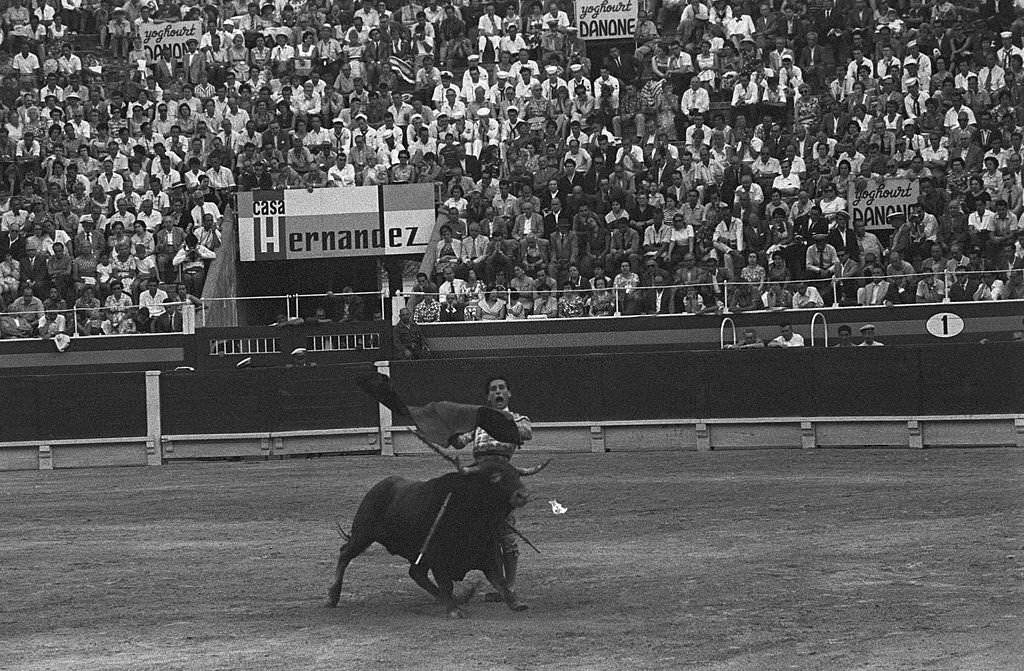
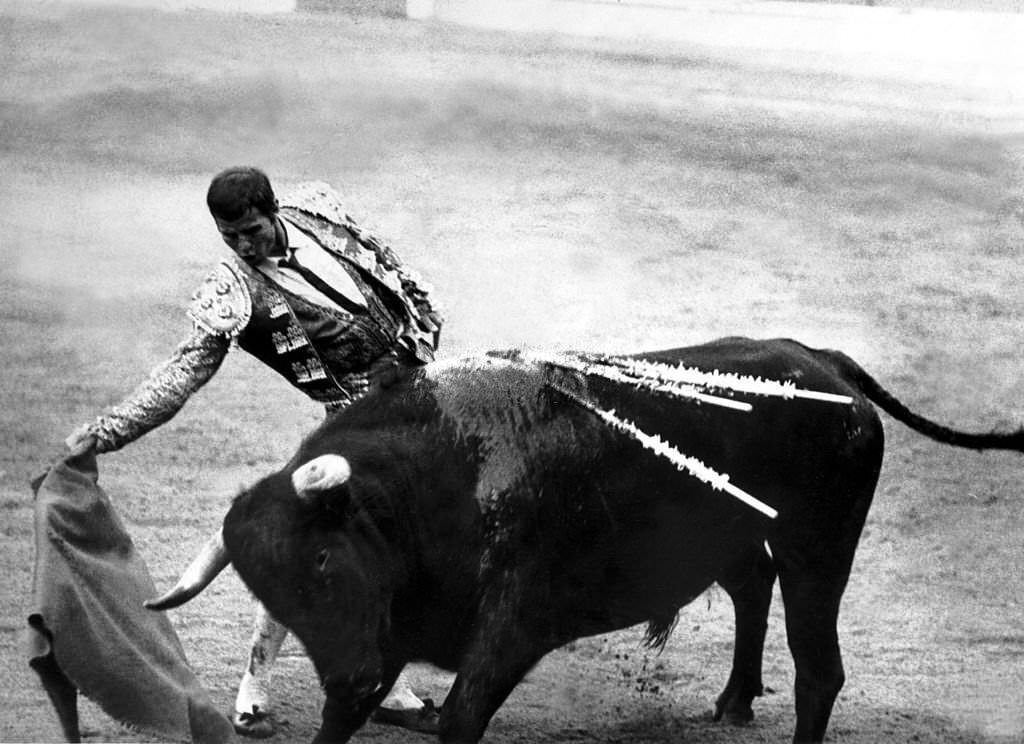
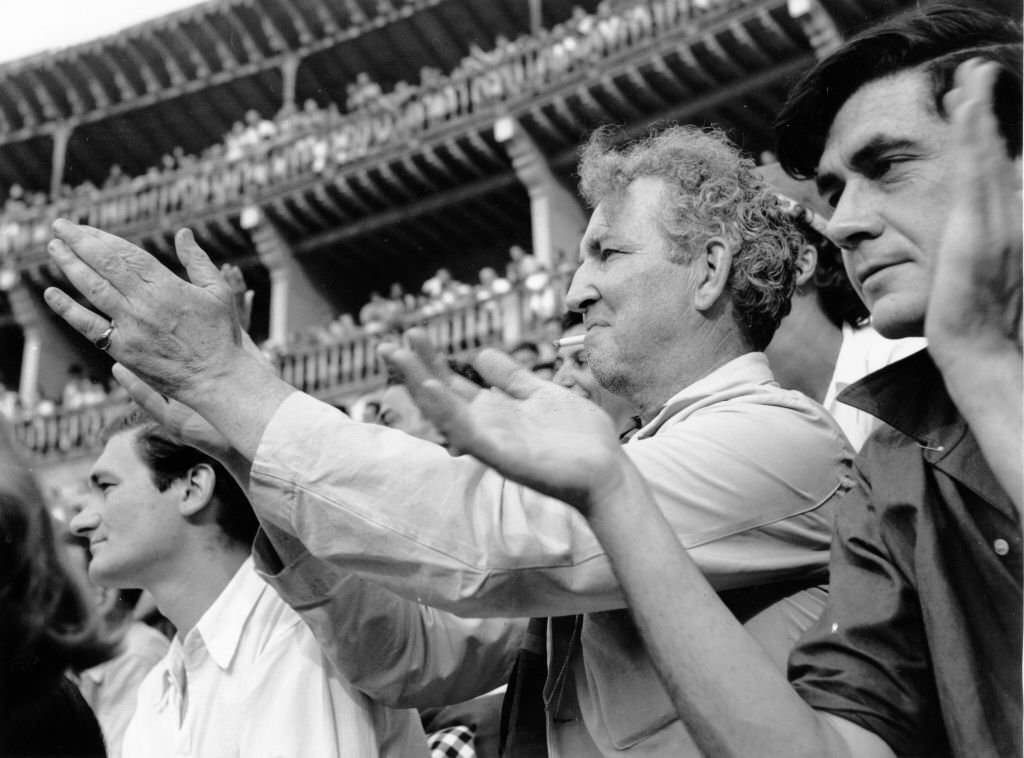
Bullfighting was a major public event in Palma during the 1950s. The bullring drew large crowds, and corridas were attended by locals and tourists alike. Photographs from 1956 show the audience pressing into the arena’s stands, while others from 1957 capture matadors facing bulls with their red muleta capes and swords raised. El Cordobés — who would go on to become one of Spain’s most celebrated matadors — was photographed in Mallorca in 1958, early in his rise to fame.
People at the entrance to the bullring in Palma, 1956People in the bullring in Palma, 1956Corrida In Palma De Mallorca, Spain. The bullfighter facing the bull with his sword.El Cordobes, 1958
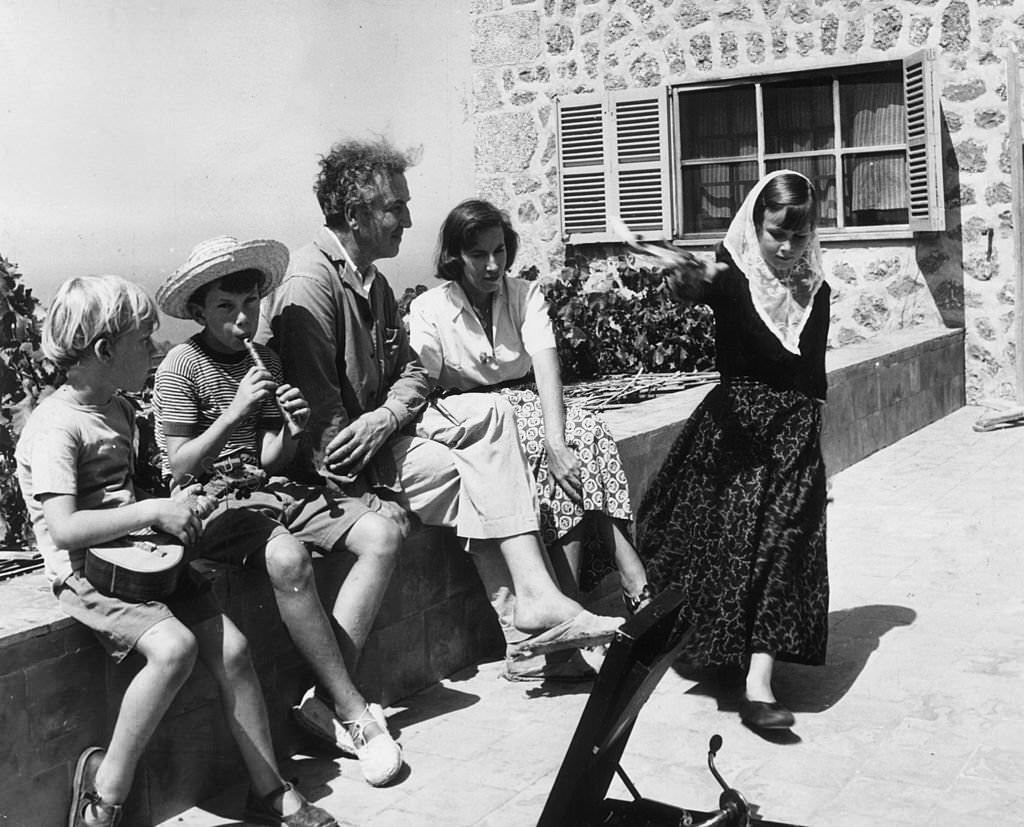
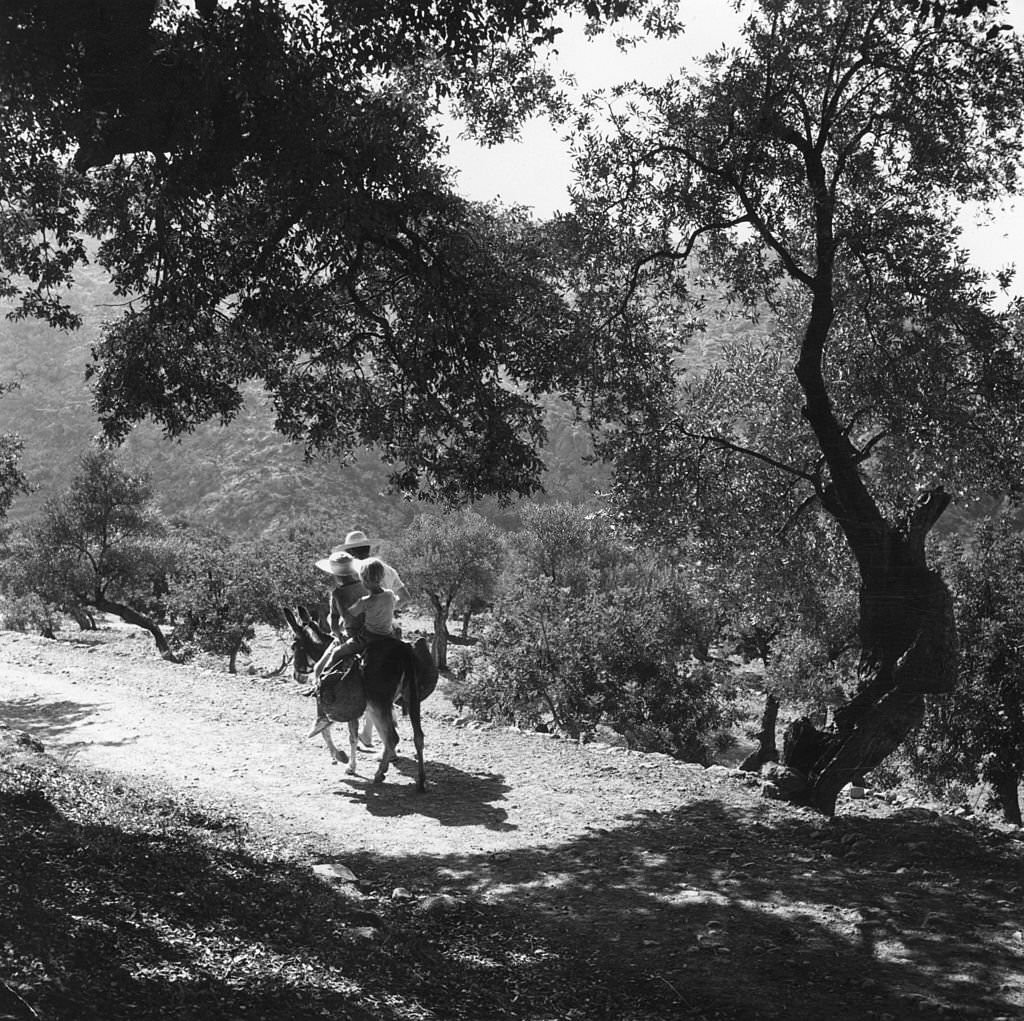
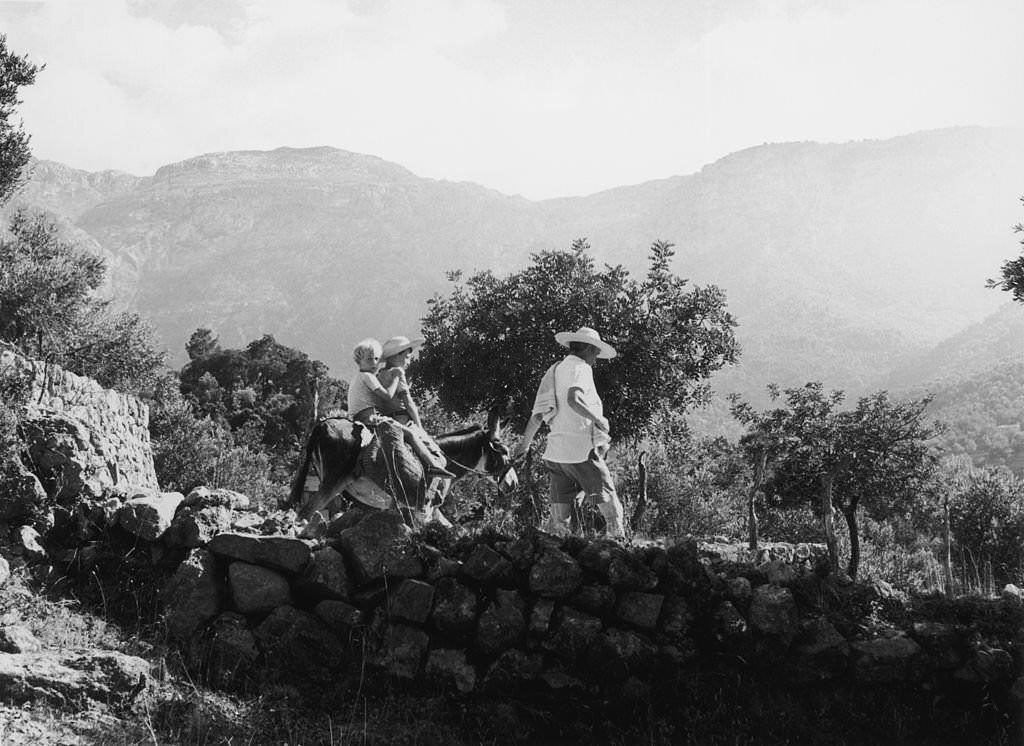
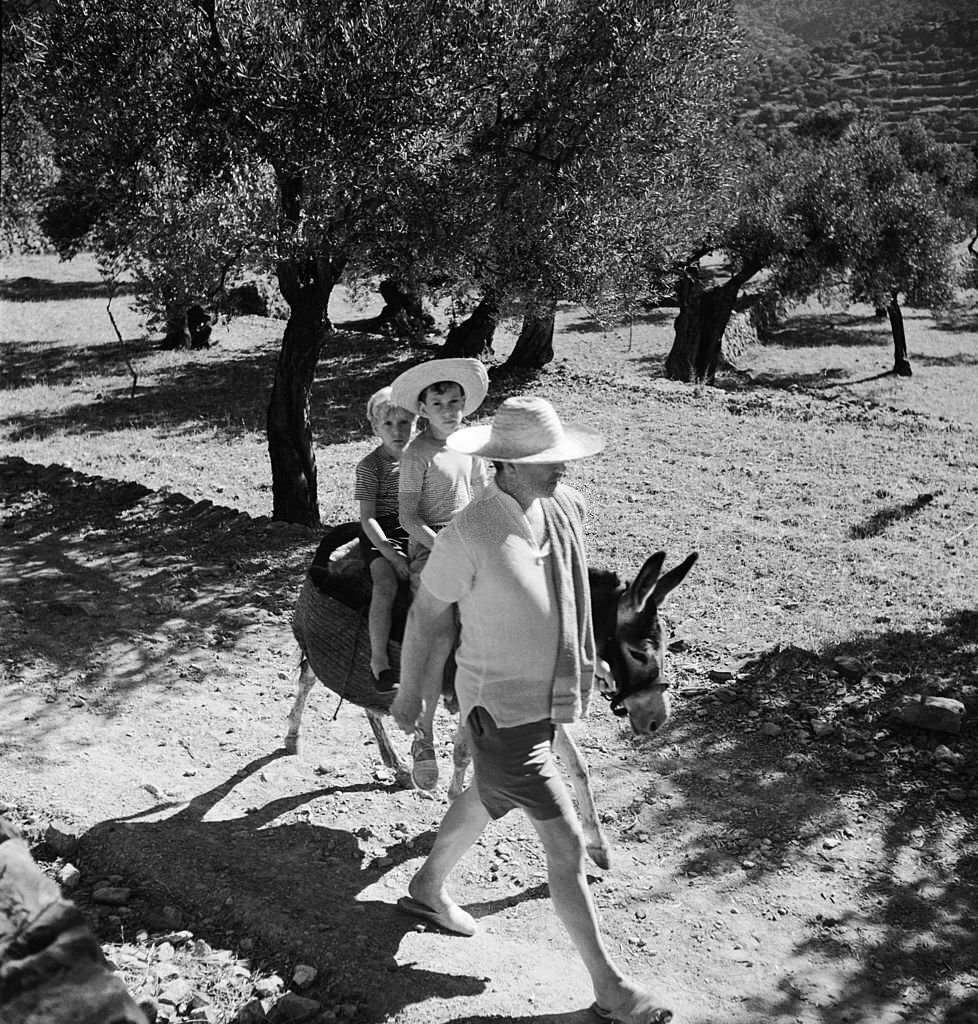
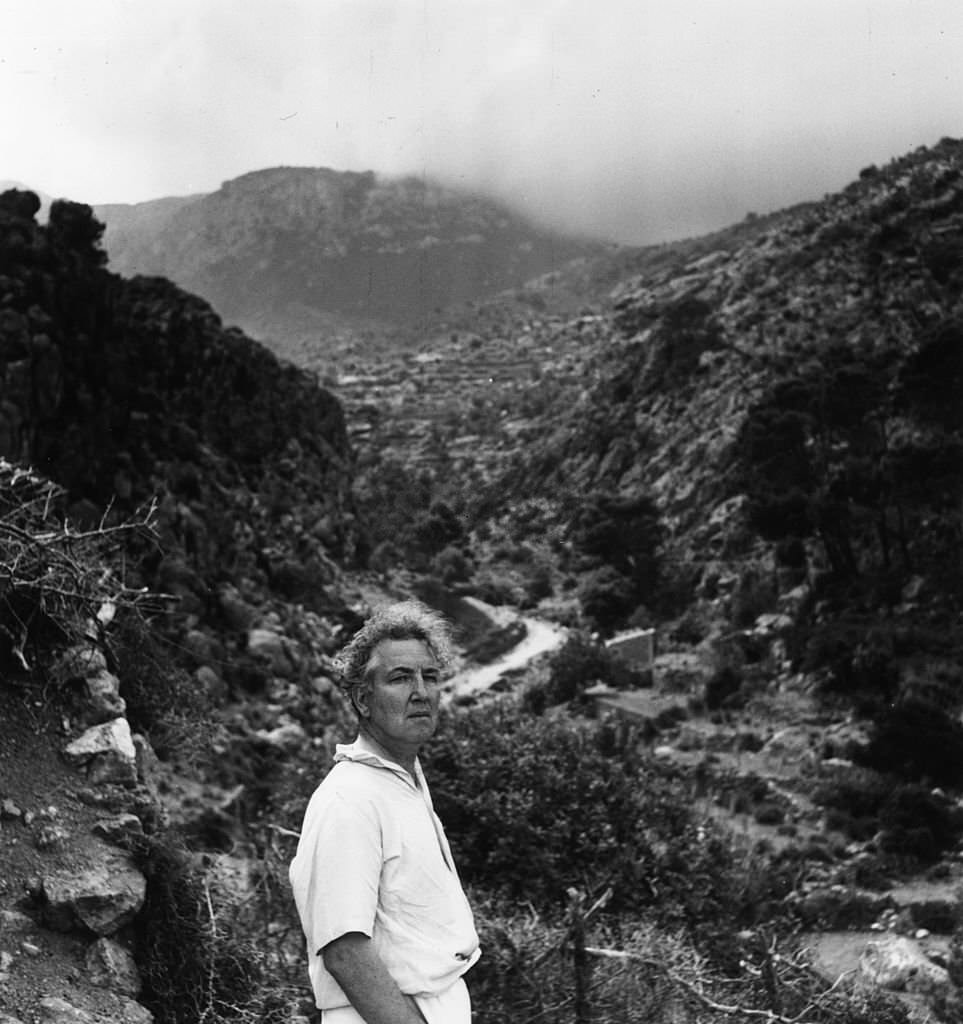
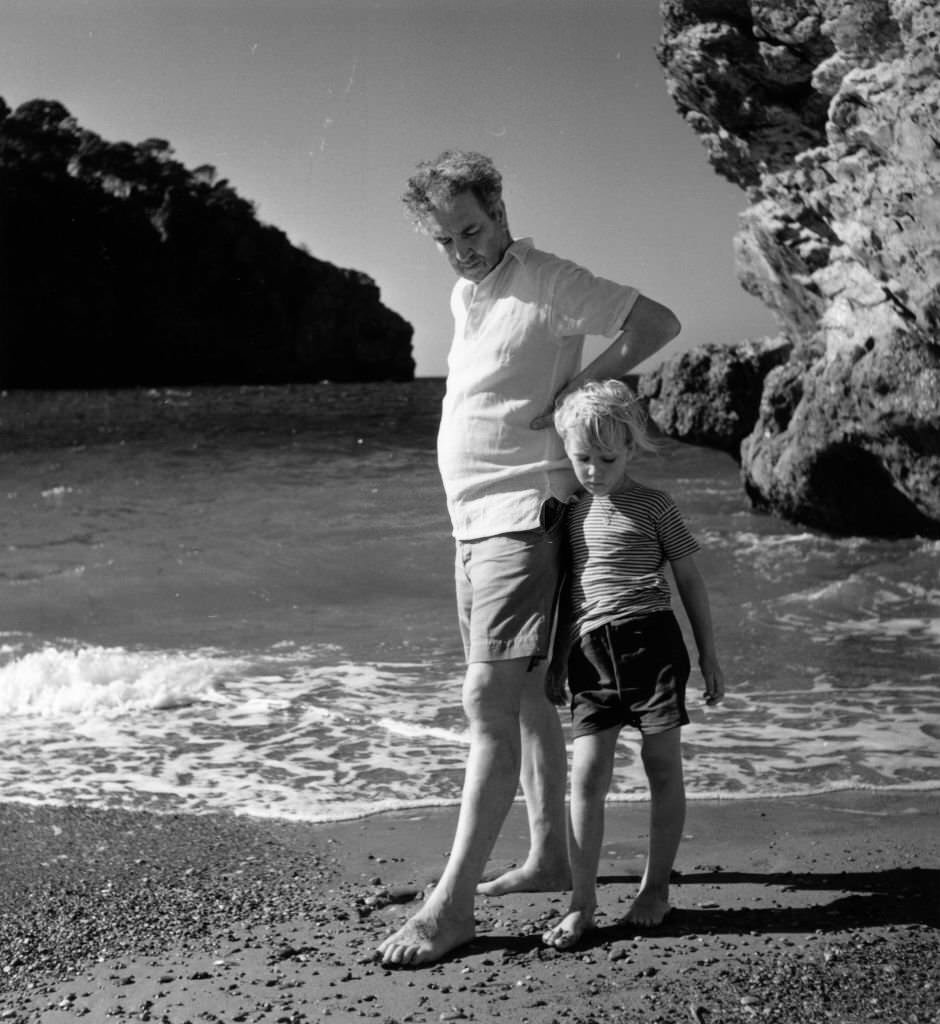
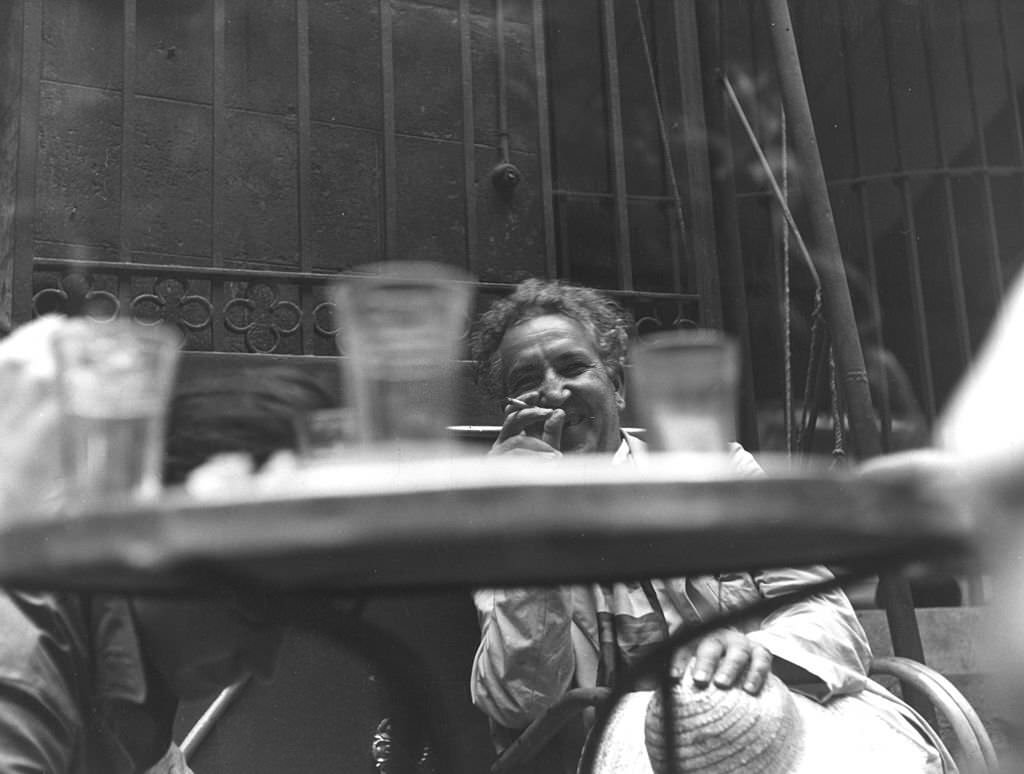
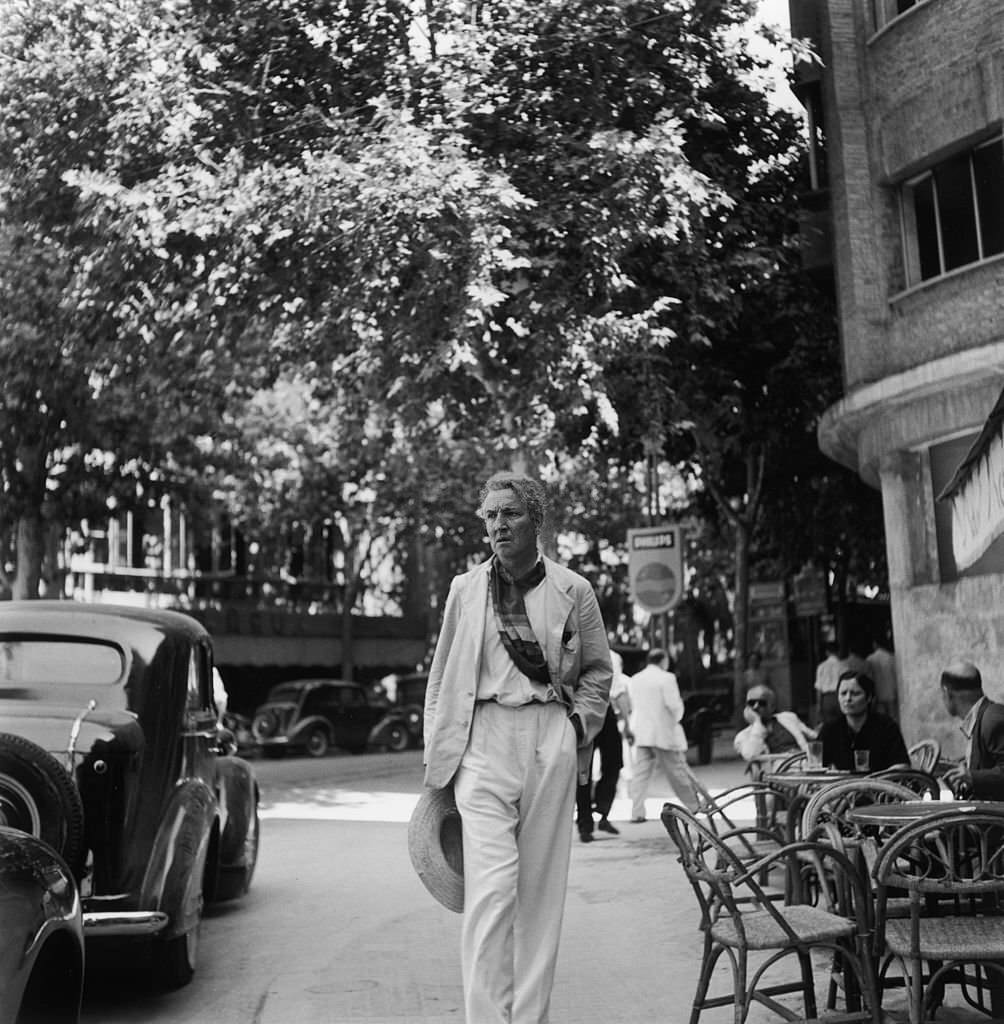
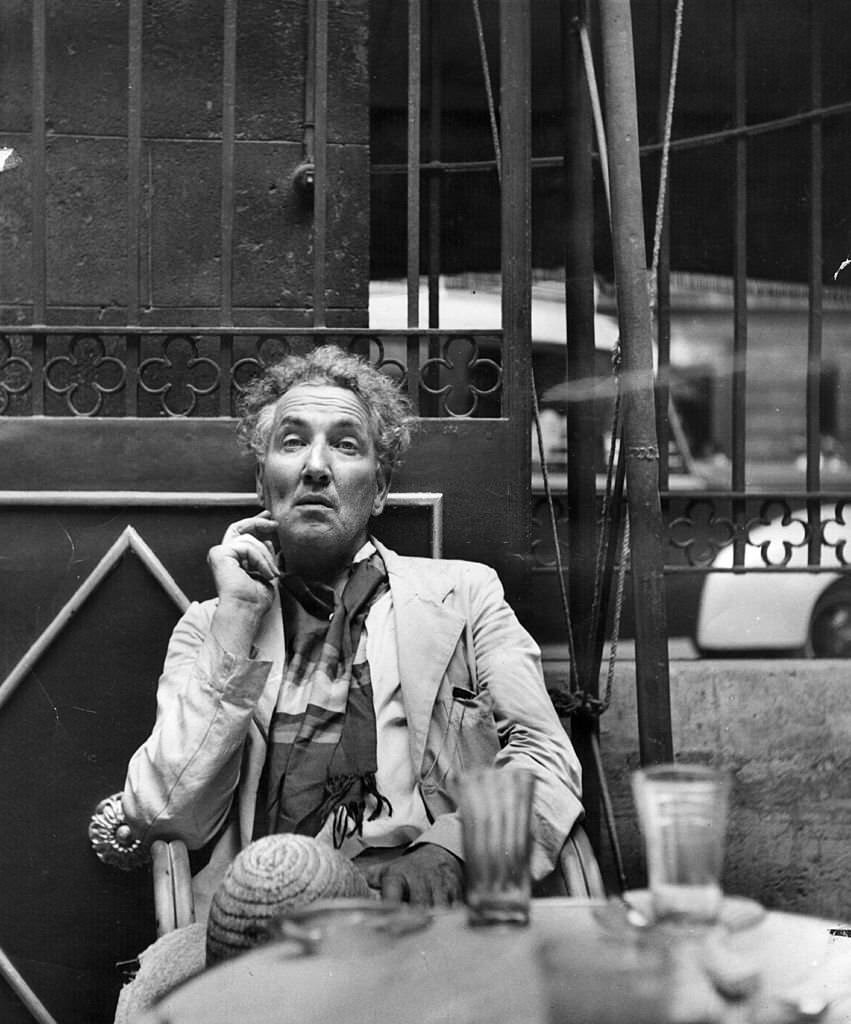
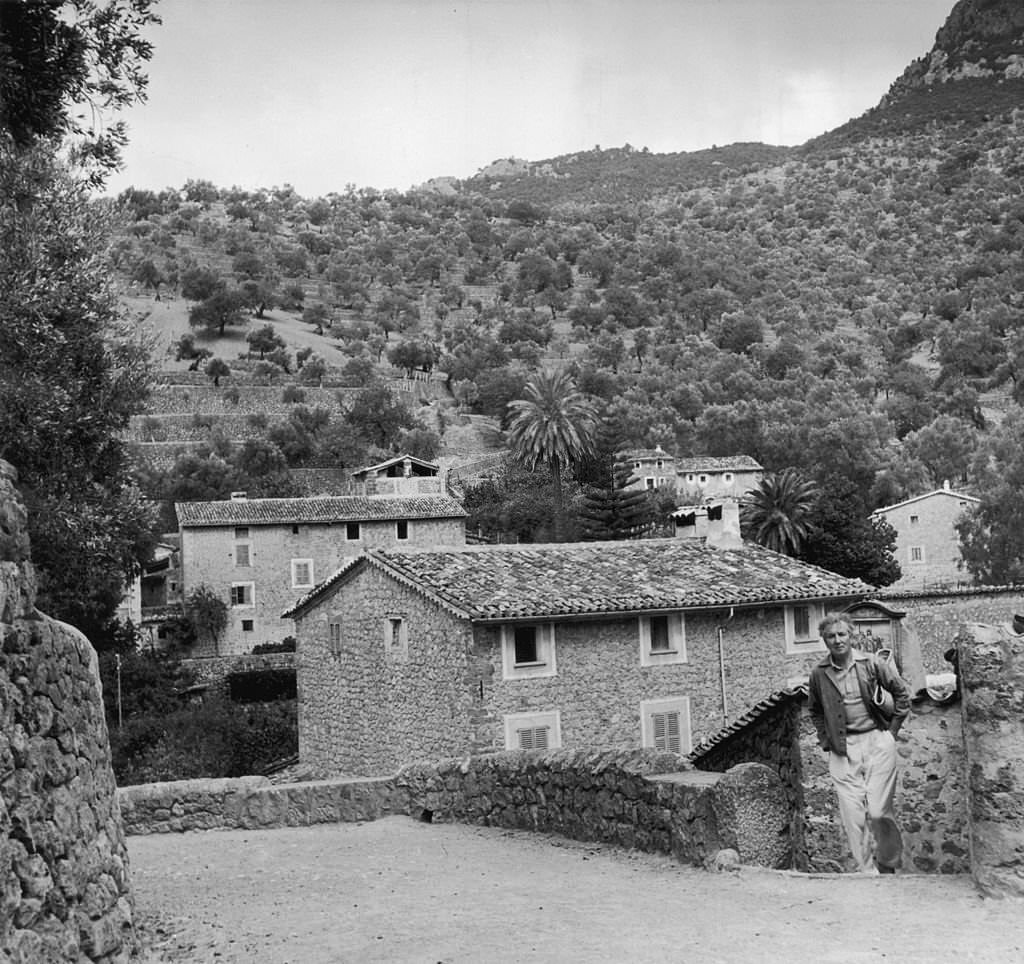
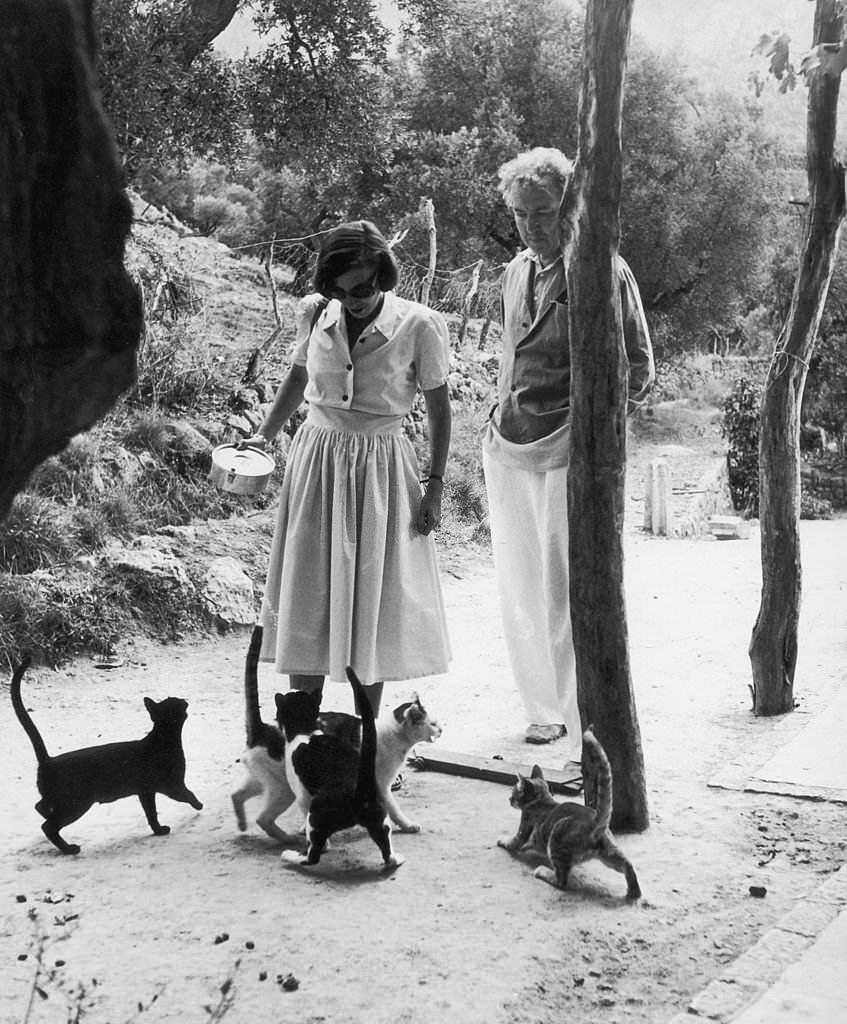
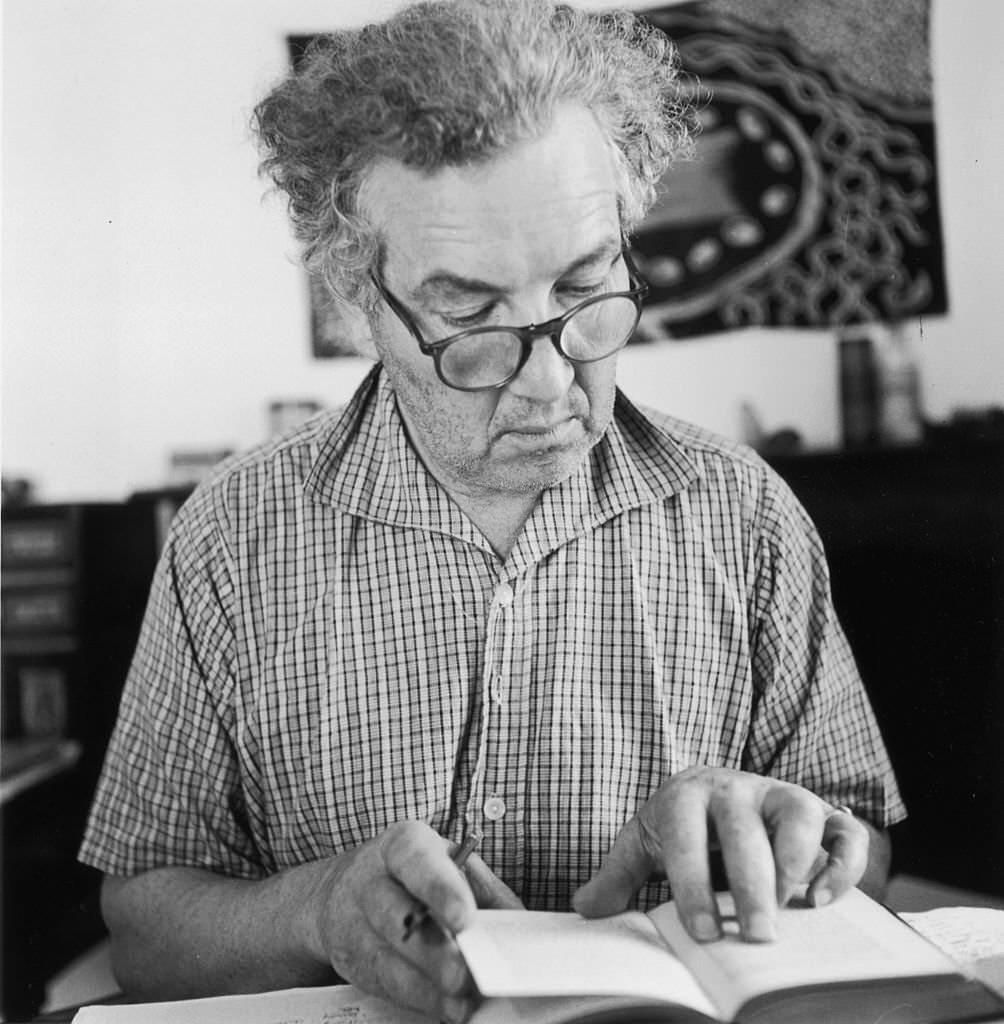
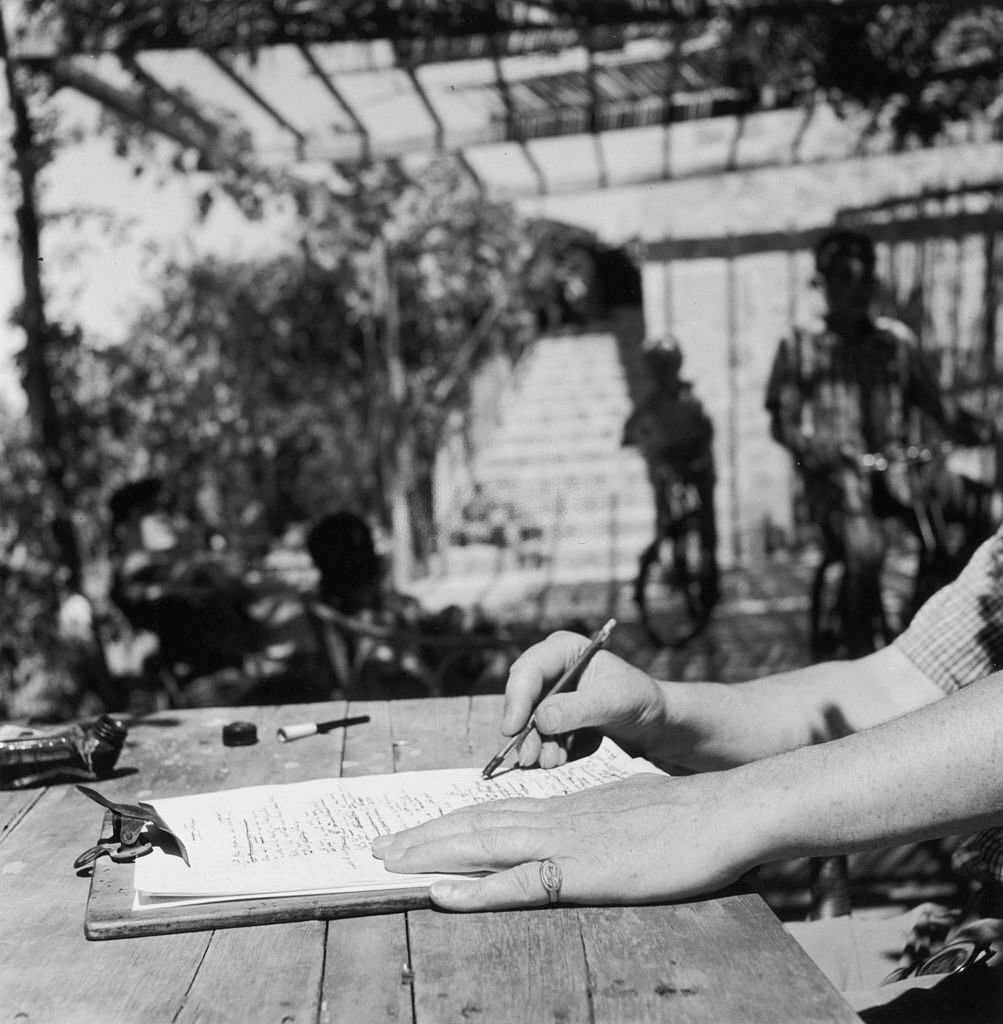
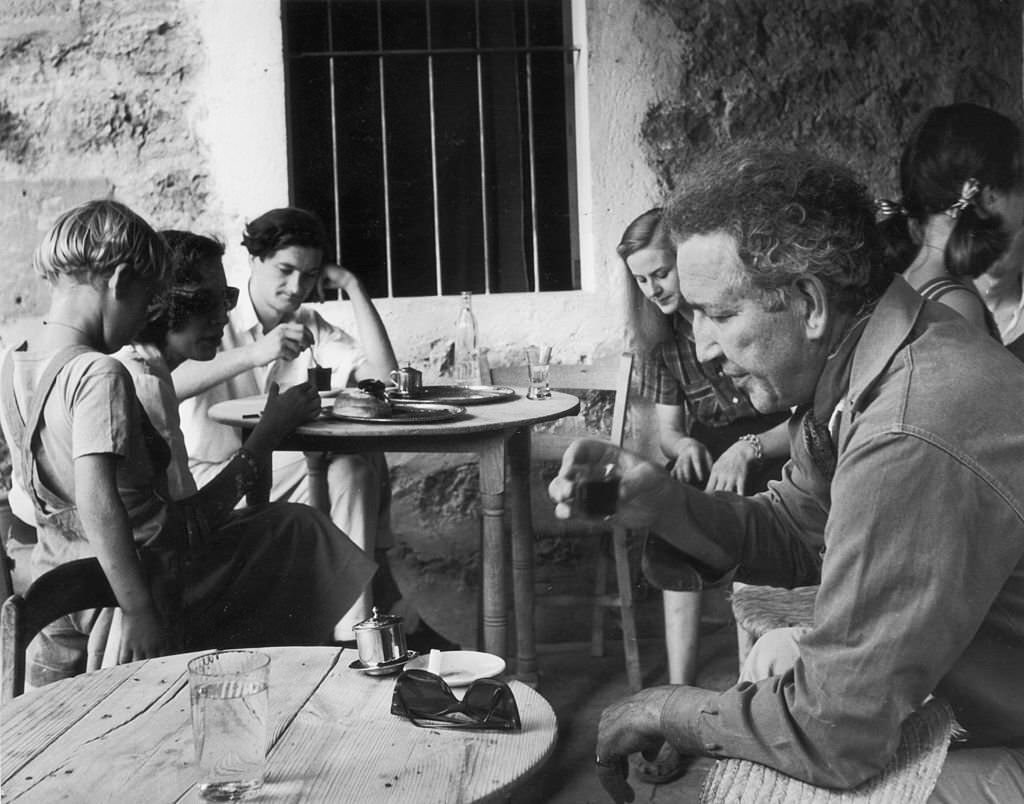
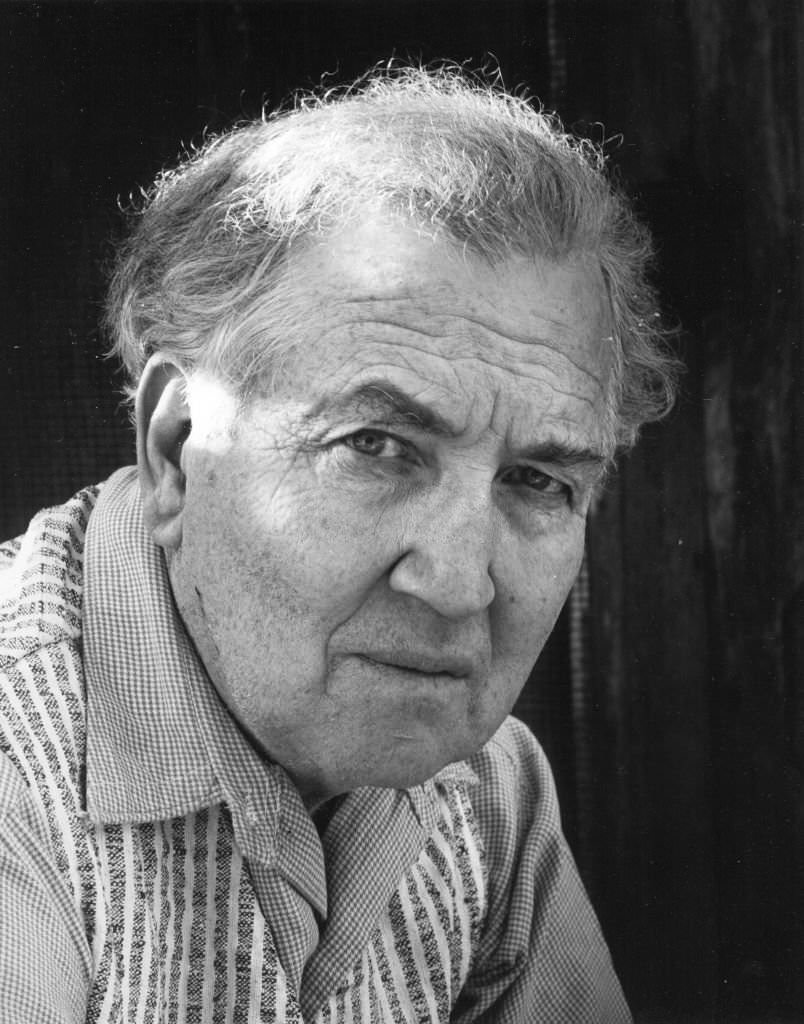
Mallorca in the 1950s also attracted a notable stream of celebrated visitors. English poet and novelist Robert Graves had made his home in the village of Deya on the island’s rugged northwest coast. Photographs from January 1954 show him riding a donkey through olive groves with his children, writing at his desk, watching his wife Beryl feed stray cats, and relaxing at a café in Palma. Graves had first moved to Mallorca in the late 1920s and returned after World War II, finding in Deya both the solitude and beauty he needed to write.
English poet, writer and classical scholar Robert Ranke Graves with his second wife Beryl and his children outside their holiday home in Deya, on the island of Majorca, 1954English novelist, poet and scholar Robert Graves rides a donkey through an olive grove in Majorca with two of his children, 1954English novelist, poet and scholar Robert Graves leads his children on a donkey through an olive grove in Majorca, 9th January 1954.Robert Graves leads his sons William and Juan on a donkey through an olive grove to the beach at Deya, Majorca, January 1954.Robert Ranke Graves surveys the hilly landscape of his home island of Majorca, 1954Robert Graves on the beach at Deya, Majorca, with his son Juan, 1954Robert Graves at his home in Majorca, 1954English novelist, poet and scholar Robert Graves in Palma de Majorca, January 1954.Robert von Ranke Graves at a cafe in Palma de Majorca, 1954Robert Graves in the village of Deya, Majorca, where he and his family spend their weekends, January 1954.Robert Graves watches his wife Beryl feeding cats in Deya, Majorca, January 1954.Robert Graves at his home in Deya, Majorca, January 1954.Robert Graves writing at his home in Deya, Majorca, January 1954.English poet, novelist, essayist and critic Robert Graves drinking at a cafe in Deya, Majorca, January 1954.English poet and novelist Robert Graves in Mallorca, Spain, 1950sRobert von Ranke Graves applauds a bullfighter at the ring in Palma de Majorca.
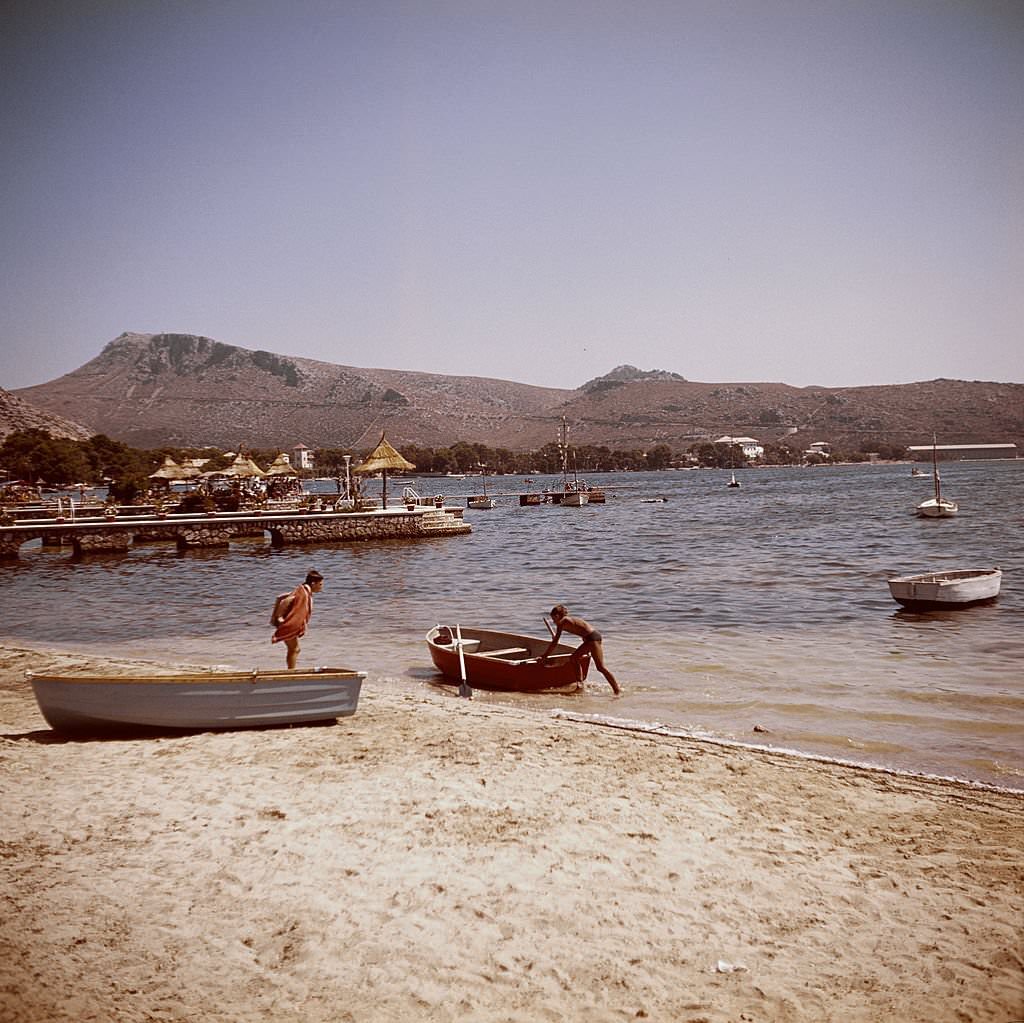
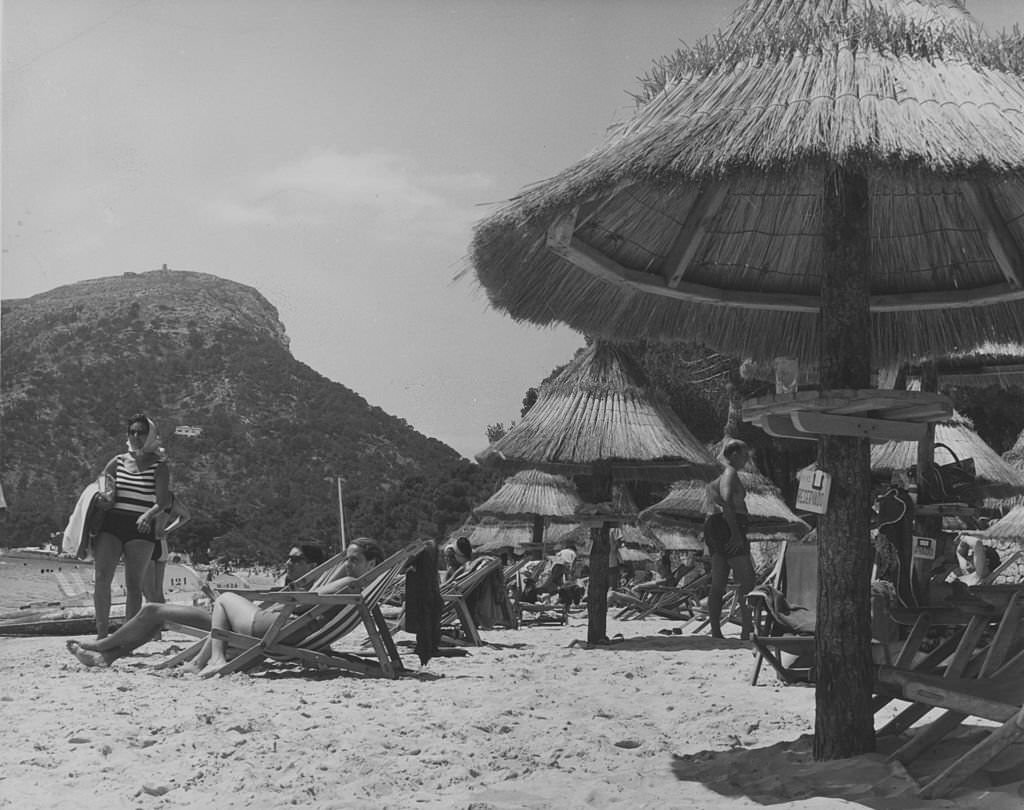
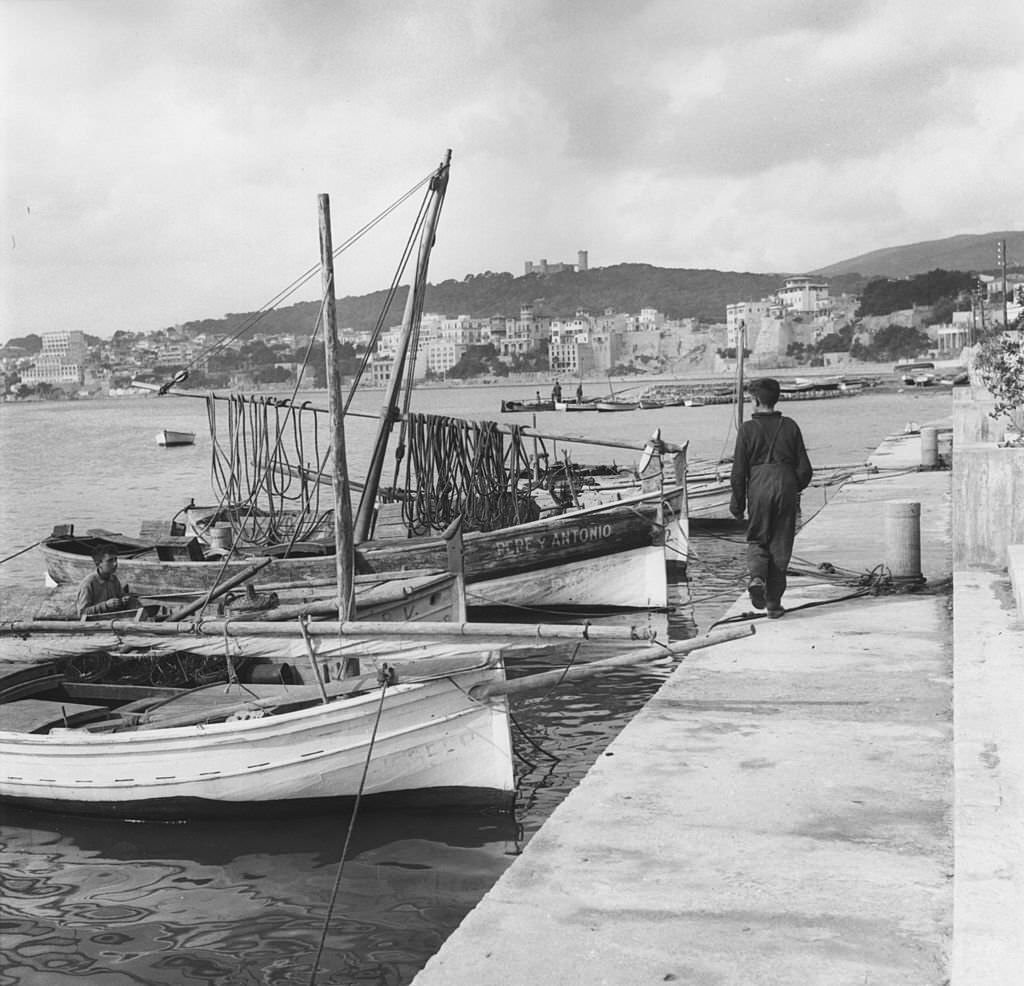
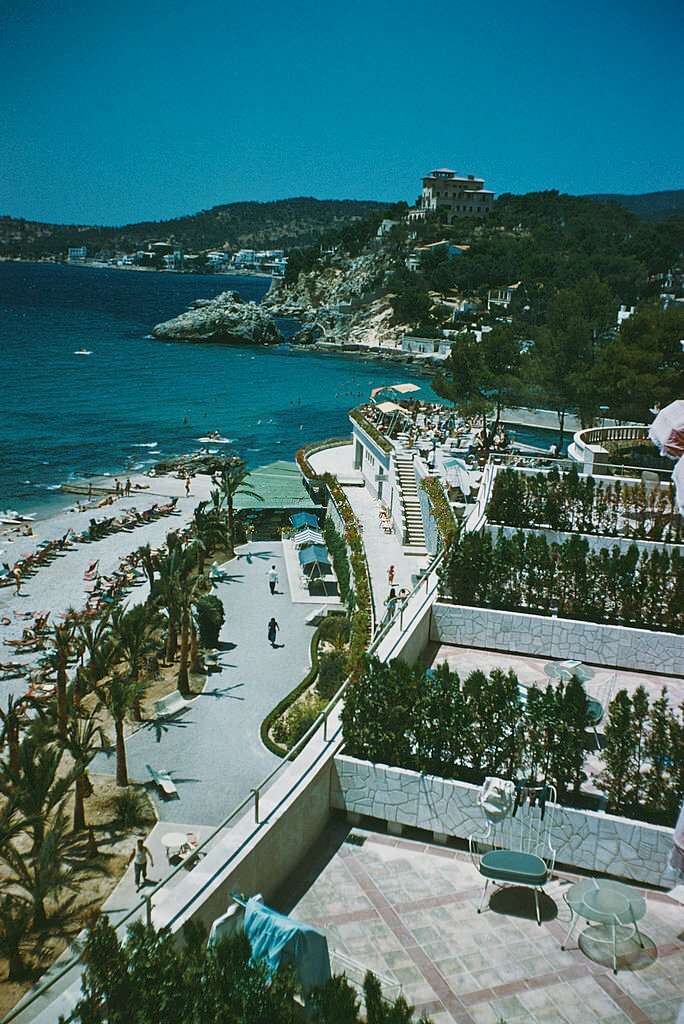
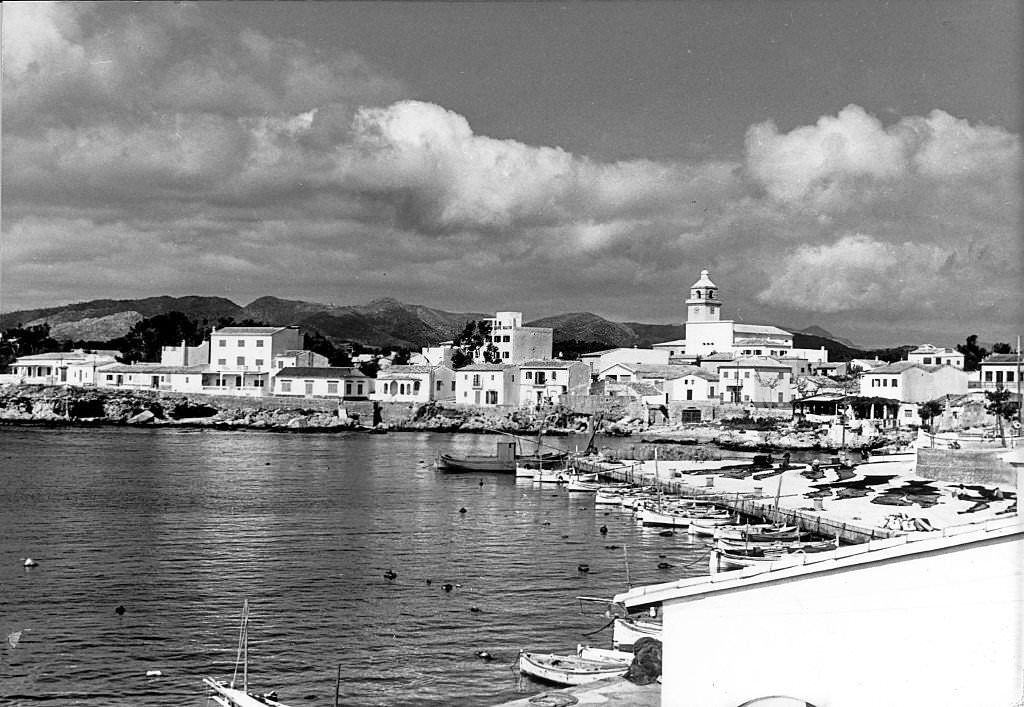
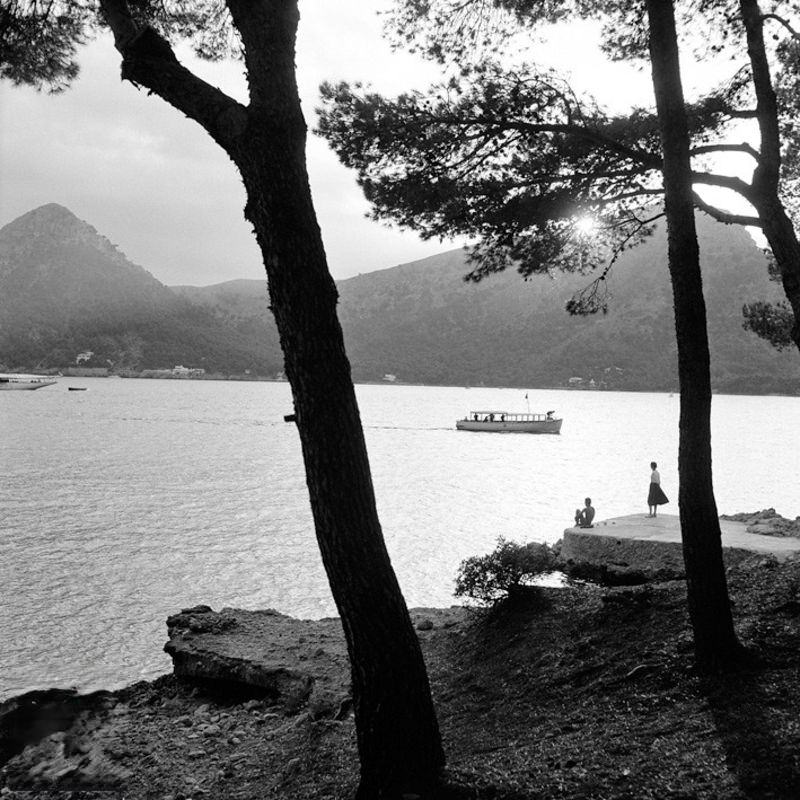
By 1955, the beaches at Formentor in the island’s north and the resort town of Port de Pollença were already drawing tourists to their shores. Straw beach umbrellas dotted the sand at Formentor, and small fishing boats bobbed in Palma’s harbour. Hotels were beginning to cluster along the bay. The Hotel Nixe Palace, photographed in 1958, was one of the establishments catering to a growing international clientele. The fishing village of Cala Ratjada on the island’s eastern tip still retained its quiet, unhurried character that same year.
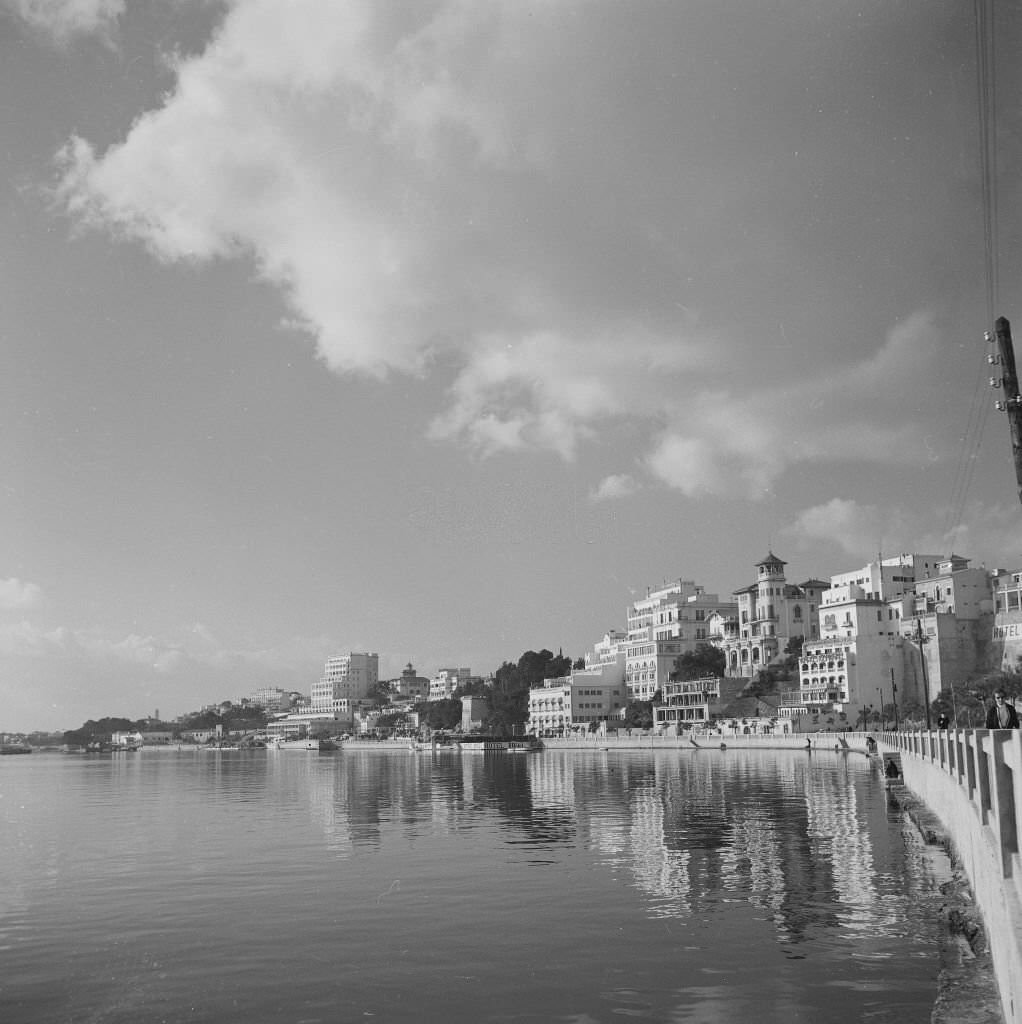
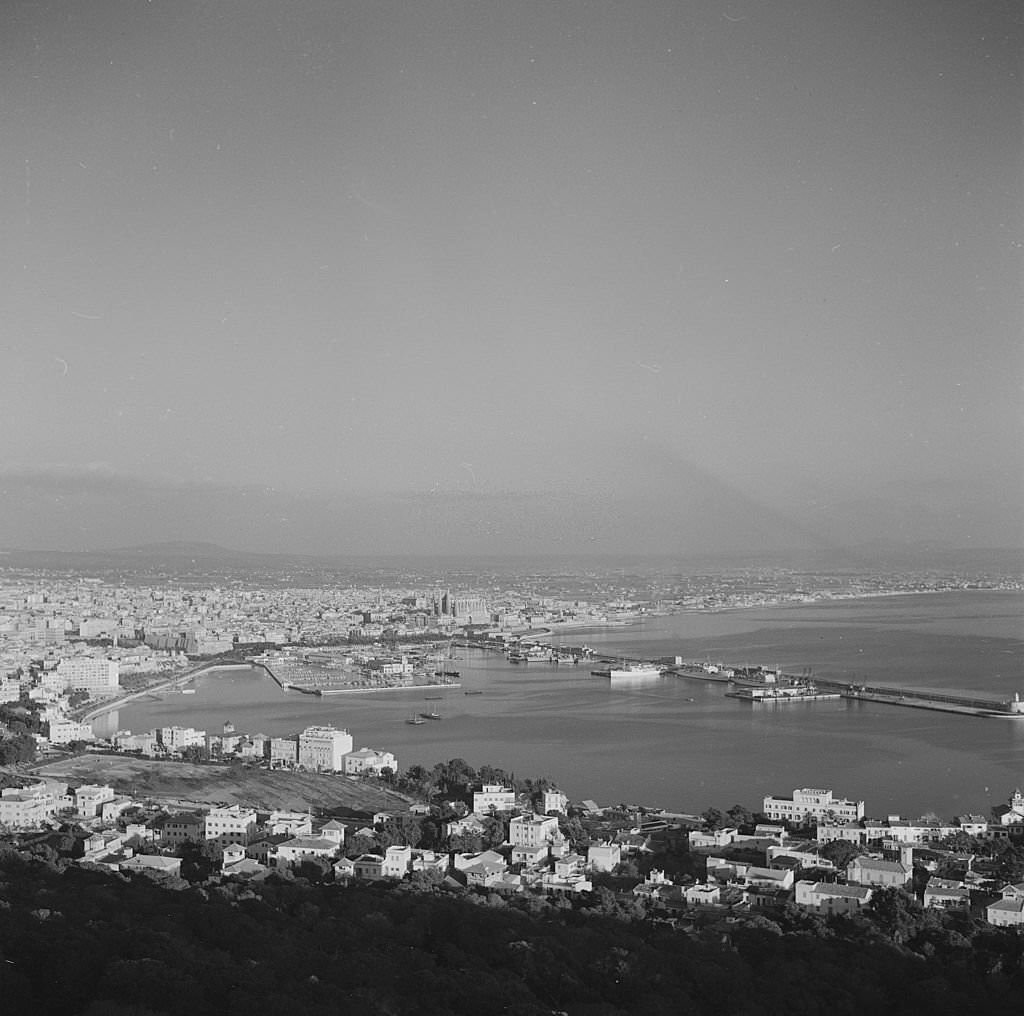
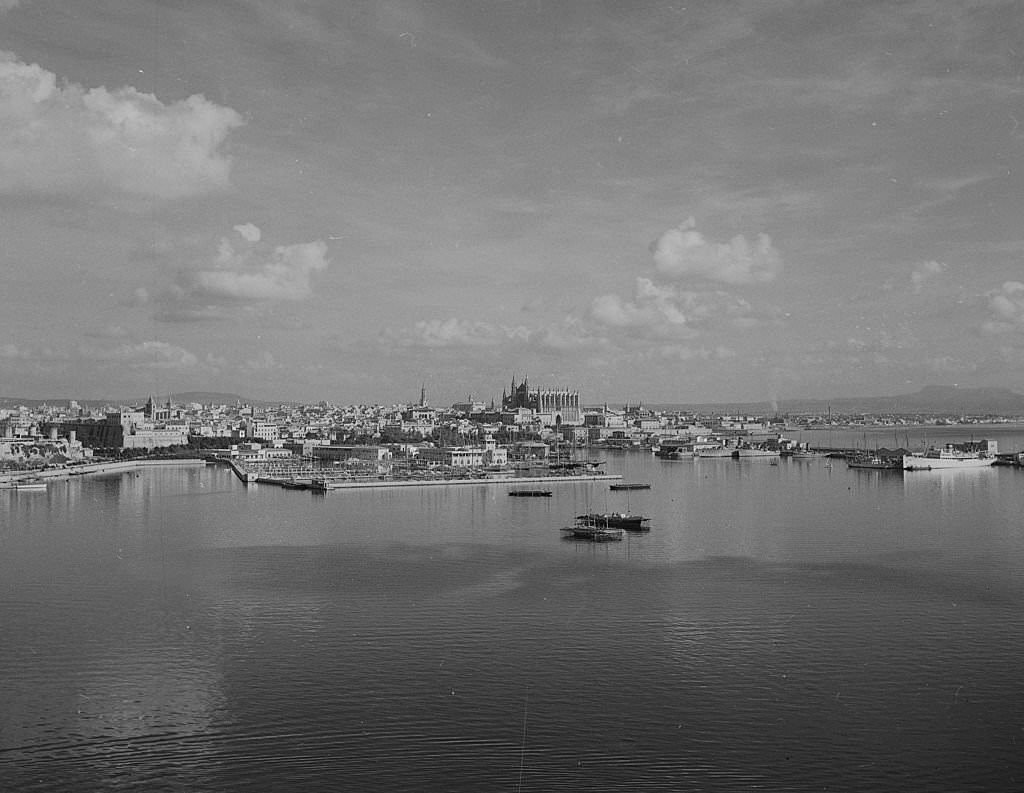
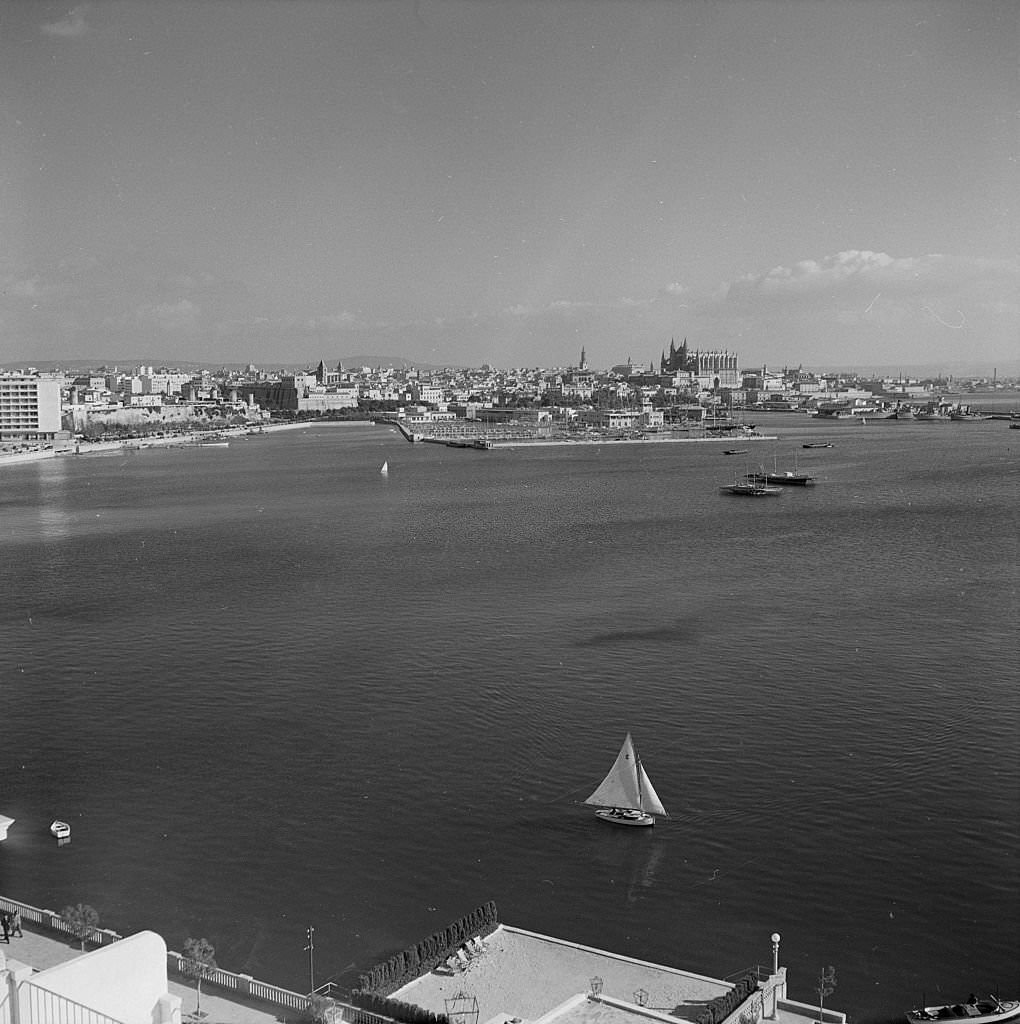
The resort town of Port de Pollenca (Puerto Pollensa) in north-eastern Majorca, 1955.Straw beach umbrellas at Formentor beach in Majorca, Balearic Islands, 1955A group of small fishing boats in the foreground of Palma harbour on the island of Majorca, 1955Hotel Nixe Palace, 1958View of the fishing village of Cala Ratjada in Mallorca, 1958The bay with the big hotels, December 1956.General view from Bellver castle, December 1956.Island of Majorca, 1956
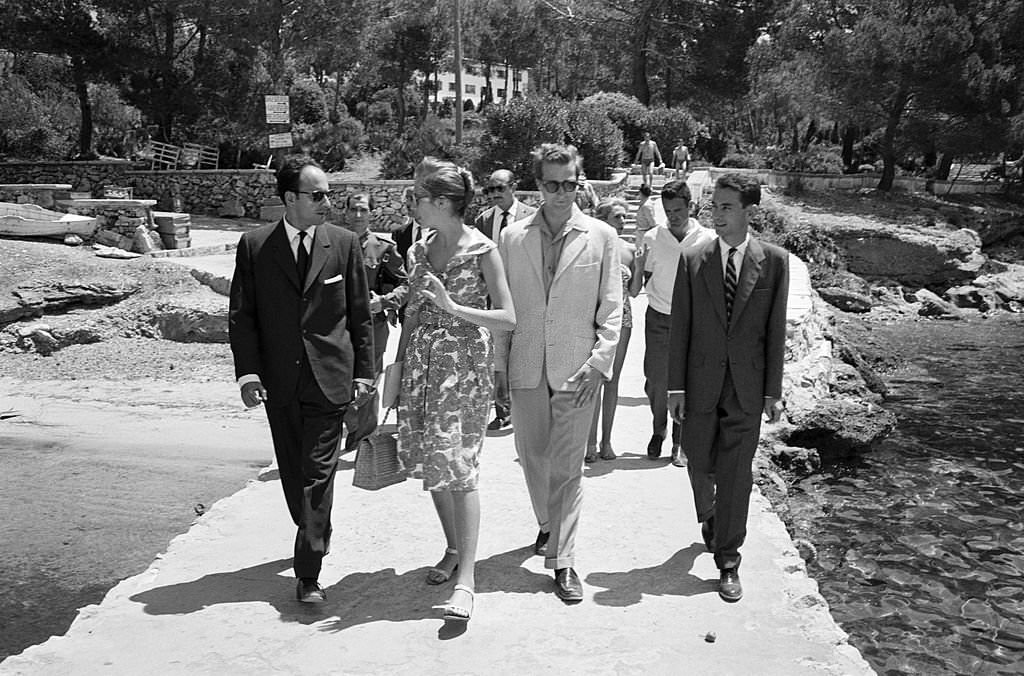
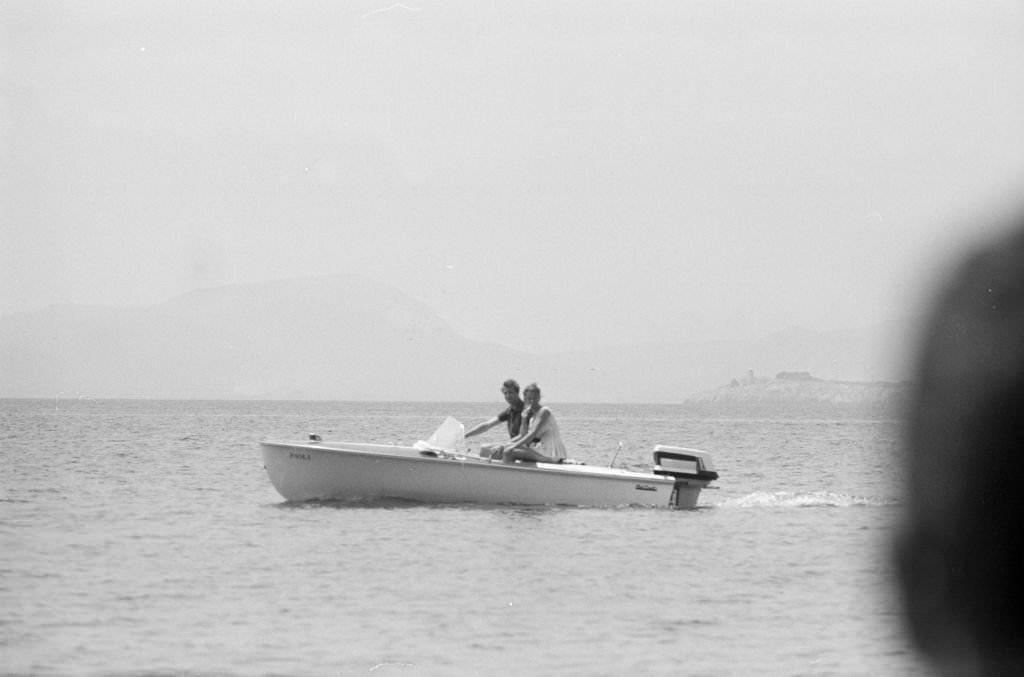
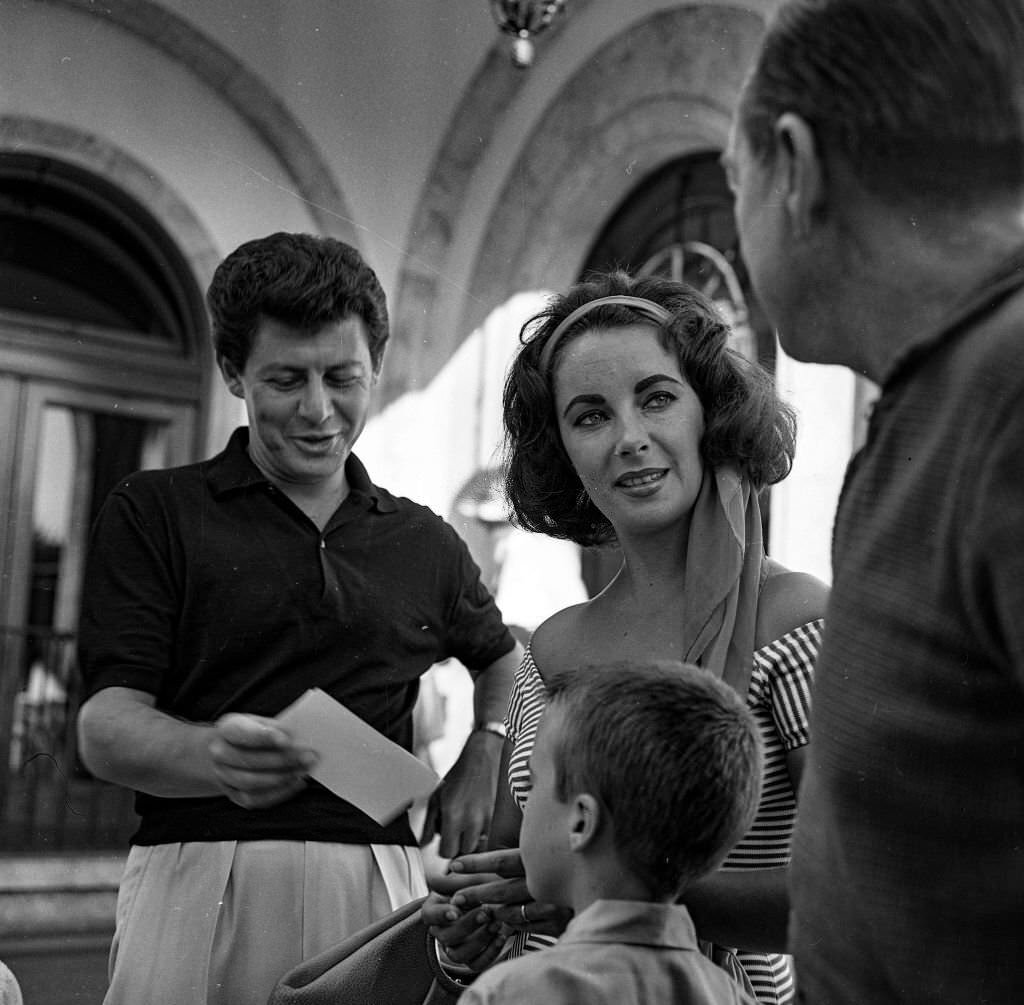
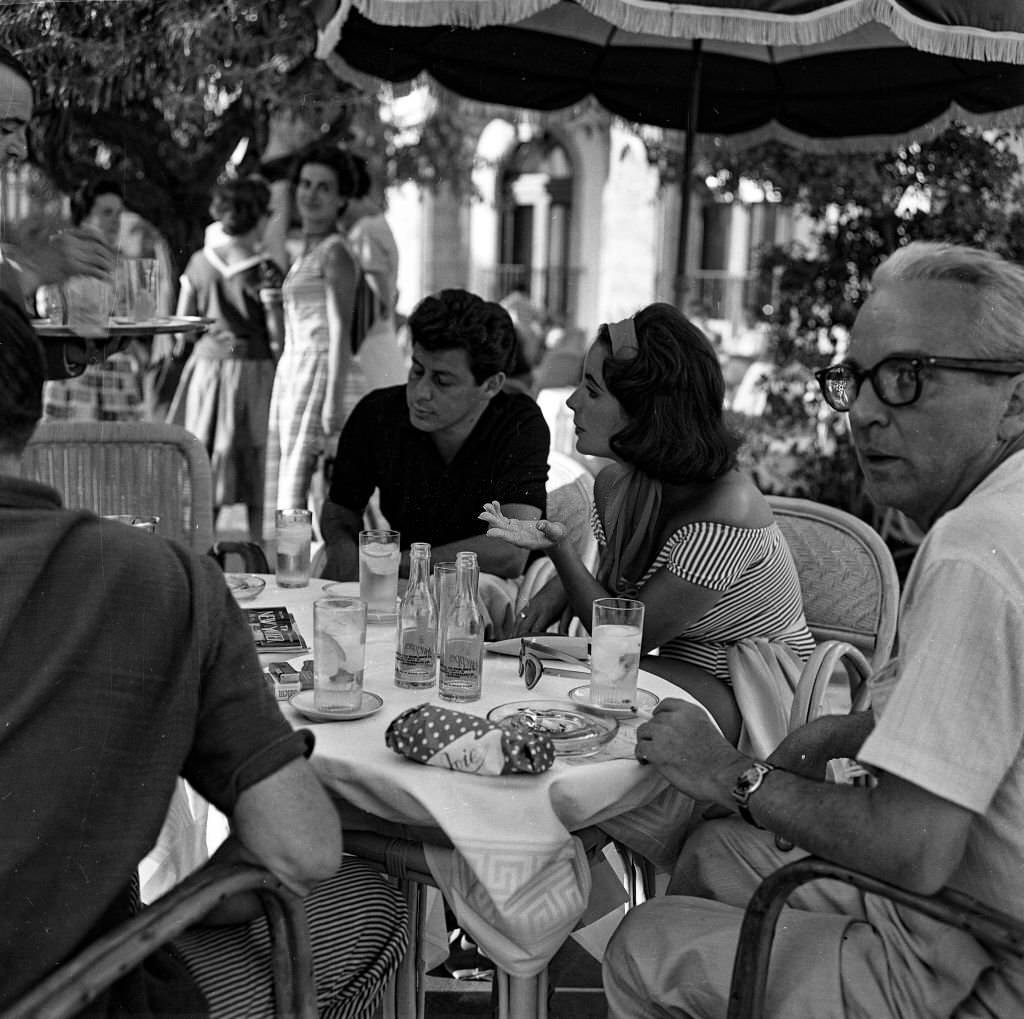
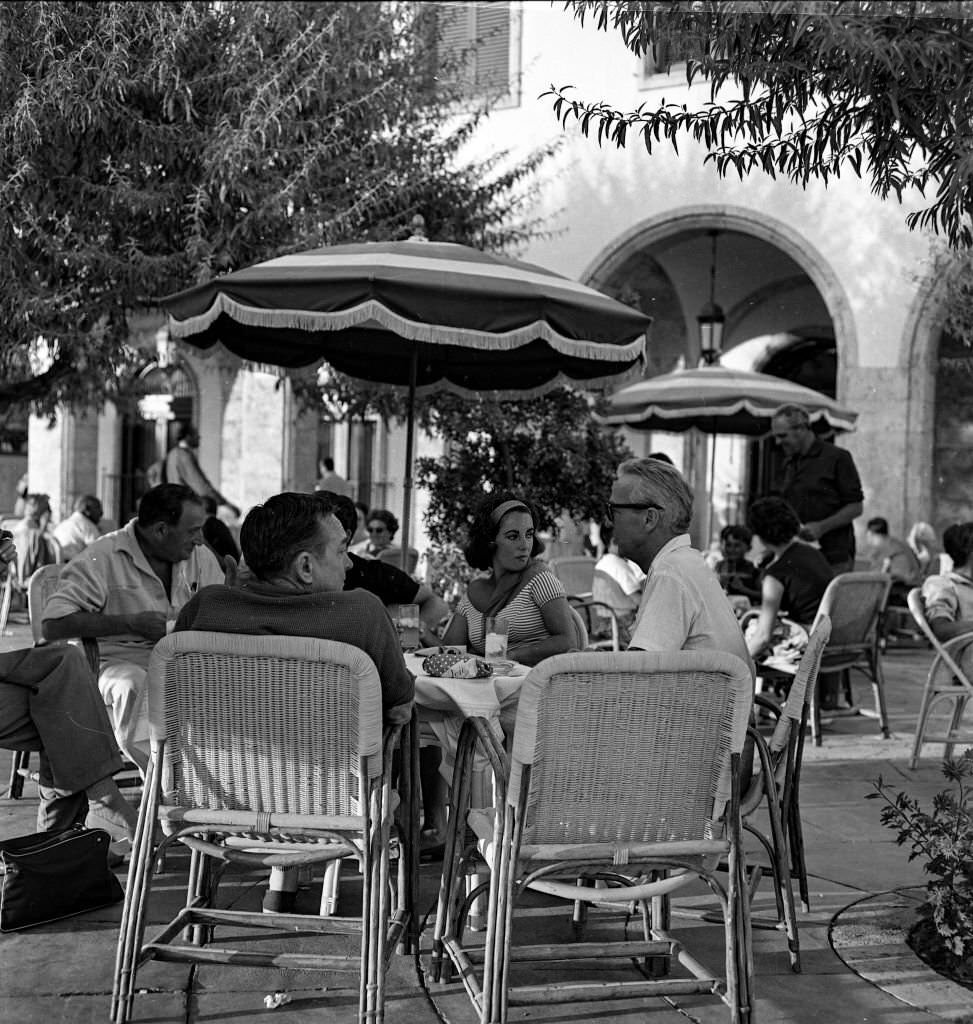
Some of the most glamorous visitors to arrive in Mallorca in 1959 were Prince Albert of Belgium and his new wife, Princess Paola, who chose the island for their honeymoon. The couple was photographed relaxing on the beach and strolling through local streets shortly after their July wedding. That same year, Hollywood actress Elizabeth Taylor and her husband Eddie Fisher vacationed on the island, drawing photographers eager to capture the couple at leisure in the Mediterranean sun.
Prince Albert De Liege and his wife Paola De Belgique, on their honeymoon in Majorca, 1959Honeymoon of Albert and Paola of Belgium in Majorca, 1959Prince Albert De Liege and his wife Paola De Belgique, on their honeymoon in Majorca, 1959Prince Albert De Liege and his wife Paola De Belgique, on their honeymoon in Majorca, 1959Honeymoon of Albert and Paola of Belgium in Majorca, 1959British actress, Elizabeth Taylor and her current husband, Eddie Fisher (L) enjoy a holiday in Mallorca, 1959British actress, Elizabeth Taylor and her current husband, Eddie Fisher (L) enjoy a holiday in Mallorca, 1959Elizabeth Taylor and her husband, Eddie Fisher (not pictured) enjoy a holiday in Mallorca, 1959
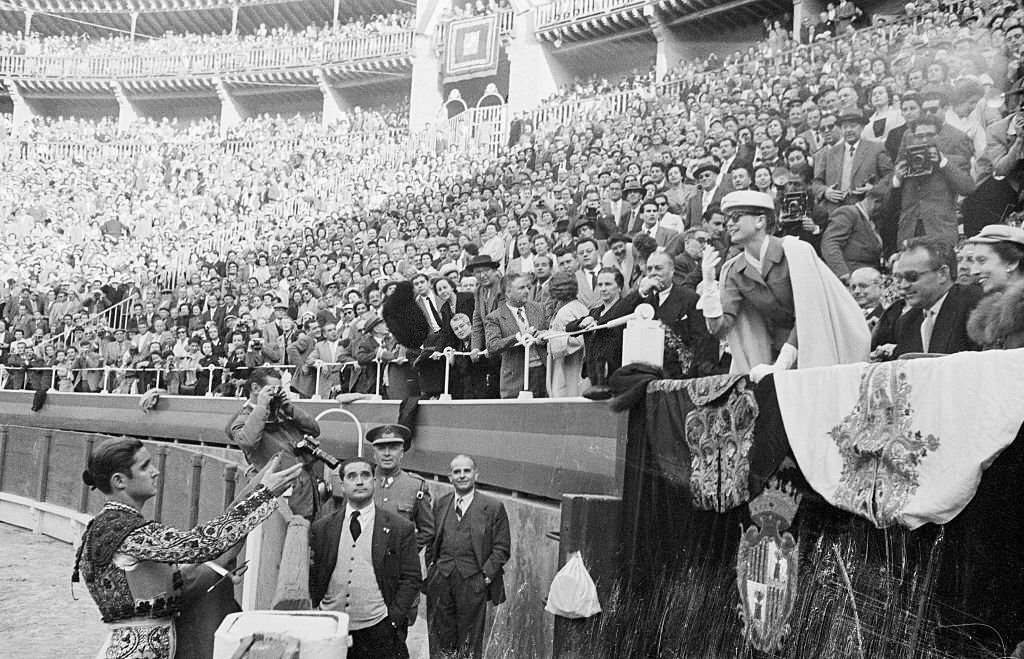
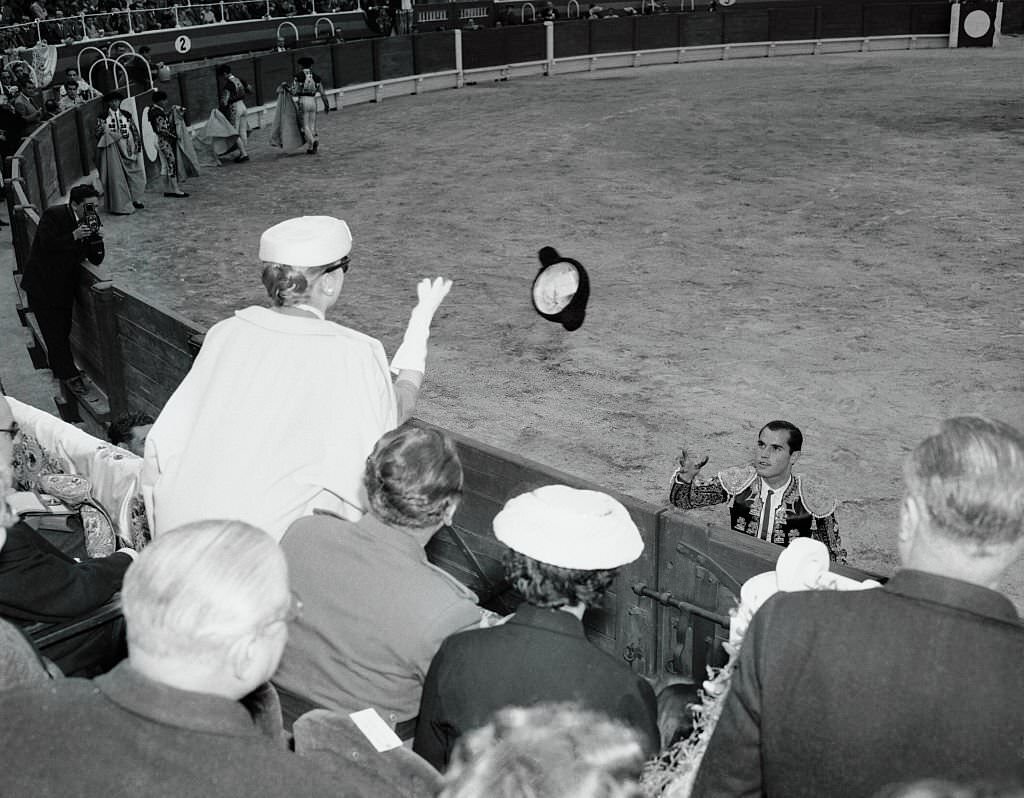
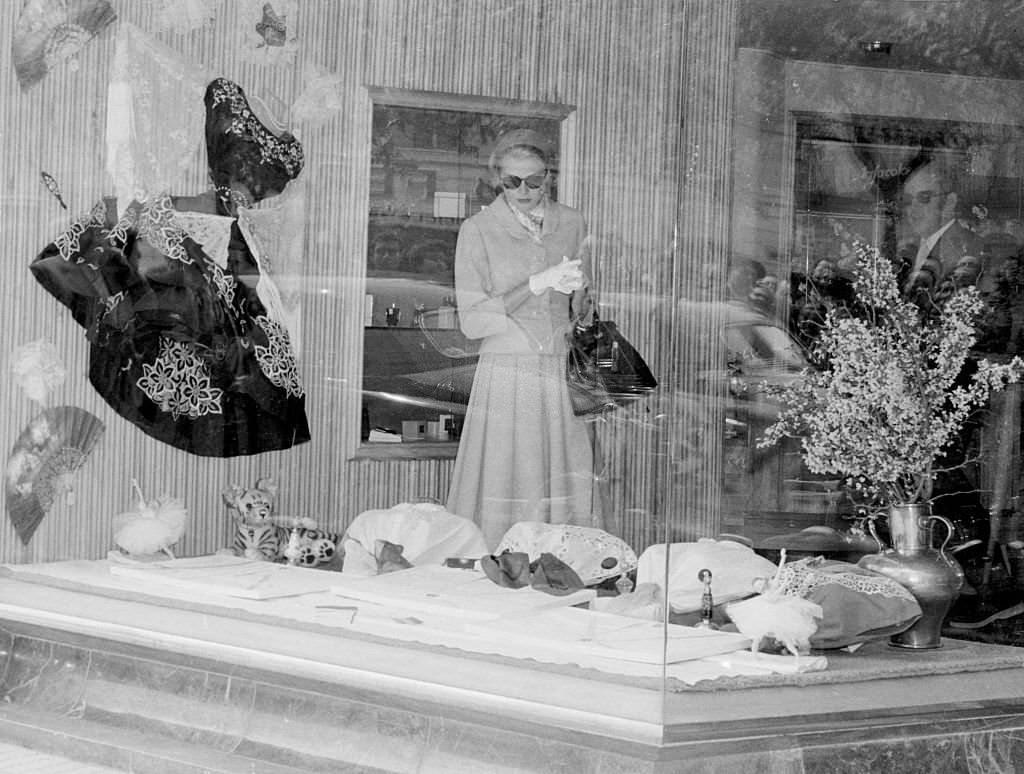
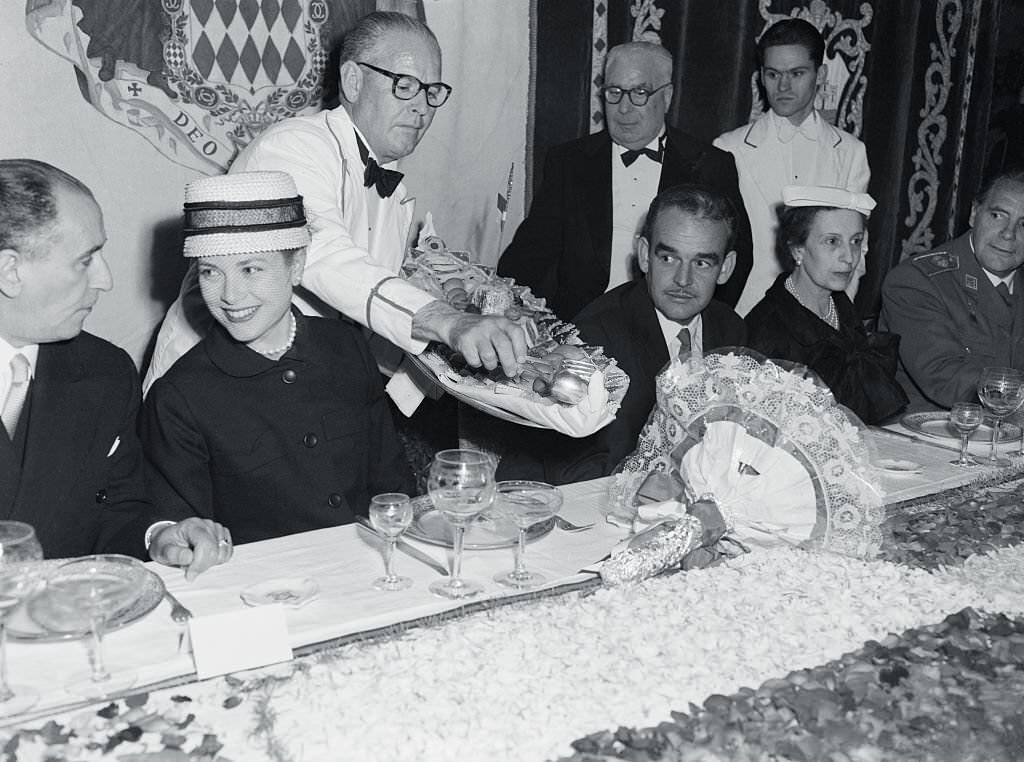
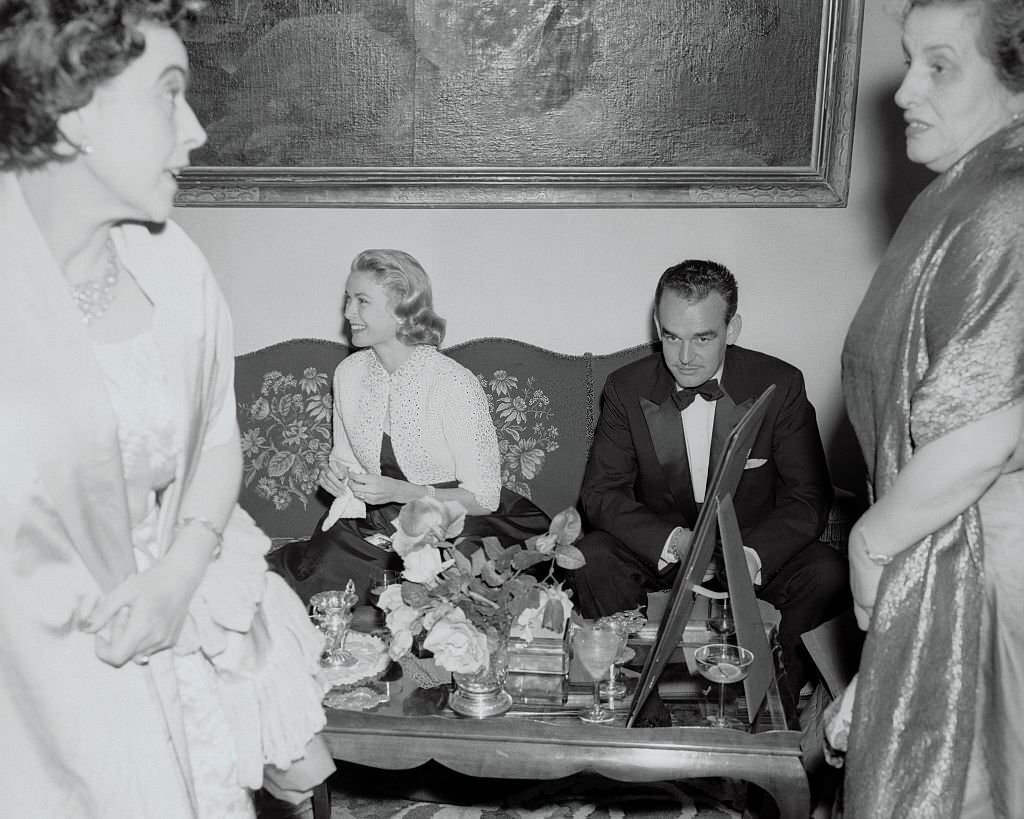
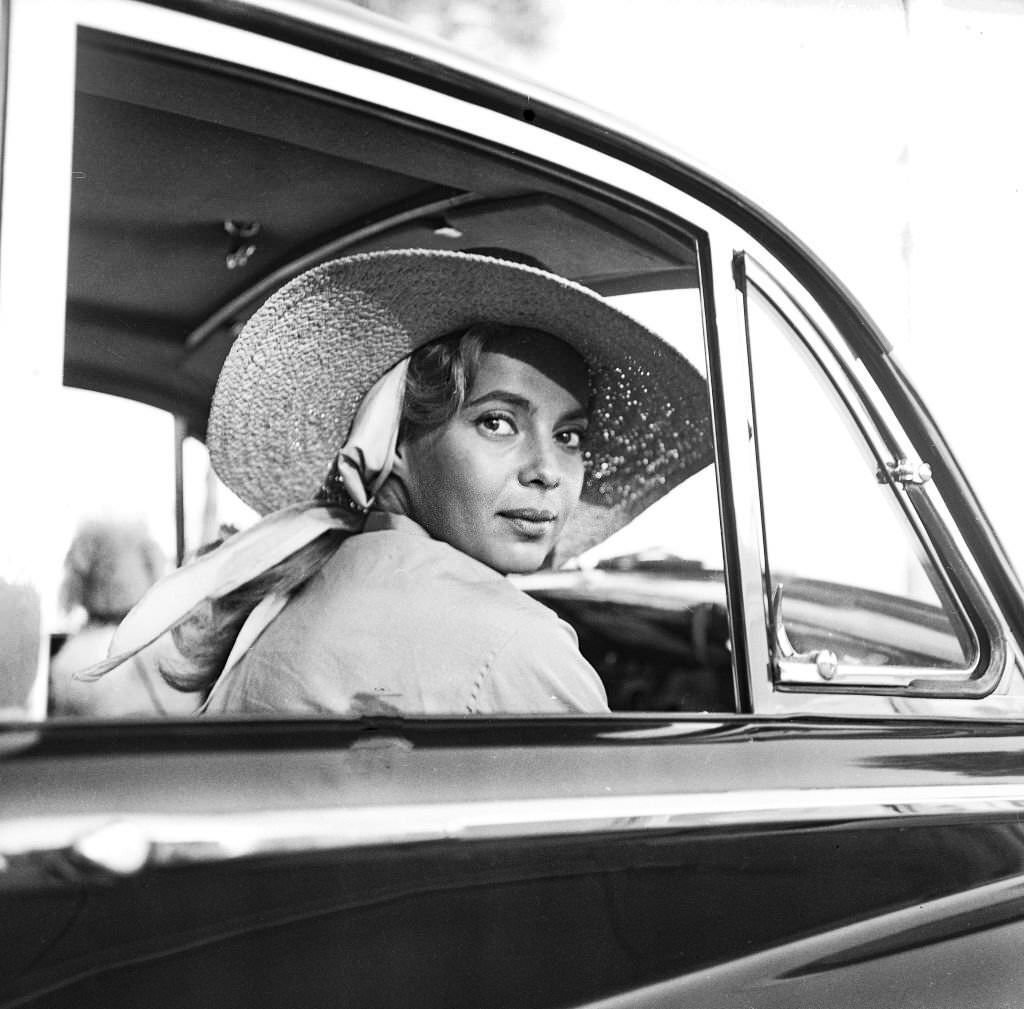
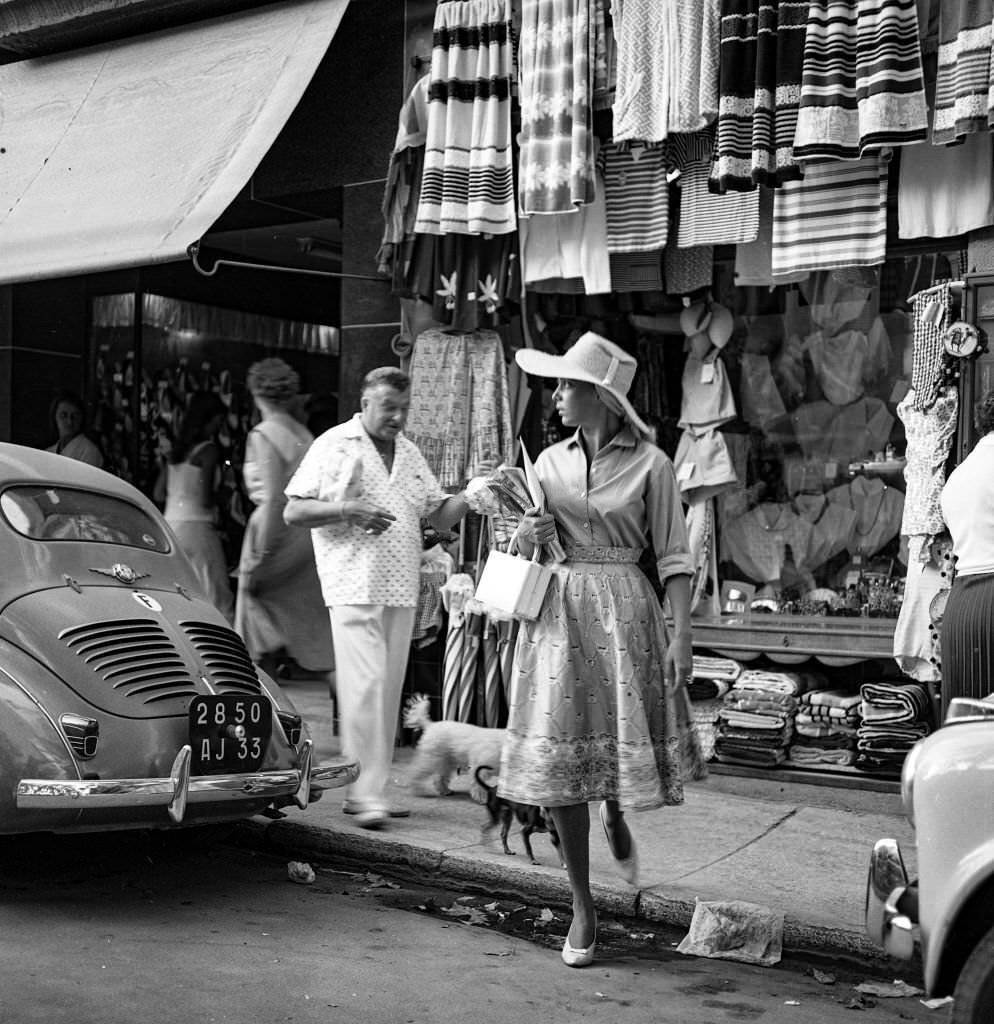
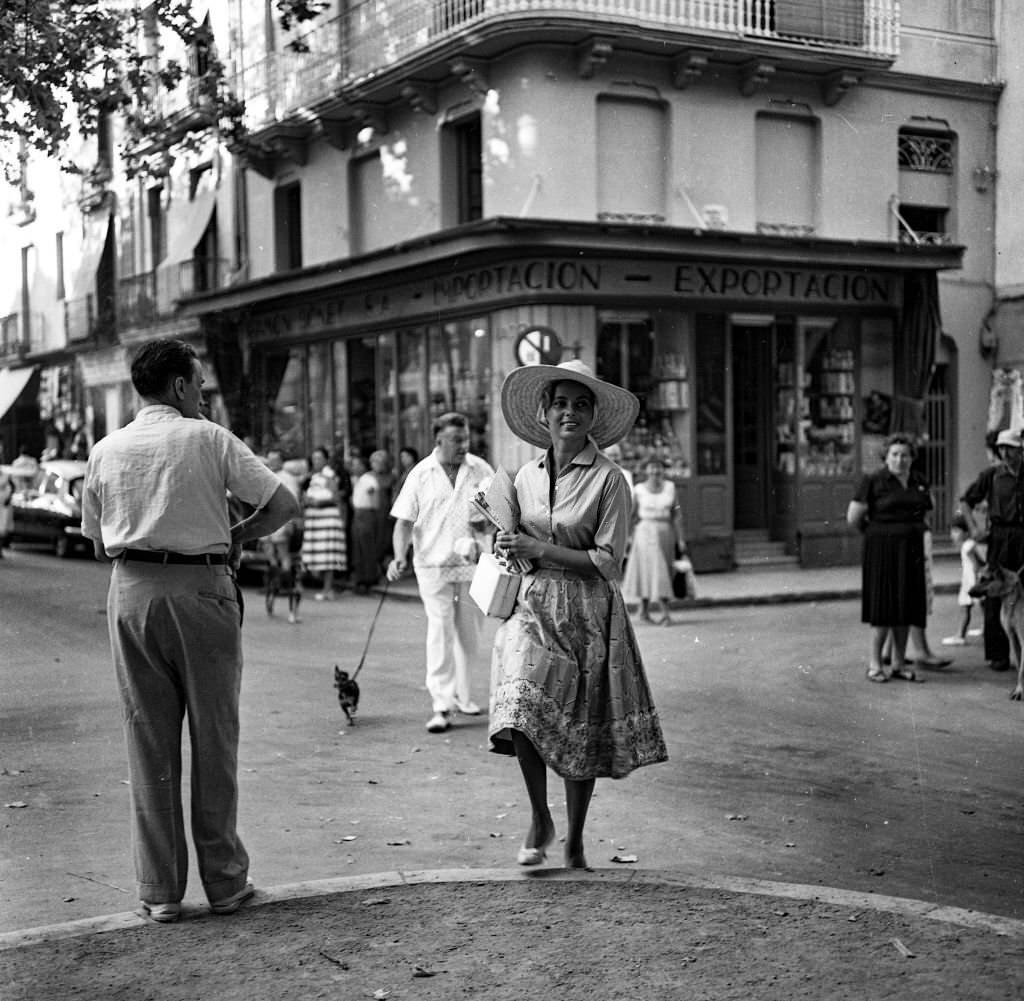
Princess Grace of Monaco — the former American actress Grace Kelly — also visited Mallorca with her husband Prince Rainier III. During their stay, the couple attended a bullfight at the Palma ring, where Grace famously tossed a matador’s cap back into the arena. She was also photographed shopping in the streets of Palma, browsing local goods with the ease of someone fully at home in the island’s unhurried pace. Singer and actress Abbe Lane visited in 1959 alongside her husband, bandleader Xavier Cugat, and the couple was photographed walking through Mallorcan streets with their dog.
Princess Grace Tossing a Cap to a Matador.Princess Kelly Throwing a Hat to a Matador in Mallorca, 1958Princess Grace Shopping in Mallorca, 1950sPrincess Grace and Prince Rainier Attending a Reception in Mallorca, 1958Grace Kelly Sitting Next to Prince Rainier in Mallorca, 1950sActress and singer Abbe Lane walks through the streets of Mallorca accompanied by her husband Xavier Cugat and their dog in Mallorca, 1959.Singer and actress Abbe Lane while on vacation with her husband the musician Xavier Cugat in Mallorca, 1959Actress and singer Abbe Lane walks through the streets of Mallorca, 1959Actress and singer Abbe Lane walks through the streets of Mallorca accompanied by her husband Xavier Cugat and their dog.
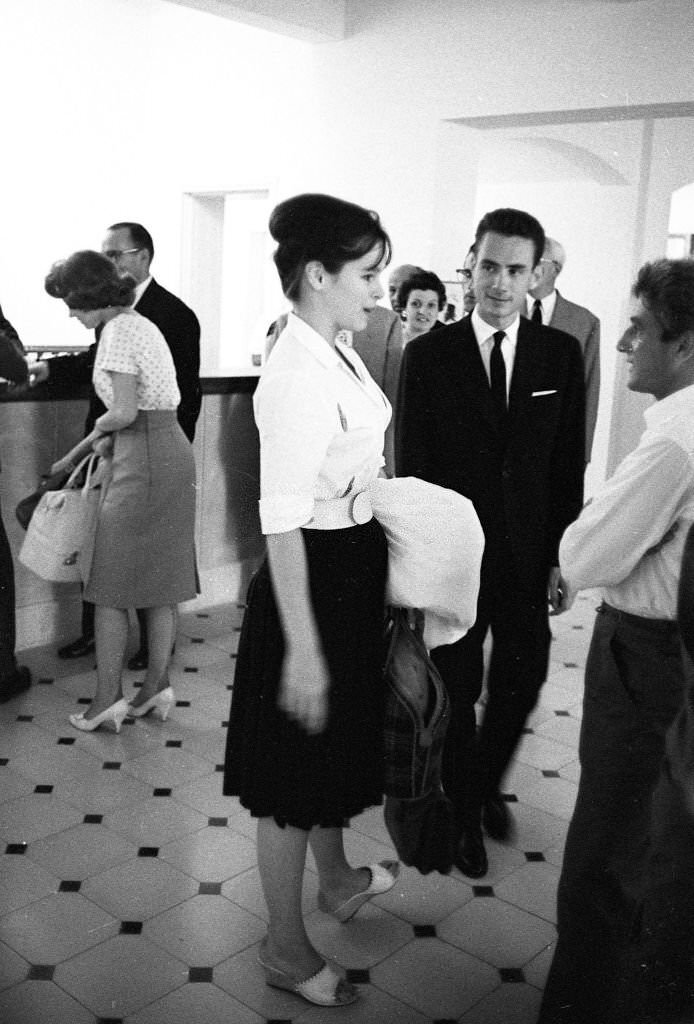
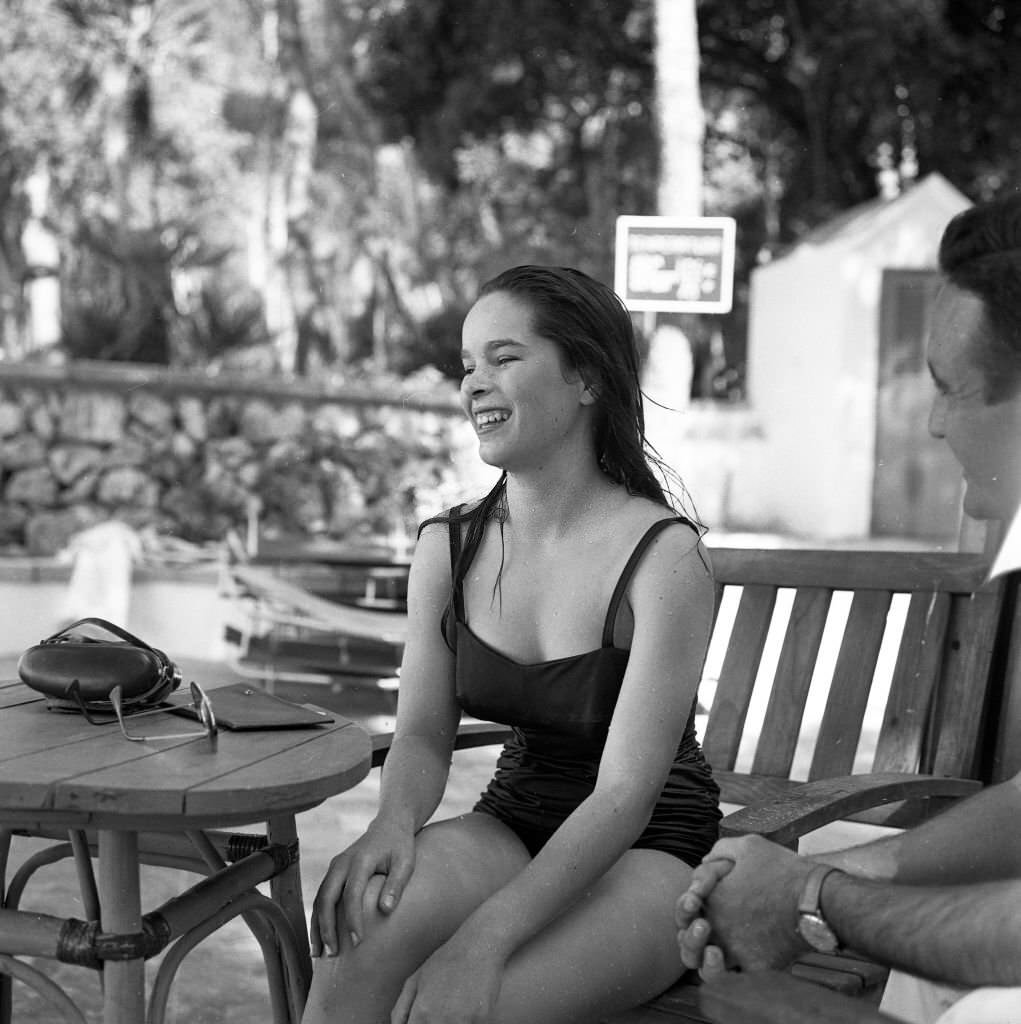
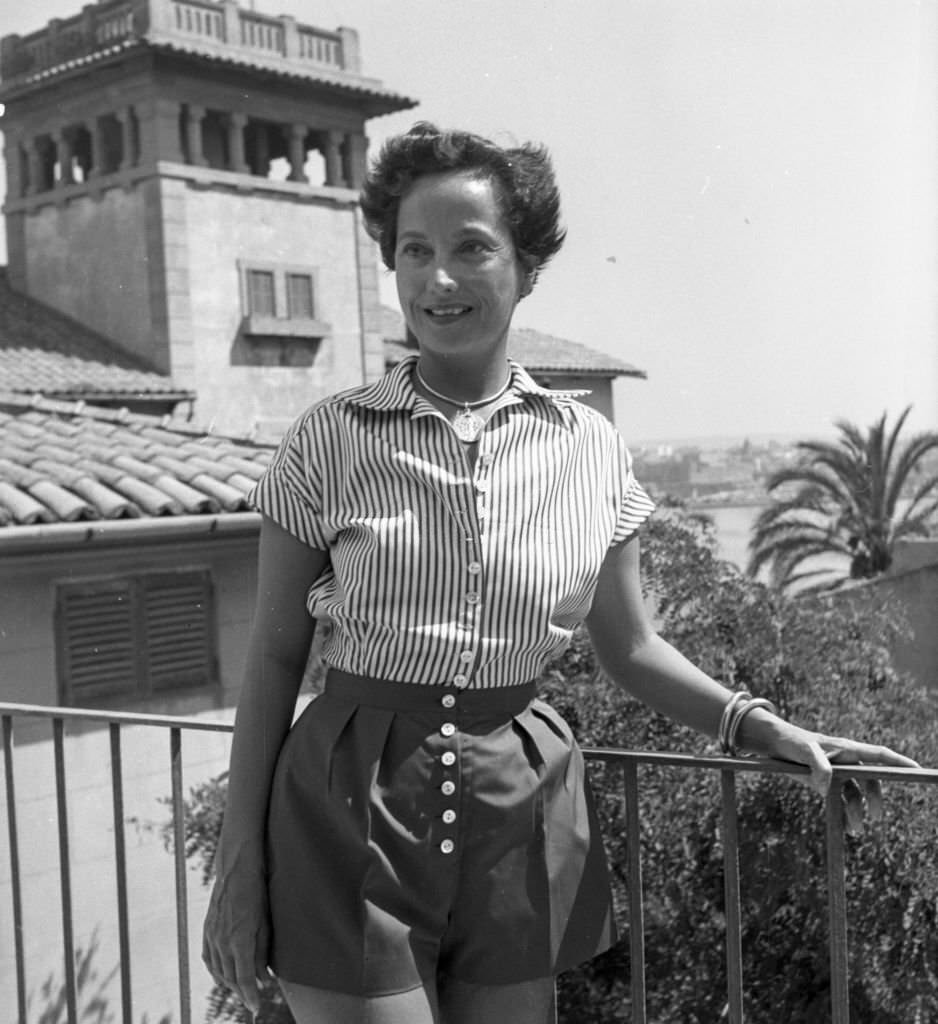
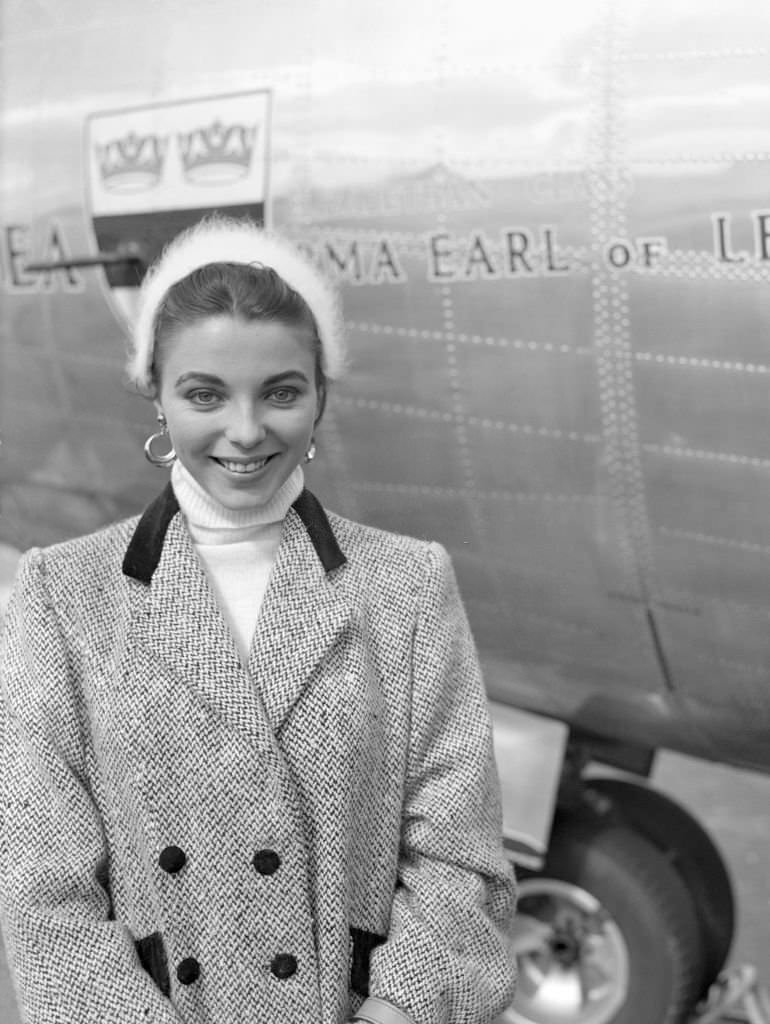
Charlie Chaplin brought his family to Mallorca in 1959 as well. His wife, Oona O’Neill, was photographed with their children during the holiday. Actress Merle Oberon had visited even earlier, in August 1953, posing for a portrait in Palma. Actress Joan Collins was also captured on her way to the island during the 1950s. These visits reflected Mallorca’s growing status as a preferred escape for international celebrities seeking sun, privacy, and beauty in equal measure.
Family of Charles Chaplin in Mallorca, 1959Oona O’Neill, wife of Charles Chaplin during a family holiday in Mallorca, 1959Portrait of Merle Oberon during her vacation in Palma de Mallorca, August 29, 1953.Joan Collins leading to Mallorca, 1950s
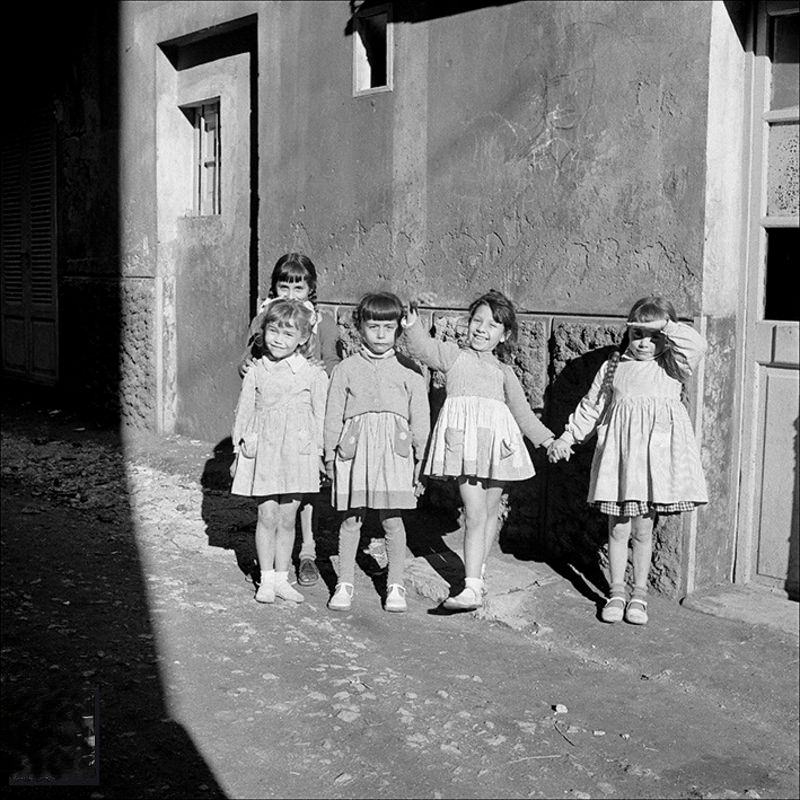
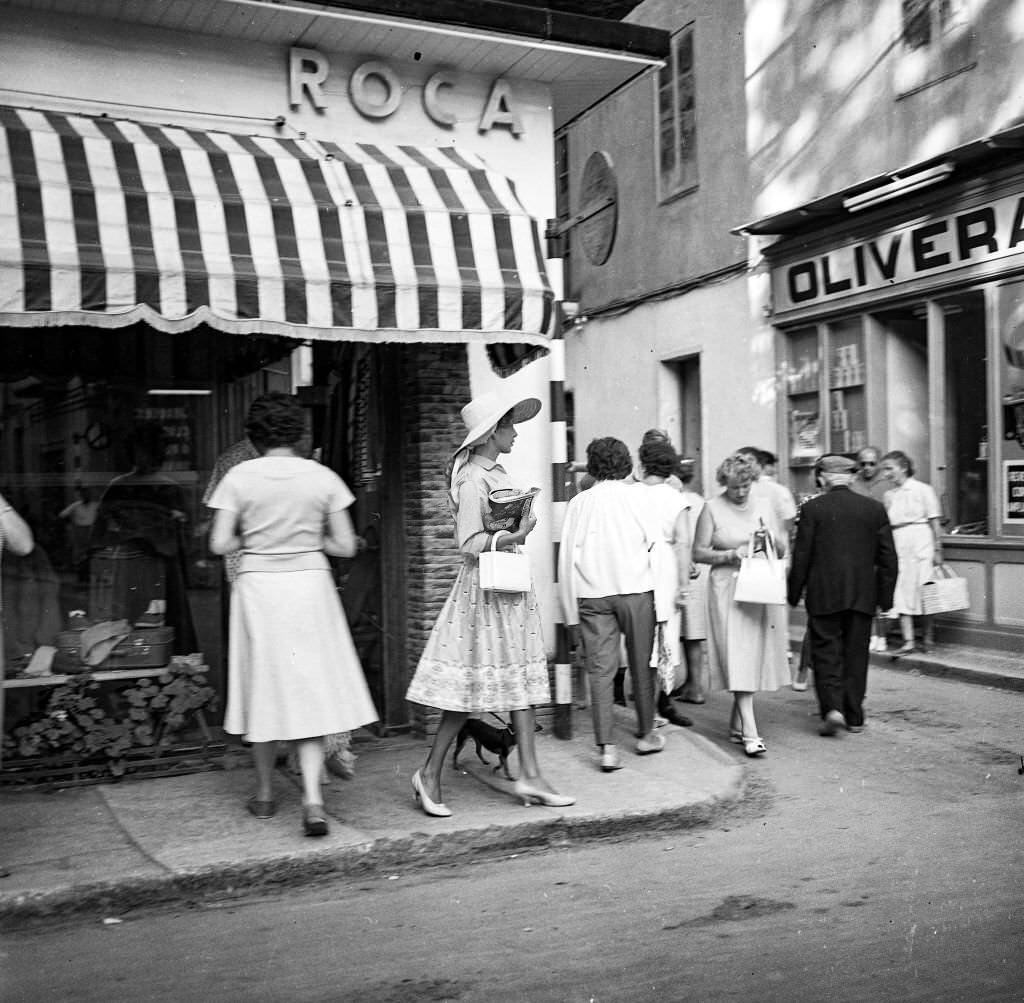
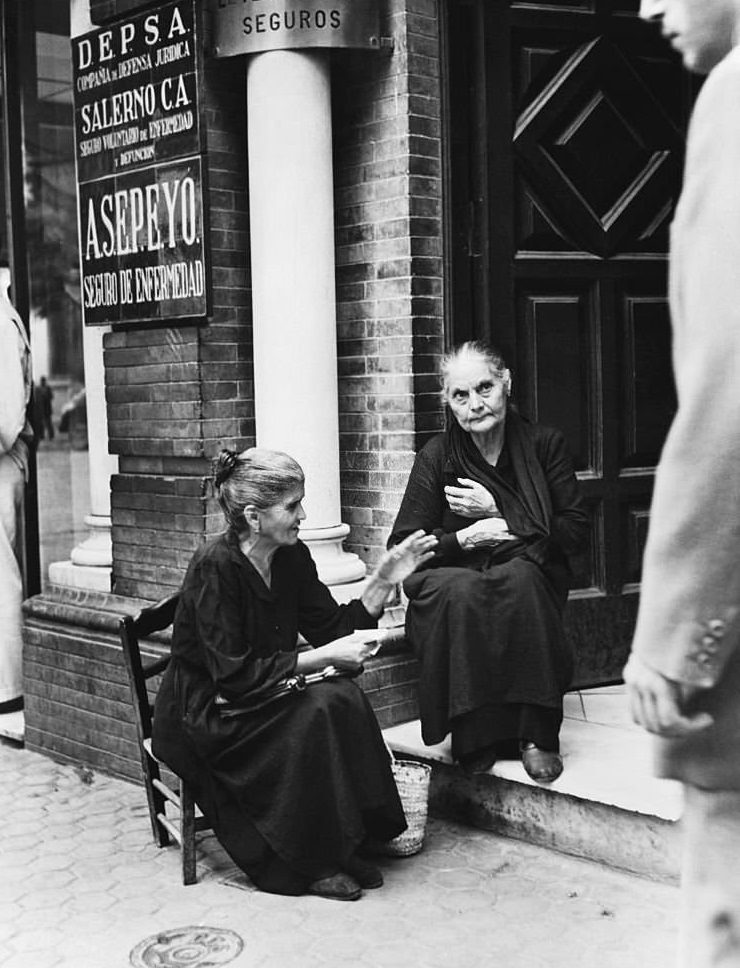
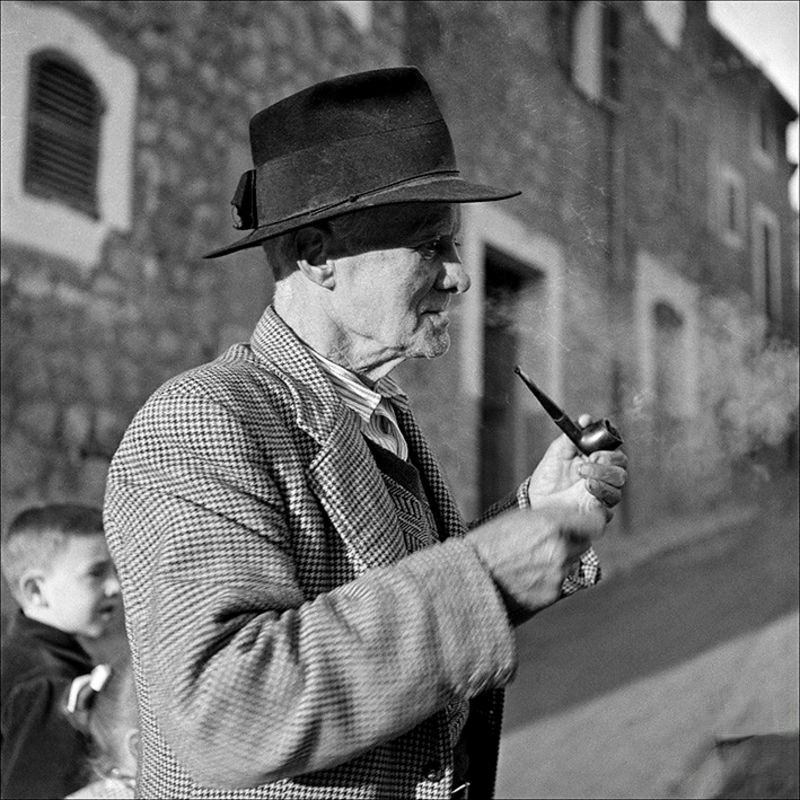
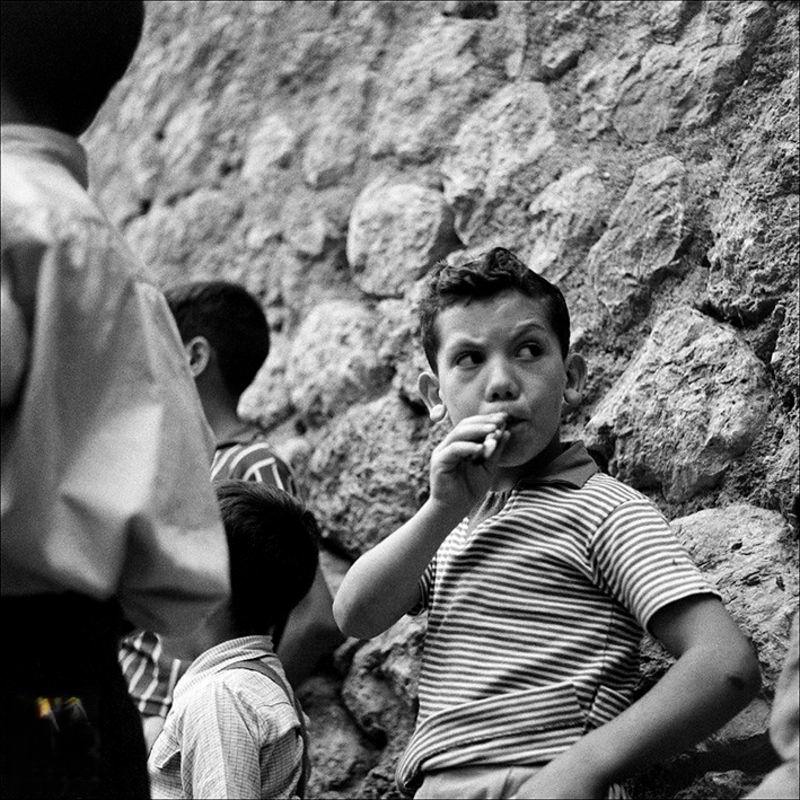
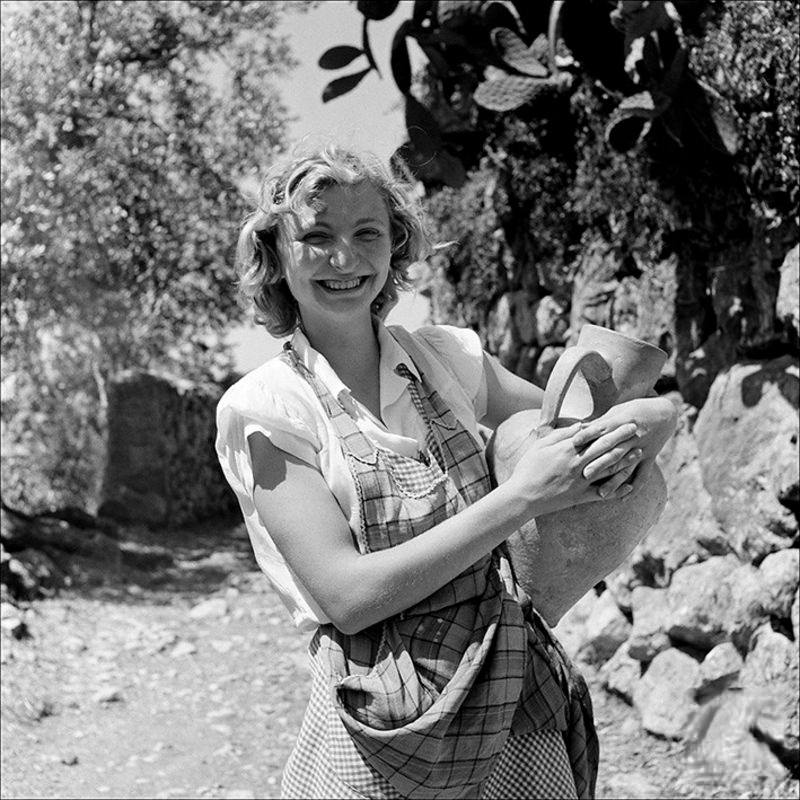
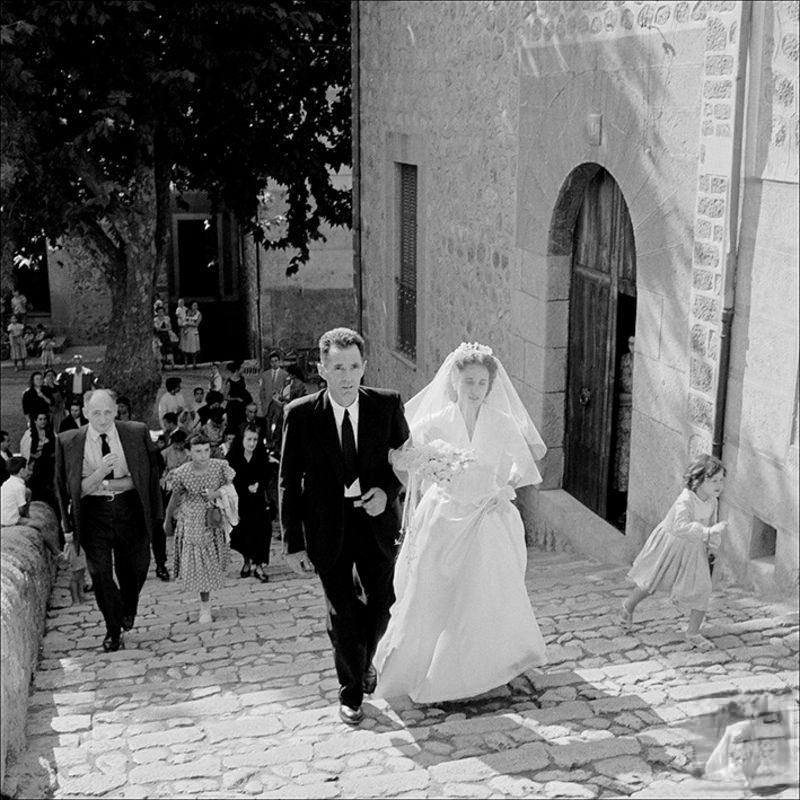
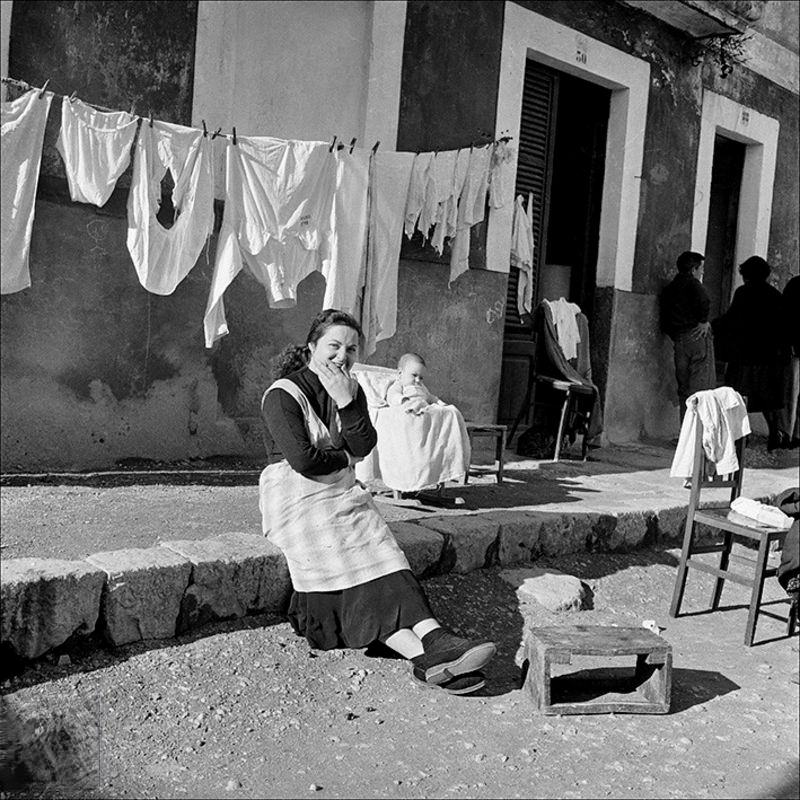
Away from the celebrity visitors and the growing hotel strips, ordinary Mallorcan life continued in ways that had changed very little. Two old women sat chatting on a doorstep. A man smoked in the street while children played behind him. A boy sucked on a stick of liquorice. A woman carried a clay pitcher. A bride was walked by a companion through a crowd. These quiet, unhurried moments are among the most telling images in the entire collection — they show a community still deeply rooted in its own rhythms, not yet reshaped by the tourism wave building just beyond the horizon.
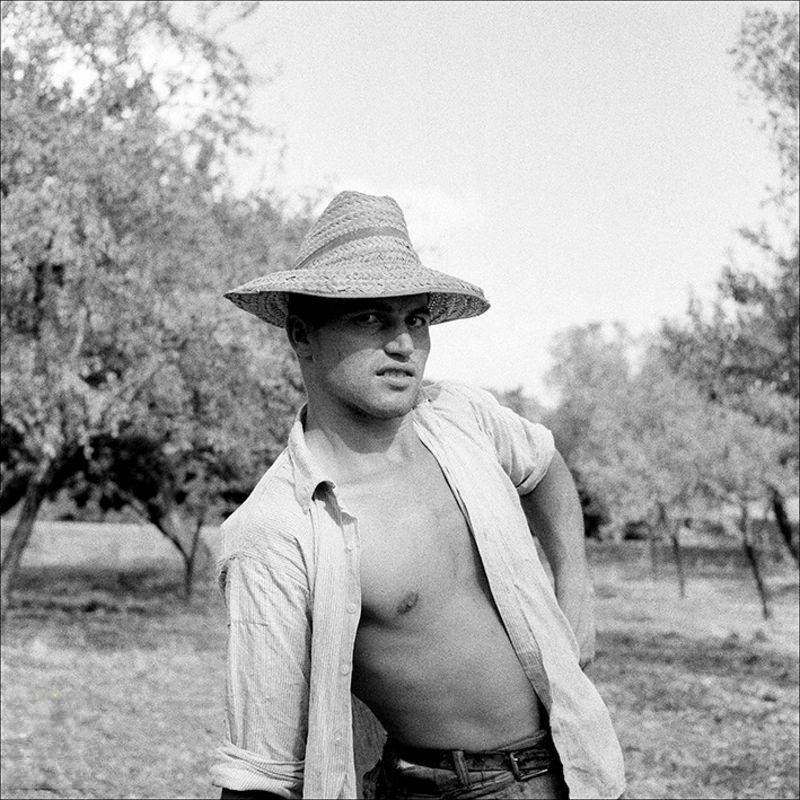
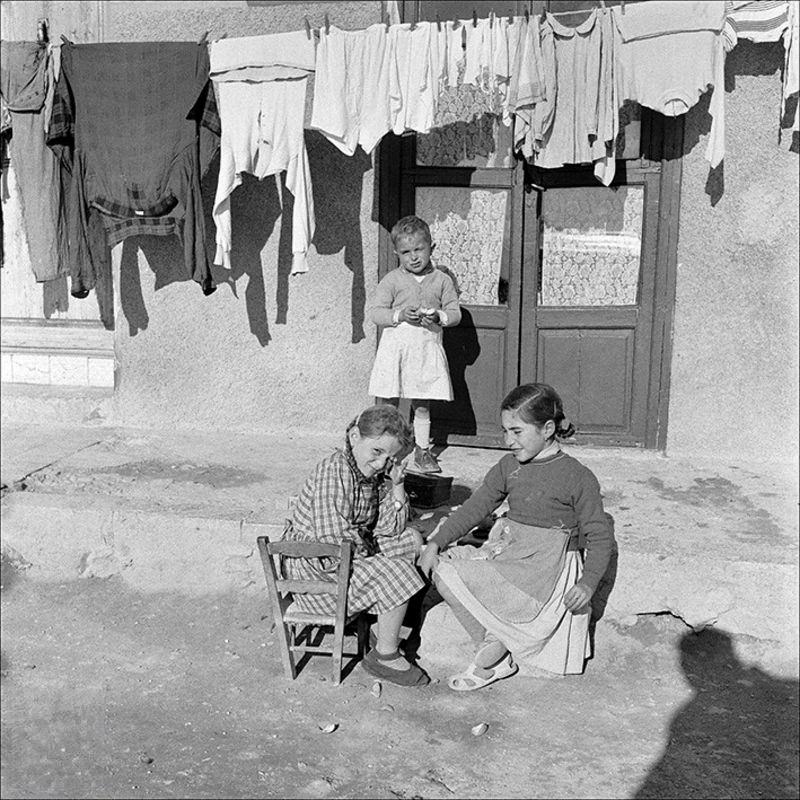
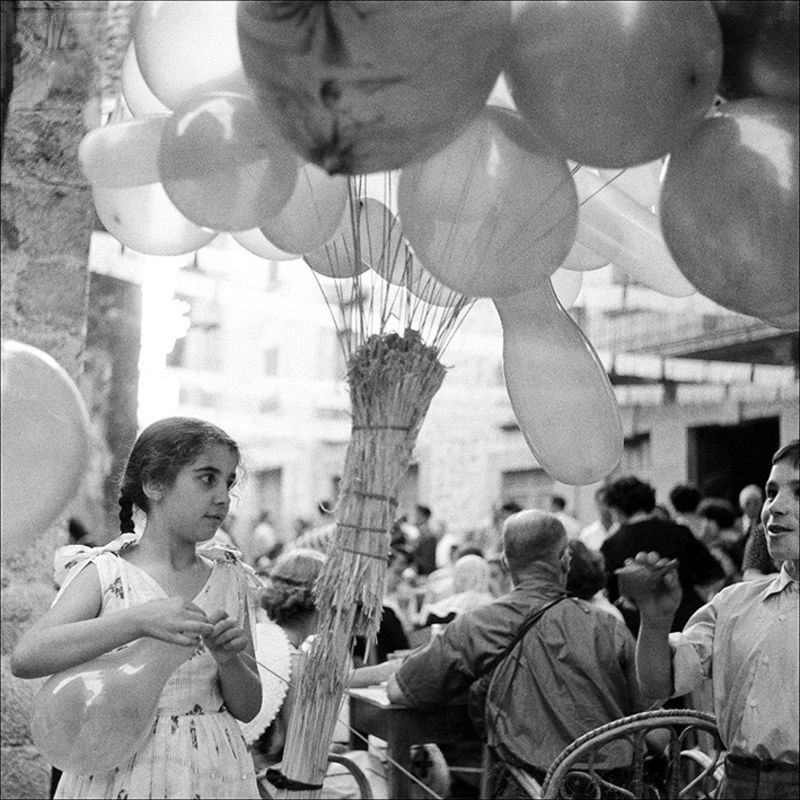
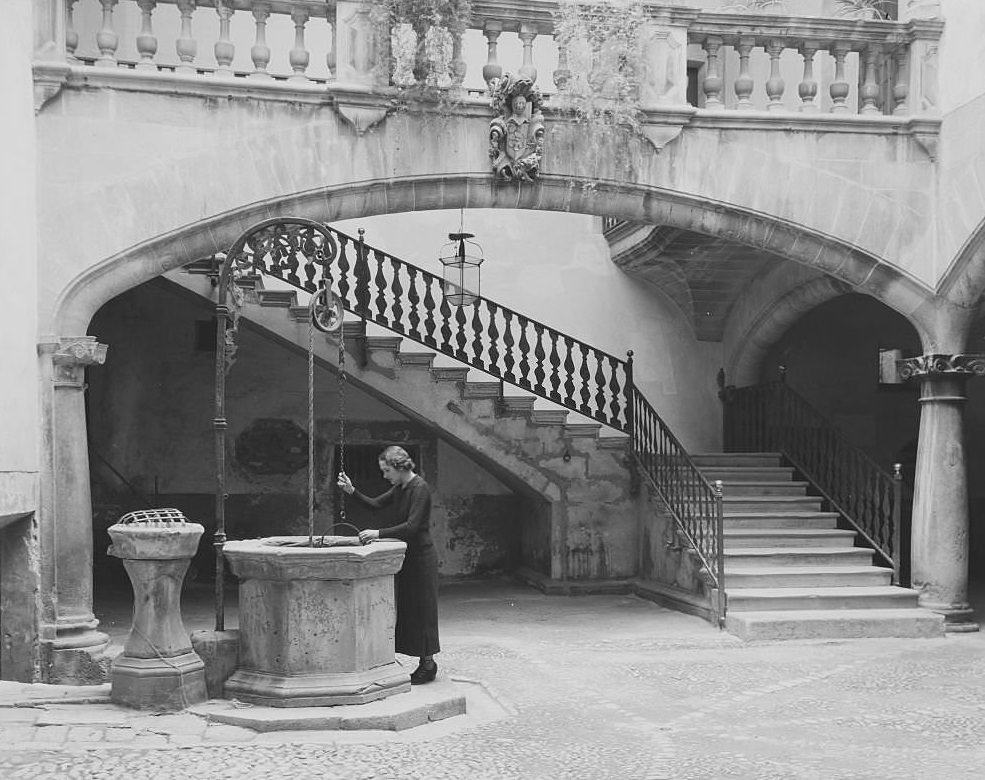
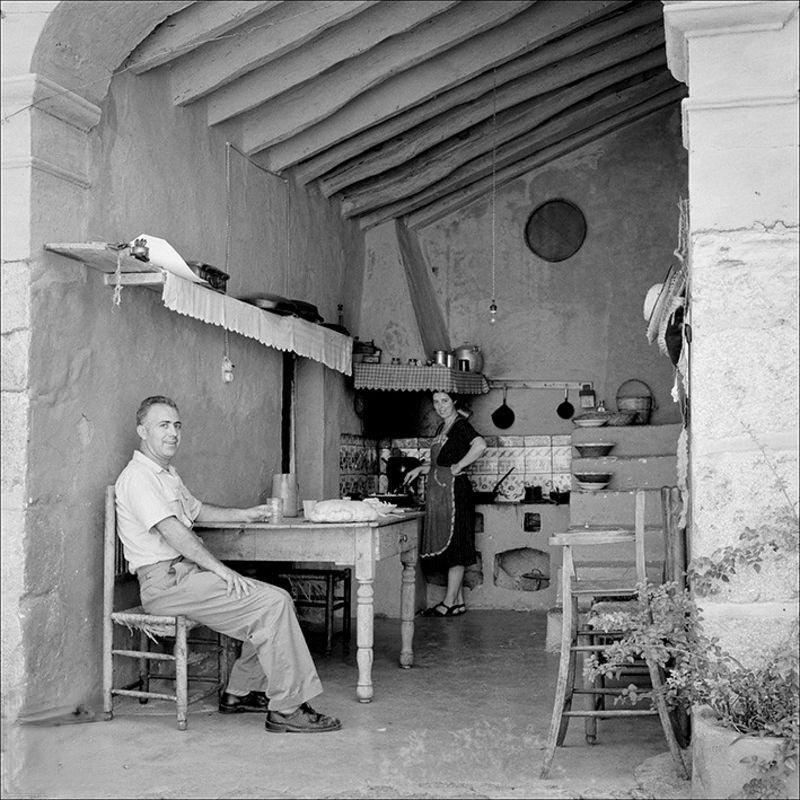
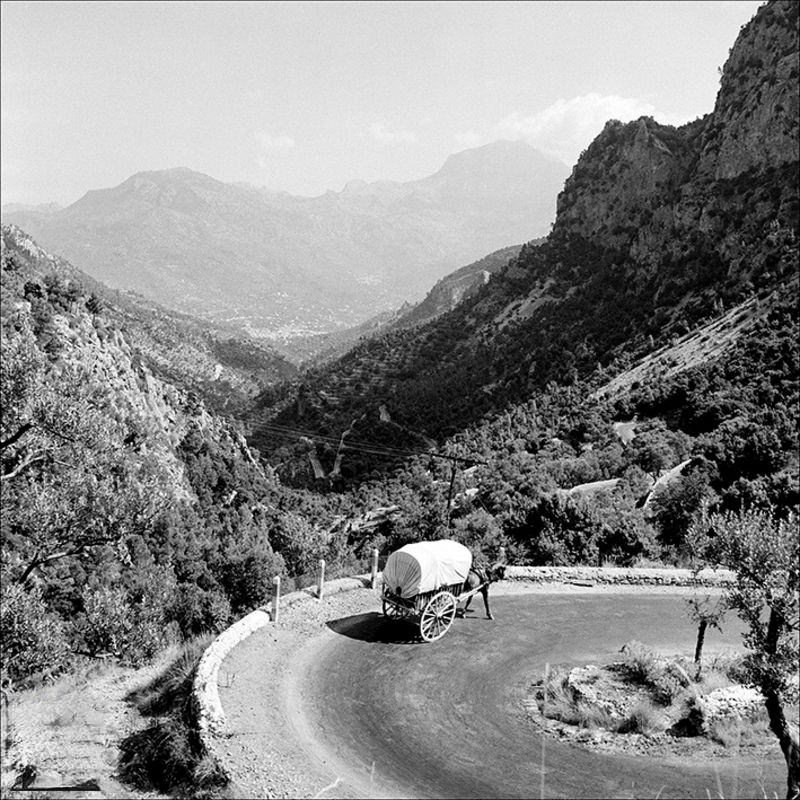
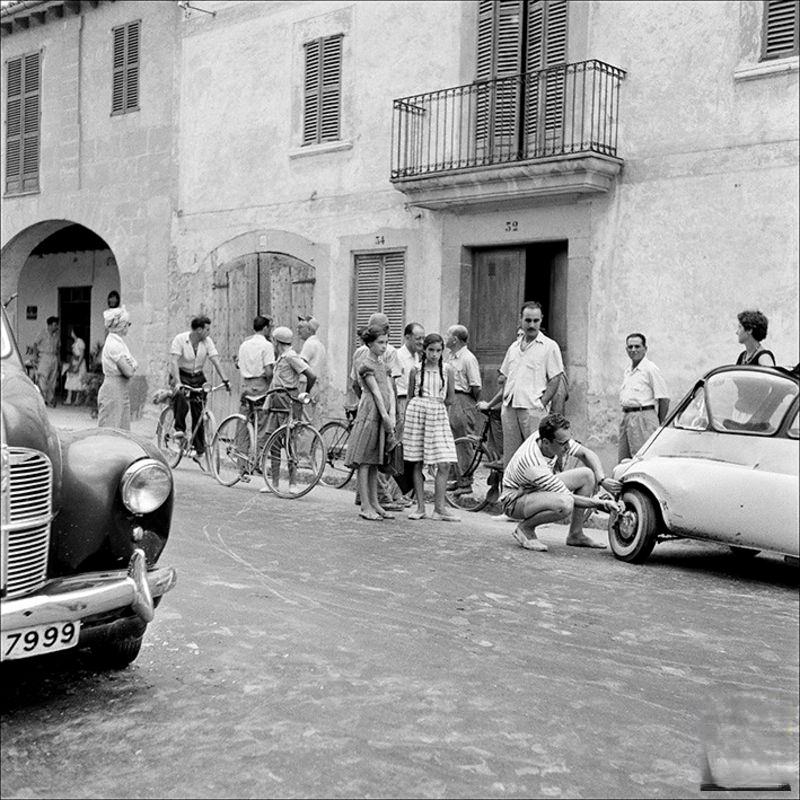
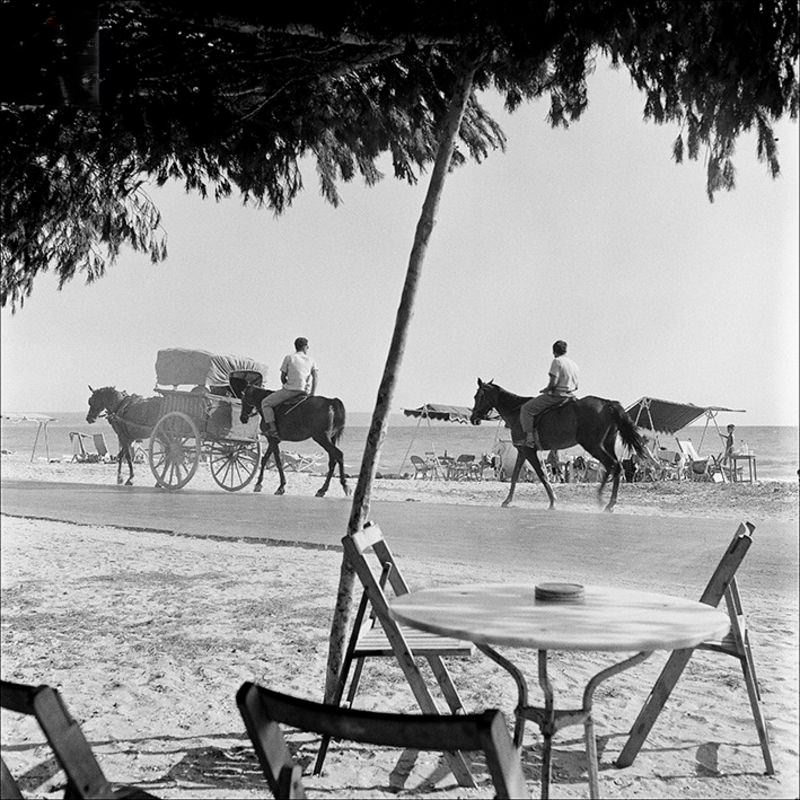
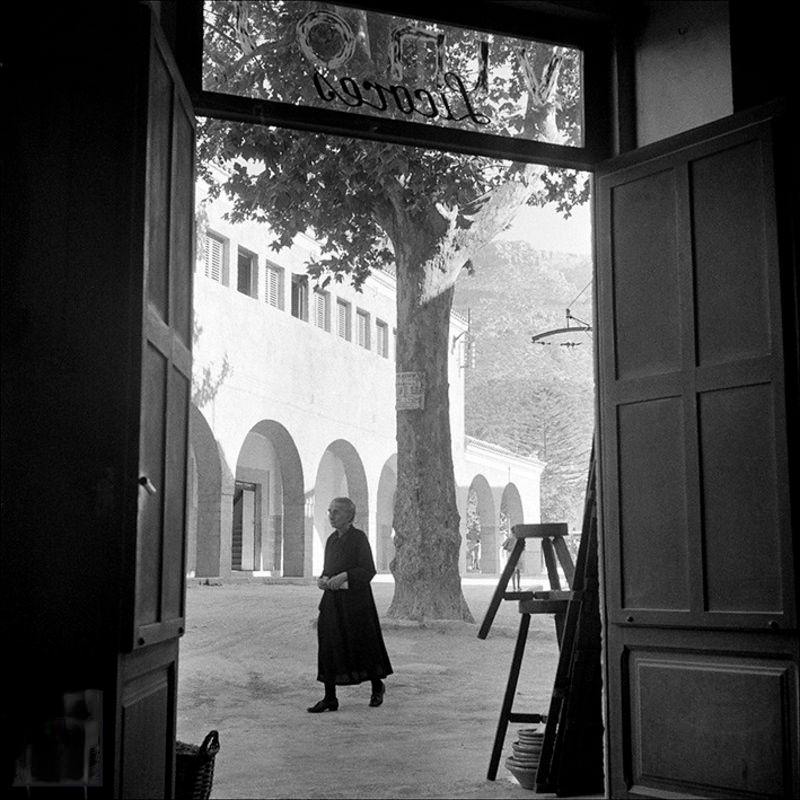
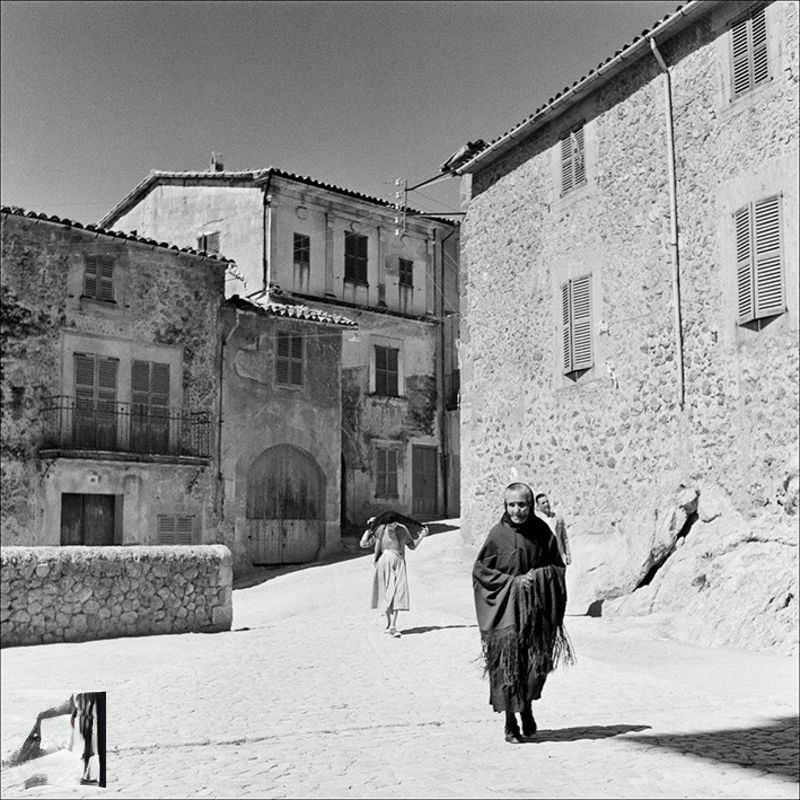
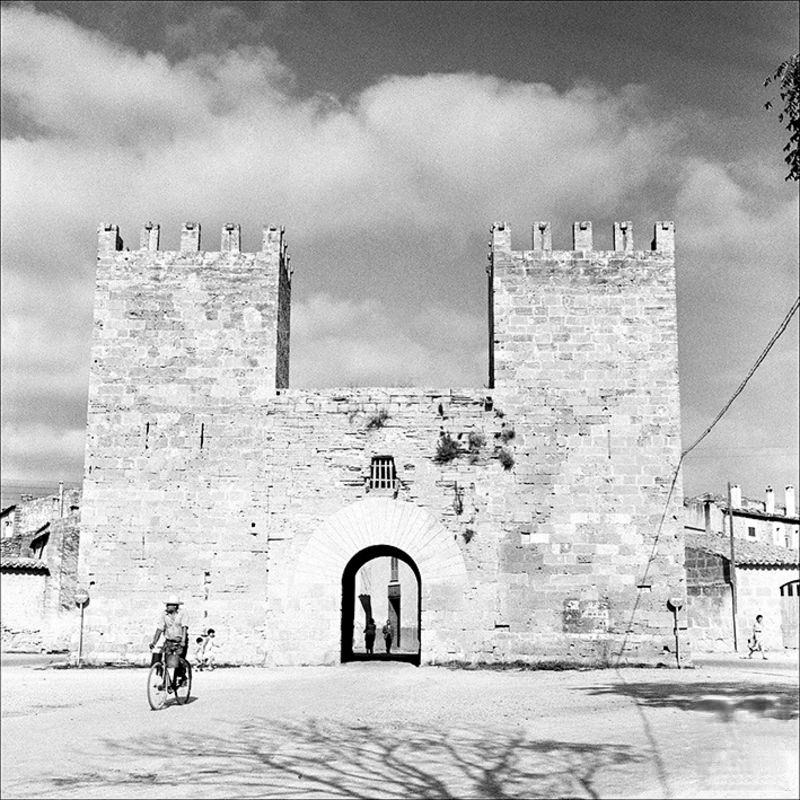
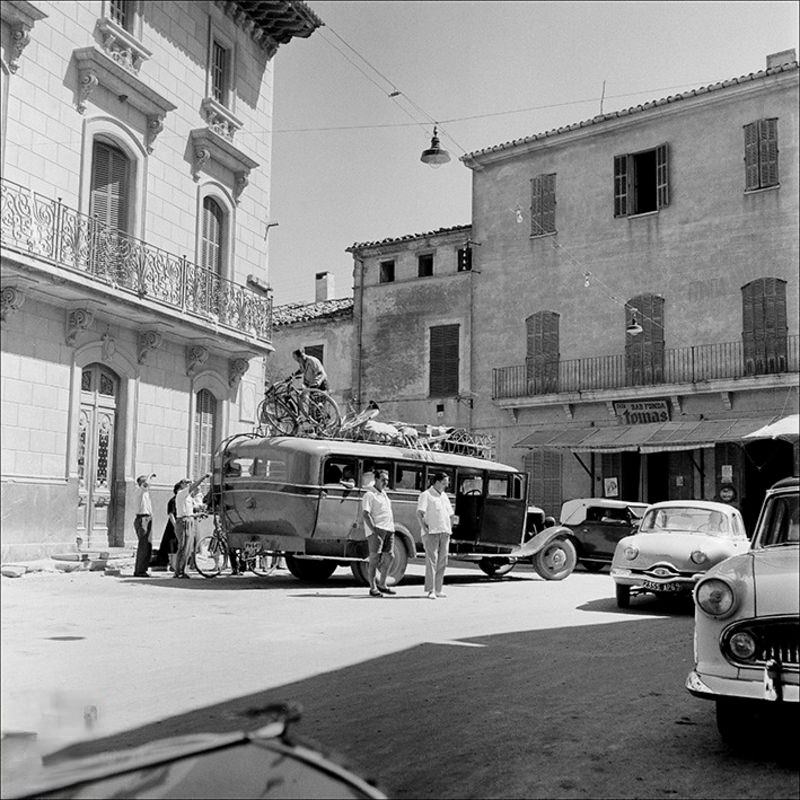
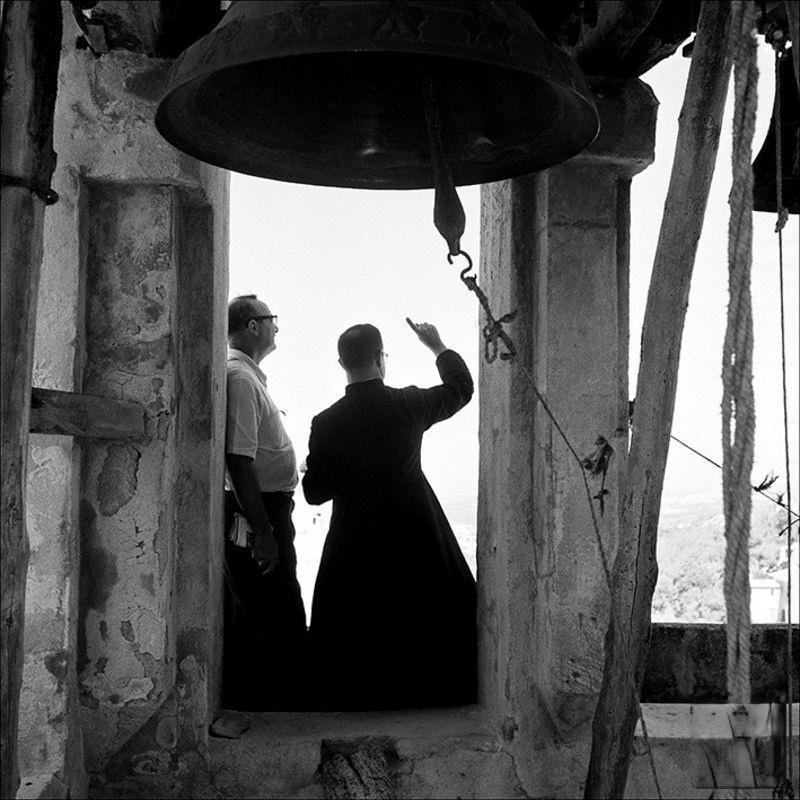
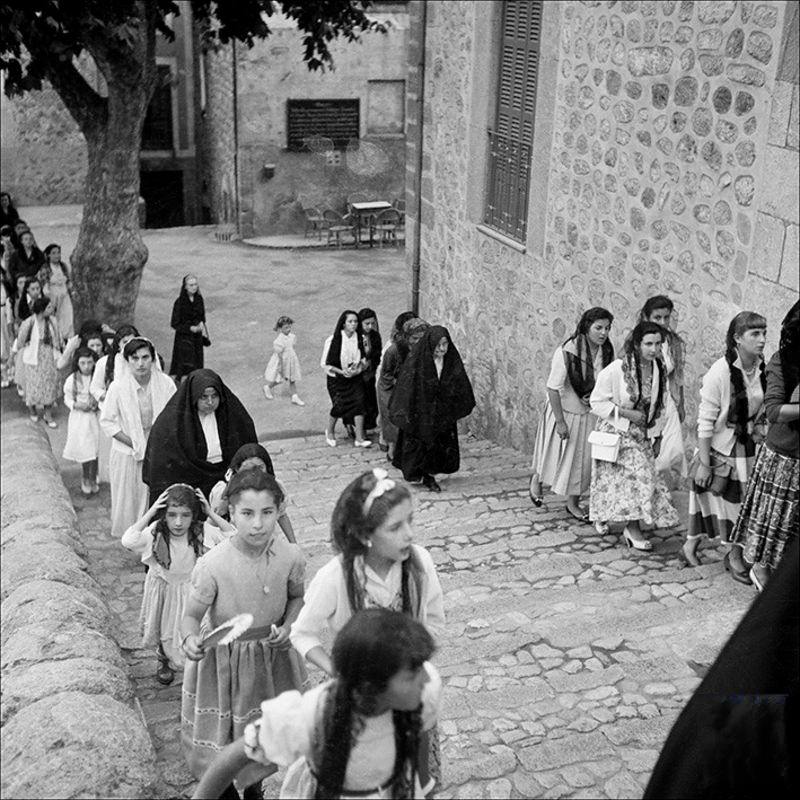
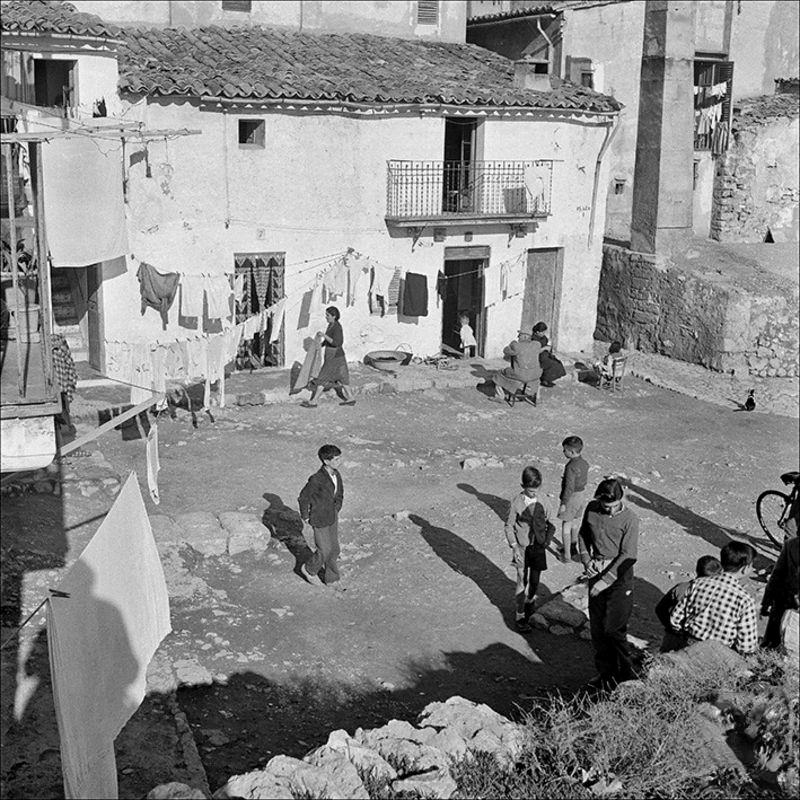
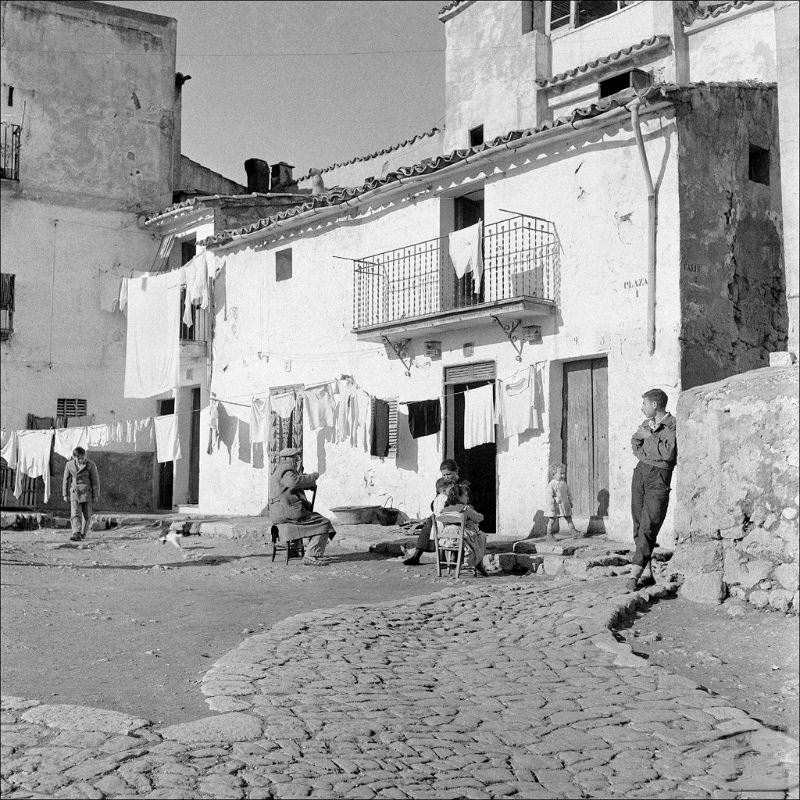
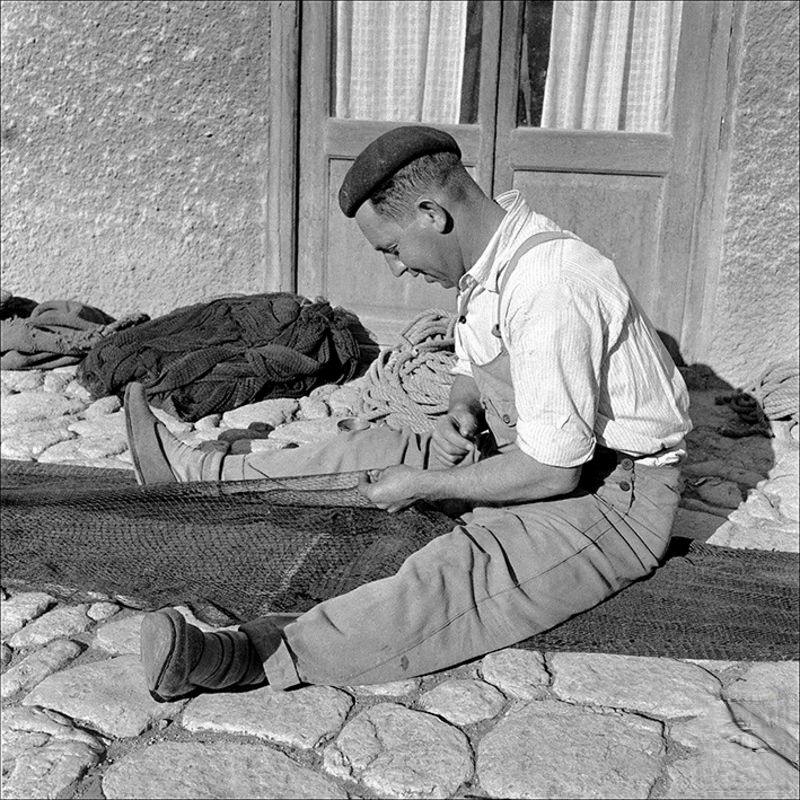
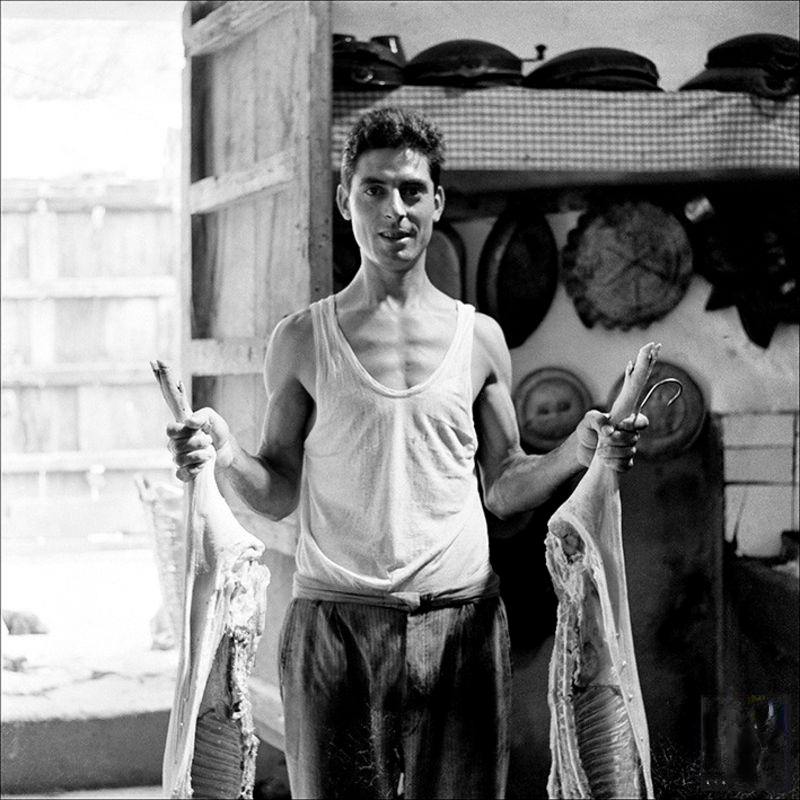
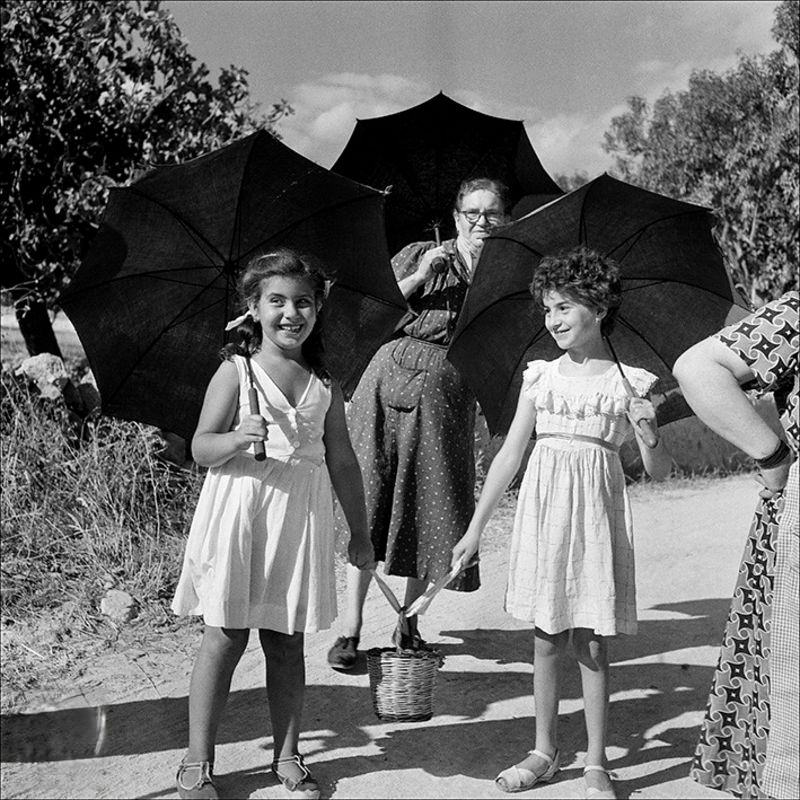
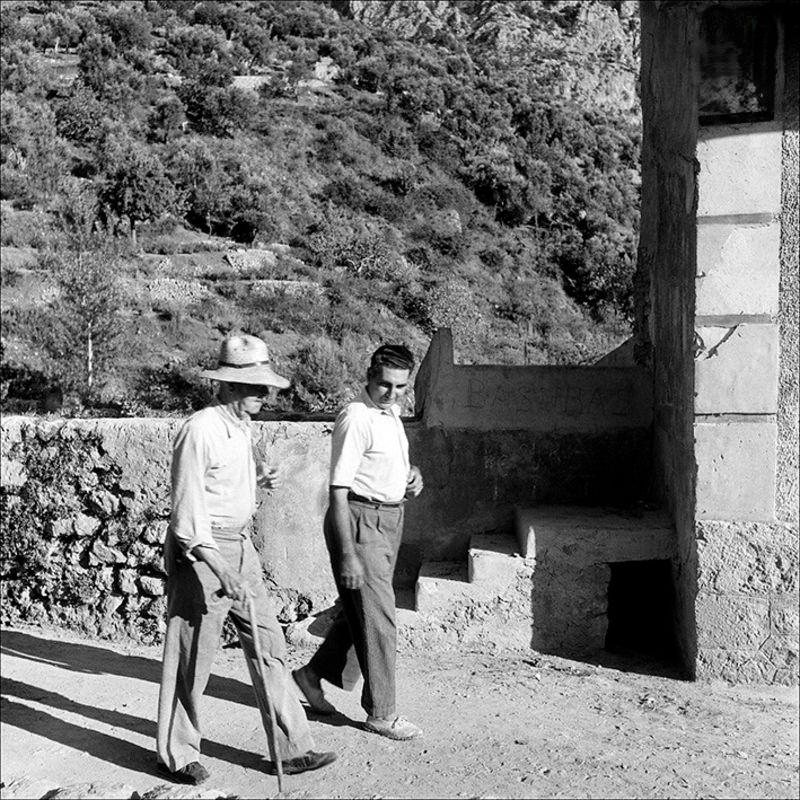
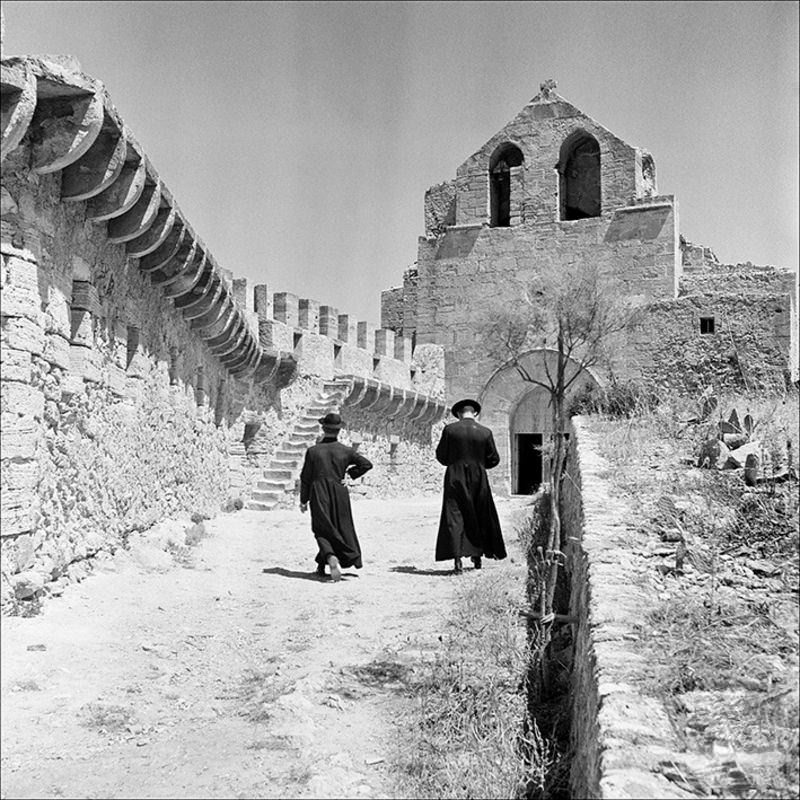
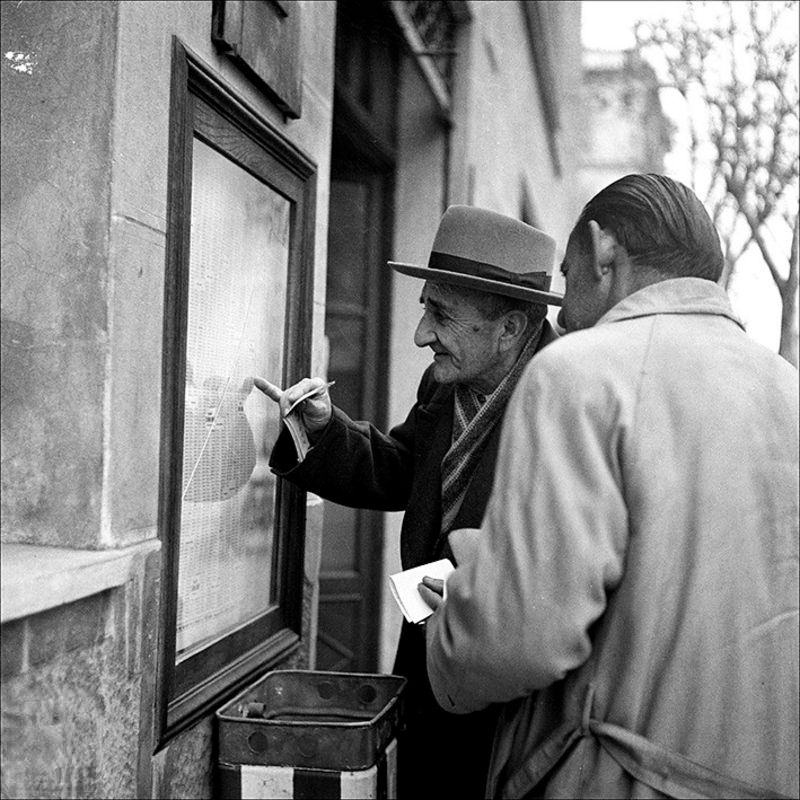
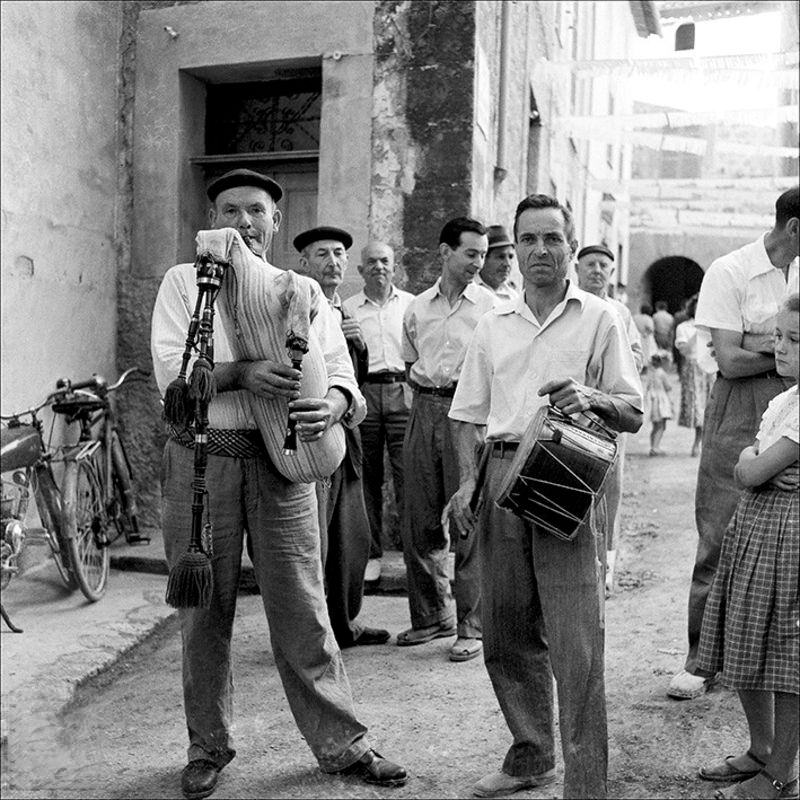
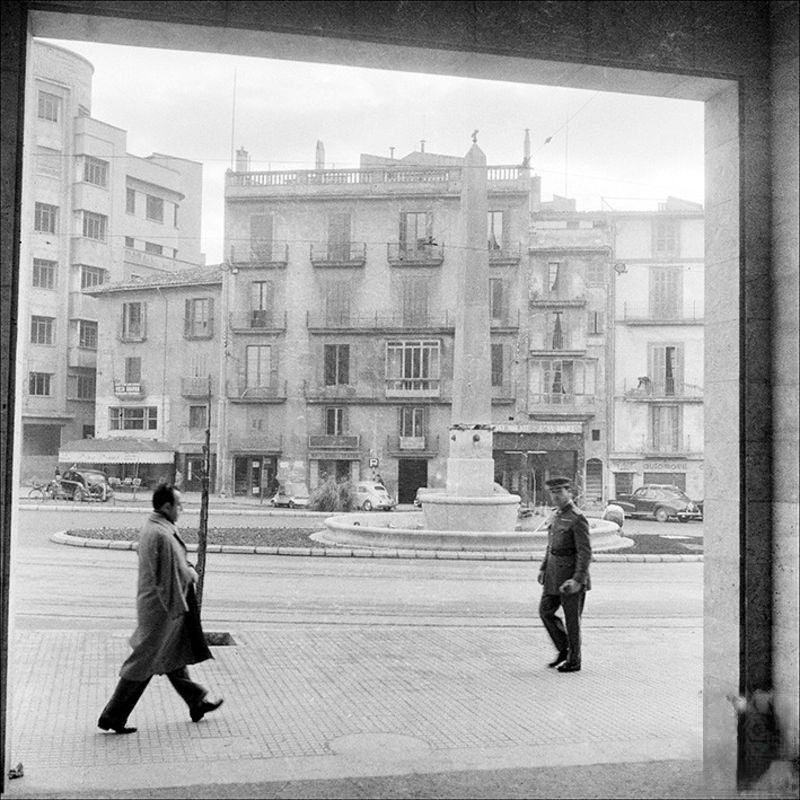
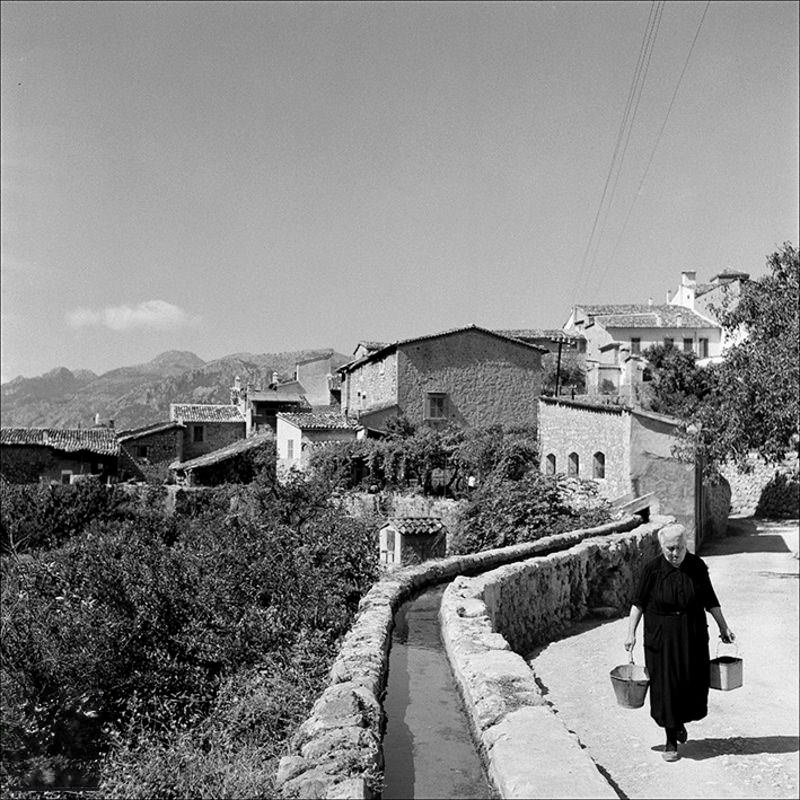
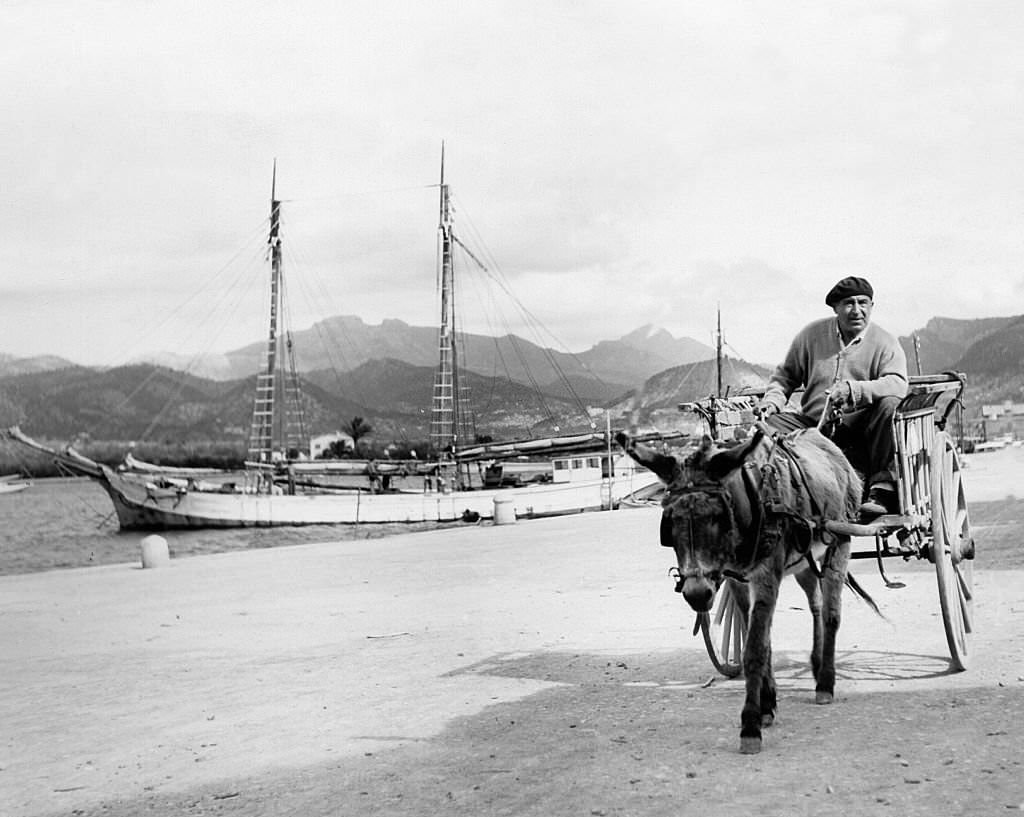
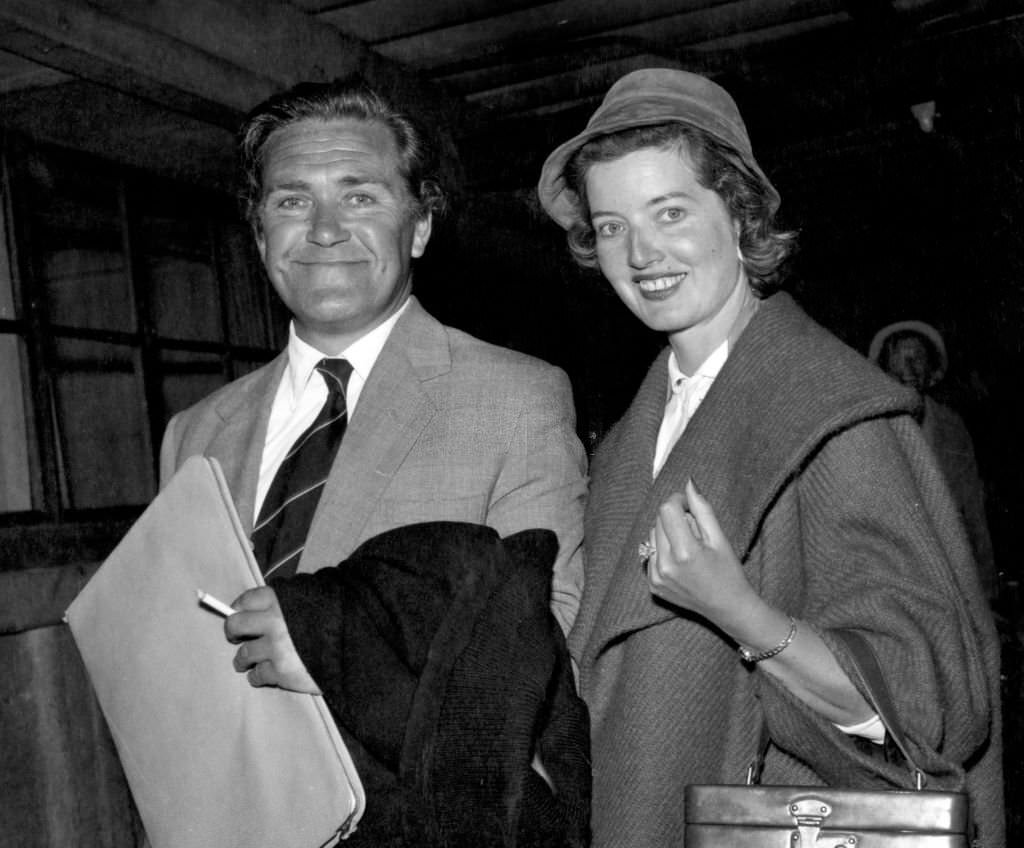
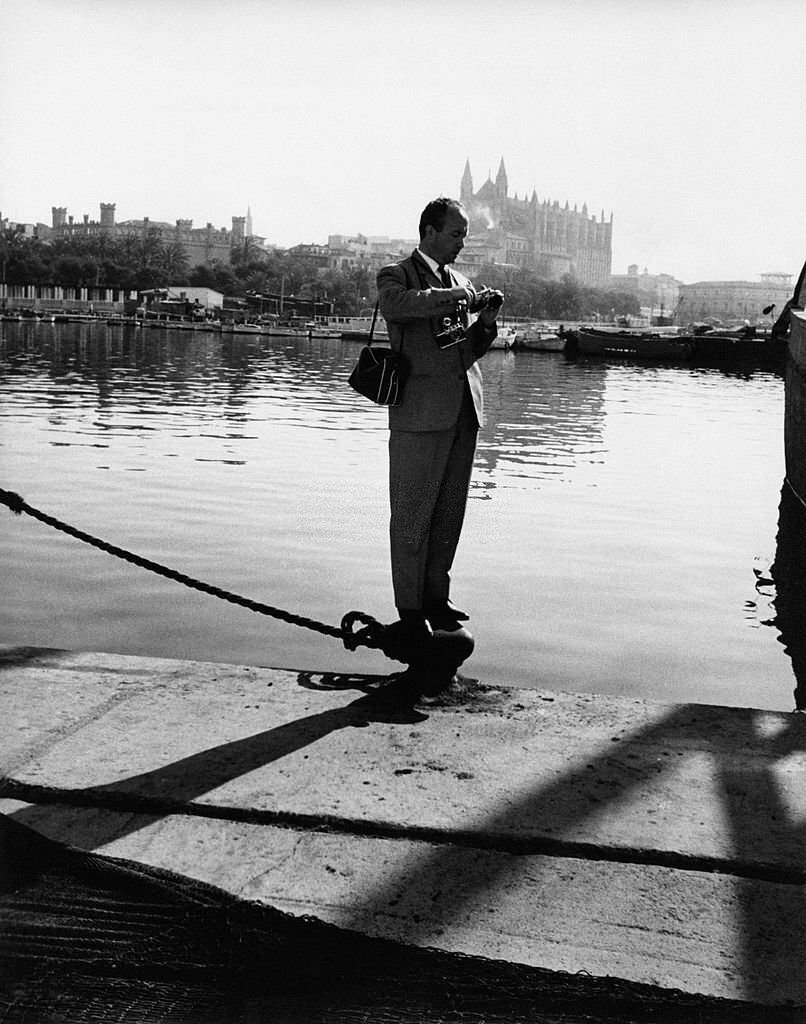
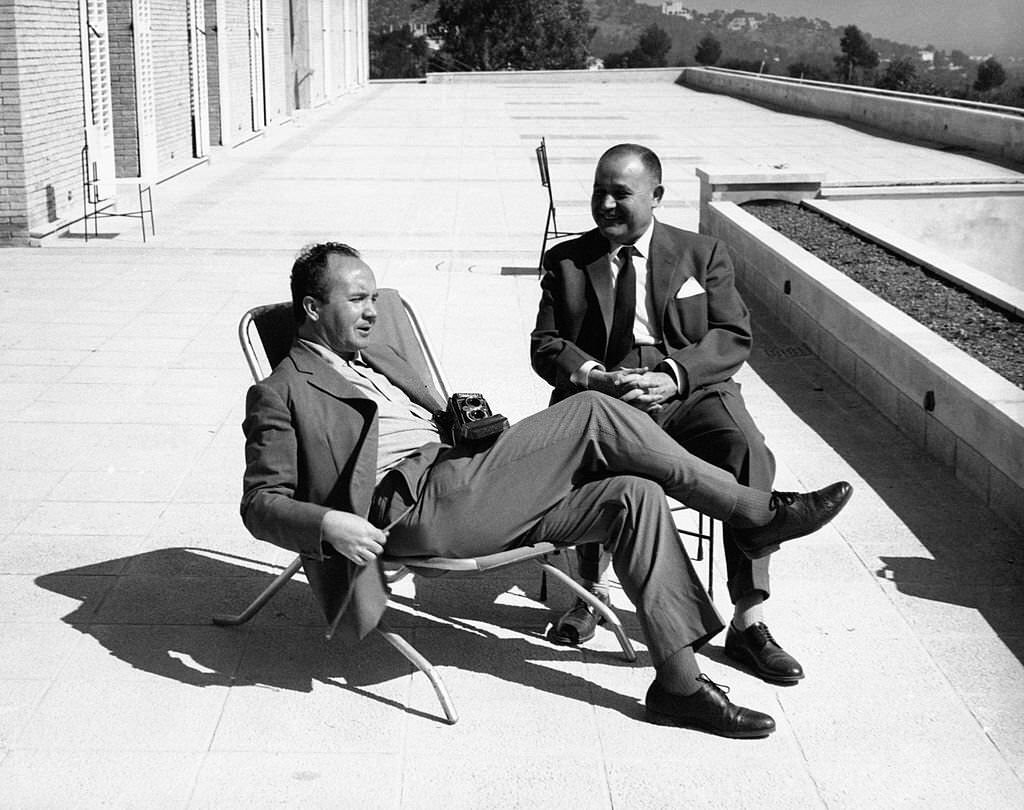
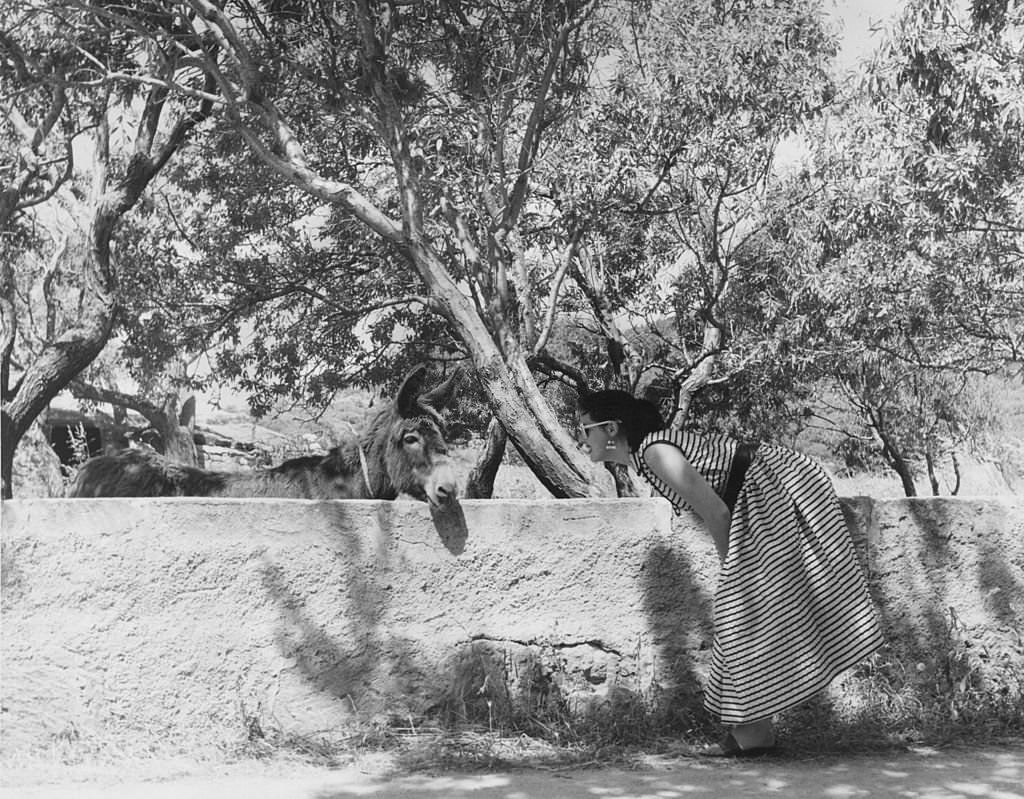
Two old women sit chatting on a doorstep on the island of Majorca.An old man smoking in the street and children in the background, 1956Boy sucking liquorice, 1956Portrait of a beautiful woman with pitcher, 1956Man accompanying a bride with people in the background, 1956Portrait of man with a hat, 1956Children with clothes hanging in the background, 1956Portrait of a little girl with balloons on the street, 1957Portrait of a woman sitting with her child and clothes in the background, 1957A courtyard with a well on the island of Majorca.Woman removing water from a fountain with children, 1956Two women picking up water in a Fornalutx square, 1957Traditional open kitchen with seated man and woman in the kitchen background, 1958Cart in Coll de Sóller, 1956Group of people around a broken car, 1956Horses passing along road at beach near Palma, 1956Lady walking from the inside of a wine shop, 1956People walking through Valldemossa, 1956Man with a bicycle at the door from the wharf of Alcúdia, 1956Men and cars on a street in Alcudia, 1956Men in the bell tower of the hermitage of Santa Magdalena, 1956People going up to the church, 1956People in Jonquet, 1956People in Plaça d’en Jonquet, 1956Man with a network, 1956Portrait of man with pig prepared to be cooked, 1956Two dolls and a woman walking with umbrellas, 1956Two men walking, 1956Two people by the sea with boat and mountains in the background, 1956Two priests heading towards the oratory of Capdepera Castle, 1956Man grazing in the Paseo del Born, 1957Two men looking at lottery results, 1957Two men walking down the Plaza Joan Carles I in Palma, 1957Two men playing their bagpipe and drum, 1957Views of the town and woman walking next to a canal, 1957Hafen von Puerto de Andratx, Mallorca, 1959Comedian Peter Butterworth and his actress wife Janet Brown, at Southampton after their arrival in a party of 57 holidaymakers whose Solent flying-boat of Aquila Airways struck an uncharted reef while taking off for Southampton from Majorca.Italian photographer Mario De Biasi setting his camera. Behind him, the Cathedral of Santa Maria of Palma. Palma de Mallorca, August 1961.Palma (island of Majorca, Balearics, Spain).Italian photographer Mario De Biasi sitting on the deckchair of a terrace with his camera in his hand. Palma de Mallorca.Doreen Lord, a former dancer at the Windmill Theatre, with her pet donkey in the garden of her villa in Majorca, 1958
These are some fantastic photos. The man in the tree harvesting almonds reminded me of my almond farm here in Mallorca. Don’t do it from the outside, do it from the inside!
All photographs should be credited. Many, but not all, were taken by my father, Tom Gilbert Weedon. It’s great to see all these old photos however you need to give credit to the people who took them!







Hi Aung. Do you know who is the photographer? Thanks a lot!
Fantastic photos, thank you! Got any source on them?
Wow, that’s so incredible to see. Are they displayed anywhere in the city?
These are some fantastic photos. The man in the tree harvesting almonds reminded me of my almond farm here in Mallorca. Don’t do it from the outside, do it from the inside!
Nice find (though some of the photos are mislabeled.)
The translations of the titles need some work. A fishing net a “network”?, deu n’hi do pepet!
All photographs should be credited. Many, but not all, were taken by my father, Tom Gilbert Weedon. It’s great to see all these old photos however you need to give credit to the people who took them!