Black and white photographs tell a story, but color brings them to life. The team at Mancave Pictures has spent countless hours restoring and colorizing century-old images of Major League Baseball players, turning faded snapshots into vivid portraits that feel startlingly real. Their work requires deep research — tracking down the exact shades of uniforms, the texture of leather gloves, and even the look of the ballpark dirt on a given day in history.
The process is far from simple. Colorizers must know which team wore which uniform in which year, how the light fell on an outdoor field, and even what skin tones look accurate for a specific player. A single image can take many hours to complete. The results, however, are remarkable — familiar names from baseball history suddenly look like they could have been photographed yesterday.
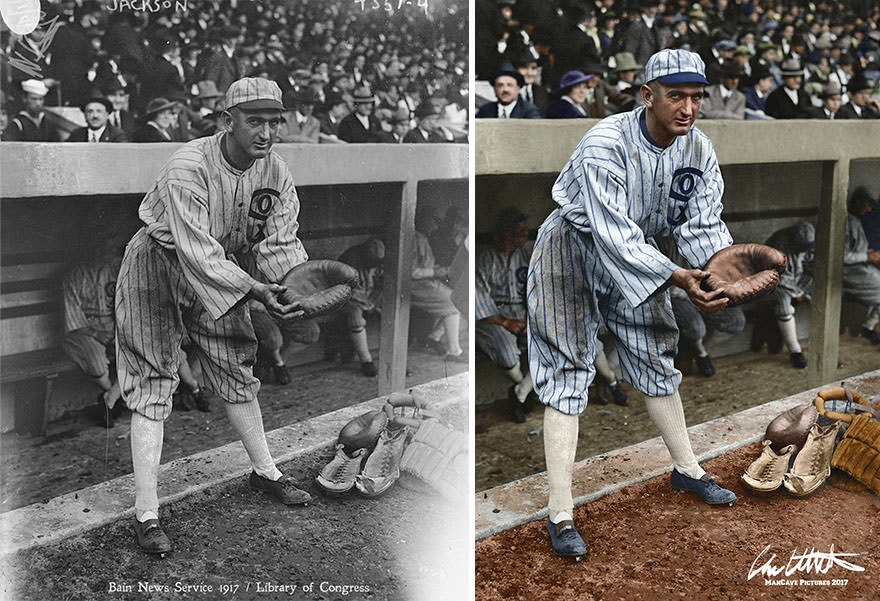
One of the most iconic figures in this collection is “Shoeless” Joe Jackson, photographed here during the Chicago White Sox’s championship year of 1917.
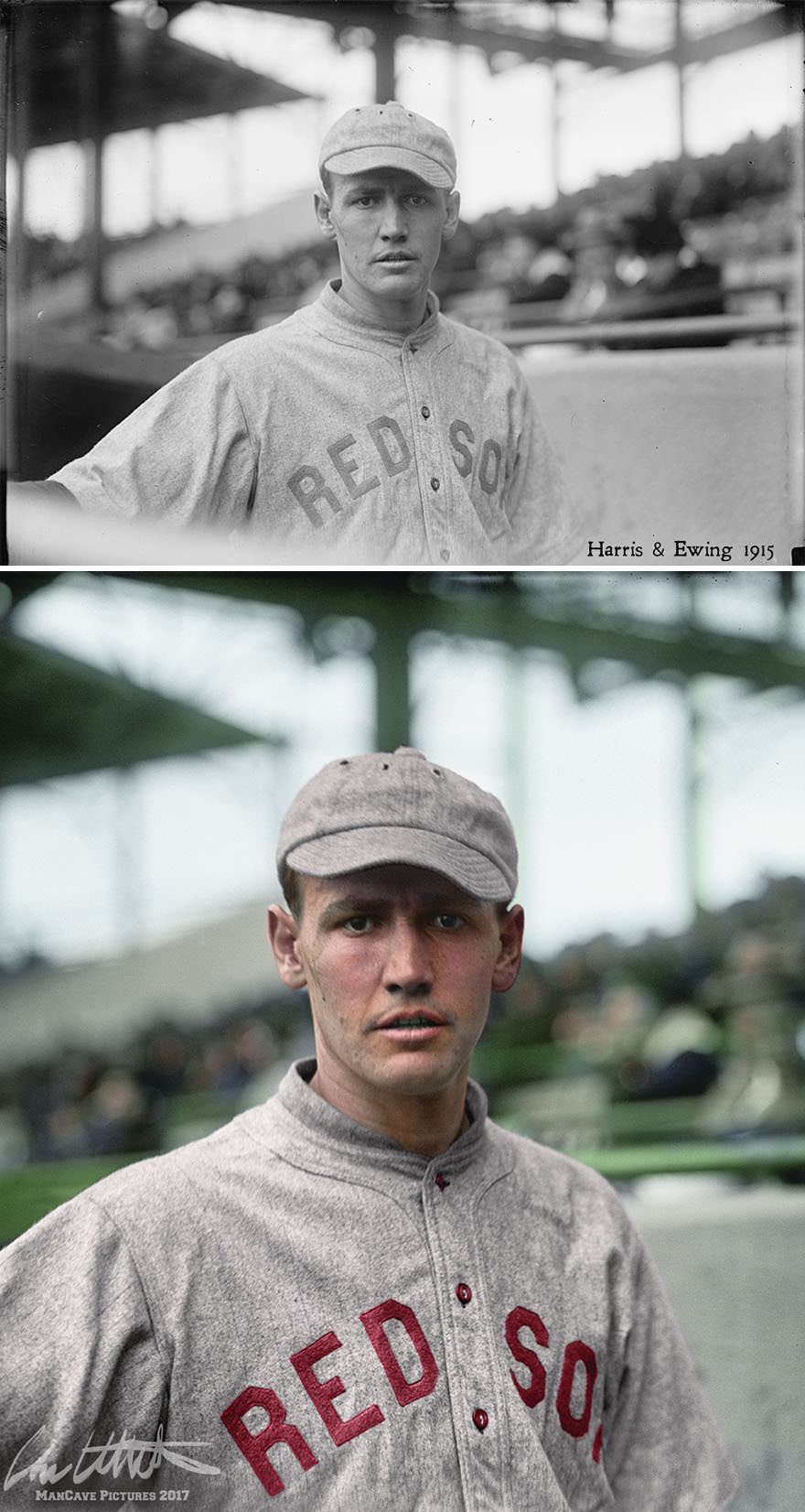
Joe Wood, known as “Smokey” Joe for his blazing fastball, was a star pitcher for the Boston Red Sox. His 1915 portrait captures the intensity he brought to the mound.
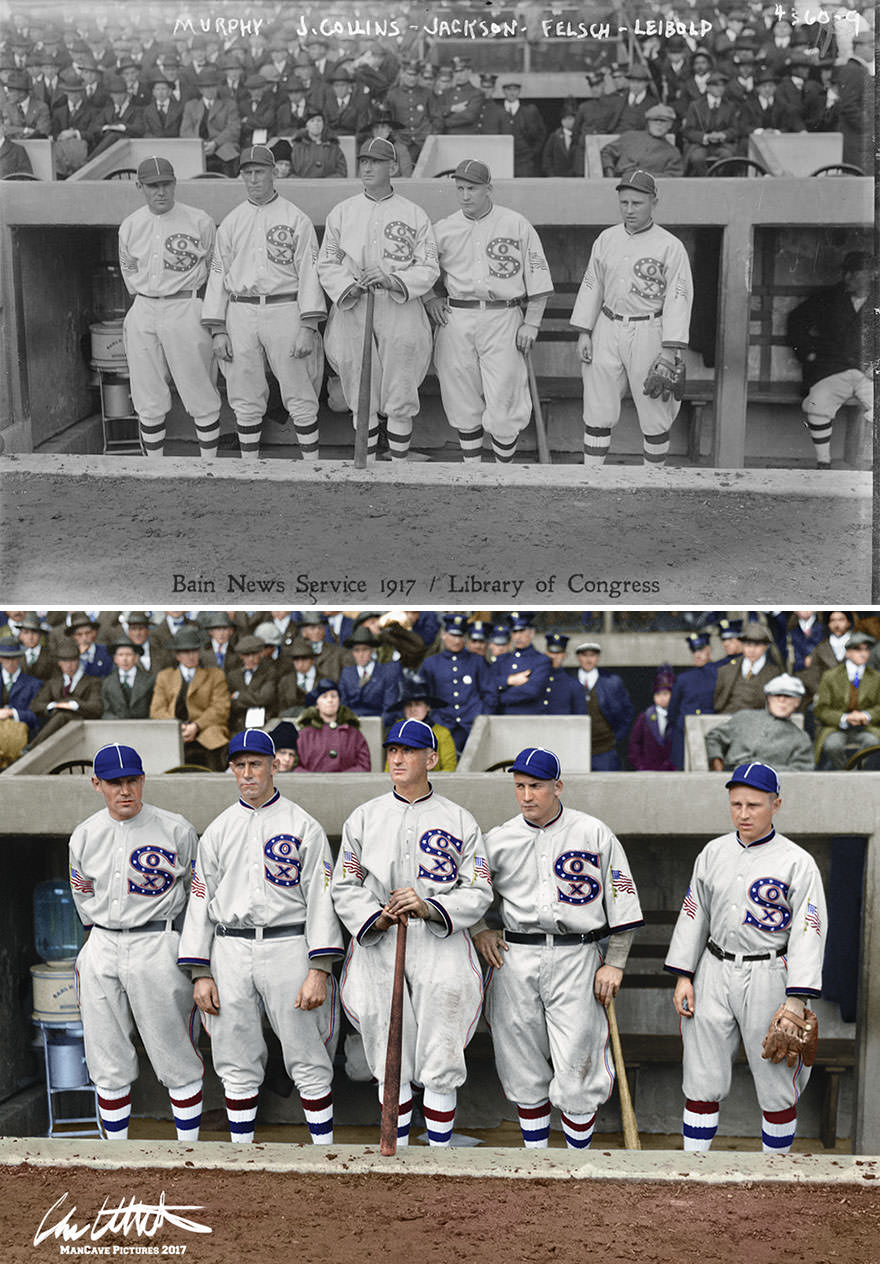
The 1917 Chicago White Sox were a powerhouse team, and this colorized group shot shows their championship roster in full detail.
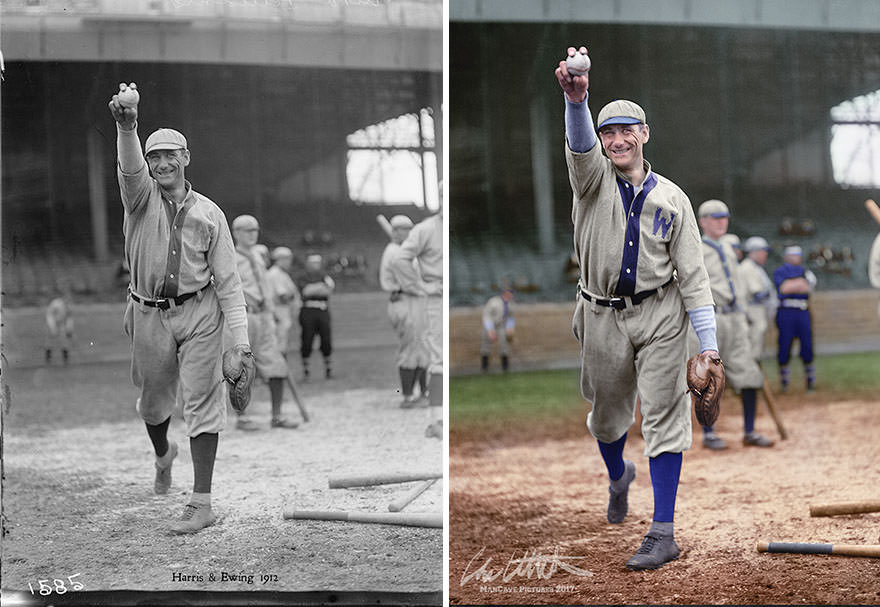
Not every name in this collection belongs to a Hall of Famer, but each photo captures a real piece of baseball history. Alva “Rip” Williams was a catcher for the Washington Nationals, photographed in 1912 during a period when the game was still finding its modern shape.
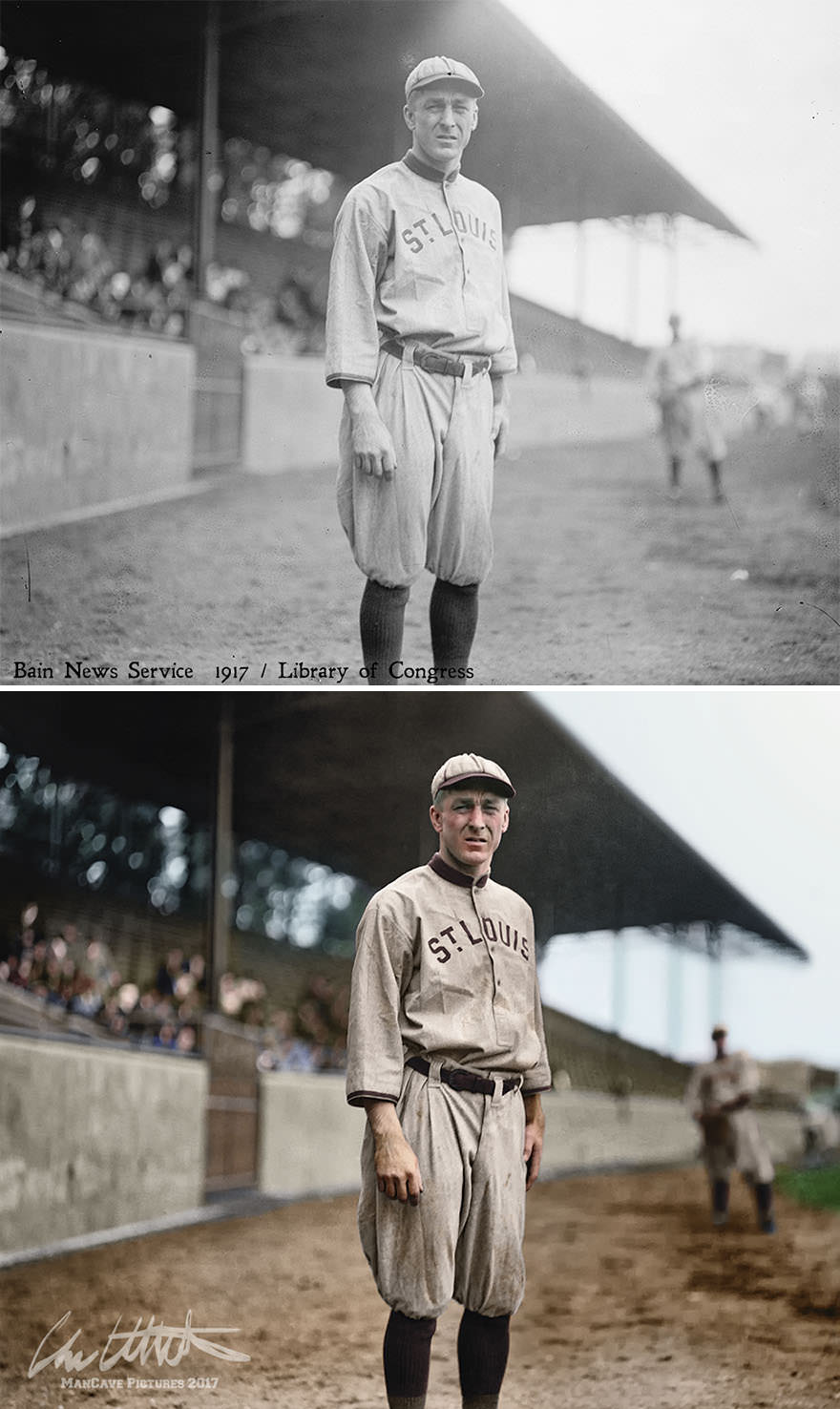
Branch Rickey is remembered today for signing Jackie Robinson to break baseball’s color barrier in 1947, but decades earlier he was a player himself, suiting up for the St. Louis Browns in 1914.
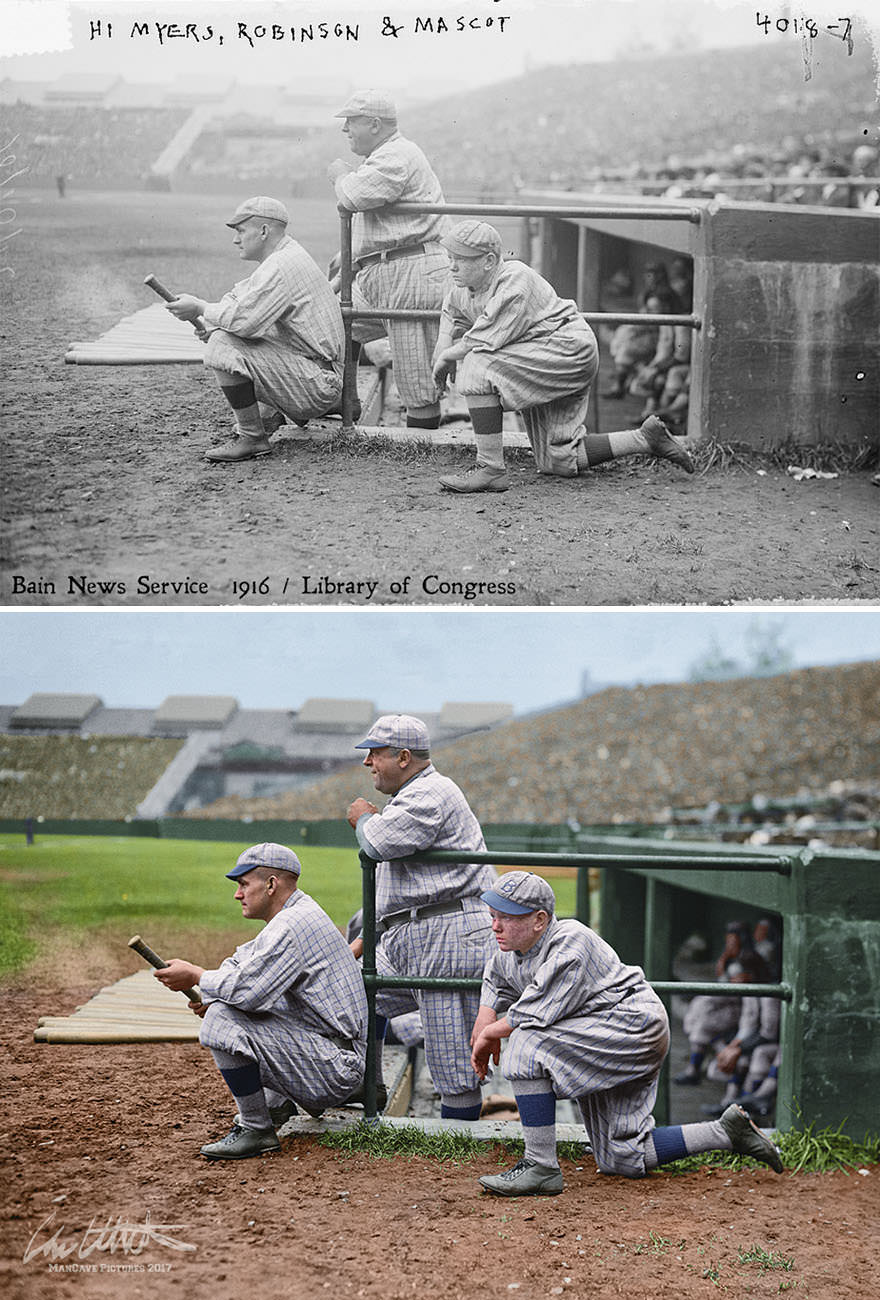
This colorized photo captures three Brooklyn Robins players at Braves Field in Boston during the 1916 season, a year the Robins reached the World Series.
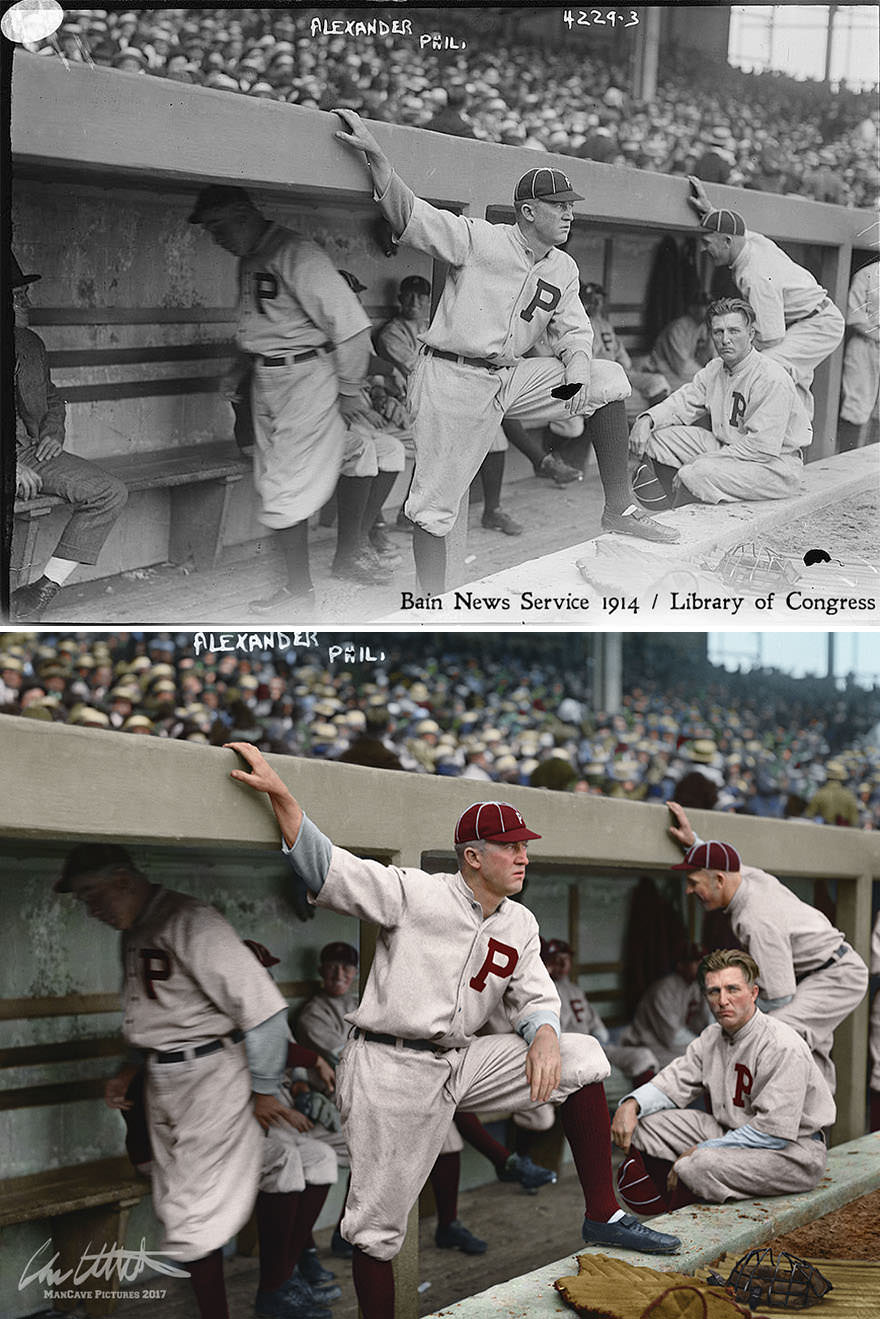
Grover Cleveland Alexander was one of the most dominant pitchers of the Dead Ball Era. His 1914 portrait with the Philadelphia Phillies shows him at the start of a career that would earn him a spot in the Hall of Fame.
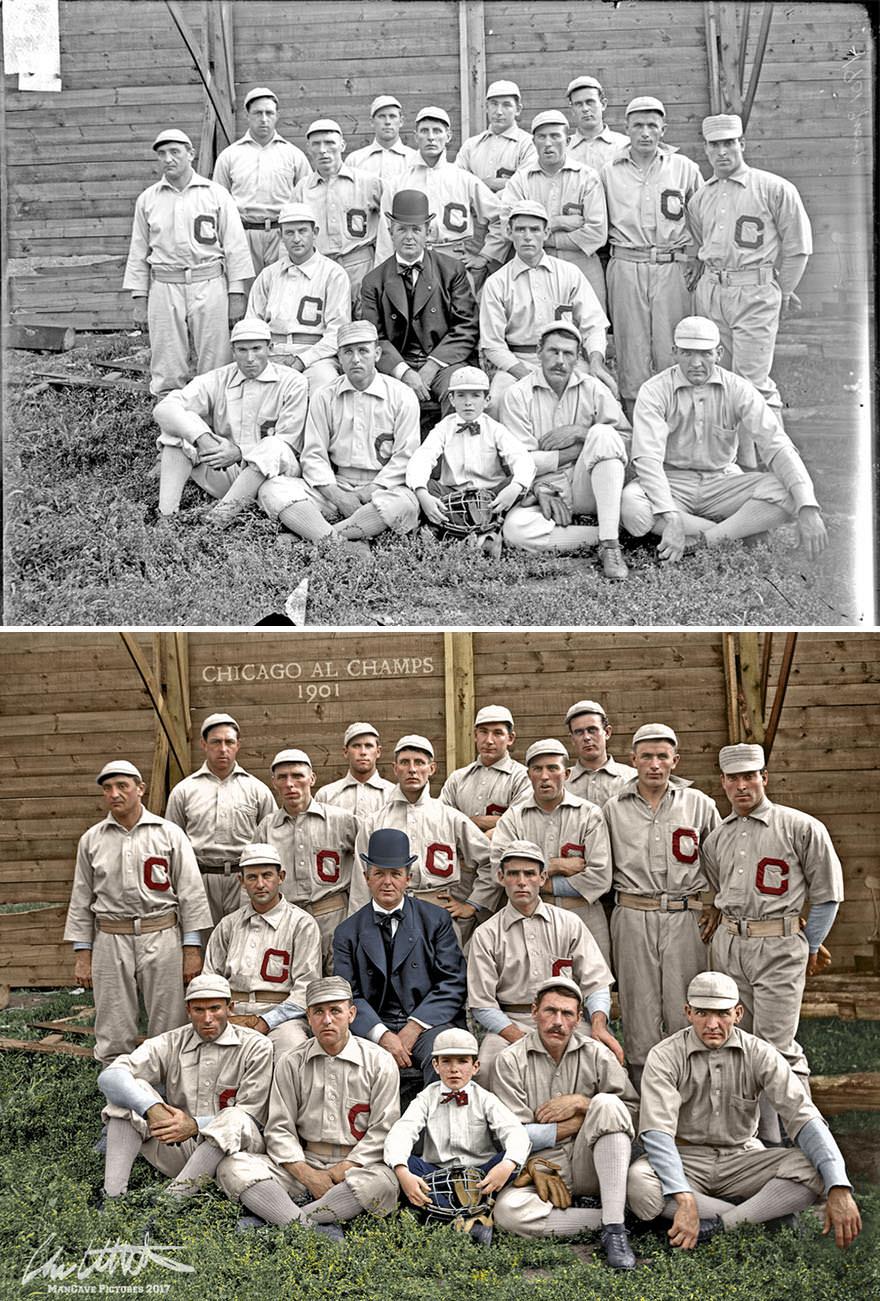
This photograph takes us all the way back to 1901 — the very first year of the American League as a major league. The Chicago White Sox, pictured with owner Charles Comiskey, claimed the first American League championship that season.
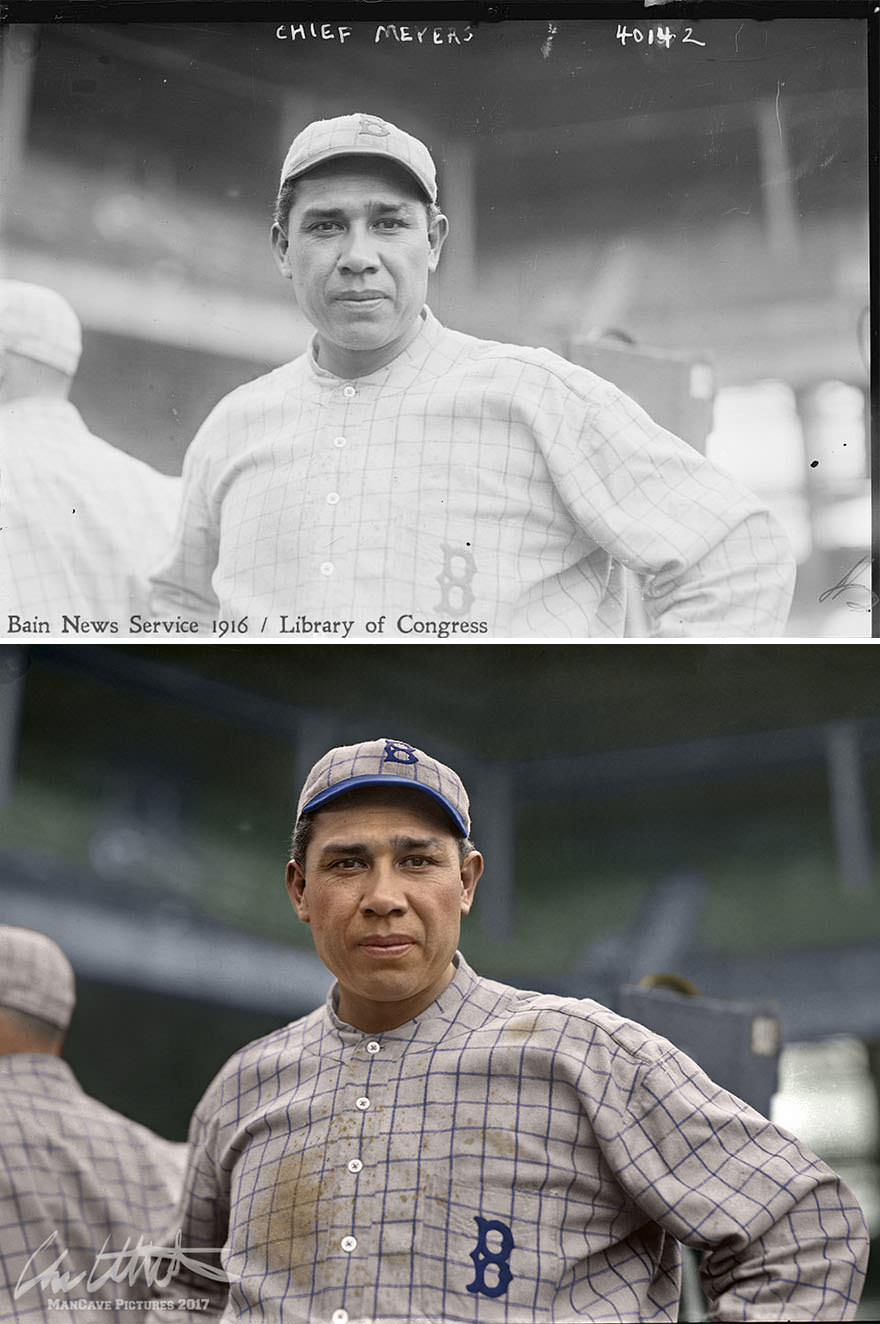
John Torres Meyers, known as “Chief” Meyers, was a catcher of Cahuilla Native American descent who played for Brooklyn in 1916. He was one of several Native American players in the major leagues during the early twentieth century.
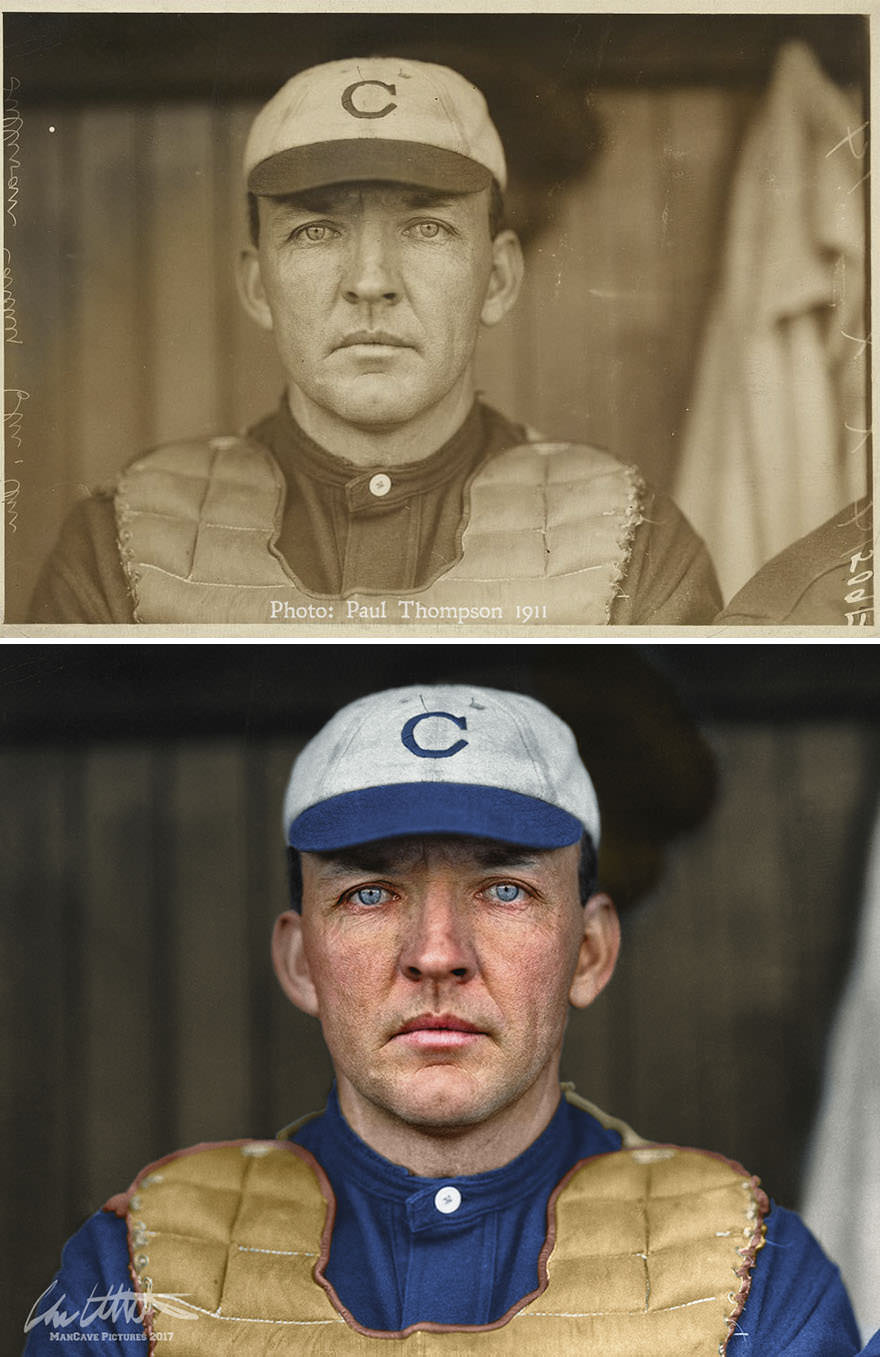
Billy Sullivan was a veteran catcher for the Chicago White Sox, known for his defensive work behind the plate. This 1911 portrait captures him in the middle of a long career with the club.
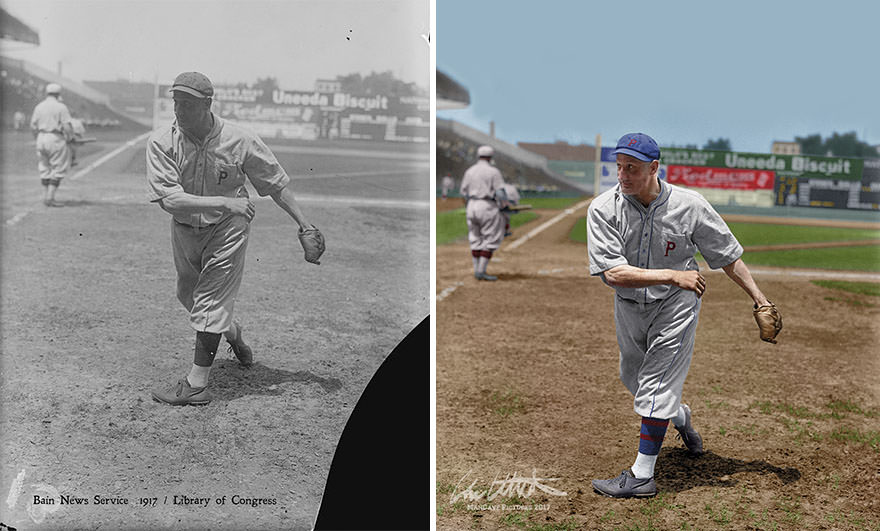
Honus Wagner is widely regarded as one of the greatest shortstops in baseball history. By 1917, he was near the end of his playing days with the Pittsburgh Pirates, but his legend was already fully established.
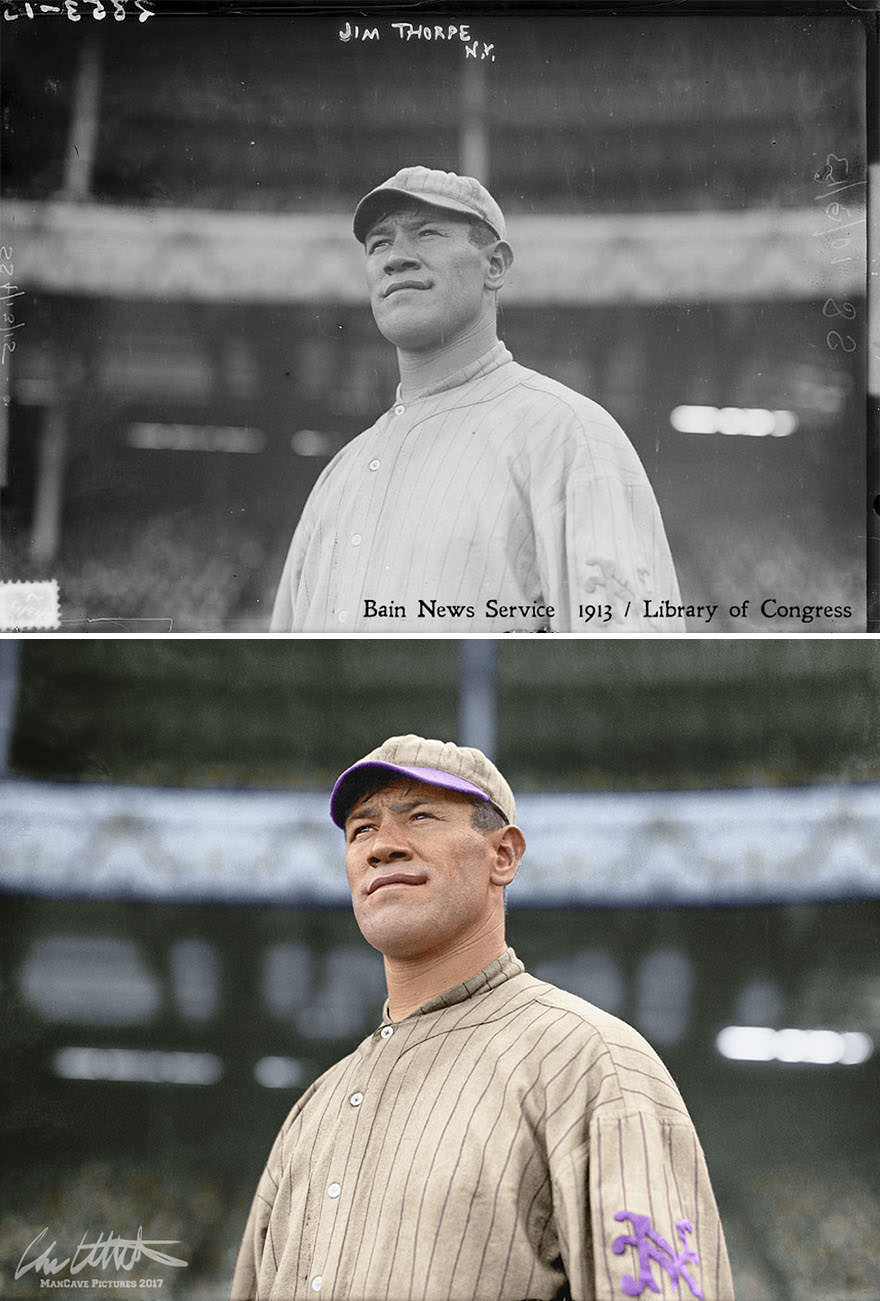
Jim Thorpe was one of the greatest all-around athletes America has ever produced. He won two gold medals at the 1912 Olympics and also played Major League Baseball, suiting up for the New York Giants in 1913.
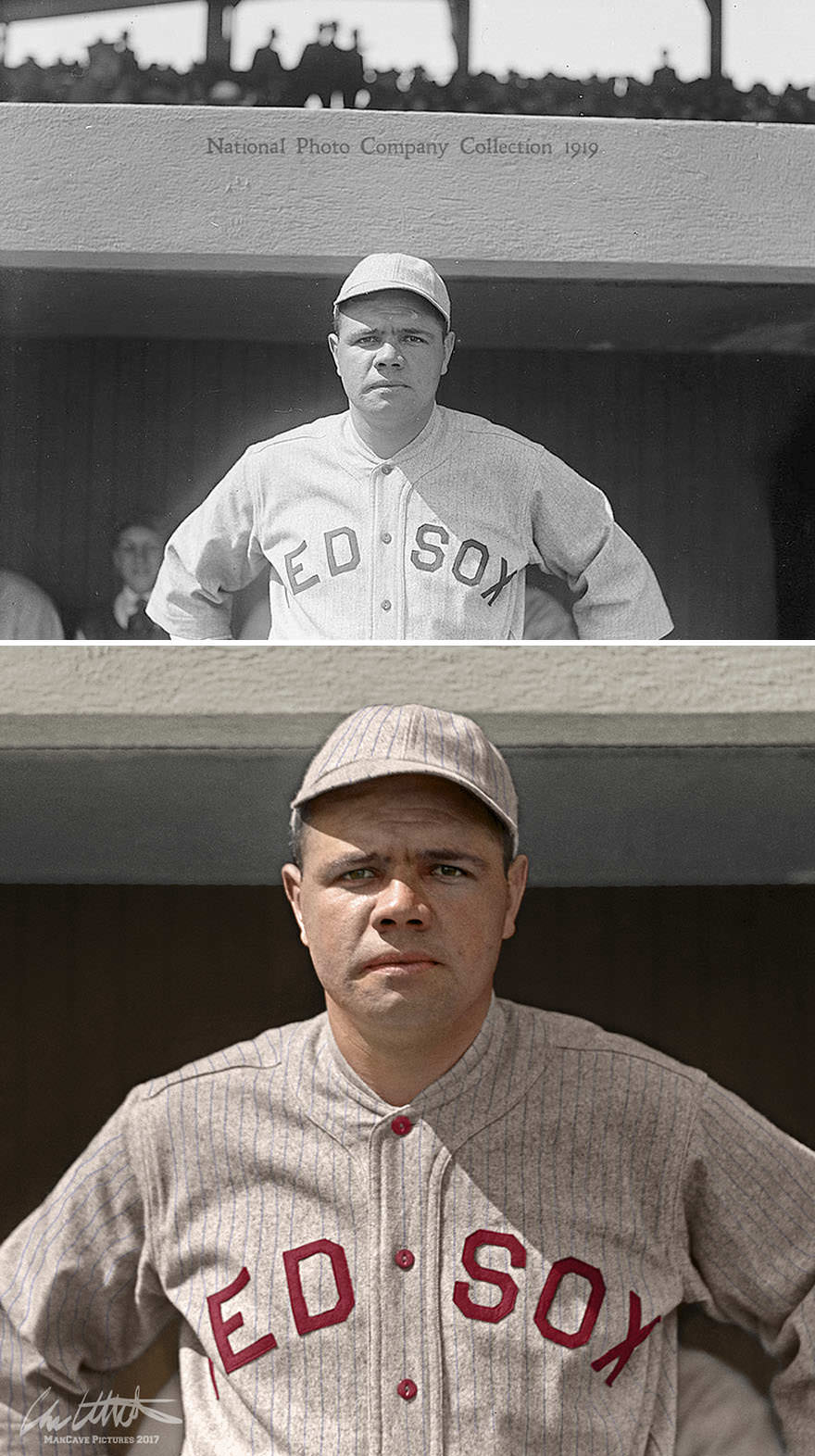
Before he became the most famous player in baseball history, Babe Ruth was a pitcher for the Boston Red Sox. This 1919 photo was taken just one year before his sale to the New York Yankees — a transaction Boston fans would mourn for decades.
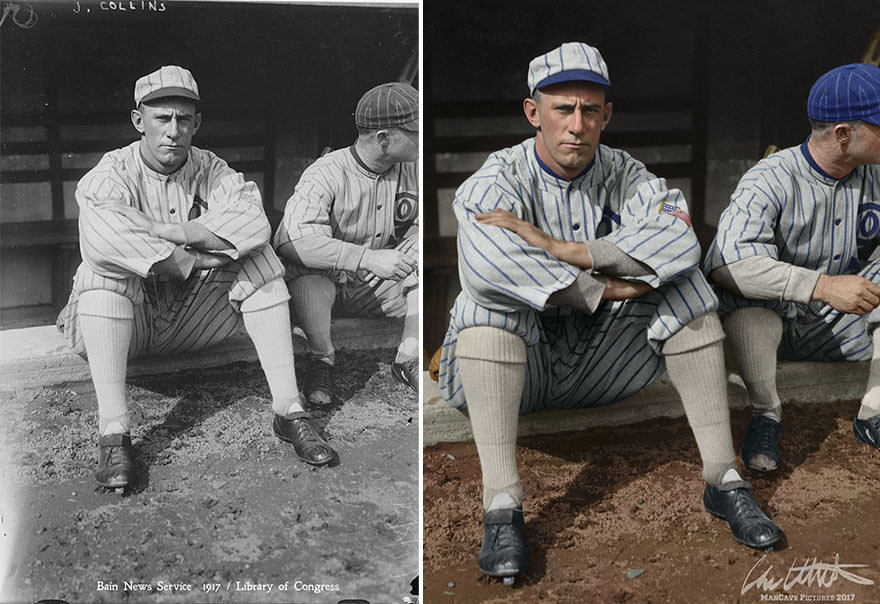
John “Shano” Collins was an outfielder and first baseman who played for the 1917 championship White Sox team. These two colorized portraits offer a close look at his appearance during that title run.
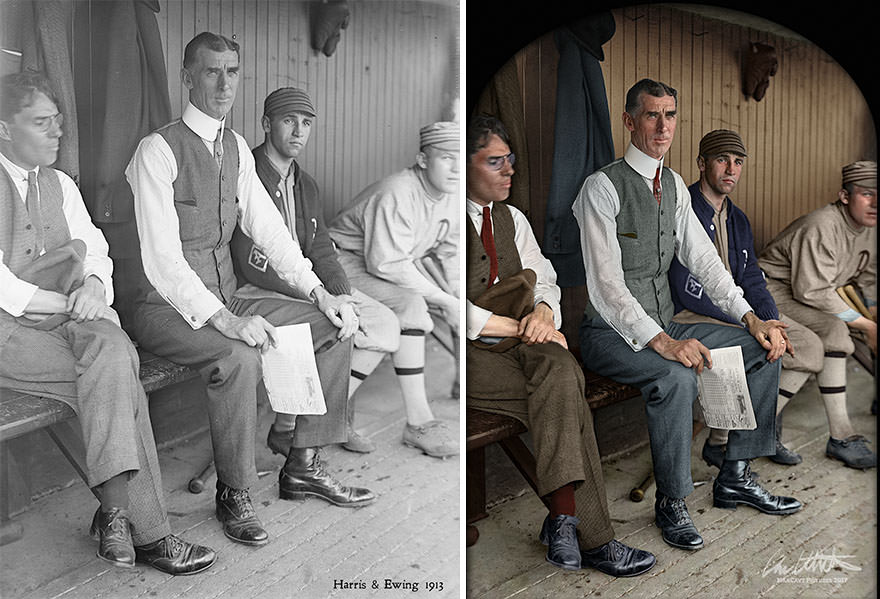
Connie Mack managed the Philadelphia Athletics for 50 years and is the winningest manager in MLB history. This 1913 portrait captures him during one of the Athletics’ most dominant stretches, when they were back-to-back World Series champions.
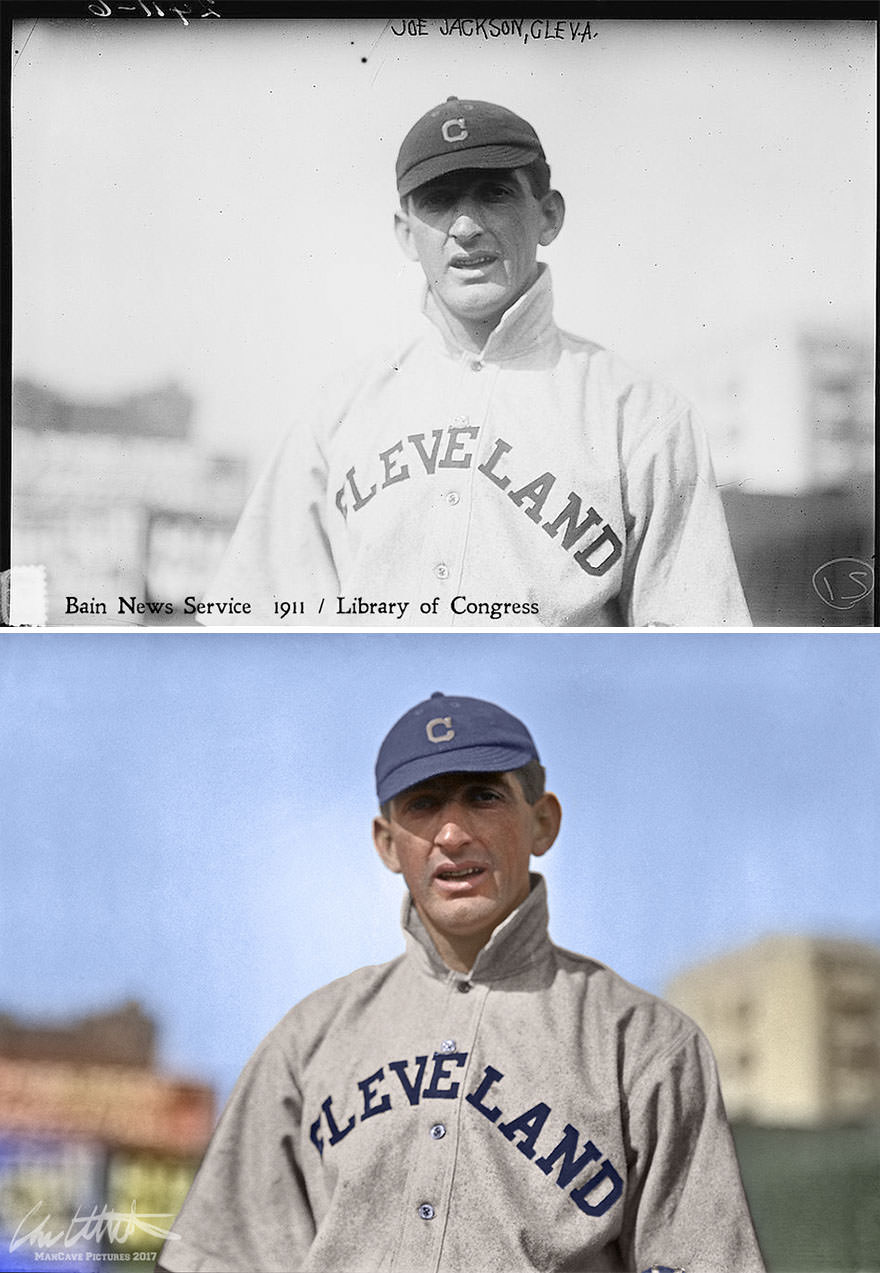
Before joining the White Sox, “Shoeless” Joe Jackson played for the Cleveland Naps. This 1911 image shows him early in a career that would be cut short by the infamous Black Sox scandal of 1919.
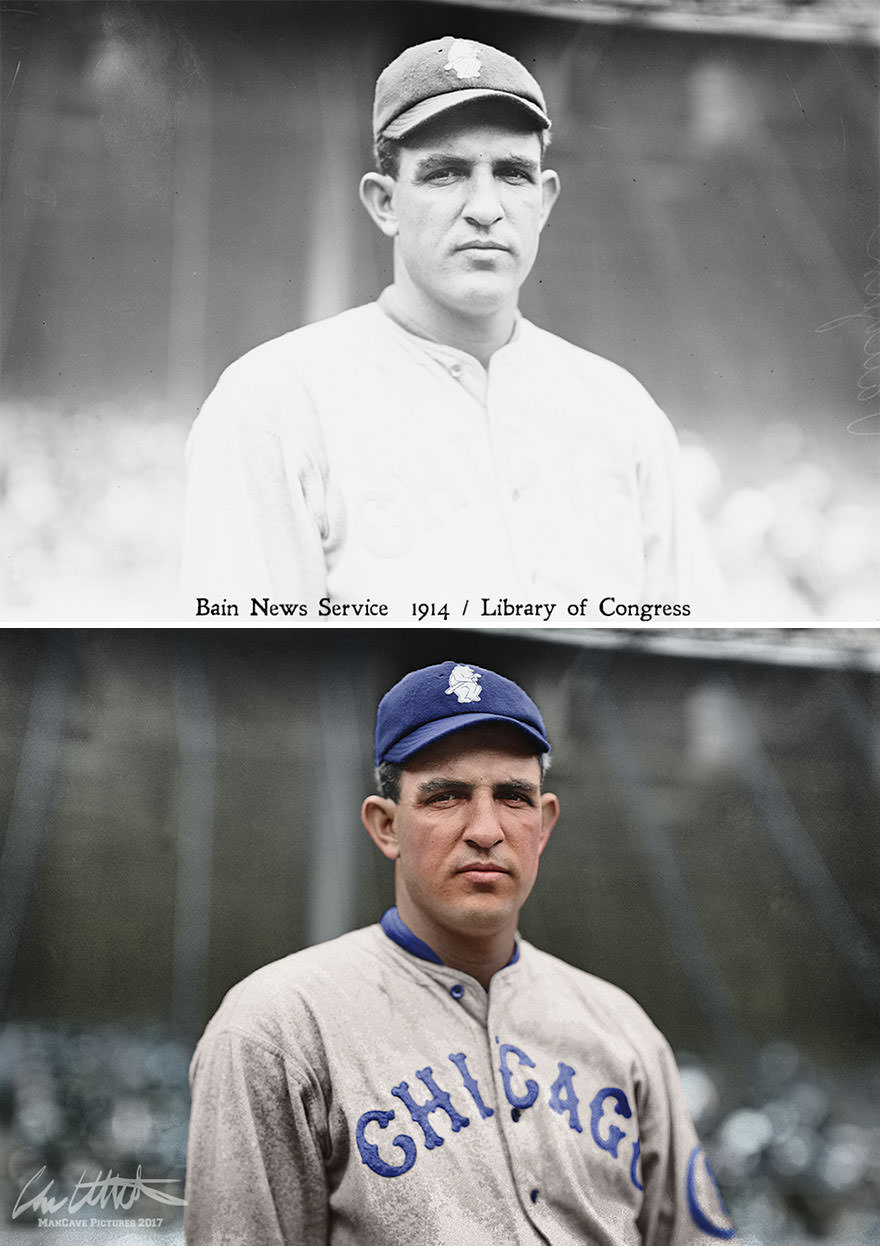
Hippo Vaughn was a left-handed pitcher for the Chicago Cubs, known for his size and his strikeout ability. His 1914 portrait shows him during his early years with the team before he became one of the National League’s top pitchers.
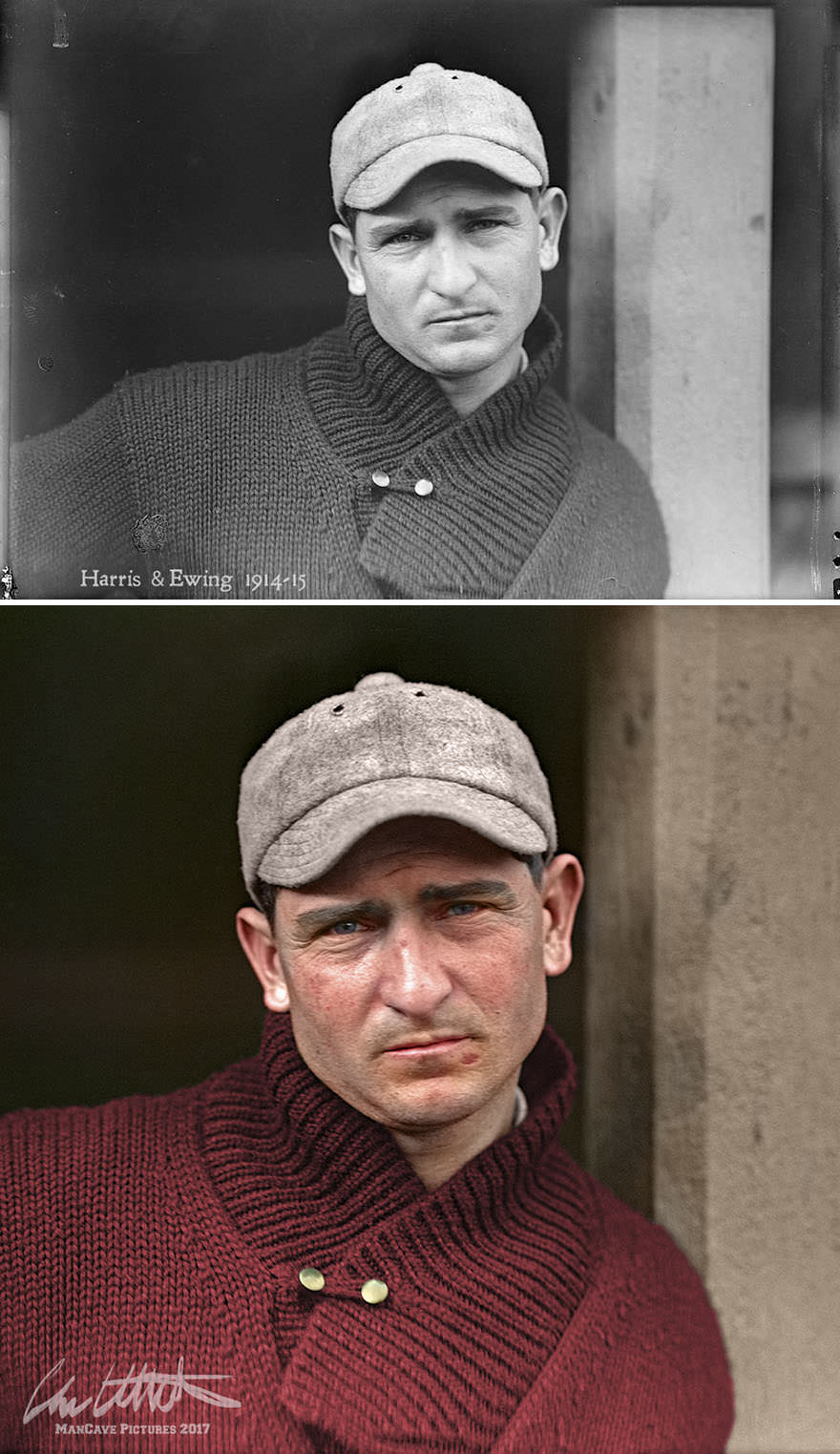
“Rube” Foster pitched for the Boston Red Sox in 1914, contributing to a squad that would win the World Series the following year. This colorized photo puts a vivid face to a name often buried in the footnotes of Red Sox history.
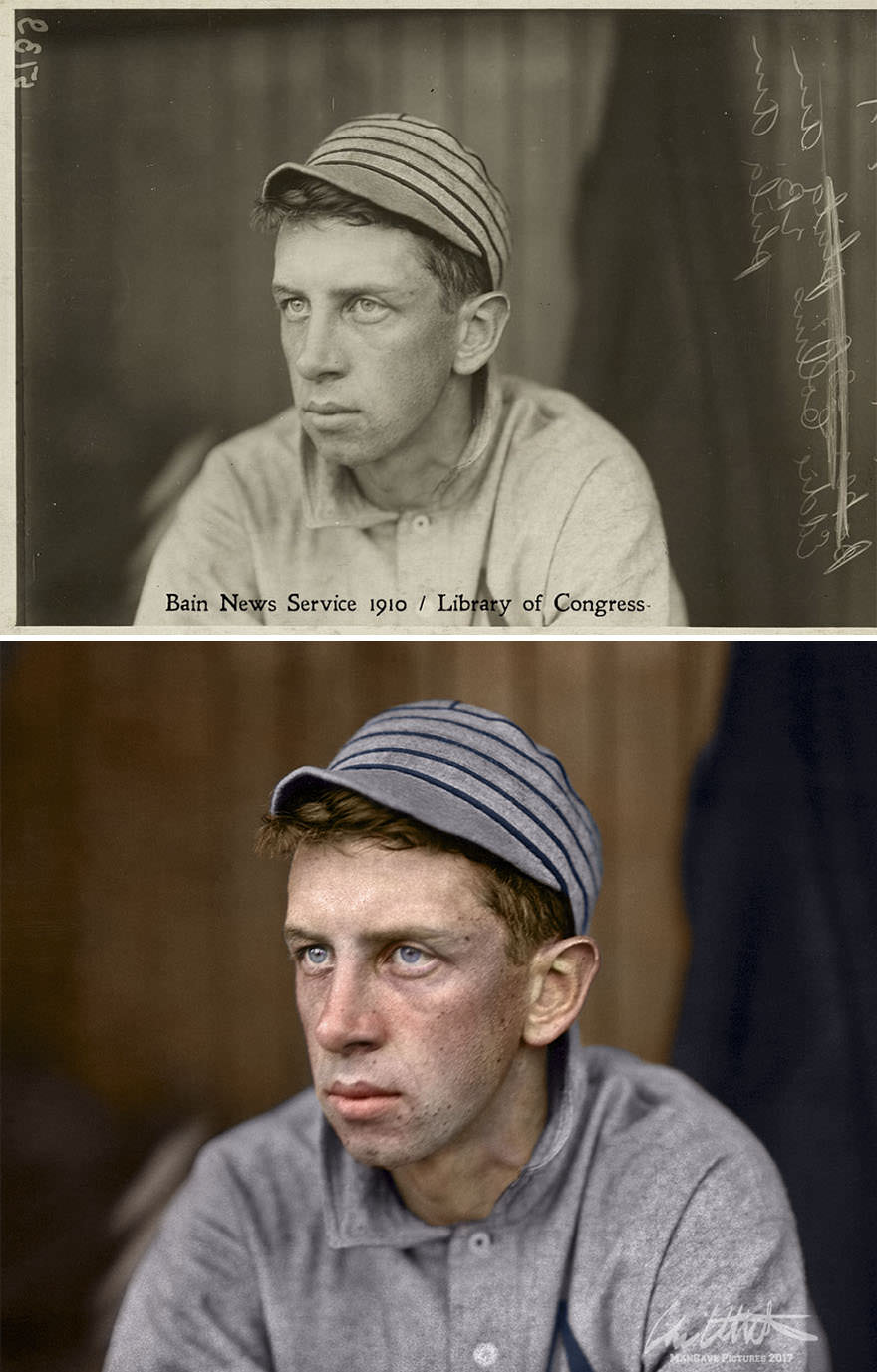
Eddie Collins was one of the finest second basemen of the Dead Ball Era, a key part of the Philadelphia Athletics dynasty under Connie Mack. This 1910 image captures him at the peak of his early career.
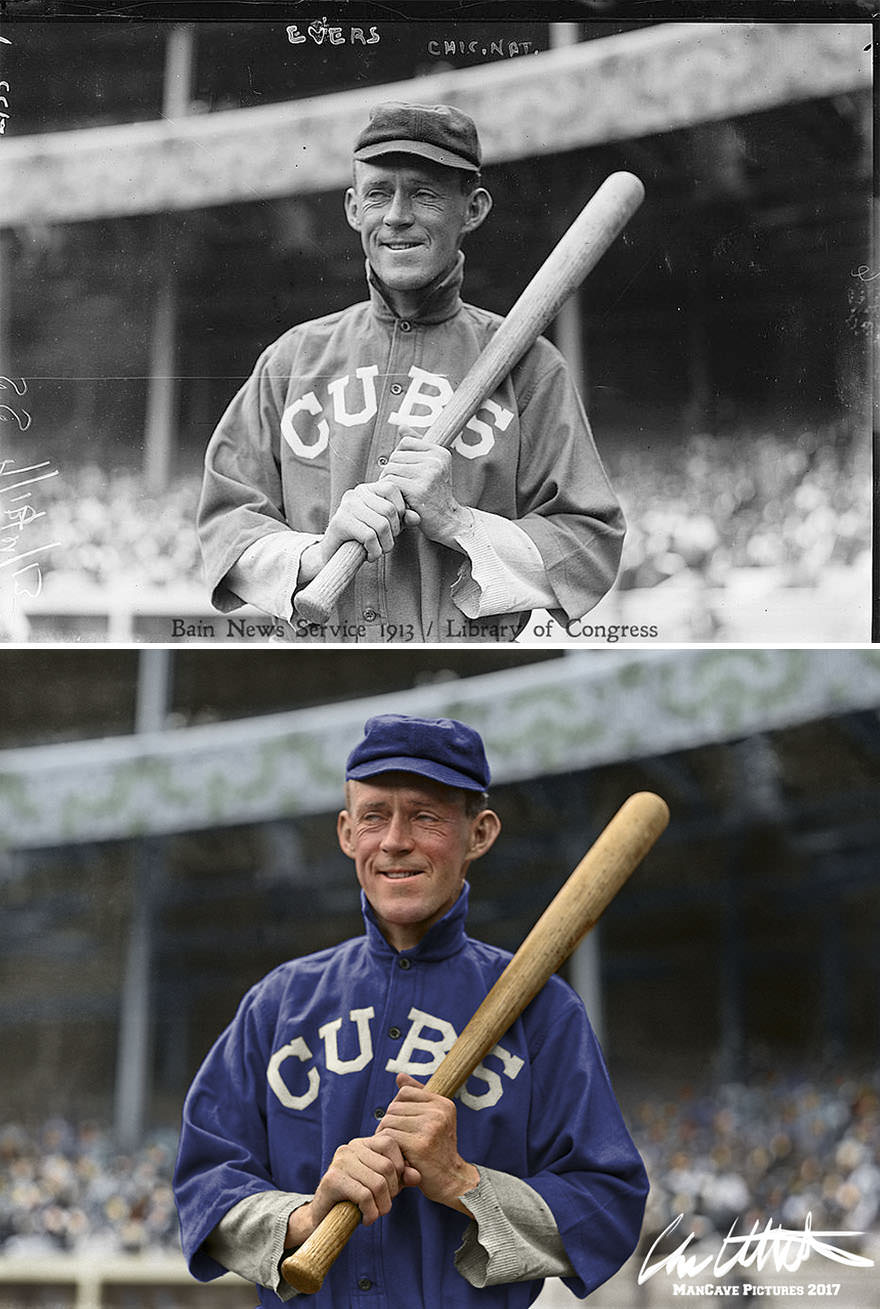
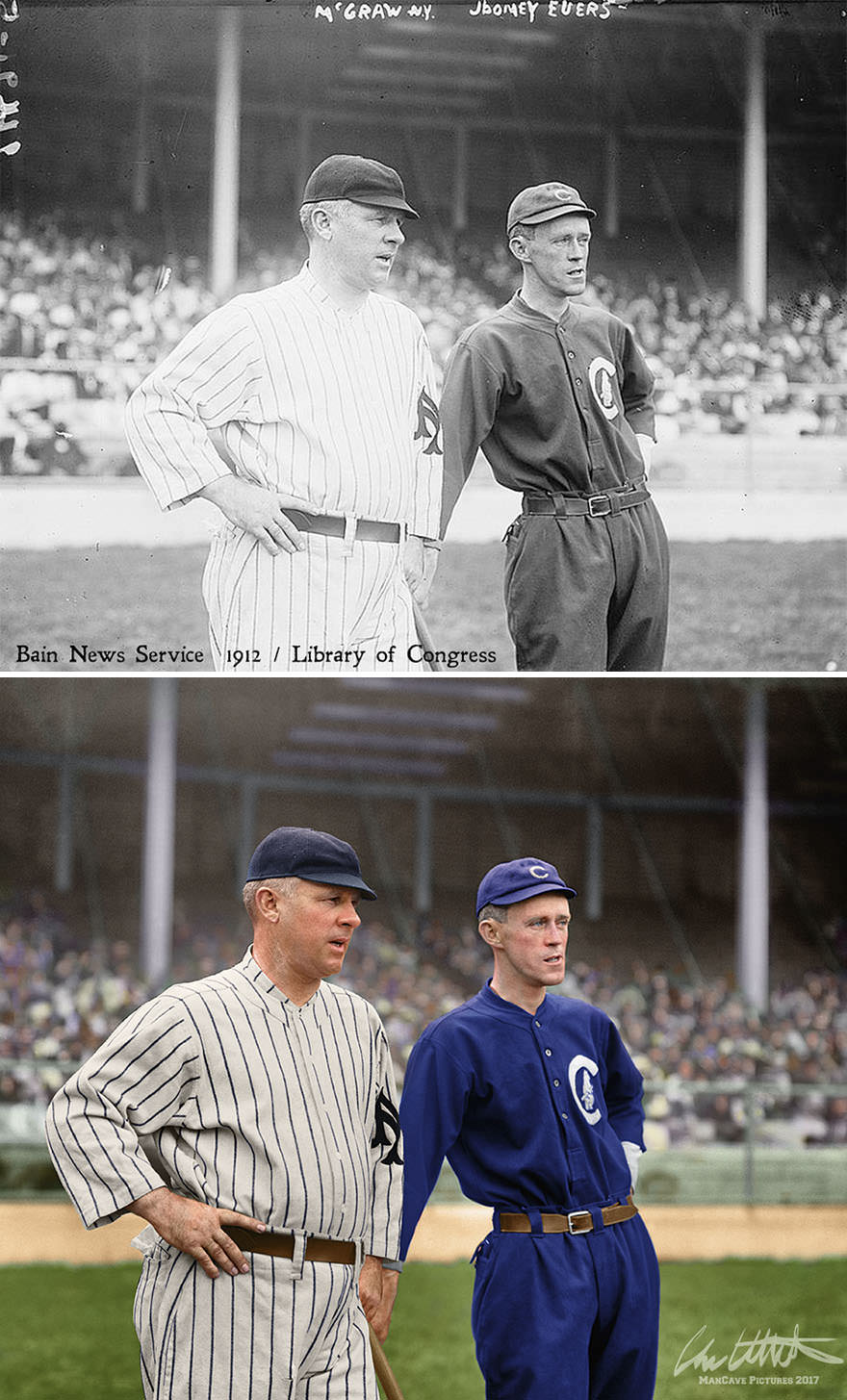
This 1912 photo brings together two of baseball’s biggest names from that era — New York Giants manager John McGraw and Chicago Cubs infielder Johnny Evers, whose rivalry on the field made this side-by-side moment all the more striking.
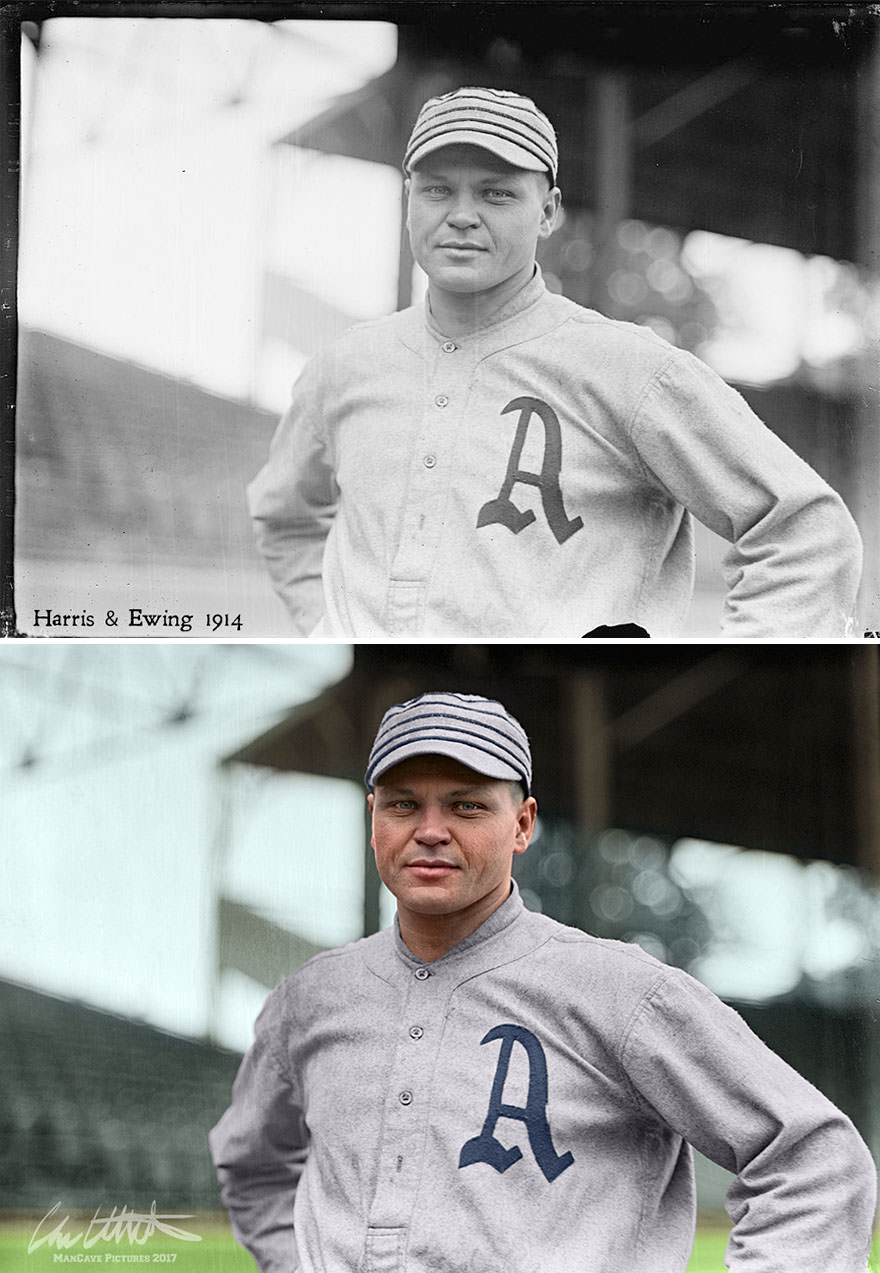
Amos Strunk was a center fielder for the Philadelphia Athletics, part of the same talented roster that included Eddie Collins. His 1914 portrait places him in the middle of an Athletics team that was beginning to break apart as Connie Mack sold off his stars.
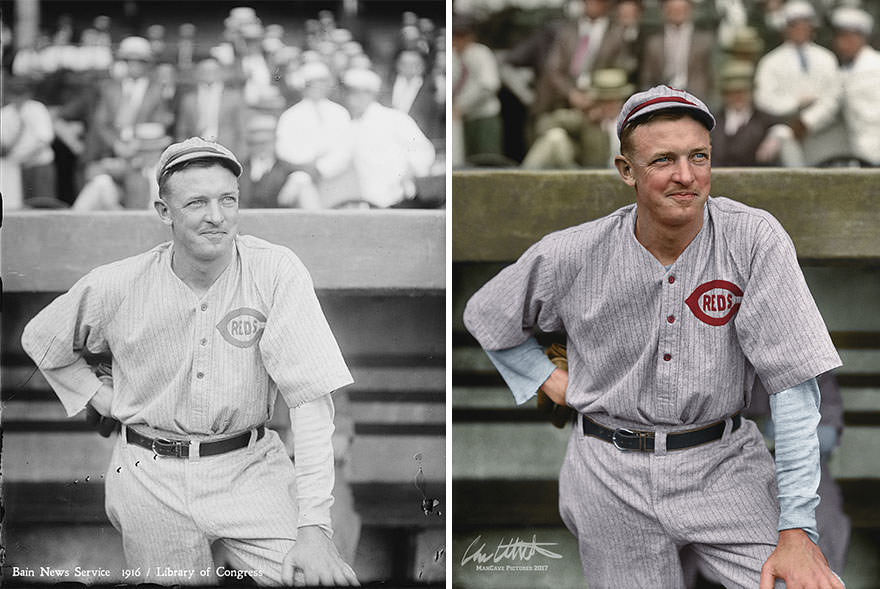
Christy Mathewson was one of the greatest pitchers of the early twentieth century, winning 373 games in his career. By 1916, he had moved to the Cincinnati Reds as manager, and this photograph captures his final appearance as a player — a farewell to the mound for one of baseball’s true legends.
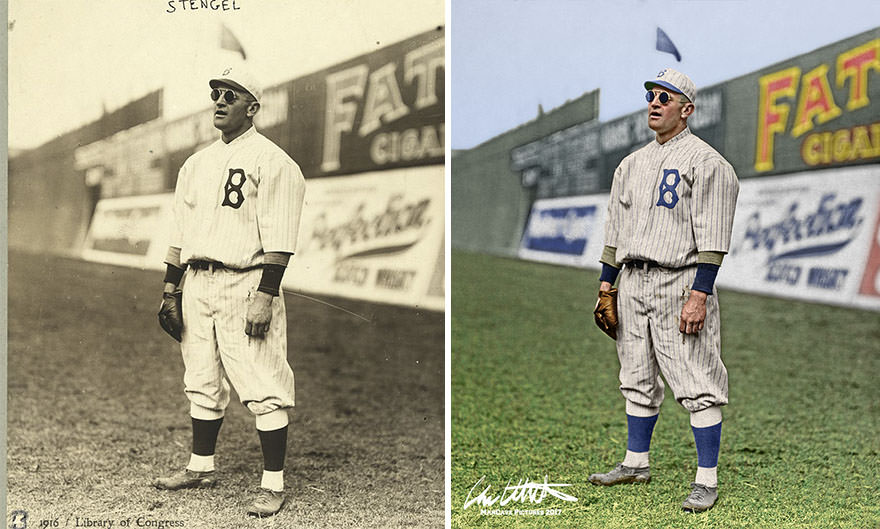
Before his Hall of Fame managing career, Casey Stengel was an outfielder for the Brooklyn club. This 1915 portrait shows him as a young player, decades before he would lead the New York Yankees to five consecutive World Series titles.
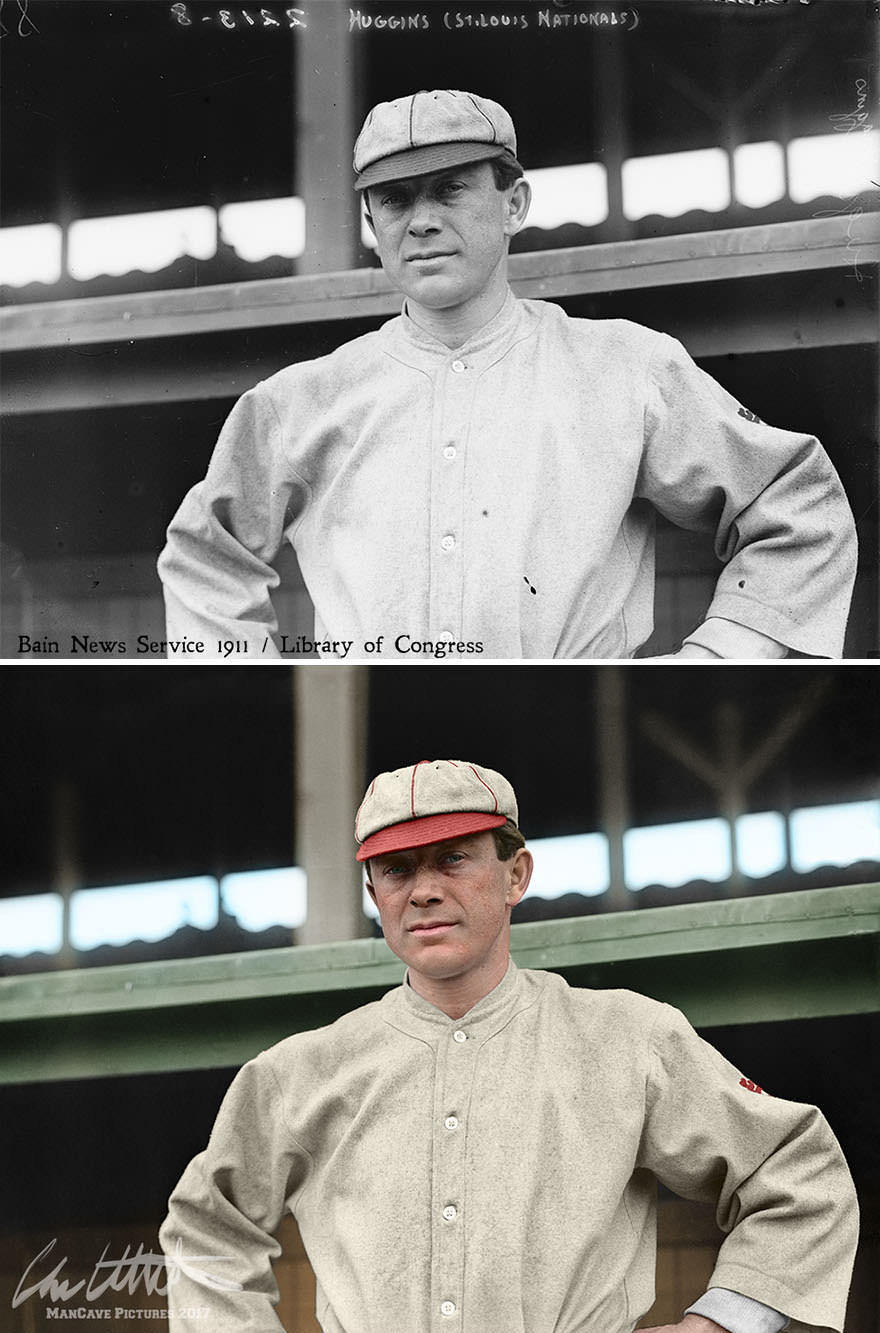
Miller Huggins played second base for the St. Louis Cardinals before going on to manage the New York Yankees through their dynasty years of the 1920s. His 1911 portrait with the Cardinals captures him in his playing days, a full decade before he became one of baseball’s most celebrated managers.