
In May 1943, photographer John Collier traveled to the timber holdings of the Brown Company in western Maine, near the New Hampshire border. He didn’t just observe from a distance. He camped alongside the woodsmen who were in the middle of the spring pulpwood drive — one of the most physically demanding jobs in the American timber industry. The mission was straightforward but grueling: shepherd thousands of heavy, waterlogged logs down the Kennebago River and across Mooselookmeguntic Lake to reach the pulp and paper mills waiting far downstream.
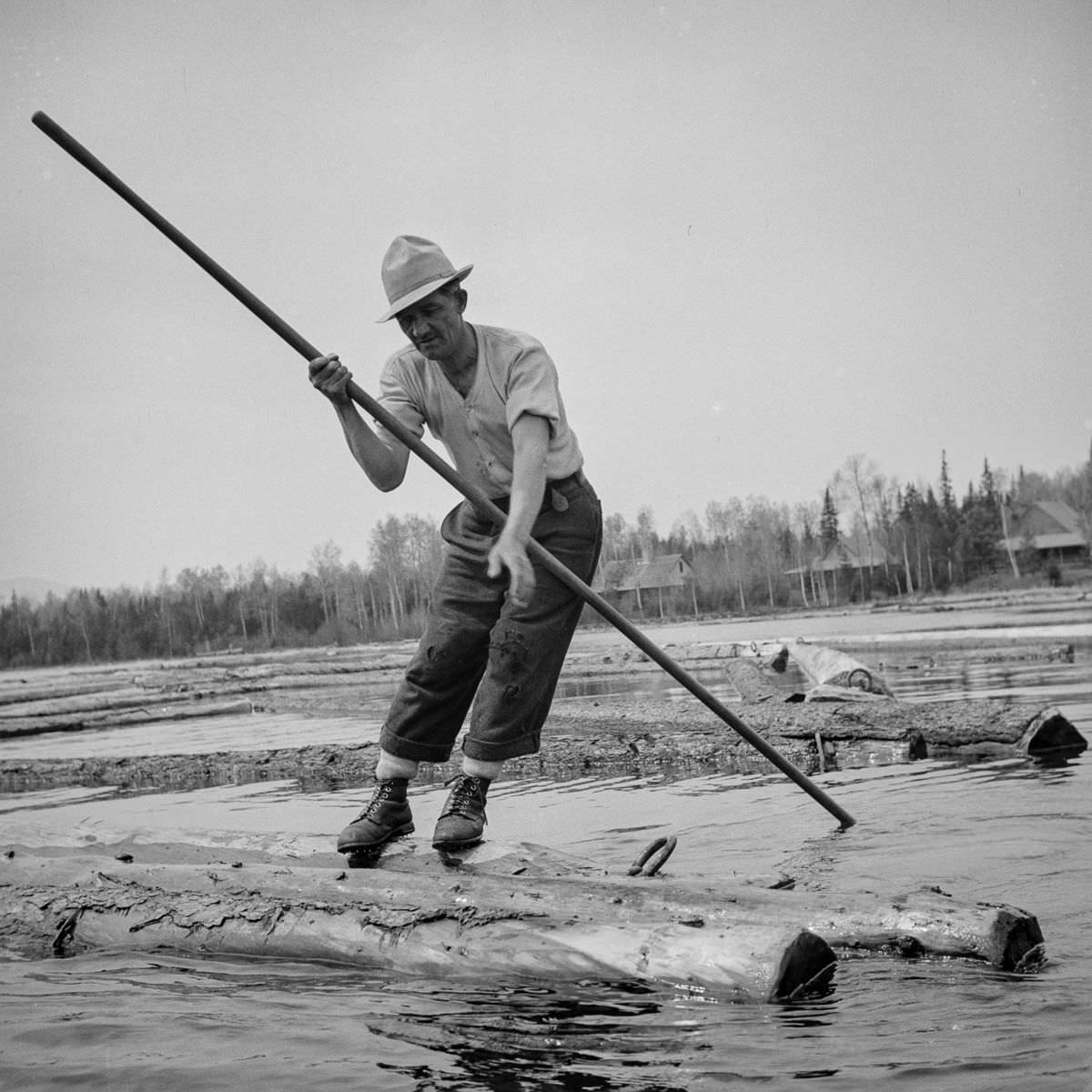
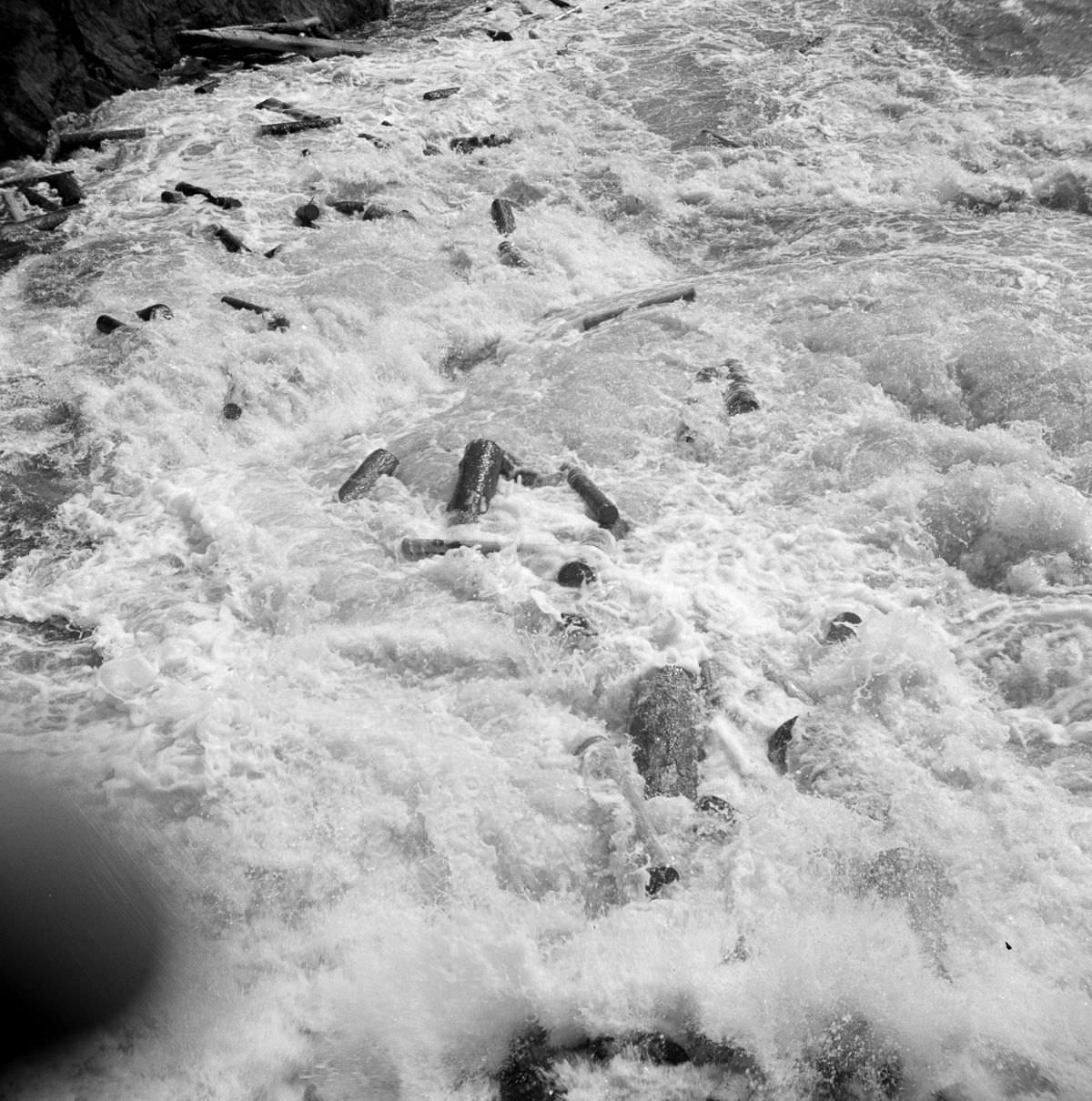
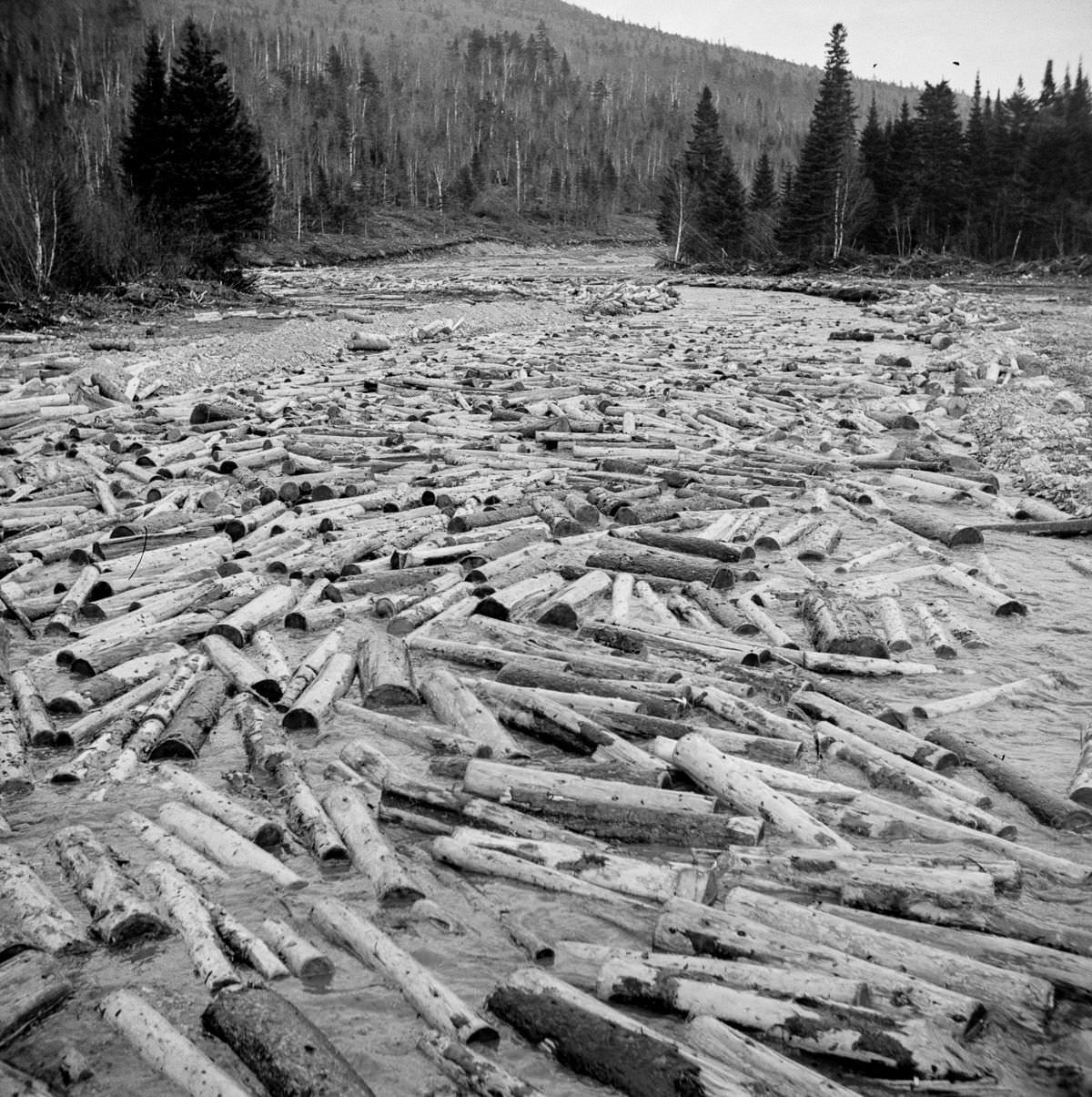
The spring drive was timed carefully. Winter logging left enormous stockpiles of cut pulpwood along riverbanks and frozen waterways. When the ice broke and water levels rose with snowmelt, the logs went in. The current did much of the hauling, but rivers are unpredictable. Logs jammed against bends, piled up at narrows, and threatened to gridlock entire stretches of water. That’s where the woodsmen came in.
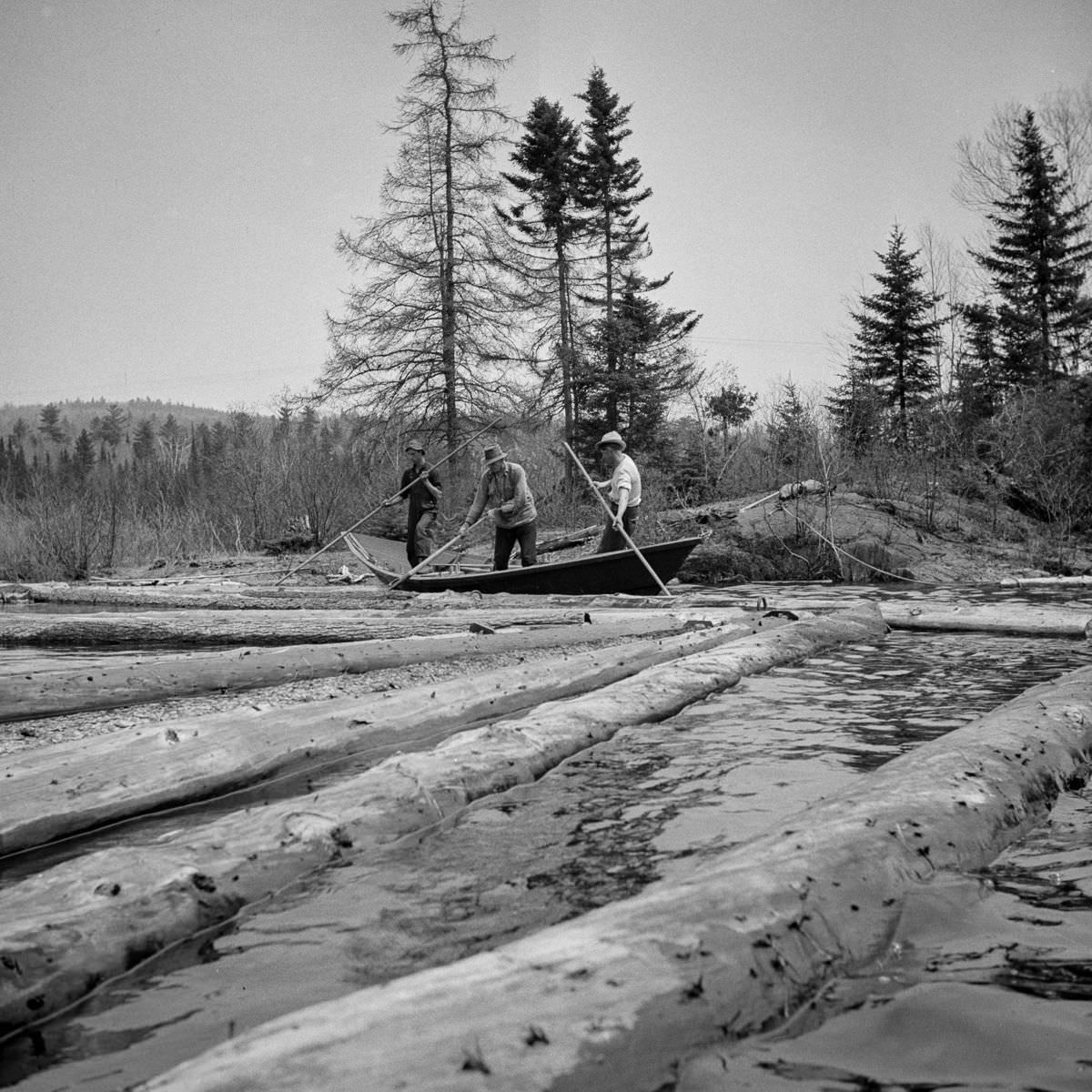
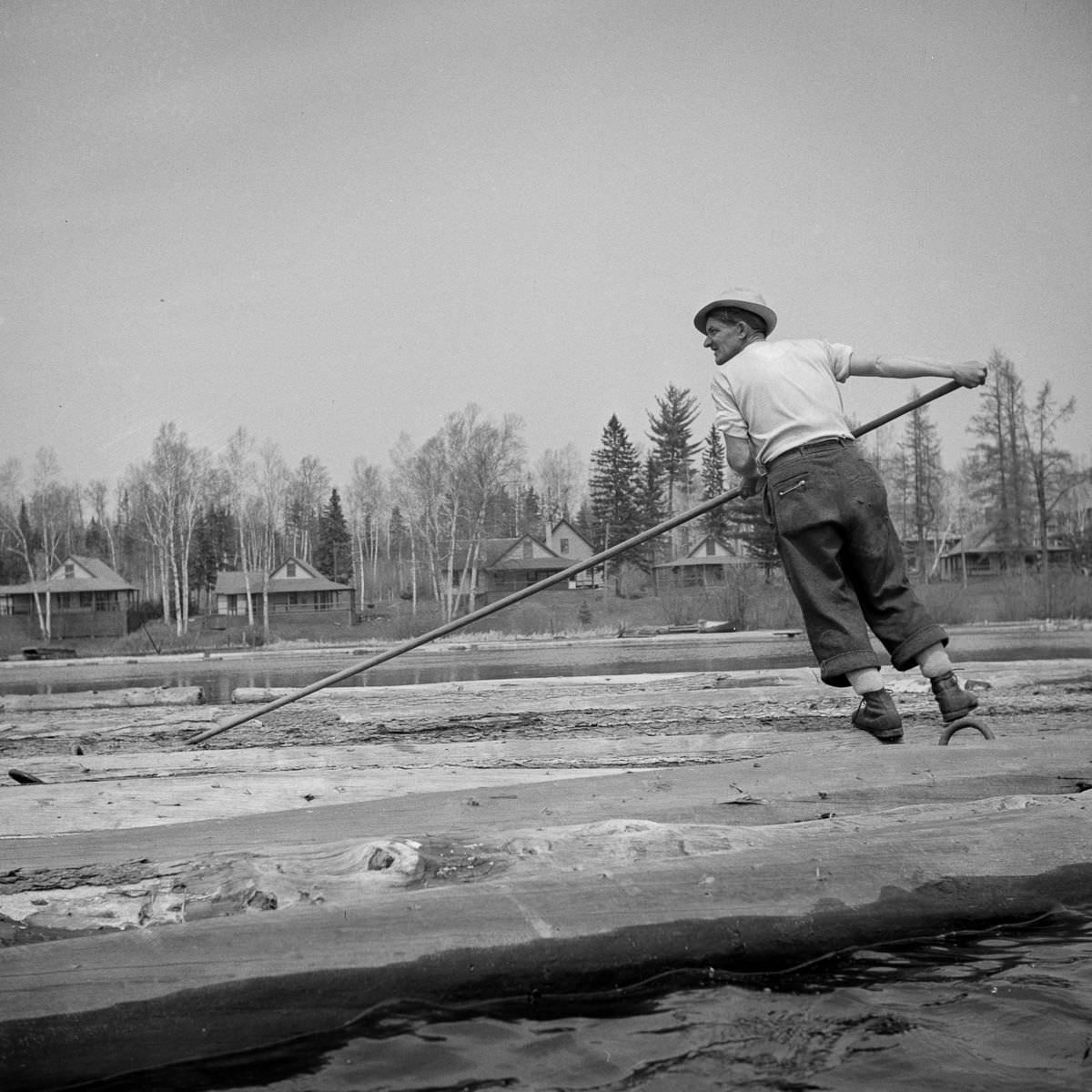
Their main tool was the pike pole — a long wooden staff tipped with a sharp metal hook and point. Woodsmen used these to push, pull, spin, and redirect individual logs or entire clusters. The work required balance, strength, and sharp instincts. One misstep on a rolling log in fast-moving water meant falling into a dangerous tangle of heavy timber. Spiked shoes, also called caulked boots, gave the men grip on slick log surfaces, but the work remained treacherous regardless.

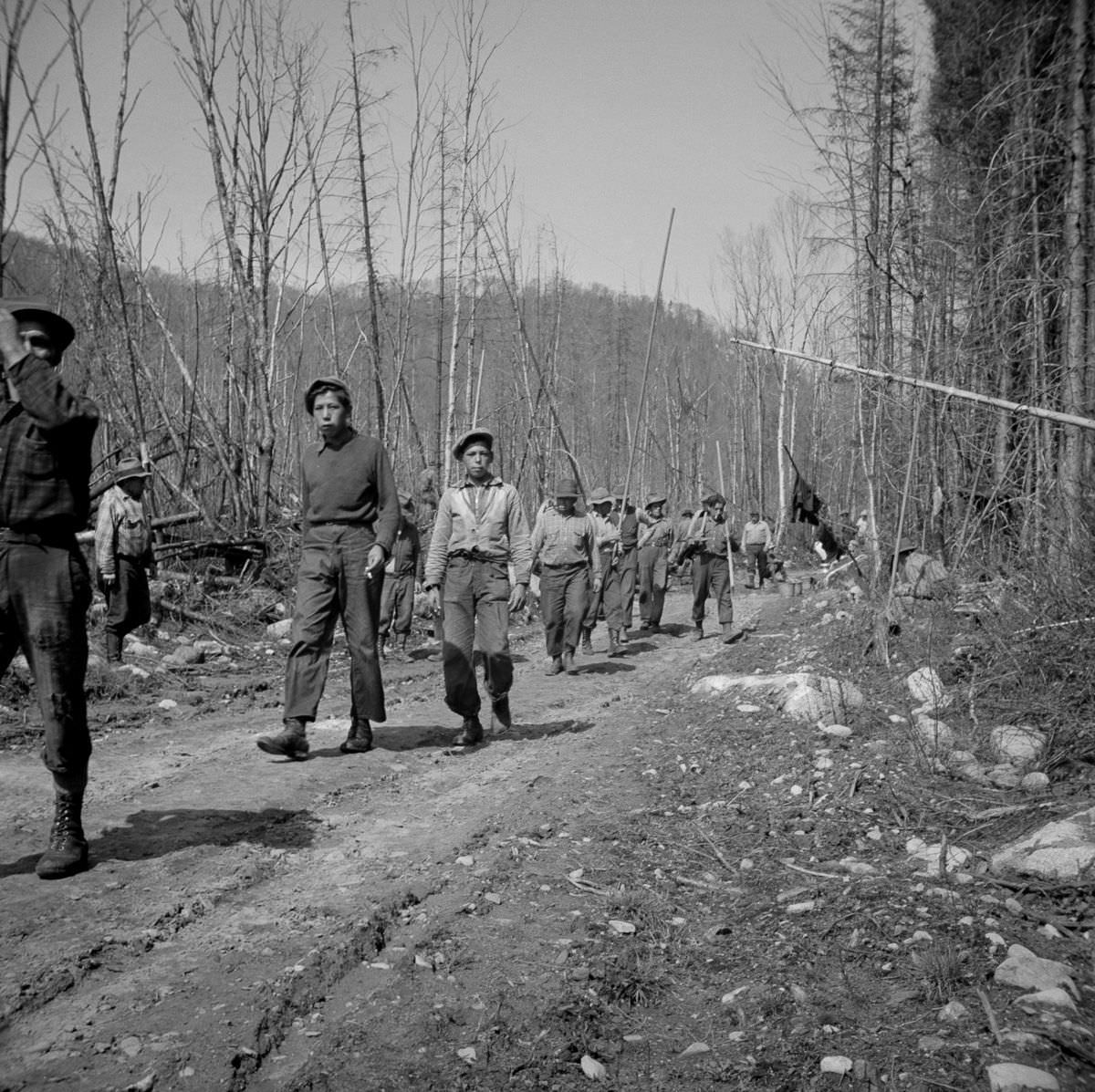
The camp itself supported a small but tightly run operation. Supplies, equipment, and men moved around by horse and wagon on the rough terrain surrounding the waterways. Every person in camp had a role, and the rhythm of the workday was built around keeping the logs moving. Woodsmen ate four meals a day to fuel the hard physical labor — a telling sign of just how much energy the drive demanded.
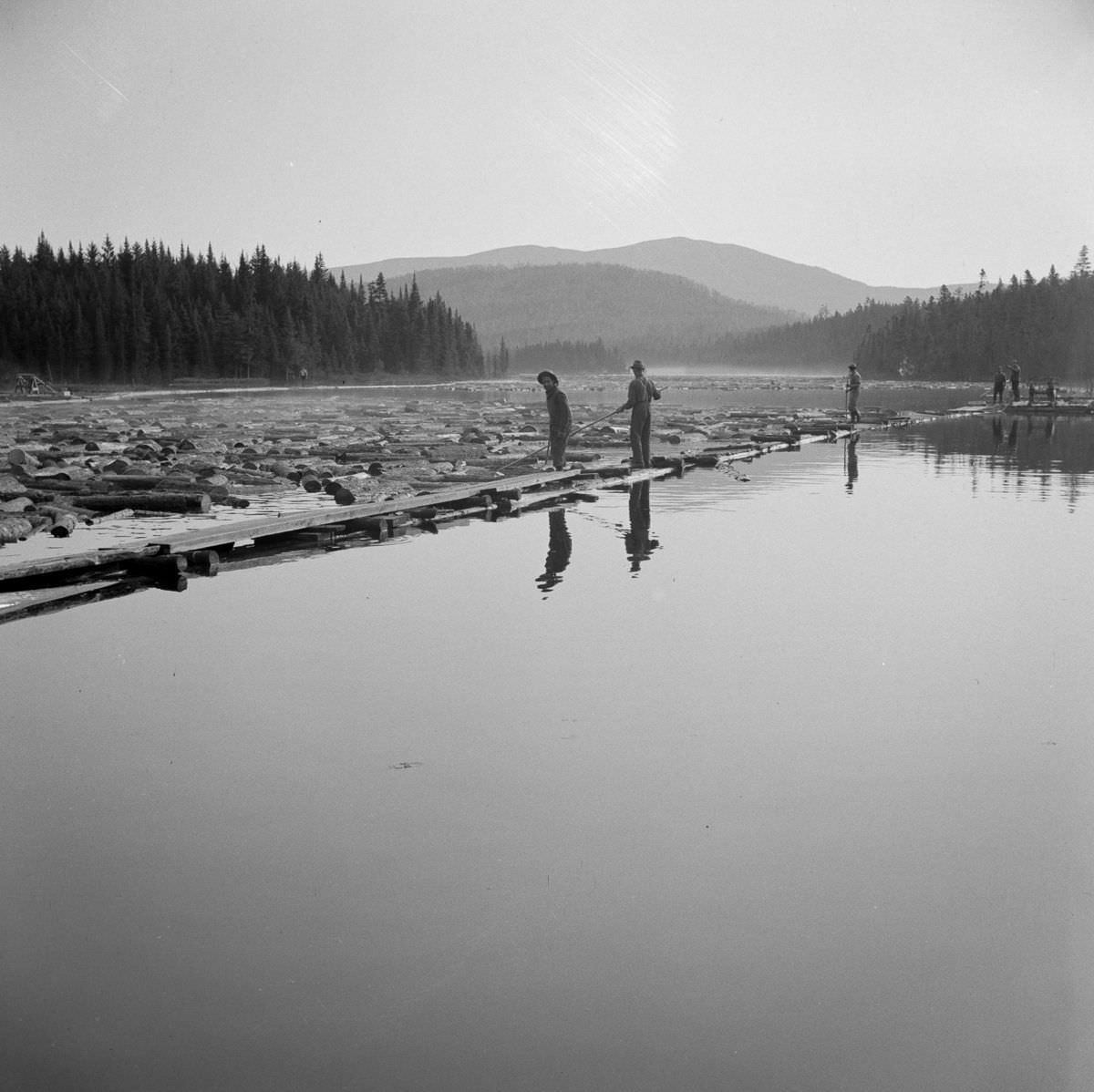
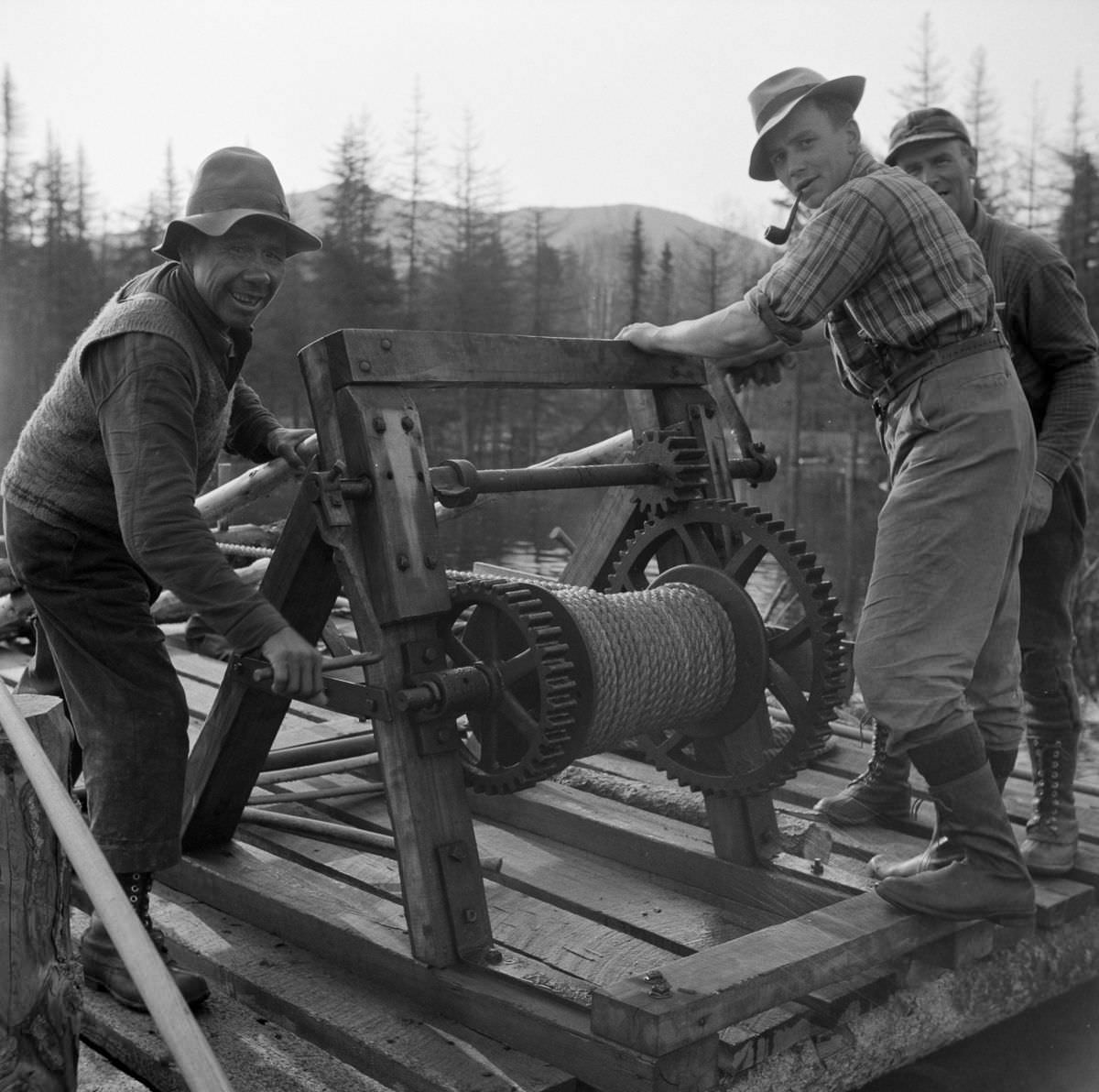
Booms were a critical part of the operation. These were long floating barriers — essentially chains of connected logs — used to corral pulpwood and direct its flow. Men in flat-bottomed boats called bateaux would row out to open or reposition booms, guiding the mass of logs toward sluiceways or specific channels. On Long Pond, woodsmen used winches to haul booms into position, controlling the direction of the log flow downstream.
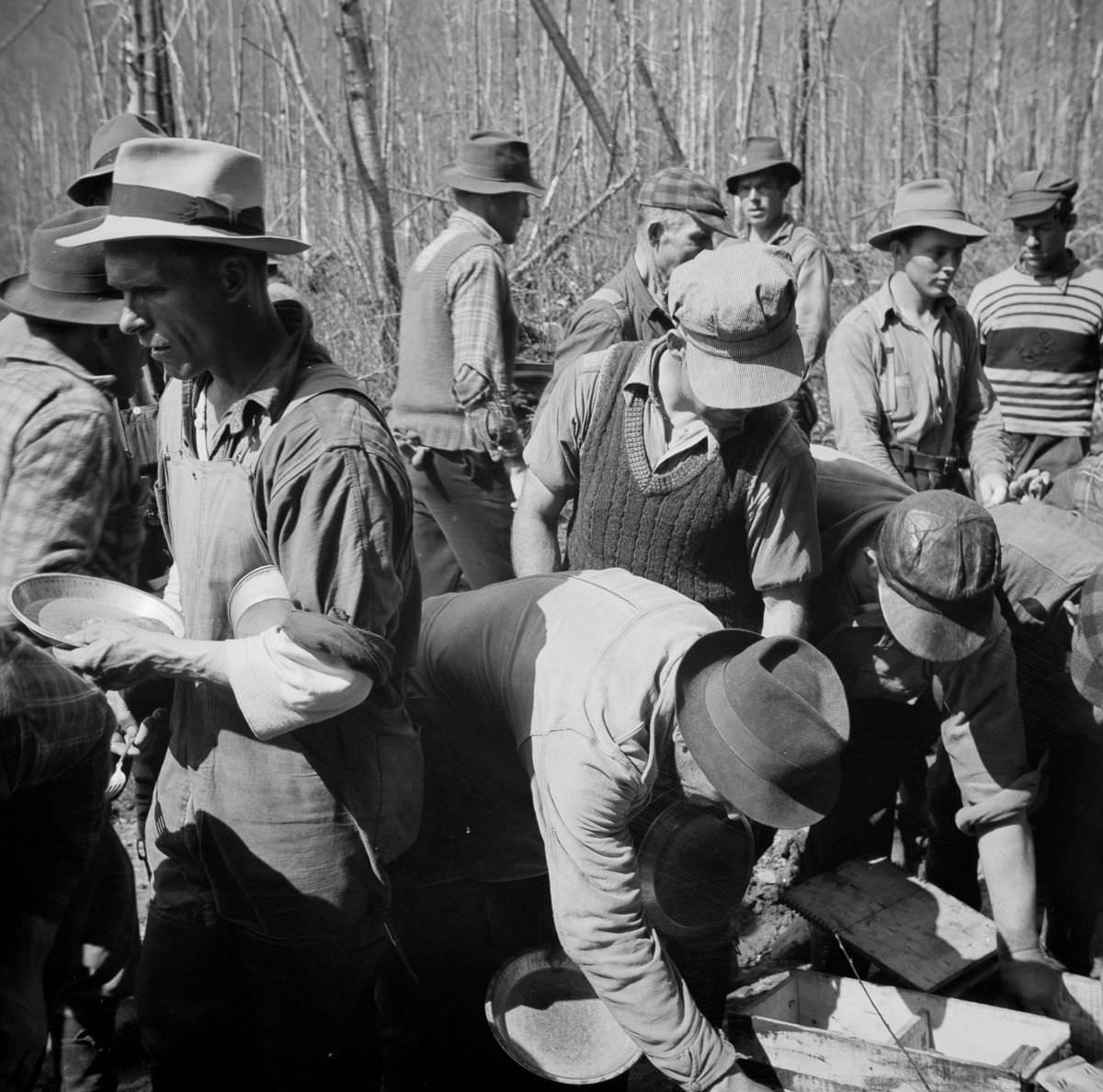
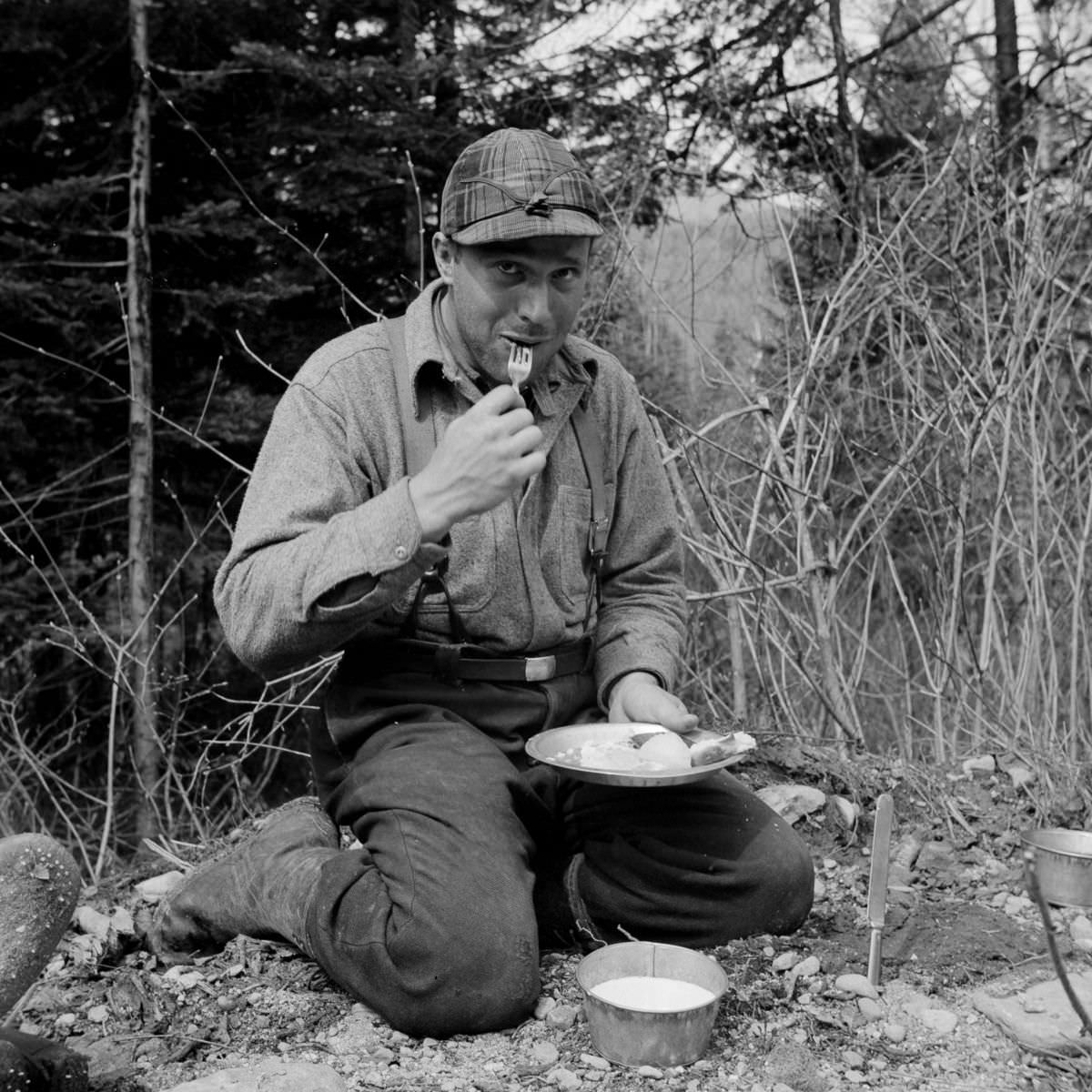
Feeding a crew doing this kind of work was its own operation. Four meals a day was the standard, and the cook camp kept a steady schedule. Woodsmen lined up, ate well, and got back to it. There was no room for a sluggish, underfed crew when thousands of logs needed to keep moving.
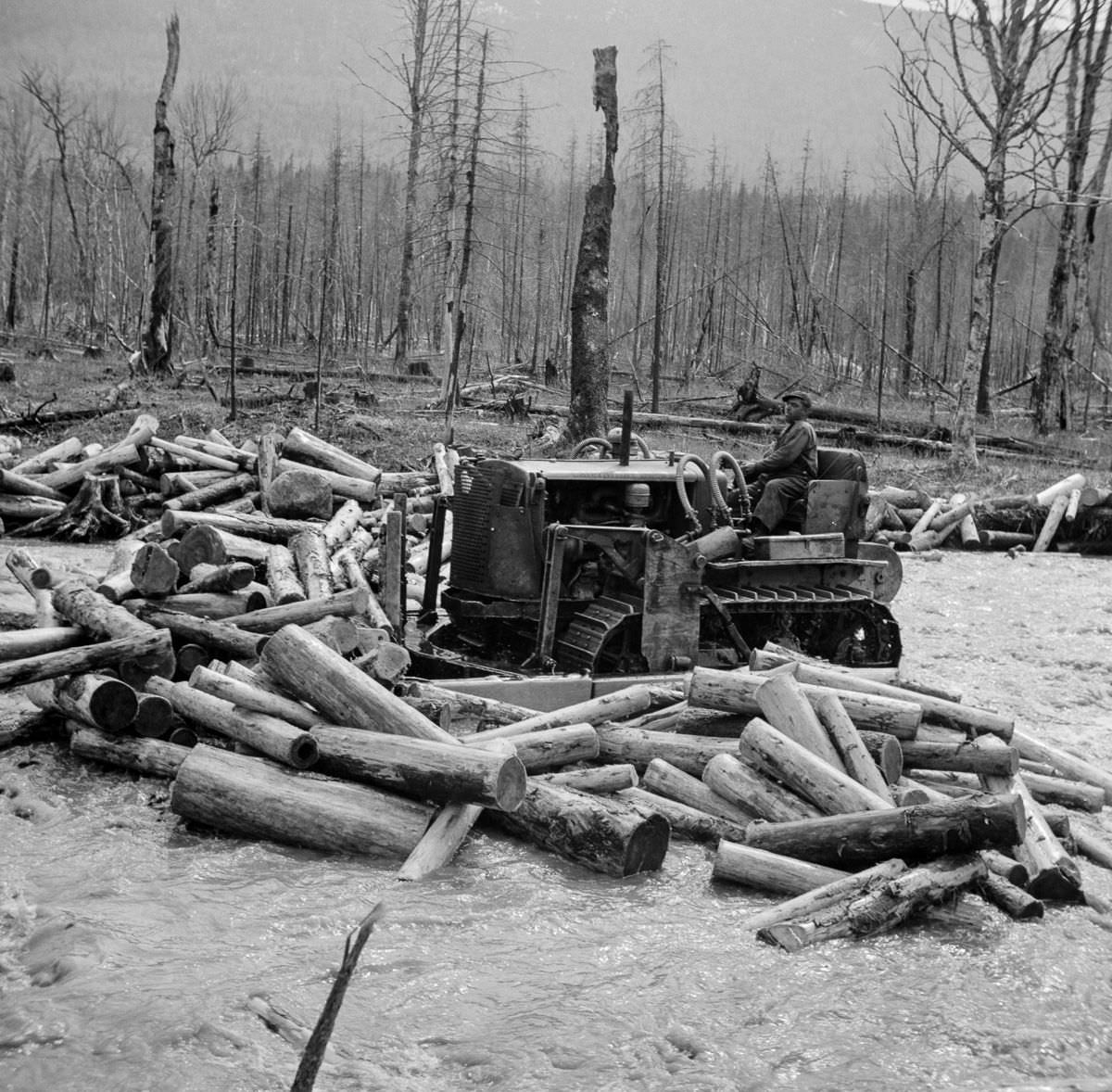
Logjams were an ever-present hazard. When logs stacked up and locked against each other, the entire drive stalled. Breaking a jam by hand with pike poles was dangerous — a sudden release could send logs surging in every direction. In particularly stubborn cases, machinery took over. At Dennison Bog Creek, a bulldozer was brought in to clear a jam that hand tools couldn’t handle.
Power dams along the route added another layer of complexity. Pulpwood piled up in the Kennebago River, waiting to be released through dam sluiceways in controlled batches. Timing these releases kept the flow manageable downstream and prevented jams from forming faster than crews could clear them.
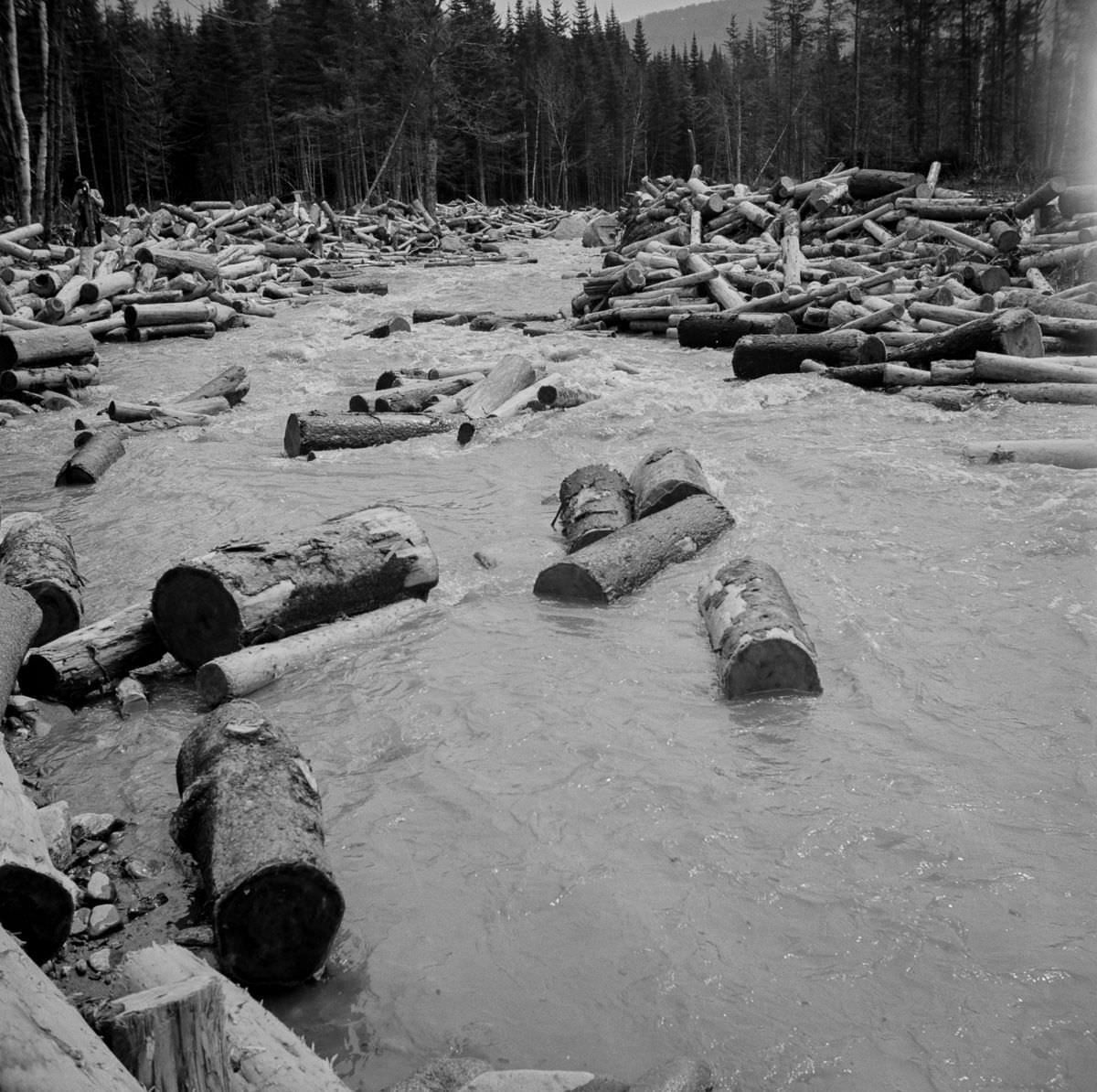
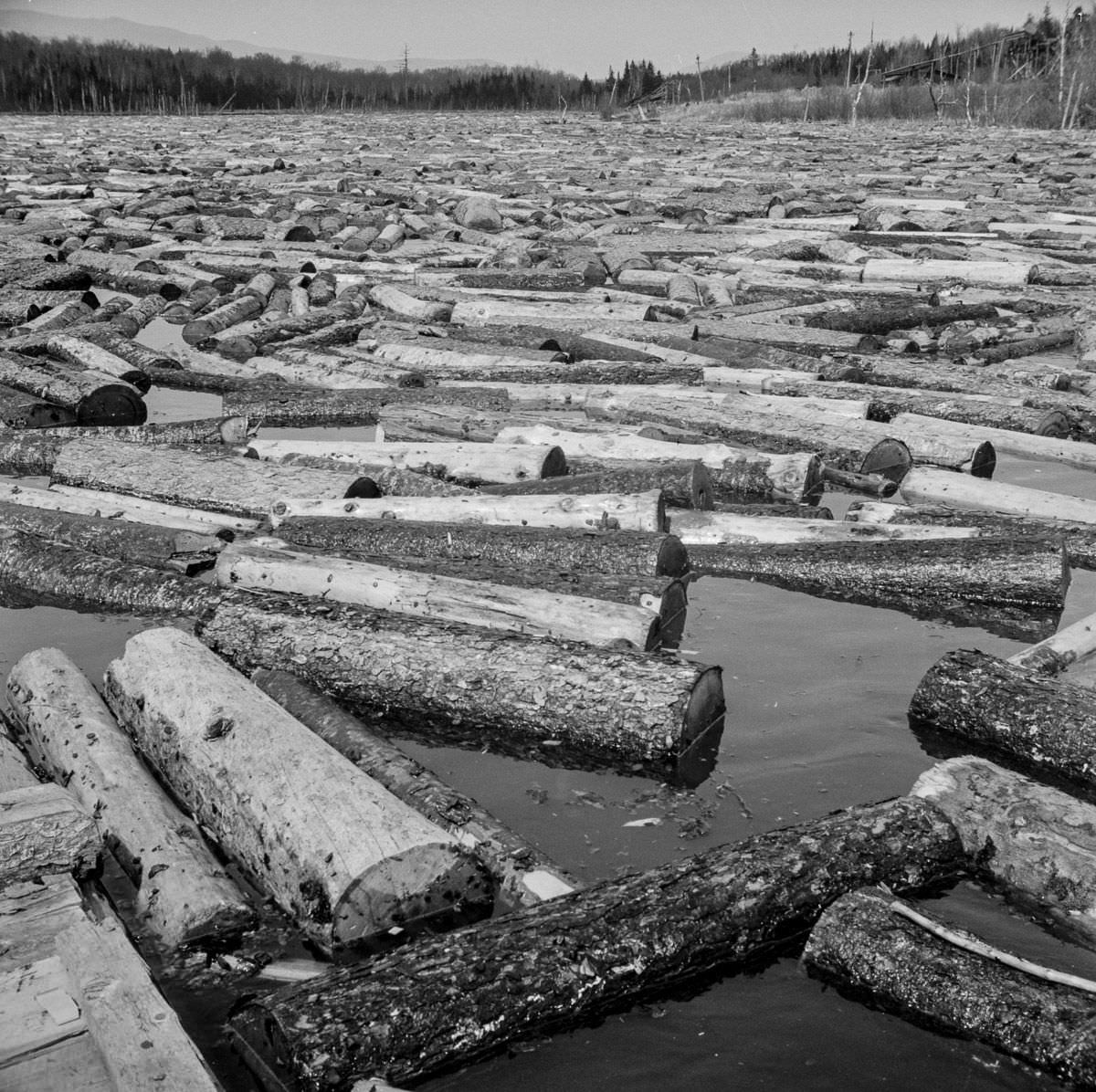
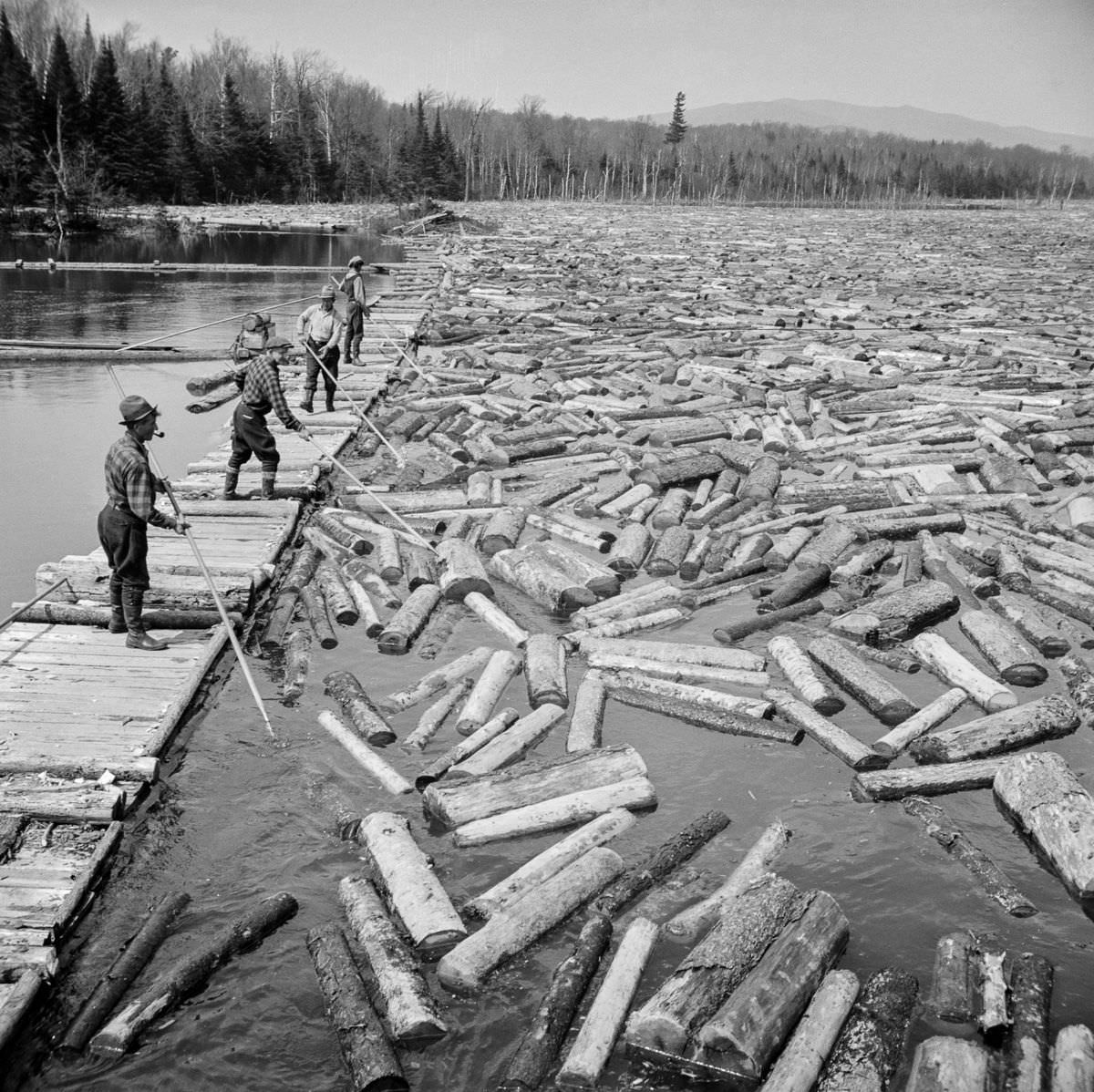
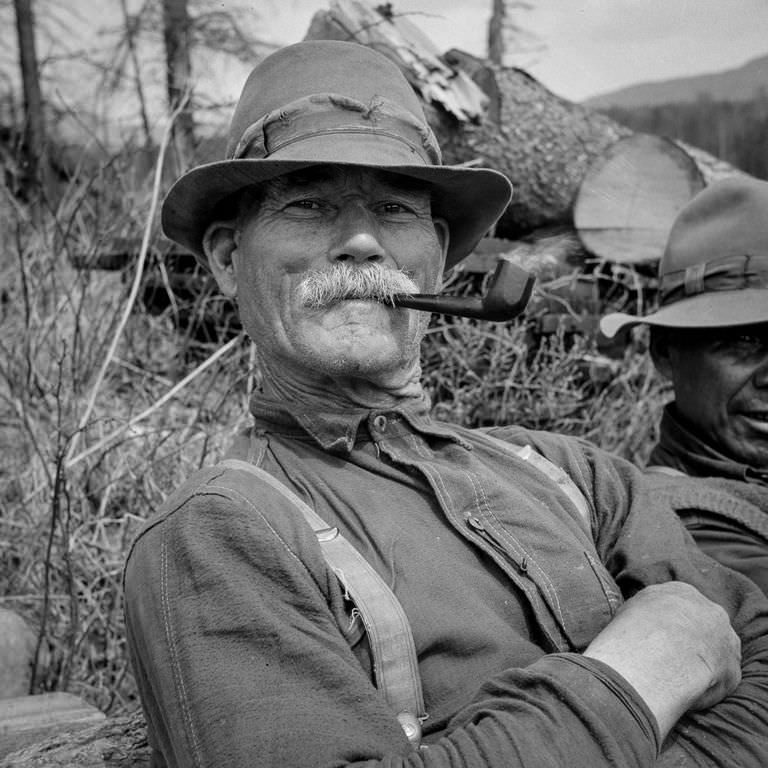
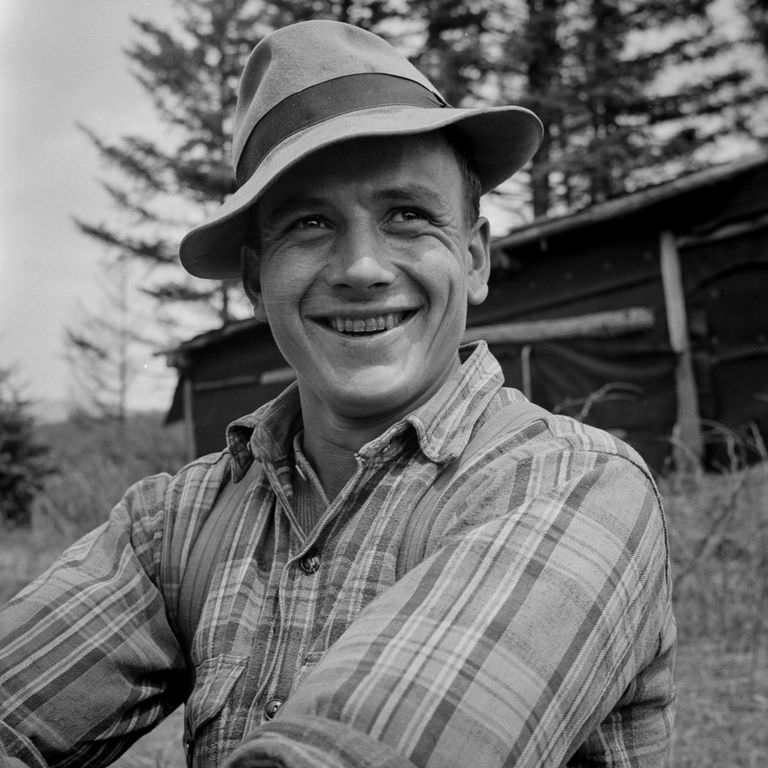
Collier’s photographs captured the woodsmen at every stage of the drive — working the water, managing the booms, eating, and resting. The images show men who were completely adapted to their environment. They moved across floating logs with the ease of long practice, handled heavy equipment in fast water, and kept the whole system flowing through sheer skill and effort.
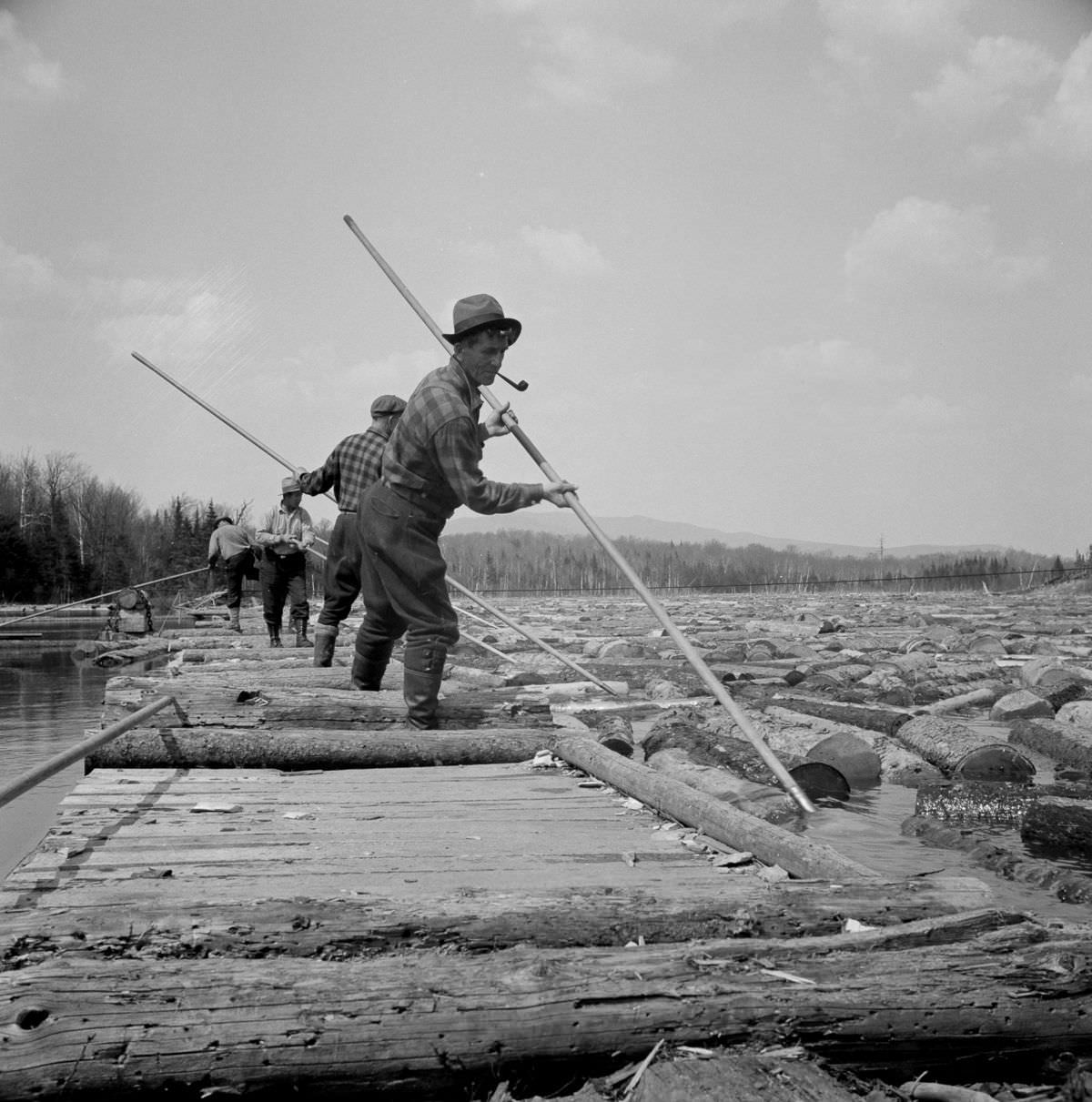
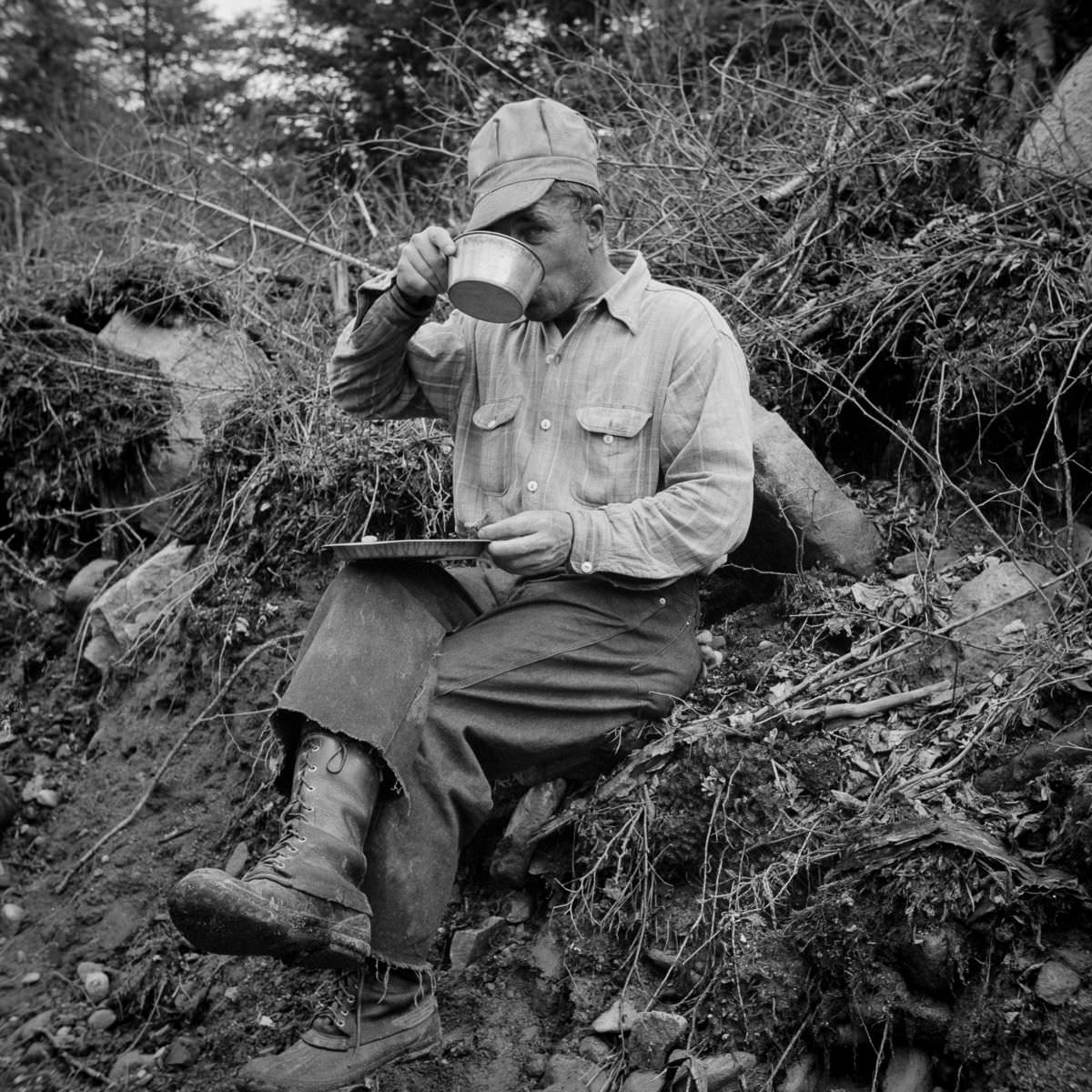
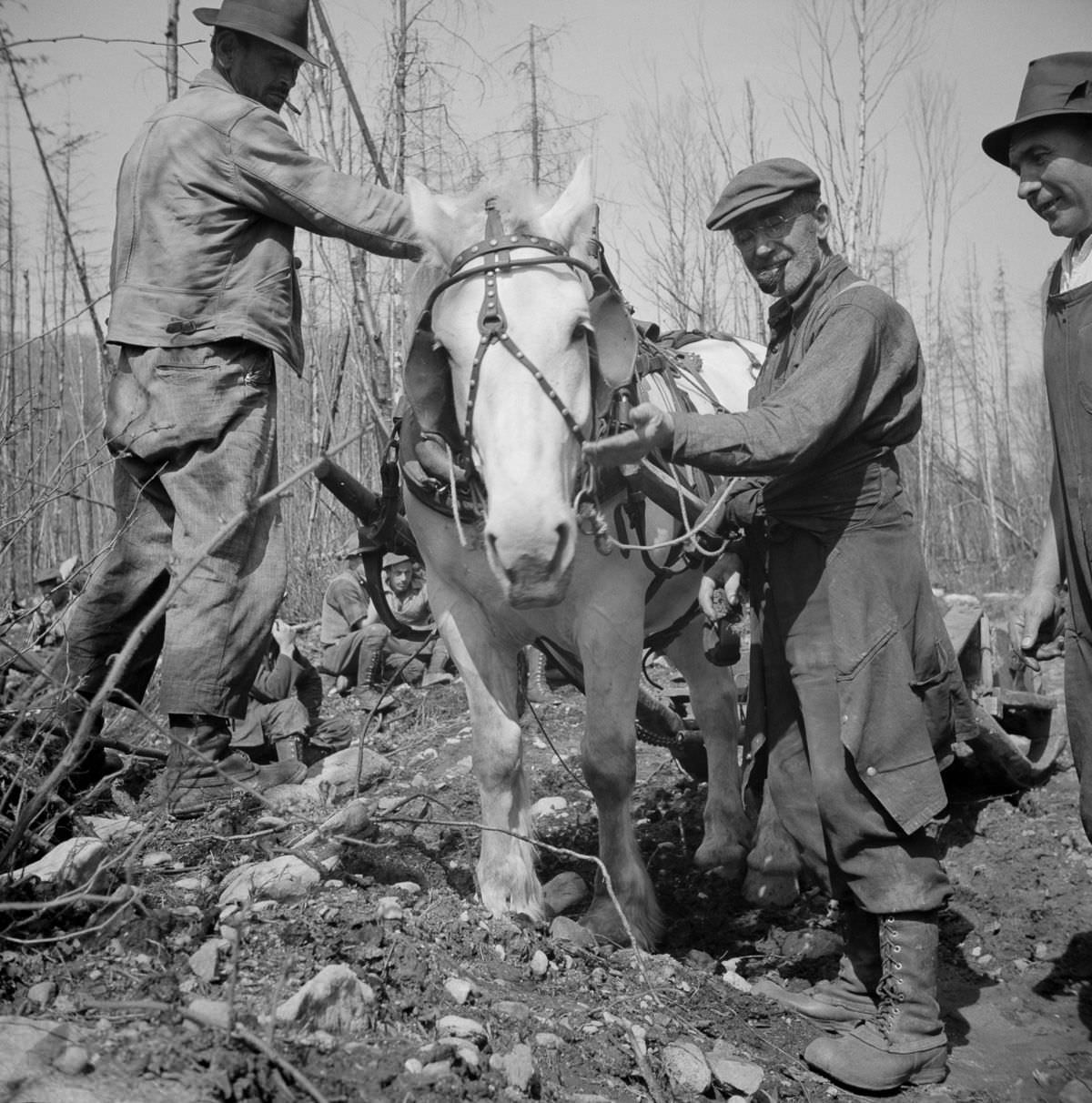
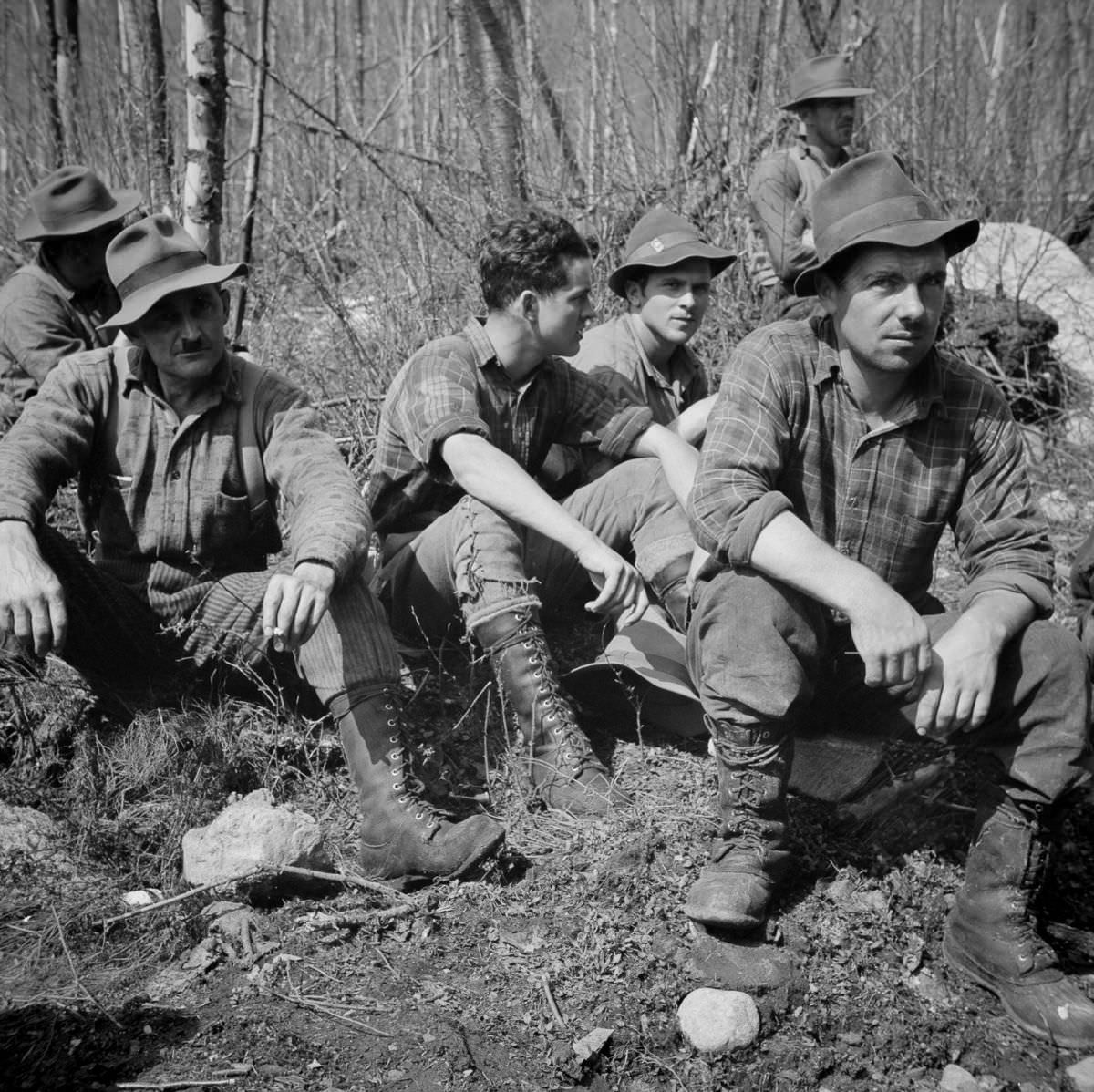
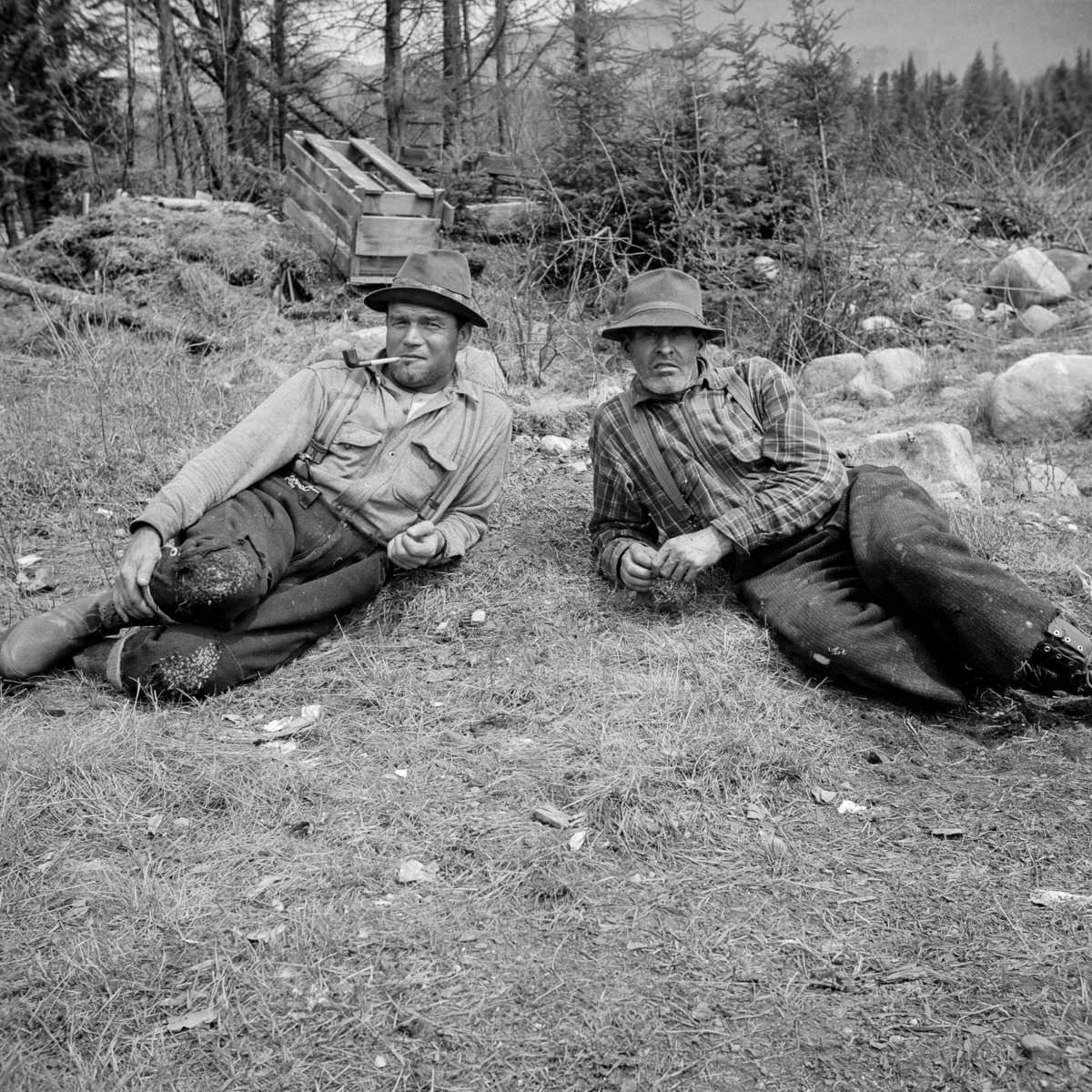
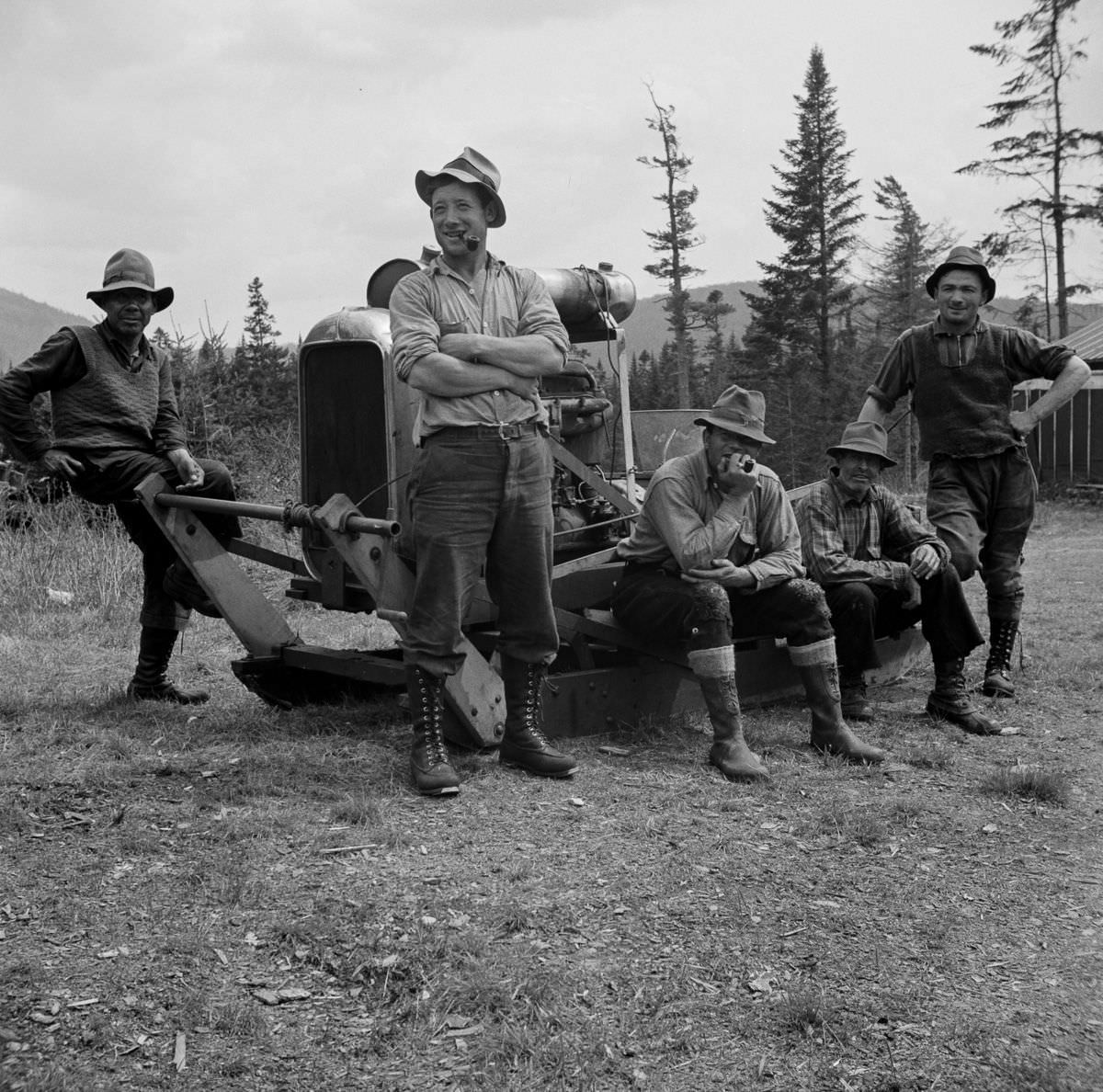
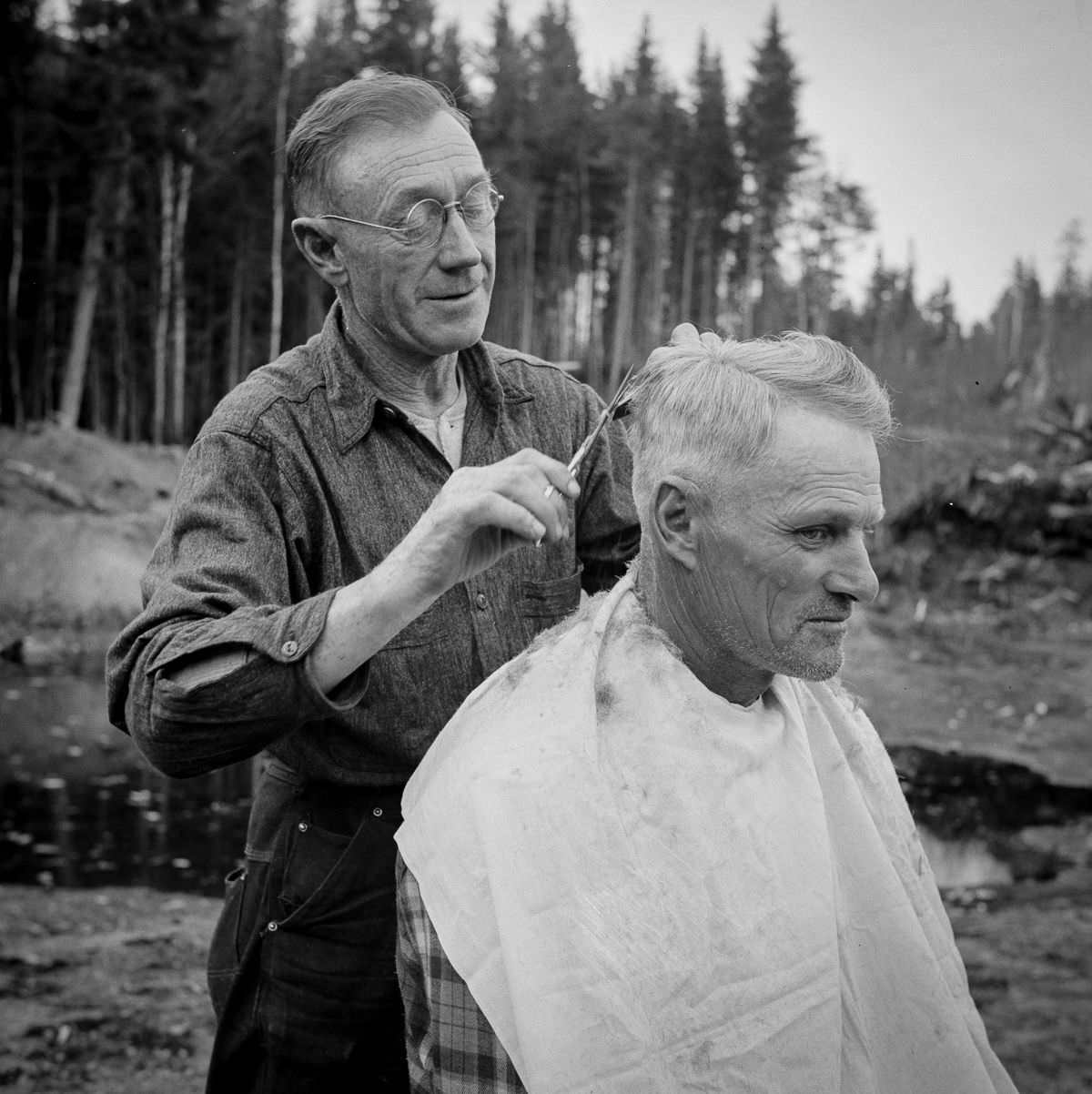
After the long hours on the water and in the bogs, the bunkhouse was where the men recovered. Downtime was short but real. Woodsmen sat outside, smoked, and talked before the next day’s work began again. The camp had a functional simplicity — everything in it existed to support the drive and the men running it.
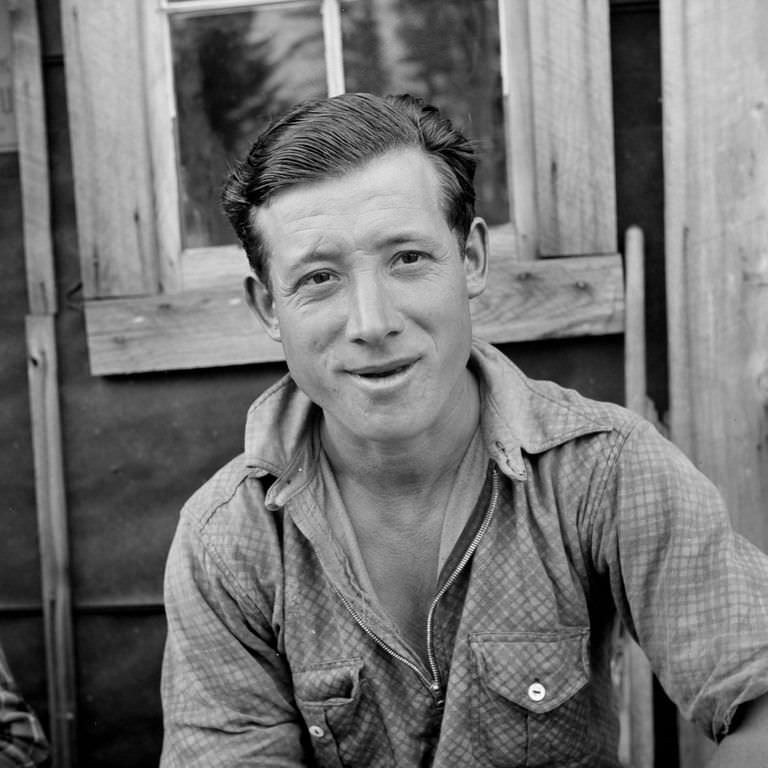
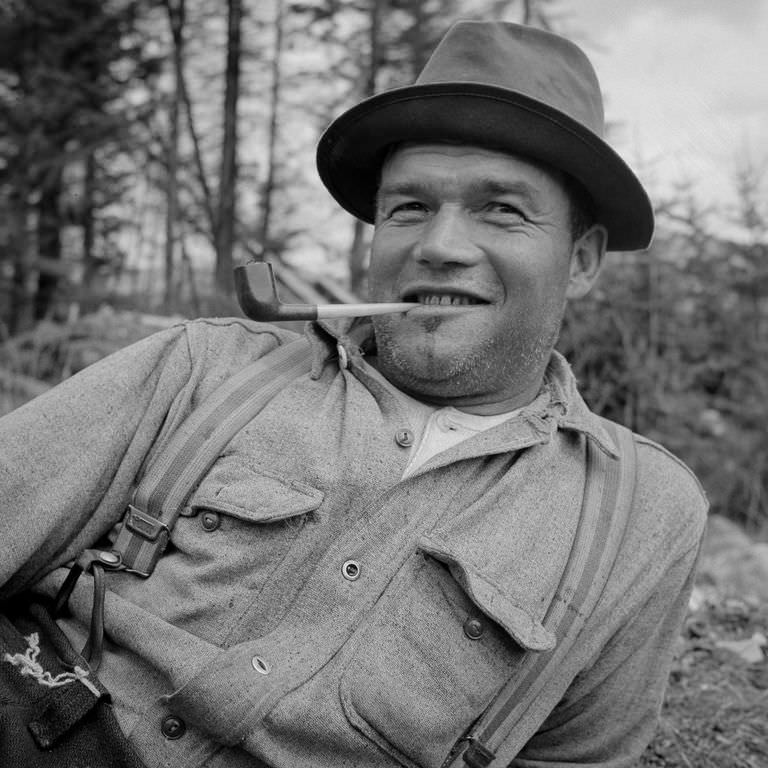
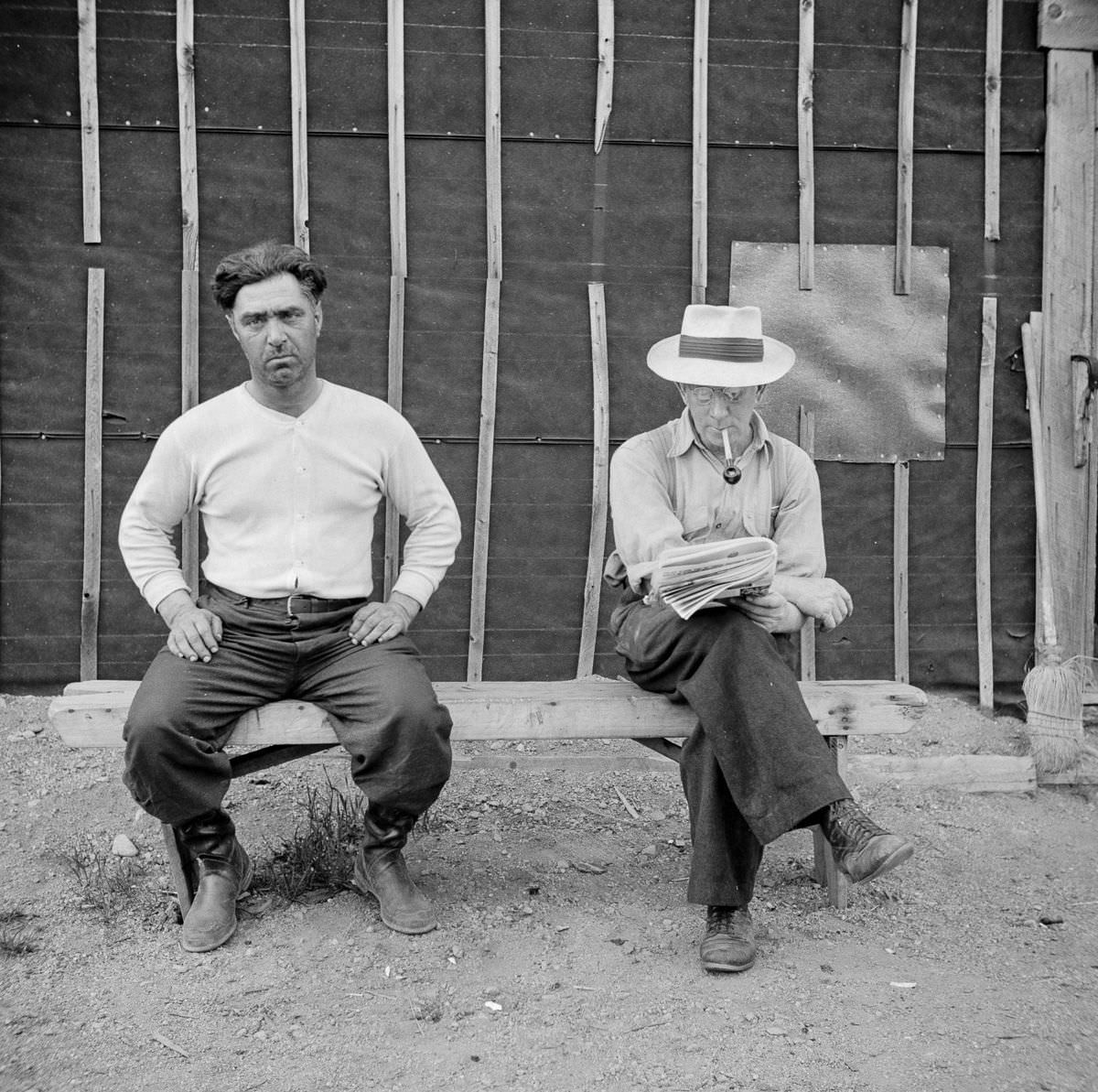
The Brown Company’s timber operations in western Maine were a significant part of the region’s wartime economy. Pulpwood fed paper mills that produced materials needed across the country. The men on the spring drive in 1943 worked in relative obscurity, deep in the Maine woods, doing hard physical labor that few people outside the industry ever witnessed firsthand. Collier’s photographs are among the most detailed visual records of what that work actually looked like.
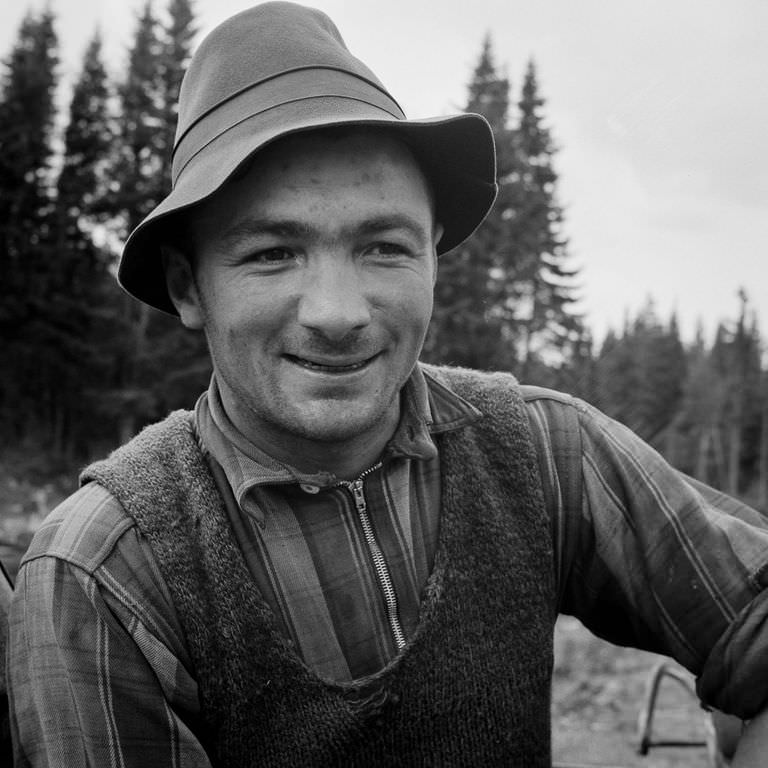
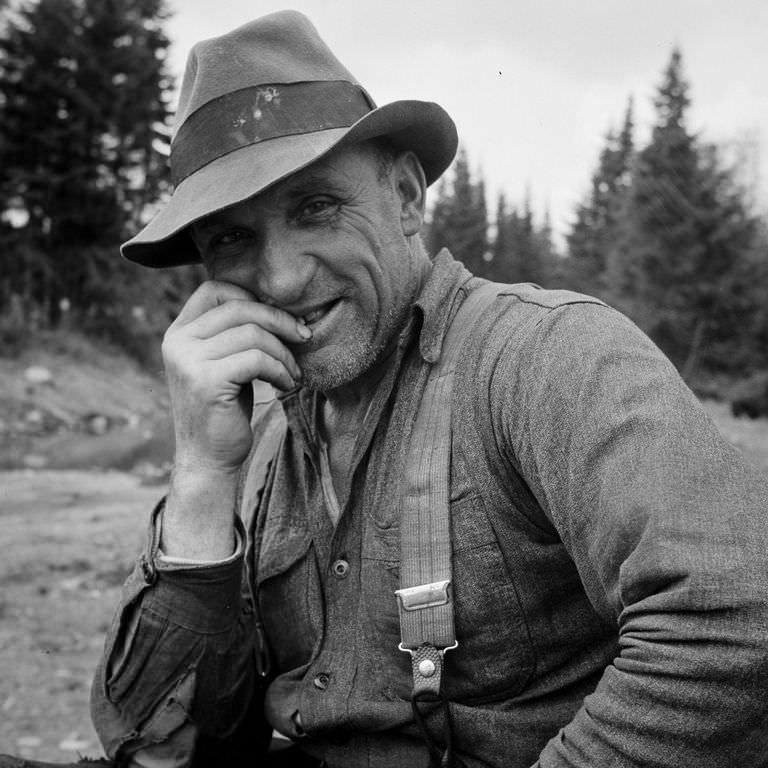





They wouldn’t have called themselves woodsmen. “Riverjacks” or “Log Drivers” were hazardous workers. In addition to standing on floating logs and jumping around, they would use dynamite to clear log jams! Wonderful pictures!
They seemed like classy guys
They are beautiful. Does anyone else notice the tobacco juice coming out of the mouths of a few guys?
Those are great photos. I wish their names were included.