
Love’s Baby Soft launched in 1974, marketed by Menley & James — an imprint of the pharmaceutical giant Smith & Kline. The company had already spent several years selling beauty products to young women. But when Baby Soft arrived, the target audience turned out to be far younger than that phrase suggested. The brand was not aimed at adult women. It was aimed at girls who had not yet become women, marketed with the clear intention of getting there first.
The perfume’s slogan said it plainly: “because innocence is sexier than you think.” That line appeared across print ads, packaging, and promotional materials throughout the decade. It was not buried in fine print — it was the hook, the headline, the selling point. The brand built its entire identity around the idea that childlike innocence and sexual appeal belonged in the same sentence.
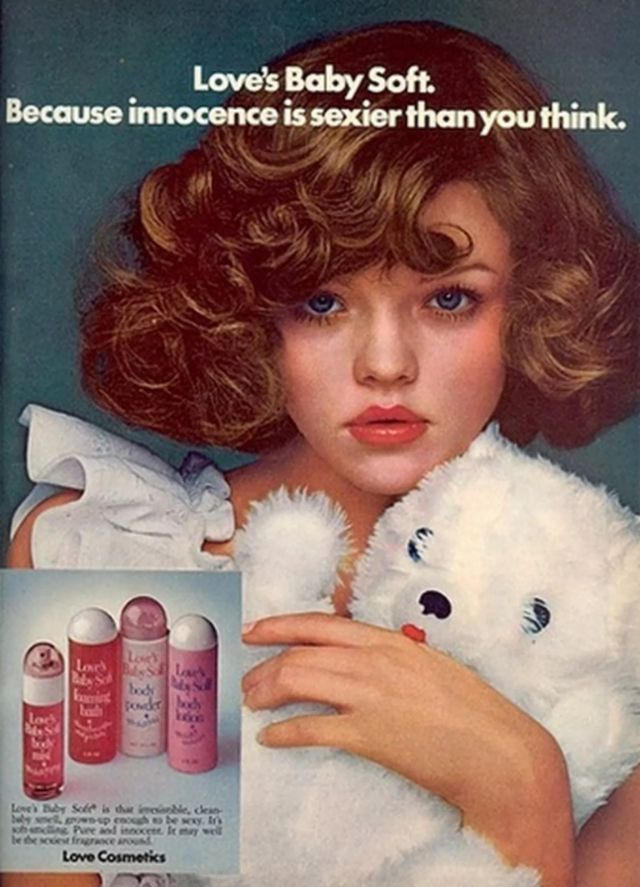
One of the brand’s most widely discussed print advertisements featured a very young girl styled to look like a grown woman. The effect was deeply unsettling — a child’s face processed through adult glamour, long before JonBenét Ramsey made that particular image familiar to the American public. The ad was not an accident or an oversight. It was a deliberate creative choice that defined the brand’s visual language.
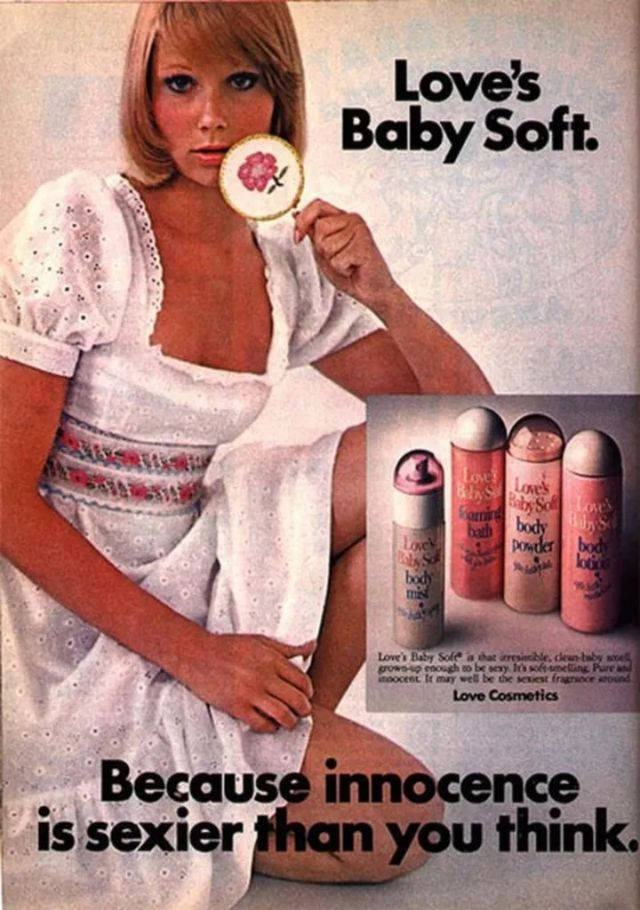
The television commercials were just as direct. In one early spot, a young woman suggestively sucked on a lollipop while a male voiceover described the fragrance as capturing the scent of “a cuddly, clean baby that grew up very sexy.” The imagery and the narration worked together without any ambiguity. The brand was not hinting at something — it was stating it outright, in a national broadcast.
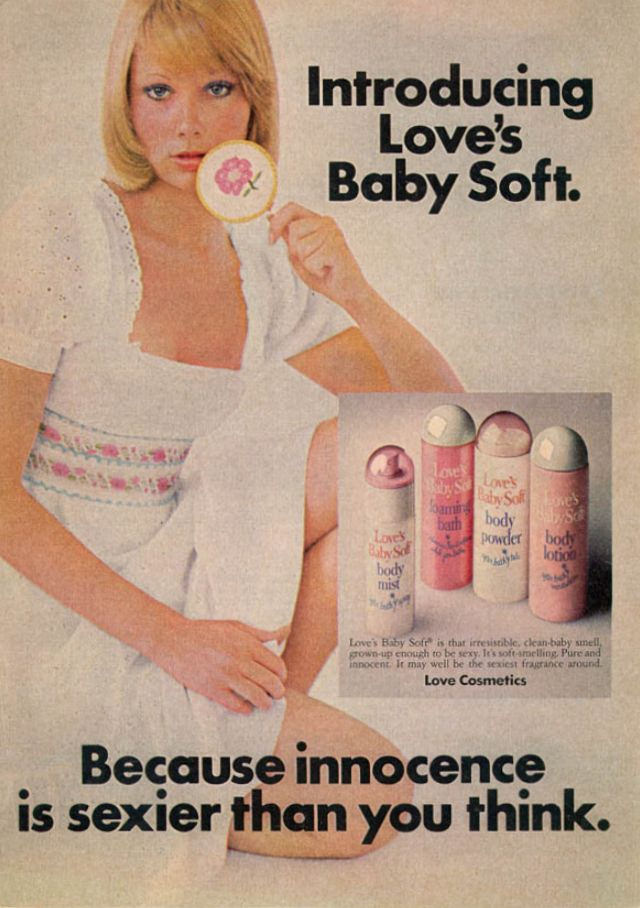
A 1974 Gimbels advertisement in The New York Times described Baby Soft as “the new way for big girls to baby their bodies.” The ad assured readers that the product was “created with Gimbels’ young customer in mind.” The language slid freely between babies, girls, and women — treating the three as interchangeable categories rather than distinct stages of life. That blurring was not incidental to the brand. It was the brand.
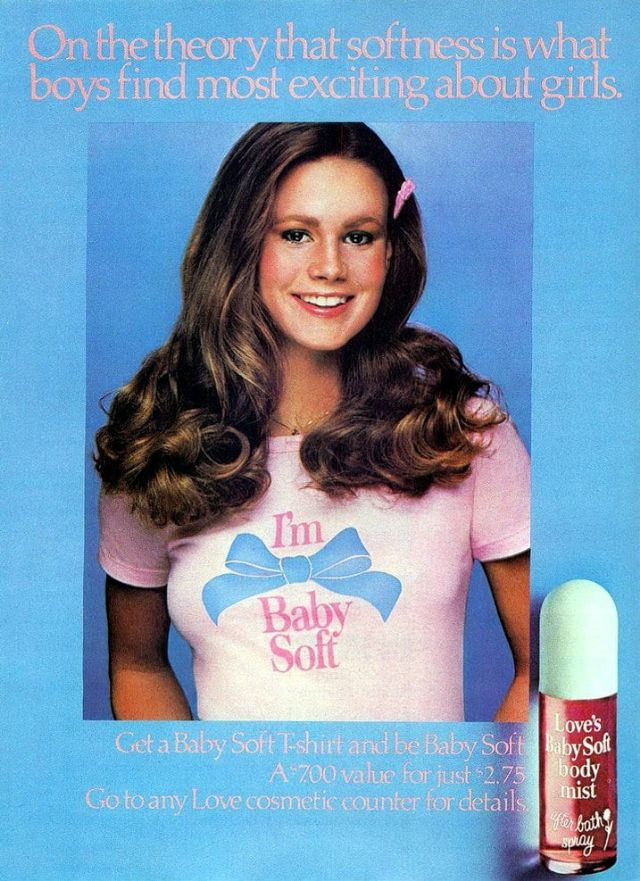
Baby Soft was not the first fragrance to target girls approaching adulthood. That market had existed before 1974. But it was the first to become a genuine mainstream hit, and it did so by leaning into the sexualization of girlhood more aggressively than its predecessors. The fragrance sold well. The ads kept coming.
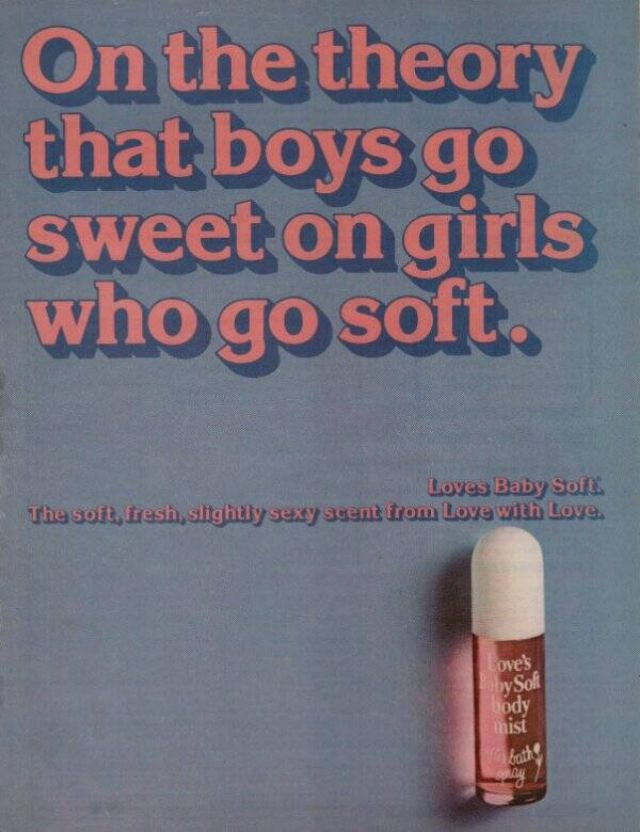
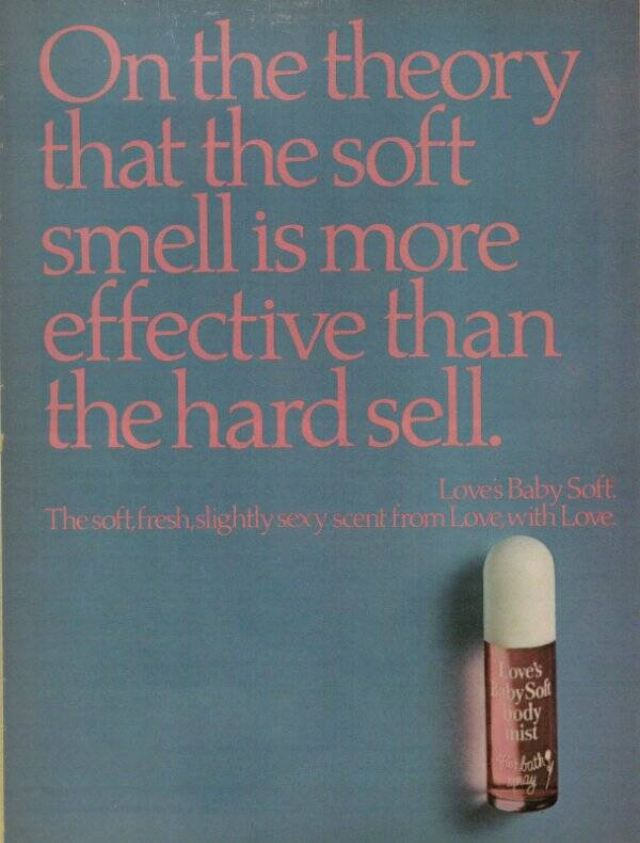
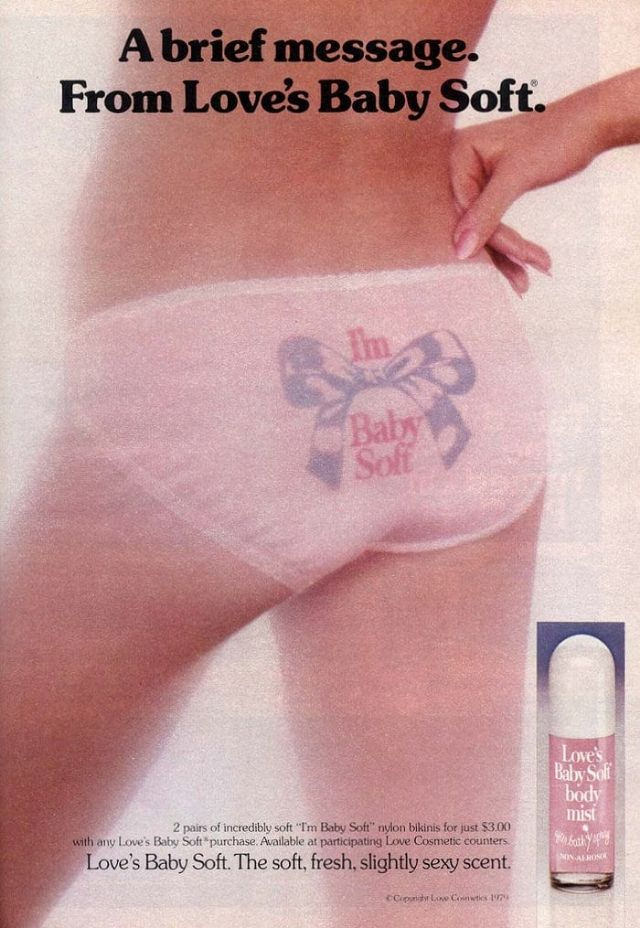
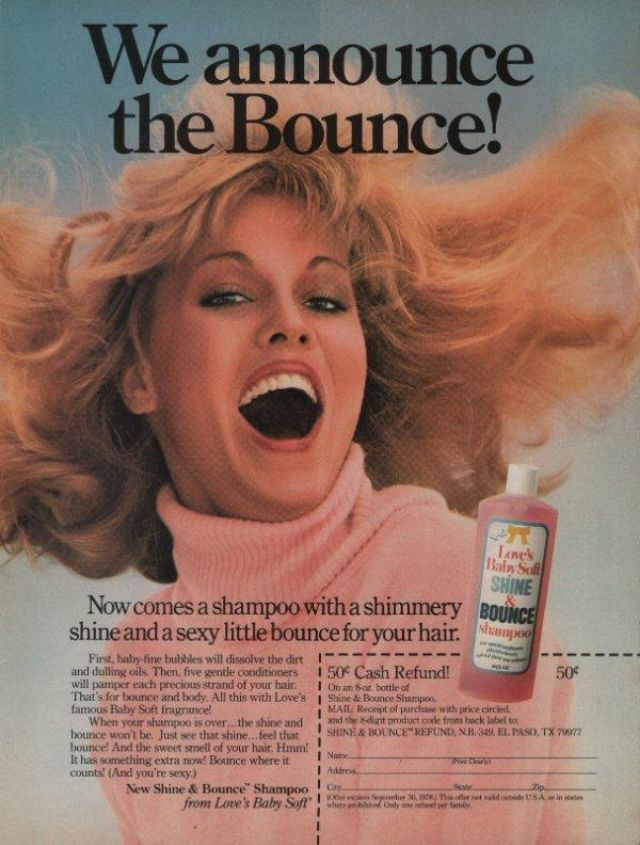
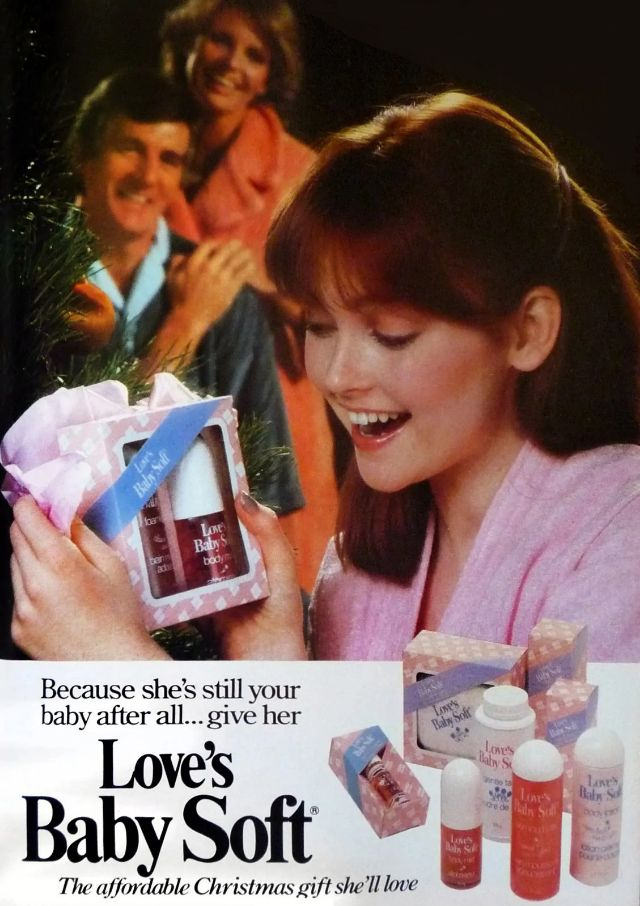
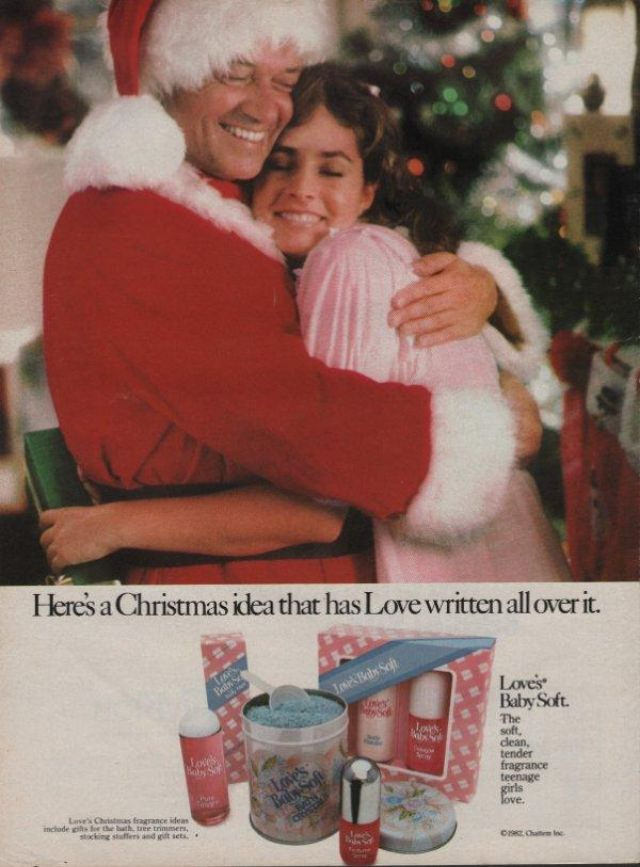
By the late 1970s and into the early 1980s, the brand’s print campaigns were a fixture in teen magazines. The ads appeared alongside homework tips and pop star posters, normalized by their placement. Baby Soft understood its distribution channels and used them effectively, reaching pre-teen and teenage readers directly through the publications they already trusted.
When the 1980s arrived in full force, Baby Soft shifted its marketing strategy. The “sexy baby” angle gave way to something new: the idea of hidden femininity. Shoulder pads ruled fashion. Power dressing was everywhere. Women in advertising were shown as strong, assertive, and often styled in ways that borrowed from traditionally masculine wardrobes. Baby Soft’s response to this cultural moment was revealing.
One advertisement from this era showed a cool, tomboyish girl hanging out with a group of male friends. She looked relaxed, unpolished, one of the guys. The tagline read: “underneath it all, she’s Baby Soft.” The message was clear — no matter how tough or masculine a girl appeared on the outside, her true self was soft, gentle, and feminine. The fragrance was positioned as the secret that proved it.
This shift in tone reflected a broader tension in 1980s culture. Women were navigating a world that rewarded assertiveness in the workplace but still expected traditional femininity in private life. Baby Soft’s advertising didn’t resolve that tension — it exploited it, suggesting that strength was a surface performance and softness was the authentic core underneath.
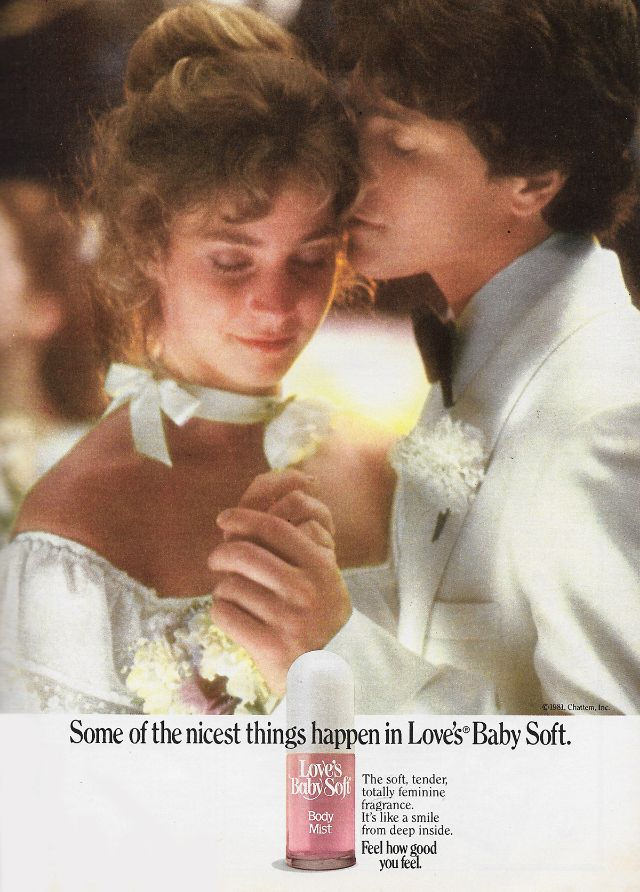
Throughout both decades, the brand made a sustained push into the pre-teen market. Products were priced accessibly, packaged in pastel colors, and promoted as a girl’s first fragrance. The entry point into wearing perfume, for many American girls in the 1970s and 1980s, was Love’s Baby Soft. The brand cornered that first-purchase moment deliberately and successfully.
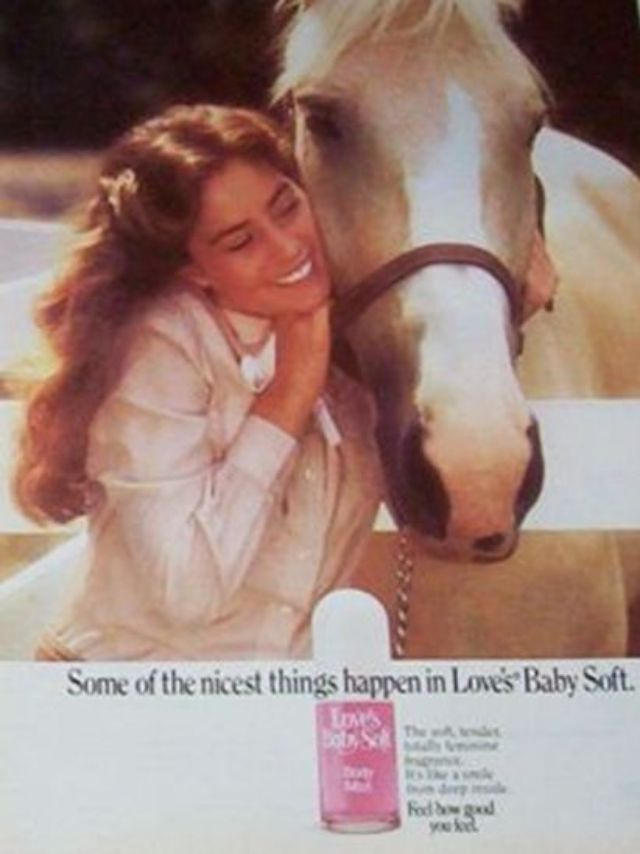
The product line expanded over the years to include body lotion, powder, and other personal care items. Each extension kept the same branding — soft pinks, rounded fonts, and the Baby Soft name — reinforcing the identity across an entire bathroom shelf rather than a single bottle. Girls who started with the perfume were handed a whole product ecosystem.
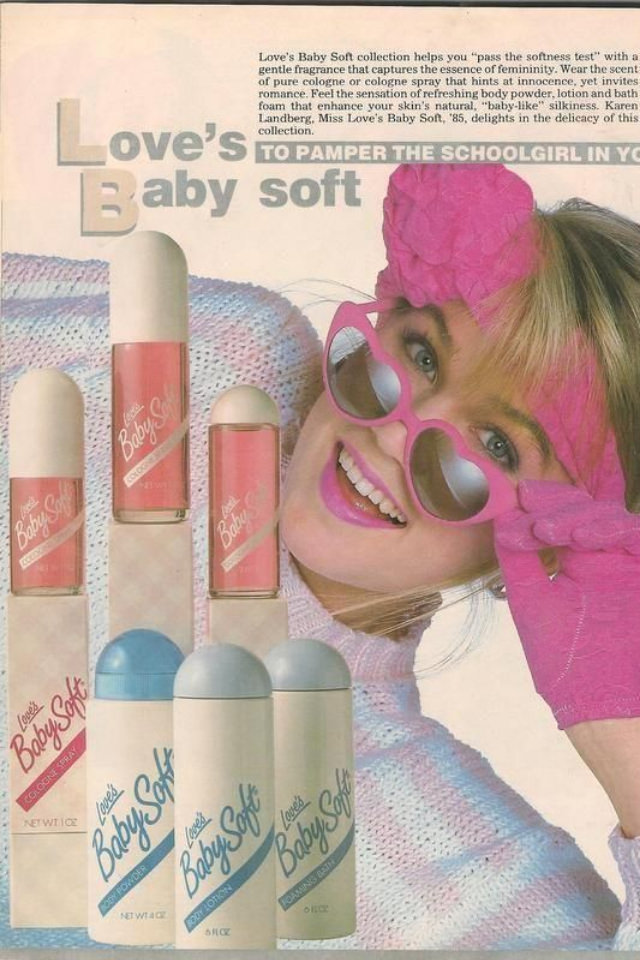
Looking at these advertisements today, what stands out is how openly the campaigns communicated their intent. There was no coded language or subtle subtext. The slogan, the voiceover scripts, the visual choices — all of it stated directly that innocence was being sold as a form of sexual attractiveness, and that the customer was a child. The ads ran in major publications, aired on national television, and appeared in stores across the country without controversy at the time.
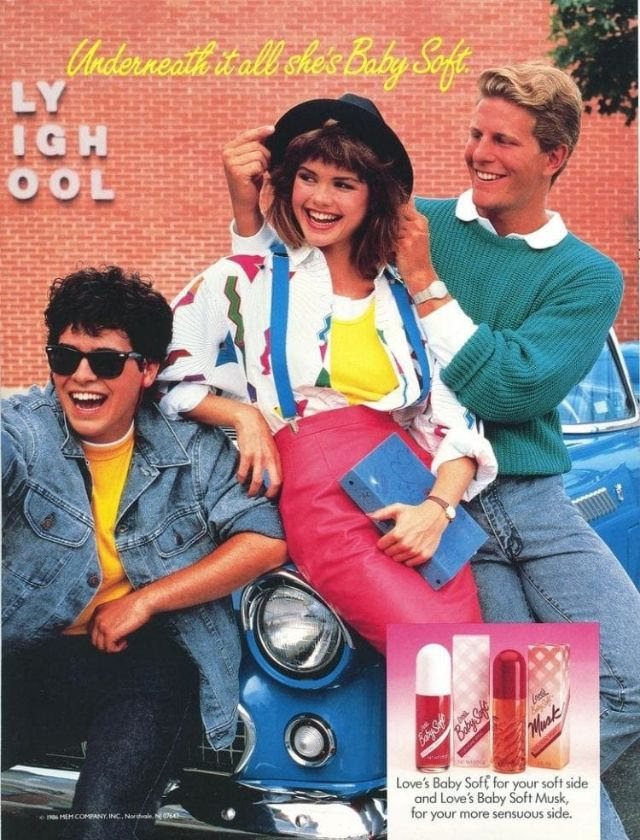
The vintage print ads collected here span from the mid-1970s through the mid-1980s, covering both phases of the brand’s marketing approach. They are documents of a specific cultural moment — one in which the sexualization of young girls was packaged in pastel colors, given a cheerful name, and sold at department store counters nationwide.

Pedophile perfume.
Nobody said anything about these ads at the time!
Wore it everyday for years. Loved it and never thought about it being sexy. Jeez
When I was a young teen, the smell of Baby Soft was the most amazing scent a girl could wear. I think I fell in love a few times with that smell in the air.
As a girl i probably fretted over why i cant be like these ads lol. Now its cringe inducing.
I loved that perfume as a child. I never knew about these ads until recent years. 😬
I guess they gave up on the sexual ads in the nineties. The only ad I remember was of a girl in full snowboard gear.