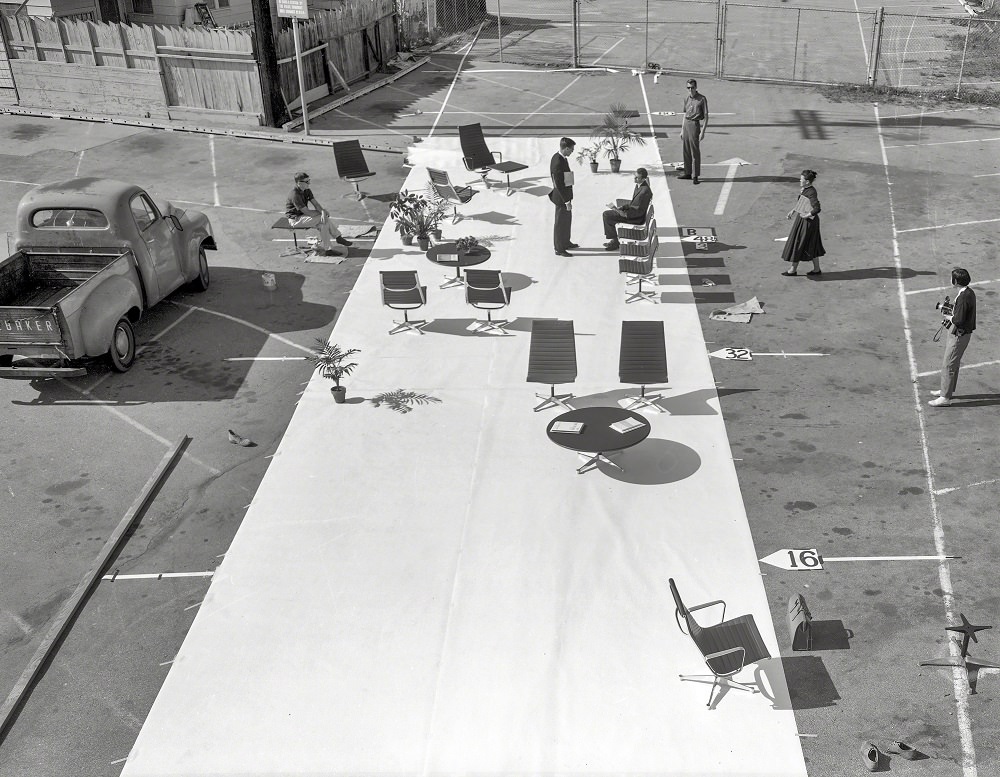
Los Angeles is the largest city in California, and its rise from a modest pueblo to a global metropolis is one of the most dramatic urban stories in American history. After the Mexican-American War in 1846, Los Angeles was annexed into the United States. For decades, it remained a small, isolated town in the Southwest. That changed in 1876, when the railroad arrived and connected the city to the rest of the country.
By the turn of the 20th century, the population had climbed to over 102,000. The city was growing fast, and its streetcar networks were a vital part of daily life. The Pacific Electric Railway, known as the “Red Cars,” knitted together neighborhoods and suburbs across the region.
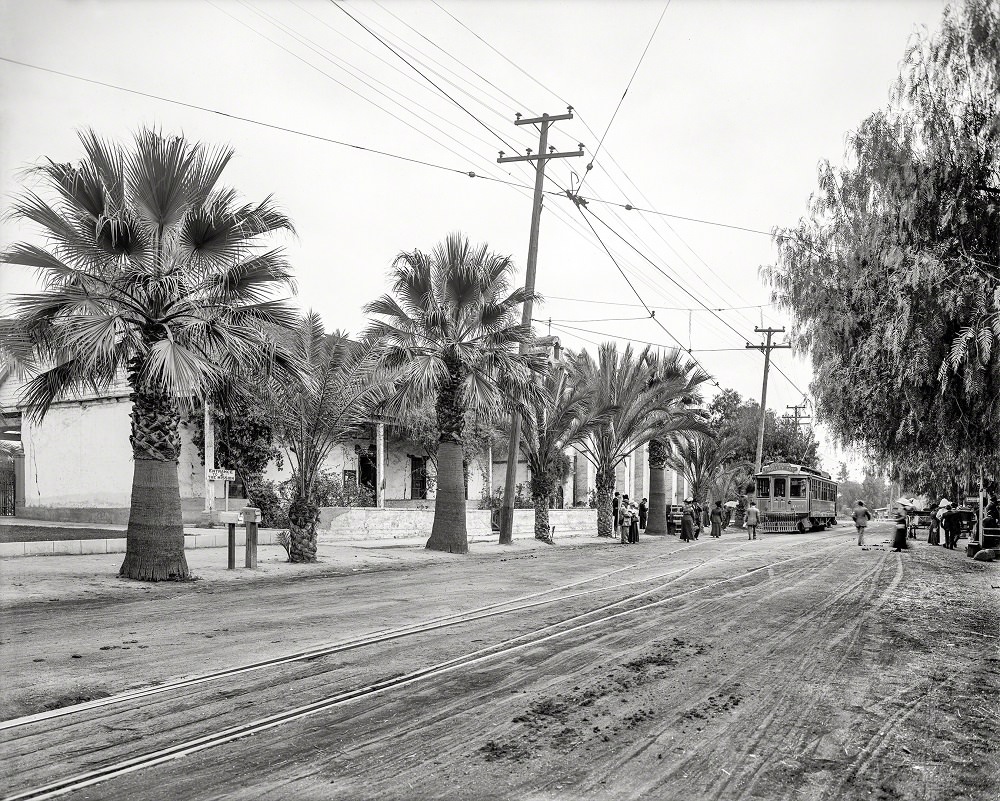
The late 1890s offer a rare glimpse of Los Angeles before the boom truly took hold. These two views from 1899 show a city still finding its footing — low-slung buildings, dusty streets, and open land stretching toward the hills.
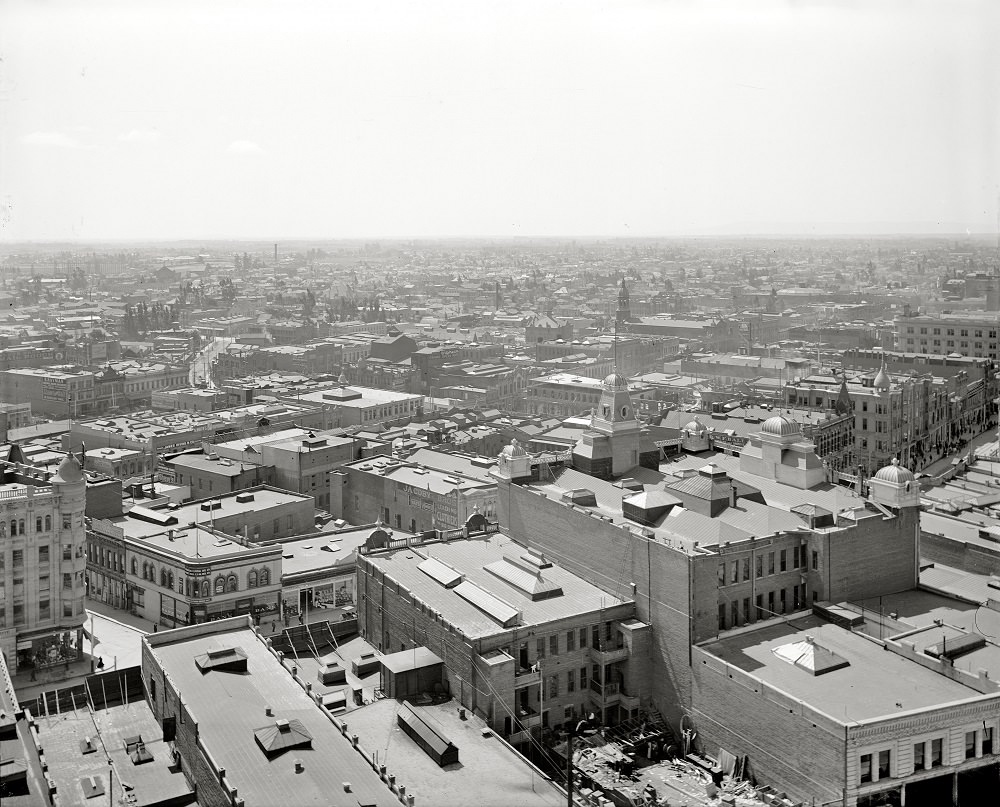
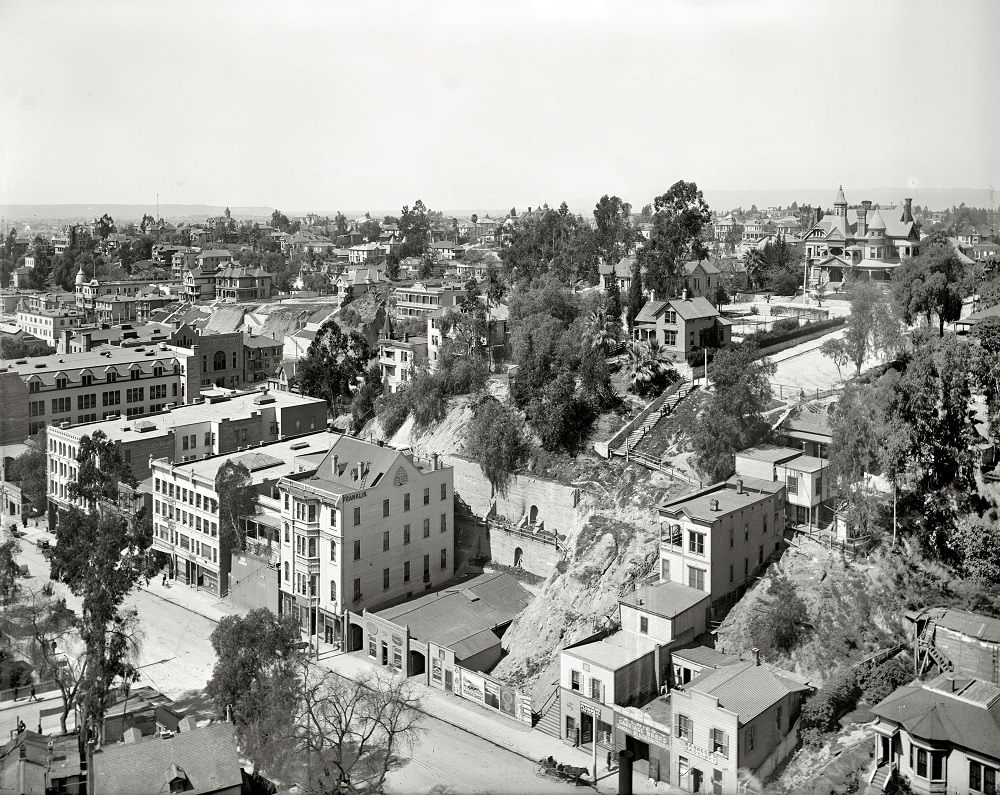
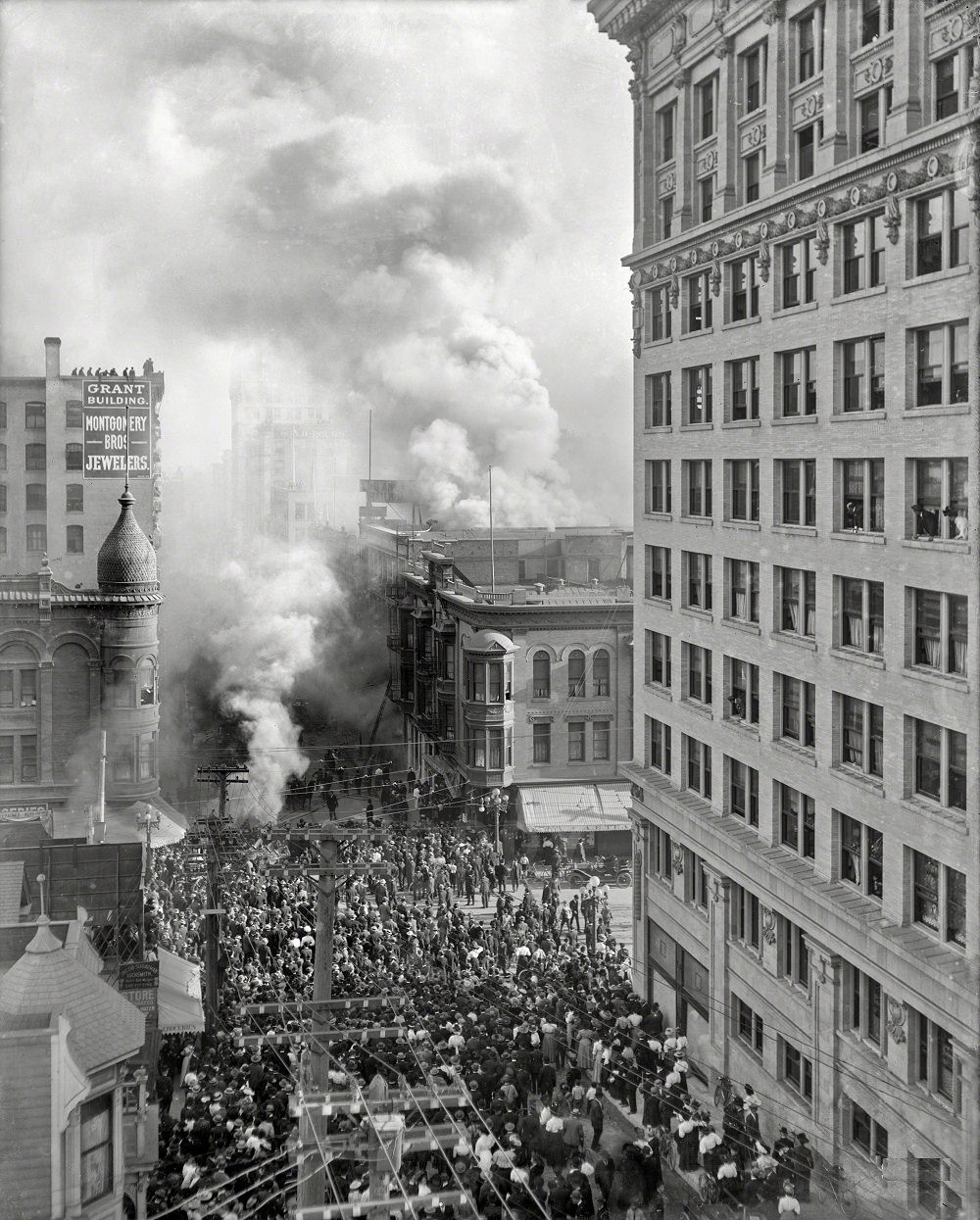
Petroleum was discovered in Los Angeles and the surrounding area in 1892. By 1923, the city had become the largest oil producer in the United States. That same energy fueled rapid industrial expansion. In 1908, the Los Angeles Pacific Railroad suffered a devastating fire along Fourth Street, a dramatic event captured by photographers of the time.
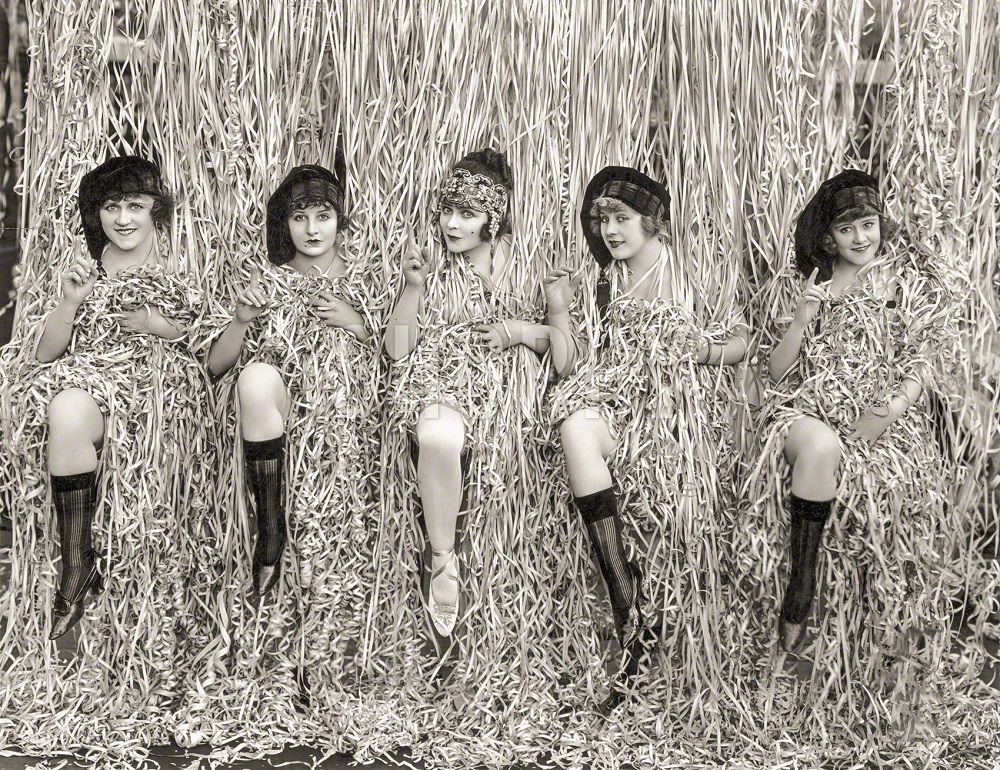
By 1910, Los Angeles annexed both the town of San Pedro and the community of Hollywood. That same year, director D.W. Griffith was among the first filmmakers to shoot in the area. Within a decade, Hollywood had become the undisputed center of the American film industry. Early movie culture brought with it a new kind of celebrity and spectacle, as seen in this playful promotional photograph of five Mack Sennett girls from 1918.
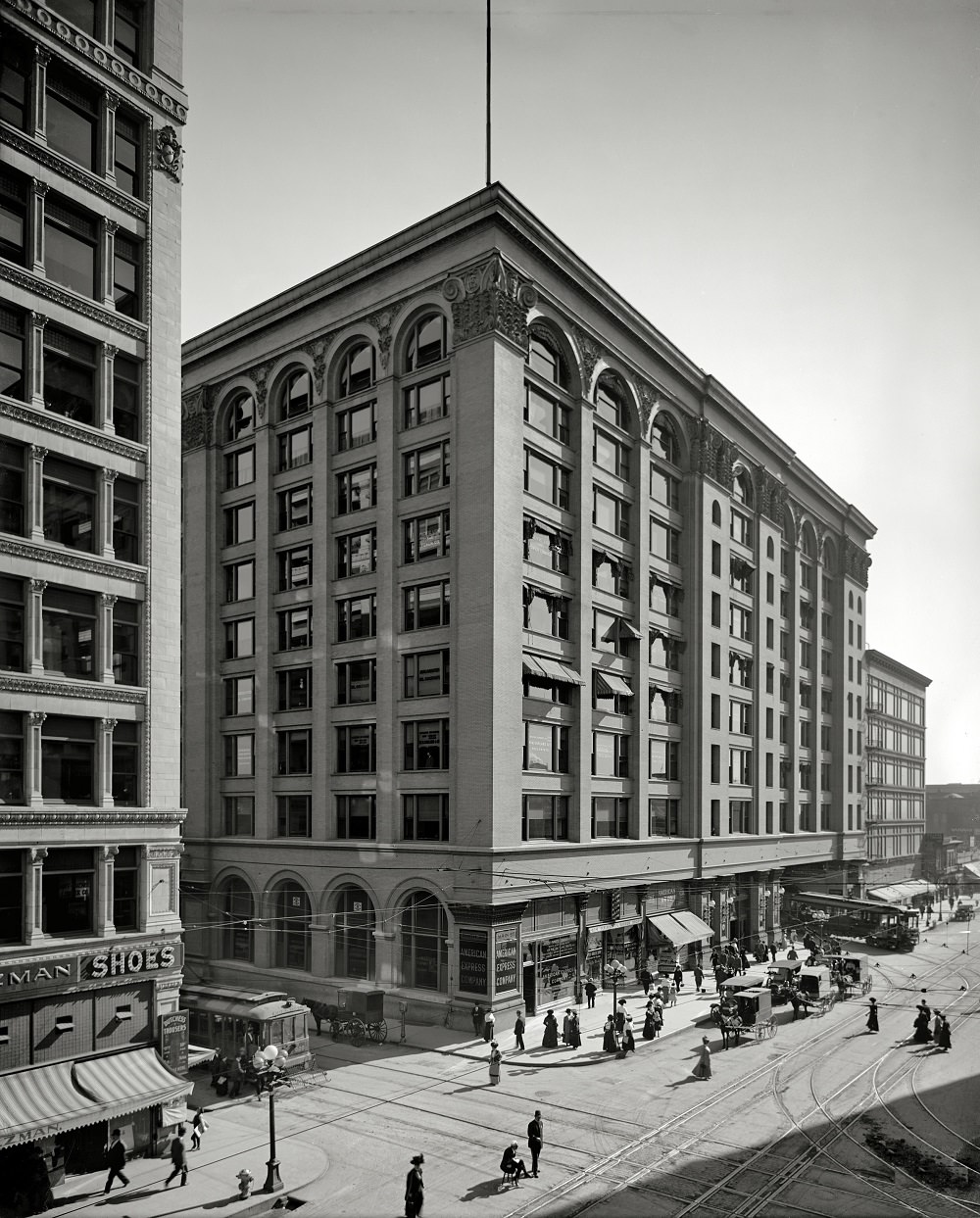
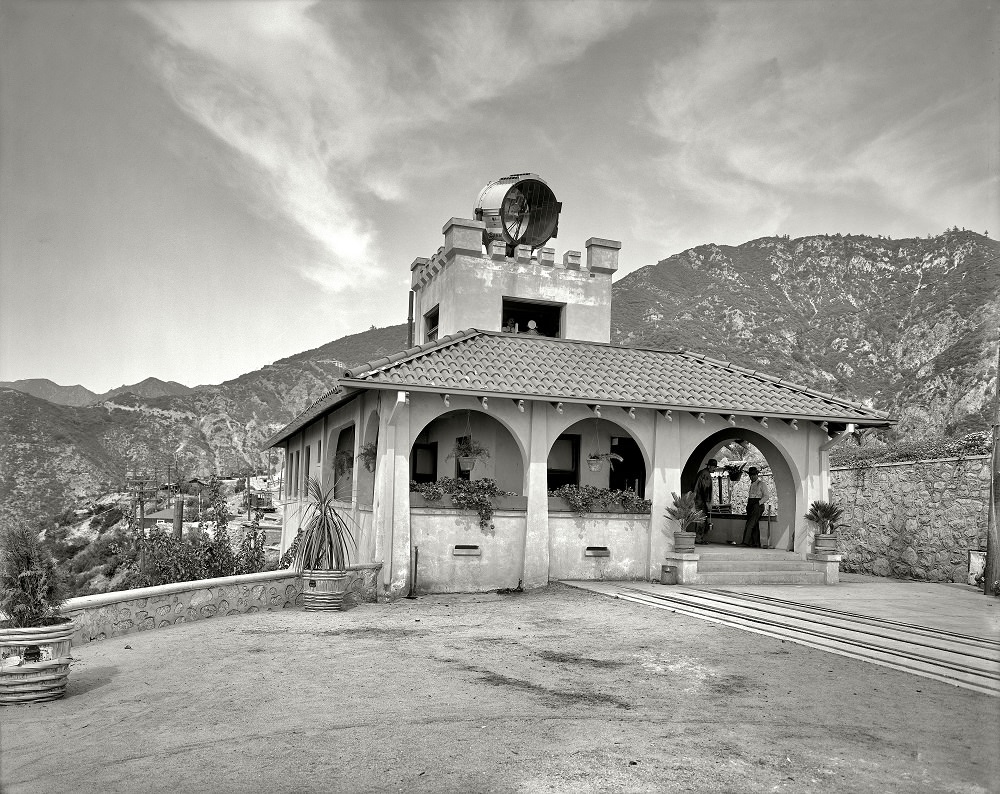
The American Express office on Main and Sixth Street in 1910 reflects how quickly commercial life was organizing itself in the growing city. Meanwhile, infrastructure projects like the Mount Lowe Railway showed the city’s appetite for engineering and tourism.
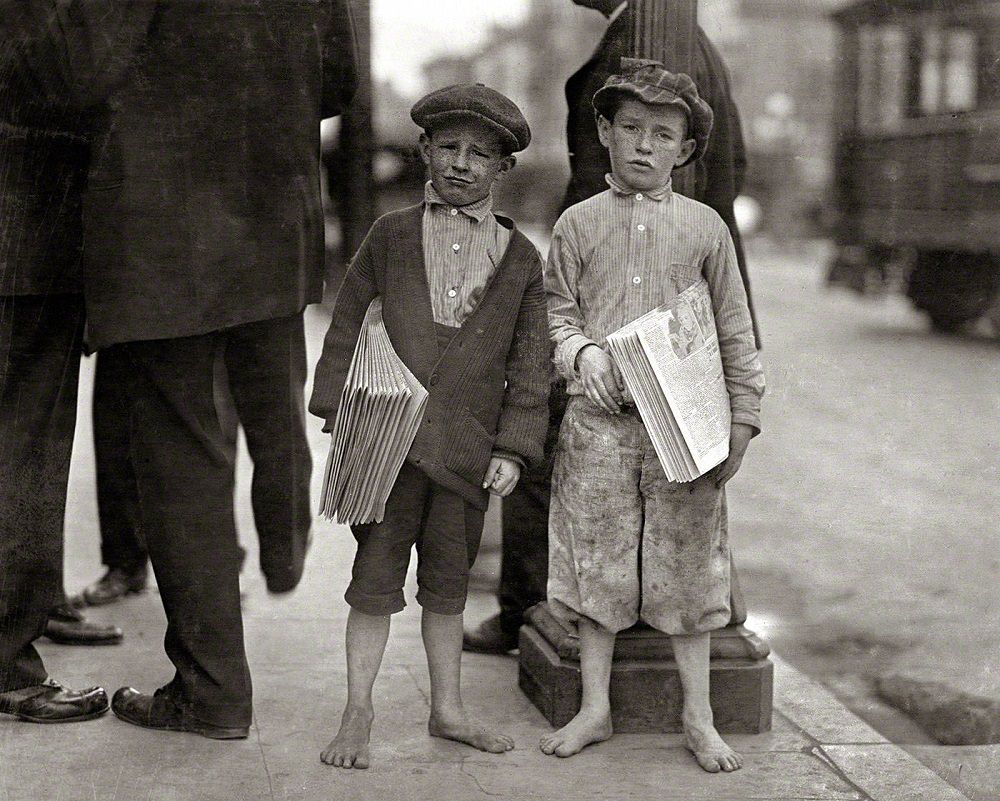
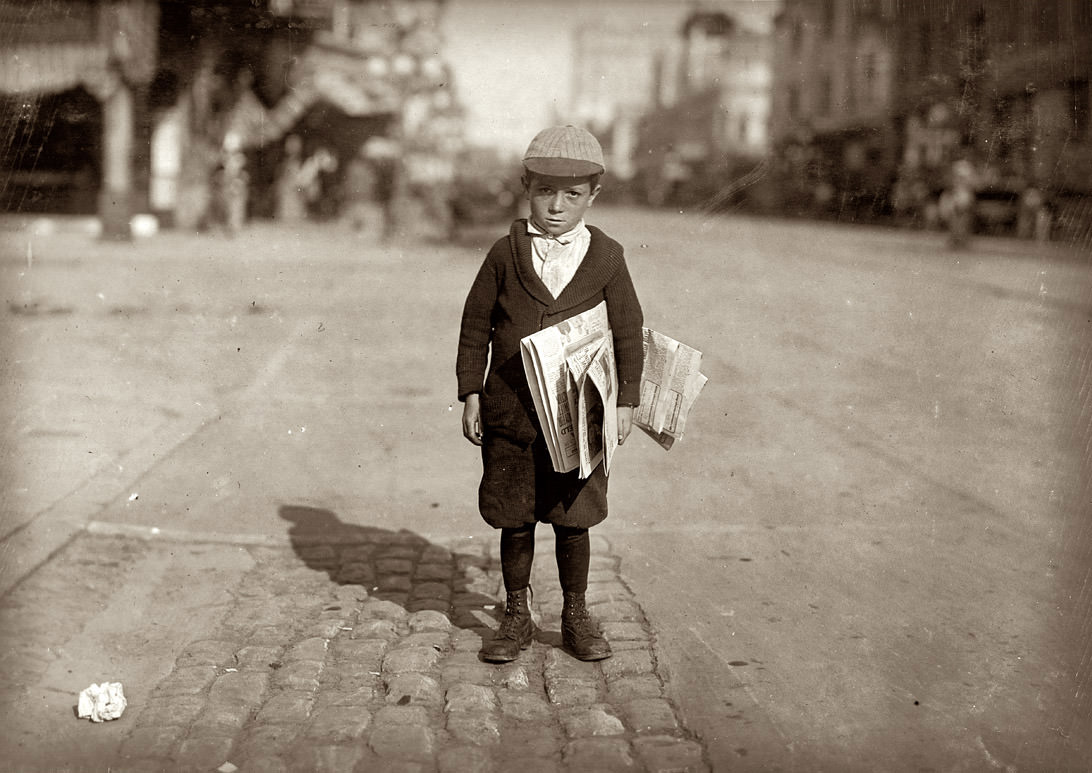
Child labor was still visible on Los Angeles streets in the early 20th century. These young newsboys — some as young as six — sold papers on busy corners regardless of their age.
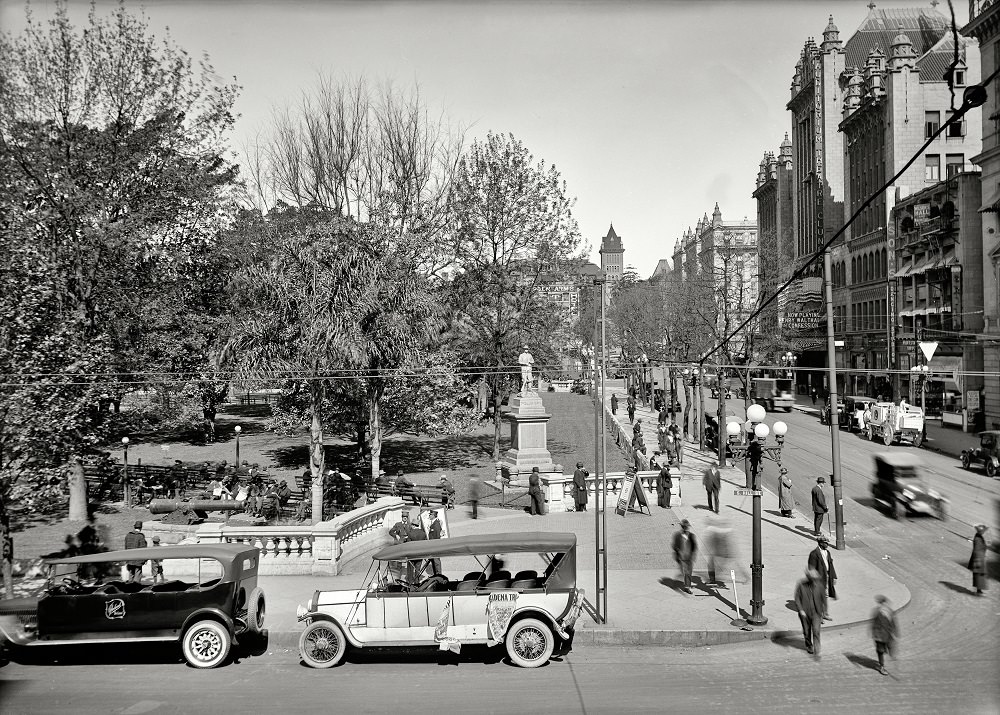
The population of Los Angeles multiplied at a staggering rate — from 102,000 in 1900 to over one million by 1924. Pershing Square in downtown became a civic landmark, anchored by the Spanish-American War monument on Fifth Street, a gathering place for residents of the booming city.
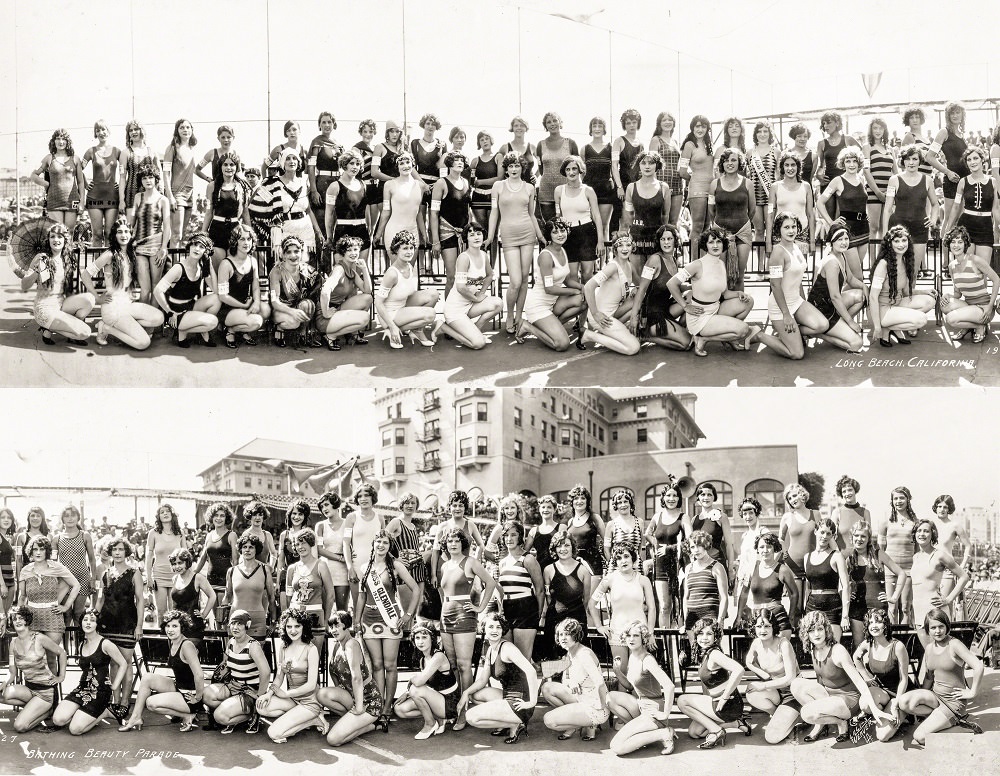
The 1920s brought beach culture to the forefront of Los Angeles life. Events like the Bathing Beauty Parade at the city’s beaches in 1927 drew crowds and cameras, celebrating the sun-soaked lifestyle that was becoming synonymous with Southern California.
During World War II, Los Angeles transformed into a major wartime manufacturing hub. Shipbuilding and aircraft production dominated the economy, with over 100,000 workers employed in those industries alone. The war effort reached into schools as well — students at Roosevelt High School and Washington High School trained in skills directly tied to the war, from marksmanship to navigation.
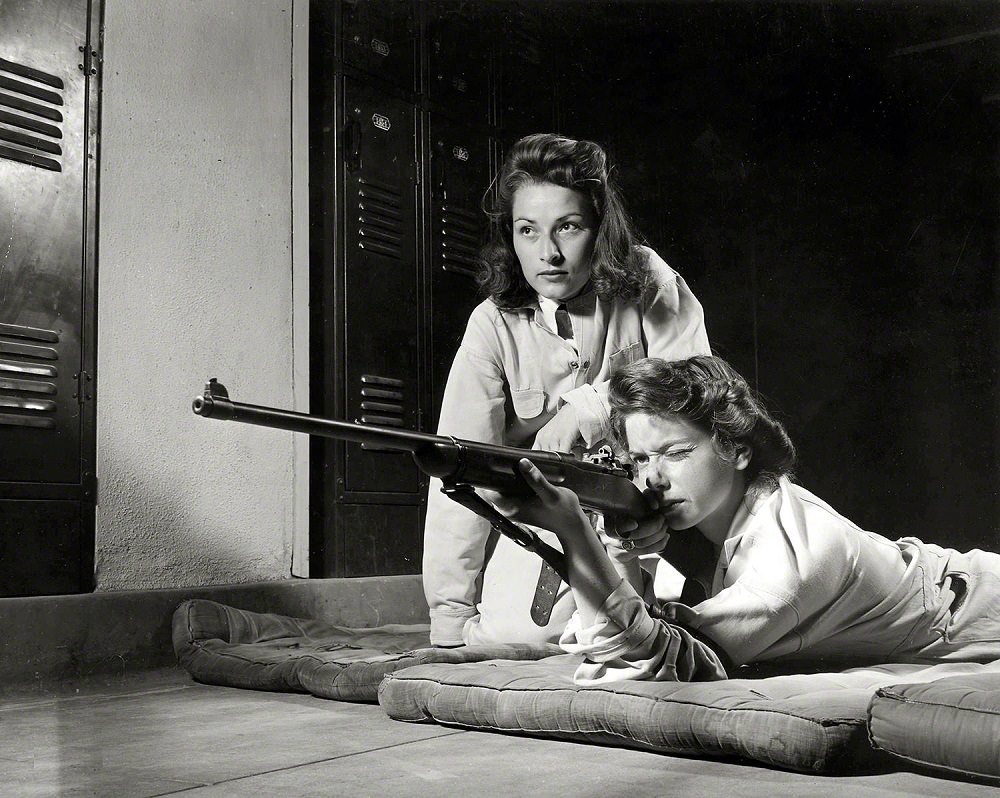
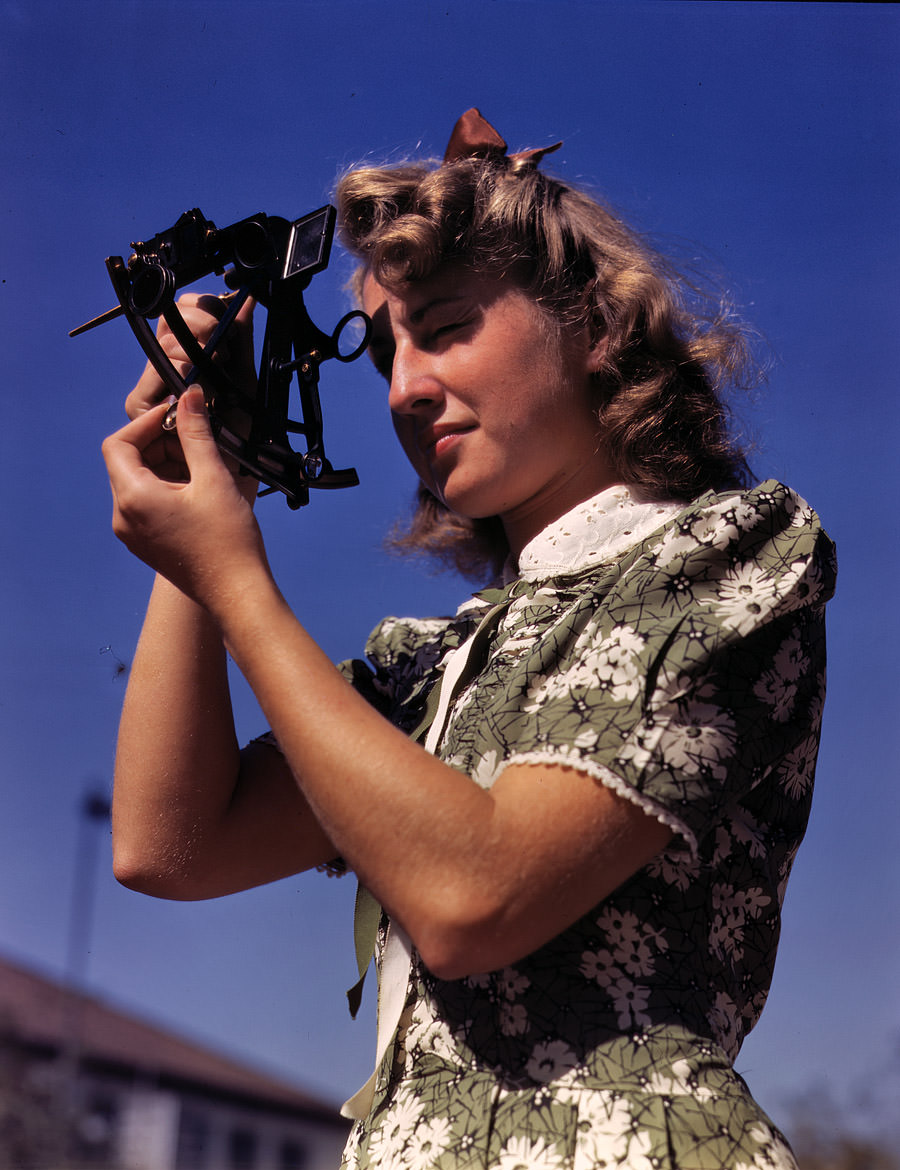
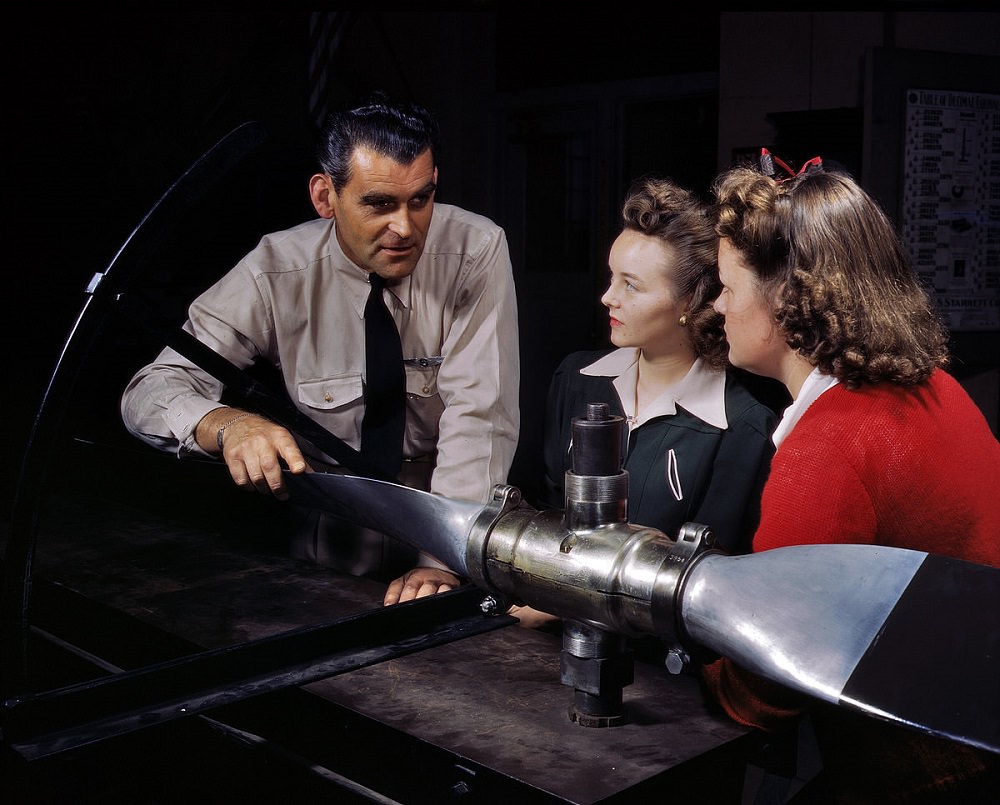
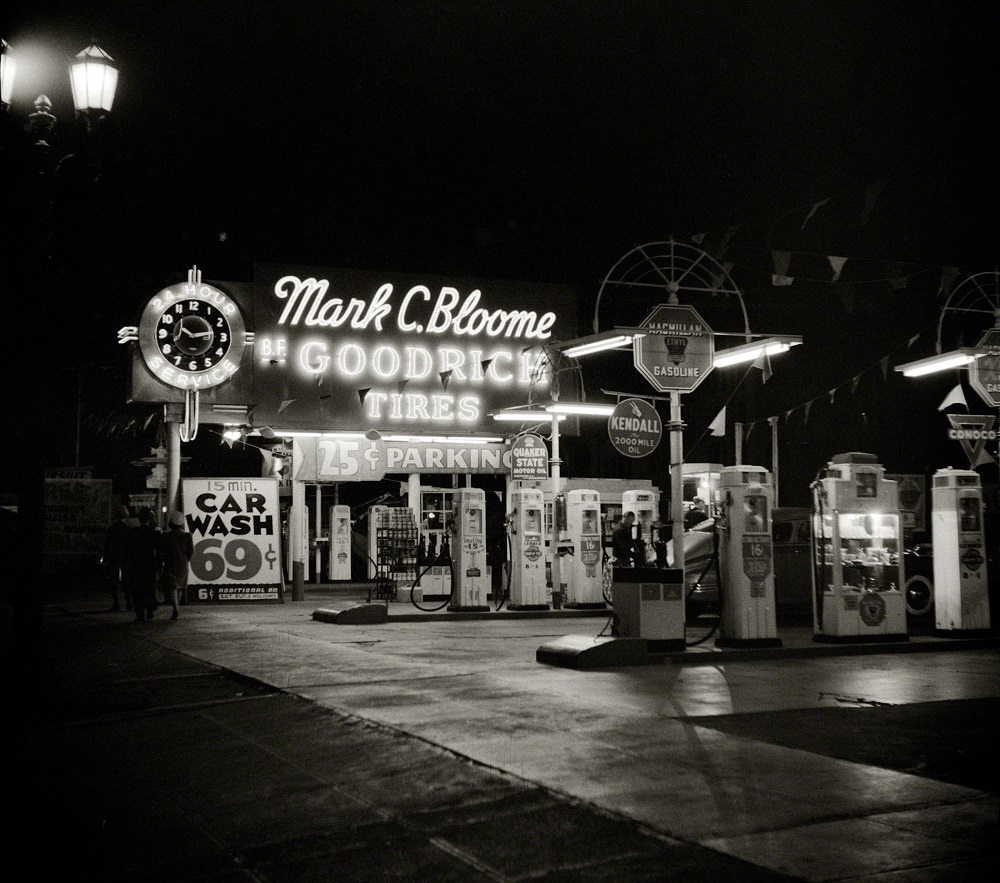
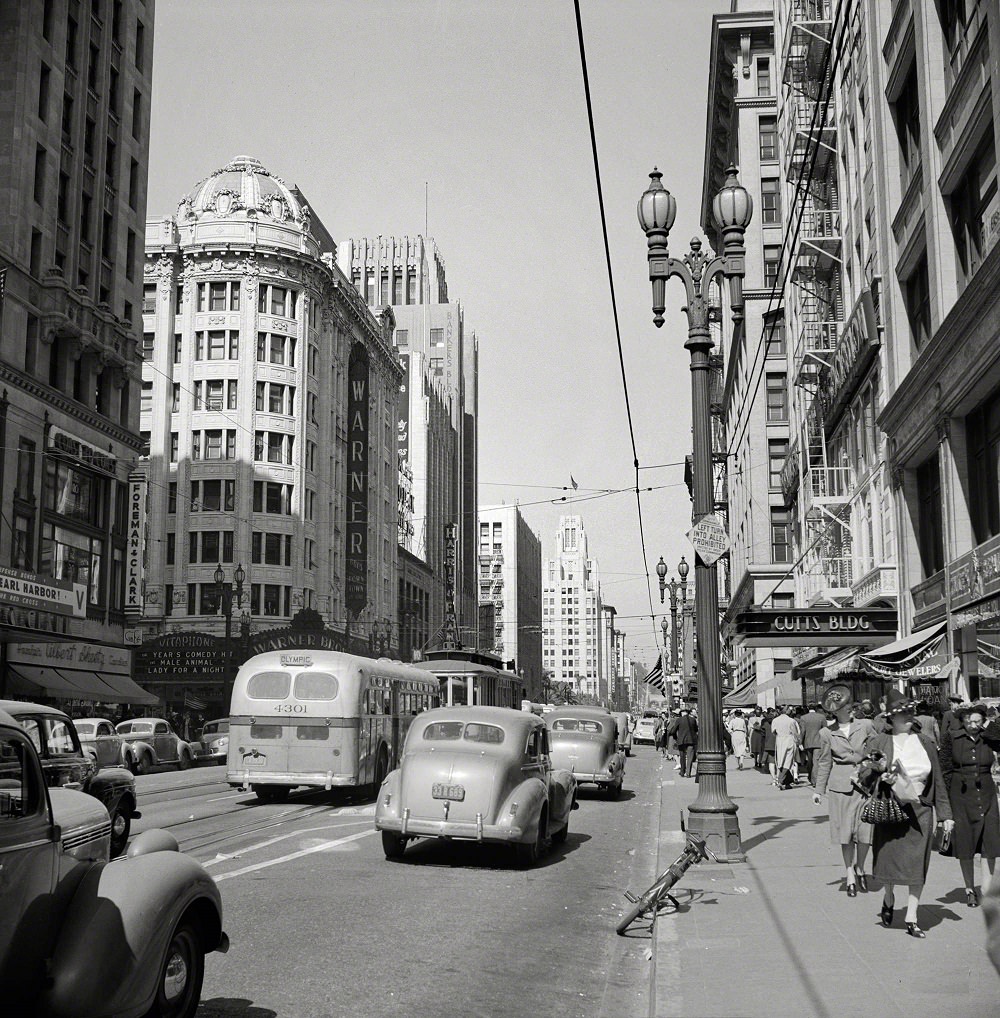
Street scenes from Hollywood in 1942 capture the city mid-war — a tire service station, a used car lot, a glowing gas station at night, and a woman walking the sidewalk. Life continued, but the war was present in every corner of the city.
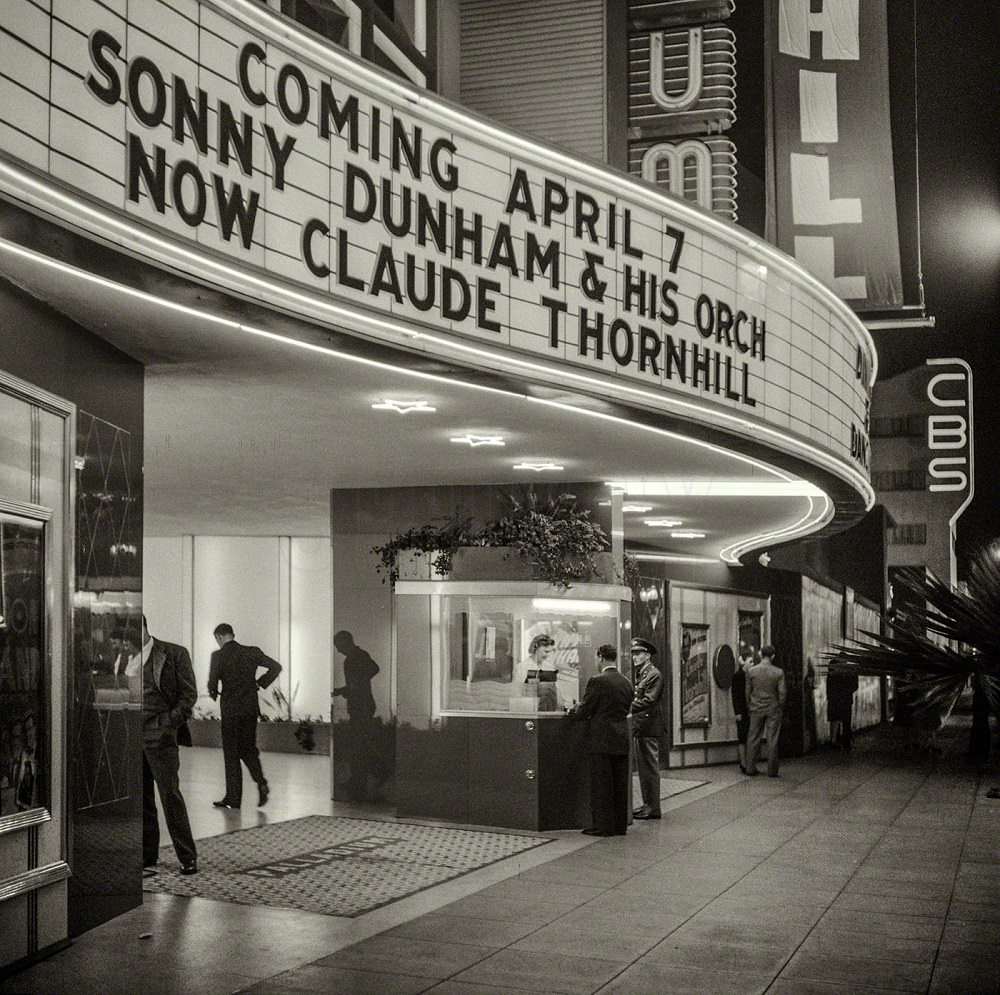
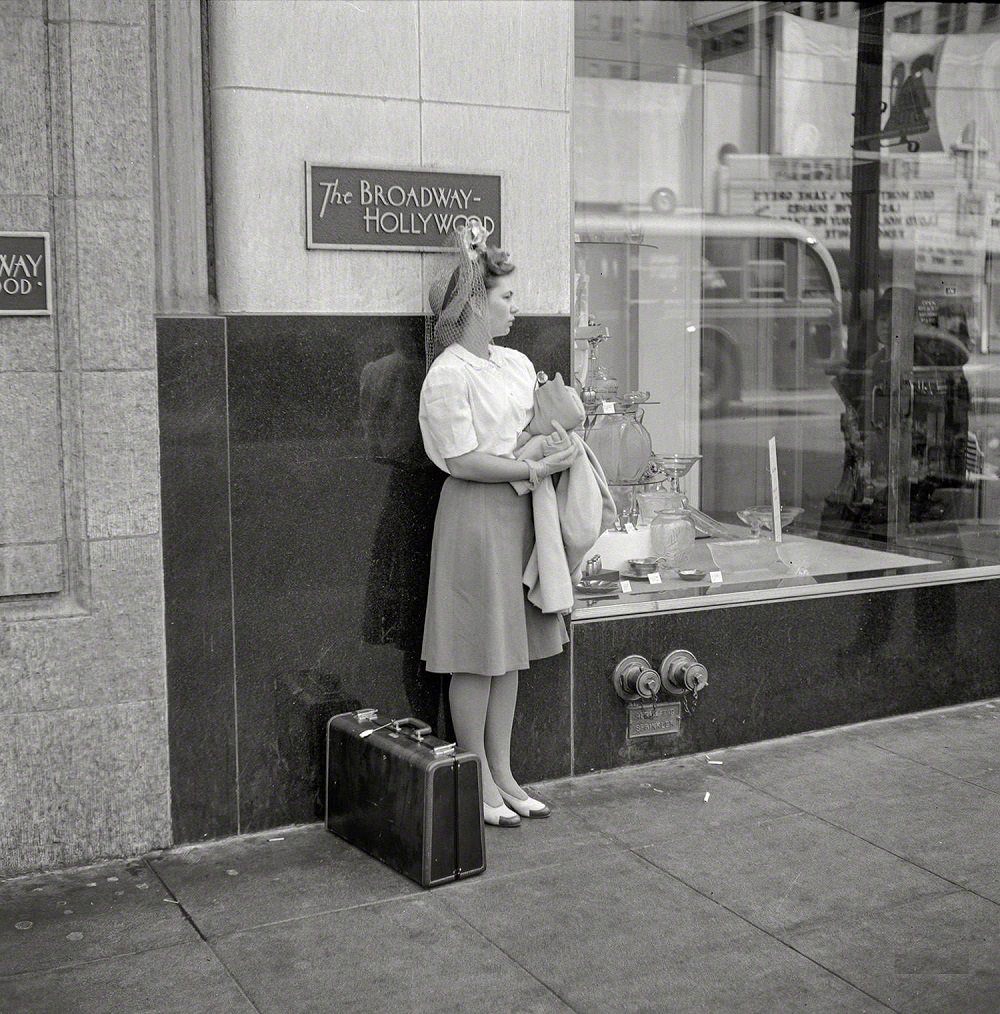
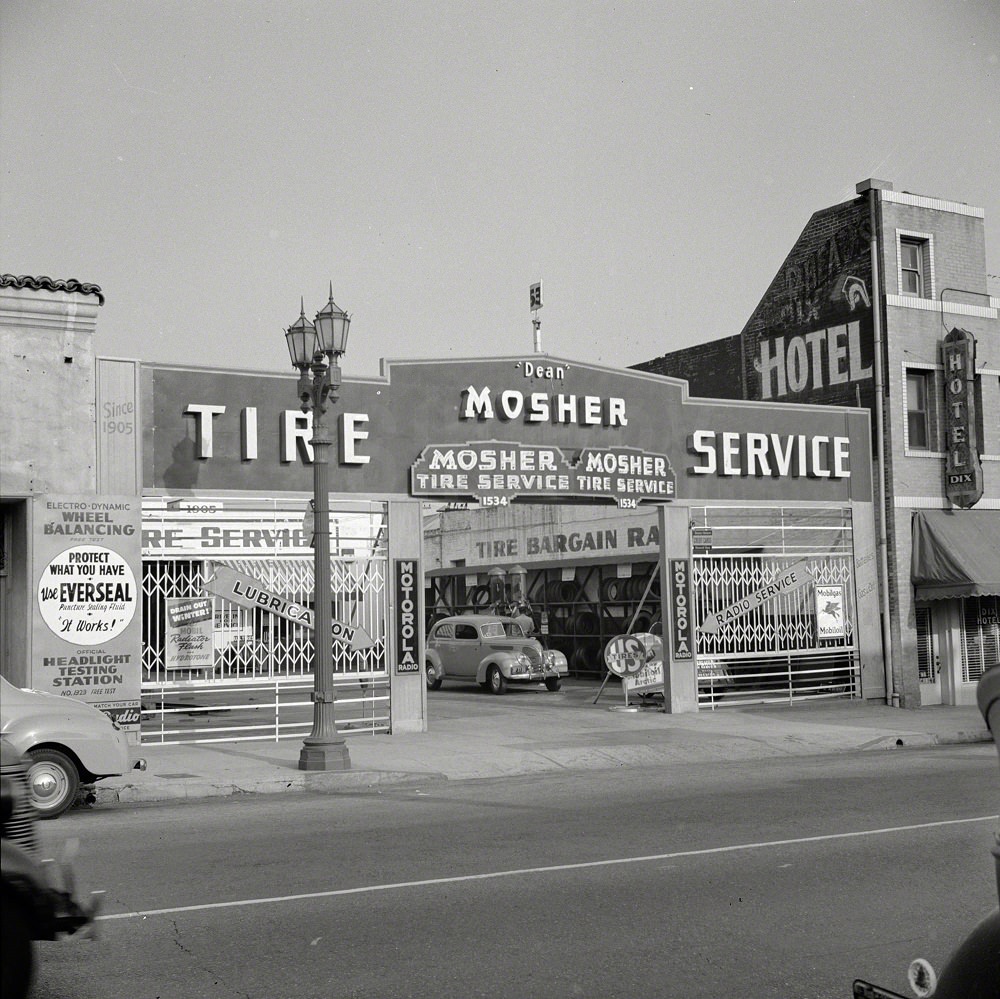
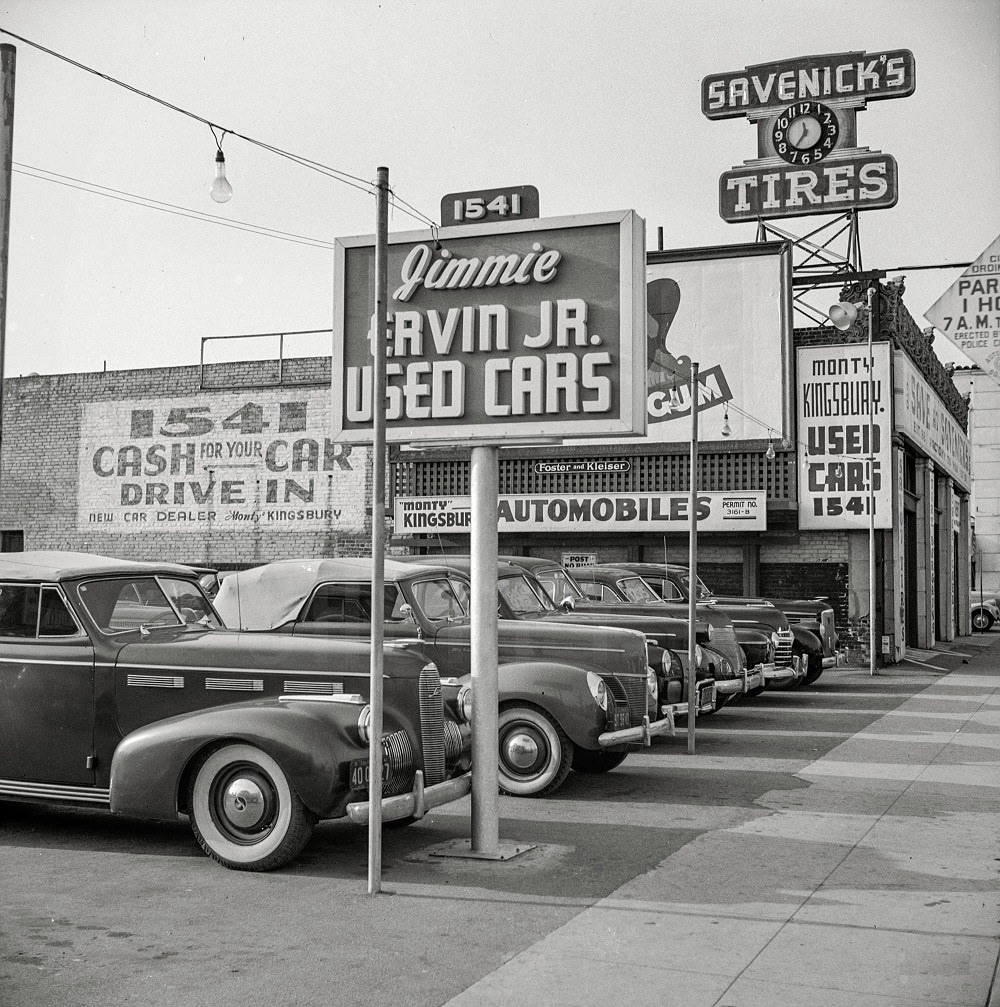
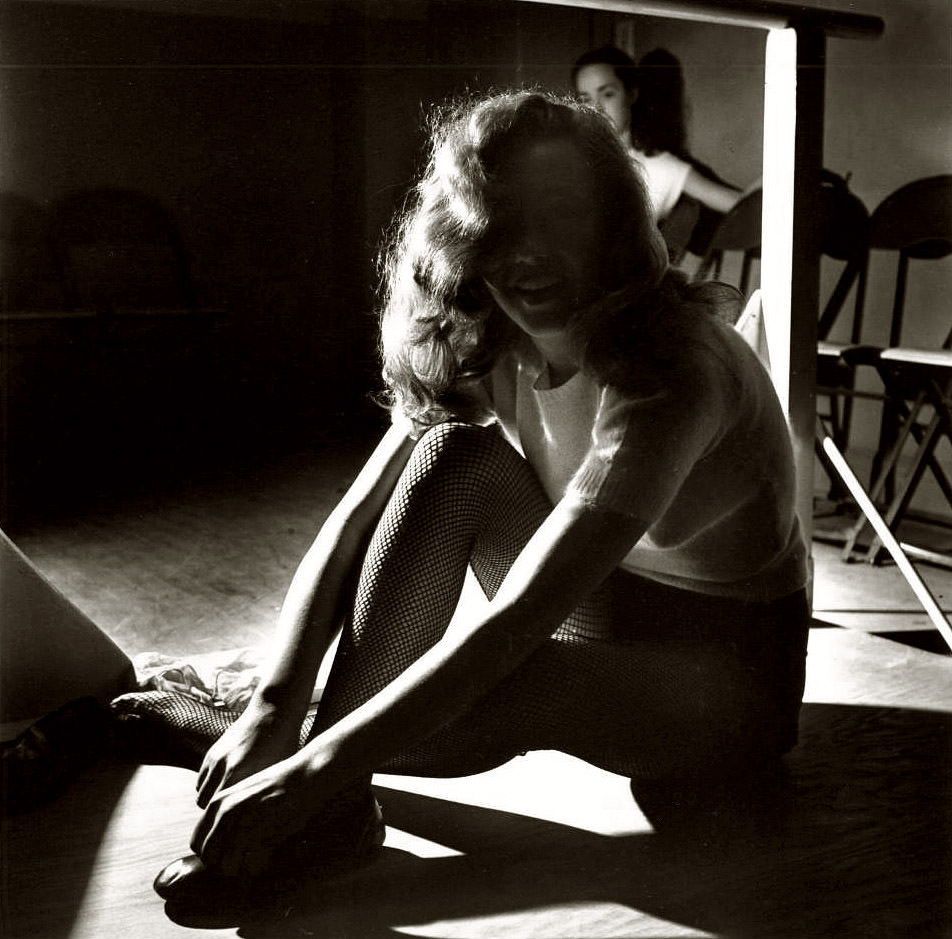
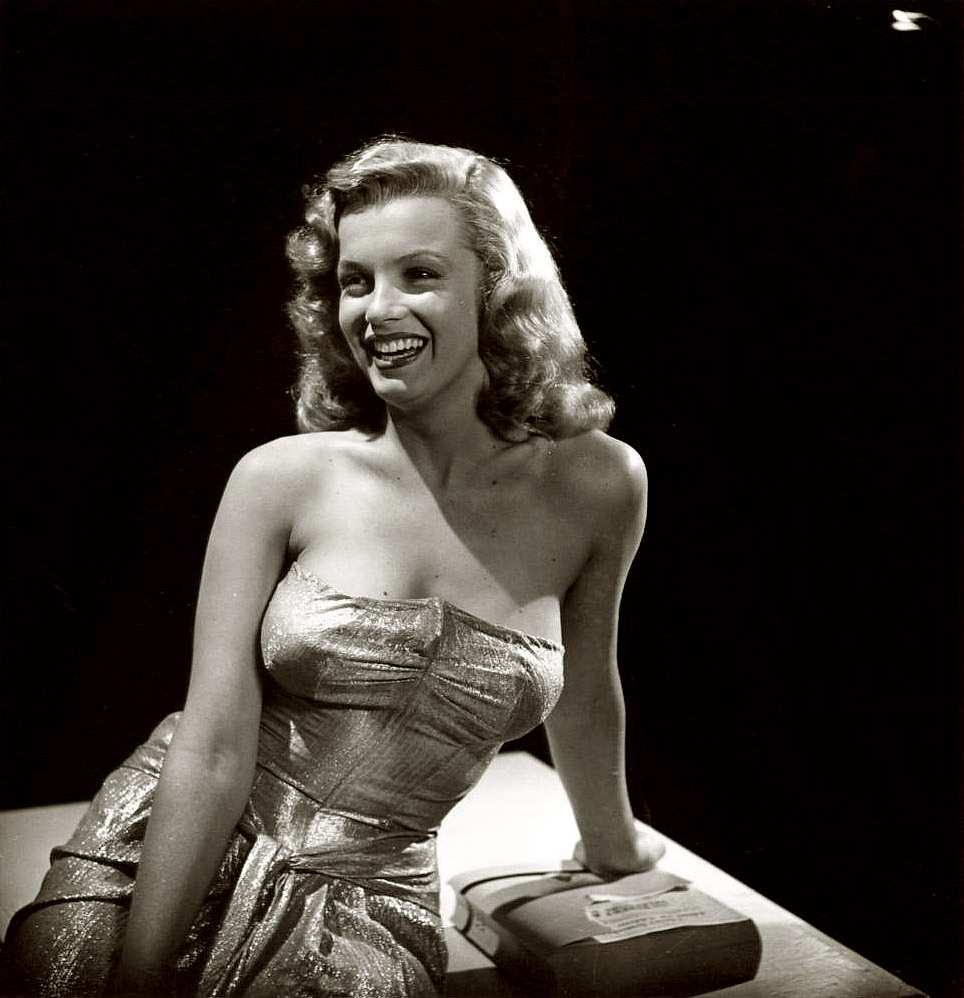
After the war, Los Angeles embraced postwar optimism with enthusiasm. A young Marilyn Monroe was already circling the edges of Hollywood fame in early 1947, attending dance classes and making the rounds in the entertainment world before her star fully rose.
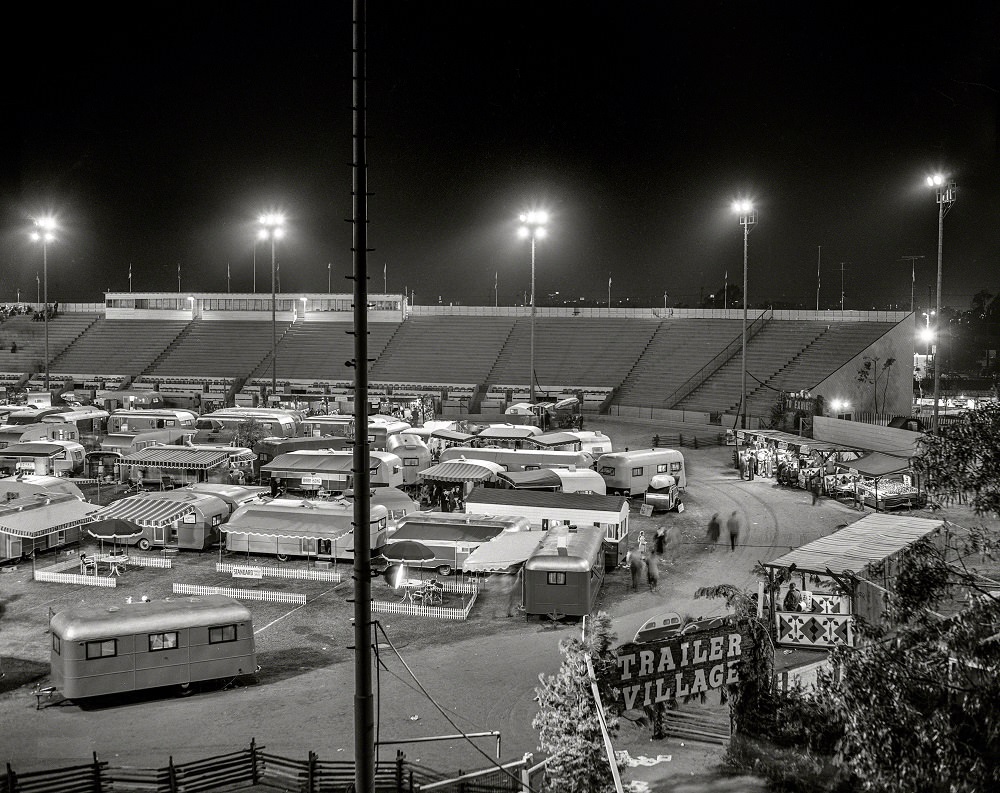
The postwar years also saw the rise of outdoor events and community entertainment. At Gilmore Field in 1947, the “Gypsy Life” mid-century style show drew crowds looking for novelty and spectacle.
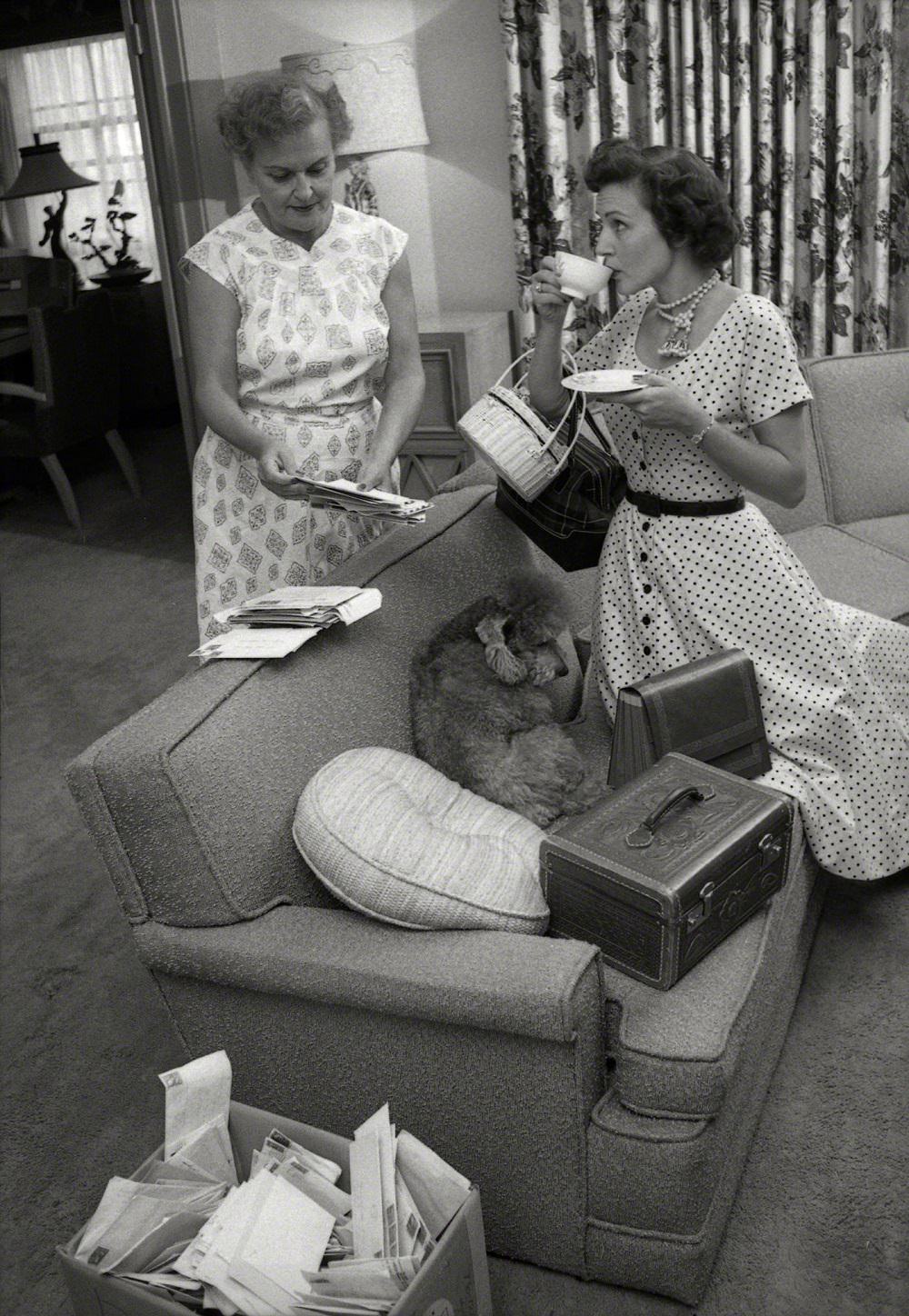
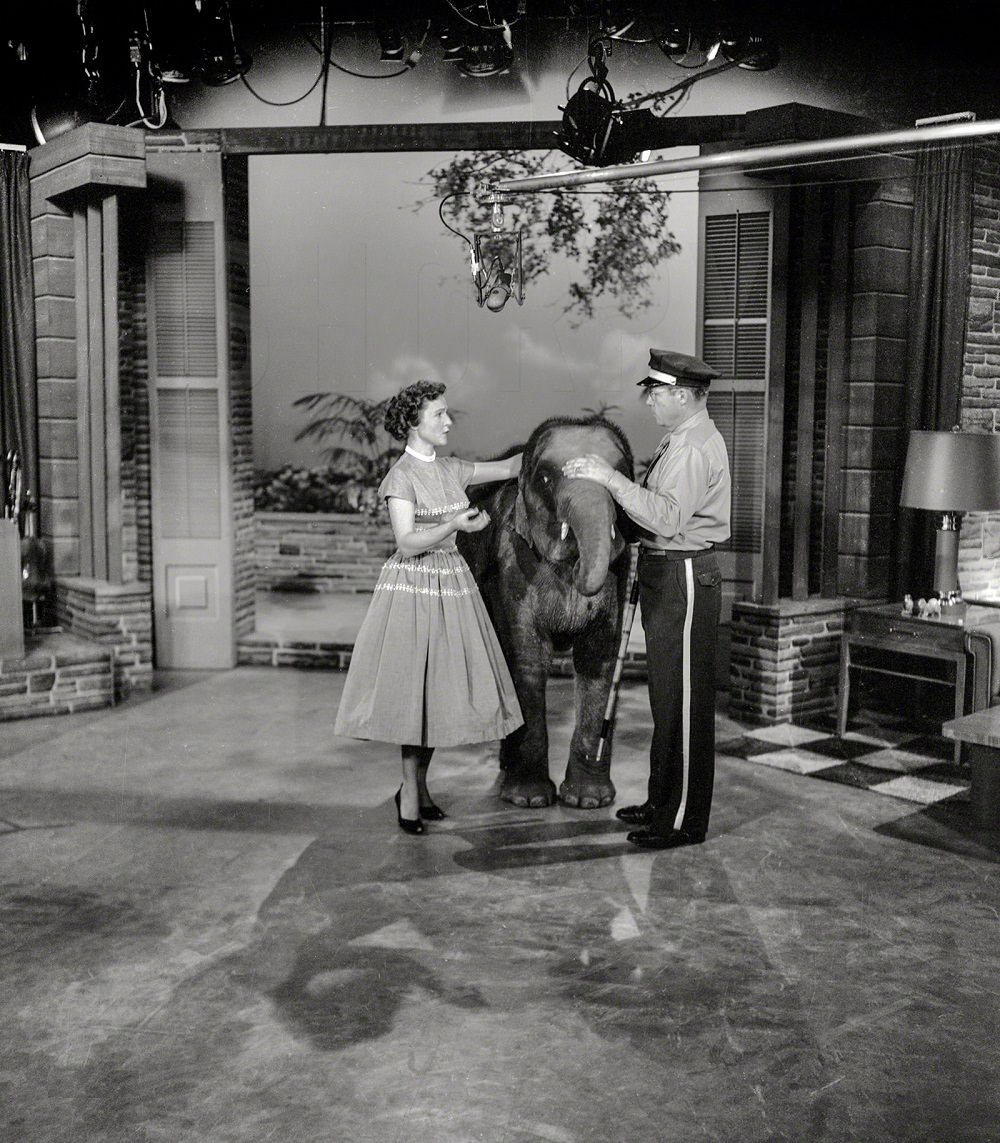
Television came to Los Angeles with full force in the early 1950s. Betty White was already a local fixture by 1954, hosting a daytime TV show that occasionally featured unexpected guests — including a live elephant.
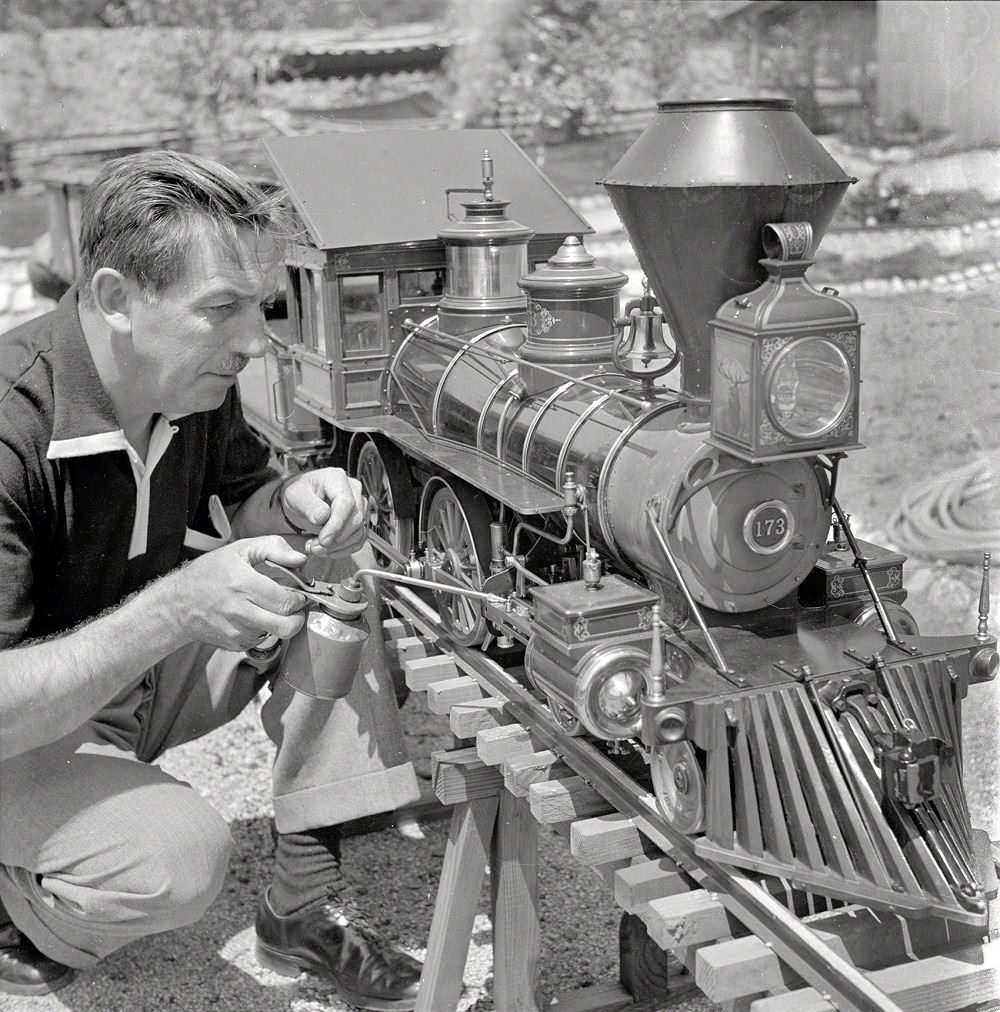
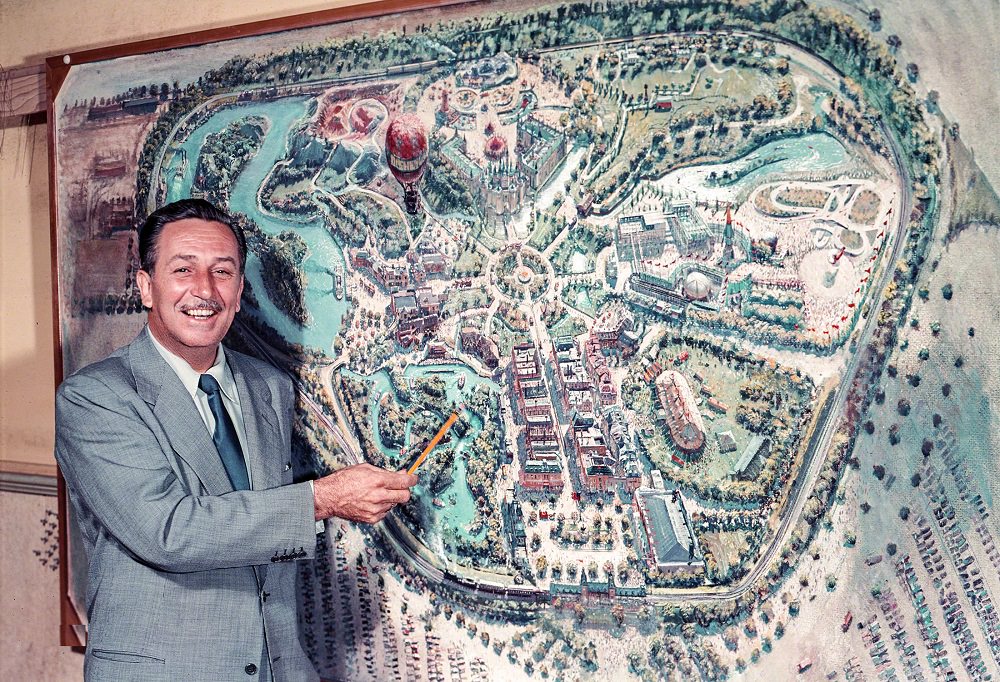
Walt Disney was busy in the early 1950s on multiple fronts. In his backyard in Los Angeles, he maintained a scale model steam railroad — the Carolwood Pacific Railway — which he tended personally. By 1954, he was pointing to blueprints for something far larger: Disneyland, then under construction in nearby Anaheim.
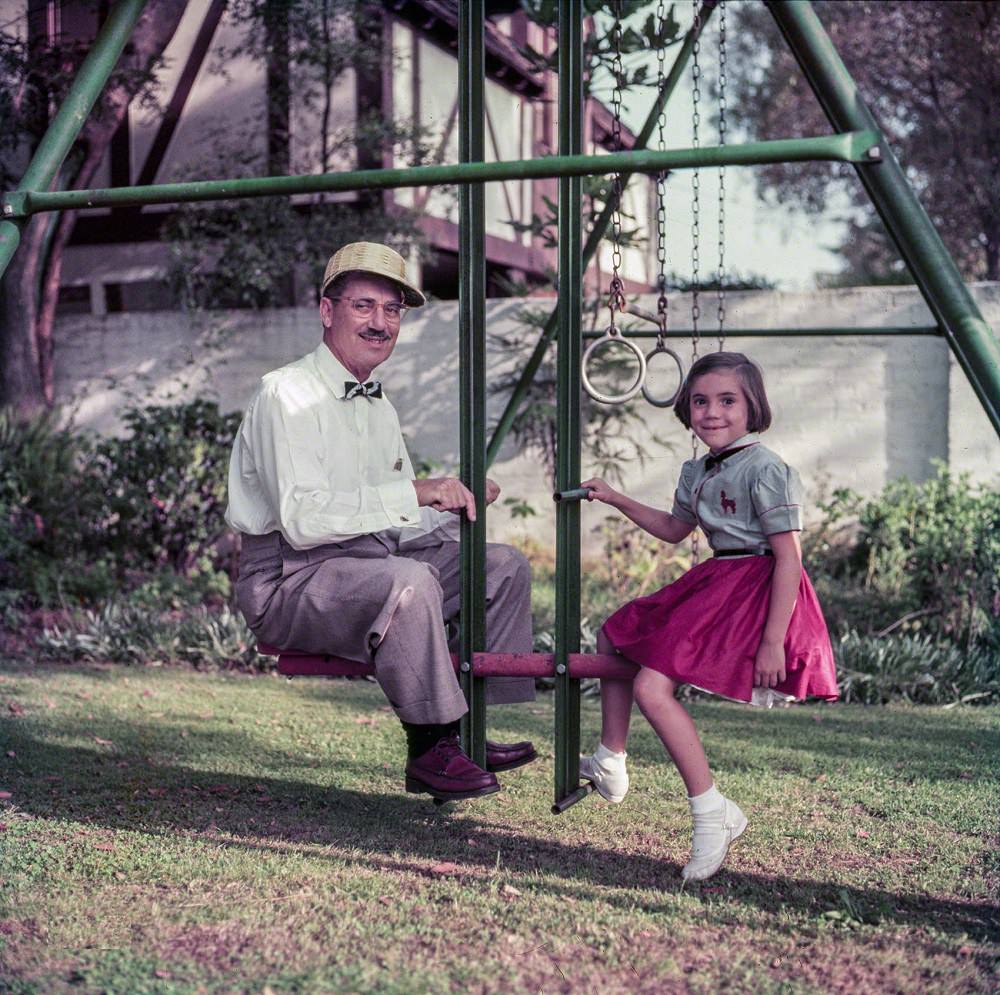
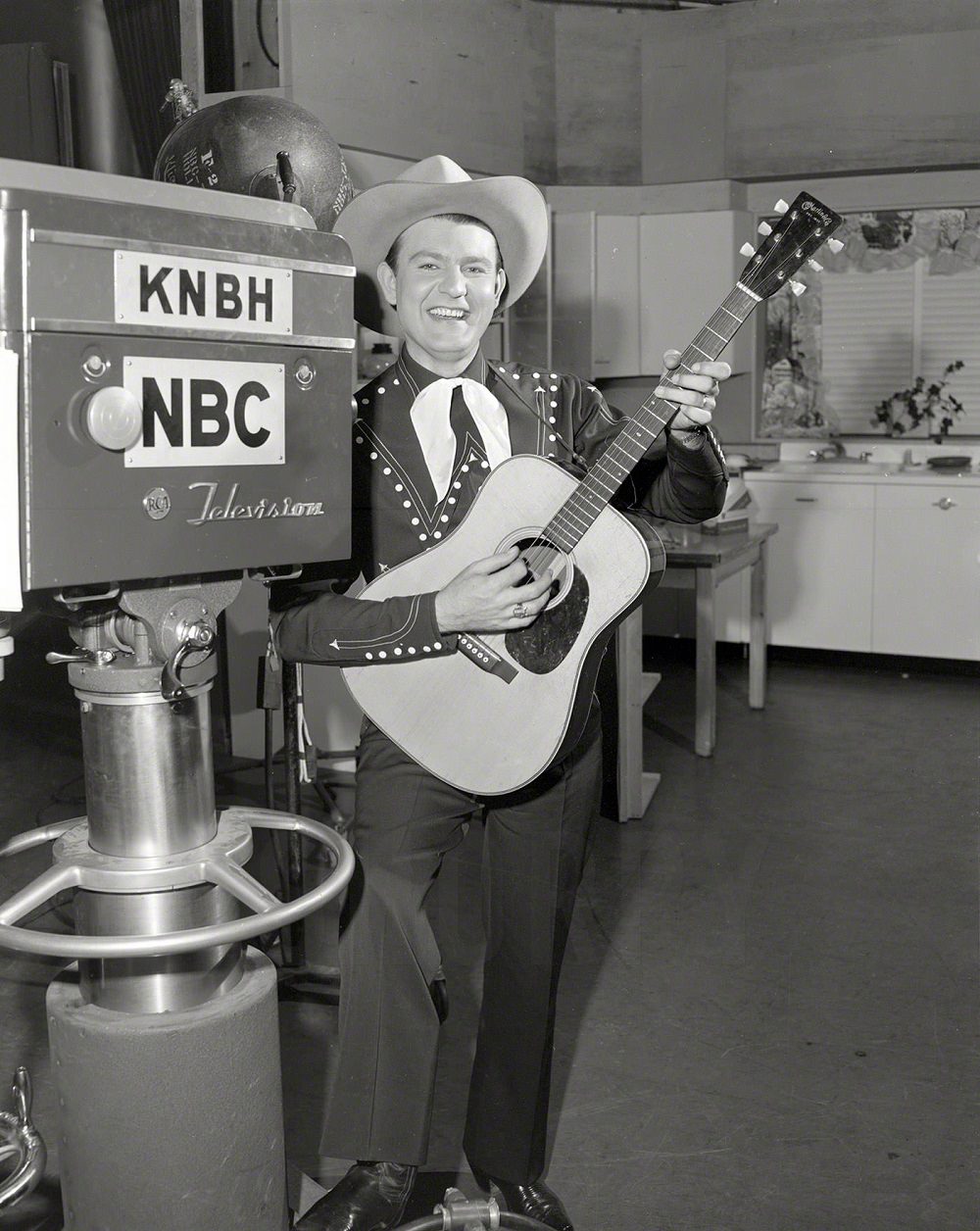
Groucho Marx, one of Hollywood’s most beloved comedians, took a quieter moment at home in Beverly Hills in 1953, photographed on a swingset with his young daughter Melinda. Tex Williams was hosting Town Hall Party on KNBH-TV around the same time, bringing country music to Los Angeles television audiences.
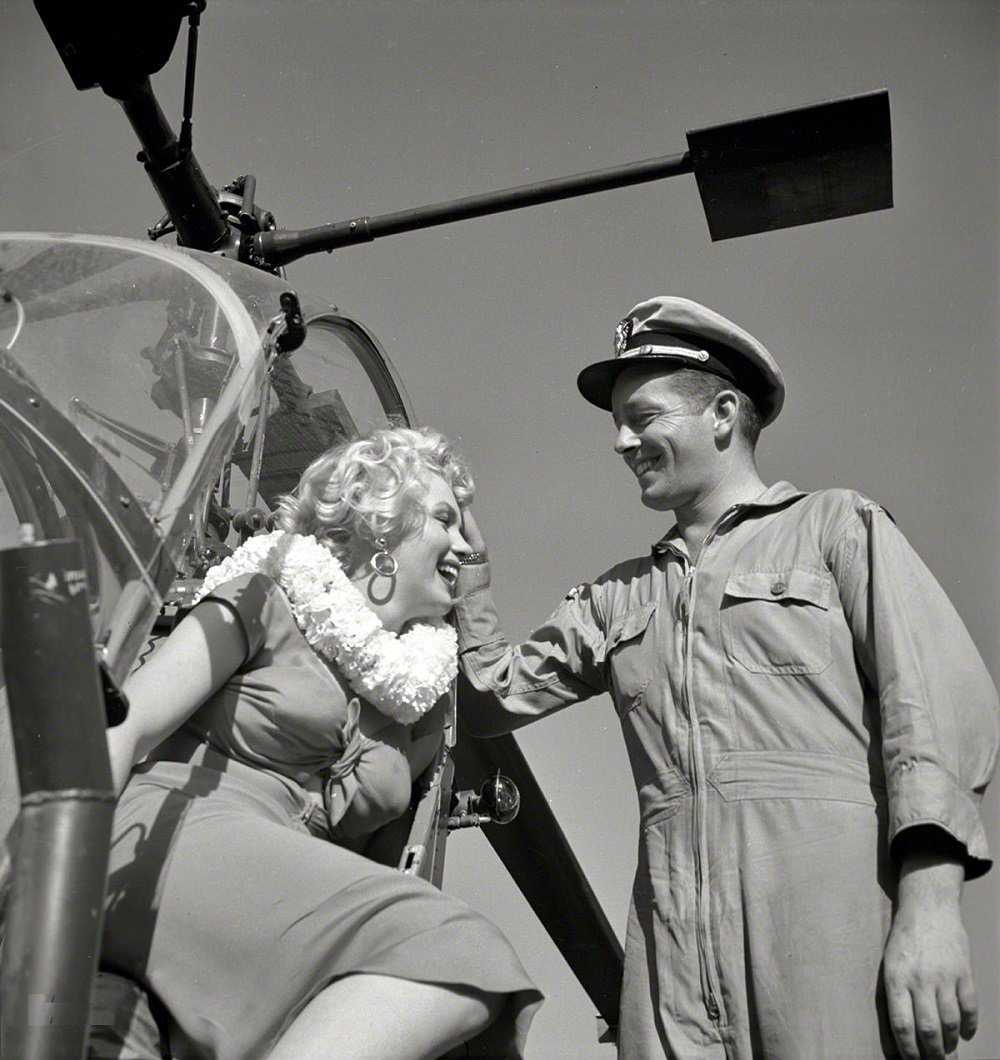
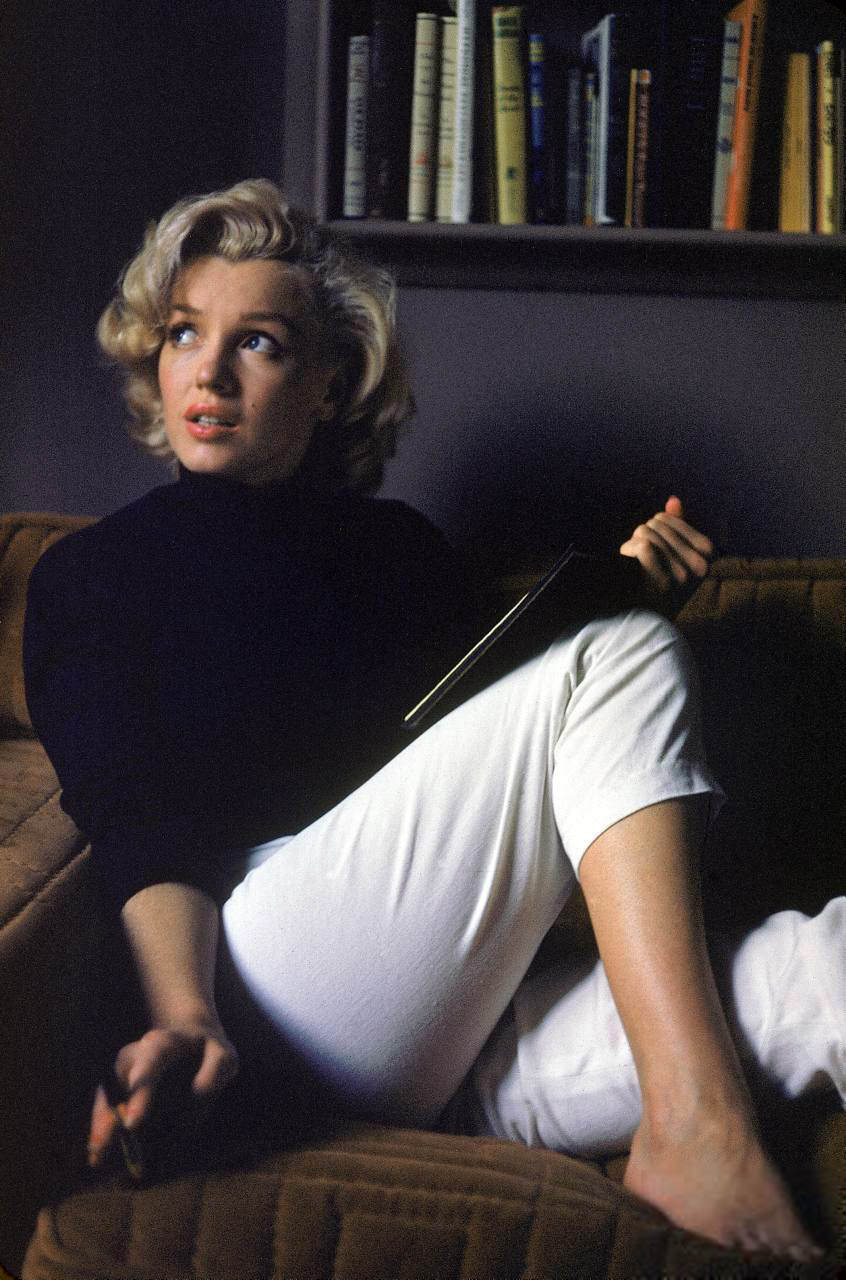
Marilyn Monroe, by then a fully established star, appeared in a 1952 Look magazine assignment alongside a Navy pilot, photographed over Los Angeles from a helicopter. By 1960, she was photographed relaxing at home in L.A., a far cry from her early days in dance class.
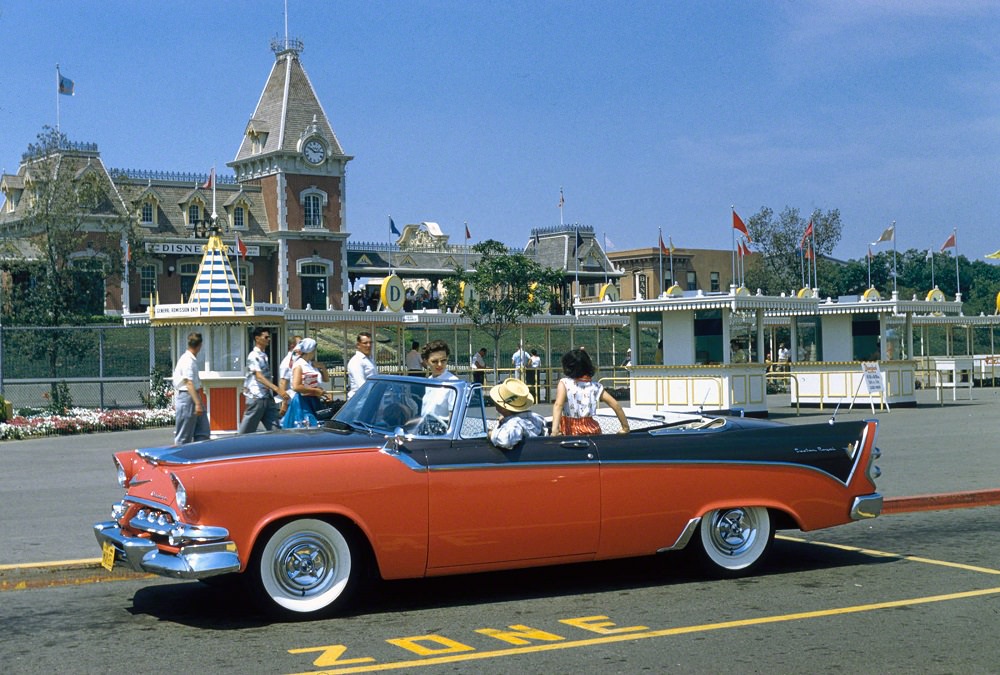
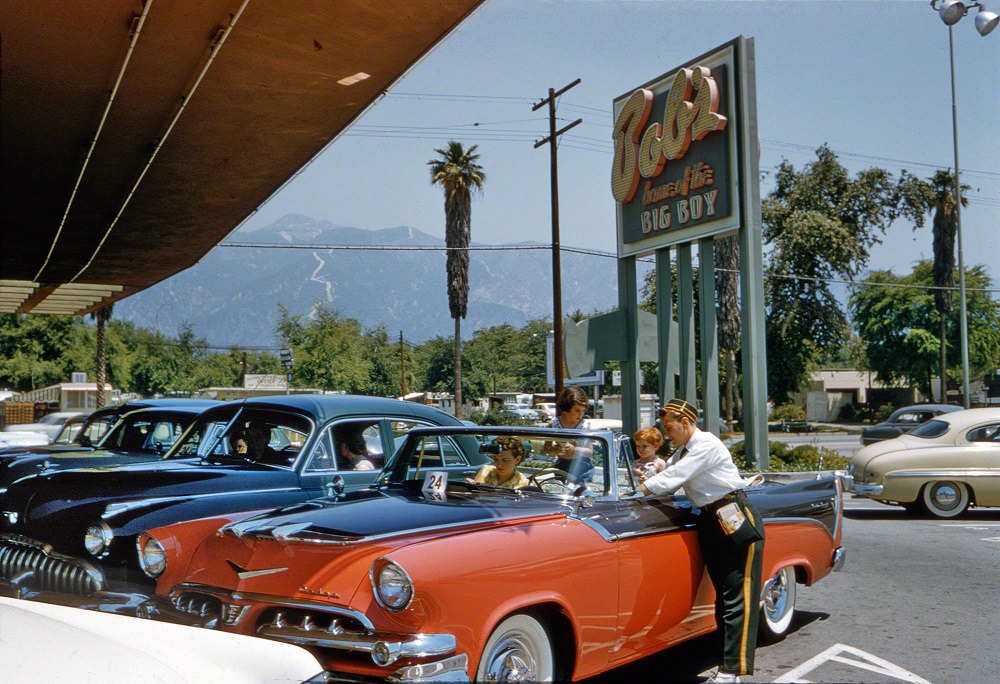
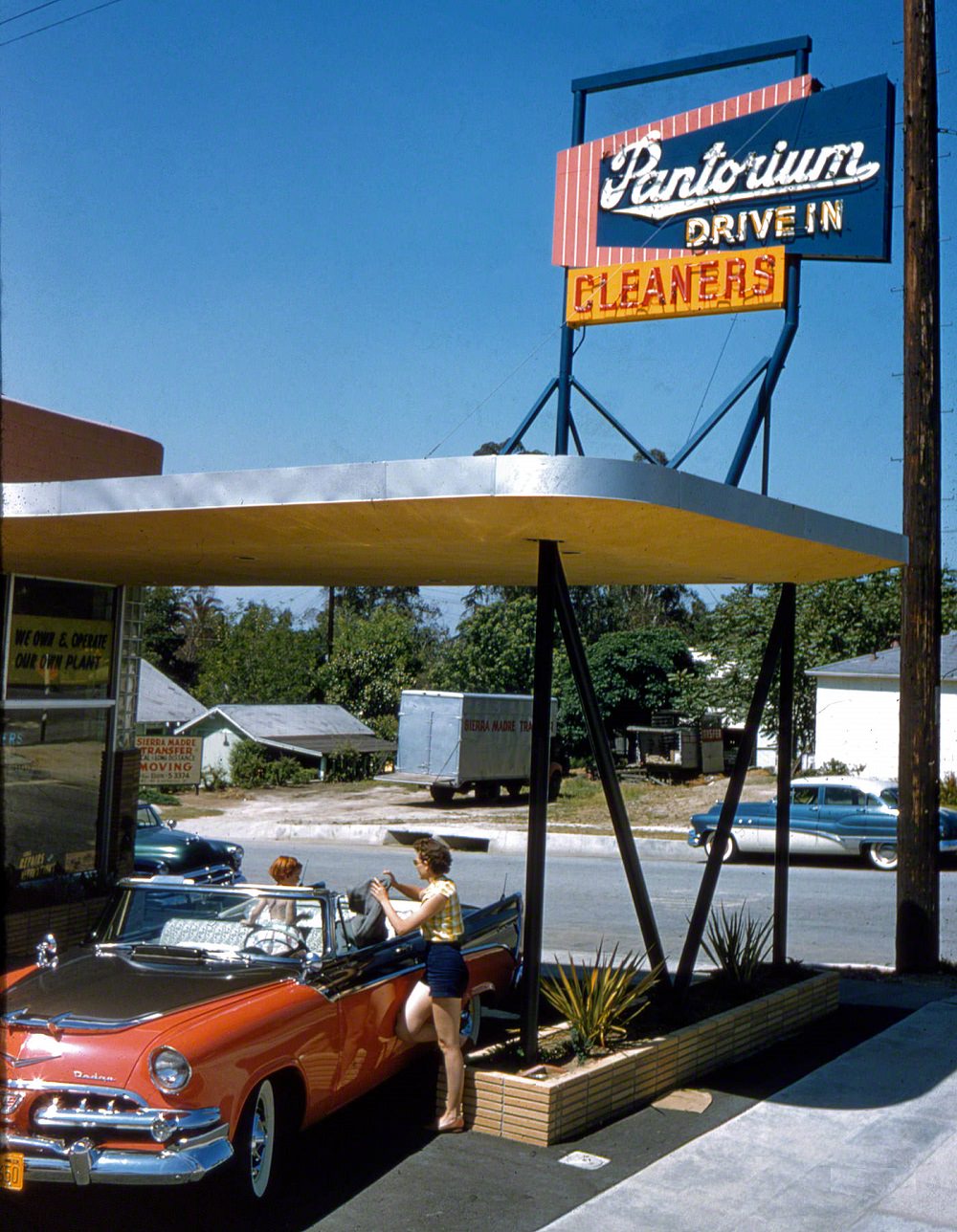
Mid-1950s Los Angeles was a city built around the car. Drive-in restaurants were packed with chrome-trimmed vehicles in June 1956, and custom convertibles gleamed outside establishments like Bob’s Custom Royal. Drive-through cleaners like the Pantorium made everyday errands as car-friendly as possible.
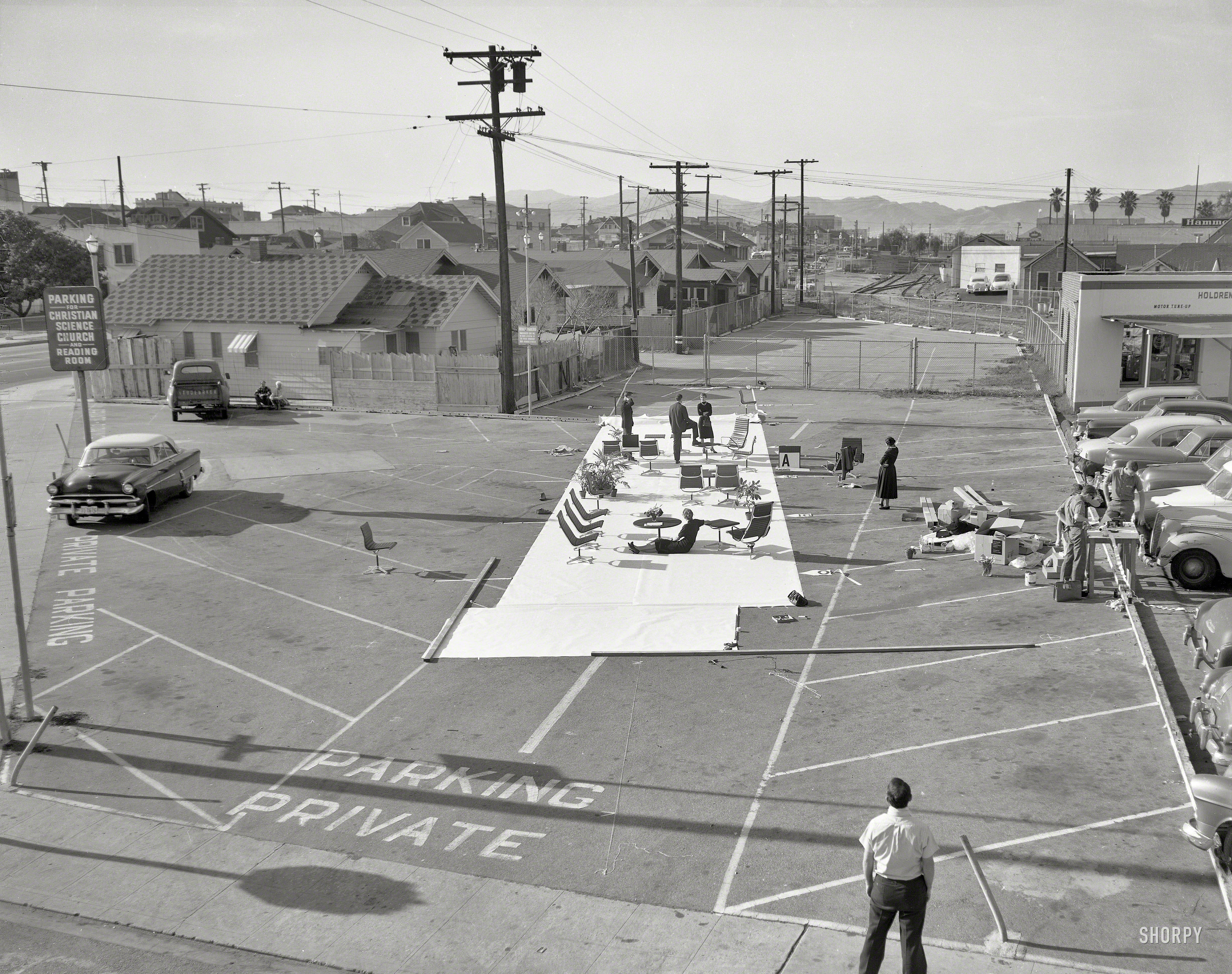
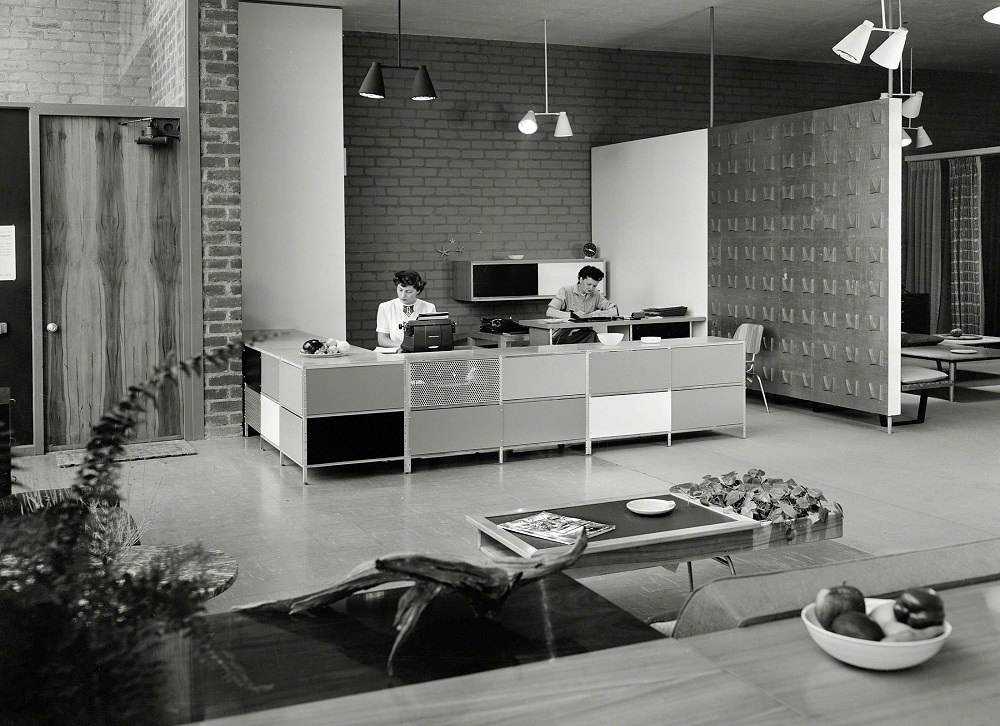
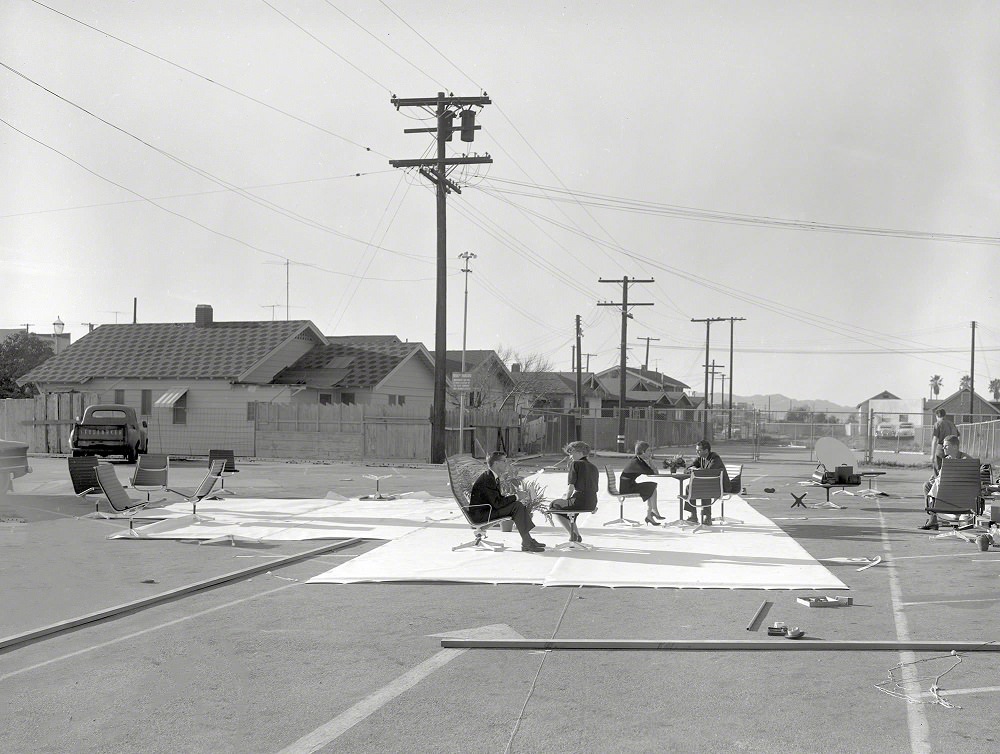
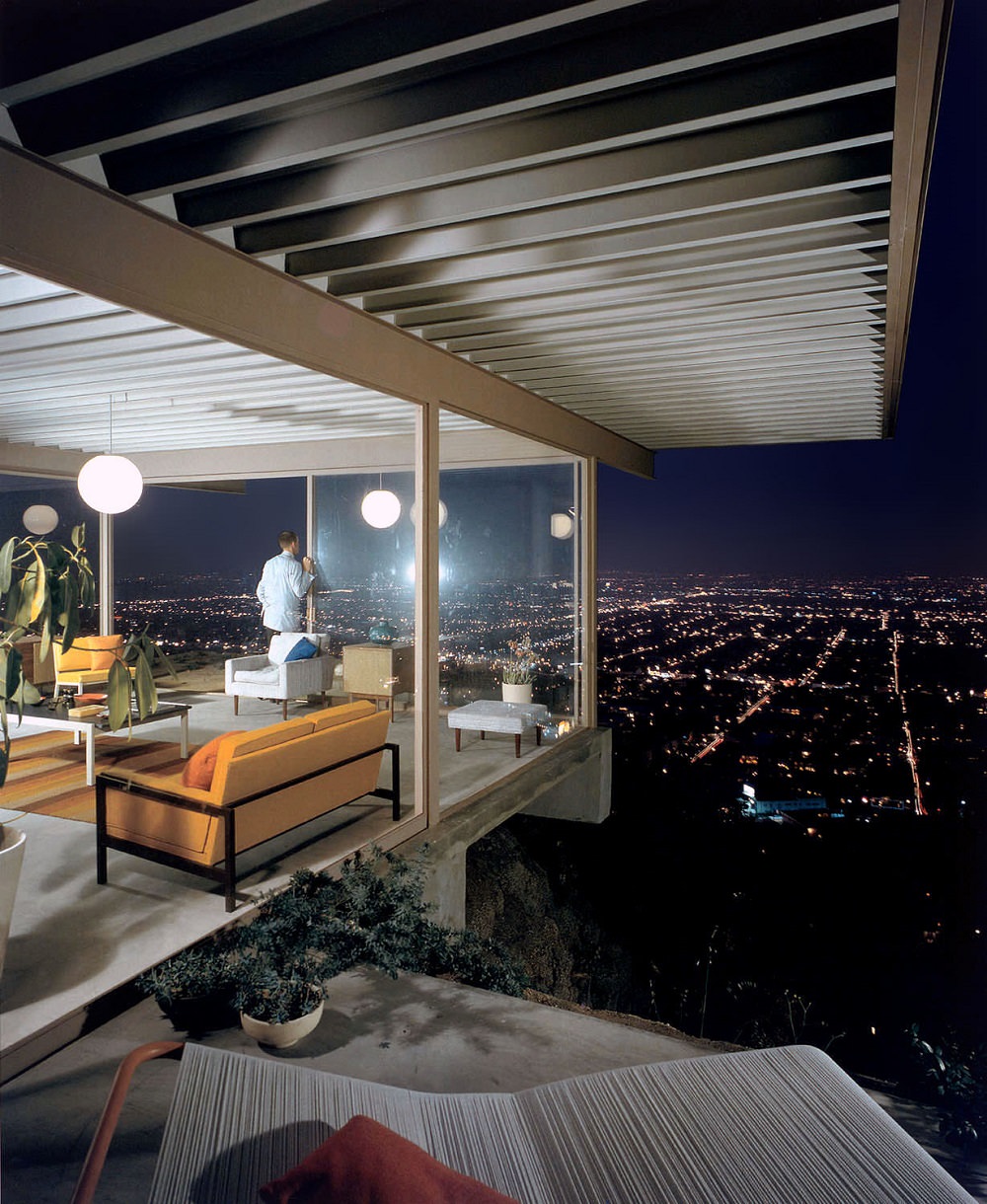
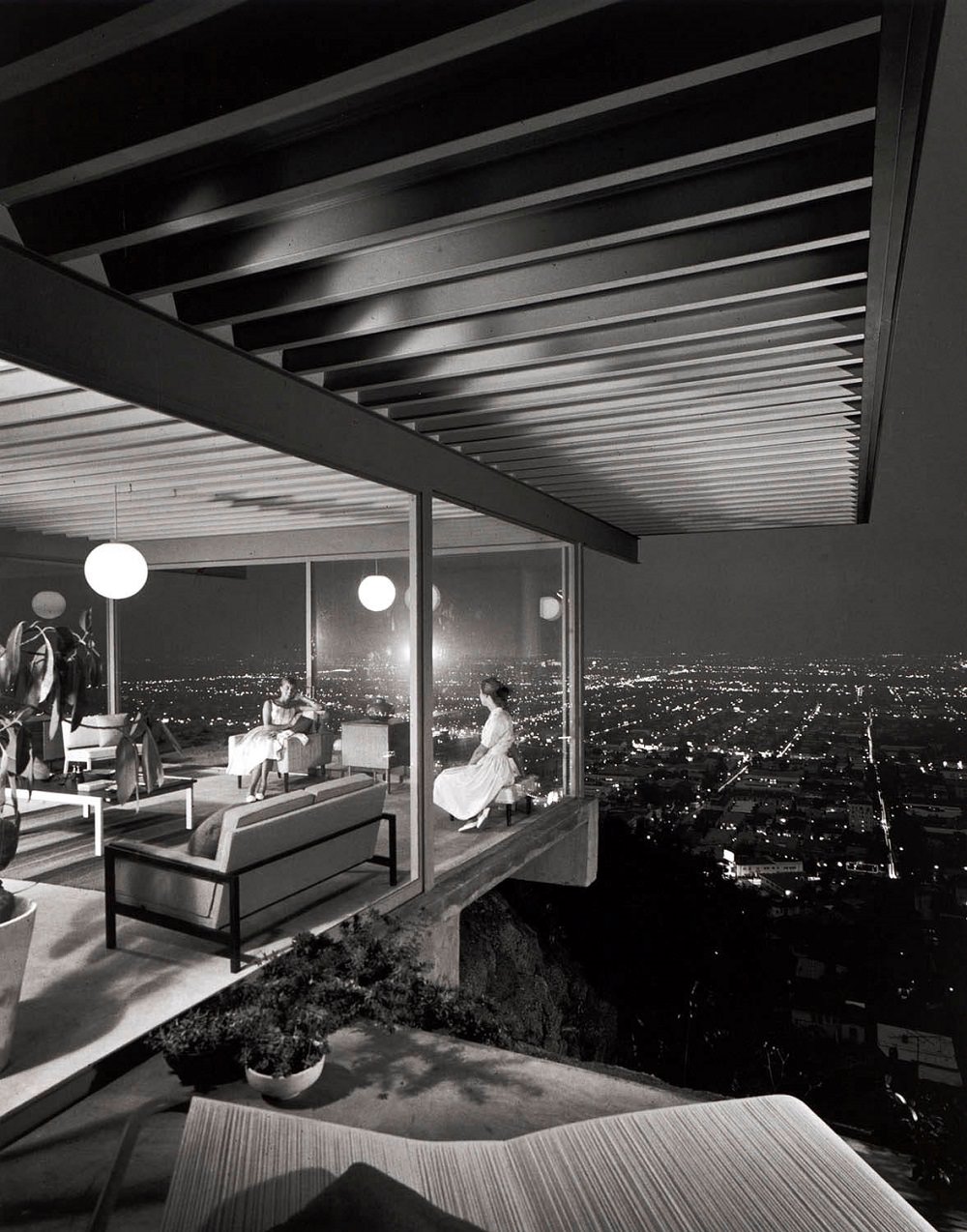
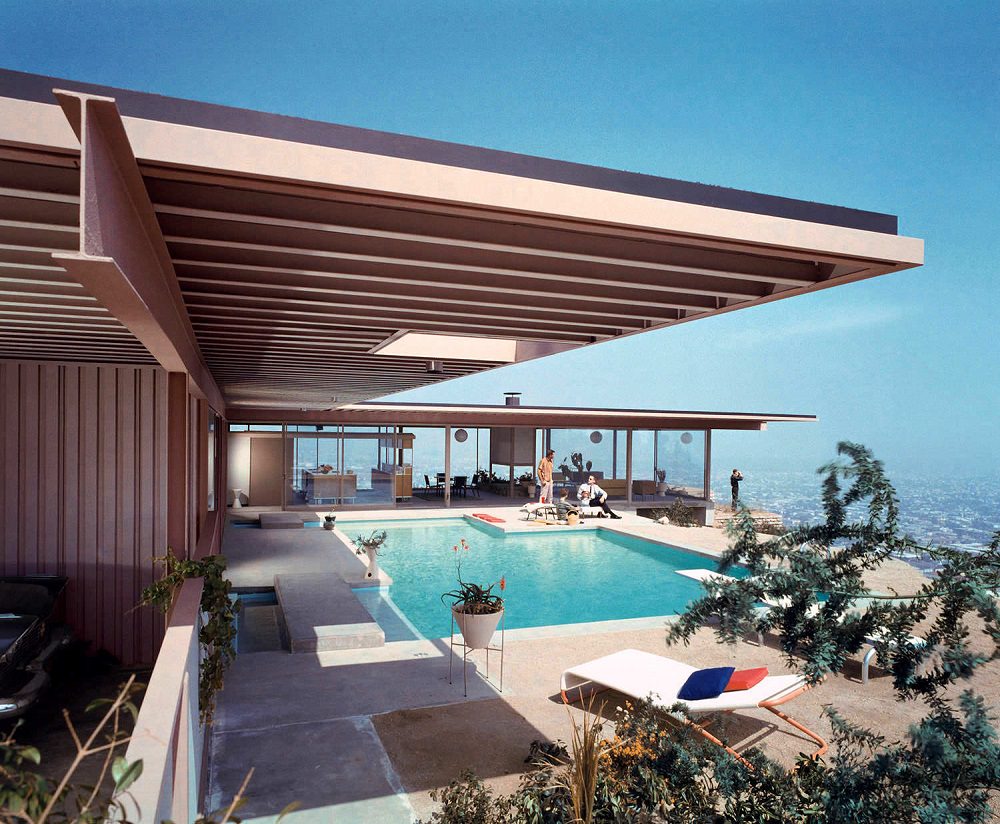
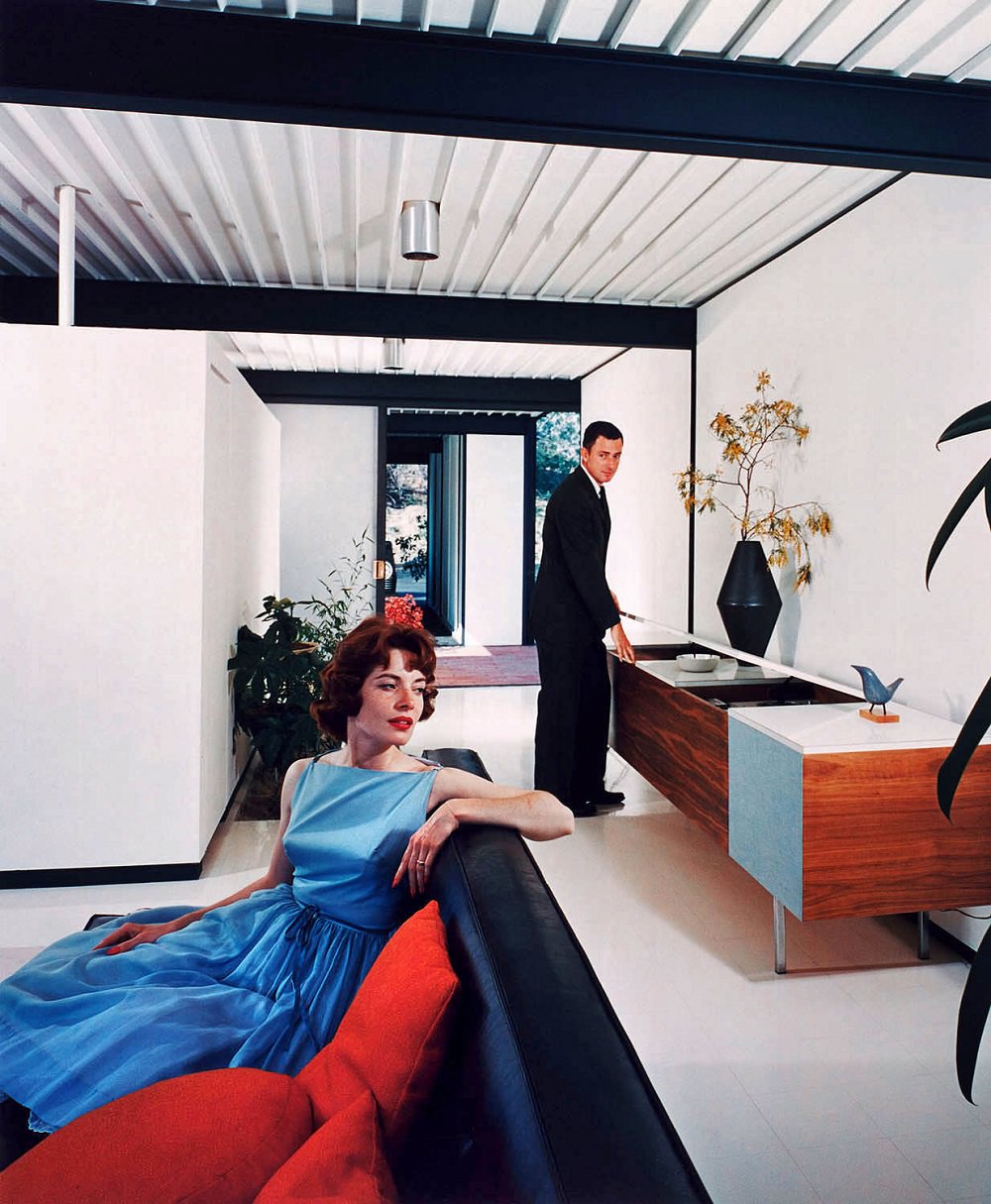
The Herman Miller showroom on Beverly Boulevard in West Hollywood, photographed in 1950, and the Aluminum Group furniture shots from 1958 document how Los Angeles was also a testing ground for modern American design. Residential architecture followed suit, with homes like the Case Study House No. 22 — the Stahl Residence in the Hollywood Hills — pushing the boundaries of what a house could look like.
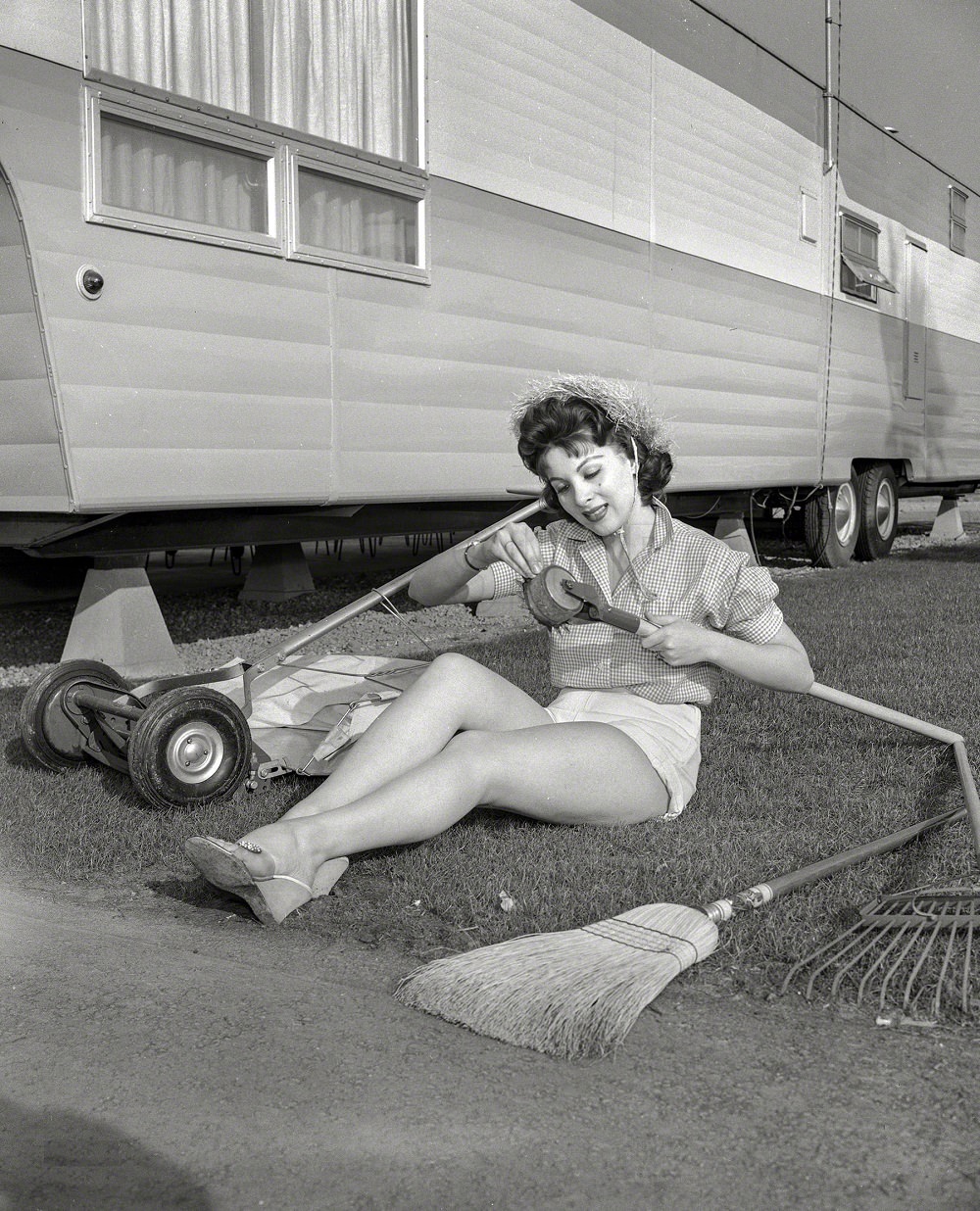
Trailer living was another dimension of Southern California life in the late 1950s. A 1957 photograph of a Trailer Life model shows how mobile, flexible living arrangements were being marketed as a modern lifestyle choice. Nearby, a modest home at 9038 Wonderland Park Avenue in 1958 captured the look of everyday residential Los Angeles.
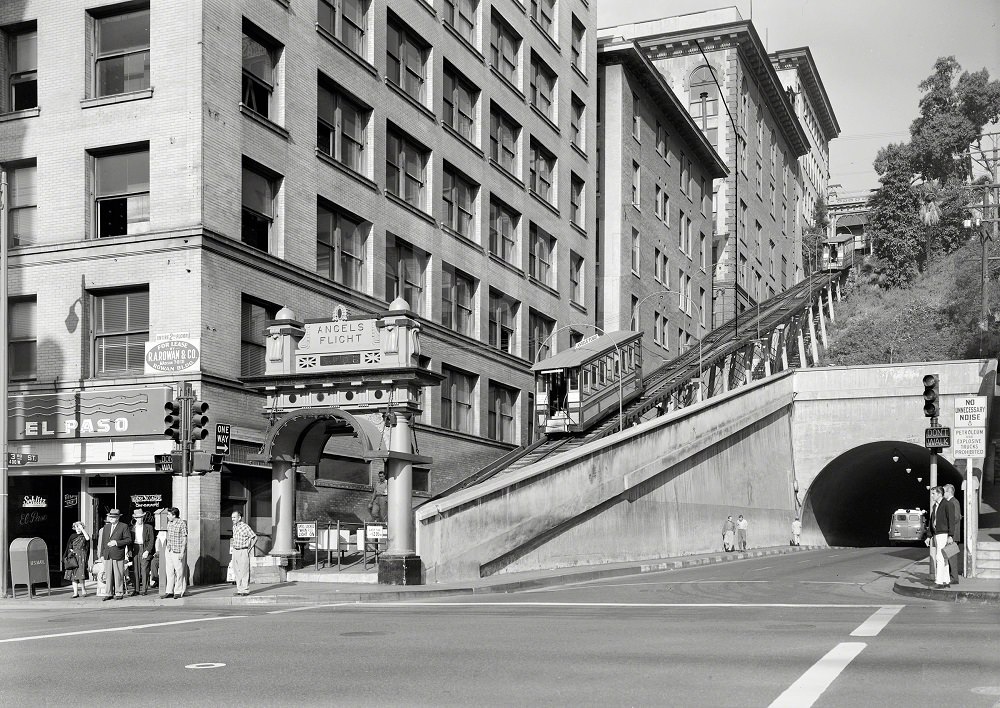
Angels Flight, the short funicular railway connecting Hill Street to Bunker Hill, was a beloved piece of downtown Los Angeles infrastructure. The lower station at Third and Hill Streets, photographed in 1960, shows the railway in its original operation before it was dismantled in 1969.
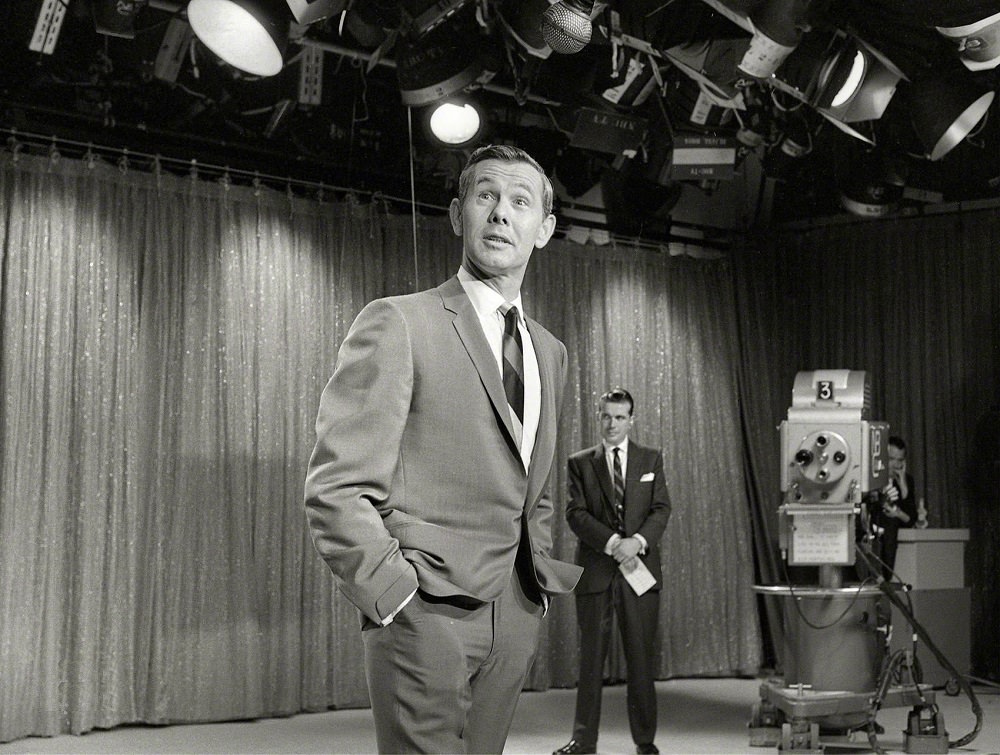
Johnny Carson brought national attention to Los Angeles when The Tonight Show moved its production there. His July 1965 monologue photograph captures the beginning of an era when late-night television became a nightly ritual for millions of Americans tuning in from across the country.
By 1985, the open-plan office had taken hold in Los Angeles, reflecting broader shifts in American work culture. The city that once ran on oil derricks and railroads was now home to an economy powered by entertainment, technology, and services.