
Hey There! Before You Go. 😧
Get the best vintage content straight into your inbox!

Don't worry, we don't spam

Fascinating Snapshots of London Street Life in the mid-1970s by David Rostance
David Rostance spent much of the 1970s travelling across the United Kingdom with a camera, documenting street life in cities like Wolverhampton, Birmingham, and Manchester. London was no exception. Between March 1975 and June 1977, Rostance captured a series of photographs across the capital — from quiet residential roads in South London to the bustling junctions of the West End. Together, they form a vivid and precise record of what London looked and felt like during one of the most turbulent decades in British history.

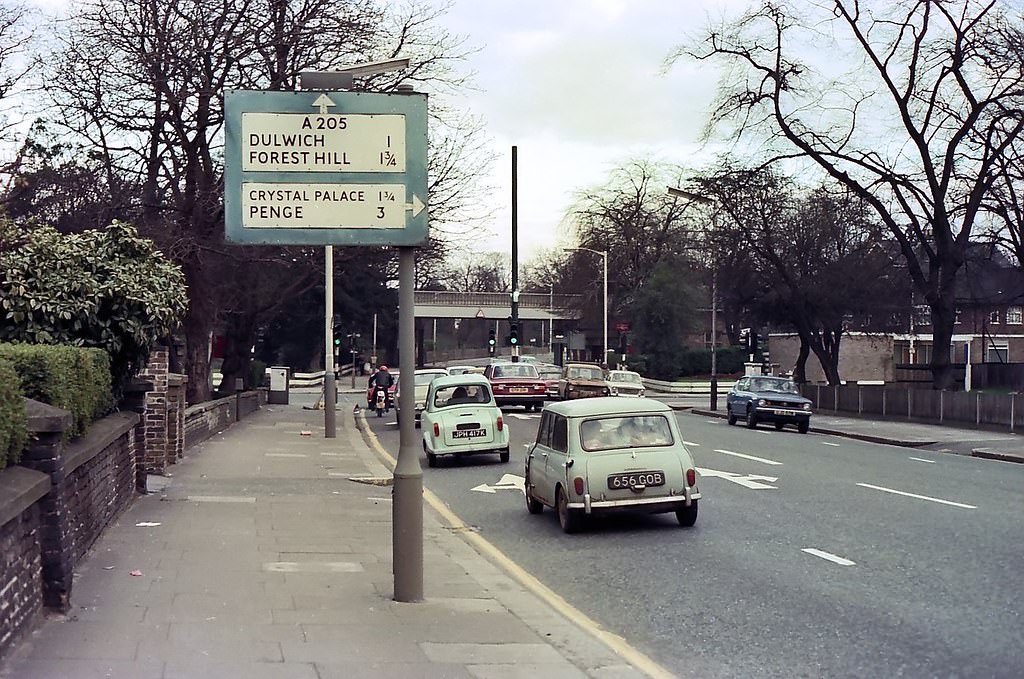
His first London outing on 16th March 1975 took him to the South Circular Road and the surrounding streets of SE21. This part of South London — stretching through West Dulwich and into Sydenham — offered a mix of traffic, terraced housing, and quiet suburban rhythm. Rostance moved methodically through the area, photographing the roads themselves as much as the people and vehicles on them.

South Circular Road, March 1975 Thurlow Park Road, London SE21. 16th March 1975.

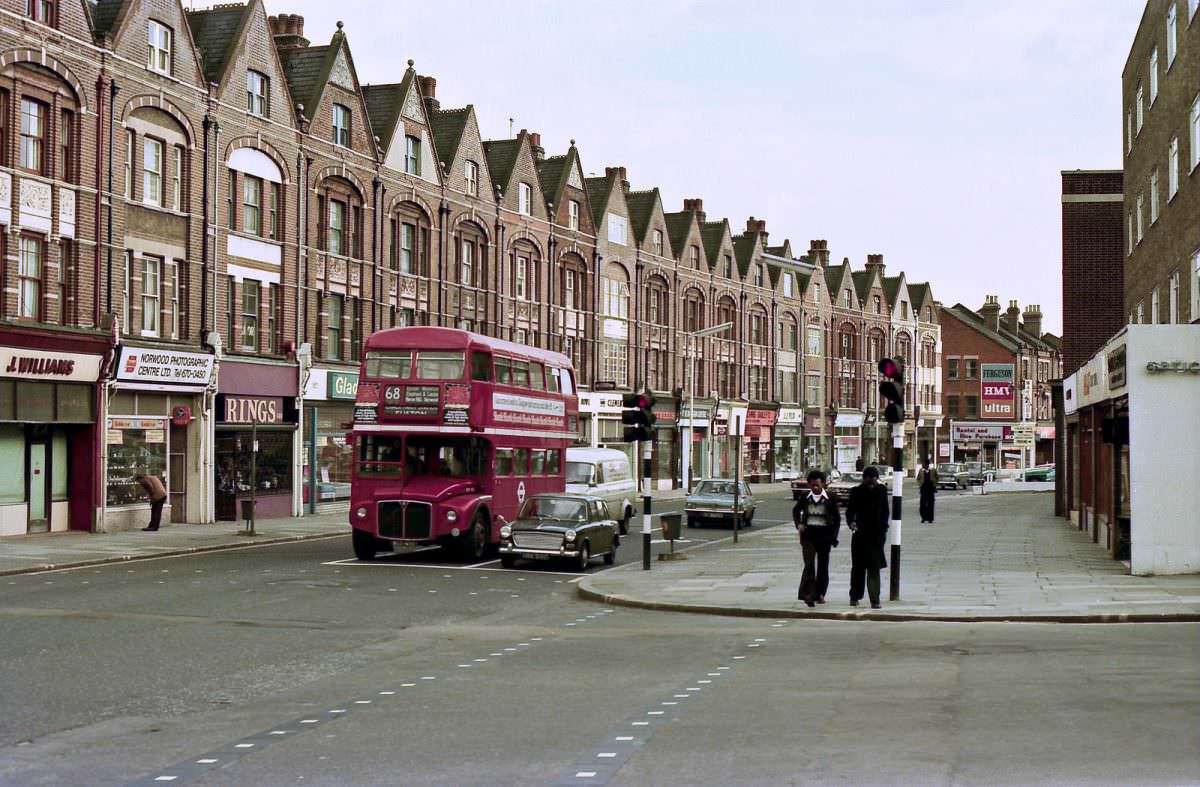
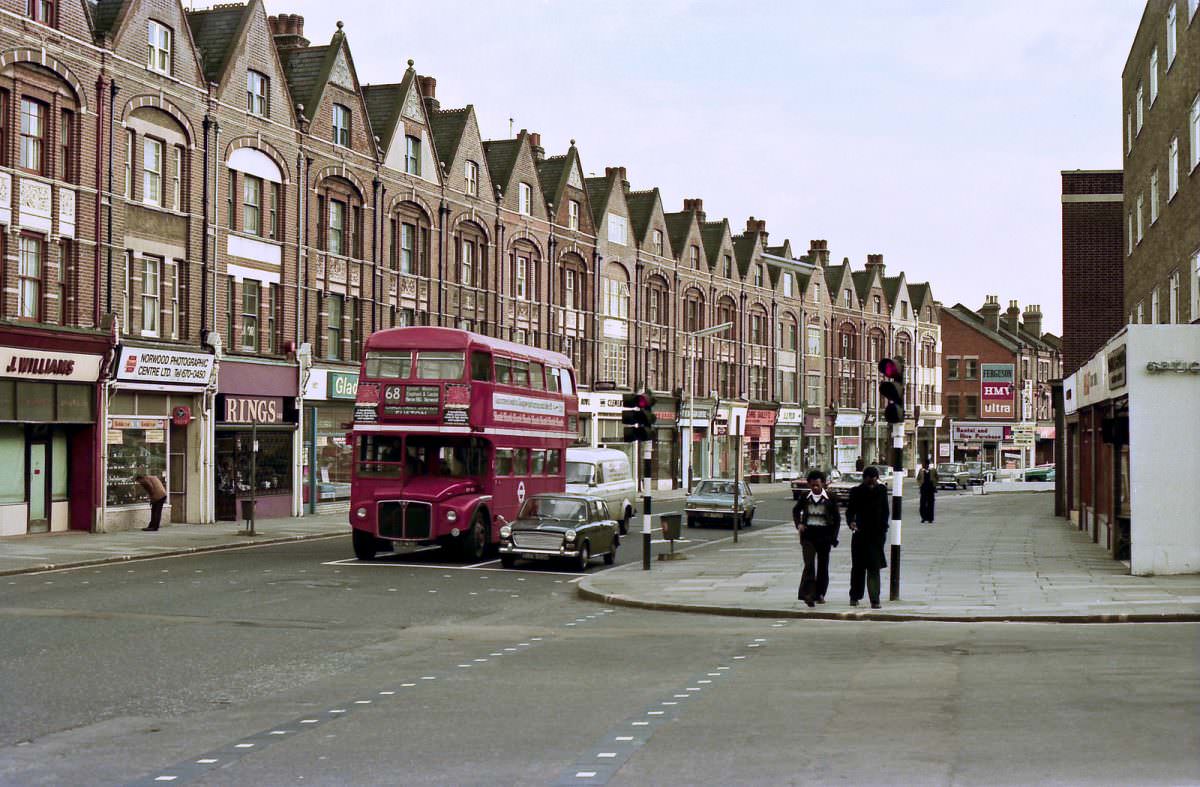
One of the most recognisable vehicles in Rostance’s London photographs is the AEC Routemaster — the double-decker bus that had become synonymous with the city. On that same March day in West Norwood, he caught RM 401 sitting at traffic lights on Norwood Road, bound for Euston on route 68. The Routemaster, with its open rear platform and conductor-operated boarding, was still a working part of everyday London life at this point.

AEC Routemaster No. RM 401 waits at traffic lights in Norwood Road, West Norwood while working route 68 to Euston, 16th March 1975.

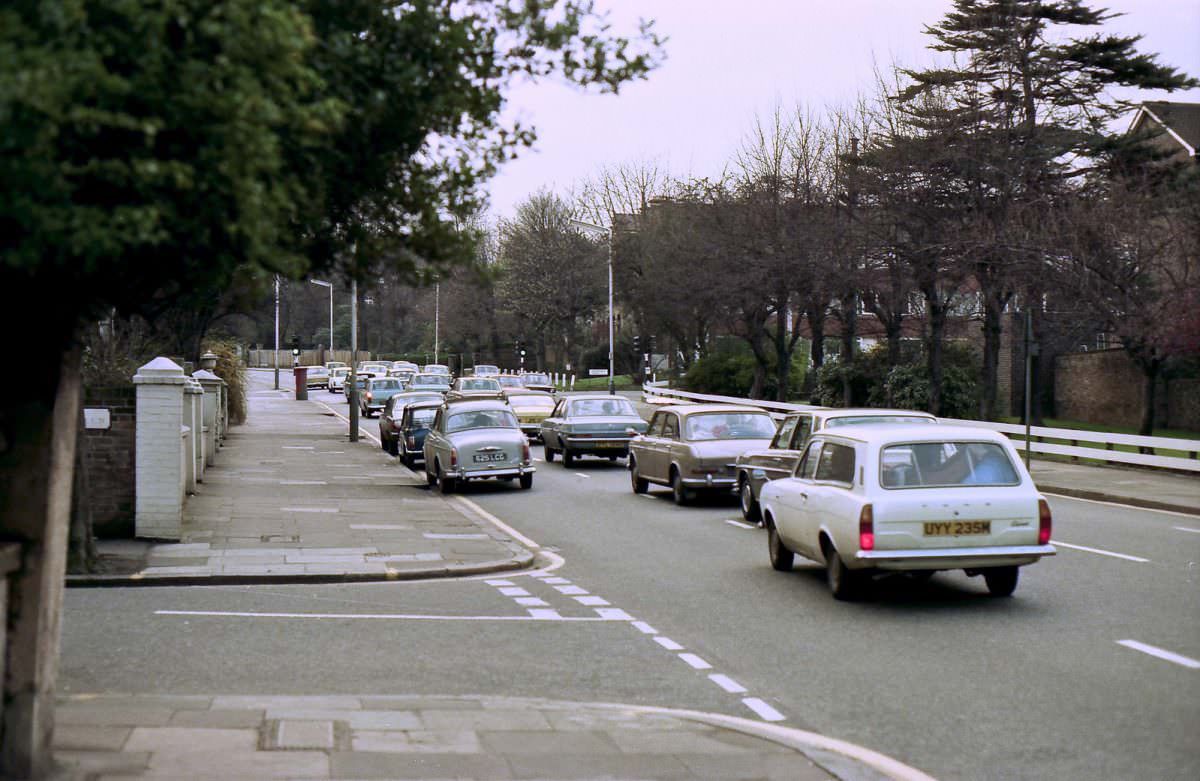
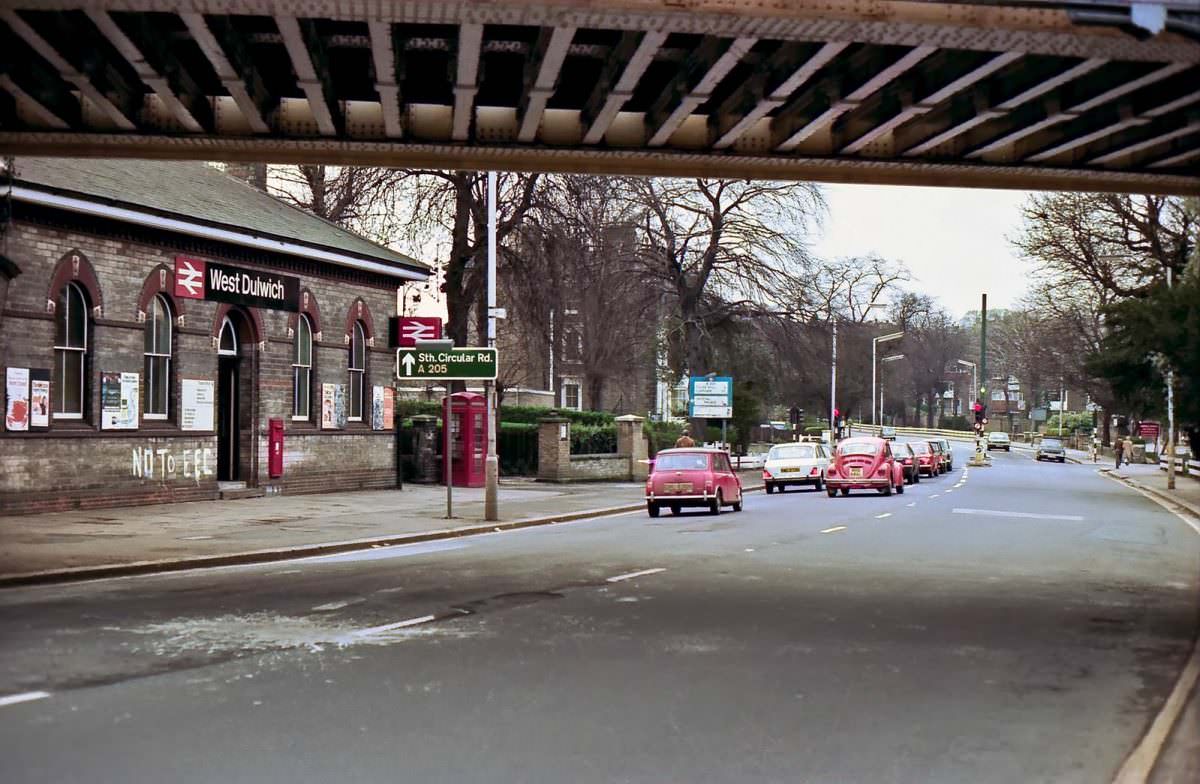
Further along his March route, Rostance photographed the junction where Thurlow Park Road meets West Dulwich railway station. The station sits on the line running between London Victoria and Crystal Palace, and the streetscape around it reflects the modest, functional architecture typical of this part of inner South London.

Thurlow Park Road and West Dulwich railway station, London SE21. 16th March 1975.
Dulwich Common, London SE21, 16th March 1975

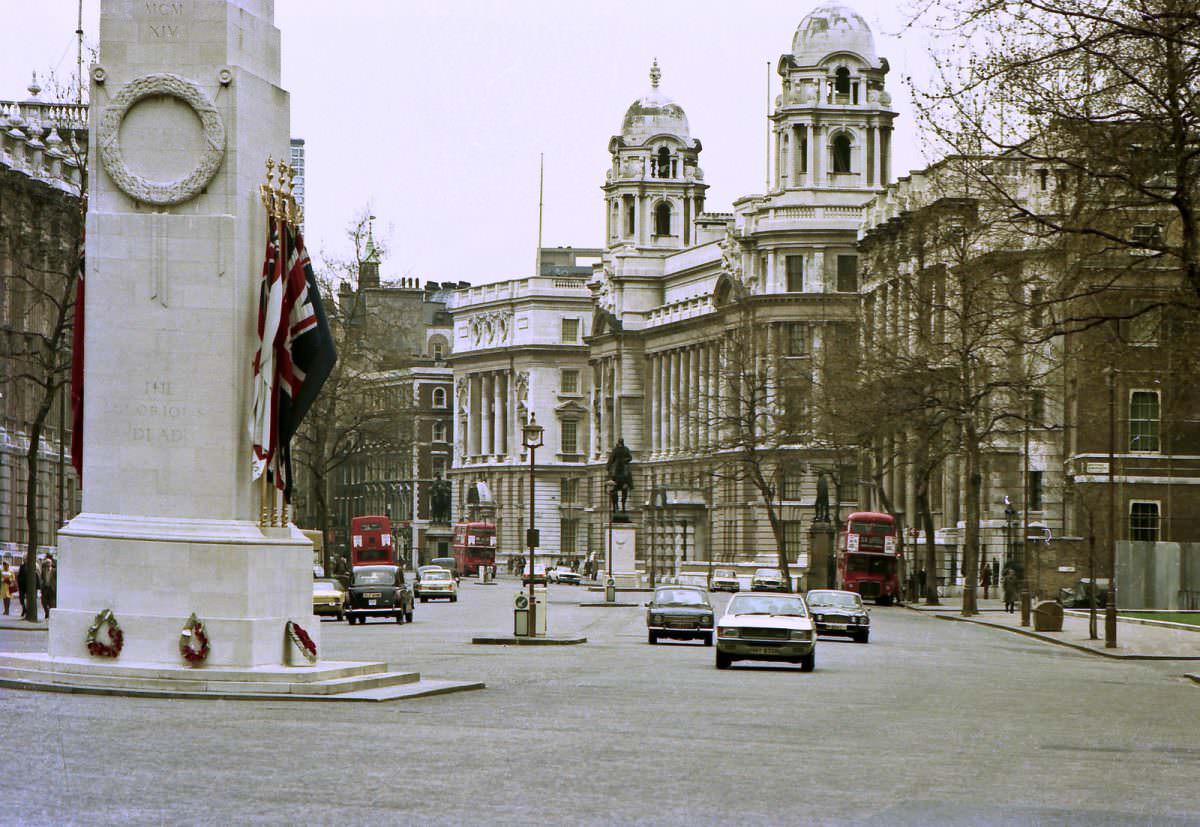
By April 1975, Rostance had moved into Central London. Whitehall — the broad ceremonial road connecting Parliament Square to Trafalgar Square — gave him one of the capital’s most iconic backdrops. At its centre stands the Cenotaph, the national war memorial designed by Edwin Lutyens and unveiled in 1920. In his photograph, the monument rises from the middle of the road, flanked by the stone government buildings that line Whitehall on both sides.

Whitehall and the Cenotaph, April 1975

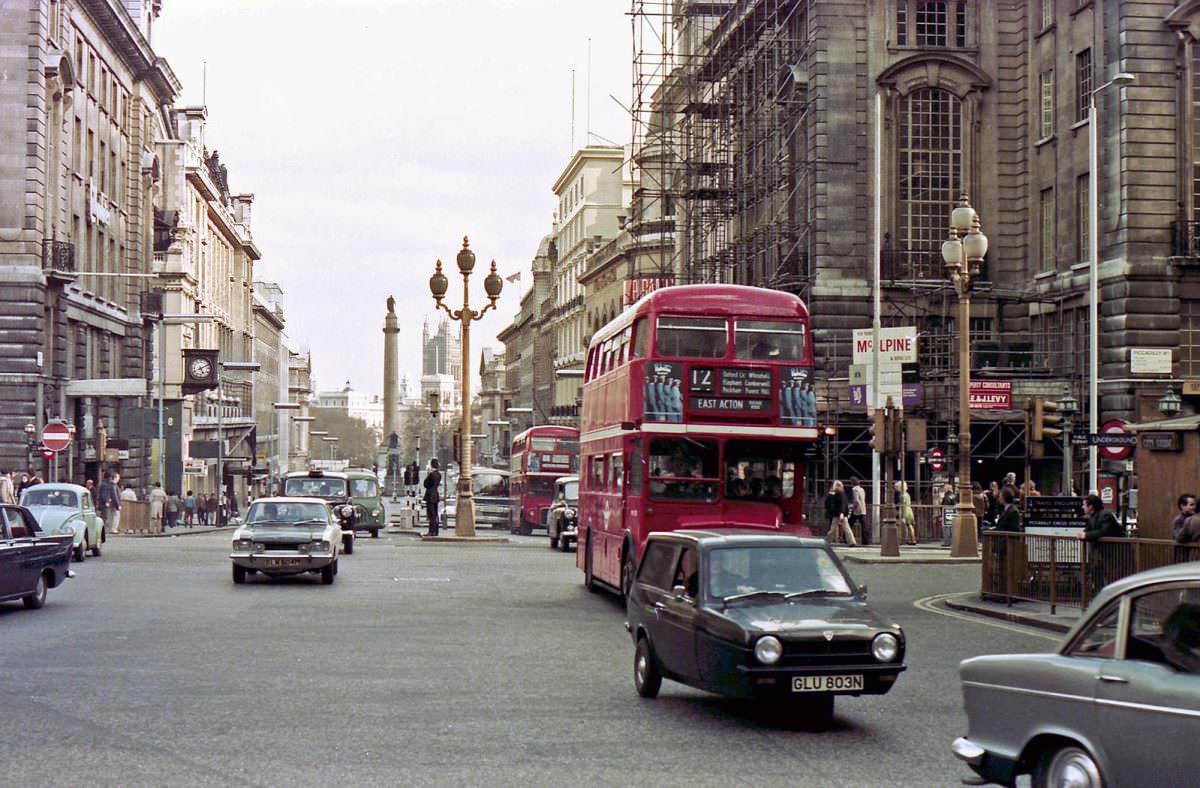
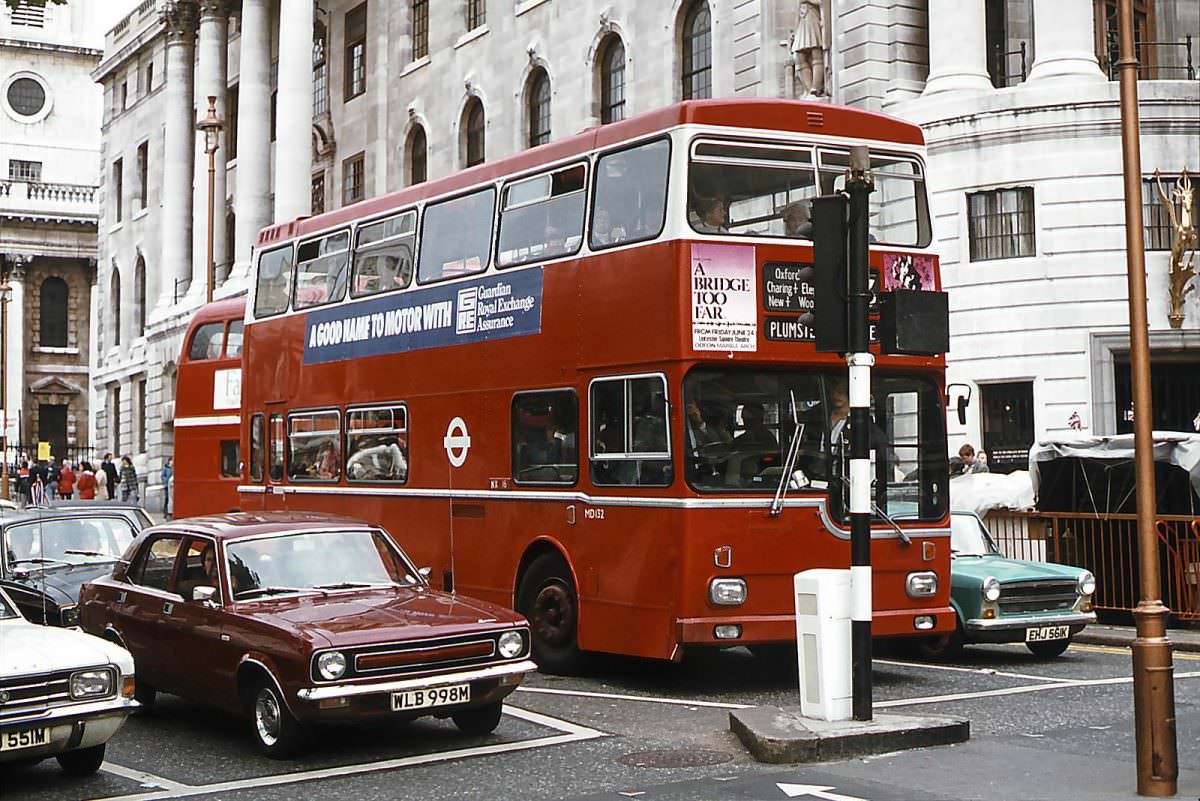
A short distance north, Piccadilly Circus presented an entirely different atmosphere. At the junction of Lower Regent Street and Piccadilly Circus, Rostance photographed multiple AEC Routemasters competing for space with cars and other vehicles. This was one of the busiest bus corridors in London, and the image captures the organised chaos of mid-1970s Central London traffic.

AEC Routemasters vie with other traffic at the junction of Lower Regent Street and Piccadilly Circus on 19th April 1975.

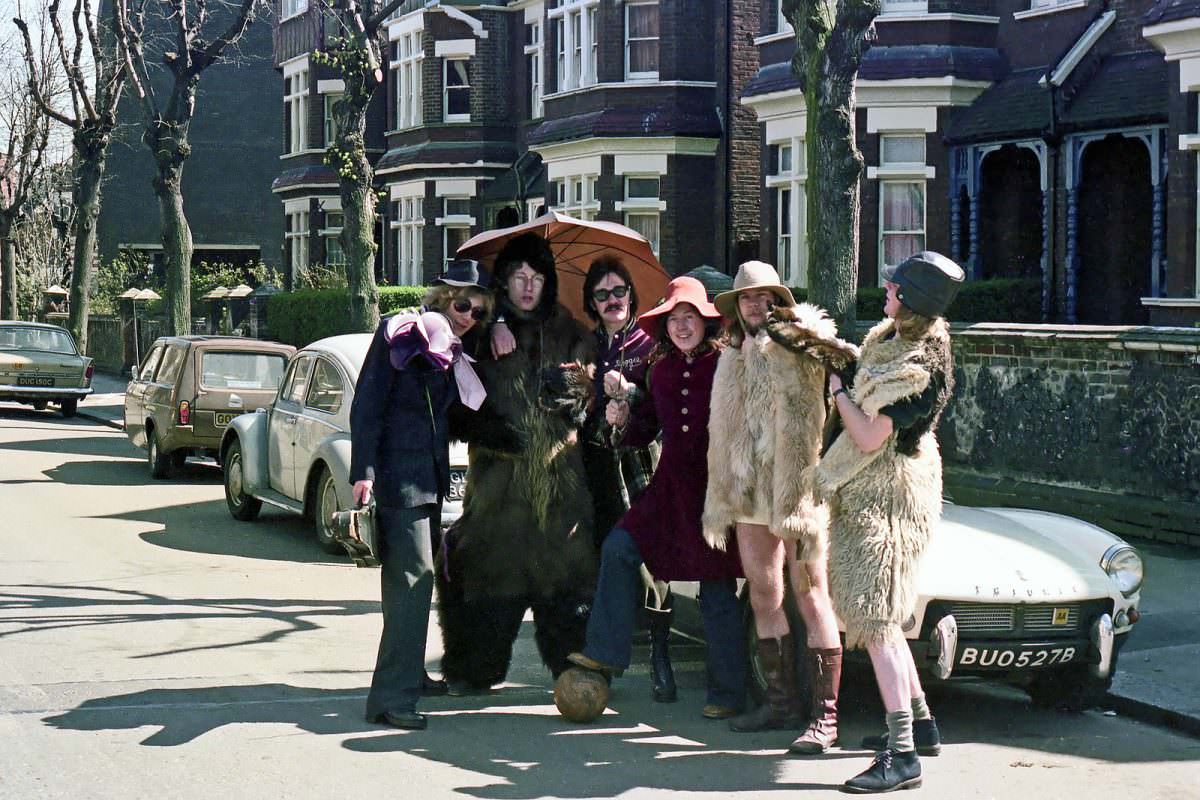
Not all of Rostance’s April 1975 photographs were focused on Central London landmarks. He also ventured north to Crouch End, a neighbourhood in the London Borough of Haringey. There he photographed a scene he labelled simply “English Eccentrics” — a candid street moment that hints at the colourful, unconventional characters that populated London’s residential neighbourhoods during the decade.

English Eccentrics, Crouch End, April 1975

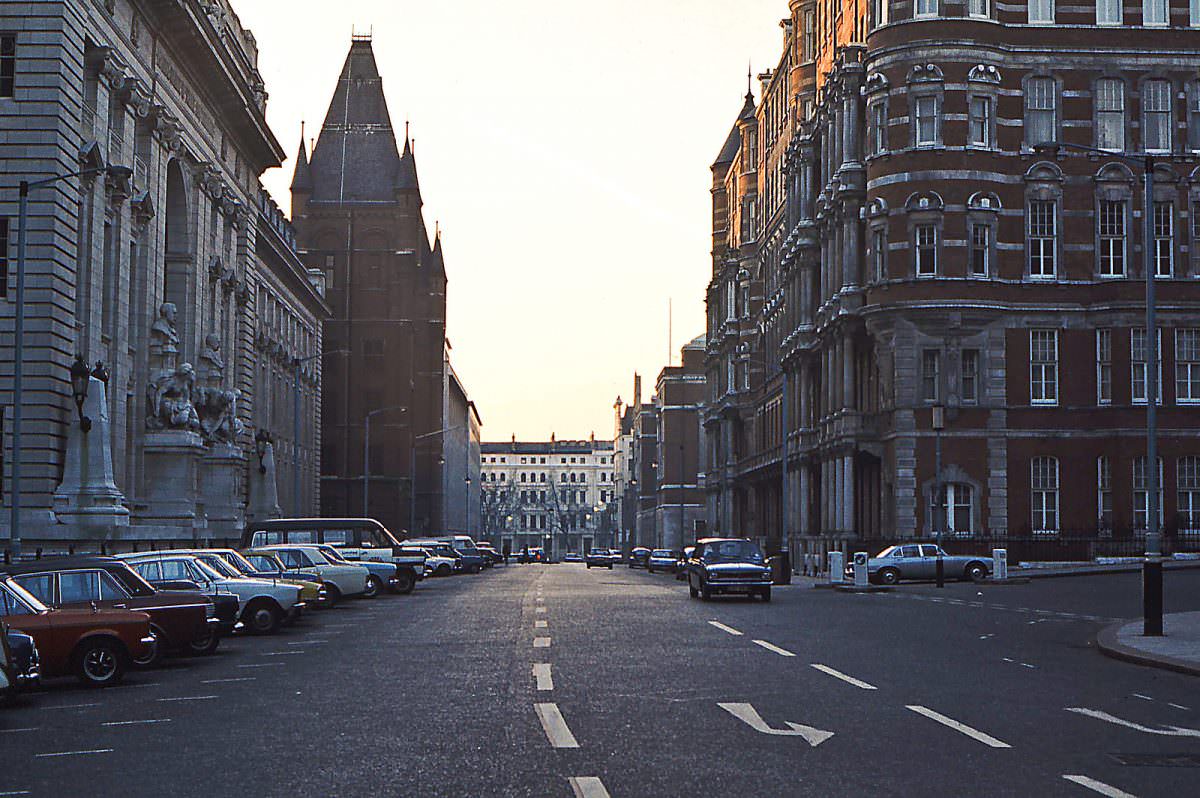
By November 1975, Rostance was photographing Prince Consort Road in South Kensington — a quiet, tree-lined street running alongside the Royal Albert Hall and the Natural History Museum complex. The area’s grand Victorian architecture, built largely from the proceeds of the Great Exhibition of 1851, contrasts with the everyday 1970s cars parked along its kerbs.

Prince Consort Road, South Kensington, Nov. 1975

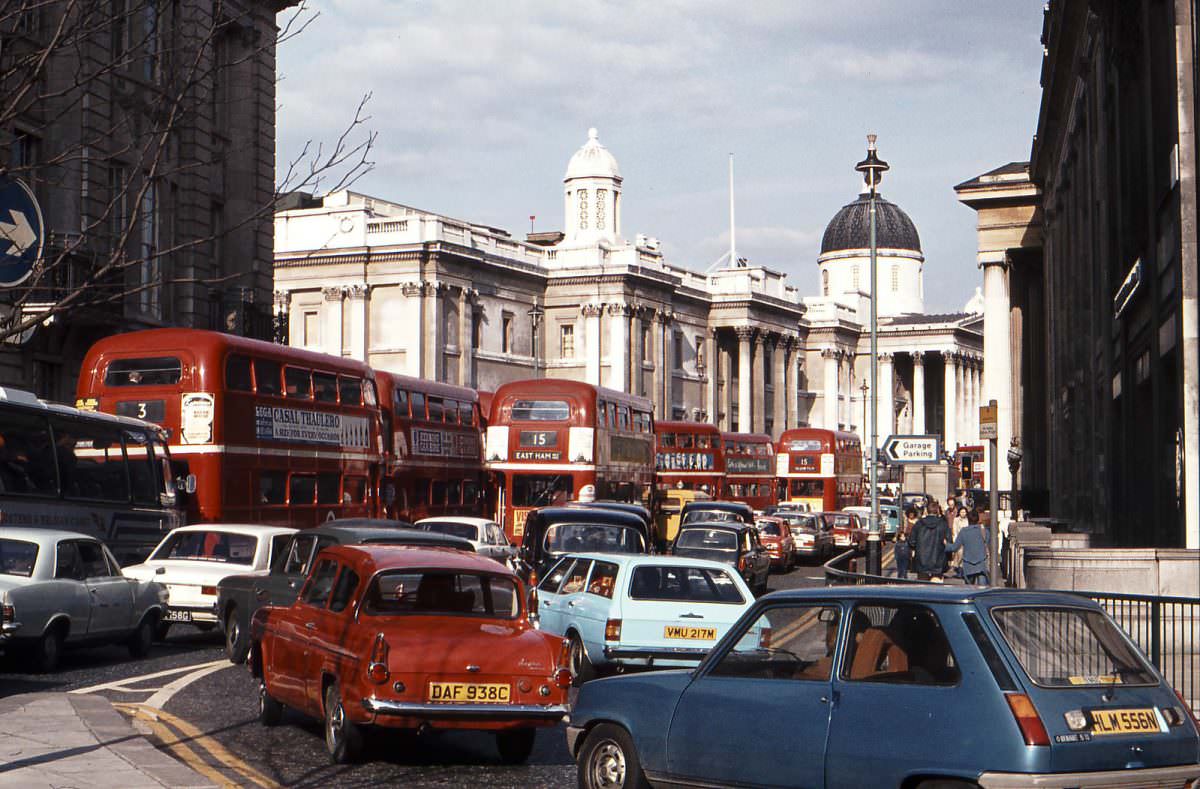
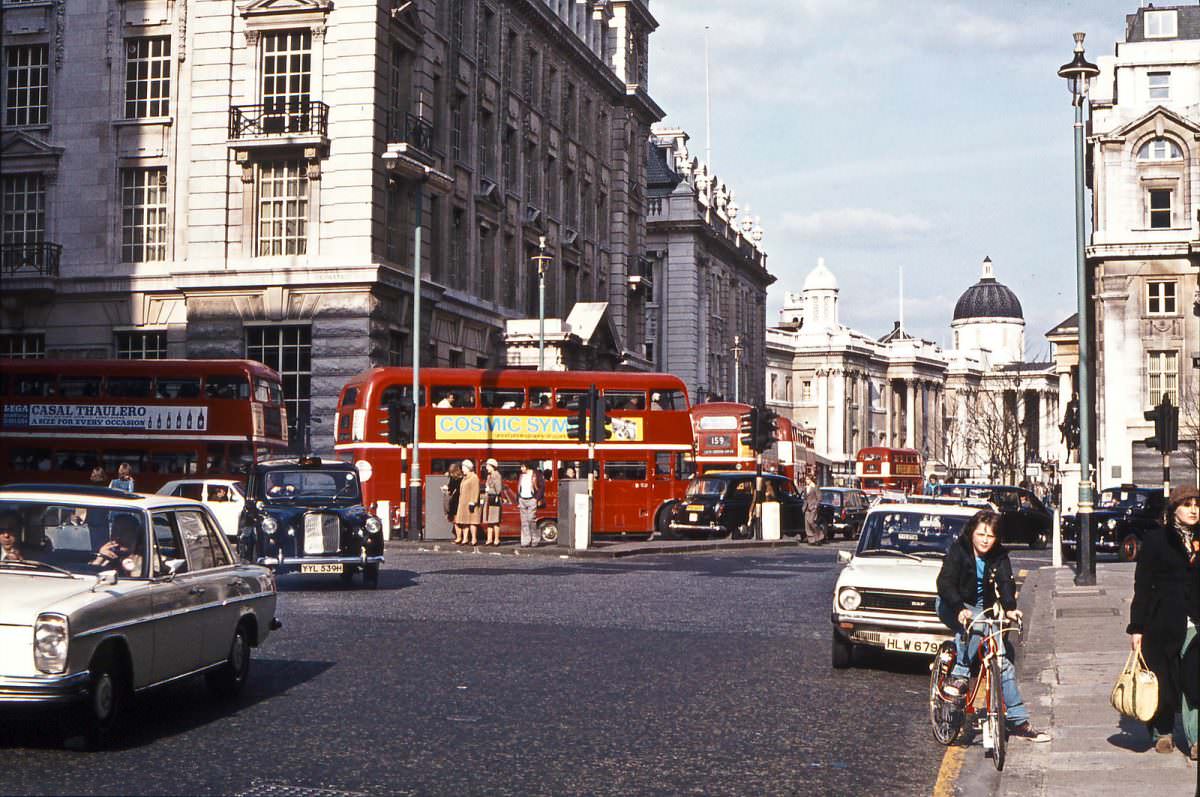
Trafalgar Square was another focal point for Rostance. Nelson’s Column, the fountains, and the constant movement of buses, taxis, and pedestrians made it one of London’s most photographed public spaces. His 1975 image of the square shows the traffic configuration of the era, before later pedestrianisation schemes changed how the space functioned.

Trafalgar Square, 1975

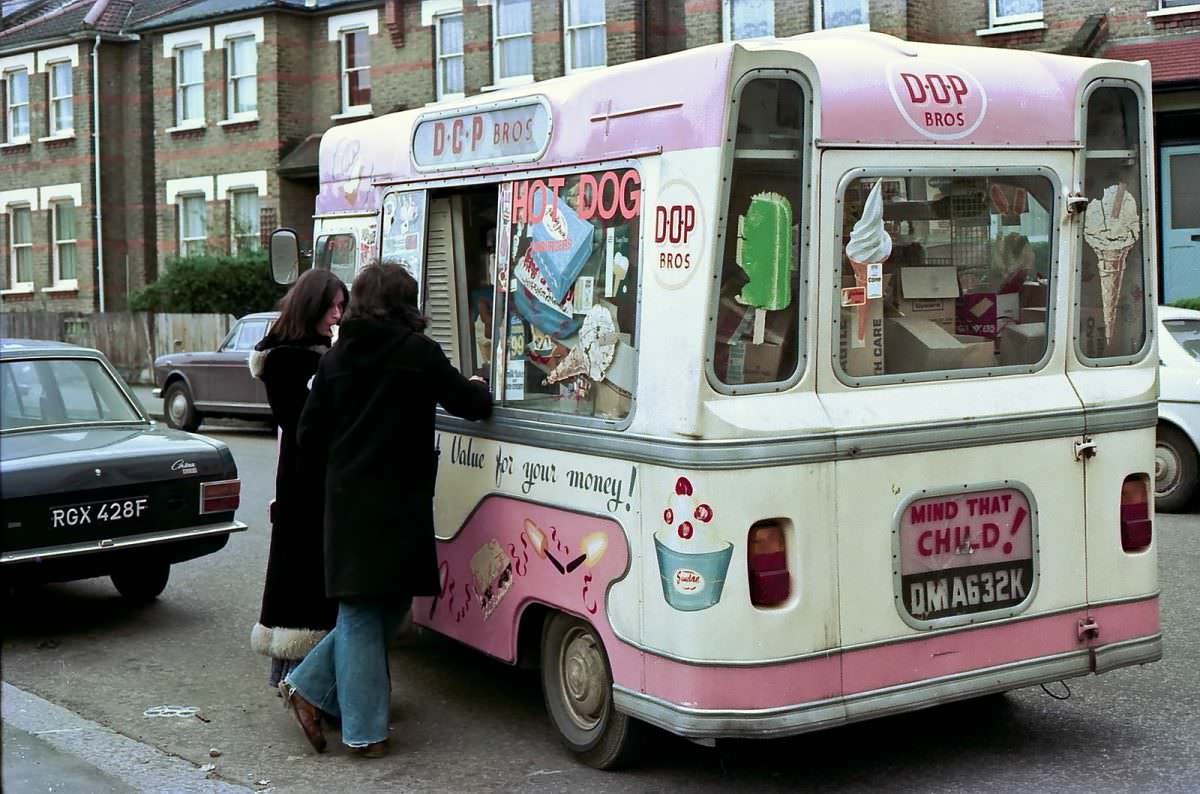
An ice cream van parked in Alleyn Park on Sydenham Hill — photographed on that same March 1975 day — adds a quieter, more domestic note to the collection. Alleyn Park is a leafy residential street near Dulwich, and the presence of the van on a cold mid-March day is a small but telling detail about the routines of London street traders at the time.

Ice cream van in Alleyn Park, Sydenham Hill, 16th March 1975.
AEC Routemaster No. RM 401 waits at traffic lights in Norwood Road, West Norwood while working route 68 to Euston, 16th March 1975.

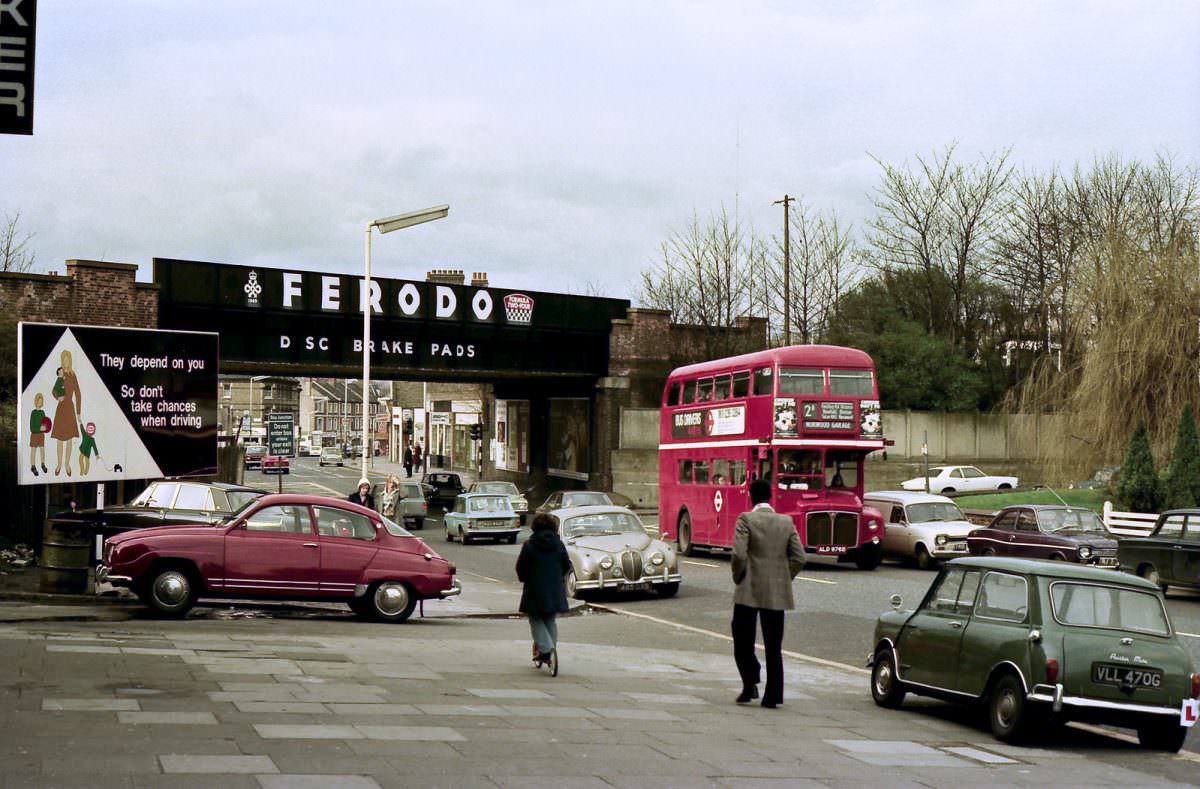
Also from 16th March 1975, Rostance photographed RM 1976 just after it passed under the railway bridge near Tulse Hill station. The low railway bridge — a common feature of inner South London streets — frames the bus as it continues its route beneath the overhead line.

AEC Routemaster No. RM 1976 has just passed under the railway near Tulse Hill station on 16th March 1975.

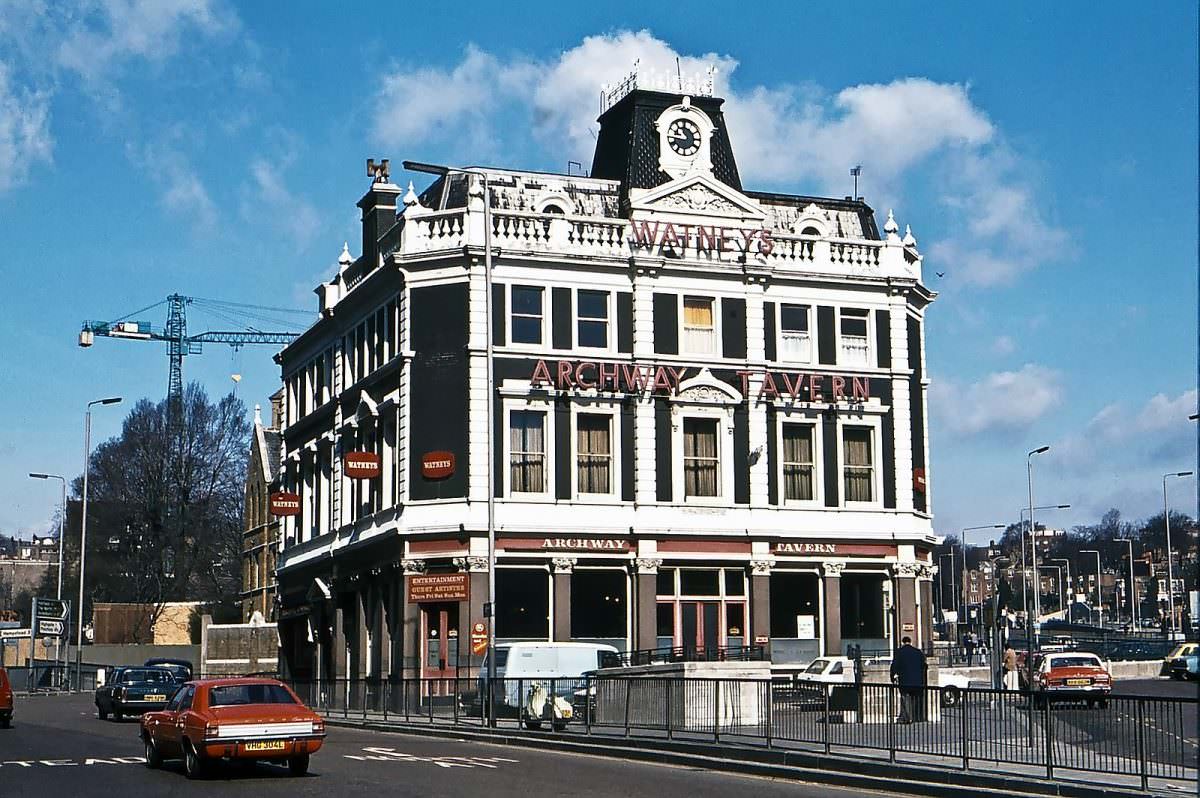
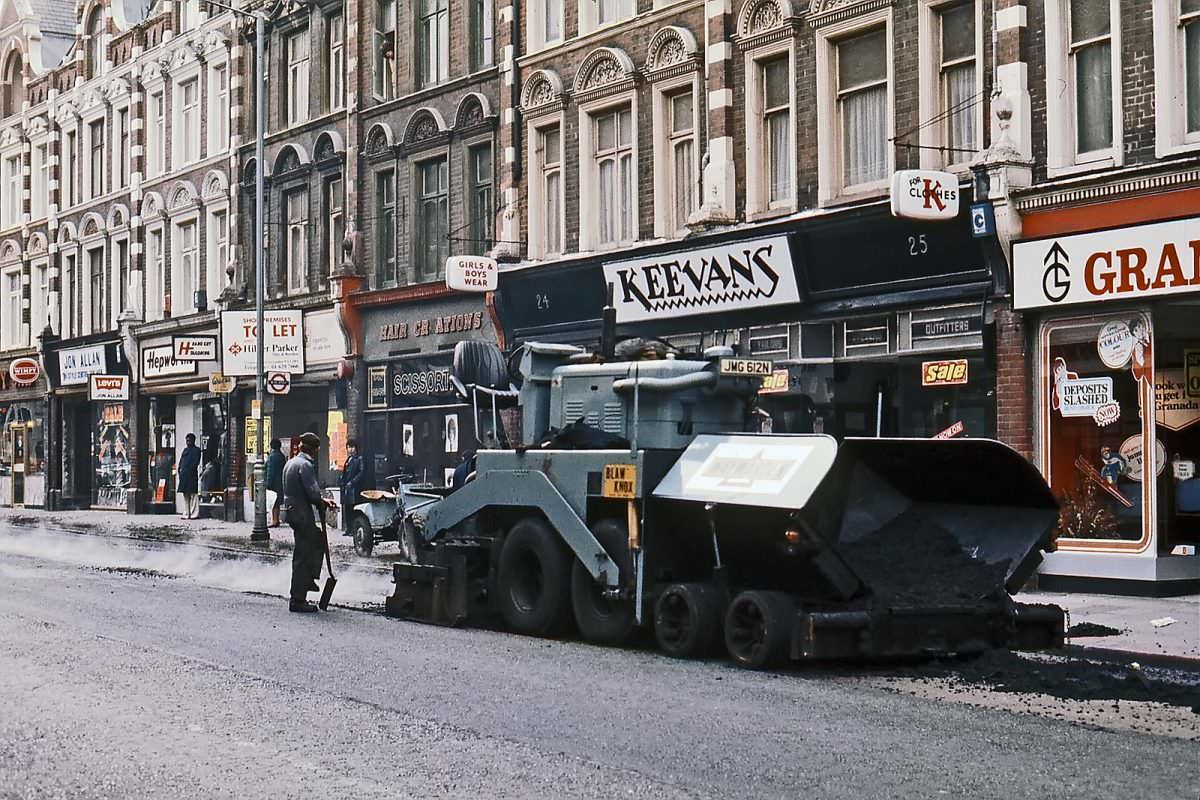
In 1976, Rostance returned to Crouch End, this time photographing Edison Road in April and road paving work on Crouch End Broadway in February. The Broadway image shows workers laying new road surface, with the surrounding shopfronts and parked vehicles providing context for what a busy north London high street looked like mid-decade. The Archway Tavern, also photographed in April 1976, is a large corner pub near Archway station — a neighbourhood landmark with a distinctive Victorian facade.

Edison Road, Crouch End, April 1976
The Archway Tavern, April 1976he Archway Tavern, April 1976
Road paving in Crouch End Broadway, north London on 15th February 1976.

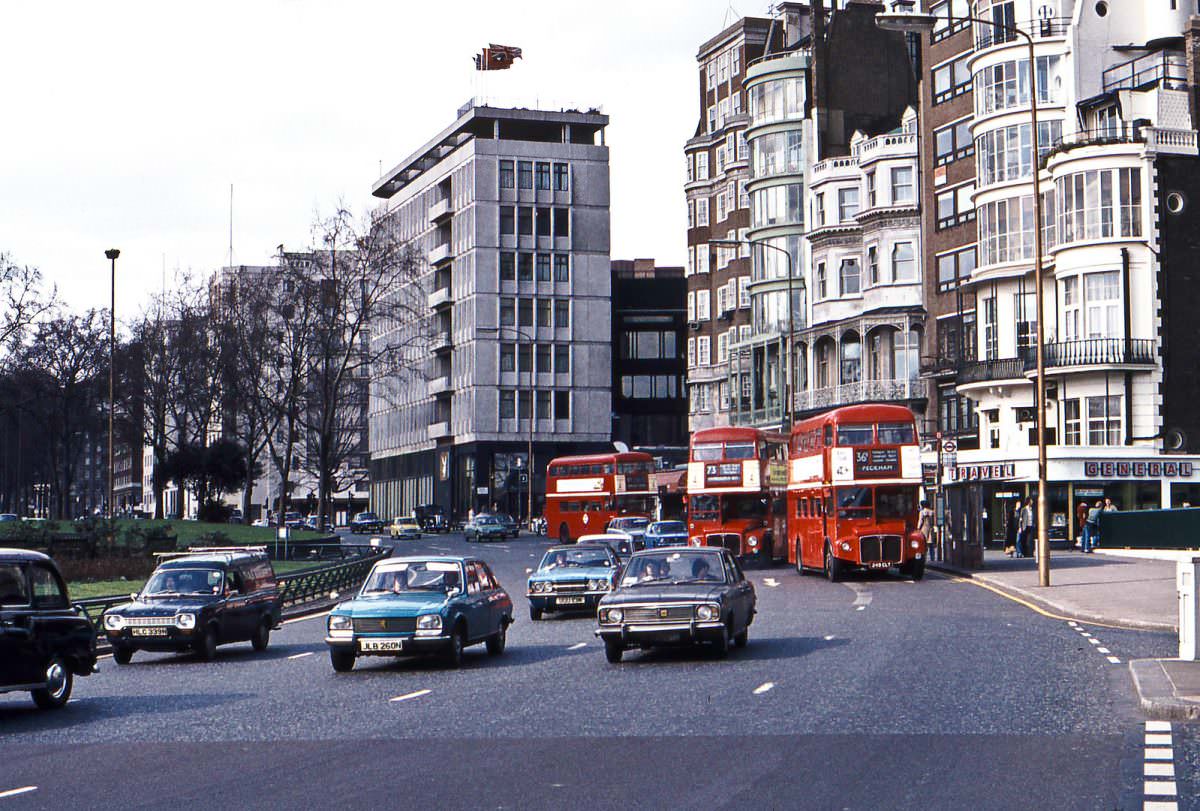
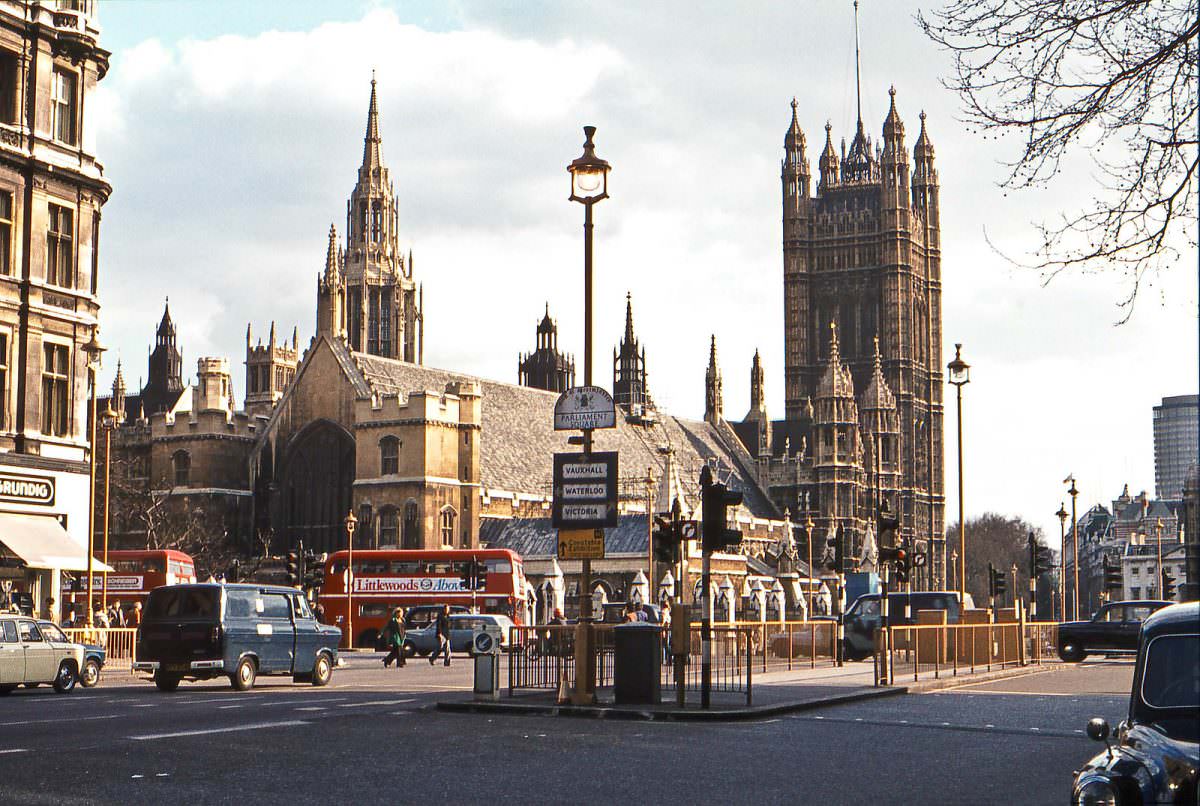
Back in Central London in April 1976, Rostance photographed Park Lane — one of the capital’s main arterial roads running along the eastern edge of Hyde Park. His image shows a line of Routemasters heading south, with RM 1240 closest to the camera. That same month, he also captured Routemasters turning from Haymarket into Pall Mall, and Parliament Square with its surrounding traffic and the Palace of Westminster in the background.

Routemasters in Park Lane with RM1240 nearest. 3rd April 1976.
Routemasters turning from Haymarket into Pall Mall, April 1976
Parliament Square, London, April 1976

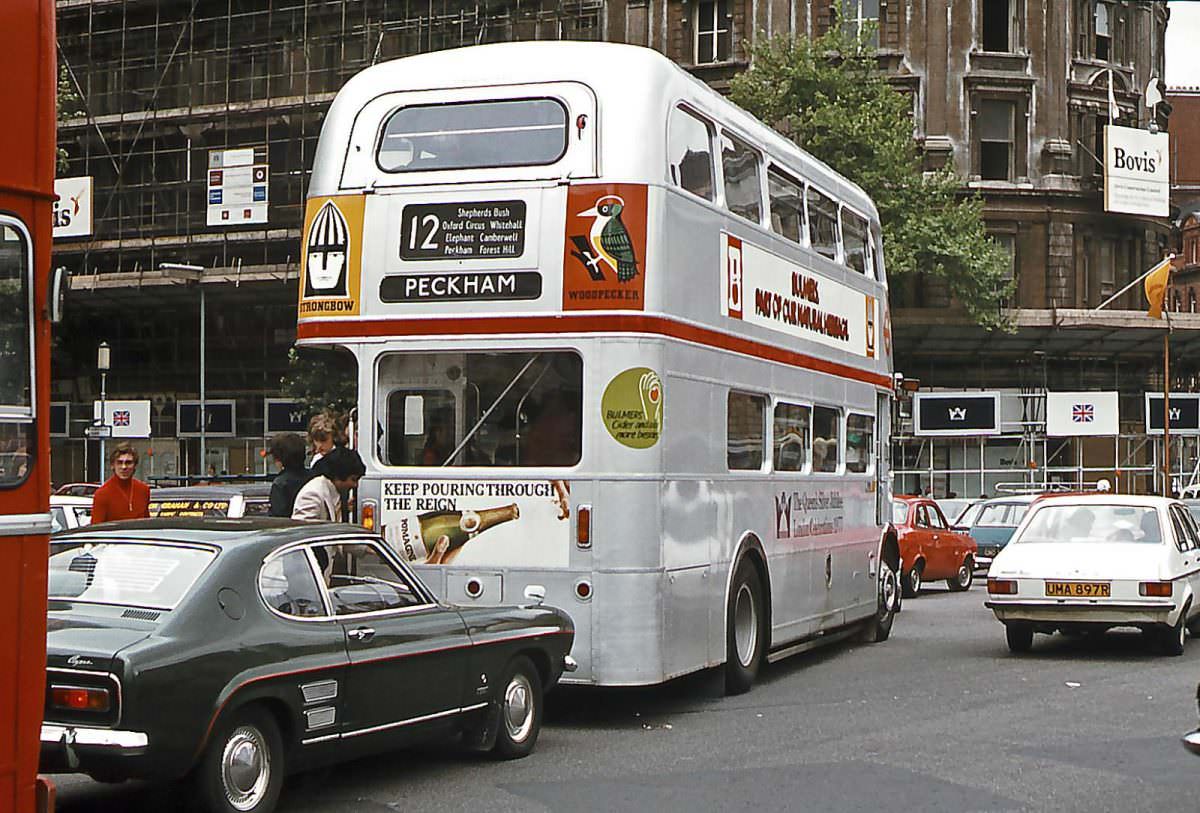
By June 1977, the capital was in the middle of Queen Elizabeth II’s Silver Jubilee celebrations. Rostance photographed one of the most unusual buses on the road that year: RM 1668, temporarily renumbered SRM5 and dressed in special Silver Jubilee livery sponsored by Bulmers Cider. On 6th June 1977, he caught it making its way through Trafalgar Square — a working bus turned into a rolling piece of royal pageantry.

Temporarily renumbered as SRM5, Bulmers Cider sponsored AEC Routemaster No. RM1668 in Queen's Silver Jubilee livery makes it's way through Trafalgar Square on 6th June 1977.
Temporarily renumbered as SRM5, Bulmers Cider sponsored AEC Routemaster No. RM1668 in Queen’s Silver Jubilee livery makes it’s way through Trafalgar Square on 6th June 1977.

The West End photographs from 1977 capture the energy of London’s commercial centre during the Jubilee year. Shopfronts, pedestrians, and traffic fill the frame in the kind of street-level detail that no official record could replicate. Rostance’s approach was always documentary — he photographed what was there, not what was staged.

West End of London 1977

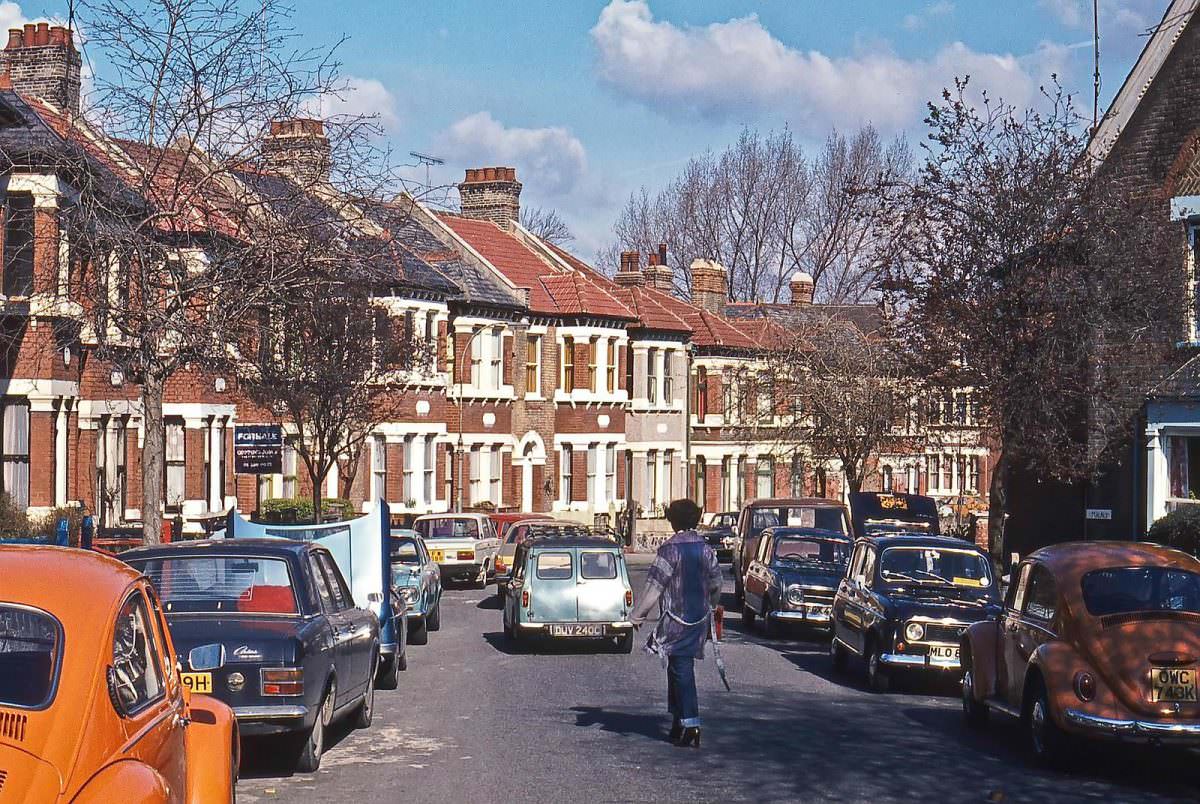
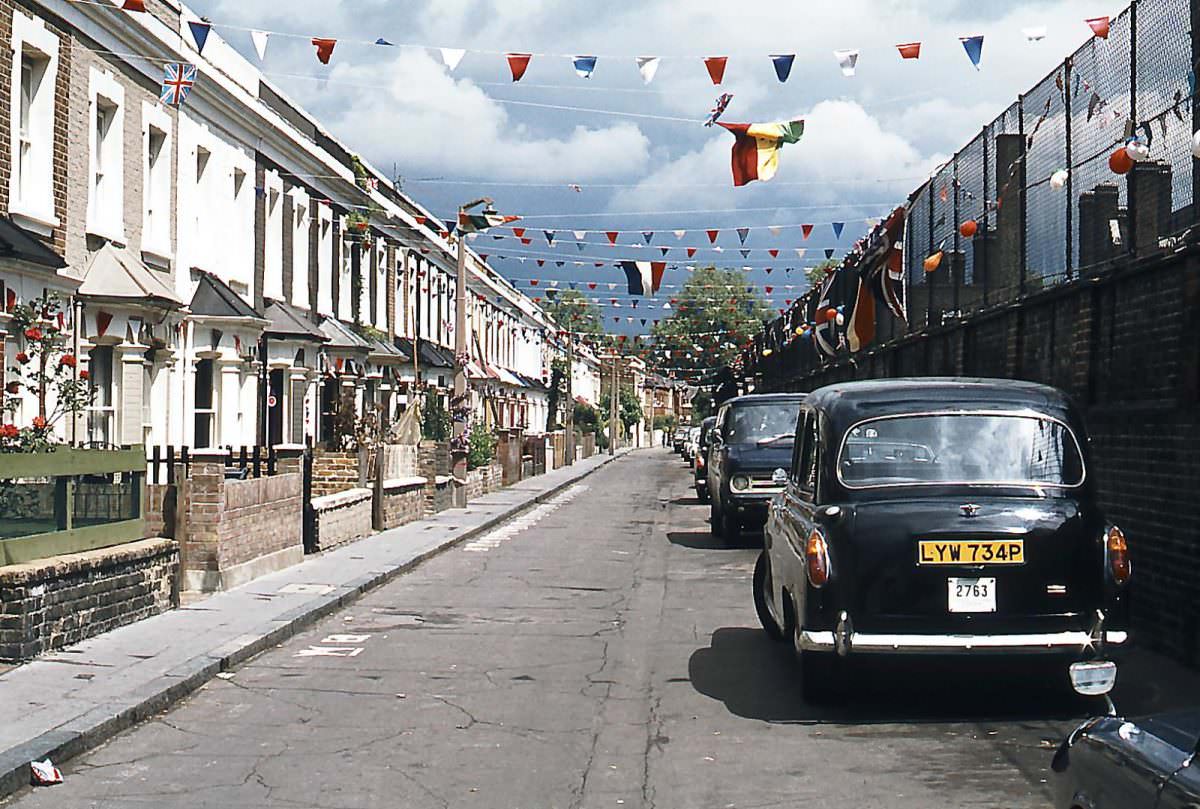
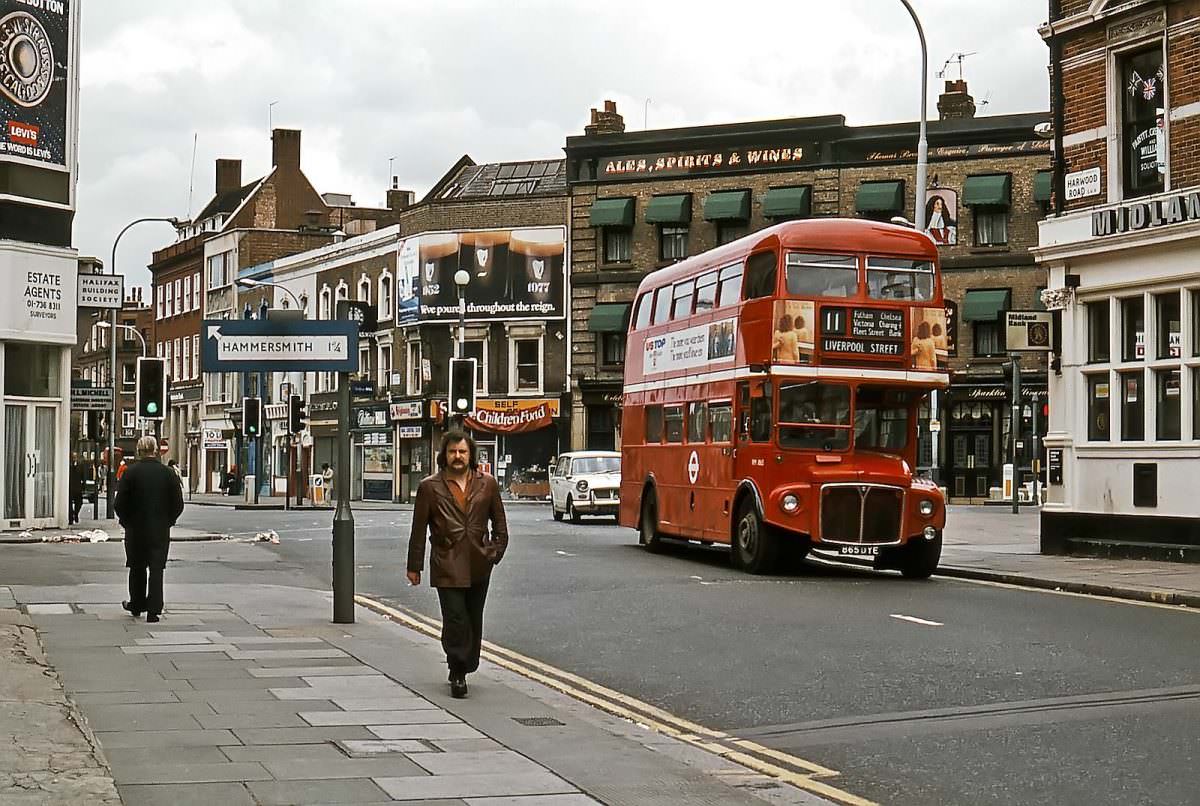
In Fulham, Rostance photographed two distinct scenes in June 1977. Novello Street — a quiet residential road — shows the everyday fabric of a working-class London neighbourhood. A few streets away, on Fulham Broadway, he caught RM 1865 turning into Harwood Road while working route 11, one of the longest bus routes in Central London, running from Fulham to Liverpool Street.

Novello Street, Fulham, June 1977
Turning from Fulham Broadway into Harwood Road, AEC Routemaster No. RM 1865 works route 11 on 7th June 1977.
Enjoyed this post? Get new ones in your inbox.

Leave a Comment

Your email address will not be published. Required fields are marked *

Share this Post 🥺

Please take a moment to share this content. Your support is greatly appreciated! 🙌🙏

Share this Post 🥺

Please take a moment to share this content. Your support is greatly appreciated! 🙌🙏
Scroll to Top
 
Hey Friend, Before You Go.. Please like & follow for more interesting content