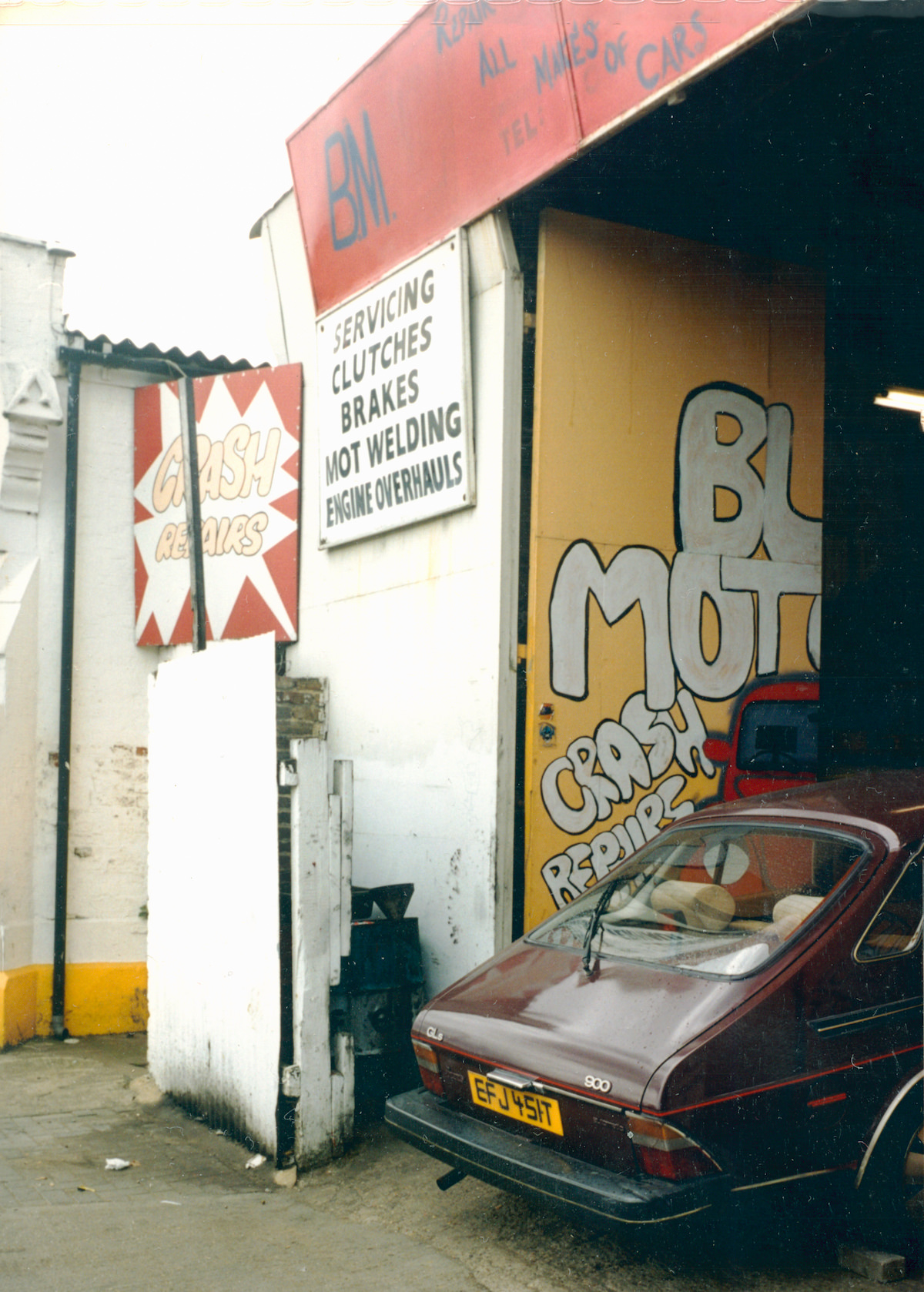
London’s real motoring heart in the 1980s and 90s wasn’t found in gleaming showrooms. It lived in the back streets — in cramped, oil-stained garages tucked beneath railway arches, wedged between terraced houses, and scattered across working-class neighborhoods from Hackney Wick to Brixton. These were the places that actually kept London moving.
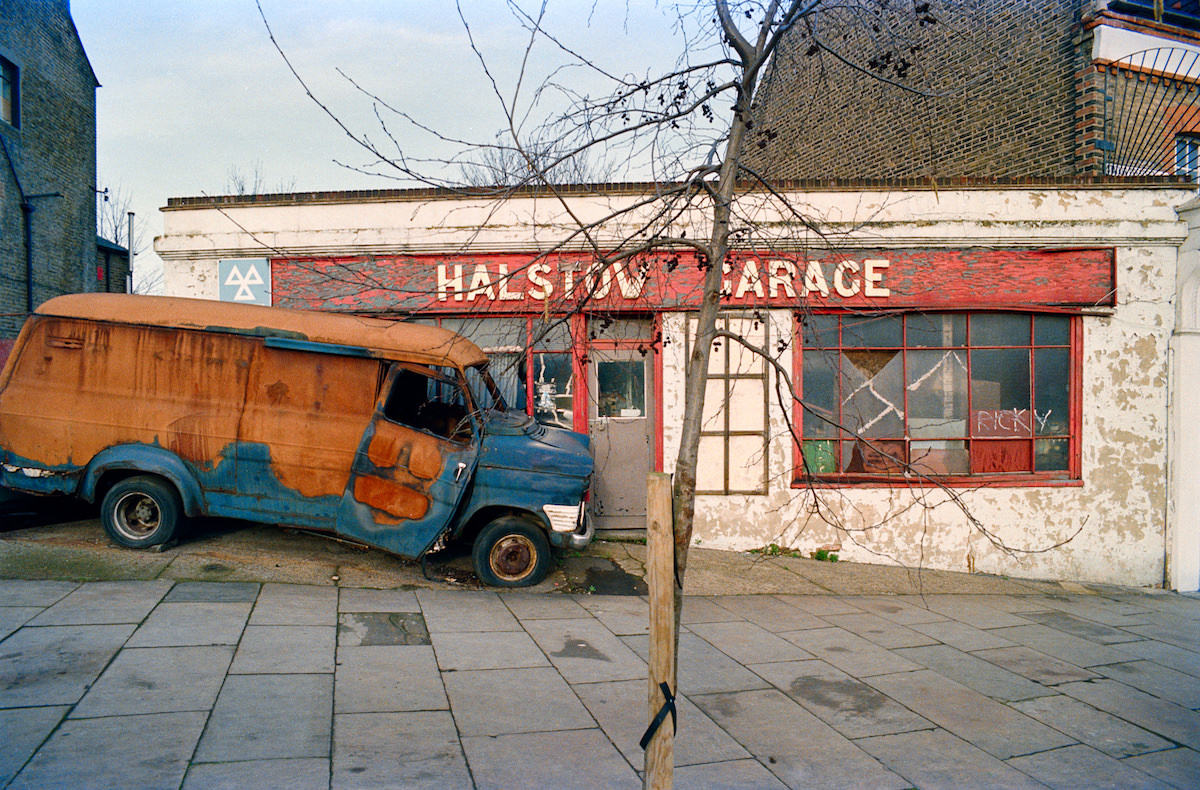
Walk into one of these garages and the senses hit you immediately. The sharp smell of petrol and engine oil, the sound of rattling tools, the low growl of an engine being coaxed back to life. Floors were dark with decades of grease. Walls held rows of spanners, belts, and parts pulled from a dozen different makes. The spaces were tight, but every inch was used.
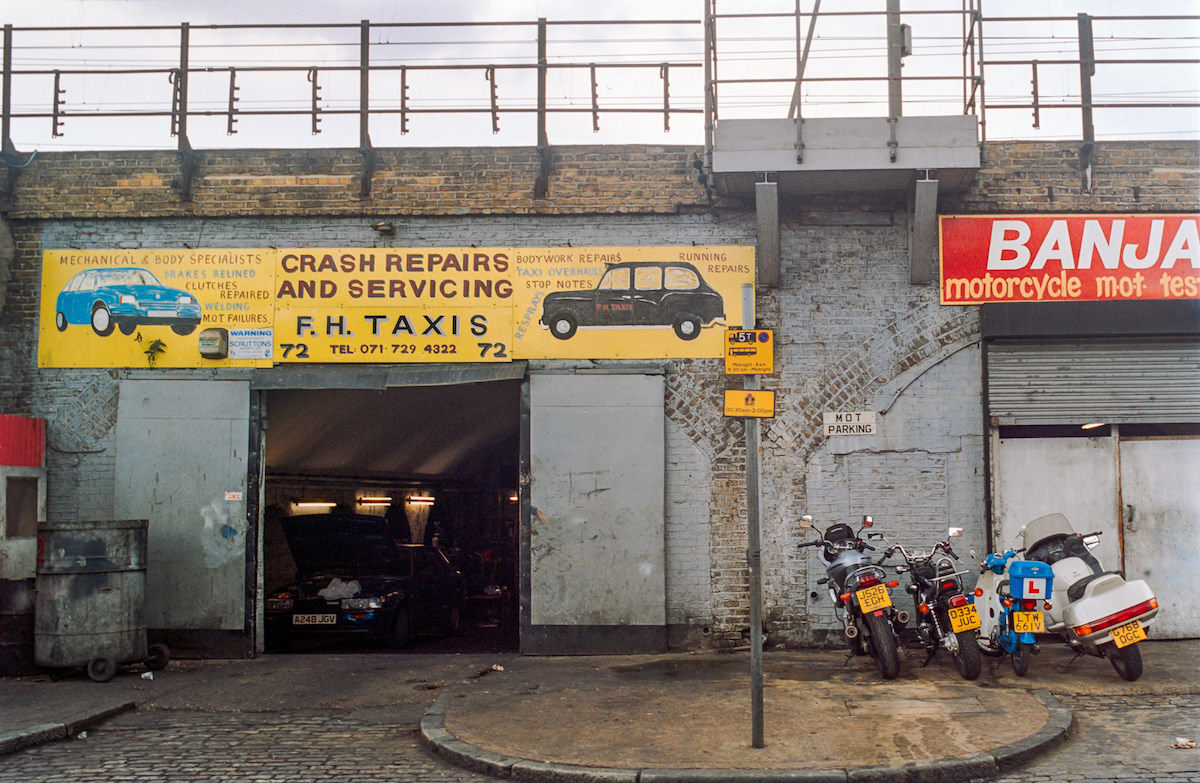
Railway arches were a staple of the London garage scene. Cheap to rent and solid overhead, they suited mechanics who needed space without the cost of a purpose-built workshop. Taxi firms, spray shops, and car spares dealers all set up beneath the brickwork of London’s rail network.
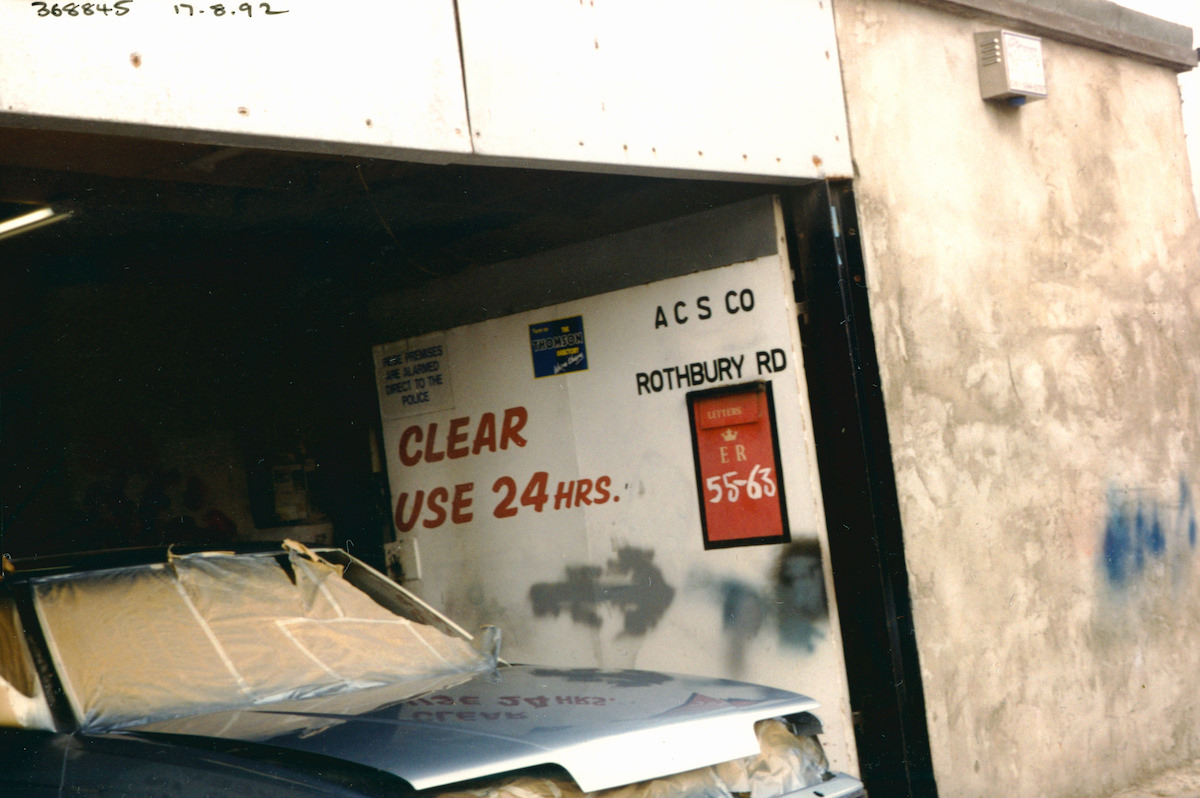
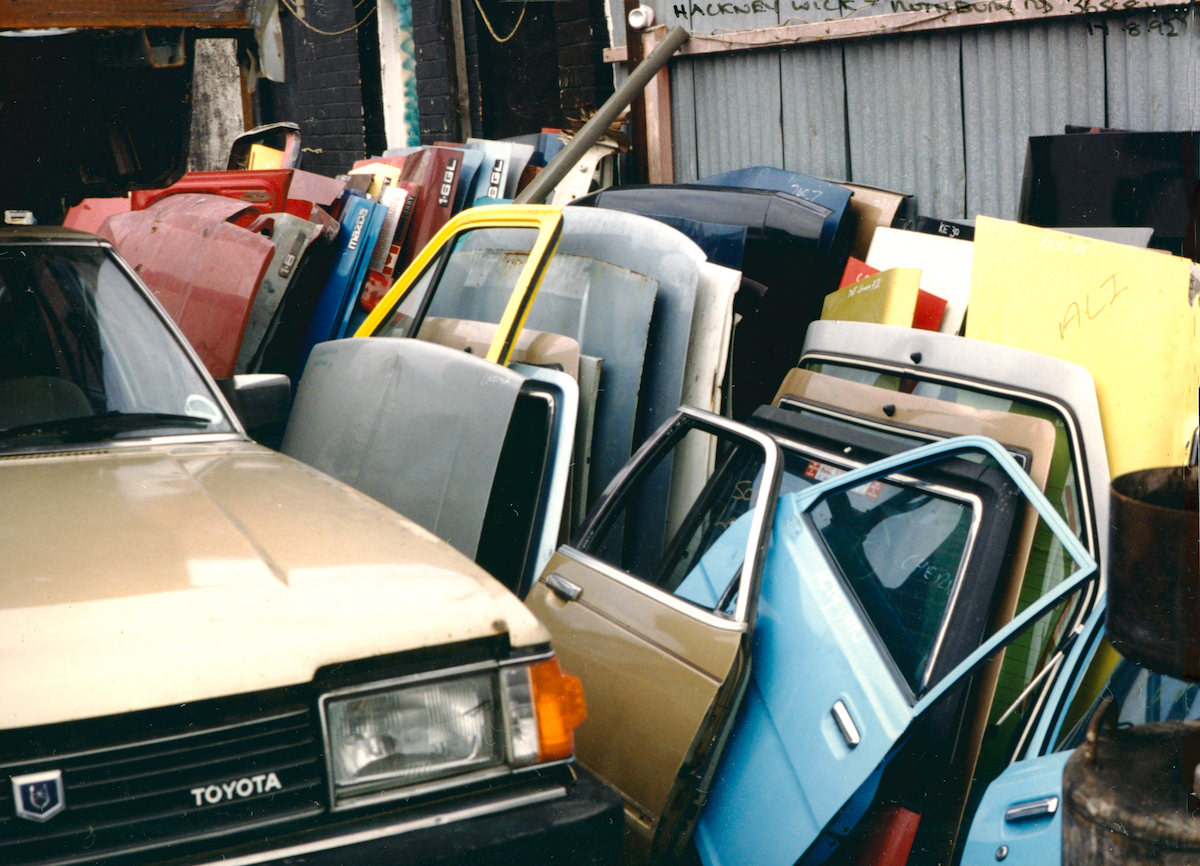
Streets like Rothbury Road in Hackney Wick became clusters of automotive trade — garages, car spares shops, and breakers yards sitting side by side. If a mechanic needed a part fast, the answer was usually just a few doors down. This tight concentration of trade gave certain streets a distinct identity that residents and drivers knew well.
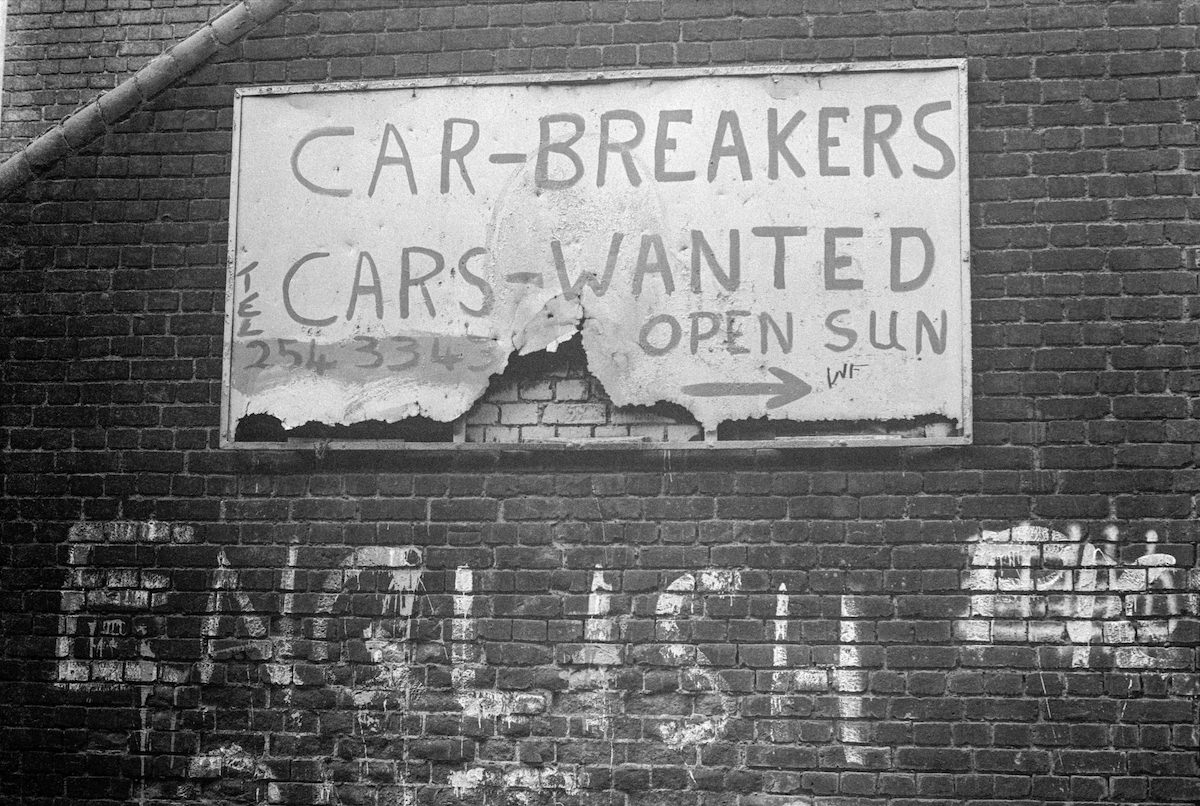
The mechanics running these operations were not following a manual for every job. Many had trained as apprentices, learning from experienced hands rather than in classrooms. They diagnosed problems by ear and touch as much as by instrument. A good mechanic in this era could stretch a repair budget, source a second-hand part, and have a car back on the road the same day.
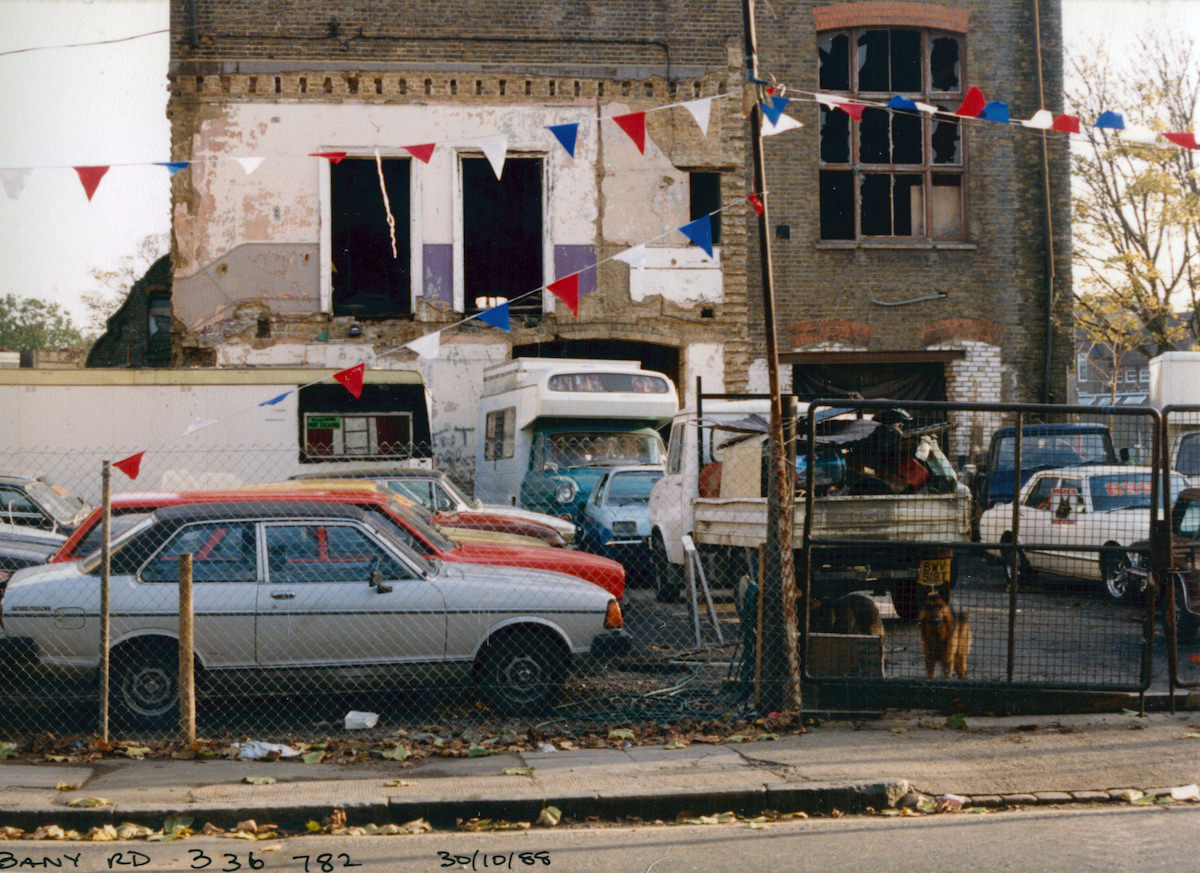
Car sales sat alongside repair work across the city. Small forecourts on roads like Albany Road in Walworth displayed second-hand stock on the pavement, with handwritten price cards behind the windscreens. These weren’t glossy dealerships — they were local businesses serving local buyers on modest budgets.
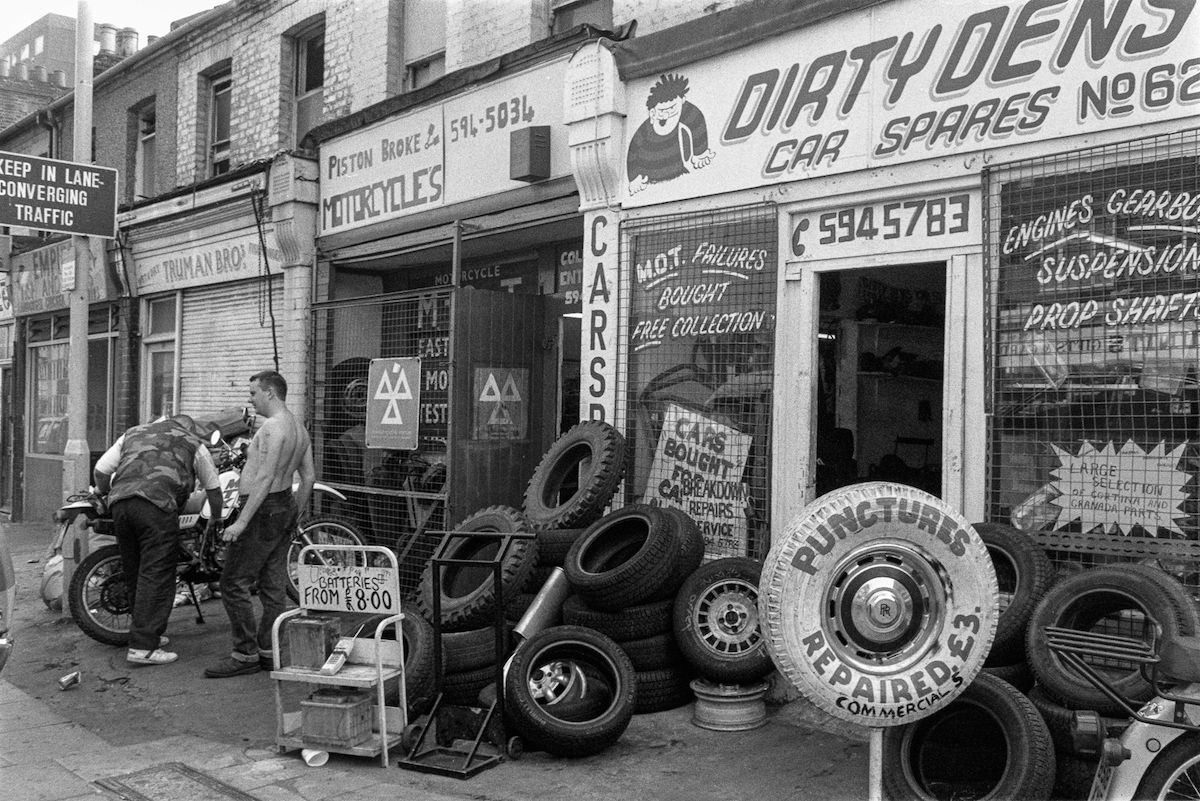
Some businesses wore their humor on their signage. “Piston Broke” on Ripple Road in Barking said everything about the no-nonsense, straight-talking culture of the trade. These were businesses run by people who knew their customers personally and didn’t need corporate branding to bring them in.
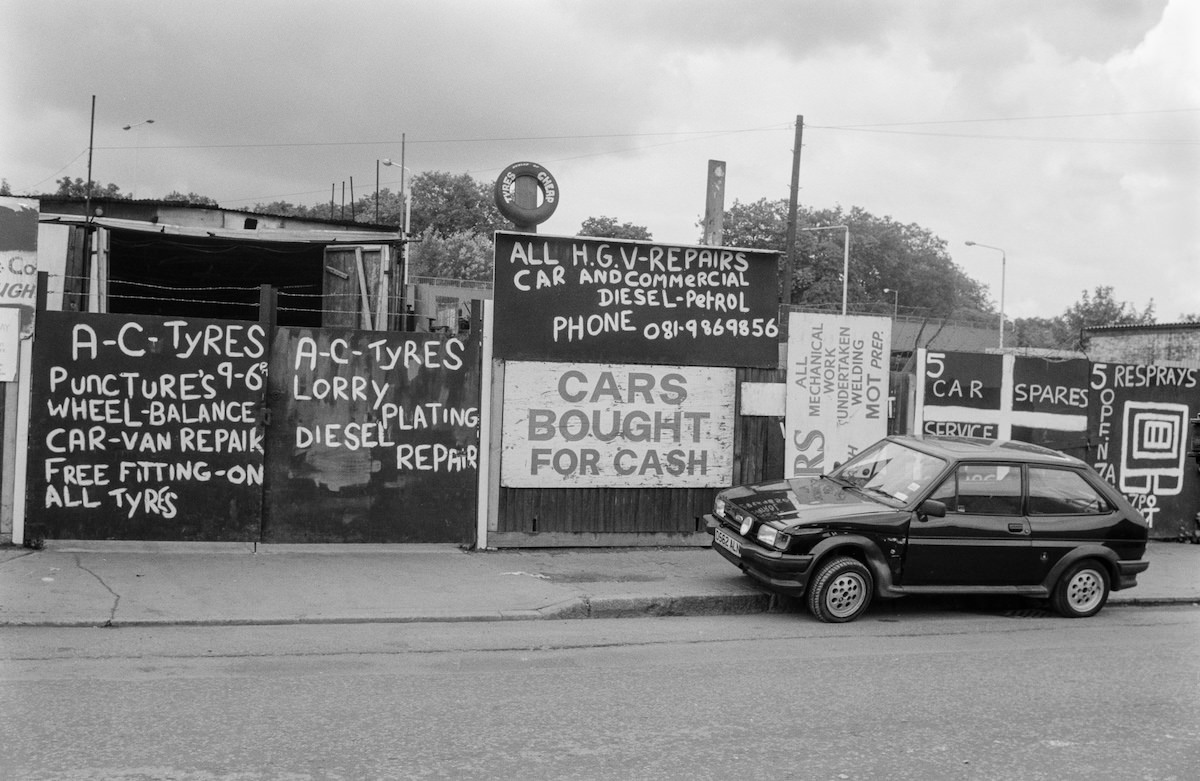
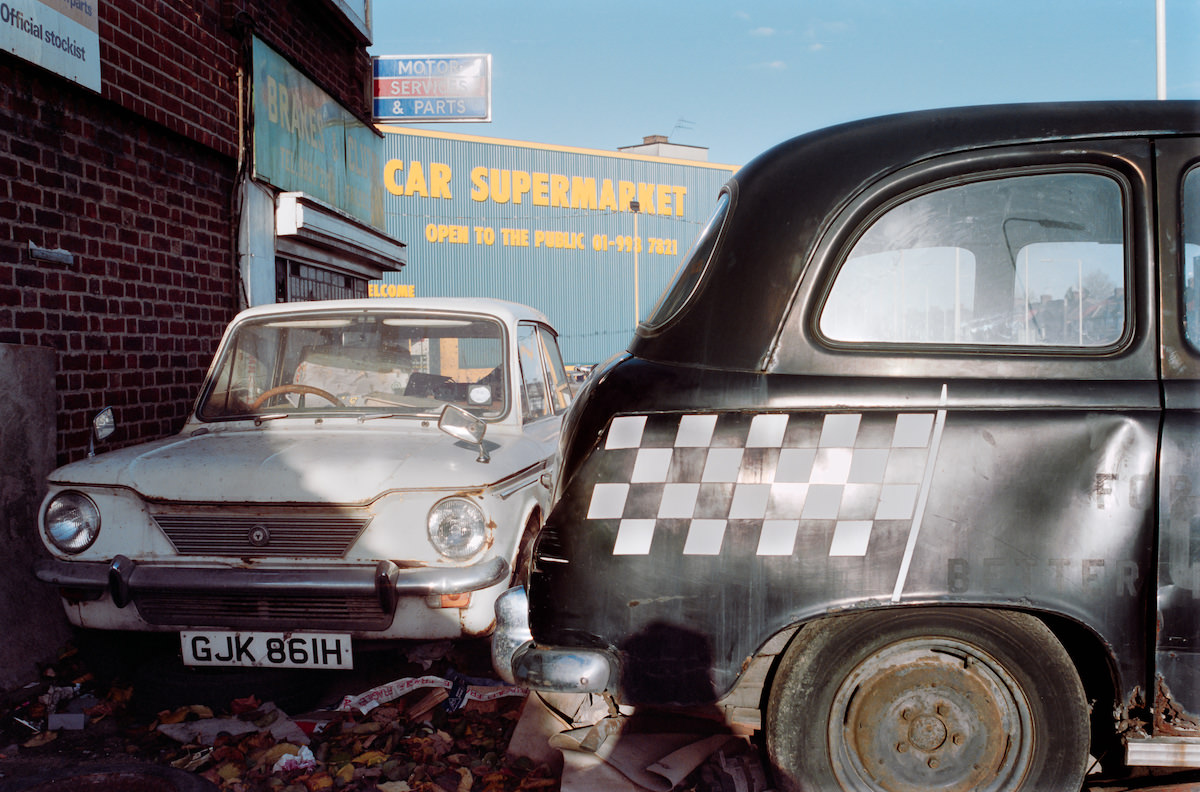
By the late 1980s and into the 90s, a different kind of operation was appearing. Larger car supermarkets, like the one photographed in Acton in 1990, offered volume stock and lower prices. They drew customers away from the smaller independents and signaled a shift in how Londoners bought and serviced their vehicles.
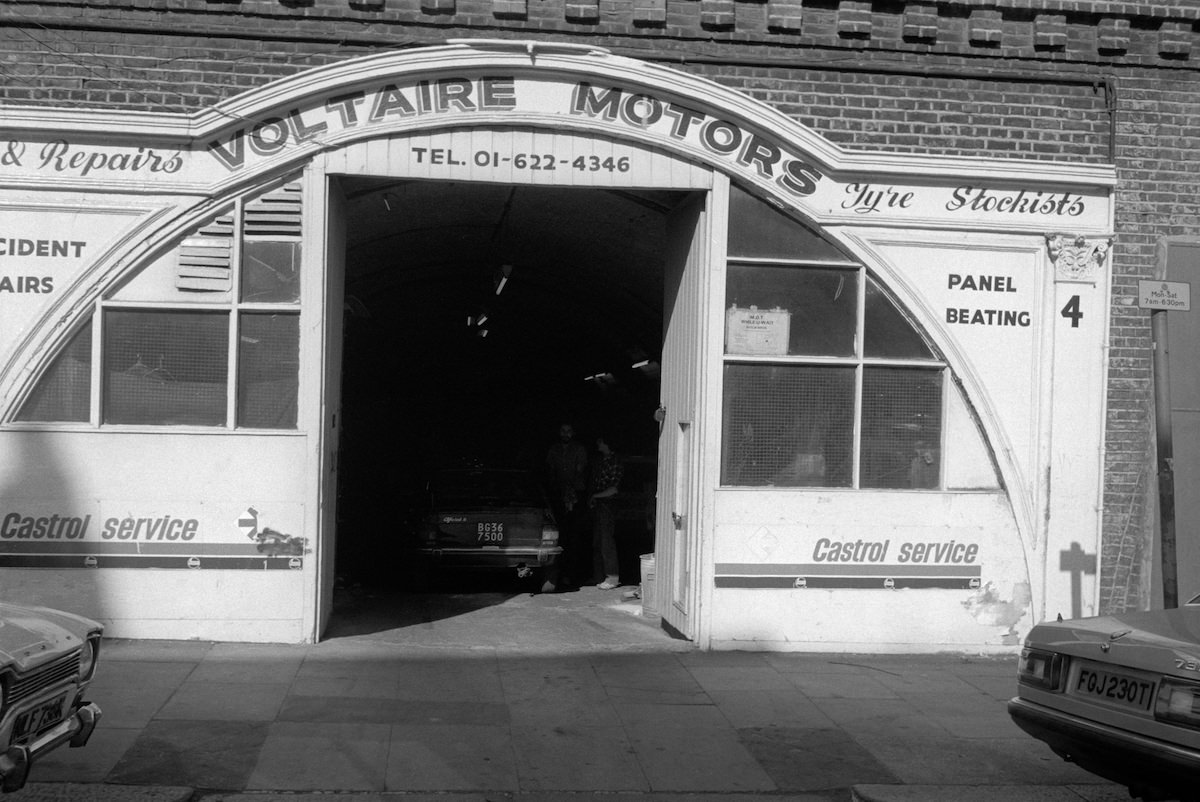
Independent garages were often family businesses, some of them trading under the same name for decades. Voltaire Motors in Clapham, photographed as early as 1980, was the kind of place where the owner knew most customers by name. That personal relationship was something the larger chains couldn’t replicate.
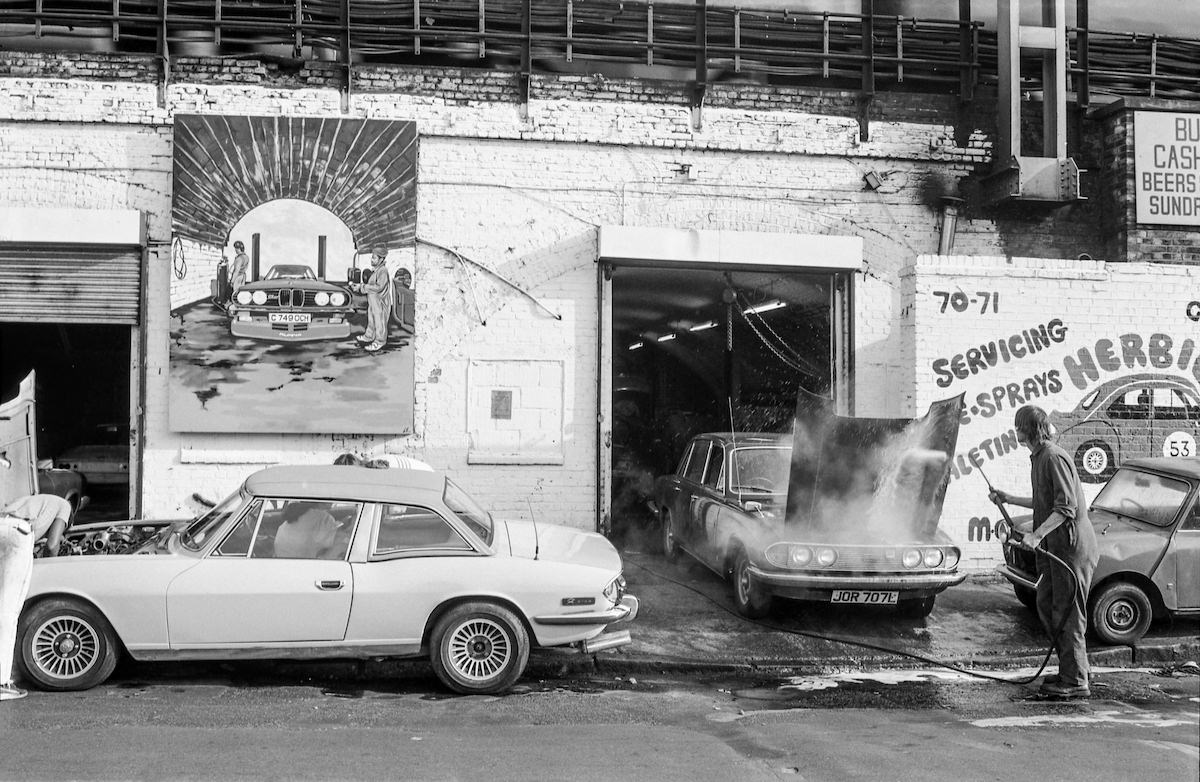
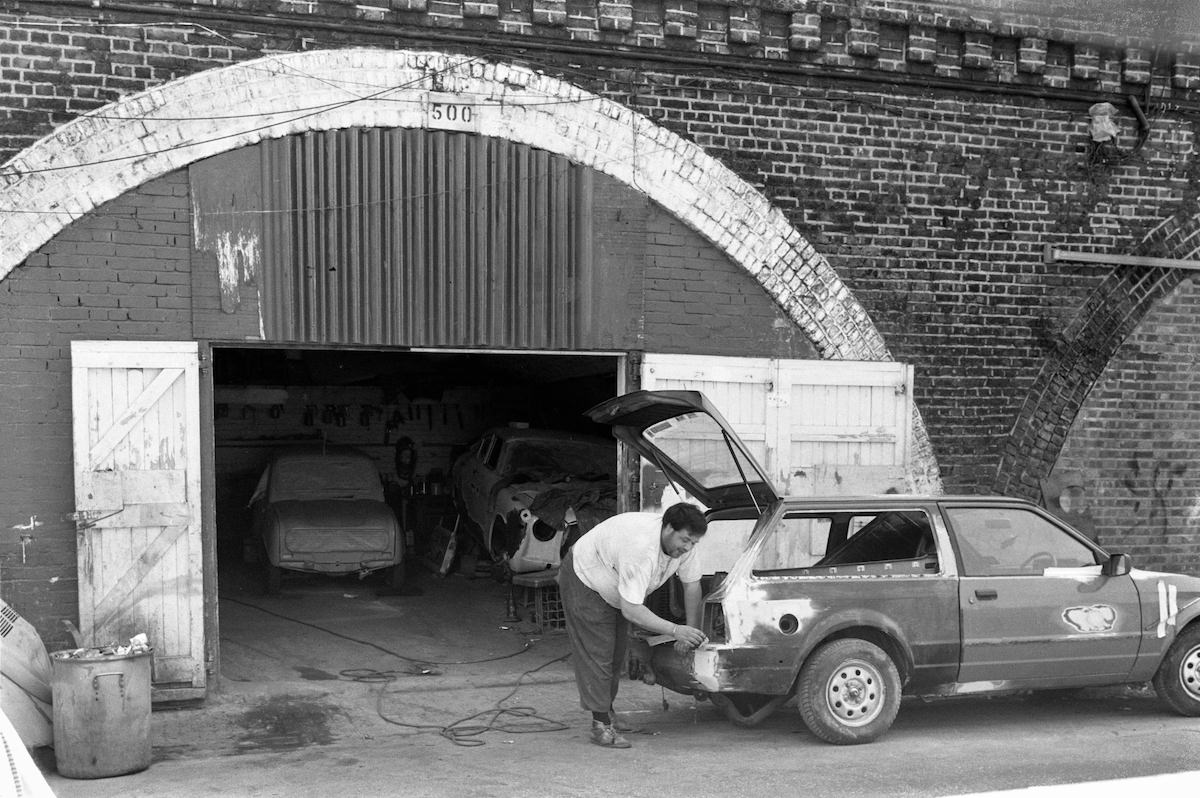
Throughout Lambeth, garages operating out of railway arches were common well into the early 90s. The arch at Loughborough Junction on Ridgway Road, captured in 1989, shows the typical setup — a roll-up shutter, tools hung on the curved brick walls, and just enough room to get a car up on a ramp.
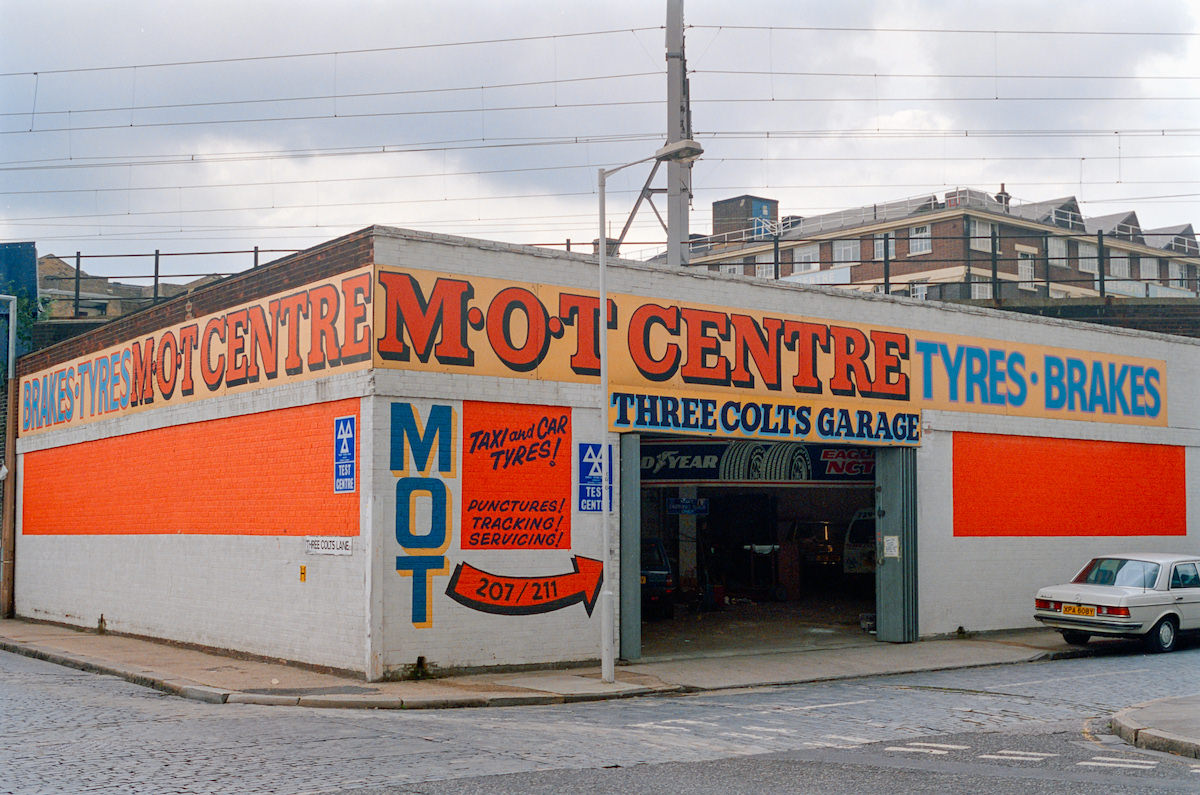
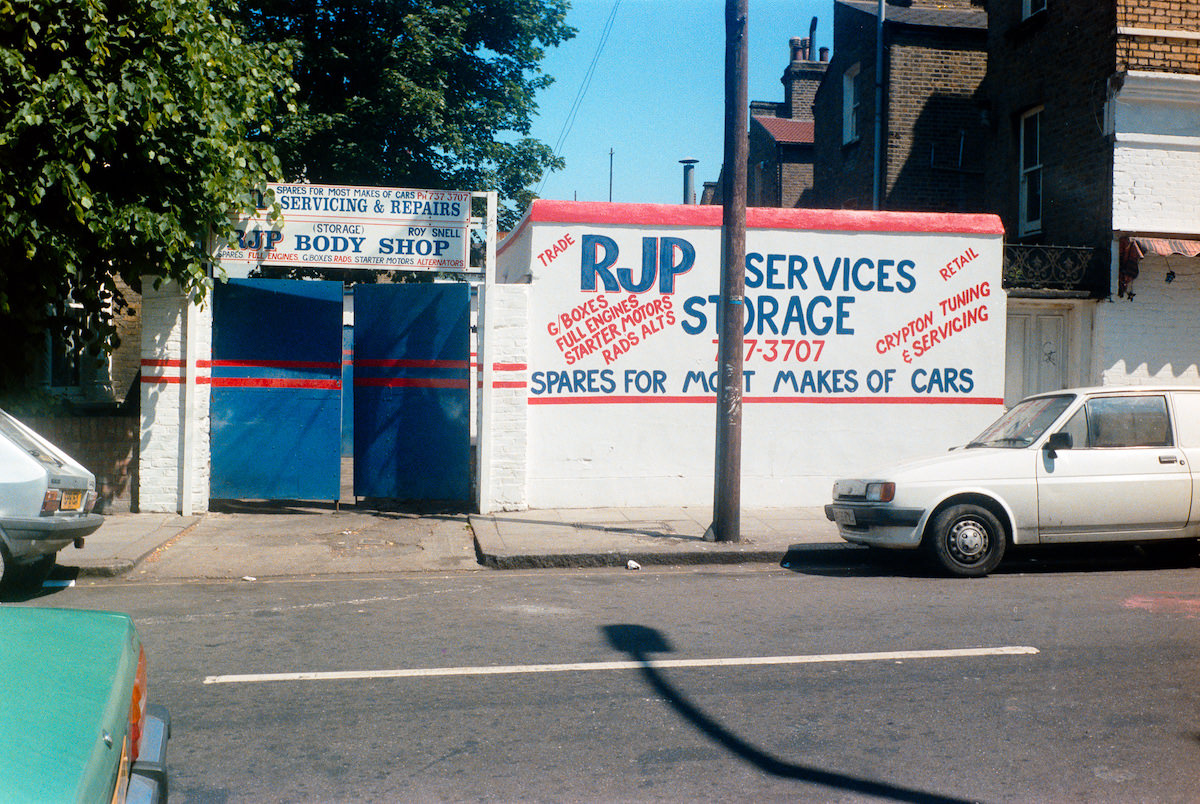
Brixton’s RJP Garage on Plato Road, like many across South London, operated with a small team handling everything from MOTs to full engine rebuilds. The growing complexity of cars through this period — more electronics, tighter emission tolerances — meant mechanics had to keep learning on the job constantly.
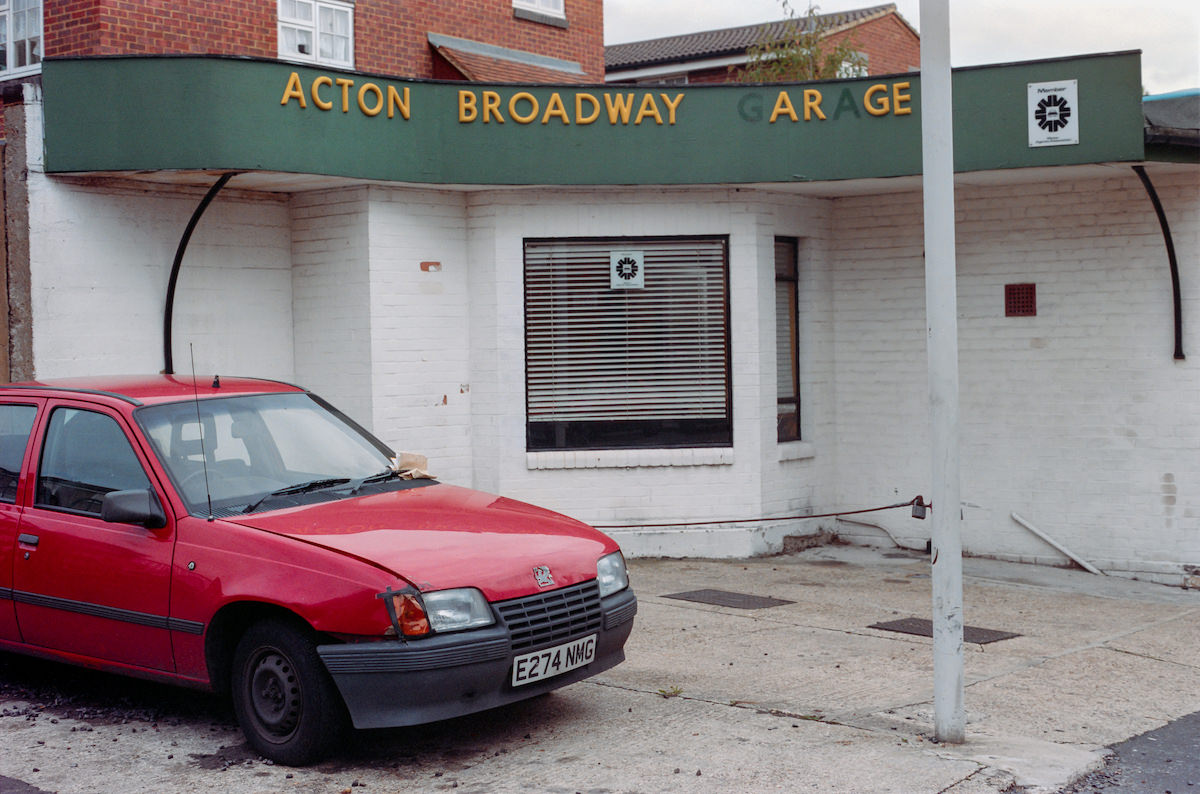
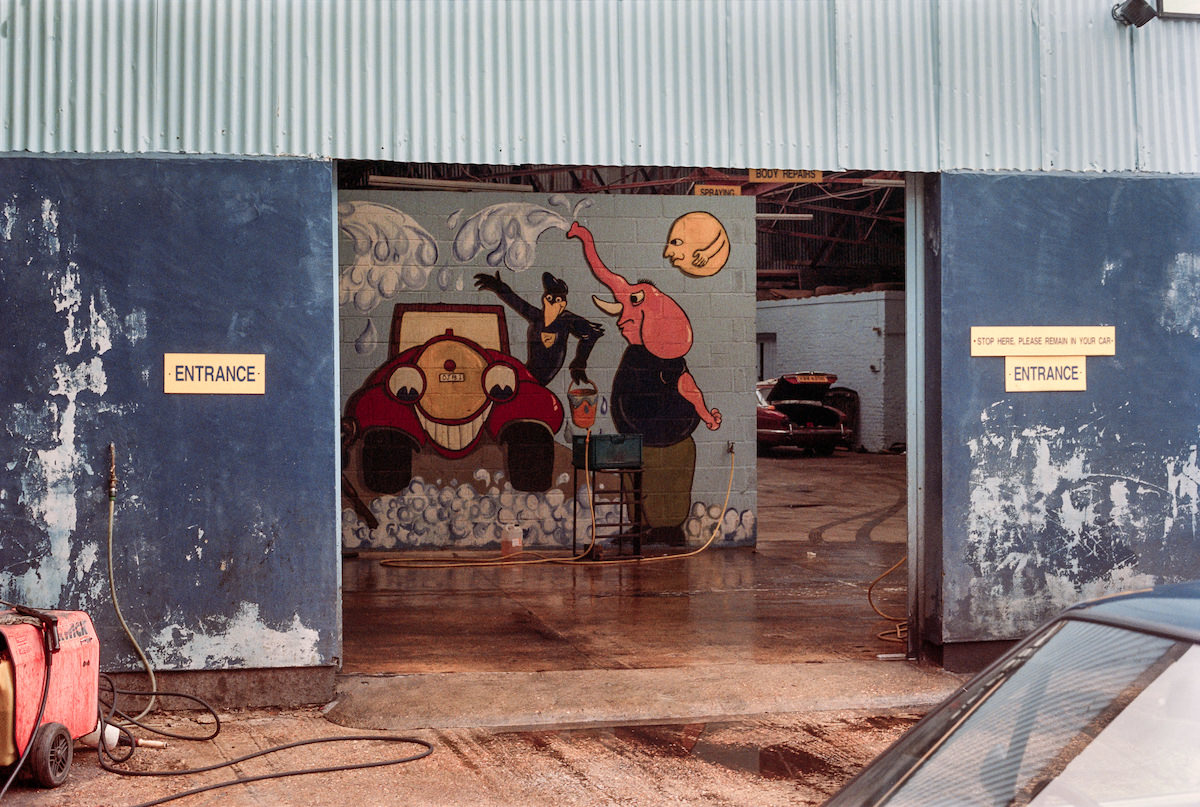
Not all garages were identical in character. Some, like those found around Bromell’s Road in Clapham, were compact single-bay operations. Others on main roads like Acton Broadway had more space and a steadier flow of passing trade. Location shaped everything — the clientele, the volume of work, and the range of services offered.
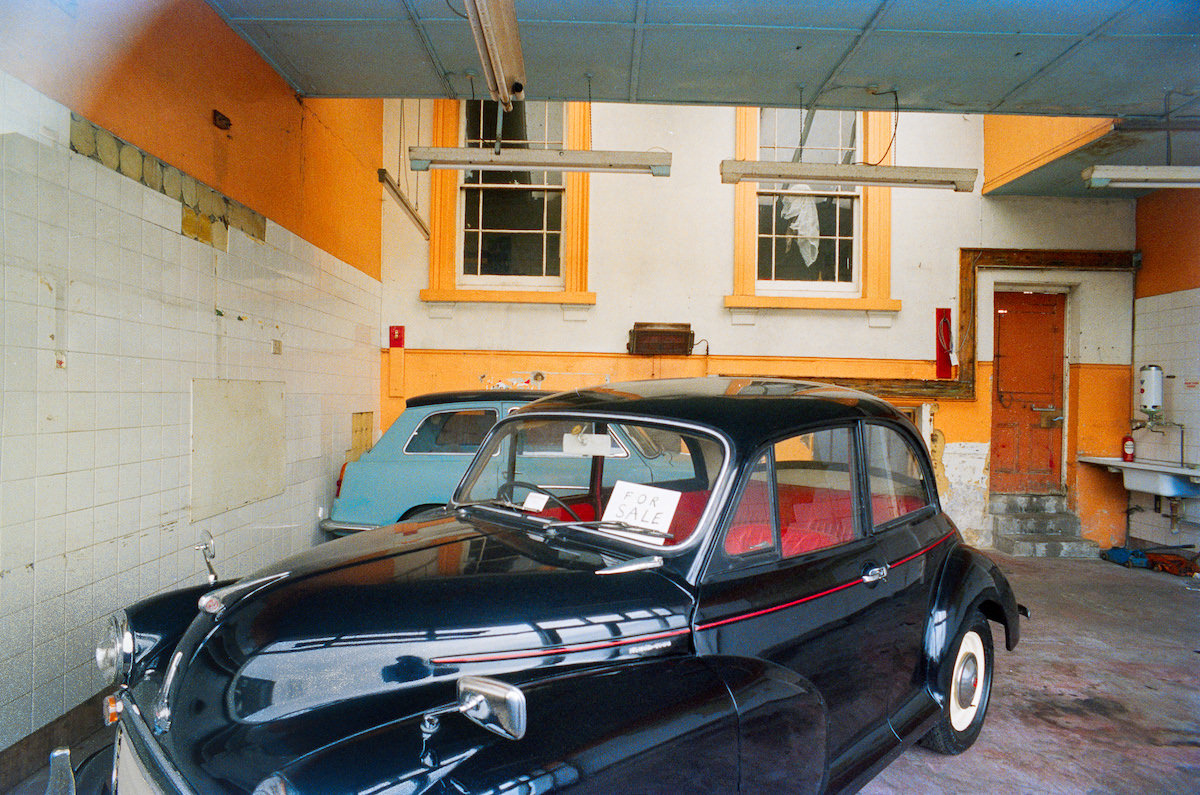
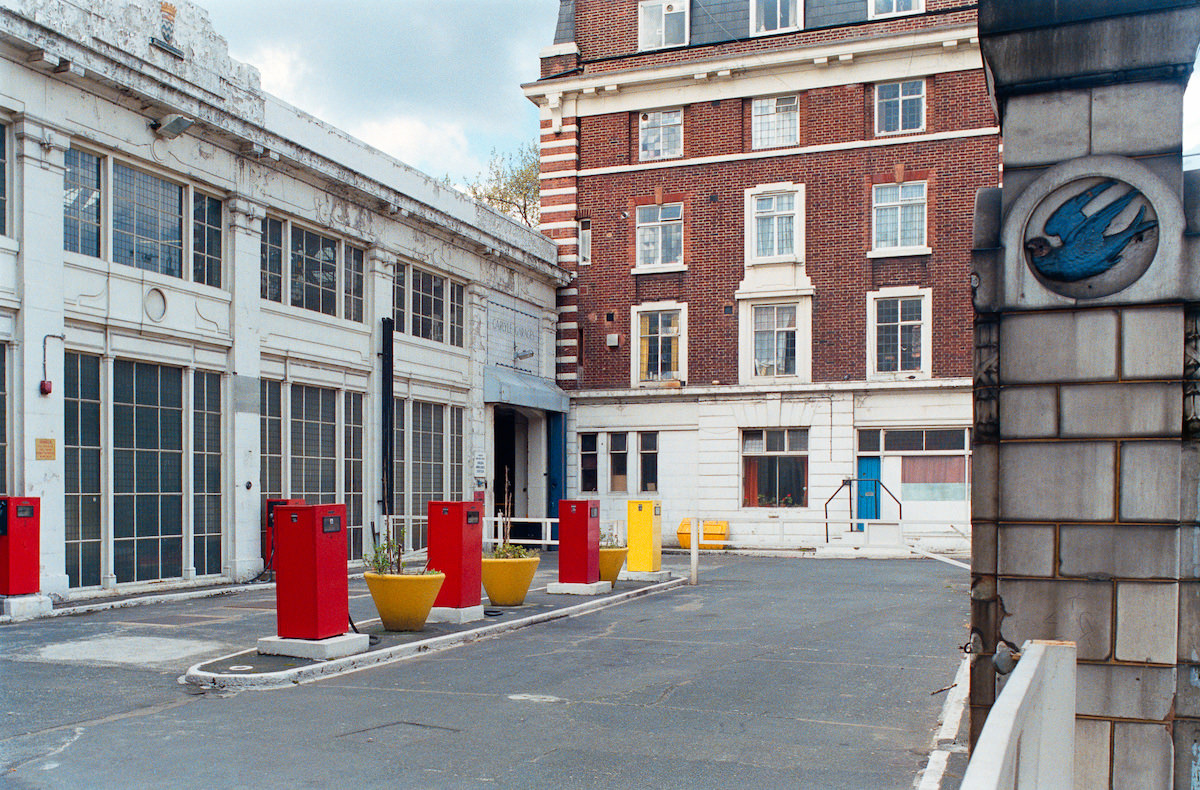
Even in wealthier parts of London, small garages held their ground. A garage on the Kings Road in Chelsea, photographed in 1988, served a very different customer base than one in Hackney Wick — but the work was the same. Cars needed fixing regardless of the postcode.
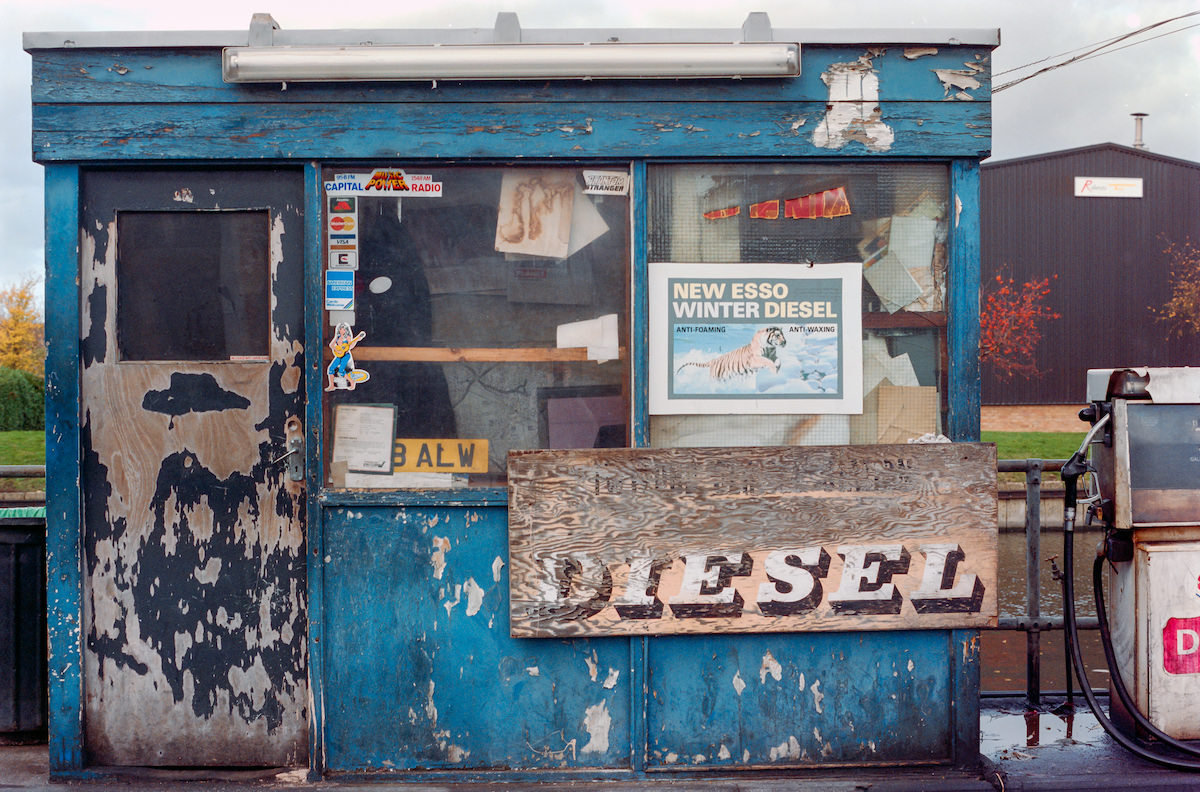
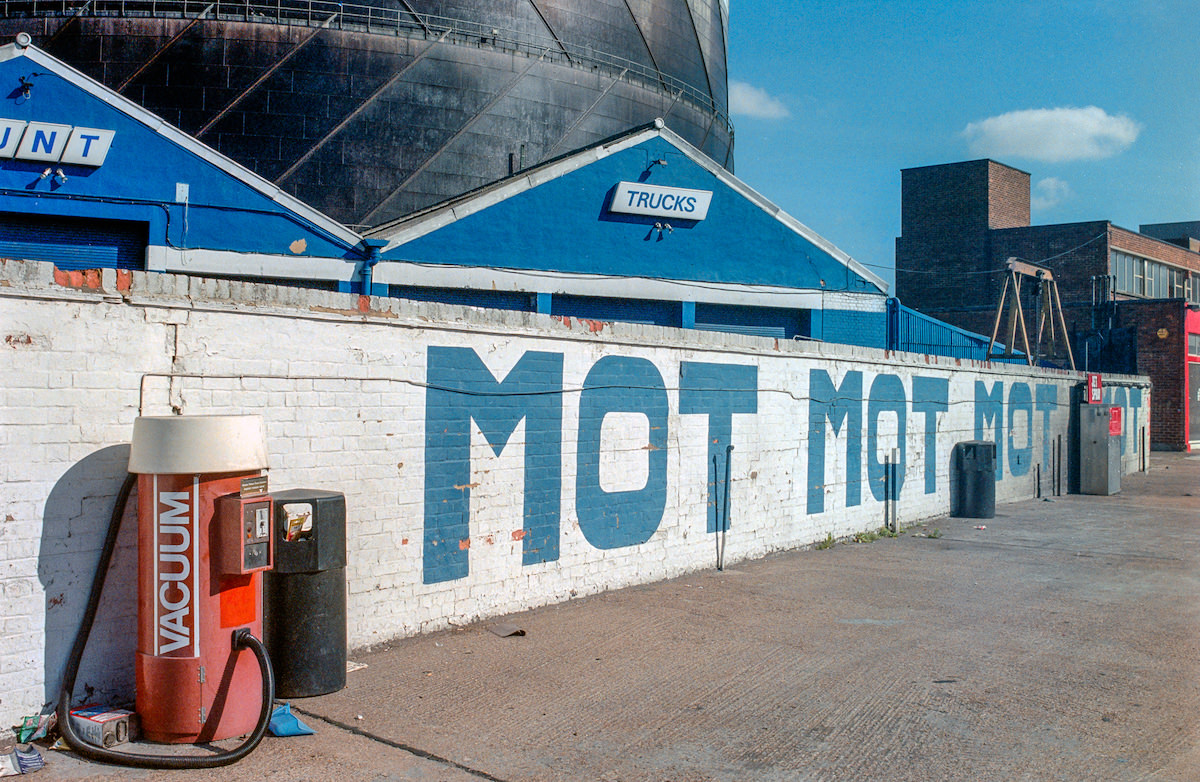
Industrial zones like Park Royal and Wandsworth’s Armoury Way were natural homes for garages. Away from residential streets, they had more room and could operate heavier machinery. Panel beating, spray painting, and commercial vehicle work were all part of the trade in these areas.
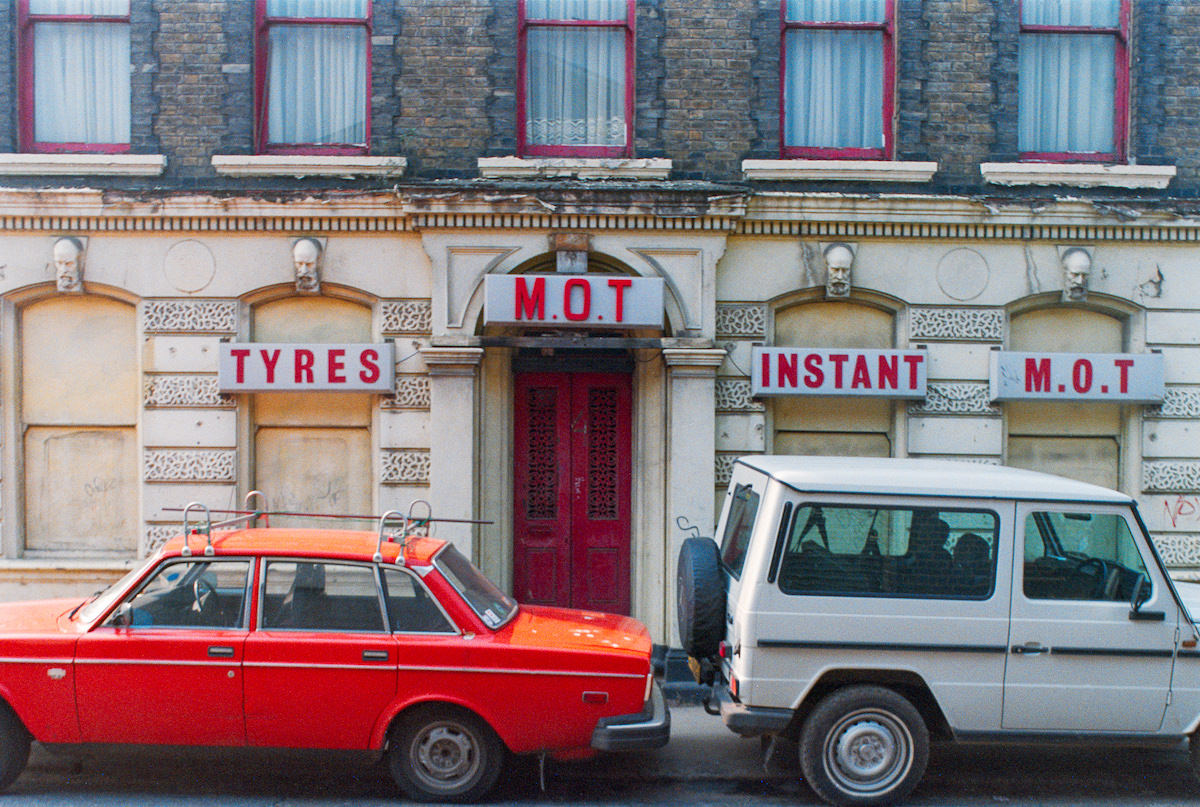
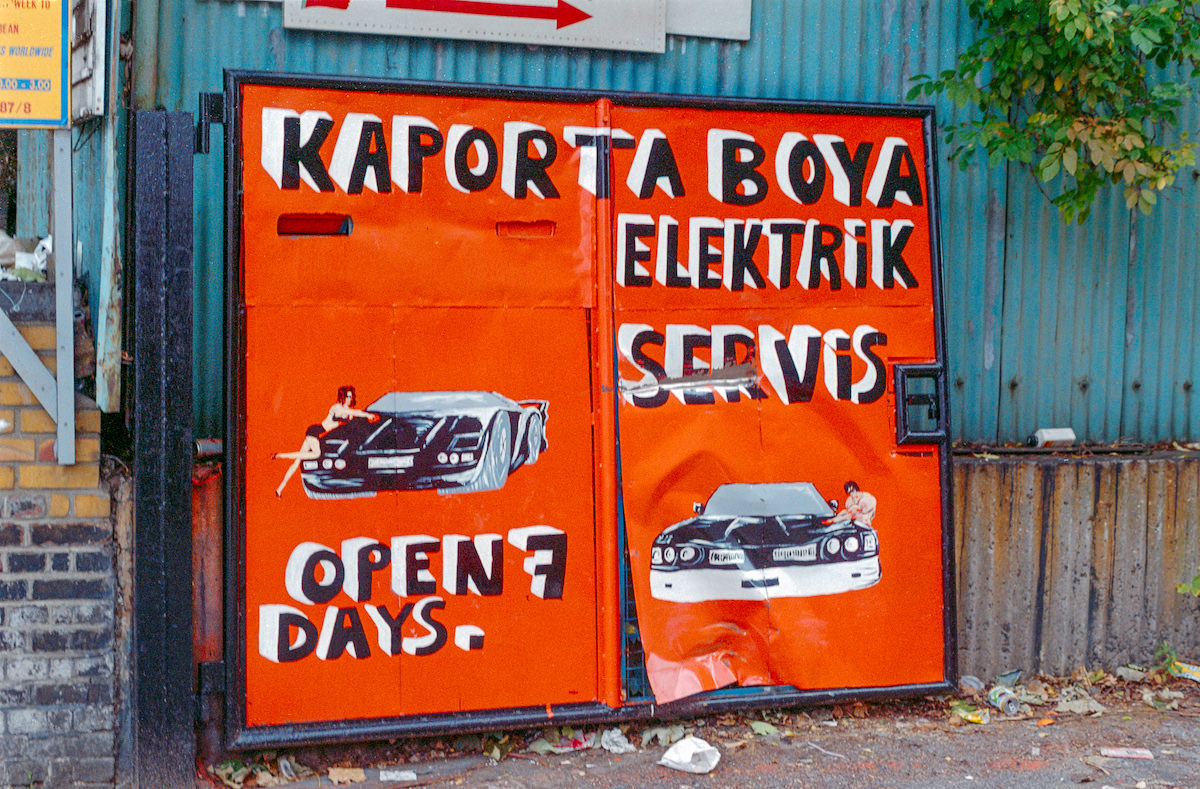
London’s garage scene also reflected the city’s diversity. By the early 1990s, businesses like Kaporta Boya — offering bodywork, painting, and electrical services — showed how immigrant communities had established themselves firmly within the trade. The signage itself tells a story of a city in transition.
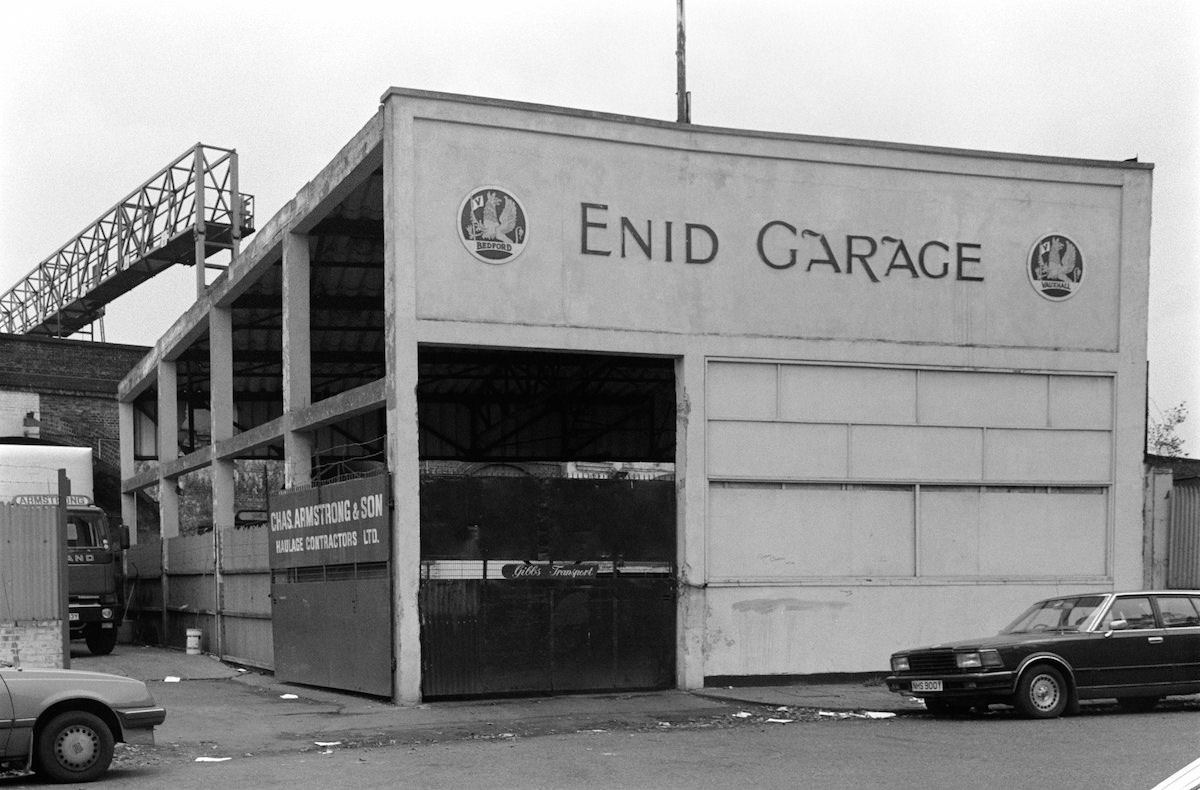
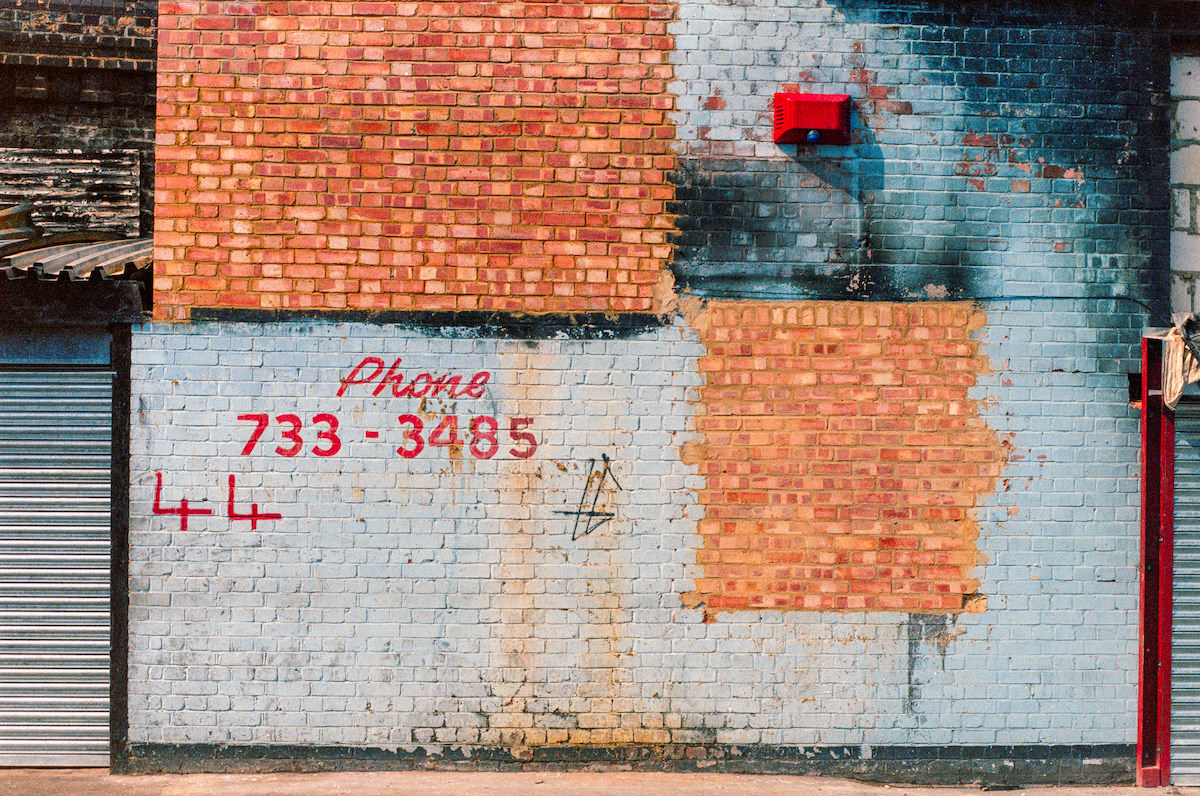
Southwark’s garages — from Old Jamaica Road in Bermondsey to Camberwell Station Road — served densely populated neighborhoods where car ownership was climbing fast through the 80s. More cars on the road meant more work, and the garages in these areas stayed busy.
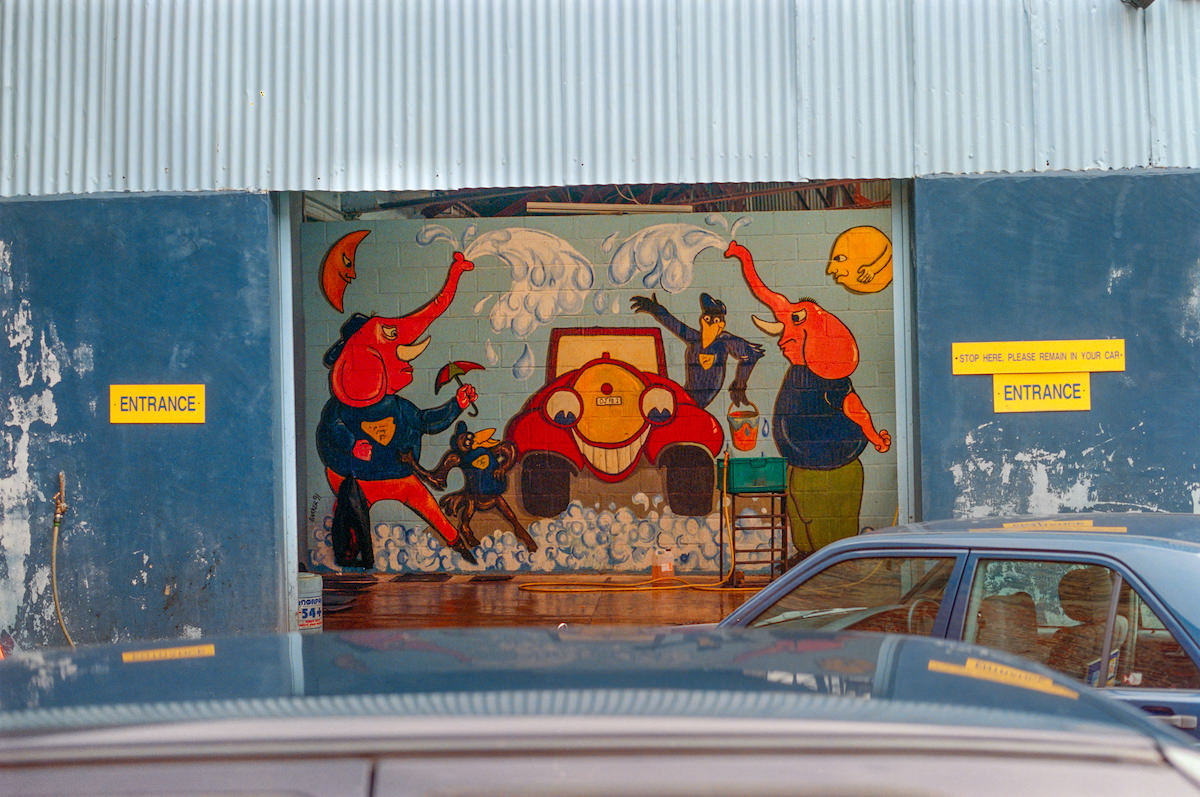
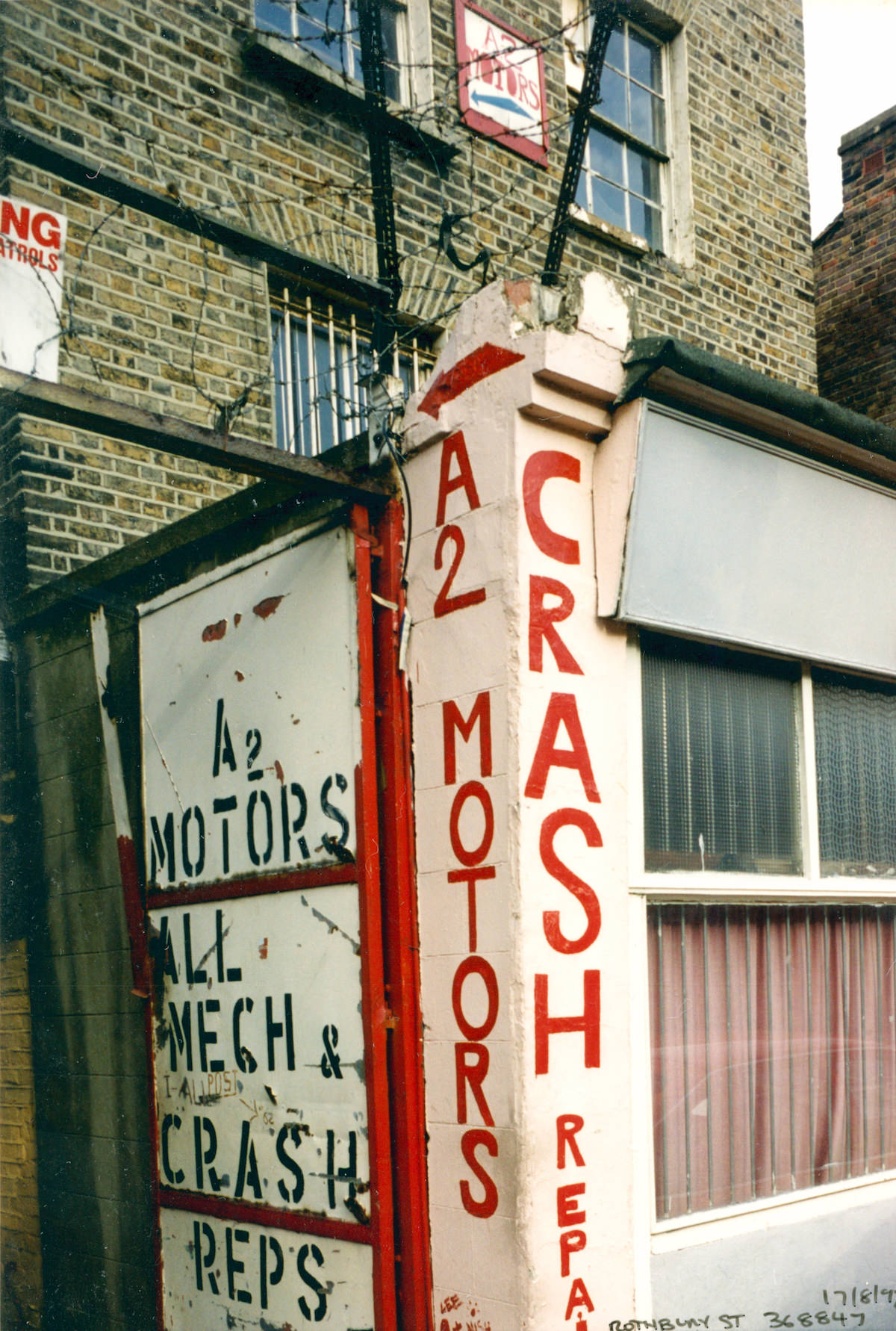
Hackney Wick in the early 90s was one of the densest concentrations of automotive trade in East London. Multiple garages and spares dealers operated within walking distance of each other on the same roads, creating a self-contained ecosystem for anyone who needed their car seen to quickly and cheaply.
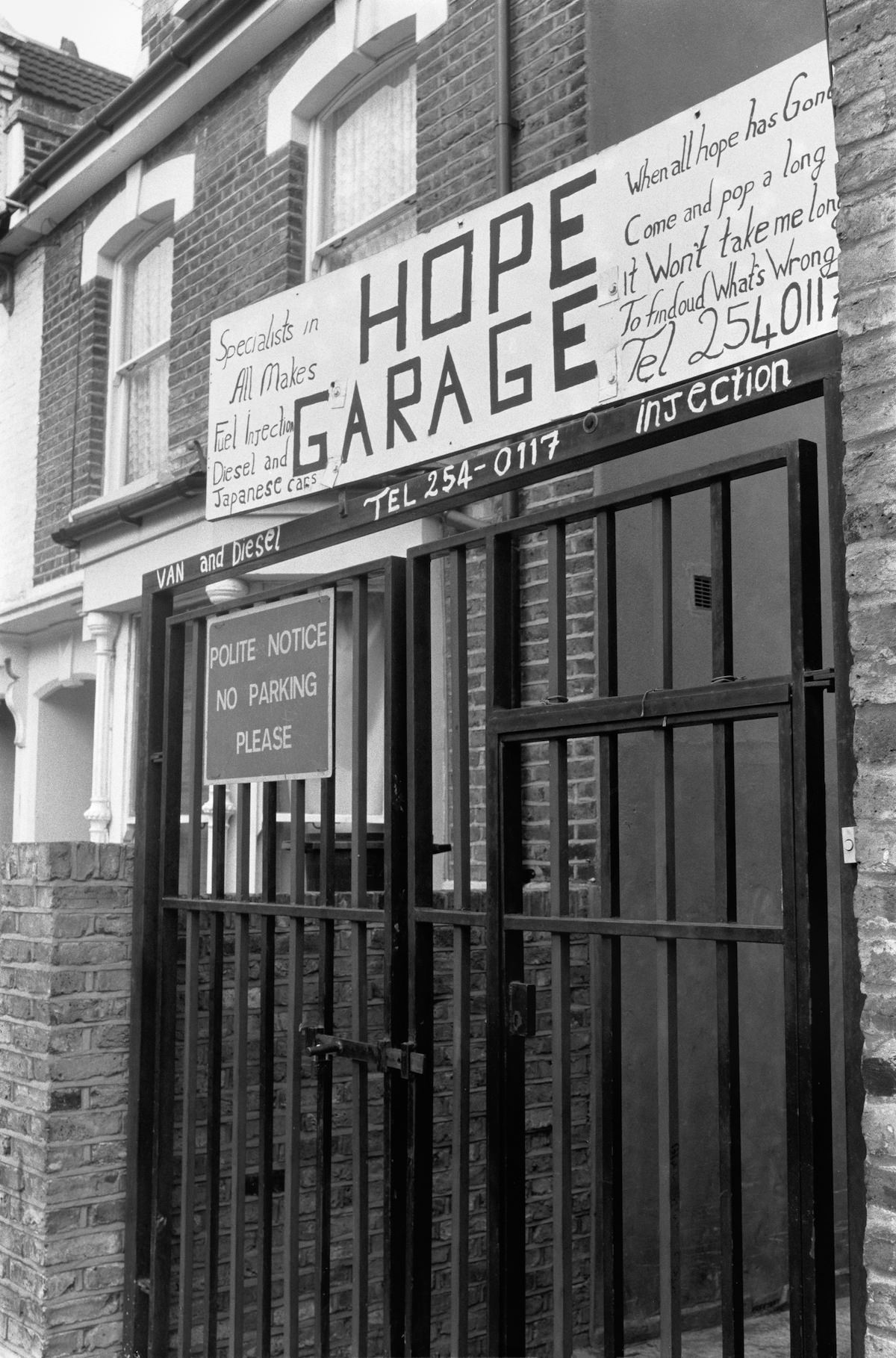
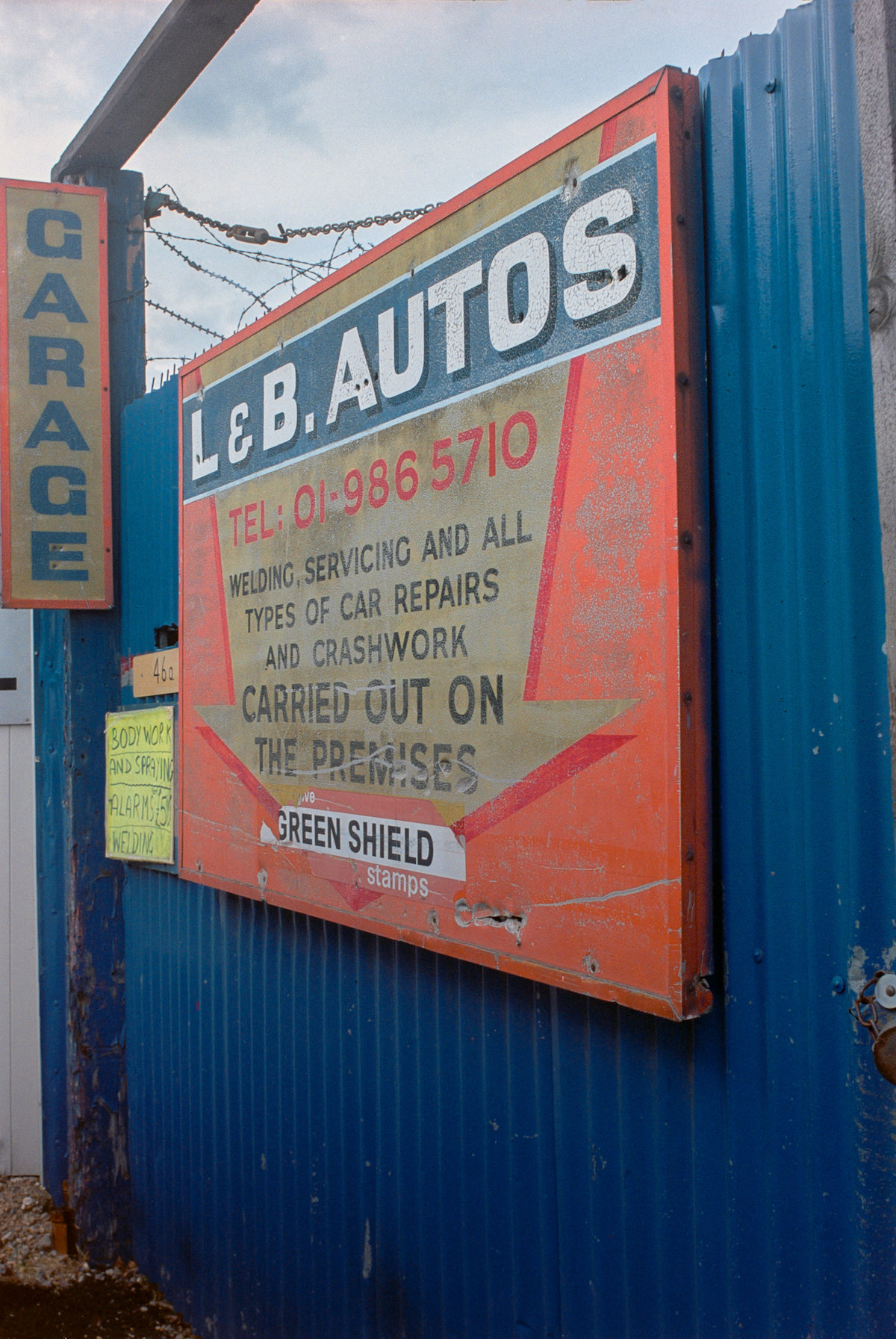
Names like Hope Garage and L & B Autos were the kind of straightforward, no-frills titles that defined the independent garage trade. There was no marketing department behind these names — just the owner’s initials or a nod to the street. That simplicity was part of what made them feel like genuine neighborhood institutions.