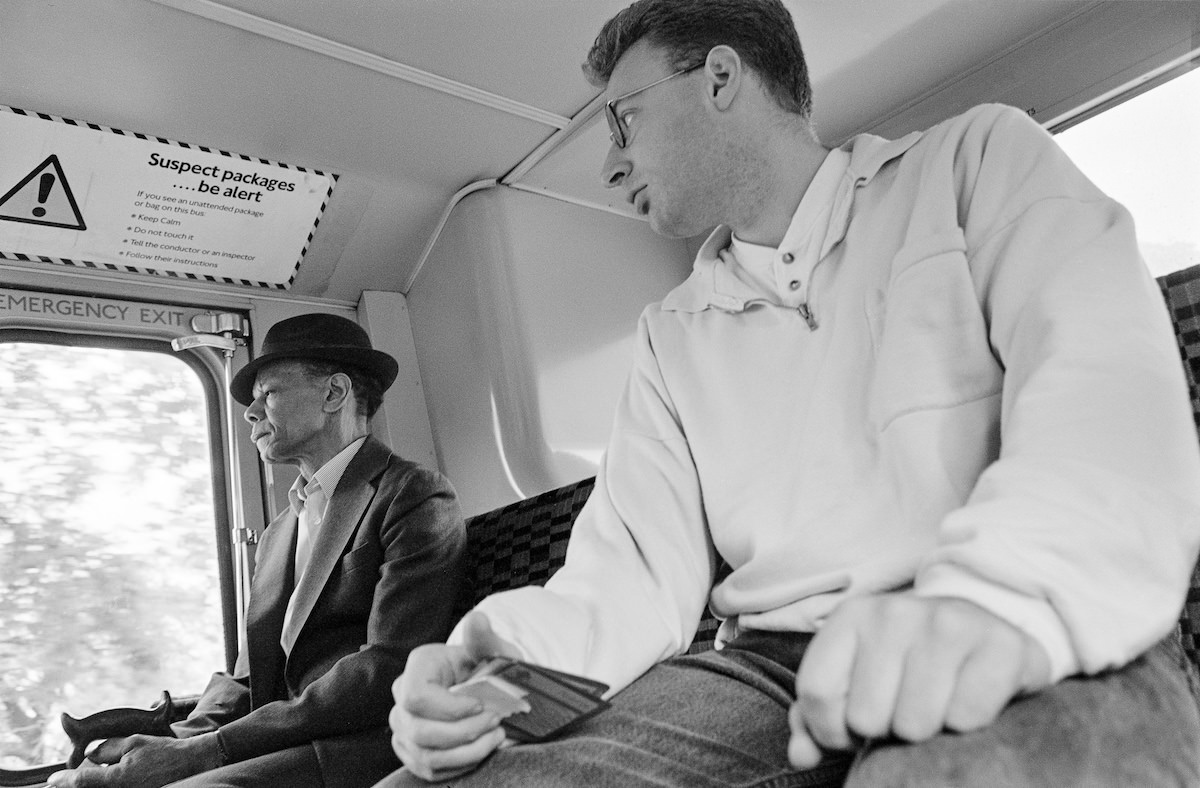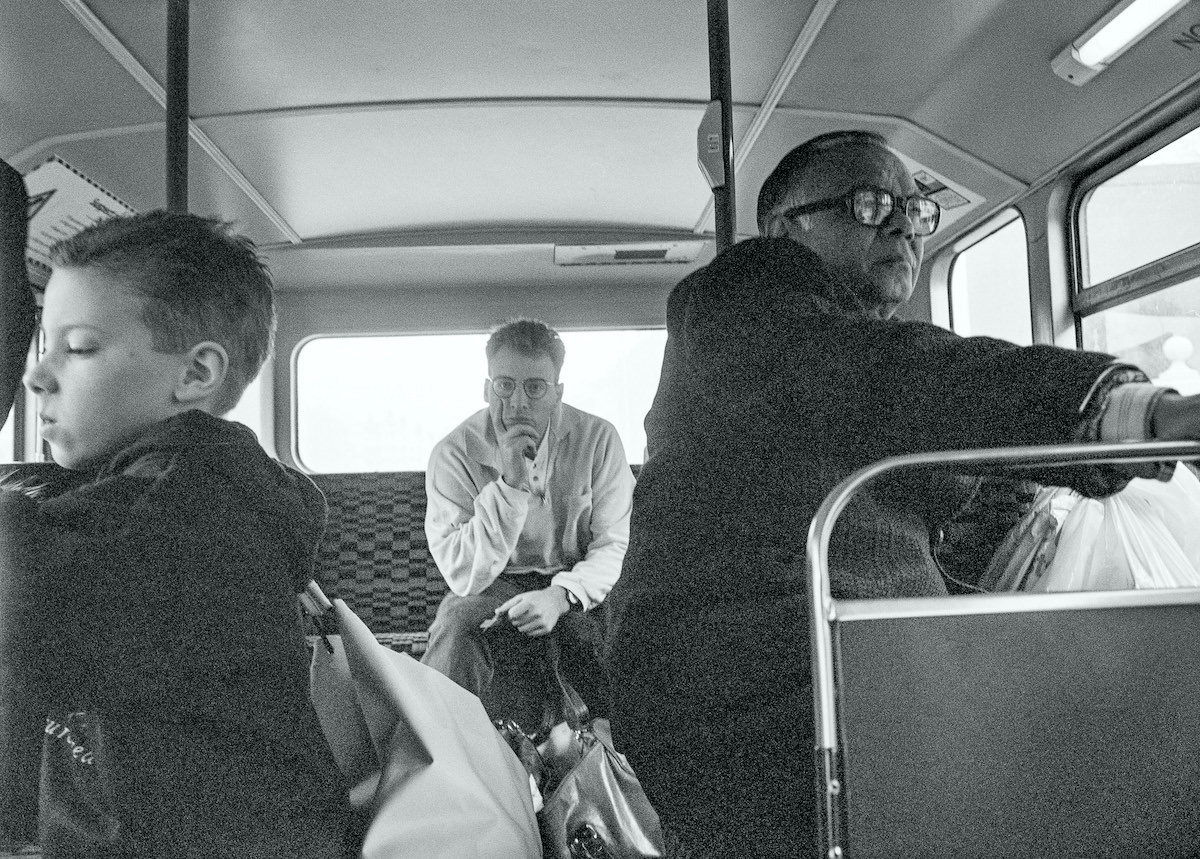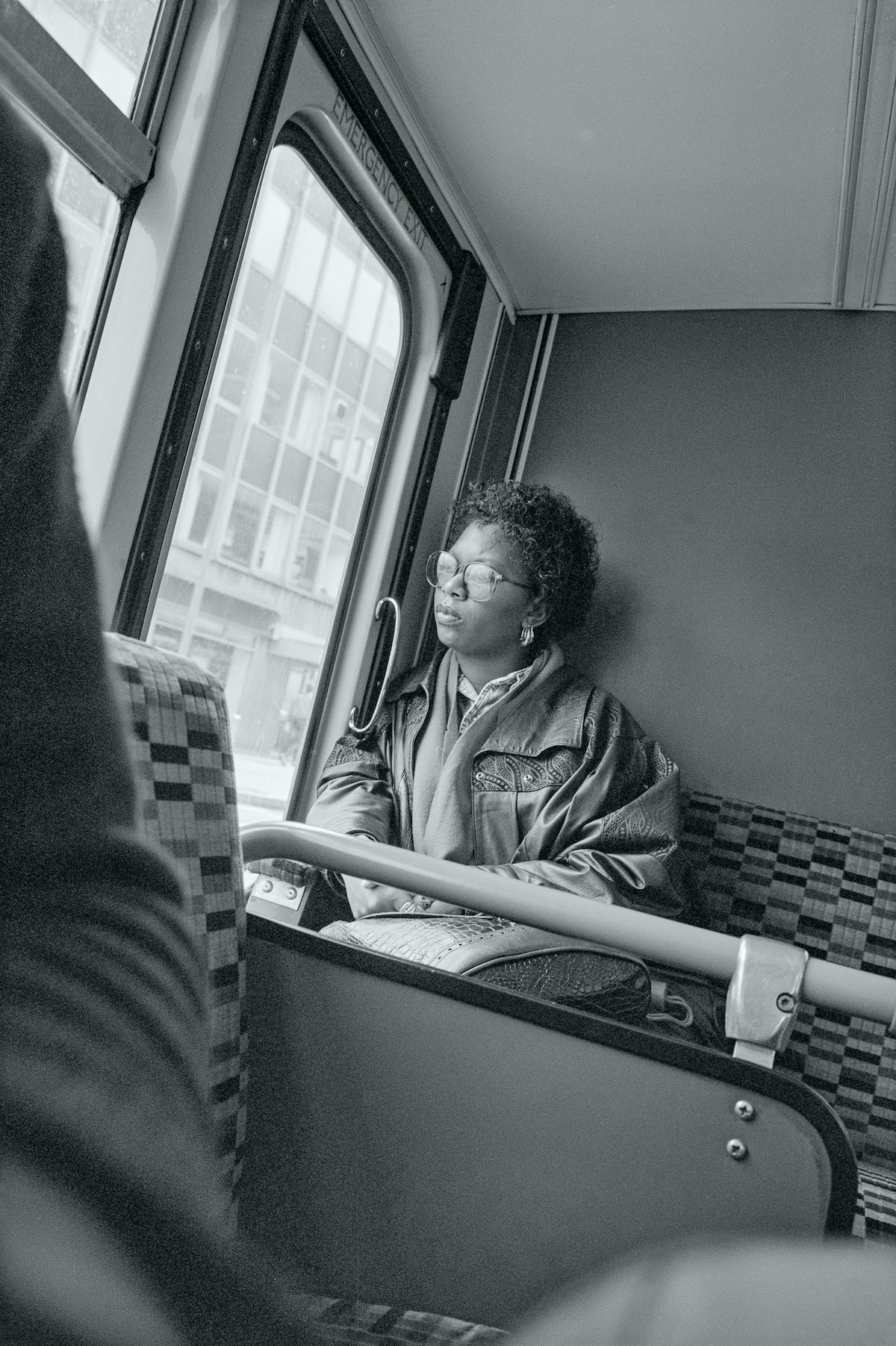
In 1991, London’s bus network was one of the largest urban transit systems in the world. London Regional Transport (LRT), a government-owned corporation created in 1984, ran the whole operation after taking over from the abolished Greater London Council. Dozens of companies operated routes under contract to LRT, and the fleet included both double-decker and single-decker buses covering virtually every corner of the city and its suburbs.
The early 1990s were a turning point for London’s buses. LRT had been adding new routes, upgrading the fleet, and rolling out the Travelcard system — a reusable smartcard that let passengers pay for bus and rail fares without handling cash on board. These changes reshaped the daily experience of getting around the city. It was into this shifting, busy world that photographer Peter Marshall stepped with his camera.
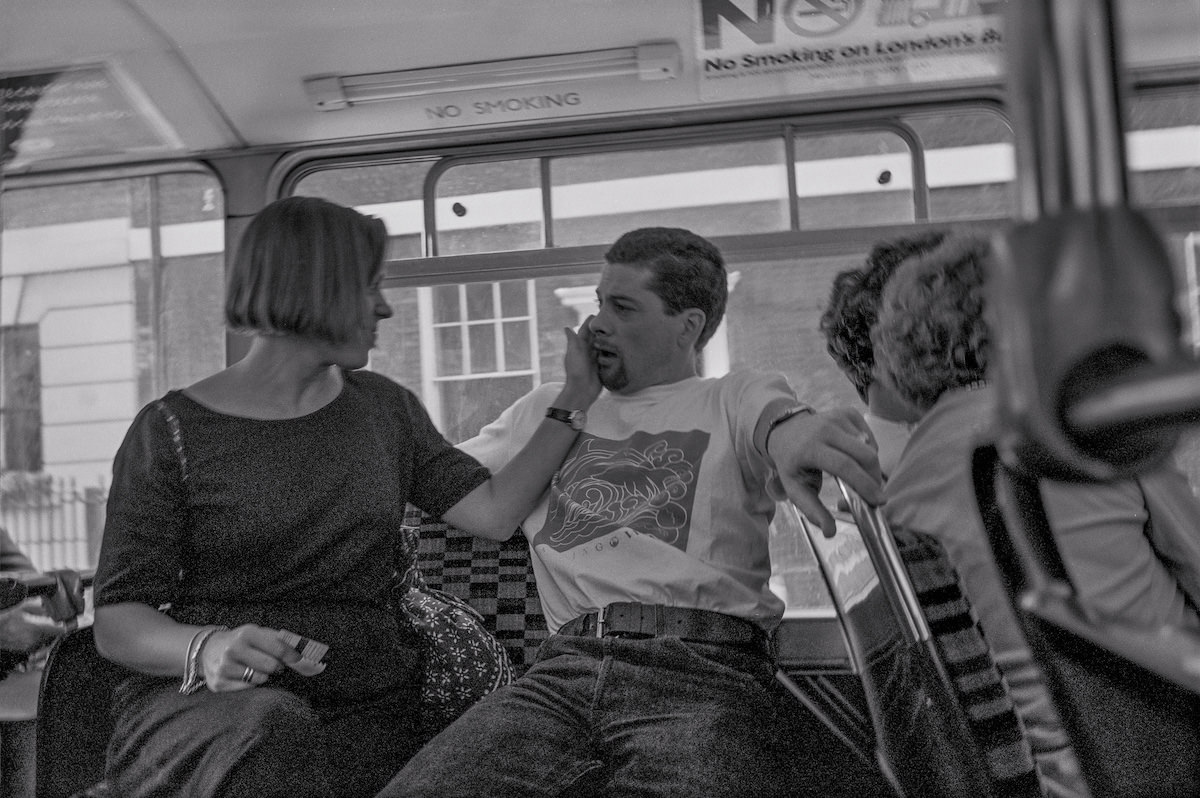
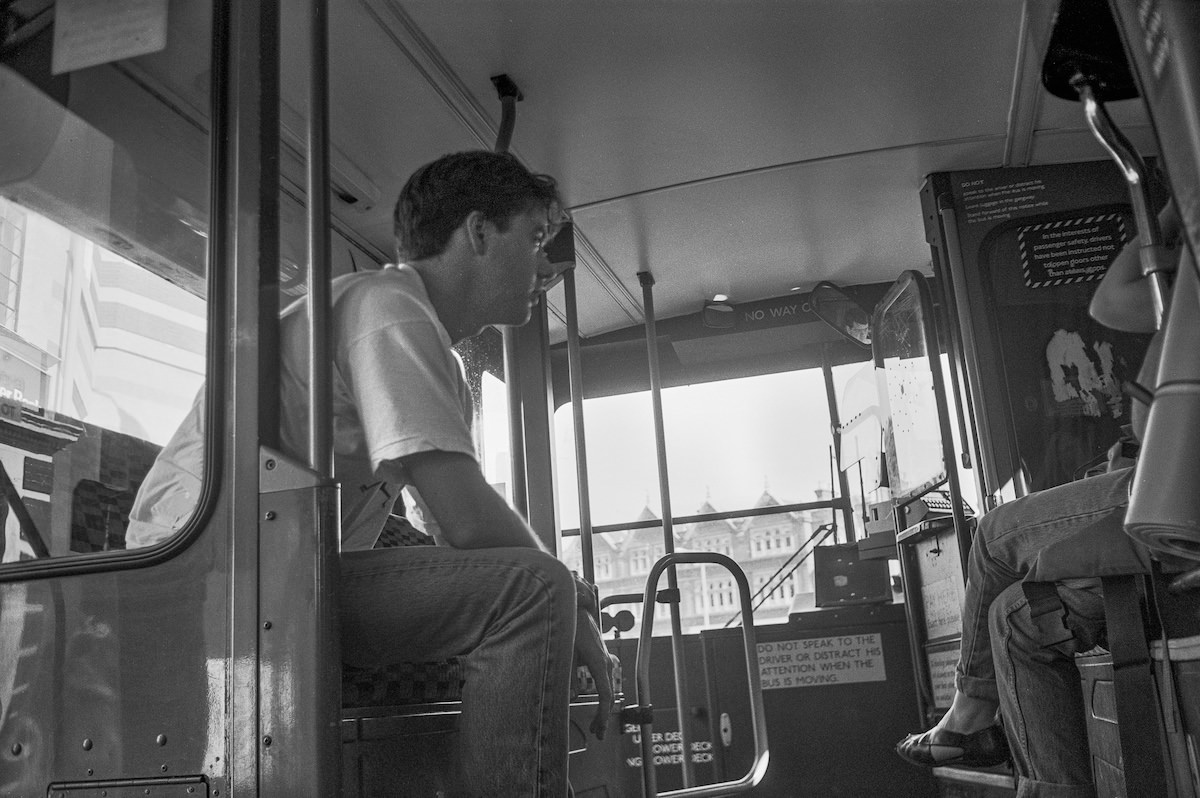
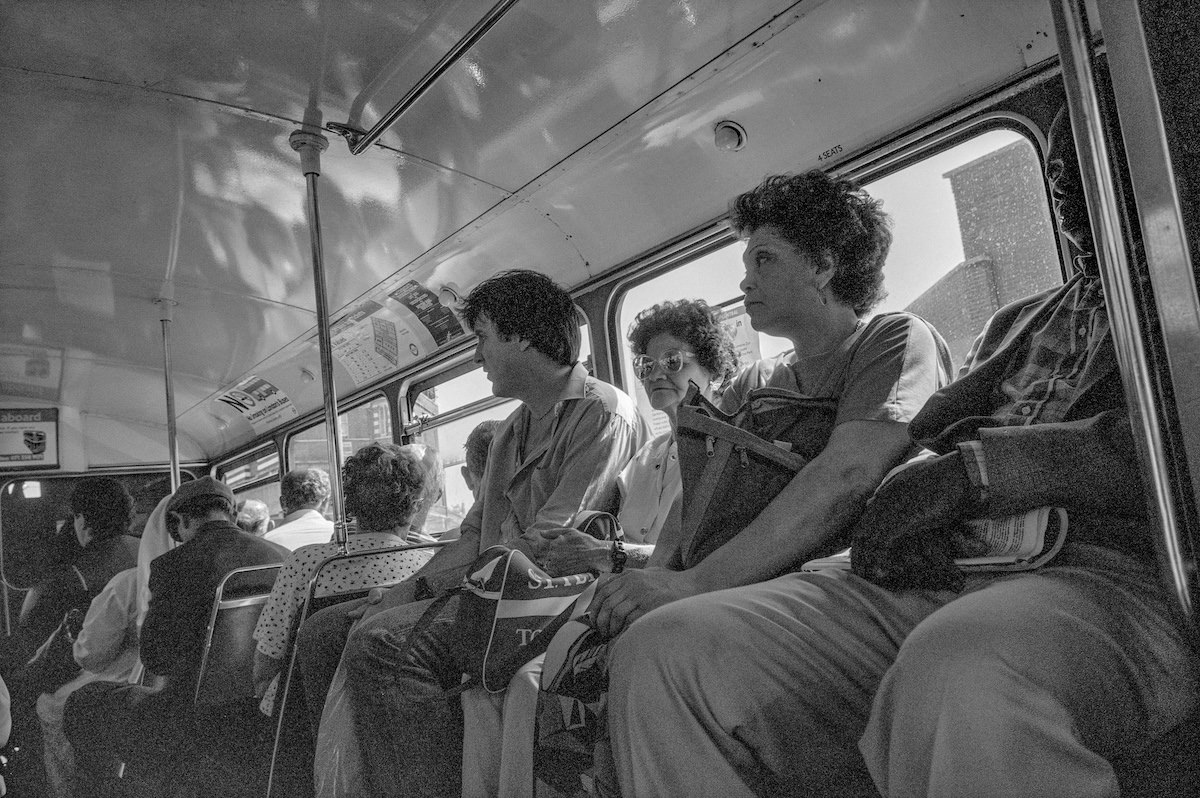
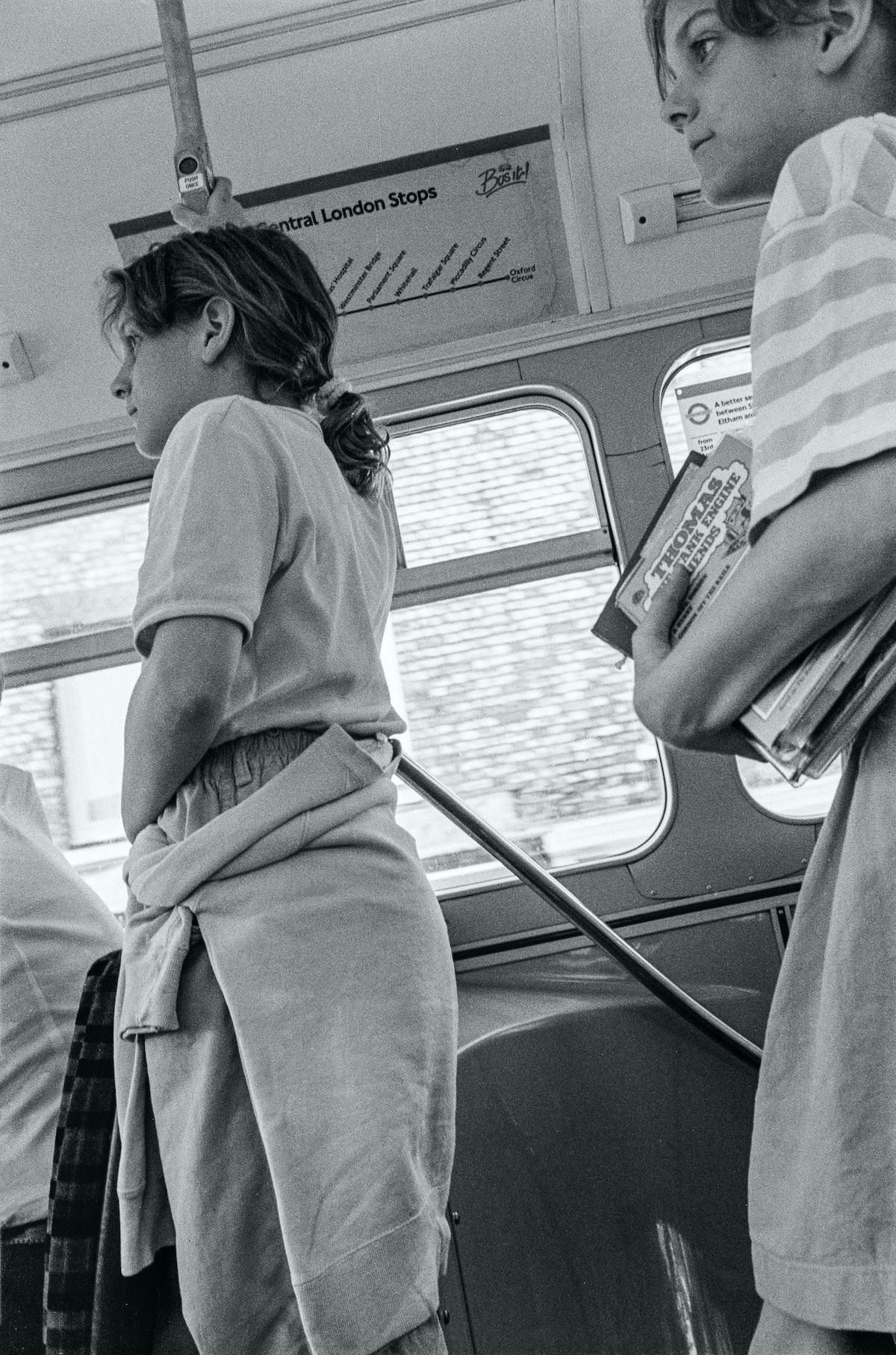
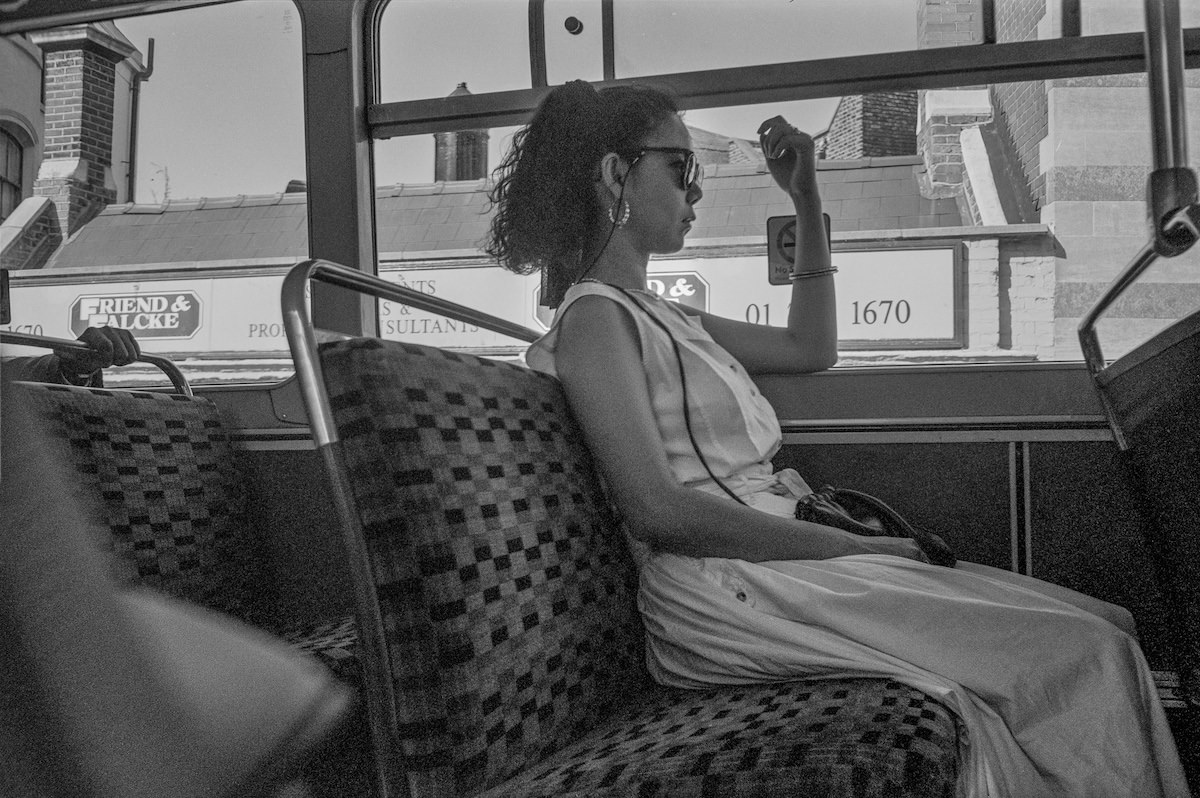
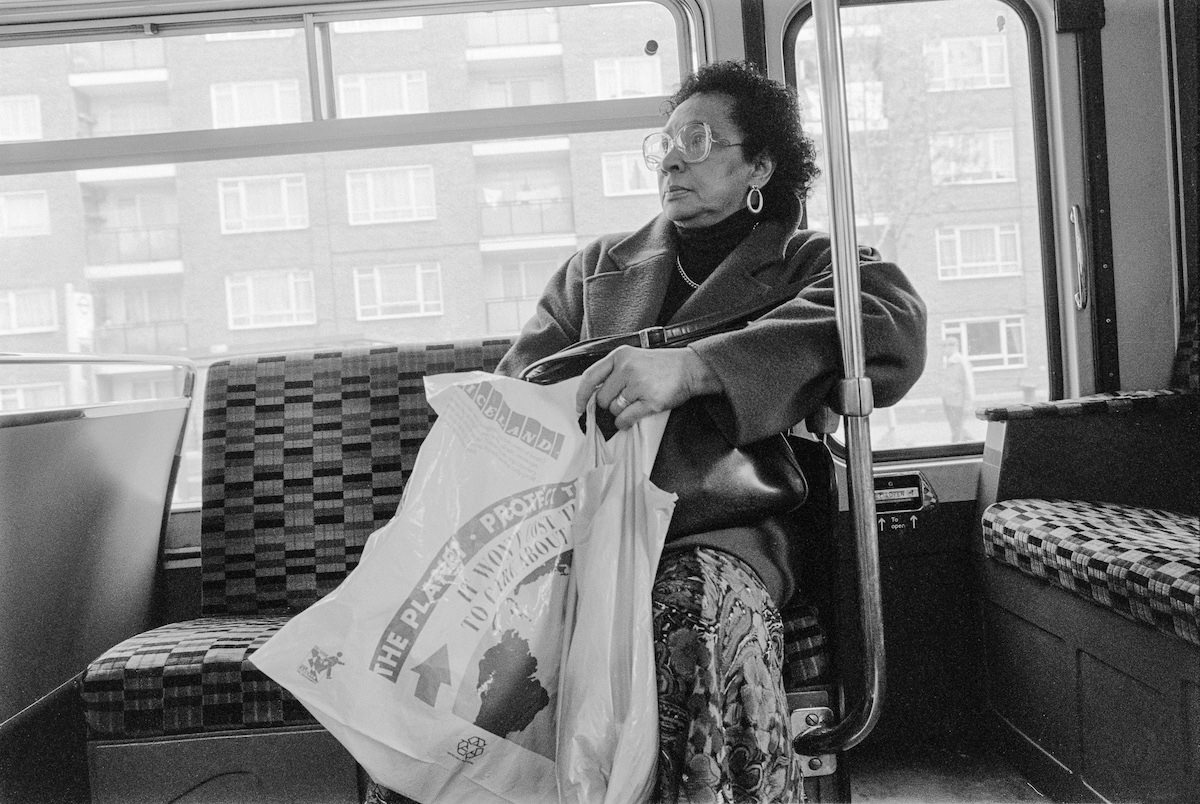
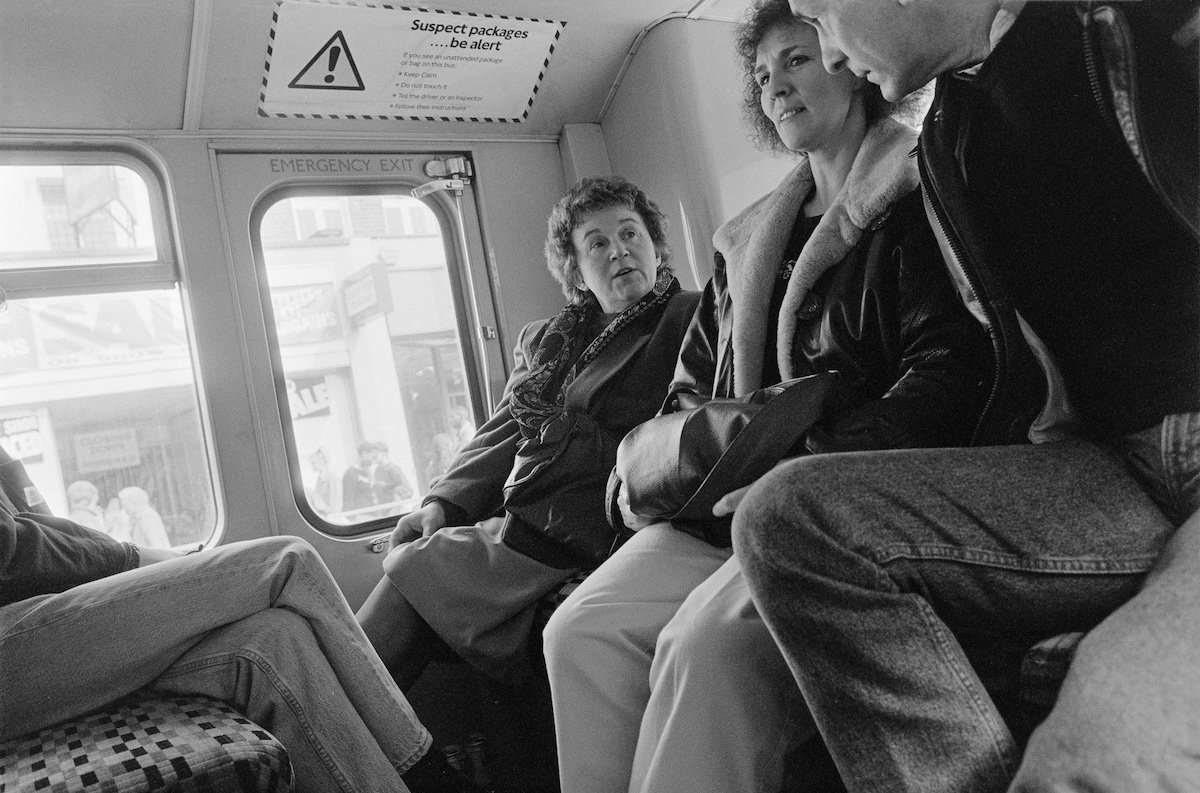
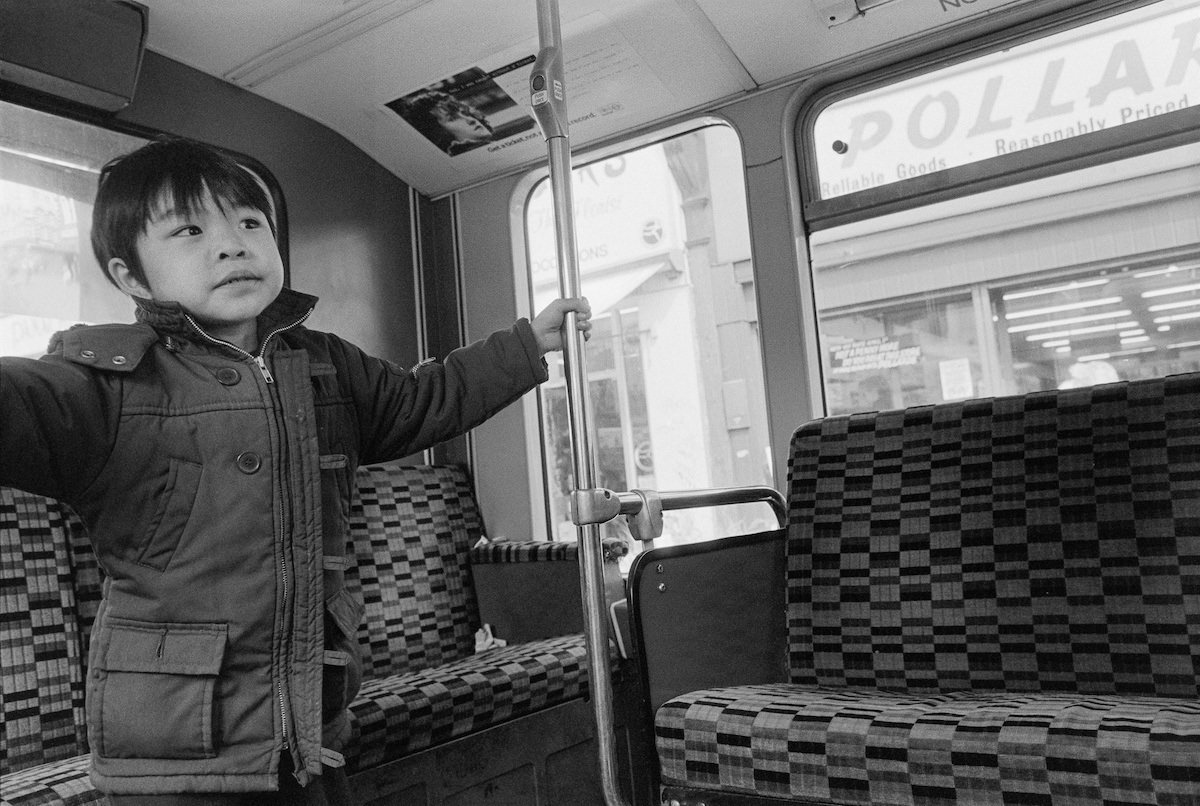
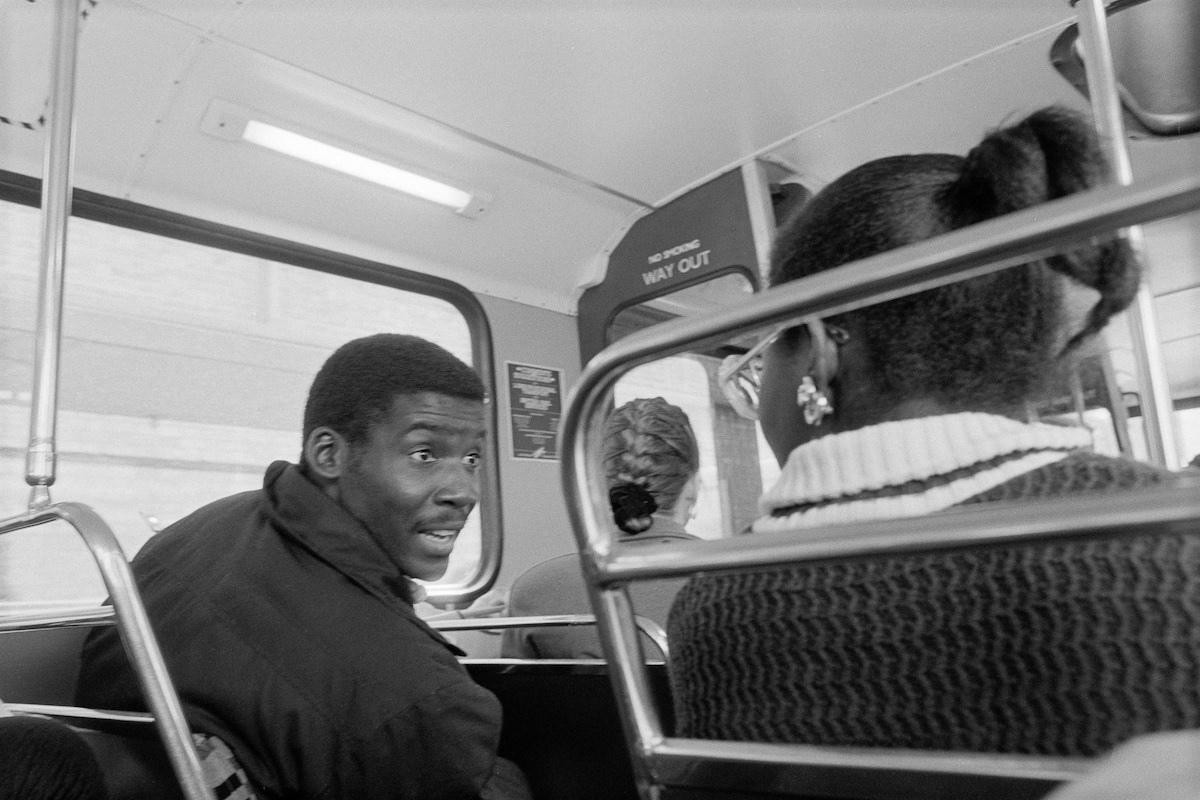
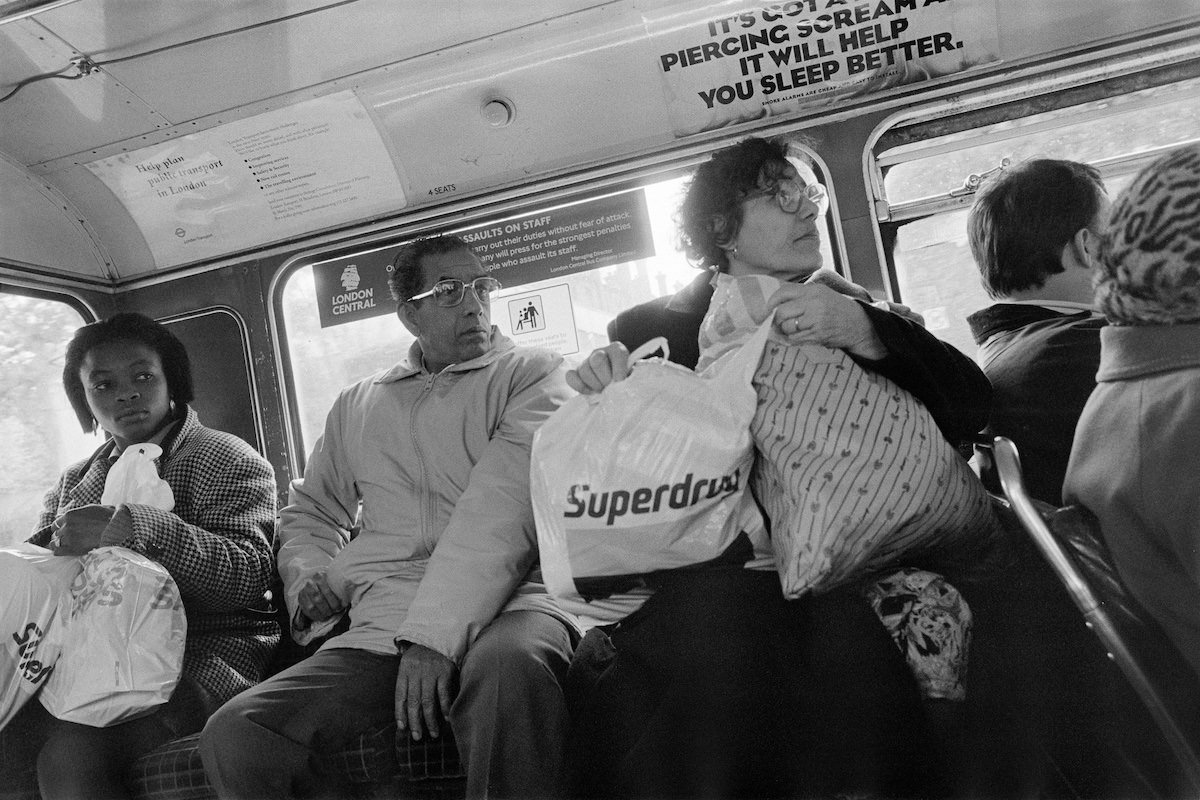
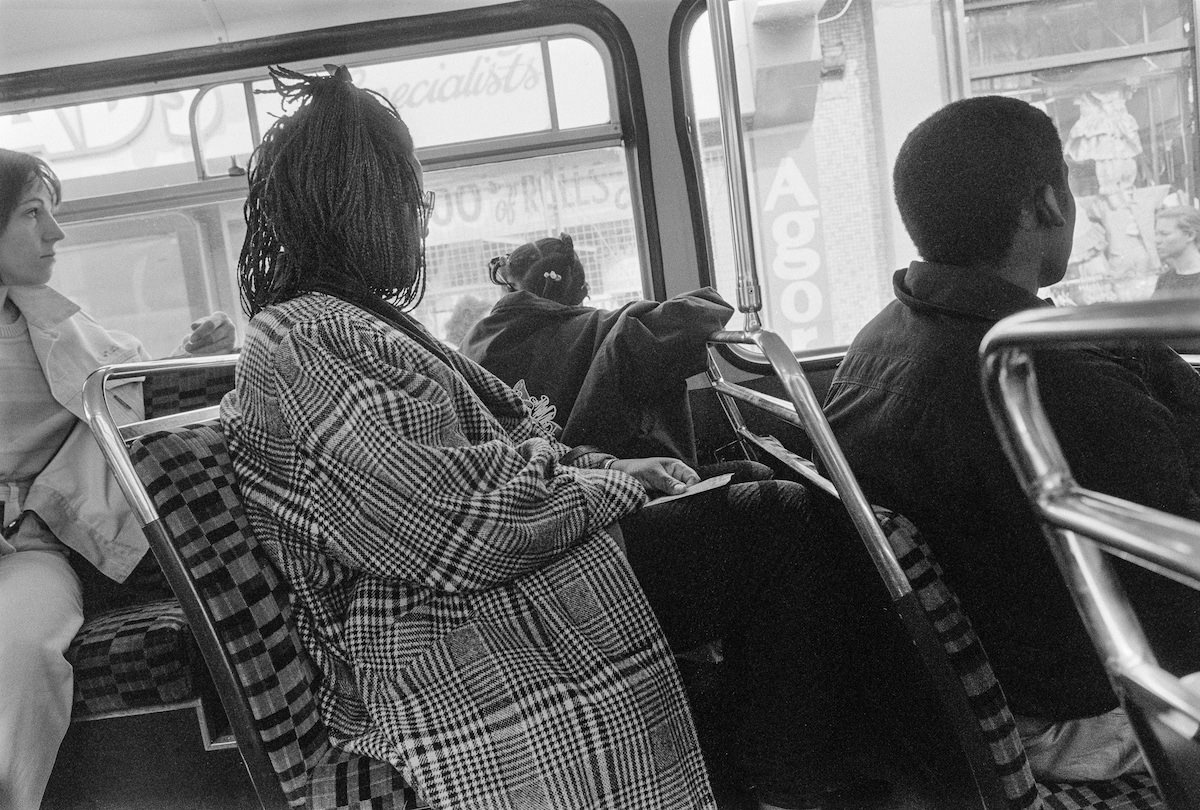
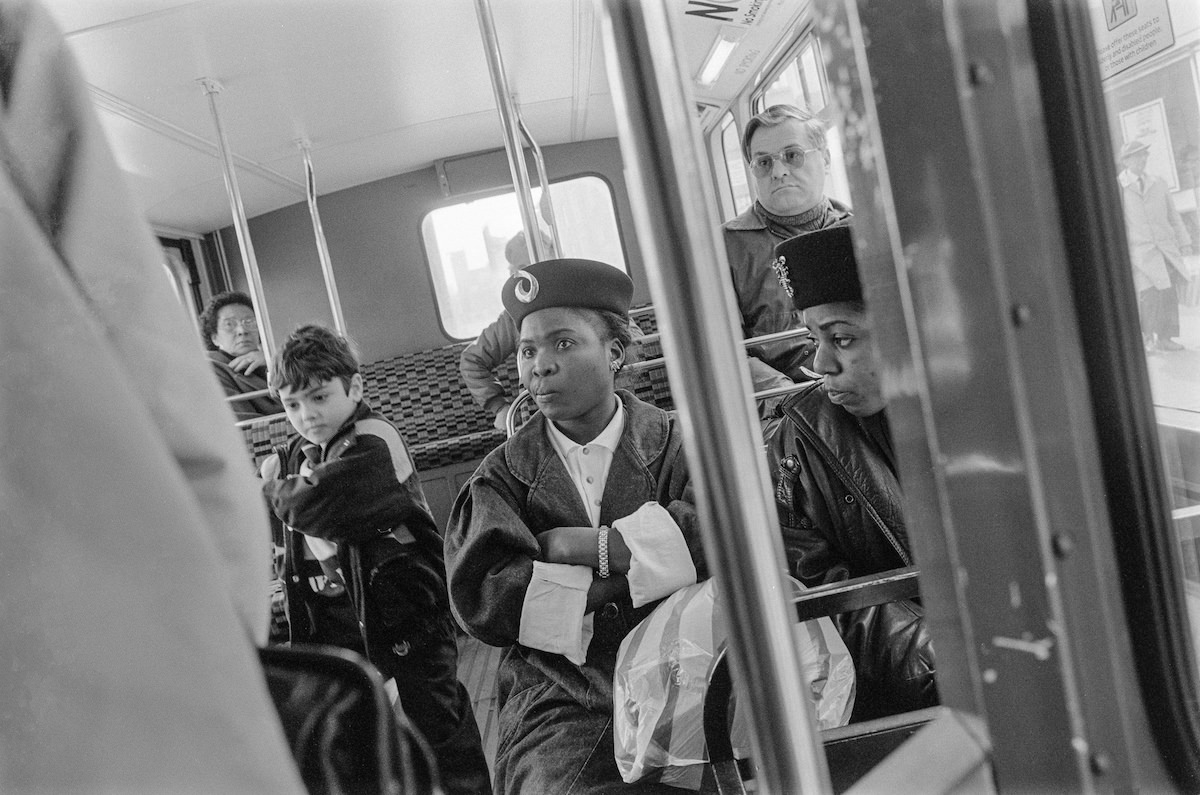
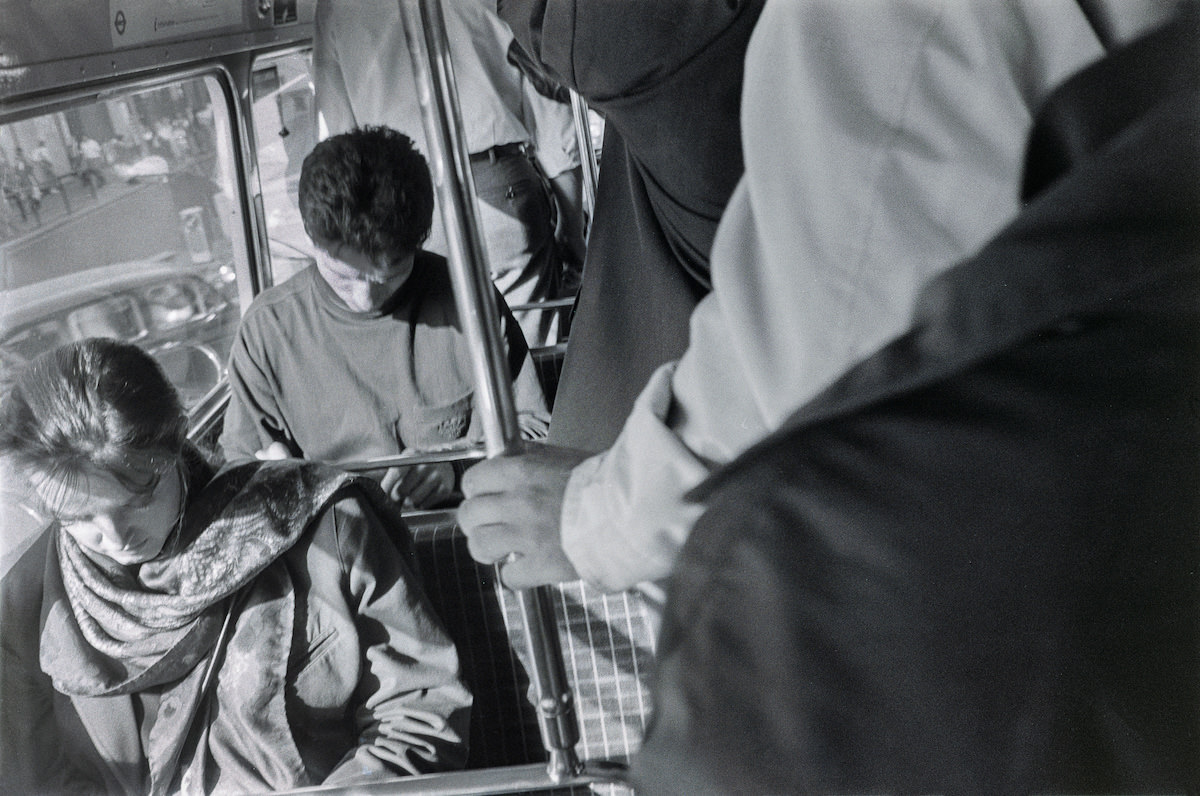
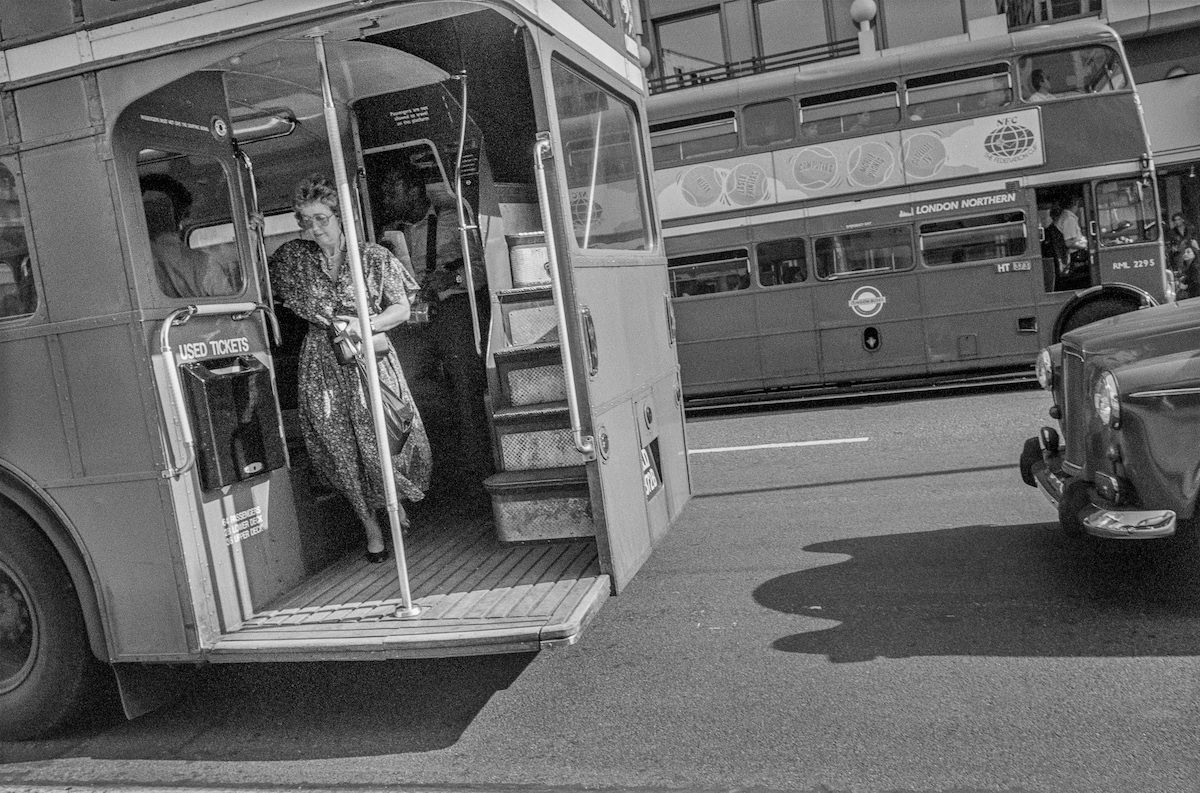
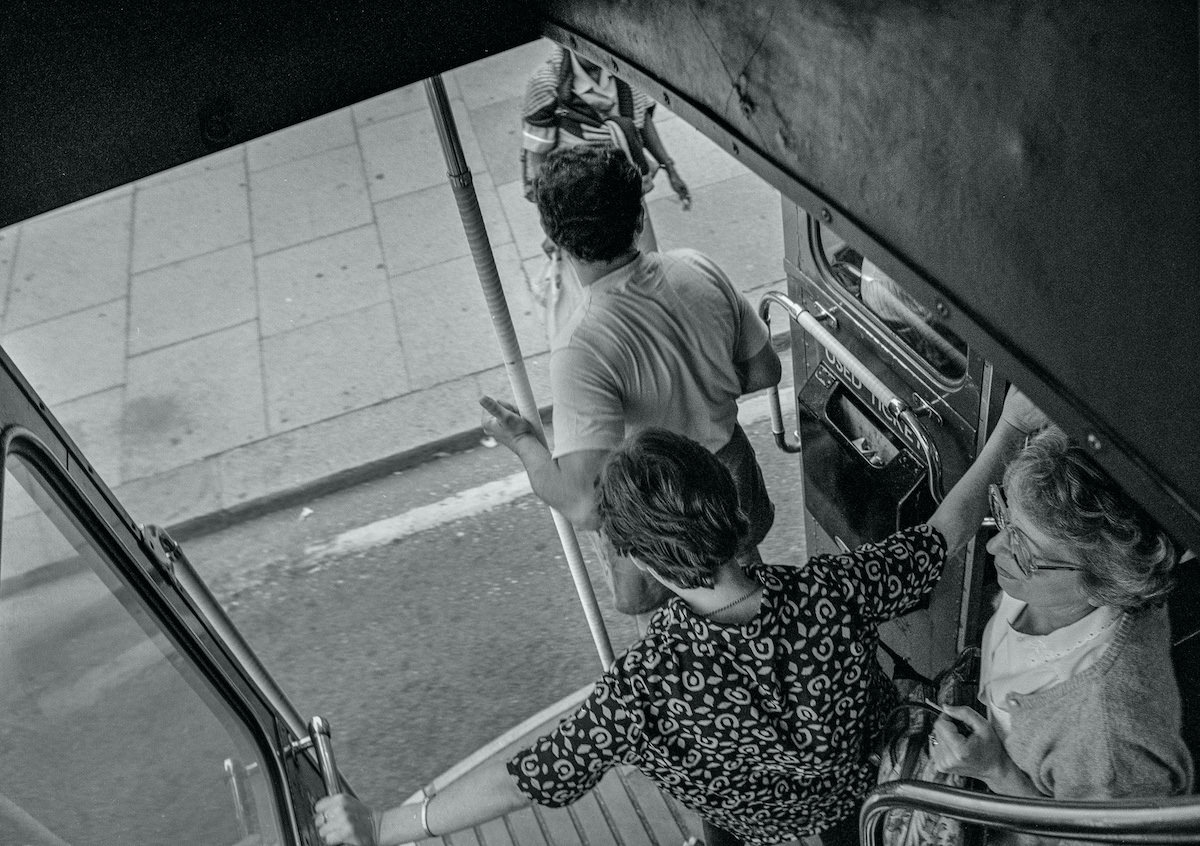
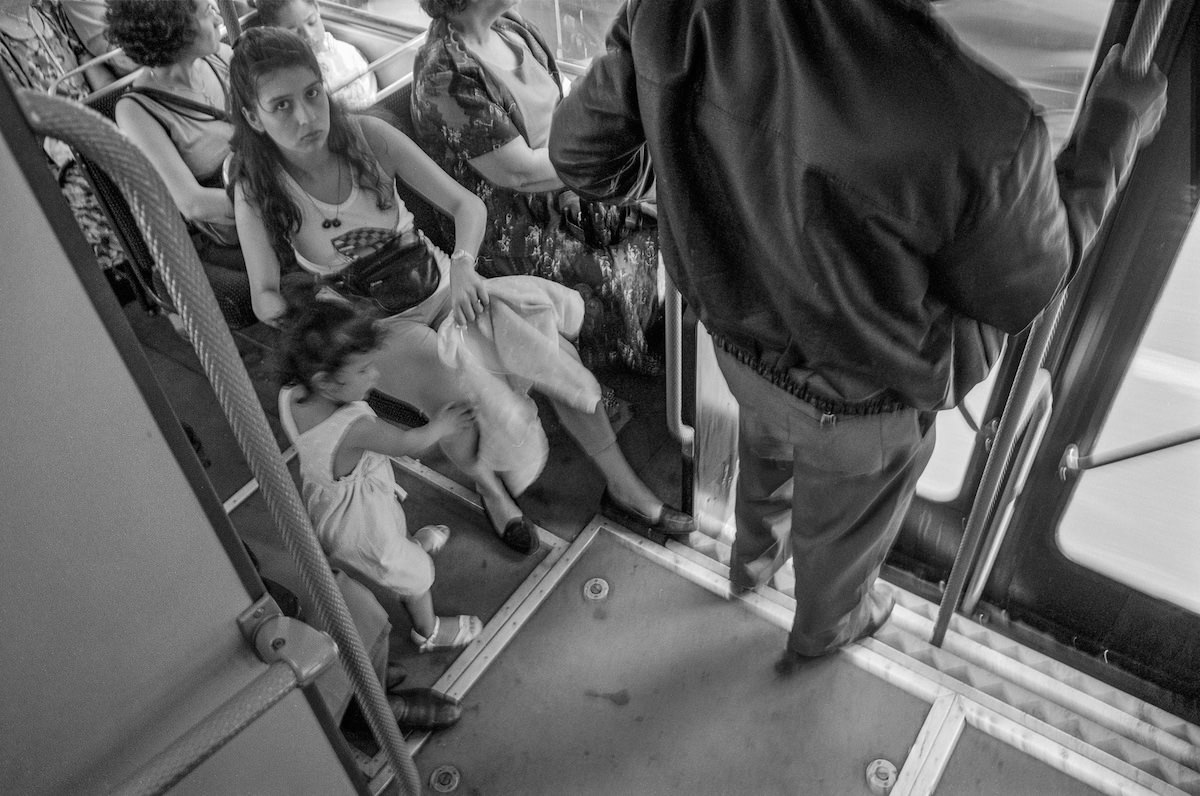
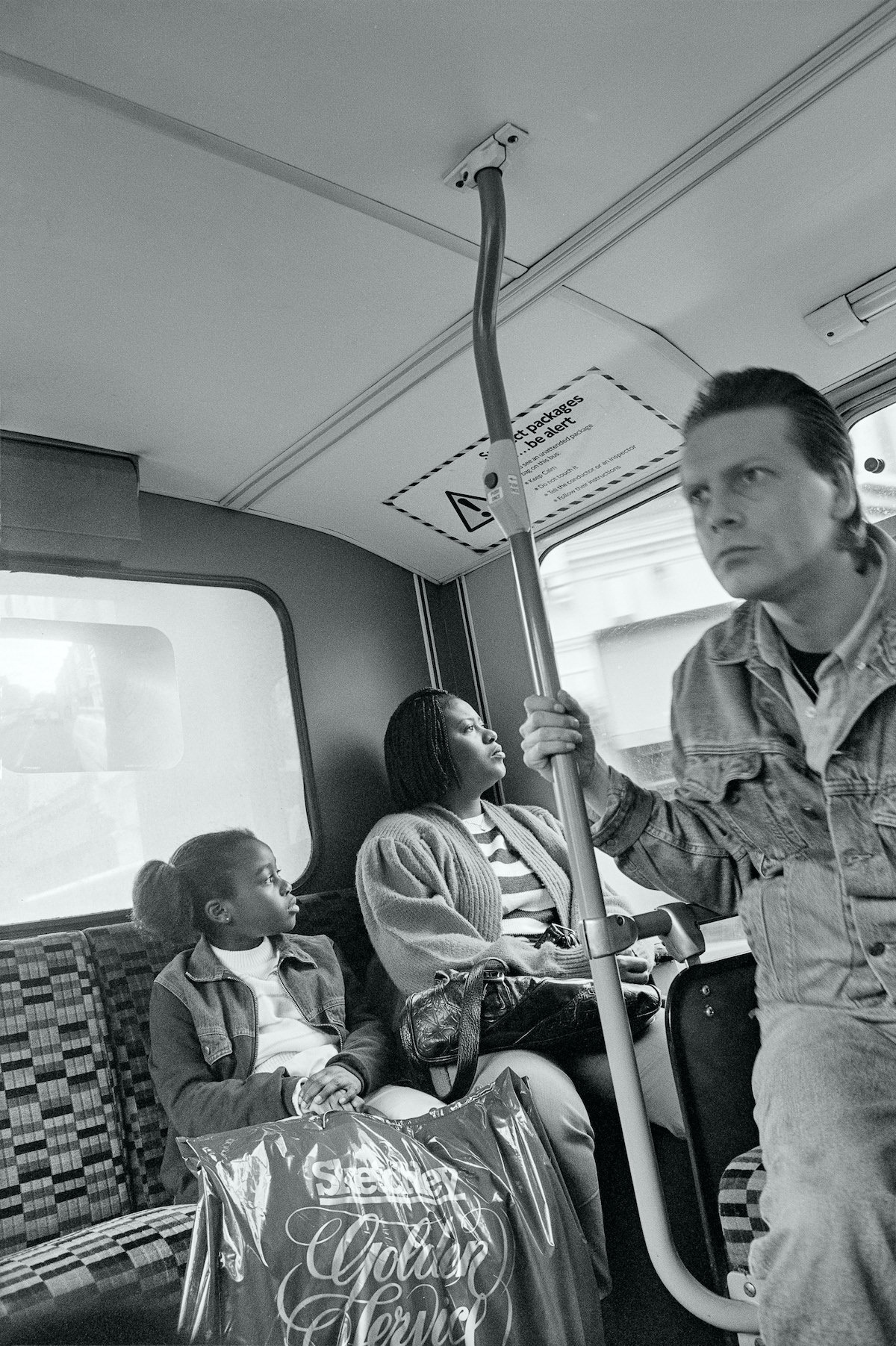
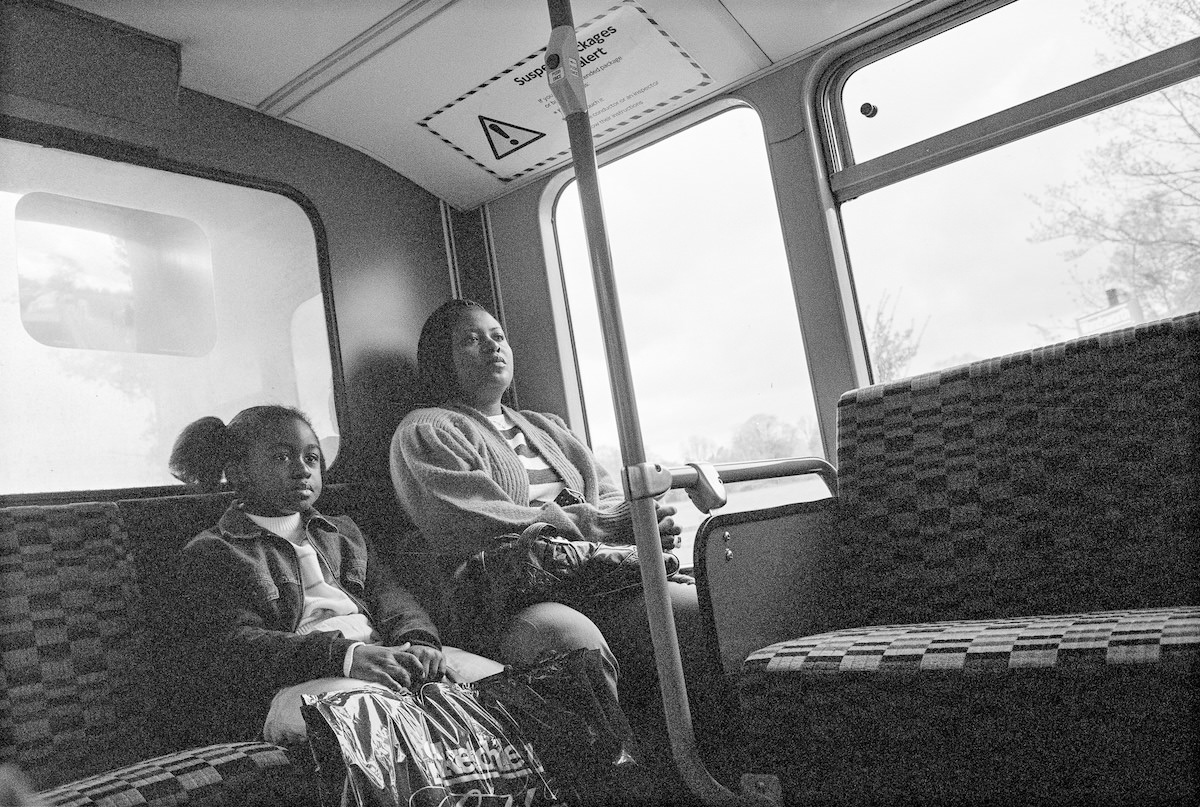
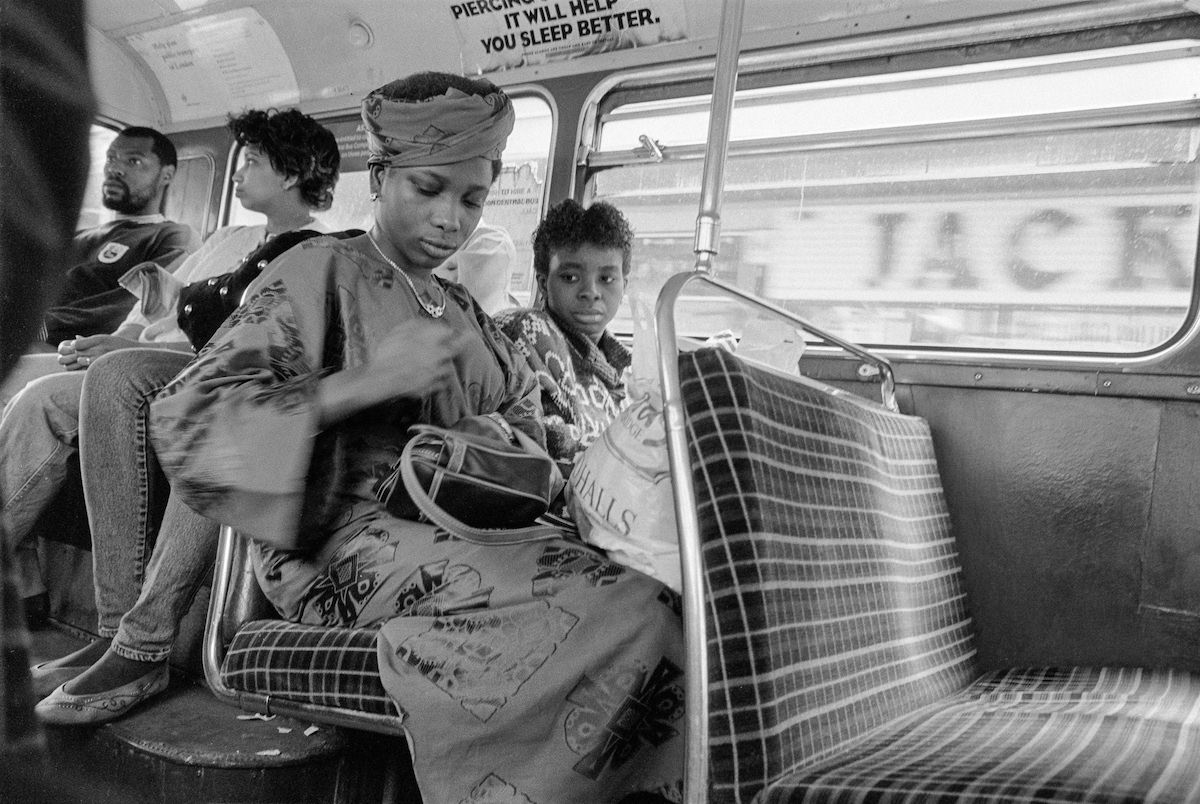
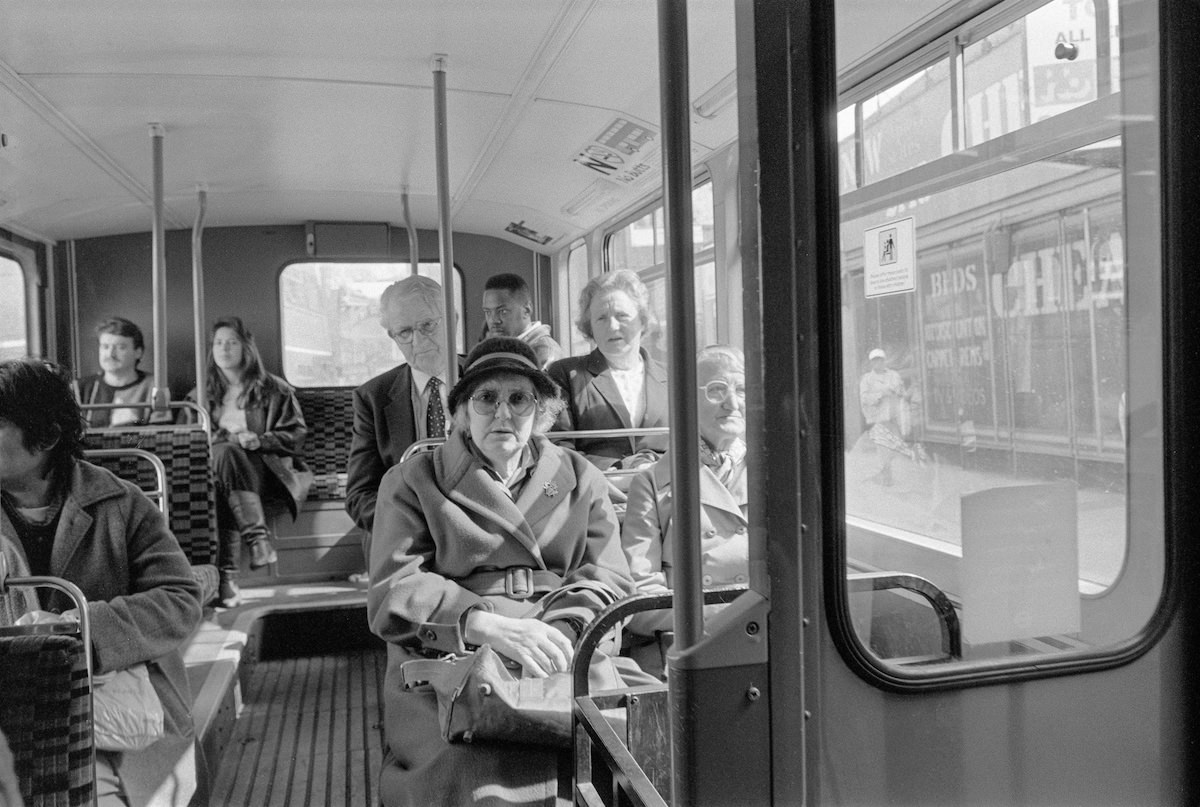
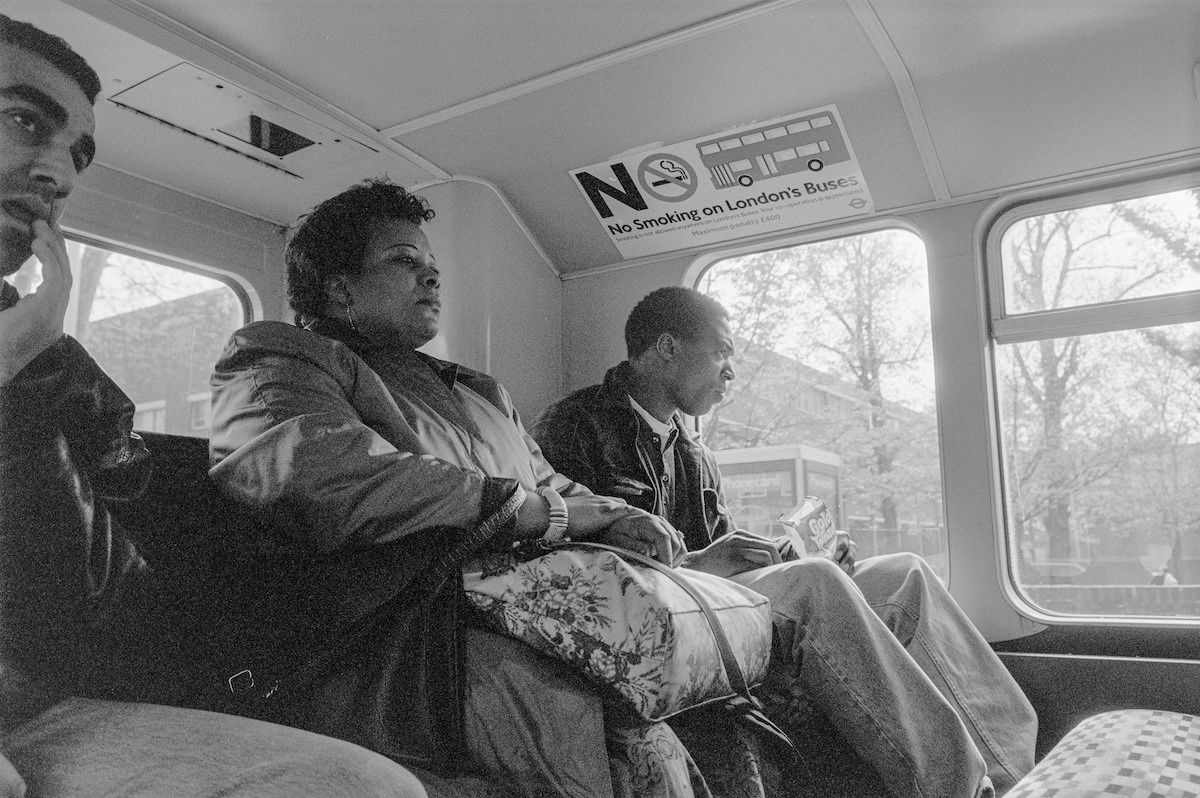
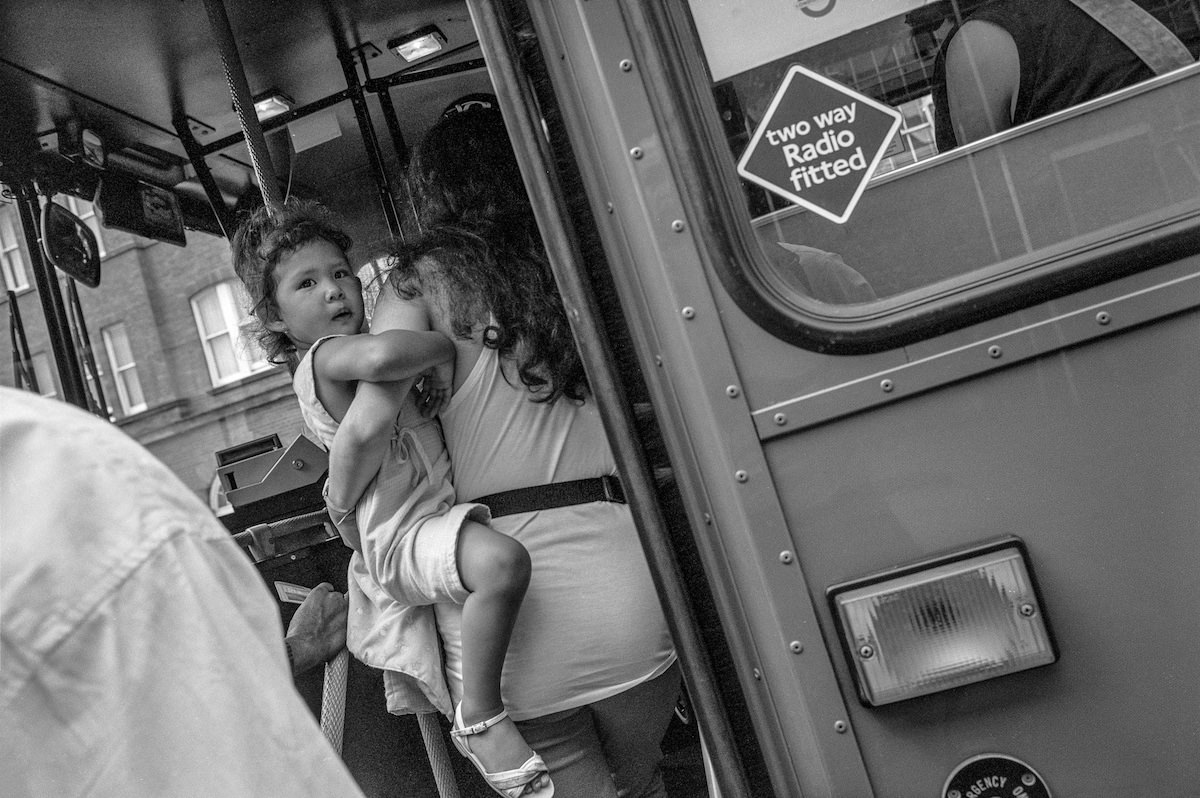
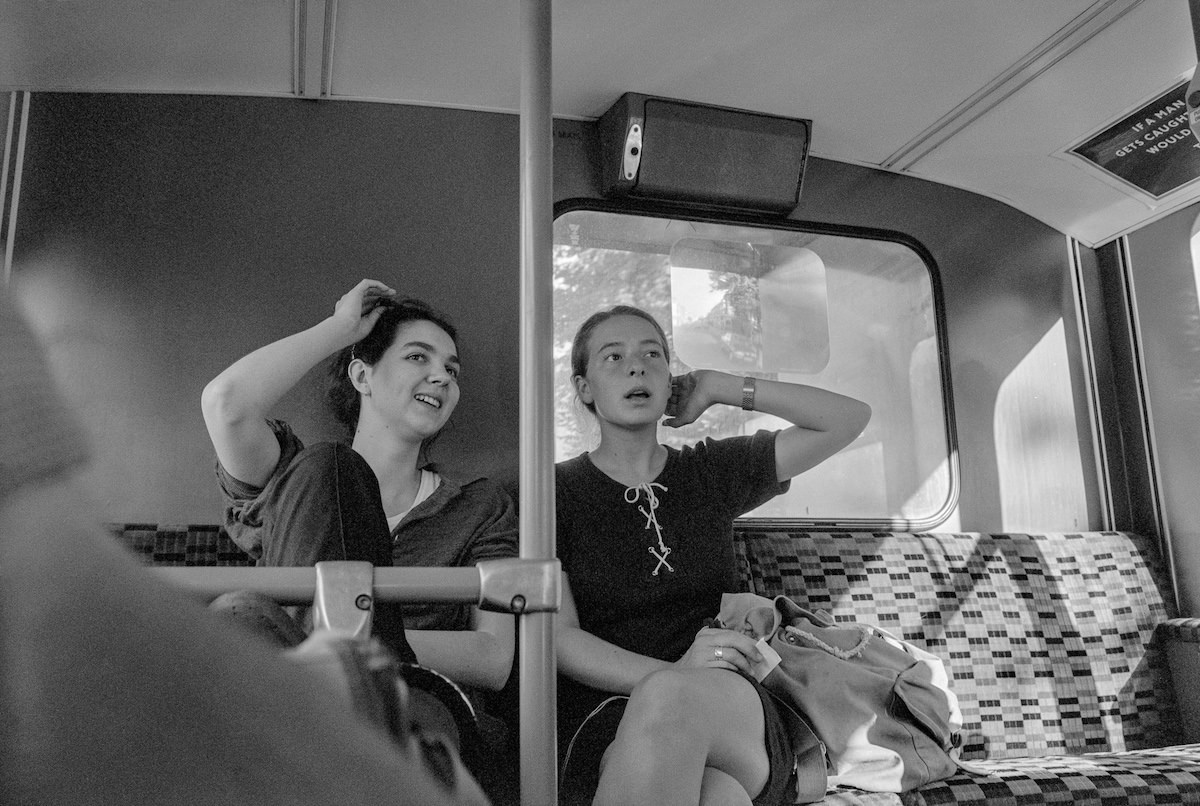
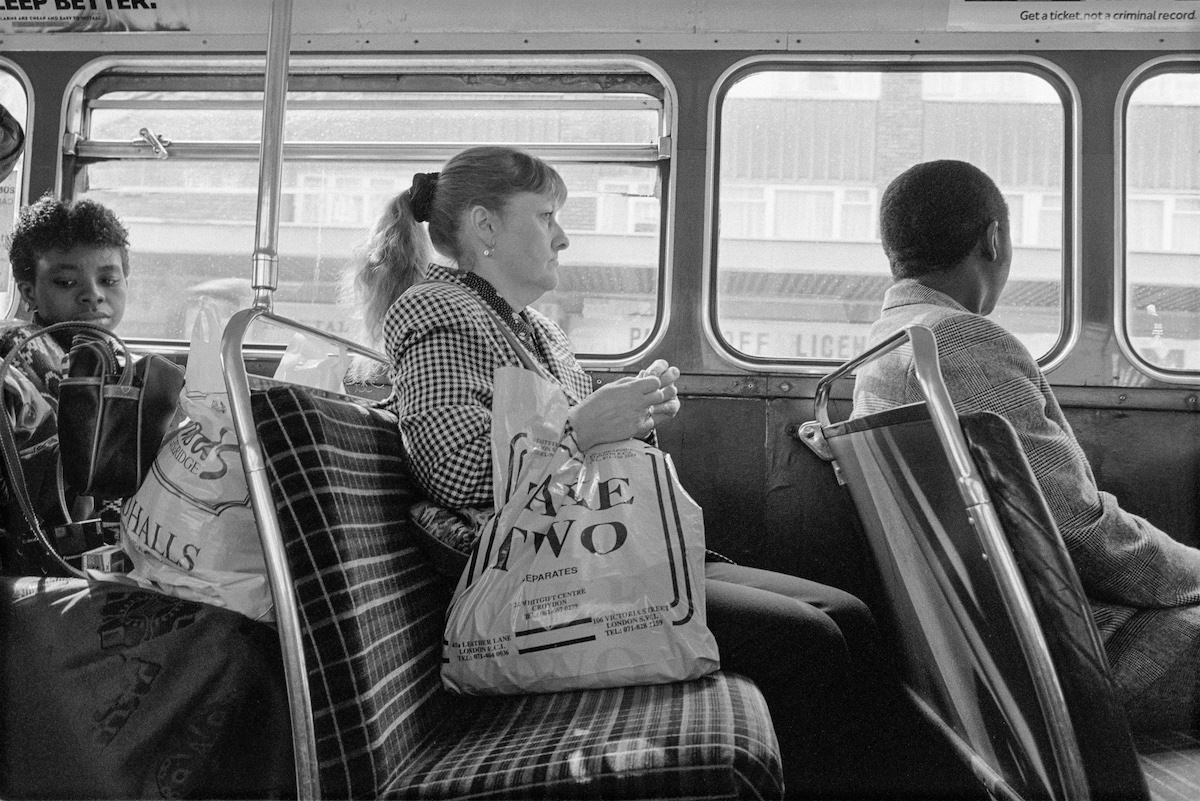
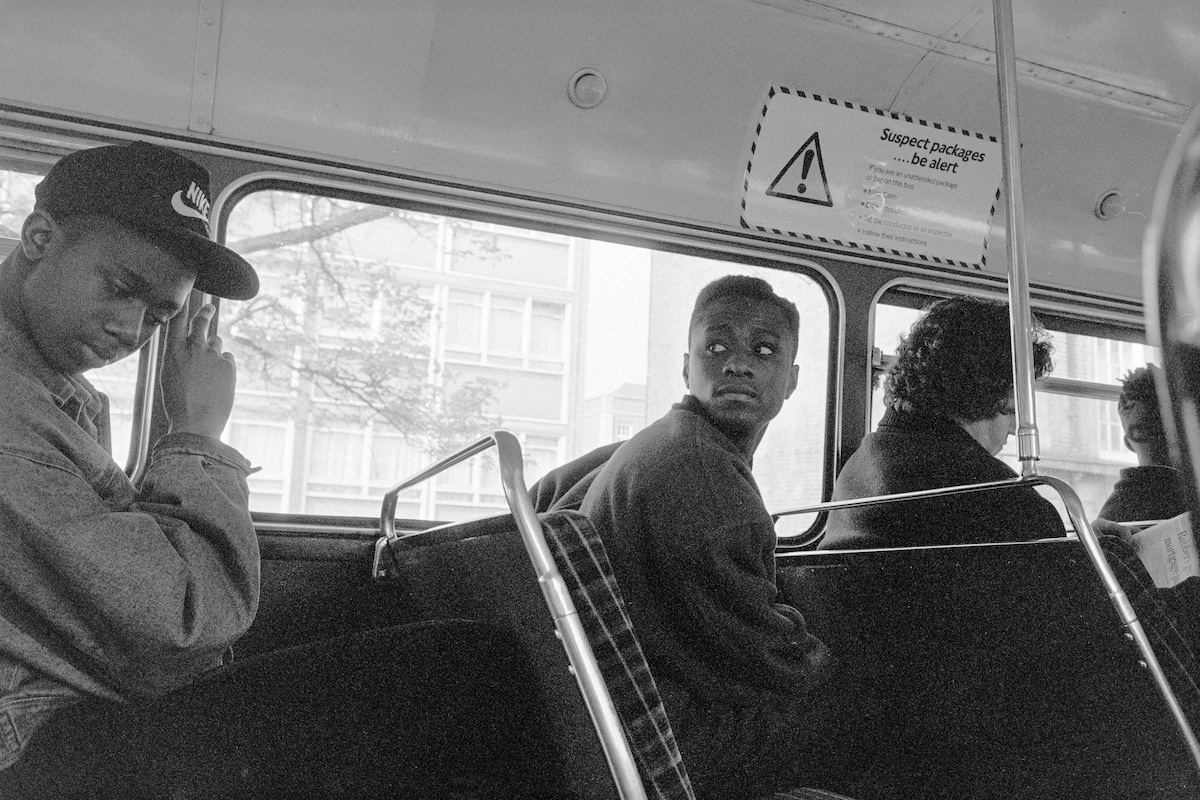
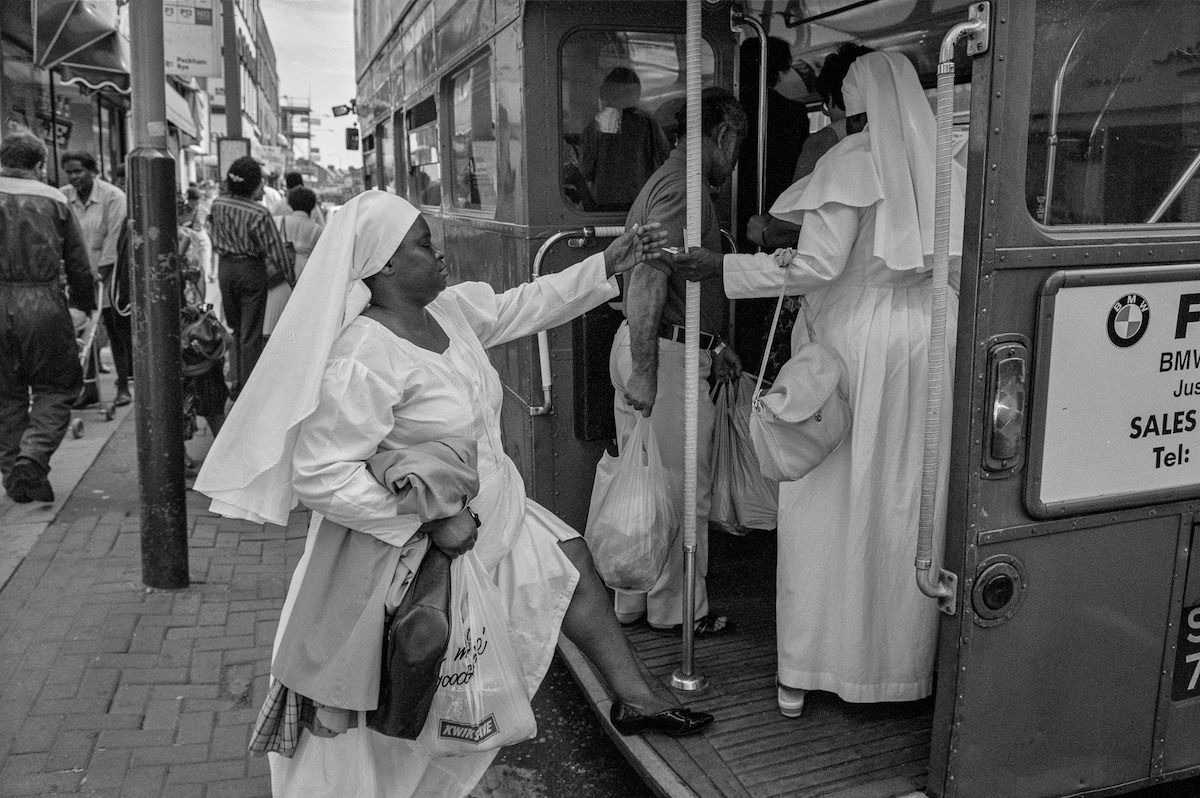
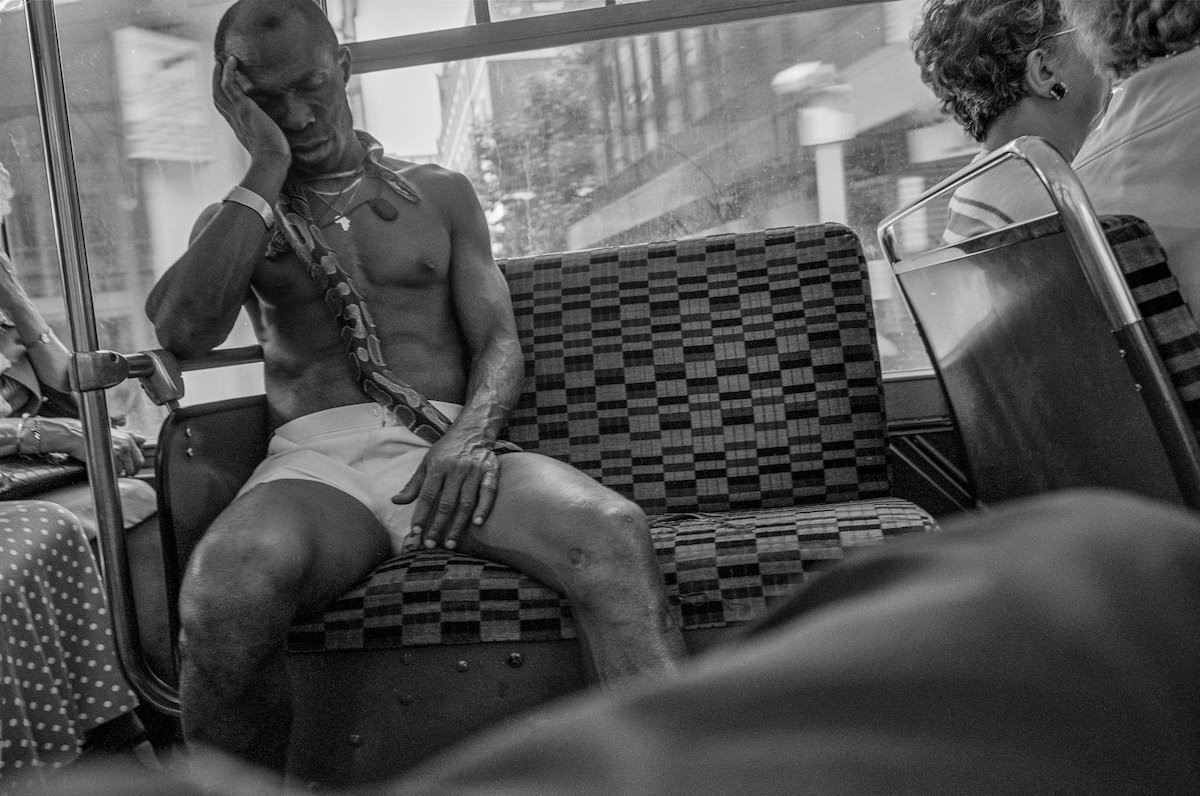
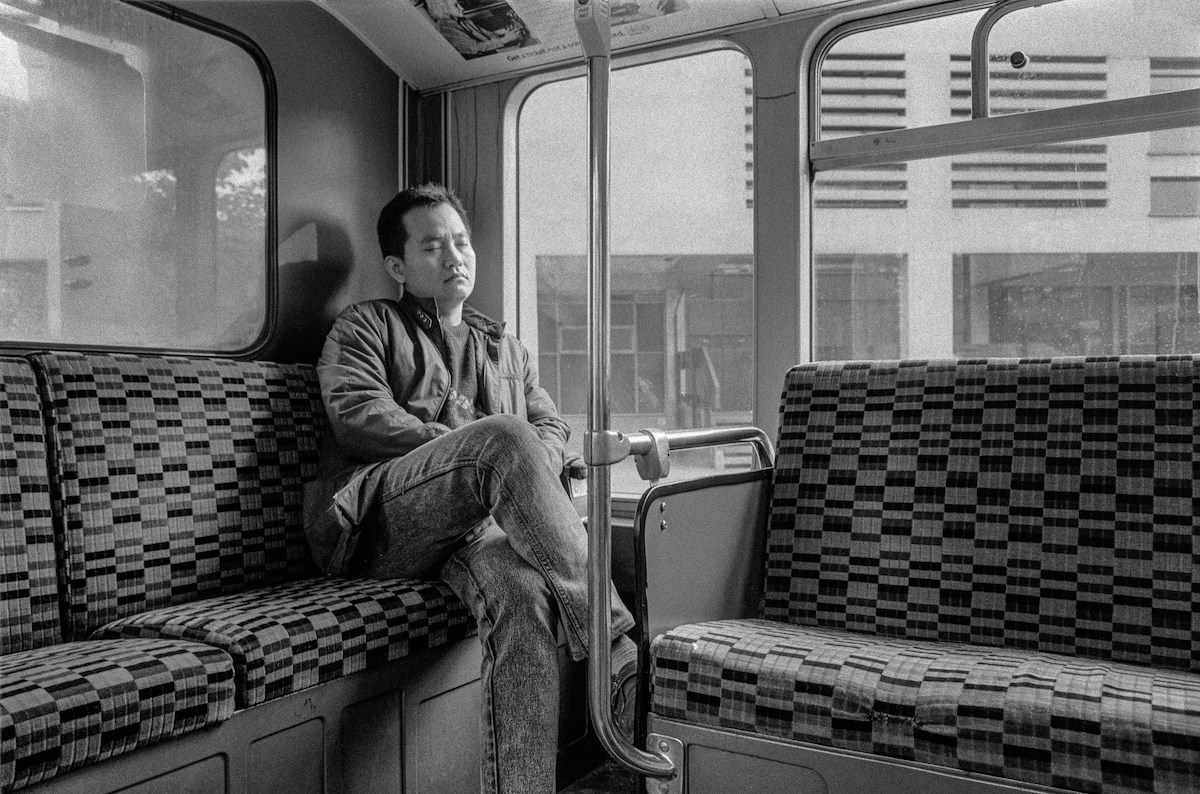
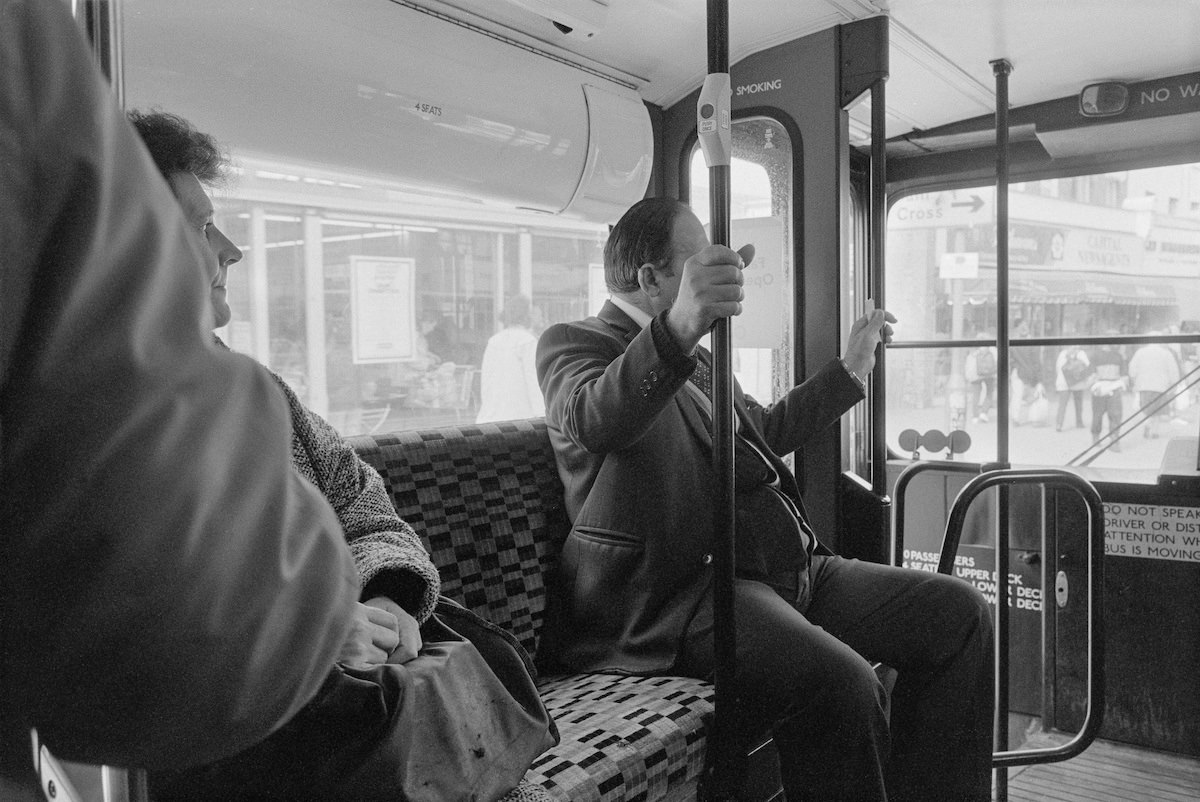
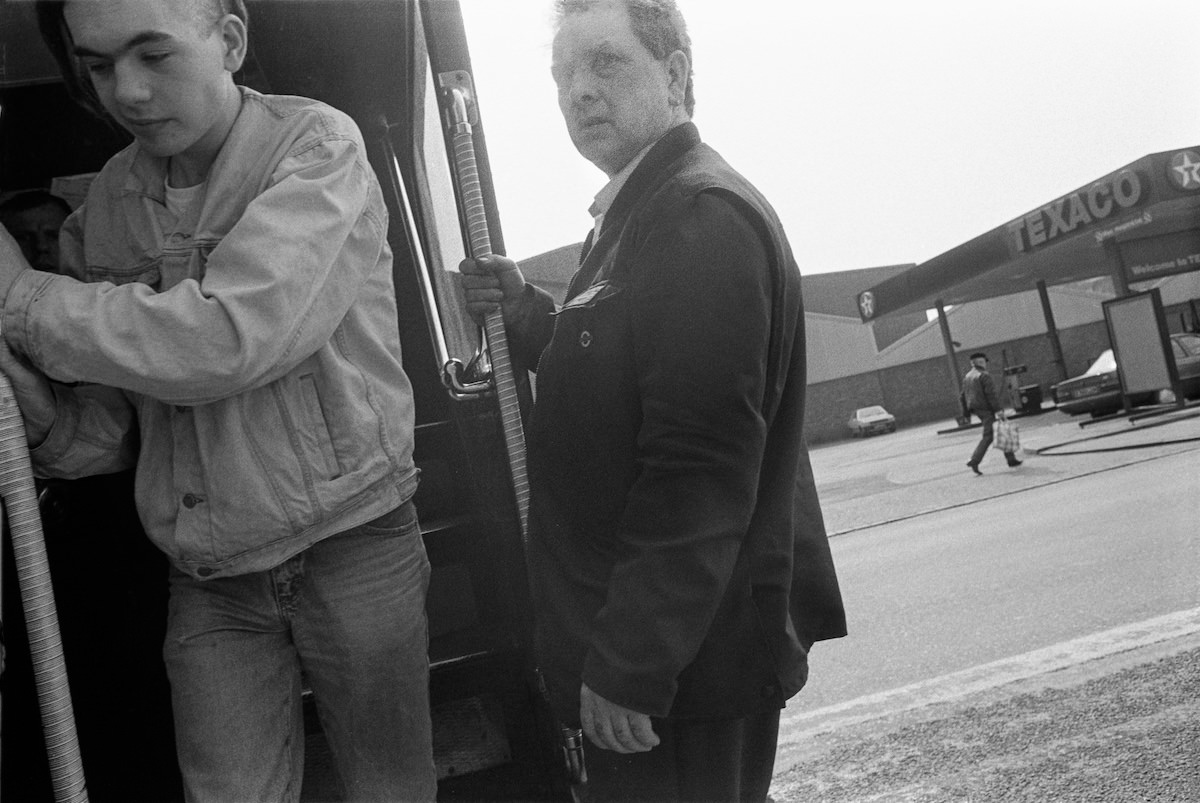
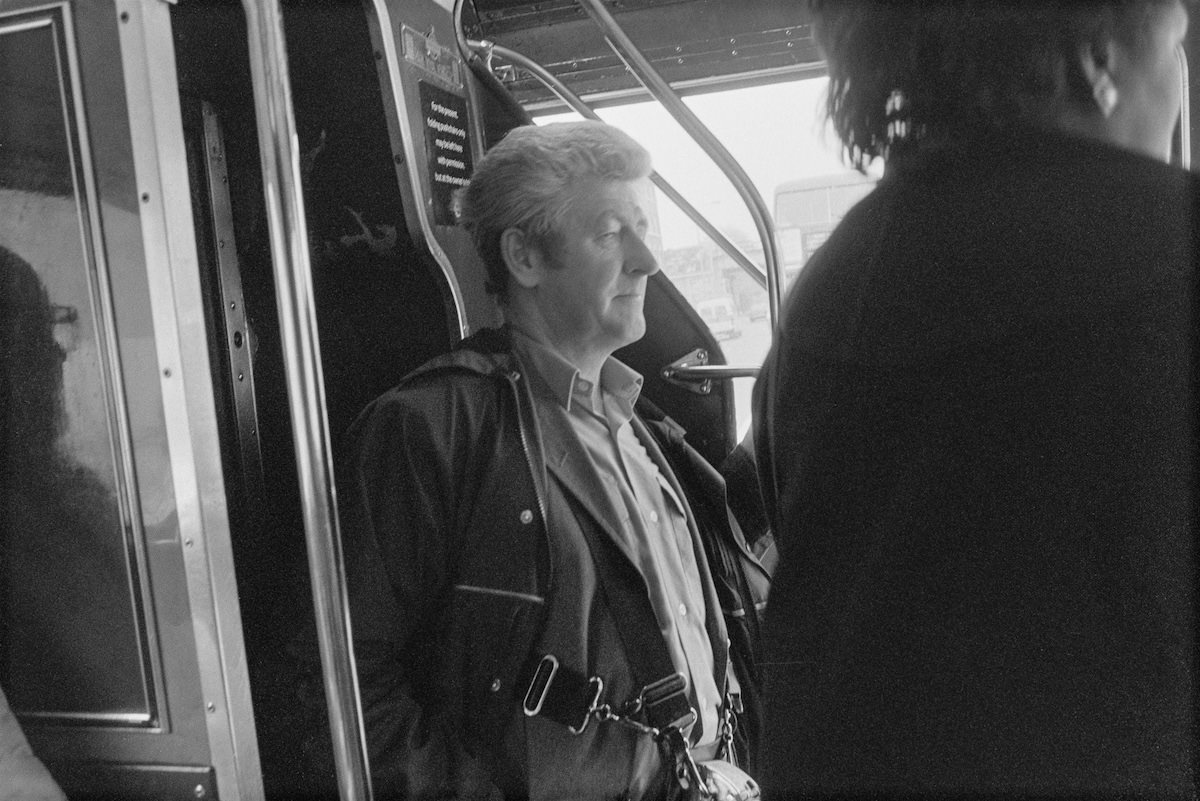
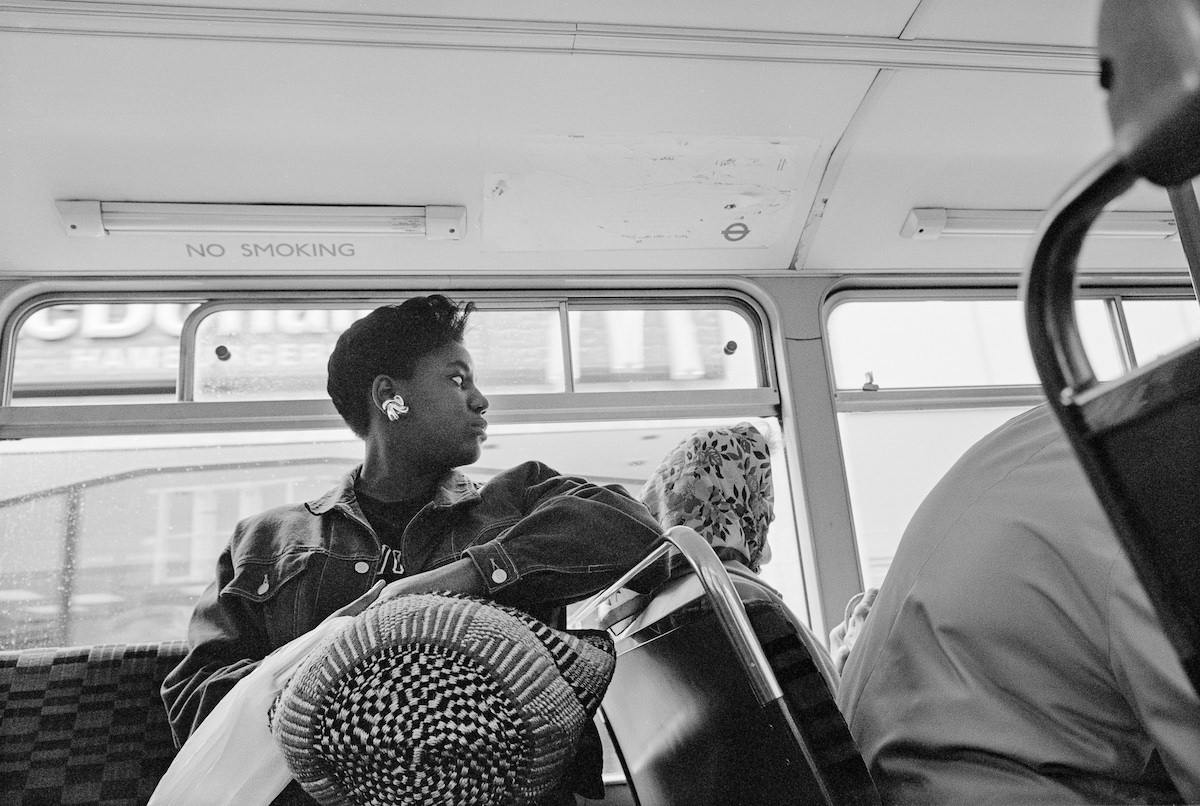
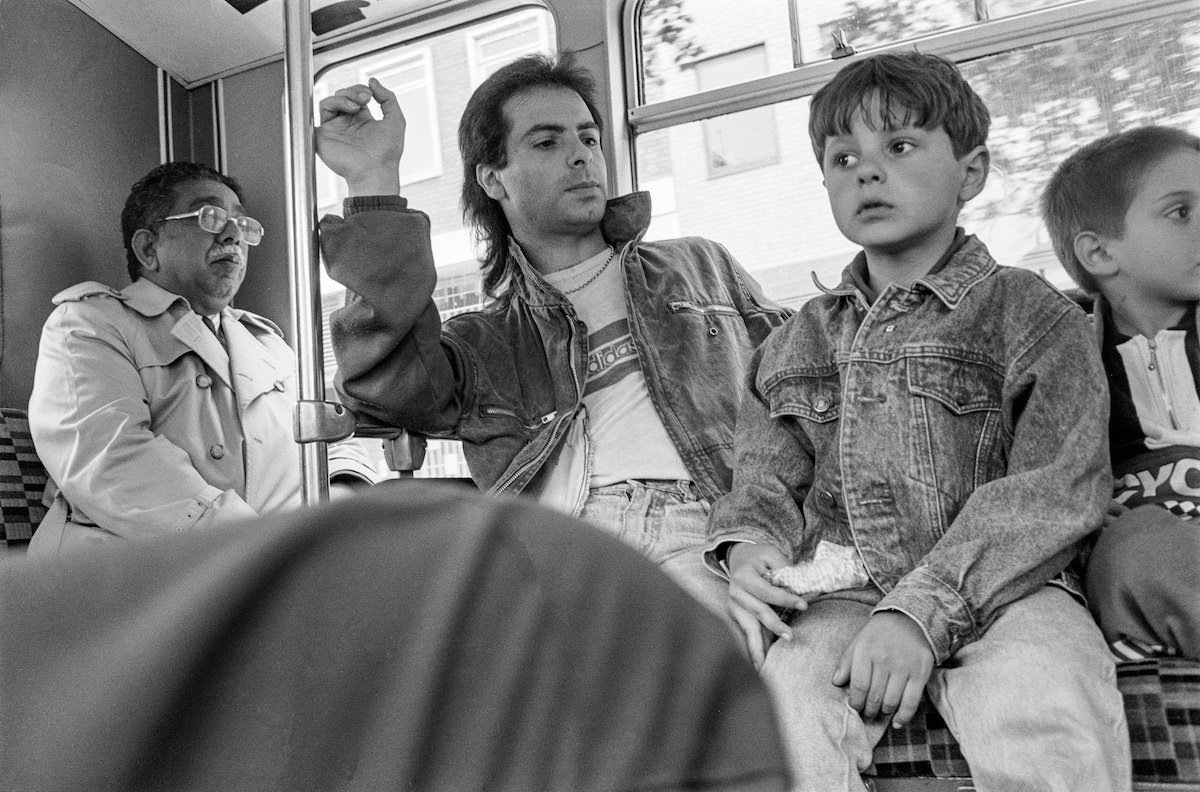
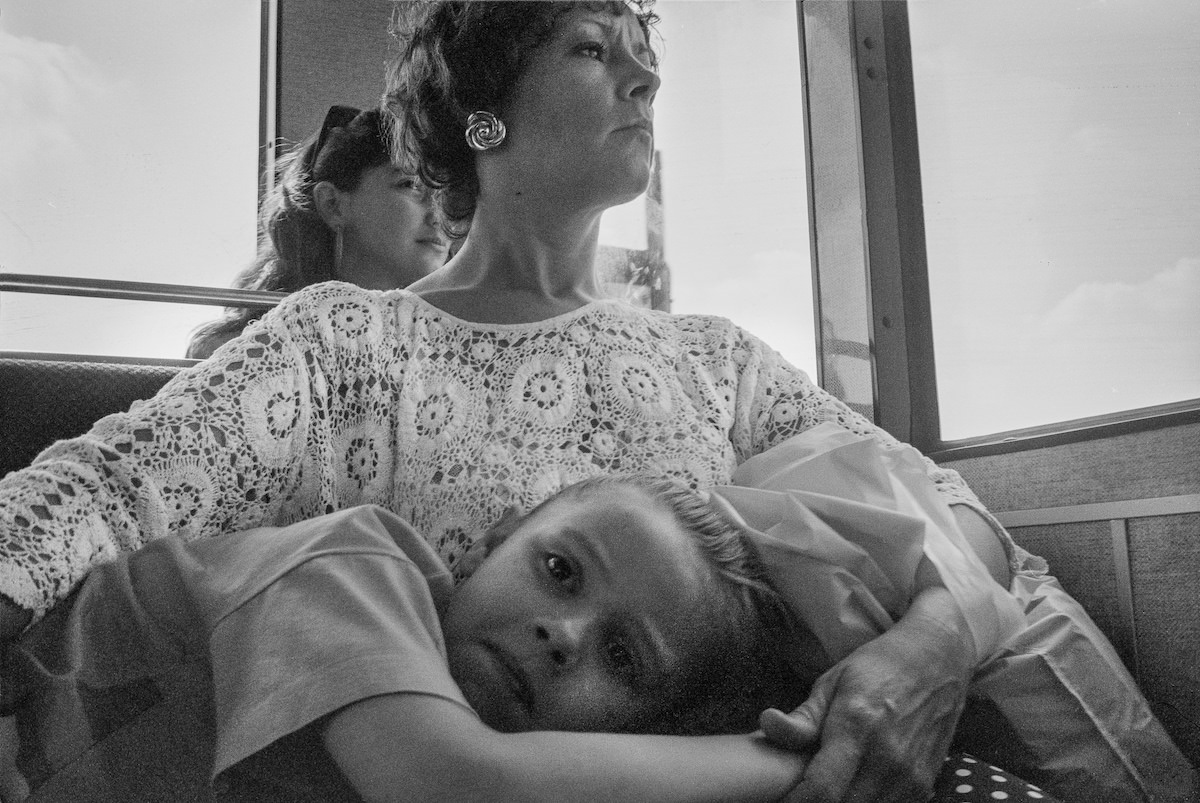
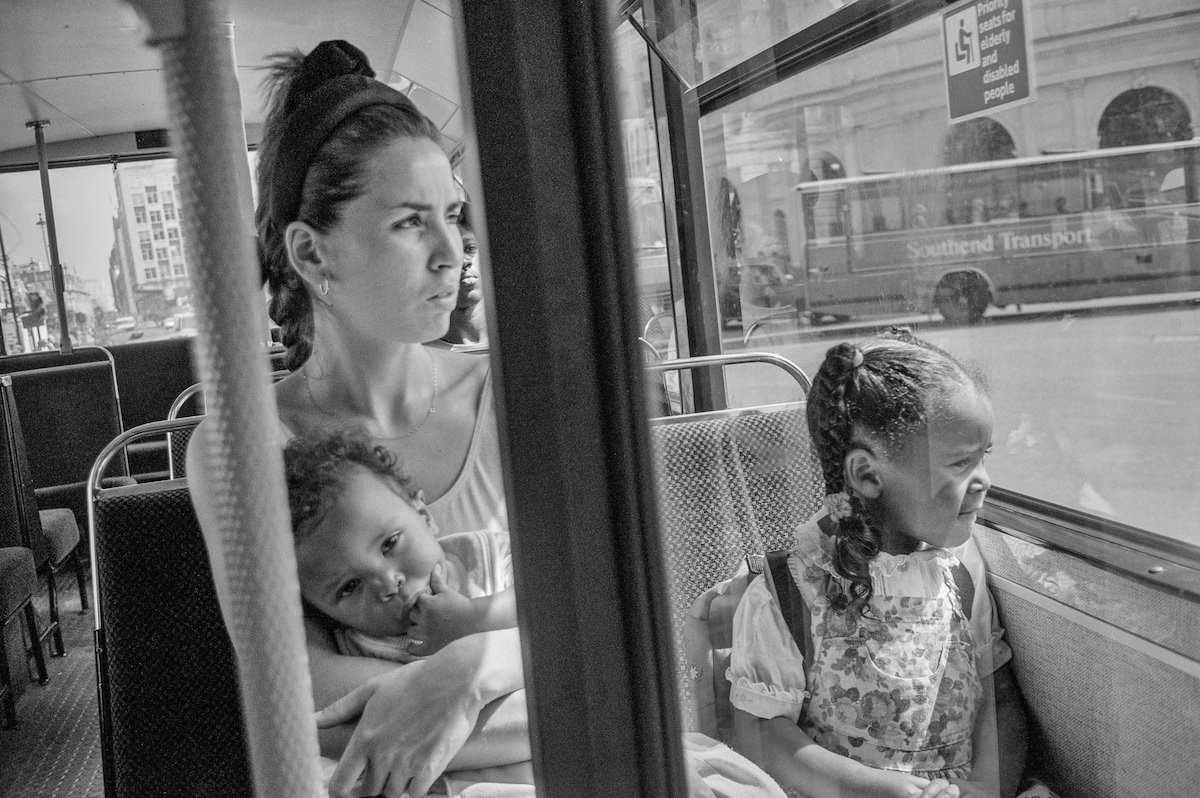
Marshall photographed passengers on London buses throughout 1991 and into 1992. His work wasn’t focused on the vehicles or the routes — it was focused on the people. Commuters, shoppers, mothers with children, conductors taking a break. He moved through areas as different as Peckham and the West End, Brixton and Covent Garden, capturing faces in unguarded moments.
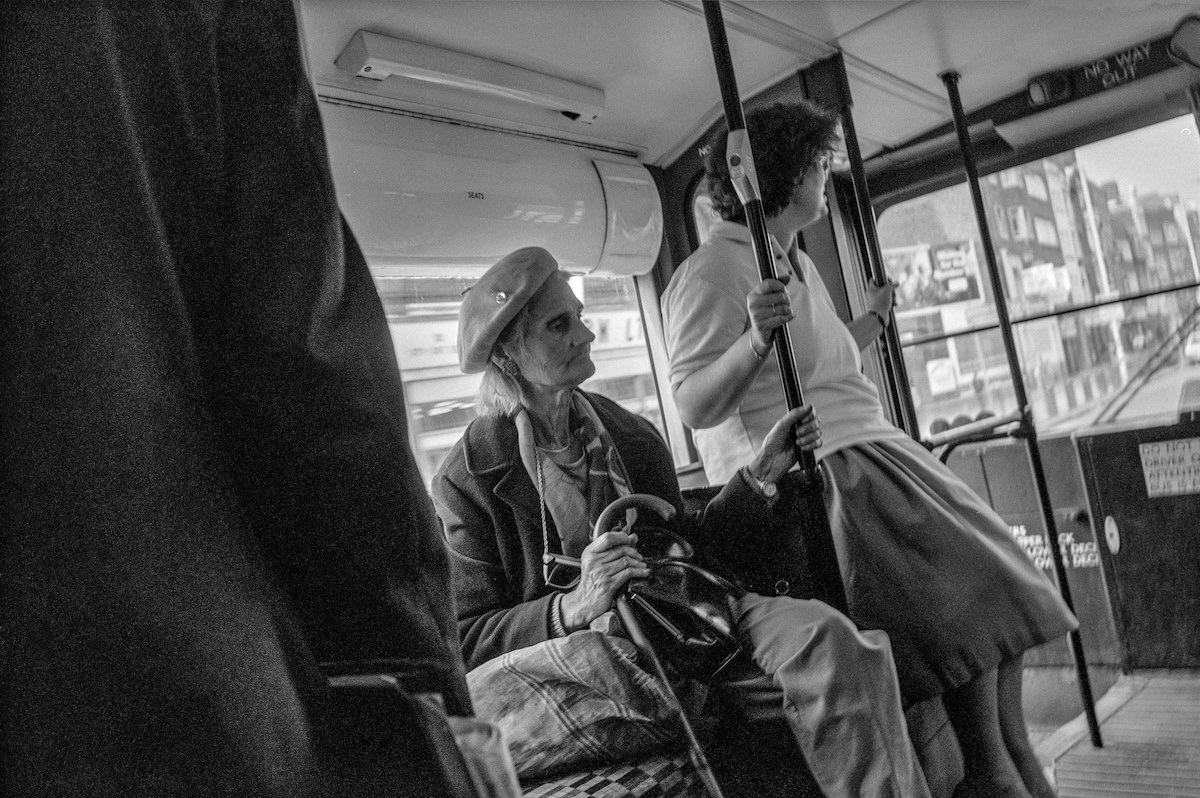
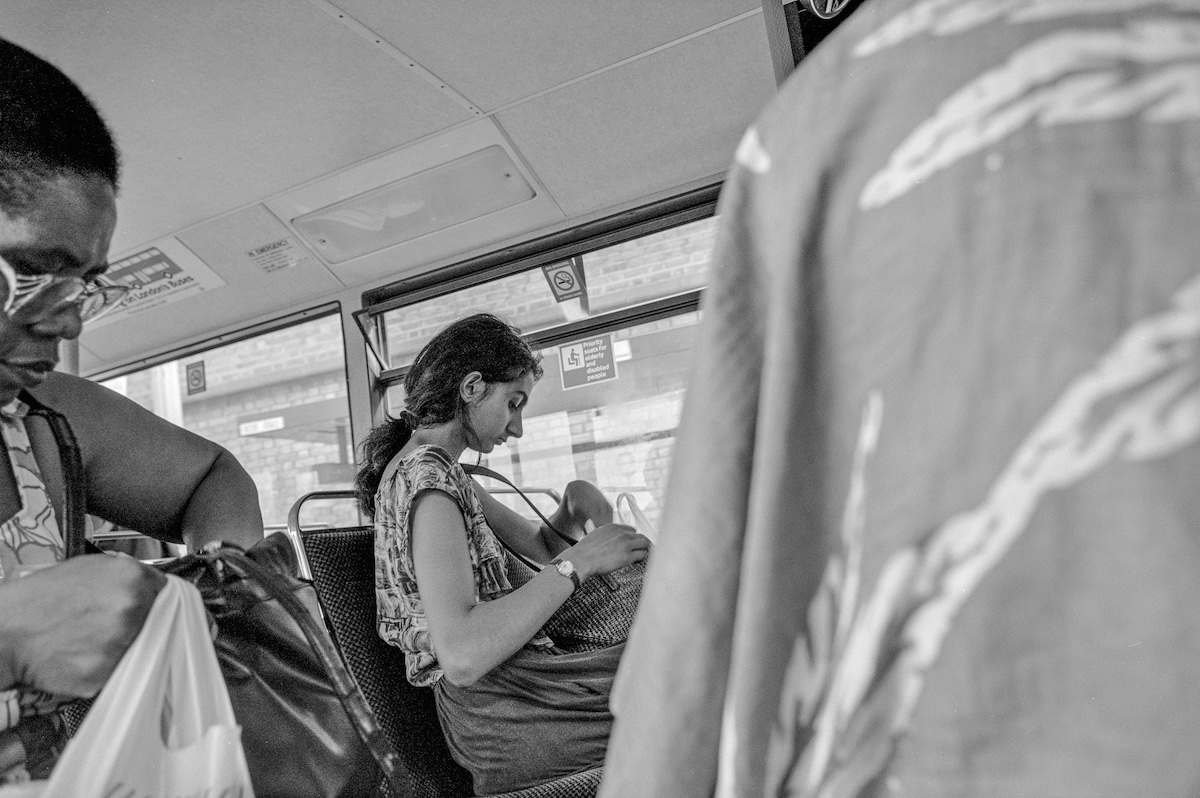
South London features heavily in Marshall’s collection. Neighborhoods like Peckham, Camberwell, Brixton, and Clapham appear again and again. These were densely populated, working-class areas where the bus was not a convenience but a necessity. For many residents, LRT’s routes were the primary link between home, work, school, and the rest of the city.
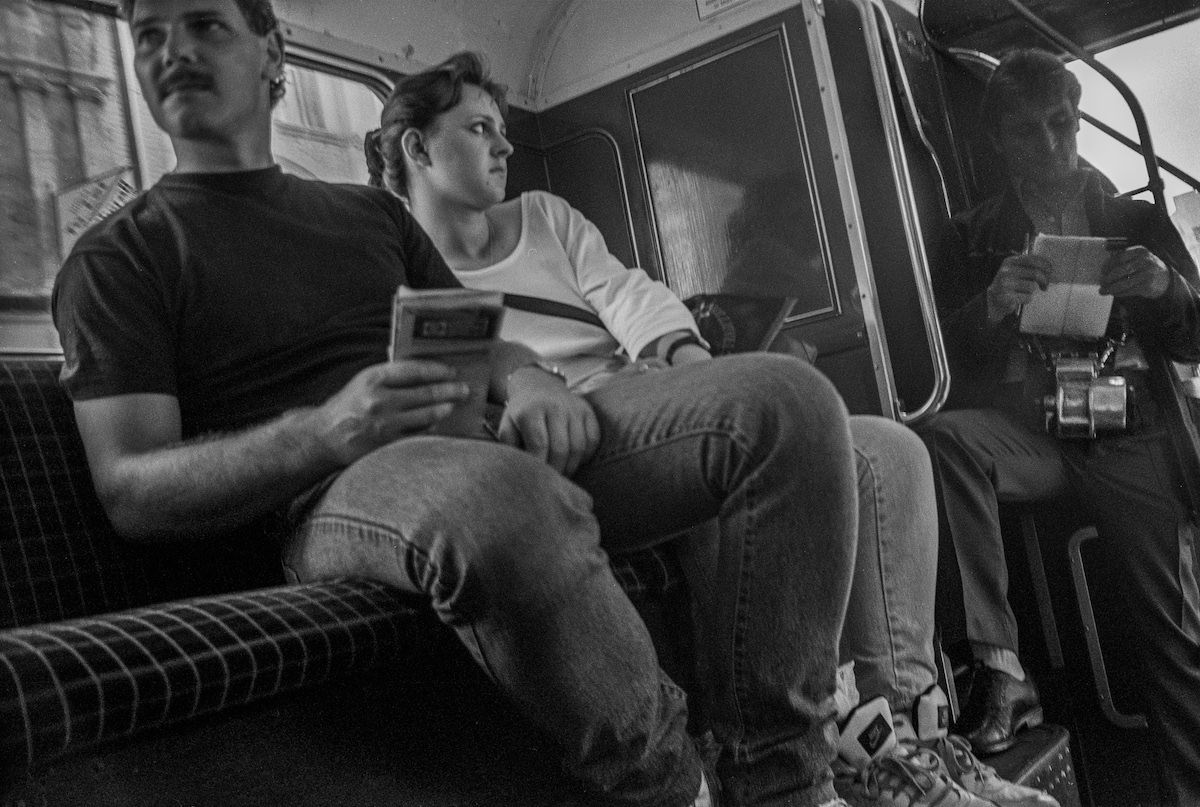
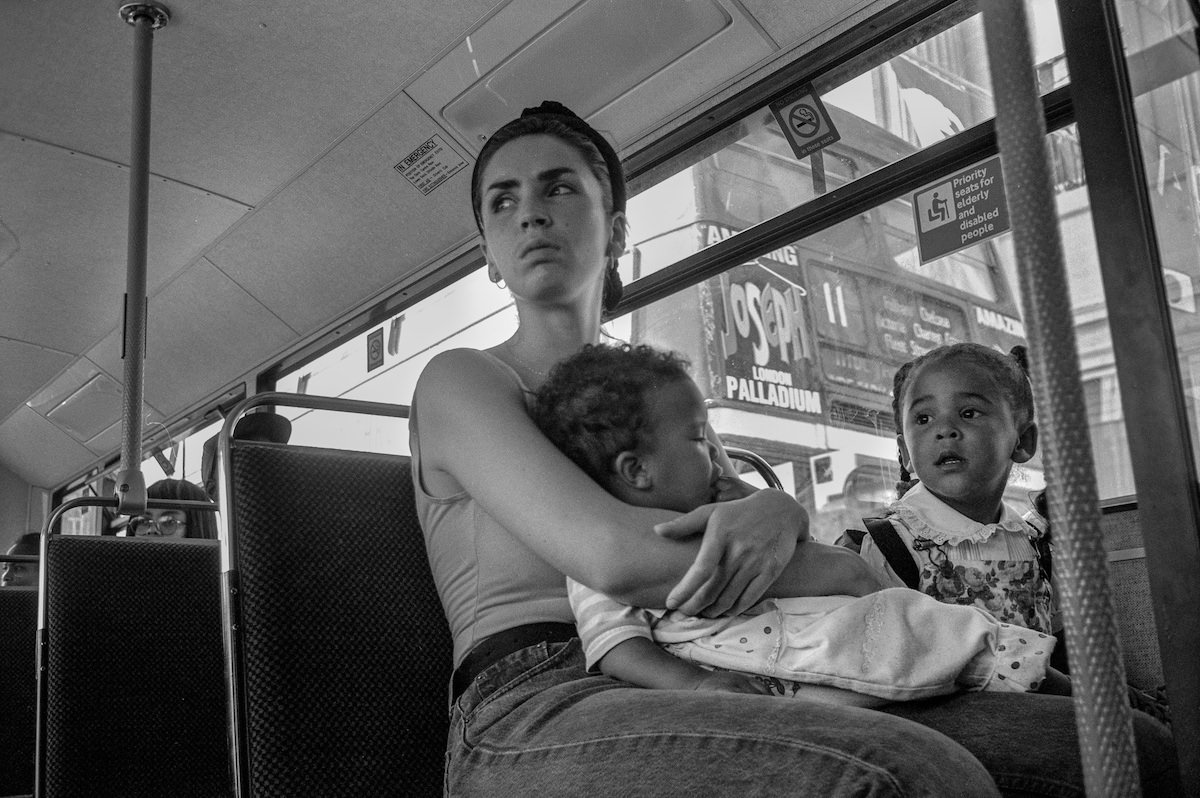
Marshall also worked north of the river. Camden, Islington, Shoreditch, and Stoke Newington each appear in his archive alongside the busy central London stops near Charing Cross, Oxford Street, and Covent Garden. The contrast between these areas — in wealth, in pace, in the mix of people riding — is visible across the photographs.
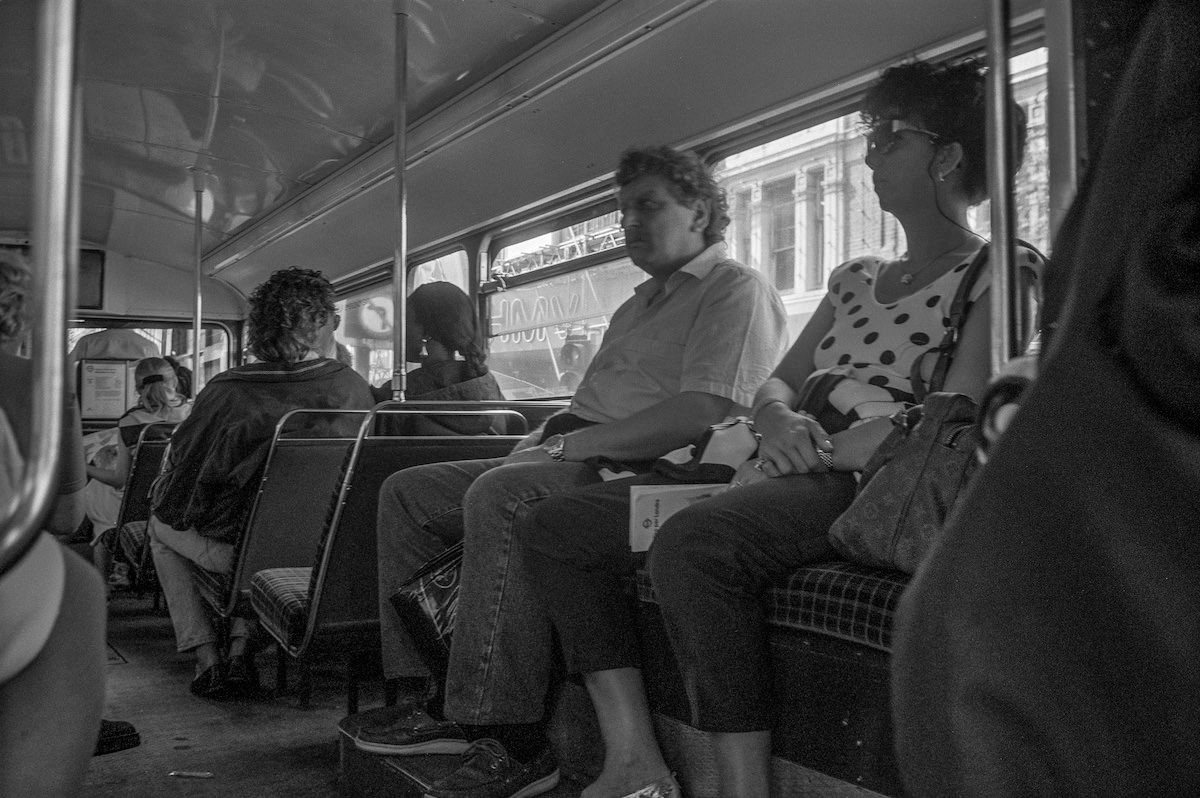
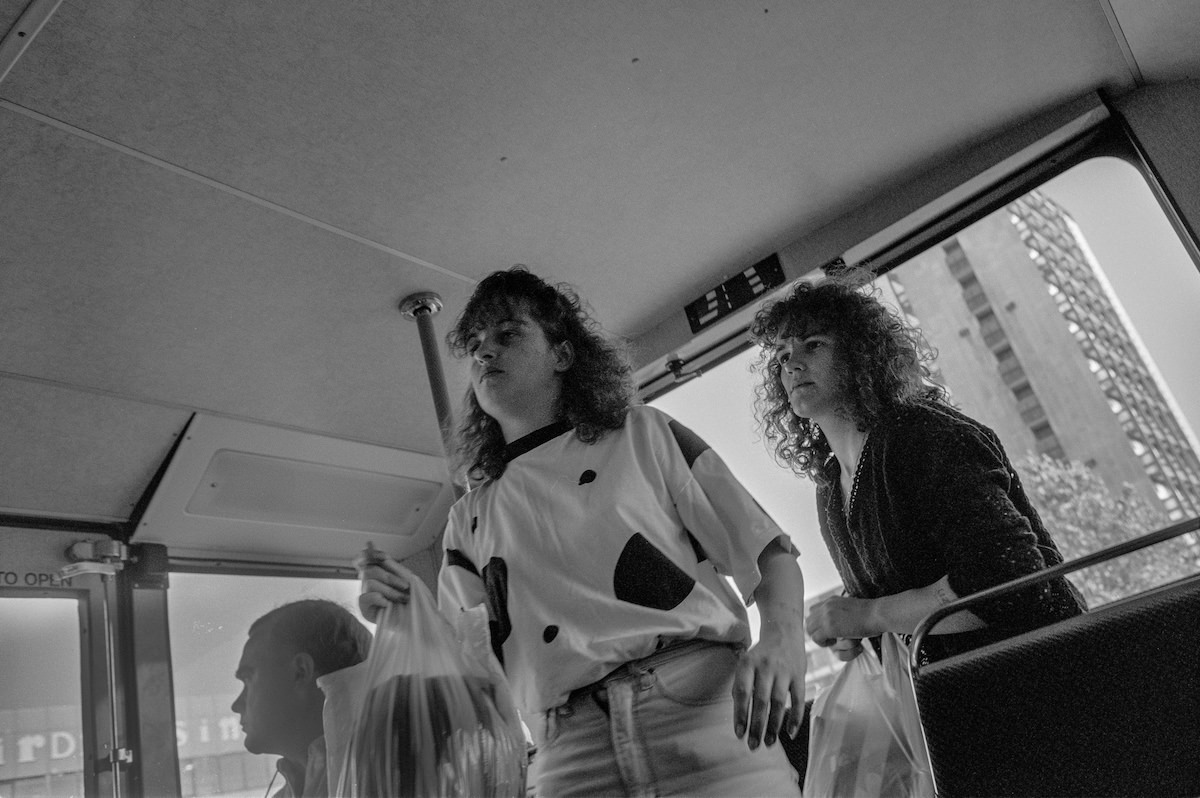
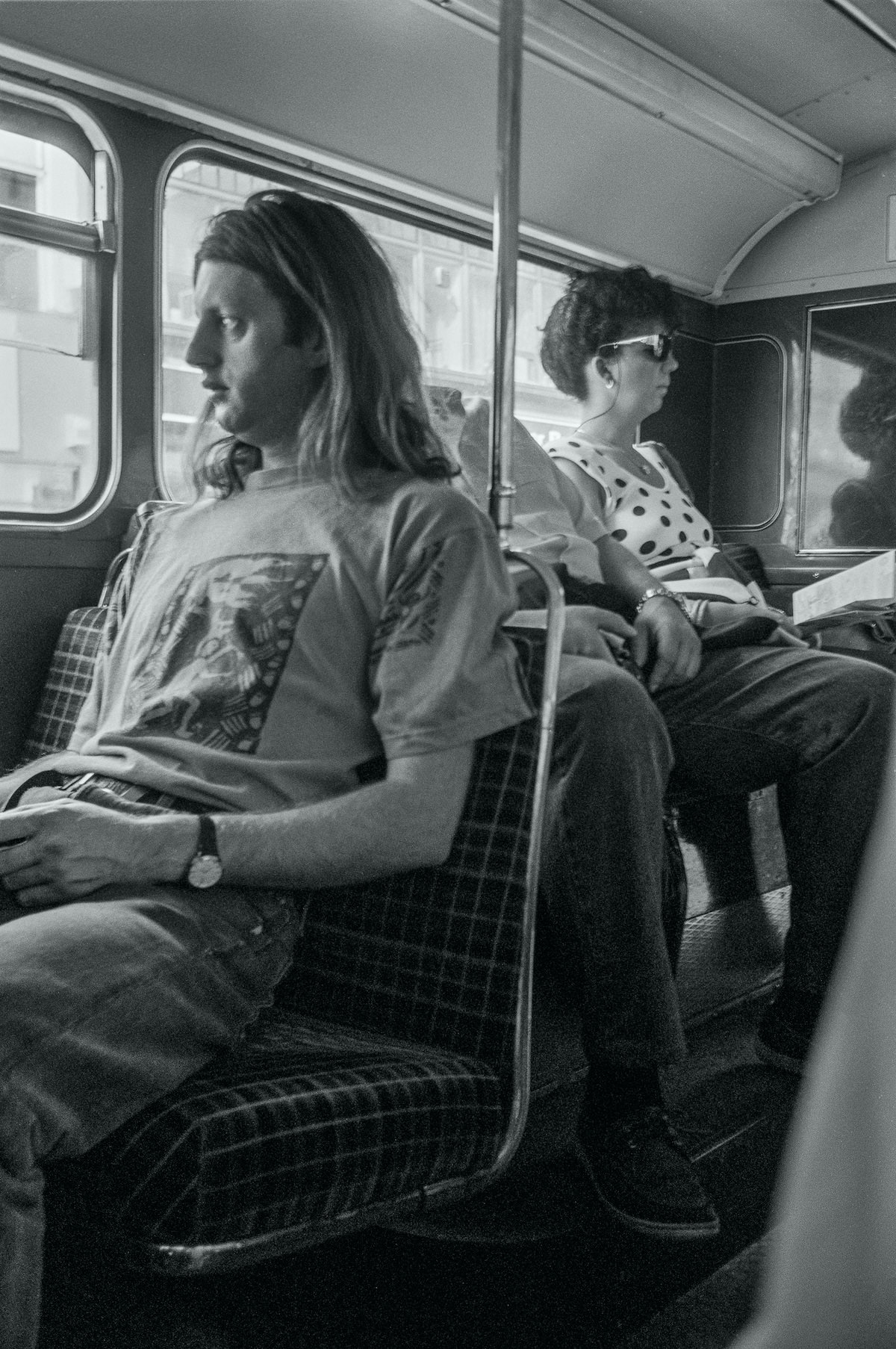
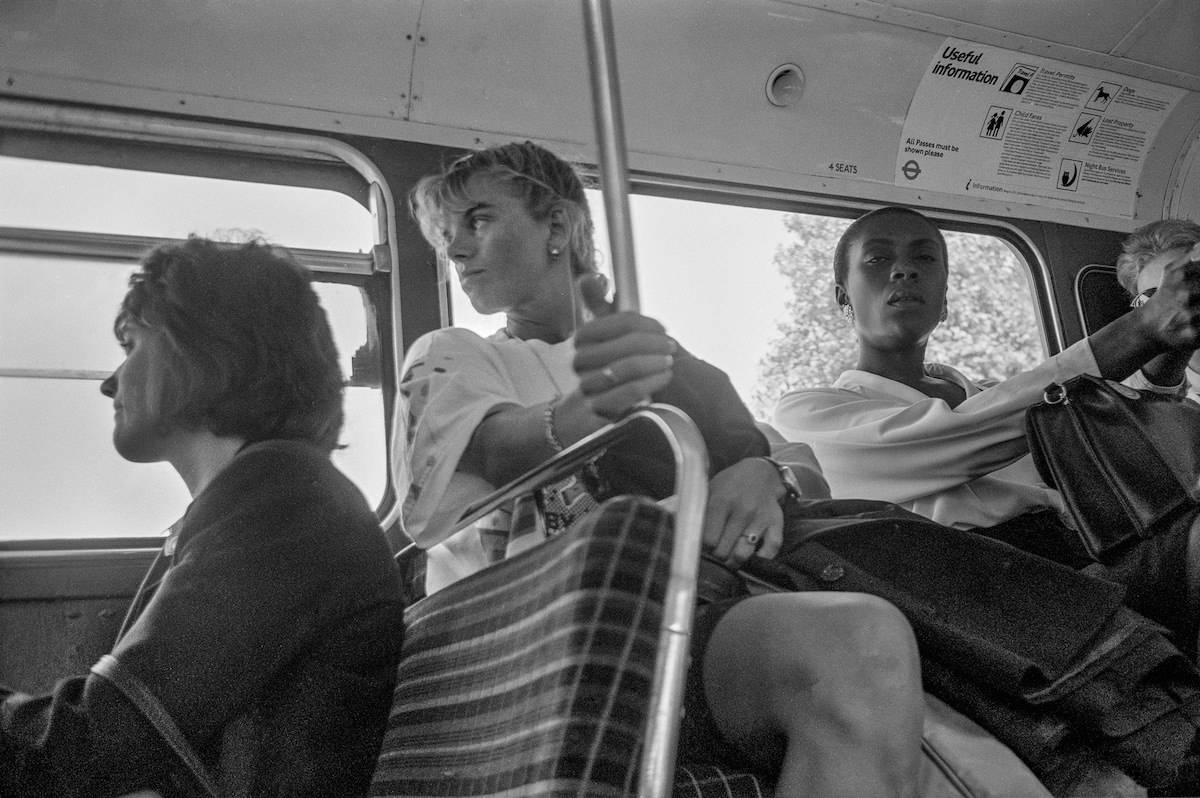
On the upper decks and lower saloons of London’s buses, Marshall found a cross-section of the city. A conductor sitting down between stops. A woman reading. Children pressed against windows. Groups of passengers lost in their own thoughts, side by side but worlds apart. The bus was one of the few spaces in London where people from entirely different lives shared the same few feet of space.
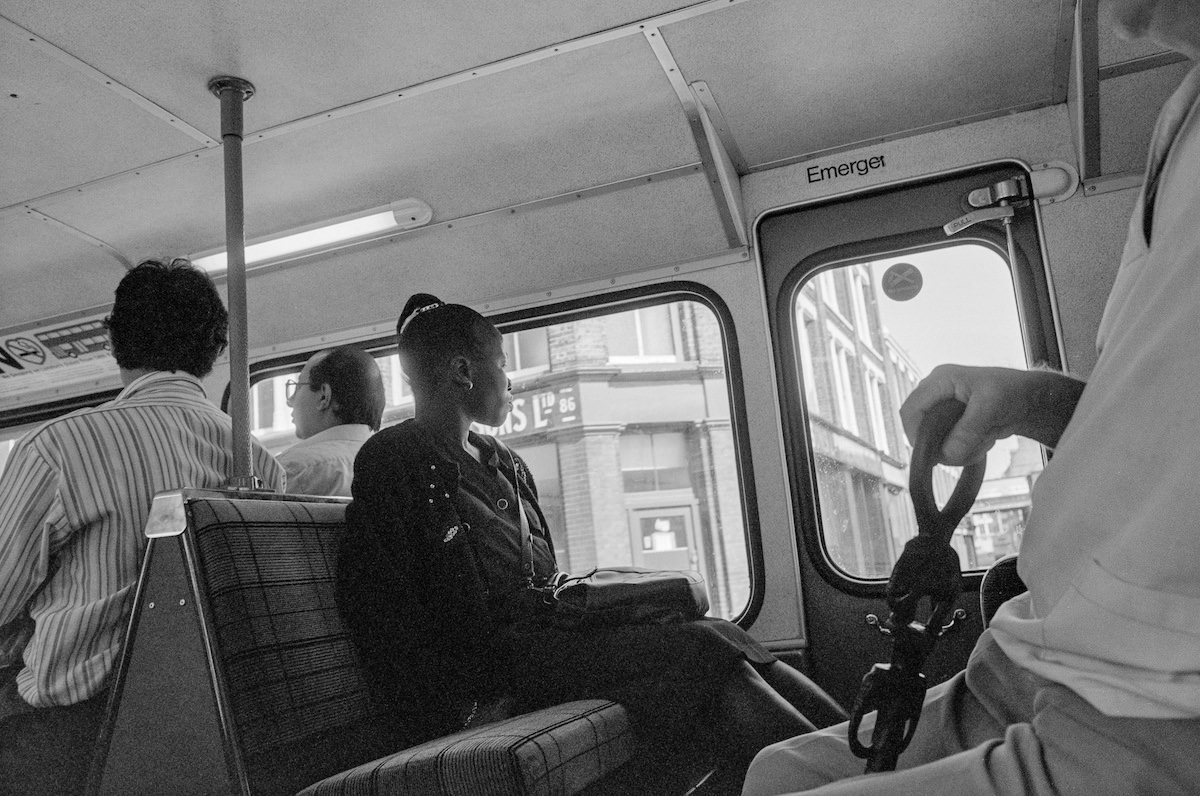
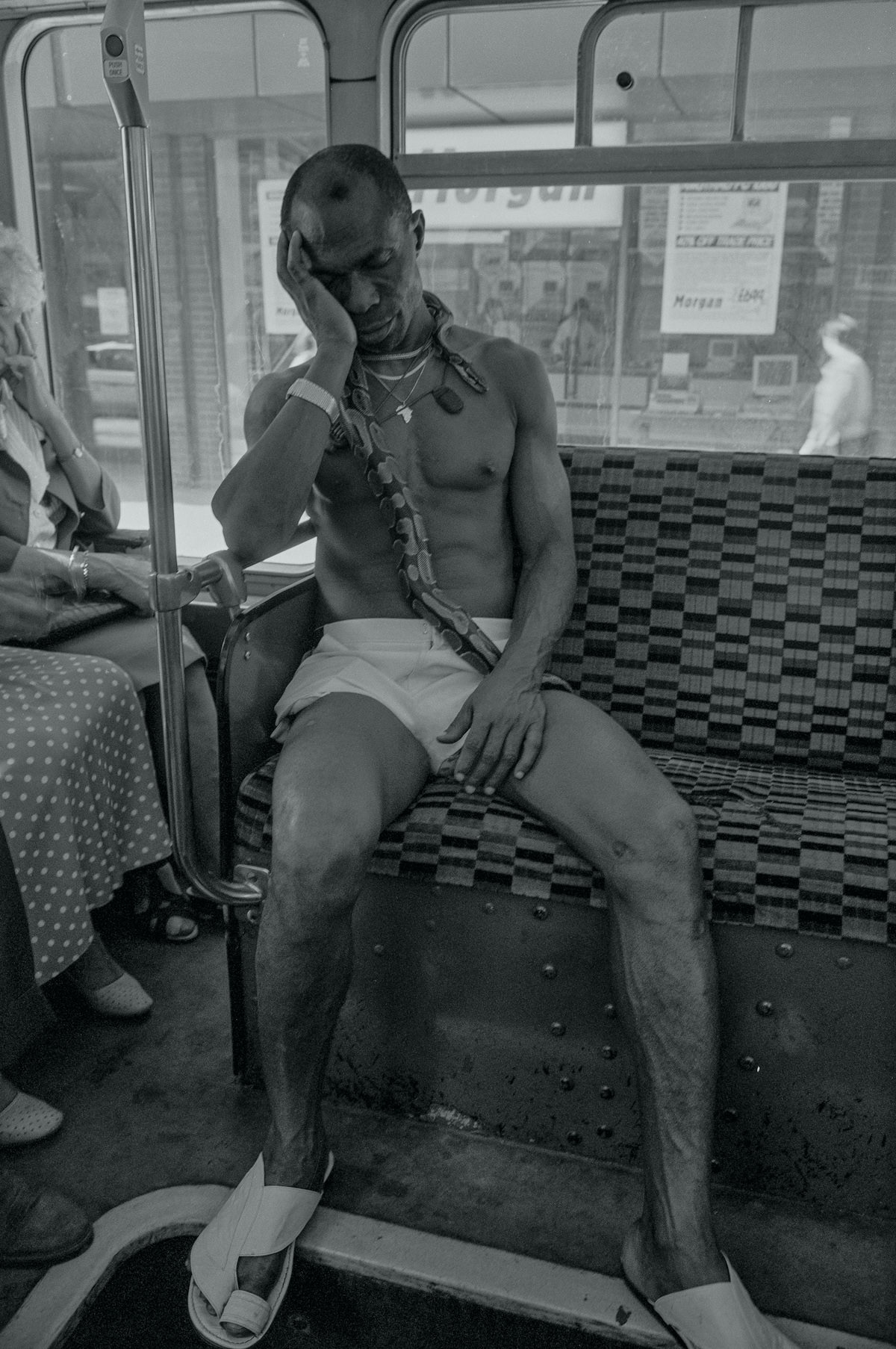
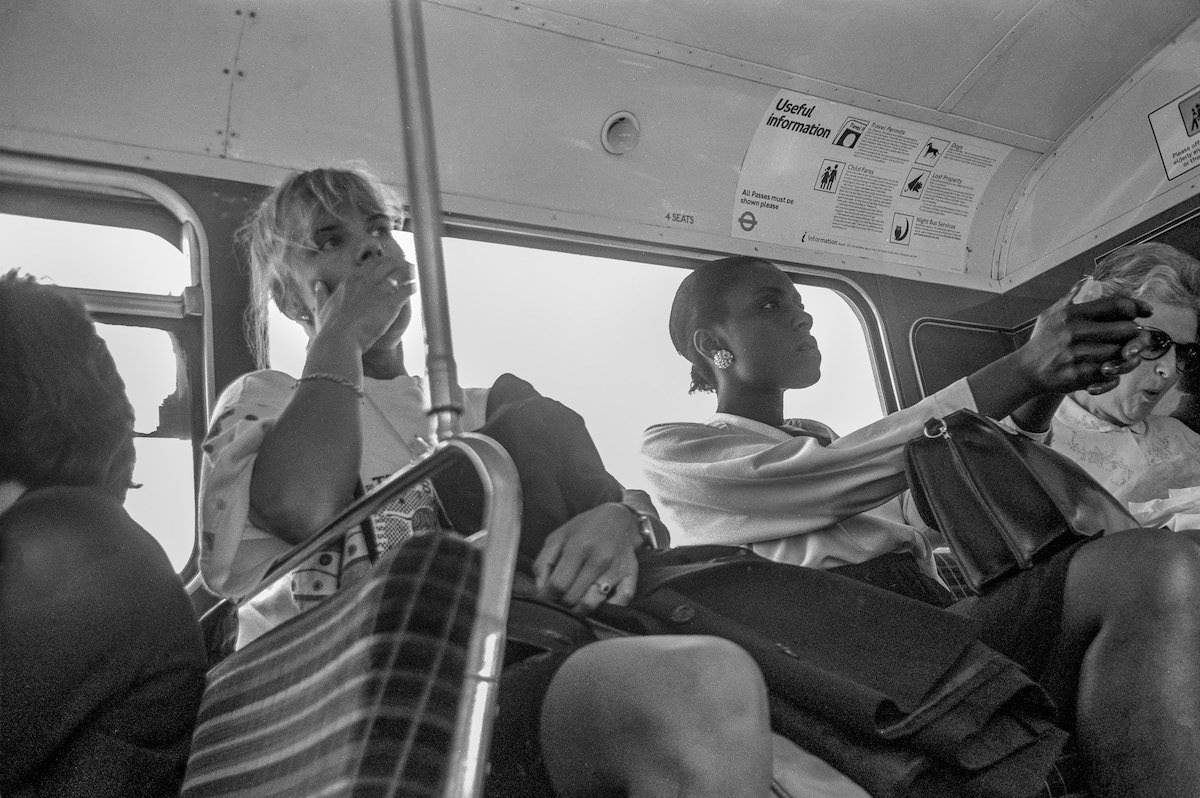
By 1991, London’s population was increasingly diverse, and Marshall’s photographs reflect that. Passengers from across Britain’s former colonies, recent immigrants, longtime Londoners — all of them riding the same routes. The buses of Brixton and Hackney in particular carried communities that had transformed those neighborhoods over the previous three decades.
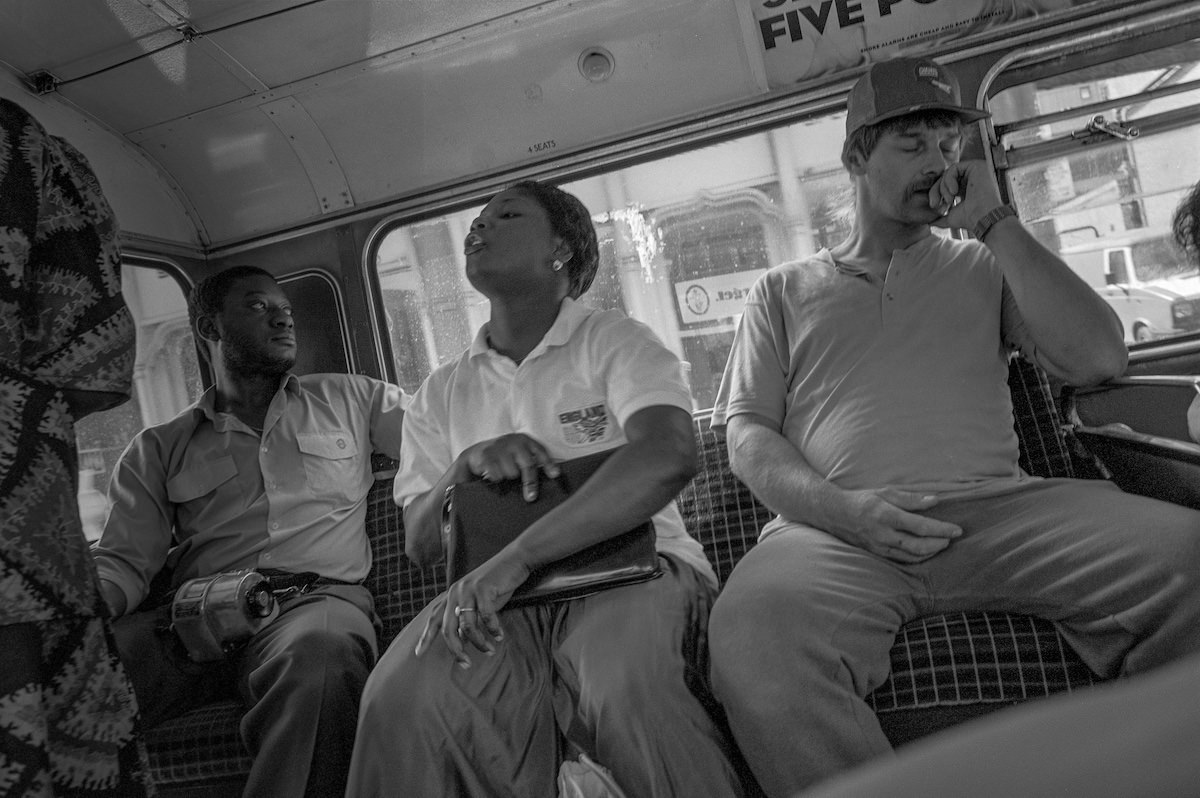
Bus conductors were still a feature of some London routes in 1991, though their numbers were declining as one-person-operated buses became more common. The conductor’s job — collecting fares, issuing tickets, managing the flow of passengers — was physical and social. Marshall caught at least one of them at rest, a brief pause in a working day spent entirely on the move.
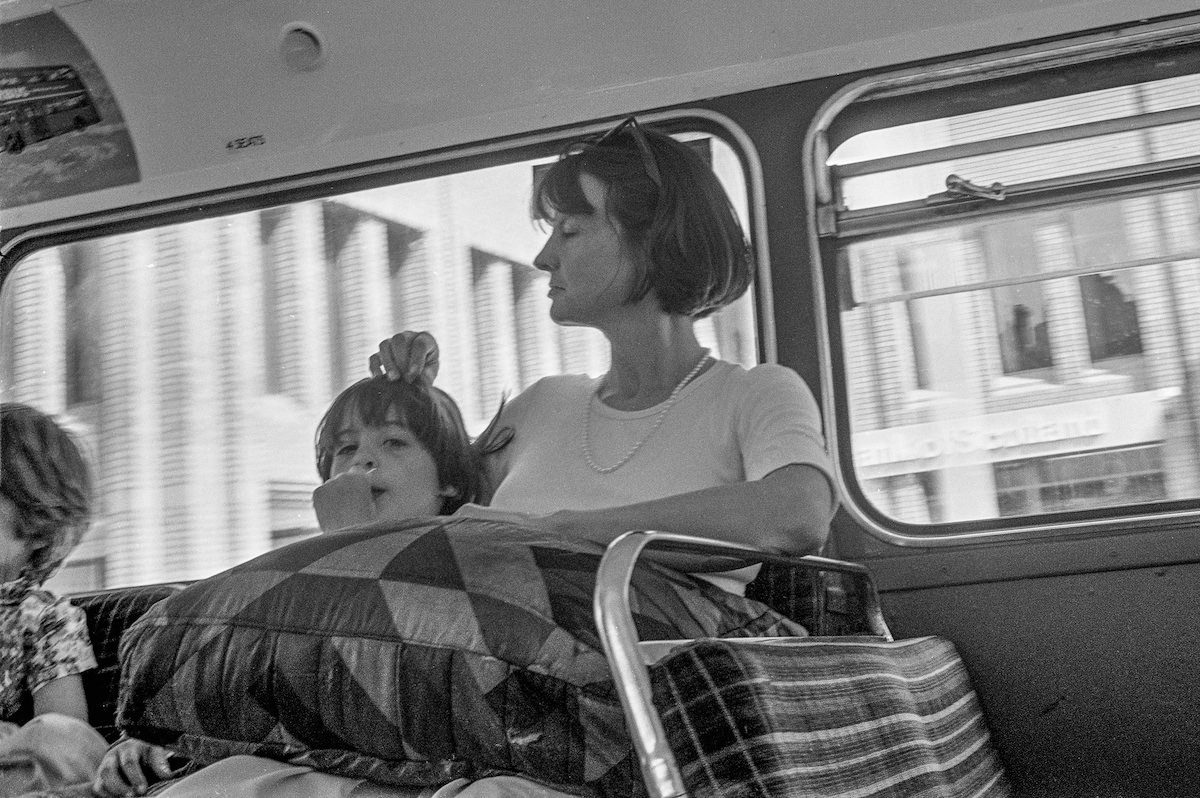
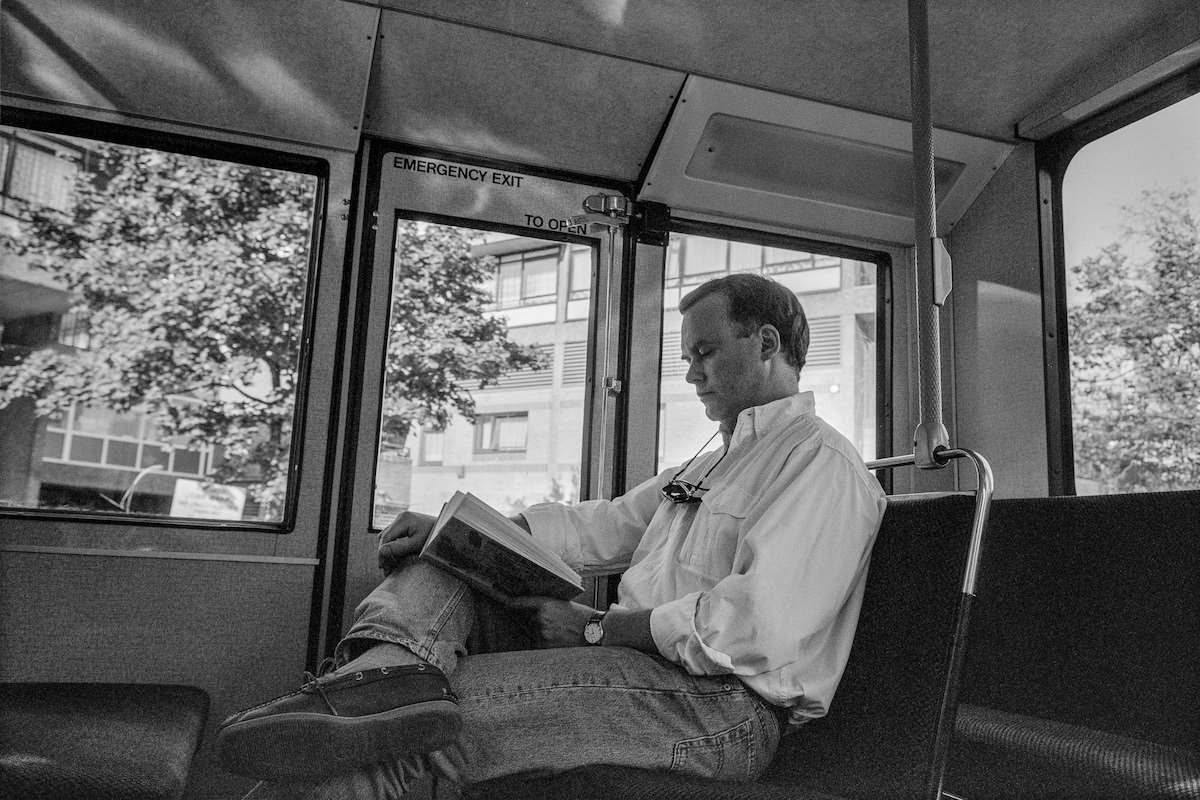
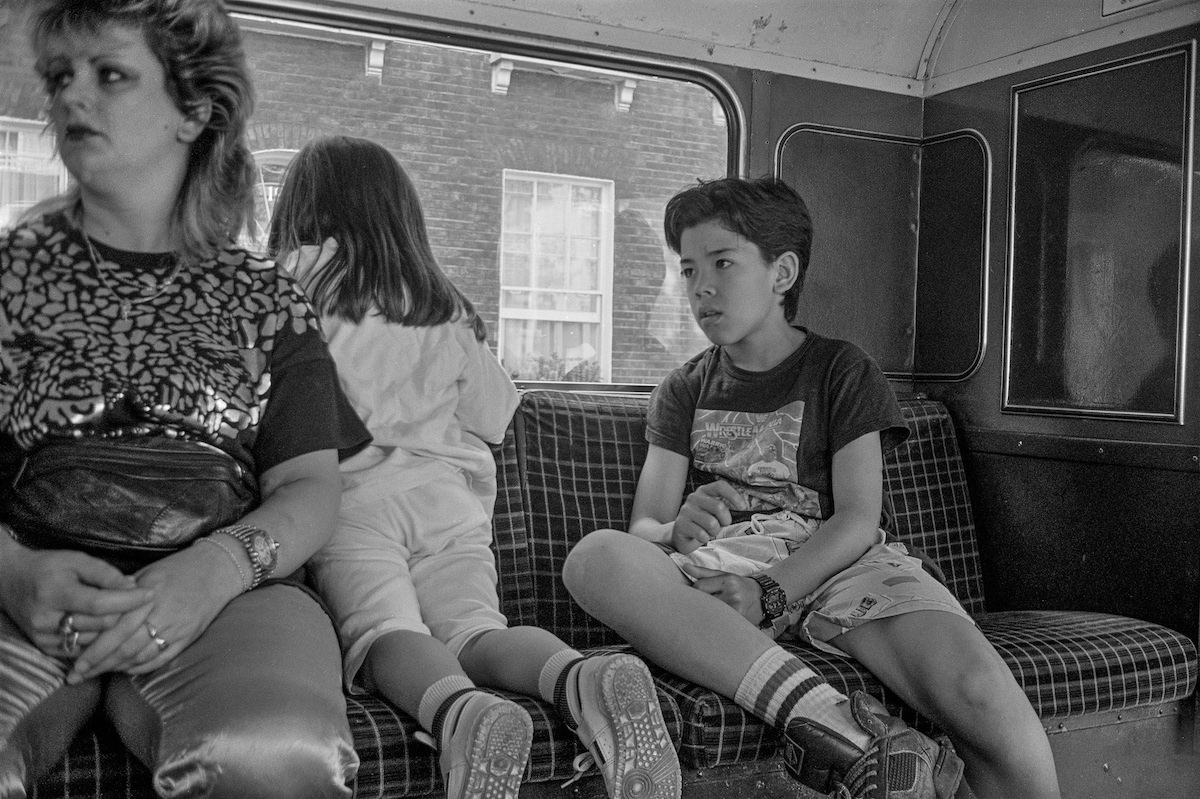
Marshall’s project covered a wide geographic range, but his method stayed consistent. He photographed people as they were — not posed, not performing for the camera. Some passengers noticed him. Others didn’t. The results are a street-level record of ordinary London life during a period when the city itself was changing fast.