

In 1962, London was a city in motion. A youth-driven cultural revolution was building beneath the surface, and the city sat right at its center. Art, music, and fashion were all surging forward, with London producing pop and fashion exports that would soon reach every corner of the world. These color photographs freeze that moment in time — streets packed with double-decker buses, iconic landmarks standing proud, and neighborhoods buzzing with everyday life.
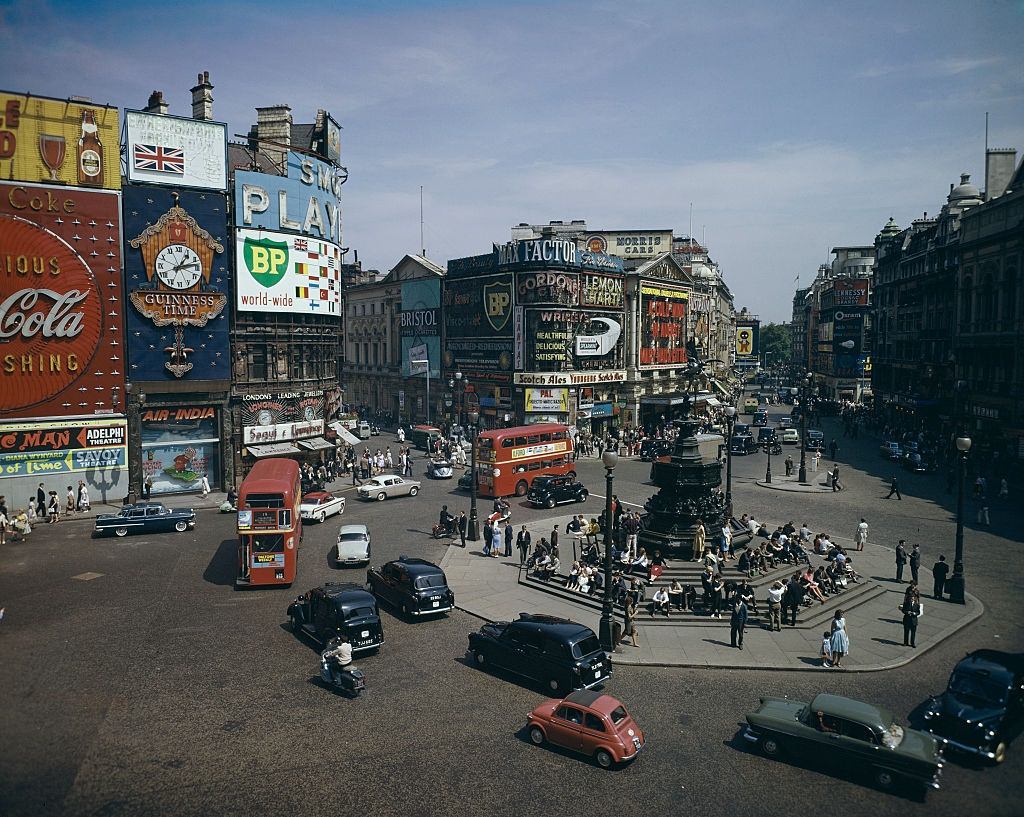
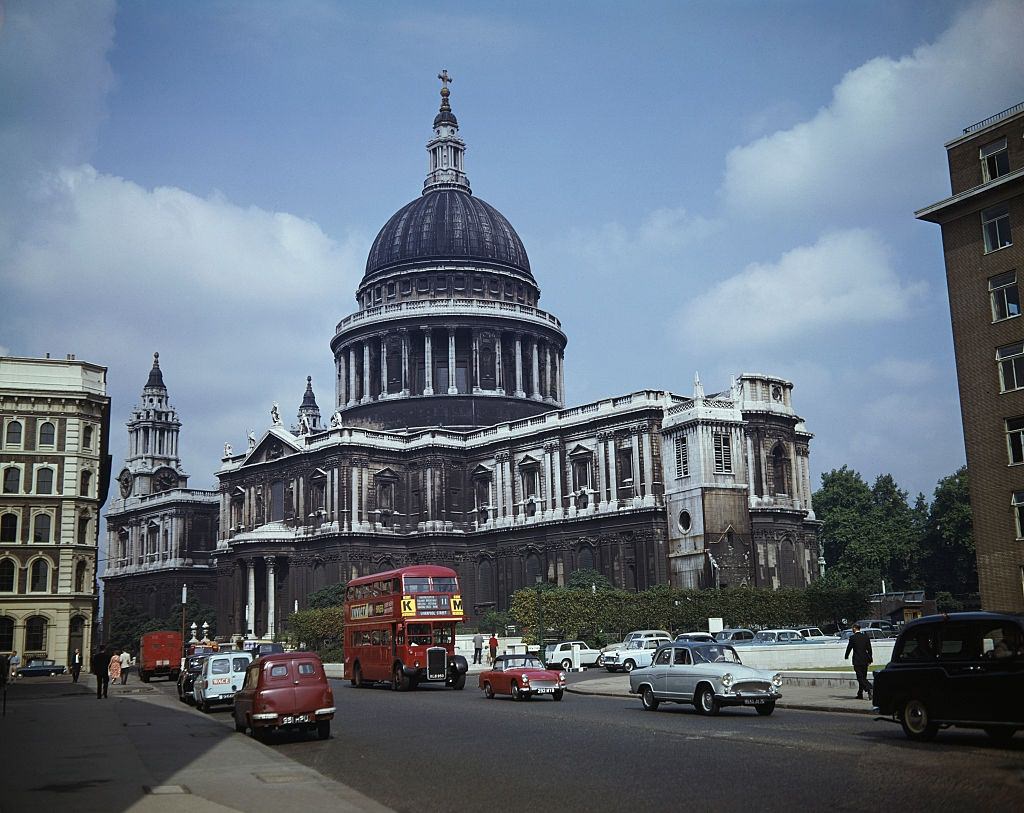
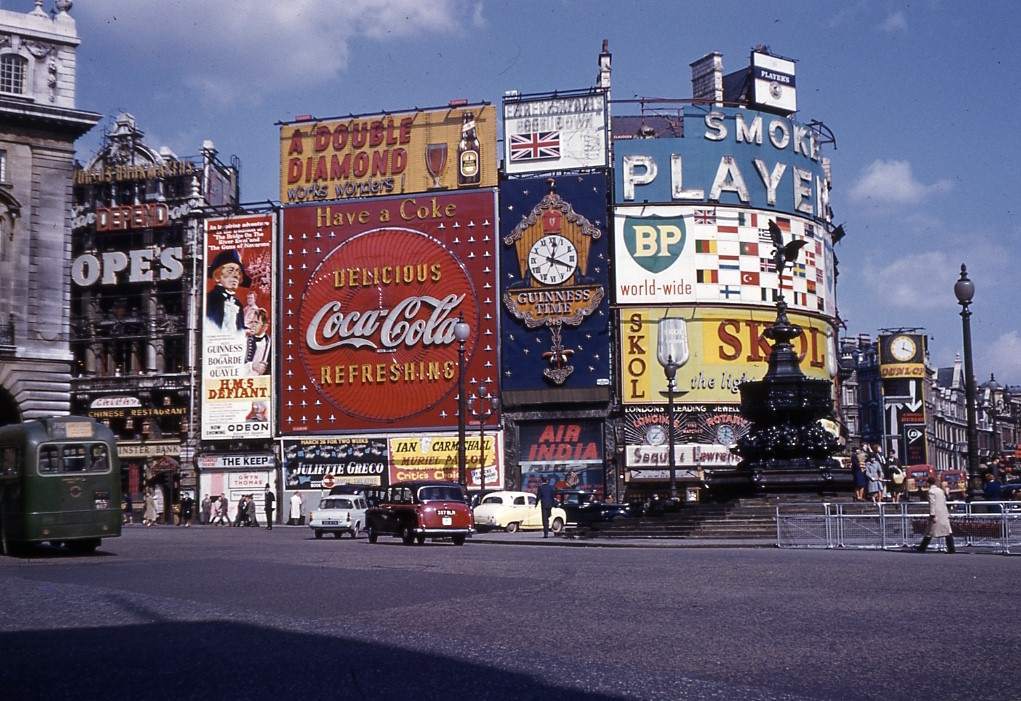
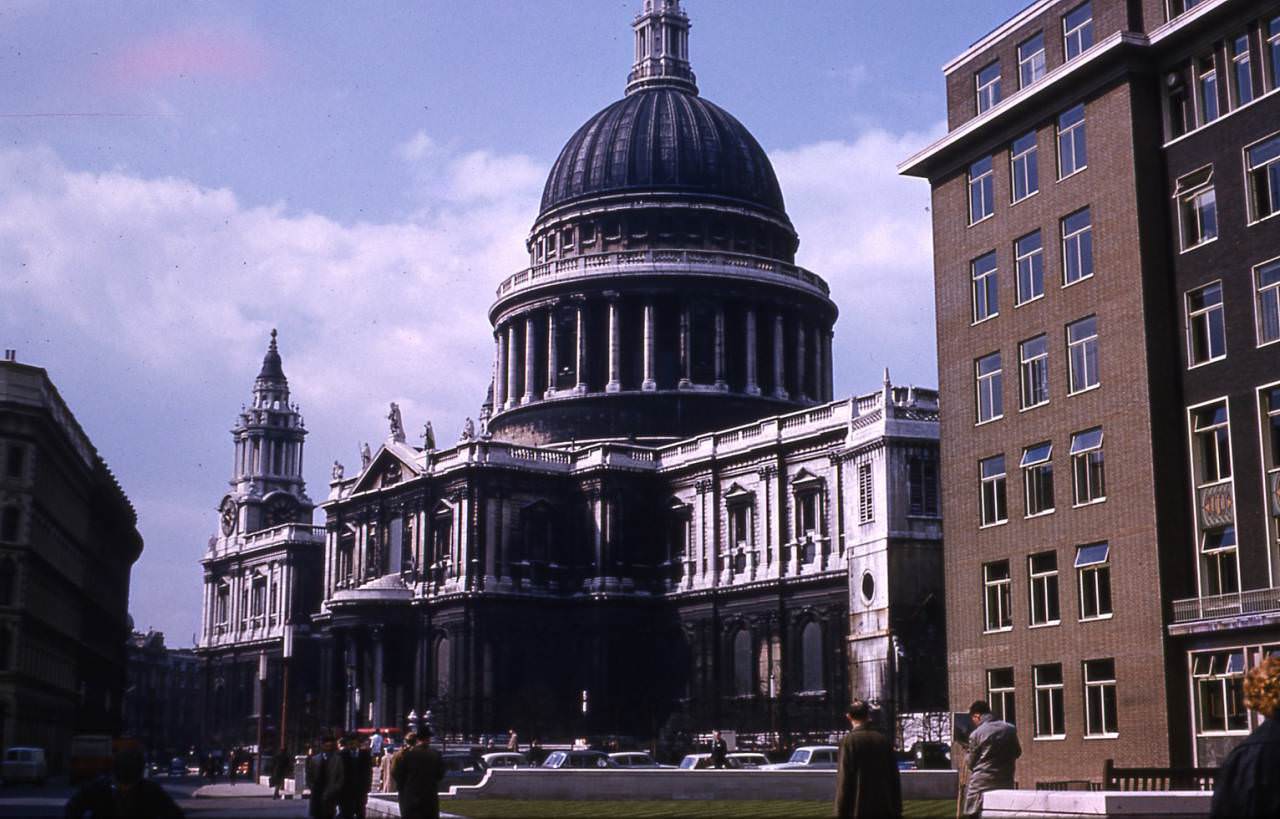
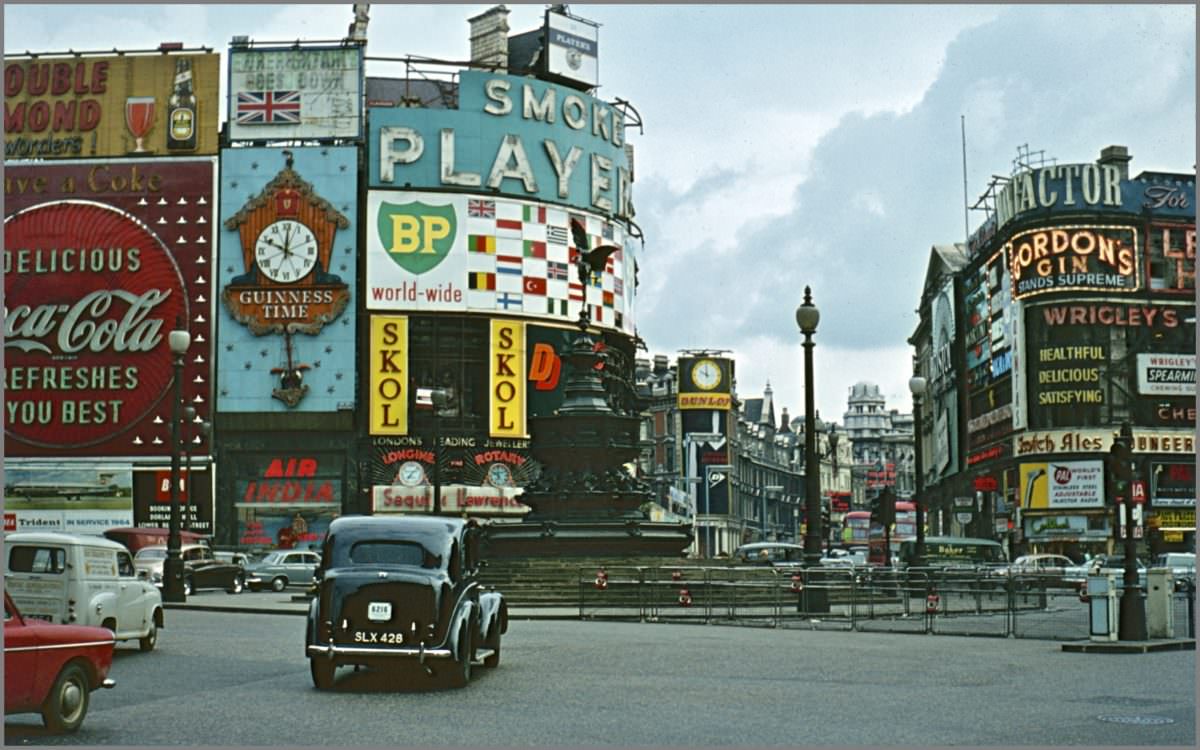
Piccadilly Circus was one of London’s most recognizable crossroads, and in 1962 it hummed with traffic and neon signage. The Shaftesbury Memorial fountain, topped by the famous statue of Eros, stood at the center of it all. Nearby, St. Paul’s Cathedral continued to dominate the city’s skyline, as it had for centuries, with cars and buses streaming through the churchyard below.
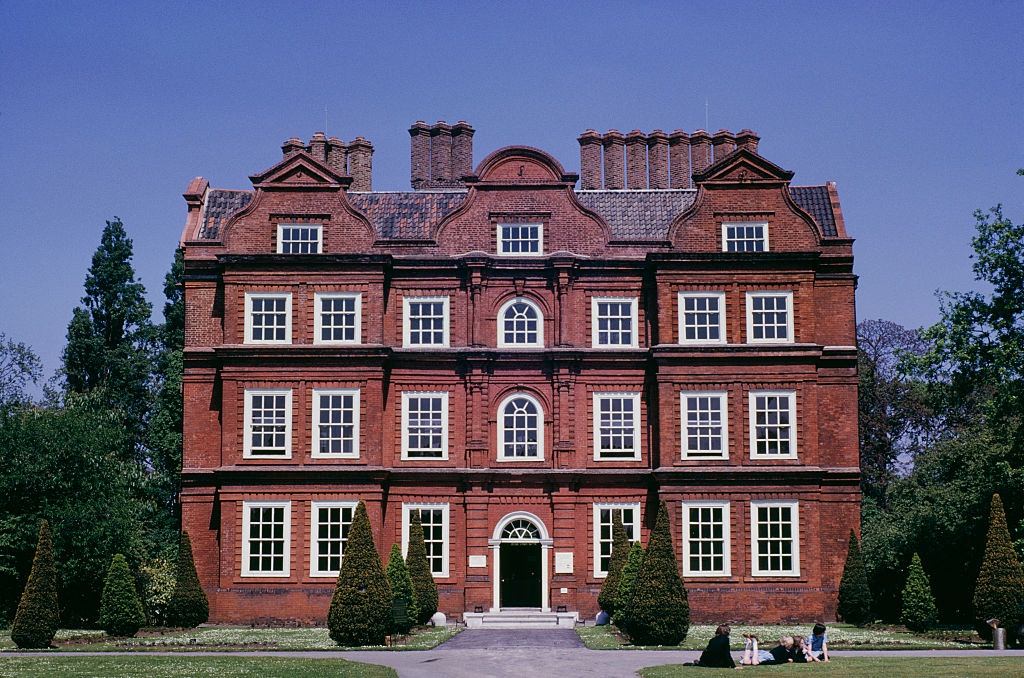
Away from the bustle of central London, Kew Gardens offered a quieter side of the city. Kew Palace, the smallest of Britain’s royal palaces, sat nestled within the gardens — a red-brick structure dating back to 1631. Visitors in 1962 could walk the same grounds that had served as a royal retreat for generations.
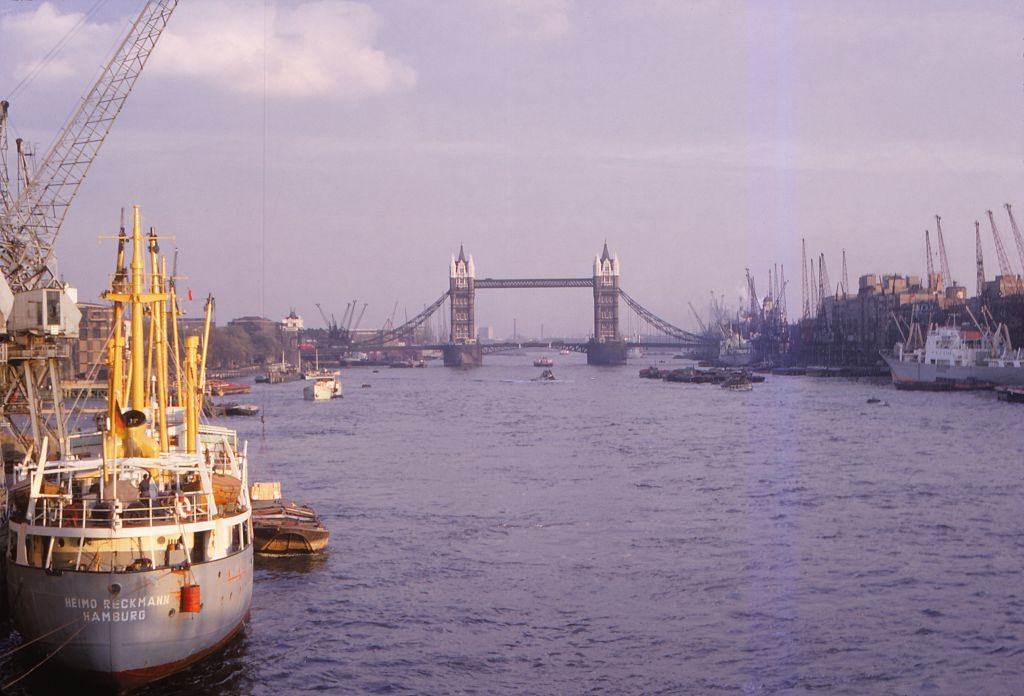
The Thames defined much of London’s identity, and nowhere was that clearer than along the Pool of London. Tower Bridge stretched across the river while the docks along the bank remained active with trade and shipping. The river was still the working backbone of commerce in the city.
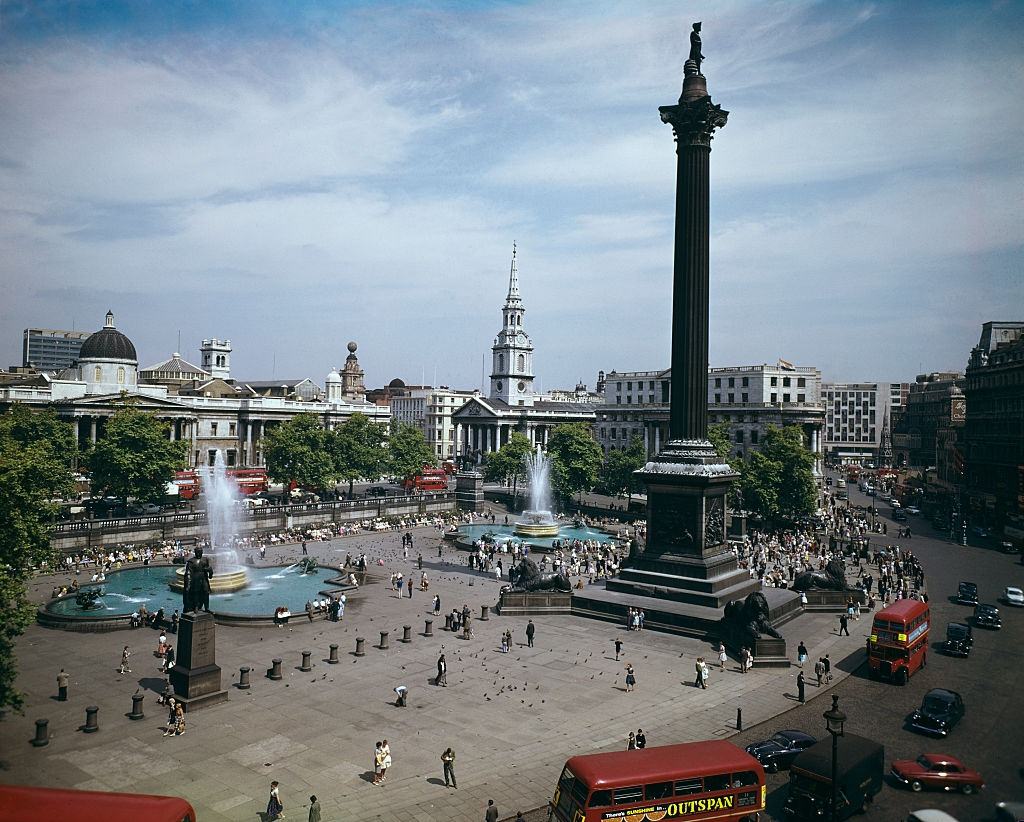
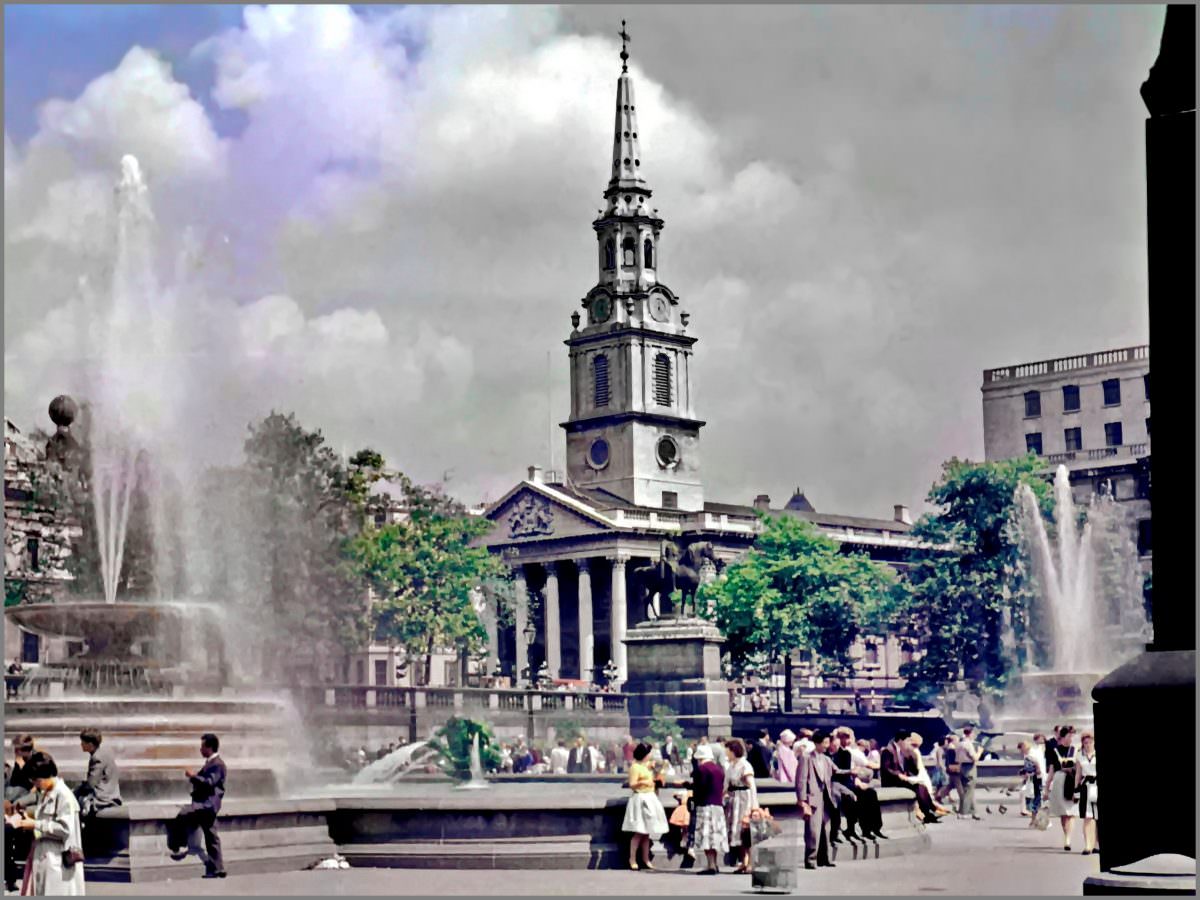
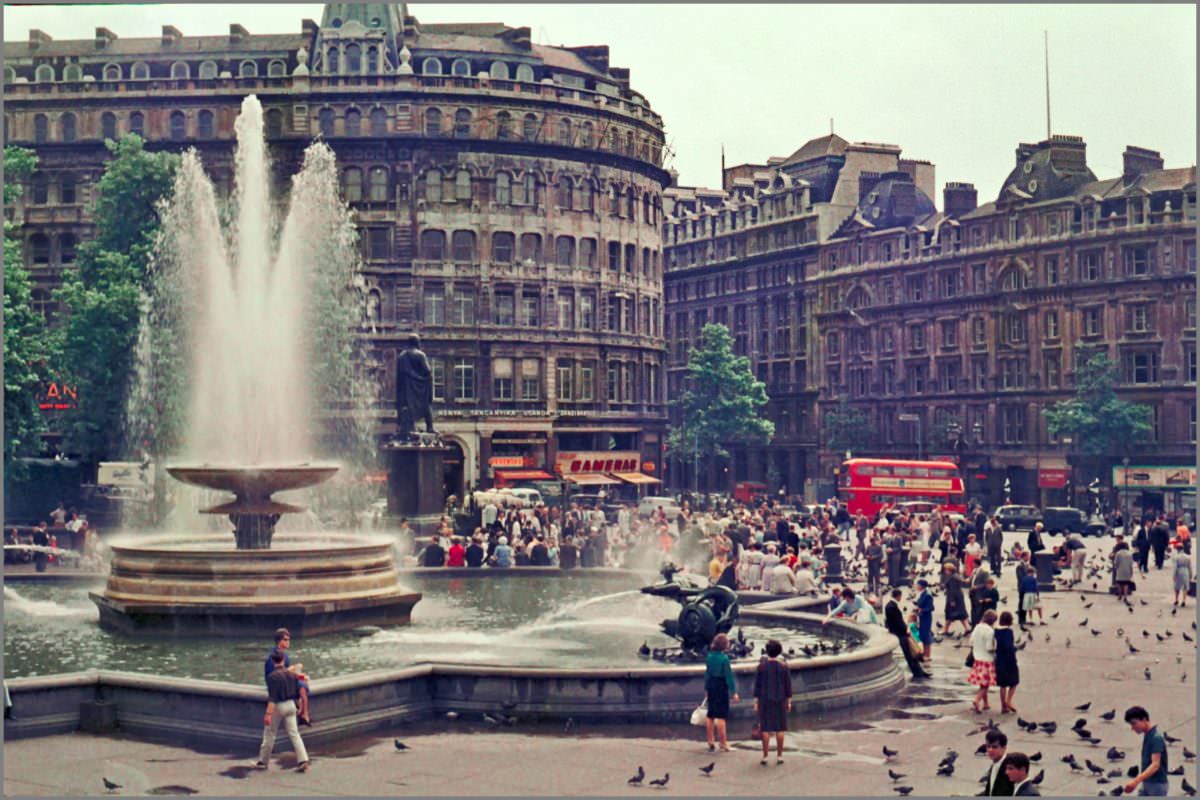
Trafalgar Square, with Nelson’s Column rising above the fountains and pigeons, was a natural gathering point for Londoners and tourists alike. The square connected the city’s past to its present, flanked by the National Gallery and the distinctive spire of St. Martin-in-the-Fields church.
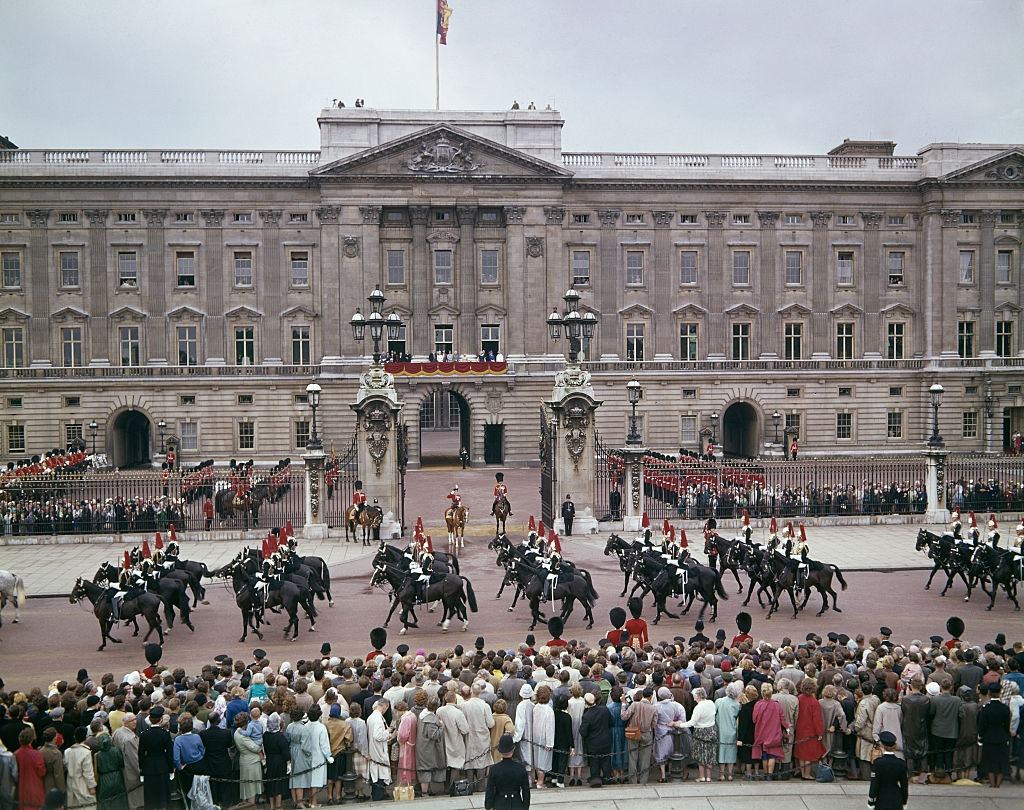
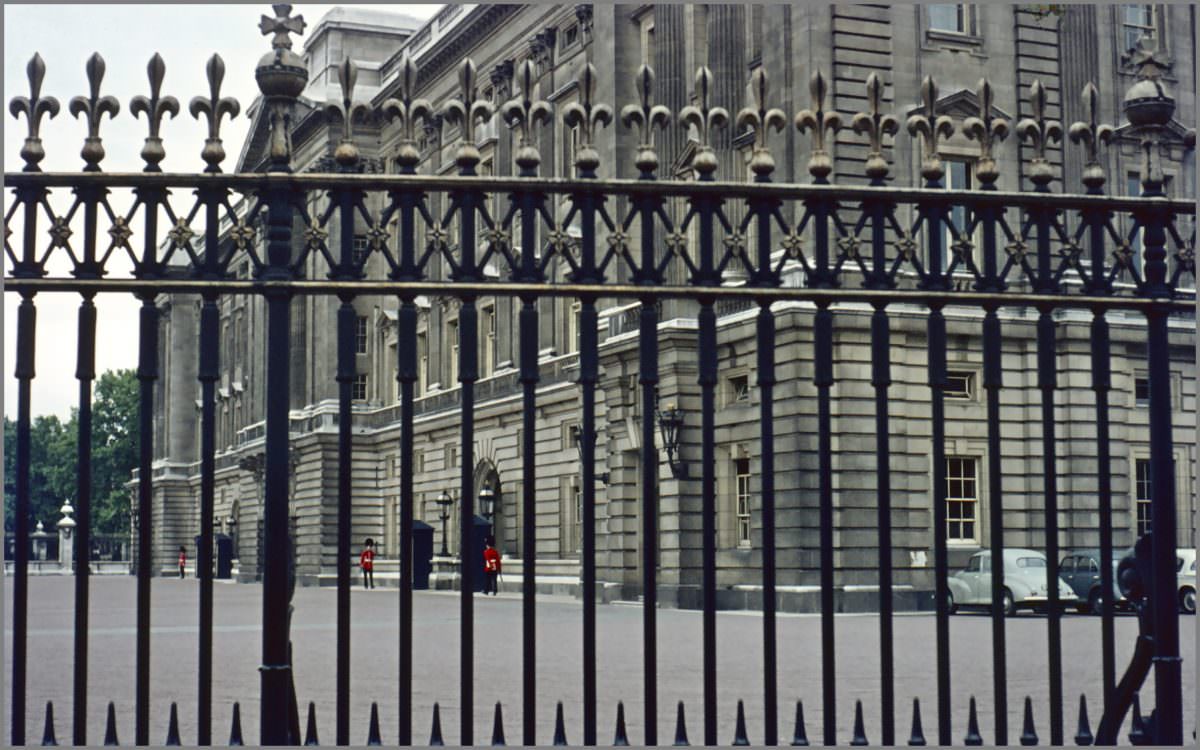
The monarchy remained a central part of London’s public life in 1962. That year, Queen Elizabeth II took the salute at the Trooping the Colour ceremony, reviewing the Household Cavalry as they marched past Buckingham Palace’s gates in full dress uniform. The annual event drew large crowds along the Mall.
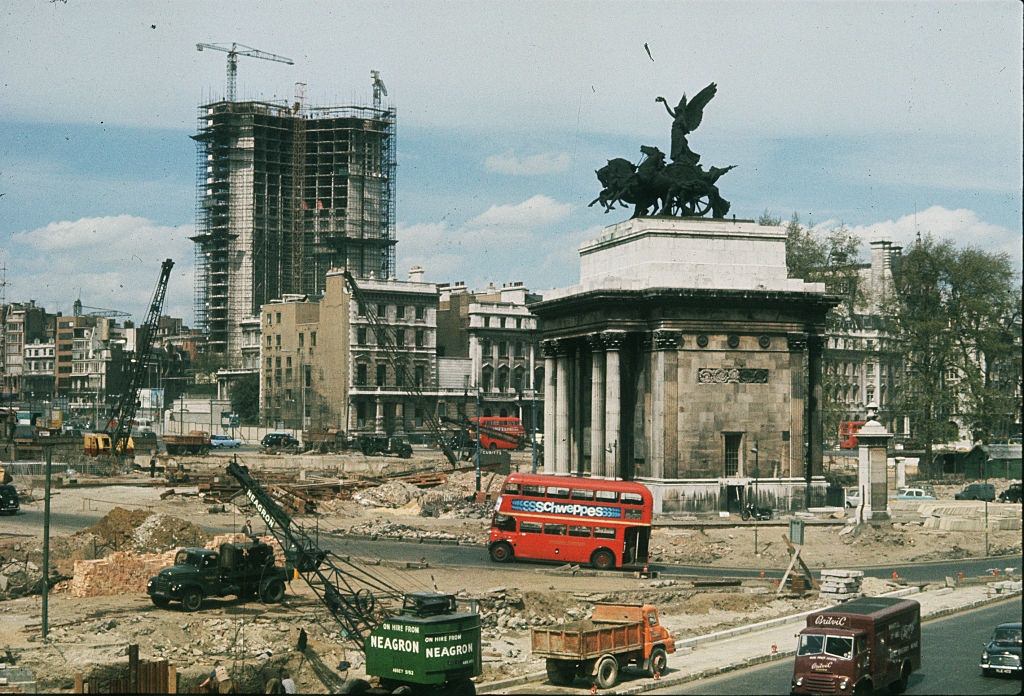
London’s infrastructure was also changing. Hyde Park Corner was undergoing significant redevelopment in 1962 as city planners worked to manage the growing volume of road traffic. The construction reshaped one of the capital’s major junctions, connecting several of London’s busiest routes.
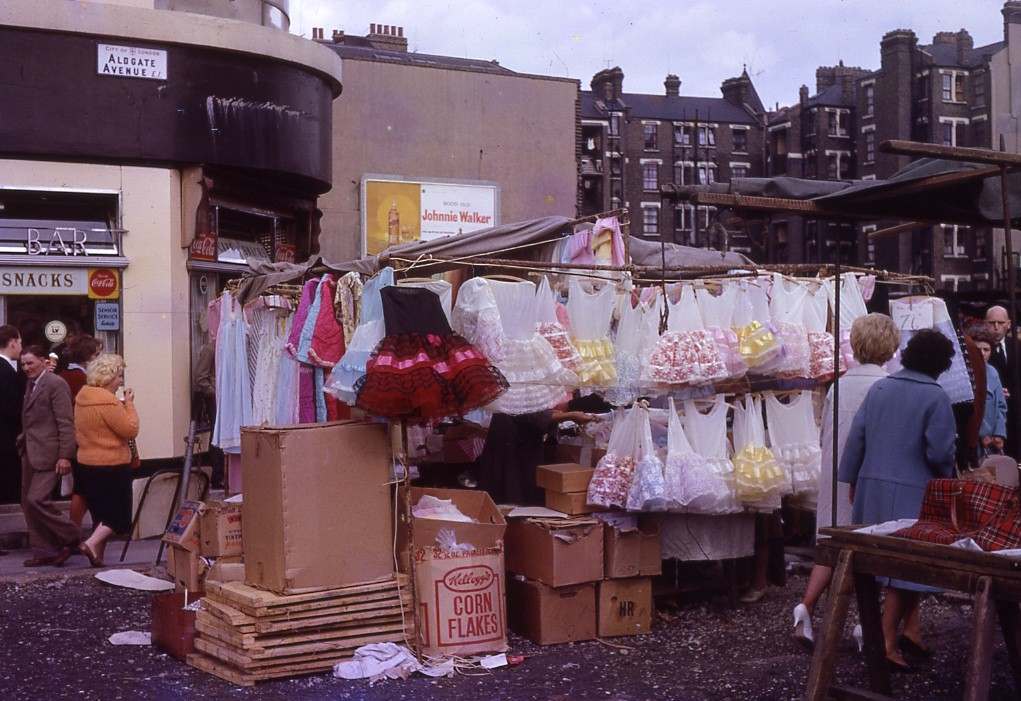
The East End neighborhoods like Spitalfields told a different story from the grand landmarks of Westminster. These streets were tight-knit, working-class, and full of life. Markets, local shops, and terraced housing defined areas like Spitalfields, Aldgate, and Middlesex Street — a world apart from the polished tourist centers just a few miles west.
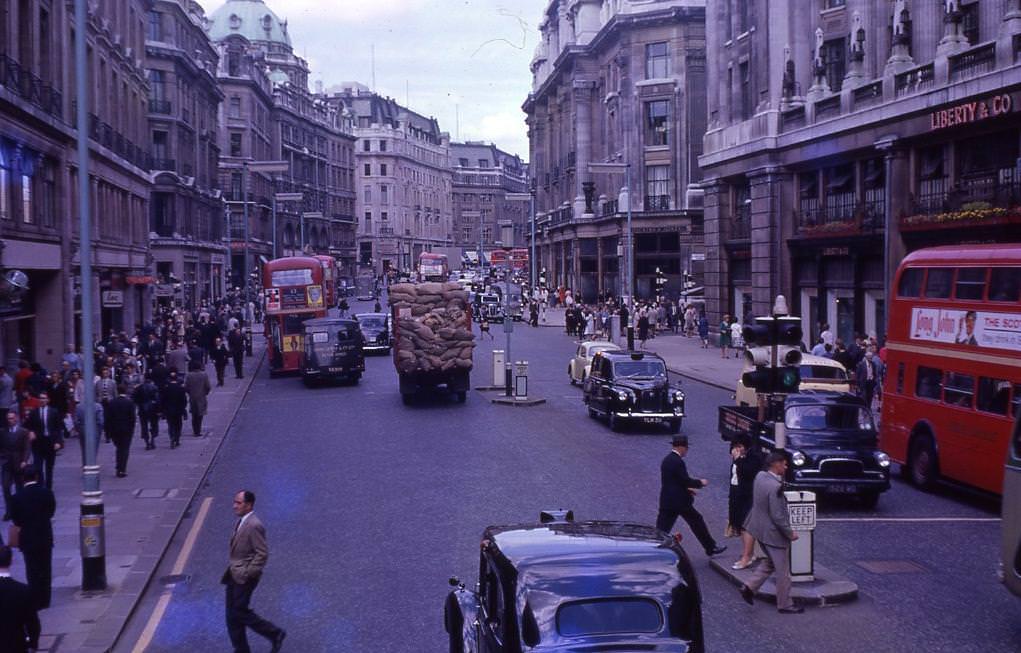
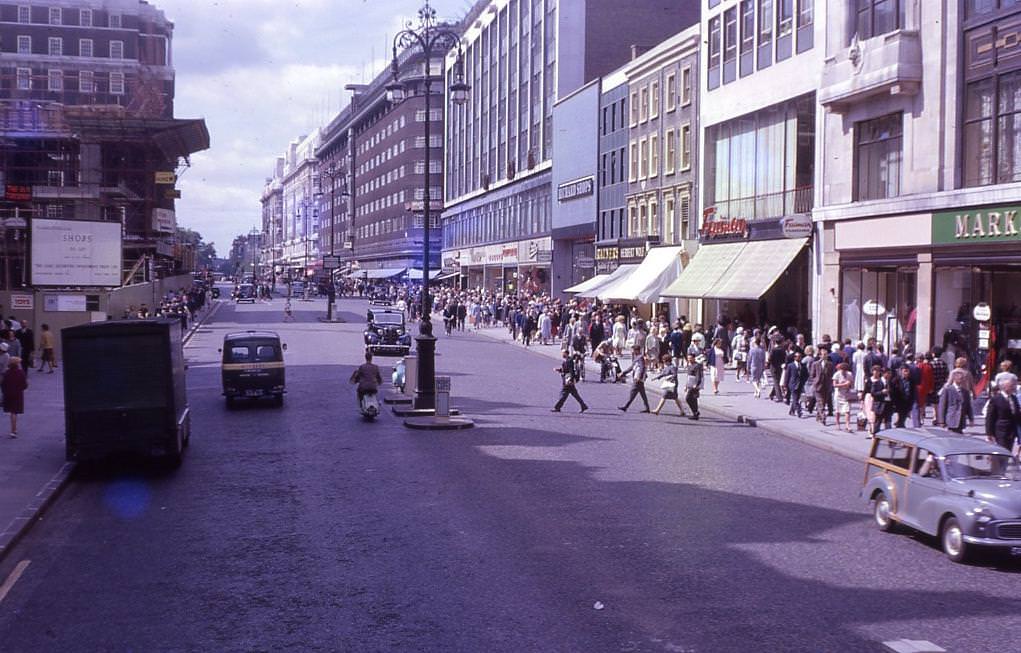
Regent Street and Oxford Street were London’s premier shopping destinations. Both roads were lined with large retailers and drew steady streams of shoppers. In 1962, these streets were just beginning to feel the influence of new youth fashion trends that would fully explode later in the decade.
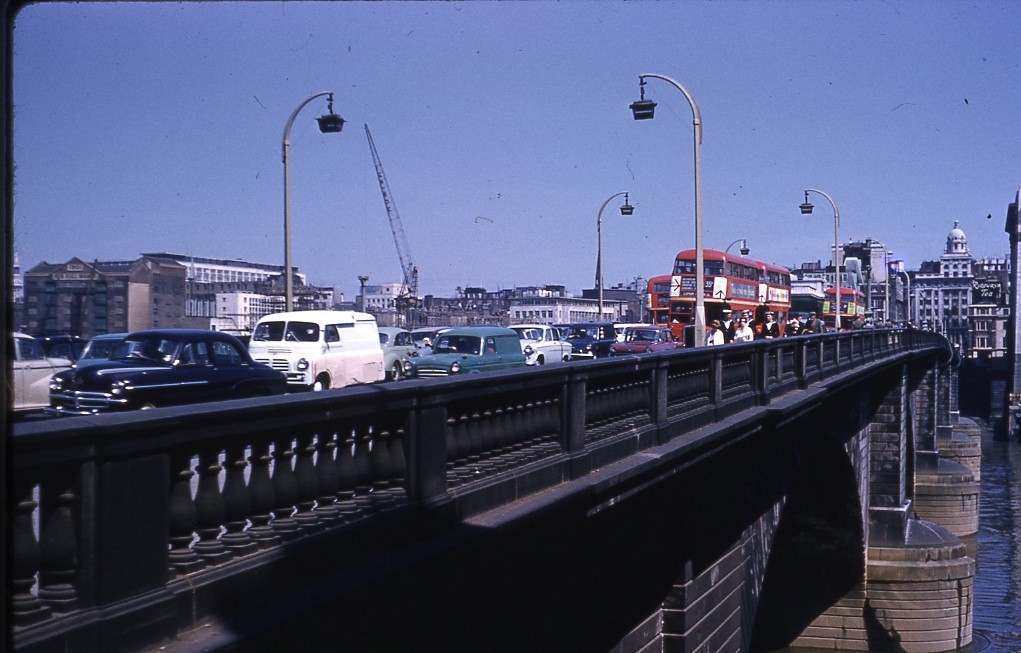
London Bridge carried a constant flow of traffic over the Thames, connecting the City of London with Southwark on the south bank. The bridge in these photographs is the stone structure built in 1831 — the same one that would later be sold and relocated to Arizona in 1968.
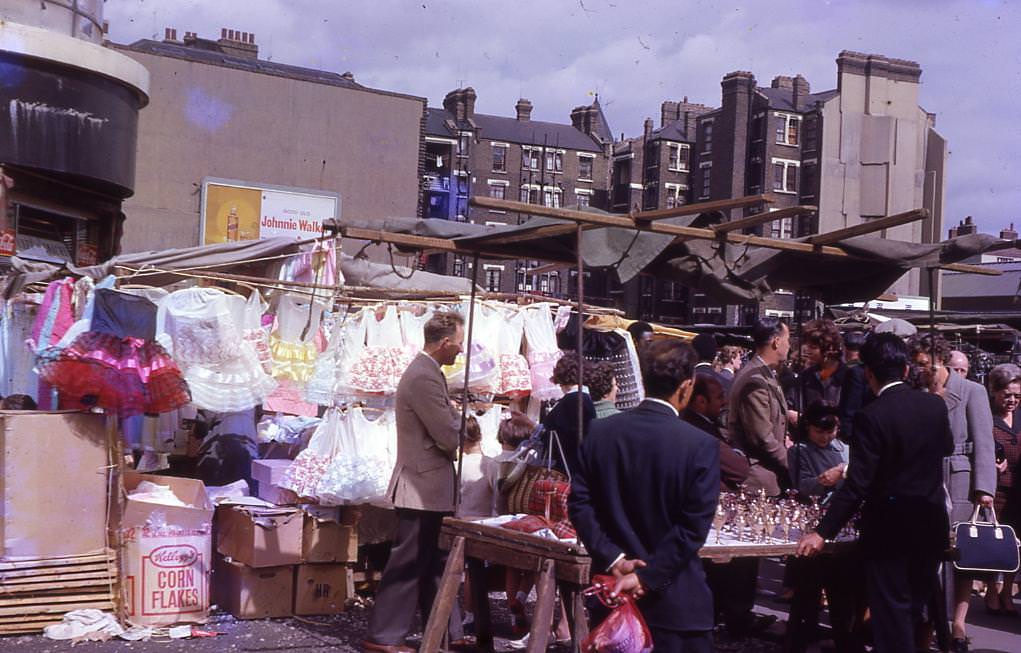
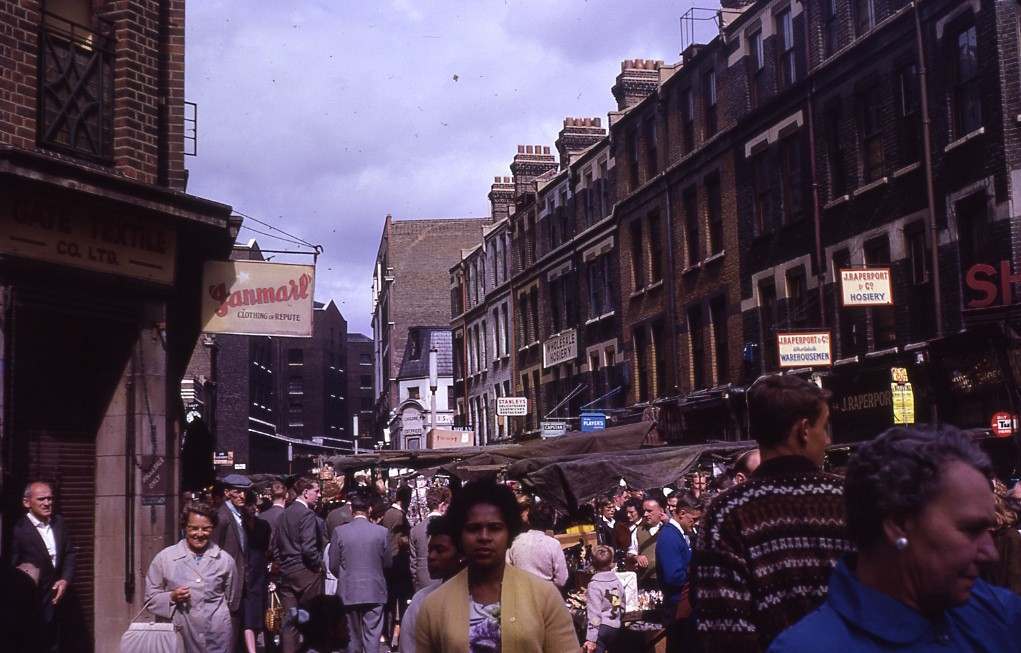
Street markets were a fixture of East End life. Middlesex Street and nearby Wentworth Street hosted the famous Petticoat Lane Market, where traders sold clothing, household goods, and food. Aldgate Avenue was another active market scene, packed with vendors and shoppers on weekday mornings.
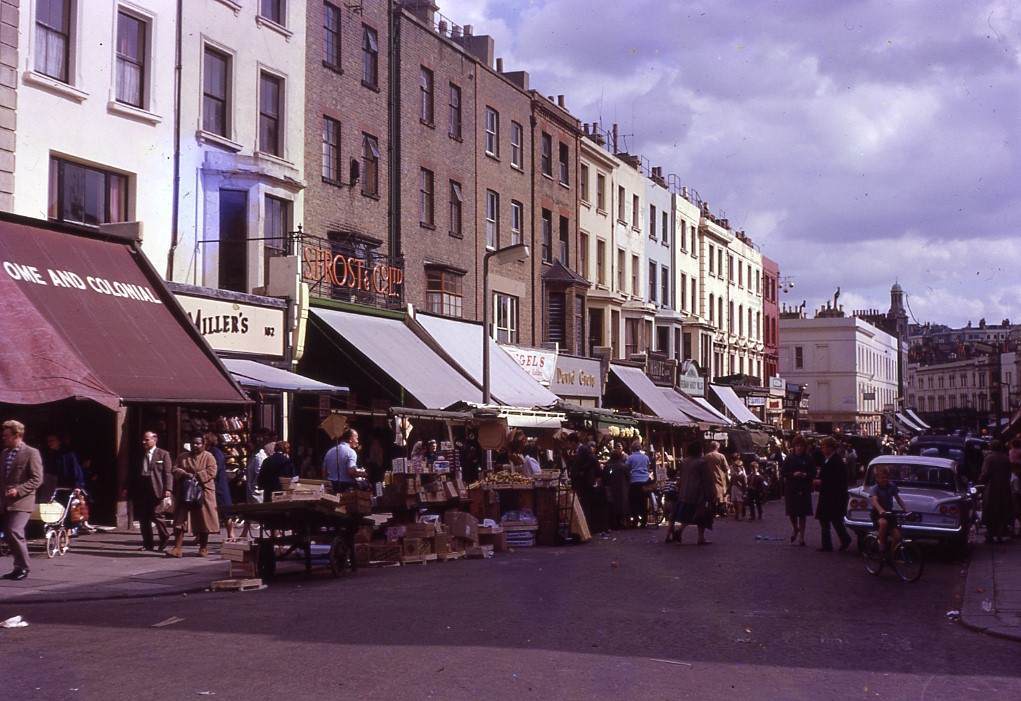
Portobello Road in Notting Hill was already well-established as a market street by 1962. Antique dealers, fruit sellers, and second-hand goods traders all worked side by side along the road. It drew a mix of locals, collectors, and bargain hunters every weekend.
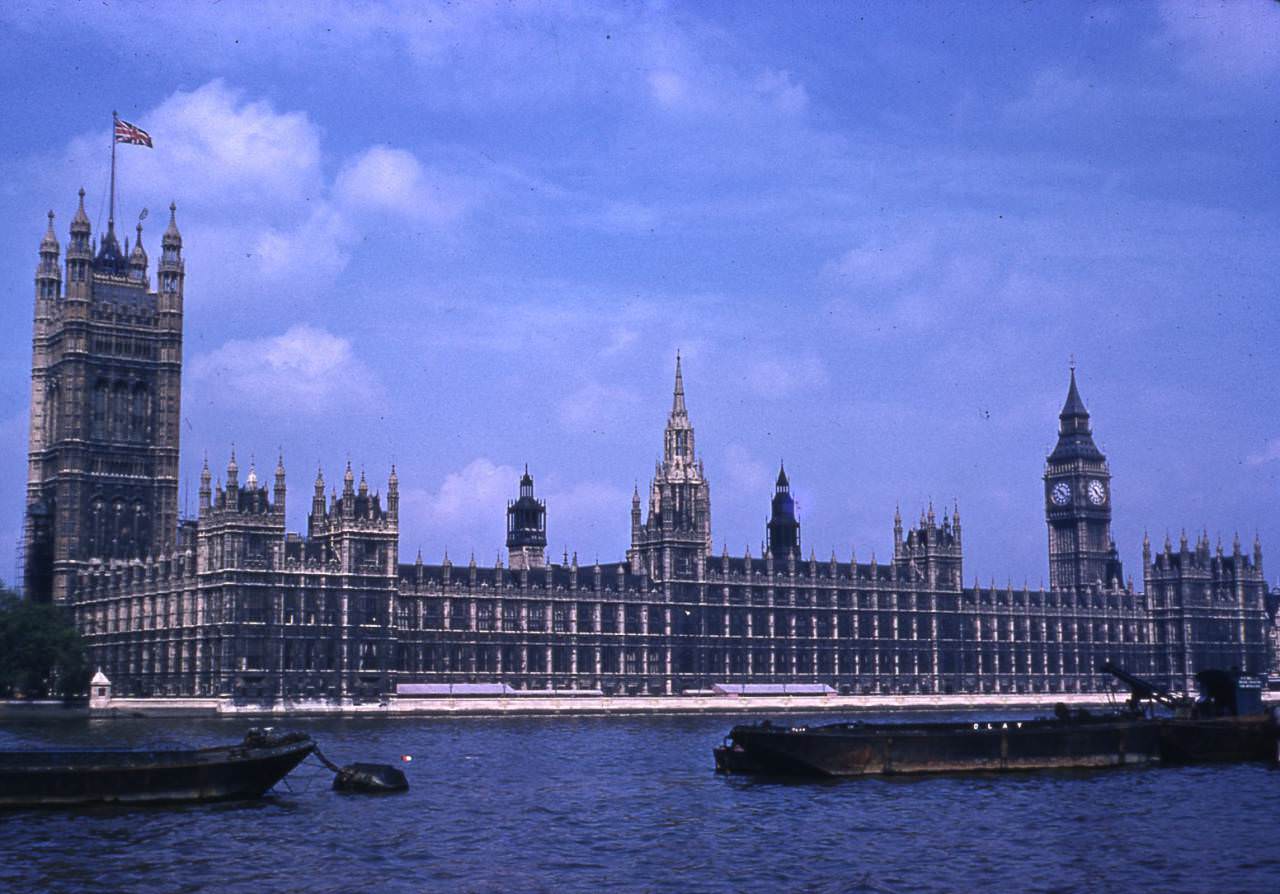
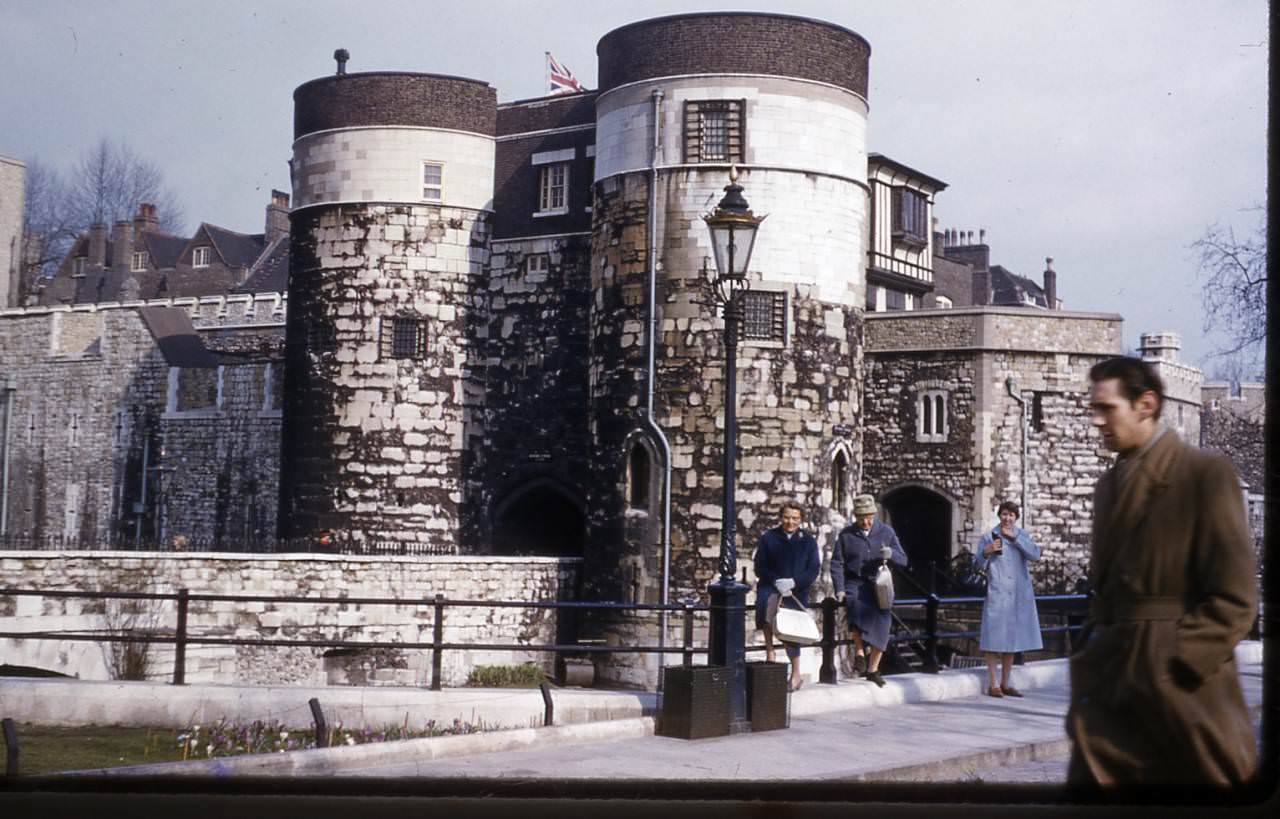
The Houses of Parliament and the Tower of London remained two of the city’s most visited and most photographed sites. Both anchored opposite ends of the Thames, one a working seat of government, the other a medieval fortress that had served as a prison, royal palace, and treasury over the centuries.
Piccadilly Circus appeared repeatedly in photographers’ frames in 1962 — and for good reason. Its neon advertisements, heavy traffic, and central location made it one of the most dynamic spots in the city, especially after dark.
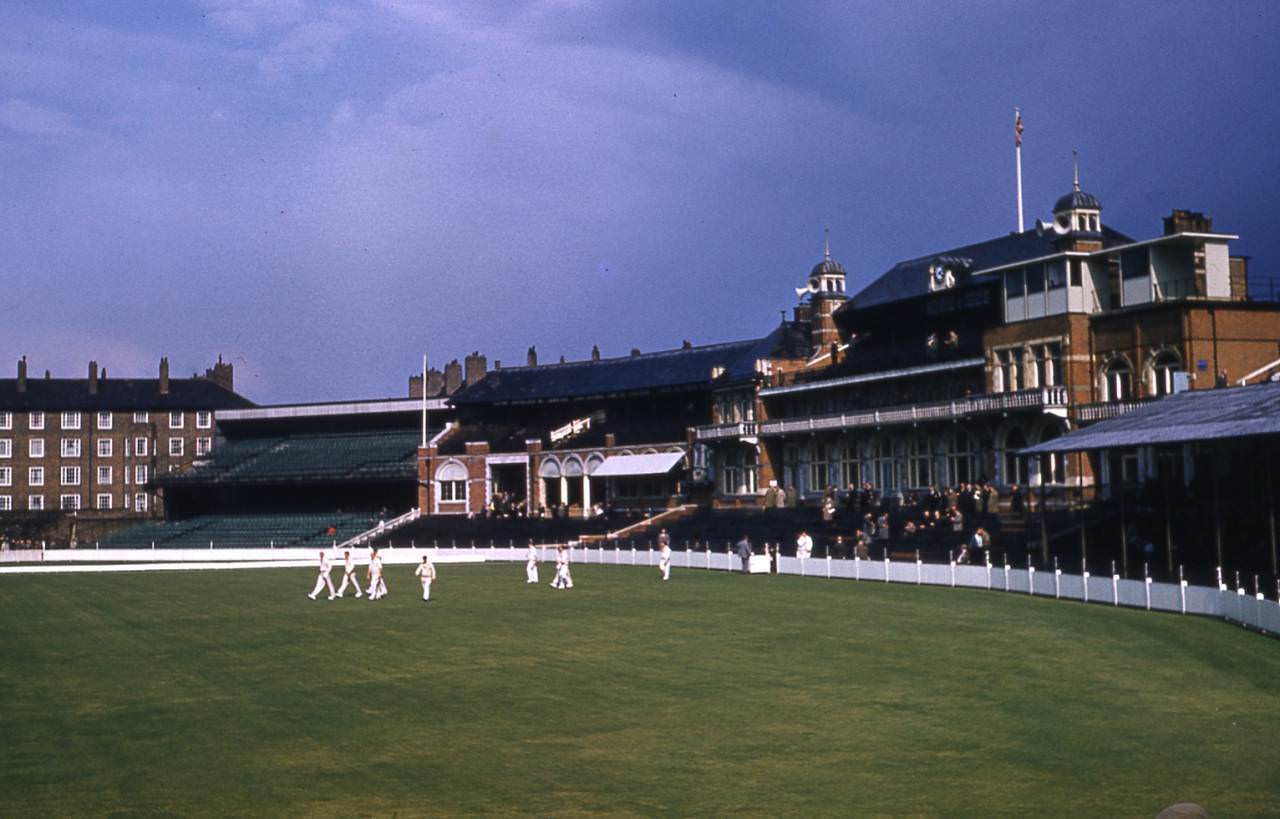
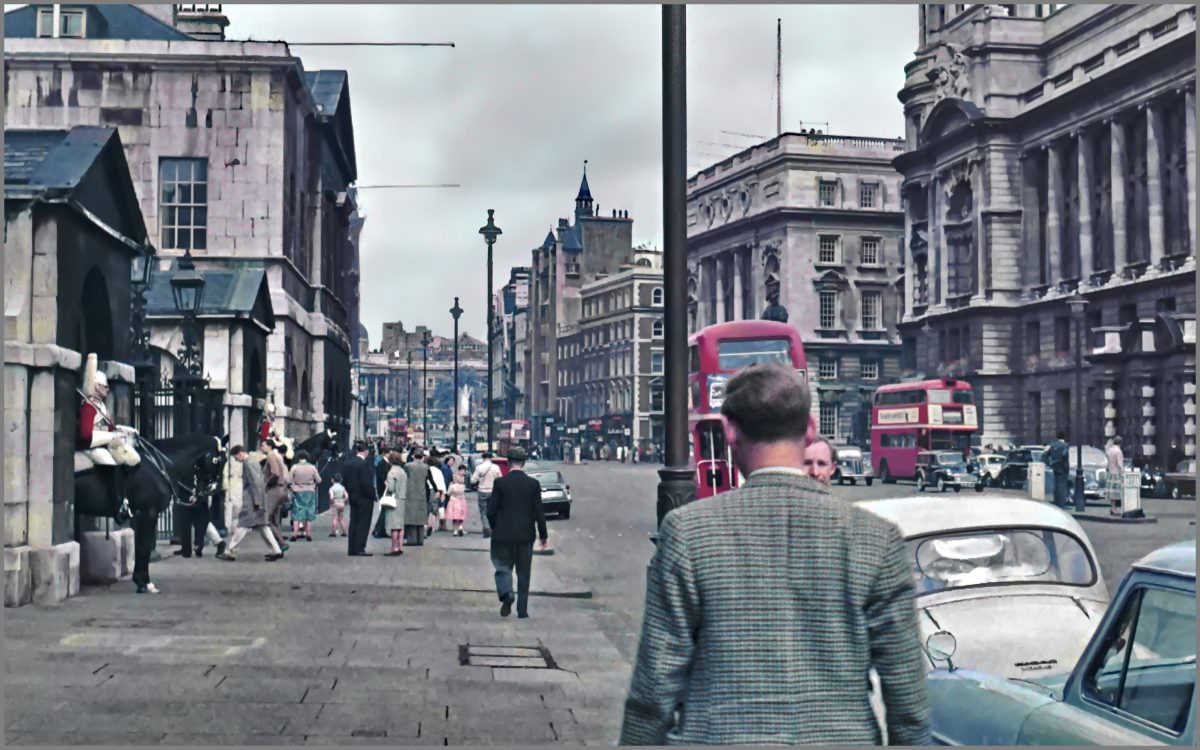
The Oval cricket ground in Kennington had been a sporting landmark since 1845. By 1962, it was firmly established as one of England’s premier Test match venues. Whitehall, just across the river in Westminster, remained the administrative core of British government, lined with ministry buildings and flanked by the famous street’s war memorials.
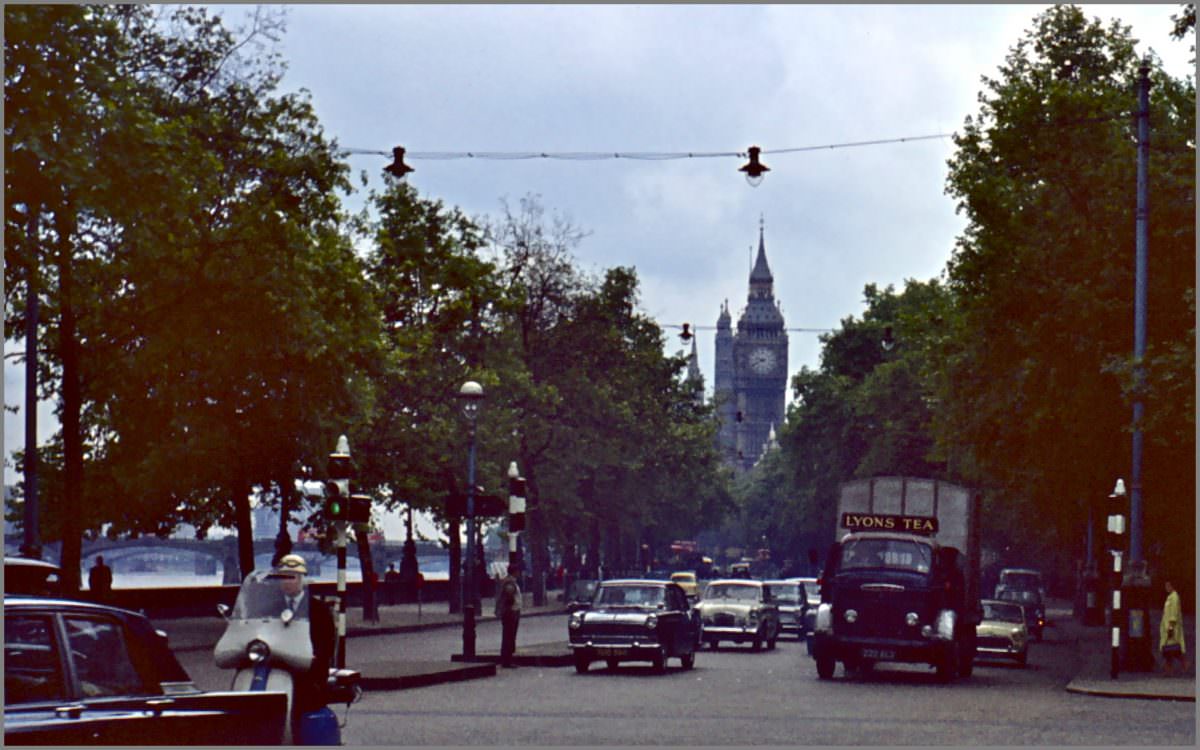
July 1962 brought some of the most vivid photography of the year. Trafalgar Square, Northumberland Avenue, Charing Cross Pier, and the Victoria Embankment were all captured in bright summer light. These images show a city that was functional, proud, and very much alive.
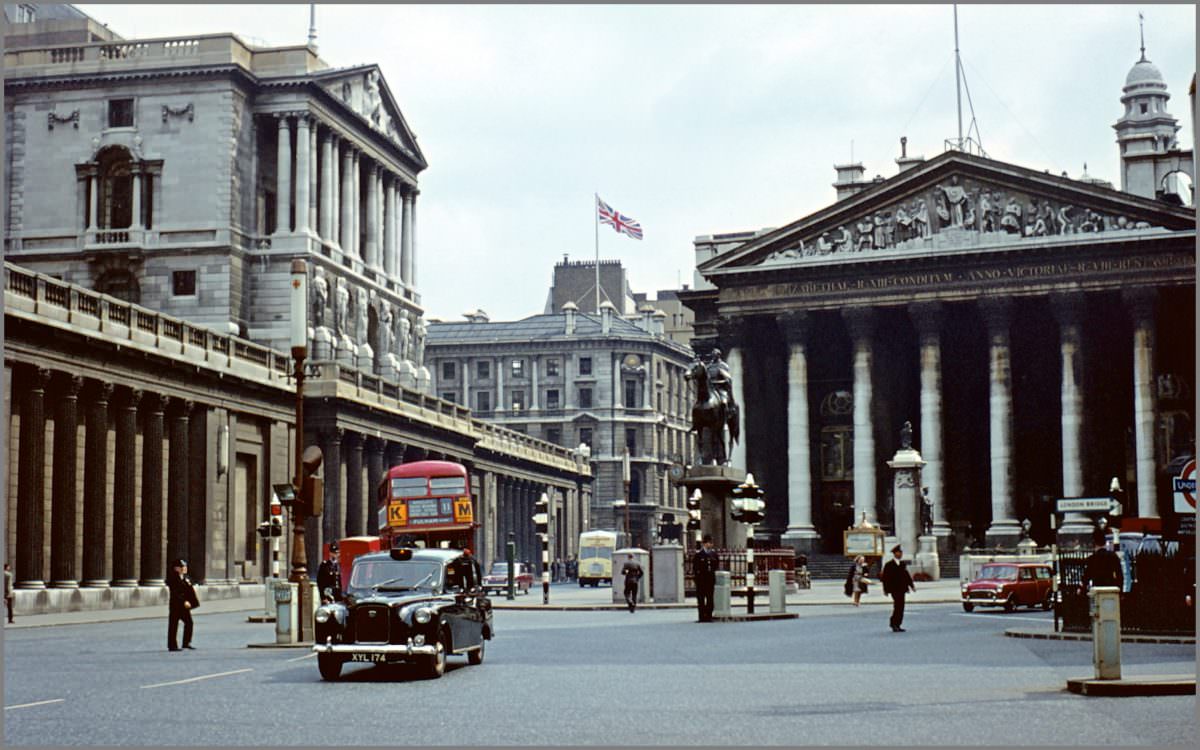
The Bank of England on Threadneedle Street stood as the financial anchor of the British economy. Known as the ‘Old Lady of Threadneedle Street,’ the bank’s fortress-like exterior has looked largely the same since its outer wall was completed in the 1820s. Nearby, 10 Downing Street served as the official residence of Prime Minister Harold Macmillan in 1962.
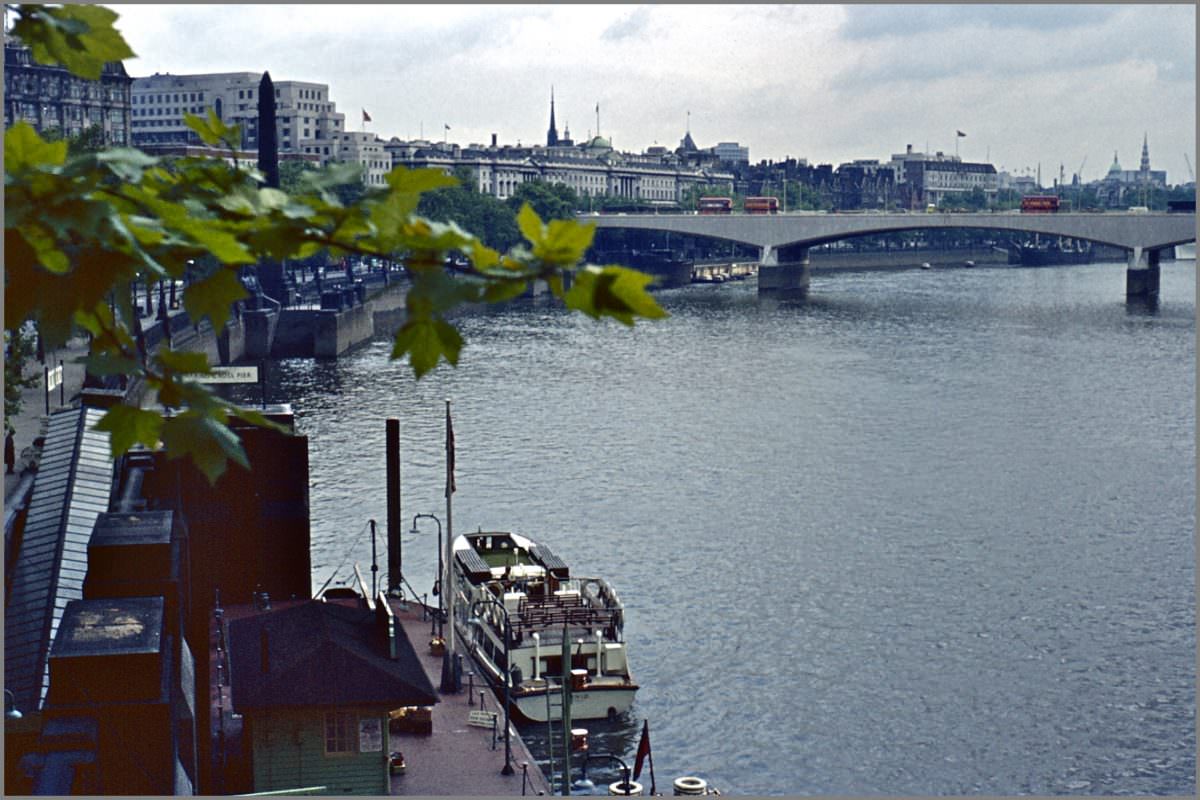
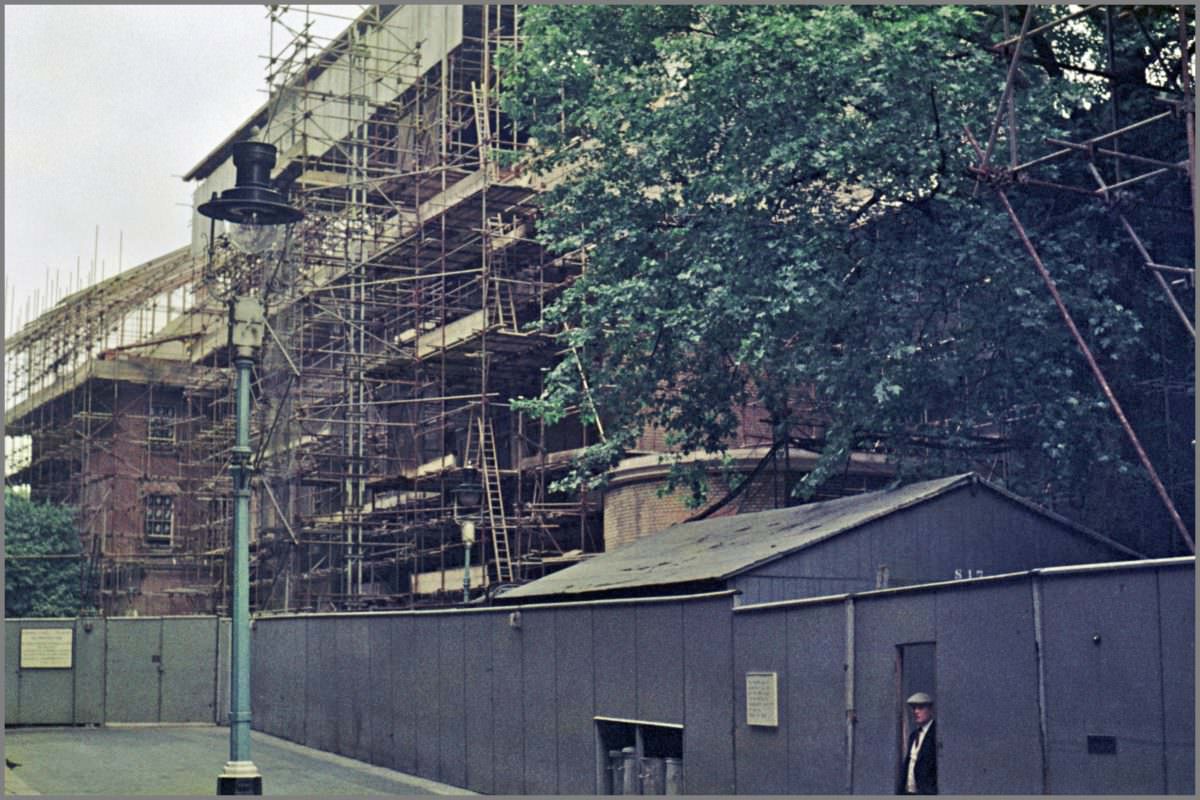
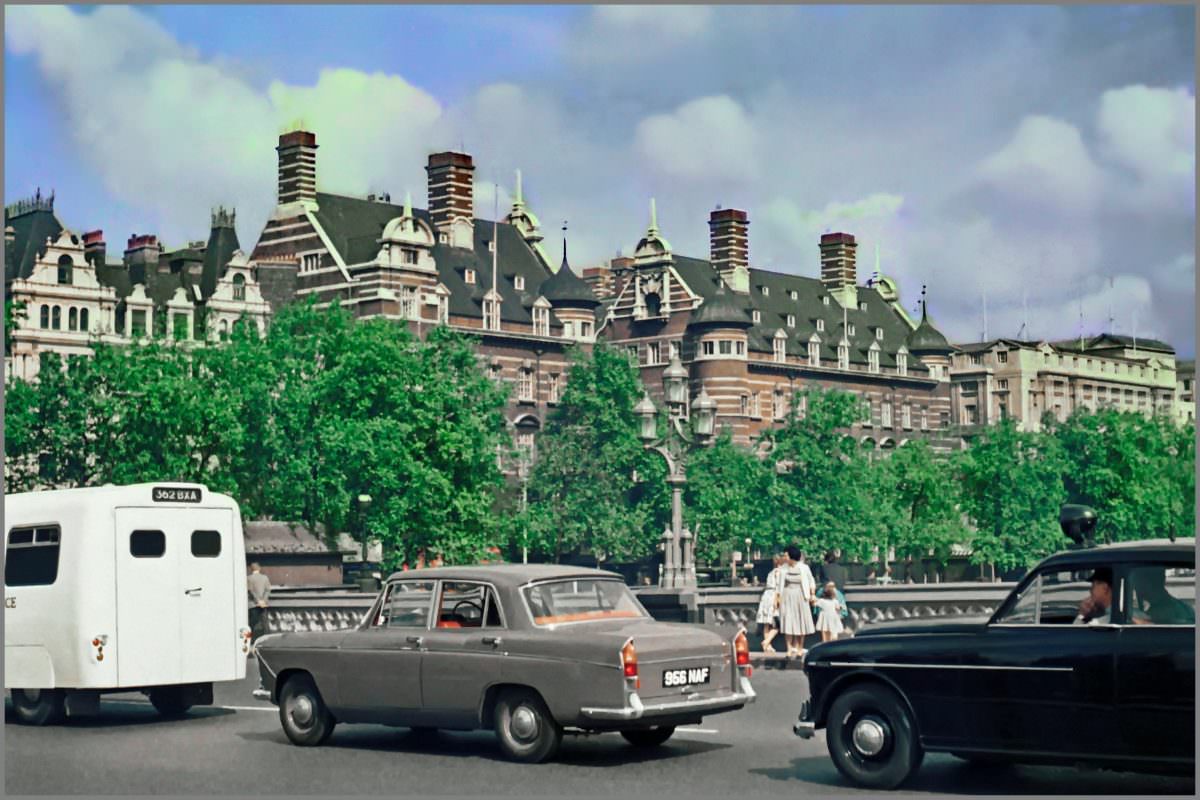
New Scotland Yard, the headquarters of the Metropolitan Police, is visible in one photograph complete with a patrol car out front. The building on the Victoria Embankment was the center of London’s law enforcement operations throughout the mid-20th century before the Met relocated in 1967.
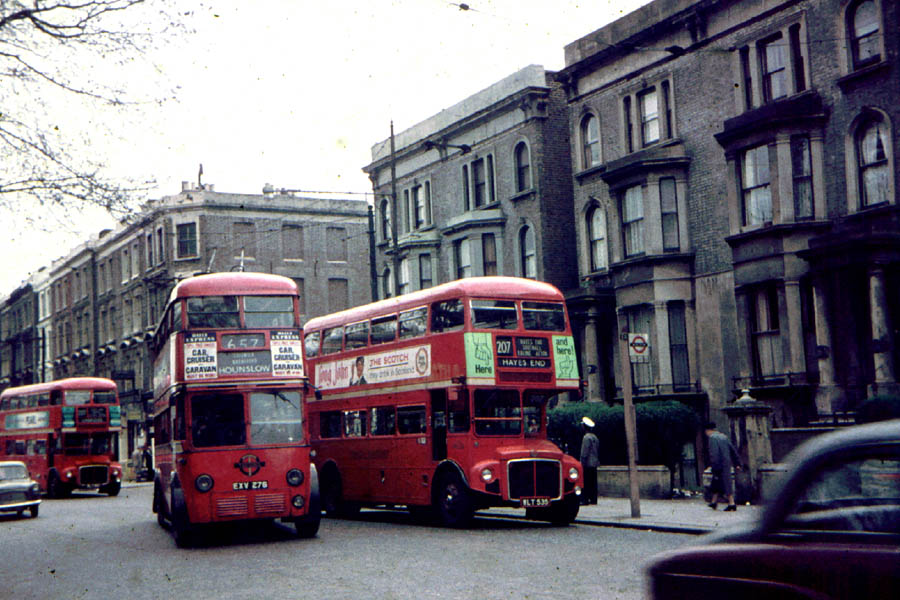
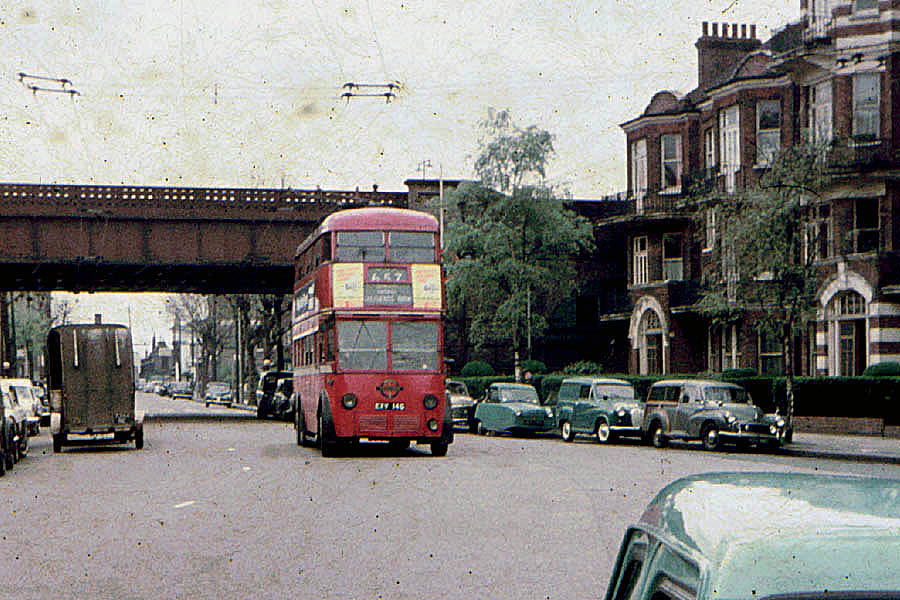
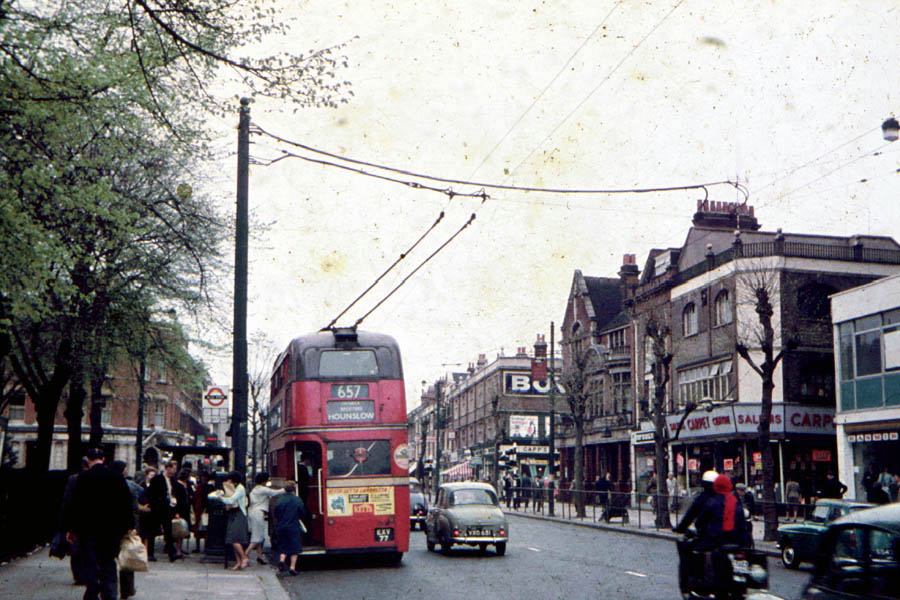
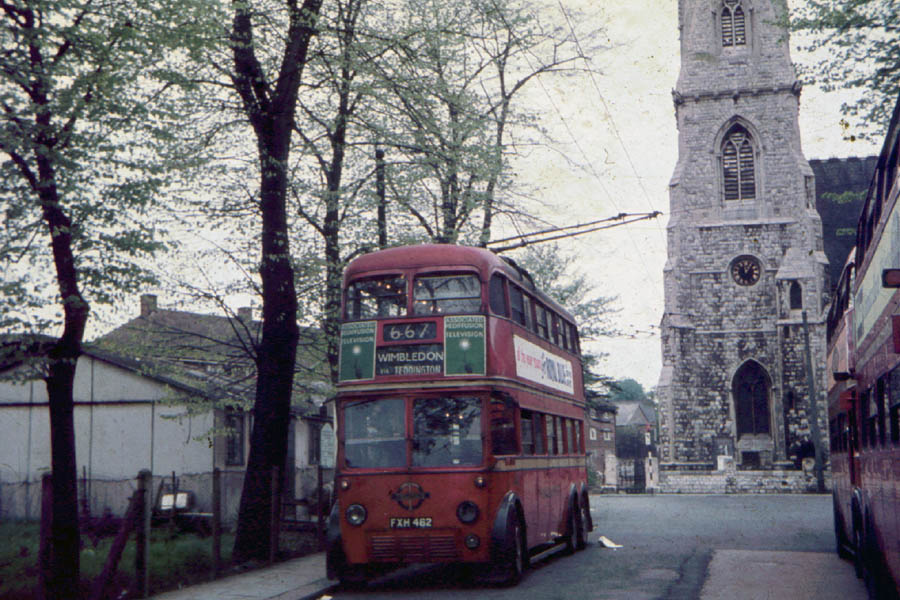
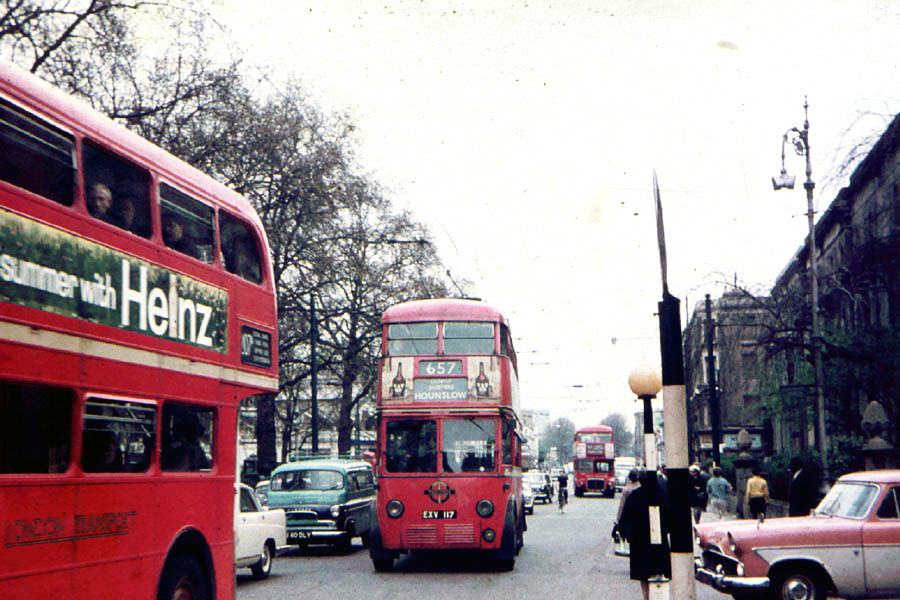
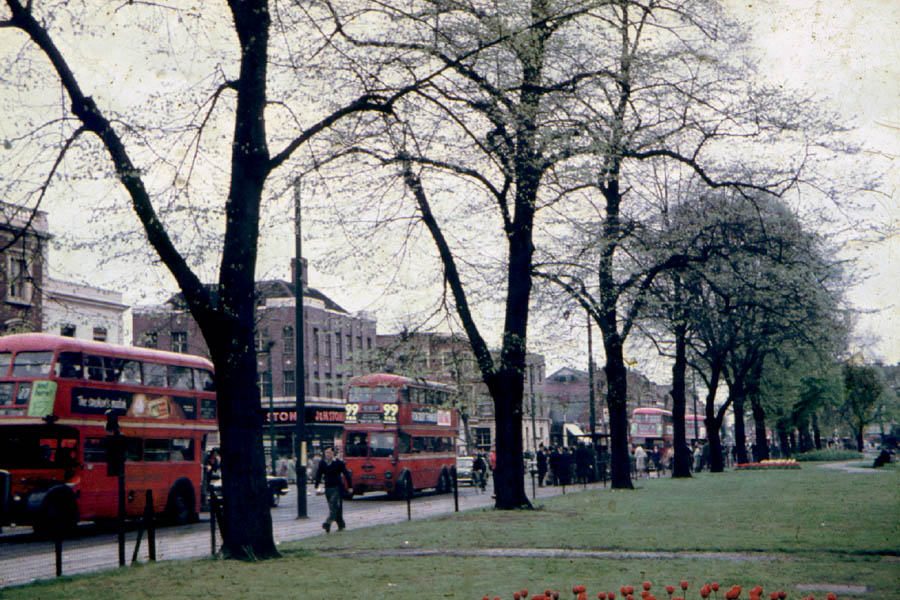
One of the most significant changes to London’s streets in 1962 was the end of the trolleybus network. The last trolleybus ran on 8 May 1962, closing out a chapter of public transport that had begun in 1931. Several of these photographs from early May capture the final days of trolleybuses in outer London neighborhoods — Twickenham, Hammersmith, Isleworth, Harrow Road, and Shepherds Bush among them. These were the last routes to operate before the system was shut down entirely.
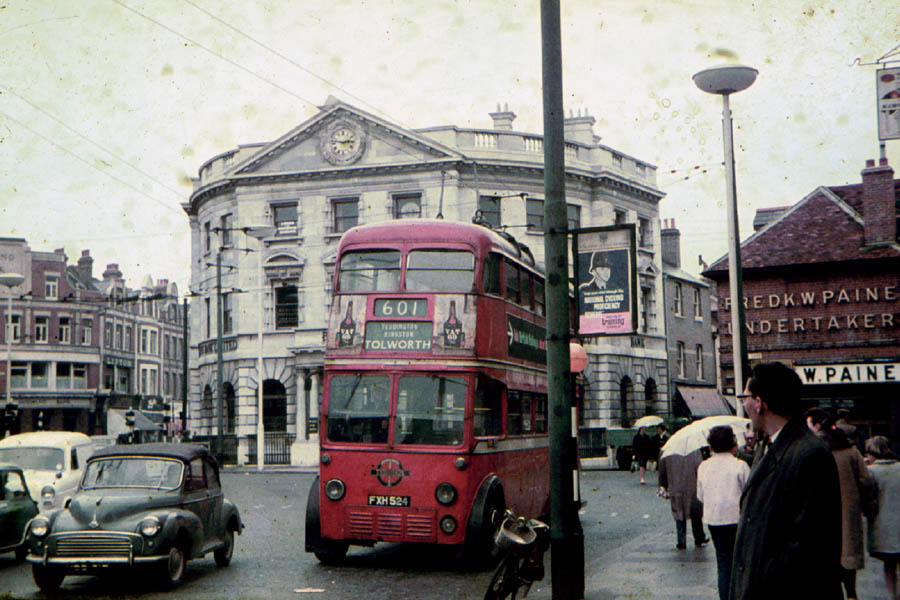
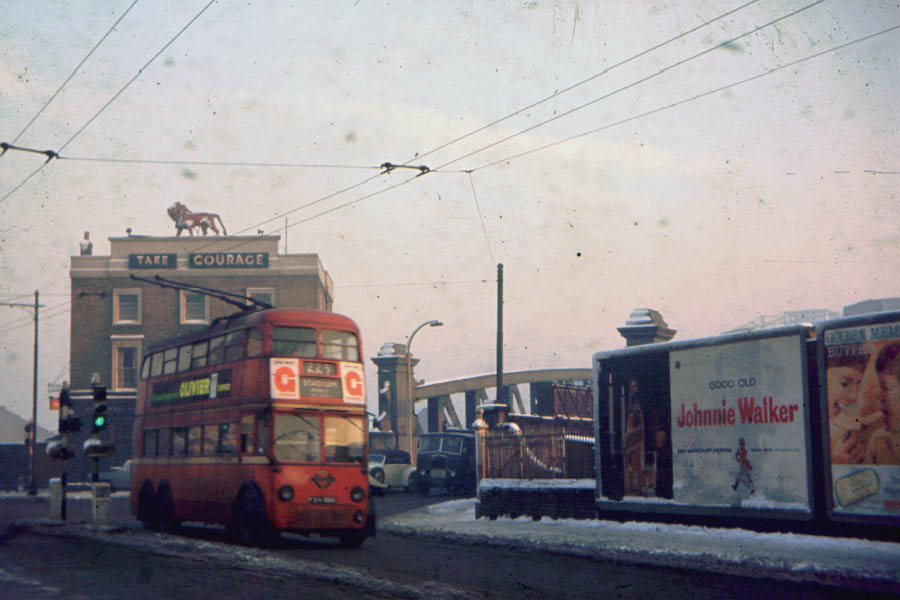
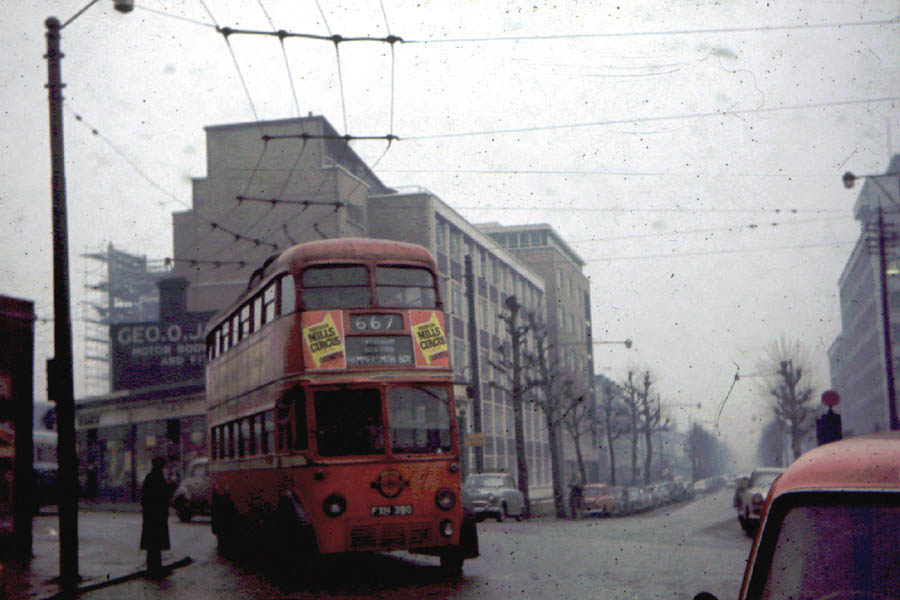
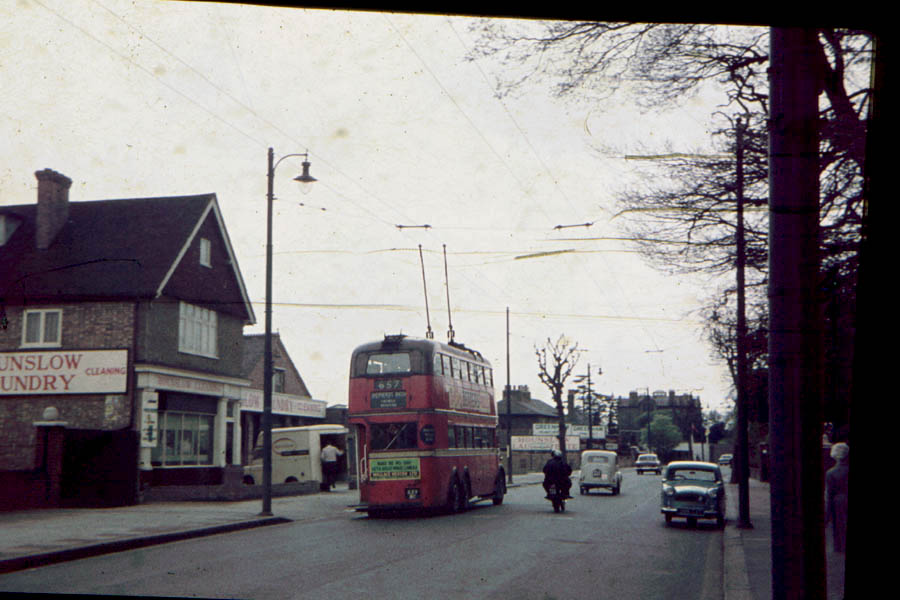
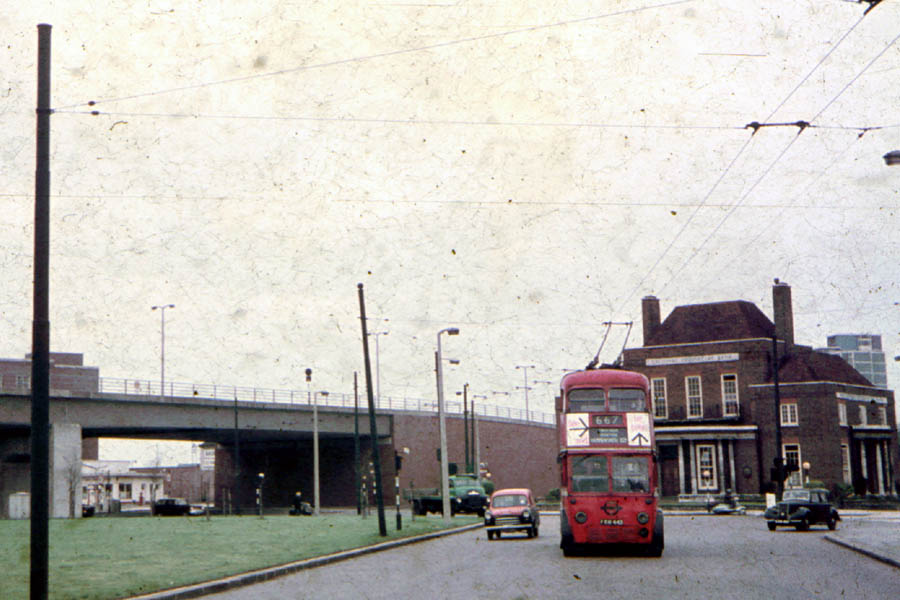
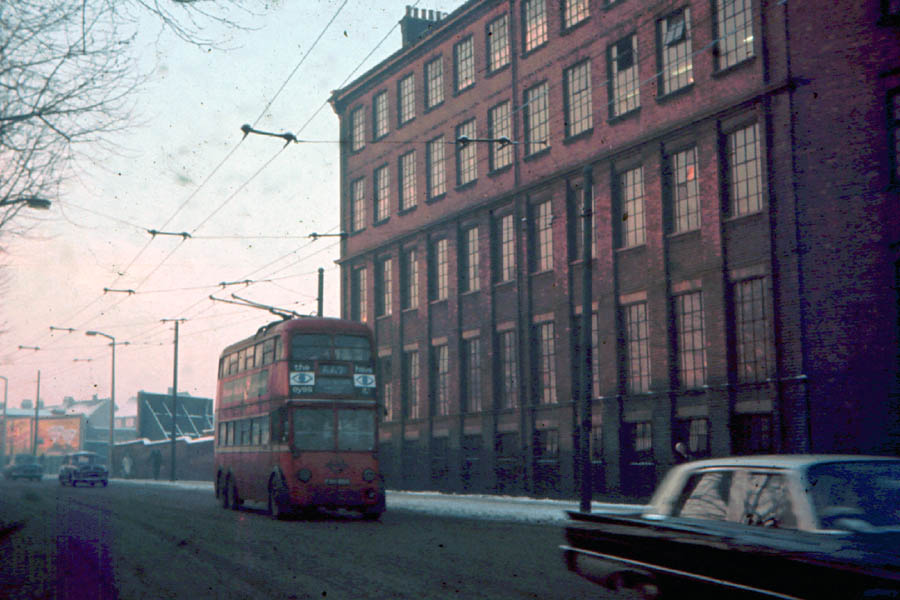
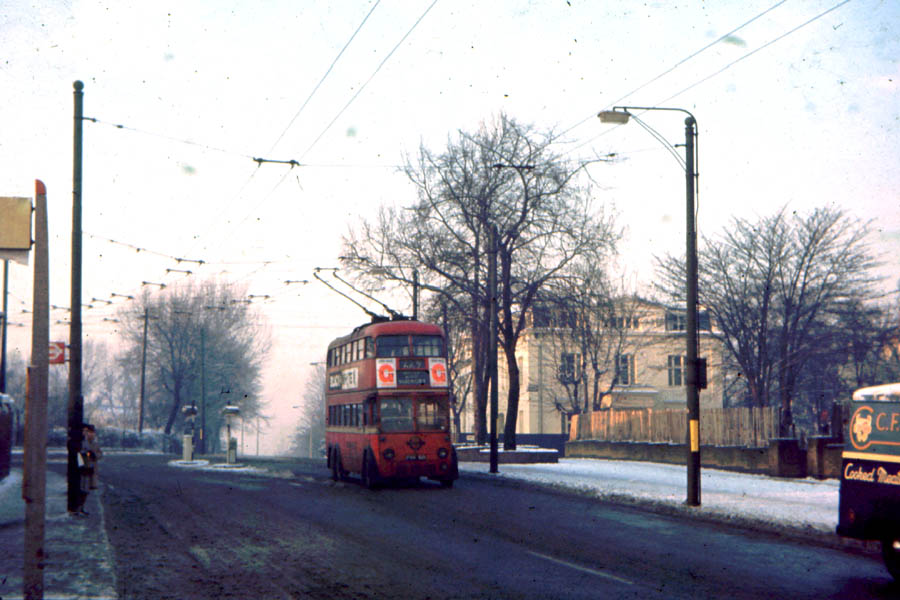
The trolleybus routes through west London neighborhoods like Ravenscourt Park, Turnham Green, Stamford Brook, Brentford, and Shepherds Bush were photographed in their final weeks of operation. On 6 June 1962 — just weeks after the last trolleybus ran — The Beatles recorded their first session at Abbey Road Studios. The old was ending and the new was arriving, often in the same month.
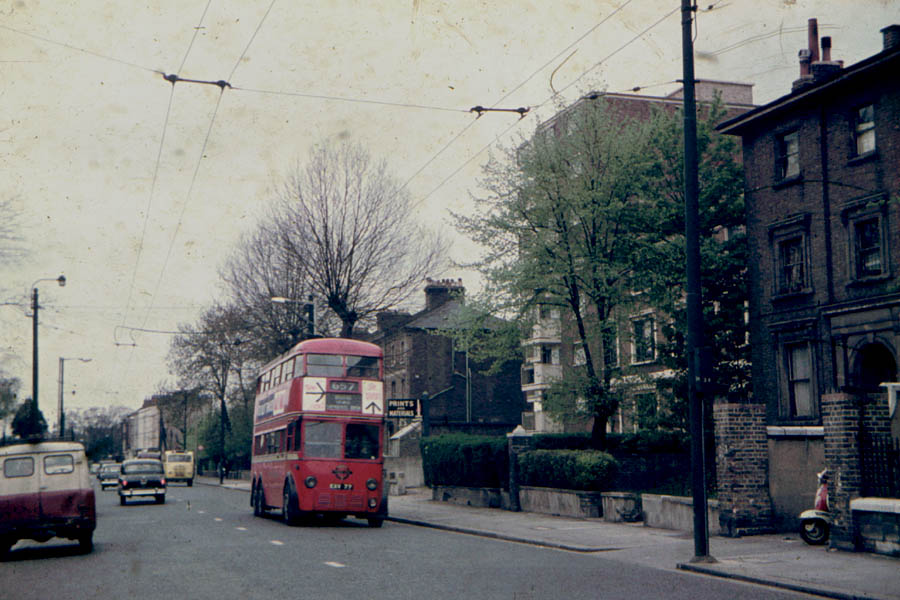
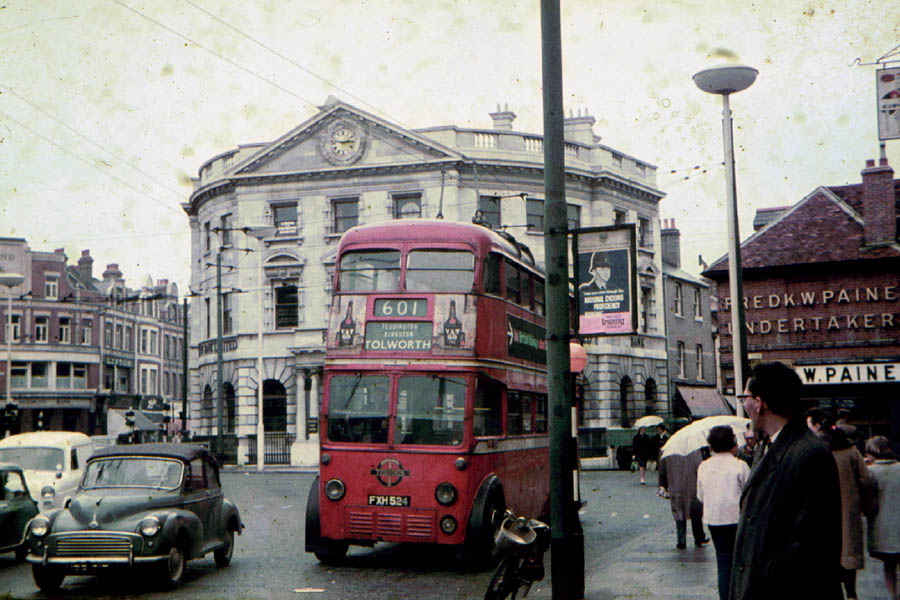
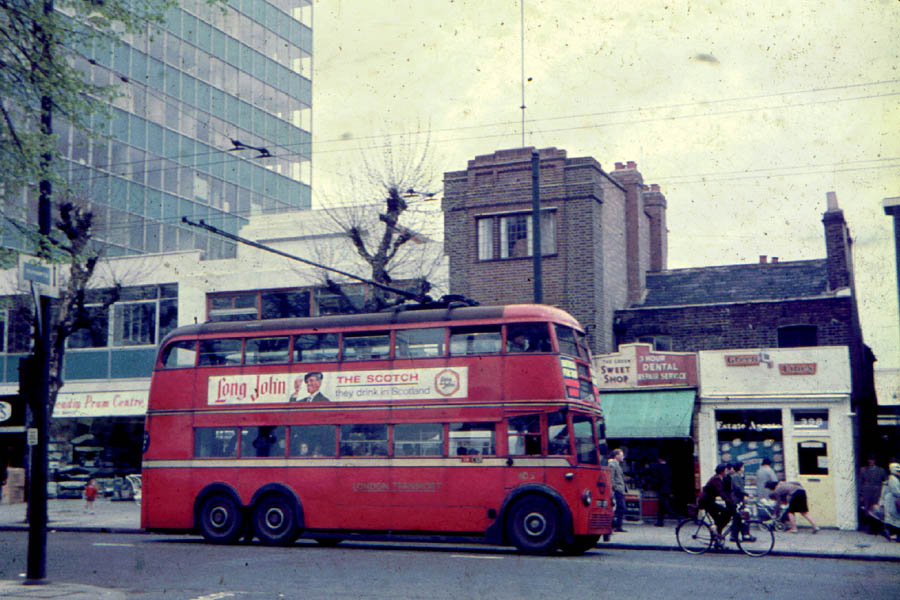

I wish there were more of east London as well. Intriguingly, I don’t think Aldgate Avenue exists anymore; there are a lot of new buildings there; I wonder where it was.
Ahhh, the good old days when you could taste the soot.