When Germany invaded Belgium in August 1914, it was a calculated move to push through to France quickly. Belgium was officially neutral, but that status meant nothing to the German military command. Leuven, a historic university city southeast of Brussels, fell to German forces on August 20, 1914. What followed in the days after was one of the most notorious atrocities committed against a civilian population in the opening weeks of World War I.
The trigger for the reprisal was a case of dangerous confusion. German units stationed outside the city were startled by movement and retreated back into Leuven in a panic. Inside the city, other German soldiers saw their own comrades approaching and mistook them for Belgian fighters. They opened fire on them. Once the Germans realized it was a friendly-fire incident and that no real Belgian attack had taken place, they did not stand down. Instead, they turned their anger on the people of Leuven.
Between August 25th and 30th, German troops systematically burned buildings across the city. Residents were rounded up and accused of being franc-tireurs — a French term for irregular fighters or snipers, used broadly to label civilians as terrorists. Most of those arrested were entirely innocent. A number were killed simply because they owned hunting rifles, a common possession in Belgian households at the time. More than 200 townspeople were executed during the week-long reprisal.
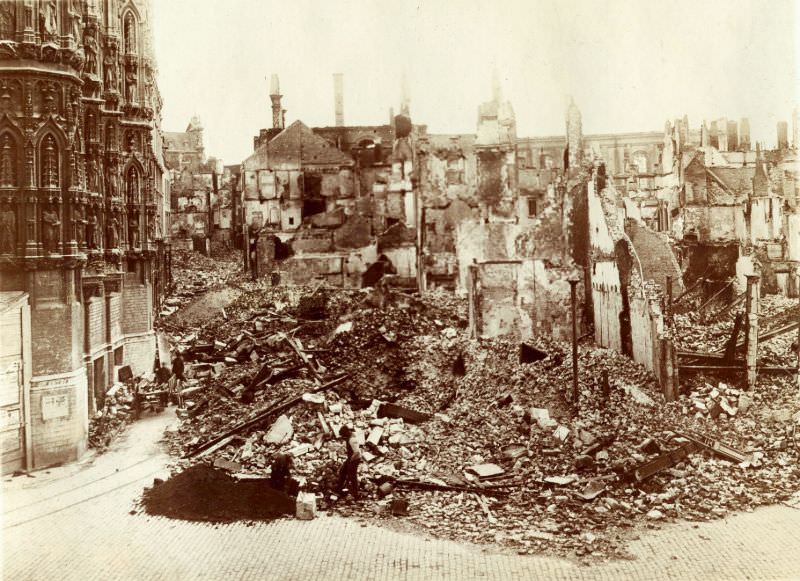
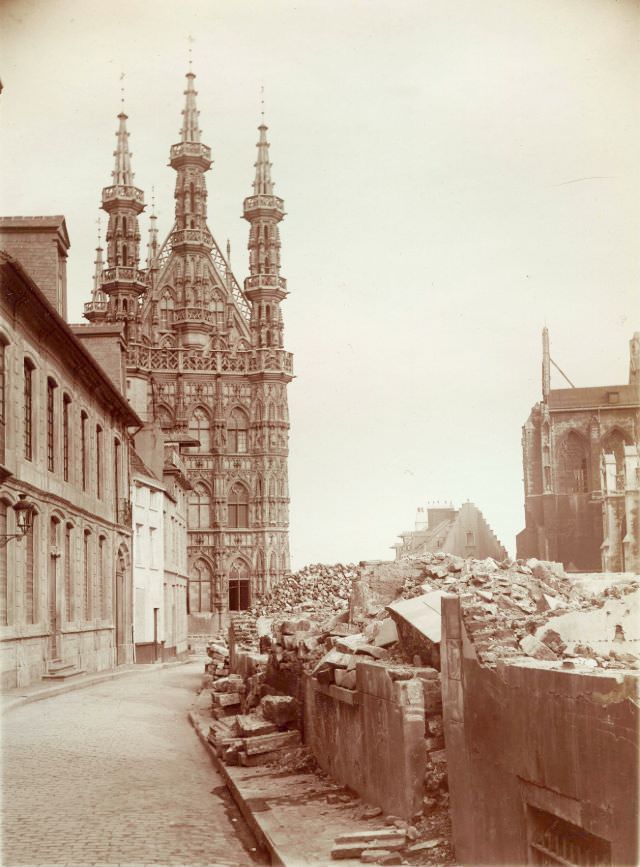
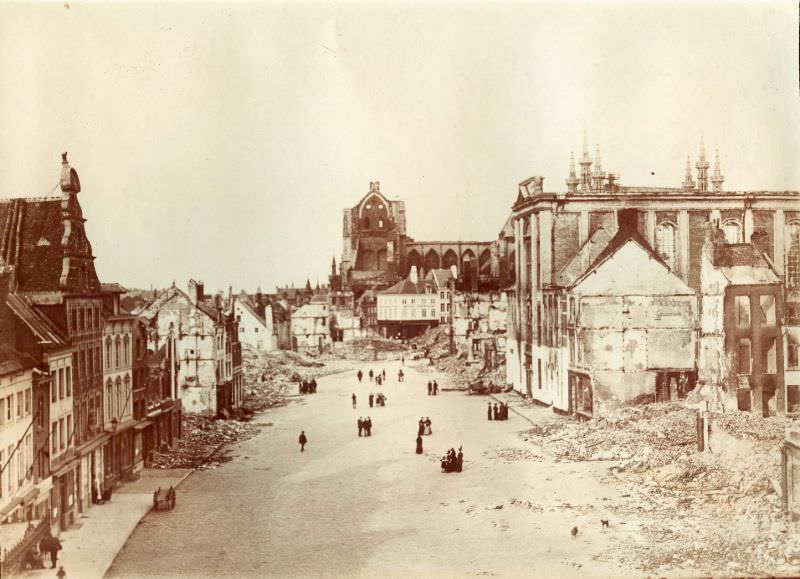
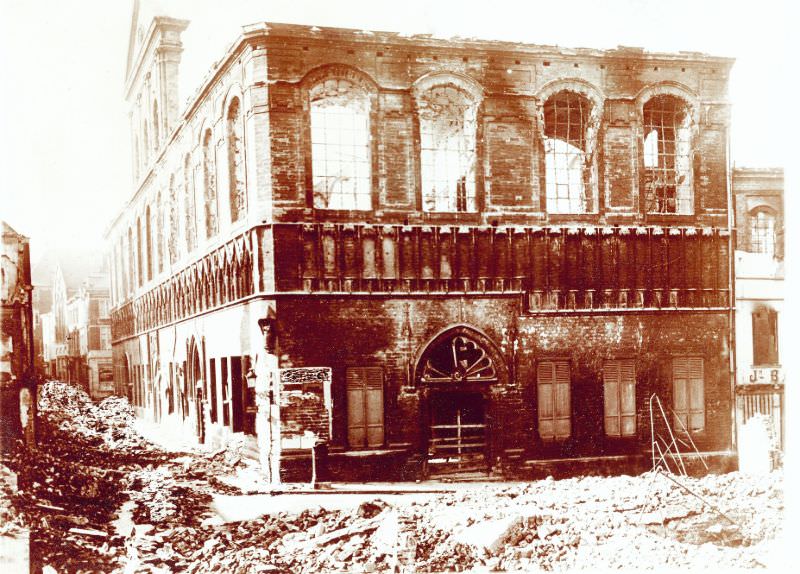
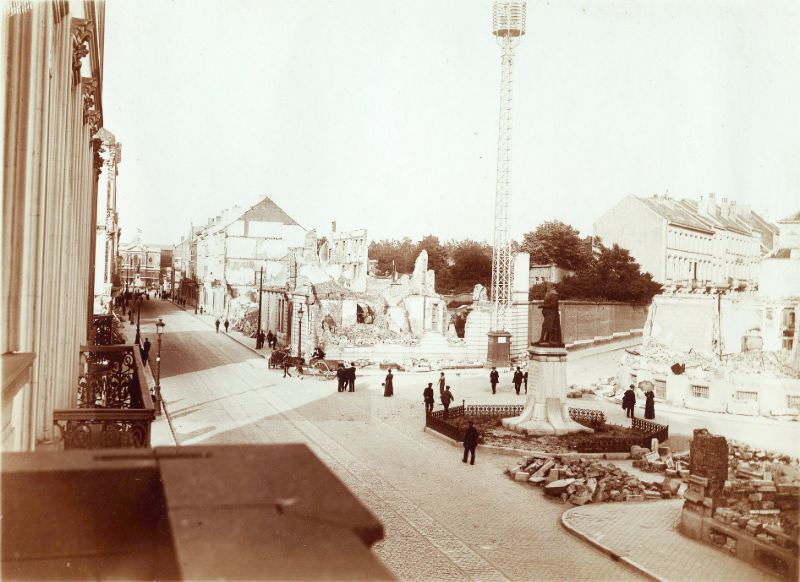
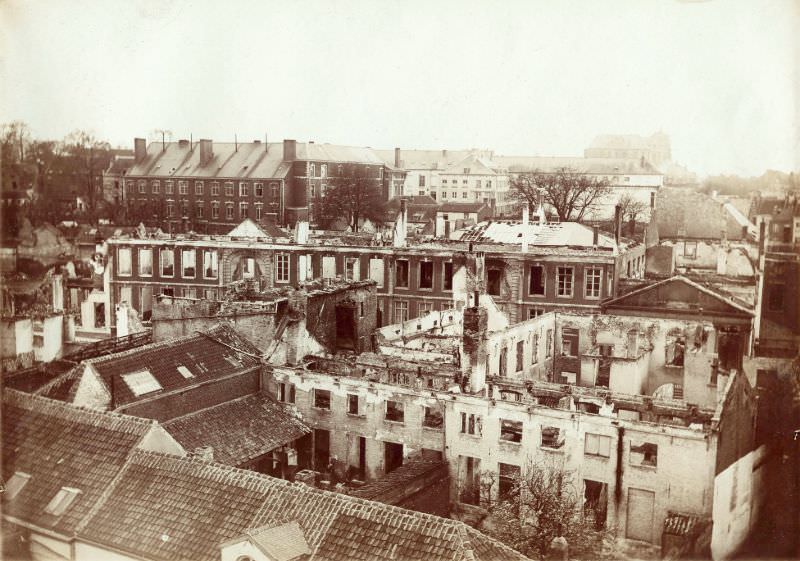
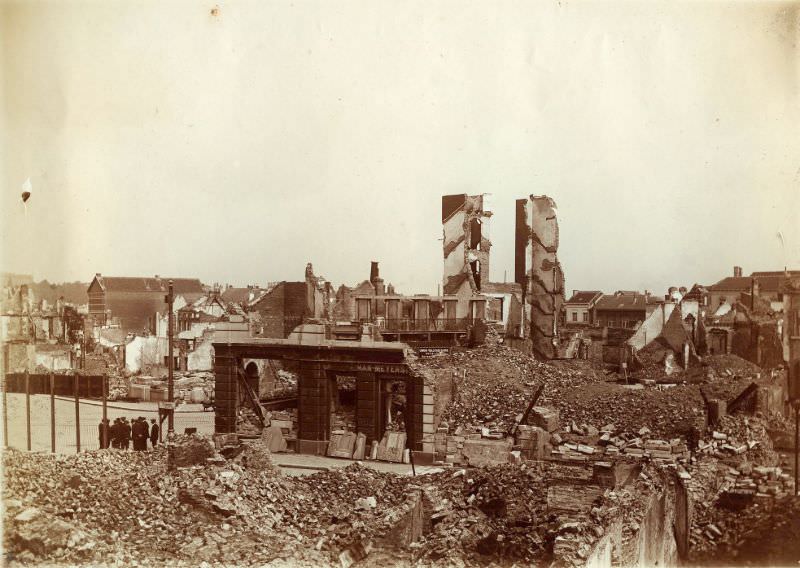
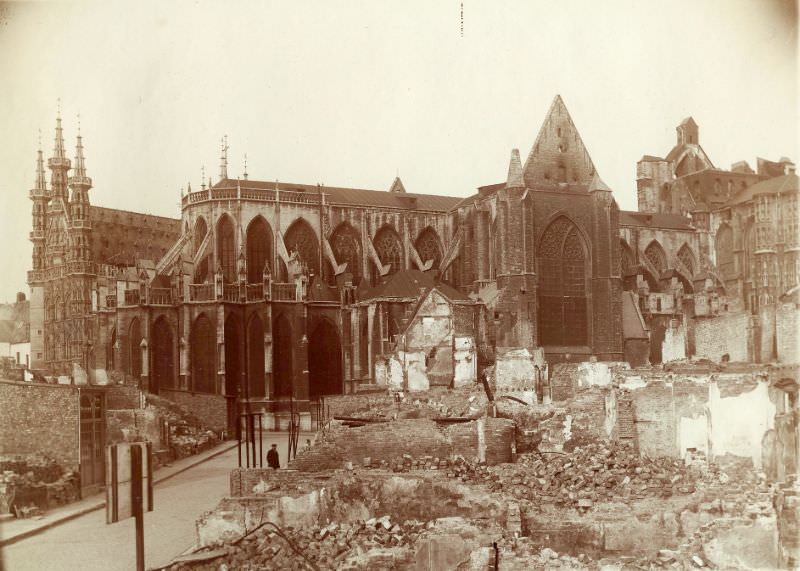
The destruction spread across entire city blocks. Streets that had been lined with homes, shops, and civic buildings were reduced to roofless shells and heaps of rubble. The Naamsestraat, one of Leuven’s main thoroughfares, was left lined with burned-out facades. The area around the Grote Markt, the city’s central square, showed some of the heaviest damage.
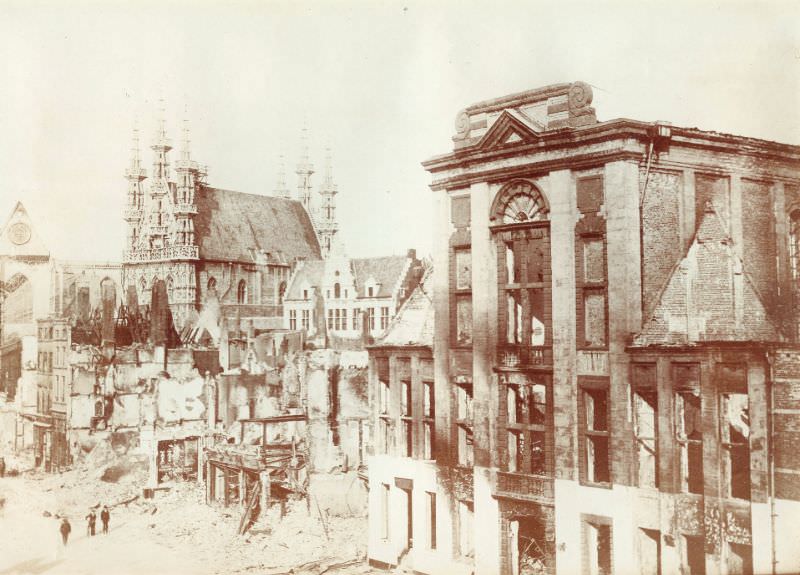
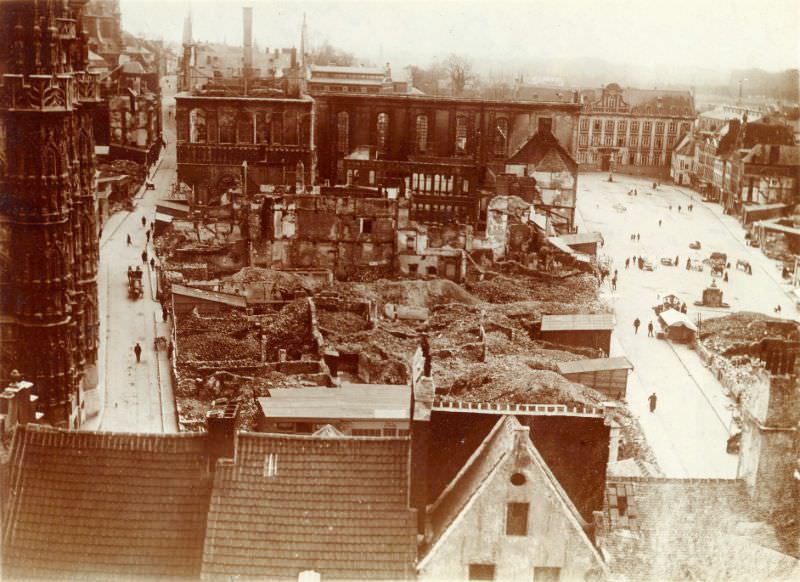
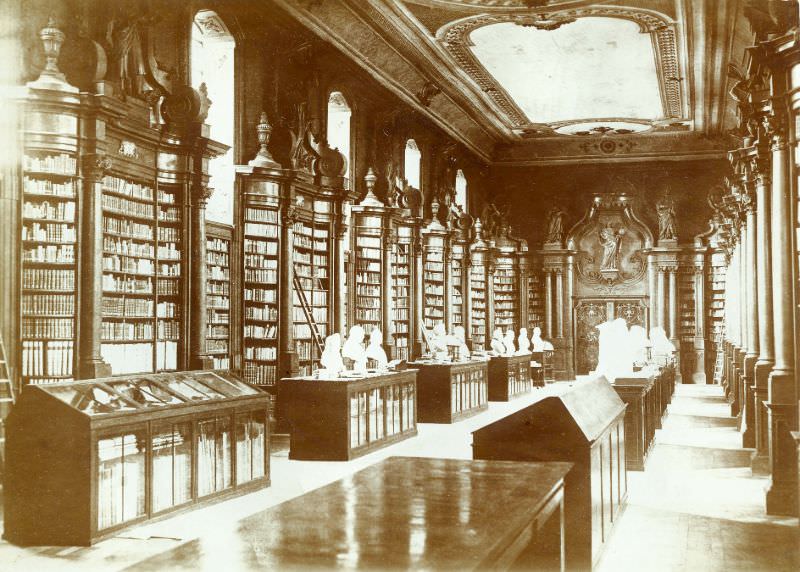
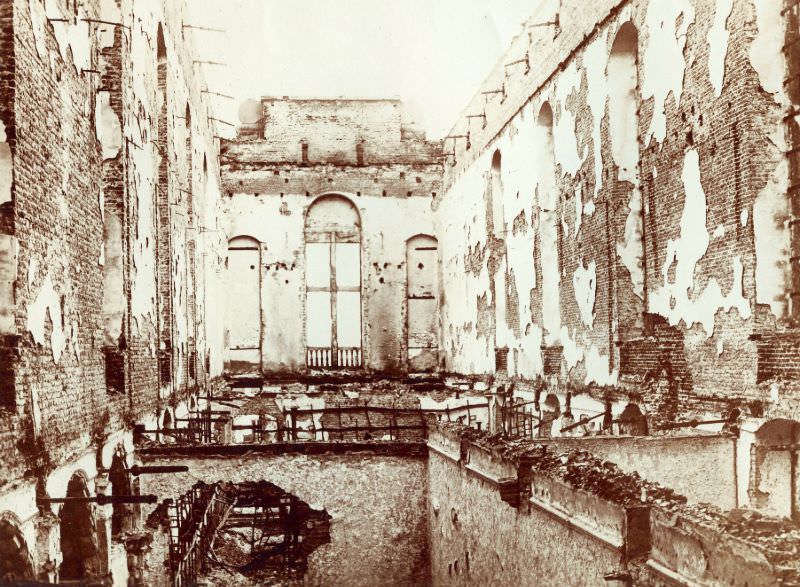
Among the losses, the Catholic University of Leuven’s library stood out as particularly devastating. Founded in 1425, the library was nearly 500 years old and housed an irreplaceable collection of medieval manuscripts, books, and academic records. German troops set it on fire, and the building burned completely. The roof and interior were destroyed beyond repair. Only the stone shell remained standing.
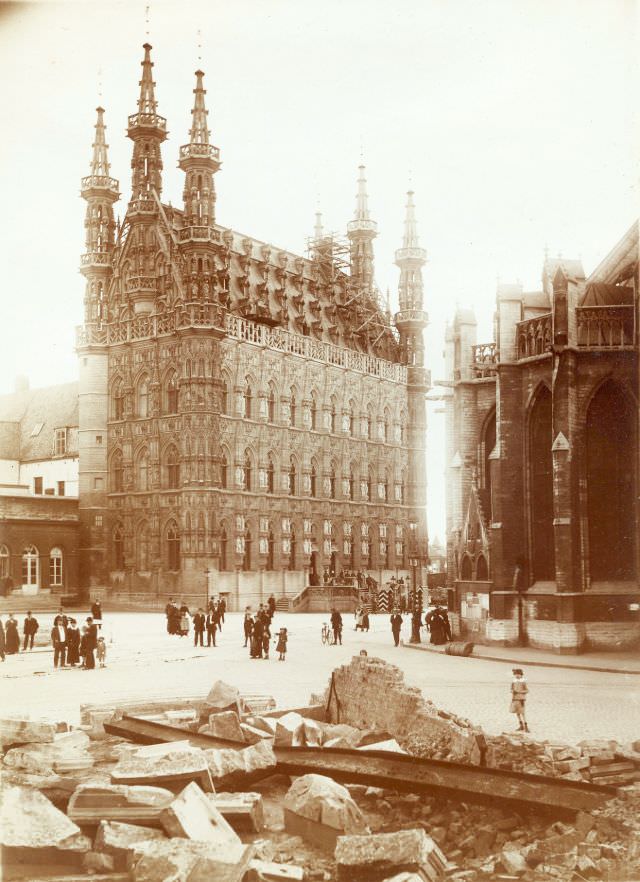
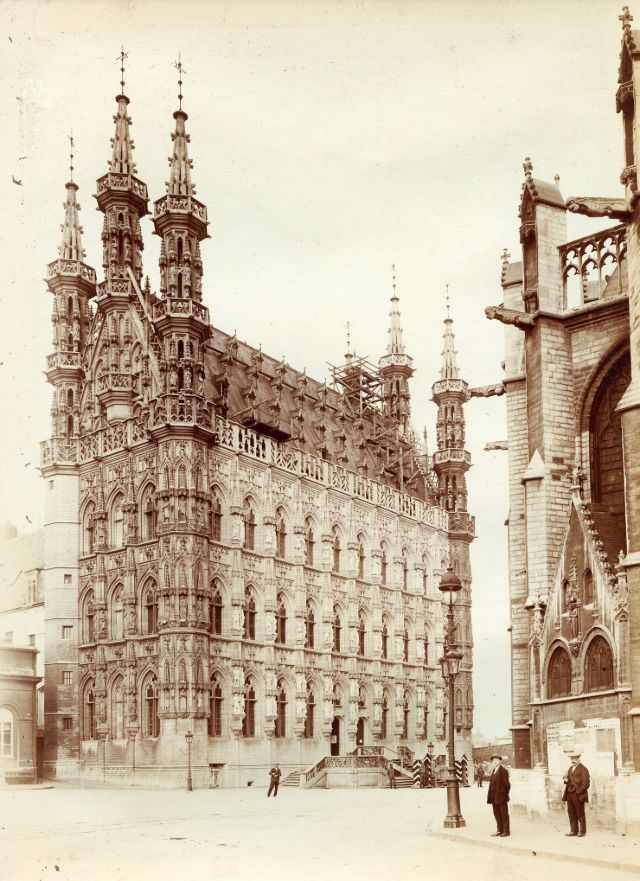
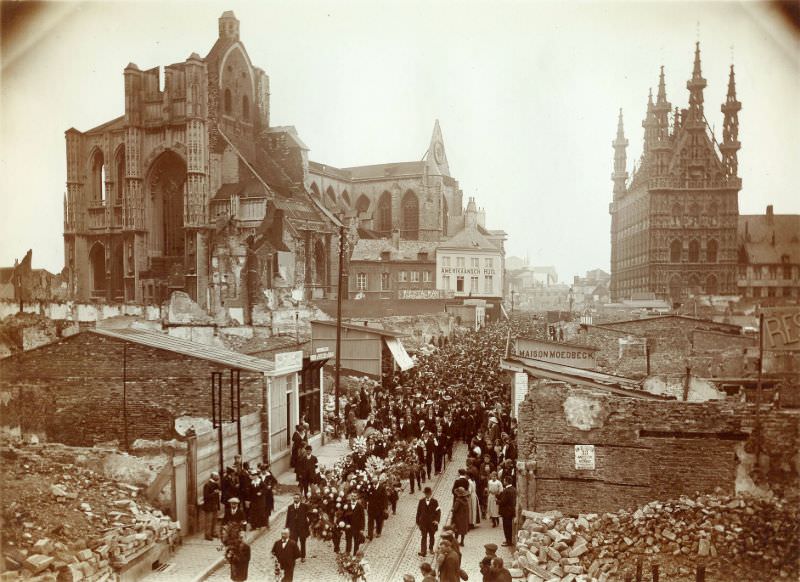
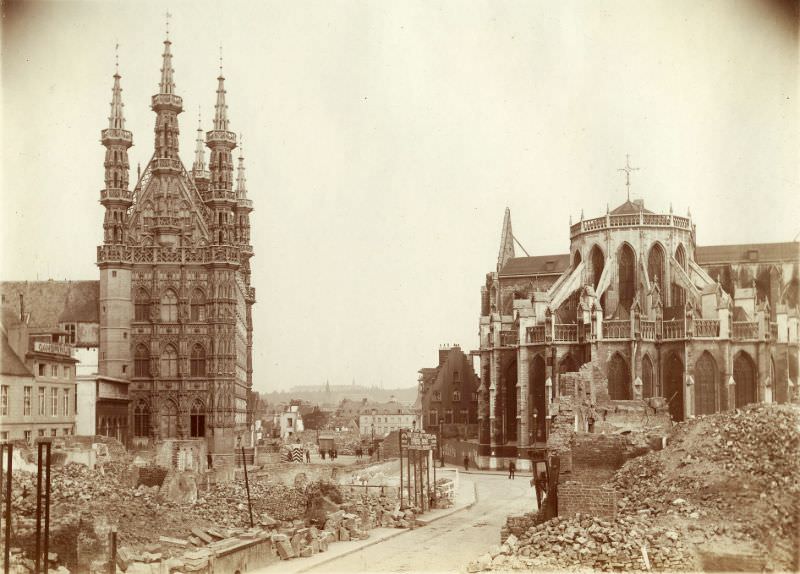
German soldiers stood guard at key locations around the city, including the City Hall, as the destruction unfolded around them. The photographs taken during and shortly after the reprisal show armed troops positioned in front of civic buildings while the streets nearby lay in ruin. The City Hall itself survived structurally, but the buildings surrounding it were gutted.
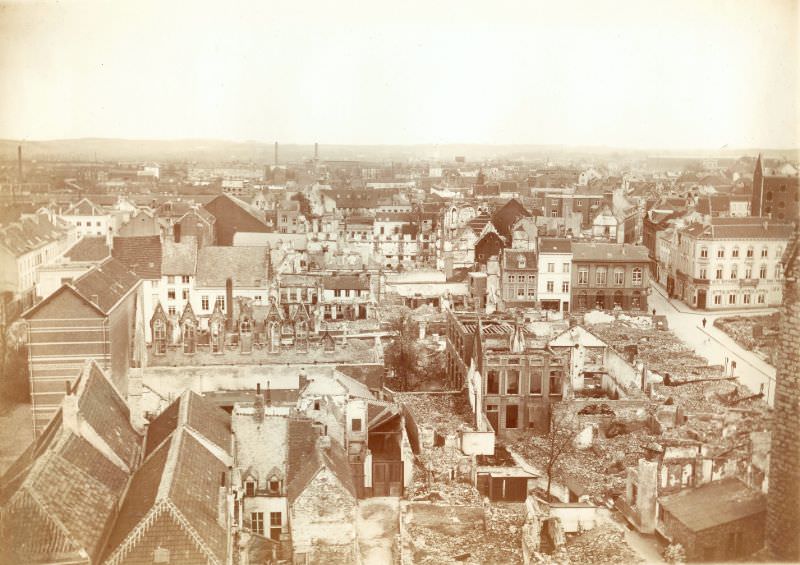
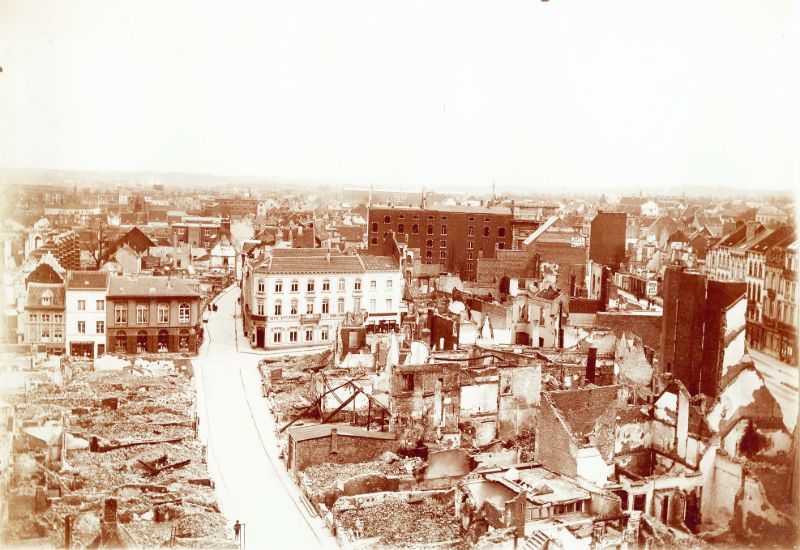
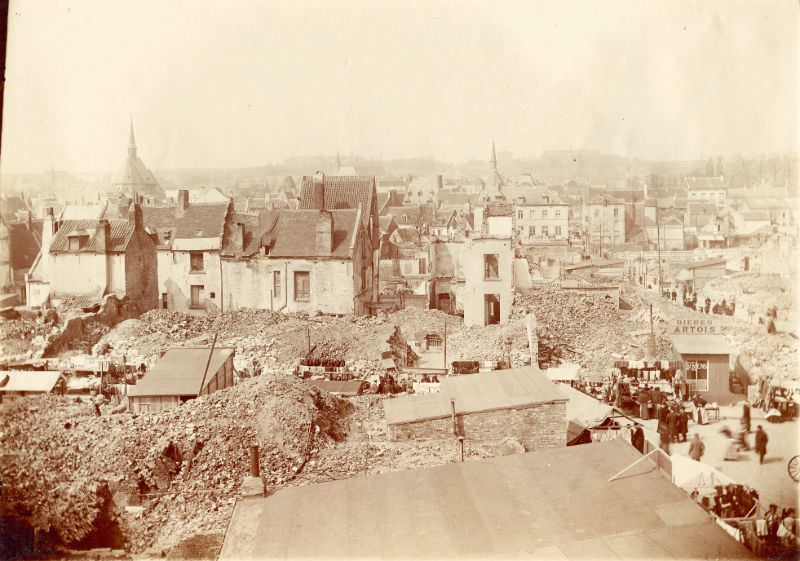
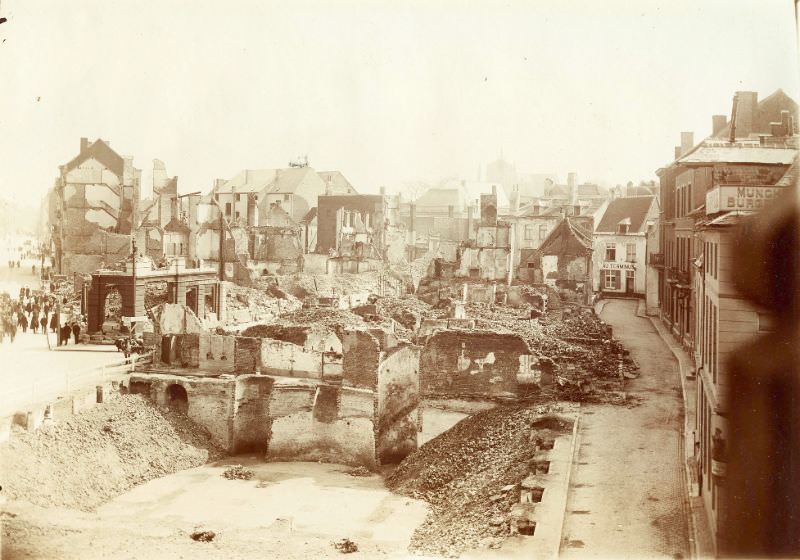
Rubble filled the streets in every direction from the city center. What had been dense urban blocks became open fields of broken stone, charred timber, and collapsed walls. The photographs show the scale of the destruction clearly — not isolated damage, but entire neighborhoods burned down row by row.
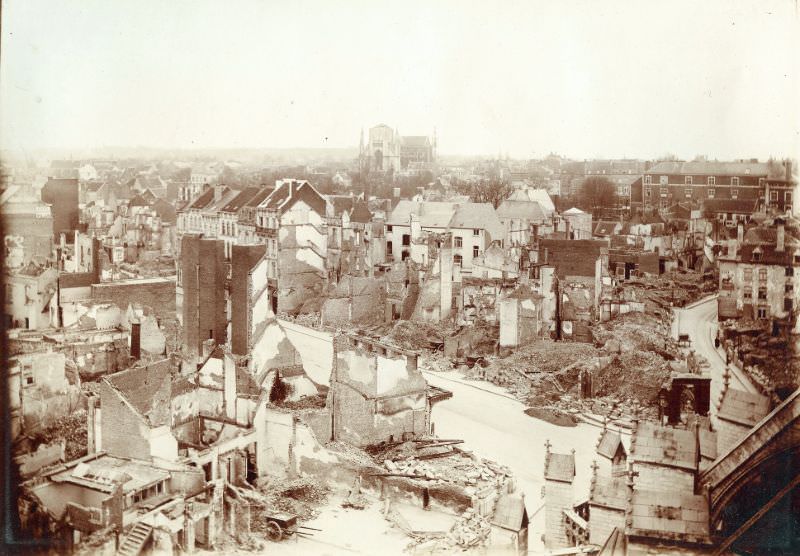
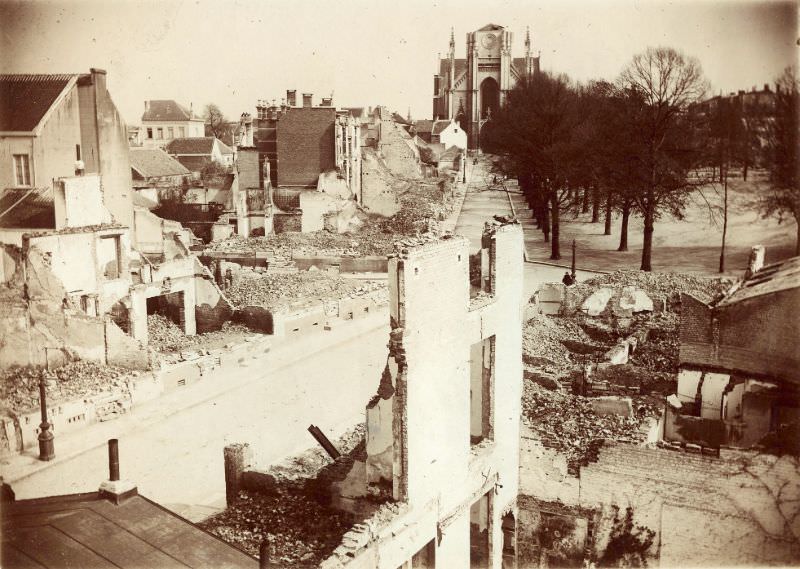
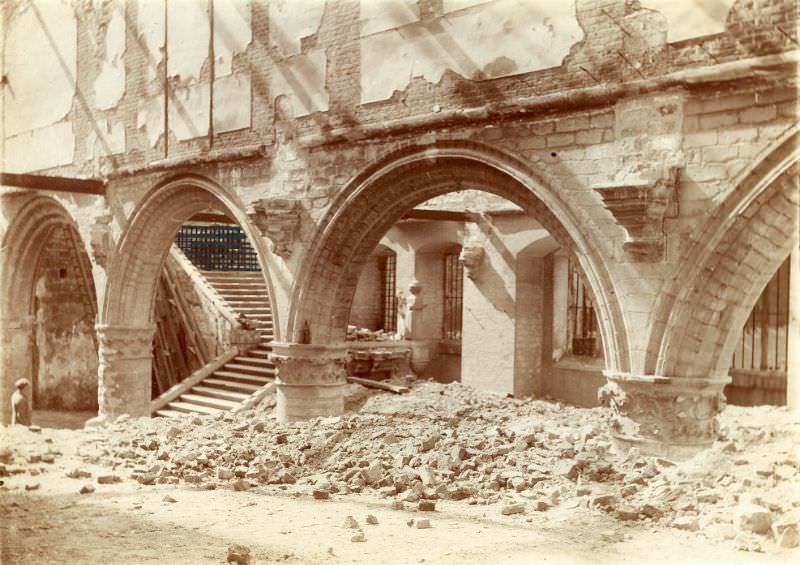
The university library was photographed extensively both before and after the fires. Images of its interior show arched stone corridors standing empty, the wooden floors, shelving, and contents entirely consumed by flame. The outer walls held their shape while everything inside was gone. Before-and-after images of the library wing document the full scale of what was lost.
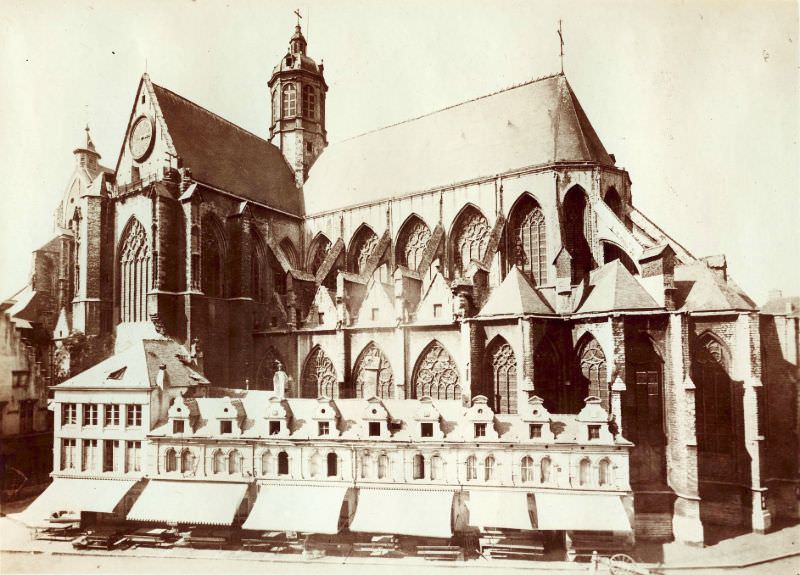
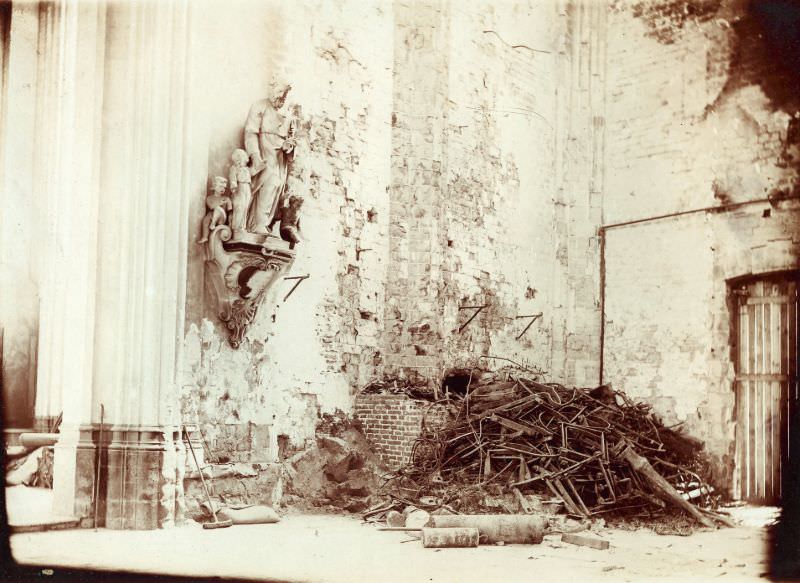
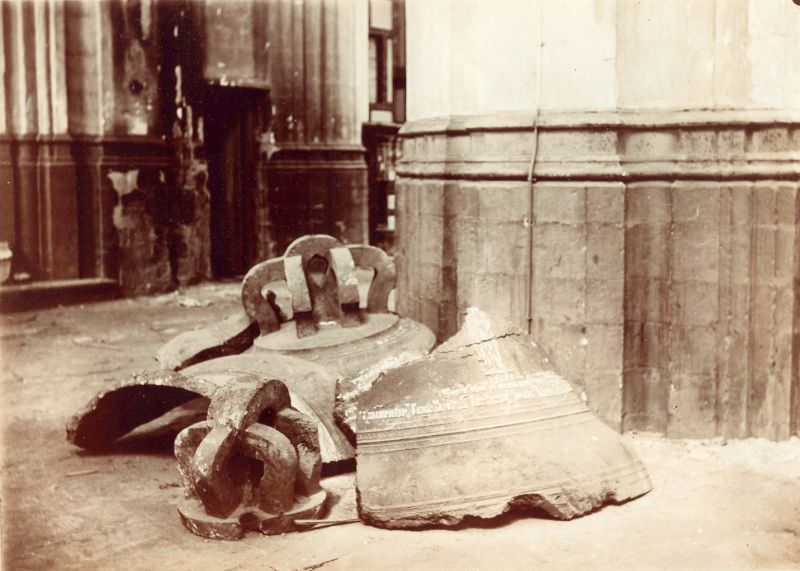
Saint Peter’s Church, known locally as St-Pieterskerk, was another major casualty. German forces set fire to the building, destroying the roof and causing serious structural damage. The church had stood in Leuven’s city center for centuries. Photographs taken after the fires show crumbled stonework, a shattered bell among the wreckage, and burned corners where the exterior walls met.
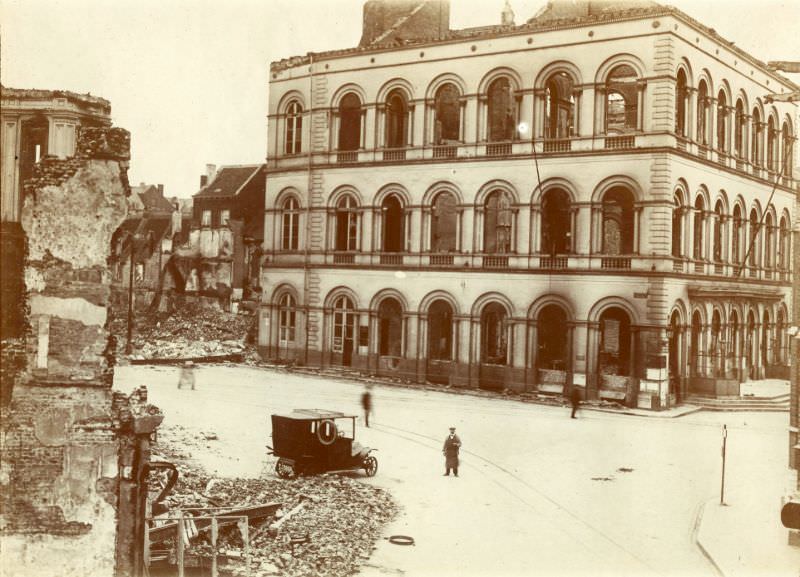
Financial institutions were not spared. The National Bank of Leuven, housed in a building also known as the Tafelrond, was gutted during the fires. Public and commercial buildings alike were burned, leaving the Oude Markt and surrounding streets largely empty of functioning structures. The destruction was not random — it swept through the core of the city.
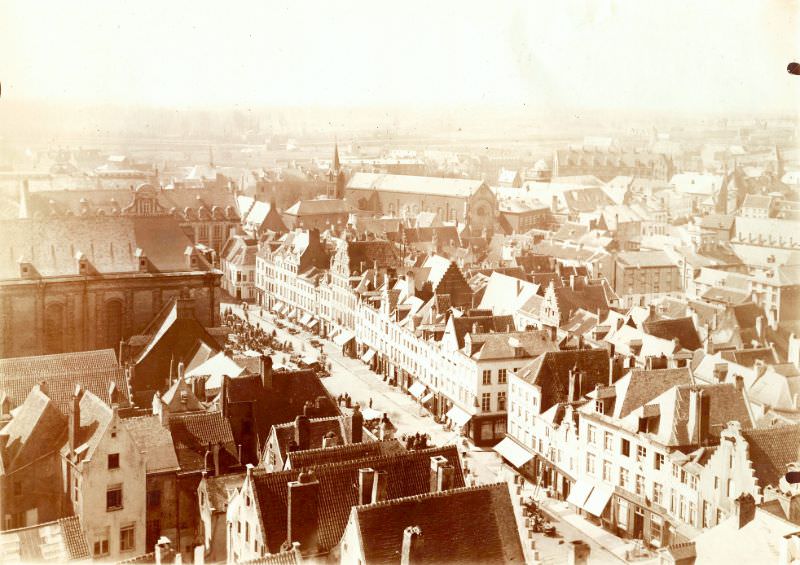
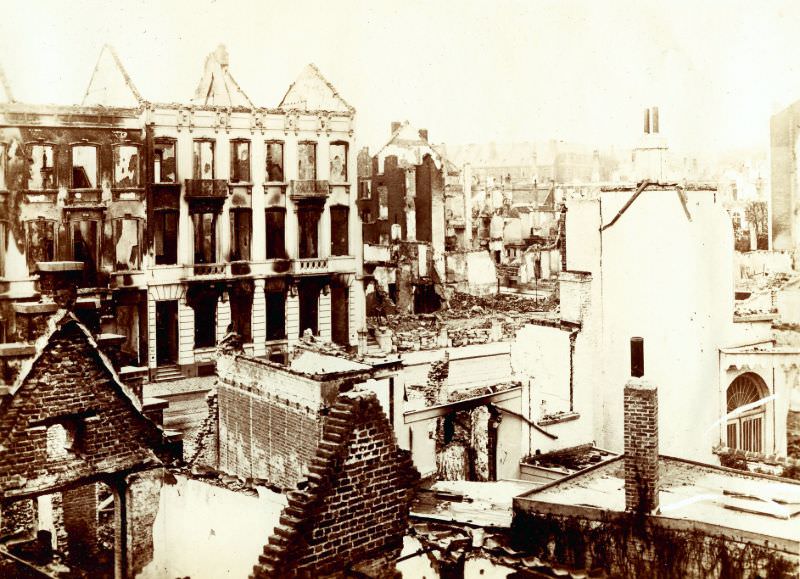
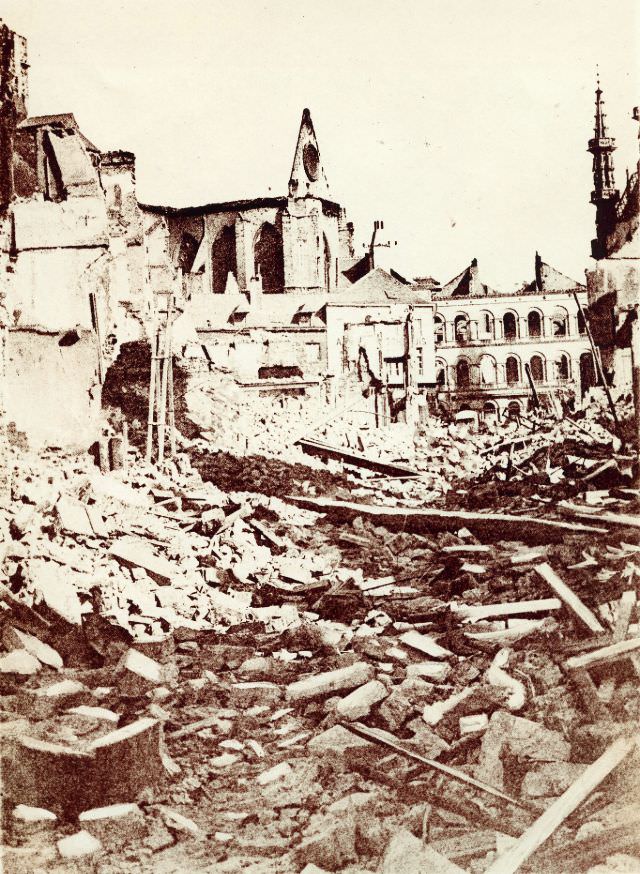
Smaller streets and side alleys throughout the city center were also left in ruins. Photographs show the area near the twin towers completely buried under debris, with a velocipede — bicycle — shop visible beneath the rubble. Ordinary commercial life had been erased in a matter of days.
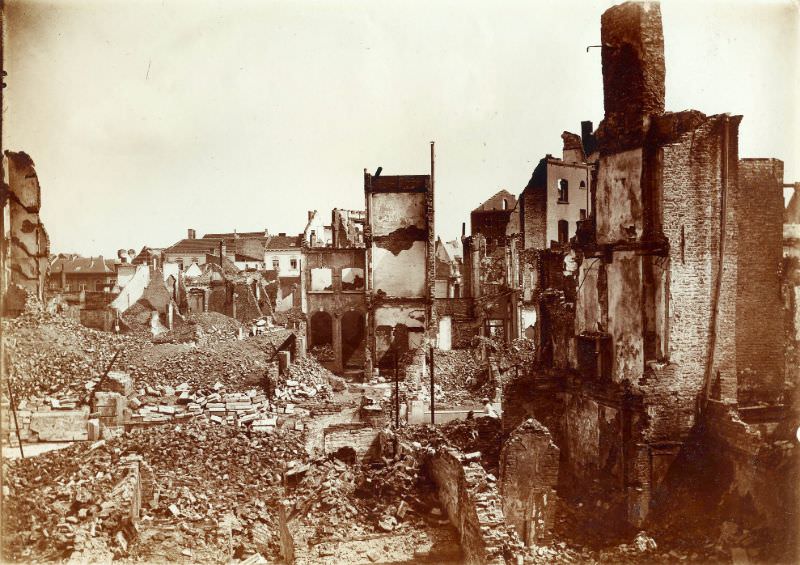
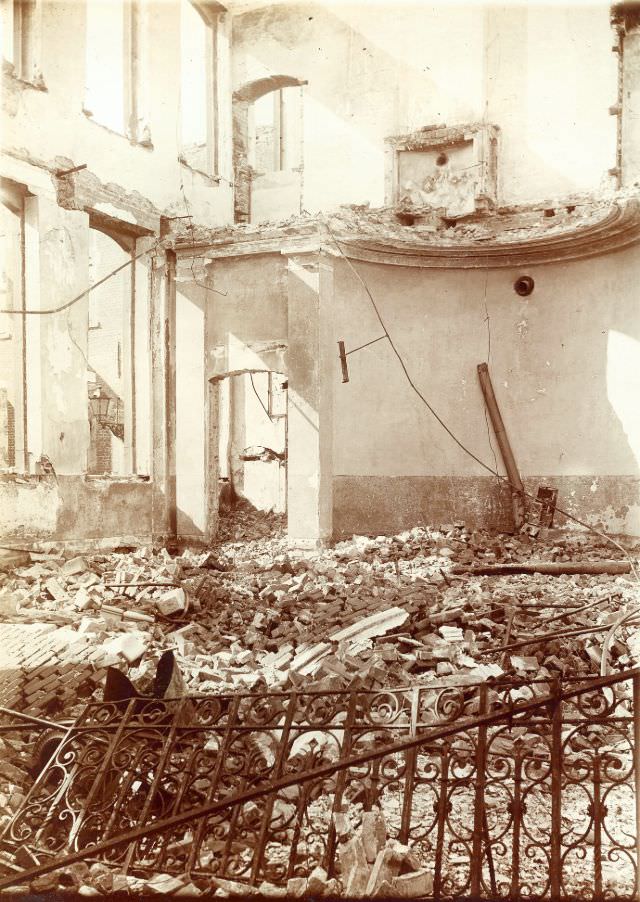
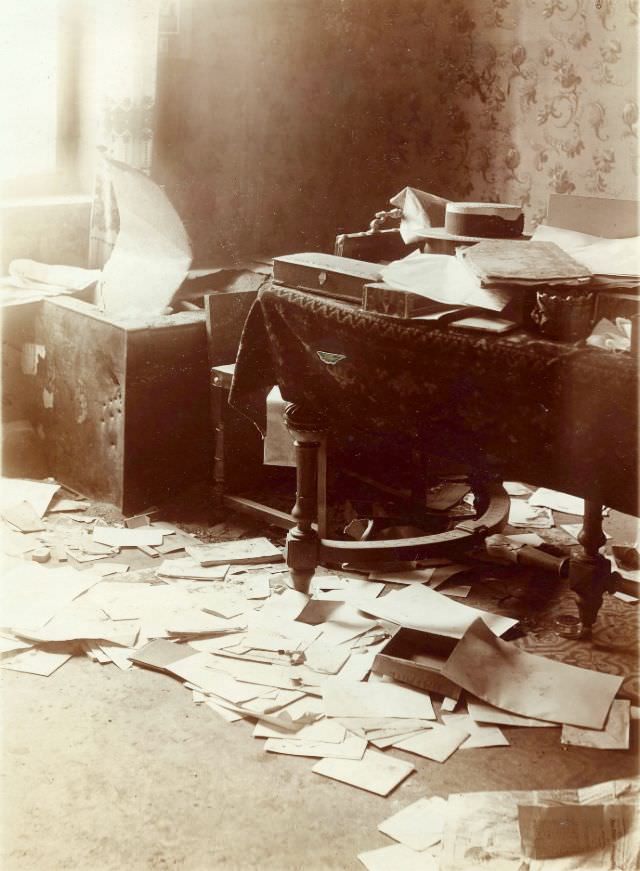
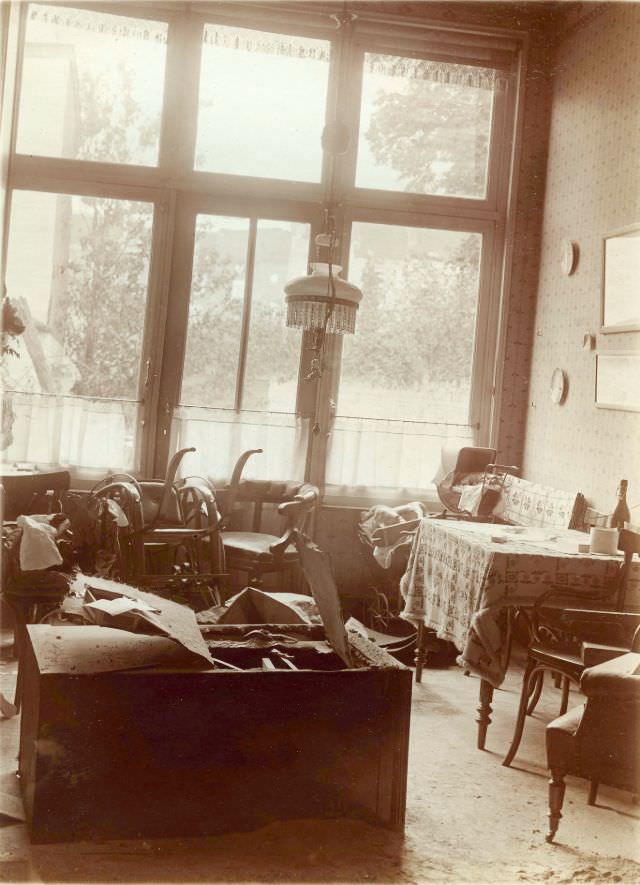
Inside many of the buildings that still stood, the damage from shrapnel and fire was severe. Interior walls were pocked with hundreds of impact marks. Ceilings had collapsed, windows were blown out, and rooms that had once been homes or offices were open to the sky. These building interiors document the sheer force used against a city that had not mounted any organized military resistance.
St-Pieterskerk was photographed before the arson took place, providing a direct comparison to what was lost. The church’s bombed corner, where a sculpture of the Holy Family had stood, was captured in photographs showing broken stonework and exposed masonry. The bell tower’s bell was found shattered on the ground below.
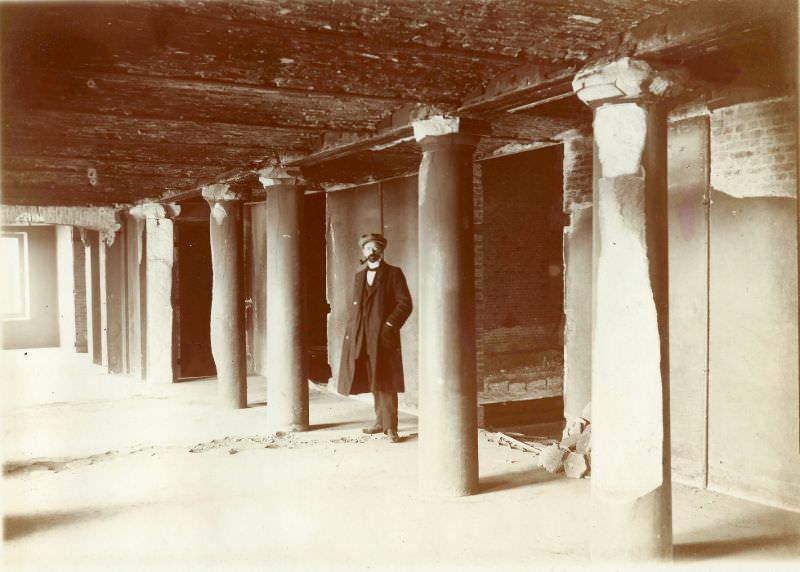
The city theatre was burned to its foundations. Photographs of the ruins show hollow walls and collapsed floors, with at least one image capturing a figure standing in what remained of the basement. The theatre, like the library and the church, was a central part of civic life in Leuven — and like them, it was deliberately destroyed during the German reprisal of August 1914.