
Leningrad in the mid-1970s was a city carrying centuries of history beneath a firmly Soviet surface. Known today as Saint Petersburg, it sits on the Neva River in northwestern Russia and has long served as the country’s cultural and architectural heart. Its 18th- and 19th-century buildings stood largely intact through the Soviet era, lining grand avenues and canal embankments that gave the city an identity unlike anywhere else in the USSR. These photographs, taken mostly in 1976 and 1977, offer a ground-level view of what daily life looked like in one of the Soviet Union’s most iconic cities.
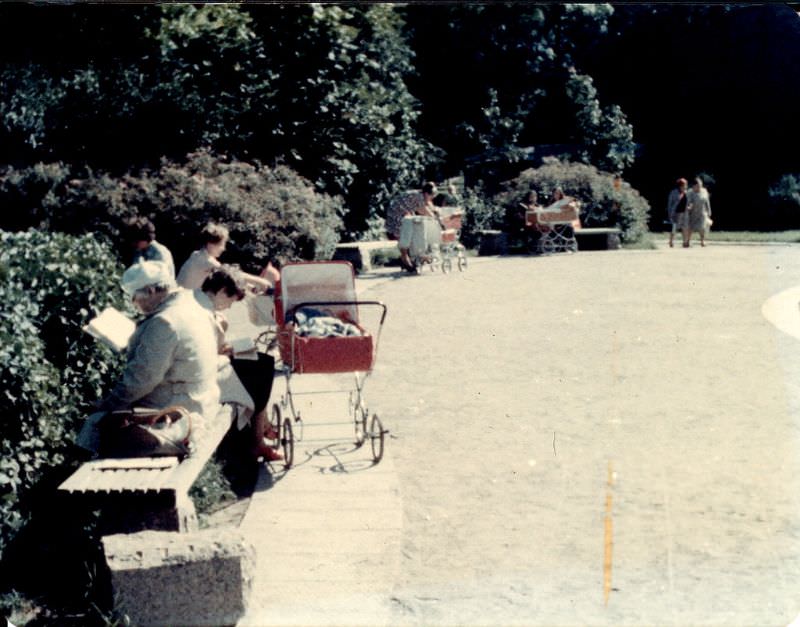
The city’s name had already changed twice before these photos were taken. Founded by Peter the Great in 1703 as Saint Petersburg, it was renamed Petrograd during World War I to remove the German-sounding suffix. After Lenin’s death in 1924, it became Leningrad — a name it held for nearly 70 years. After the Soviet Union collapsed, a citywide referendum in 1991 brought back the original name. But in 1976, it was still Leningrad, and these streets reflected the rhythms of late Soviet life.
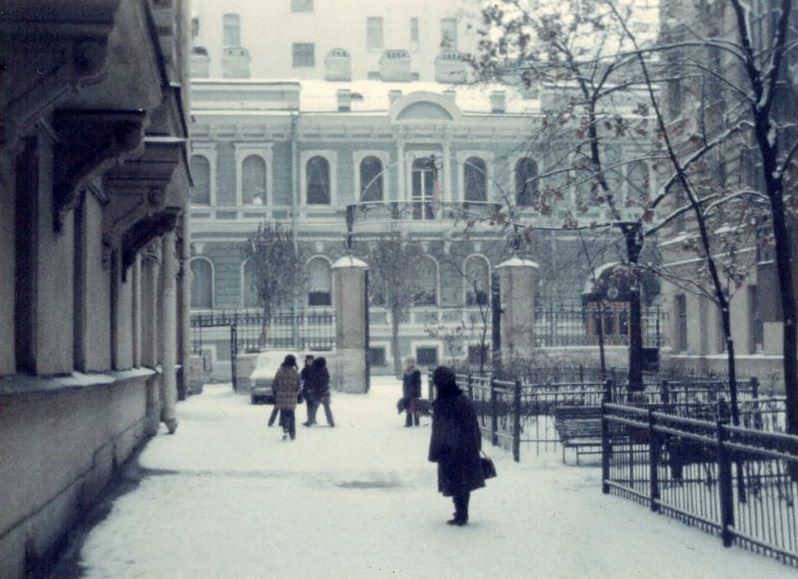
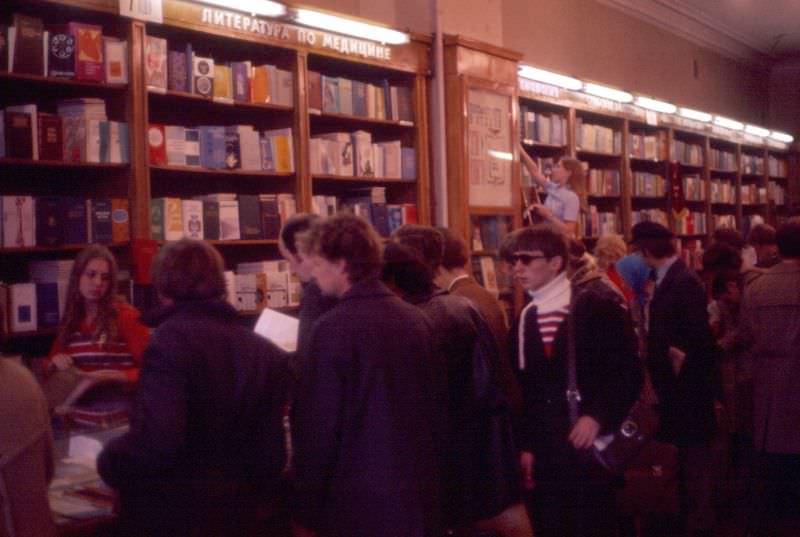
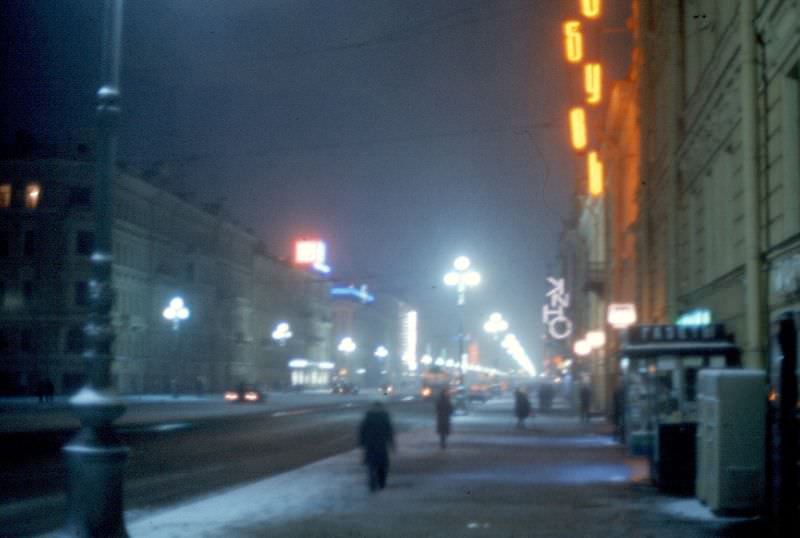
Nevsky Prospekt was the city’s main artery — a broad boulevard running through the heart of Leningrad where shops, theaters, bookstores, and pedestrians all competed for space. Dom Knigi, the famous House of Books, anchored one stretch of the avenue. Housed in the old Singer Company building with its distinctive glass dome, it was one of the largest bookshops in the Soviet Union and a fixture of Leningrad’s intellectual life.
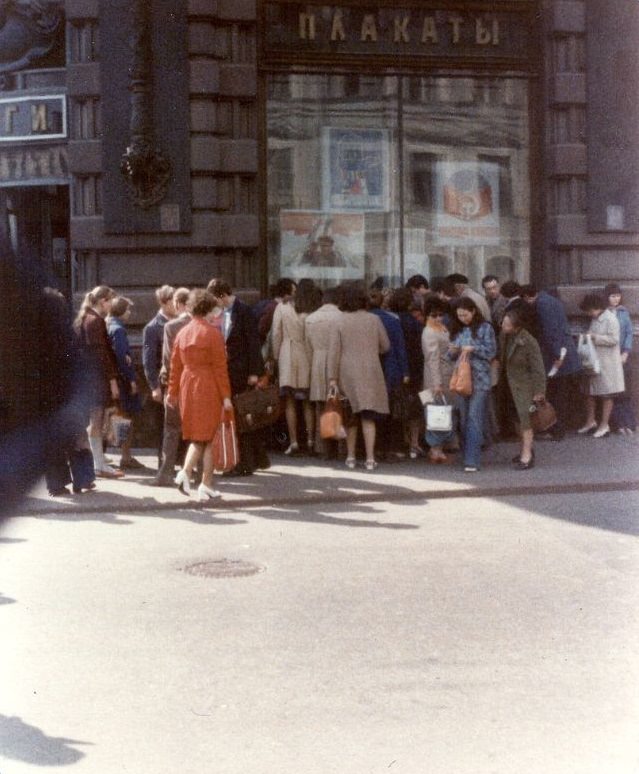
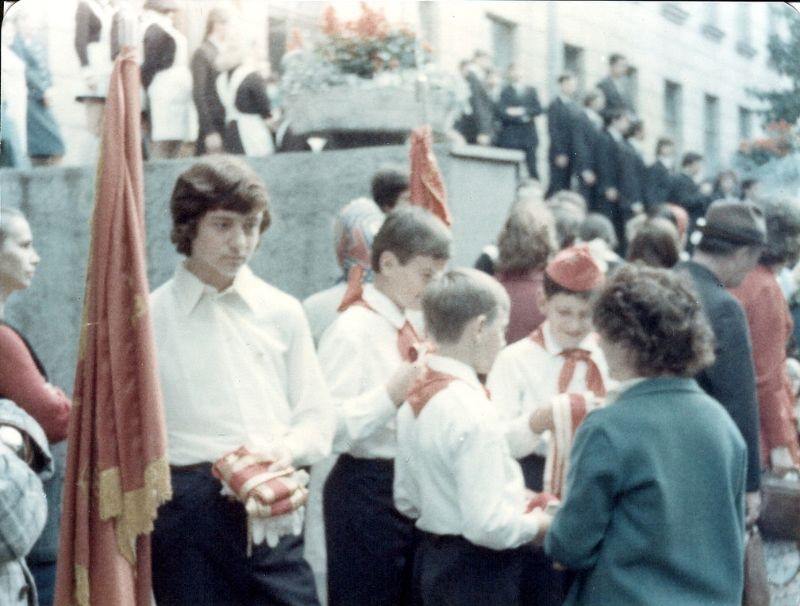
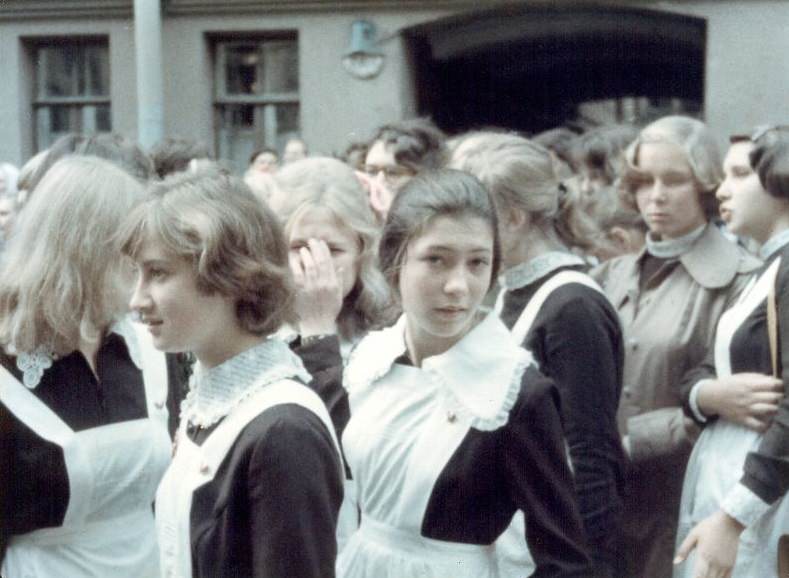
September 1st — the first day of school — was a visible public event in Soviet cities. Children dressed in their best clothes, often carrying flowers for their teachers, gathered with parents on neighborhood streets. On Grodnenskii pereulok, just down from the American Consul General’s Residence, these scenes played out like they did across the entire country: a mix of pride, nerves, and ritual.
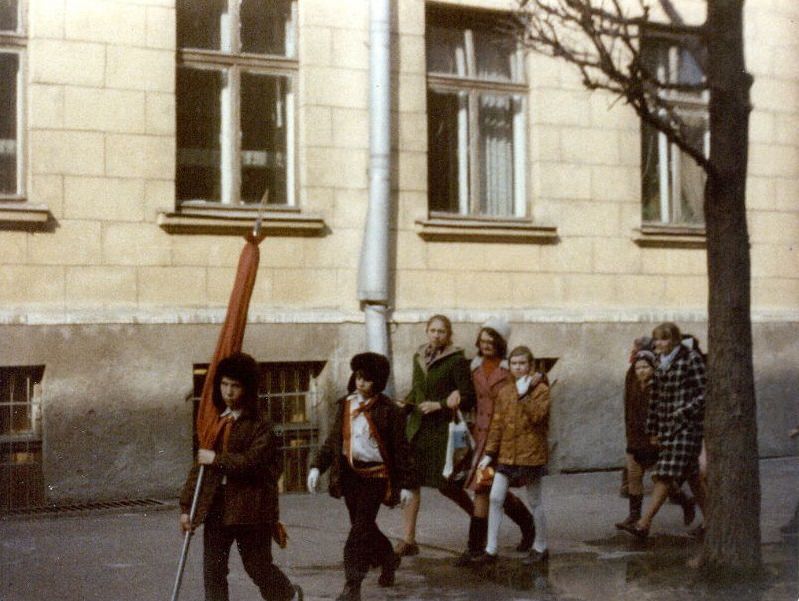
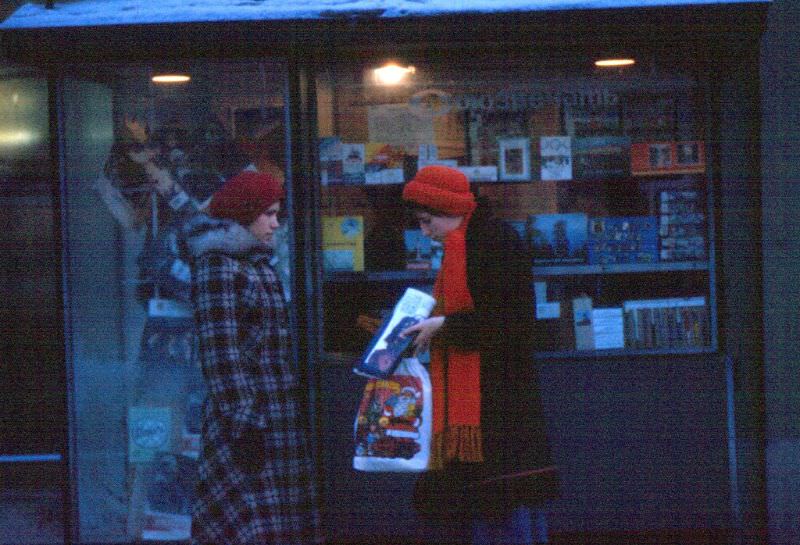
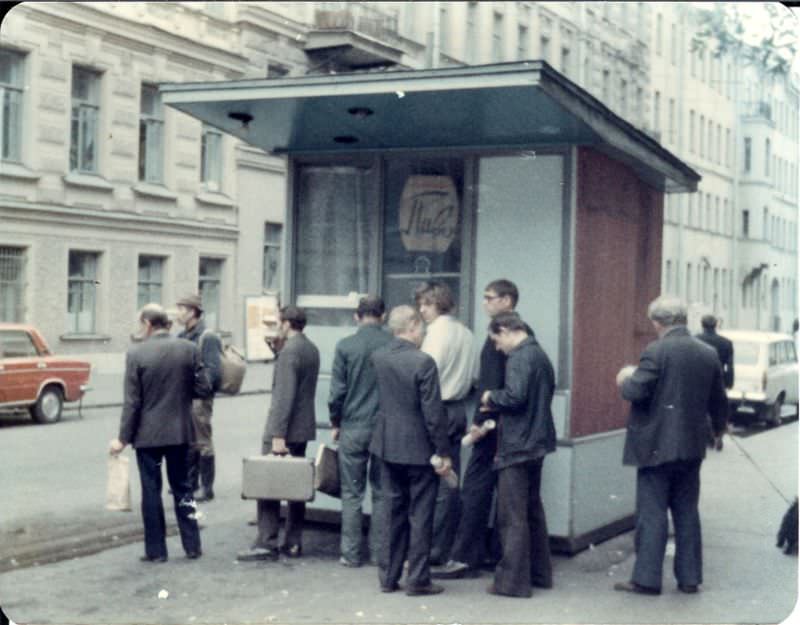
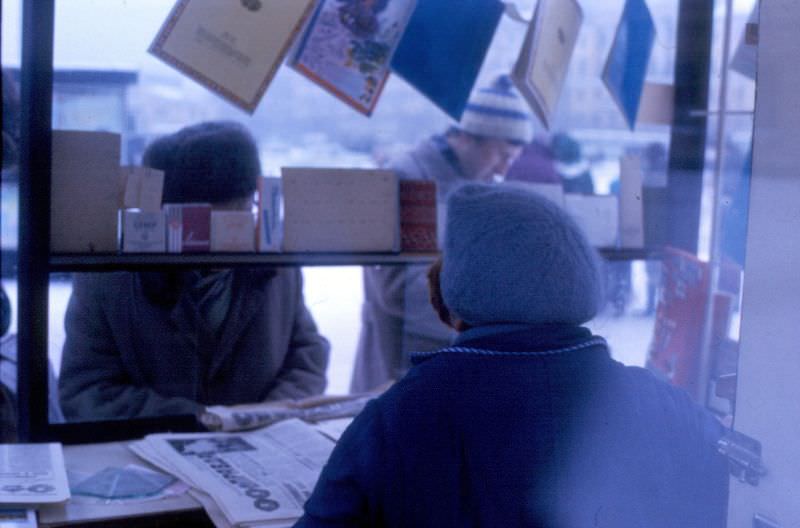
Street kiosks were a constant presence in Soviet urban life. They sold newspapers, cigarettes, postcards, and small goods — often staffed by a single attendant behind a small window. The Soiuzpechat kiosks, run by the state press distribution network, were especially common. They were where Leningraders picked up their morning papers and the occasional foreign periodical, though those were tightly controlled.
The Leningrad Metro was — and still is — an engineering achievement. Most of its stations sit 20 to 80 meters underground, due to the city’s soft, waterlogged soil near the Neva delta. The stations were built to be beautiful as well as functional, with marble floors, elaborate mosaics, and grand chandeliers. Vladimirskaya station, on the Kirovsko-Vyborgskaya line, served one of the city’s busiest intersections.
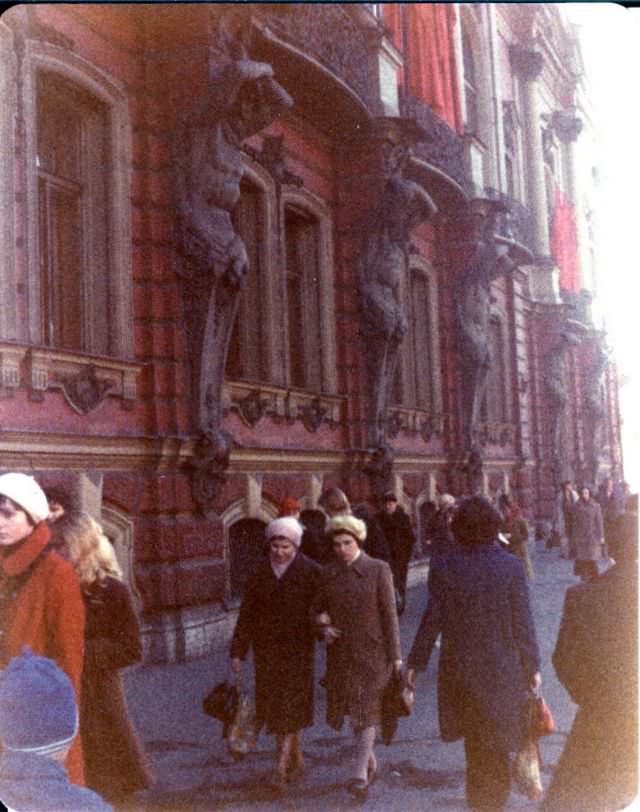
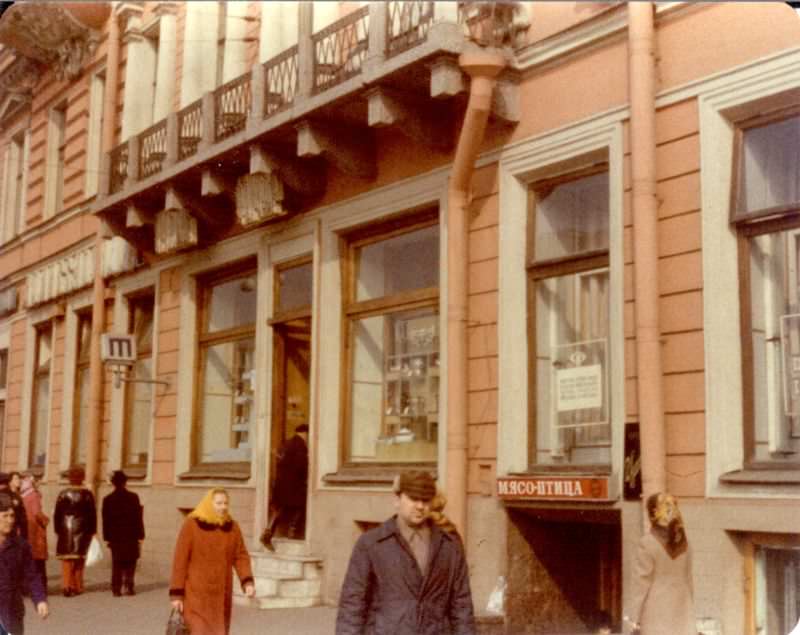
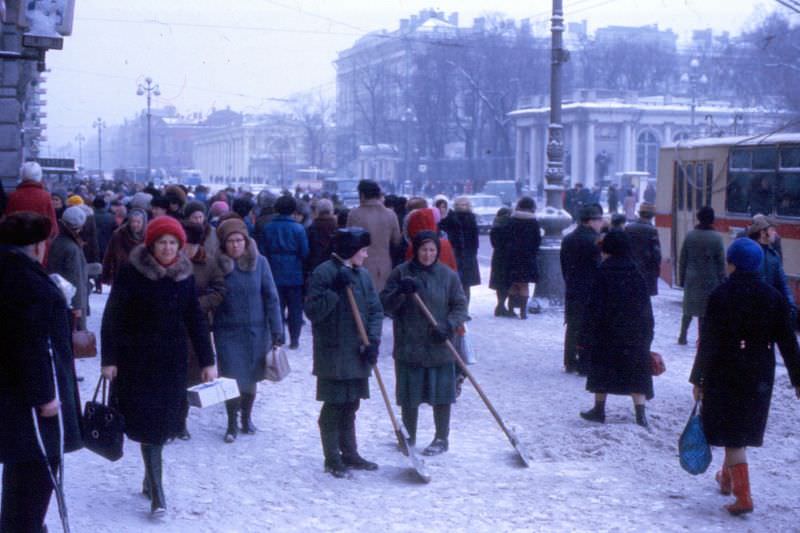
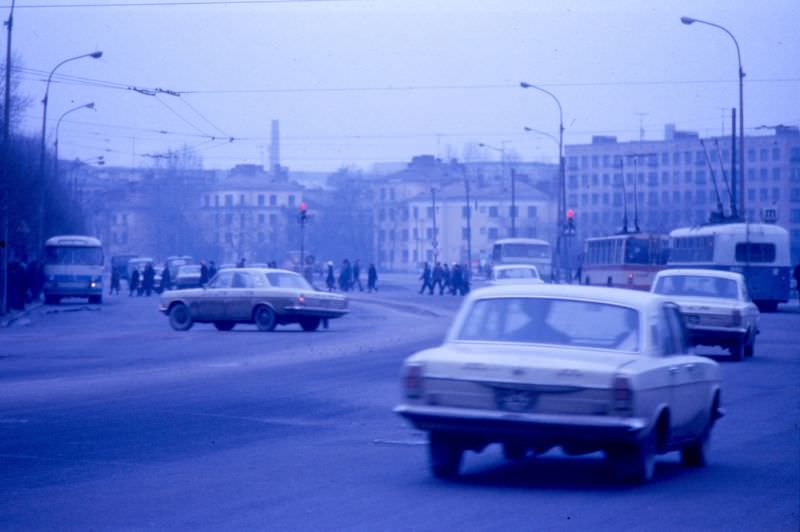
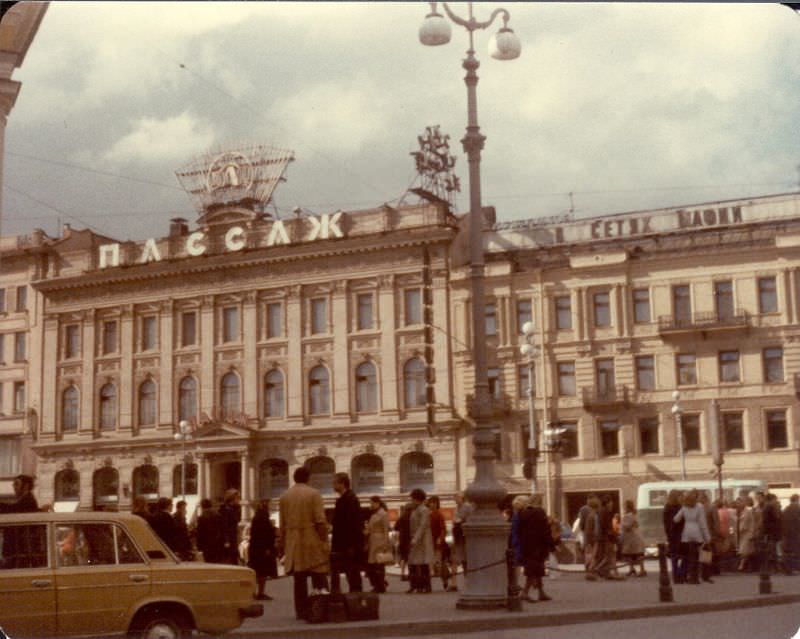
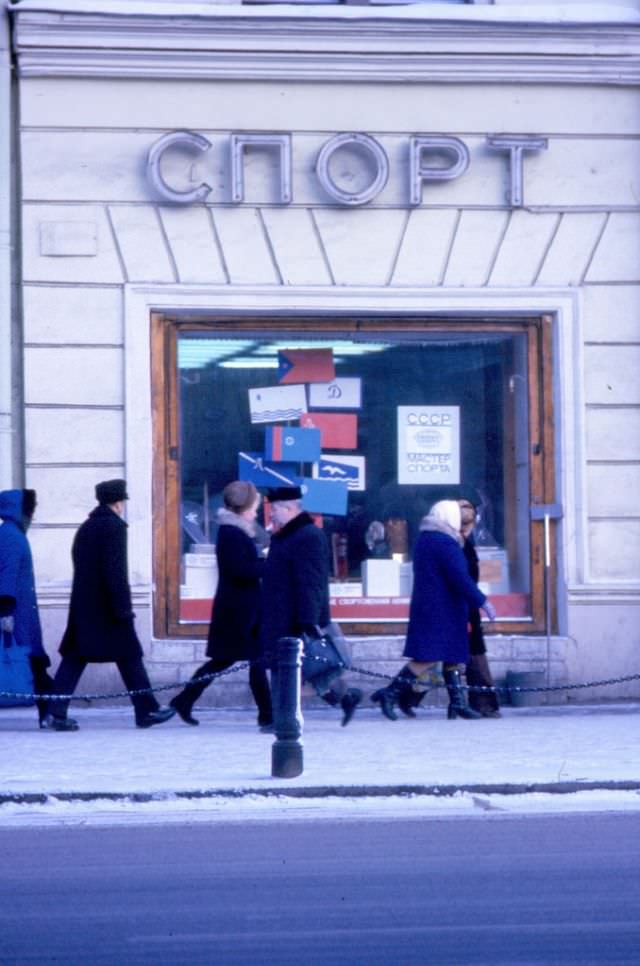
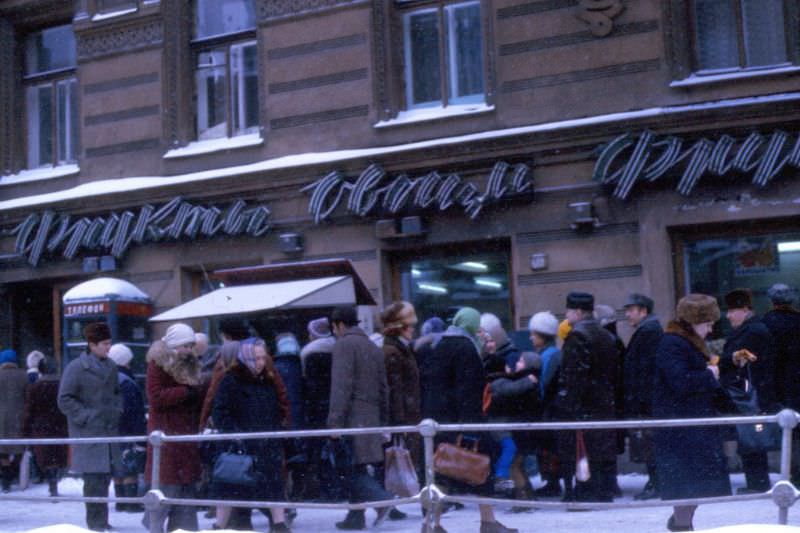
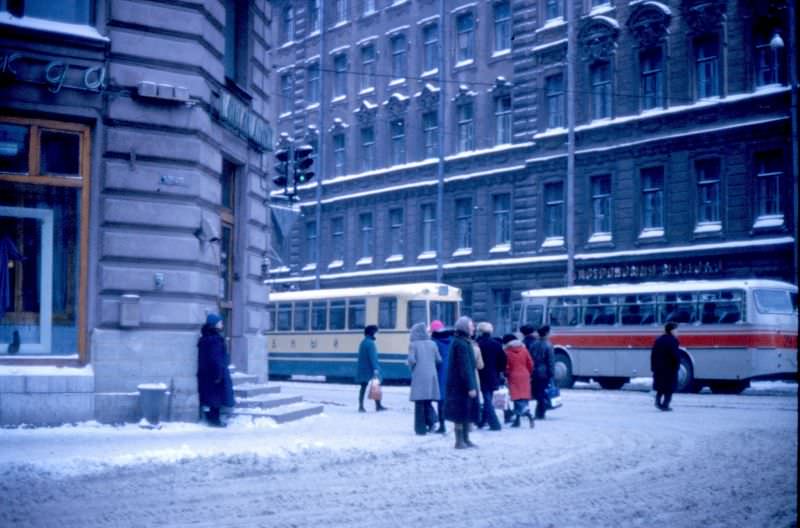
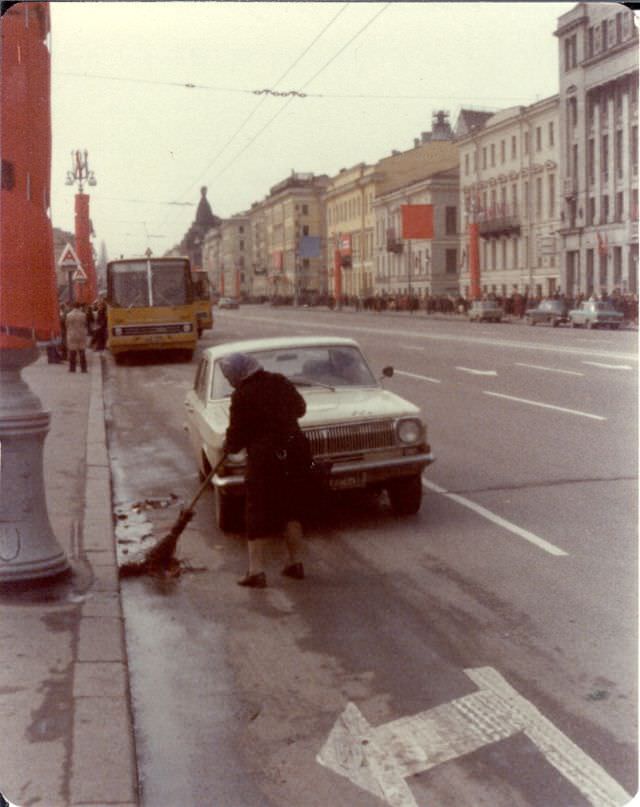
Pedestrians on Nevsky Prospekt in 1976 moved through a street that had changed little architecturally since the tsarist era, even as Soviet signage and state-run storefronts replaced what had come before. Coats, hats, and headscarves were standard winter dress. Trams and trolleybuses shared the road with the occasional Volga or Zhiguli.
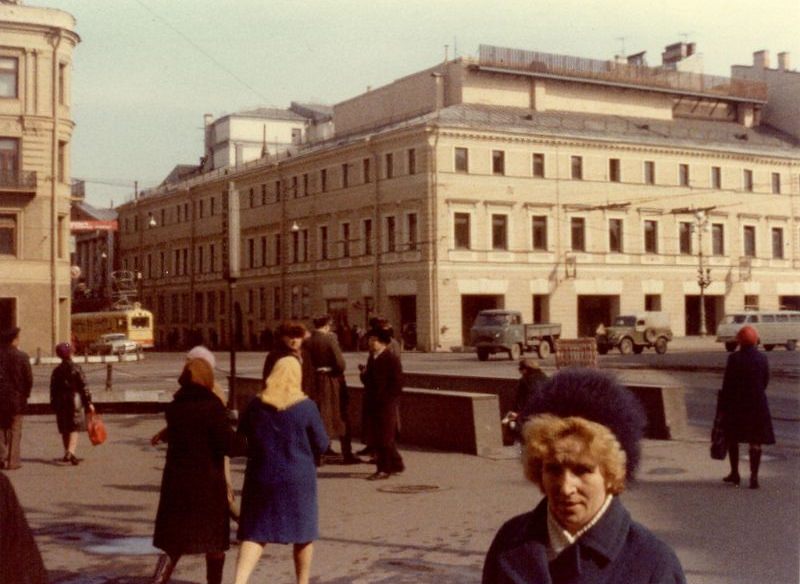
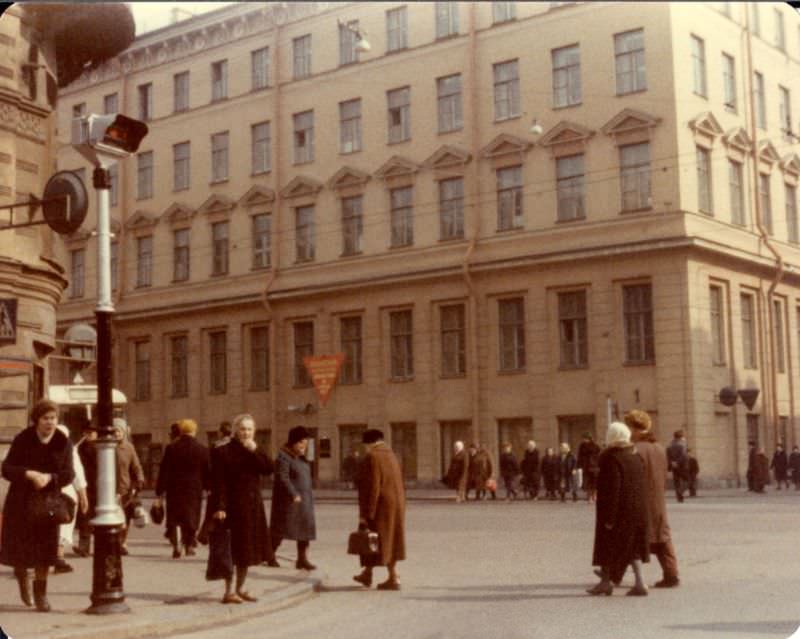
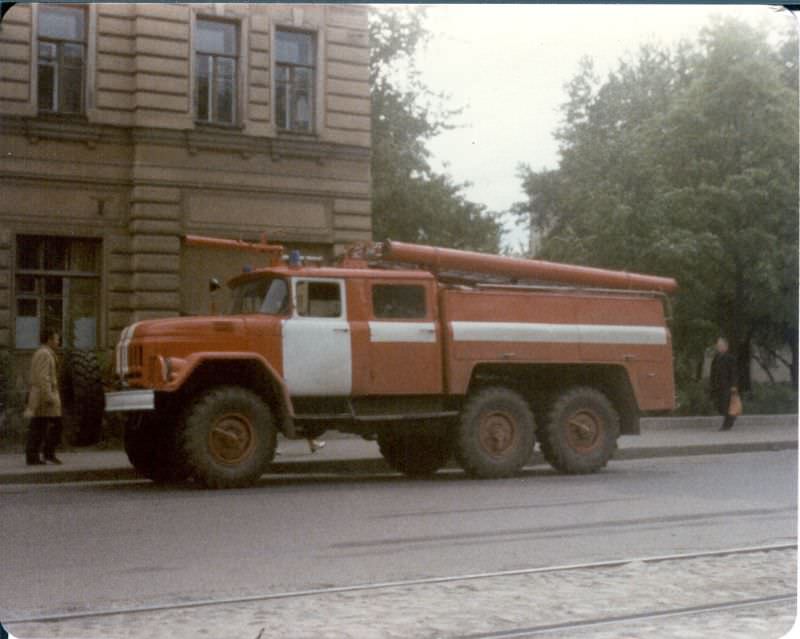
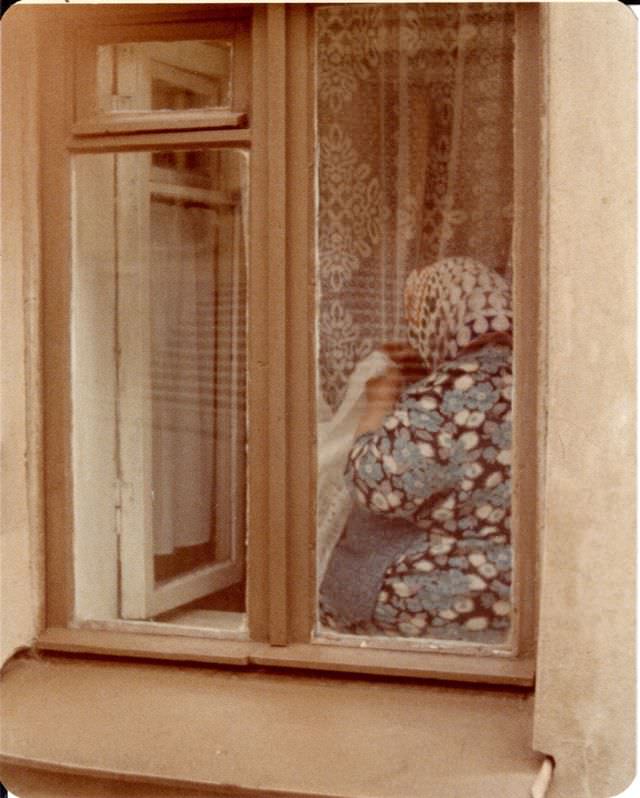
Ulitsa Vosstaniya — Uprising Street — ran south from Ploshchad Vosstaniya, one of Leningrad’s main squares. The area around it was dense with apartment blocks, local shops, and the kind of everyday foot traffic that defined Soviet neighborhood life. Beer kiosks on these streets served as informal gathering spots, especially for working men after a shift.
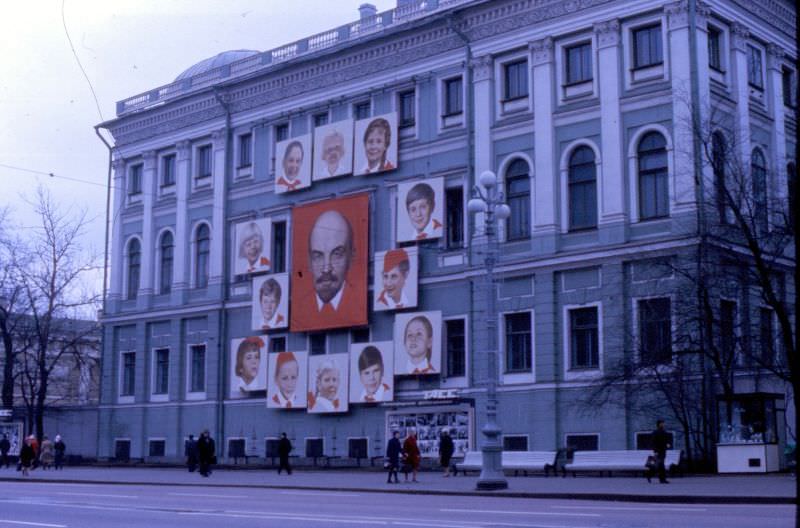
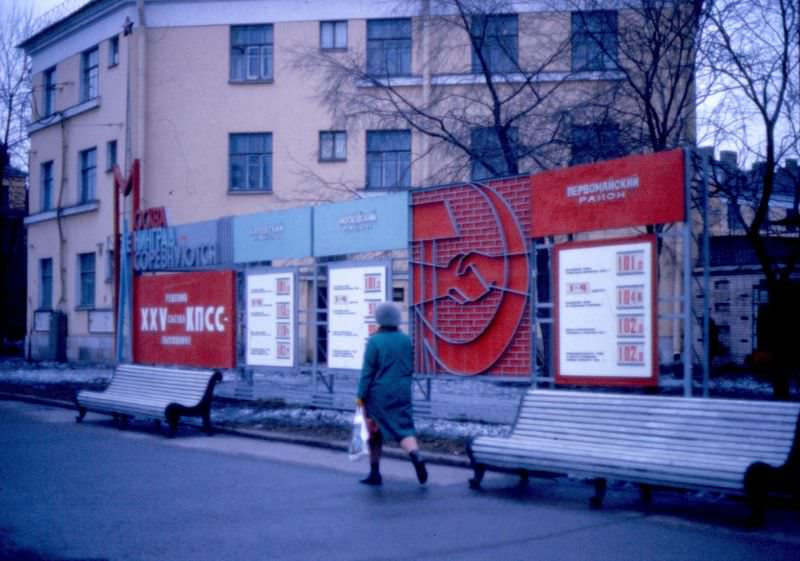
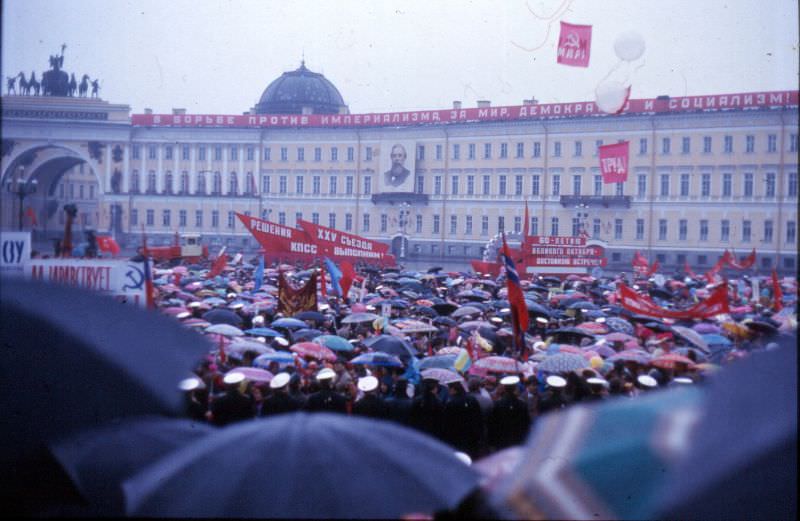
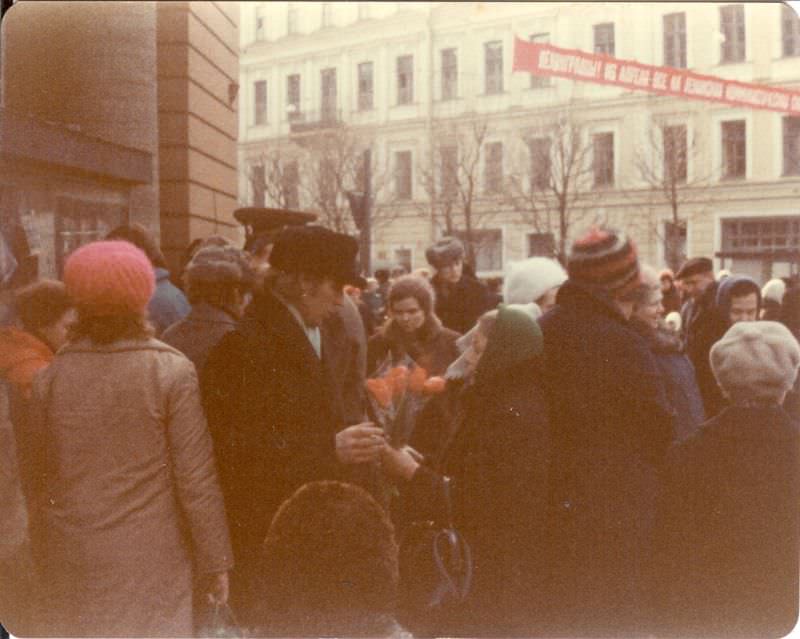
May Day — May 1st — was one of the most important public holidays in the Soviet calendar. It combined the International Workers’ Day celebration with large state-organized parades and rallies. In Leningrad, streets filled with banners, marching workers, and crowds that turned out by obligation and, for many, by genuine participation in the collective spectacle.
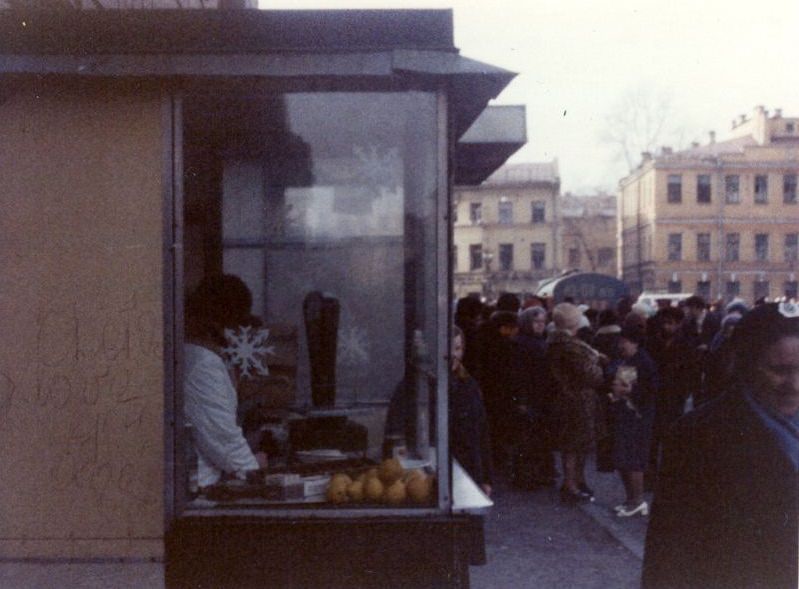
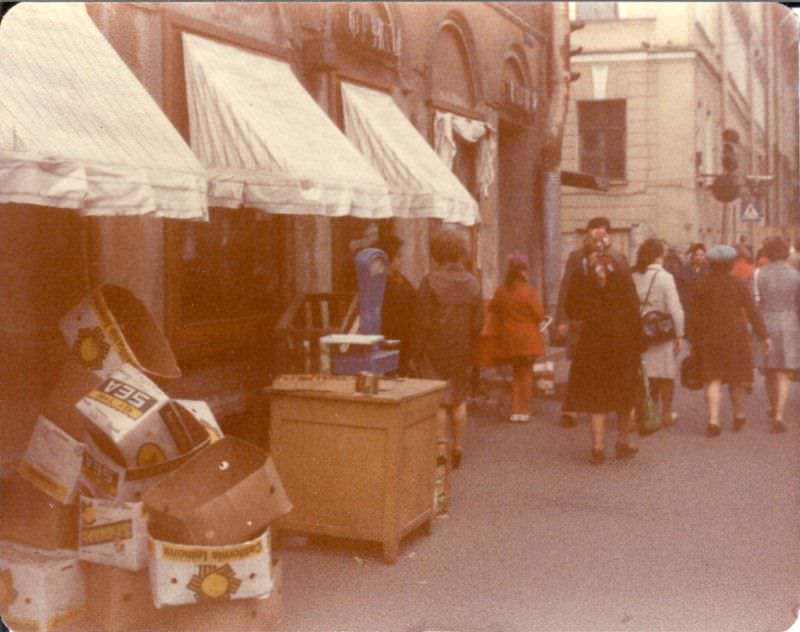
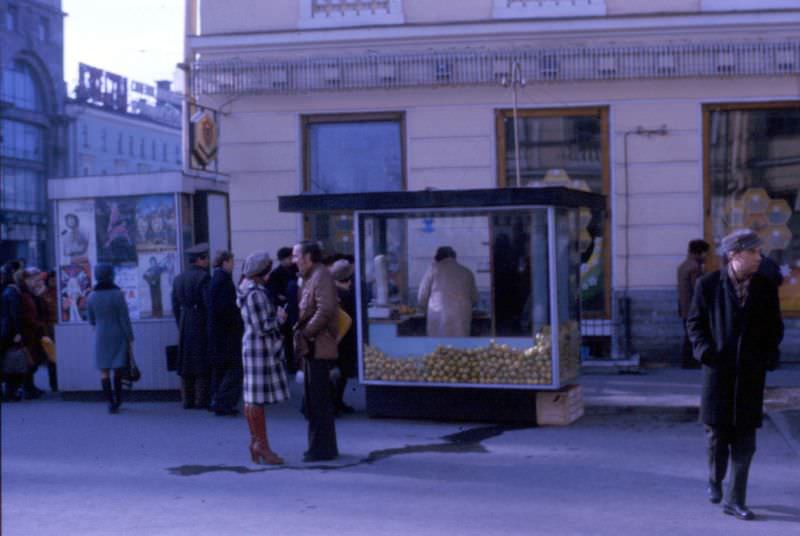
Food shortages and supply gaps were a normal part of Soviet consumer life, even in a major city like Leningrad. A photo taken near Liteynyy Prospekt in 1977 captured a street stand that had been selling California lemons — entirely sold out by the time the shutter clicked. Imported goods appeared rarely and disappeared fast. Fruit stands near Nevsky Prospekt offered seasonal produce, but selection was never guaranteed.
Spring in Leningrad meant clearing months of accumulated snow and ice from the city’s wide boulevards. On Nevsky Prospekt, workers — many of them women — broke up ice sheets and swept slush from the sidewalks by hand. This was standard spring labor, done openly on the city’s most prominent street.
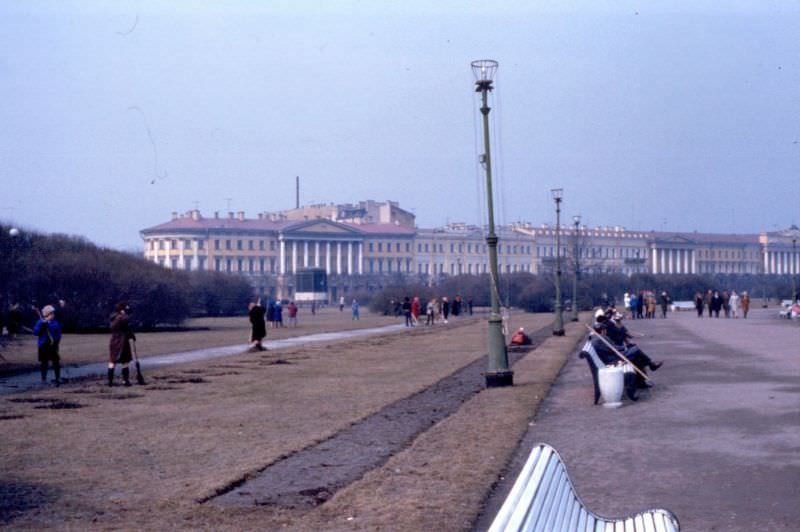
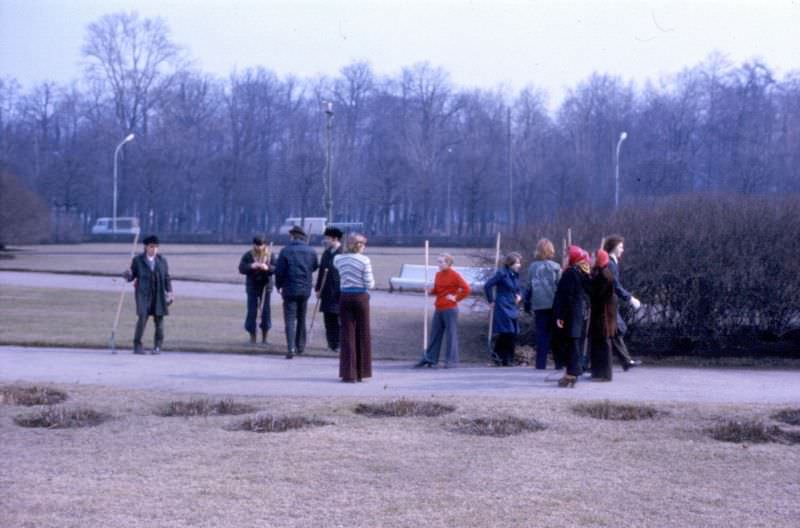
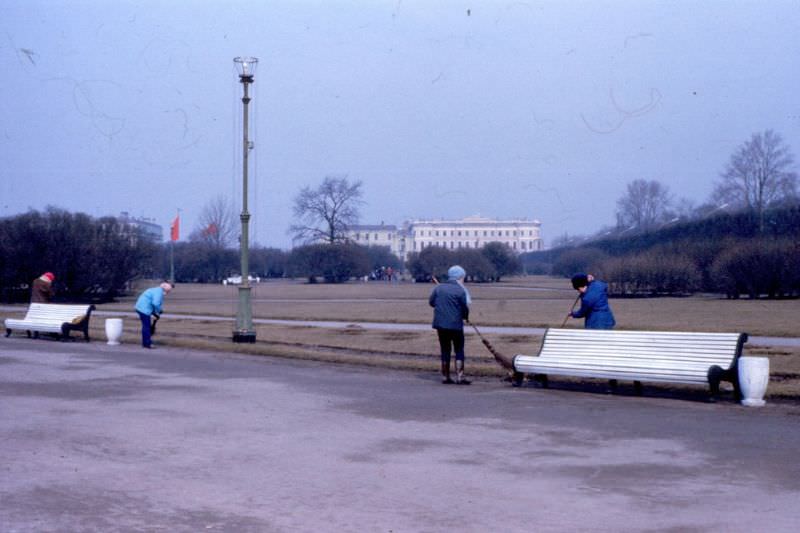
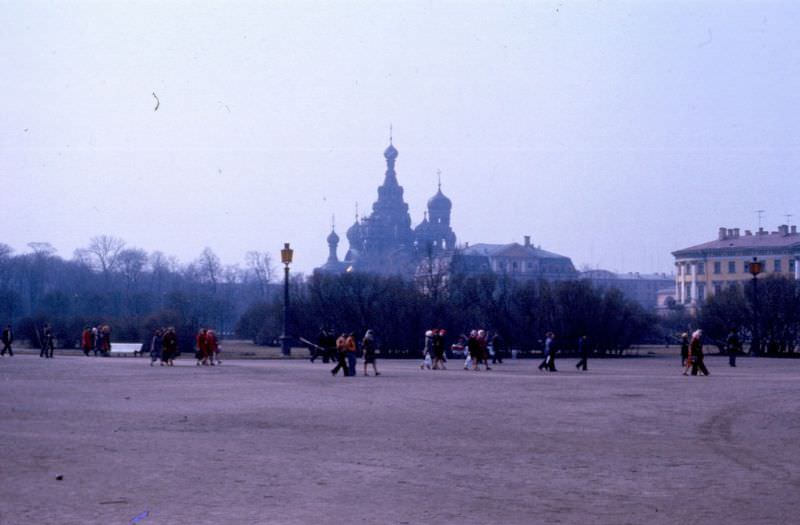
The Field of Mars — Marsovo Pole — was a large open park in central Leningrad, once used for military parades under the tsars and later turned into a Soviet memorial space. In April 1977, it hosted a Leninskii subotnik: a voluntary communist Saturday workday where citizens gathered to clean, plant, and maintain public spaces. These events were a regular feature of Soviet civic life, organized by party committees across the country.
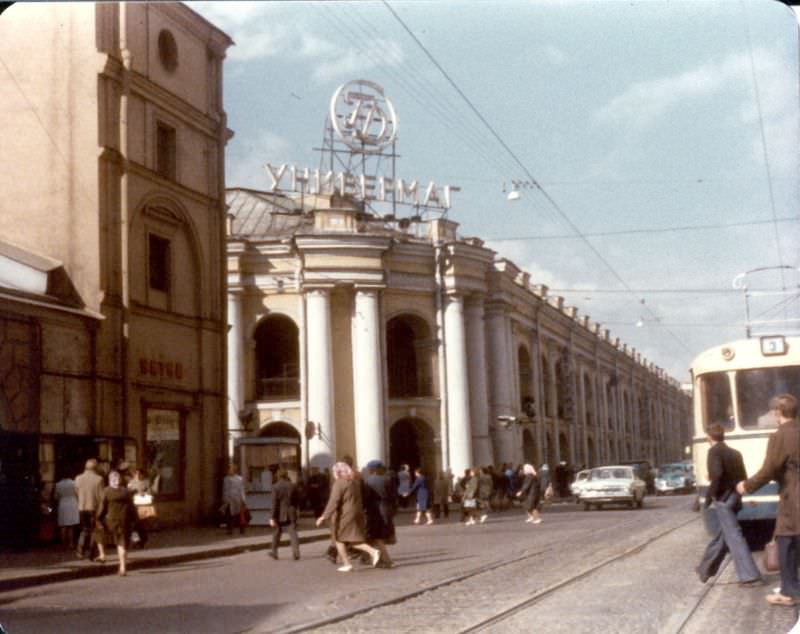
Gostiny Dvor was Leningrad’s oldest and largest department store, a two-story arcade running along Nevsky Prospekt that dated back to the 18th century. Under Soviet rule it became a state-run retail center selling clothing, household goods, and other everyday items. Long lines at specific counters were a common sight inside. Nearby, the Passazh — another historic shopping arcade — offered a similar experience in a more ornate interior.
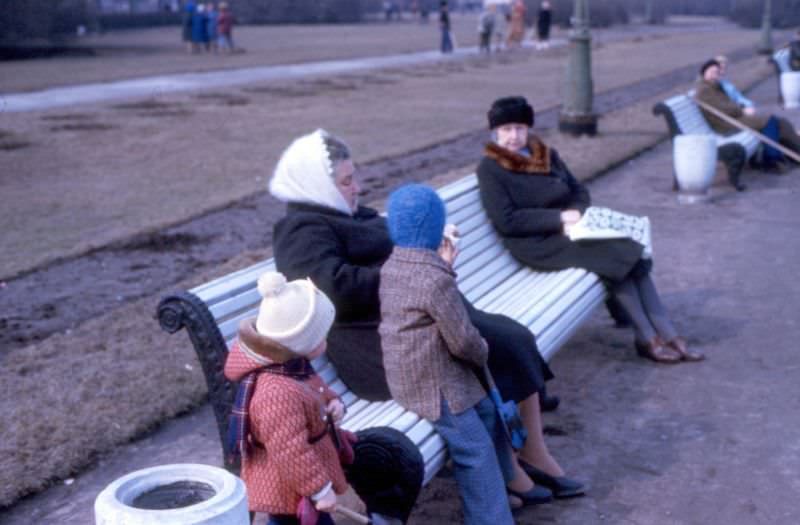
The Field of Mars in April 1977 drew crowds of Leningraders for the subotnik cleanup. Groups worked across the open grounds, raking, clearing, and planting as part of the pre-May Day preparations. The eternal flame at the memorial in the park’s center burned as it always did, surrounded by the low hum of organized collective labor.
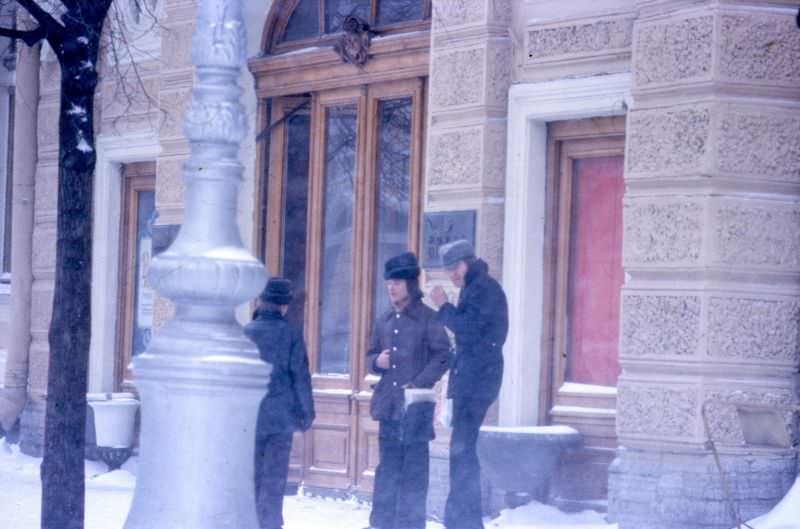
Not everyone in 1970s Leningrad dressed in the standard Soviet gray. A group of young men photographed near the Evropeiskaia hotel on Vasilievsky Island showed off a more Western-influenced style — wide lapels, fashionable cuts, an awareness of trends filtering in from abroad. They were the city’s “hipsters” of the era, navigating the narrow space between Soviet conformity and individual expression.
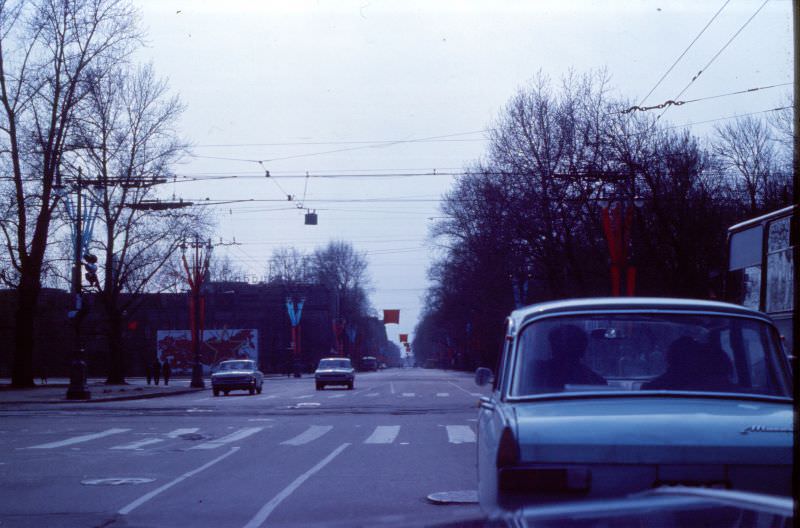
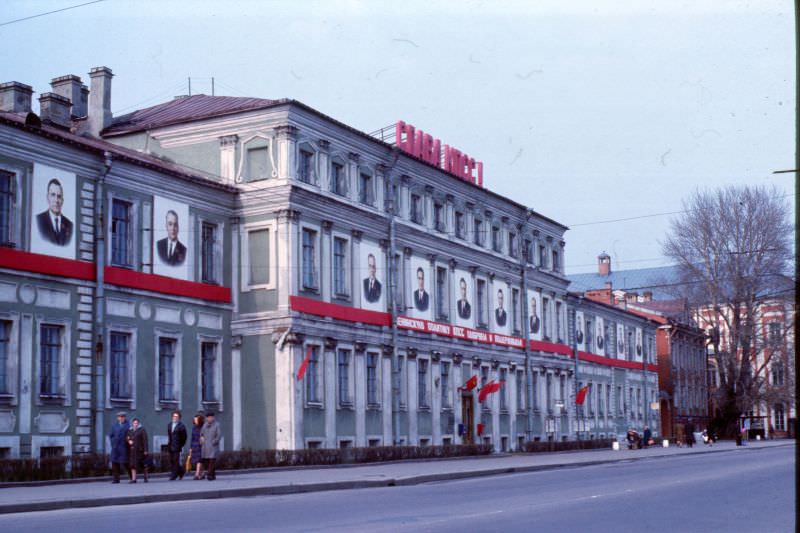
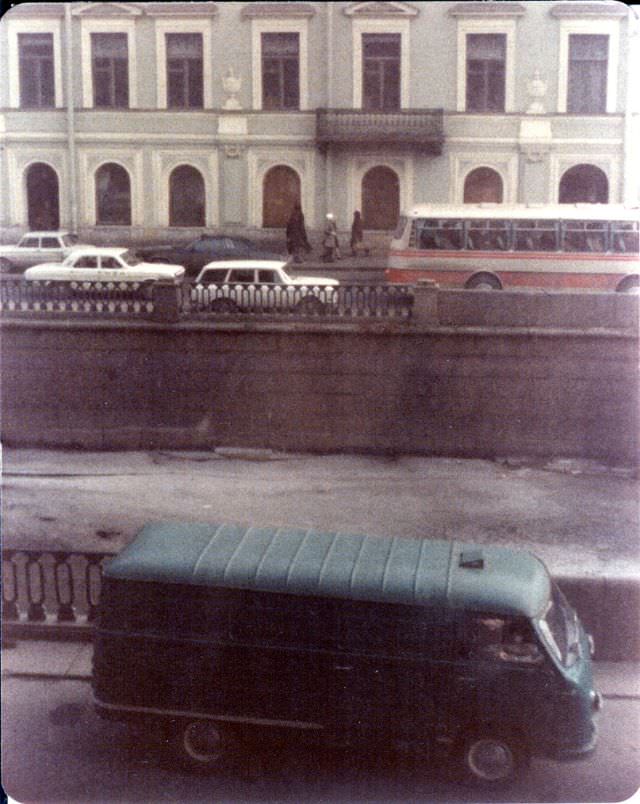
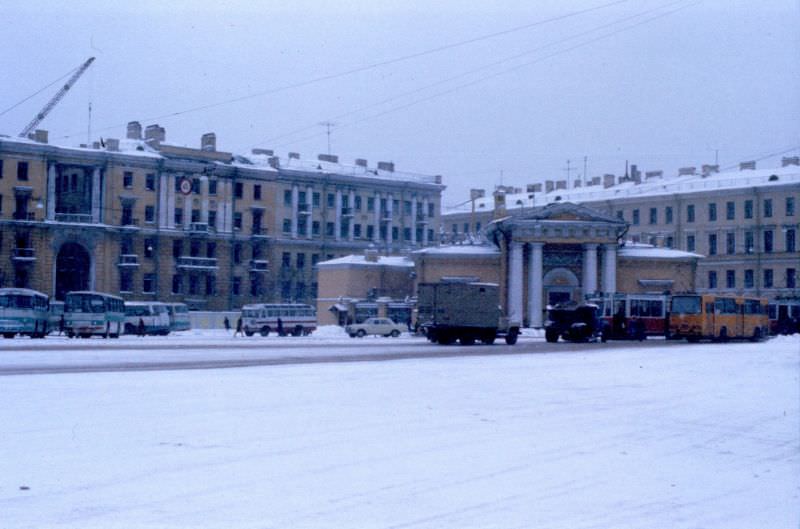
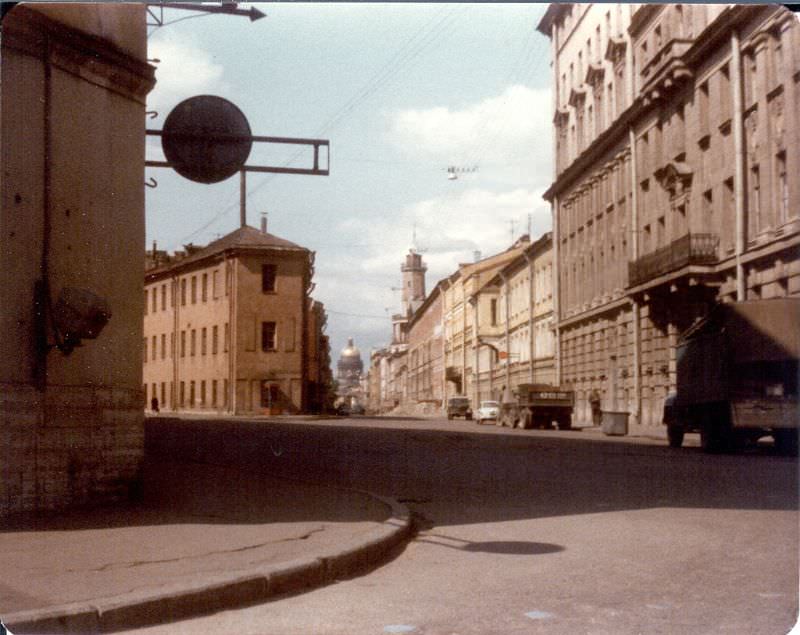
Ligovskiy Prospekt and Liteynyy Prospekt were two of Leningrad’s major secondary avenues, running parallel to Nevsky. They carried the traffic of a working city — delivery trucks, buses, trams — and were lined with residential buildings, state shops, and the occasional market. Life on these streets was less polished than on Nevsky but equally telling of how ordinary Leningraders moved through their days.
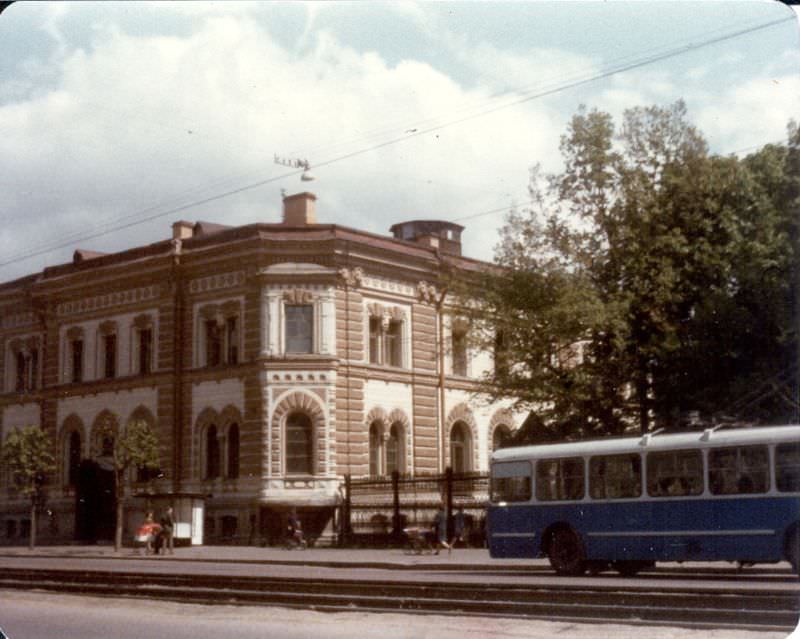
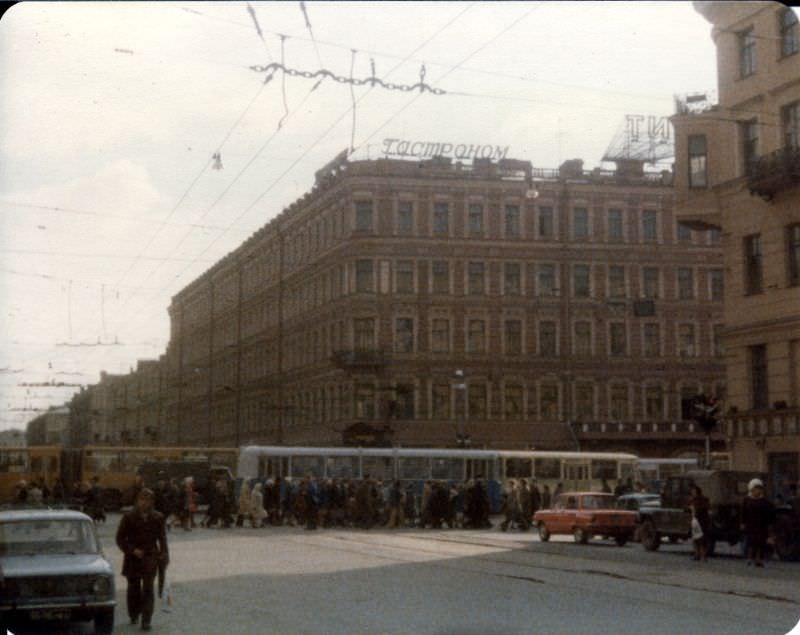
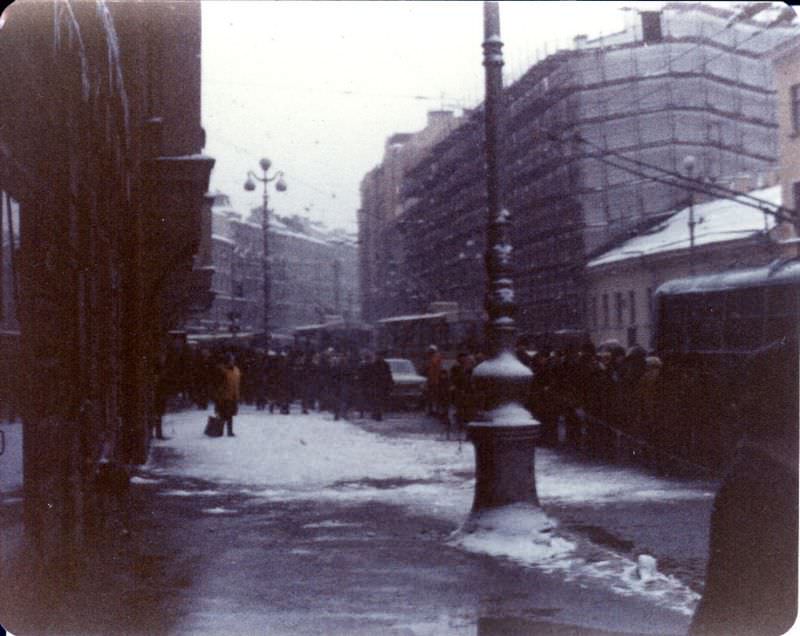
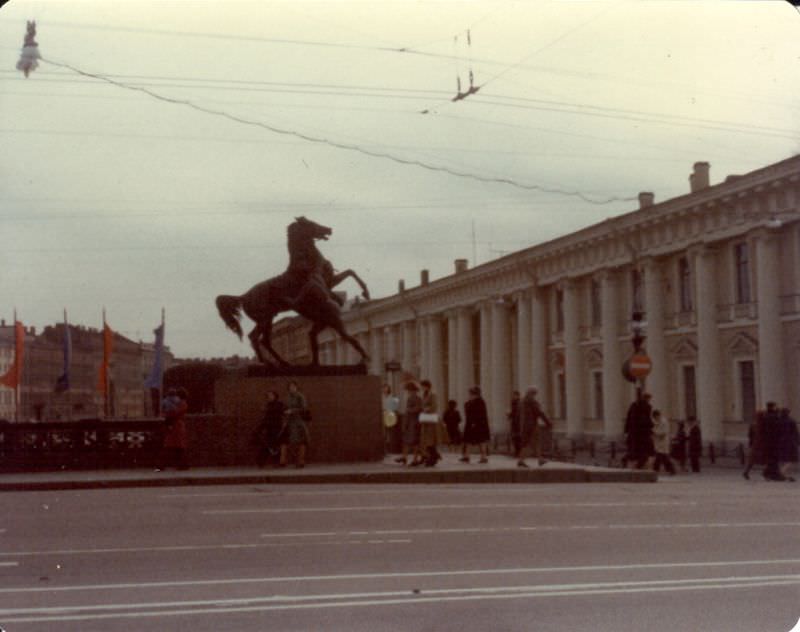
The Anichkov Bridge on Nevsky Prospekt is one of Leningrad’s most recognizable crossings, known for its four bronze sculptures of men taming horses. It spans the Fontanka River and has stood in its current form since the mid-19th century. By 1977, it was simply part of the daily commute for thousands of Leningraders who crossed it on foot, by bus, or by tram without necessarily looking up.
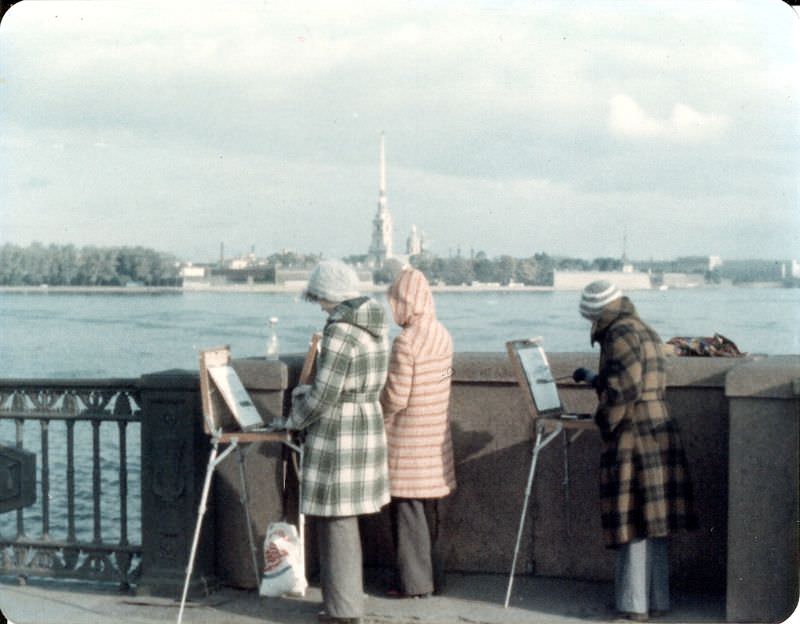
Spring maintenance on Leningrad’s bridges included repainting — workers on the Palace Bridge applied fresh coats of paint as the ice broke up on the Neva below. The Palace Bridge connected Vasilievsky Island to the Palace Embankment, offering a direct line between the Hermitage and the rest of the city center. Its maintenance was a seasonal routine that kept the city’s infrastructure in working order.
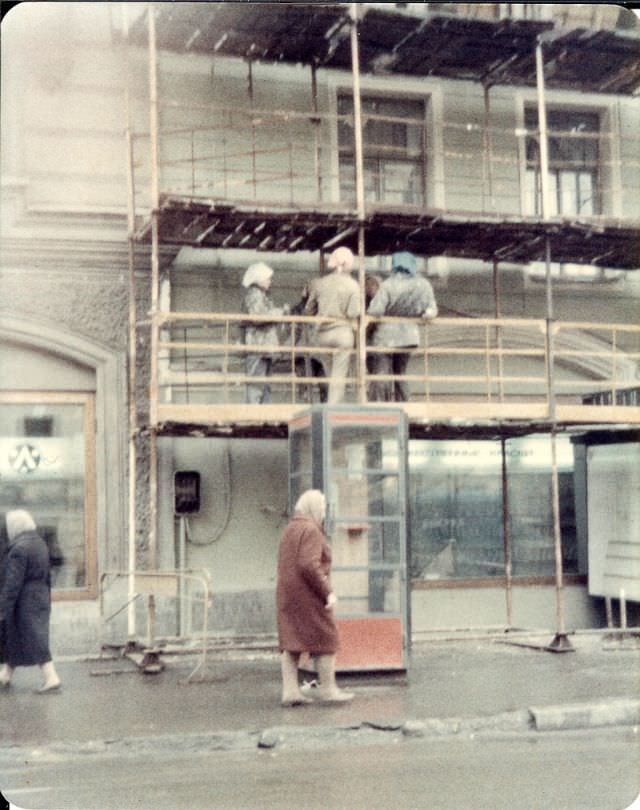
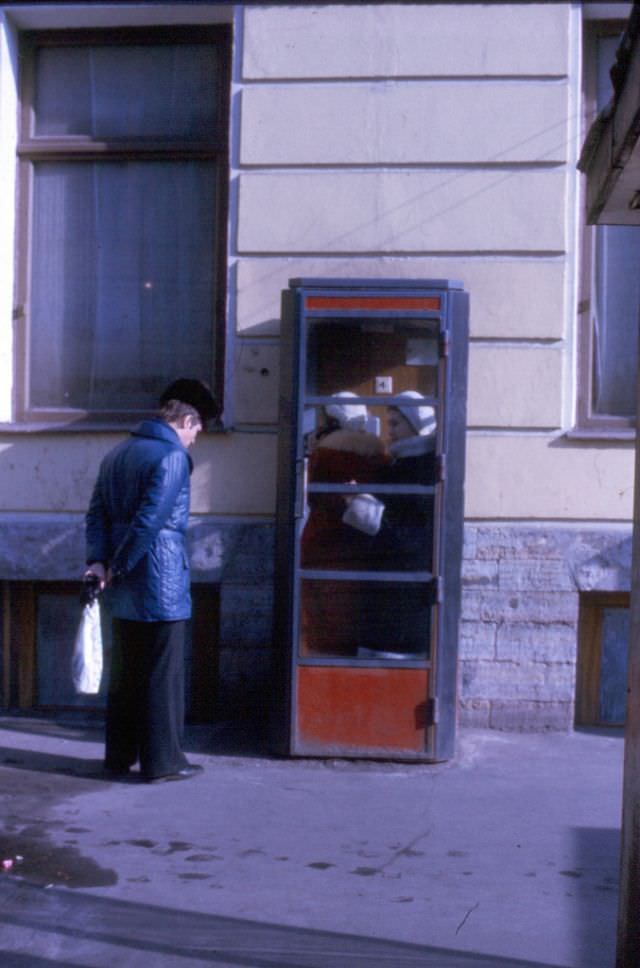
The Soiuzpechat kiosks dotted the city at regular intervals, selling state-approved newspapers, magazines, and printed materials. A Soviet telephone booth nearby offered a public line for a few kopeks. Both were fixtures of the urban landscape — utilitarian, weathered, and essential to daily communication in a city where home phones were not universal.
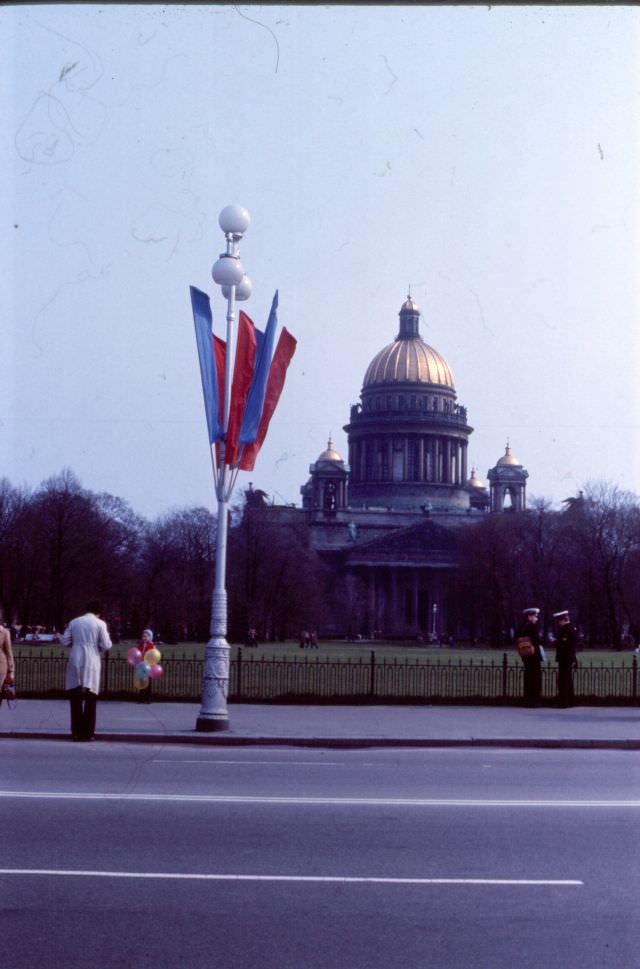
St. Isaac’s Cathedral dominated the city’s skyline from its position near the Neva embankment. Its massive gilded dome was visible from across the city. During the Soviet era it functioned as a museum of atheism rather than an active church, but it remained one of Leningrad’s most recognized landmarks. On May 1st, 1977, it stood as a backdrop to the holiday crowd gathering nearby.
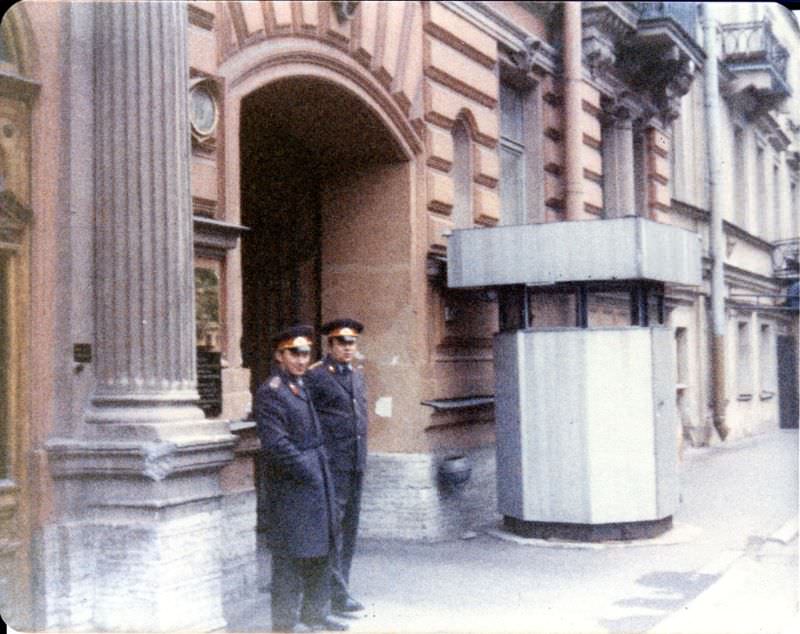
The U.S. Consulate General operated in Leningrad throughout the Cold War years, one of the few American diplomatic outposts inside the Soviet Union. Its presence on Grodnenskii pereulok placed American staff in direct proximity to ordinary Soviet street life. Many of these photographs were taken by people connected to the consulate, giving the collection a particular vantage point on the city.
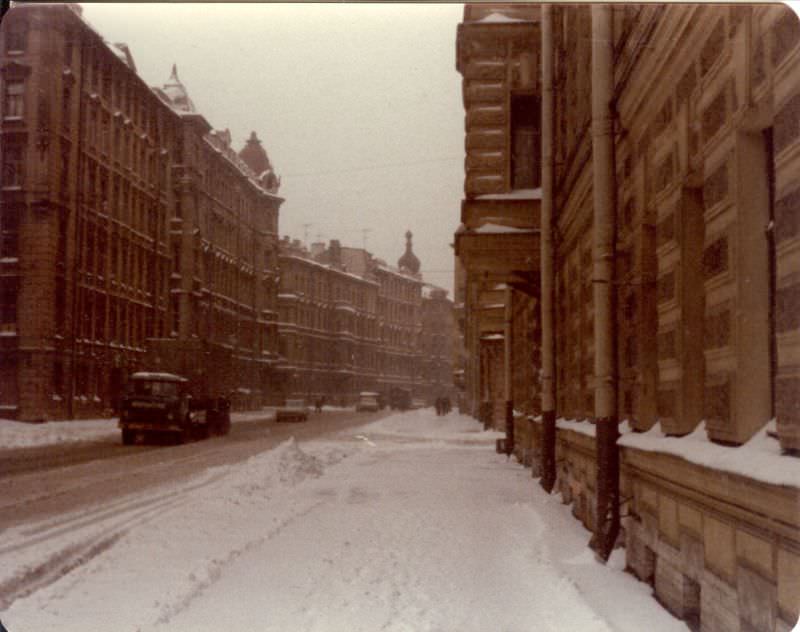
The Universam on Vasilievsky Island was one of Leningrad’s self-service grocery stores — a Soviet-era format that allowed shoppers to browse shelves and pick their own items rather than requesting them from a clerk at a counter. These stores were a relatively modern retail concept within the USSR at the time, though selection still depended entirely on what the state supply chain delivered that week.
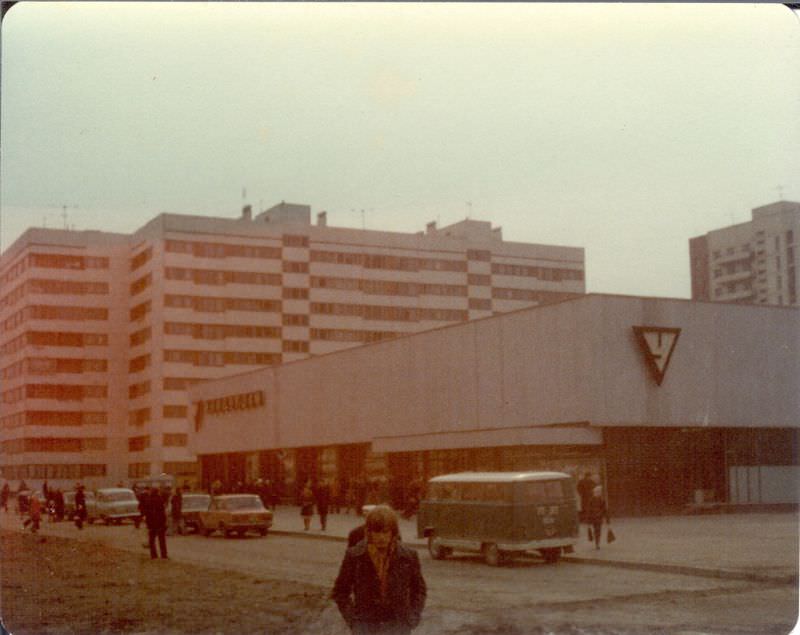
Gatchina, a town in the Leningrad region about 45 kilometers south of the city center, appeared in this collection as a reminder that the greater Leningrad area extended well beyond the urban core. The town was home to a large imperial palace and park complex, though by the mid-1970s it functioned primarily as a residential and industrial settlement within the region’s administrative structure.
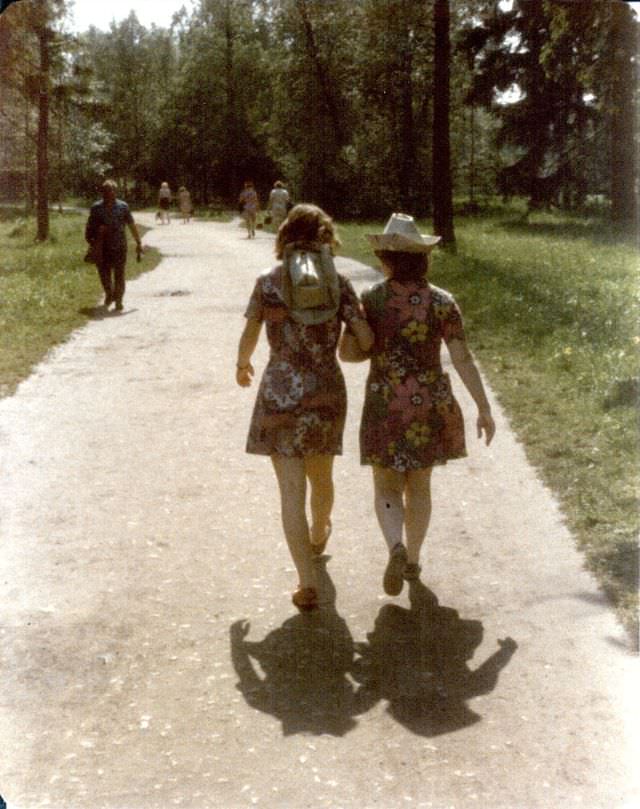
The kolkhoznyy rynok — collective farm market — near Ploshchad Mira was one of the places where Leningraders could buy produce directly from growers. These markets operated alongside state stores and offered fresher goods, often at slightly higher prices. They were busy, loud, and practical — a contrast to the quieter, more regulated atmosphere of the state grocery system.
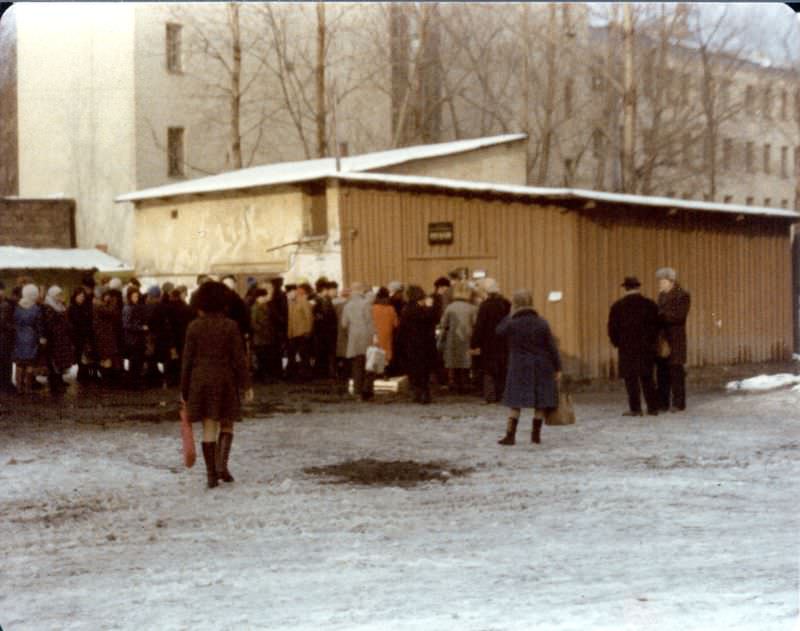
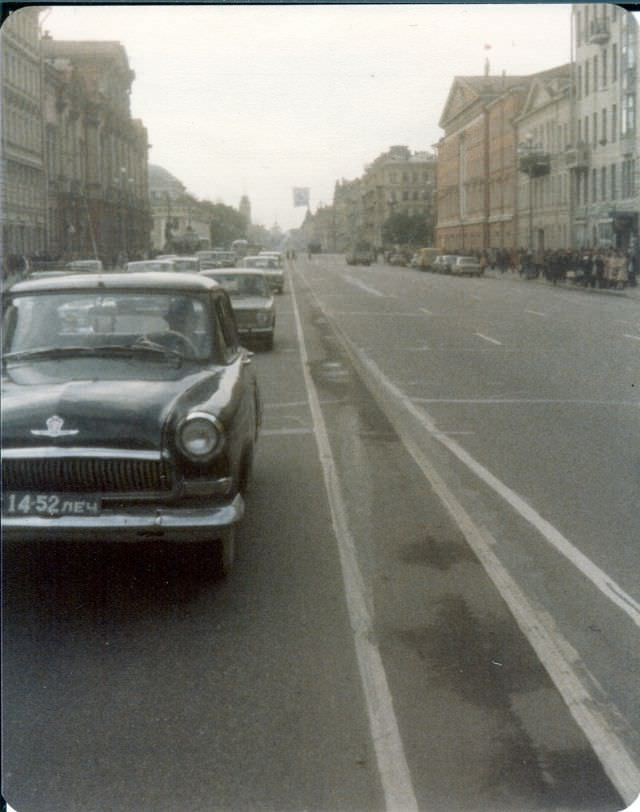
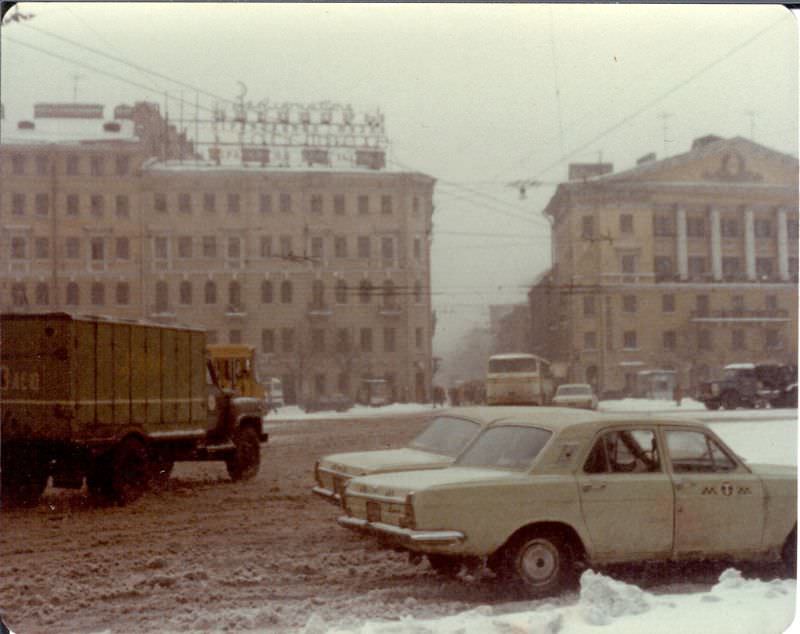
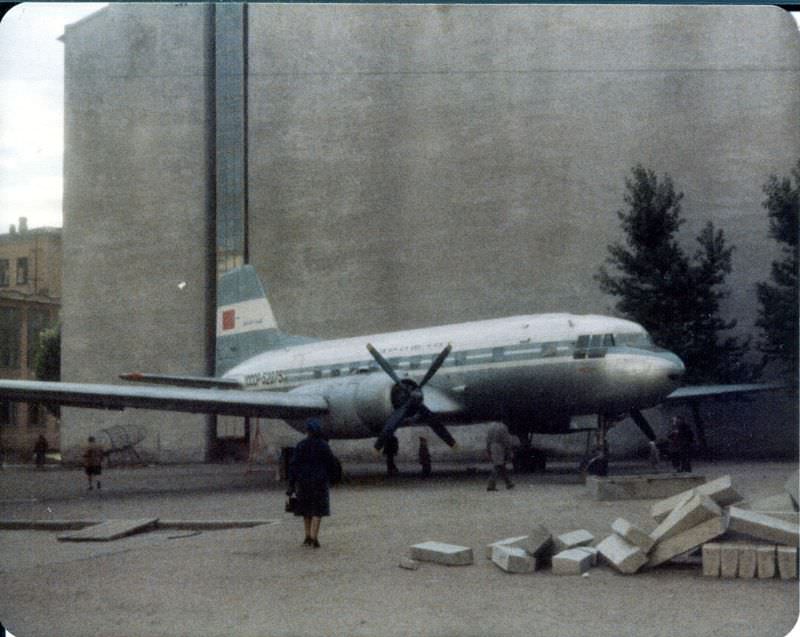
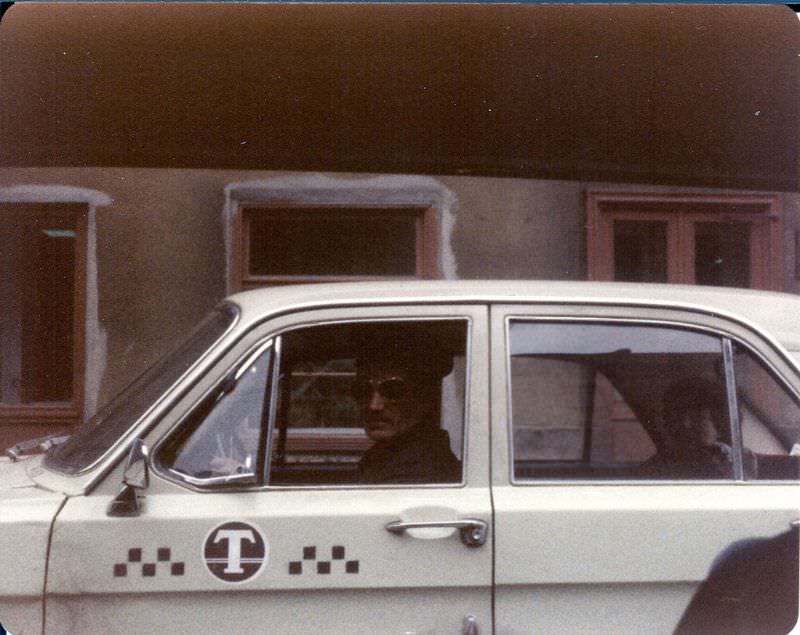
A decommissioned plane sitting in an empty lot captured something unexpected about the city — Soviet-era urban spaces sometimes held surplus equipment, retired vehicles, or industrial remnants in open areas between buildings or on the city’s edges. Taxis, meanwhile, were available in Leningrad but not always easy to flag down. The standard Soviet taxi was a Volga sedan with a distinctive green light on the roof, and fares were metered by the state.
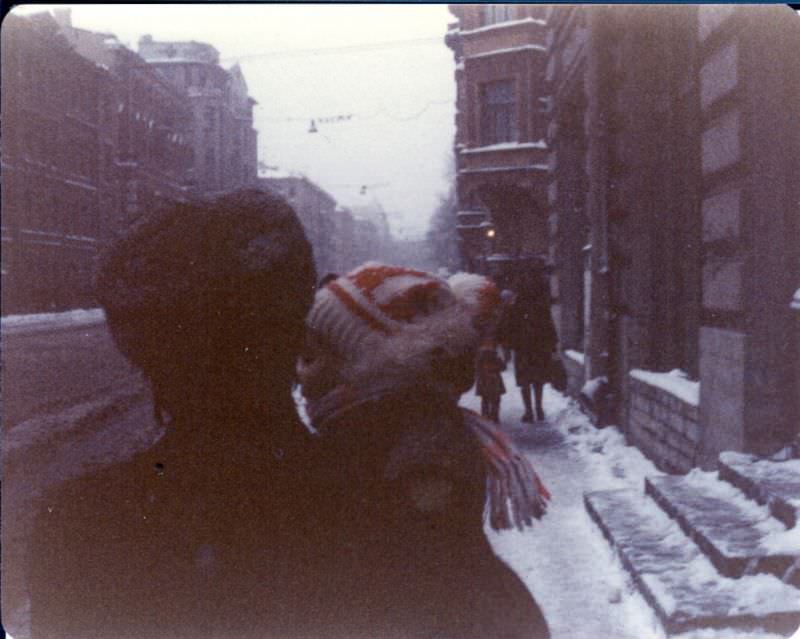
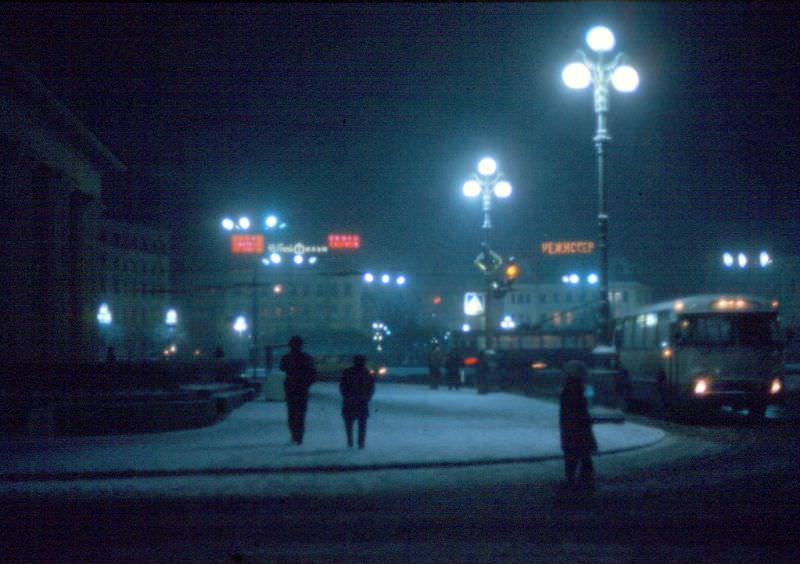
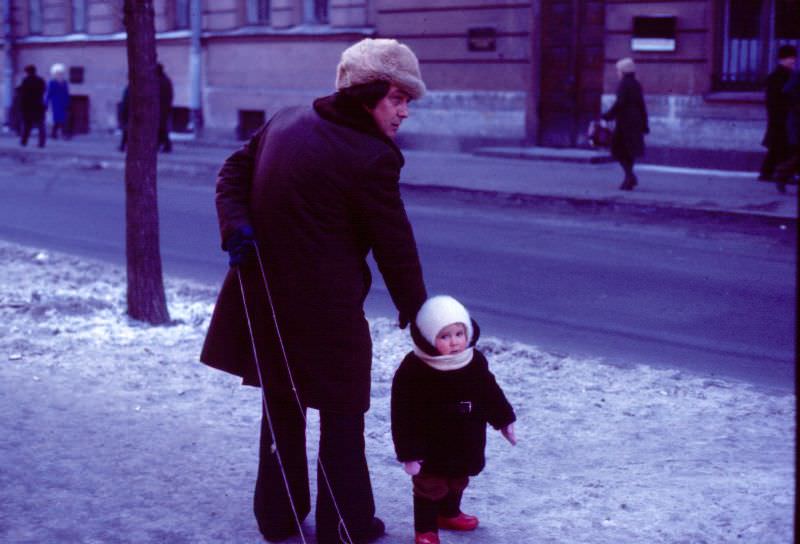
Winter on the streets of Leningrad meant heavy coats, packed sidewalks, and the deep cold that came off the Gulf of Finland. By 1977, the city had a metro system extensive enough to carry most residents underground and out of the weather — but street life continued above ground regardless of temperature. The metro’s Vladimirskaya station, with its ornate interior, was one of the system’s older stops, serving a neighborhood packed with pre-revolutionary architecture and Soviet-era apartments side by side.





I love St. Pete. It didn’t look much different in the 90s when I was there a lot.