
Kansas City, Missouri, is the state’s largest and most populous city. Incorporated as a town in 1850 and as a city in 1853, it grew steadily through the second half of the 19th century. After the Civil War, development accelerated rapidly. Boulevards, parks, a new city hall, the Country Club Plaza, and the Country Club District all took shape during this era, completely transforming the urban landscape. By the time 1900 arrived, the city’s population had already surpassed 163,752 residents.

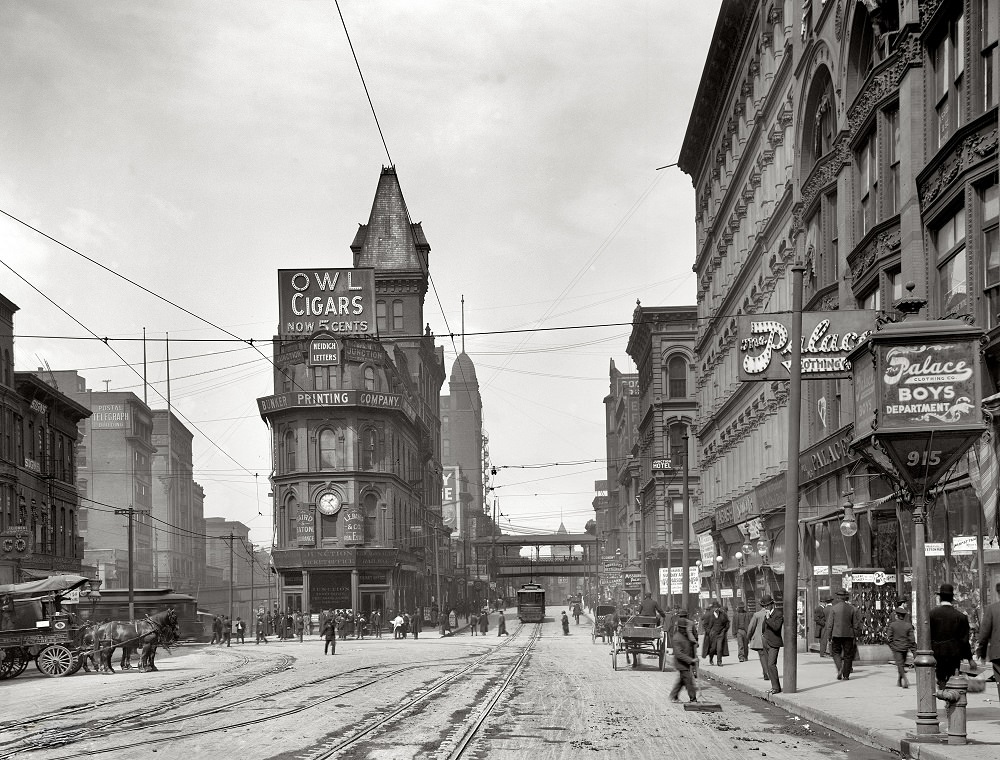
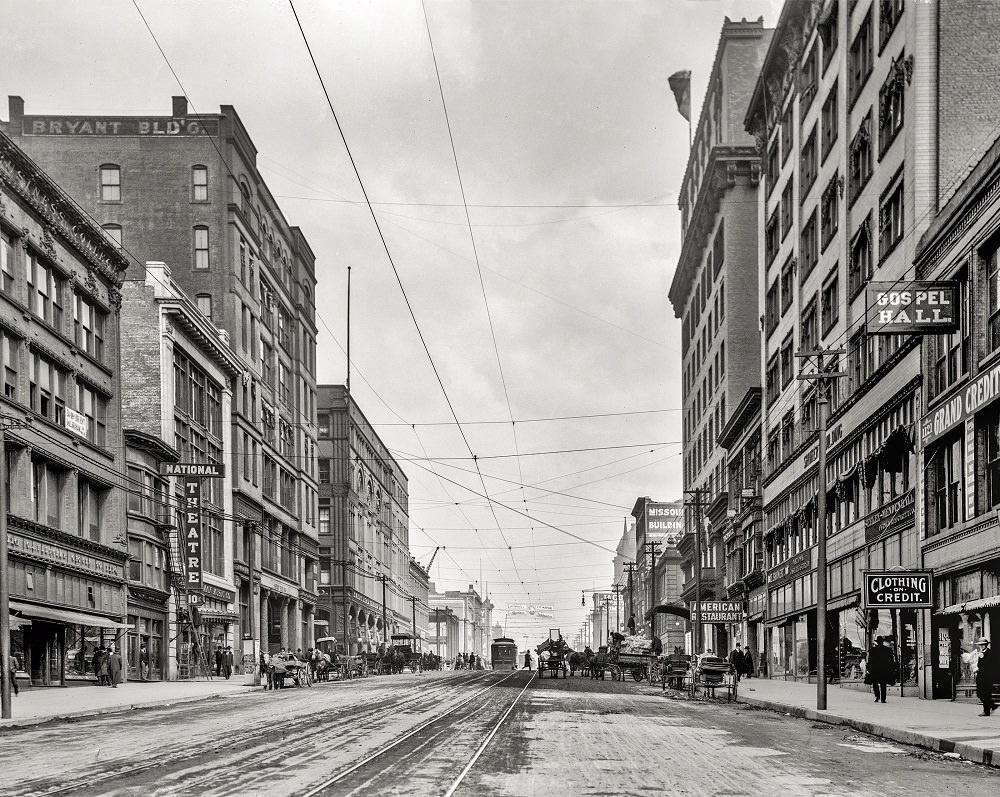
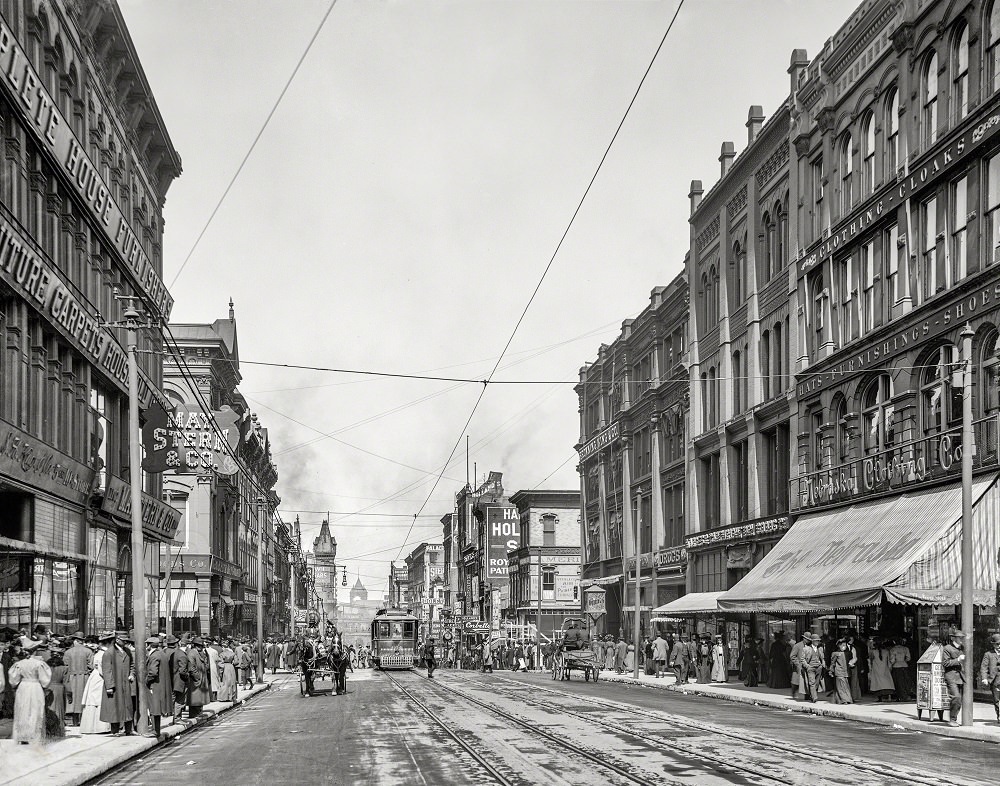
The streets of early Kansas City were busy and full of life. Grand Avenue was one of the city’s main commercial corridors, lined with businesses, pedestrians, and the transit systems that kept the city moving. The first streetcars to run in Kansas City were horse-powered, but by 1908, every one of them had been replaced by electric-powered cars. At its peak, Kansas City operated one of the most extensive streetcar networks in the entire country.

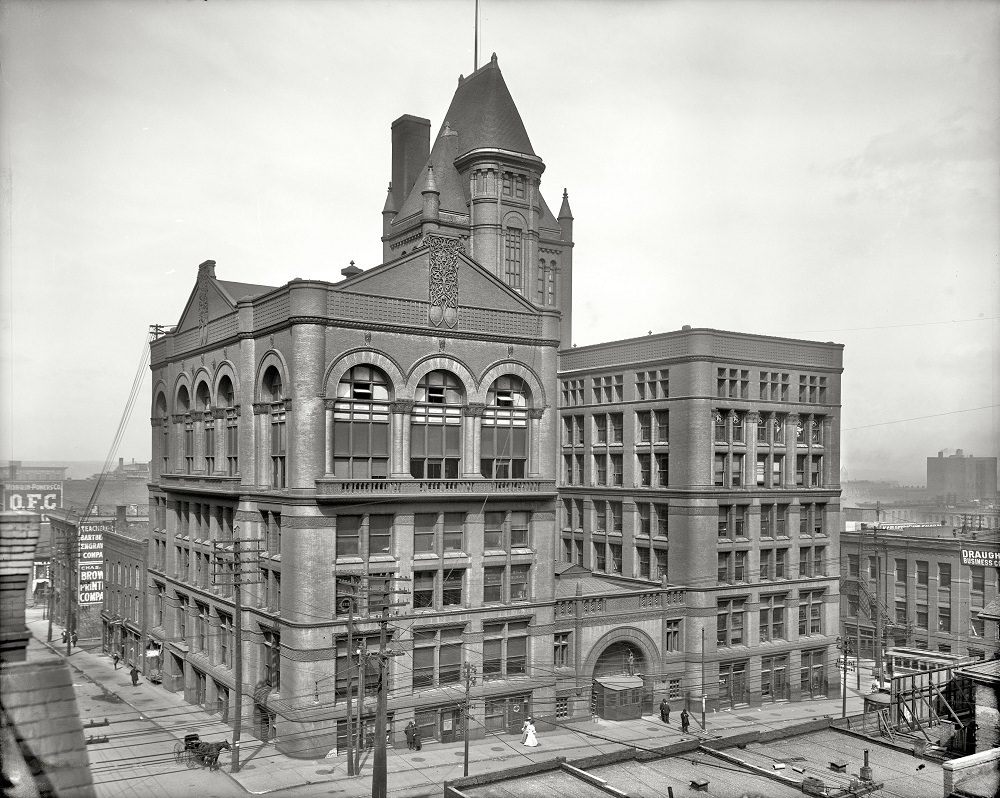
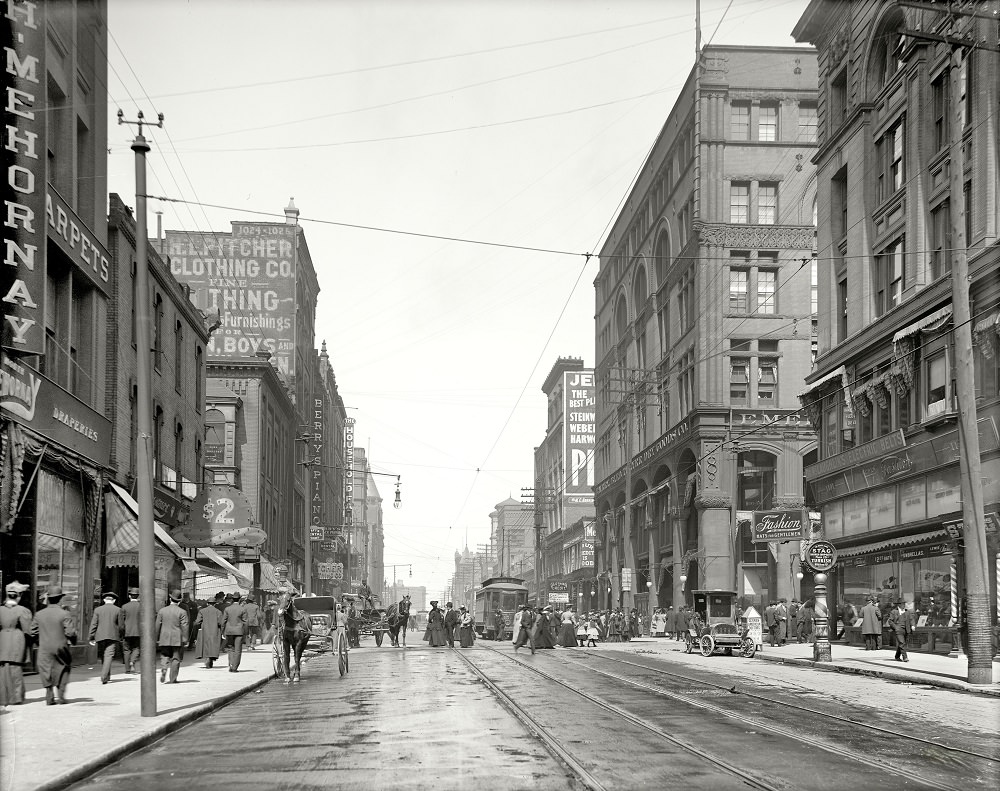
Main Street was the commercial spine of the city. Looking north from Twelfth Street around 1908, the view captured a city in full stride — multi-story buildings, electric streetcar lines, and a steady flow of foot traffic. The Board of Trade Building stood as one of the most prominent commercial structures of the period, reflecting the city’s growing role as a major Midwestern trade hub.

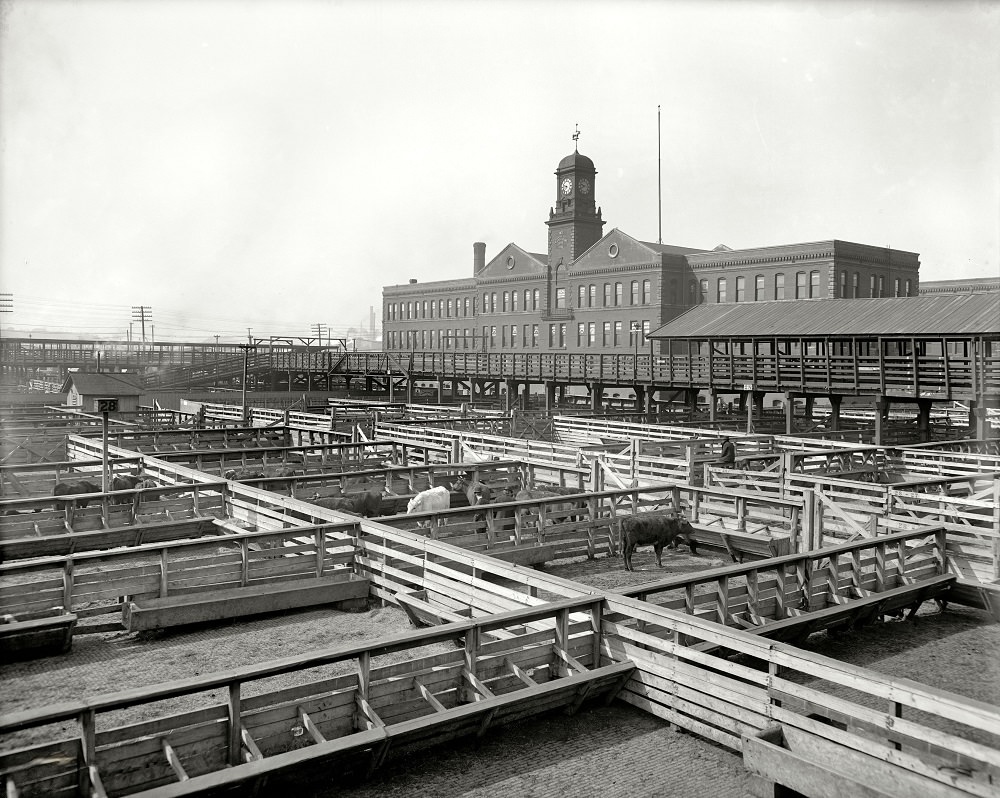
Commerce in Kansas City extended well beyond retail and banking. The city’s stockyards and livestock exchange were central to its economy, drawing buyers, sellers, and workers from across the region. By 1906, the Kansas City Livestock Exchange was a major operation, processing cattle, hogs, and sheep on a scale that made the city one of the most important meatpacking centers in the country.

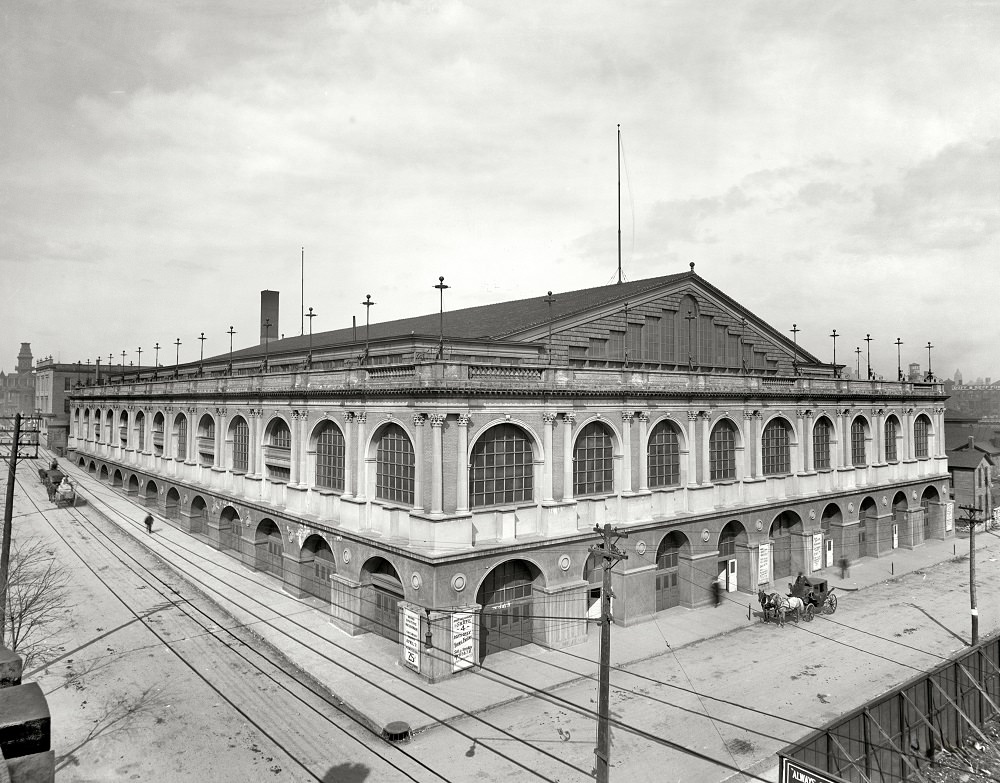
Public buildings in early Kansas City were built to impress. Convention Hall was a landmark structure that hosted large civic events and national gatherings. Its size and design reflected the city’s ambitions to be recognized as a major American city, not just a regional center. The building became a point of civic pride for residents.

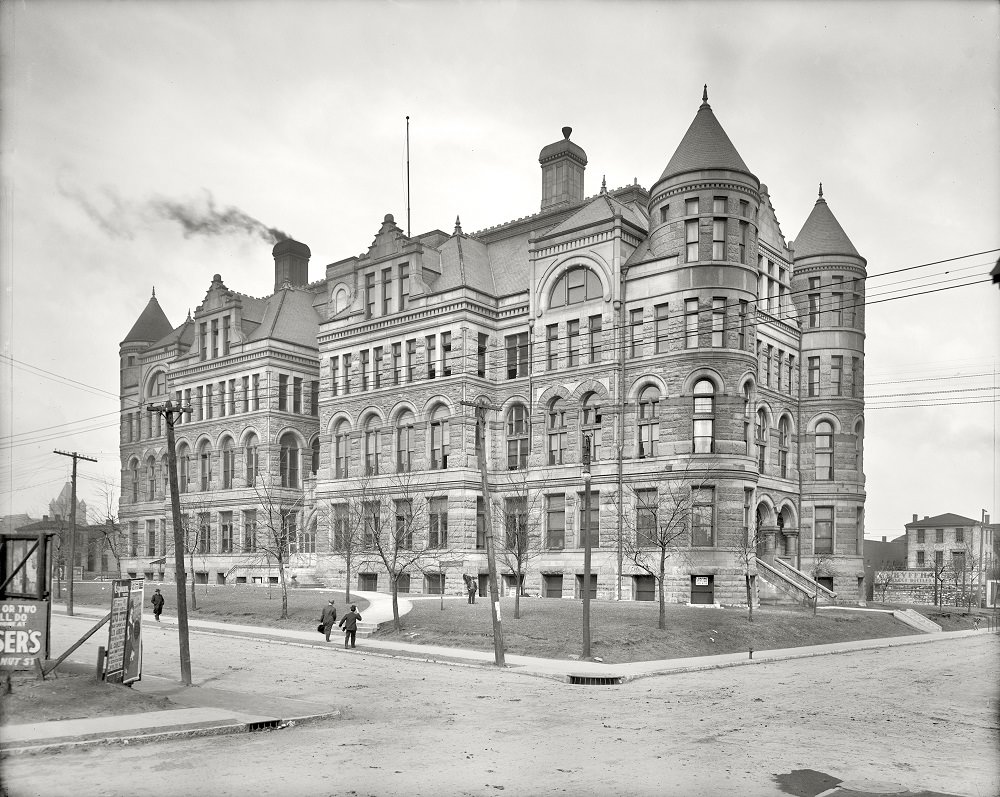
Government and civic institutions also had a strong physical presence in the city. The Jackson County Court House served as the seat of local government and a symbol of order and authority in the region. Its architecture followed the grand, imposing style common to courthouse buildings of the era.

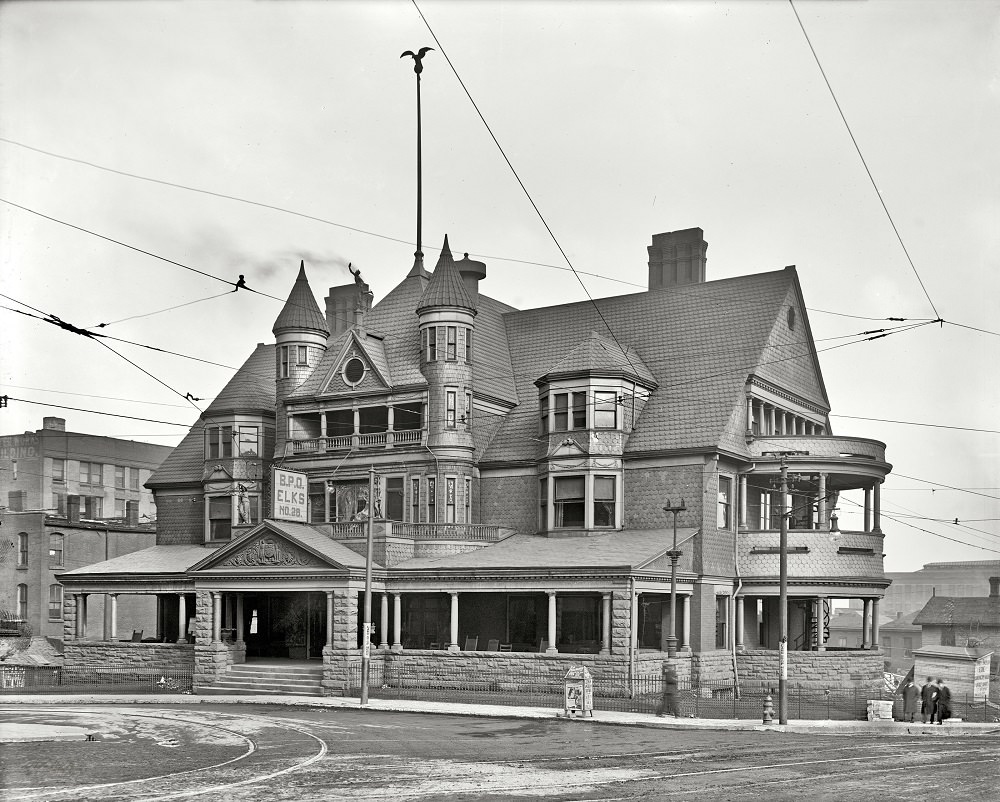
Social clubs and fraternal organizations played a significant role in the daily life of Kansas City residents. The Elks Club was one of the more prominent gathering places for the city’s middle and upper classes, offering a space for networking, social events, and community organization. Buildings like this one reflected the social structure of early 20th-century urban life.

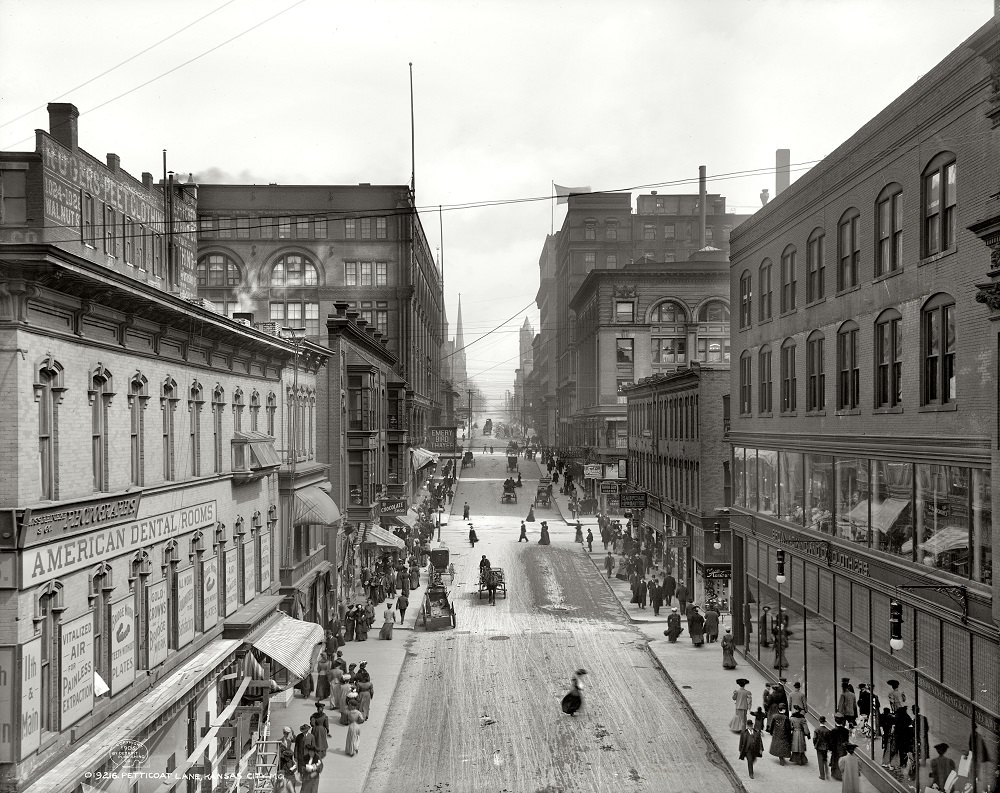
Walnut Street and the surrounding downtown blocks gave residents a dense, walkable commercial district. Storefronts, offices, and service businesses packed these streets, serving a fast-growing population. The nearby stretch known as Petticoat Lane — a nickname for the shopping district popular with women — was one of the most active retail corridors in the city.


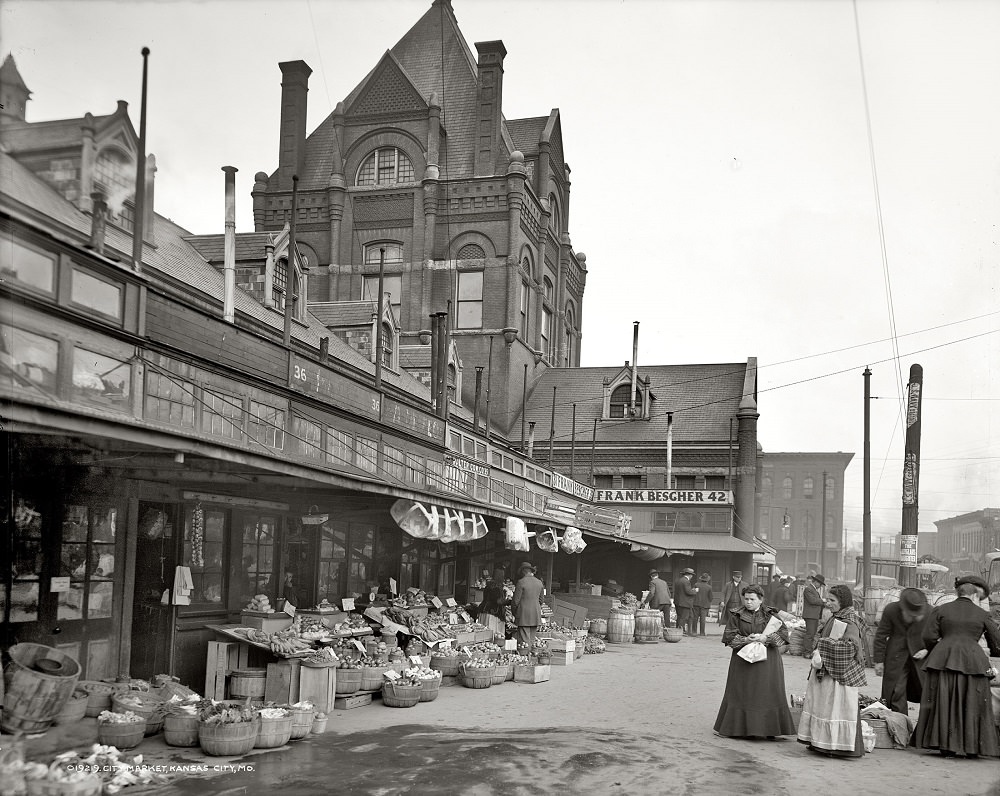
Where Main Street met Delaware Street, pedestrians, wagons, and streetcars converged at one of the city’s busiest intersections. These junctions were the pulse points of urban Kansas City, where commerce and daily movement crossed paths. Nearby, the City Market served as the place where farmers and vendors came to sell fresh produce, meat, and goods directly to city residents — a tradition that dated back to the city’s earliest years.


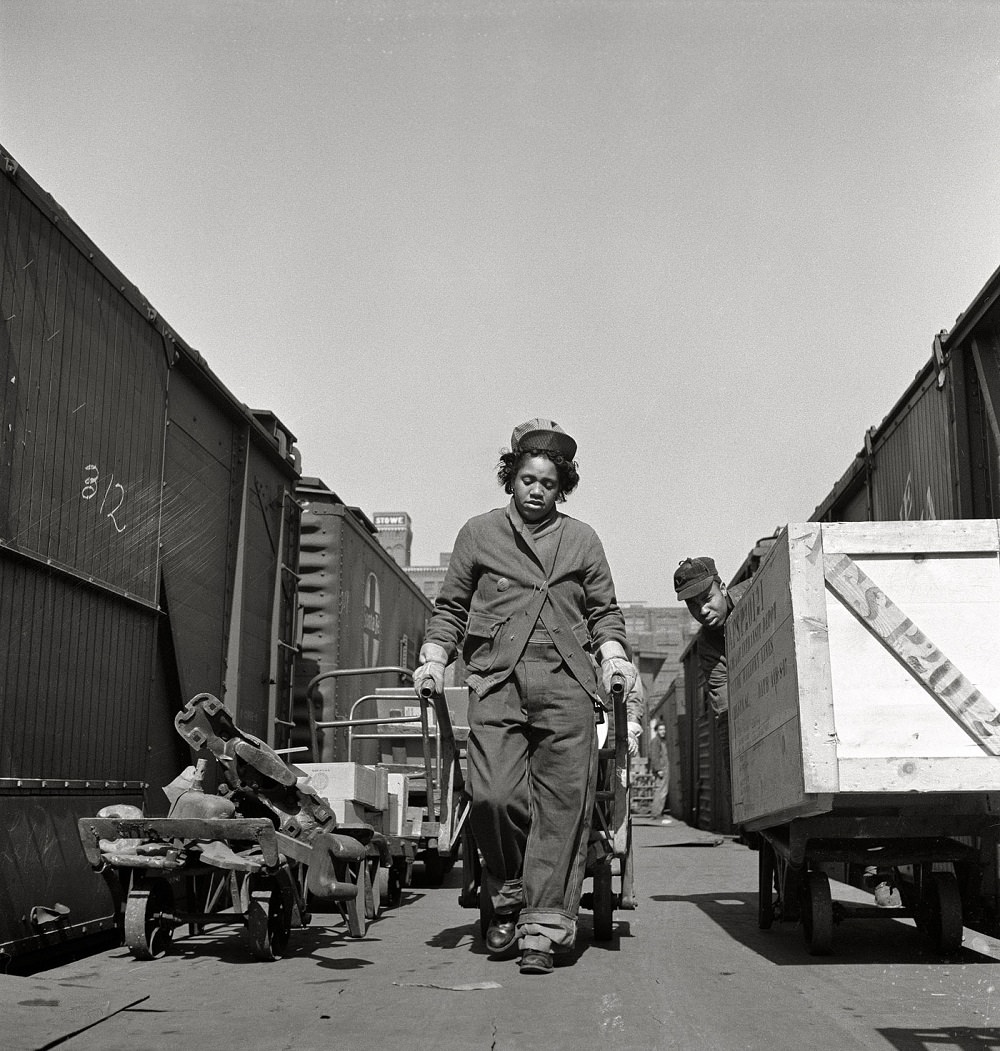
Kansas City remained remarkably active even during the Prohibition era, largely bypassing the restrictions that shut down nightlife and commerce in other cities. Decades later, World War II brought another shift to the city’s workforce. With men away at war, women stepped into roles previously held exclusively by men. Mildred Williams was one of several women hired as freight handlers at the Atchison, Topeka railroad operations in Kansas City in 1943, doing the demanding physical work of moving cargo that kept wartime supply lines running.


That’s very cool. My favorite is Main and Delaware.
Where is the highway now? Trying to find where it was
Going into some of the older buildings downtown and running wires has been one of the most enjoyable experiences of my life. Experience what it was like to hang out below street level, where the old folks used to socialize.
It’s unfortunate to see how many beautiful old buildings in KC have been demolished. While I can understand that some may have become functionally obsolete, it’s heartbreaking to see the same fate befall many of the city’s historic homes.
Like the three they just plowed under on the 3900 block of Bell.
I always love photos of this. Do you have any pictures of St Marty’s Church or the Inter-State building. Pictures of the Jackson County Parental School (now the RCC jail) on the same street would be great!
It’s crazy how big some of these are and yet almost none remain.
The former Jackson County courthouse building was demolished and replaced with newer condos which were built between Oak and Locust streets and Missouri Avenue and 5th Street.
At least we got some really nice parking lots to replace all the bulldozed buildings, right? 🙄
There are so many cool old buildings in KC. I understand how some homes become functionally obsolete…but look at the old homes in KC that have been renovated. This saddens me so much.
Just like the three they plowed under on the 3900 block of Bell Street.
I was wondering if you had any pictures of St Marty’s Church or the Inter-State building. It would be great to see pictures of the Jackson County Parental School (now the RCC jail) on the same street!
It’s crazy how big some of these are and yet there are almost none left. In the area between Oak & Locust and Missouri Ave & 5th, a bunch of newer condos were built (and sat half completed for a long time). A minimum of the Convention Hall was demolished and replaced by the Municipal Auditorium.
At least we got some really nice parking lots to replace all the bulldozed buildings
Thank god we demolished all that for parking lots.
That Main+Delaware Junction photo always hits me hard. It hurts my soul now that it’s just a large highway with endless crashes.
What was the location of the original courthouse? I think Petticoat Lane is about half its original length now. Is the Board of Trade building still standing near the Plaza (by Chipotle and the Library, etc.)?
This is the third Board of Trade building (where Populous is headquartered). Pictured here is the Second Board of Trade Building, which was located at 210 West 8th Street. The building was demolished in 1968
The Board of Trade building was demolished in the 1960s. Approximately at 8th and Wyandotte, which is now a parking lot
The original courthouse was located at 2nd and Main, where River Bluff Brewing now stands.
The loss of such a beautiful old building is so sad!
Cars ruin cities.
Over a very long period of time, Kansas City, MO has been implementing short-sighted & utterly stupid “development” initiatives. ONCE… Kansas City was considered a contender a long time ago. It’s over.
Looked like it was so much more lively
The convention hall was located in the spot where the Barney Ellis plaza sits today. There was an earlier version that burned down and then this more permanent (or fire resistant) version was built. Municipal Auditorium was built directly to the south to replace it.