Jimi Hendrix was born on November 27, 1942, in Seattle, Washington. He taught himself guitar as a child, learning by ear from blues and rock records. By the time he moved to London in 1966, he was ready to explode onto the world stage. He formed the Jimi Hendrix Experience with drummer Mitch Mitchell and bassist Noel Redding, and the band’s early singles — “Hey Joe” and “Purple Haze” — turned him into an overnight sensation. His technique was unlike anything audiences had heard before.
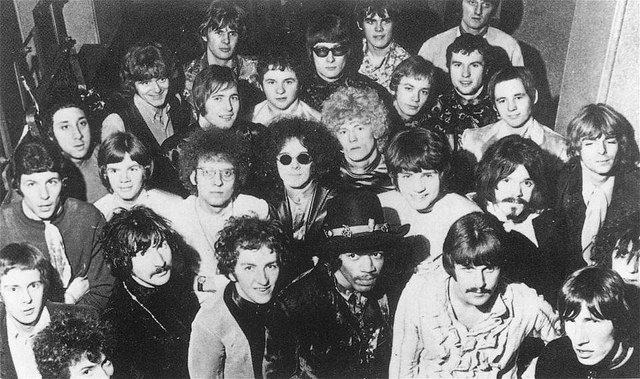
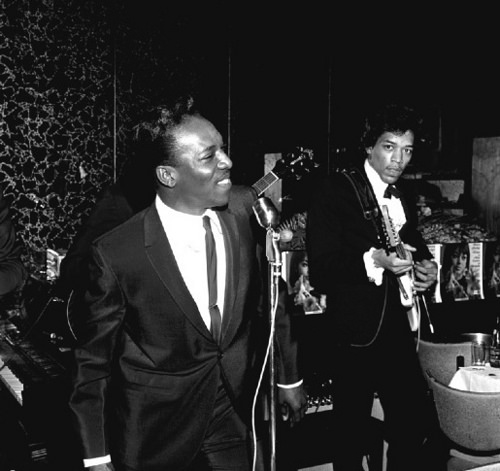
London’s music scene in the late 1960s was a tight-knit world, and Hendrix moved through it freely. He crossed paths with some of the most groundbreaking acts of the era, including the psychedelic pioneers of Pink Floyd. Soul legend Wilson Pickett was another figure in Hendrix’s orbit — the two shared roots in the raw, expressive tradition of American R&B.
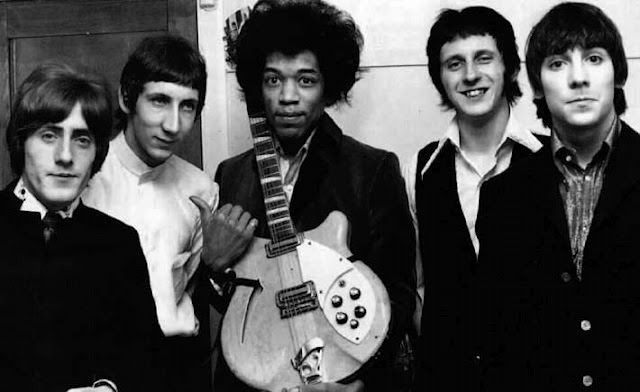
Hendrix had a well-known mutual admiration with The Who’s Pete Townshend and Keith Moon. Both bands were notorious for destroying equipment on stage, and the two acts famously clashed — in the best possible way — when they shared the bill at the Monterey Pop Festival in June 1967, each refusing to follow the other.
Hendrix’s world wasn’t limited to hard rock. He spent time with folk icon Joan Baez, whose political voice defined a generation of protest music. Their connection reflected how fluid the boundaries were between rock, folk, and the broader counterculture movement of the 1960s.
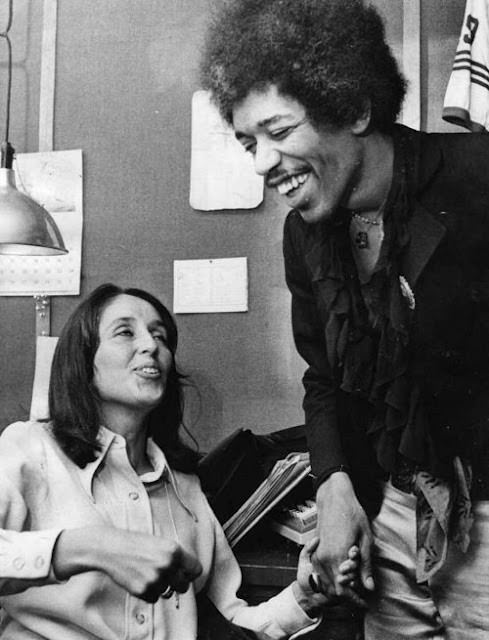
The Rolling Stones were a constant presence in Hendrix’s social circle. Keith Richards was one of rock’s most respected rhythm guitarists, and the two shared a deep respect for the blues tradition that underpinned both of their sounds.
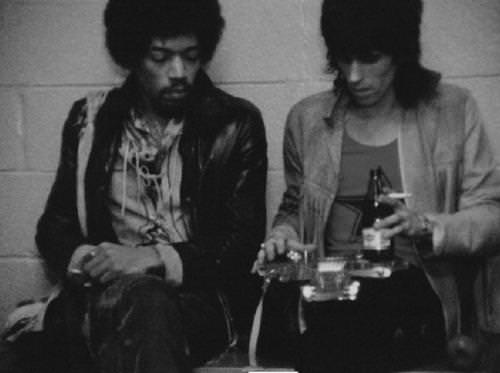
Scottish pop star Lulu was among Hendrix’s closer British friends. In January 1969, Hendrix appeared on her BBC television show. Midway through performing “Hey Joe,” he stopped the song and instead broke into an improvised tribute to Cream, who had just announced their breakup — live on air.
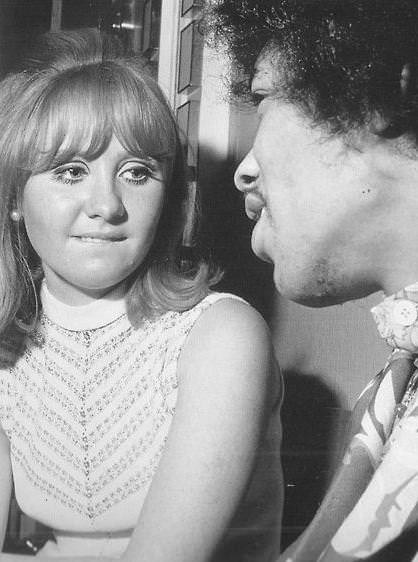
The Mamas and the Papas were central figures at Monterey Pop, the same 1967 festival that launched Hendrix to American fame. Mama Cass Elliot, known for her powerful voice and warm personality, was a familiar face in the same social circles Hendrix frequented on both sides of the Atlantic.
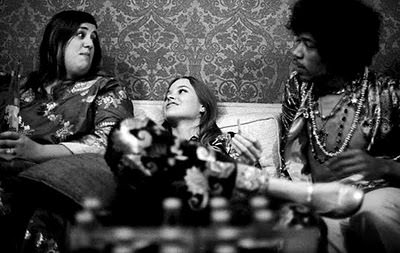
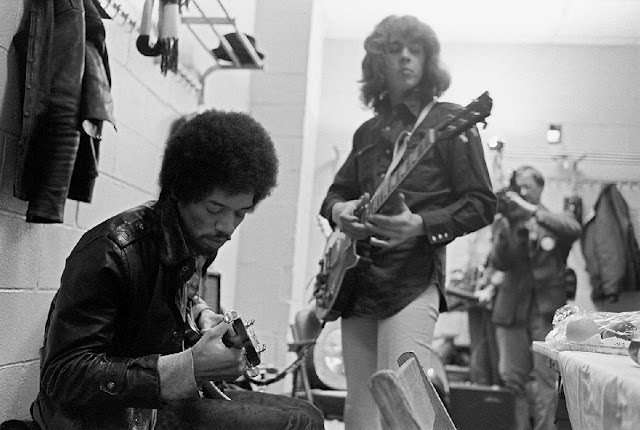
Hendrix’s ties to the Rolling Stones ran deep. Mick Taylor, who replaced Brian Jones as the Stones’ lead guitarist in 1969, was part of a generation of British guitarists who grew up watching Hendrix redefine what the instrument could do.
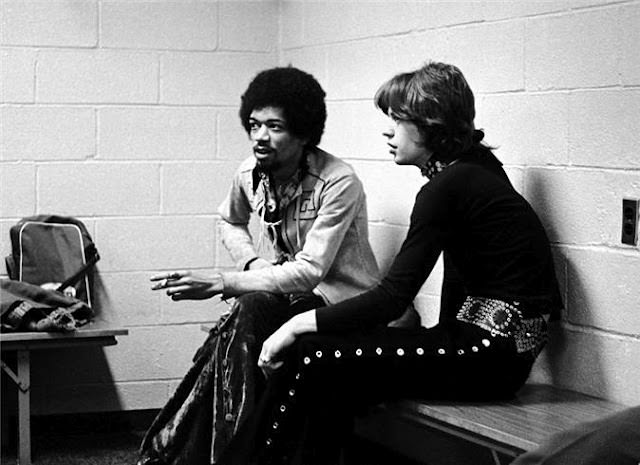
Mick Jagger and Hendrix moved in the same elite rock circles throughout the late 1960s. Both were fronting the biggest acts in the world at the time, navigating enormous fame while pushing their music in new directions.
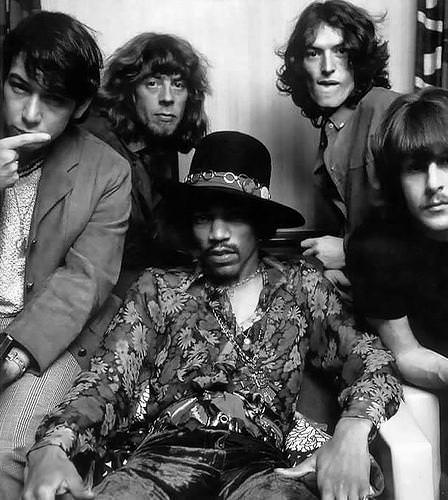
Hendrix’s friendships also connected him to some of the most versatile musicians of the era. Steve Winwood, Eric Burdon of The Animals, blues pioneer John Mayall, and singer Carl Wayne were all part of the broader British rock scene that embraced Hendrix from the moment he arrived in London.
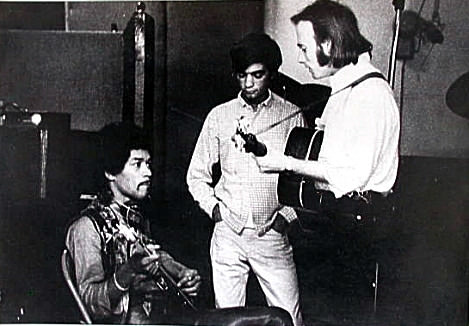
Stephen Stills, a founding member of Buffalo Springfield and later Crosby, Stills, Nash & Young, was a close friend and fellow guitarist. The two reportedly jammed together on multiple occasions, bonding over their shared approach to fusing rock, blues, and experimentation.
In the summer of 1967, Hendrix was booked as the opening act for The Monkees on their North American tour — a pairing that made little sense. Hendrix’s intense, feedback-drenched performances baffled the young pop audiences who came to see their TV idols. He left the tour after just a handful of dates.
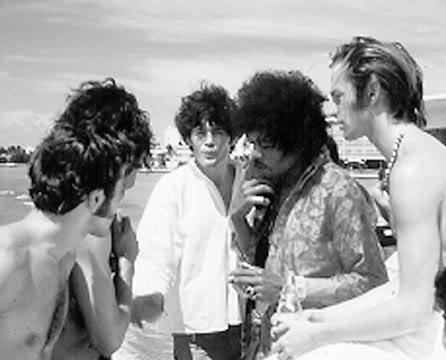
Arthur Lee, the visionary frontman of Los Angeles psychedelic rock band Love, was another artist in Hendrix’s network. Love’s 1967 album *Forever Changes* is considered one of the era’s masterpieces, and Lee’s experimental approach to songwriting resonated strongly with Hendrix.
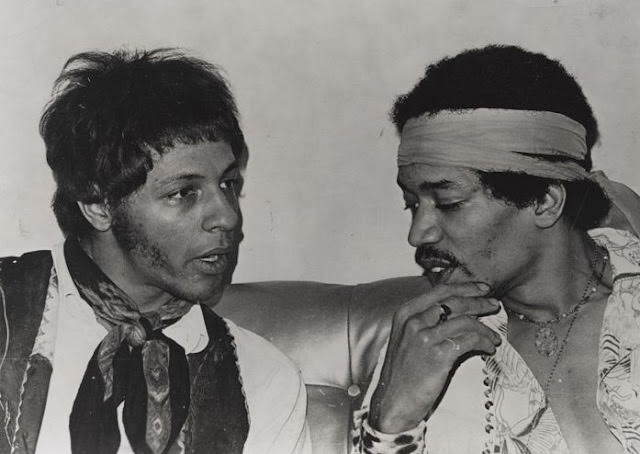
Paul McCartney was one of Hendrix’s earliest and most vocal supporters in Britain. McCartney personally recommended Hendrix to perform at the Monterey Pop Festival in 1967, helping secure one of the most celebrated live debuts in rock history.
Brian Jones of the Rolling Stones was present at many of the same landmark events as Hendrix, including Monterey. Jones was a multi-instrumentalist fascinated by world music, and his experimental curiosity made him a natural admirer of Hendrix’s boundary-breaking style.
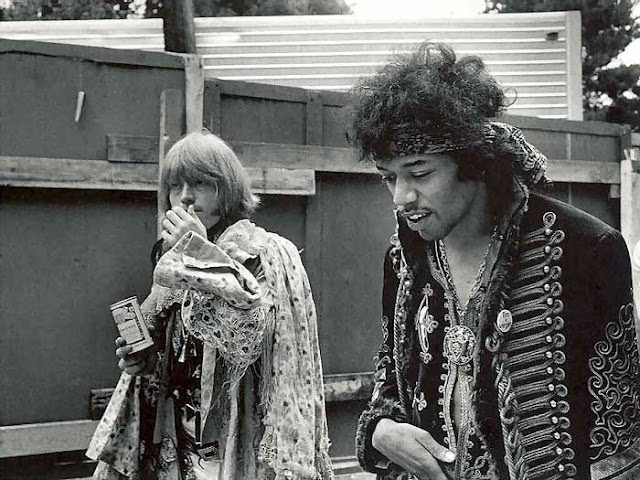
Buddy Miles was far more than a face in Hendrix’s social world — he was a direct collaborator. Miles played drums in the Band of Gypsys, the power trio Hendrix formed in late 1969, alongside bassist Billy Cox. Their live album, recorded at the Fillmore East on New Year’s Day 1970, captured the raw energy of that lineup.
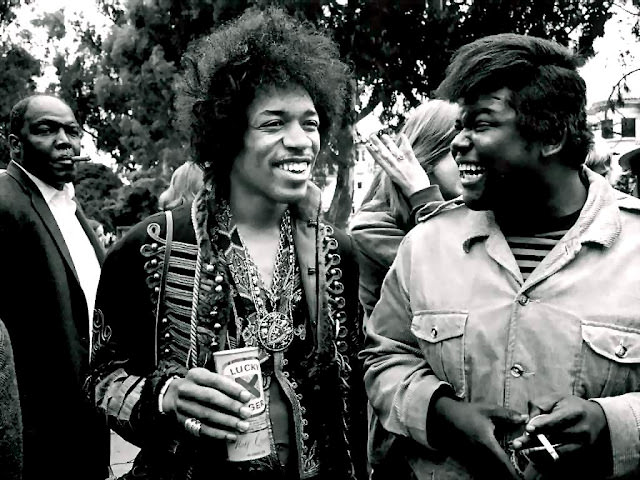
Eric Clapton and Hendrix had one of the most celebrated mutual admiration relationships in rock history. Clapton, already a guitar hero through his work with The Yardbirds and Cream, openly credited Hendrix as an overwhelming force. The two would attend each other’s shows and discuss technique in private sessions.
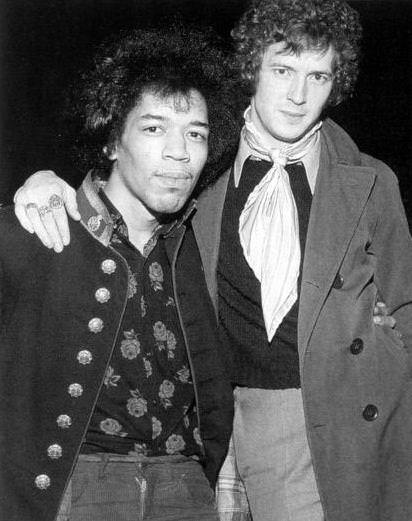
Eric Burdon, lead singer of The Animals, was one of the first established British rock stars to champion Hendrix after his arrival in London. Burdon later paid tribute to Hendrix publicly after his death in September 1970. Noel Redding, Hendrix’s bassist in the Experience, remained one of his closest day-to-day companions throughout the band’s run.
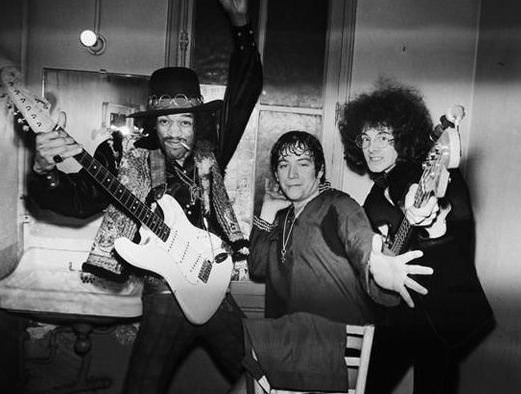
Before his rise to fame, Hendrix paid his dues on the road as a backing musician. He toured with the Isley Brothers in the early 1960s, playing guitar behind Ronald, Rudolph, and O’Kelly Isley. That experience sharpened his stage presence and exposed him to the high-energy performance style that would later define his solo career.
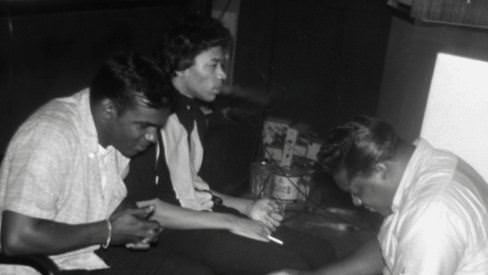
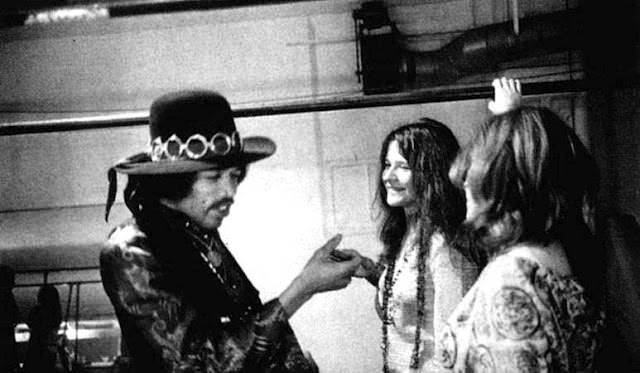
Janis Joplin and Hendrix were two of the most electrifying live performers of the 1960s. Both appeared at Monterey Pop in 1967 and at Woodstock in 1969 — the two defining festivals of their generation. Their friendship was built on genuine mutual respect, two artists who understood the kind of raw emotional intensity the other brought to the stage.