Snow in Jerusalem is never a certainty. The city sits at a high elevation with a Mediterranean climate — mild, wet winters and hot, dry summers. Cold air masses pushing in from the east occasionally collide with the warmer, moisture-laden air drifting off the Mediterranean Sea. When conditions align just right, snow falls over the ancient stone streets. But it rarely lasts long. The city’s warmth and humidity cause the snow to melt quickly, and its desert surroundings keep overall precipitation low year-round.
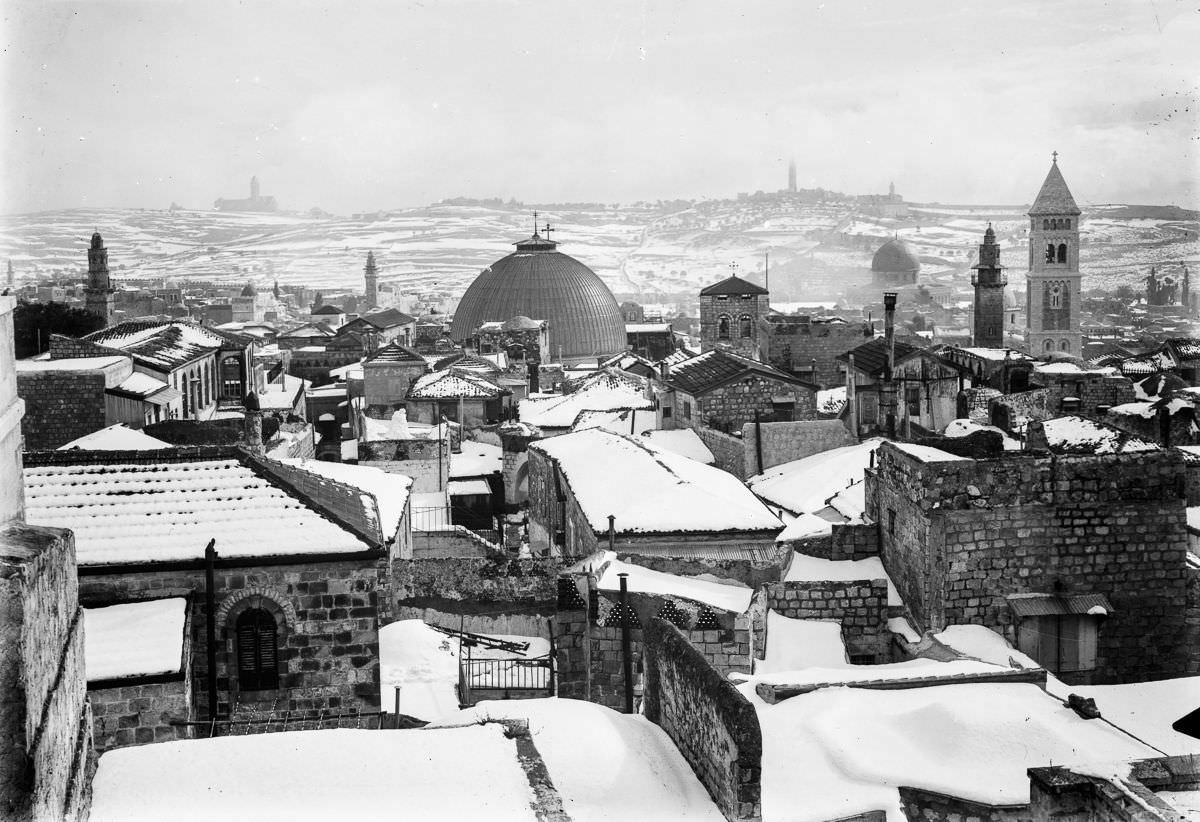
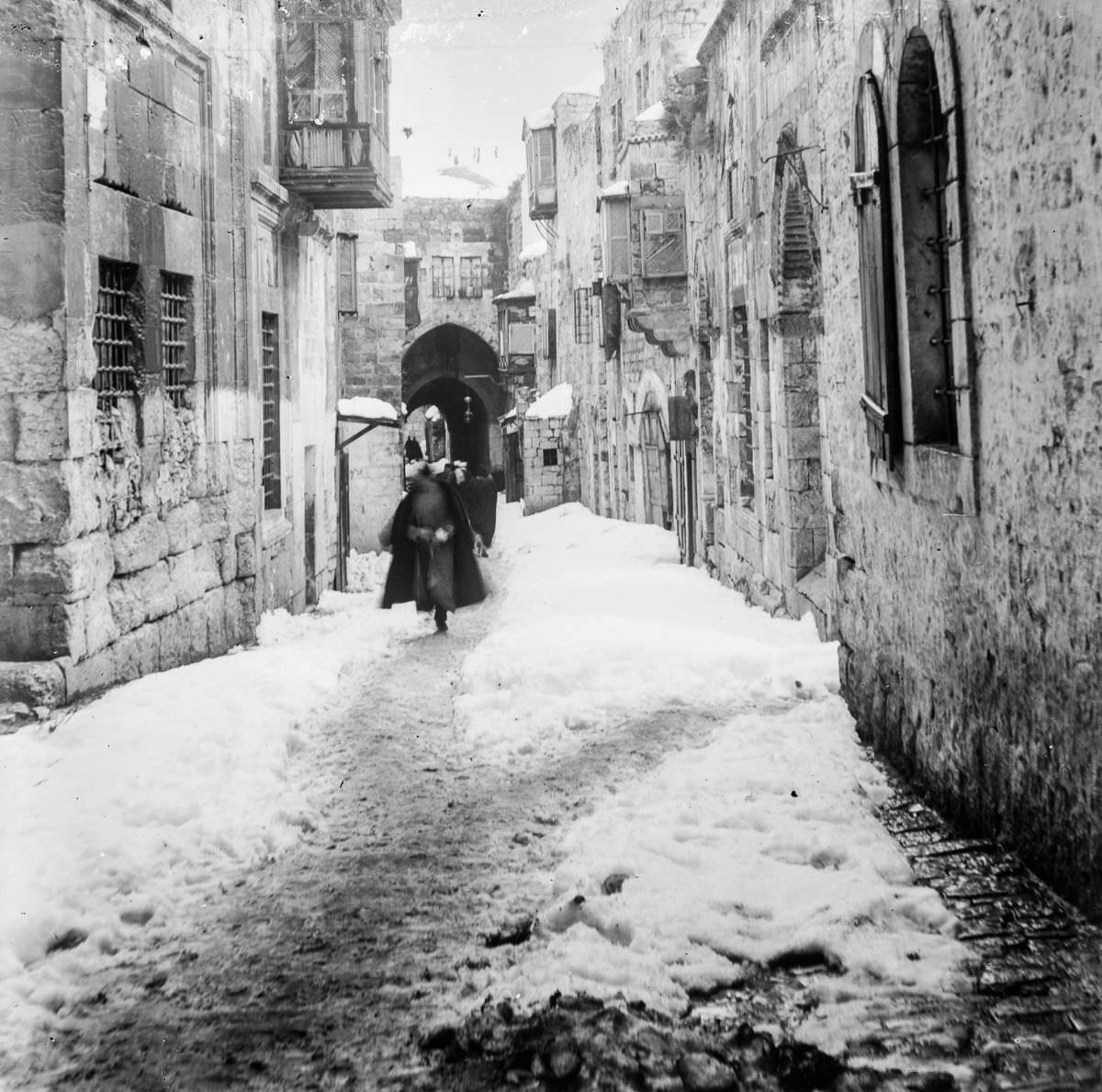
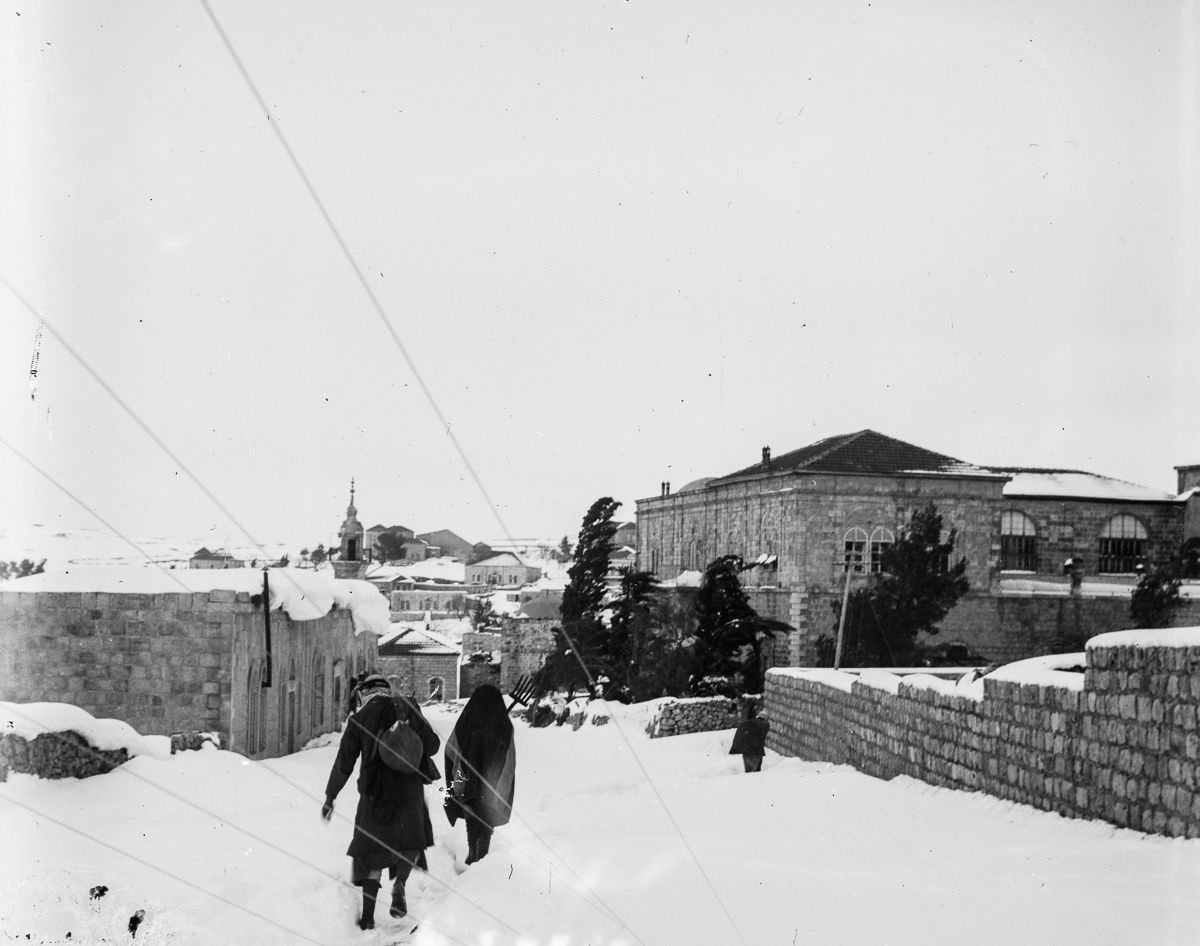
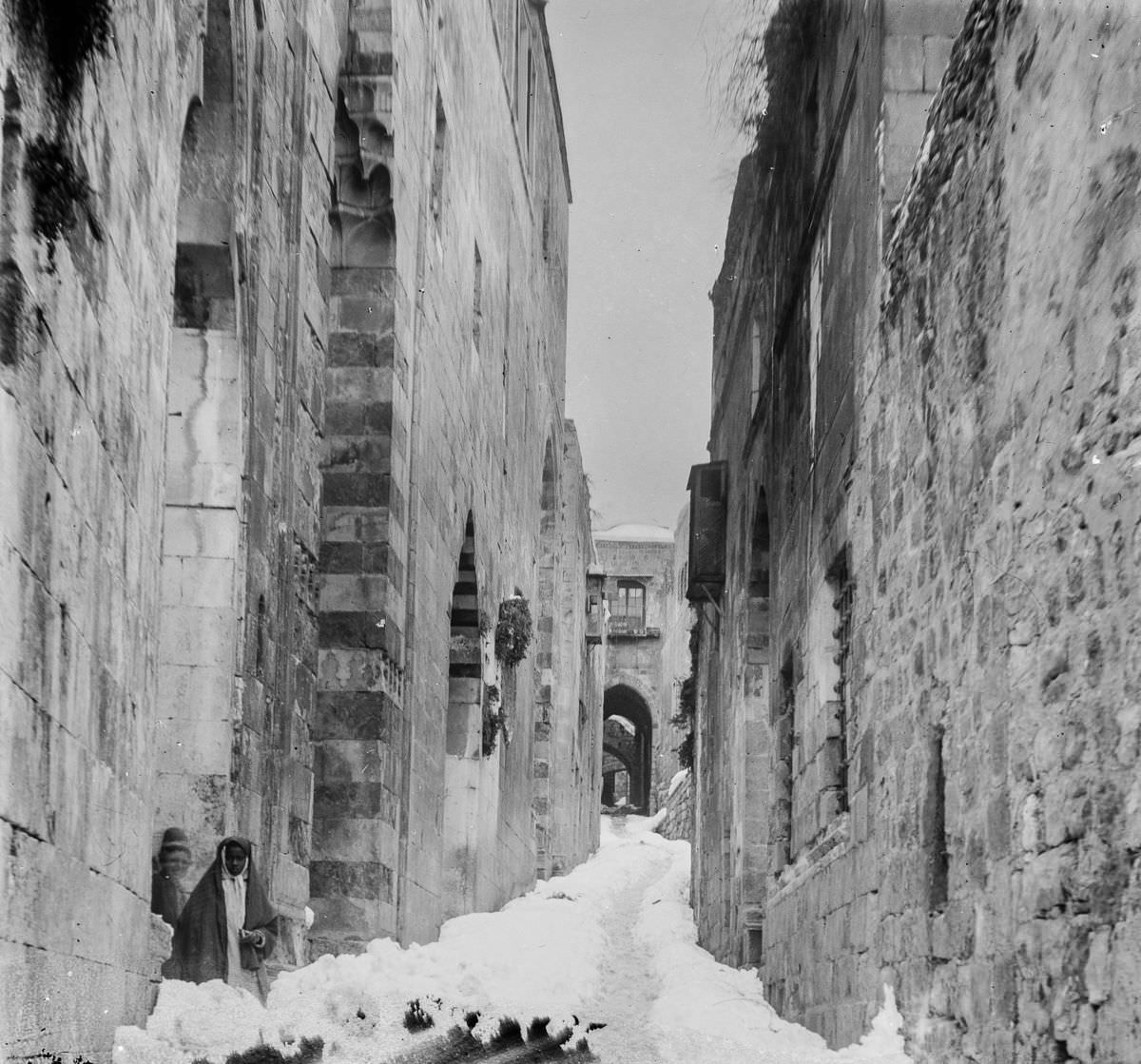
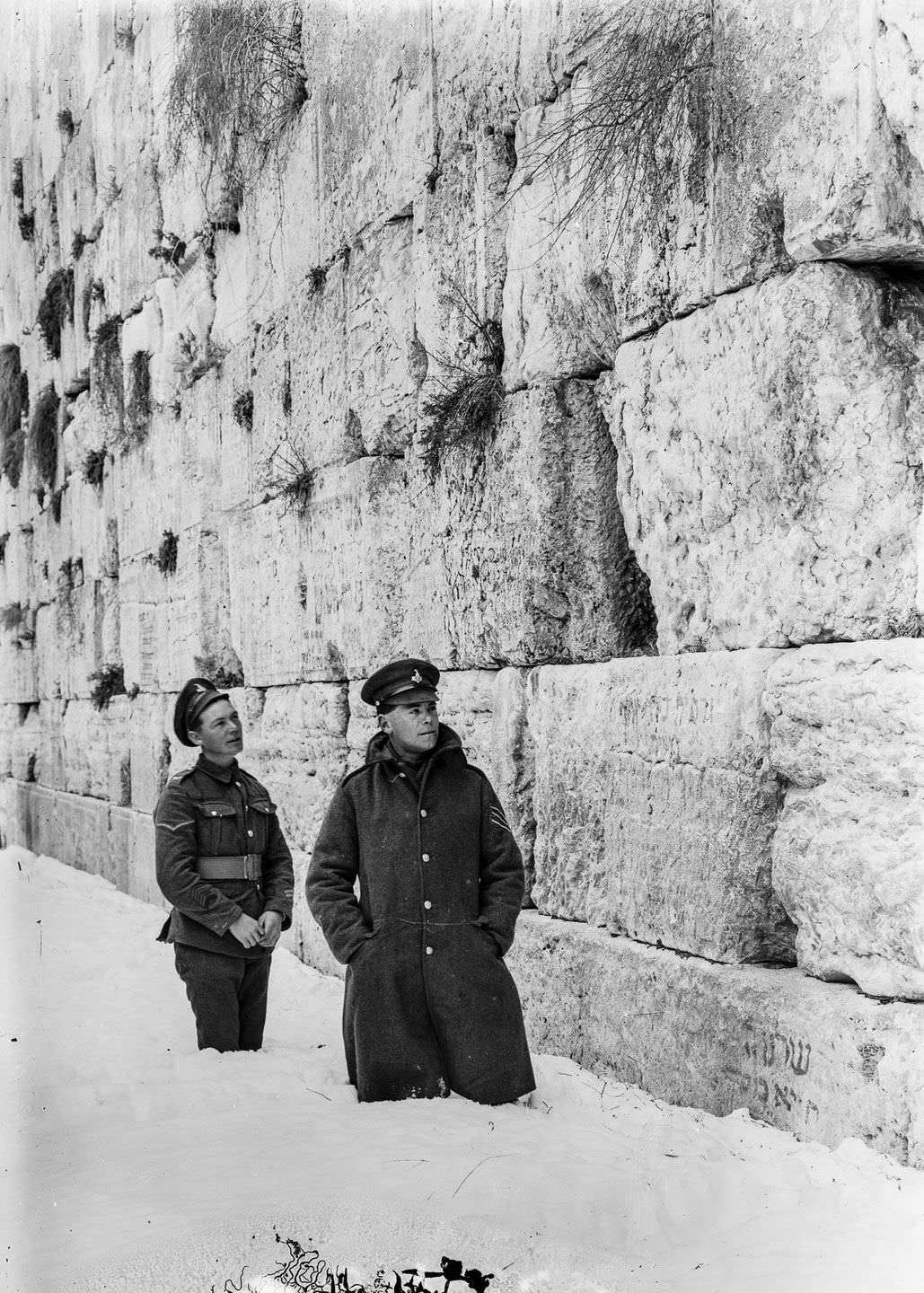
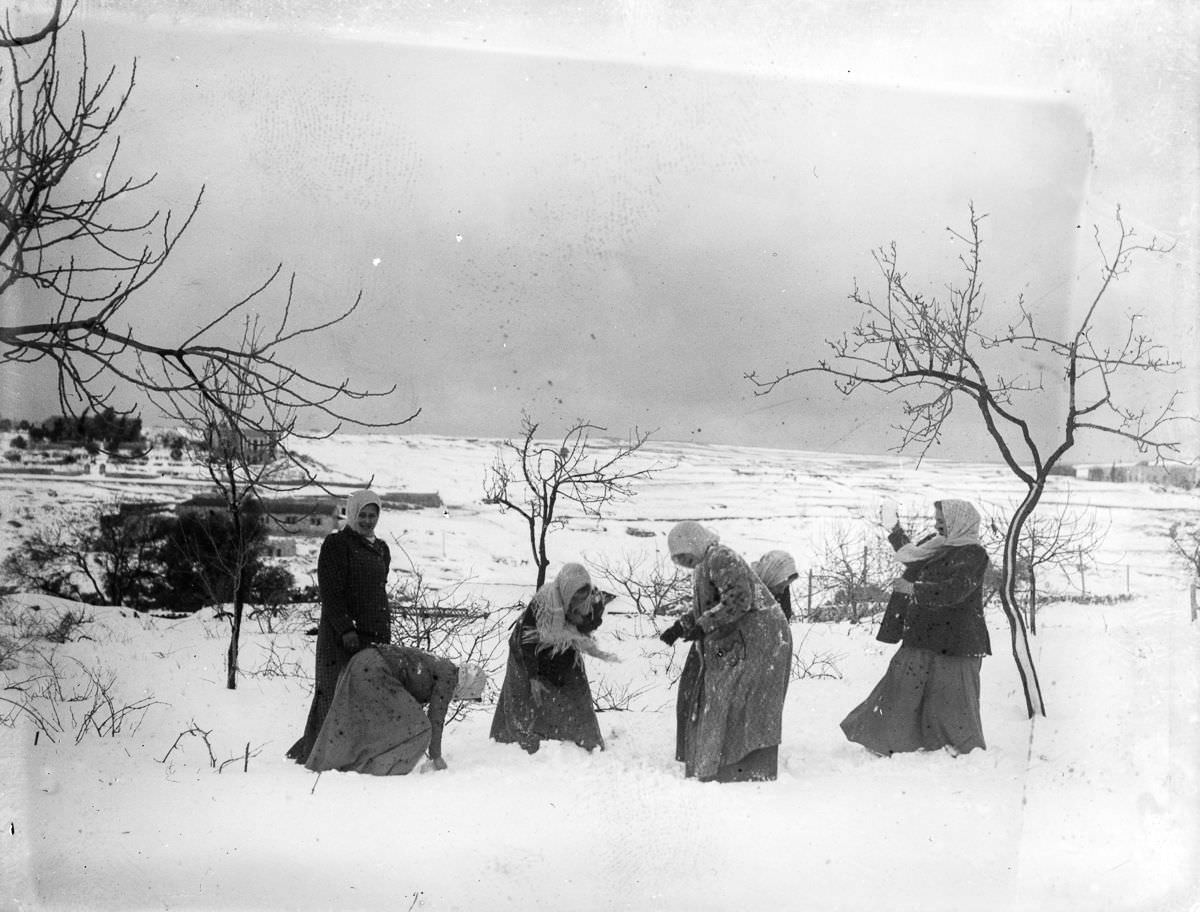
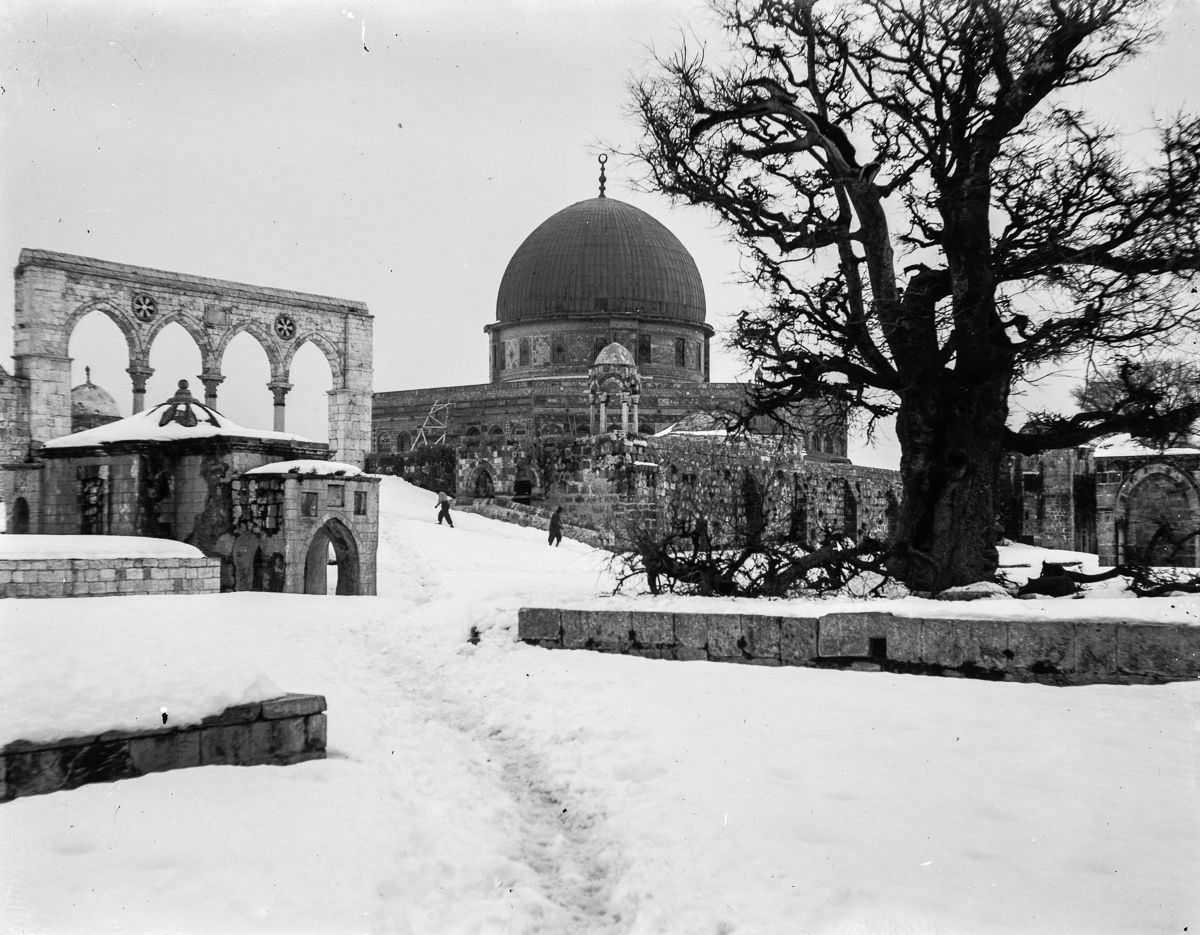
On February 25, 1921, those conditions aligned. A mild snowstorm swept over Jerusalem, dusting rooftops, archways, and open courtyards in white. For residents of a city that sees this kind of weather only rarely, it was a striking sight.
At the time, Jerusalem was under British control. Following the collapse of the Ottoman Empire after World War I, Britain administered the region under a League of Nations mandate. The city was in a period of transition — politically, physically, and demographically.
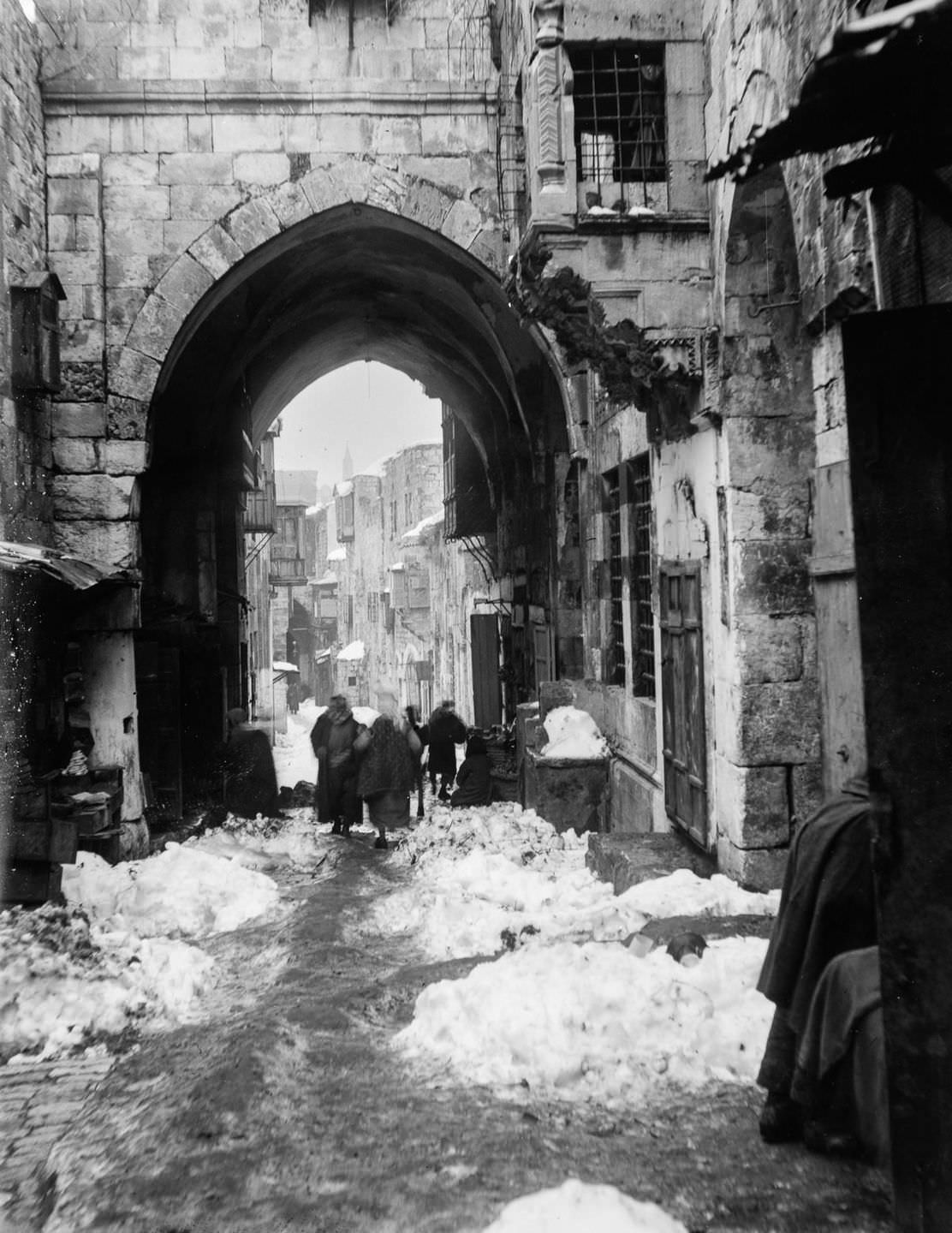
A new Jerusalem was growing beyond the old city walls. Modern neighborhoods, institutions, and infrastructure were expanding outward. Meanwhile, the ancient walled city — once the heart of everything — was becoming a densely packed, poorer district, its old structures aging without the investment flowing into the new quarters.
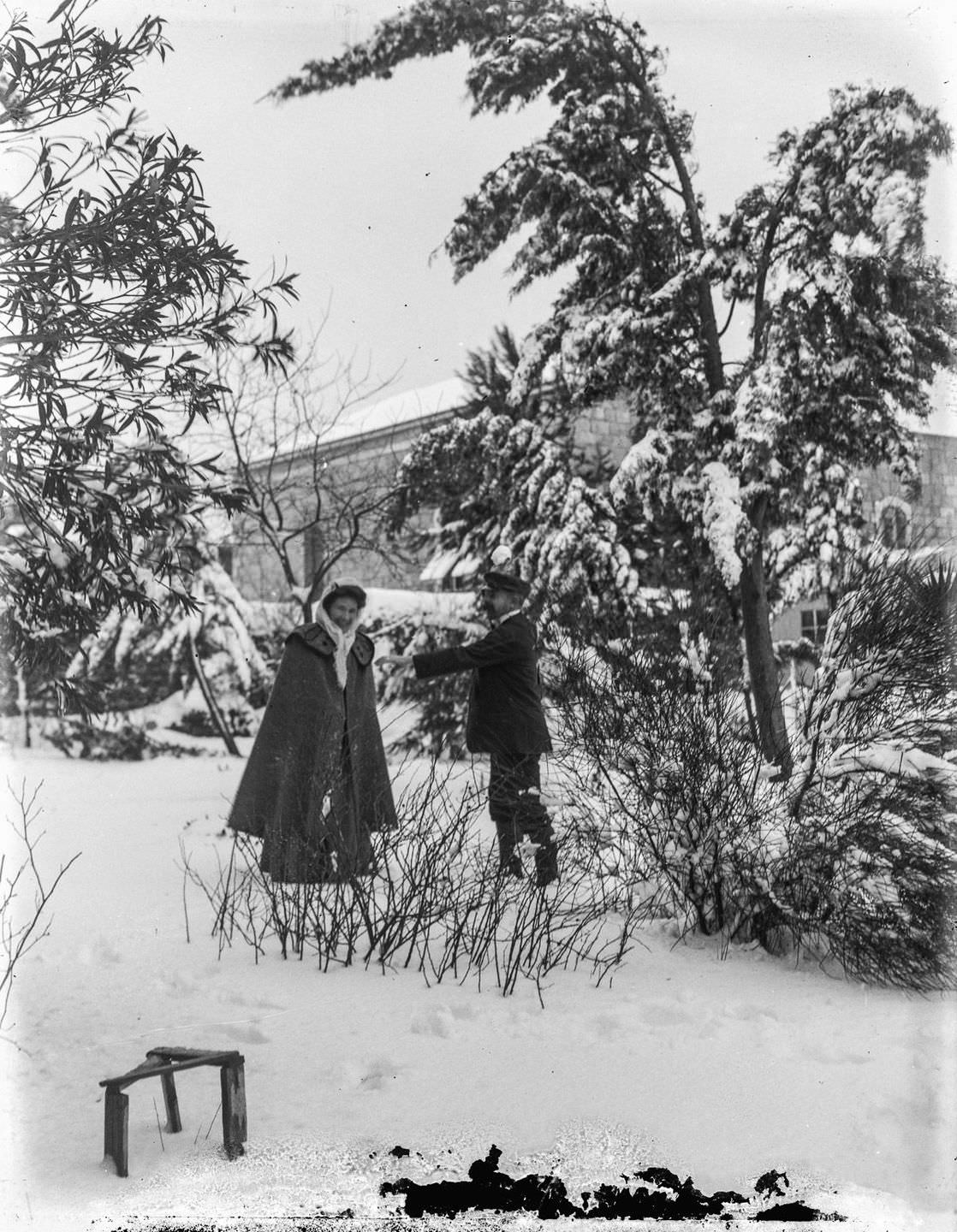
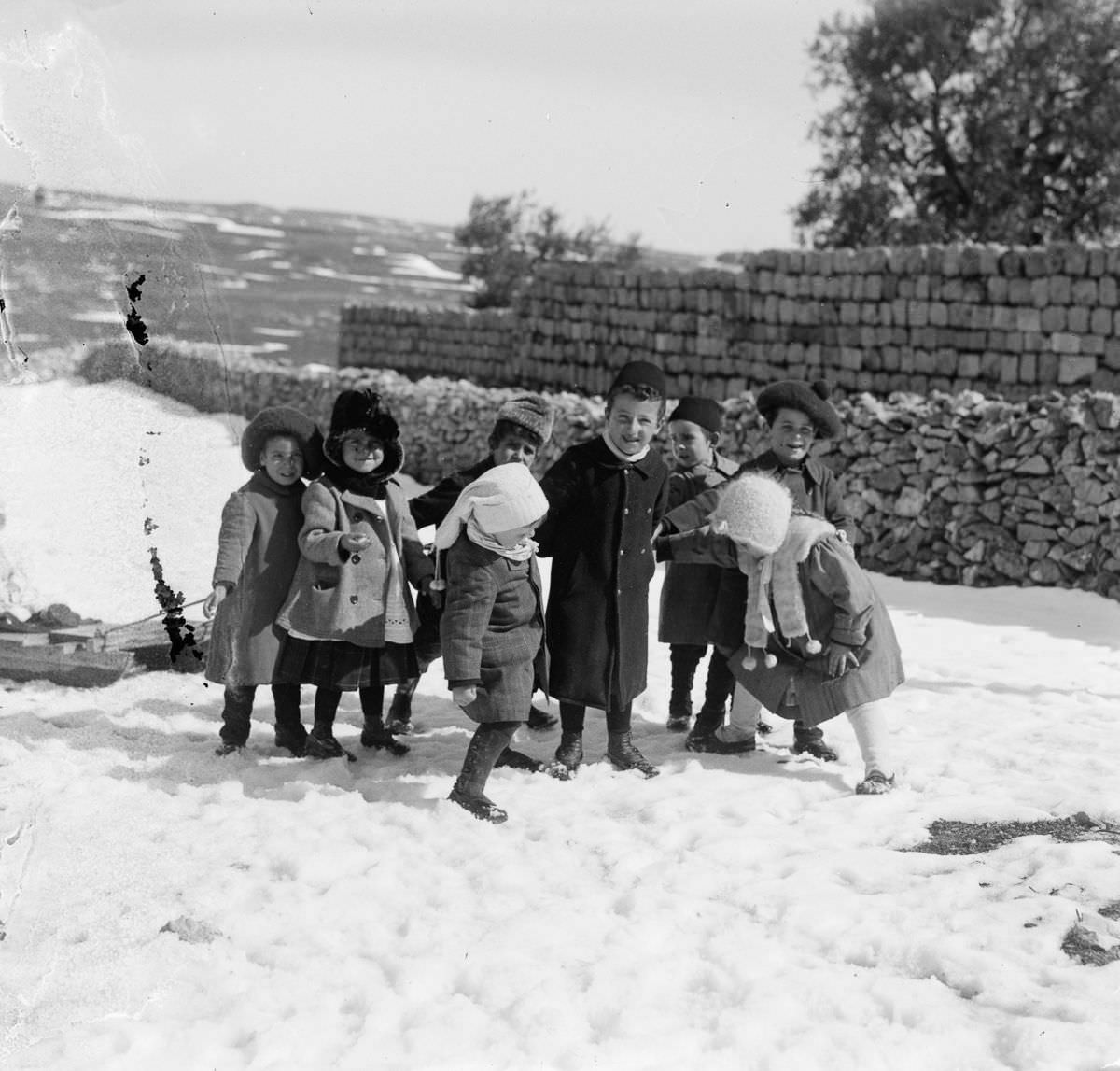
Against this backdrop of change, the snowstorm offered a brief, shared moment across all parts of the city. Residents from the old quarters and the newer streets alike stepped outside to take in the unusual scene.
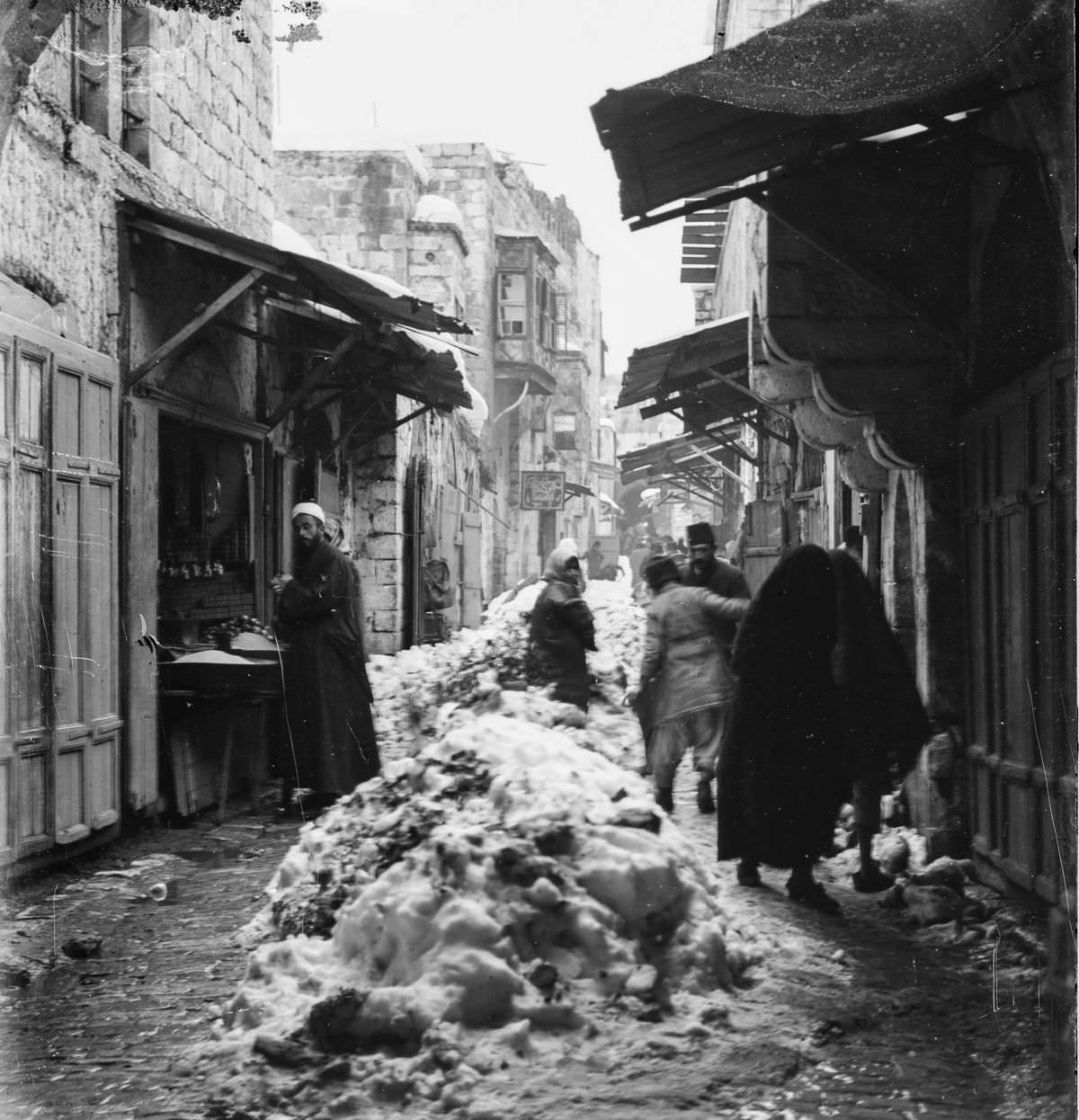
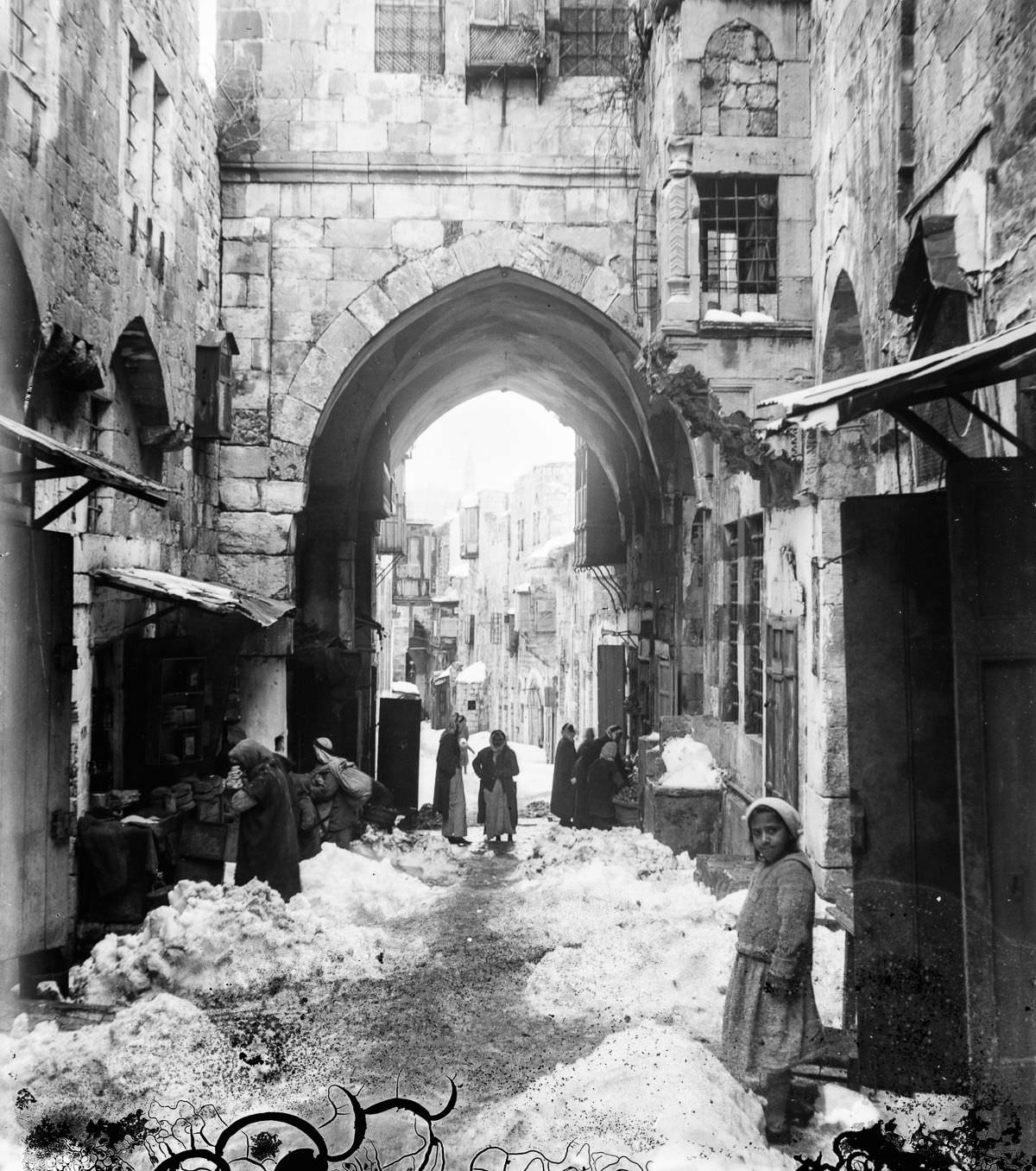
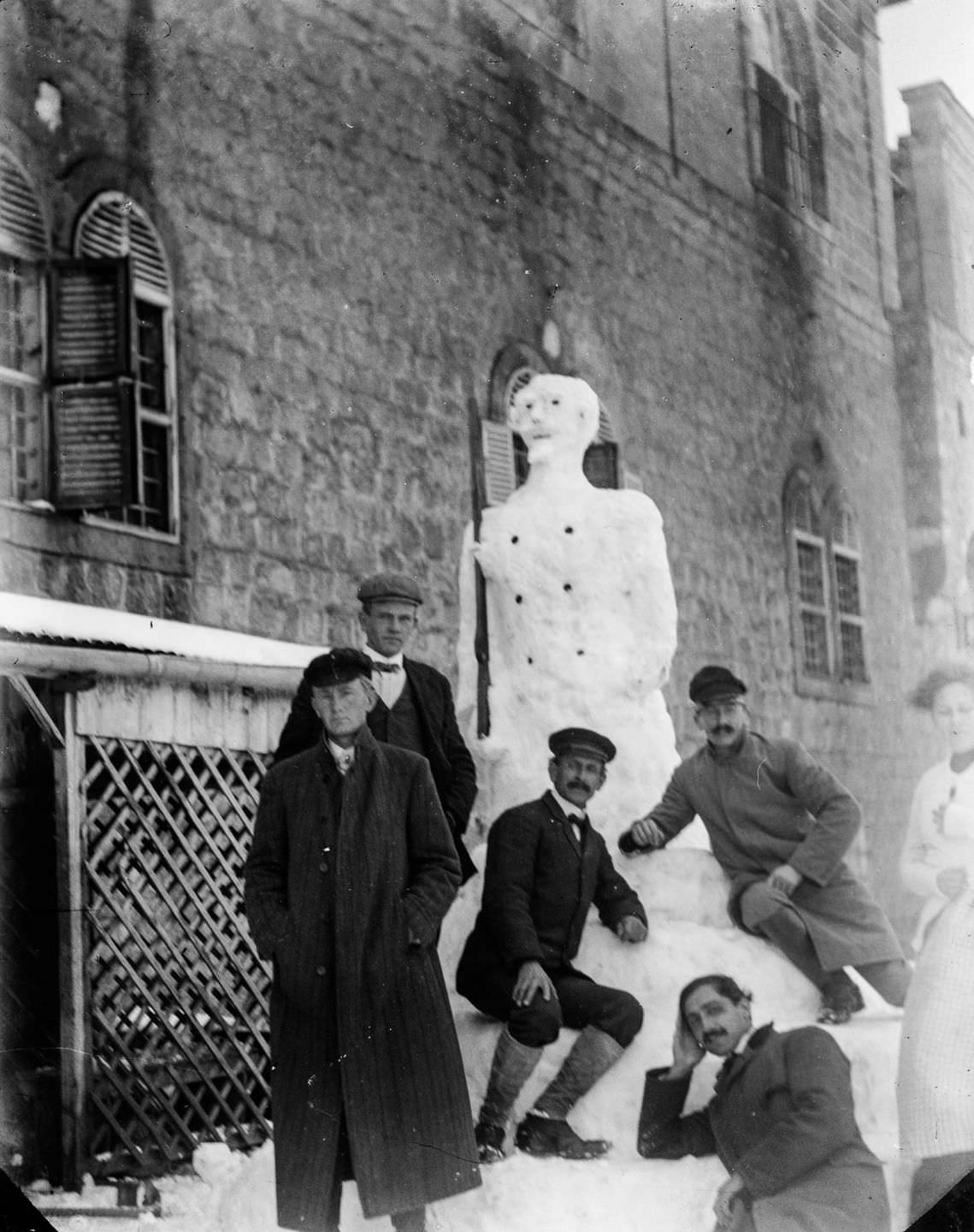
Photographers documented the day, capturing people in the snow-covered streets and open spaces of Jerusalem. The images show the city in an unfamiliar light — familiar stone buildings and archways softened under a thin layer of white.
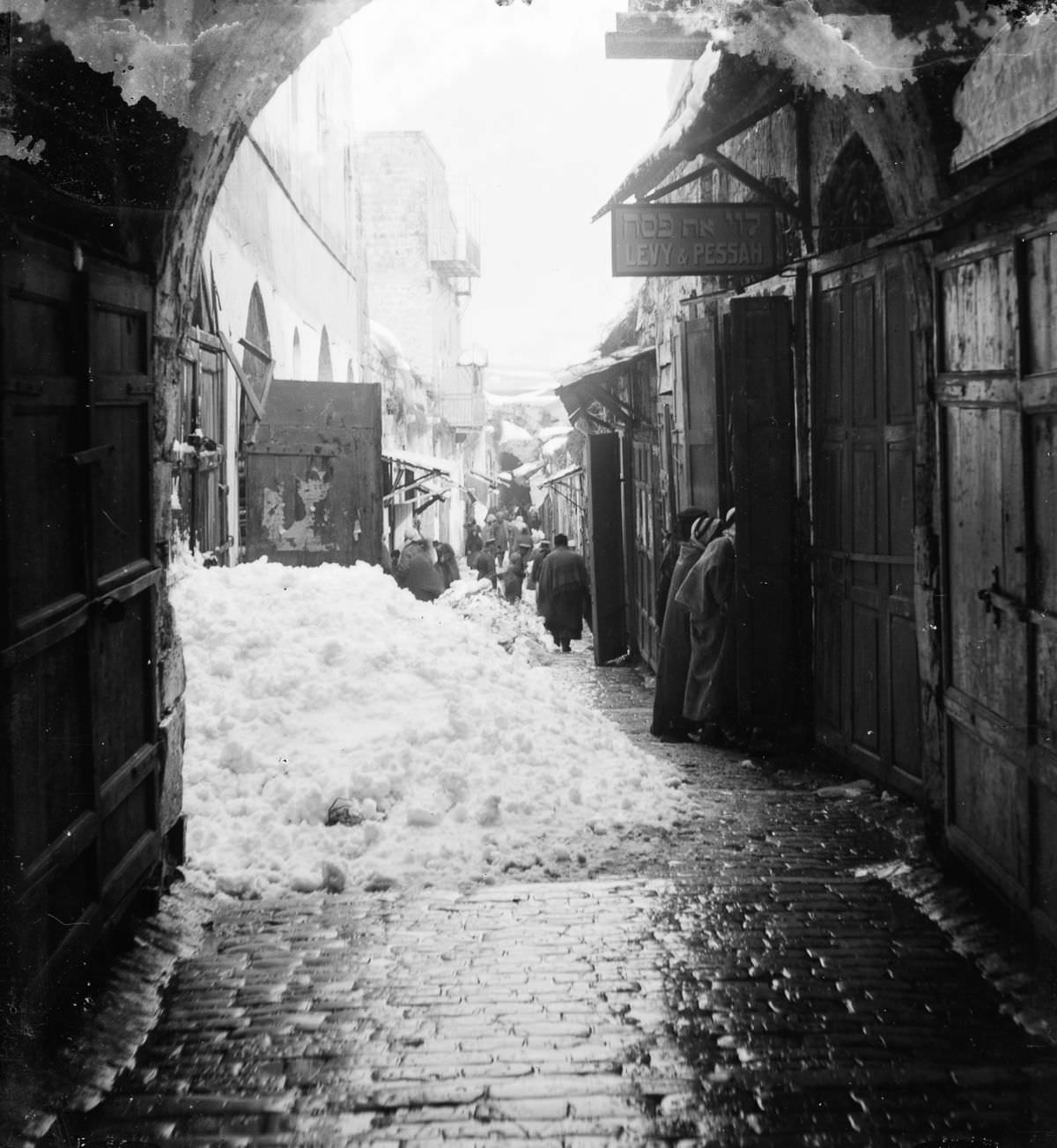

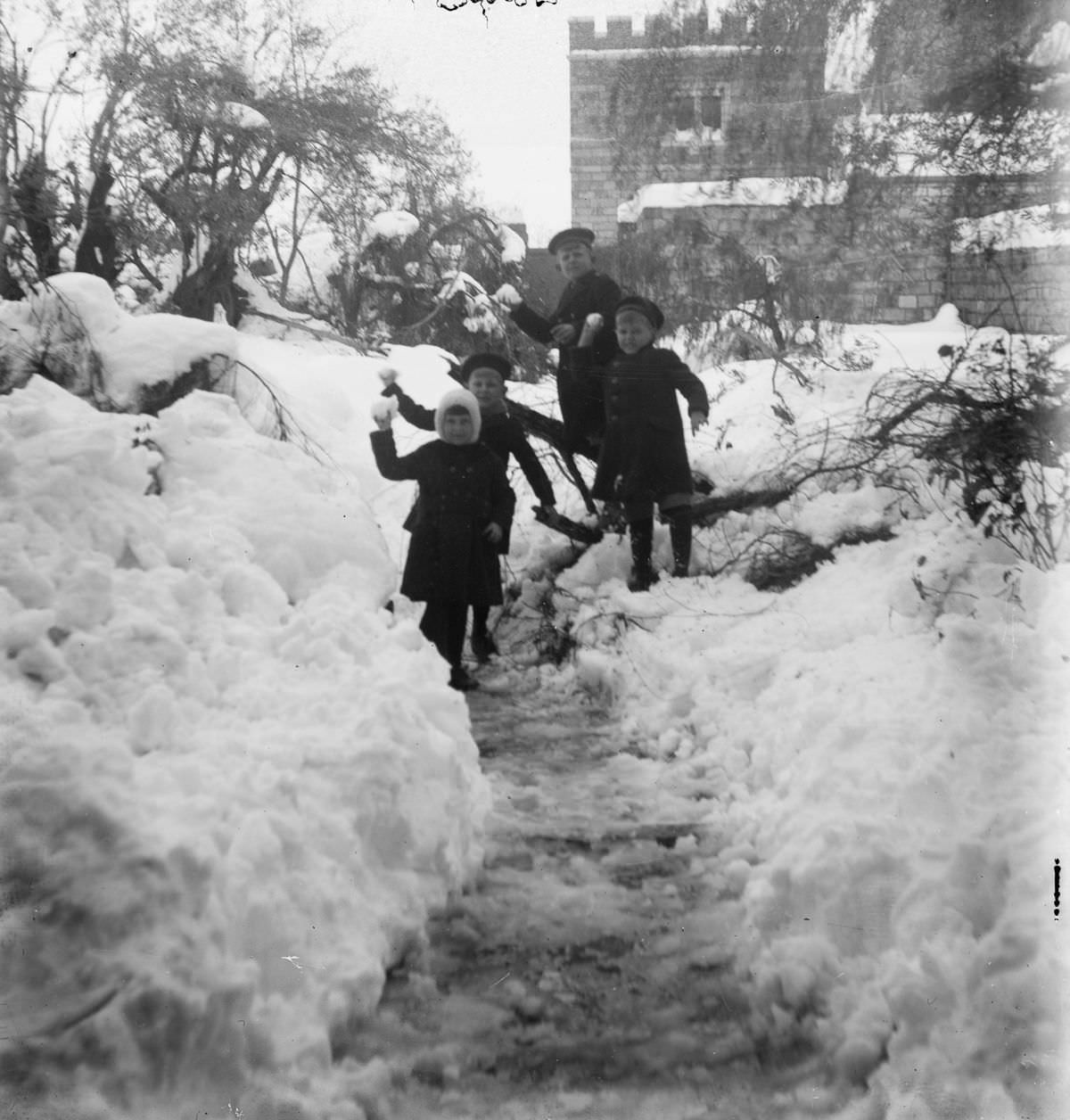
The storm was mild by most standards — not the kind that shuts down a city for days. The snow did not pile up deeply, and it melted within a short time. But in a place where snowfall is genuinely rare, even a light covering draws people outdoors.
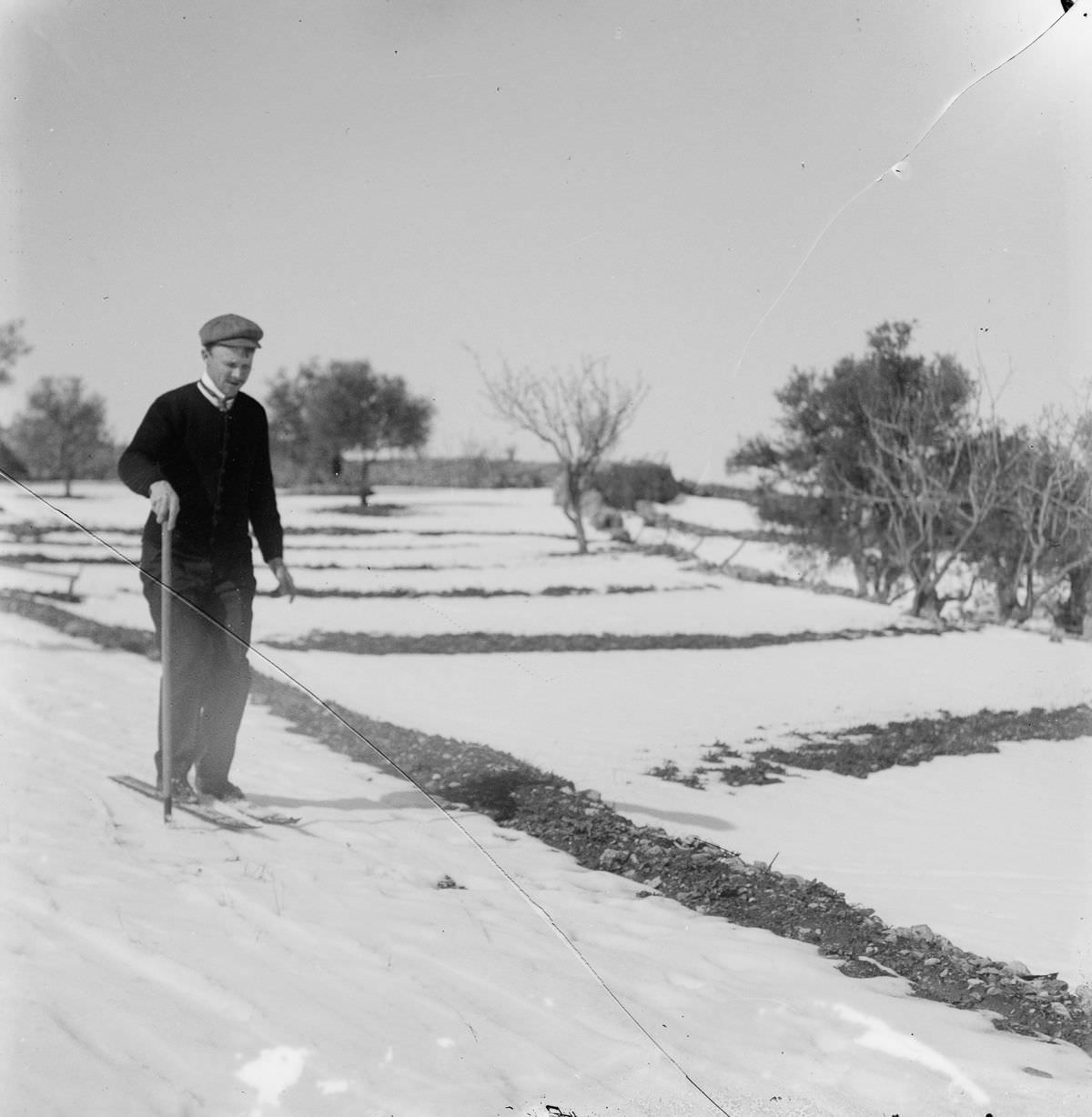
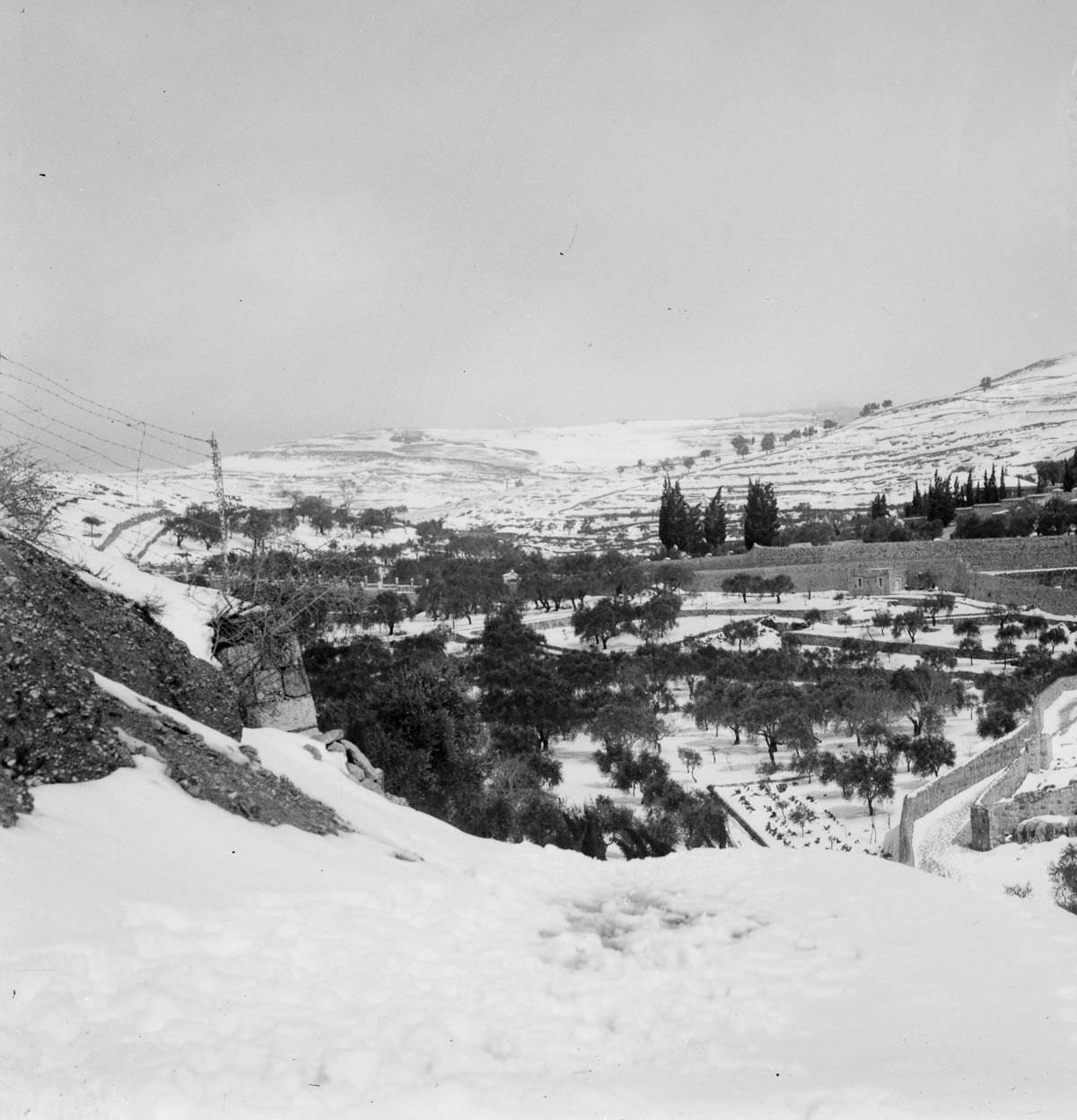
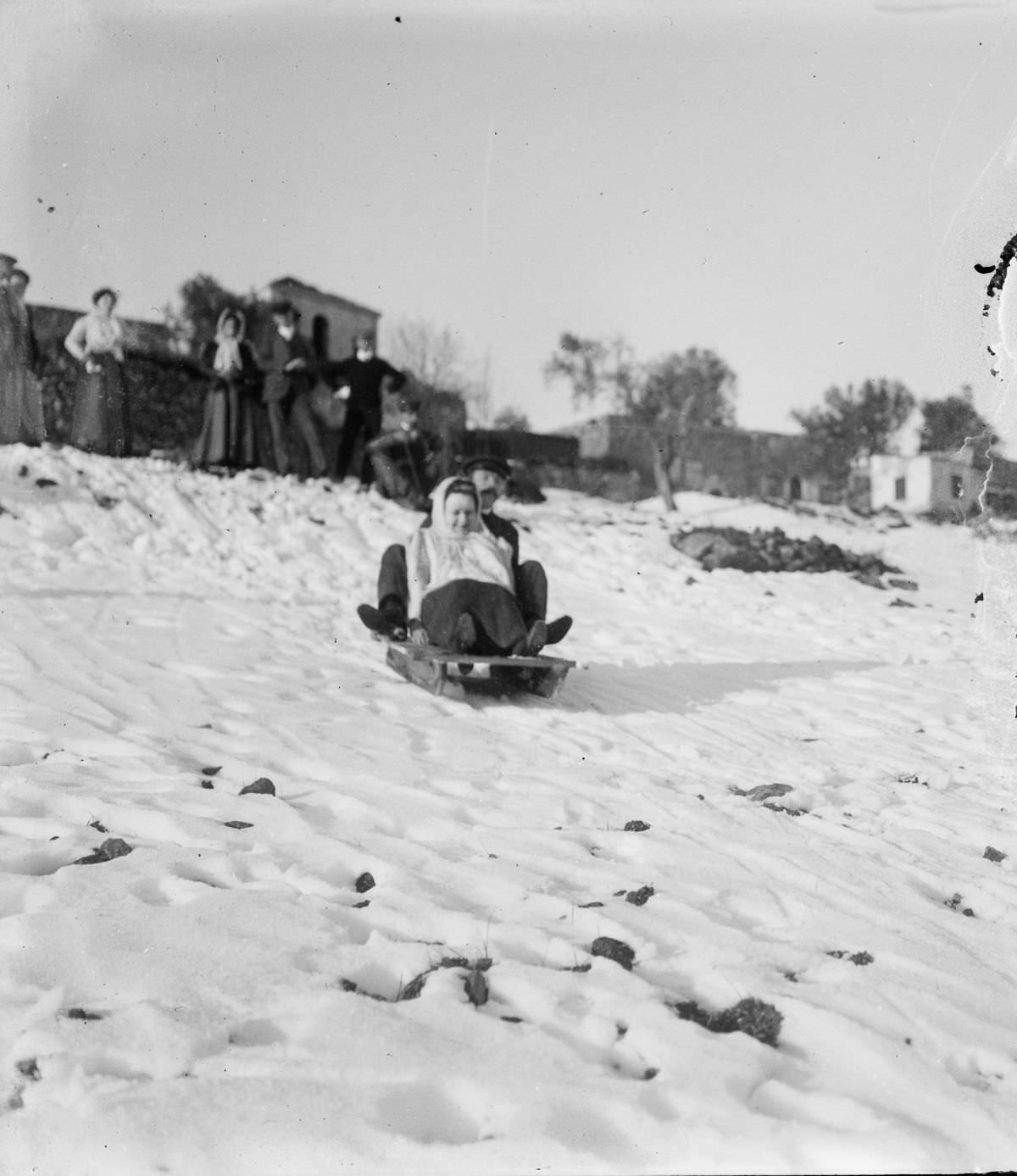
These photographs are among the earliest visual records of snow in Jerusalem under the British Mandate period. They offer a window into daily life in the city during a politically significant era, framed by an uncommon natural event.
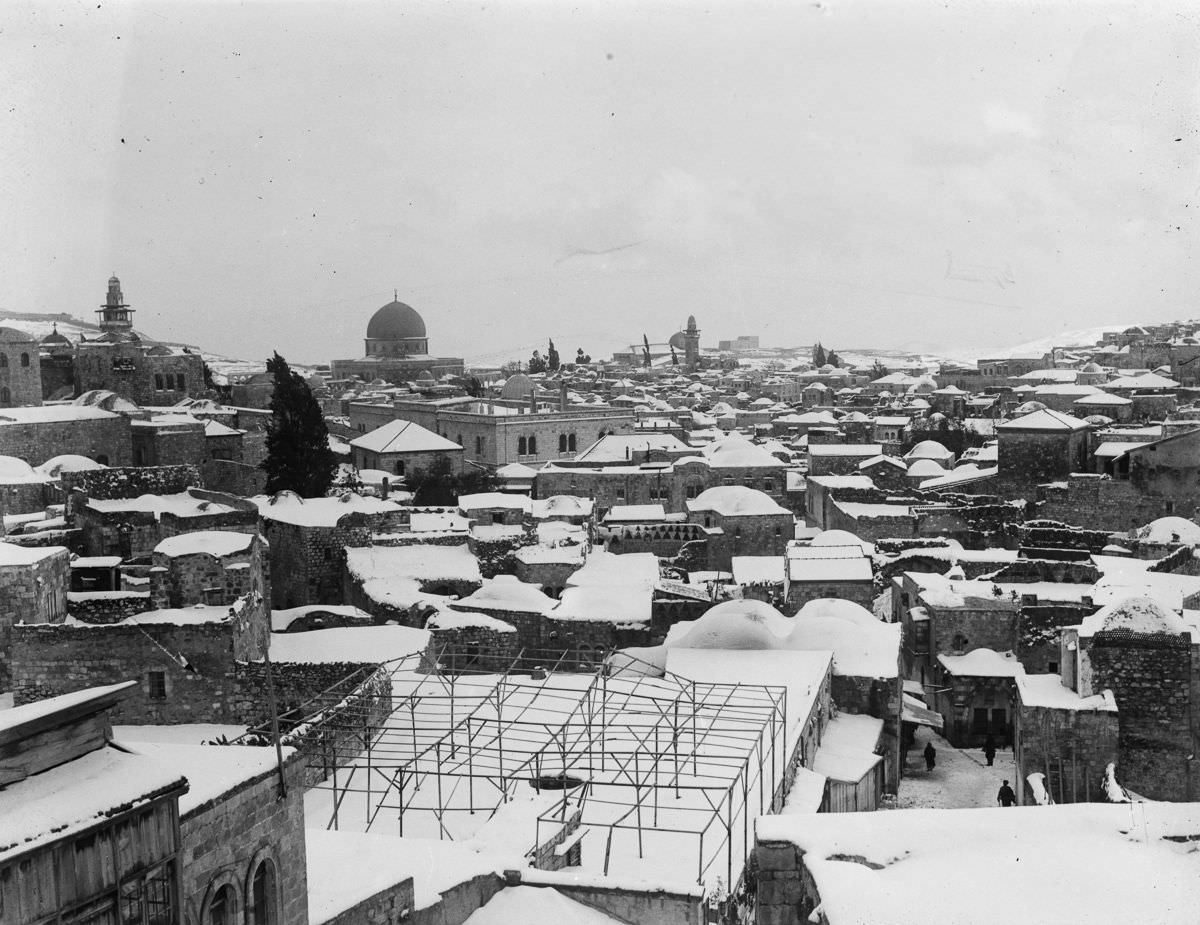
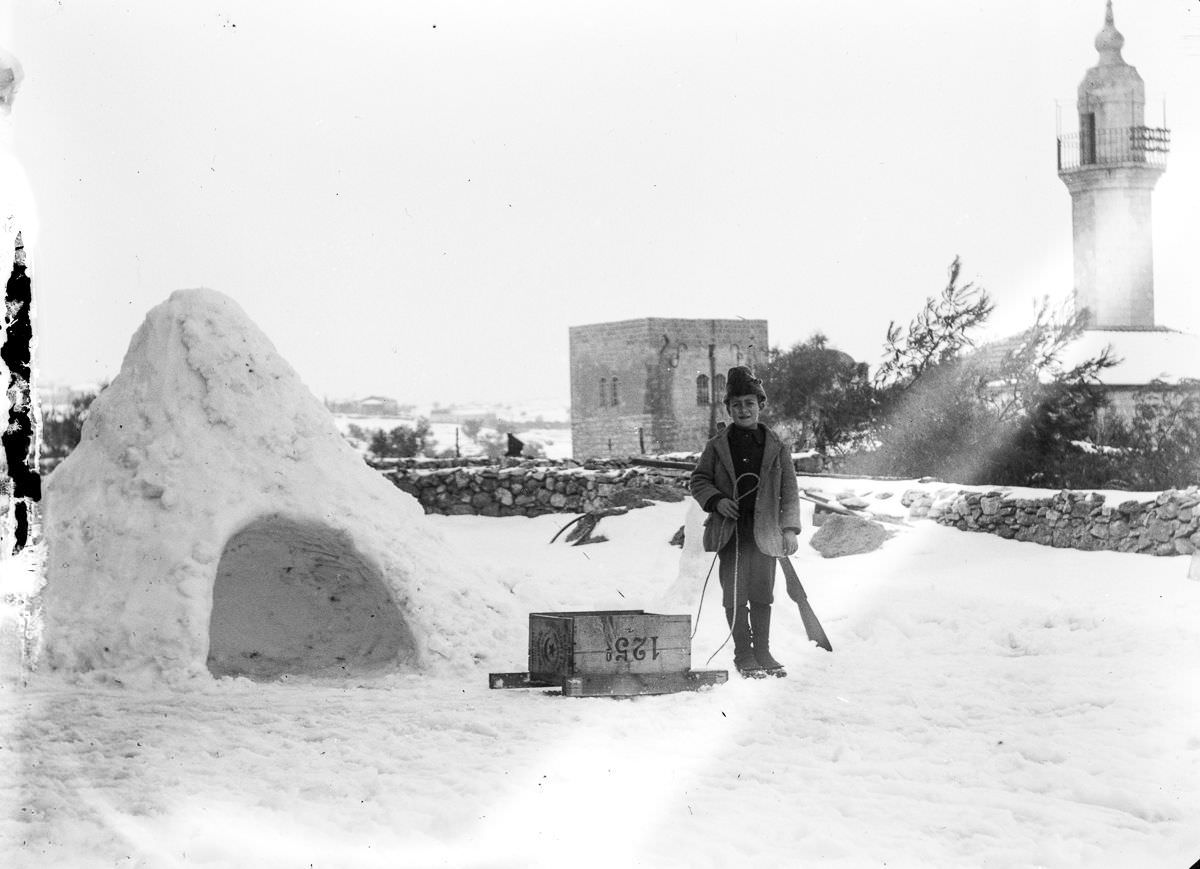
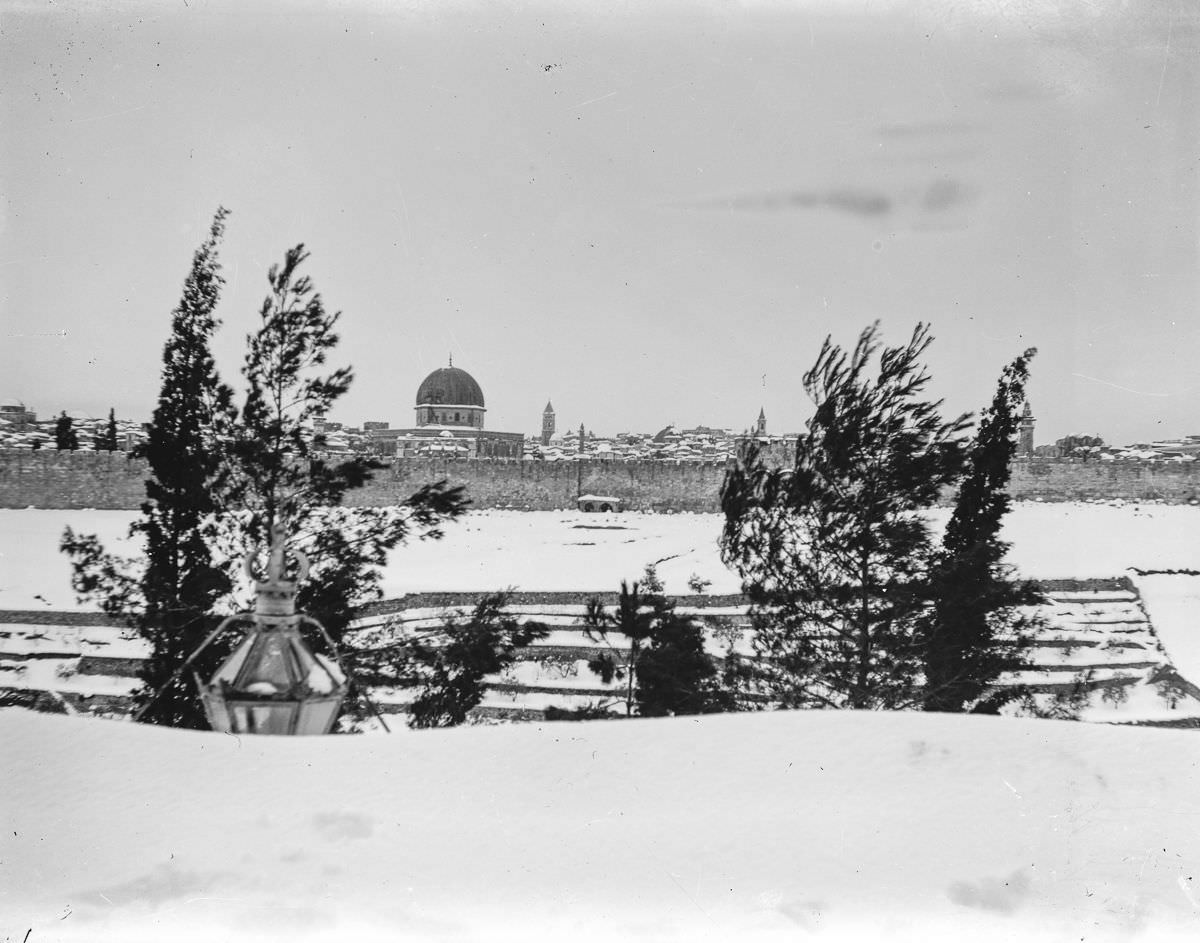
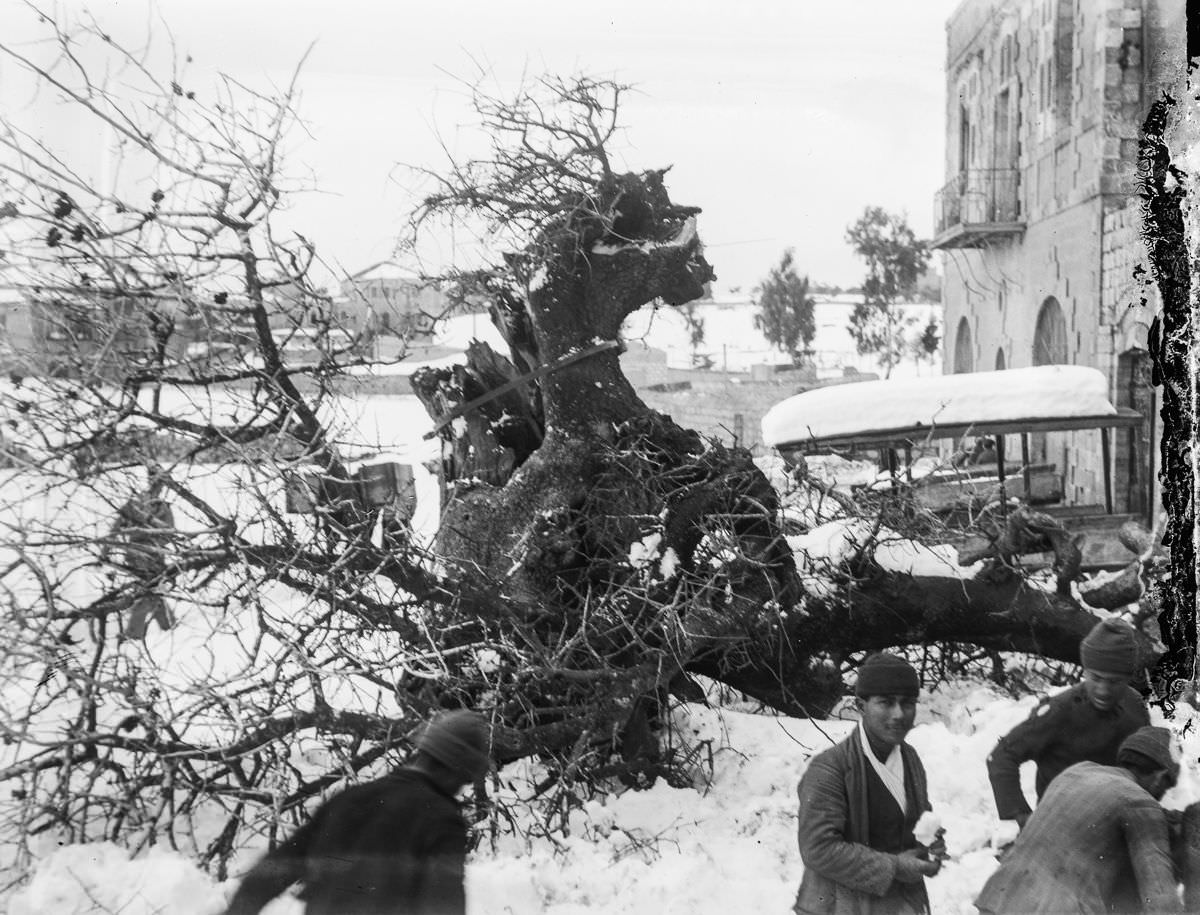
The clothing, architecture, and street scenes in the photos reflect Jerusalem in the early 1920s — a city caught between its ancient identity and the pressures of a rapidly changing modern world.
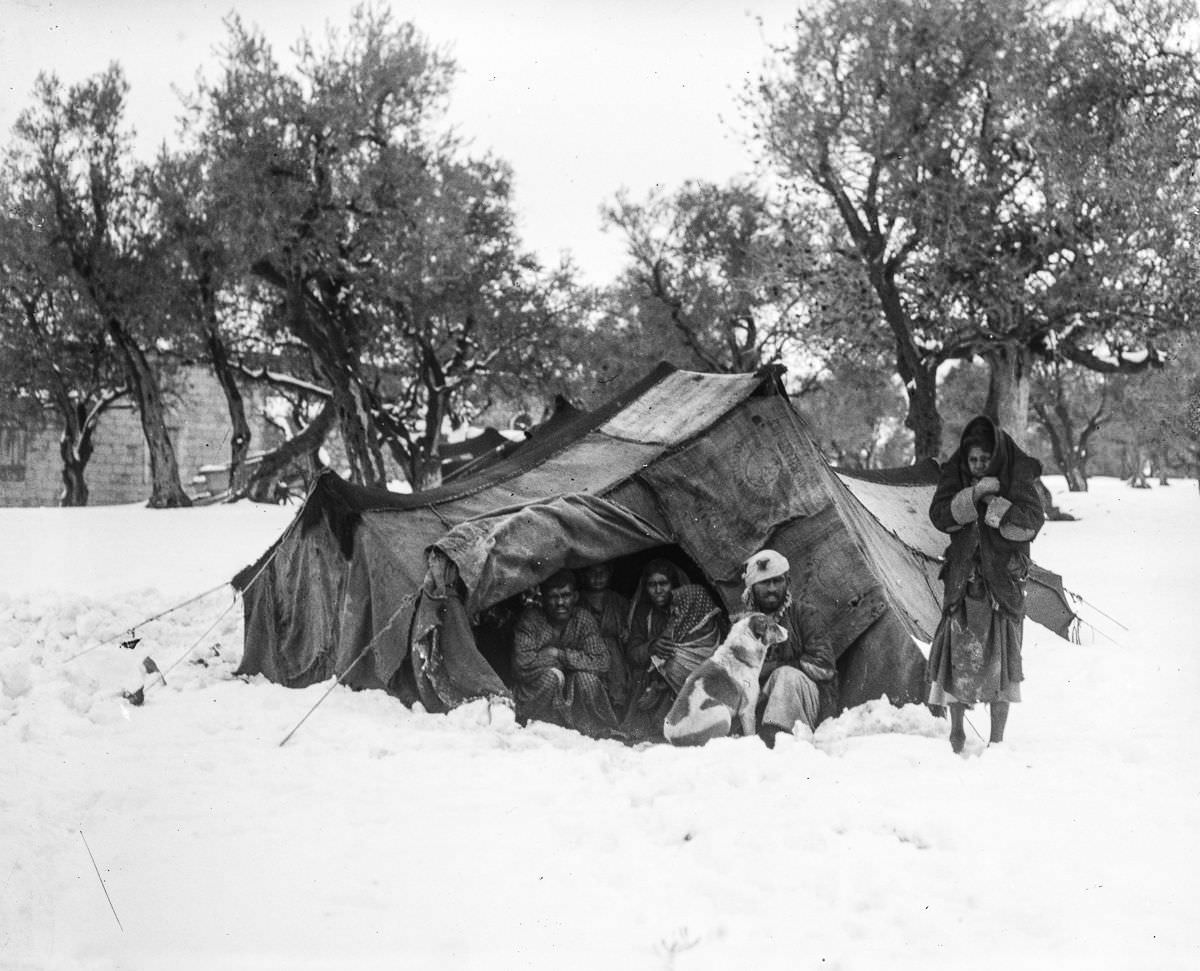
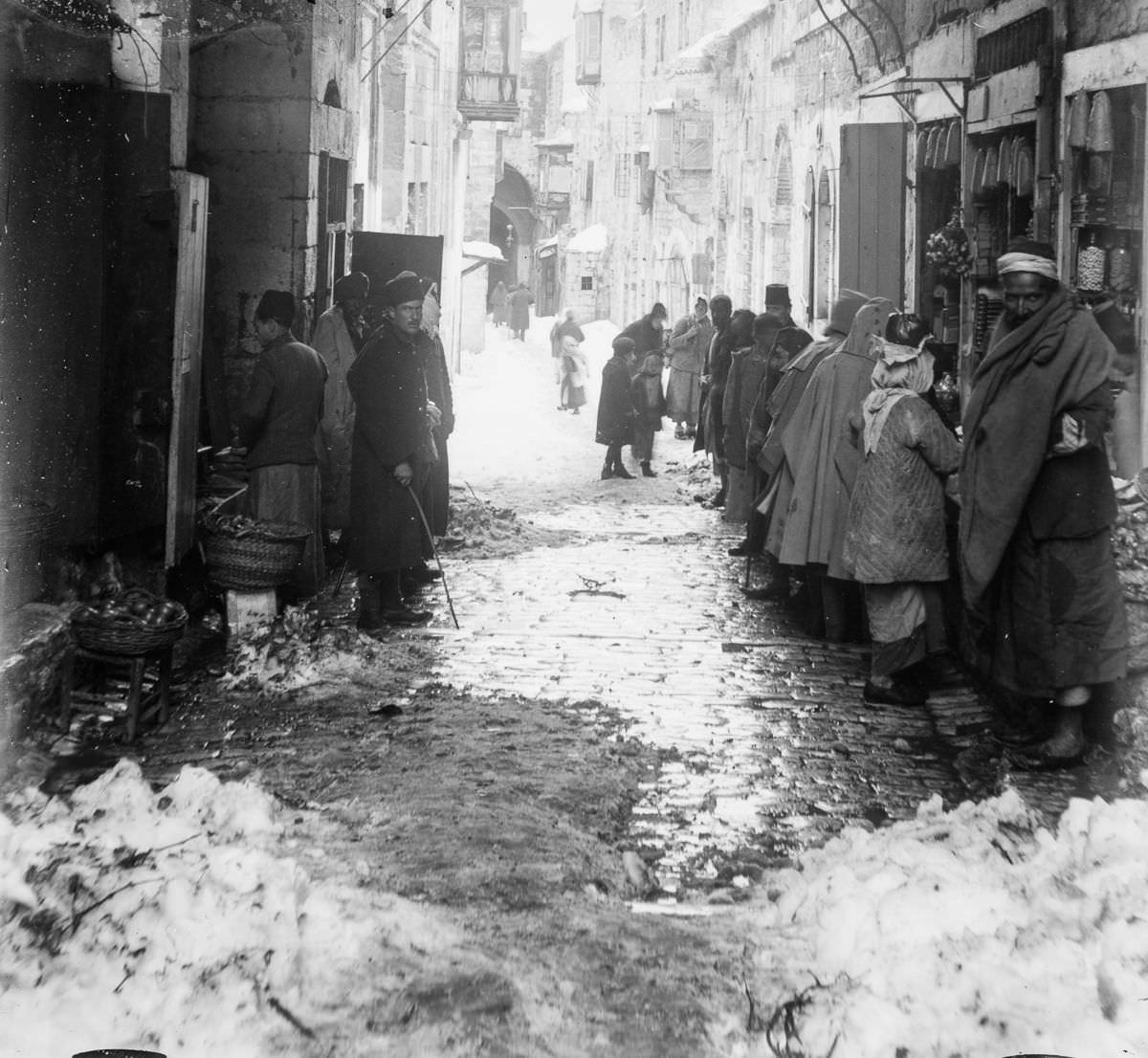
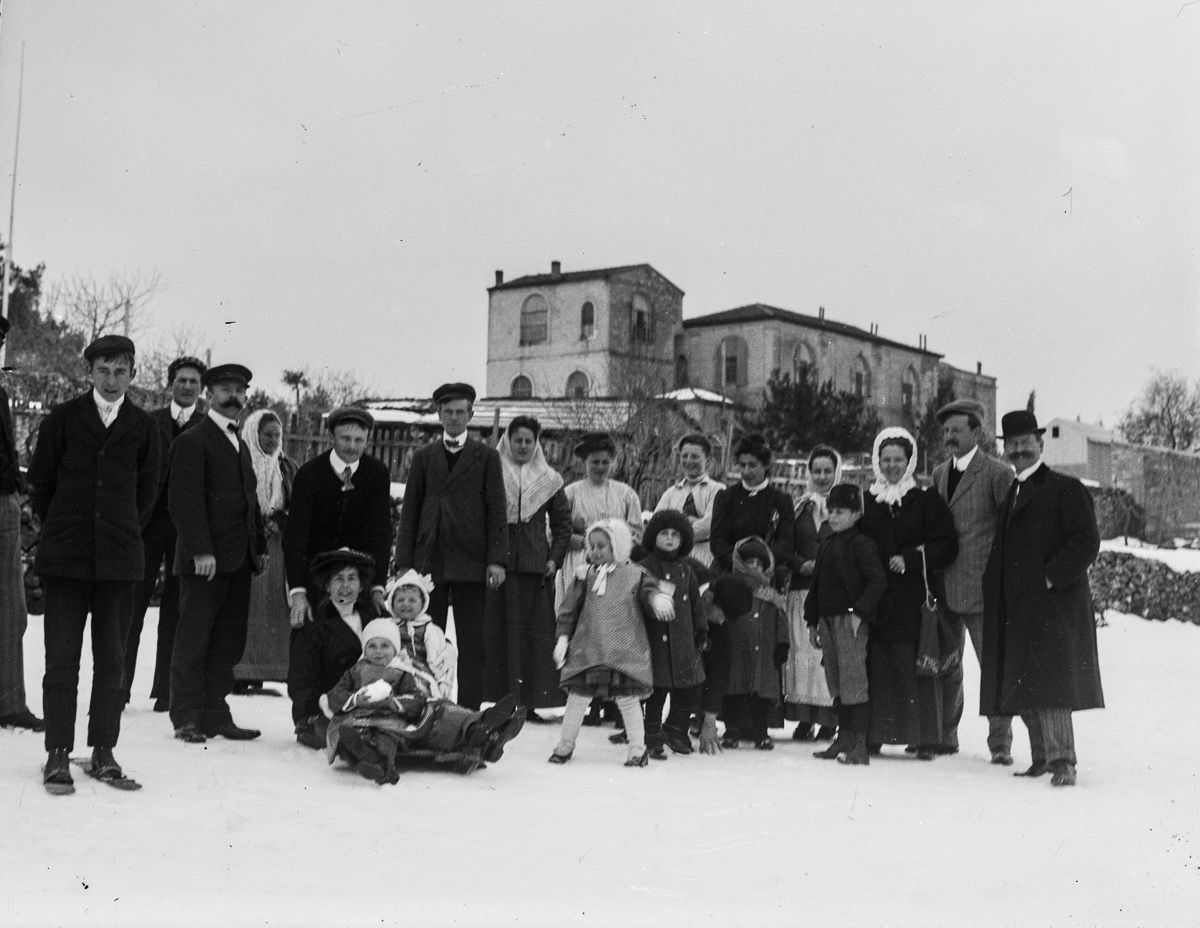
Snow has continued to fall on Jerusalem in the decades since, always sparking the same reaction — curiosity, excitement, and a rush to document it. The February 1921 storm was one of the earliest such events to be captured on camera in any detail.