In just nine years, Jean-Michel Basquiat went from writing graffiti on the walls of Lower Manhattan to showing paintings in galleries across the world. He was one of the first Black artists to achieve international recognition in the fine art world, and he did it entirely on his own terms. His methods were self-taught and unconventional. His style was impossible to ignore. Basquiat carried himself with a quiet confidence that made people stop and stare — and his hair had a lot to do with that.
Long before the world knew his name, Basquiat was operating under the street tag SAMO, spray-painting cryptic phrases across Lower Manhattan with his friend Al Diaz. During that period, his look was rougher and more anonymous. But once he stepped out of the streets and into the spotlight, his hair became one of the most recognizable parts of his identity. He developed a signature silhouette: faux dreadlocks that seemed to float and rise off his head, defying gravity in a way that perfectly matched his larger-than-life persona. No matter how the style evolved, that upward, free-hanging shape remained his constant.
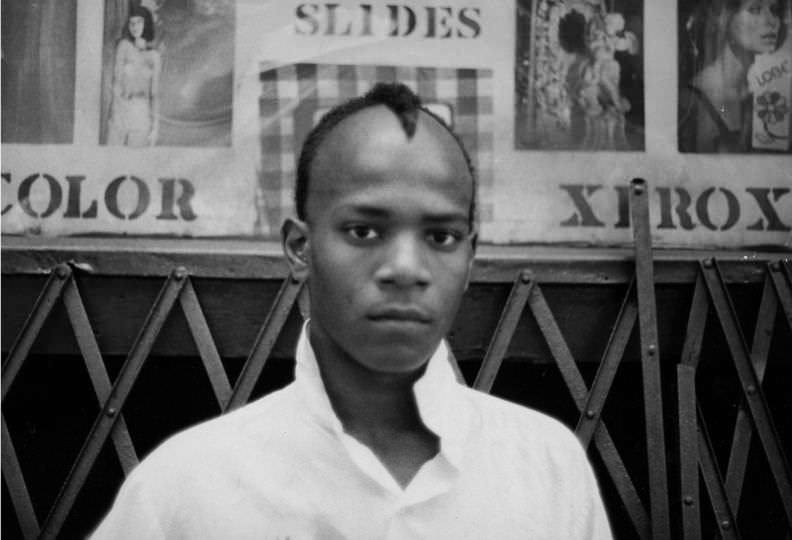
By 1979, Basquiat was beginning to move in New York City’s downtown art and music scenes. He sold hand-painted postcards and T-shirts on the street, was playing in the noise band Gray, and was getting noticed by the right people. His hair in this period was relatively close to the head — tightly coiled and natural — but it already carried the energy of someone who was building toward something bigger.
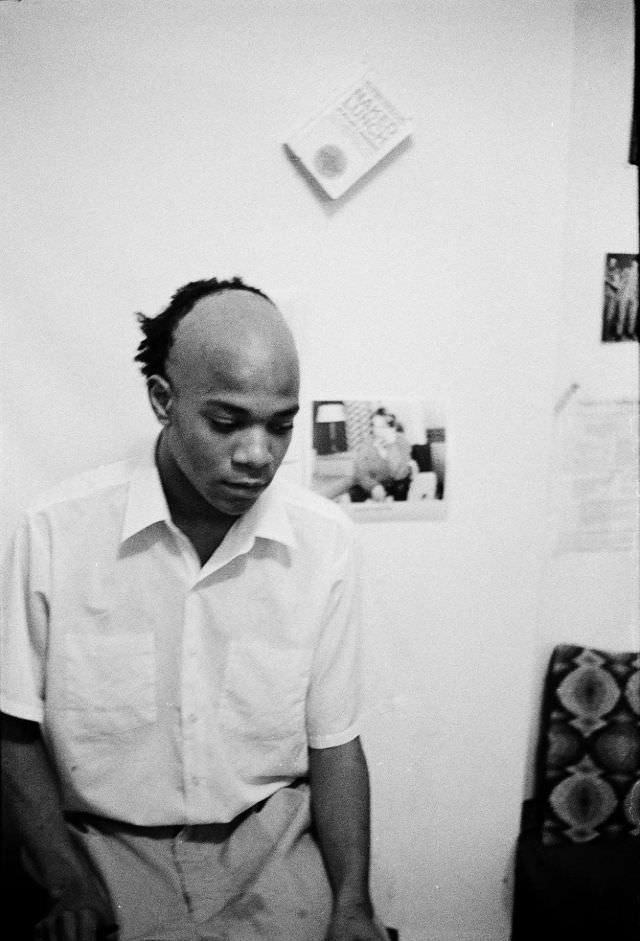
In 1980, everything started to accelerate. Basquiat took part in the Times Square Show, a massive group exhibition that brought underground New York artists into a single, raw, converted building. His work caught serious attention for the first time. His hair was growing out, and the faux dreadlock shape — loose, twisting sections that stood away from his head — was starting to take form.
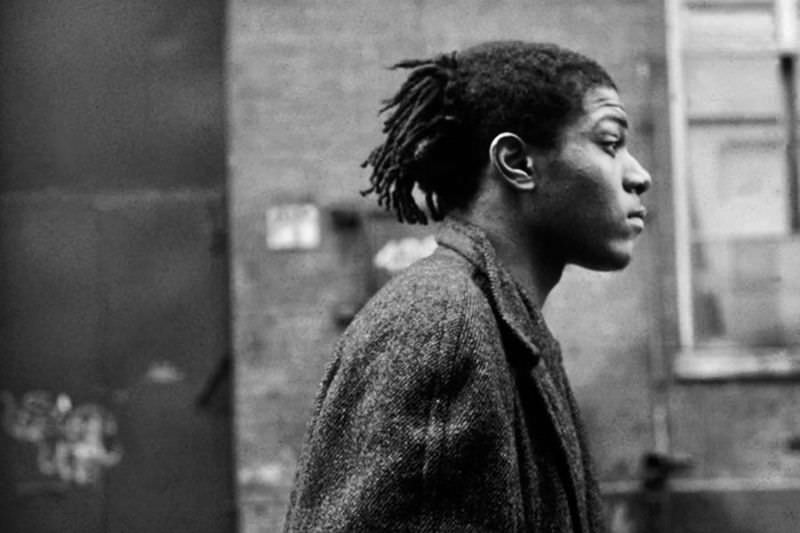
Later that same year, the silhouette became even more pronounced. The sections of hair were longer, thicker, and more defined. Unlike traditional dreadlocks, which are locked and tight, Basquiat’s hair had an open, almost sculptural quality. Each section twisted loosely and jutted outward, giving the impression that his hair was reaching into the space around him.
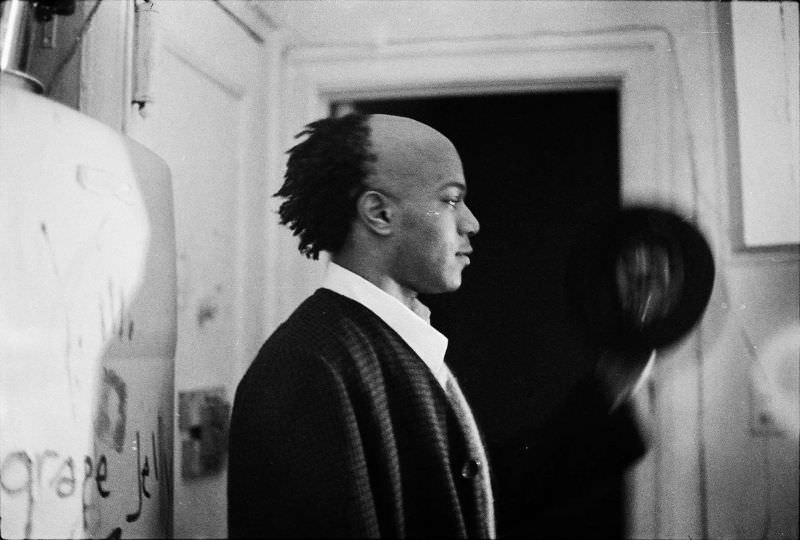
This third look from 1980 shows the versatility within his single signature style. The height and volume shifted depending on the moment — sometimes taller, sometimes more spread — but the floating, uncontained structure was always there. That quality made it feel less like a hairstyle and more like an extension of his artwork: organic, expressive, and deliberately unfinished.
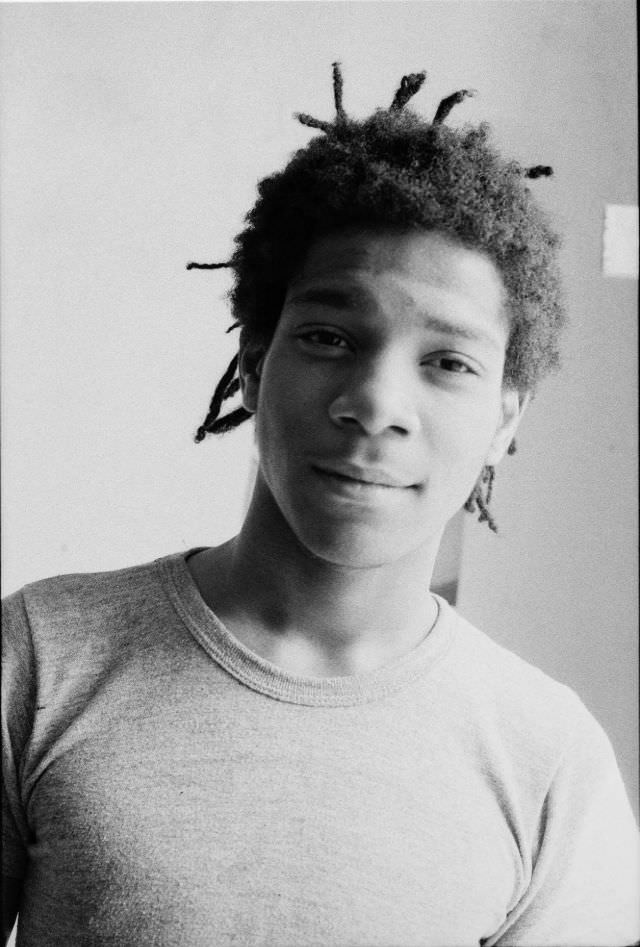
By 1981, Basquiat had his first solo show at the Annina Nosei Gallery in New York. He was 20 years old and already being talked about in the same breath as established contemporary artists. His hair that year was fuller and taller, with the sections spreading outward from the crown in a wide, dramatic halo. It matched the energy of a young man who had just arrived on the world stage and was not going anywhere.
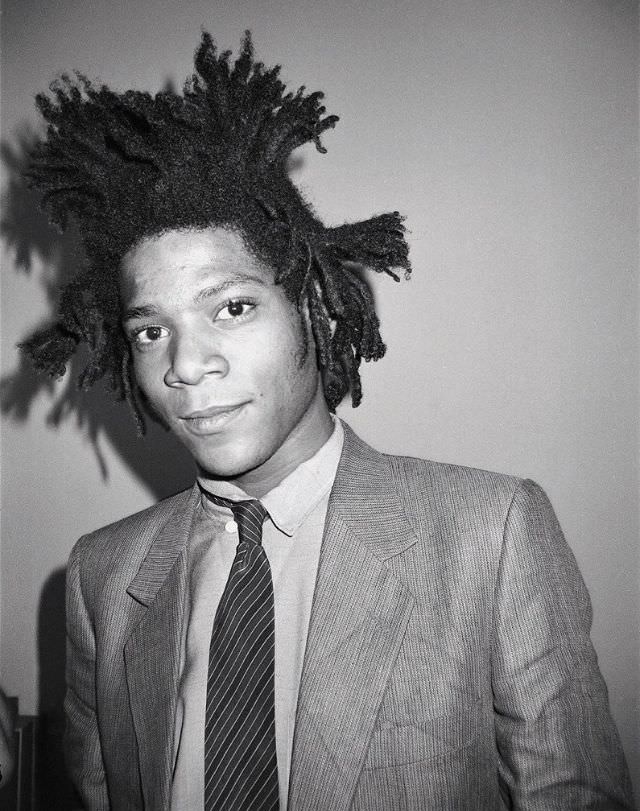
1982 is widely considered Basquiat’s most productive year as a painter. He created over 200 works, and his prices began to climb rapidly. He was now internationally known, showing work in Europe as well as the United States. His hair this year appears slightly more controlled — the sections are tighter and more evenly distributed — but the upward lift is still very much intact. There is a polished edge to this version of the style that fits the moment, as Basquiat was increasingly moving through both the art world elite and popular culture.
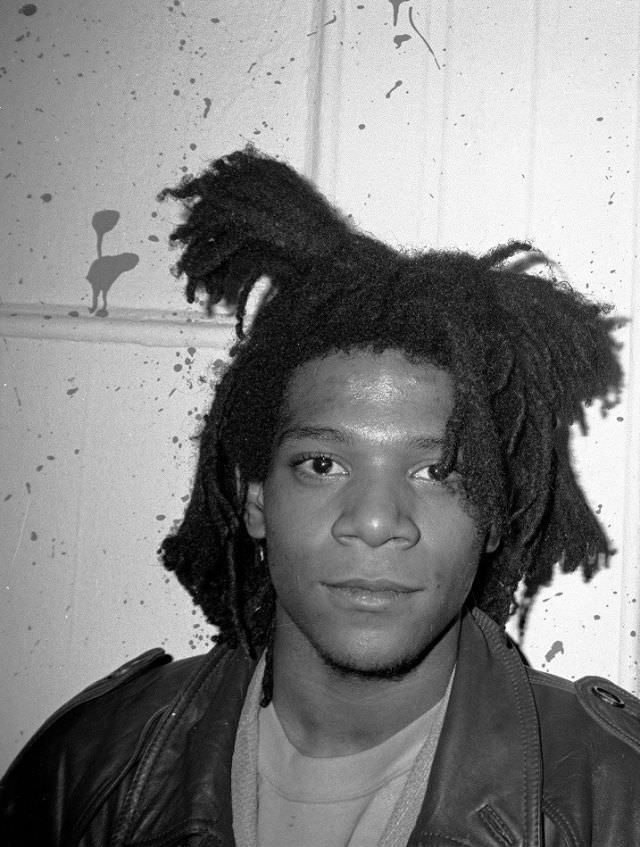
In 1983, Basquiat became the youngest artist ever to participate in the Whitney Biennial, one of the most prestigious exhibitions in American art. He was just 22. His hair that year shows a kind of relaxed confidence — the sections are long and loose, falling and floating at the same time. He wore paint-splattered suits and expensive shoes while working, and his hair carried that same mix of fine art and raw energy.
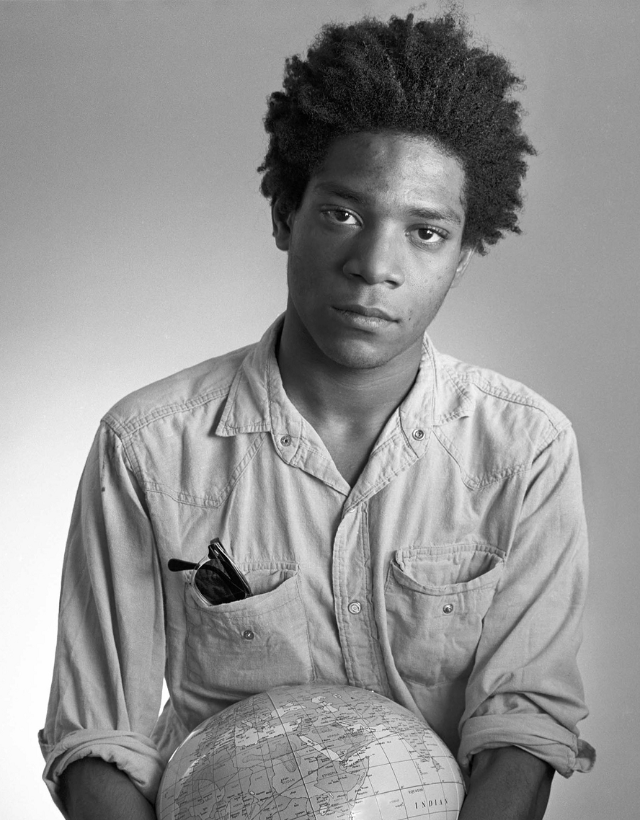
By 1984, Basquiat had befriended Andy Warhol, and the two were spending a significant amount of time together. Their friendship was genuine, though the media often focused on the unlikely pairing of the older pop art icon and the young Black neo-expressionist. Basquiat’s hair this year is notably voluminous, with the locks spreading wide and high. The sheer scale of the style made it photogenic in any setting, from gallery openings to magazine shoots.
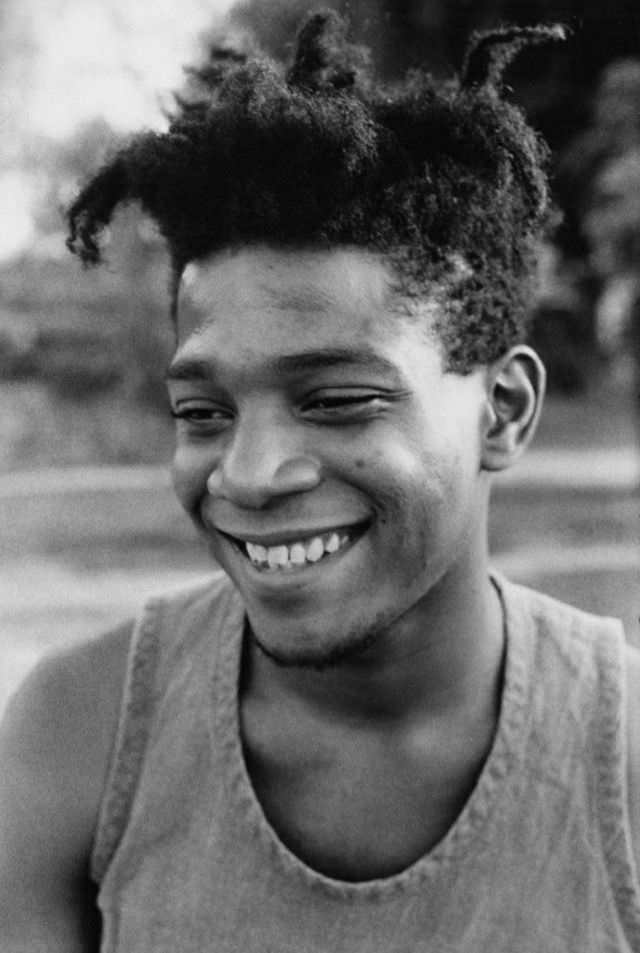
1985 brought Basquiat the cover of The New York Times Magazine, a milestone that few artists of any generation achieve. He was photographed barefoot in a paint-covered Armani suit, and the image became one of the defining portraits of the decade. His hair that year was especially striking — the locks were long and free, creating a silhouette that was immediately identifiable from a distance. No name needed to be attached to the photo for people to know who they were looking at.
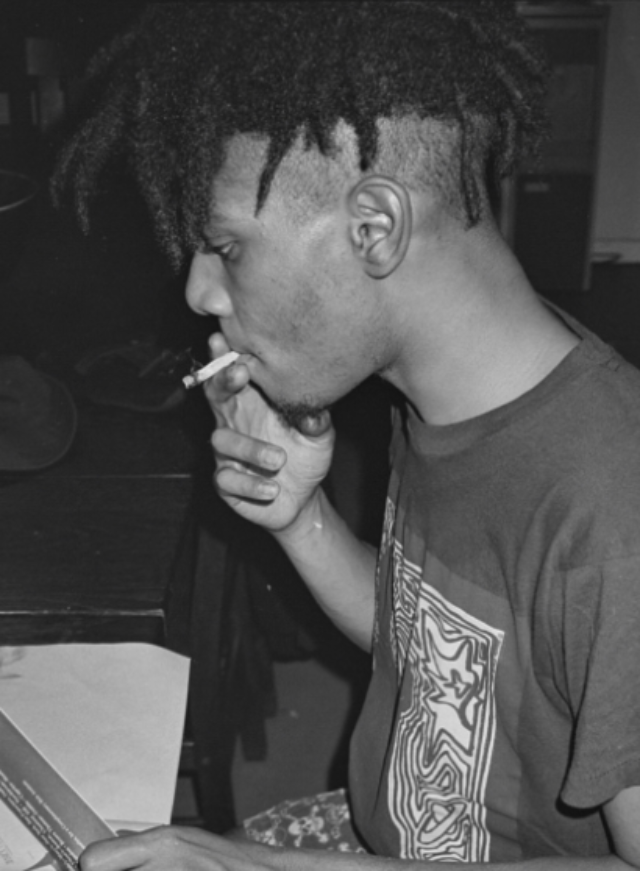
In 1986, Basquiat traveled to Abidjan in Côte d’Ivoire, a trip that had a visible effect on both his artwork and his appearance. His hair this year takes on a slightly different texture — the sections appear more separated and elongated, with a rawer, more open structure compared to some of his earlier looks. The floating quality is still very much present, but there is a looser, more stretched-out feel to the style.
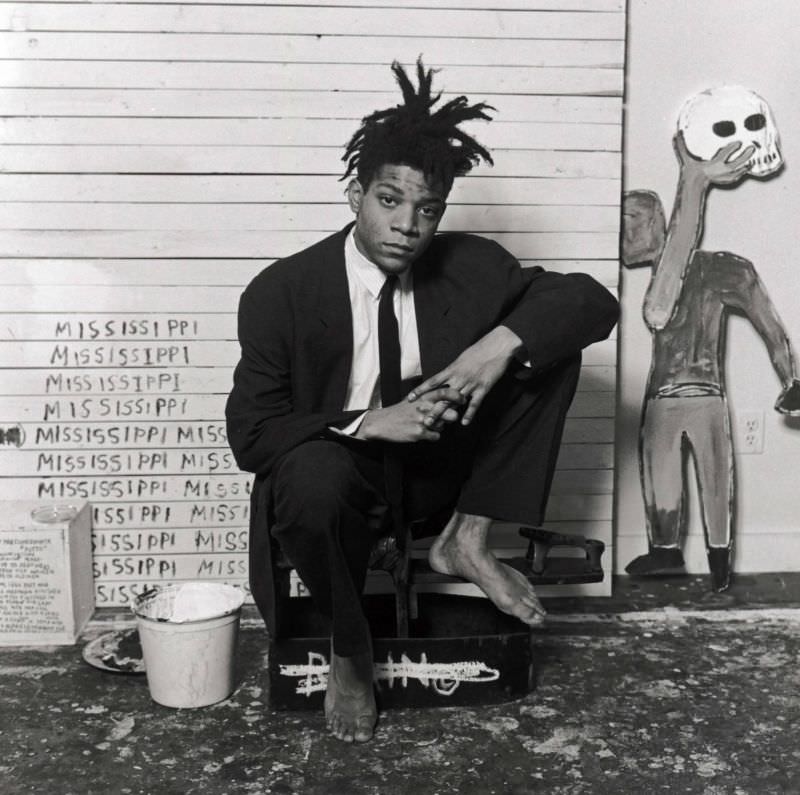
This second photo from 1986 captures a slightly different angle and context, revealing how the same overall style could read differently depending on lighting, setting, and length. The locks hang and rise simultaneously — a contradiction in terms, but one that Basquiat seemed to embody effortlessly. His whole identity was built on contradictions: street art in fine art galleries, self-taught work sold at auction for record prices, casual clothes mixed with designer fashion.
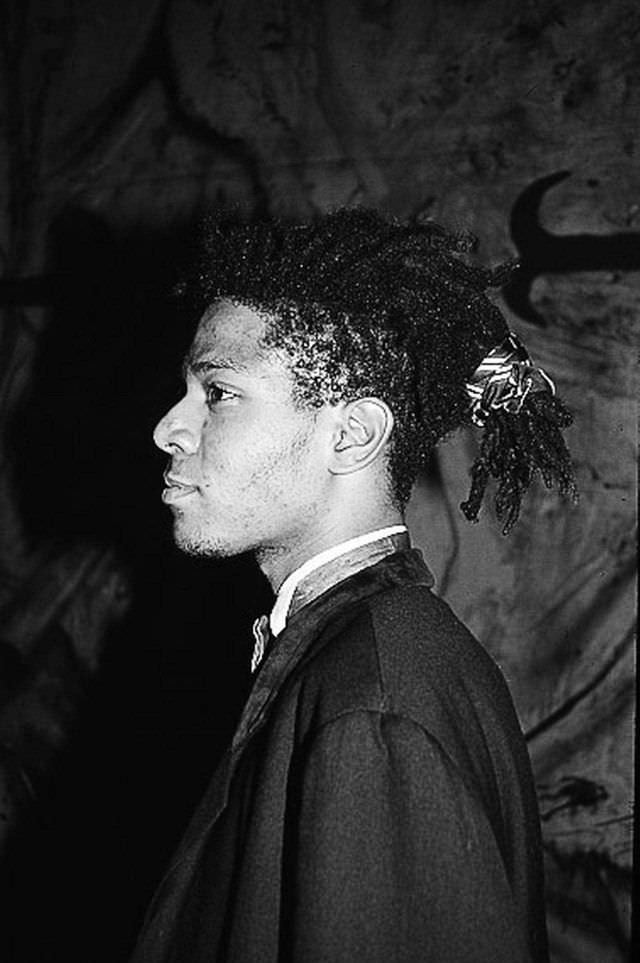
By 1987, Basquiat was 26 years old. He and Warhol had completed their collaboration, and Warhol’s death in February of that year hit him hard. His output continued, but the tone of his work grew darker. His hair in 1987 looks slightly more compressed and dense compared to the wide, sprawling styles of the mid-decade years. The faux dreadlock shape is still there — still floating, still defying gravity — but it carries a different weight. Throughout his entire career, from the SAMO years to the peak of his fame, Basquiat’s hair was never an afterthought. It was part of the statement.