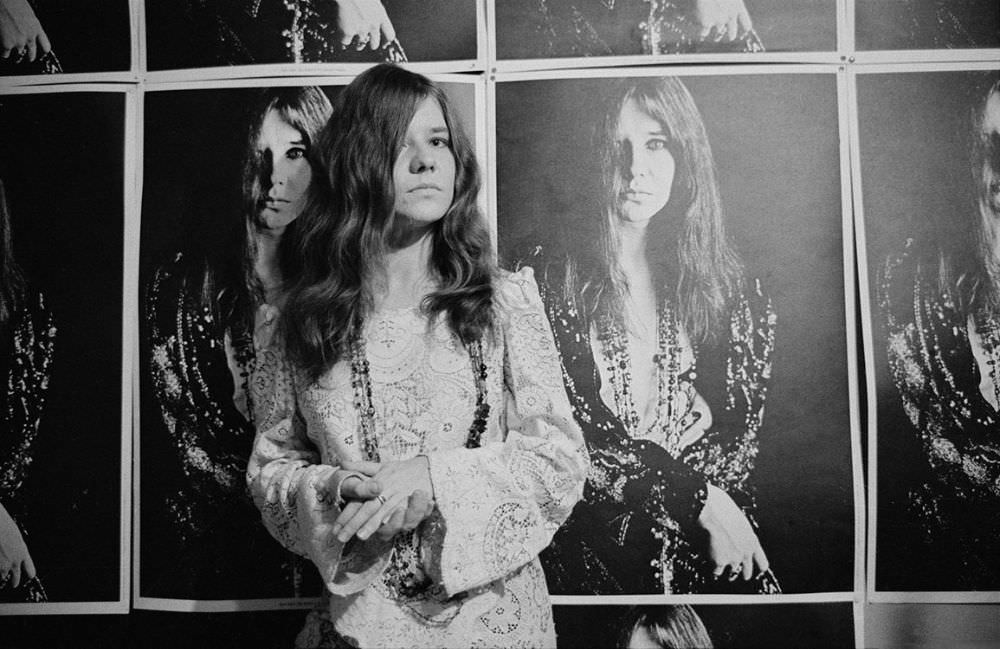
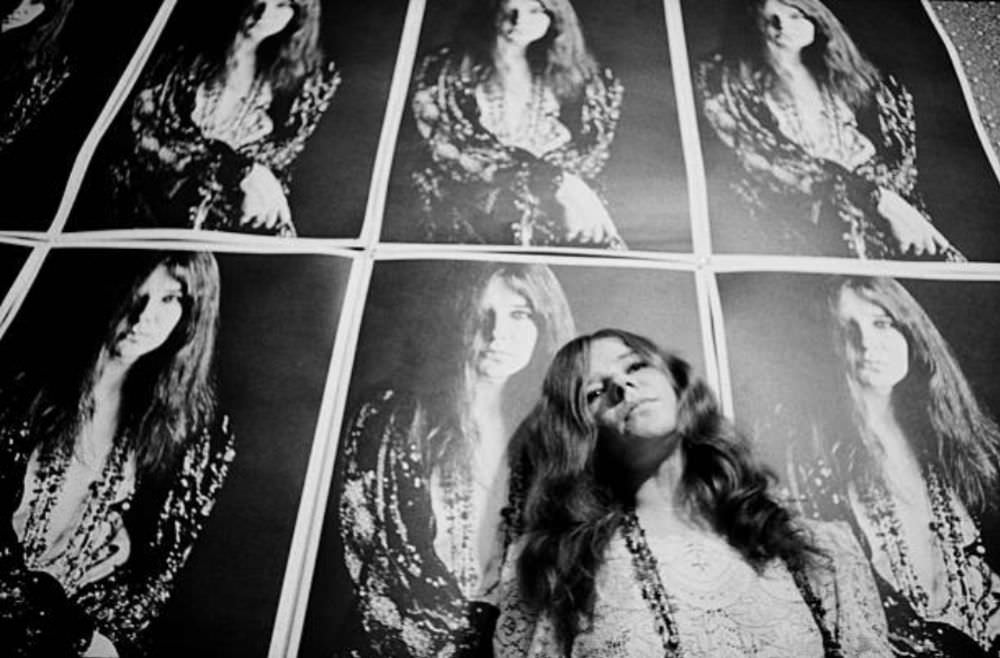
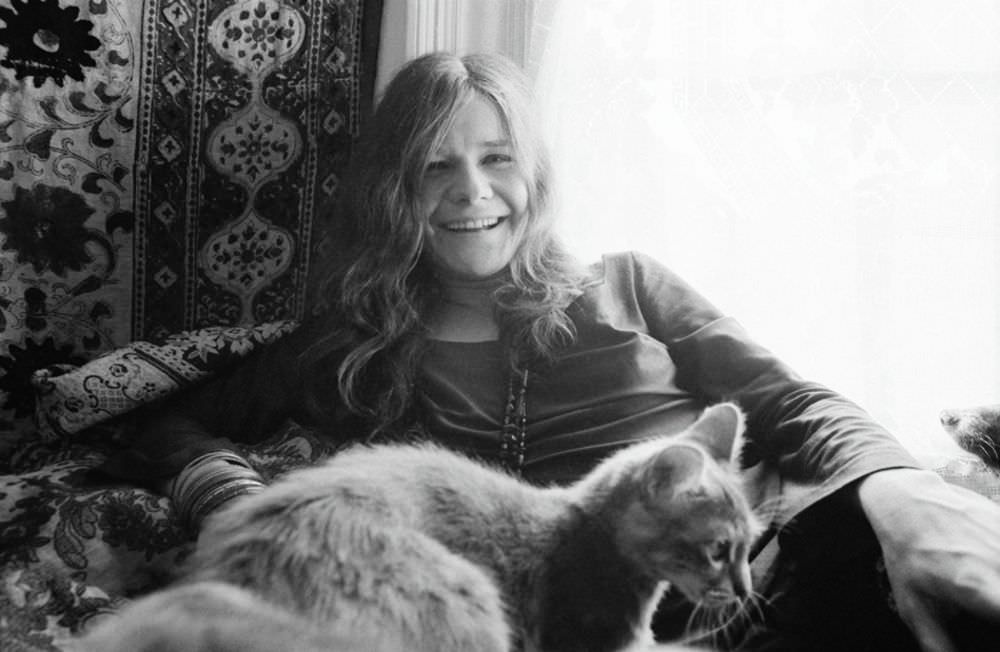
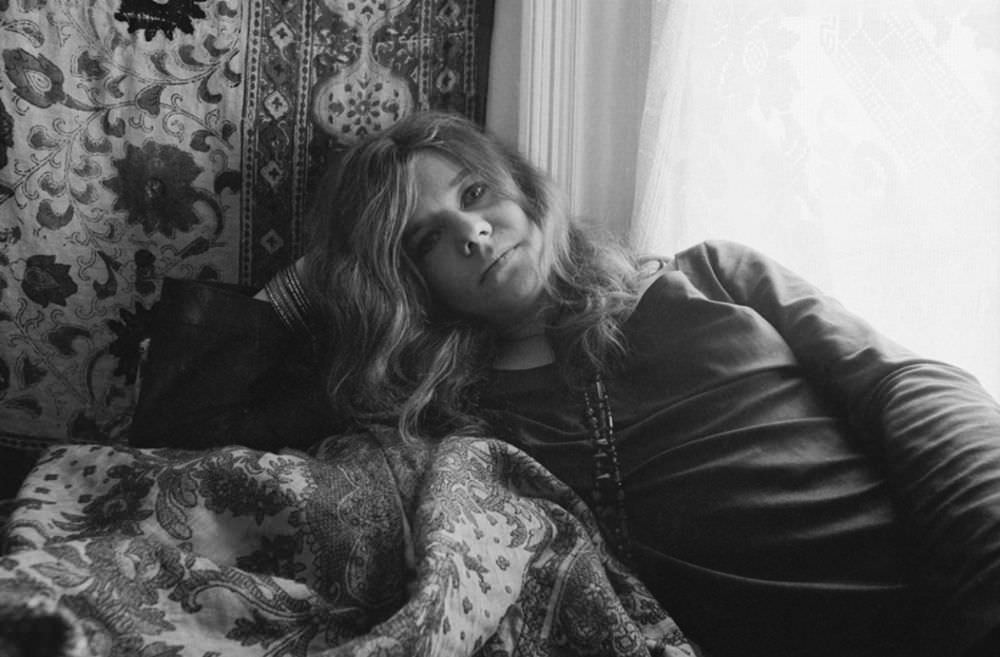
In November 1967, photographer Baron Wolman visited Janis Joplin at her home in the Haight-Ashbury neighborhood of San Francisco. What he captured was a side of Joplin that concert crowds never saw — unhurried, comfortable, and completely at ease in her own space. At the time, she was one of the most electrifying performers in rock music, but inside her home, she was simply a young woman with her pets and her personality.
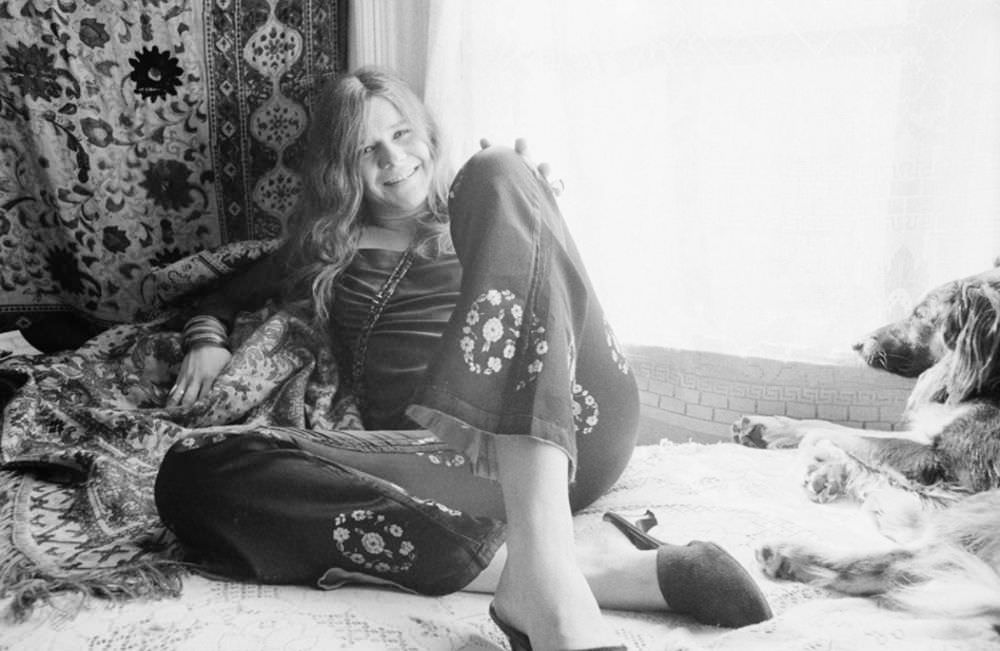
One of the most telling images from the session shows Joplin relaxing on her bed with her dog and cat. It was clearly her favorite spot in the house. The animals curl around her naturally, and there’s no performance in her posture — just a quiet afternoon at home. These are the kinds of moments that rarely made it into the press in 1967, when rock stars were expected to appear larger than life at all times.
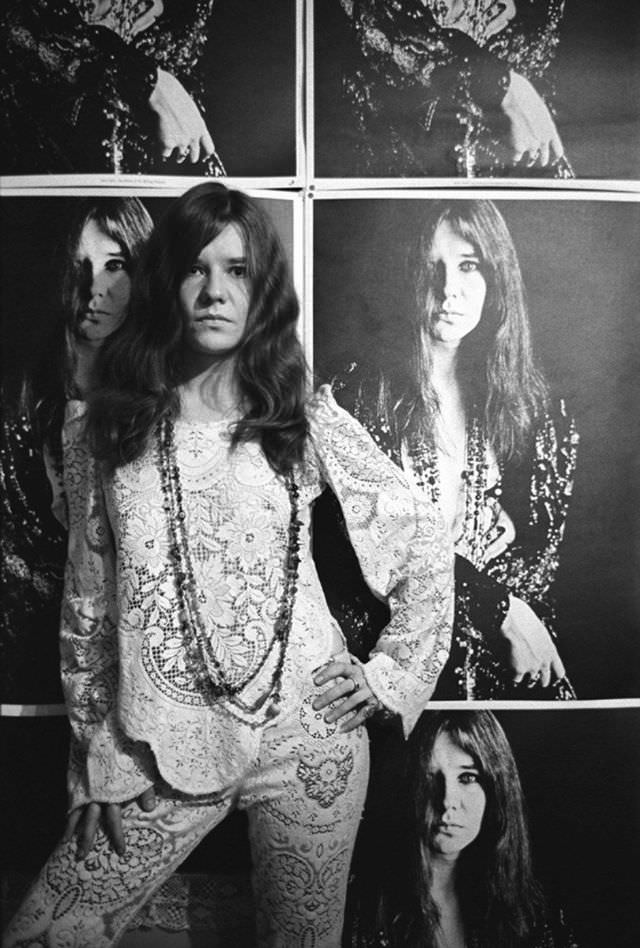
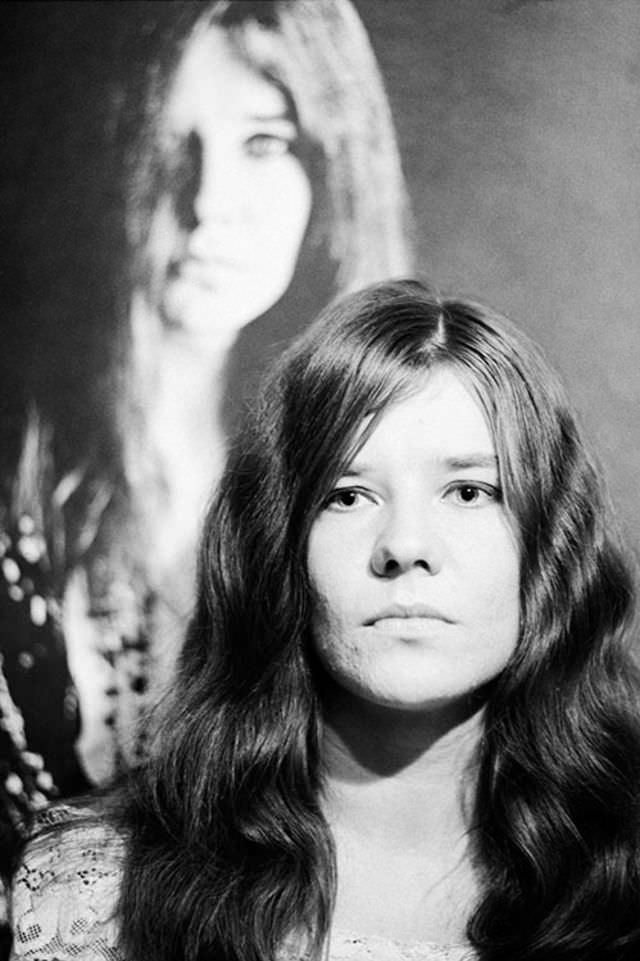
Other photographs from the session show Joplin standing in front of one of her bedroom walls. That wall was covered with copies of a now-famous poster — a semi-nude image of Joplin shot by photographer Bob Seidemann. Displaying the poster so prominently in her own bedroom said a lot about who Joplin was: bold, unapologetic, and fully in control of her own image.
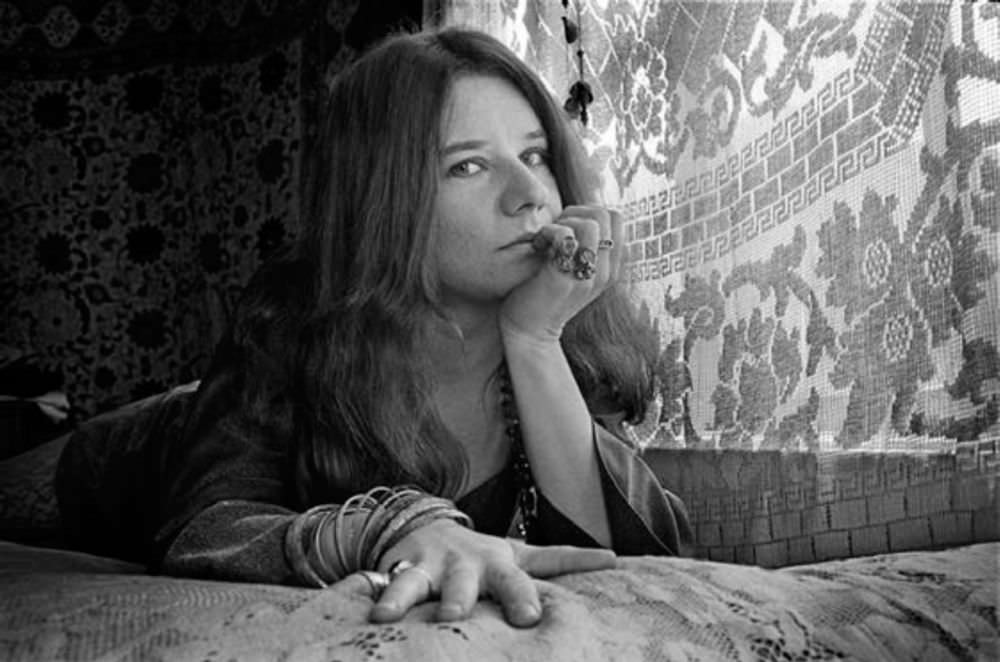
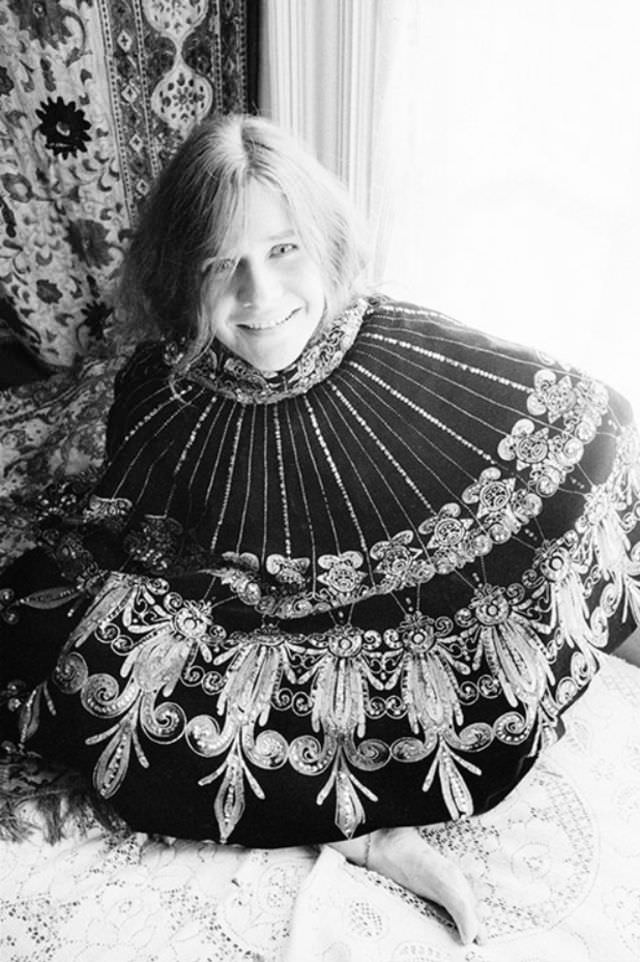
Baron Wolman had the kind of access that photographers today can only dream about. As Rolling Stone magazine’s first staff photographer, he moved freely through the inner circles of rock’s biggest names. He photographed The Rolling Stones, Bob Dylan, Jim Morrison, and Joplin — not as a distant observer, but as someone genuinely welcomed into their worlds. His camera caught them in rehearsal rooms, backstage corridors, and, as with Joplin, in their own homes.
Wolman’s work extended beyond music photography. In 1970, he launched Rags, a counterculture fashion magazine that operated out of Rolling Stone’s original San Francisco offices. Rags focused on street fashion rather than the polished looks found in mainstream fashion publications. It ran for 13 issues, from June 1970 through June 1971. The magazine was visually bold and editorially daring, earning comparisons to Rolling Stone for the way it covered its subject — but it never found financial footing and folded after just over a year.