Hey There! Before You Go. 😧
Get the best vintage content straight into your inbox!

Don't worry, we don't spam

Fascinating Photos Show the Buses of Isle of Man in the early 1970s

The Isle of Man has a rich transport history that stretches back well over a century. Steam railways arrived on the island in 1873, running between Douglas and Port Erin in the south. Electric trams followed in 1893 and served as the main way people got around for decades. Buses didn’t become a significant part of island life until the mid-20th century, when they gradually took over as the primary mode of public transport.

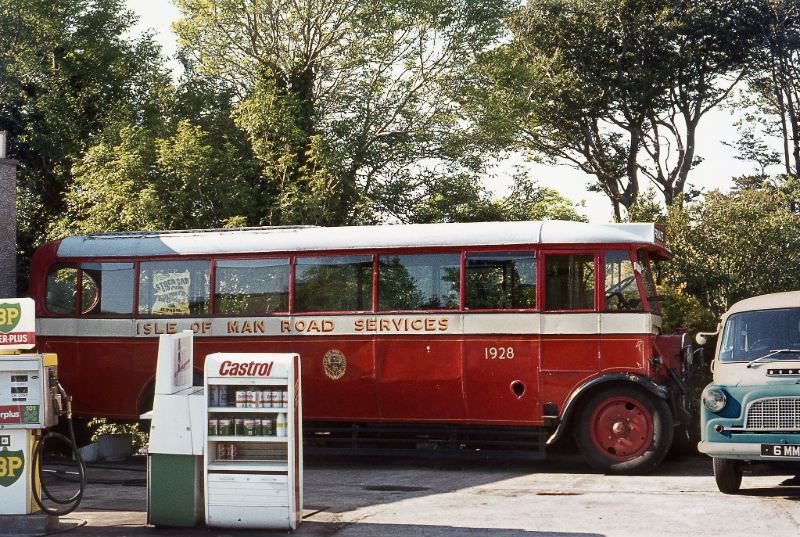
The first bus services were run by the Manxland Bus Co Limited alongside several smaller, independent operators. By 1976, the Isle of Man government had taken over the entire transport operation. Buses under government control carried National Transport logos and wore a livery that was predominantly red with white trim — a colour scheme that had already been seen in various forms under the earlier Road Services banner.
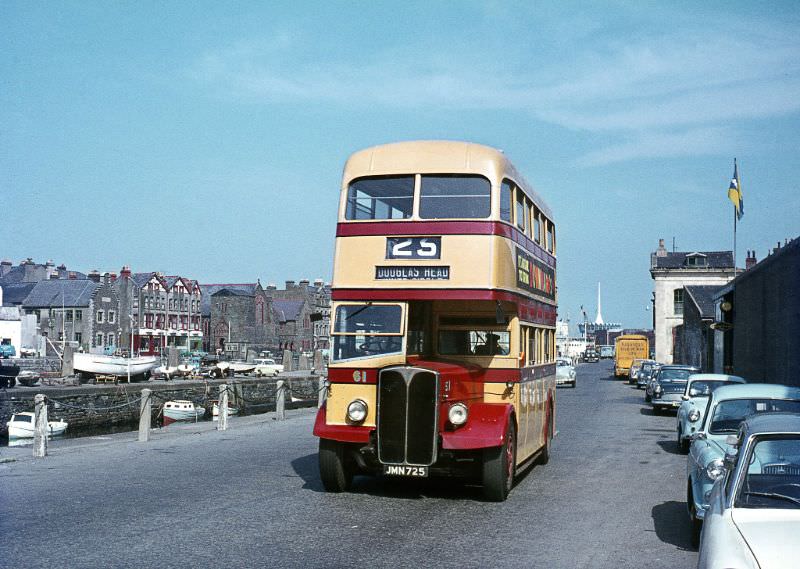
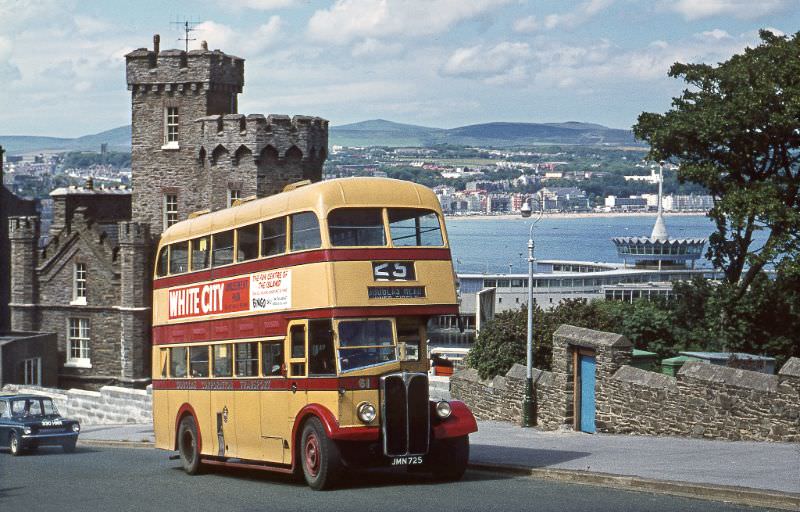
1948 built Regent No.61 is on Douglas South Quay en route for Douglas Head. The 'Sea Terminal' is seen to the buses rear, 5 August 1970
1948 built Regent No.61 is on Douglas South Quay en route for Douglas Head. The ‘Sea Terminal’ is seen to the buses rear, 5 August 1970

The photos in this collection were taken in 1970, 1971, and 1972 — a window of time that captured the island’s bus fleet before major changes reshaped it. Douglas, the island’s capital and main hub, appears repeatedly in these images. Its streets, promenade, and harbour provided the backdrop for many of the daily routes these vehicles ran.
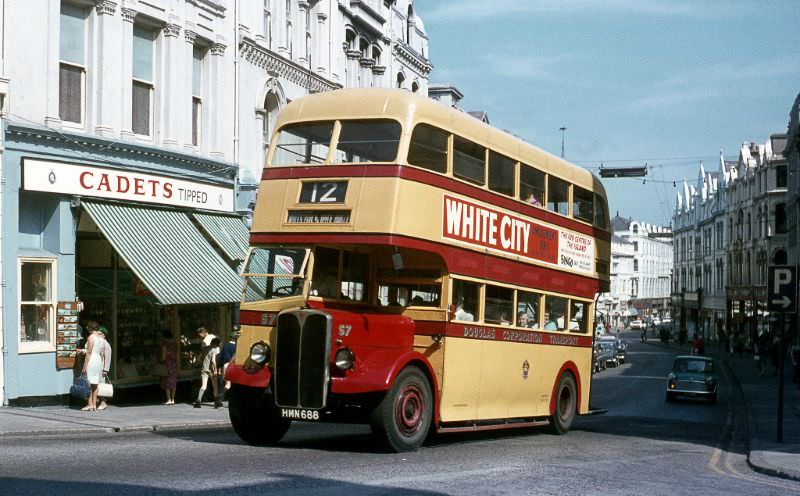
1947 Regent No.57 climbs Prospect Hill, Douglas, 5 August 1970
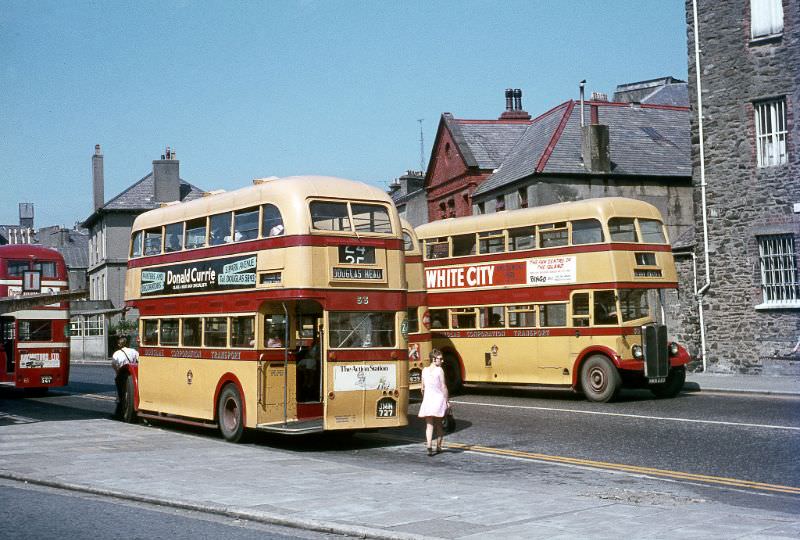
A busy scene at Douglas Bus Station with three Corpn. Regents and a Road Services Leyland, 5 August 1970

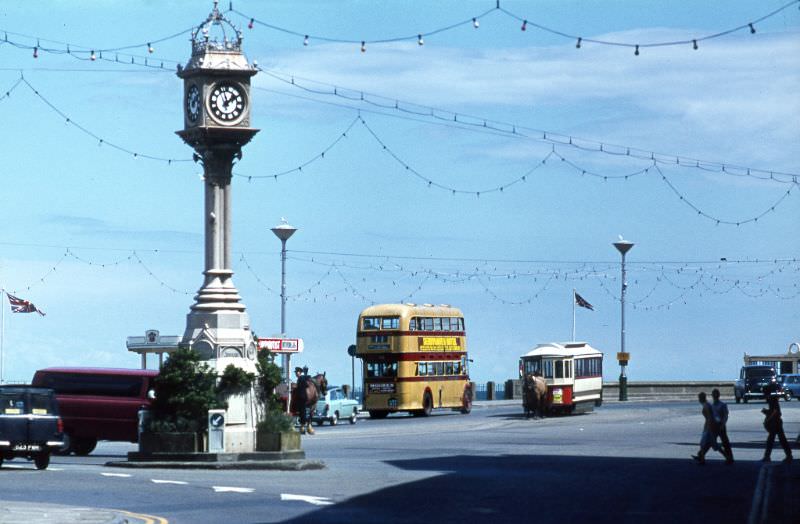
The AEC Regent was one of the most recognisable buses on the island during this era. Douglas Corporation operated a number of them, each with its own identifying number. They could be spotted all across Douglas — climbing Prospect Hill, waiting at the Clock Tower, rounding the harbour, and heading out to Douglas Head. Horse trams still shared the streets with these motor buses, a striking combination that made Douglas unlike almost anywhere else in the British Isles.
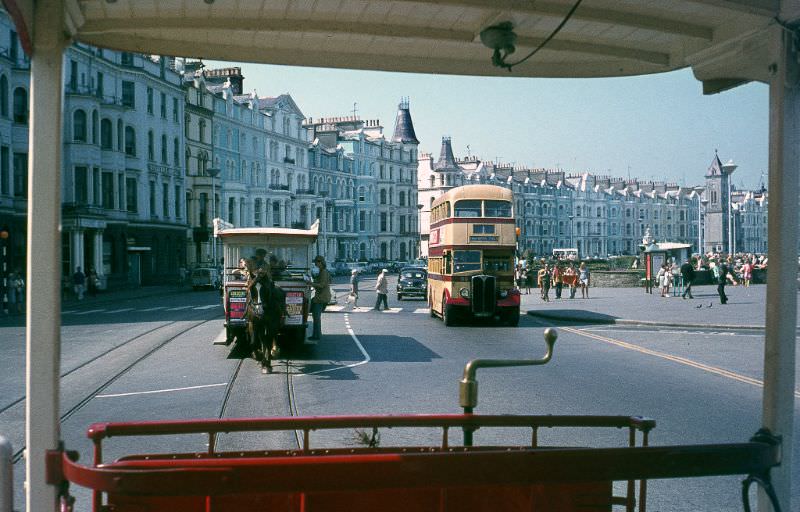
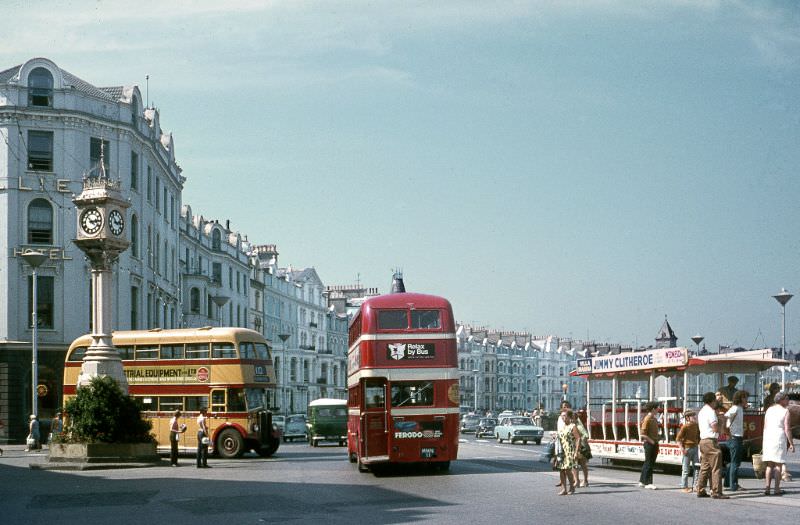
Horse Tram & Corpn. Regent No.56 at the Clock Tower, 5 August 1970
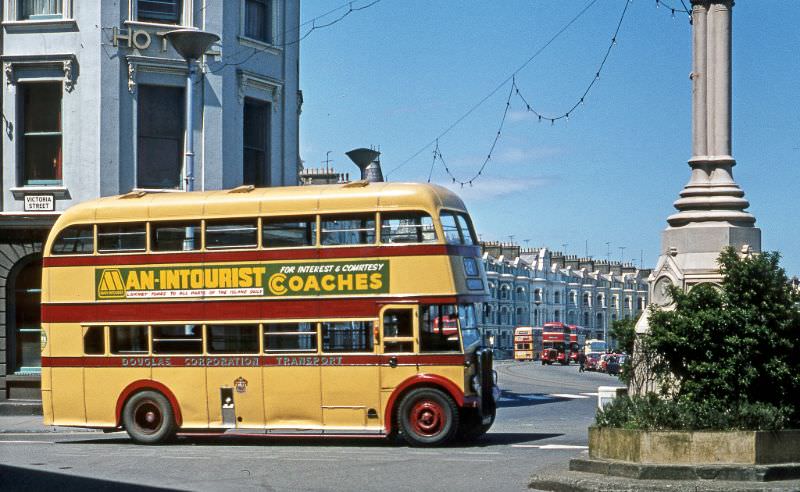
Douglas Clock Tower with Regent No.71, Road Sers. PD2 No.11 & Horse Tram, 5 August 1970

Road Services vehicles operated alongside the Corporation fleet, covering routes that stretched beyond Douglas into the wider island. These included Leyland PD2s and other types that ventured out to towns and villages like St. Johns, Laxey, Ballaugh, Port Erin, and Ramsey. The terrain varied sharply — from flat coastal promenades to steep rural roads — and the buses handled all of it.
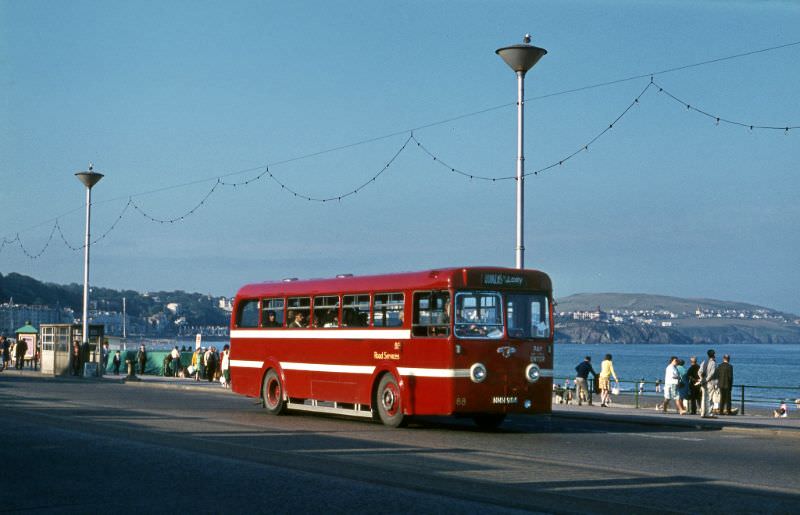
1952 built Leyland Royal Tiger/Leyland No.88 near Villa Marina on a lovely evening, 1 July 1971
Douglas Corpn. Regent No.66 (rounded route boxes) waits to pull ot into Loch Prom, 28 June 1971
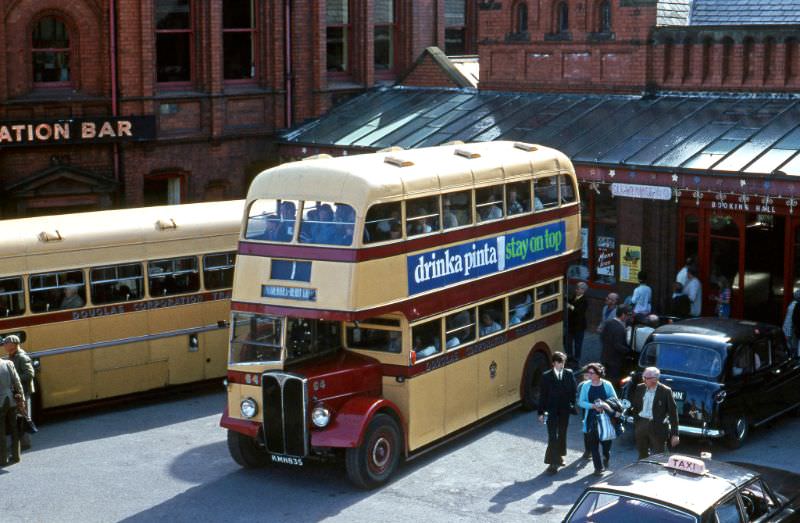
Douglas CT Regent No.64 at Railway Station, 29 June 1971

The Douglas promenade — known locally as the Prom — was a central artery for bus movement. Regents and Leyland PD2s alike made regular passes along it, often with the bay and Sea Terminal visible in the background. The Inner Harbour provided another familiar setting, where buses turned or paused near the waterfront before continuing their routes.

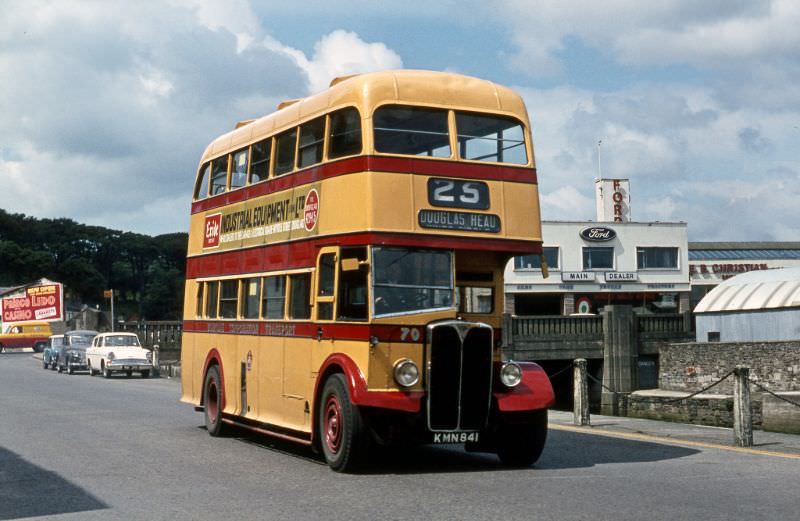
Douglas CT Regent No.65 near Villa Marina, 1 July 1971
Douglas CT Regent No.70 by the Inner Harbour, 28 June 1971
Douglas Inner Harbour with Regent No. 70, 28 June 1971

Horse trams continued to run along the seafront alongside the motor buses, and several photos capture both modes of transport in the same frame. Regent No.64 shares Loch Prom with a horse tram. The Sea Terminal appears with Regent No.65 and Saloon Horse Tram No.1. These scenes were not staged — they were everyday street life on the Isle of Man in the early 1970s.
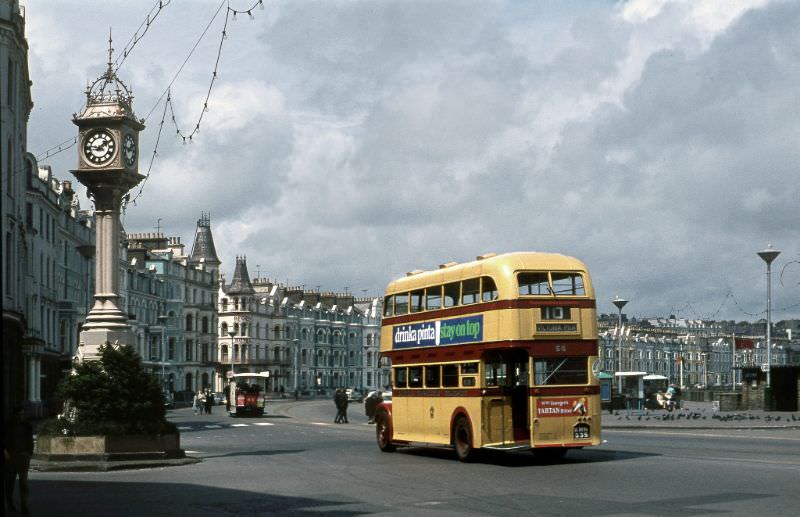
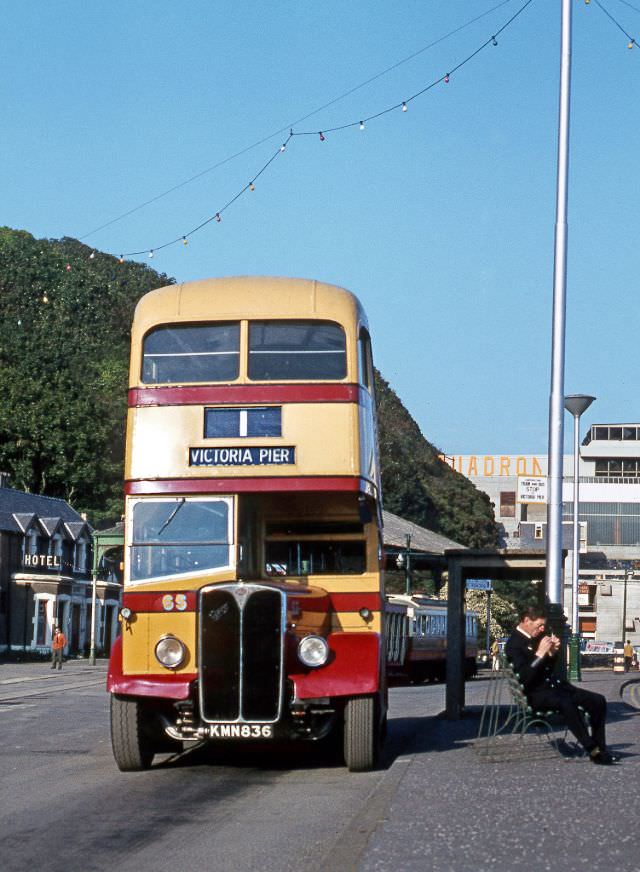
Douglas IOM Regent No.64 with Horse Tram Loch Prom, 27 June 1971
Douglas Regent No.65 at Derby Castle, 1 July 1971
Douglas Regent No.70 (rear) at Douglas Head, 28 June 1971

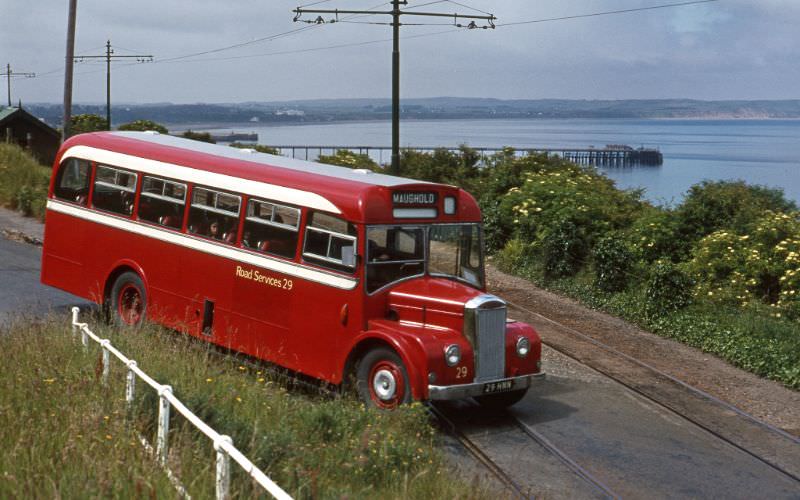
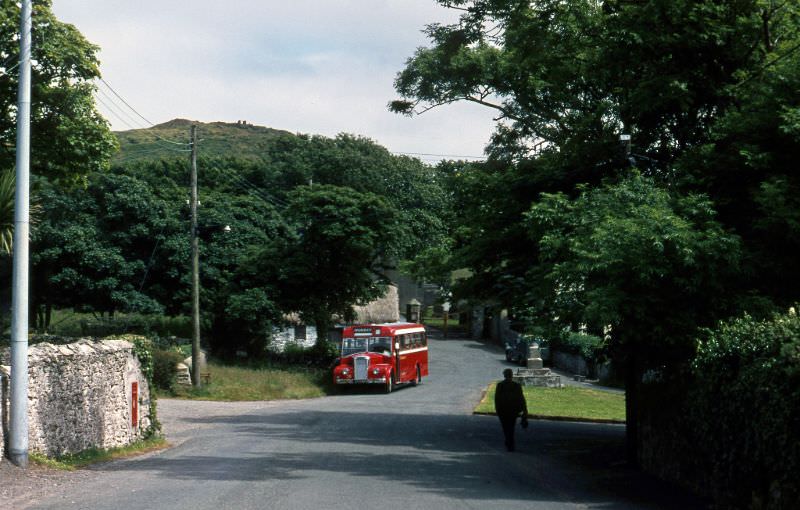
Outside of Douglas, Road Services routes reached into some of the island’s more remote corners. The Olympic No.53 navigated the Bradda Head road near Port Erin, a route with dramatic coastal scenery. The Falcon — another Road Services vehicle — crossed the Manx Electric Railway line at Bellevue near Ramsey, while Road Services Falcon No.29 appeared at the quiet village of Maughold.
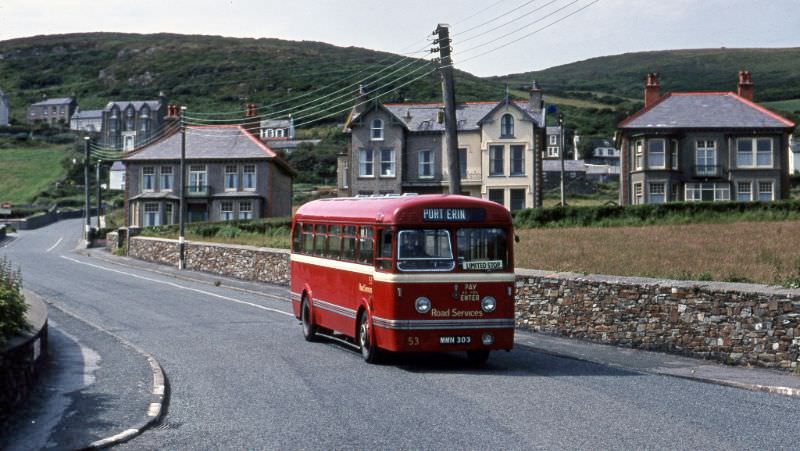
IOM Road Sers, Olympic No.53 on Bradda Head road, Port Erin, 29 June 1971
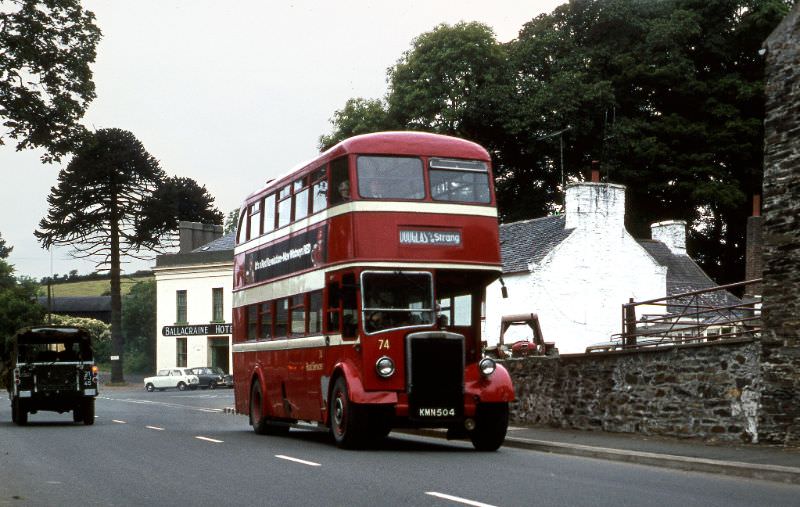
IOM Road Sers. PD2 No.74 near St.Johms, 30 June 1971
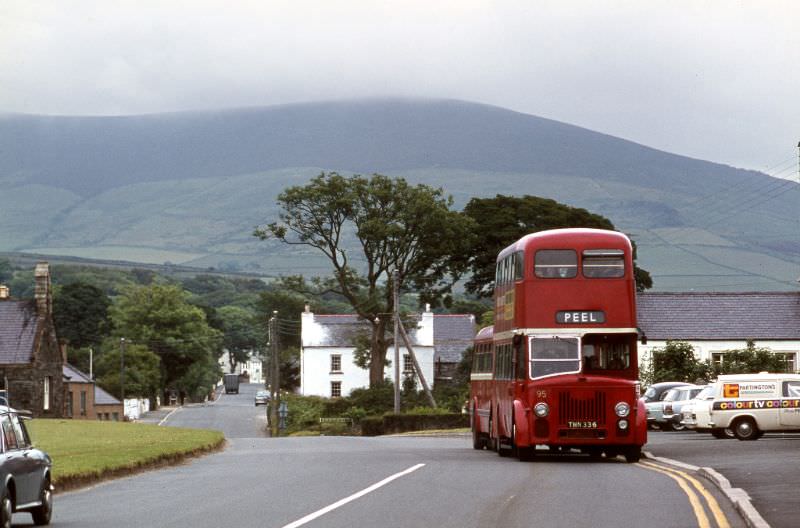
IOM Road Sers. PD2/20 No.95 at St.Johns, 30 June 1971

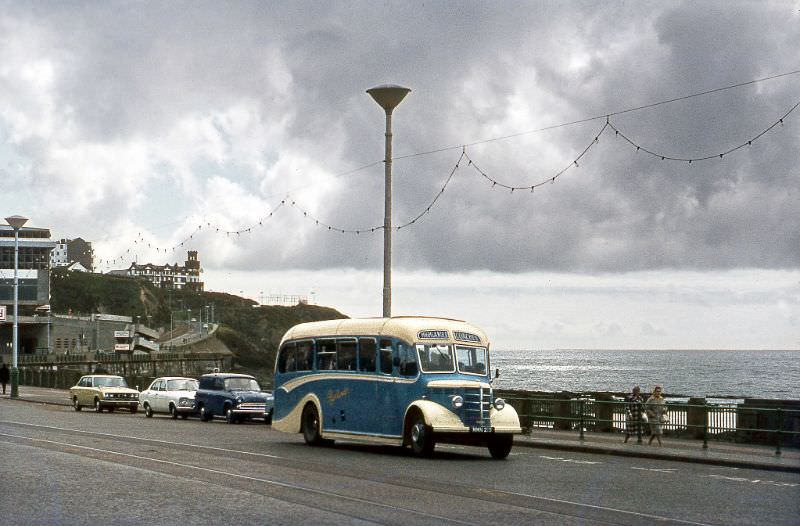
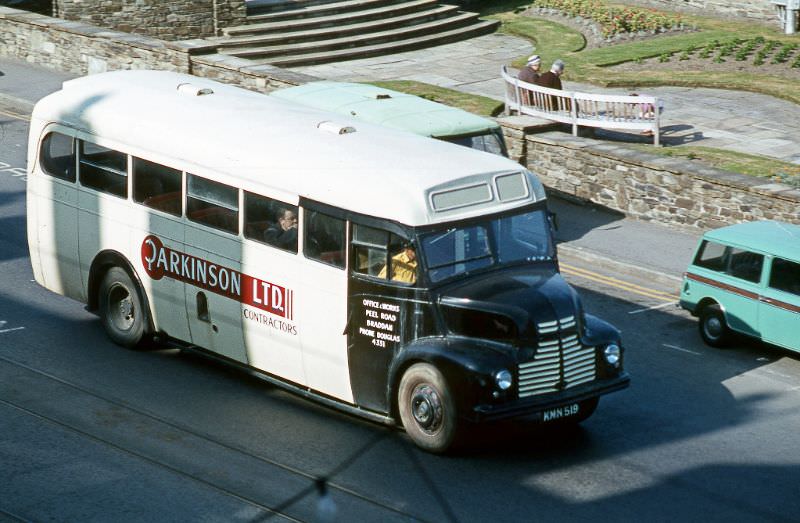
Not every vehicle in these photos was part of the main Corporation or Road Services fleets. Private and contractor-owned vehicles also appear — including a former Douglas Leyland Comet photographed in use with Parkinson Contractors, and a Bedford OB operated by Highlander Coaches. These smaller operators filled gaps that the main services didn’t always cover.
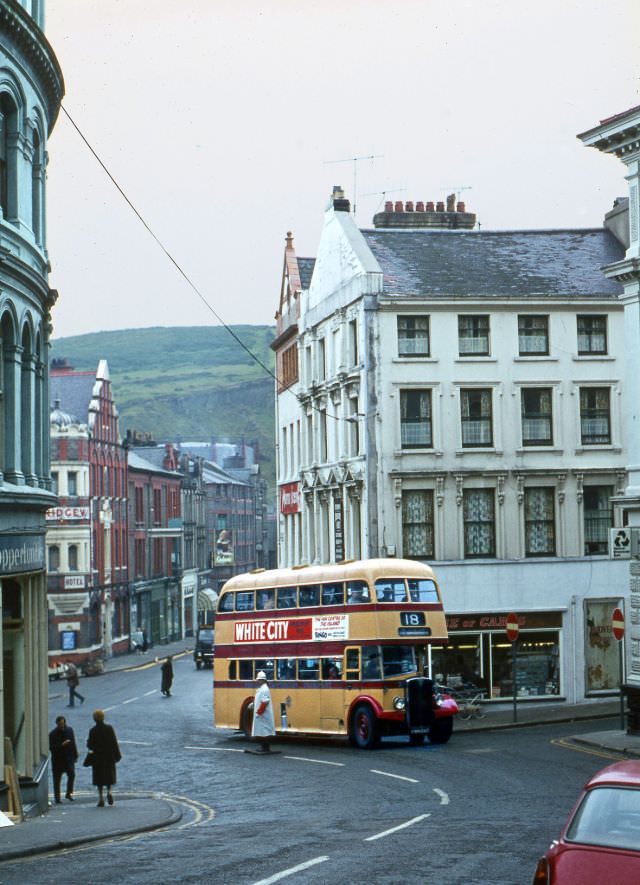
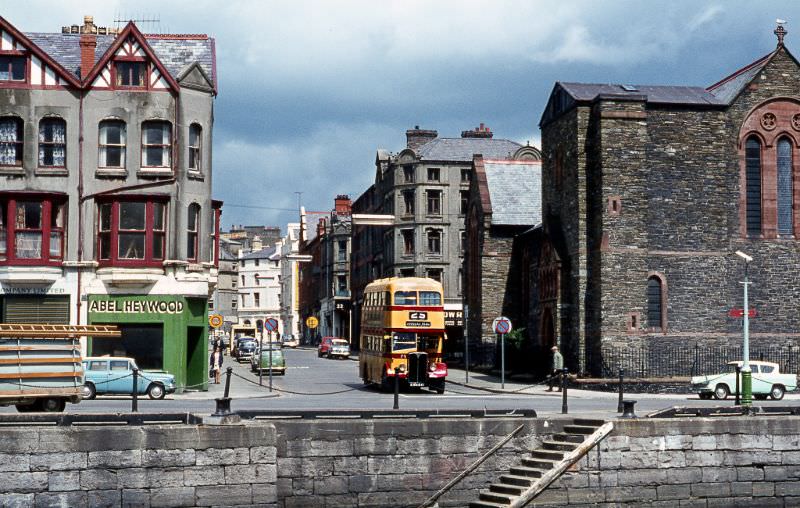
No.71 start to climb Prospect Hill, Douglas past a white-coated & helmeted policeman on a dull morning, 30 June 1971
Parkinson Contrs. Ex Douglas Comet KMN519 in Douglas, 2 July 1971
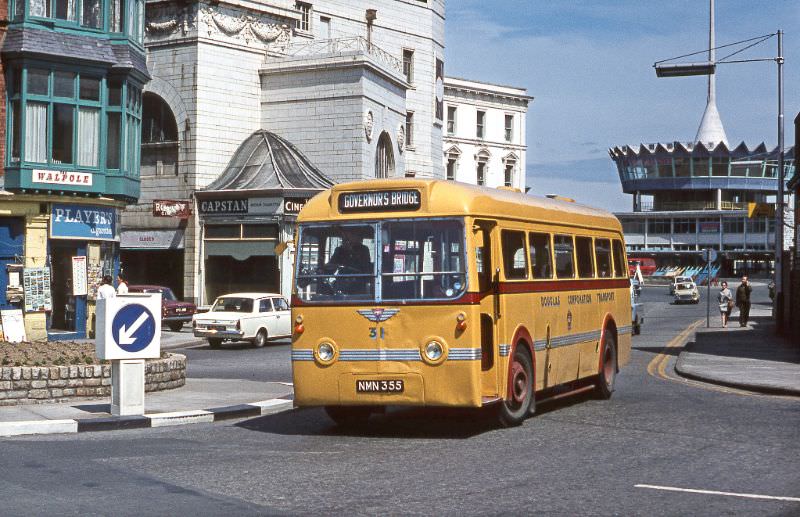
Regal IV No.31 in Douglas, 27 June  1971
Regal IV No.31 in Douglas, 27 June 1971

The fleet also included AEC Regal IVs and Reliances, adding further variety to what was already a diverse mix of vehicle types on a small island. Over the following years, second-hand buses from mainland England were brought in to supplement and eventually replace many of these older vehicles. Leyland Atlanteans came from operators including Merseyside PTE, Portsmouth Transit, SELNEC, and Tyne & Wear PTE. Leyland Olympians arrived from Devon General, Dublin Bus, and Stagecoach, while Leyland Lynxes were sourced from Halton Transport.
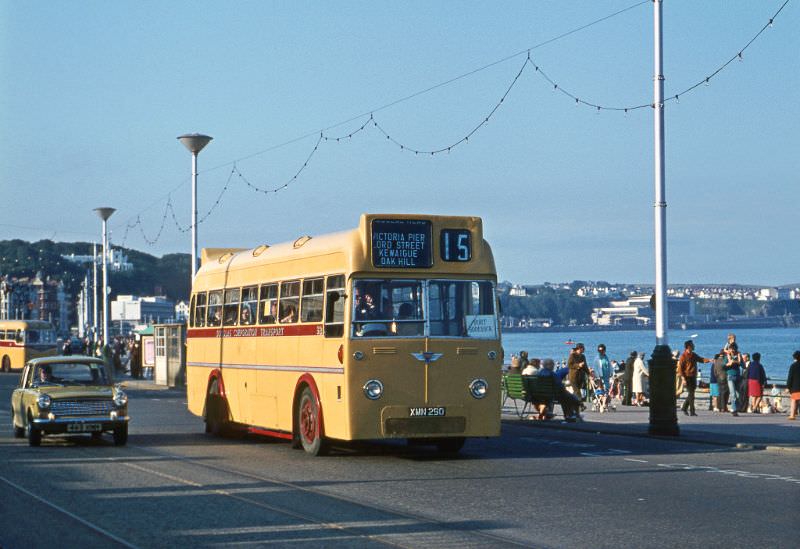
Reliance No.32 on the Prom at Douglas, 1 July 1971
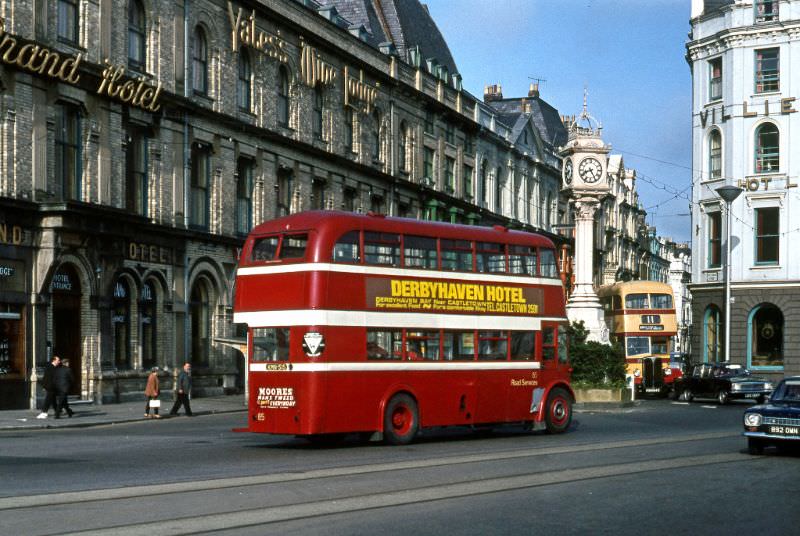
Road Sers No.85, a 1950 built Leyland PD2 passes the Clock Tower on the prom at Douglas with Corpn Regent No.71 just appearing, 2 July 1971
The Falcon crosses the MER line at Bellevue, near Ramsey, 1 July 1971
With the bay and Sea Terminal beyond, Douglas Corpn. Regent No.61 (1948) climbs the hill to Douglas Head, 28 June 1971

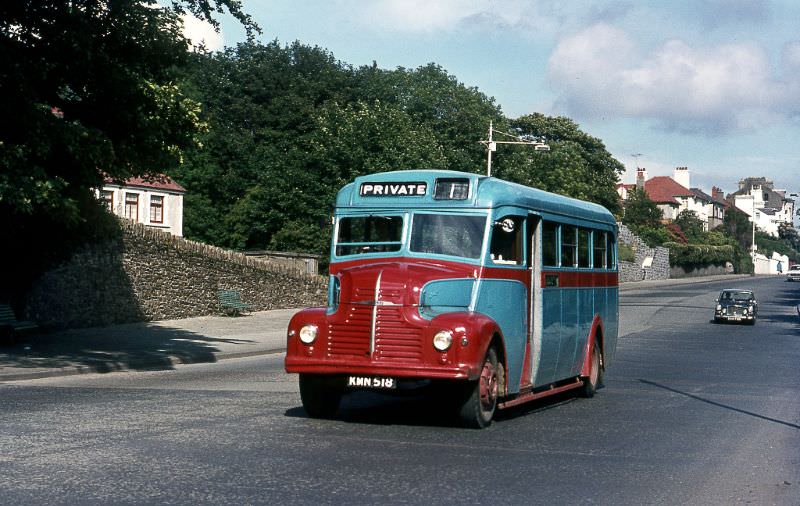
By 1972, the last year represented in this photo set, the fleet visible on Douglas streets still carried the familiar look of the early 1970s. Regents continued to operate out of Derby Castle and the Sea Terminal. The Thorneycroft No.13 served routes as far out as Ballaugh. The ex-Douglas Leyland Comet KMN518 appeared again in a separate 1972 photograph, having passed out of Corporation service into further use.
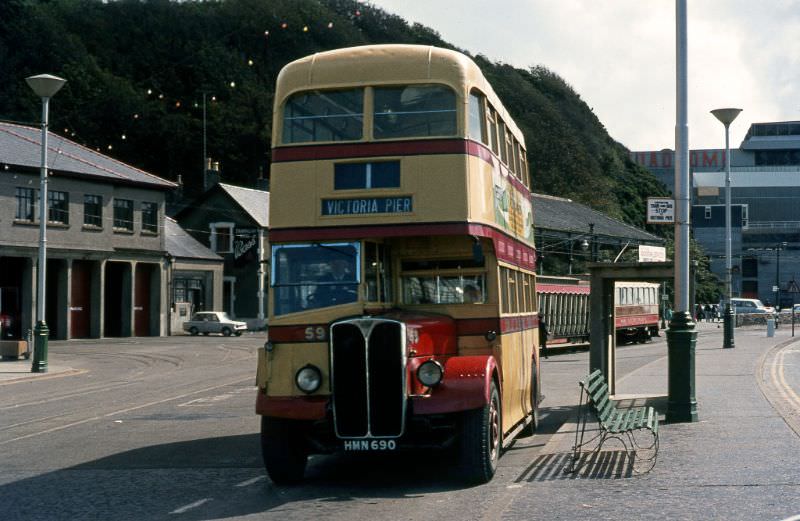
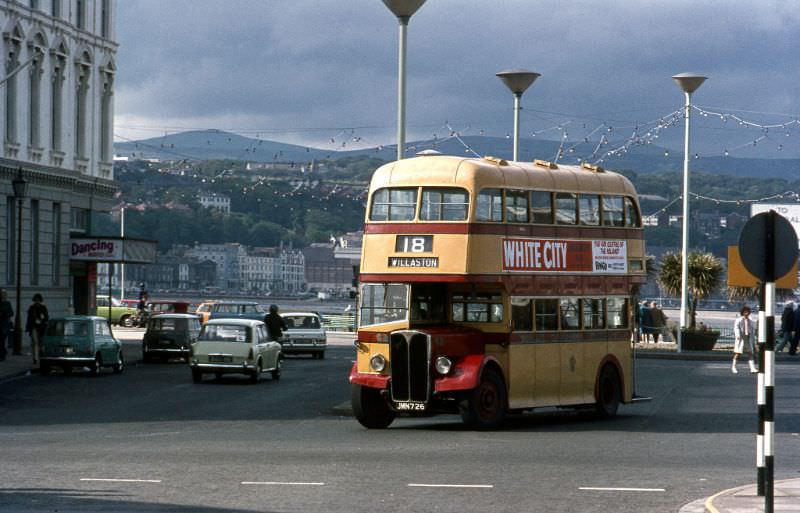
Douglas Corpn. Regent No.59 at Derby Castle, 29 June 1972
Douglas Corpn. Regent No.62 at Sea Terminal, 27 June 1972
Ex Douglas Leyland Comet KMN518, 27 June 1972
Highlander Coaches, IOM Bedford OB MMN215 at Douglas, 29 June 1972
IOM Rd.Sers. Thorneycroft No.13 at Ballaugh, 29 June 1972
Douglas Sea Terminal with Regent No.65 & Saloon Horse Tram No.1, 28 June 1971
IOM Road Sers Falcon No.29 at Maughold, 1 July 1971
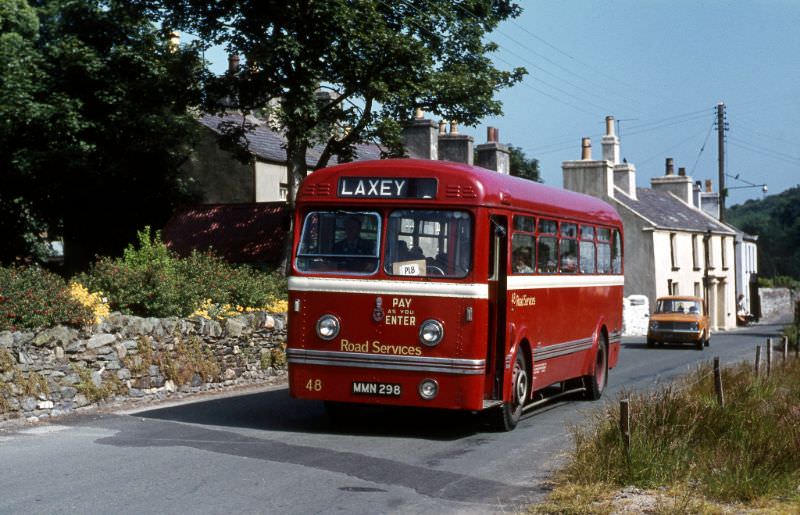
IOM Road Sers Olympic No.48 at Laxey, 2 July 1971
Enjoyed this post? Get new ones in your inbox.

1 thought on “Fascinating Photos Show the Buses of Isle of Man in the early 1970s”

  1. Buses were still painted that way (or very similar) until quite recently. Only these new buses were not painted. We probably started slowly circling the drain with that cost cutting measure.

Leave a Comment

Your email address will not be published. Required fields are marked *

Share this Post 🥺

Please take a moment to share this content. Your support is greatly appreciated! 🙌🙏

Share this Post 🥺

Please take a moment to share this content. Your support is greatly appreciated! 🙌🙏
Scroll to Top
 
Hey Friend, Before You Go.. Please like & follow for more interesting content