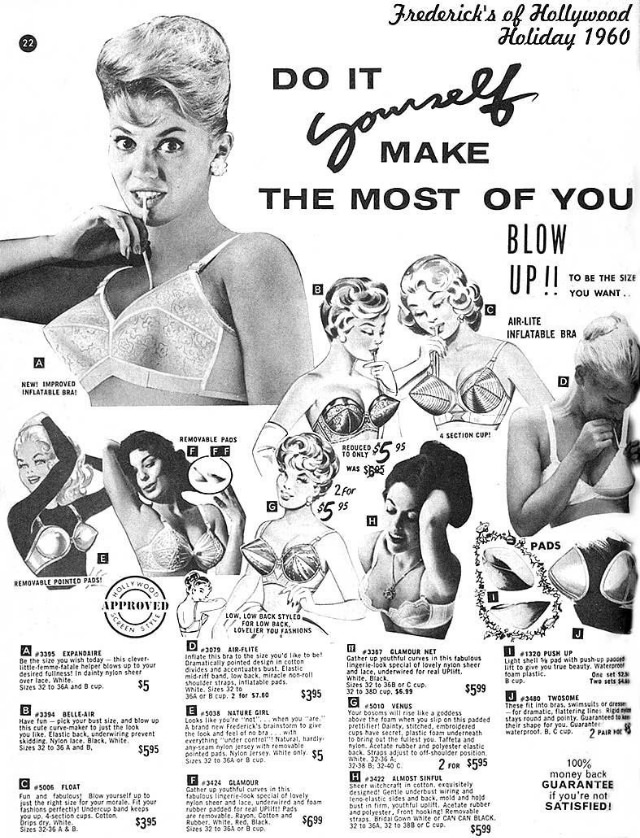

Long before breast augmentation surgery became common and years before the Wonderbra took over department store shelves, women had a surprisingly hands-on solution for enhancing their bust size: the inflatable bra. This unusual garment was a genuine commercial product sold in the early 1950s, and it came with a straightforward promise — blow it up to be the size you want.
The most well-known brand was called “Très Secret,” a name that leaned into the idea of a fashionable, discreet secret a woman could keep under her clothes. The product was marketed with a boldness that feels striking even today. Its tagline read: “Do it yourself. Make the most of you. Blow up! To be the size you want.” For the time, this was a remarkably direct piece of advertising aimed squarely at women’s desire for control over their own appearance.
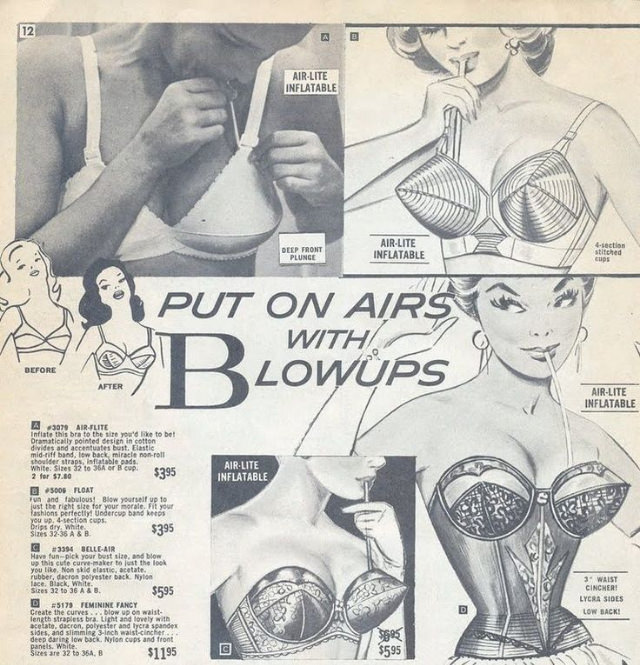
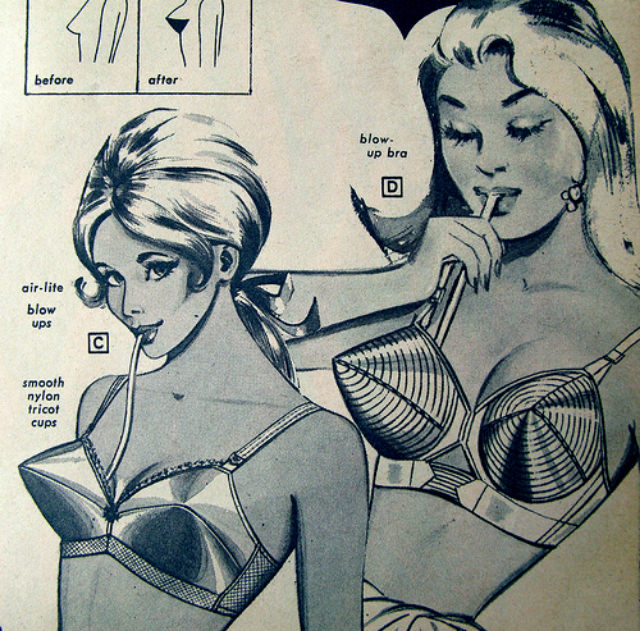
The mechanics behind the bra were simple. Inside each cup sat a small plastic pouch. The bra came with a mouthpiece — essentially a small inflation tube — that the wearer used to blow air into each pouch until she reached her desired size. More air meant a fuller shape. Less air kept things subtle. The wearer had complete control, which was a major part of the product’s appeal.
The 1950s were a decade defined by very specific beauty standards. Full, rounded busts were considered the height of femininity, heavily promoted through Hollywood films, pin-up imagery, and fashion magazines. Icons like Marilyn Monroe and Jane Russell set the cultural template, and the fashion industry followed. Bullet bras, padded bras, and structured undergarments all flourished during this era as women sought to meet those ideals.
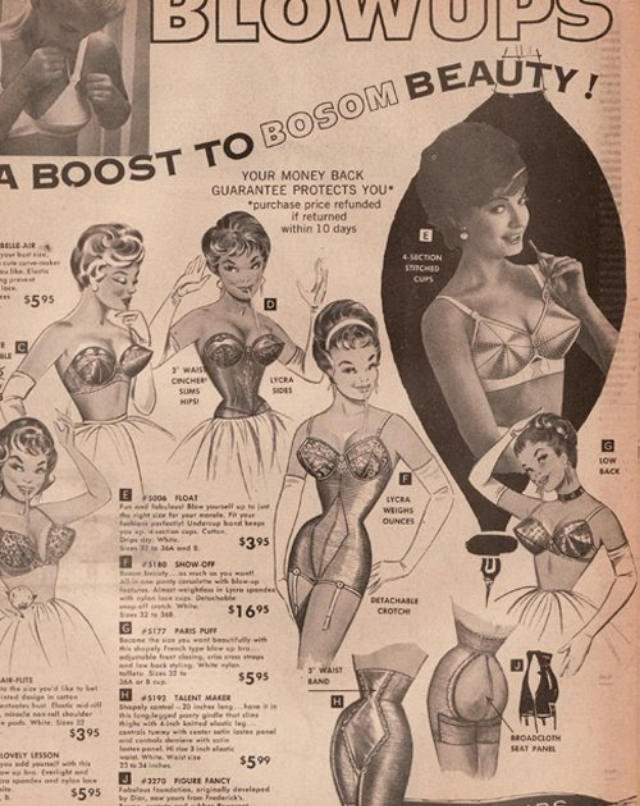
The inflatable bra fit neatly into this landscape. Padding was already accepted and widely used, but the inflatable version took the concept further by offering adjustable, personalized sizing. A woman wasn’t locked into whatever shape a foam insert provided — she could fine-tune the result herself, every single time she got dressed.
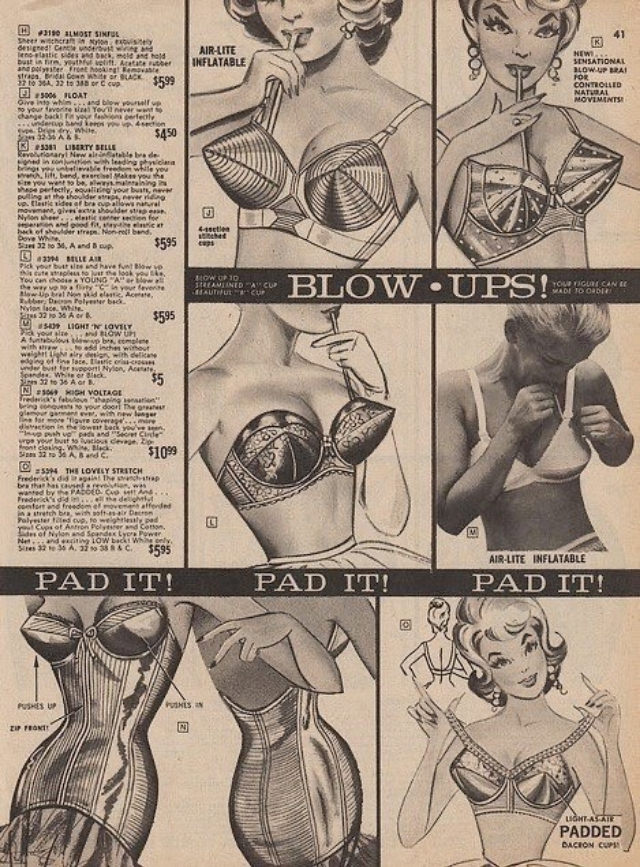
The product continued to find buyers into the 1960s as well. By that point, lingerie companies had been refining the design for over a decade, improving the plastic pouches and the inflation mechanism. The bra remained a niche item rather than a mainstream staple, but it maintained a loyal customer base among women who wanted more flexibility than traditional padding offered.
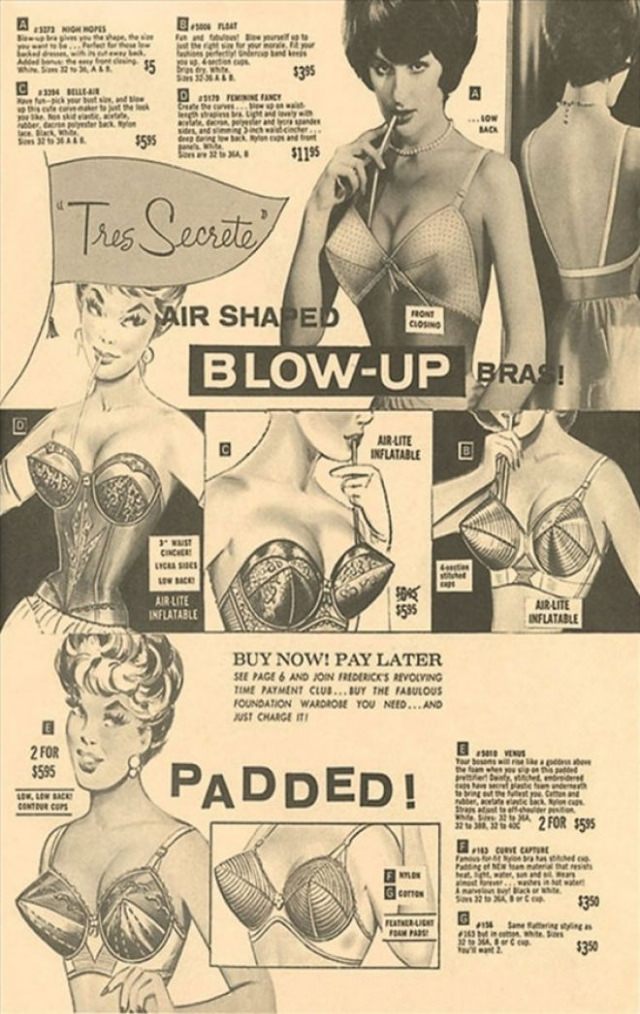
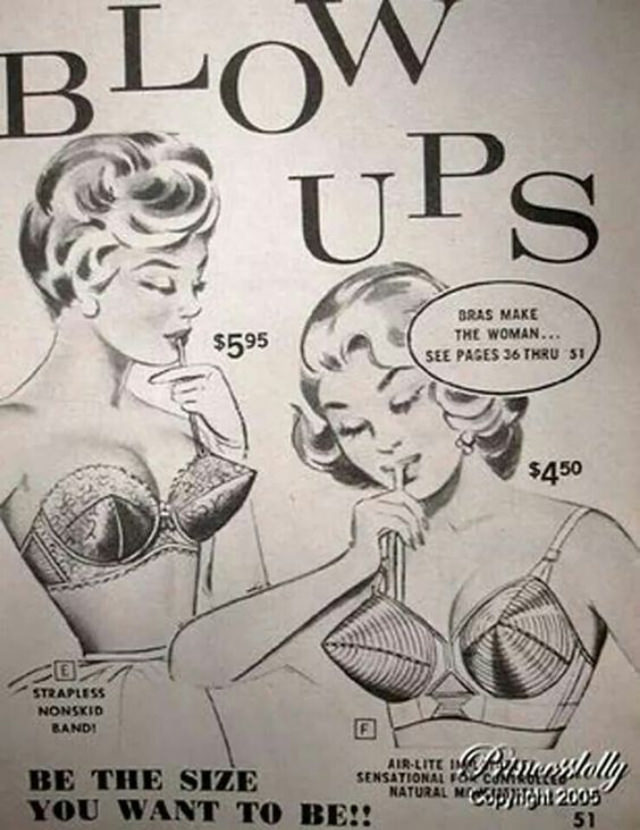
Advertising for these bras was cheerful and confident. Print ads showed smiling women and used upbeat, punchy copy that treated the inflation process as a fun, empowering routine rather than something awkward. The marketing leaned into novelty and practicality at the same time, reassuring buyers that this was a smart, modern solution to an age-old concern.
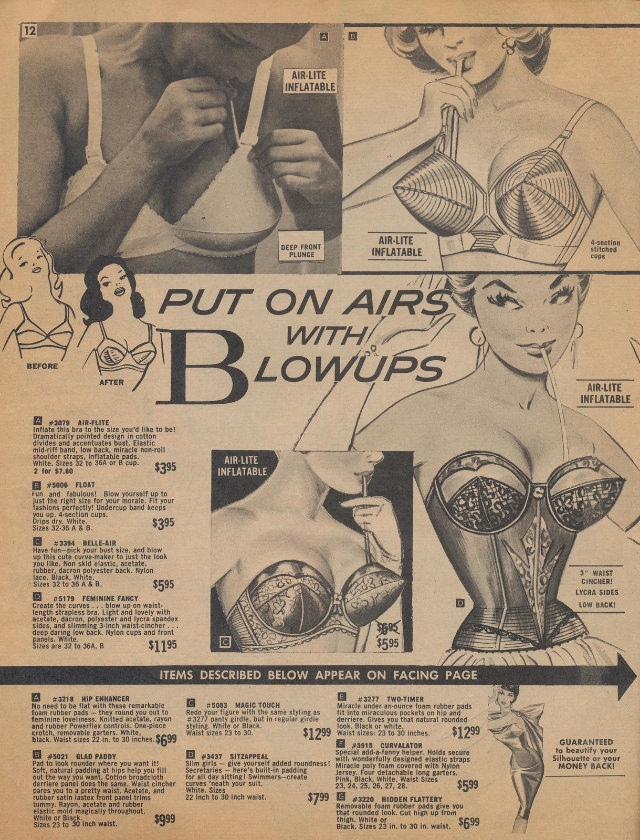
There were, of course, practical limitations. A plastic pouch filled with air inside a bra cup behaved differently from foam or fabric padding. The risk of a pouch deflating — or worse, popping — at an inopportune moment was real. Despite these drawbacks, the product sold well enough to stay on the market through two decades, which says a great deal about how strongly the era’s beauty standards motivated women to seek out solutions.
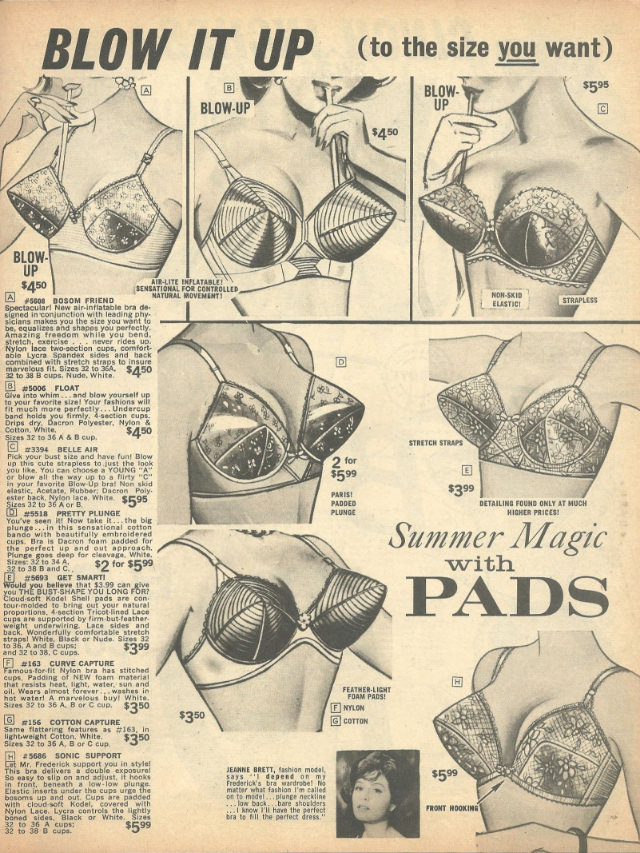
The inflatable bra stands as a sharp reminder of how far women went to conform to the body ideals of mid-century America. It also reflects the ingenuity of lingerie manufacturers who spotted a gap in the market and filled it — quite literally — with air. The “Très Secret” bra was, in its own strange way, a product perfectly built for its time.