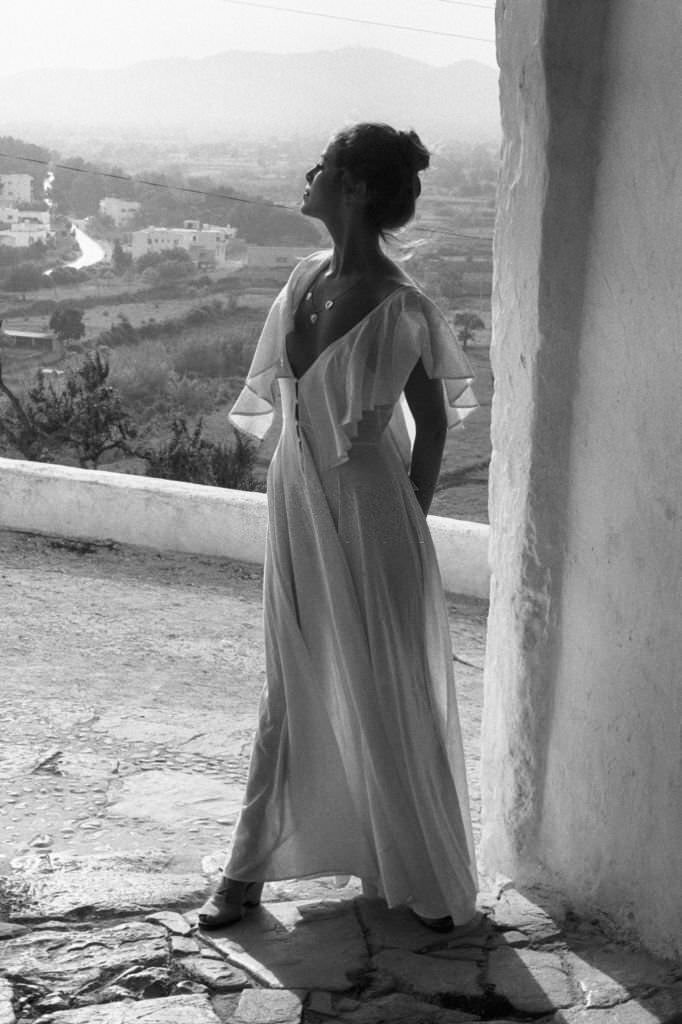
Ibiza is one of Spain’s Balearic Islands, sitting in the western Mediterranean Sea about 50 miles southwest of Mallorca. The island’s landscape is a mix of irrigated lowlands and terraced hillsides carved out over centuries of farming. For most of its history, Ibiza’s economy ran on simple, honest work. Salt harvested by evaporating seawater was the island’s main export for generations. Fish and charcoal were shipped to the Spanish mainland in quantities that exceeded local consumption, while almonds, dried figs, and apricots rounded out the island’s agricultural trade. It was a place defined by labor and the sea — until the 1970s changed everything.
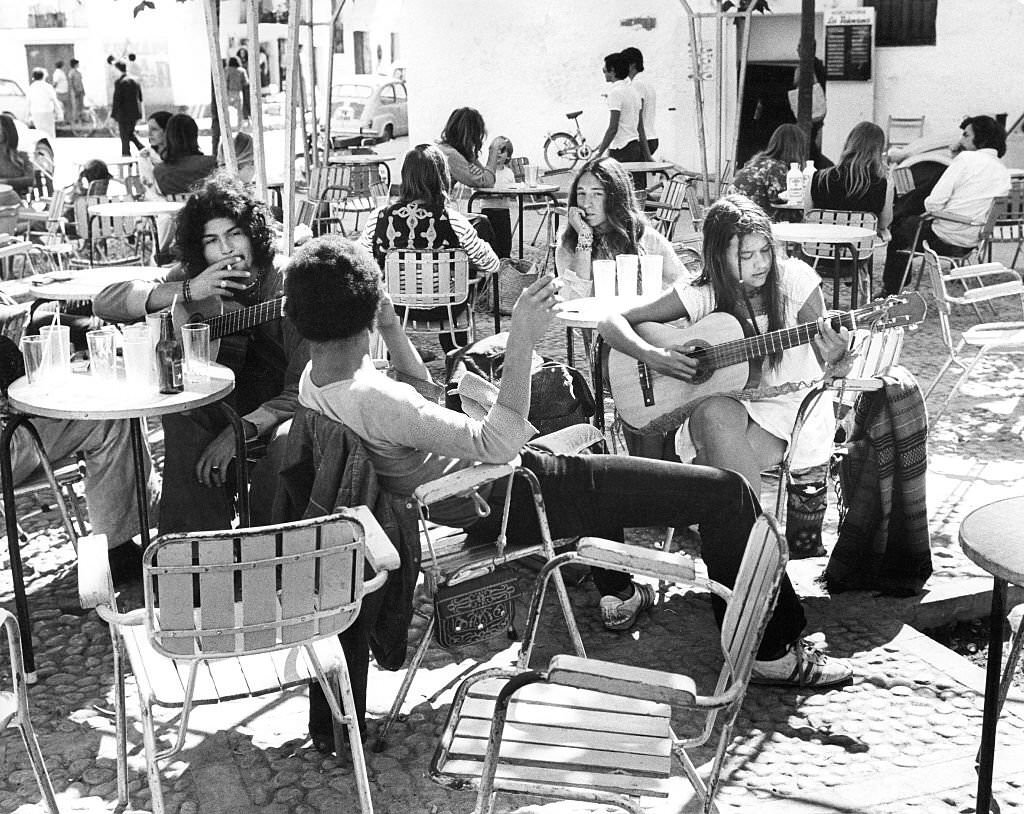
The decade opened with Ibiza already drawing a new kind of visitor. Hippies from across Europe and beyond had begun arriving in the late 1960s, drawn by the island’s openness and its distance from mainstream society. By the early 1970s, their presence had grown into something impossible to ignore. They settled on abandoned farmland, built small communities, and brought with them a philosophy centered on freedom, art, and rejecting convention. The motto “Make love, not war” wasn’t just a slogan — it was a way of life that shaped the island’s daily atmosphere.
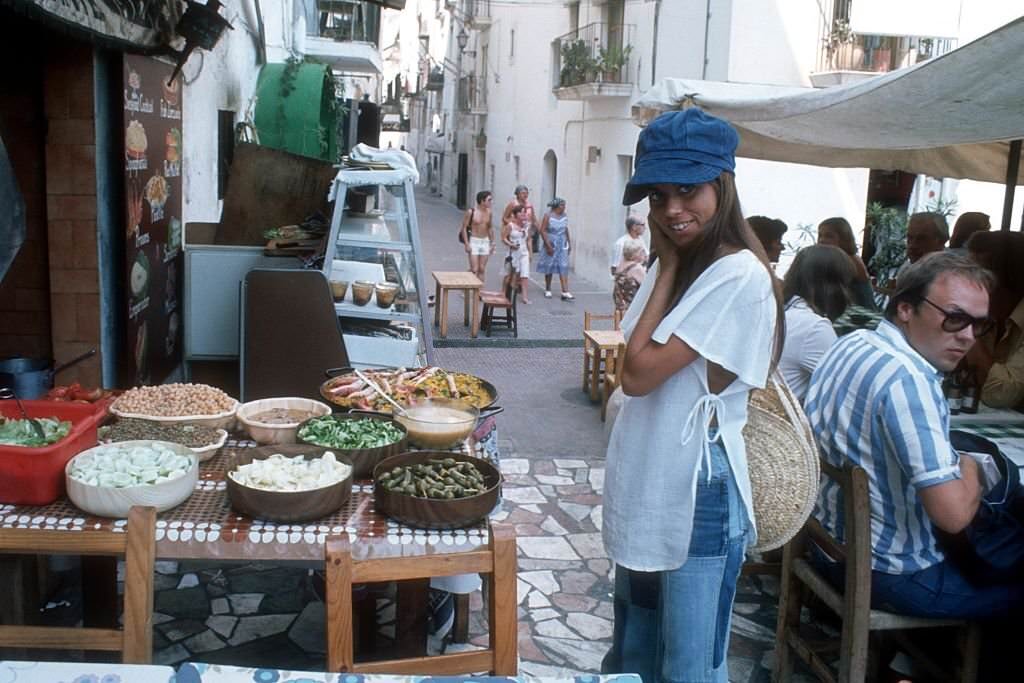
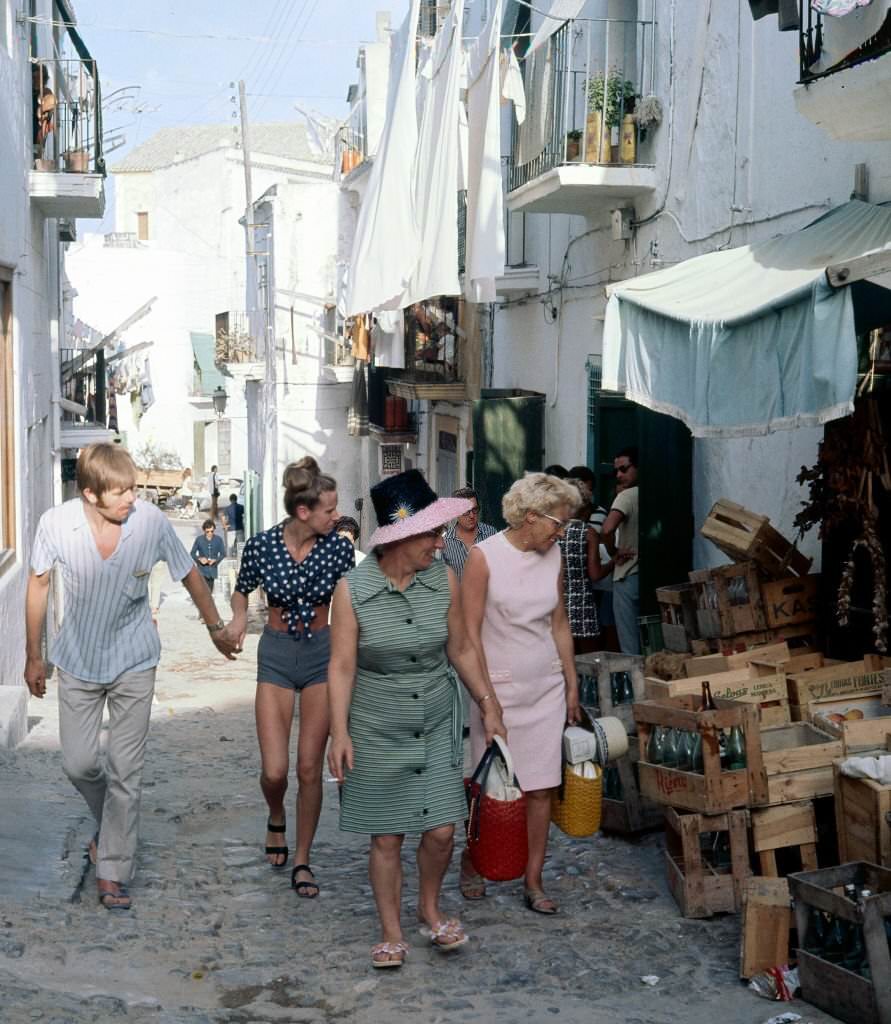
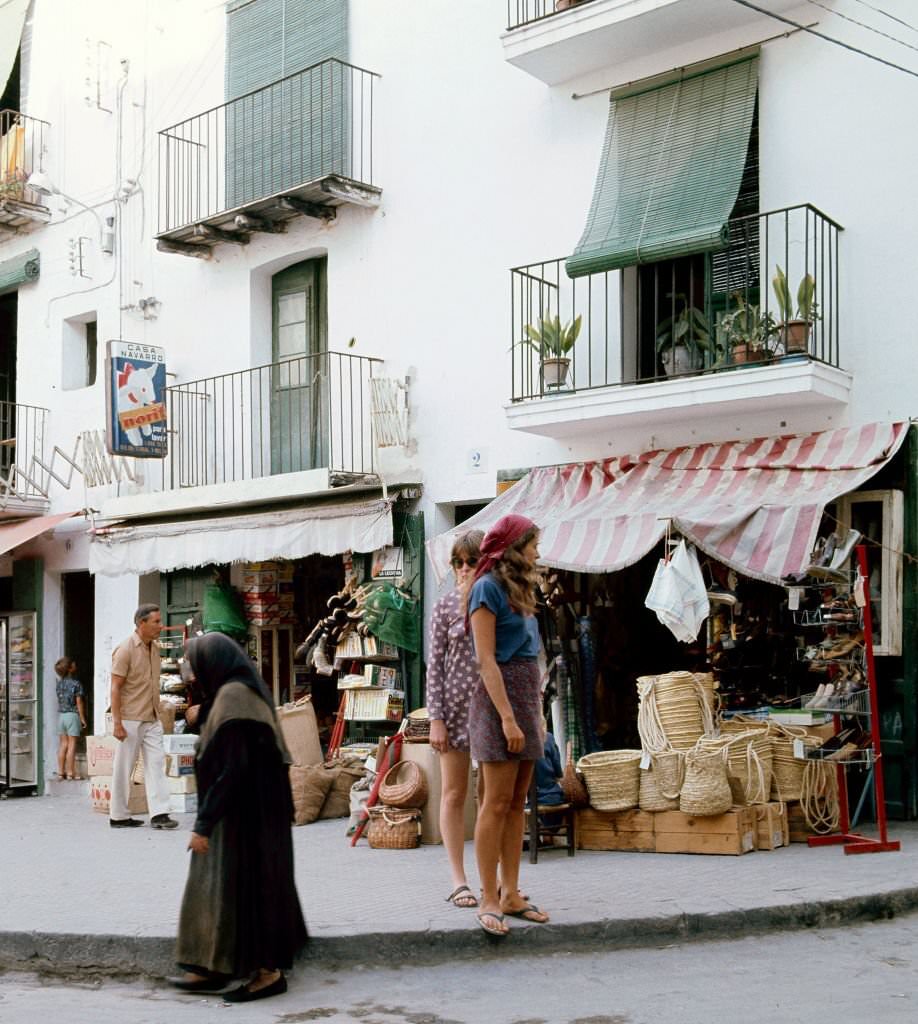
The blending of Ibiza’s traditional residents — known as pageses — with the wave of foreign newcomers gave the island a character unlike anywhere else in Spain. Ibizan women in their traditional embroidered costumes walked the same cobbled streets as free-spirited travelers from France, Germany, the UK, and the United States. Rather than clashing, these two worlds folded into each other. Local markets buzzed with both everyday commerce and the handmade crafts of artisans who had come to stay.
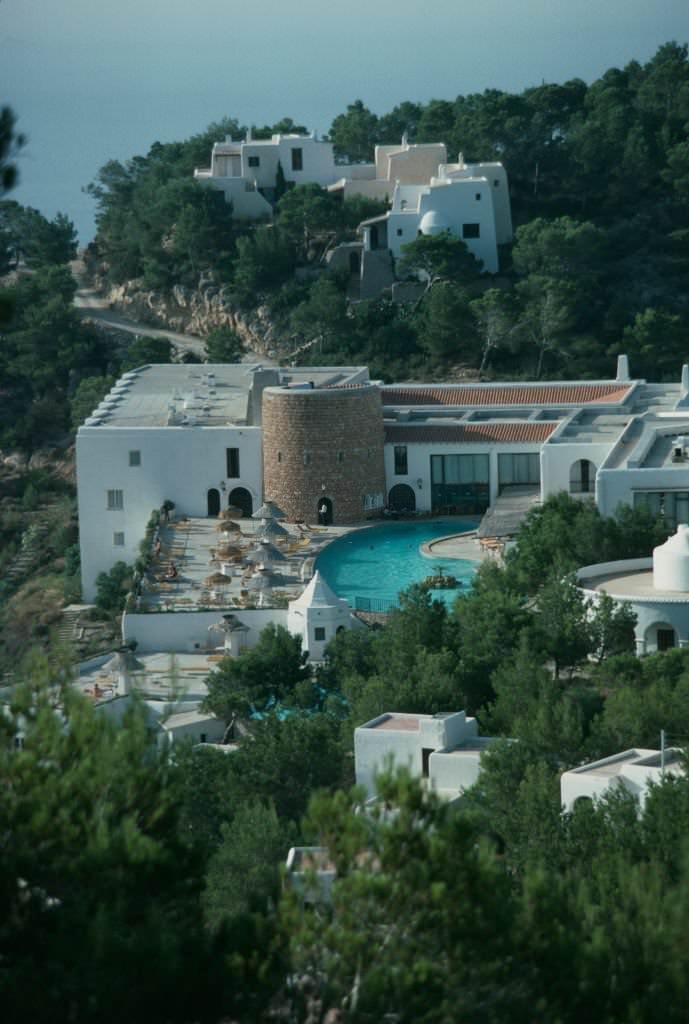
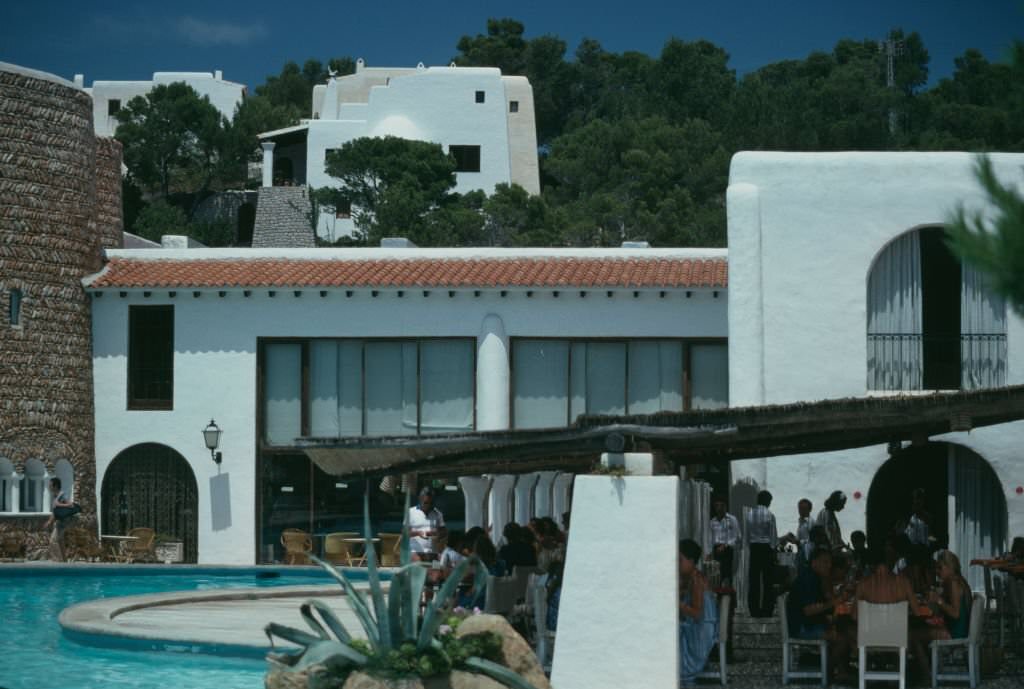
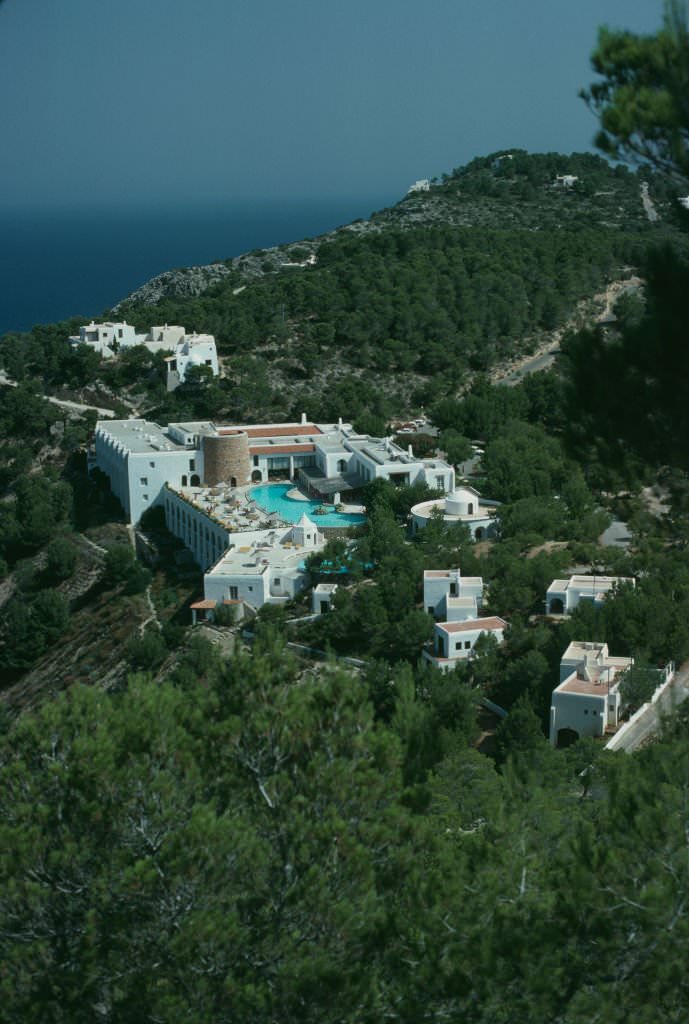
Among those drawn to Ibiza were musicians, actors, and celebrities who found the island’s relaxed atmosphere a welcome break from public life. The island offered privacy without isolation — glamour without pretension. Hotels like the Hacienda Na Xamena in Port de Sant Miguel represented a new kind of luxury on the island: dramatic, architecturally striking, and perched above the Mediterranean with sweeping views.
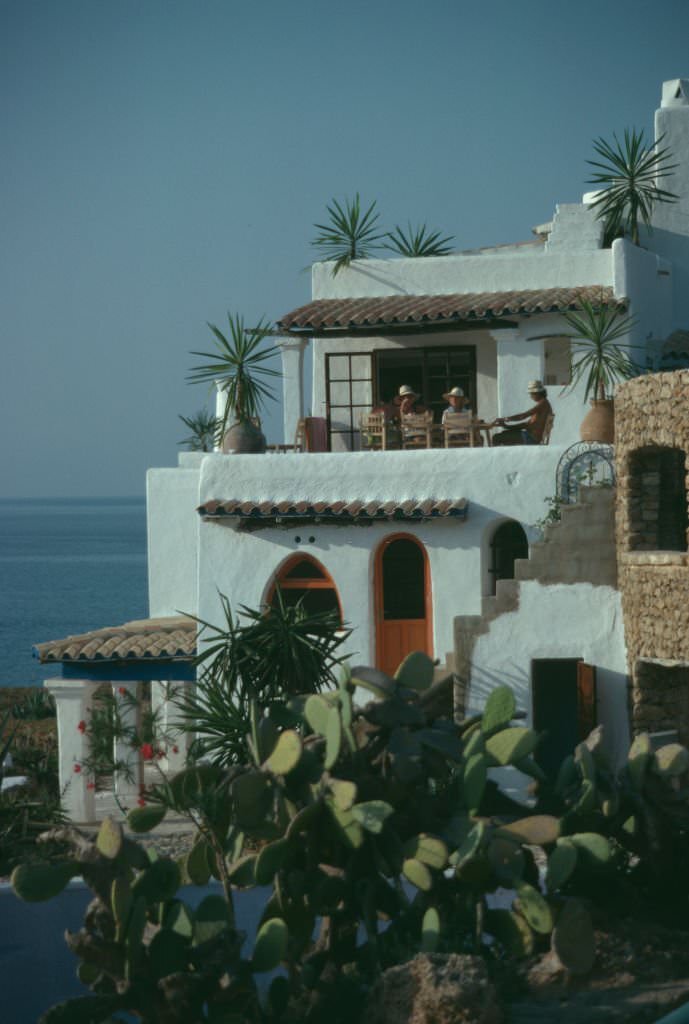
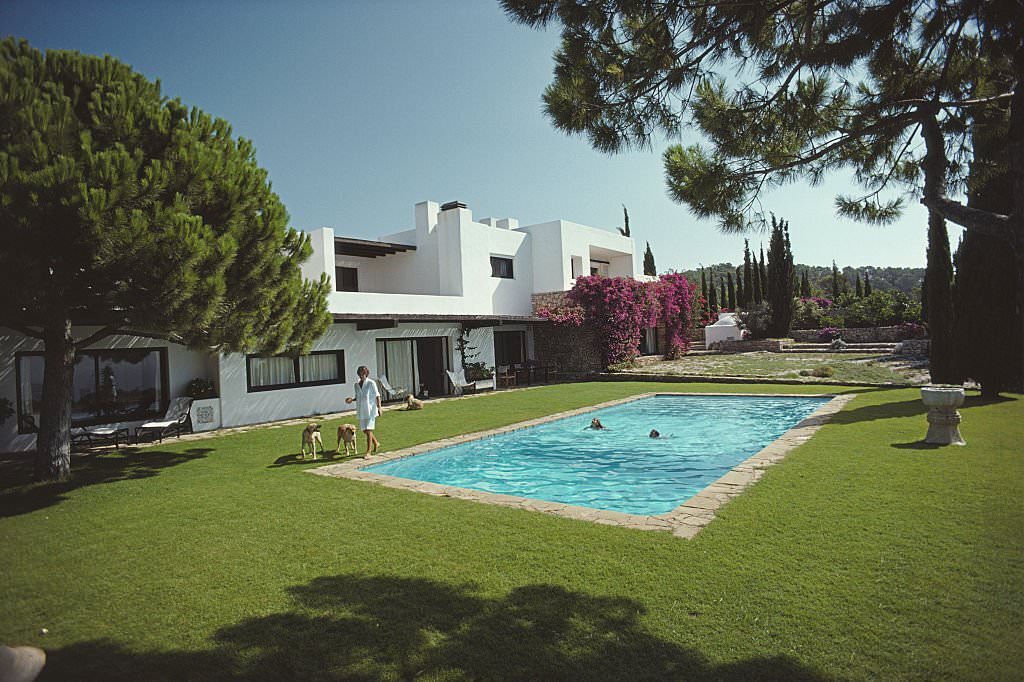
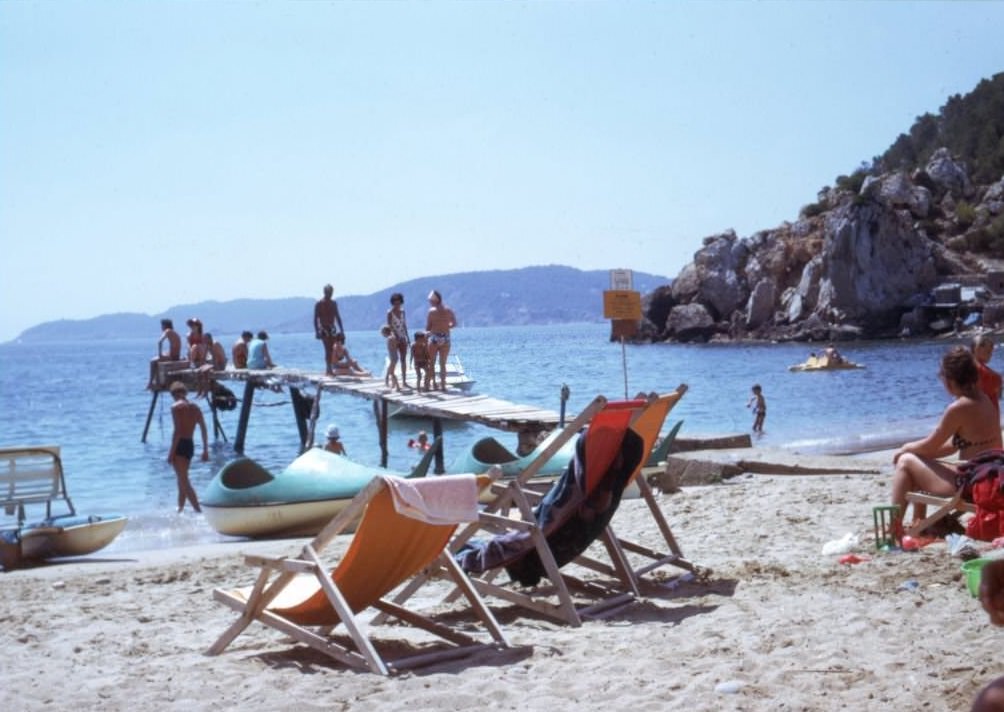
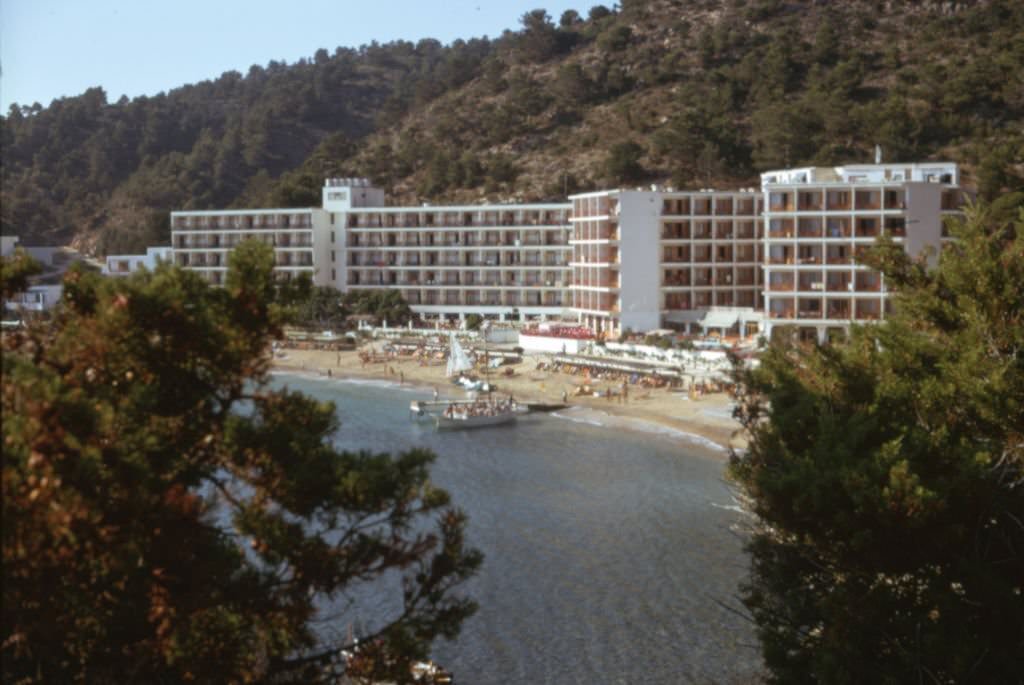
Along the bays and coves that dotted Ibiza’s coastline, villas became gathering points for the international crowd that had fallen in love with the island. Places like Cala Xarraca, near the northern village of Portinatx, offered clear water and quiet surroundings far from any tourist rush. The beaches and roads were not yet crowded — that was part of the appeal. Ibiza still felt like a discovery.
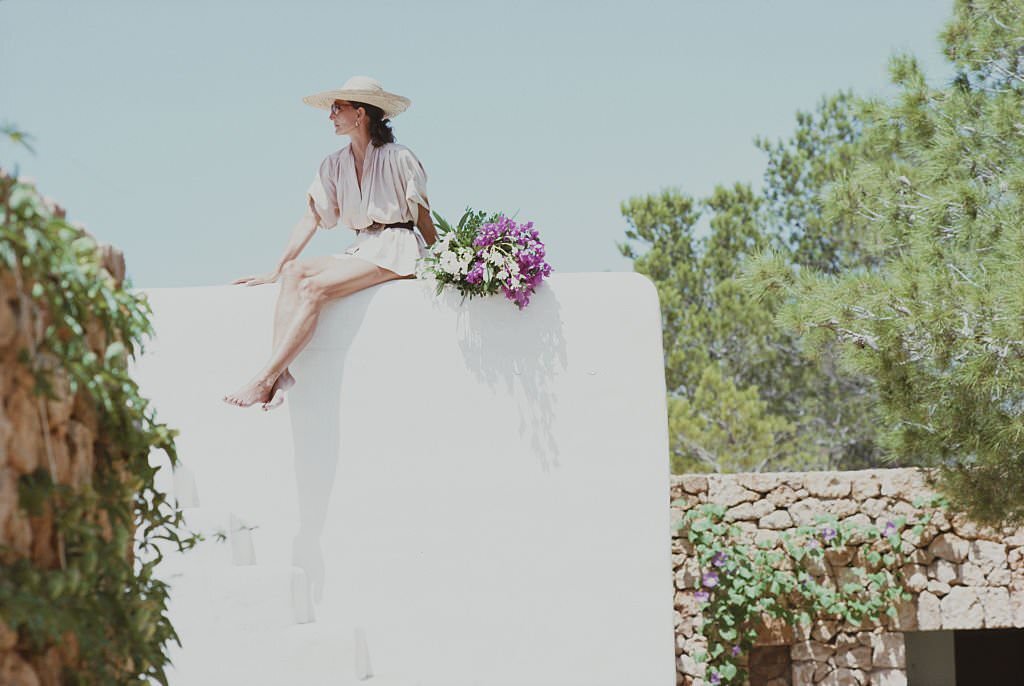
European high society found its footing on the island just as naturally as the hippies had. Figures like Viscountess Jacqueline de Ribes — a French society hostess and fashion designer of considerable reputation — made Ibiza a seasonal home. Their presence added yet another layer to the island’s already complex social fabric, where a fisherman, a French aristocrat, and a traveling musician might all share the same waterfront café without any of it feeling unusual.
The nightlife that Ibiza would later become world-famous for was only just beginning to take shape during this era. Clubs like Pachá, Es Paradis, and Glory opened their doors on the back of the decade’s tourist wave, but they operated on a scale that matched the island’s mood — intimate, unpretentious, and electric in a way that a mainland nightclub rarely was. Their charm came precisely from what they lacked: the anonymous scale of a city venue. A night out in 1970s Ibiza felt personal.
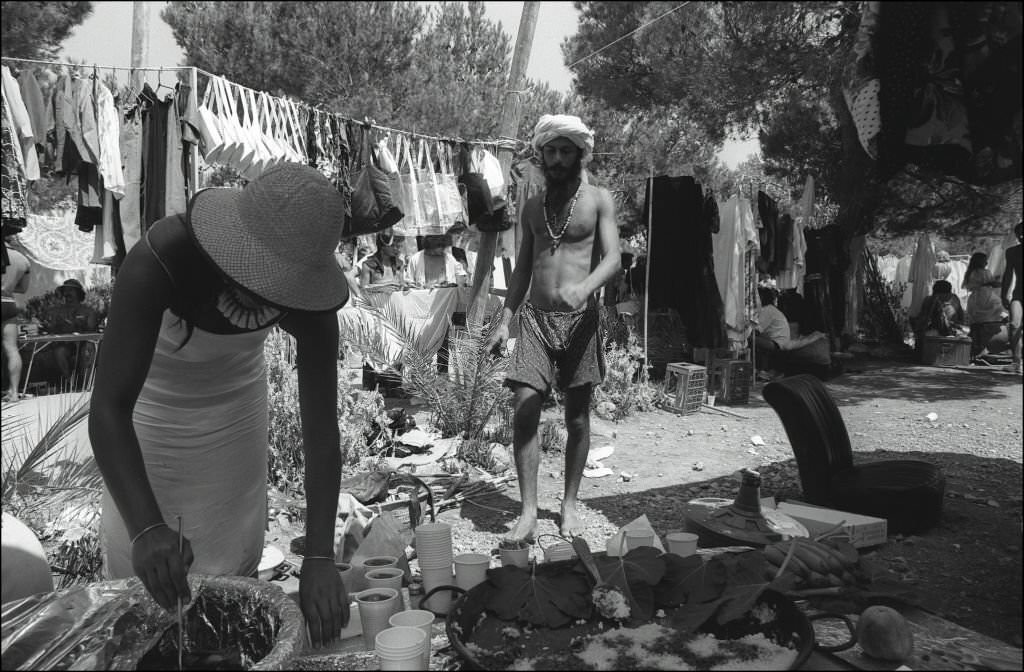
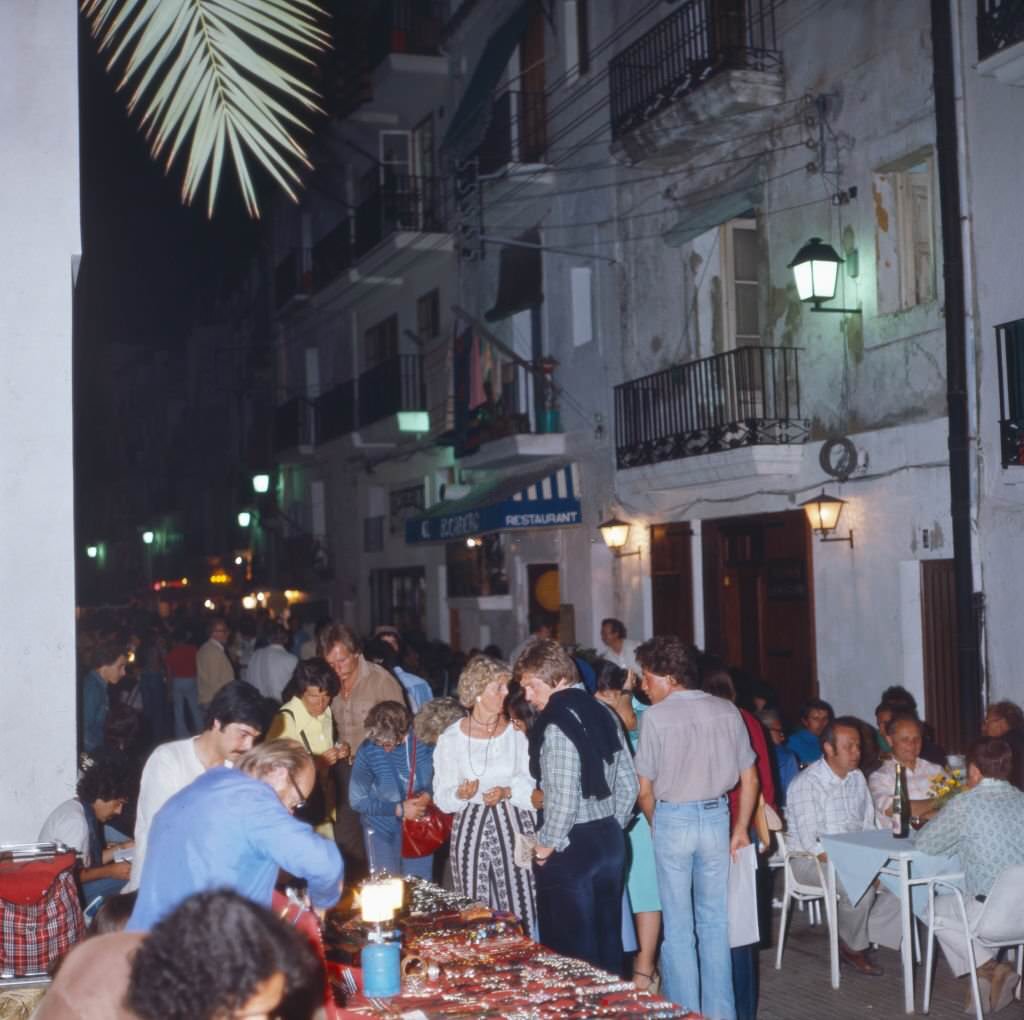
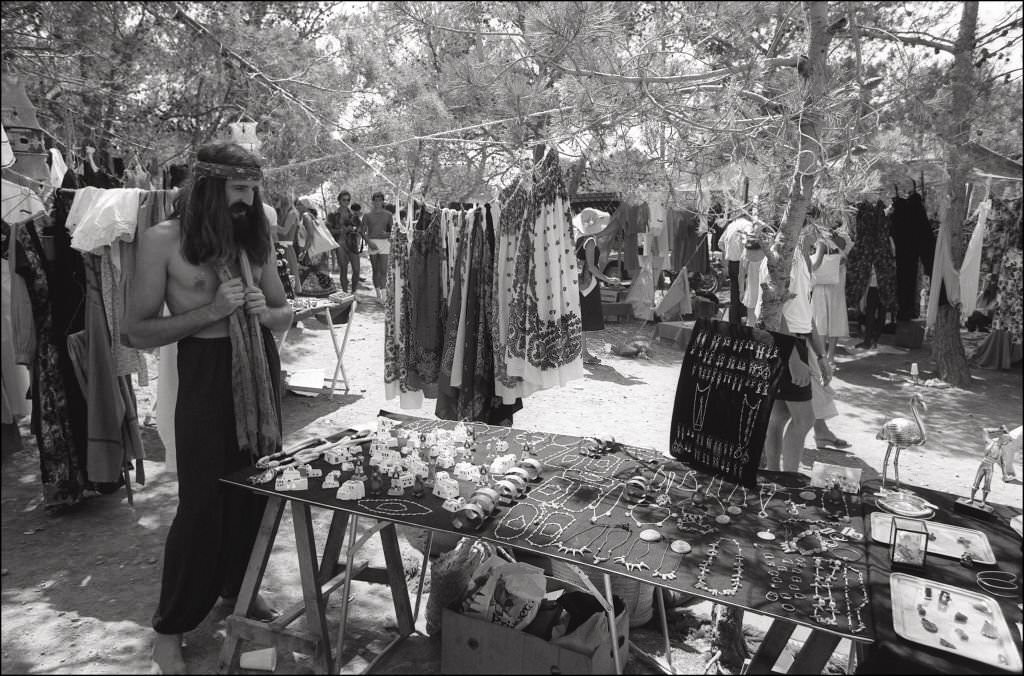
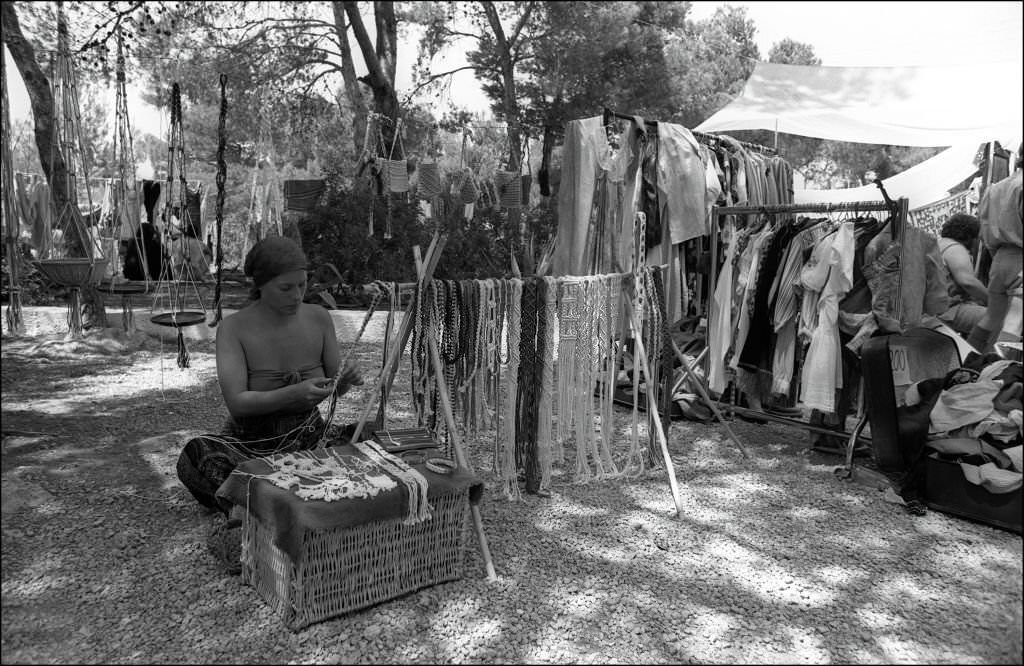
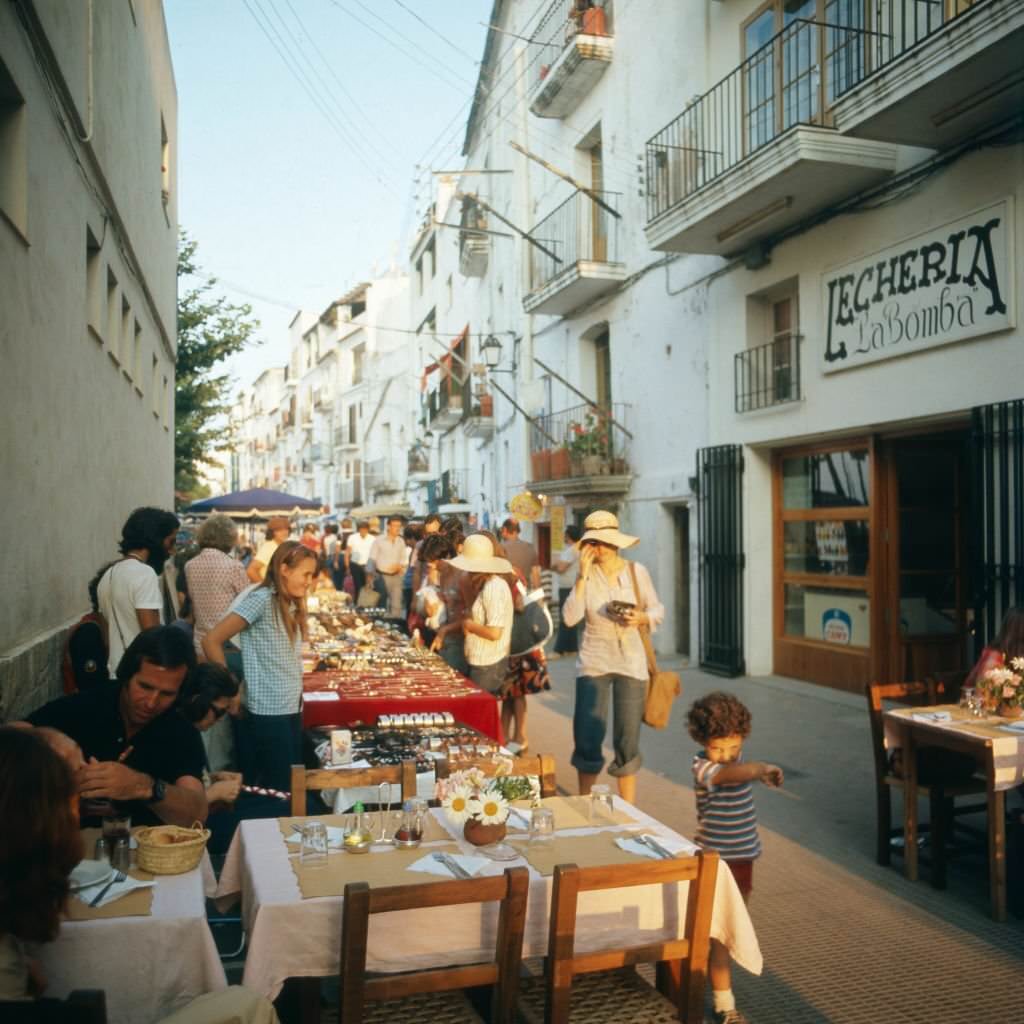
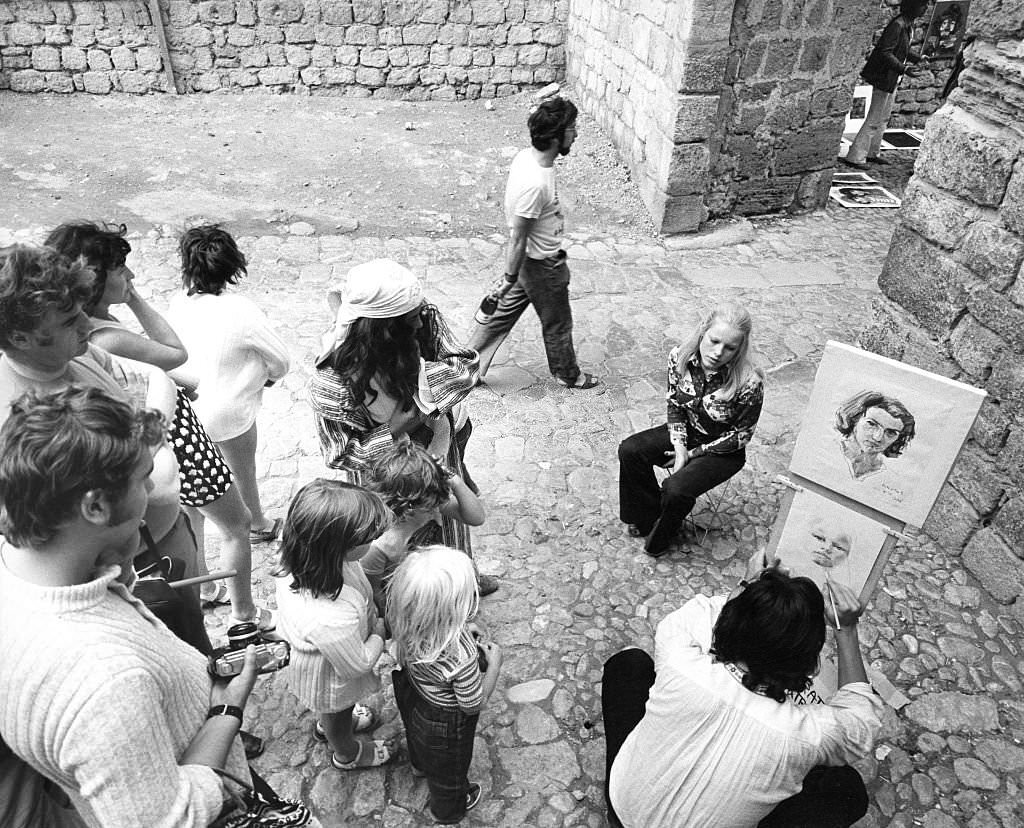
The hippie markets that sprang up across the island were central to its social life. These open-air gatherings were where handmade jewelry, leather goods, woven textiles, and locally grown produce changed hands. They were also where people lingered, talked, and formed the kind of loose community that defined the hippie experience on Ibiza. The markets were not just places to shop — they were the beating heart of the counterculture the island had embraced.
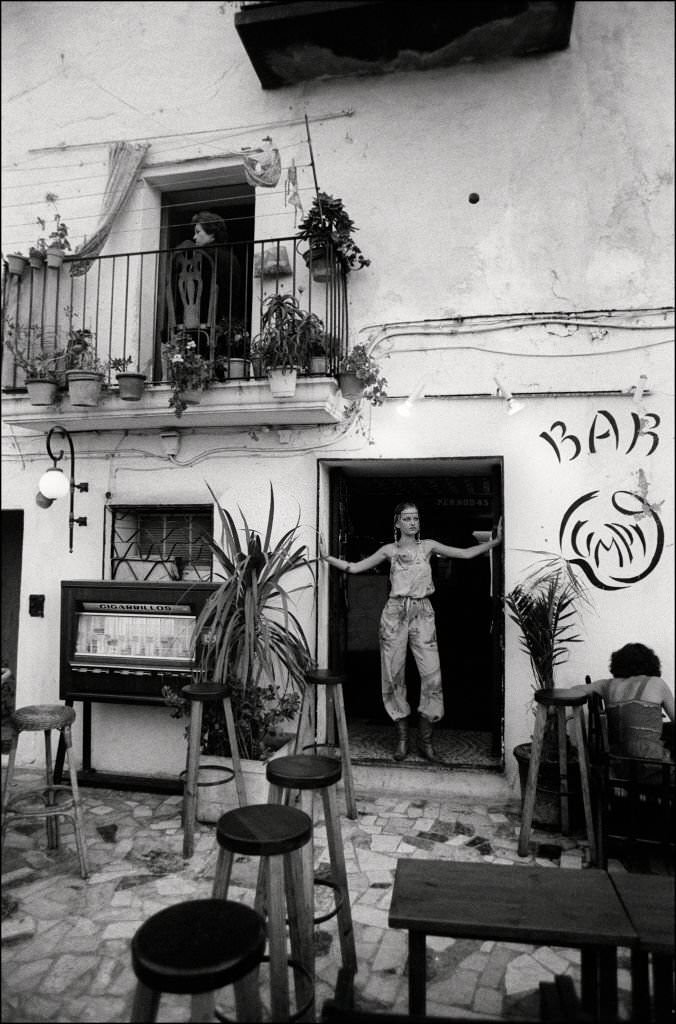
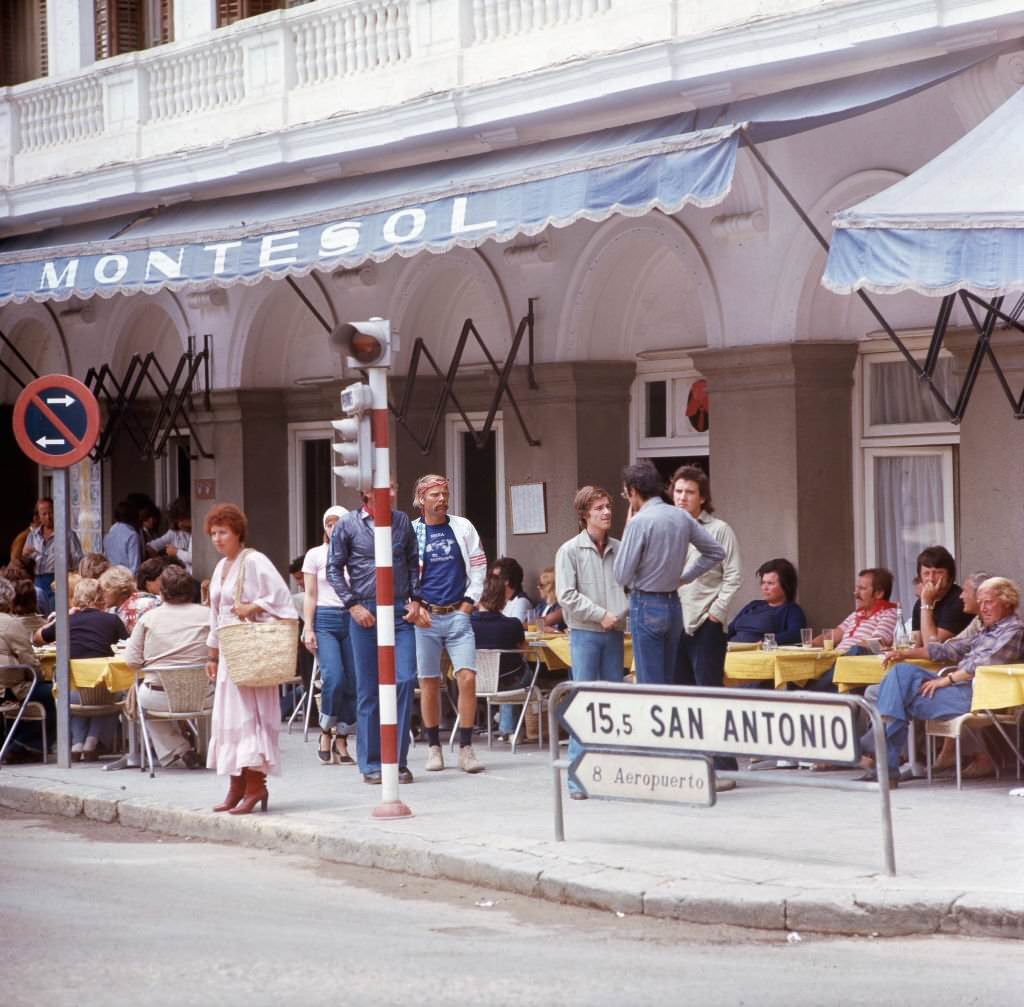
Café culture was equally important to daily life in Ibiza Town. Places like Café Montesol in the city center served as natural gathering spots where locals and visitors sat side by side for hours. The rhythm of the island didn’t push anyone to hurry. A coffee could stretch into an afternoon, and an afternoon could fold into an evening without anyone noticing or minding.
By the mid-1970s, Ibiza had become a worldwide phenomenon. Word had spread far beyond Europe’s backpacker trails. The island’s reputation as a place of beauty, freedom, and music made it the destination that half the world seemed to want to reach. Music legends added to that mystique in a very literal way. Bob Marley, Thin Lizzy, and Eric Clapton all performed concerts in Ibiza’s abandoned bullring — an open-air venue that gave these performances a raw, unforgettable quality. Those events cemented the island’s identity as a place where music was not just entertainment but something closer to a communal ritual.
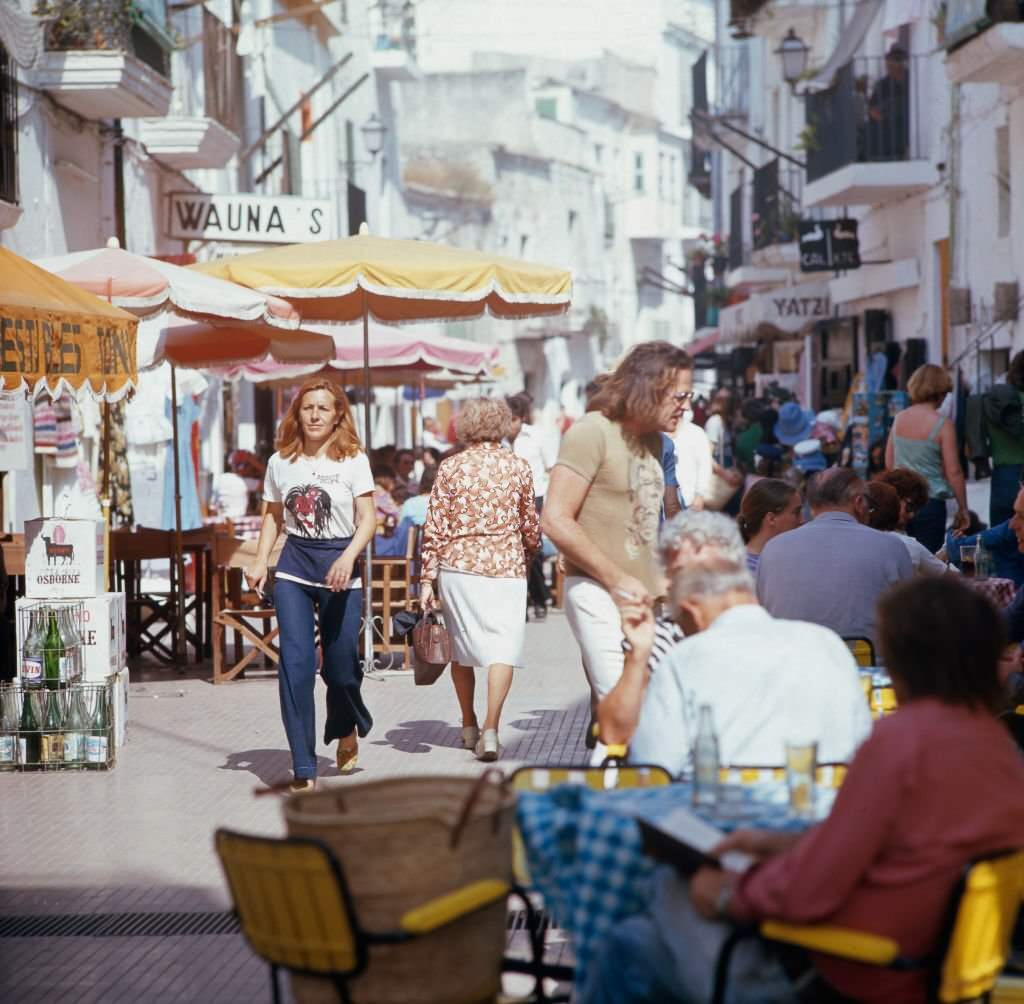
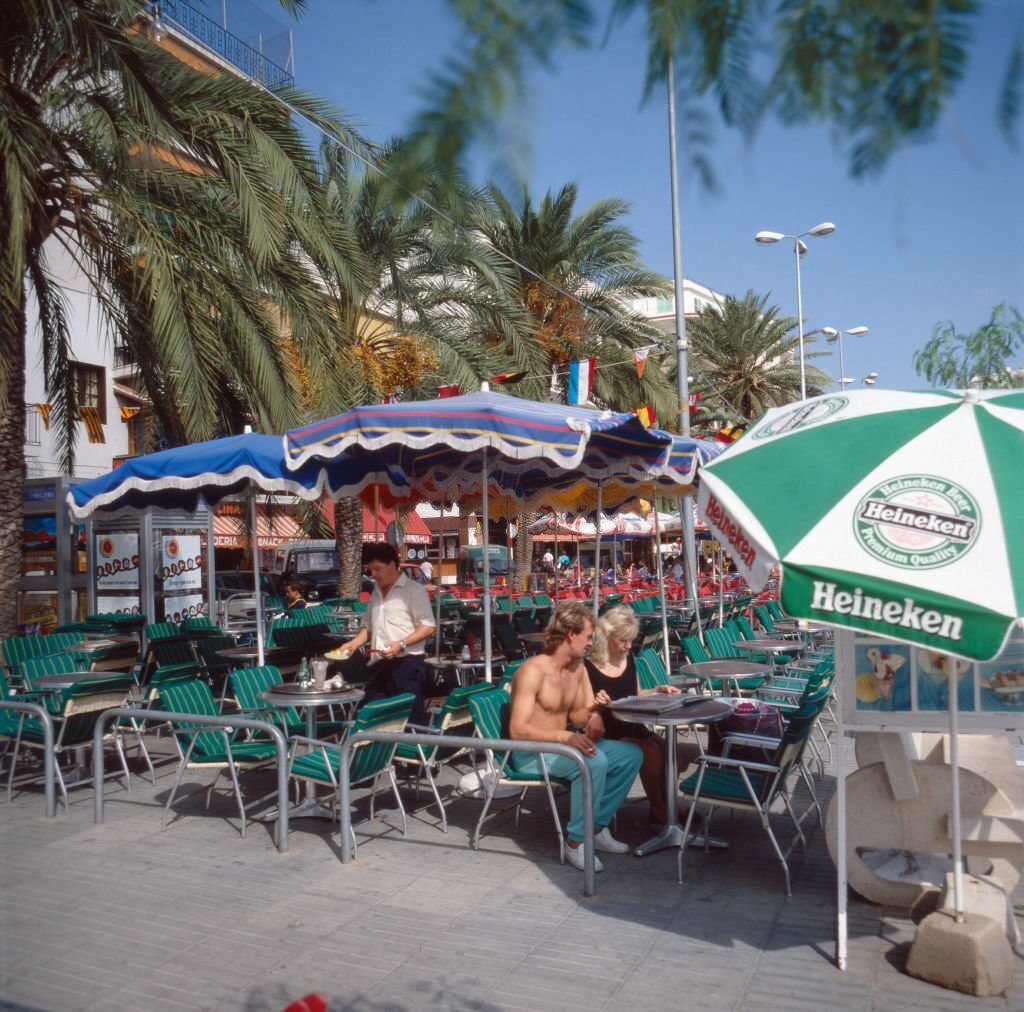
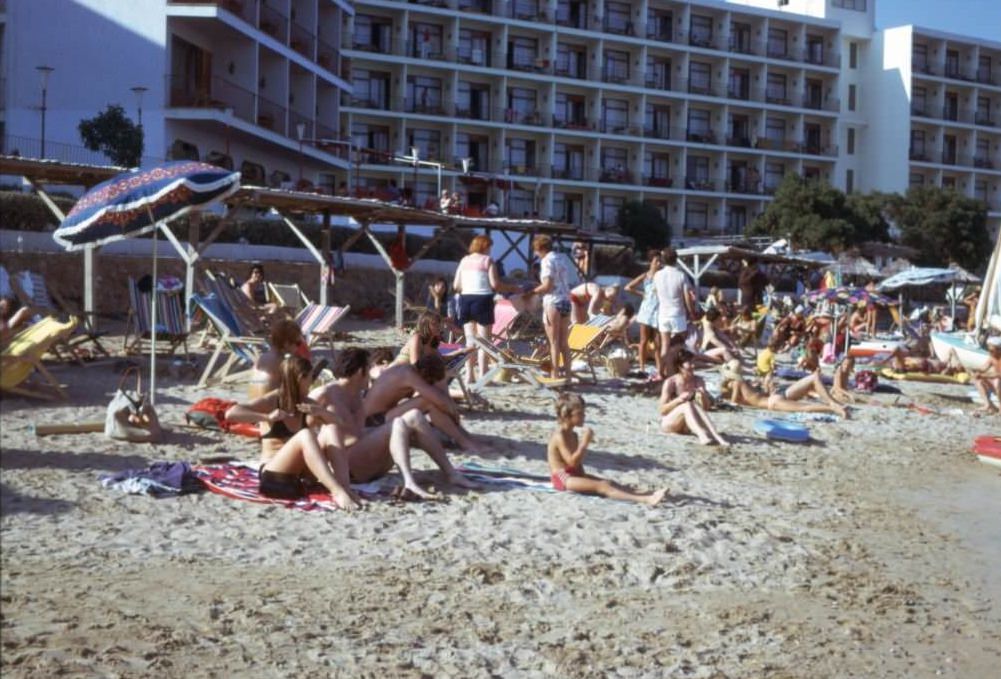
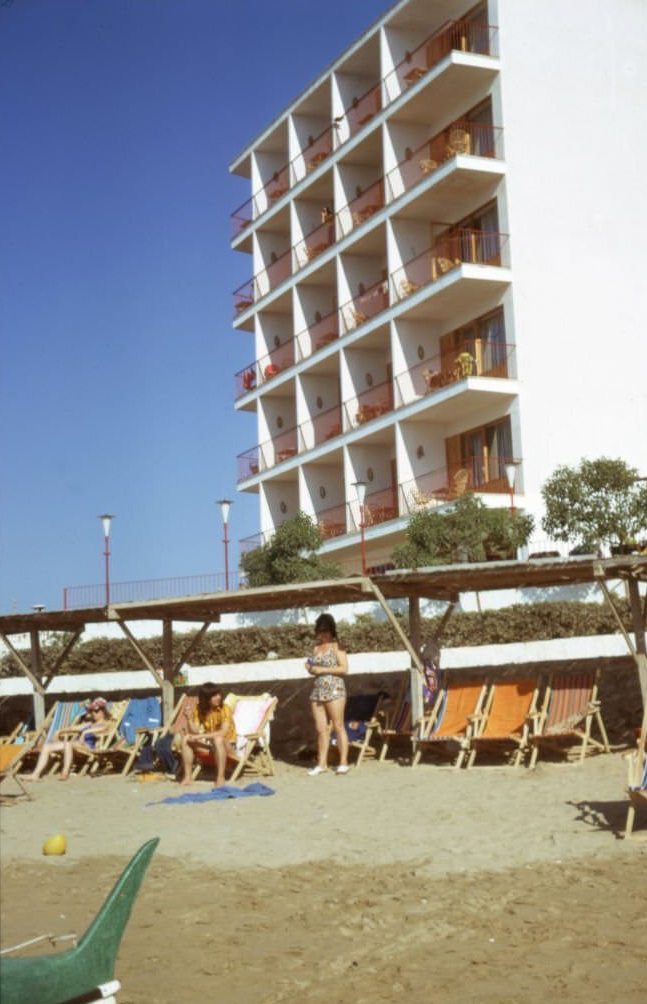
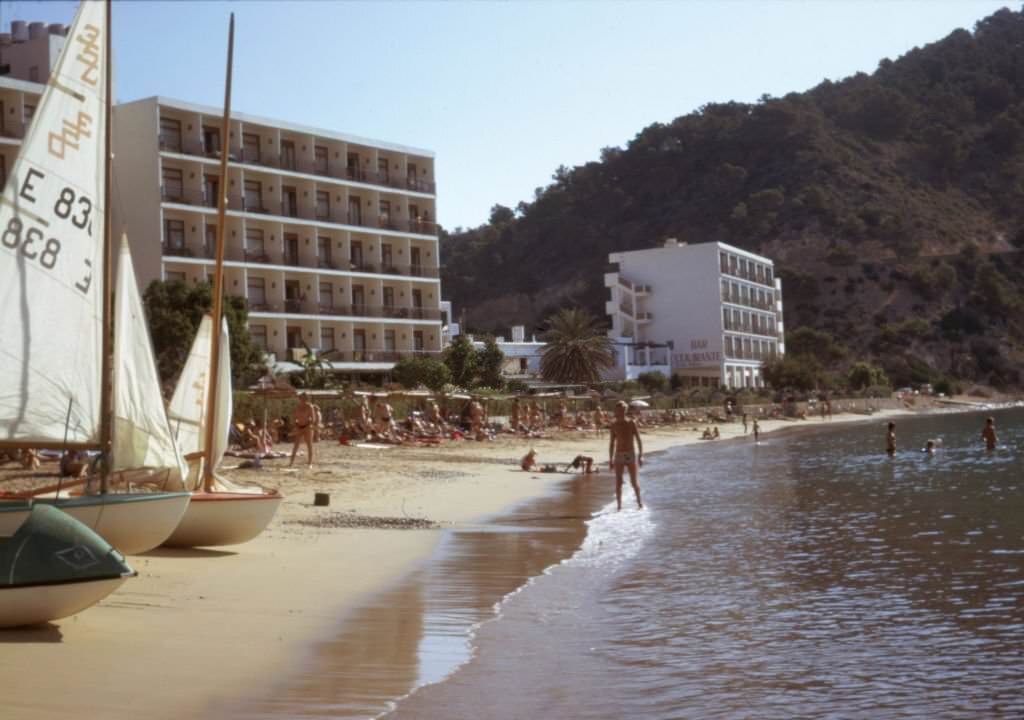
Sant Antoni de Portmany, on the island’s western coast, was a popular base for tourists who wanted easy access to the beach and the town’s cafés and bars. The resort had a lively but still manageable energy in the mid-1970s — busy enough to feel alive, quiet enough to feel like a genuine holiday. Visitors sat at outdoor tables watching boats move across the harbor while the sun dropped behind the water.
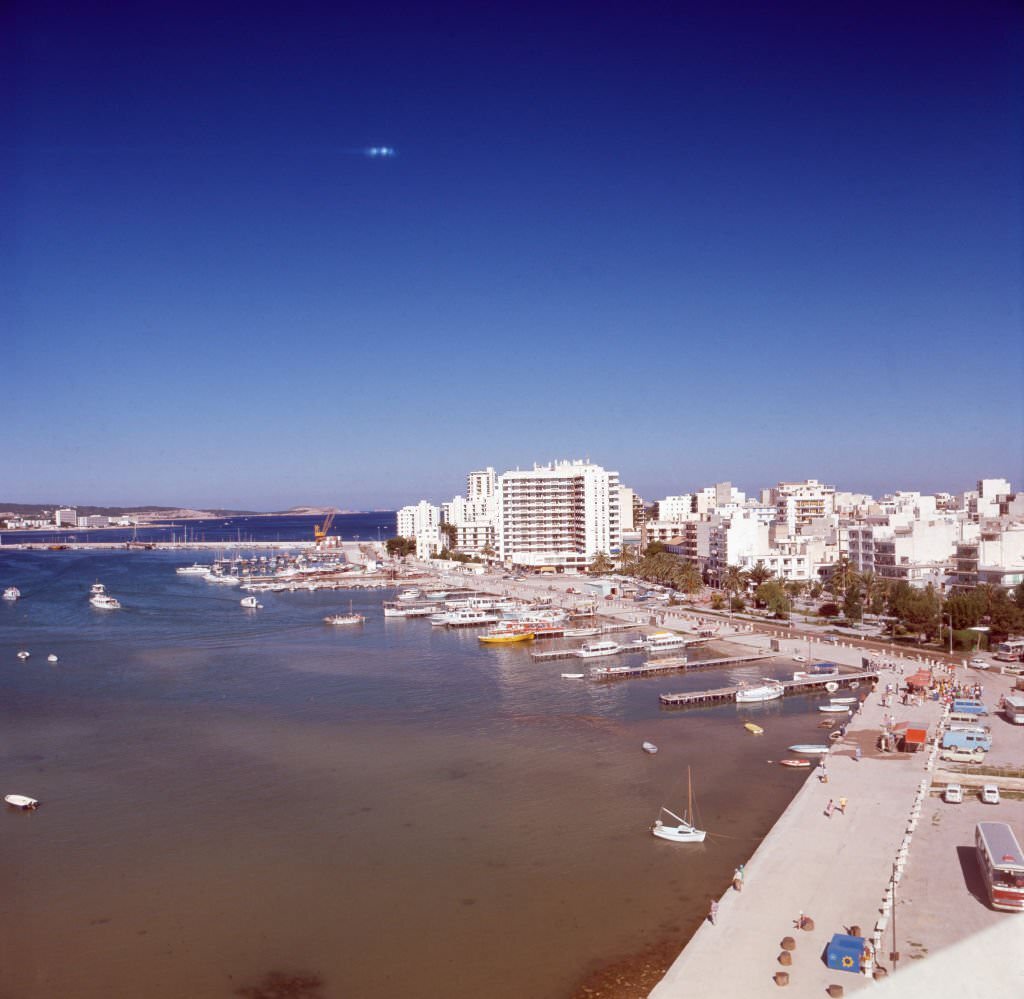
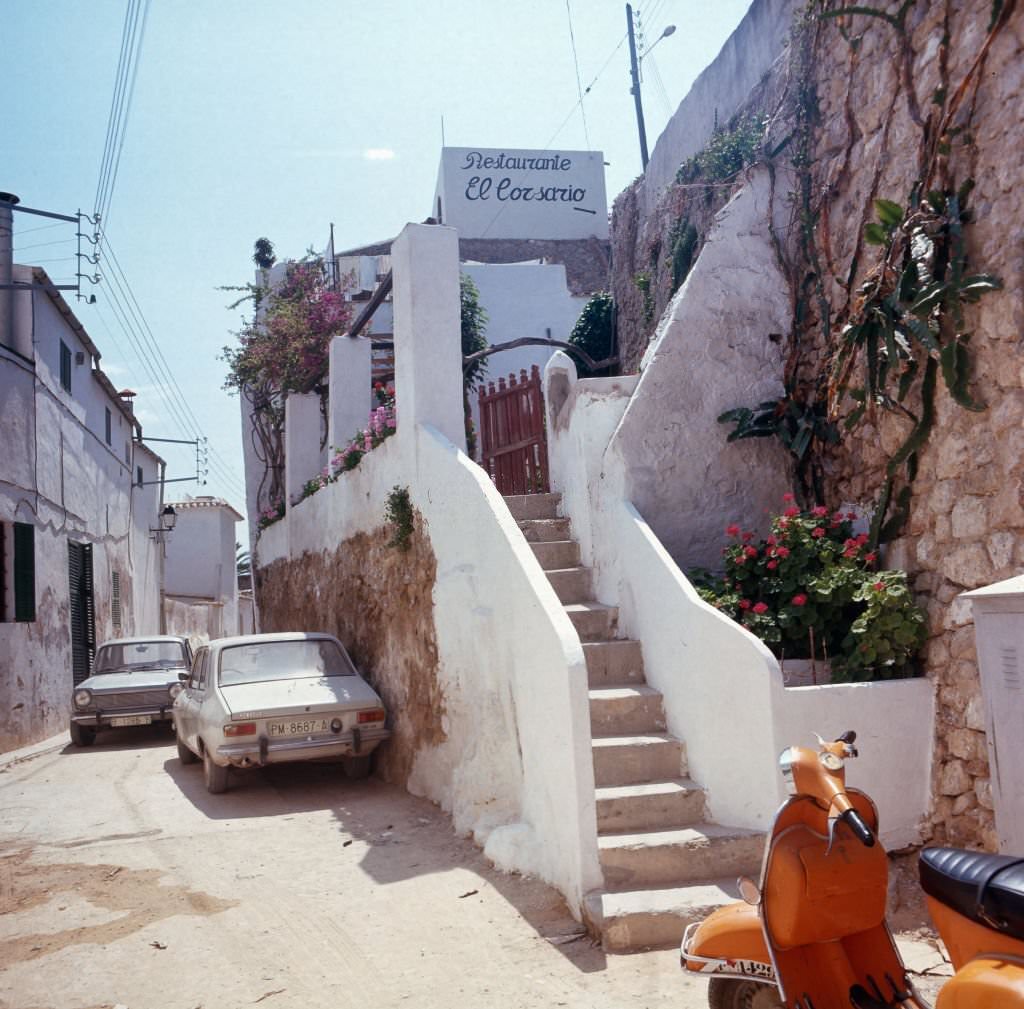
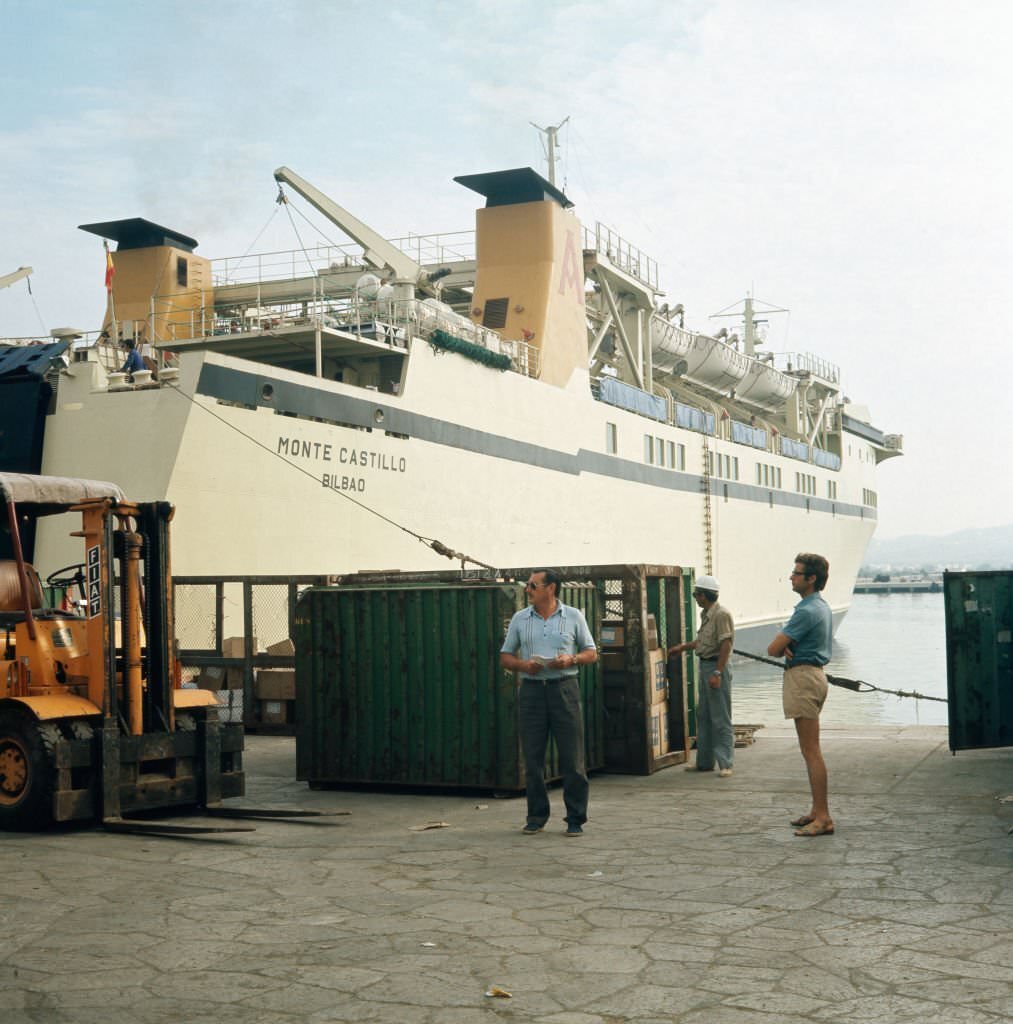
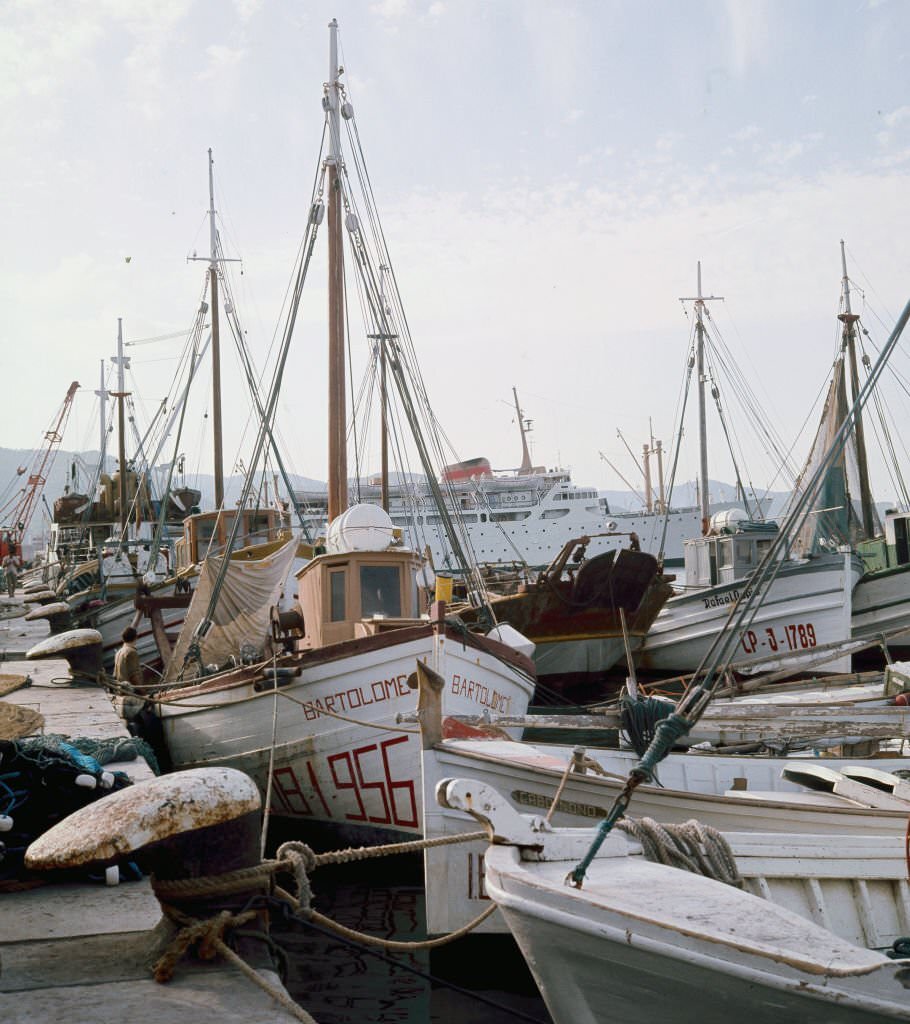
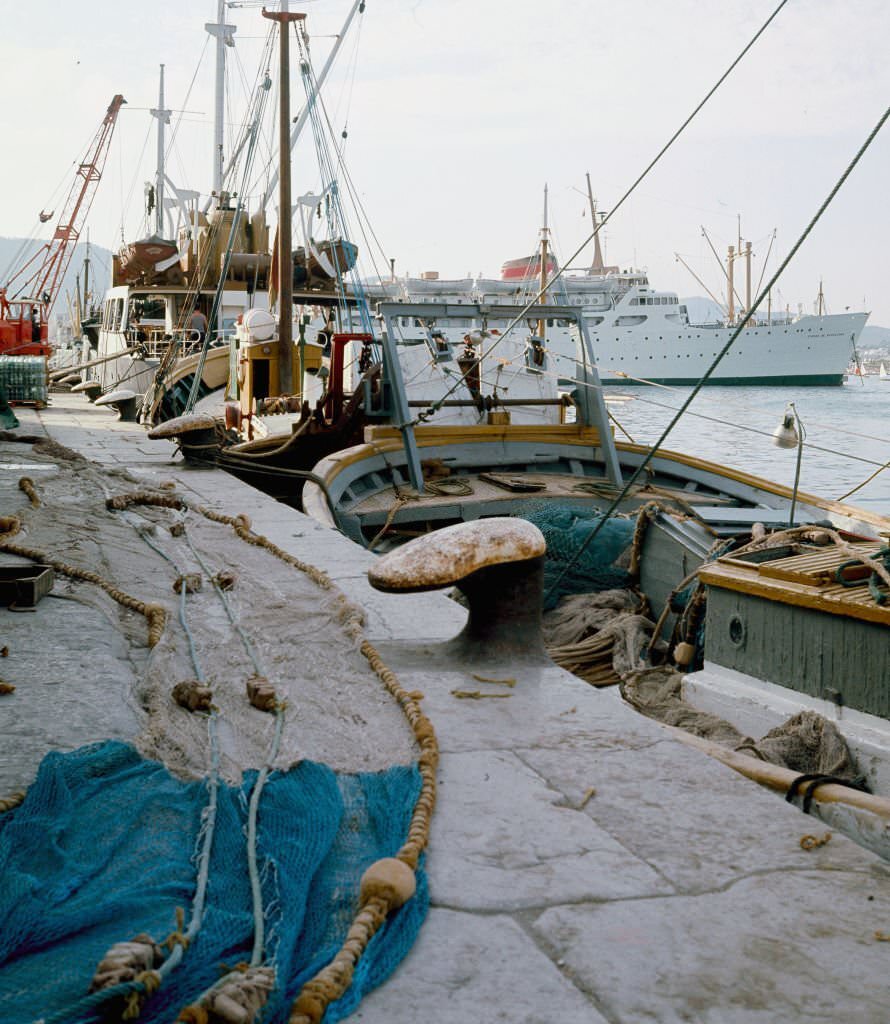
The port of Ibiza Town remained the island’s commercial and emotional center. Fishing boats left before dawn each morning and returned with their catch, which was sold fresh at local markets within hours. The smell of salt and fish was as much a part of the city as its whitewashed walls. No matter how many tourists arrived, the working rhythm of a fishing port kept the island grounded in what it had always been.
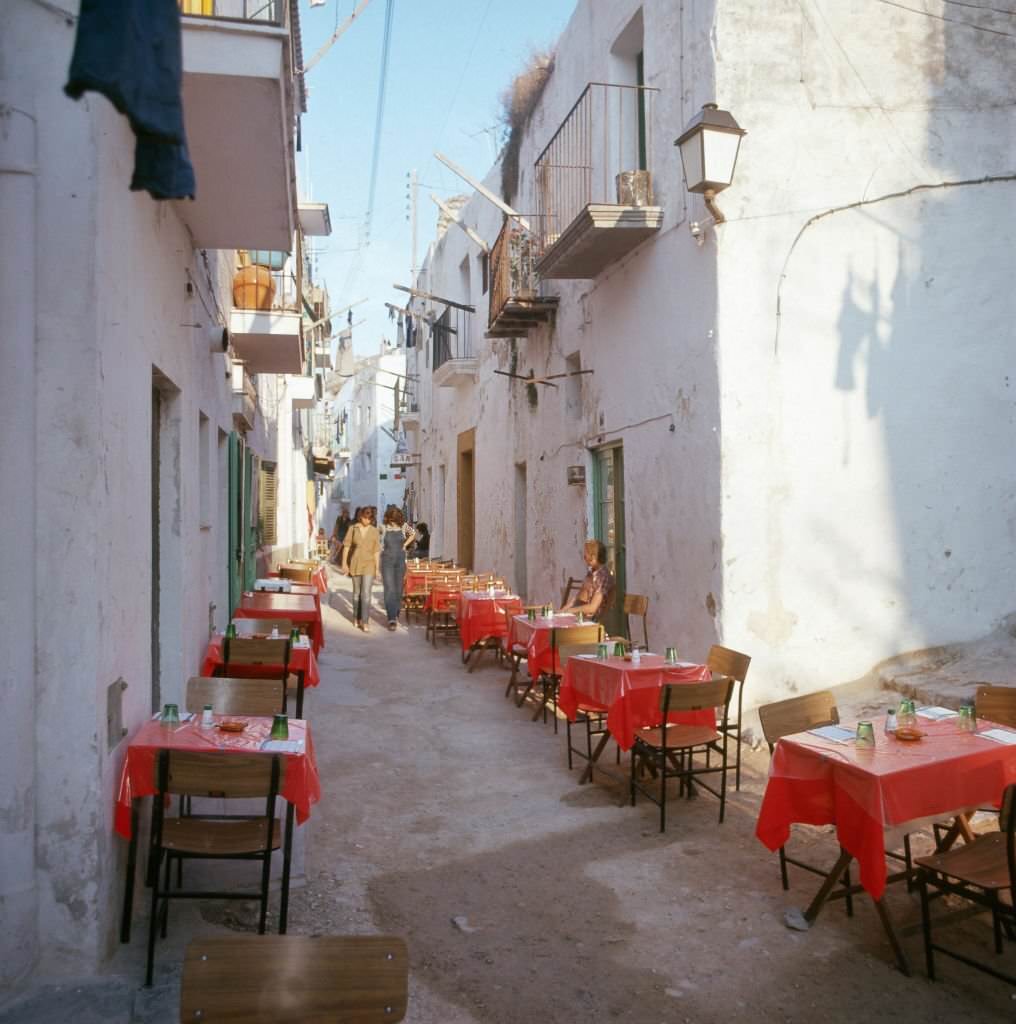
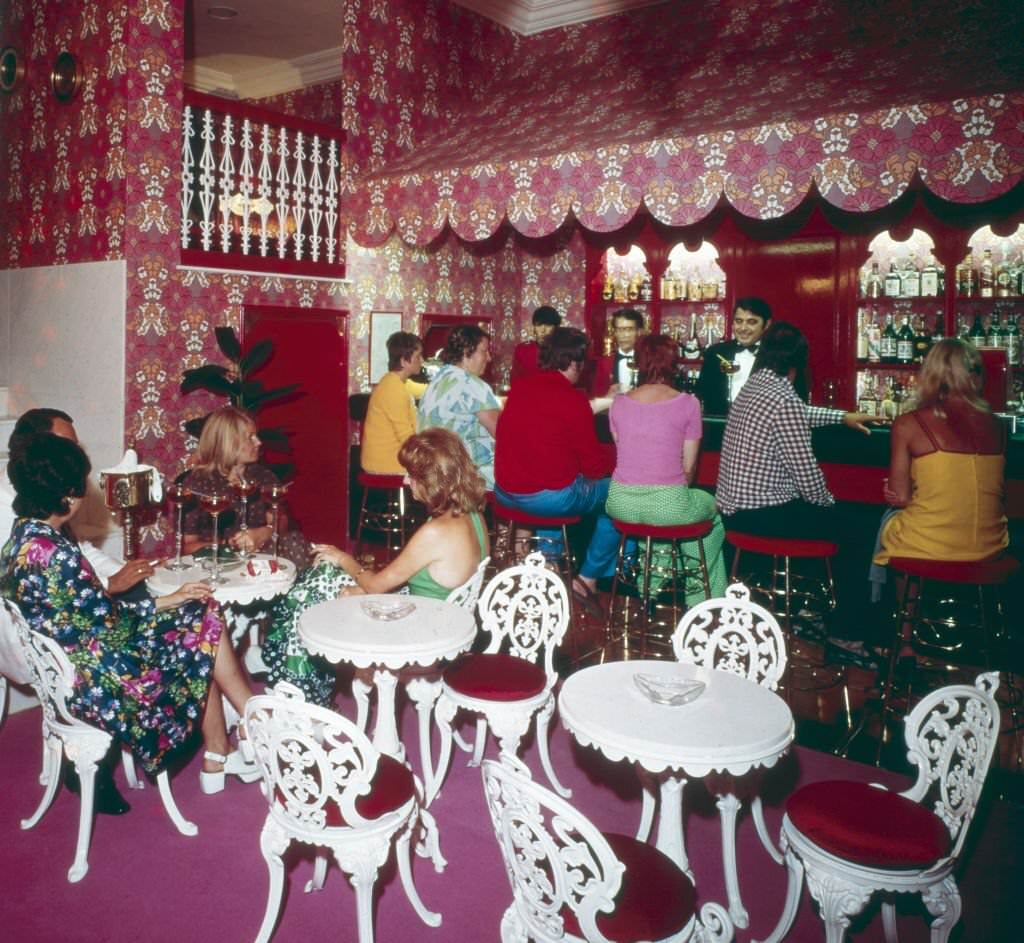
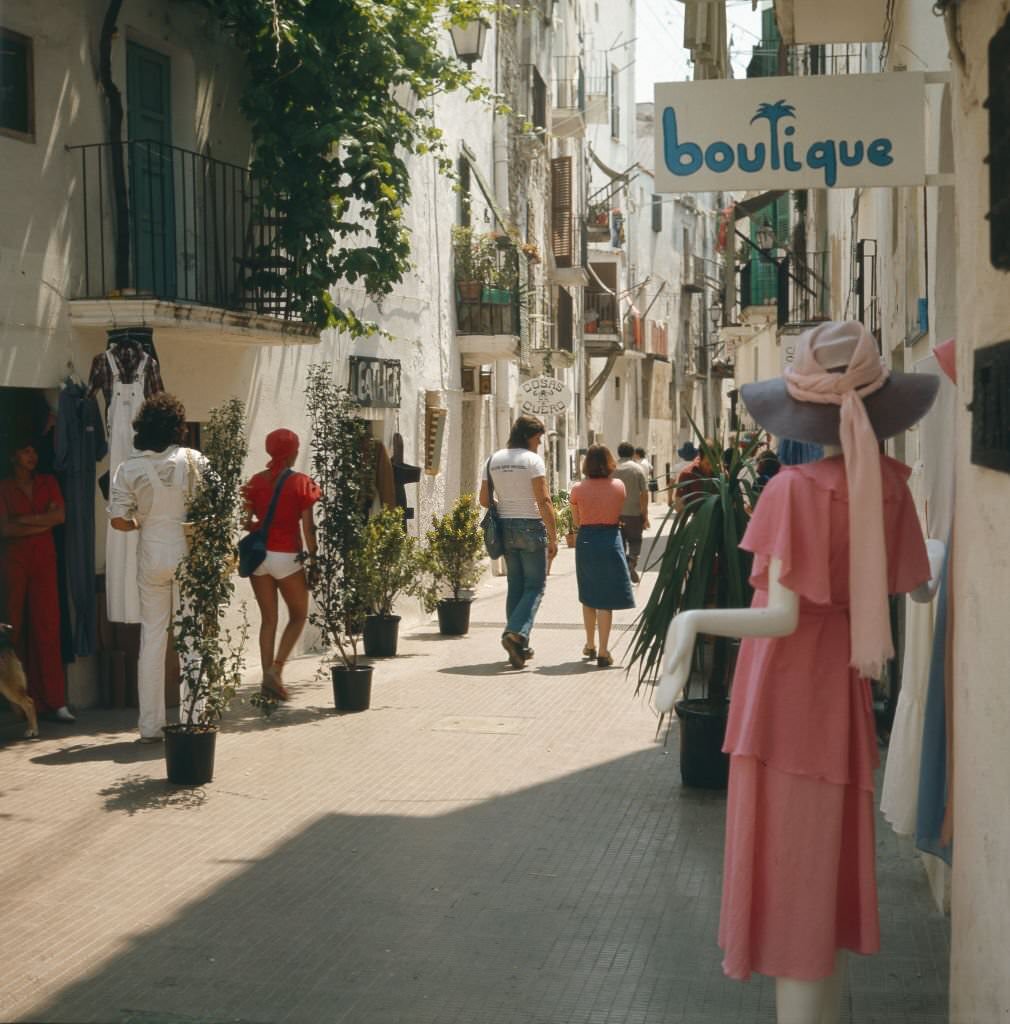
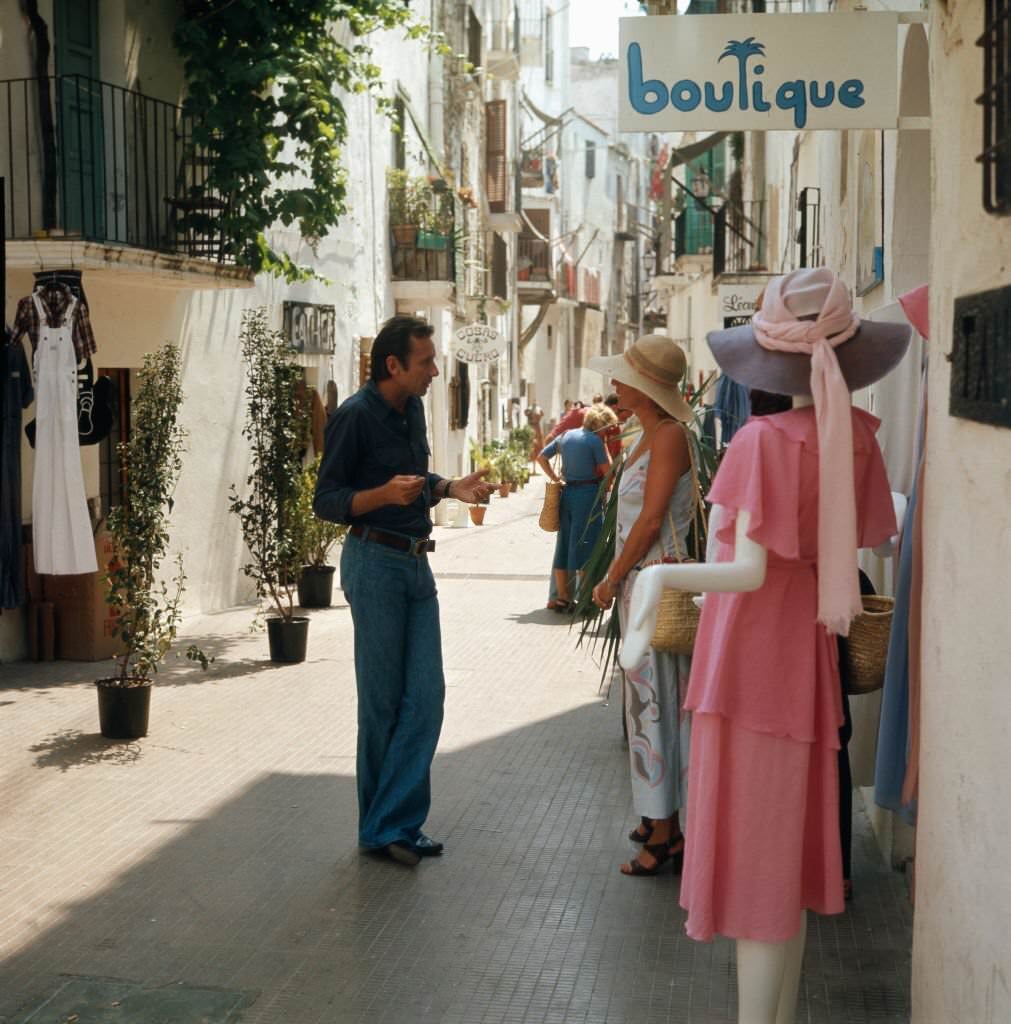
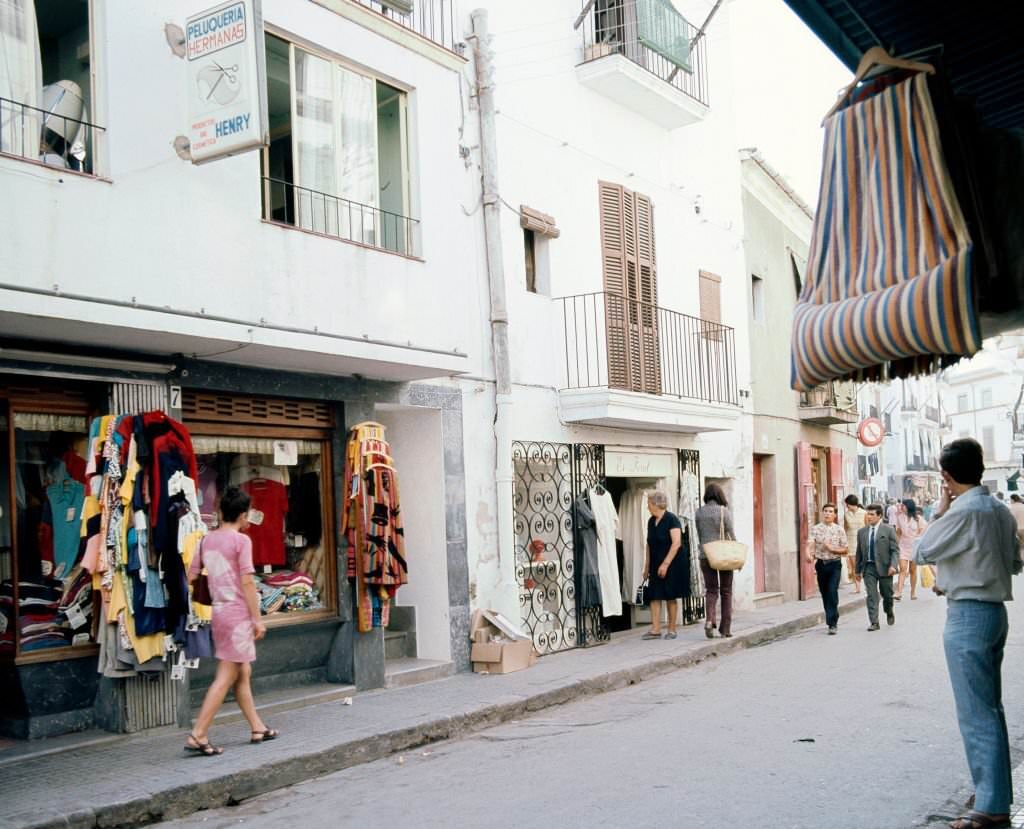
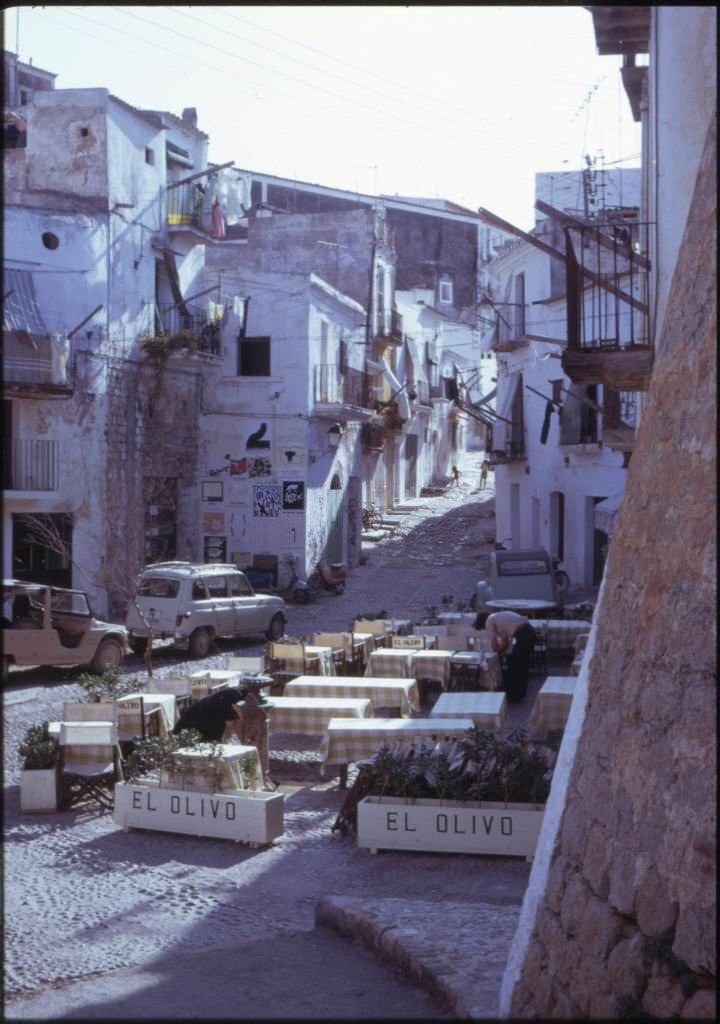
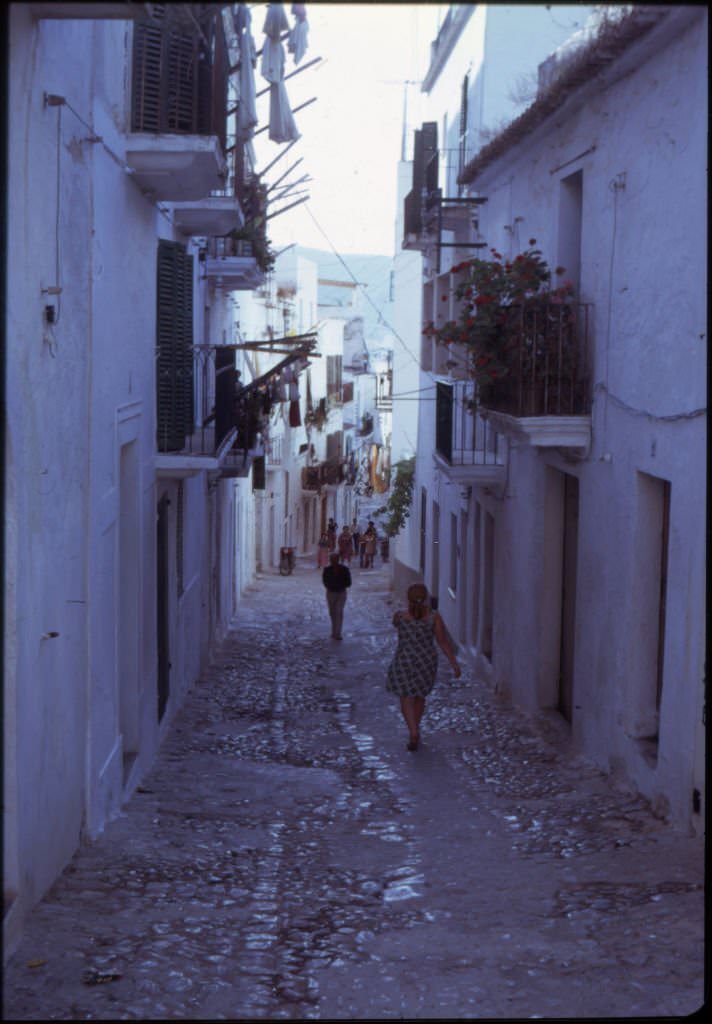
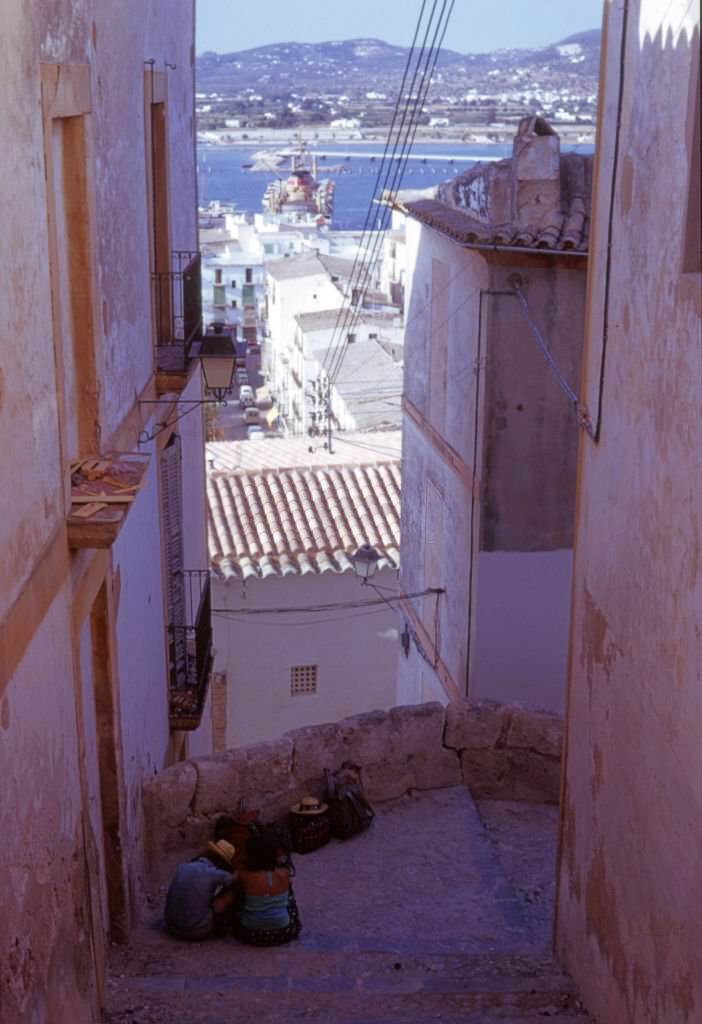
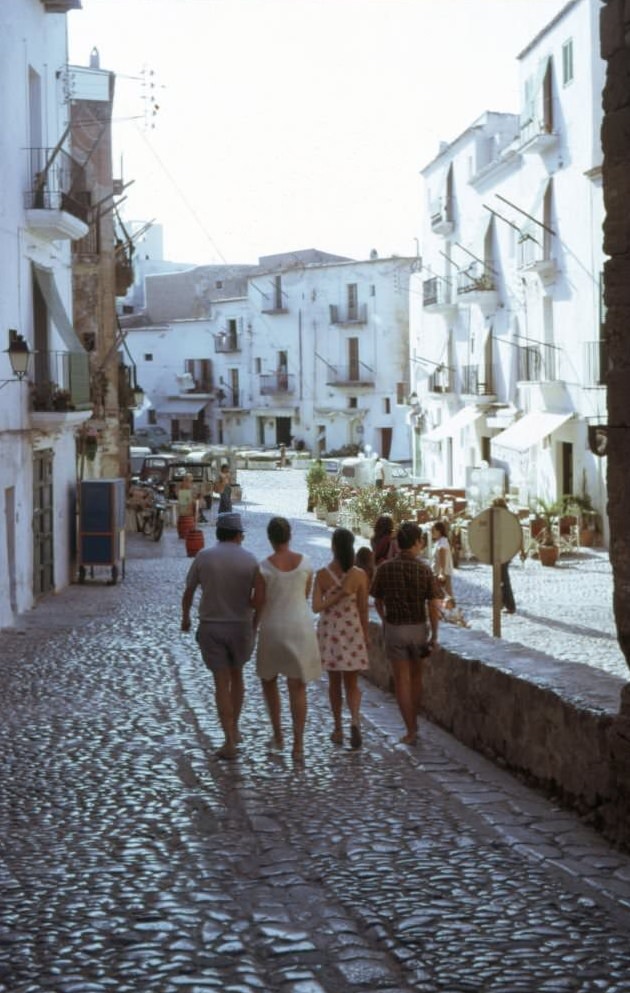
Sunbathing, strolling through the old city, eating fresh seafood, browsing boutiques — these were the activities that filled a summer day in 1970s Ibiza. None of it required much money, and none of it required a plan. The island rewarded wandering. Its narrow streets in the historic upper town, Dalt Vila, led to unexpected plazas, sudden views of the harbor, and doorways painted in colors that had faded beautifully under decades of Mediterranean sun.
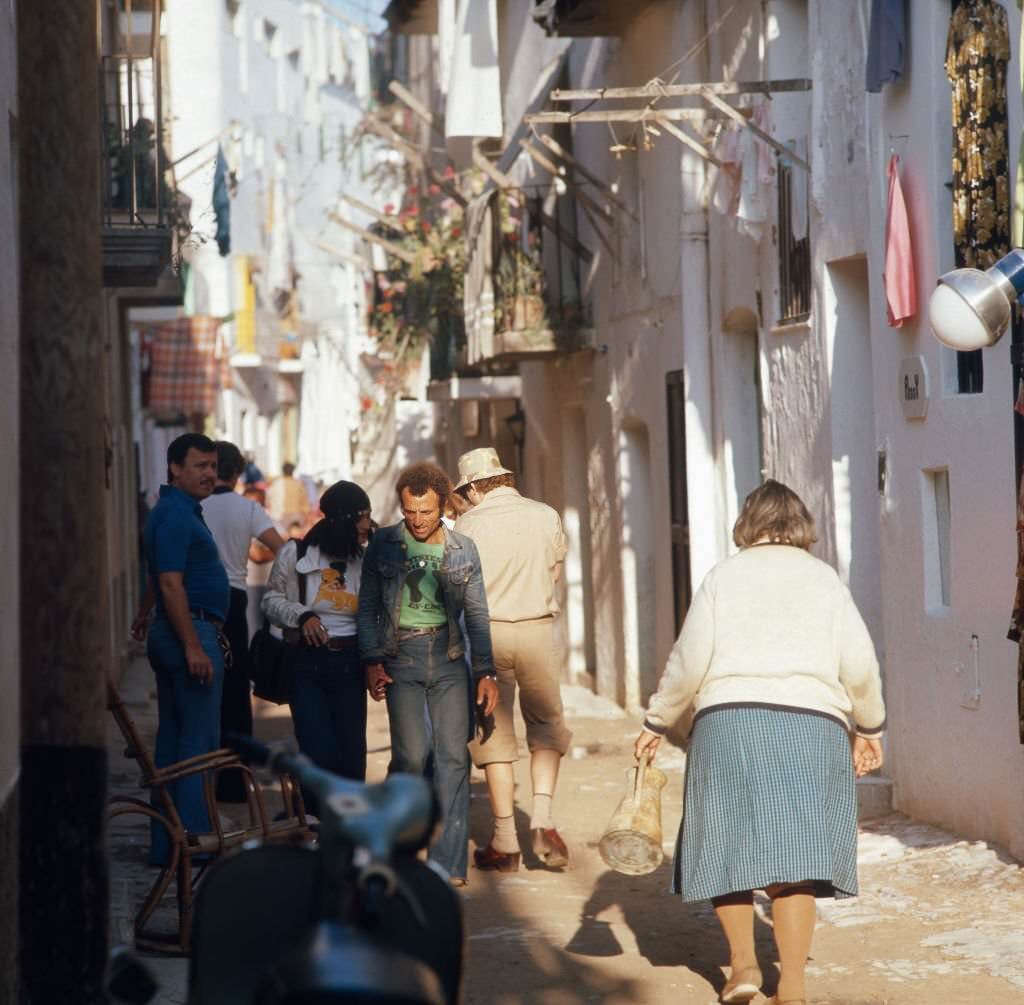
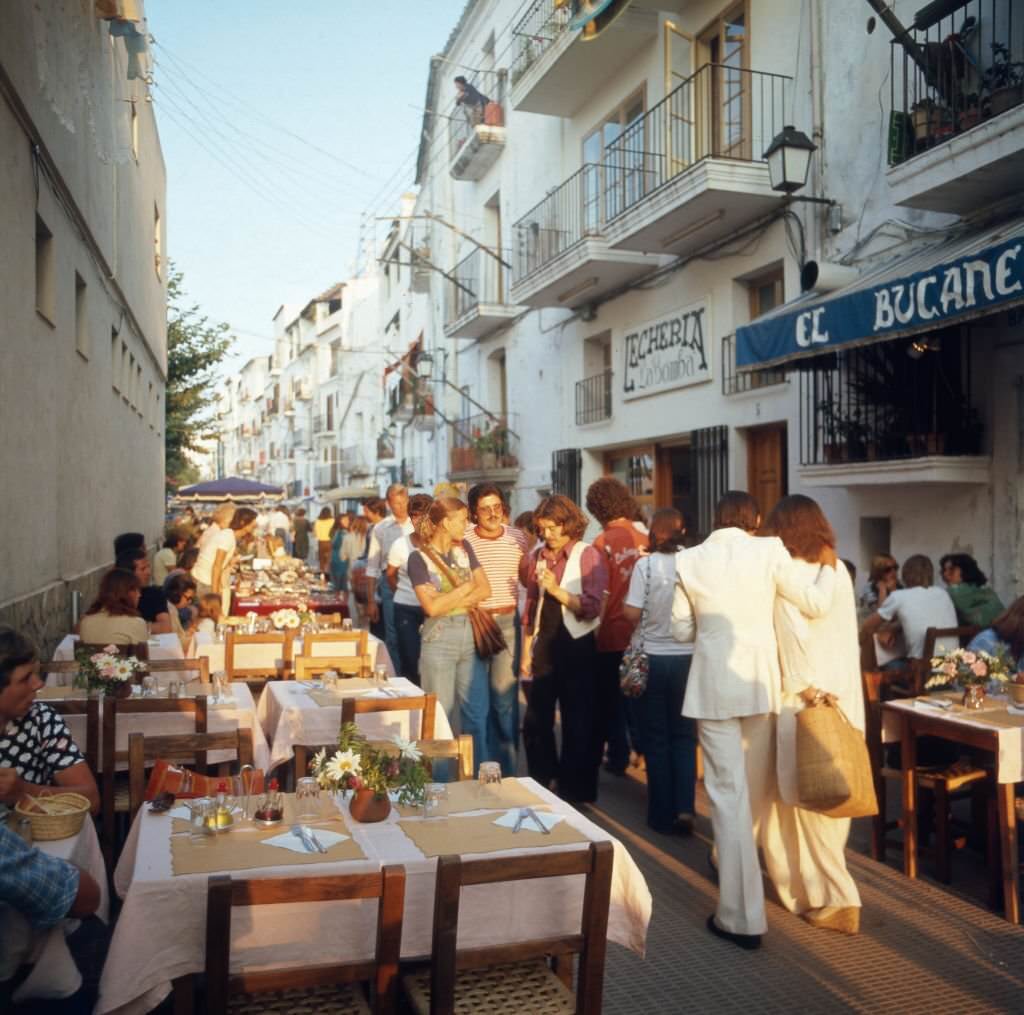
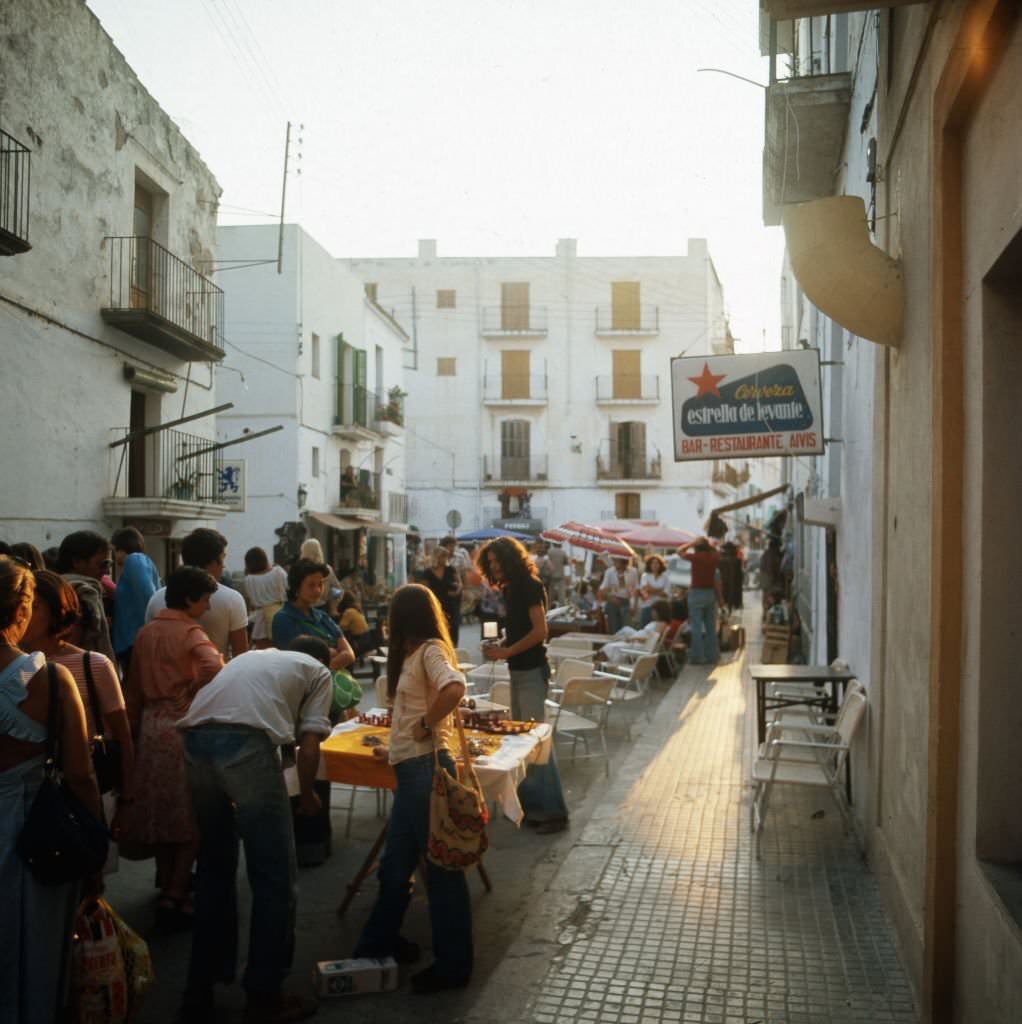
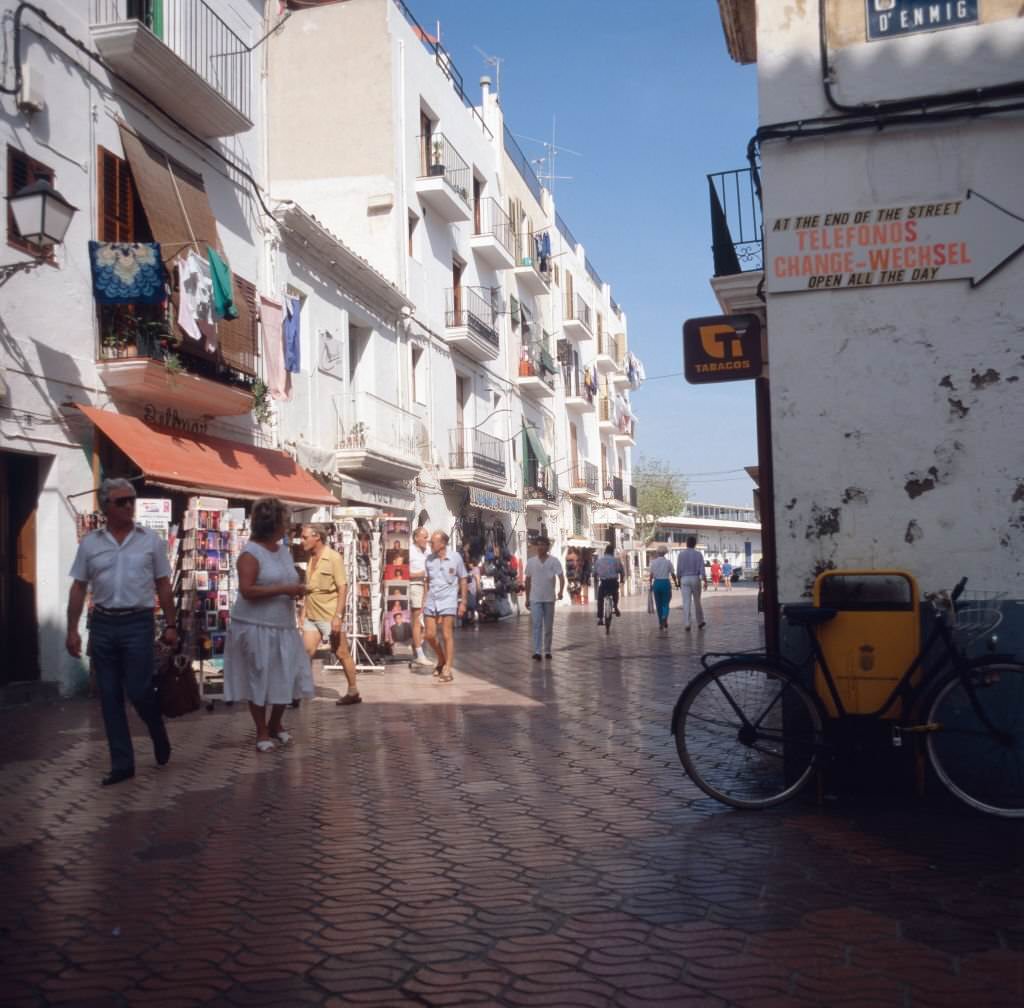
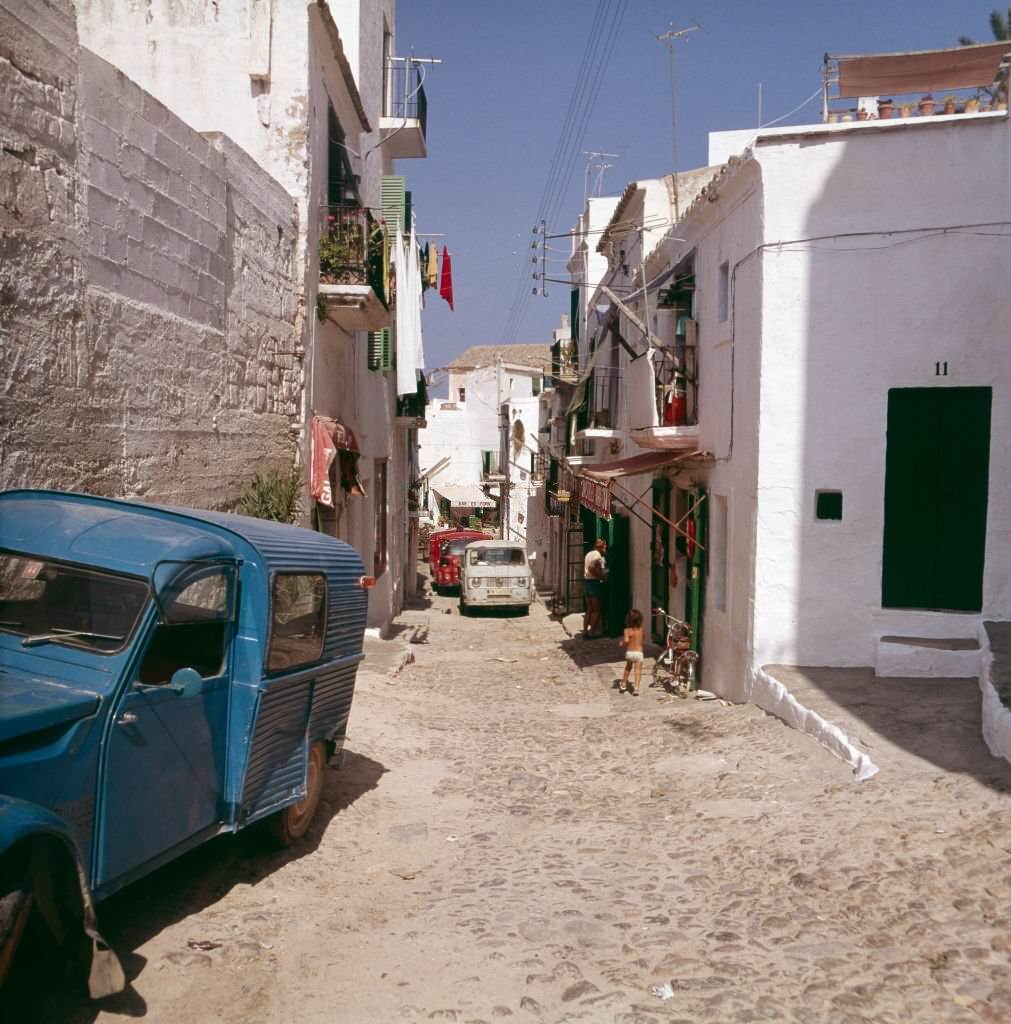
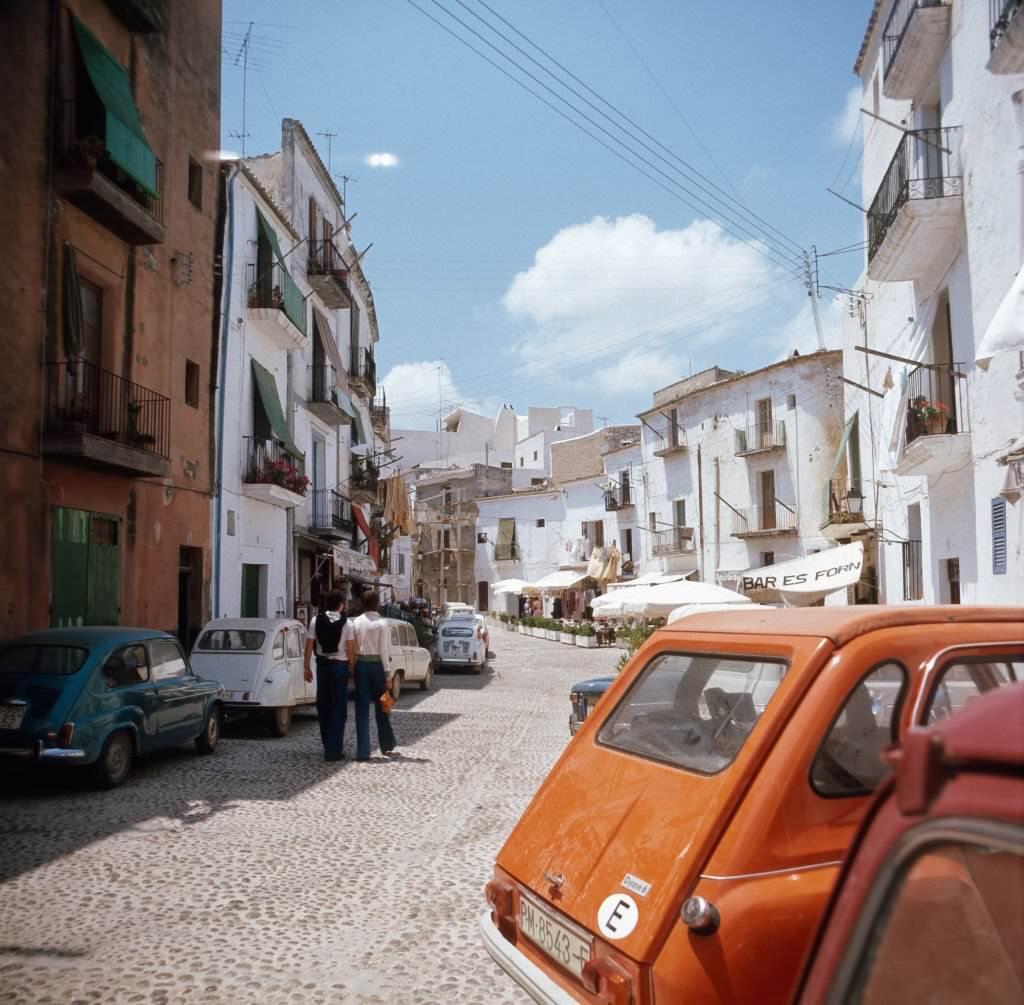
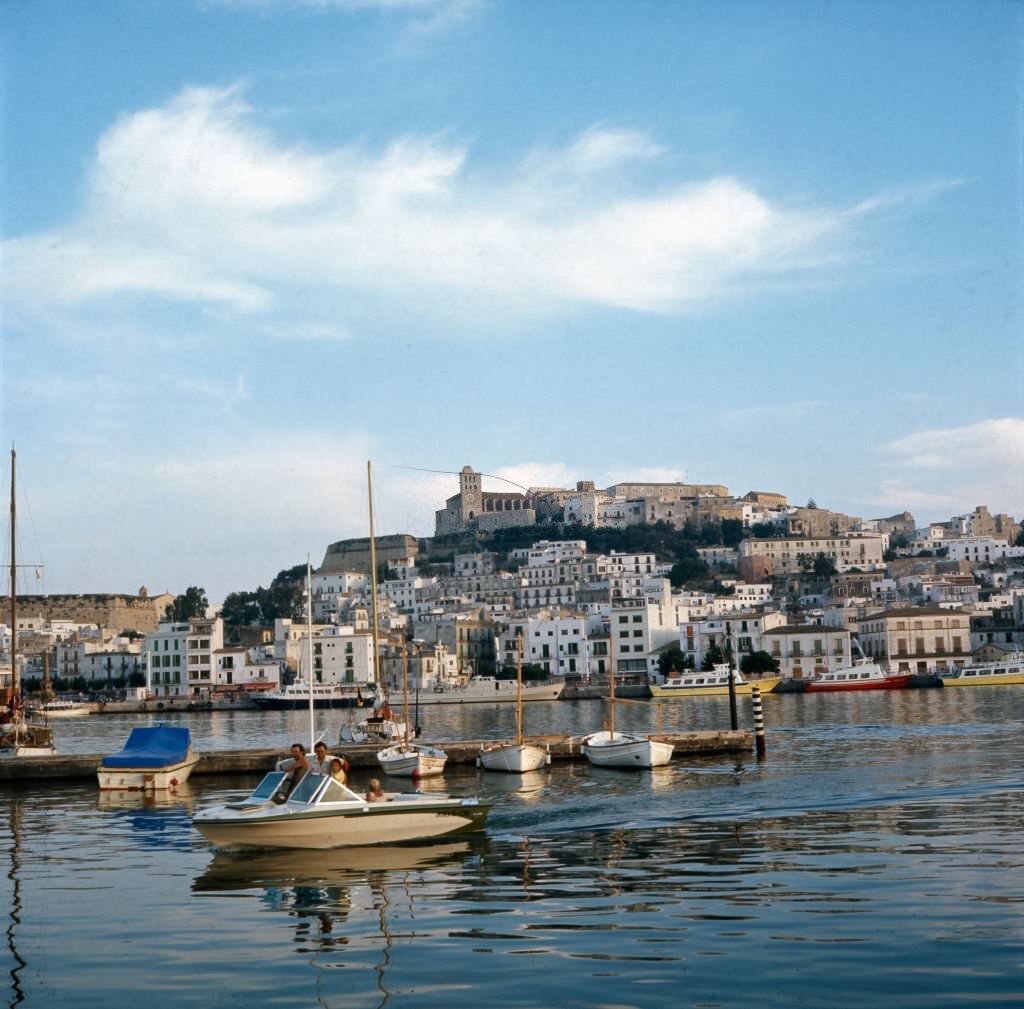
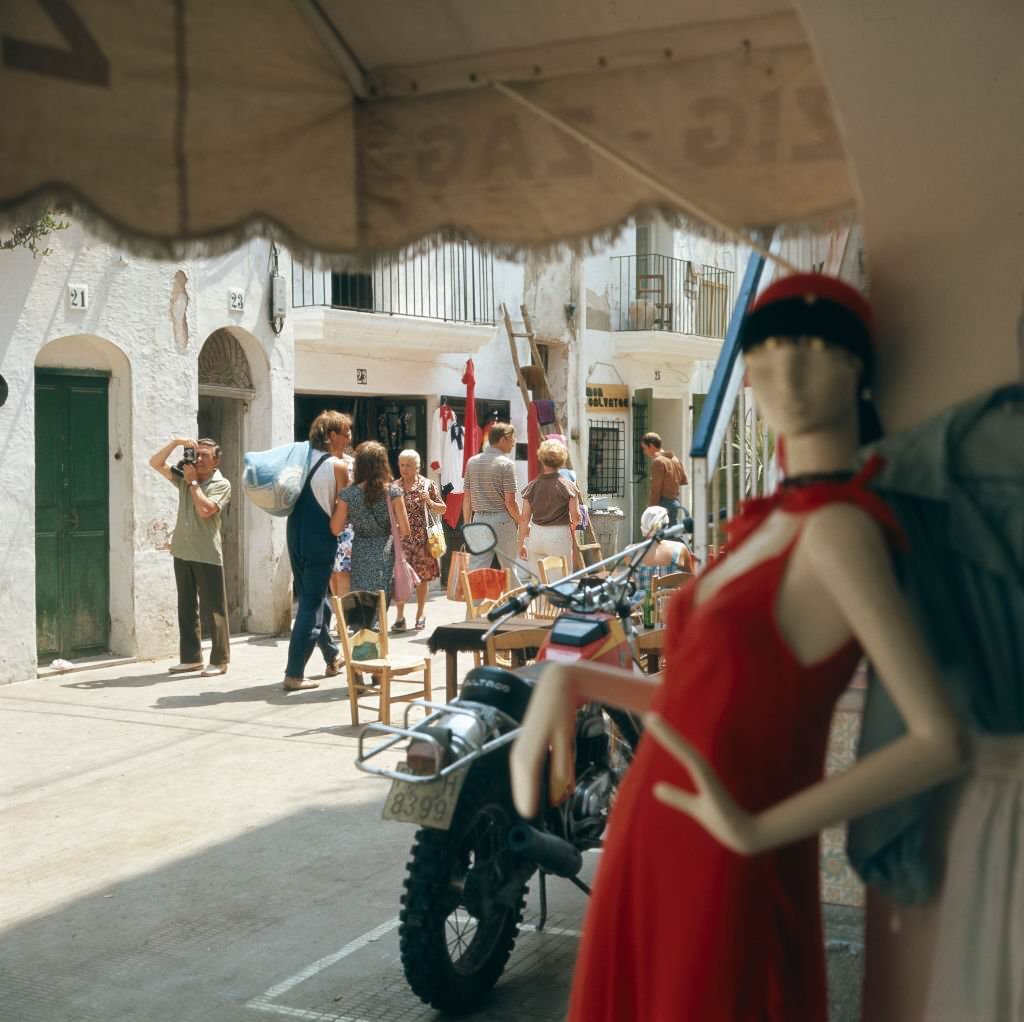
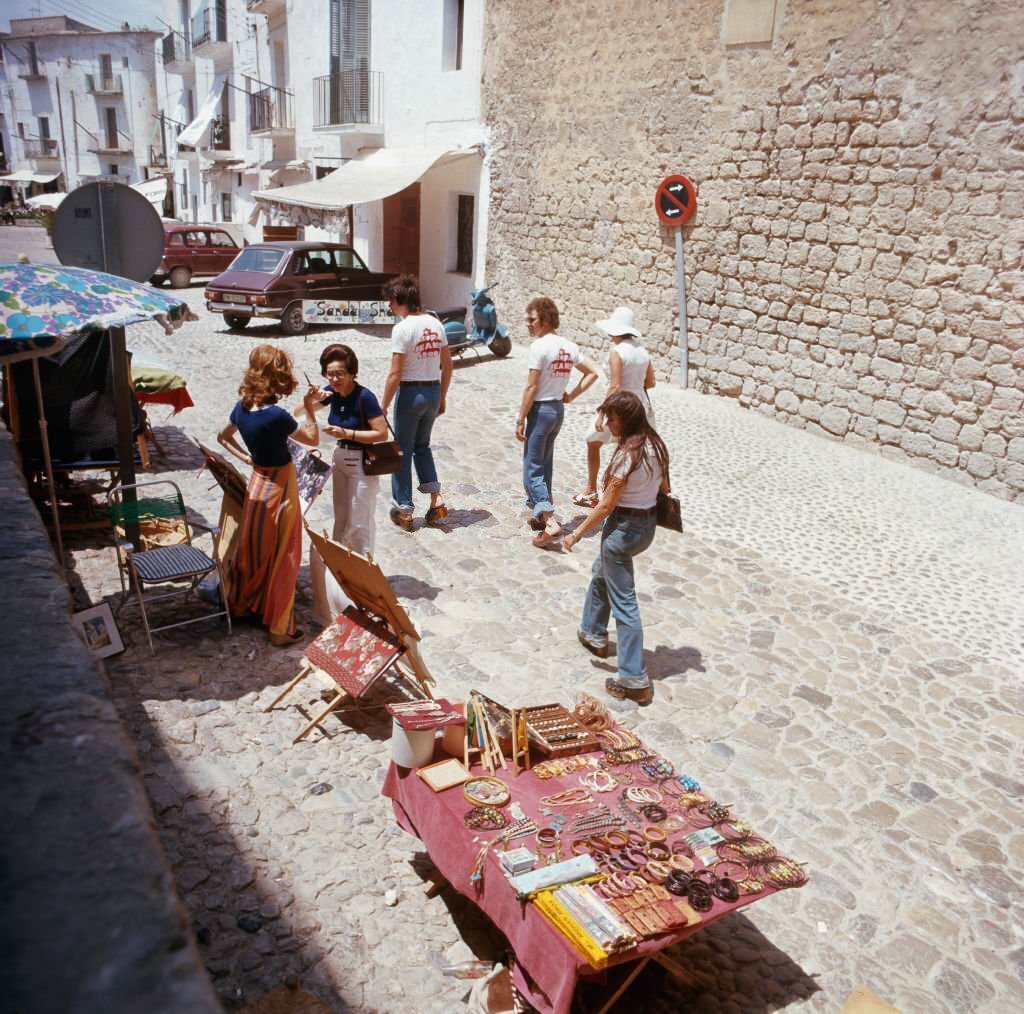
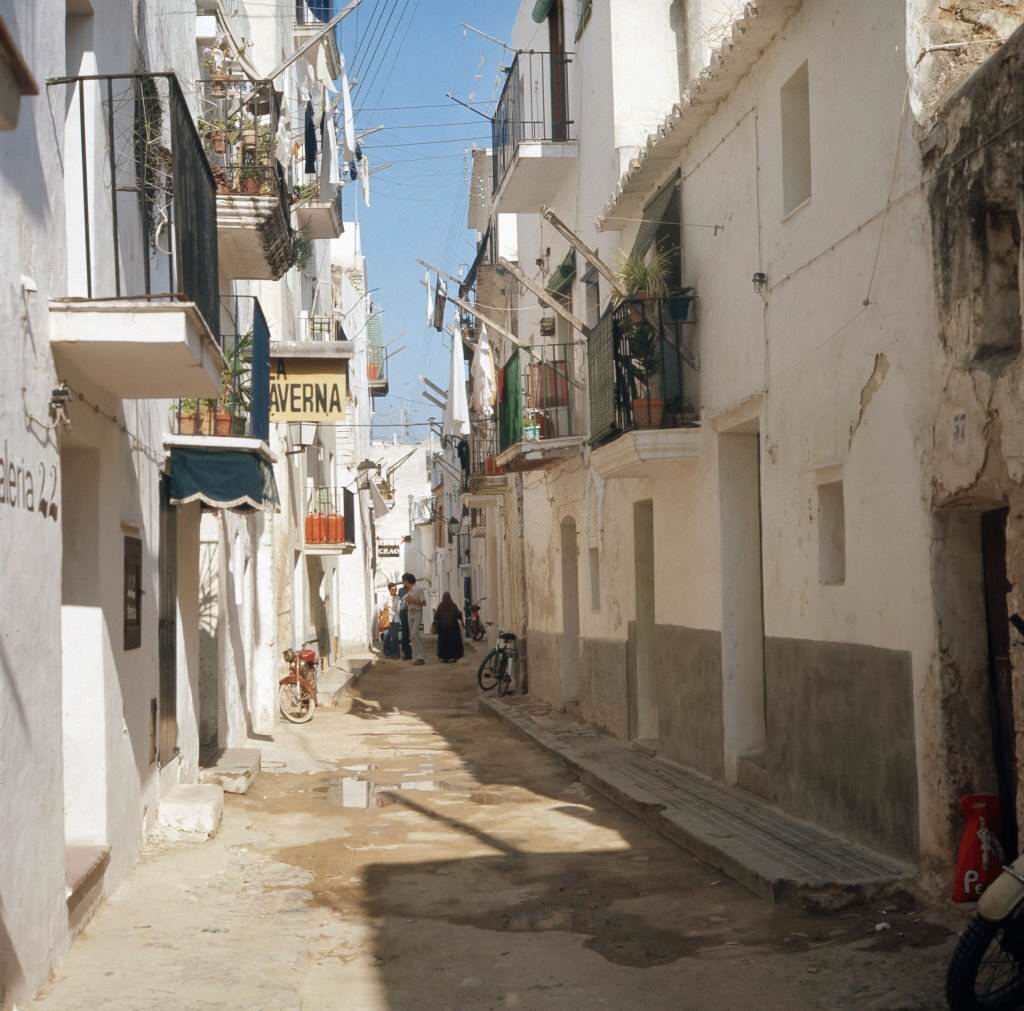
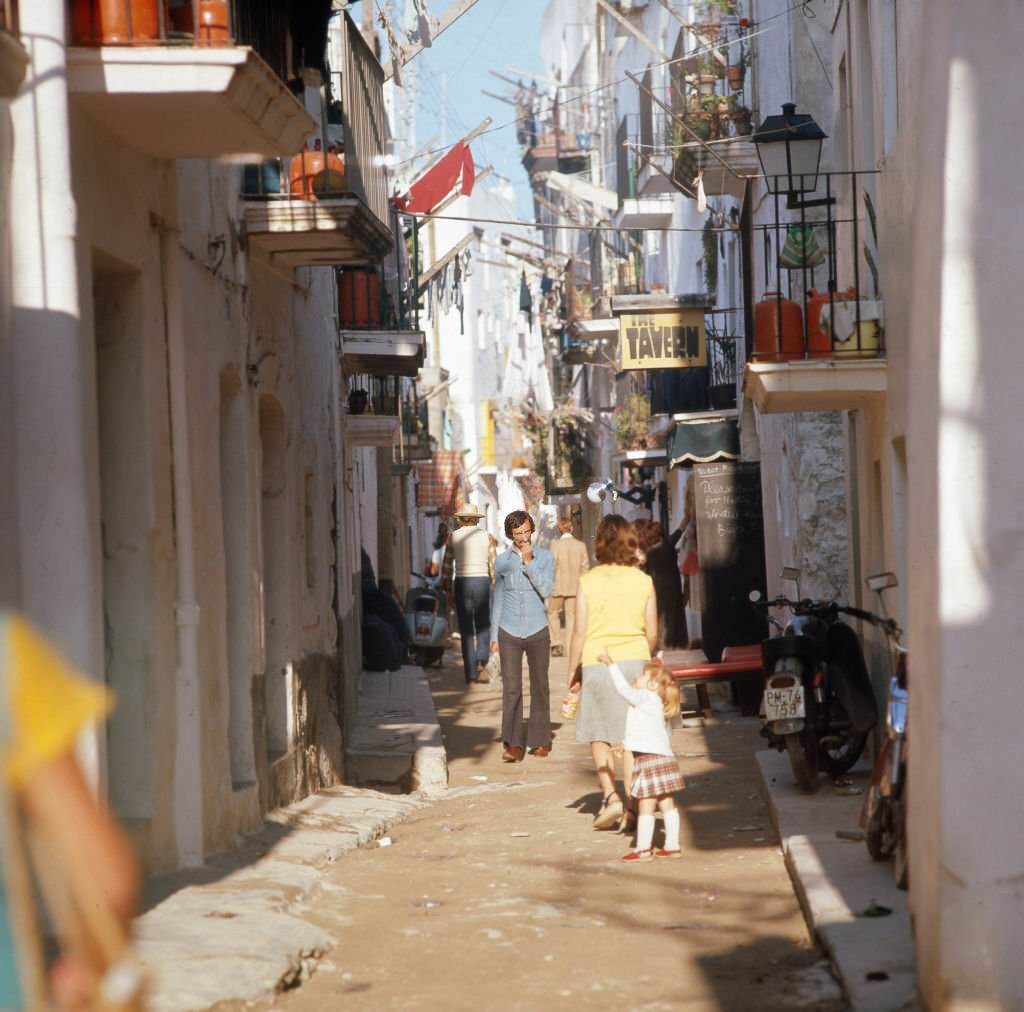
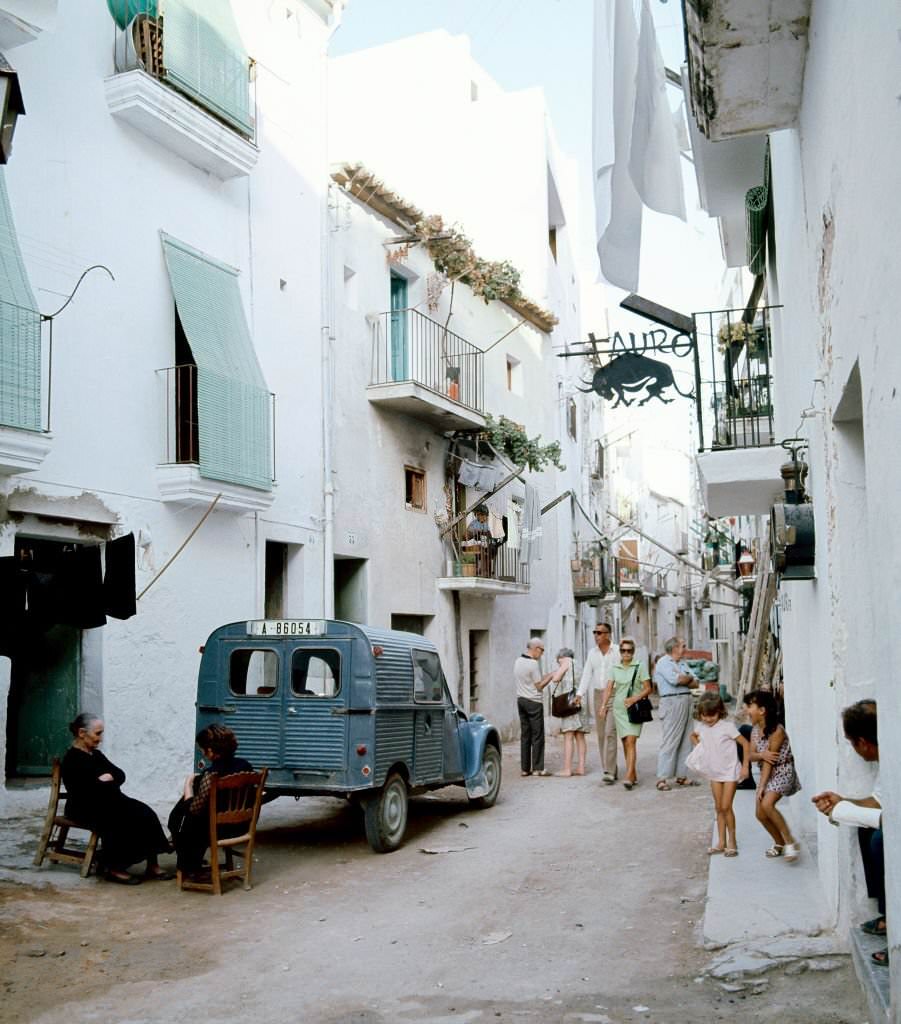
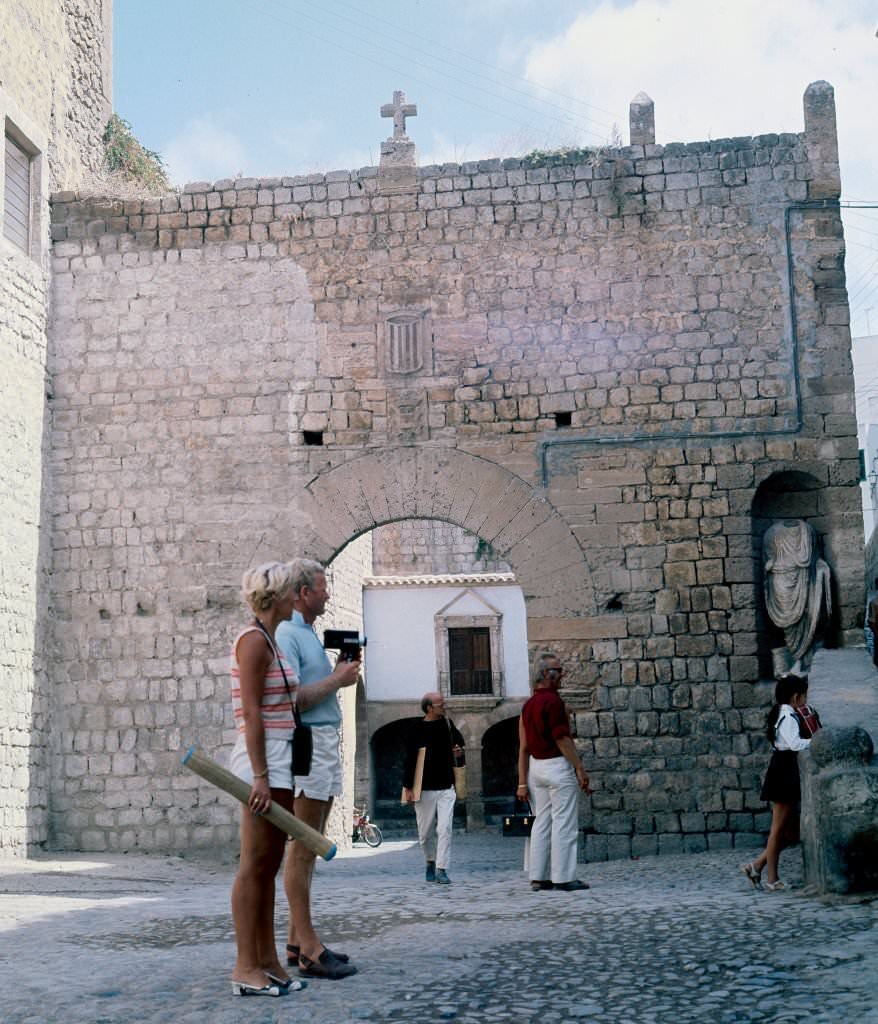
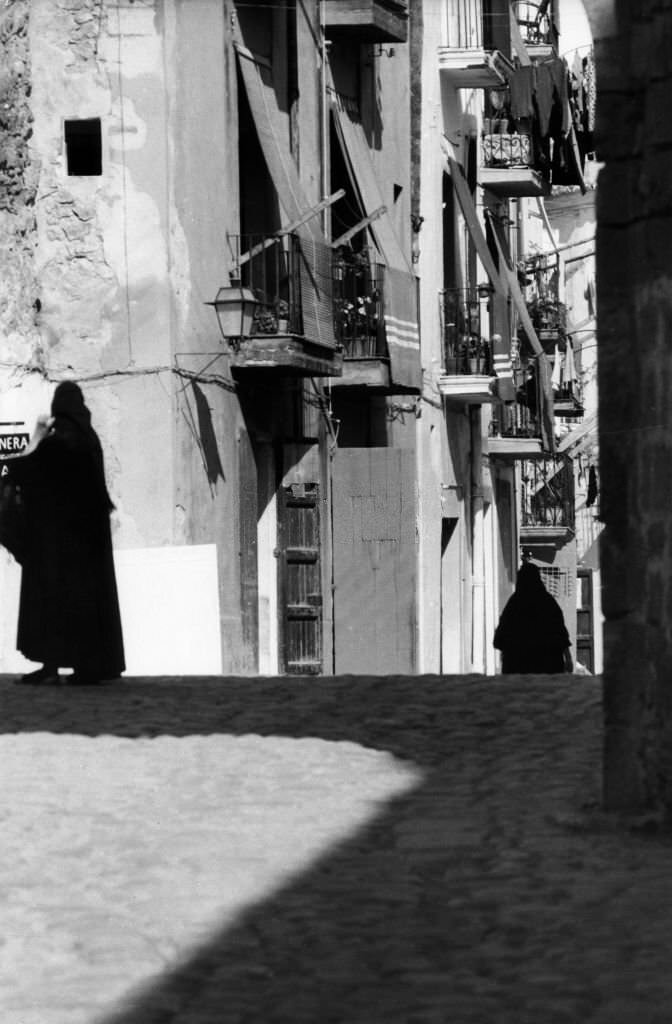
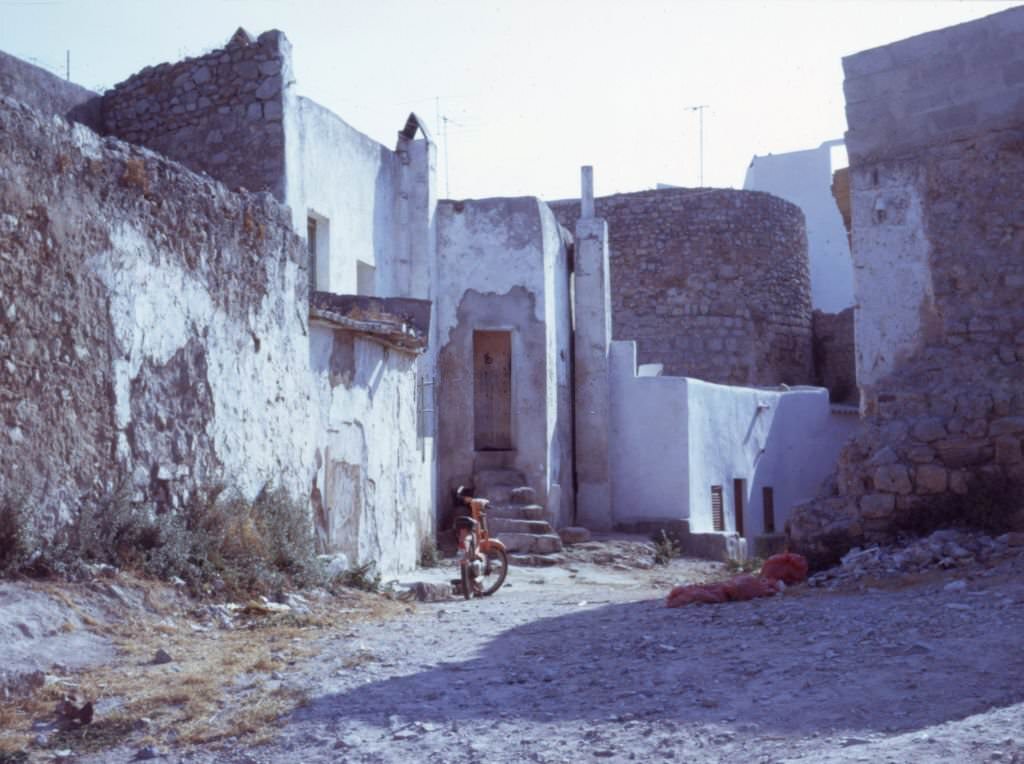
The historical center of Ibiza — its walled old town — was one of the most photographed parts of the island for good reason. Its alleys were narrow enough to block the midday heat and wide enough for two people to walk side by side. The stone walls, worn smooth over centuries, framed every view like a painting. Tourists in the 1970s were beginning to discover these streets in numbers, but the alleys still belonged, in feeling, to the island itself.
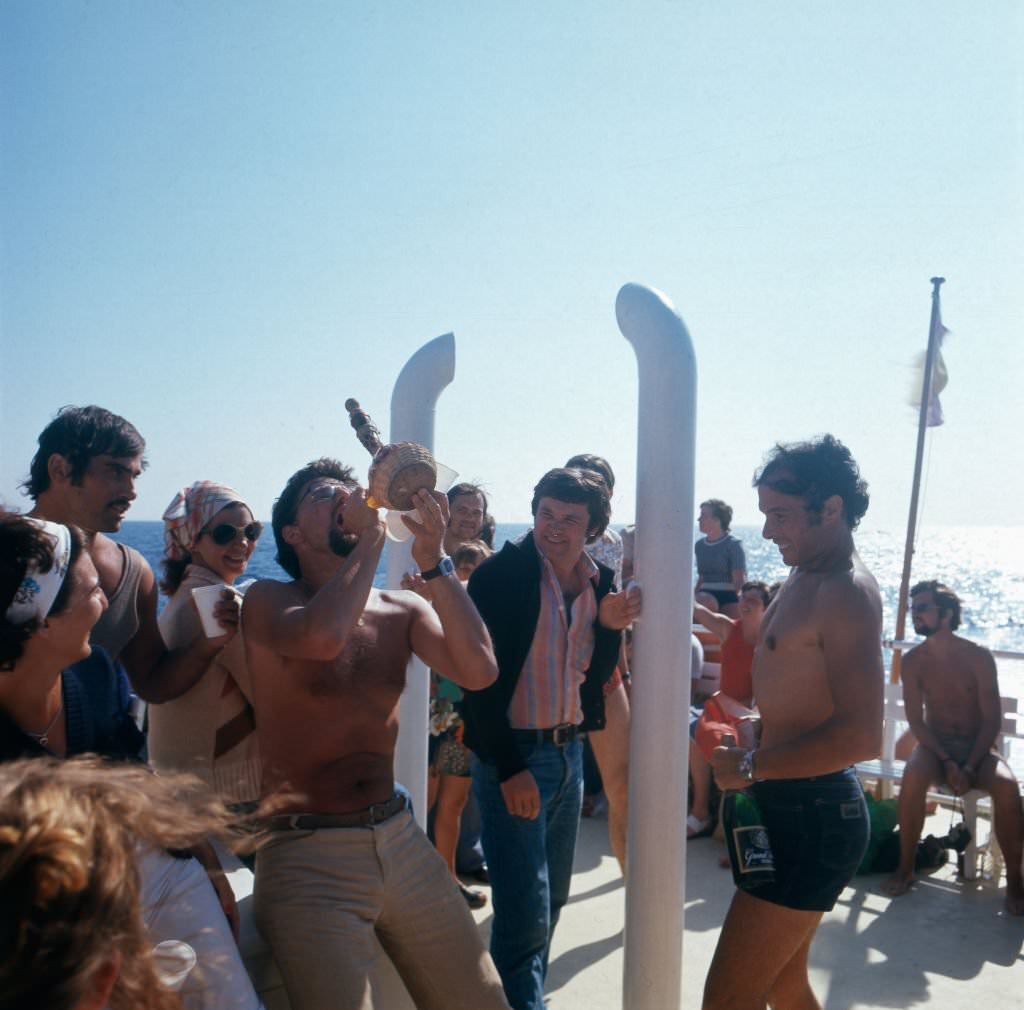
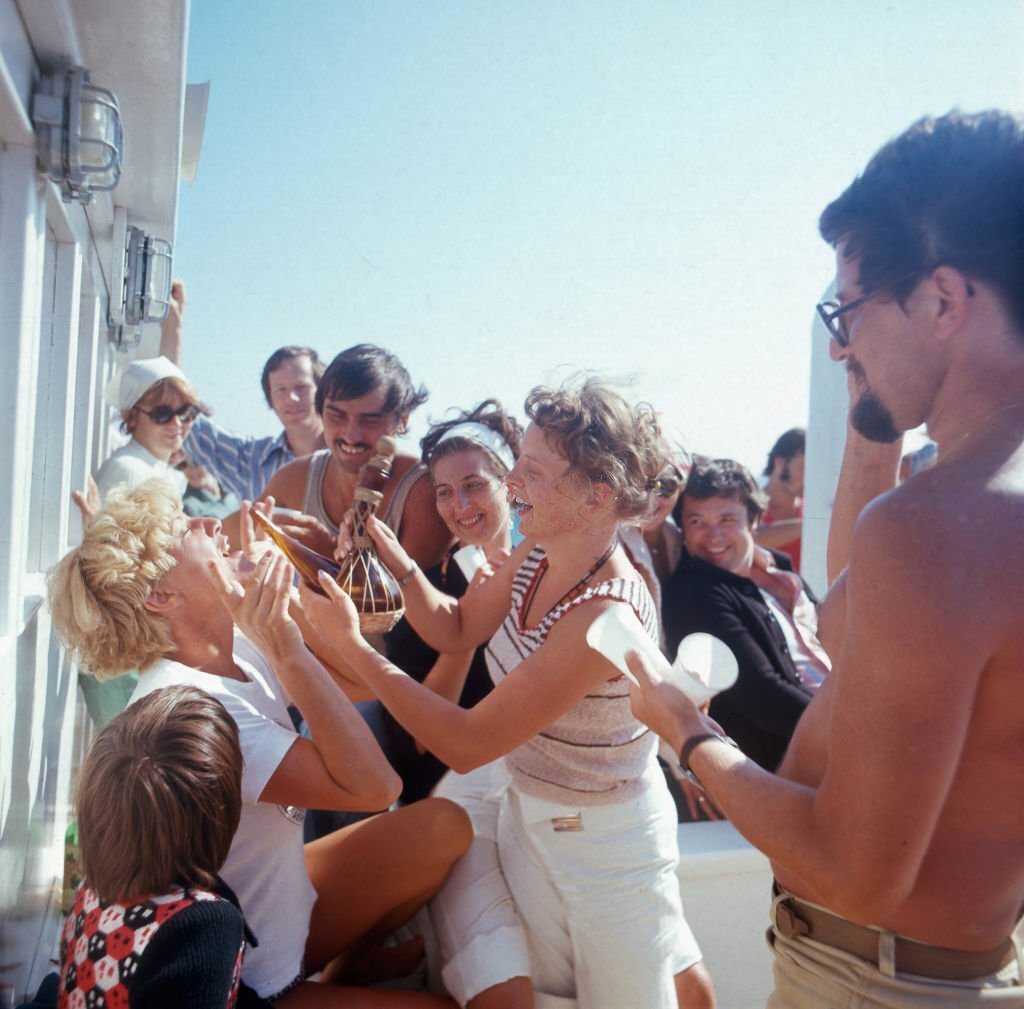
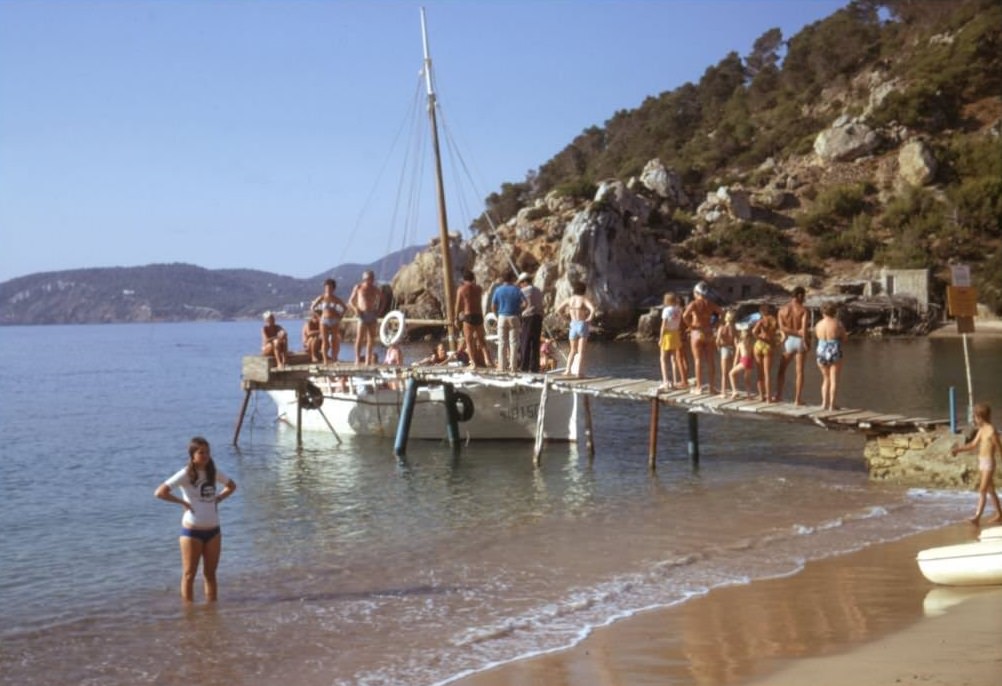
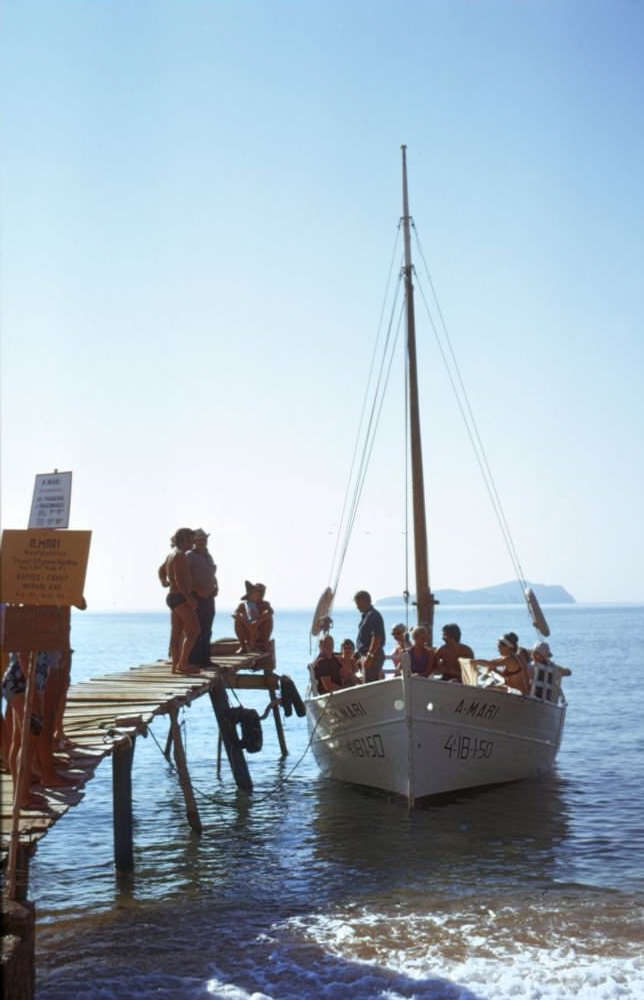
Out on the water, the experience of Ibiza was just as compelling. Day trips by boat gave visitors a perspective on the island that no photograph taken from shore could fully capture — the white buildings stacked against the hillsides, the ancient walls of Dalt Vila rising above the harbor, and the sea stretching out in every direction without interruption.
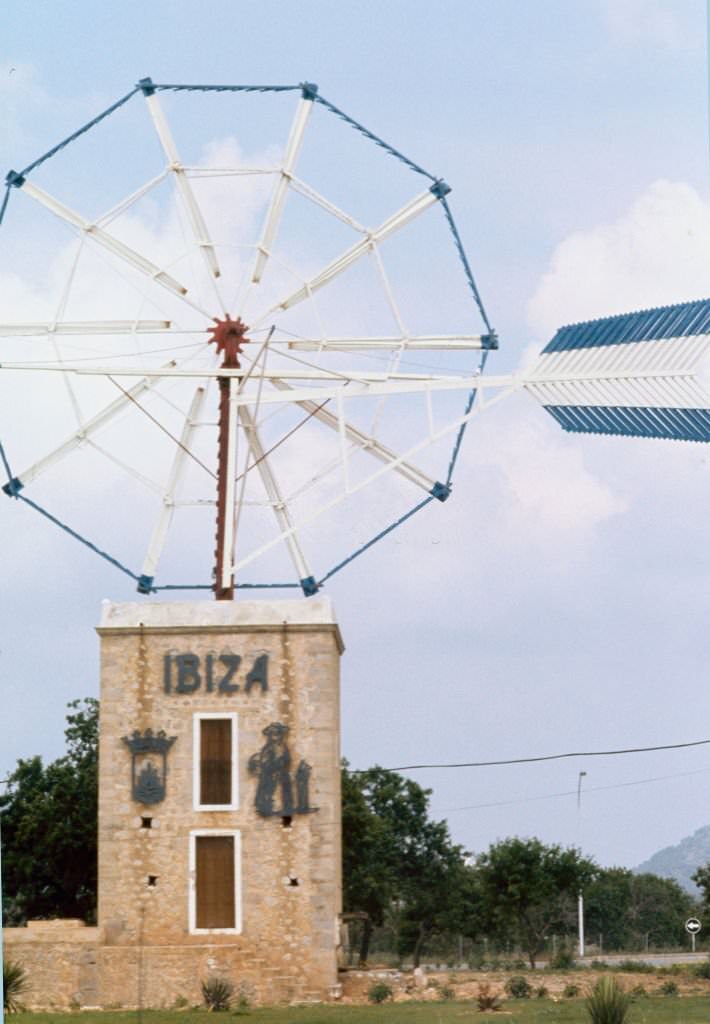
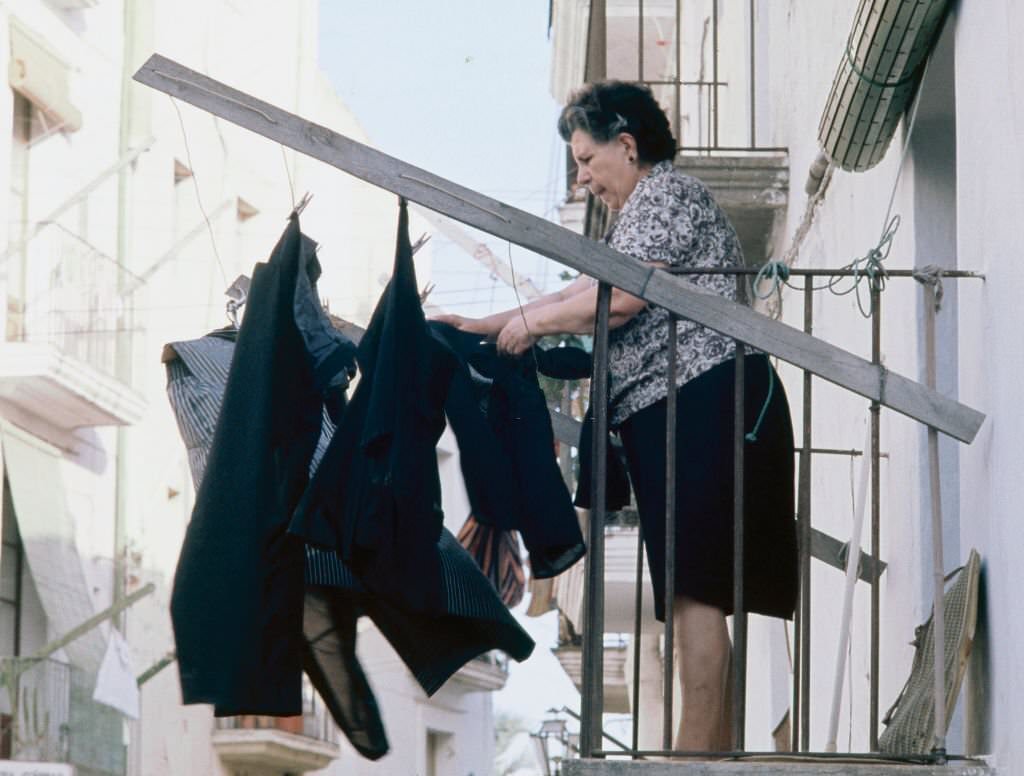
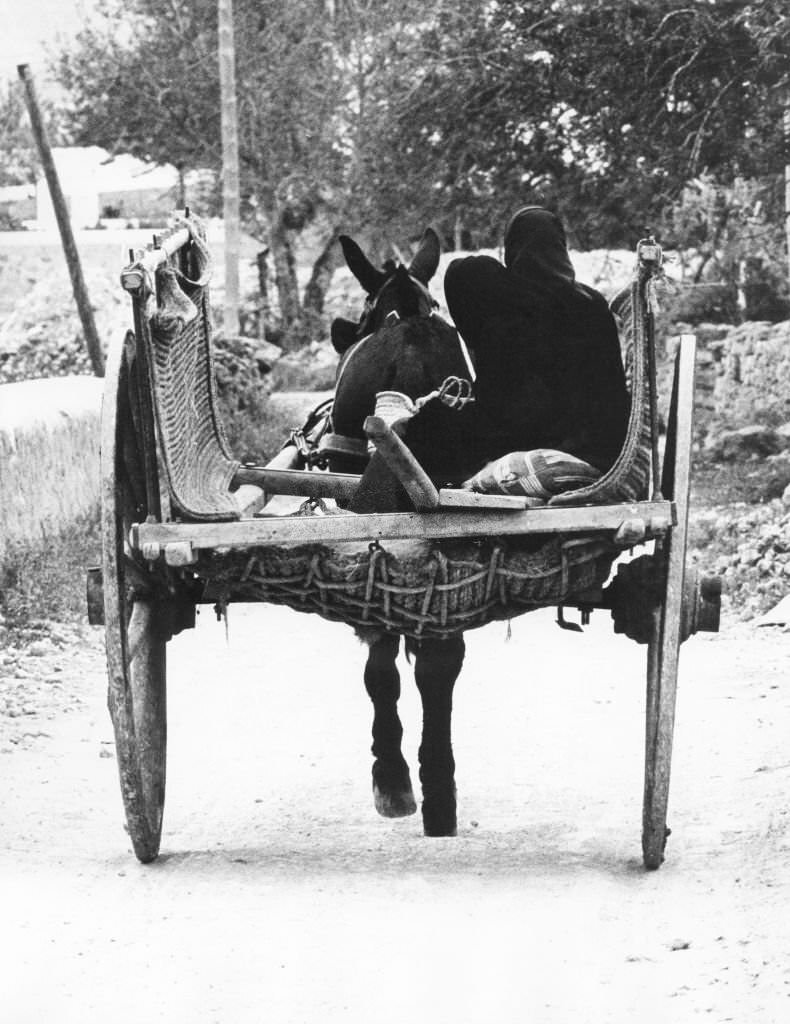
Beyond the tourist activity, the island’s rural character persisted in full view. Old stone windmills stood in the landscape as they had for centuries, used historically to grind grain grown on the island’s terraced hillsides. Women tended to their homes and daily work with the same routines that had defined Ibizan life long before the first visitor arrived. These images of ordinary life sat comfortably alongside the spectacle of international tourism, two realities sharing the same small island without conflict.
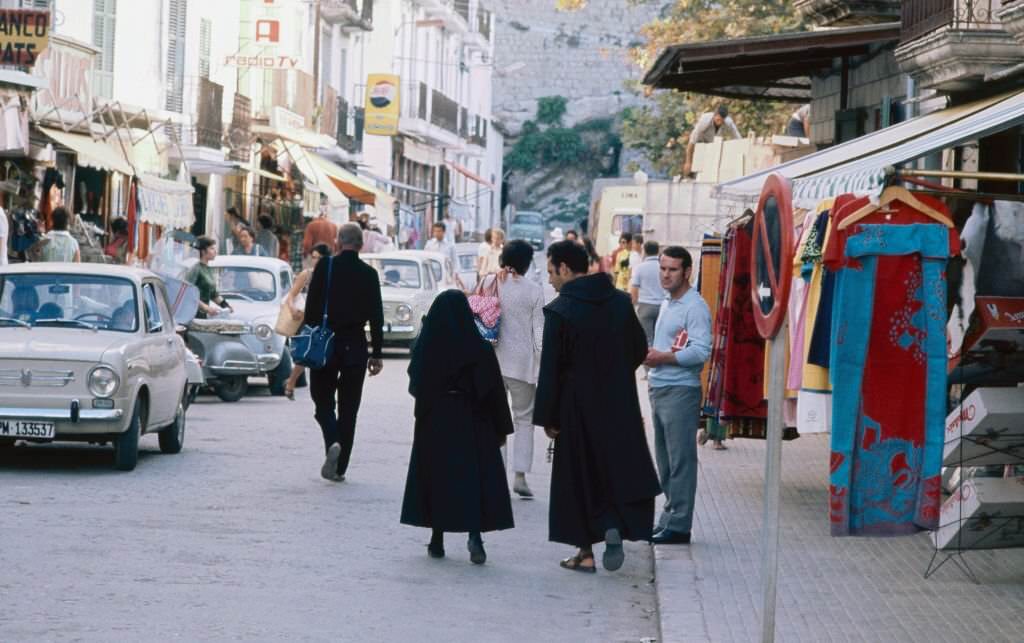
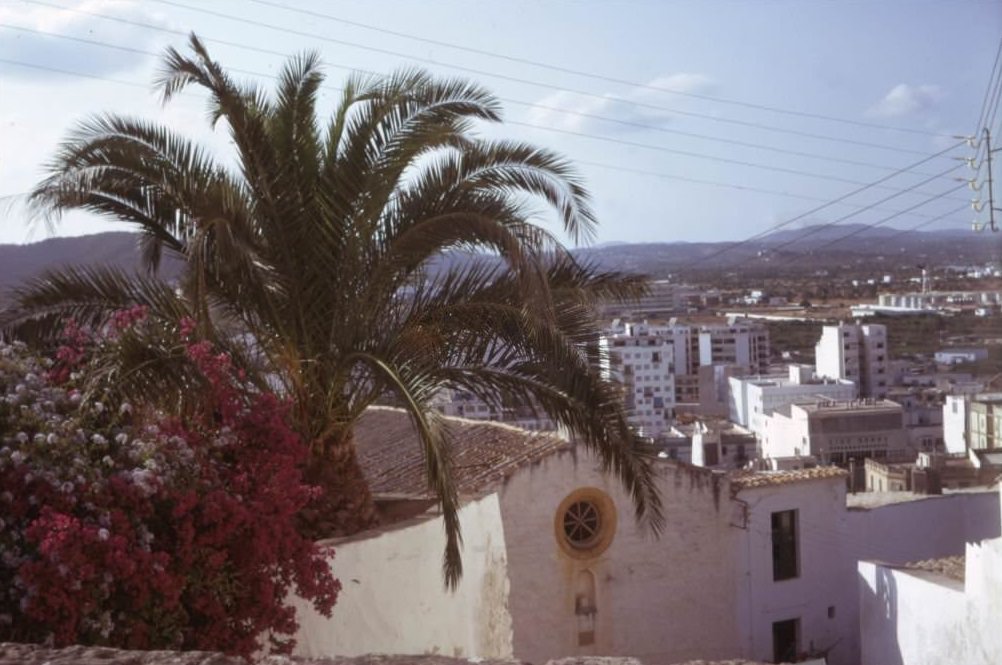
The streets of Ibiza in 1975 captured what the earlier part of the decade had set in motion. The ancient walls built to protect the old city drew curious visitors who climbed them to take in the views. The typical streets — white walls, terracotta rooftops, flowering vines — drew photographers and artists who could not stop documenting what they saw. The island was, by this point, fully aware of its own appeal and entirely unconcerned by it.
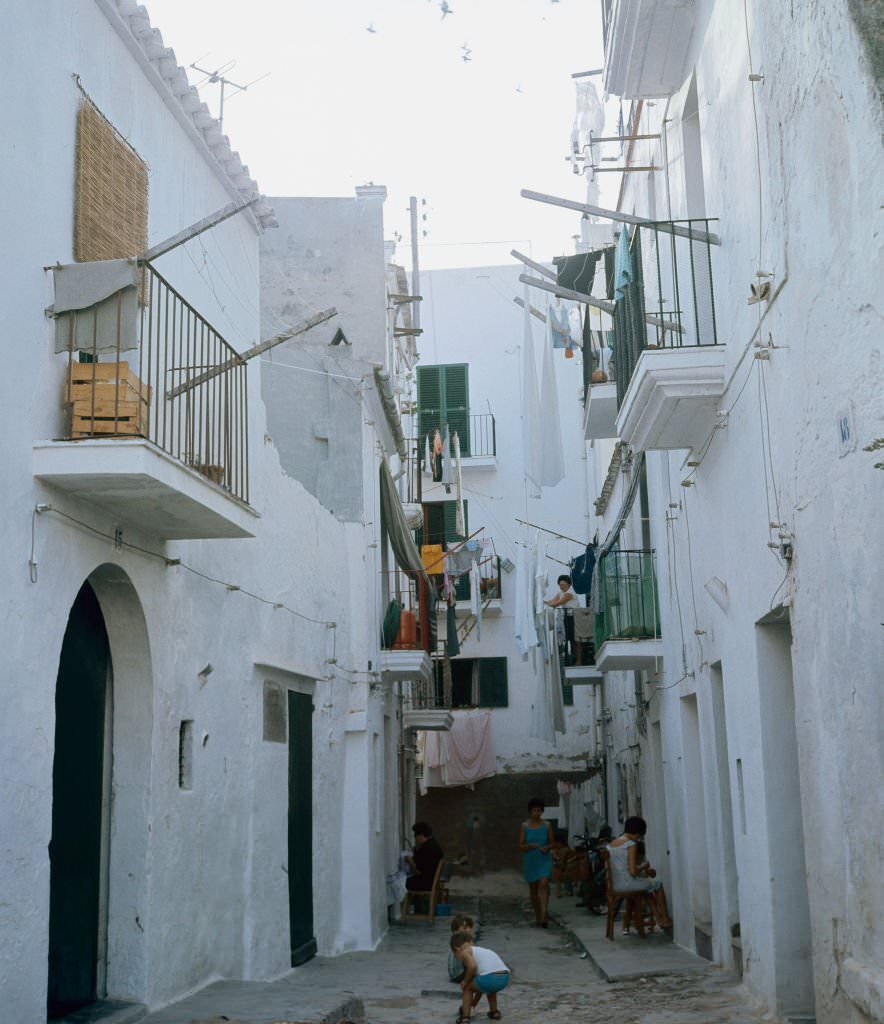
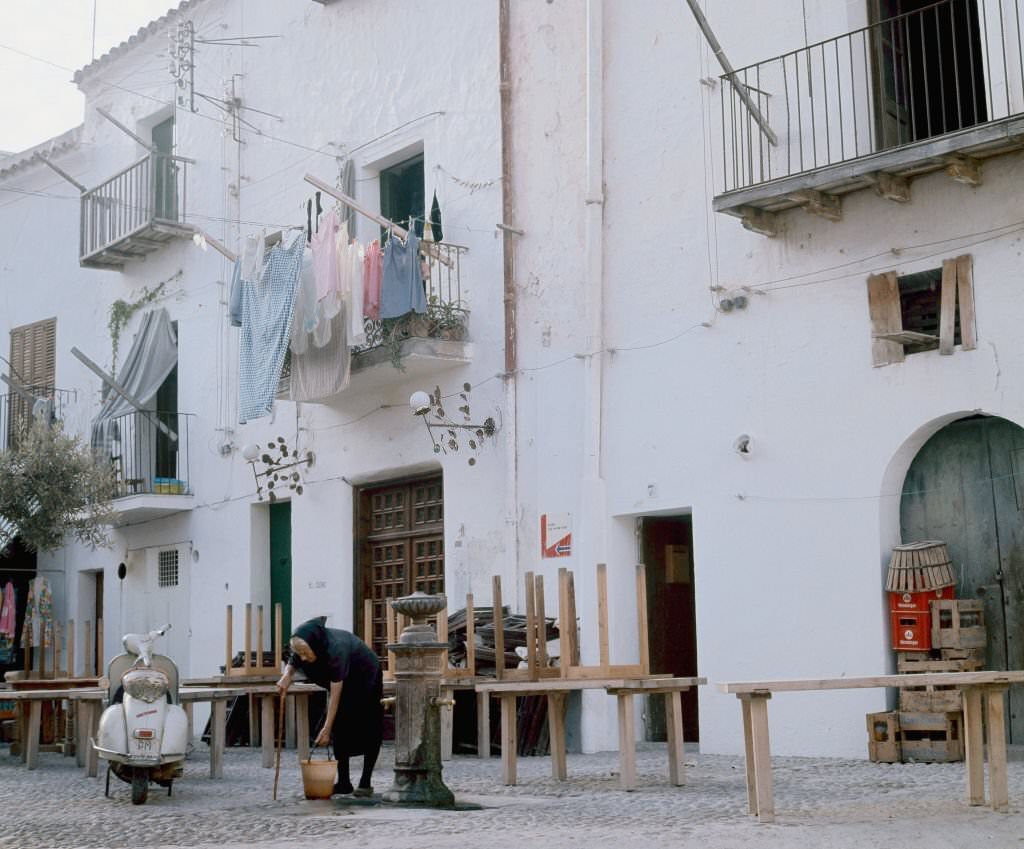
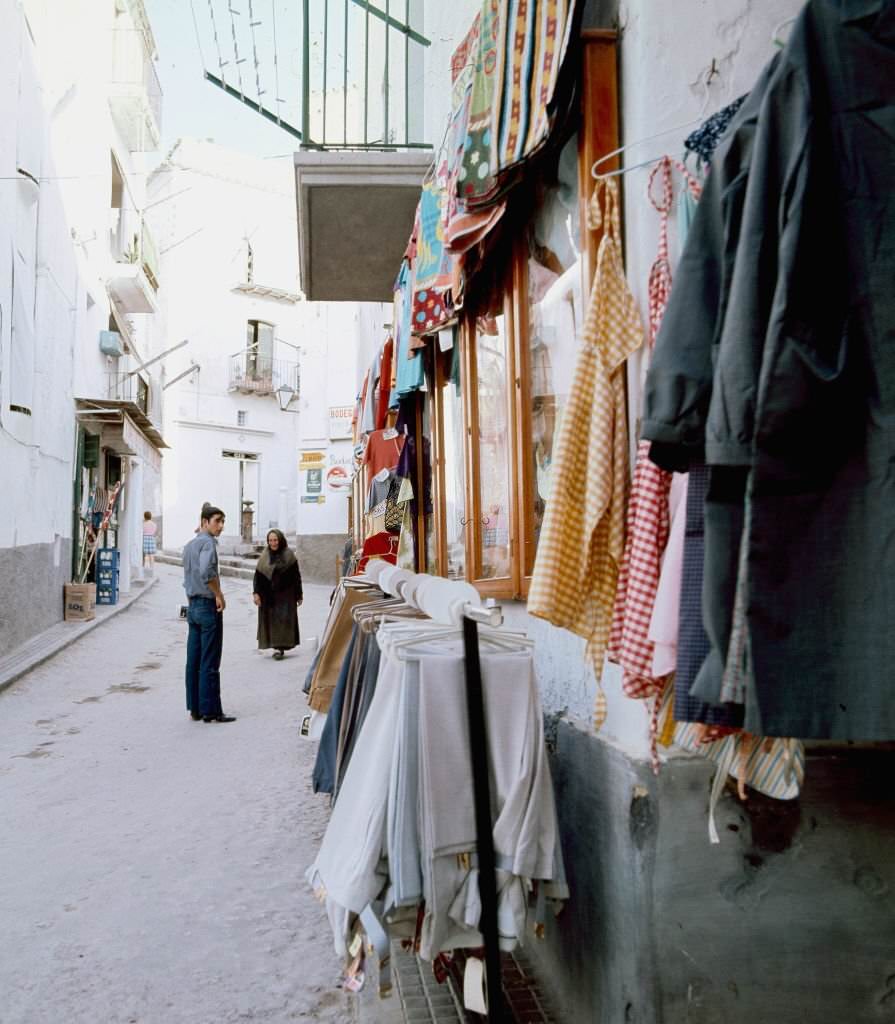
The fishing port remained a constant throughout the decade. In 1975, as in 1970, as in every year before that, boats tied up along the docks after their morning runs. The catch was unloaded by hand. Nets were repaired on the quay. The port operated on a schedule set by tides and seasons, not by the tourism calendar. Visitors who found their way there in the mid-morning saw a side of Ibiza that had nothing to do with beaches or boutiques.
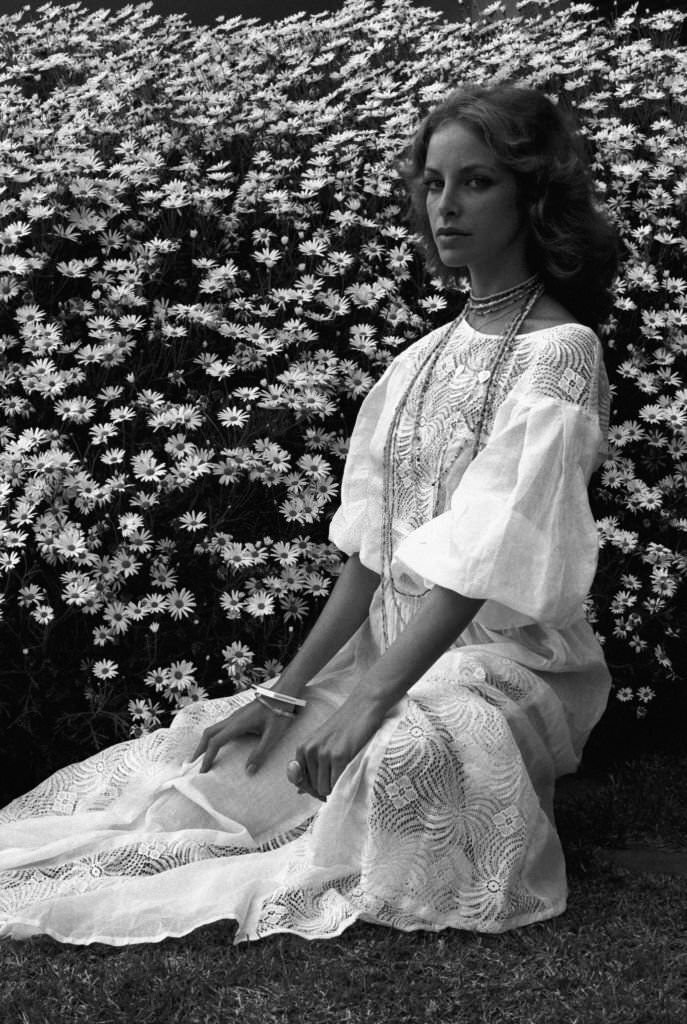
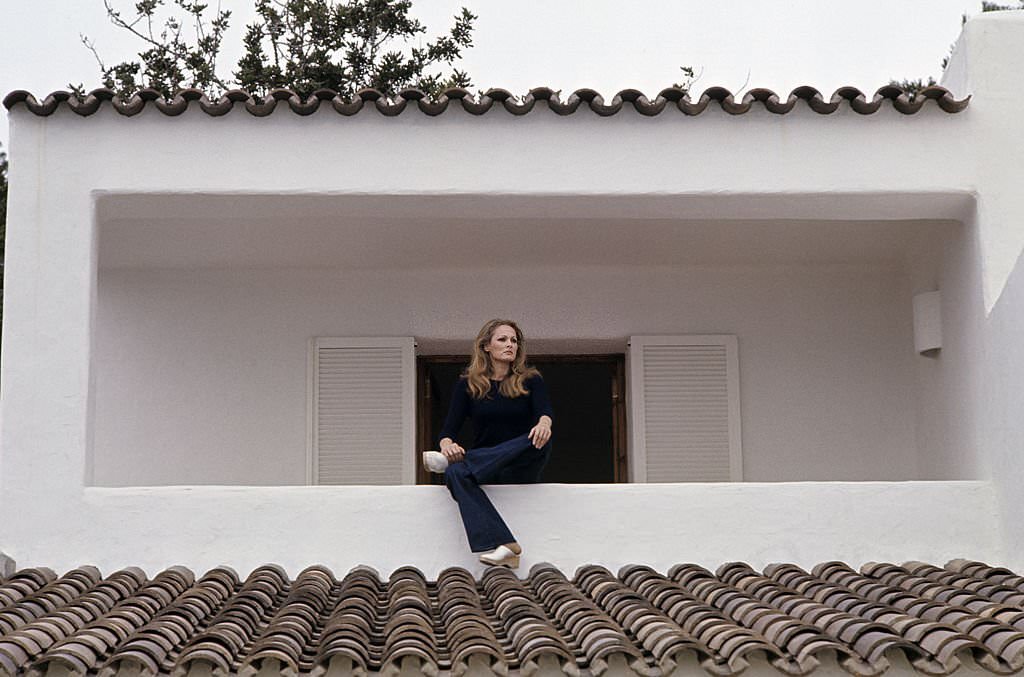
Celebrities found Ibiza as appealing as anyone else did. American actress Sydne Rome was photographed on the island in May 1975, one of many international stars who chose Ibiza for a holiday that year. The island offered something rare for a public figure: the chance to be somewhere beautiful and genuinely relaxed without the formality that other European resorts demanded. Bond girl Ursula Andress was another who made Ibiza her own, photographed casually at her villa’s balcony, dressed in jeans and a dark sweater — no glamour required.
Earlier in the decade, before Ibiza had fully registered on the international map, the hippie community was at its most concentrated and most visible. In 1972, pavement cafés filled with young people who had traveled to the island with little more than a backpack. The hippie market that year was already a fixture — a weekly gathering where the counterculture economy ran on handmade goods and the spirit of sharing rather than profit. These early markets set the template that later, more commercial versions would follow.
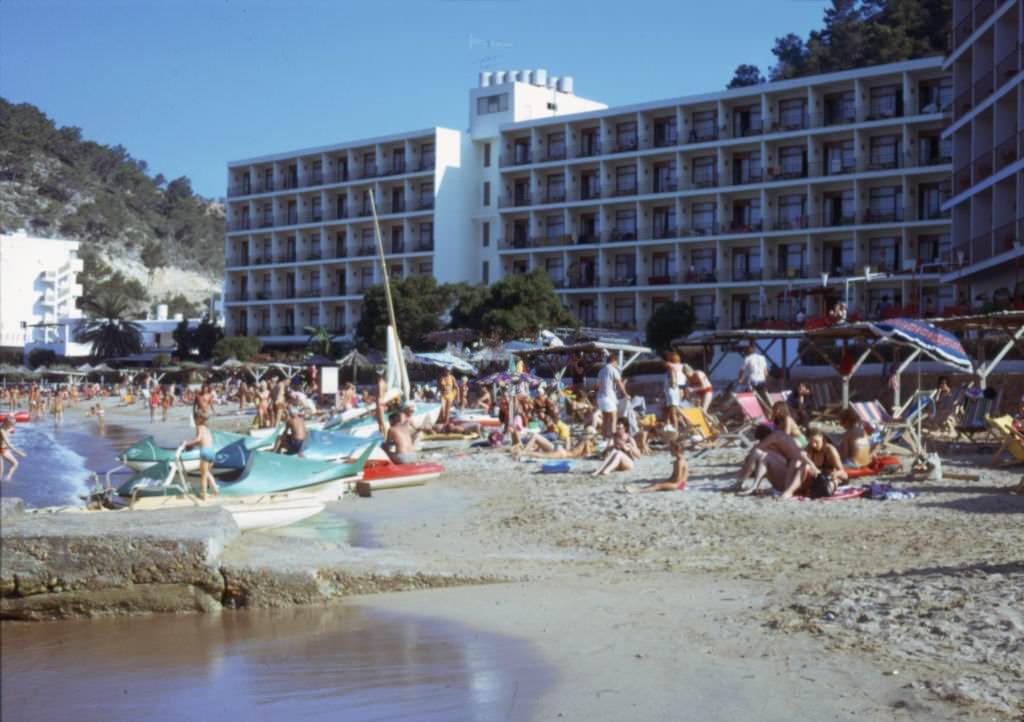
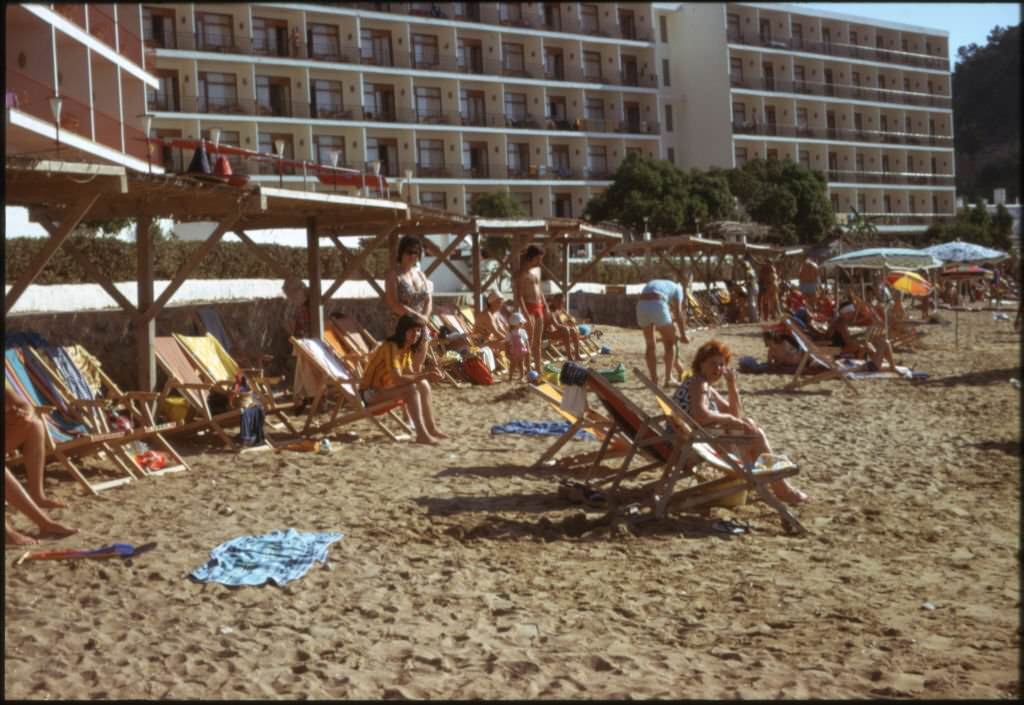
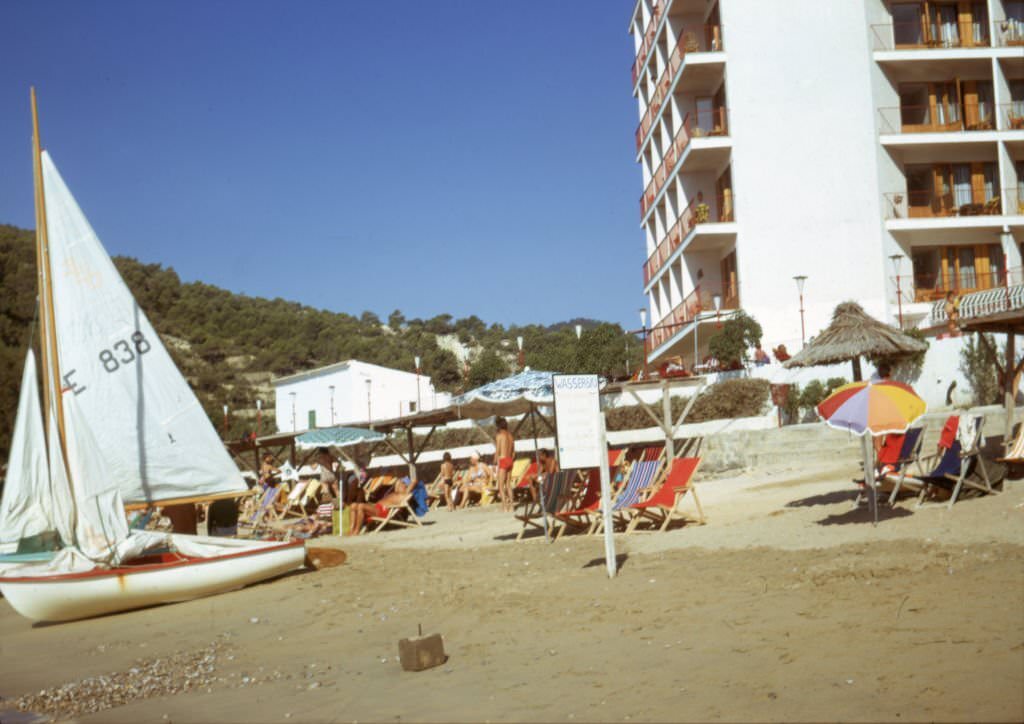
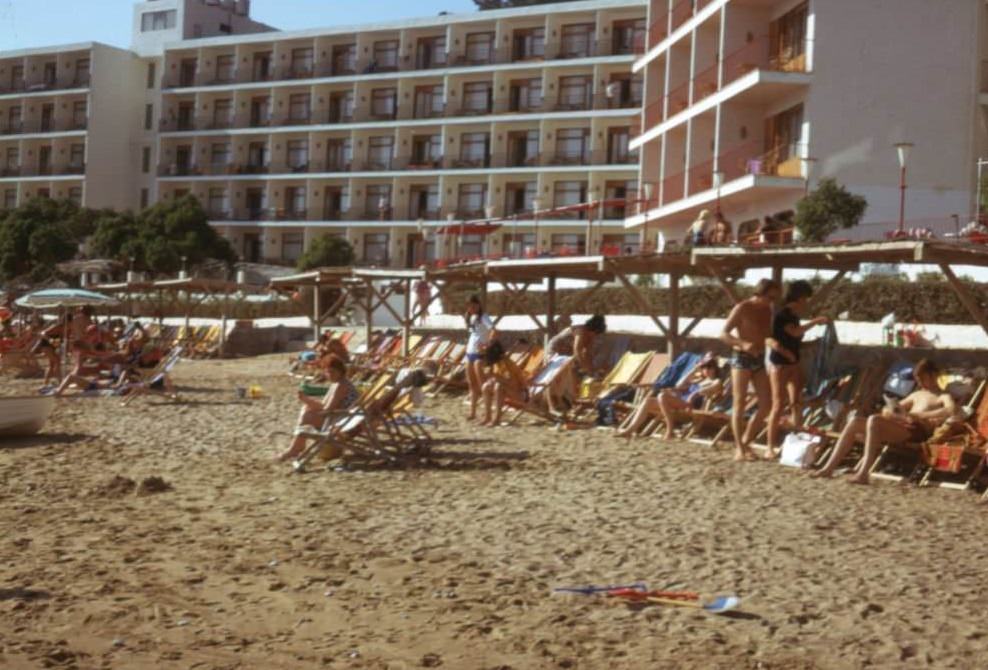
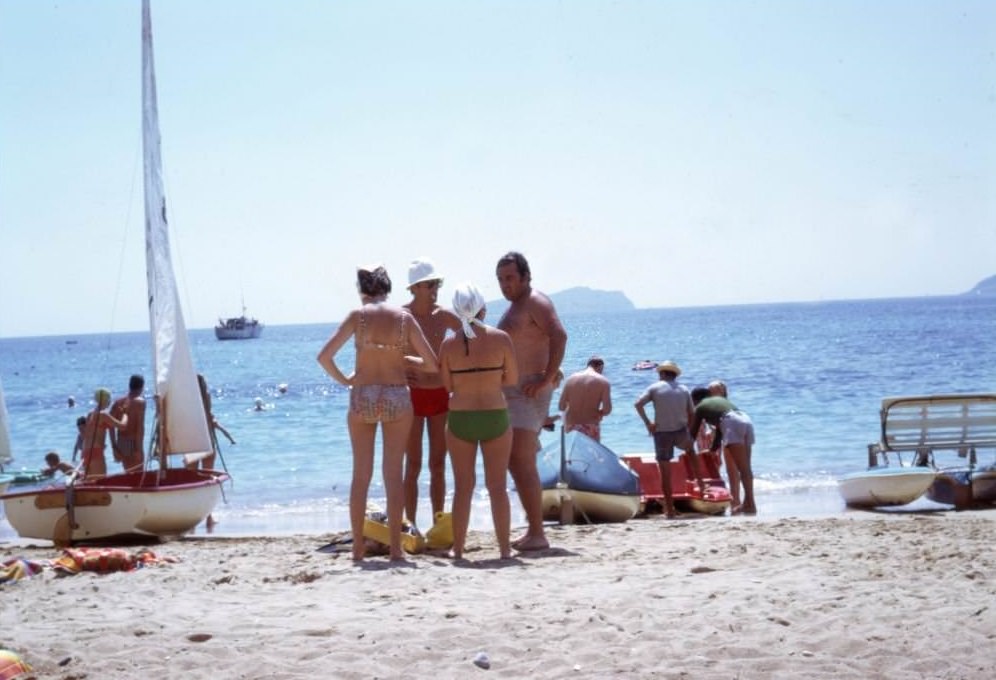
By 1974, the island was in full swing as a summer destination. The beaches drew families, couples, and solo travelers. The town filled with people from every corner of Europe. Local shops, restaurants, and bars expanded to meet the demand without losing the low-key quality that made Ibiza different from the more developed resorts along Spain’s mainland coast. The island absorbed its visitors without being changed by them — at least, not yet.
The hippie markets of 1972 were among the earliest documented evidence of how thoroughly the counterculture had taken root on the island. Vendors spread their goods on blankets and low tables. Buyers crouched down to inspect handmade rings, bags stitched from scraps of leather, and clothing dyed in patterns that had no precedent in any fashion catalog. These markets were improvised and informal, which is exactly what made them work. They gave the hippie community in Ibiza a structure that felt like freedom.