Long before satellites, smartphones, or commercial air travel, people were already dreaming about them. The 19th and early 20th centuries were a time of rapid change — steam engines, electricity, and the first automobiles were reshaping daily life faster than most people could process. That excitement spilled directly into how artists, writers, and illustrators imagined what would come next. The result was a remarkable collection of postcards, magazine covers, and illustrations that captured humanity’s best guesses about the future. Some were surprisingly accurate. Many were wildly off. All of them are fascinating.

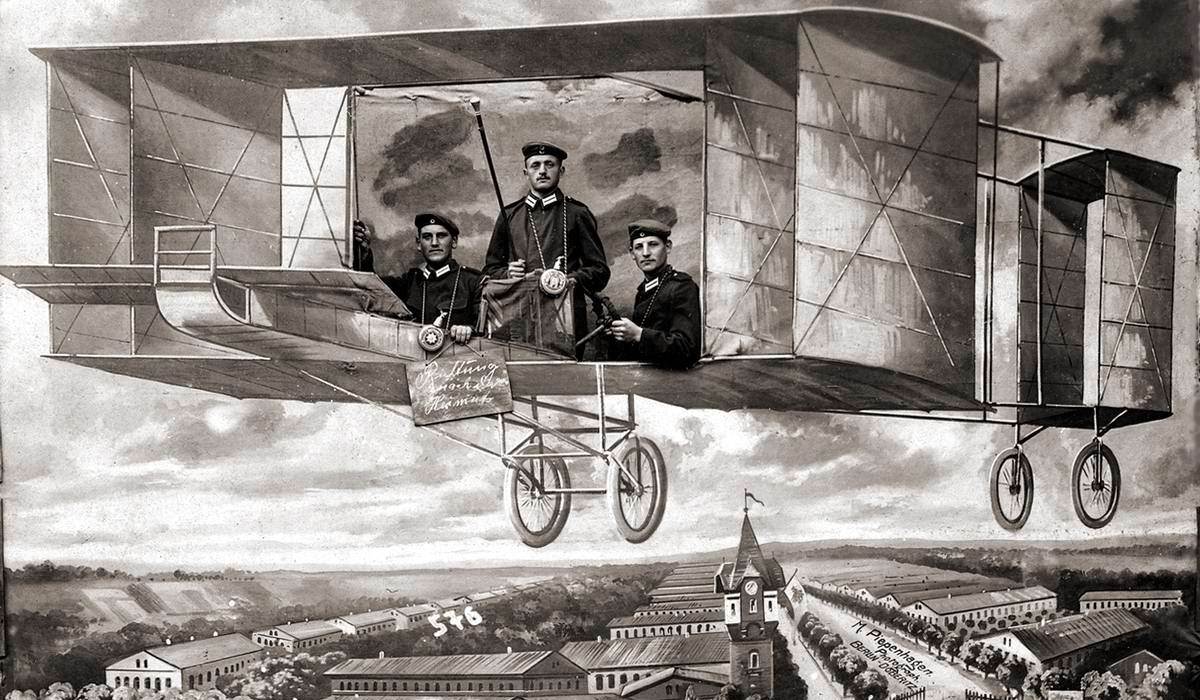
Transportation was the most popular subject for futurists of this era. The horse-drawn carriage was disappearing, and people wanted to know what would replace it. Artists filled that gap with ornate flying machines, steam-powered aerial carriages, and sleek electric vehicles that looked nothing like anything rolling down real streets. The obsession with flight was especially strong. Human flight had been the stuff of myth for centuries, and when the first hot air balloons launched in the 1780s, imaginations caught fire. By the late 1800s, illustrators were drawing personal flying machines as casually as we might sketch a car today.


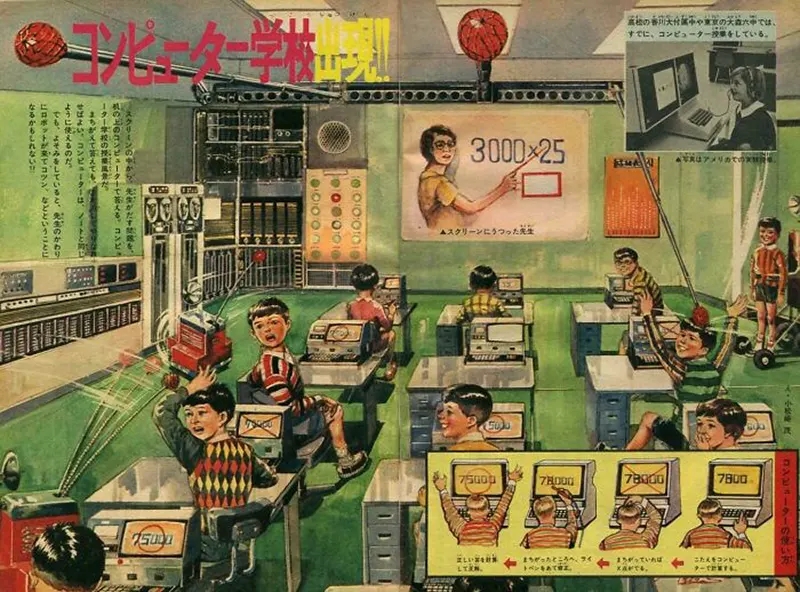
Education was another area where futurists let their imagination run. The idea that a machine could read a textbook aloud — converting pages into spoken words automatically — was considered a radical leap forward. Similarly, illustrators dreamed of push-button classrooms where students absorbed knowledge through technology rather than a teacher standing at a chalkboard. These weren’t random fantasies. They were logical extensions of what people were already seeing: the phonograph could record voices, so why not apply that to learning?


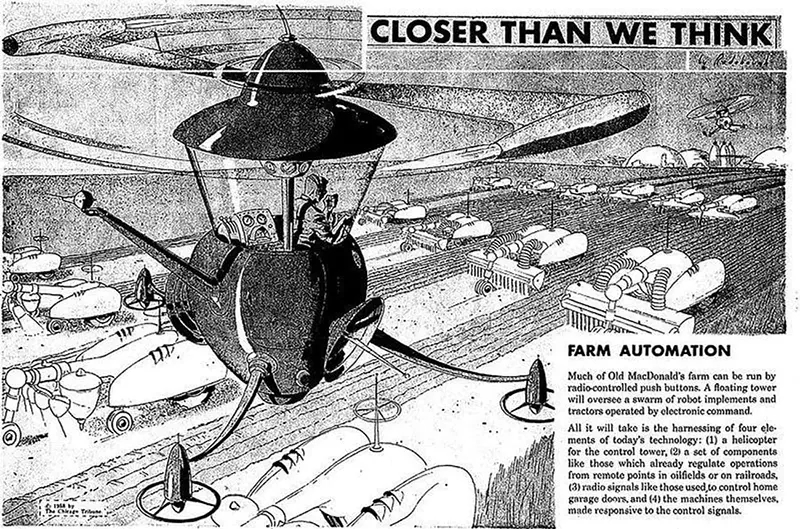
Everyday services like mail delivery and farming were reimagined just as enthusiastically as transportation. A flying postman seemed like the obvious solution to slow ground-based mail routes. Agricultural machinery, drawn in exaggerated scale, promised to end manual labor in the fields entirely. These illustrations weren’t just decorative — they were serious proposals about how modern life could be made more efficient. The people who drew and distributed them genuinely believed the future would arrive this way.


Not every vision of the future was purely mechanical. Some illustrators blended nature with technology in ways that were more playful than practical. Seahorse-riding commuters and whale buses reimagined the ocean as a highway. Personal airships floated over cities like a new kind of public transit. These images reflect something important: in an era before science fiction had established its own visual language, there were no rules about what the future had to look like. Artists drew what excited them.


Domestic life received its share of futuristic makeovers too. An instant automatic sewing machine, electric scrubbing devices, and robot butlers were imagined as solutions to the endless labor of housekeeping. These illustrations often appeared in magazines aimed at middle-class households, where the promise of labor-saving technology was especially appealing. The home of the future was clean, efficient, and largely self-running — managed by machines so that people could spend time on more enjoyable pursuits.


War was never far from the futurist imagination either. As military technology evolved through the late 19th and early 20th centuries, illustrators depicted aerial combat, flying warships, and mechanized armies clashing in the skies. These images weren’t entirely fantastical — World War I had already introduced the airplane as a weapon of war by 1914. Postcards showing airborne battles or tranquilizer warfare reflected genuine public anxiety about where military technology was heading.


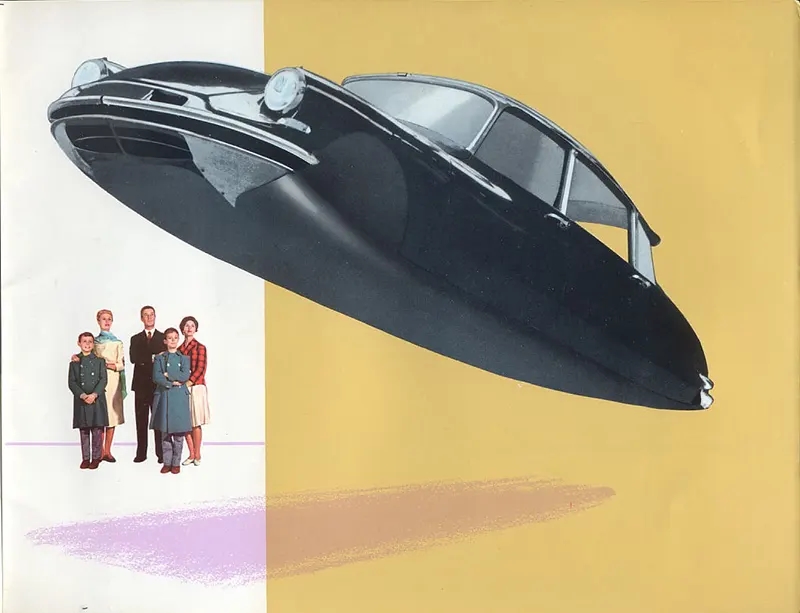
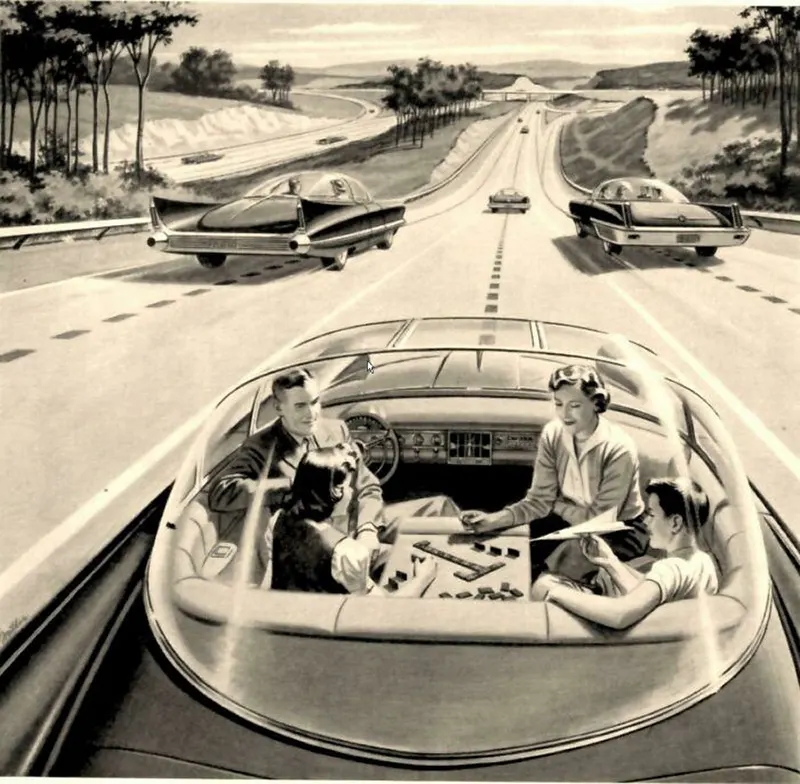
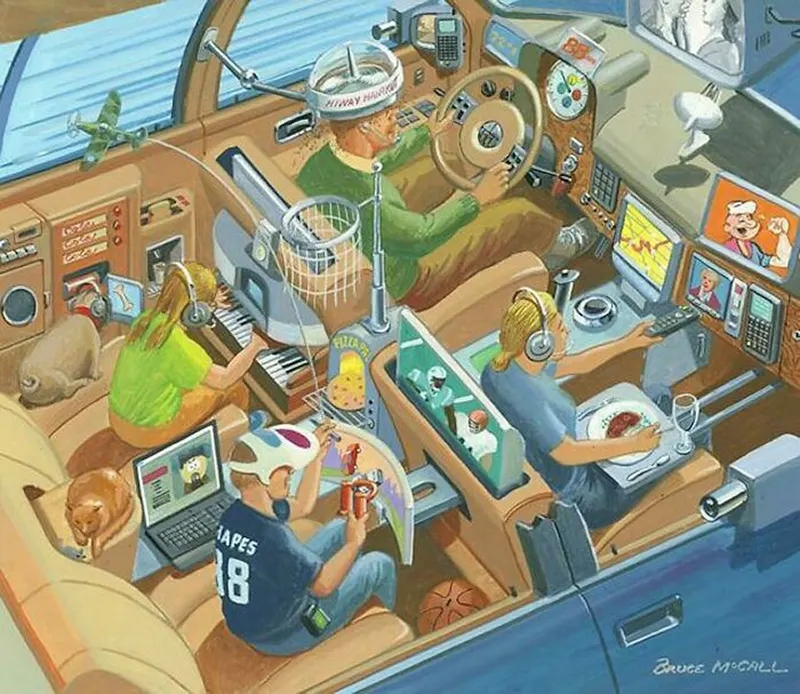
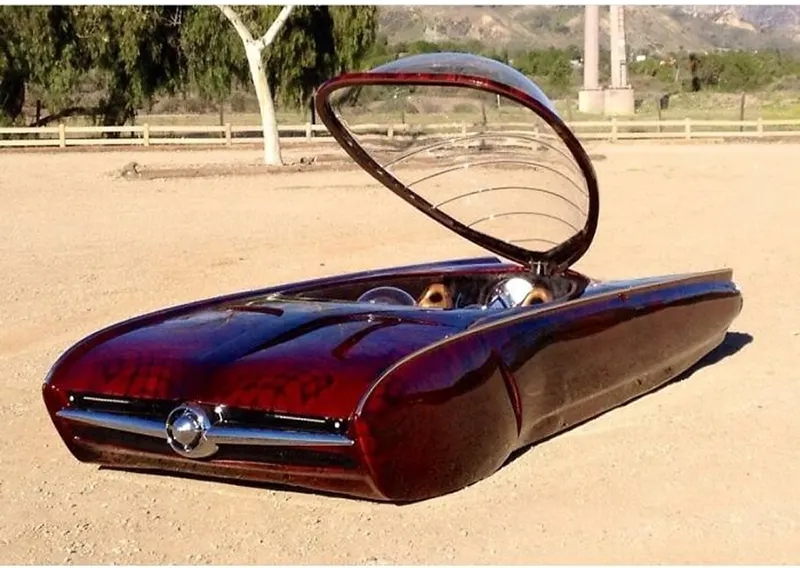
The automobile was still a novelty in the early 1900s, but futurists were already designing its replacement. Solar-powered cars, driverless vehicles, and cars that could change color at the push of a button all appeared in illustrations and magazine features. Some of these predictions were remarkably on target. Others — like cars bouncing on pogo-stick wheels or gliding on flying carpets — showed just how wide the gap between imagination and engineering could be.


Food production was a real concern in the early 20th century. Wars and economic instability created food shortages, and scientists were actively working on new agricultural methods. Futurists imagined super-sized crops, fat plants grown through intensive breeding, and even vegetables engineered to contain meat. Factory farms, drawn in clean and optimistic terms, promised to eliminate hunger through industrial efficiency. The tone of these illustrations was almost always hopeful — hunger was a problem the future would simply solve.


By the mid-20th century, the imagery had grown more sophisticated but no less bold. Robot warehouses, computerized home desks, and electronic libraries pointed toward a fully automated society. Push-button education imagined students absorbing entire courses through machines rather than reading or writing. These weren’t fringe ideas — they appeared in mainstream American and European magazines, presented seriously as likely developments within a generation or two.


Jetpack mailmen, walking machines, and flying carpet cars all pointed to the same underlying belief: the ground itself was going to become optional. Futurists assumed that once personal flight became affordable, almost everyone would use it for daily tasks. Police would chase criminals through the air. Firefighters would arrive from above. The sky wasn’t a distant frontier — it was the next neighborhood.


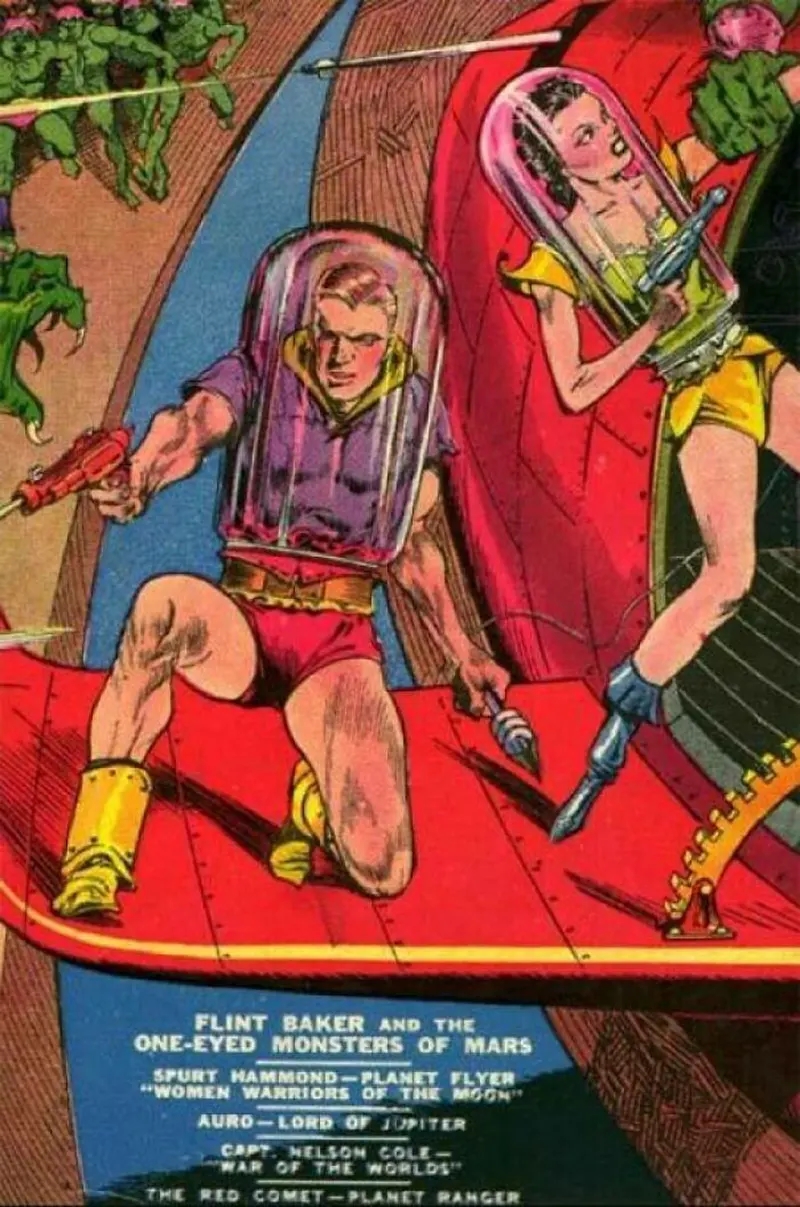
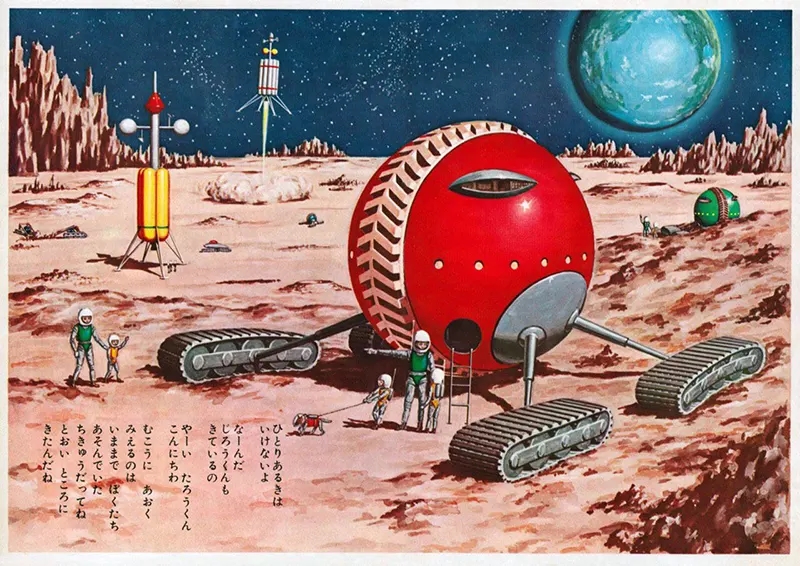
Space travel dominated the futurist imagination from the 1920s onward. Rocket ships, space hospitals, and entire colonist fleets — dubbed Space Mayflowers — appeared in postcards and magazine spreads. The idea that humans would one day leave Earth permanently was treated not as science fiction but as a practical next step. Some illustrators drew space colonies with the same comfortable domestic detail they used for suburban neighborhoods, just relocated to orbit or the surface of the moon.


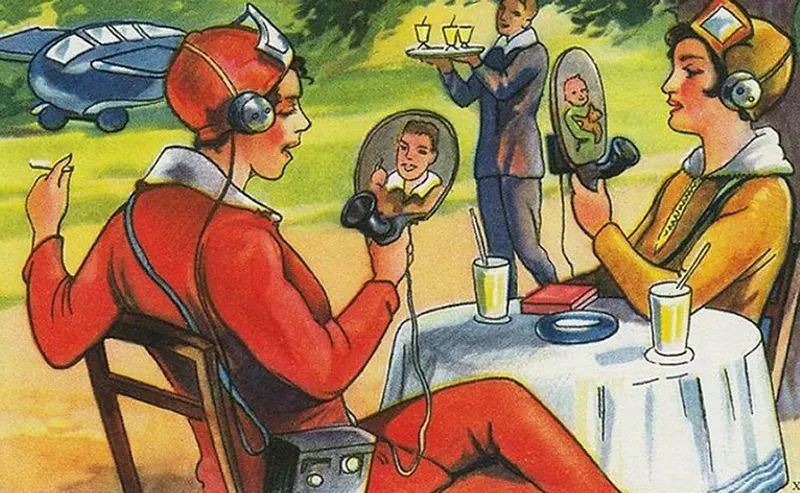
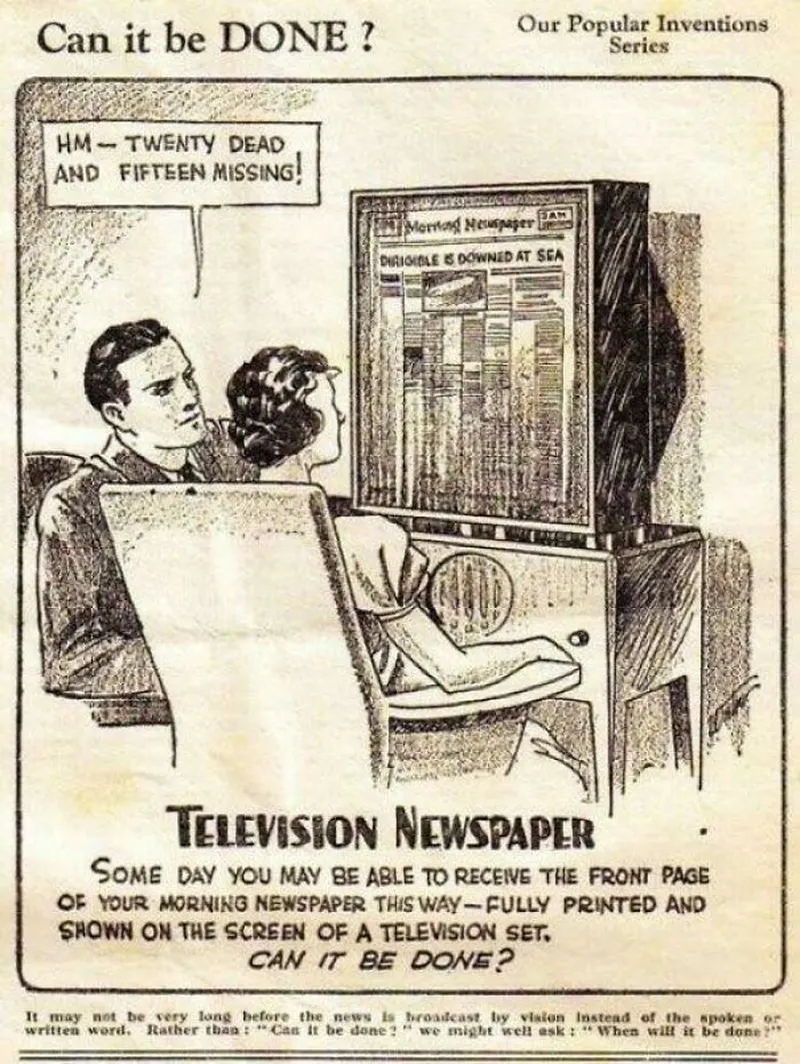
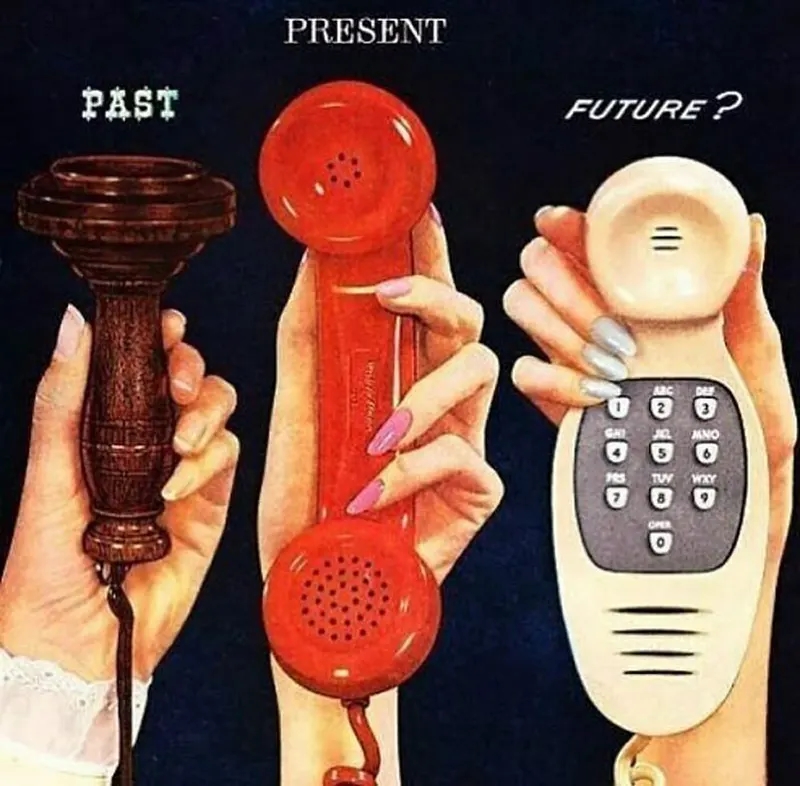
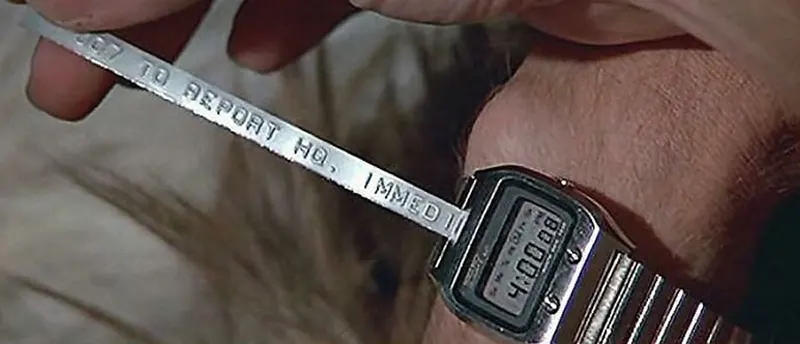
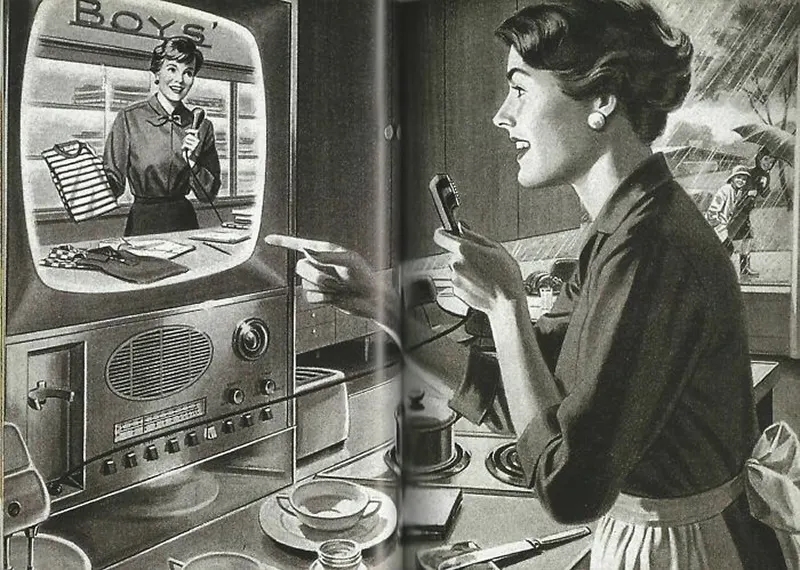
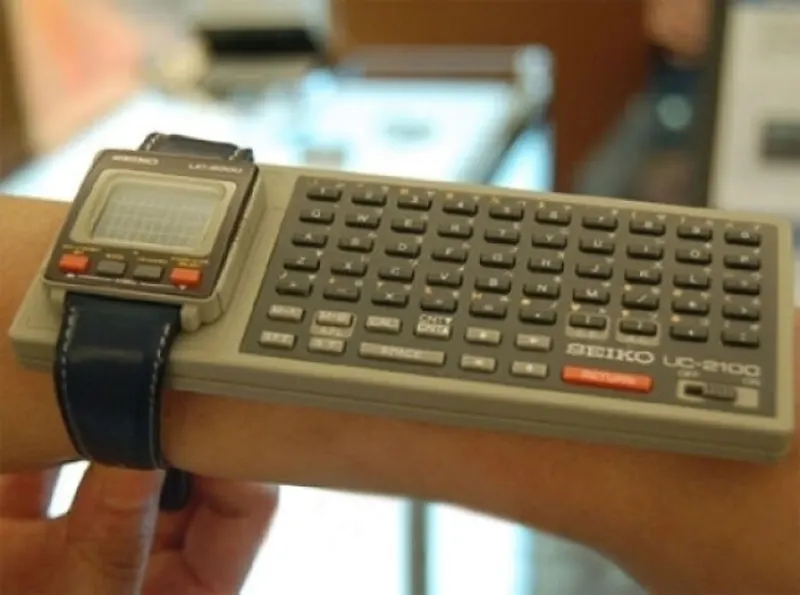
Communication technology inspired some of the most accurate futurist predictions. A wristwatch television, newspaper delivered by screen, and video phone calls all appeared decades before they became real. In 1956, one illustration showed what the telephone might look like in the future — a screen-based device that let callers see each other. In 1977, James Bond received a text message on his smartwatch in a feature film, decades before that technology existed commercially. The Seiko smartwatch actually launched in 1984, a real product following a fictional one.


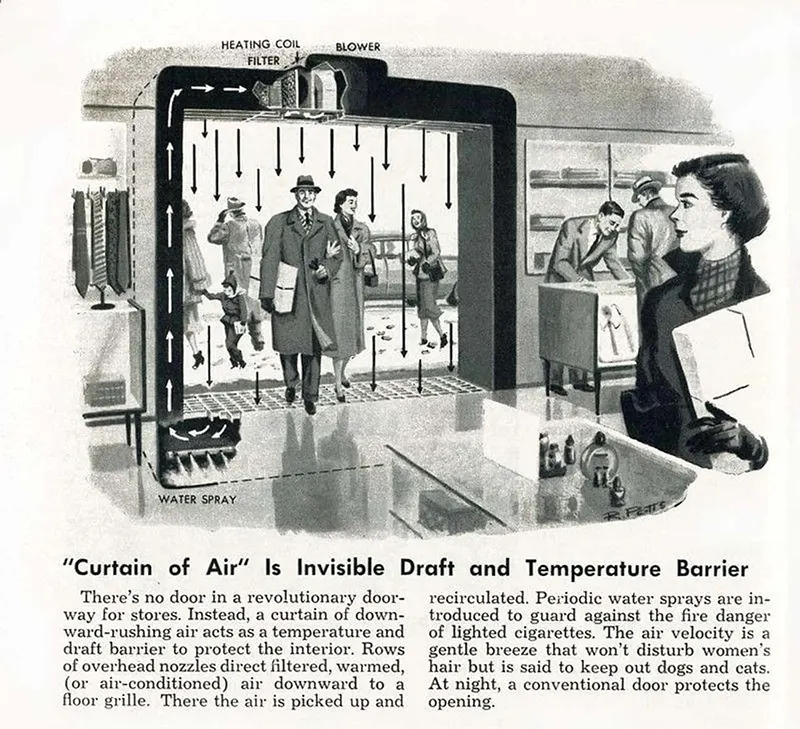
Weather control was a persistent dream across multiple generations of futurists. If technology could harness steam and electricity, surely it could manage rain and sunshine too. Illustrations showed massive machines adjusting cloud cover over cities, and weather-proof roofing sealed entire urban districts from the elements. These ideas weren’t entirely without basis — cloud seeding experiments were already underway by the mid-20th century — but the total control depicted in these images remained firmly in the realm of imagination.


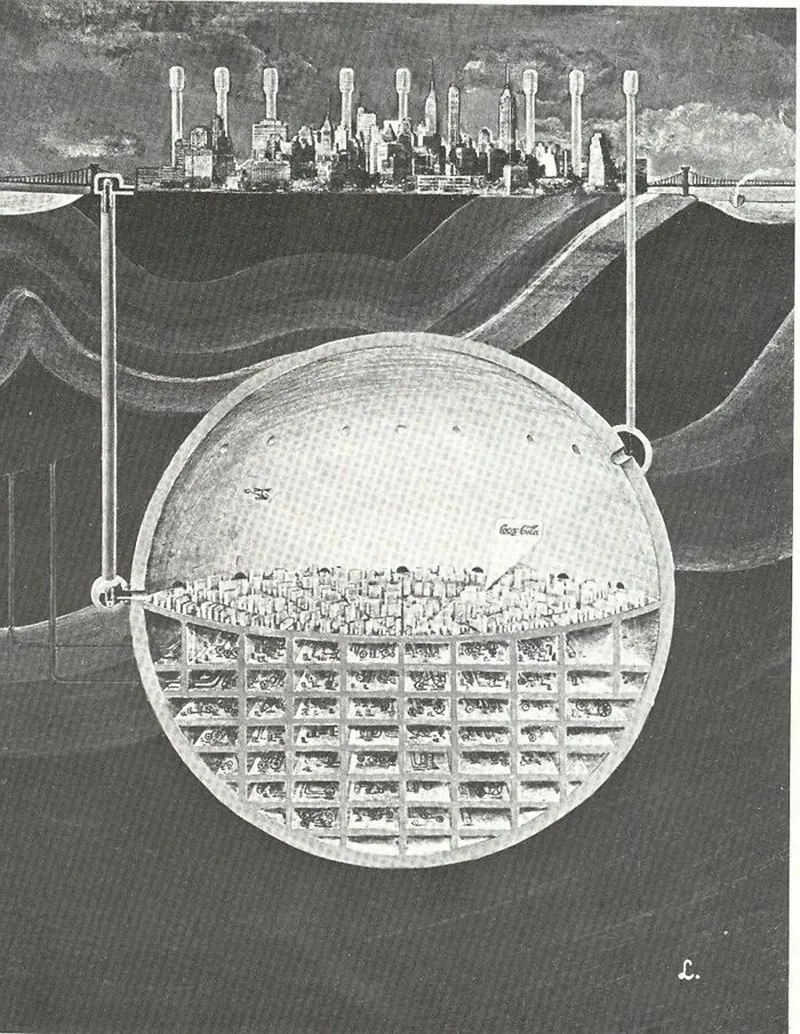
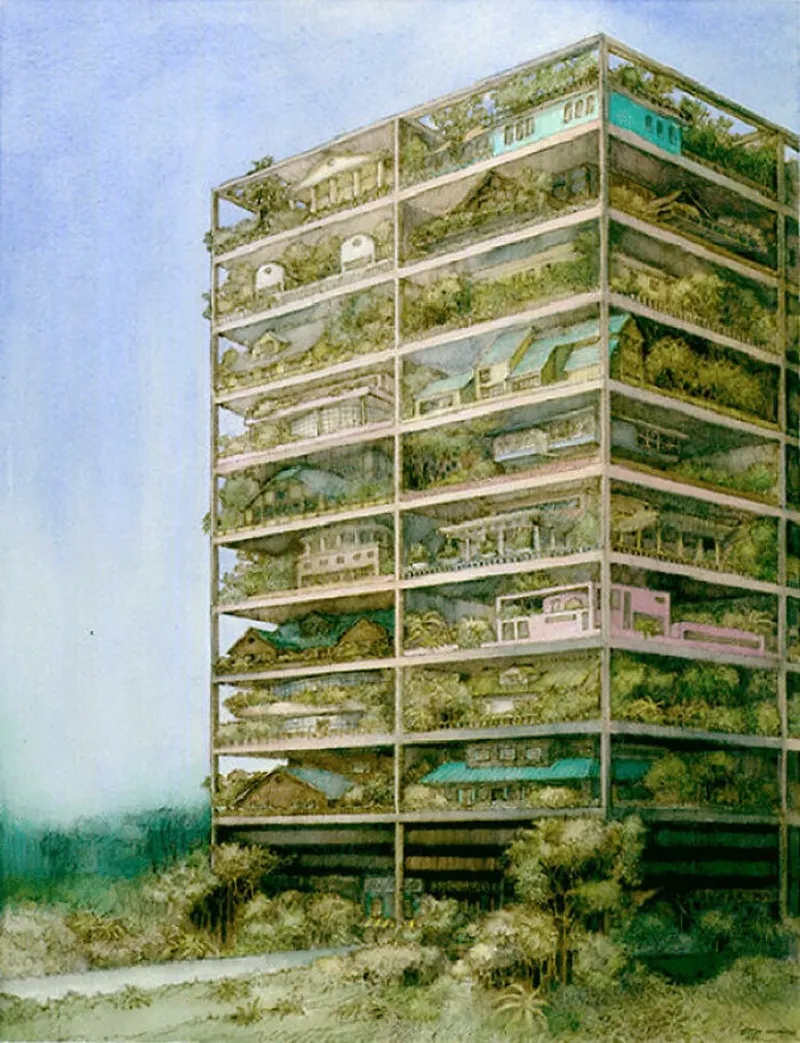
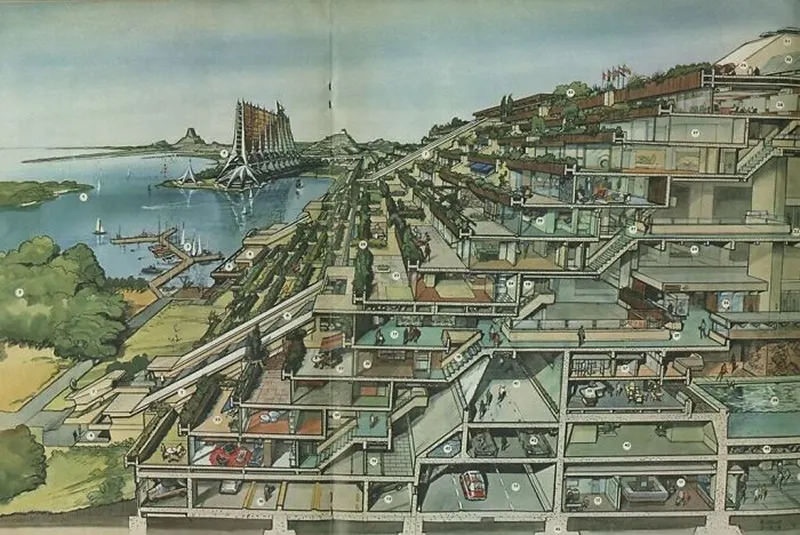
Urban design was reinvented entirely in many of these visions. Movable sidewalks, jetscalators, and circular runways transformed the city into a frictionless machine for moving people. One 1969 illustration proposed a nuke-proof underground city beneath Manhattan. Another from 1981 showed vertical suburban stacking — apartment towers arranged like suburbs in the sky — as the solution when ground-level space ran out. Cities in these images always looked immaculate, orderly, and impossibly clean.


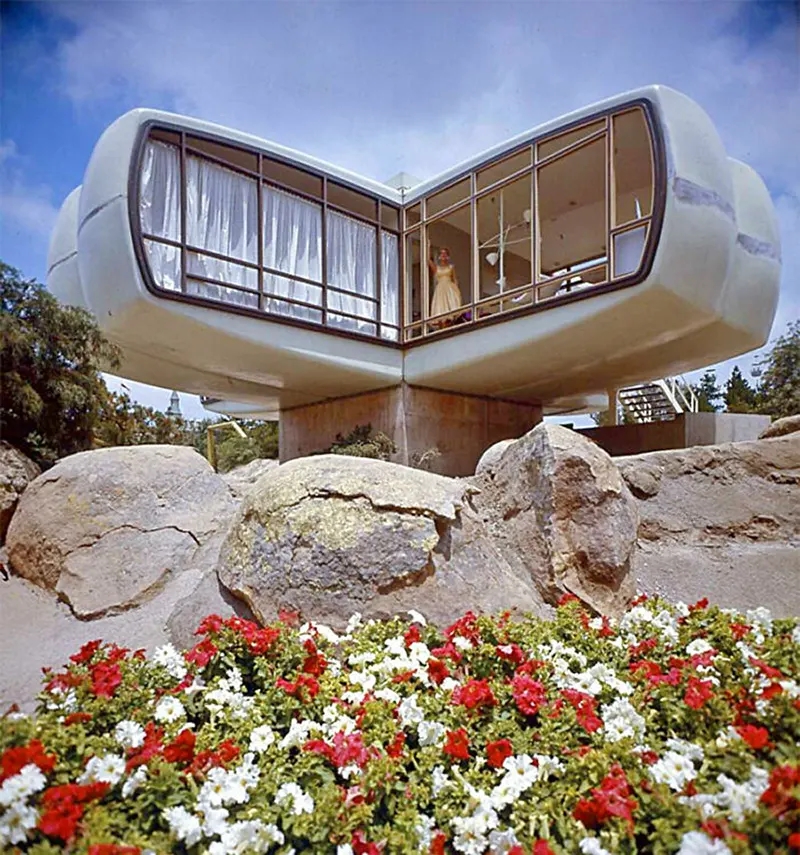
Home comfort was a recurring theme. The combination bathroom lounge, modern kitchens with built-in appliances, and computerized desks for the home all suggested a future where domestic space was smarter and more connected. These weren’t just decorative fantasies — they were sold as attainable upgrades, just a few years away. The Monsanto House of the Future, built as a real exhibit at Disneyland in 1957, made this vision tangible. Visitors could walk through it and see what a fully plastic, futuristic home looked and felt like.


Emergency services were reimagined right alongside everything else. Flying fire engines, fire-fighting missiles, and disaster response vehicles equipped with technology far beyond what existed at the time appeared regularly. Rescue planes and aerial firefighters promised faster response times and access to places ground vehicles could never reach. These illustrations reflected genuine frustration with the limitations of existing emergency infrastructure and a belief that technology would eventually eliminate those limitations entirely.


Medicine and surveillance both received futuristic treatments that feel remarkably familiar today. Bloodless surgery, illustrated as a precise and clean procedure guided by advanced technology, prefigured modern laser surgery. An all-seeing police department equipped with x-ray surveillance devices and total city monitoring predated modern CCTV networks and digital tracking by decades. Cash registers that understood spoken commands — drawn as a novelty — are now a standard feature in voice-activated payment systems.


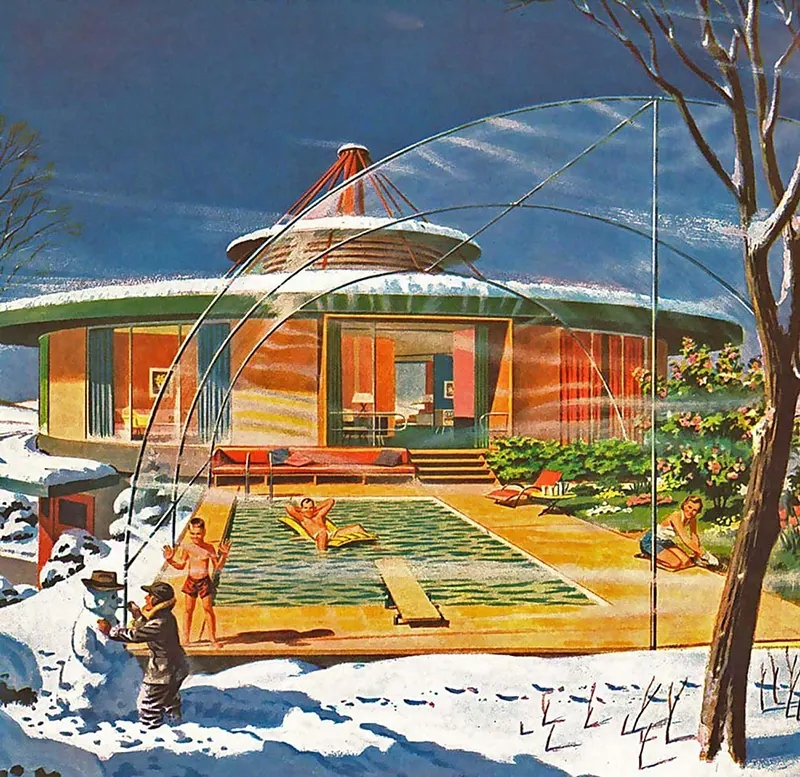
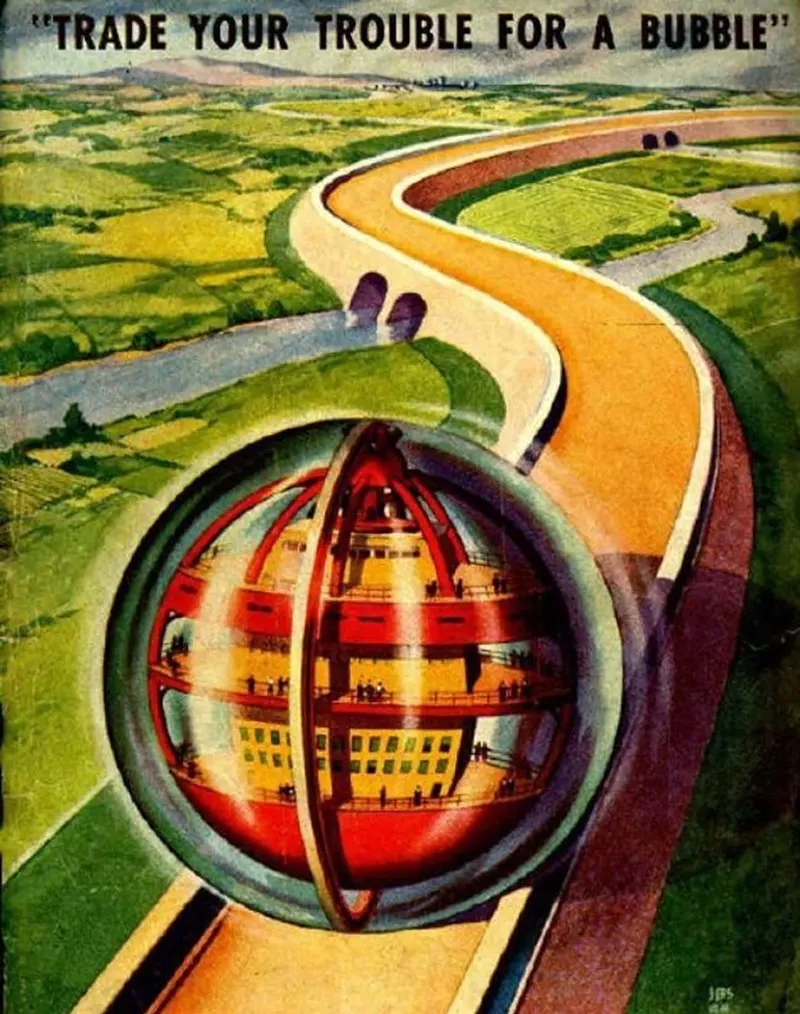
Some predictions were architectural and surprisingly specific. A house designed to rotate and follow the sun throughout the day was drawn as a practical energy solution. Glass-domed houses sat under protective bubbles that kept weather out entirely. Motopia — a proposed city design where all pedestrian and vehicle traffic were kept on completely separate levels — appeared in serious urban planning literature, not just pulp magazines.


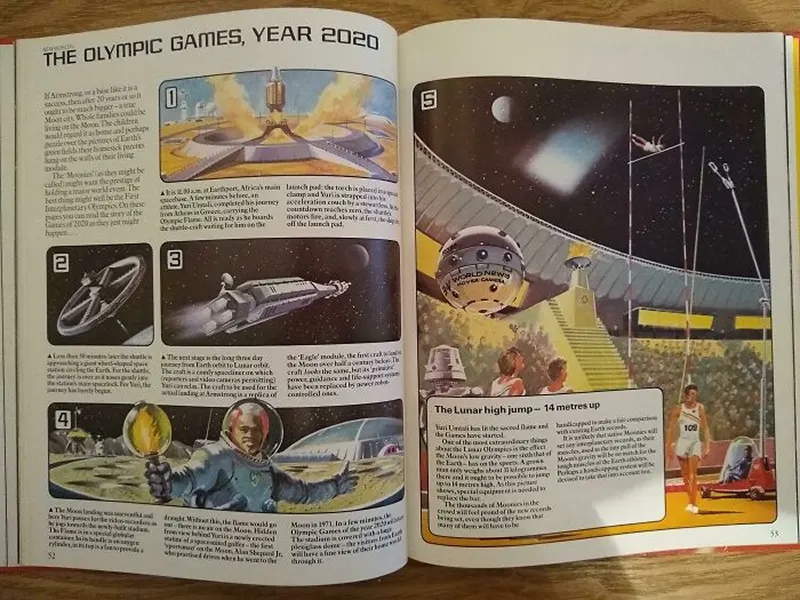
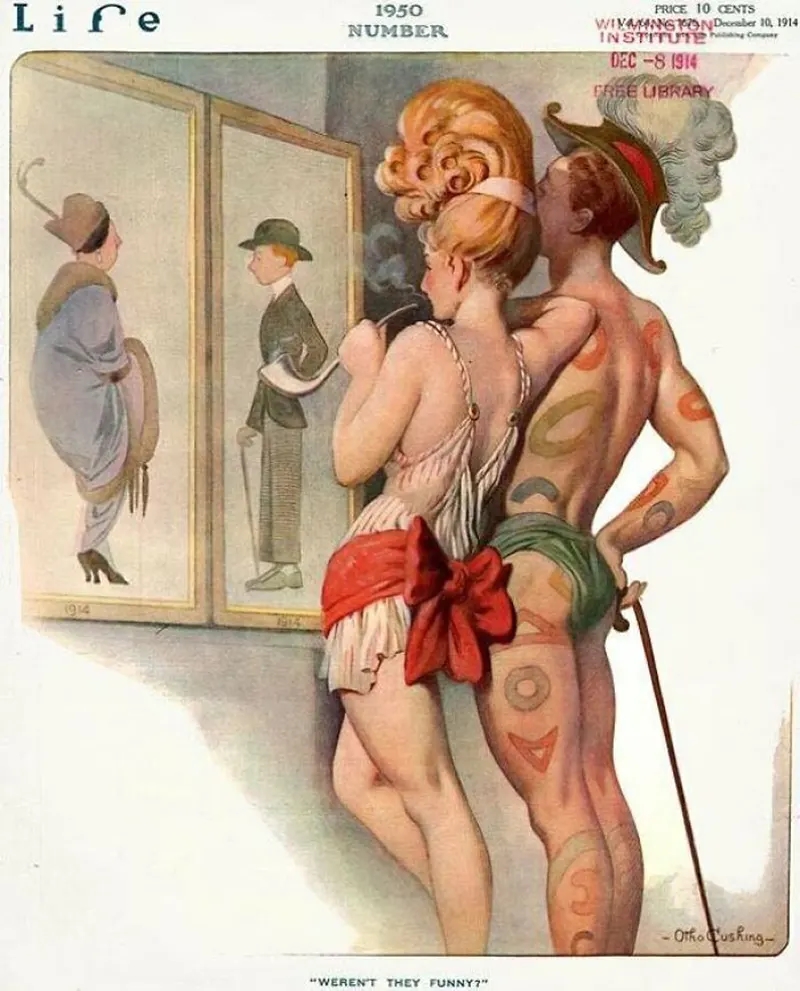
The 1914 cover of Life Magazine made one of the most specific fashion predictions on record — illustrating exactly what people would wear in 1950. The fashions depicted were sleek, minimalist, and nothing like what 1950s Americans actually put on. A 1979 children’s book called “The Usborne Book of the Future” predicted what the 2020 Olympics would look like, complete with athletes using technology that doesn’t exist. These kinds of specific, dated predictions provide a clear measure of exactly where imagination outpaced reality.


The office of the future, as envisioned across several decades, looked radically different from the open-plan offices and laptop-on-a-couch setups of today. Illustrations from the mid-20th century showed workers surrounded by enormous mainframe computers, speaking commands into machines, and receiving printed readouts through pneumatic tubes. These images were drawn by people who understood that computing was coming but had no framework for how small and personal it would eventually become.


Soviet futurist illustrations from the 1930s deserve their own mention. These images combined ideological optimism with technological ambition, depicting massive collective farms, mechanized factories, and shared public transportation networks of extraordinary scale. They weren’t just artistic — they were propaganda, designed to convince citizens that the Soviet future would be the most advanced in the world. The technology shown was often similar to what Western futurists imagined, but the social structure around it was entirely different.


Entertainment and leisure were not left out of the future. Flying tennis, live audiovisual broadcasts of theater performances beamed into homes, and recreational vehicles of implausible size all appeared in illustrations from this period. A live broadcast of a theater performance sent to home screens was drawn as a remarkable luxury decades before television made it mundane. These predictions about entertainment technology turned out to be among the most accurate of all.


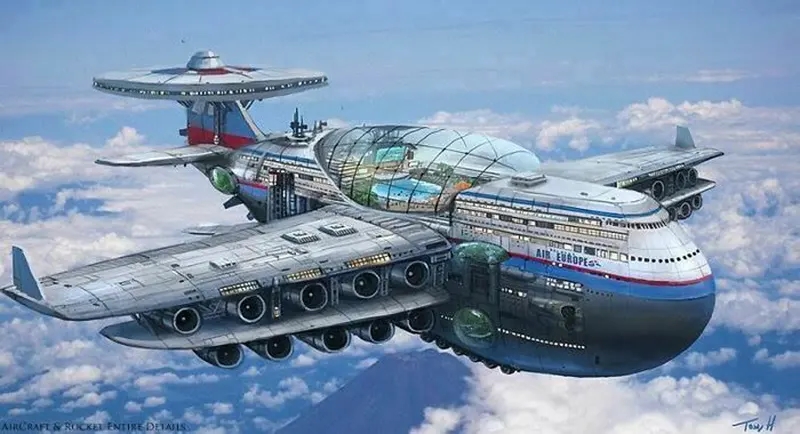
Aviation predictions ranged from the practical to the spectacular. The airbus — a large passenger aircraft carrying hundreds of people — was imagined well before wide-body jets became standard. Rescue planes, personal airships, and aero-cabs all pointed toward an aerial world where getting somewhere by air was as routine as catching a bus. A 1970s futuristic concept for jetliner travel showed passengers reclining in wide, hotel-style cabins, a vision that never materialized as airlines moved in the opposite direction toward higher density seating.


Law enforcement in the futurist imagination was entirely airborne. Flying cops chased flying smugglers through illustrated skies. Aviation police patrolled from above. An advance sentinel monitored territory from a helicopter long before military helicopters were standard equipment. These images told a consistent story: the future was vertical, and whoever controlled the air controlled everything below it.


Not every future vision was optimistic. Some illustrated brutal armored battle-cars and mechanized warfare that look closer to dystopia than progress. The atomic age brought illustrations of underground cities built to survive nuclear strikes, and the bright side of atomic energy appeared in promotional materials that tried to reframe the bomb’s terrifying power as a tool for building rather than destroying. These images reflect genuine public fear dressed up in the visual language of progress.


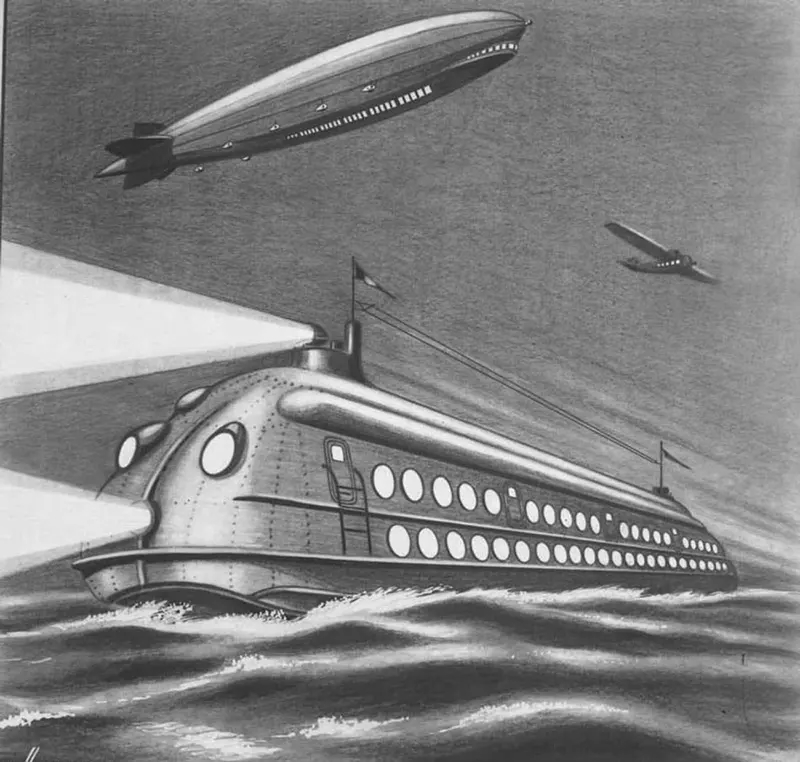
Ocean travel was just as thoroughly reimagined as air travel. Tourist submarines explored the deep sea in comfortable, windowed cabins. A hybrid railship combined the speed of a train with the stability of a naval vessel. An express ocean liner drawn in 1931 for the year 2000 was sleeker, faster, and larger than anything afloat at the time. These naval futurist images have aged differently from aviation ones — submarines and large ocean vessels are real, but the tourist submarine leisure industry never materialized as predicted.


Some of the most ambitious urban predictions involved moving not just people but entire structures. One illustration showed a full city block being relocated by rail — buildings, streets, and all — transported to a new location in one piece. This wasn’t presented as absurd. It was offered as a logical application of the engineering scale already visible in bridge-building and railway construction of the time. The ambition behind these drawings was sincere, even when the engineering was impossible.


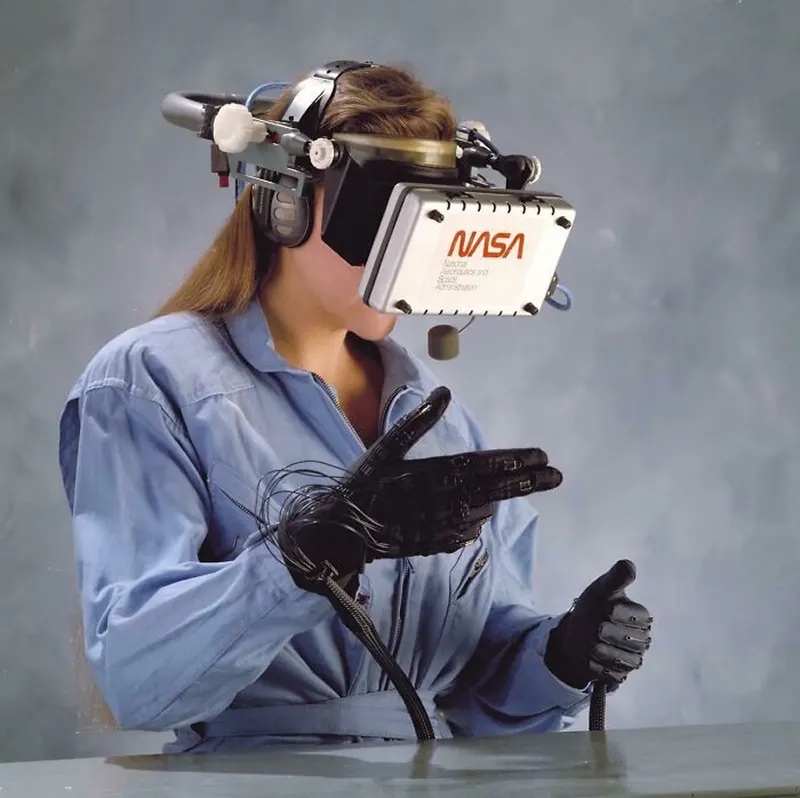
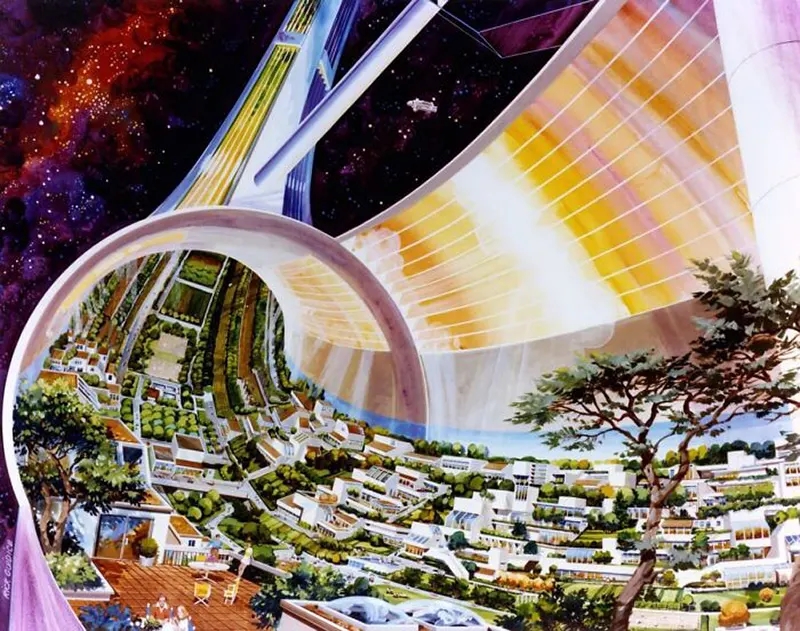
NASA’s own contributions to futurist imagery are among the most detailed and technically grounded. In 1989, the agency produced actual virtual reality equipment — not a postcard fantasy, but working hardware. Earlier space colony concepts from the agency showed rotating cylindrical habitats, interior parks, and residential neighborhoods suspended in orbit. These weren’t drawn by dreamers — they were produced by engineers who had already landed humans on the moon and were working out what came next.


The Japanese vision of the future classroom from 1969 stands out for one specific detail: it included small robots assigned to rap students on the head when they misbehaved. The rest of the classroom was recognizably futurist — screens, machines, automated lessons — but that one detail reveals something about how cultural attitudes toward discipline and technology intersected. Every futurist vision is shaped not just by what technology existed but by the society that produced the illustration.

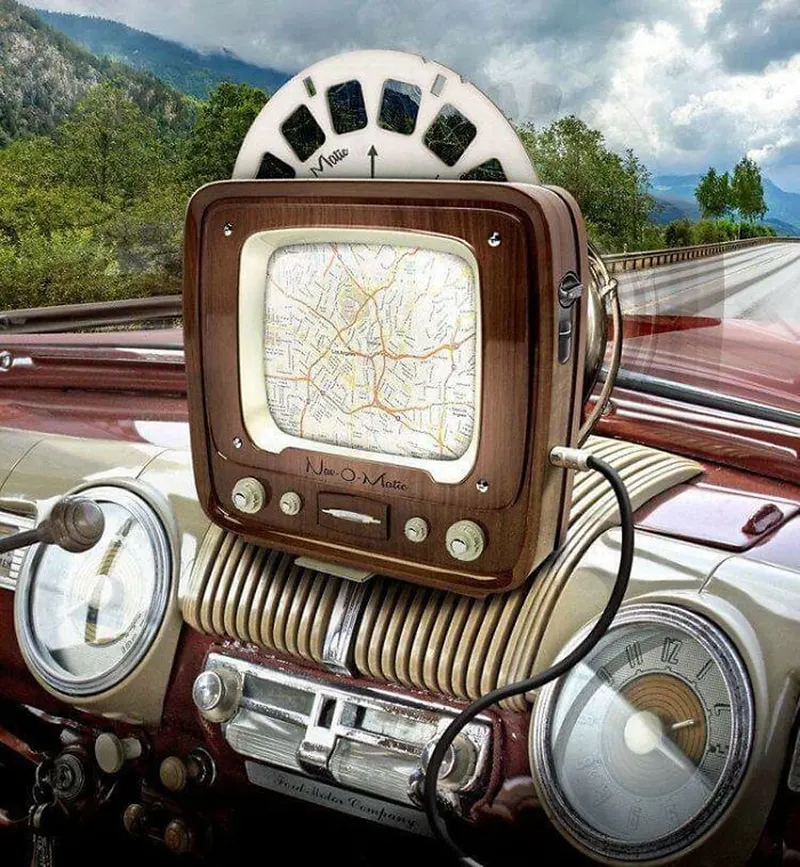
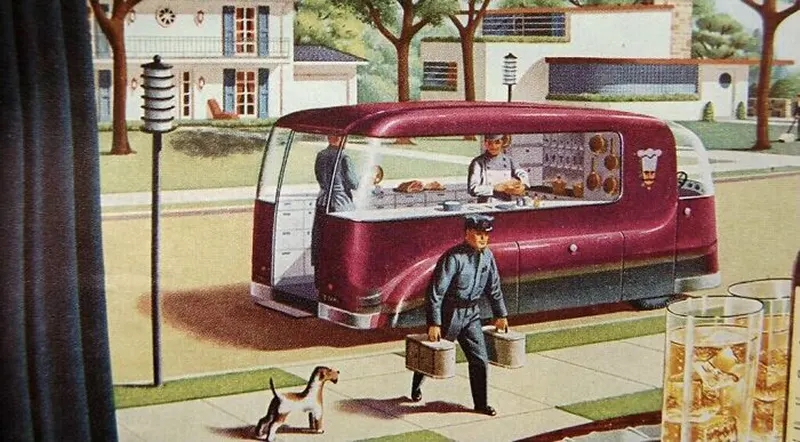
Food delivery, navigation systems, and shopping from home were all predicted in considerable detail decades before they became ordinary services. A 1940s illustration of food delivery showed a system remarkably close to modern delivery apps — orders placed at home, food arriving at the door. A 1950s navigation concept showed a dashboard-mounted screen guiding drivers turn by turn. Shopping from home via a screen appeared in a 1940s magazine as a distant luxury. Each of these services is now completely standard.
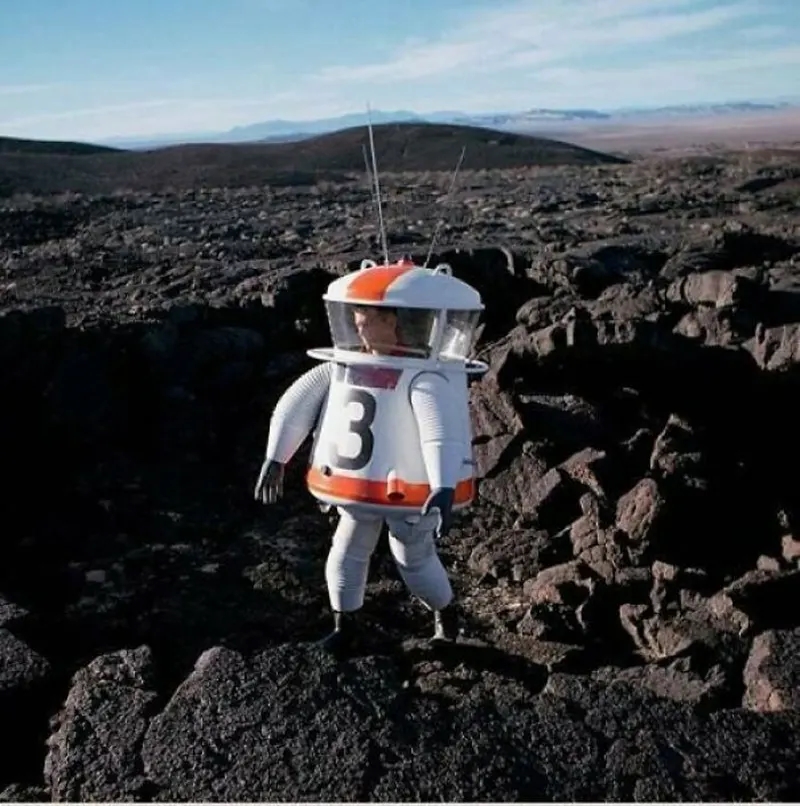
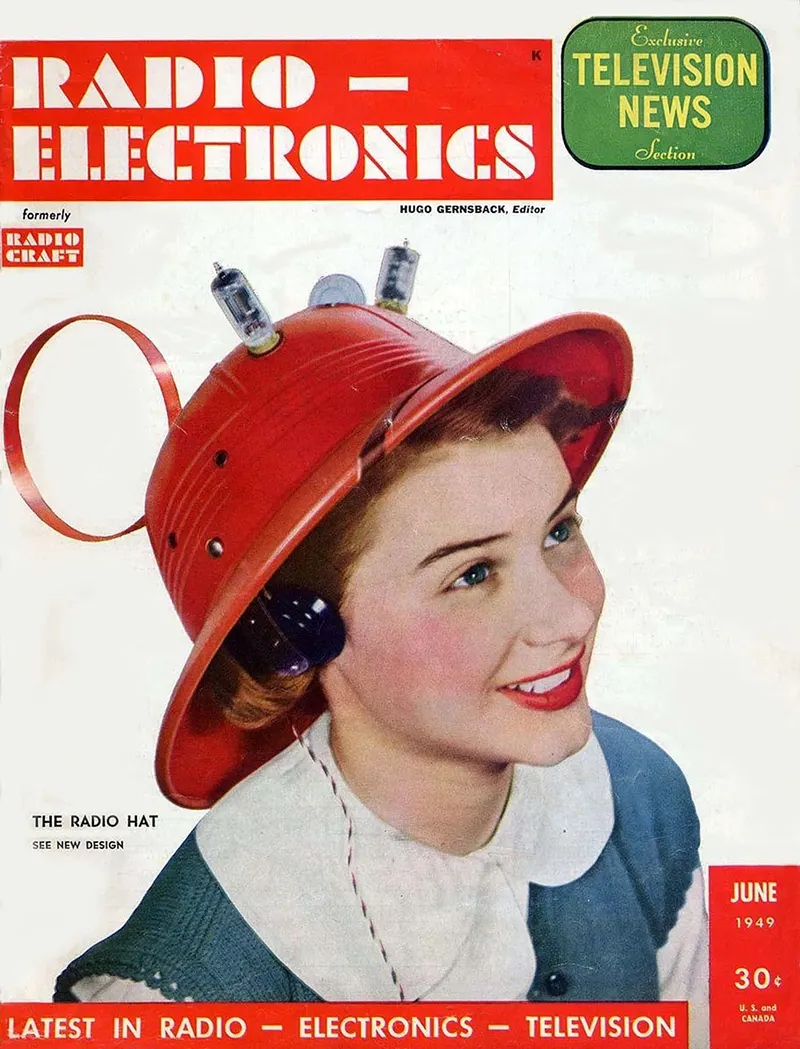
The Radio Hat from 1949 is one of the more charming real-world objects from this era of futurism. It was an actual, manufactured product — a pith helmet with a battery-powered AM radio built directly into the brim. It didn’t catch on, but it was sold commercially as a serious consumer item. Similarly, Grumman Aircraft Corporation designed and tried to sell NASA a spacesuit in 1962 that many observers have called one of the worst spacesuit designs ever proposed. Both objects illustrate the gap between what sounded like a logical idea and what actually worked.
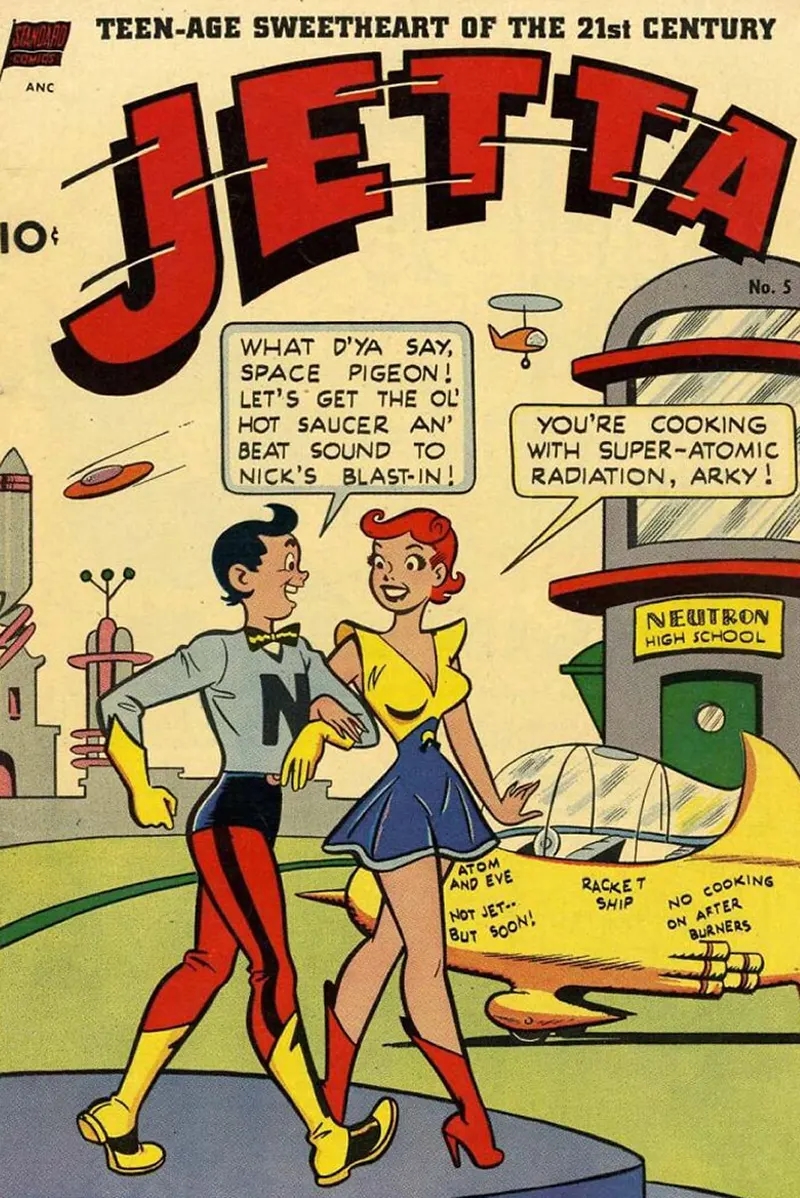
Teenagers of the 21st century appeared in several illustrated predictions as a distinct and imagined demographic — wearing sleek uniforms, using personal communication devices, and living in environments that looked nothing like the schools and suburbs of the time. These images were often published in magazines aimed at parents, framing the next generation as the inheritors of a technologically transformed world. The specifics were usually wrong, but the underlying assumption — that young people would grow up in a world shaped by technology — turned out to be correct.
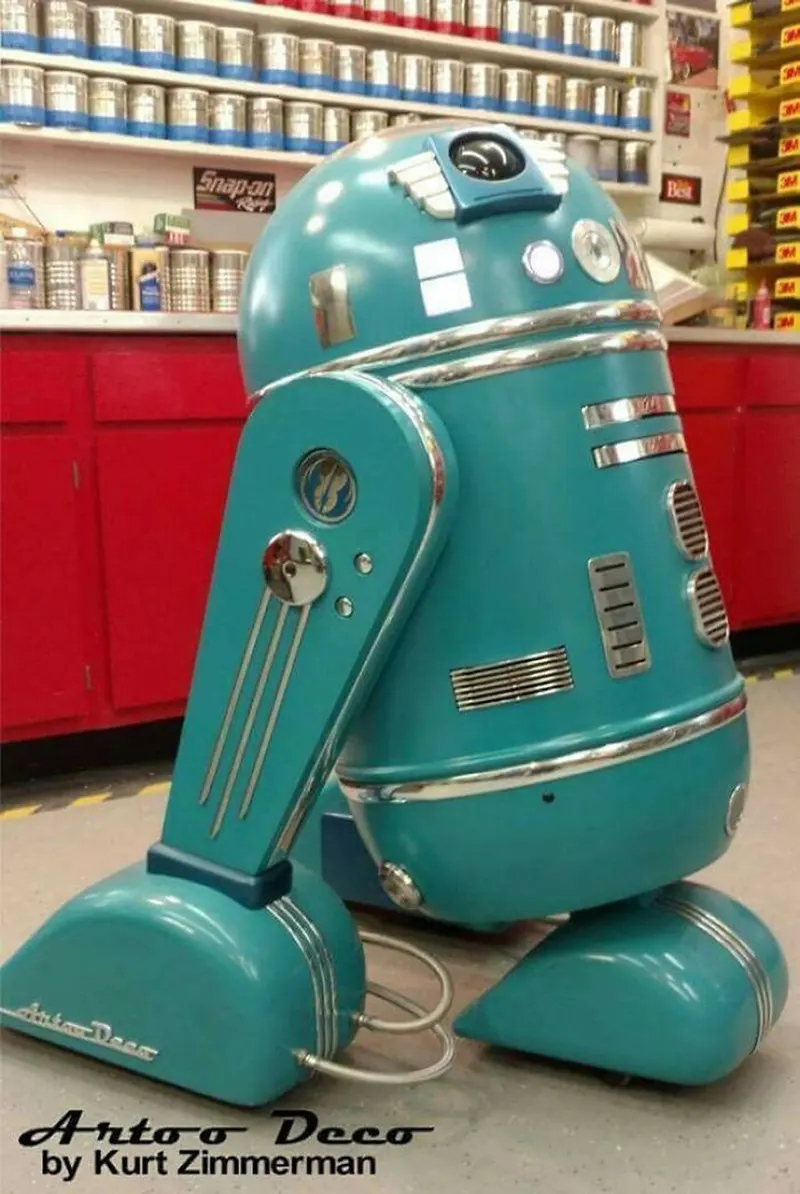
Futuristic Netherlands, drawn in 1970, showed a country of elevated roadways, glass towers, and fully ordered canals converted into transport corridors. The Soviet vision from the 1930s, by contrast, showed massive collective infrastructure and communal living. A 1930 painting depicting an artist’s personal vision of the future showed dense aerial highways over recognizable city blocks. Each national context produced a different version of the future, shaped by local politics, economics, and cultural priorities.
Vacations on the moon appeared in illustrations from multiple countries and multiple decades. By the time Apollo 11 actually landed in 1969, the idea of lunar tourism felt like it was just a few years away. It wasn’t — and still hasn’t arrived — but the consistency of the prediction across so many different sources shows how deeply the idea had embedded itself in the popular imagination. The bright side of atomic energy, promoted in earnest after World War II, promised that nuclear power would make electricity so cheap it would not need to be metered. That prediction was wrong, but it was made seriously by informed people.
An express ocean liner imagined in 1931 for the year 2000 sat low and sleek in illustrated harbors, its proportions more like a warship than a cruise vessel. A giant pinball rail from 1946 proposed a passenger rail system where cars shot through tracks at extreme speeds using a mechanism resembling the spring-loaded launcher of a pinball machine. A flying driverless car drawn in 1960 anticipated a technology that engineers are still working to perfect more than sixty years later. Strolling on water, moving sidewalks, and personal airships completed a picture of a world where the physical constraints of daily life had been entirely eliminated.
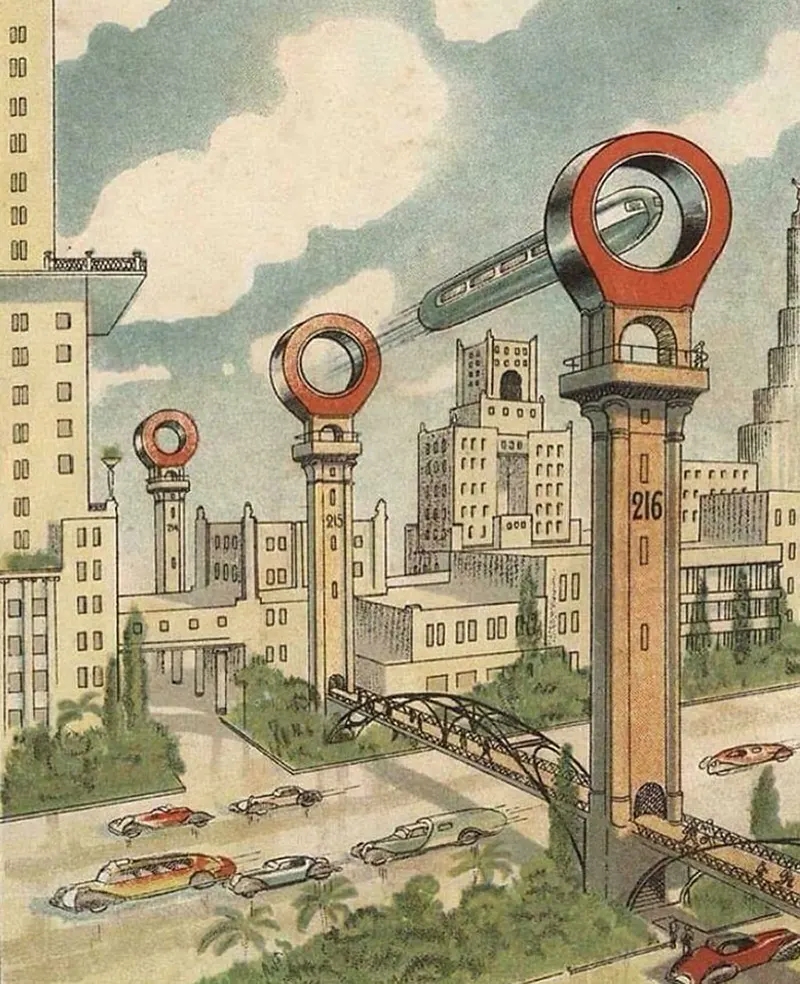
What makes these images enduringly interesting is not just what they got right or wrong, but the consistency of the underlying desire. Across more than a century of futurist illustration, people returned again and again to the same themes: movement without friction, work without labor, communication without distance, and nature under human control. The specific technologies imagined changed with each decade. The wish underneath them stayed exactly the same.