
Hot Springs, Arkansas, was one of the most visited resort cities in the United States at the turn of the 20th century. The city was incorporated as a town in 1876 and chartered as a city in 1879. Its growth was driven almost entirely by one thing: the natural thermal springs that drew visitors from across the country seeking the waters’ reputed healing power. By the early 1900s, thousands of people were arriving from other states each year, filling hotels and bathhouses that had been built up since the post-Civil War era.
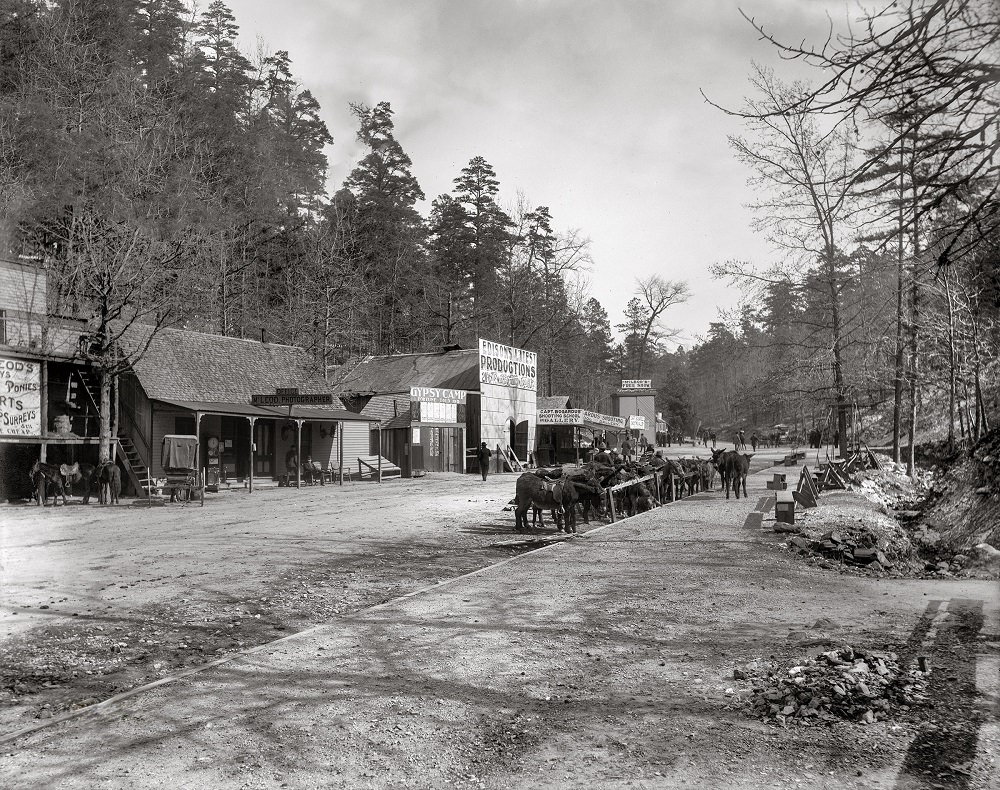
The railroads reached Hot Springs in 1875, which made the city far easier to access and accelerated its transformation into a full-scale resort destination. Hotels and bathhouses multiplied rapidly in the decades that followed. Alongside the grand establishments catering to wealthy visitors, more modest communities and camps took shape on the city’s outskirts, home to workers, locals, and seasonal residents who formed the backbone of everyday life in Hot Springs.
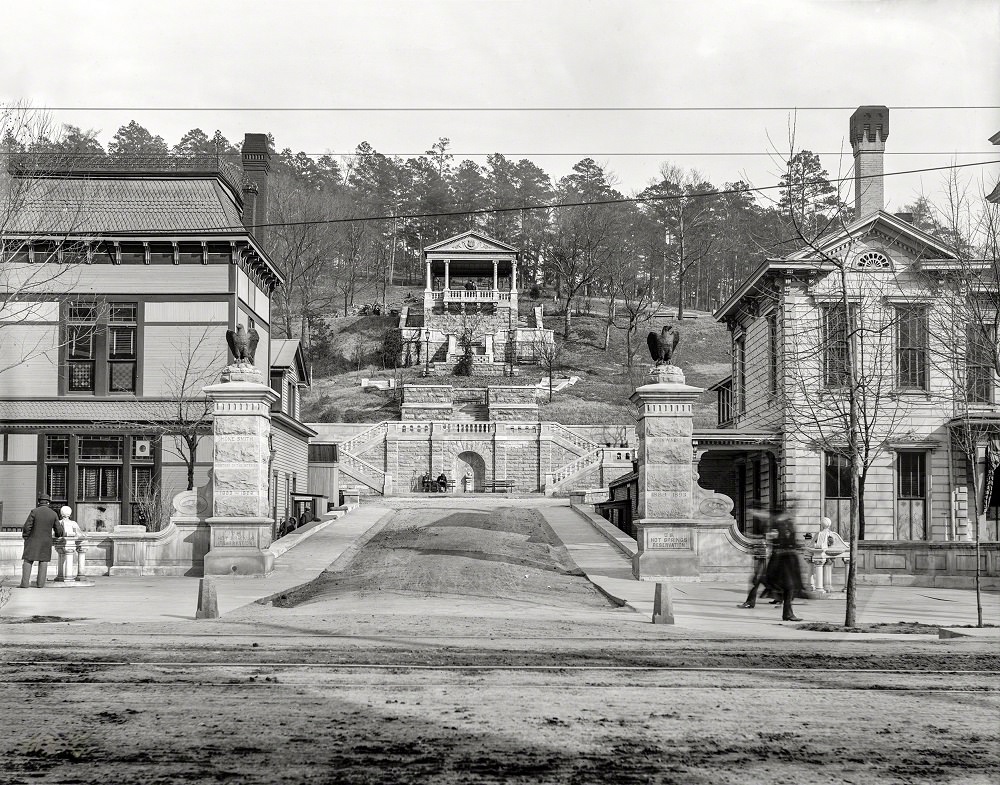
The federal government played a central role in shaping Hot Springs. The Government Reservation — which would eventually become Hot Springs National Park — protected the thermal springs and the land surrounding them. This federal presence gave the city a unique character, blending a regulated public resource with a thriving private resort economy. Visitors could access the springs through both government-managed facilities and the row of private bathhouses lining the main corridor.
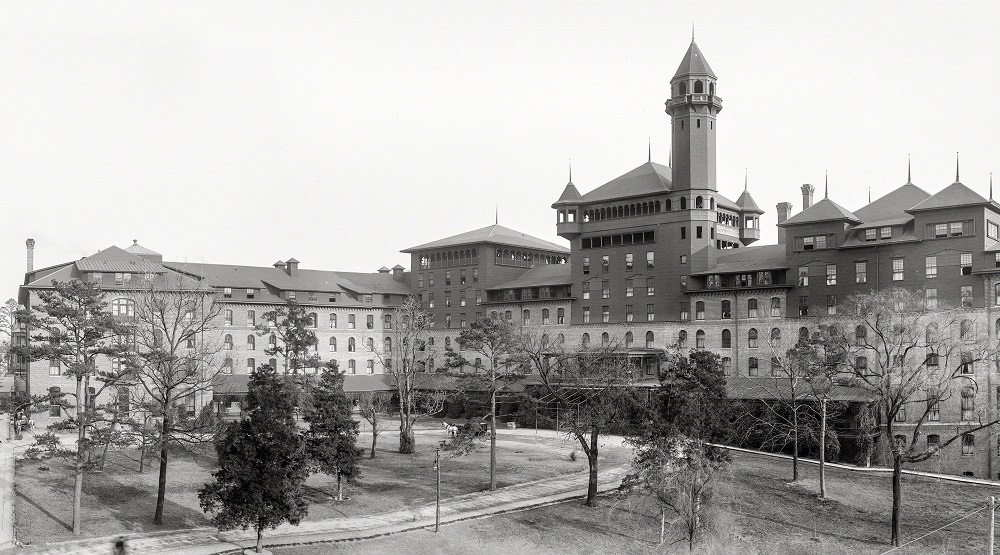
The Eastman Hotel, built in 1890, stood as one of the city’s most prominent landmarks during its peak years. Hotels like the Eastman catered to the steady flood of visitors who came to Hot Springs not just to bathe, but to socialize, dine, and be seen. The city had fully embraced its identity as a destination, and its hospitality industry reflected that ambition.
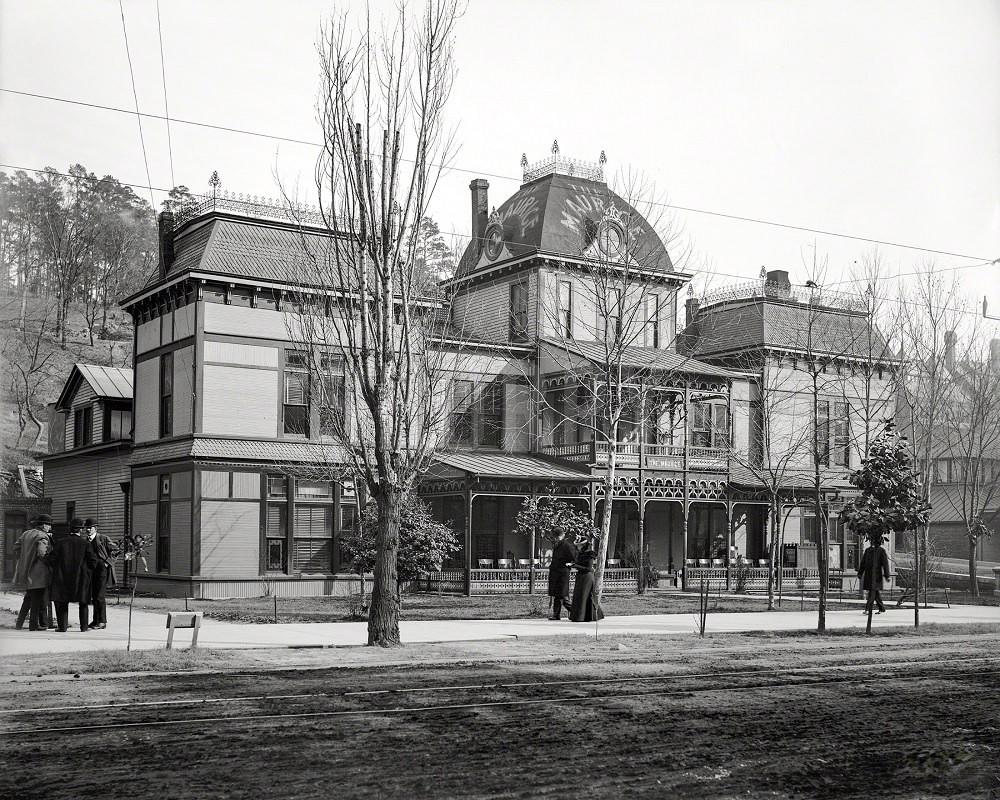
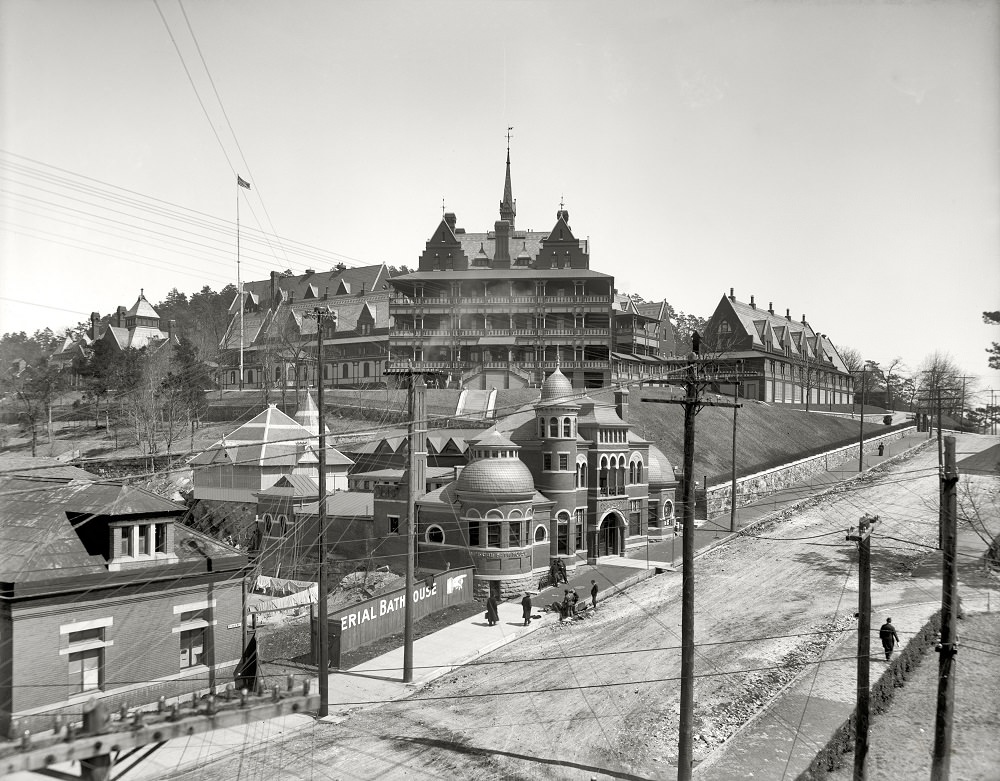
Bathhouses were the heart of Hot Springs. The Maurice Bath House was one of several establishments along Bathhouse Row where visitors paid to soak in the thermal waters. Each bathhouse competed for clientele, offering varying levels of luxury and service. Some were grand architectural showpieces; others were more functional. Together, they defined the city’s economy and its reputation as a place of rest and recovery.
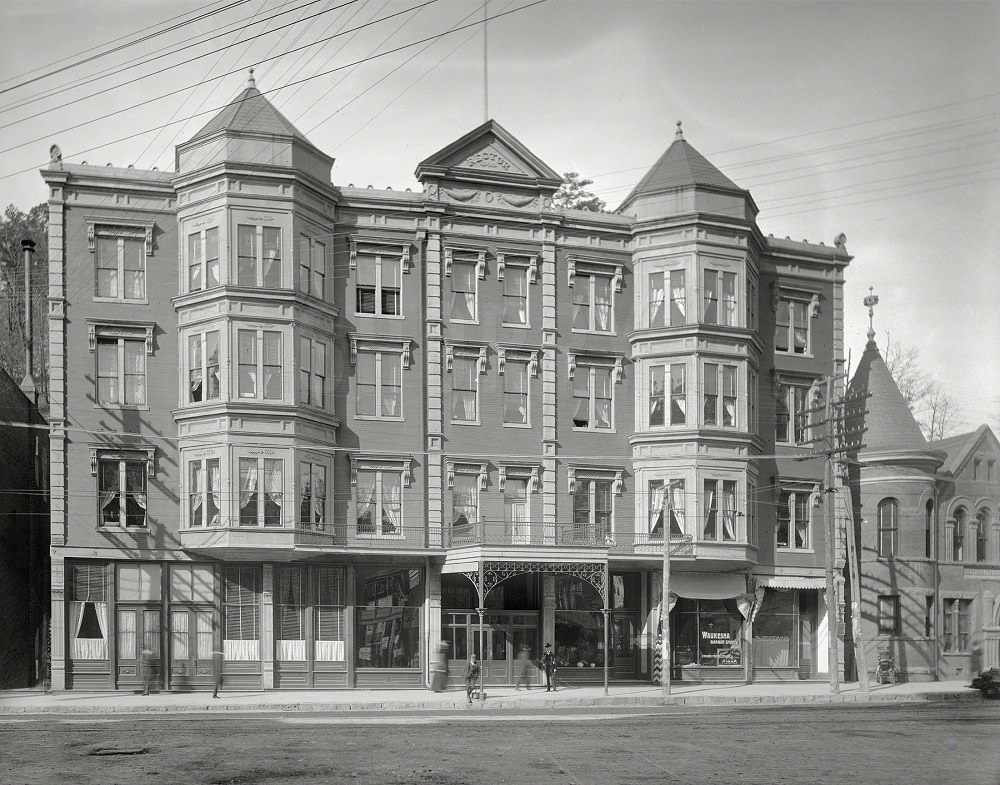
Hotels and bathhouses frequently operated in close proximity, and in some cases were directly connected. The Waukesha Hotel and Rector Bath House represent exactly this kind of pairing that made Hot Springs so convenient for visitors — lodging and treatment all within easy reach. Beyond the baths and hotels, the city also offered its share of unusual attractions.
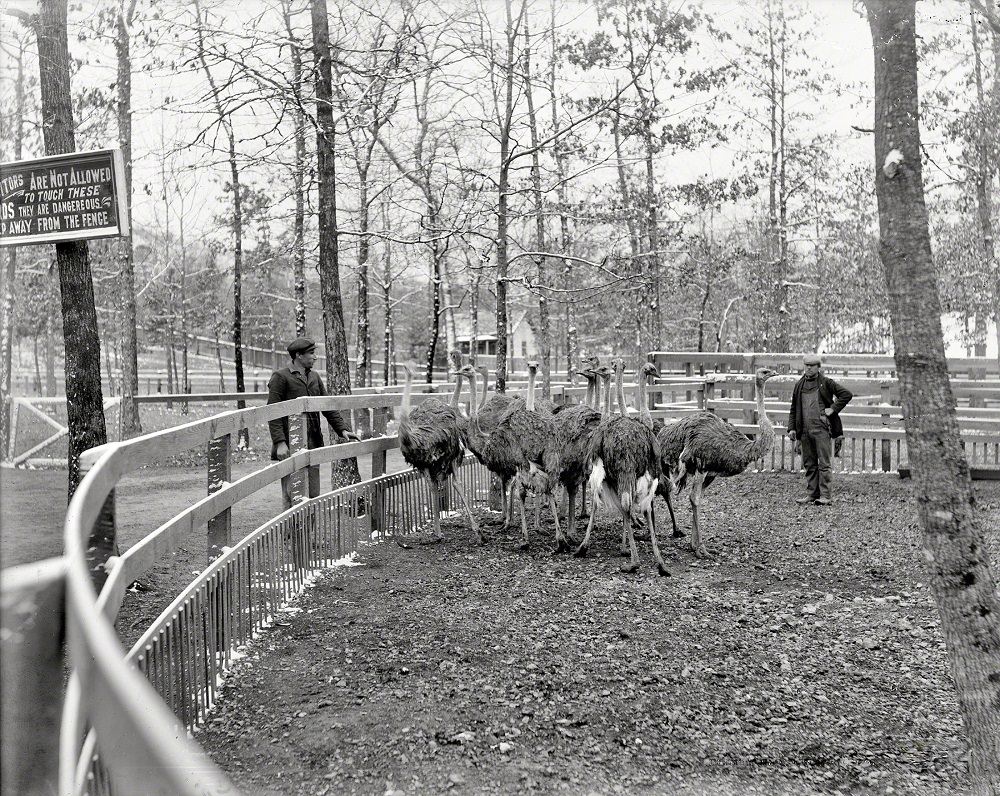
An ostrich farm operating in Hot Springs around 1900 speaks to the city’s ambition to entertain as much as to heal. Attractions like this drew curious visitors who wanted more than just a thermal bath. Hot Springs was deliberately crafting itself as a full resort experience, and novelty was part of the appeal. The city’s streets and intersections reflected this busy, layered character.
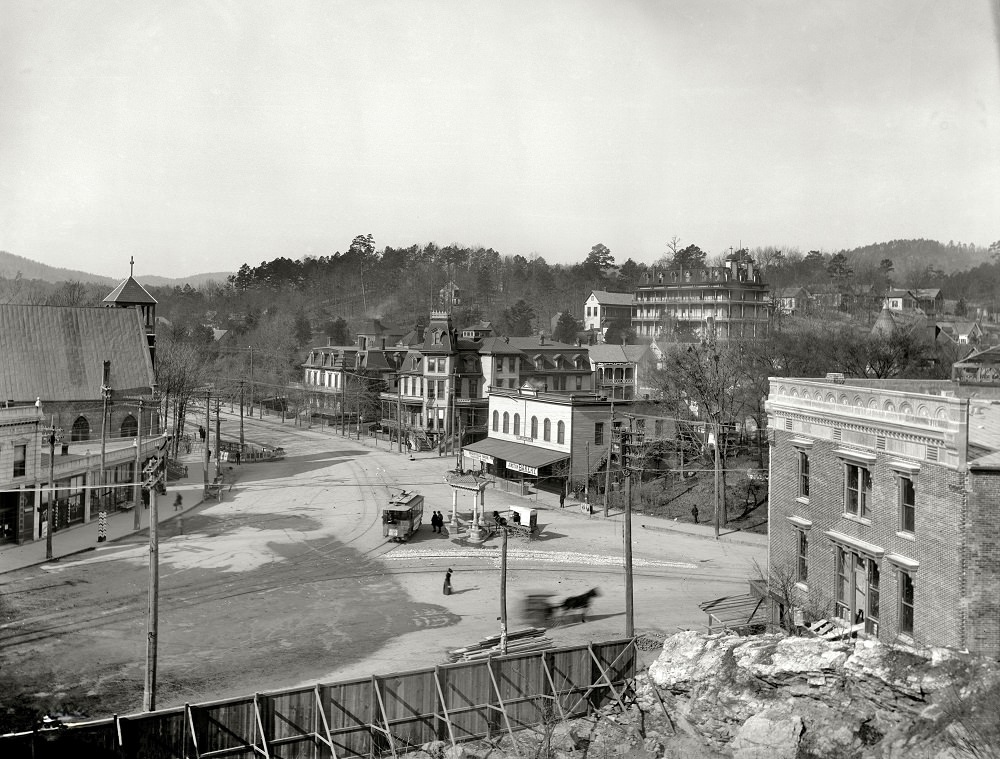
Seven Points was one of the recognizable landmarks within the city, where several roads converged into a single junction. Scenes like this capture the urban fabric of Hot Springs around 1900 — a city actively growing and organizing itself around the needs of its visitors and residents alike. The natural landscape surrounding the city was equally part of its identity.
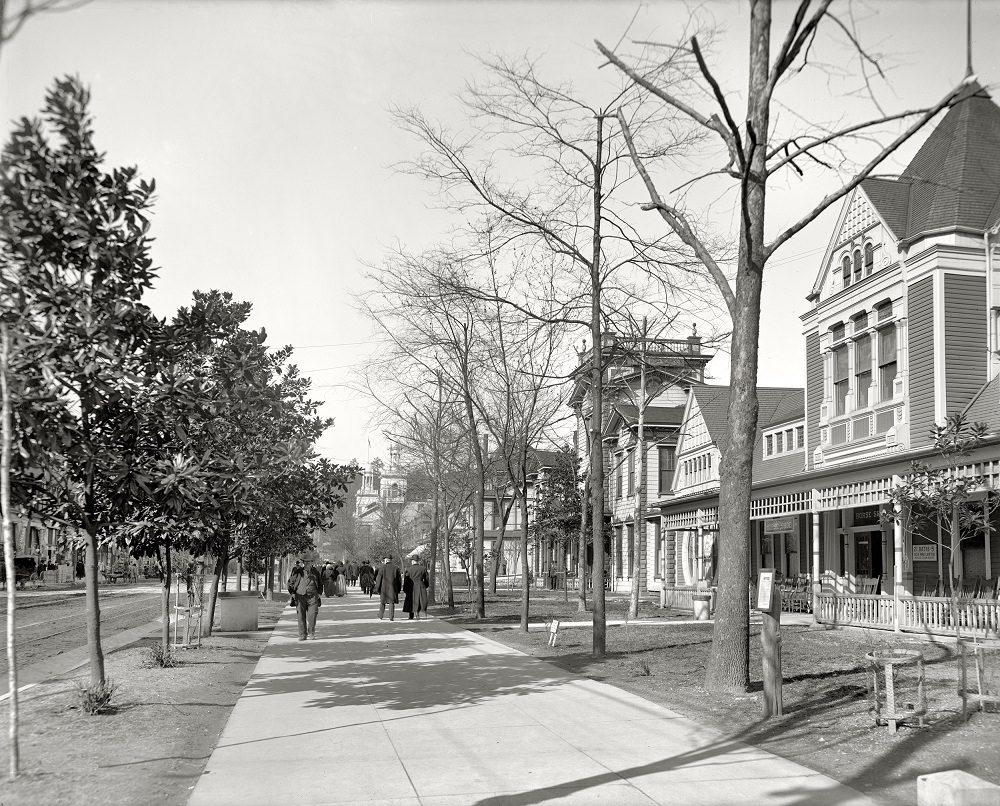
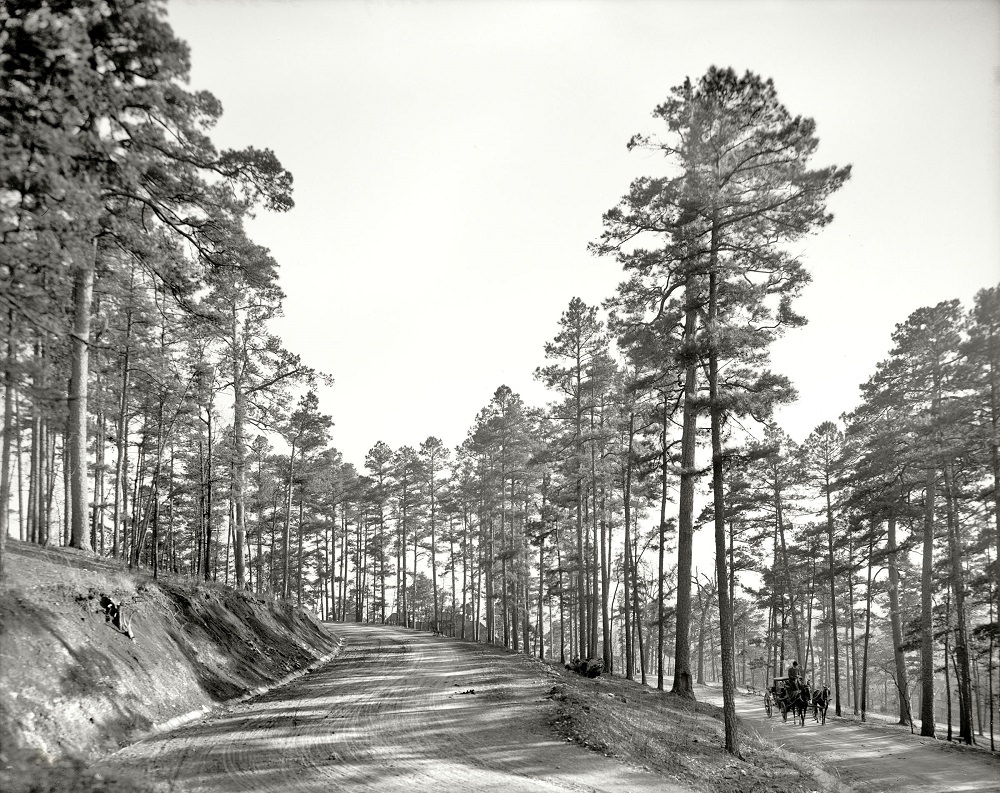
Bathhouse Row was the commercial and cultural spine of Hot Springs. By 1910, the row featured a series of bathhouses constructed in grand architectural styles, lining the edge of the Government Reservation. The wooded terrain surrounding the city added to its appeal, with pine-lined roads offering scenic routes through the landscape that visitors and locals alike traveled regularly.
The Army and Navy General Hospital was another key institution that established Hot Springs as more than just a leisure destination. The hospital served military personnel and underscored the city’s role as a place of genuine medical treatment, not merely fashionable tourism. Its presence also brought a steady population of patients, staff, and administrators to the city.
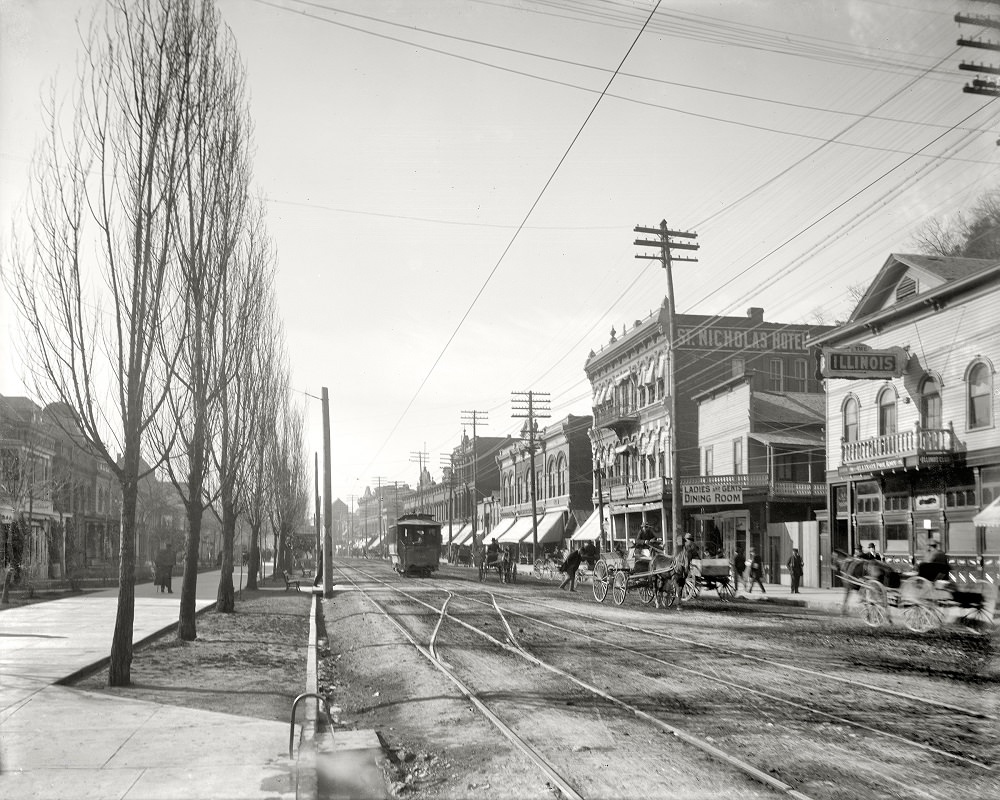
Central Avenue was the main commercial artery of Hot Springs, lined with shops, hotels, and businesses serving the constant flow of visitors. Photographs from 1900 show a street already well-developed, with signs of a city that had grown quickly and deliberately. The avenue connected the bathhouses to the broader city, making it a natural gathering point for daily life.
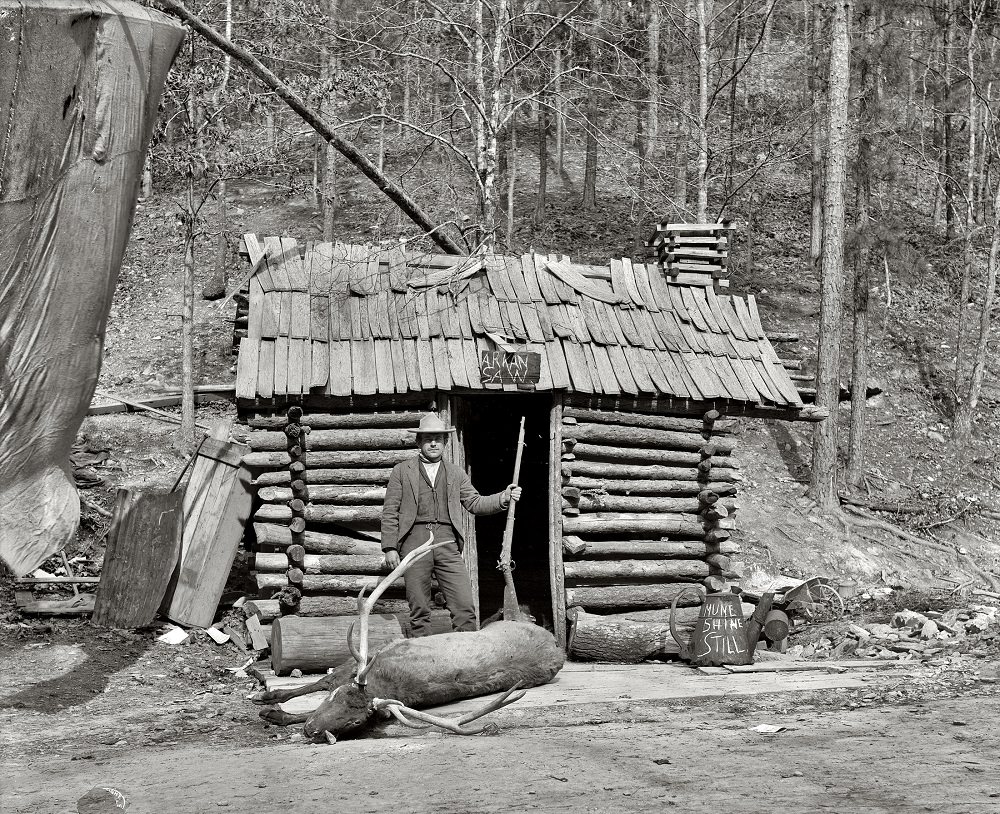
Away from the grand hotels and busy avenues, quieter corners of the city told a different story. Happy Hollow was a distinct neighborhood where more modest structures stood in contrast to the resort’s polished face. Cabins like McLeod’s were home to year-round residents who lived and worked in the city long before and after the tourist seasons came and went.
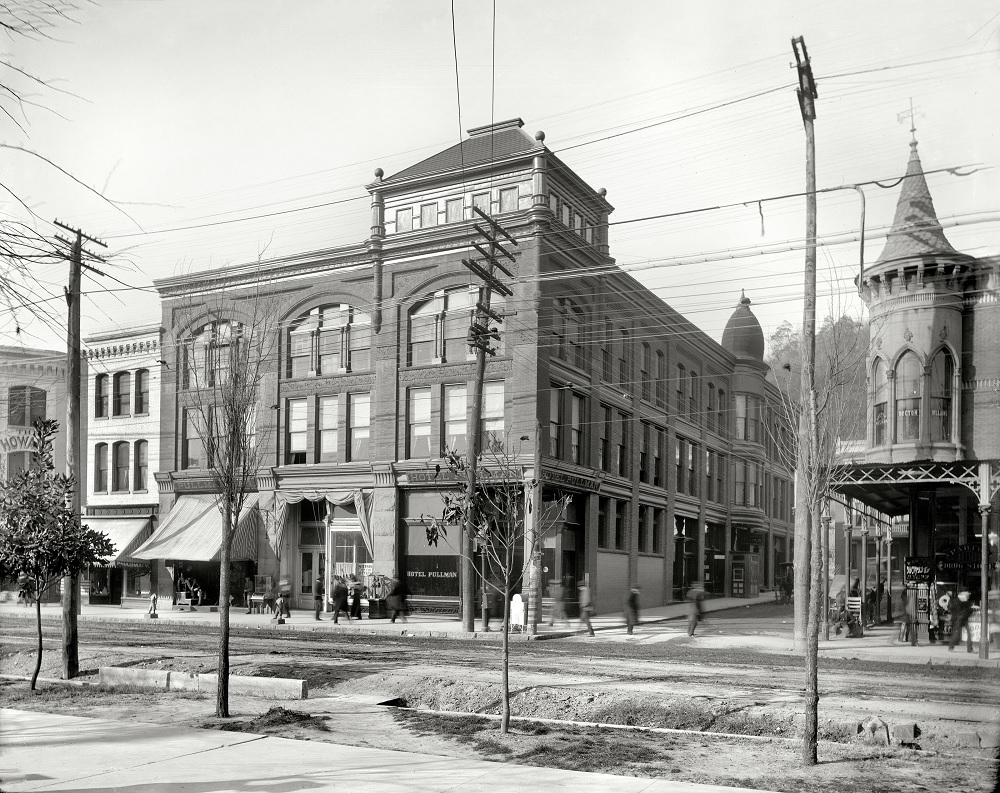
On September 5, 1913, a devastating fire tore through Hot Springs and destroyed a large portion of the southern part of the city. The disaster reshaped several neighborhoods and forced significant rebuilding efforts in the years that followed. Before that fire, photographs like those of the Hotel Pullman preserved a snapshot of the city at its pre-disaster peak — a thriving resort town that had built an entire identity around its remarkable natural resource.





I wonder if those baby magnolia trees in the picture of bathhouse row are the same full grown ones there now? Or if they’ve been replanted since then, I mean.