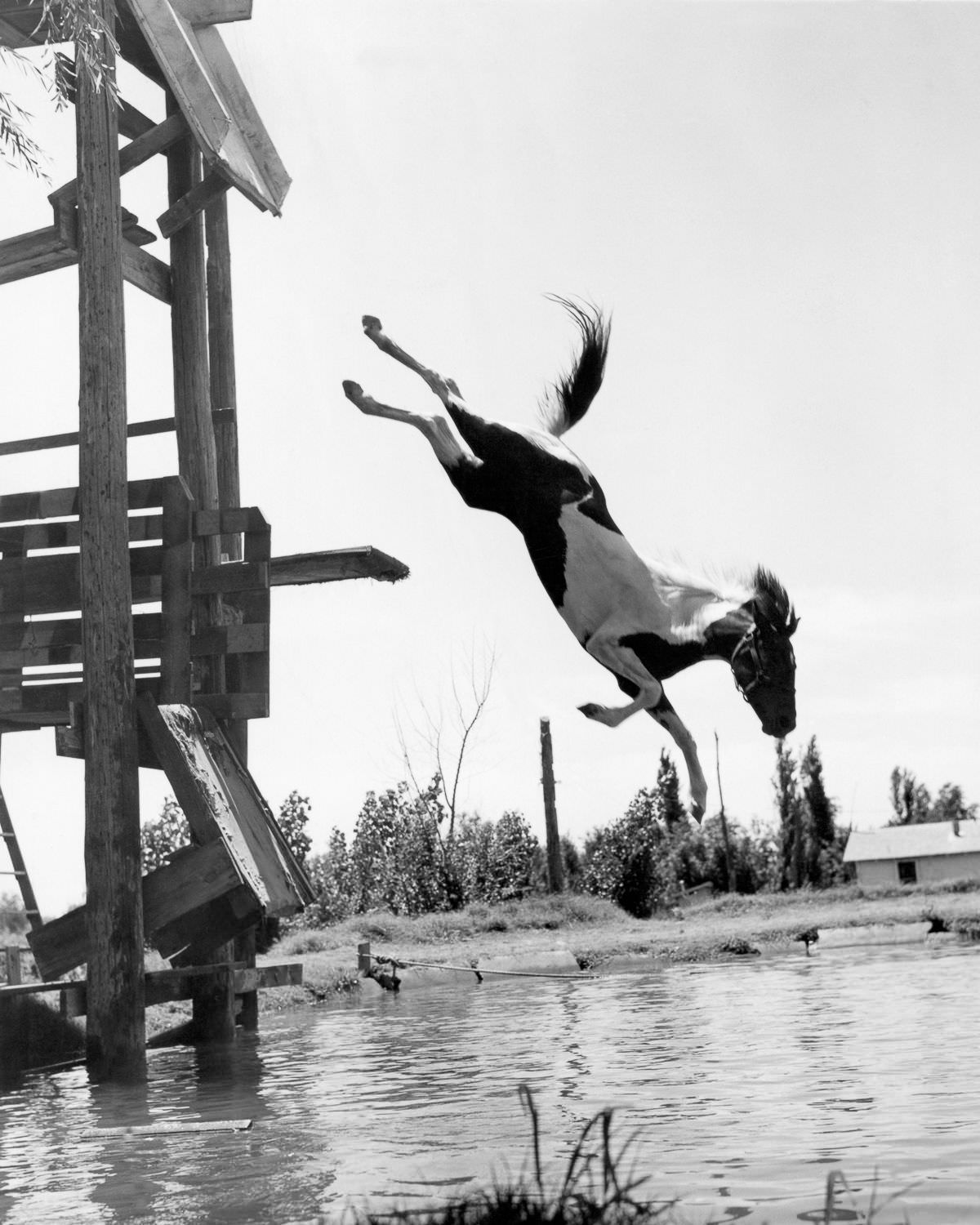
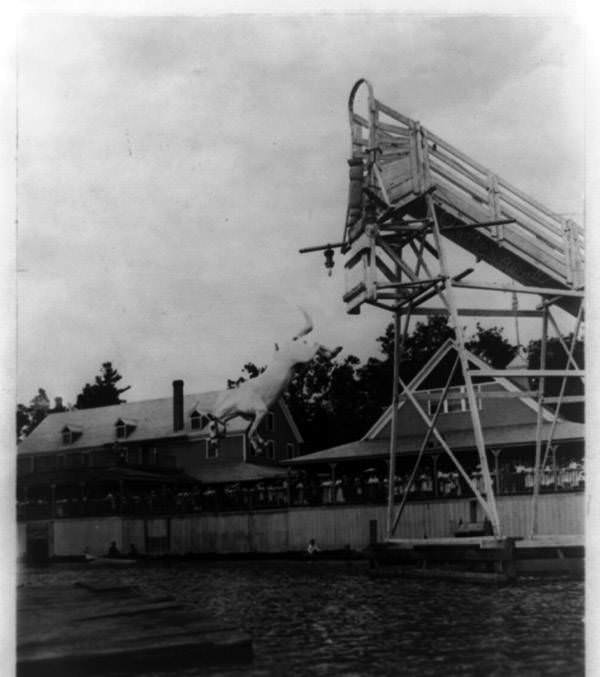
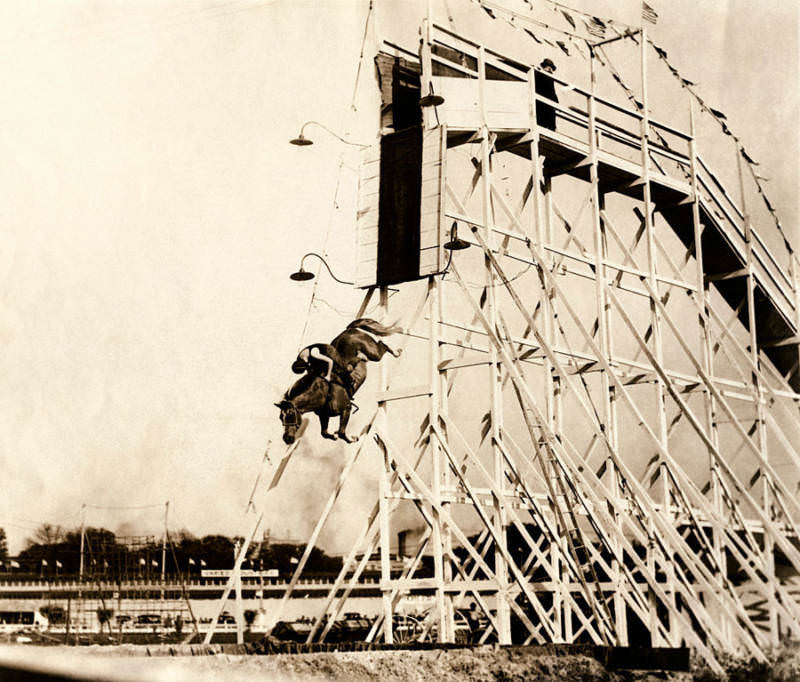
For nearly a century, one of the most jaw-dropping spectacles in American entertainment wasn’t a circus act or a daredevil motorcycle stunt. It was a horse — and a rider — leaping off a platform 40 to 75 feet in the air and plunging headfirst into a pool of water below. Horse diving was a traveling wild show that drew massive crowds wherever it went, and the danger was entirely real. Horses and riders risked serious injury or death every single time they made the leap. Yet the shows ran for decades, and audiences never stopped showing up.
The origin of horse diving traces back to 1881, when William “Doc” Carver, a sharpshooter and showman, watched a horse and its rider scramble across a partially collapsed bridge and leap into the river below. Carver saw an act in that moment of chaos. He built a platform, trained horses to jump from it into a pool of water, and turned the whole thing into a traveling show. It was equal parts spectacle and shock, and crowds across the country paid to see it.
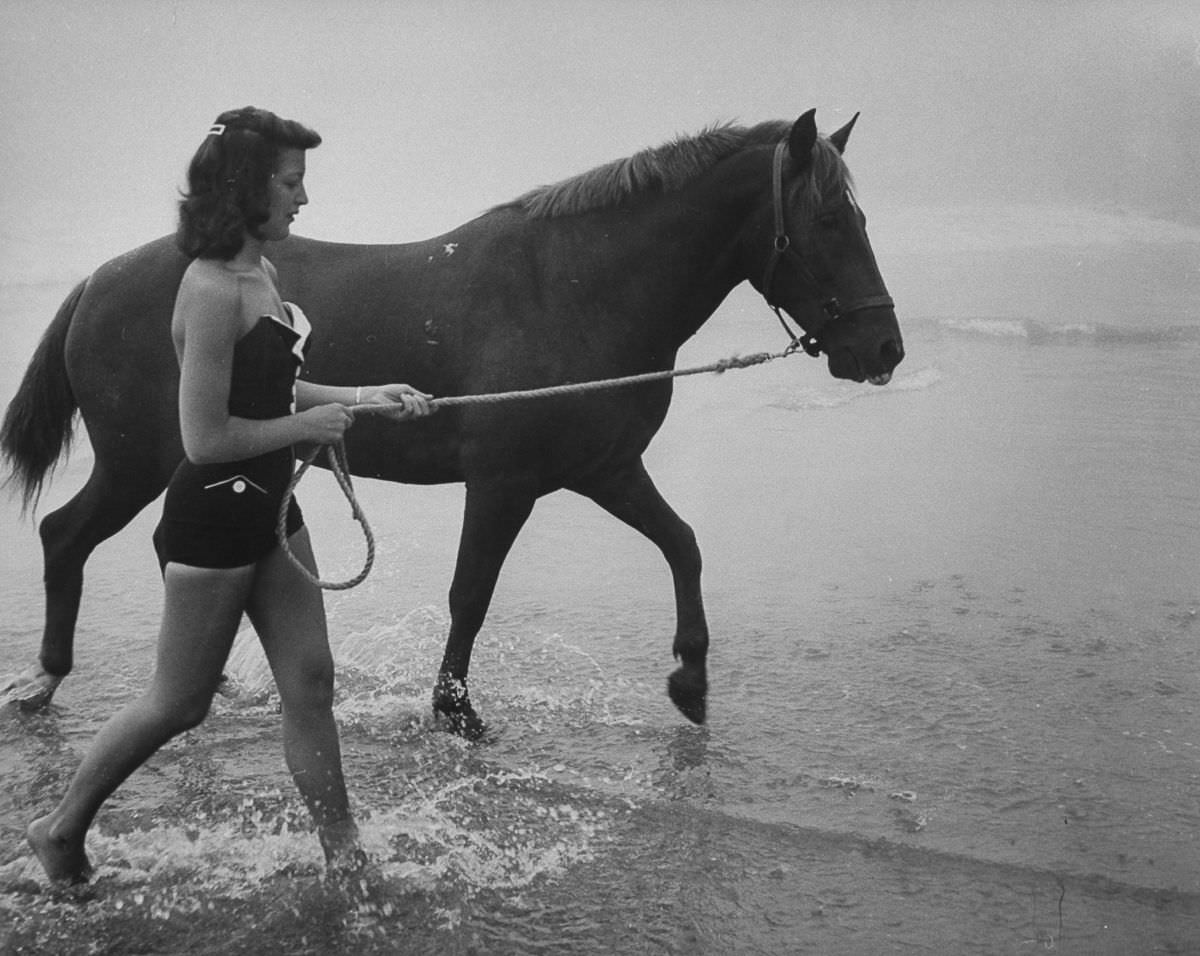
Training a horse to willingly leap off an elevated platform was no small task. Horses are naturally cautious animals, and convincing one to run up a steep ramp and throw itself off the edge required months of patient, careful conditioning. Trainers started small, gradually raising the height of the platform over time. The horses that made it through training were athletic, calm under pressure, and trusted their handlers completely.
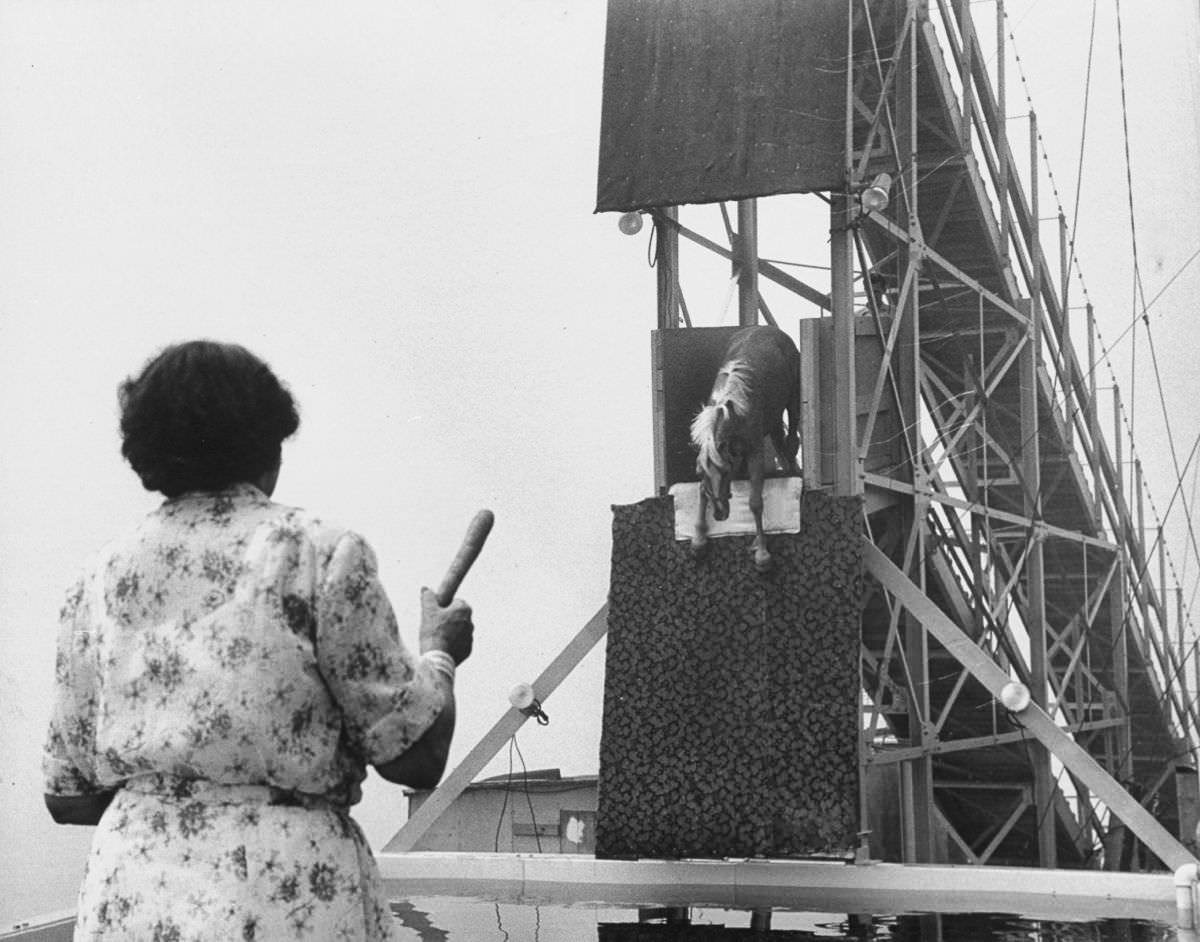
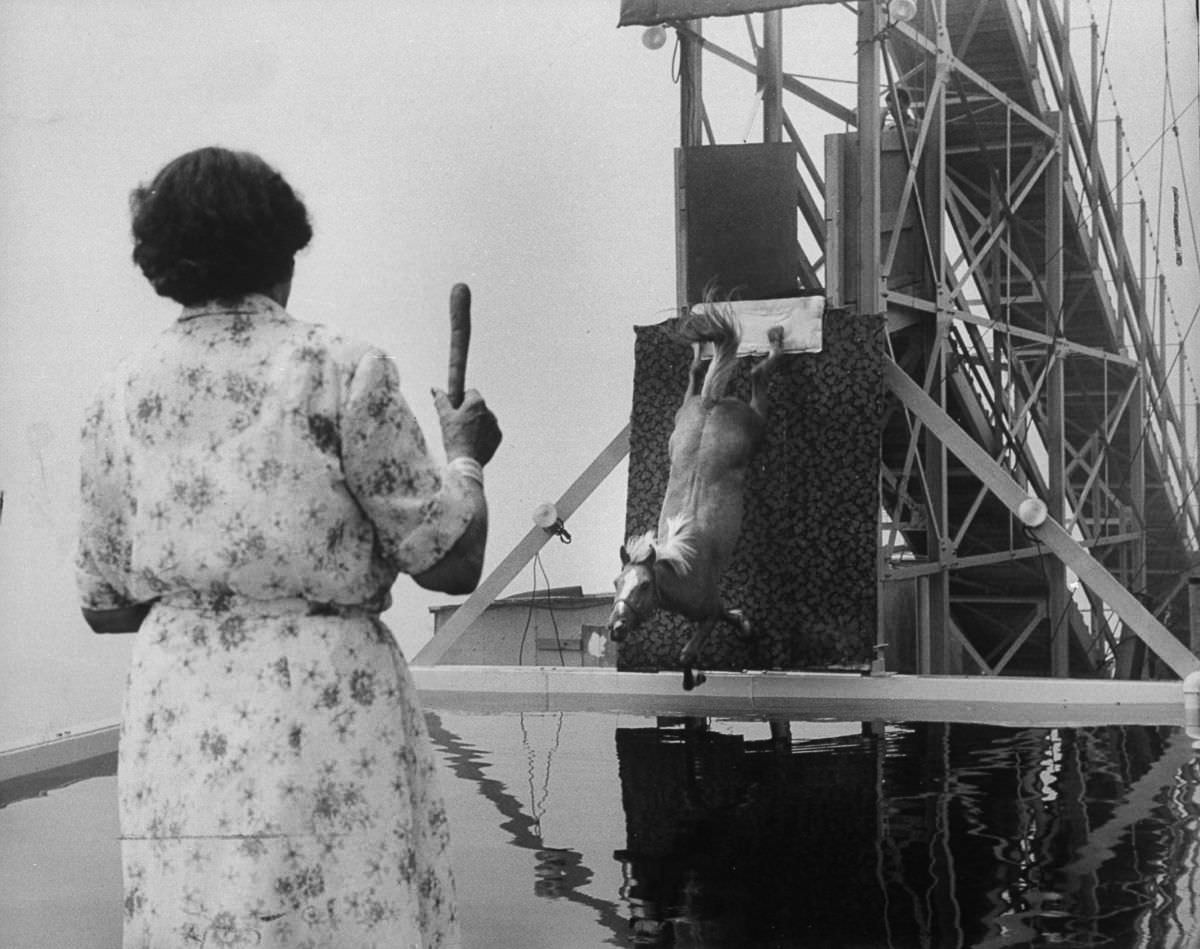
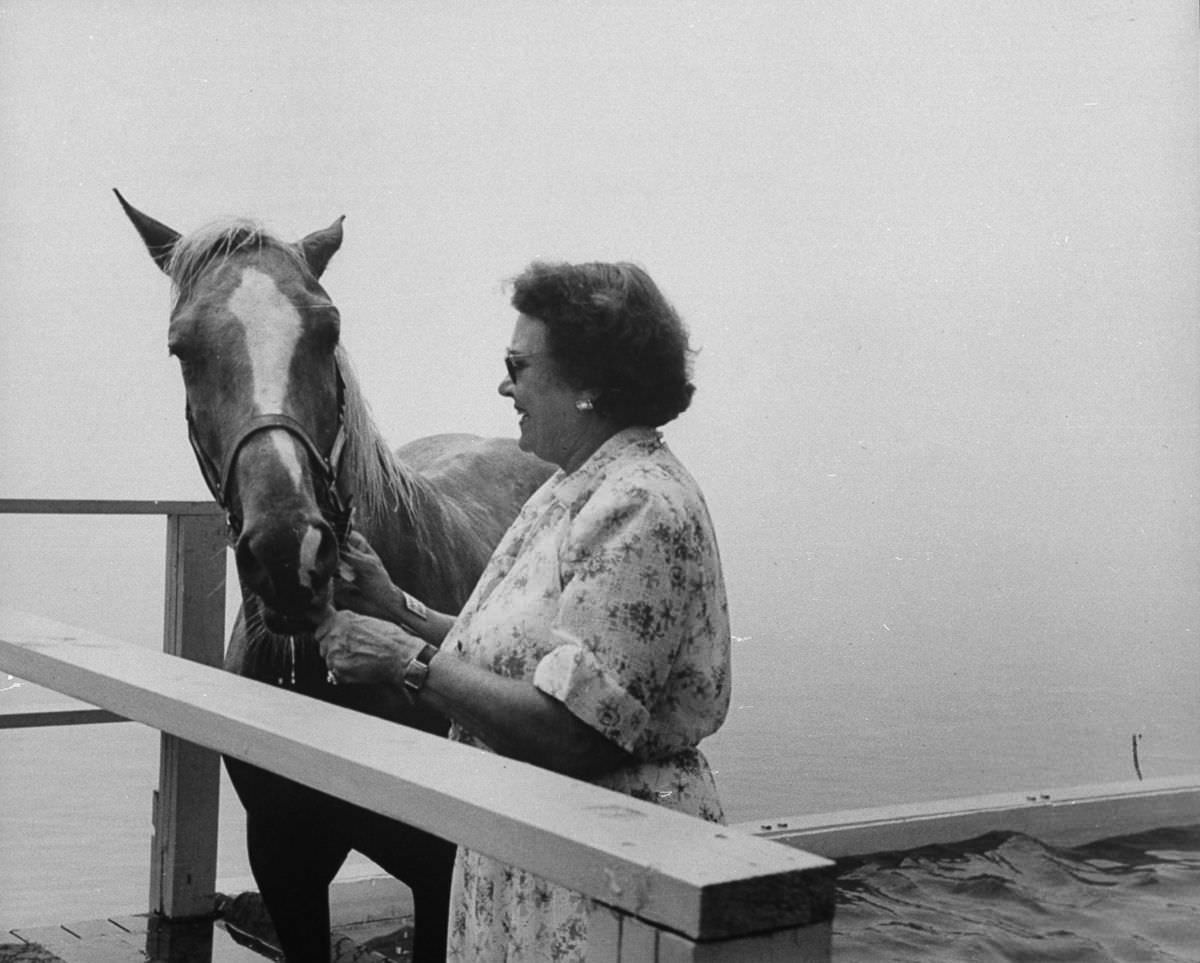
Riders trained alongside their horses for years. The bond between a diver and her horse had to be deep, because at the moment of the leap, there was no turning back. The rider would position herself on the horse’s back, sometimes bareback, sometimes in a saddle, and hold on as the animal reached the edge and dropped. The descent was nearly vertical. The horse hit the water with tremendous force, and the rider had to stay on and brace for impact at the same time.
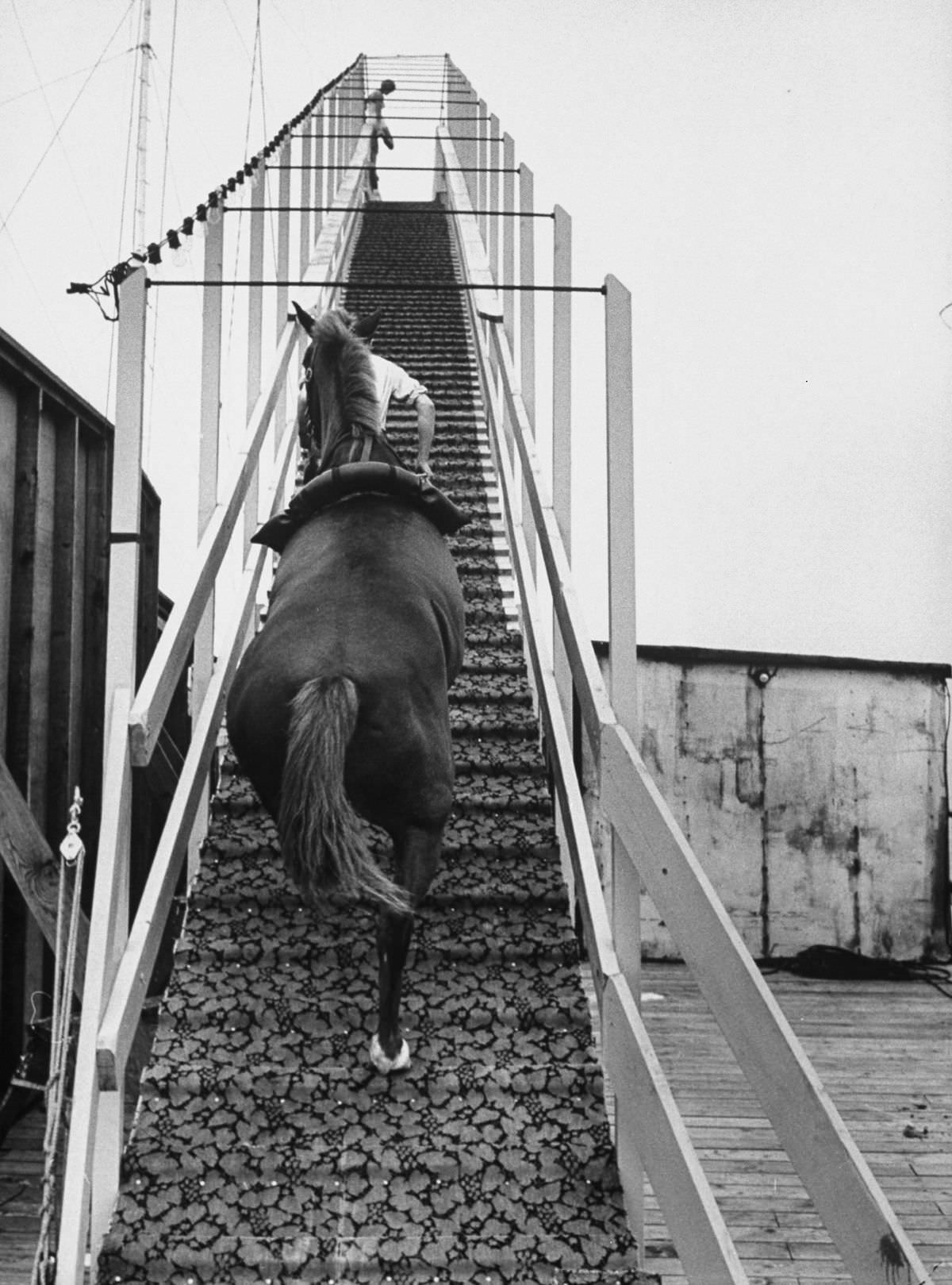
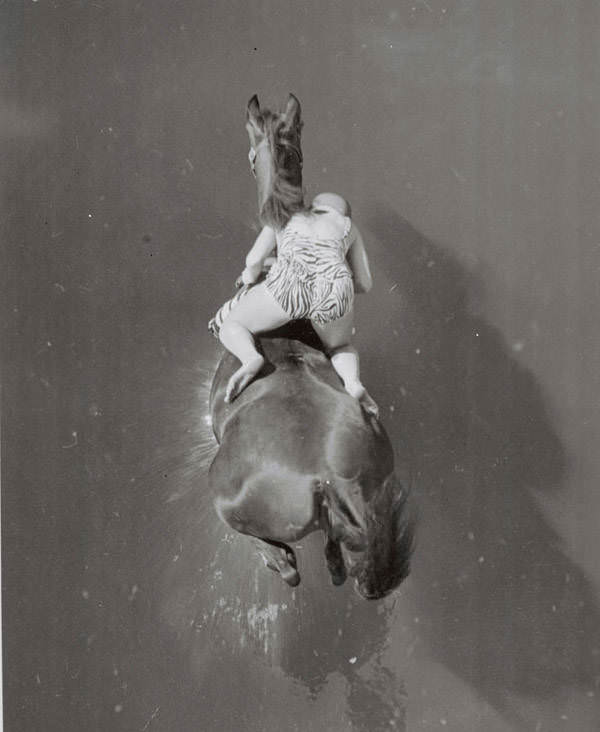
They would sometimes perform the stunt six times a day at George Hamid’s Steel Pier in Atlantic City, New Jersey.
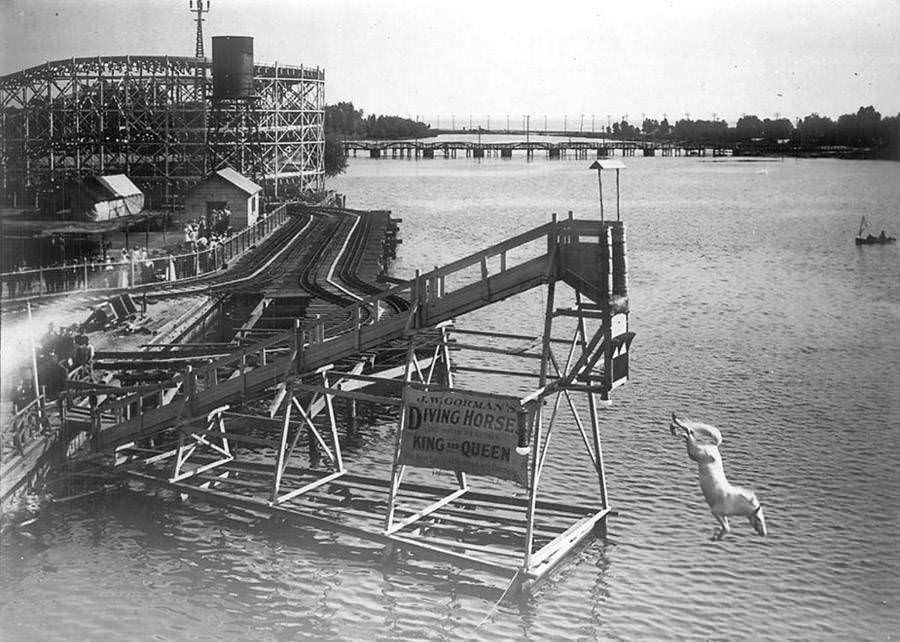
The stakes were proven fatal early on. On February 17, 1907, 18-year-old rider Oscar Smith was killed during a dive. His death was a stark reminder that the show carried life-or-death risk every time the horse stepped onto the ramp. That same year, diving horses were drawing crowds at amusement parks across North America.
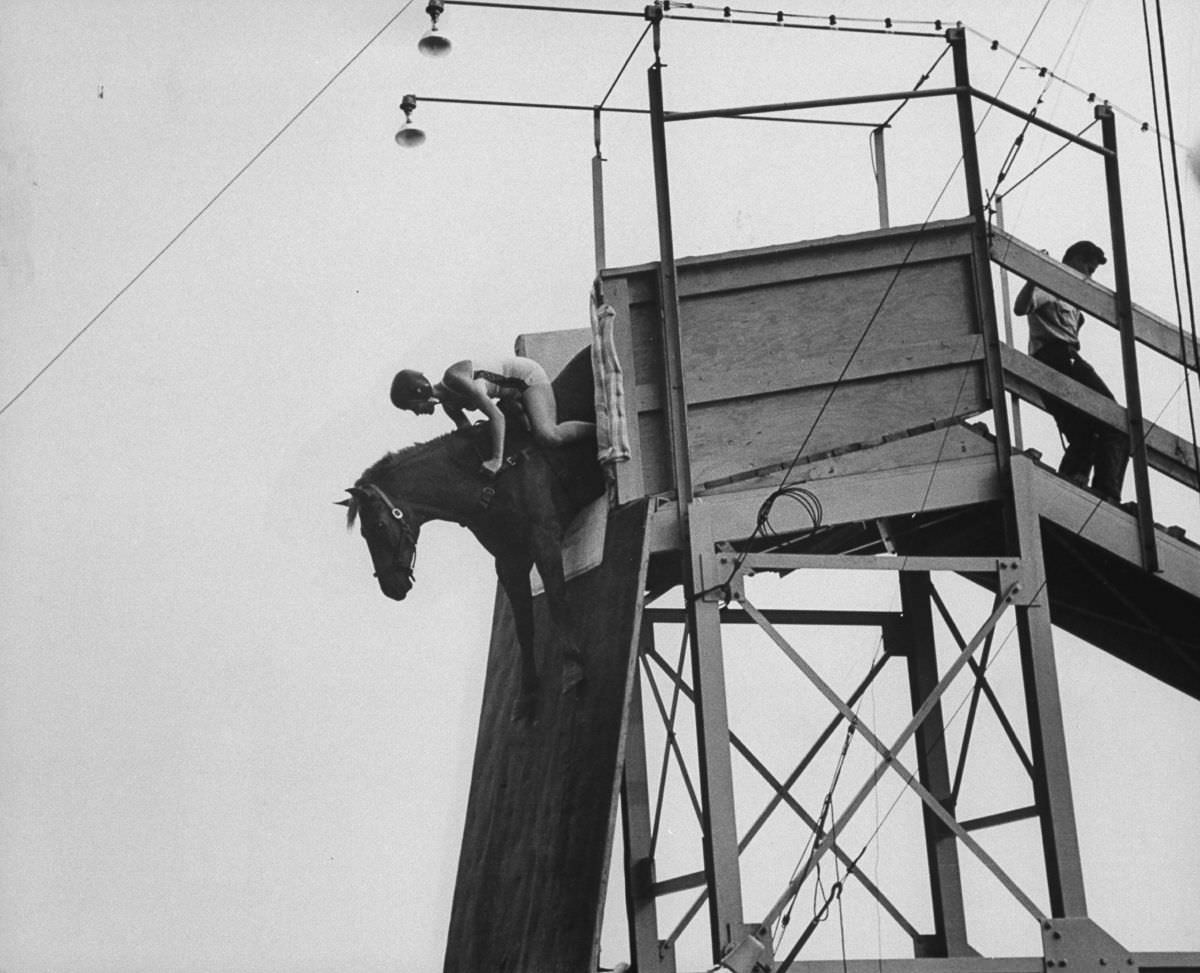
One of the most famous figures in horse diving history is Sonora Webster. She joined Doc Carver’s show in 1924 at just 15 years old and quickly became one of its biggest draws. She eventually married Carver’s son, Al Carver, and after Doc Carver’s death, the two took the show on the road themselves. It was a success. Then, in 1931, Sonora’s eyes made contact with the water at the wrong angle during a high dive, and the impact blinded her permanently. She did not quit. Sonora continued performing the act blind for another decade, which only added to the mystique and spectacle of the show.
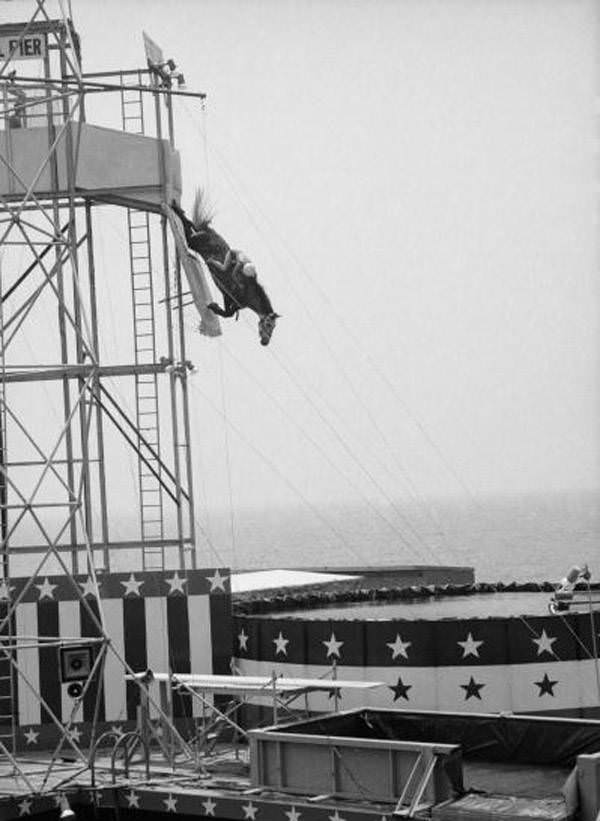
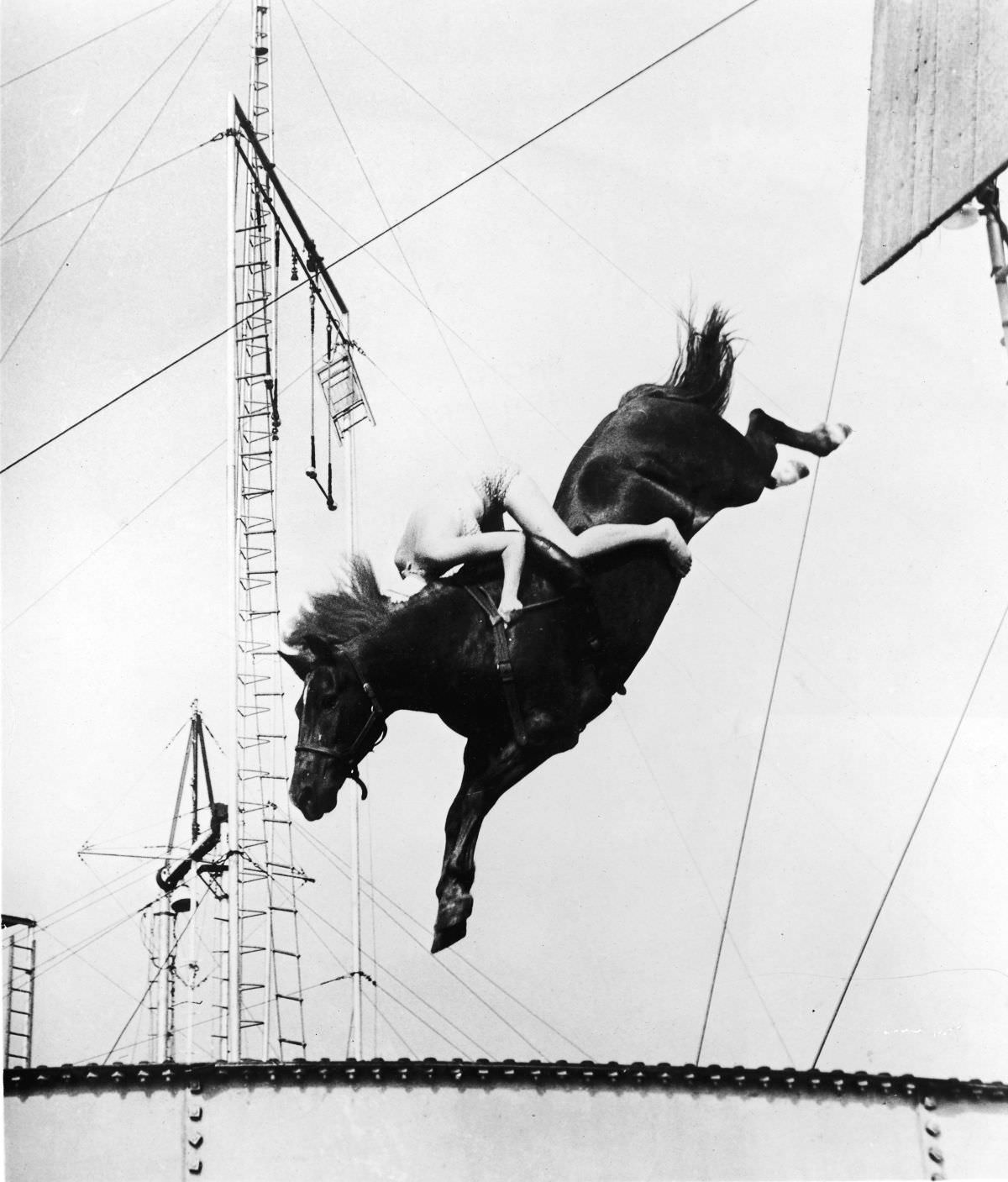
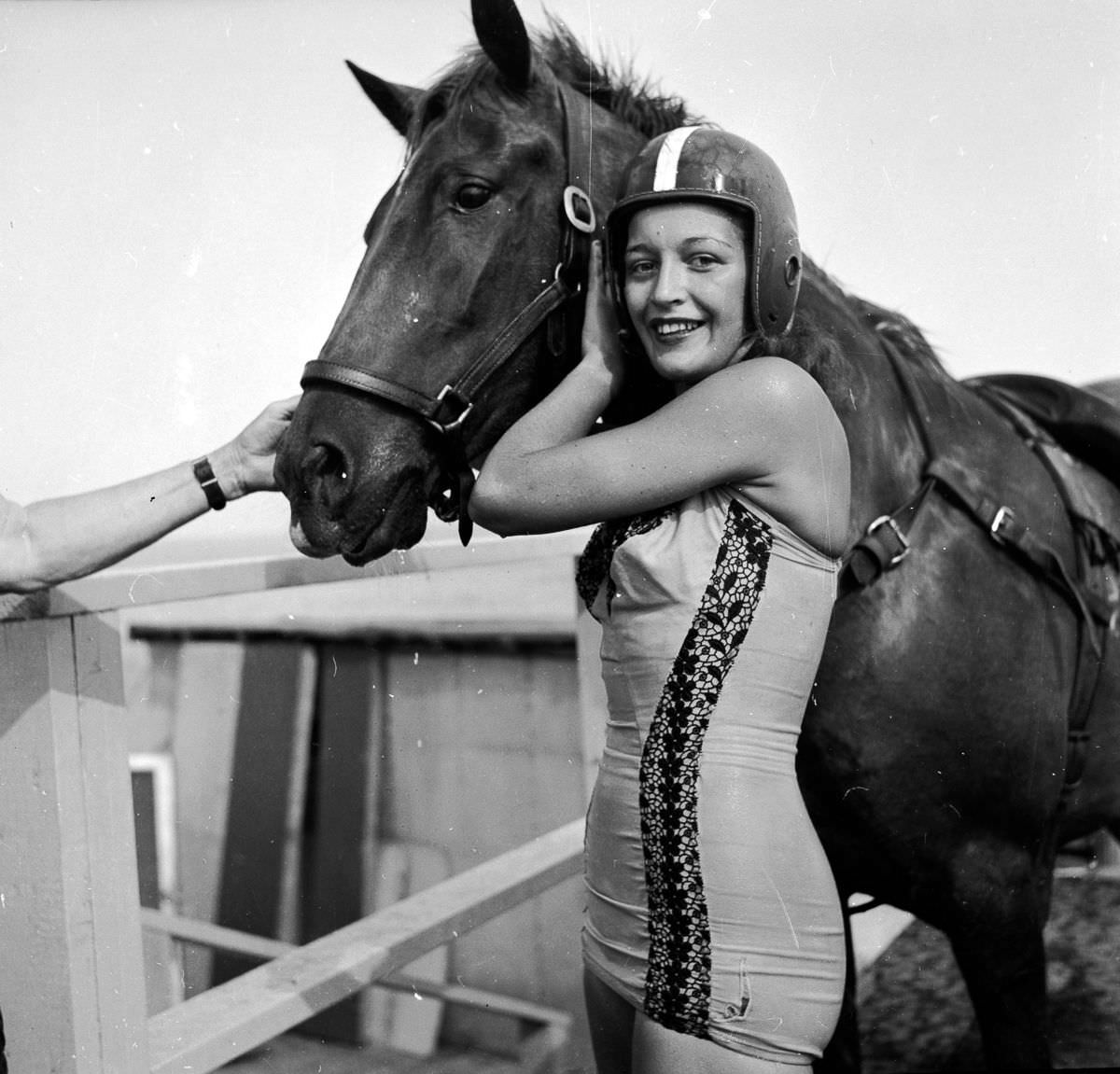
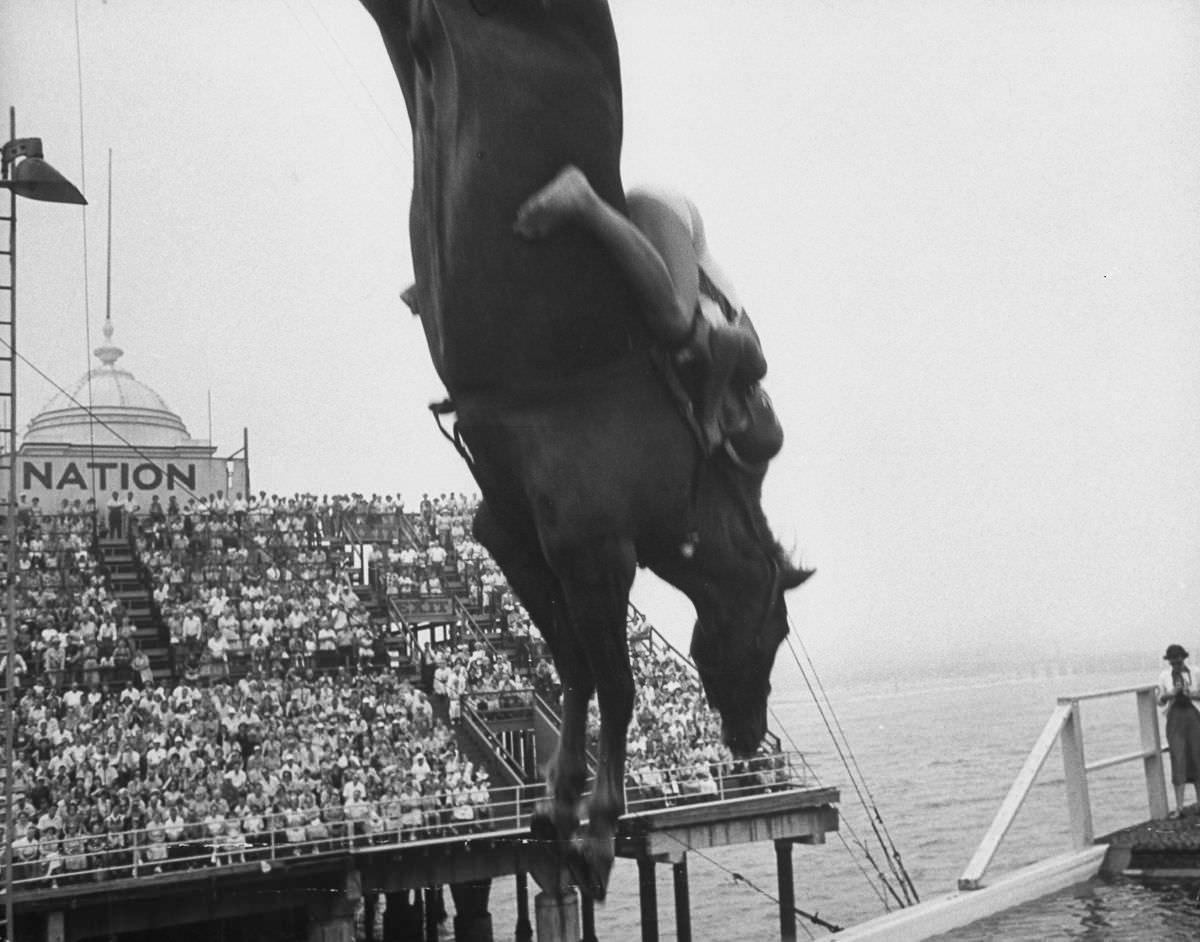
Atlantic City’s Steel Pier became the most famous home of the diving horse show. The pier’s location on the New Jersey shore made it a destination for summer crowds, and the diving horses were one of its signature attractions. At peak popularity, a horse and rider would perform the stunt up to six times a day. Postcards, photographs, and newspaper coverage spread the act’s fame far beyond Atlantic City. People who had never seen it in person knew the image — the horse, midair, dropping toward the water with a rider clinging to its back.
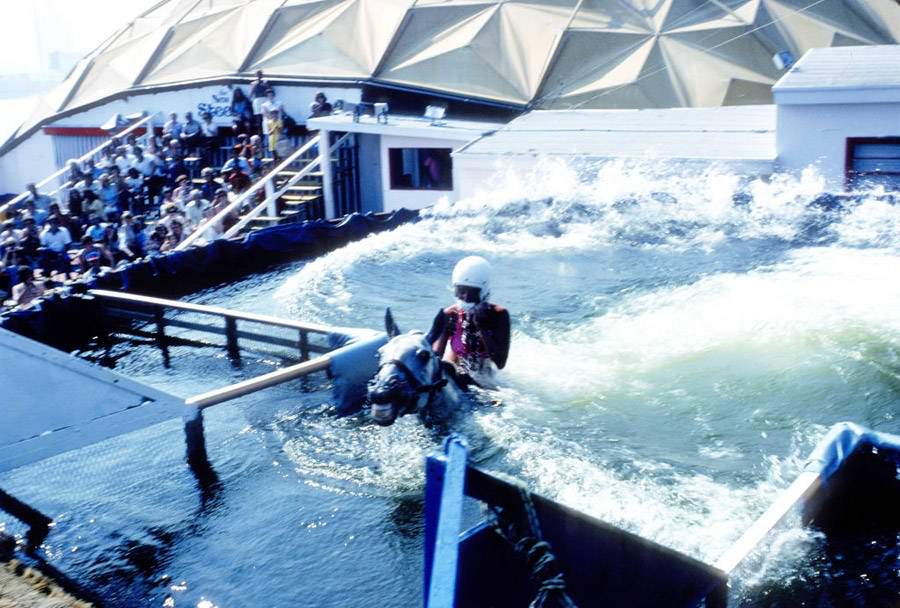
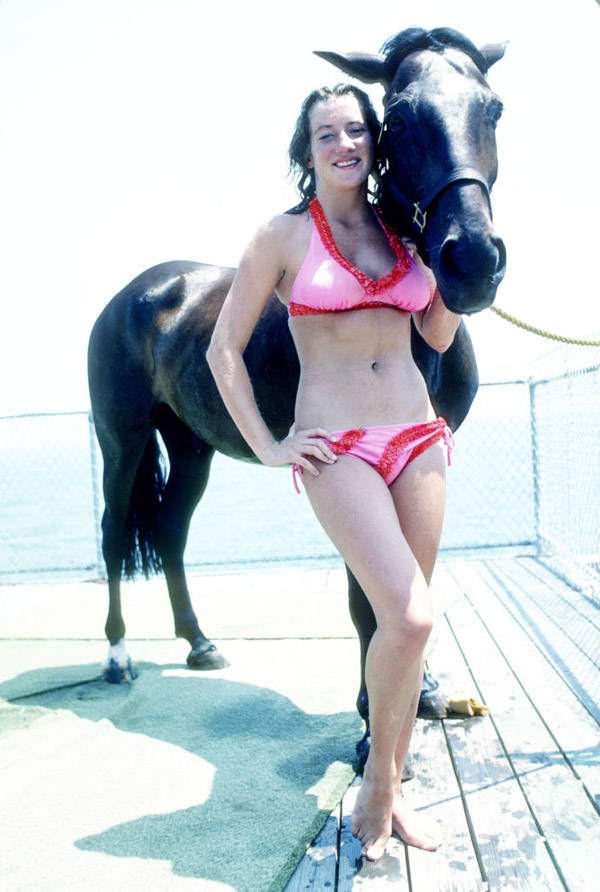
The act wasn’t limited to Atlantic City. Traveling shows and regional amusement parks across the country featured their own versions. On July 4, 1905, a large crowd gathered in Pueblo, Colorado, to watch Eunice Padfield and her horse dive from a high tower. The Fourth of July setting was fitting — the act had the same energy as fireworks, explosive and brief, with real danger underneath the spectacle.
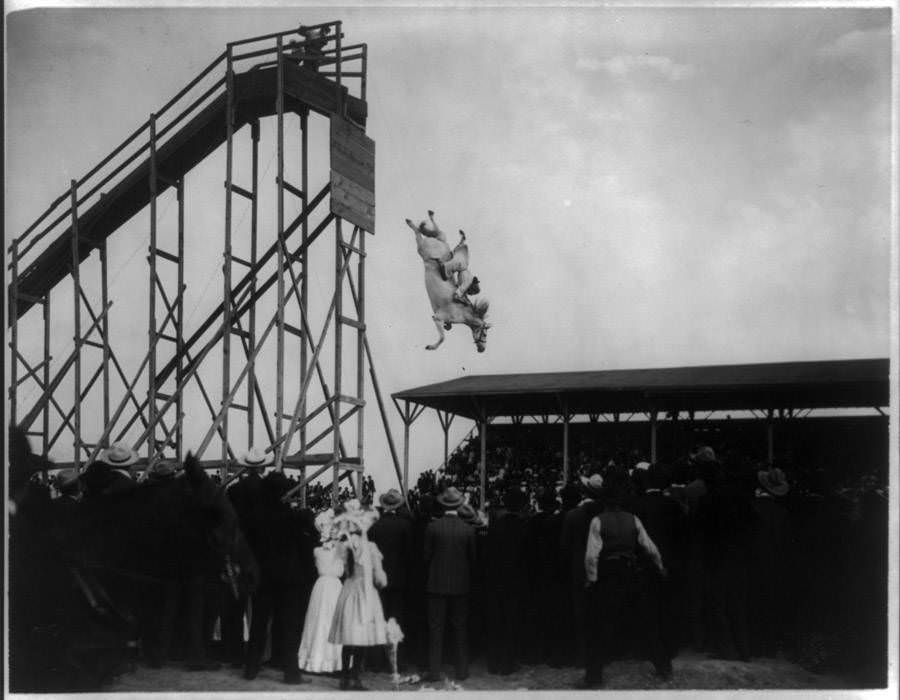
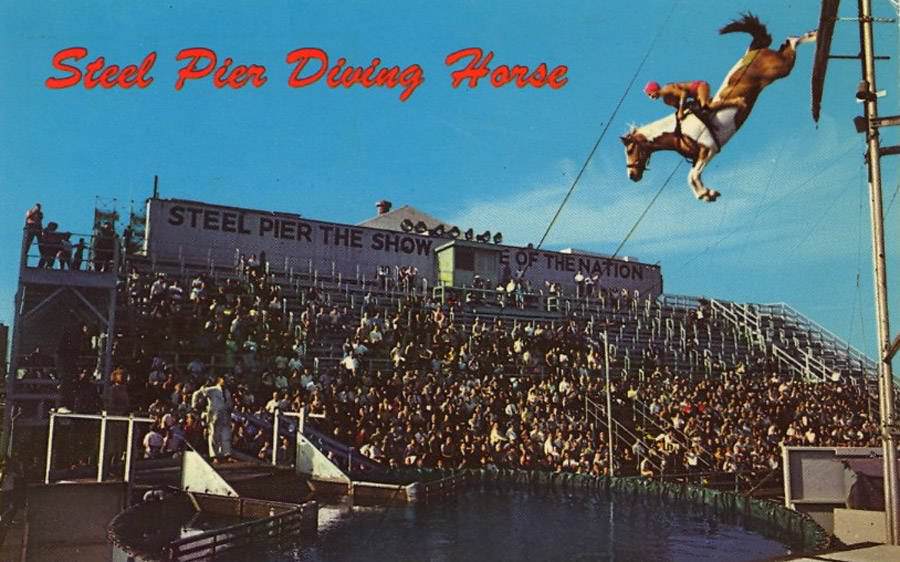
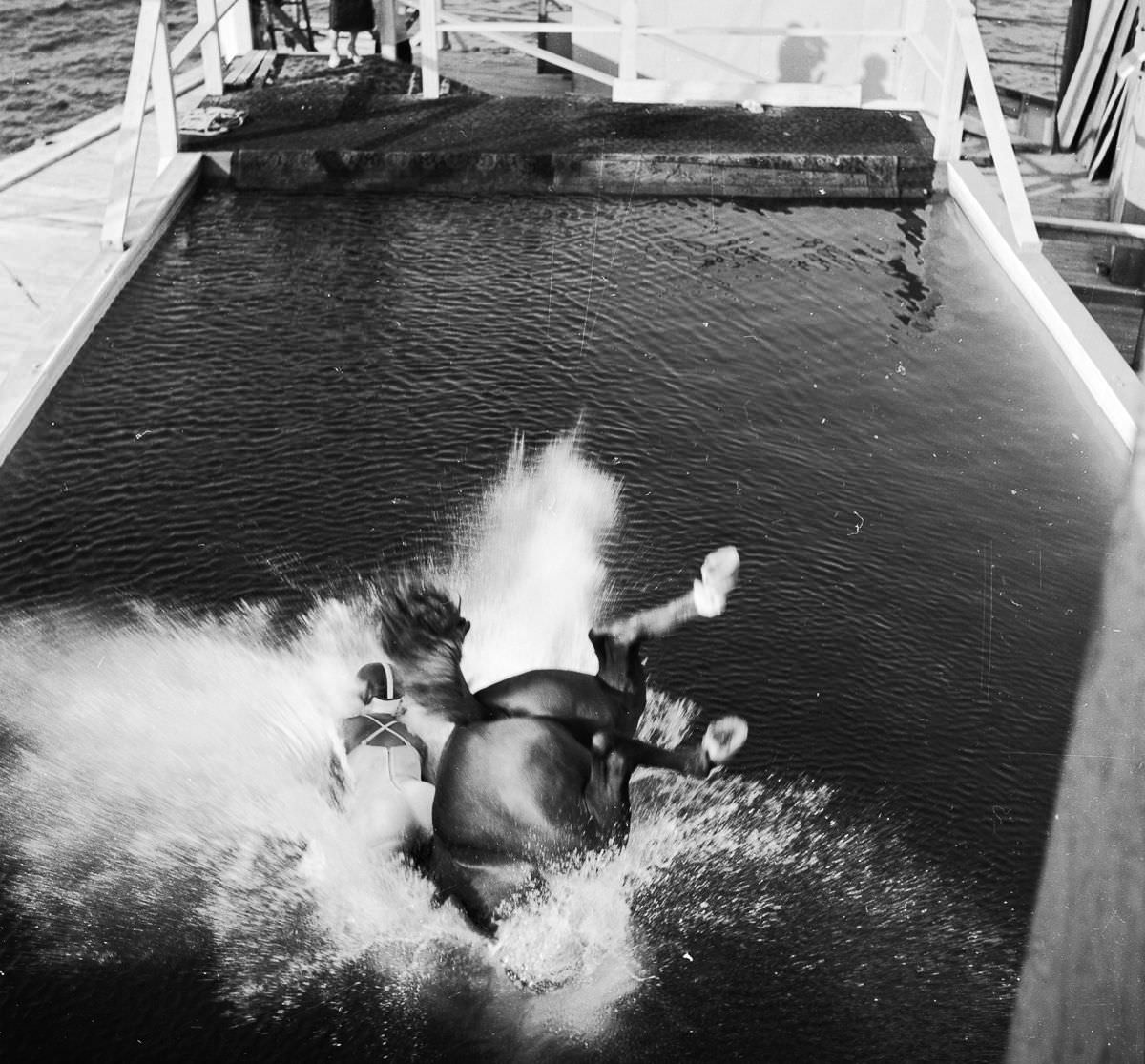
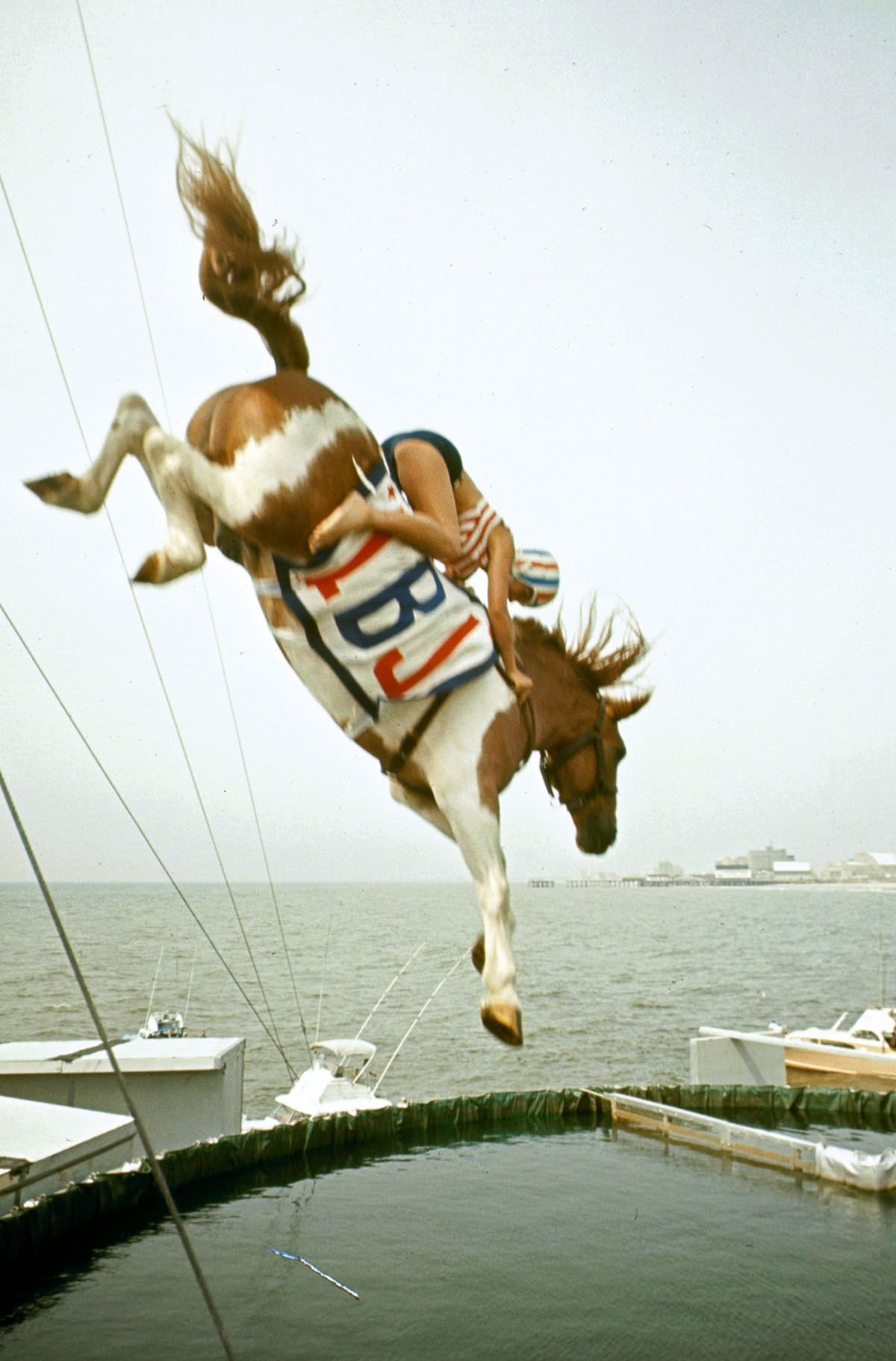
Photographs from across the decades capture the act from multiple angles. Some show the horse and rider at the peak of the drop, the animal nearly vertical with legs stretched forward, the rider pressing flat against its neck. Others catch the explosion of white water at impact. The images make clear just how extreme the dive actually was. A 40-foot drop into water hits hard. A 75-foot drop hits harder. The pool had to be deep enough to absorb the impact, and even then, the force on both horse and rider was enormous.
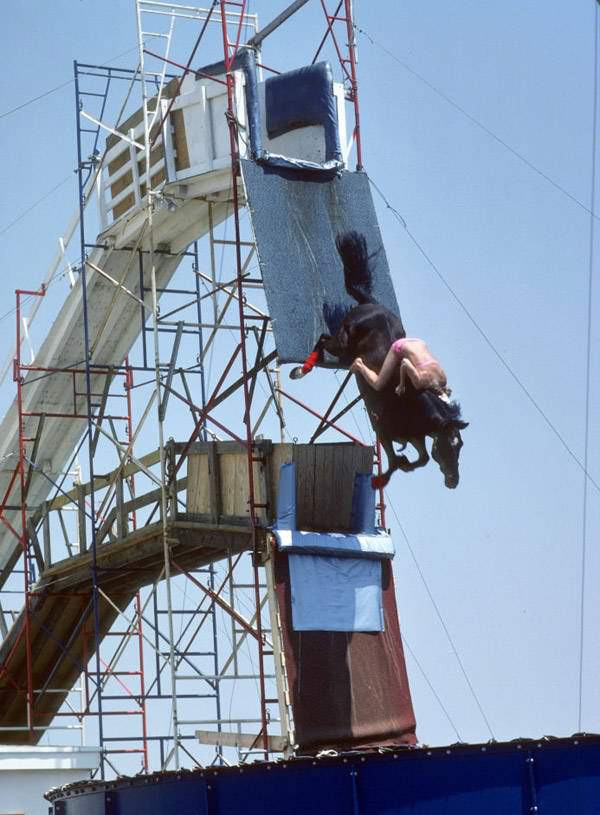
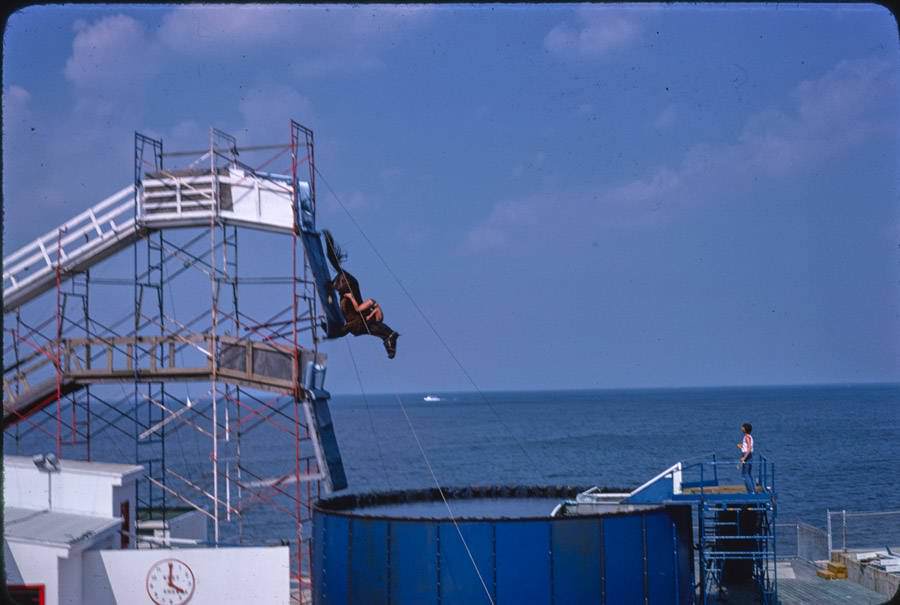
The riders were overwhelmingly women, which was a deliberate part of the show’s appeal. In an era when women in dangerous public stunts were rare, the image of a young woman on horseback dropping off a platform 40 or more feet above a pool was striking. These women were not simply decorative performers — they trained hard, understood the mechanics of the dive, and carried the same physical risk as any other extreme athlete.
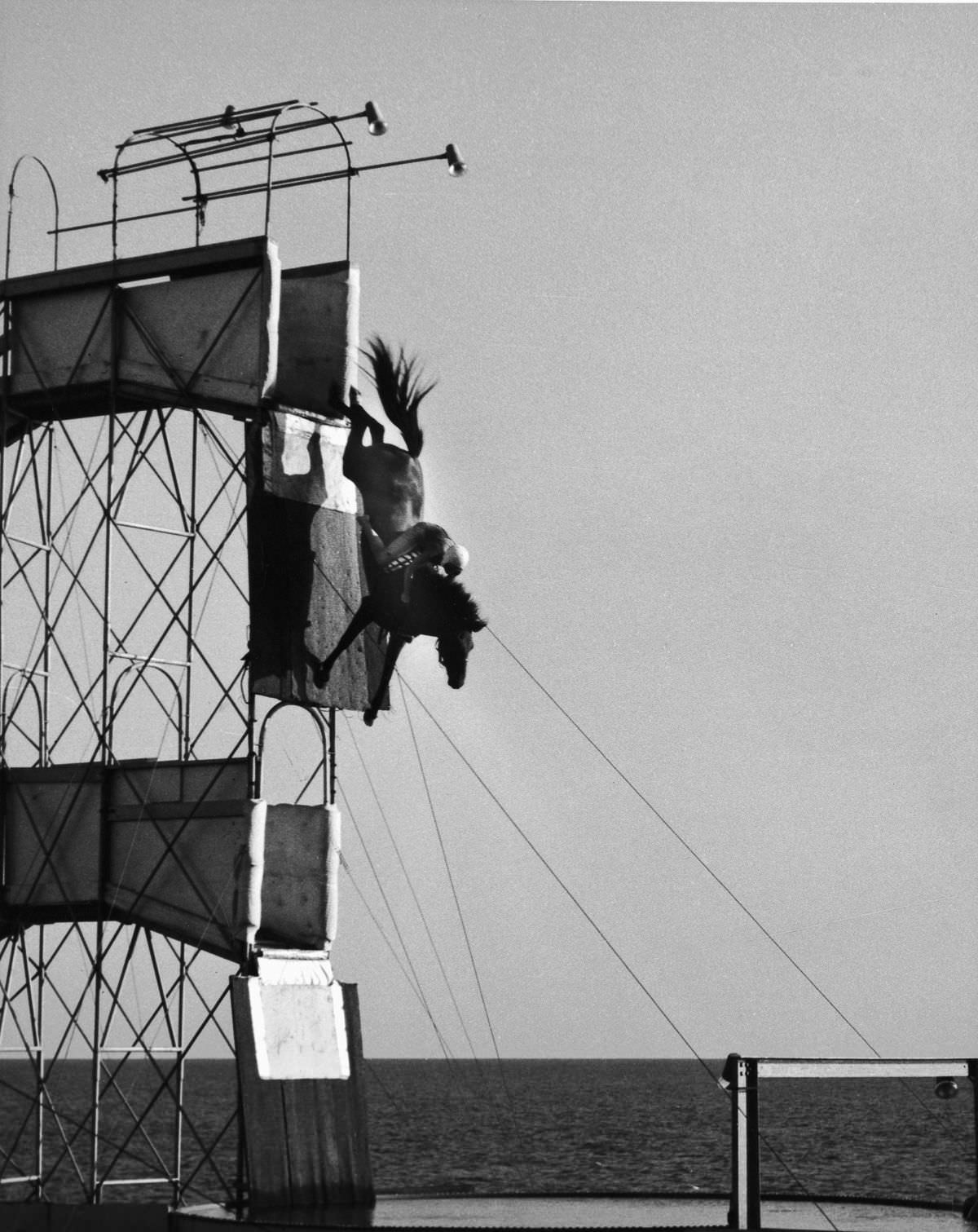
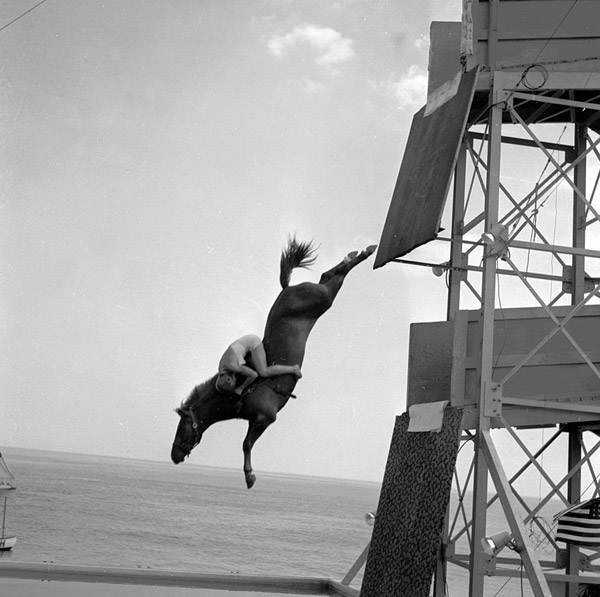
By the 1970s, public attitudes toward animal performance had shifted. Animal welfare concerns grew louder, and the diving horse show began to face serious criticism. What had once been thrilling entertainment was increasingly viewed as exploitative and unsafe for the horses. The show at Steel Pier ran its final performances in the late 1970s, closing out nearly a hundred years of horse diving in America.