
By the spring of 1945, Berlin was unrecognizable. The city that had served as the nerve center of the Third Reich was crumbling block by block under the weight of one of the most brutal urban battles in history. Soviet and German forces fought street by street, building by building, through April 1945, leaving behind a landscape of shattered concrete, burning buildings, and tens of thousands of dead. Thousands of civilians — men, women, and children — died in the fighting. Countless more were left without shelter in the rubble of what had once been one of Europe’s great capitals.
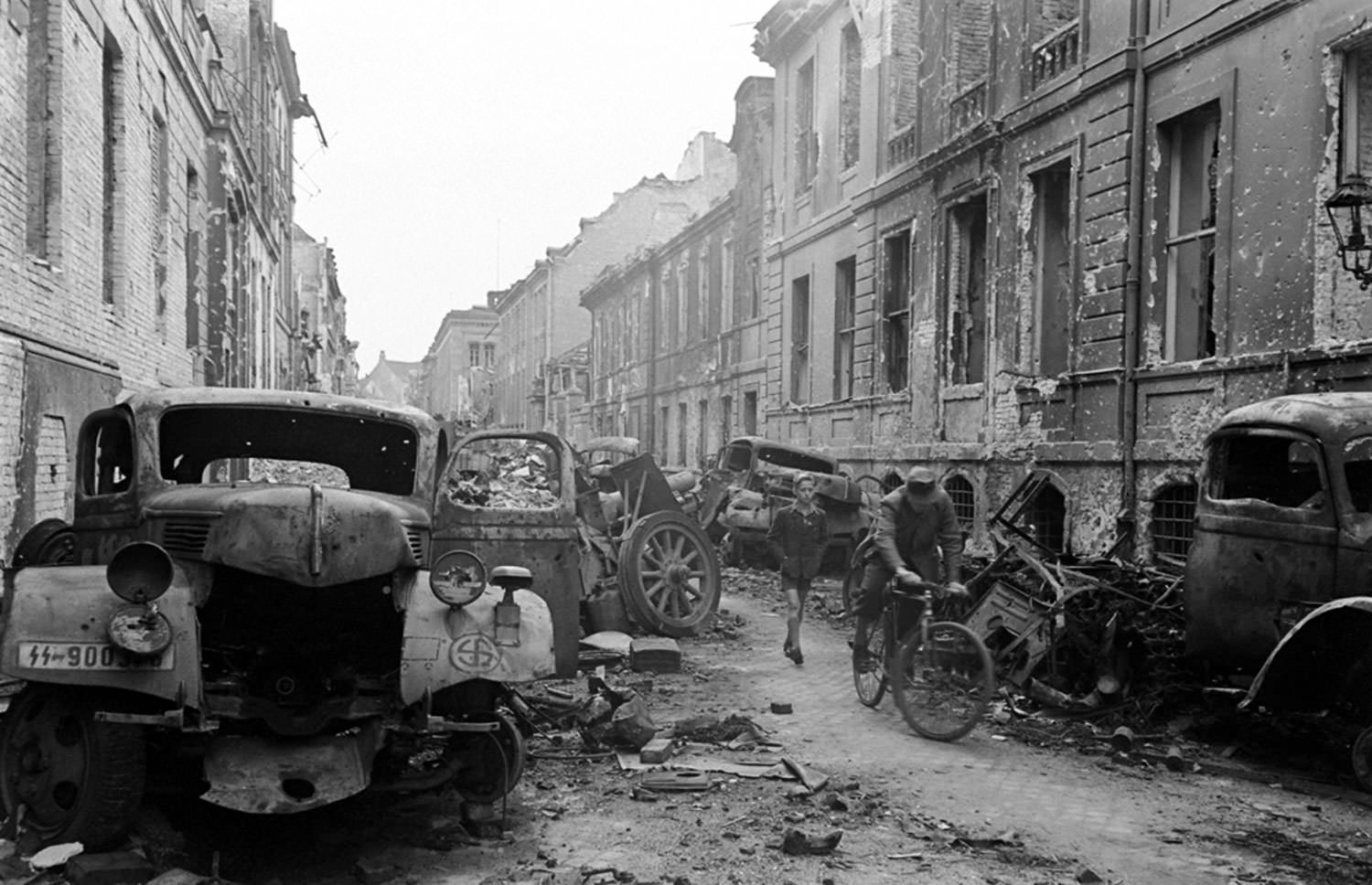
LIFE magazine photographer William Vandivert had been working for the publication since the late 1930s. When the Battle of Berlin ended and the German capital fell to the Soviets, Vandivert moved quickly. He was on the ground immediately after the fighting stopped, camera in hand, documenting what remained. His photographs captured a city in total ruin — streets choked with debris, buildings gutted by fire and artillery, and the eerie stillness that followed weeks of extreme violence.
Among his most significant achievements was gaining access to the Führerbunker — the underground complex beneath the Reich Chancellery garden where Adolf Hitler had spent his final days. Vandivert became the first Western photographer to enter the bunker after Berlin’s fall. The images he brought back were published in LIFE in July 1945. Many others were never published at all, and they remain a rare firsthand visual record of what the space looked like in those first weeks after Germany’s defeat.
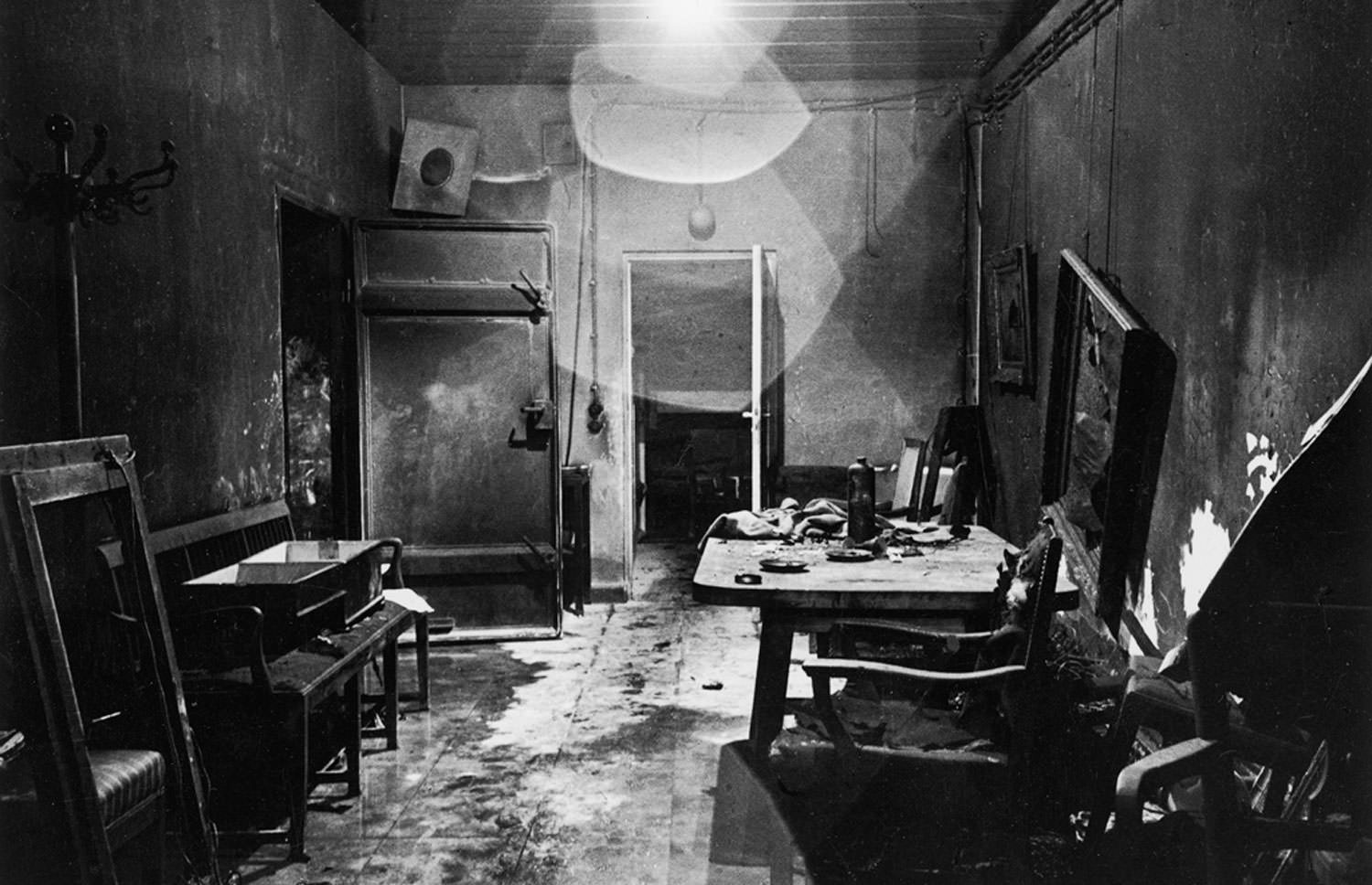
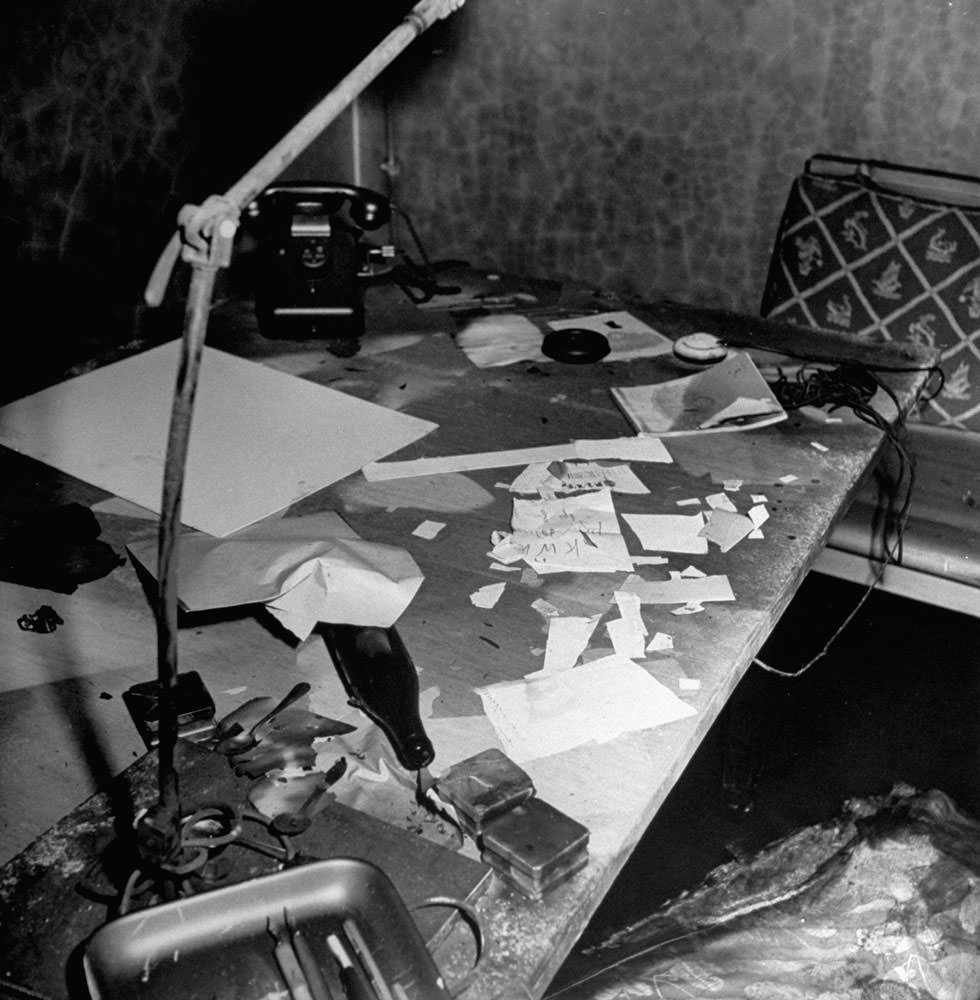
By the time Vandivert arrived, the bunker had already been picked over. Retreating German troops had set fire to parts of it. Soviet soldiers had stripped it of anything valuable. What remained was a chaotic mix of scorched furniture, scattered papers, abandoned personal items, and the residue of a regime in its final hours of collapse. Vandivert photographed all of it — not just the dramatic or symbolic, but the mundane and the strange.
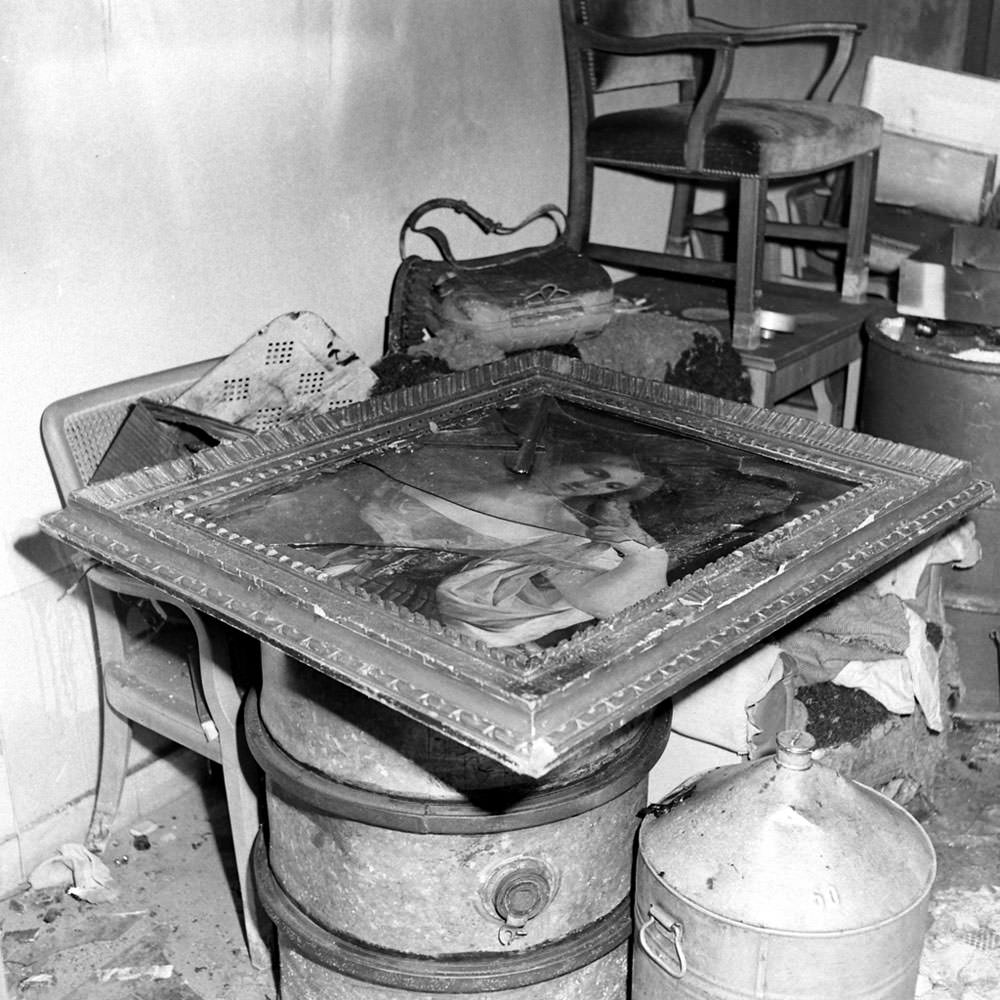
The Nazi leadership had looted art from across occupied Europe throughout the war. Finding a stolen 16th-century painting from a Milan museum inside or near the bunker complex was not surprising — it was consistent with the systematic plunder that had defined the regime’s relationship with European cultural heritage. Amid the darkness of the underground corridors, Vandivert and the war correspondents accompanying him relied on candlelight to see.
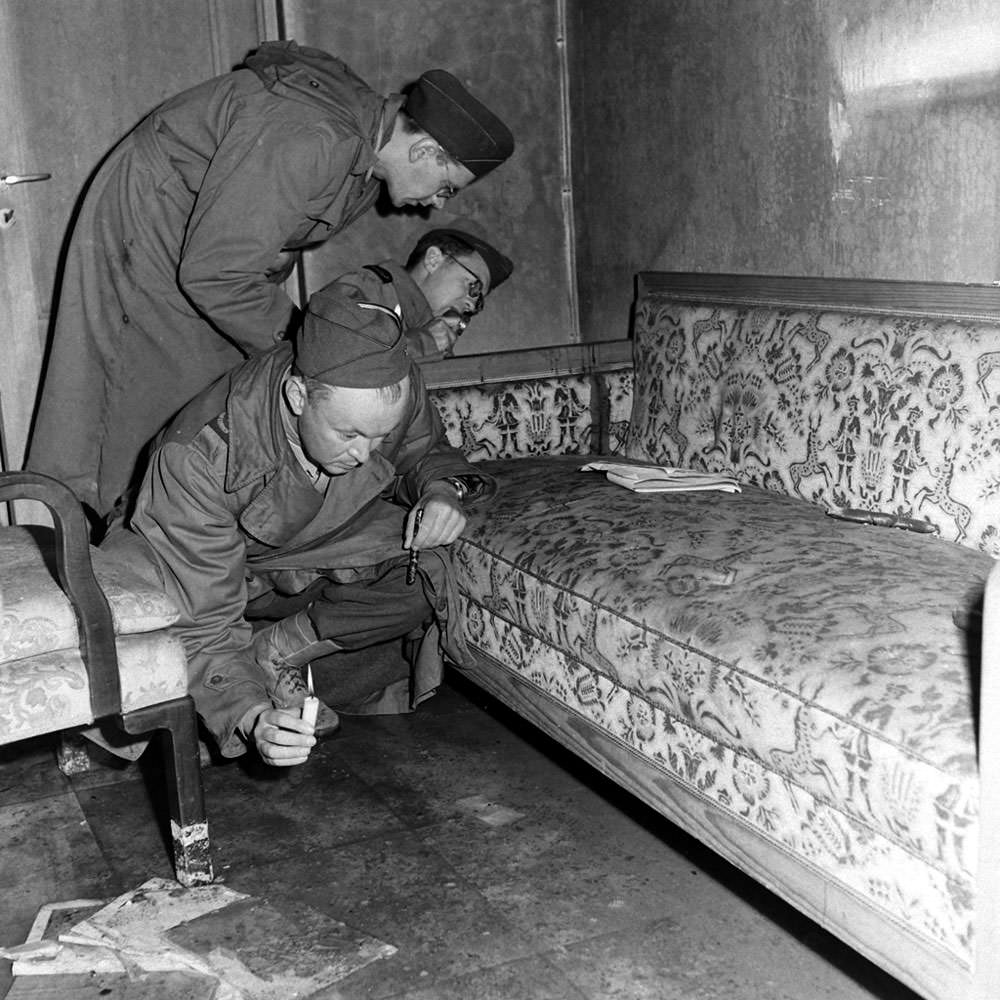
The blood-stained couch inside the bunker was one of the most striking finds. Holding candles in the dark, correspondents leaned in to examine it. No definitive record confirmed whose blood it was or exactly what had happened there, but the image itself — reporters with candles, crouching over a bloodied piece of furniture in the dim concrete interior — conveyed the full weight of what the bunker represented. Other rooms held less dramatic but equally telling details.
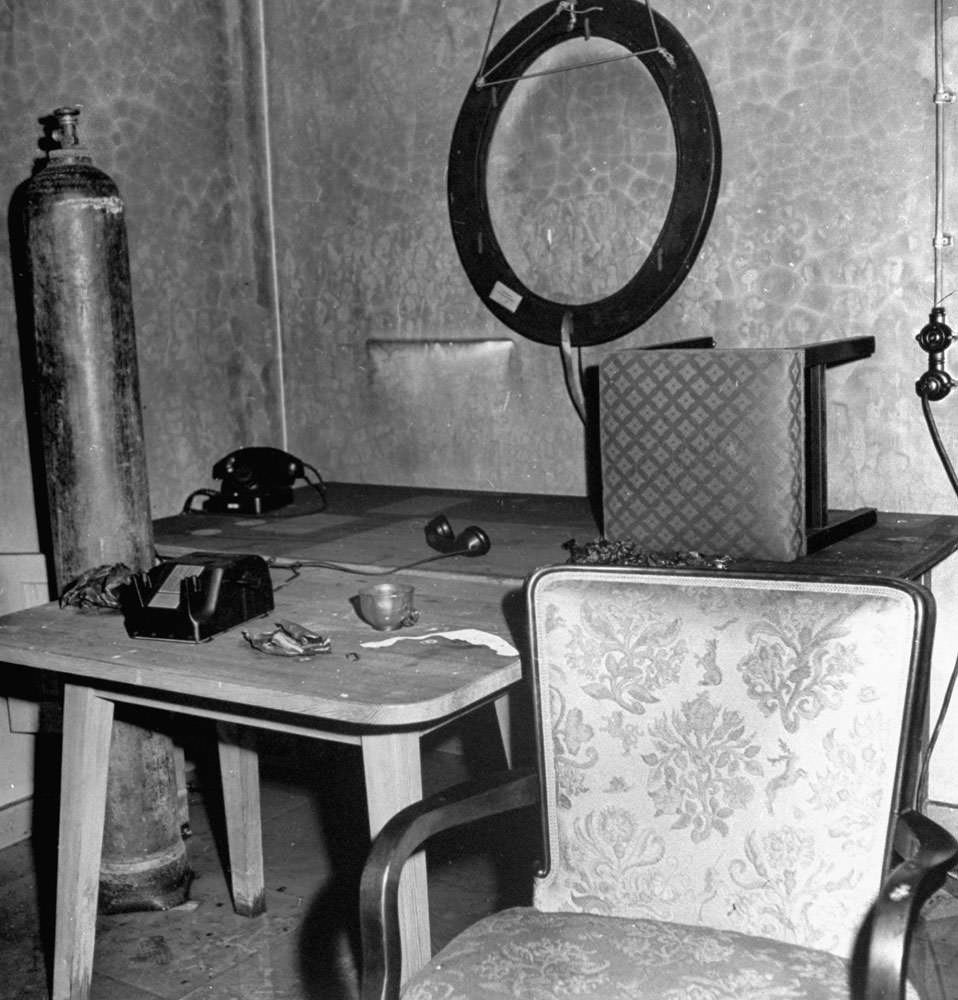
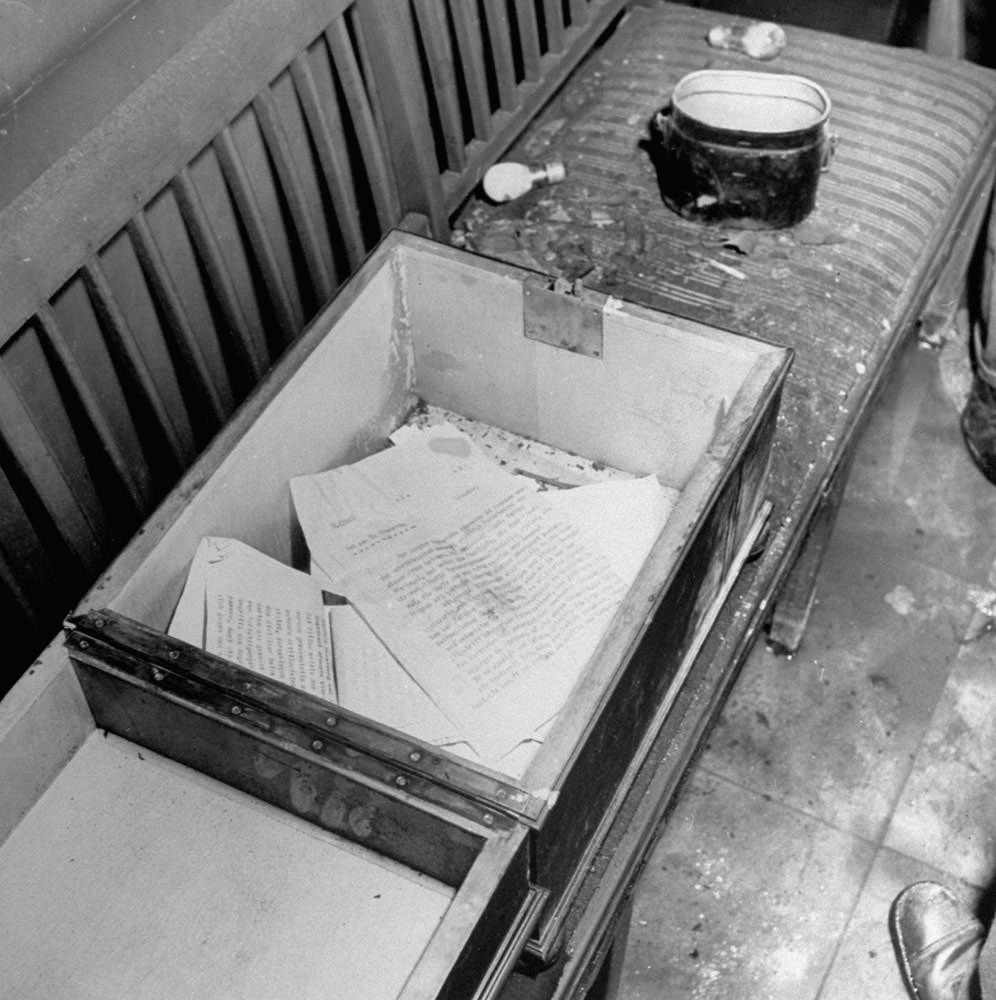
Scattered across the bunker floor were papers — mostly news dispatches dated April 29, 1945. That was the day before Hitler and Eva Braun died. Hitler had married Braun in the early hours of April 29 in a brief civil ceremony inside the bunker. The following day, April 30, both were dead. Hitler shot himself, and Braun took cyanide. Their bodies were carried to the Reich Chancellery garden above, doused in gasoline, and burned.
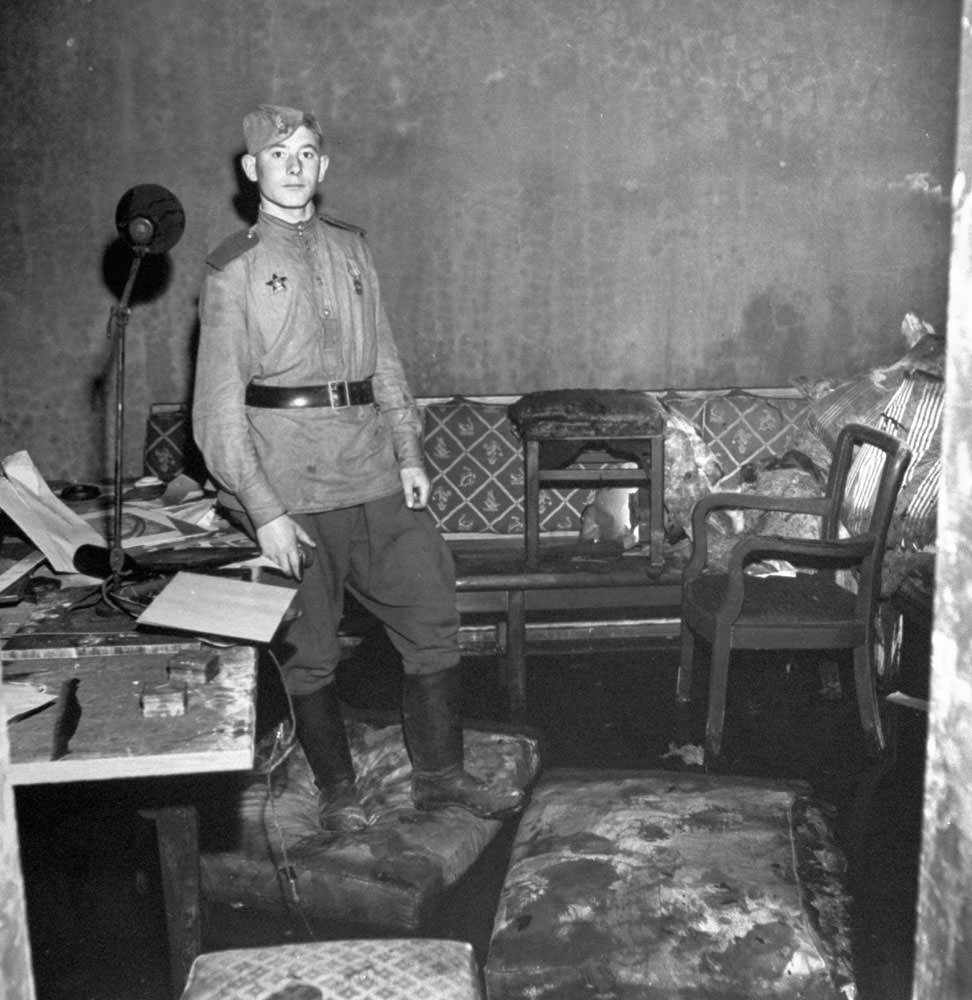
Soviet soldiers were among the first to occupy and explore the bunker complex after Berlin fell on May 2, 1945. For a Red Army soldier to stand inside the space where Hitler had spent his final weeks carried an unmistakable weight. The USSR had suffered more casualties in the war than any other nation — estimates place Soviet military and civilian deaths above 20 million. Standing in that bunker meant something entirely different to a Russian soldier than to a Western correspondent.
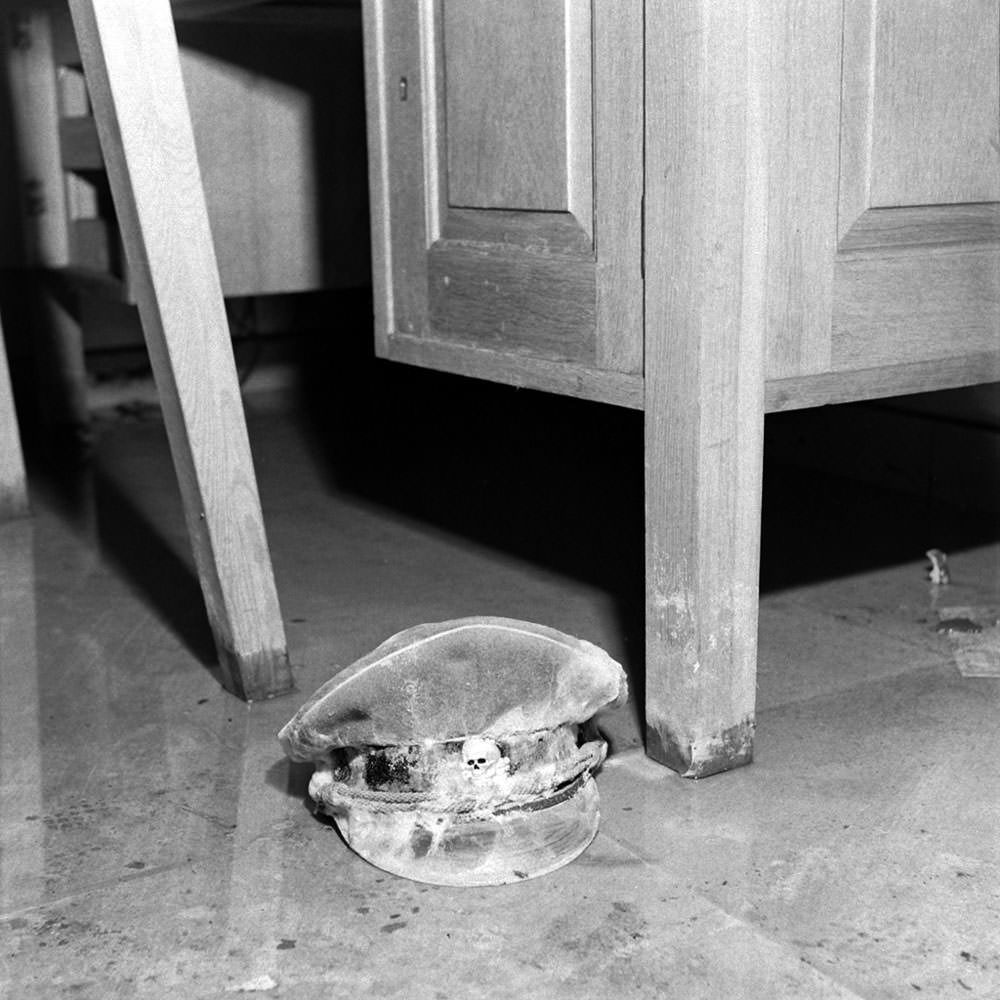
Left behind in the chaos of the bunker’s final days, an SS officer’s cap lay among the debris. The death’s-head skull insignia — the Totenkopf — had been a symbol of the SS since the organization’s early years. Finding it abandoned on the floor of the bunker, barely visible in the dim light, was one of many details that Vandivert recorded. Each item told part of the story of a regime that had collapsed faster than almost anyone inside it had believed possible just months earlier.
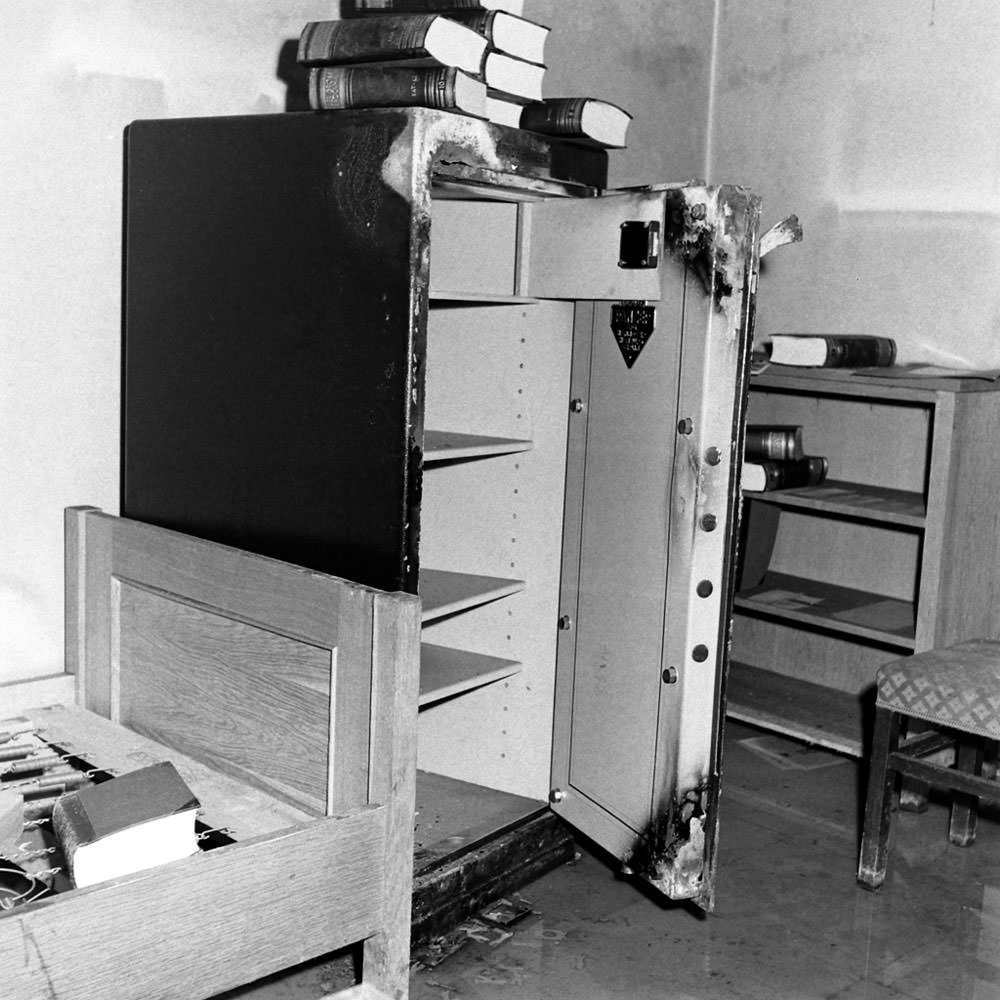
The looted safe in the bunker was another marker of how thoroughly the space had been ransacked before Western journalists arrived. Soviet troops had moved through it first, and whatever had been inside the safe was gone. Outside, in the Reich Chancellery garden, LIFE correspondent Percy Knauth examined the physical site where history’s most wanted man had met his end.
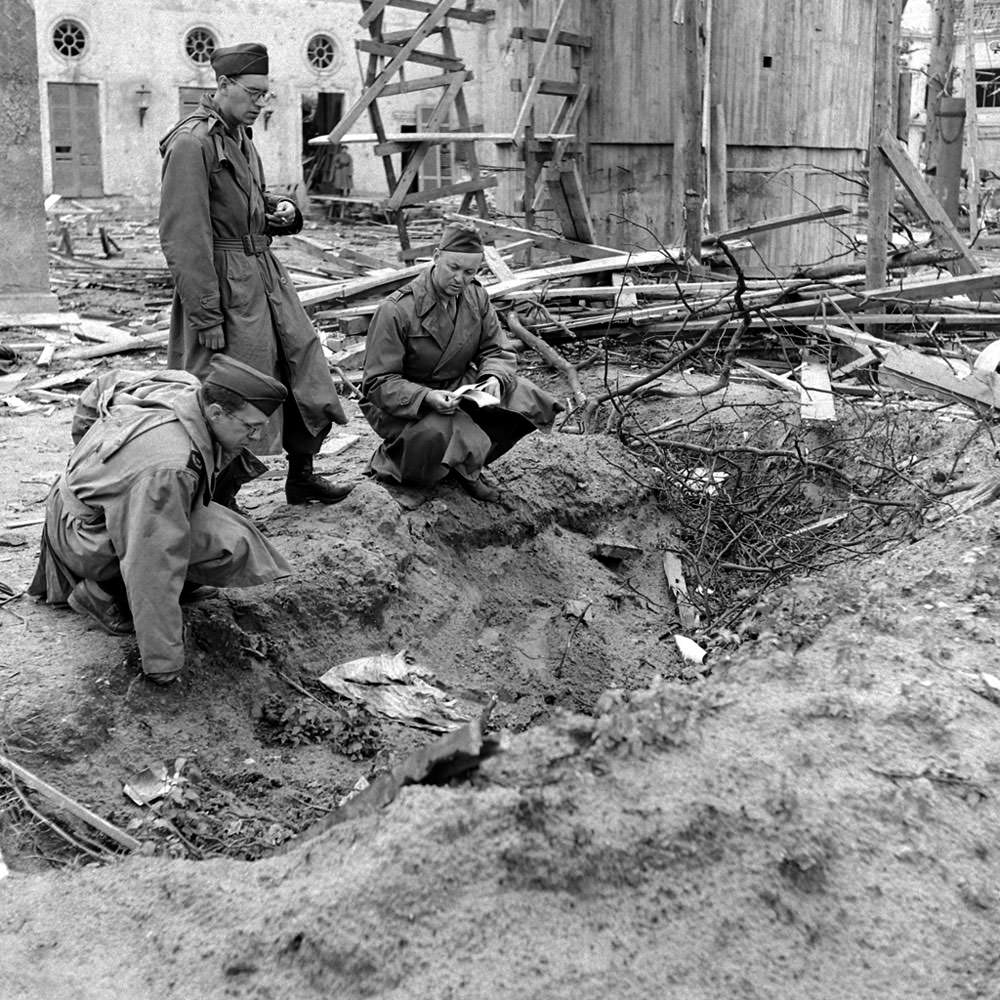
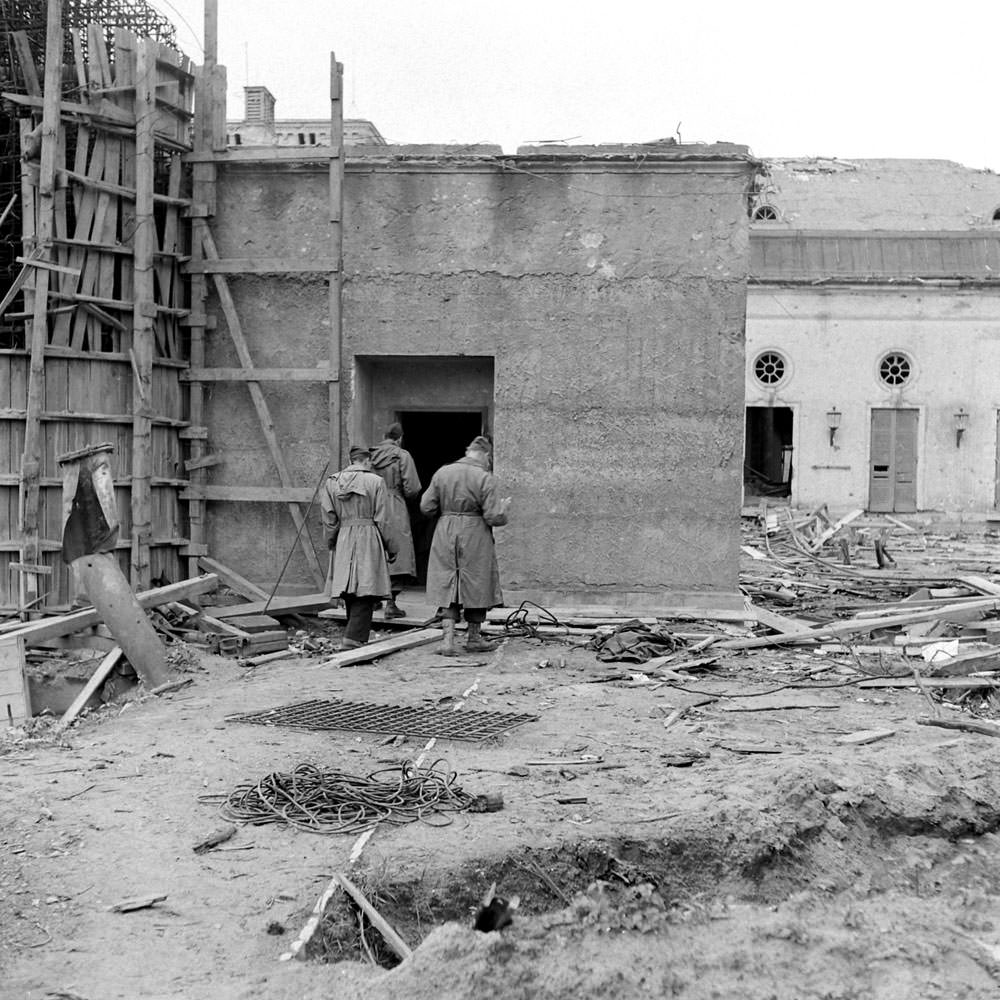
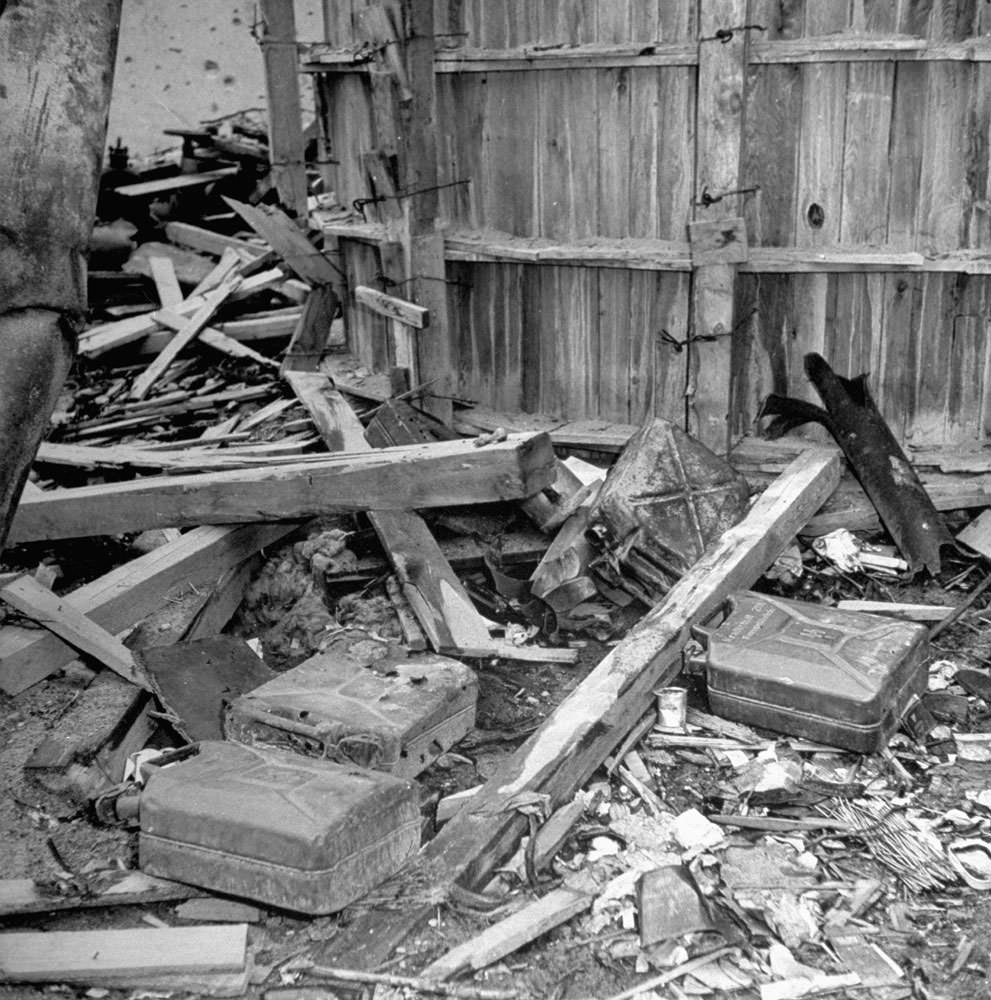
The Reich Chancellery garden was where the bodies of Hitler and Eva Braun were burned. SS troops had carried out the burning using gasoline. The shallow trench that Knauth sifted through was all that remained at the site. Empty gasoline cans were still scattered nearby — physical evidence of the hasty, improvised cremation that had taken place in the final hours of the Third Reich’s existence.
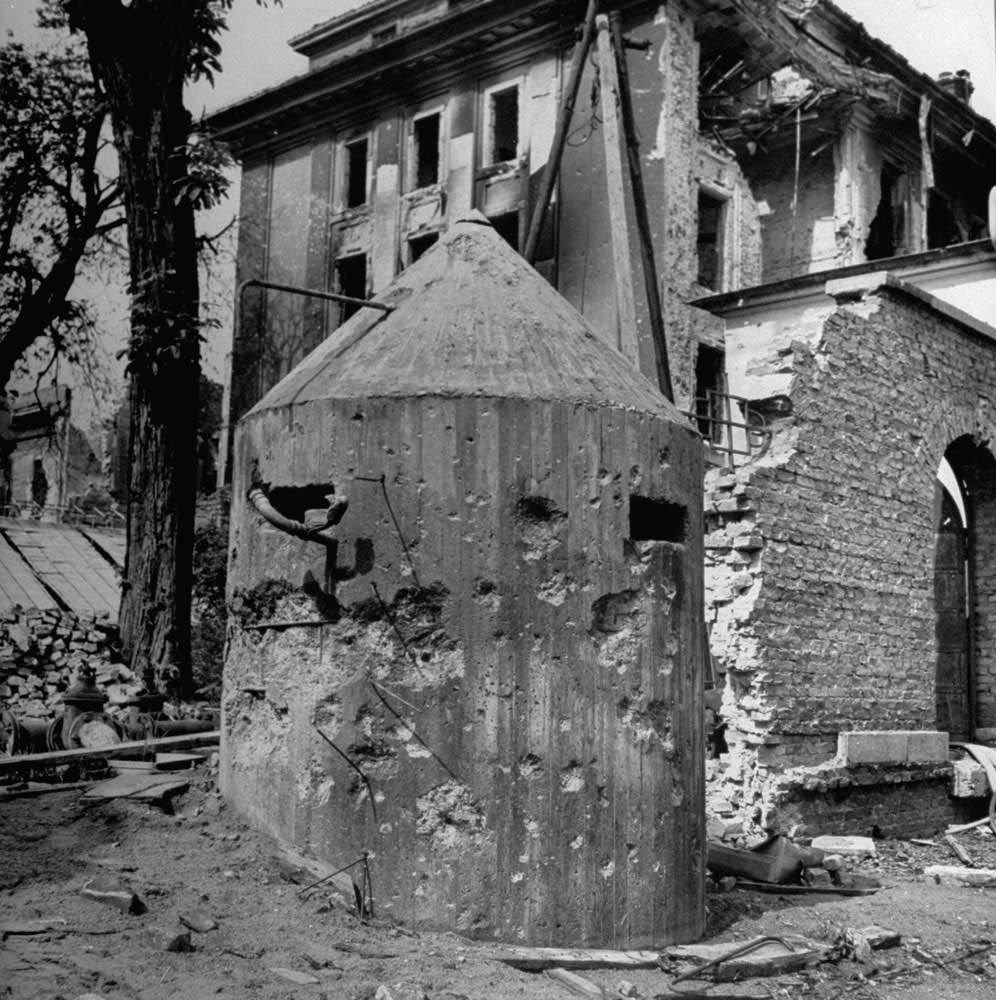
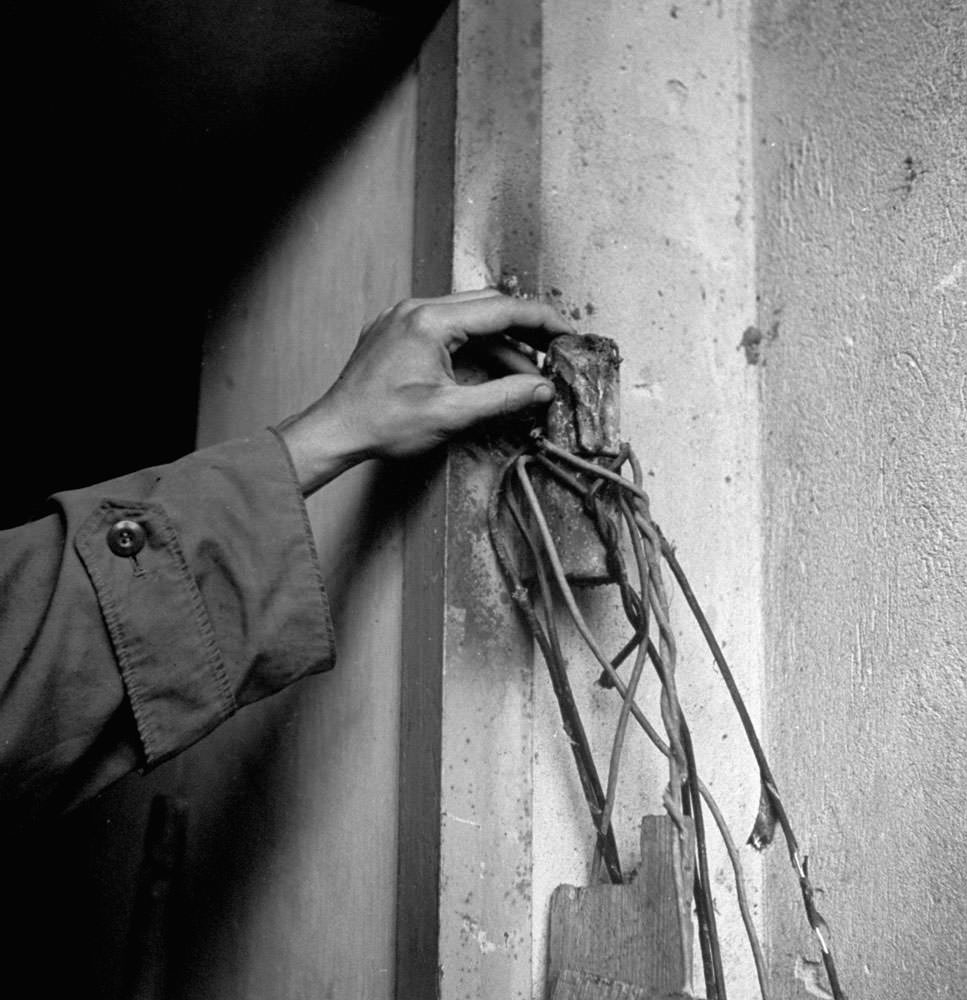
The exterior of the bunker bore the marks of the final assault. The sentry pillbox outside was riddled with bullet holes. The heavy door to the bunker entrance had been burned off its hinges by Soviet combat engineers forcing their way in. These details mattered because they showed that the bunker’s end was not peaceful — it was breached, violated, and exposed by the force that defeated the army defending it.
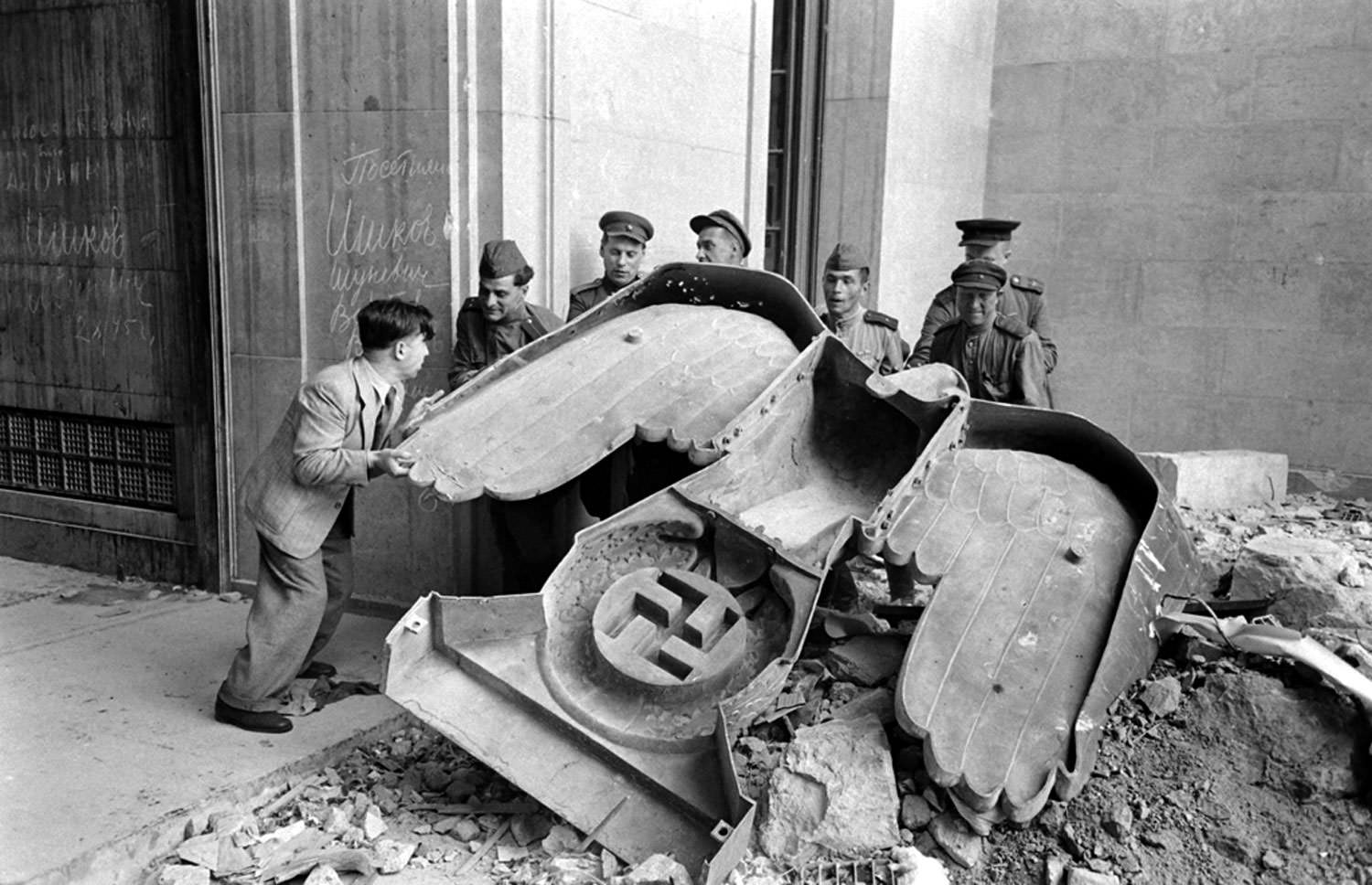
Beyond the bunker, the streets of Berlin told their own story. Vandivert moved through the city documenting the aftermath of both the battle and the regime itself. The symbols of Nazi power — the eagles, the architecture, the political venues — were broken and empty. Soviet soldiers and German civilians were beginning the slow, strange process of occupying the same space in a city still thick with the smell of smoke and death.
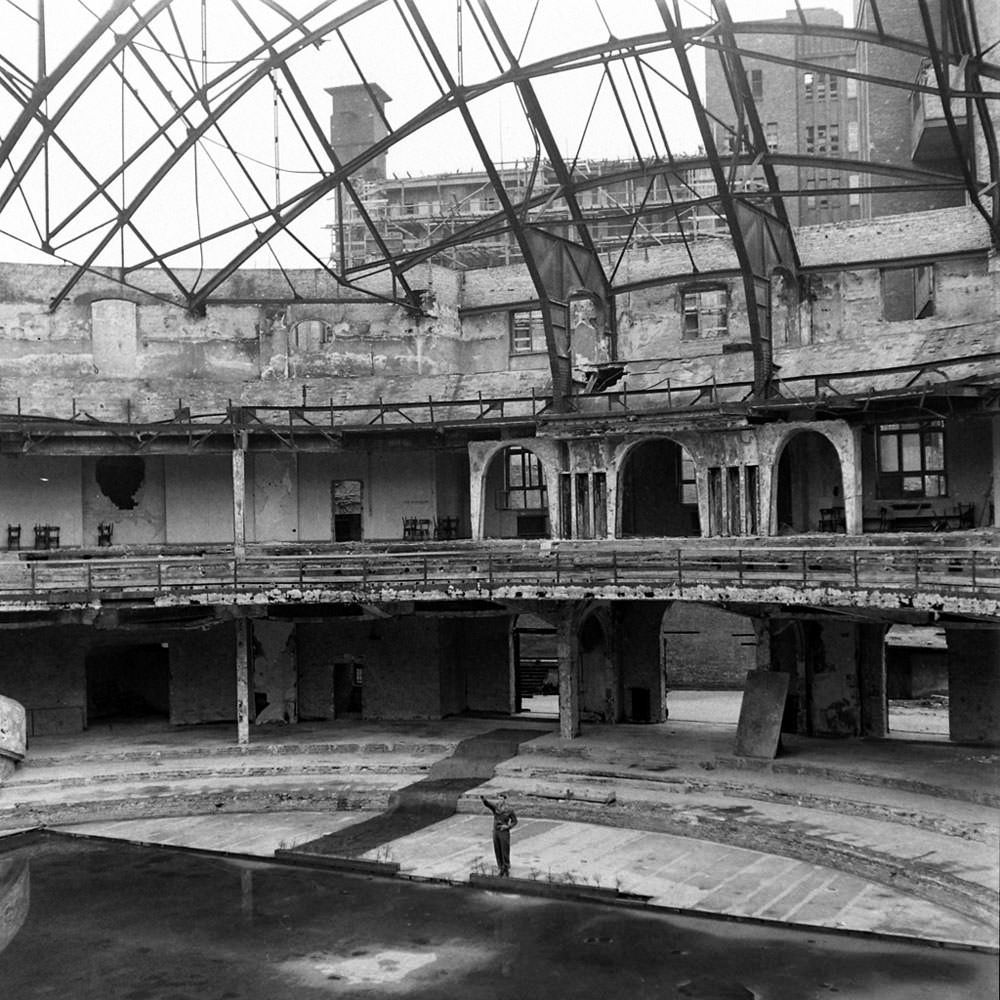
The Berliner Sportspalast had been destroyed in an Allied bombing raid in January 1944. It was a venue the Nazi regime had used repeatedly for political rallies — most famously, Reich Minister Joseph Goebbels had delivered his “total war” speech there in February 1943 to a roaring crowd. By the time PFC Douglas Page stood inside its ruins and threw up a mocking Nazi salute, the building was gutted and the regime that had filled it with fanatics was gone.
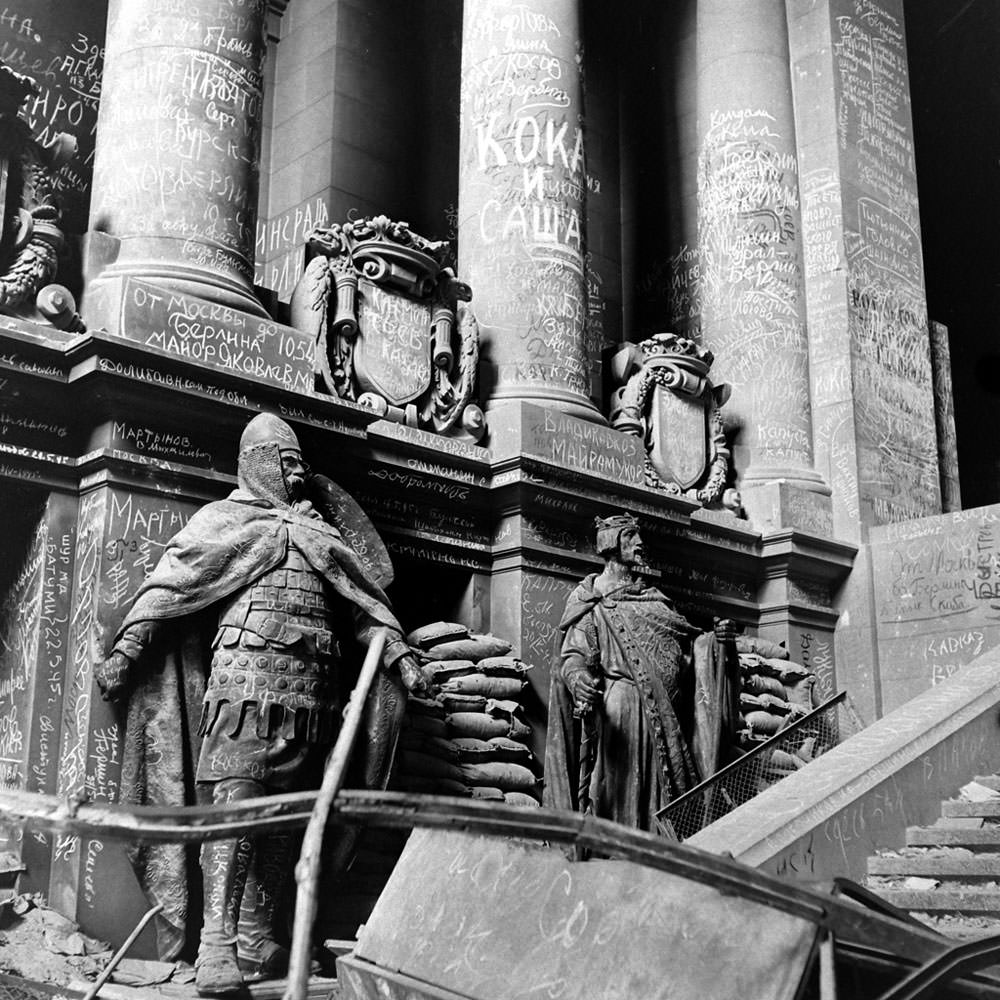
At the Reichstag, Soviet soldiers had covered the walls with graffiti — names, dates, messages in Russian. The Reichstag itself had been a symbolic prize. Soviet forces had raised the Red Flag over the building on April 30, the same day Hitler died. The graffiti left behind was a soldier’s form of record-keeping: proof of survival, a marker of presence, and in many cases a tribute to those who had not made it.
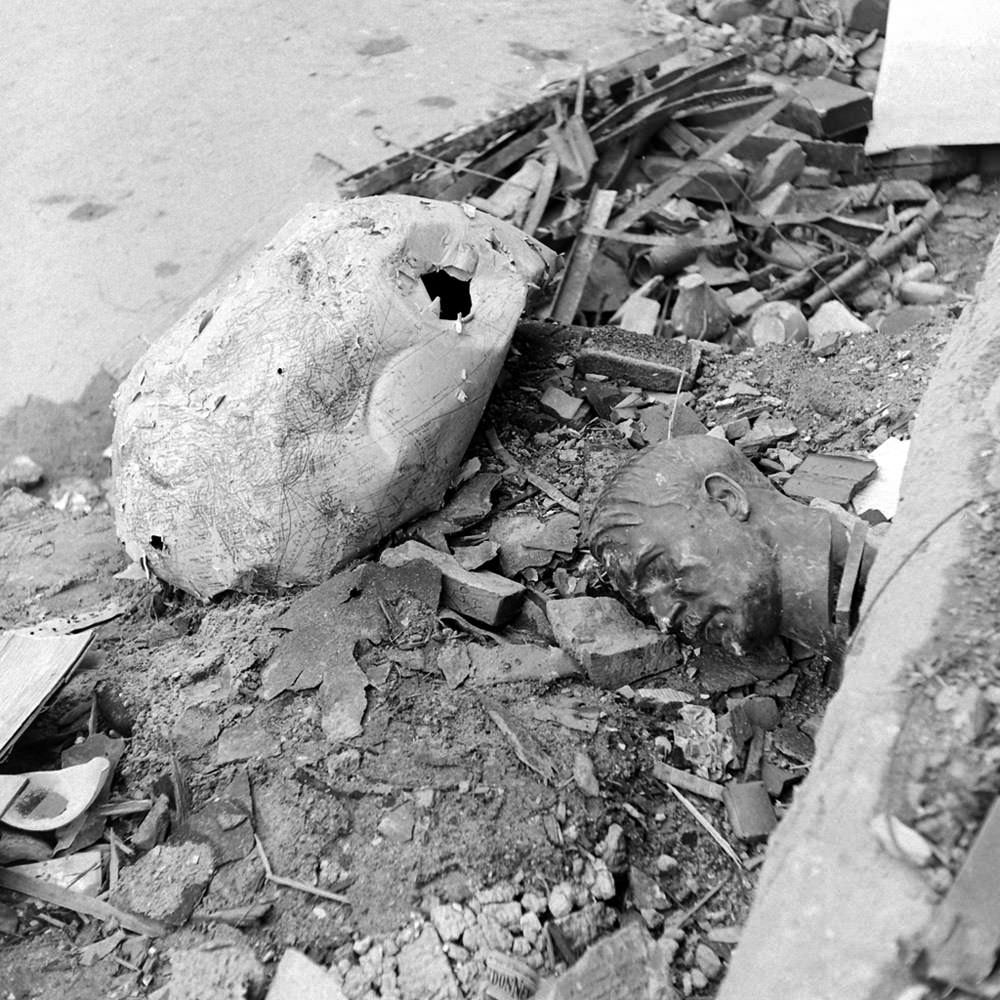
Outside the Reich Chancellery, Vandivert found a scene that needed no explanation: a crushed globe lying next to a bust of Hitler in the rubble. The globe had been a common prop in Nazi iconography — the idea of world domination was central to the regime’s stated ambitions. Seeing both objects smashed and half-buried in the debris of the building that once housed the seat of Nazi power said more than any caption could.
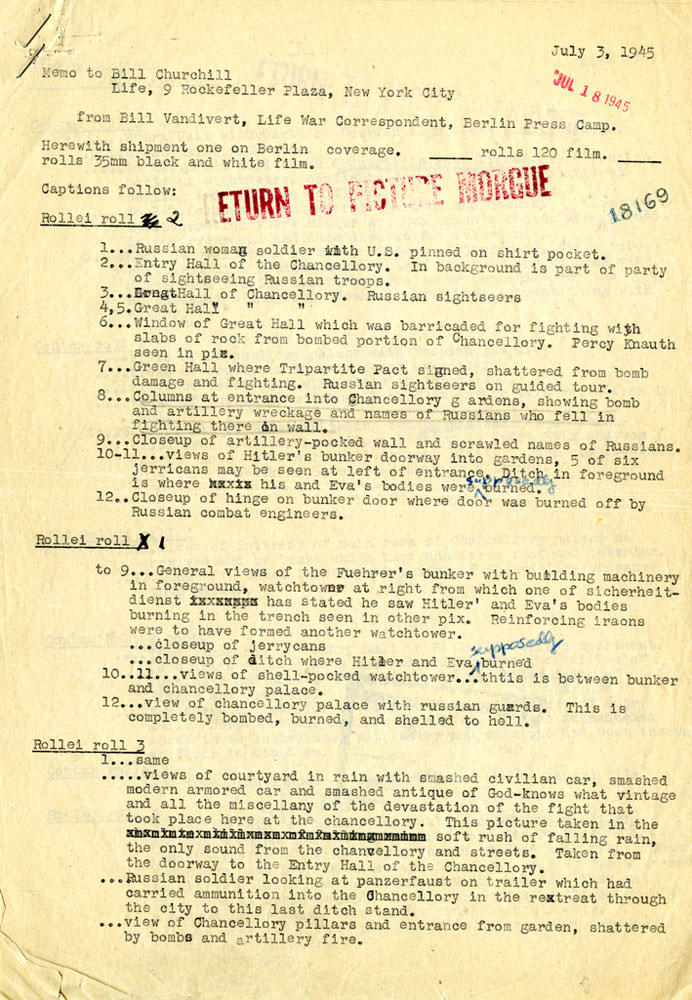
Vandivert did not just bring back photographs. He typed roughly 20 pages of detailed notes for LIFE’s editors in New York — descriptions of what he saw, what he was told, and the context behind each image. Those notes are as much a part of the historical record as the photographs themselves. Vandivert continued working for LIFE until 1948, but his work in Berlin in the summer of 1945 stands as some of the most significant photojournalism to come out of the end of World War II in Europe.



