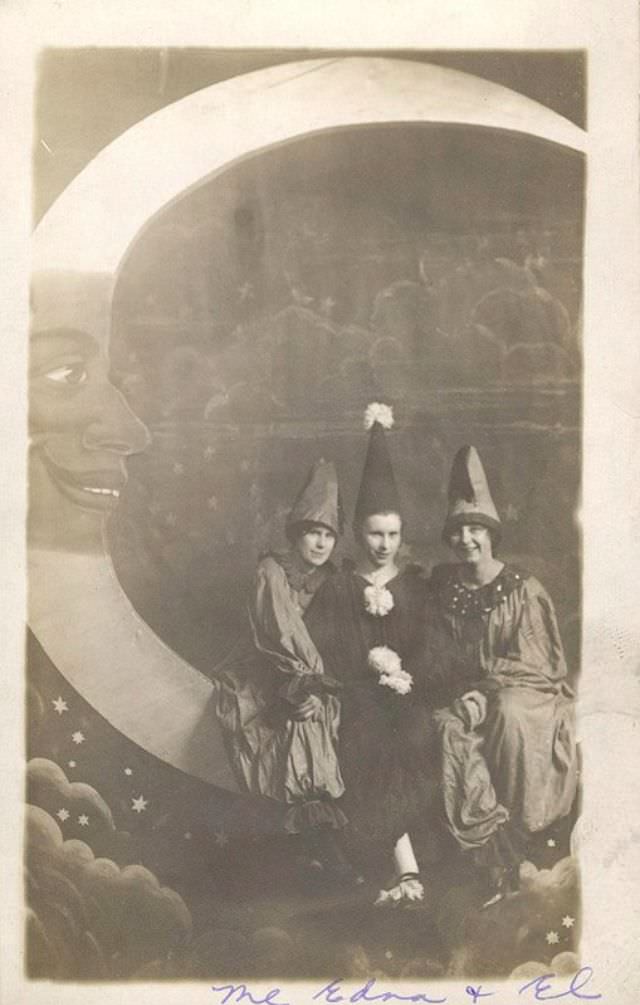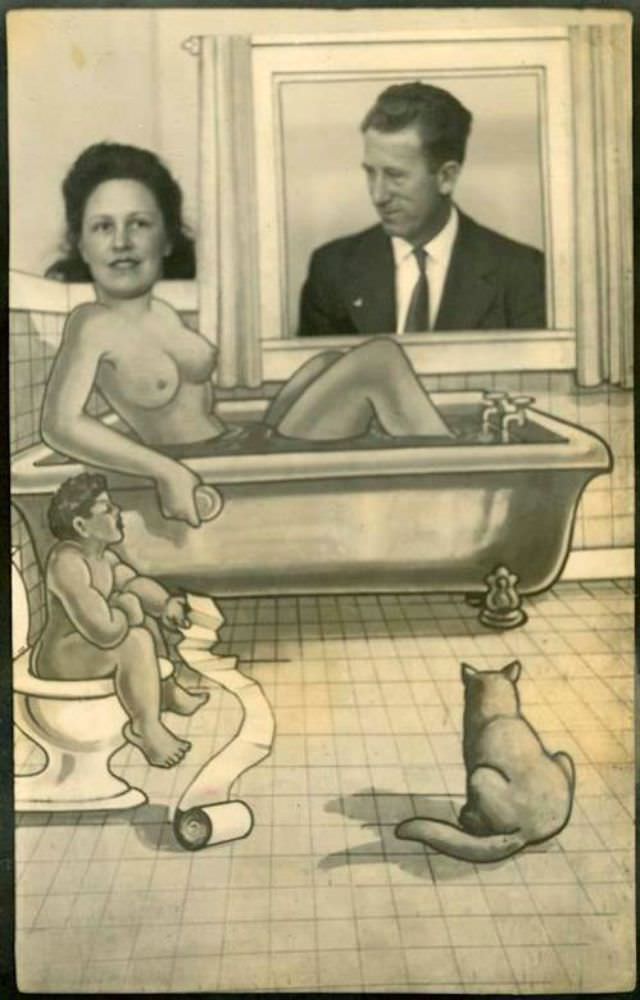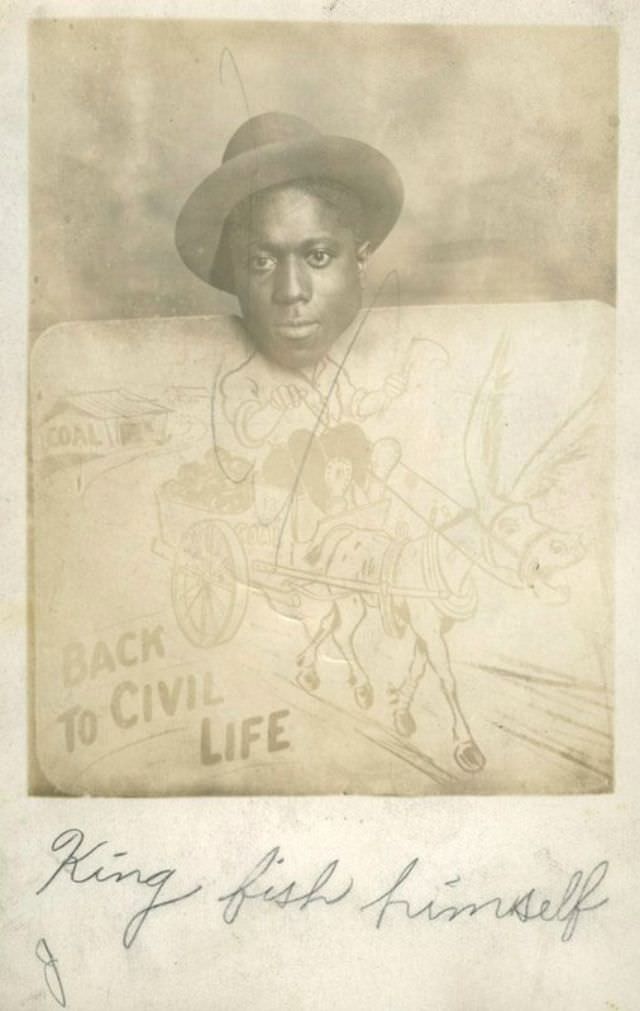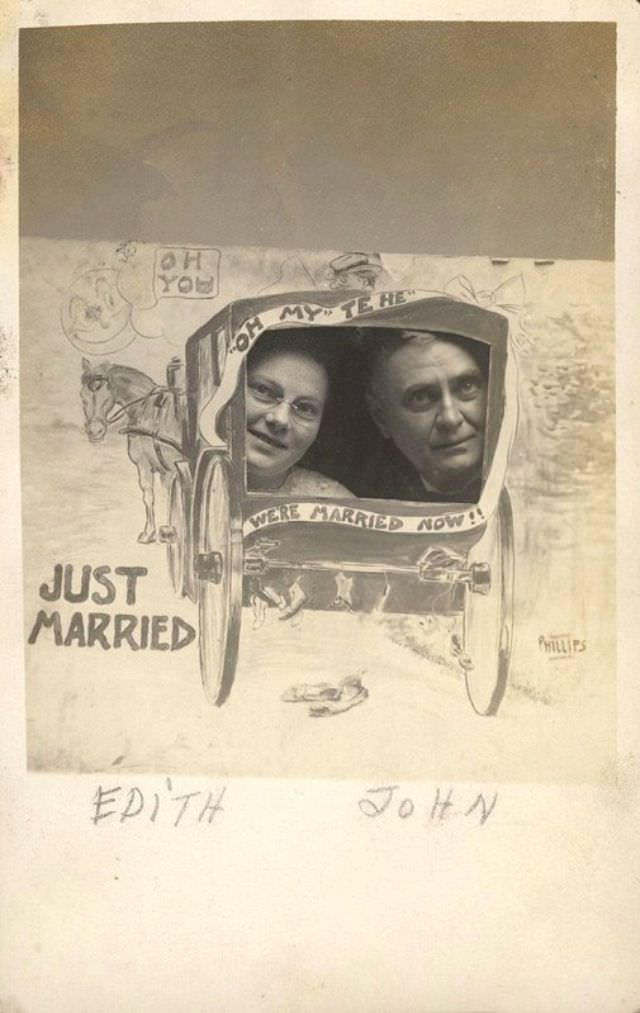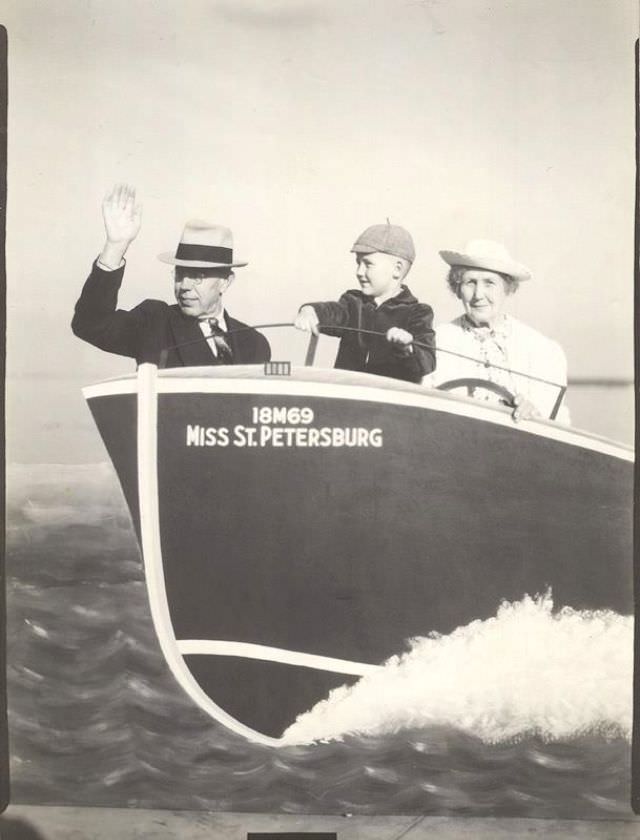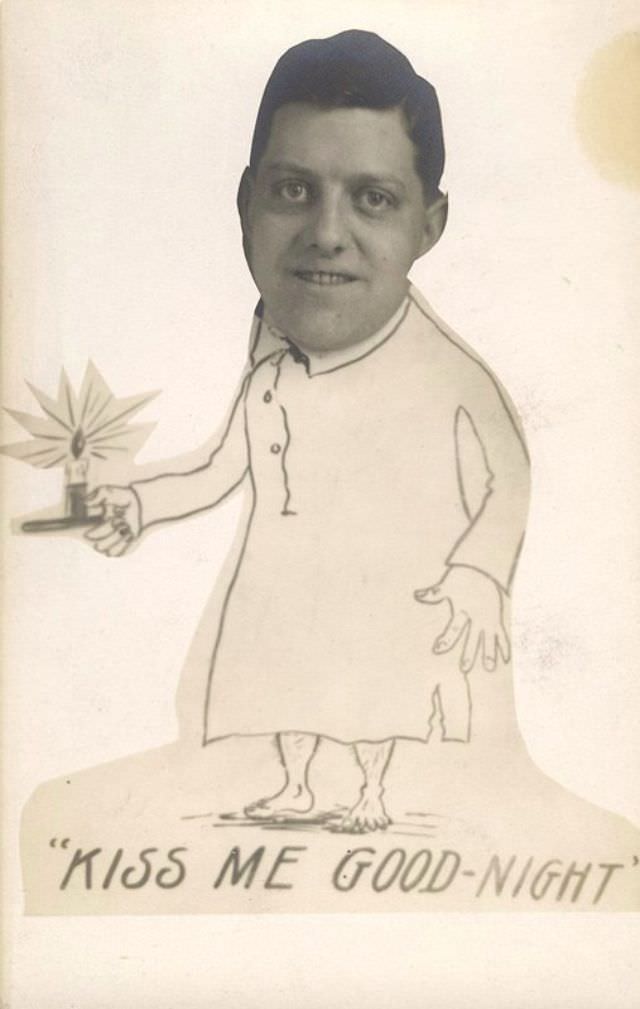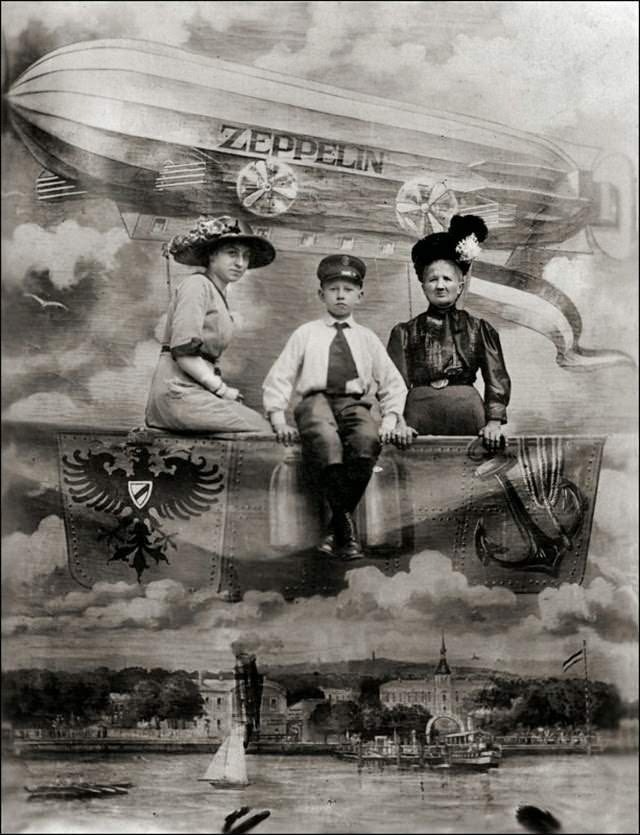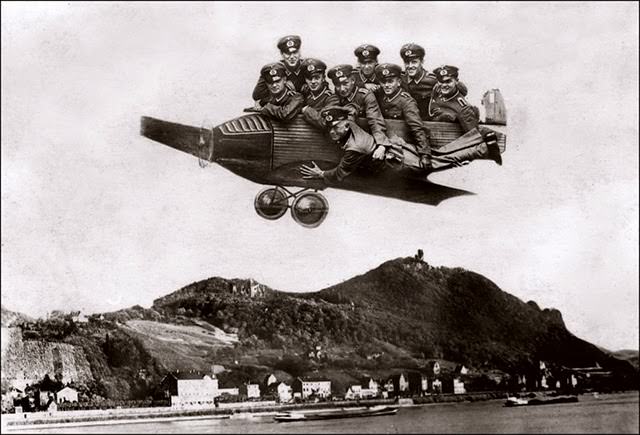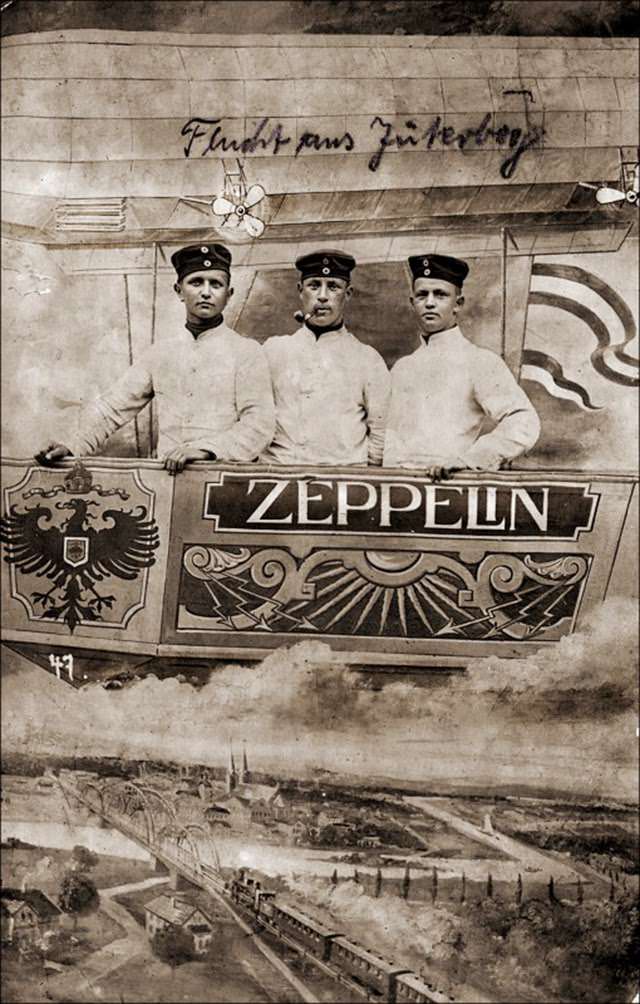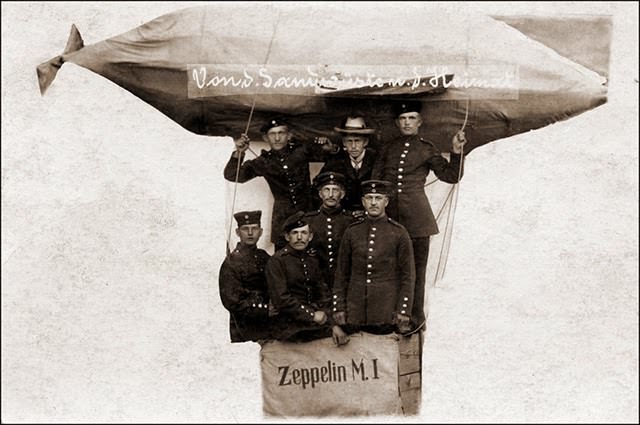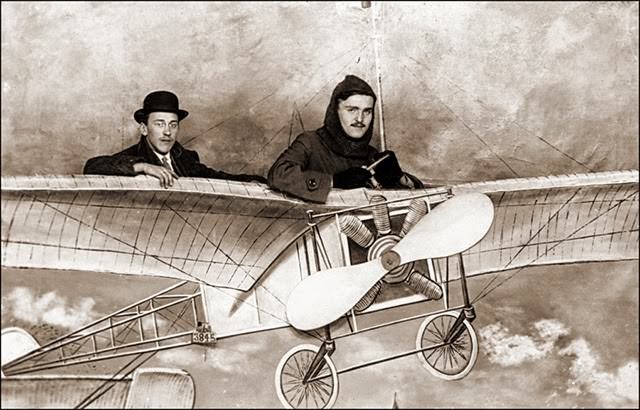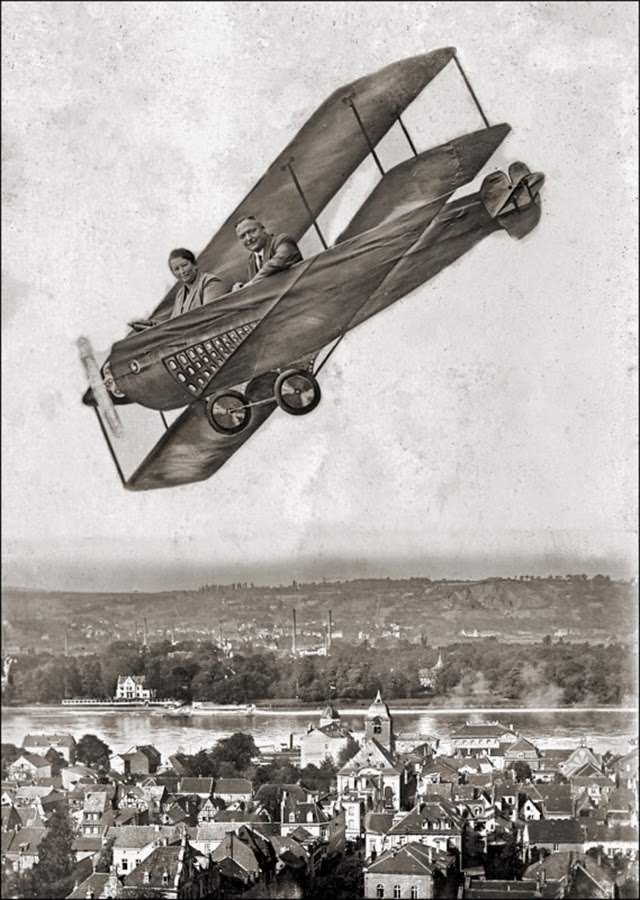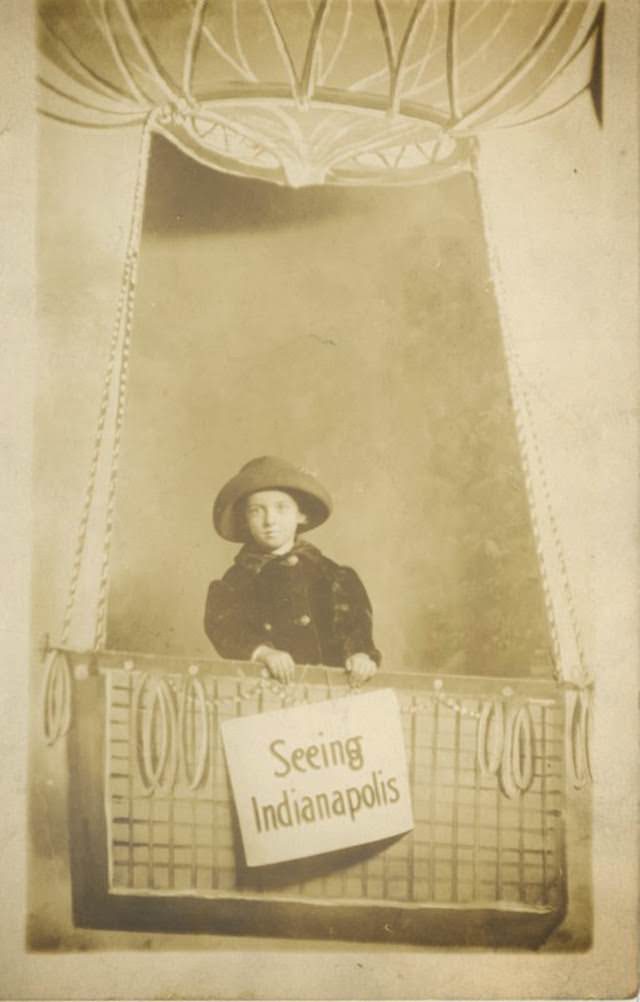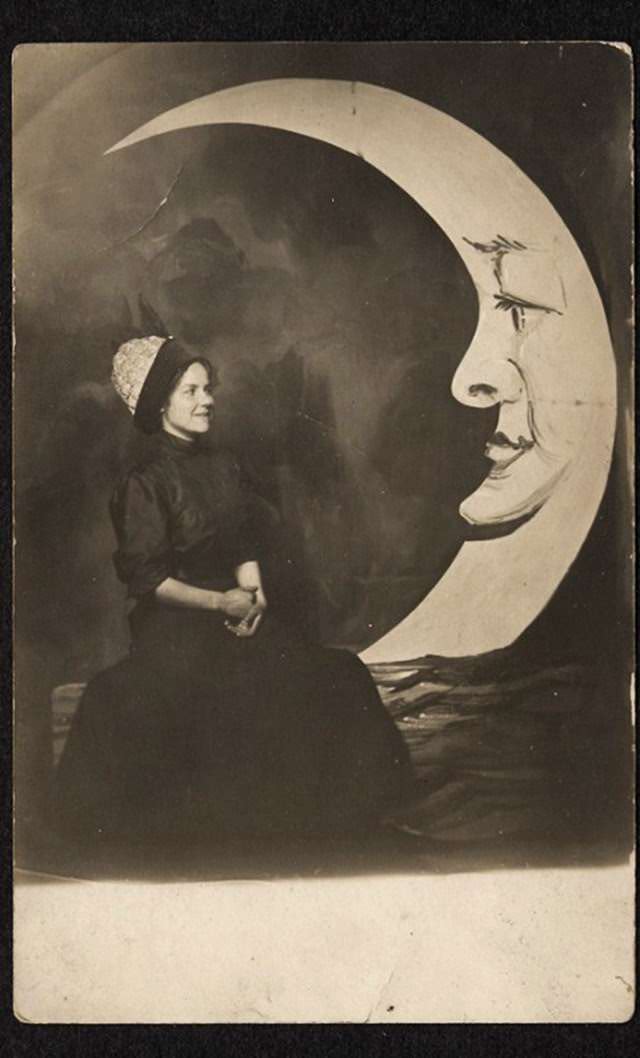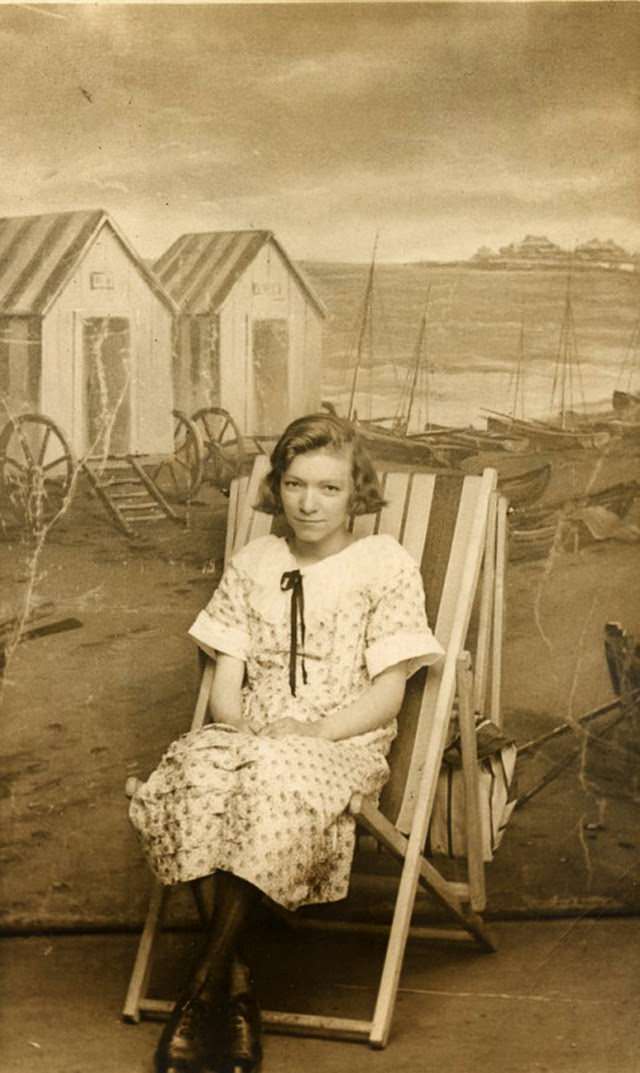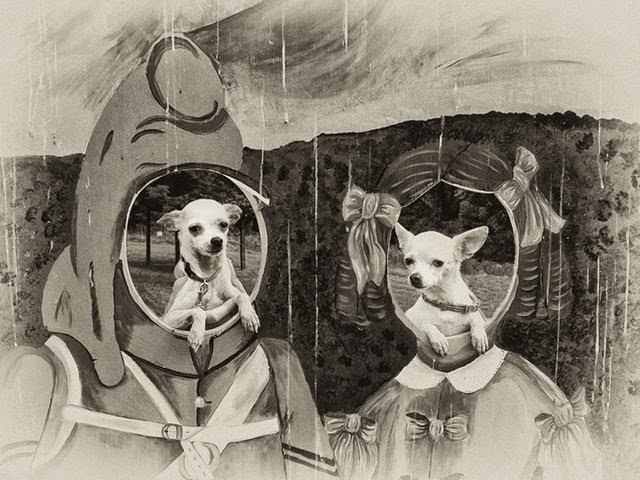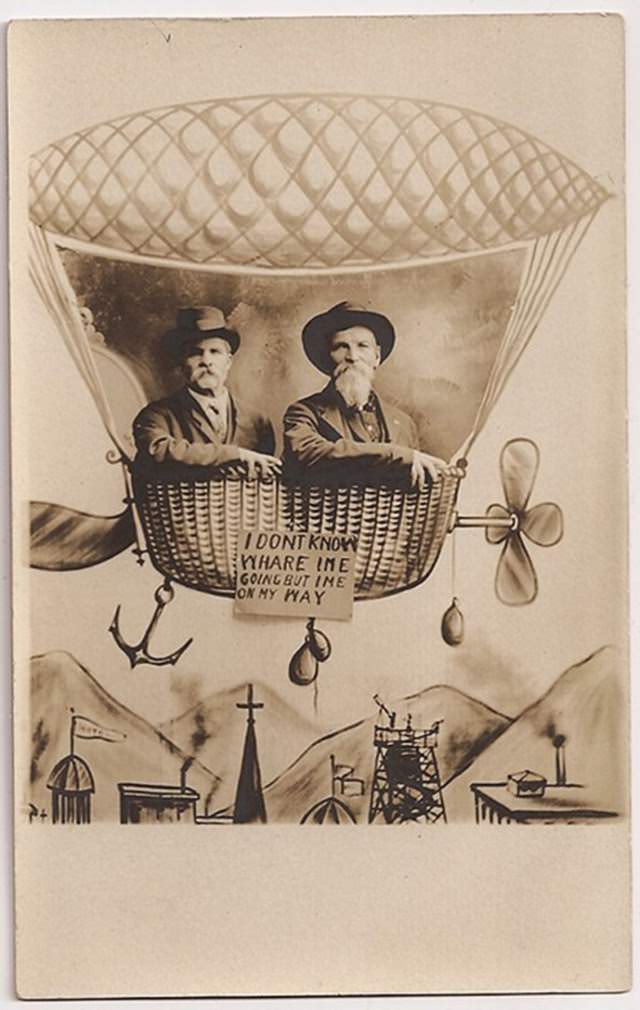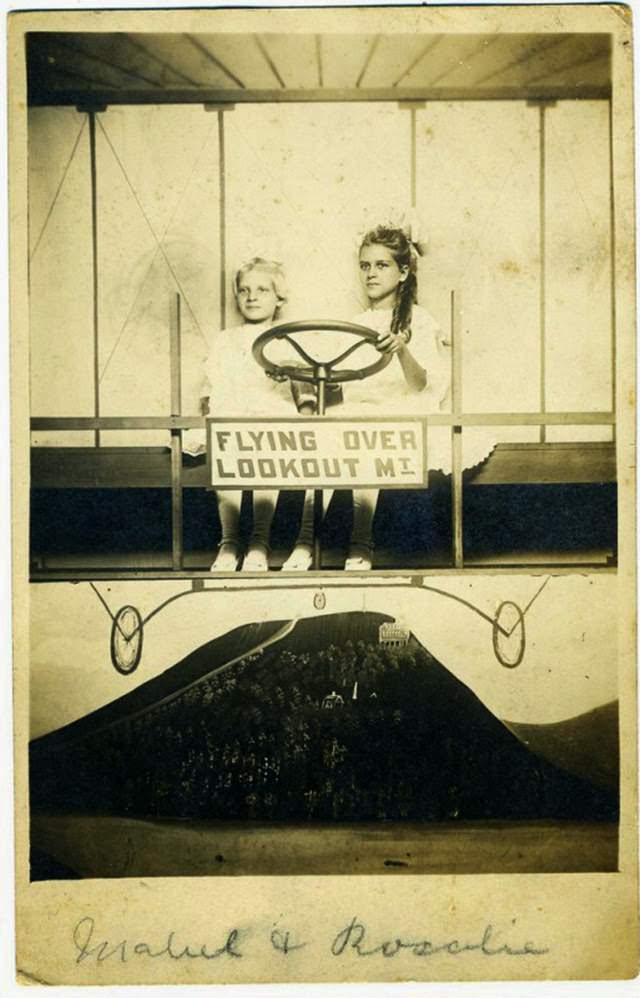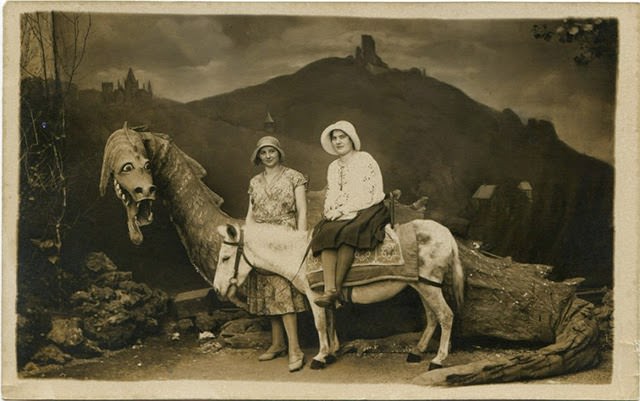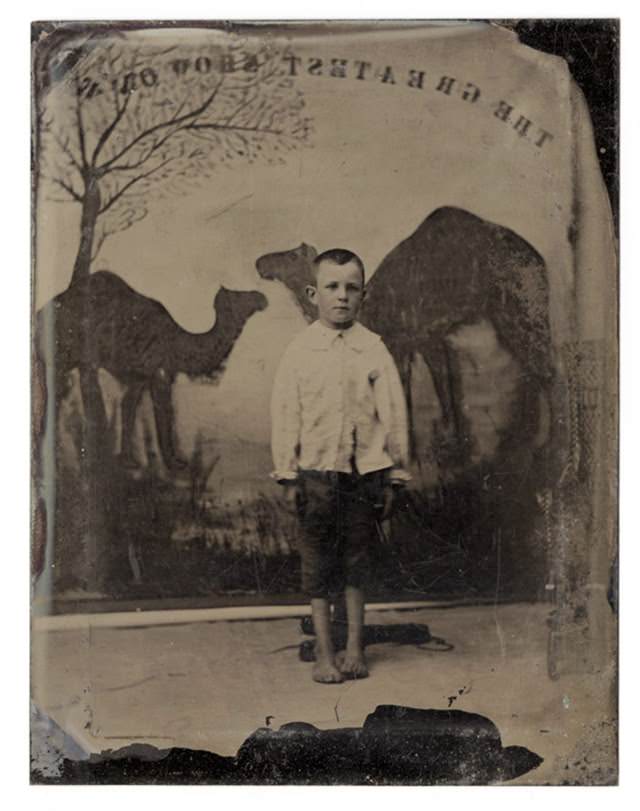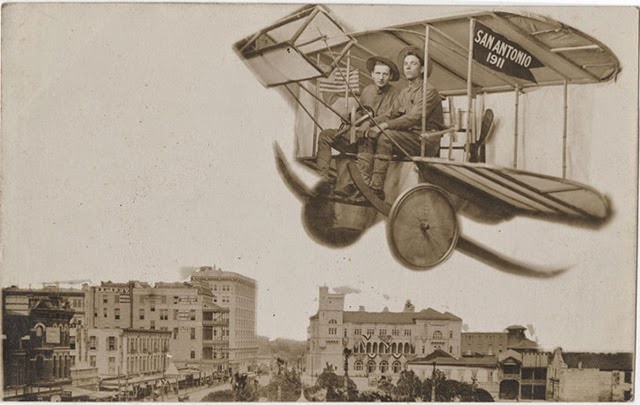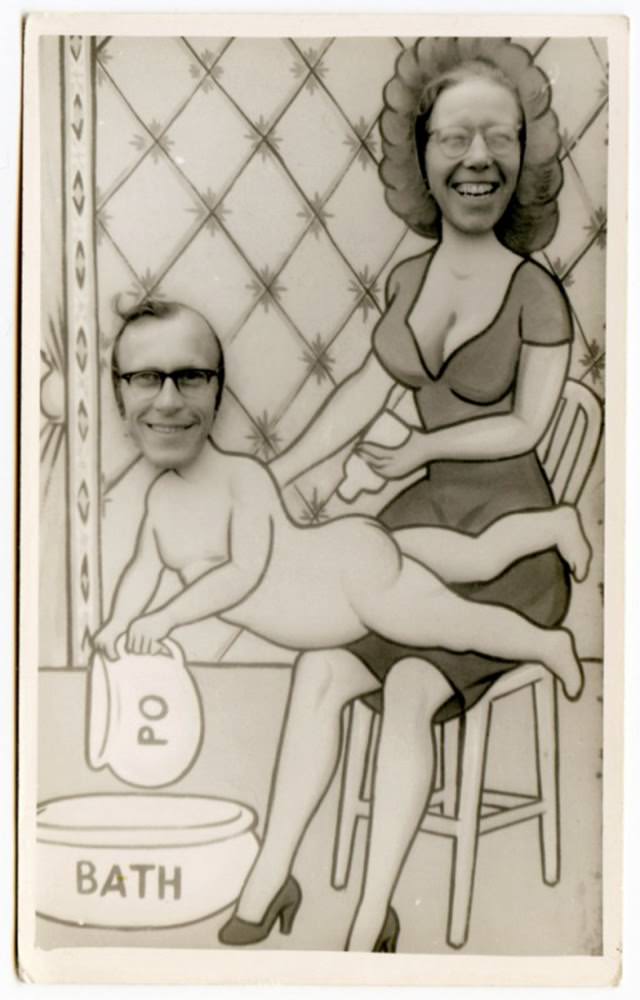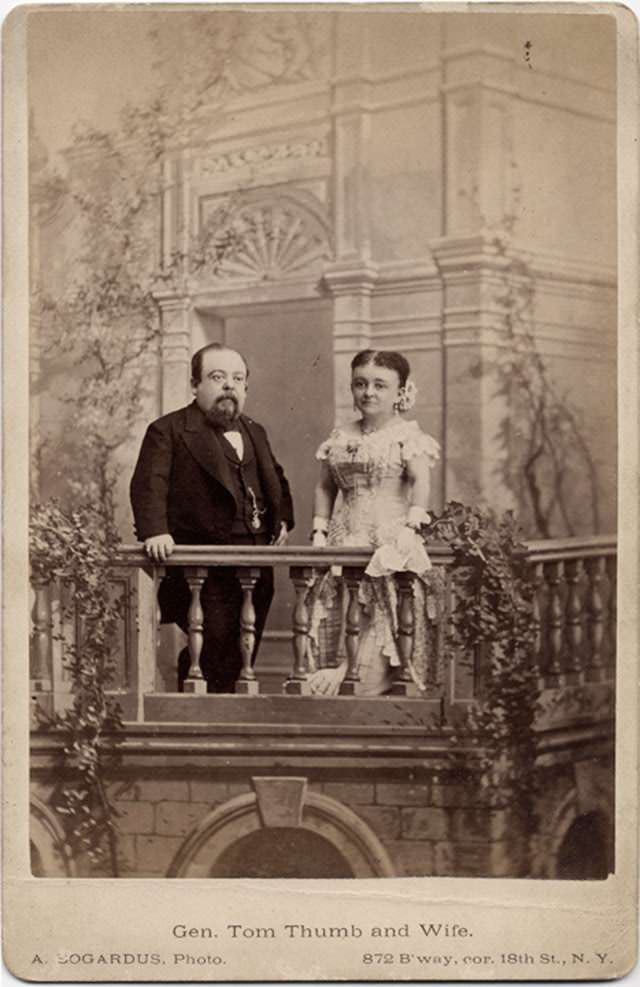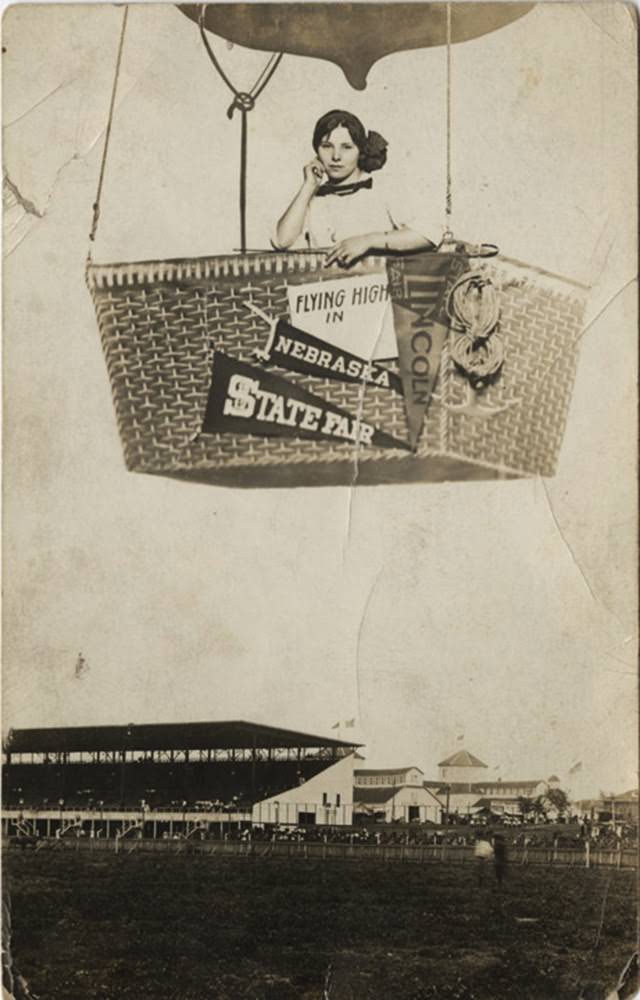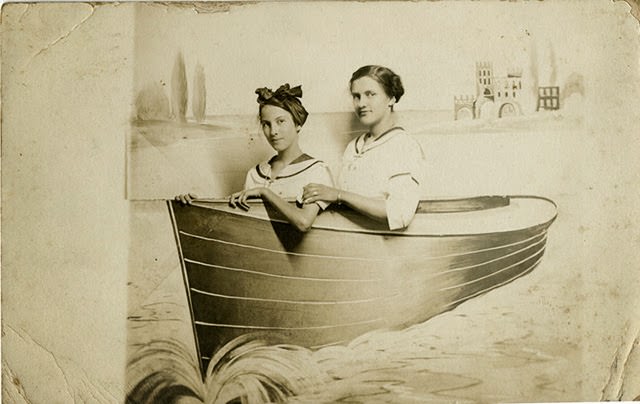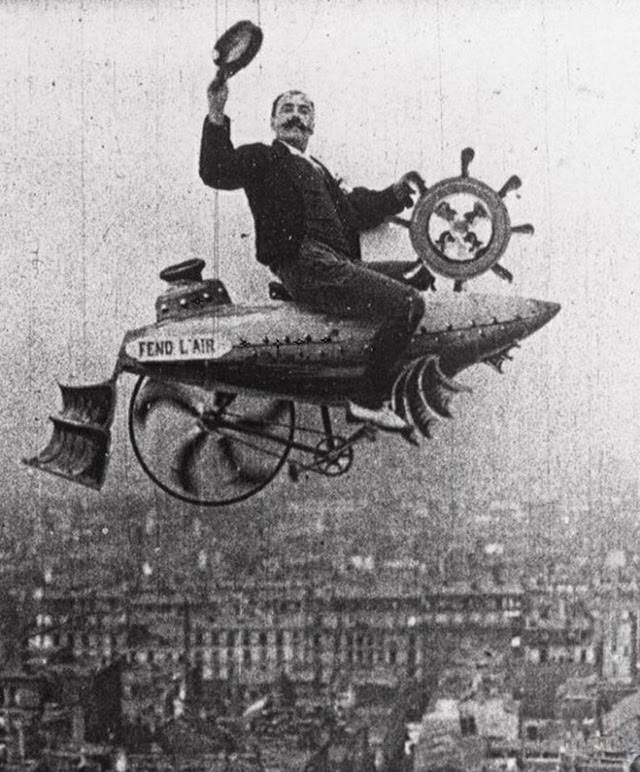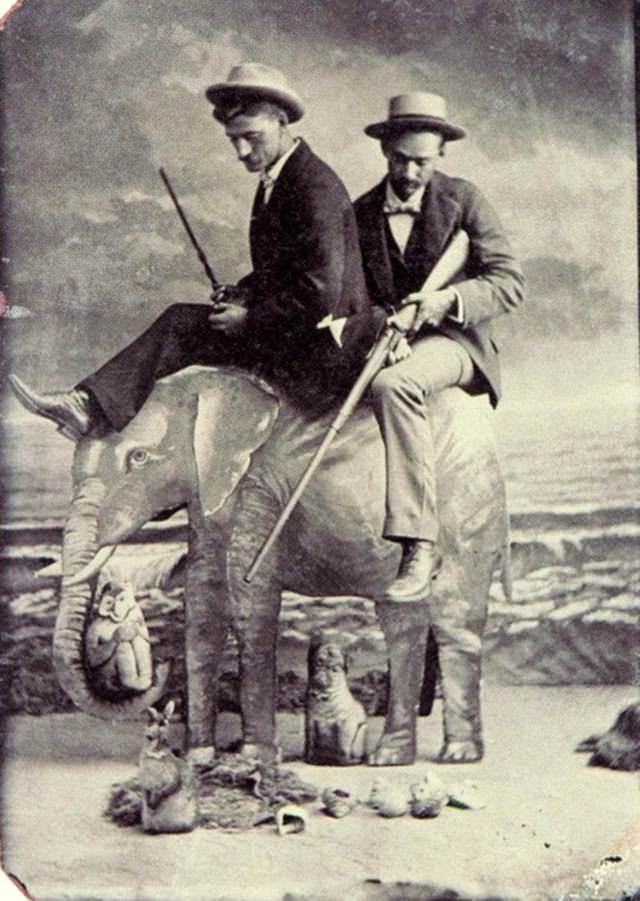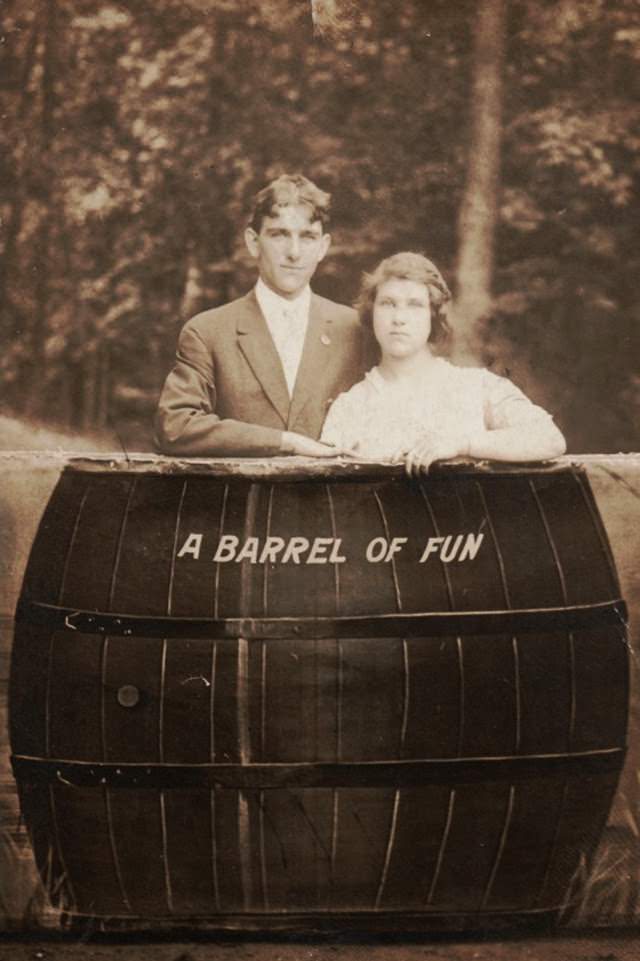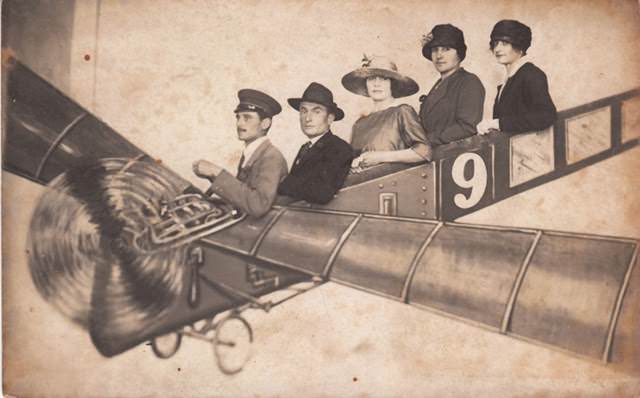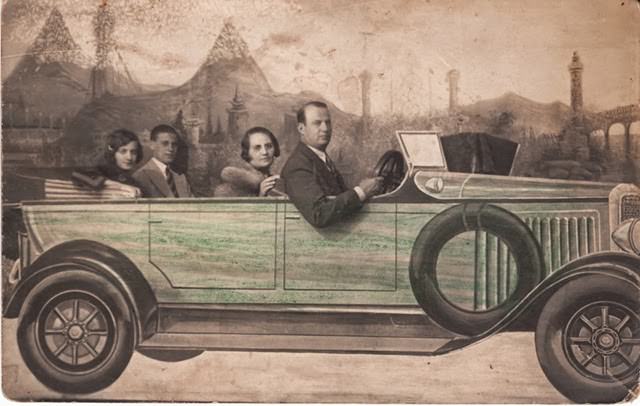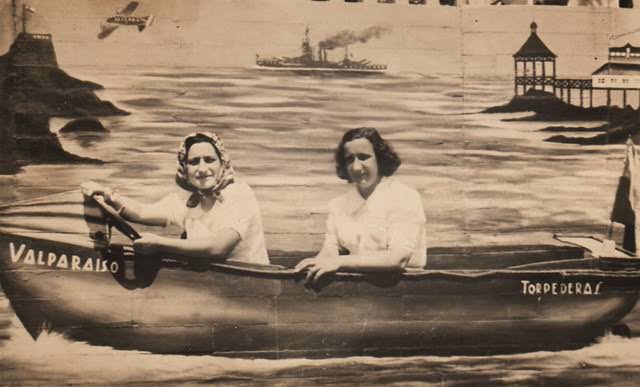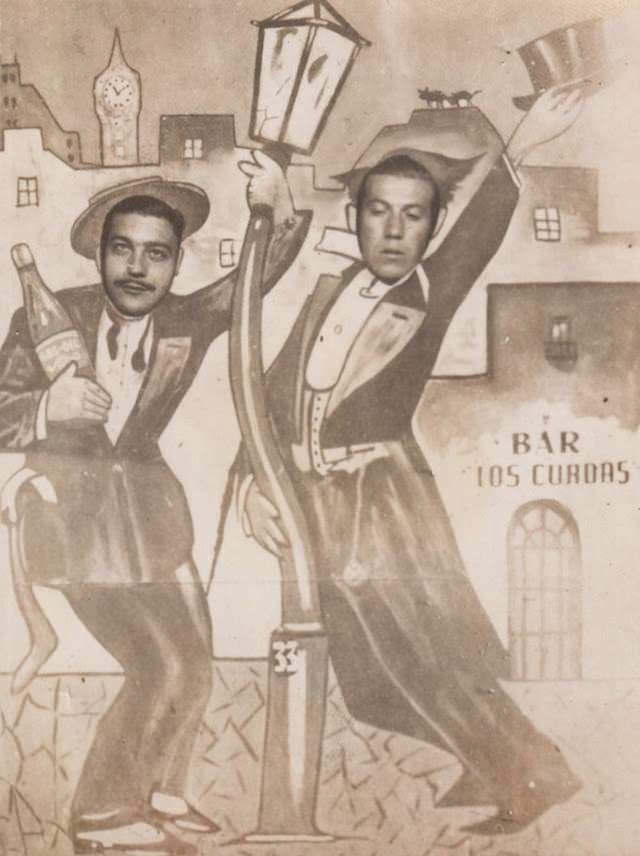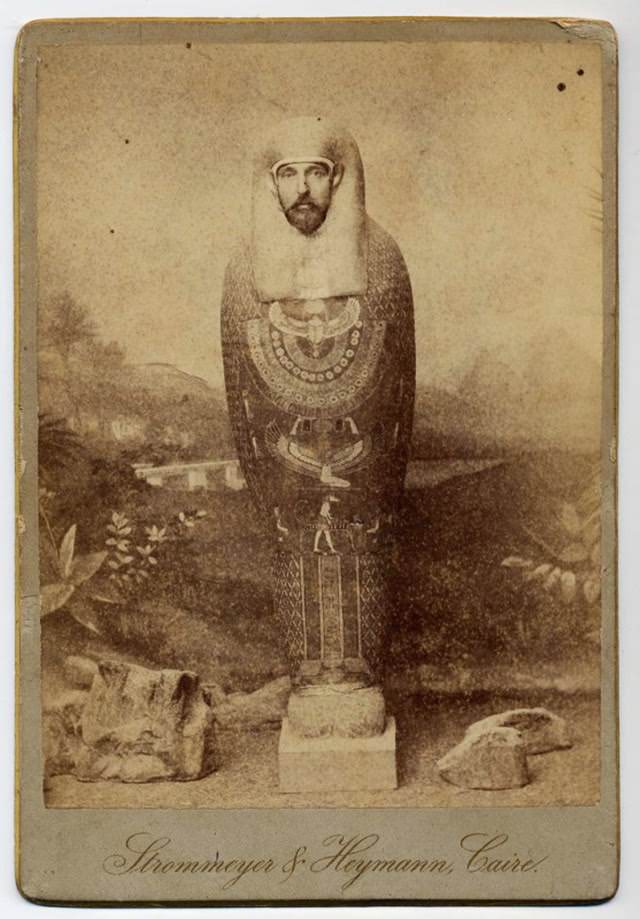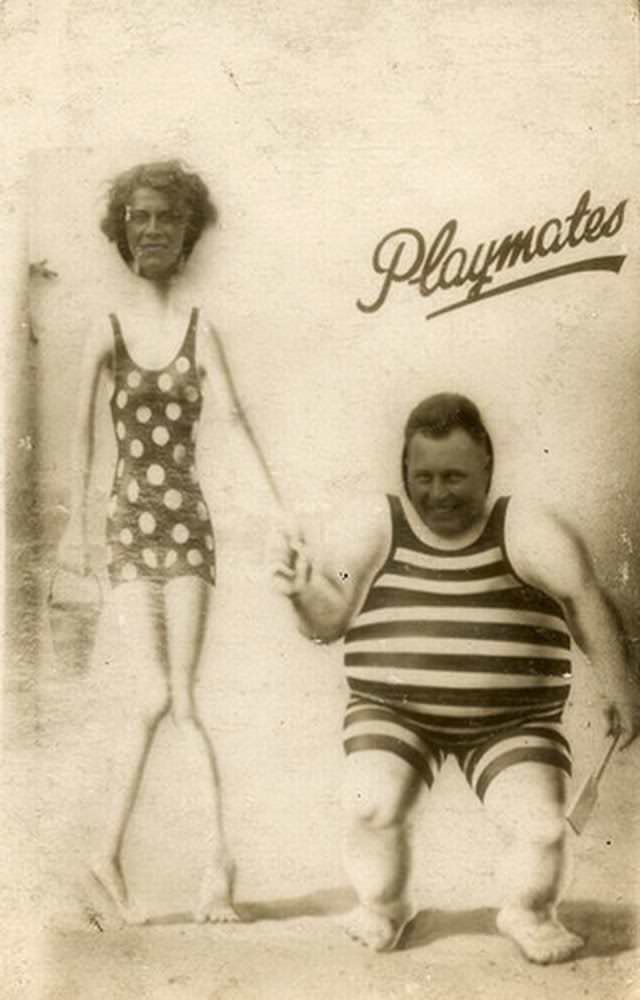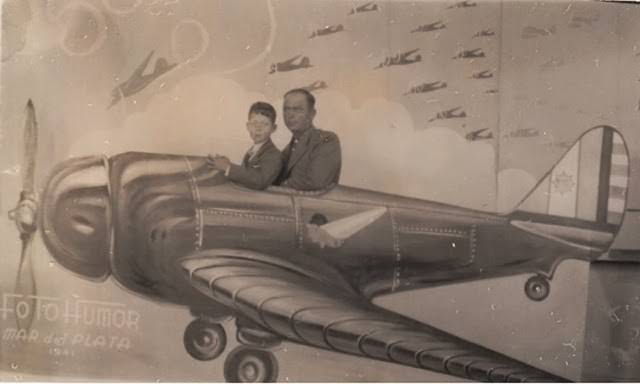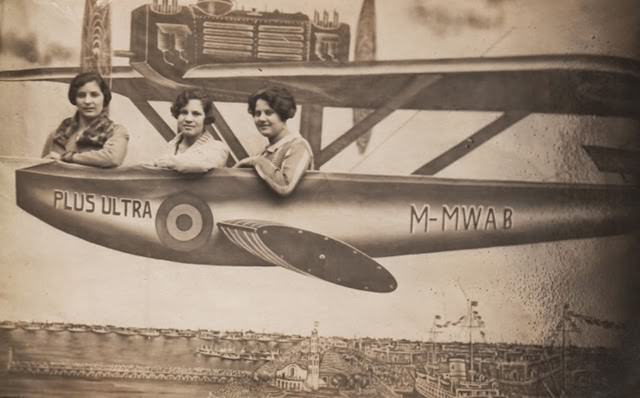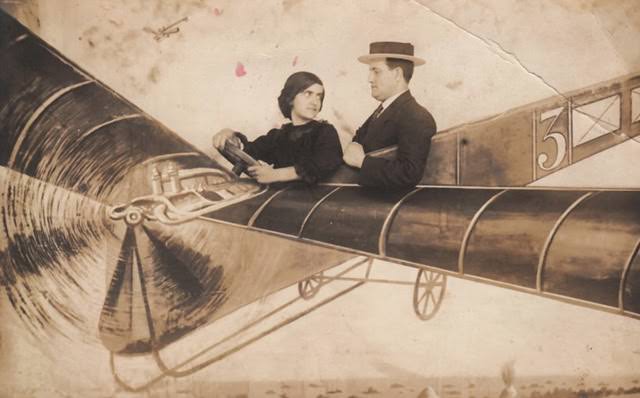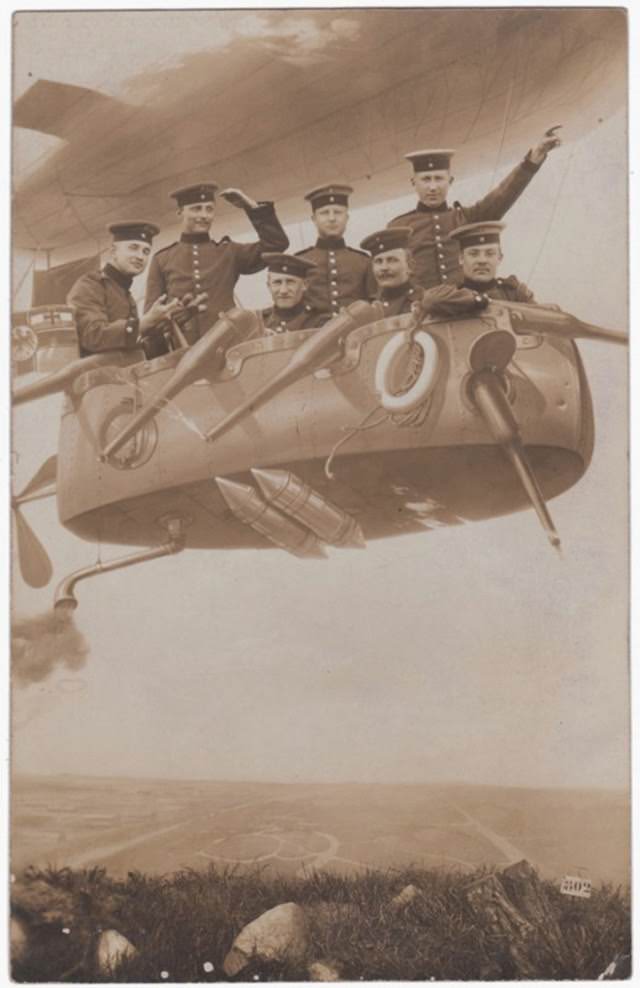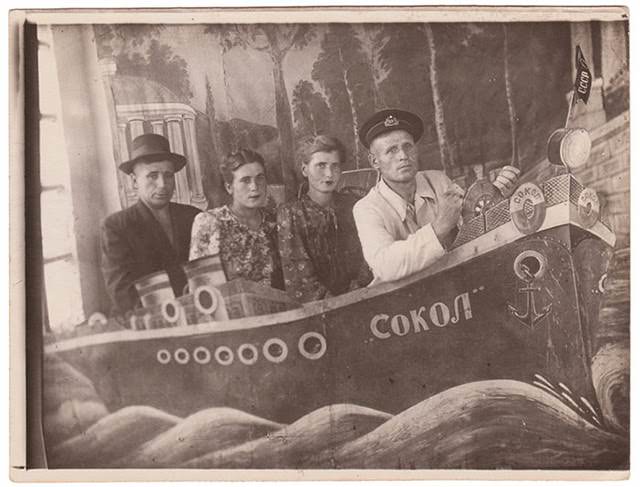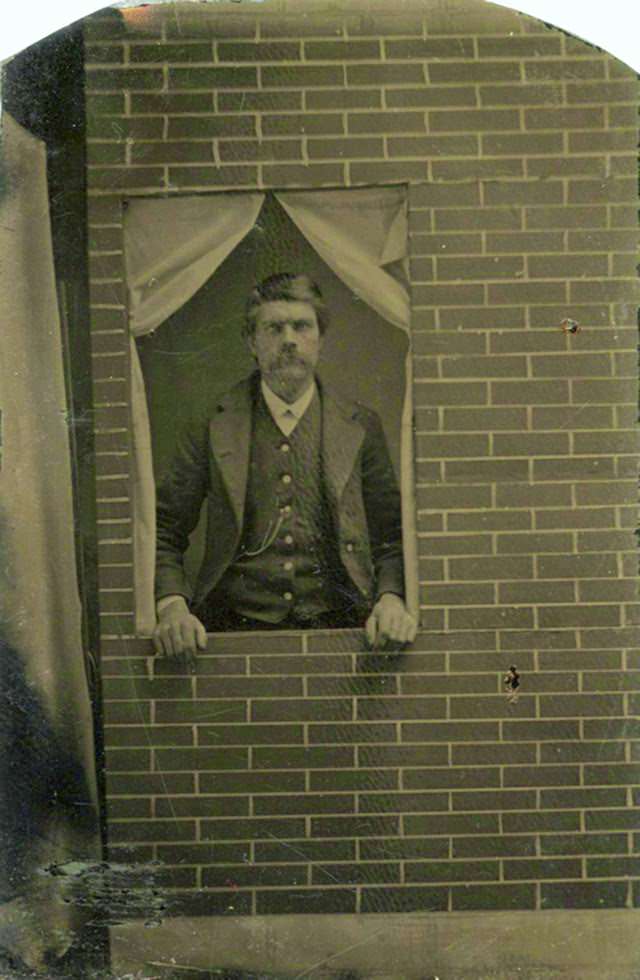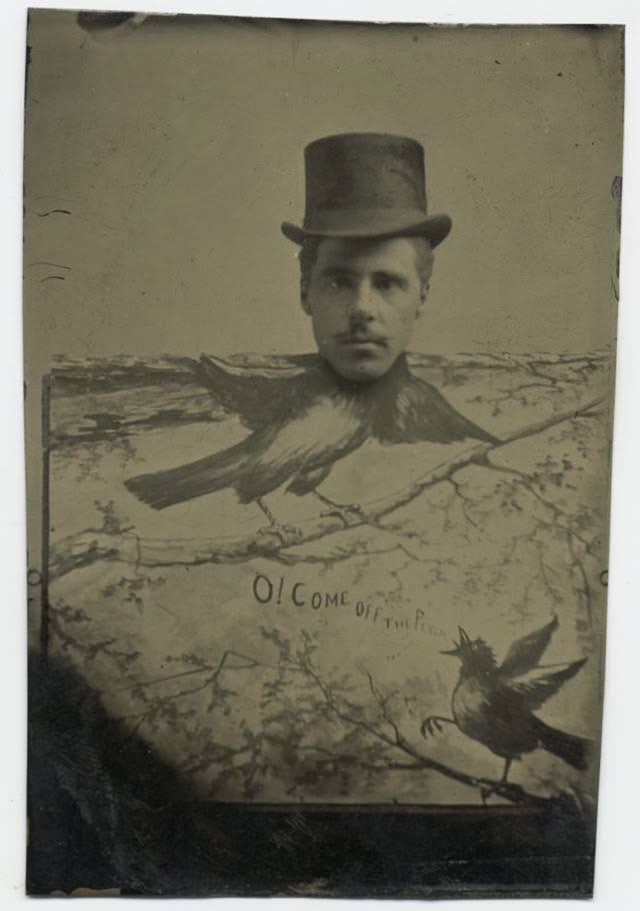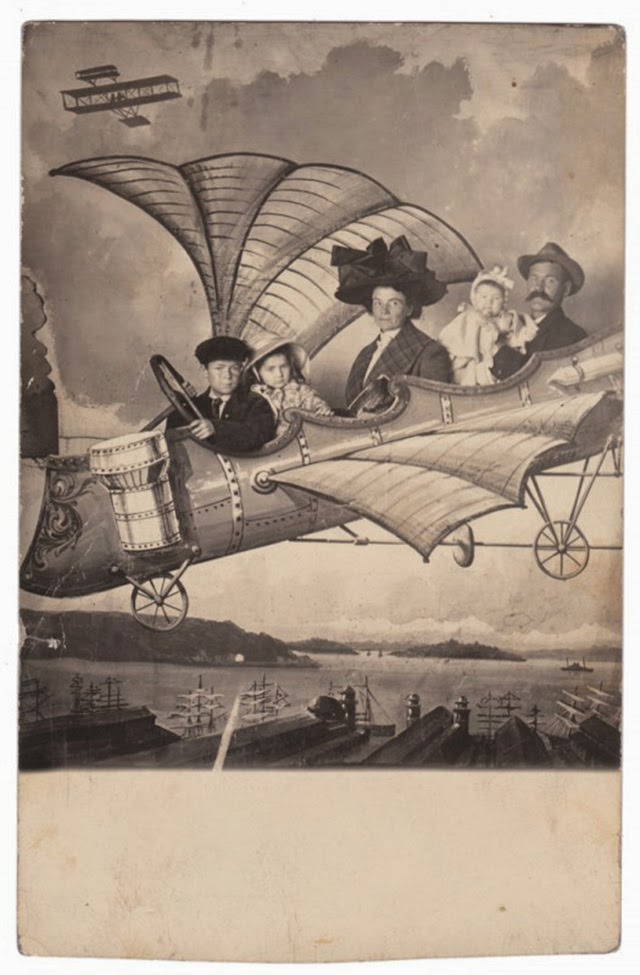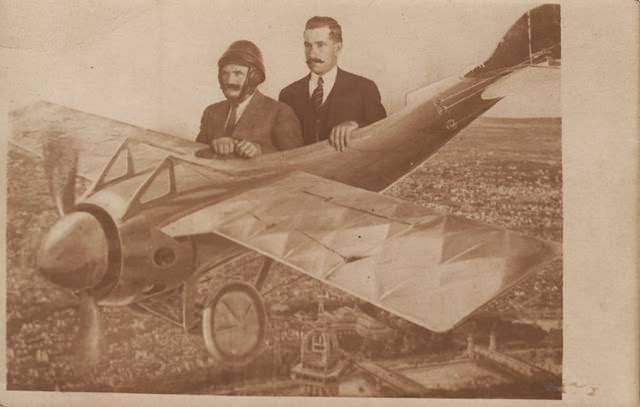
Long before Photoshop existed, portrait photographers had a clever workaround for boring studio walls: painted backdrops. These large, hand-crafted canvases could turn a plain room into a mountain range, a tropical beach, a royal garden, or a stormy sea. Studios invested heavily in them, and photographers used them for every kind of session — family portraits, solo shots, military photos, and novelty cards.
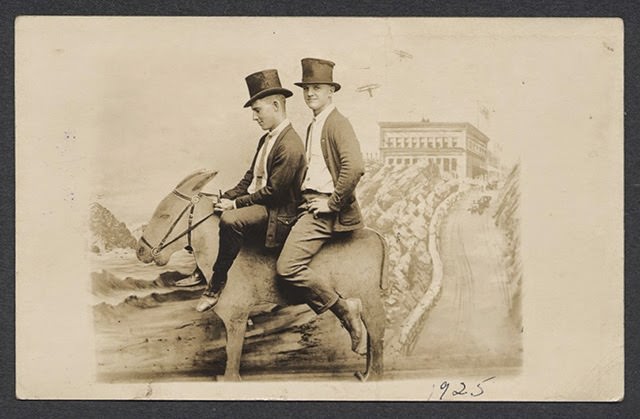
The results were often striking. But just as often, they were unintentionally hilarious. A stiff couple posed in front of a painted waterfall. A serious man in a suit standing beside a fake potted palm. A child perched on a prop rocking horse with a countryside backdrop that looks nothing like the real outdoors. The backdrops were meant to add drama and prestige to a photo. In many cases, they added something far more entertaining.
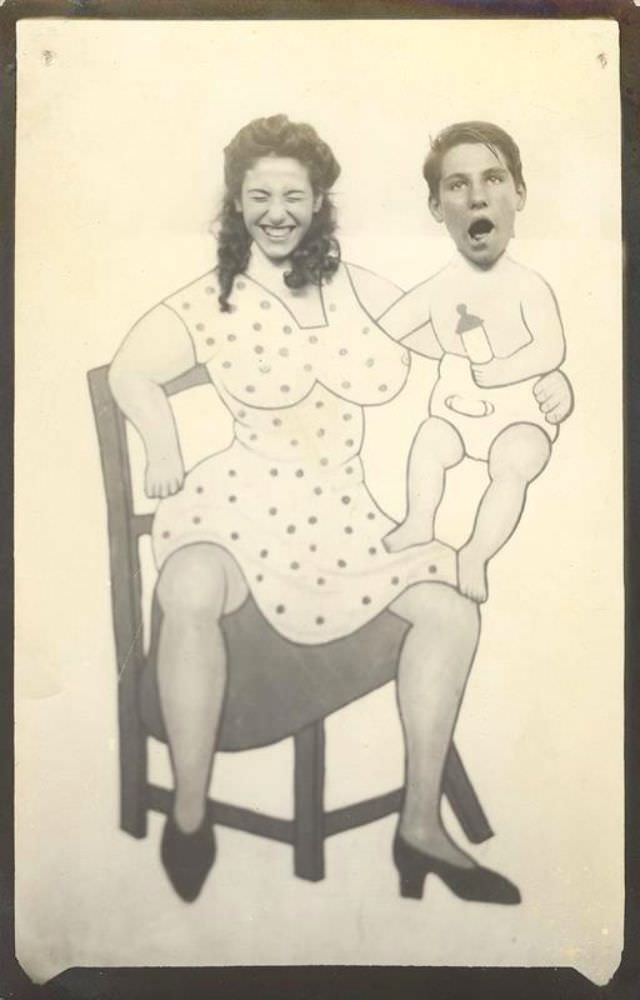
Studio photography became widely available to ordinary people in the mid-1800s. Before that, only the wealthy could afford painted portraits. Photography changed that, and studios popped up in towns and cities across Europe and North America. Backdrops were a direct holdover from portrait painting — a way to give photos the same sense of grandeur that oil paintings had provided for centuries.
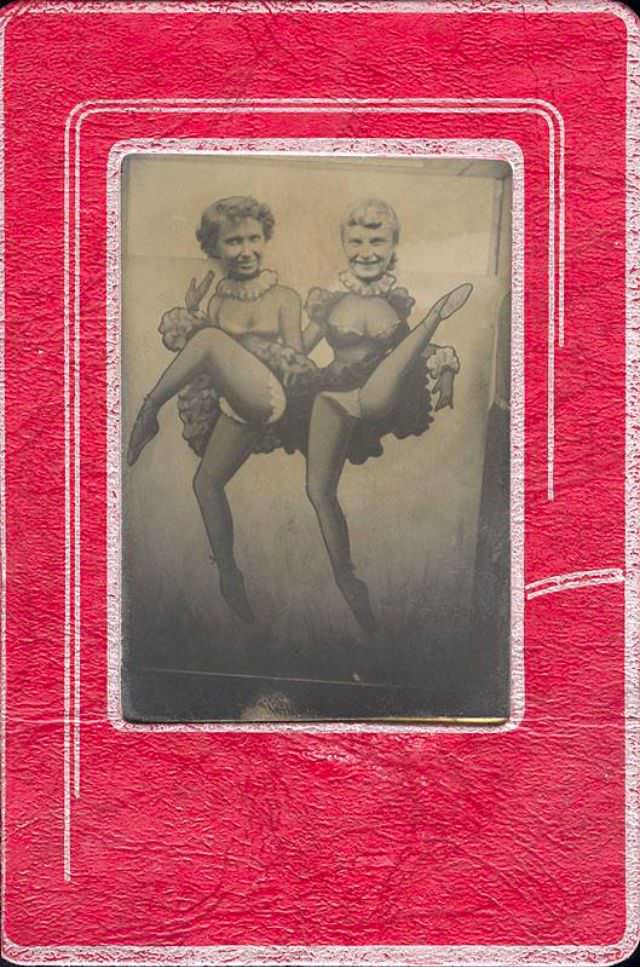
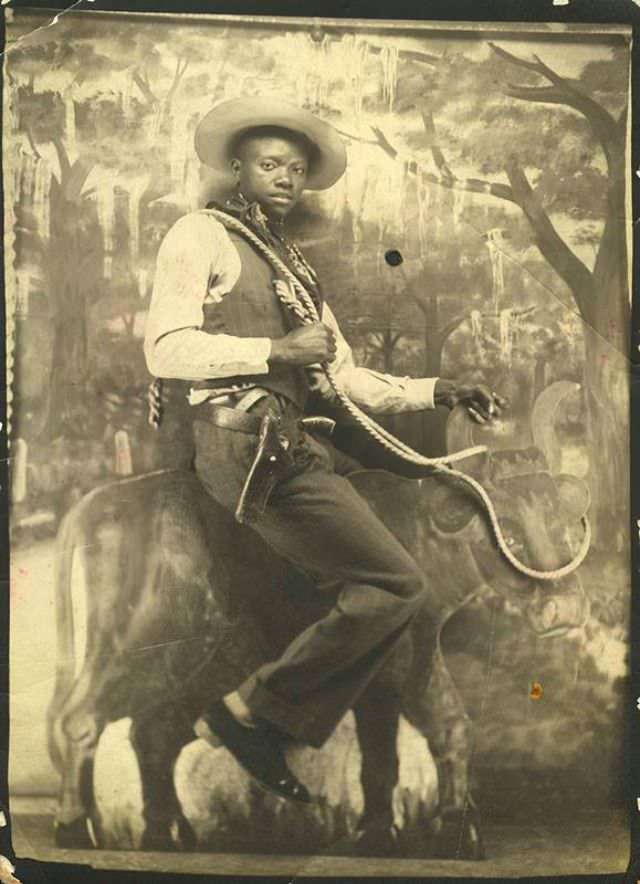
Backdrop painters were skilled craftsmen. They worked in a style that looked realistic from a distance but fell apart up close. Common themes included pastoral landscapes, Roman columns, draped curtains, forest scenes, and coastal cliffs. Studios often owned dozens of different backdrops and rotated them depending on what the customer requested or what the photographer thought best suited the subject.
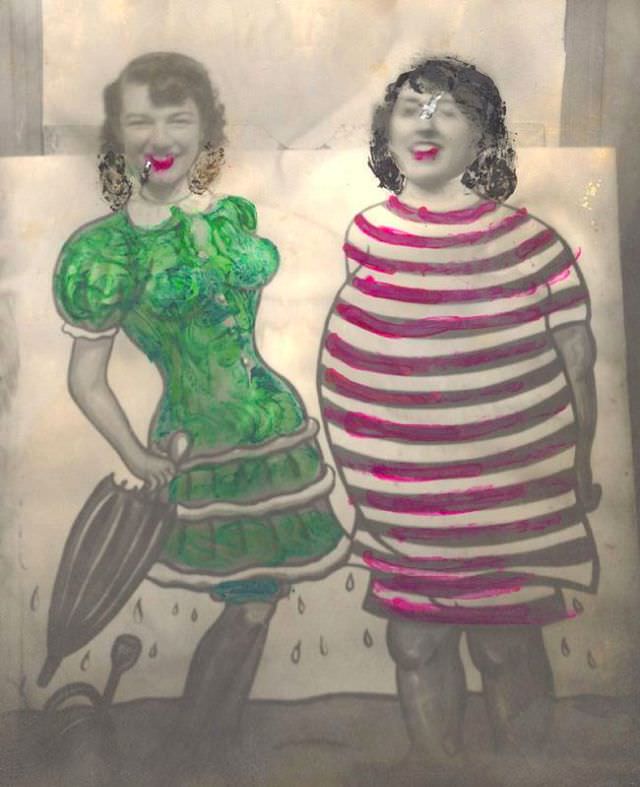
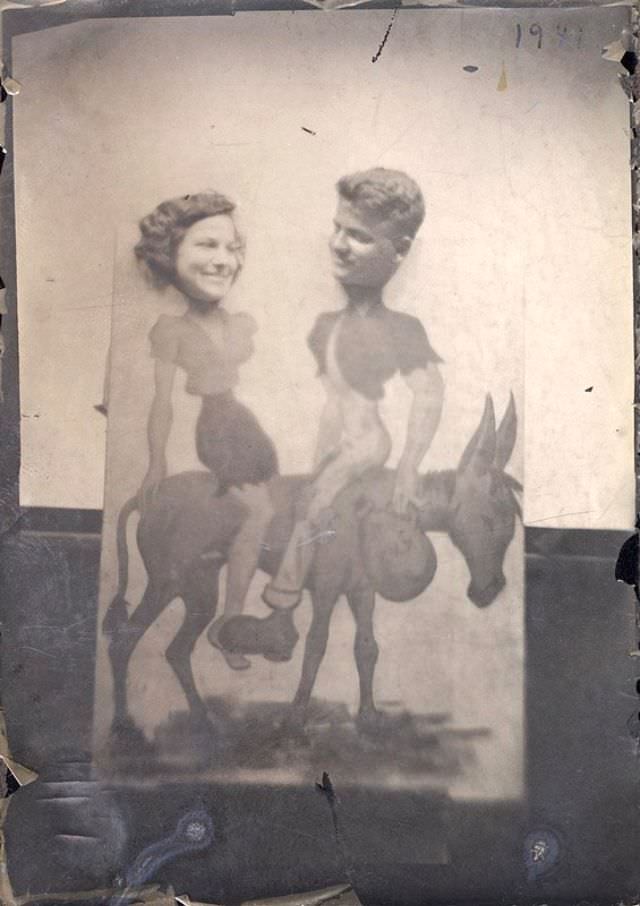
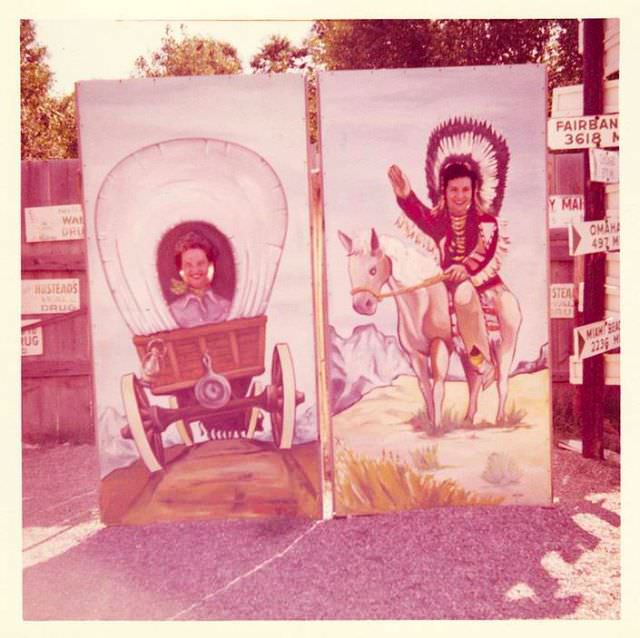
Props played just as big a role as the backdrops themselves. Fake boulders, painted fences, cardboard trees, and plaster columns filled studio floors. A subject might lean on a fake wooden fence post while a painted meadow stretched out behind them. The goal was to make the viewer forget they were looking at a studio photo. For modern eyes, the effect is the opposite — the artificiality is exactly what makes these images so charming.
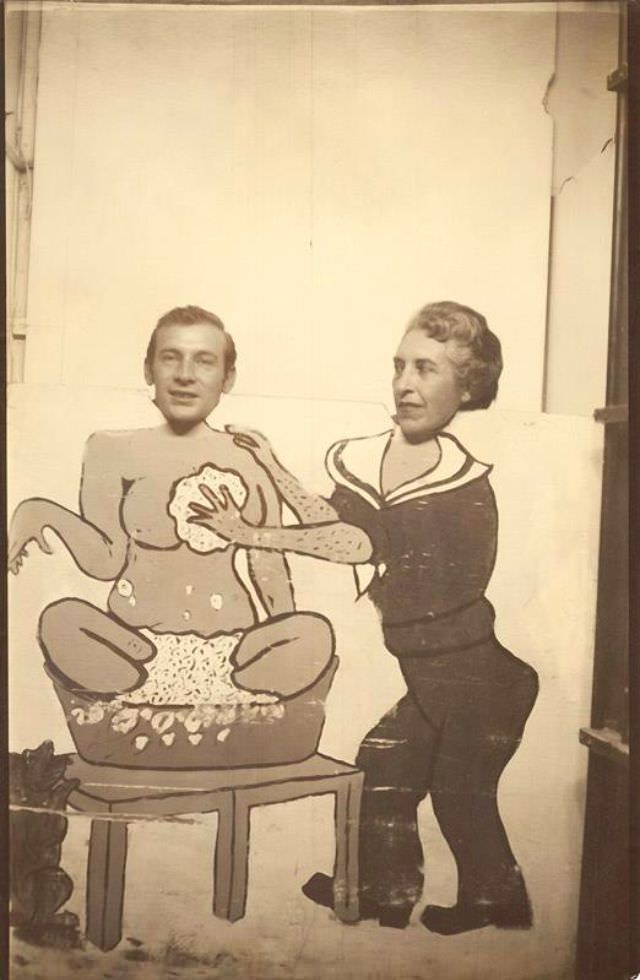
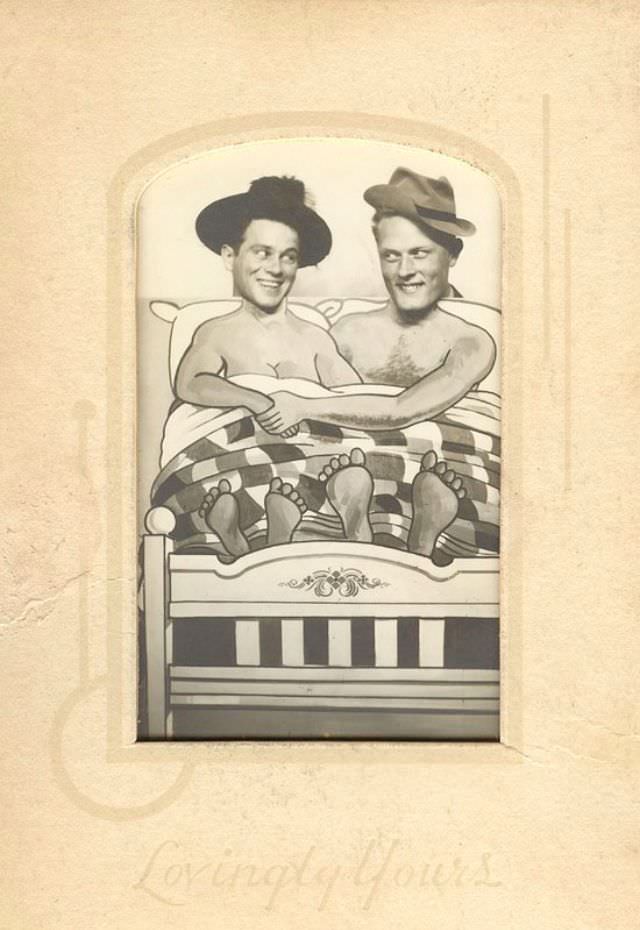
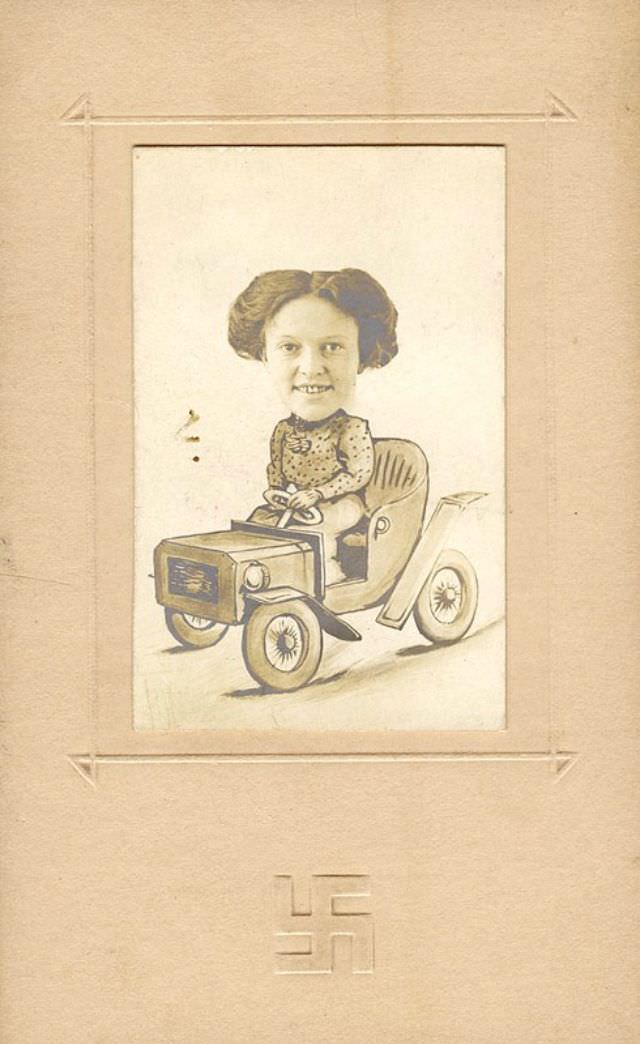
Some of the funniest examples come from mismatched scale. A backdrop painted for an adult would be reused for a child, making the scenery look enormous. Or a couple would pose in front of a seascape, both dressed in heavy winter clothing that made no sense for the setting. Photographers were practical — if the backdrop was available, it got used.
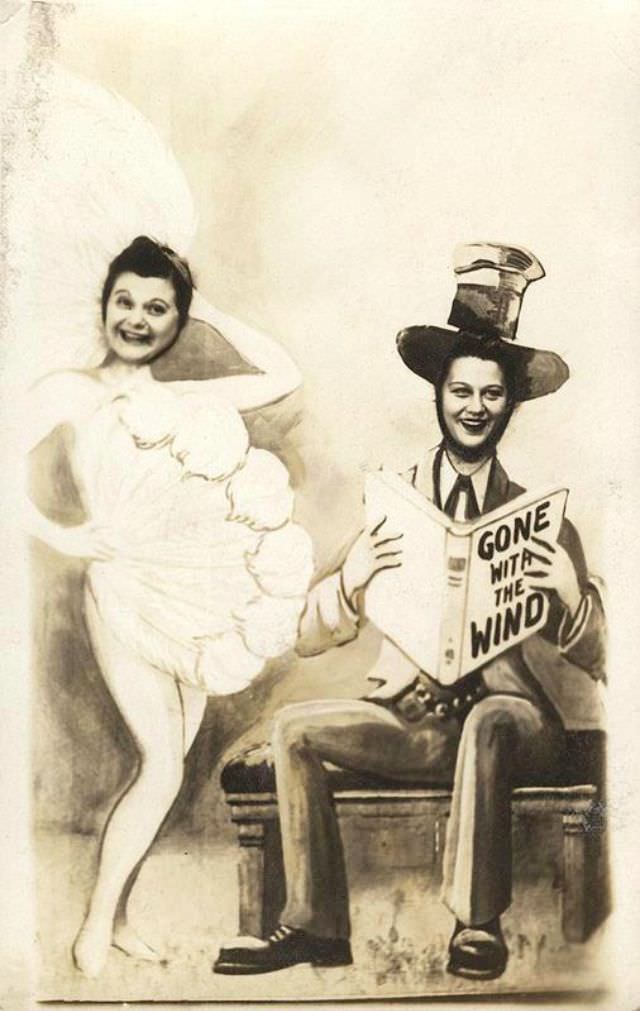
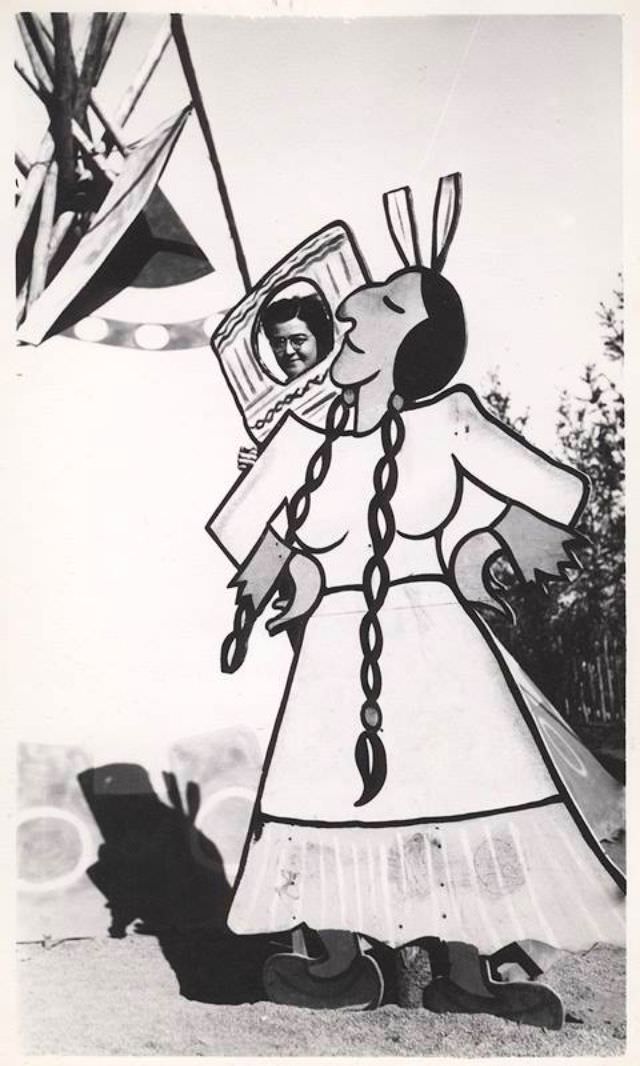
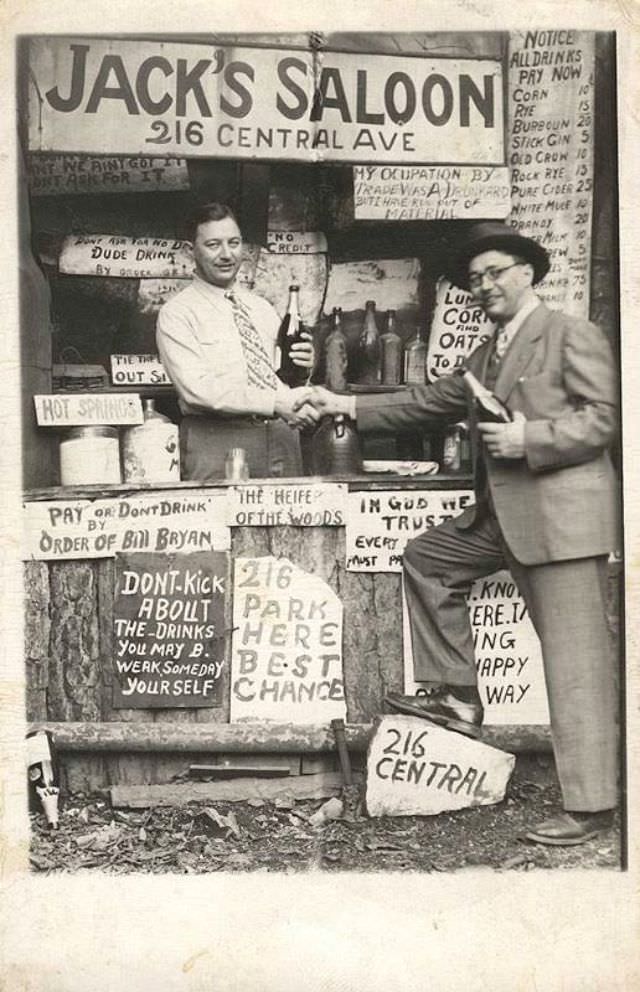
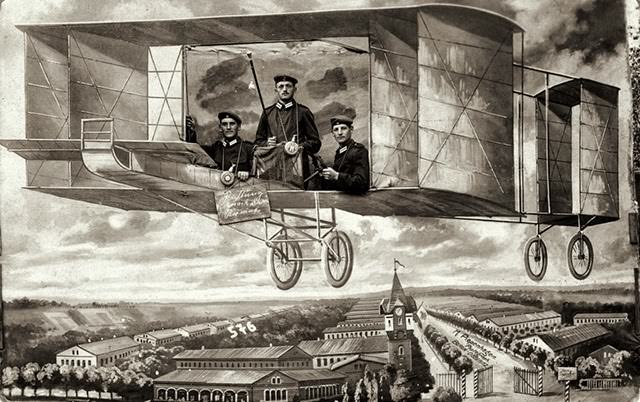
Military portraits were especially popular with theatrical backdrops. Soldiers and officers would pose in front of painted battle scenes or patriotic symbols. The contrast between the very real, very serious subject and the clearly painted background gives these photos an almost comic quality today, even though the subjects meant every bit of it to be taken seriously.
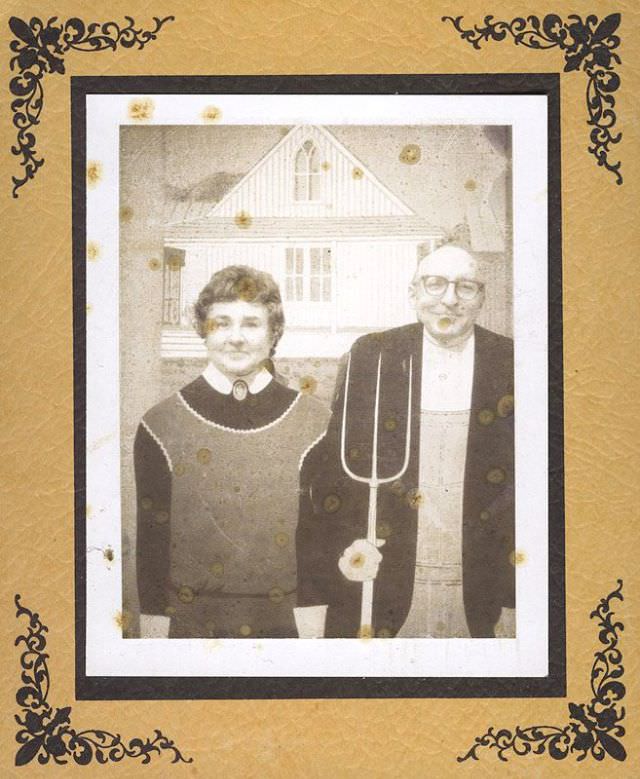
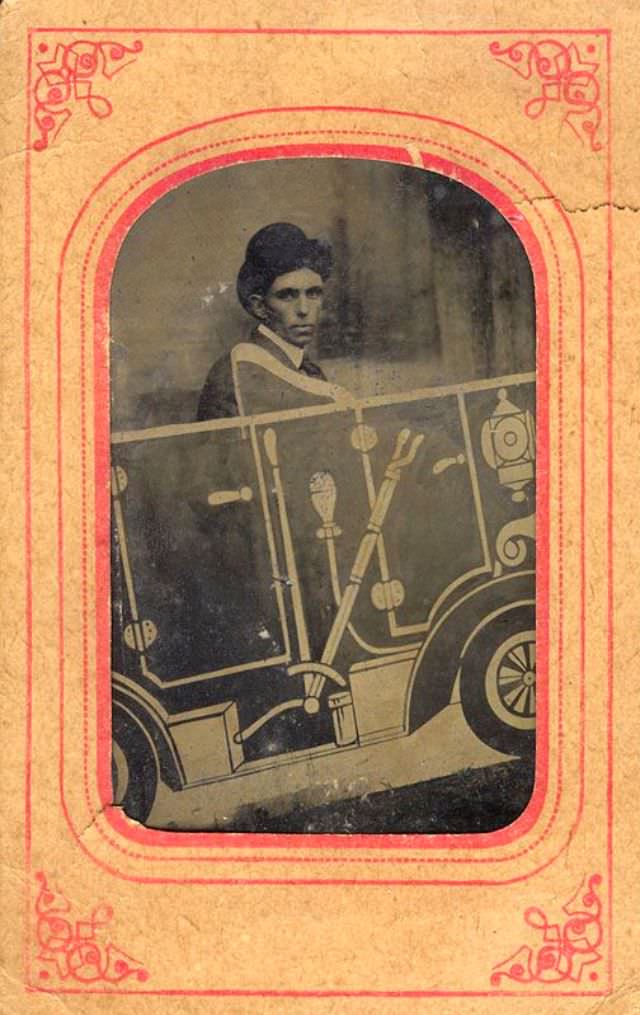
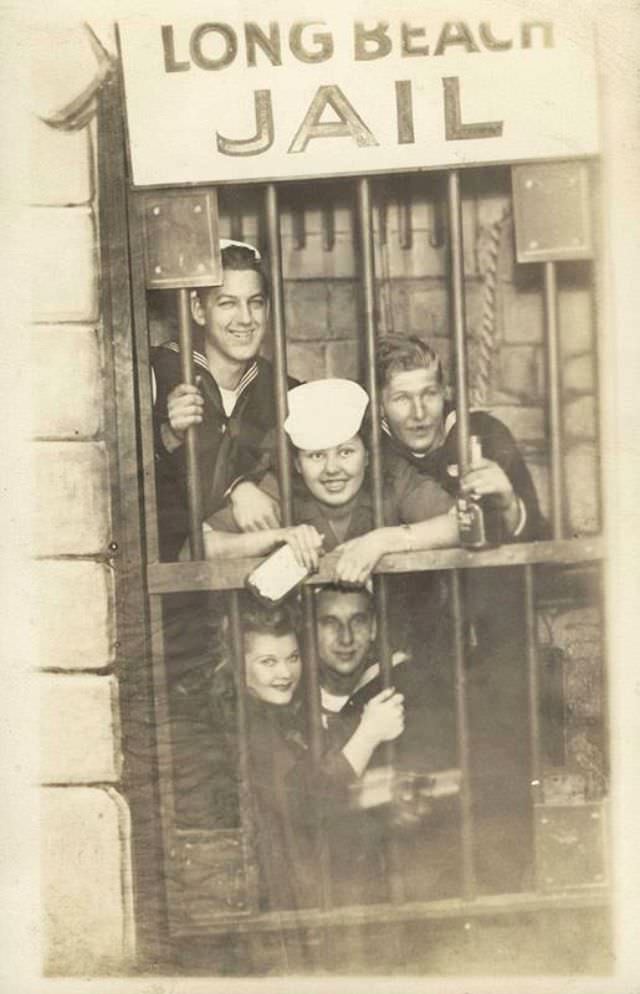
Children’s portrait sessions produced some of the most memorable results. Props like toy horses, small wagons, and miniature furniture were combined with grand painted sceneries that dwarfed the tiny subjects. Parents wanted their children to look important and well-positioned in life, even if the child was seated on a painted wood floor in a canvas forest.
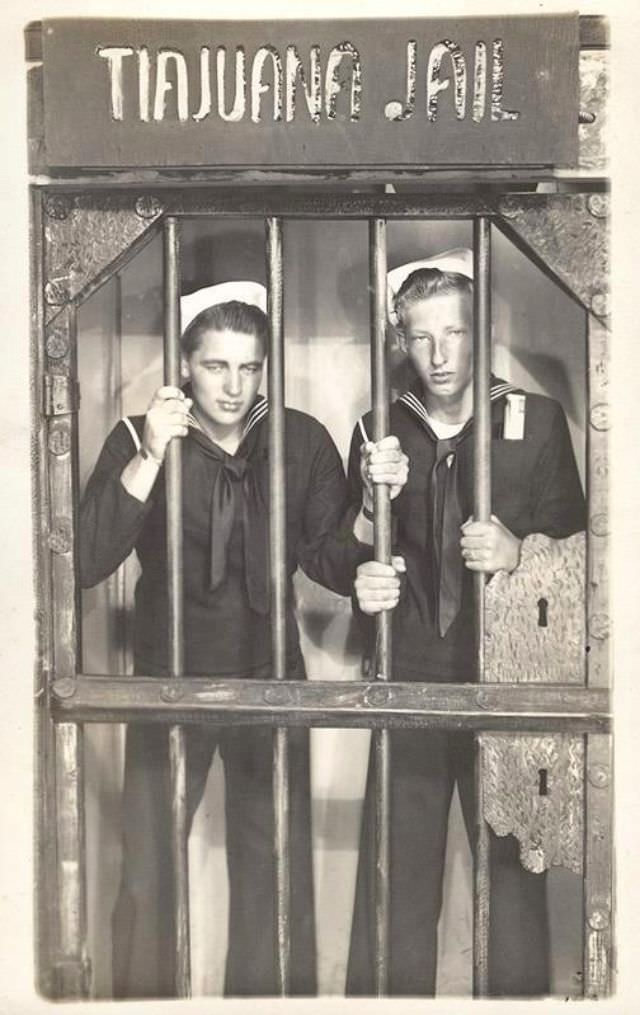
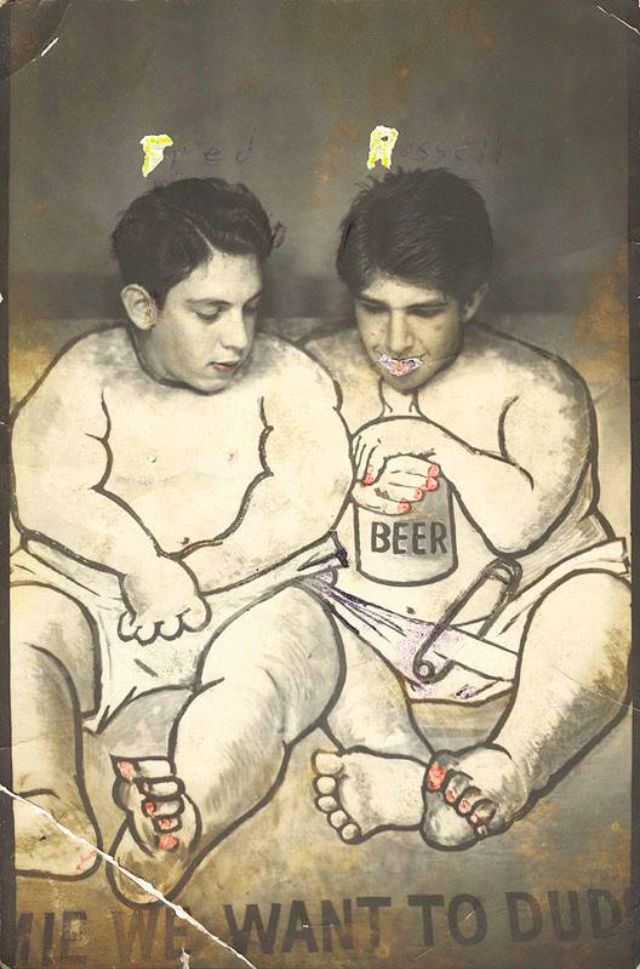
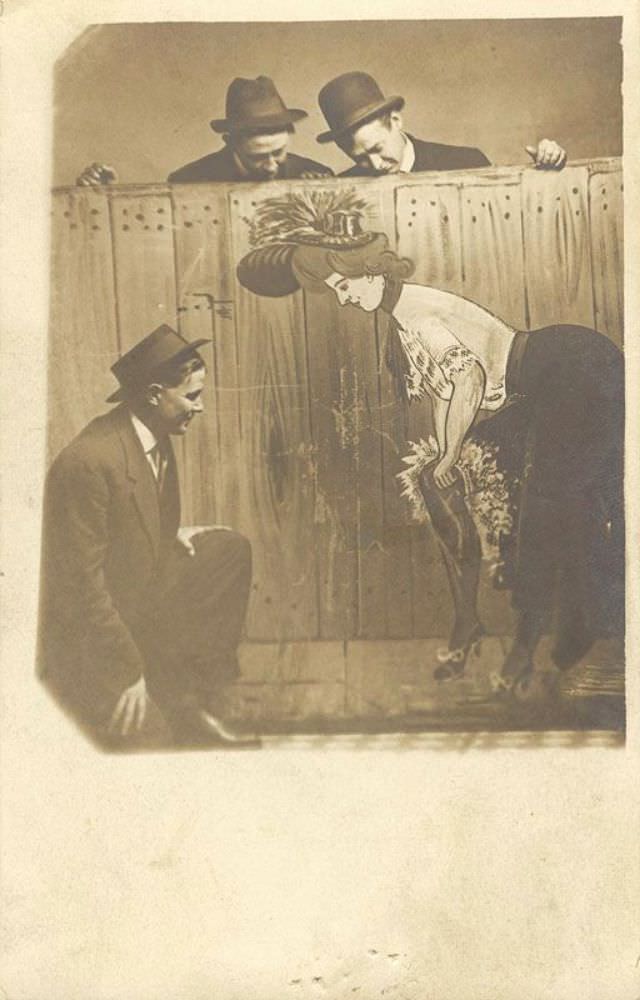
By the early 1900s, some studios had grown quite elaborate. They built raised platforms, staircases, and archways that worked alongside the backdrops. Customers could choose from catalogs of available scenes. One studio in New York reportedly offered over 40 backdrop options, including Niagara Falls, a ship at sea, and the Swiss Alps — all within a single city block.
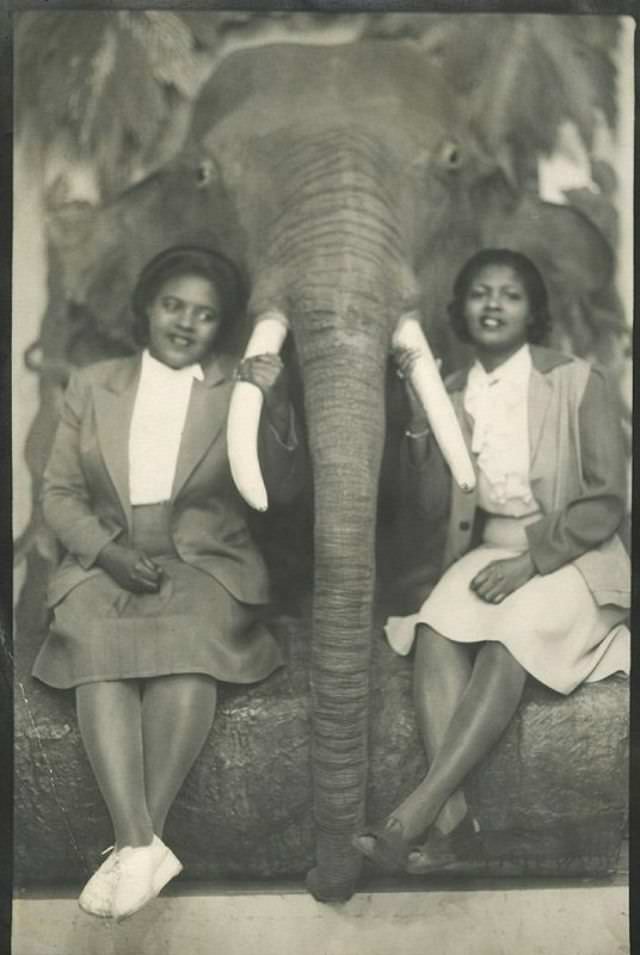
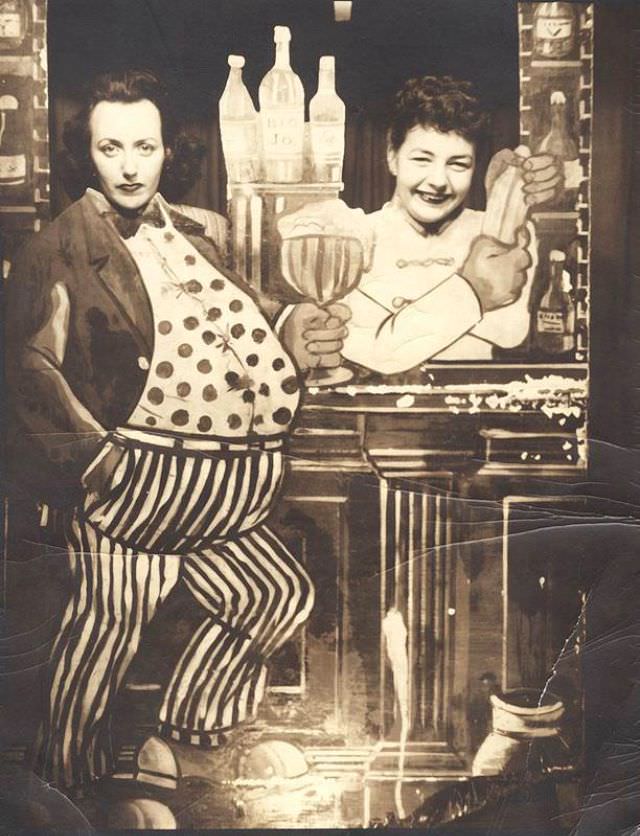
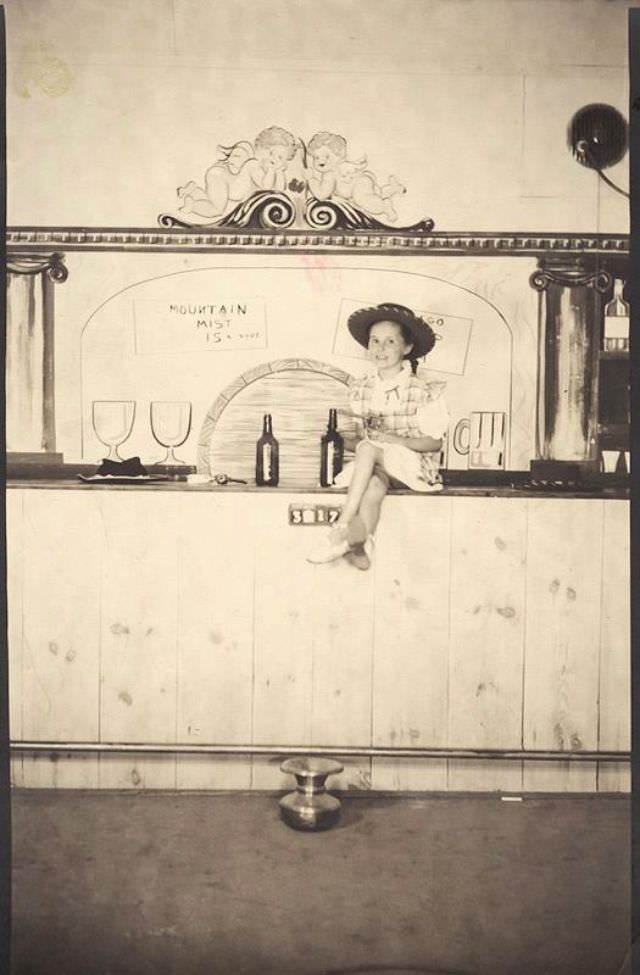
Group portraits brought their own set of challenges. Fitting multiple people into a frame while keeping the backdrop proportional required careful staging. Tall subjects stood in the back. Children sat cross-legged on the floor. Everyone tried not to move during the long exposure times required by early cameras. The backdrop would sometimes be visible at odd angles, revealing the flat canvas behind the illusion.
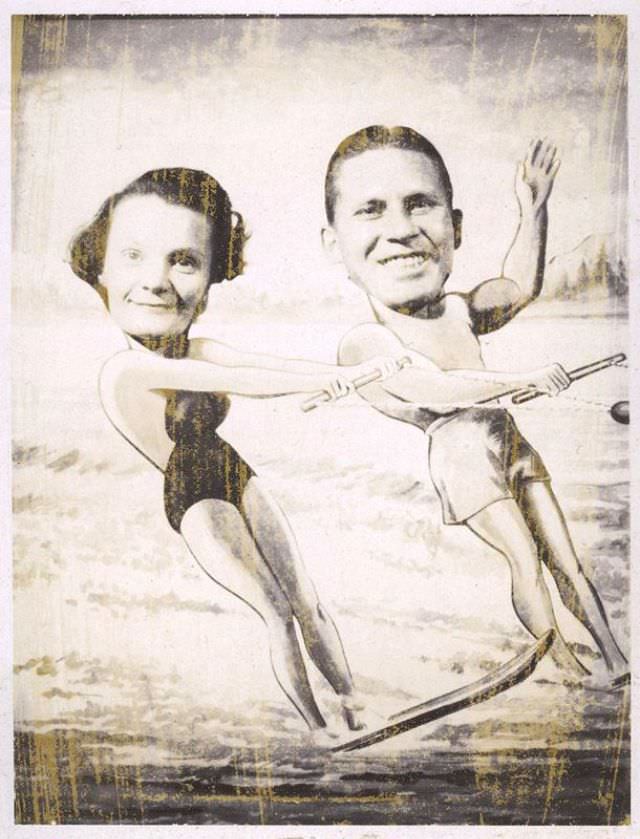
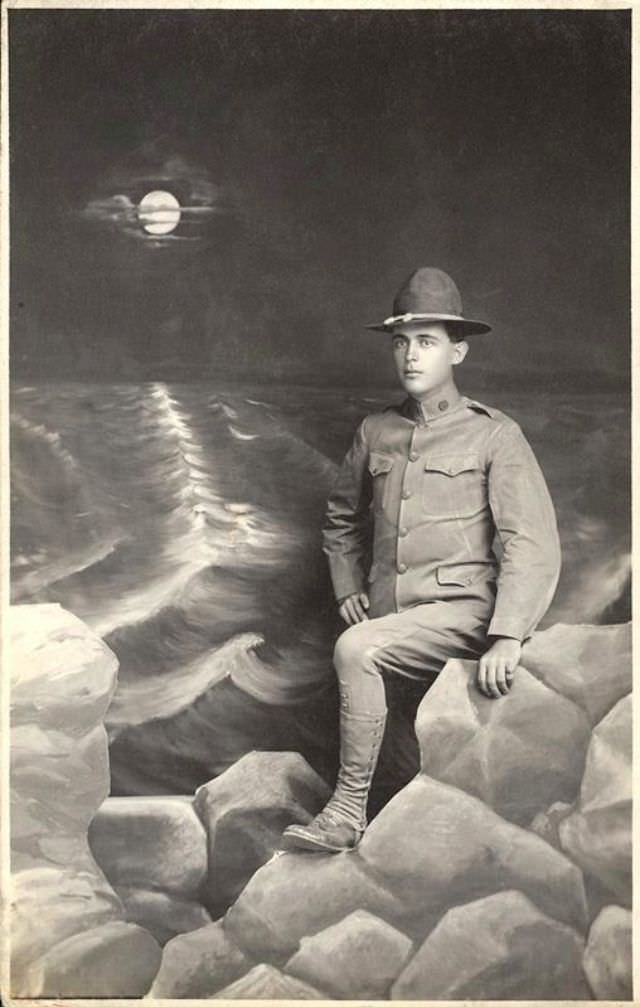
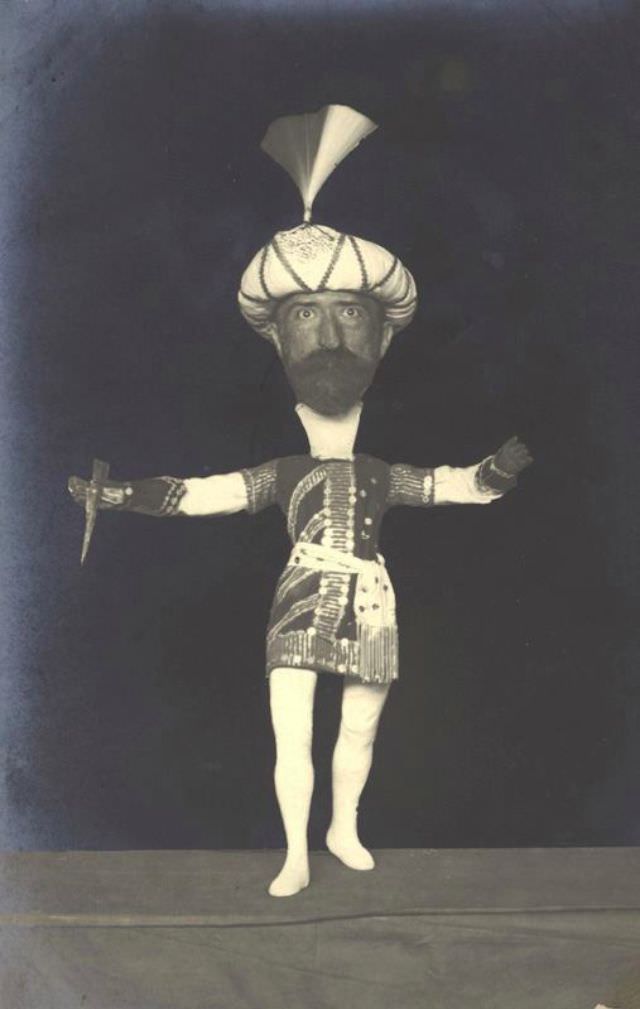
The humor in these photos is rarely intentional. That’s what makes them so good. The subjects were completely sincere. The photographers were doing their best work. The backdrops were considered high-quality illusions for their time. Everyone involved treated the session as a serious affair. The comedy comes purely from the passage of time — and from how quickly our eyes can now spot the seams.