
Helsinki has long held a special place on the map of Europe. As Finland’s capital, its largest seaport, and its main industrial center, the city has always been a place of movement and commerce. More than half of all Finnish imports passed through the port of Helsinki, making it the country’s economic heartbeat. By the mid-20th century, Helsinki also ranked among the world’s highest urban standards of living, backed by a rich cultural life filled with museums, art galleries, theatres, and symphony orchestras.
The 1960s were a turning point for Helsinki. A large wave of people left Finland’s rural areas and moved to the capital, driving rapid growth across the city. New suburbs were planned and built almost from scratch to handle the surge in population. Neighborhoods like Herttoniemi, Maunula, Pihlajamäki, and Myllypuro rose up on the edges of the city, transforming what had once been open land into residential districts. These vintage photos capture Helsinki during that transformation — a city in the middle of becoming something bigger.
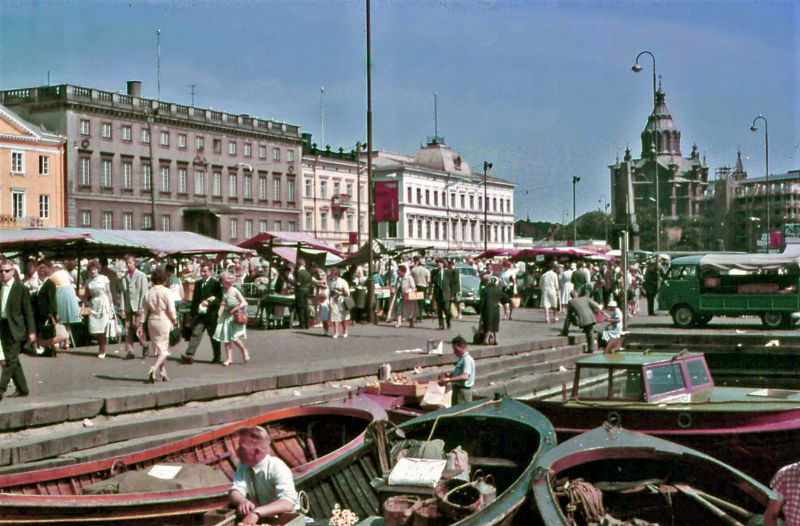
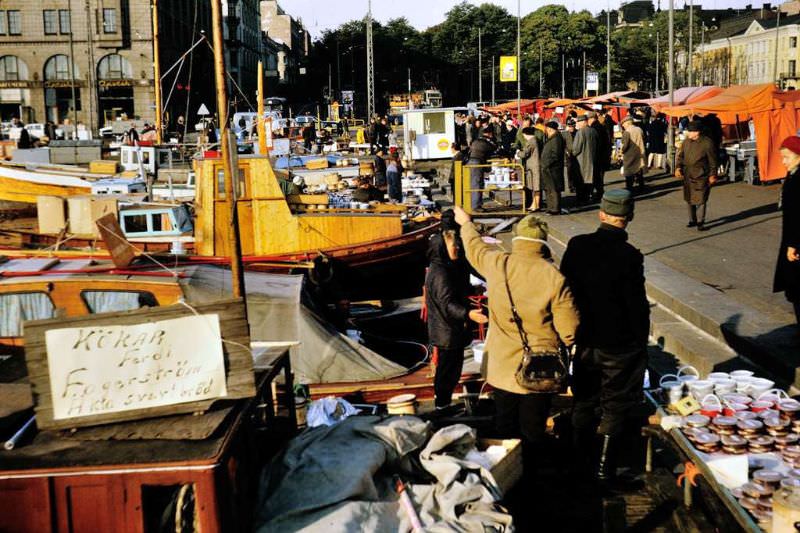
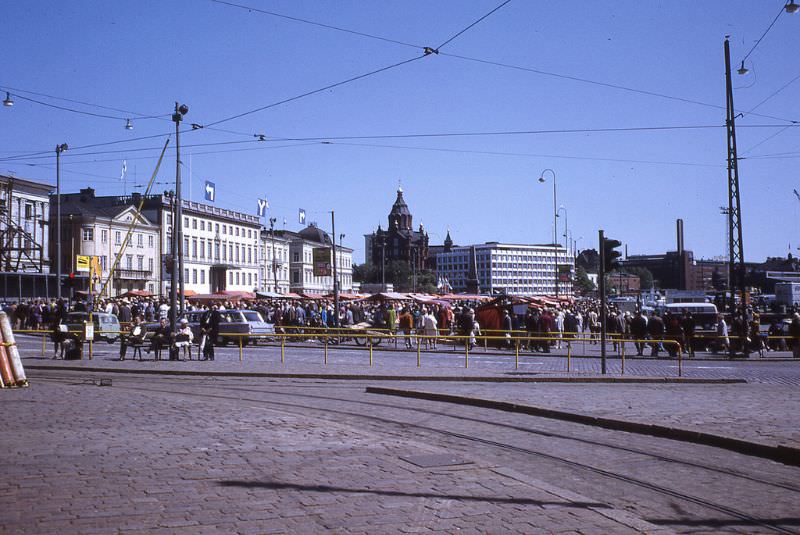
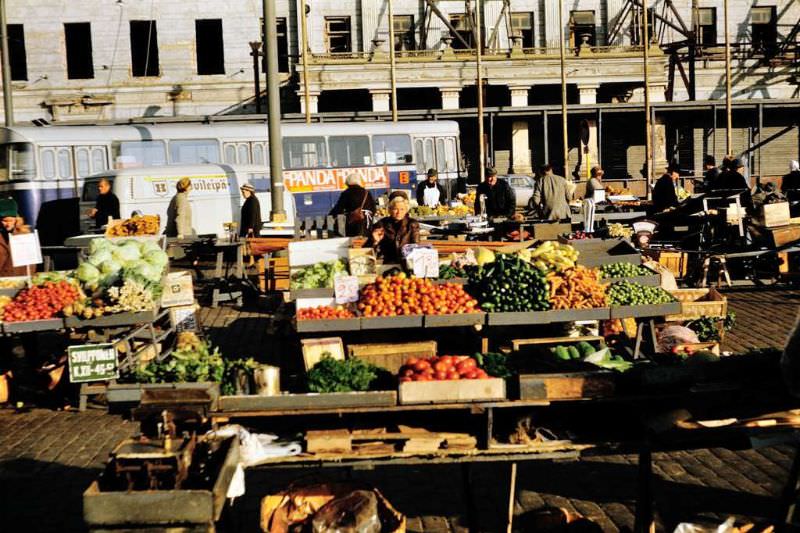
The open-air markets of Helsinki were a central part of daily life. Vendors set up stalls selling fresh fish pulled straight from the Baltic, locally grown vegetables, cut flowers, and handwoven baskets. The Market Square near the South Harbour was especially busy, drawing both locals and visitors. These markets weren’t just places to buy food — they were social spaces where the city came alive each morning.
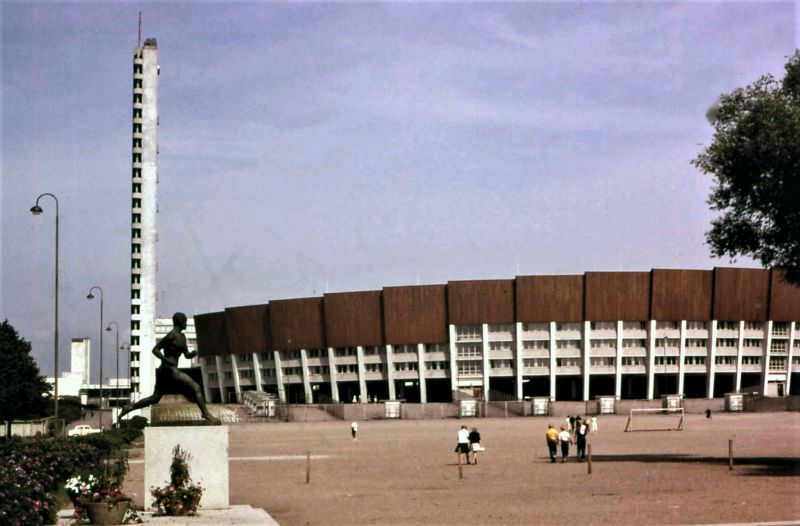
The Helsinki Olympic Stadium stood as one of the city’s most recognizable landmarks. Built for the 1940 Olympics — which were ultimately cancelled due to World War II — the stadium finally hosted the Summer Games in 1952. By the 1960s, it remained a proud symbol of Helsinki’s place on the world stage. Its tall tower offered sweeping views across the city and the harbor beyond.
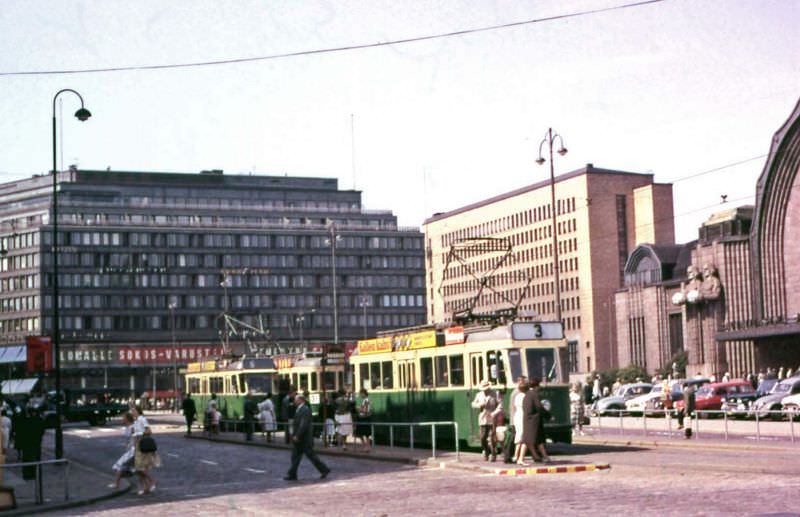
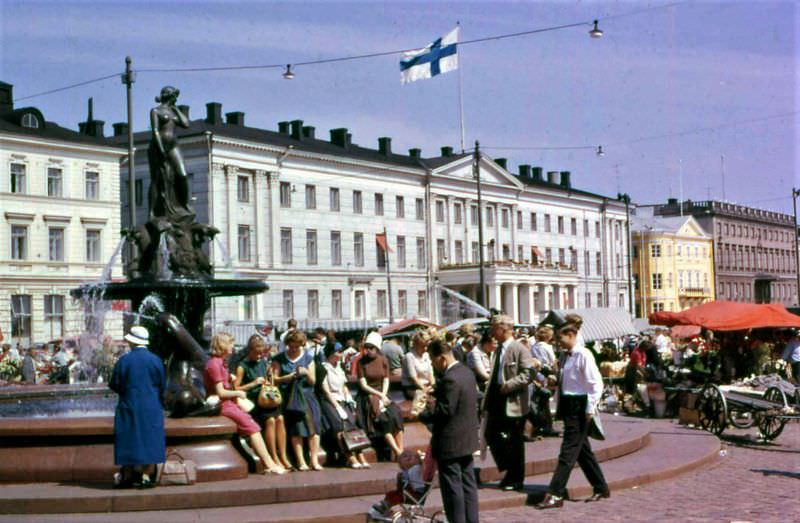
In the early 1960s, Helsinki’s streets showed the first signs of modernization. Cars were becoming more common, though trams still ran their familiar routes through the city center. Storefronts lined broad avenues, and pedestrians went about their days against a backdrop of neoclassical architecture mixed with newer postwar buildings. The city had a clean, orderly feel that matched its reputation for high urban living standards.
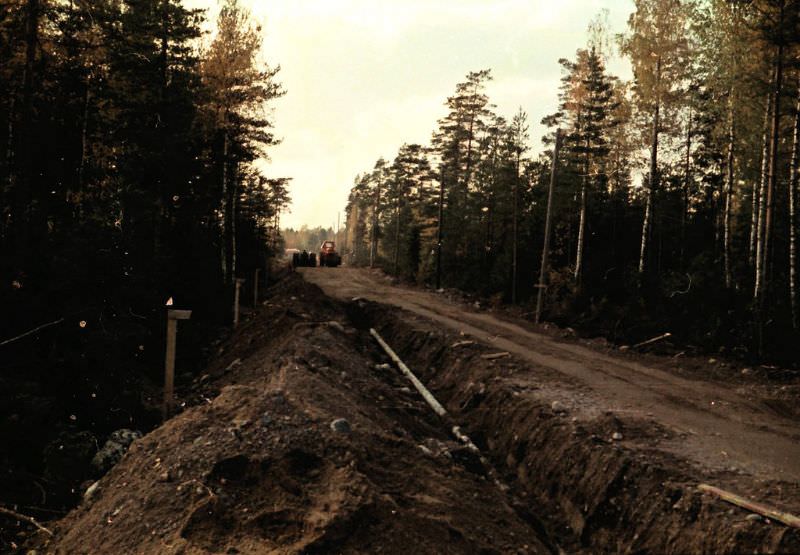
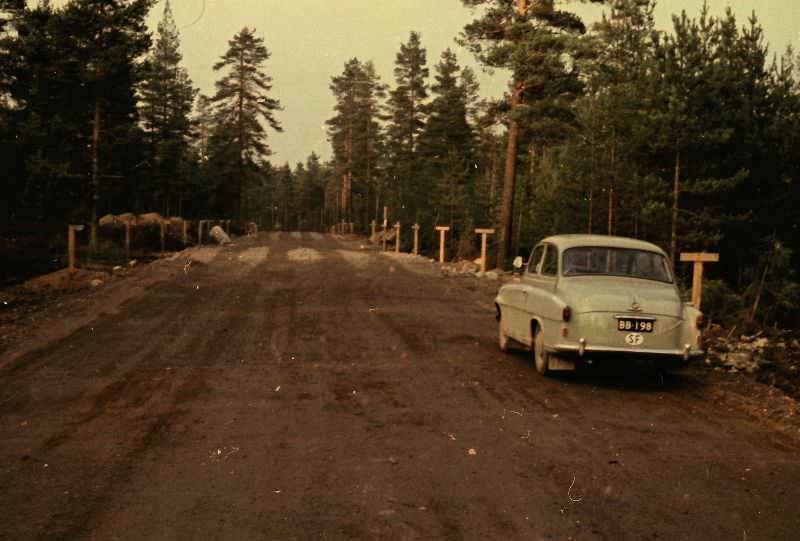
The construction boom of the early 1960s was visible everywhere on the outskirts of Helsinki. In Myllypuro, cranes and concrete frames rose from open ground as workers raced to build housing for the thousands arriving from the countryside. These new suburbs were designed to be self-contained communities, with schools, shops, and transit connections planned alongside the apartment blocks. The pace of building was relentless.
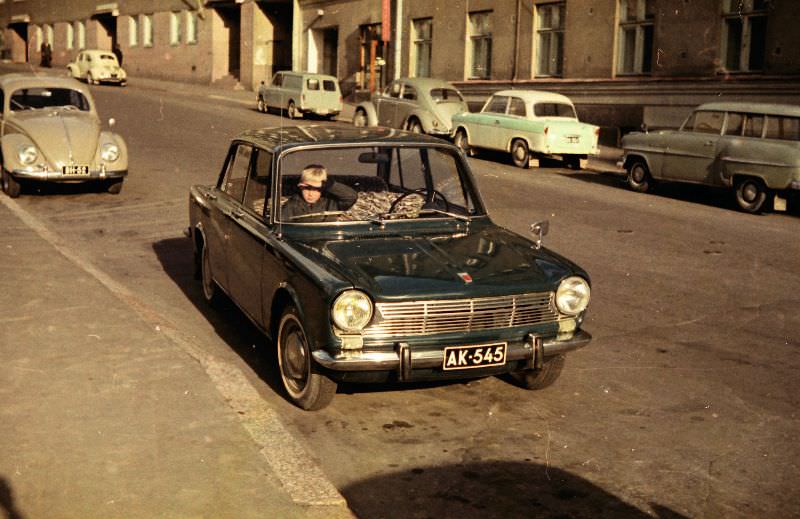
The Kallio district, one of Helsinki’s older working-class neighborhoods, showed a different side of the city in 1963. A French-made Simca 1300 sits parked on a Kallio street — a sign that European cars were finding their way into Finnish life. Kallio’s dense apartment buildings and narrow streets gave it a gritty, lived-in character quite different from the grand civic spaces of the city center.
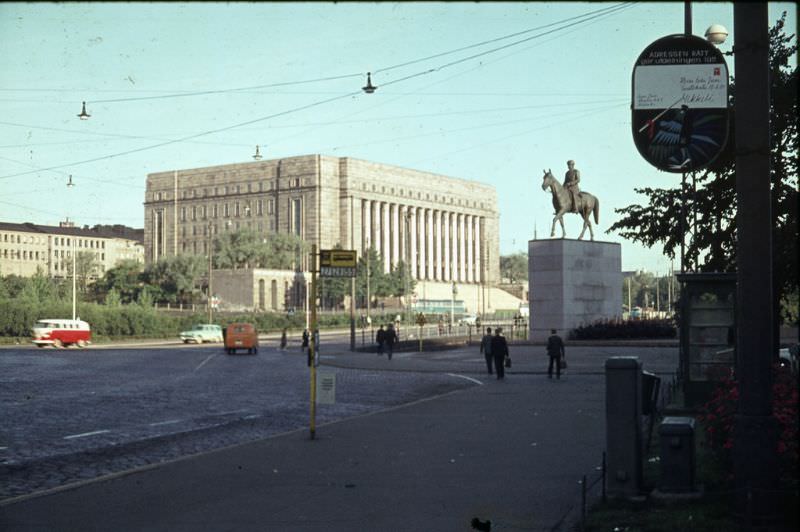
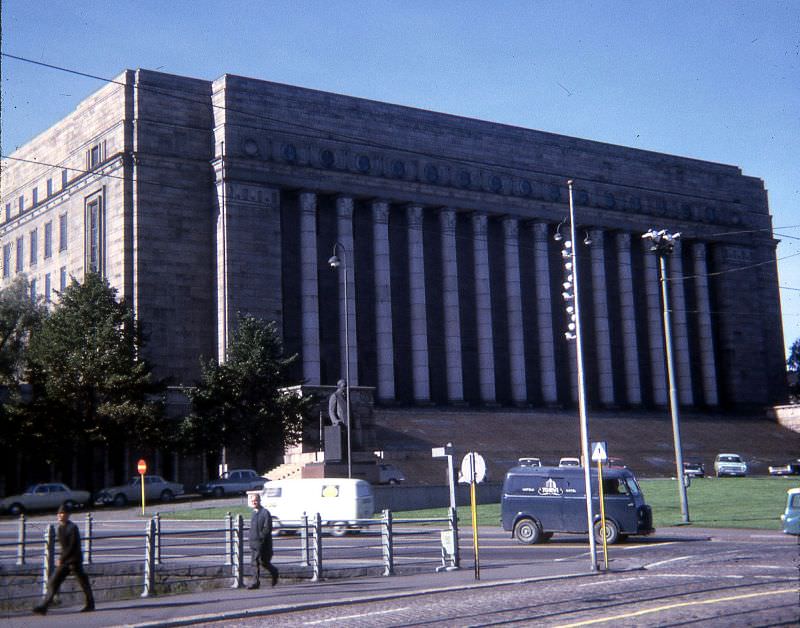
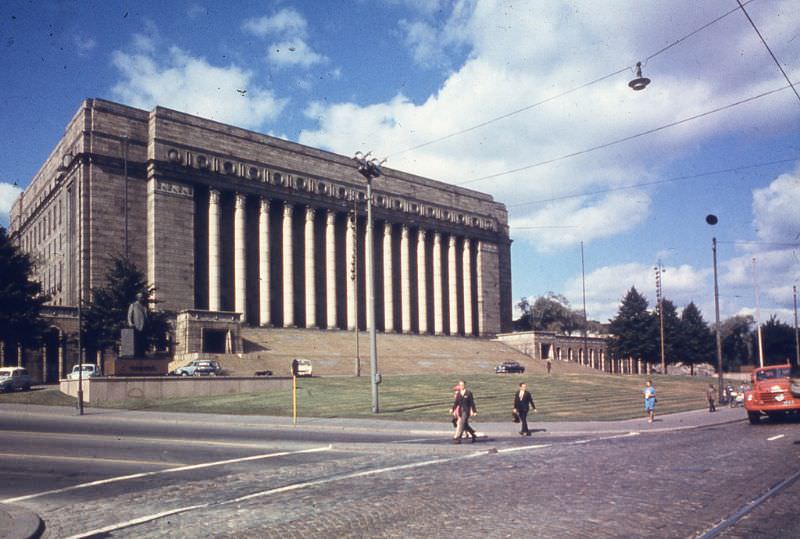
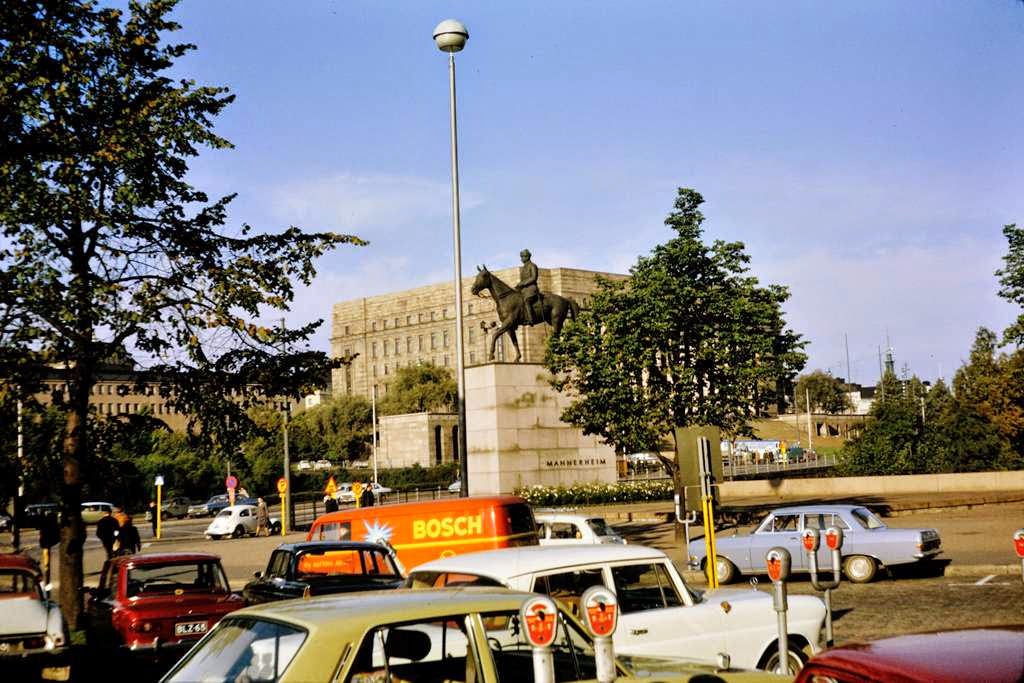
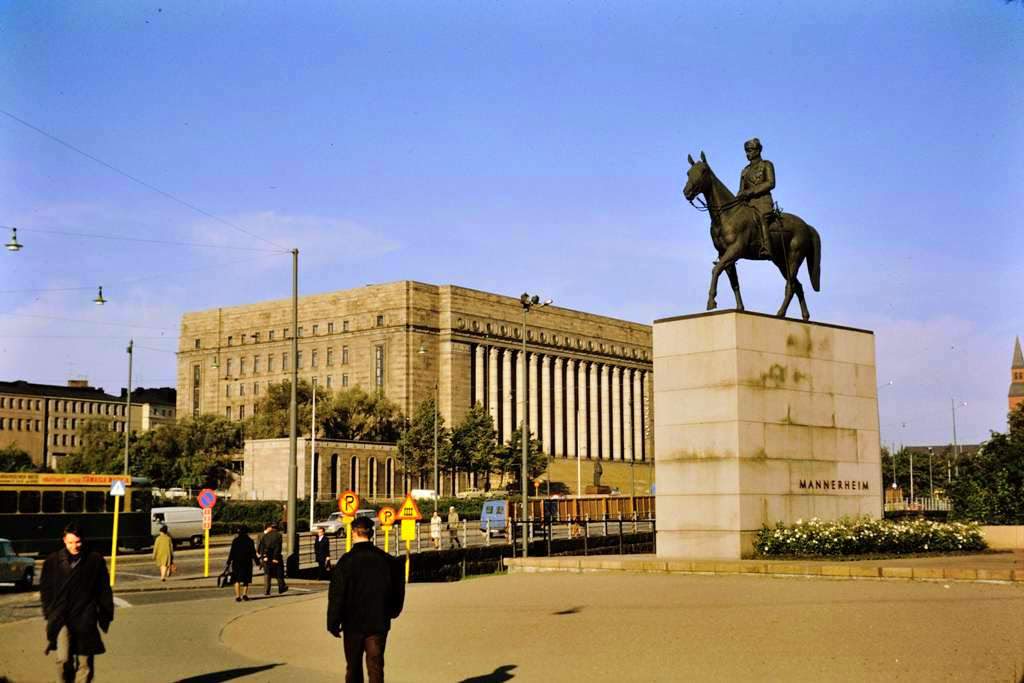
Few figures loomed larger in Finnish history than Carl Gustaf Emil Mannerheim. The equestrian statue of Marshal Mannerheim on Mannerheimintie — the city’s main boulevard named in his honor — became one of Helsinki’s defining landmarks. Behind it, the Parliament Building’s granite columns spoke to the permanence of Finnish democracy. Together, they formed a civic tableau that Helsinkians passed every day.
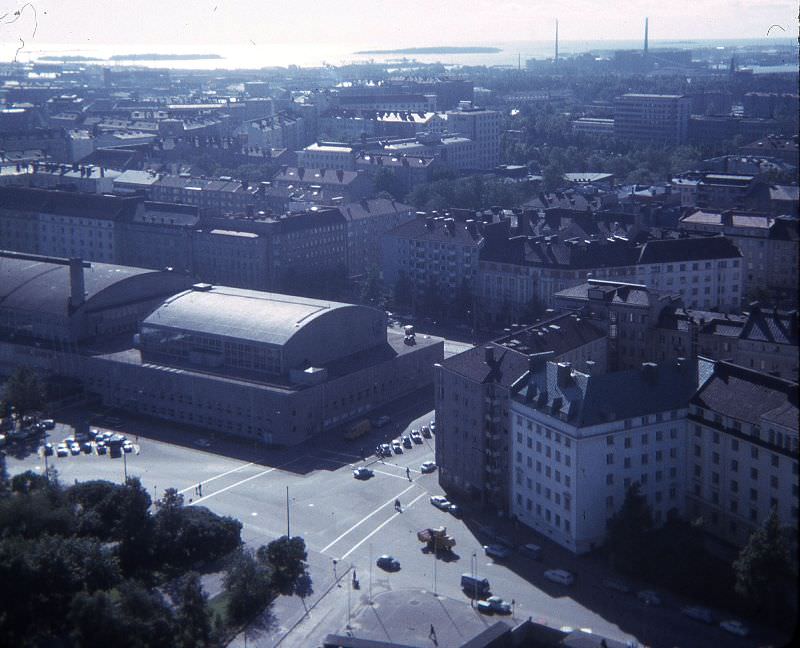
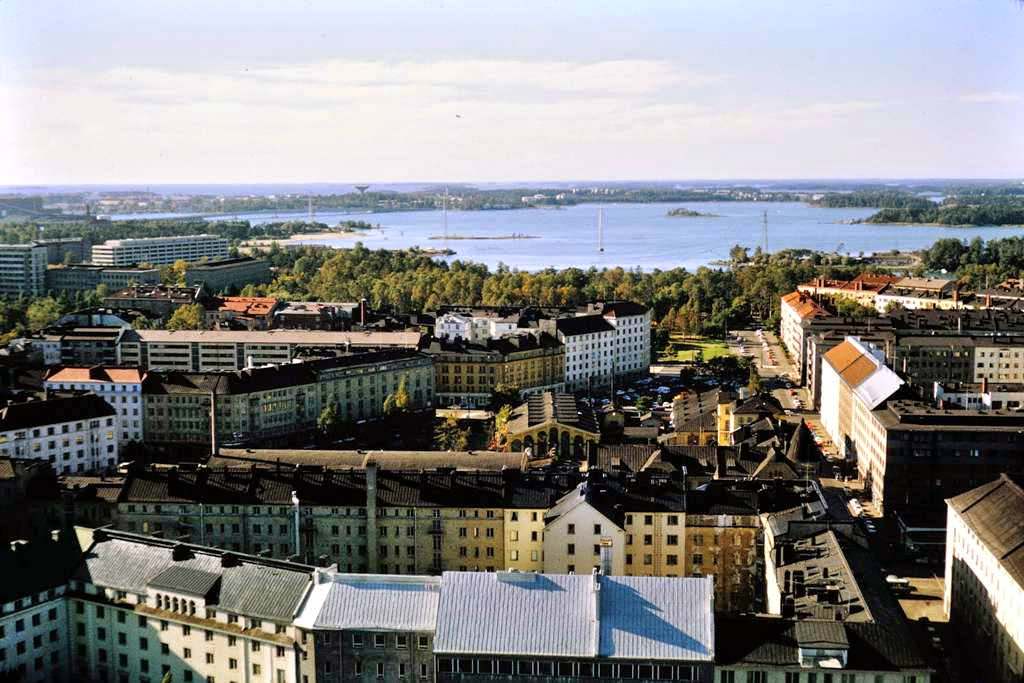
Seen from the air in 1965, Helsinki’s geography tells its own story. The city sits on a peninsula jutting into the Gulf of Finland, surrounded by dozens of islands. The harbor cuts deep into the urban fabric, and the grid of streets spreads outward from the cathedral and Senate Square at the historic core. From above, you can see how the sea has always shaped the city’s identity.
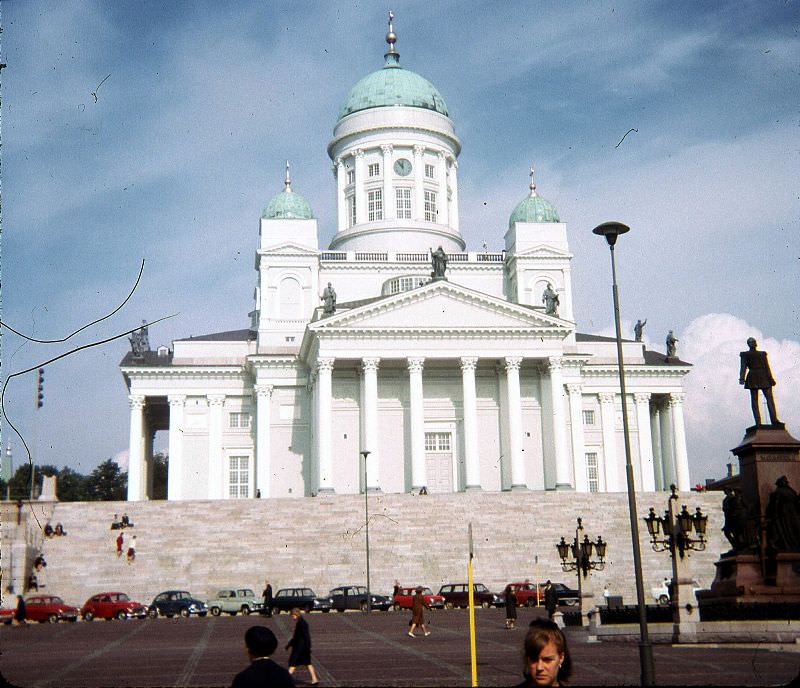
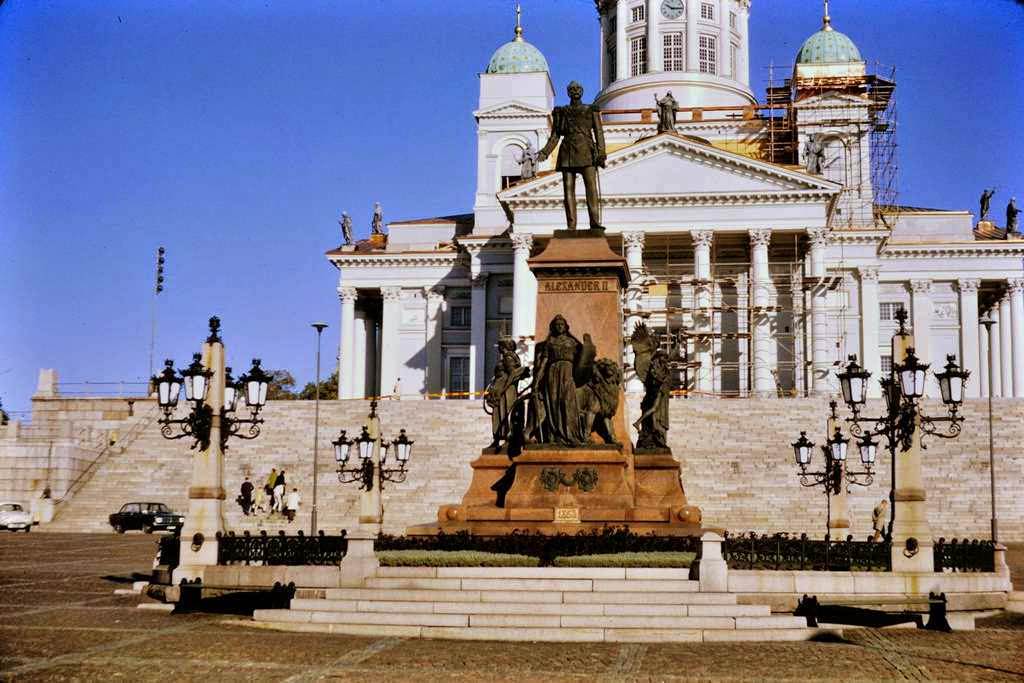
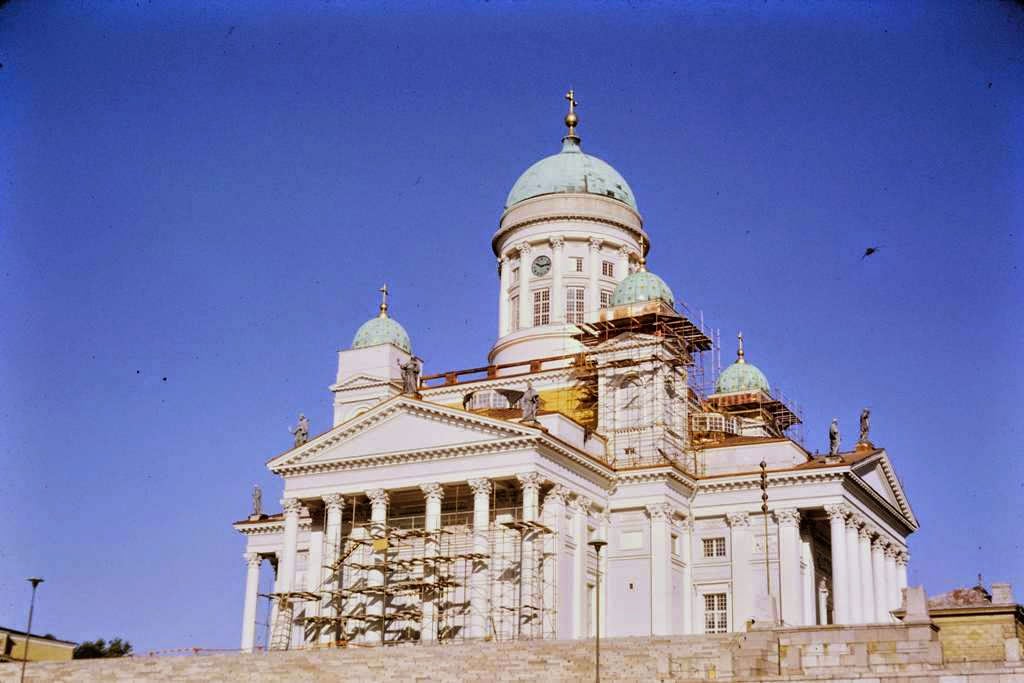
Helsinki Cathedral, with its green domes and white neoclassical facade, dominated Senate Square at the heart of the city. Completed in 1852 and designed by Carl Ludwig Engel, it sat atop a broad staircase that cascaded down to the square below. In the 1960s, as in every era, it served as Helsinki’s most photographed landmark and a reference point for the entire city.
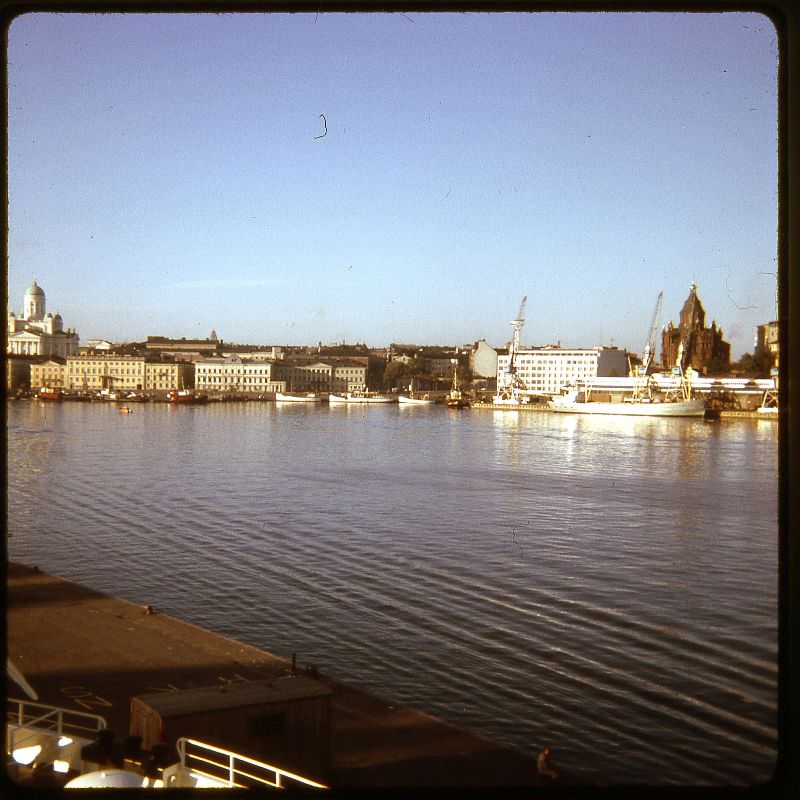
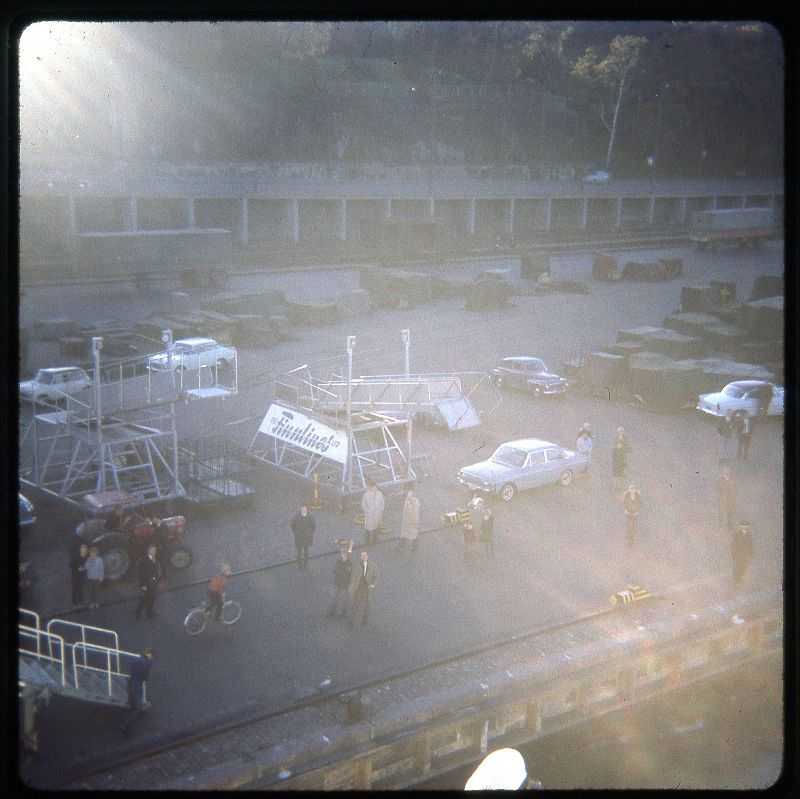
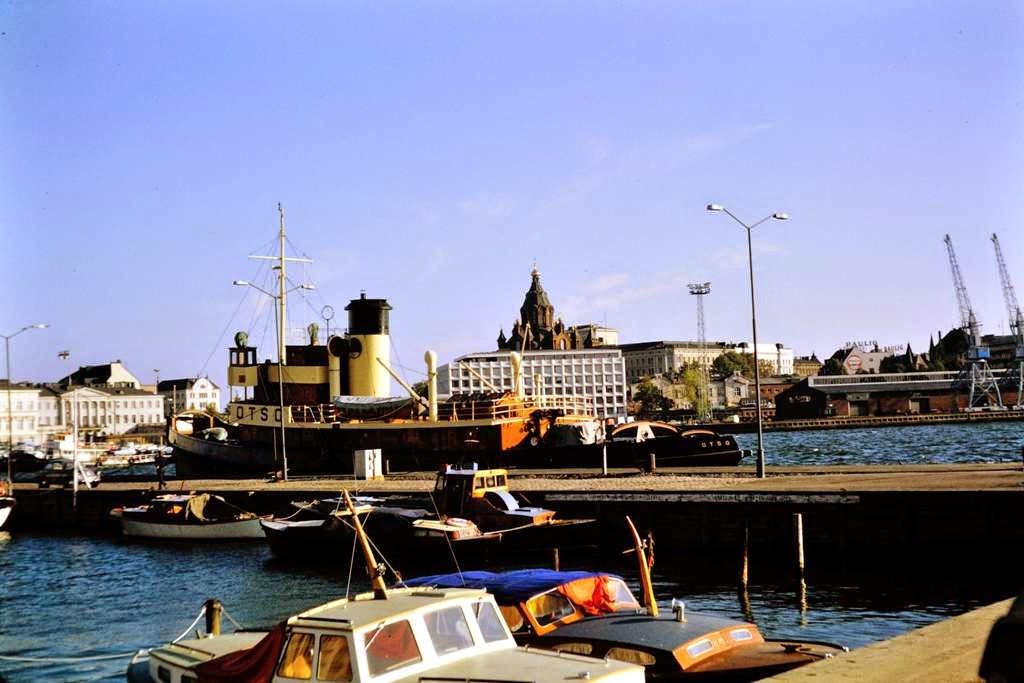
Ferry passengers arriving in Helsinki in 1966 were greeted by one of Europe’s most striking harbor views. The city’s low skyline — broken only by the cathedral domes, church spires, and the Olympic Stadium tower — stretched along the waterfront. The South Harbour bustled with vessels of all kinds, from fishing boats to ocean-going tugs. Helsinki’s identity as a port city was impossible to miss from the water.
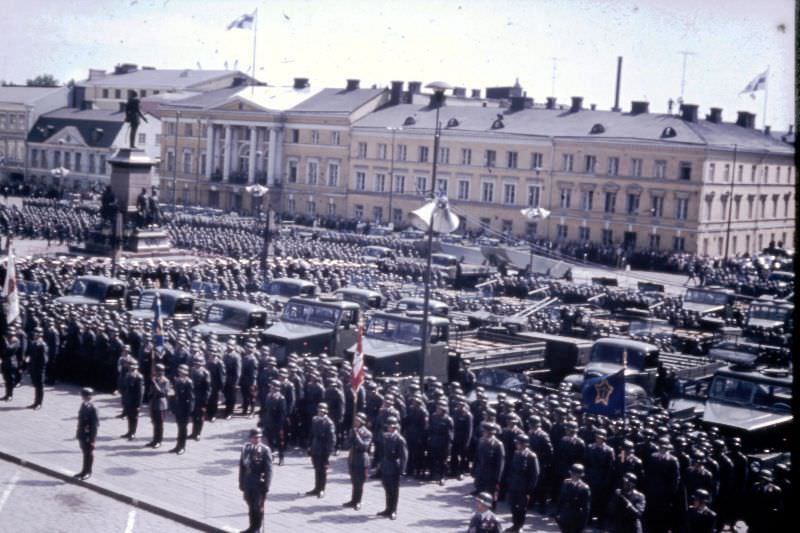
Senate Square served as Helsinki’s ceremonial stage. In 1967, a parade of the Finnish Defense Forces flagship brought crowds to the square, which was flanked by the Cathedral, the Government Palace, the University of Helsinki, and the National Library. These four buildings, all designed in the neoclassical style, gave Senate Square a cohesion that made it one of the finest such spaces in Northern Europe.
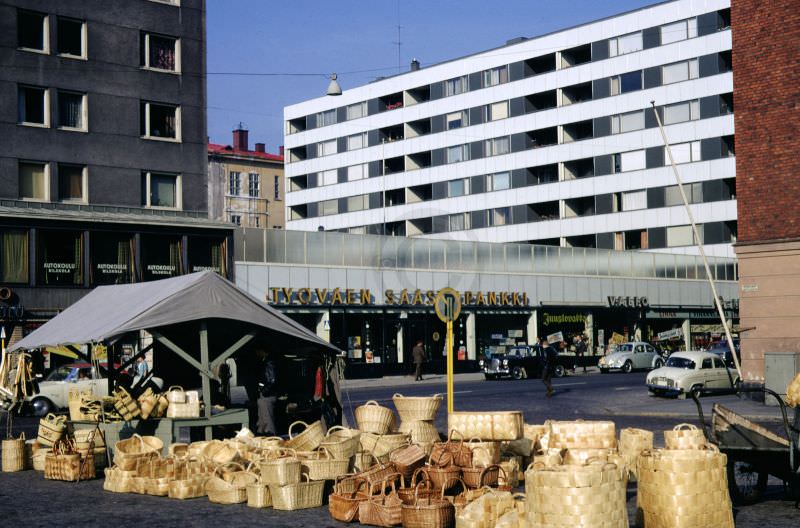
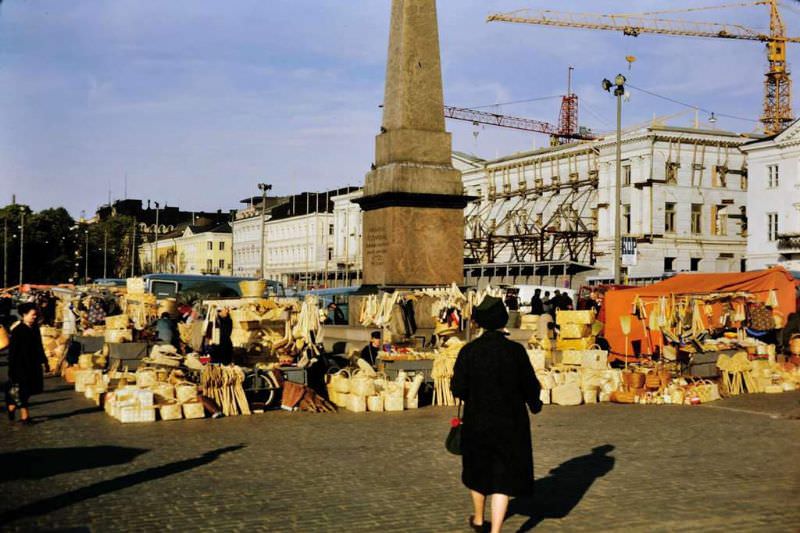
By 1968, Helsinki’s neighborhood markets were still thriving. Woven baskets and fabric bags hung outside stalls, advertising the practical goods available inside. These smaller local markets served the residential districts away from the main harbor square, giving each neighborhood its own commercial center. The variety of goods on offer — fish, vegetables, flowers, handcrafts — reflected both local production and the city’s trade connections.
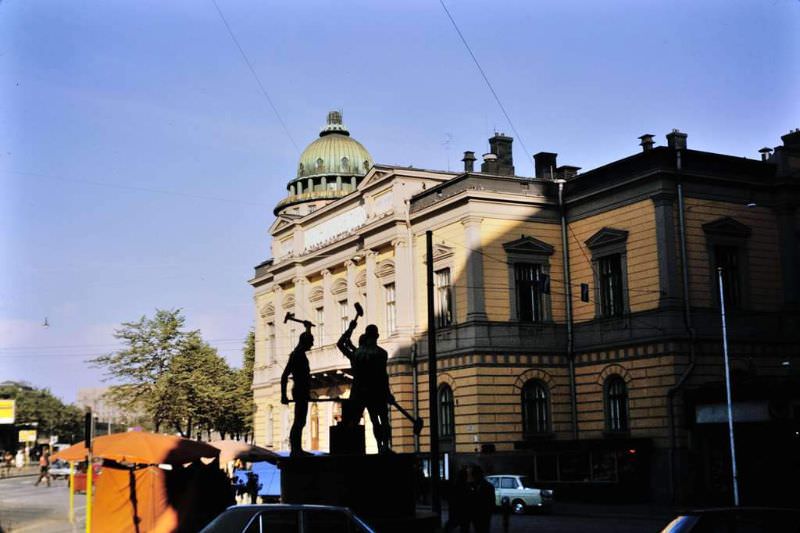
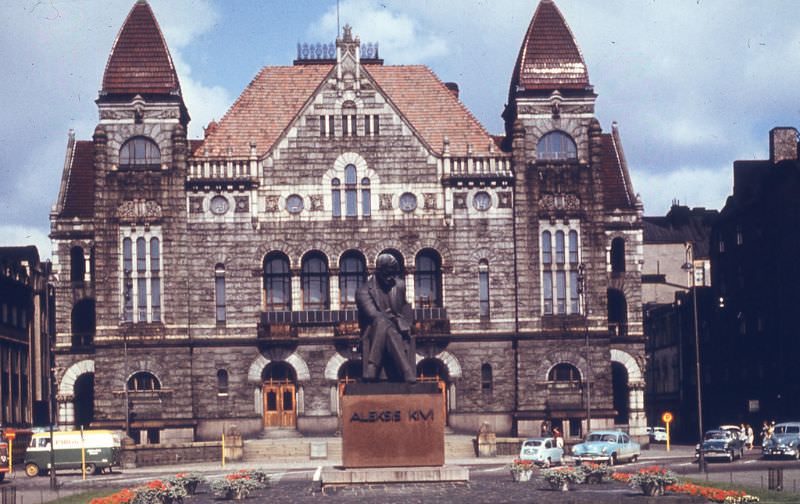
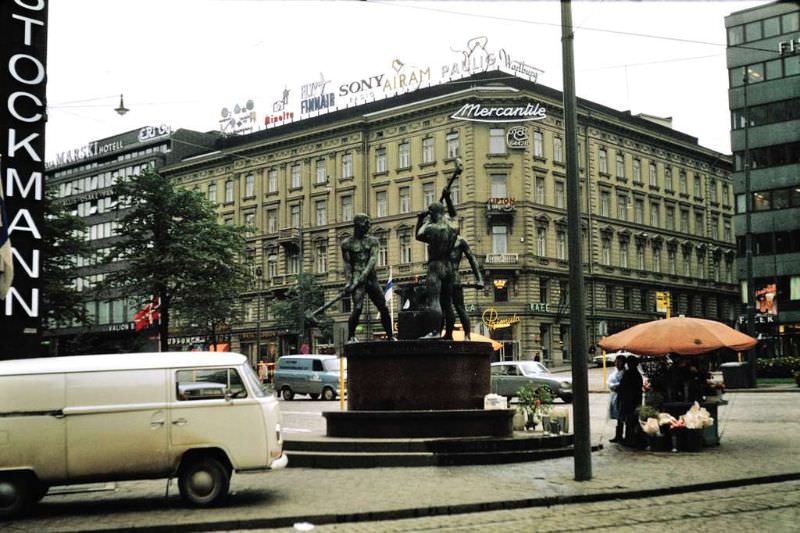
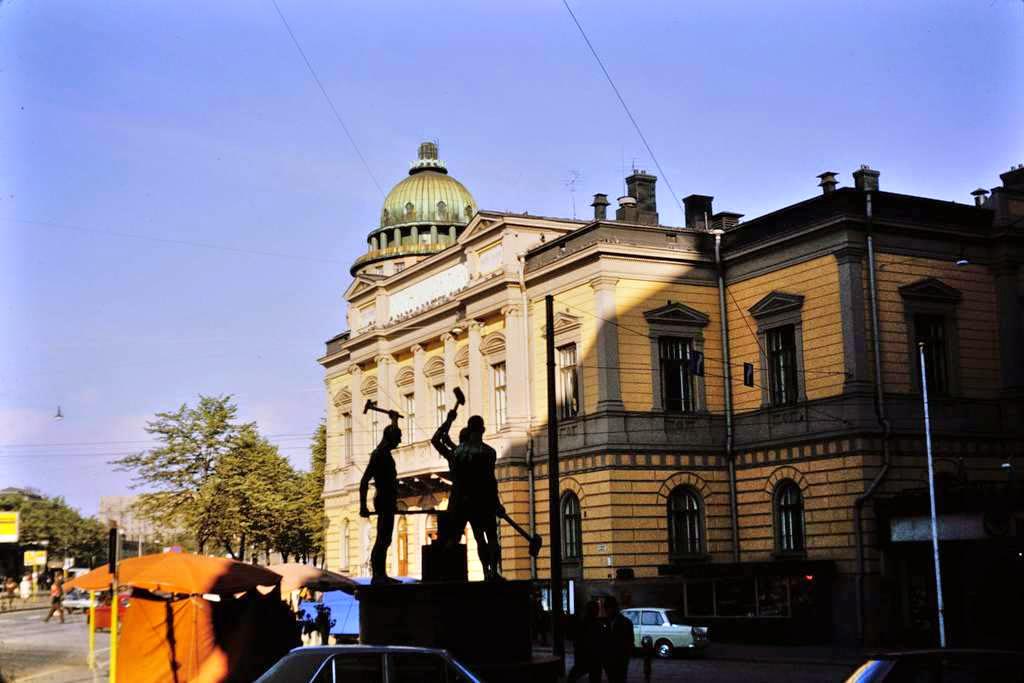
Helsinki’s cultural institutions gave the city a depth that went well beyond its size. The Finnish National Theatre, housed in a grand National Romantic-style building near the central railway station, had been staging Finnish-language productions since 1872. Nearby, the Three Smiths Statue — showing three workers hammering together — stood at the heart of a busy commercial intersection, a tribute to Finnish labor.
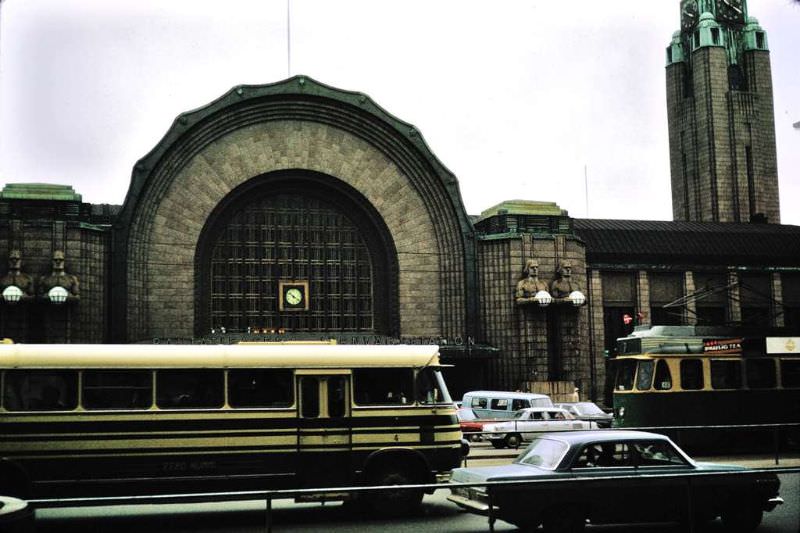
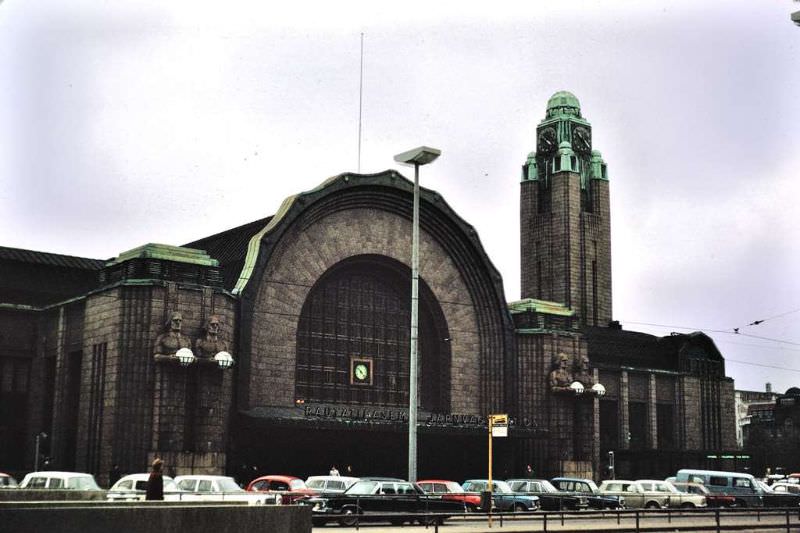
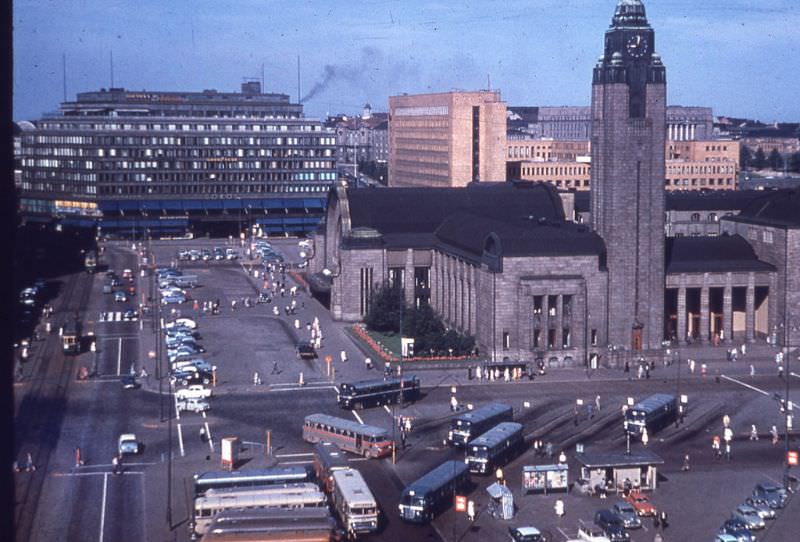
Helsinki Central Station was one of the city’s great architectural set pieces. Designed by Eliel Saarinen and opened in 1919, its granite tower and bold arched entrance made it instantly recognizable. In 1968, it remained the main gateway for rail travelers arriving in the city, with trams and buses connecting outward from the station square to all corners of Helsinki.
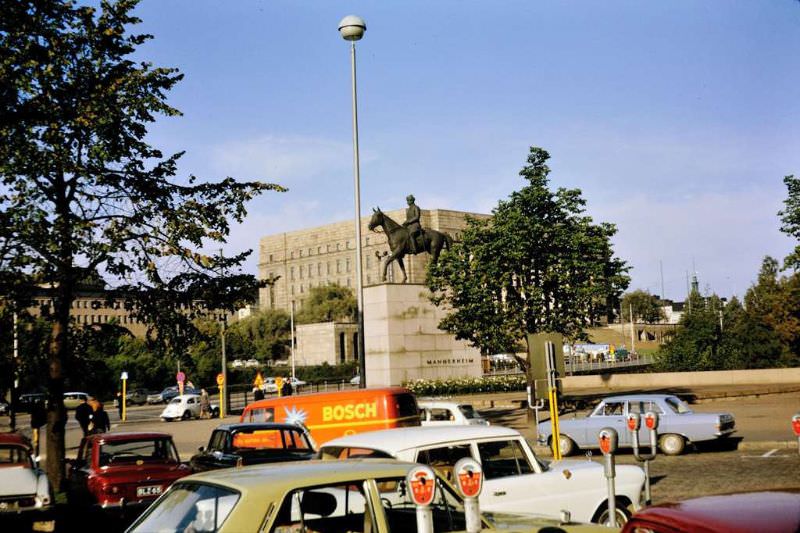
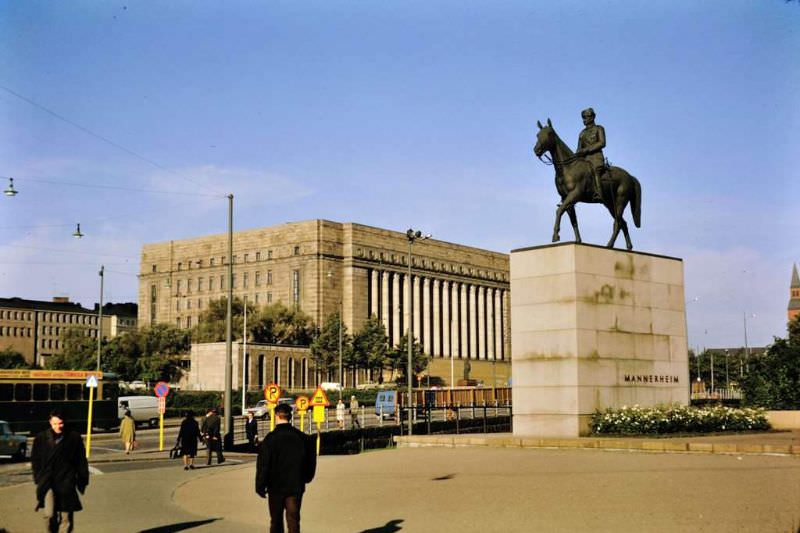
Mannerheimintie ran through the center of Helsinki as the city’s main artery. Named after Finland’s most celebrated military leader and former president, the boulevard stretched from the South Harbour northward past the Parliament Building, the National Museum, and the Finlandia Hall. The Mannerheim statue on horseback at the junction near Parliament was a constant focal point for photographers and passersby alike throughout the decade.
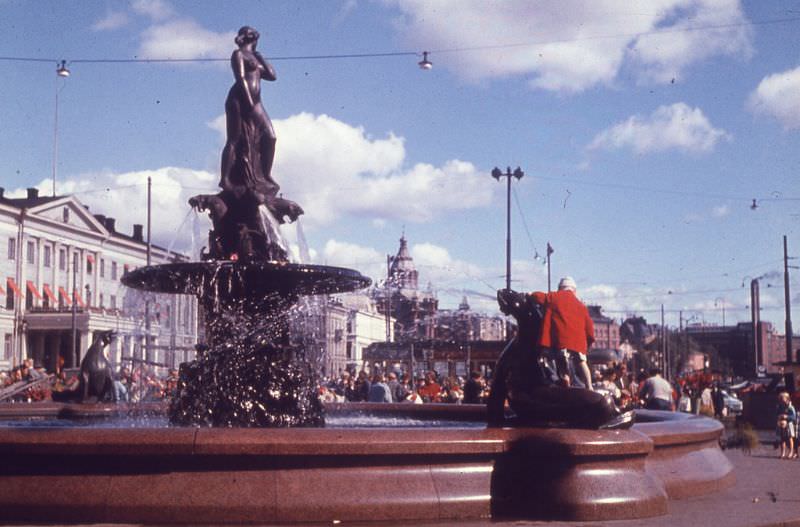
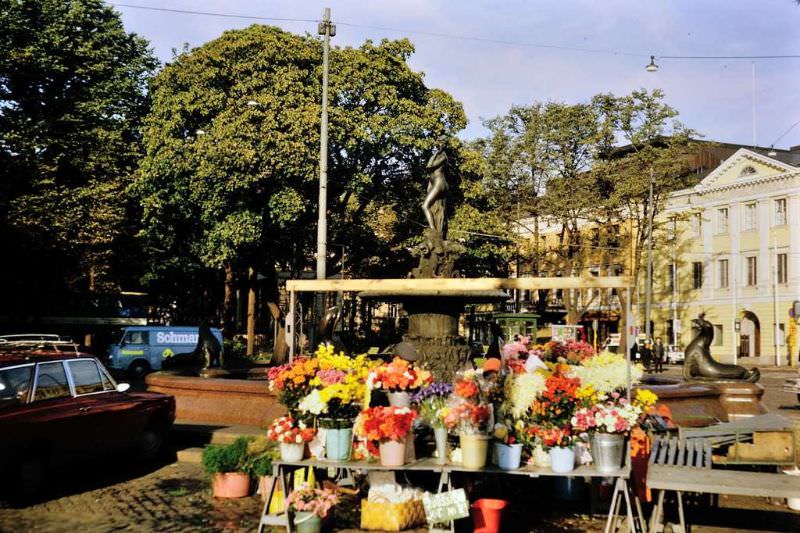
The Havis Amanda fountain in Market Square was one of Helsinki’s most beloved landmarks. The bronze statue of a young woman rising from the sea, sculpted by Ville Vallgren and unveiled in 1908, stood at the edge of the harbor market. Each year on May Day Eve, university students gathered to place a white student cap on her head — a tradition that continued throughout the 1960s and beyond.
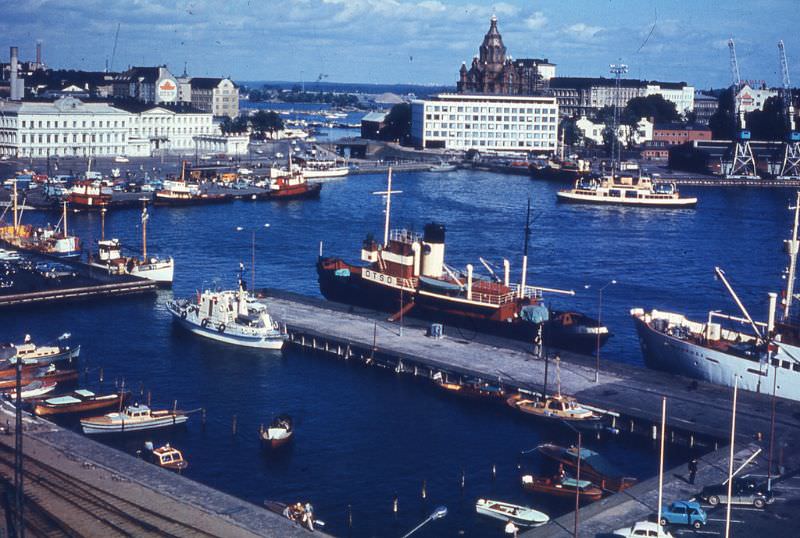
The South Harbour remained the commercial and visual anchor of Helsinki throughout the 1960s. Looking eastward across the water, the Russian Orthodox Uspenski Cathedral — with its red brick walls and gold onion domes — sat prominently on a rocky promontory. It was a reminder of the nearly century-long period when Finland was part of the Russian Empire, and its presence gave Helsinki a skyline unlike any other Nordic capital.
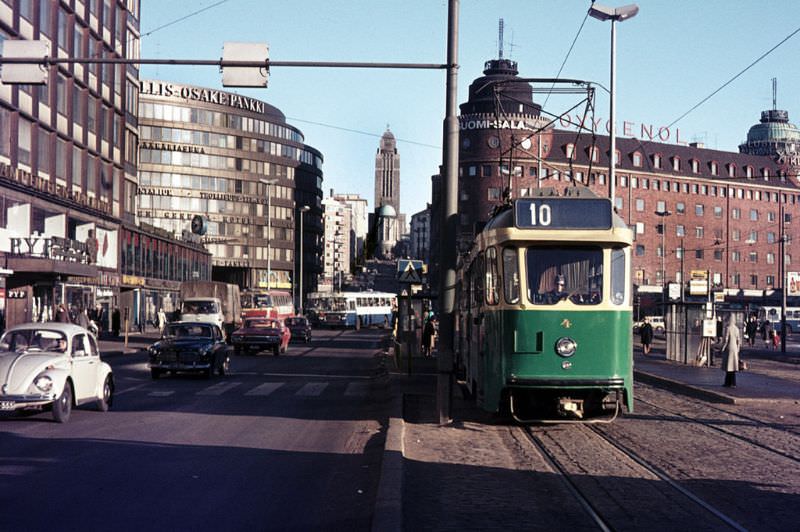
Helsinki’s tram network had been running since 1891, and by 1969 it remained the backbone of the city’s public transport. The trams rumbled along dedicated tracks through the city center, connecting neighborhoods efficiently and cheaply. Even as car ownership rose during the 1960s, the trams held their place as the most reliable way to cross the city. Their bright colors became as much a part of Helsinki’s streetscape as the architecture itself.
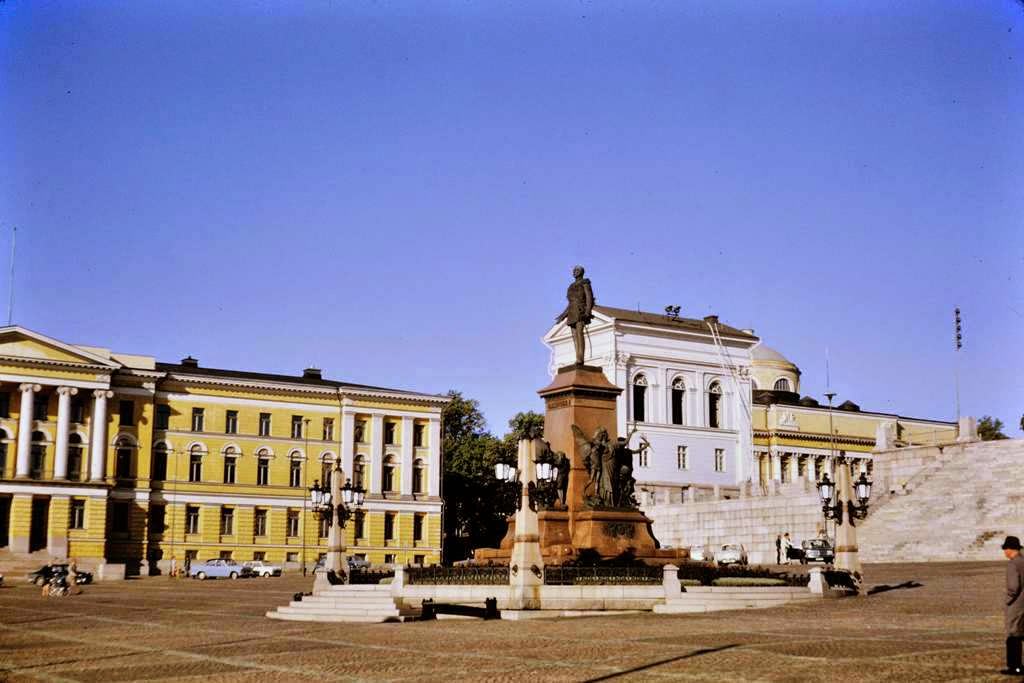
The statue of Tsar Alexander II in Senate Square was another layer of Helsinki’s complex history. Erected in 1894 to honor the Russian ruler who had granted Finland a degree of autonomy, the statue stood in the very center of the city’s most formal public space. Its continued presence in the 1960s reflected Finland’s pragmatic approach to its own past — acknowledging history without erasing it.
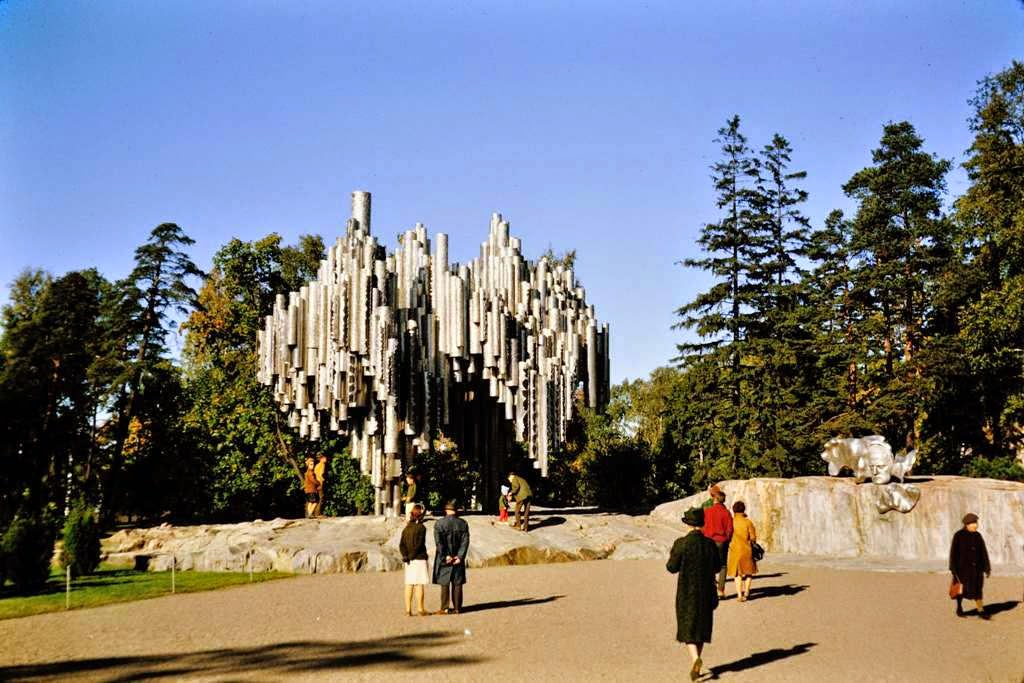
The Sibelius Monument in Sibelius Park honored Finland’s most famous composer, Jean Sibelius. The sculpture by Eila Hiltunen, unveiled in 1967, consisted of hundreds of hollow steel pipes welded together in an abstract, wave-like form. It was controversial at first — critics questioned whether it sufficiently honored Sibelius — but a portrait relief of the composer was later added to satisfy those who wanted a more traditional tribute.
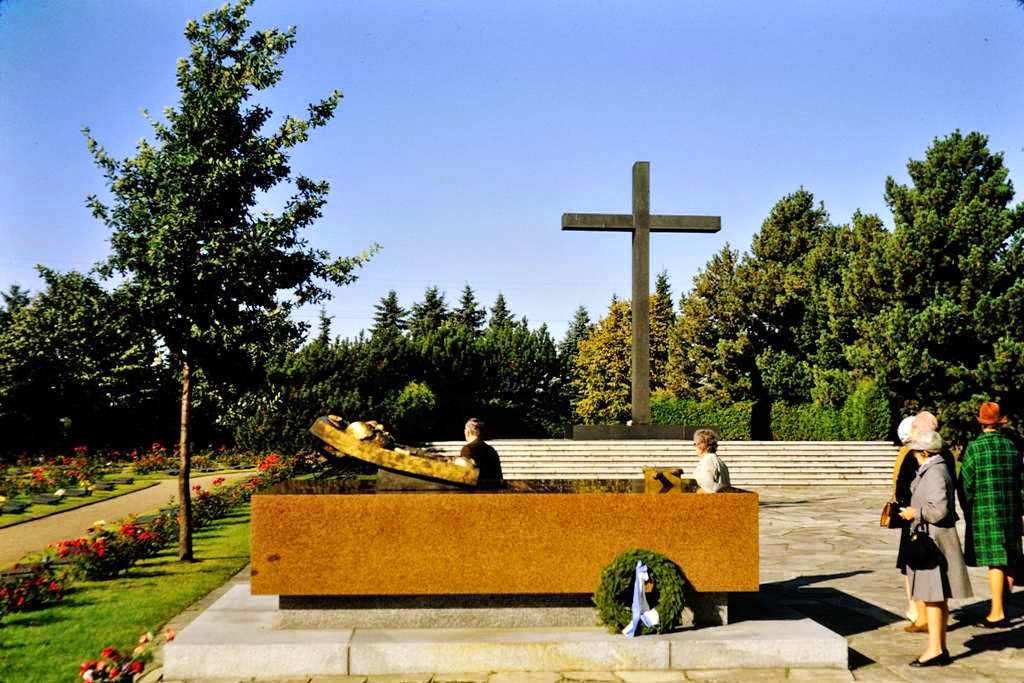
Marshal Mannerheim’s grave at Hietaniemi Cemetery was a place of quiet reverence. Mannerheim, who died in 1951, was buried in the military section of the cemetery alongside other Finnish officers and soldiers. During the 1960s, his grave continued to draw visitors who came to pay respects to the man who had commanded Finland’s forces during the Winter War and the Continuation War.
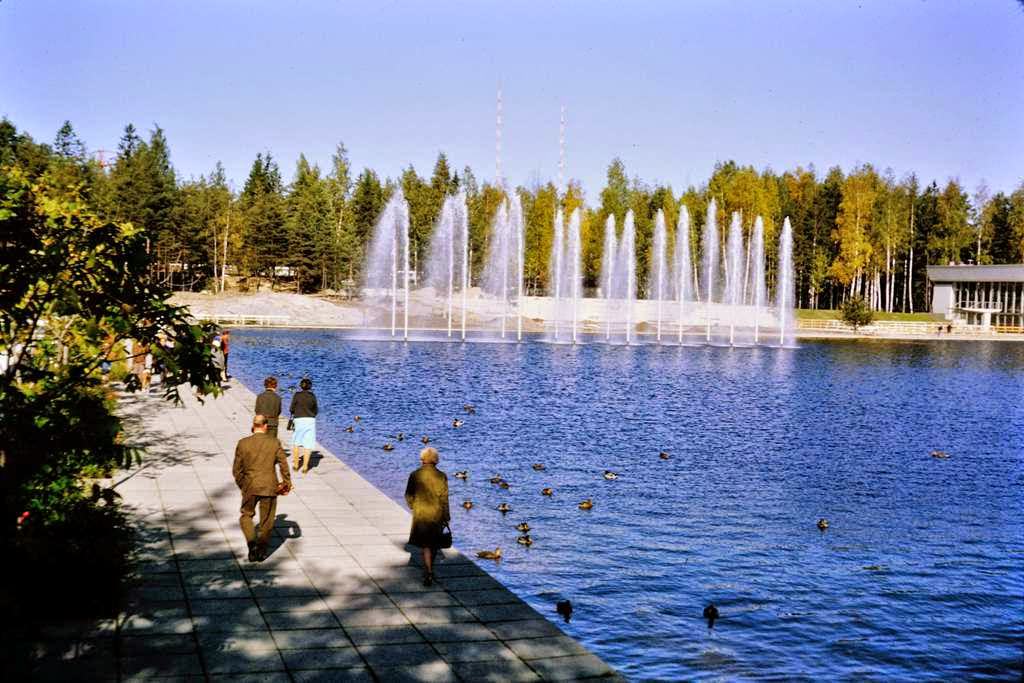
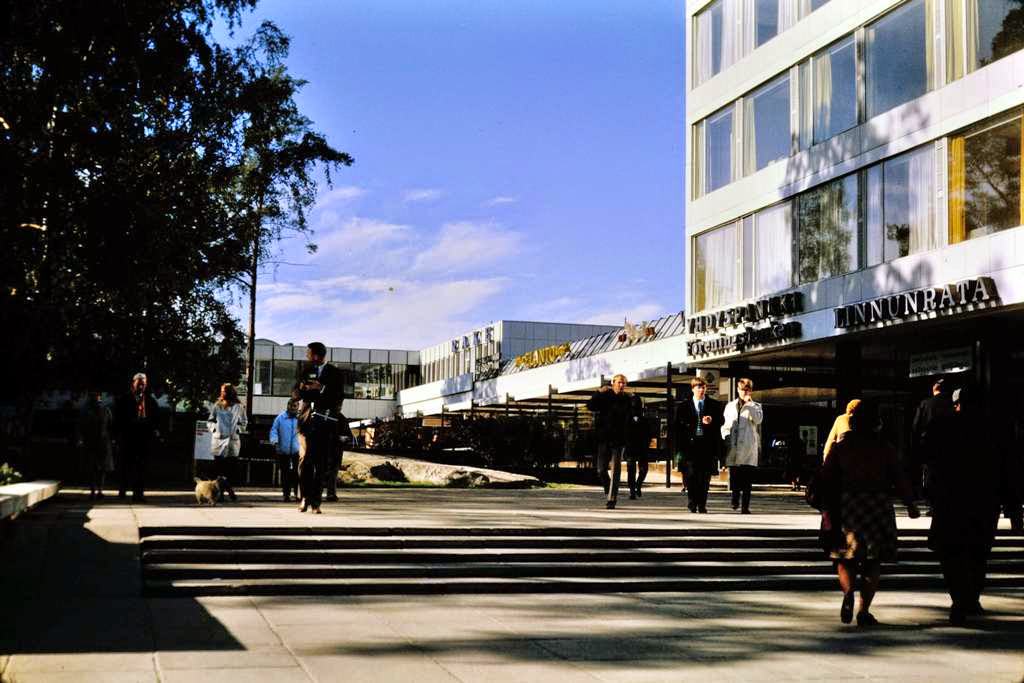
Tapiola was a planned garden city built just west of Helsinki in the neighboring municipality of Espoo. Developed from the early 1950s onward, it was considered a model of modern urban planning — a mix of housing, green spaces, and community facilities designed to give residents a high quality of life. By the 1960s, Tapiola had its own shopping center, fountain plaza, and cultural facilities, attracting international attention as an example of Nordic city planning done right.
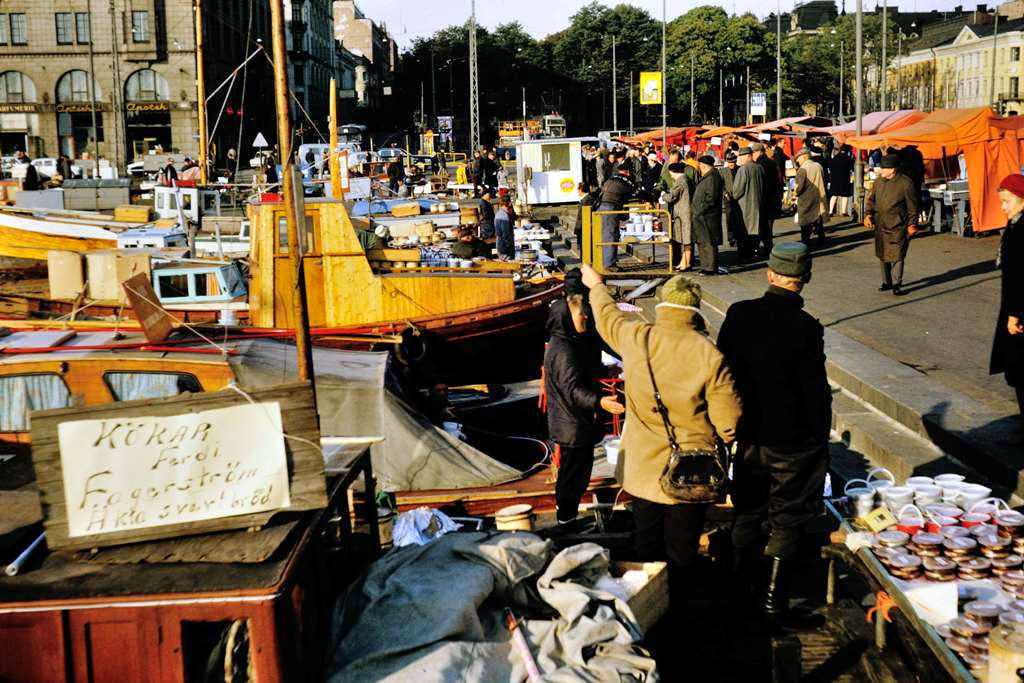
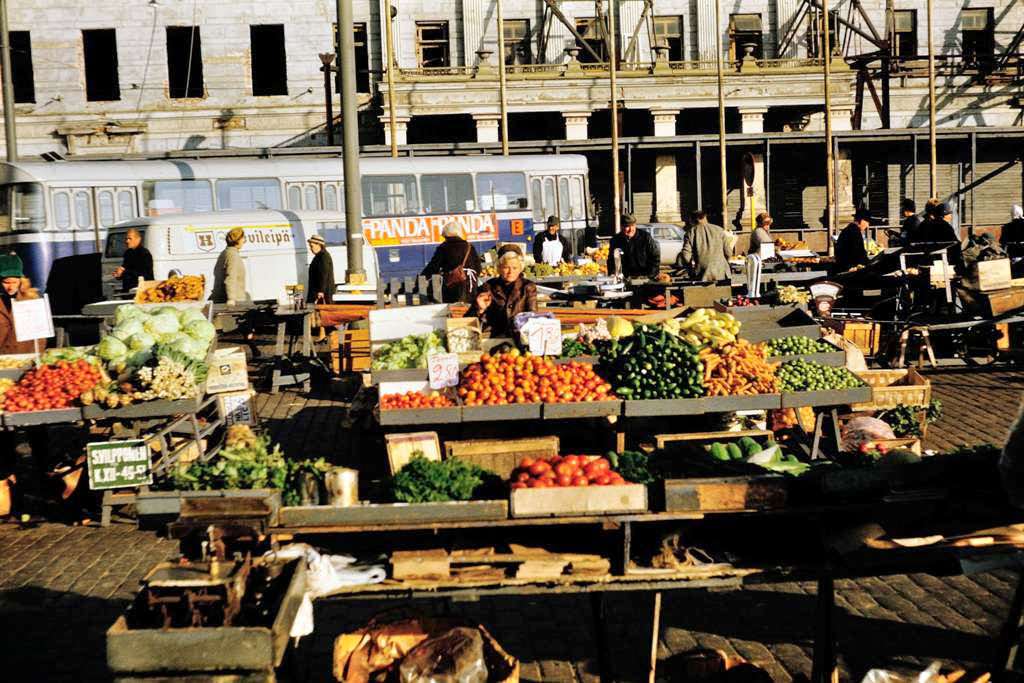
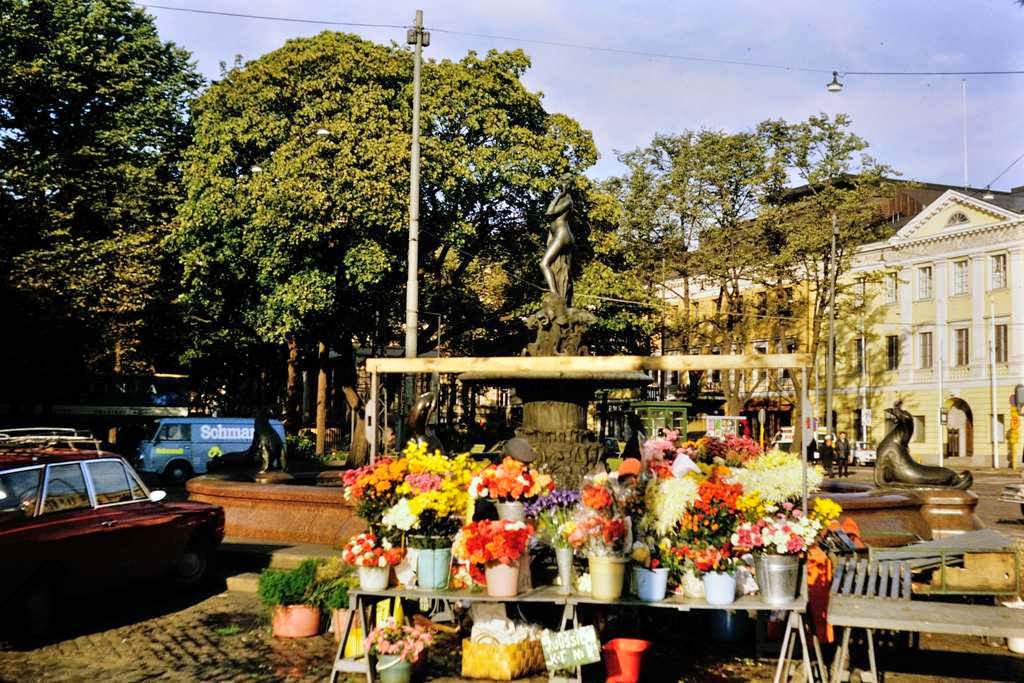
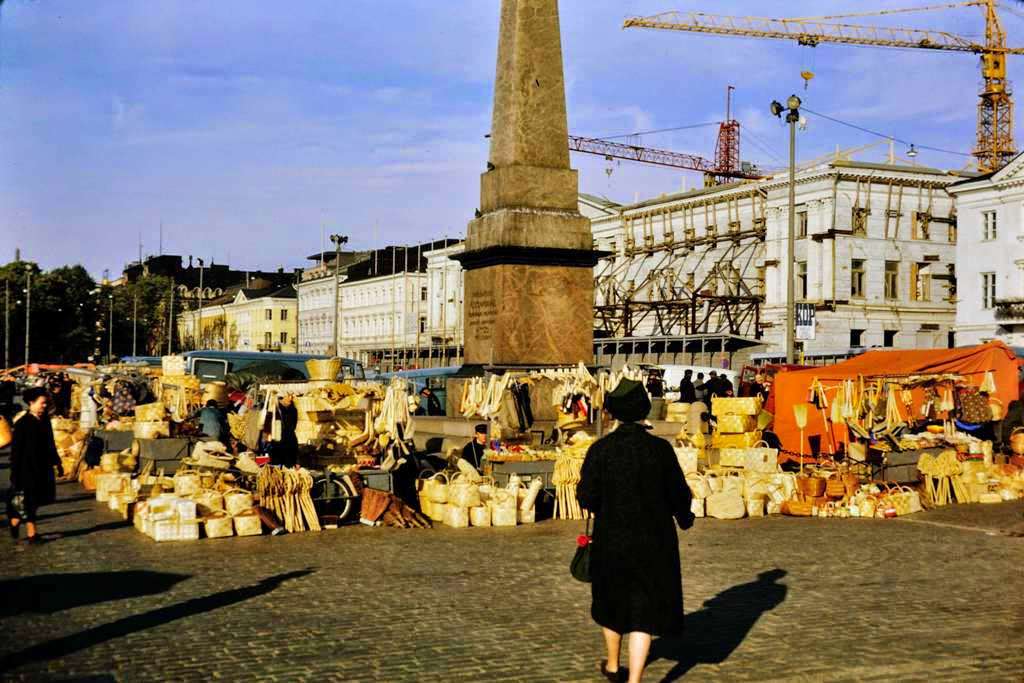
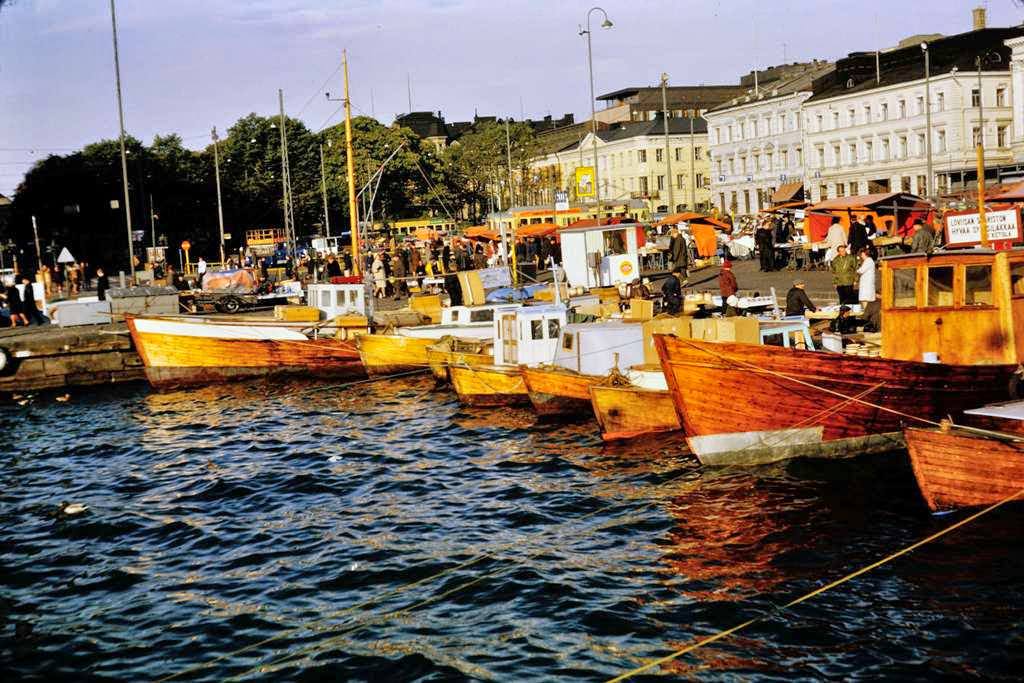
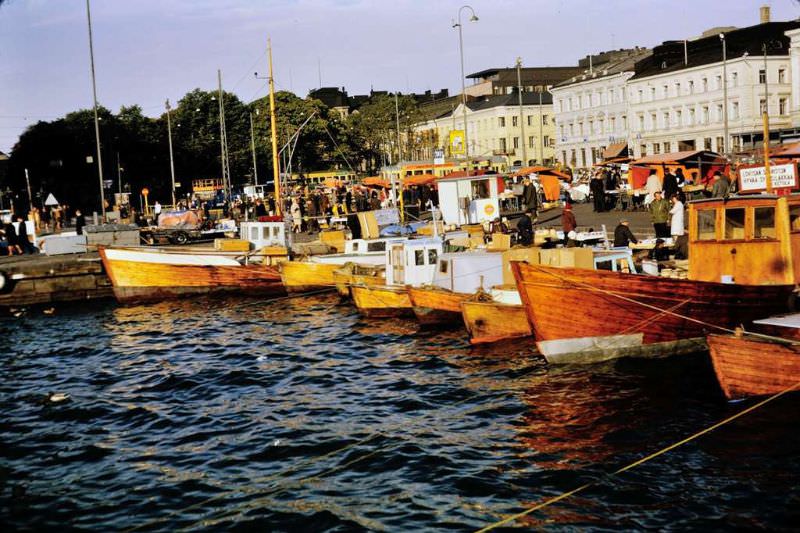
The Market Square at the South Harbour was the city’s most vibrant open-air marketplace. Fishing boats docked directly at the square, and their crews sold their catch on the spot. Alongside the fish stalls, vendors arranged bright cut flowers, wooden crates of root vegetables, and rows of handwoven baskets. The market ran through the warmer months, drawing Helsinkians from across the city to the waterfront.
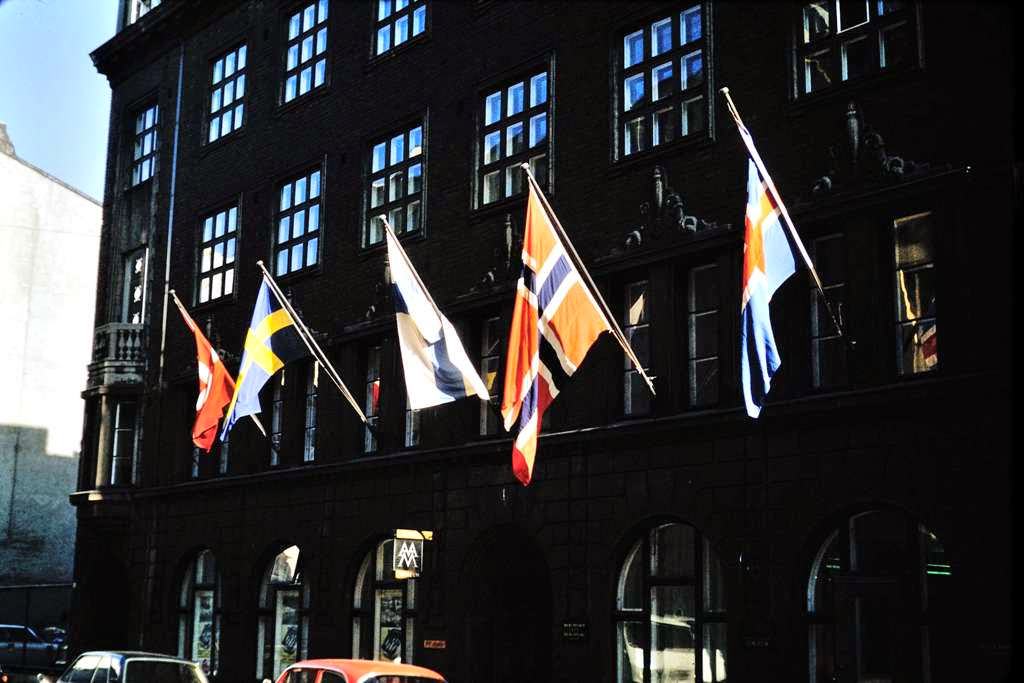
Helsinki’s connections to the wider Nordic world were visible in the Scandinavian flags that flew at various locations around the city. Finland, while geographically and historically distinct from its Scandinavian neighbors, maintained strong ties with Sweden, Norway, and Denmark through trade, culture, and the Nordic Council, which Finland joined in 1955. These flags signaled a city that looked outward as well as inward.
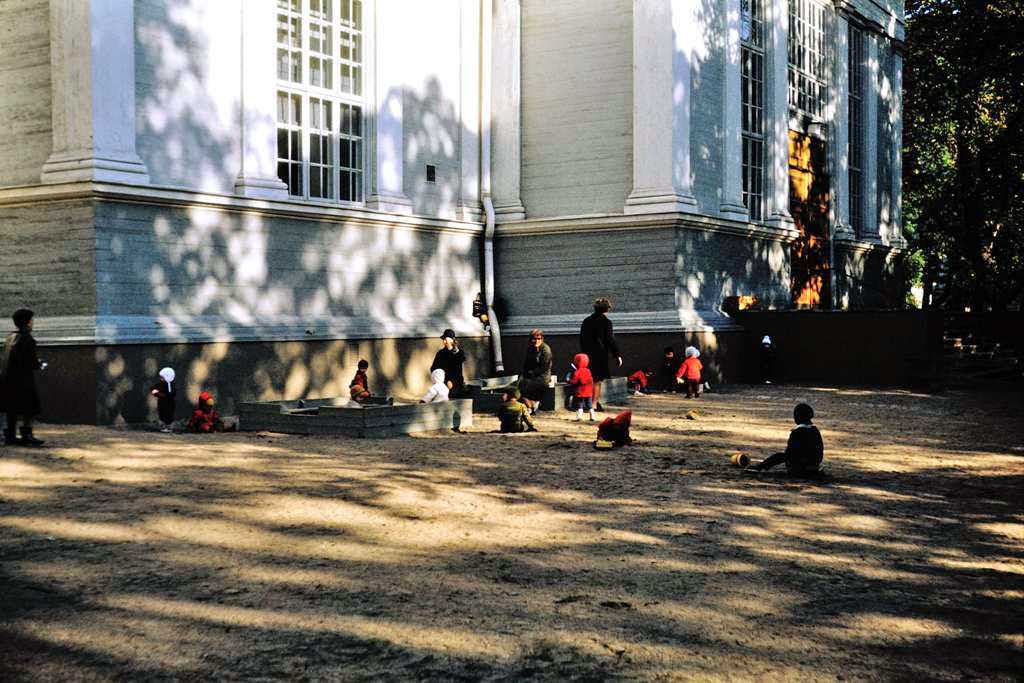
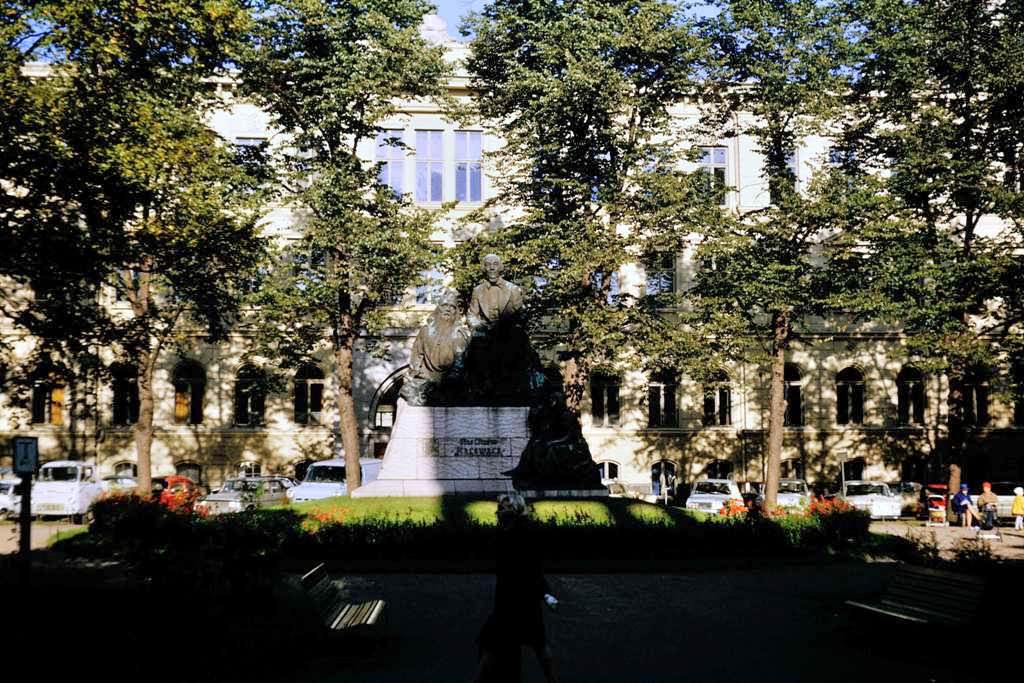
Helsinki’s parks provided breathing space in a rapidly growing city. Even as apartment blocks went up on the outskirts and traffic increased in the center, the city maintained green corridors and waterfront parks where residents could walk, sit, and enjoy the brief but beautiful Finnish summer. Children played in these spaces while their parents’ generation navigated the economic and social changes reshaping Finnish life.
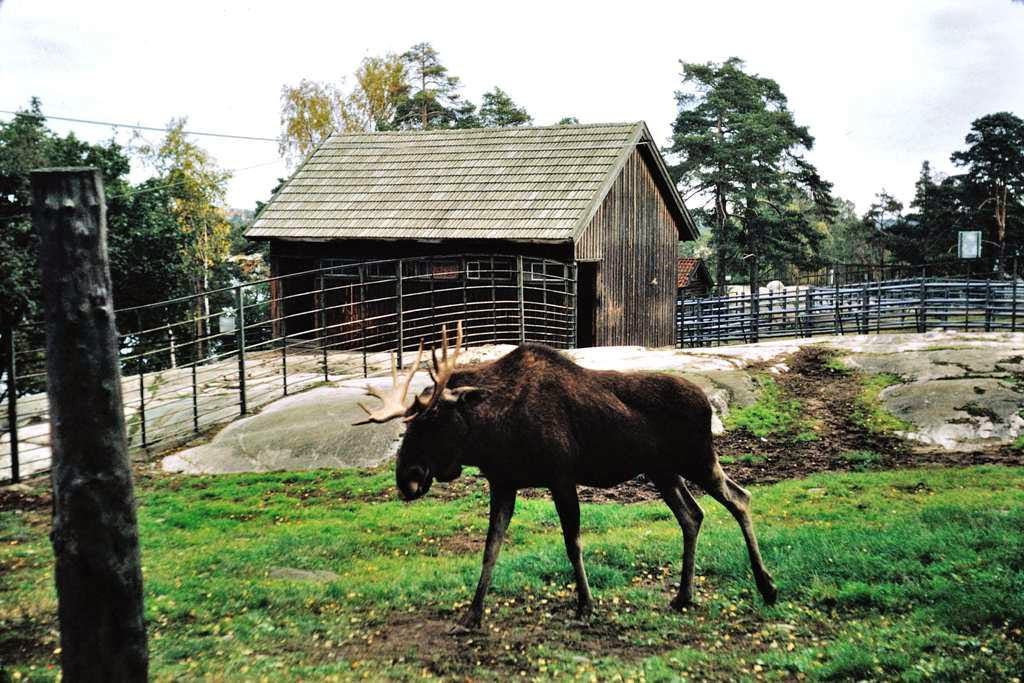
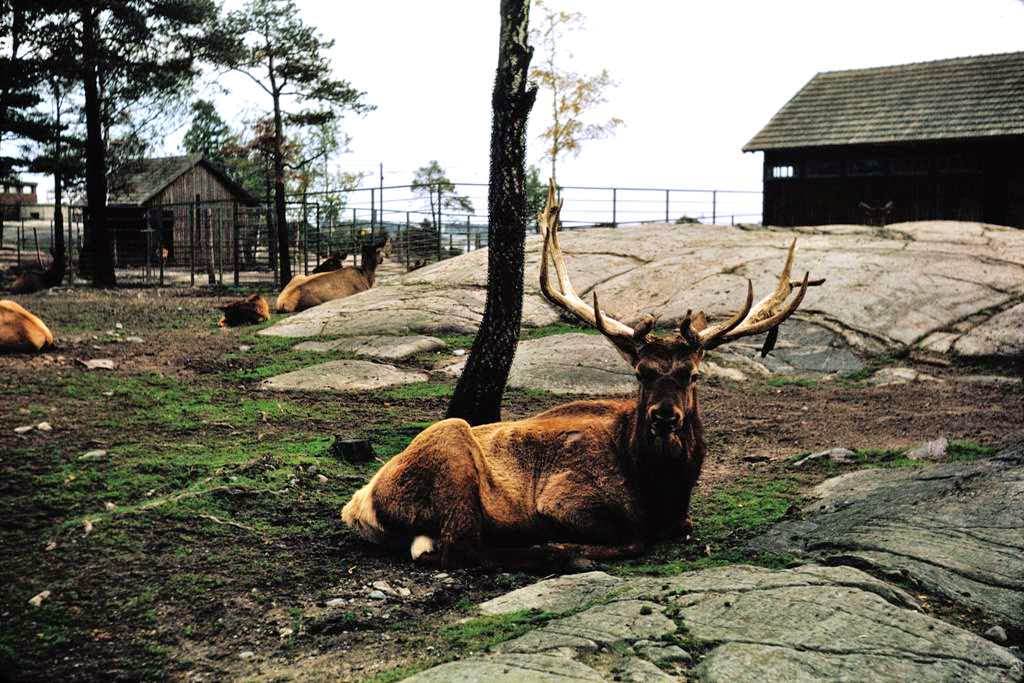
Helsinki Zoo, located on the island of Korkeasaari in the Helsinki archipelago, housed animals from across the world. In the 1960s, its Canadian moose and elk were among the notable residents, drawing families from across the city. The zoo had been operating since 1889, and its island setting gave it a unique character — visitors reached it by boat, making a trip to the zoo an outing that combined wildlife with the experience of Helsinki’s island-dotted waterways.





If you were dropped right there now, you’d know exactly where you are. It still looks quite similar.
Yeah most architechture and landmarks in helsinki are more than 50 years old so these photos look suprisingly similiar. I for example the only thing changed from that picture from hakaniemi now is newer cars and trams.
So, the same? (at least in the center)