Harper’s Magazine was founded in New York City in June 1850, making it the second-oldest continuously published magazine in the United States. Only Scientific American is older, though that publication did not shift to a monthly format until 1921. Over its long history, Harper’s has covered literature, politics, culture, finance, and the arts — and has drawn contributions from notable writers including Herman Melville and Woodrow Wilson.
The magazine has earned 22 National Magazine Awards and has not been without controversy. A major turning point came in 1971, when editor Willie Morris resigned and a significant number of staff members walked out with him. Through all of it, Harper’s kept publishing — month after month, decade after decade. The covers from the 1890s, now preserved in the Boston Public Library’s collection, offer a remarkable look at the illustration style and everyday scenes that defined the era.
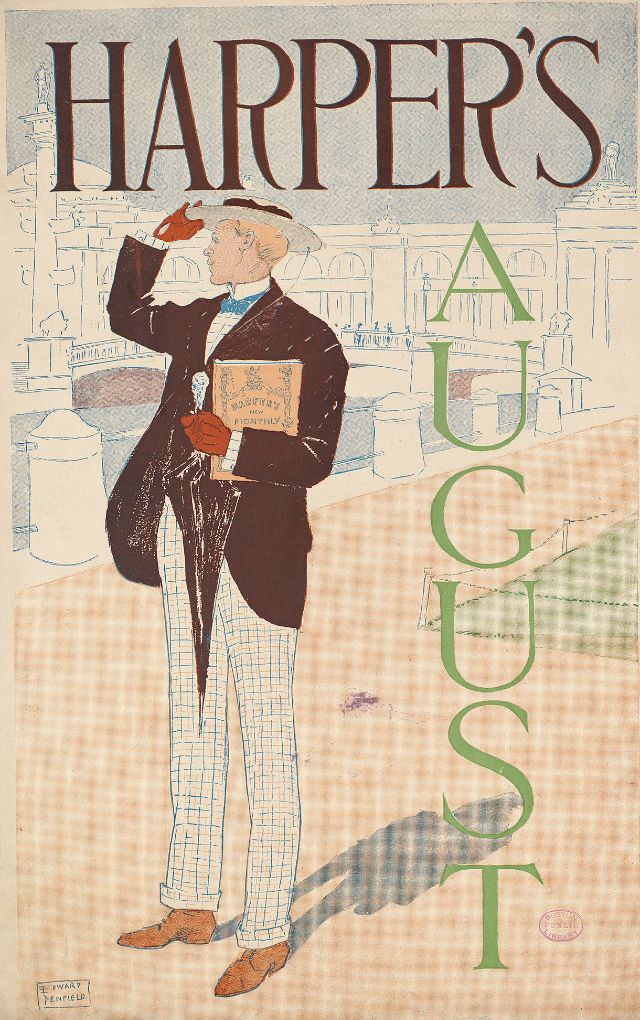
The 1893 covers leaned heavily into scenes of leisure and modern life. Illustrated figures — men and women going about their daily routines — were used to draw readers in. The August 1893 cover shows a man glancing back while holding both a magazine and an umbrella, a simple but engaging street-scene composition.
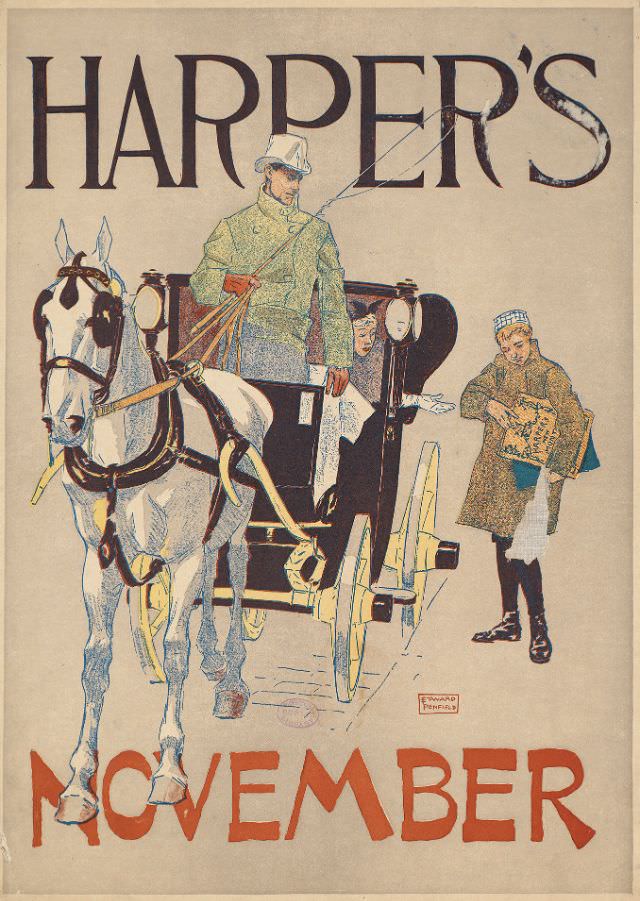
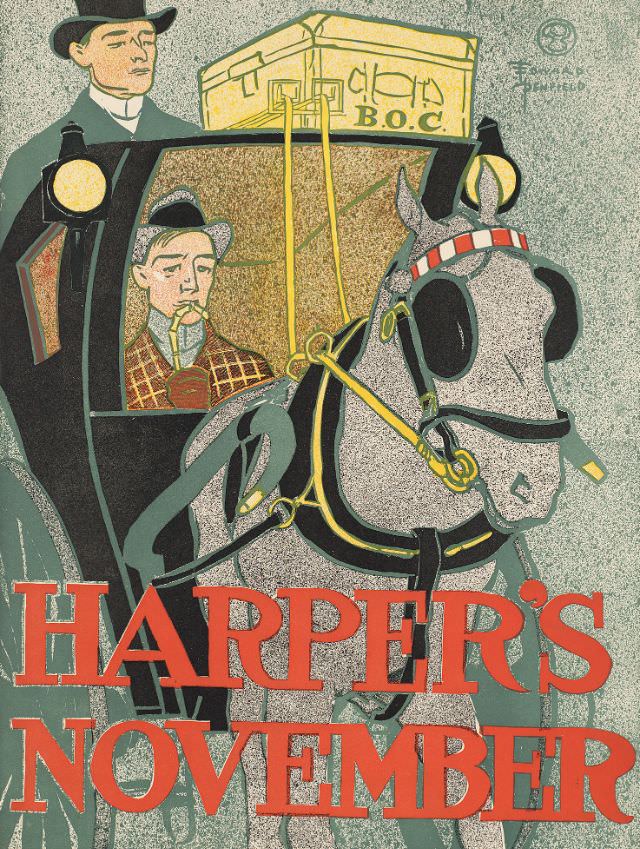
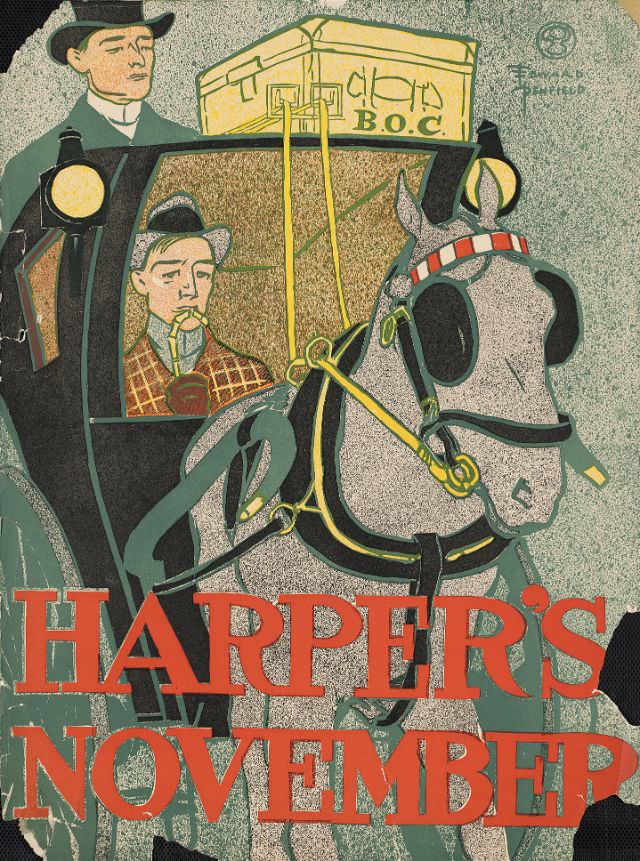
The November 1893 cover moves the scene outdoors to a horse-drawn carriage, where a woman reaches out to buy a copy of the magazine from a boy on the street. It captures a snapshot of how magazines were sold and consumed in late 19th-century city life.
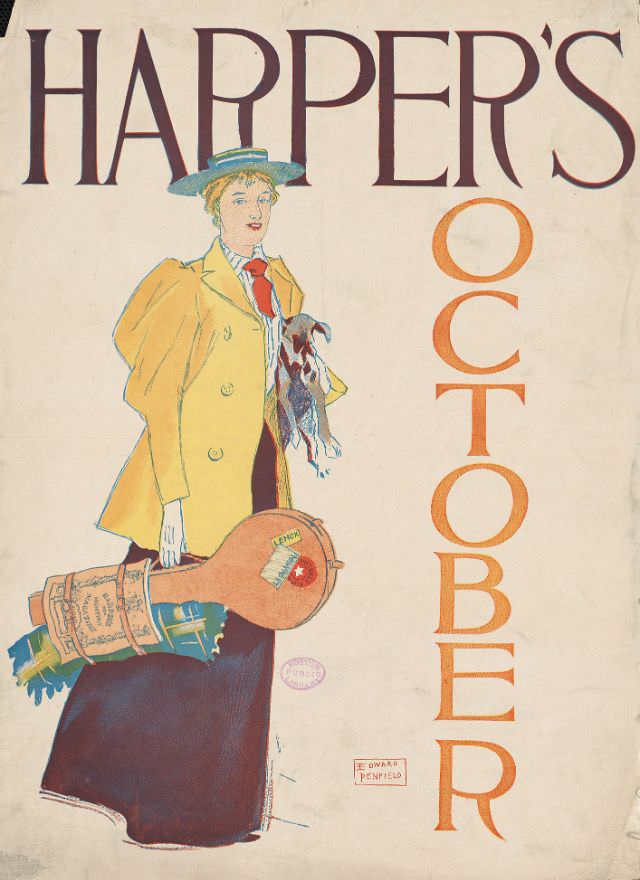
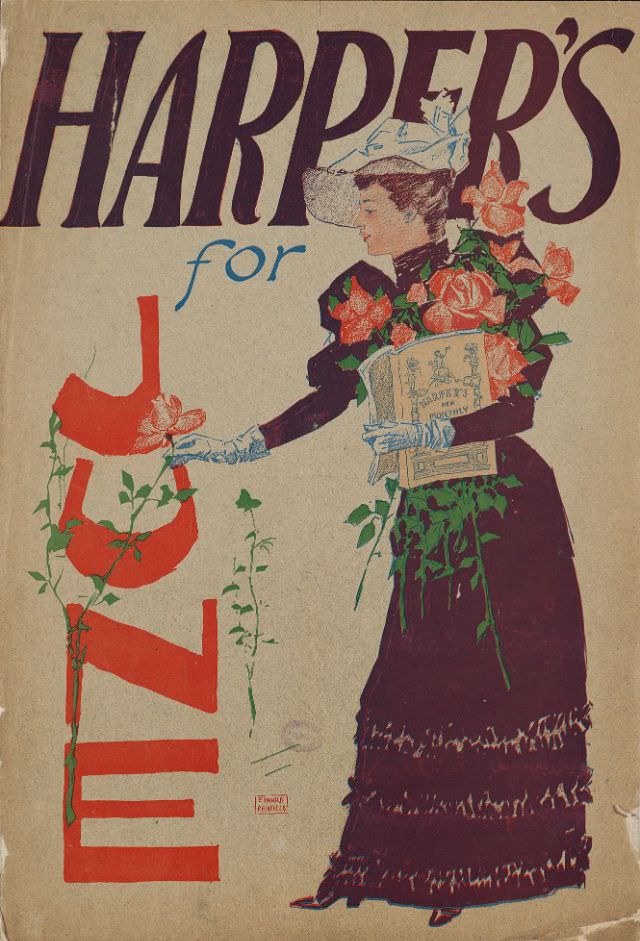
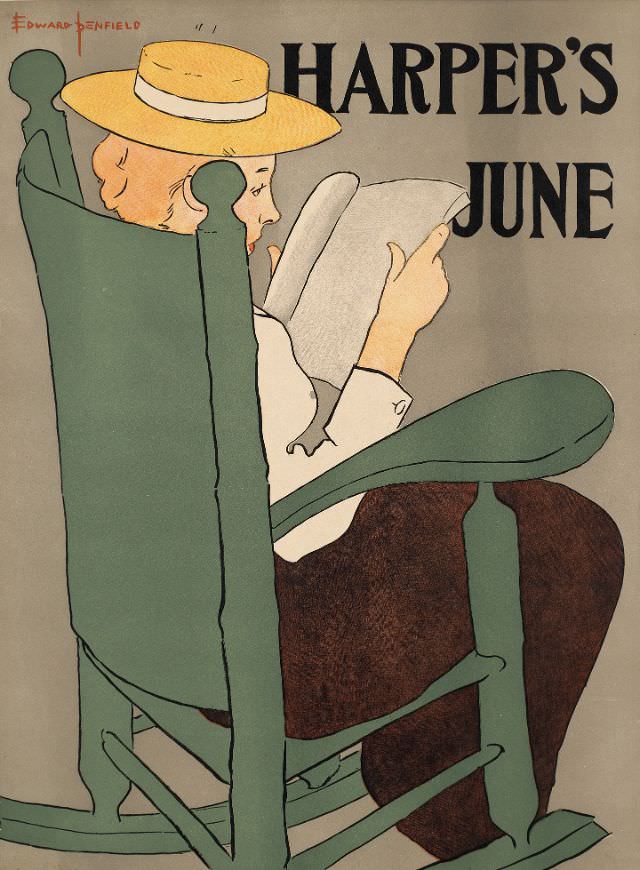
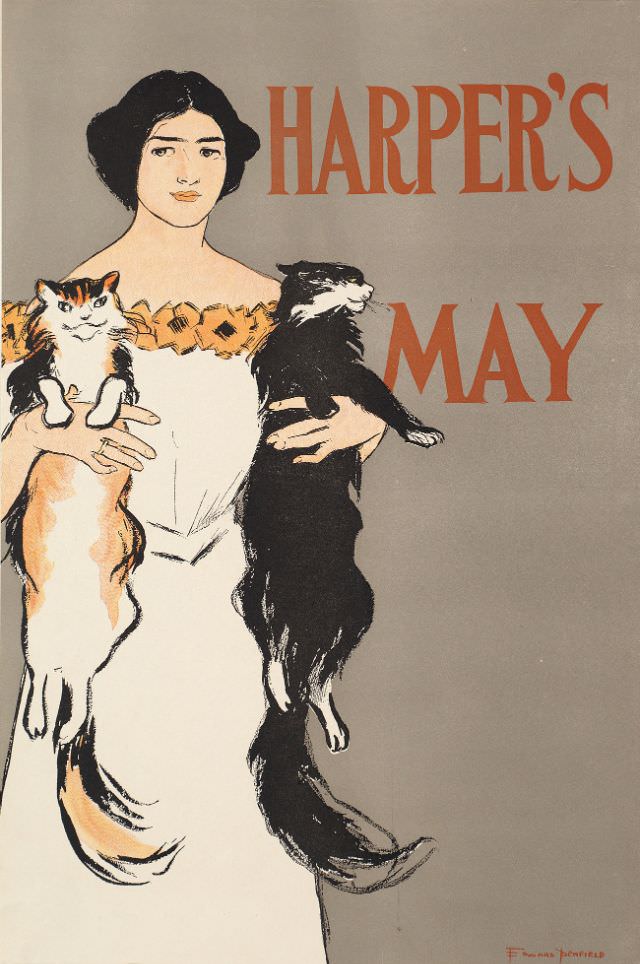
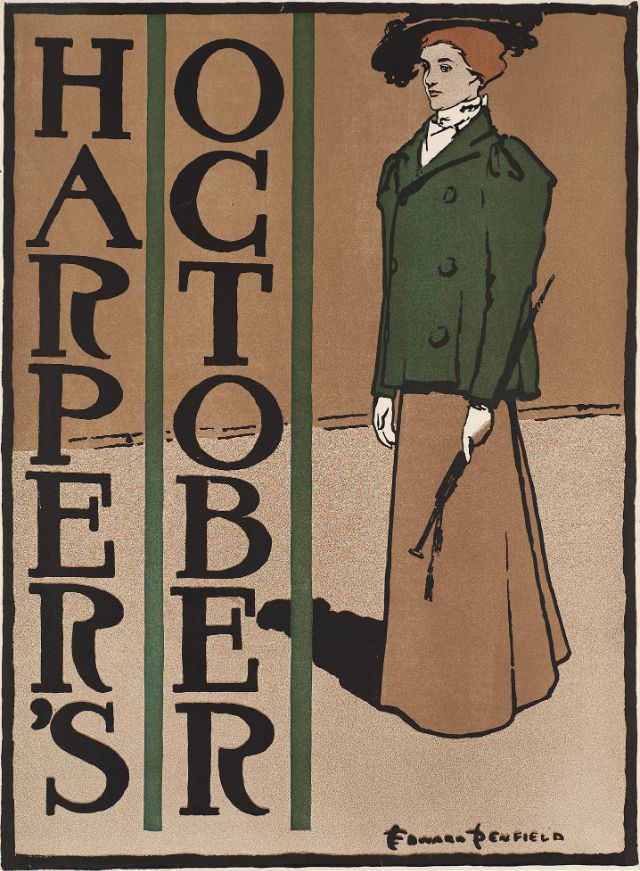
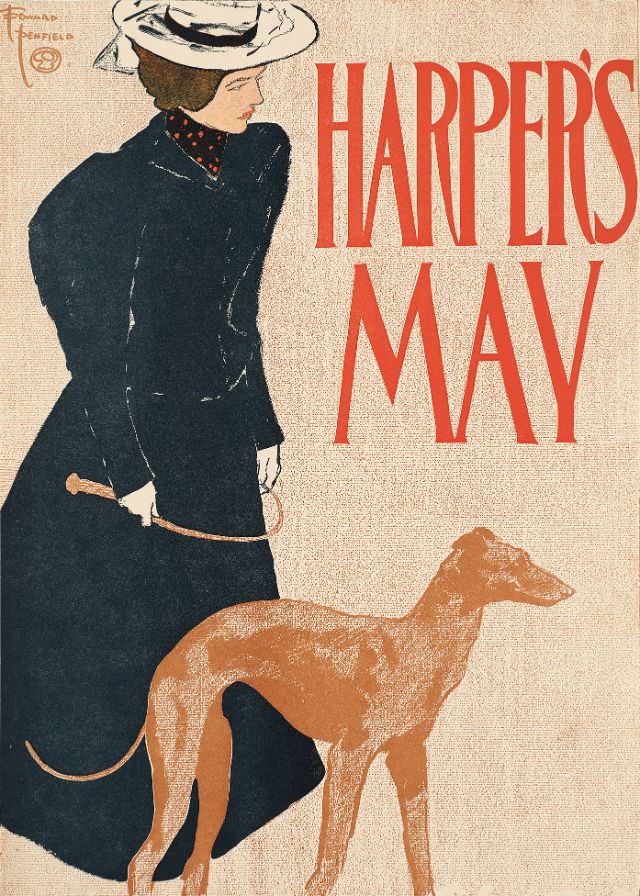
The October and June 1893 covers put women front and center. One features a woman standing with a dog and packages in hand, and another shows a woman in a garden setting, holding a magazine and flowers while reaching for another bloom.
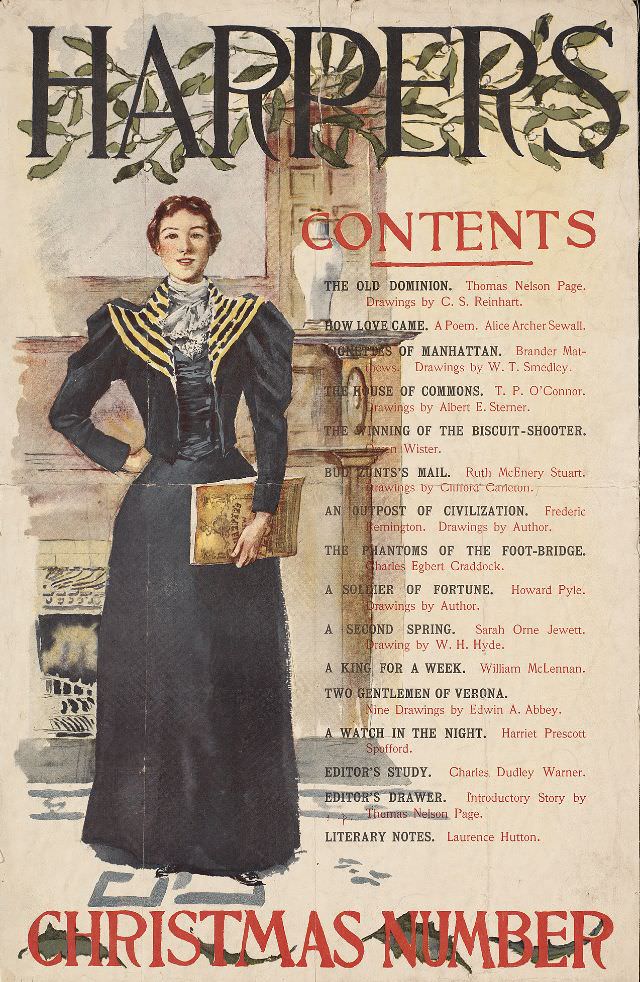
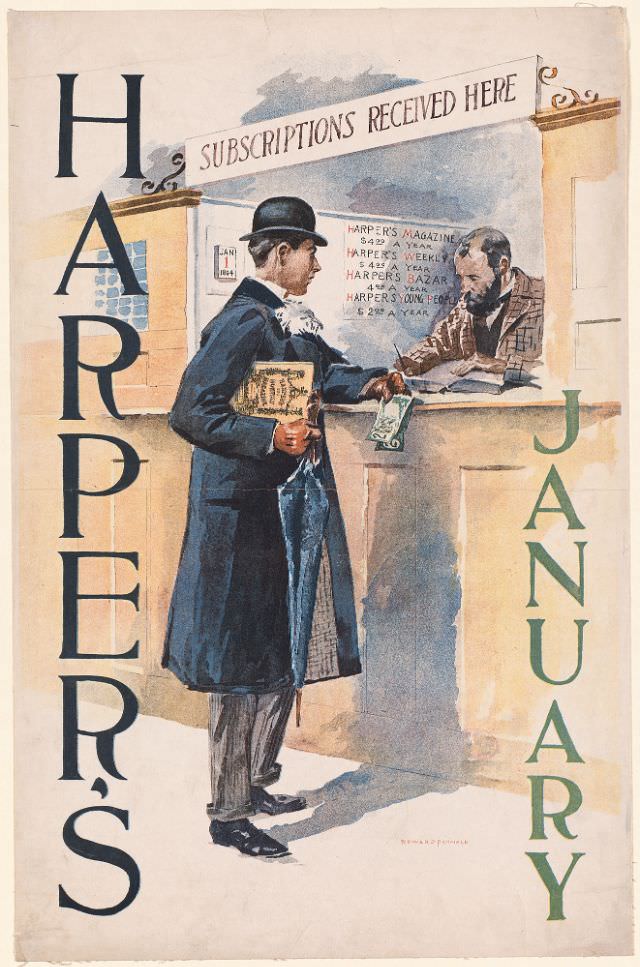
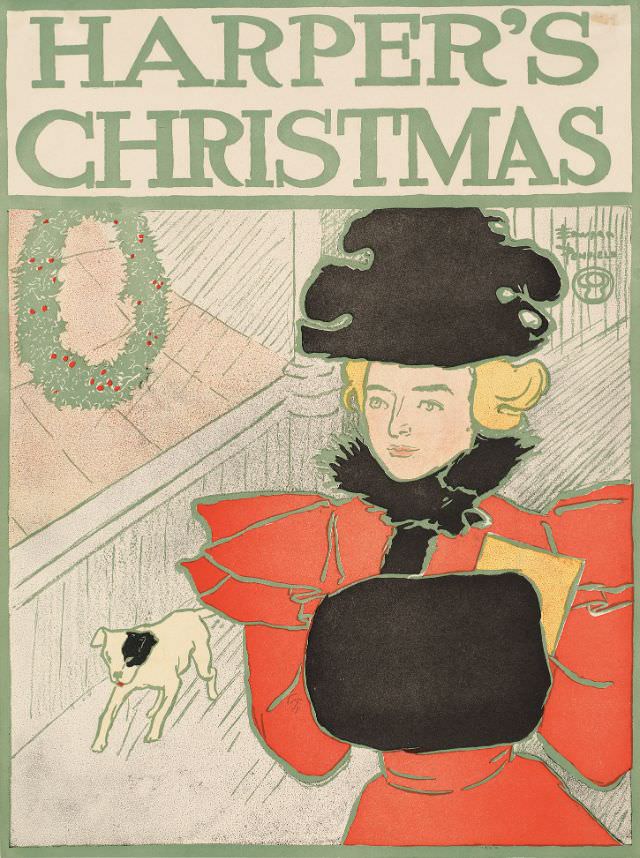
The 1893 Christmas Number cover shows a woman posed elegantly holding a magazine — a fitting image for a holiday edition. By contrast, the January 1894 cover shifts focus to a man in the act of purchasing a subscription, grounding the scene in commerce and readership.
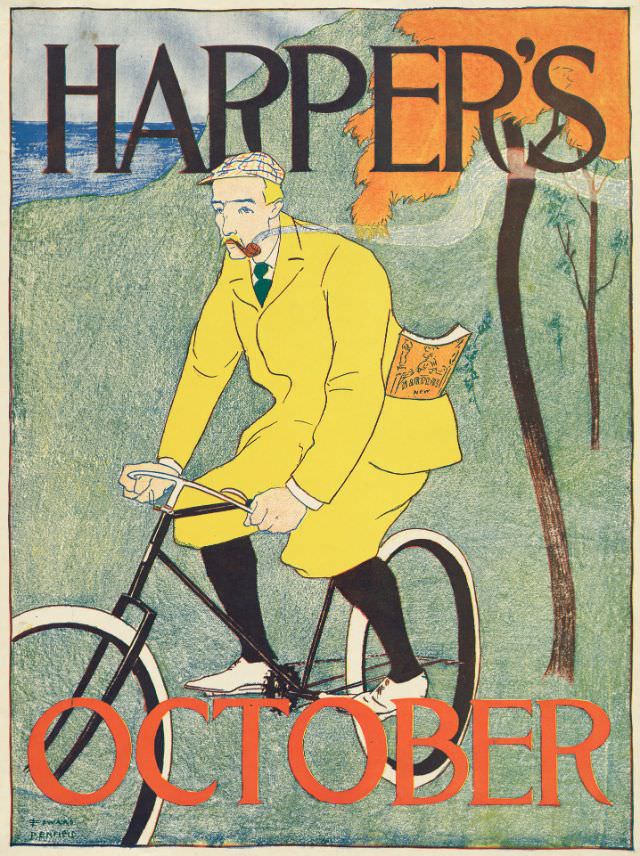
The 1894 covers continued to reflect everyday recreation and domestic life. The October issue featured a man riding a bicycle with a copy of the magazine tucked into his coat pocket — a nod to the cycling craze sweeping America at the time.
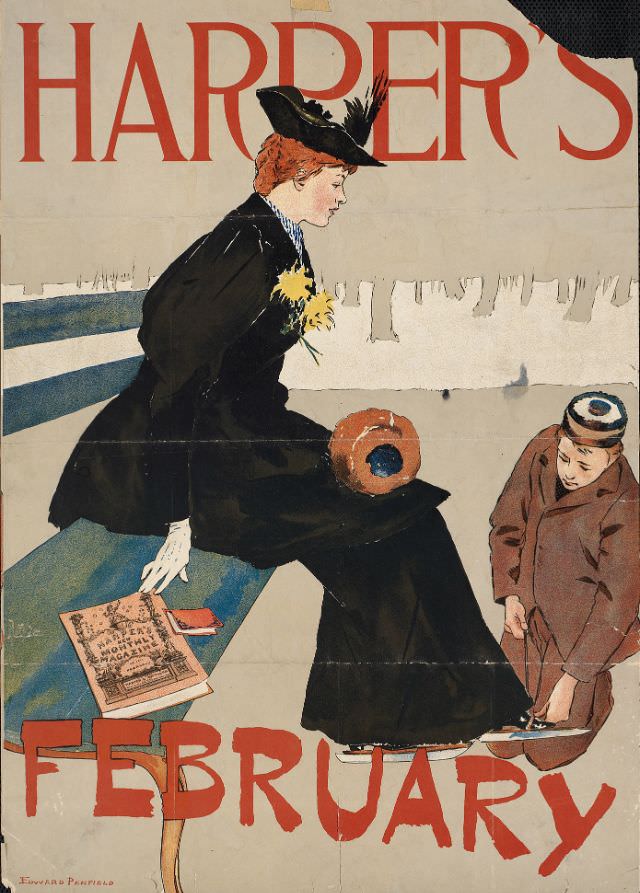
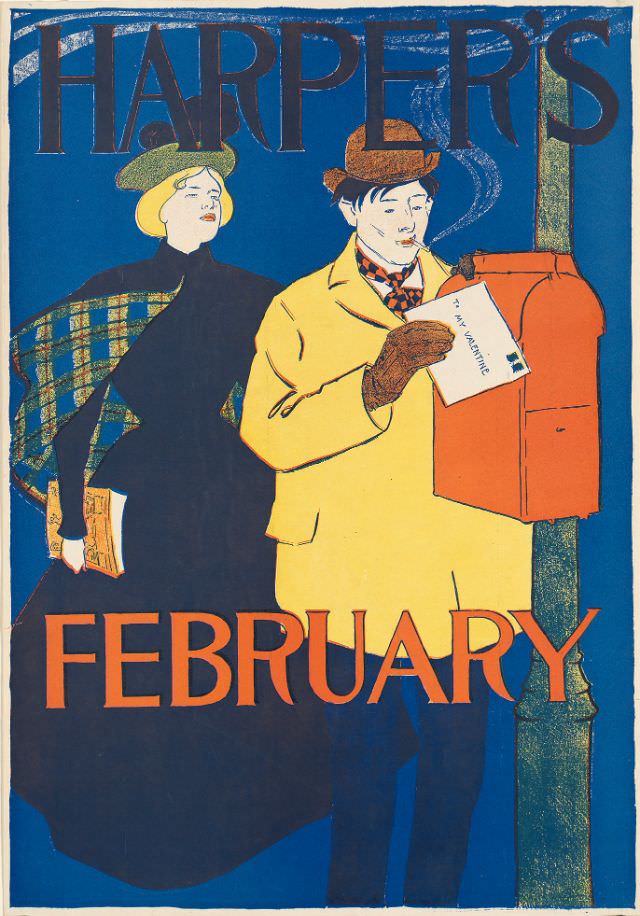
Winter activities appeared on the February 1894 cover, which depicts a man carefully fitting ice skates onto a woman’s shoes. The Christmas 1894 cover takes a quieter domestic tone — a woman on a couch reads a magazine while a cat sits beside her.

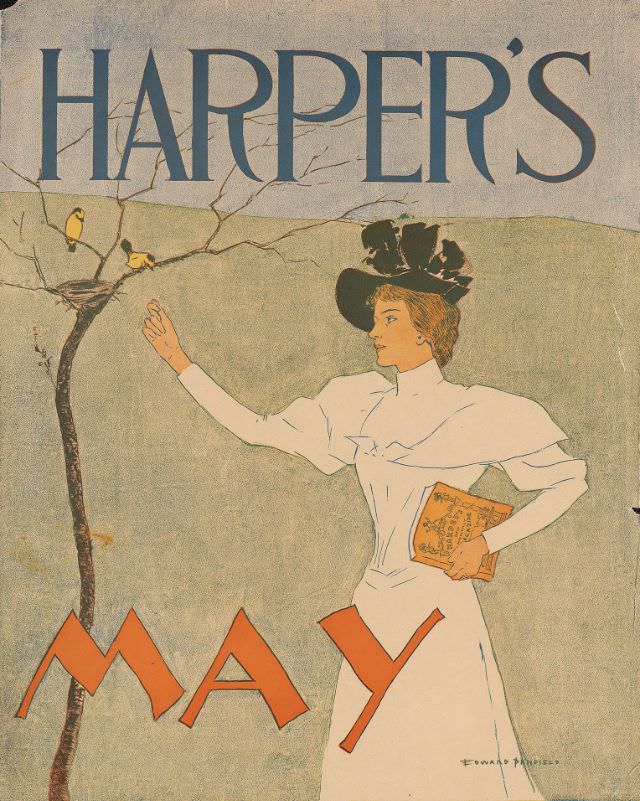
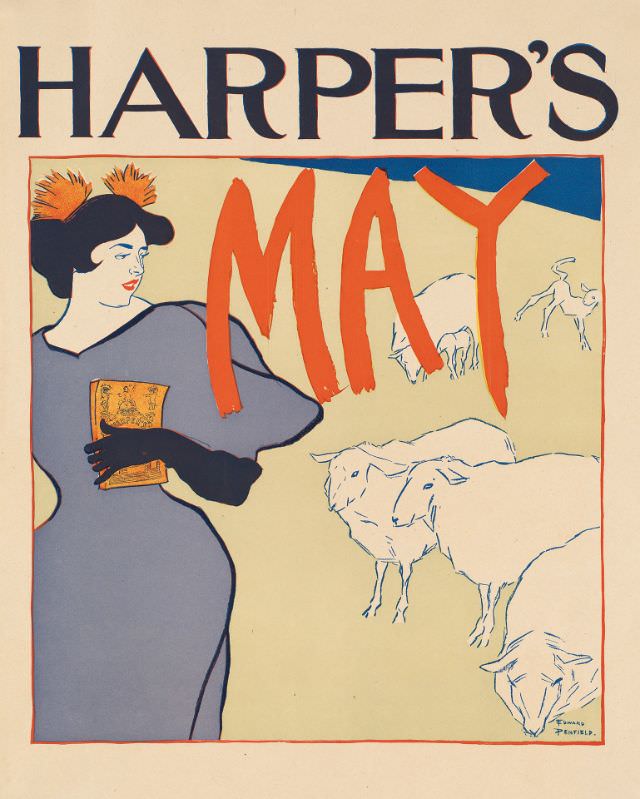
The May 1894 cover pairs a woman holding a magazine with two birds perched near a nest — a gentle, nature-inspired composition typical of the spring issues. Moving into 1895, the covers began to include more historical and cultural references alongside the familiar domestic scenes.
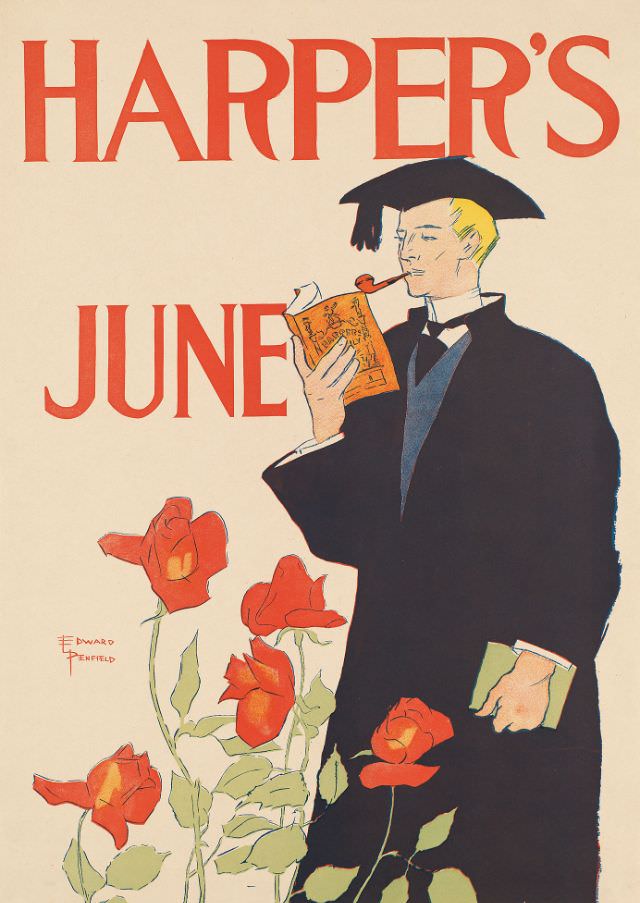
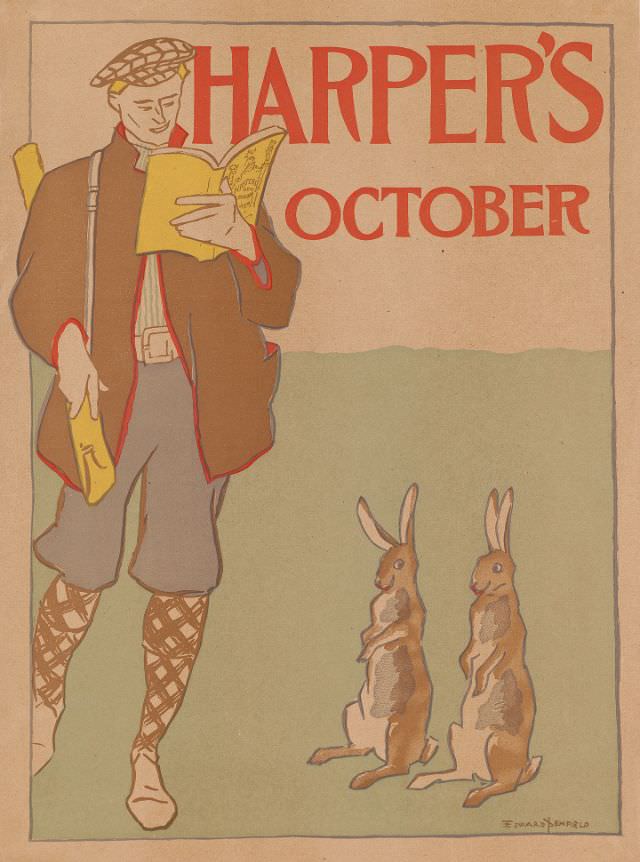
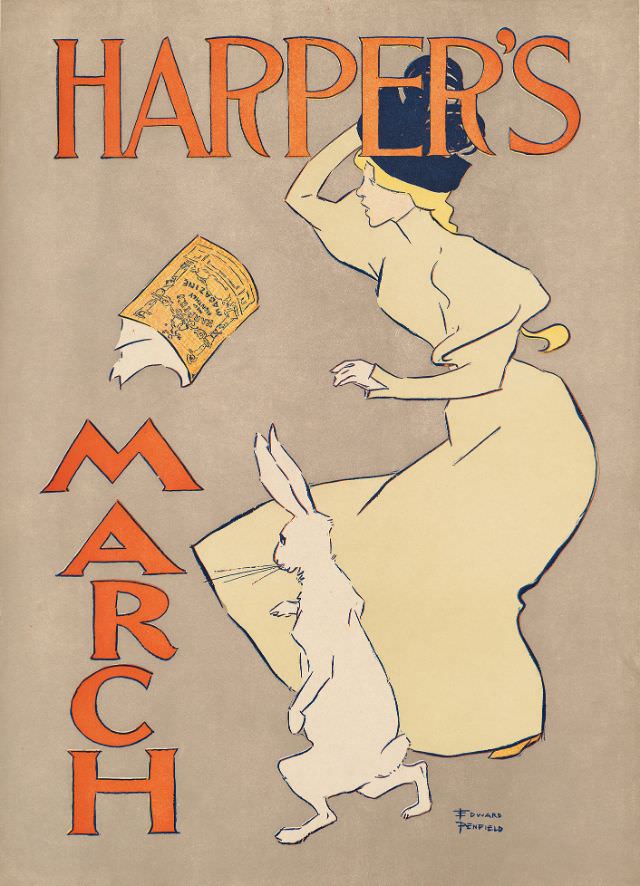
The June 1895 cover features a man in academic cap and gown reading the magazine while smoking a pipe — a scene tied to graduation season. That same year’s October cover adds a playful element: a man in sporting gear reads Harper’s while two rabbits watch on.
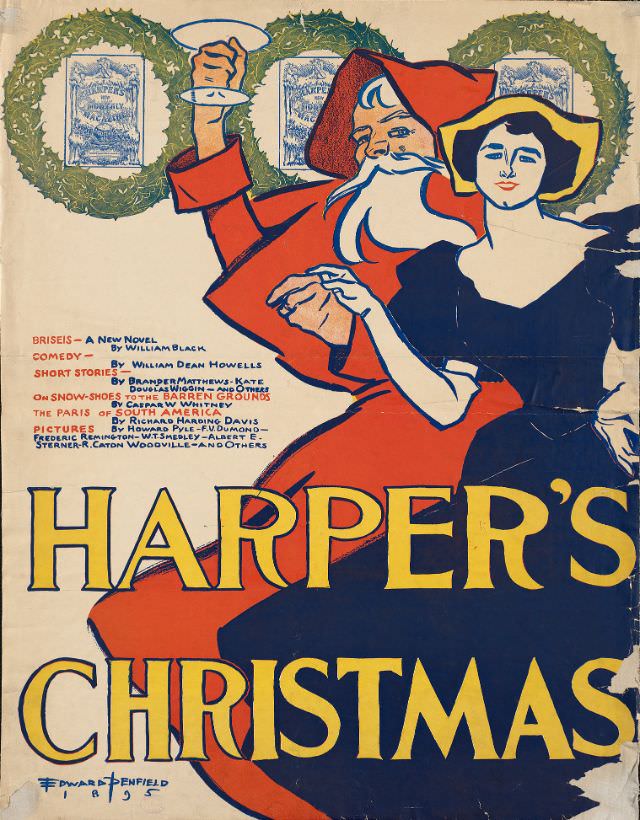
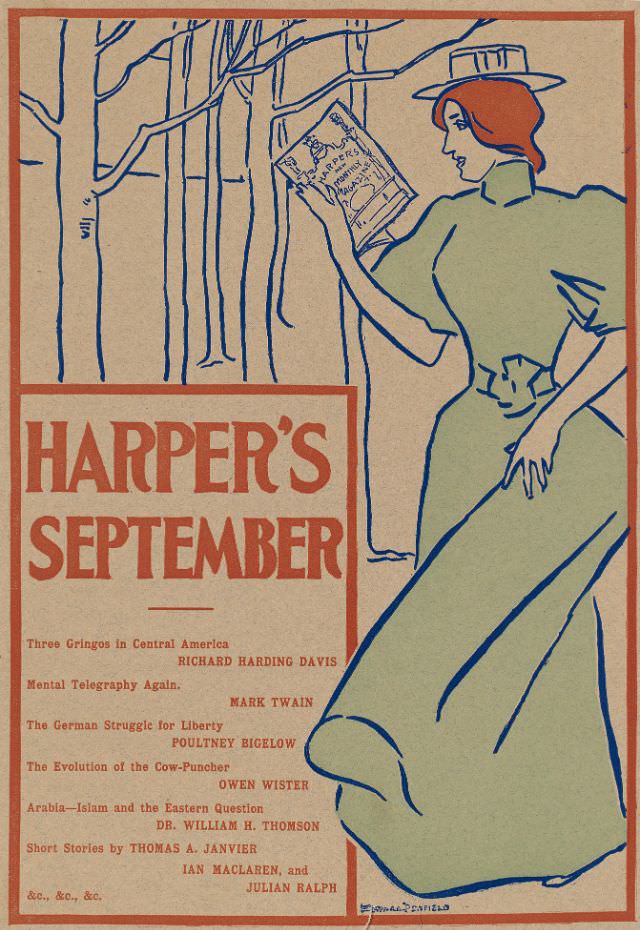
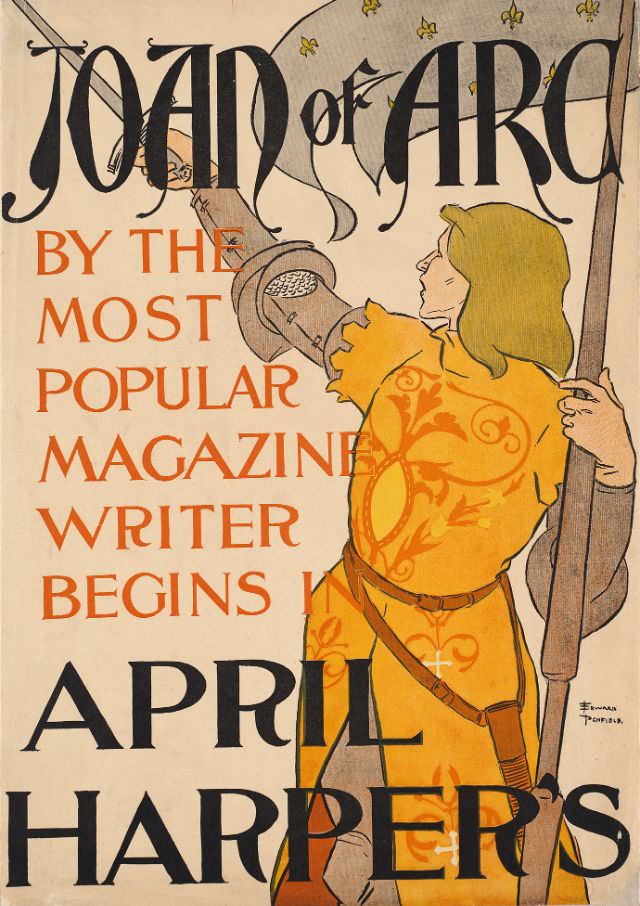
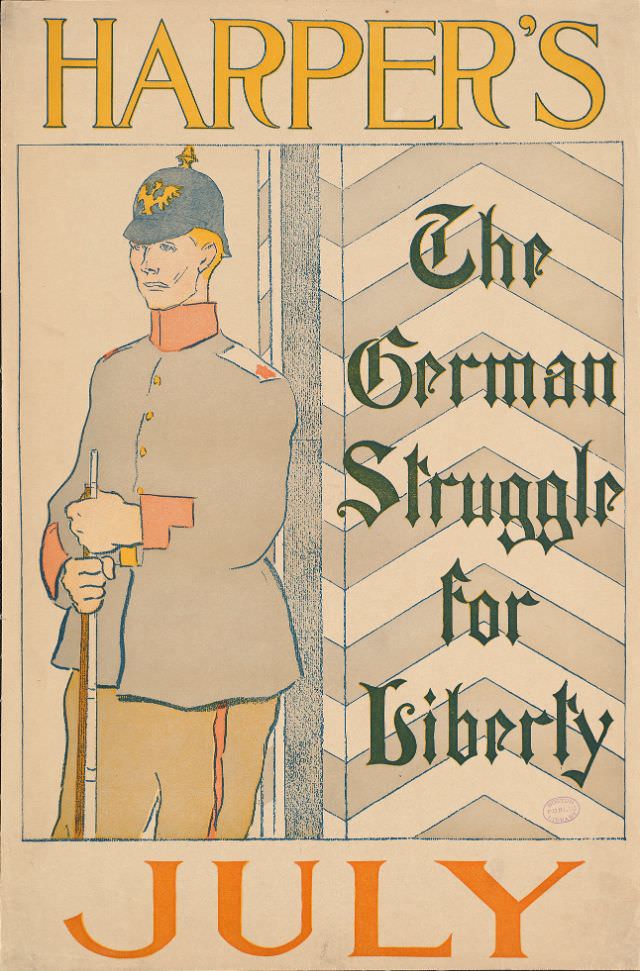
The 1895 Christmas cover takes a festive approach, showing a woman holding Santa Claus’s hand as he raises a coupe glass. Other 1895 covers introduced more striking imagery — including a depiction of Joan of Arc raising her sword and banner for the April issue, and a cover for July referencing the German struggle for liberty.
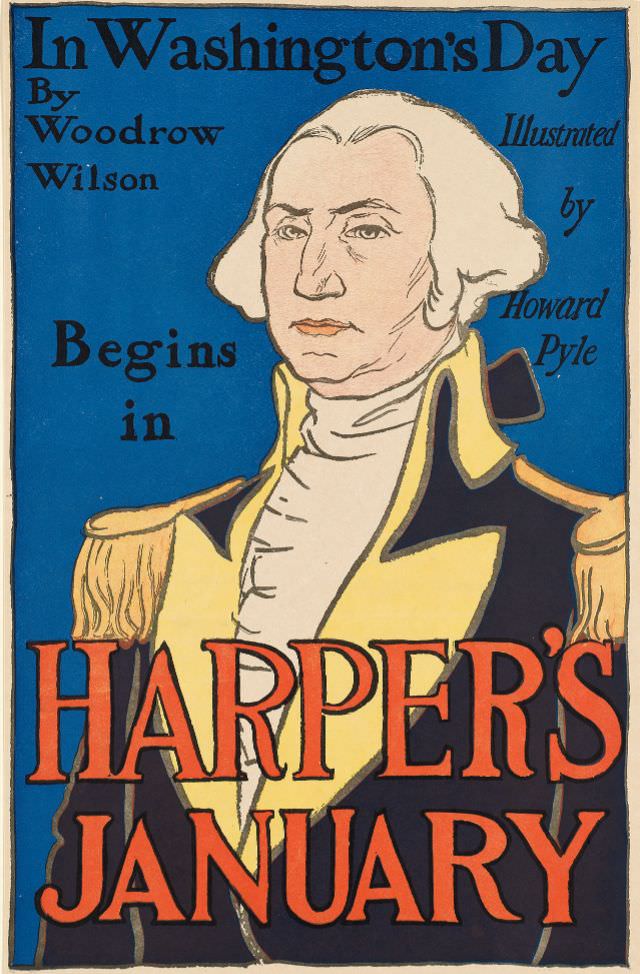
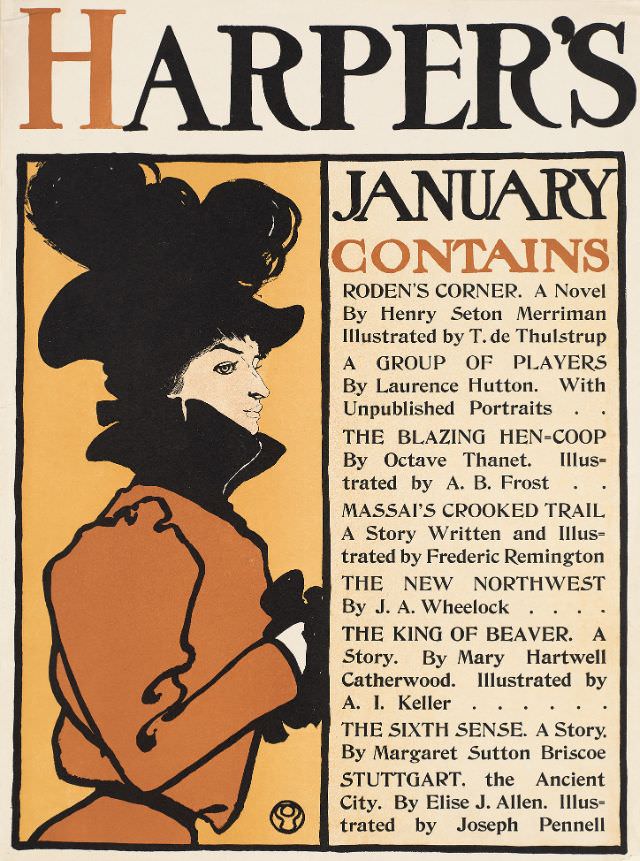
By 1896, the covers maintained their mix of portraiture and period scenes. The January 1896 issue featured a portrait of George Washington, likely tied to historical commemorations of the era. The remaining 1896 covers returned to familiar formats — women in elegant poses, men in carriages, and seasonal themes for Christmas.
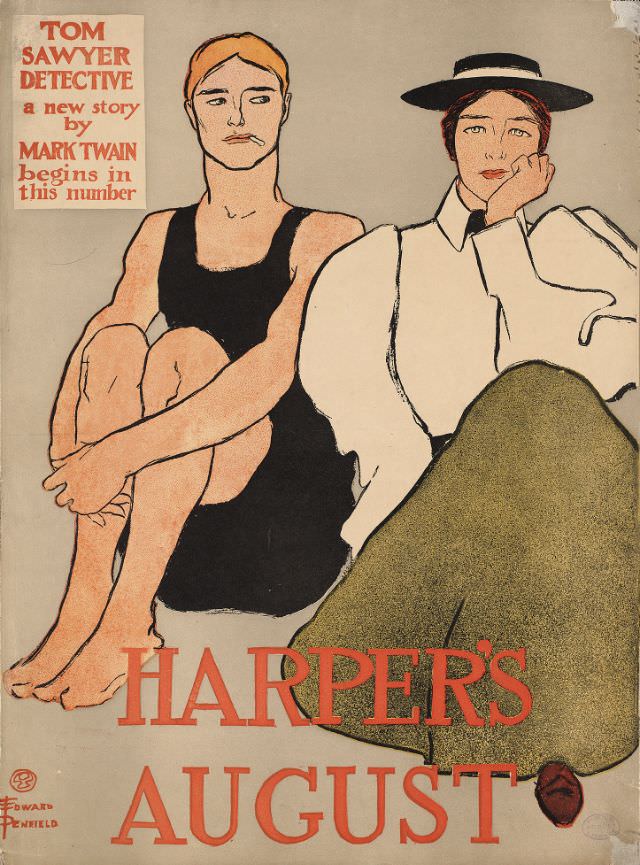
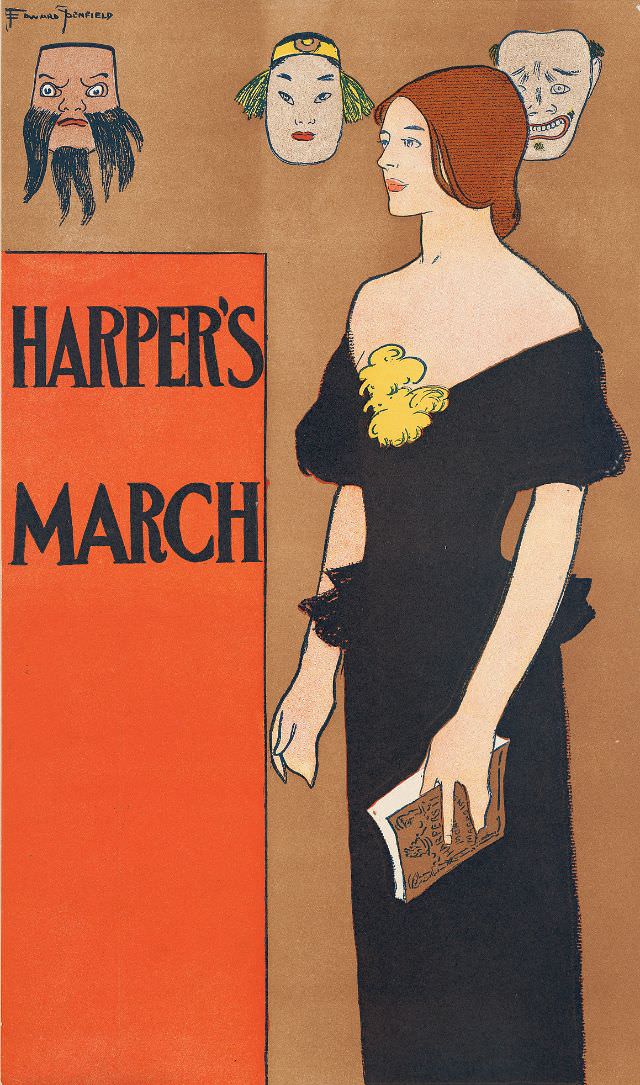
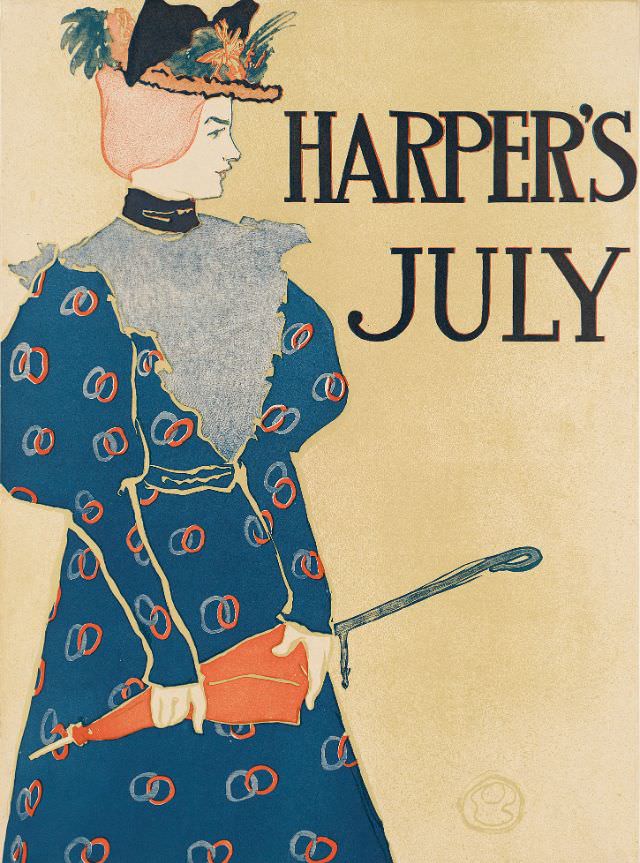
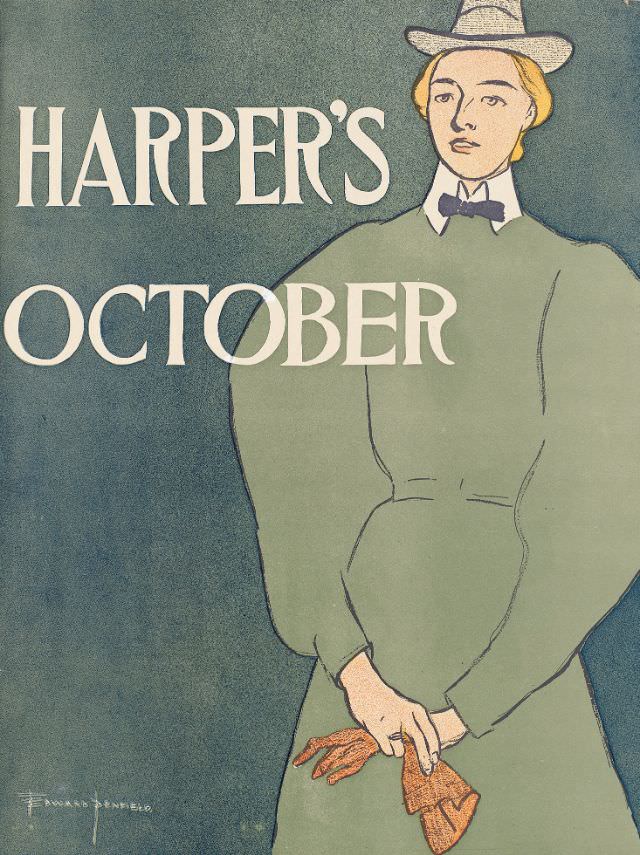
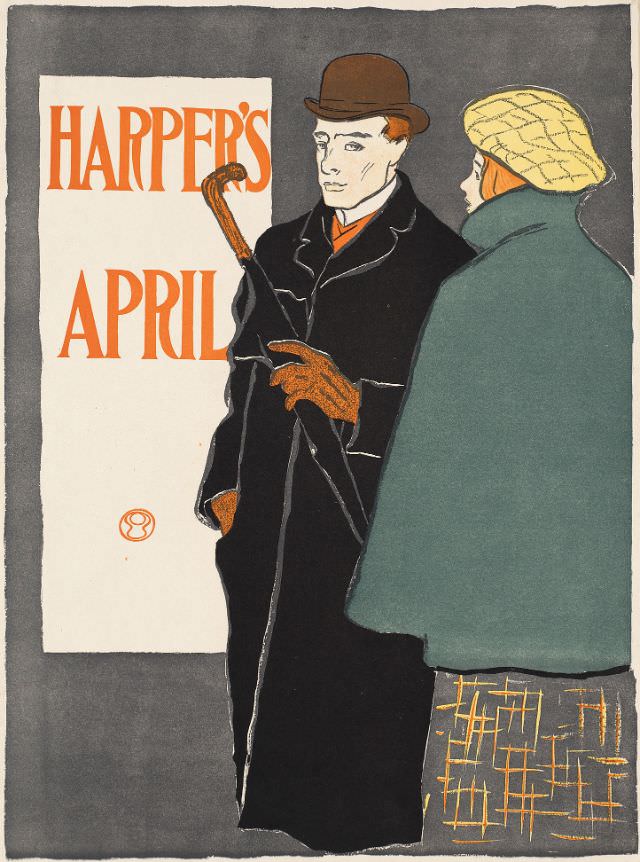
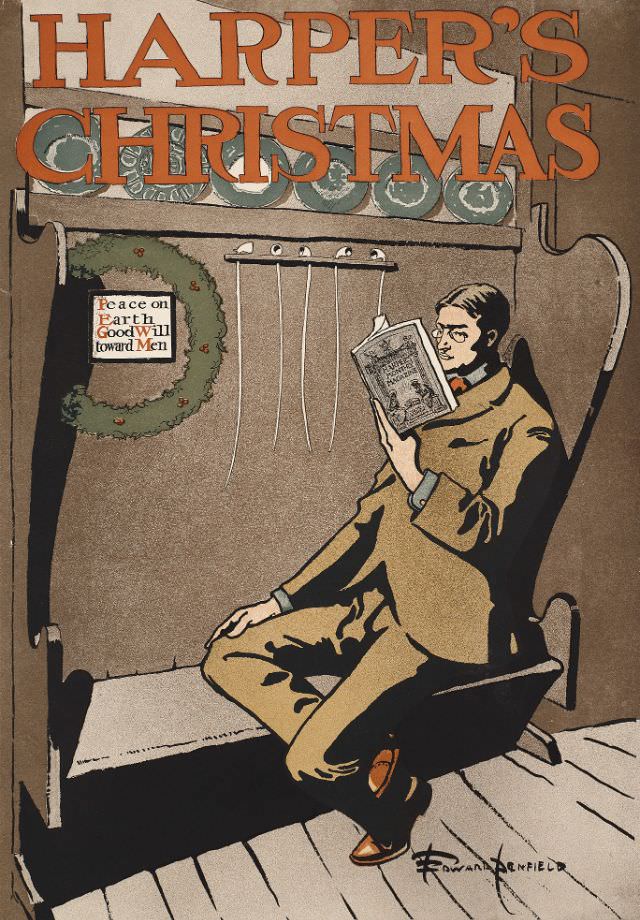
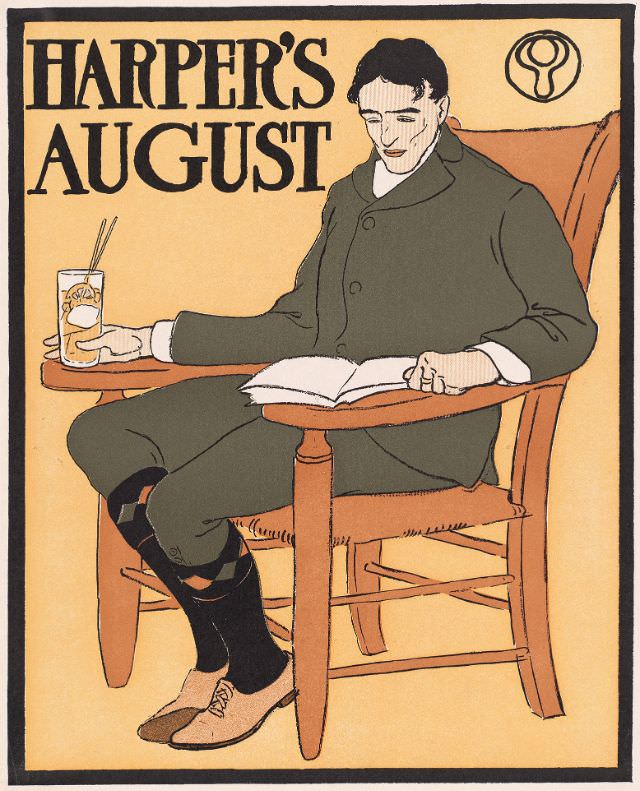
The 1897 covers continued the established visual themes. Women in stylish period dress dominated several issues, while the Christmas 1897 cover returned to the image of a man settled into a chair with a magazine — a recurring motif throughout the decade that linked the act of reading with comfort and leisure.
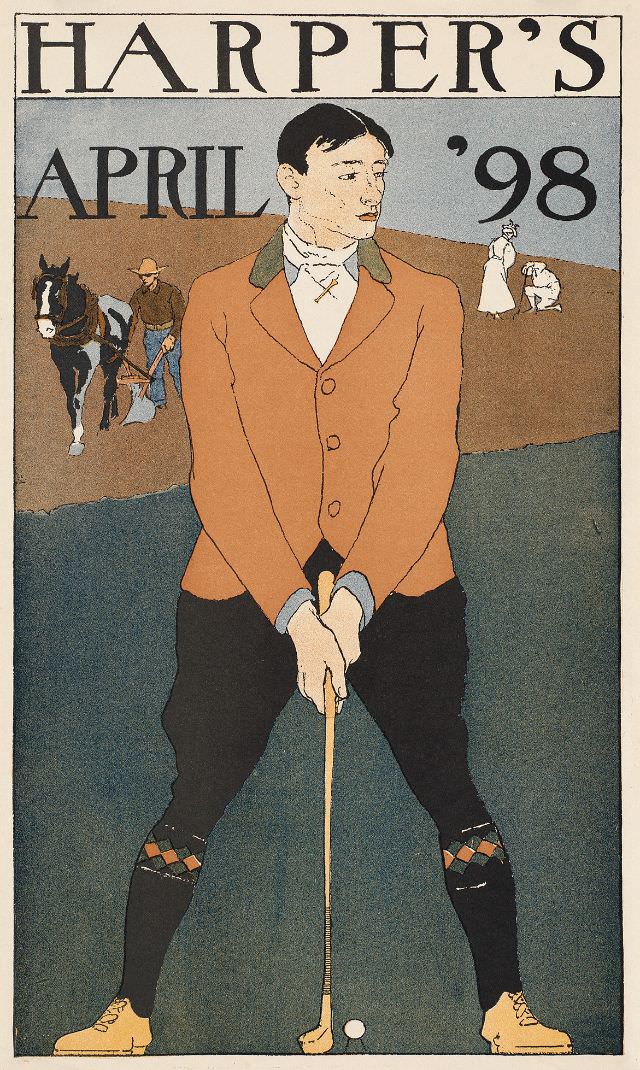
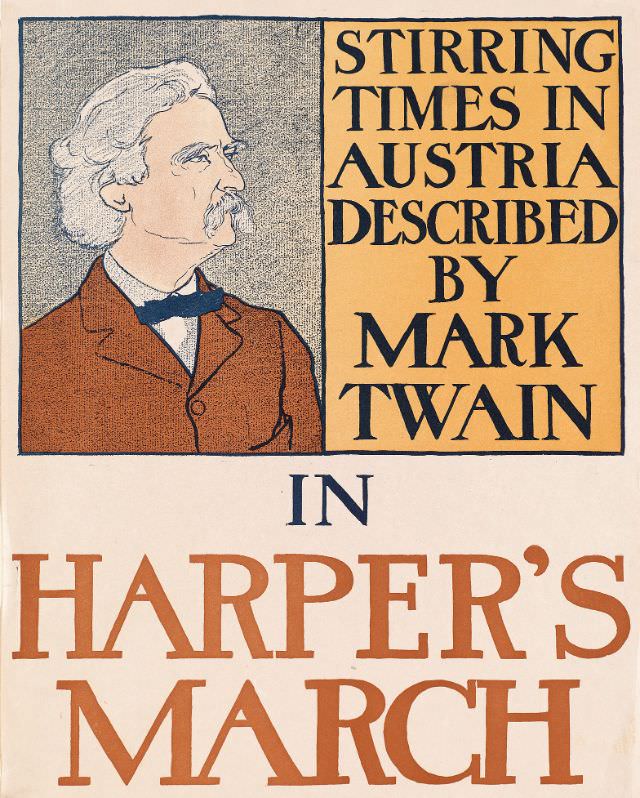
The 1898 covers brought in some of the decade’s most varied subject matter. The April 1898 issue showed a man poised to strike a golf ball — reflecting the sport’s growing popularity among the middle and upper classes. The March 1898 issue carried a notable editorial hook: a piece by Mark Twain titled “Stirring Times in Austria,” which appeared directly on the cover.
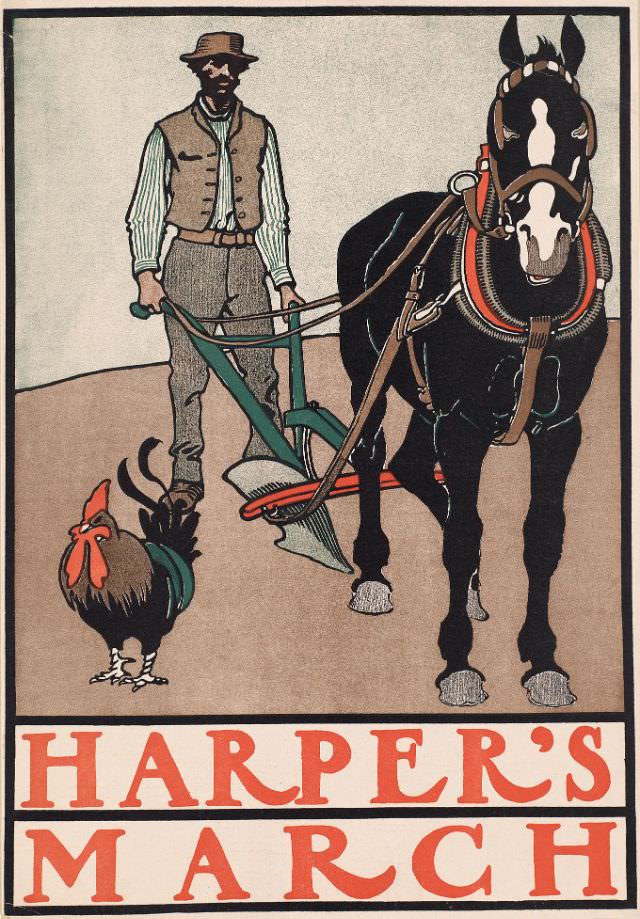
The final cover in this collection, from March 1899, shows a man guiding a horse-drawn plough — a grounded, rural image that stood apart from the urban and domestic scenes that filled most of the decade’s covers. Taken together, these 45 covers from the Boston Public Library’s archive document how Harper’s presented itself to readers across an entire decade, issue by issue.