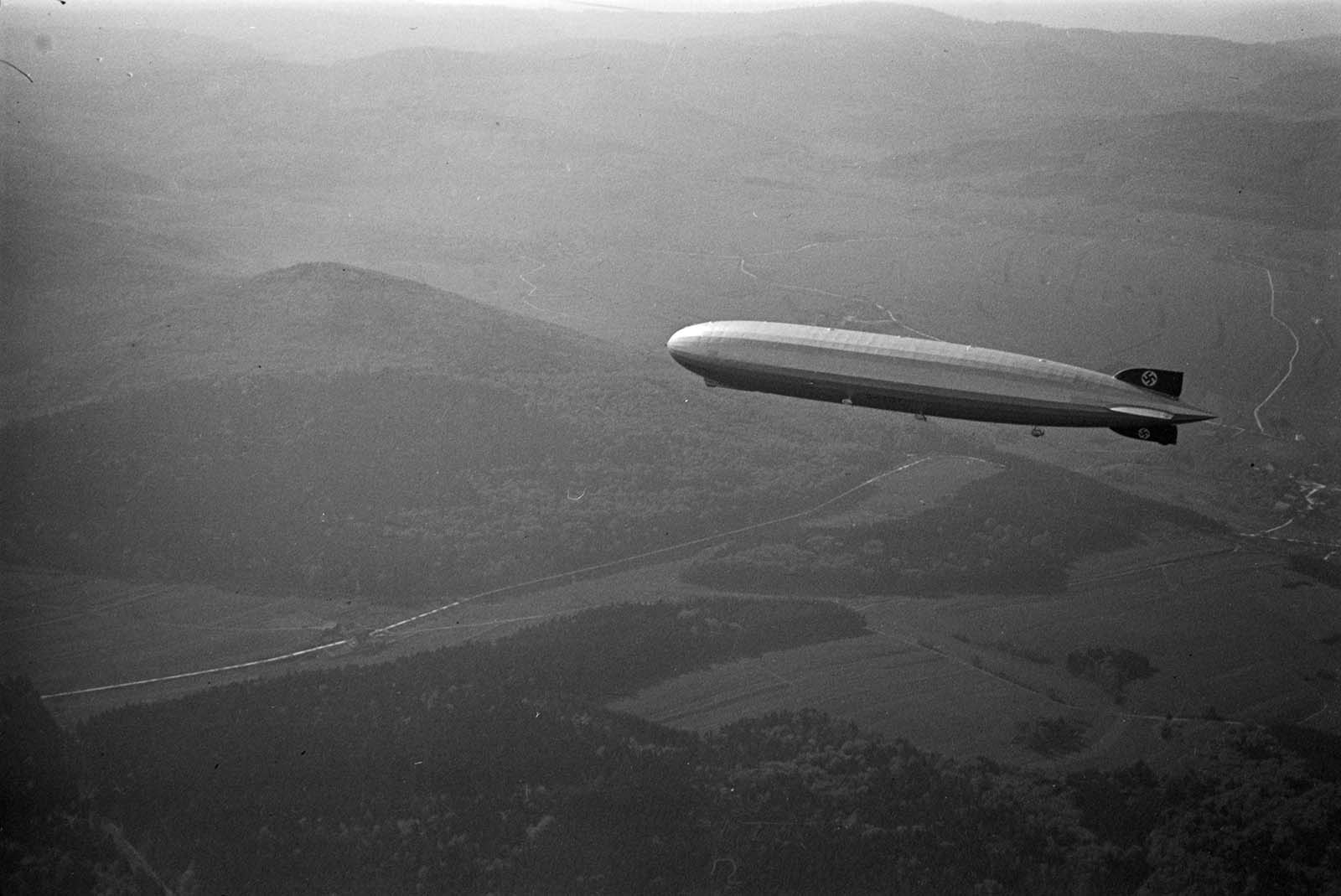
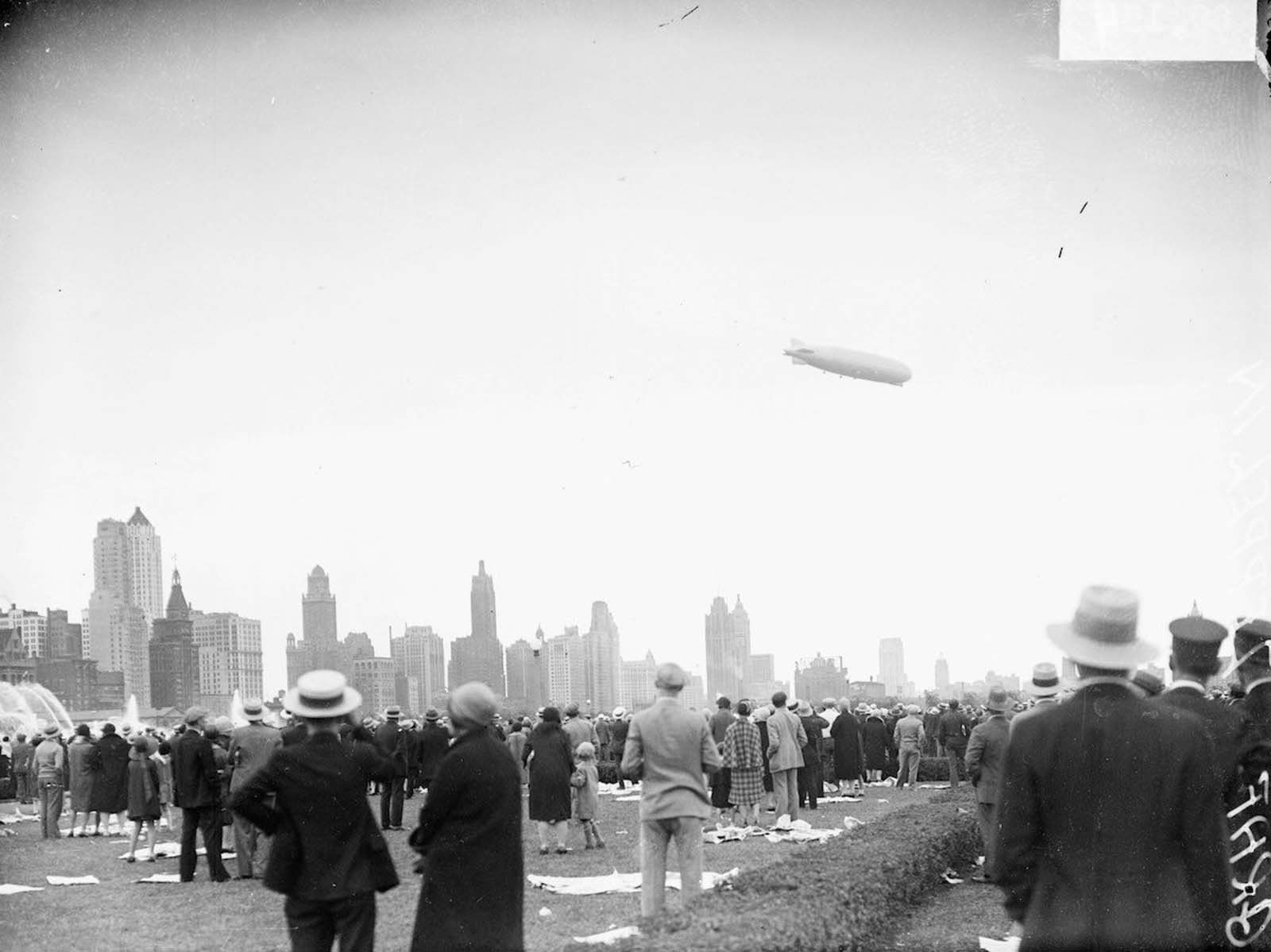
On a late afternoon in August 1929, the sky above Chicago stopped everyone in their tracks. At around 5:20 p.m., the airship Graf Zeppelin LZ 127 appeared over the Loop, floating above the downtown streets at low altitude for 18 minutes before disappearing into the hazy eastern sky just three minutes after crossing the lakeshore. Rain had threatened all afternoon, but the clouds parted the moment the massive silver craft arrived — almost as if on cue.
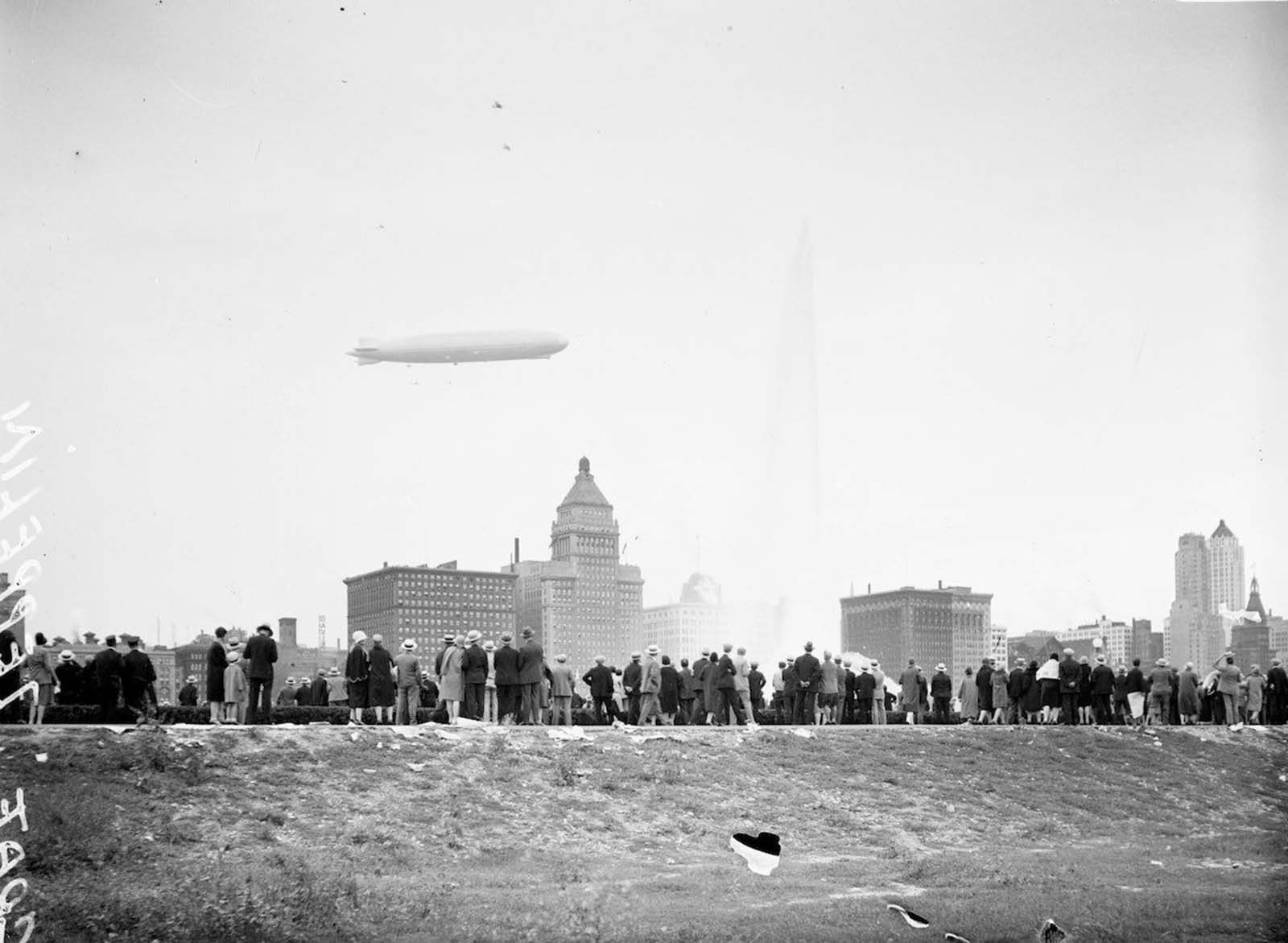
The crowds that gathered were enormous. Spectators had traveled from towns and cities up to a hundred miles away. They packed every building rooftop, every sidewalk, and every open window in the Loop. The moment the first glimpse of the Zeppelin appeared, automobile horns erupted across the city. Railroad locomotive engineers added their steam whistles to the roar. On the lake and the river, tugboats and larger vessels sounded their horns in response.
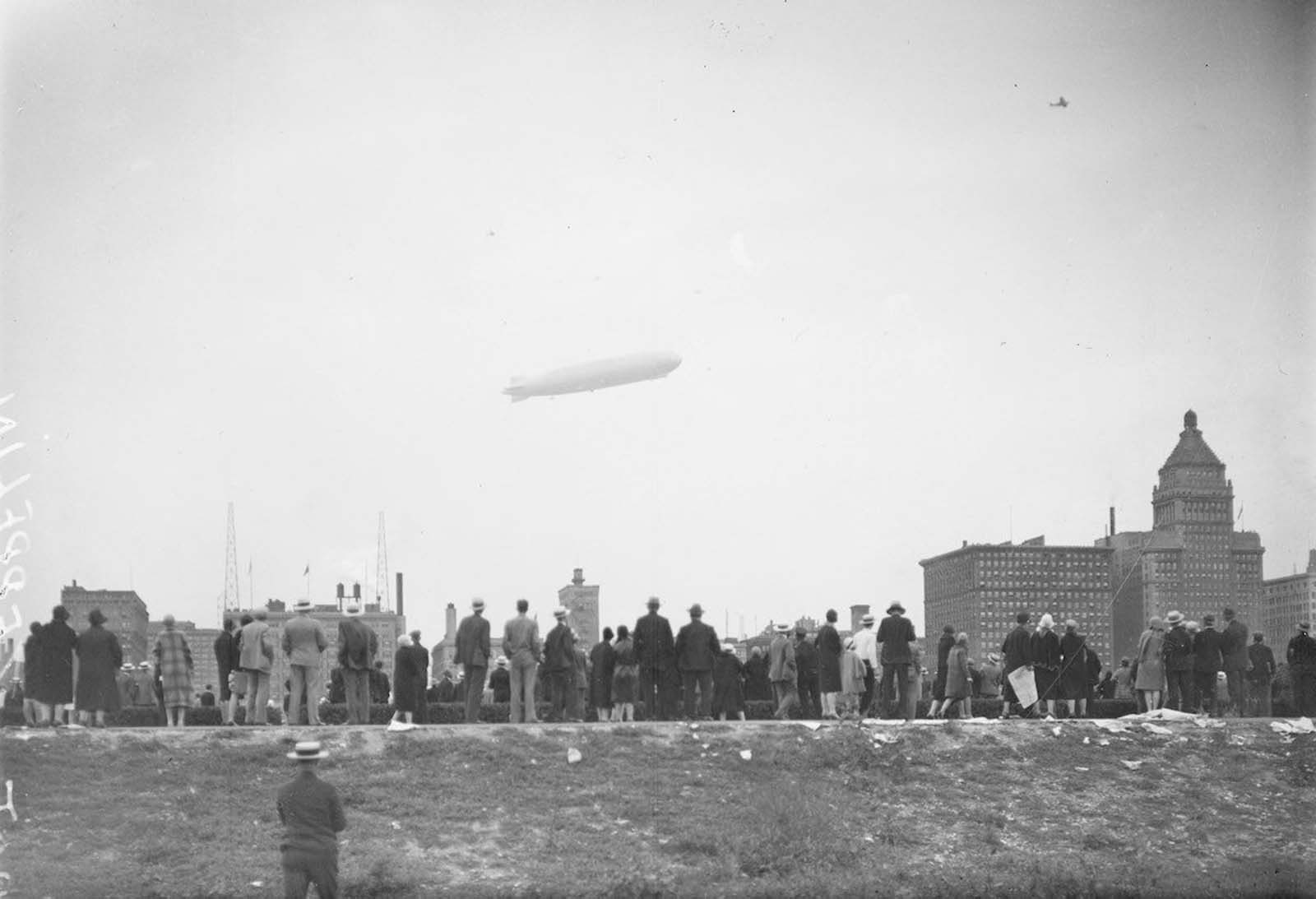
The airship did not simply pass over the city in a straight line. It performed a giant figure-eight over Chicago, swinging north to circle Tribune Tower, then south to Soldier Field, where thousands of people cheered from the stands and surrounding grounds. It then turned north again toward Lincoln Park before crossing out over Lake Michigan and vanishing from view.
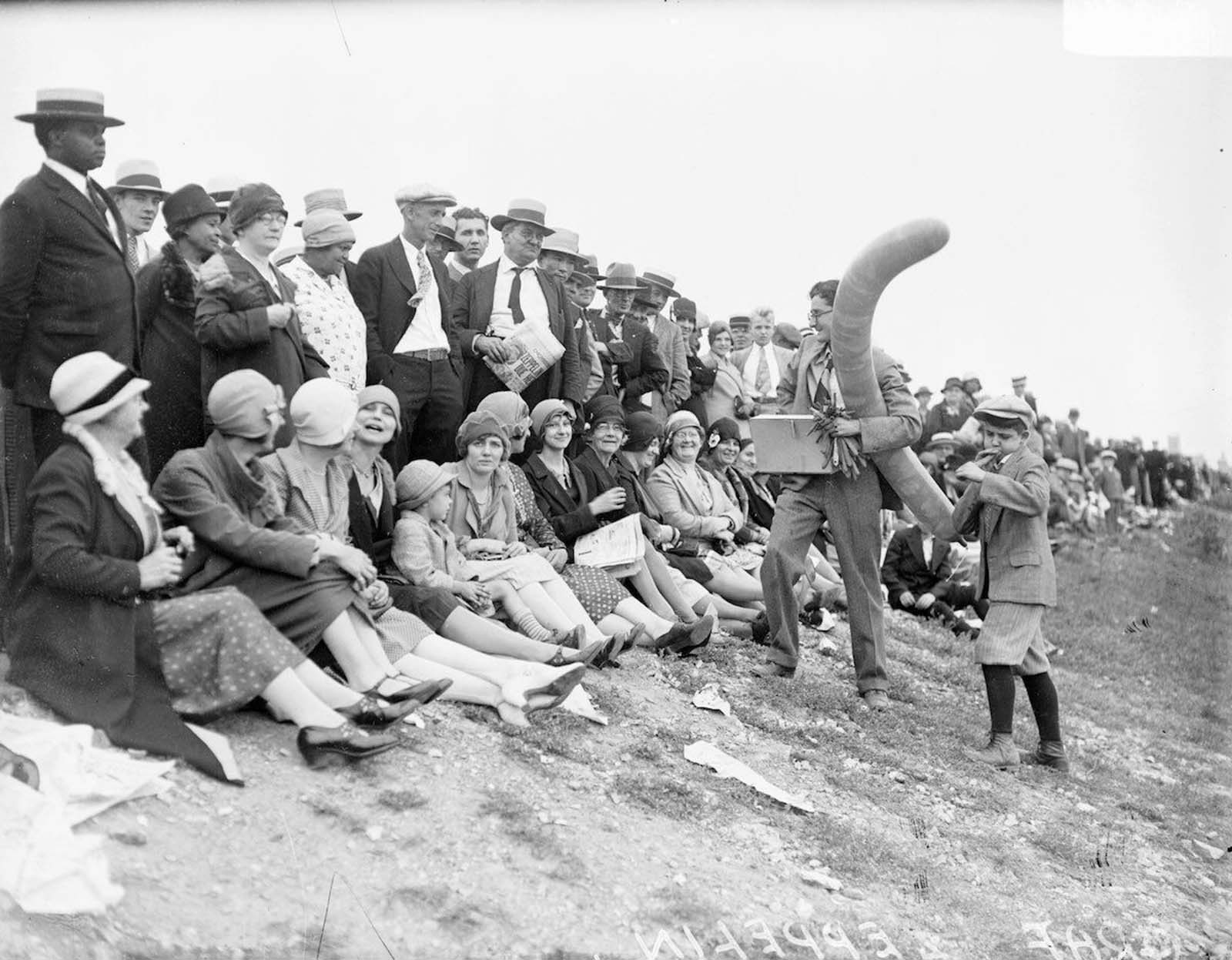
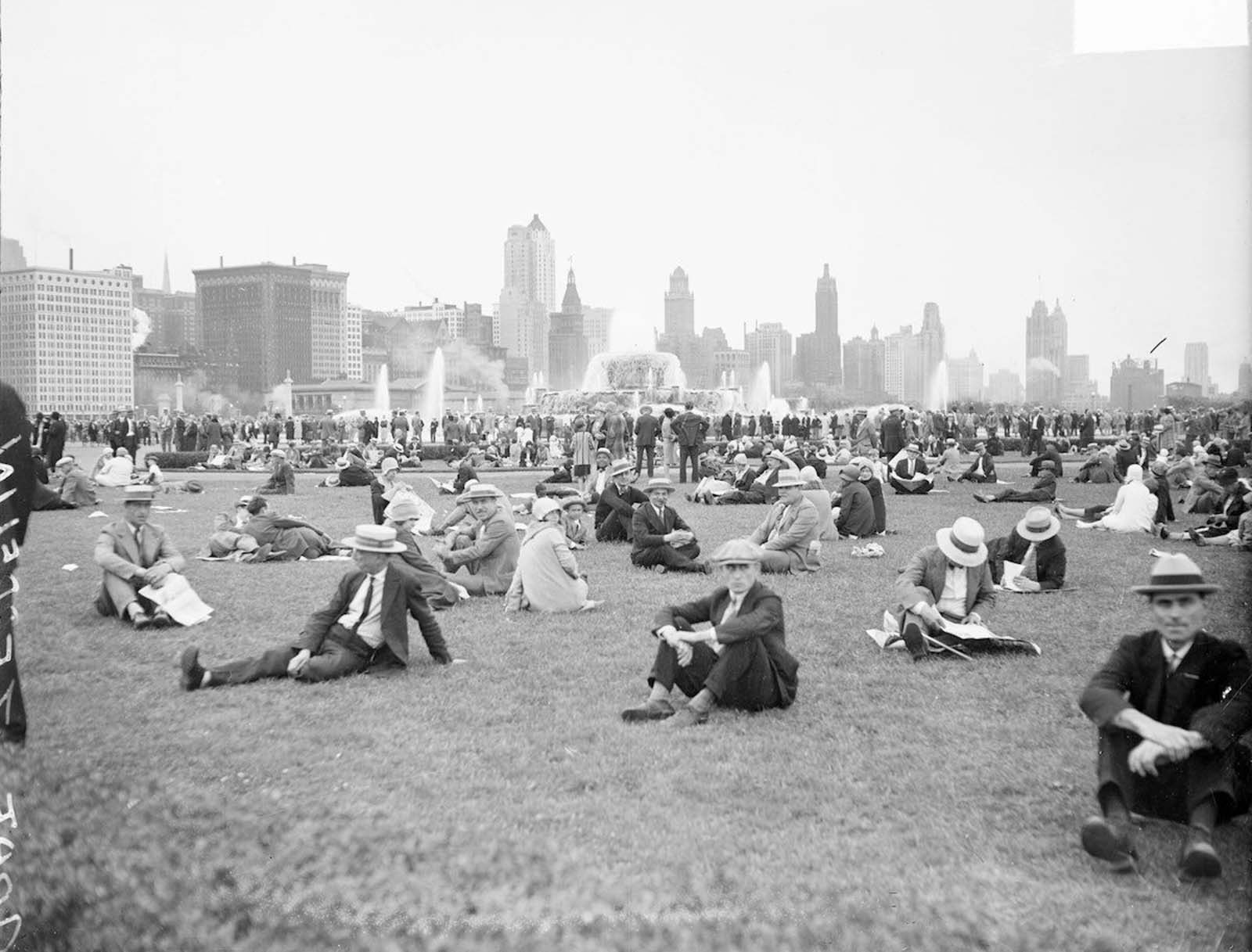
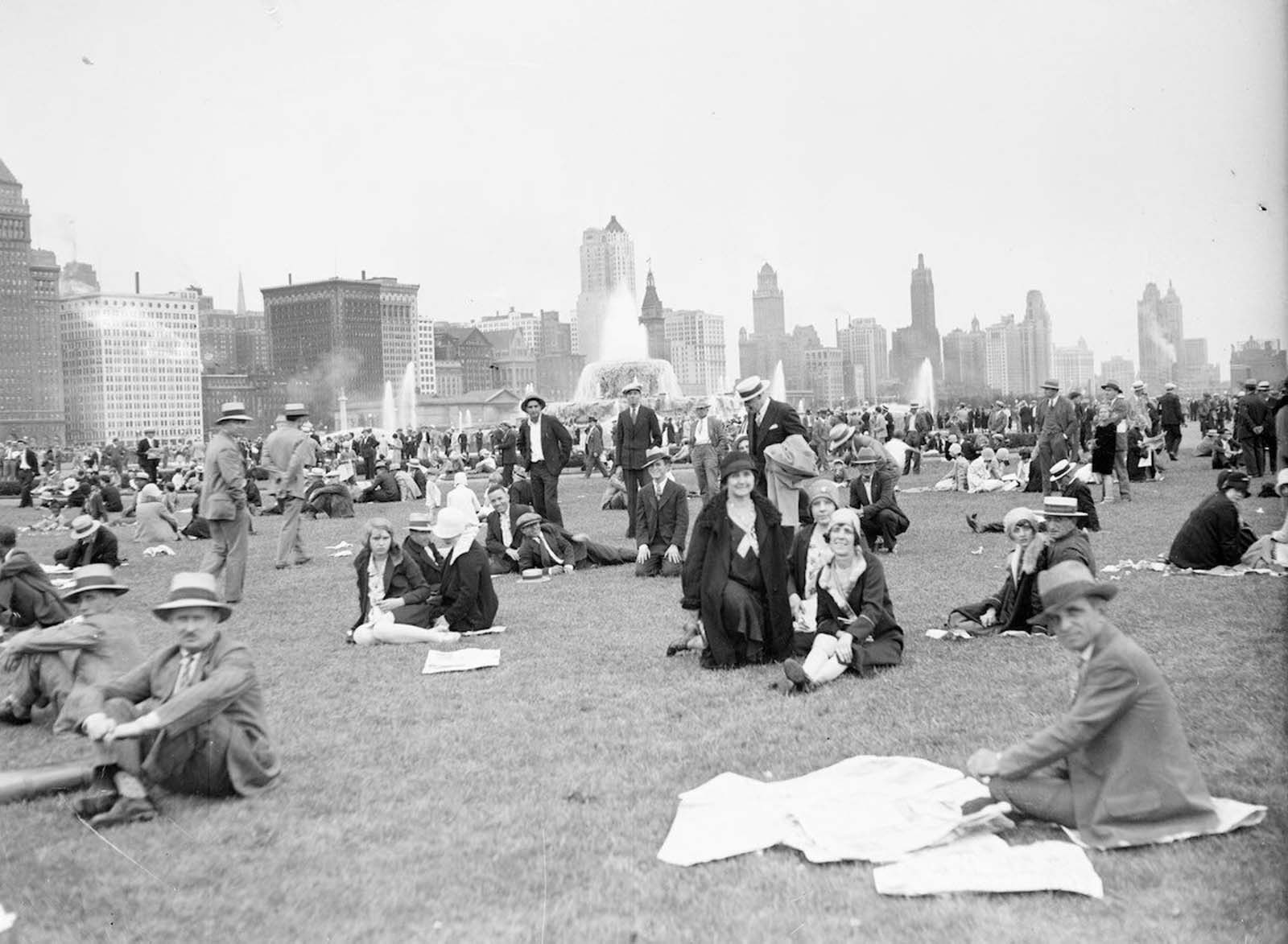
Grant Park became one of the prime vantage points during the flyover. Crowds gathered near Buckingham Fountain, which had only been dedicated the year before in 1927, to watch the enormous craft drift overhead. With the Chicago skyline rising behind them and the Zeppelin filling the sky above, the scene was unlike anything the city had witnessed before.
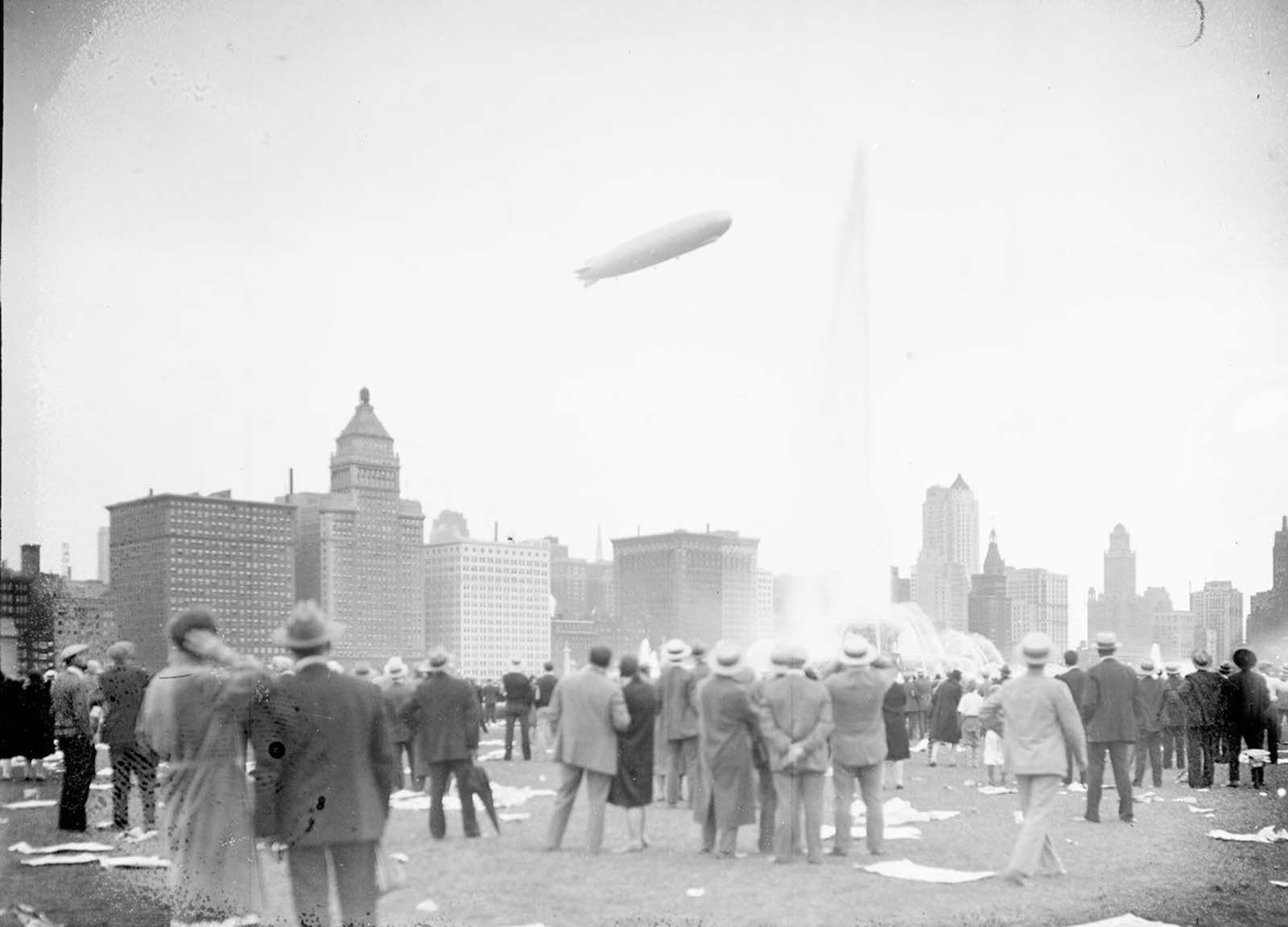
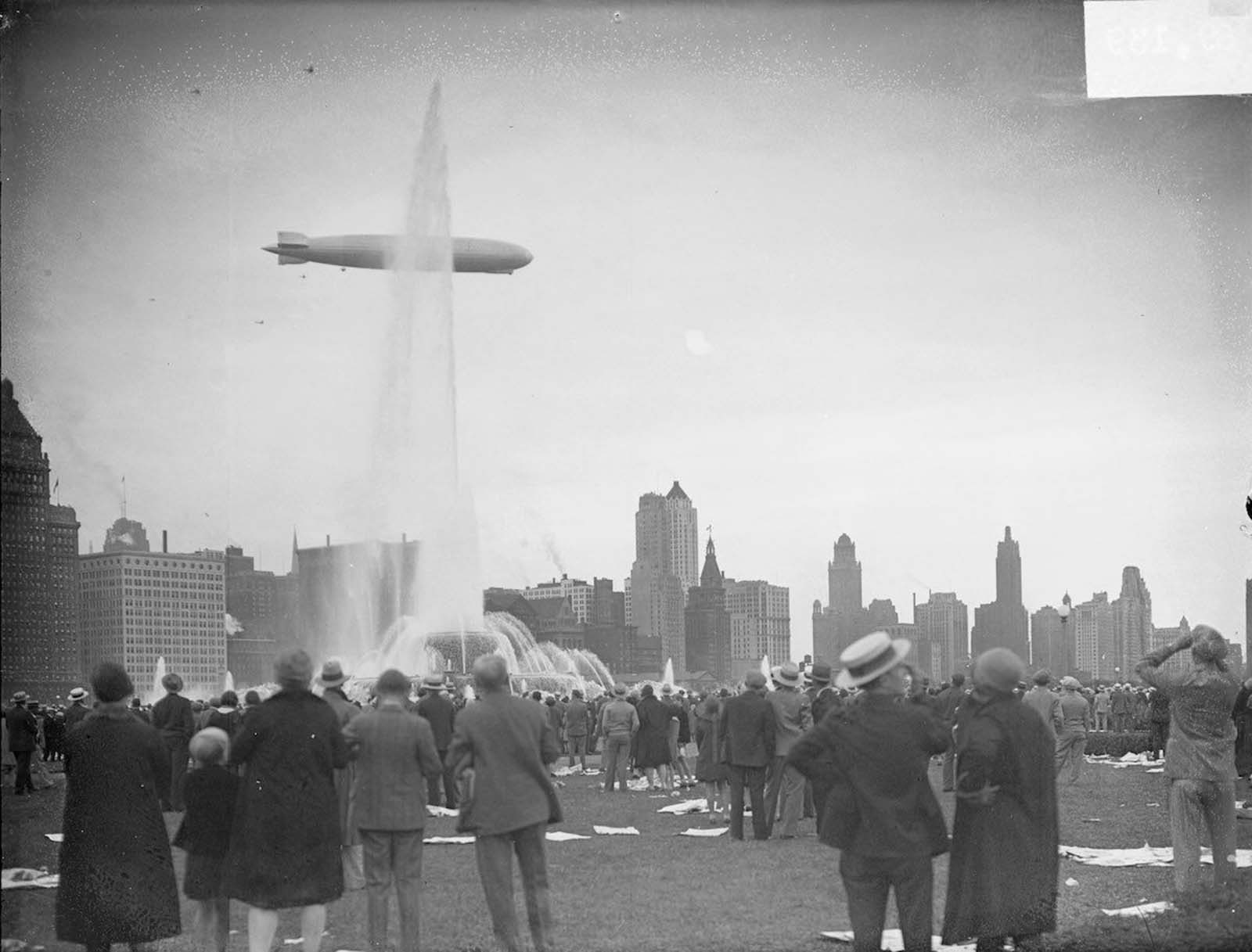
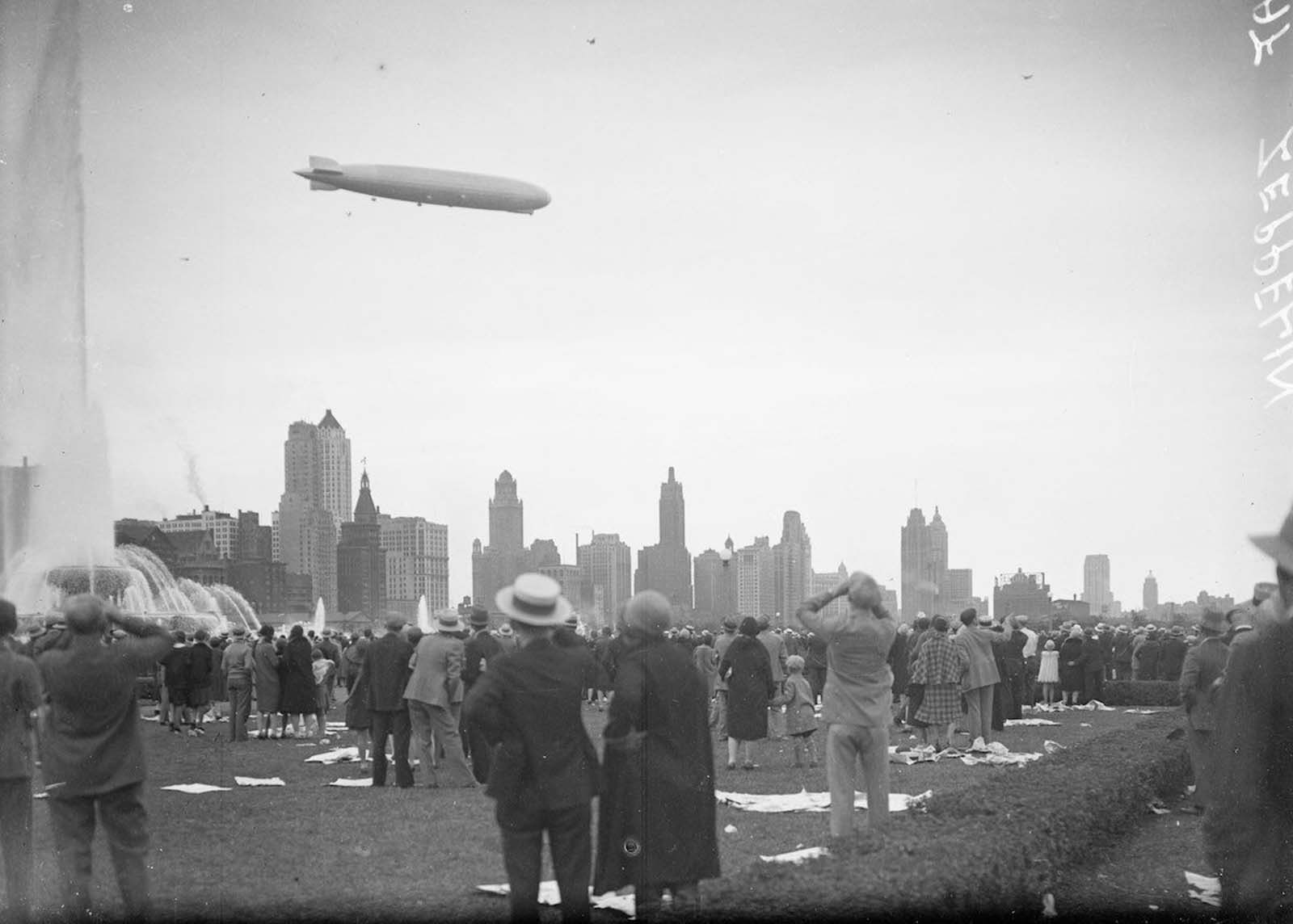
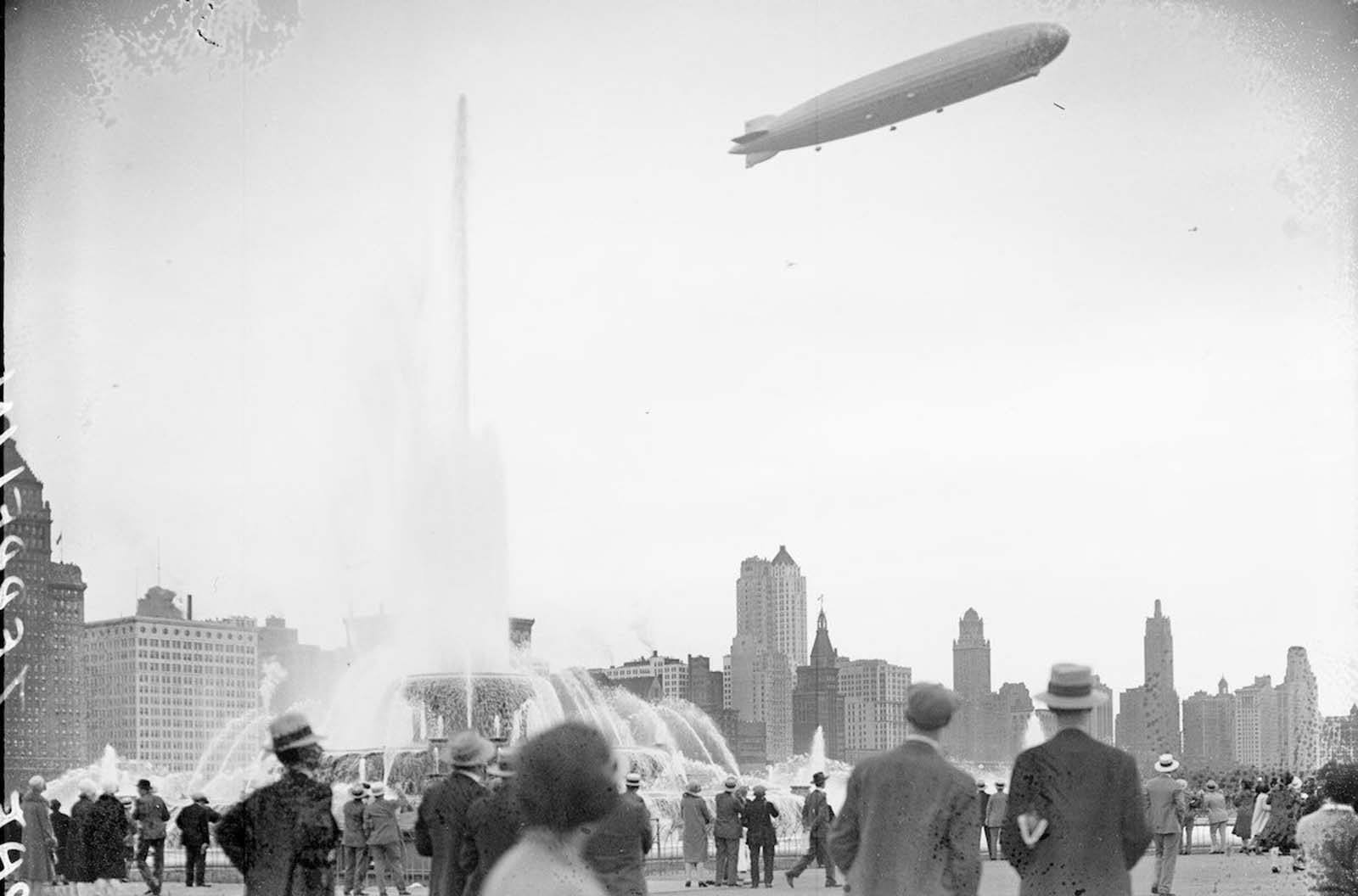
The Chicago flyover was one stop during the Graf Zeppelin’s historic round-the-world voyage — a journey covering approximately 21,250 miles across five legs: Lakehurst to Friedrichshafen, Friedrichshafen to Tokyo, Tokyo to Los Angeles, Los Angeles to Lakehurst, and finally Lakehurst back to Friedrichshafen. It was the first passenger-carrying round-the-world flight in history, and the world’s press covered it intensively. American newspaper publisher William Randolph Hearst funded roughly half the trip’s cost in exchange for exclusive media rights in the United States and Britain.
The Graf Zeppelin was, at the time of its construction, the most famous and longest airship in the world. It carried a crew of 36 and had room for 24 passengers. It used Blau gas — a type of hydrocarbon fuel — rather than hydrogen for propulsion, which allowed it to cross the Pacific Ocean nonstop for the first time ever. The airship completed 590 flights over its operational life, traveling nearly 1.7 million kilometers in total.
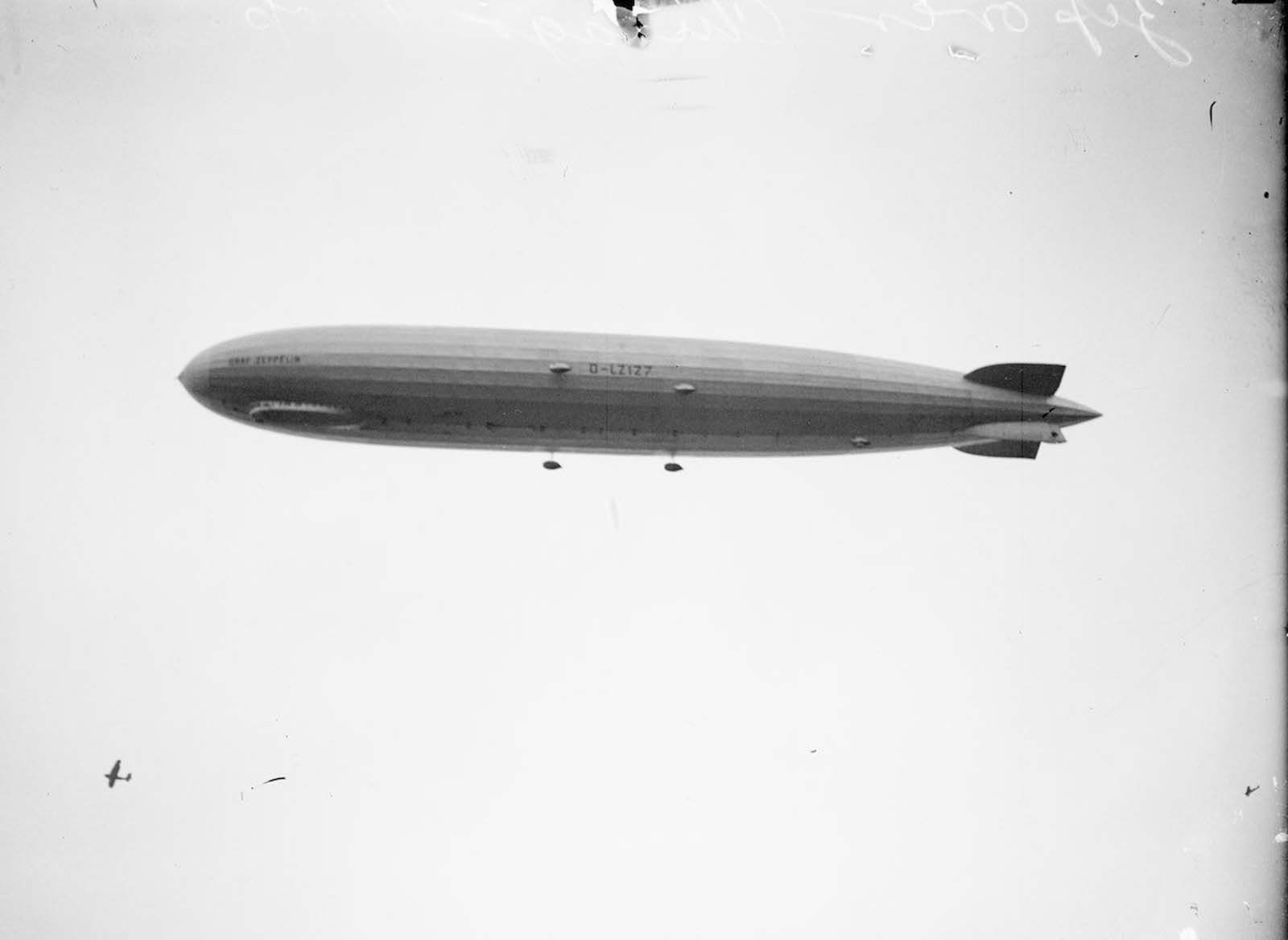
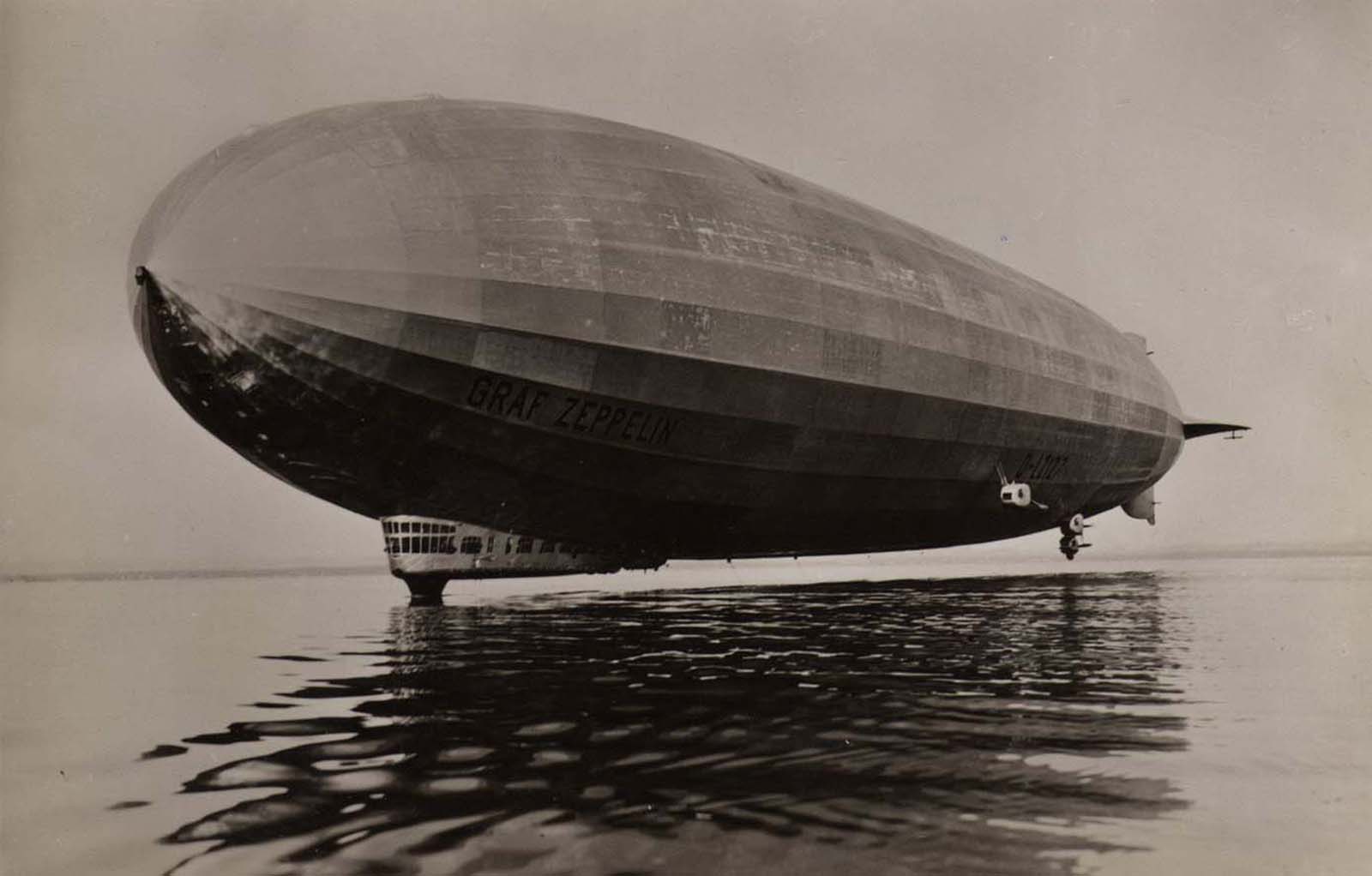
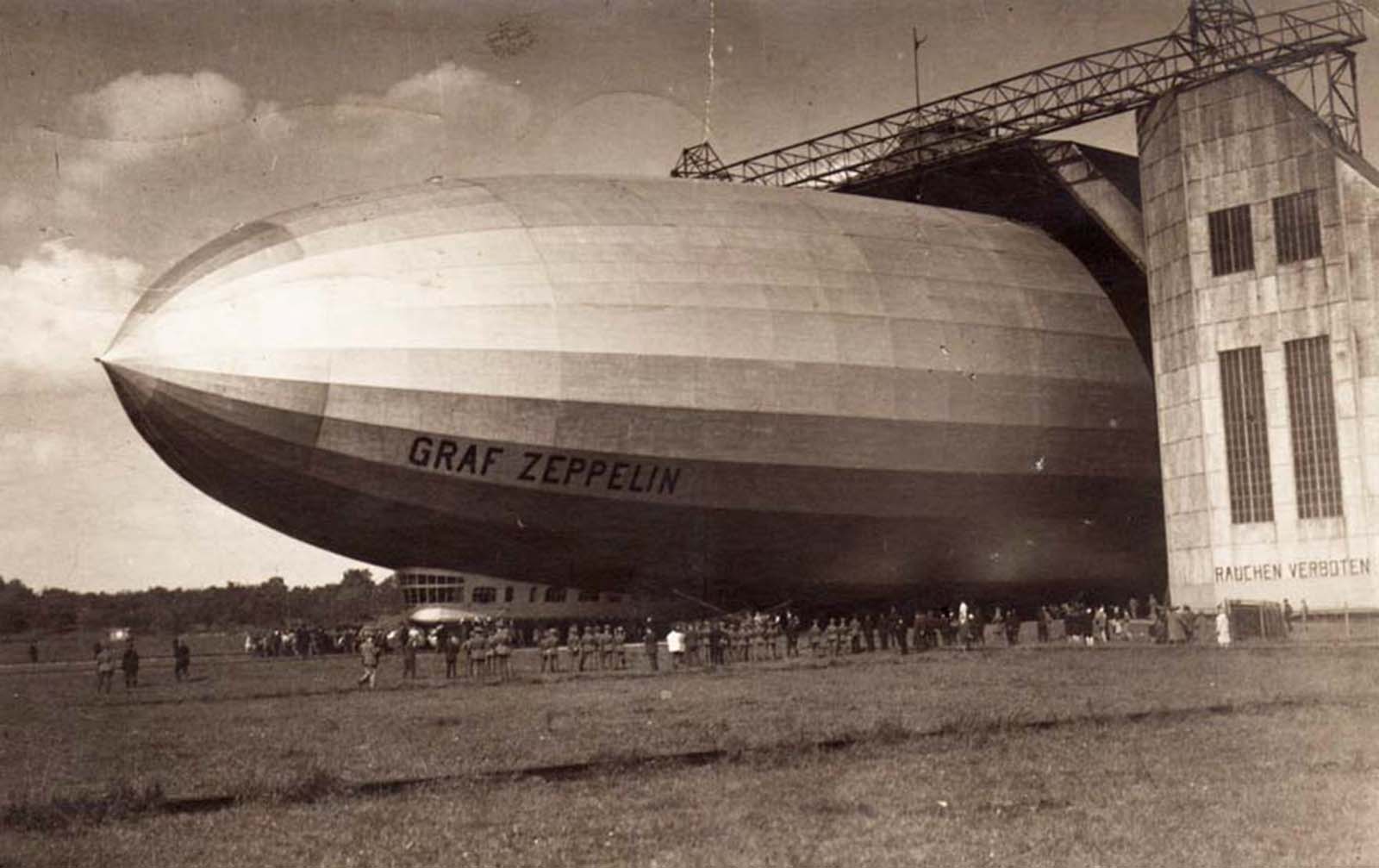
The Graf Zeppelin’s home base was Friedrichshafen, Germany, where it was housed in a massive hangar between missions. From 1928 onward, it operated a regular commercial passenger and mail service between Germany and Brazil, making it a fixture of transatlantic travel for several years. It also completed a voyage to the Arctic.
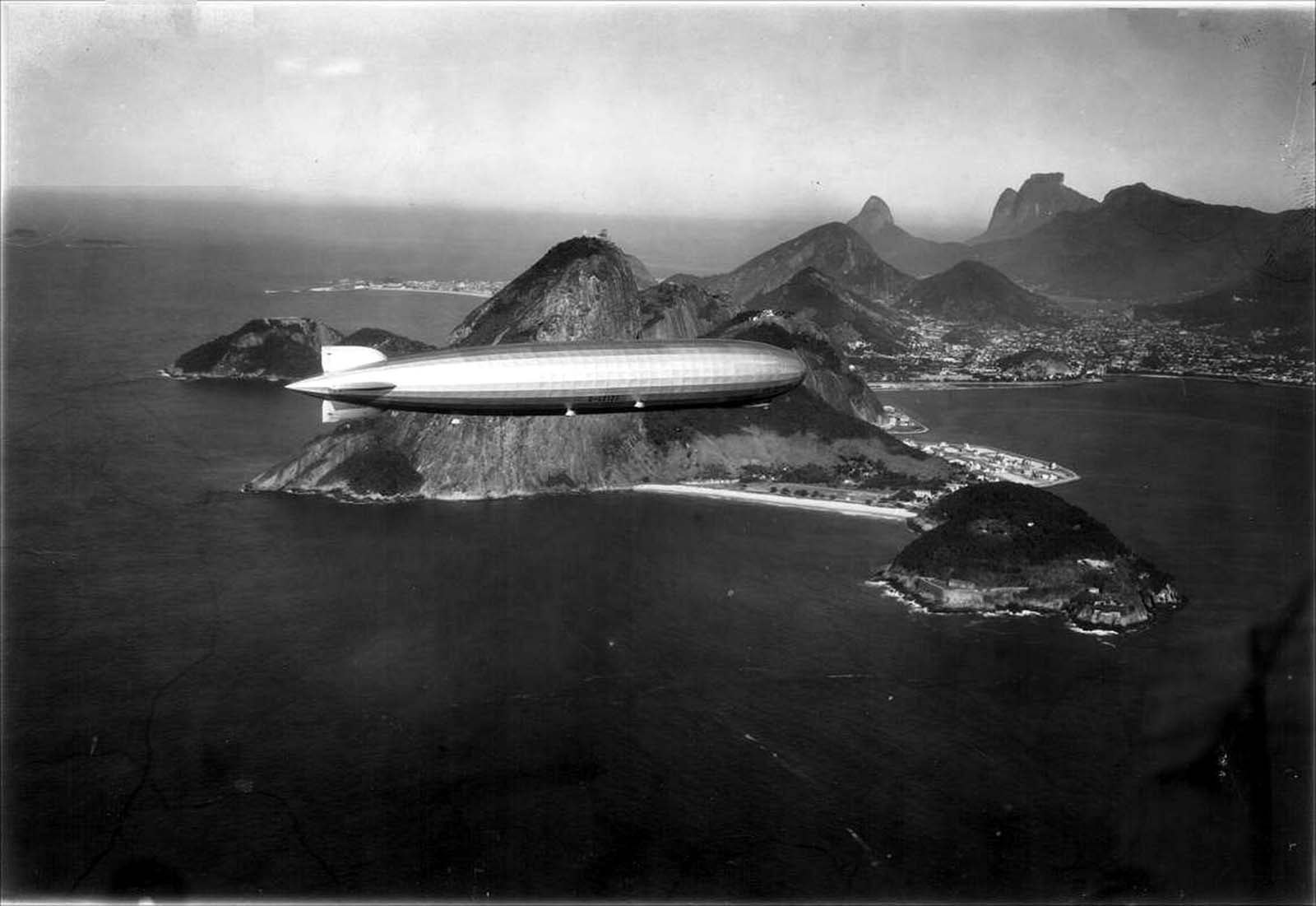
Beyond the Chicago flyover and the round-the-world voyage, the Graf Zeppelin logged routes across South America as well. Its appearance over Rio de Janeiro in 1930 drew similarly large crowds, demonstrating how the airship captured public attention wherever it traveled.
The Graf Zeppelin continued flying throughout the 1930s, becoming a recognizable sight over Germany and other parts of Europe. After the Hindenburg disaster in May 1937 — in which the Hindenburg airship caught fire and burned at Lakehurst, New Jersey — the Graf Zeppelin was pulled from service. By 1940, it had been scrapped, its aluminum frame and materials repurposed for military aircraft production during World War II.