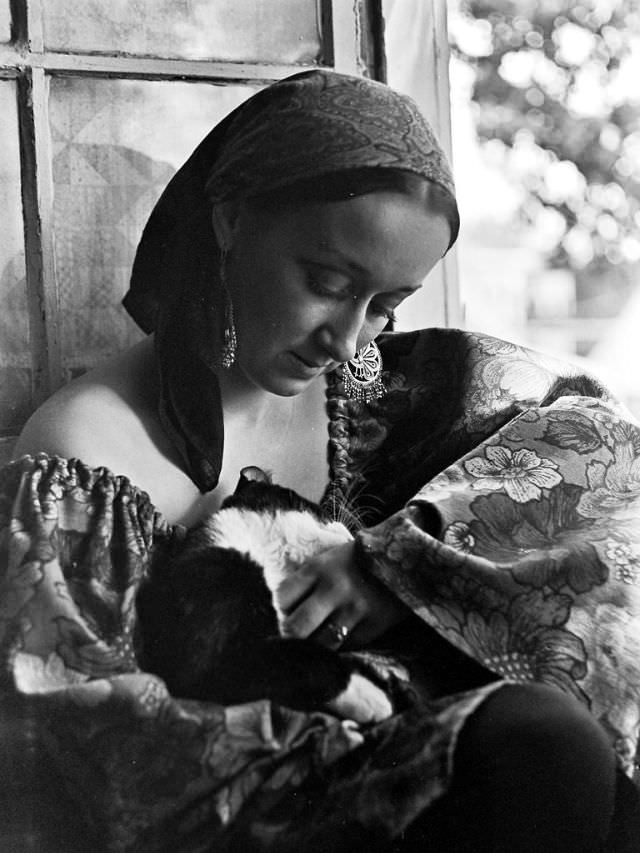
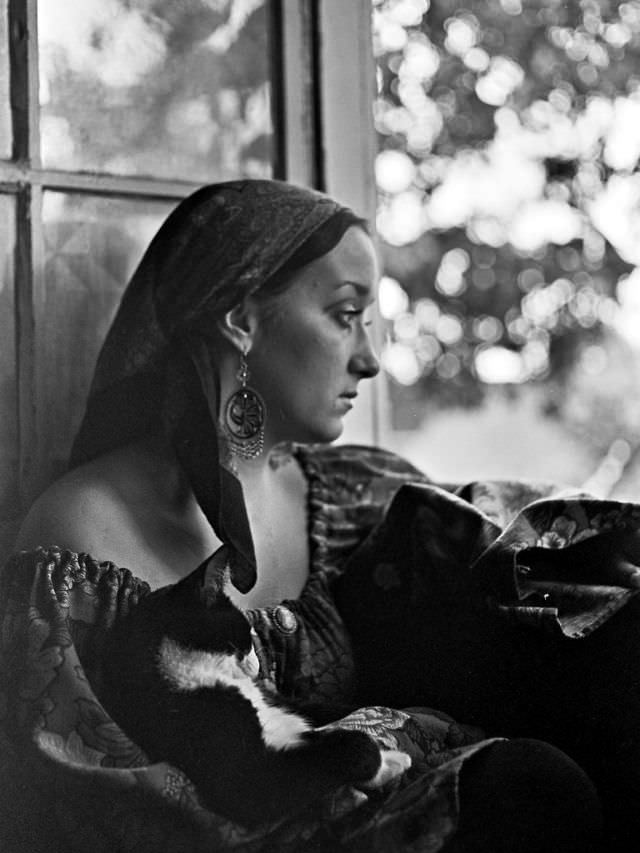
In the summer of 1968, photographer Barry Cunningham turned his lens on a scene full of quiet warmth — a girl named Diane and her adopted tuxedo cat, Heba, at the Evans Street Resistance commune in Dorchester, Massachusetts. The result is a small but charming set of photographs that capture an easy, genuine bond between a young woman and her cat.
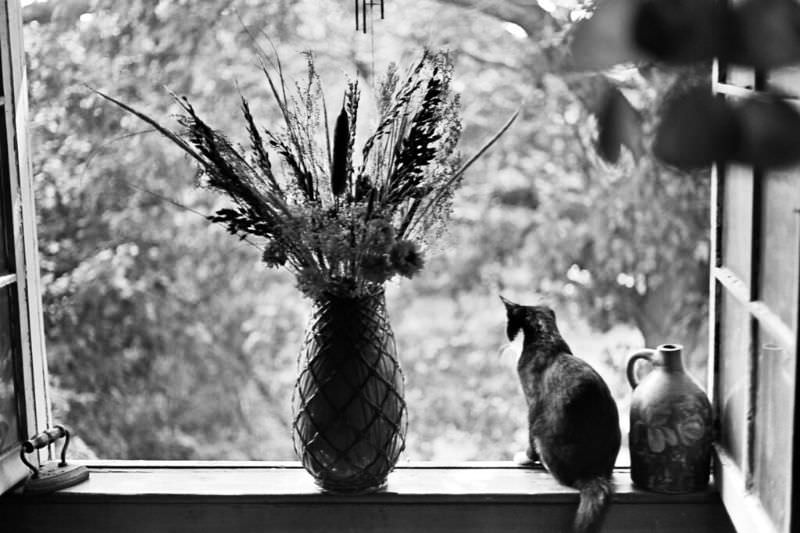
Heba was a tuxedo cat — black and white, with the kind of markings that make a cat look permanently dressed for a formal occasion. He lived at the commune on Evans Street, a gathering place for activists and residents in Dorchester. Cunningham photographed him in at least one still-life pose, the cat sitting composed and unbothered, as though he understood exactly what was being asked of him.
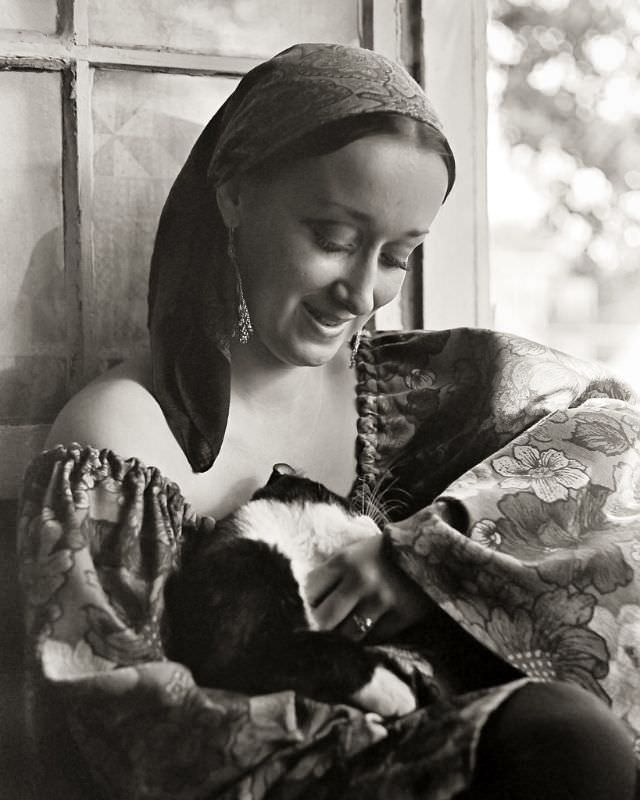
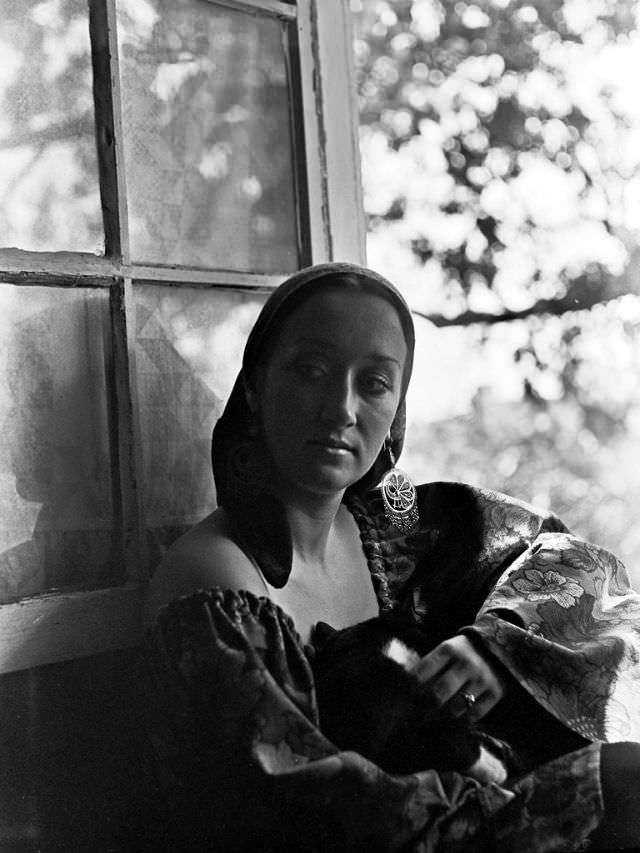
But the majority of the photos tell a different story. In frame after frame, Heba drops any pretense of dignity and leans into Diane’s attention with full commitment. He is, as Cunningham’s own notes described him, shamelessly cute.
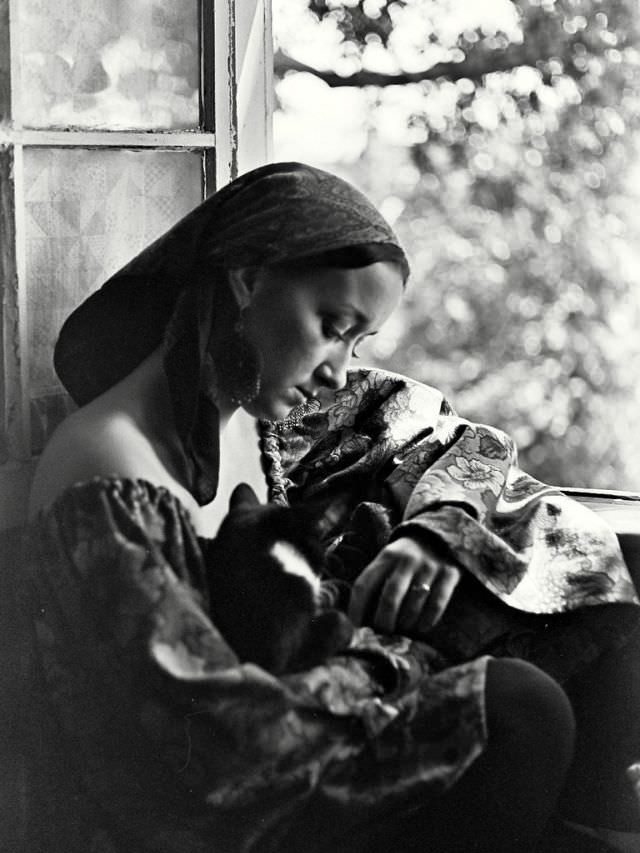
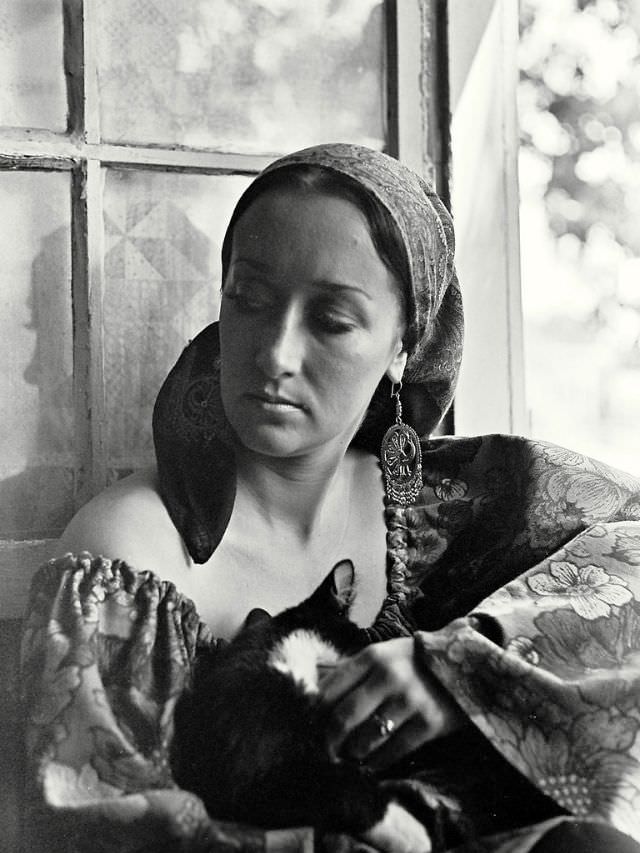
Diane holds him, cradles him, and lets him drape himself wherever he pleases. The affection between them is easy and unforced. There is nothing staged about it. These are two beings who are simply comfortable with each other, caught mid-moment by a photographer who knew when to keep quiet and keep shooting.
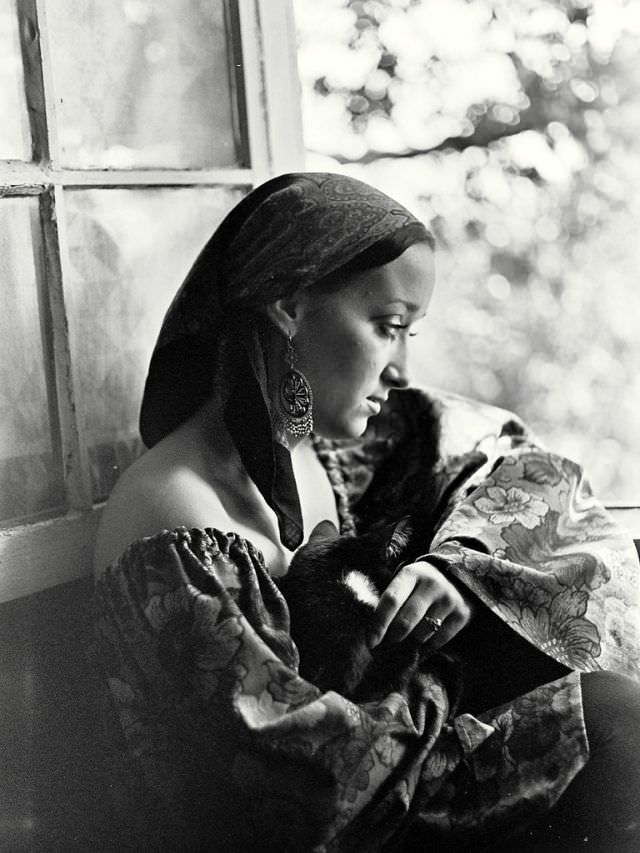
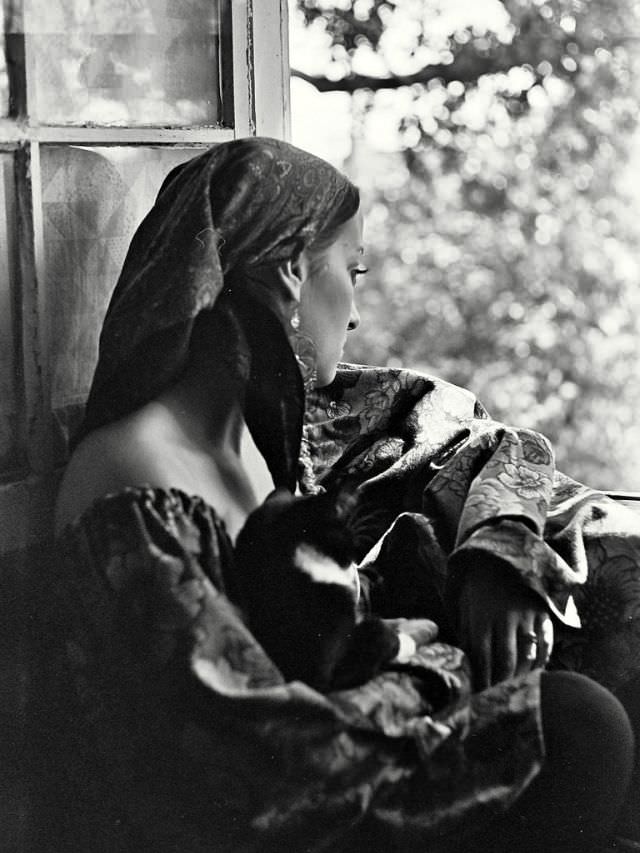
Boston in the summer of 1968 was a city in motion — politically charged, full of young people organizing and living communally. The Evans Street commune was part of that world. But these photographs step away from all of that. They focus on something smaller and more personal: a girl, a cat, and a lazy summer afternoon in Dorchester.