
Georgia sits at the eastern edge of the Black Sea, nestled in the Caucasus region where Europe and Asia meet. Georgians call their country ‘Sakartvelo,’ a name rooted in centuries of identity and pride. The country spans twelve distinct climate zones, making it one of the most ecologically varied places on Earth — from subtropical coastlines to snow-capped mountain peaks. Its history runs deep. The Georgian Kingdom reached its peak between the 10th and 13th centuries, a golden age of culture, architecture, and territorial power. By the 19th century, the Russian Empire had annexed Georgia, and after the Russian Revolution, it was folded into the Soviet Union. Georgia remained a Soviet republic until 1991, when the USSR dissolved and the country regained independence.
The 1970s placed Georgia firmly within the Soviet world. Life moved at a slower pace in many ways, shaped by Soviet economic planning, collective agriculture, and state-run industry. Yet Georgian culture — its language, food, wine, and Orthodox Christian traditions — remained stubbornly alive beneath the Soviet surface. The photos below were taken across the decade, capturing cities, towns, people, and landscapes in candid, unguarded moments. They show a Georgia that no longer exists in the same form, frozen in a specific time between ancient history and modern change. The port city of Batumi, on the Black Sea coast, was one of Georgia’s most important urban centers during this era.
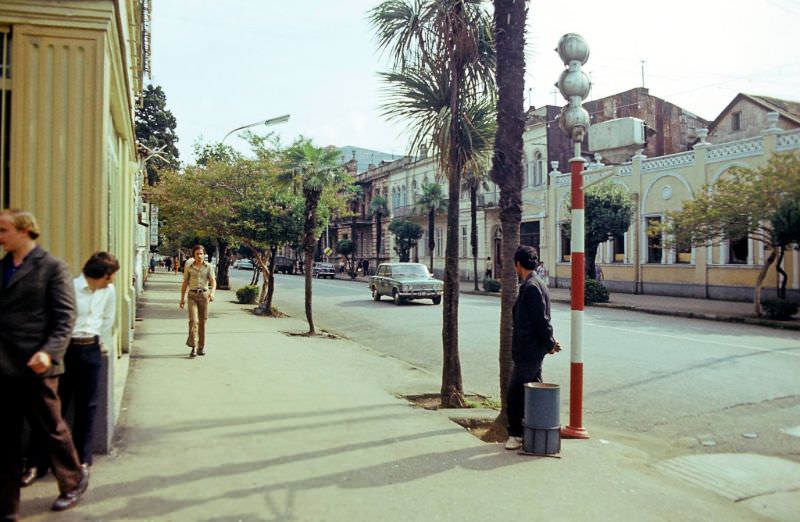
Batumi served as a major trade and transit hub, connected to the rest of the Soviet Union by rail and sea. Its streets during the 1970s reflected a mix of older Tsarist-era architecture and Soviet-built structures. Not far inland, in the city of Gori — the birthplace of Joseph Stalin — a large monument to the Soviet dictator still stood prominently during this period. Stalin had died in 1953, but his physical presence in his hometown was deliberately preserved.
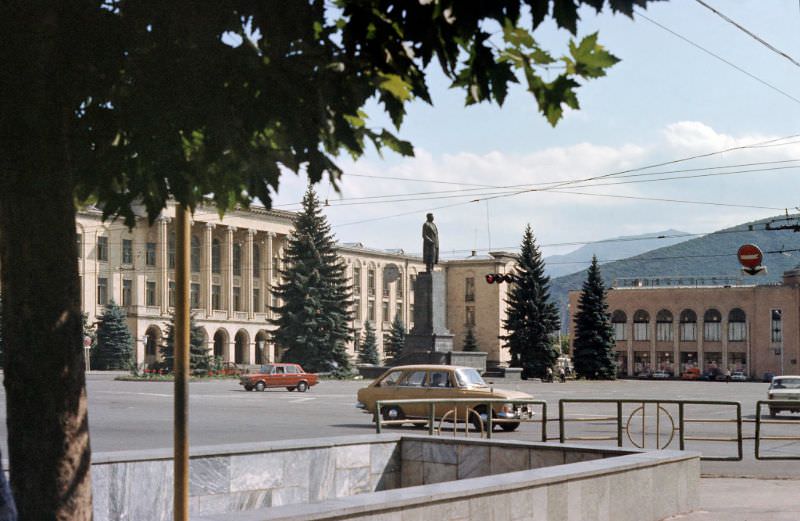
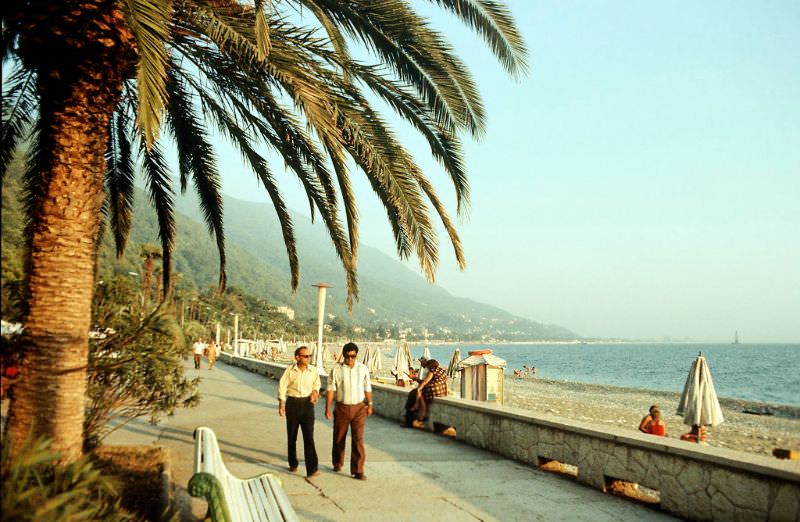
While much of the Soviet Union undertook de-Stalinization efforts after Nikita Khrushchev’s 1956 speech denouncing Stalin’s crimes, Gori kept its monument standing throughout the Soviet period. It was a point of local identity as much as political symbolism. Moving along the Black Sea coast, the Abkhazia region offered some of the most scenic landscapes in all of Soviet Georgia. The resort area around Pitsunda, near Gagra, drew visitors from across the USSR during summer months.
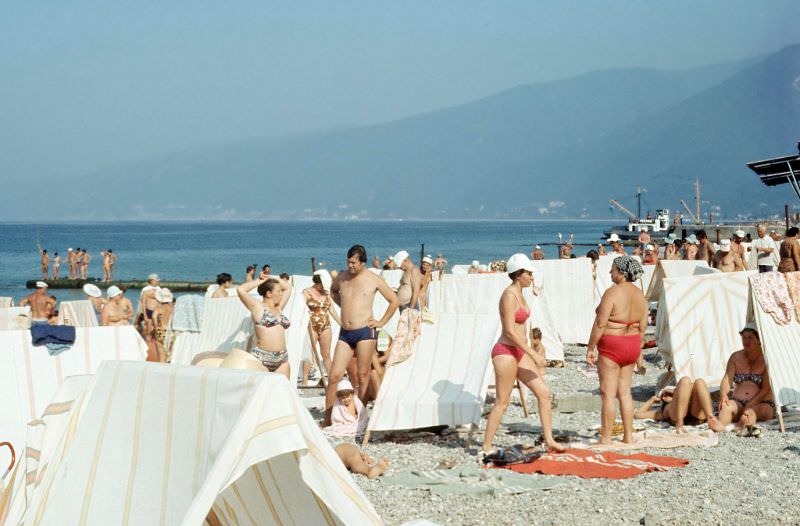
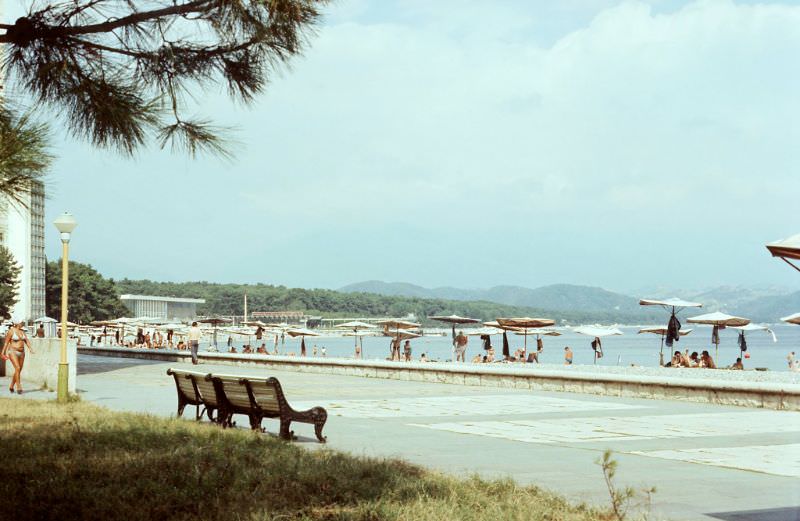
Pitsunda was known for its ancient pine grove, stretching along a narrow cape that jutted into the Black Sea. Soviet-era sanatoriums and holiday resorts were built here to serve the growing demand for domestic tourism. The area was considered one of the premier vacation destinations in the entire Soviet Union, drawing workers, party officials, and families alike.
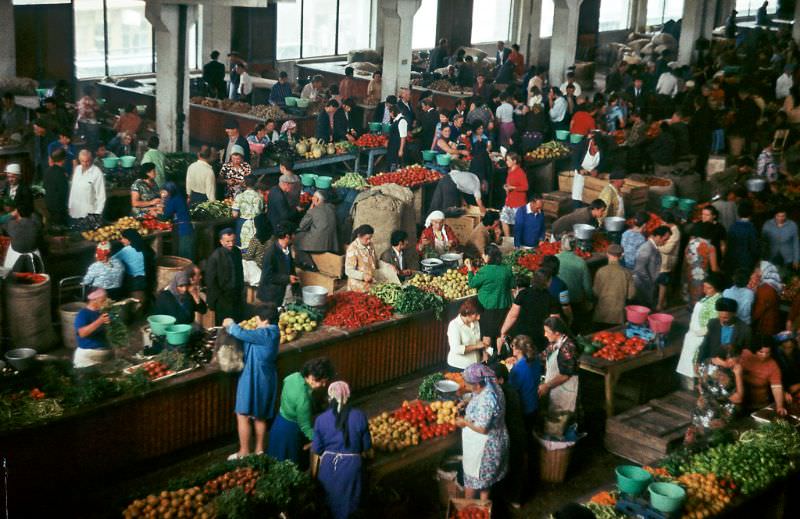
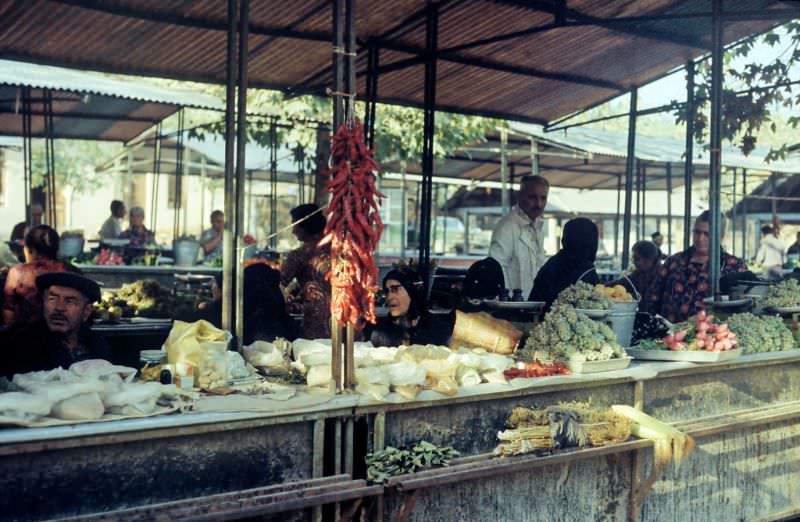
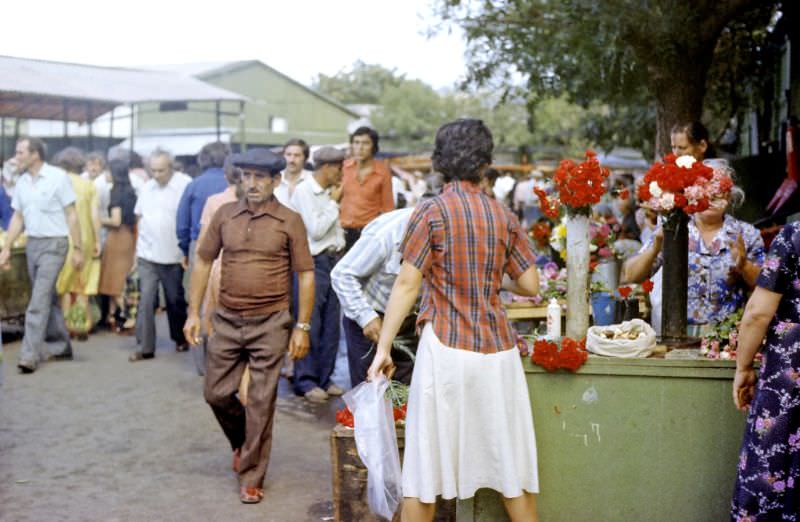
Back in Batumi, the city’s markets were a central part of daily life. Georgia’s warm climate made it well-suited for agriculture, and the country produced tea, citrus fruits, wine, and vegetables in large quantities. Local markets buzzed with activity, where sellers laid out fresh goods and residents haggled over prices — a practice that existed even under the rigid Soviet economic system.
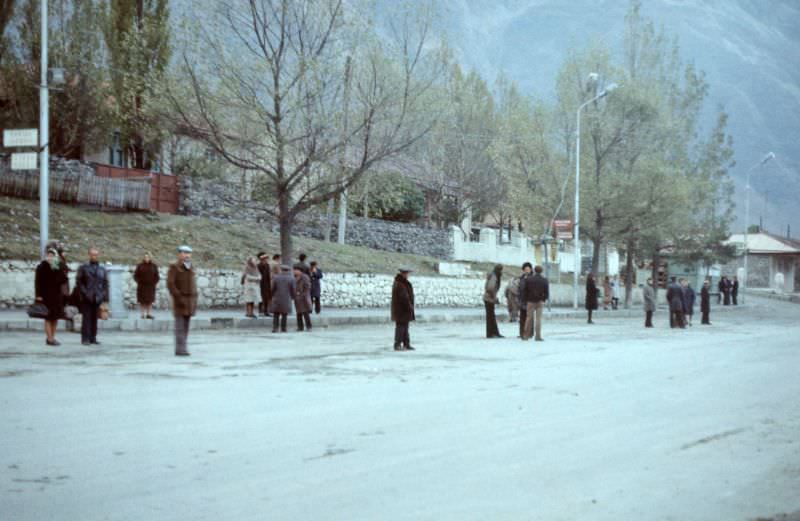
Connecting Georgia’s cities and regions was a network of roads that wound through dramatic terrain. The Georgian Military Highway, known in German as the Heerstrasse, was one of the most famous mountain roads in the Caucasus. Running from Tbilisi north through the Greater Caucasus Mountains into Russia, it passed through some of the country’s most breathtaking scenery.
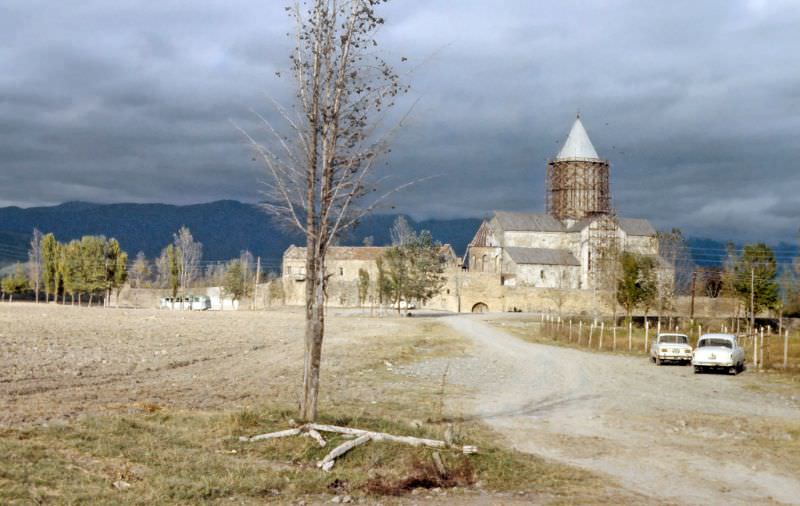
East of Tbilisi lies the Kakheti region, Georgia’s historic heartland and its primary wine-producing area. The region is also home to some of the country’s most significant religious sites. The Alaverdi Cathedral, rising from the Alazani plain, is one of the tallest medieval churches in Georgia. Built in the 11th century, it remained a functioning religious and cultural landmark even during the Soviet period, when the state officially promoted atheism.
The Kakheti countryside in the 1970s was largely agricultural. Collective farms, known as kolkhozy, dominated the rural economy. Vineyards covered large stretches of the Alazani Valley, and grape harvests were a major seasonal event. The Soviet state funneled Kakhetian wine production into state enterprises, but local winemaking traditions — some of the oldest in the world, dating back 8,000 years — continued in villages across the region.
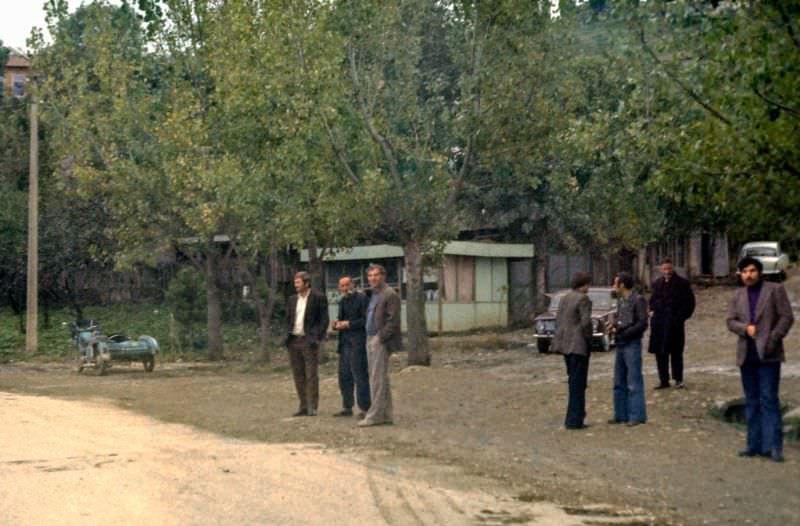
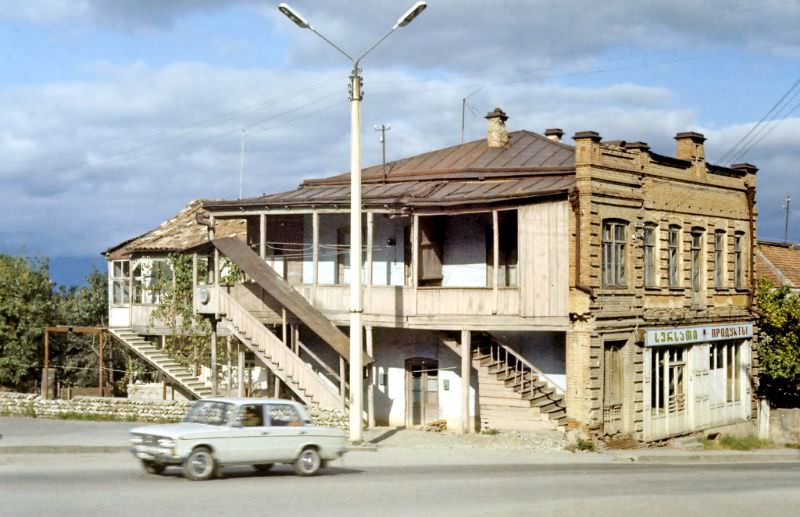
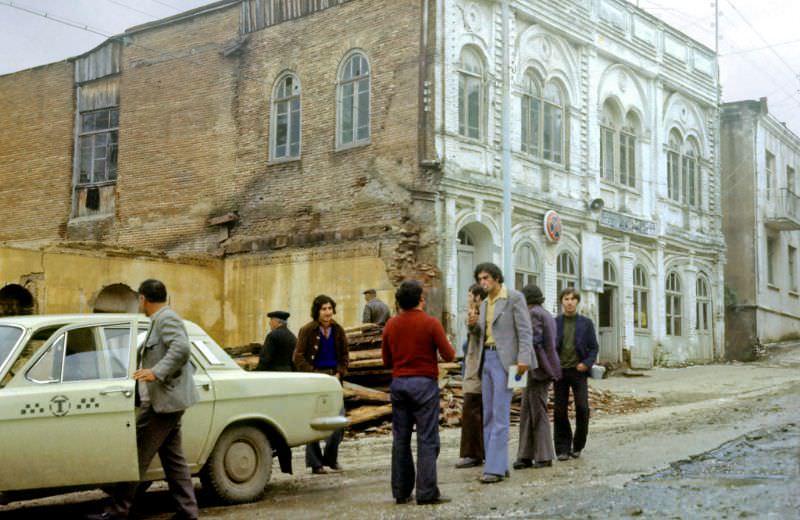
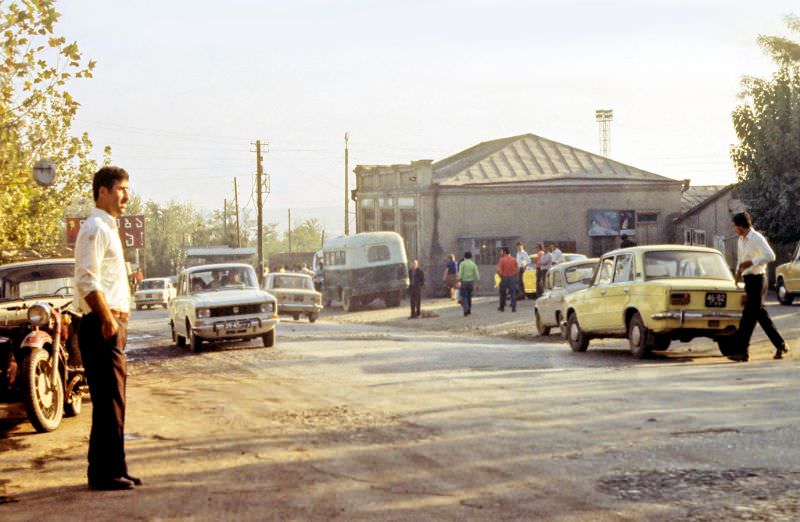
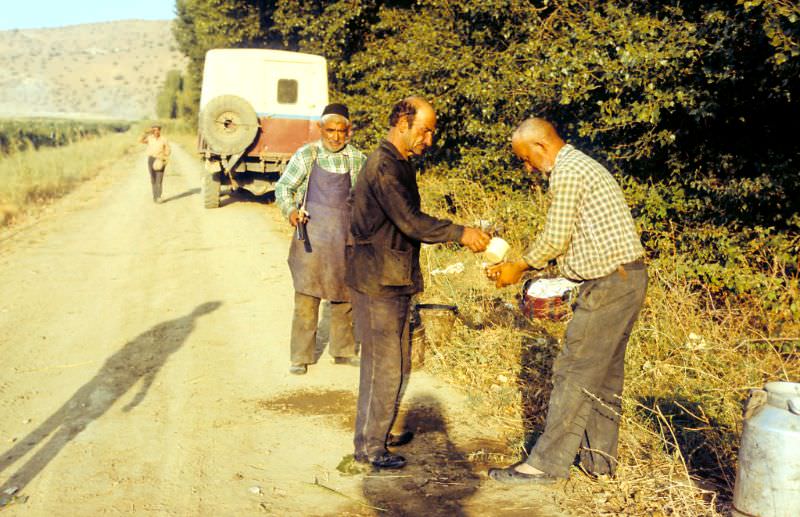
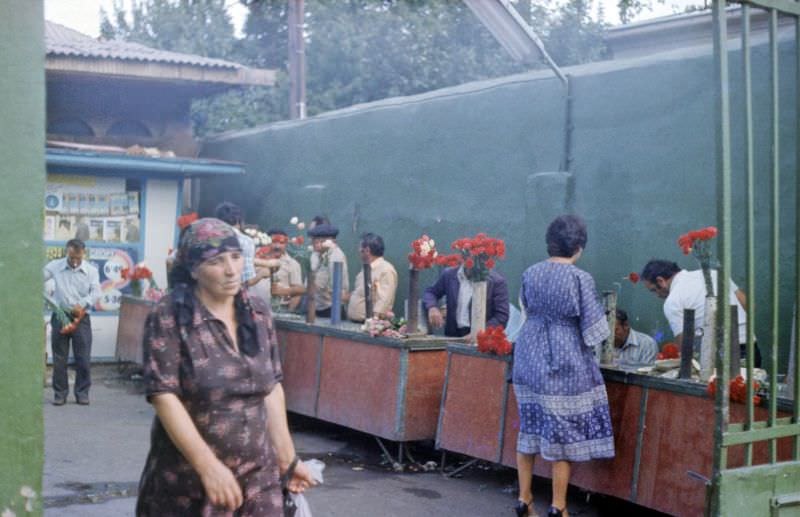
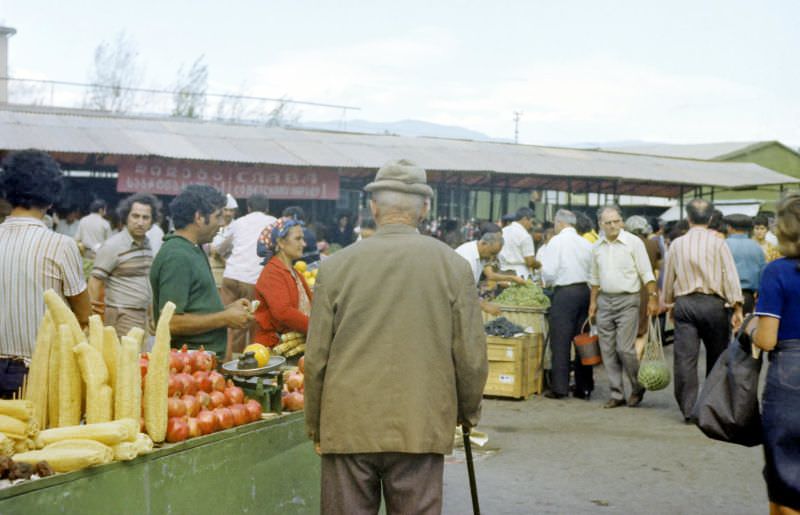
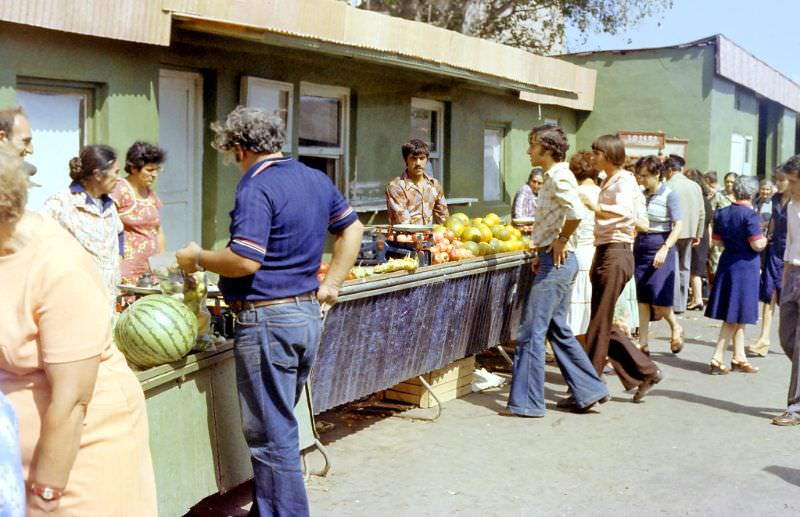
Markets across Georgia served as more than just places to buy food. They were social spaces where neighbors gathered, news spread, and the rhythms of everyday life played out in full view. Whether in Tbilisi, Batumi, or a smaller regional town, market scenes from the 1970s reveal a society that was deeply communal in practice, regardless of Soviet ideology.
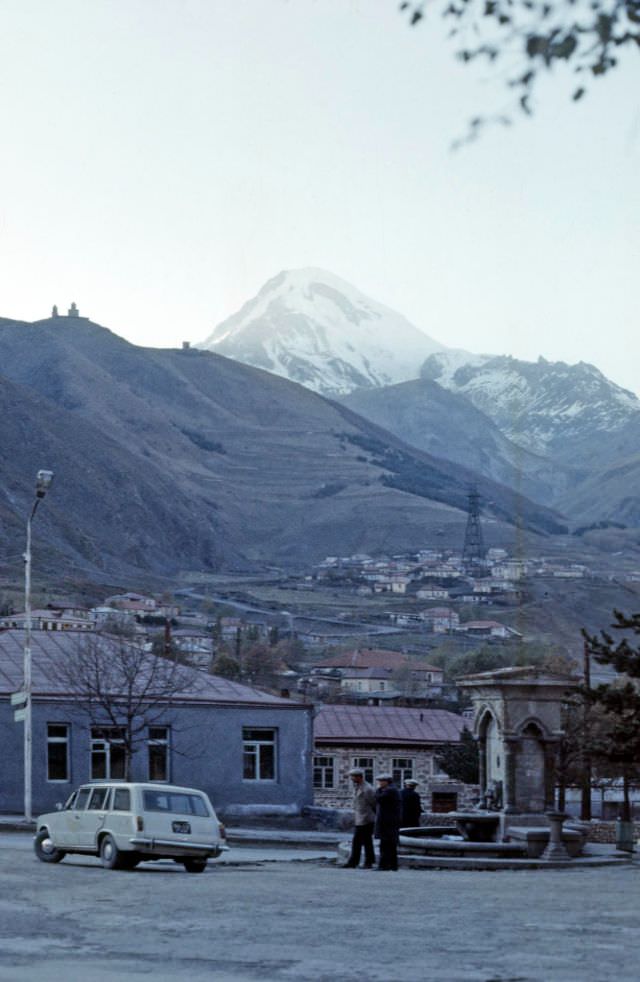
Northern Georgia is defined by the Greater Caucasus mountain range, with peaks that rank among the highest in Europe. Mount Kazbek, rising to 5,047 meters, is one of the most iconic. Its snow-covered summit loomed over the Georgian Military Highway and the ancient village of Stepantsminda, known then by its Soviet name, Kazbegi. The mountain held deep spiritual significance for Georgians, with the medieval Gergeti Trinity Church perched on a ridge below its peak.
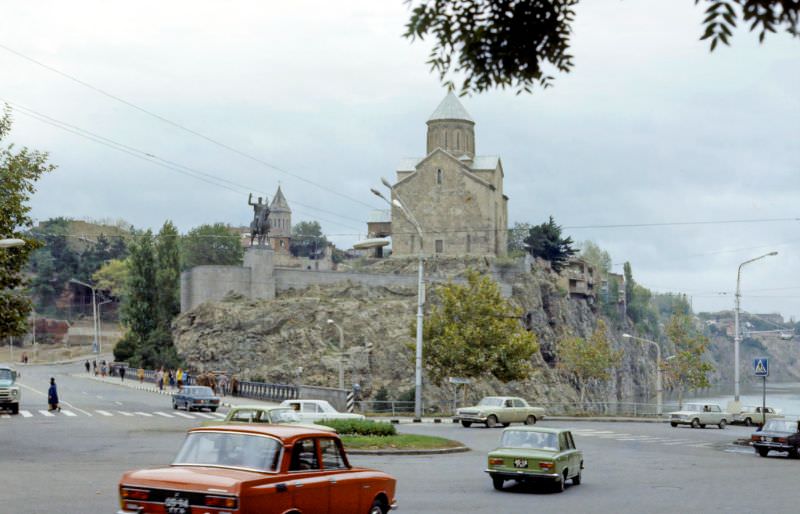
Tbilisi, the capital, was the political, cultural, and economic center of Soviet Georgia. Founded in the 5th century, the city spread across both banks of the Mtkvari River and climbed into the surrounding hills. The Metechi Bridge connected key parts of the city across the river, with the Mtatsminda plateau rising behind the older districts.
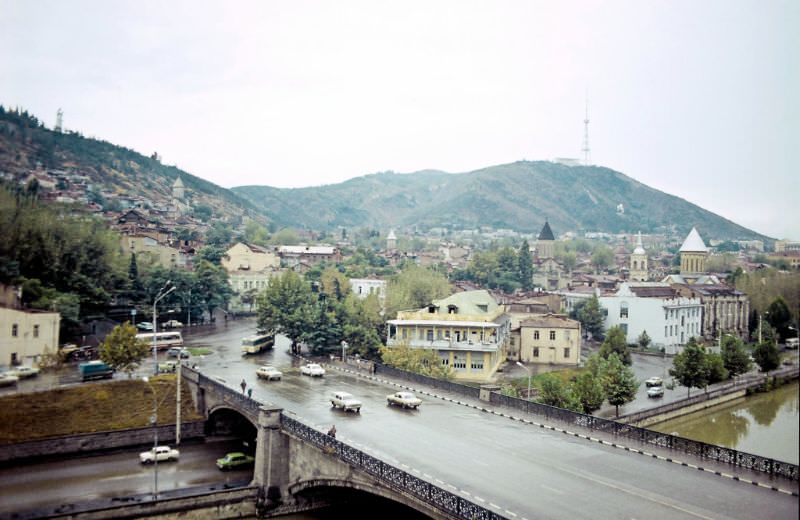
By the 1970s, Tbilisi had grown into a city of over one million people. Soviet urban planning had layered wide boulevards, concrete apartment blocks, and public monuments onto a city that still held medieval churches, sulfur bathhouses, and winding old-town streets. The overview of the city captures that layering — old and new pressed together across a river valley flanked by steep ridges.
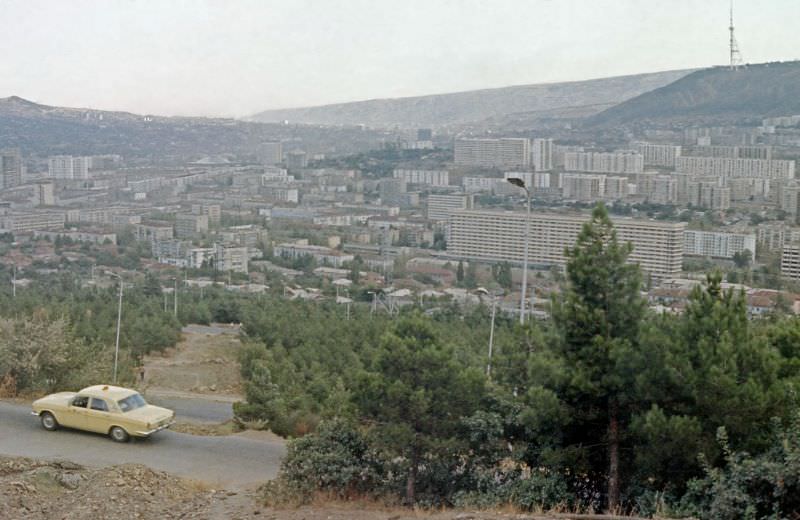
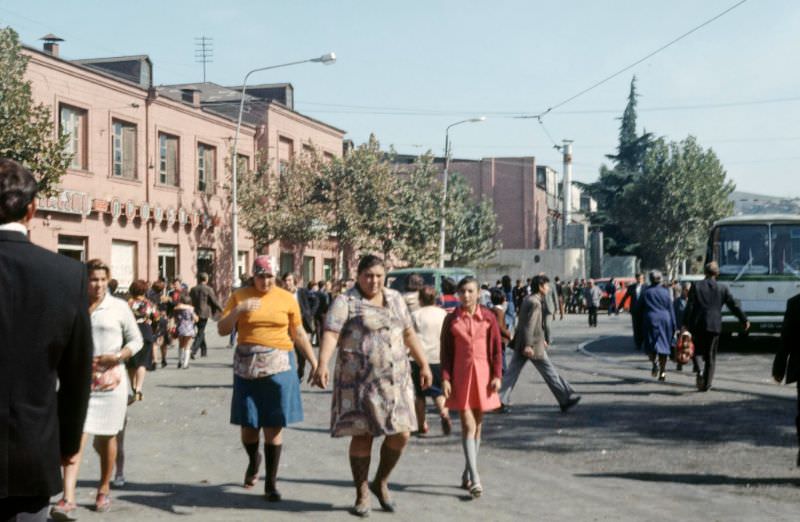
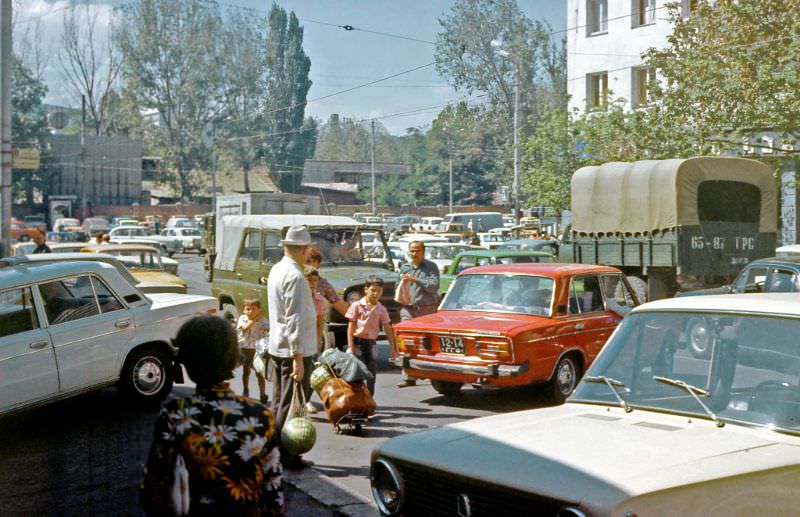
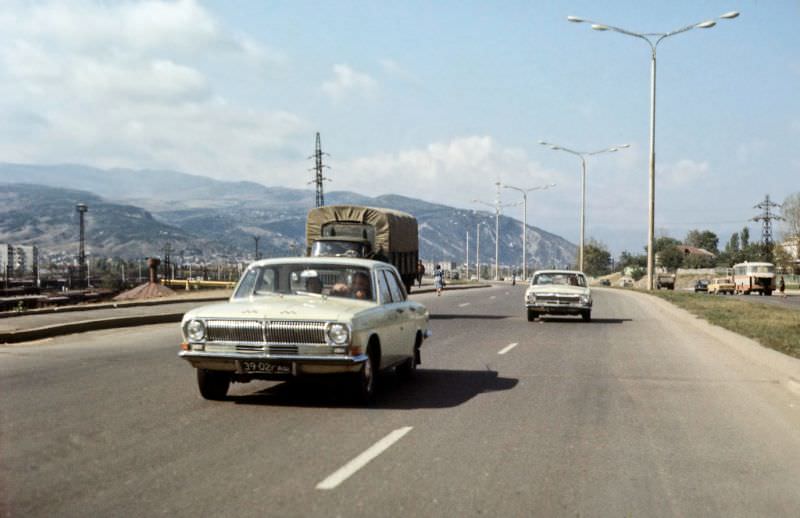
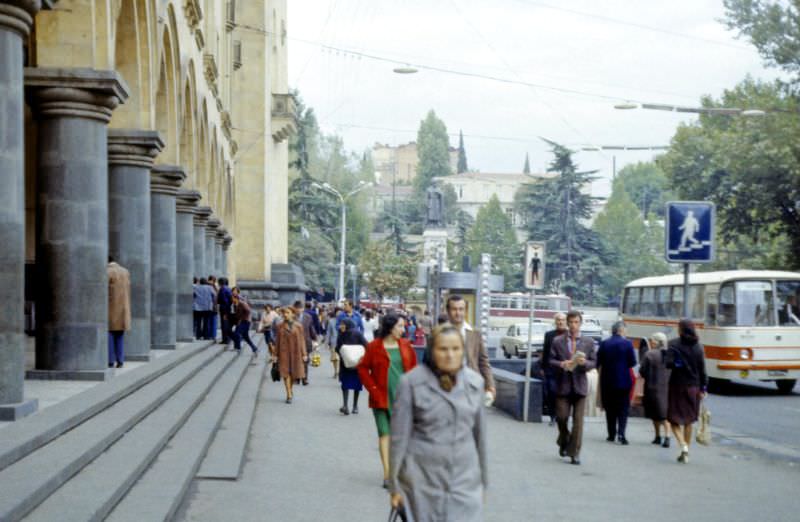
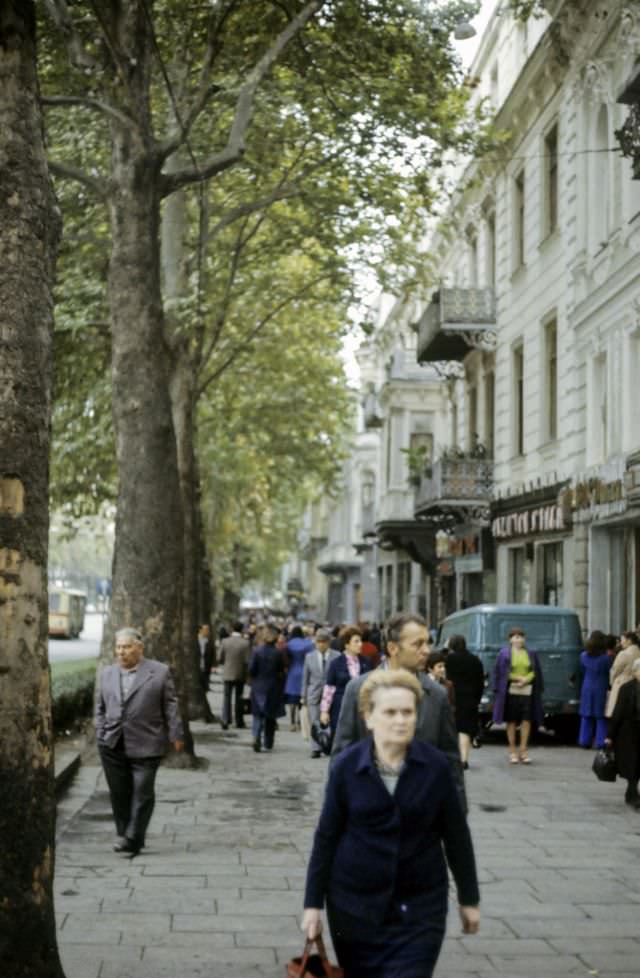
Street life in Tbilisi during the 1970s reflected the particular character of Georgian Soviet culture. Georgians maintained a strong tradition of hospitality, family gatherings, and public socializing that set them apart from many other Soviet republics. Streets were busy with pedestrians, and outdoor cafes, parks, and public squares served as gathering points throughout the day.
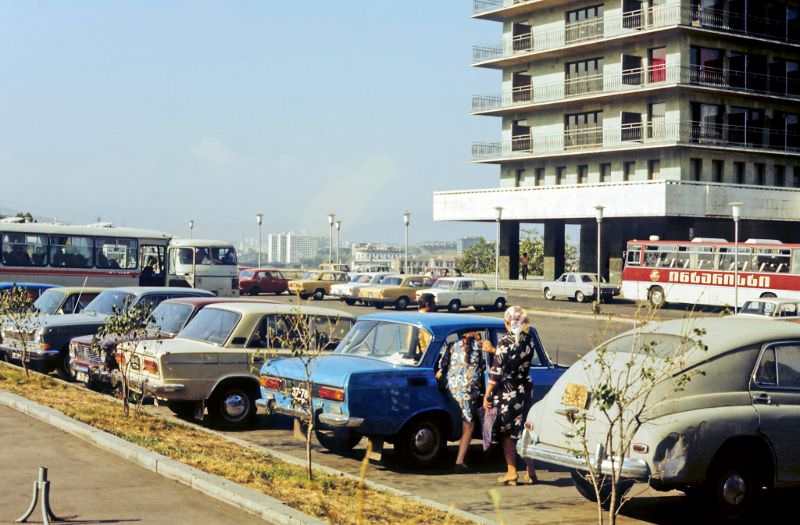
Hotel Iveria was one of the most recognizable buildings constructed in Tbilisi during the Soviet era. Built in 1967, the high-rise tower stood on the city’s main avenue and became a landmark of modern Soviet architecture in Georgia. It catered primarily to foreign tourists and official Soviet guests, representing the state’s attempt to project a modern image to the outside world.
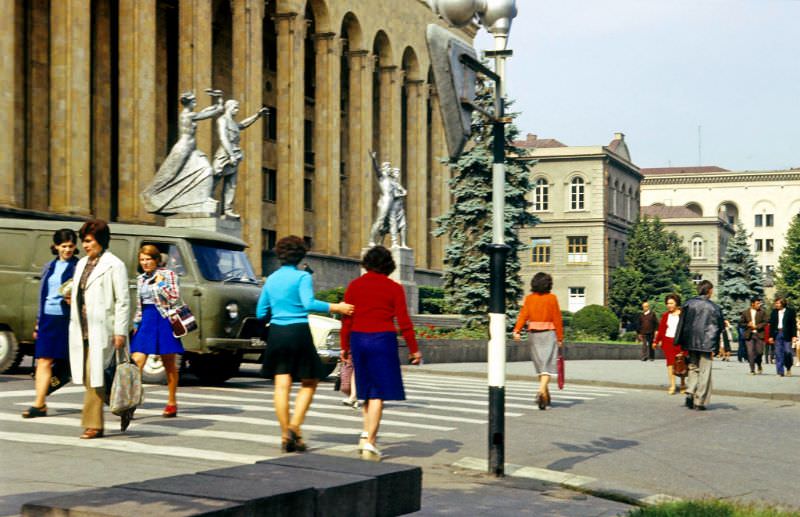
Rustaveli Avenue was Tbilisi’s main boulevard, named after the 12th-century Georgian poet Shota Rustaveli, author of the epic poem ‘The Knight in the Panther’s Skin.’ A monument to Rustaveli stood along the avenue as a marker of Georgian national culture. Even under Soviet rule, Georgian literary and artistic heritage was promoted as part of the republic’s distinct identity within the USSR.
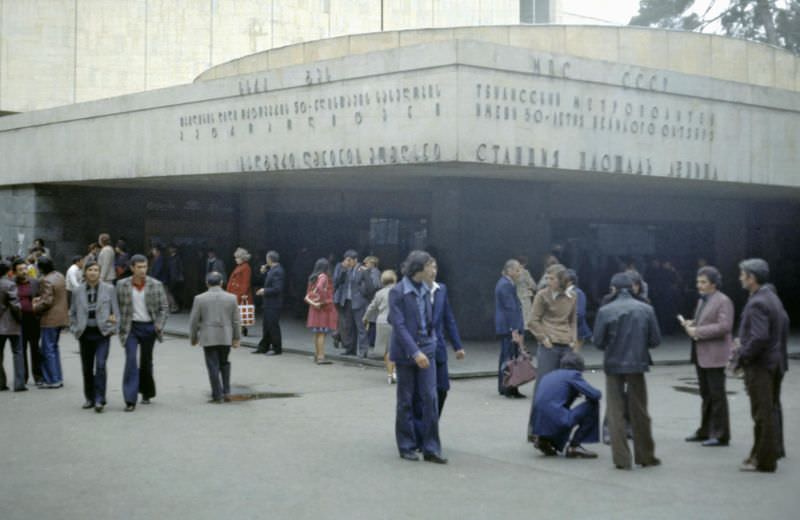
Tbilisi’s metro system opened in 1966 and expanded through the 1970s. The Lenin Square station — named for the central square it served — was one of the system’s main hubs. Soviet metro stations were designed as public showpieces, often featuring elaborate mosaics, marble finishes, and large chandeliers. Tbilisi’s metro was no exception, built to impress as much as to move people.
Tbilisi’s markets drew sellers and buyers from across the city and surrounding villages. Vendors sold everything from produce and spices to handmade goods and livestock. The markets operated within the Soviet economic framework but retained a distinctly Georgian character — loud, colorful, and deeply social.
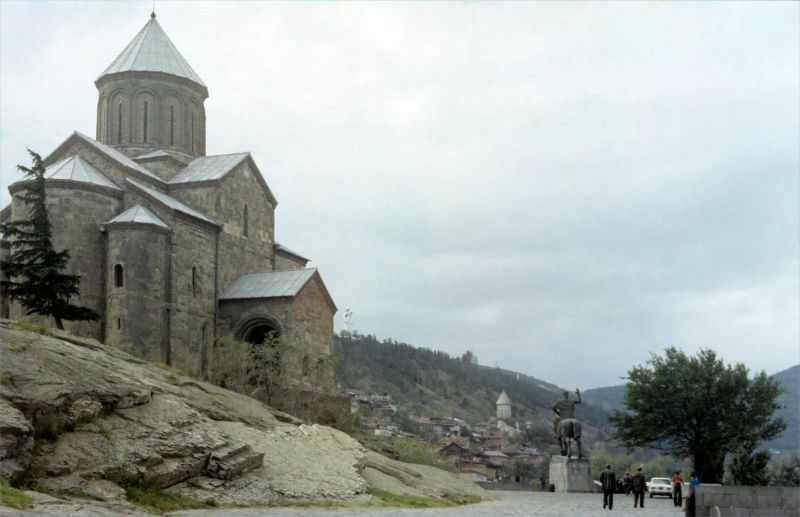
The Metechi Church, perched on a cliff above the Mtkvari River, is one of Tbilisi’s oldest surviving structures. Built in the 13th century, it was converted into a prison during the Soviet period and later used as a theater. By the 1970s it still stood as an architectural reminder of Georgia’s pre-Soviet Christian heritage, visible from many points across the city.
Rustaveli Avenue ran through the heart of Tbilisi, lined with theaters, government buildings, and shops. It was the city’s most prominent public space, used for official parades, demonstrations, and everyday strolling. The avenue’s tree-lined sidewalks and grand facades gave Tbilisi a European quality that distinguished it from many other Soviet cities.
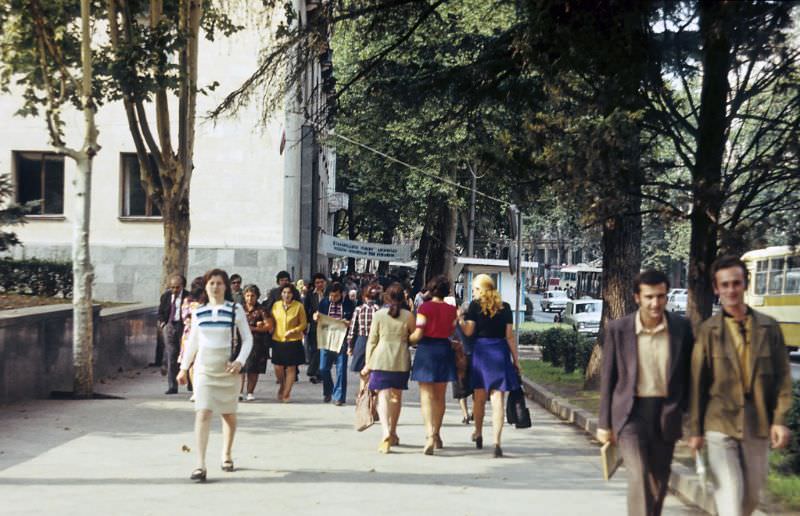
Along Rustaveli Avenue stood the Zakaria Paliashvili Opera and Ballet Theater, one of Georgia’s premier cultural institutions. Named after the Georgian composer Zakaria Paliashvili, the theater presented opera and ballet performances and served as a symbol of Georgian artistic achievement. The building itself, constructed in the late 19th century, was an ornate structure that anchored the cultural life of the avenue.
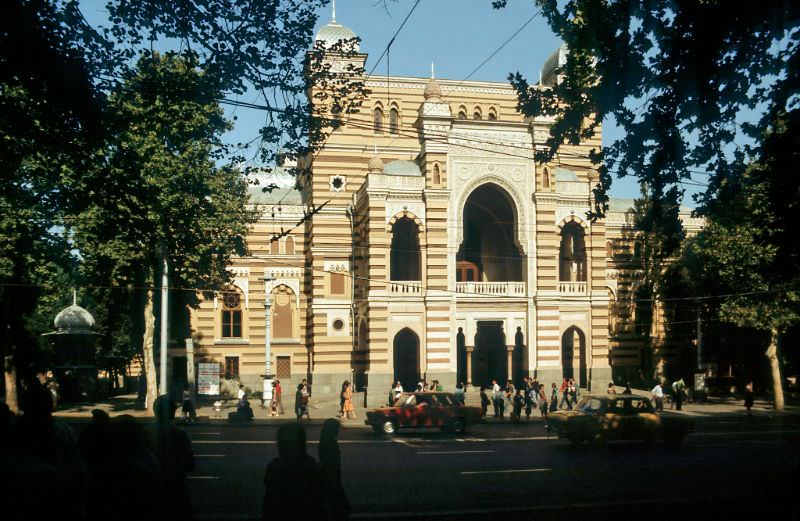
These final views of Tbilisi from the 1970s show a city that carried its history visibly. Ancient churches, Soviet-era apartment towers, crowded markets, and wide public boulevards all occupied the same urban space. The people moving through those streets lived within the Soviet system but maintained a distinct Georgian identity — in their language, their food, their music, and their daily habits.
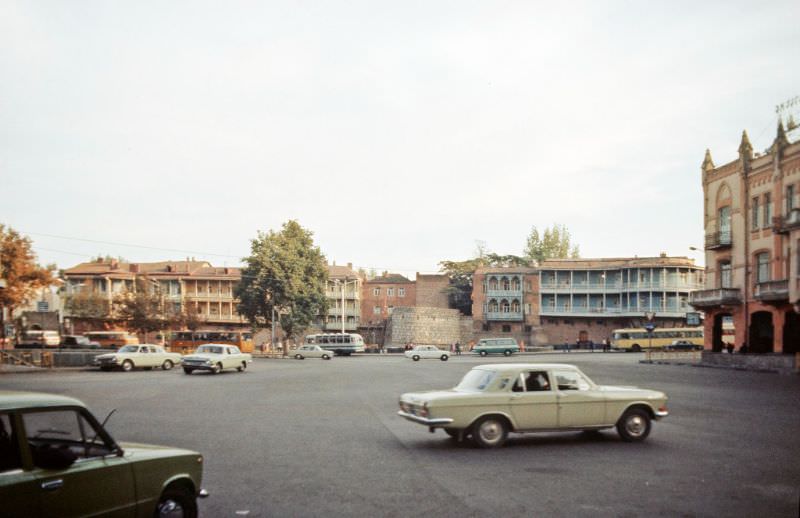
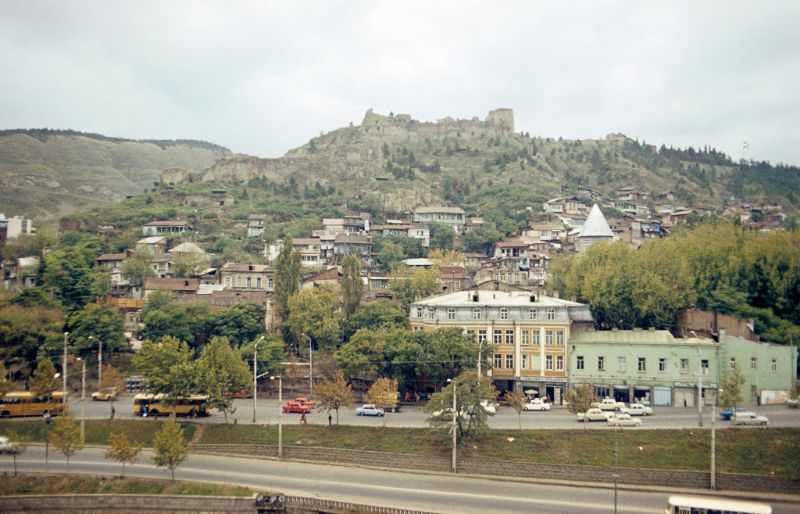





We shouldn’t have overpopulated Tbilisi, I mean, the roads in old photos actually look decent, and I am certain that more people now have access to cars than they did back then, but Tbilisi is still a lot more overcrowded than it should be. It should be alarming to people that we have dead industries and agriculture. We should develop other cities and regions.
We don’t need more cars, we need better public infrastructure and transportation systems. Cars have a limited role to play in cities; cities are for people, not metal boxes with lower efficiency than freaking steam trains.
Buses can’t be forced on everyone, for instance, I don’t really use public transport that much due to bad luck and getting some sort of weird af virus from others all the time. We also export a lot of cars here, which is one of our top exports. There could be a nice boat for Mtkvari, as well as more metro stations, so I agree that better public infrastructure and transportation are good.
It’s just silly… Your “argument” against using public transportation is absurd… Sorry, but your selfish desire for a private vehicle shouldn’t dictate how we build a society and a livable space. Ironically, we do, which is why we live in such unhealthy conditions.
Isn’t it better to have both options? People can choose between public transportation and cars, they aren’t the same price or as fast. Let’s not even talk about overcrowded public transportation during peak hours. Sometimes I take the bus or metro during “clean hours,” when there are barely any people on them. However, I don’t even consider them during busy hours because I can’t get a seat. For my own reasons, I want comfort and safety. I don’t really trust bus drivers or even minibus drivers much with my life. If you don’t care about comfort and safety, it’s fine.
I see our city hall has the same idea and look at what they have “accomplished” so far. No matter how good the public transportation system is, you can’t make people give up the comfort of their own damn cars. There is no problem with cars. Not to mention dumbass government and Kaladze making dumb decisions, Tbilisi is pretty much the only place where people can have jobs, study, and live comfortably
Lenin Square Metro Station -> Freedom Square Metro Station, nice!
Their clothes were so cool at that time
They’re lovely!
Rustaveli Avenue still the same
As far as I can tell, there hasn’t been much development since the 1970s, except for the cars, of course.
Most of the photos depict Old Tbilisi. I bet Vake looked different in 70s.
Nah…. vake is what? 15-20% in whole of Tbilisi? too small to call it development
Saburtalo too. The city has grown a lot last 20 years.
“Sachari Paliaschwili”
really cute and interesting photos. thanks for sharing. Most of the names are incorrect though
The first 27 years of my life have been spent in and around our beautiful and glorious TBILISI. I recognize every photo with capital in it, but I can’t discern if these photos are real or AI.
It’s likely they’re real, but they’ve been colorised, which is why some pictures may seem odd. These pics seem too precise to be an AI rendering, especially considering that AI struggles with text a lot and i can make out some Georgian. I also don’t think we have that many colored pictures if that era since we used soviet technology all the time which was a few generations behind top quality stuff, that’s why we have mostly black and white films up to the 90s, when there was crazy stuff like Star Wars in the 70s.
Not really changed that much to be honest, only difference I could see is the cars still had their bumpers.
And people are wearing colors
So many in flared jeans and mullets 😀
afaik Georgia was the only soviet republic were you could find some jeans to buy.
Tbilisi overview is so different. There is almost nothing on the tech university/ medical, Shartava street, etc