Fitzrovia sits in the heart of London’s West End, tucked between Oxford Street to the south and Euston Road to the north. In the 1980s, it was one of the city’s most layered neighbourhoods — a place where Georgian townhouses lined the same streets as struggling corner shops, independent restaurants, and late-night music venues. Artists, writers, and working-class residents all shared the same postcode, and the tension between those worlds gave Fitzrovia its distinct character.
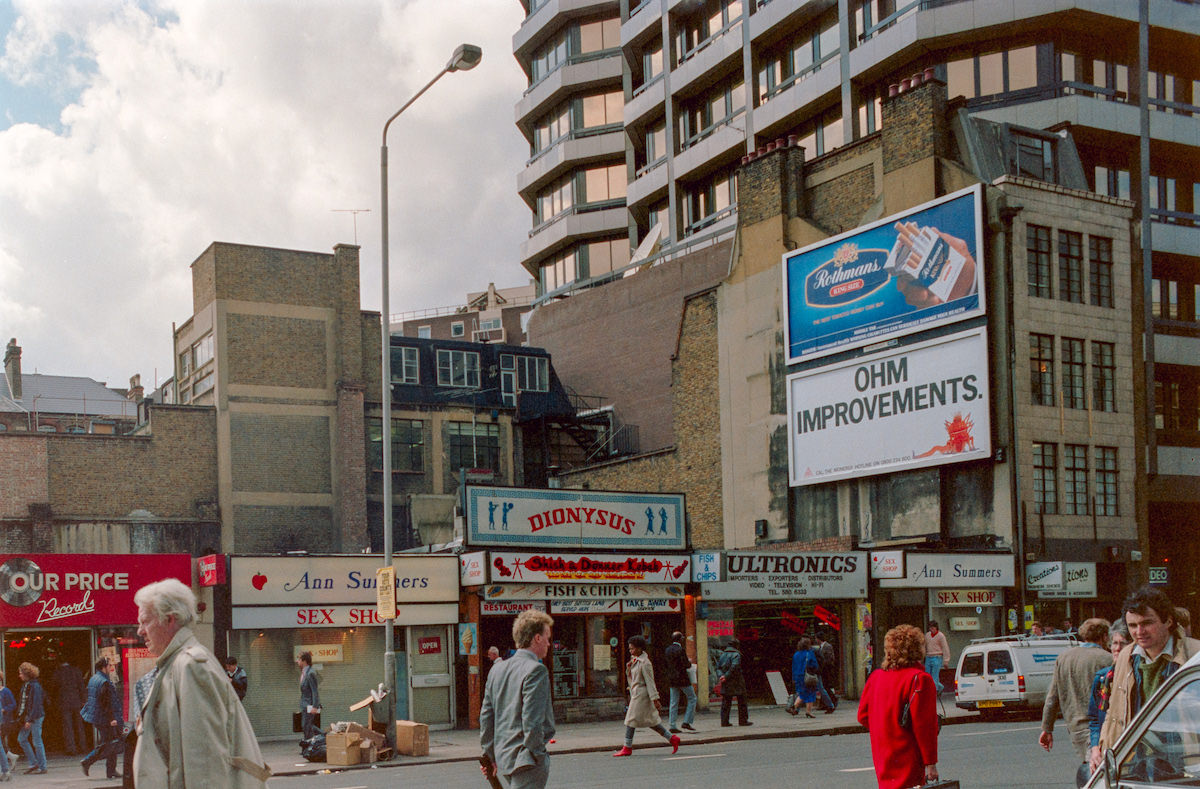
The streets told the story plainly. Mortimer Street, Whitfield Street, and Cleveland Street were lined with small businesses that catered to local needs — dairies, print shops, textile merchants, and video rental stores. These were not tourist destinations. They were the everyday infrastructure of a neighbourhood that was home to real people living real lives. Photographer Peter Marshall walked these streets throughout the mid-to-late 1980s, pointing his camera at the details that other people walked past without a second glance.
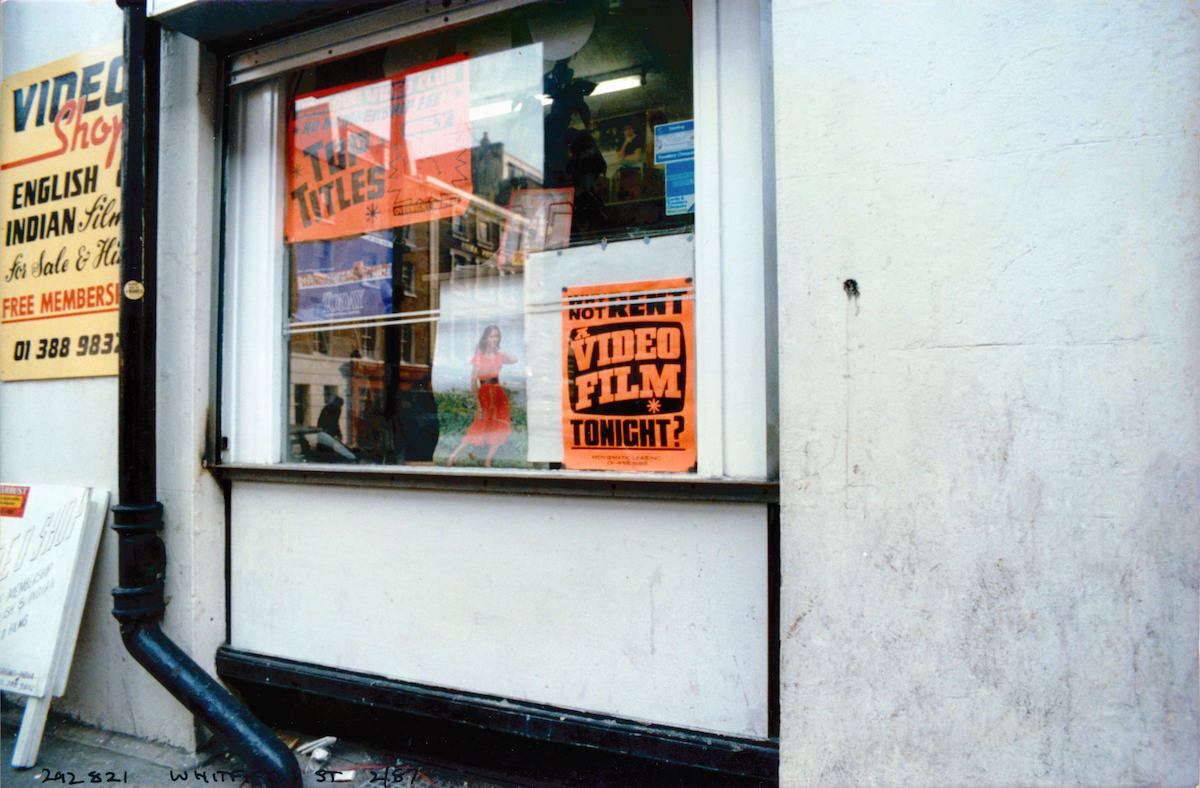
By 1987, video rental shops had become fixtures in working-class London neighbourhoods. Whitfield Street had one of its own — a small storefront that reflected how entertainment was shifting away from cinemas and toward the living room. The VHS era was in full swing, and shops like this one were a staple of daily life.
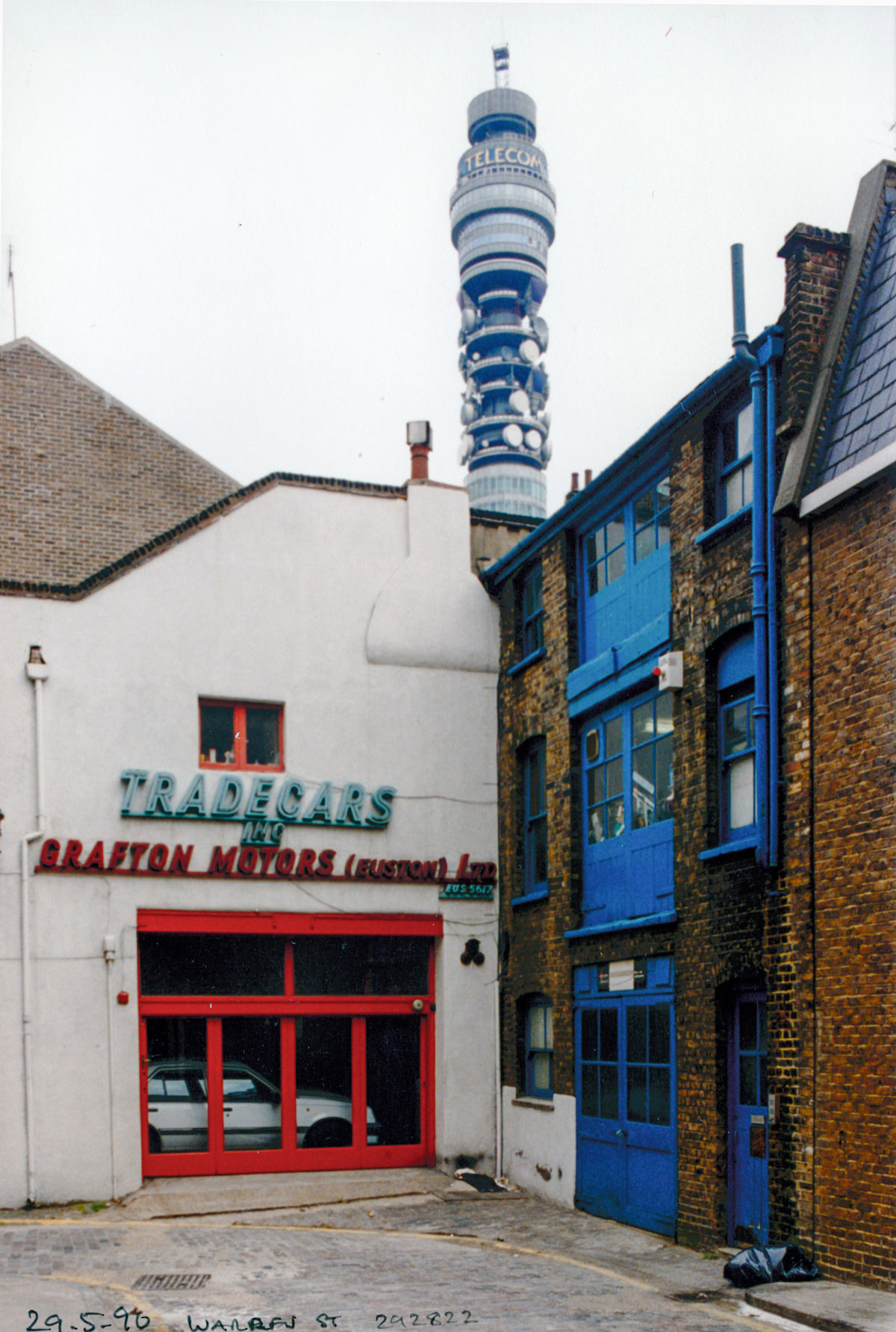
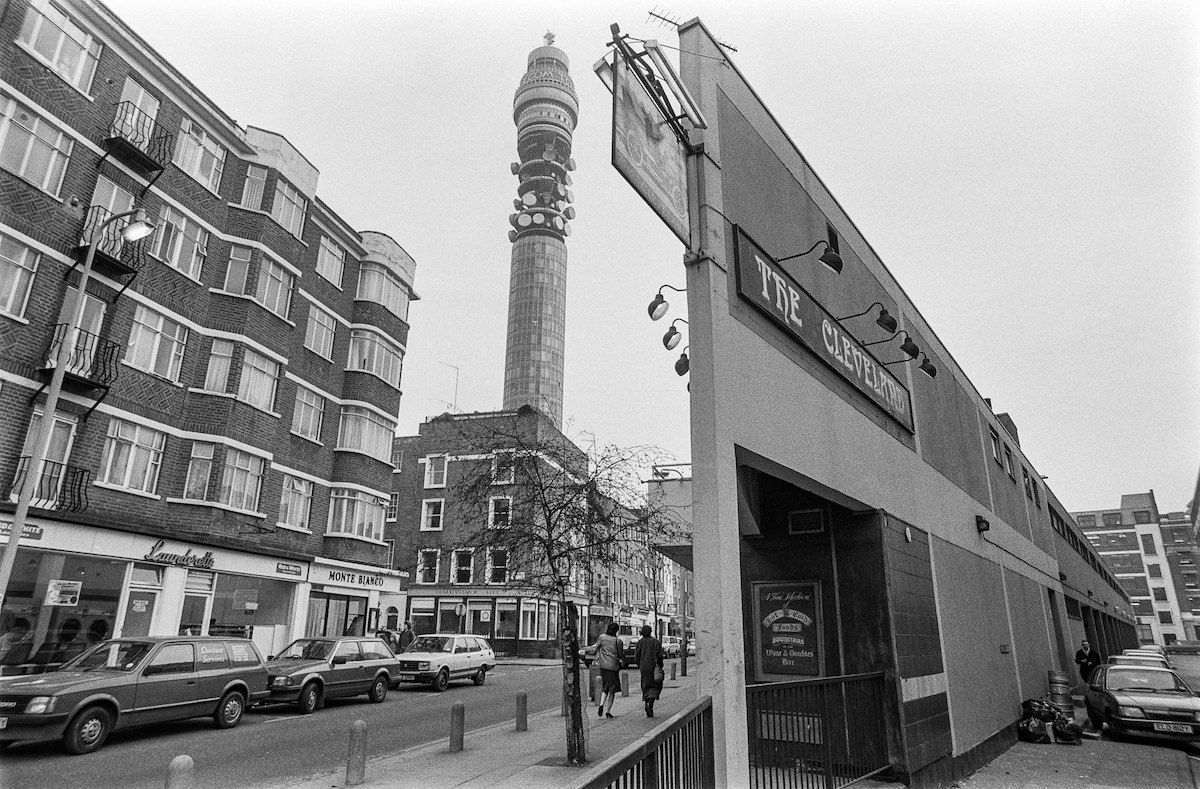
Not far away on Warren Street, the used car trade was visible on the street itself. Tradecars operated out of the area in 1990, part of a wider ecosystem of small traders and independent dealers who kept business local. The Post Office Tower — now the BT Tower — loomed over Cleveland Street, a brutalist landmark that had dominated the Fitzrovia skyline since 1964. The Cleveland pub sat nearby, one of many local drinking spots that served the neighbourhood’s mixed crowd of workers, artists, and regulars.
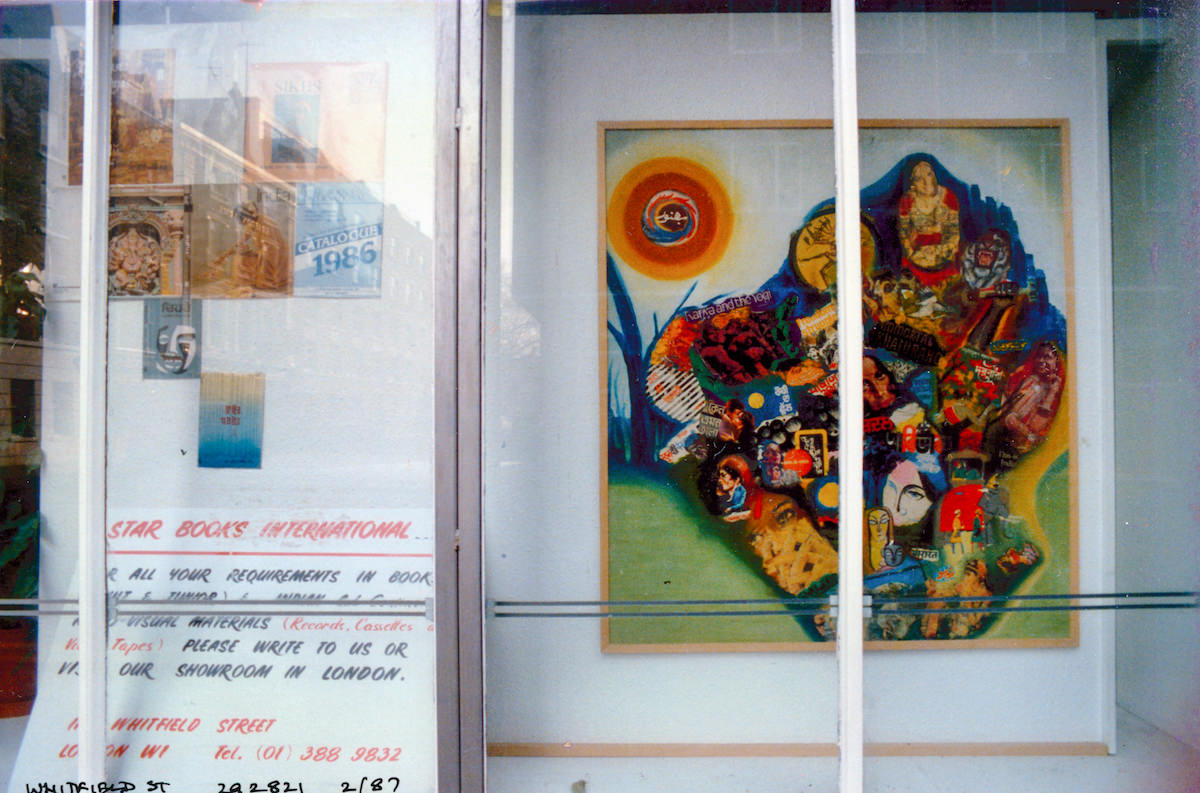
Whitfield Street was home to more than just a video shop. Star Books International operated there in 1987, selling books to a neighbourhood that had long attracted intellectuals and writers. Fitzrovia had been a literary hangout for decades — Dylan Thomas and George Orwell were among those who had spent time in its pubs — and by the 1980s that tradition still clung to the area’s identity, even as the demographics around it shifted.
The Great Portland Street area captured the commercial mix that defined Fitzrovia. Shops selling everything from clothing to household goods operated side by side, serving a neighbourhood population that was economically diverse. Crime rates were high in 1980s Fitzrovia, and housing conditions for many residents were poor. But the street-level economy was active and visible.
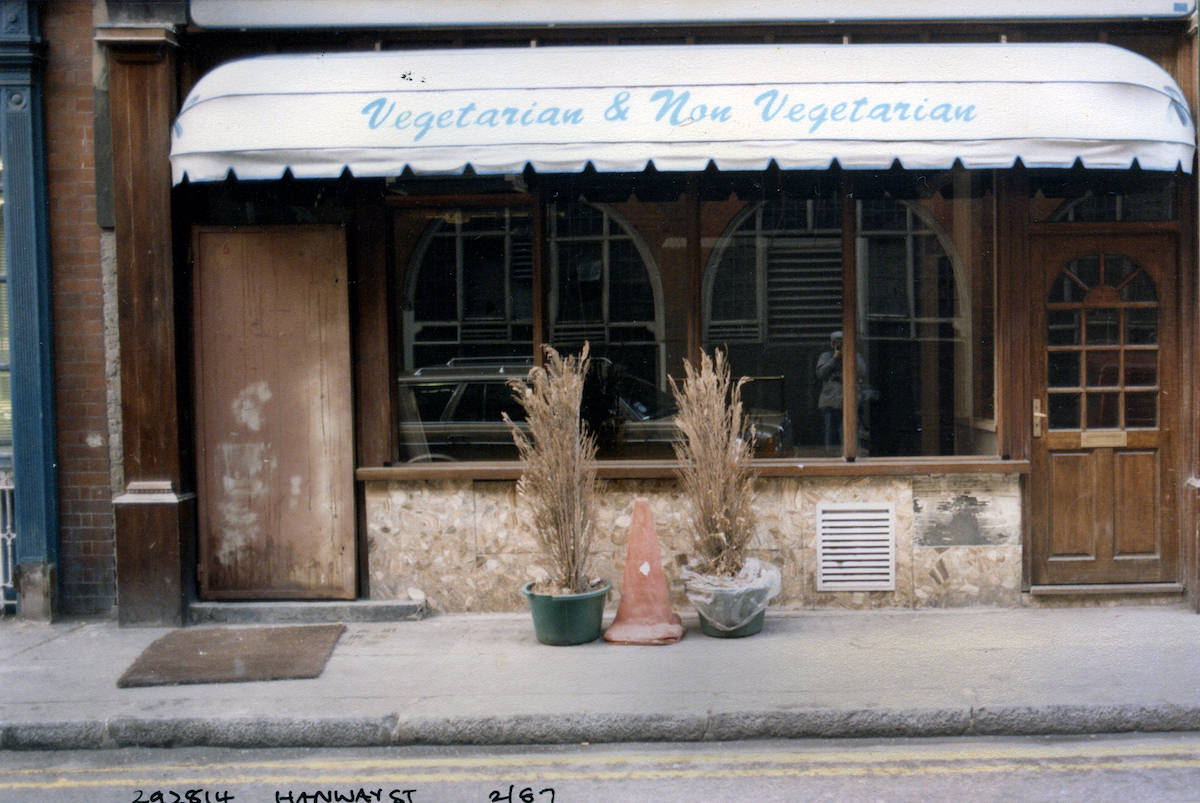
Food and drink were central to Fitzrovia’s street life. Hanway Street had a restaurant that drew locals and visitors alike, tucked into a narrow lane just off Tottenham Court Road. The neighbourhood’s food scene in the 1980s was genuinely diverse — Greek, French, and traditional British establishments all operated within a few streets of each other.
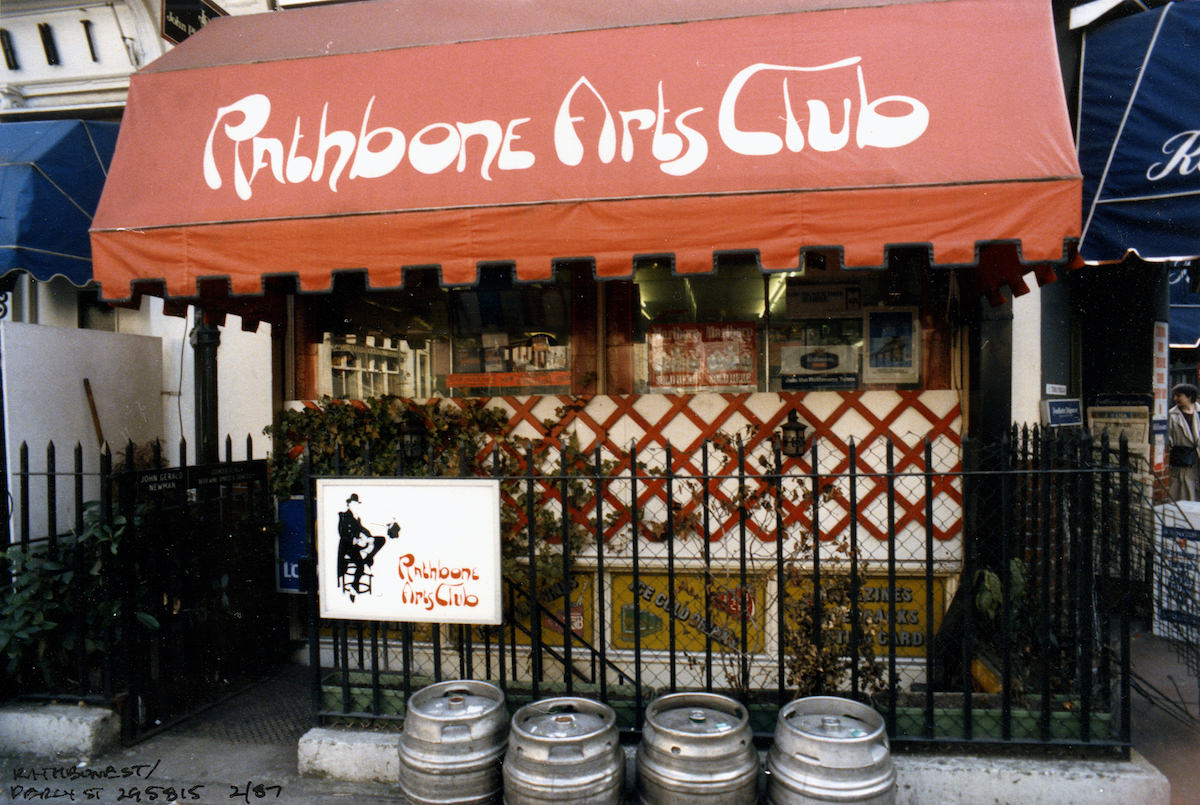
The Rathbone Arts Club was one of the spaces where Fitzrovia’s creative community gathered. The arts were not just a background feature of the neighbourhood — they were an active part of daily life. Clubs and venues like this one provided meeting points for the local bohemian scene, which in the 1980s overlapped with the punk, new wave, and ska music worlds that were thriving across London.
Print shops were a quiet but essential part of the local economy. In 1986, Marshall photographed one of these operations — a small business producing the kind of printed material that kept offices, clubs, and local organisations running. These were the unglamorous businesses that held a neighbourhood together.

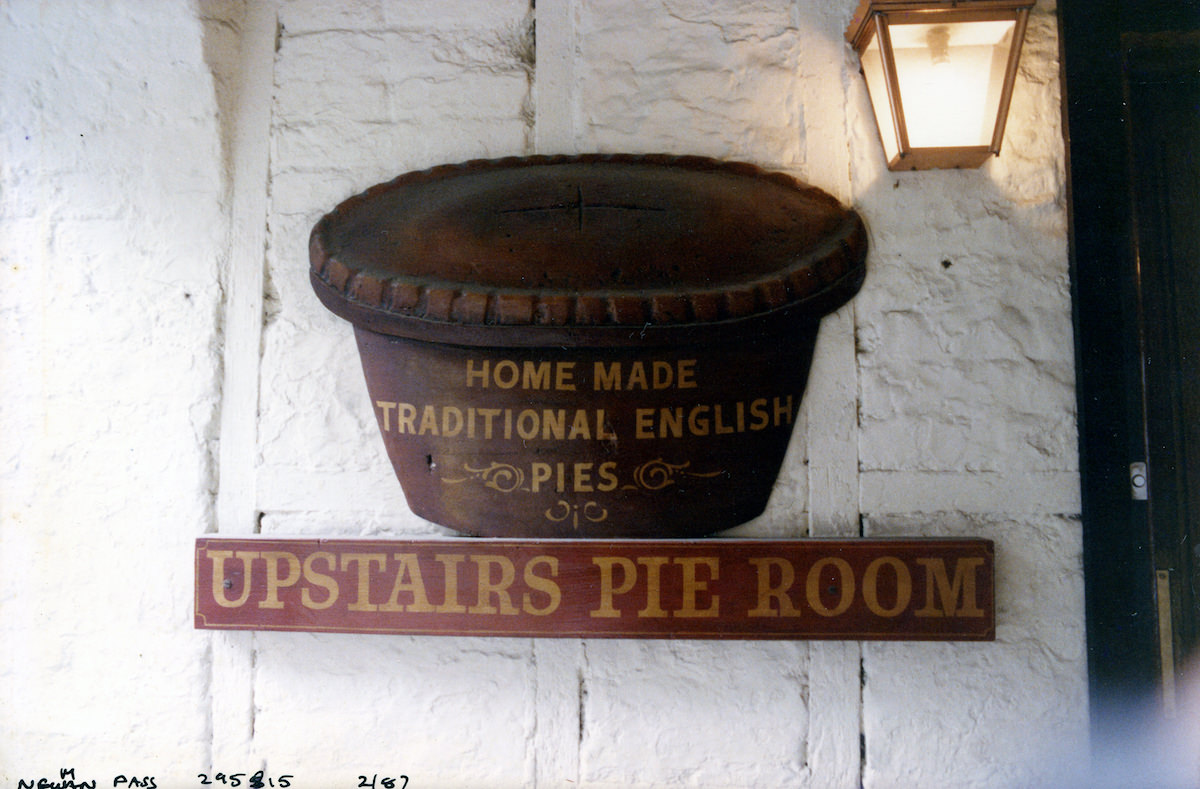
Newman Passage, a narrow alleyway connecting Newman Street to Rathbone Place, had its own distinct atmosphere. A sign for the Pie Room marked the kind of traditional eating spot that still existed in Fitzrovia in the late 1980s — unpretentious, functional, and firmly local. These were the places where workers ate lunch, not where people went for a special occasion.
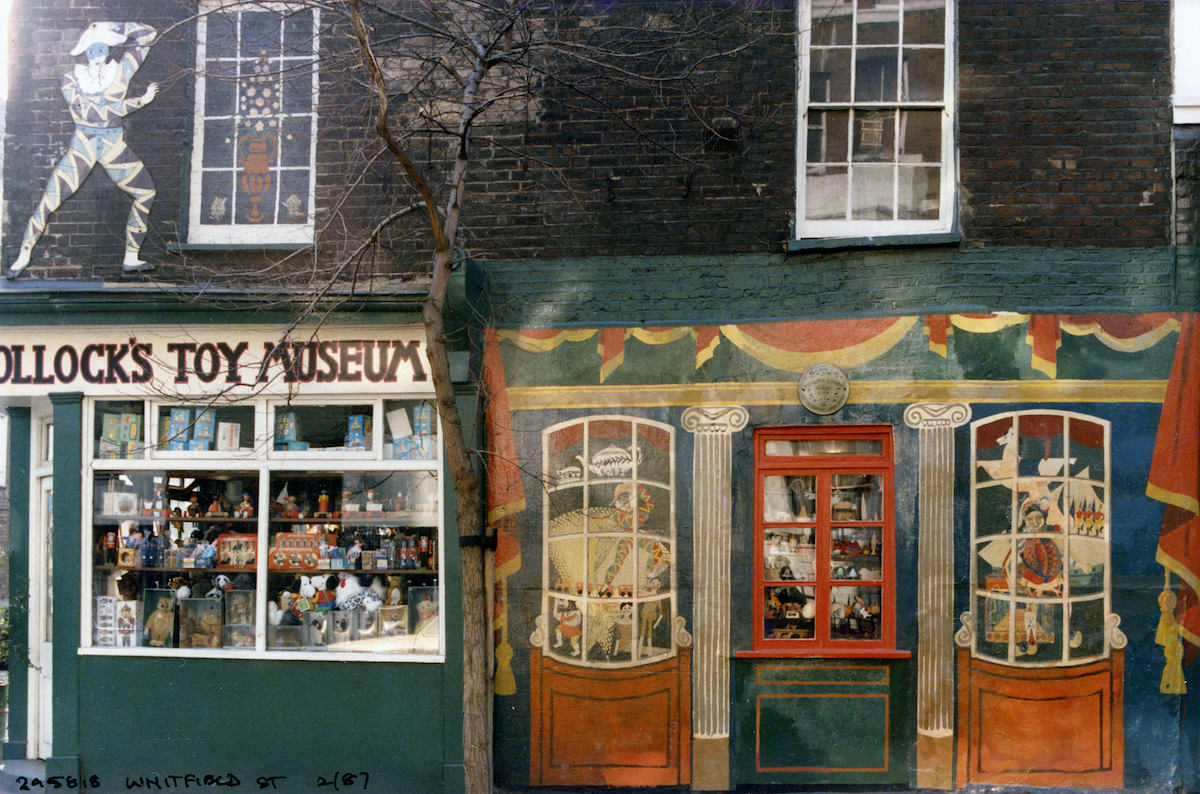
On Whitfield Street, Pollock’s Toy Museum stood as one of Fitzrovia’s more unusual institutions. Founded by Marguerite Fawdry in 1956, the museum was dedicated to antique toys and toy theatres, carrying on the tradition of Benjamin Pollock’s Victorian toy shop. By 1987, it had been operating on Whitfield Street for over a decade, drawing visitors to a part of London that was easy to overlook.
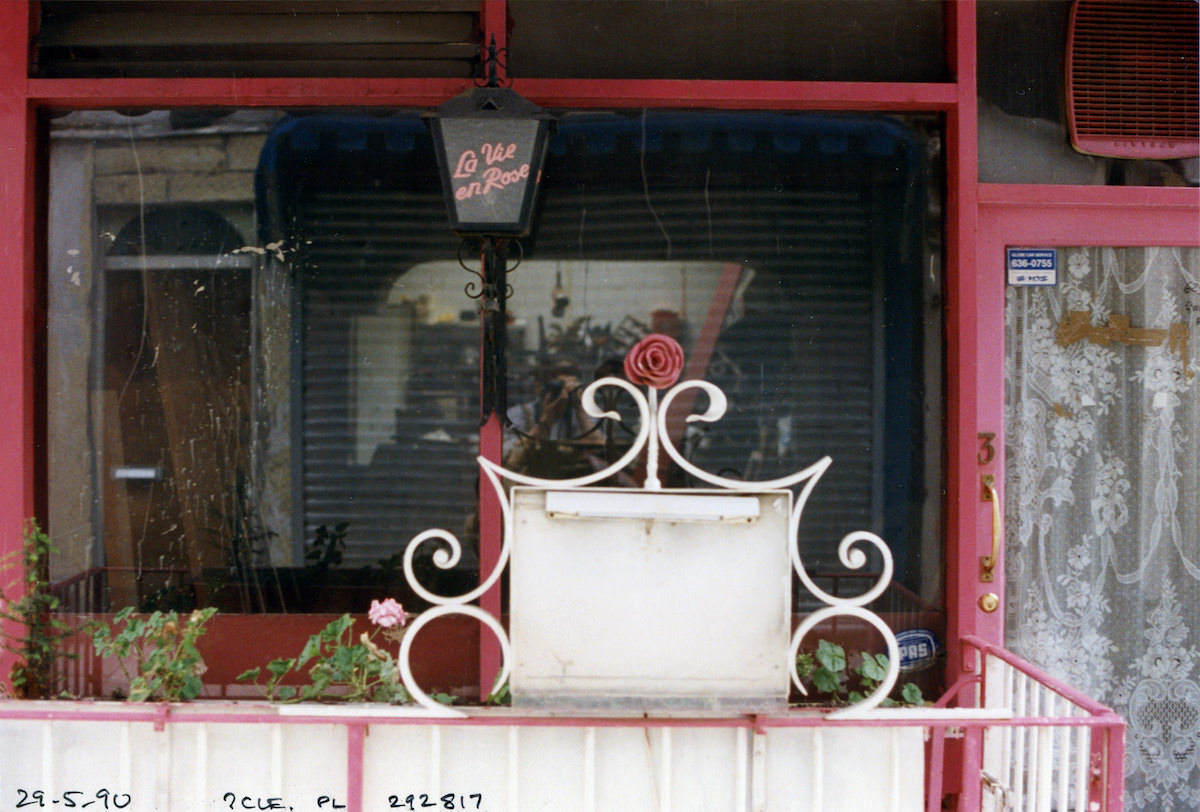
The Cleveland Street area had its own cluster of small restaurants and eateries by 1990. La Vie en Rose brought a French name and ambiance to a street better known for its working-class history — Cleveland Street had been the site of a major Victorian scandal in 1889, involving a male brothel and the British establishment. By the 1990s, that history was long buried under decades of change.
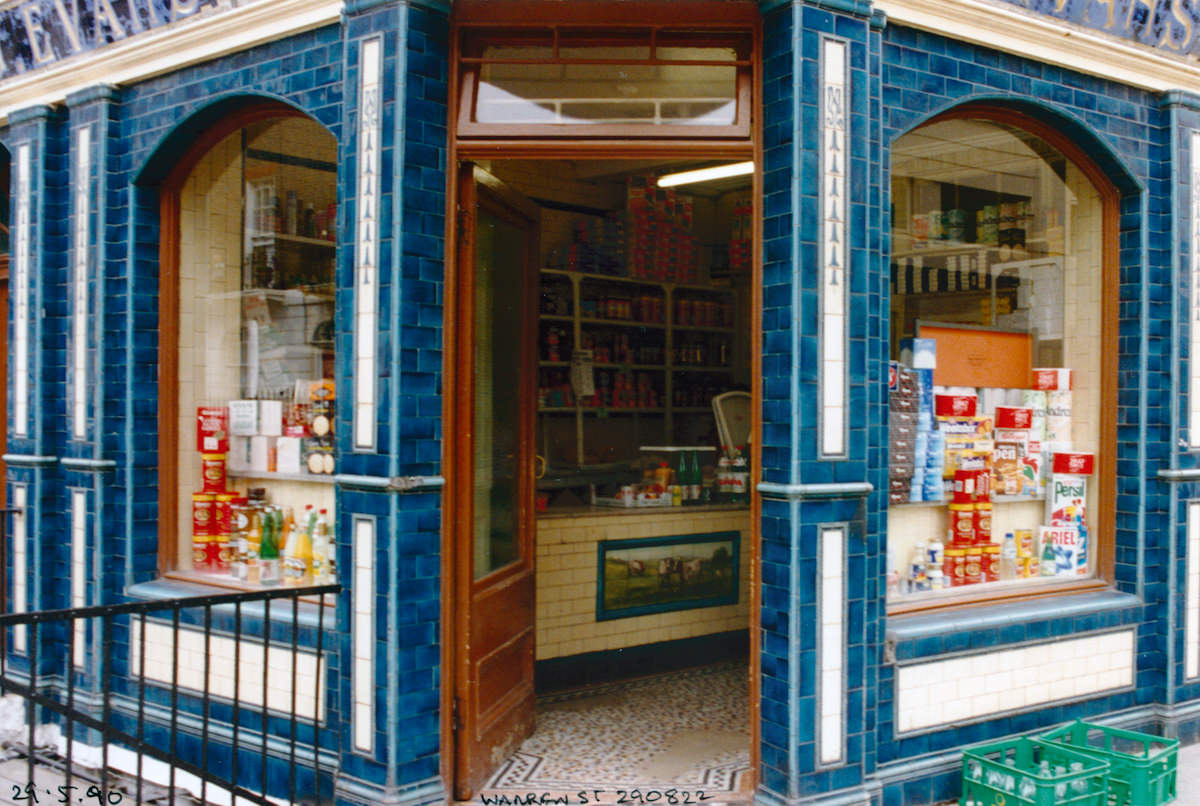
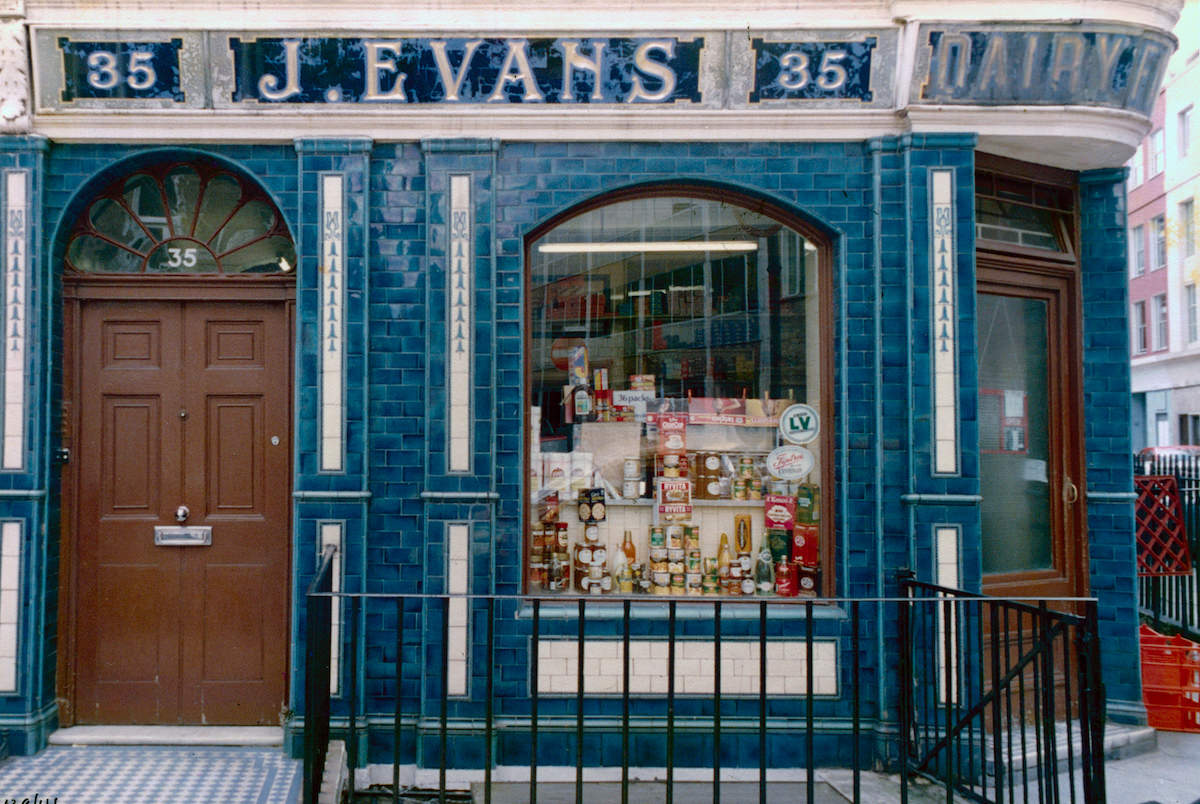
J Evans, Dairy on Conway Street near Warren Street was one of the last traditional dairies still operating in central London. Marshall photographed it in both 1990 and 1985, capturing a business that was already becoming rare. Milk deliveries and neighbourhood dairies were vanishing from London’s streets as supermarkets took hold, and Evans was a holdout from an earlier era.
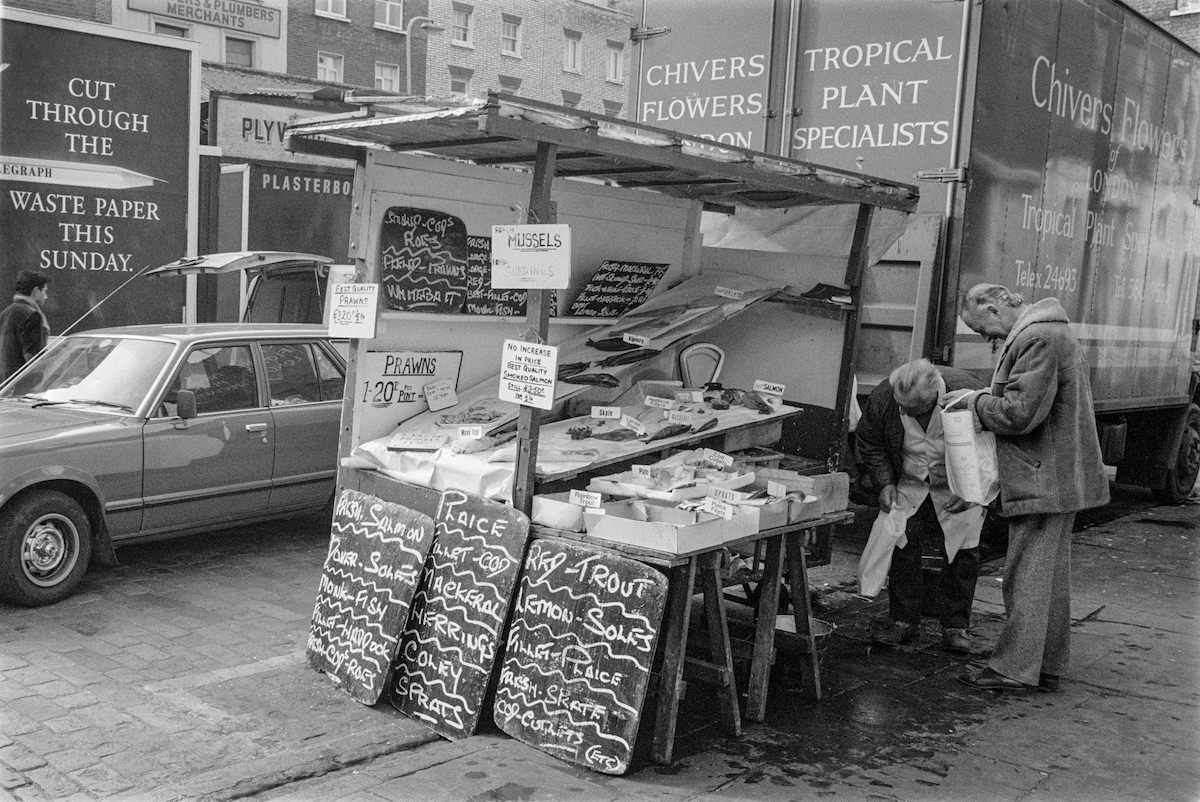
Goodge Place was a small street with a concentrated street-level economy. A fish stall operated there in 1987, selling fresh fish directly to local buyers — the kind of street trading that had been part of London life for centuries but was becoming less common. The Hellenic, a Greek business on the same street, reflected the strong Greek Cypriot presence in parts of the West End during this period.
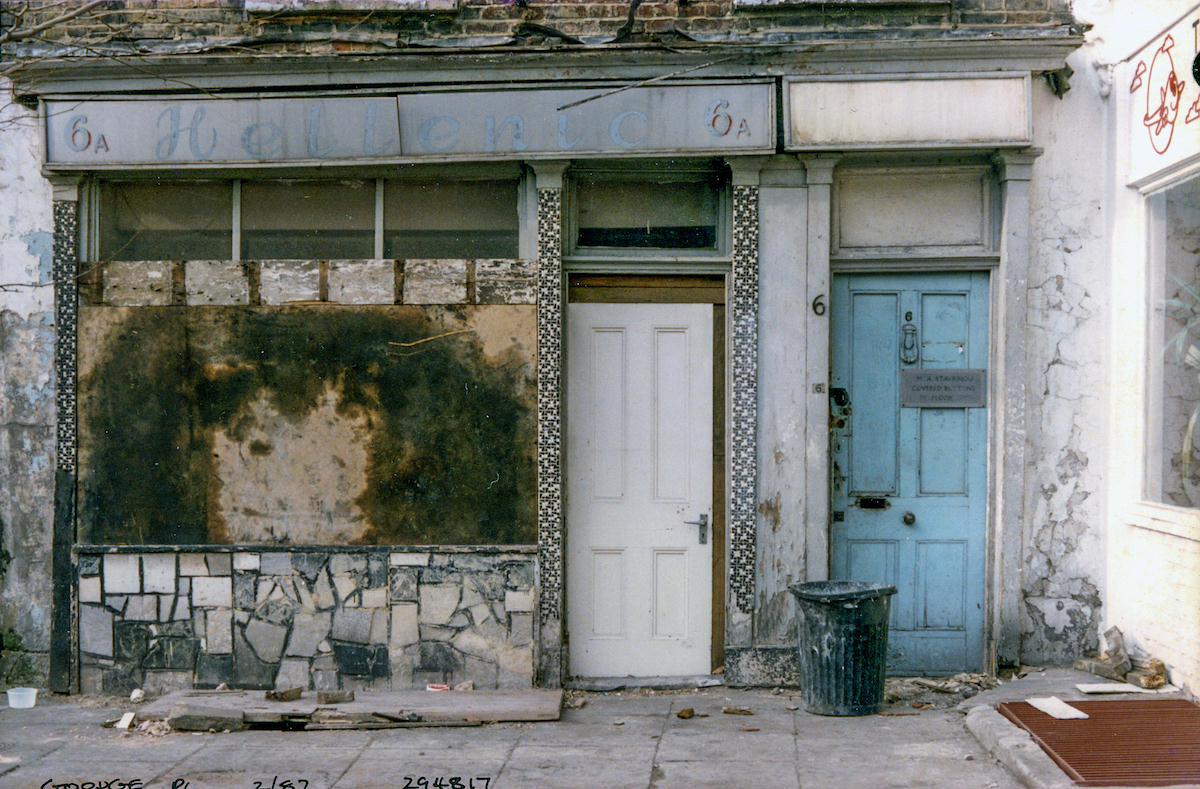
The Hellenic Restaurant appeared in Marshall’s photographs more than once, with a shot from 1986 showing the establishment in an earlier state. Greek restaurants had been part of Fitzrovia’s food landscape since the postwar years, when Greek and Greek Cypriot immigrants settled in significant numbers across central and north London.
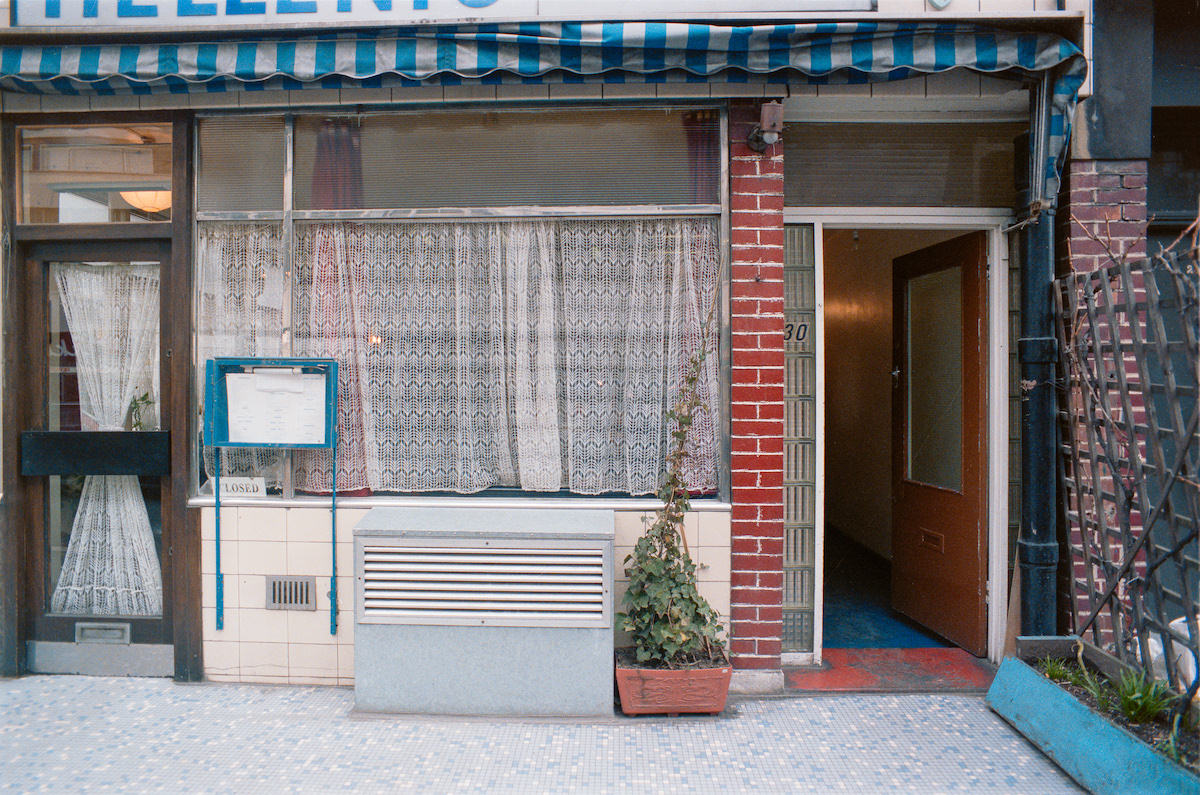
Great Titchfield Street was one of the main commercial arteries running through Fitzrovia. H Wolfin, a textile business, operated there in 1987 — part of a fabric and garment trade that had deep roots in this part of London. The nearby Fitzrovia Neighbourhood was historically associated with the rag trade, and businesses like Wolfin’s were among the last remnants of that industry in the area.
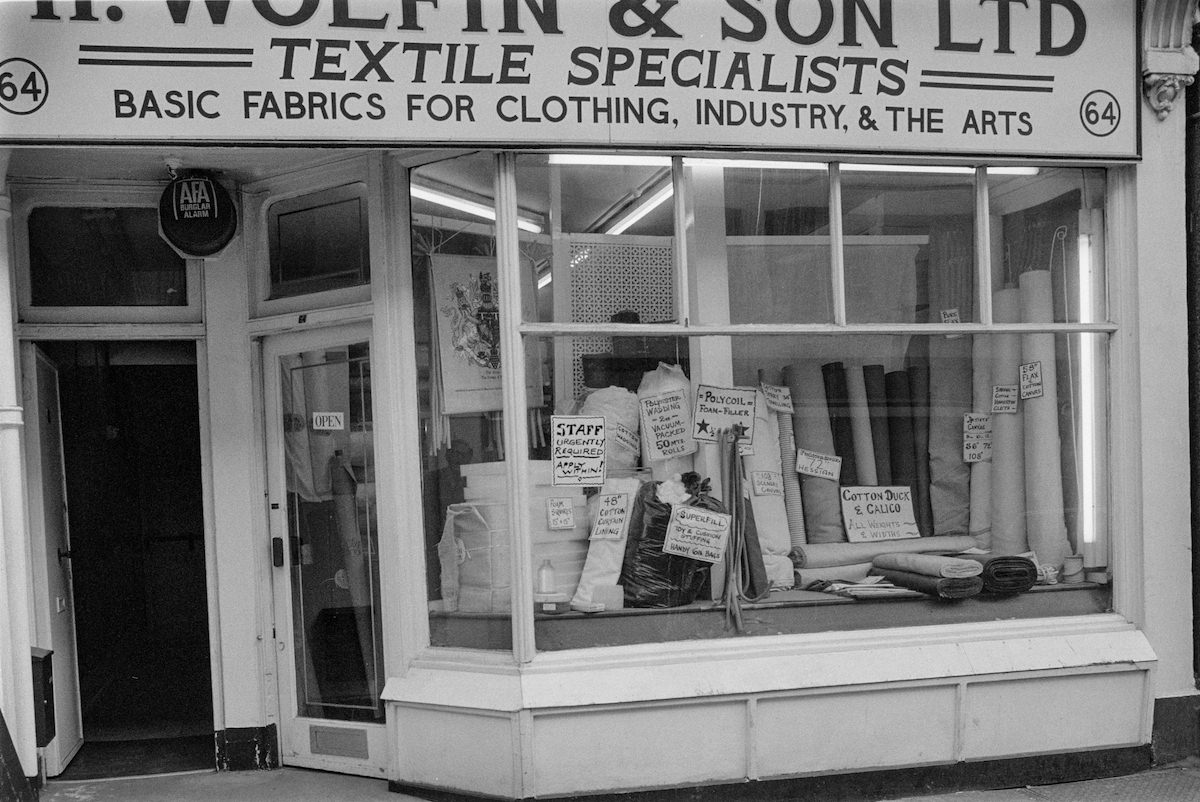
Cleveland Street itself, photographed in 1986, showed the quieter residential and commercial face of Fitzrovia — Georgian-era buildings standing alongside 20th-century additions, the street carrying the weight of layers of London history in its brickwork.
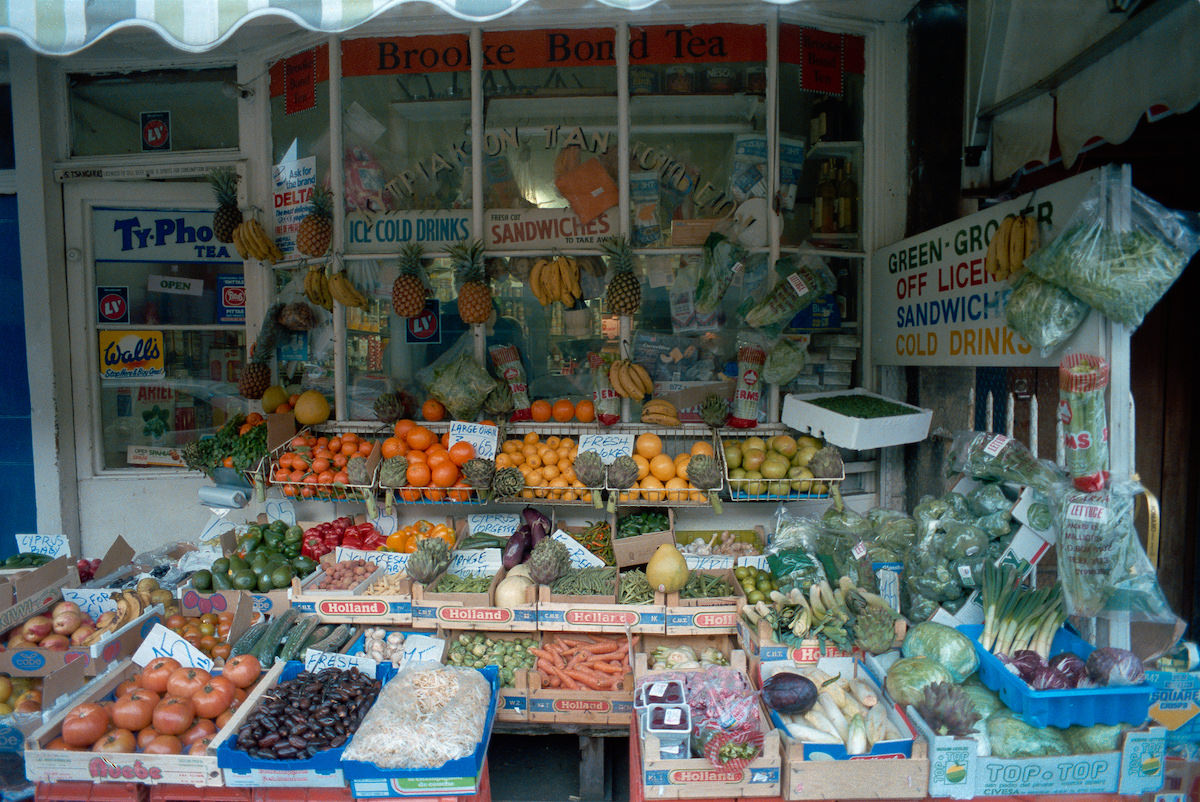
Langham Street captured the fashion side of the neighbourhood. A fashion shop photographed there in 1987 showed that Fitzrovia had its own retail identity — not the luxury of nearby Oxford Street, but something more independent and aimed at a younger, style-conscious local market.
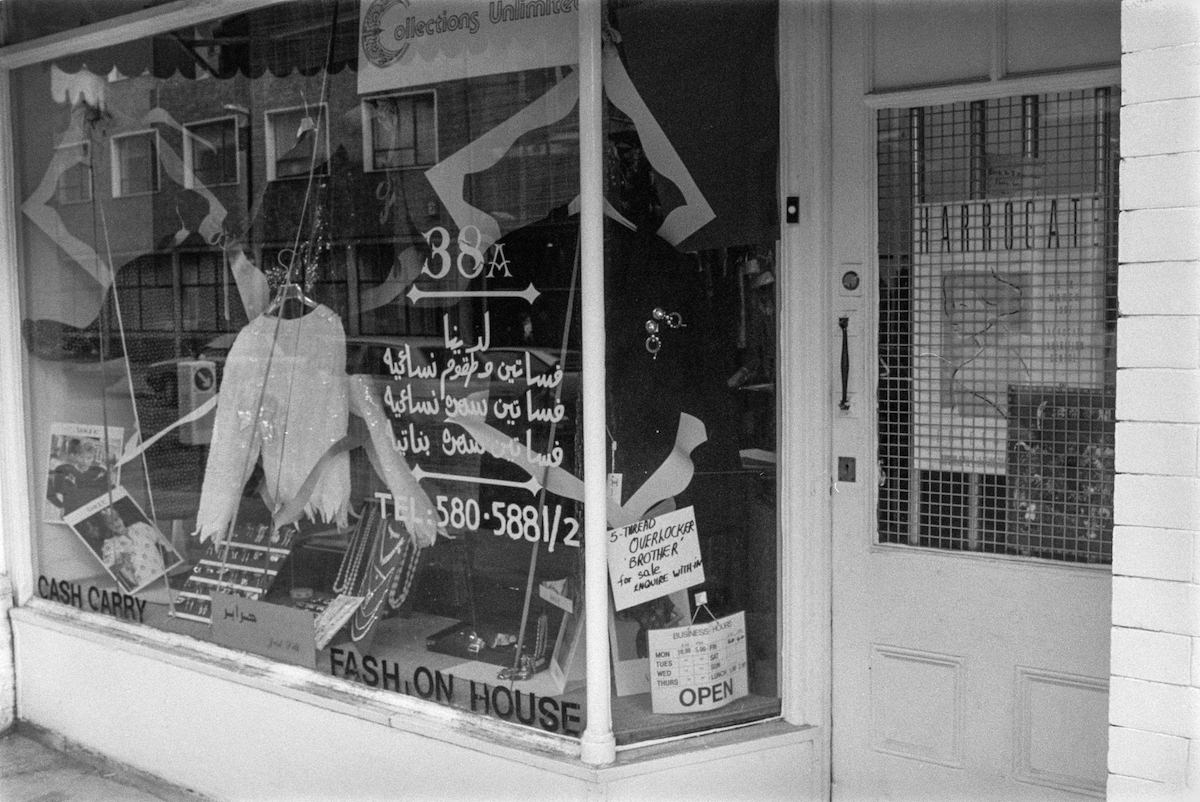
E E Pither & Sons on Mortimer Street was one of those long-established local businesses that still held on in the late 1980s. These family-run operations were under increasing pressure from rising rents and changing shopping habits. Many of them would not survive into the following decade as Fitzrovia began gentrifying.
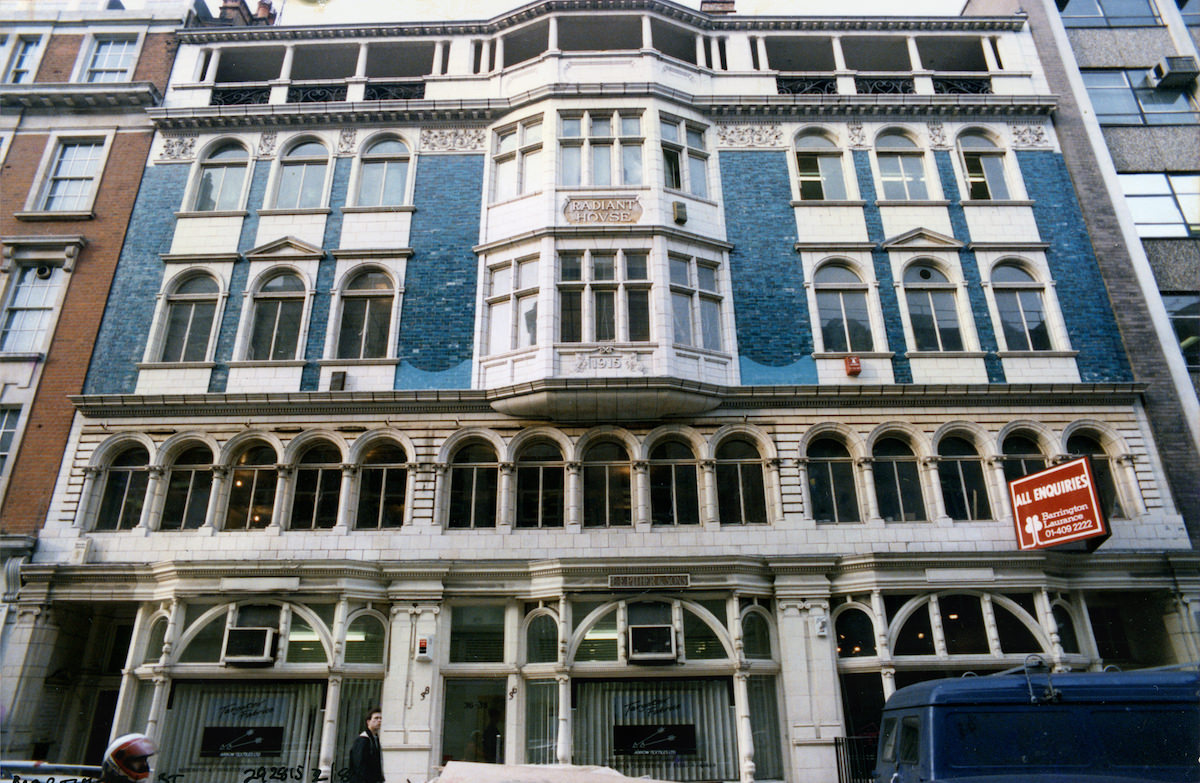
Cleveland Street, photographed again in 1987, sits on the border between Westminster and Camden, which meant Fitzrovia itself straddled two local authority boundaries. This administrative split had practical effects on how the area was managed, planned, and funded throughout the 1980s. It also meant the neighbourhood sometimes fell between the priorities of both councils.
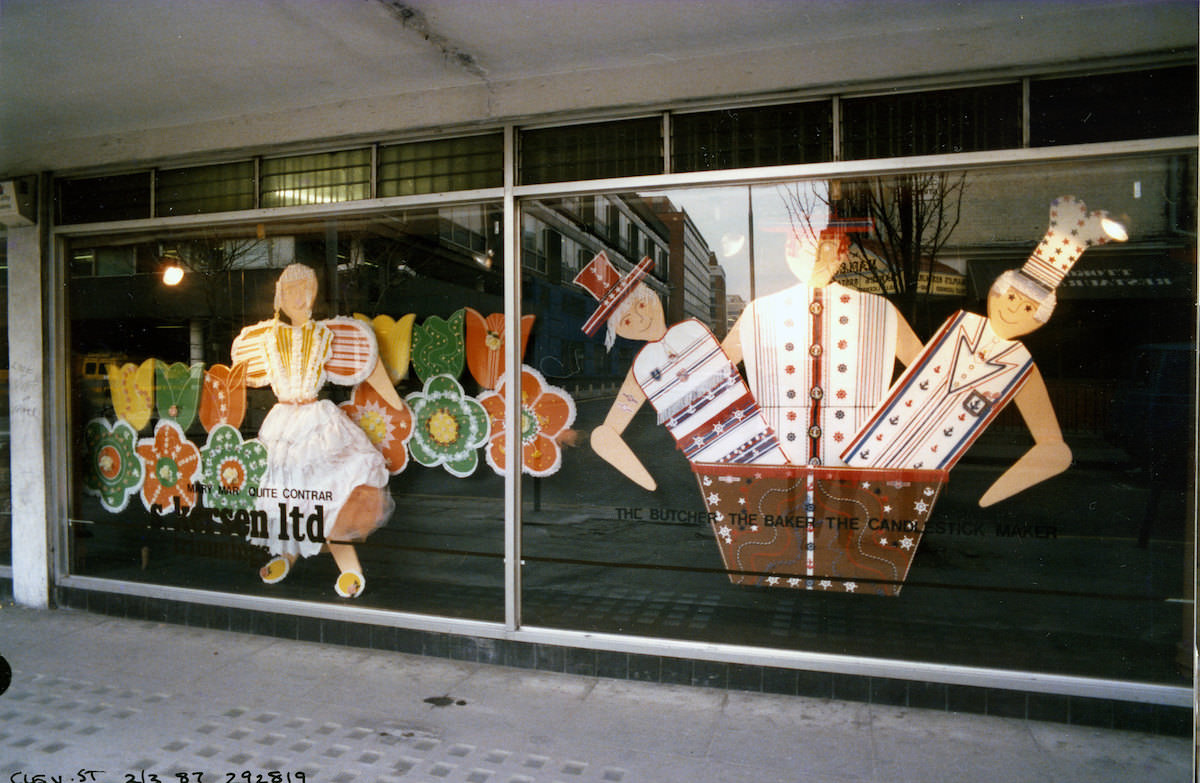
Great Titchfield Street also hosted a cash-and-carry operation in 1987, supplying local businesses with bulk goods. This type of trade reinforced the working commercial character of the street, a world away from the boutique economy that would eventually replace much of it.
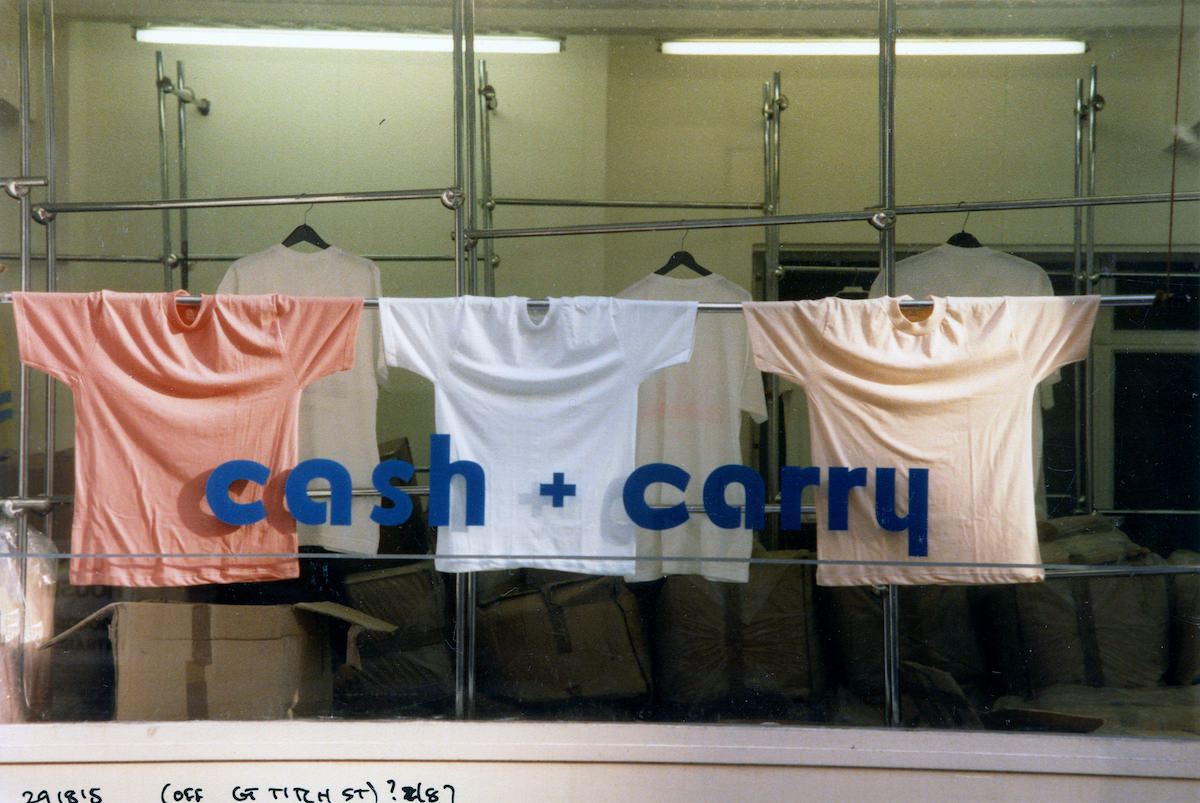
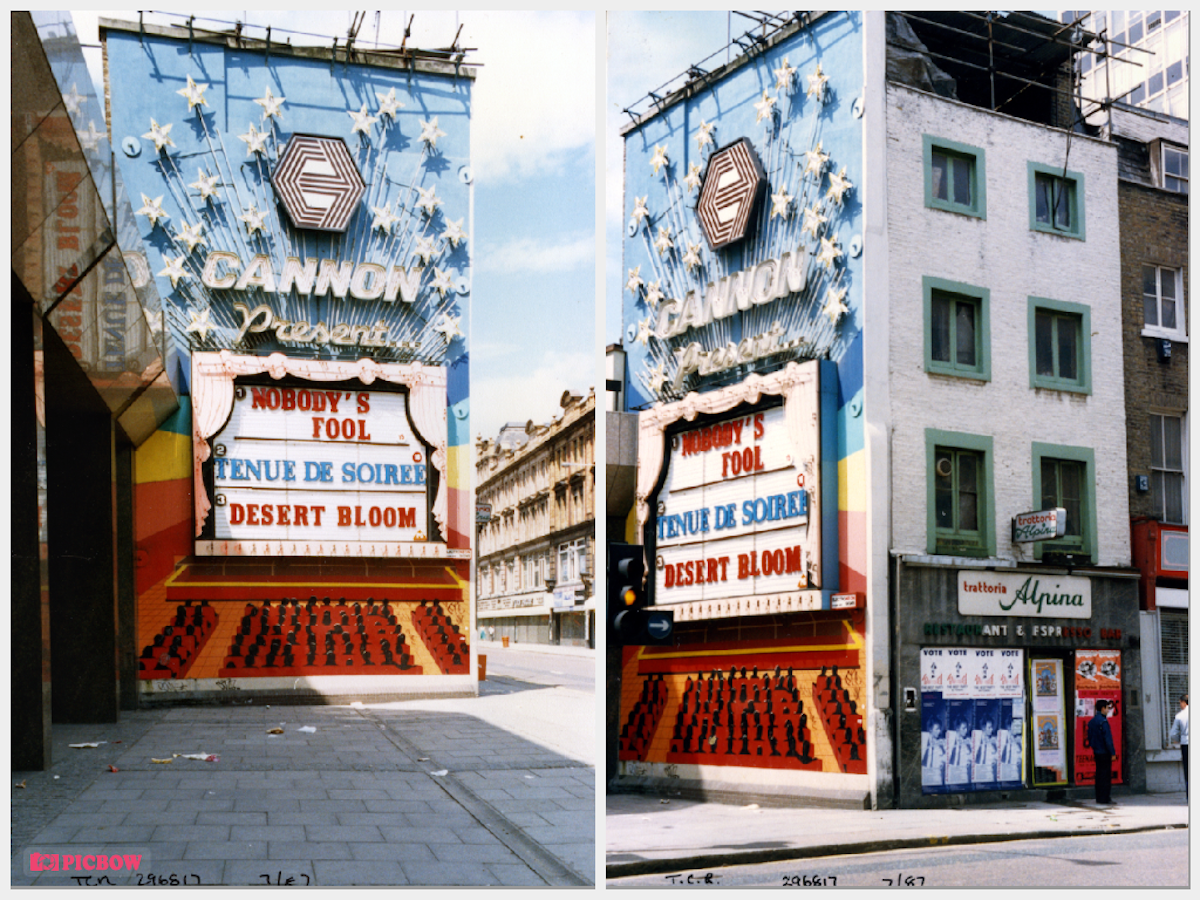
At the southern edge of Fitzrovia, the Cannon Cinema at 30 Tottenham Court Road was a local institution in 1987. The Cannon chain had taken over a number of independent cinemas across London during the 1980s, and this one sat right on the boundary with Camden. For local residents, it was one of the most accessible cinemas in the area.
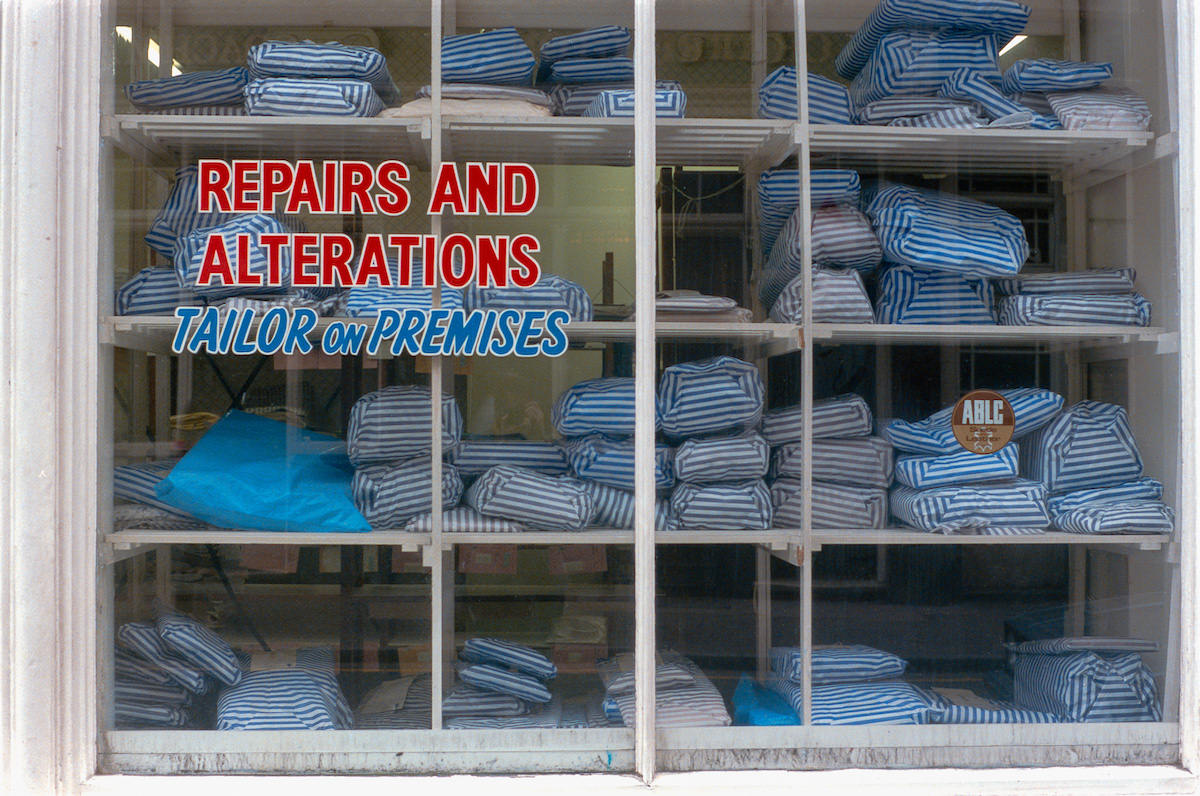
A laundry window photographed in 1986 captured one of the most ordinary details of working-class neighbourhood life. Launderettes and laundries were essential services in an area where many residents lived in flats without washing machines. These small details are what Marshall’s photographs do best — they preserve the texture of daily life in a place and time that has largely disappeared.
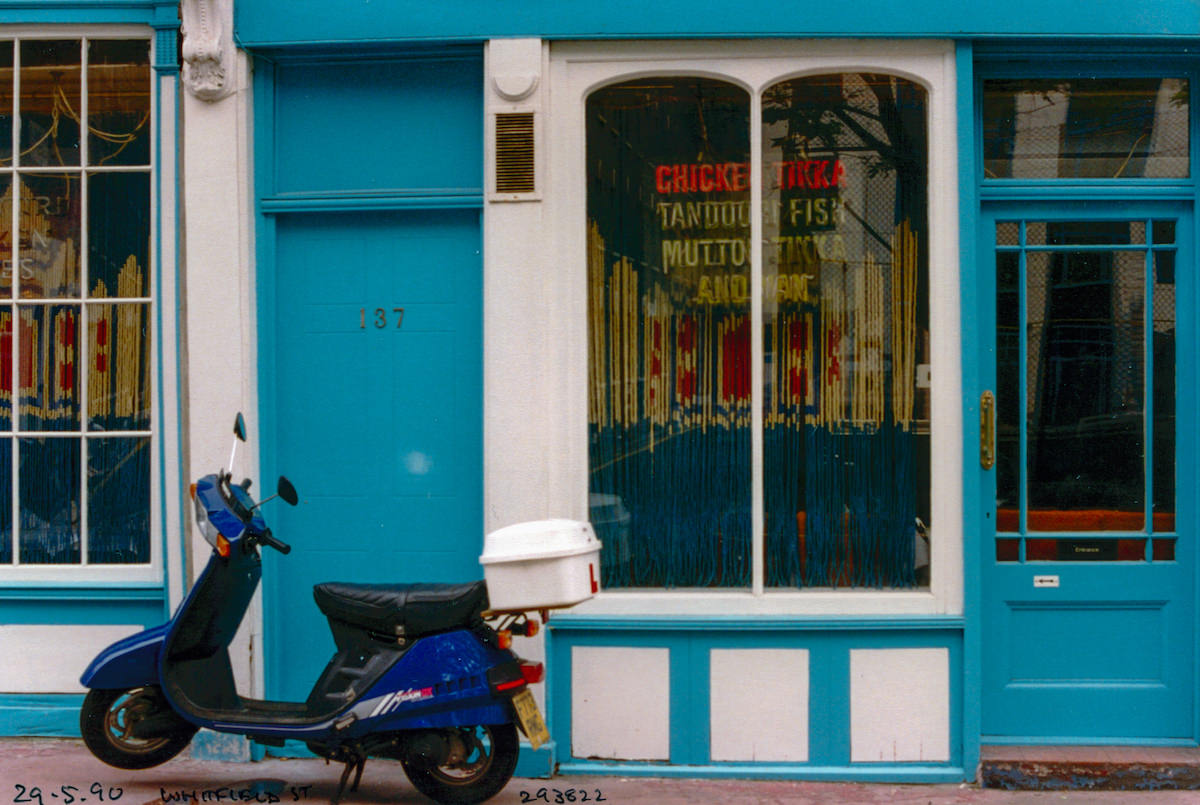
Number 137 Whitfield Street, photographed in 1987, is one of Marshall’s final images from this stretch of road — a building that, like so many in Fitzrovia, carried the ordinary wear of everyday use. Whitfield Street appeared in Marshall’s photographs more than almost any other in Fitzrovia, suggesting it was a street that concentrated much of the neighbourhood’s character into a single stretch of pavement.