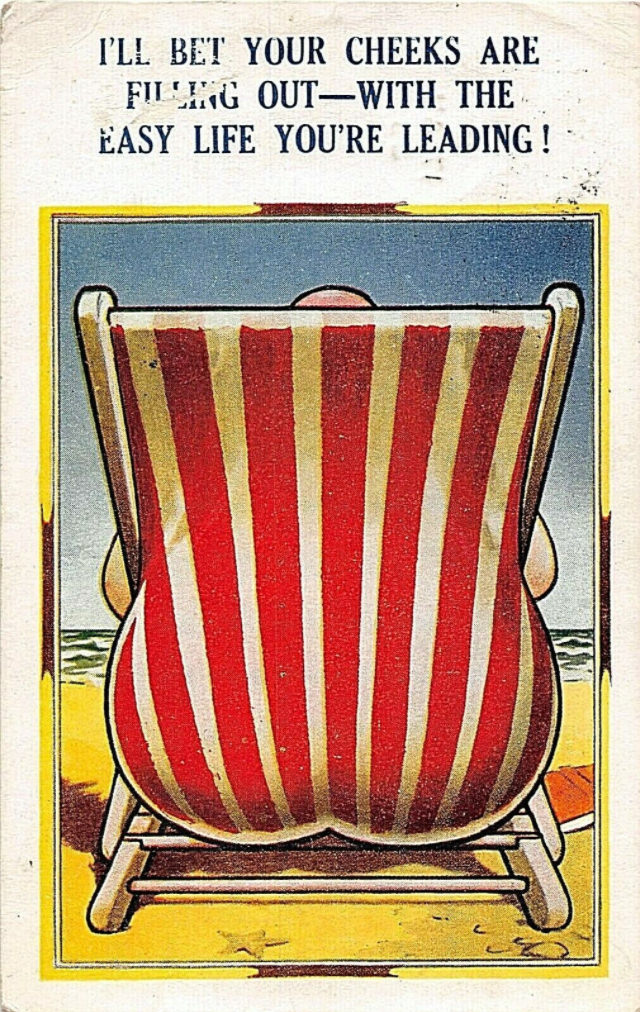
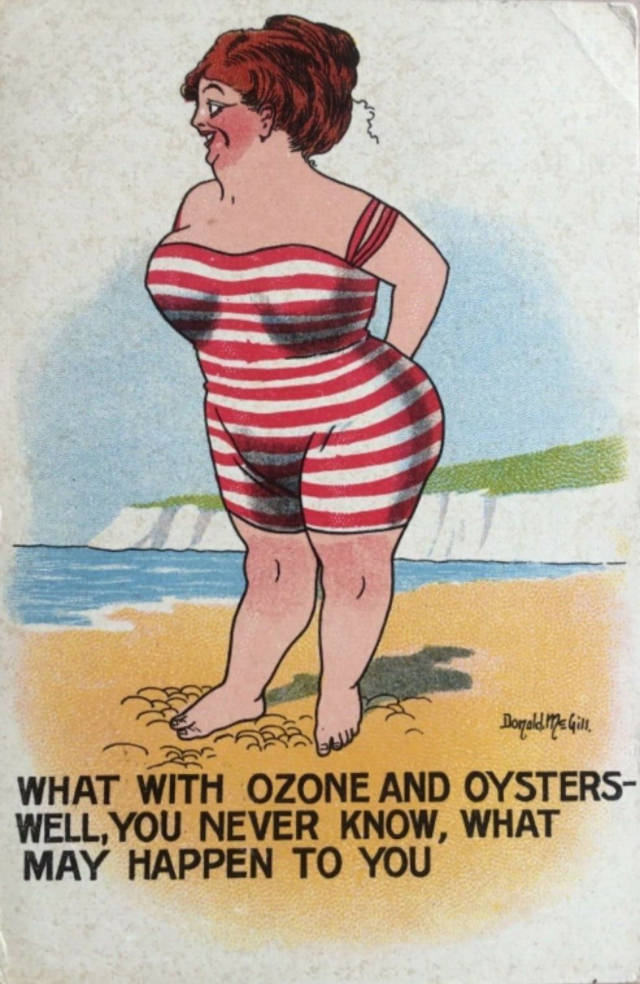
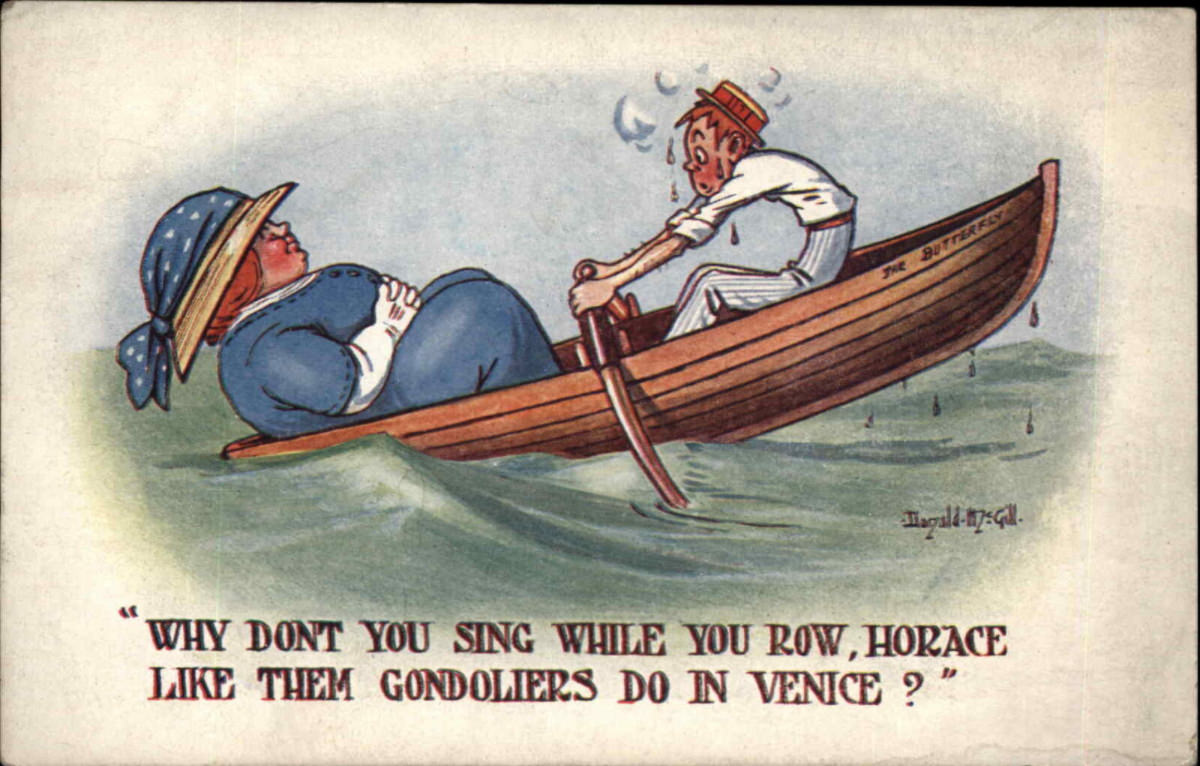
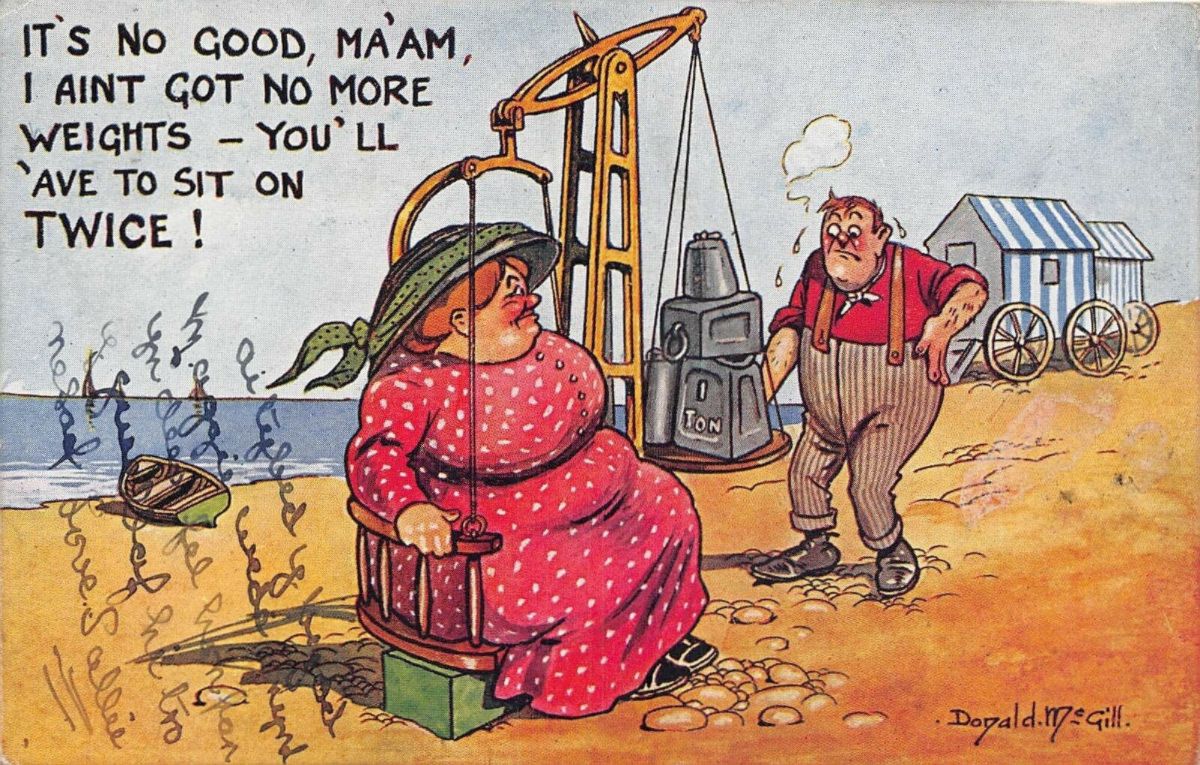
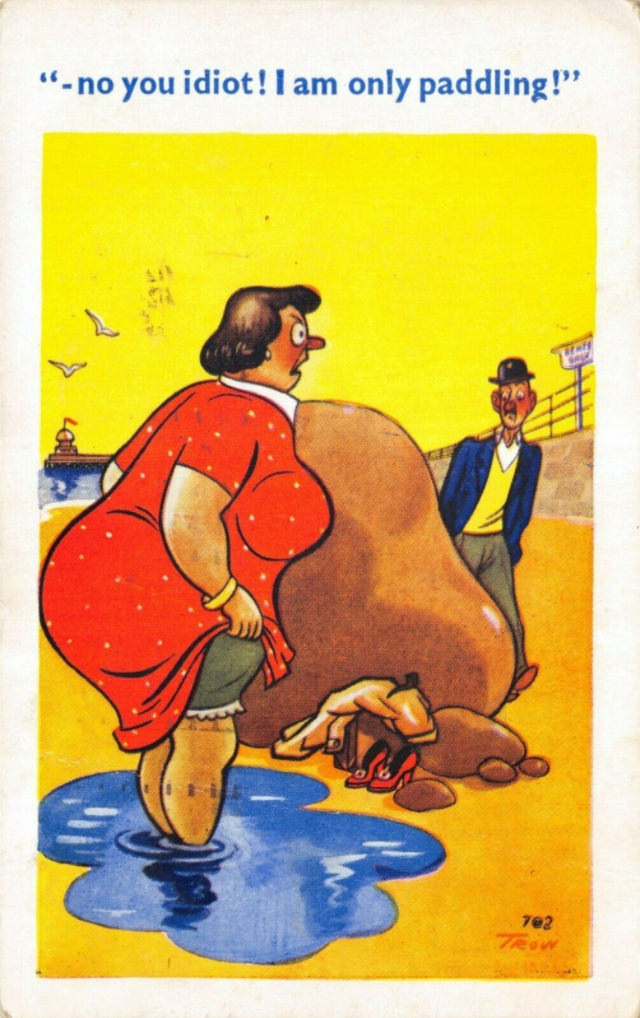
Donald McGill was the undisputed king of the saucy postcard. The English graphic artist and cartoonist spent most of the 20th century producing comic postcards that made Britain laugh — loudly and often. His work featured a reliable cast of characters: attractive young women, drunken men, honeymoon couples, priests, and of course, the larger-than-life fat ladies who became some of his most beloved figures. These broad, boisterous women were drawn with sharp wit and a genuine affection for earthy humor, and they remain some of the funniest images McGill ever put to paper.
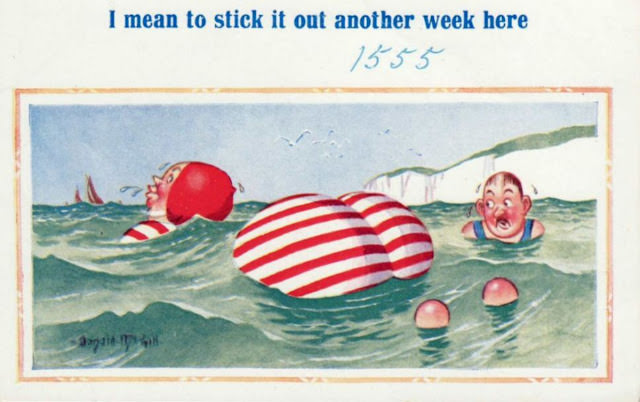
McGill’s postcards are most closely linked with the British seaside, though they were sold in shops across the entire country. The fat lady as a comic character was a staple of seaside humor — squeezed into bathing suits, causing chaos on park benches, and delivering punchlines with perfect timing. McGill gave these women a personality that audiences recognized instantly. They were loud, confident, and utterly unaware of the havoc they caused around them. That combination made them irresistible.
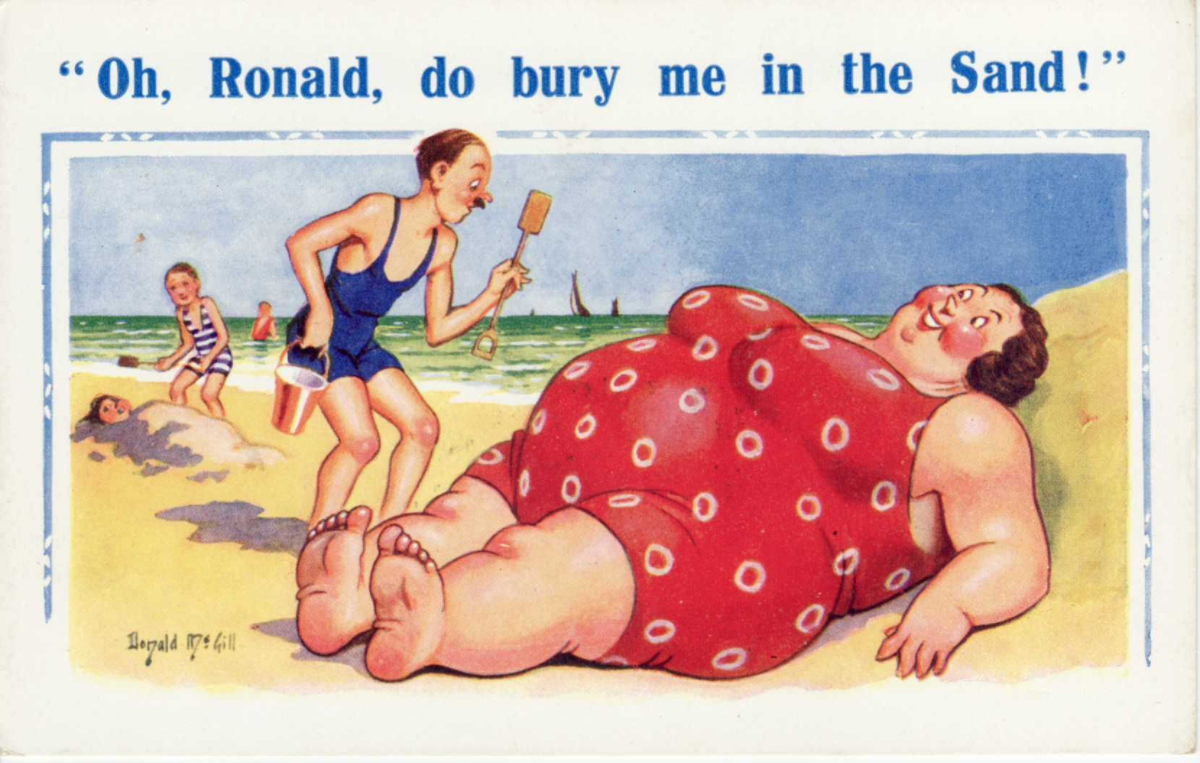
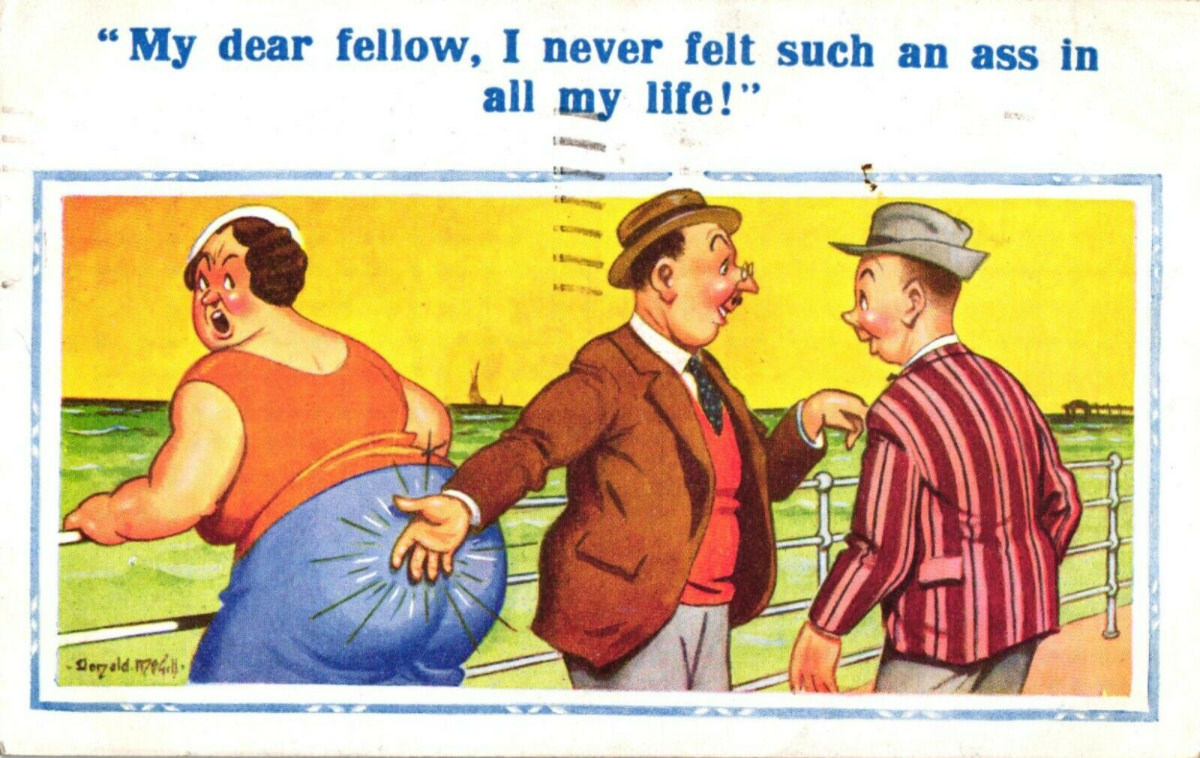
McGill had a sharp eye for how British society actually worked — its class tensions, its domestic squabbles, and its unspoken rules. He sorted his cards into three levels of vulgarity: mild, medium, and robust. The fat lady comics appeared across all three tiers. Some were gentle and playful. Others pushed firmly into robust territory. All of them were drawn with the same confident, color-washed style that made his work instantly recognizable on any postcard rack.
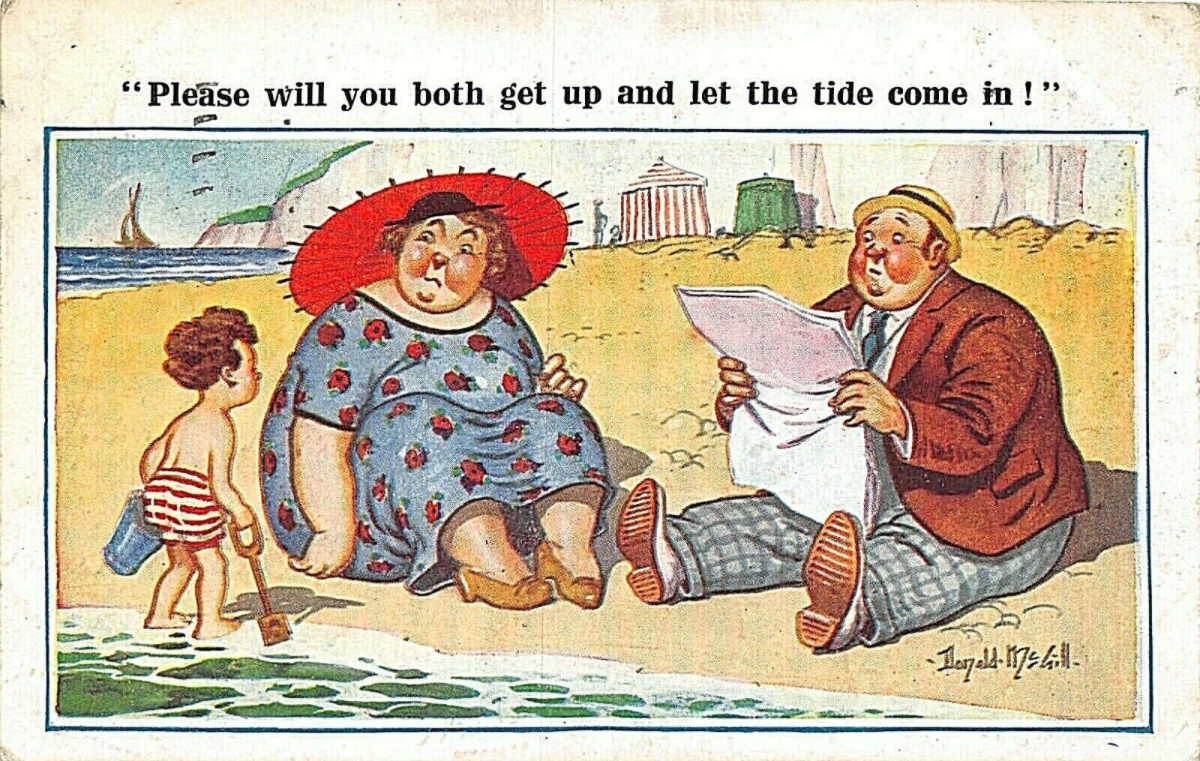
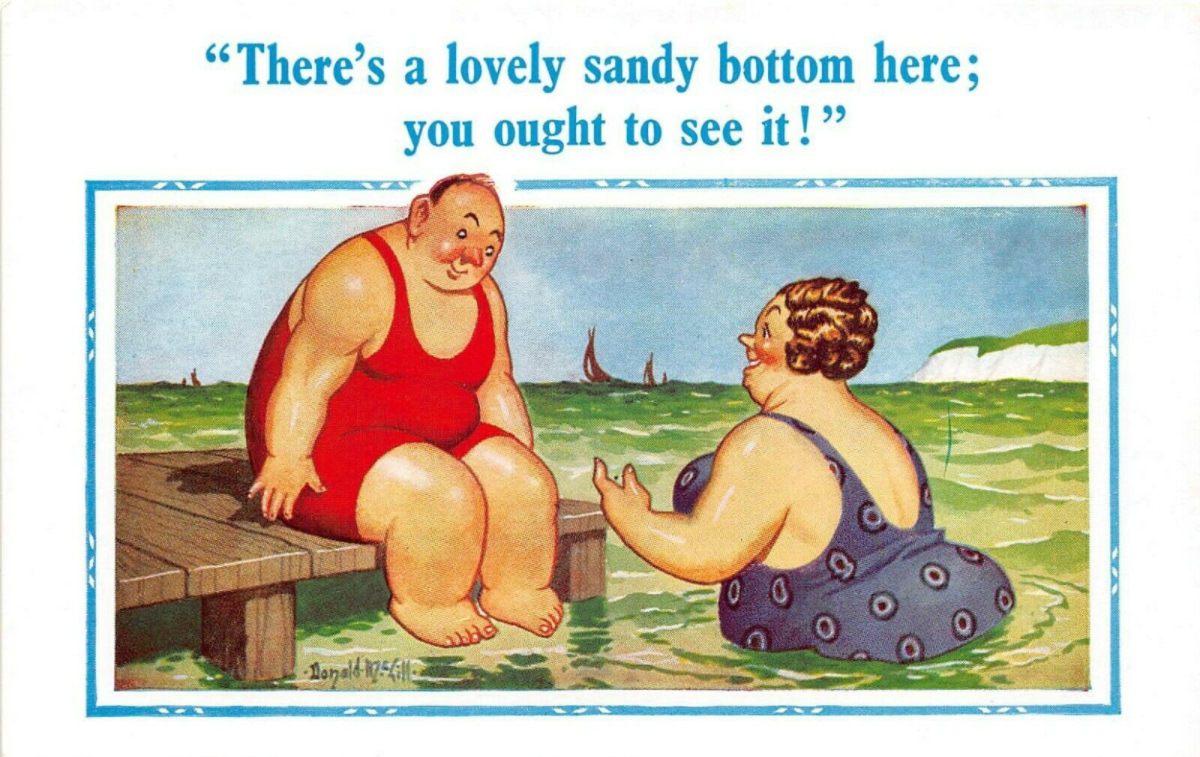
Despite his enormous popularity, McGill earned very little from his work during his peak years. He received just three guineas per design — a modest fee for a man whose cards were being printed by the millions. He produced around 12,000 designs throughout his career, and those designs were reproduced in approximately 200 million copies. The fat lady, the drunken husband, the blushing bride — all of them became familiar faces to generations of British postcard buyers.
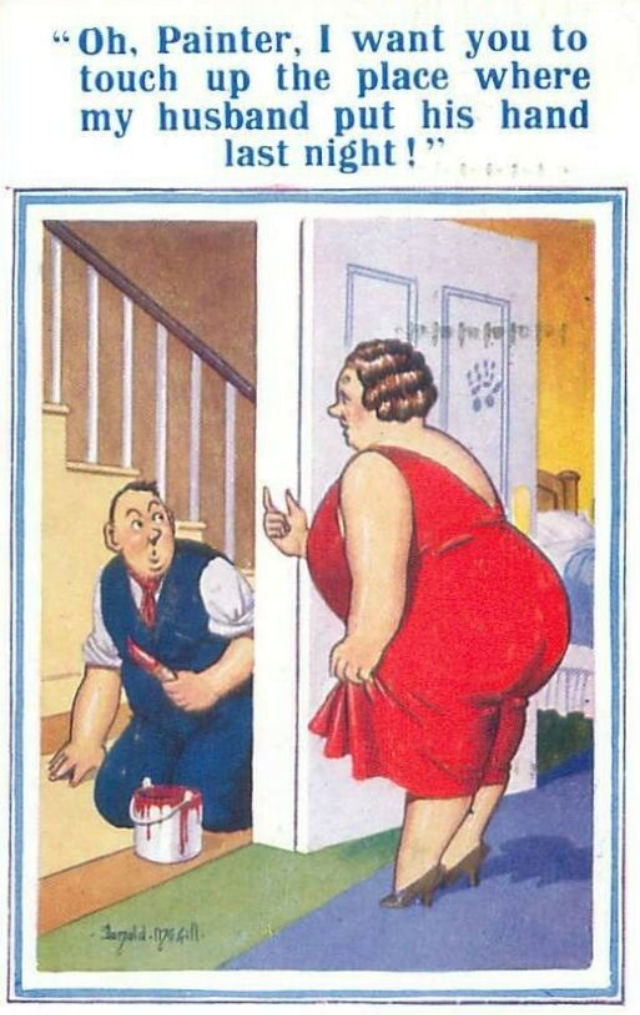
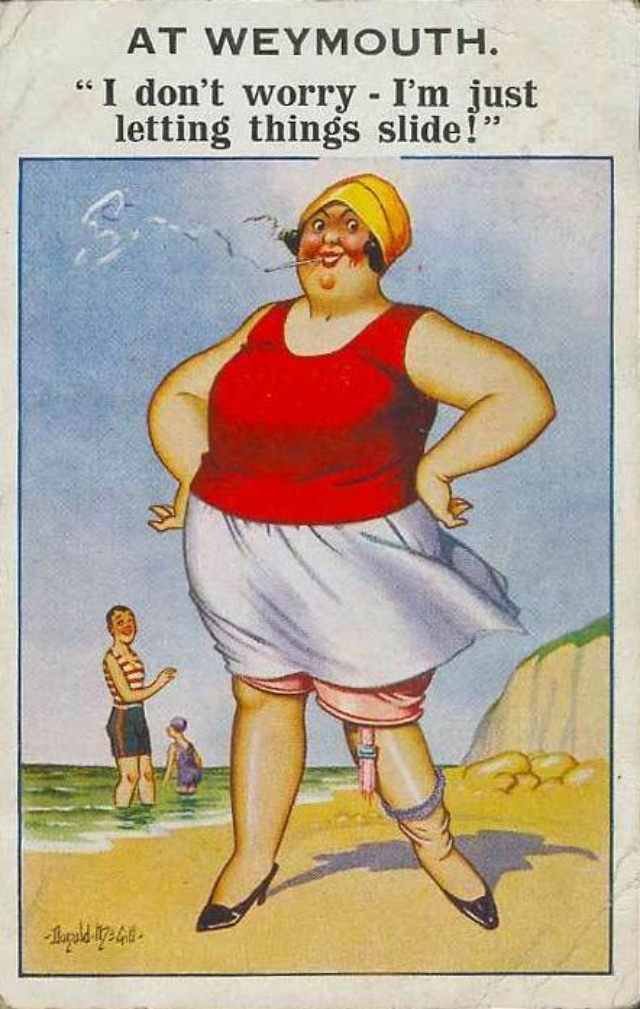
McGill’s home life stood in striking contrast to the content he produced. His family was entirely respectable and deeply uncomfortable with his professional reputation. His two daughters would sprint past comic postcard shops rather than be seen near them. For McGill himself, there was no contradiction. He saw his work as honest social observation dressed up in humor — a view of ordinary British life told through exaggerated bodies and sharp one-liners.
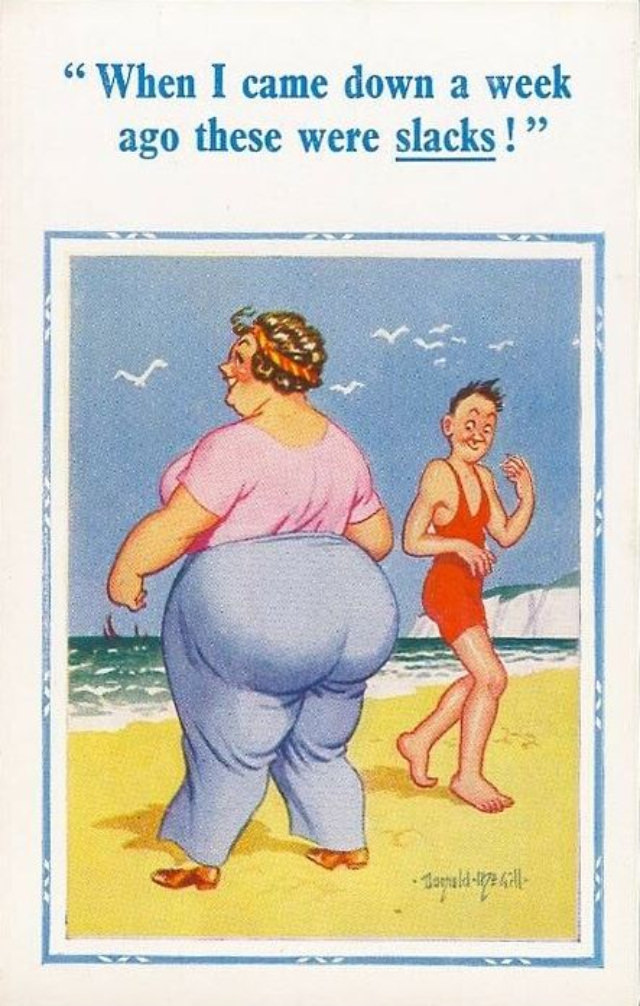
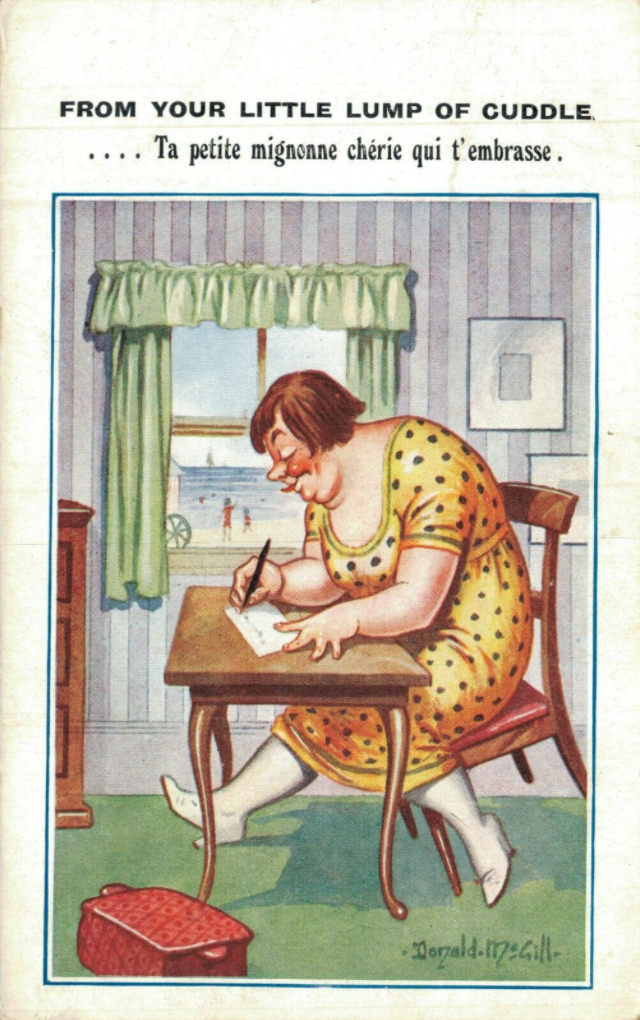
During World War I, McGill turned his talents toward the war effort. He produced humorous anti-German propaganda postcards that looked at the conflict from two angles: the experience of men serving at the front, and the daily realities facing families at home. Topics on the domestic side included food rationing, war profiteers, spy scares, and internment. Even in wartime, his fat lady characters found their way onto the cards, grounding the humor in recognizable, everyday figures.
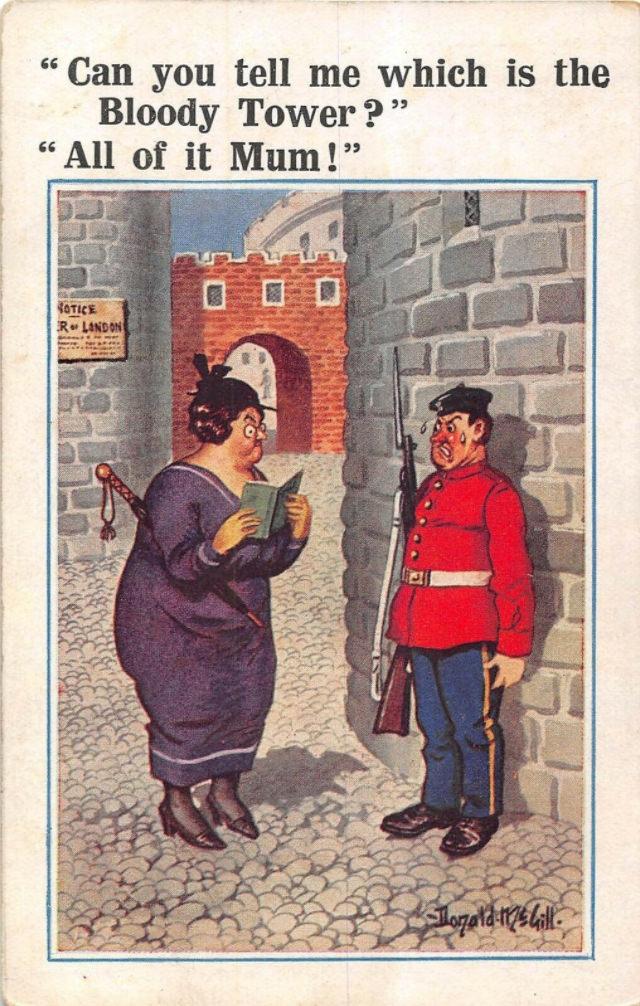
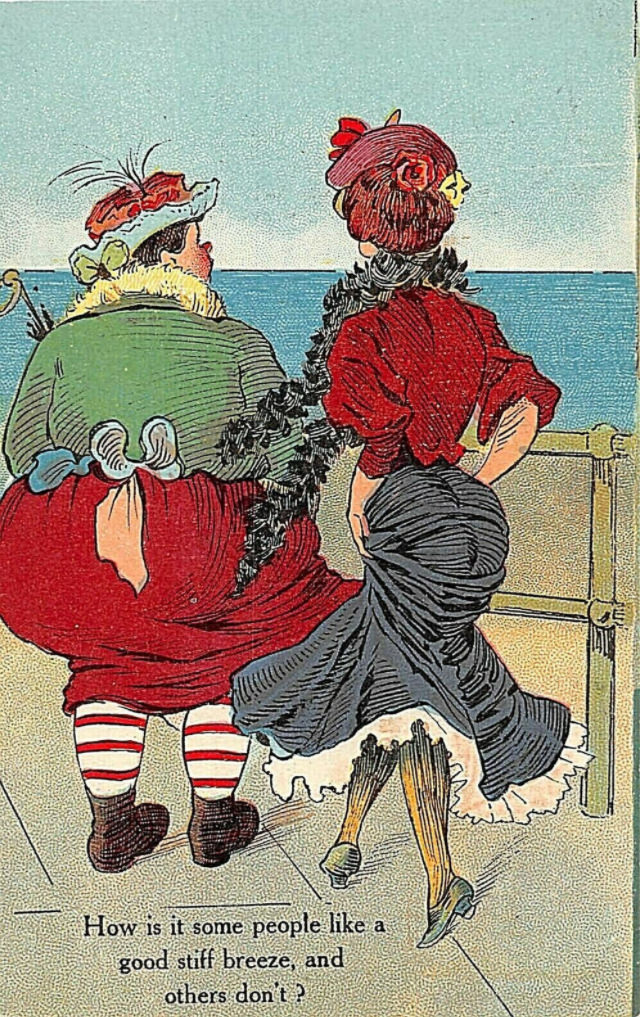
The postwar years brought growing pressure from censorship groups. Local committees across the country began investigating postcard retailers, targeting cards they deemed obscene. On July 15, 1954, McGill was found guilty of violating the Obscene Publications Act of 1857. He was fined £50 and ordered to pay £25 in costs. The legal fallout was significant — large quantities of saucy postcards were destroyed, retailers canceled orders, and several smaller publishing companies went bankrupt because they operated on such thin margins.
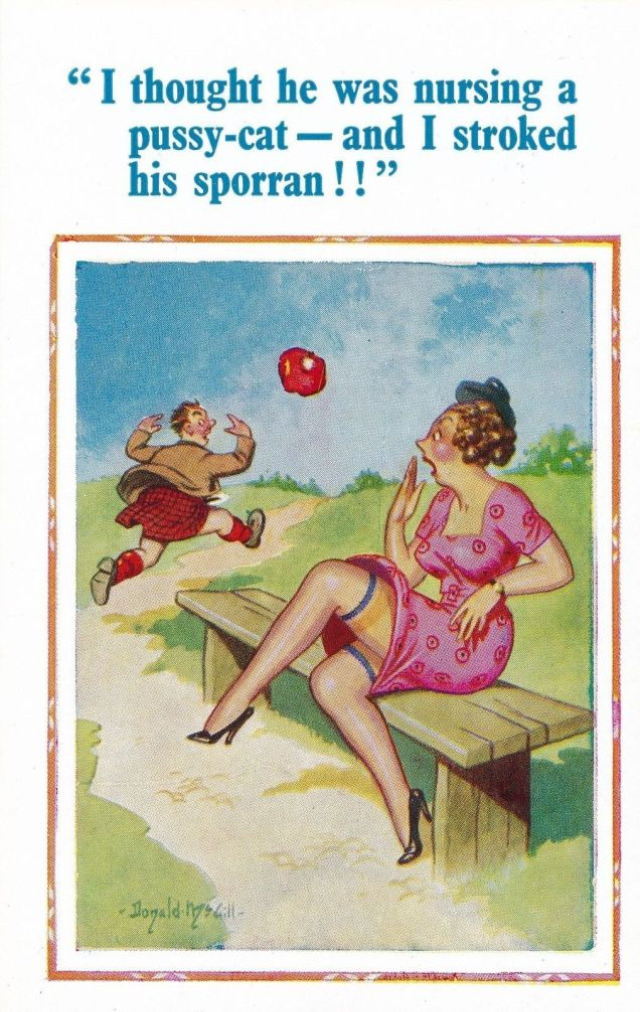
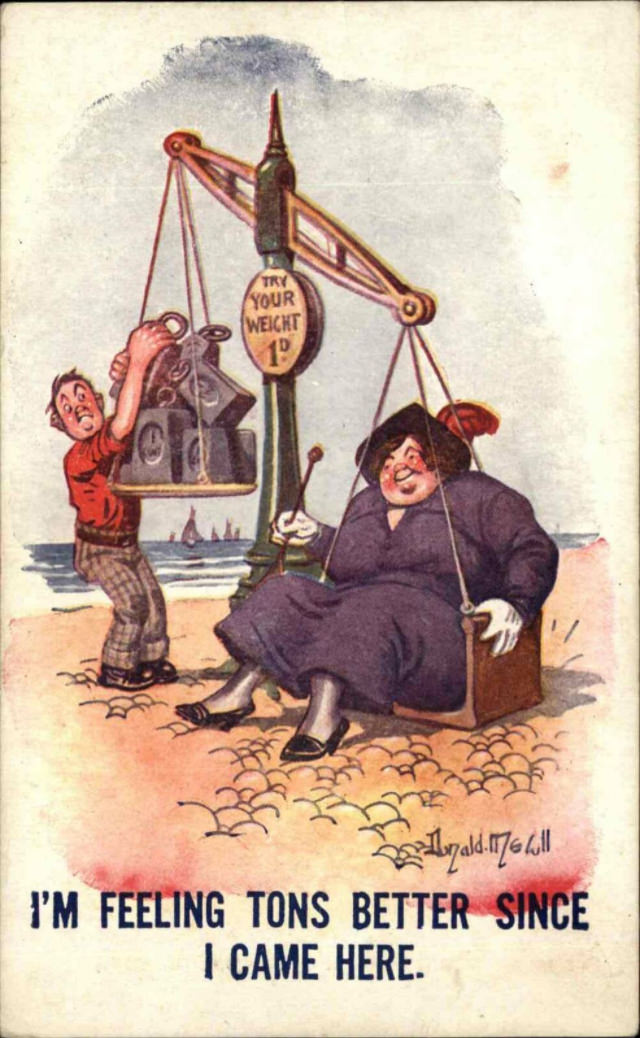
McGill did not retreat after his conviction. In 1957, he contributed evidence to a House of Commons select committee set up to review and amend the 1857 Obscene Publications Act. His participation reflected the broader cultural push that eventually led to the law being updated. By the late 1950s, censorship enforcement had eased considerably, and the postcard market began to recover.
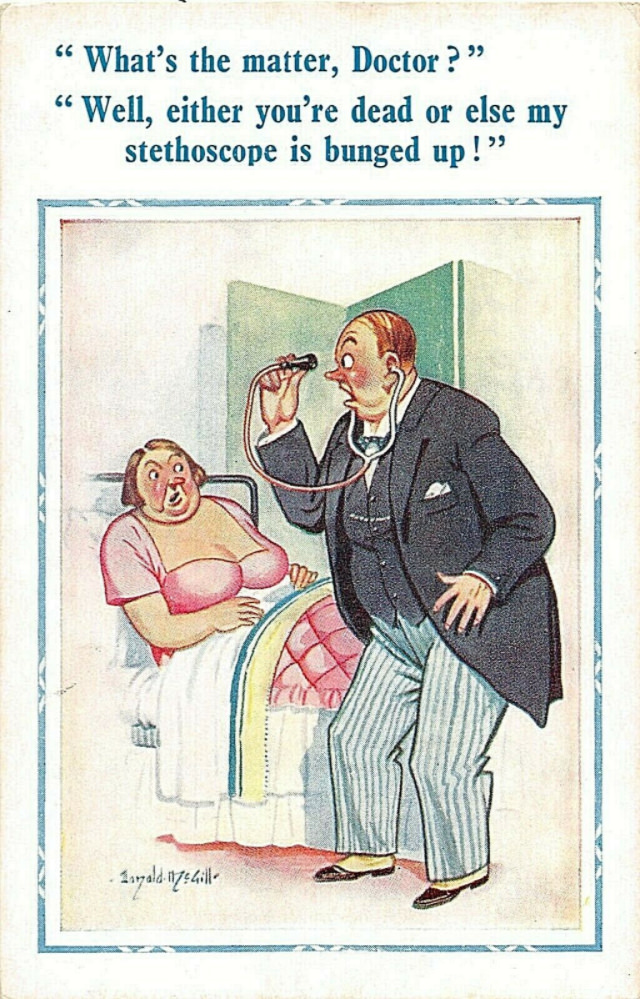
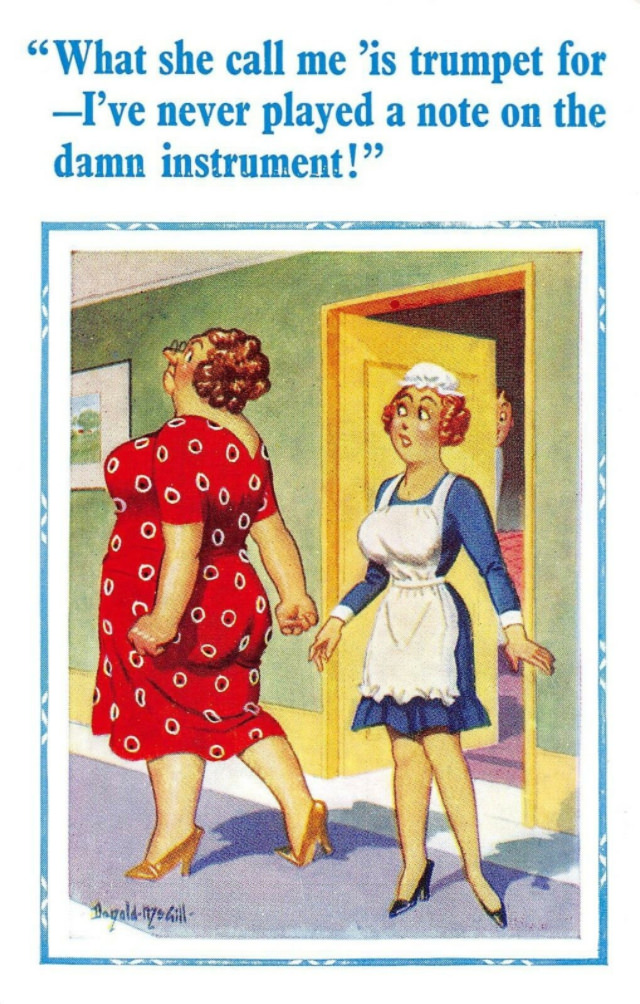
The fat ladies of McGill’s postcards are drawn with an exuberance that reflects just how central they were to his comic vision. Their size is never incidental — it is the engine of the joke. A bench buckles. A swimsuit strains. A husband disappears from view. McGill understood that physical comedy worked best when it was specific, and he never drew a vague or lazy figure. Every card is a complete, precise joke.
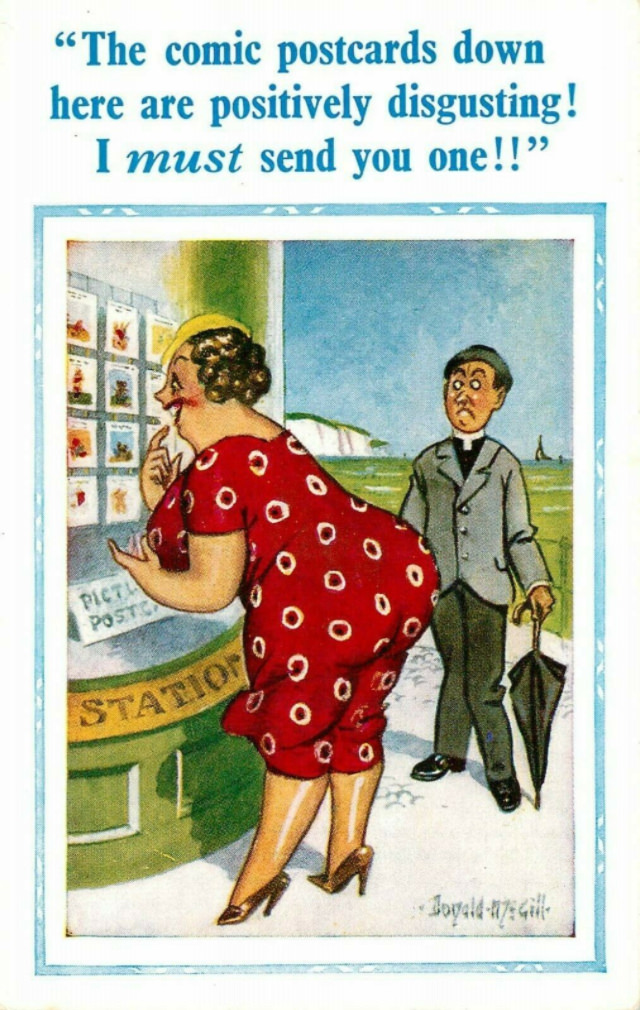
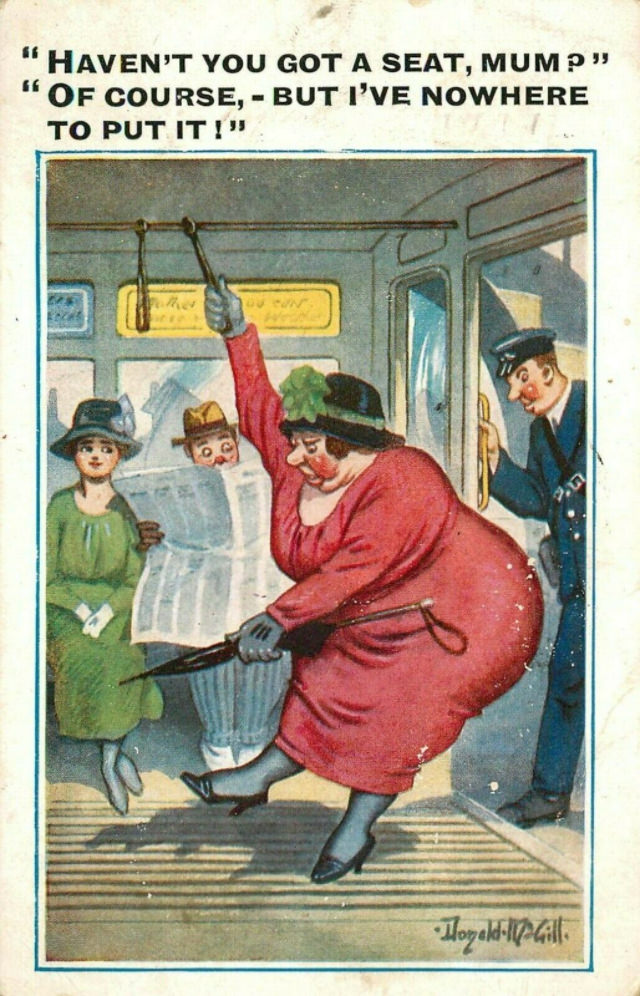
His artistic skill is easy to overlook when the jokes are this good. McGill’s color-washed drawings are clean, expressive, and professionally composed. The faces he drew conveyed emotion immediately — indignation, embarrassment, delight, and total obliviousness. His fat lady characters were especially expressive, often the most animated figure in a scene, which made them natural anchors for the joke.
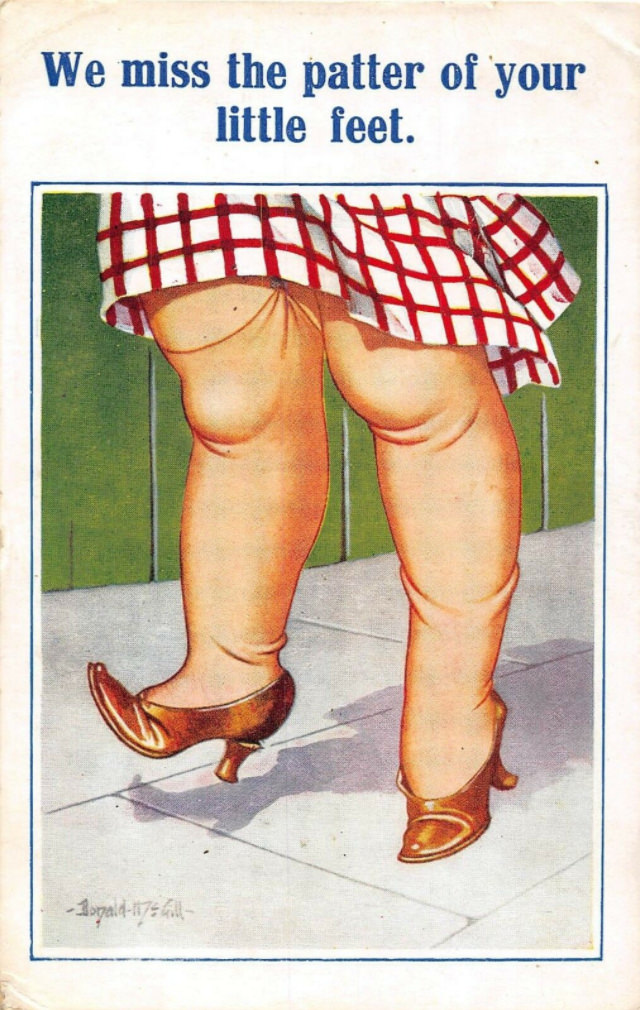
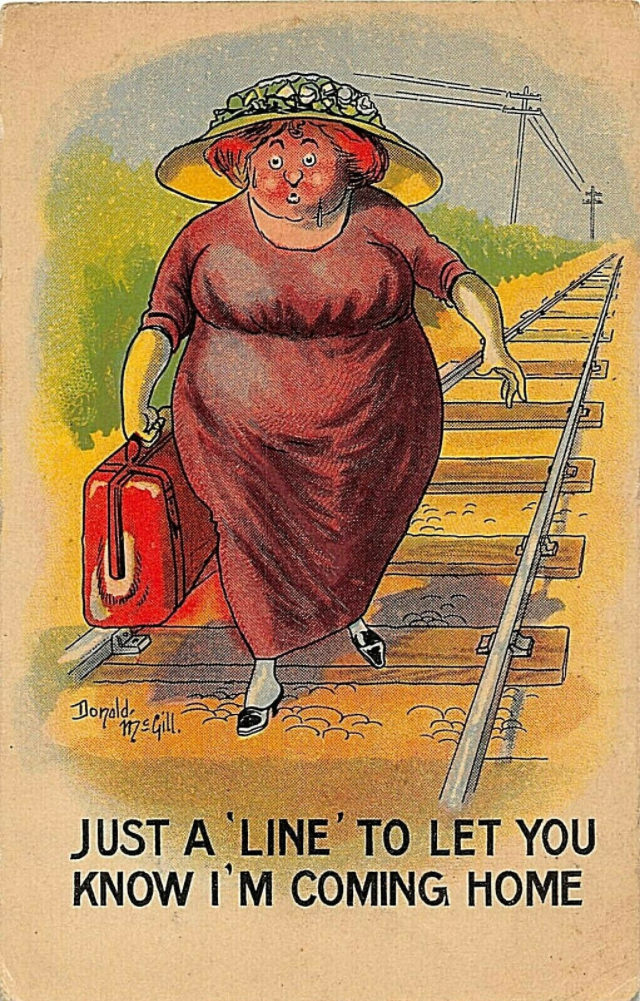
The postcards McGill created were not high art in any formal sense, and he never claimed they were. They were products designed to make ordinary people laugh, and they did exactly that for decades. The fat lady was his most durable comic type — a figure so well-established in British humor that audiences knew what to expect the moment she appeared on a card, and McGill always delivered.
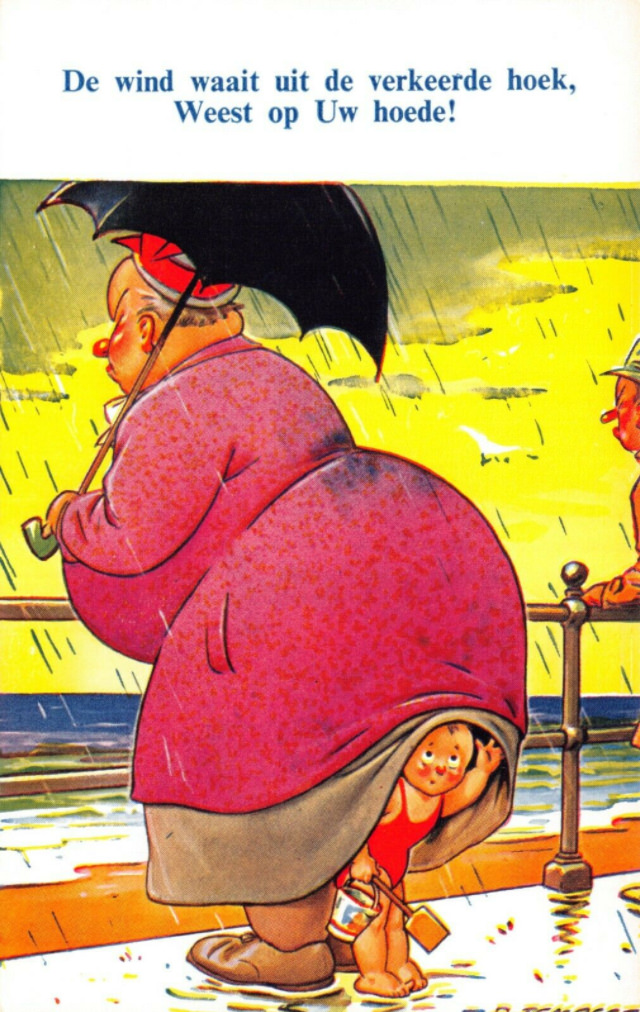
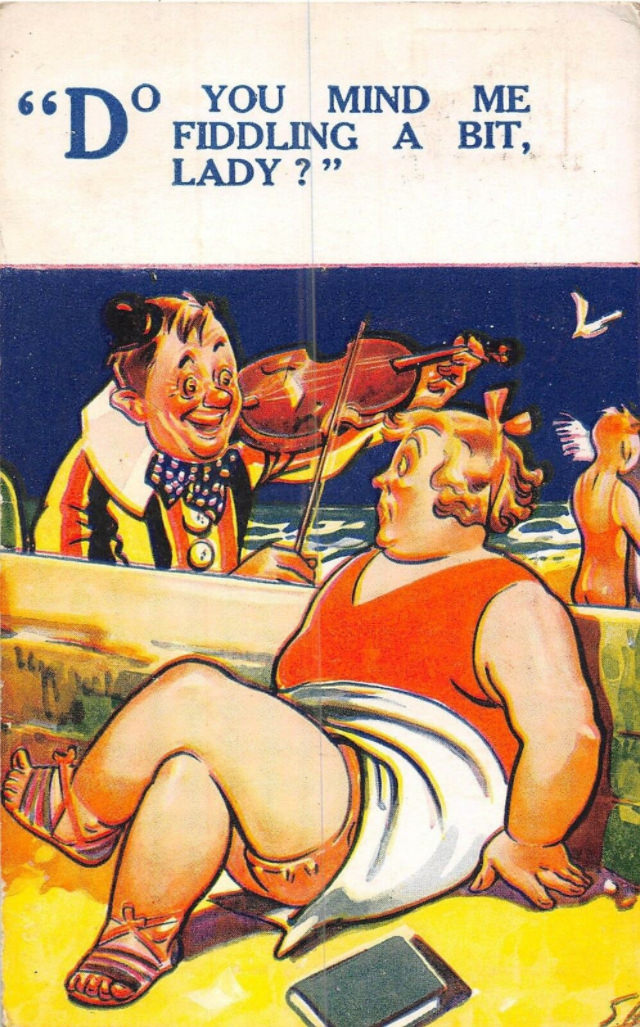
While McGill earned just three guineas per design during his lifetime, the value of his original artwork has risen dramatically since his death. His originals now sell for thousands of pounds. The same cards that censors once destroyed are now sought after by collectors around the world.
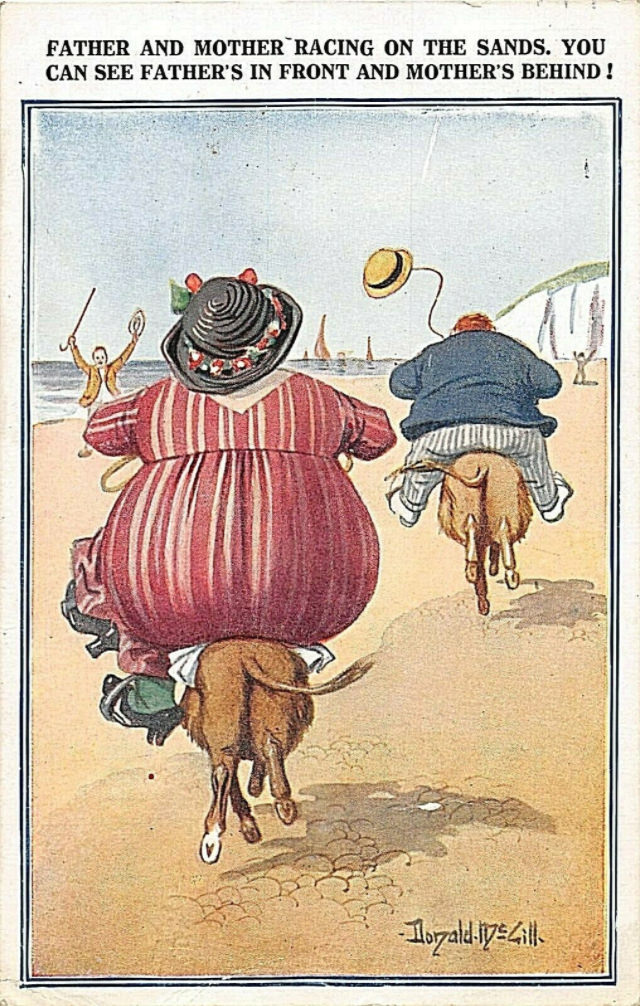
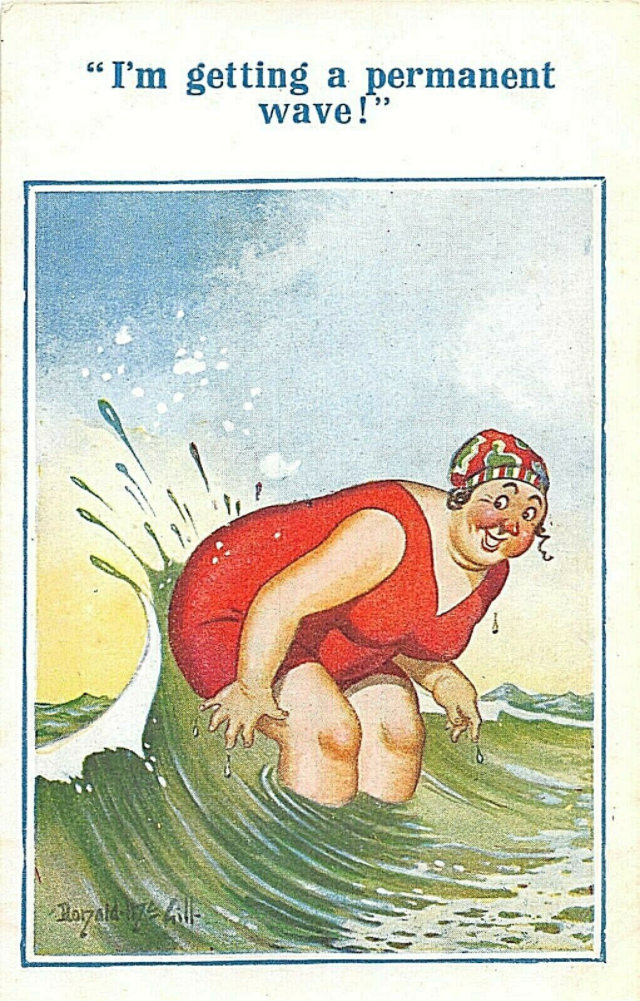
McGill died in 1962 and was buried in Streatham Park Cemetery in an unmarked grave — a quiet, unremarkable end for a man whose work reached 200 million people. The fat ladies, the leering husbands, the sunburned tourists: all of them lived on after him, printed on card stock, displayed in seaside shop windows, and passed between friends with a grin.
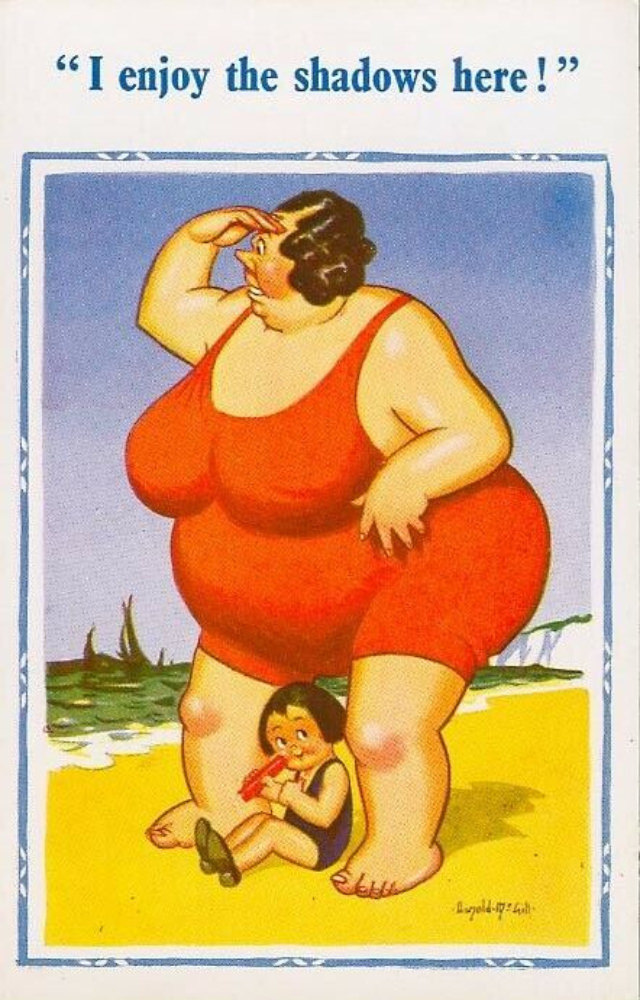
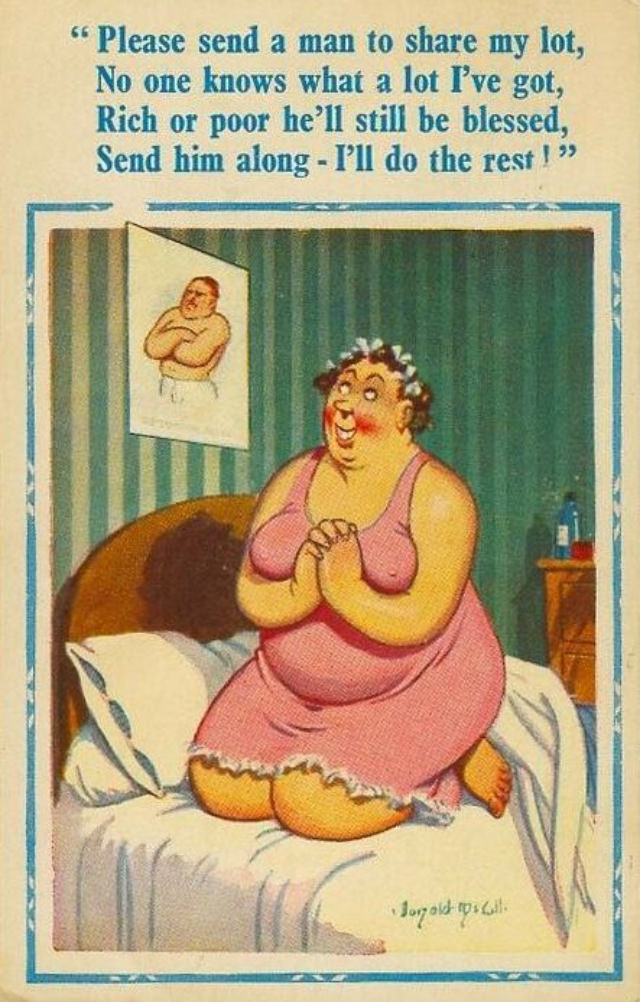
What made McGill’s fat lady comics work so well was their honesty. He wasn’t mocking from a distance — he was drawing characters that his audience recognized from their own streets, their own families, their own holidays at the beach. The humor landed because it was grounded in real observation, just stretched far enough to be funny.