Hey There! Before You Go. 😧
Get the best vintage content straight into your inbox!

Don't worry, we don't spam

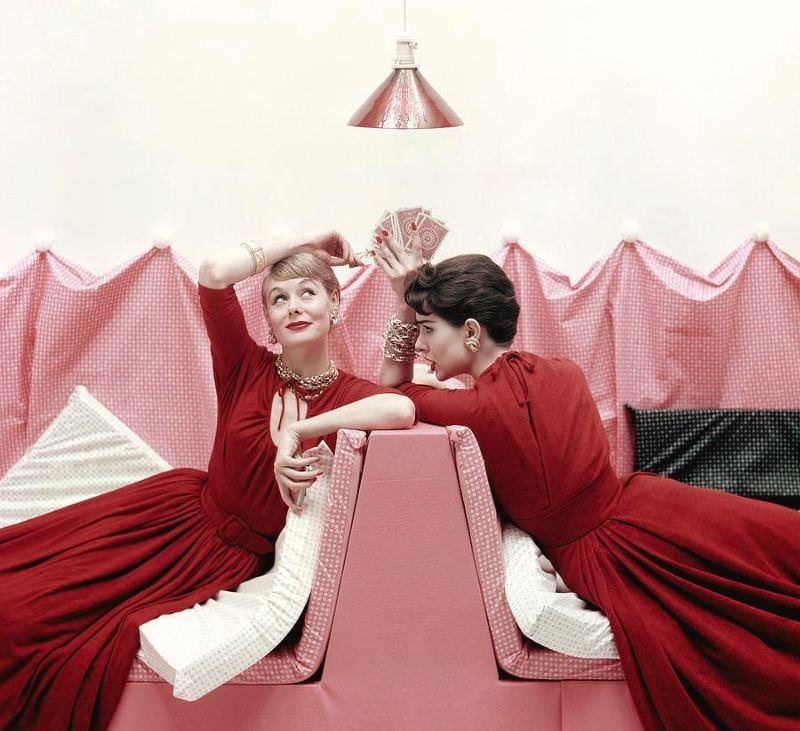
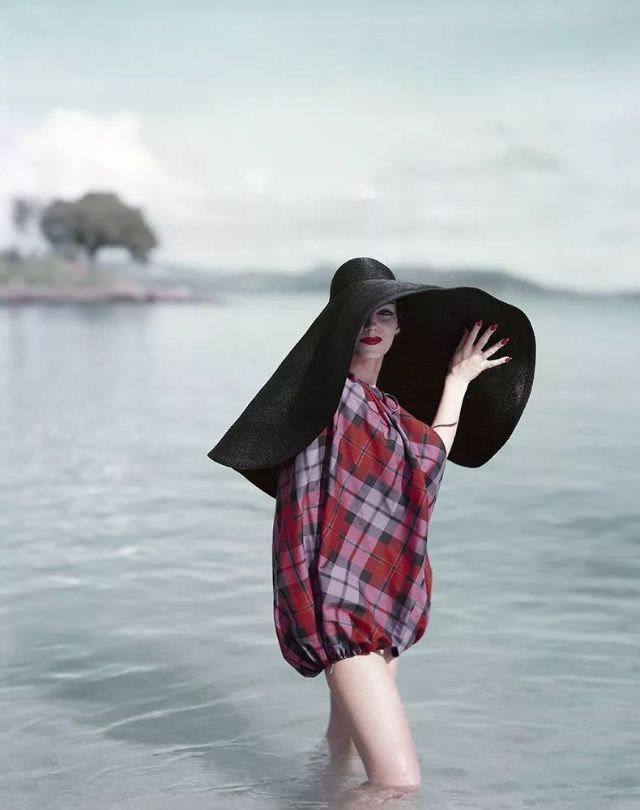
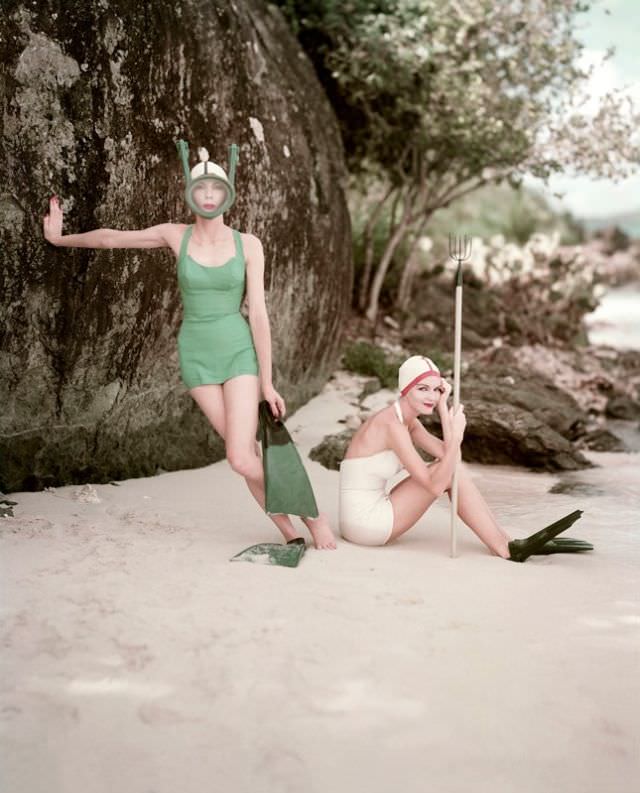
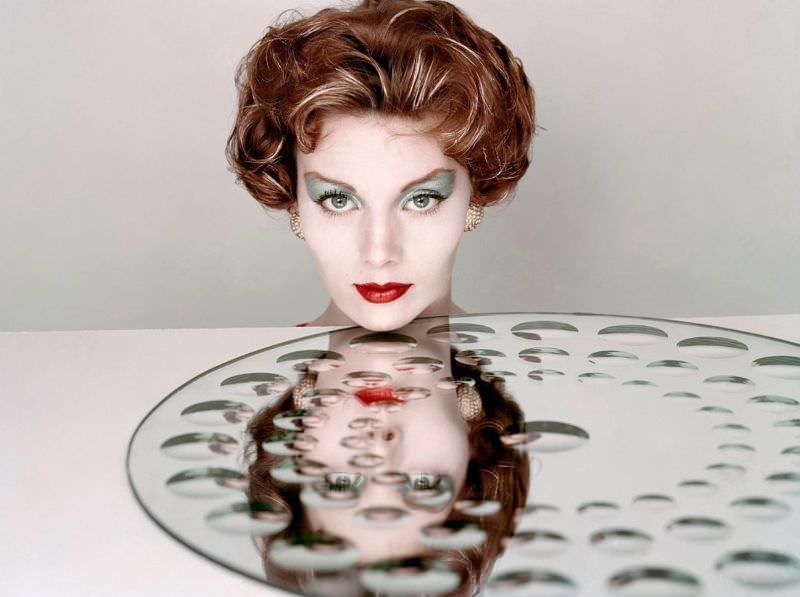
Beautiful Fashion Portraits of Classic Beauties from the 1950s by Richard Rutledge

Richard Rutledge was one of the most frequently published fashion photographers in mid-century America. His work appeared regularly in Vogue, Glamour, and Harper’s Bazaar, among other top magazines. Before picking up a camera professionally, Rutledge had been a baseball player. He made the switch to photography after World War II and quickly built a reputation that placed him at the center of the fashion world.

What set Rutledge apart was his versatility. He shot in black and white and color with equal confidence. He worked in the studio and outdoors, using both SLR cameras and large 8×10 plate cameras. Fashion, portraiture, travel, still life — he handled every genre without missing a beat. By his own admission, darkroom work was “a chore.” What drove him was the final image, not the process of developing it.

His color work was particularly striking, standing out even among the best photographers of the era. But his real gift was in how he directed his subjects. Rutledge preferred animated, natural expressions over stiff, posed looks. He used playful conversation and light humor to draw out the real person behind the model’s professional exterior. The result was a body of work that felt alive on the page. Below are some of his most memorable fashion portraits from the 1950s, featuring both well-known models and iconic looks of the decade.

Dovima wearing a brown flannel suit with a red velvet collar, matching felt hat with grosgrain band of red and blue silk twill scarf, 1951

Dovima, one of the decade’s most celebrated models, appears here in a sharply tailored 1951 ensemble. The brown flannel suit with its red velvet collar is a study in elegant contrast, paired with a felt hat and a silk twill scarf in red and blue. Rutledge captures her with the kind of composed authority that made her one of fashion’s defining faces.

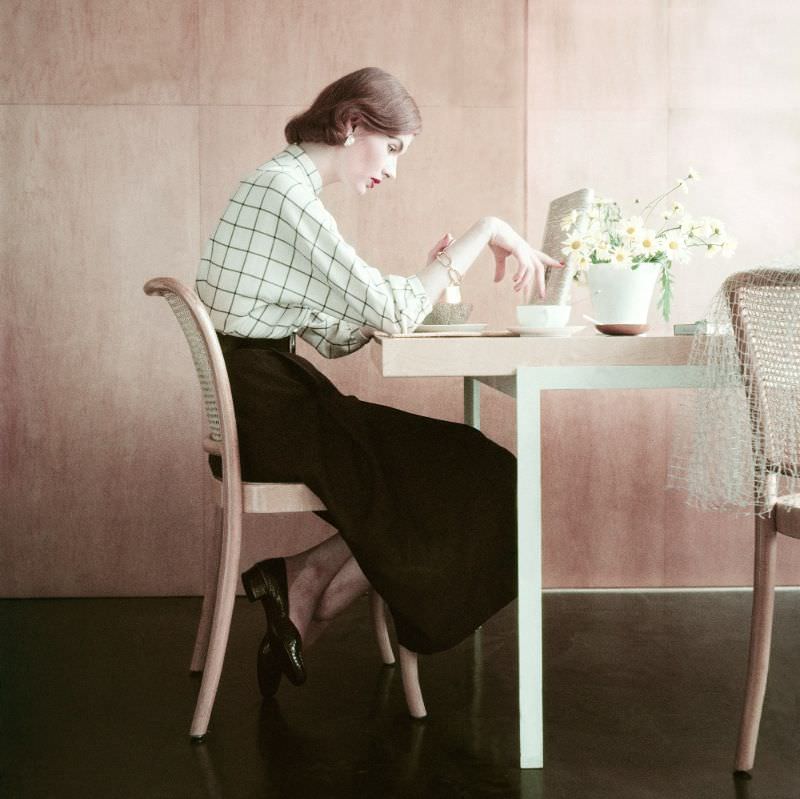
Model wearing a brown and white window pane plaid flannel shirt and a brown wool twill skirt, 1951

The early 1950s favored structured, modest silhouettes with careful attention to fabric texture and pattern. Plaid and wool were staples of the working woman’s wardrobe, and Rutledge photographed them with the same seriousness he gave to evening wear.

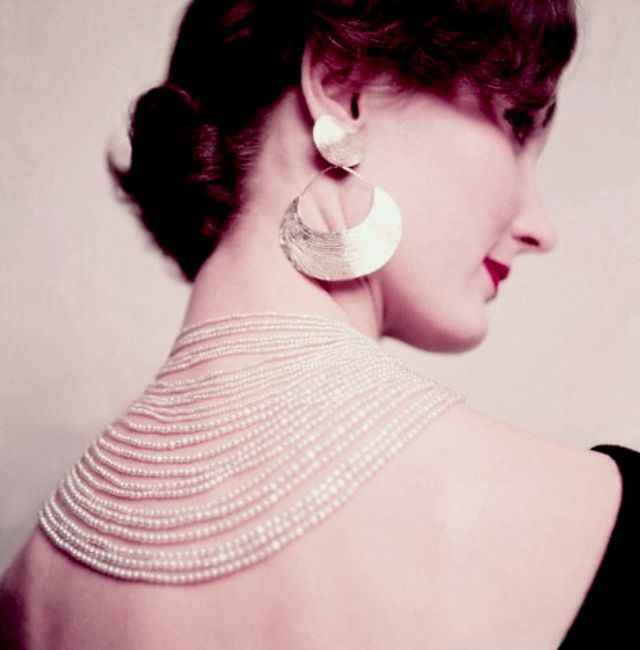
Evelyn Tripp wearing a necklace of reversed seed-cowl pearls, 1952

Evelyn Tripp was a prominent model of the era, and Rutledge photographed her multiple times across his career. Here, the focus falls entirely on the jewelry — a necklace of reversed seed-cowl pearls that draws the eye with quiet sophistication.

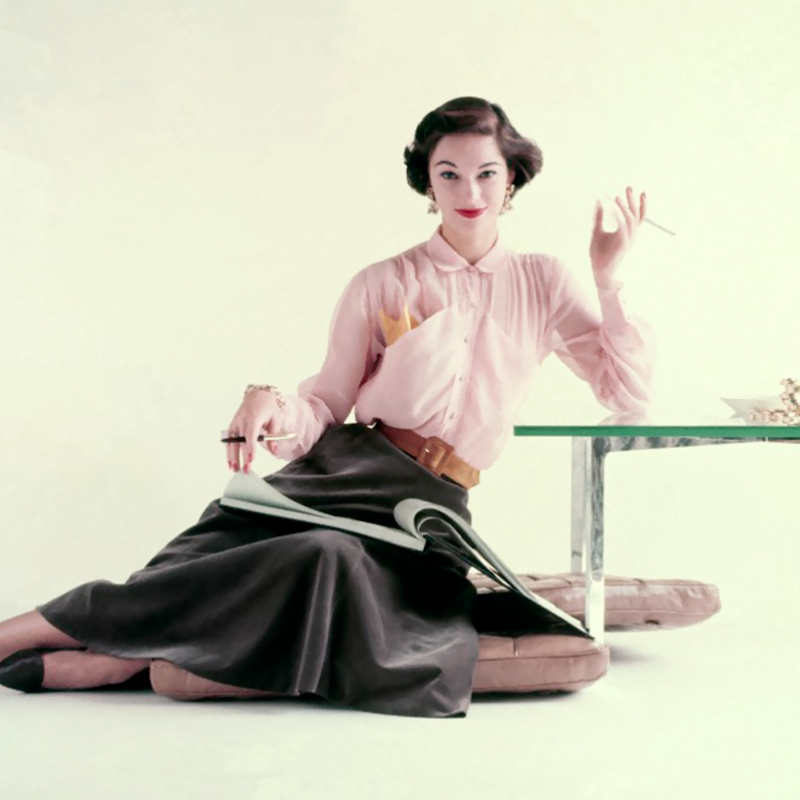
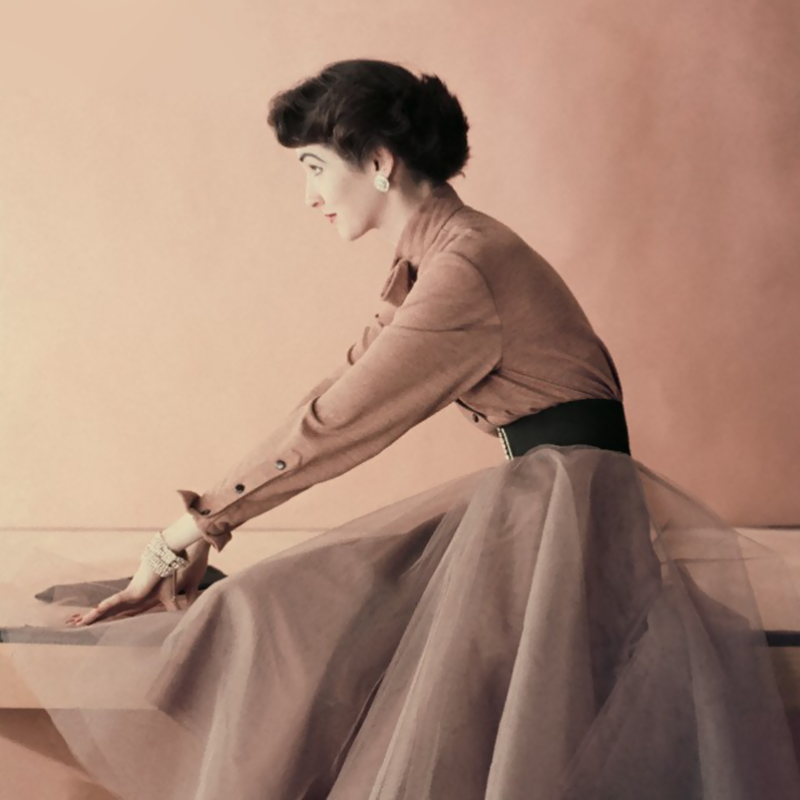
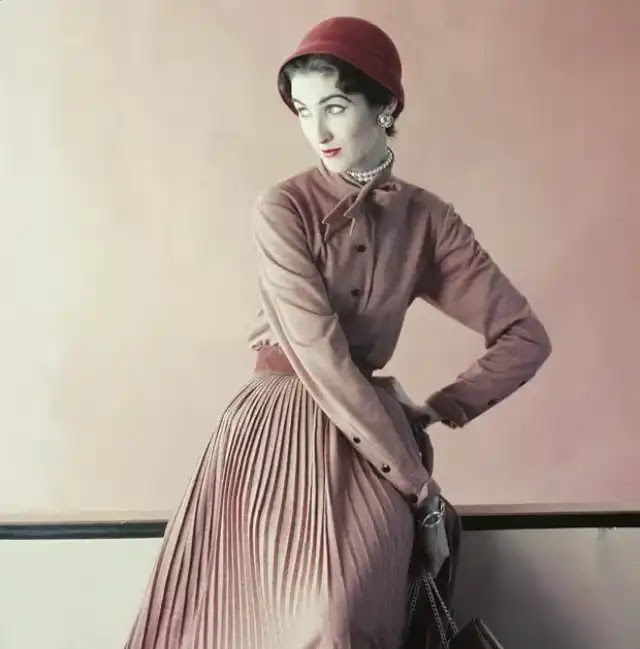
Model is wearing a sheer pink shirtwaist blouse and a bell-shaped skirt by Nelly de Grab, 1952
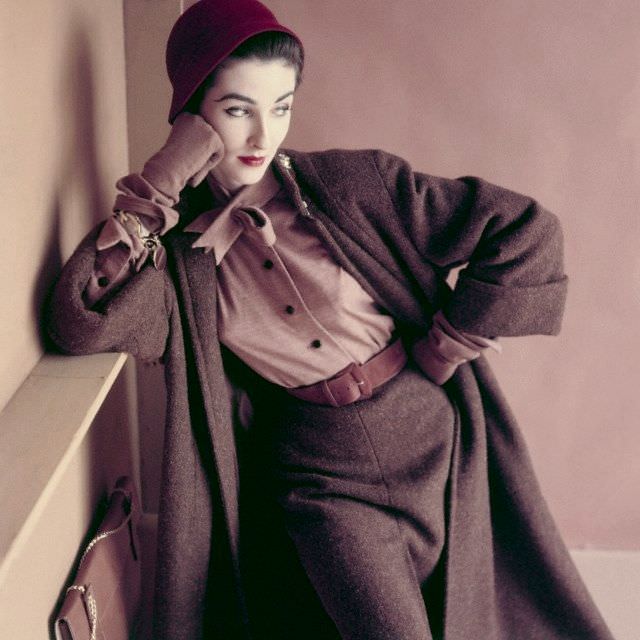
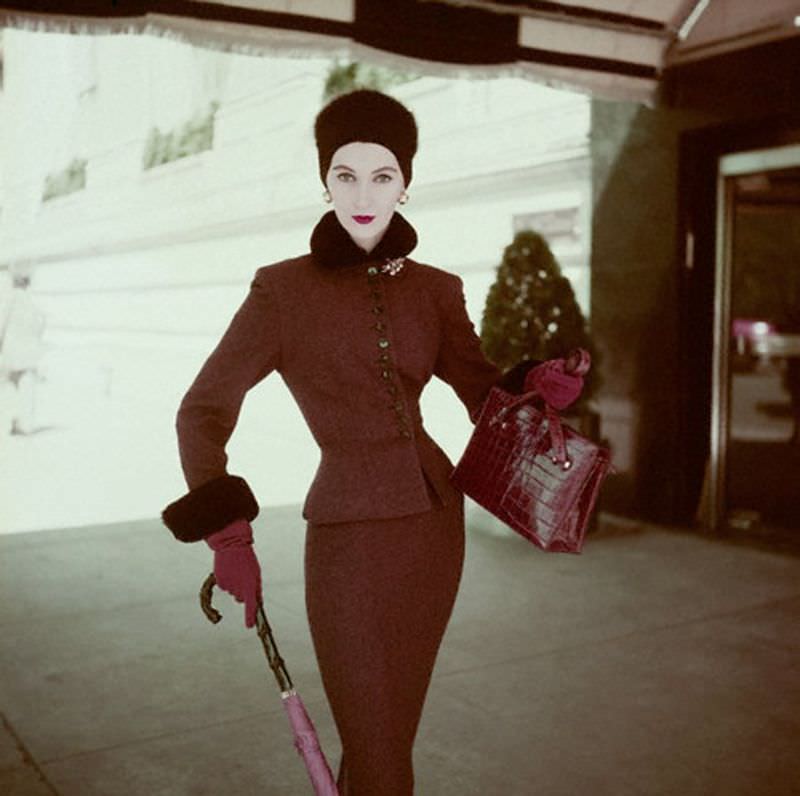
Model is wearing a slim tweed coat, a matching skirt with a single walking pleat, and wool jersey blouse with neckline tie, matching gloves and raspberry cloche hat, 1952

The bell-shaped skirt by Nelly de Grab and the coordinated tweed coat with raspberry cloche hat both reflect the era’s love of feminine structure. Full skirts, tailored coats, and carefully matched accessories defined the 1952 fashion moment, and Rutledge composed each shot to let the garments speak clearly.

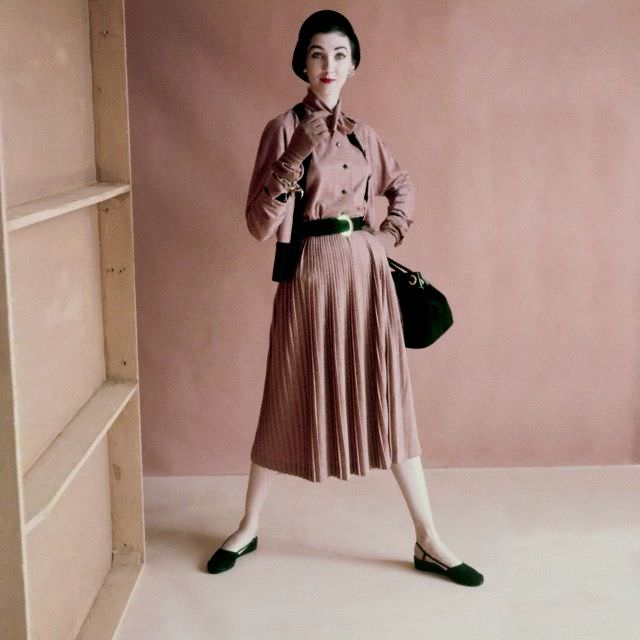
Model is wearing a wool jersey blouse and a slim pleated skirt, 1952
Model is wearing a wool jersey blouse that ties at the neck, a wool jersey cardigan with black knit ribbing, and a slim pleated skirt in matching wool jersey, 1952
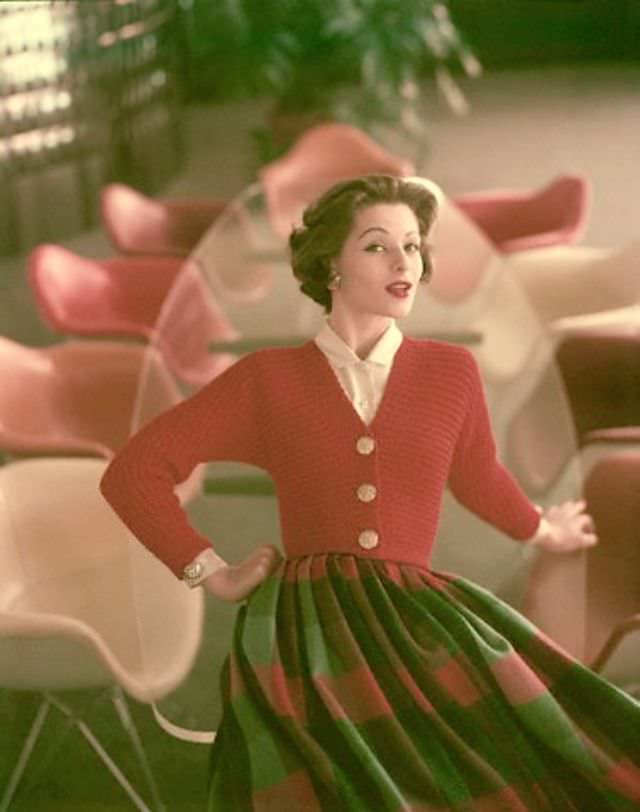
Model is wearing a wool jersey cardigan with dolman sleeves worn with a skirt of gathered jersey above a tight under-sheath of taffeta, 1952

Wool jersey was a workhorse fabric in 1950s fashion, and Rutledge’s 1952 series showcases it across a range of looks — from a simple blouse-and-skirt pairing to layered cardigans with dolman sleeves worn over taffeta undersheaths. These images reveal how much detail designers packed into seemingly simple outfits.

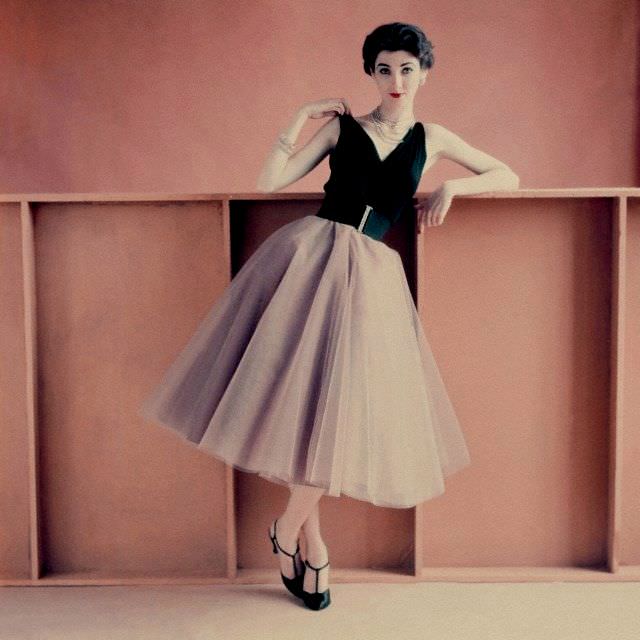
Model is wearing s sleeveless black jersey evening blouse and tulle dancing skirt above a taffeta underskirt, 1952

Evening fashion of the early 1950s leaned heavily on layers and drama. A sleeveless black jersey blouse paired with a tulle dancing skirt over a taffeta underskirt created the kind of voluminous, ballroom-ready silhouette that defined the decade’s formal wear.

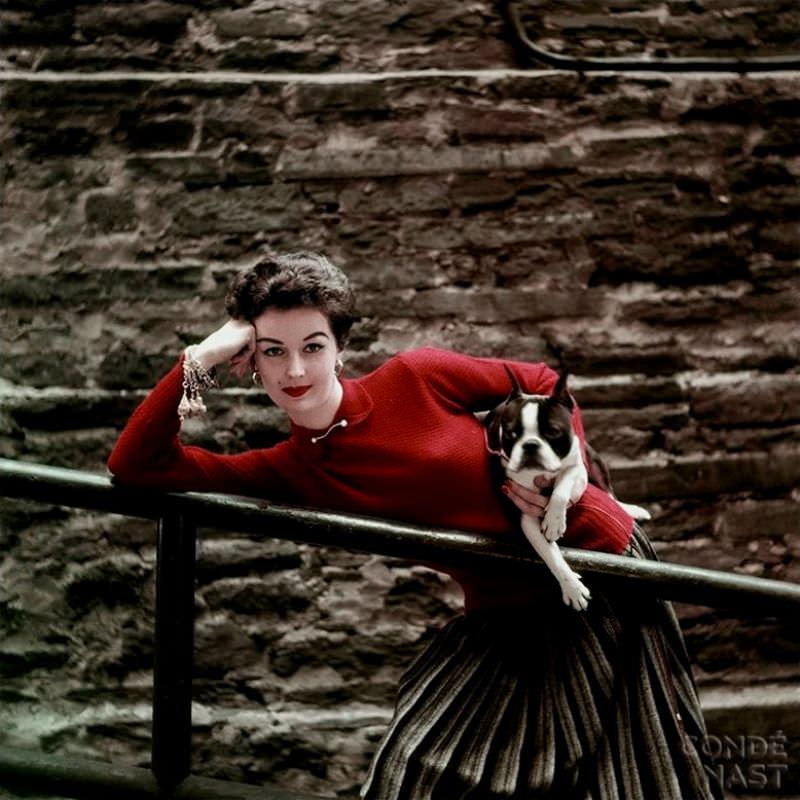
Model with dog, Glamour, August 1952
Suzy Parker, 1952
Suzy Parker, 1952

Rutledge’s 1952 work for Glamour included more playful setups, like a model posed with a dog — a nod to his ability to bring warmth and spontaneity to commercial shoots. Suzy Parker, who became one of the highest-paid models of the 1950s, also sat for Rutledge that same year. Her natural charisma matched exactly the kind of energy he worked to capture.

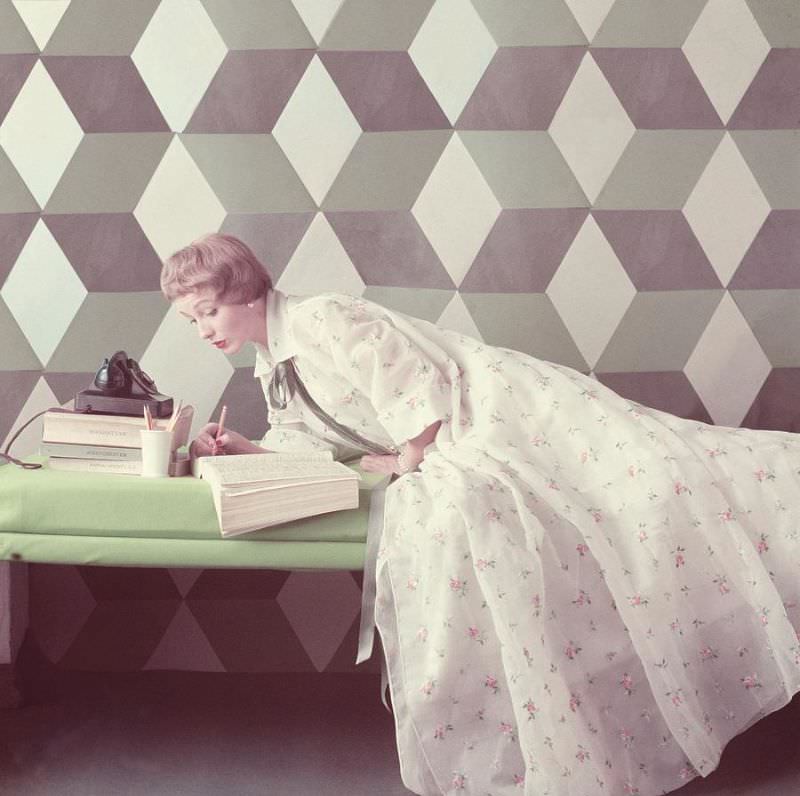
Model wearing a floral dressing gown, 1953

By 1953, Rutledge was also photographing more intimate, at-home fashion — robes, dressing gowns, and relaxed loungewear that gave magazines a window into the private lives of fashionable women. The floral dressing gown here has a soft, unhurried quality that contrasts with his crisper editorial work.

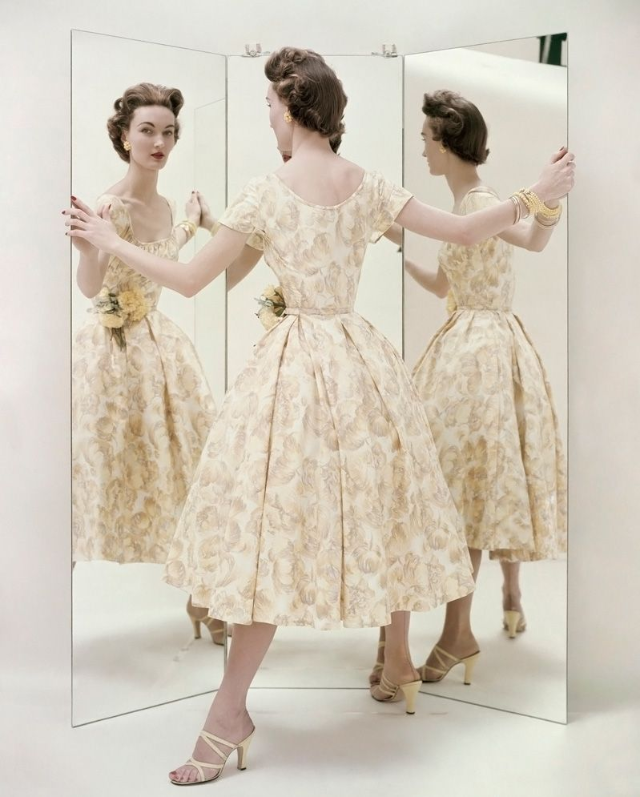
Evelyn Tripp wearing a pale yellow summer party dress by Kane, with matching mules by Valley, 1954
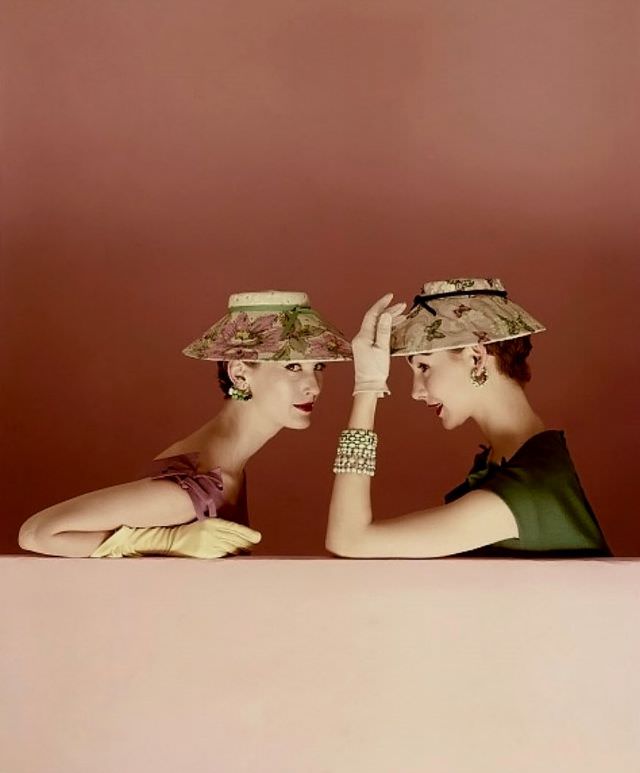
Mary Jane Russell and Cherry Nelms wearing shade-brimmed hats both of painted silk picturing flowers and butterflies, ringed with grosgrain ribbon, 1954

The 1954 photographs show Rutledge working confidently with color and summer styling. Evelyn Tripp returns in a pale yellow party dress by Kane, complete with matching mules by Valley. Mary Jane Russell and Cherry Nelms model painted silk hats decorated with flowers and butterflies — the kind of ornate accessory that made mid-decade fashion so visually rich.

Nina de Voogt & Patsy Shally, 1954
Anne St Marie, 1955
Anne St Marie, 1955

Nina de Voogt and Patsy Shally appear together in a 1954 portrait, while Anne St. Marie — another top model of the era — was photographed by Rutledge in 1955. He had a talent for making two-model compositions feel natural rather than staged, and his individual portraits carried a quiet intimacy.

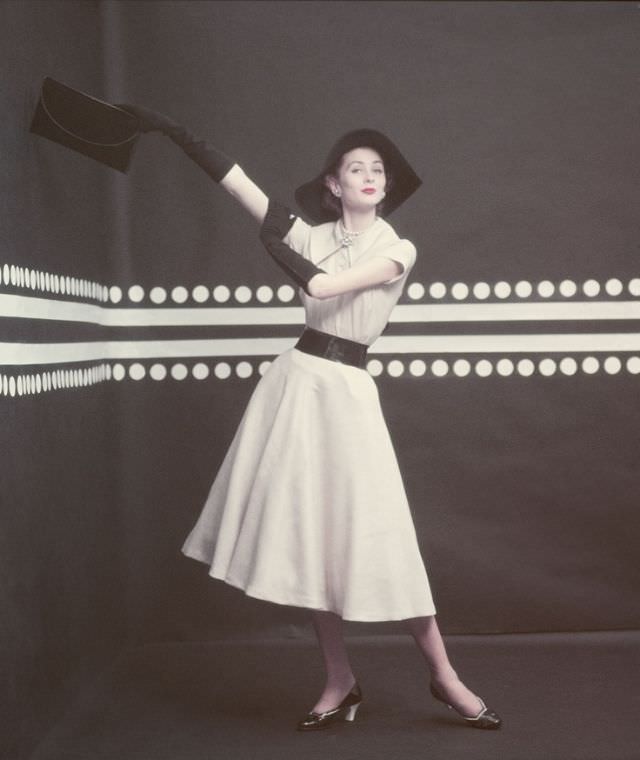
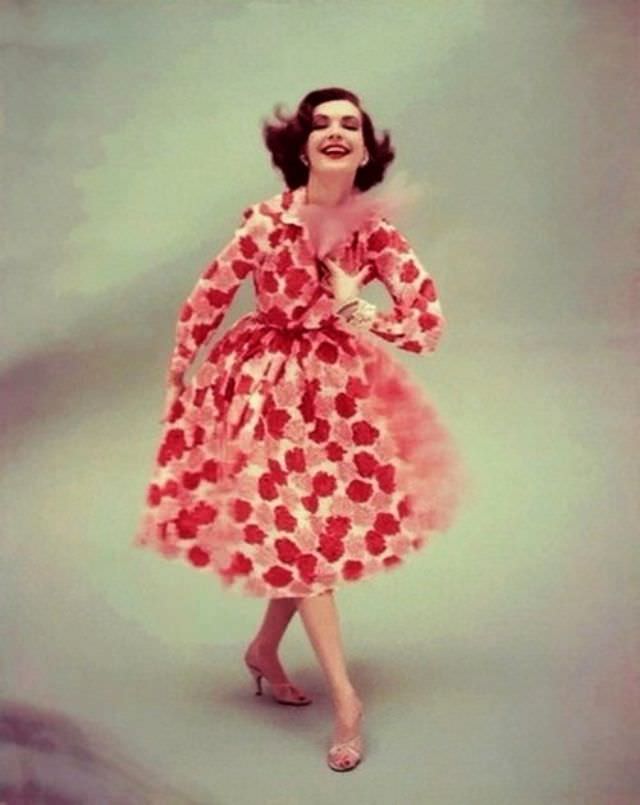
Model is wearing a silk shantung shirt dress, printed with a blur of red and pink carnations, 1955

A silk shantung shirt dress printed with red and pink carnations represents the bolder, more expressive patterns that began appearing in mid-decade fashion. Shantung’s slightly textured surface gave printed fabrics a richness that photographed beautifully, especially in Rutledge’s color work.

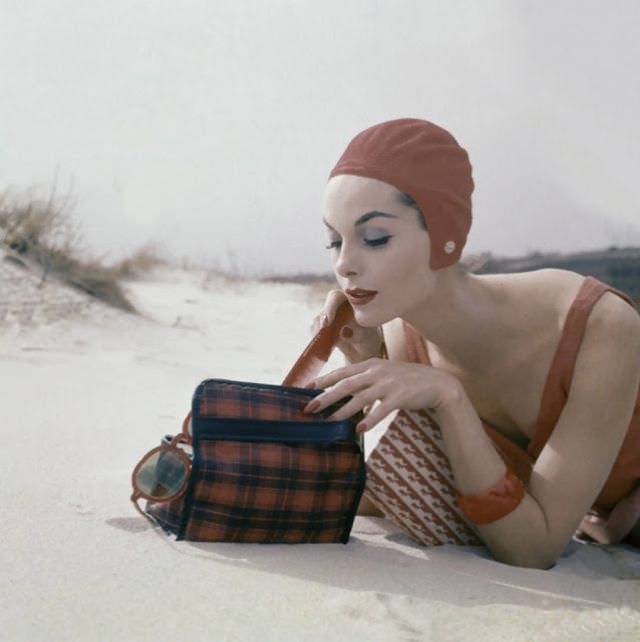
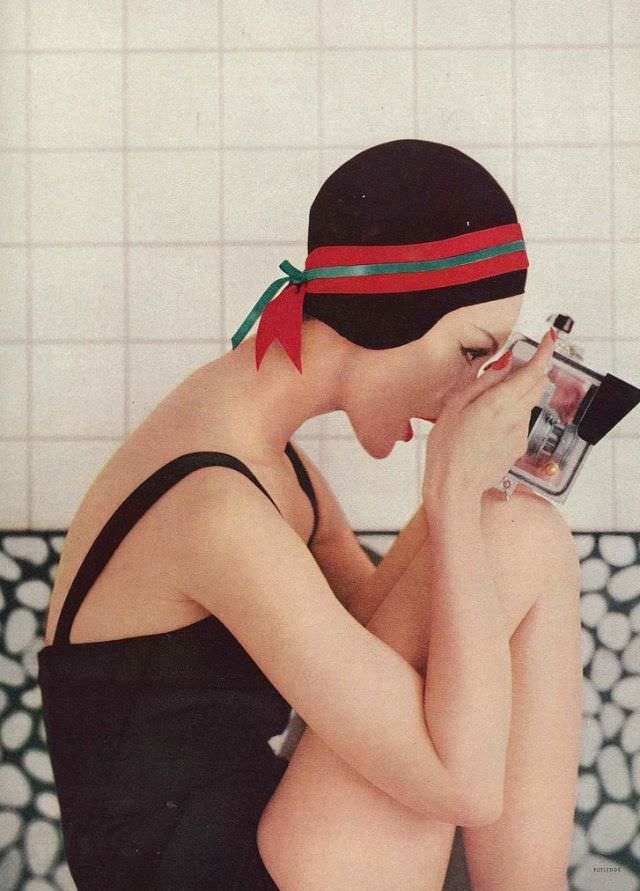
Model wearing bathing cap, Vogue, June 1956
Outfit all by Greta Paltry, 1956

Rutledge’s 1956 Vogue work included beach and swimwear shoots — a model in a bathing cap photographed with his characteristic attention to expression and composition. That same year, he shot a full look by Greta Paltry, demonstrating his ongoing relationships with designers throughout the decade.

Joanna McCormick, 1957
Two models in Rose Marie Reid swimsuits, 1957

By 1957, swimwear had become a major feature in fashion magazines, and Rose Marie Reid was one of the leading swimsuit brands of the era. Rutledge photographed two models in Reid suits with his usual ease. His portrait of Joanna McCormick from the same year shows his continued work with individual models in more classical portrait settings.

A model wearing Clairol hair dye, 1958
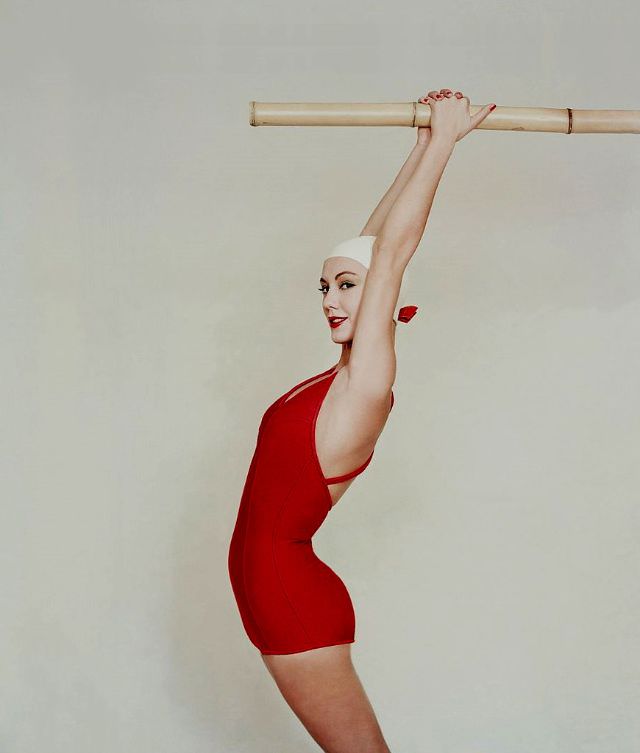
Model wearing a red one-piece swimsuit, 1958

Rutledge’s commercial range extended beyond pure fashion. A 1958 Clairol advertisement shows him applying the same compositional care to beauty and hair product campaigns. His red one-piece swimsuit shot from the same year is bold and direct — color used as a statement rather than a backdrop.

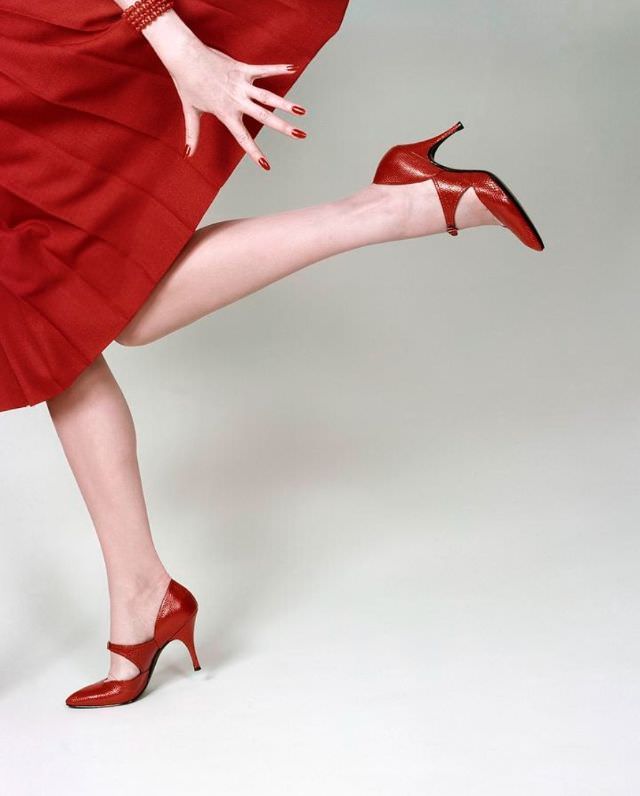
Models legs are running in red glacé lizard shoes by Fleming-Joffe, 1958

Not every Rutledge shot framed the full figure. This 1958 image focuses entirely on movement and footwear — a model’s legs in motion, wearing red glacé lizard shoes by Fleming-Joffe. It’s a tightly cropped, dynamic composition that puts the product front and center without losing any visual energy.

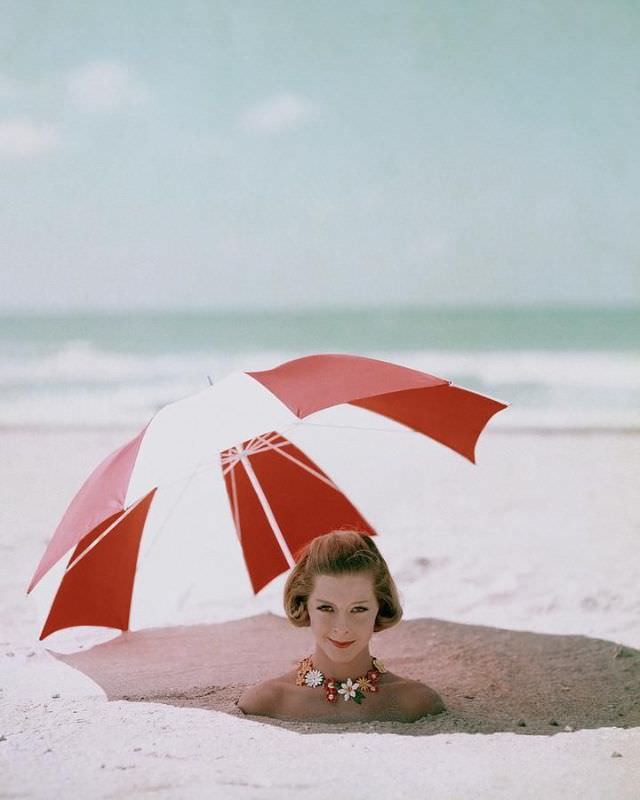
A woman buried in sand at a beach, Glamour, May 1959
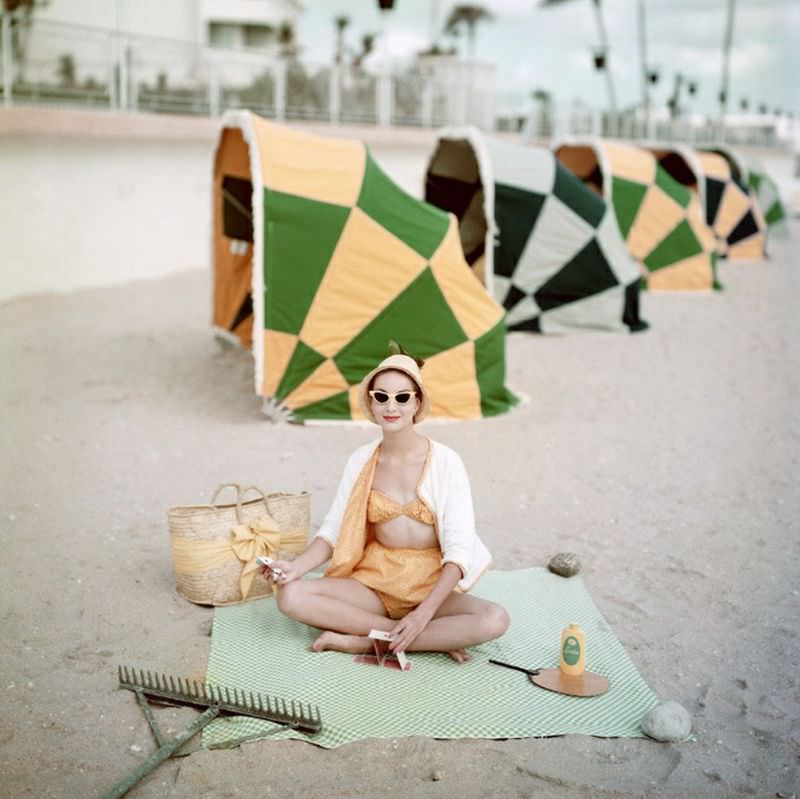
Model is wearing a two piece calico print swimsuit with terry cloth cardy by Cabana, 1959

Rutledge closed out the decade with some of his most playful work. A 1959 Glamour shoot featured a woman buried in beach sand — an unconventional, attention-grabbing setup that showed his willingness to go beyond standard fashion poses. A calico print two-piece swimsuit with a terry cloth cardigan by Cabana rounds out his 1950s catalog on a relaxed, sun-soaked note.

Enjoyed this post? Get new ones in your inbox.

Leave a Comment

Your email address will not be published. Required fields are marked *

Share this Post 🥺

Please take a moment to share this content. Your support is greatly appreciated! 🙌🙏

Share this Post 🥺

Please take a moment to share this content. Your support is greatly appreciated! 🙌🙏
Scroll to Top
 
Hey Friend, Before You Go.. Please like & follow for more interesting content