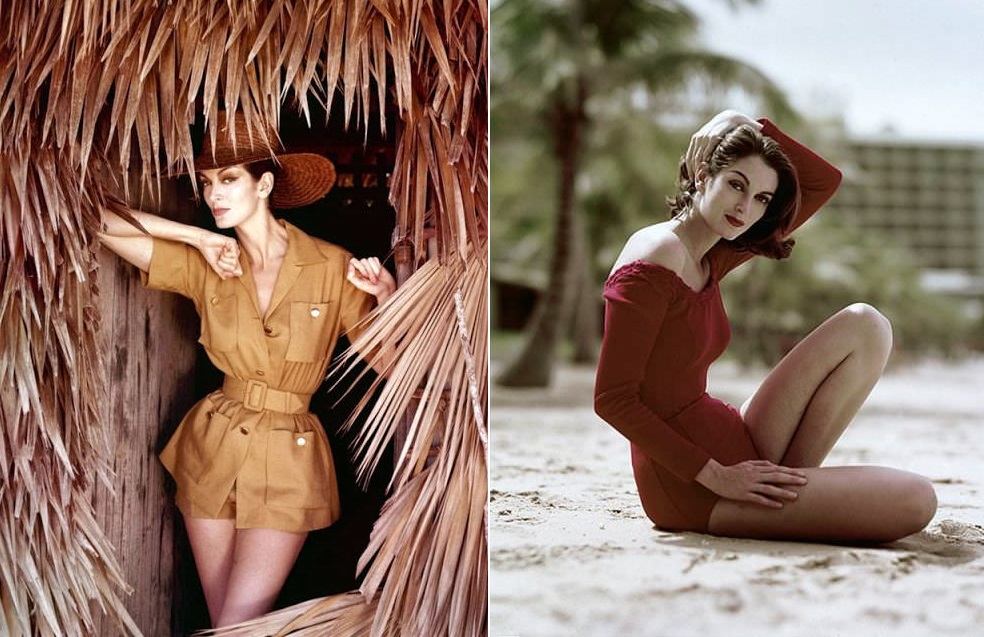
Regina Relang was one of the most important fashion photographers of the twentieth century. Born in Germany, she began shooting for Vogue in 1938, with her work appearing in the French, American, and British editions of the magazine. She also contributed regularly to publications like Harper’s Bazaar, Die Dame, Madame, Film und Frau, and Constanze. Over the course of her career, she covered haute couture shows in both Paris and Rome, photographing the collections of Christian Dior, Pierre Cardin, and Yves Saint-Laurent, among others.
What set Relang apart from her peers was her use of natural settings. Rather than relying on studio backdrops, she placed her subjects in real environments — riversides, city streets, hotel terraces, and Italian beaches — letting the contrast between the surroundings and the clothing create visual tension. The result was a body of work that felt alive and grounded, even when the fashions themselves were extravagant.
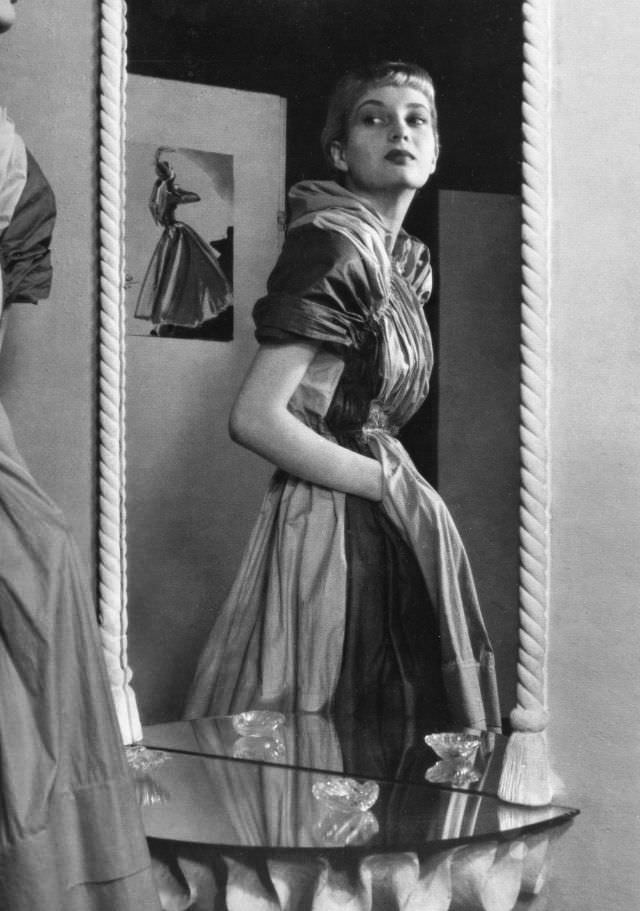
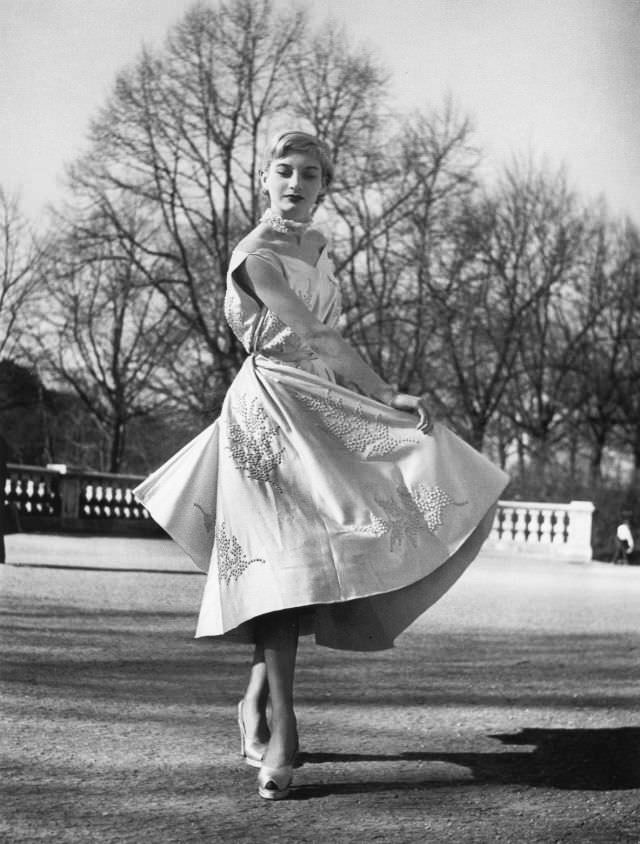
In Munich in 1950, Relang photographed model Gisela Ebel wearing designs by Heinz Schulze-Varell. The images from this session show Relang’s early mastery of light and composition, using the model’s posture and expression to carry the weight of the garment’s design. Ebel became one of Relang’s most frequently photographed subjects during this period.
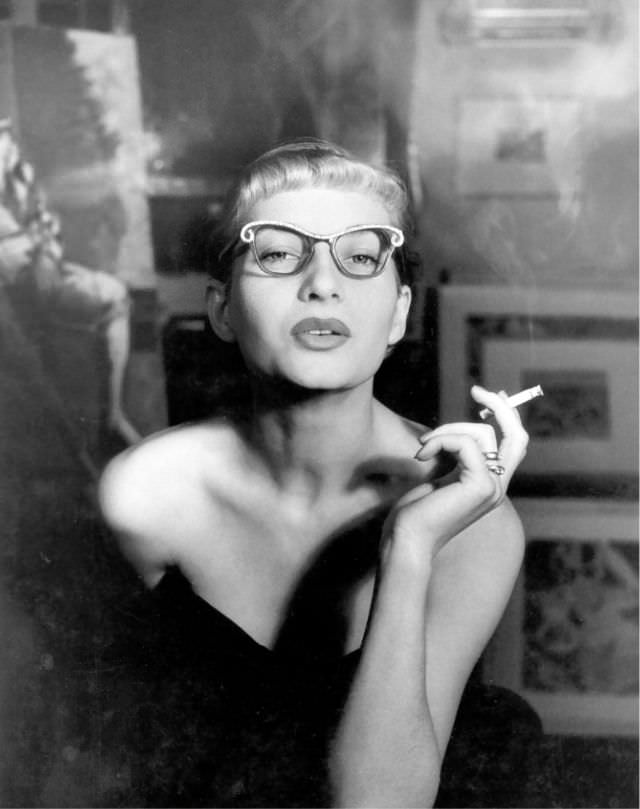
By 1951, Relang was covering the Paris collections in full. One of her most distinctive shoots that year centered on the designs of Elsa Schiaparelli, the Italian-born designer known for her bold, theatrical creations. Relang photographed multiple looks from Schiaparelli’s line, often shooting directly outside the designer’s Paris boutique, bringing the clothes into their natural commercial habitat.
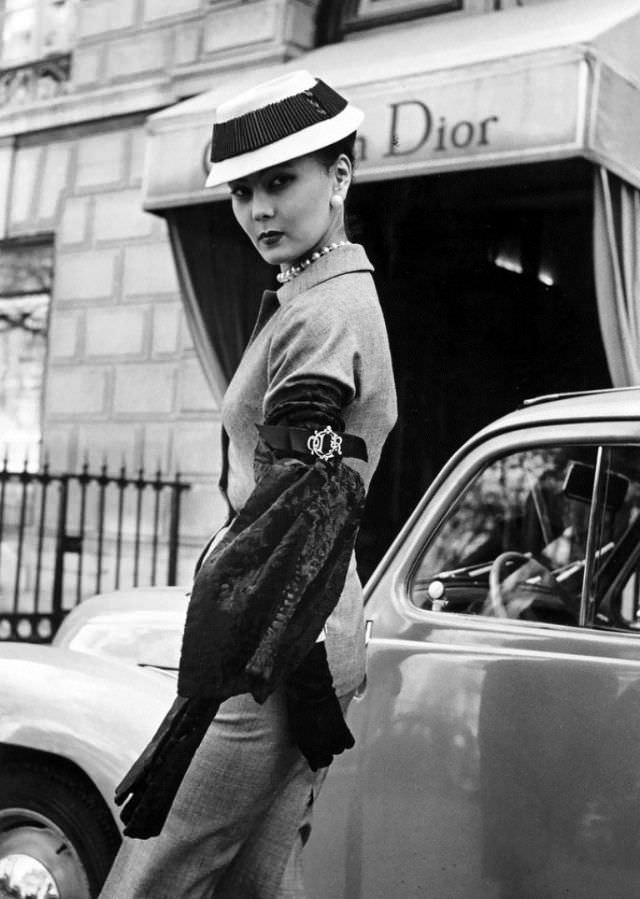
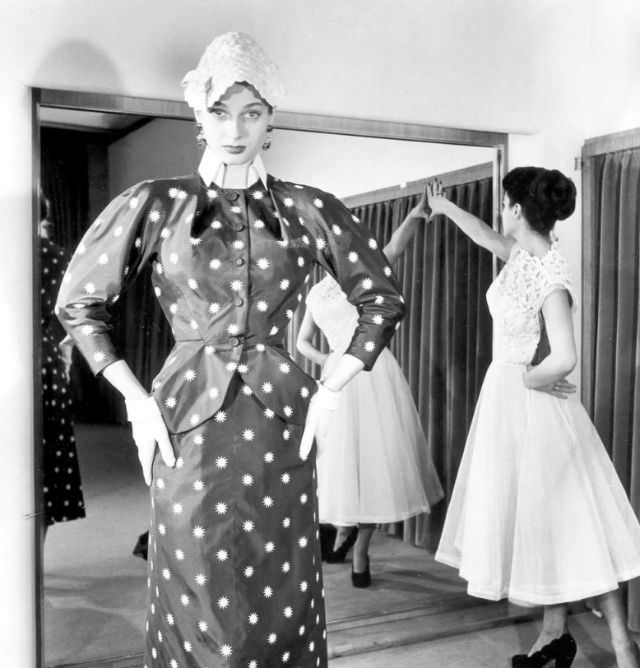
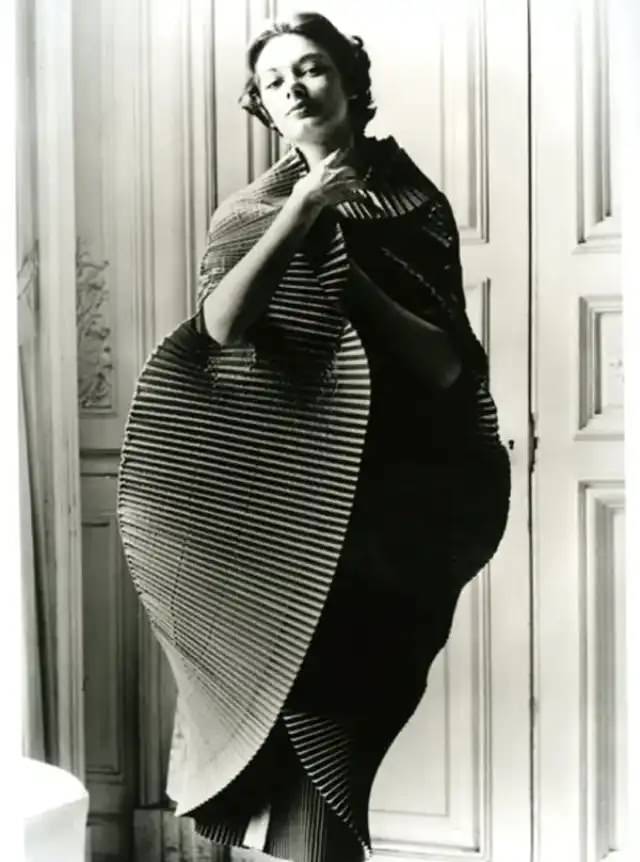
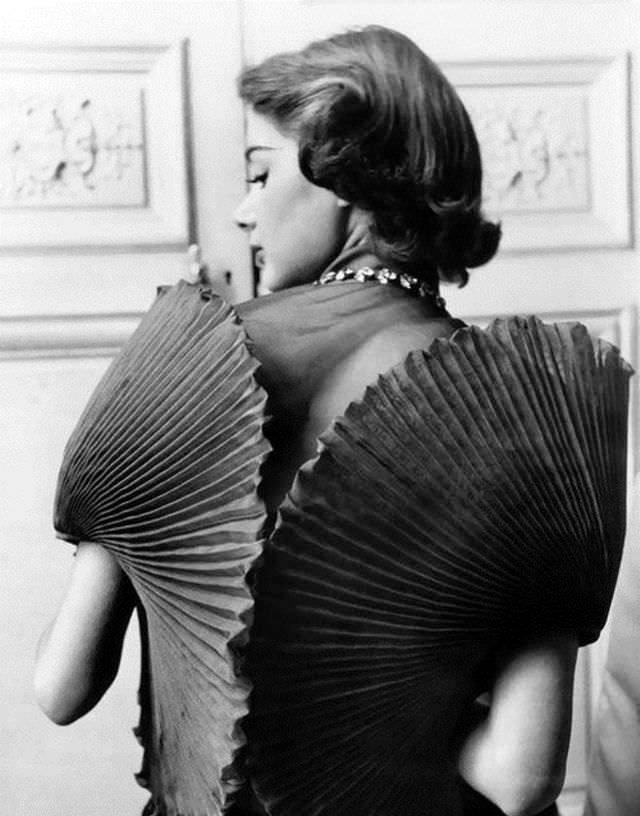
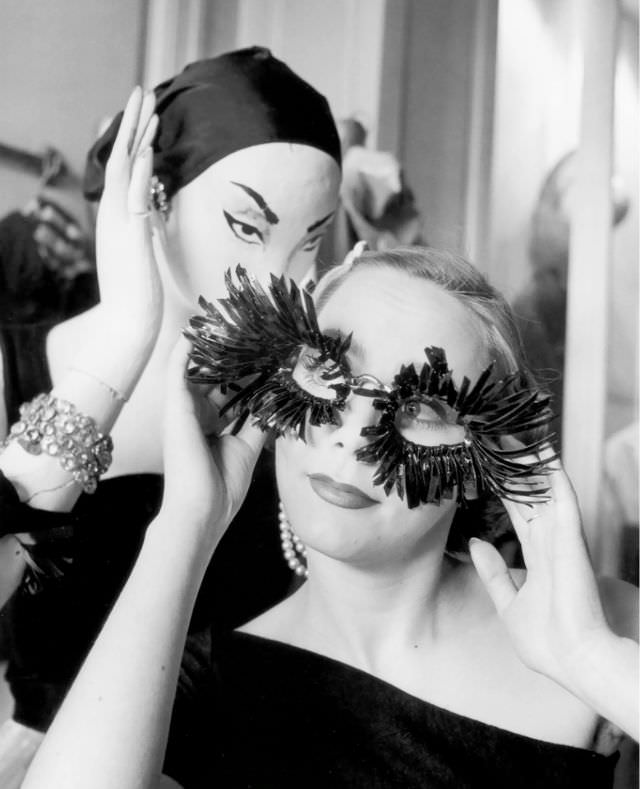
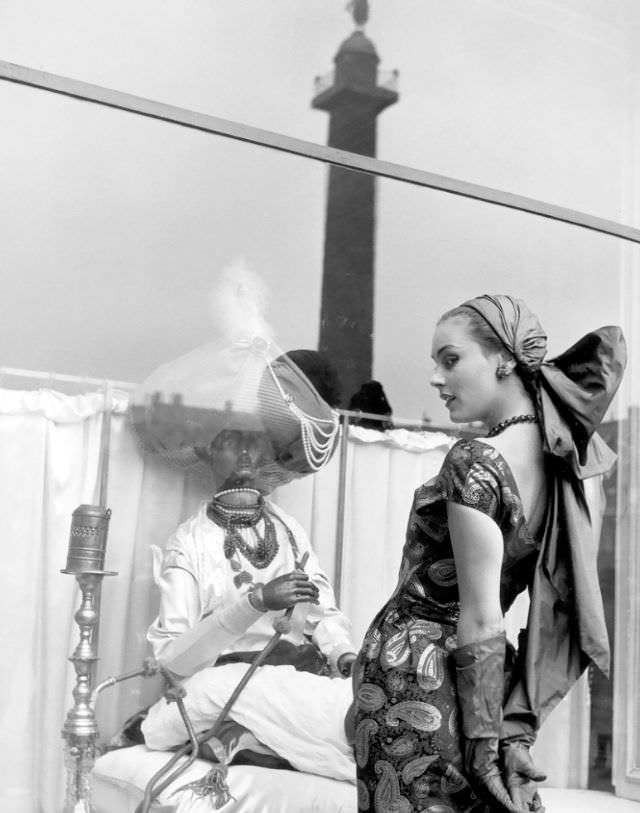
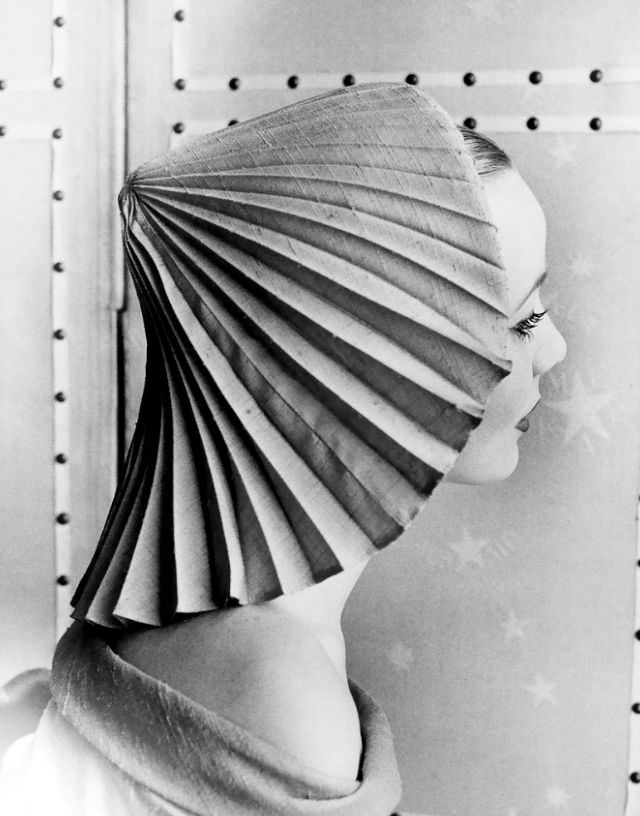
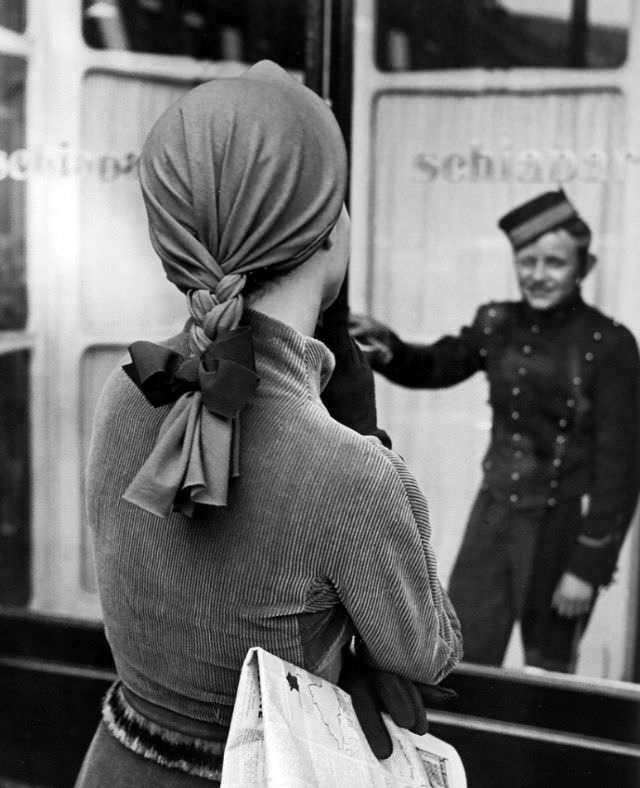
Among the models Relang photographed for the Schiaparelli series was Jacqueline Marsel, who wore a finely pleated dress designed to open into a cocoon silhouette — a signature of Schiaparelli’s inventive approach to structure. In another image taken at the store itself, Relang composed a shot placing a live model beside a store mannequin, blurring the line between art and commerce in a way that felt entirely intentional.
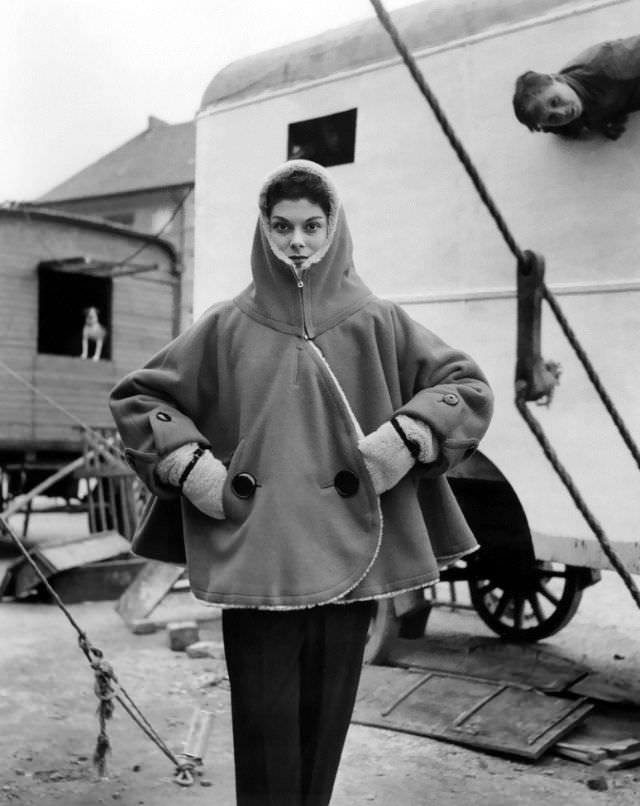
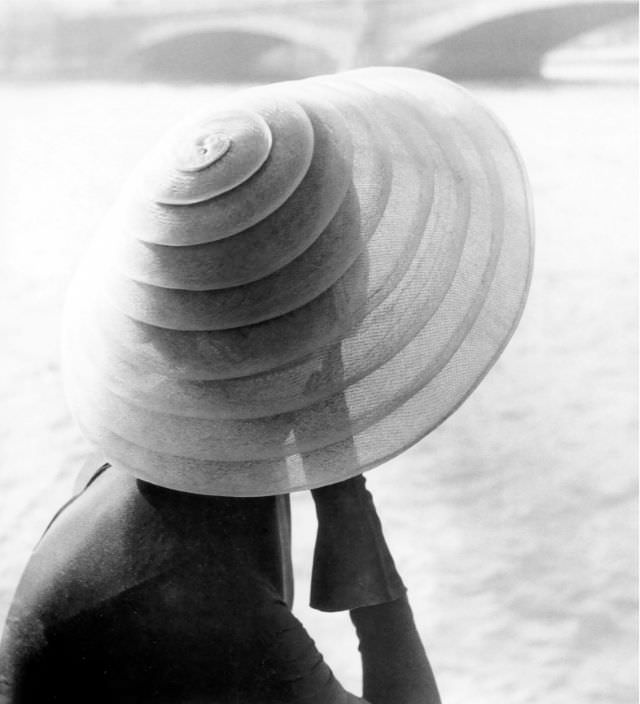
One of the most iconic images from 1951 shows a model wearing a hat by Jacques Fath, seated beside the Seine River in Paris. The city itself becomes part of the photograph, with the flowing water and stone embankment framing the model in a way no studio could replicate. This approach — using Paris as a living backdrop — was central to Relang’s editorial vision.
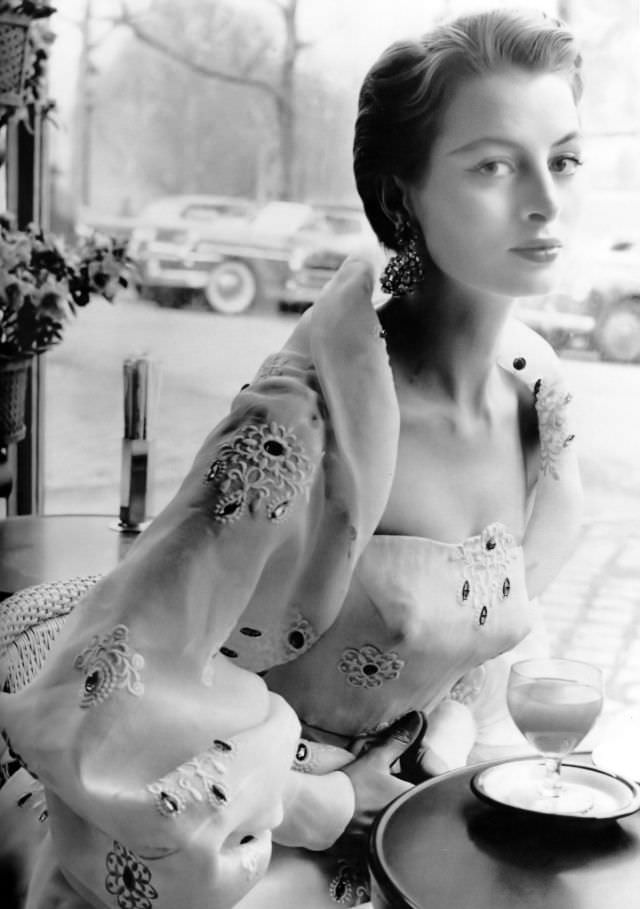
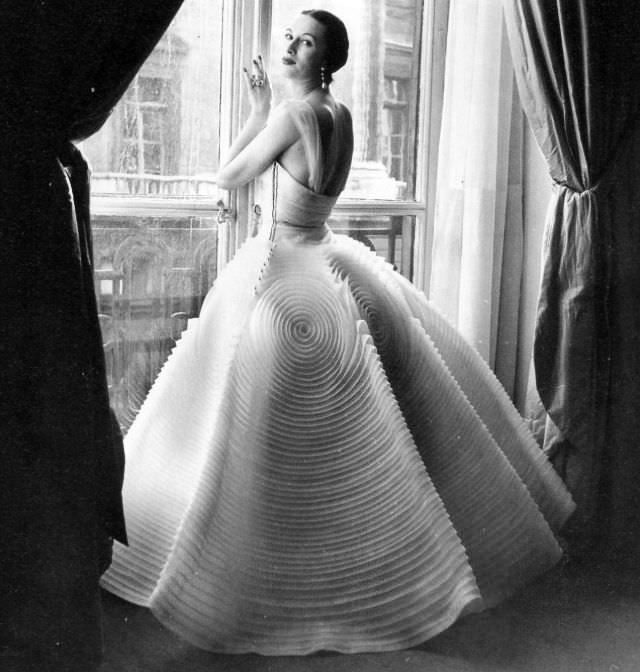
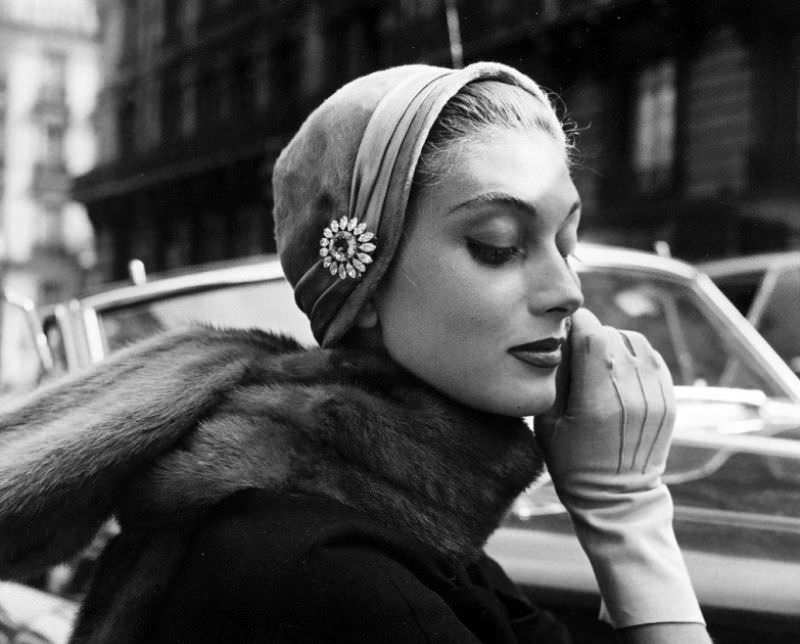
In 1952, Relang photographed model Capucine in an embroidered organdy dress with a matching bolero jacket by Givenchy. That same year, she shot Gitta Schilling — another of her regular subjects — in an organdy evening gown by Jacques Griffe. Schilling appeared in Relang’s work throughout the decade, becoming closely associated with the photographer’s refined aesthetic.
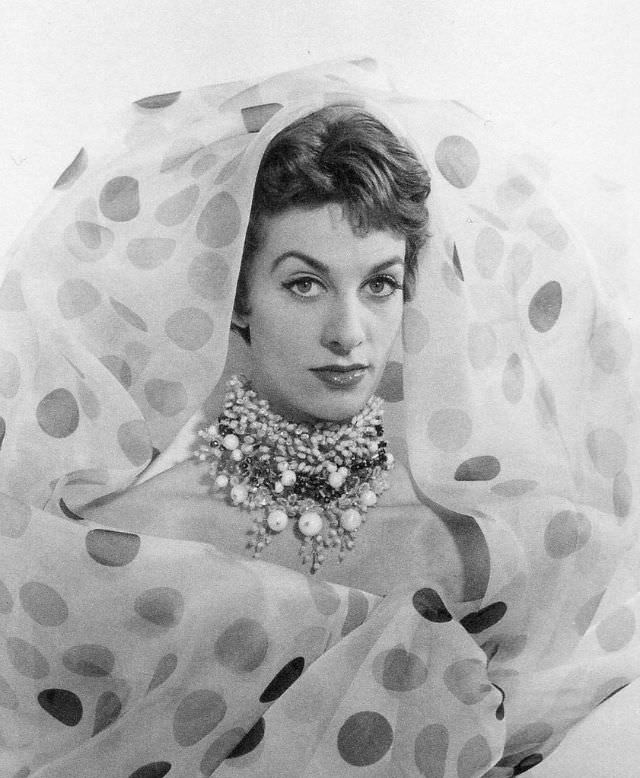
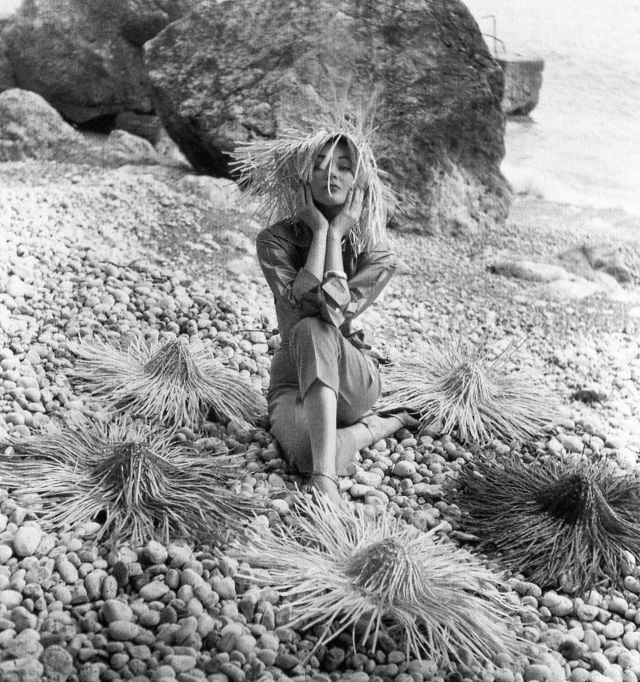
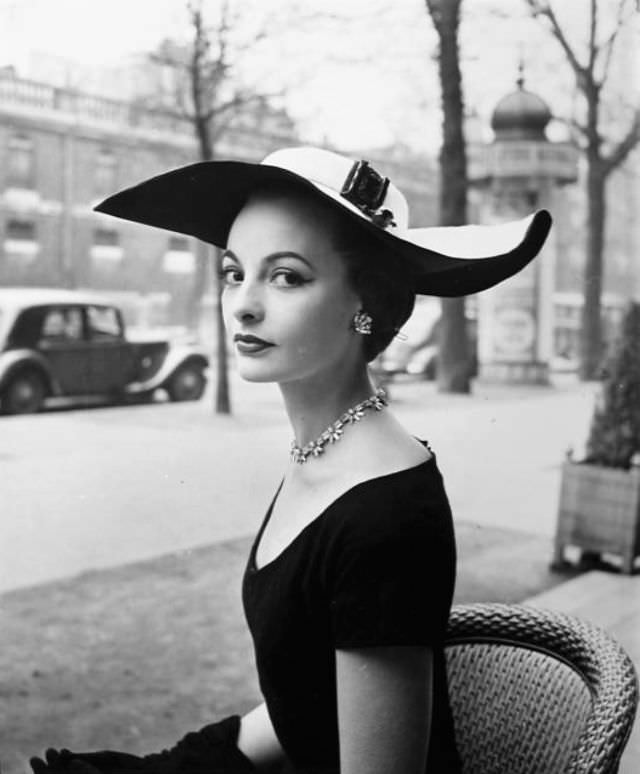
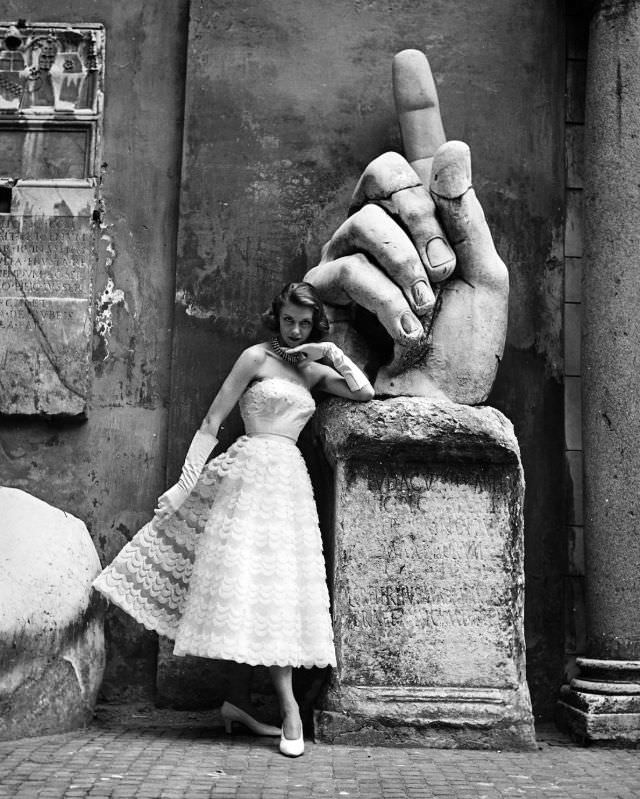

Relang’s 1952 work spanned multiple cities and styles. On the Isle of Capri, she photographed Ivy Nicholson wearing straw hats by Emilio Pucci, making full use of the Mediterranean landscape. In Rome, she captured a model in a strapless lace cocktail dress by the Fontana Sisters. Back in Paris, a hat by Jean Dessès featured in one of her most elegant portraits of the year.
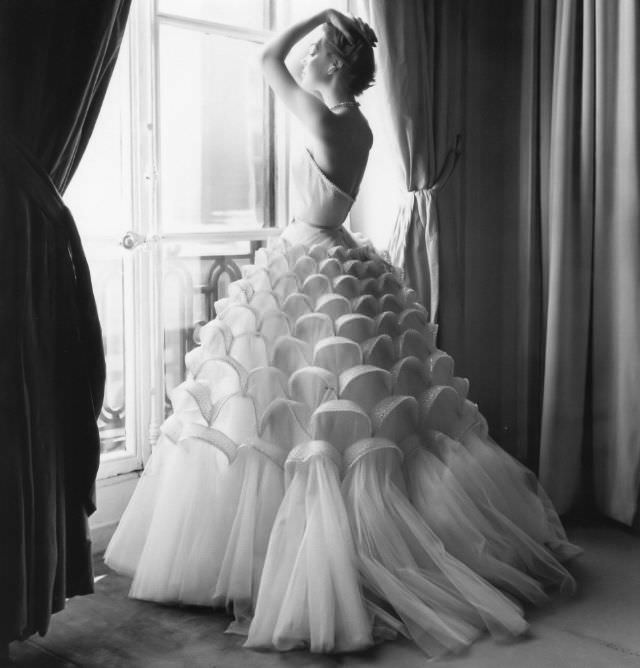
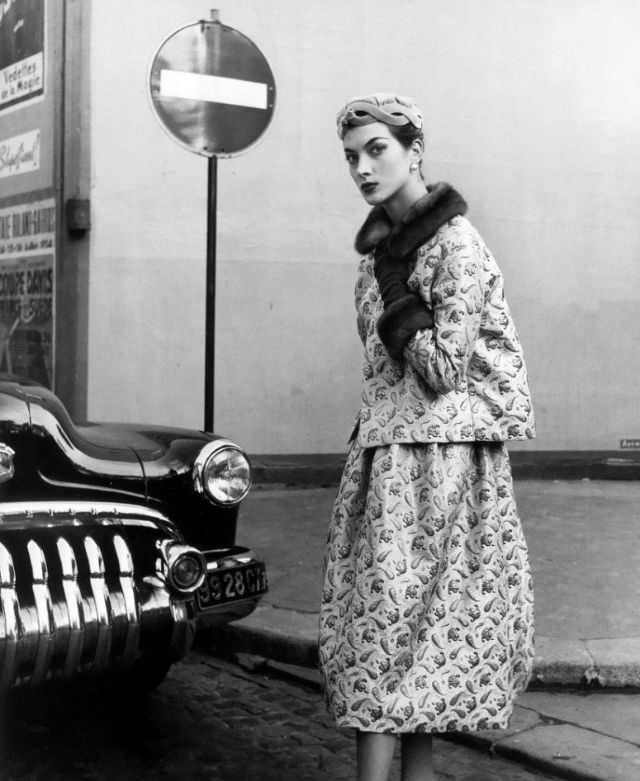
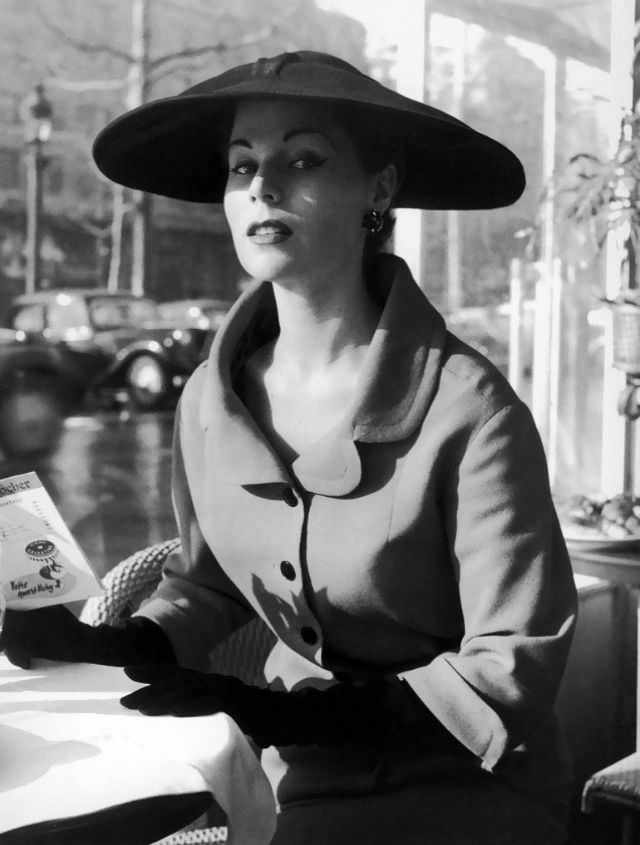
Jacques Fath was a recurring designer in Relang’s portfolio. In 1953, she photographed Rose Marie Reid in a cocktail ensemble by Fath, and Stella Tenbrook in one of his tailored suits. Both images demonstrate Relang’s ability to communicate the structure and texture of a garment even in black-and-white photography, where tonal contrast does the work that color normally would.
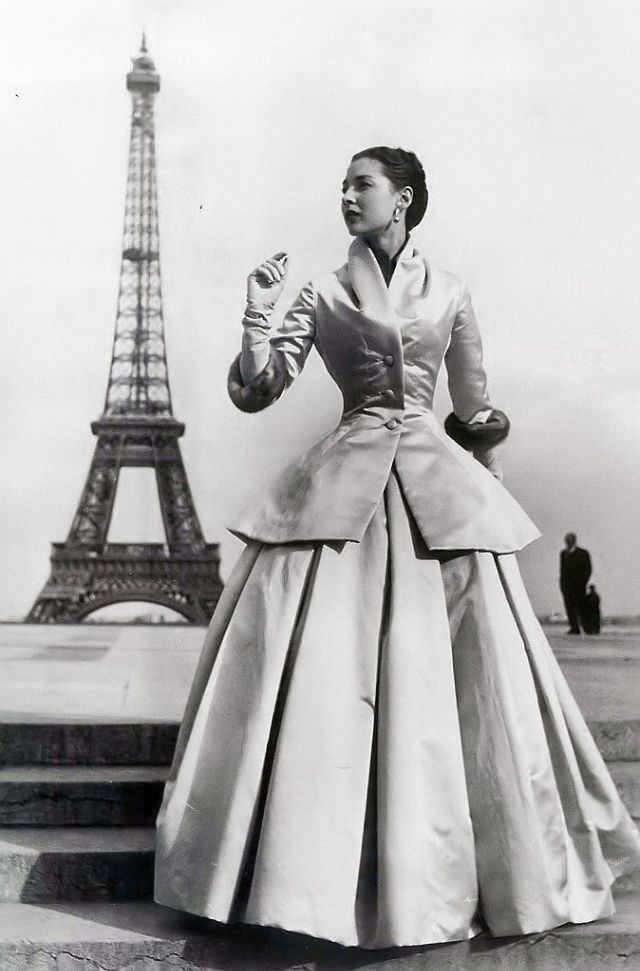
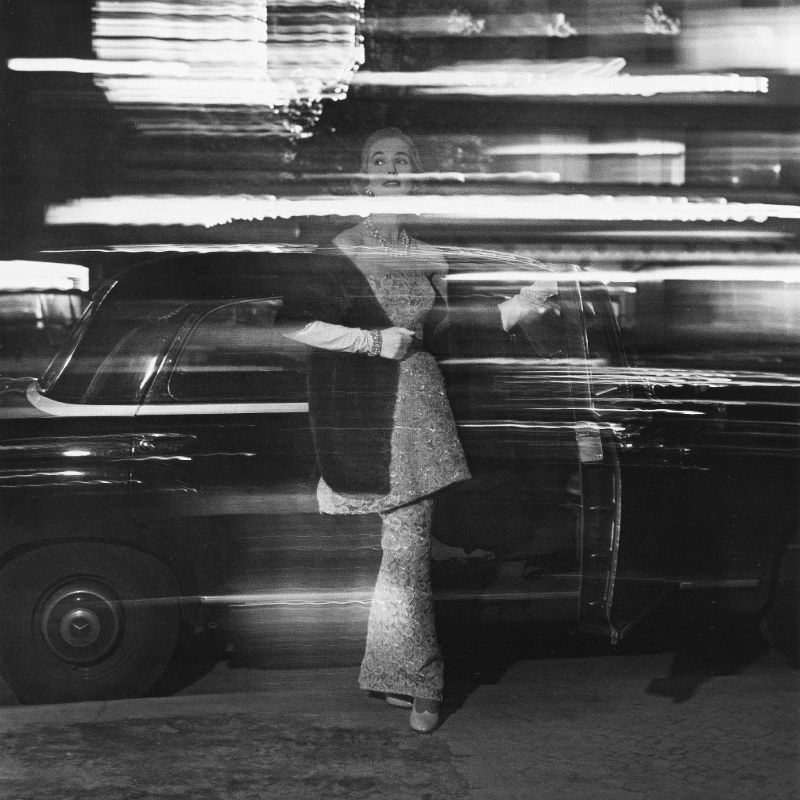
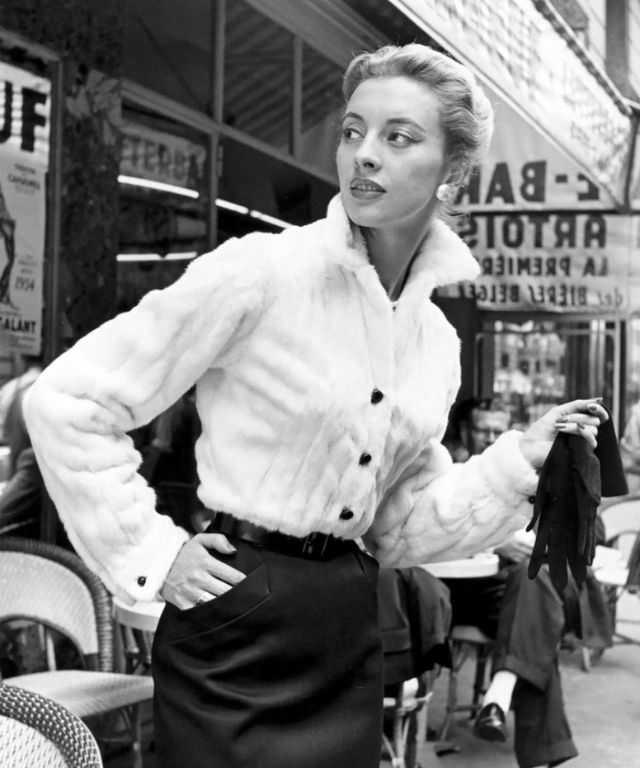
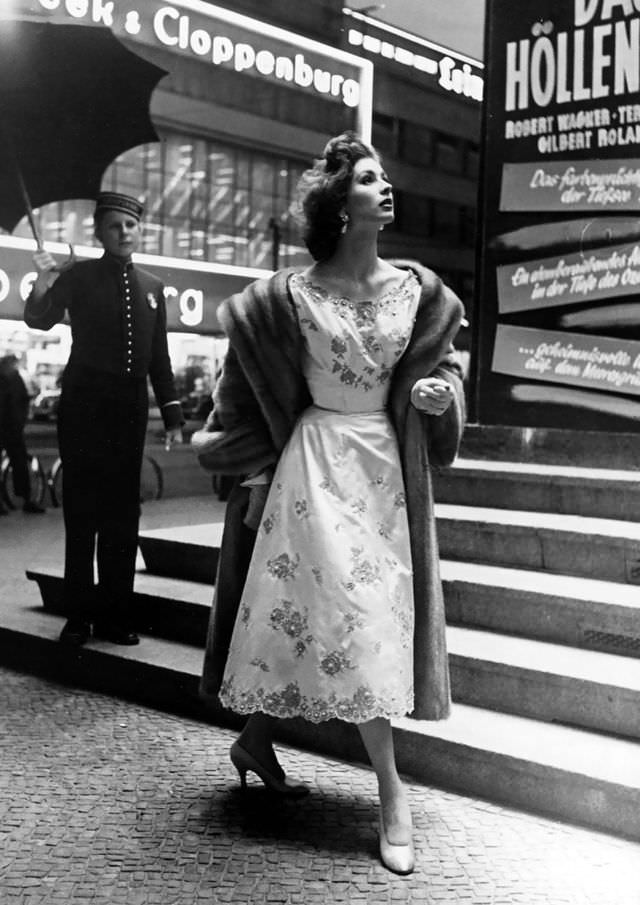
The year 1954 brought some of Relang’s most varied work. She photographed Dior house model Renée Breton wearing the ‘Zemire’ design in Paris, and captured Suzy Parker — one of the most famous American models of the era — in Berlin. A night shoot in Berlin featuring a model named Lydia showed Relang’s willingness to push her craft into more atmospheric territory. Marie-Thérèse appeared that same year wearing a white ermine blouse by Balmain, a garment that communicated luxury even in print.
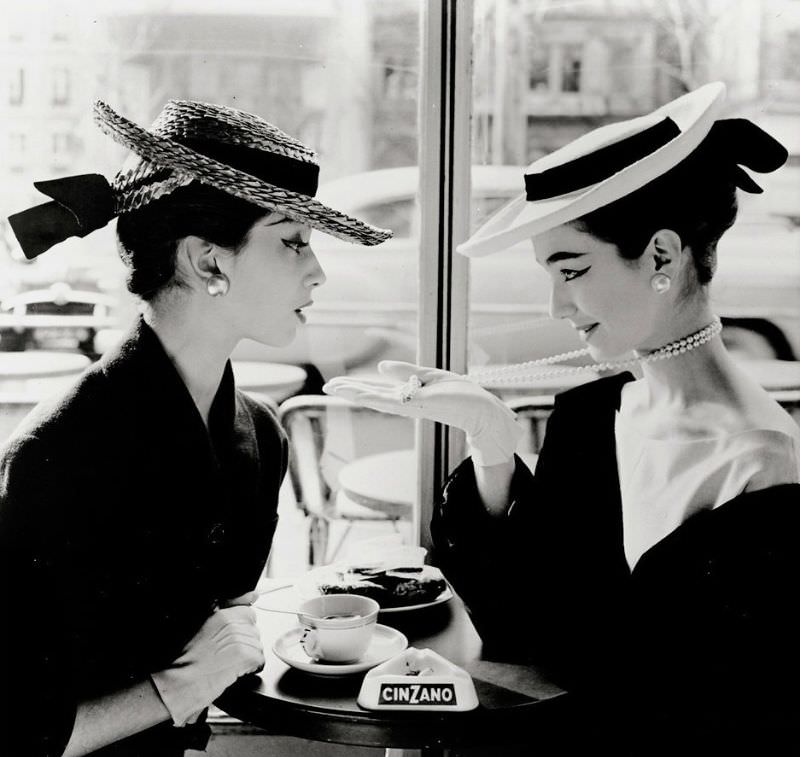
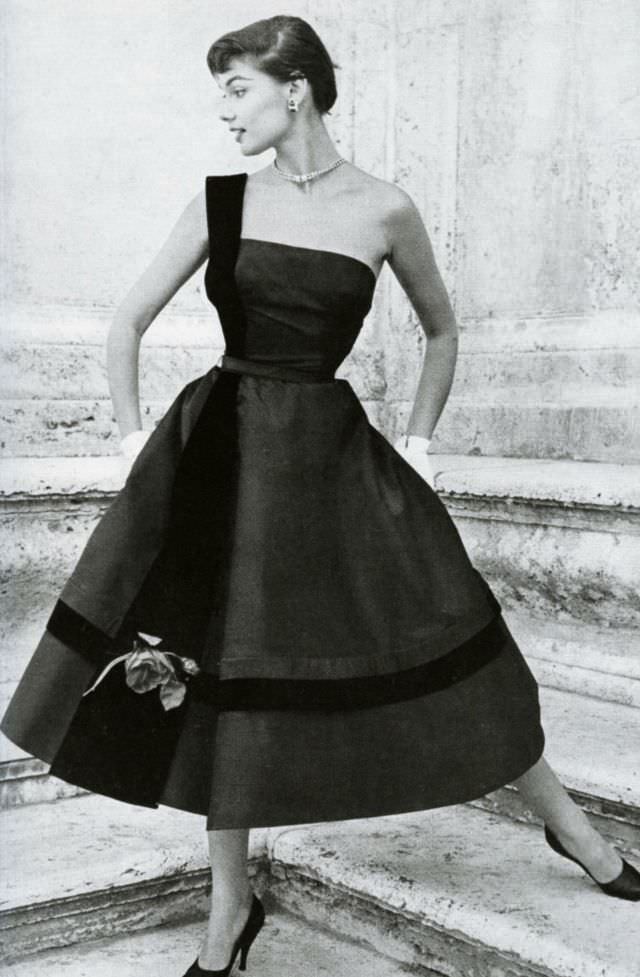
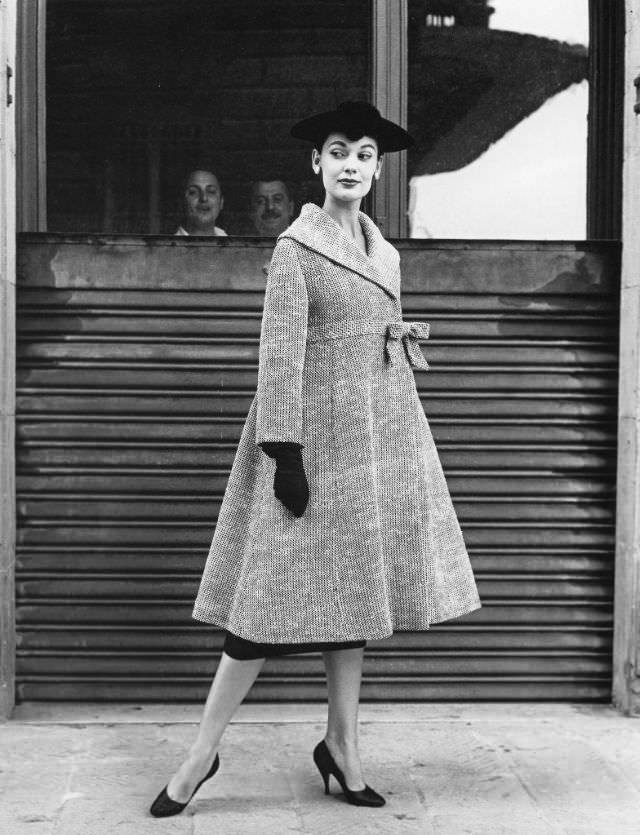
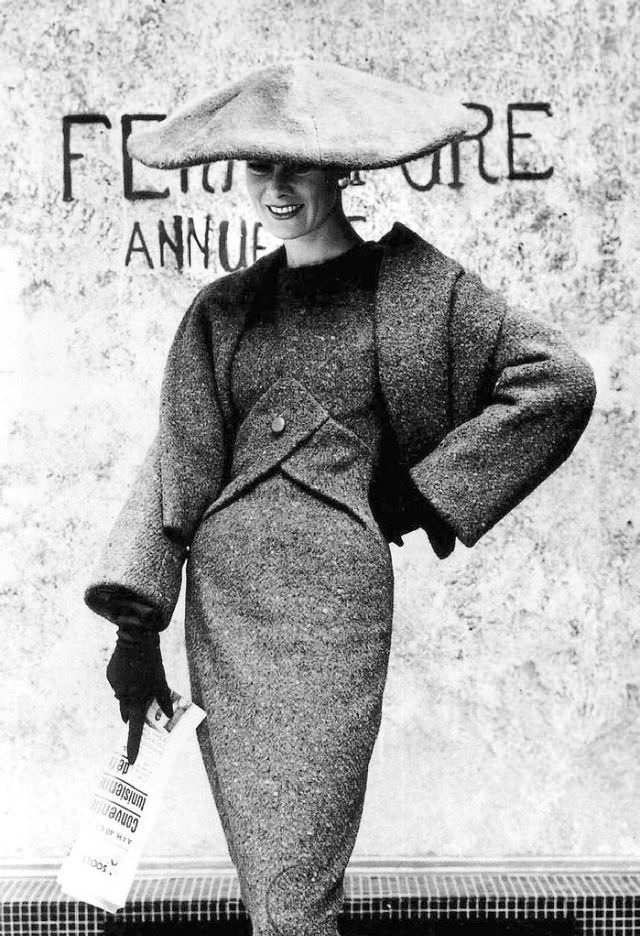
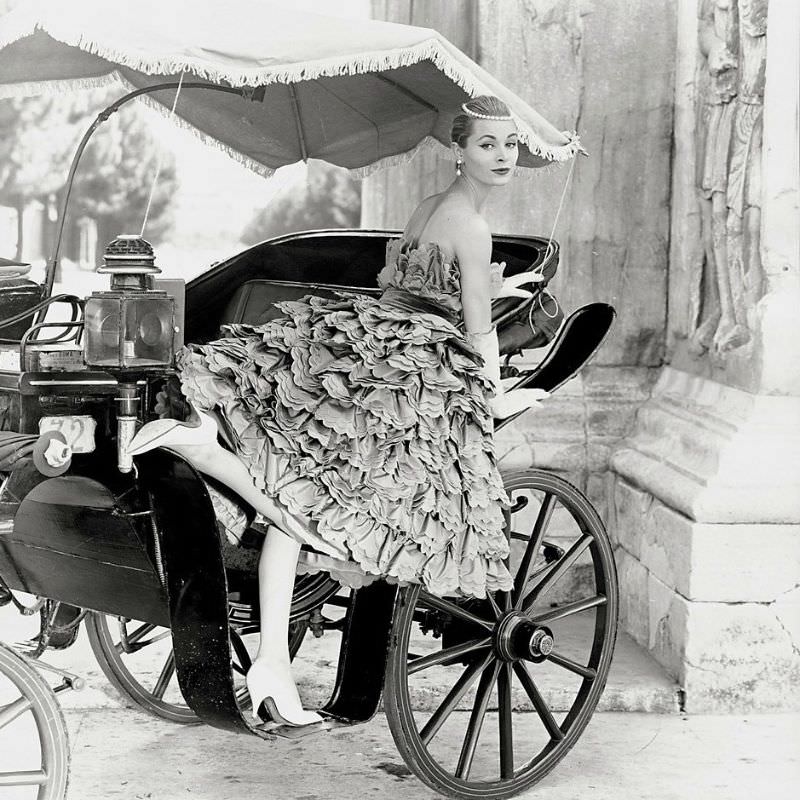
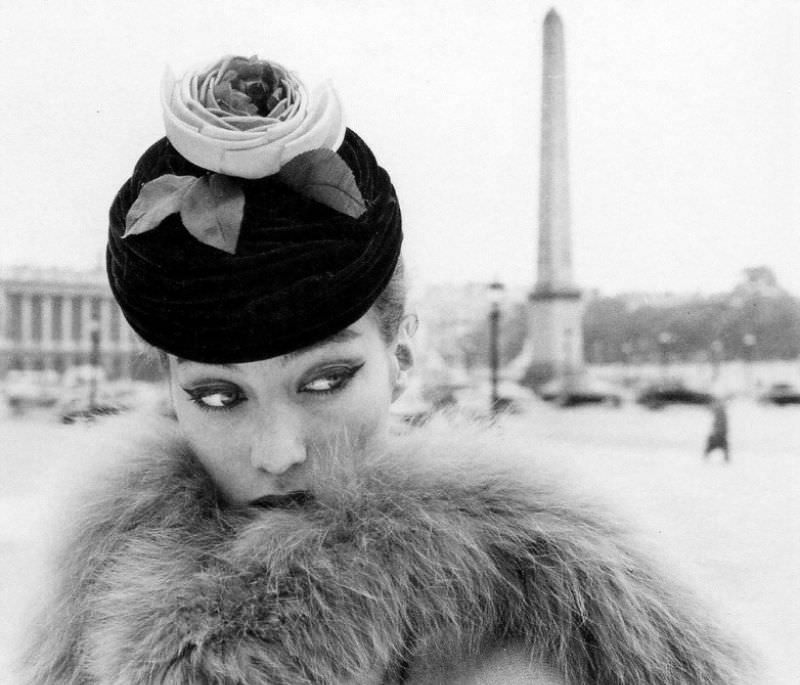
In 1955, Relang traveled to Florence to shoot model Joan Whelan in designs by Simonetta — both a velvet-detailed dress and a structured coat. Back in Paris, she photographed Dior’s Y-Line dress called ‘Bleu de Perse,’ a significant design from one of the decade’s most talked-about silhouettes. A group portrait titled ‘Die Perlenkette’ (The Pearl Necklace), featuring models Marie-Hélène and Dany, showed a more editorial and staged side of Relang’s work.
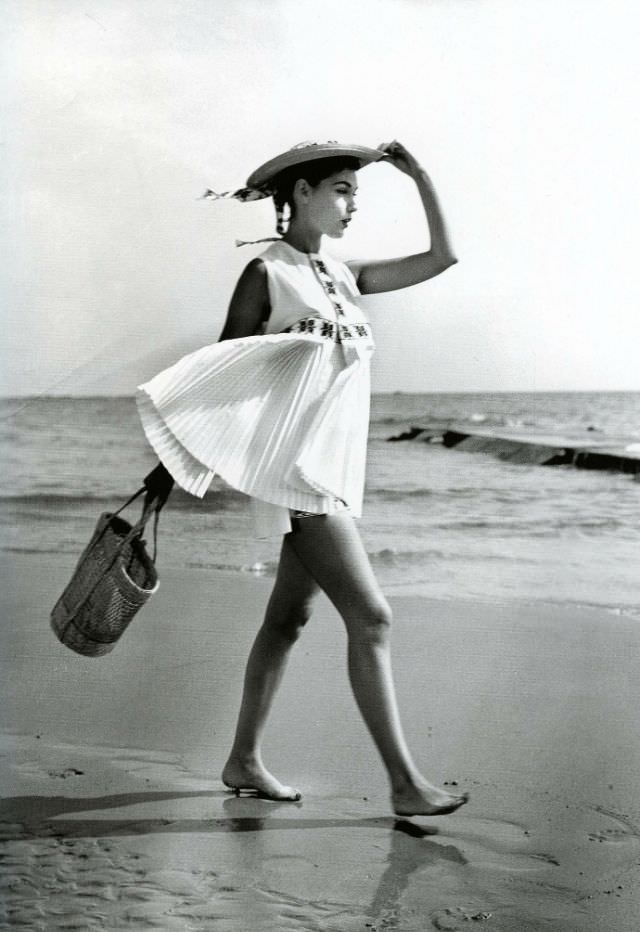
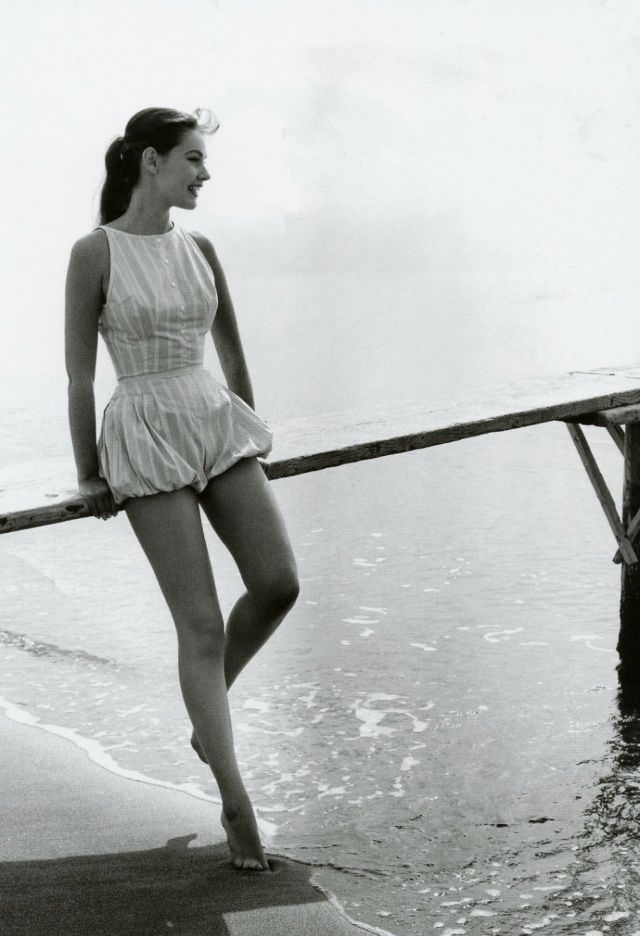
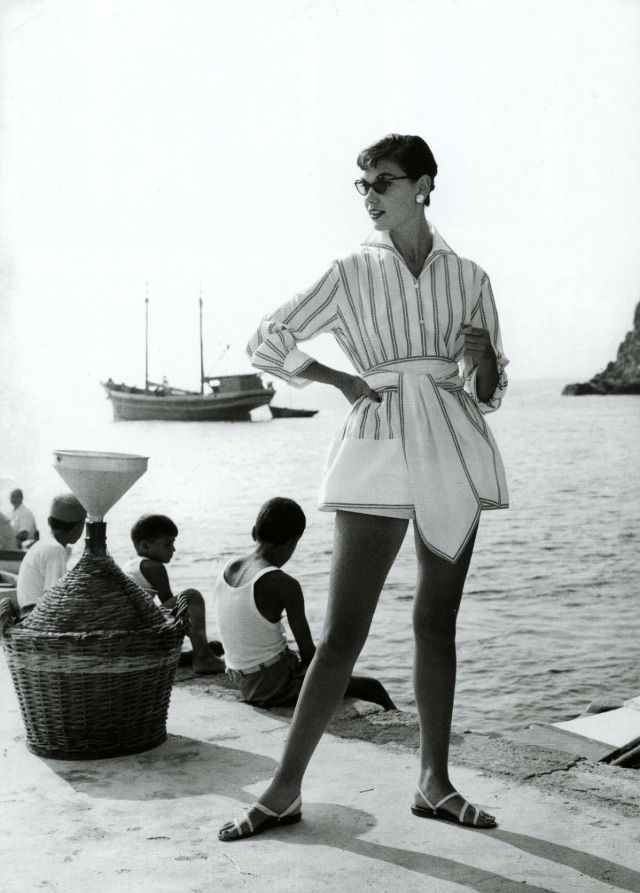
For the Spring/Summer 1956 issue of Constanze, Relang took Joan Whelan to the Italian island of Ischia to shoot beachwear by designer Bessie Becker. The warm coastal scenery gave the images a relaxed energy that was quite different from the formal couture shoots in Paris. These photographs show how comfortably Relang moved between high fashion and more casual, lifestyle-oriented editorial work.
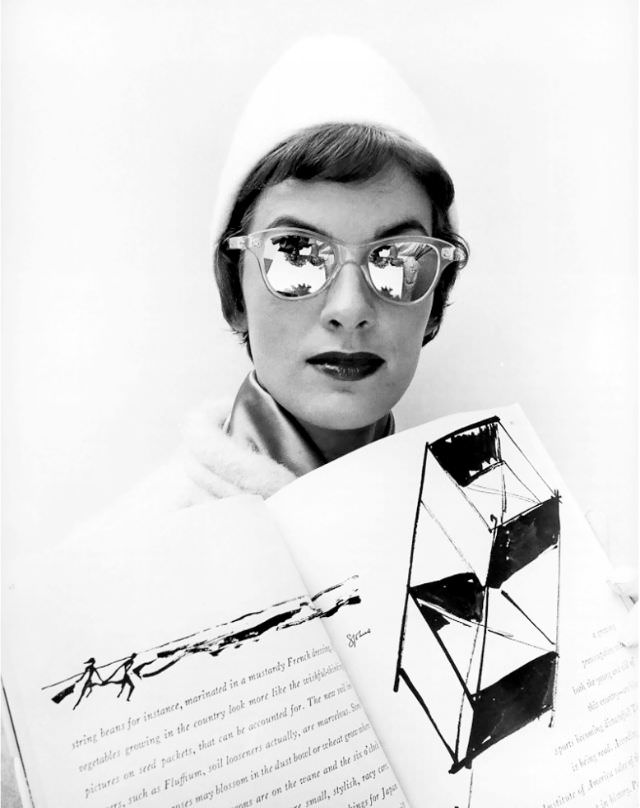
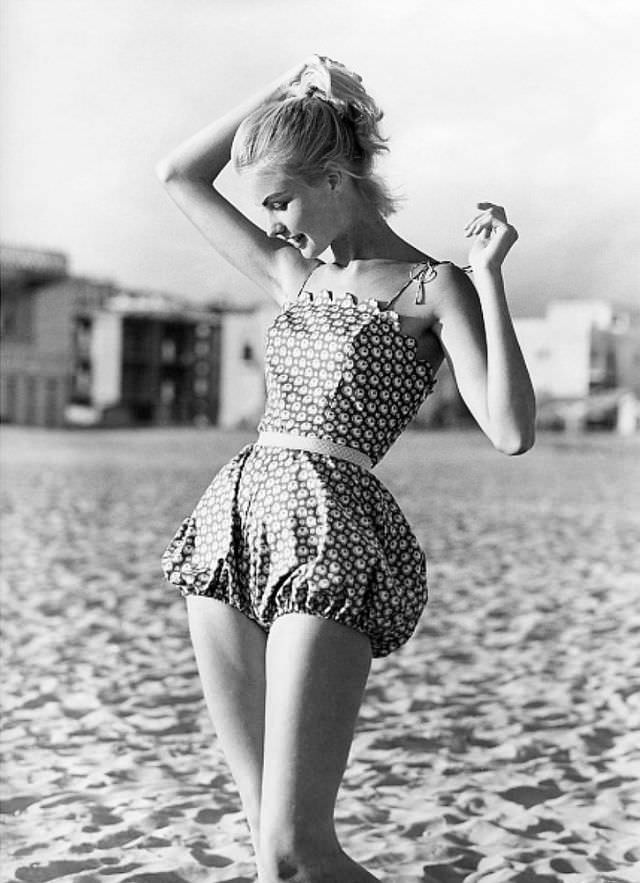
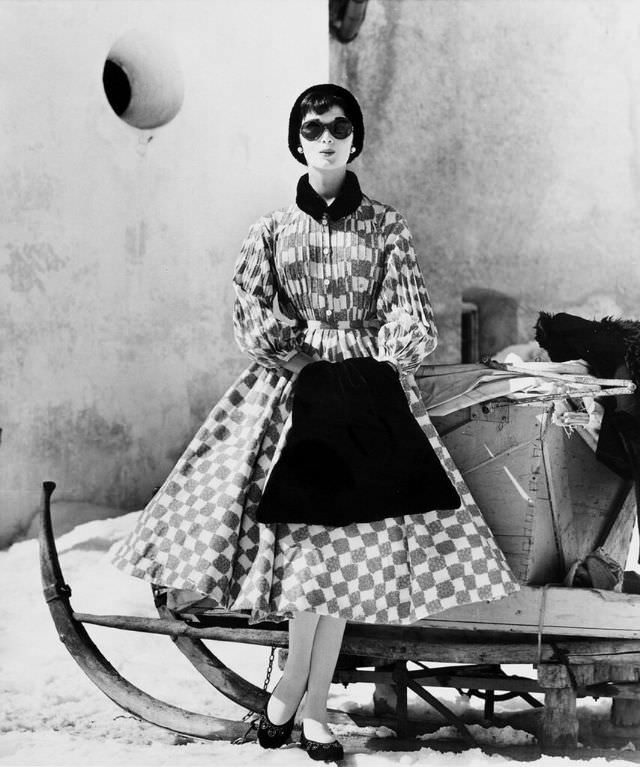
In 1957, Relang photographed Helga Viermann wearing a hat by Ina Boeckler. She also shot a beachwear spread for Brigitte magazine, published in the October issue. Bessie Becker’s designs appeared again this year, continuing a working relationship that stretched across multiple seasons. Throughout this period, Relang’s black-and-white images maintained a clarity and precision that made the details of each garment unmistakably readable.
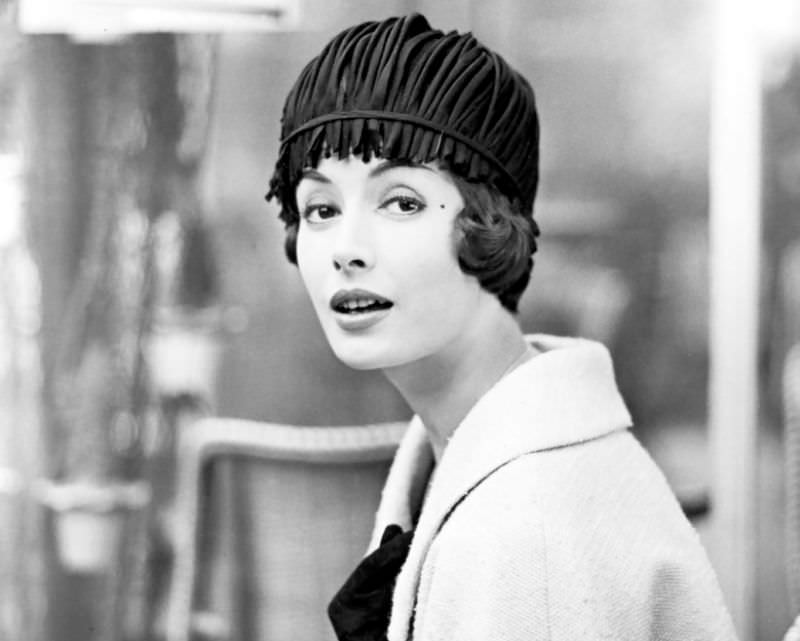
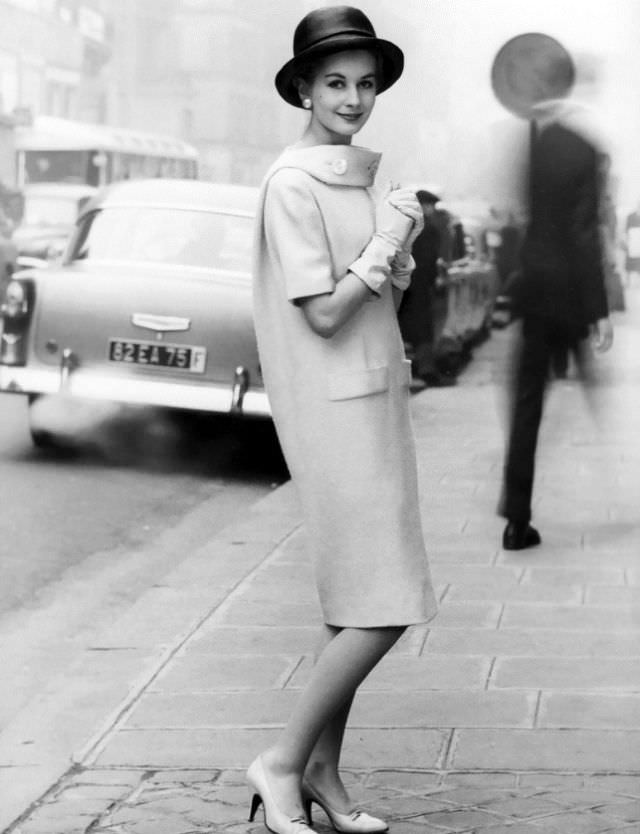
By 1958, Relang was back in Paris shooting for top-tier labels. Gitta Schilling appeared wearing a hat by Laroche, while another session captured a model in a dress by Lanvin-Castillo. These images reflect the disciplined eye Relang had developed over two decades of fashion work — clean compositions, confident lighting, and subjects who wore the clothing with authority.
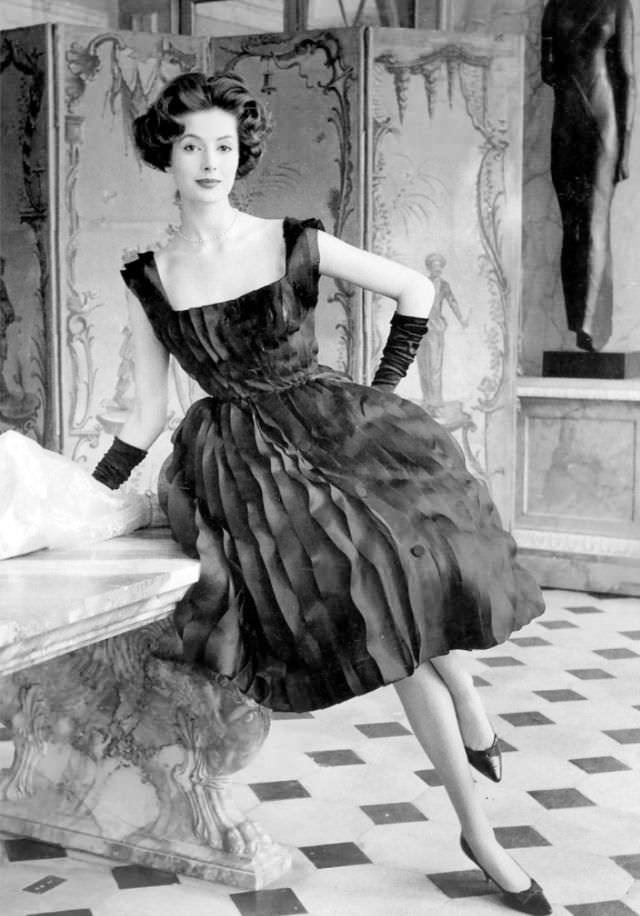
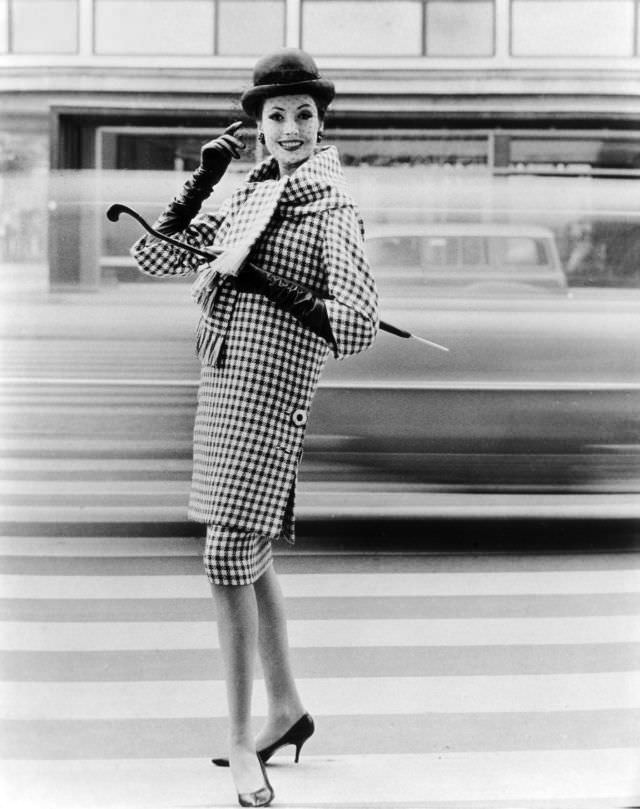
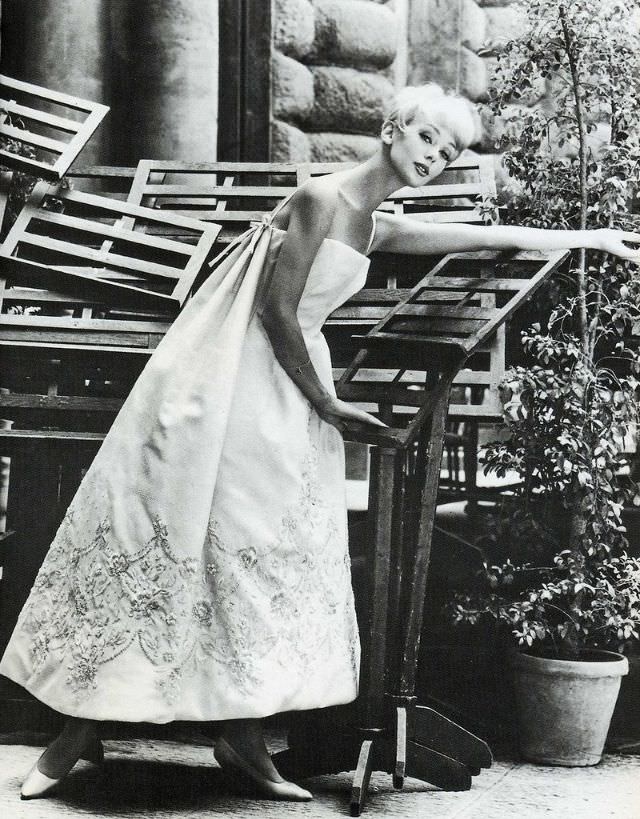
The decade closed with Relang photographing Gitta Schilling in two very different looks — a Balmain cocktail dress from the Perle Oceane collection and a houndstooth tunic and skirt by Uli Richter. Ina Balke, another model Relang worked with regularly, appeared in an evening dress by Simonetta. In 1972, Relang received the Federal Cross of Merit, and in 1973, she was awarded the David Octavius Hill Medal. She died in Munich in 1989, leaving behind one of the most complete photographic records of postwar European fashion.