
Estonia sits on the eastern coast of the Baltic Sea in Northern Europe, a country made up of a mainland and 2,222 islands. For much of its history, foreign powers controlled the land. The most recent period of foreign rule came from the Soviet Union, which absorbed Estonia in 1940 and kept it as a constituent republic after World War II. That occupation would last for more than five decades — until the Soviet Union finally crumbled.
On September 6, 1991, the Soviet Union formally recognized Estonia’s independence. The Baltic states — Estonia, Latvia, and Lithuania — all broke free around the same time, and they quickly gained membership in the United Nations. What followed was one of the most dramatic economic and political transformations in modern European history. These photographs, taken by Jens-Olaf Walter across 1991 and 1992, document Estonia in the raw first months of that transformation.
Tartu, Estonia’s second-largest city, showed the immediate pressures of the post-Soviet transition. Markets like the one above were vital hubs where people exchanged goods during a period when supply chains were unstable and inflation was eroding purchasing power. The early 1990s brought falling production, rising unemployment, and sharp price increases across the country. Shopping was not the casual experience it would later become — it required effort, timing, and luck.
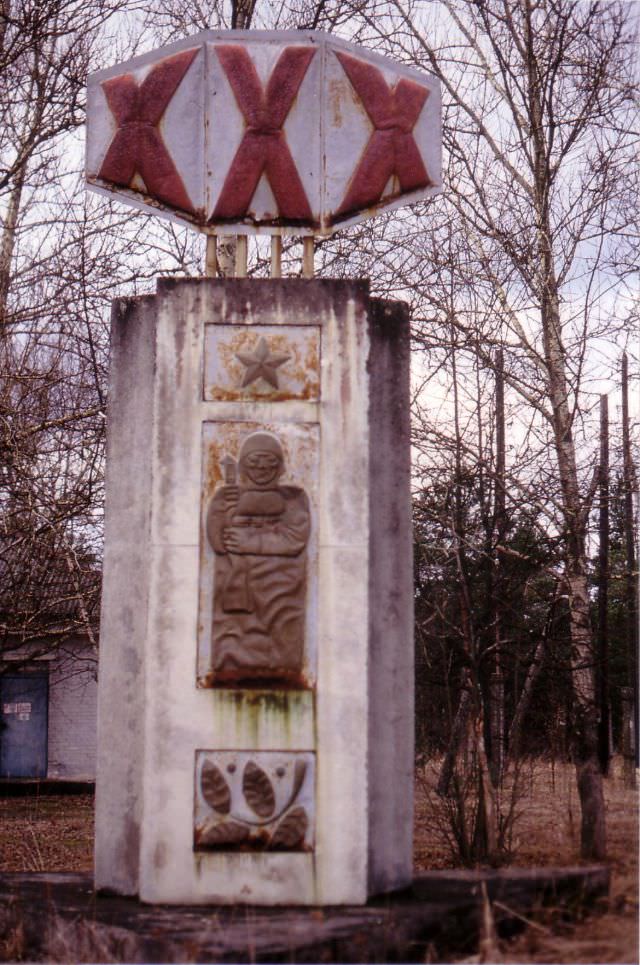
The Soviet military left behind a striking amount of infrastructure when it withdrew. Around the southern Estonian town of Võru, abandoned camps and compounds sat empty, stripped of personnel but still carrying the physical weight of decades of occupation. These sites became some of the most visible symbols of the era that had just ended.
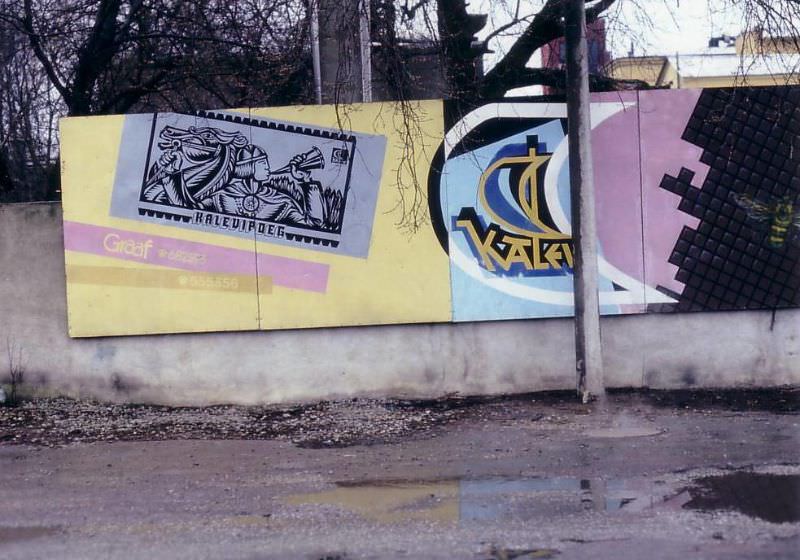
In Tallinn, Estonia’s capital, the signs of a new market economy were beginning to appear. Kalev, the famous Estonian confectionery company founded in 1806, was among the domestic brands that moved quickly to establish a commercial identity in the post-Soviet space. Advertising — once tightly controlled under Soviet rule — was now a tool that Estonian businesses could use freely.
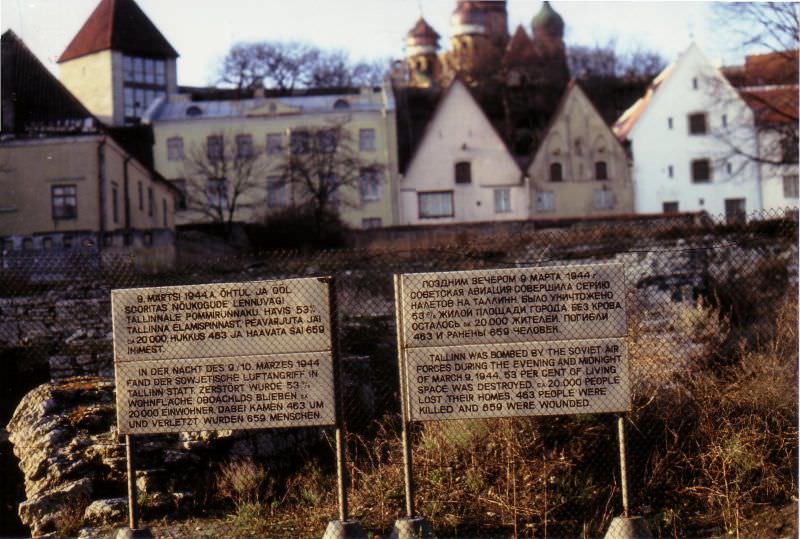
Not all of Tallinn’s scars came from the Soviet occupation itself. During World War II, Soviet air raids in March 1944 caused widespread destruction across the city. Nearly five decades later, some of those ruins still stood in 1991 — untouched reminders of wartime destruction that the Soviet era had never fully addressed or rebuilt.
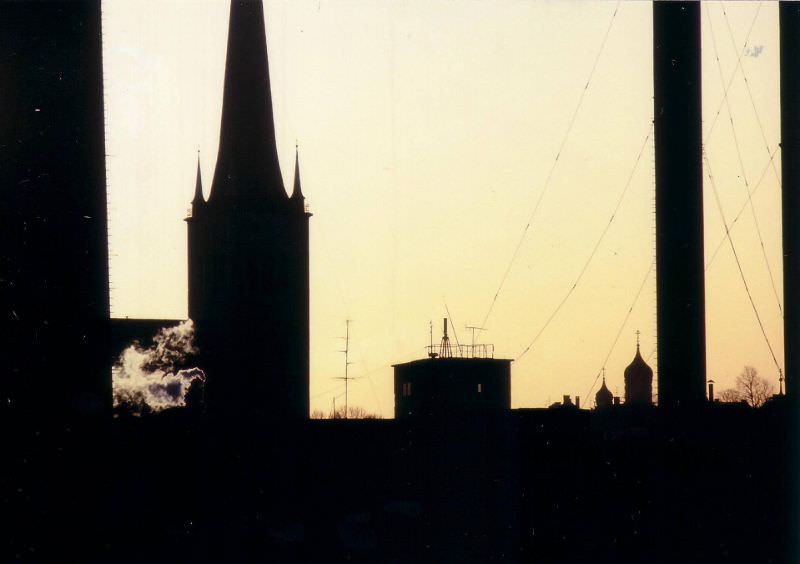
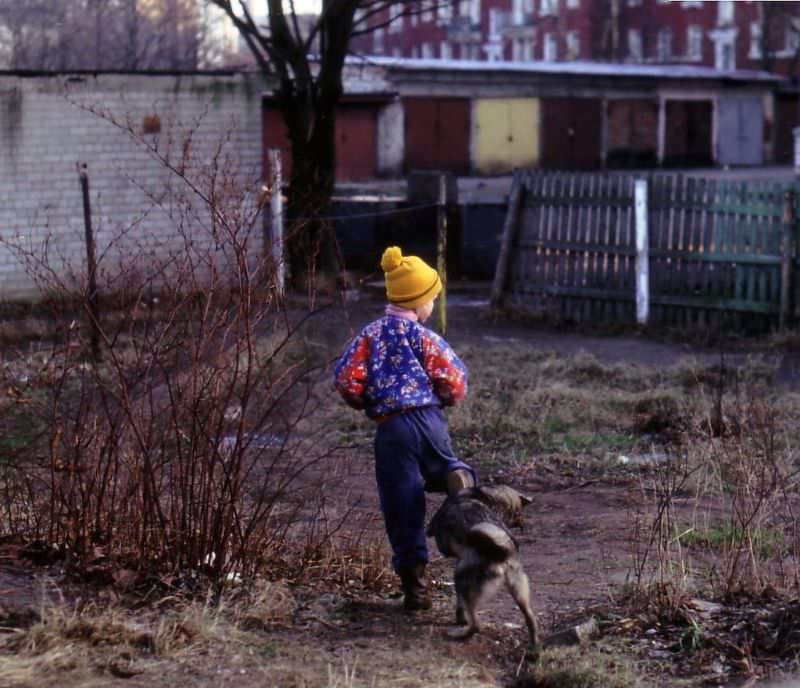
December 1991 was a pivotal month — the Soviet Union officially dissolved on December 25th of that year. Life in Tallinn carried on through the cold, with ordinary people navigating a city that was simultaneously shedding its Soviet identity and searching for a new one. Children who grew up in those months would come of age in a completely different Estonia than the one their parents had known.
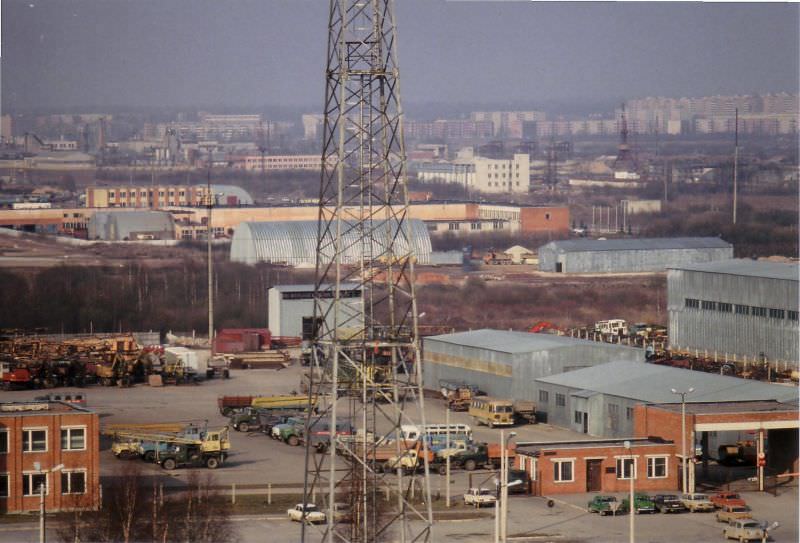
During the Soviet period, Estonia functioned primarily as an industrial region within the USSR’s broader economy. Factories and industrial facilities dominated the economic landscape, with agriculture playing a secondary role. Tartu, like other Estonian cities, carried heavy industrial infrastructure into independence — infrastructure that was now being reconsidered in light of a market economy that rewarded efficiency over output quotas.
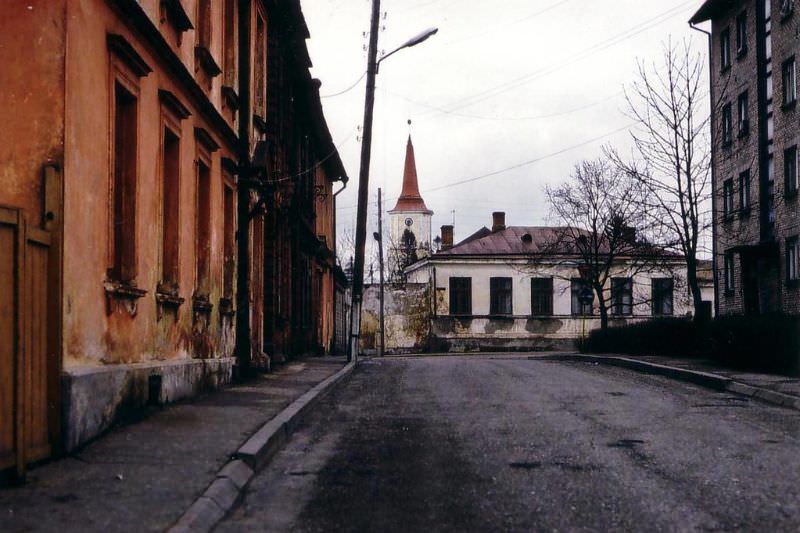
Valga, in southern Estonia, held a unique geographic distinction. The town sat on the border between Estonia and Latvia, and its Latvian counterpart — Valka — was directly adjacent. Under Soviet rule, this border was an internal administrative line with no real consequence. After 1991, it became an international boundary between two newly independent nations.
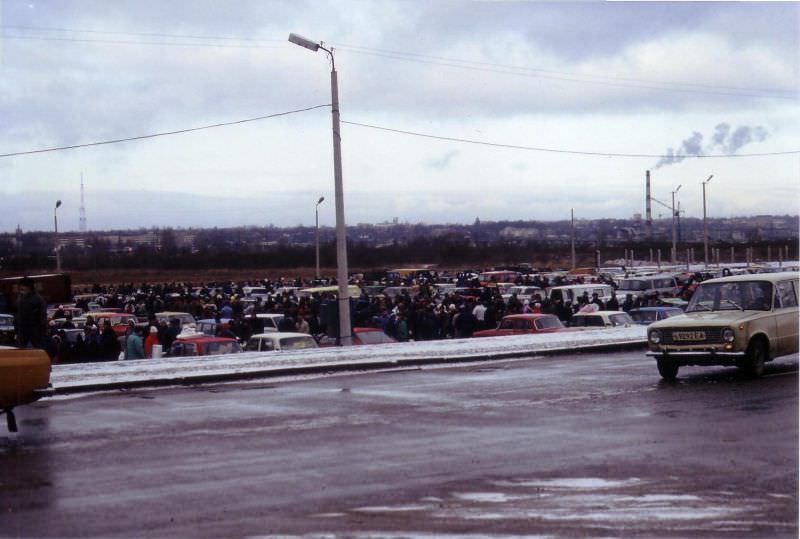
Estonia’s Soviet-era immigration policies had dramatically changed the country’s ethnic makeup. Large numbers of Russian workers and their families relocated to Estonia throughout the latter half of the 20th century, particularly into urban residential zones. Annelinn, a district of Tartu built almost entirely from Soviet-era panel apartment blocks, became home to a significant Russian-speaking population. Informal markets like this one, nicknamed the “Russian Market,” reflected that community’s daily life in 1992.
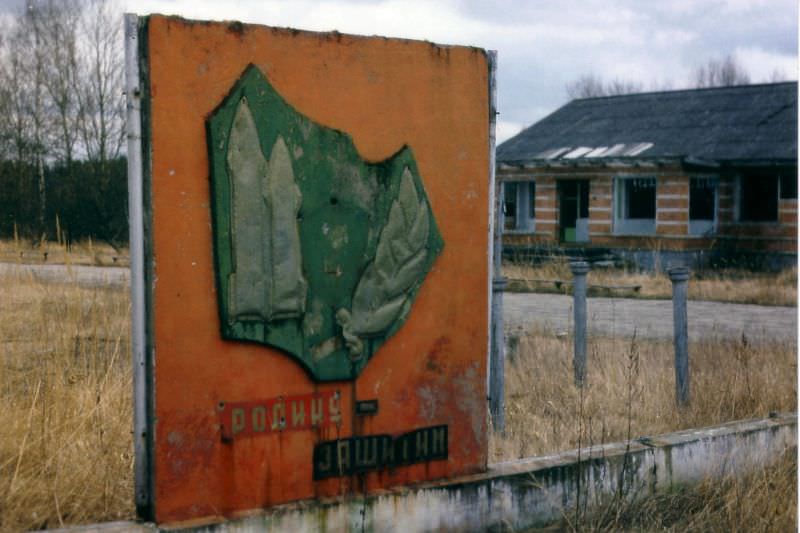
By 1992, the abandoned Soviet military compounds near Võru had sat empty for months. These sites ranged from barracks to storage facilities, and their disrepair was accelerating. The Soviet military’s departure was swift, and it left behind buildings, equipment, and land that Estonia now had to account for and repurpose.
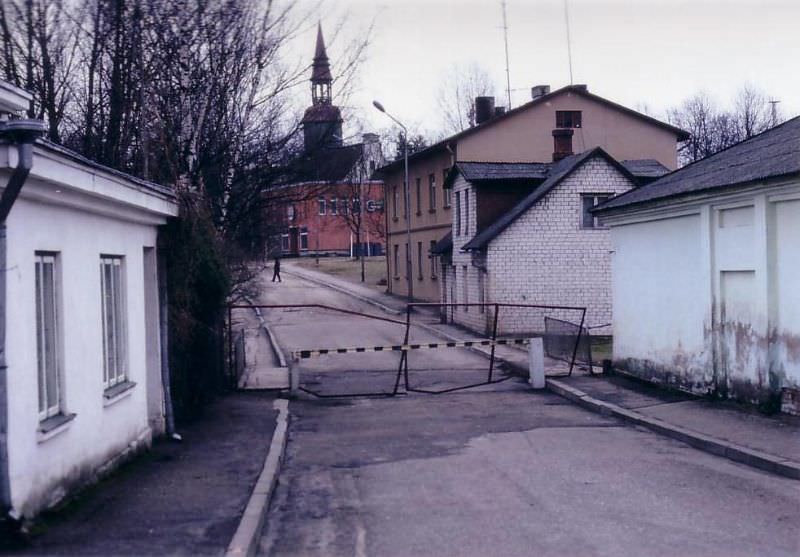
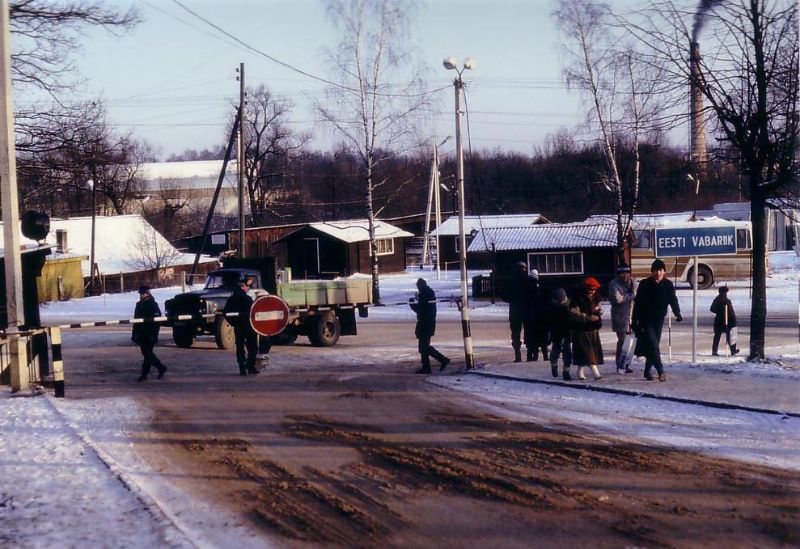
The border between Valga and Valka became a concrete example of how independence reshaped everyday geography. What had been one continuous Soviet town was now split between two countries with two different currencies, two different legal systems, and two separate futures. Residents who had crossed freely now encountered checkpoints and formalities.
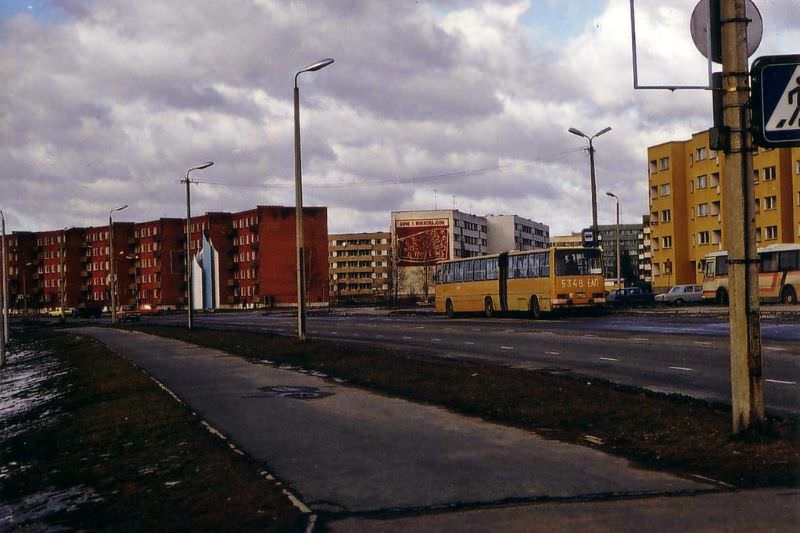
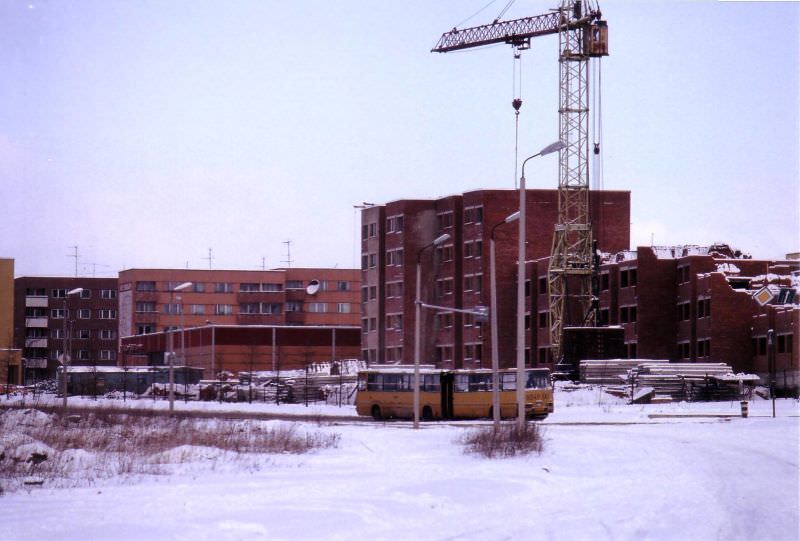
Annelinn’s Soviet-built landscape was functional but stark. The district was designed under central planning principles — identical housing blocks arranged in rows, with shared public spaces and transit stops built for efficiency rather than character. A bus stop in Annelinn in 1992 looked much as it had a decade earlier, though the political world around it had changed entirely.
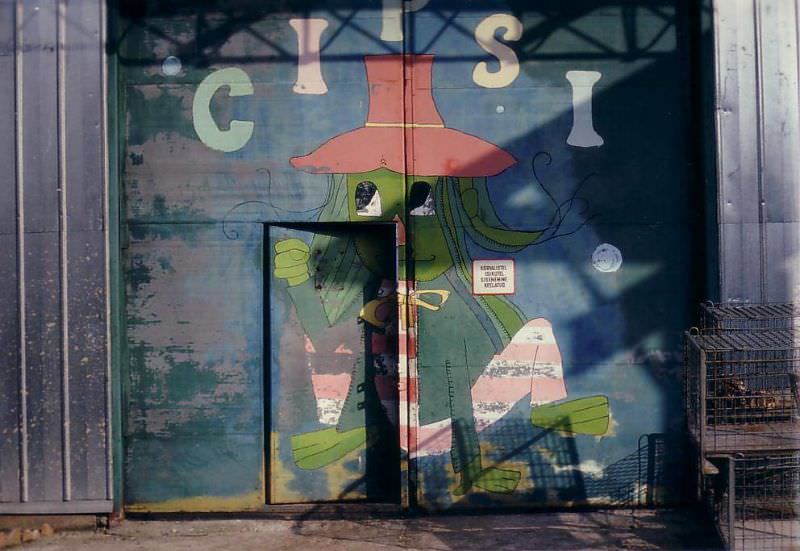
Small-scale manufacturing and food production were adjusting to the demands of a market economy. A chips factory in Tartu — operating under the name Cipsi — represented the kind of consumer goods production that was beginning to shift away from state control. These early enterprises were finding their footing in a system where profit, demand, and competition were the new rules.
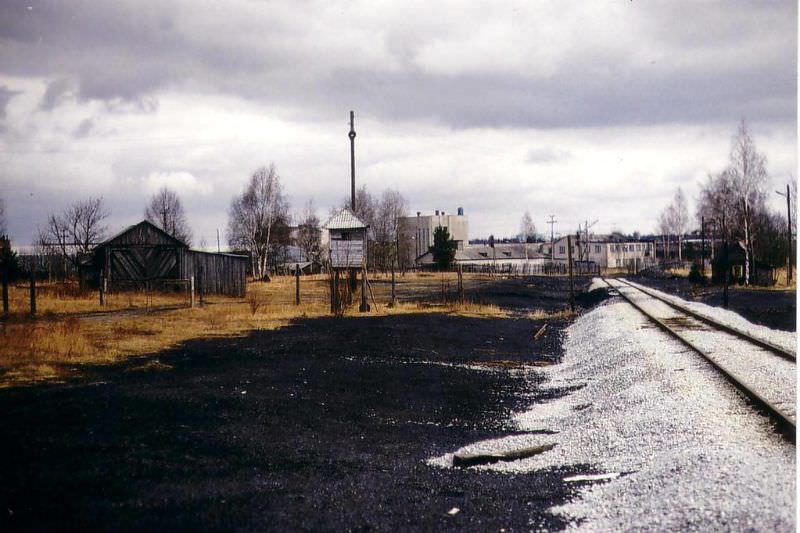
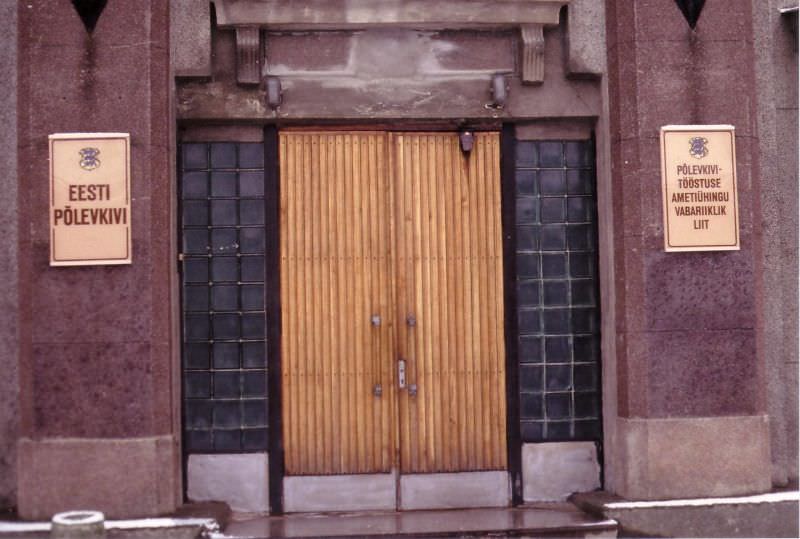
Eesti Põlevkivi — the Estonian oil shale company — was one of the most significant industrial enterprises in the country. Oil shale mining had been a cornerstone of the Soviet-era Estonian economy, and the industry employed thousands of workers in the northeastern part of the country. As Estonia transitioned away from centralized planning, companies like Eesti Põlevkivi faced serious questions about how to survive and compete without state subsidies.
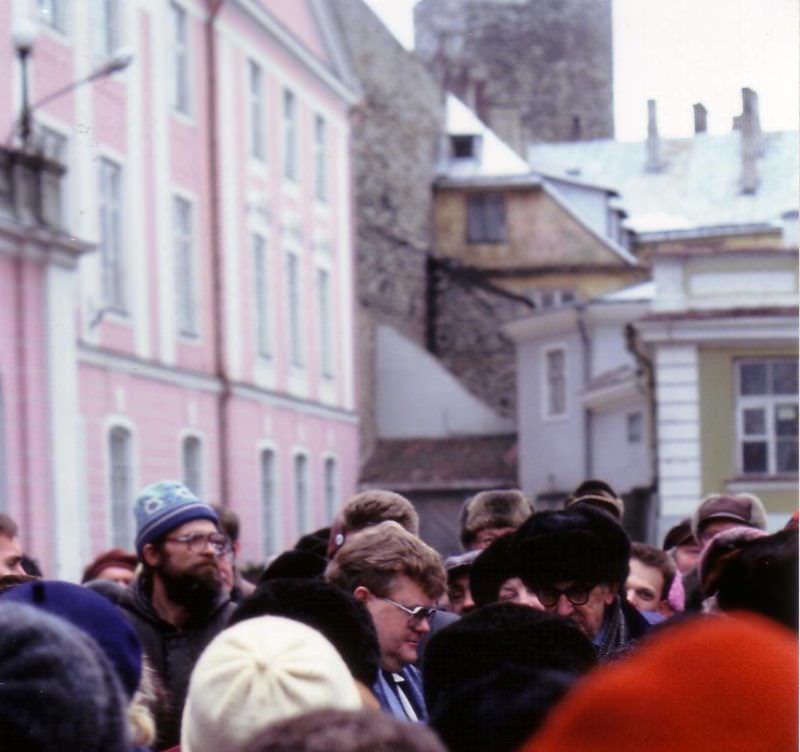
Estonia’s political transition was not smooth. Edgar Savisaar served as Prime Minister from 1990 to 1992, guiding the country through its declaration of independence, but he resigned in January 1992 amid a government crisis — partly triggered by energy and food shortages during a brutal winter. His departure from Toompea Castle, the seat of Estonia’s parliament, marked a pivotal moment in the young democracy’s early political life.
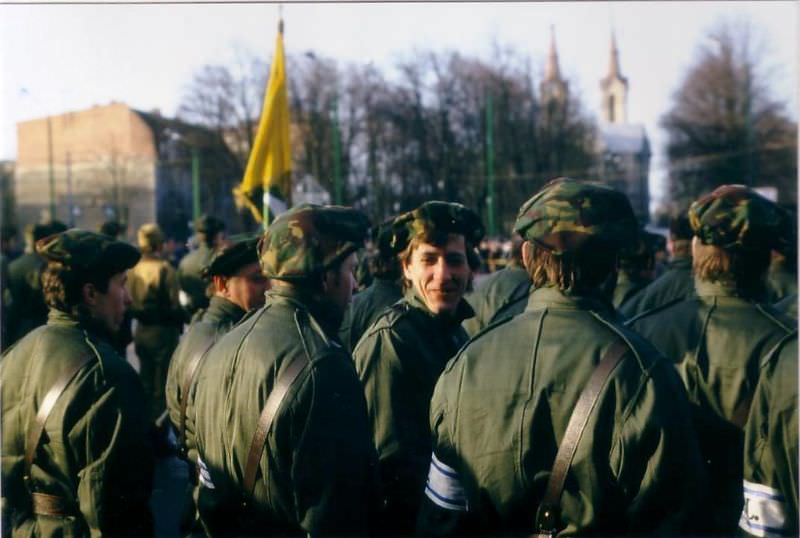
As Estonia built its independent institutions, national defense was a top priority. The Kaitseliit — Estonia’s voluntary defense league — was re-established in 1990, reviving an organization that had existed before Soviet occupation. By 1992, members were visible in Tallinn, representing a country that was determined to protect the sovereignty it had just reclaimed.
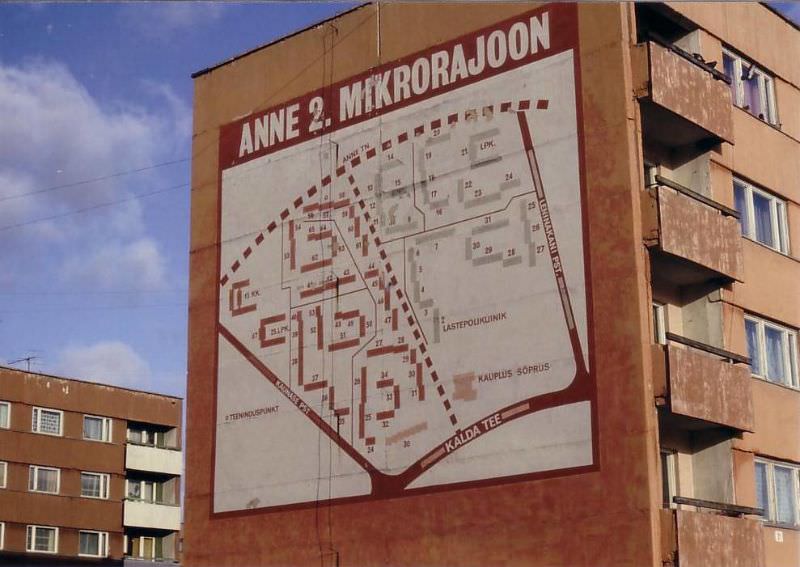
The Soviet urban planning concept known as the mikrorajon — a self-contained residential neighborhood block — defined large parts of Tartu’s Annelinn district. These zones were built to house industrial workers and their families, complete with schools, shops, and communal spaces all within walking distance. In 1992, these neighborhoods stood structurally unchanged from their Soviet-era design, even as the society within them was transforming.
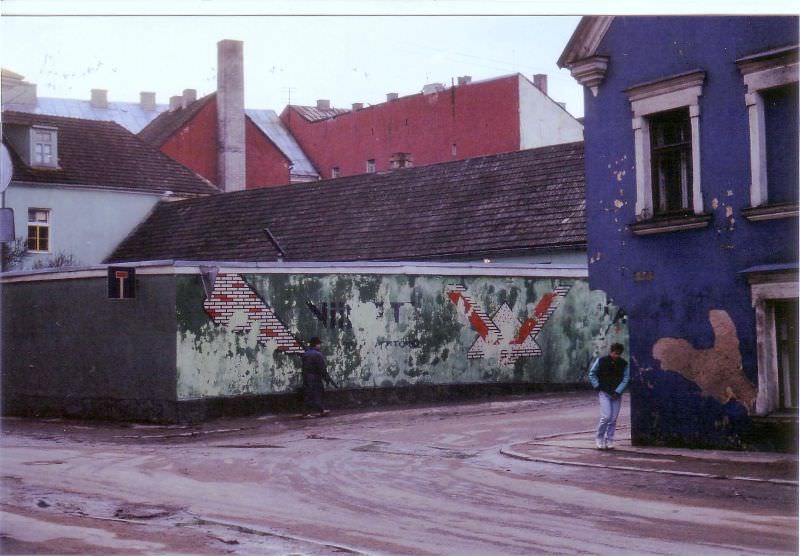
Tartu’s old town offered a sharp visual contrast to the Soviet-era apartment blocks of Annelinn. Around Raekoja plats — the city’s Town Hall Square — 18th and 19th century buildings survived with their original architecture largely intact. These areas preserved Estonia’s pre-Soviet identity and served as a physical reminder that the country had a deep cultural and historical life that stretched far beyond its decades under Soviet rule.
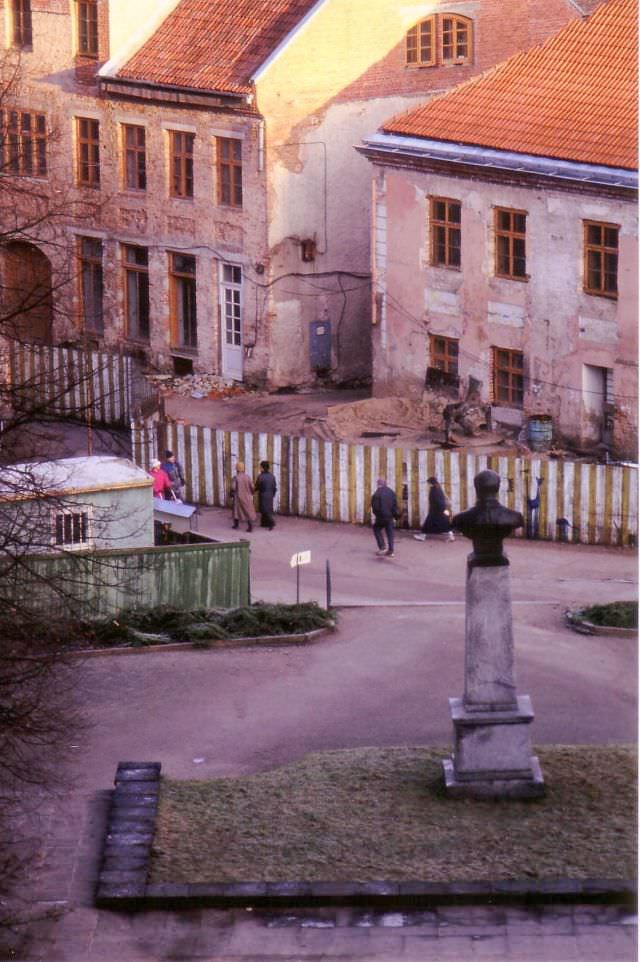
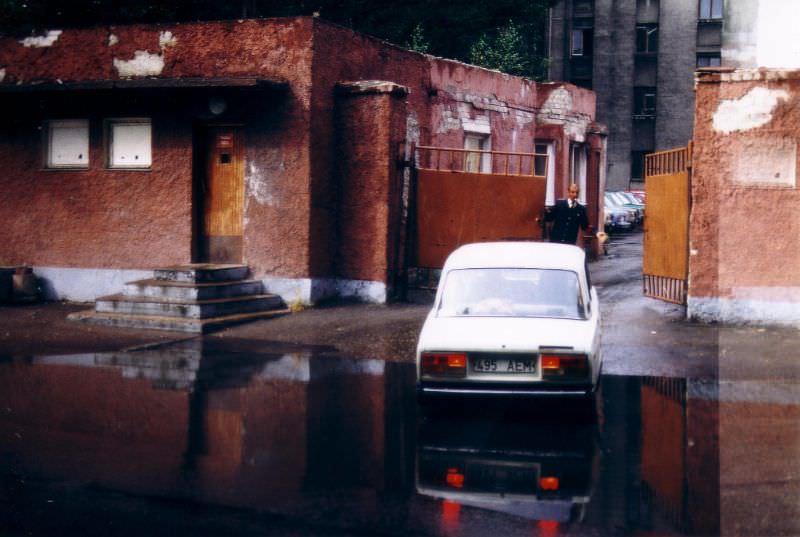
Soviet-era monuments, signage, and infrastructure were still scattered throughout Tallinn in 1992. The removal or preservation of these relics was a politically charged question. Some symbols of Soviet power were torn down quickly; others remained standing for years, awkward artifacts of an occupation that had officially ended but whose physical presence lingered everywhere.
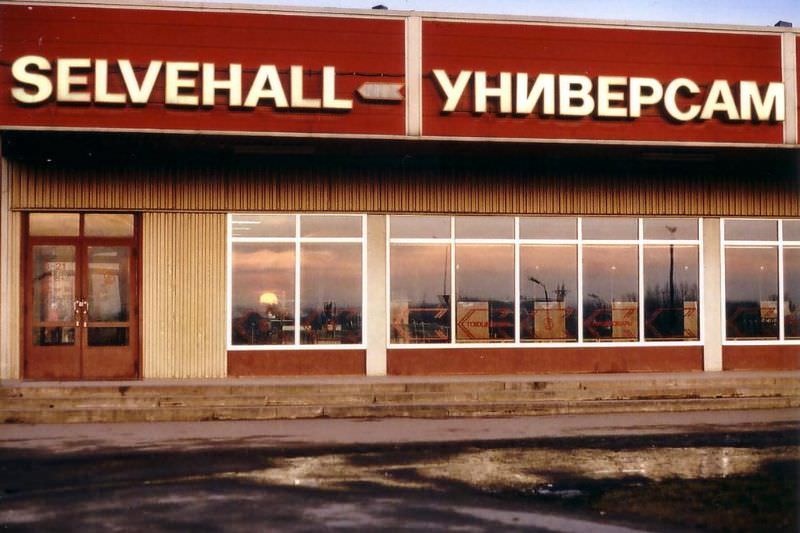
Retail in early independent Estonia was a far cry from the consumer experience that would develop later in the decade. On the outskirts of Tartu, supermarkets like Selvehall offered limited selections in utilitarian settings — concrete, fluorescent lighting, and sparse shelving. The transition to a market economy had not yet filled store shelves with variety or competition.
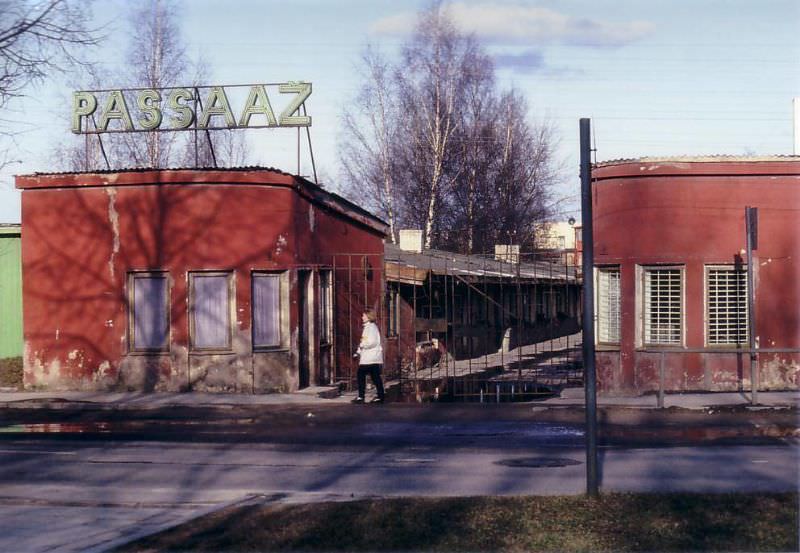
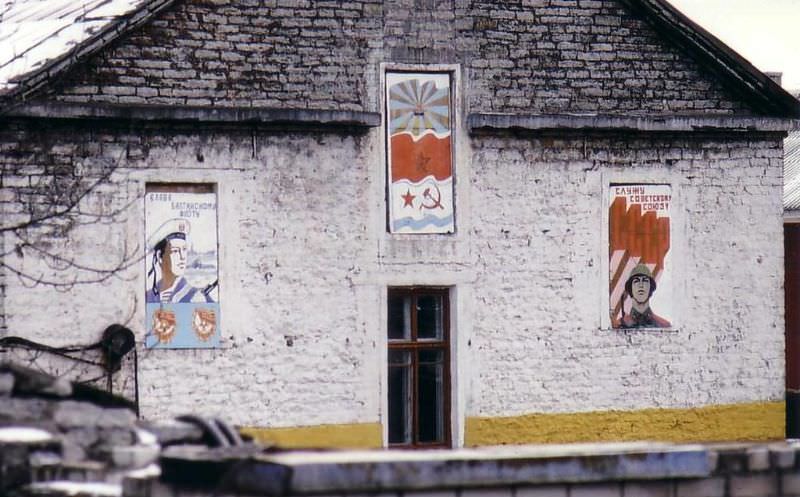
Even after independence, Soviet military infrastructure didn’t vanish overnight. Tallinn’s harbor still held remnants of Soviet naval facilities in 1992. The withdrawal of Soviet forces from Estonia was a drawn-out process, and the physical footprint of that military presence — docks, buildings, equipment — remained visible well into the early years of independence.
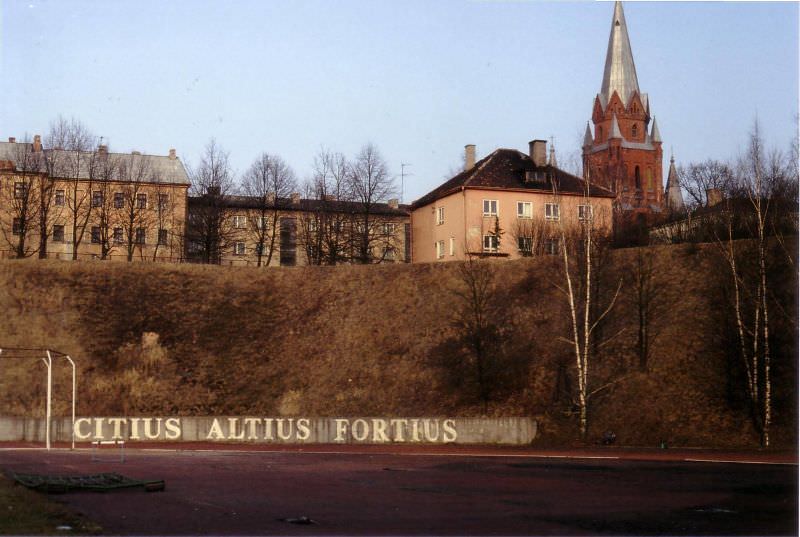
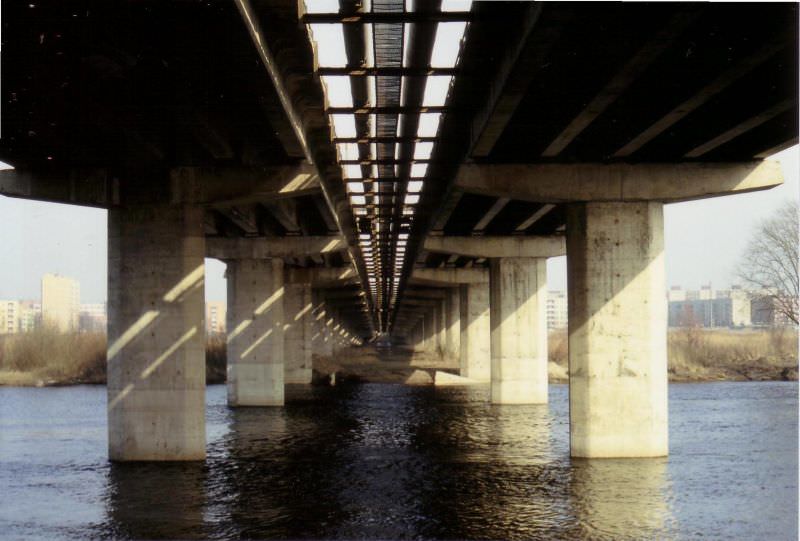
Tartu’s infrastructure in 1992 carried the wear of the Soviet era. Bridges, stadiums, and public spaces were functional but aging, products of Soviet-era construction that had received little investment. With the economy in a difficult early transition period, large-scale repair and renovation projects were not yet feasible. The city looked tired but was very much alive.
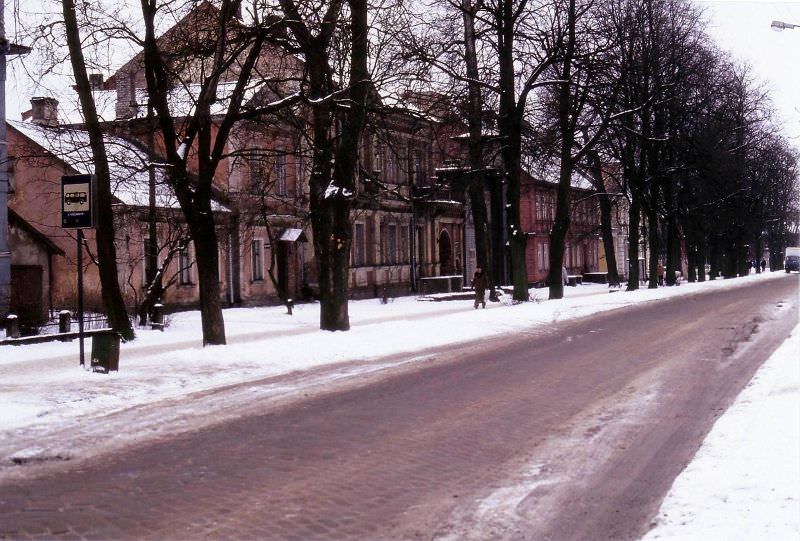
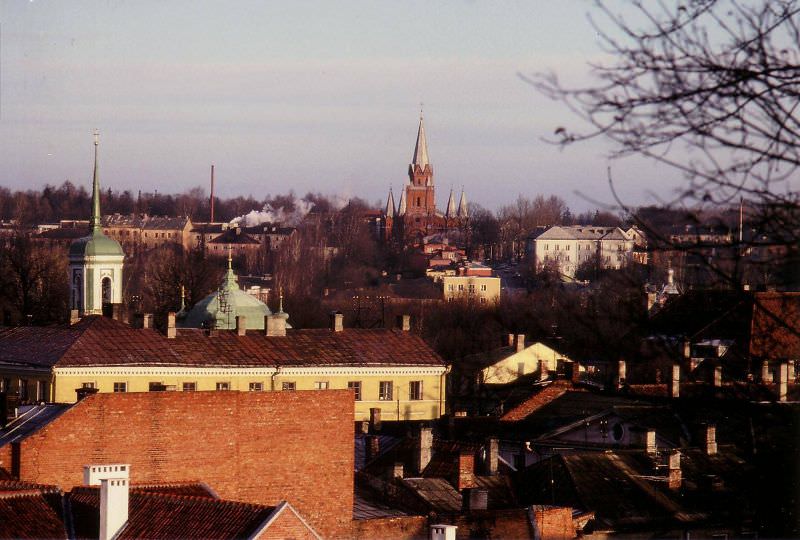
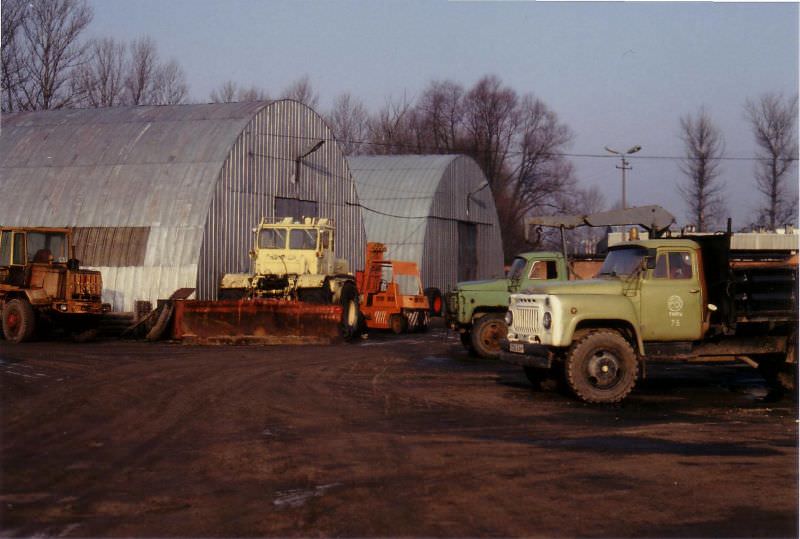
Street-level Tartu in 1992 was a city in the middle of two worlds. Soviet-era design, signage, and habits were everywhere, yet something was clearly shifting. Commerce and services were beginning to take hold in ways that the planned economy had never allowed. The share of GDP coming from trade and services would grow steadily throughout the decade, eventually overtaking the industrial and agricultural sectors that had defined the Soviet-era economy.
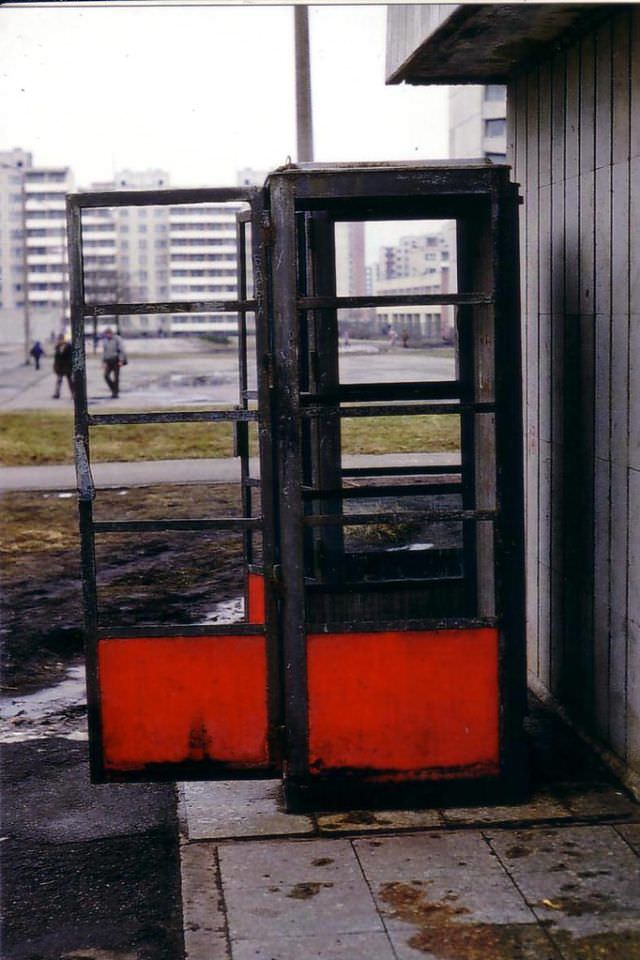
Telecommunications infrastructure was one of the critical systems Estonia needed to modernize as it moved away from the Soviet model. In 1992, the equipment and networks in use were largely inherited from the USSR — outdated by Western standards and ill-suited to a country now looking to integrate with European markets. Upgrading this infrastructure would become one of Estonia’s priorities as the economy stabilized in the mid-1990s and growth resumed.





I find this interesting. I’m not sure what I would have expected, but it seems pretty standard in general. There are a few pictures here that appear to have been taken in the early 1990s.
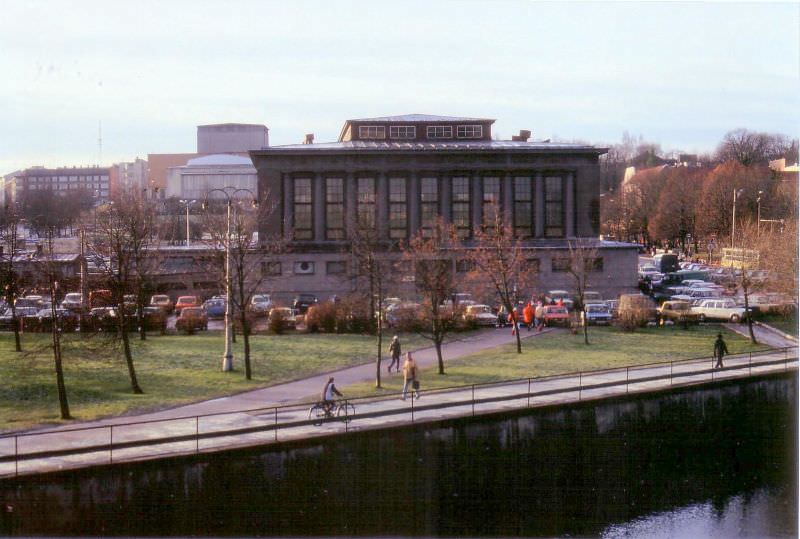
The first picture, taken from Tartu’s market building, seems to have been taken in autumn. I also have earliest memories from around the same time and place. My mother and I often walked there together. This is a very cool collection of pictures.
But let it be. Great old days
Unpopular opinion. For those who were at least 15 years old, the 90s were a good time. New horizons, freedom, etc.
The 90s weren’t good for me as a kid. My home was safe, and my family was normal, but outside the window were criminals, ugly buildings, and an aggressive environment. My “bad” has not become “good”, I just came into being when this monster was falling apart, people injecting themselves on the streets in the middle of the day, and women were raped and killed at night.
I partially agree, we’re probably about the same age. But hasn’t much of what has been described improved since then?
Life has been made better by understanding history and its perspective. It doesn’t mean, however, that I’m happy about the 90s. We won’t indulge in nostalgia under any circumstances. Those nostalgic for the 90s and the USSR can visit PTS.
Just after restoration of independence.
We were never legally part of the Soviet Union, but illegally occupied by it.
Good now I have crippling depression
restoration of independance
So fascinate much wow!
Valga on ikka sama pommiauk?
Reklaame on rohkem kui pilte sellel lehel.
The description kinda downplays what the soviets did. Before WW2 Estonia was on par with Finland for example in terms of economy and life standards. All the formerly occupied states have had to work much harder the past 30 years than others, to reach the current state of living standards for their people. Let’s not forget that tens of thousands of Estonians got resettled to Siberia, sent to Gulags or just killed during the occupation. These were mostly the most intelligent and industrious people.
Not to mention what the occupation did architecturally and demographically. For example, Narva, once a unique Northern baroque city, was bombed by the soviets during WW2 and during the occupation, former Estonian inhabitants were forbidden to return. Instead of rebuilding it, the soviets leveled the city and built housing for their workers that they repopulated the area with. It’s hasn’t recovered economically or demographically since.
Our independence was declared in 1918.
*restoration of independence
After independence?! What are you trying to say? We are in the after independence era – not free anymore?
This whole post is about psyops being applied.
Kas need on needsamad pildid Tartu Anne turust ja Annelinnast, mis siia umbes kord kolme kuu jooksul postitatakse?