
Egypt is one of the oldest civilized places on Earth. Its history stretches back thousands of years, and its monuments — pyramids, temples, sphinxes — still stand today as proof of what ancient Egyptians built. But beyond the famous ruins, Egypt in the late 19th century was a living, breathing world full of merchants, musicians, water carriers, farmers, and travelers. Photography captured that world in remarkable detail.
The photographs in this collection were taken mostly between the 1850s and the early 1900s. They show Egypt during a time of enormous change — when European tourists began arriving in large numbers, when the Suez Canal was opening new trade routes, and when Cairo was growing into a modern city while still holding tightly to centuries-old traditions. These images document both the ancient ruins that drew visitors from across the world and the everyday rhythms of Egyptian life that most outsiders rarely saw.

One of the strangest sights a visitor to 19th-century Egypt would encounter was the open trade in ancient mummies. By 1875, mummies were being sold openly in the streets — treated less like sacred remains and more like curiosities to be bought and shipped to collections in Europe and America. Demand from Western collectors and museums drove a brisk trade in Egyptian antiquities, and mummies were among the most sought-after items.

The Giza plateau was the single most visited destination in all of Egypt. The Great Sphinx, carved from a single mass of limestone, had stood for over 4,000 years by the time these photographs were taken. In 1850, tourists gathered around it on foot and on horseback, often posing for the camera beside its massive stone face. At that time, much of the Sphinx’s body was still buried under sand — excavations to fully expose it would not be completed until the 20th century.

By 1880, the pyramids at Giza had become a fixture in travel photography. The three main pyramids — built for Pharaohs Khufu, Khafre, and Menkaure — rose sharply from the desert plateau, their limestone surfaces stripped of the smooth white casing stones that once made them gleam in the sun. European and American tourists made the journey to stand beside them, hire local guides, and occasionally climb the outer stones.

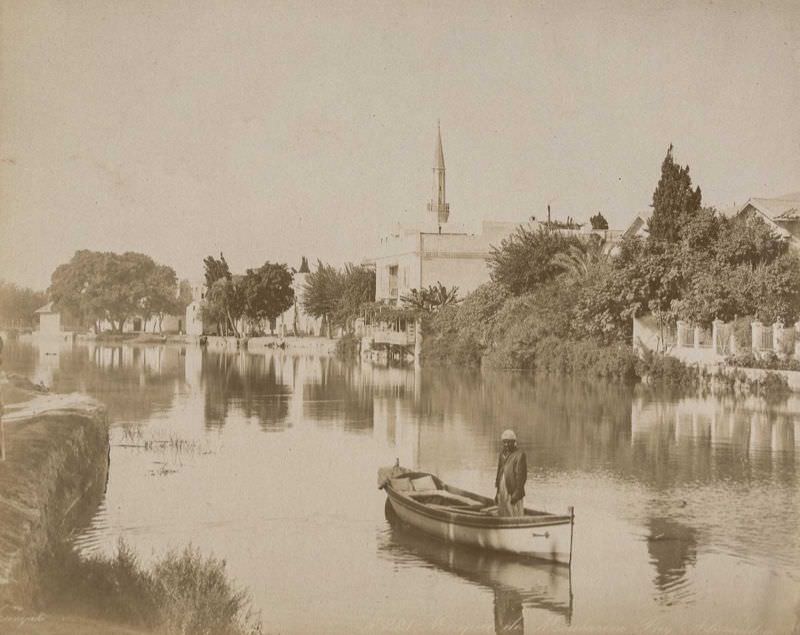
The Nile River was the backbone of Egypt. Without it, the country — surrounded on nearly all sides by desert — would not have been able to sustain its population. The river served as the primary highway for people and goods. Wooden boats loaded with crops, pottery, straw, and passengers moved steadily along its surface. Camels and donkeys handled overland transport, and the combination of river and animal-powered travel defined movement across the country.


Cairo in the late 19th century was a city of contrasts. Traditional neighborhood barber shops sat alongside newly built hotels catering to European tourists. As Egypt’s tourism industry grew, the infrastructure around it grew too. Hotels, restaurants, and guides multiplied to meet demand, creating an economy layered on top of the ancient one that had always existed.


Along the Nile’s banks, commerce never stopped. Boats loaded with trodden straw — used as animal feed — pulled up to the shore and unloaded their cargo by hand. The Kasr-el-Nil bridge connected Cairo’s city center to Gezira Island, and the view downstream from it showed a river dense with traffic: sailboats, flat-bottomed barges, and smaller vessels weaving between each other.

The Fellahin were Egypt’s rural farming class, the people who worked the land along the Nile Delta and the river’s banks. Fellah women managed much of daily domestic and agricultural life. They carried water, tended crops, raised children, and often sold goods at local markets. Their clothing was practical — long robes in dark or earthy colors, often with fabric wrapped around the head for shade against the relentless sun.


Food culture in Egypt was rich and communal. Shared meals were a central part of social life, and markets and street vendors provided a constant supply of bread, legumes, roasted meats, and sweets. Meanwhile, the Great Sphinx loomed over the Giza plateau as it had for millennia — photographed from every angle by visitors who could barely believe they were standing in front of something so old.

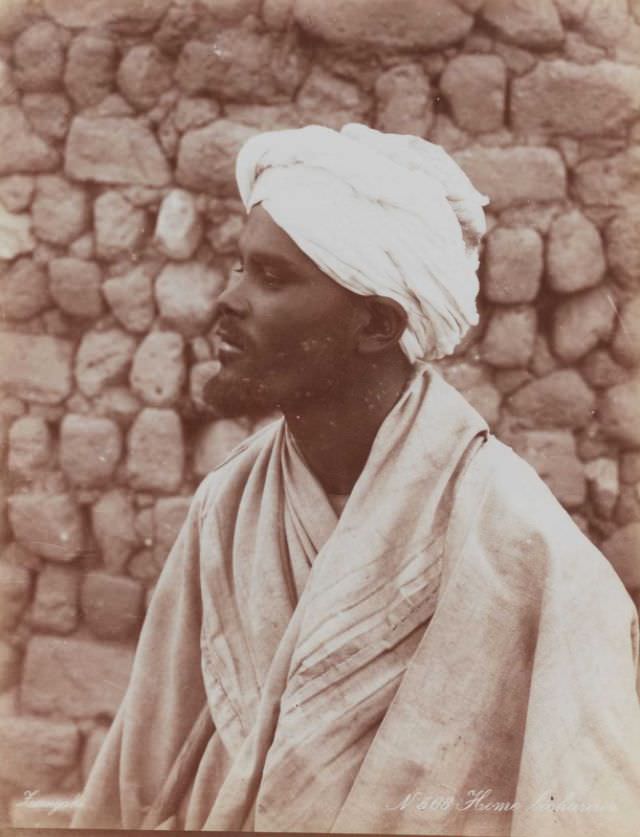
Egypt’s population in the 19th century was not uniform. The country sat at the crossroads of Africa, the Middle East, and the Mediterranean, and its cities reflected that. Sudanese communities, Nubian workers, Bedouin traders, Turkish administrators, and European expatriates all shared space in Cairo and along the Nile. Egypt under Khedive rule had strong ties to Sudan, and Sudanese men frequently served in the Egyptian military and civilian workforce.


Luxor, located about 500 kilometers south of Cairo along the Nile, was home to some of Egypt’s most impressive ancient structures. The colossal statues of Ramesses II guarded the entrance to Luxor Temple, still towering and intact despite thousands of years of exposure. On the roads nearby and throughout the country, donkeys were the everyday working animal — used by men, women, and children to carry loads and cover distances that would otherwise require hours on foot.


Women participated actively in Egypt’s marketplace economy. Merchant women sold food, textiles, and household goods at local markets. At Mit Rahine, the ancient site of Memphis — Egypt’s first capital — a massive fallen statue of Ramesses II lay preserved in a pit, one of the best-surviving colossal statues in the country.


Street food was everywhere in 19th-century Egypt. Mobile vendors set up portable kitchens and served hot meals to workers, passersby, and market crowds. At the other end of the social scale sat establishments like Shepheard’s Hotel in Cairo, which catered to wealthy European visitors with elaborately decorated dining rooms in the Moorish style. The contrast between street-level eating and the luxury hotel experience was one of the defining features of Cairo at the time.


Music was woven into Egyptian social and religious life. Musicians played at weddings, festivals, and public gatherings, often using traditional stringed instruments passed down through generations. Cairo’s mosques were the spiritual center of the city. Five times a day, the call to prayer echoed from their minarets, and worshippers gathered in the courtyards and prayer halls. Religion structured daily time and public space in ways that shaped every aspect of city life.


The pyramids drew a constant flow of visitors — locals and foreigners alike. Photographs from the period show people standing, sitting, and climbing on the ancient stones with a freedom that would be unthinkable today. Public festivals brought Egyptians together in celebration, with music, processions, and communal feasts marking religious and seasonal events throughout the year.


The Temple of Amun at Karnak in Luxor was one of the largest religious complexes ever built. Its gateway pylons, carved with images of pharaohs and gods, still stood in remarkable condition in the 19th century. Elsewhere in the country, children traveled on horse-drawn wagons — a common sight on the roads connecting towns and villages along the Nile.


Palm trees were a constant feature of the Egyptian landscape, providing shade in a country where the sun was merciless. People gathered beneath them to rest, talk, and trade. Along the Nile’s banks, camels were led down to the water — both to drink and to be loaded with goods for overland journeys through the desert regions where boats could not go.


The island of Philae, located near Aswan in southern Egypt, held one of the most beautifully preserved temple complexes in the country — dedicated primarily to the goddess Isis. The temples were built during the Ptolemaic period and were still standing above water when these photographs were taken. Donkey carts on the roads between settlements remained the primary method of hauling goods short distances across the country.


Port Said, at the northern entrance of the Suez Canal, was a major hub of international shipping in the late 19th century. After the canal opened in 1869, ships from Europe, Asia, and Africa passed through it constantly, making Port Said one of the busiest ports in the world. Further south, along the Nile, more traditional trade continued — pottery and other goods loaded onto flat-bottomed boats and shipped between villages and cities.


Luxor Temple’s interior held seated statues of Ramesses II, partially buried in the accumulated debris of centuries. Excavations in the 19th century were slowly revealing how much had been preserved beneath the sand. Back in Cairo, Shepheard’s Hotel on Ezbekieh Square was the most famous hotel in Egypt — a place where diplomats, writers, explorers, and aristocrats all passed through. Its terrace was known as one of the best spots in Cairo to watch the city go by.


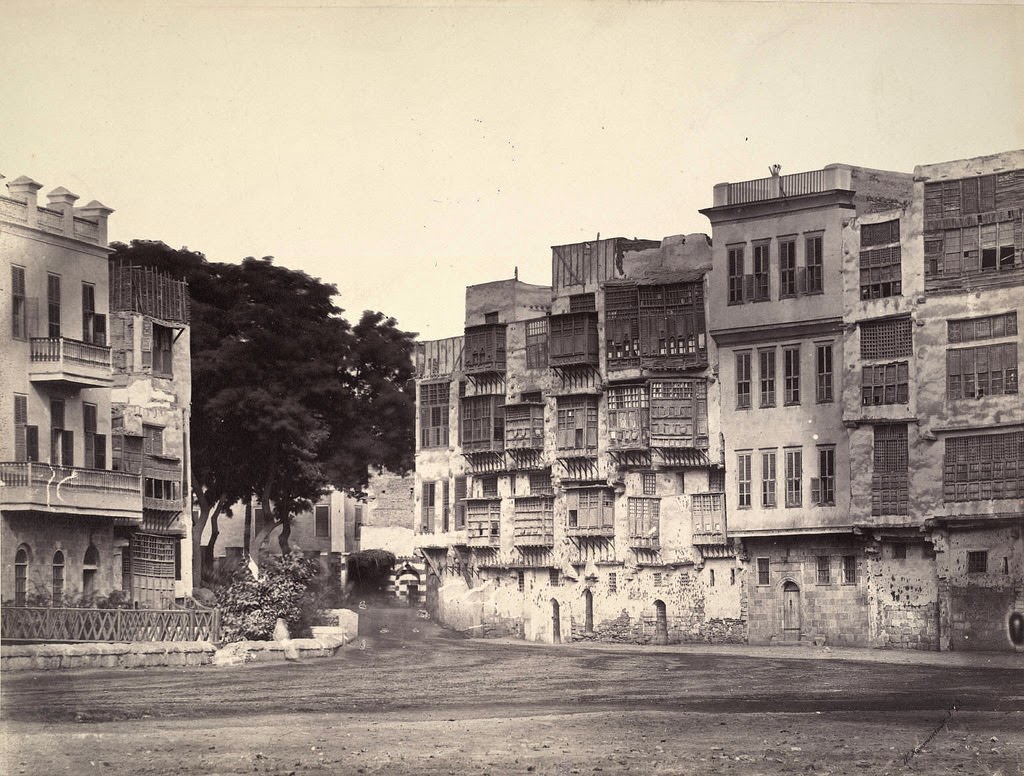
Snake charmers were a fixture in Egyptian street performance culture, drawing crowds in marketplaces and public squares. They played a simple flute-like instrument while a cobra rose from a basket — a performance that became one of the most iconic images foreigners associated with Egypt. Cairo’s streets were narrow, winding, and always busy — lined with workshops, stalls, and homes stacked closely together, their mashrabiyya lattice windows jutting out over the lanes below.


The Great Hypostyle Hall at Karnak Temple was one of the most awe-inspiring spaces in ancient Egypt. Built during the reigns of Seti I and Ramesses II, it contained 134 massive stone columns arranged in 16 rows. Walking through it in the 19th century, with sand still covering much of the floor and debris scattered among the columns, gave visitors a raw and unrestored view of ancient grandeur.


No monument in Egypt was photographed more obsessively than the Great Sphinx. Photographers captured it from every direction — from the front, the side, and from above. Each image revealed something different: the scale of its face, the depth of the sand surrounding it, and the relationship between the Sphinx and the pyramid of Khafre rising directly behind it.


In Cairo, young boys who rented out and led donkeys for tourists were known as “donkey boys.” They were a well-known part of the city’s street life — persistent, energetic, and skilled at navigating the crowded lanes. They became a common subject for photographers documenting Cairo’s working class. Far to the south, the Karnak Temple Complex stretched across 100 hectares of land, making it the largest ancient religious site in the world.


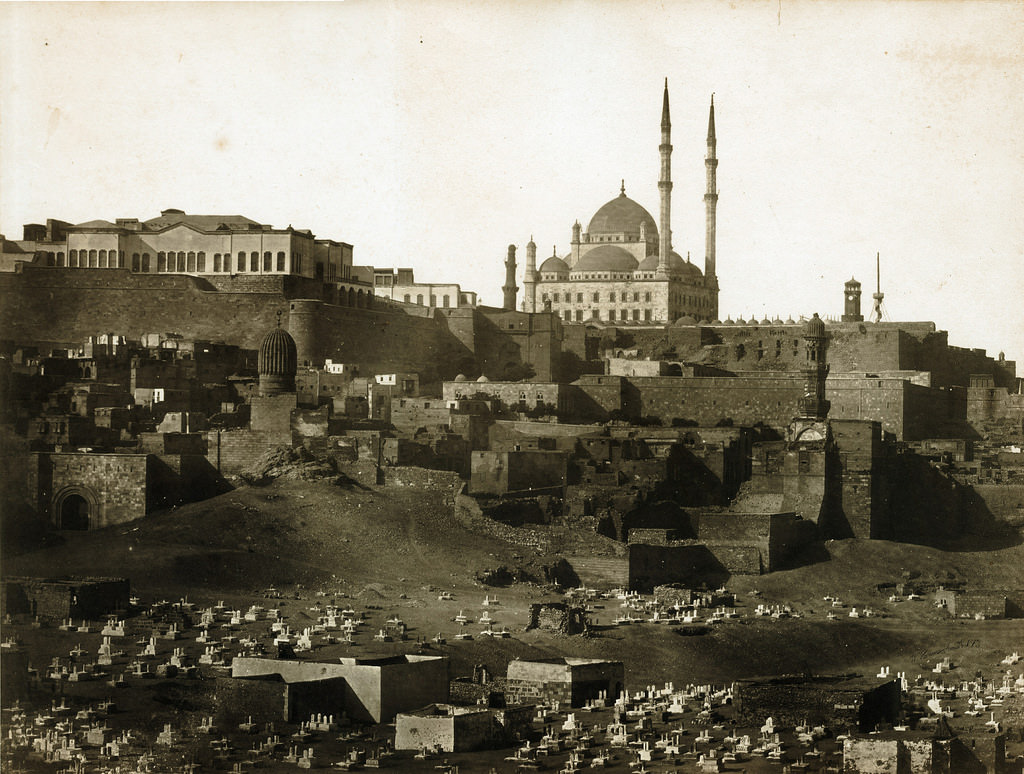
The Saladin Citadel dominated Cairo’s skyline from its position on the Mokattam Hills. Built in the 12th century by the Kurdish sultan Saladin, it served as Egypt’s seat of government for centuries. By the 19th century, it was still an active military and administrative center, and the Mohammed Ali Mosque — built inside the Citadel between 1830 and 1848 — had become one of the most recognizable landmarks in all of Cairo.


The Temple of Kom Ombo sat directly on the bank of the Nile, about 50 kilometers north of Aswan. Dedicated to two gods — Sobek, the crocodile god, and Horus the Elder — the temple was unusual for its perfectly symmetrical double design. European tourists made a point of stopping there during Nile cruises, and the Sphinx continued to pull individual visitors who posed beside it for portraits that they would bring home as proof of their journey.


Climbing the pyramids was a popular activity for 19th-century tourists, and it required real physical effort. The outer blocks of the Great Pyramid of Khufu were each several feet tall, and reaching the summit meant scrambling up hundreds of them. Local men hired themselves out as guides and assistants, helping tourists up and down for a fee. The practice was entirely unregulated and very common.


The turban was the most common head covering worn by Egyptian men across all classes and professions in the 19th century, with color and style often indicating regional origin or religious identity. Water carriers were among the most essential workers in Cairo and other cities. Before modern plumbing, they filled large clay or goatskin vessels at the Nile or public fountains and delivered water door to door. They were a constant presence in every neighborhood.


Sugar cane was one of Egypt’s important agricultural products. Women and children processed it by hand — stripping and cutting the stalks before pressing them for juice. It was labor-intensive work done in the open, often in family groups. Women also traveled on donkeys across the country, using the animals as their main means of personal transport, particularly in rural areas.


Dragomans were professional guides and interpreters who worked with European travelers throughout Egypt and the Middle East. They negotiated prices, arranged transport, and translated Arabic for tourists who couldn’t manage on their own. A dragoman sleeping on his camel — his “ship of the desert” — was a familiar image along the routes between monuments and cities. They were indispensable to the growing tourist trade.

The Bisharin were a Beja people who inhabited the desert regions between the Nile and the Red Sea, as well as areas around Wady Halfa near the Sudanese border. They were nomadic, raising camels and goats in one of the harshest environments on Earth. Alexandria, Egypt’s main Mediterranean port city, offered a completely different scene — a cosmopolitan waterfront with European-style architecture lining the harbor.
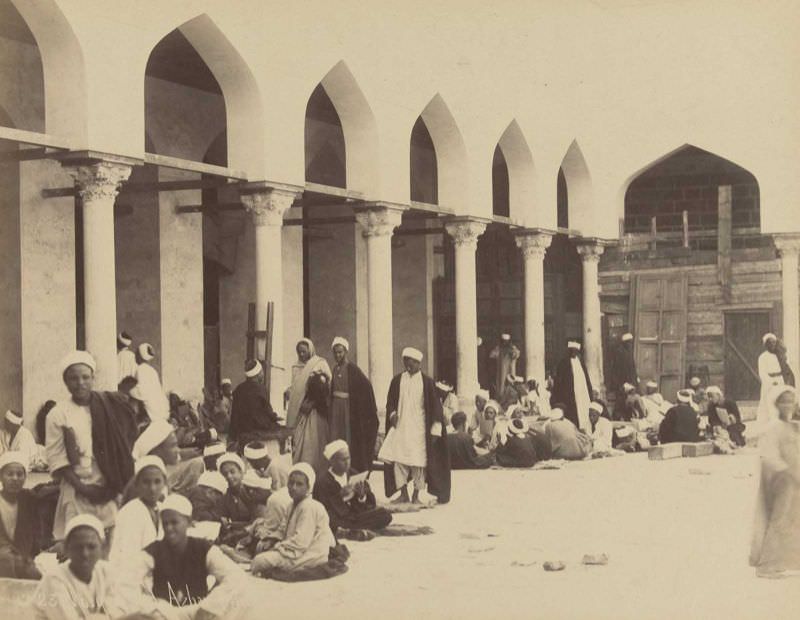
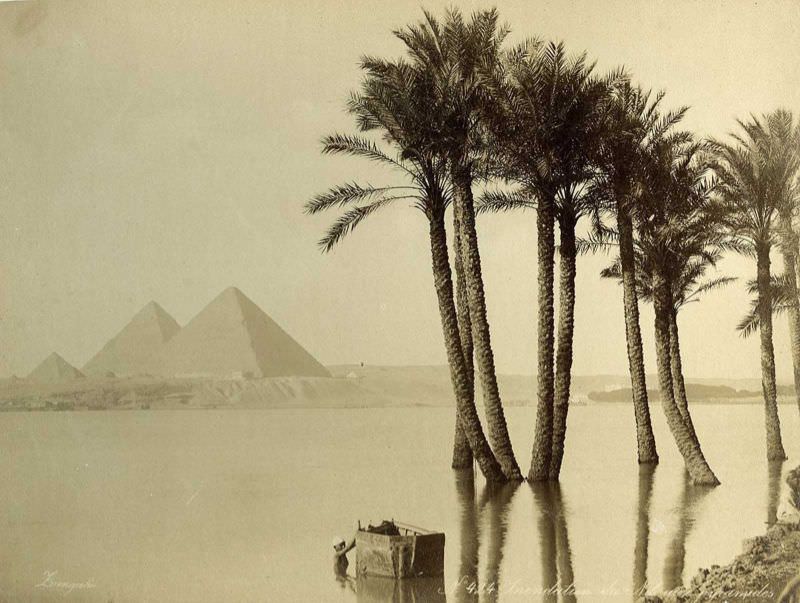
Al-Azhar Mosque in Cairo, founded in 970 AD, was one of the oldest universities in the world. Students gathered in its columned halls to study Islamic theology, law, grammar, and rhetoric — sitting in circles on the floor around their teachers in a tradition that had continued for nearly a thousand years. Every year, the Nile flooded its banks — a predictable seasonal event that deposited rich silt onto the surrounding farmland, making Egyptian agriculture some of the most productive in the world.
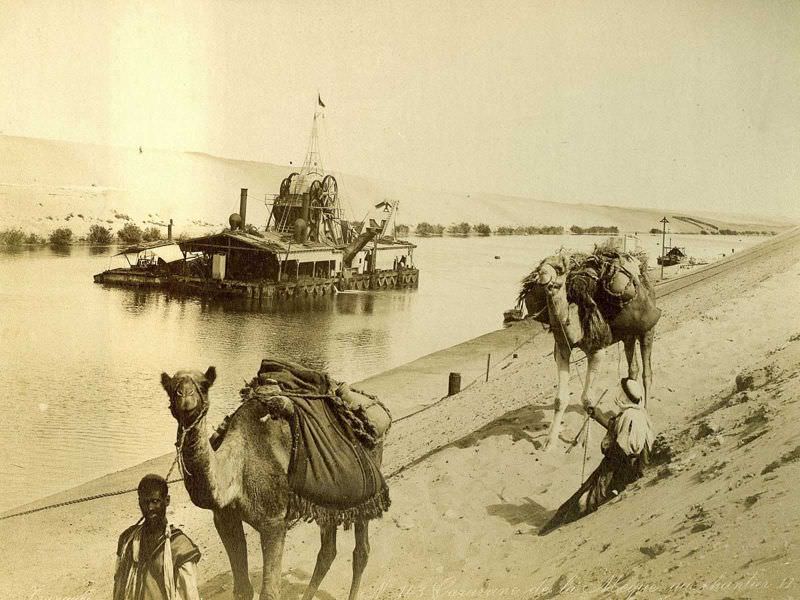
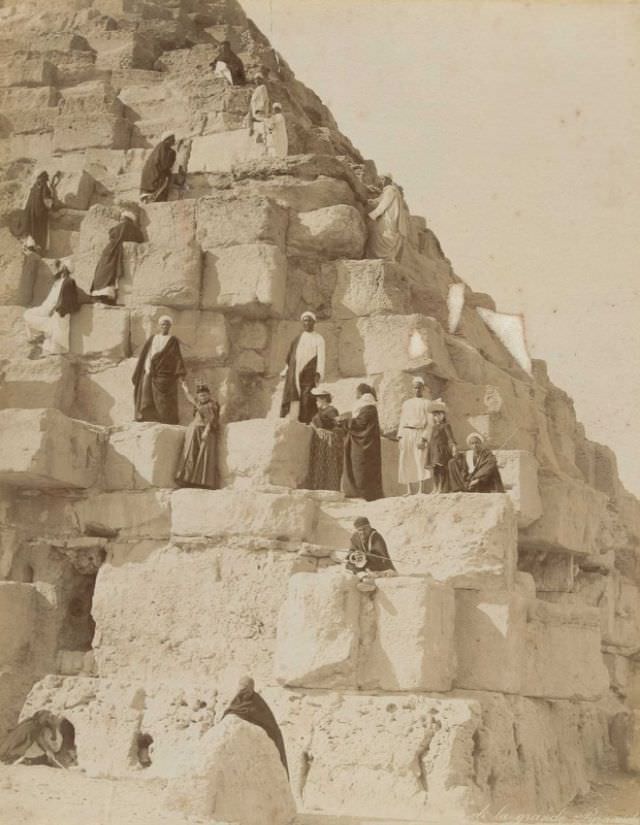
The Suez Canal, completed in 1869, required constant maintenance. Dredging barges worked to keep the channel clear, and caravans of camels passed nearby on ancient trade routes that had been in use long before the canal existed. The meeting of old and new was a defining image of Egypt in this period — camel trains beside steamships, local guides leading Europeans up monuments built 4,000 years earlier.
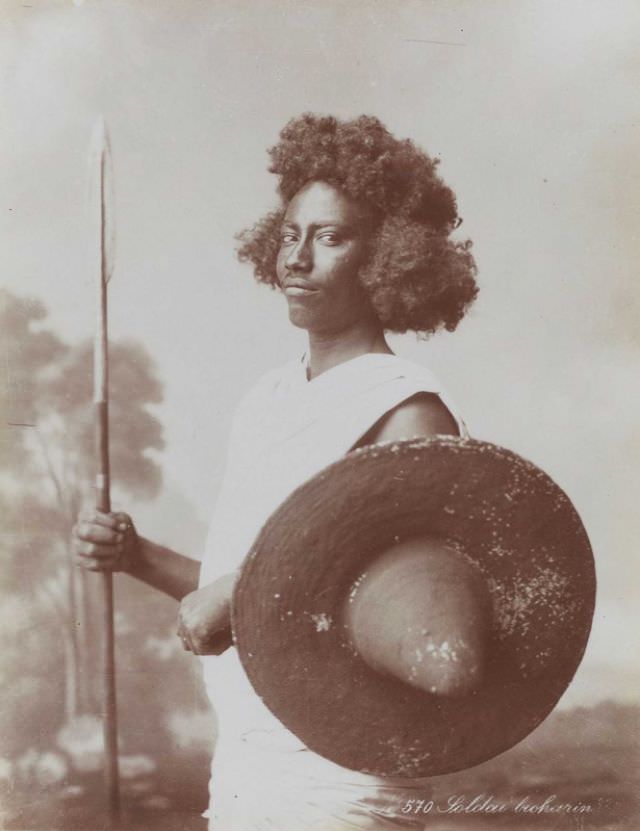
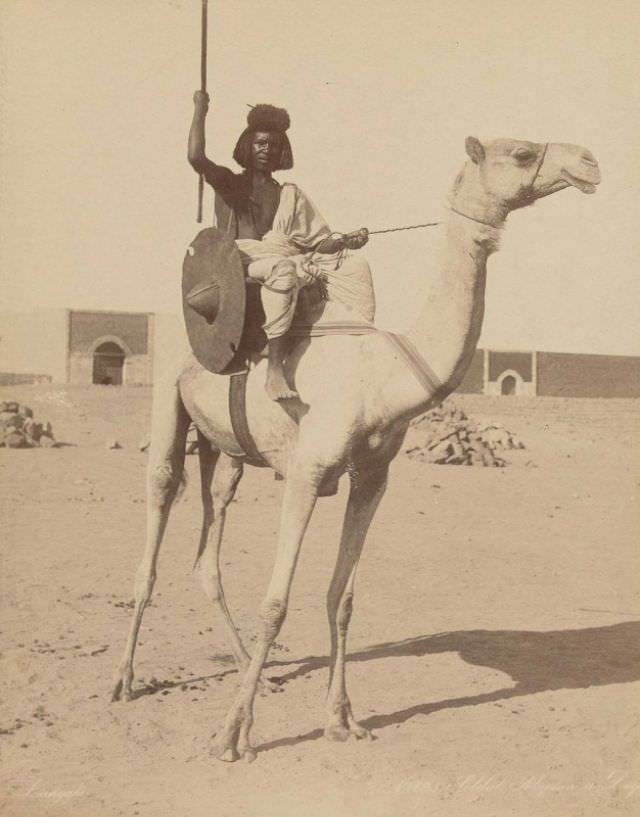
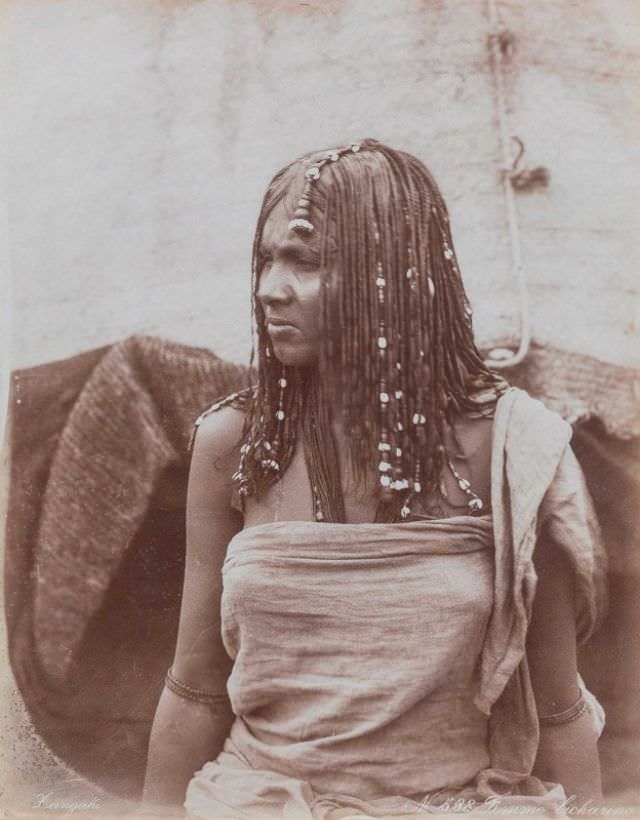
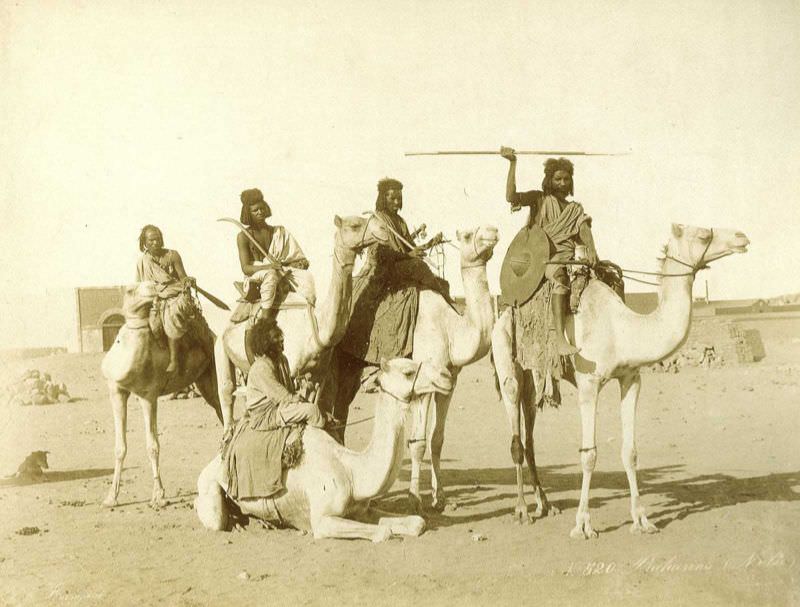
The Bicharin (also spelled Bisharin) were a formidable desert people. Their soldiers were skilled camel riders who served in military and auxiliary roles. Photographs from the period document their distinct appearance — the men wearing their hair in large rounded afros, carrying spears and shields, and moving through the desert on camels with ease. Bicharin women and men were photographed with the same documentary interest that Western photographers applied to most non-European peoples they encountered during this era.
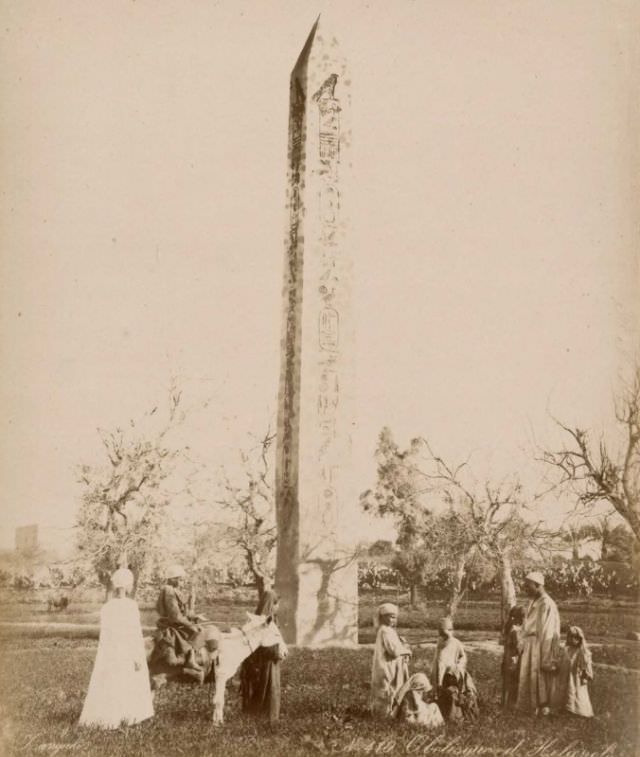
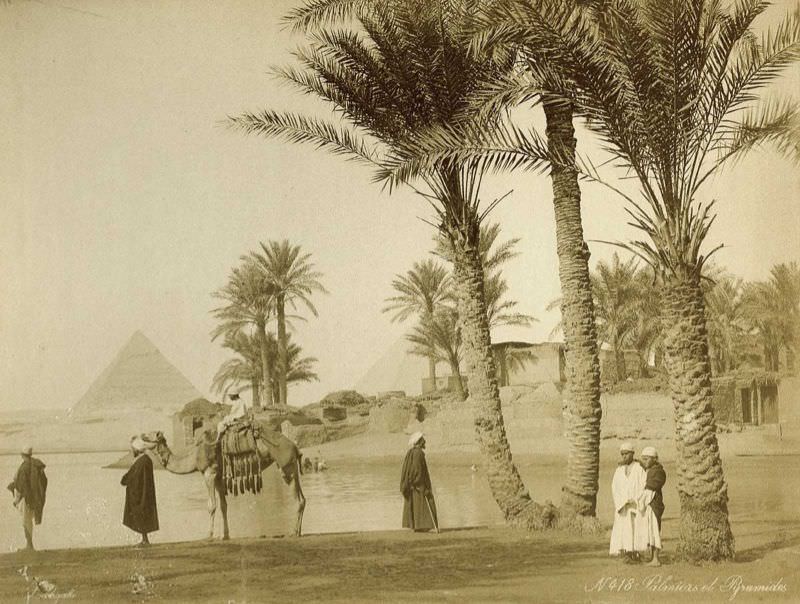
The Obelisk of Heliopolis — also known as the Obelisk of Senusret I — was one of the oldest standing obelisks in Egypt, erected around 1950 BC in the ancient city of Heliopolis, near modern Cairo. By the 19th century, it stood almost alone among ruins. Near Giza, palm groves grew between the desert and the cultivated land, their fronds visible against the backdrop of the pyramids — a reminder that the Nile’s reach extended even to the edges of the plateau.
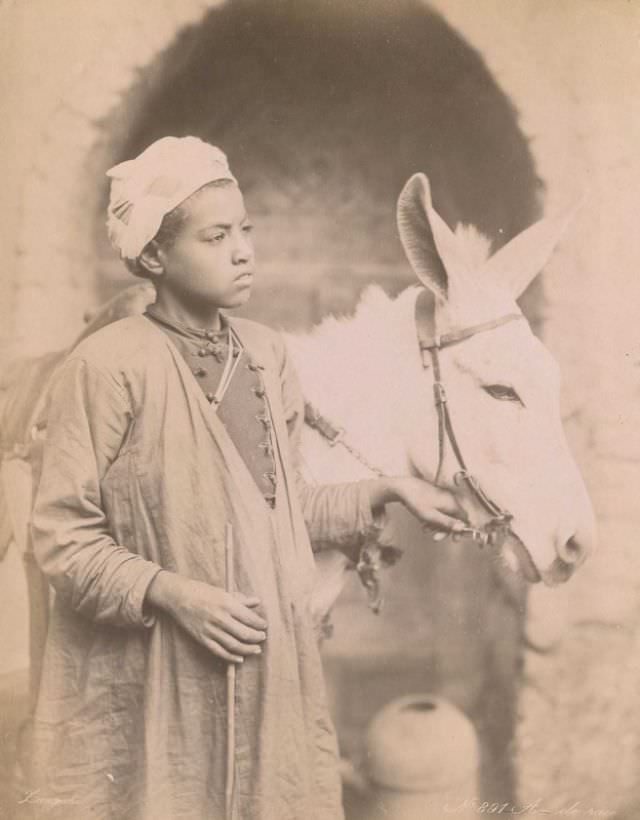
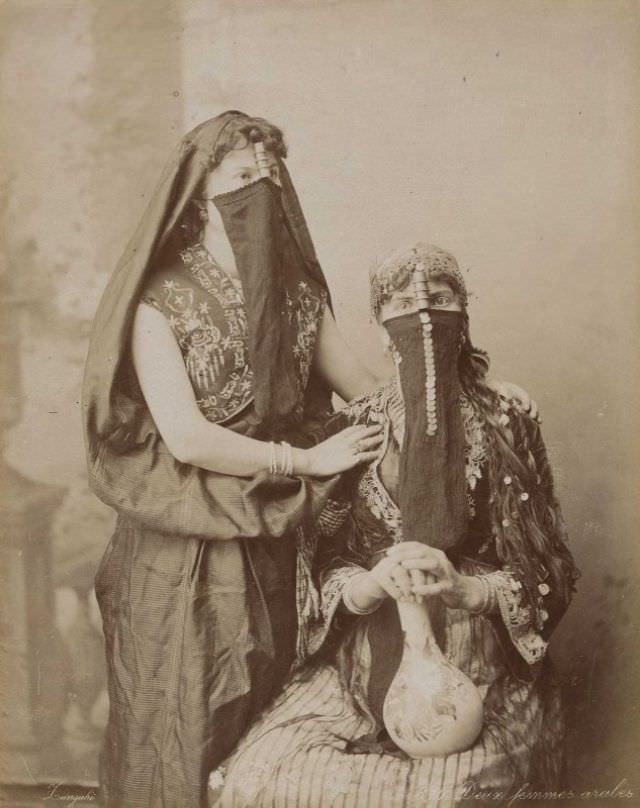
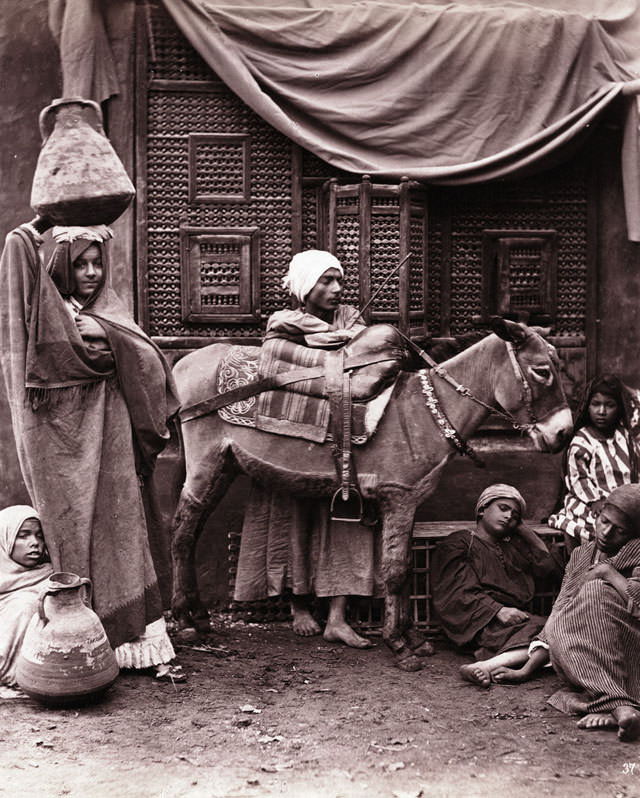
Children in rural Egypt worked alongside their families from an early age. A young boy with a donkey was a common sight — the animals were used for everything from carrying firewood to bringing goods to market. Women in 19th-century Egypt dressed according to regional tradition and religious practice, with many wearing full outer robes and face coverings in urban settings, while women in rural areas often dressed more practically for outdoor labor.
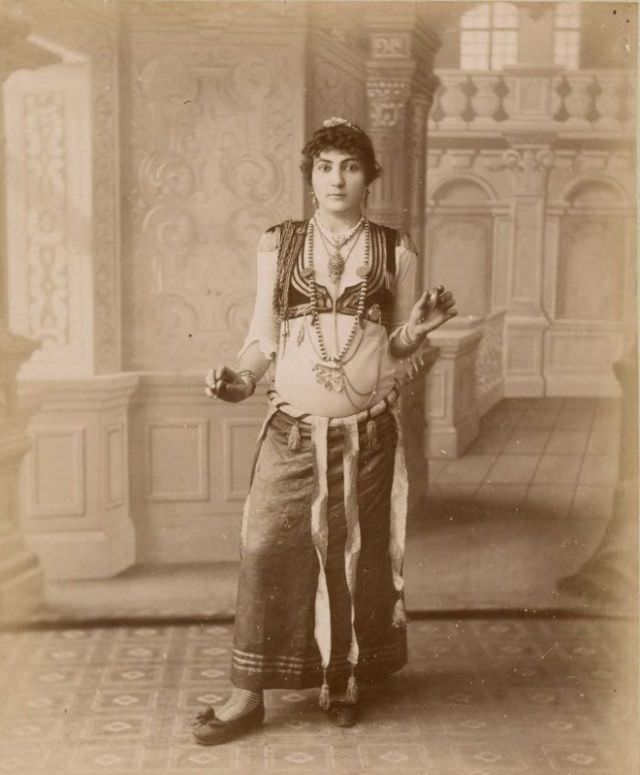
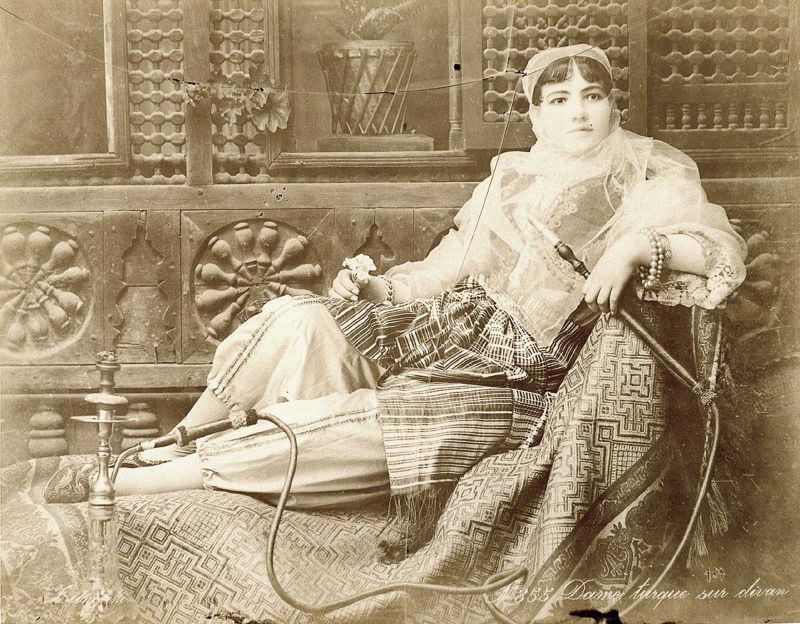
Egypt was under Ottoman Turkish political influence throughout the 19th century, and Turkish culture was visible in Cairo’s elite social circles. Turkish-style entertainment — including professional dancers — was part of upper-class gatherings. Turkish women who lived in Egypt occupied a distinct social position, often connected to the households of government officials and military officers.
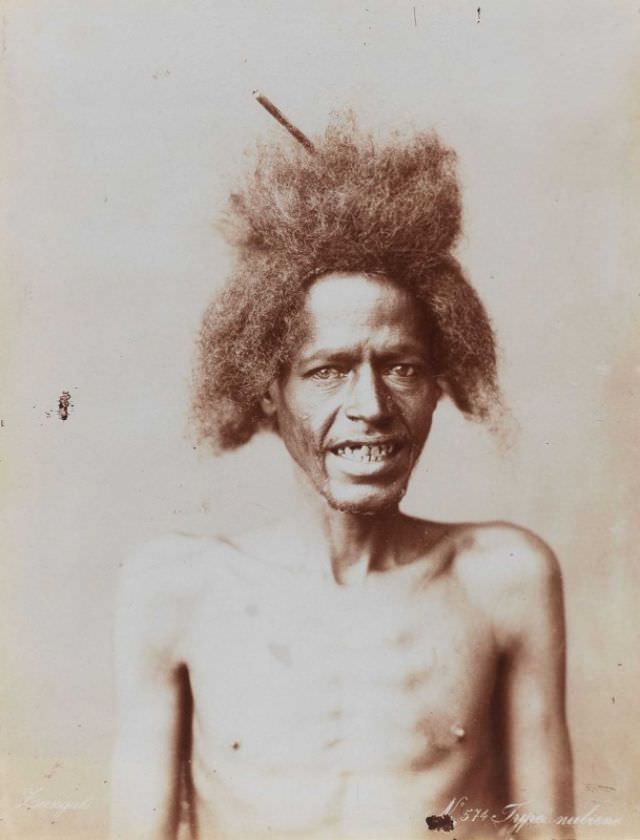
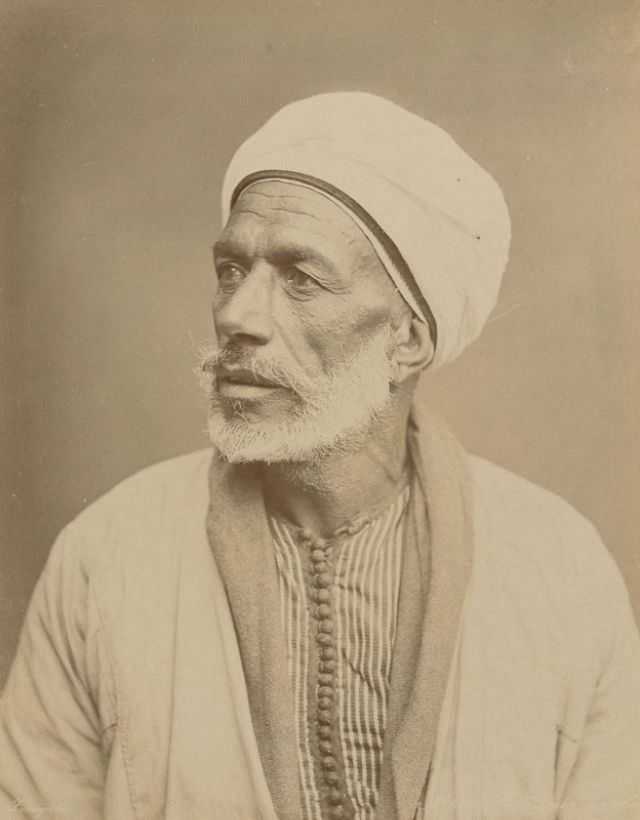
Nubian people, whose homeland stretched across the Nile Valley between southern Egypt and northern Sudan, were a distinct ethnic and cultural group. Many worked as laborers, soldiers, and domestic servants in Cairo and other cities. Education in Cairo was centered at institutions like Al-Azhar, where Arabic professors taught classical subjects to students who came from across the Islamic world.
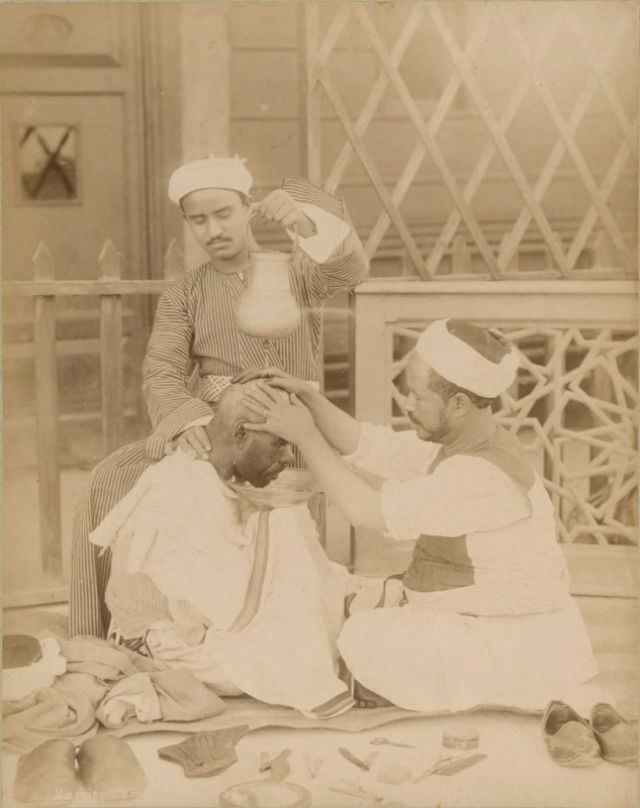
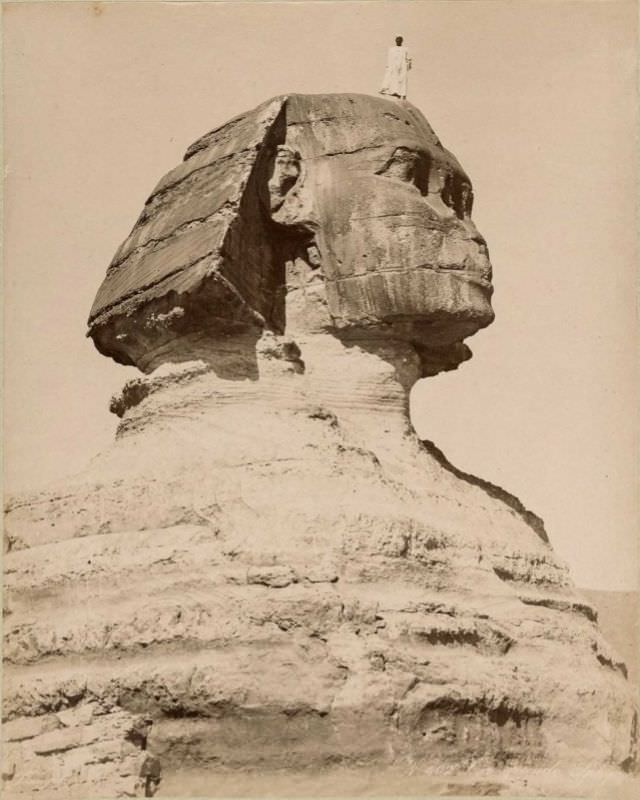
Street barbers set up outdoors in Egyptian cities and towns, trimming beards and cutting hair in the open air. The barber’s shop — or simply a stool and a cloth on a street corner — was a social gathering point where men talked and shared news. The Great Sphinx, photographed yet again from a new angle, continued to dominate any view of the Giza plateau — its face still bearing traces of the pigment that once colored it.
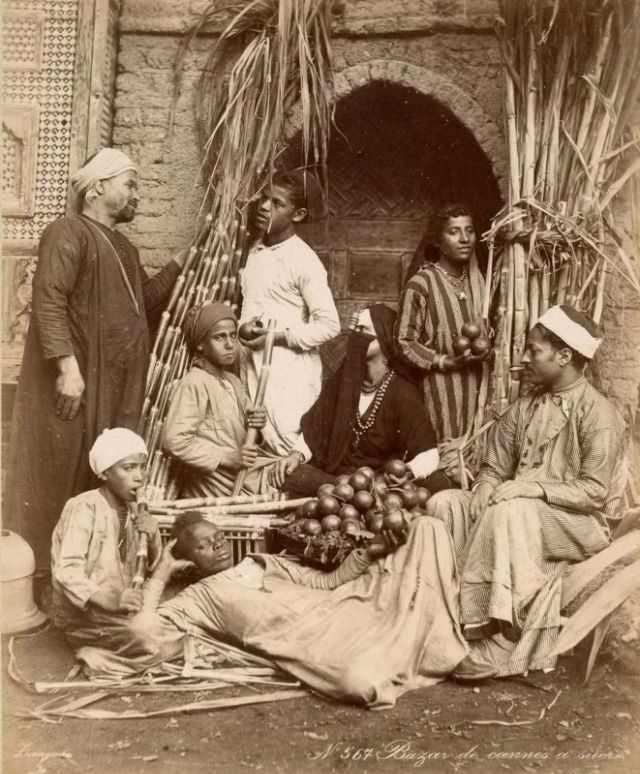
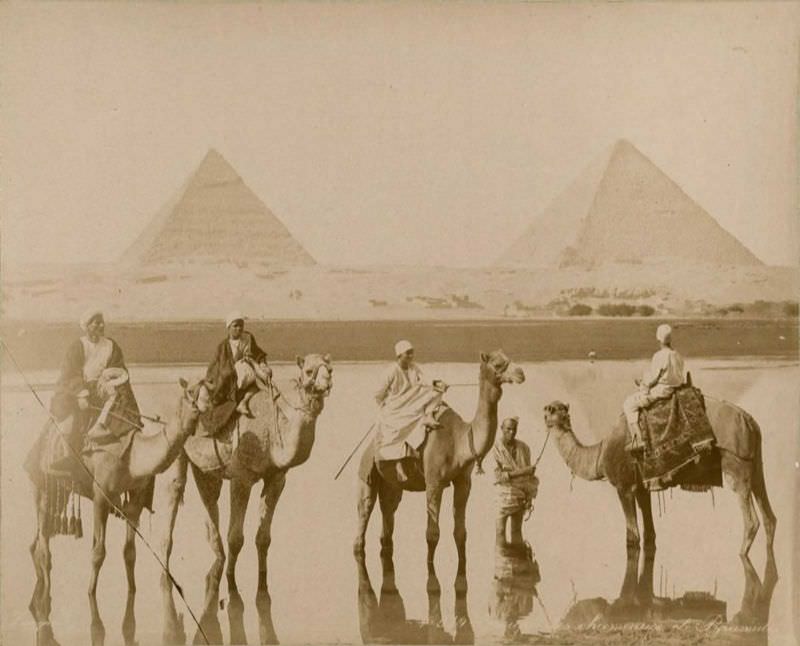
Egypt’s bazaars were dense, loud, and fragrant. Vendors sold everything from spices and textiles to metalwork and imported goods from across the Ottoman Empire and beyond. The Khan el-Khalili bazaar in Cairo was the most famous, drawing both locals and tourists. Near the pyramids, camel riders — both locals and tourists — moved across the plateau in numbers, with the monuments forming one of the most recognizable backdrops in the world.
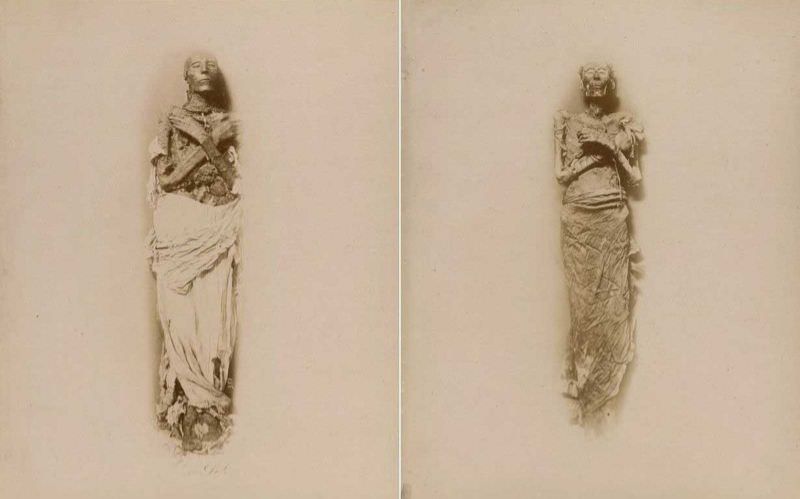
In 1881, Egyptian authorities discovered a hidden cache of royal mummies at Deir el-Bahari, near Luxor. Among them were the preserved bodies of Seti I and Ramesses II — two of ancient Egypt’s most powerful pharaohs. Seti I’s mummy was so well preserved that his facial features remained clearly visible. Ramesses II, who reigned for 66 years and lived to approximately 90 years old, was found with white hair still intact. Both were moved to Cairo for study and protection.
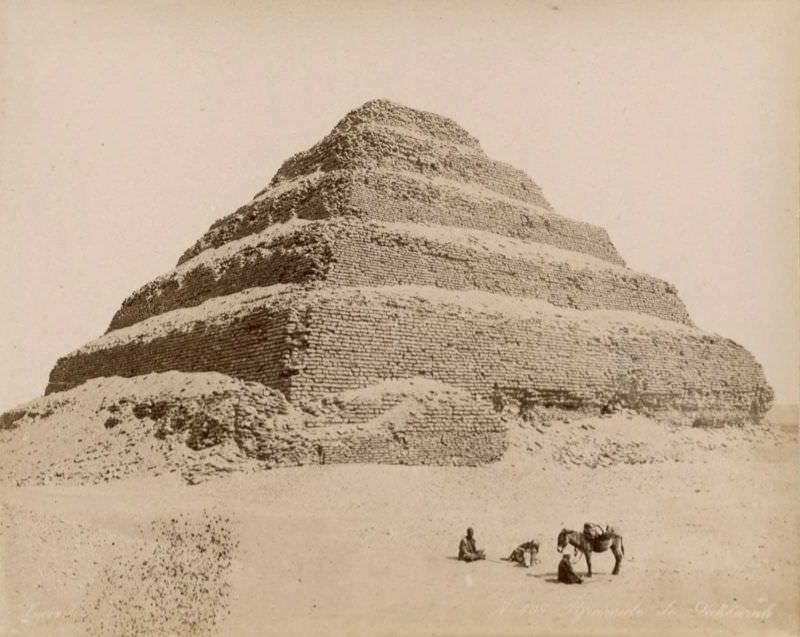
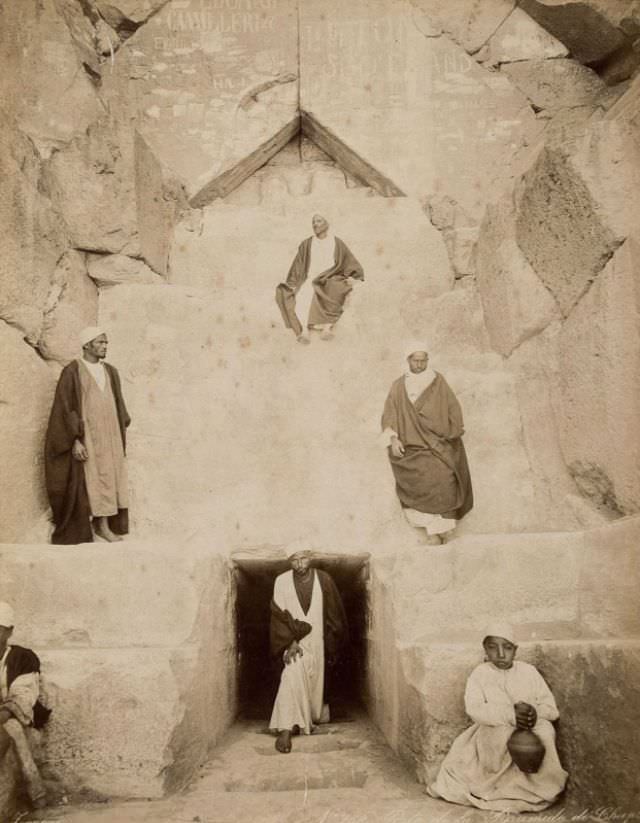
The Step Pyramid of Djoser at Saqqara was the oldest pyramid in Egypt, built around 2650 BC — nearly two centuries before the Great Pyramid at Giza. It rose in six massive steps from the desert floor and was the centerpiece of a large funerary complex. Men photographed at the entrance to the Great Pyramid of Khufu gave a clear sense of scale — the doorway itself was roughly a meter and a half tall, set into a wall of enormous limestone blocks.
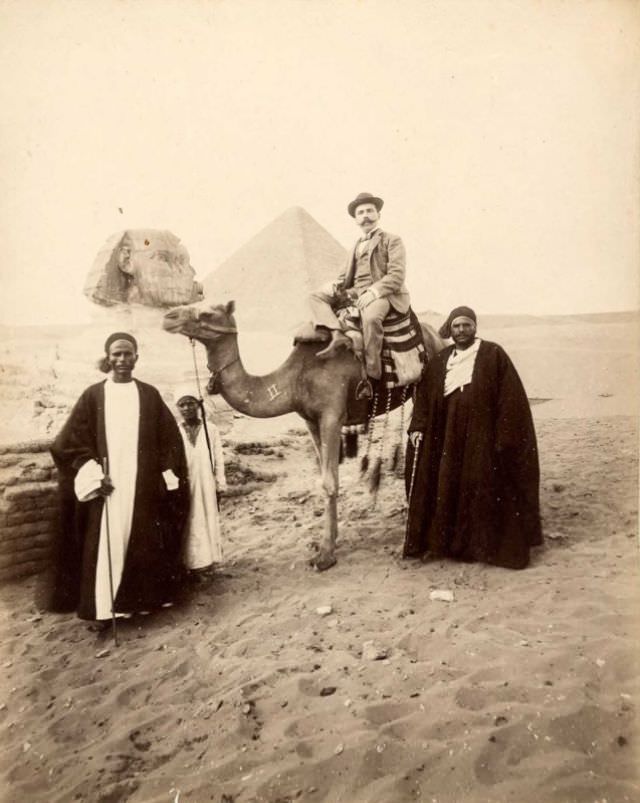
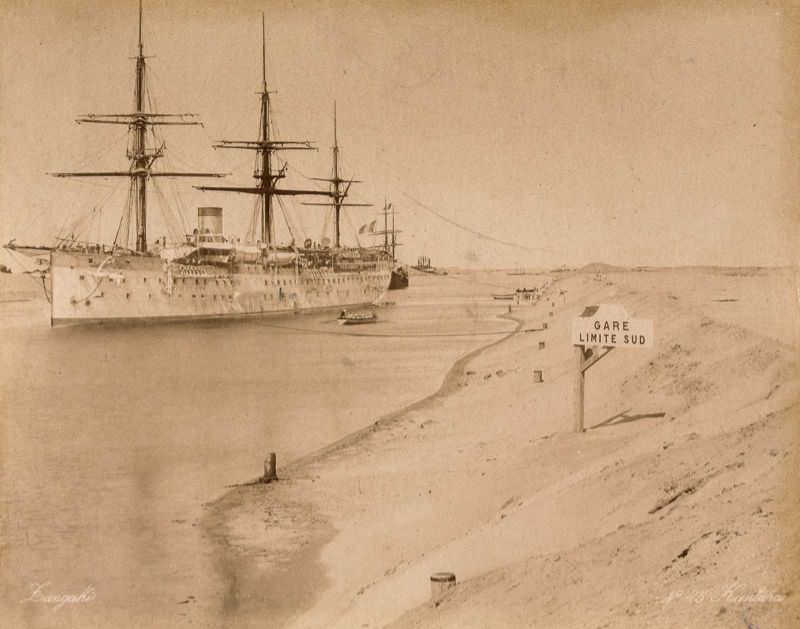
Tourist parties hired local camel guides to take them across the plateau and out into the desert beyond the pyramids. It was one of the standard experiences sold to visitors and made for striking photographs. The Suez Canal, meanwhile, was a marvel of 19th-century engineering — cutting 193 kilometers through Egyptian sand to connect the Mediterranean to the Red Sea and cutting weeks off the journey between Europe and Asia.
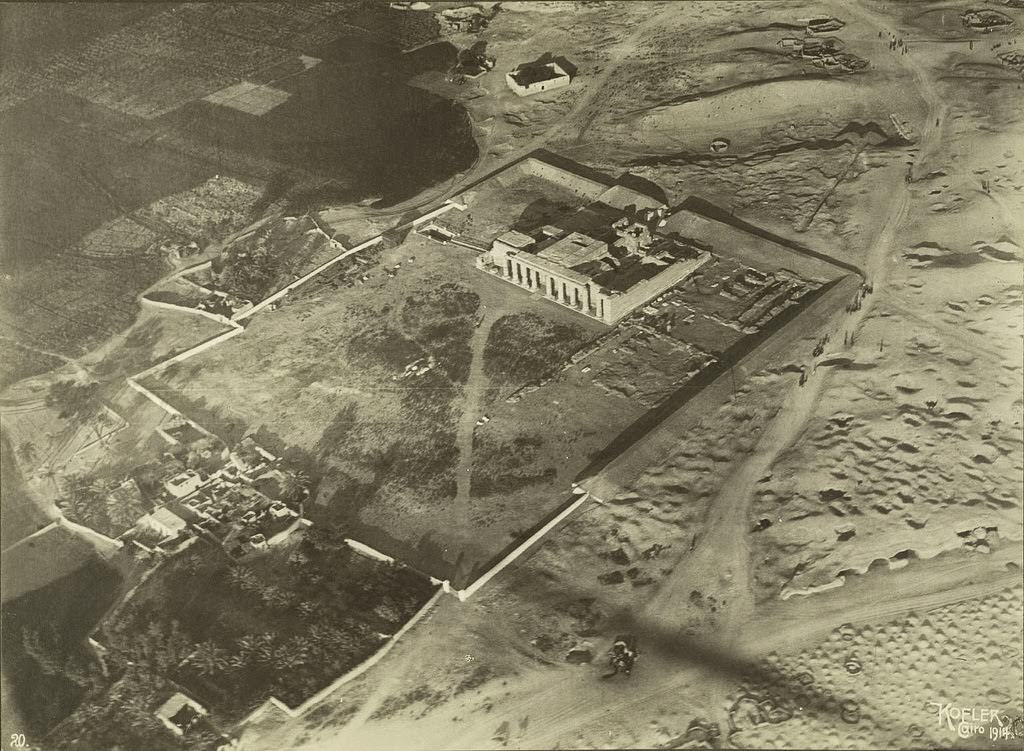
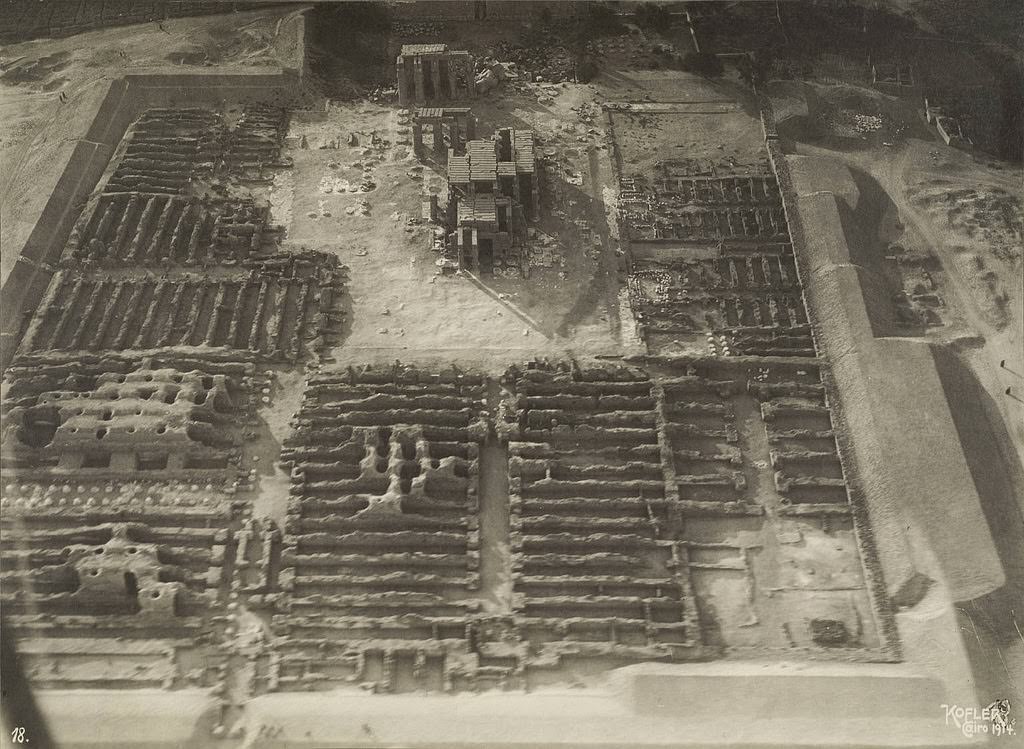
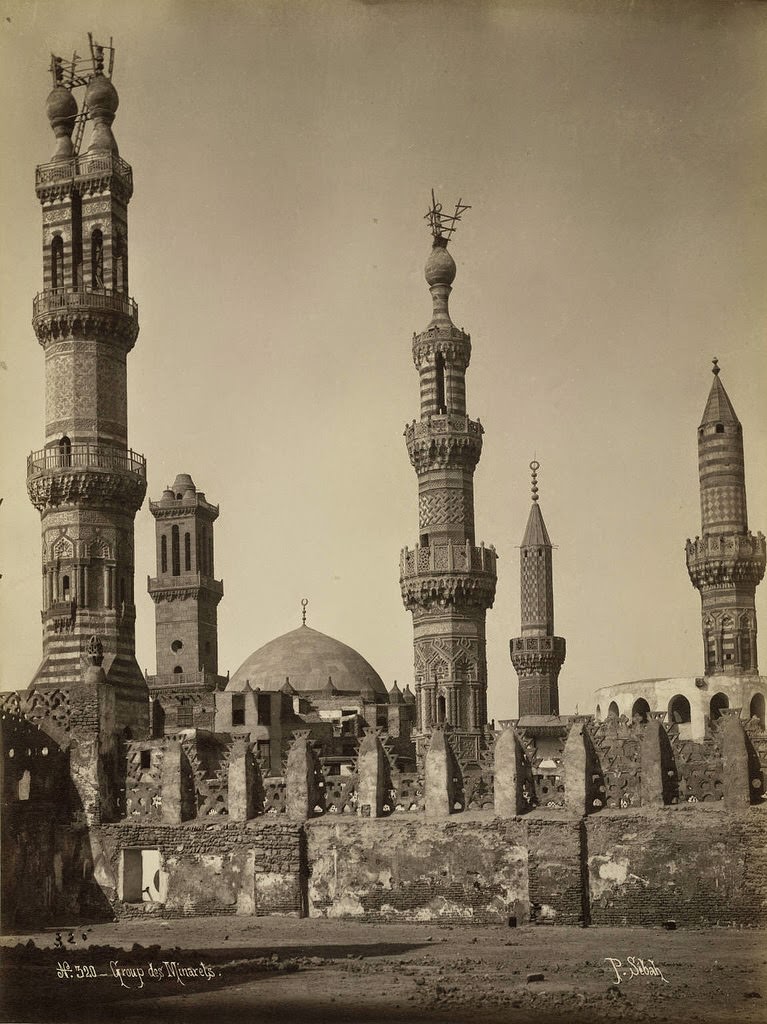
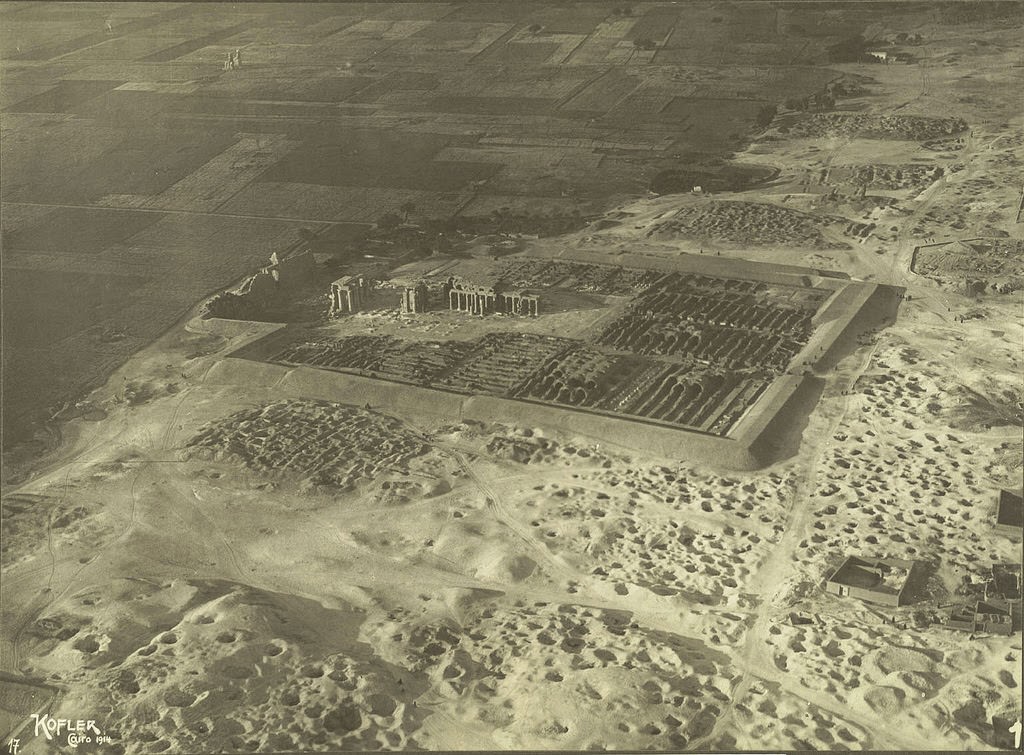
Egypt’s temple complexes — built over centuries by multiple pharaohs who each added to what came before — were vast accumulations of halls, pylons, obelisks, and sanctuaries. By 1914, ongoing excavations were steadily uncovering new sections. Cairo’s skyline, photographed in 1865, was defined not by ancient monuments but by Islamic architecture — the minarets of dozens of mosques rising above the rooftops in every direction.
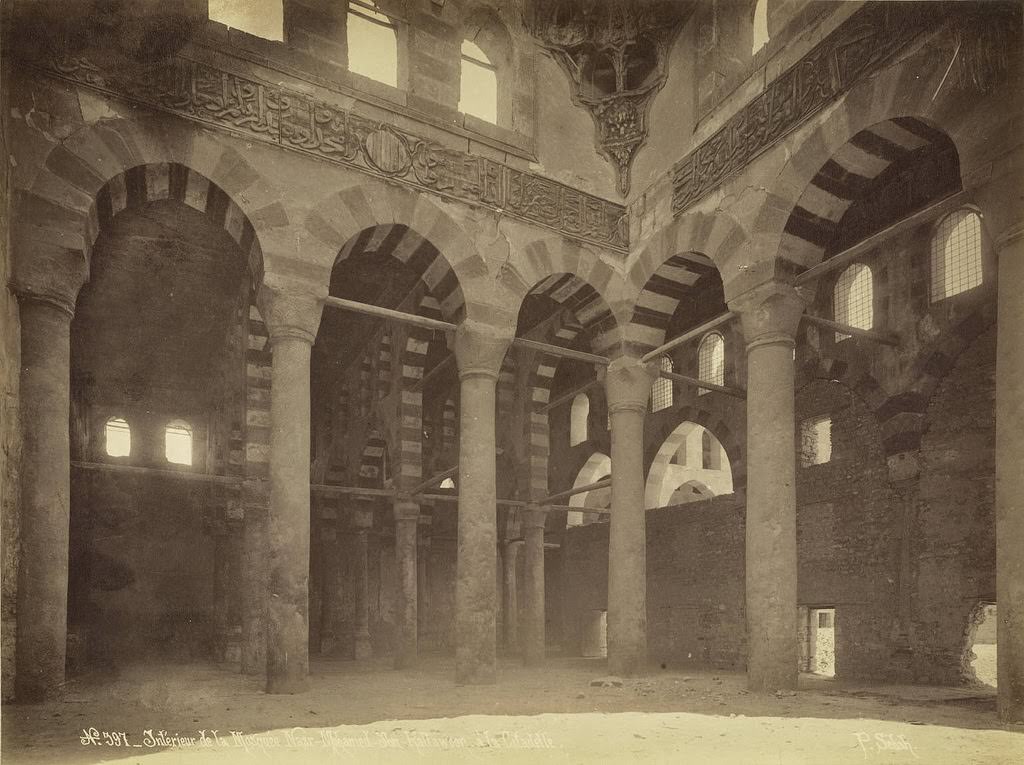
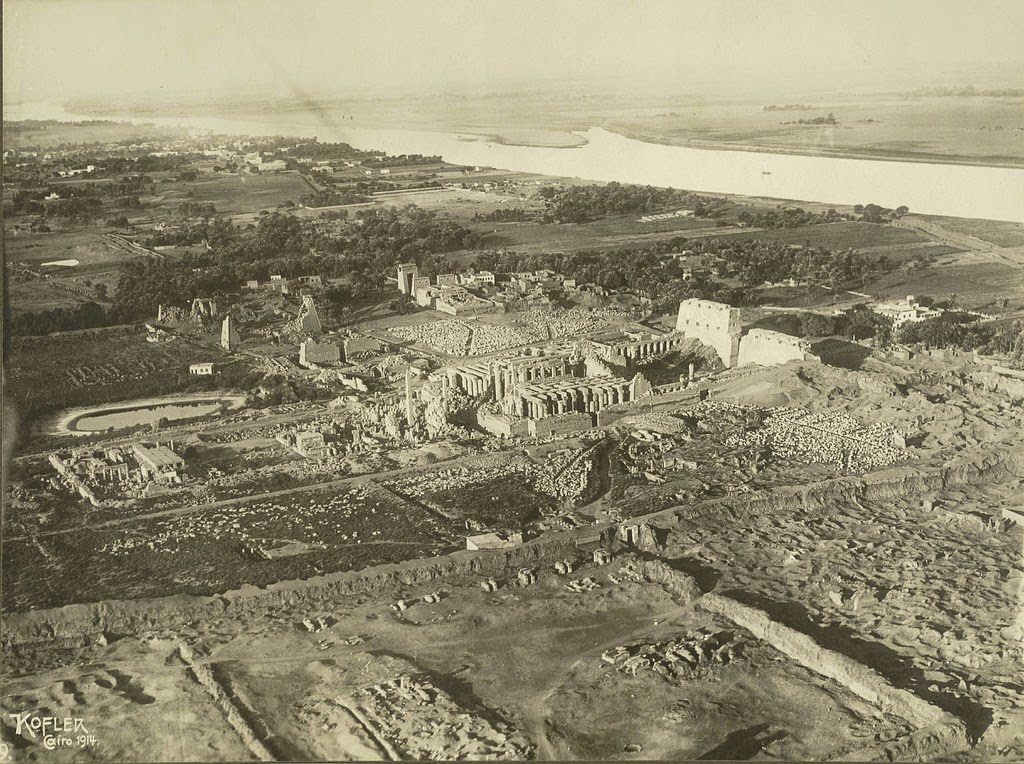
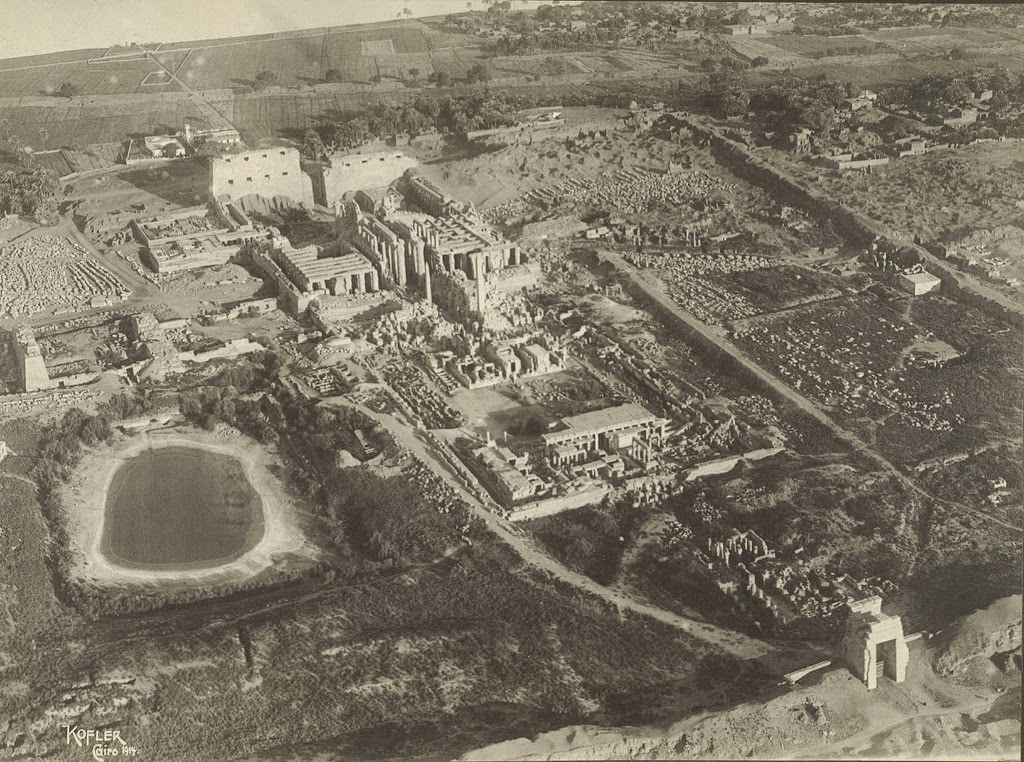
The Al-Nasir Muhammad Mosque inside the Cairo Citadel was built in the early 14th century and featured a stunning interior with marble columns taken from older Crusader and Byzantine buildings. Its interior in 1865 still showed the original decorative program largely intact. At Karnak, ongoing excavations in 1914 revealed column after column, inscribed with hieroglyphs and painted relief carvings that had survived for over three thousand years.
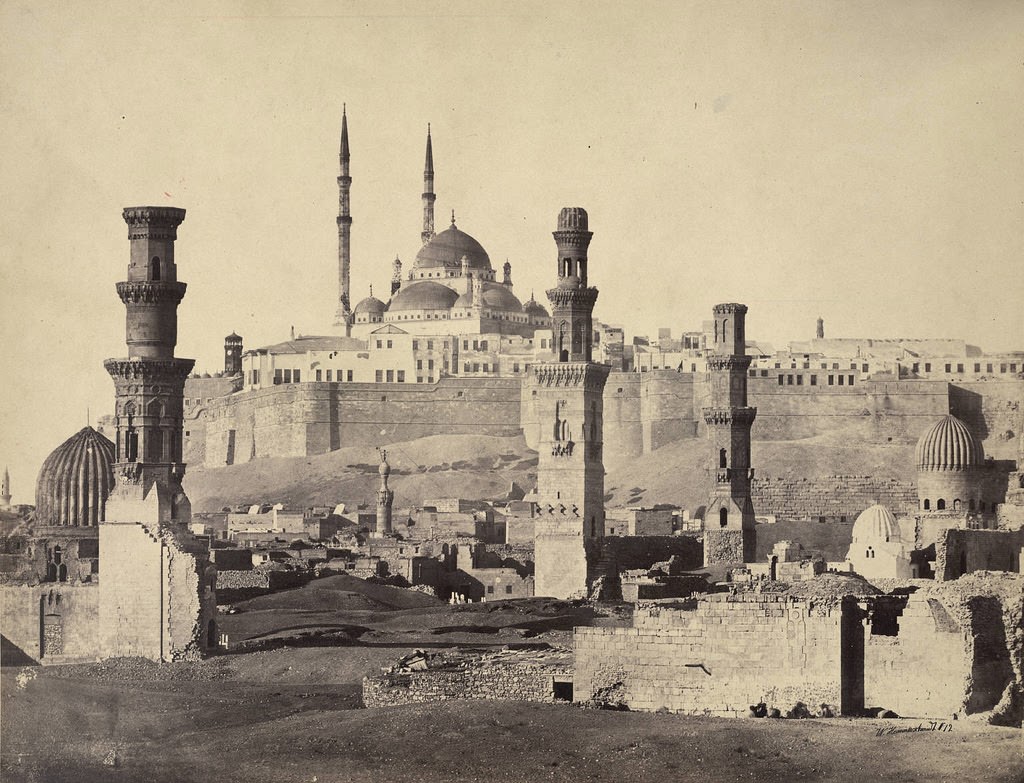
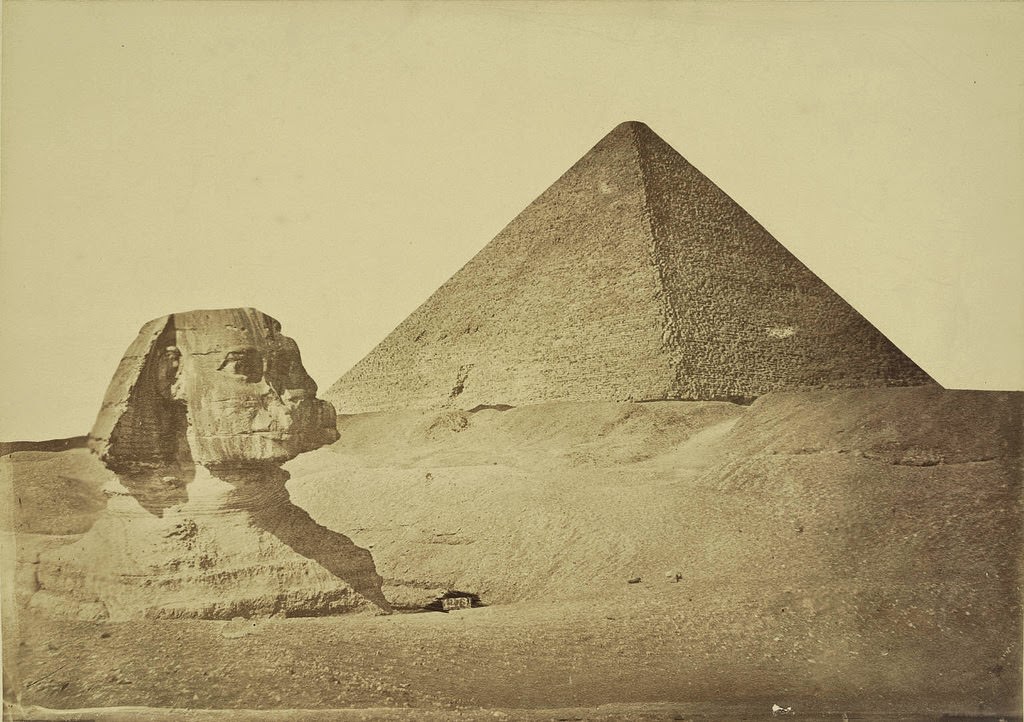
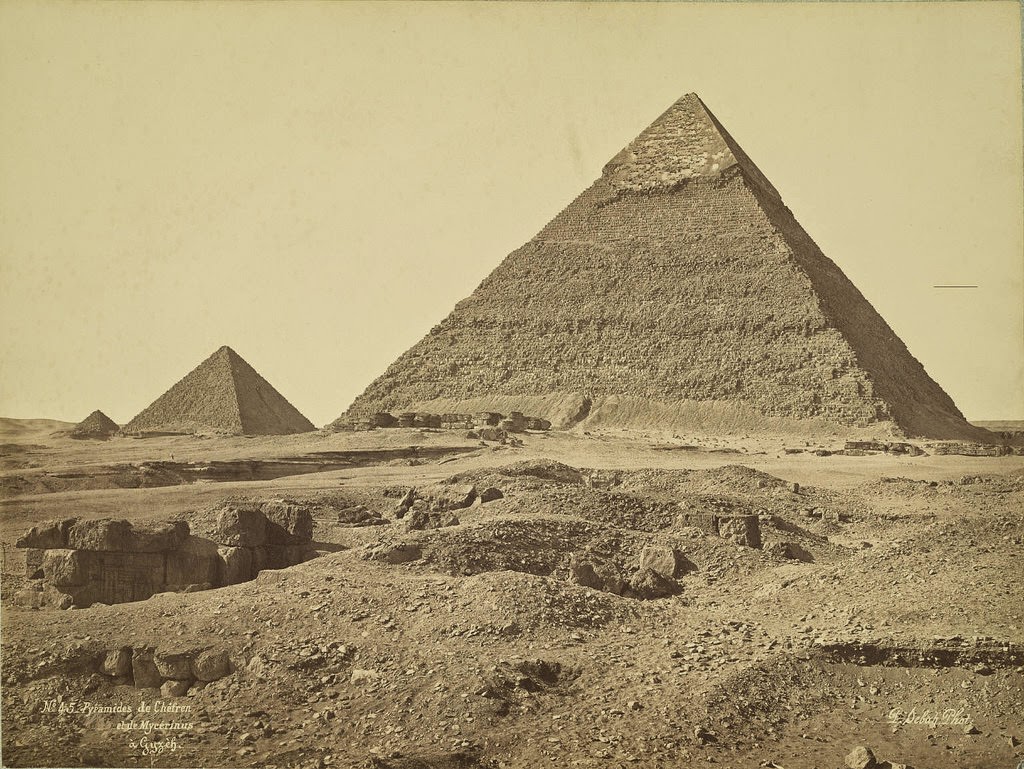
The Mohammed Ali Mosque, with its distinctive Ottoman-style domes and twin minarets, dominated the Citadel’s silhouette and became the defining image of Cairo for most foreign visitors. At Giza in 1865, photographers captured the relationship between the Sphinx and the Pyramid of Khafre behind it — and the sheer physical scale of the pyramids of Khafre and Menkaure side by side, their limestone surfaces still partially cased at the peaks.
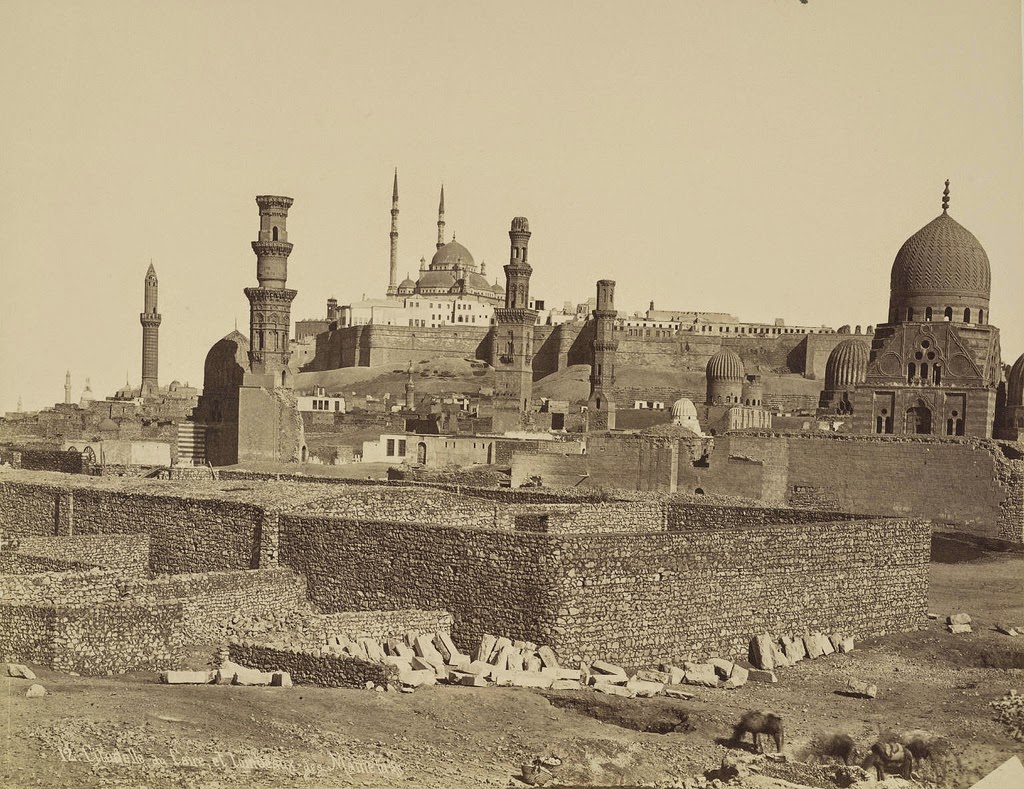
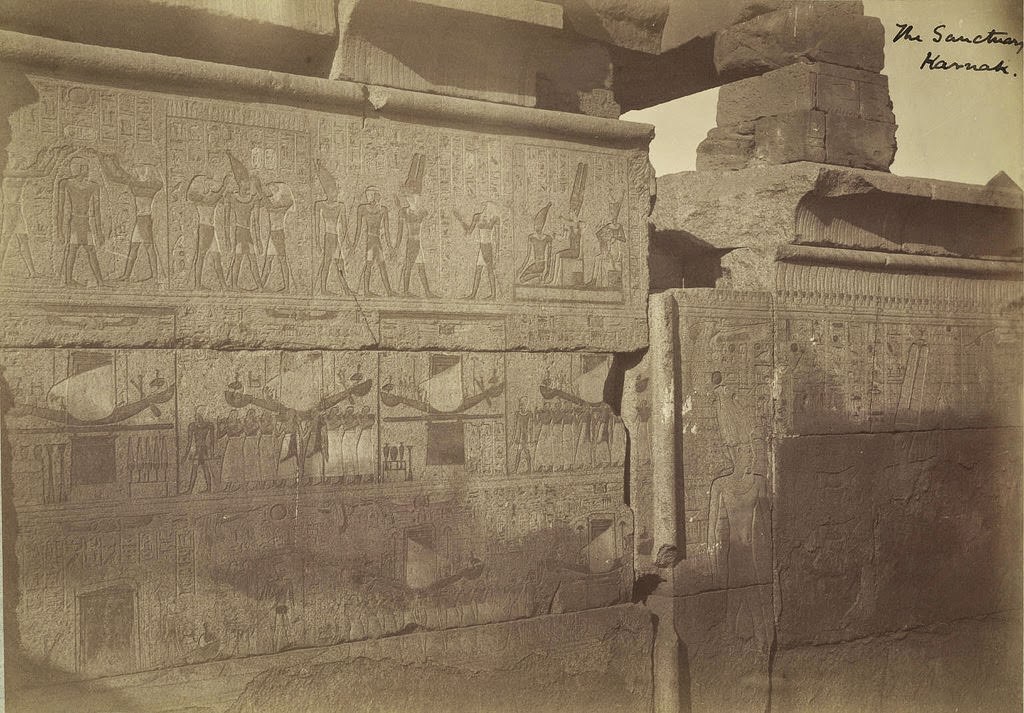
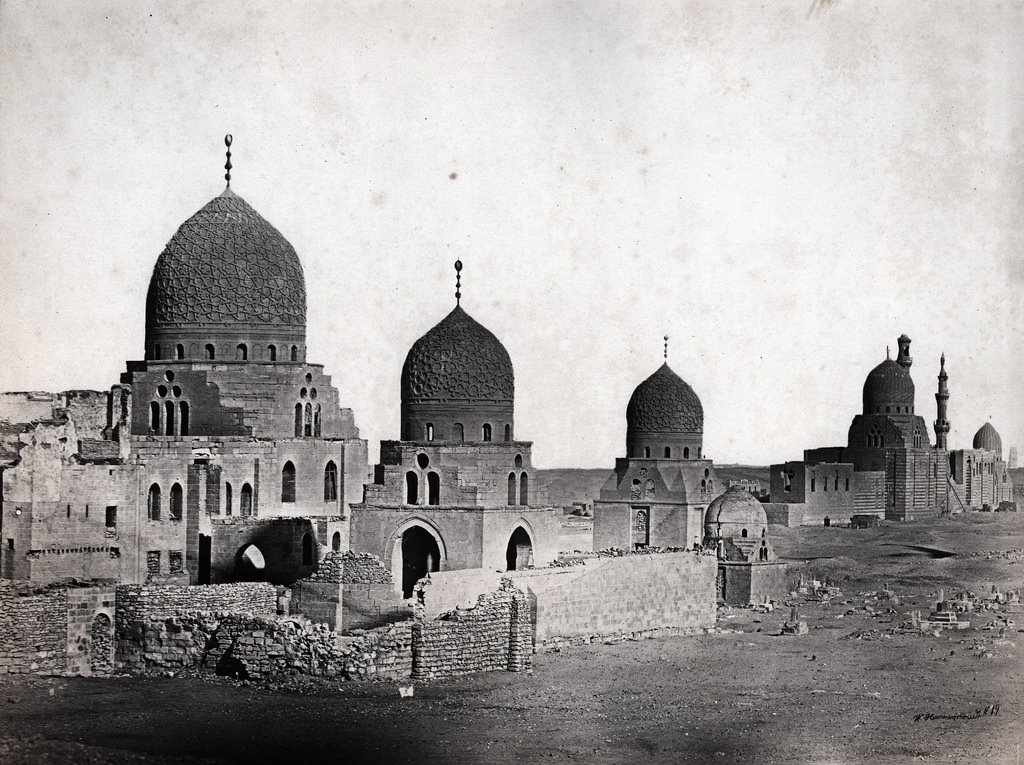
The Mamluk tombs outside the Cairo Citadel were elaborate domed structures built by Egypt’s medieval ruling class. By 1865, many were still standing but beginning to show their age, their stonework worn by centuries of wind and neglect. At Karnak, the innermost sanctuary — the holiest space in the temple, where only priests and pharaohs once entered — was photographed in 1865 as a still, silent chamber surrounded by carved stone.
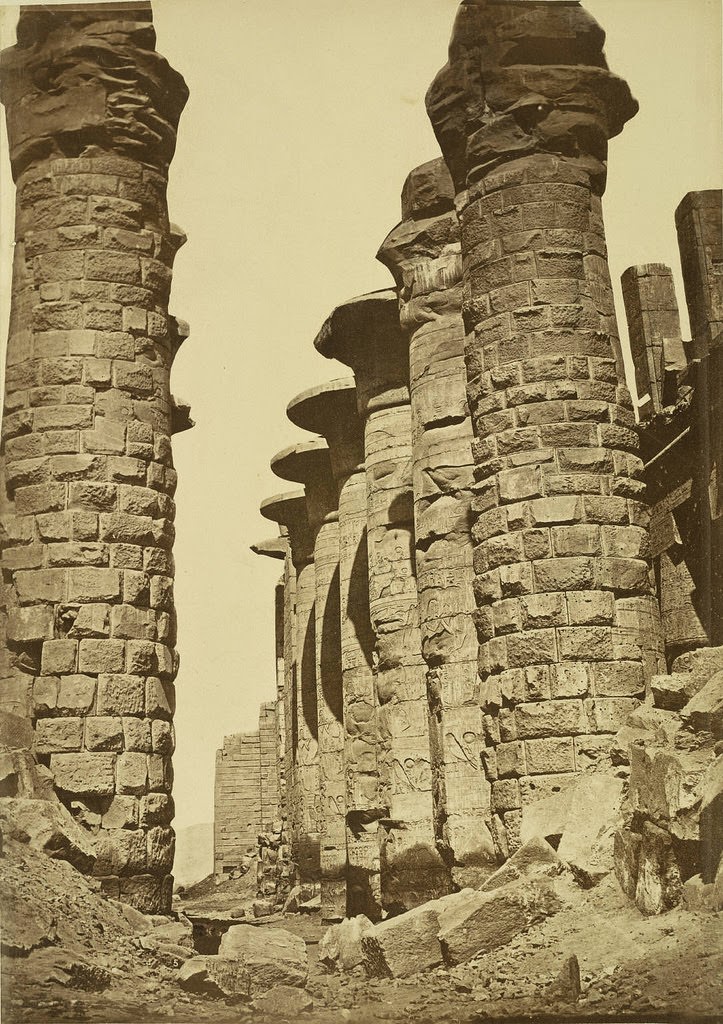
Cairo’s Coptic Christian community had been present in Egypt since the early centuries of Christianity. Their homes and churches clustered in the southern part of the city in an area known as Coptic Cairo, where narrow lanes and old buildings preserved a way of life distinct from the surrounding Muslim city. At Karnak, the Hypostyle Hall of the Temple of Amon was captured in 1865 — its forest of massive columns filling the frame, the sheer density of carved stone overwhelming in every photograph.
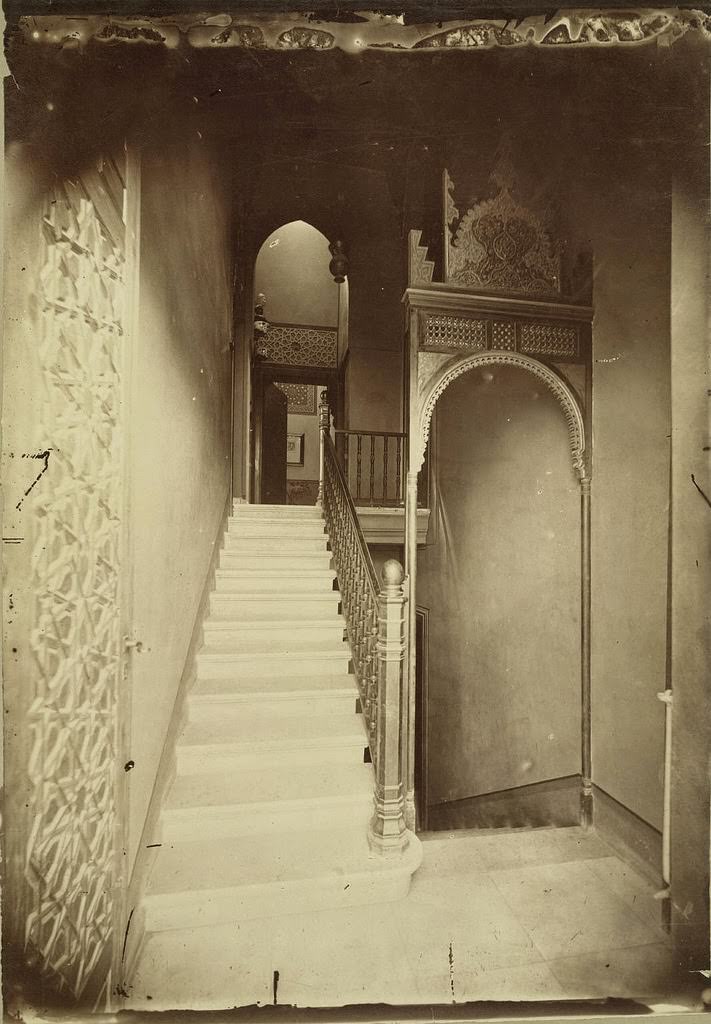
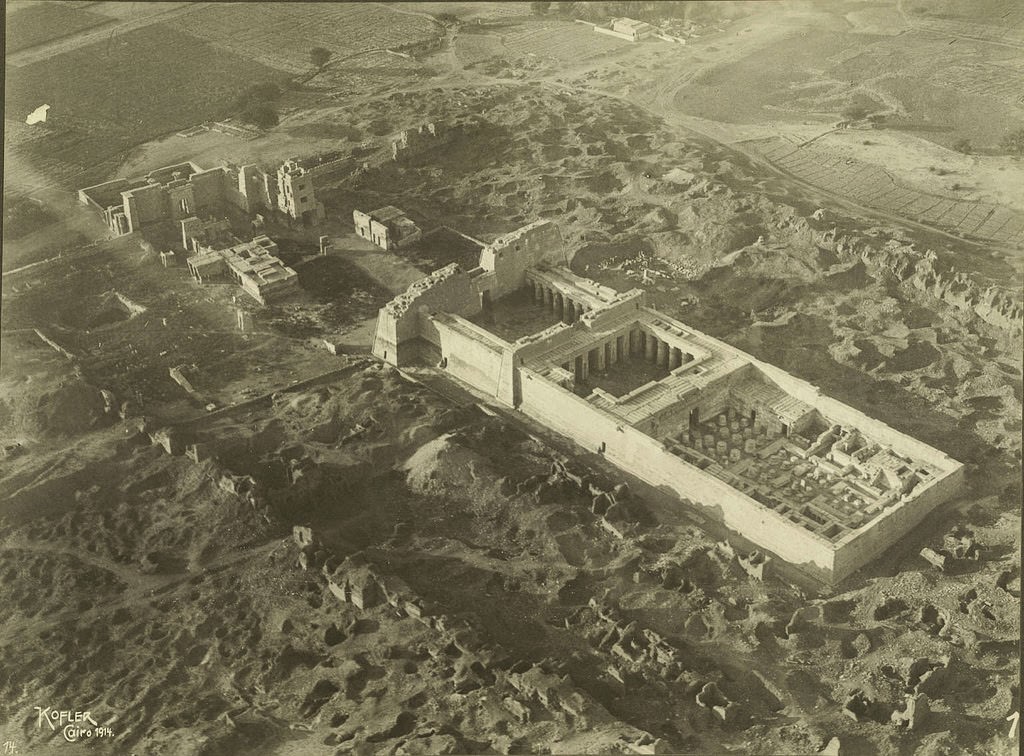
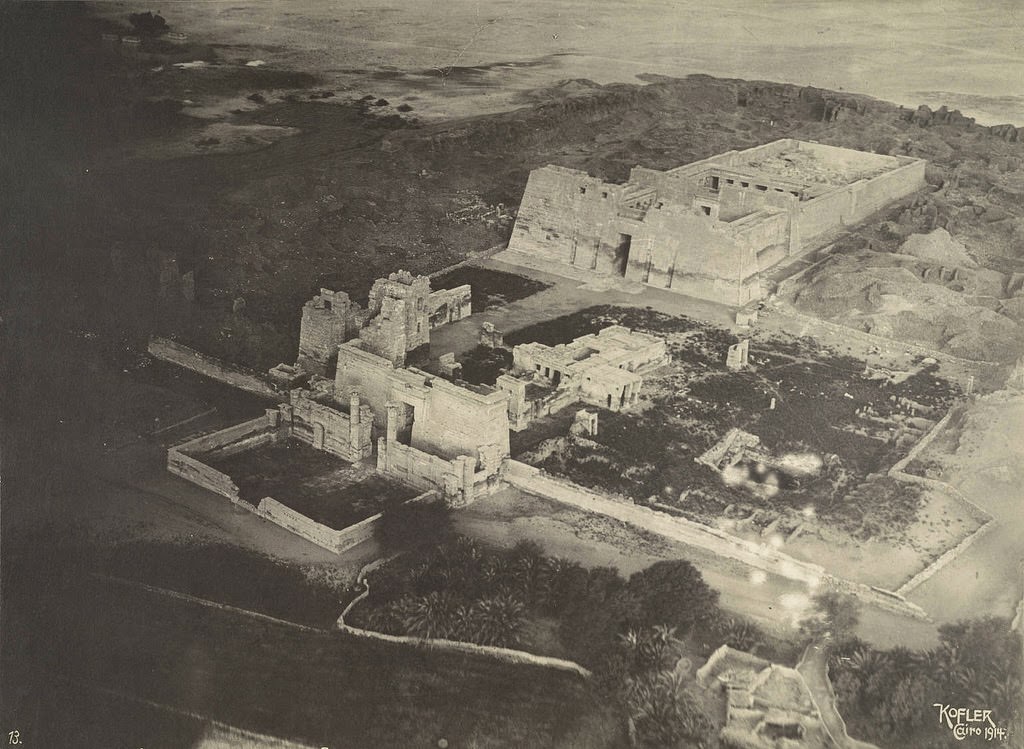
The interiors of wealthy Cairo homes in the 1860s featured ornate wooden staircases, tiled floors, and carved stucco walls — built in a style that mixed Ottoman, Mamluk, and local Egyptian influences. These homes were organized around enclosed courtyards that kept the interior cool. Egypt’s ancient temple complexes, still being uncovered in 1914, revealed layer upon layer of construction — each pharaoh having built upon, altered, or decorated what the previous generation had left behind.
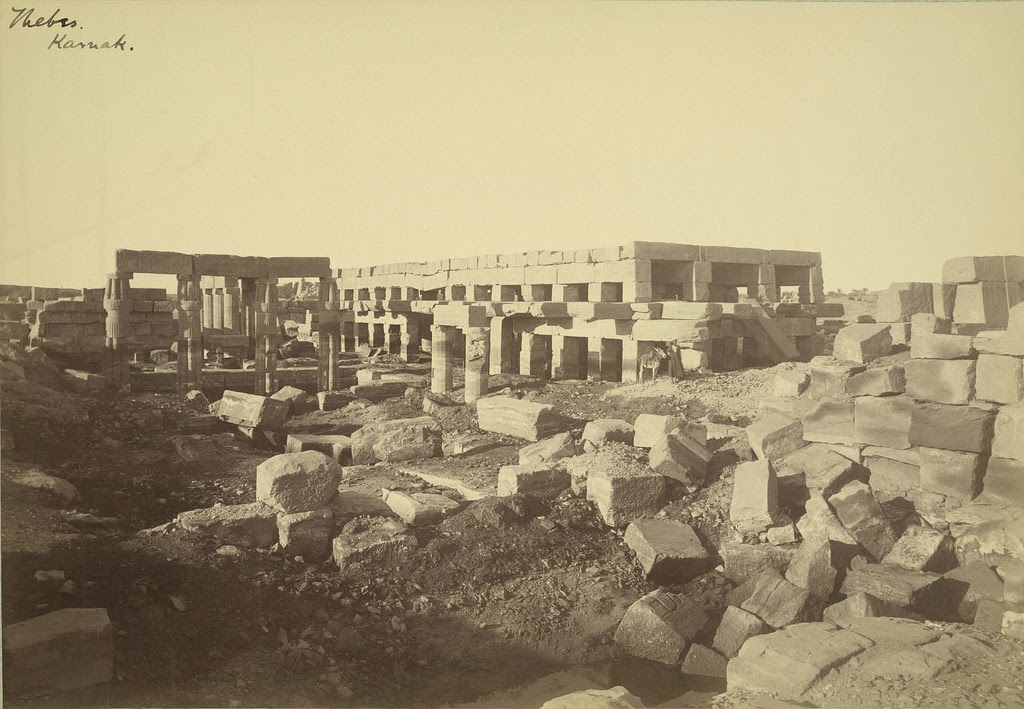
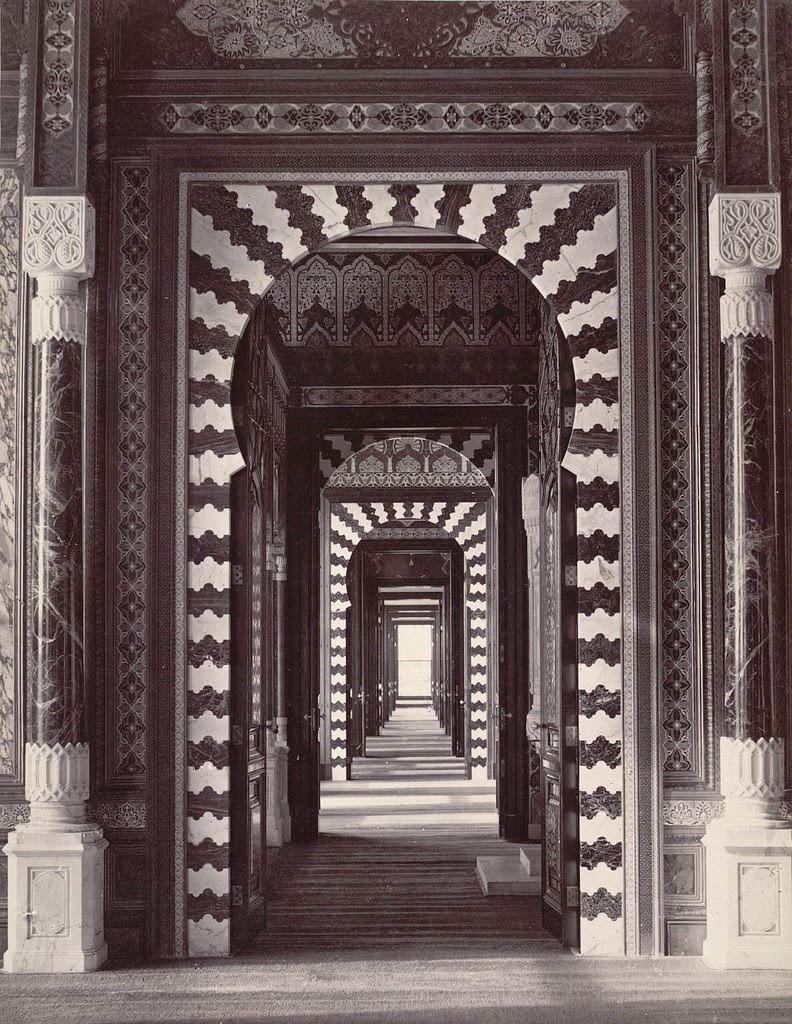
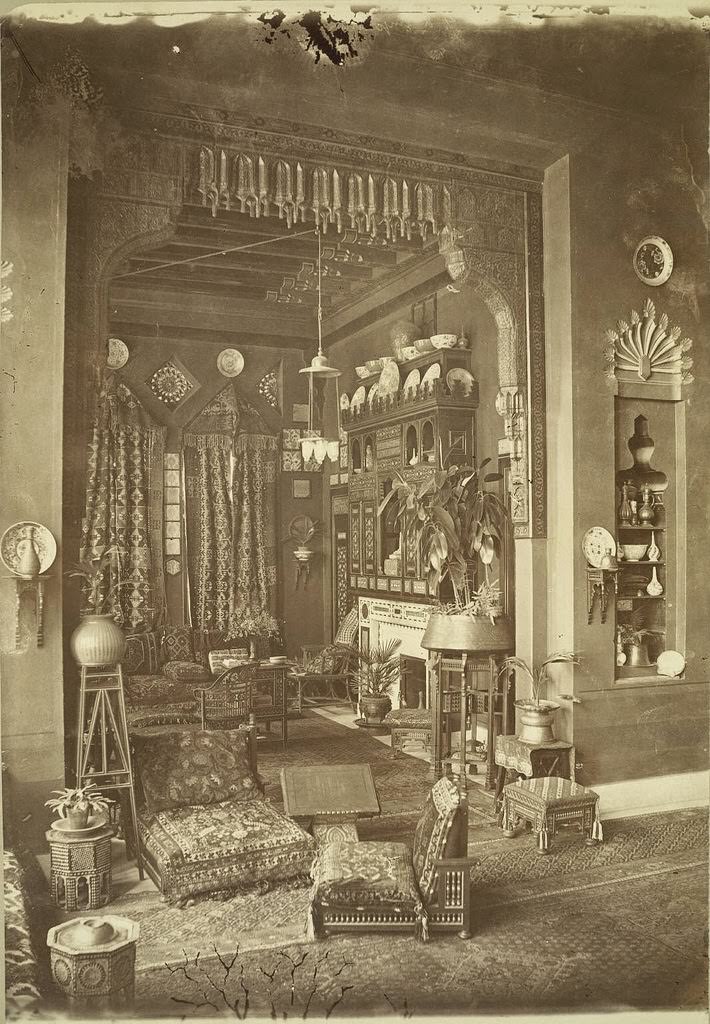
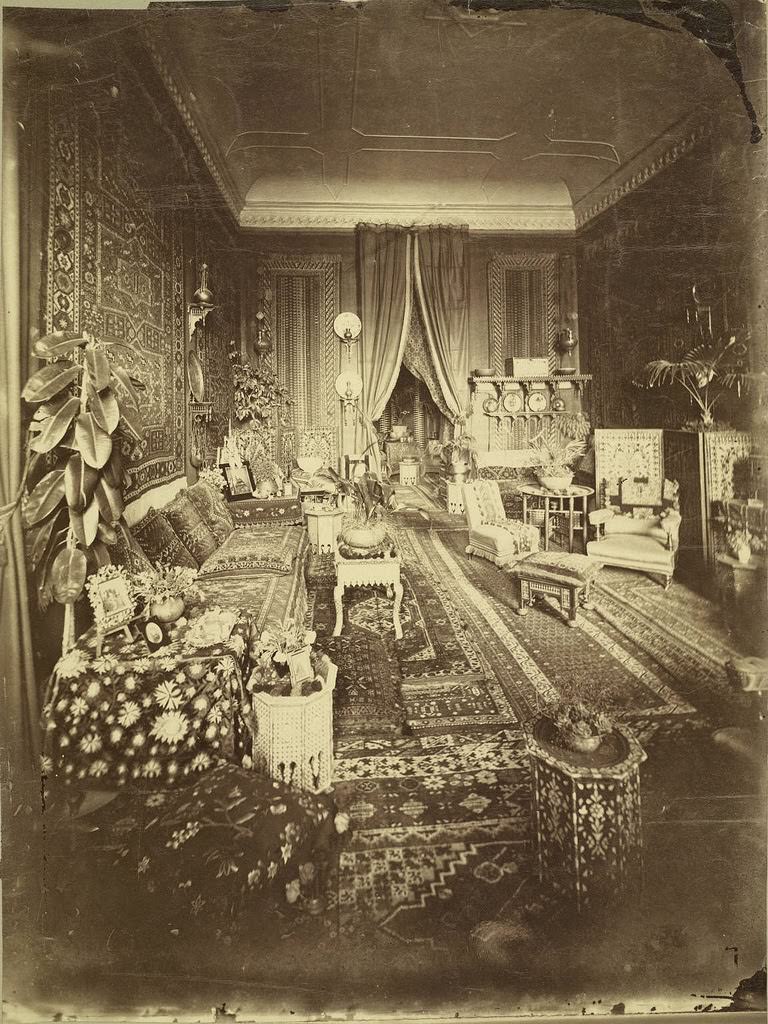
Karnak’s Festival Hall, built by Thutmose III around 1450 BC, had unusual tent-pole columns and was used for the pharaoh’s jubilee celebrations. By 1865, it was partially buried but clearly remarkable. Mamluk houses in Cairo featured some of the finest domestic architecture in the Islamic world — tall reception rooms with painted wooden ceilings, elaborate marble floors, and intricate tile work covering the walls.
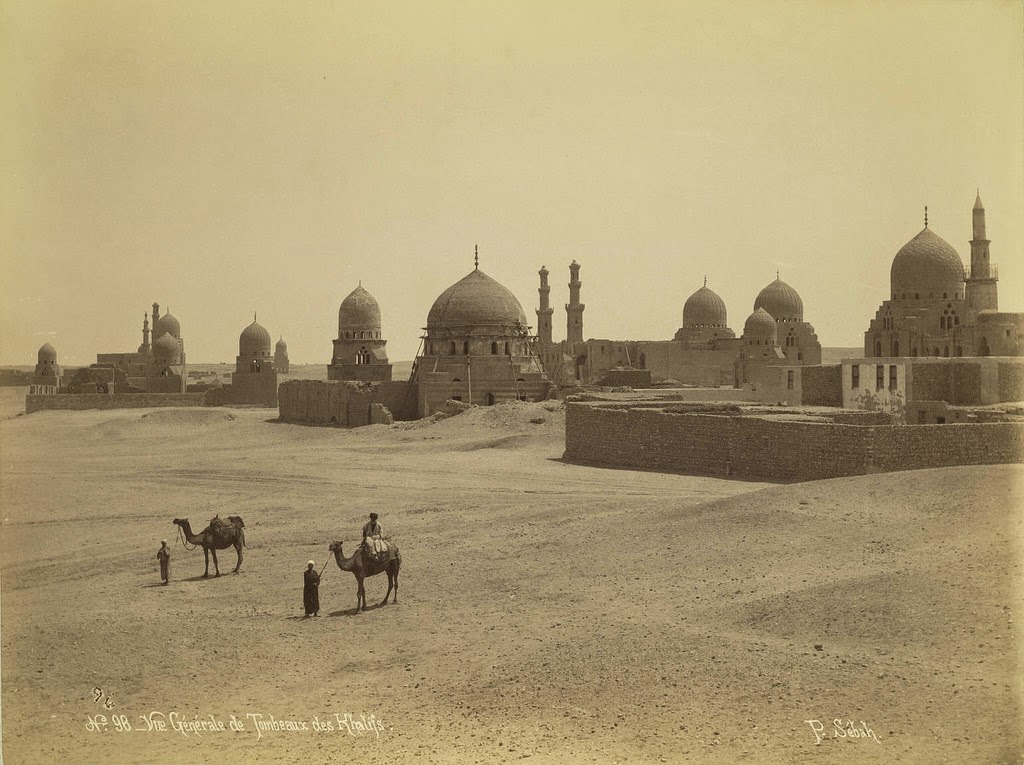
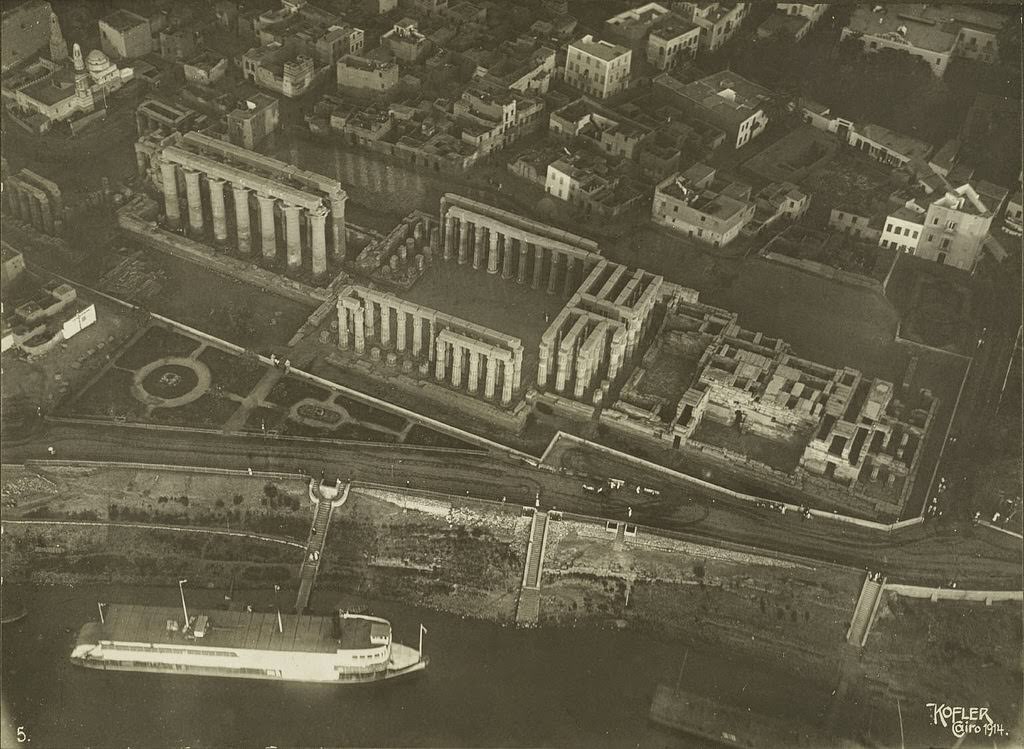
The Tombs of the Khalifs — located in Cairo’s “City of the Dead” — were a vast necropolis of domed mausoleums built by Mamluk and Fatimid rulers between the 10th and 15th centuries. In 1865, they formed a striking landscape on Cairo’s eastern edge, with some families still living among the tombs. At Luxor, the temple complex in 1914 was an active archaeological site, with new sections being cleared and documented by international teams.
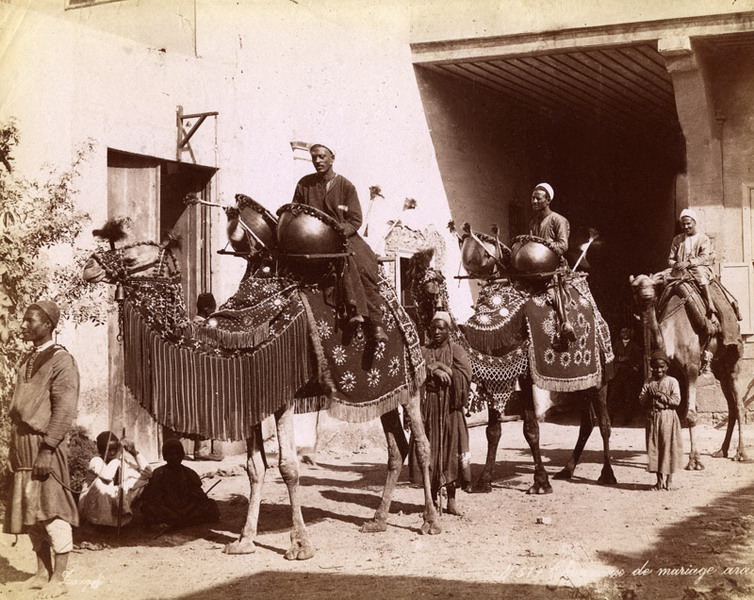
A Cairo wedding in 1890 was a major public event. Wedding processions moved through the streets with musicians leading the way, and the celebration could last several days. Hired musicians on camels — decorated with colorful fabric — escorted the bridal party to the groom’s home, with neighbors watching from windows and doorways as the procession passed.
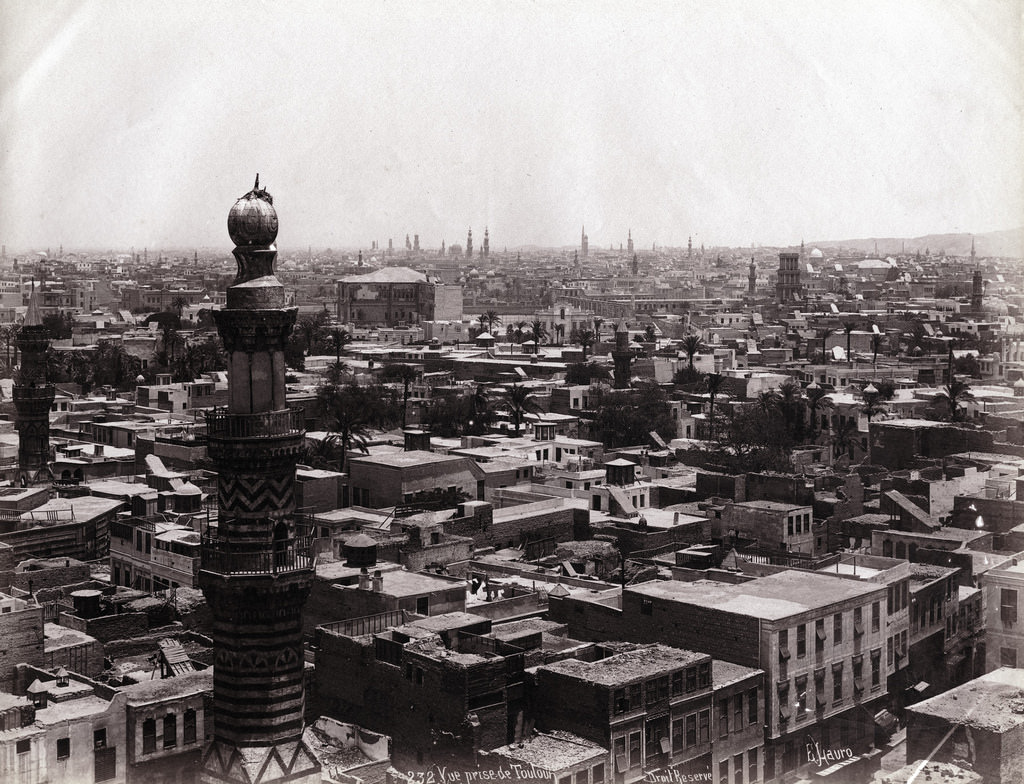
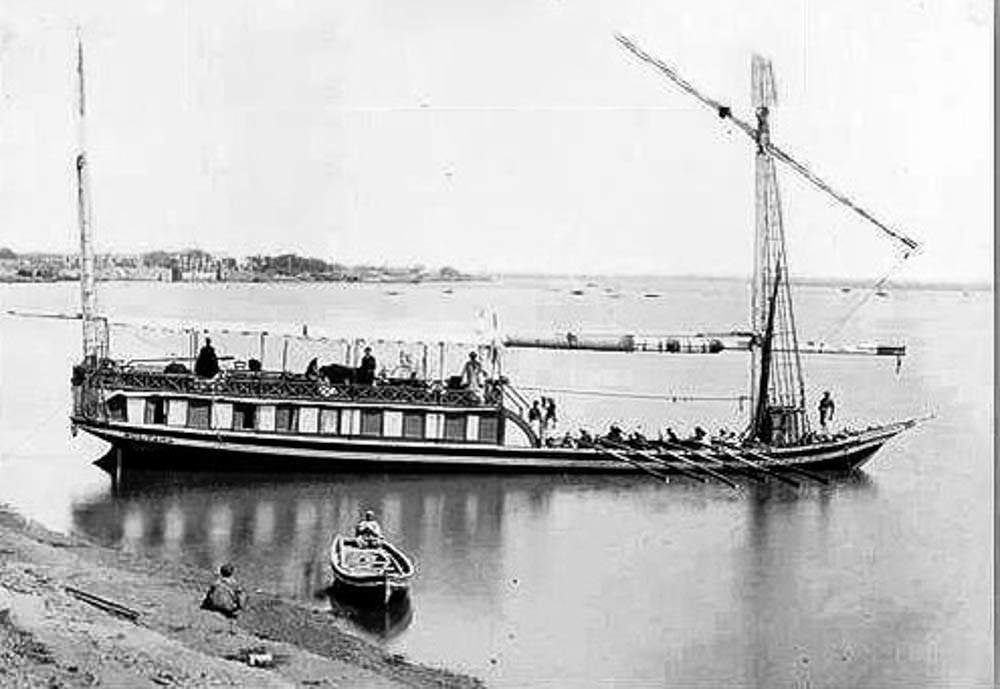
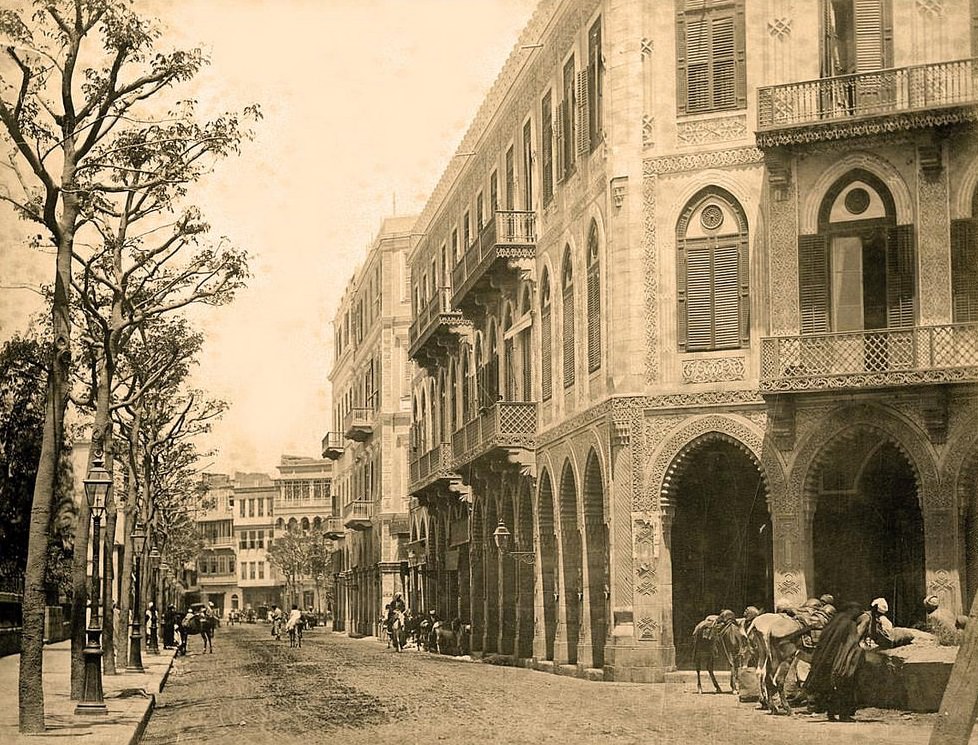
Cairo in the 1870s and 1880s was being modernized under Khedive Ismail, who deliberately restructured sections of the city to resemble Paris — with wide boulevards, public squares, and European-style buildings alongside the older medieval neighborhoods. The Nile carried dhows — traditional lateen-rigged wooden sailing boats — that had been transporting goods along the river for centuries. Downtown Cairo by 1881 showed both the modern city taking shape and the older street life continuing unchanged beneath it.
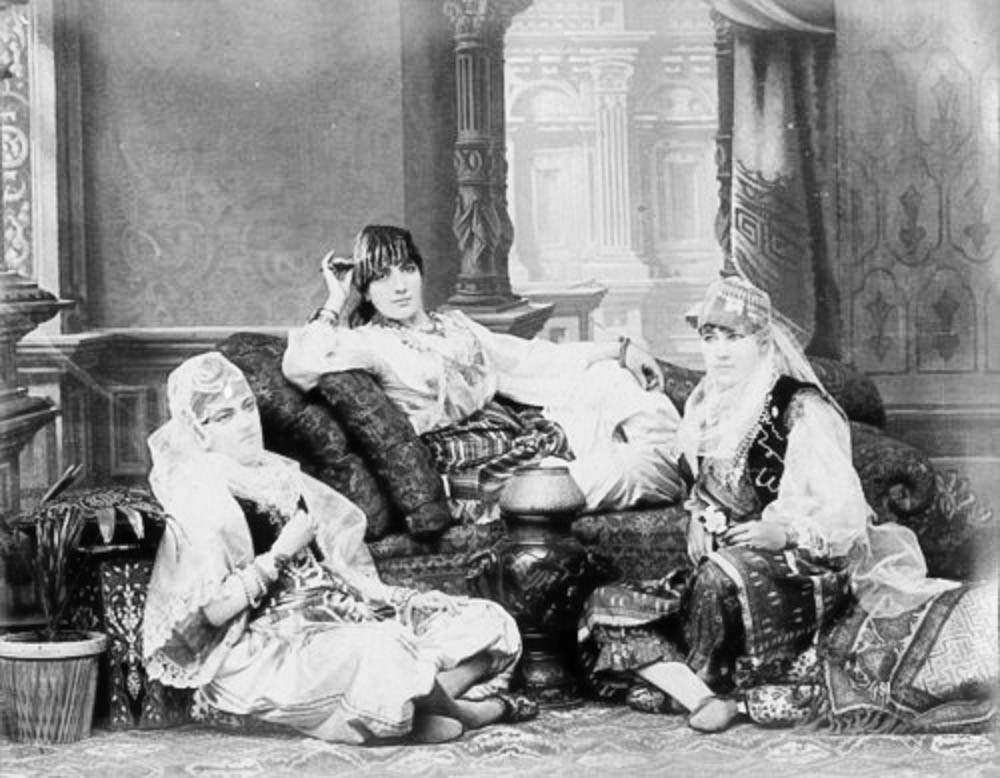
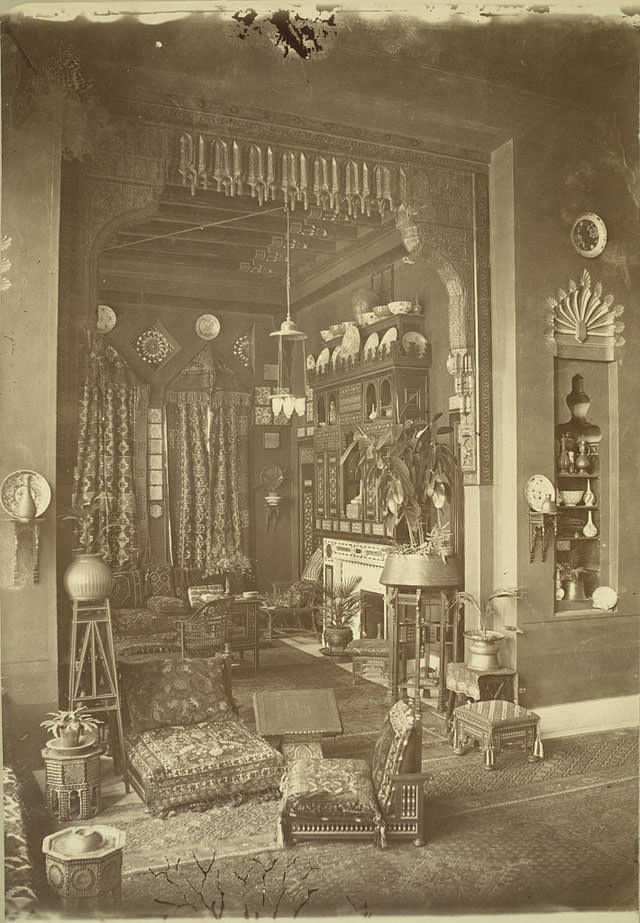
Egyptian women in Cairo in 1880 navigated public space in robes and veils that marked them as part of a Muslim urban society, while their domestic lives unfolded in the richly decorated interiors of Egyptian homes. The interiors photographed in the 1870s showed rooms filled with cushioned seating, patterned textiles, and carved wooden screens — a style of domestic comfort that was distinct from anything found in European households of the same period.
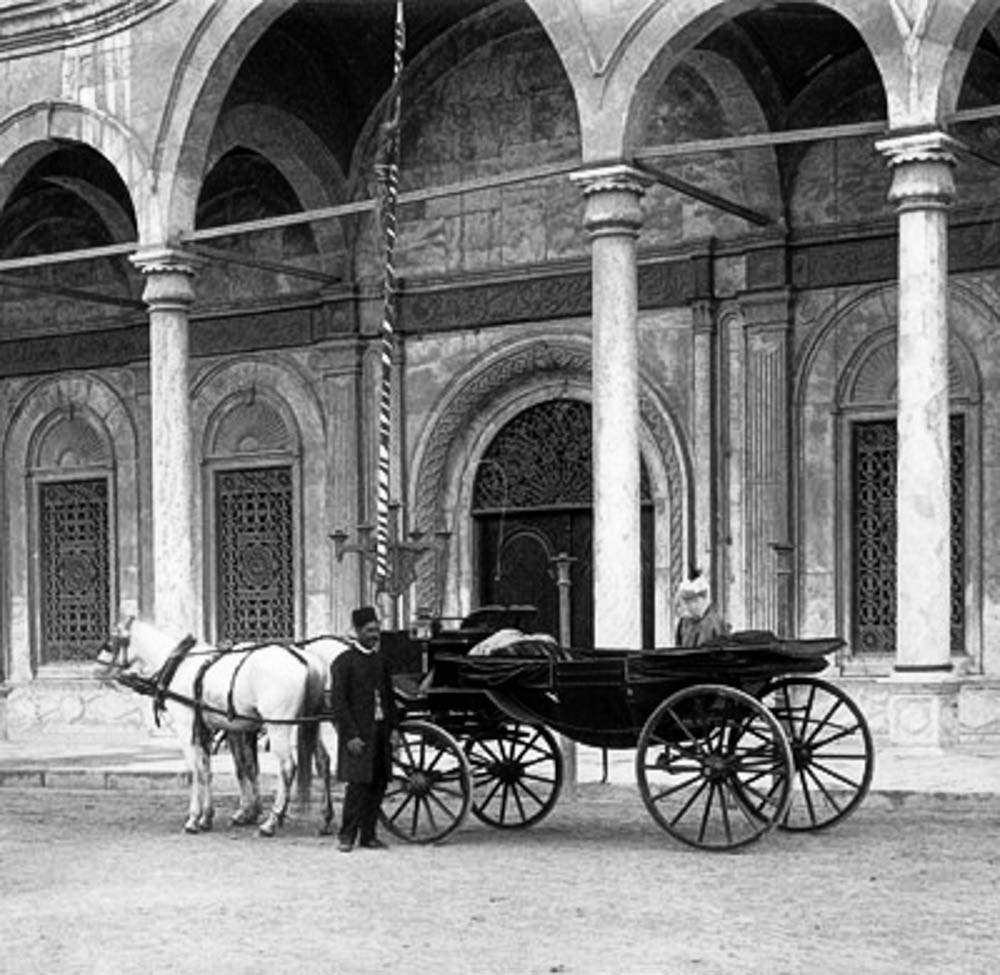
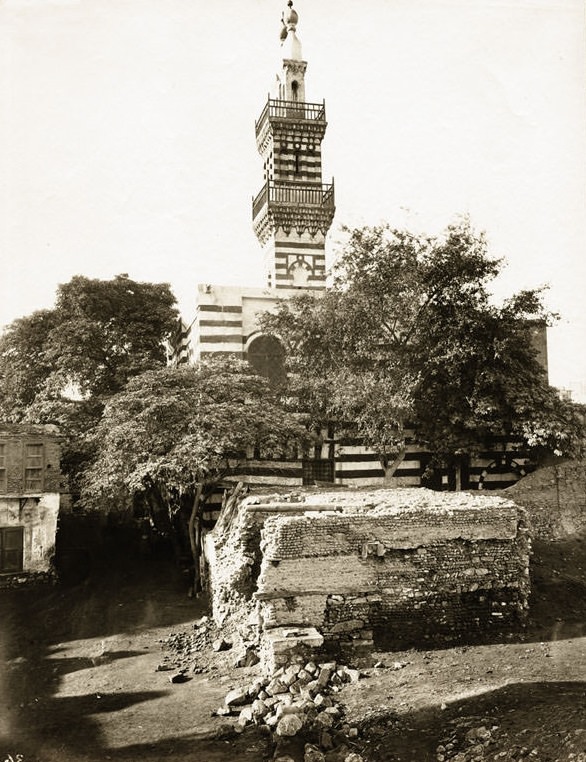
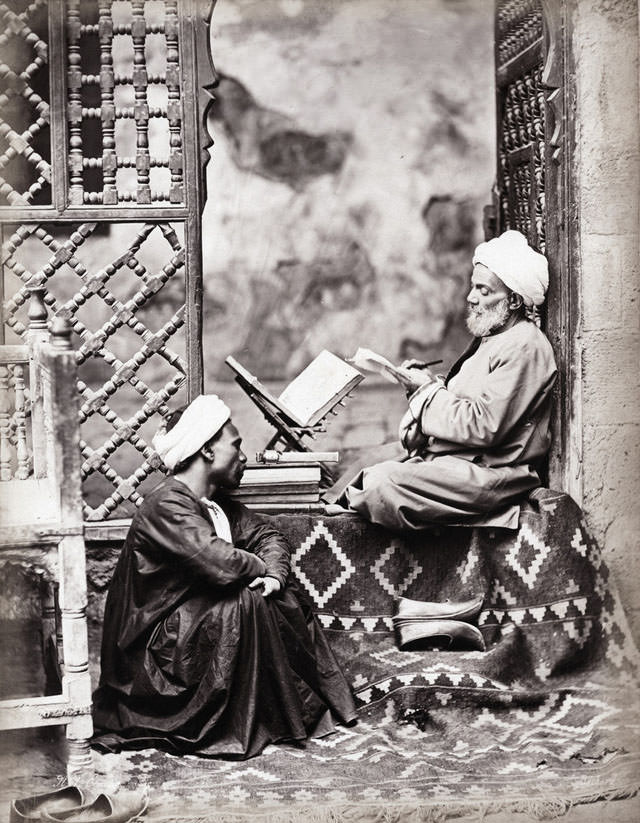
The Mohammed Ali Mosque in the 1880s was already one of the most photographed buildings in Egypt. Its alabaster-clad exterior and twin minarets made it unmistakable. Cairo’s older medieval mosques, photographed in 1869, showed a different architectural tradition — heavy stone, rounded arches, and minarets in the local style. Public scribes sat in Cairo’s streets in 1880, writing letters and legal documents for those who couldn’t read or write — an essential service in a city with significant illiteracy rates.
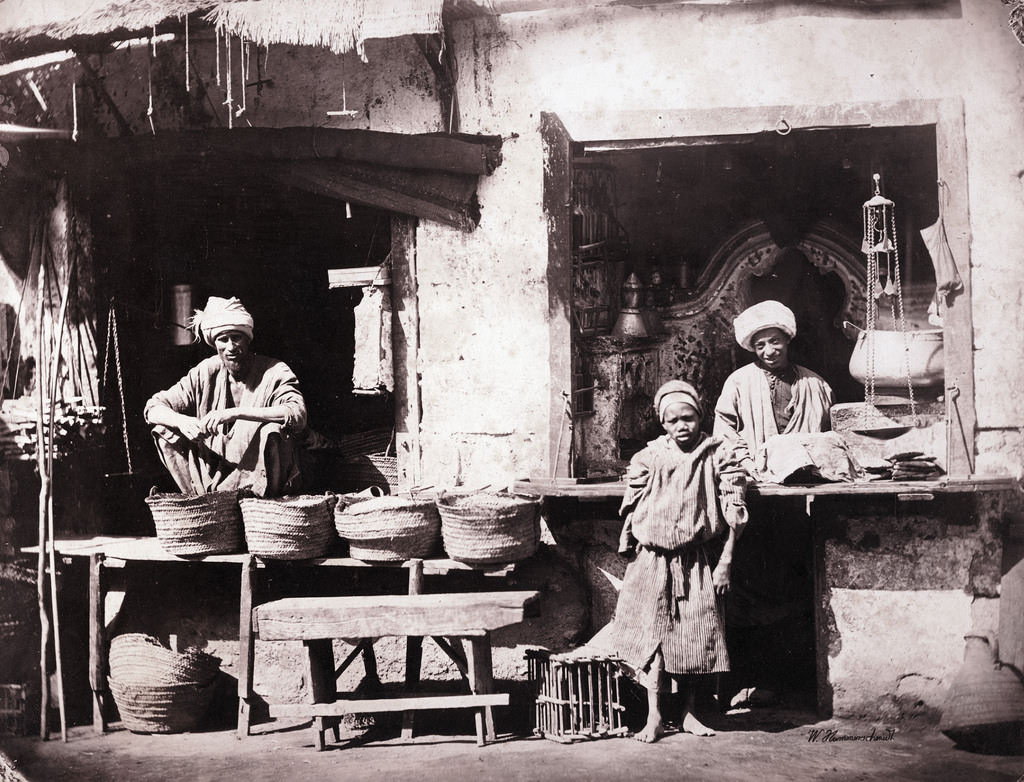
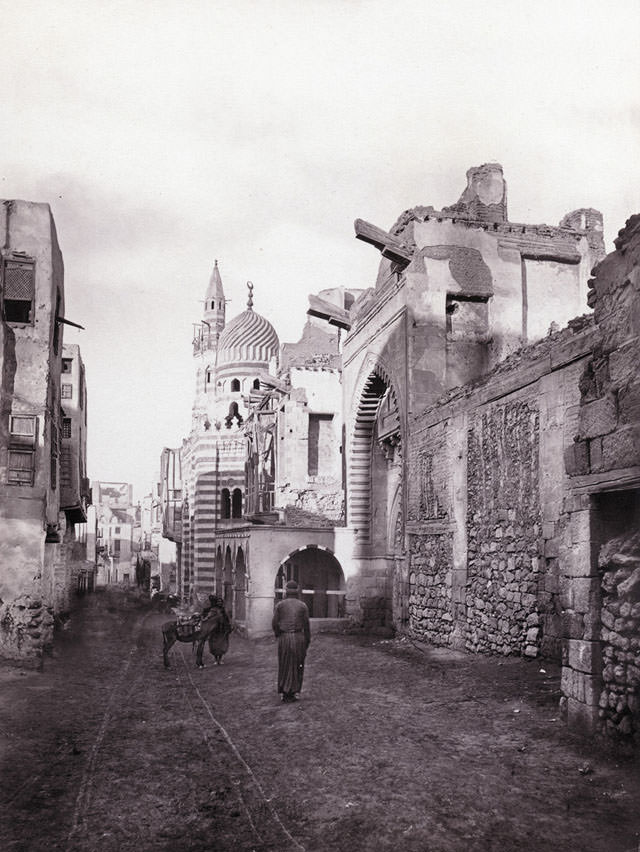
Rice and oil merchants in Cairo in 1860 ran shops stacked with large ceramic jars, sacks of grain, and containers of oil. These were staple goods that fed the city, and their trade was constant. Cairo’s streets in 1865 were narrow passages between tall buildings, covered in places by wooden screens that blocked the sun, with merchants, animals, and pedestrians all sharing the same tight lanes.
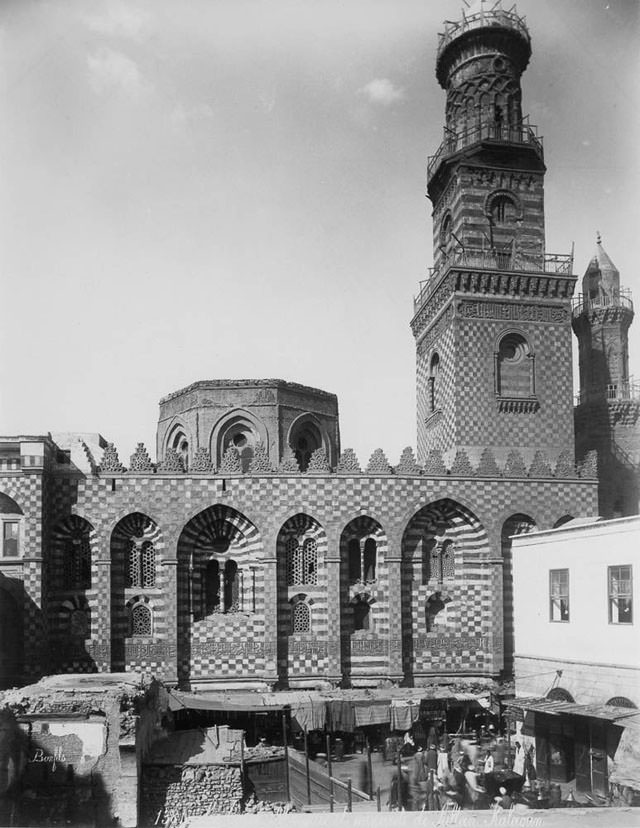
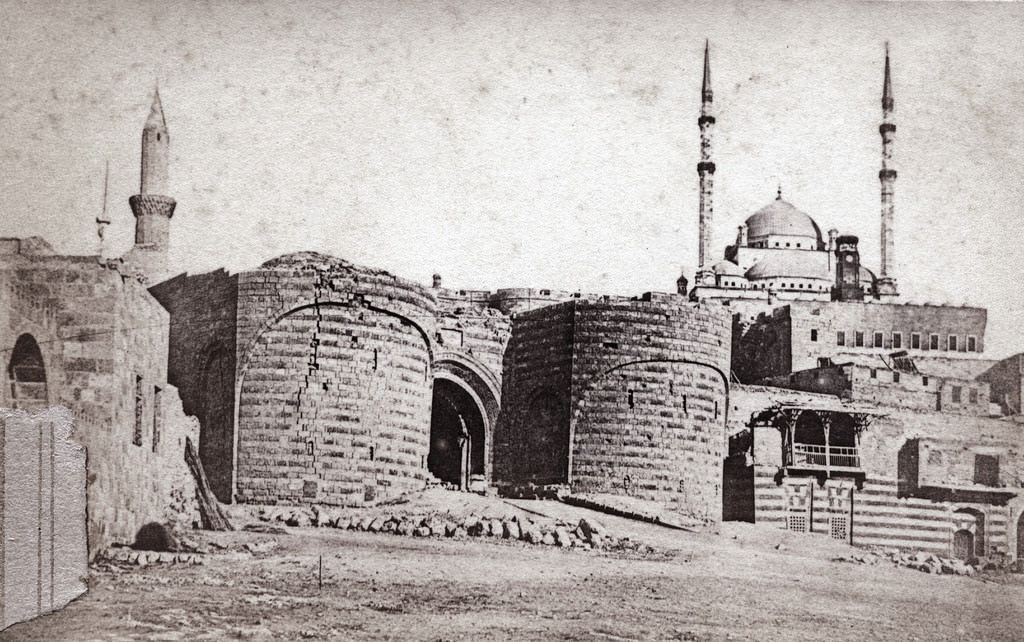
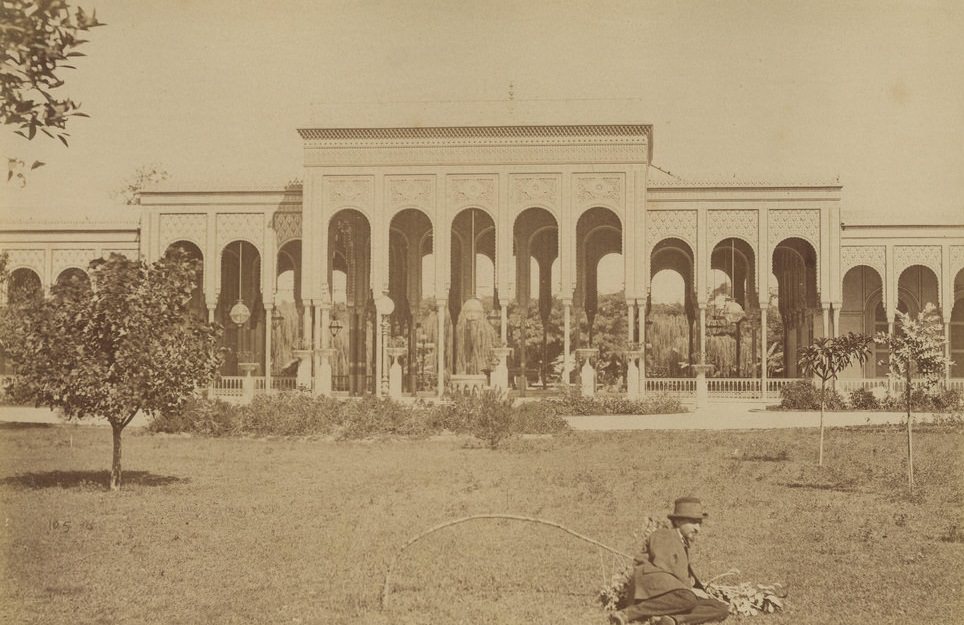
The Sultan Kalaoun (Qalawun) complex on Al-Muizz Street was one of medieval Cairo’s finest architectural achievements — a mosque, madrasa, and mausoleum built in the 1280s, with intricate carved stone facades. The Citadel’s main gate in 1864 was a massive fortified entrance that had controlled access to Egypt’s seat of power for centuries. The Gezirah Palace, built for Khedive Ismail in 1869 for the opening of the Suez Canal, represented a new Egypt — modern, European-influenced, and built to impress visiting royalty and dignitaries.
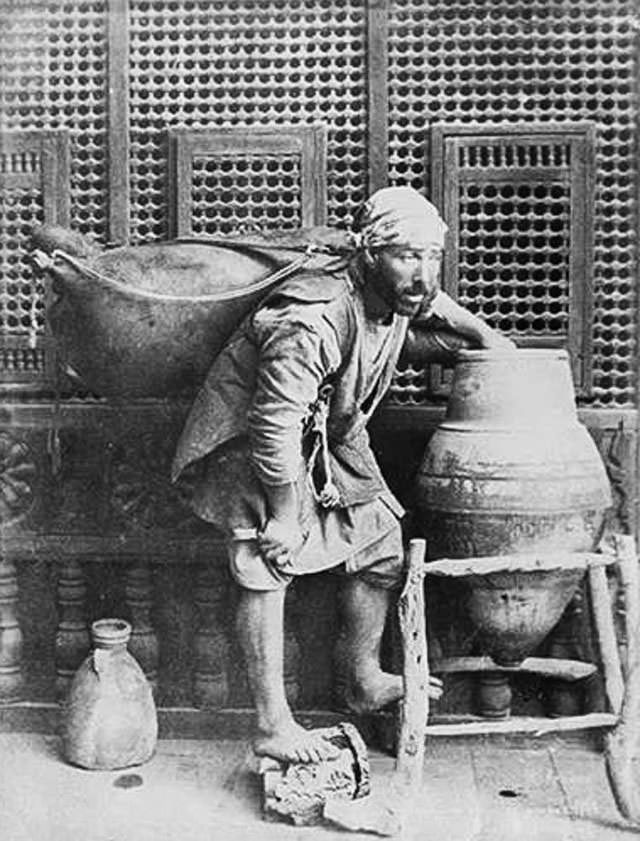
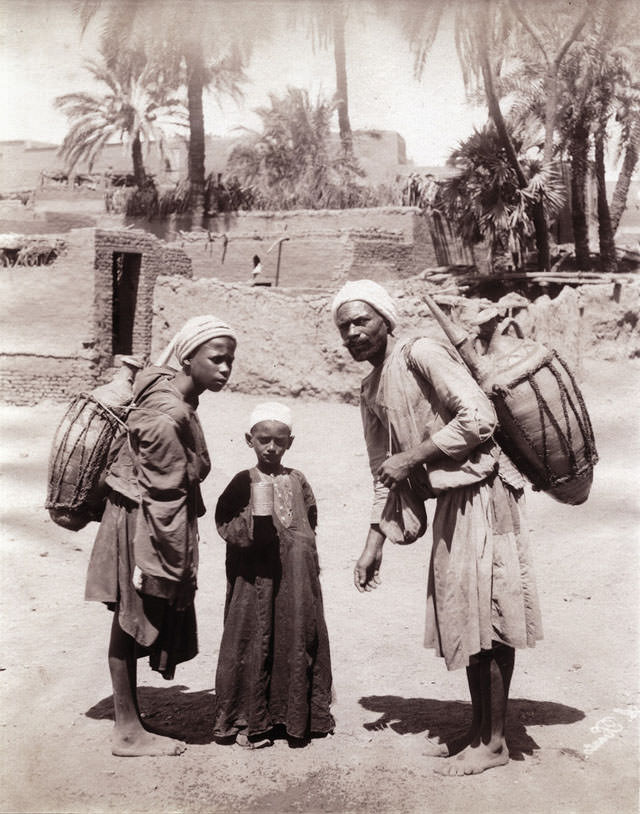
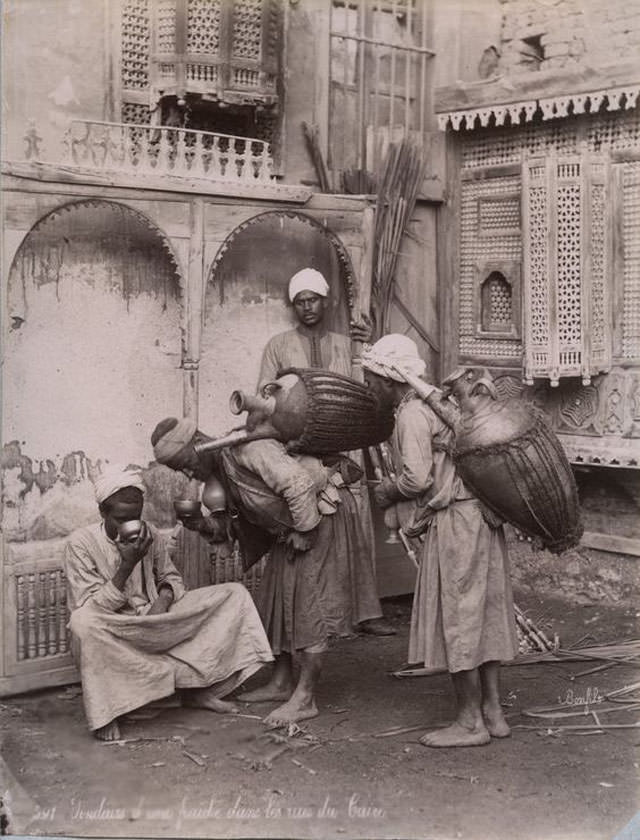
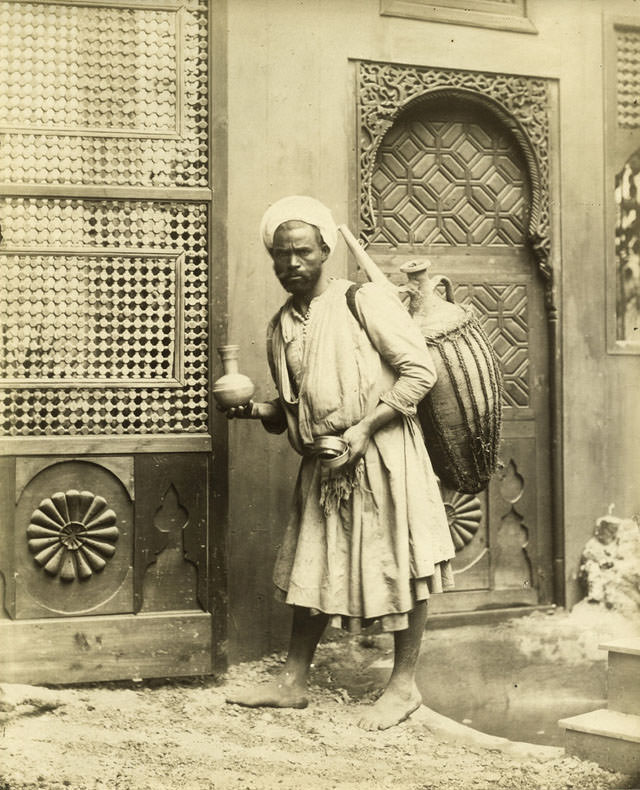
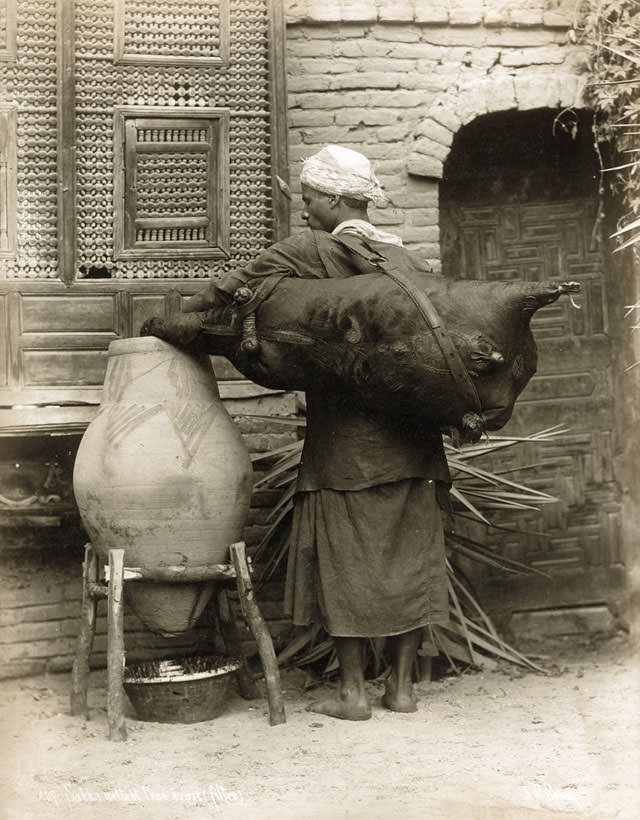
Water was so central to daily life in Cairo that the people who moved it through the city formed their own distinct profession. Water carriers filled large goatskin bags at the Nile or at public fountains and delivered water directly to homes, shops, and workshops. By the 1880s, there were also water vendors who sold cups of water to passersby in the street, and men who filtered Nile water through stone or sand to make it safer to drink. The sheer number of photographs dedicated to water workers in 19th-century Cairo reflects just how vital — and visible — they were.
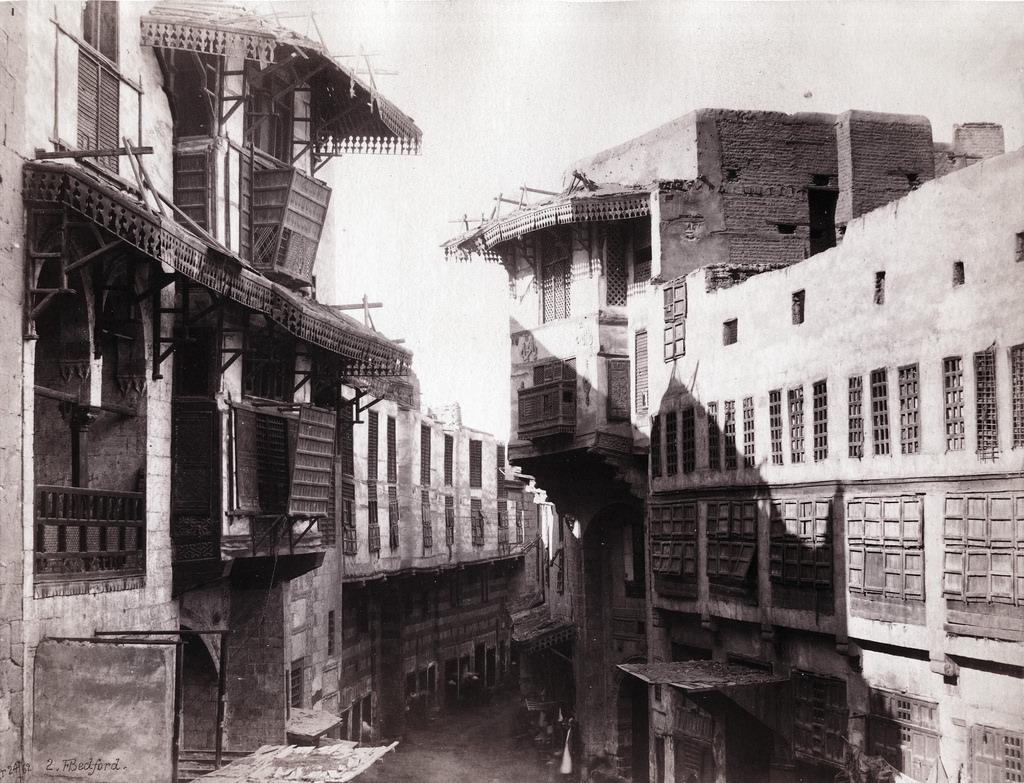
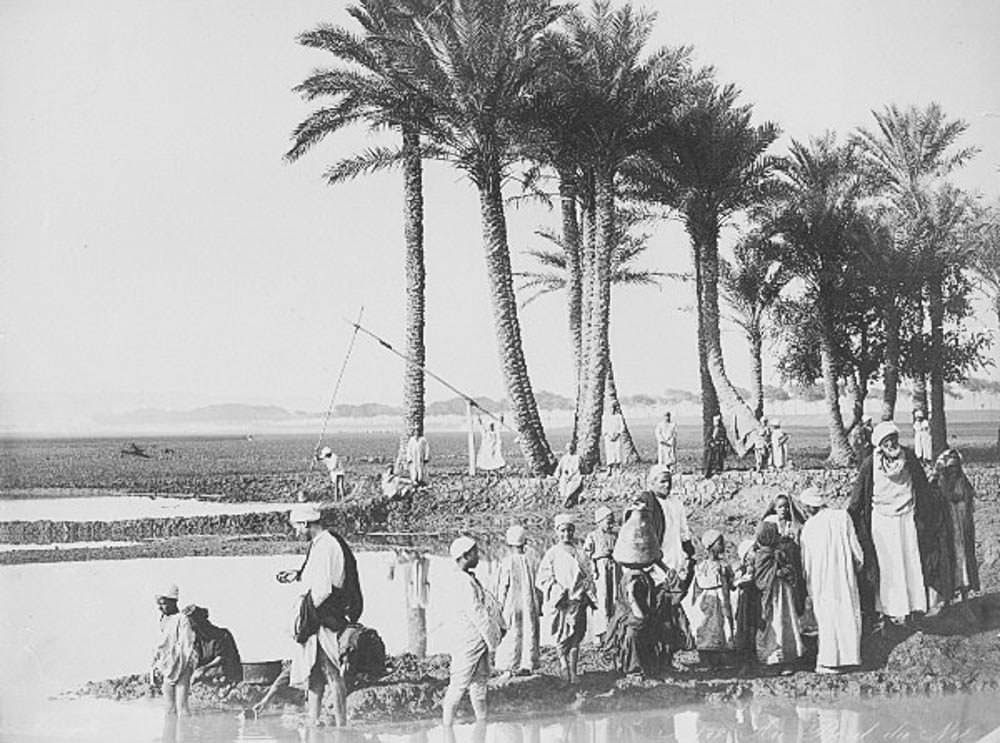

Cairo’s streets in 1862 were largely unchanged from how they had looked for centuries — dense, organic, and built for foot traffic and pack animals rather than carriages. Along the Nile in 1880, the bank was a constant scene of loading, unloading, washing, and trading. Antique sellers in the 1880s had no shortage of material — Egypt’s ancient ruins were constantly yielding objects that made their way into the hands of dealers and, from there, into the collections of European and American buyers.
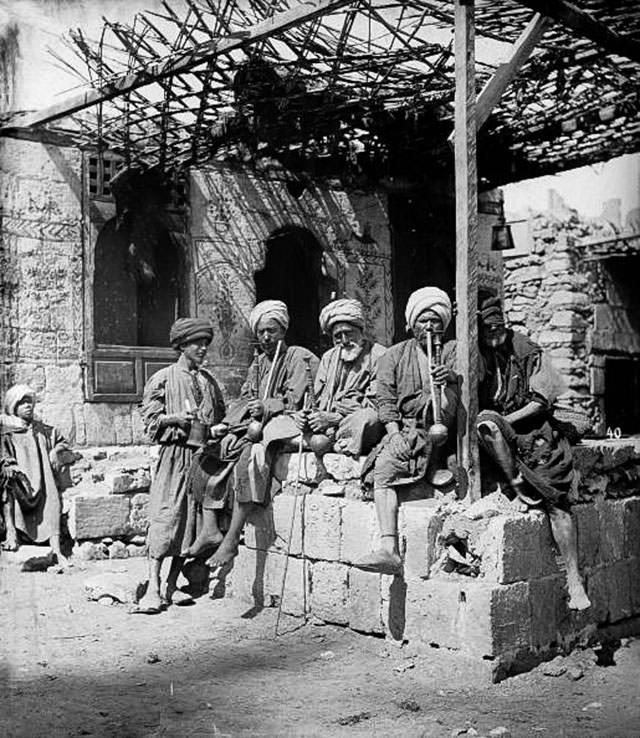
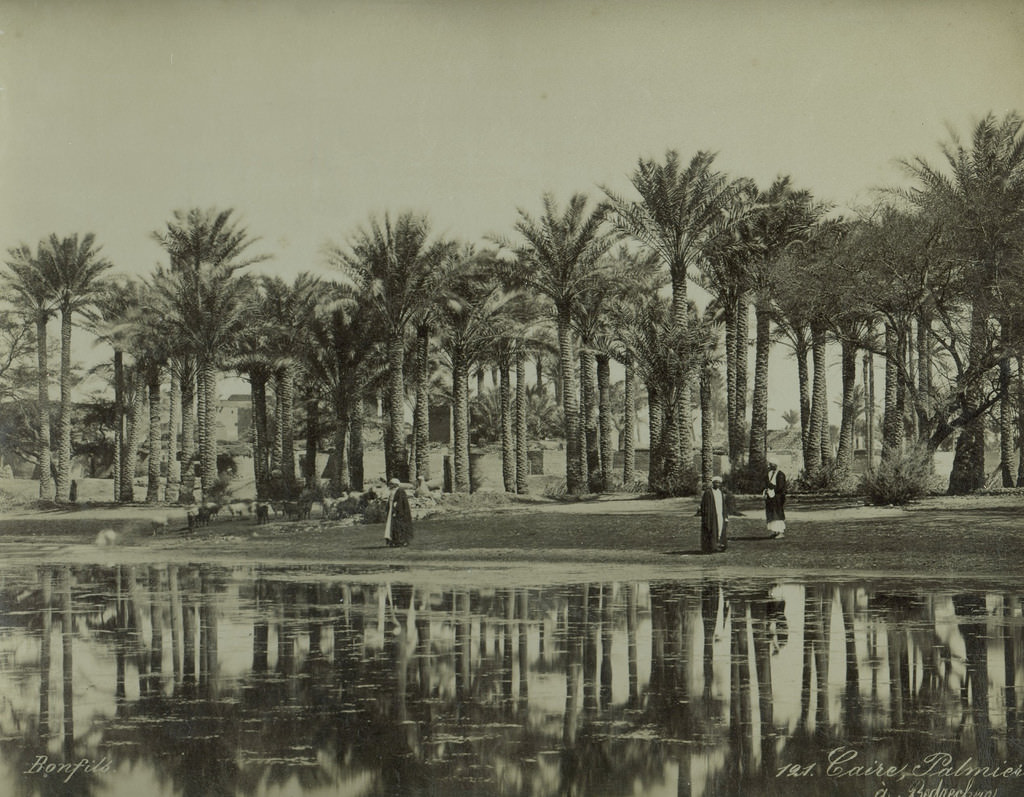
Cairo’s coffee houses in the 1880s were central to public social life. Men gathered there to drink coffee and tea, smoke water pipes, play backgammon, listen to storytellers, and discuss the news of the day. They functioned as a kind of informal public square — open to all, always busy, and operating from morning until late at night.
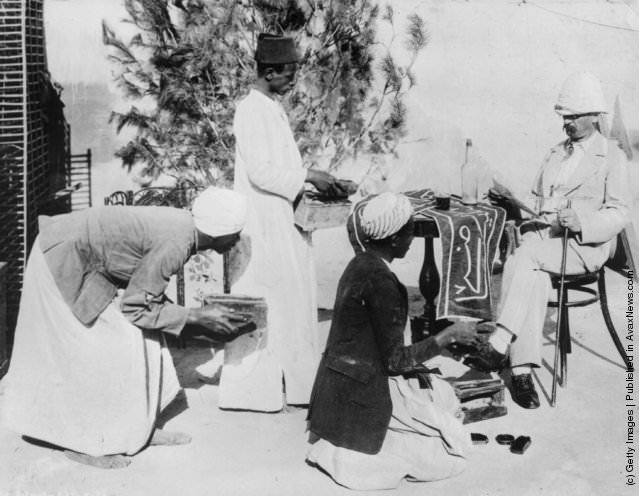
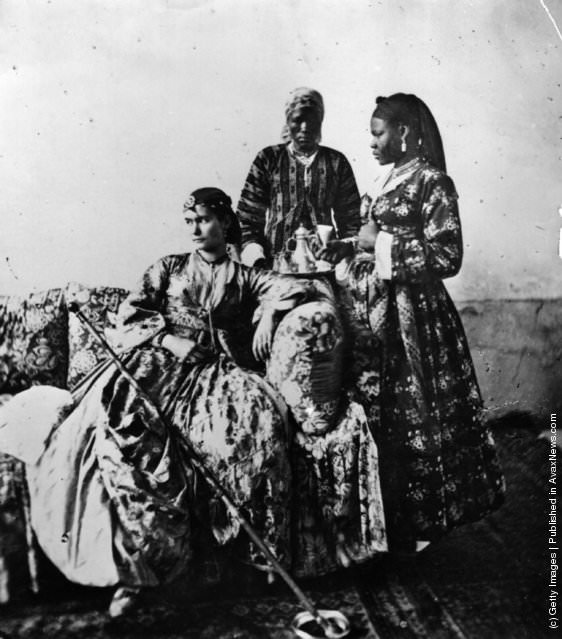
By 1870, Europeans were a visible presence in Cairo’s streets. Bootblacks — boys and men who shined shoes for money — specifically targeted European visitors, whose leather shoes required the kind of polishing unfamiliar to most locals who wore sandals. European women who visited elite Cairo households sometimes gained access to the harem quarters — private domestic spaces reserved for women — and accounts of these visits were published widely in travel literature, shaping how Western audiences imagined Egyptian domestic life.
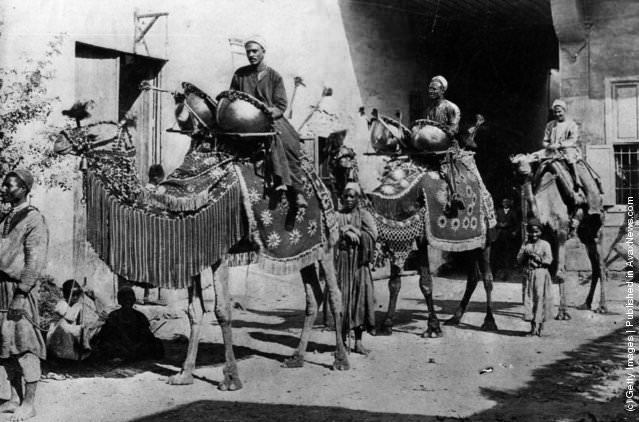
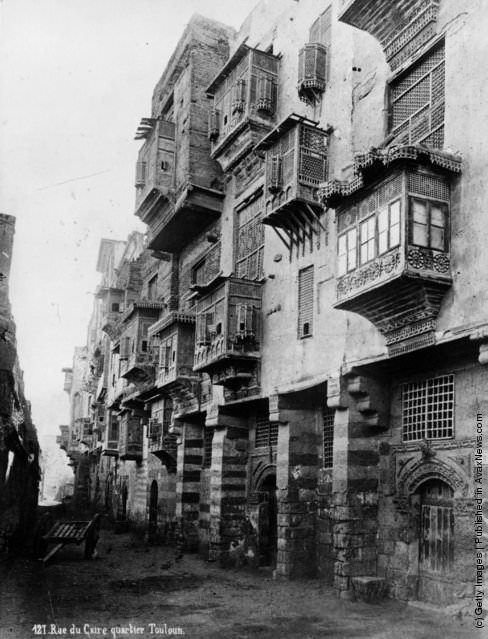
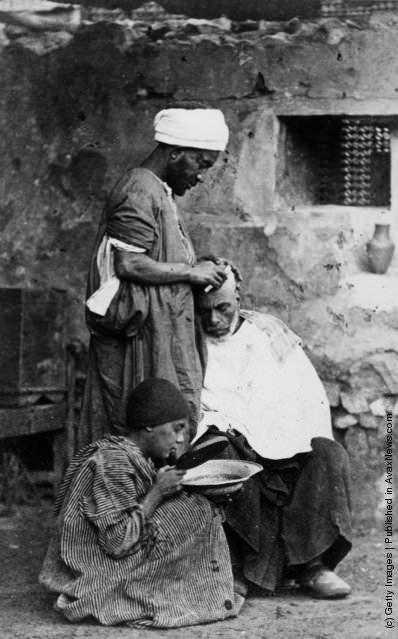
Wedding processions in Cairo in 1890 were elaborate public spectacles. Hired musicians on decorated camels led the bridal party through the streets, with the camels draped in brightly colored fabric and the musicians playing loudly to announce the occasion to the entire neighborhood. Cairo’s older quarters, like the Ibn Tulun district photographed in 1880, were lined with buildings featuring mashrabiyya windows — intricately carved wooden lattice screens that allowed residents to see into the street below while remaining unseen themselves. Street barbers at work in 1880 completed the picture of a city where almost every trade happened in full public view, with skilled workers practicing their craft directly on the streets that served as their workshop.




