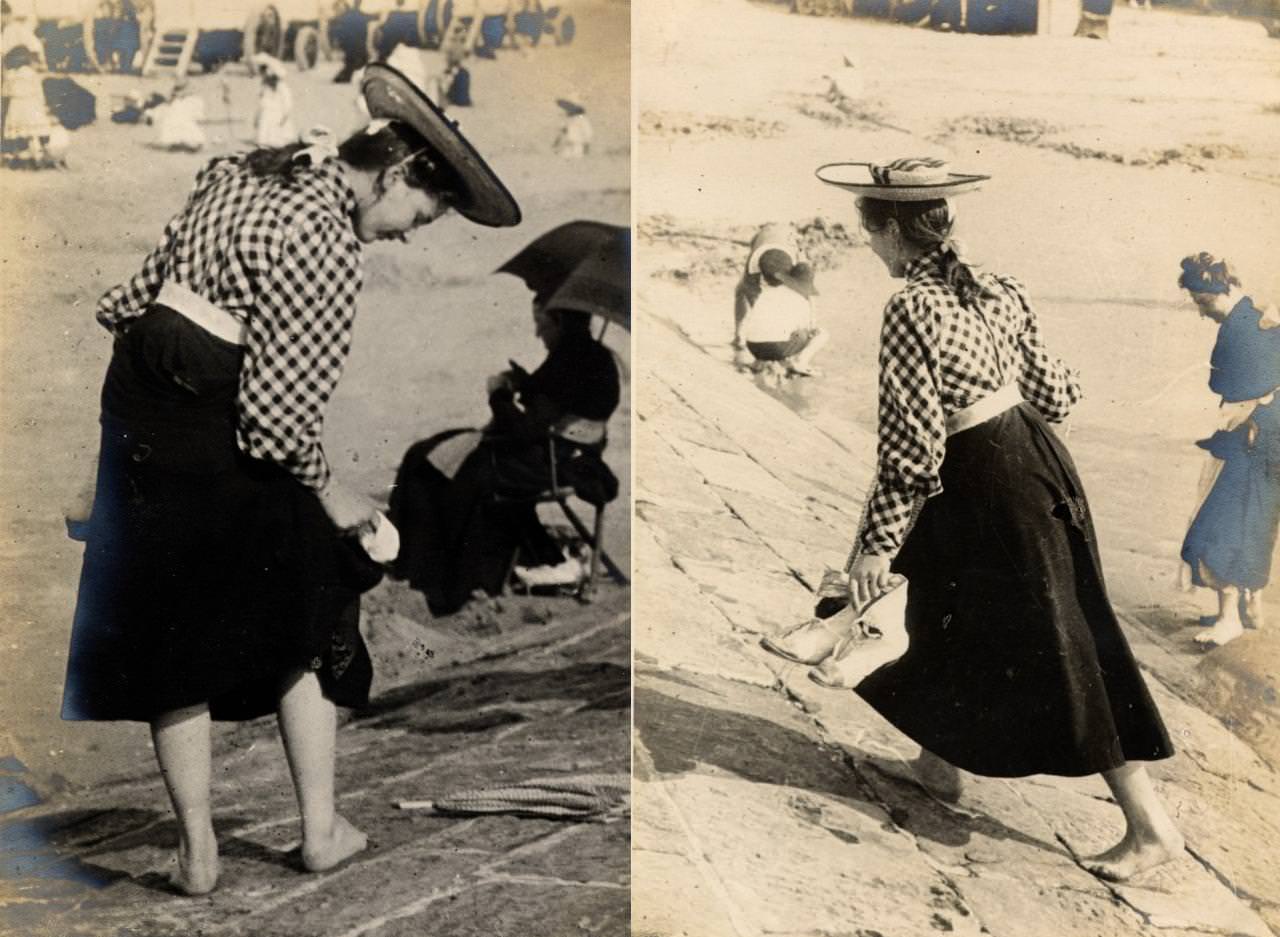
The summer of 1906 brought a fierce heatwave to the British Isles, sending thousands of people rushing to the coast. Brighton and Folkestone were two of the most popular destinations, packed with visitors seeking relief from the heat. Among them was Edward Linley Sambourne — cartoonist for Punch magazine, early member of The Camera Club, and a dedicated amateur photographer. He brought his camera to the shore and captured what he saw with candid precision.
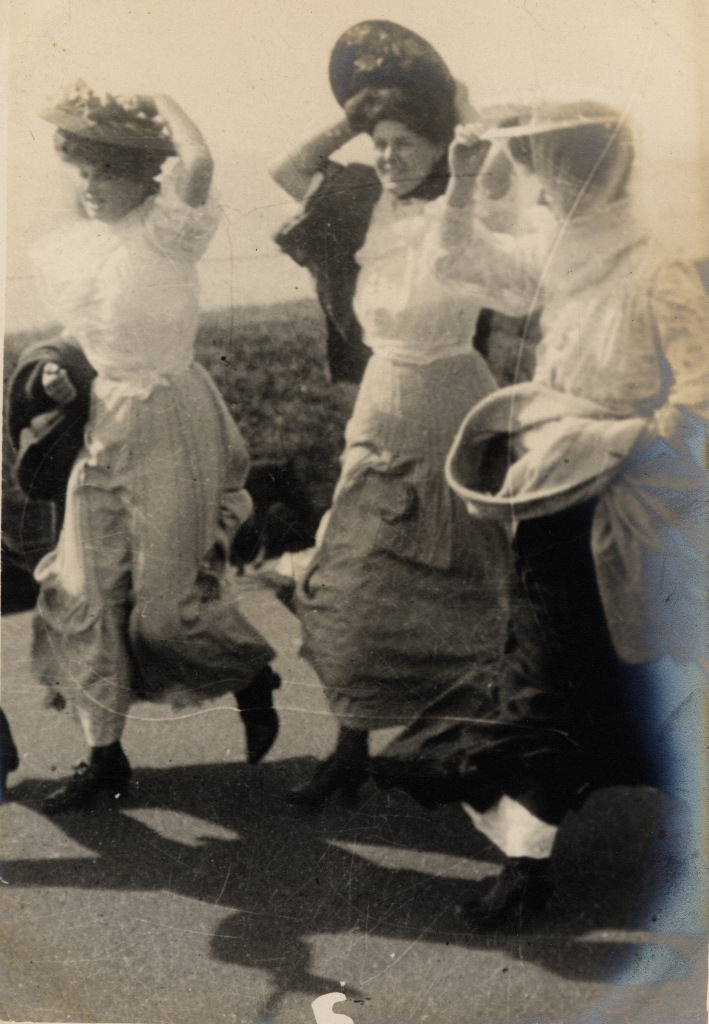
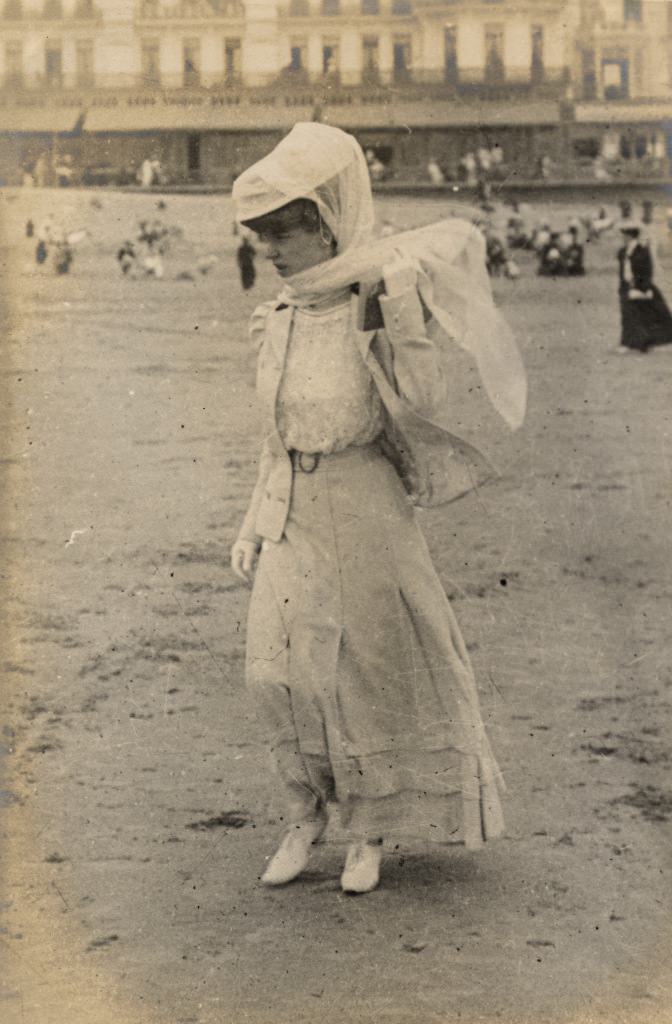
Even at the beach, Edwardian fashion remained remarkably formal. Men arrived in full suits or collared shirts, topped off with hats. Women wore long skirts, blouses, and wide-brimmed hats that shielded them from the sun. Lighter fabrics like cotton and linen were common choices for the heat, but the silhouettes stayed modest and structured. The beach was as much a social stage as a place to relax.
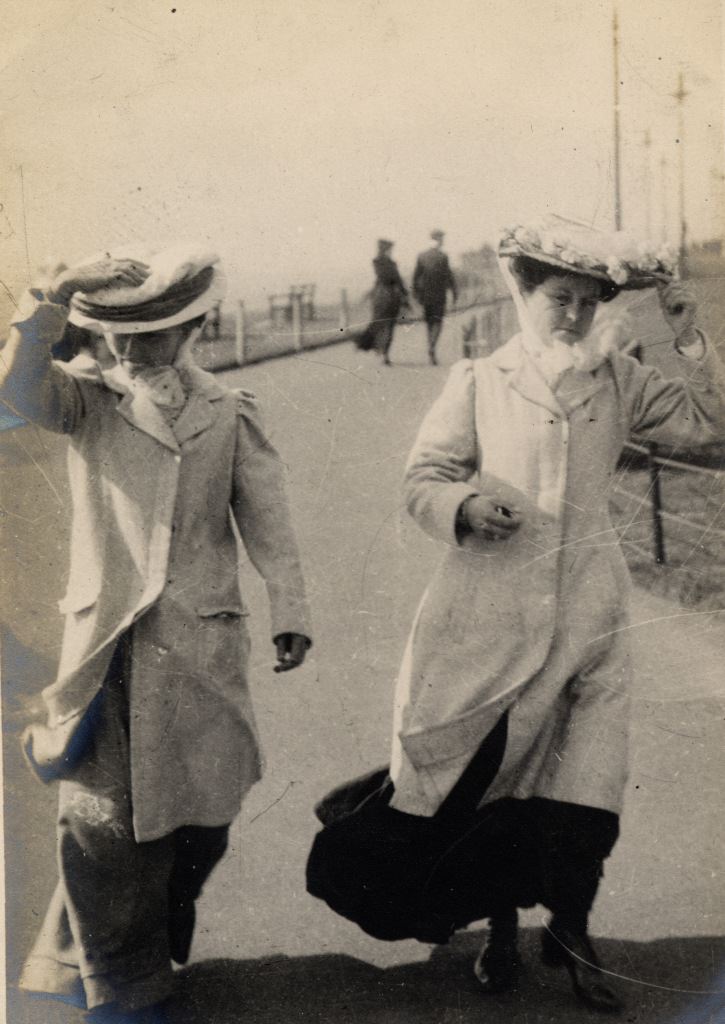
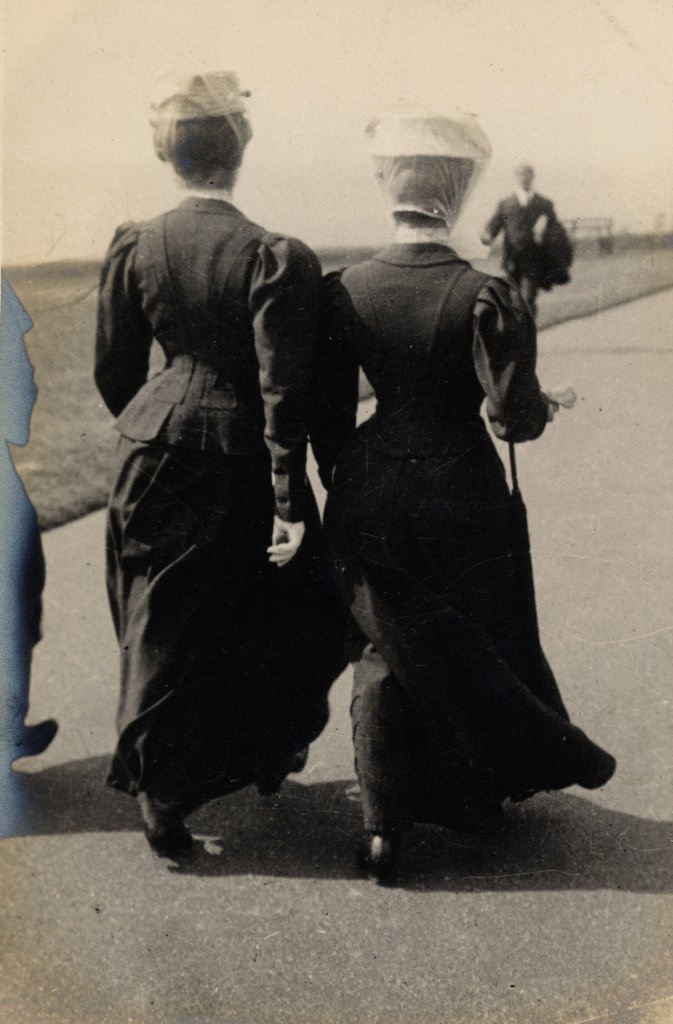
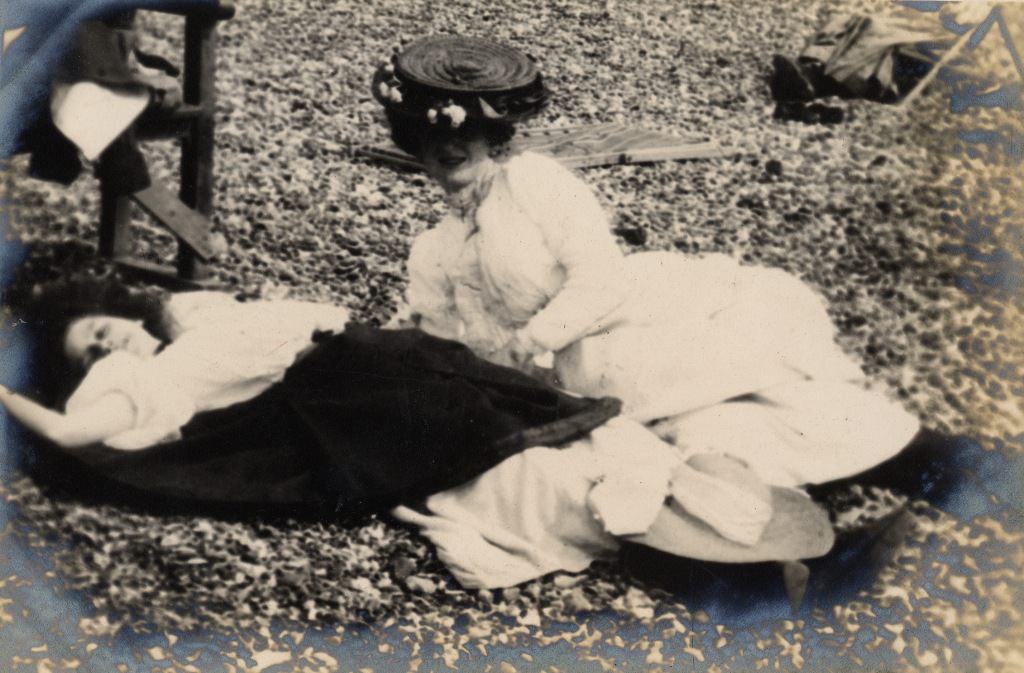
Sambourne moved through the crowds with his camera, often catching people unaware. His photographs show women sitting in deckchairs, strolling the shoreline, and tending to children playing in the sand. The images are unstaged and immediate — a quality rare for photography of that era.
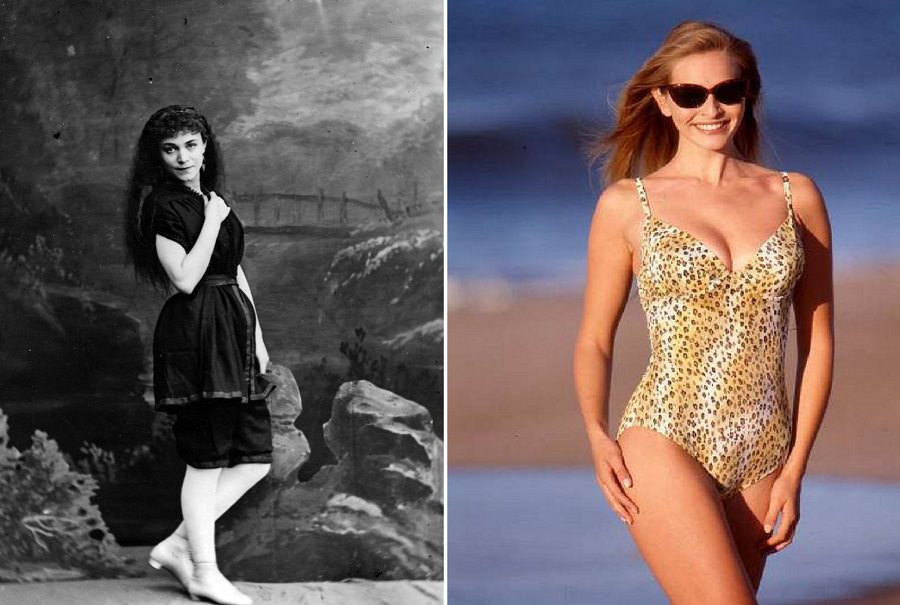
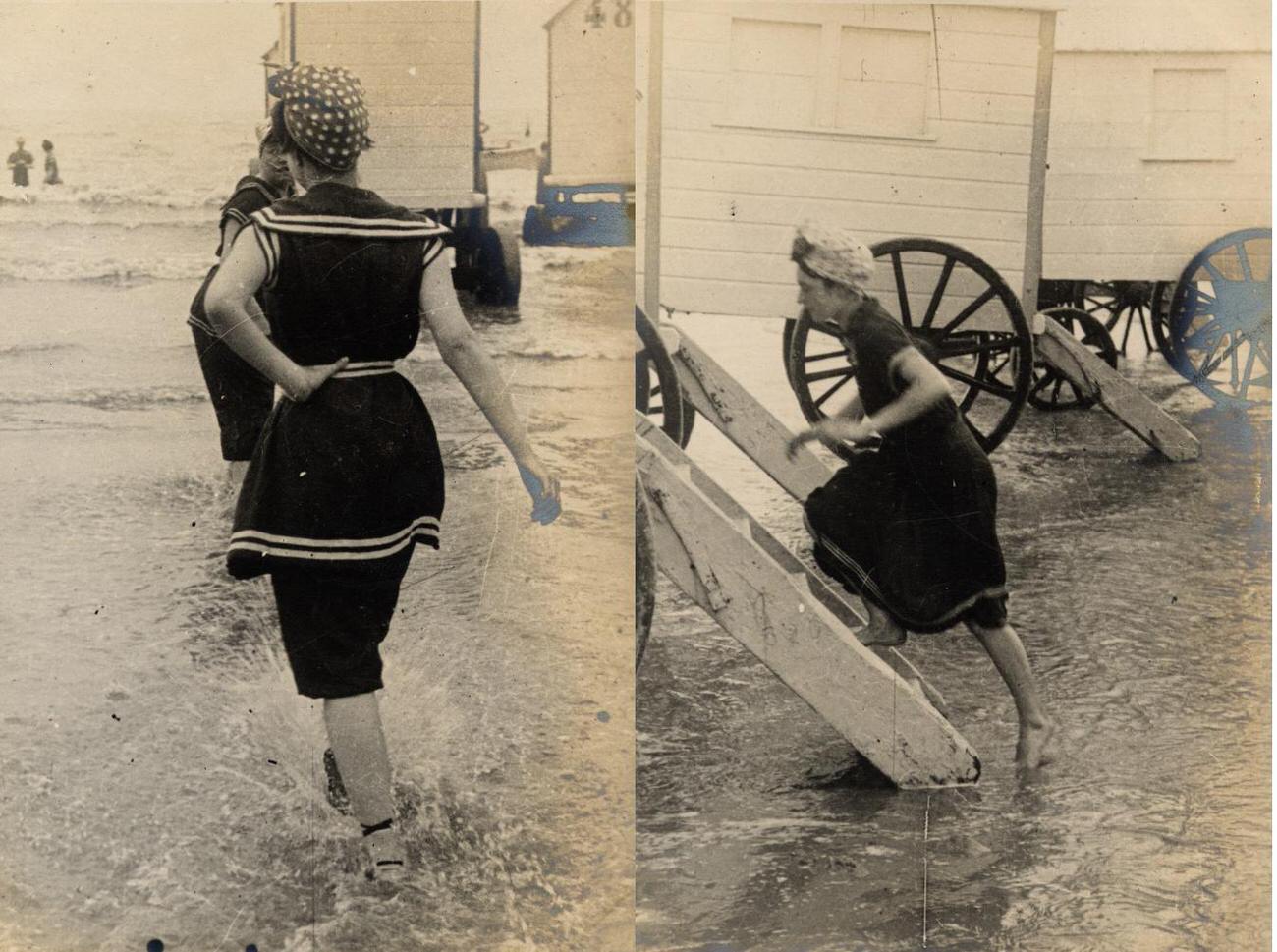
Swimwear followed the same rules of modesty that governed everyday dress. Women wore full-length bathing dresses made of wool, covering the body from neck to knee. Some dresses had weights sewn into the hem to stop the fabric from floating up in the water. Men wore sleeveless woolen suits that covered the torso and reached the knees.
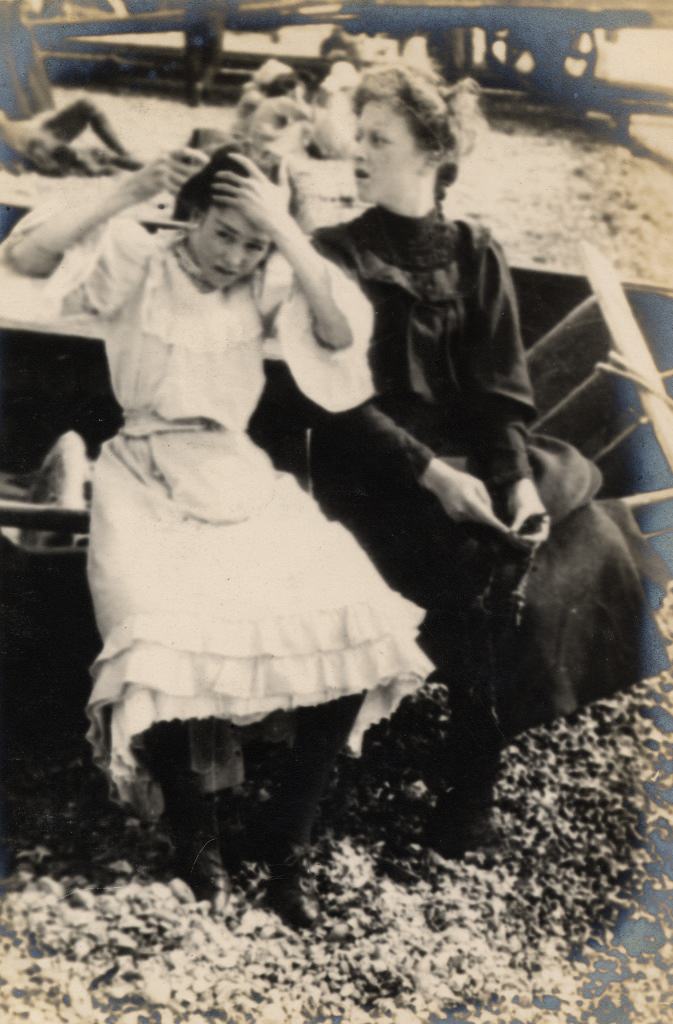
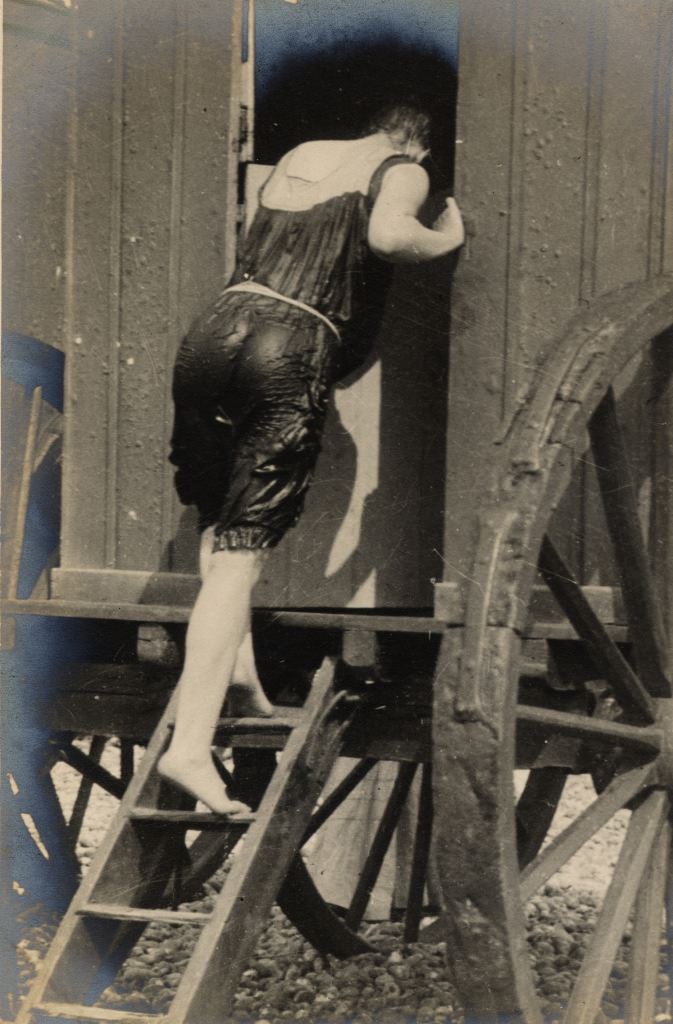
Bathing machines — small wooden changing rooms mounted on wheels — were a fixture of this beach culture. Women used them to change in private and be wheeled directly to the water’s edge. Sambourne photographed these structures at both Brighton and Folkestone, as well as at Weymouth, which he visited earlier that July.
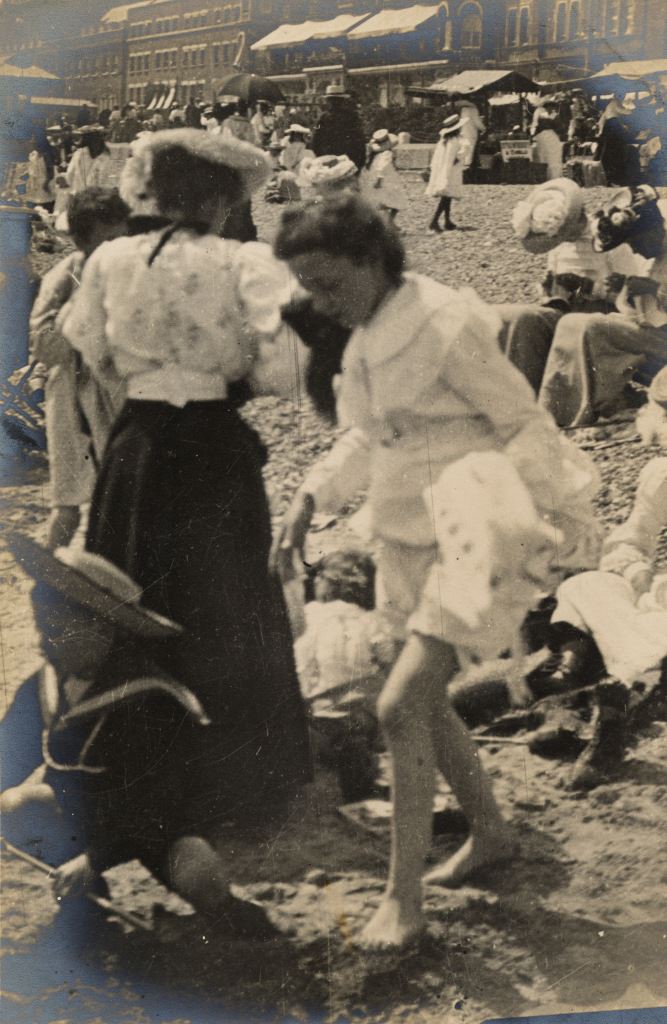
The expansion of the railway network made coastal towns far more accessible to people beyond the wealthy classes. Working-class families now joined middle- and upper-class visitors on the same shores, though their clothing still reflected the gap in social status. Wealthier visitors arrived in elaborate outfits; those with less money wore simpler garments. The beach was one of the few spaces in Edwardian England where these groups shared the same ground.
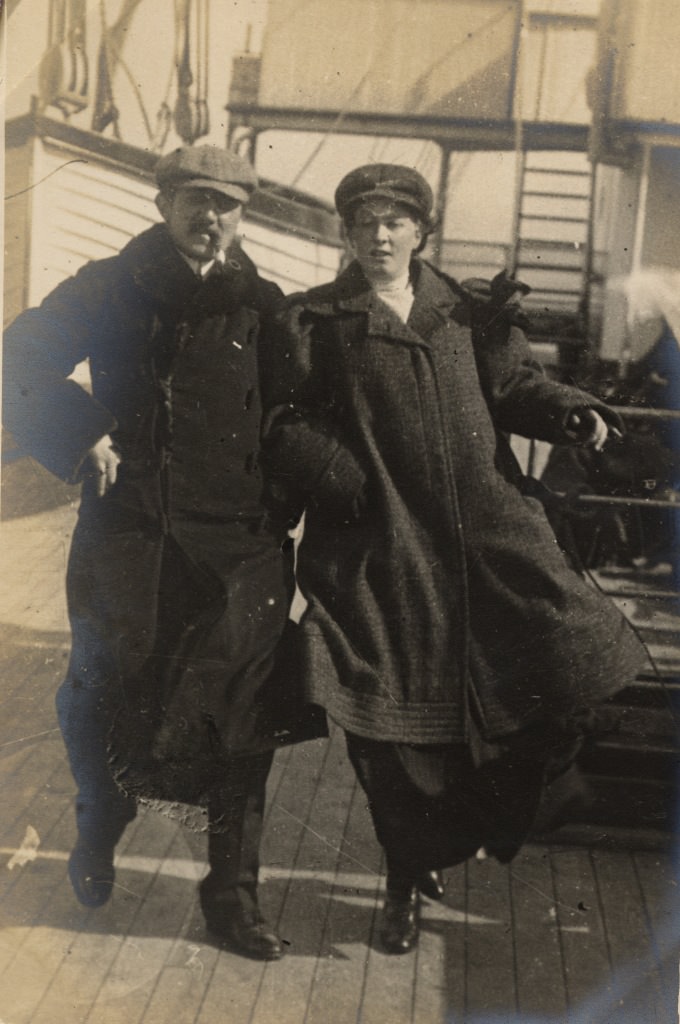
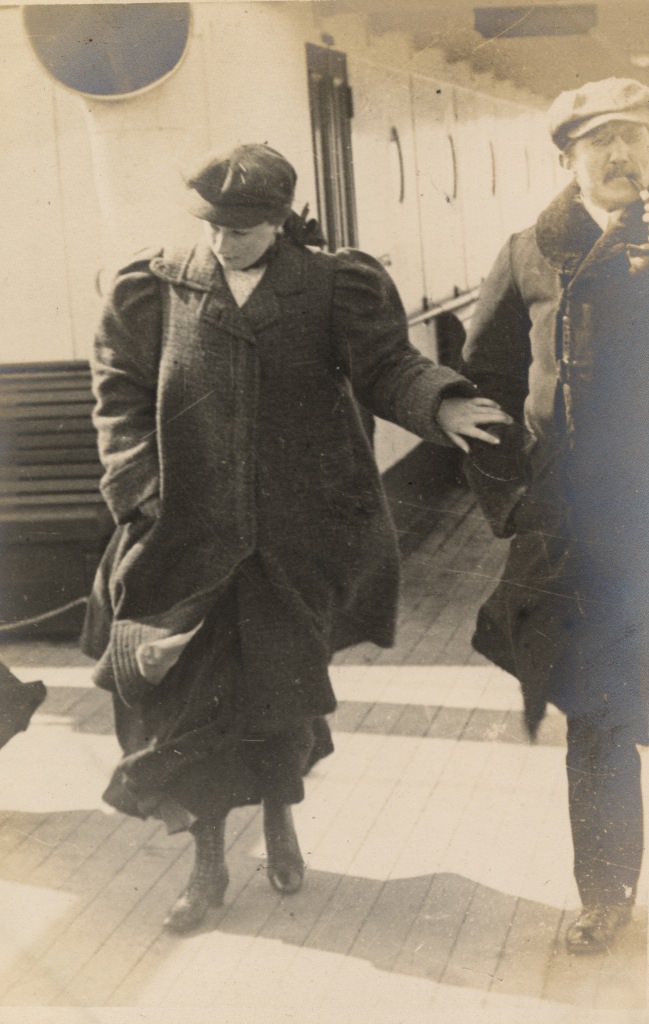
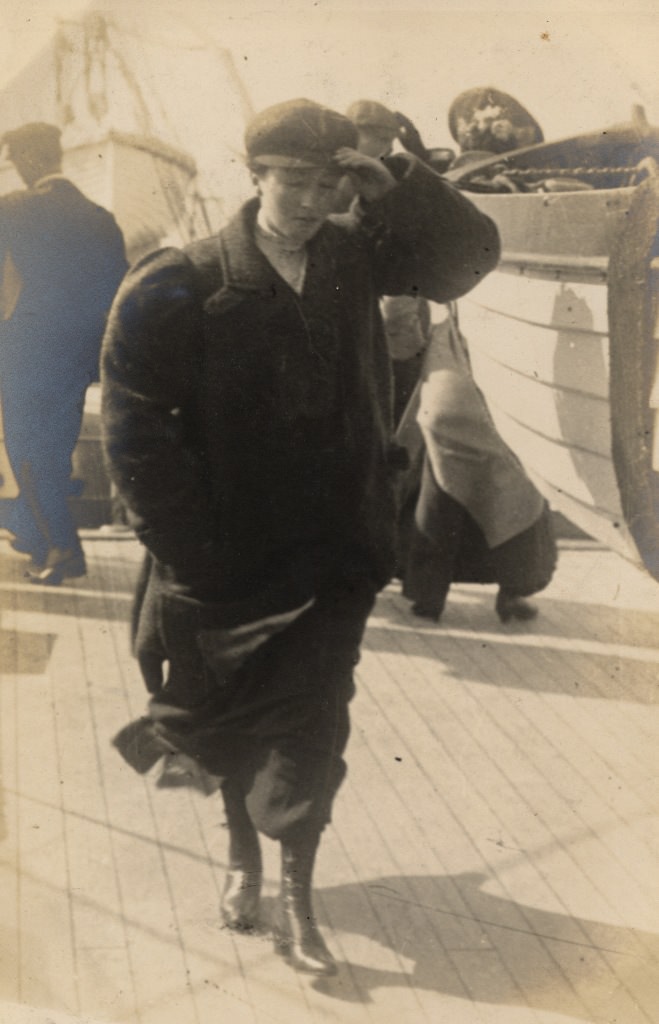
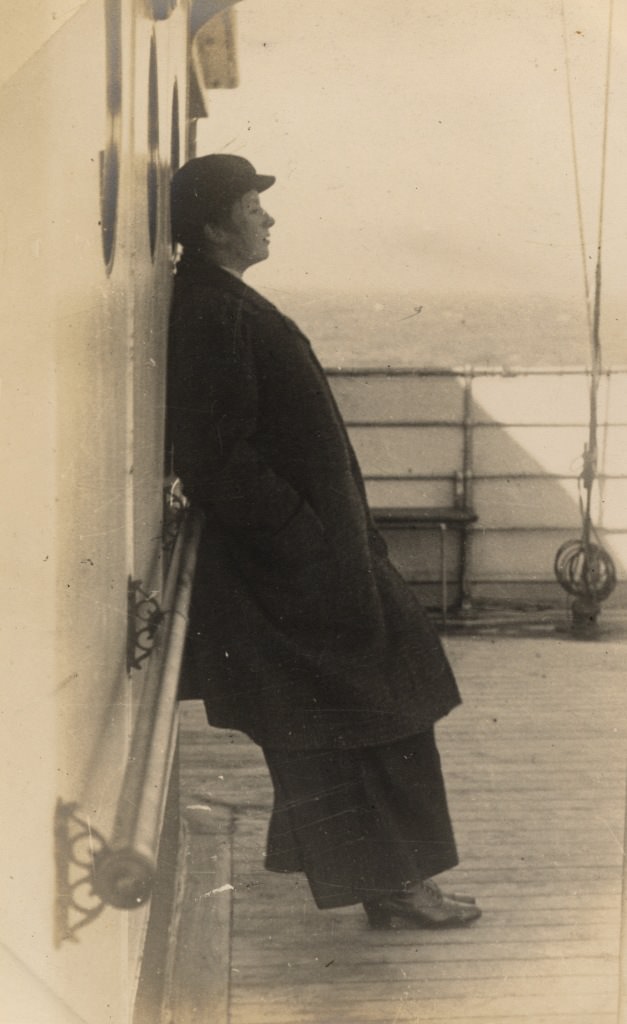
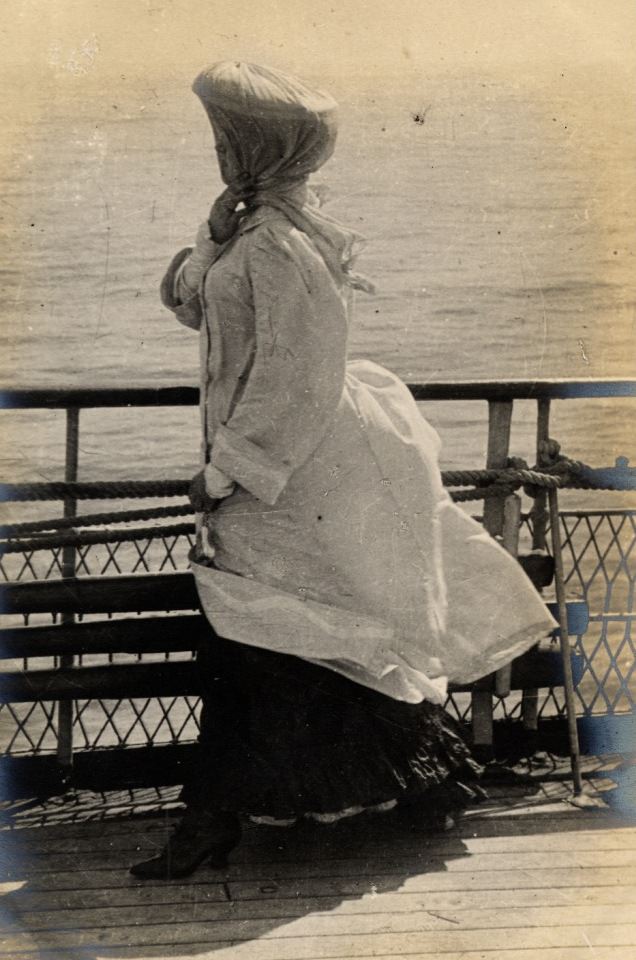
Sambourne’s lens also followed subjects beyond the beach itself. On a Channel ferry crossing, he photographed passengers dealing with the sea breeze — a recurring challenge for women whose wide-brimmed hats and full skirts caught the wind. One woman appears in several frames, her tailored coat and hat giving her a notably masculine silhouette for the time.