
Covent Garden Market in London was one of the busiest and most important wholesale markets in the world. By the early 20th century, it sat at the heart of London’s fruit, vegetable, and flower trade. Thousands of transactions happened there every morning before most of the city had eaten breakfast. And at the center of it all were the porters — the men who kept everything moving.
These porters had one of the most physically demanding jobs at the market. They carried produce from the market buildings to buyers, carts, and delivery points across the area. Rather than using wheelbarrows or trolleys, they balanced towering stacks of wooden and wicker baskets directly on their heads. A flat cap or a specially padded hat was often the only protection between their skull and hundreds of pounds of stacked cargo.
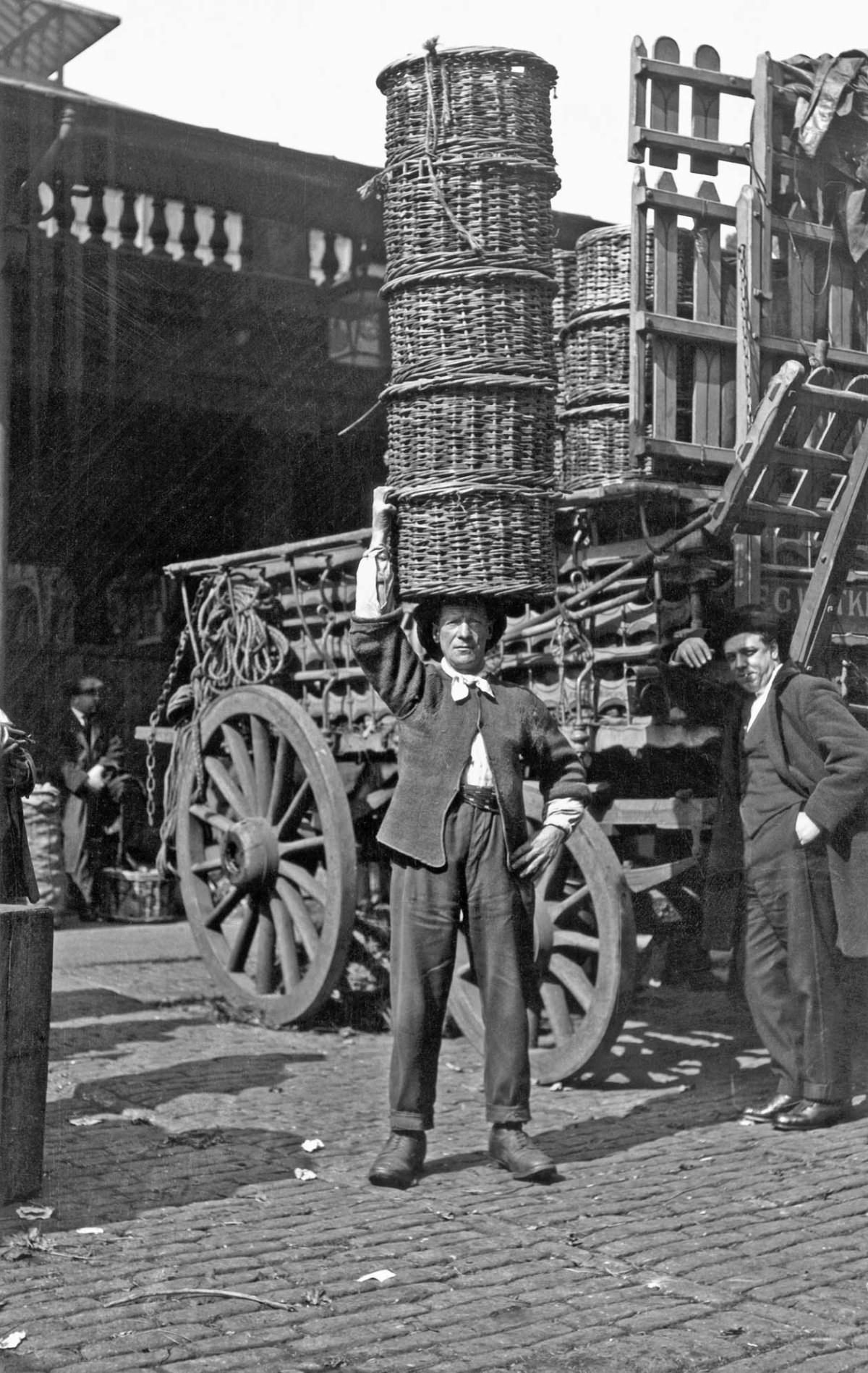
The skill required to carry a single basket was manageable with practice. Carrying ten, fifteen, or twenty baskets stacked in a straight column above your head was another matter entirely. Porters trained for years to build the neck strength and balance needed to walk across cobblestoned streets without losing a single crate. The stack had to be loaded carefully from the bottom up, each basket seated firmly before the next was placed on top.
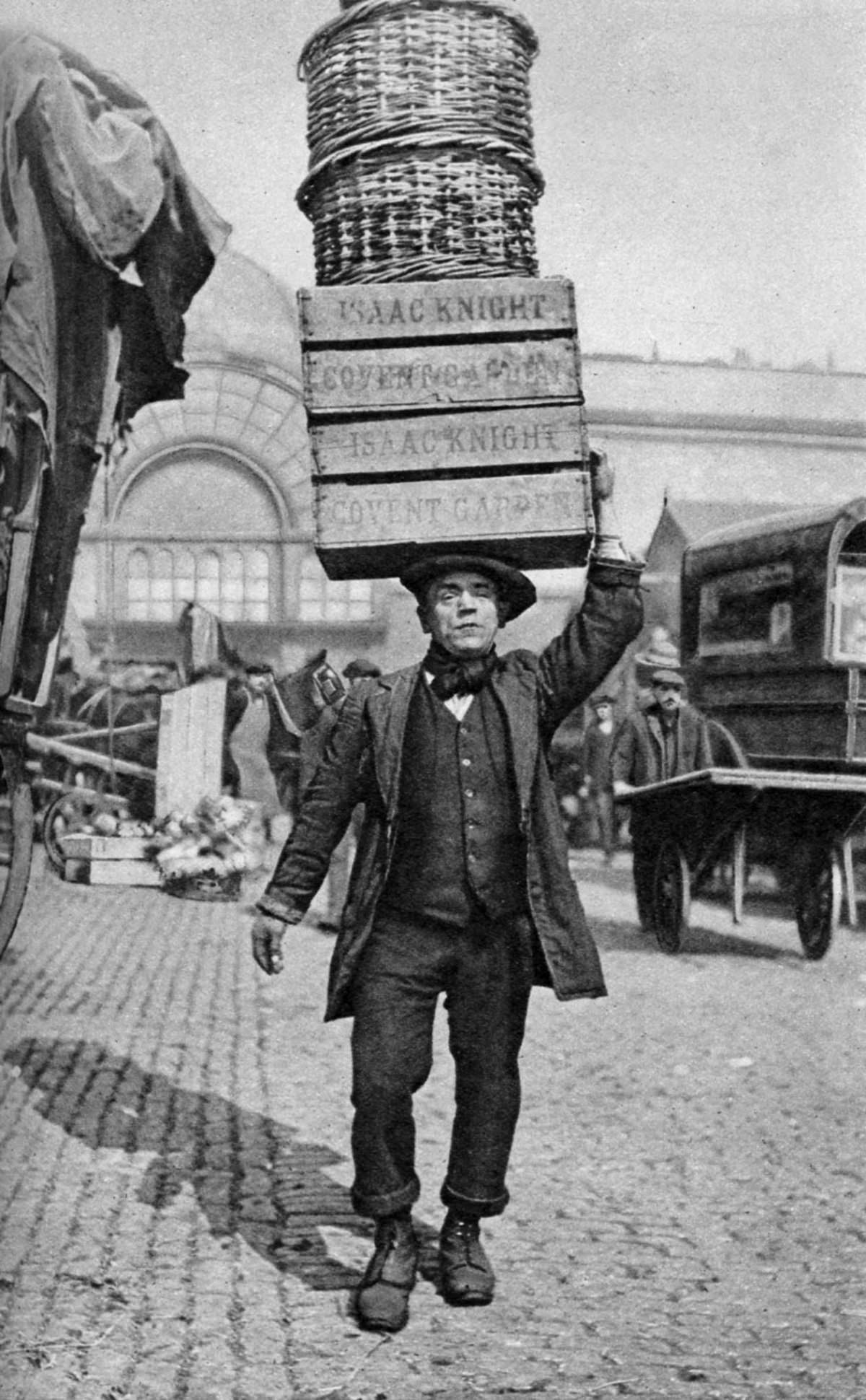
The basket-carrying skill became so associated with Covent Garden that formal competitions were held to determine who could carry the most. Traders and porters trained specifically for these championships, pushing the limits of how high a tower a person could safely balance on their head while walking. In 1925, Alfred Bailey was photographed practicing with fifteen baskets in preparation for one of these contests.
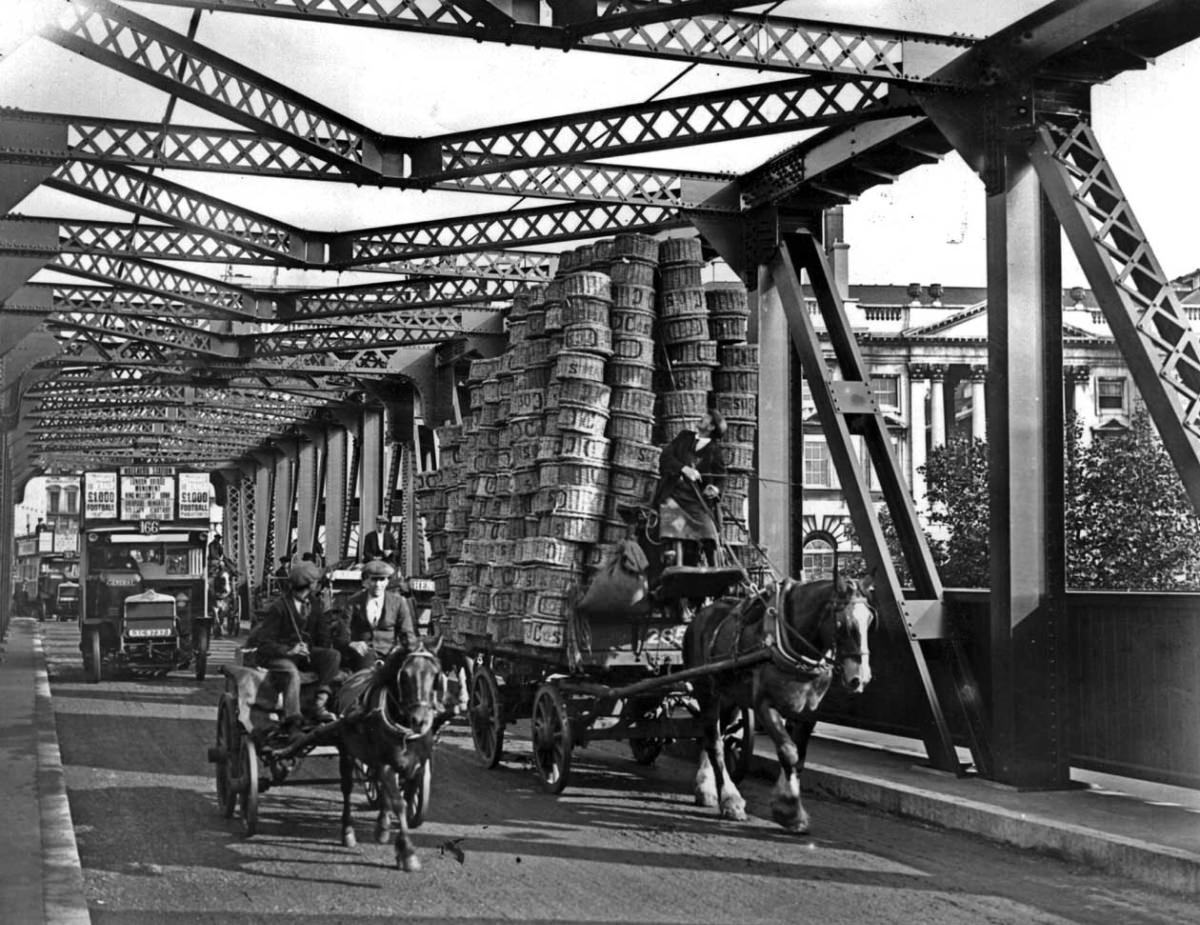
Porters weren’t confined to the market floor. They moved goods across streets and bridges, navigating the full chaos of central London traffic. Horse-drawn carts, early motor vehicles, and pedestrians all shared the same roads. A man balancing a column of baskets above his head had to stay focused no matter what was happening around him.
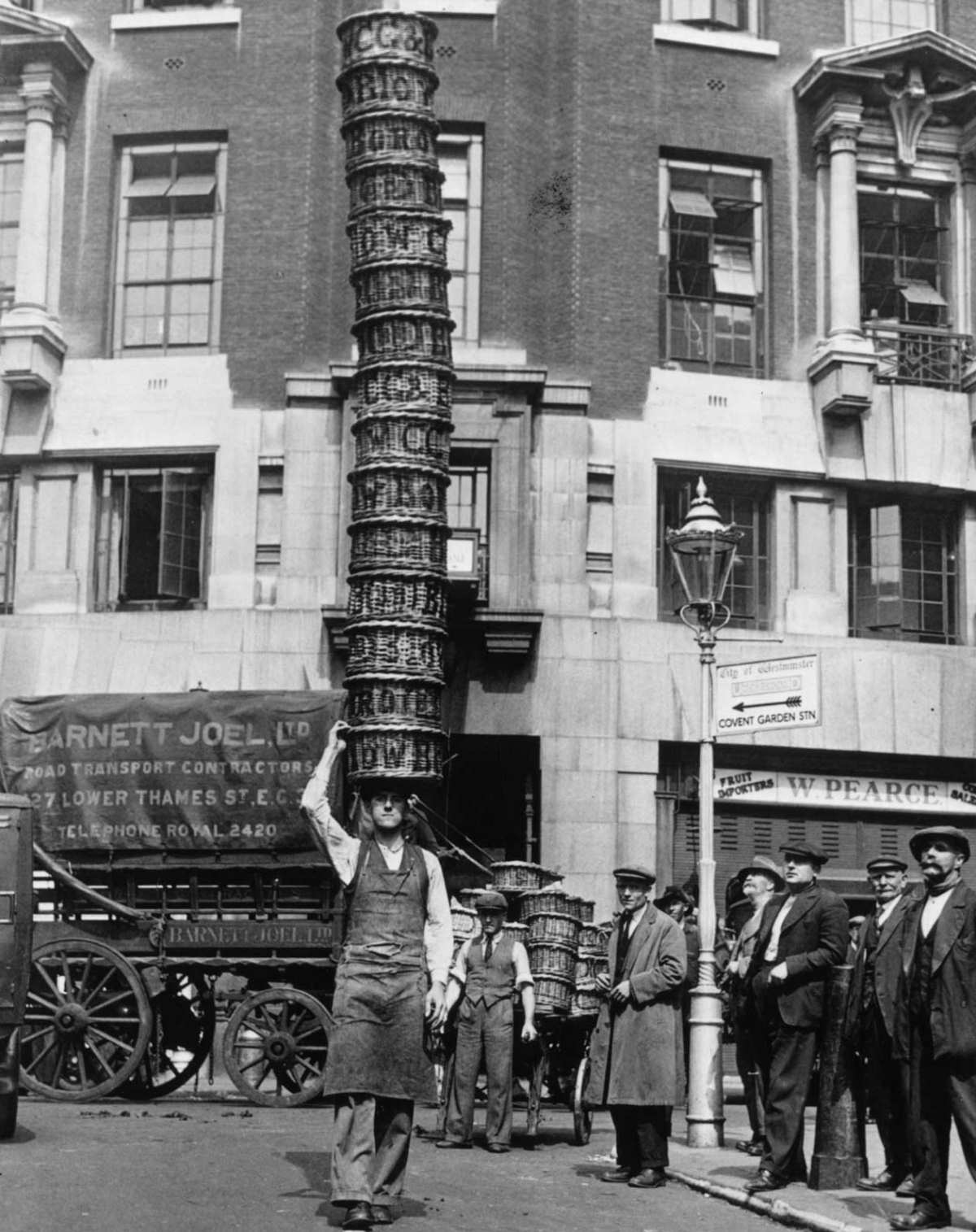
Twenty baskets was a benchmark that many of the most experienced porters aimed to reach. That number represented a stack that could rise six feet or more above a man’s head. Reaching it required not just strength but a precise understanding of weight distribution. One misaligned basket could bring the entire tower crashing down.
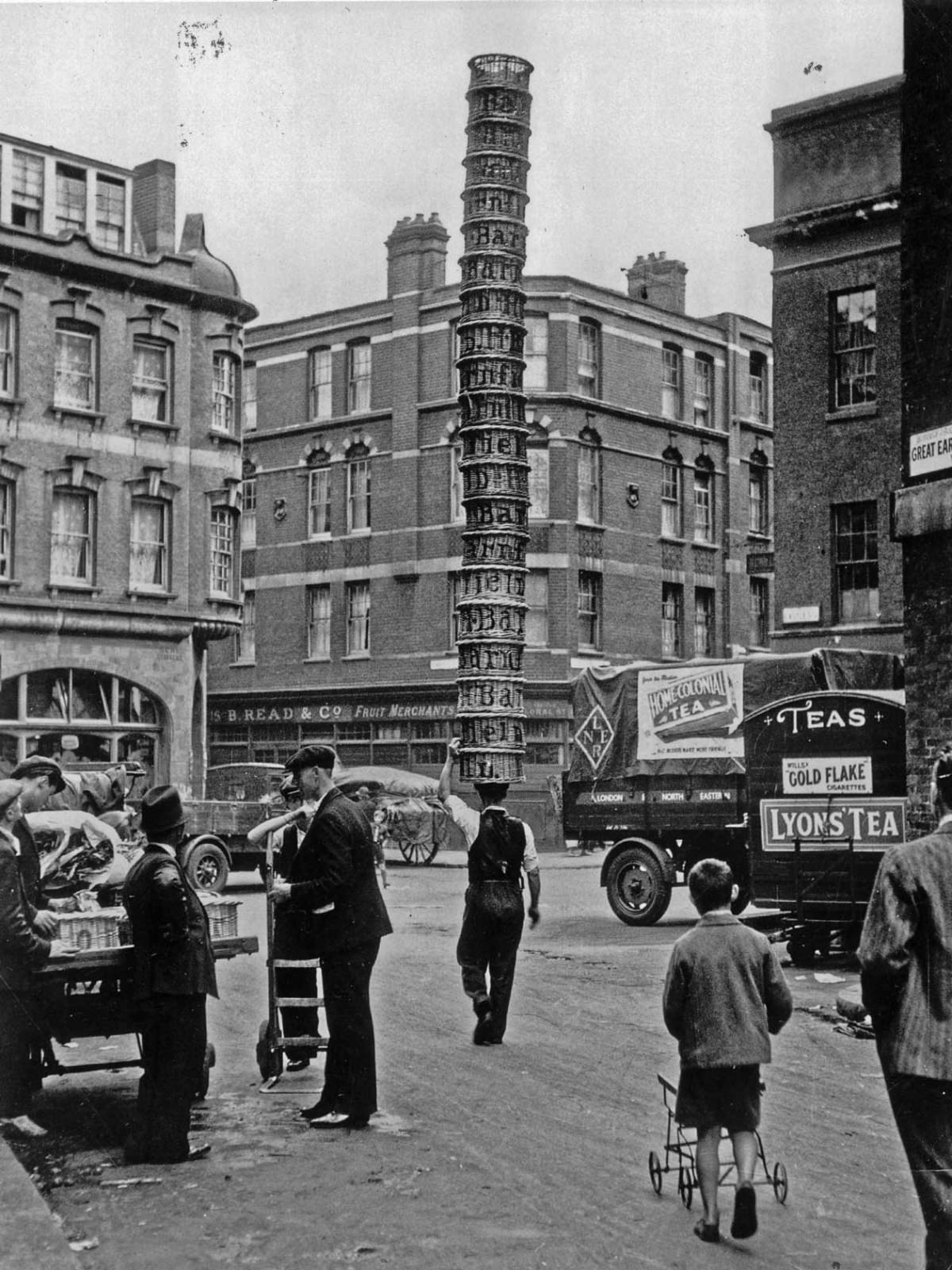
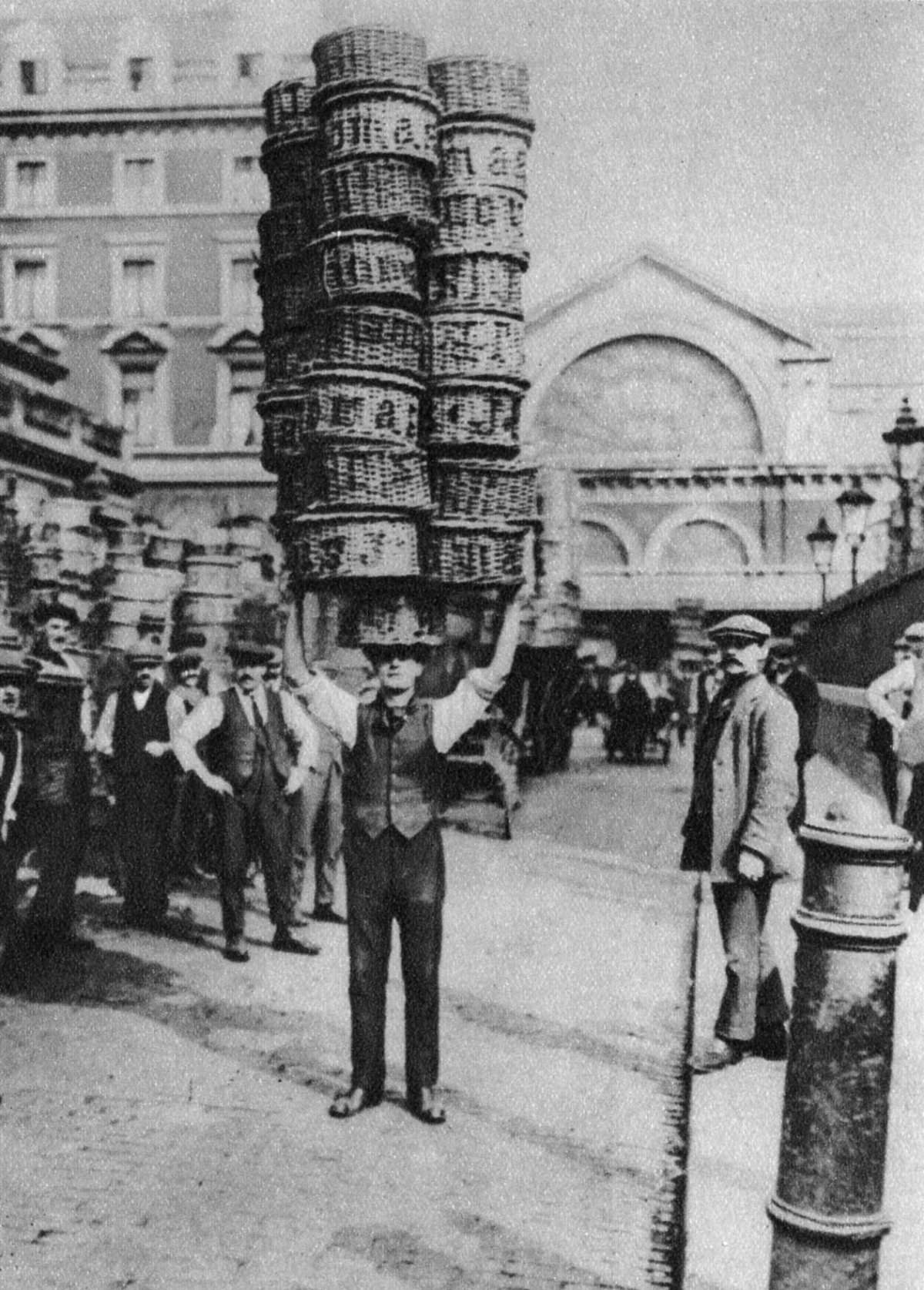
Individual porters became known figures at the market. Names like Jim Sainsbury were recognized by traders and buyers alike. These men worked long shifts, often starting in the early hours of the morning when the first deliveries arrived from farms and warehouses outside the city. By the time most Londoners were awake, the porters had already completed hours of heavy labor.
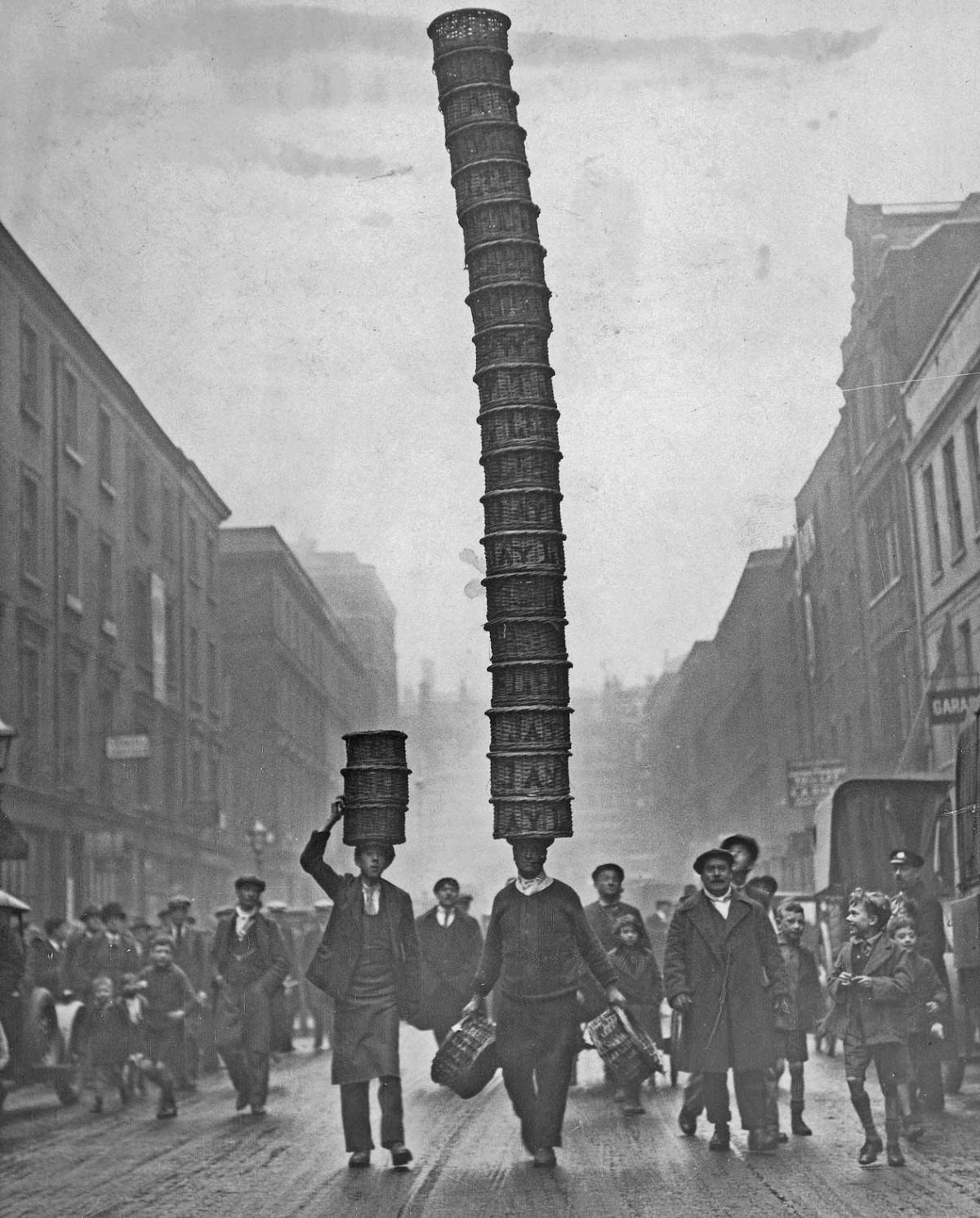
The 1930s saw the basket-carrying tradition still going strong, even as motor vehicles began to change how goods moved through the city. Photography of the period captured the sheer scale of what these men hauled. A single porter transporting baskets across King Street was moving a load that no reasonable person would attempt without years of experience behind them.
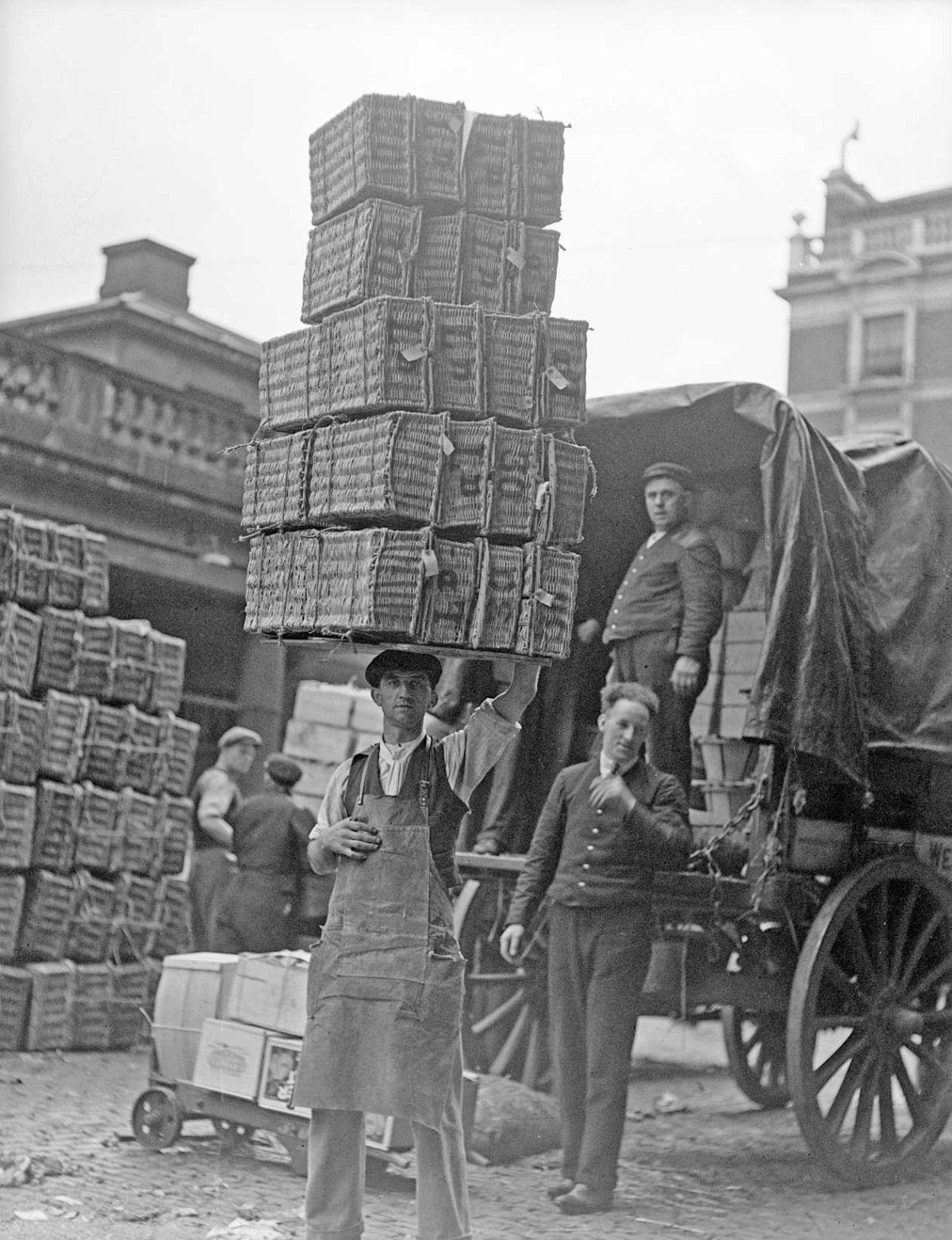
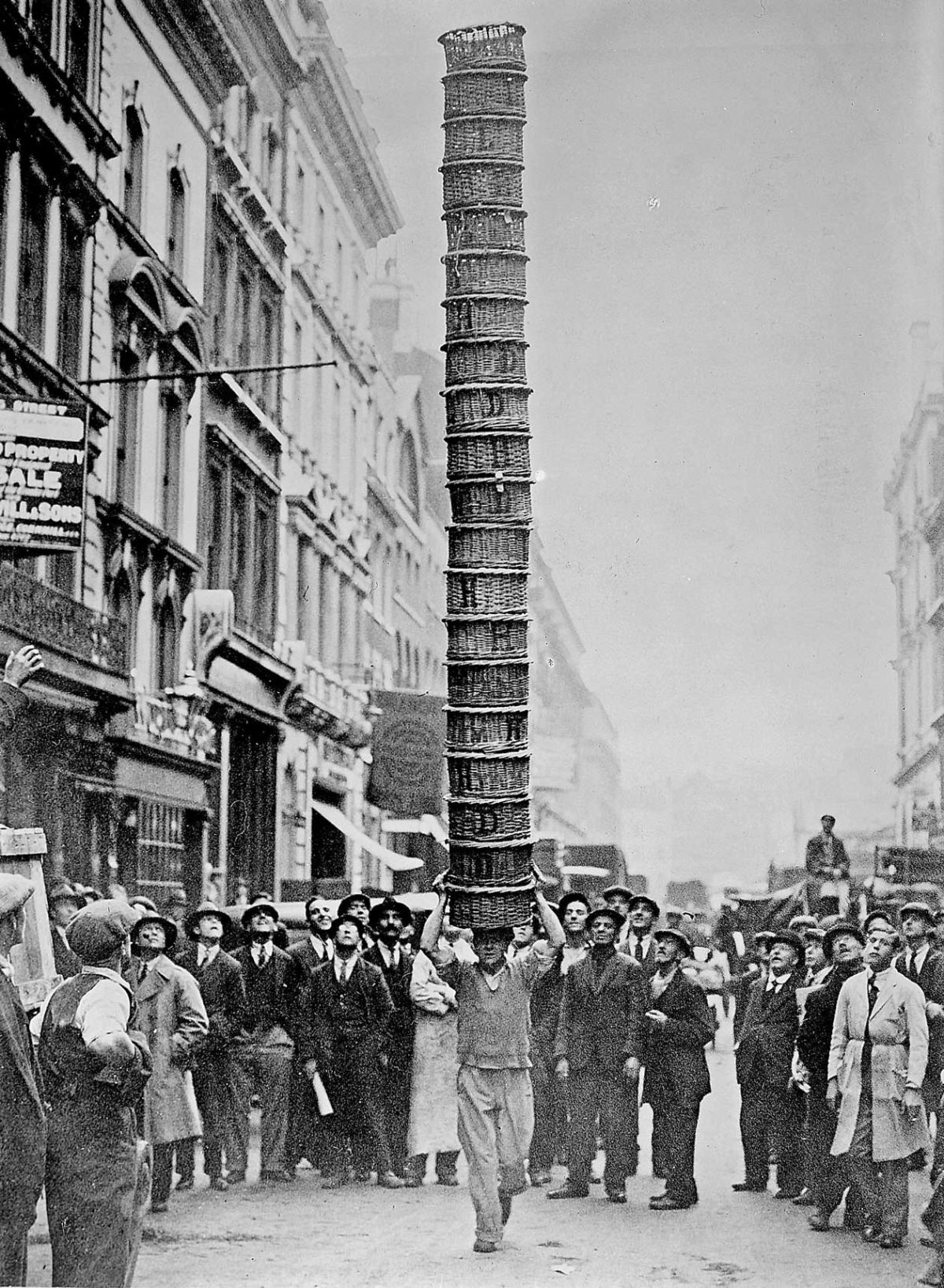
The basket-carrying championships drew attention from photographers and onlookers who recognized that what these men did was extraordinary. Competitors balanced their stacks in front of crowds, each one attempting to outdo the last. The 1933 championships were no different — the photographs from that year show stacks that seem almost impossible to believe without the visual proof.
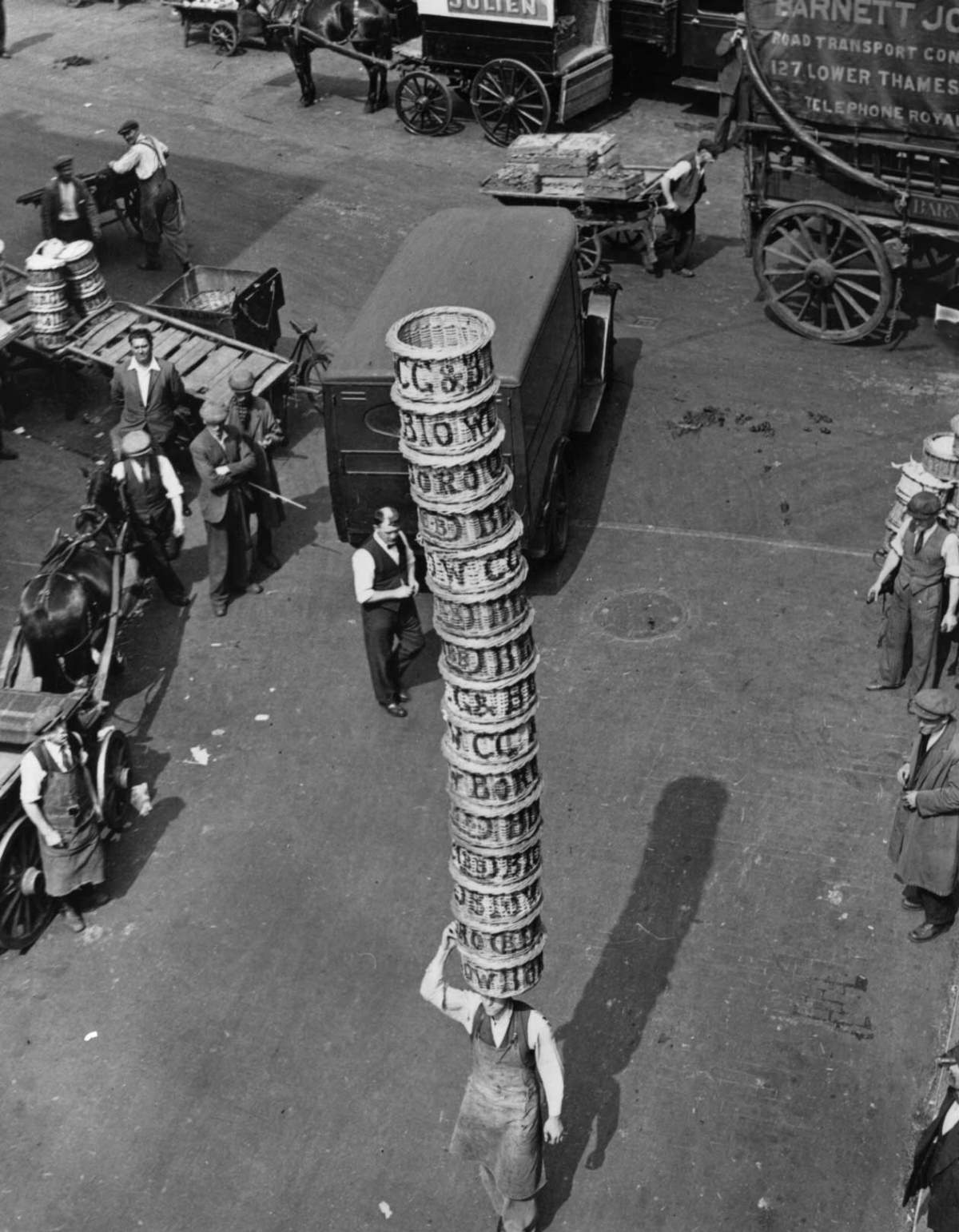
The porters of Covent Garden worked without machinery, without conveyor belts, and without forklifts. Their bodies were the equipment. Every basket stacked on a man’s head was a testament to a physical discipline that took years to develop and that kept one of London’s greatest markets running every single day.




