Covent Garden sits on the eastern edge of London’s West End, wedged between St Martin’s Lane to the west and Drury Lane to the east. For centuries it was defined by its famous fruit-and-vegetable market, which occupied the central piazza. By the early 1990s, that market was long gone — relocated to Nine Elms in 1974 — and the piazza had transformed into a buzzing hub of shops, street performers, cafés, and tourists. The Royal Opera House, still widely known simply as “Covent Garden,” anchored the area’s cultural prestige. Nearby, the Theatre Royal on Drury Lane and the London Transport Museum added to a district packed with history and daily life.
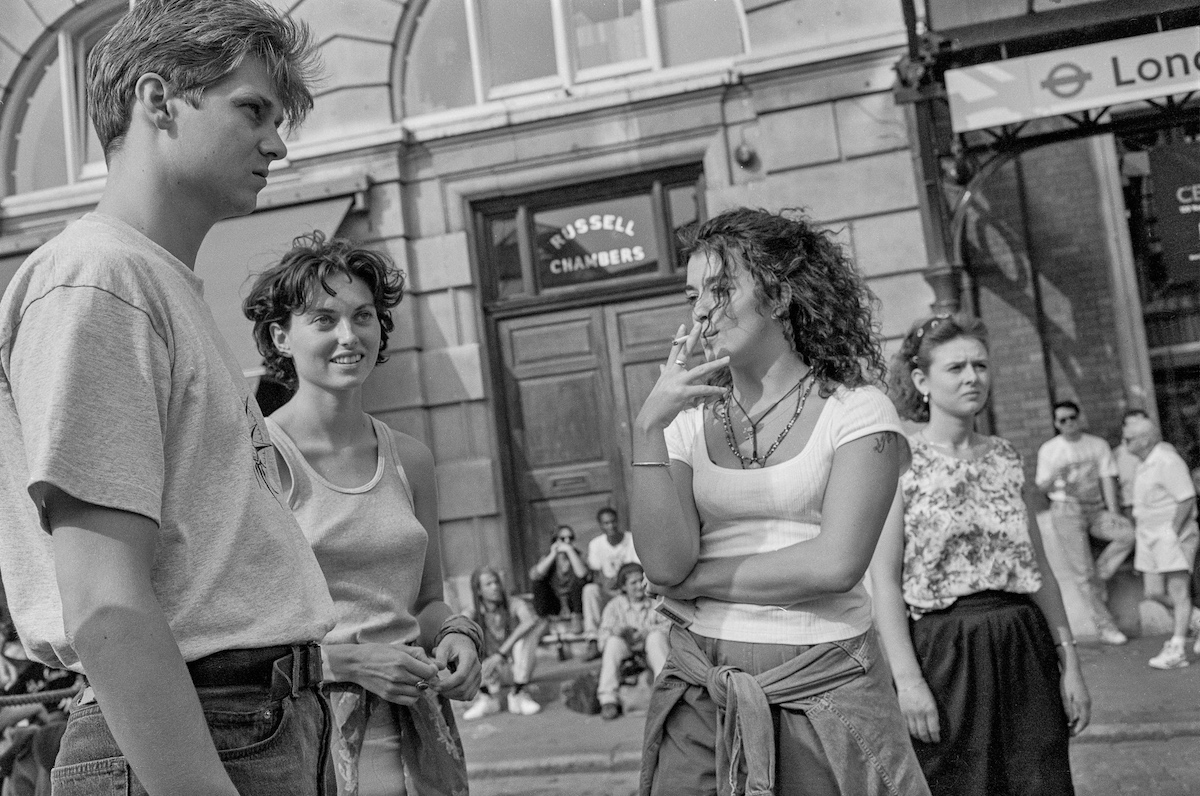
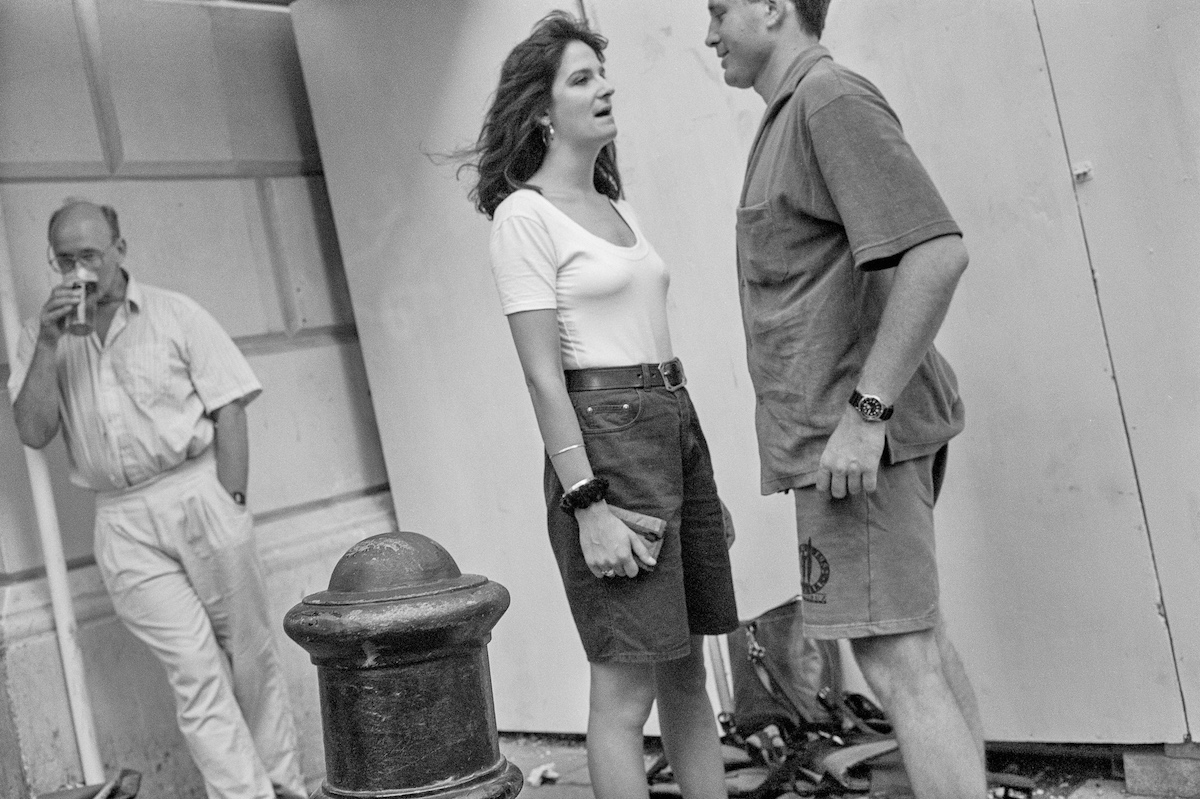
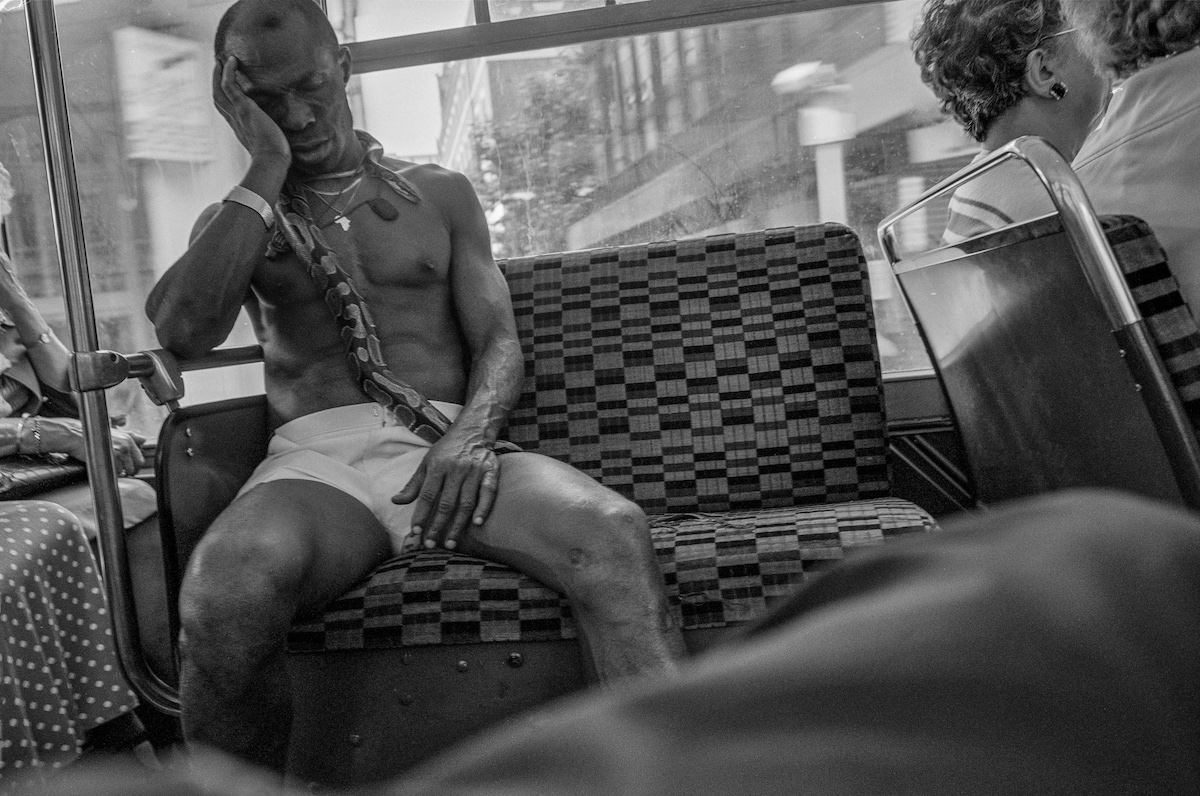
Photographer Peter Marshall spent the early 1990s documenting Covent Garden with a street photographer’s eye. His images capture the area not as a postcard, but as a living, working, sometimes chaotic place. From tourists posing with police horses to men carrying snakes onto buses, Marshall recorded the full spectrum of what made this corner of London so distinctive.
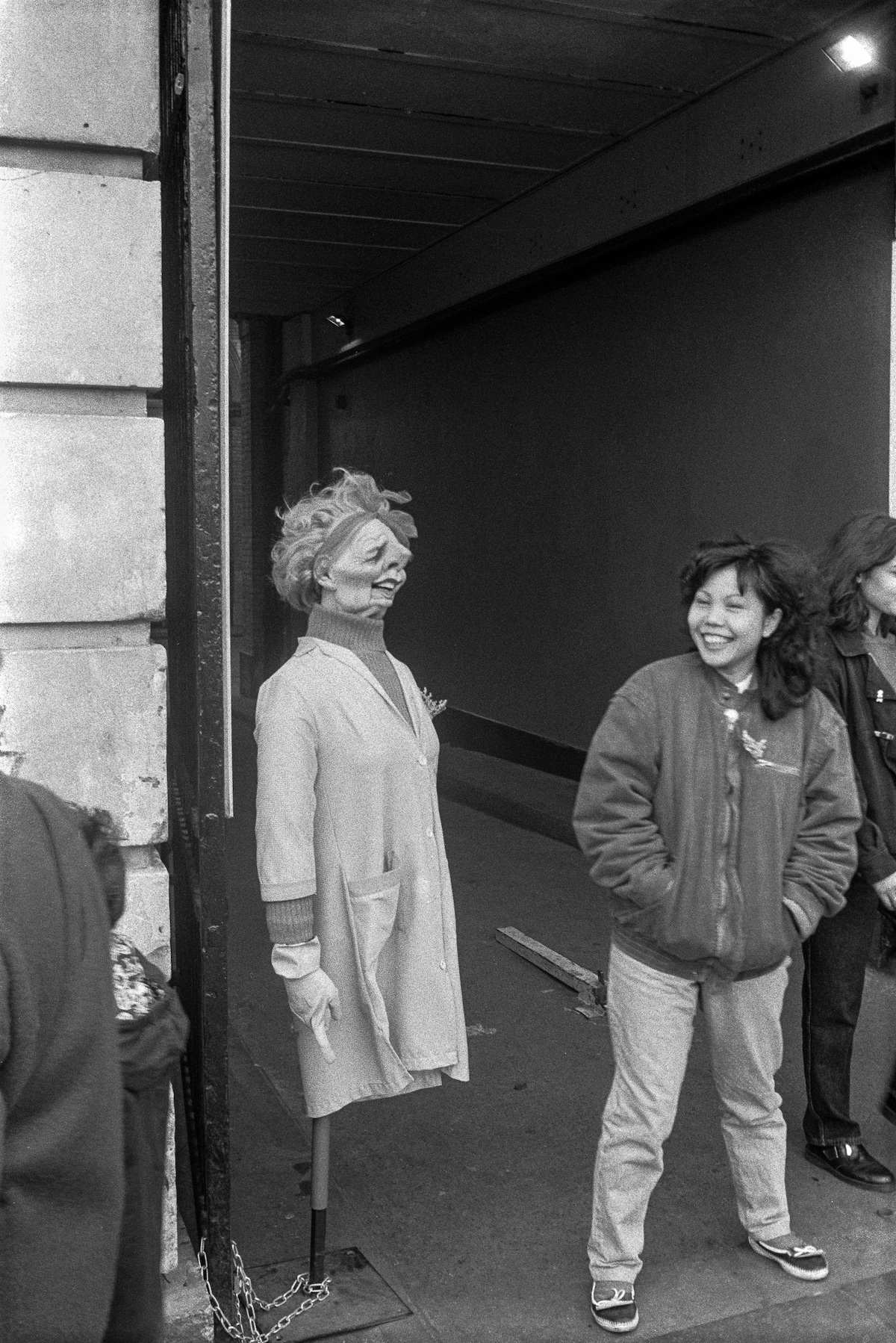
In 1991, the political atmosphere in Britain was still thick with the aftermath of Margaret Thatcher’s resignation the previous year. Street vendors and market stalls reflected that mood in unexpected ways, including novelty figures of the former Prime Minister that drew curious crowds.
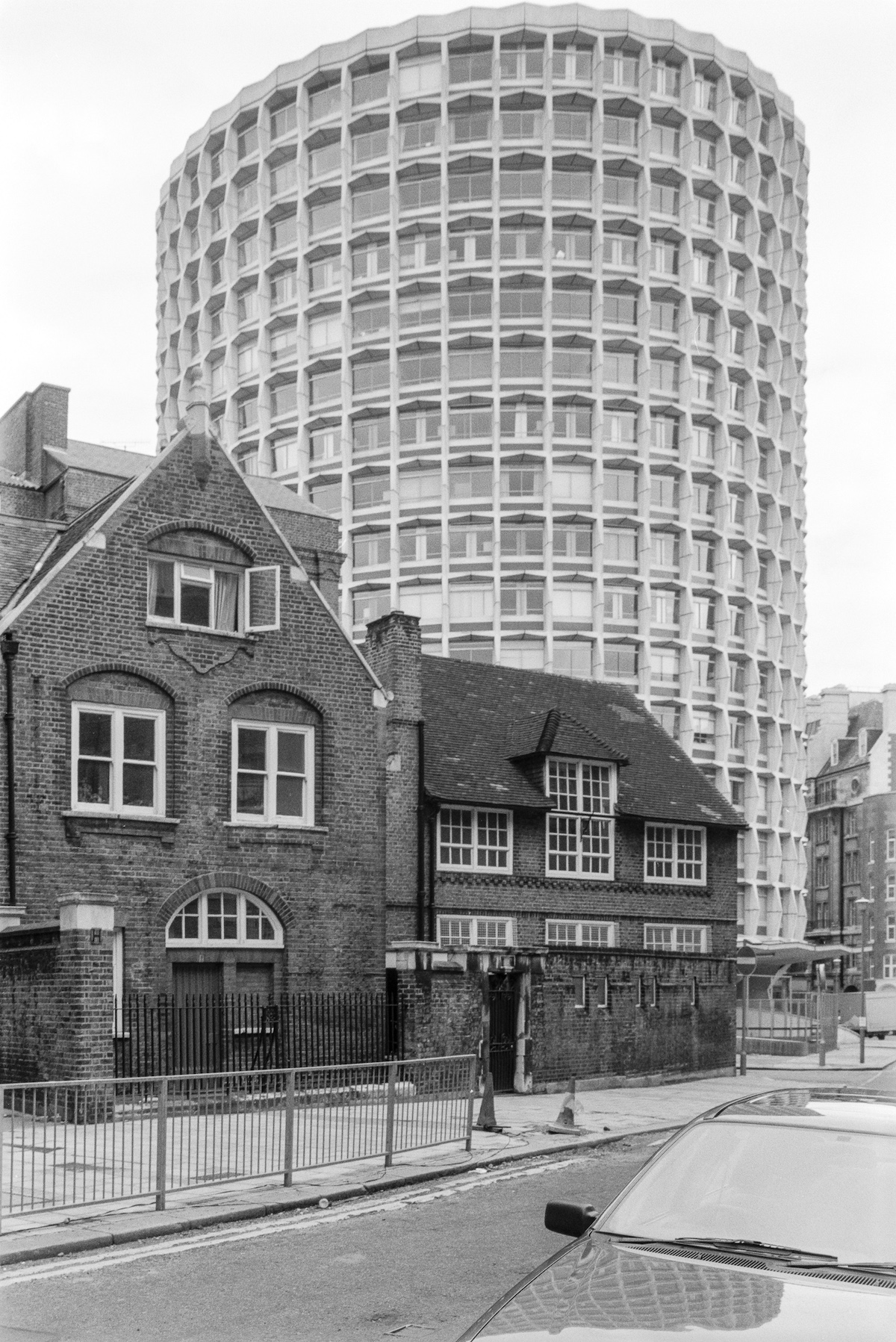
Not everything Marshall photographed still exists. Some of the streets and buildings he captured have since been altered or demolished entirely. Wild Street, a quiet road tucked into the district, looked very different in 1991 — one building on its left side has since disappeared.
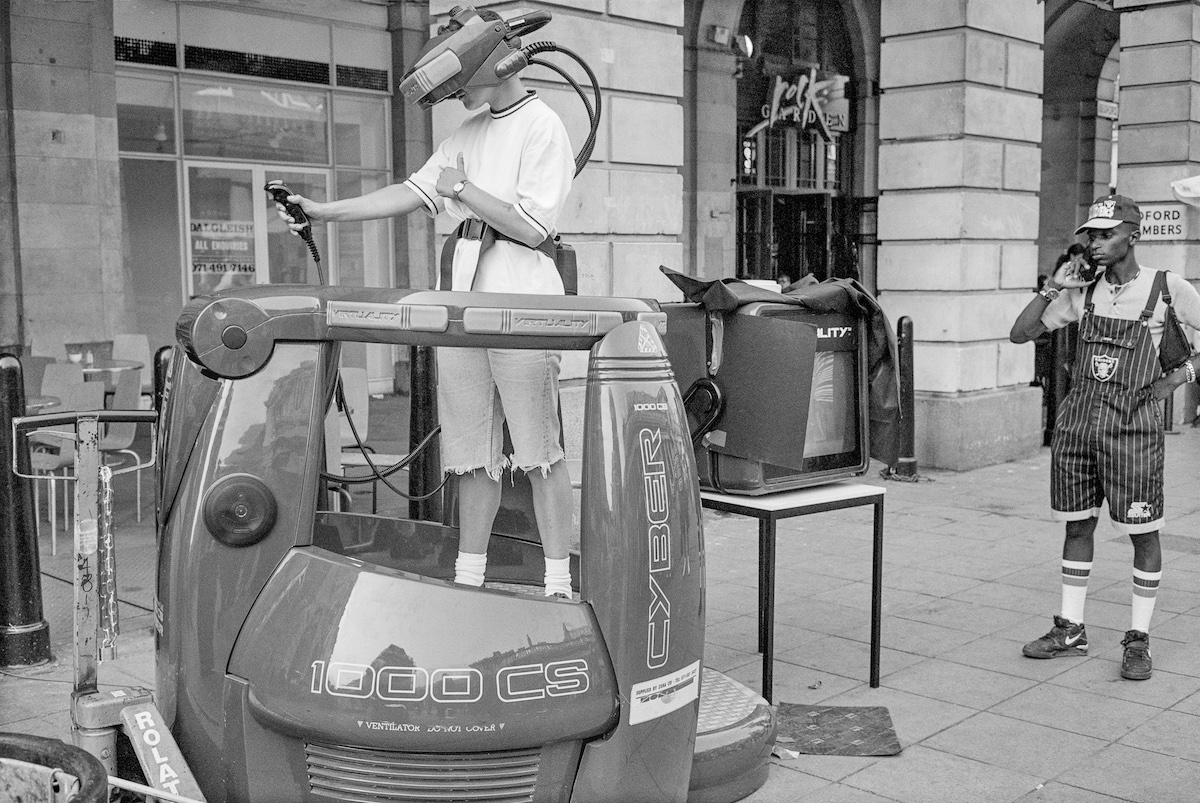
By 1992, new technologies were beginning to creep into public life. The Covent Garden market area became a testing ground for early virtual reality experiences — a striking sight in a space that still retained the iron-and-glass architecture of the Victorian market building.
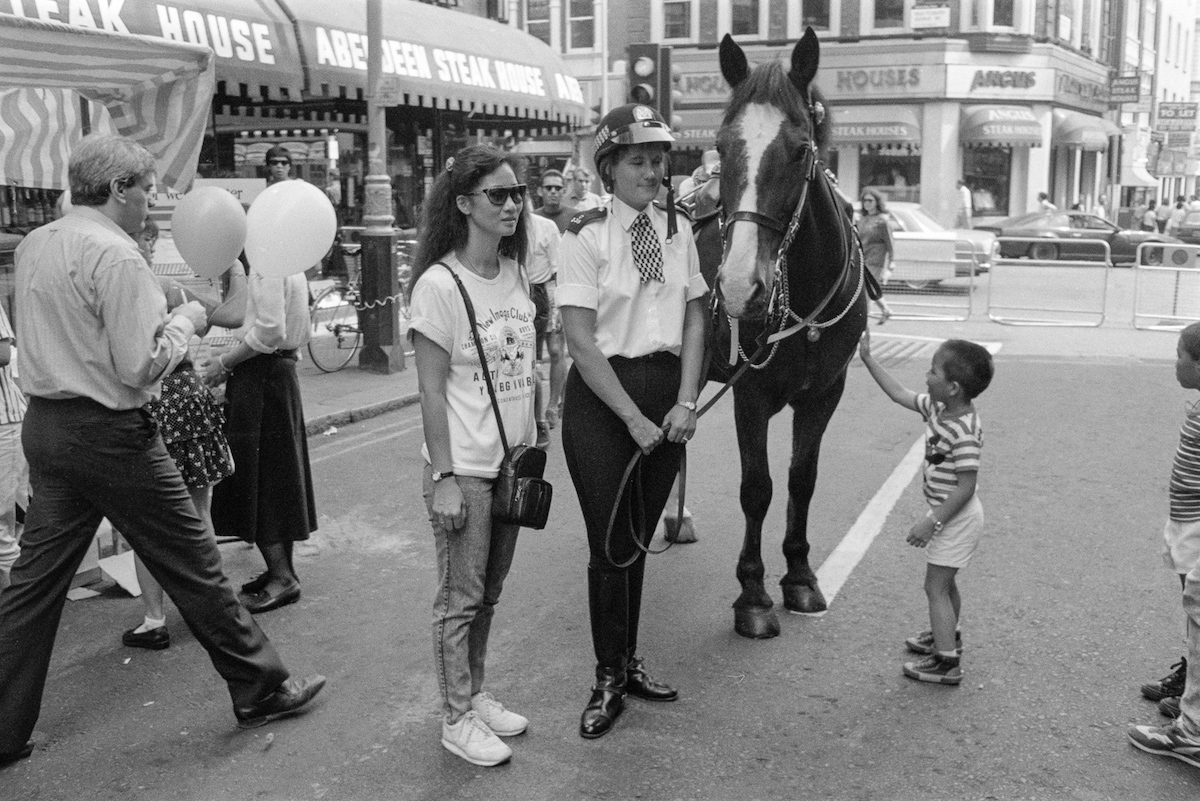
The piazza drew in tourists from around the world throughout this period. Officers from the Metropolitan Police, sometimes mounted on horseback, were a regular presence — and a popular attraction in their own right for visitors wanting a photograph.
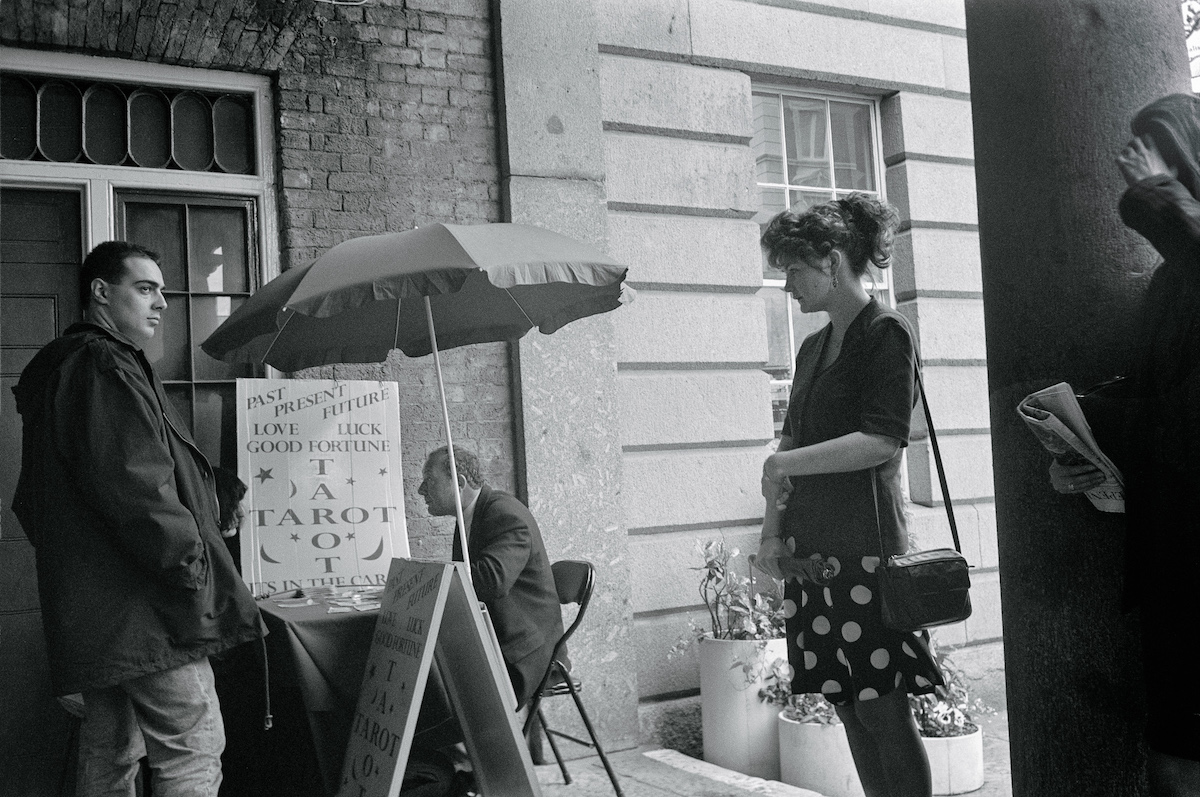
The covered market building hosted more than just shops. Tarot readers set up inside, offering readings to passersby amid the steady flow of foot traffic. Street entertainment of every kind was woven into the everyday fabric of the market.
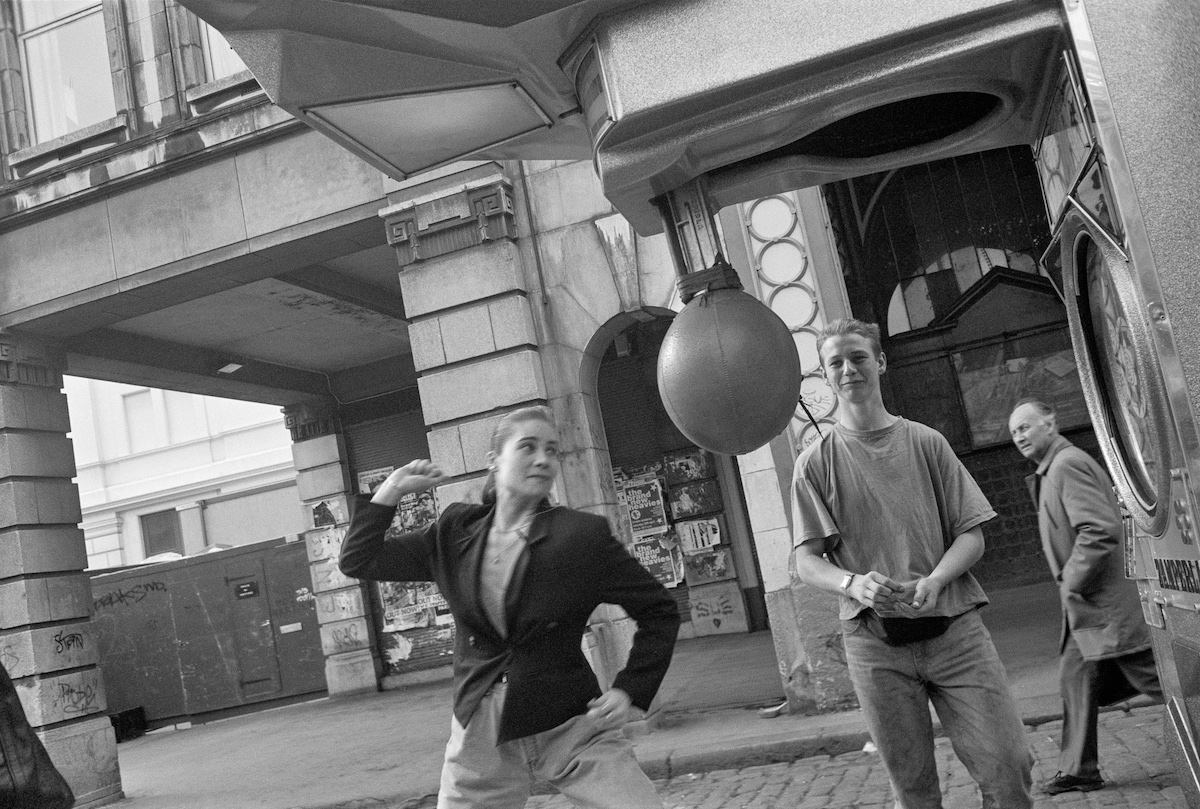
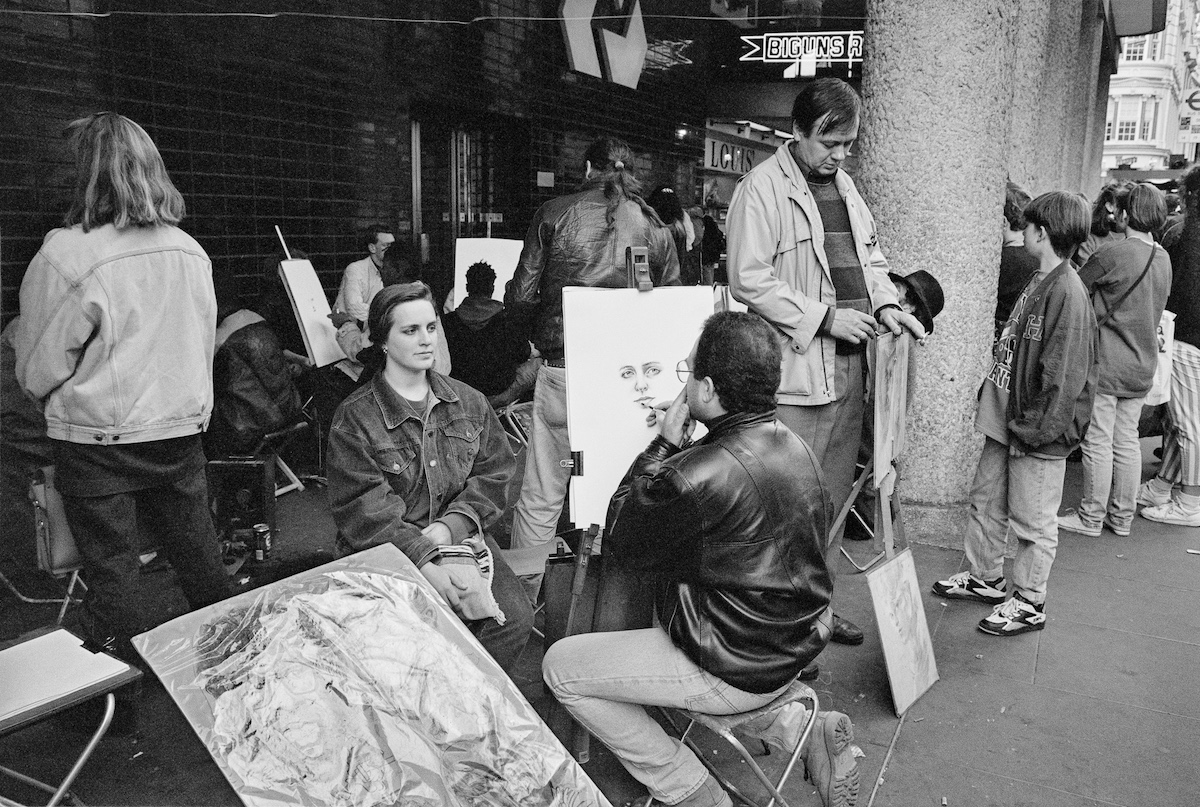
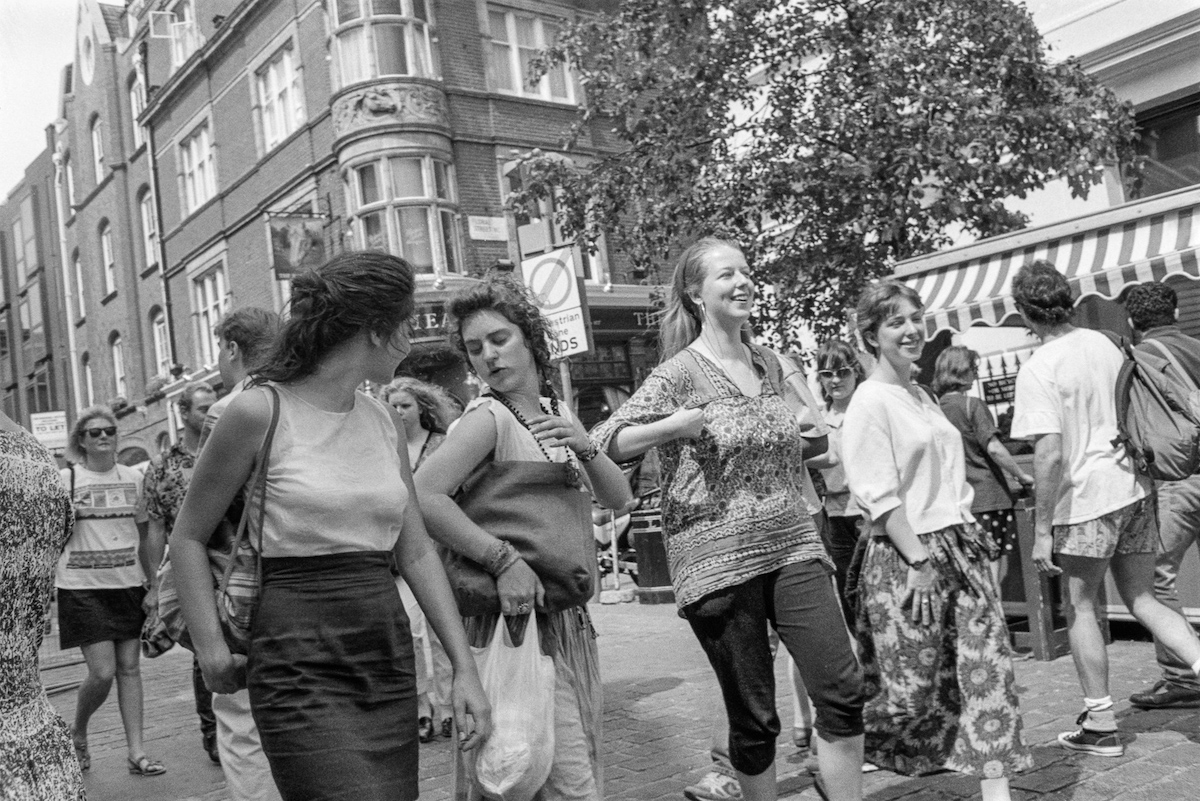
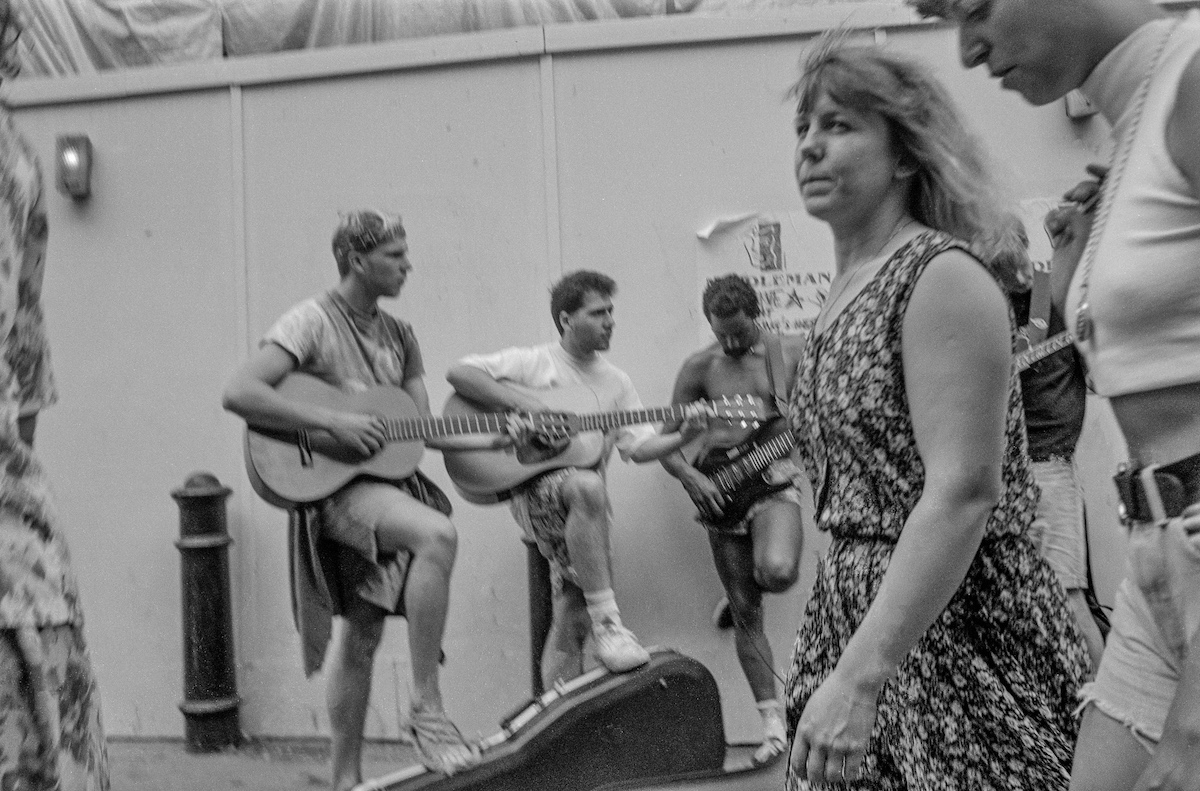
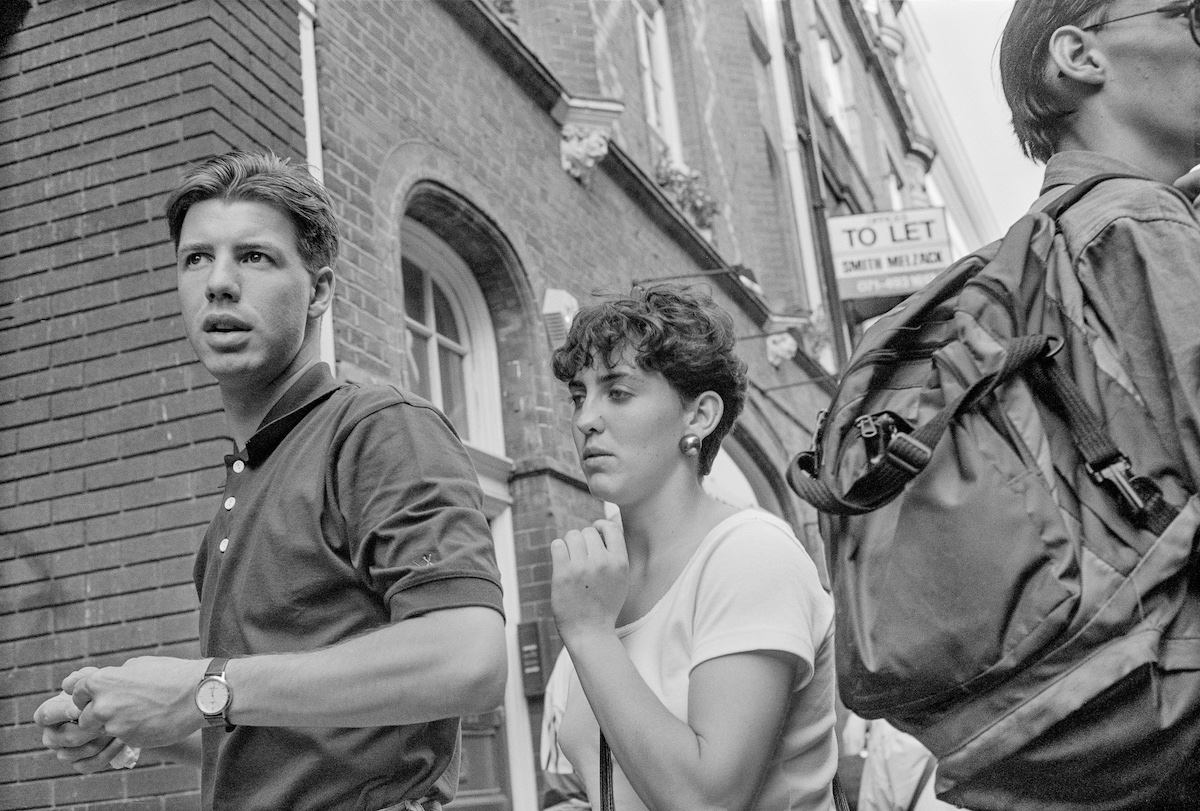
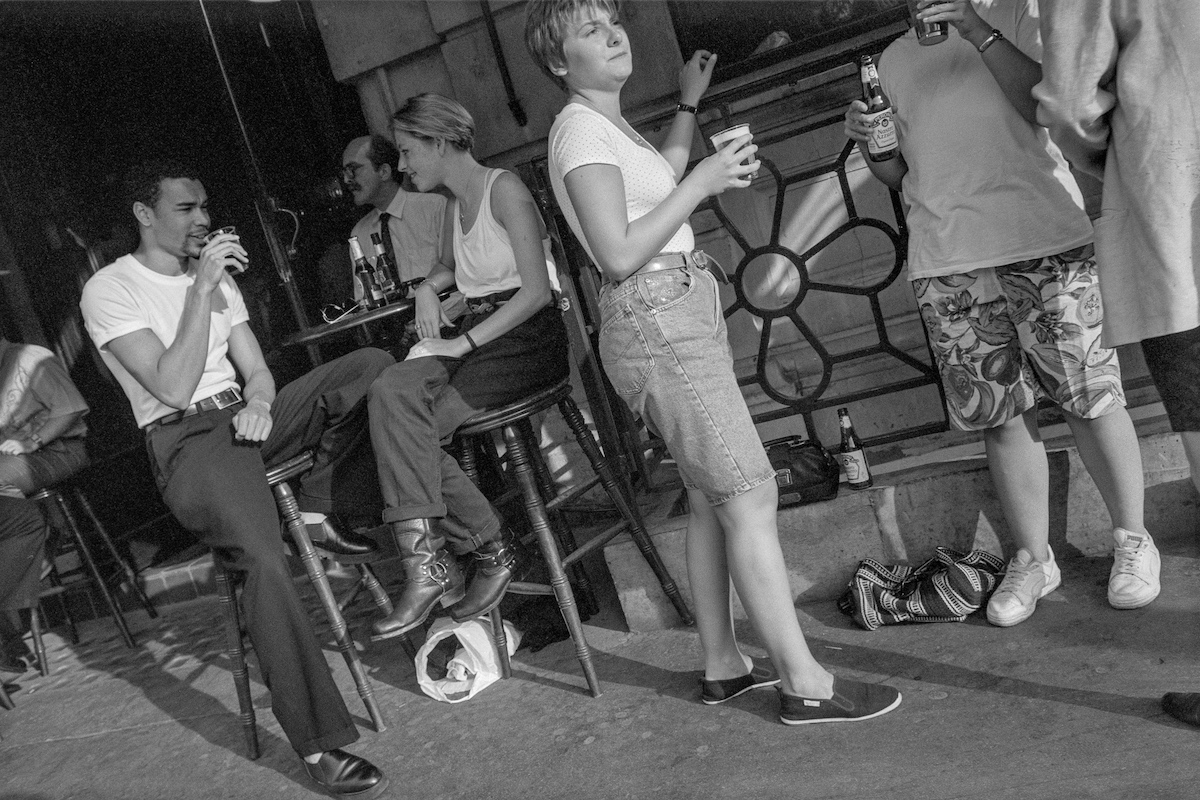
Marshall’s photographs from 1992 show the variety of vendors, performers, and ordinary Londoners who filled the streets on any given day. The area around the piazza was rarely quiet — activity spilled out from the market into the surrounding lanes and alleys.
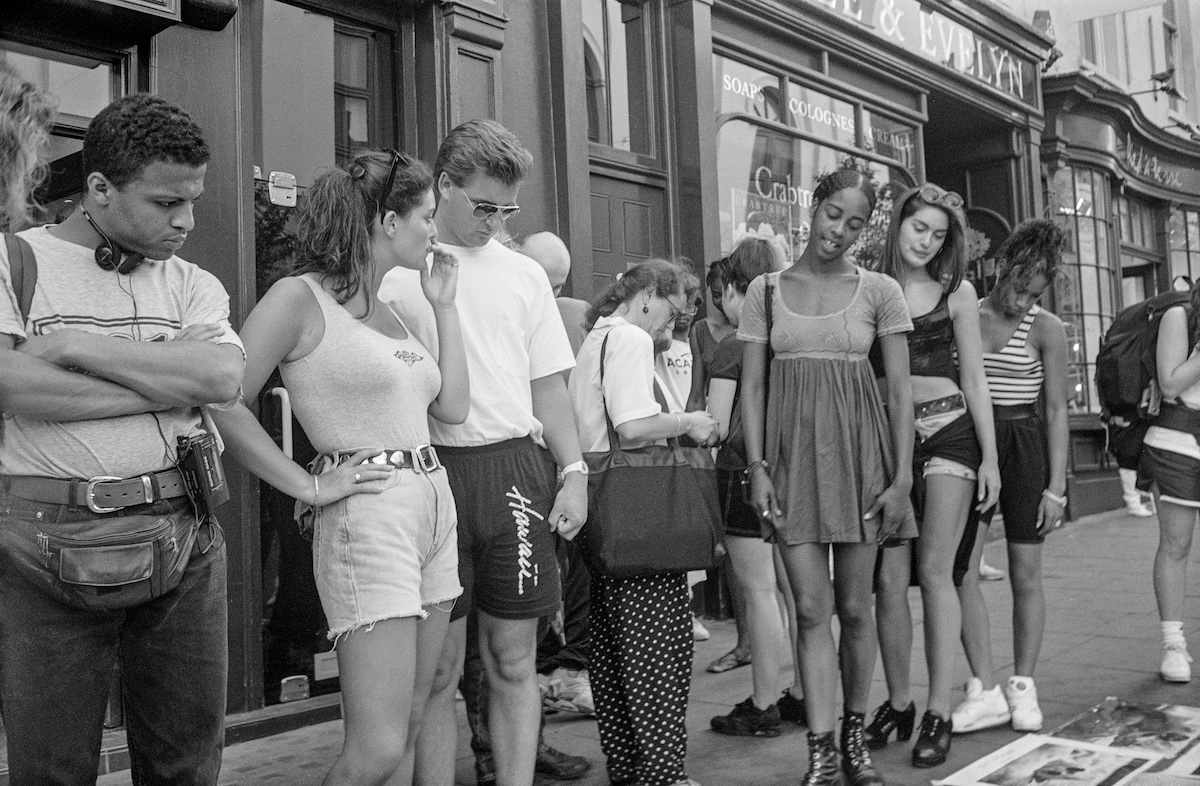
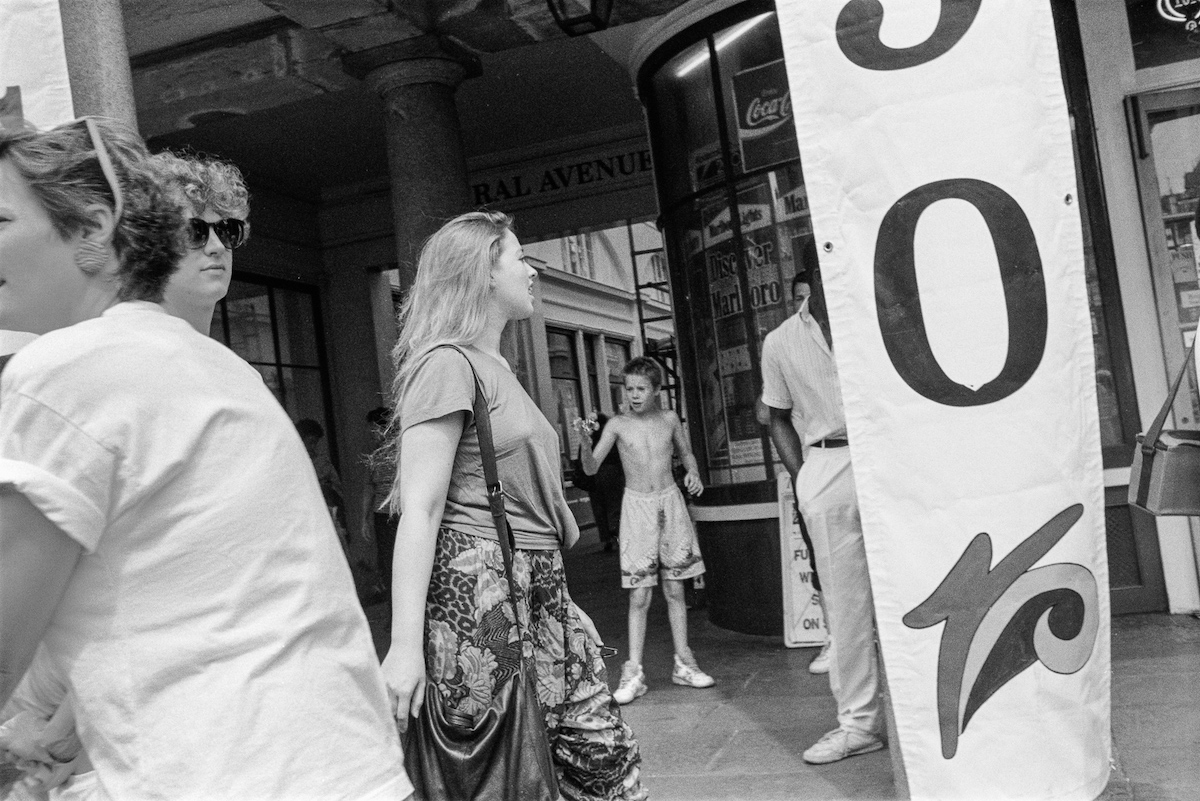
London in the early 1990s was a city of contrasts, and Covent Garden was no exception. One of Marshall’s more striking images shows a man travelling on a bus with a snake — the kind of everyday oddity that a street photographer like Marshall was perfectly positioned to catch.
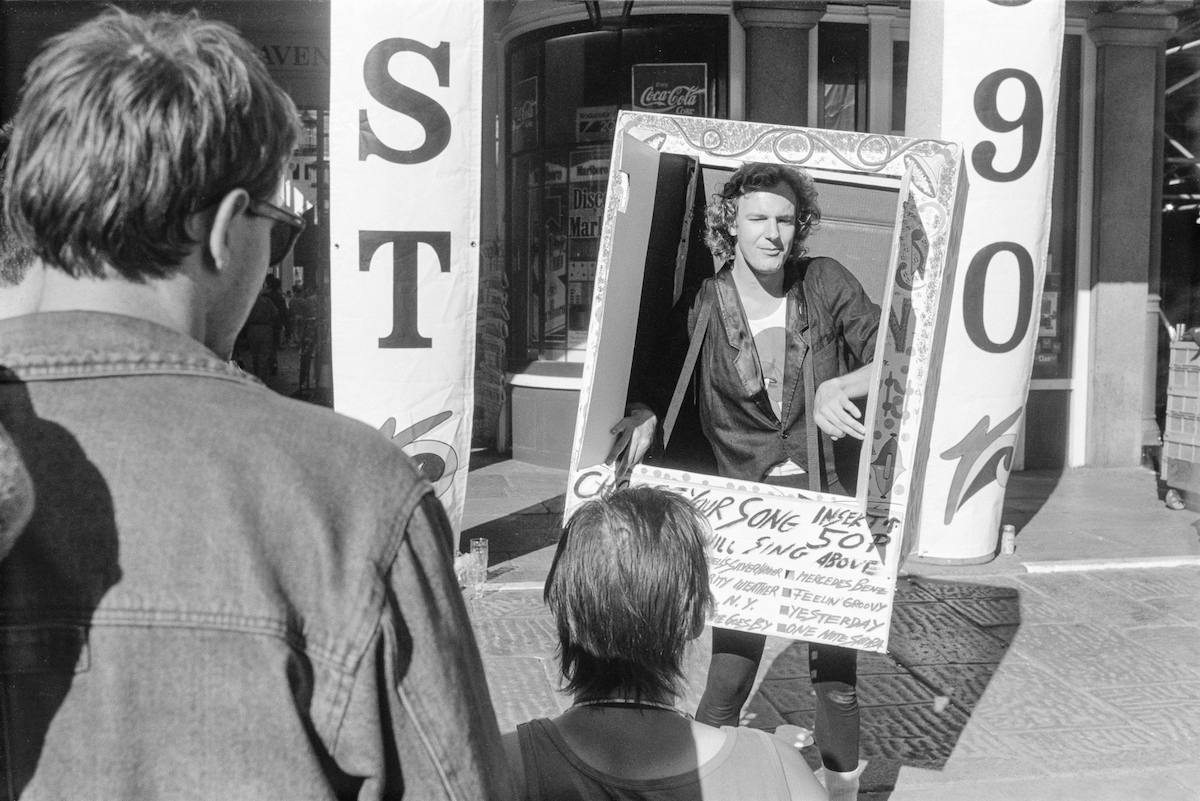
Street performance in Covent Garden had been formally organized since the early 1980s, when the piazza became one of the first places in London to license buskers. By 1990, acts ranged from classical musicians to elaborate novelty performers. One recurring favourite was the Human Jukebox — a performer who stood motionless in a box and “played” a requested song when a coin was inserted.
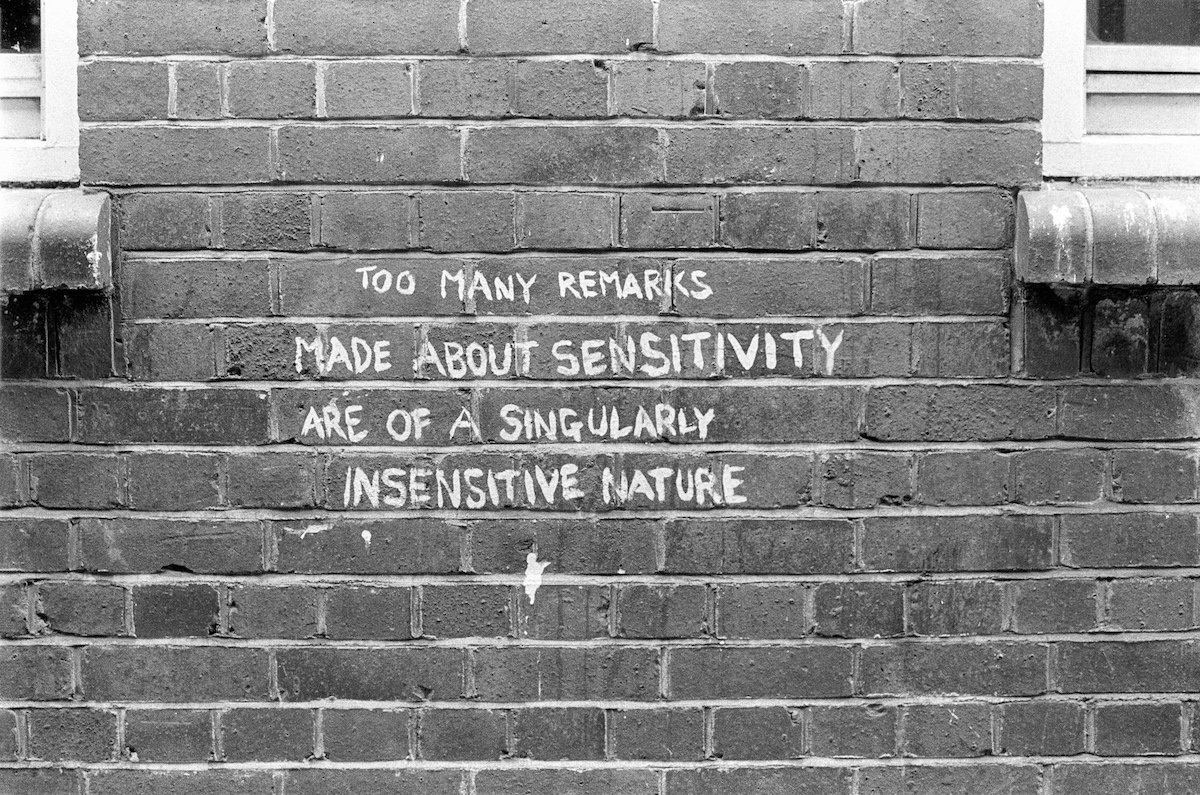
Beyond the tourist trail, the neighbourhood had rougher edges. Drury Lane, one of the district’s main arteries, was marked by graffiti in 1991 — a reminder that the glossy redevelopment of the piazza had not extended uniformly across the whole area.
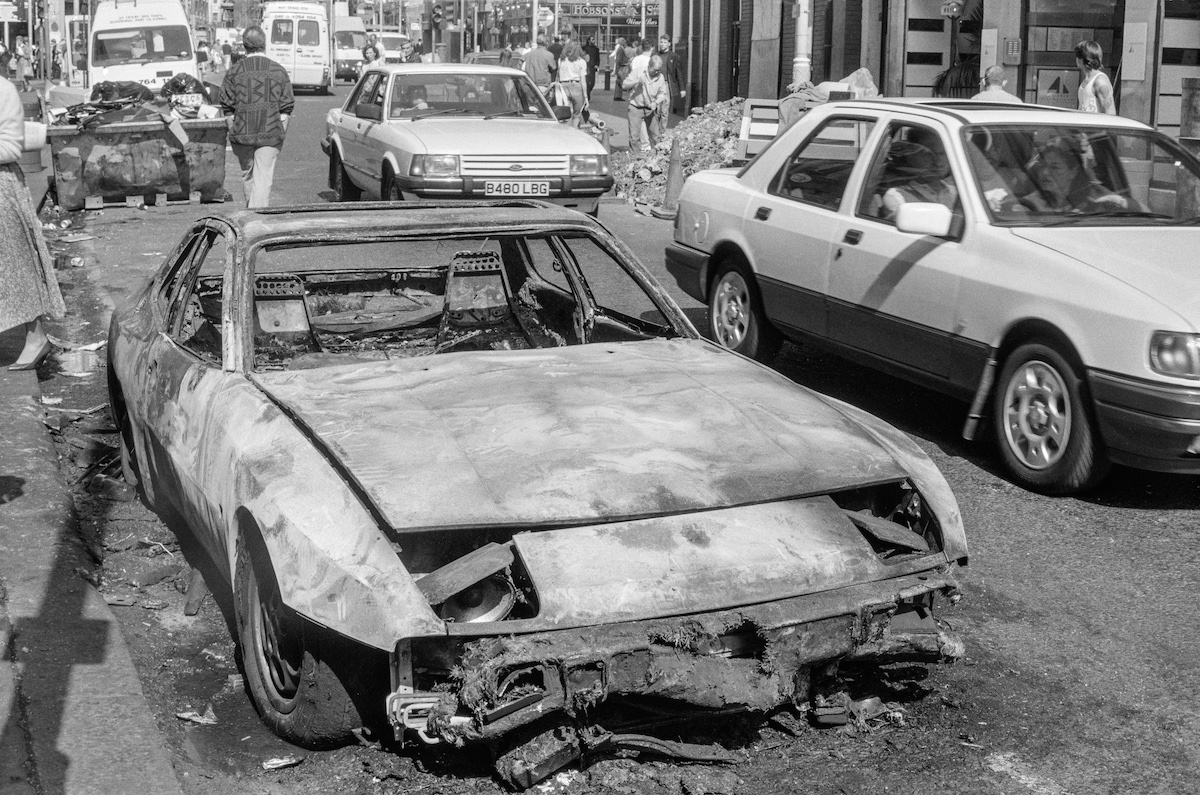
St Martin’s Lane, the western boundary of the district, told its own story. A burnt-out car photographed there in 1990 stood as a jarring contrast to the well-heeled theatre crowds and tourists just a short walk away.
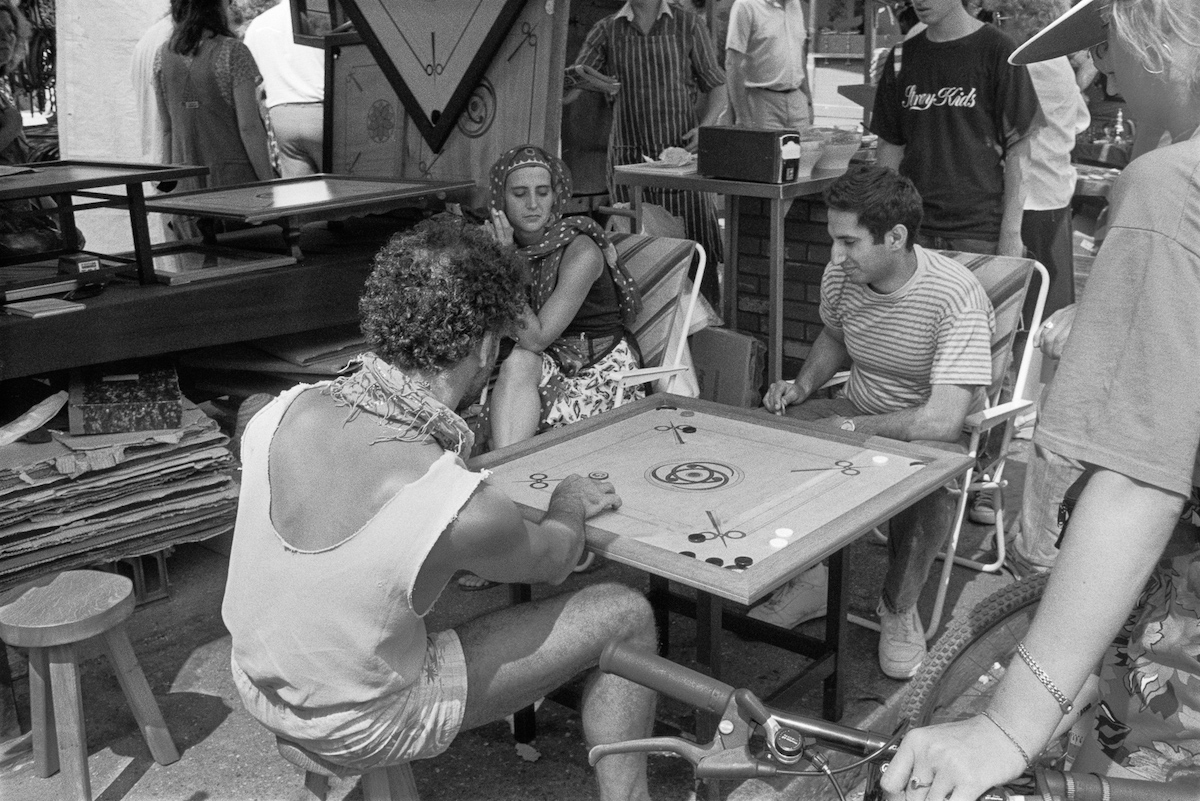
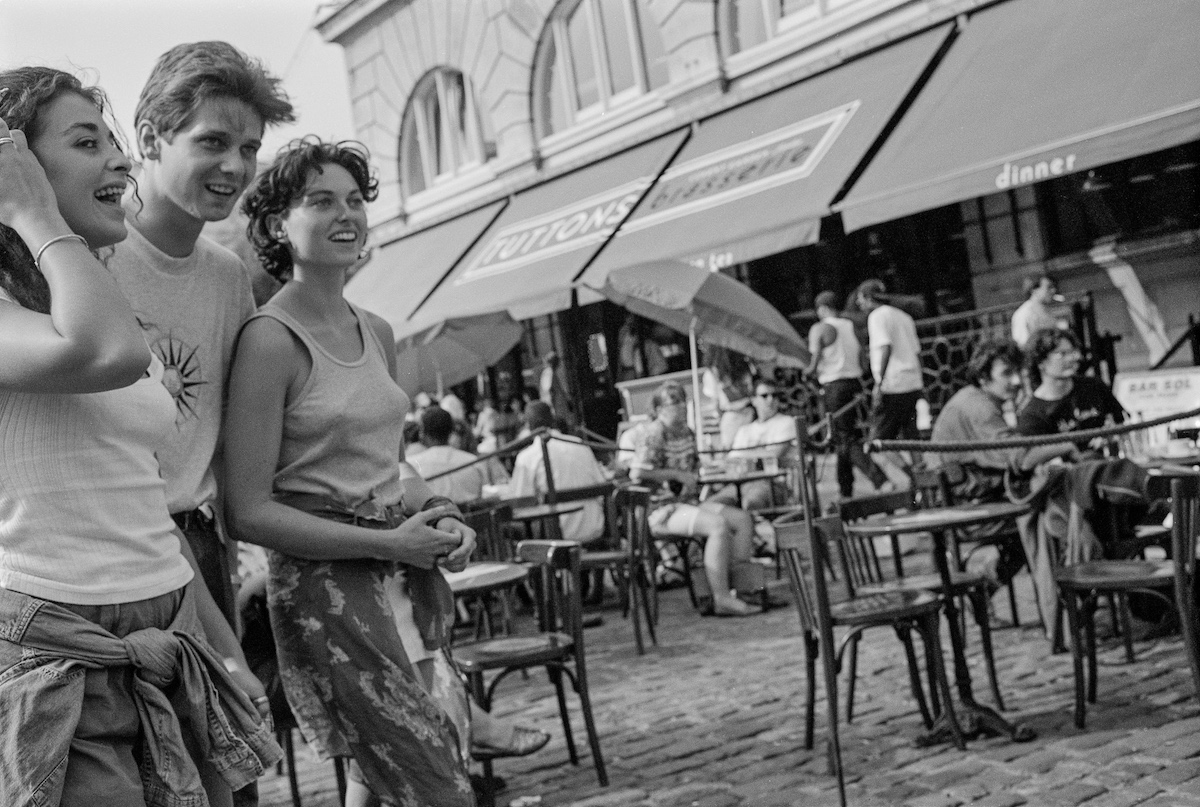
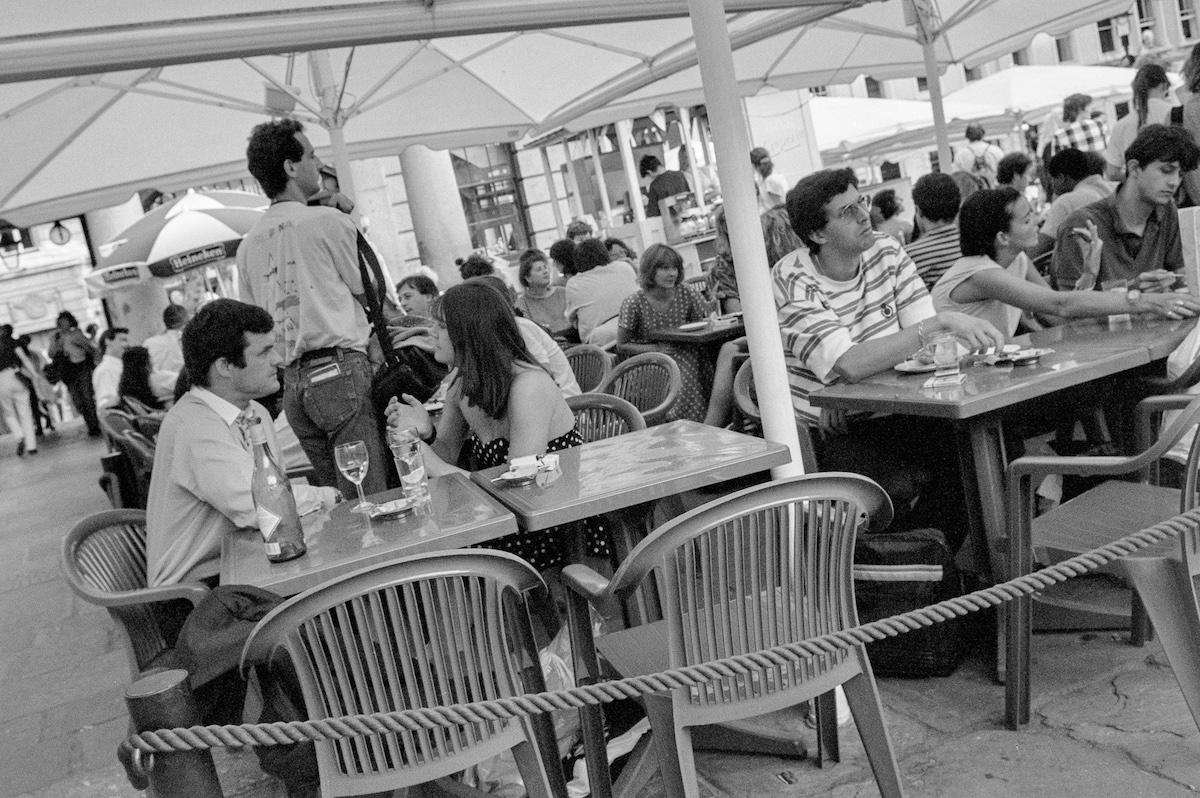
North of Long Acre, the streets around Neal’s Yard and Seven Dials supported a cluster of independent shops and a more alternative crowd. Marshall’s photographs from 1991 capture the character of those streets — a different tempo from the bustle of the central piazza.
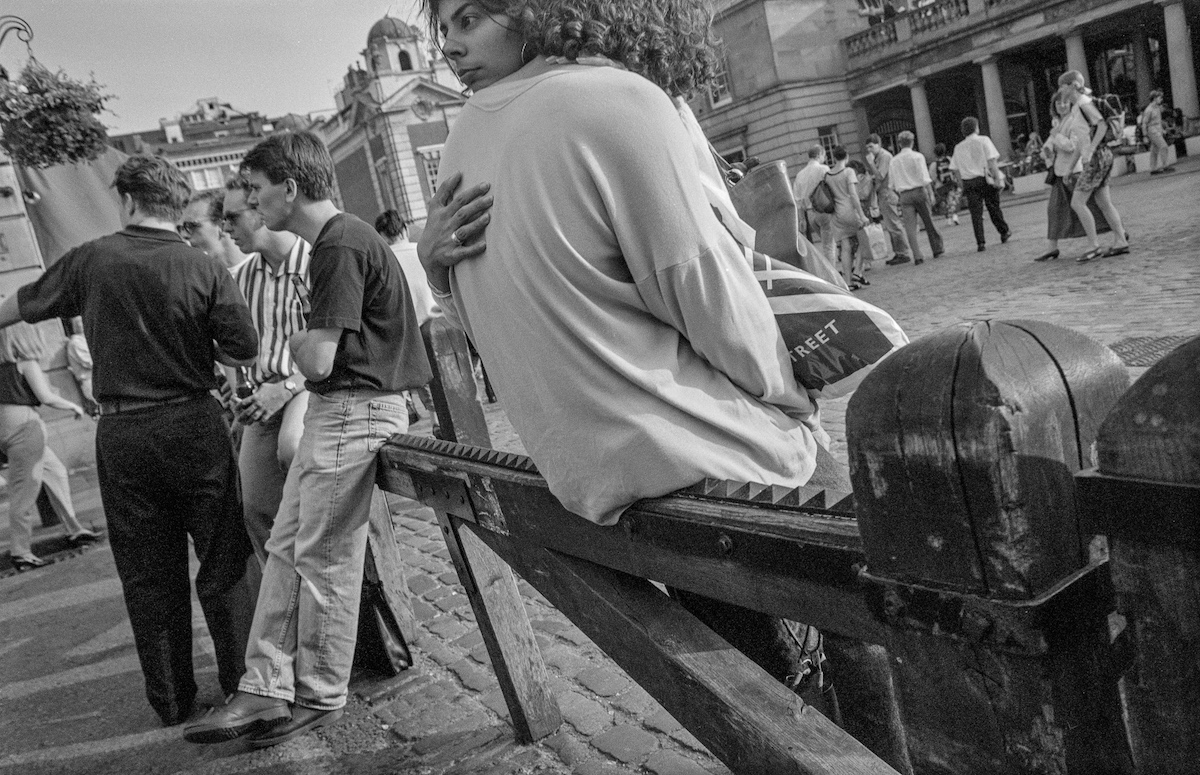
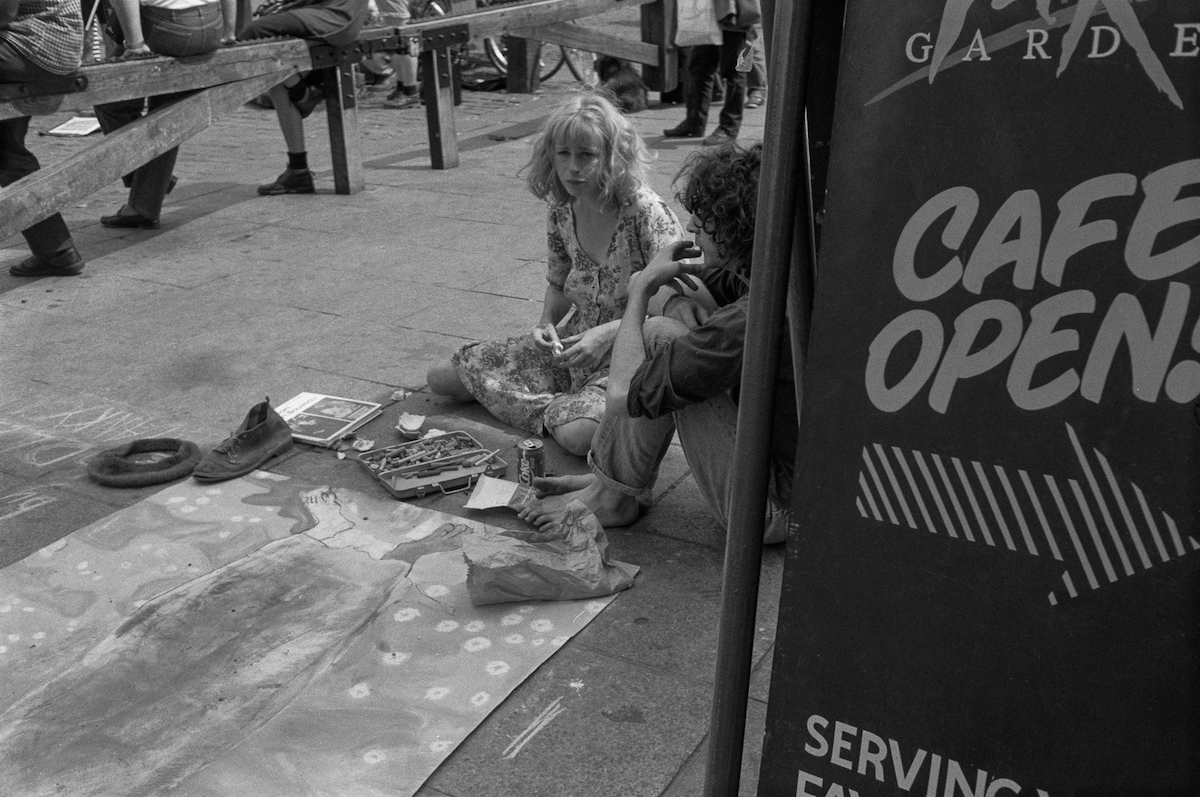
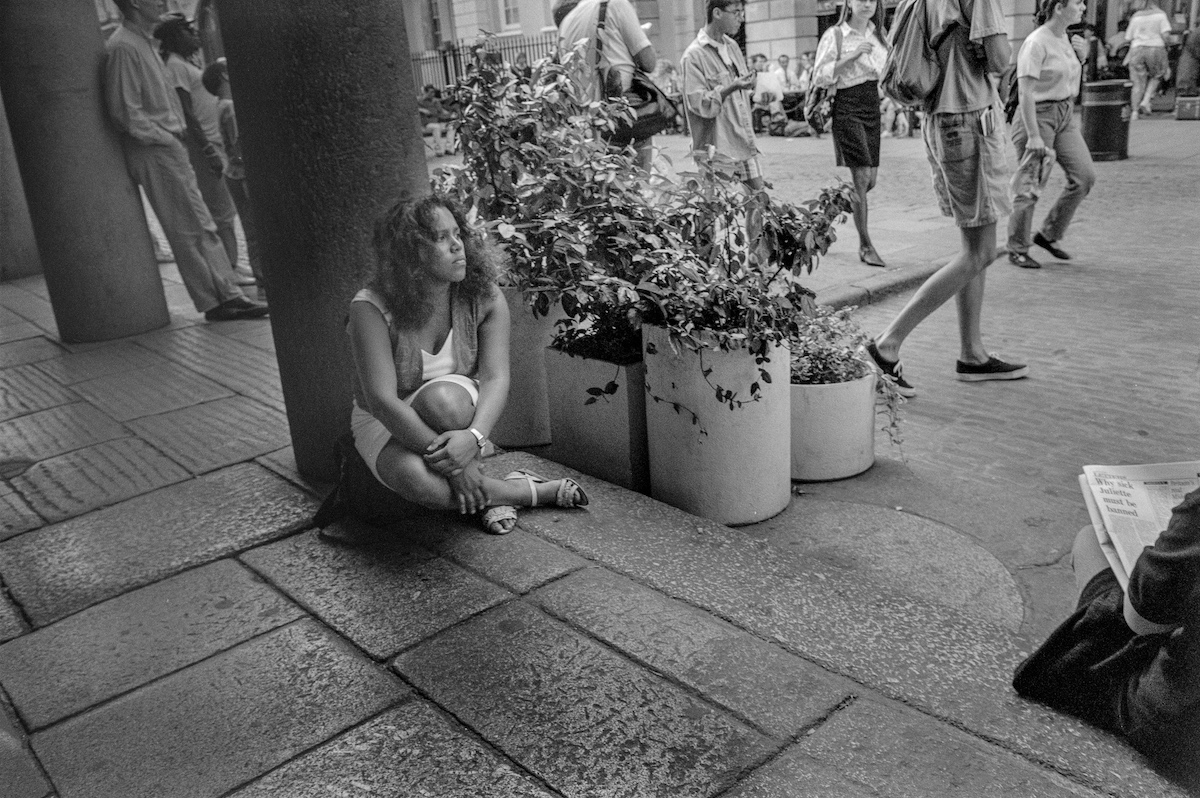
Marshall’s lens also found quieter moments. Among the vendors, performers, and foot traffic, he photographed a couple simply sitting on the pavement outside the market — a still point in the constant movement of one of London’s busiest public spaces.