A Glimpse into Columbus in the 1910s through Fascinating Historical photos Depicting the era’s Unique Charm
2.6k Views
Columbus, Ohio entered the 1910s as a city on the move. Factories hummed, neighborhoods spread outward, and new roads and rail lines stitched the city together. But the decade was far from smooth. War, disaster, immigration, and rapid industrial change all hit Columbus within a single ten-year span, reshaping the city block by block. These photographs capture that world — streets, buildings, soldiers, and survivors — in vivid, unfiltered detail.
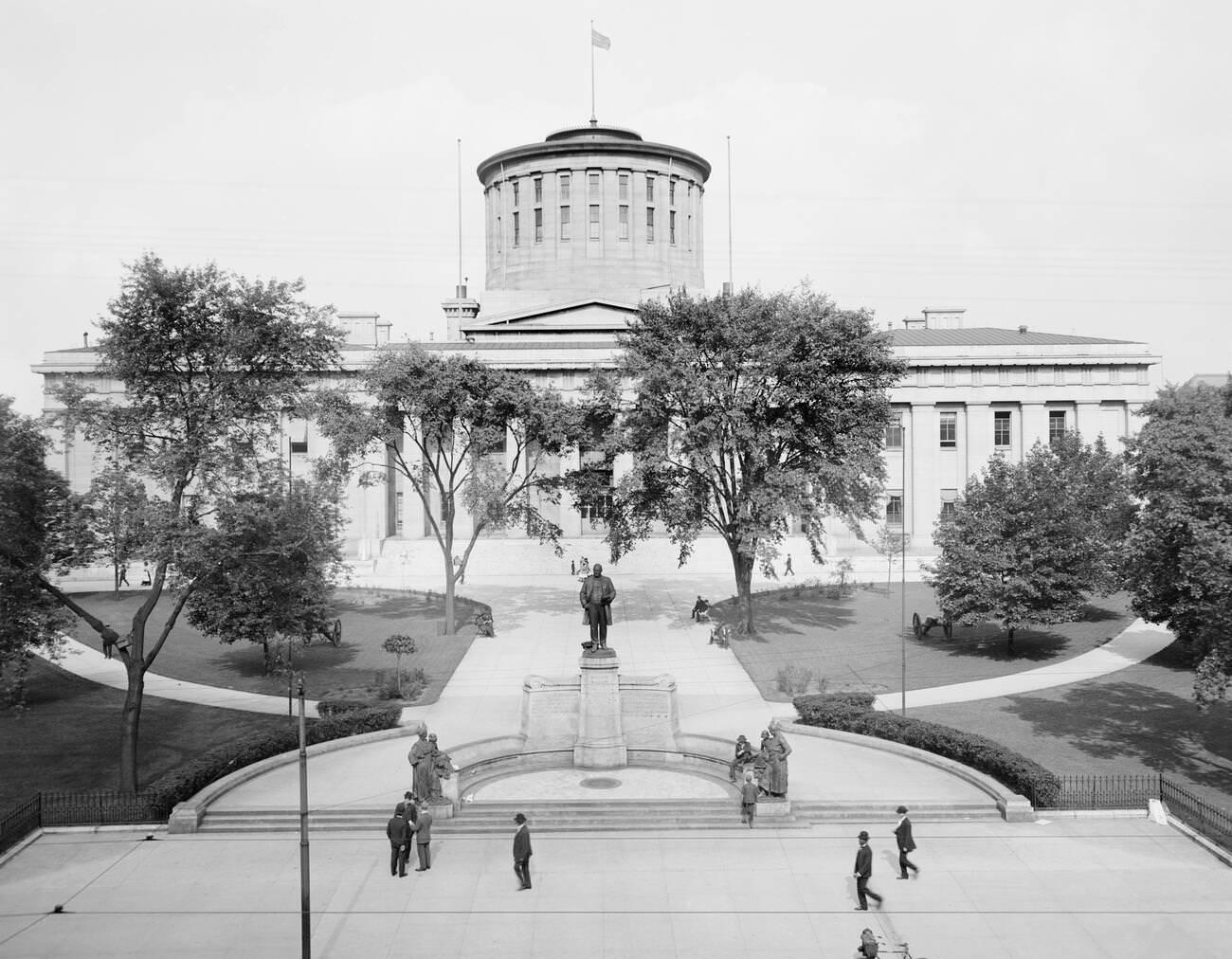
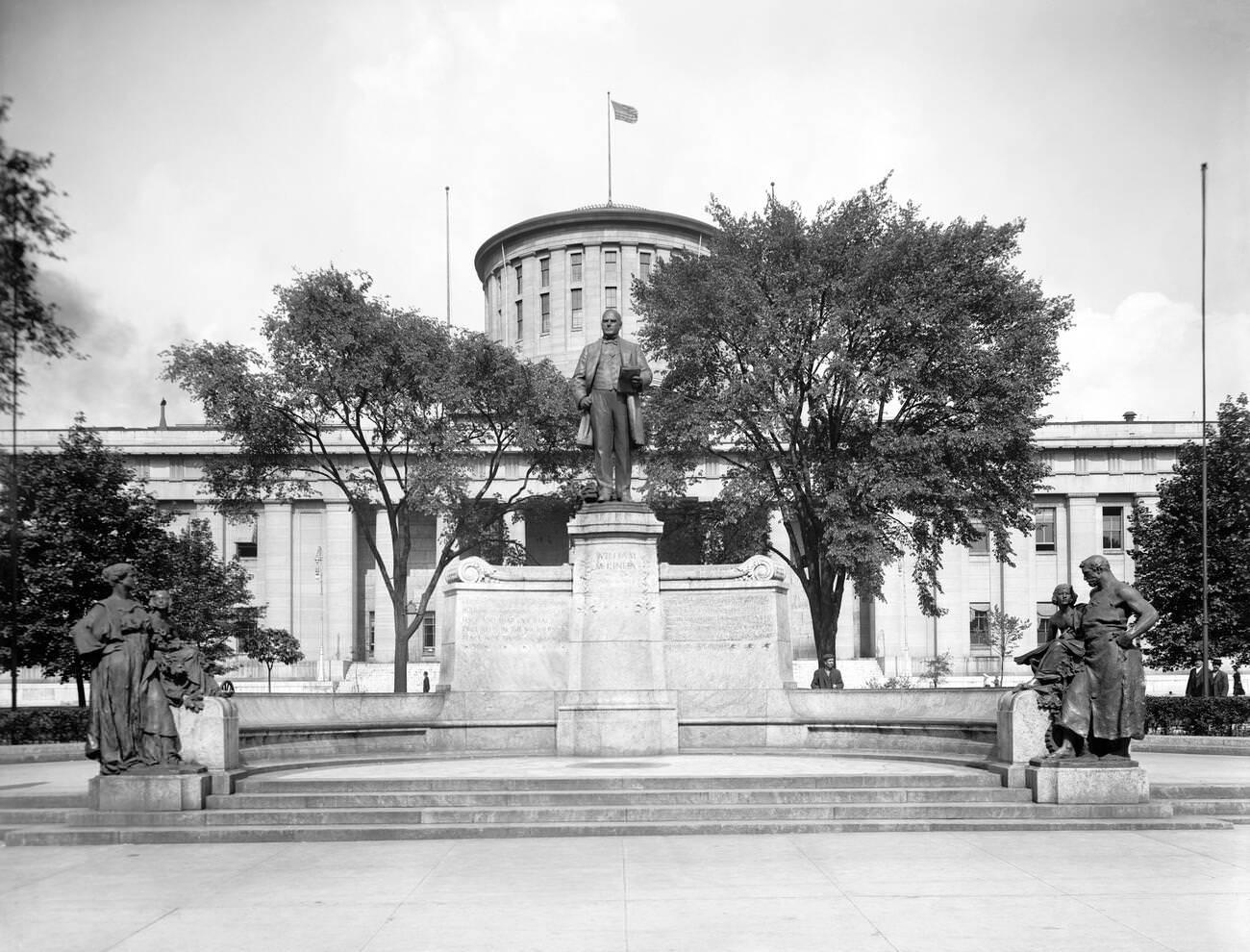
State Capitol Building and Statue of William McKinley, Columbus, 1910
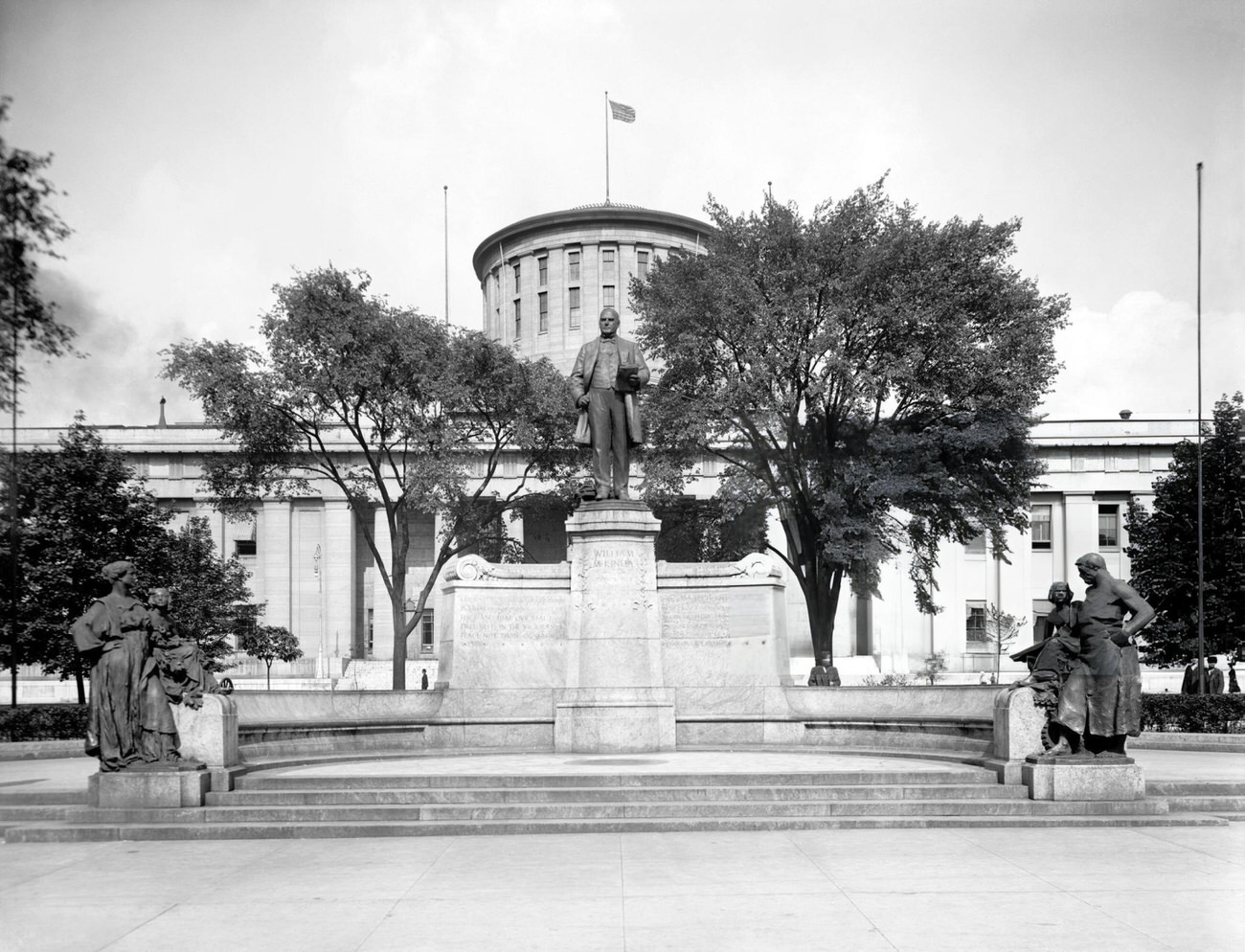
At the start of the decade, Columbus stood as Ohio’s proud capital. The McKinley Monument on Capitol Square was a landmark citizens gathered around with genuine reverence. The statehouse grounds were well-kept and busy, reflecting a city that took its civic identity seriously.
William McKinley’s Monument on Capitol Grounds, Columbus, Ohio, 1910
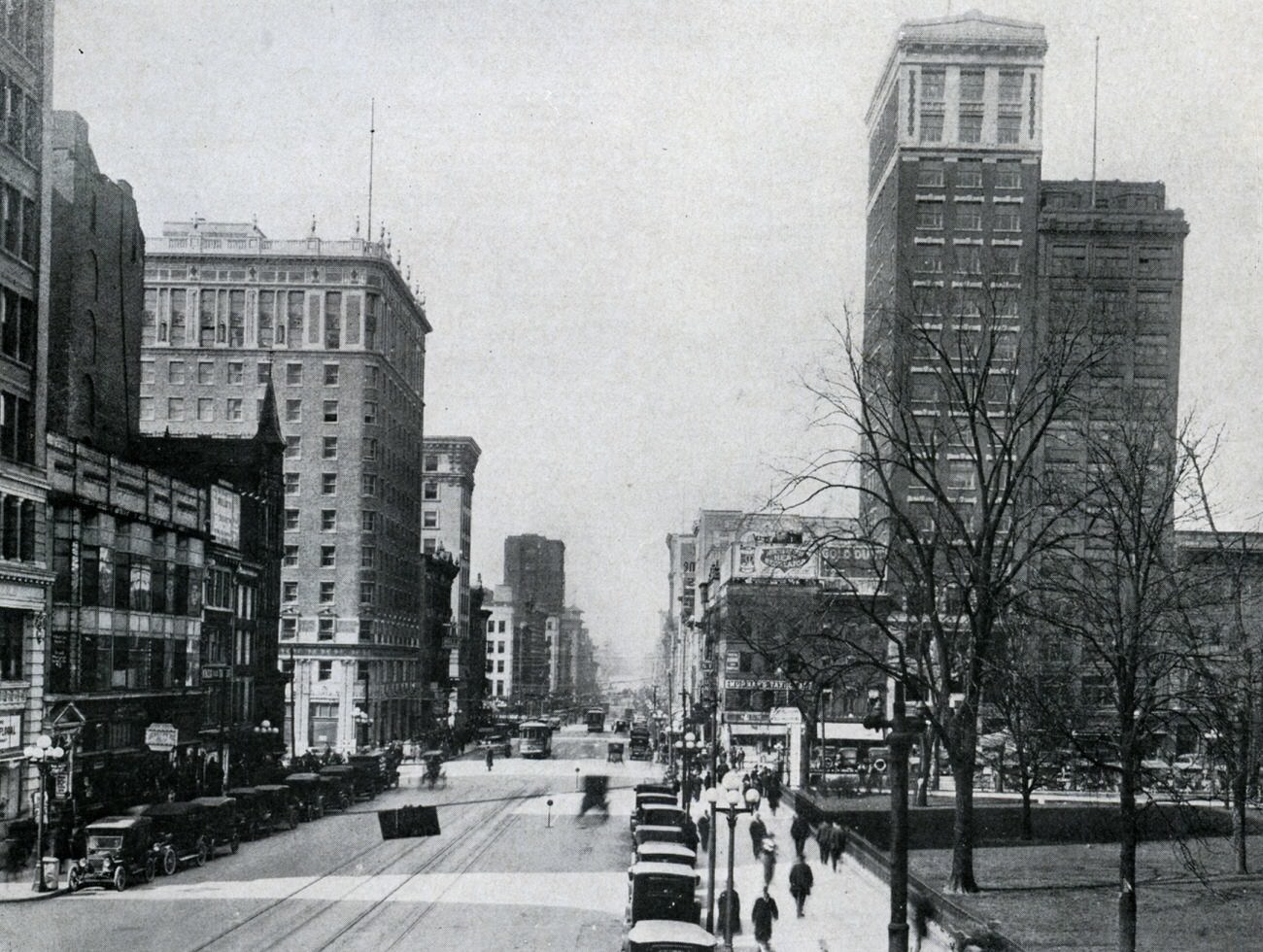
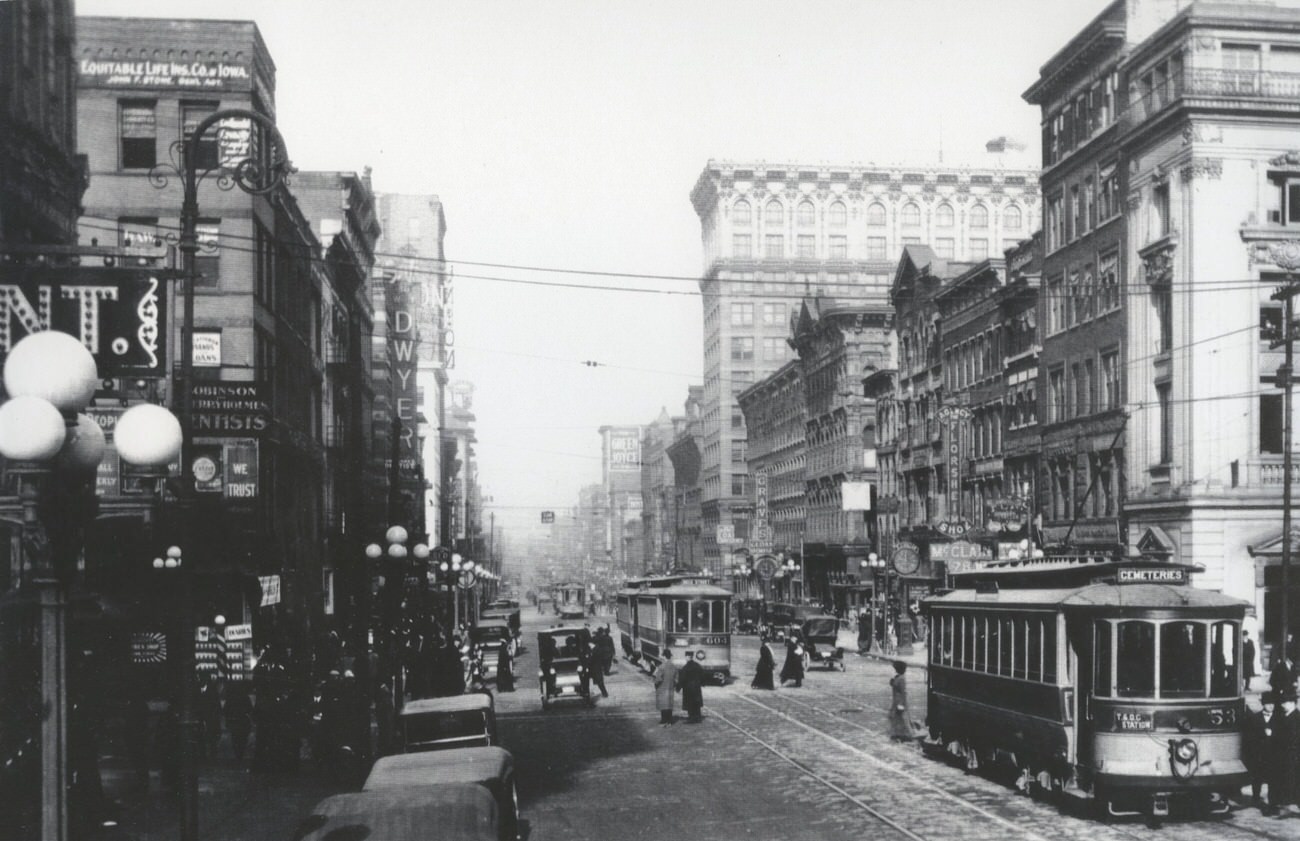
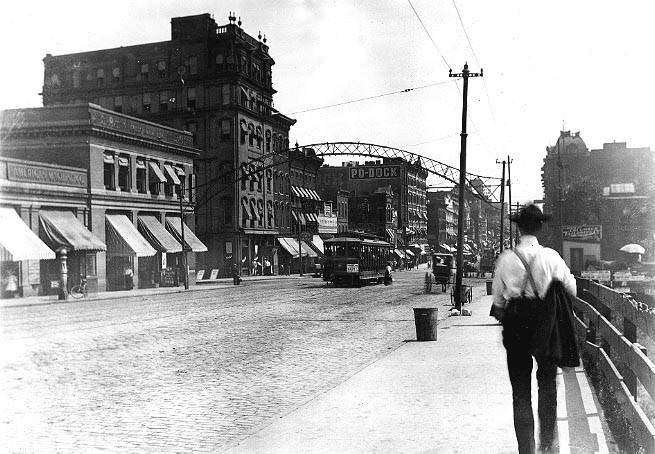
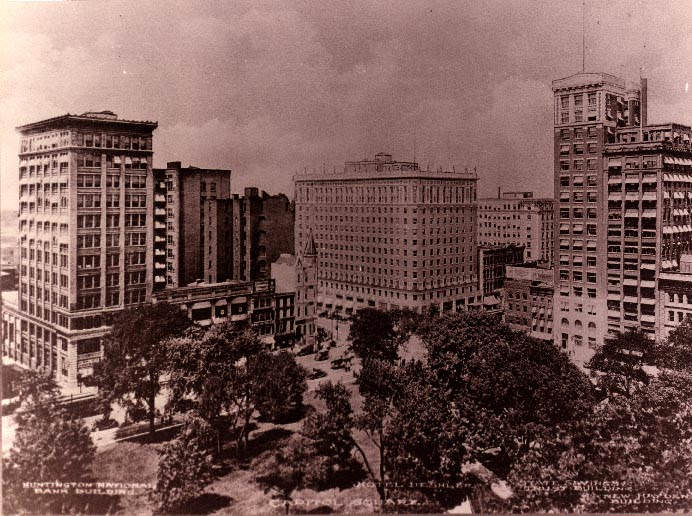
Downtown Columbus was already growing upward. High Street was lined with early skyscrapers, banks, hotels, and theaters. The Deshler Hotel and other large commercial buildings signaled that Columbus was no longer just an administrative center — it was becoming a true urban hub.
High Street looking north from the Ohio Statehouse, with Deshler Hotel and early Columbus skyscrapers, 1916.
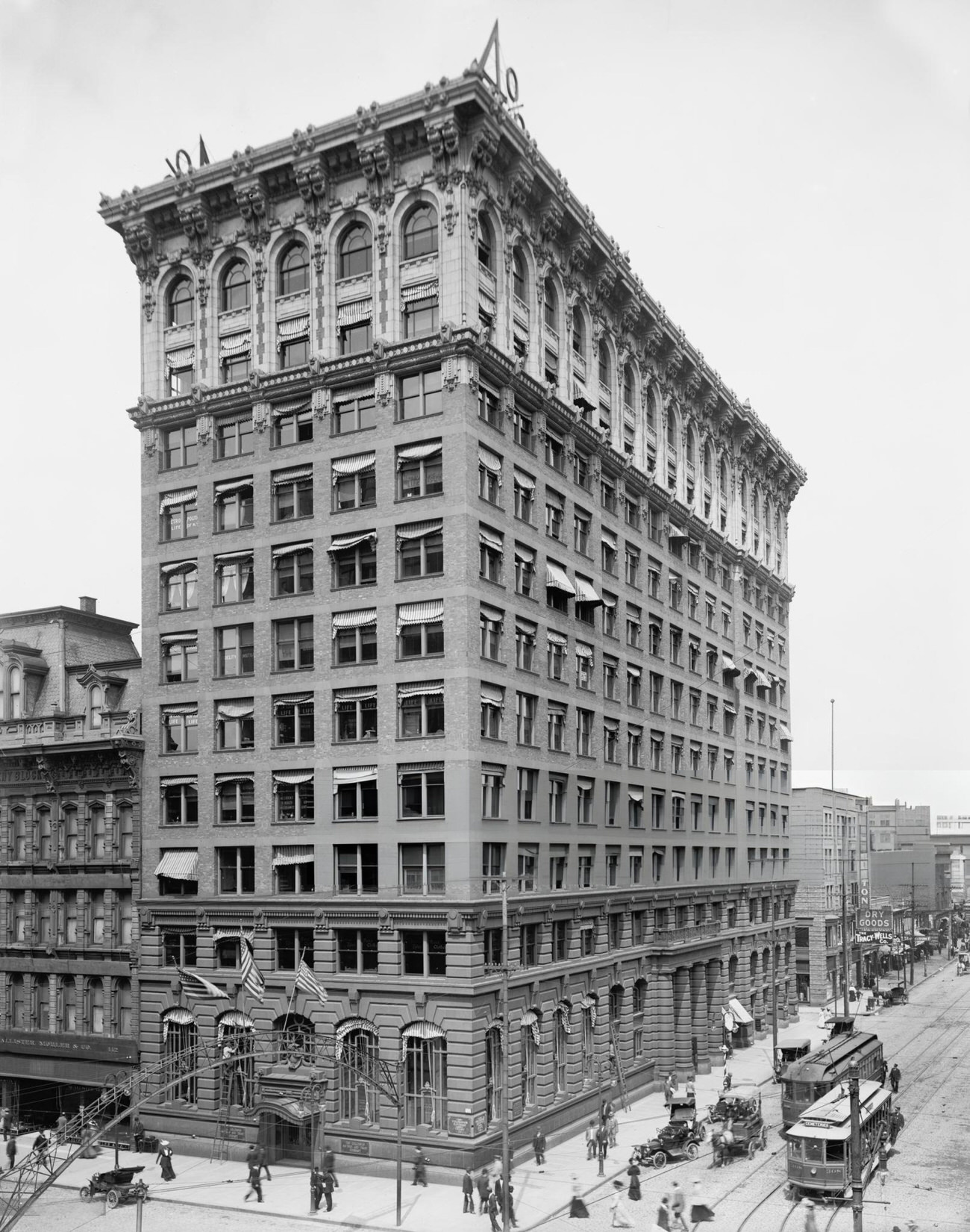
Columbus Savings & Trust Company Building, Columbus, Ohio, 1910
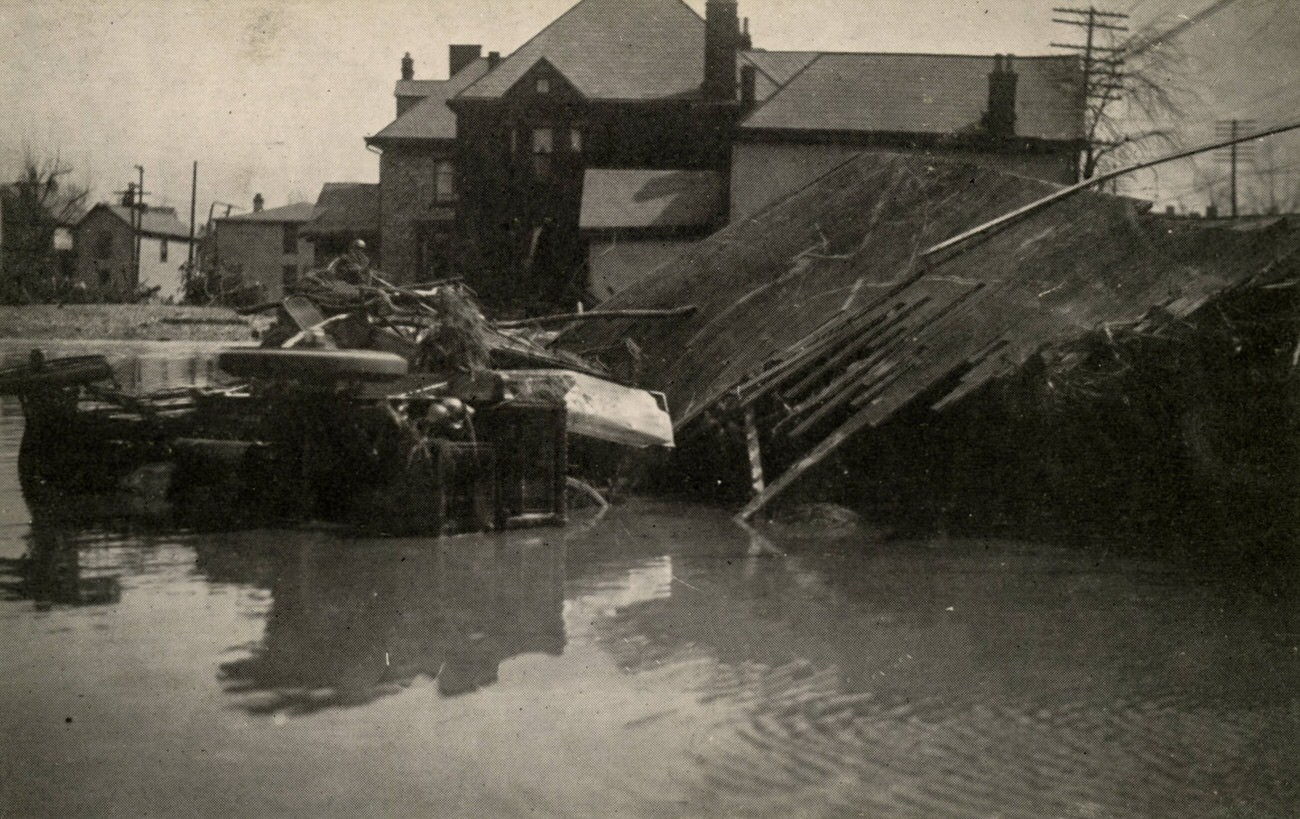
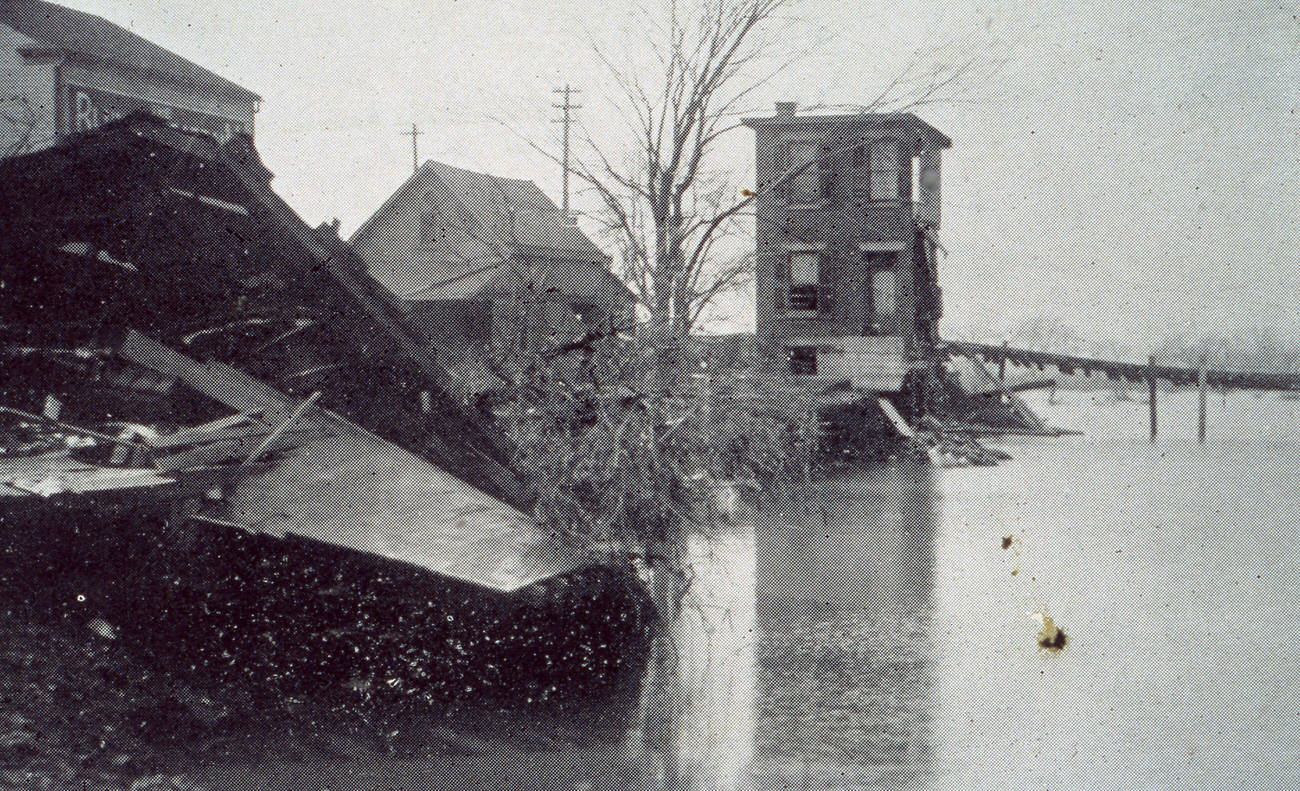
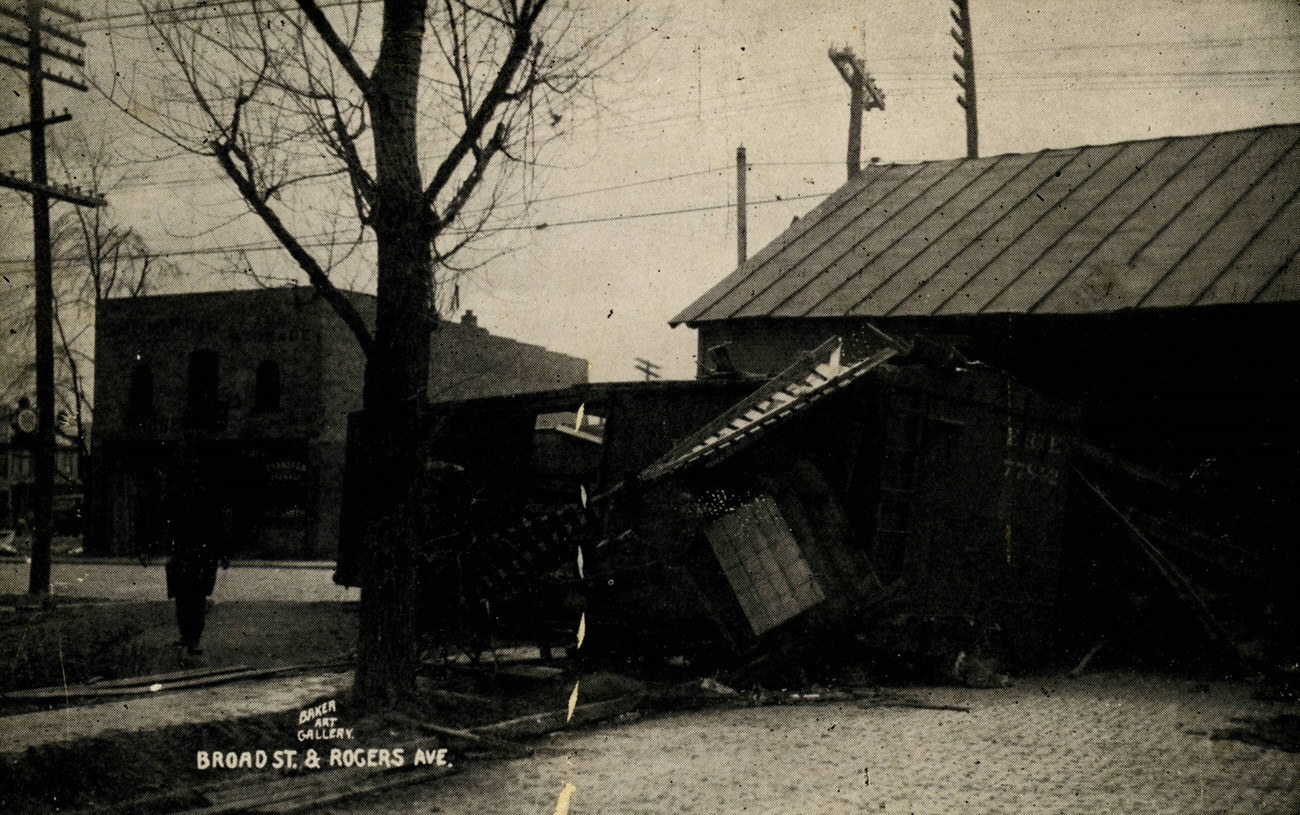
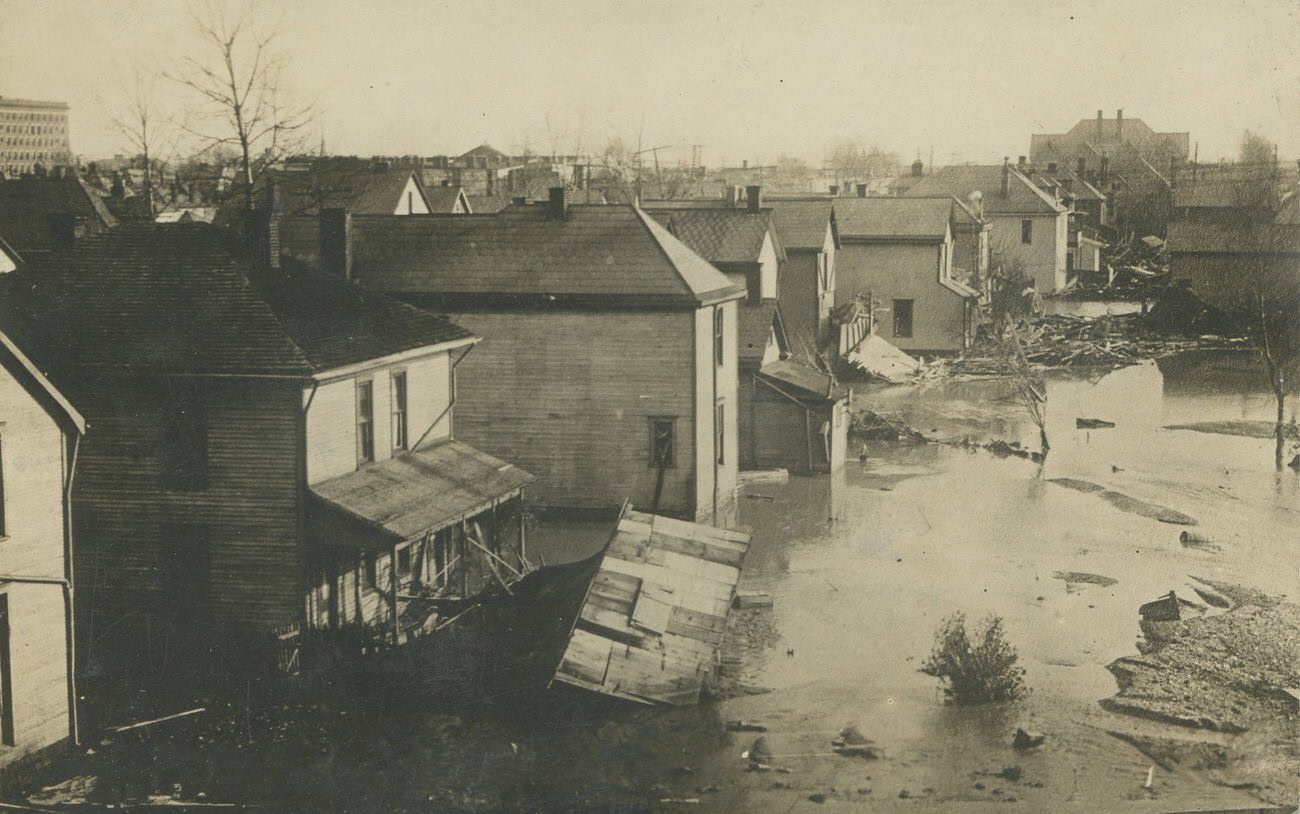
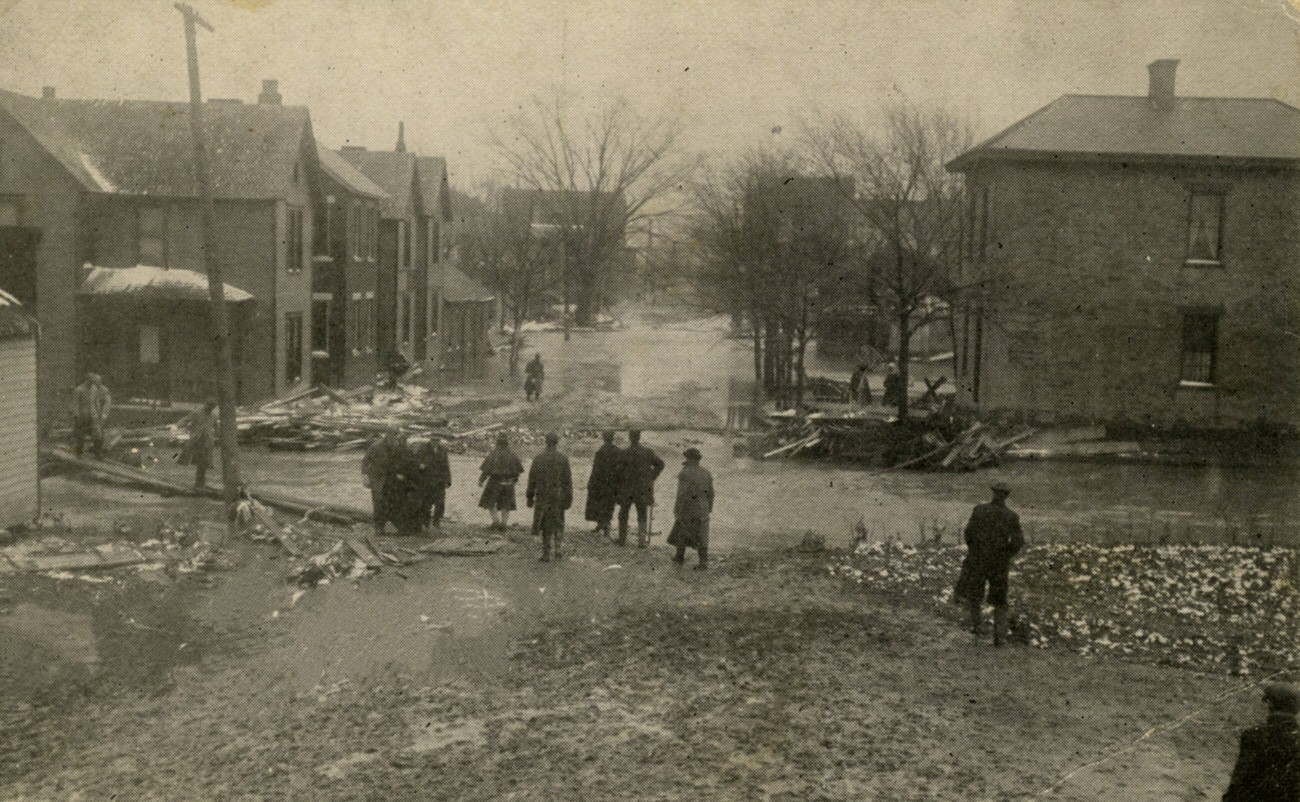
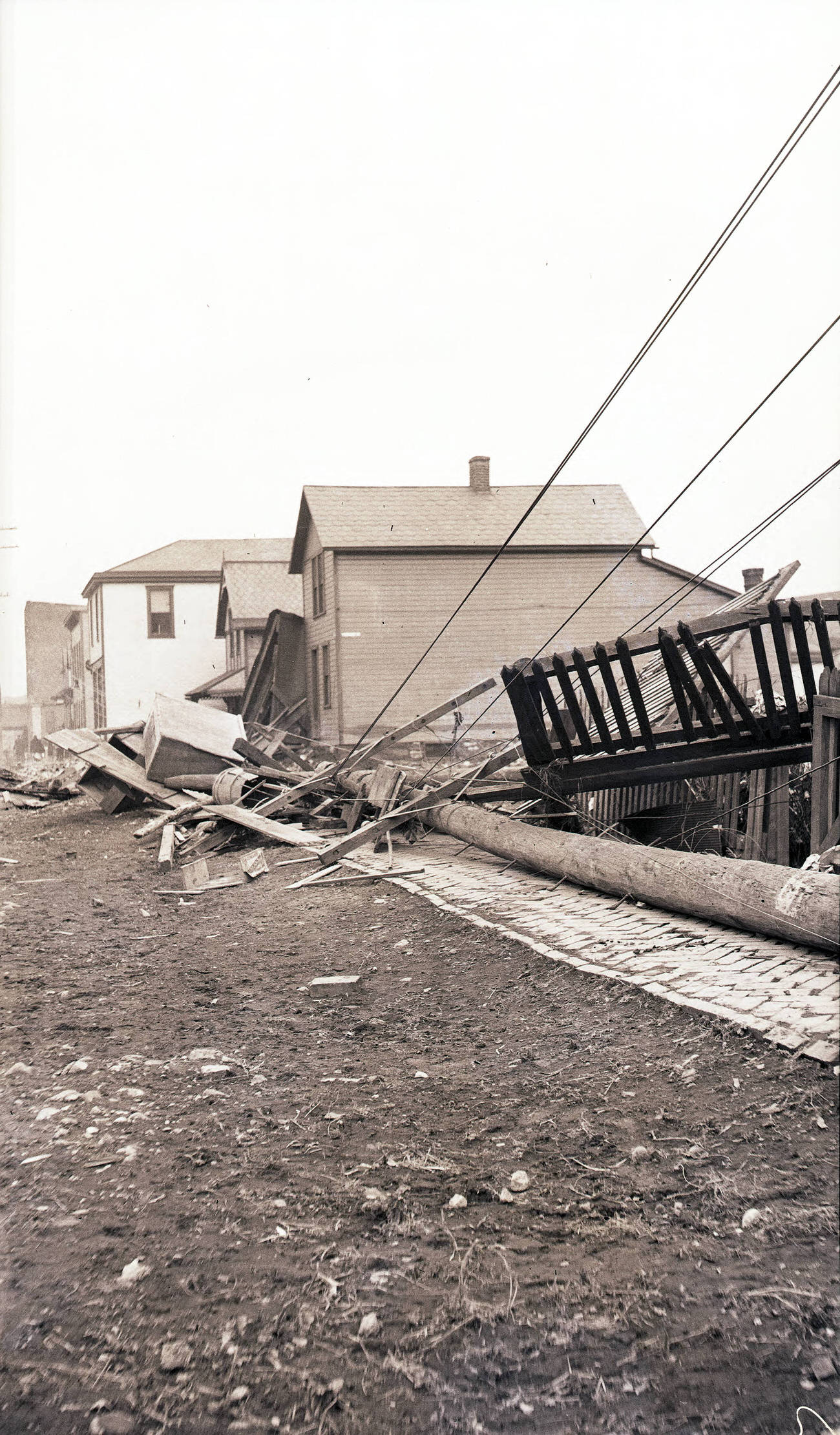
Then, in March 1913, everything stopped. Heavy rains pushed the Scioto River well past its banks, and the levees gave way. The Great Flood of 1913 struck Columbus with a force that few had anticipated. Within hours, entire neighborhoods were underwater. Houses were ripped from their foundations. Streets vanished beneath rushing water carrying wreckage, debris, and overturned vehicles.
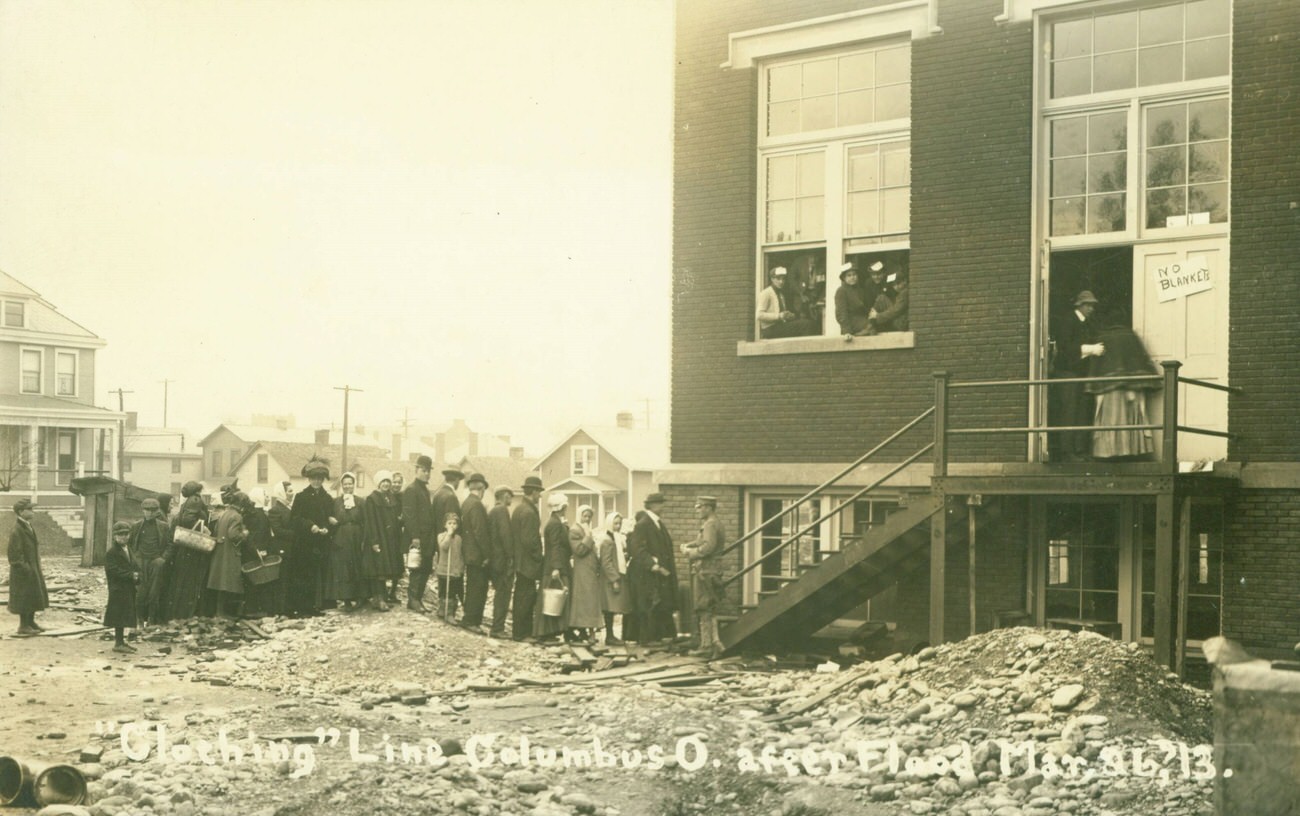
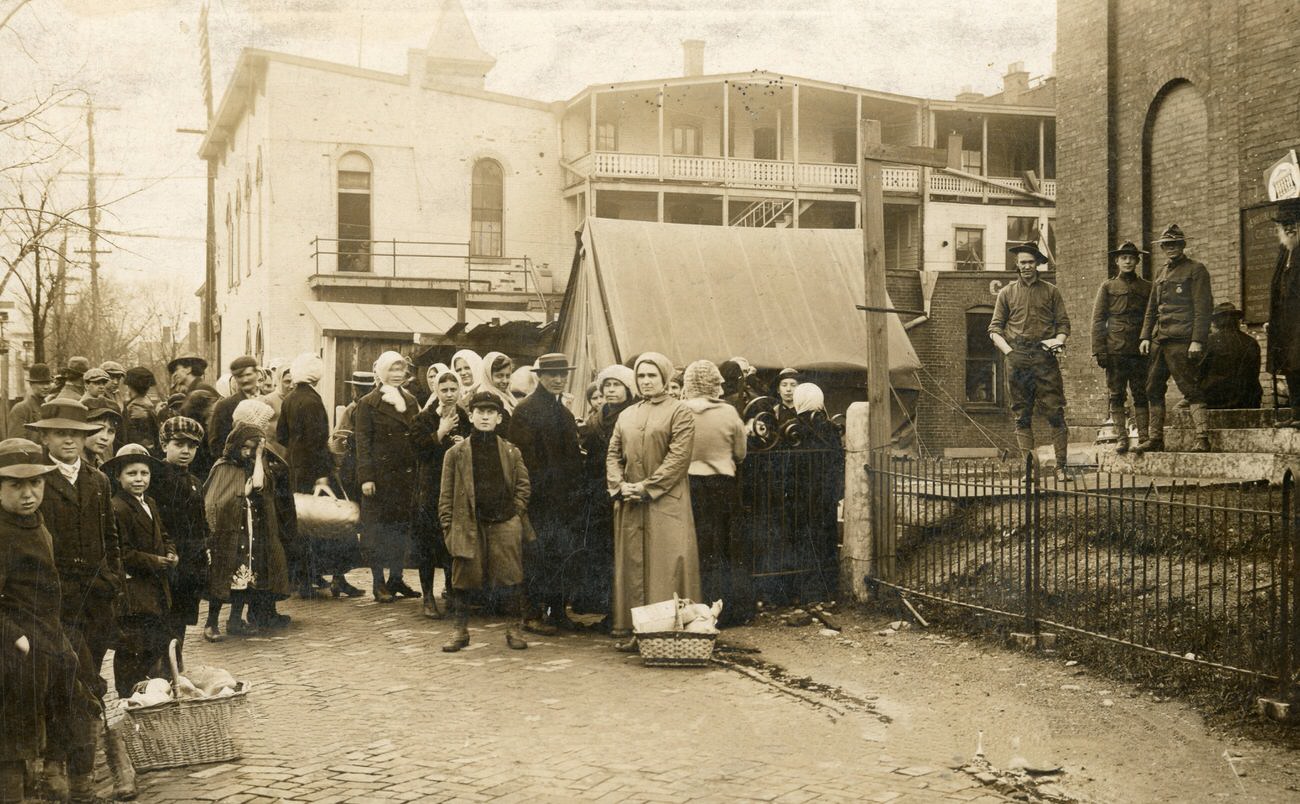
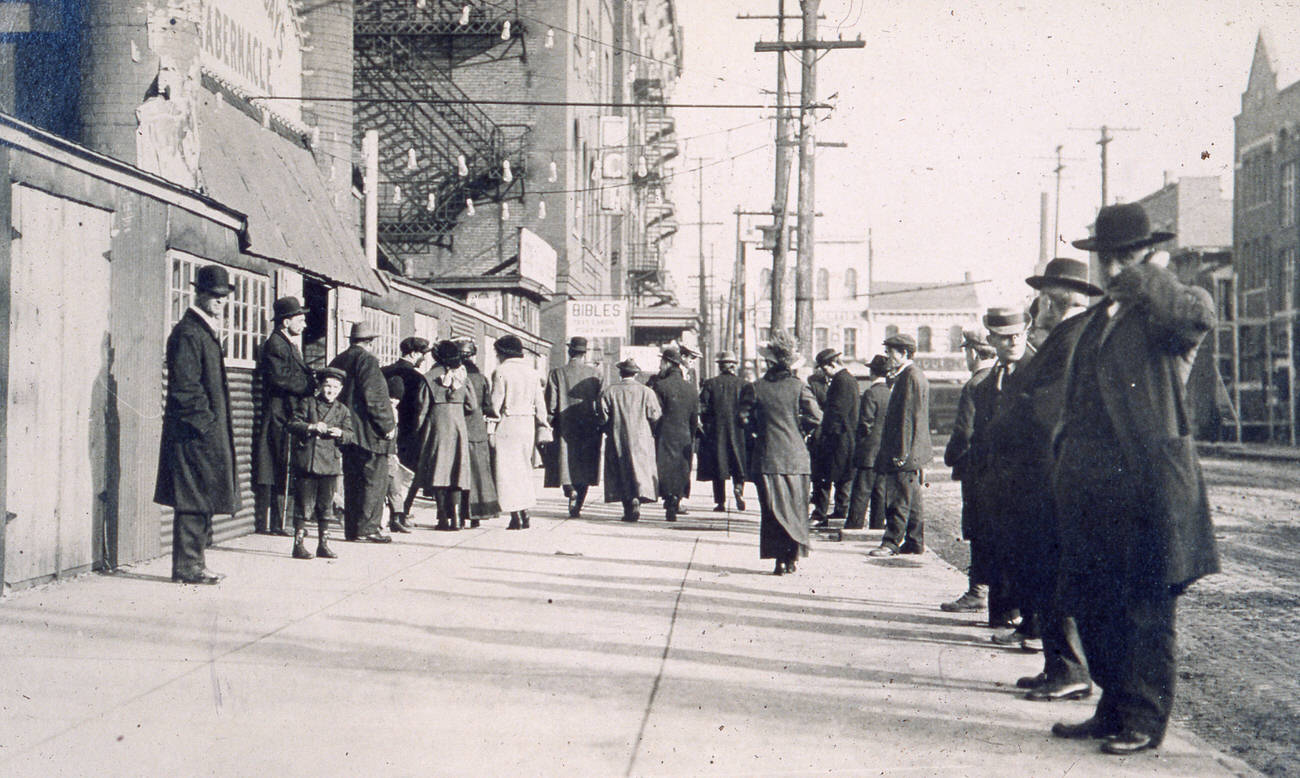
Residents seeking relief in Columbus after the devastating Flood of 1913, March 26, 1913.
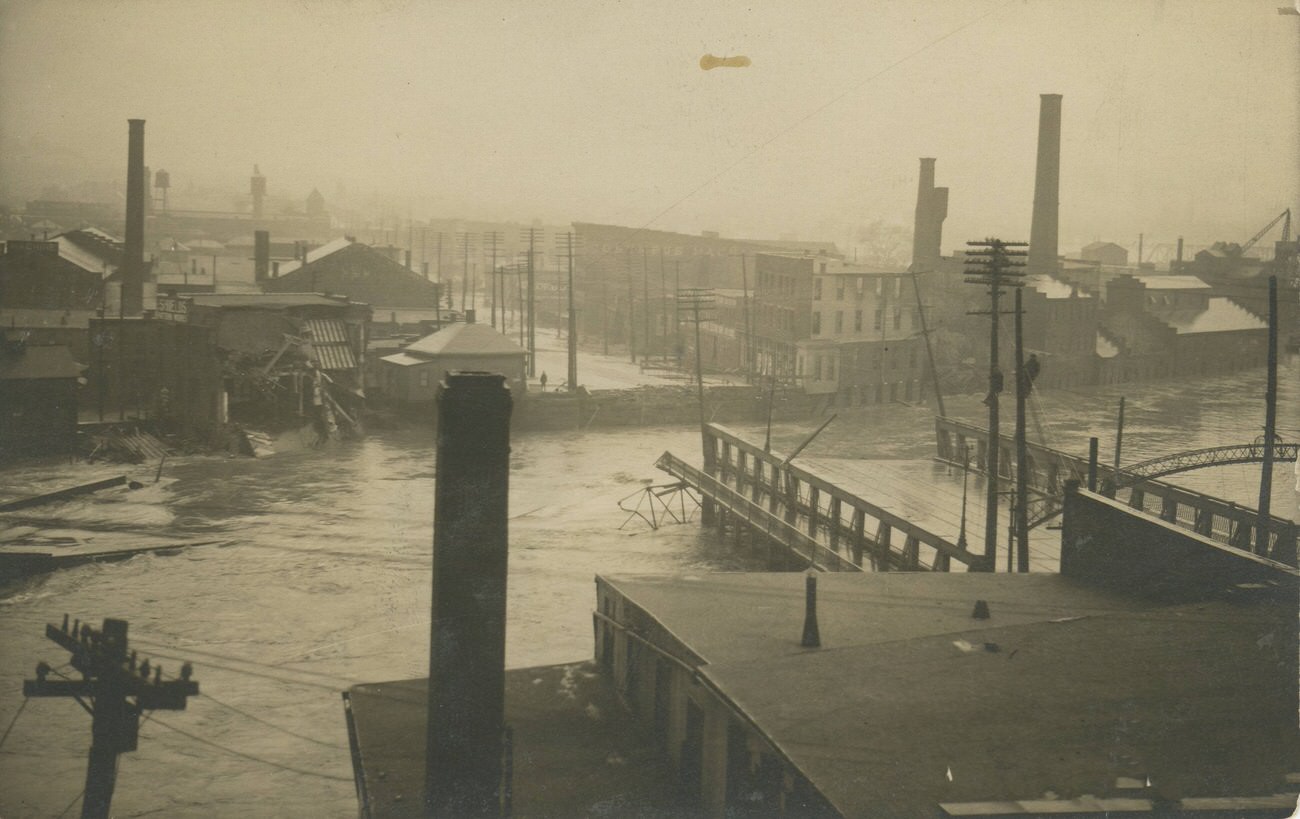
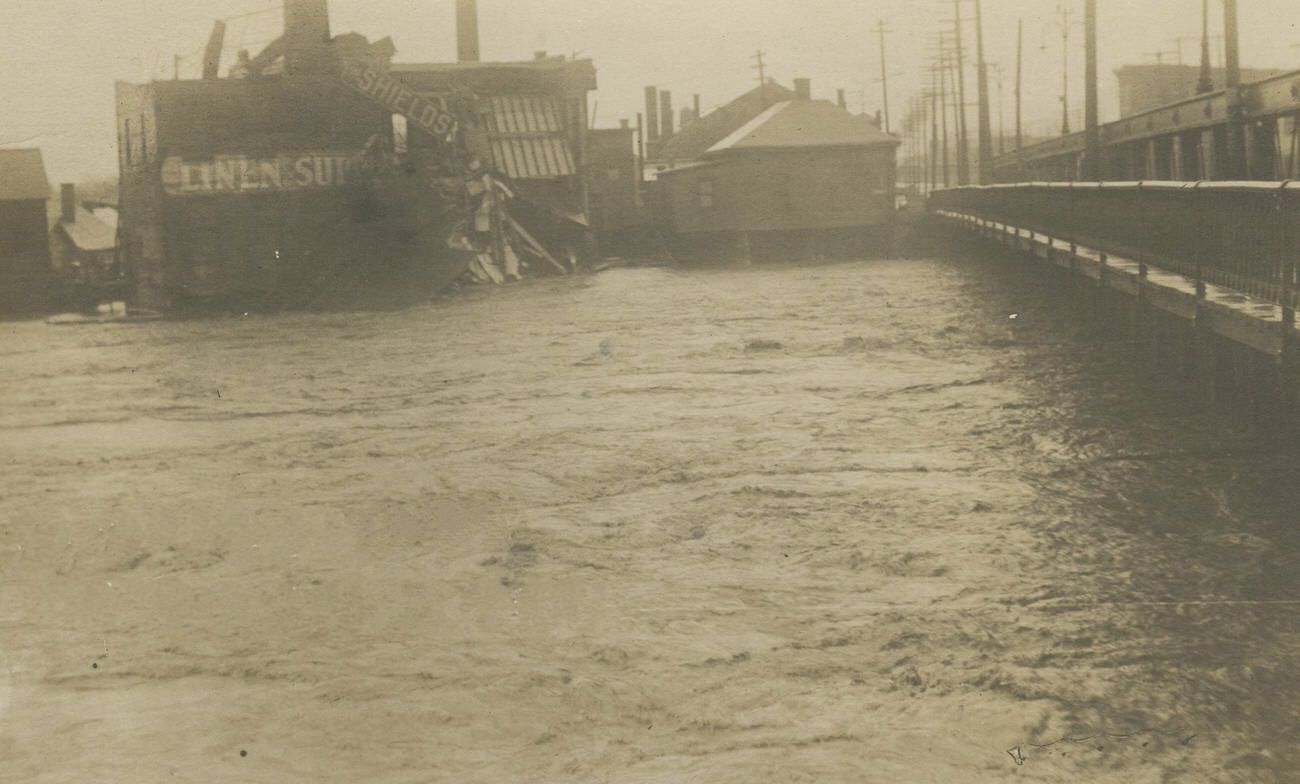
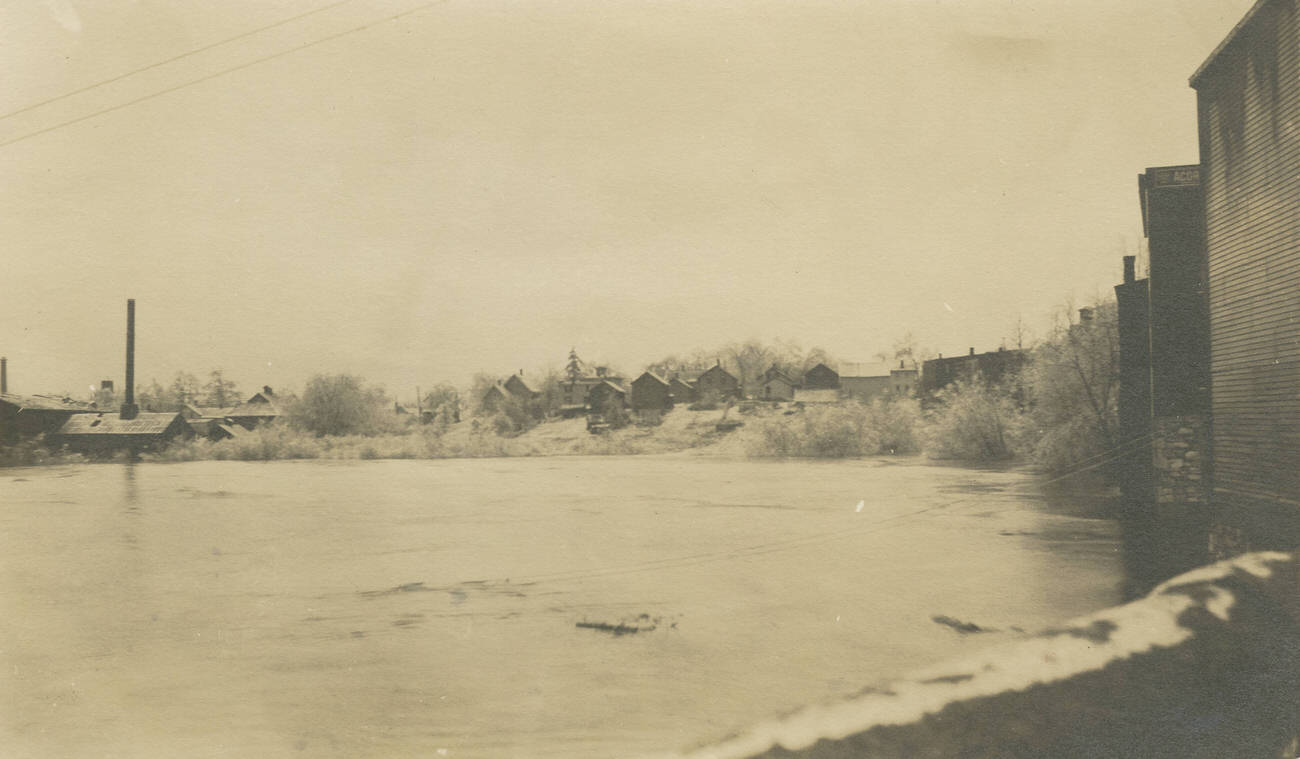
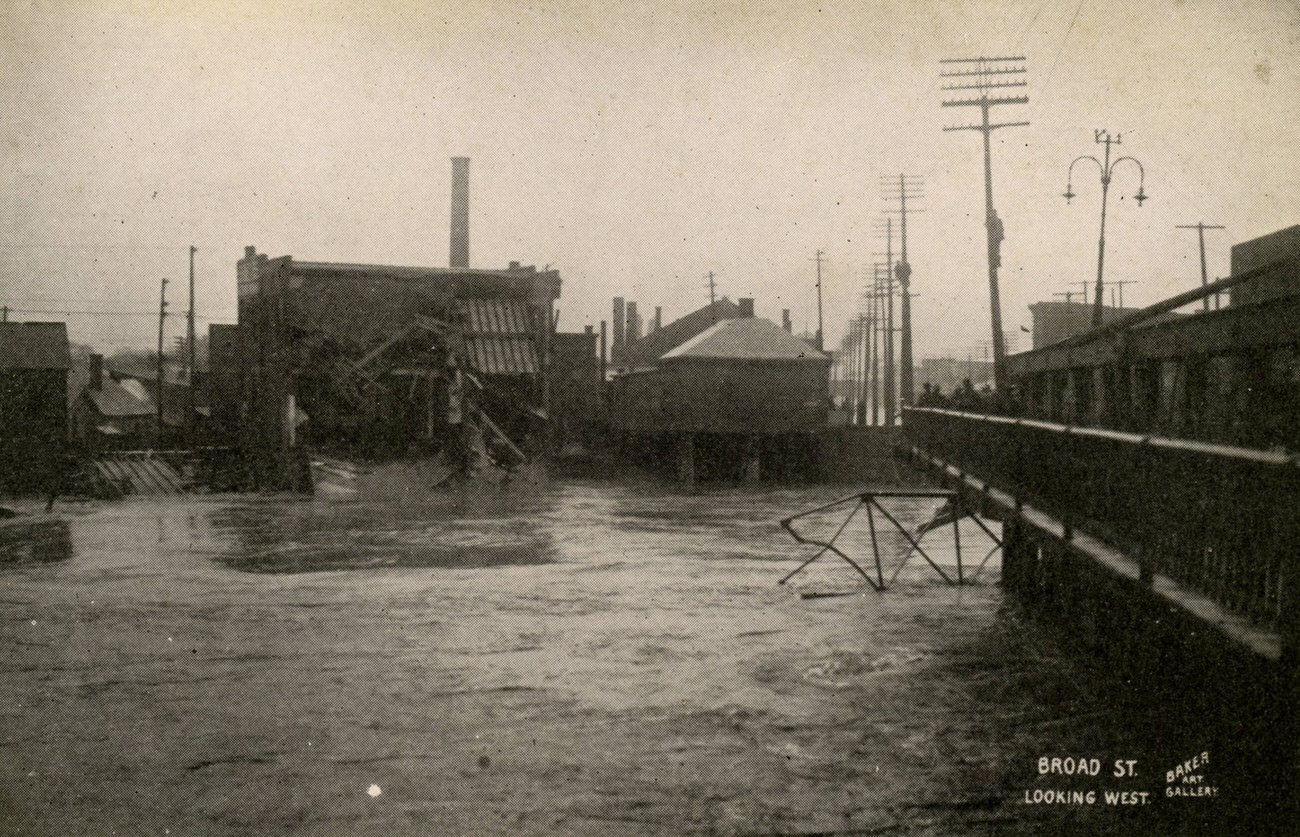
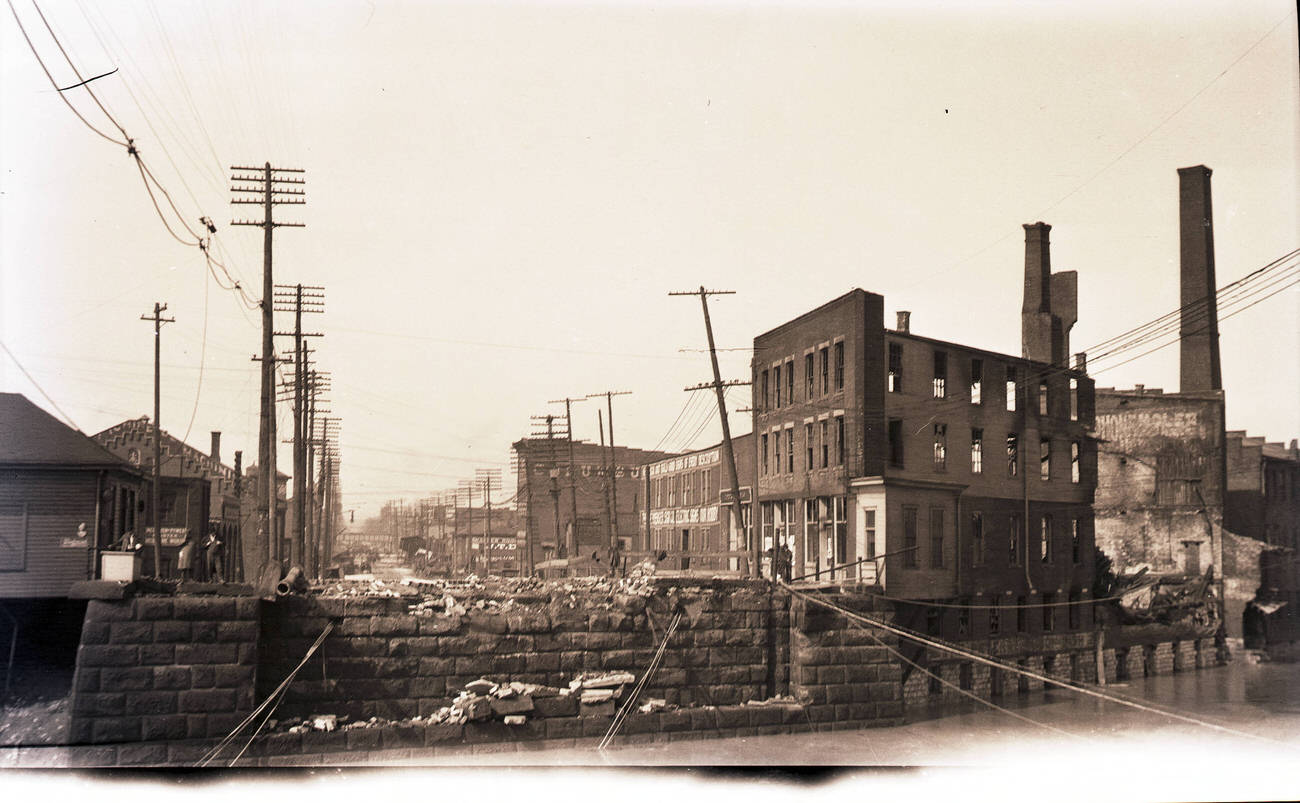
The Scioto River flooded the Broad Street Bridge area completely. Looking west from the bridge, all that was visible was a brown mass of churning water and the wreckage of what had been thriving streets just days before.
Broad Street looking west during the 1913 flood, wreckage of the Broad Street Bridge, 1913.
West side of the Scioto river at the Broad Street Bridge during the 1913 flood, March 25, 1913.
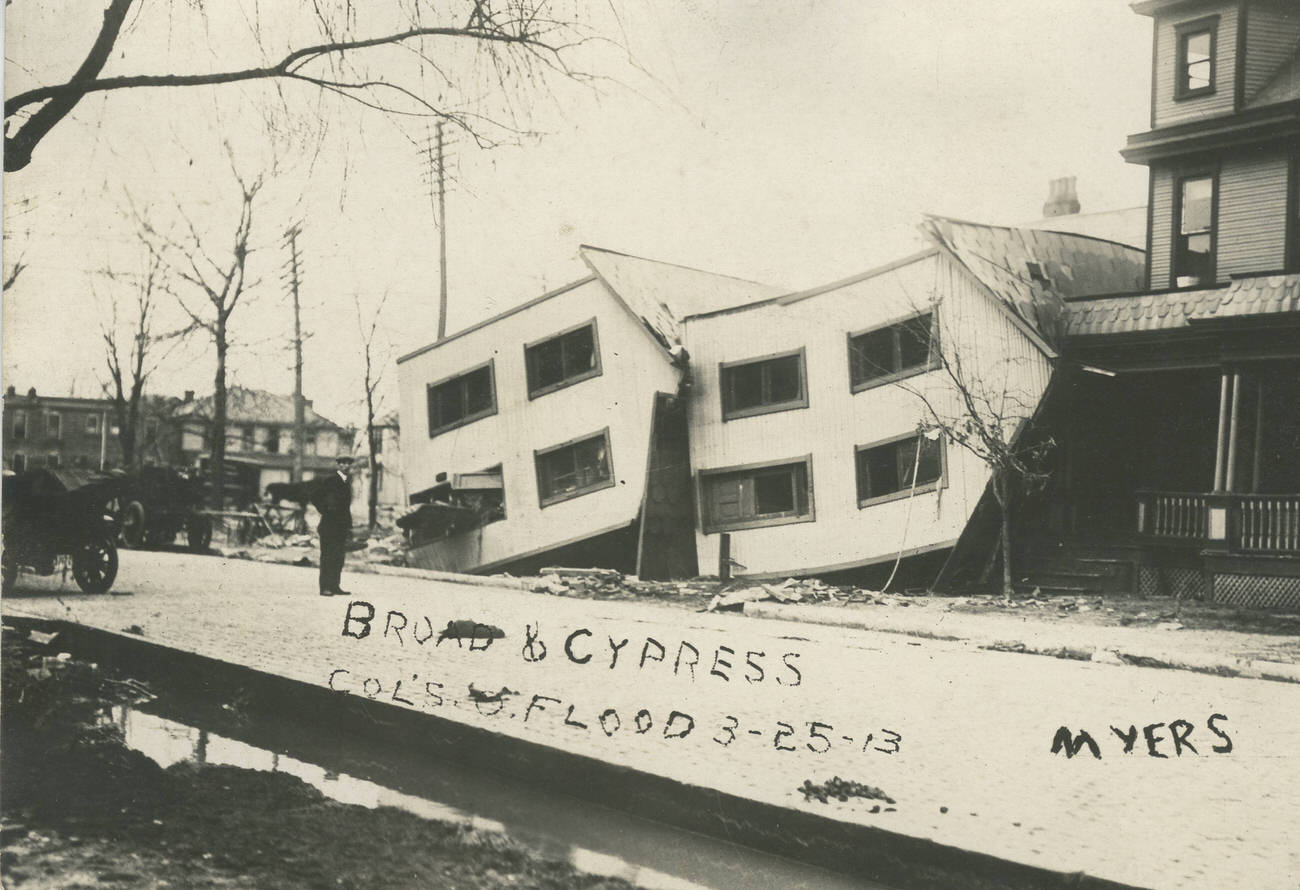
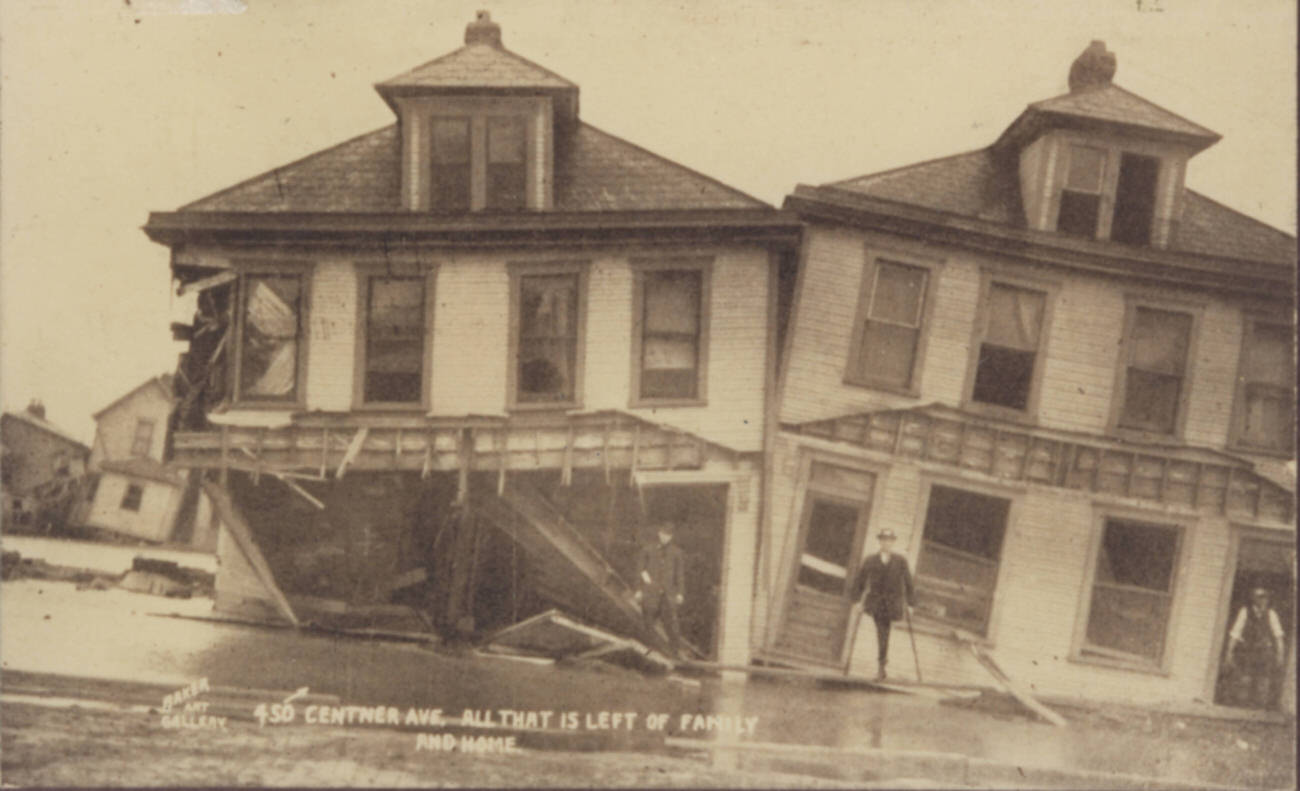
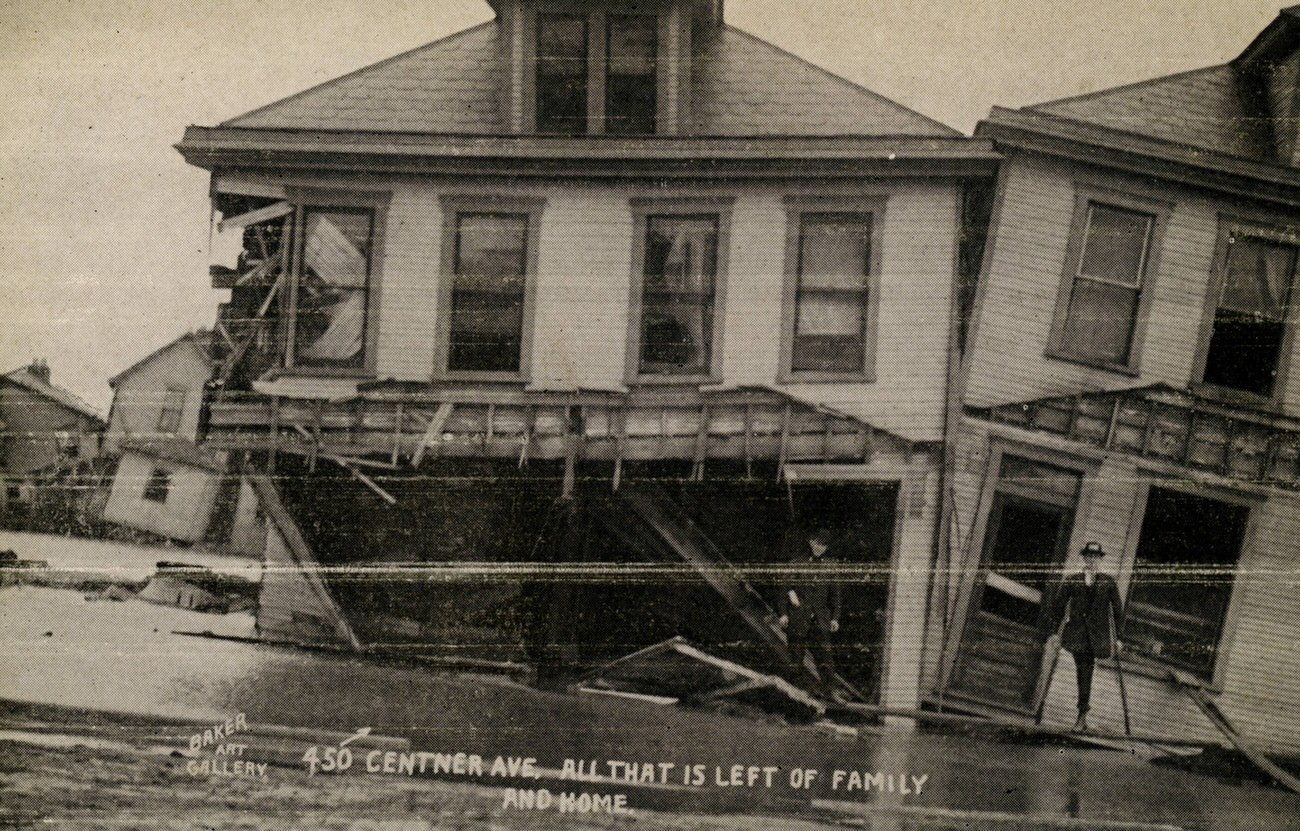
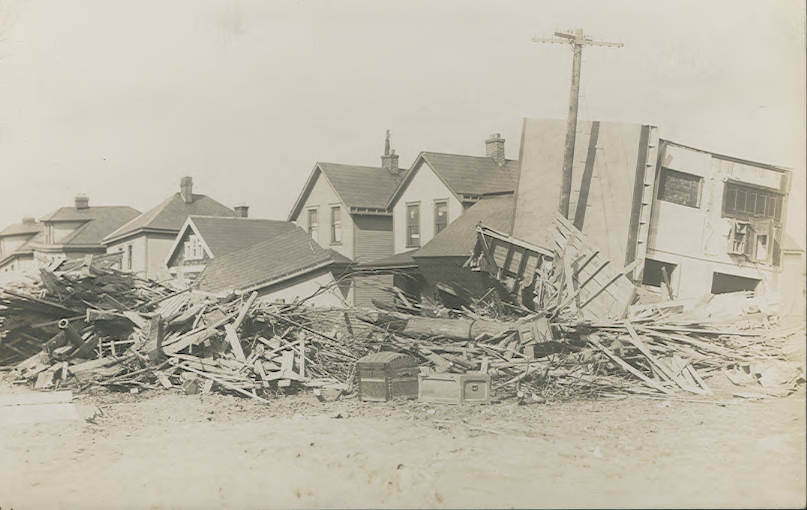
Residential areas took some of the worst damage. On Broad and Cypress Streets, entire houses were overturned and pushed off their lots. On Centner Avenue, homes were reduced to collapsed piles of lumber and debris. Families who had built lives in these neighborhoods came back to find almost nothing left standing.
Overturned houses at Broad and Cypress Streets in Columbus during the 1913 flood, March 25, 1913.
Destruction of a home at 450 Centner Avenue after the 1913 flood, March 1913.
Man in front of destroyed homes on Centner Avenue, showcasing flood’s destructive force, 1913.
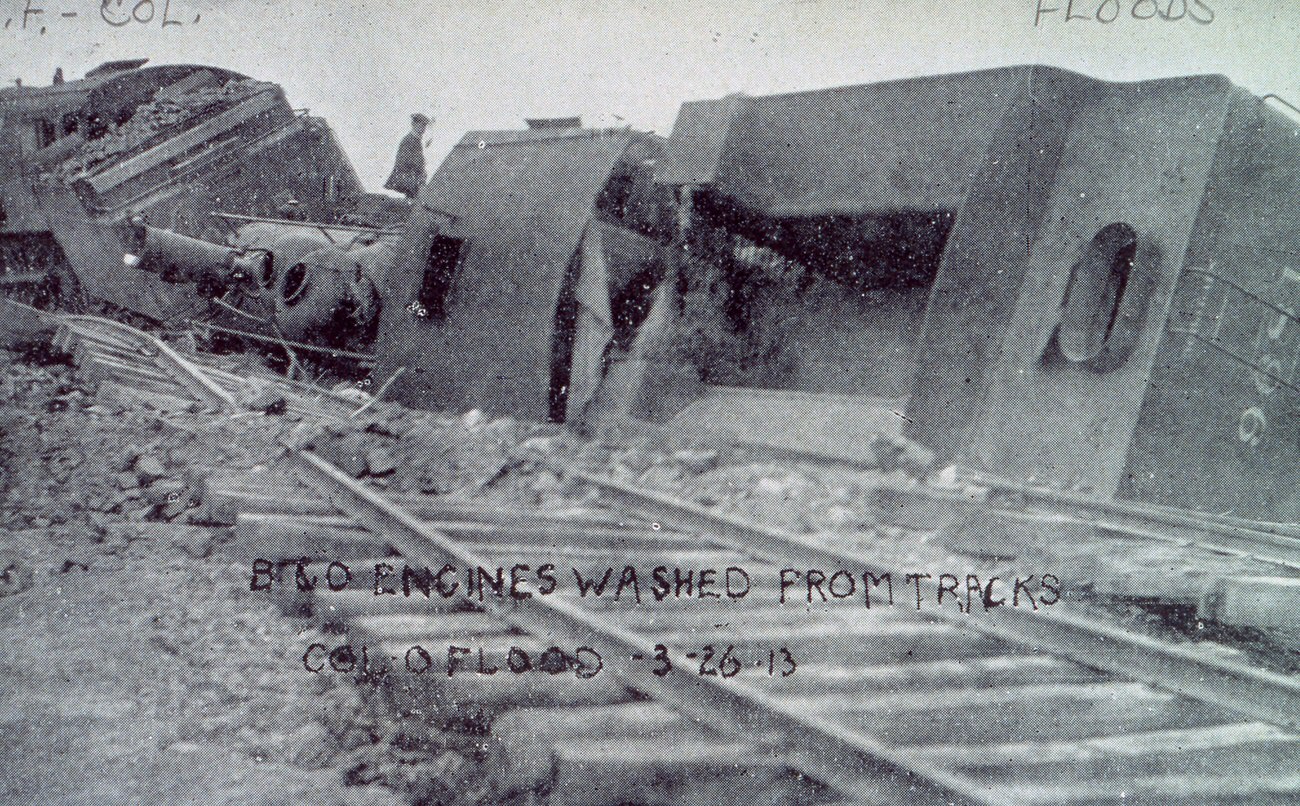
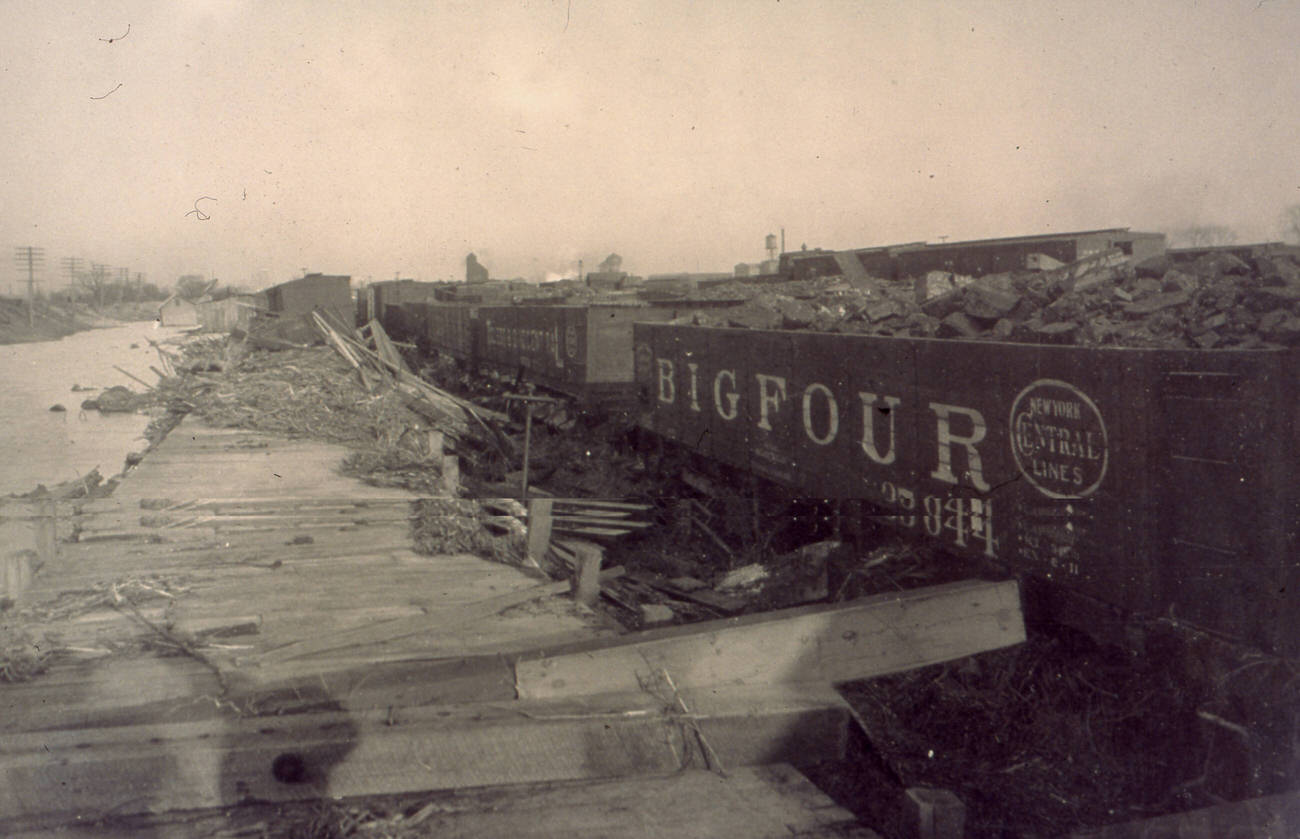
The flood did not spare infrastructure. Baltimore and Ohio Railroad locomotives were knocked over by the floodwaters. A fire truck from Engine House No. 10 was found overturned in the mud. Even the railways that Columbus depended on for commerce were disrupted, with Big Four railcars derailed near the Toledo and Ohio Central Railroad yard in Franklinton.
Photograph of Baltimore and Ohio Railroad locomotives overturned by flood waters, March 26, 1913.
1913 flood in Columbus, Ohio, featuring an overturned fire truck from Engine House No. 10, 1913
Big Four railcar derailed by the 1913 flood near the Toledo and Ohio Central Railroad yard in Franklinton, 1913.
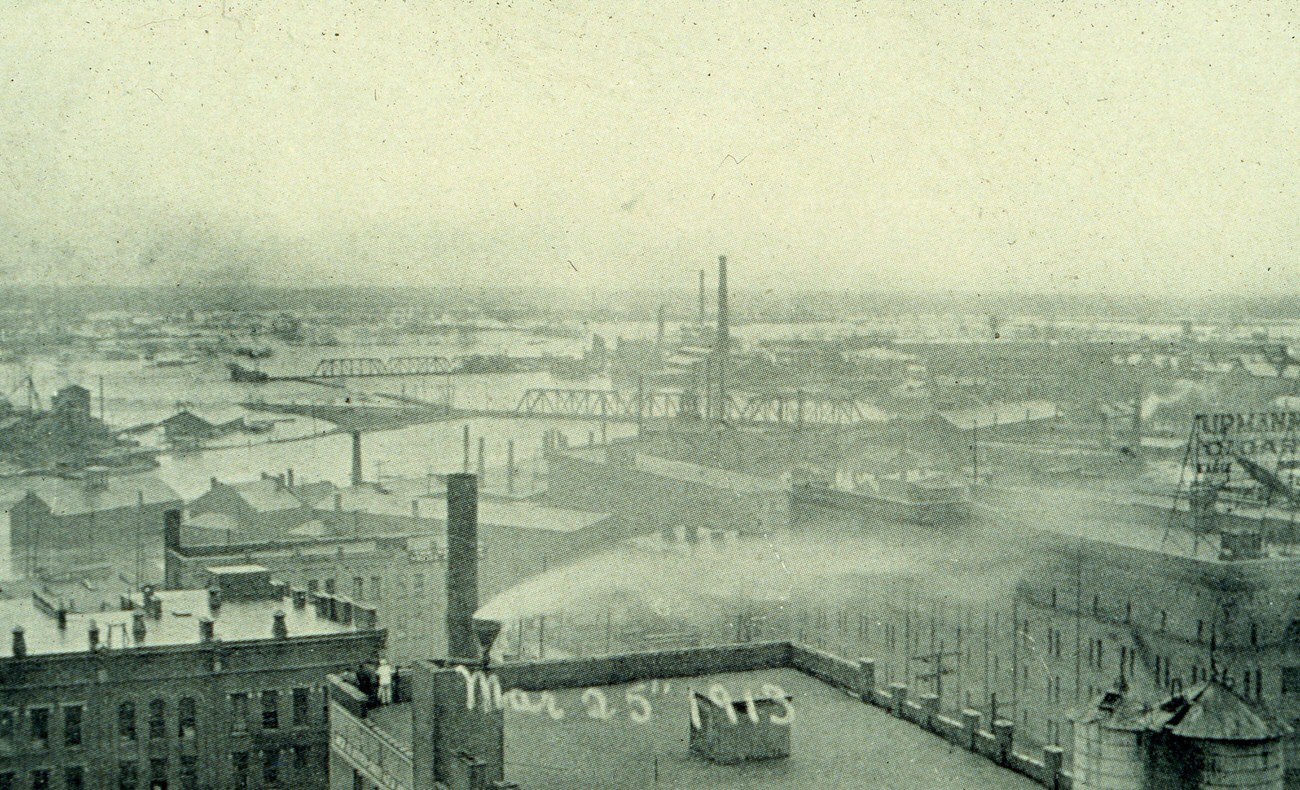
From above, aerial photographs showed the true scale of the disaster. The Charles C. Higgins Wholesale Grocery Building stood half-submerged as water spread across the city’s lower districts in every direction. Broken levees along North Sandusky Street exposed how inadequate the city’s flood defenses really were.
Aerial view of the 1913 flood in Columbus, featuring the Charles C. Higgins Wholesale Grocery Building, March 25, 1913.
Broken levee from the 1913 flood, North Sandusky Street, 1913.
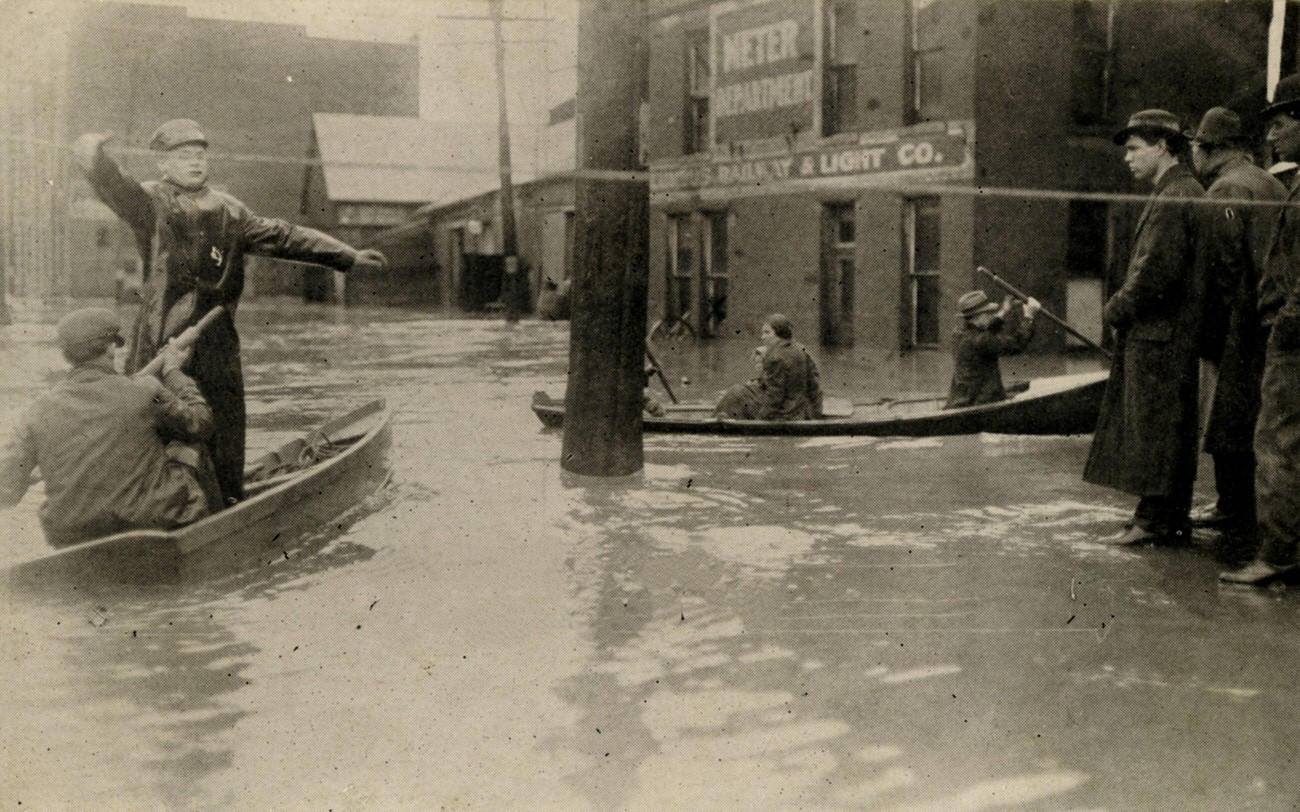
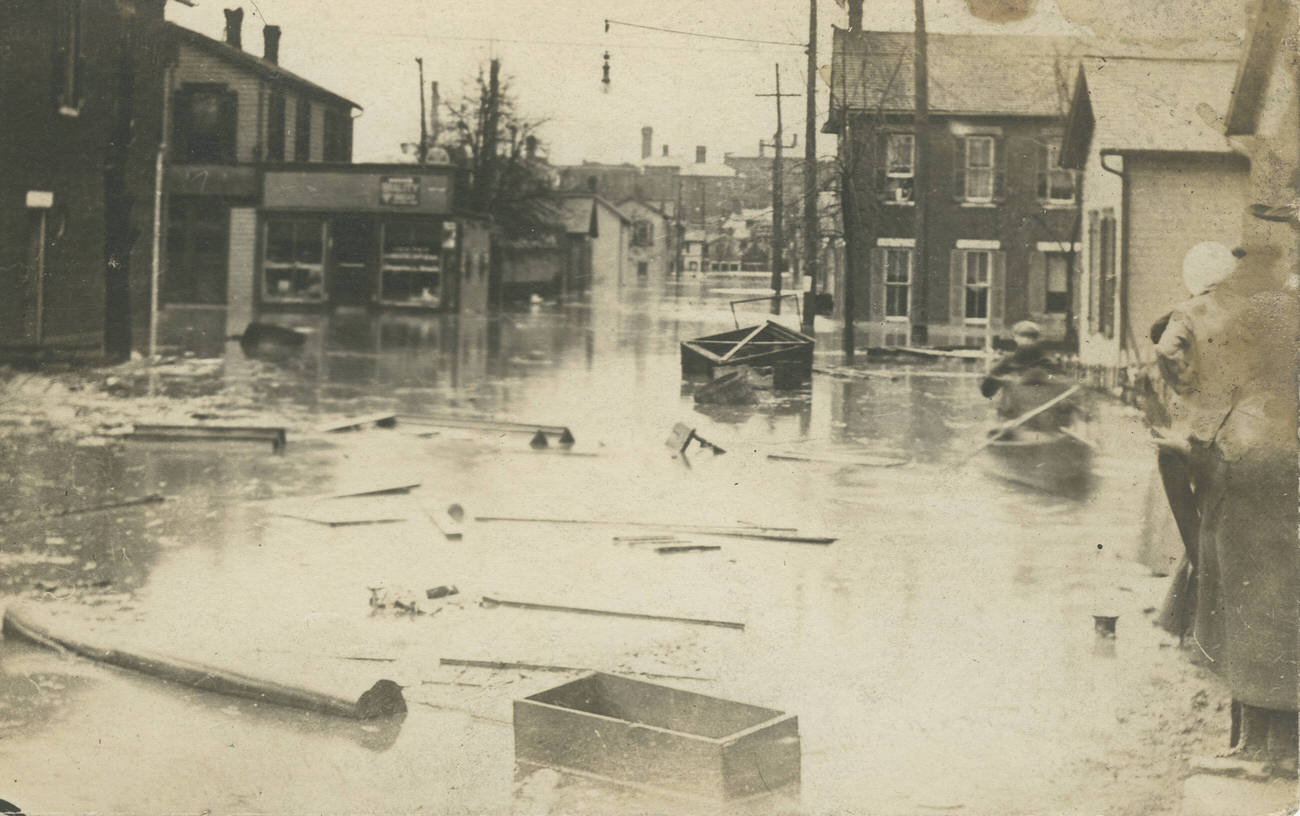
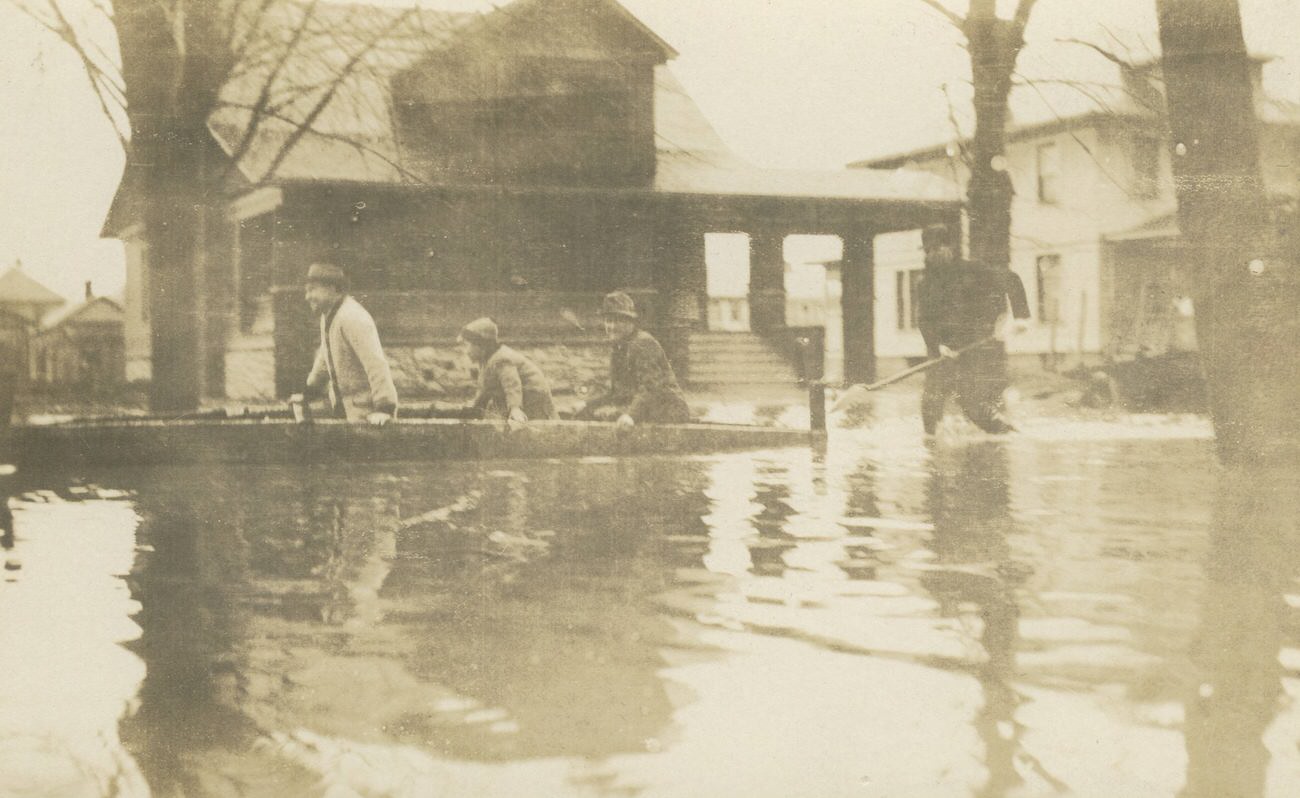
Rescue boats moved through streets that were normally full of streetcars and horses. On Broad and Levee Streets, residents waited for boats to ferry them to higher ground. Bread lines formed quickly to feed those who had lost everything, and relief operations stretched across the city for weeks.
Broad and Levee Streets during the 1913 flood, showing people and rescue boats, March 26, 1913.
Bread line for 1913 flood victims, 1913.
View of flood damage at Cable and Lorain Avenues in Columbus, later renamed Yale Avenue, 1913.
Scene of the 1913 flood in Columbus, showing floating debris, possibly at 516 W. State St., 1913.
Scene from the 1913 flood in Columbus, showcasing the devastation caused by heavy rain and failed levees, 1913.
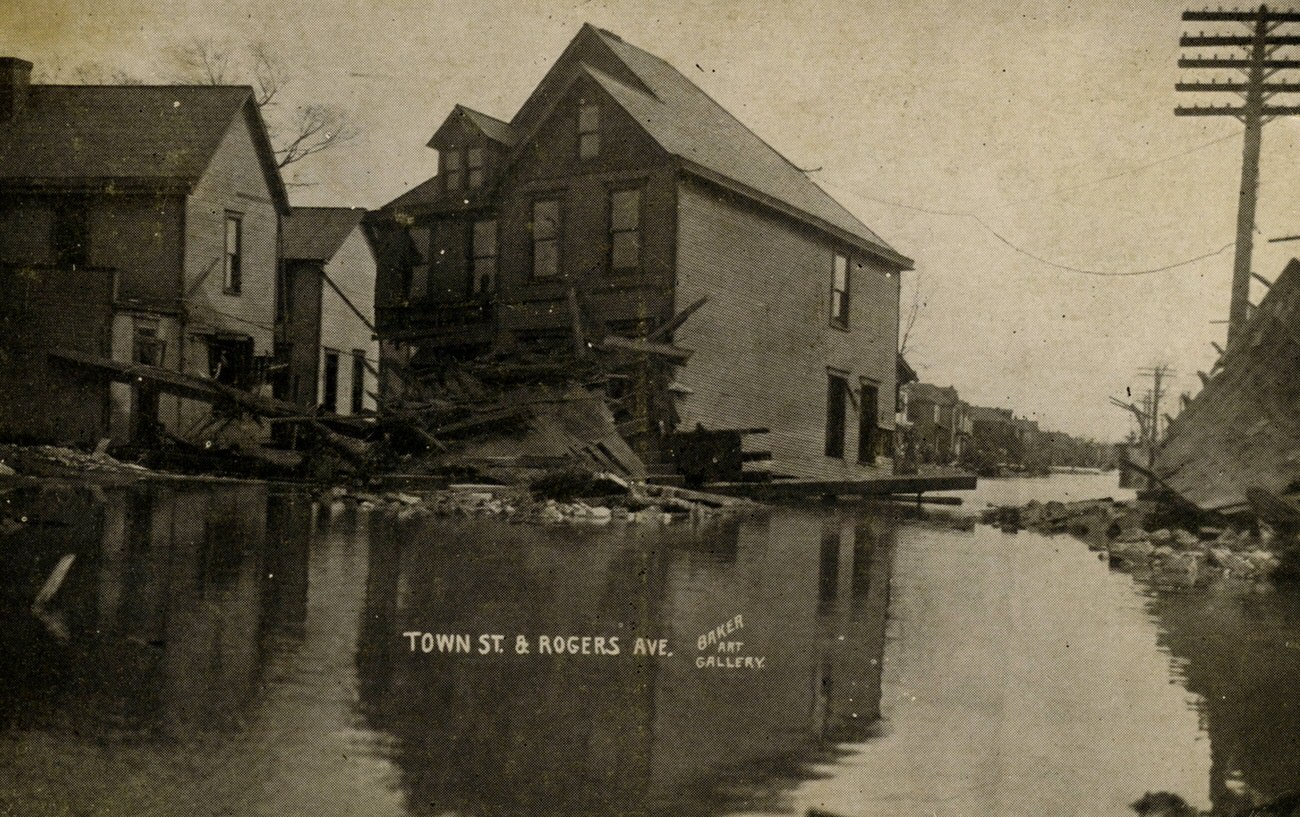
Flood damage at Town Street and Rodgers Avenue, 1913.
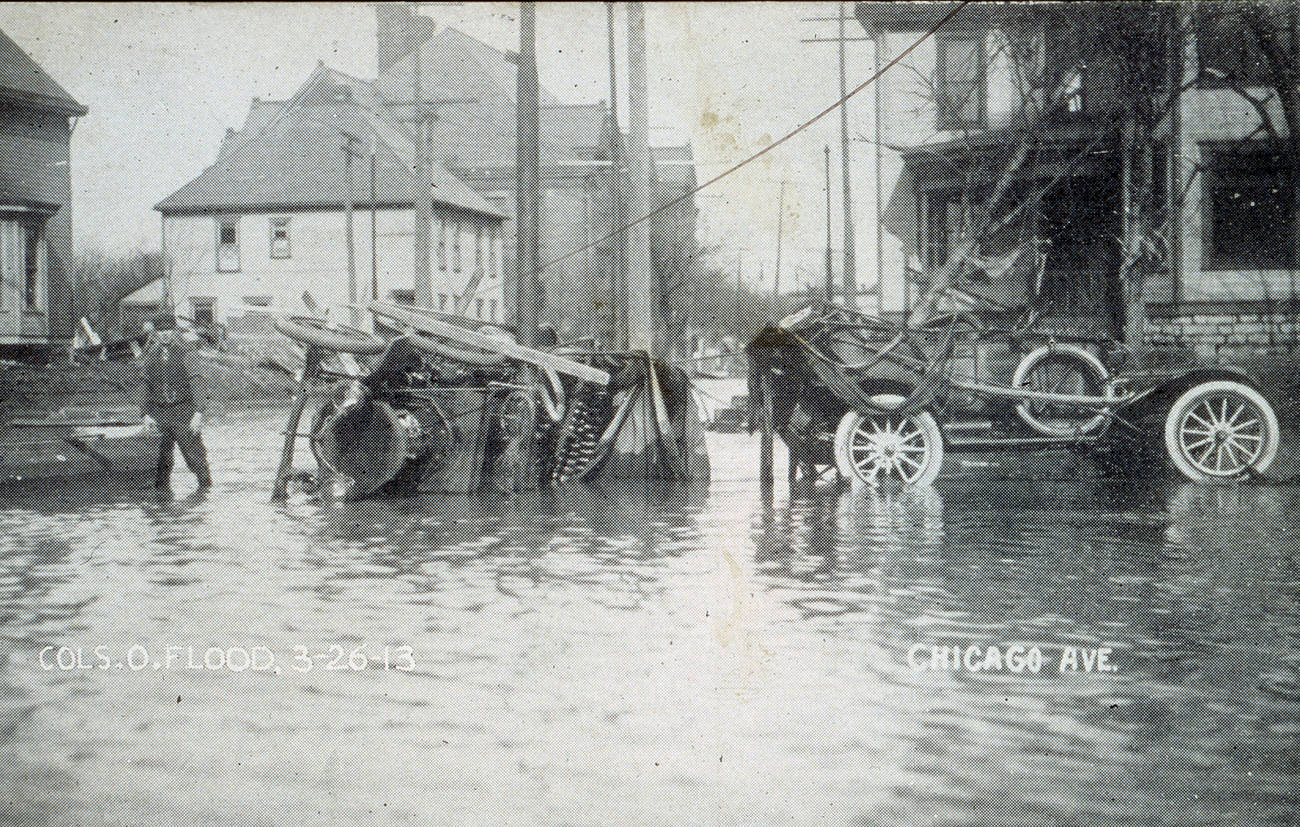
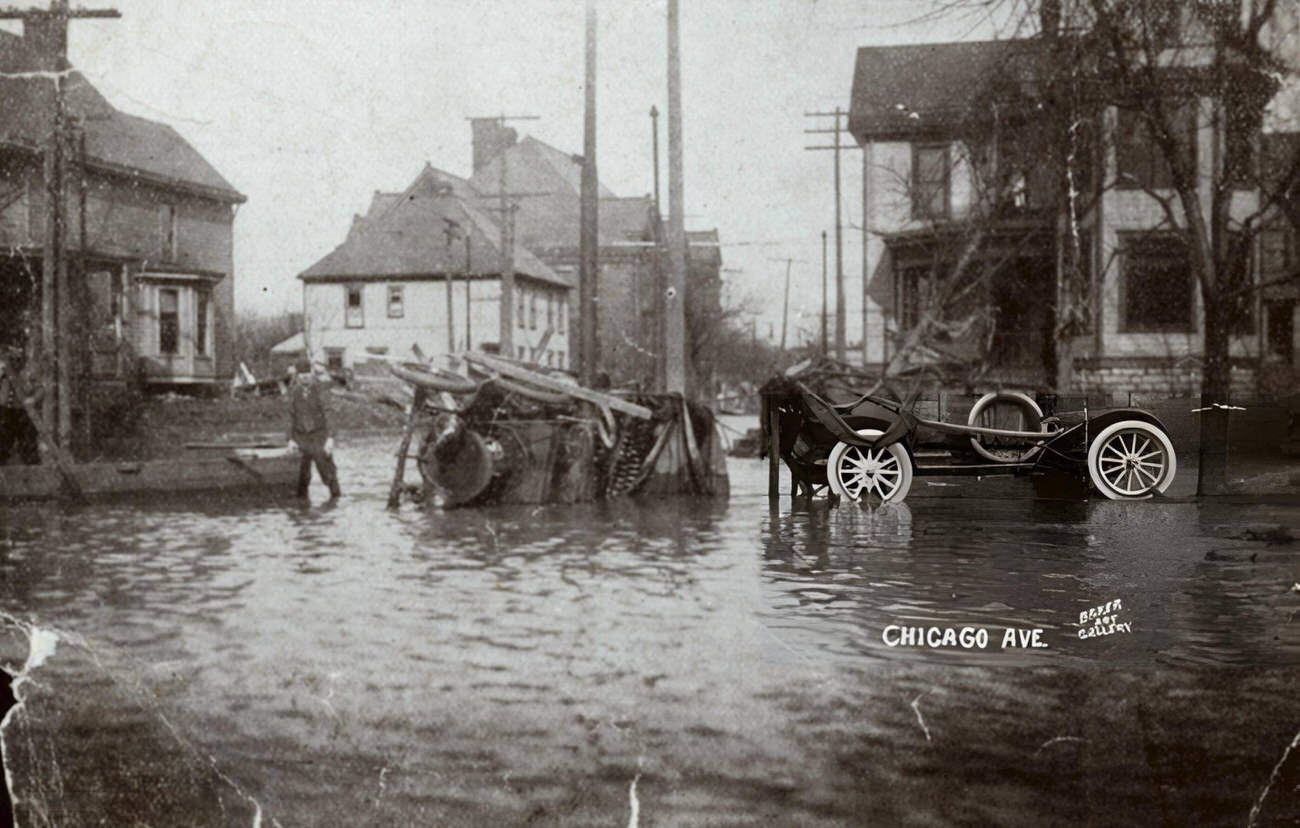
Chicago Avenue flood destruction with overturned car, March 26, 1913.
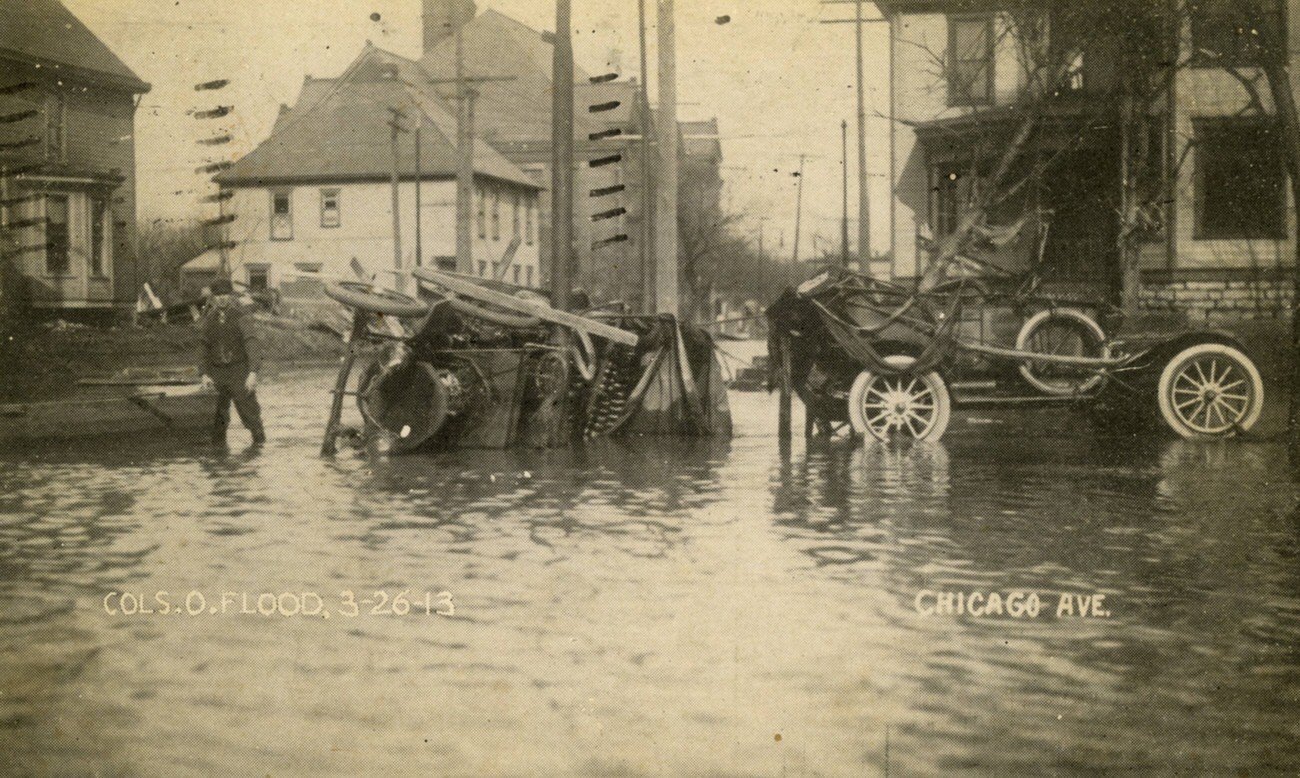
Chicago Avenue during the 1913 flood, with overturned car and boat, 1913.
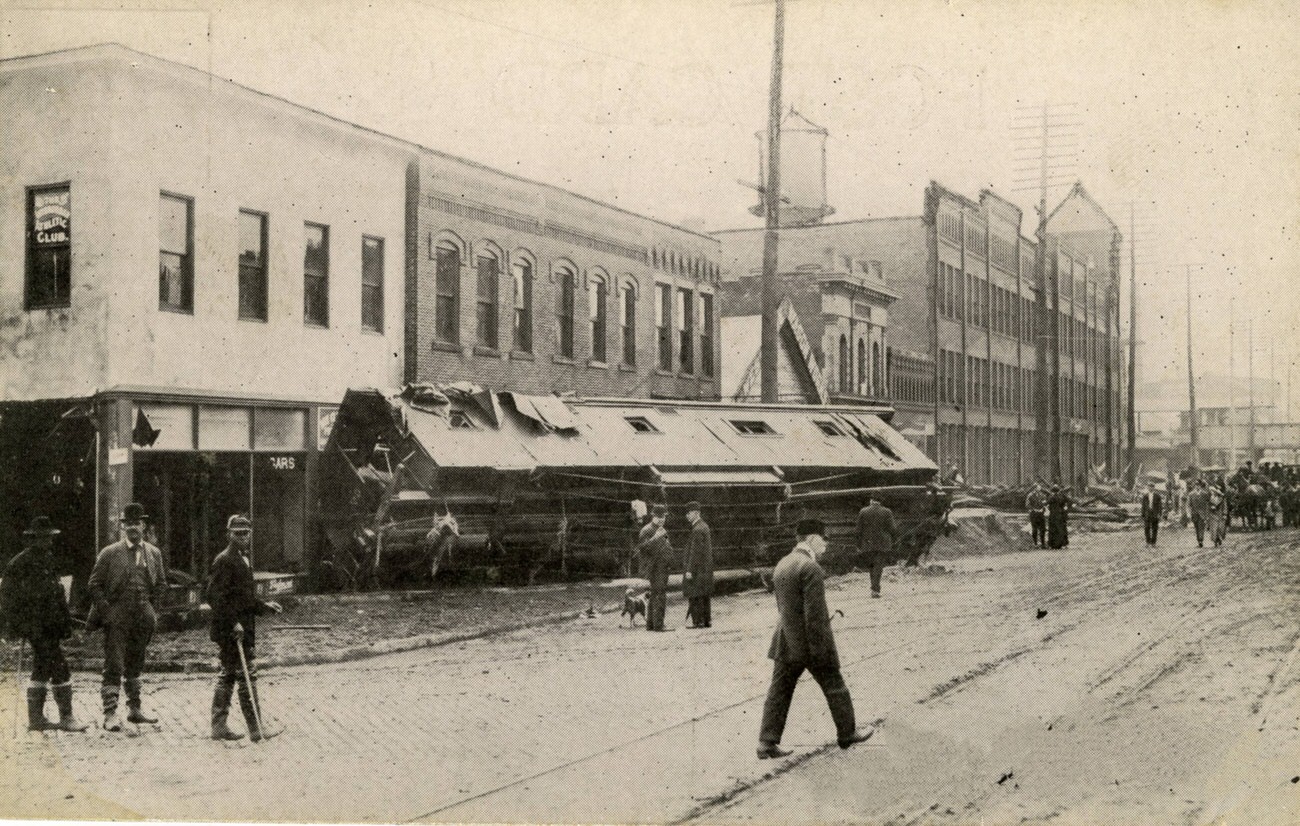
Broad and Belle Streets during the 1913 flood, featuring an overturned streetcar, March 27, 1913.
Broad Street & Rodgers Avenue, showing flood destruction, 1913.
Broad Street looking west along the Broad Street Bridge during the 1913 flood, 1913.
Flood damage on Rodgers Avenue in Columbus, Ohio, March 29, 1913.
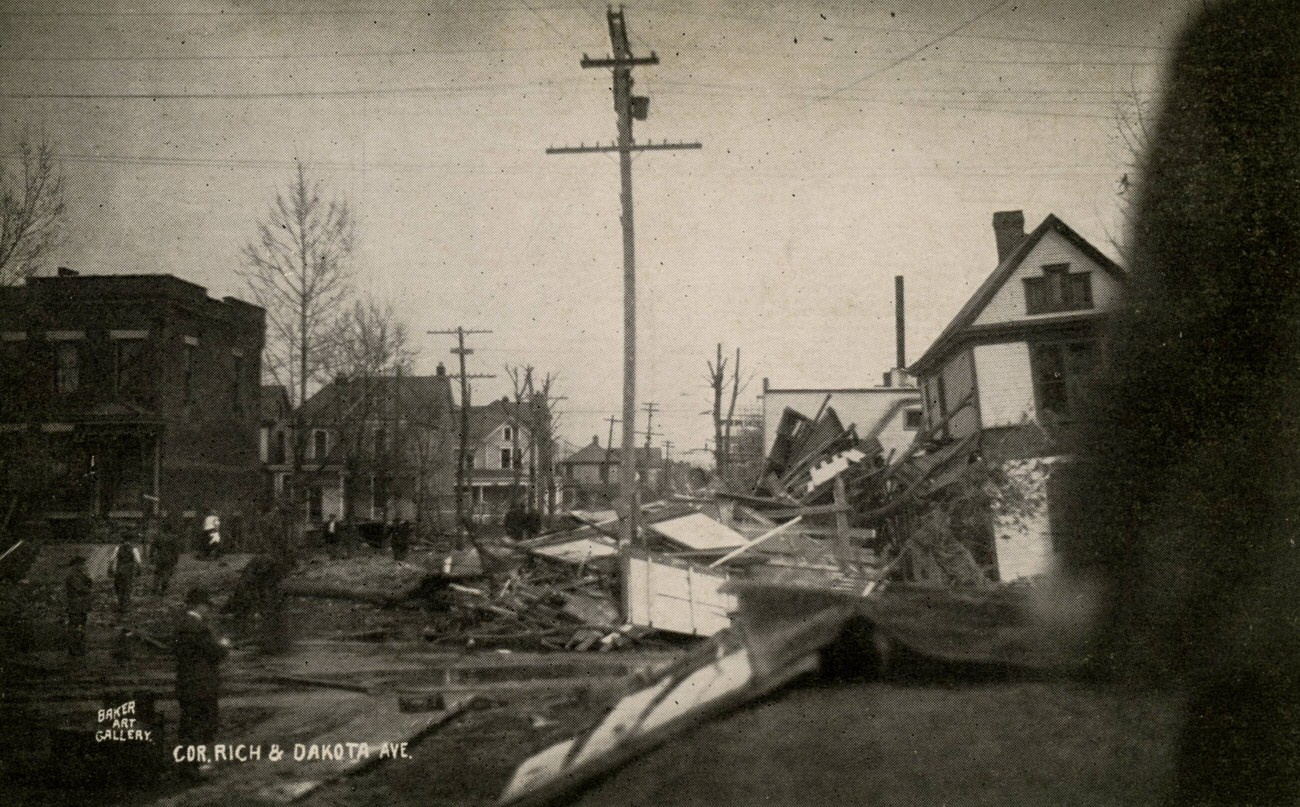
The 1913 flood at the corner of Rich and Dakota Avenue, Columbus, 1913
Flood on Davis Avenue, south from Broad Street, Columbus, 1913
West Broad Street bridge destruction from the 1913 flood, 1913
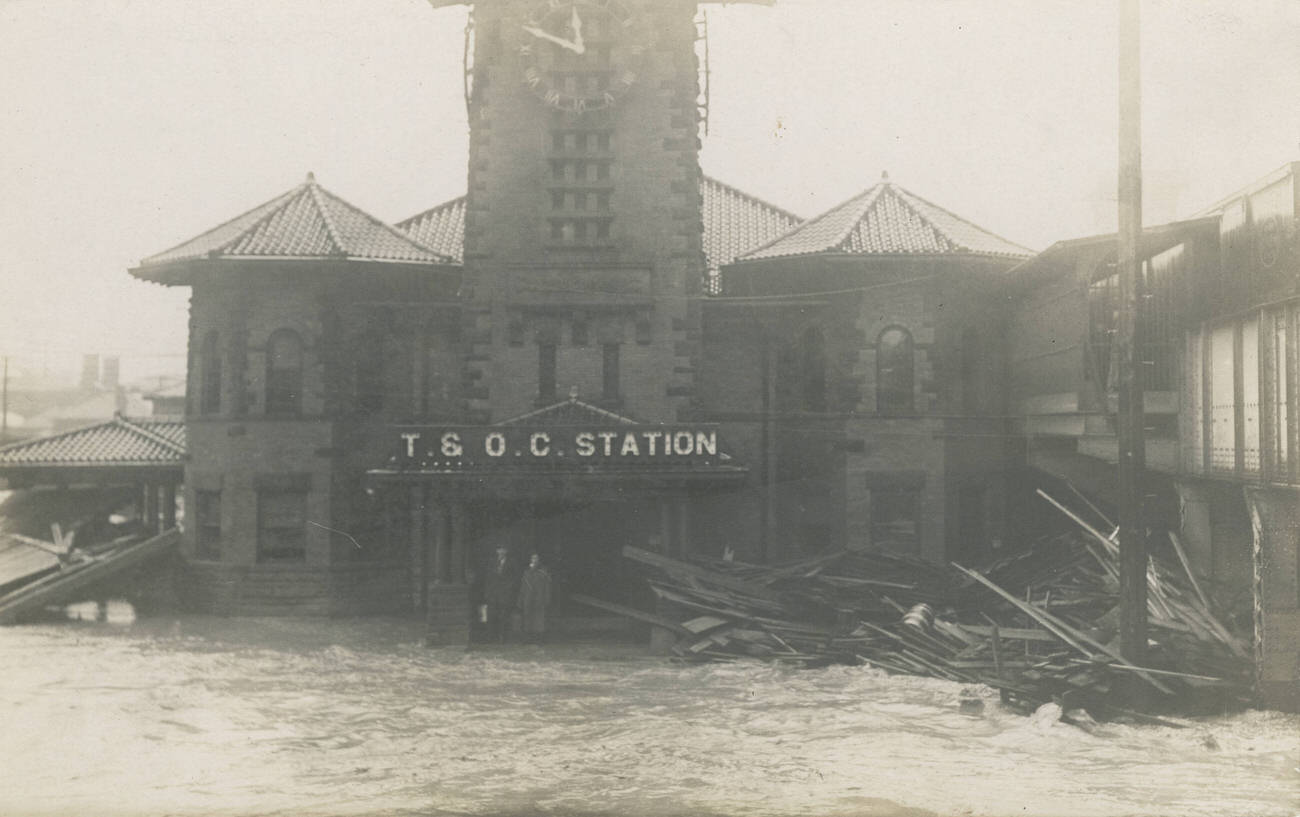
Flood damage at the Toledo and Ohio Central Railroad Station, Columbus, 1913.
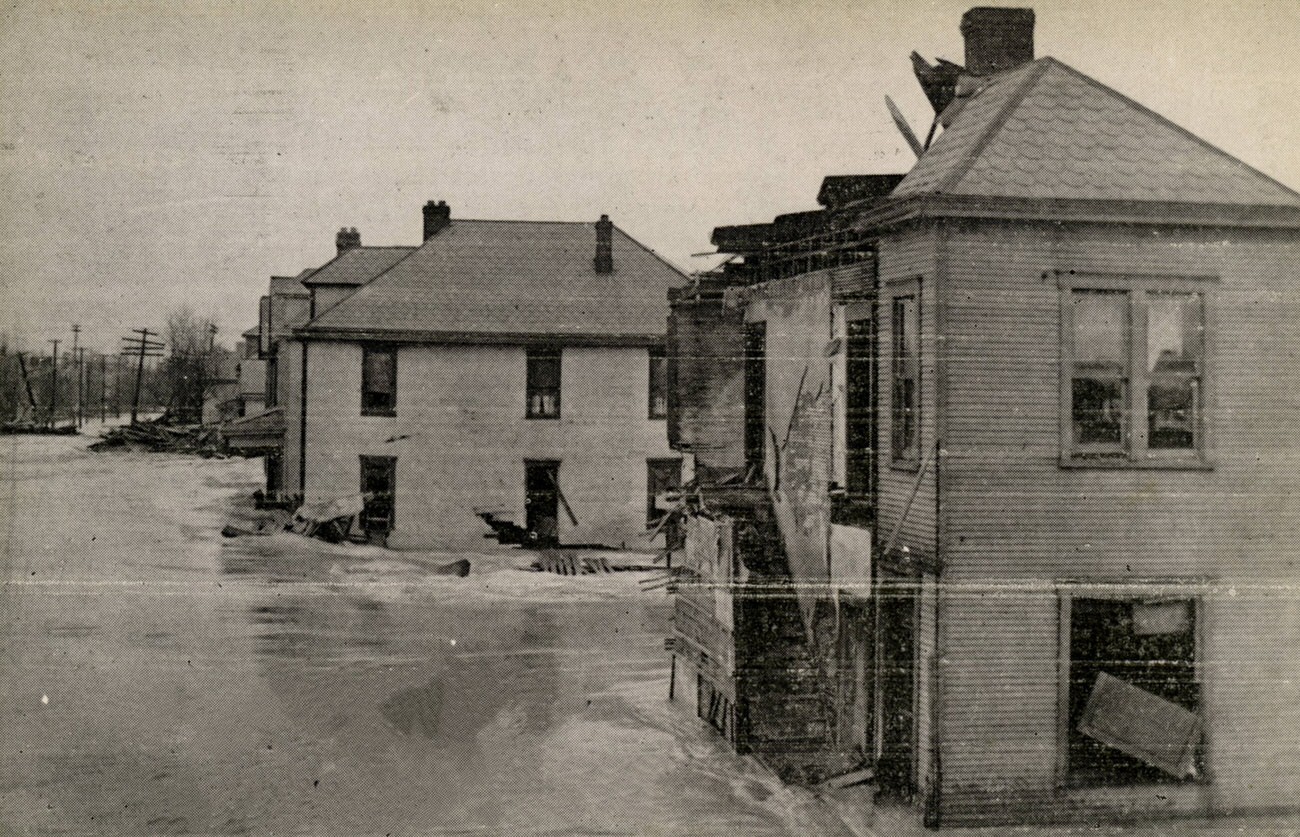
Flooded street scene with house and boat, Columbus, 1913.
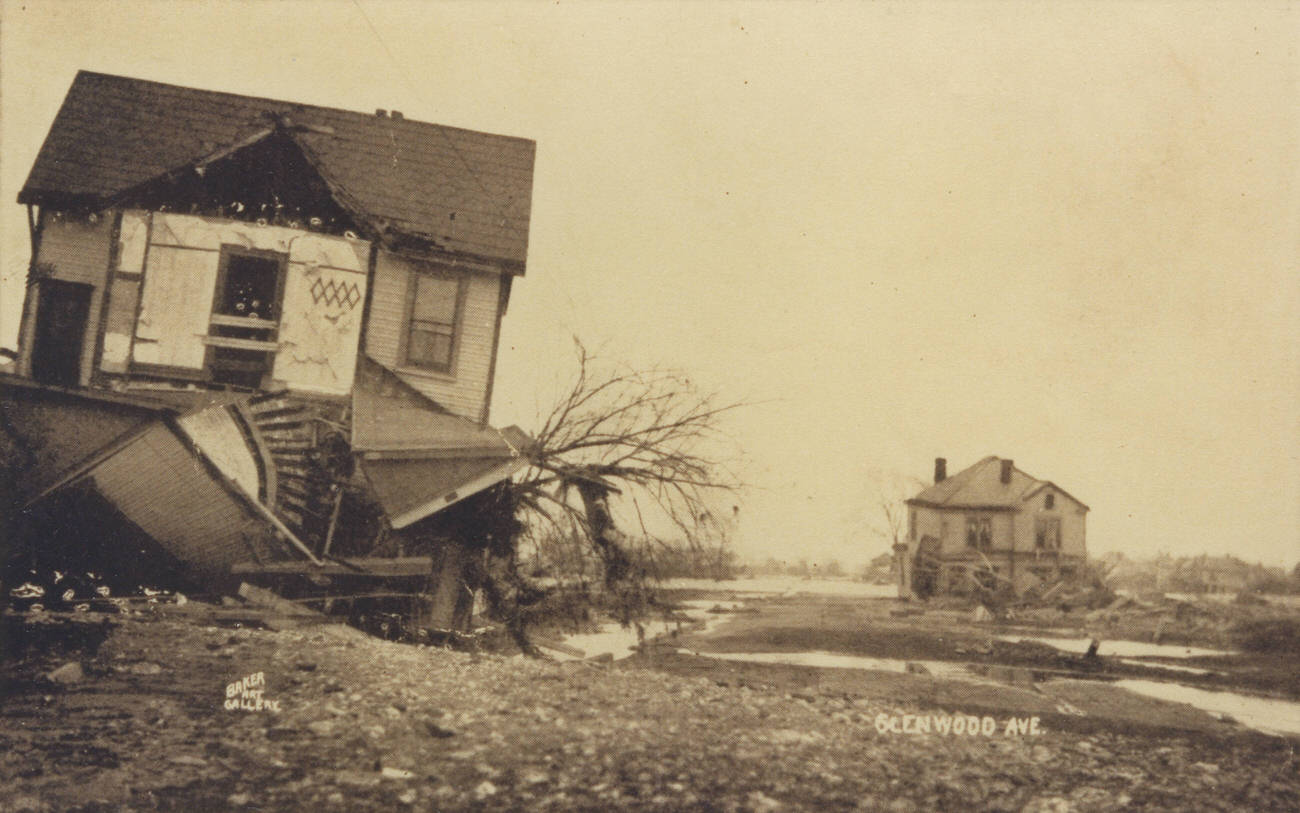
Glenwood Avenue after the 1913 flood.
Columbus Flood destruction, March 25, 1913.
Flooding of Chicago Avenue with automobiles, Columbus, Ohio, 1913
Aftermath of the 1913 flood in Columbus, Ohio, 1913.
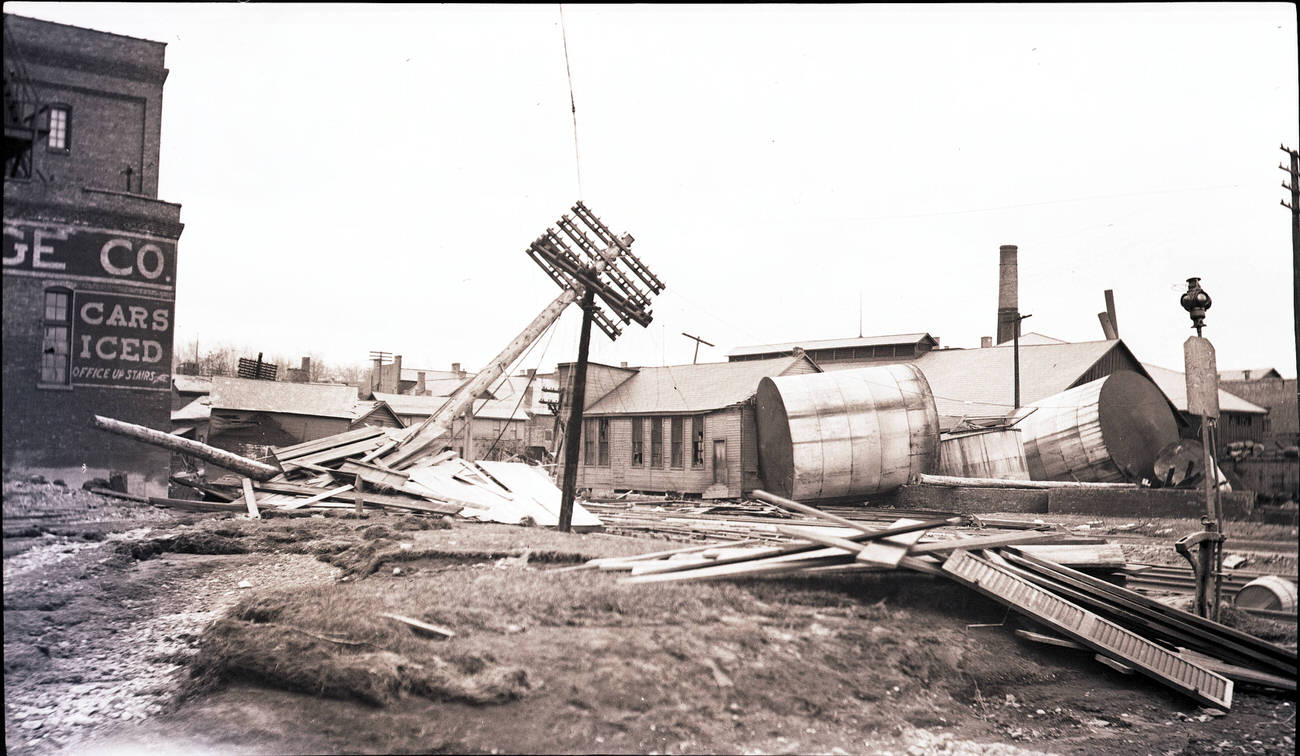
View of downed utility pole and debris from the 1913 flood in Columbus, Ohio, 1913.
Even as Columbus worked to recover from the flood, the city’s commercial and religious life pressed on. Evangelist Billy Sunday drew enormous crowds to his tabernacle in 1913. Churches, schools, and businesses continued to define daily life. The city was also expanding its institutional footprint — new schools, hospitals, and public buildings were opening throughout the decade.
Billy Sunday Tabernacle, evangelist Billy Sunday’s church services, 1913
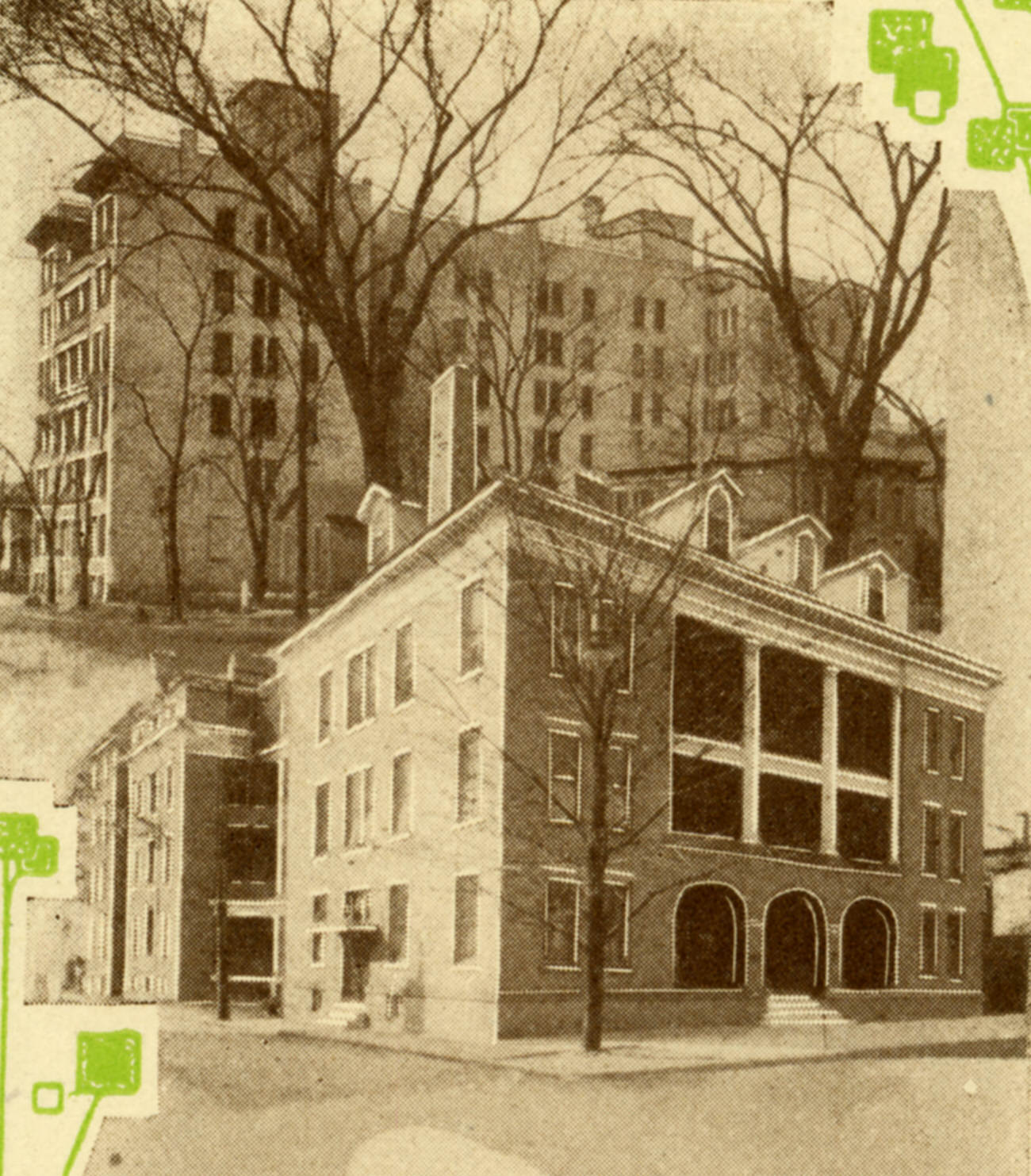
Grant Hospital and its Annex, founded in 1900 by Dr. James F. Baldwin, Circa 1915.
Columbus School for Girls in the former George McClelland residence, 1912.
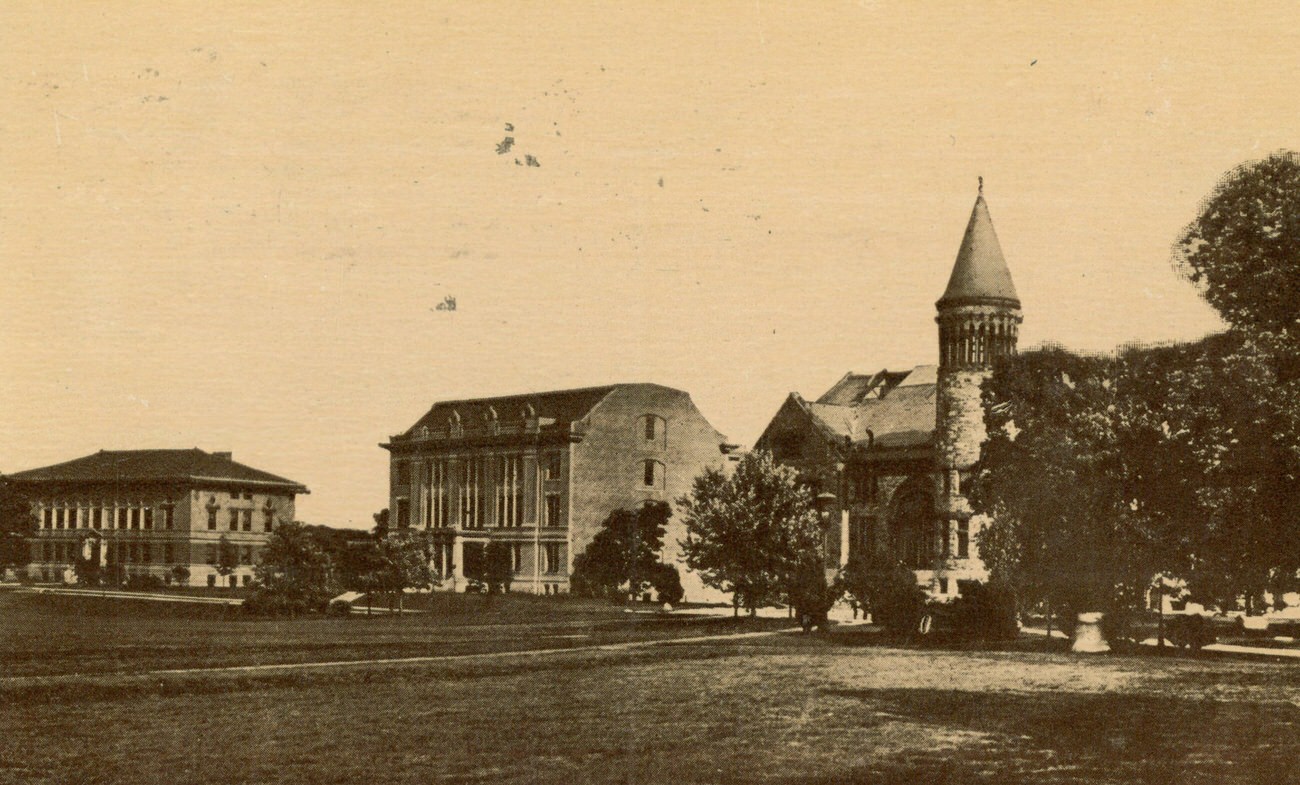
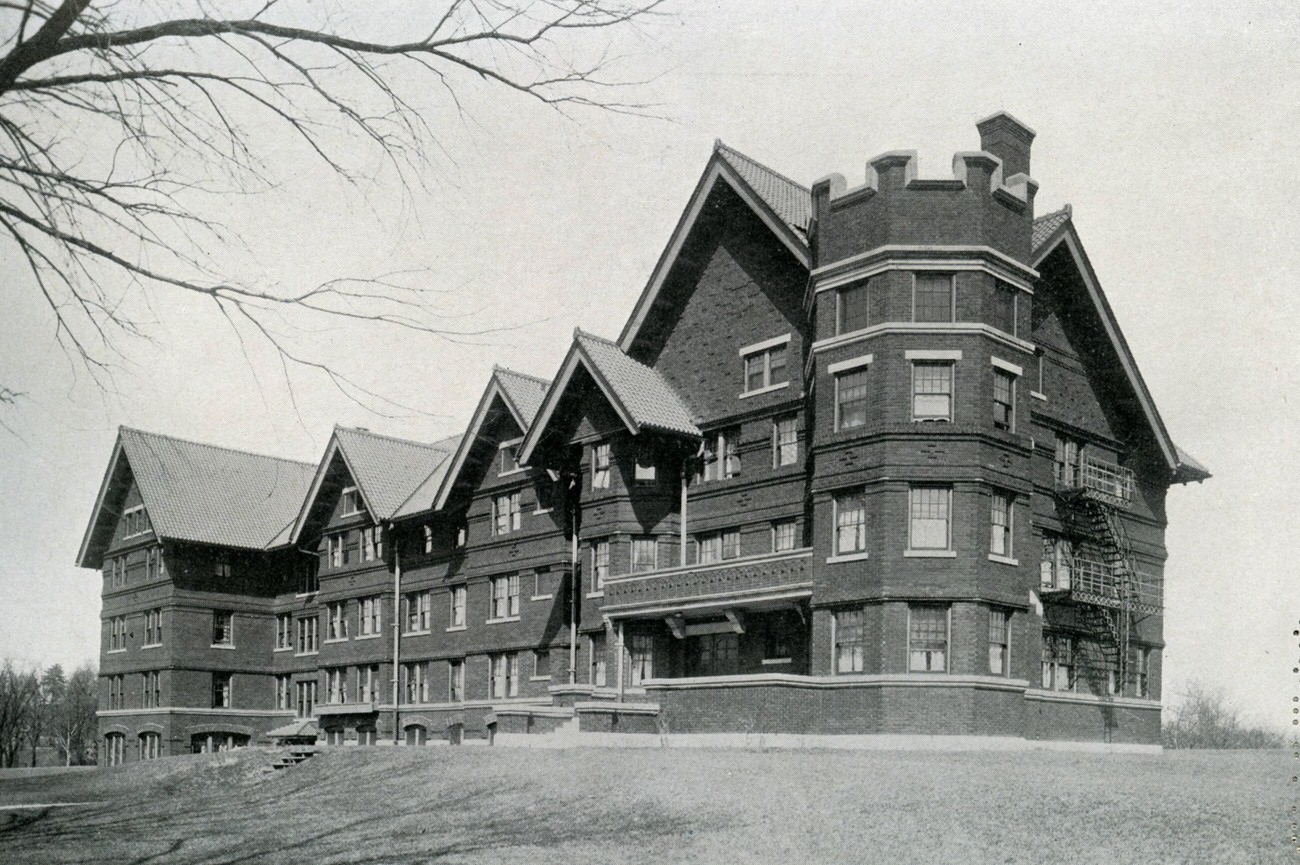
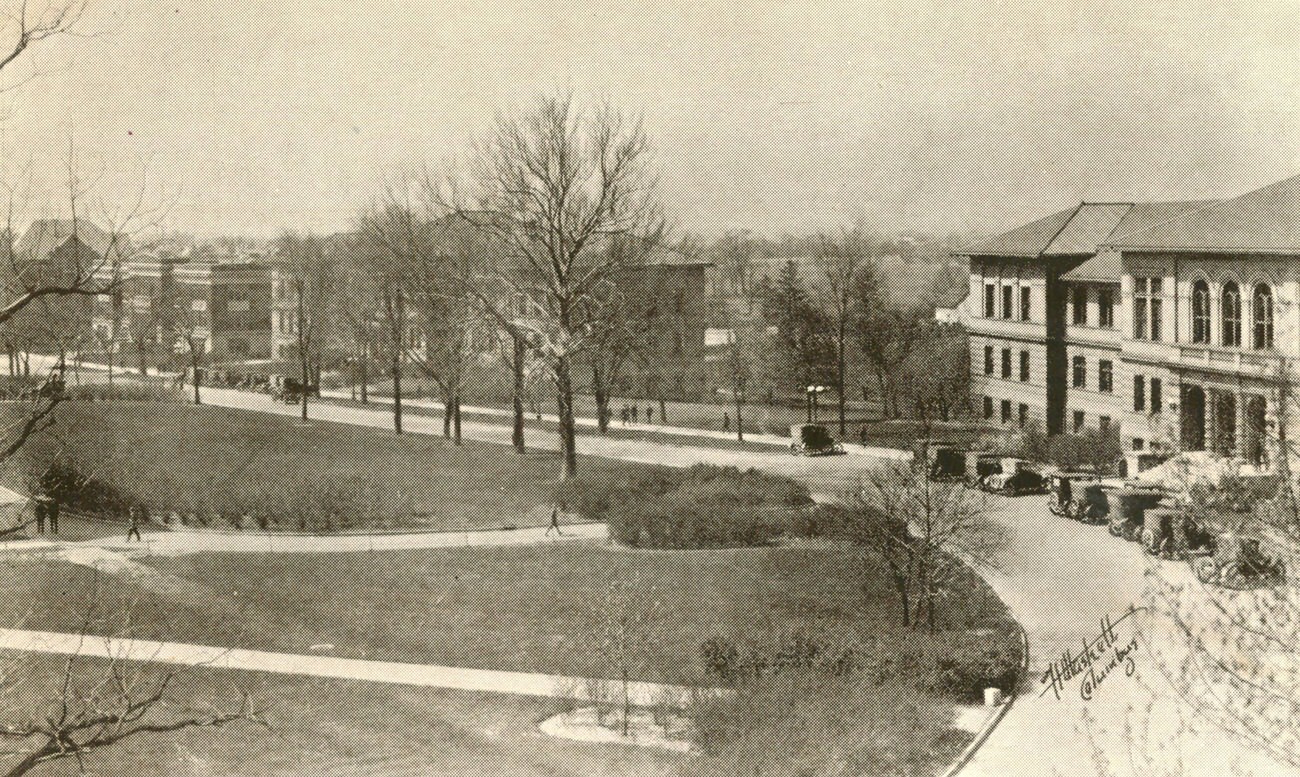
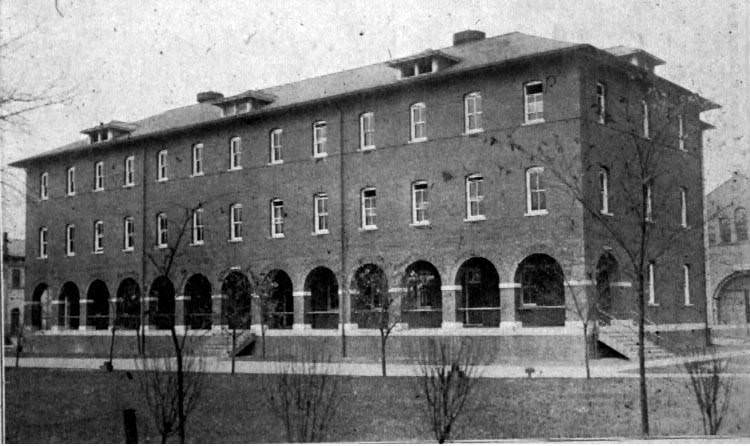
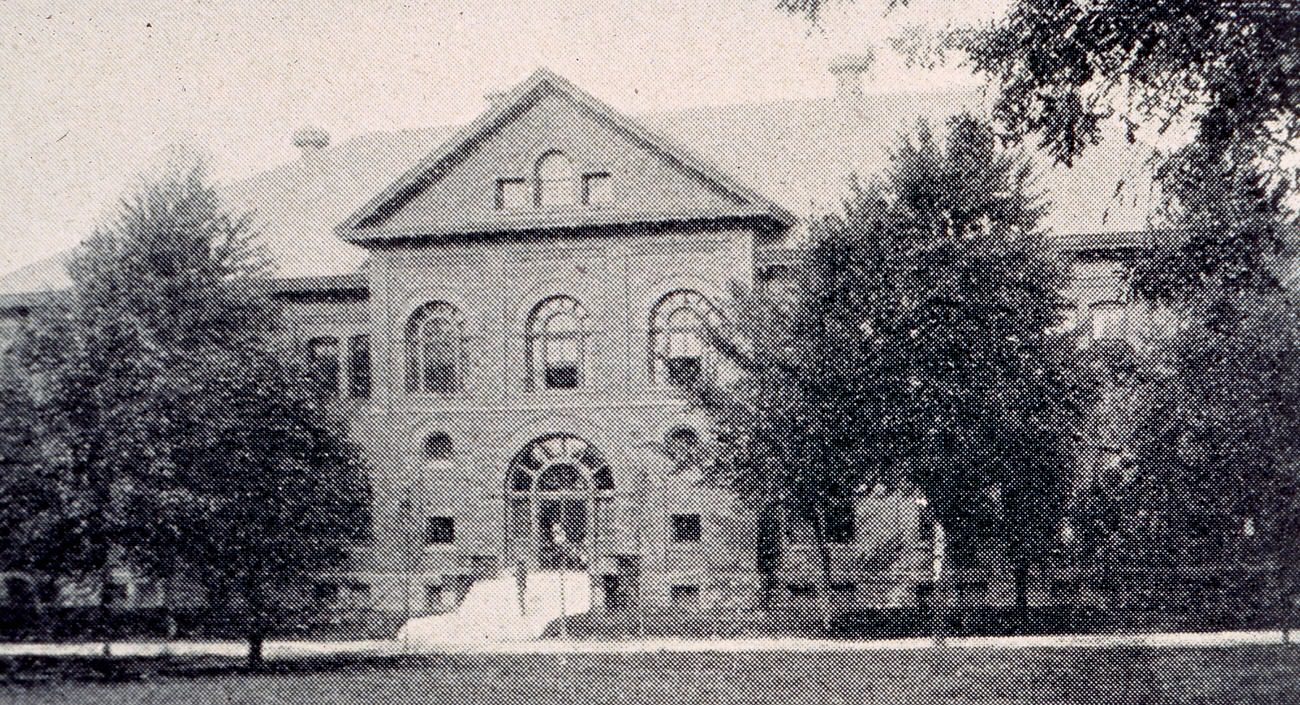
Ohio State University was a growing presence in the city. The campus expanded during the 1910s, with buildings like Orton Hall and Oxley Hall (the girls’ dormitory) serving a rising student population. Agricultural programs, known informally as ‘Ag Alley,’ occupied their own corner of campus near Lazenby Hall.
Group of buildings on the campus of Ohio State University, including Orton Hall, 1910s
Girls’ Dormitory (Oxley Hall) at Ohio State University, 1916
“Ag Alley” on Ohio State University campus, featuring Lazenby Hall, 1910s
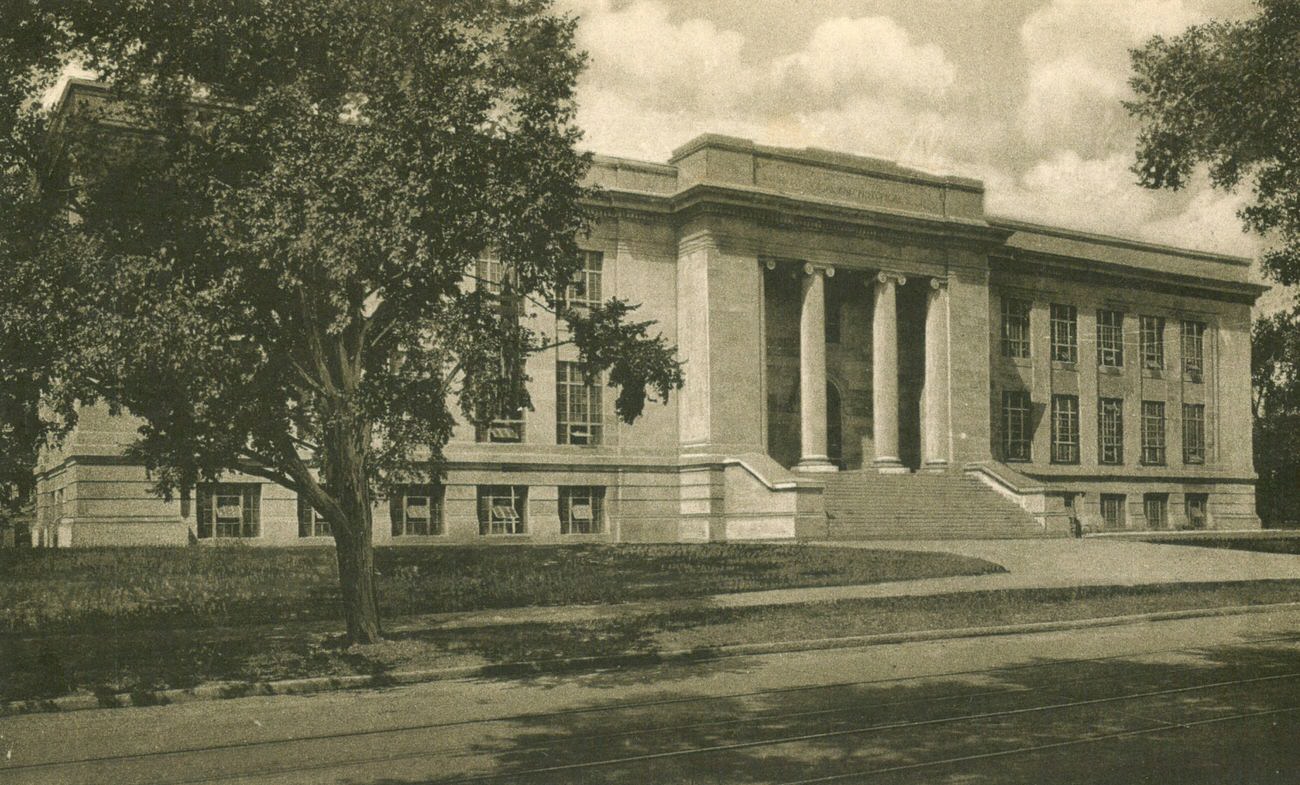
Archaeological and Historical Museum at Ohio State University, Columbus, later named Sullivant Hall, 1910s
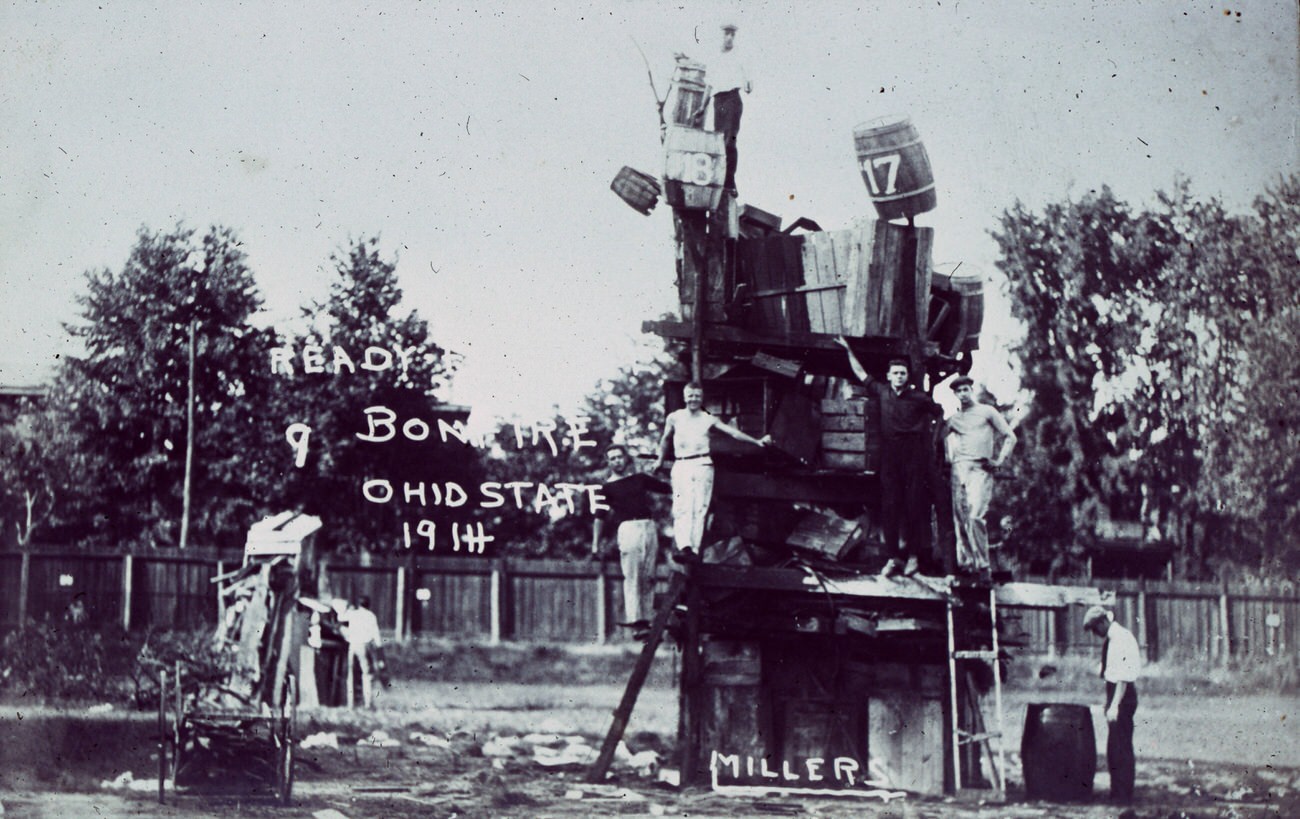
Bonfire at the Ohio State University, students gathering fuel for a rally, 1914.
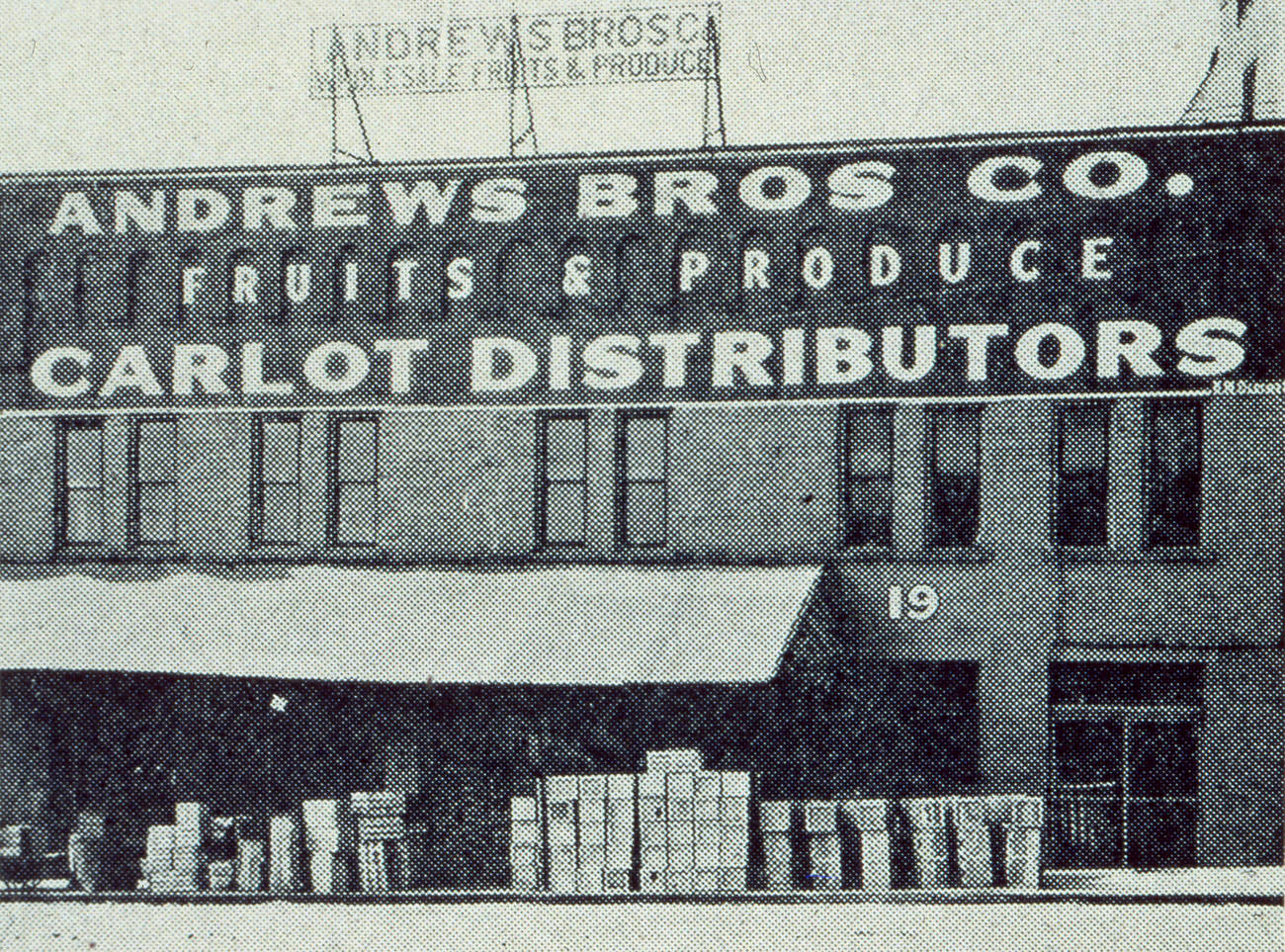
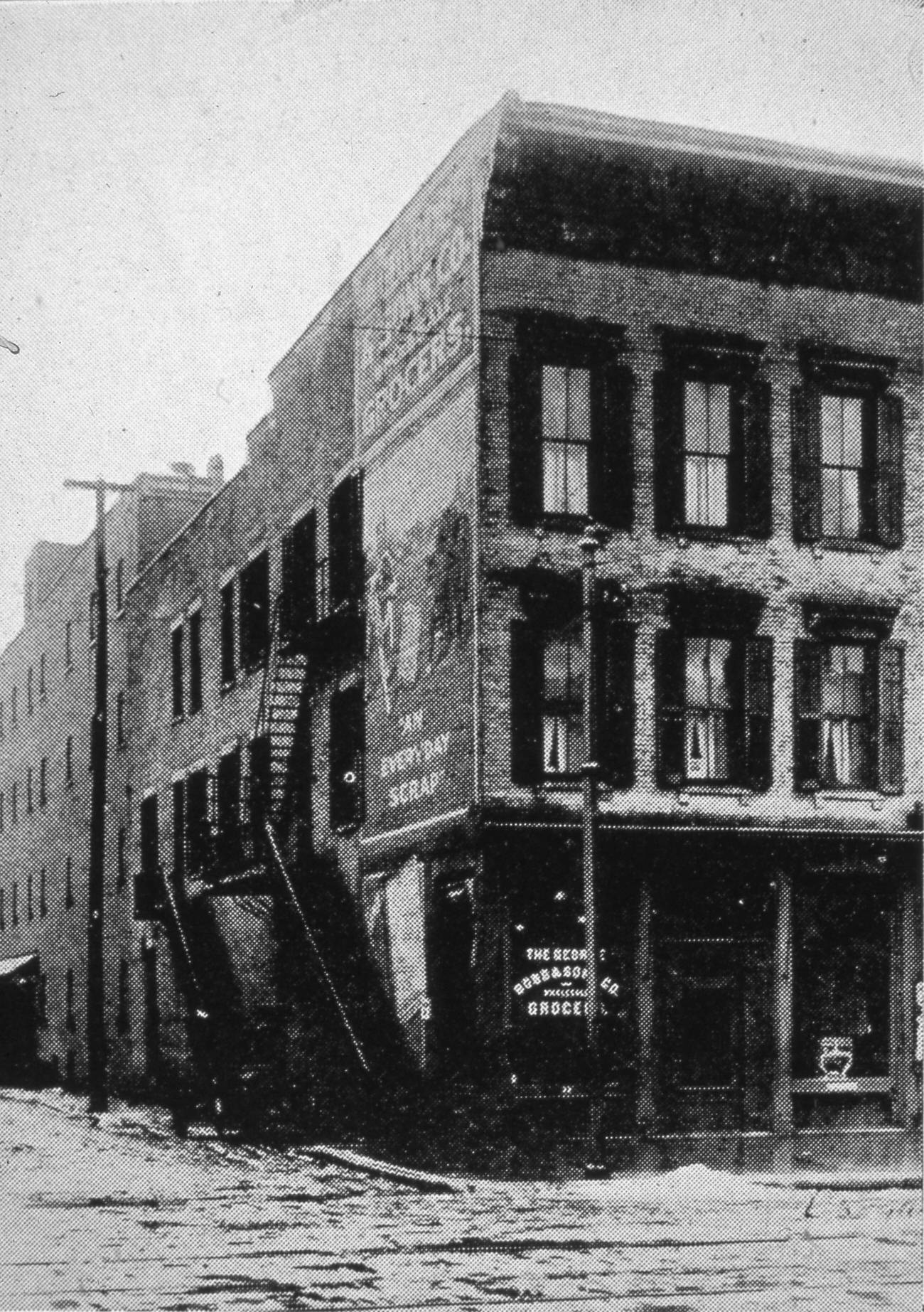
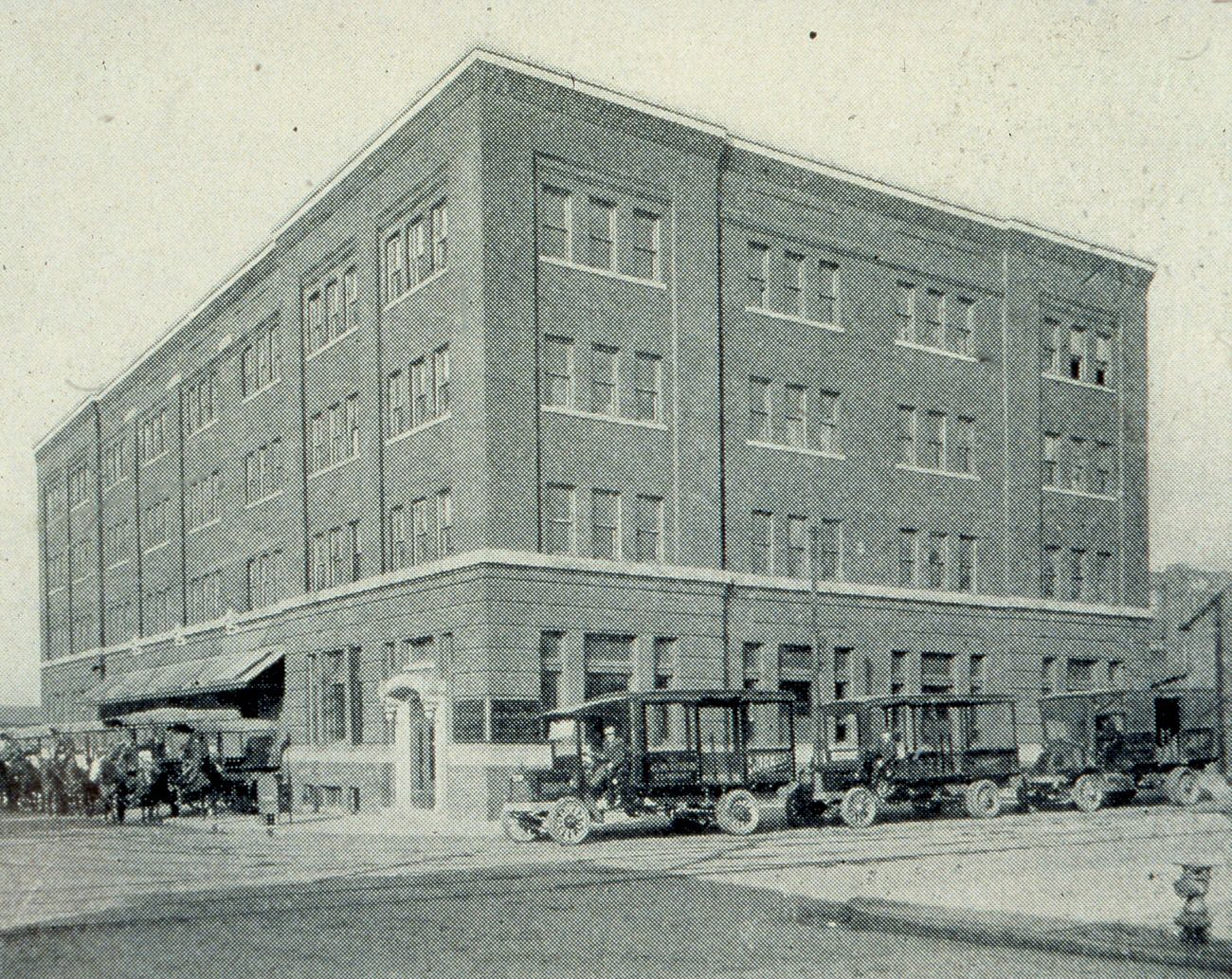
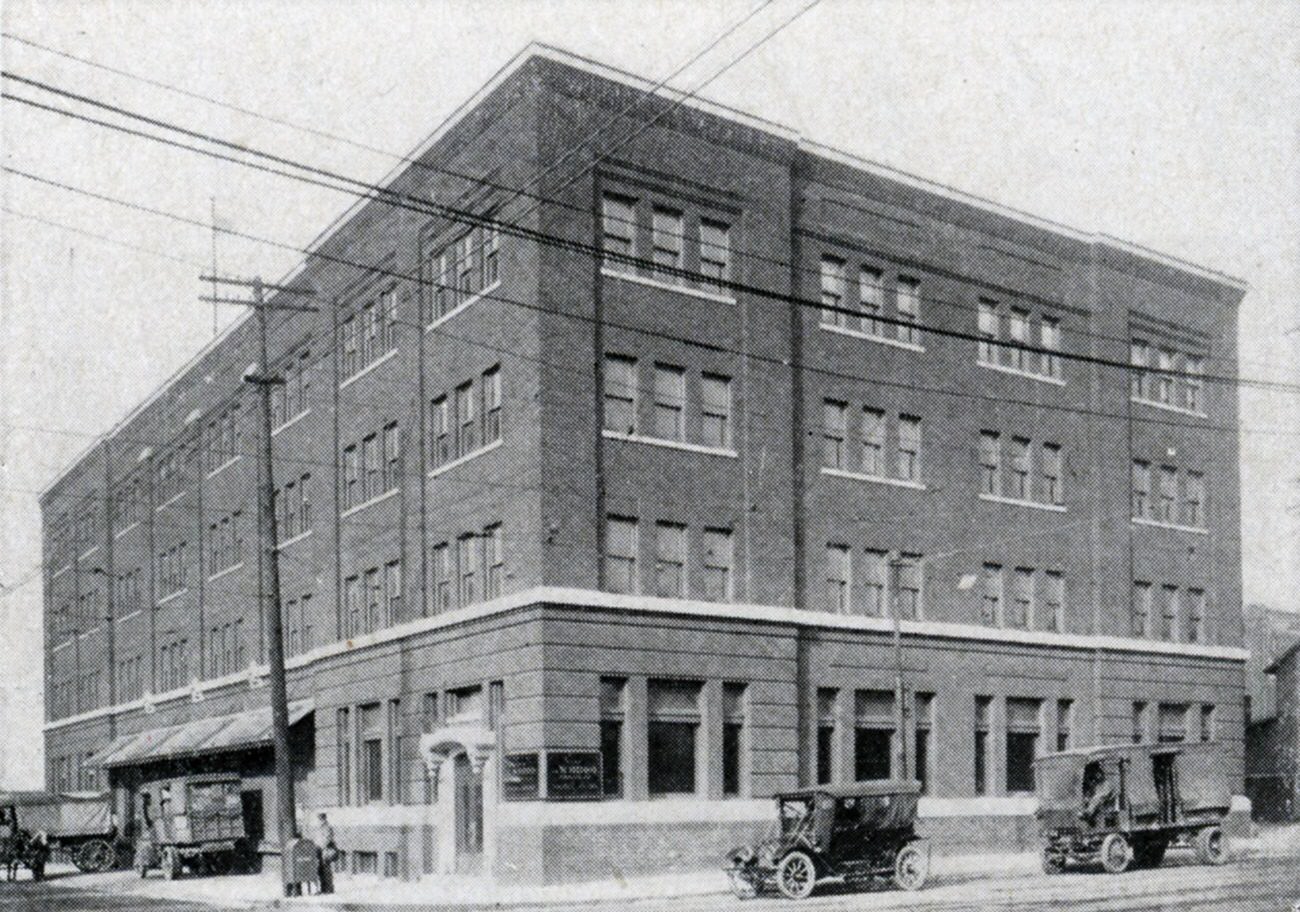
Columbus’s industrial base was one of its defining features. Companies like Buckeye Steel, founded on Parsons Avenue, employed large workforces. Wholesale grocers like George W. Bobb and Andrews Brothers operated out of substantial commercial buildings. The city’s economy was diverse — from candy kitchens and furniture companies to jewelry stores and hardware suppliers.
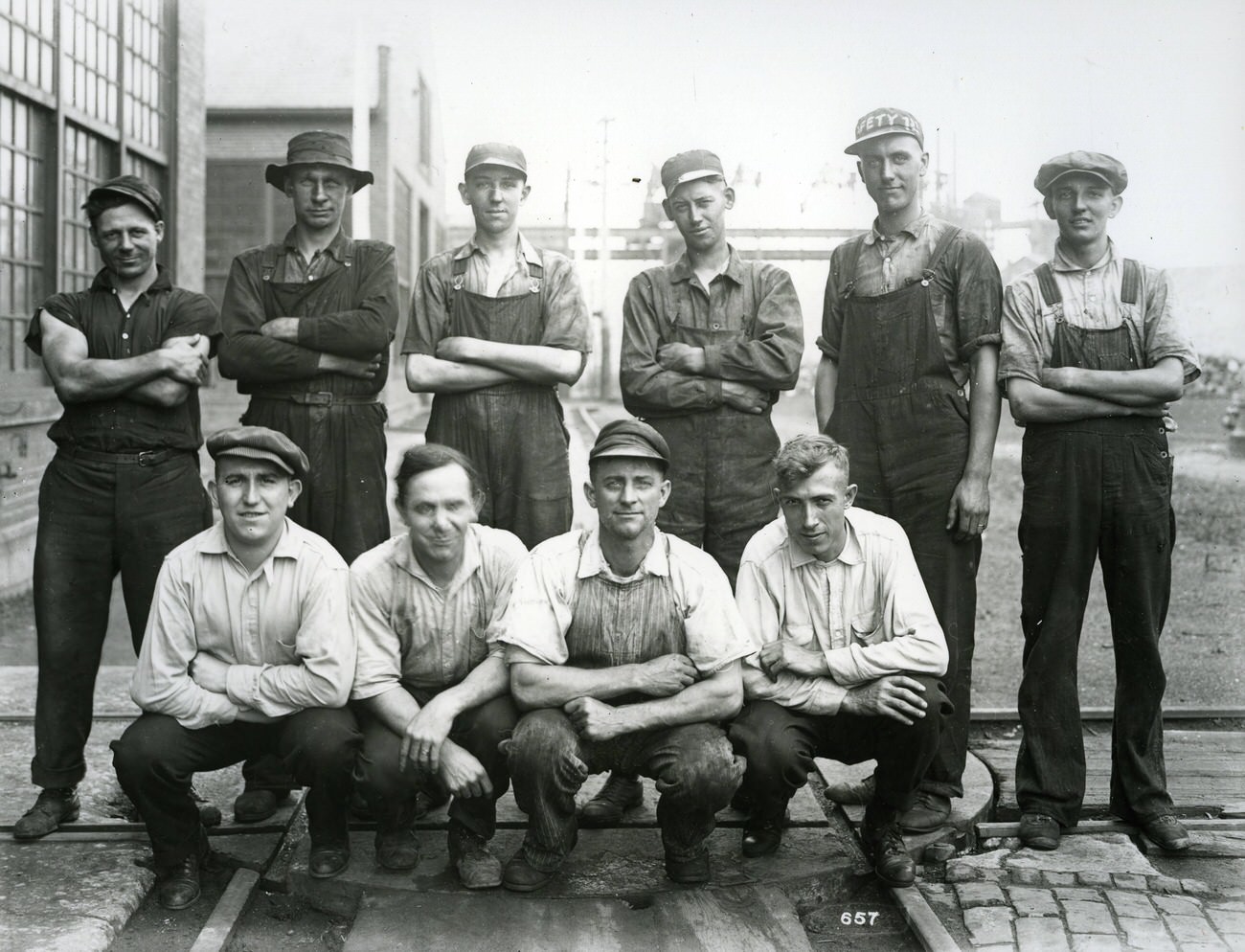
Buckeye Steel employees, founded October 1902, located on Parsons Avenue, merged with Worthington Industries in 1980, circa 1910s
Andrews Brothers Company building, a wholesale fruit and produce seller, 1919.
George Bobb and Sons Company, wholesale grocers, history and operations, 1915.
George W Bobb Company, wholesale grocers, operating until 1926. Circa 1919.
G. W. Bobb Company, a wholesale grocer, building construction at Neilston and Naghten Streets, 1916.
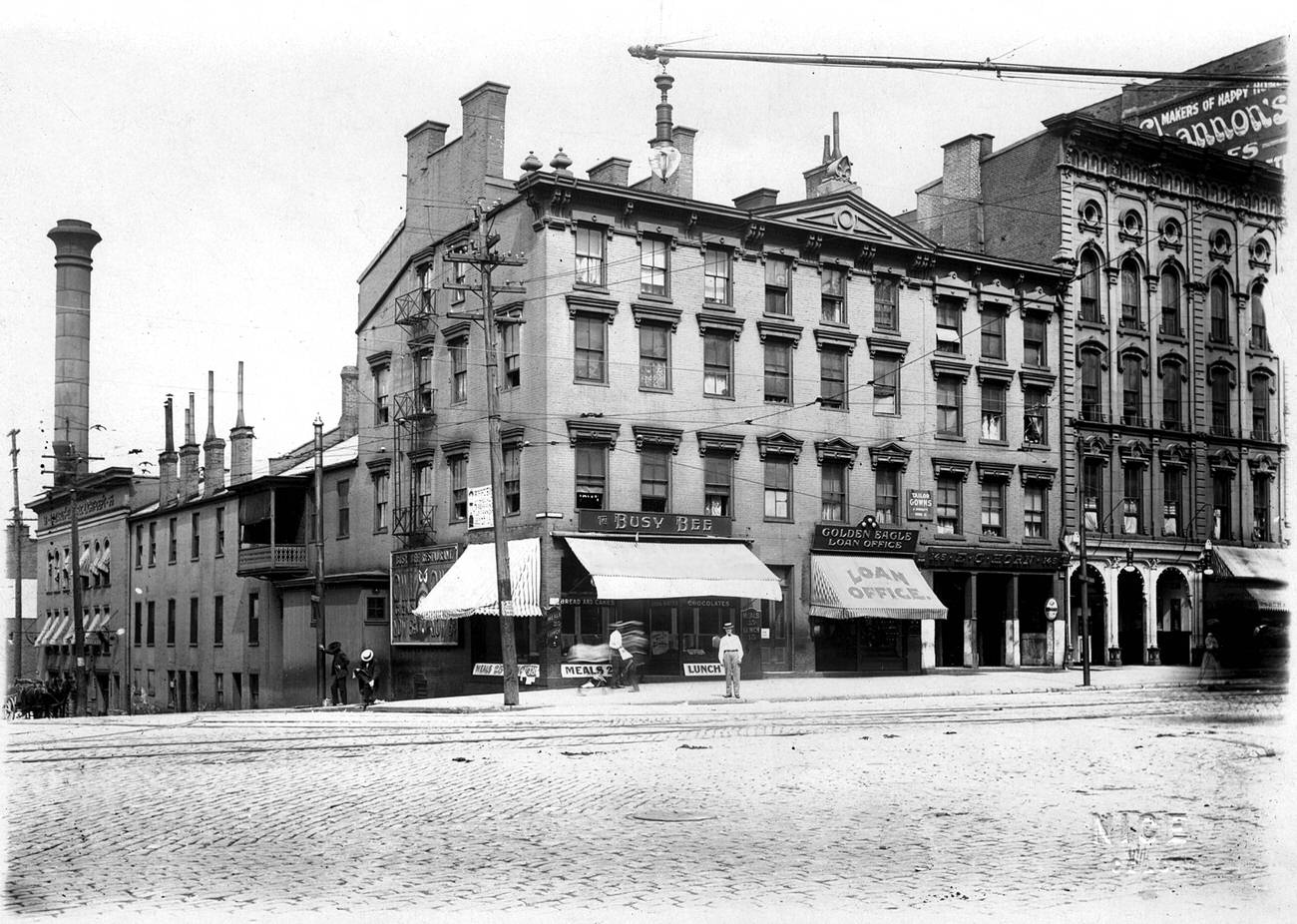
Exterior of the Busy Bee Candy Kitchen building, 1910s
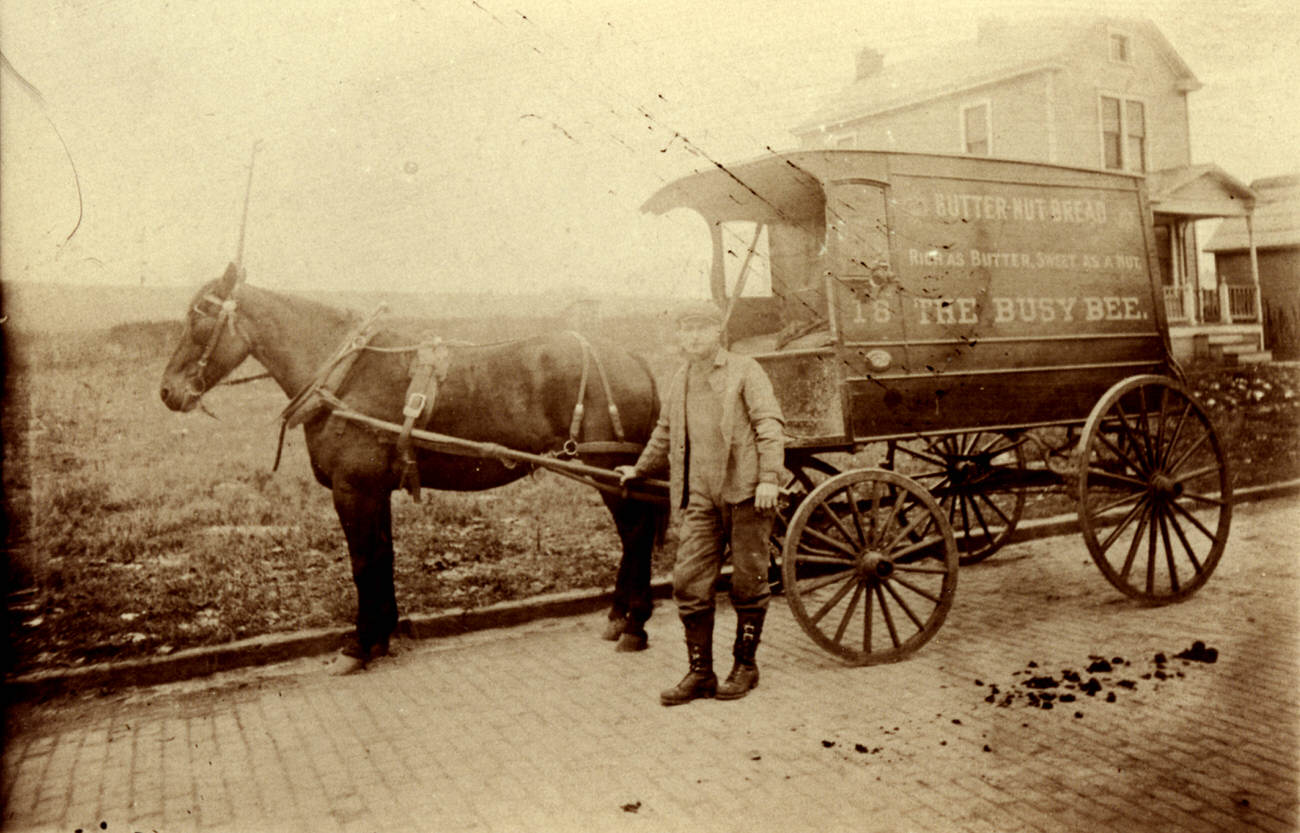
Busy Bee delivery wagon on Sullivant Avenue near West Park, 1911
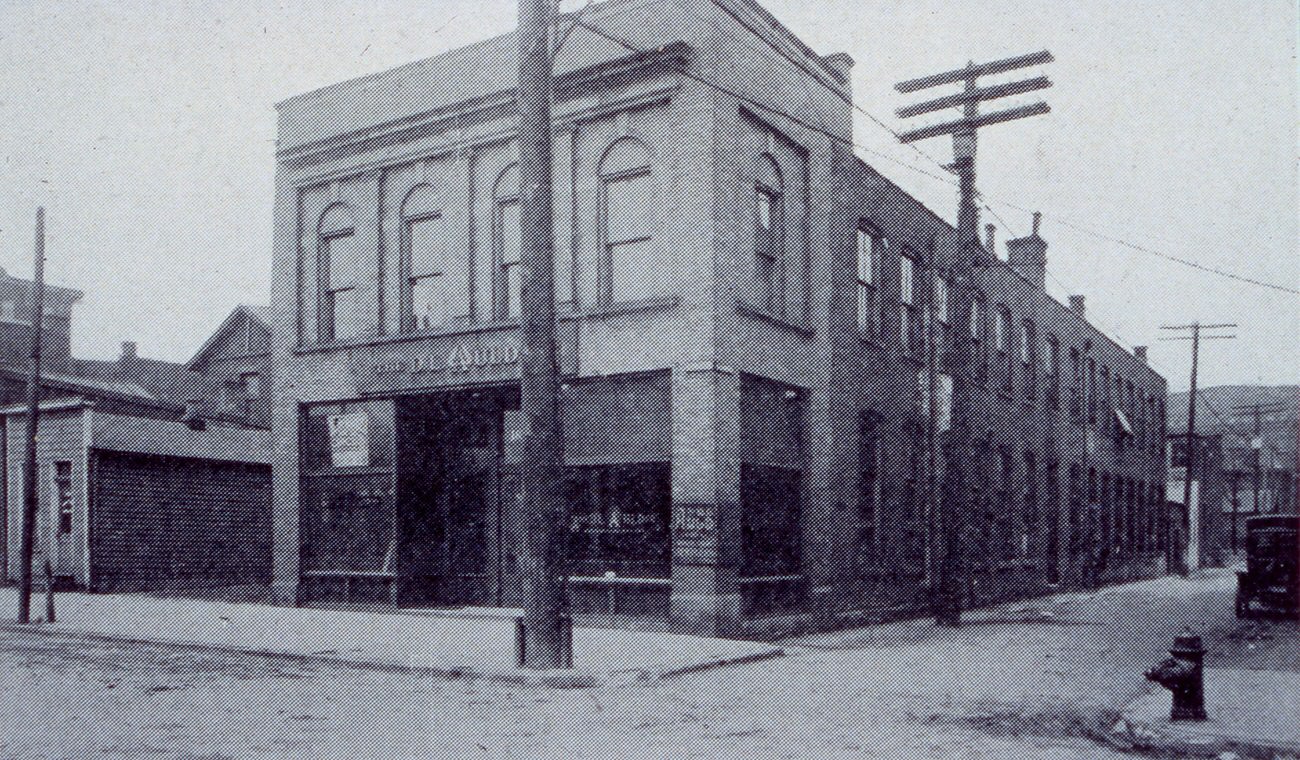
D L Auld Company in Columbus, specializing in diamonds and jewelry, 1915.
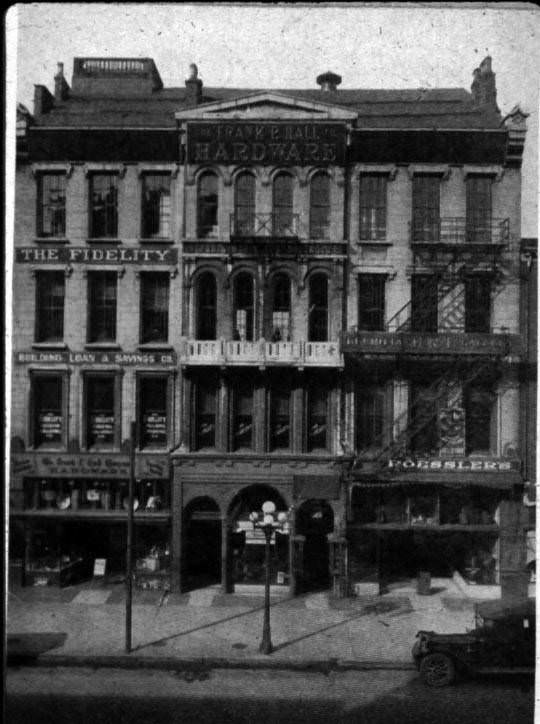
Frank P Hall Hardware building, 1919.
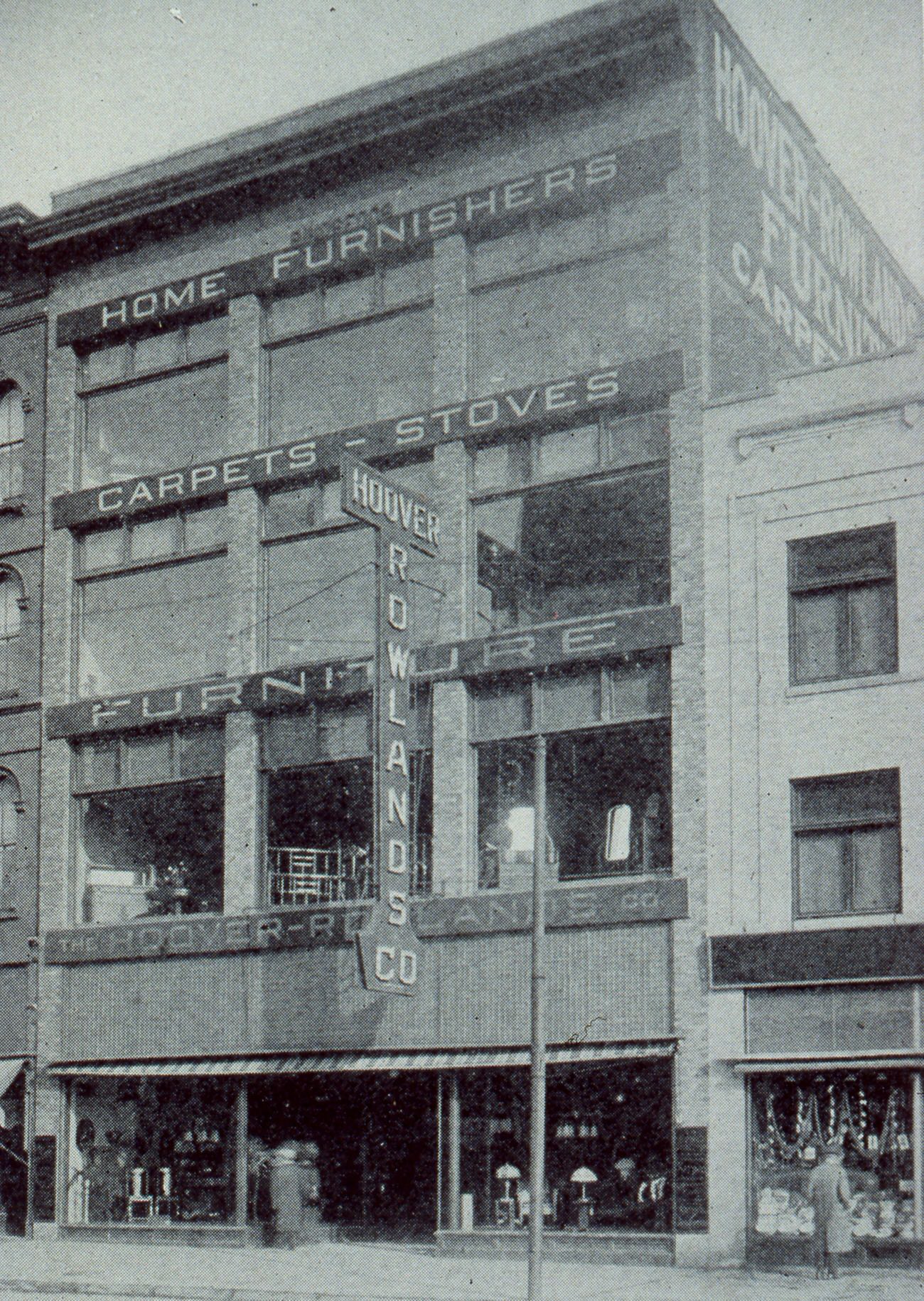
Hoover Rowlands Furniture Company building, 1915.
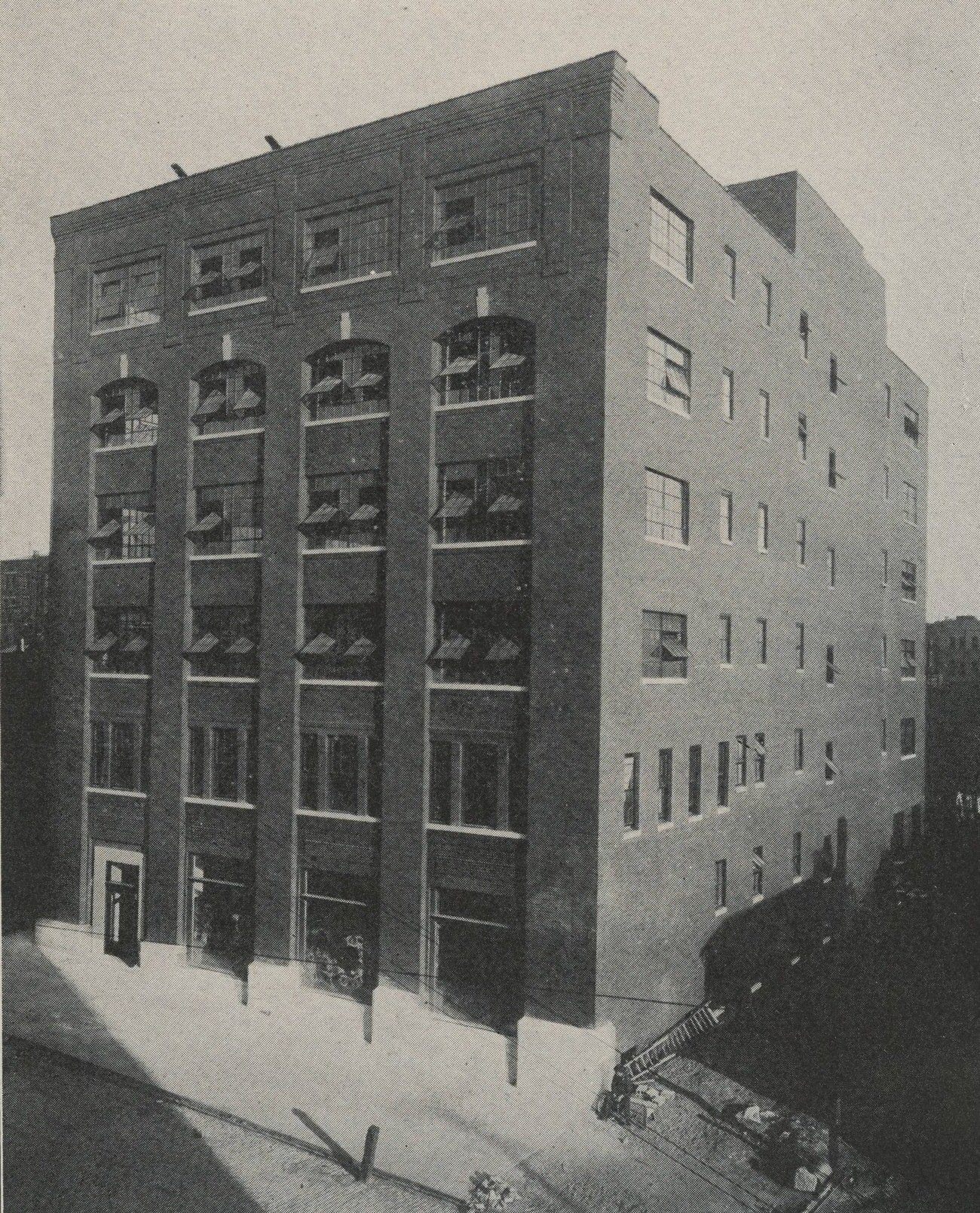
Hanna Paint Company, selling paints and colors, Circa 1915.
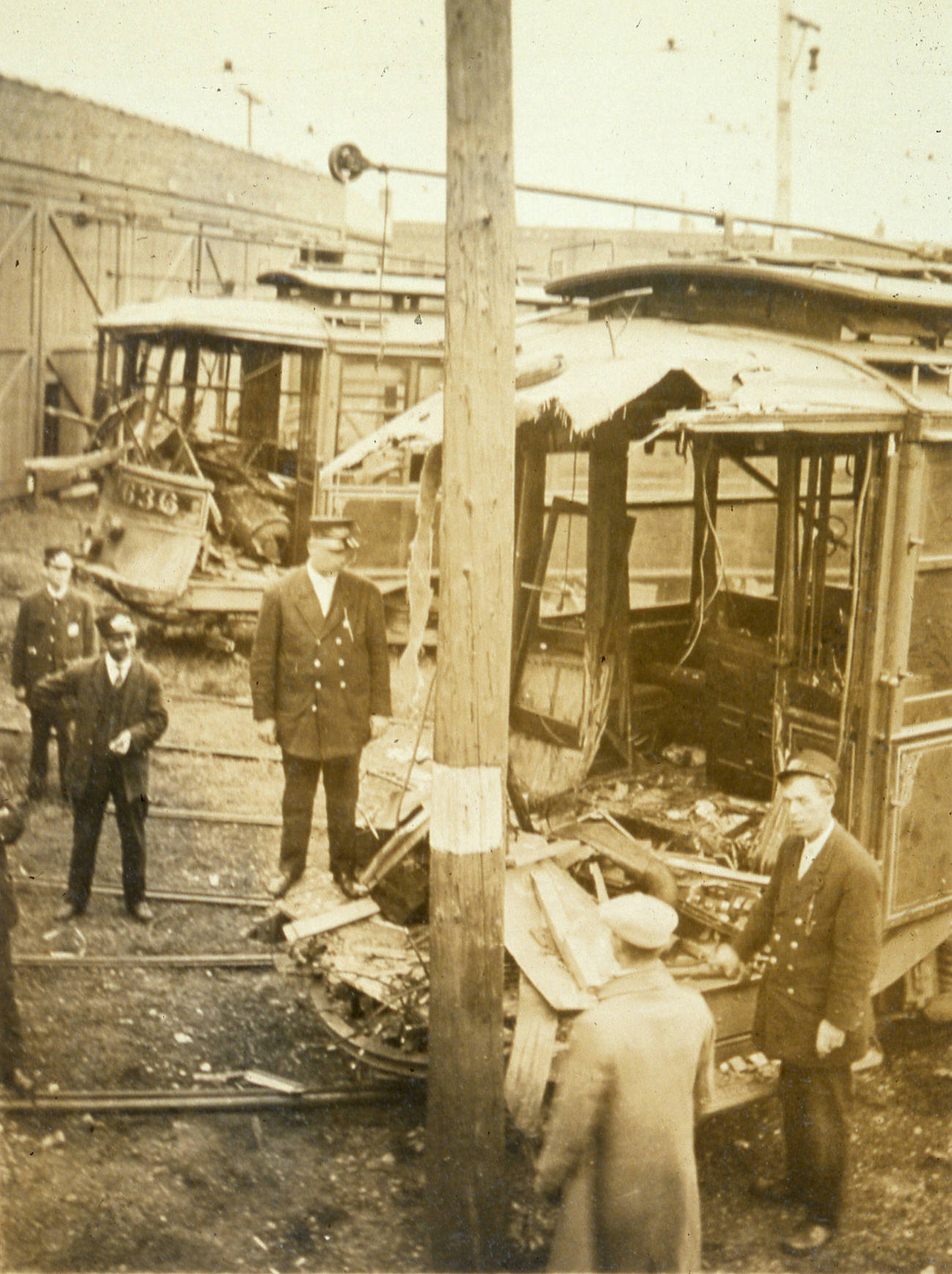
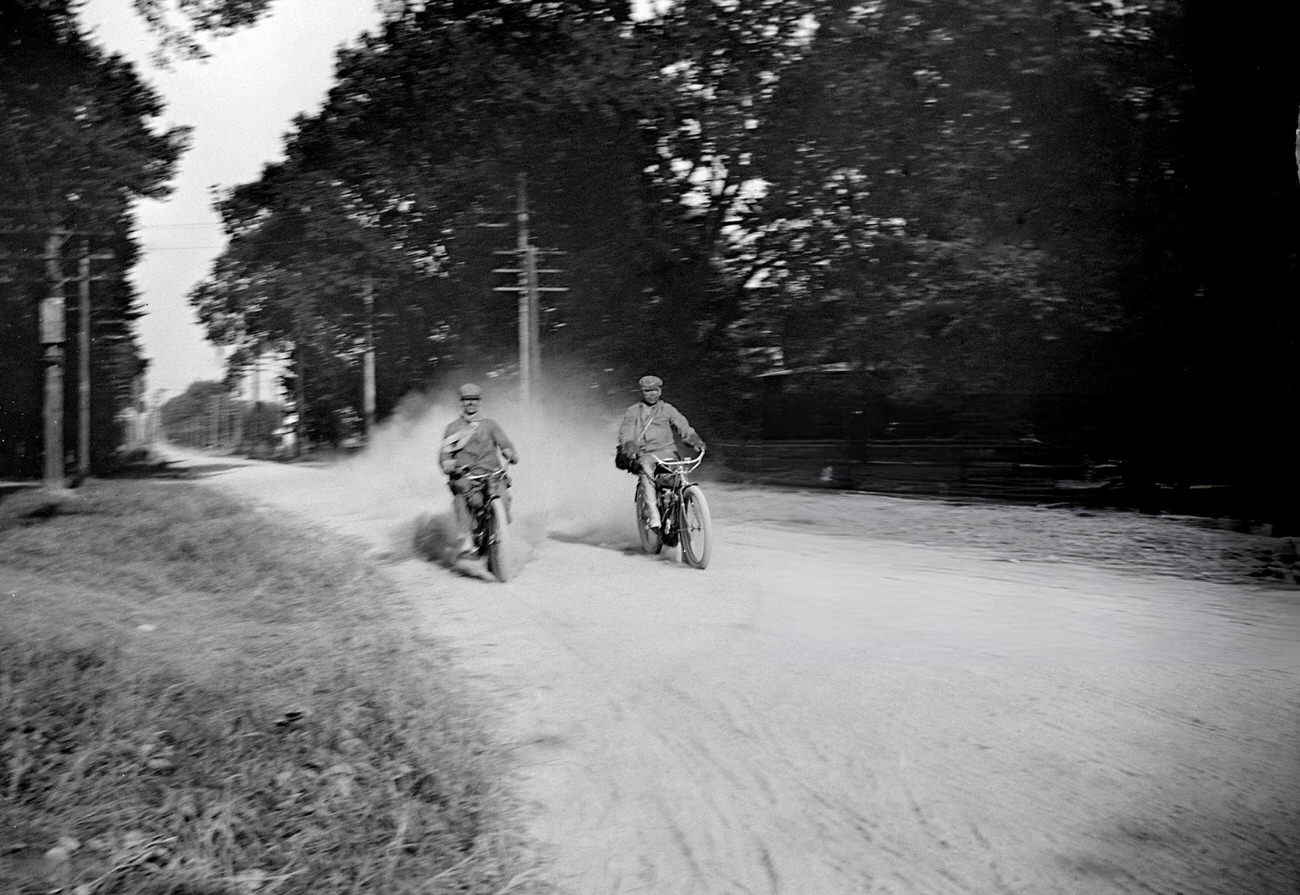
Transport was changing fast. The city’s streetcar system was a central part of daily life — though not without conflict. A violent 1910 strike left dynamited streetcars scattered across Columbus, exposing deep tensions between labor and the transit companies. By the mid-1910s, automobiles and motorcycles were increasingly common on the city’s streets alongside horse-drawn wagons.
Dynamited streetcars from 1910 strike, Columbus.
Two motorcyclists on a dirt road, Columbus, Ohio, circa 1910
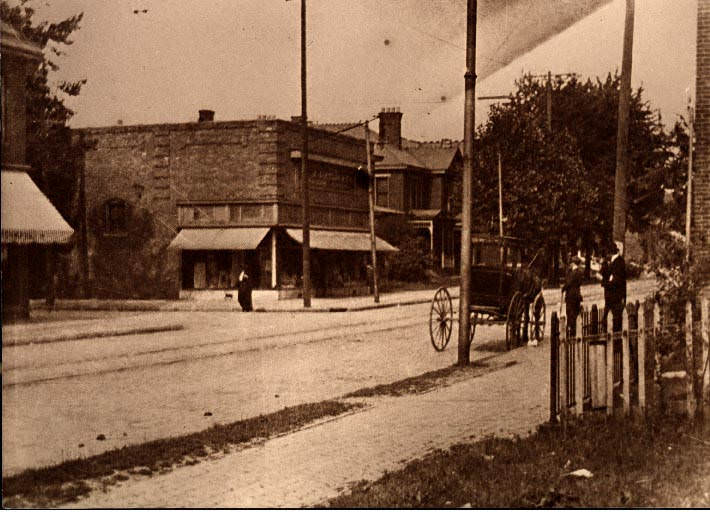
Carriage in front of Leo J. Dietlin’s Dry Goods Store, 410 East Schiller Avenue, 1910.
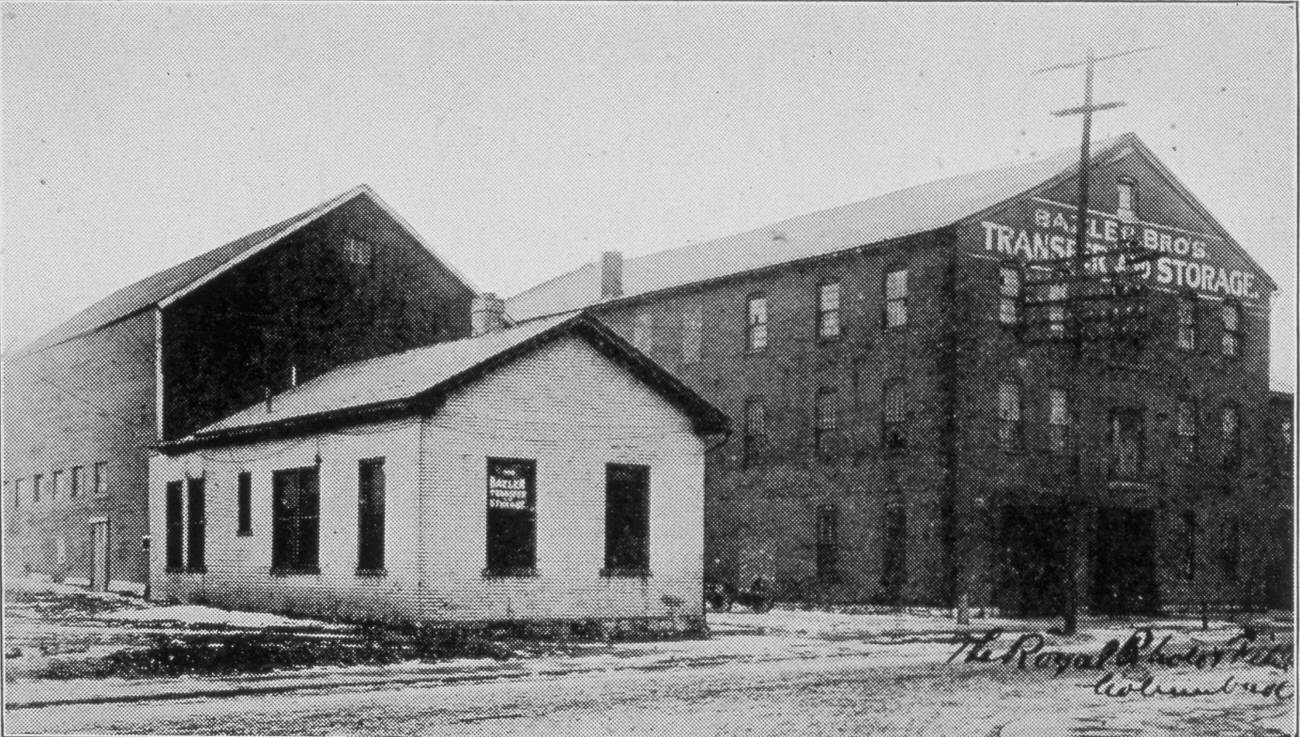
Bazler Transfer and Storage Company, operated as a livery and then a transfer and storage firm, 1915.
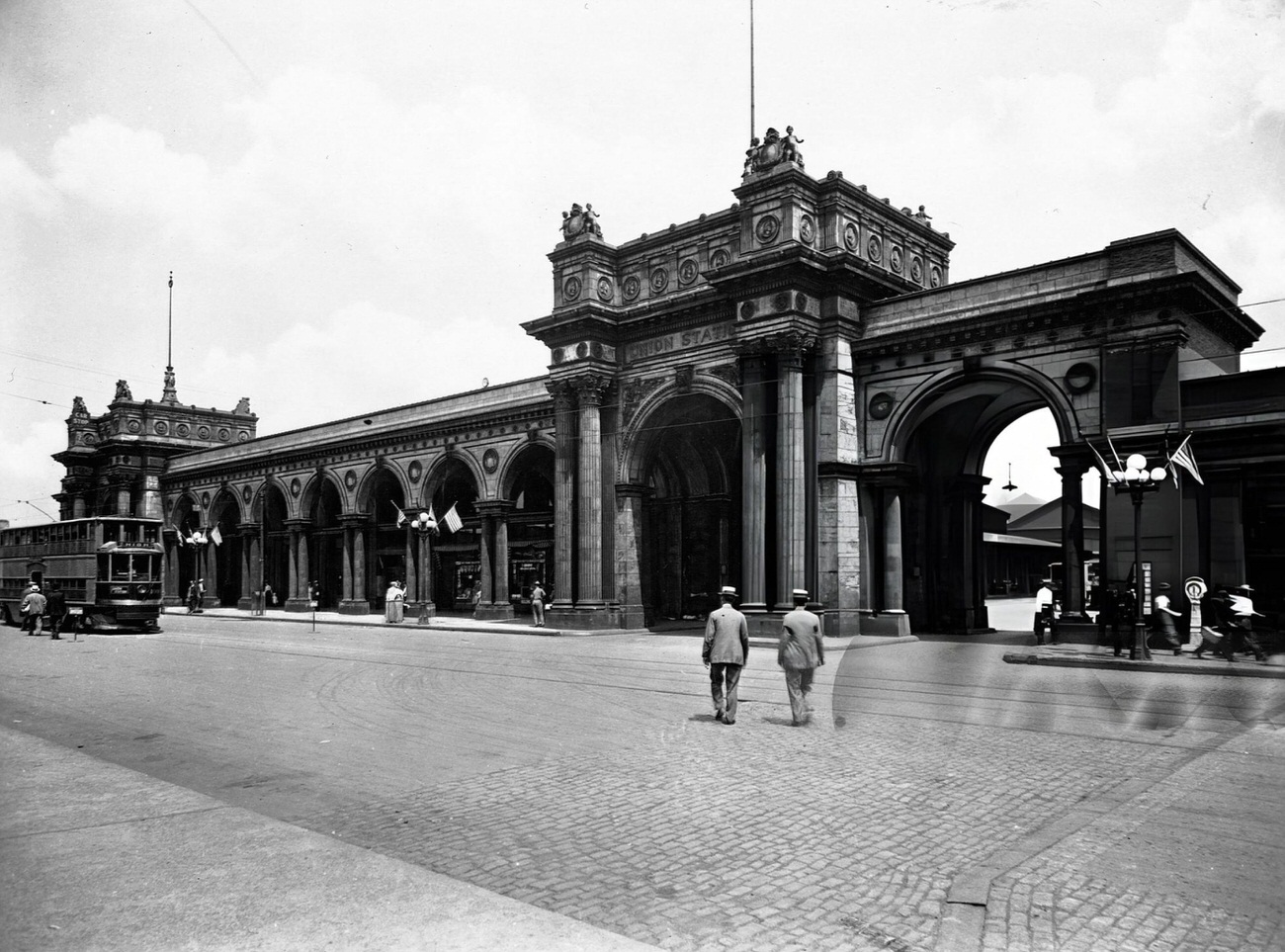
Union Station, Columbus, Ohio, 1910s
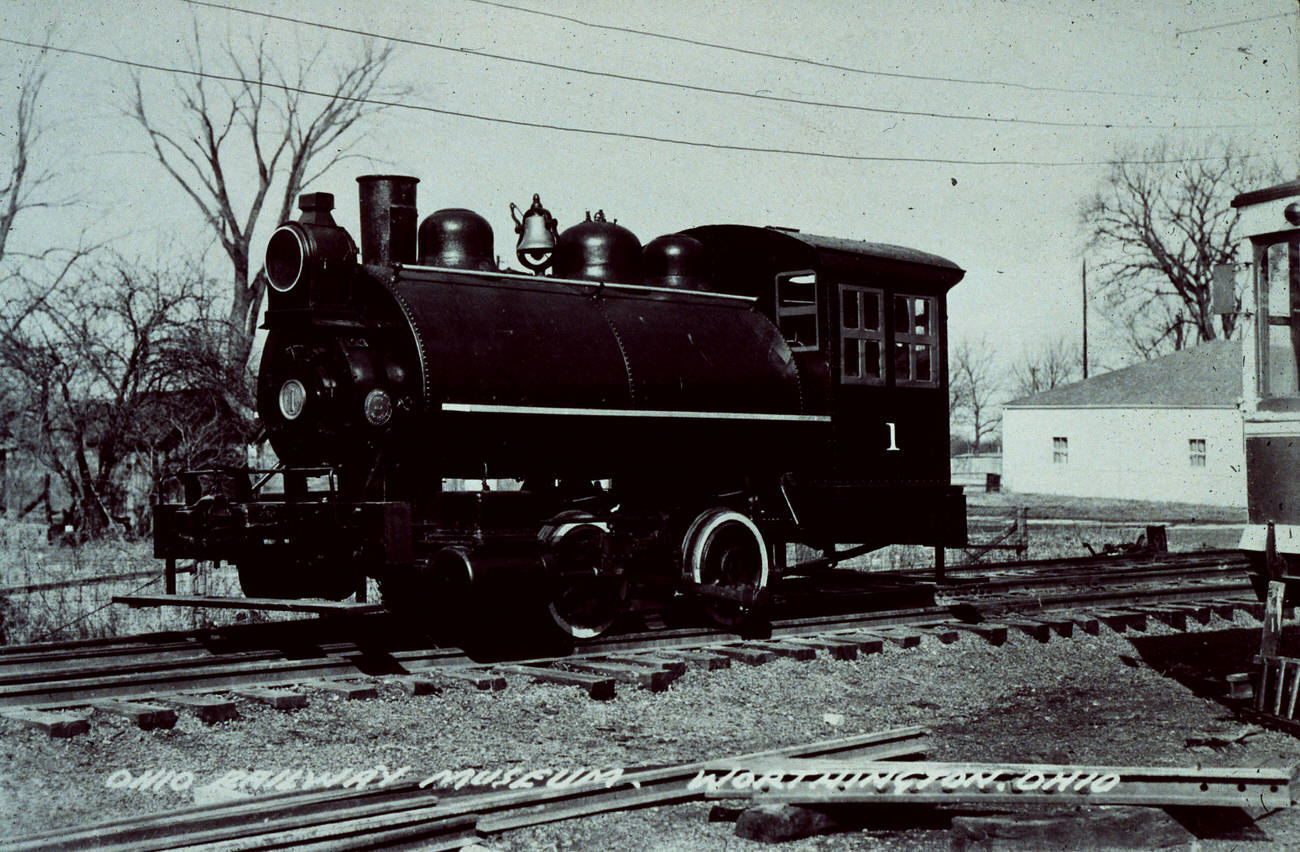
0-4-0 Tank Switcher Locomotive at the Ohio Railway Museum, 1910s
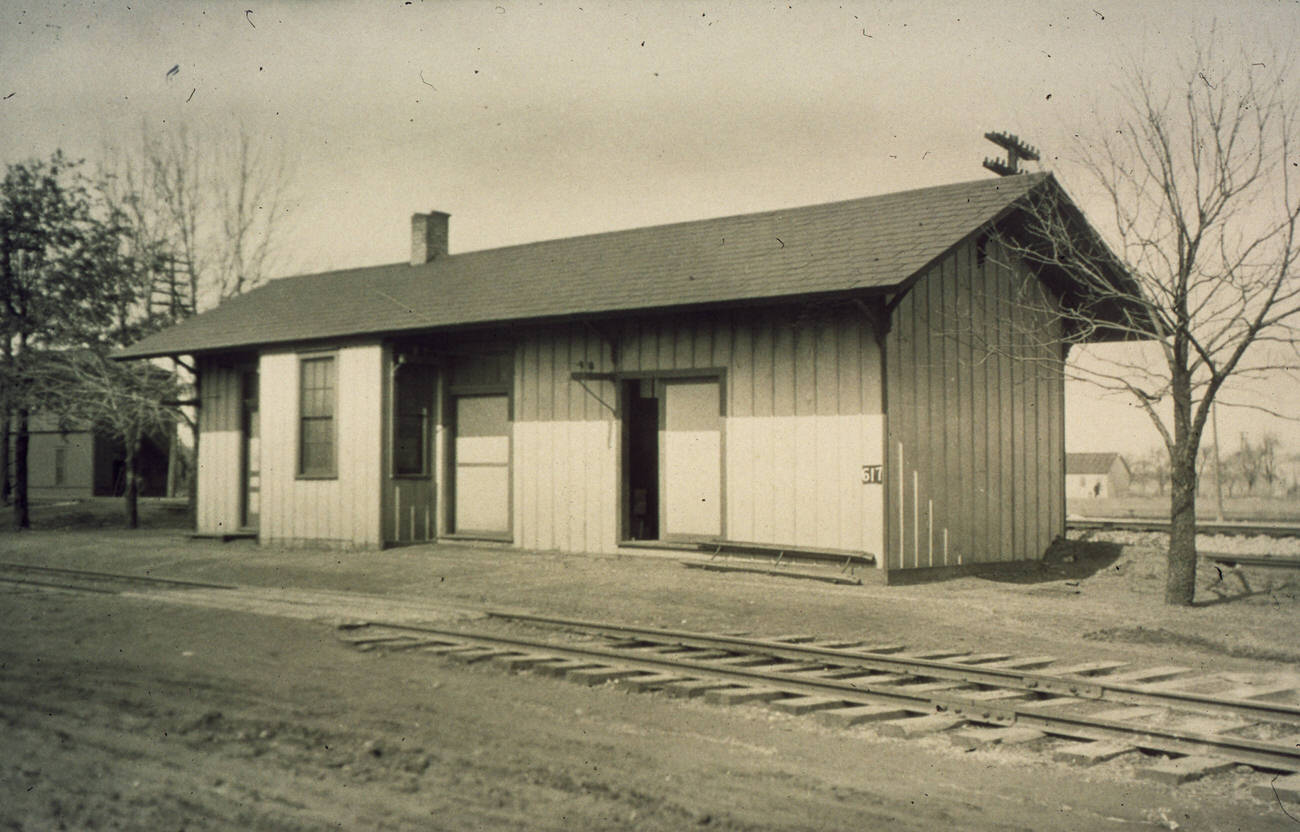
Toledo and Ohio Central Railway’s East Columbus Passenger and Freight Station, 1919.
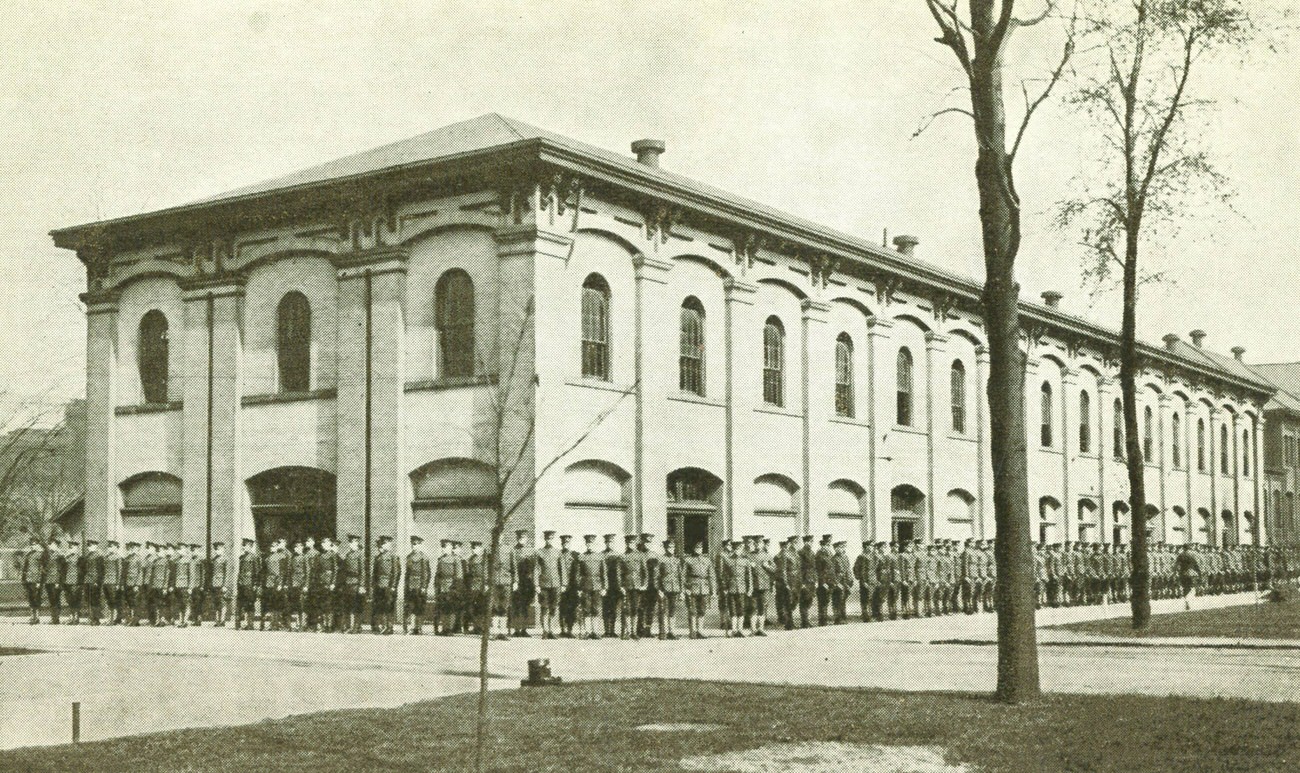
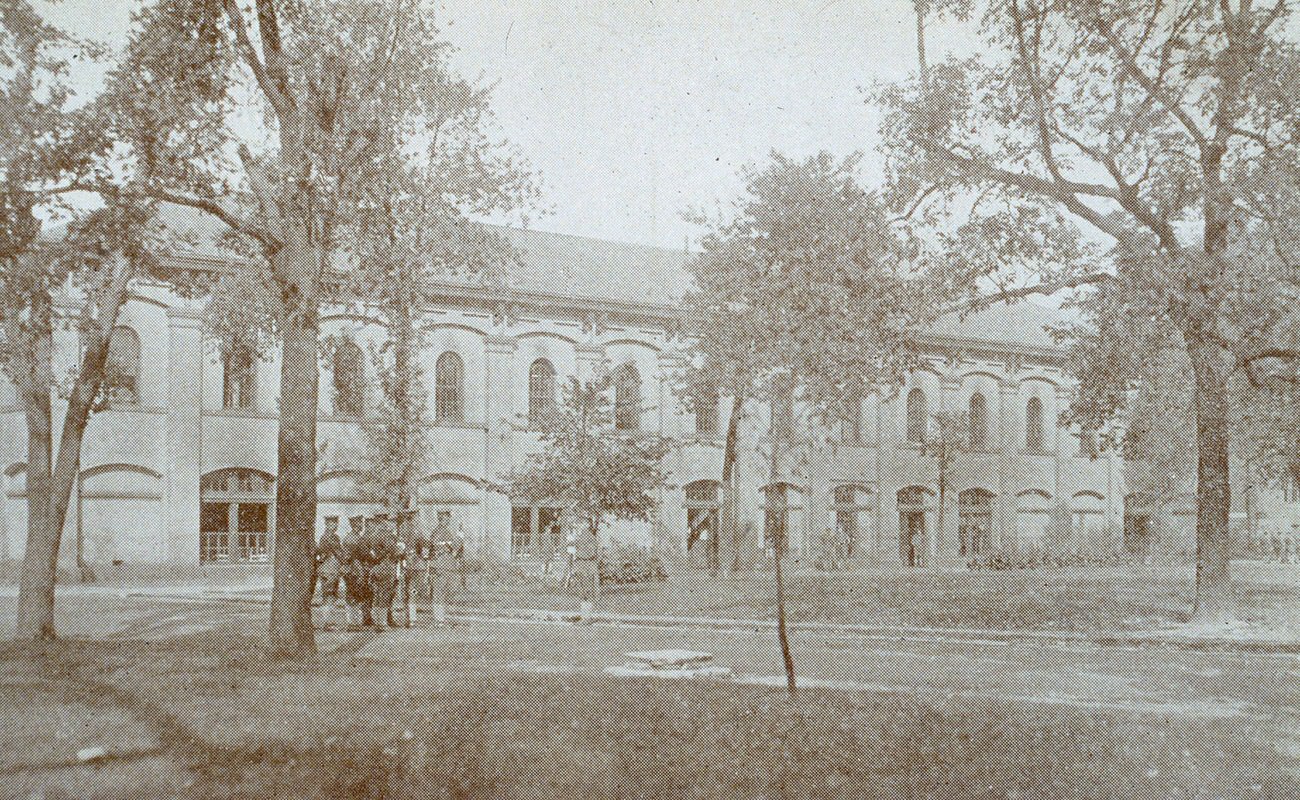
When World War I broke out in Europe in 1914, Columbus eventually felt its full weight. Columbus Barracks — later renamed Fort Hayes — became a key military installation. Recruit companies trained on its grounds, and the barracks buzzed with soldiers preparing to deploy. The site served as both a training and administrative hub throughout the war years.
The 10th Recruit Company at Columbus Barracks, later renamed Fort Hayes, circa 1916
Soldiers at the 10th Company headquarters at Fort Hayes barracks, 1918
12th Company headquarters at Fort Hayes barracks in Columbus, Ohio, 1910s
Headquarters and Mess Hall at Columbus Barracks, later Fort Hayes, 1918.
Tod Barracks, military post in Columbus, opened 1863, closed 1865, demolished in March 1911.
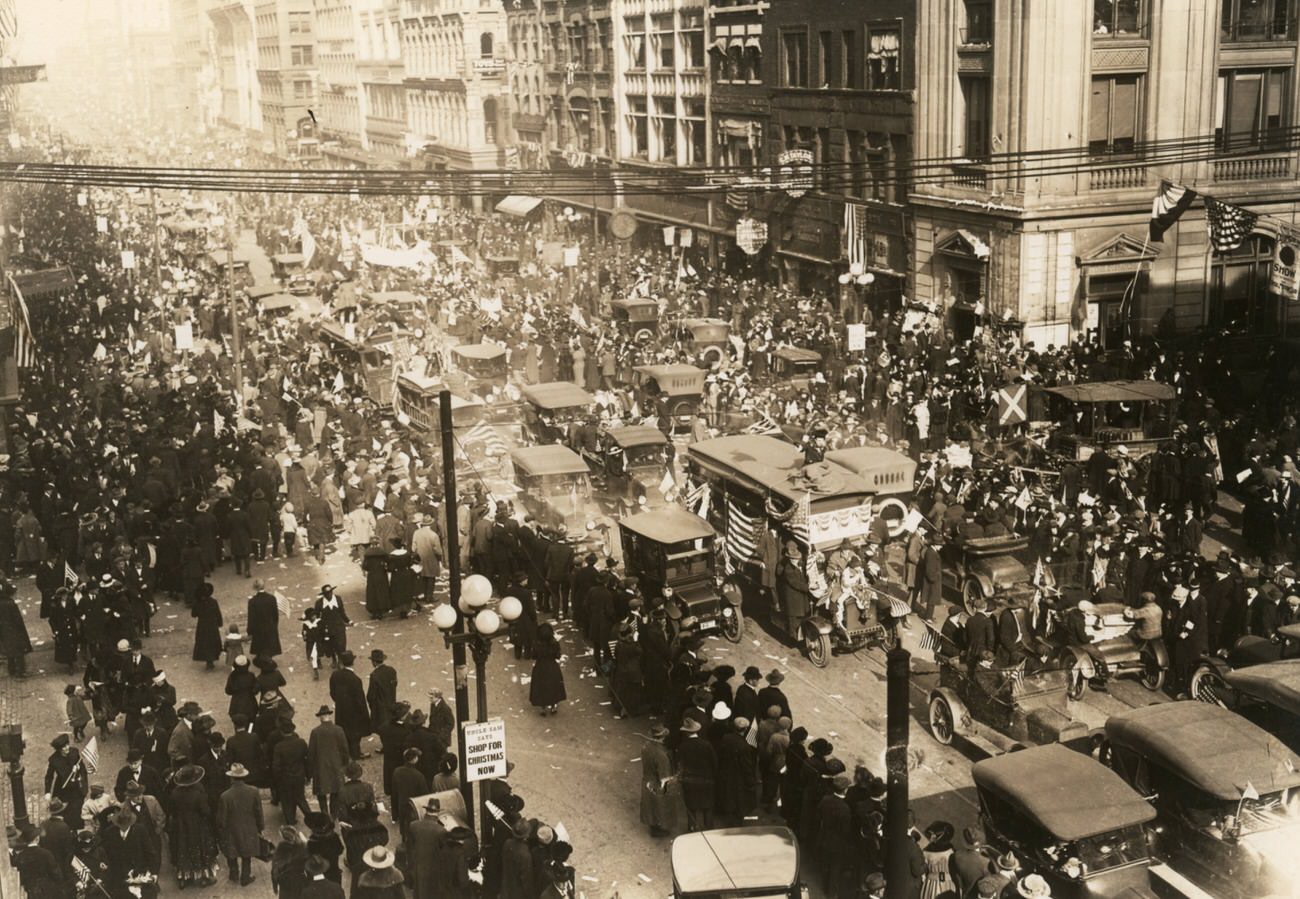
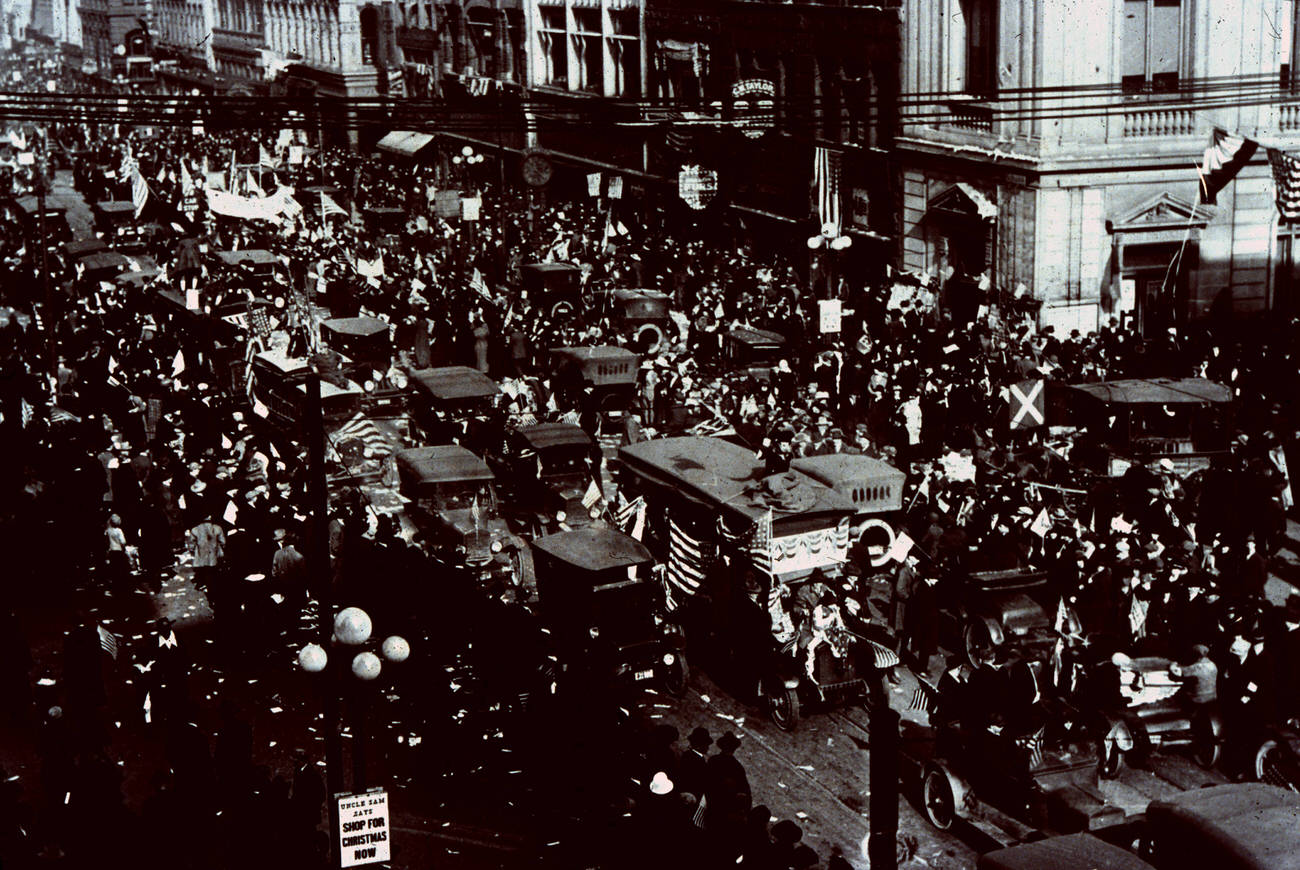
When the armistice was announced on November 11, 1918, Columbus erupted. Crowds flooded High Street and Gay Street in celebration. Photographs from that day show dense, jubilant crowds at multiple downtown intersections, waving and pressing together in the streets — a city releasing years of tension in a single afternoon.
Views of the Armistice Day celebration in downtown Columbus, showing various locations, November 11, 1918.
Armistice Day celebration at High and Gay Streets, 1918.
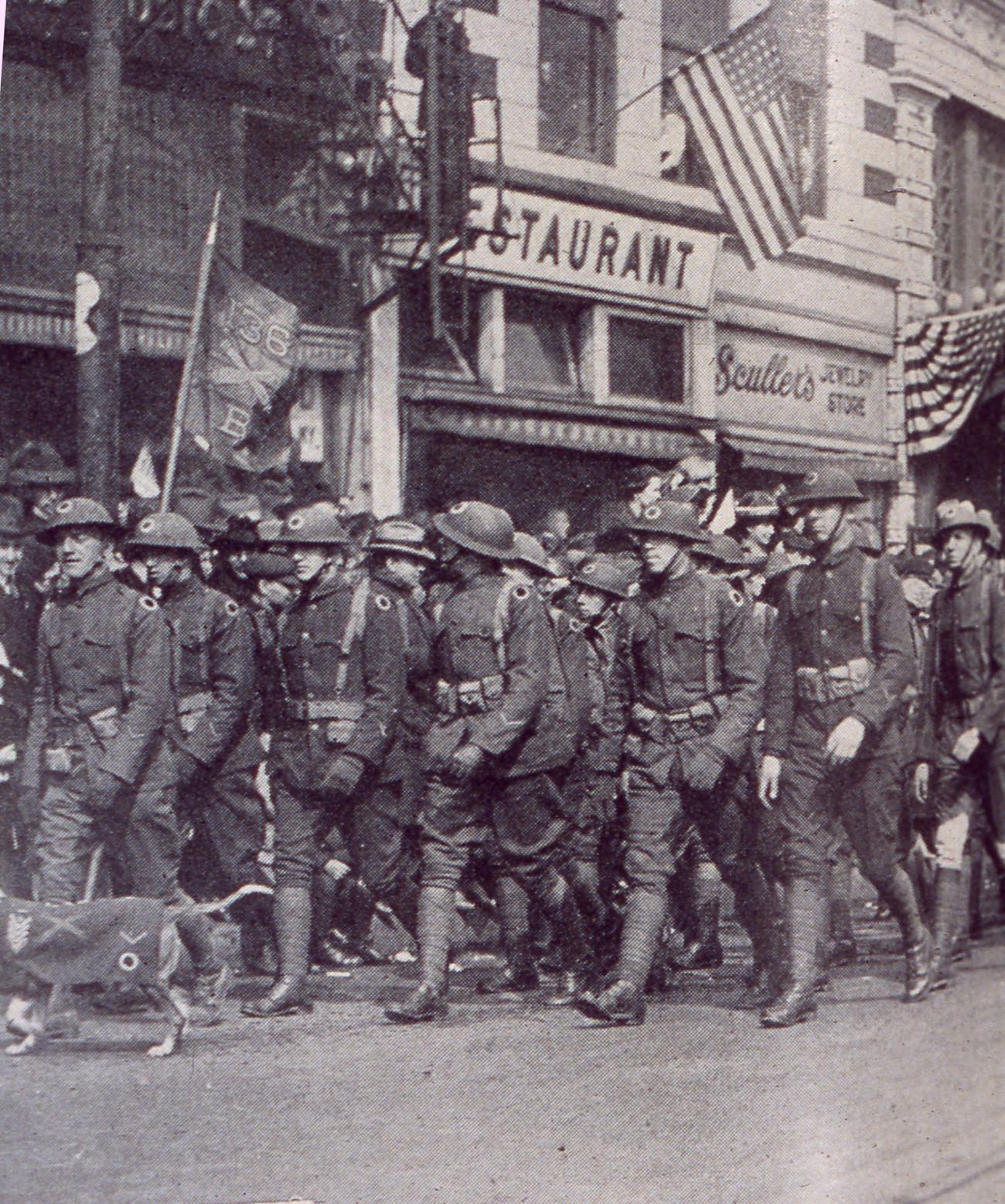
The soldiers came home in 1919. The Thirty-seventh Division returned to Columbus in April of that year, greeted by veterans of earlier wars who lined the streets to welcome them back. It was a moment of genuine civic pride — a city honoring the men it had sent off to fight.
Return of the Thirty-seventh Division to Columbus, greeted by veterans of past wars, April 6, 1919.
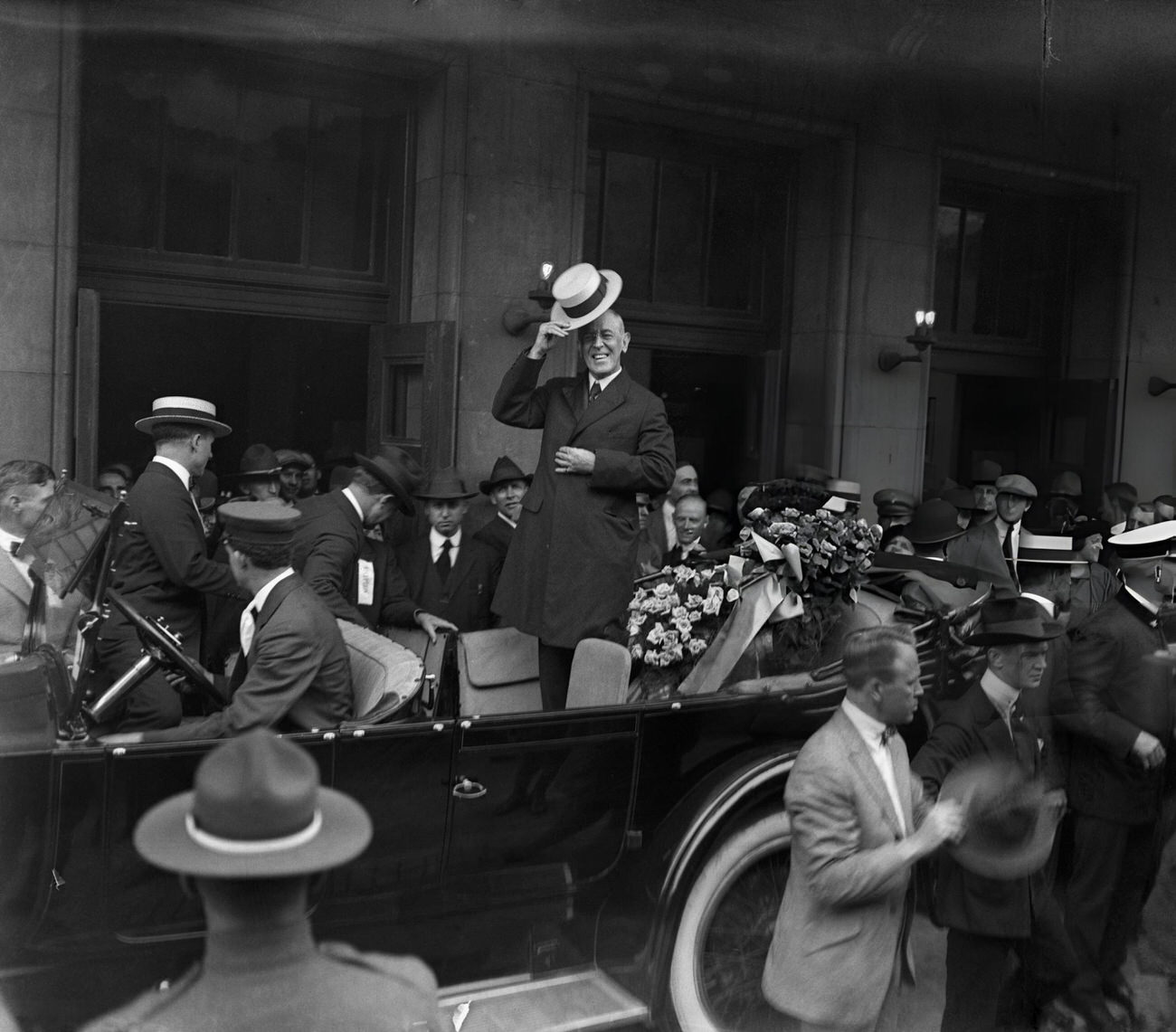
Also in 1919, President Woodrow Wilson came to Columbus as part of his national tour to build support for the League of Nations. He acknowledged crowds from his car as he moved through the city, a reminder that Columbus was not isolated from the largest political debates of the era.
President Woodrow Wilson acknowledges onlookers in Columbus, Ohio, during his League of Nations tour, 1919
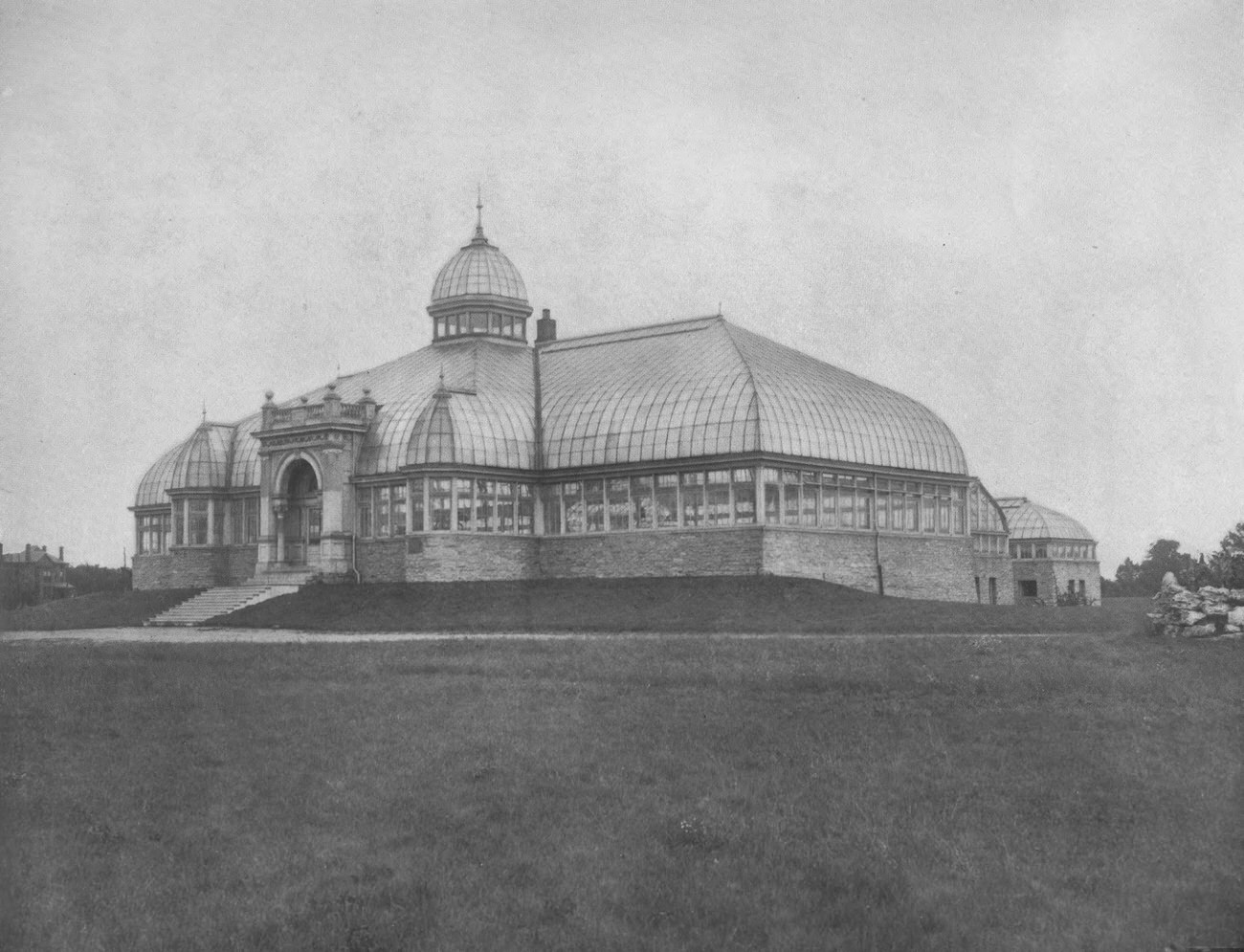
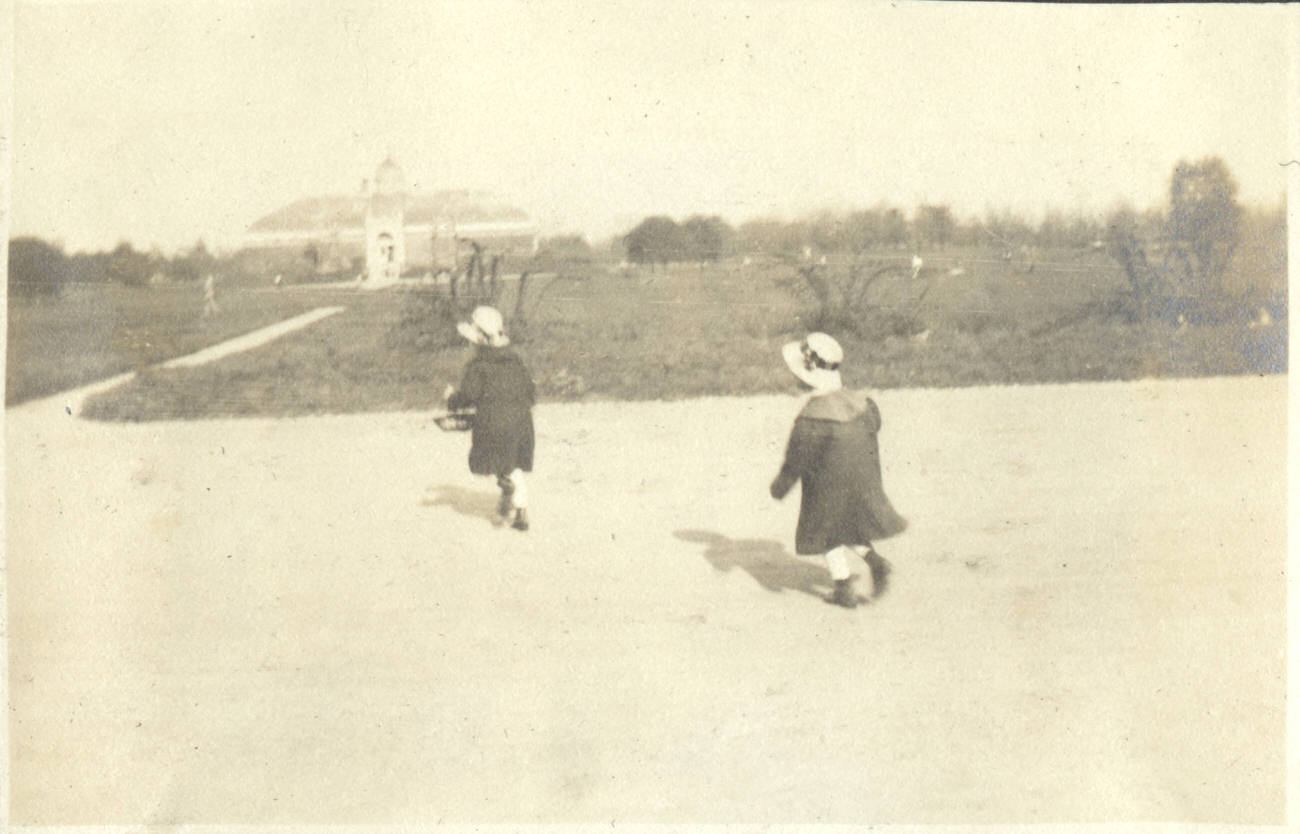
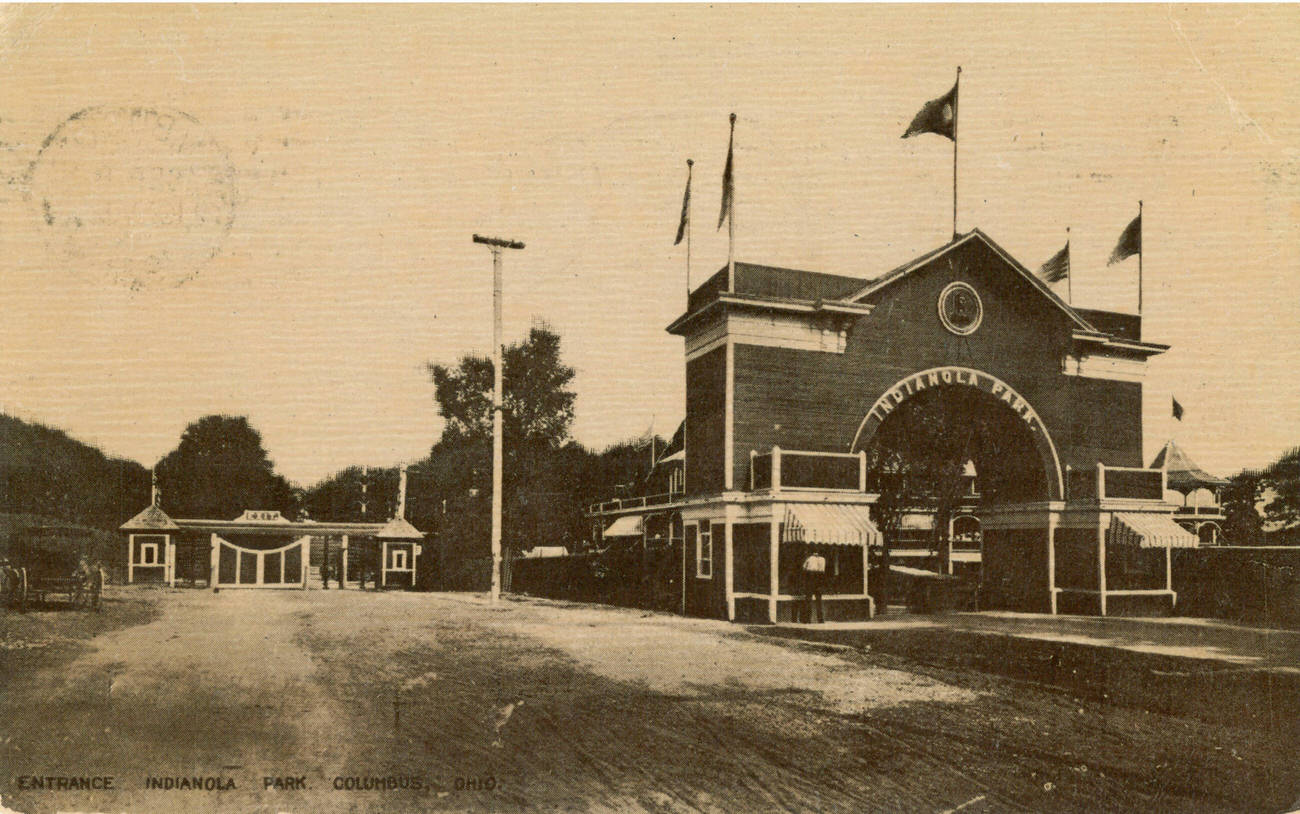
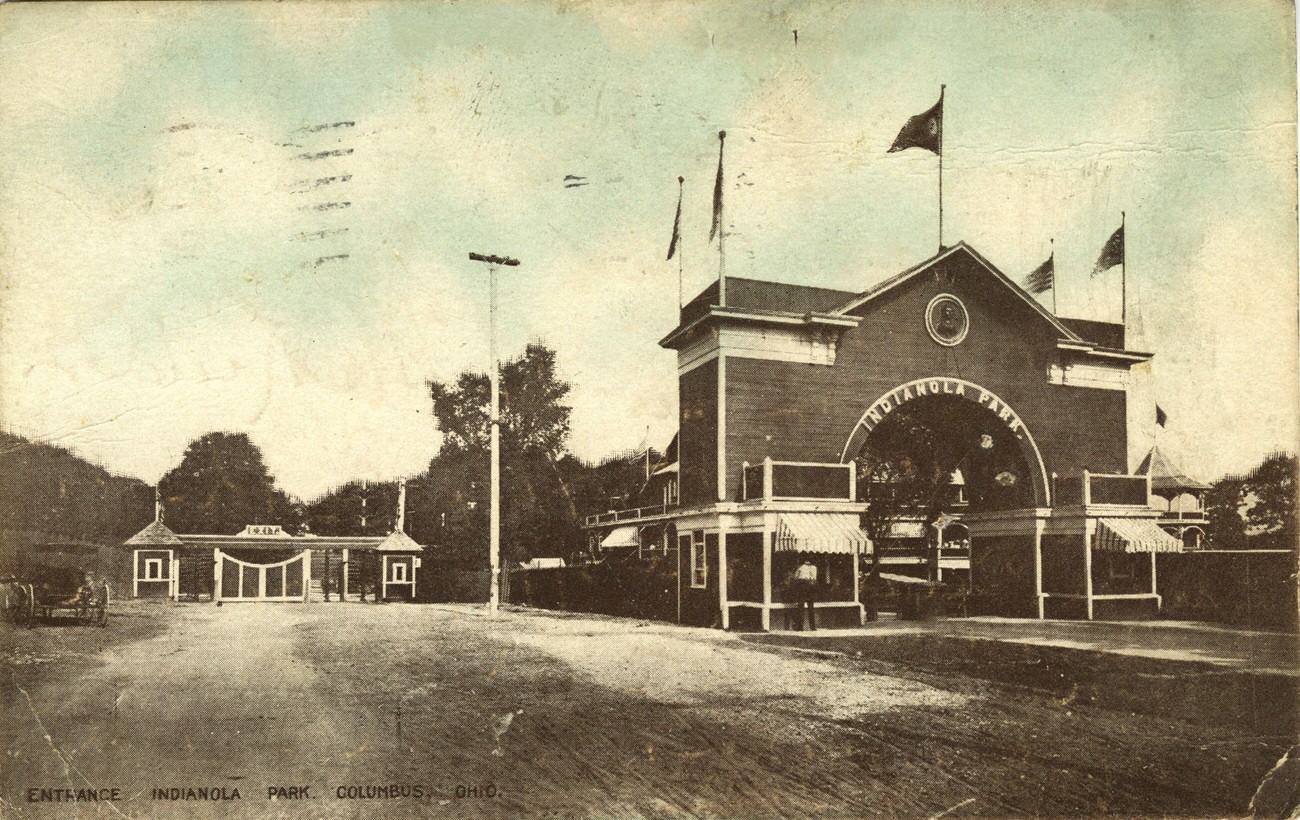
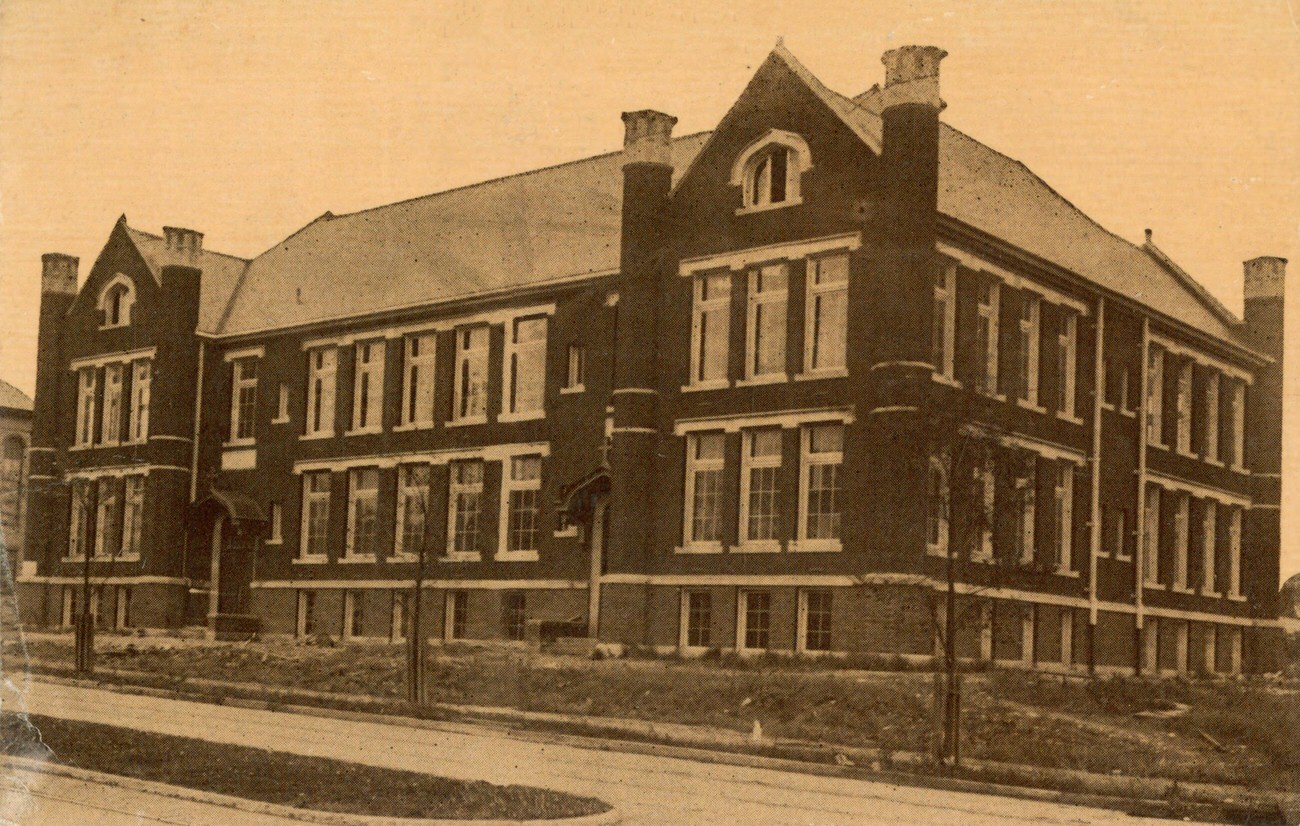
Throughout the decade, Columbus’s neighborhoods developed distinct characters. Parks like Franklin Park and Olentangy Park gave families places to gather. Indianola Park drew visitors with its amusements. Schools were built across the city — from Avondale and Chicago Avenue to Hague Avenue and Crestview — as the population grew and spread into new areas.
Conservatory at Franklin Park, Columbus, East Side, 1910.
Helen and Alice Barry visiting Franklin Park, Columbus, Ohio, May 1914.
Entrance to Indianola Park, Columbus, 1910s
Indianola Park Entrance, 1913.
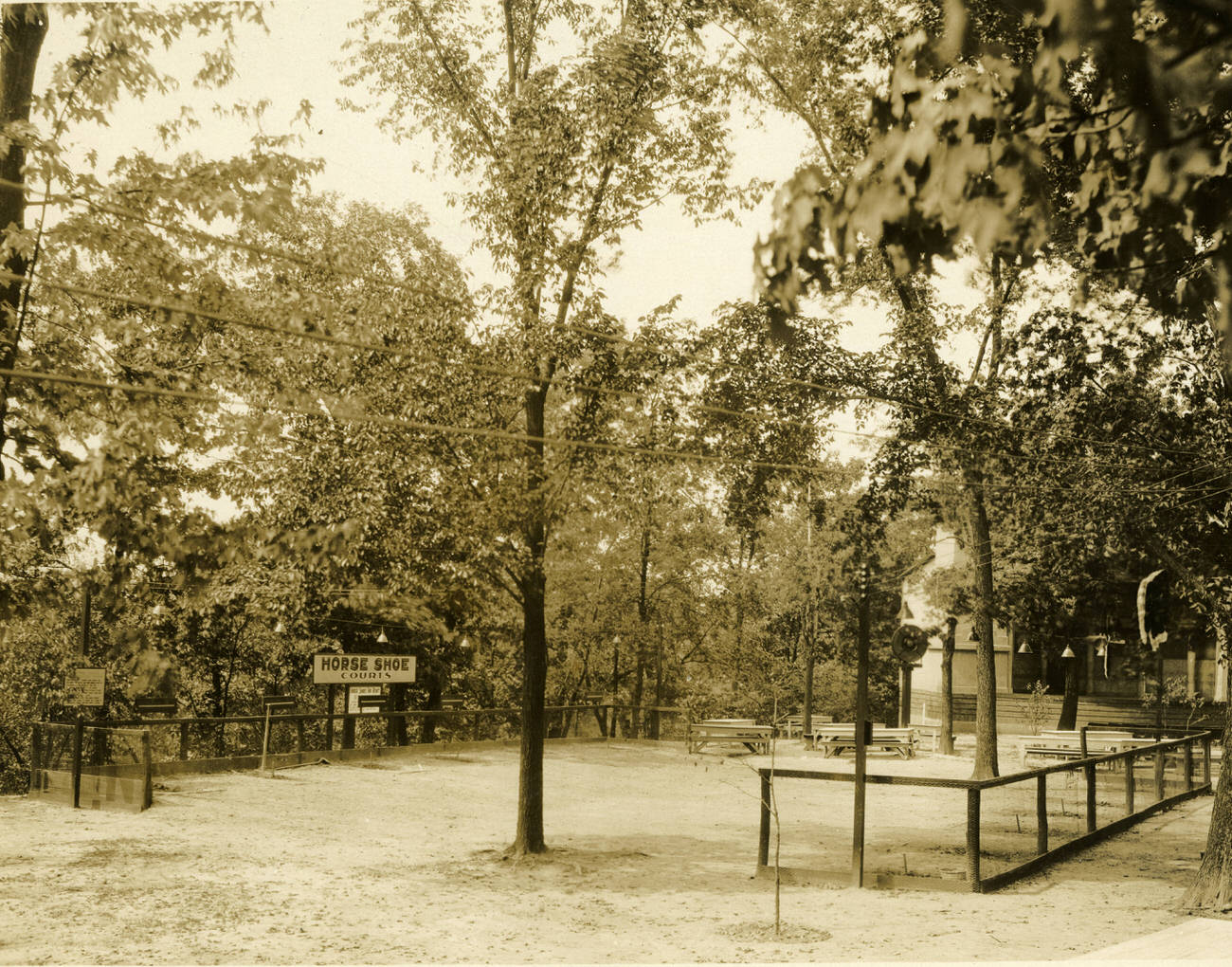
Horseshoe Pits at Olentangy Park, Clintonville, Columbus, 1910s
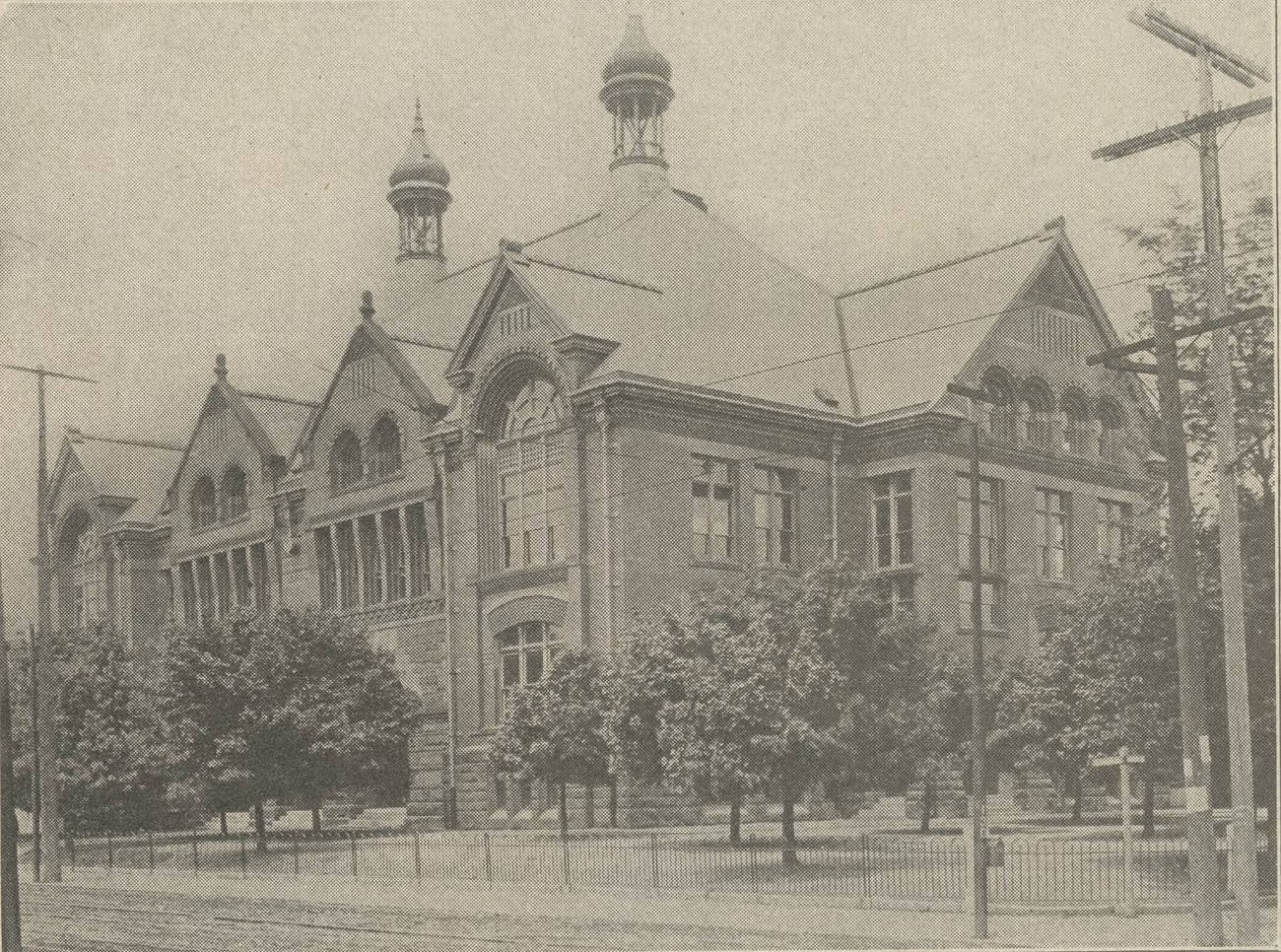
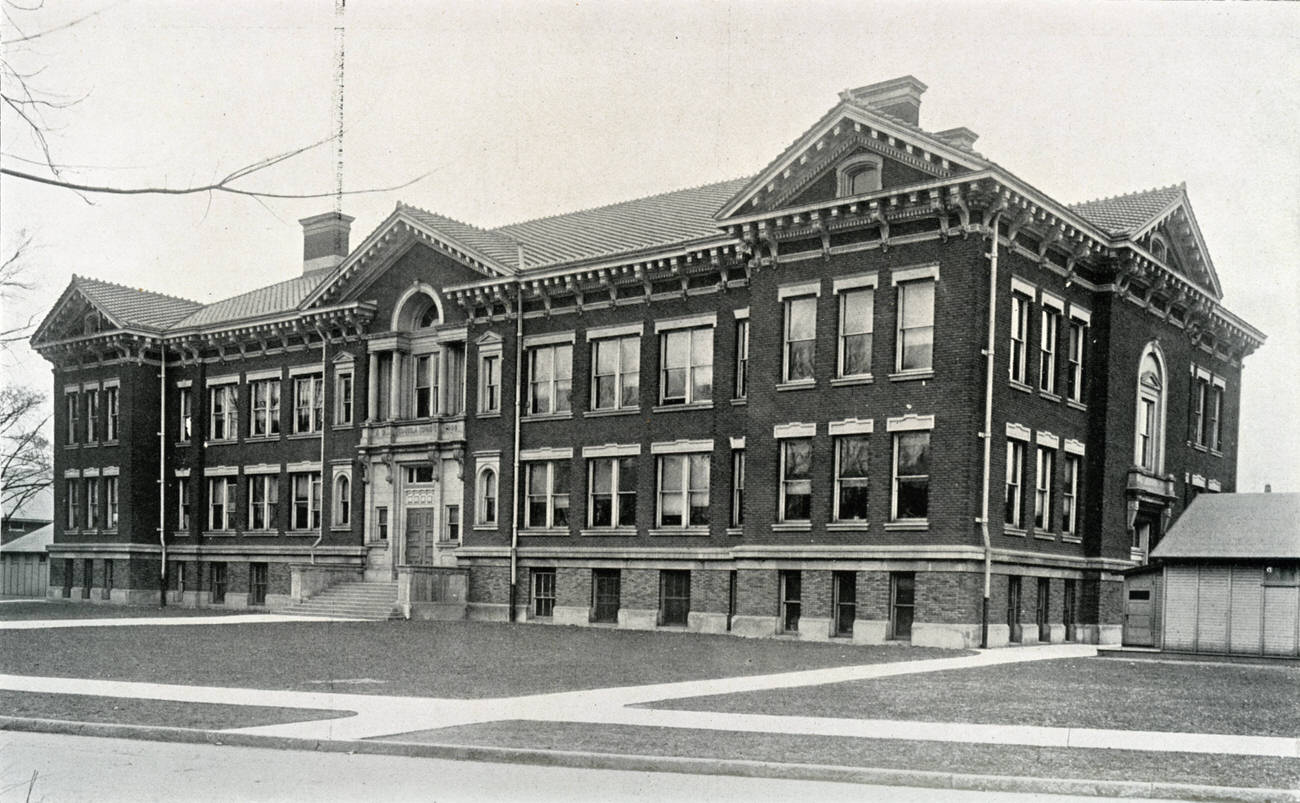
Avondale Elementary School on Avondale Avenue, construction began around 1892, opened in 1893, renovated in 1953 and 1968, now an elementary school in the Columbus City School District, June 9, 1916.
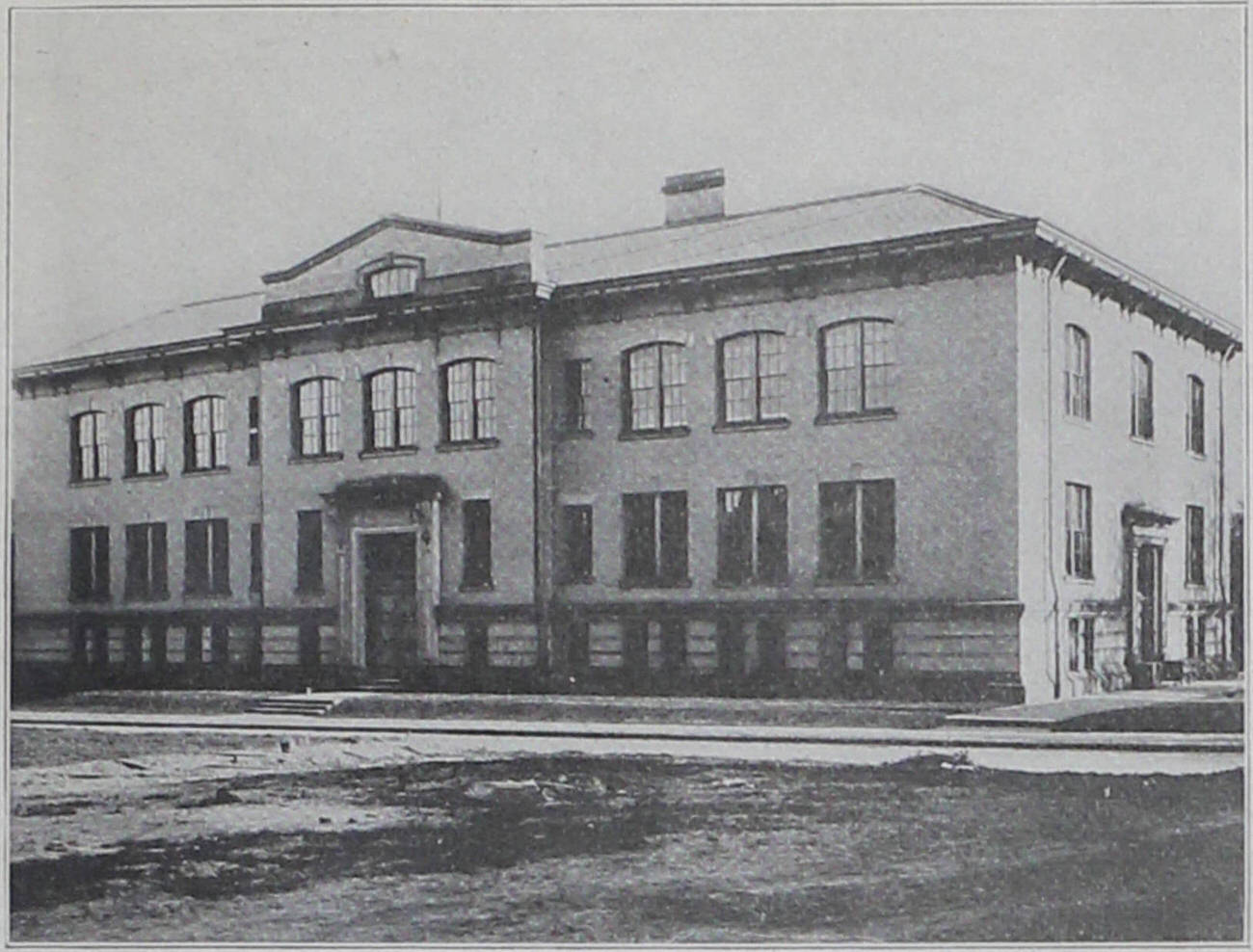
Chicago Avenue School, 1916.
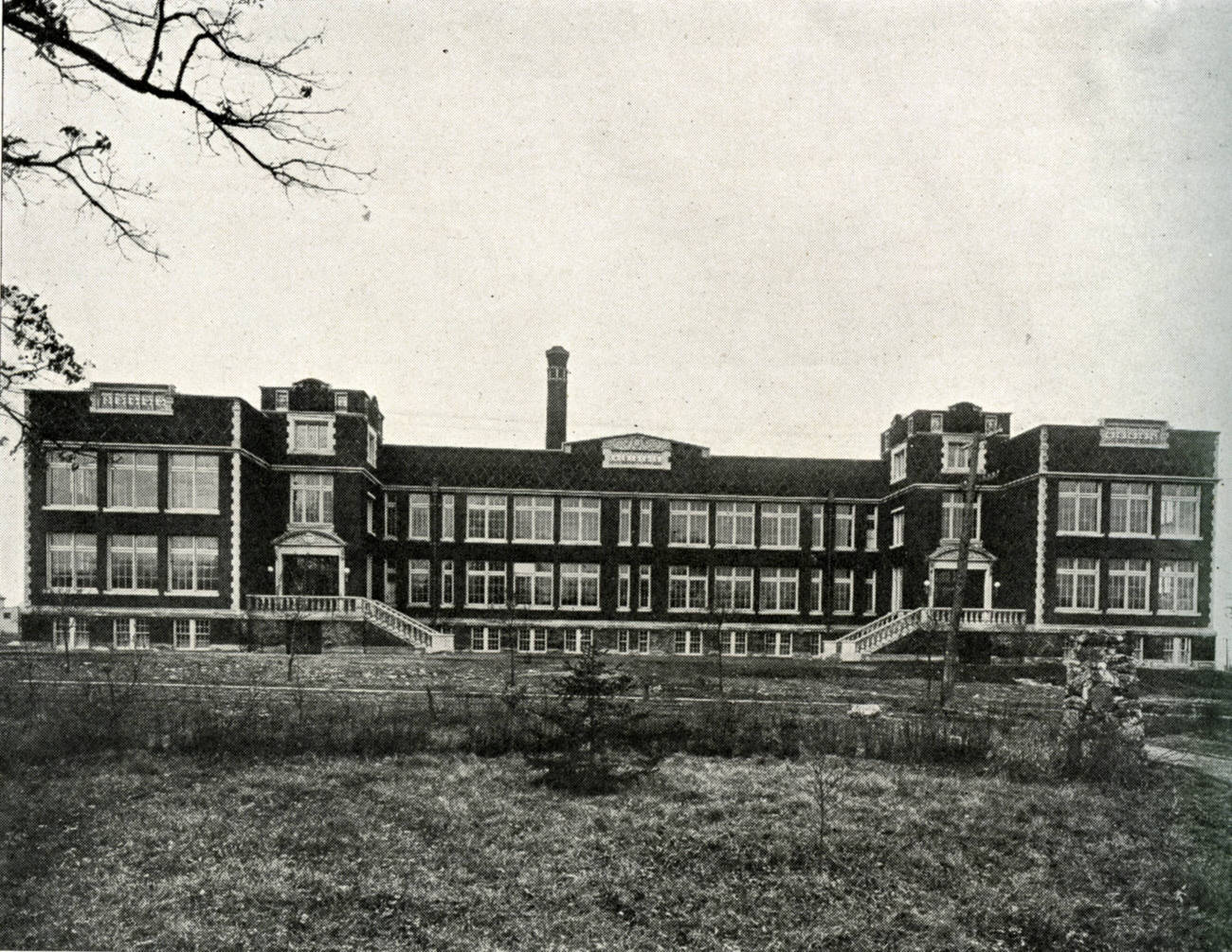
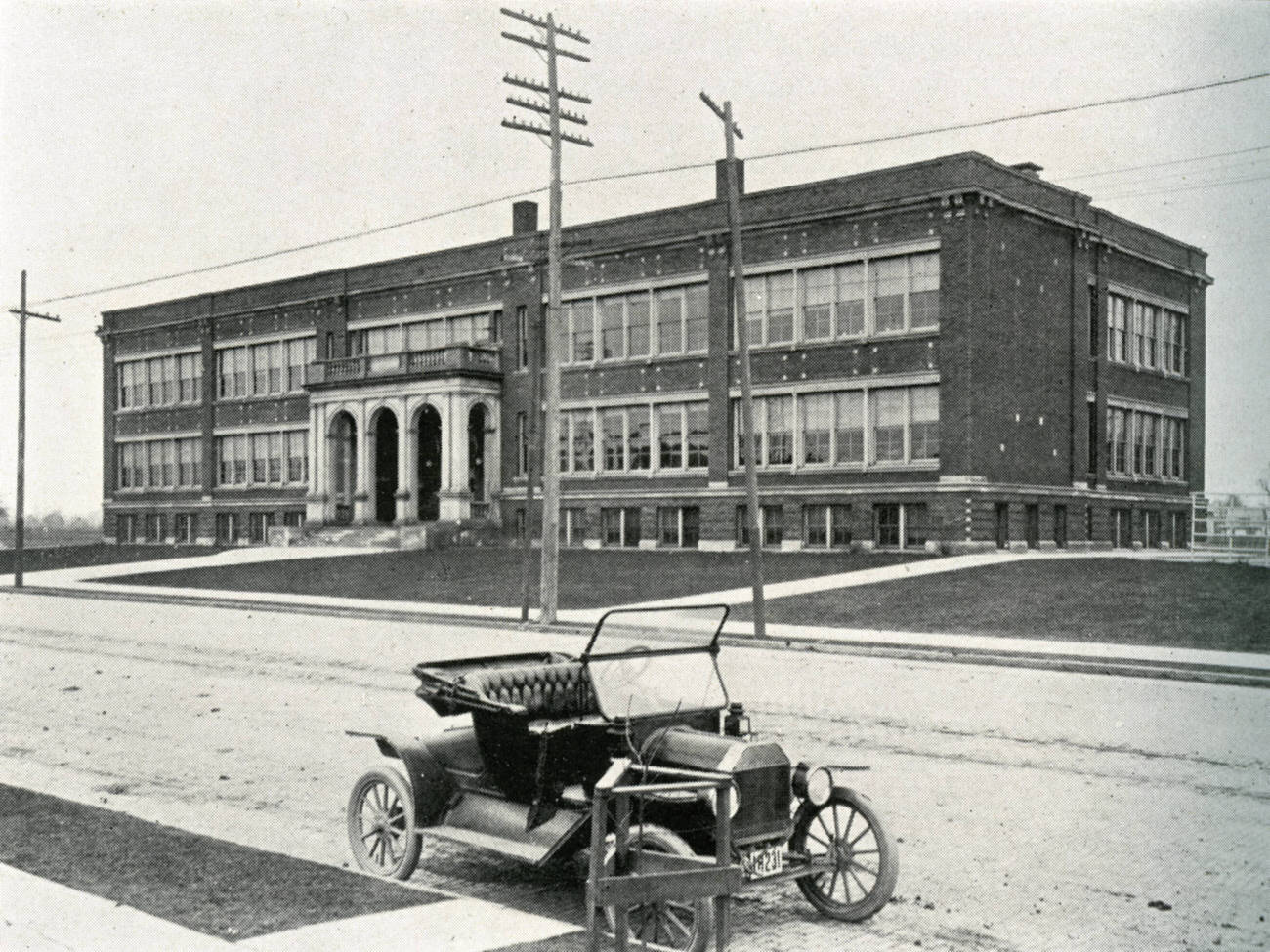
Crestview Elementary School, built in 1915
Eastwood Avenue Elementary School, opened in 1905, remodeled in 1955, closed and demolished in 1974. Circa 1916.
First Indianola Junior High School, the first in the U.S., opened in 1909, Circa 1915.
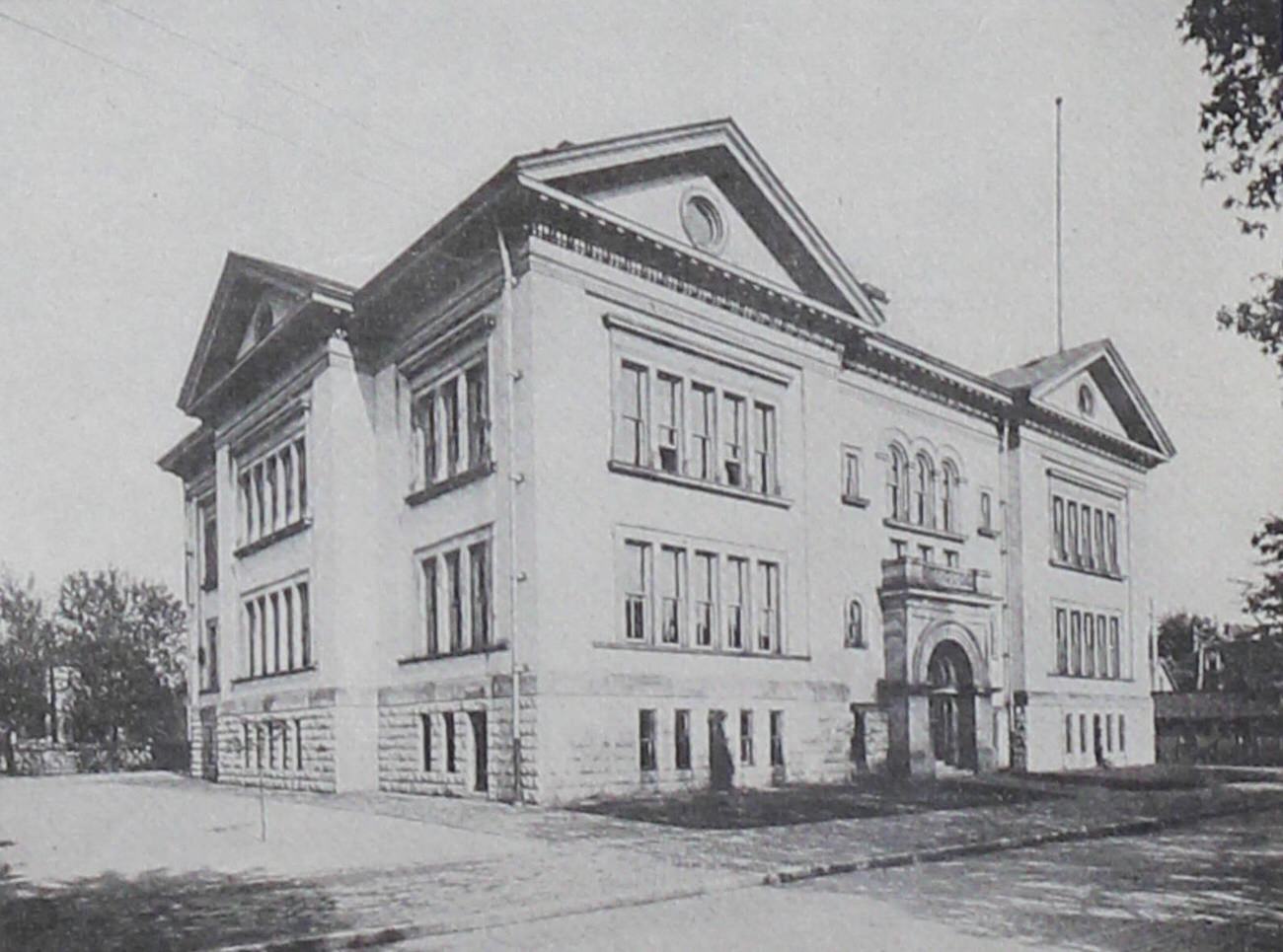
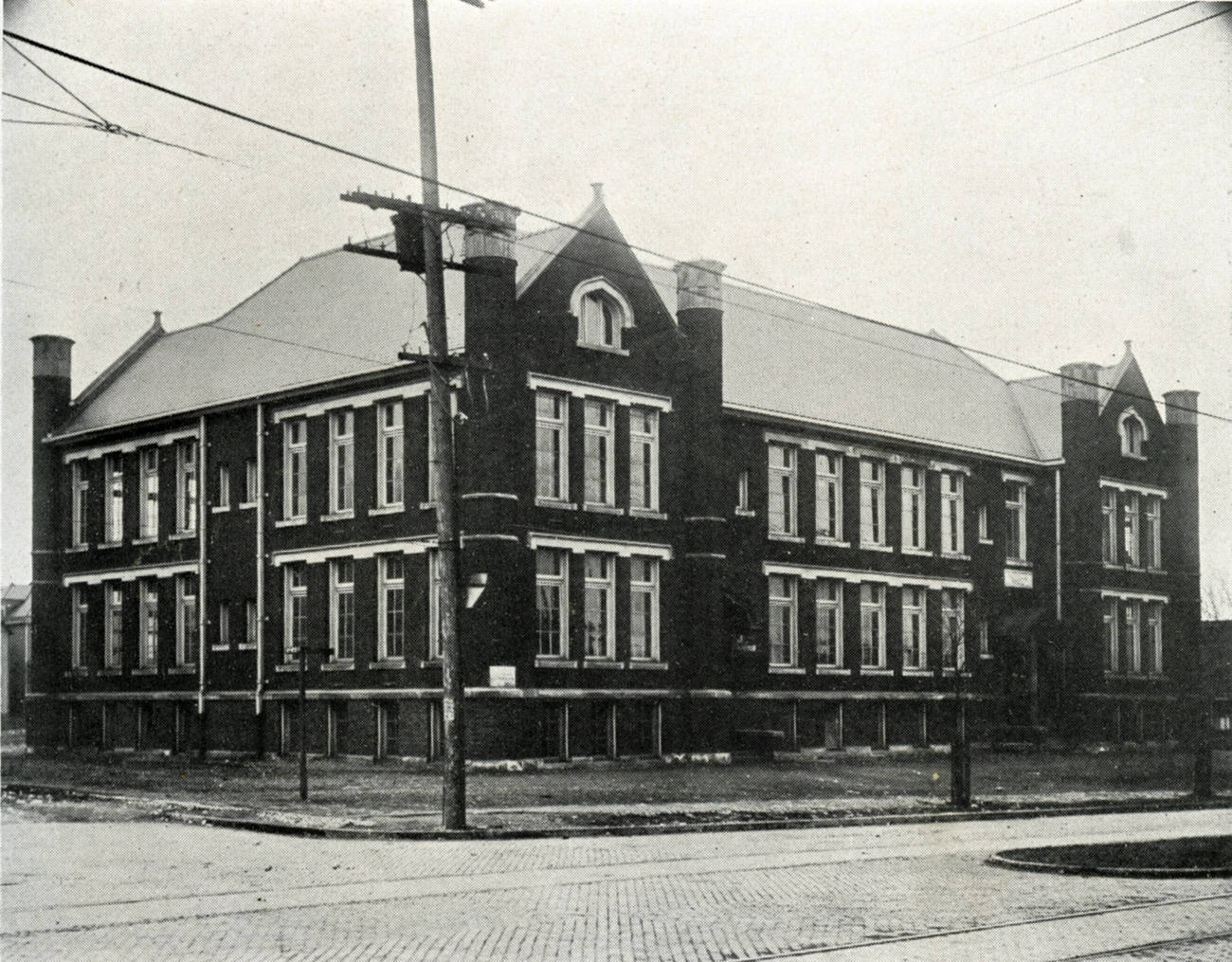
Hague Avenue Elementary School, constructed in 1910 with an addition in 1926, Circa May 1915.
Holy Family School, built in 1912 and closed in 1971, Circa 1915.
Holy Family School, Columbus, Ohio, black & white photo of two-story brick building, 1919.
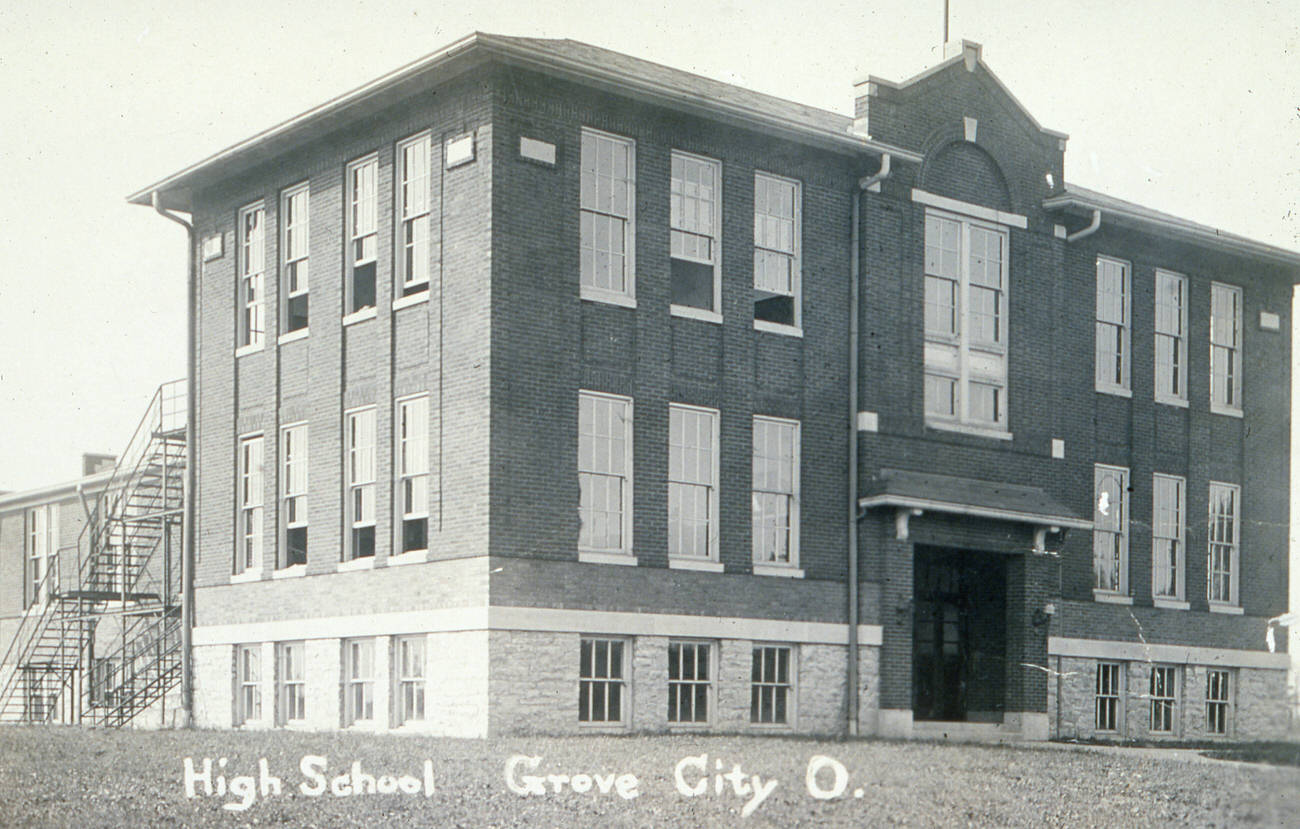
Grove City High School, originally Jackson High School, dedicated in 1910, no longer standing, Circa 1912.
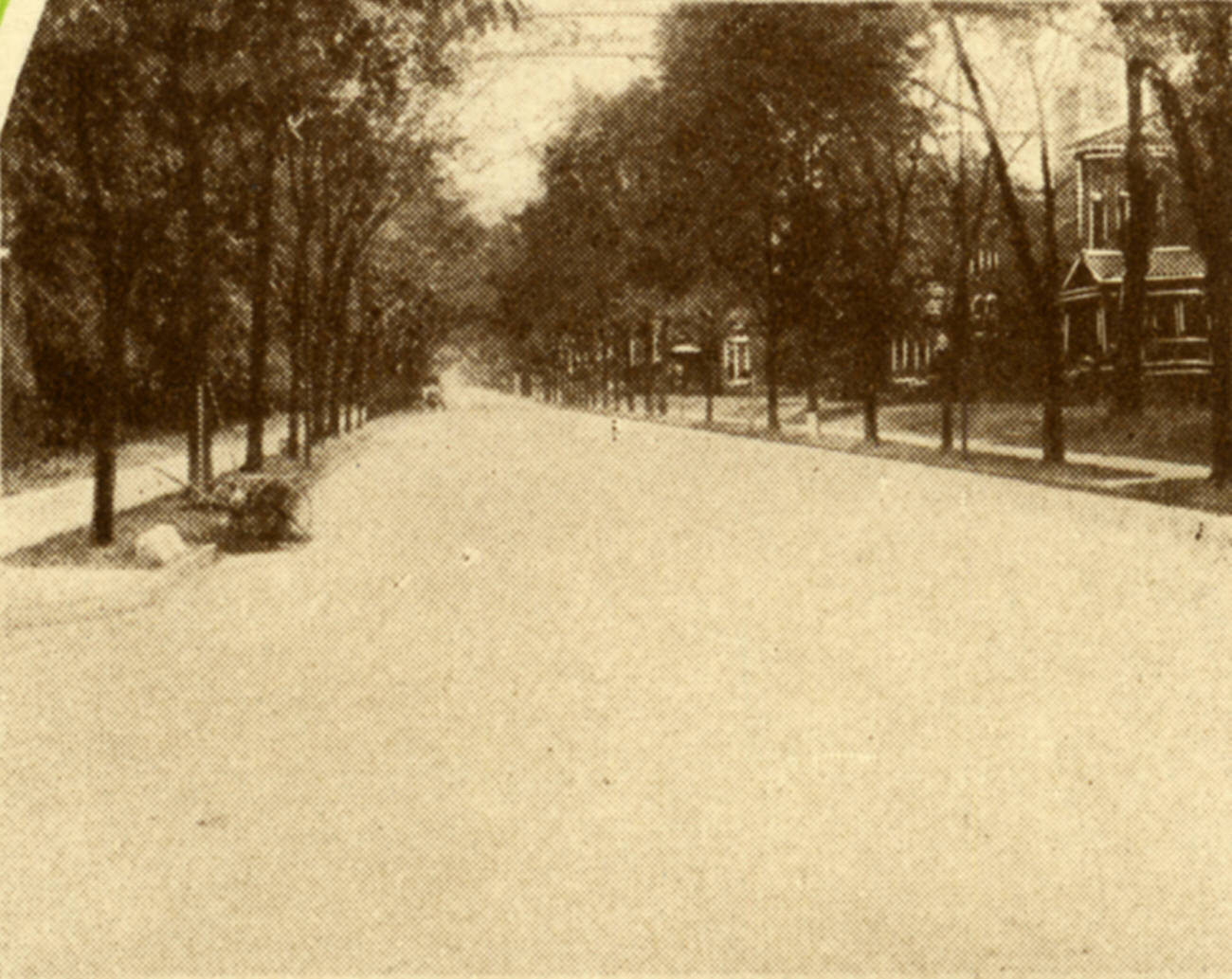
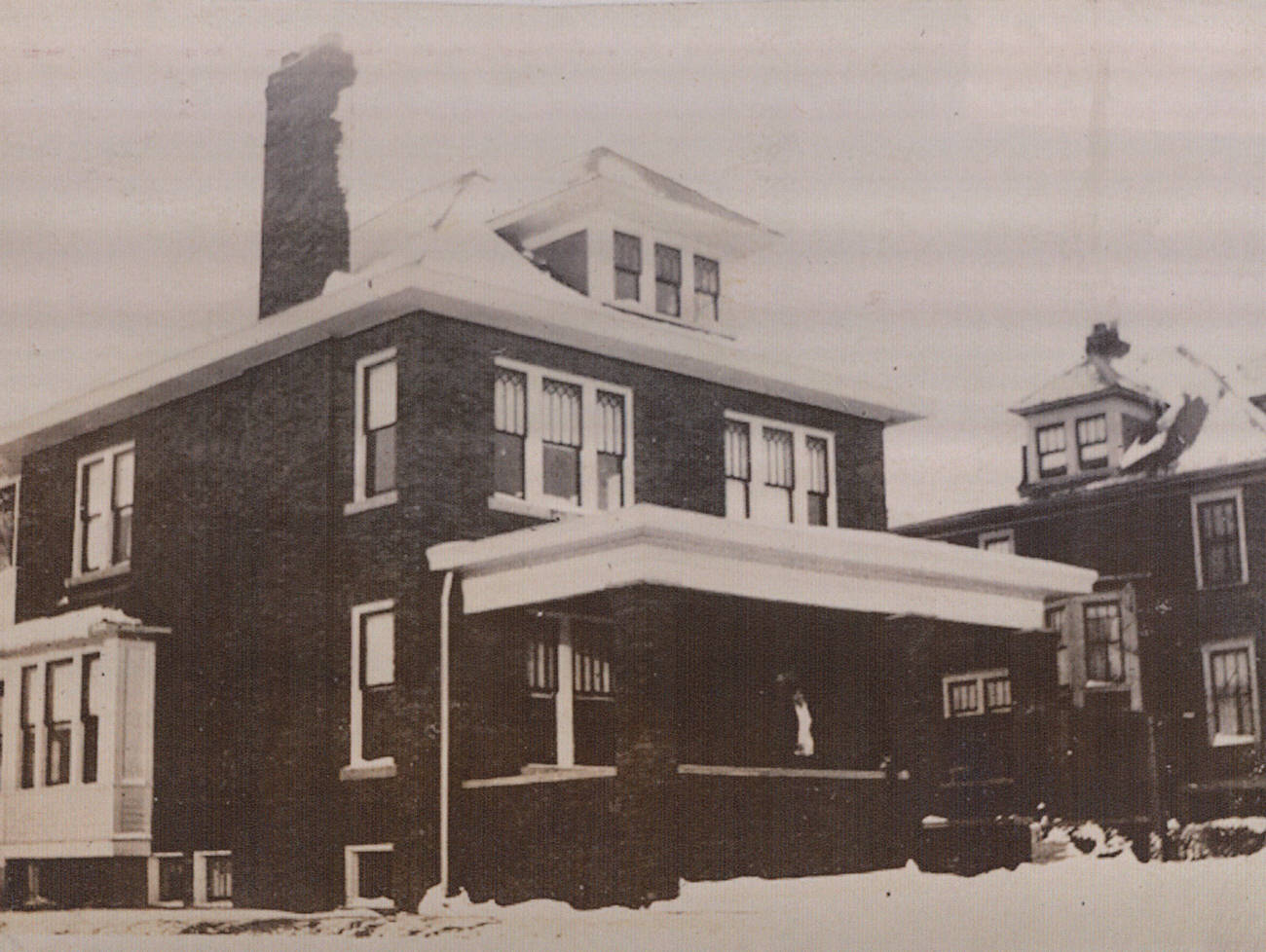
Residential life in the 1910s had a quieter, more settled rhythm in some corners of the city. East Broad Street featured tree-lined blocks with large homes. Clintonville, a northern neighborhood, was a comfortable suburban enclave — the Gorrell family home on Brevoort Road captured in a winter photograph shows a typical middle-class Columbus household of the era.
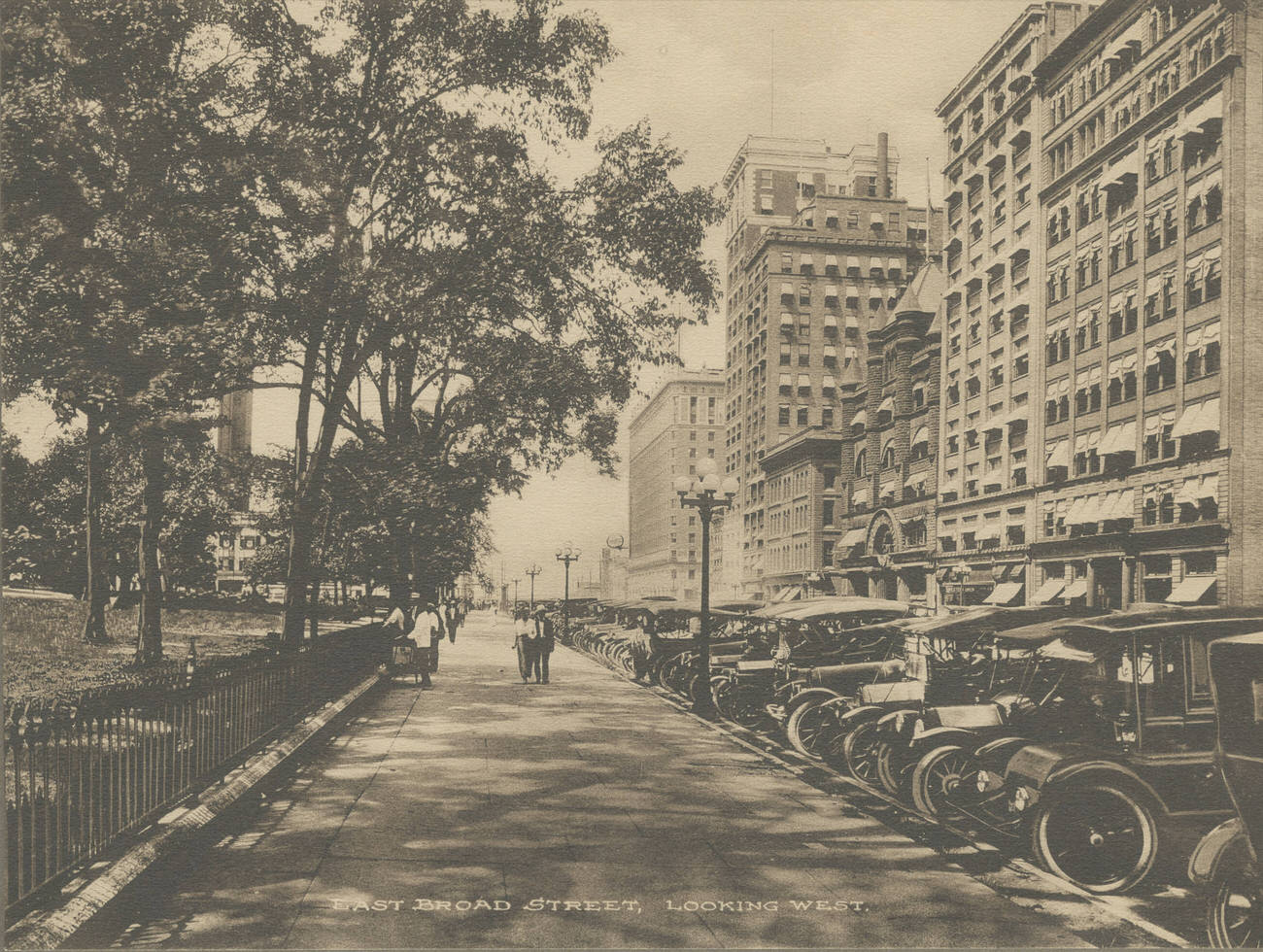
Tree-lined residential stretch of East Broad Street, 1915.
The Frank H. Gorrell family home at 40 Brevoort Road in Clintonville, Columbus, Ohio, winter of 1916.
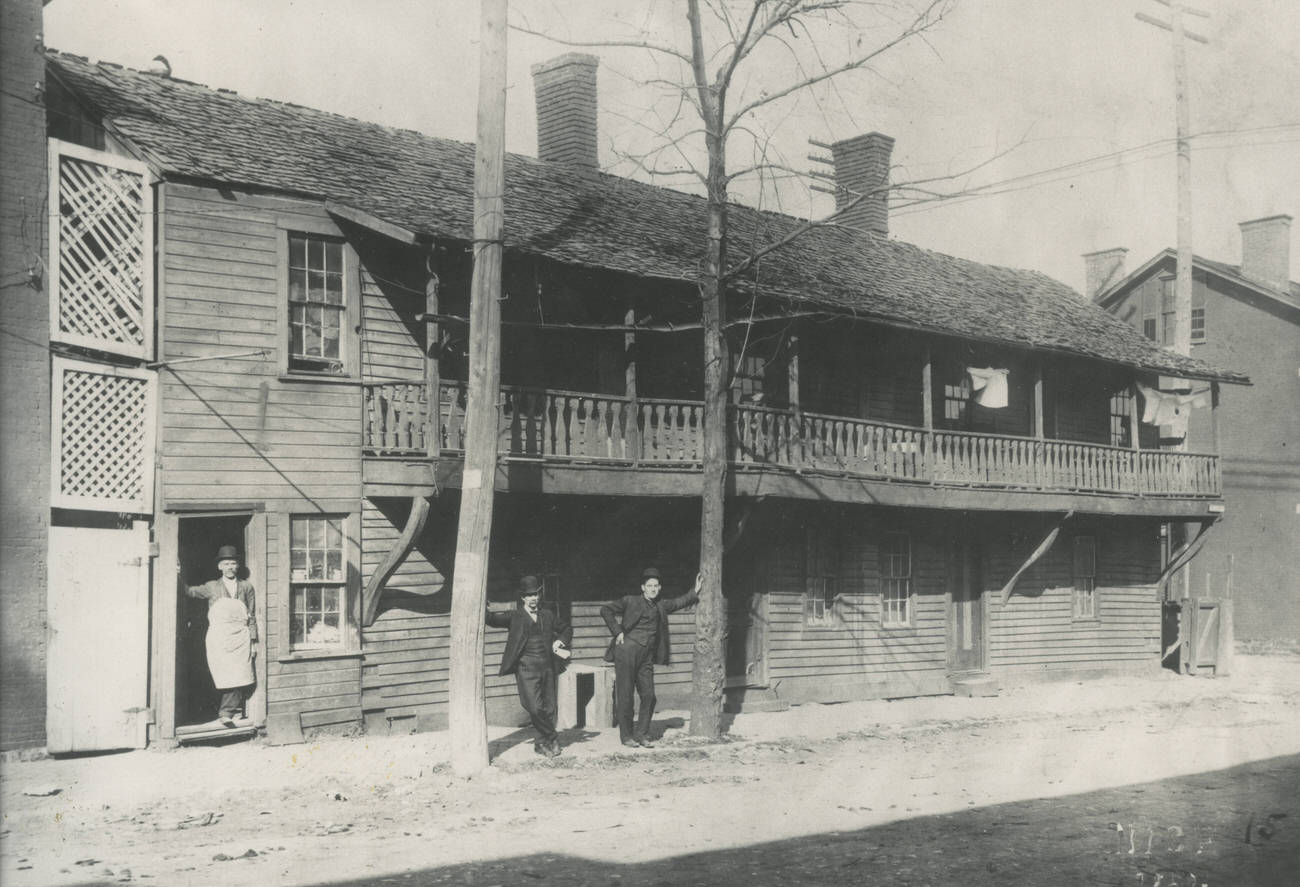
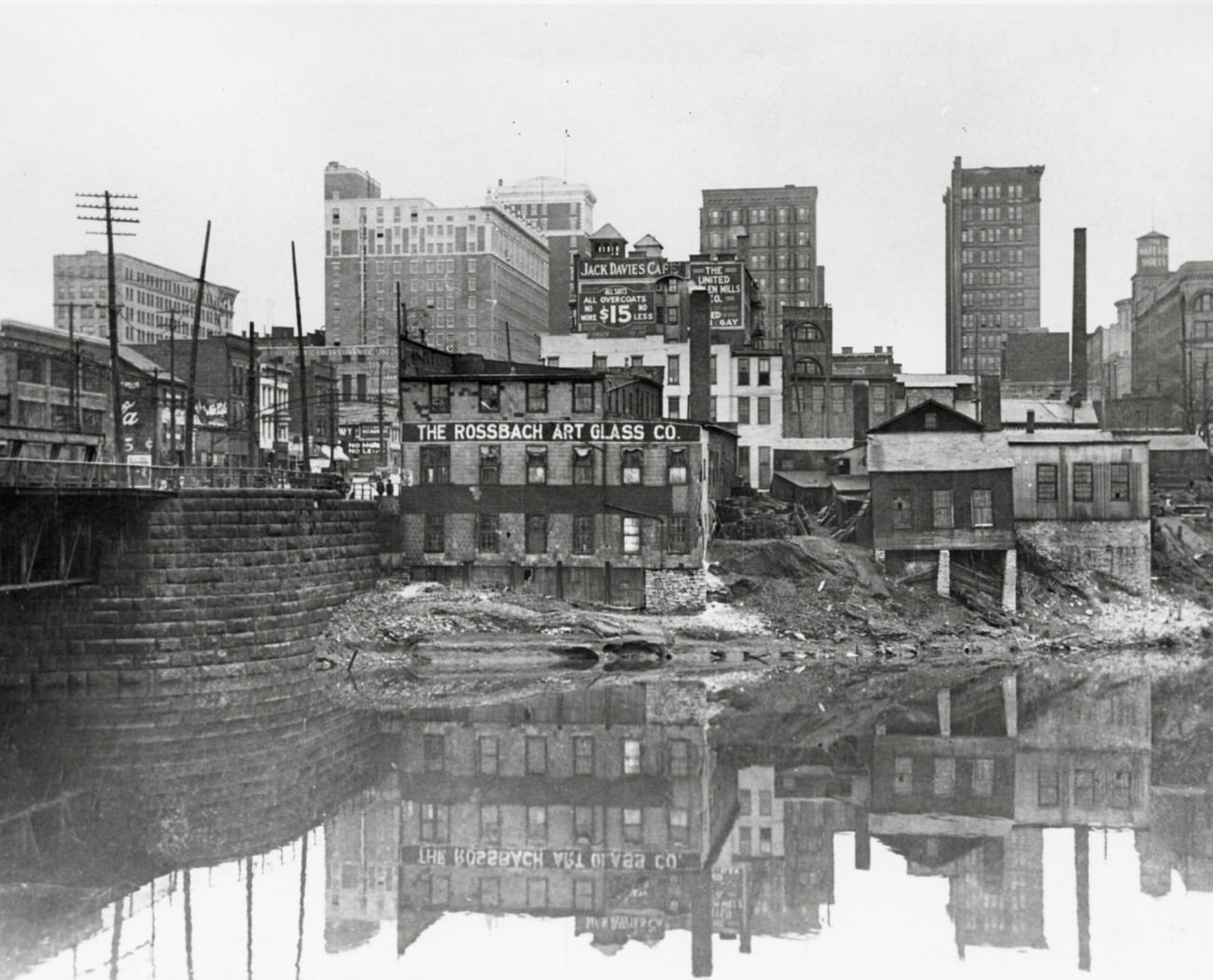
Downtown Columbus slum area on east bank of the Scioto River, view of Broad Street Bridge, 1916.
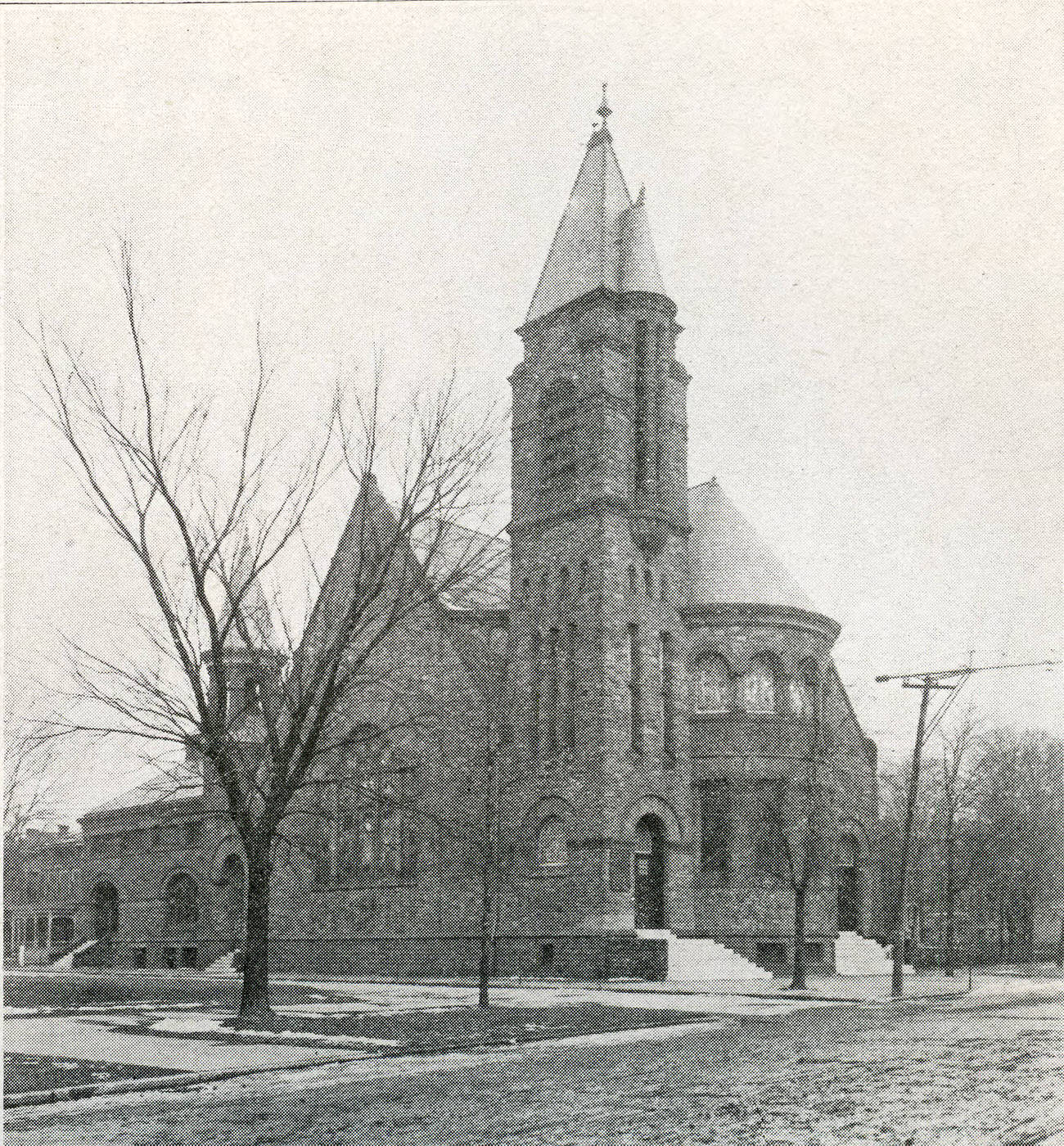
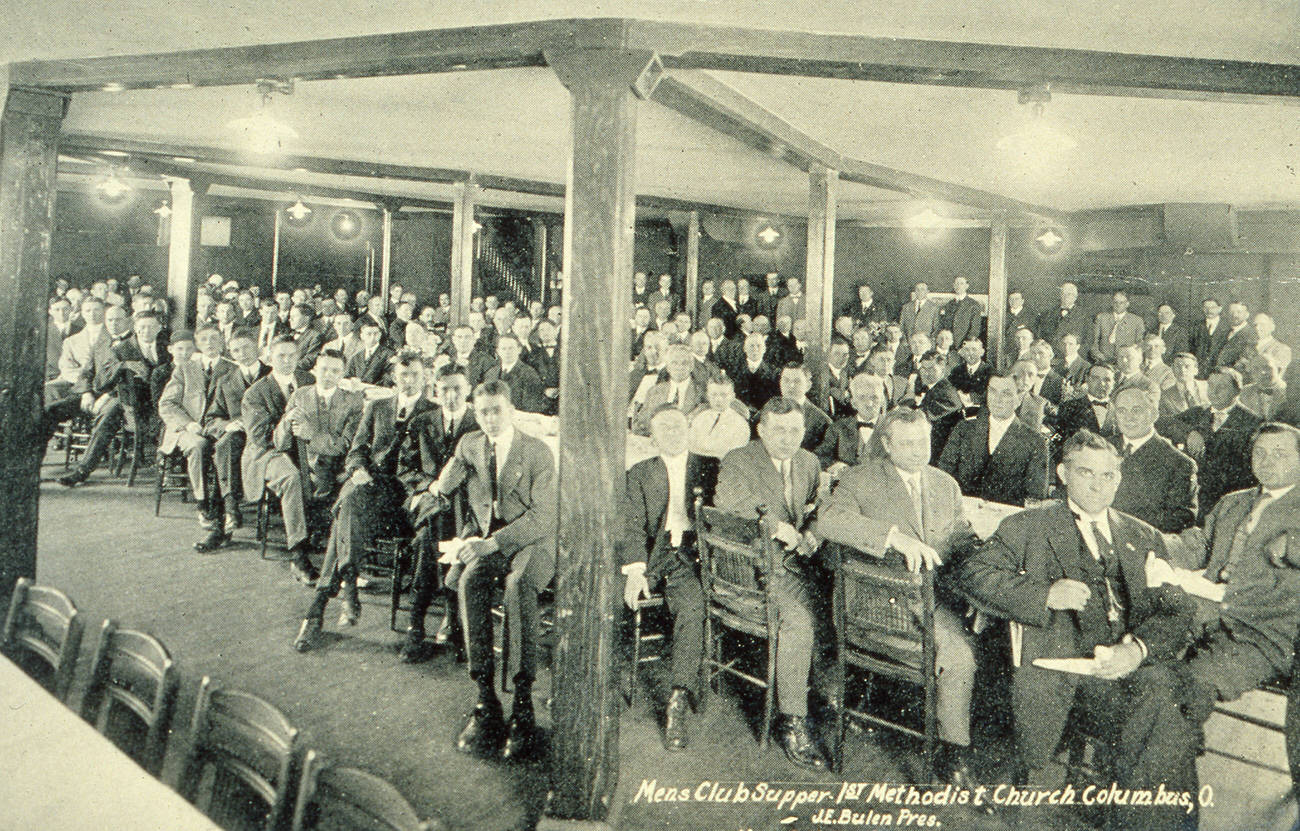
Churches were anchors of community life. The Broad Street Presbyterian Church and First Methodist Episcopal Church both served large congregations. The First Presbyterian Church’s East State Street building was demolished in 1910, marking a shift in the city’s religious geography. In 1919, the American Methodist Centenary drew a massive crowd to the Ohio State Fairgrounds.
Broad Street Presbyterian Church, exterior view, 1915
First Methodist Episcopal Church, featuring the News Club, 1913.
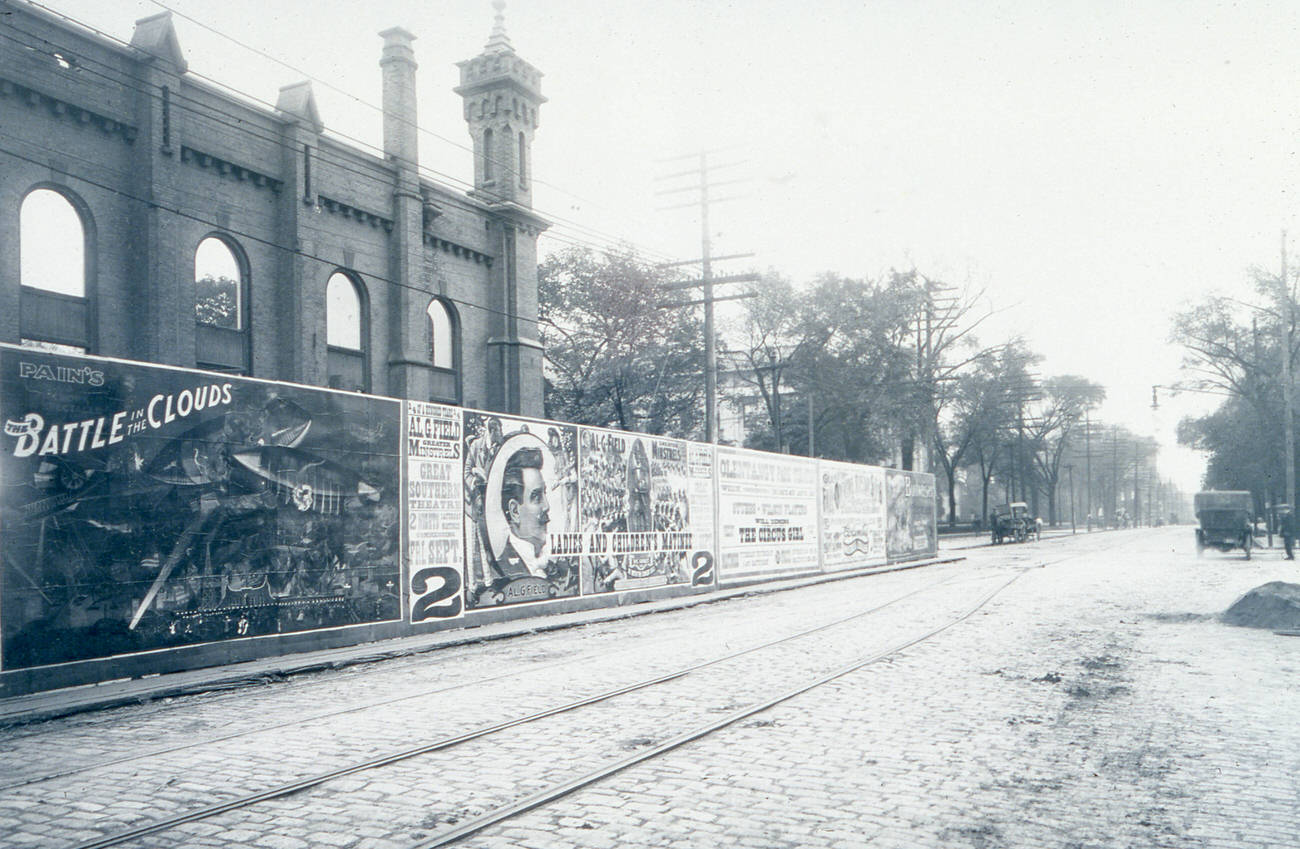
Demolition of the East State Street site of the First Presbyterian Church, 1910.
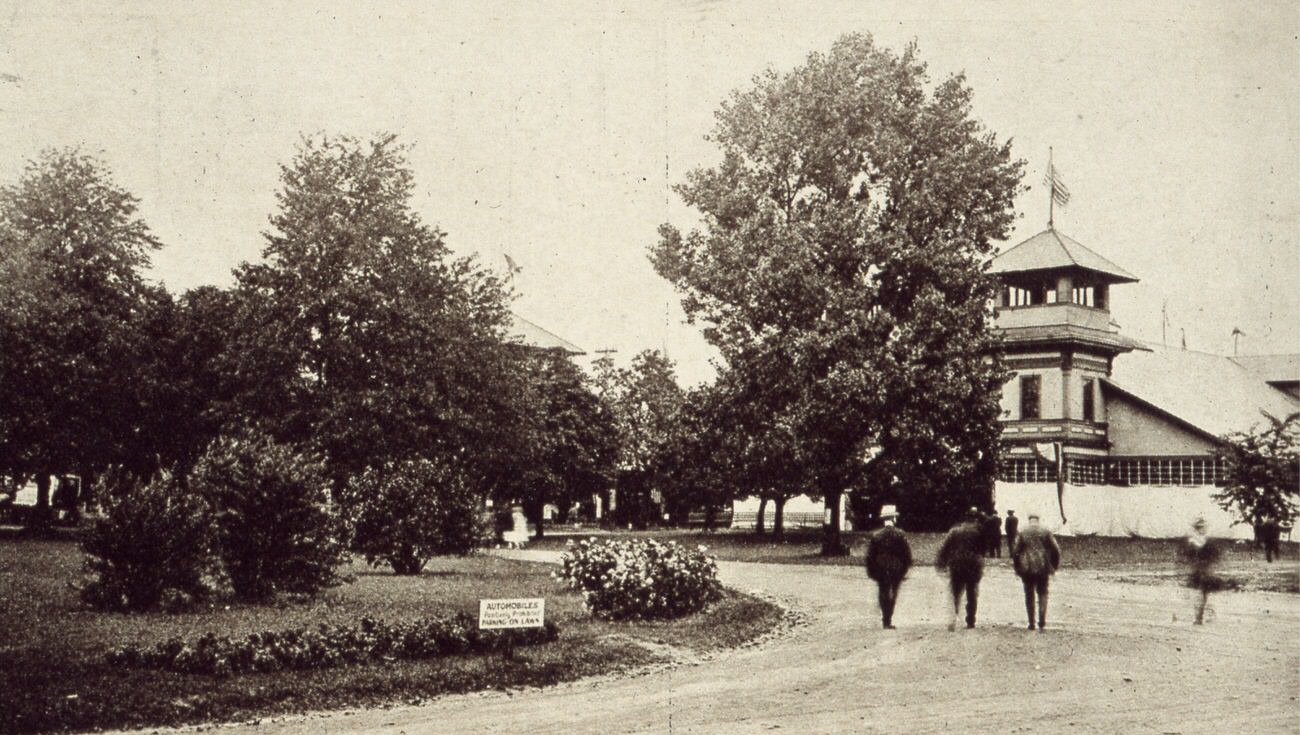
American Methodist Centenary celebration at Ohio State Fairgrounds, 1919.
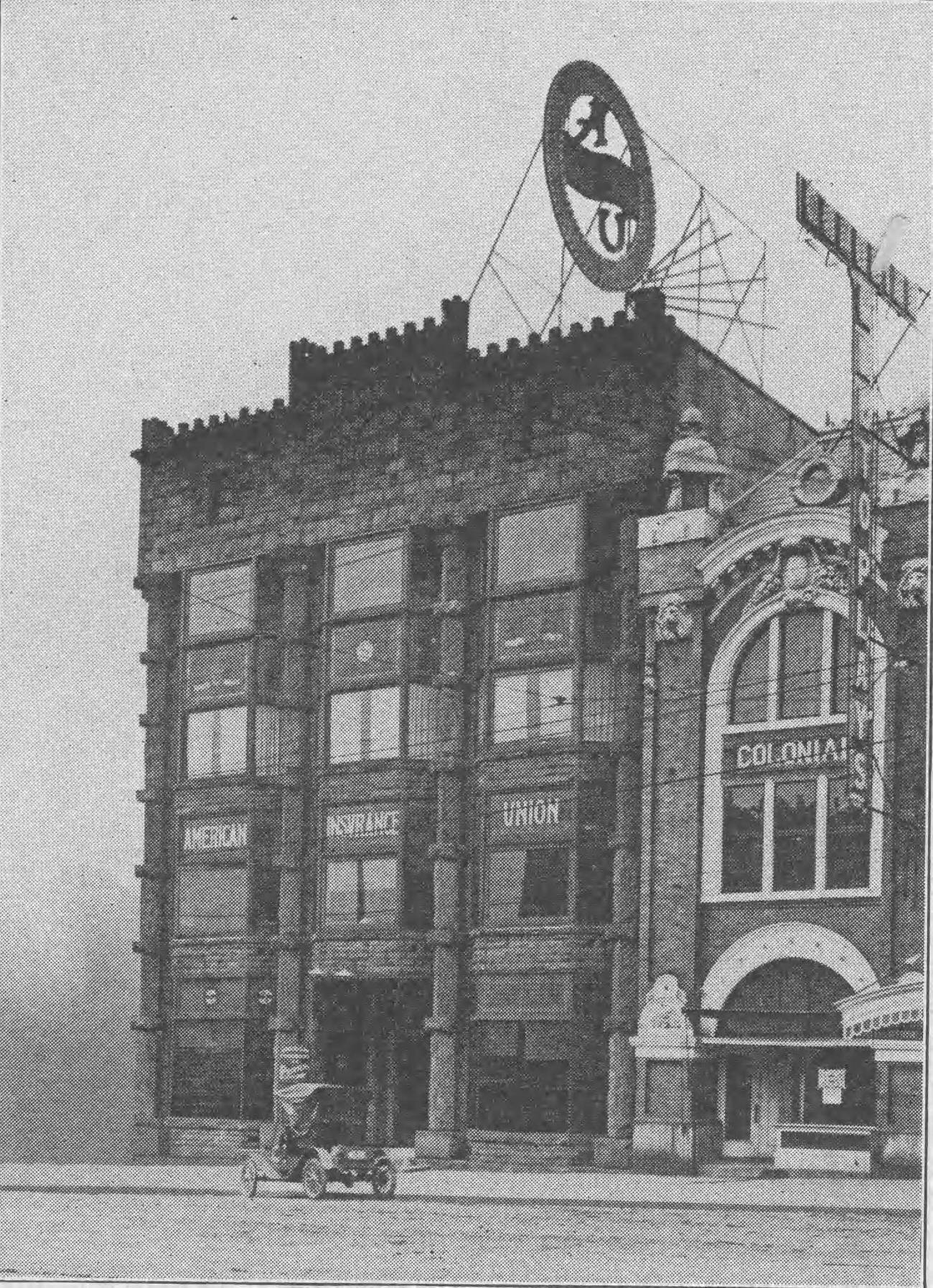
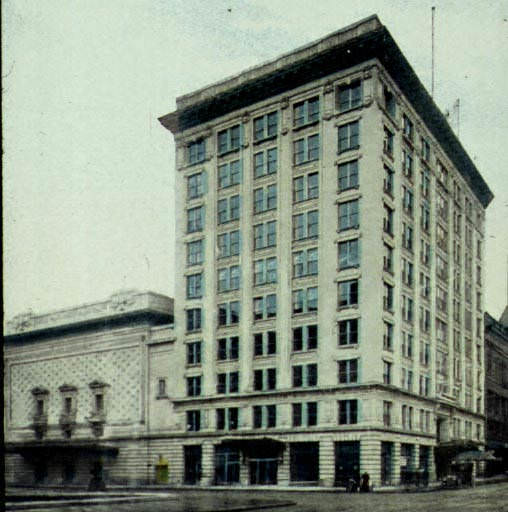
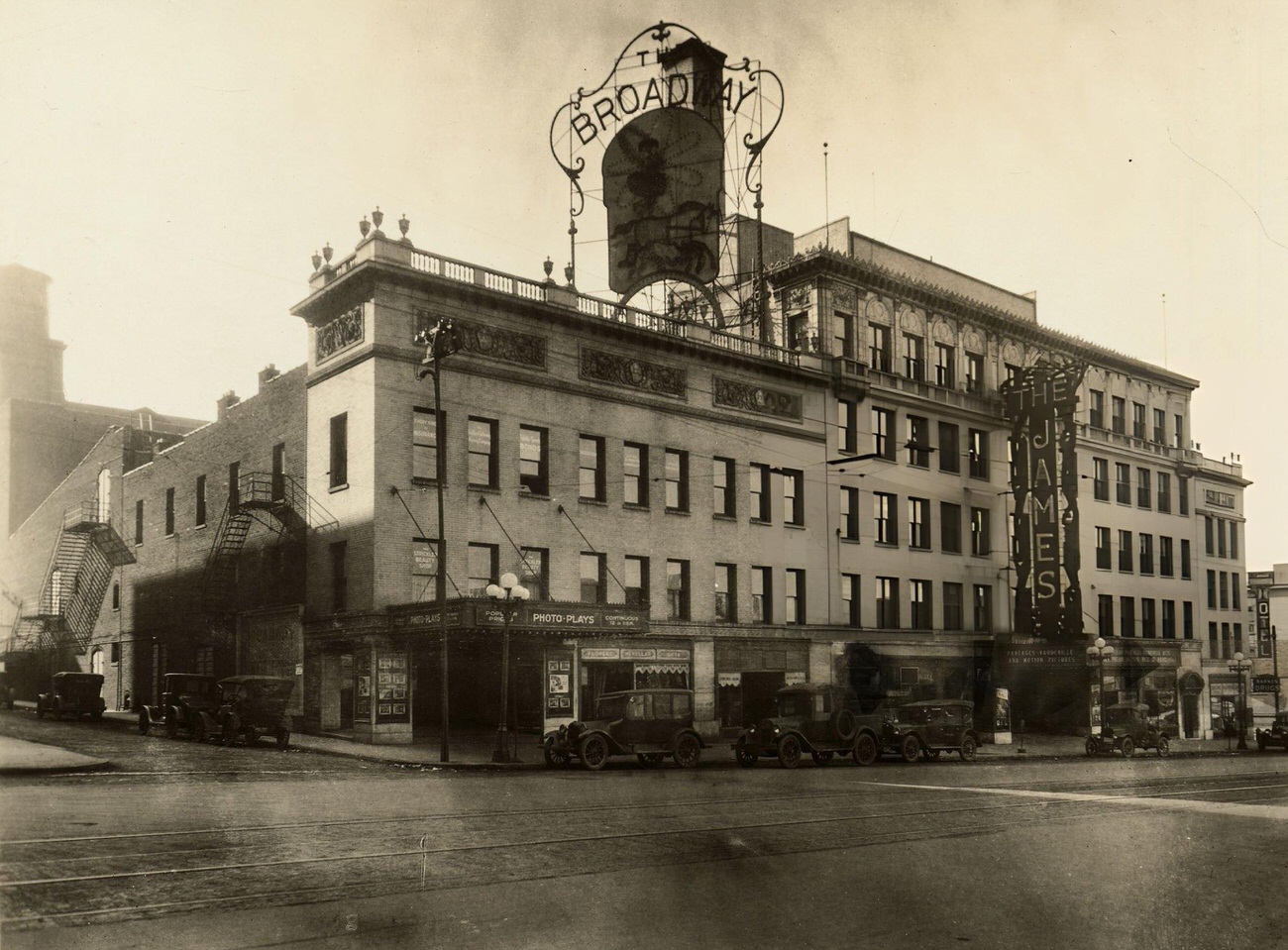
The commercial and entertainment heart of downtown continued to grow. The American Insurance Union Auditorium and Colonial Theater offered cultural programming. The Hartman Theatre, which opened in 1911, drew audiences until its demolition in 1971. The James Theater and Broadway Building housed multiple businesses under one roof.
American Insurance Union Auditorium and Colonial Theater buildings, 1915.
Hartman Theatre and Office Building, opened in 1911, demolished in 1971, Circa 1912.
General view of the James Theater and businesses at the Broadway Building, Columbus, 1910s
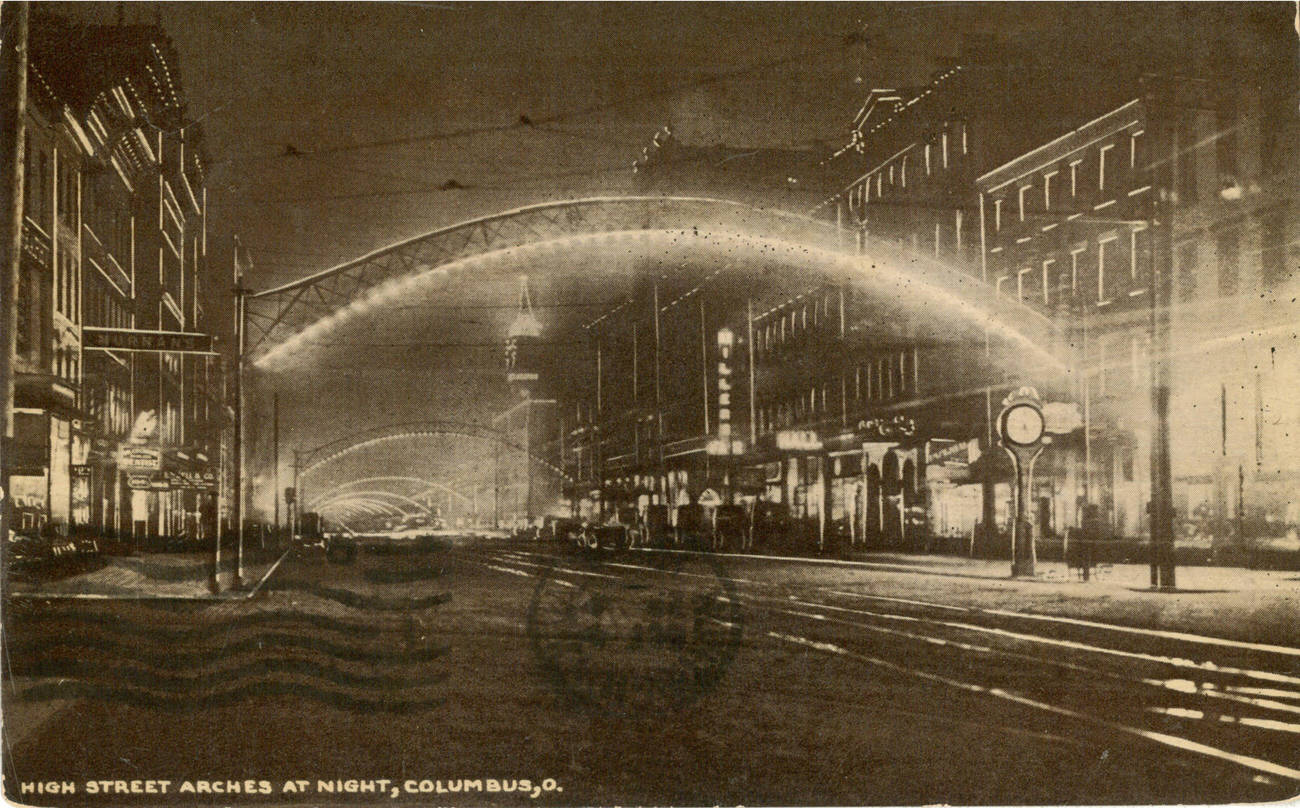
Night view of High Street Arches at South High St, Columbus, 1910s
East Broad Street looking west with Outlook and Spahr Buildings, Columbus, 1916.
Deshler Block, the predecessor to the Deshler Hotel, photograph, 1915.
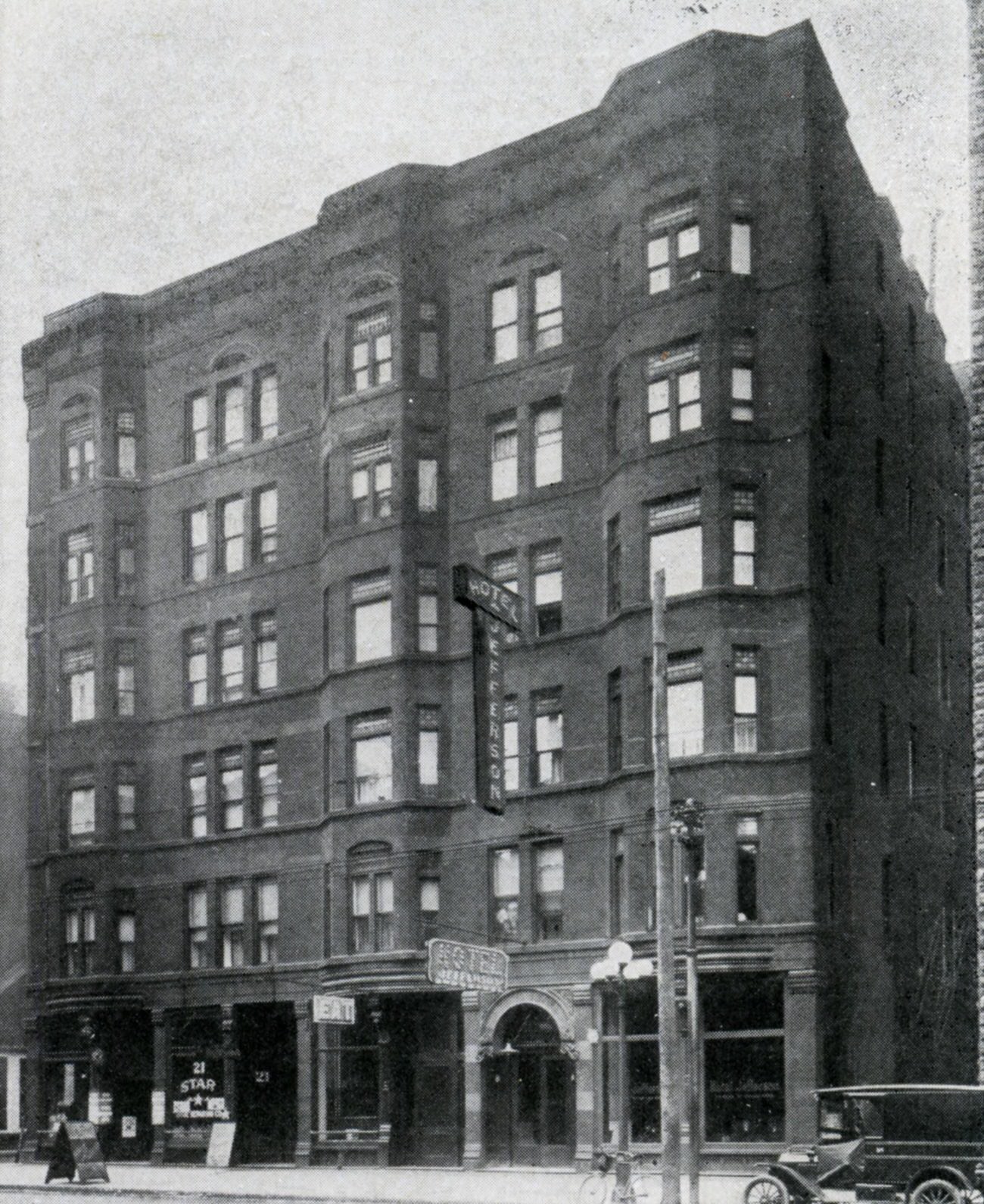
Hotel Jefferson, Spring and High Streets, 1916.
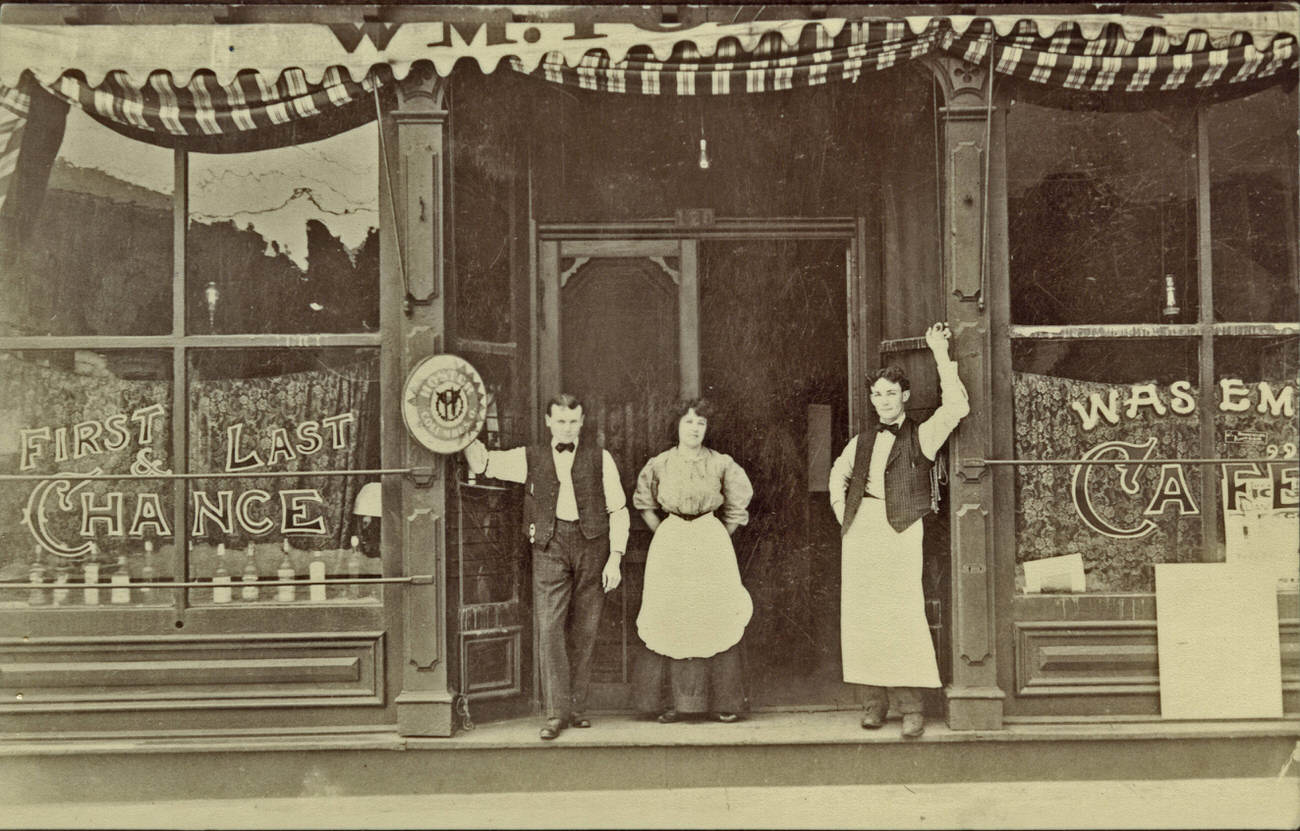
First and Last Chance Saloon, owned by Salvatore Presutti, 1916.
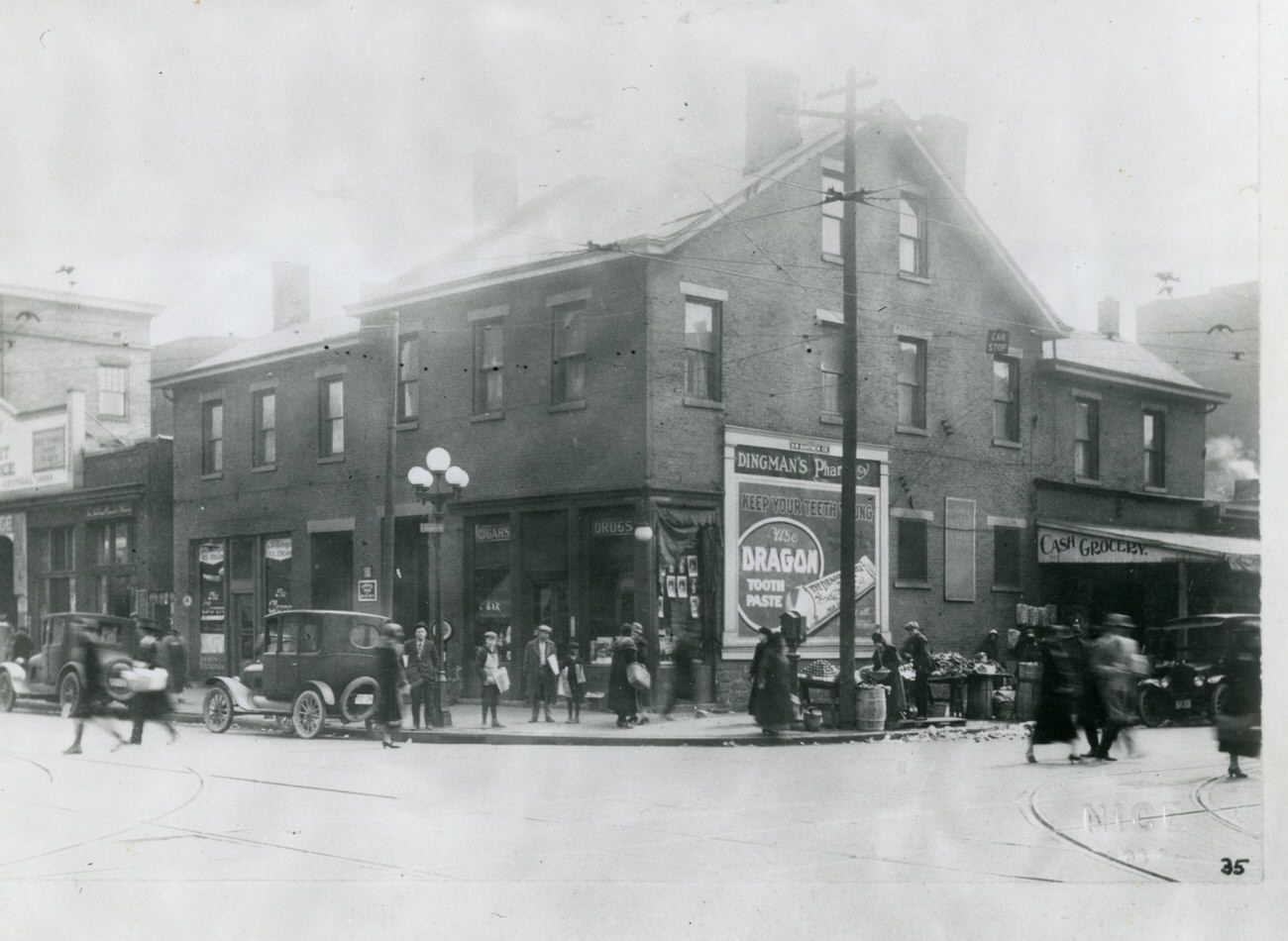
Harry Dingman Drug Store at 165 East State Street and Simon Josephson Fruits at 108 South 4th Street, 1910s
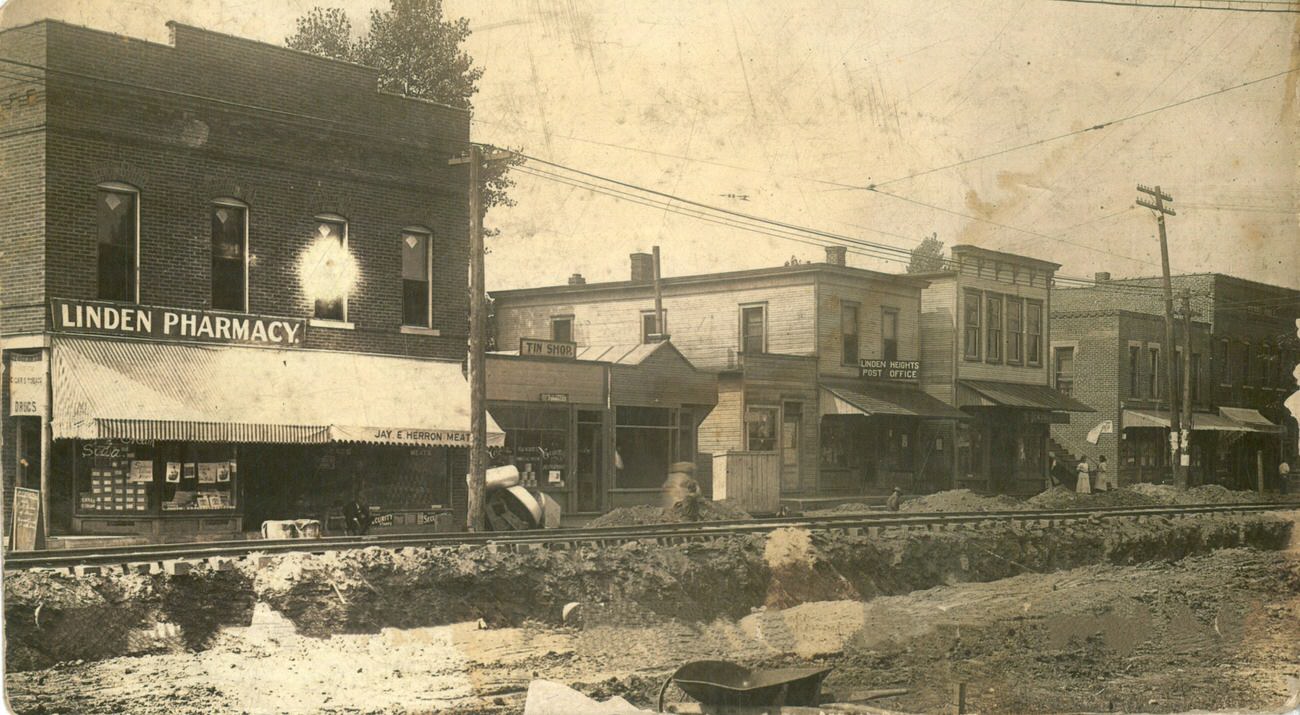
Linden Pharmacy and Linden Heights Post Office in Columbus, photograph dated 1915.
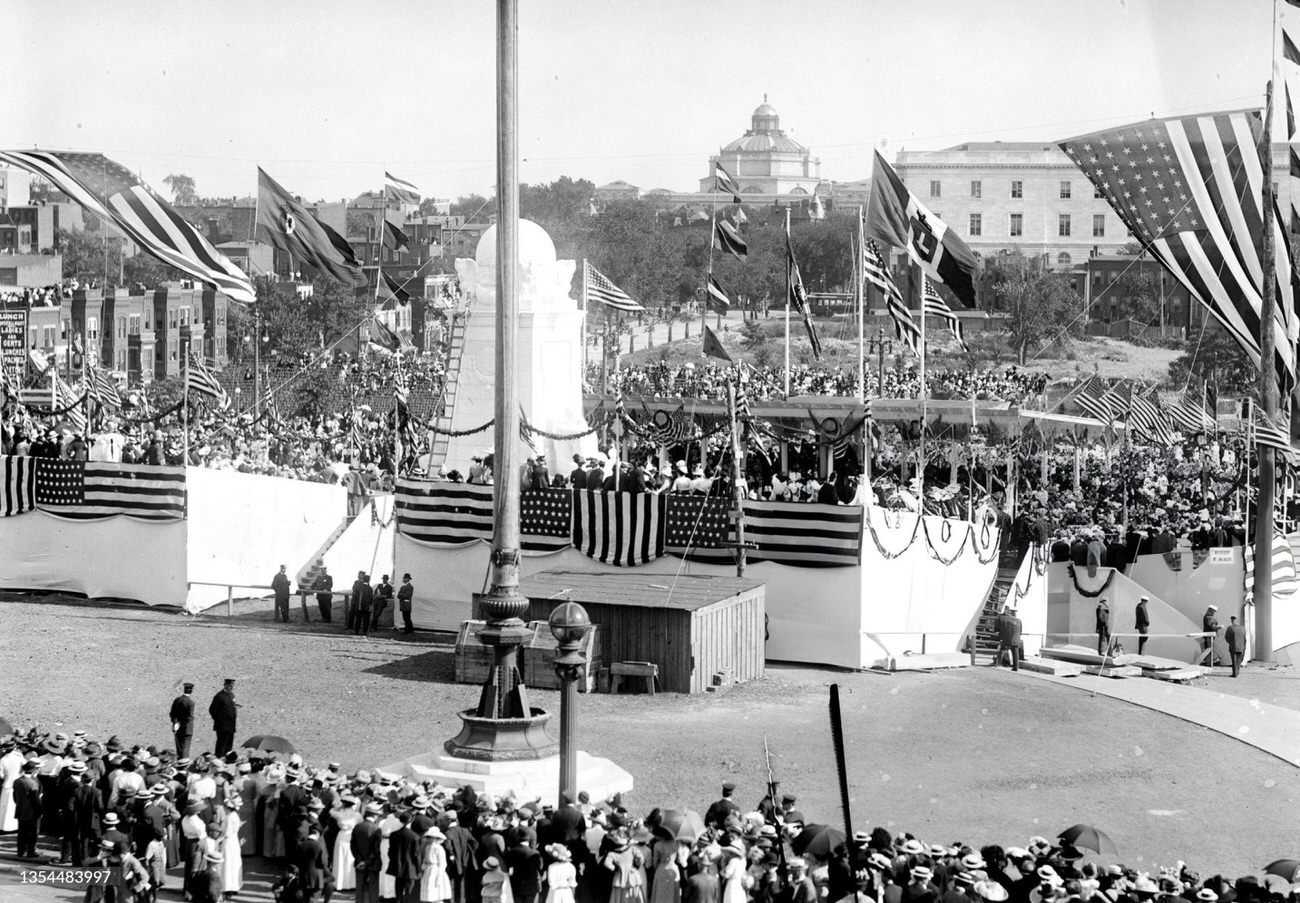
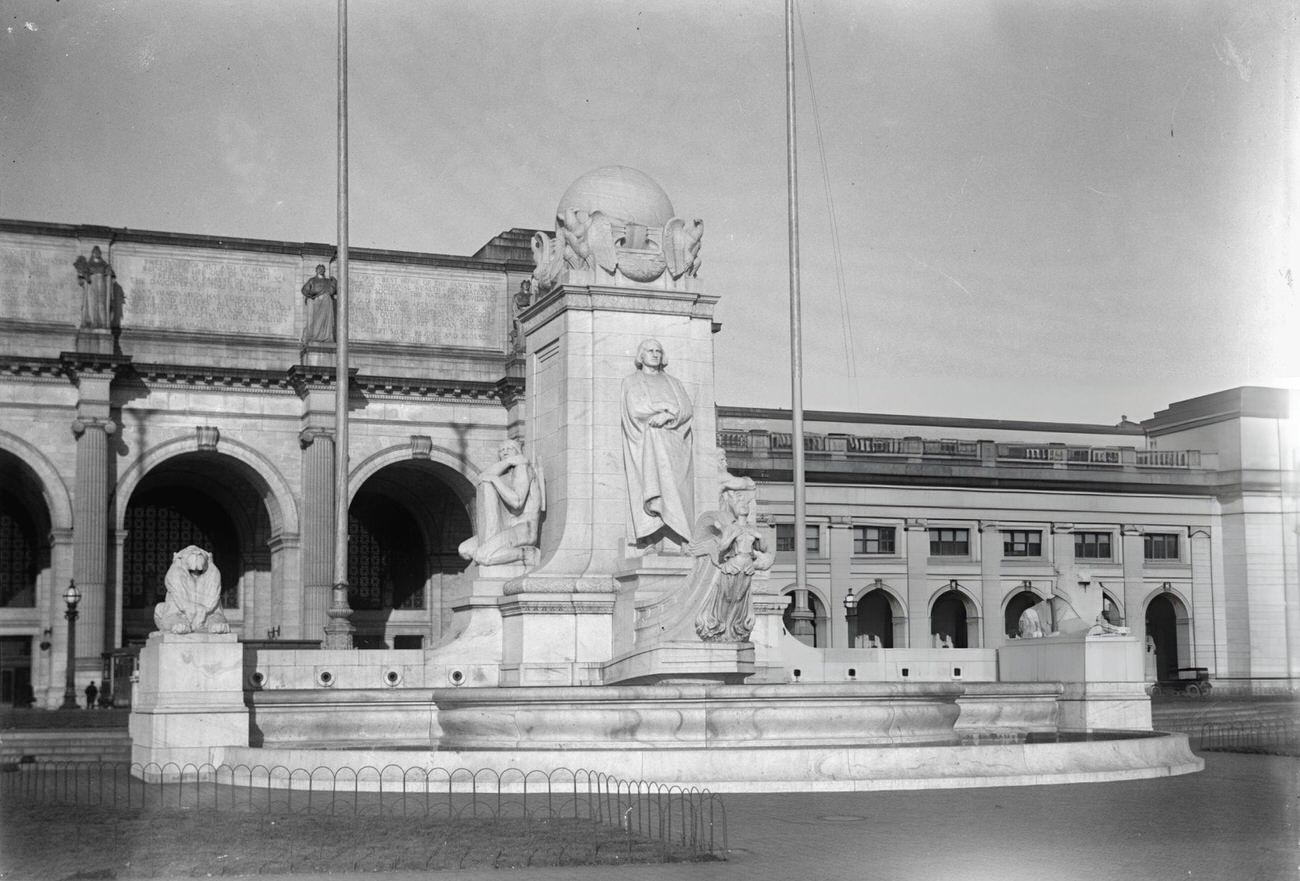
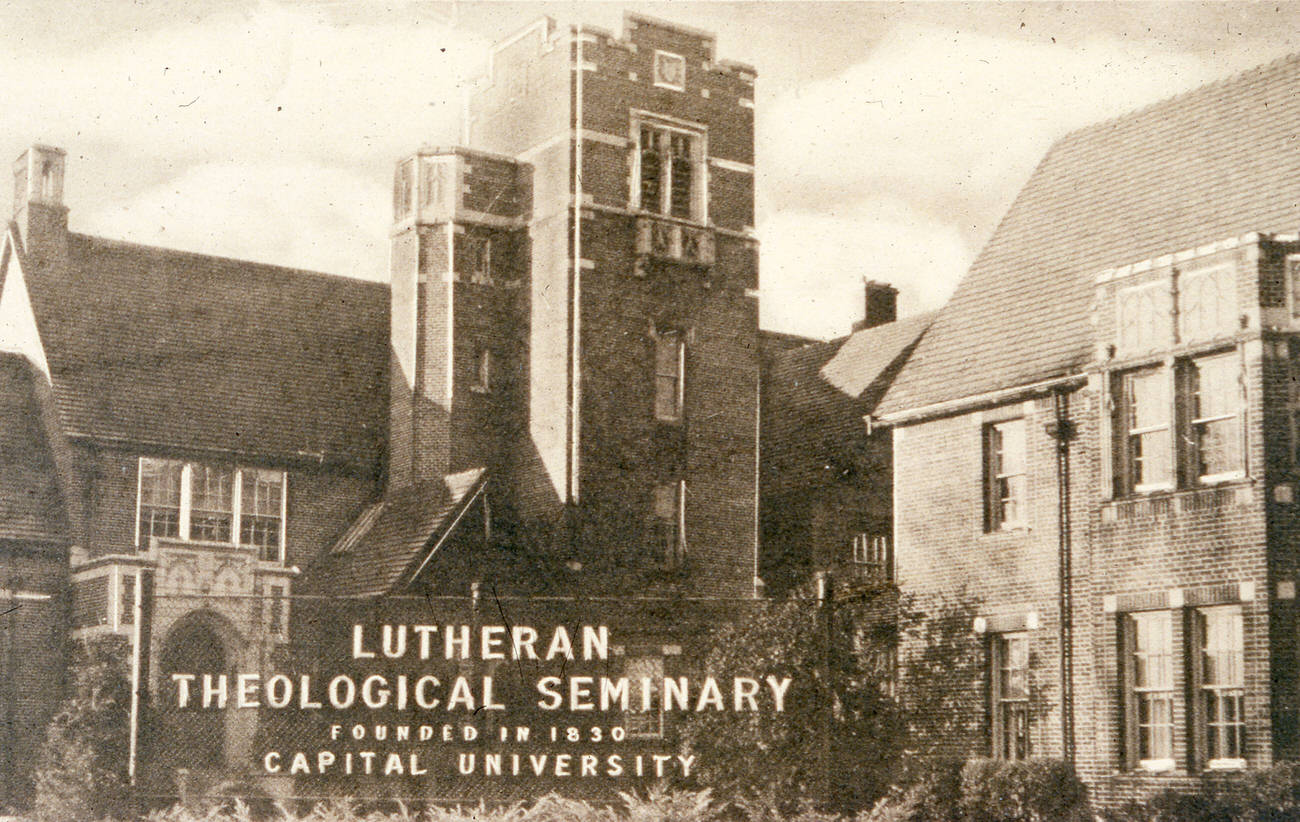
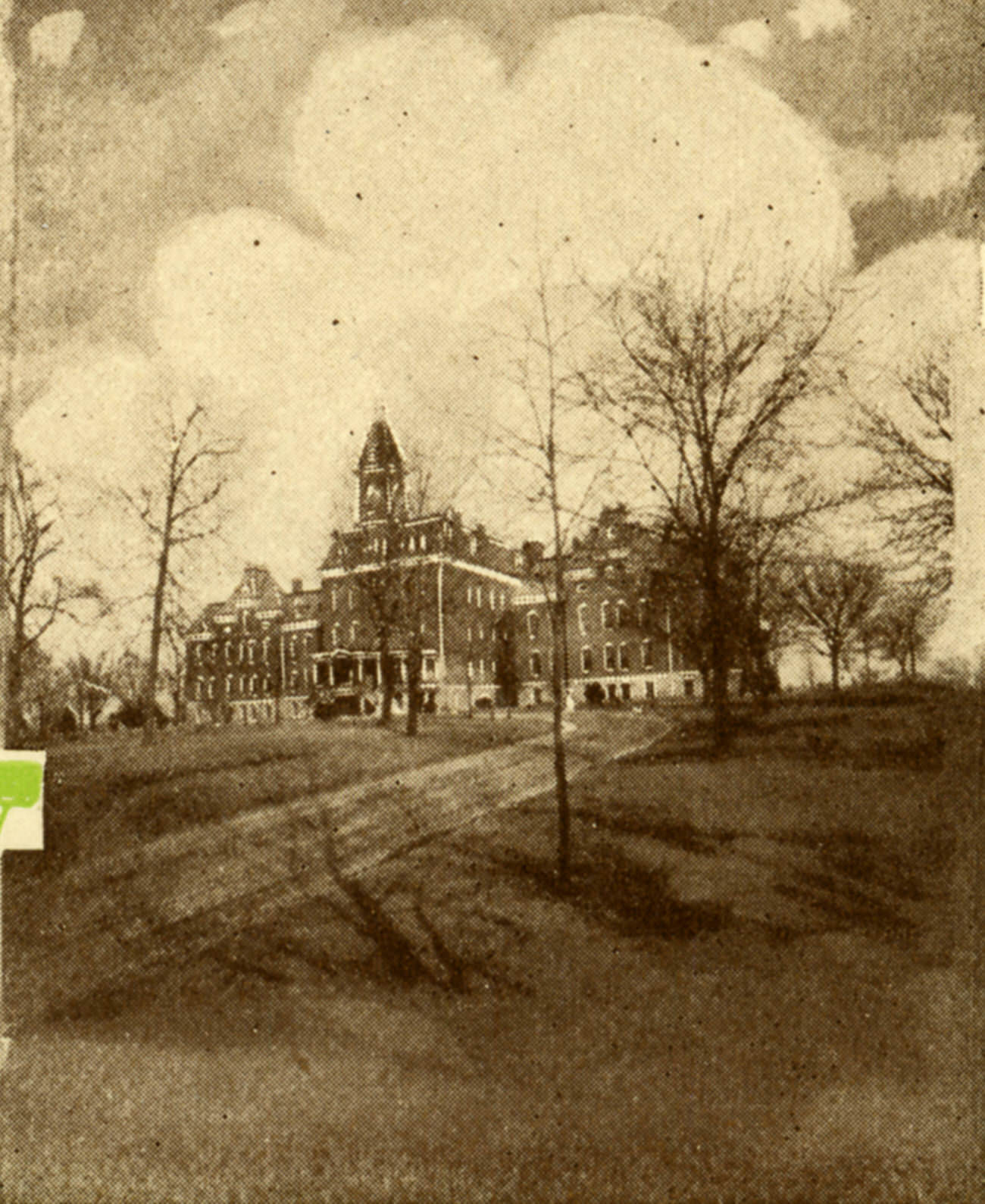
Civic landmarks continued to mark the city’s ambitions. The Columbus Mutual Life Insurance Company occupied the former mansion of Clinton DeWeese Firestone. The Columbus Memorial was unveiled in a public ceremony in 1912. Capital University maintained its own campus in the city’s east side. These photographs, taken together, show a decade of extraordinary intensity — a city tested by flood and war, yet continuously building.
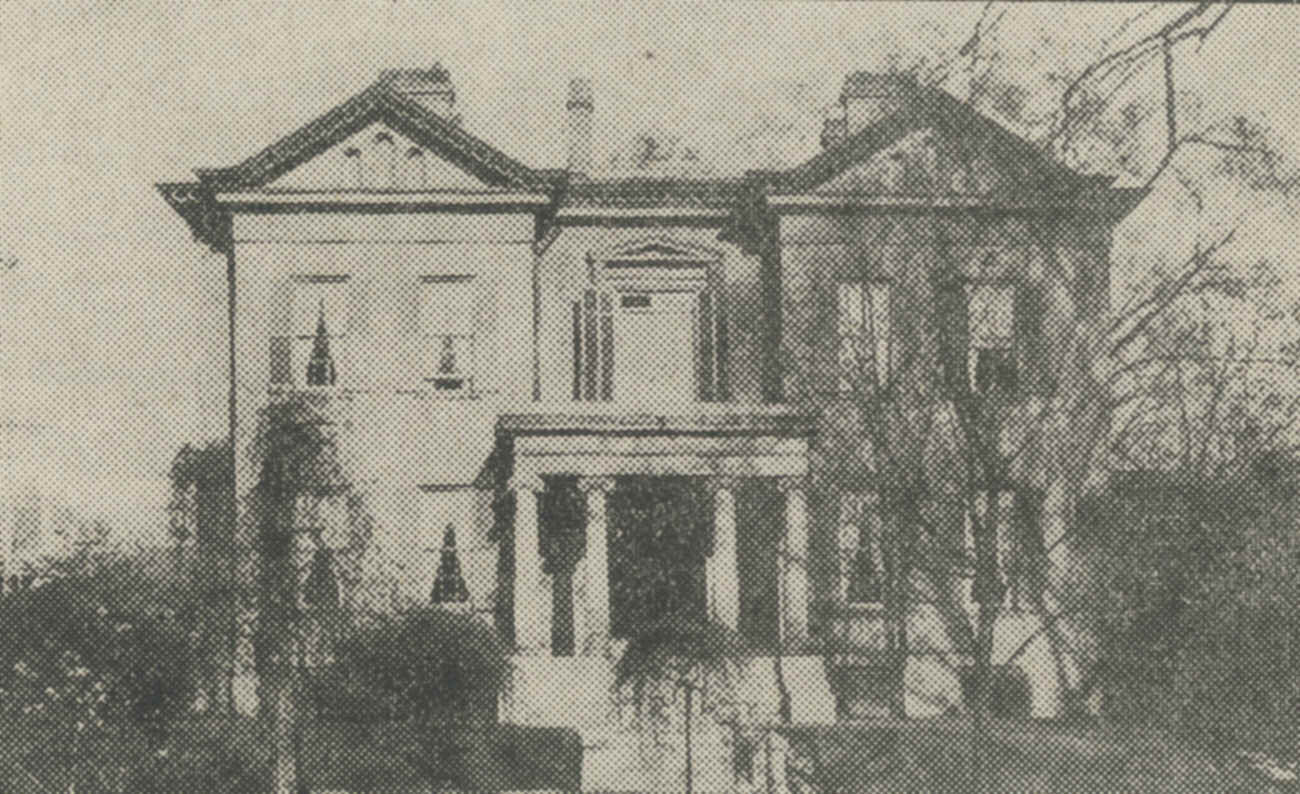
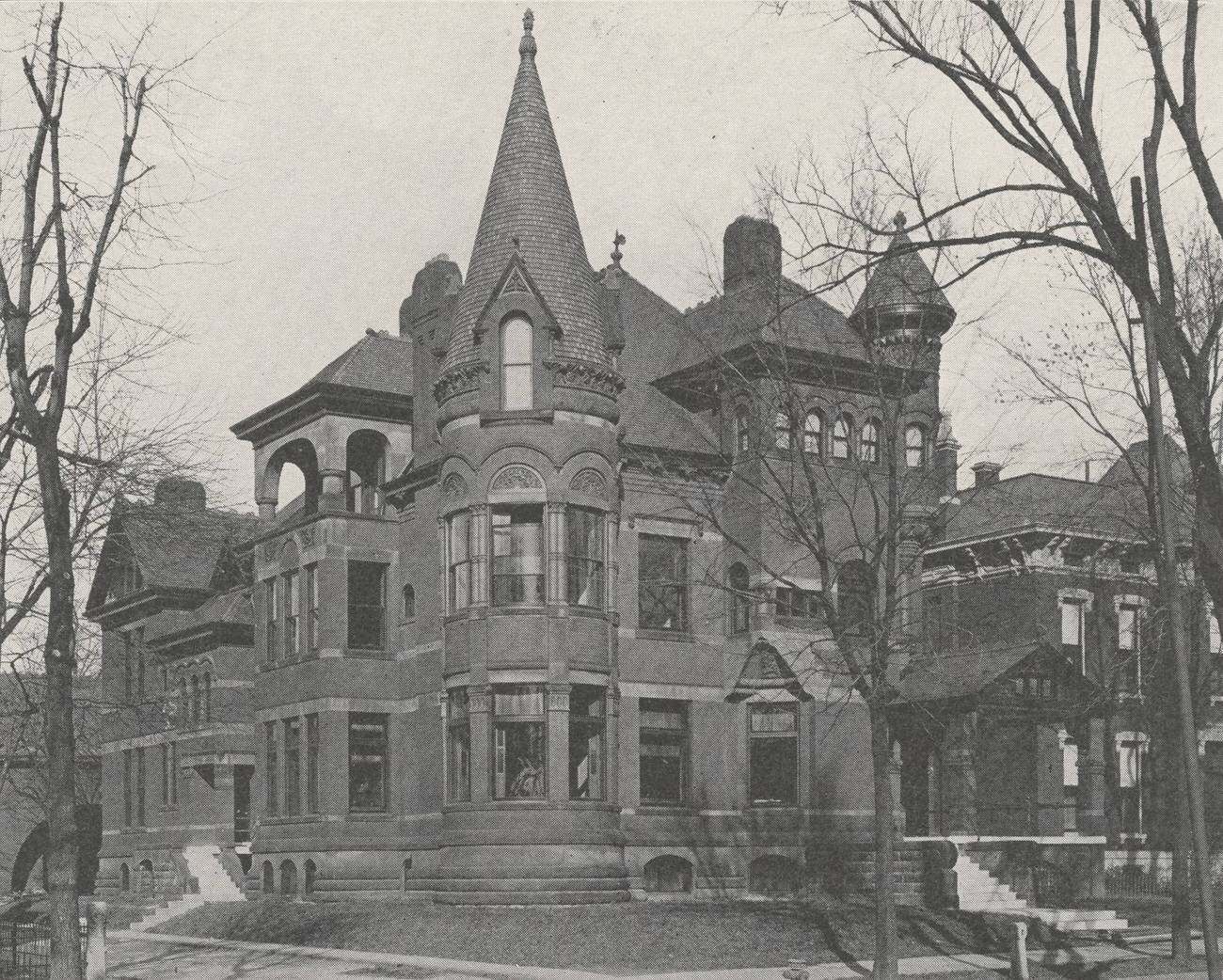
Photograph of the Columbus Mutual Life Insurance Company’s building, previously Clinton DeWeese Firestone’s mansion, 1915.
Columbus Memorial Unveiling ceremony, 1912
Columbus Monument, 1918
Buildings on the Capital University campus, 1910s
Franklin County Children’s Home, built in 1880 and demolished in 1955, Circa 1915.
William McKinley’s Monument, Capitol Grounds, Columbus, 1910
North view from Gay Street on North High Street, Columbus, 1913.
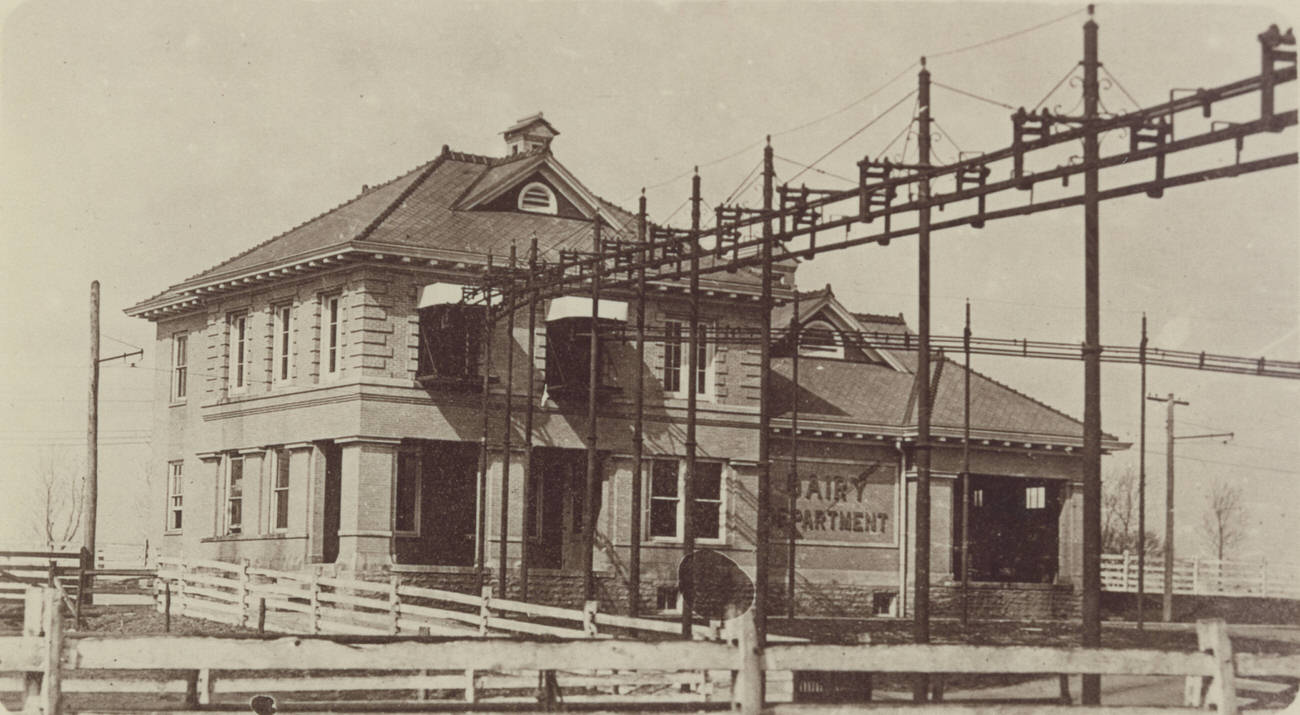
Dairy Department building at Hartman Stock Farm, photograph, 1911.
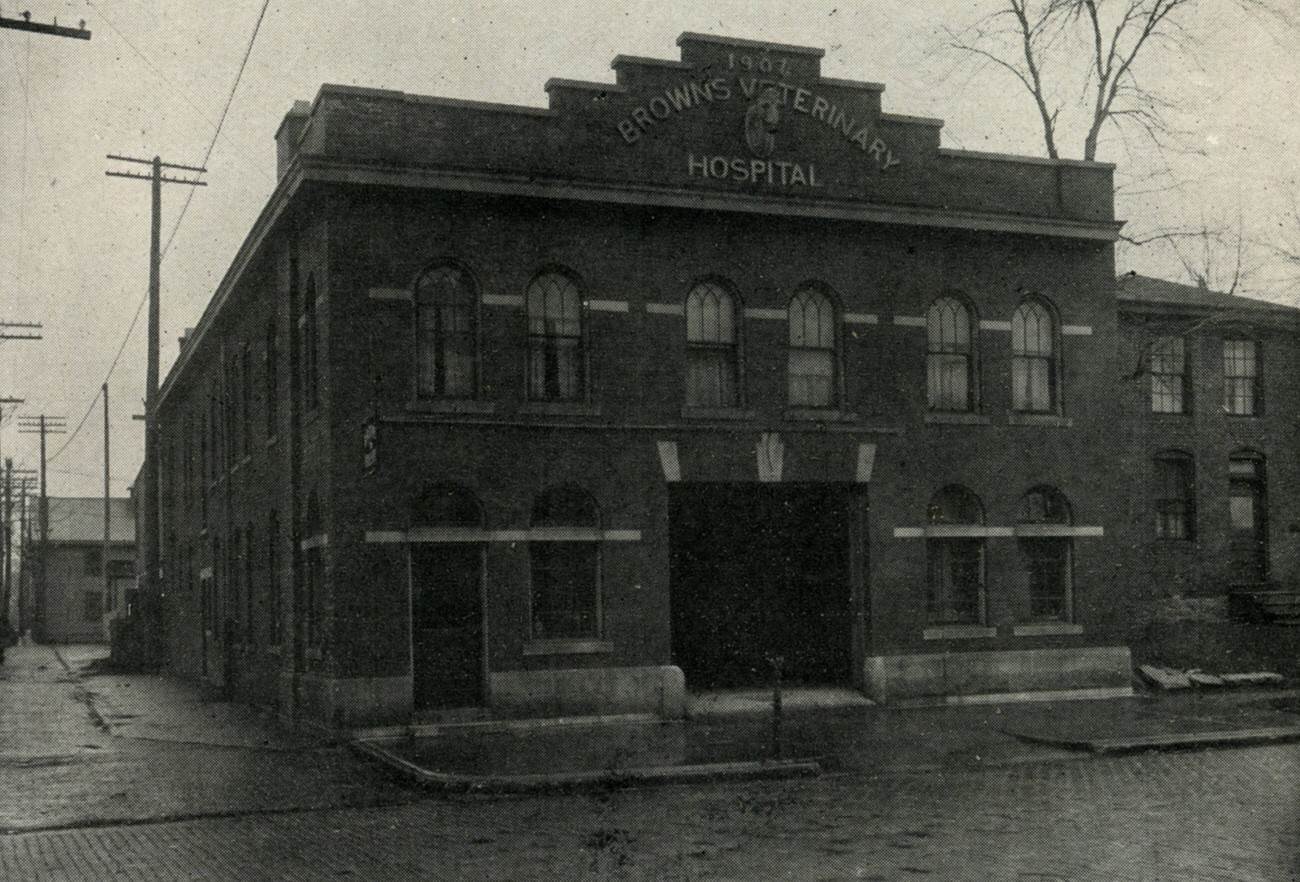
Brown Veterinary Hospital building, run by Walter A. Brown, veterinary surgeon, 1913.
High Street North at Doherty, 1910.
Aerial view of the intersection of Broad and High Streets, 1916.
Kevin Clark is a historian and writer who is passionate about sharing the stories and significance behind historical photos. He loves to explore hidden histories and cultural contexts behind the images, providing a unique insight into the past.