In 1966, Mao Zedong launched the Cultural Revolution — a sweeping political campaign designed to tear out what he saw as capitalist and traditional influences from Chinese society. Mao called on the country’s youth to be the engine of this transformation. Radical student groups known as the Red Guards answered that call with force. They marched through cities, destroyed cultural heritage sites, and violently targeted teachers, intellectuals, and anyone deemed an obstacle to the revolution.
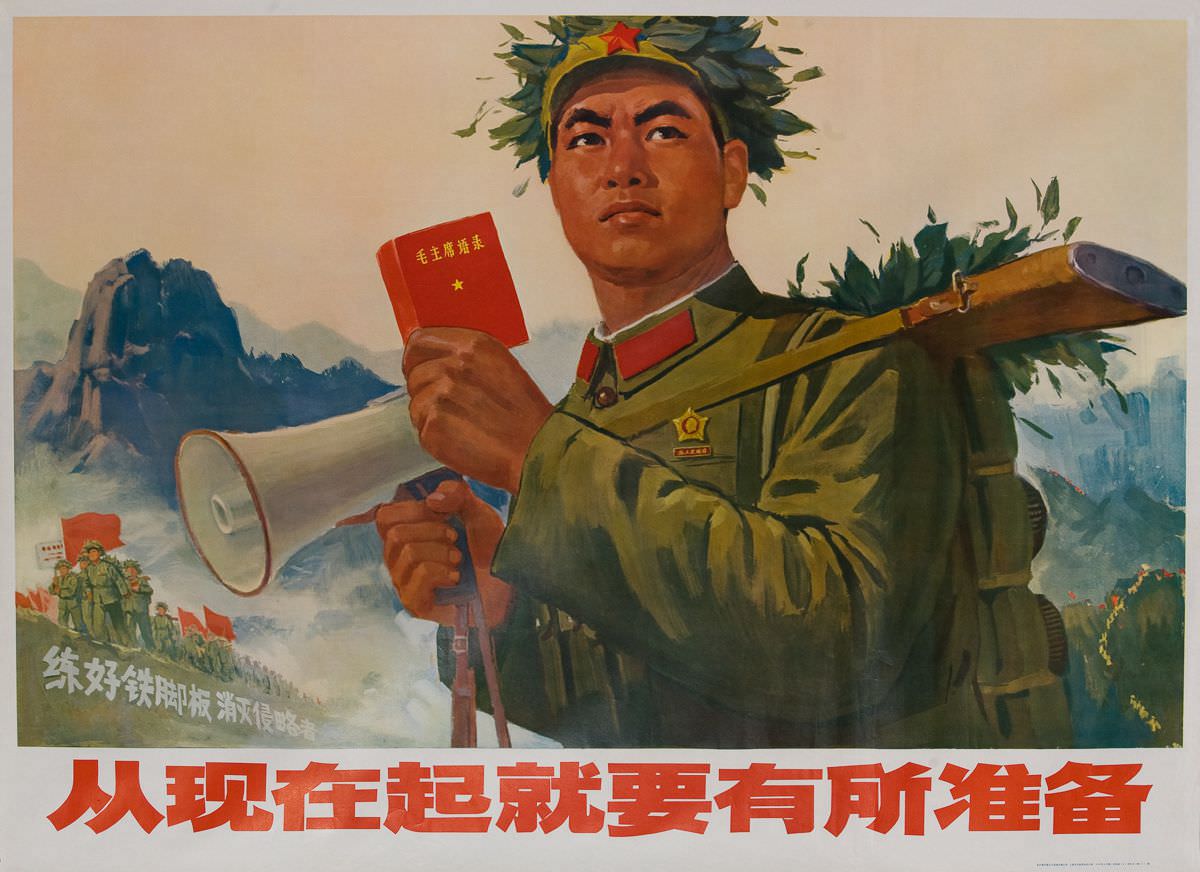
Art became one of the most powerful tools of this movement. The government printed propaganda posters in massive quantities and distributed them across the entire country. These weren’t quiet, subtle images. They were bold, brightly colored, and packed with purpose — designed to push citizens toward agriculture, industrial work, national defense, hygiene, and family planning. Revolutionary slogans ran alongside the images, turning everyday walls and public spaces into political messages.
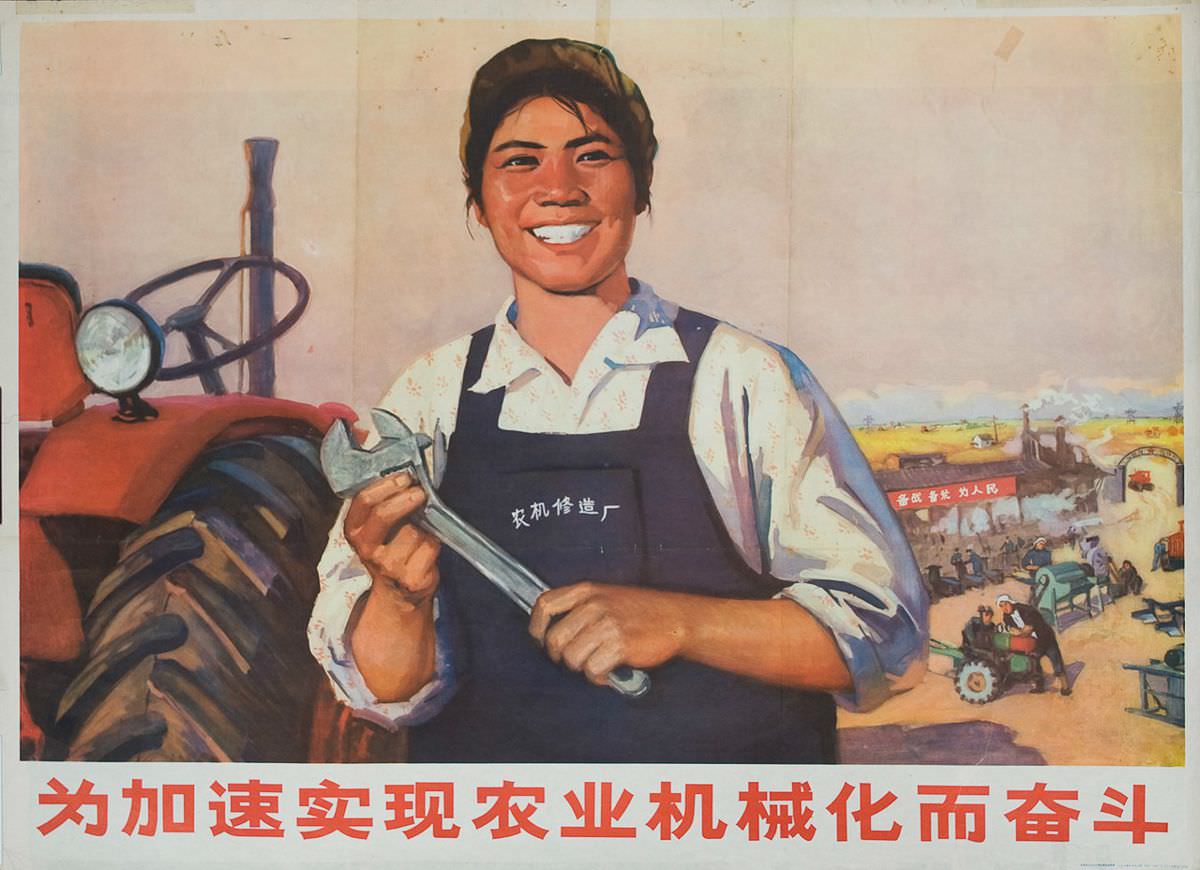
Many of these posters were first painted by hand, then reproduced as lithographs — a printing process that uses stone, oil, and chemicals to transfer an image onto paper at scale. This method allowed the government to produce thousands of copies from a single original. The result was a flood of nearly identical images appearing in factories, schools, communes, and public squares from one end of China to the other.
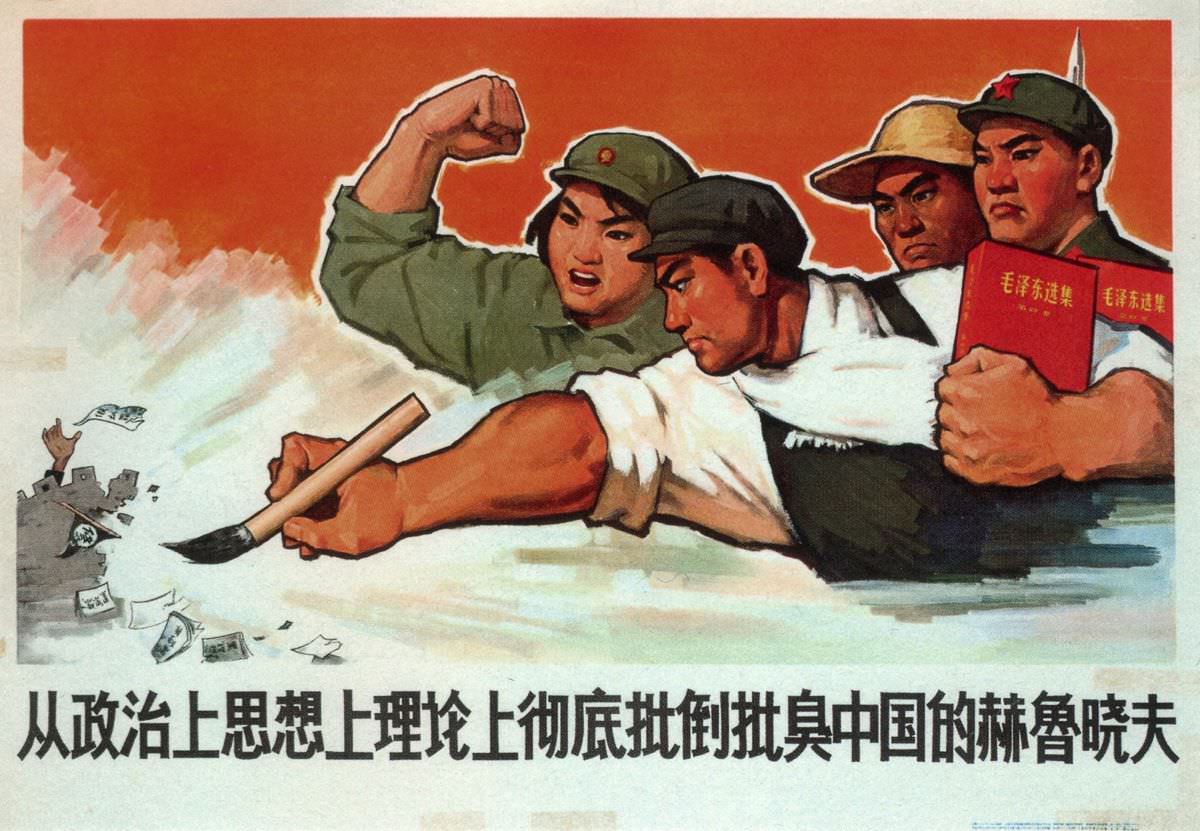
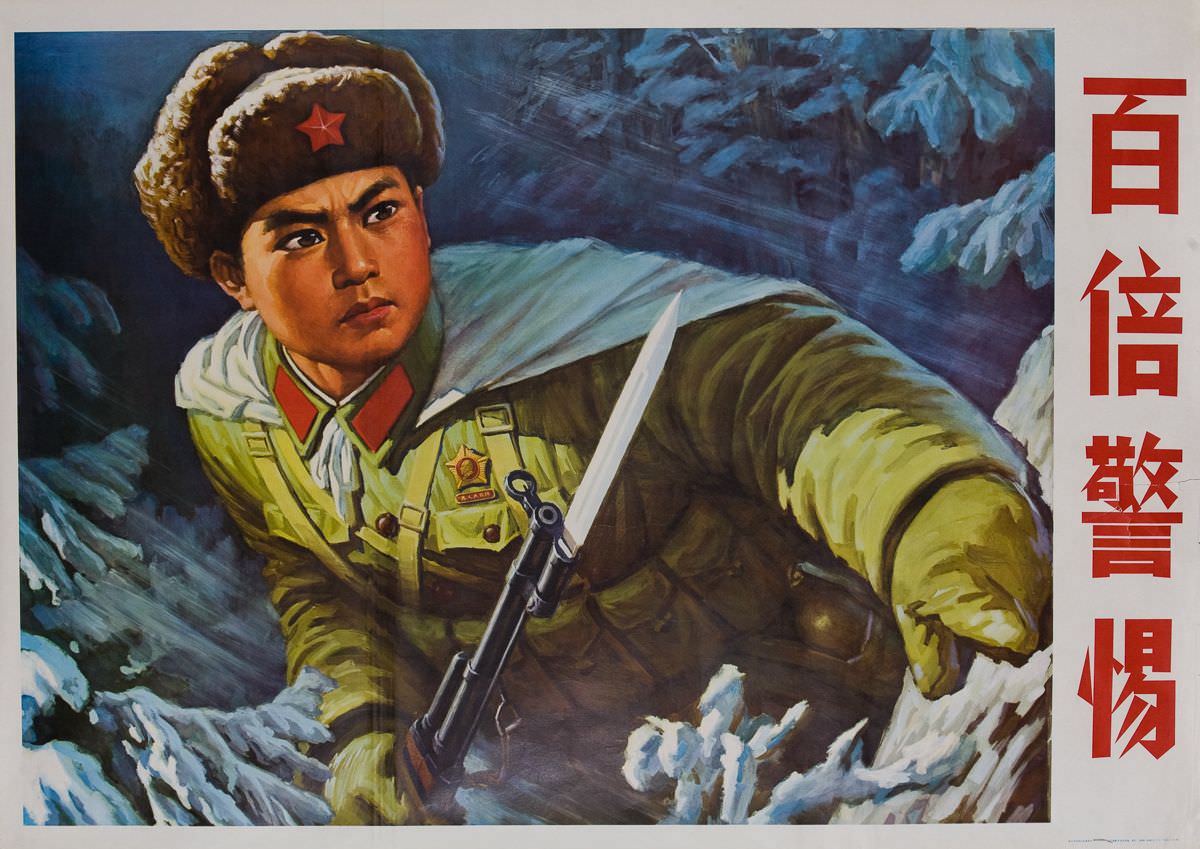
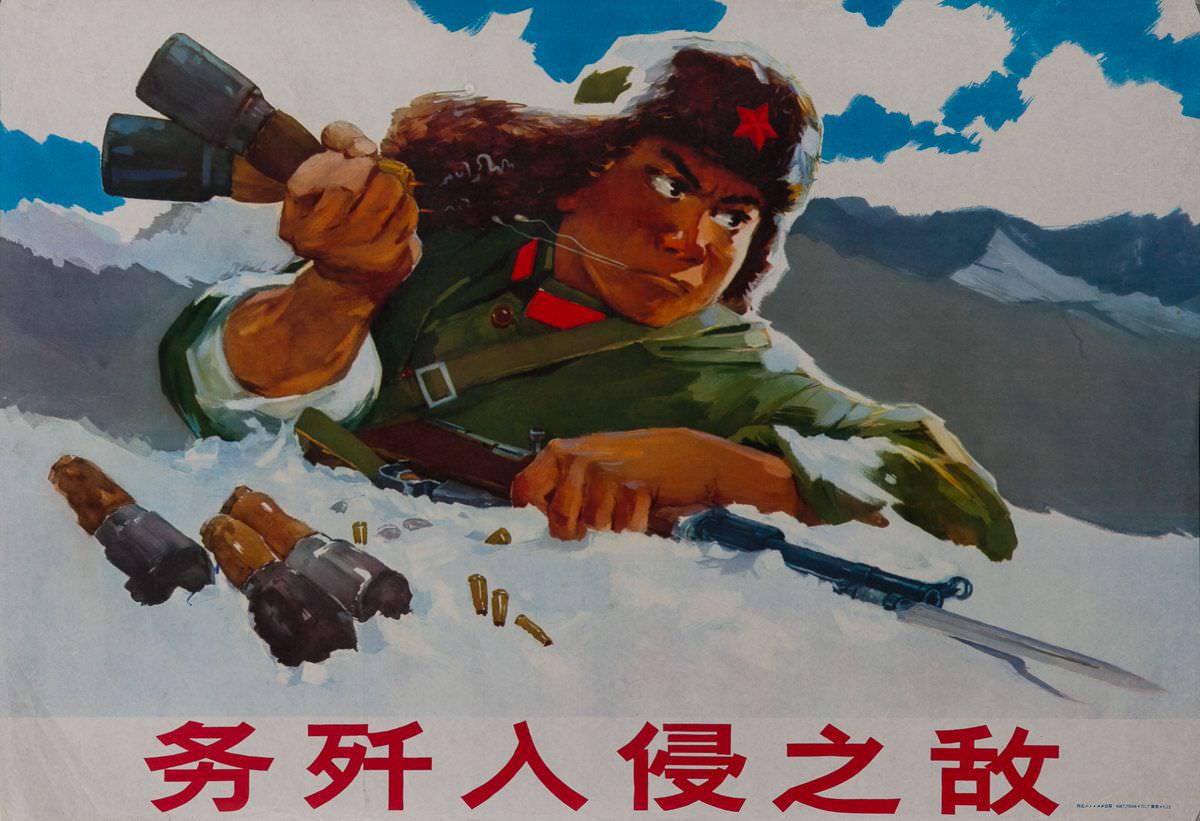
The posters covered an enormous range of subjects, but they all pointed back to one central idea: total commitment to the socialist state. Production quotas, military readiness, and ideological purity were recurring themes. Workers, soldiers, and farmers were shown as heroic figures — strong, confident, and united under the banner of Mao Zedong Thought.
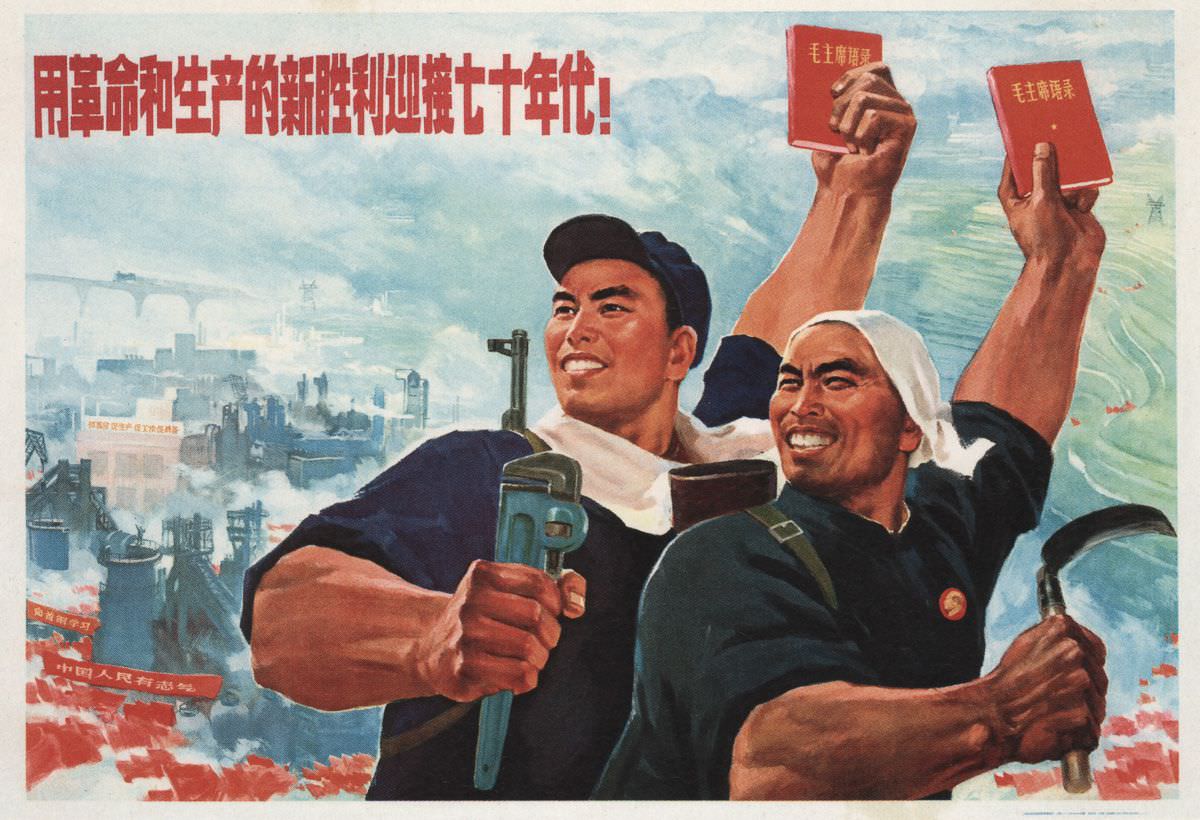
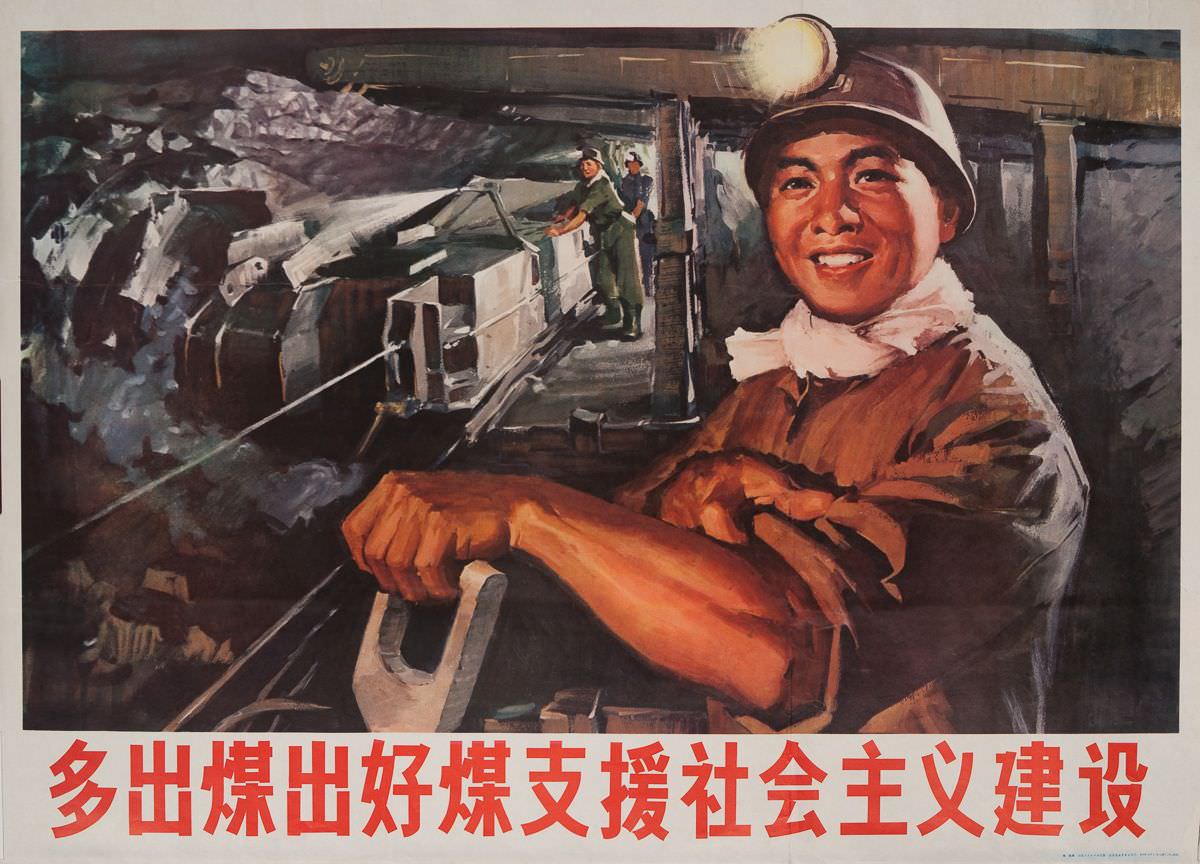
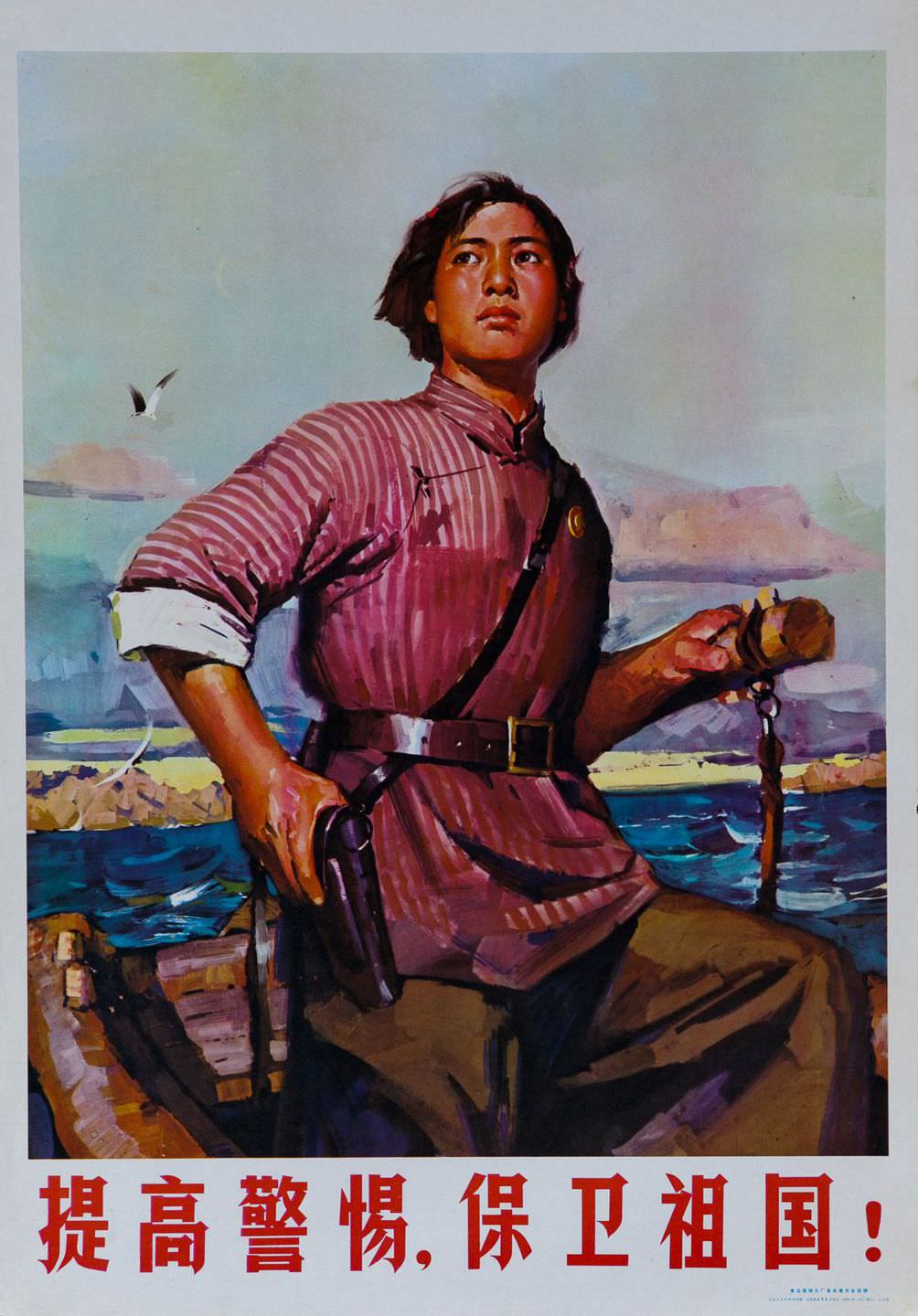
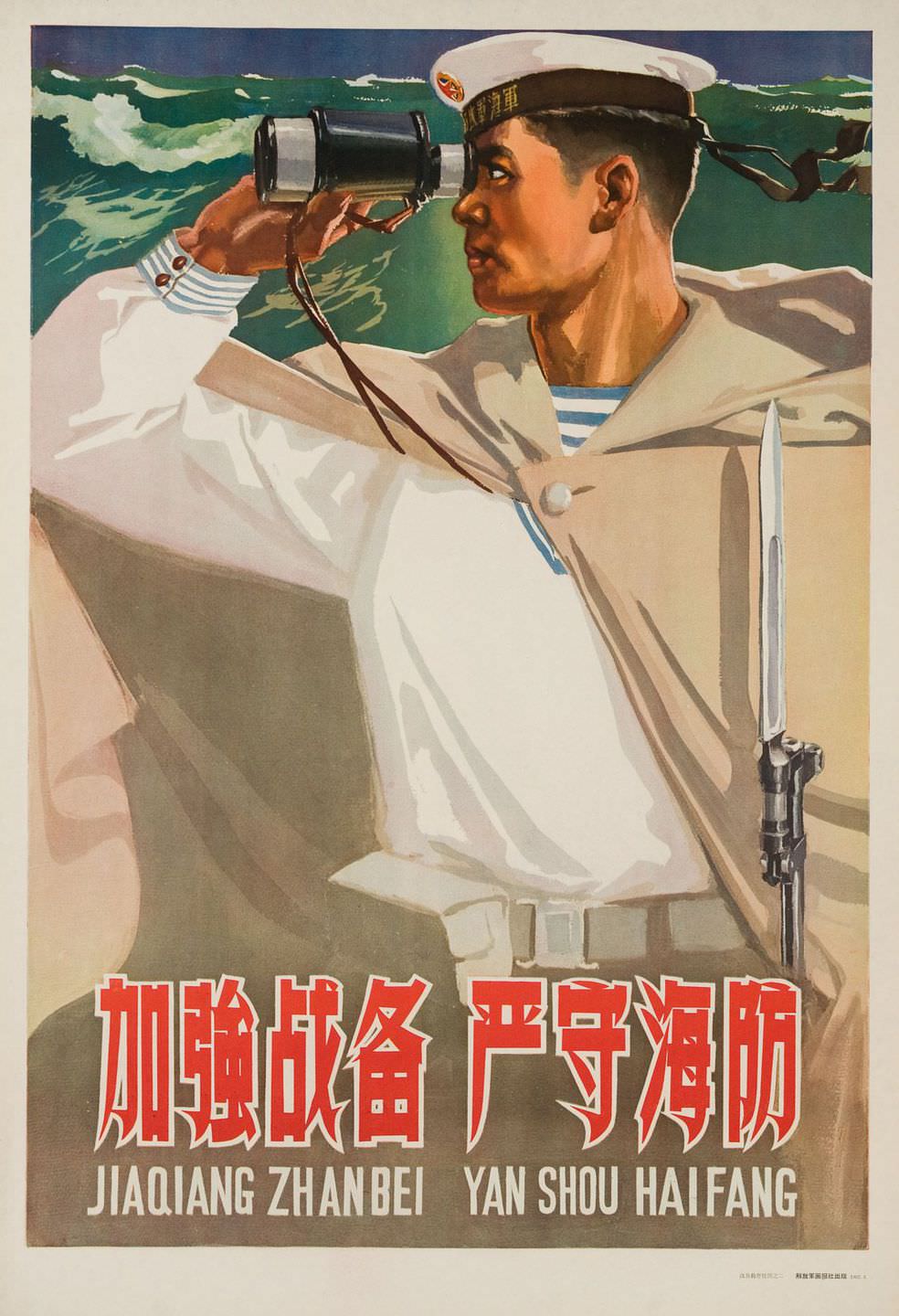
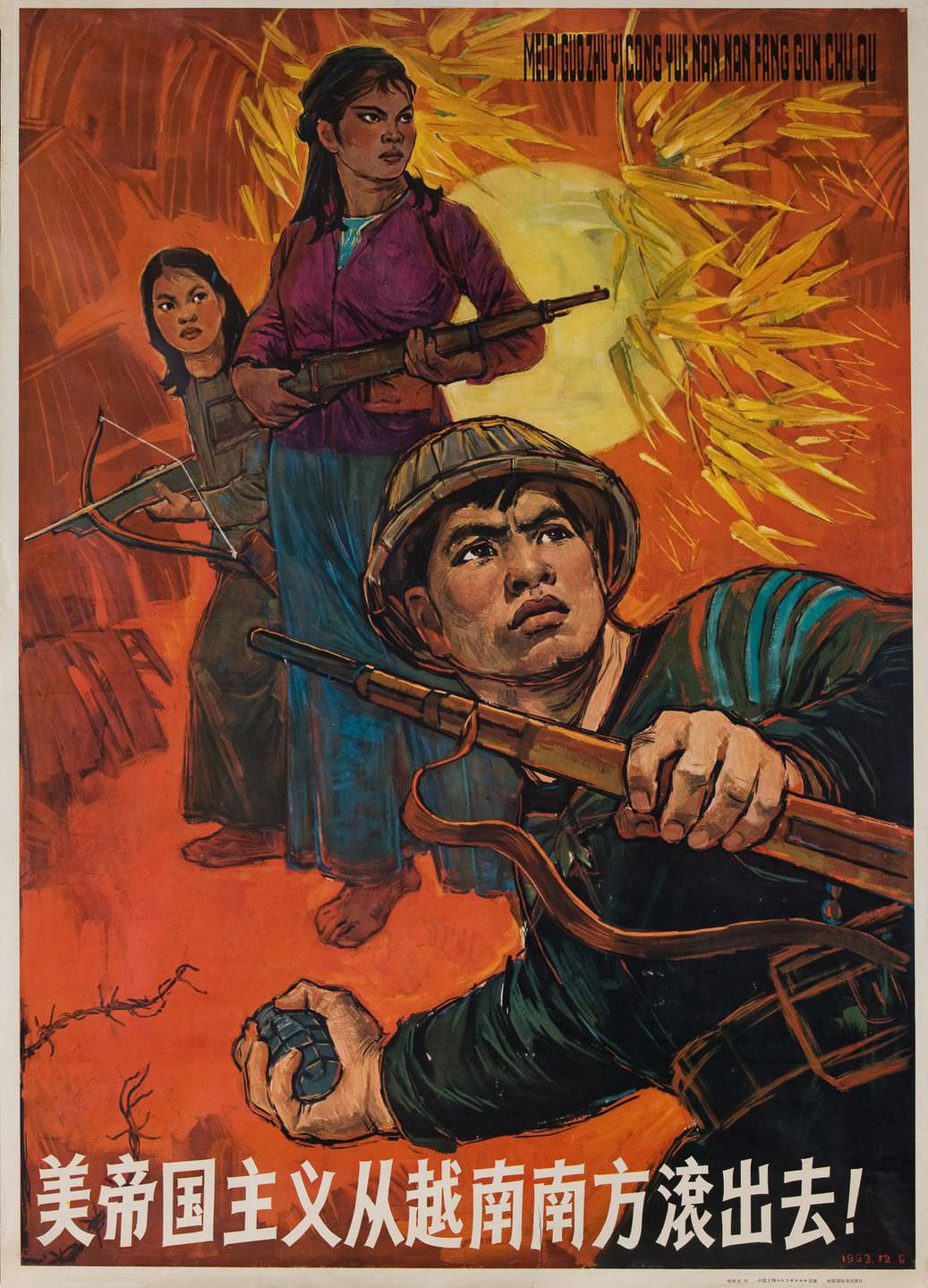
Military themes were especially prominent. Posters called on citizens to train relentlessly, defend the coastline, and remain on constant alert against foreign enemies. The United States and the Soviet Union were both depicted as threats. Anti-imperialist slogans ran alongside images of soldiers and weapons, reinforcing the idea that China was always on the edge of conflict.
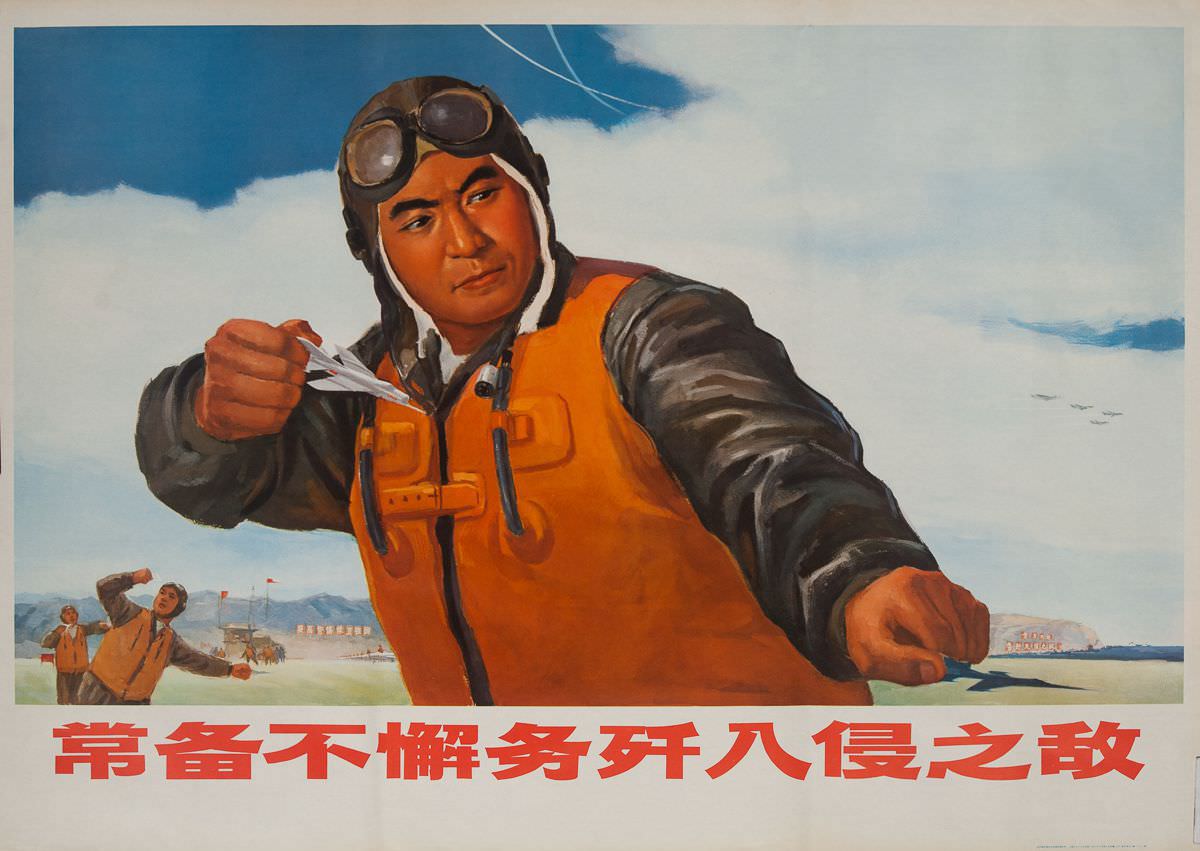
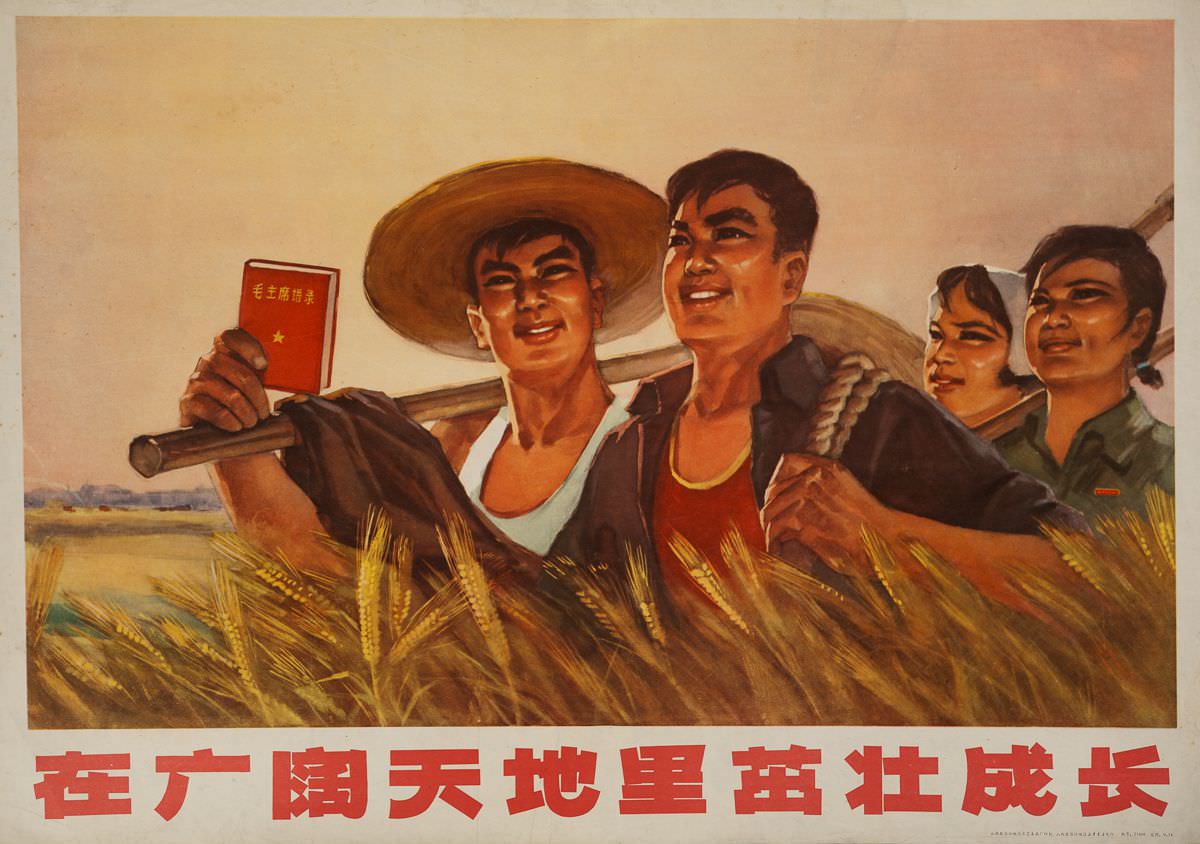
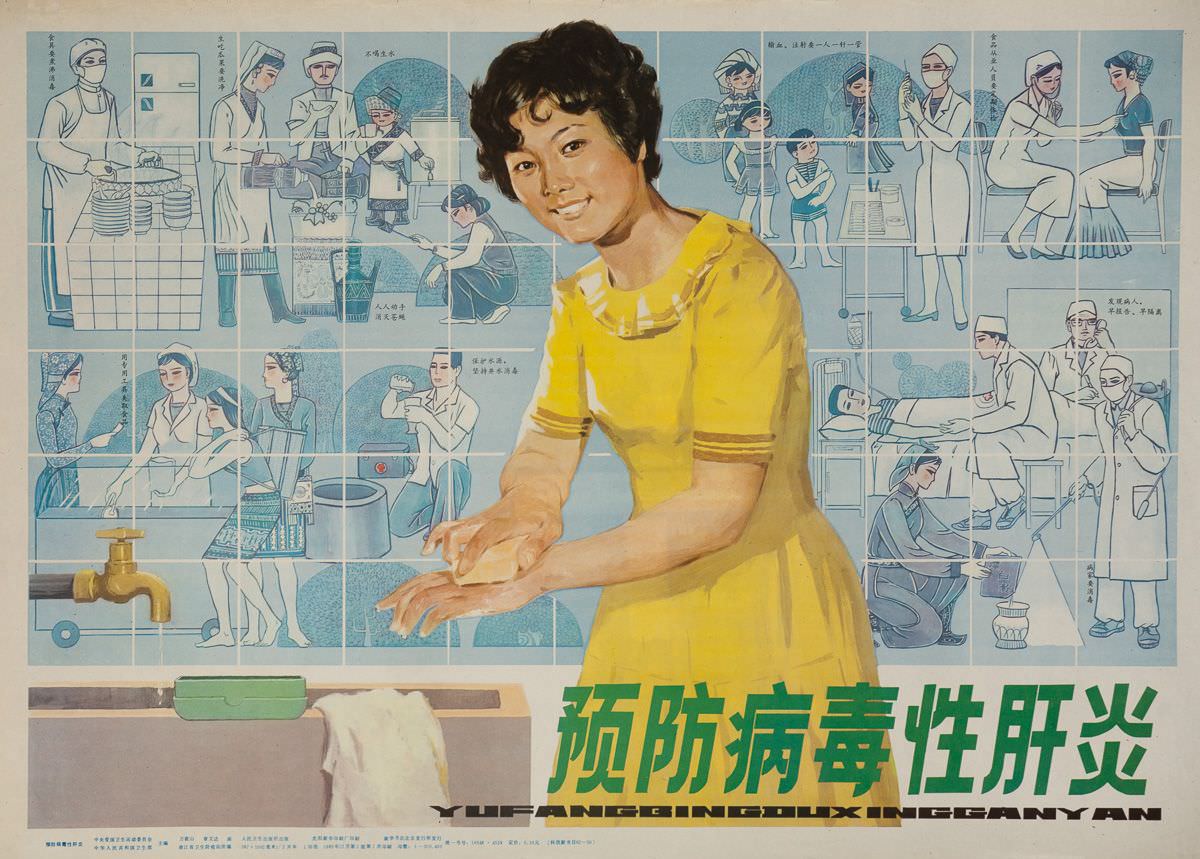
Not all posters focused on warfare or heavy industry. Environmental and public health messages were woven into the campaign as well. Forests, clean water, and proper hygiene were presented as patriotic concerns — caring for your body and the land was framed as a duty to the nation.
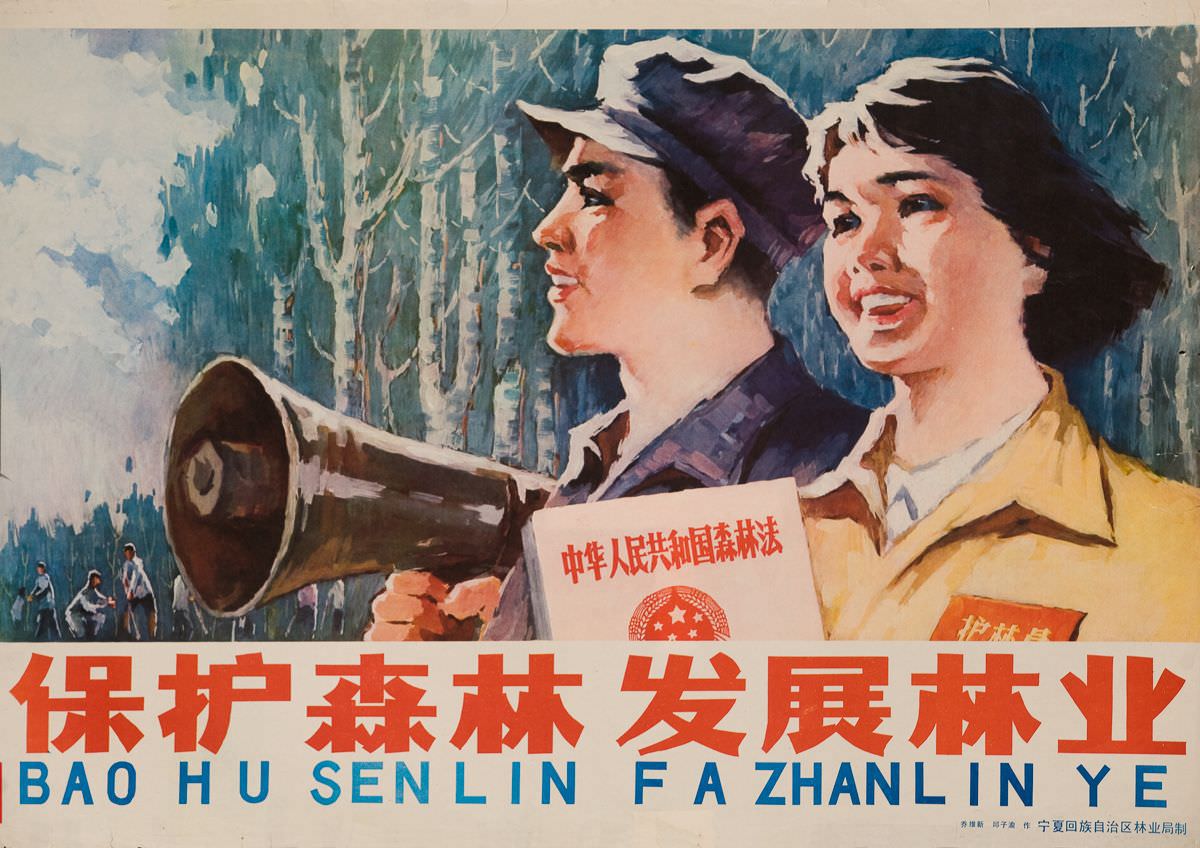
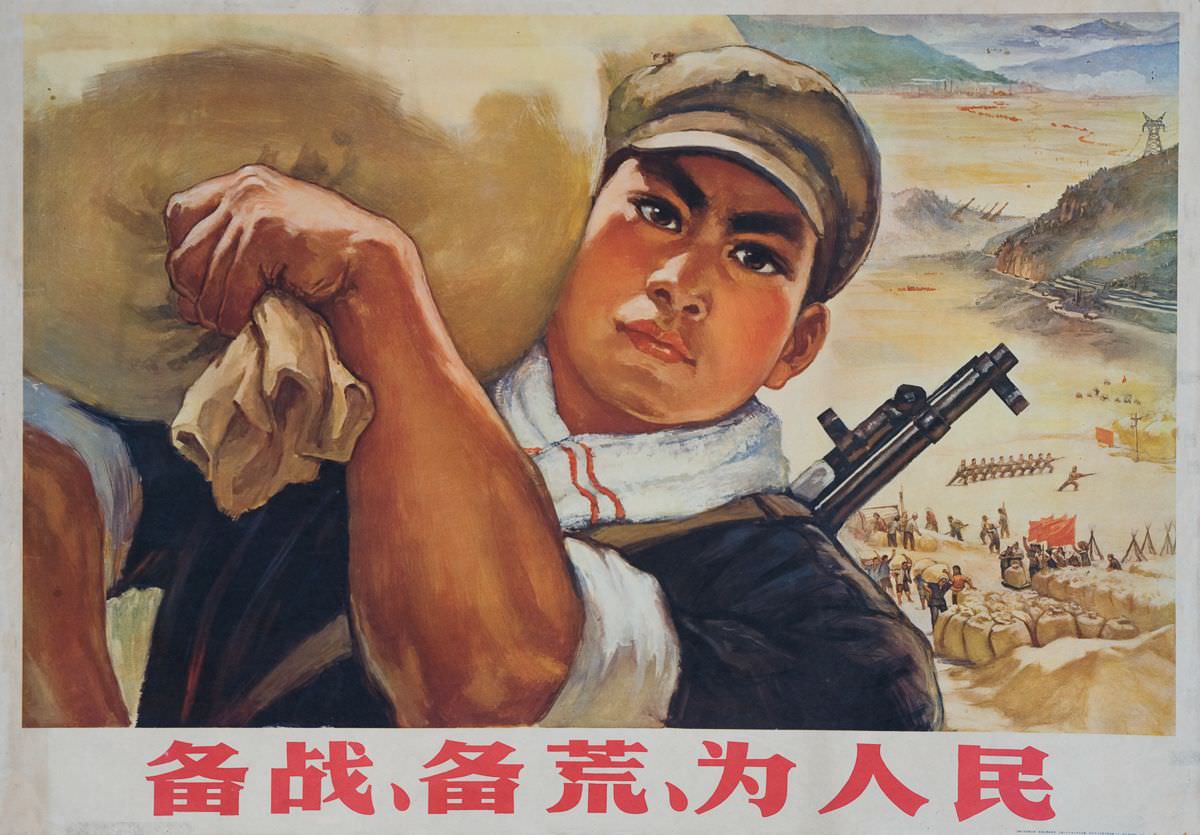
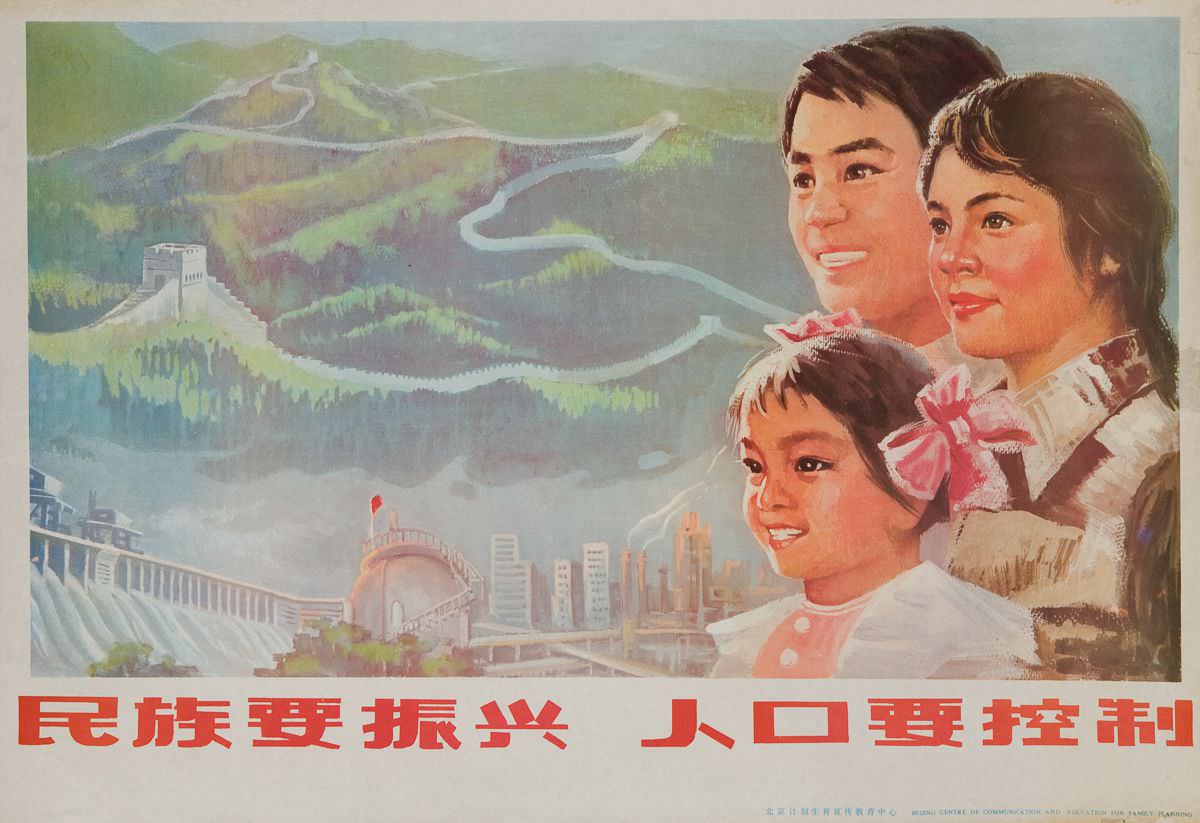
Population control became a serious government priority during this era, and posters promoted it directly. Family planning was tied to national prosperity — smaller families meant more resources, stronger communities, and a faster path to socialist progress. The message was blunt and unambiguous.
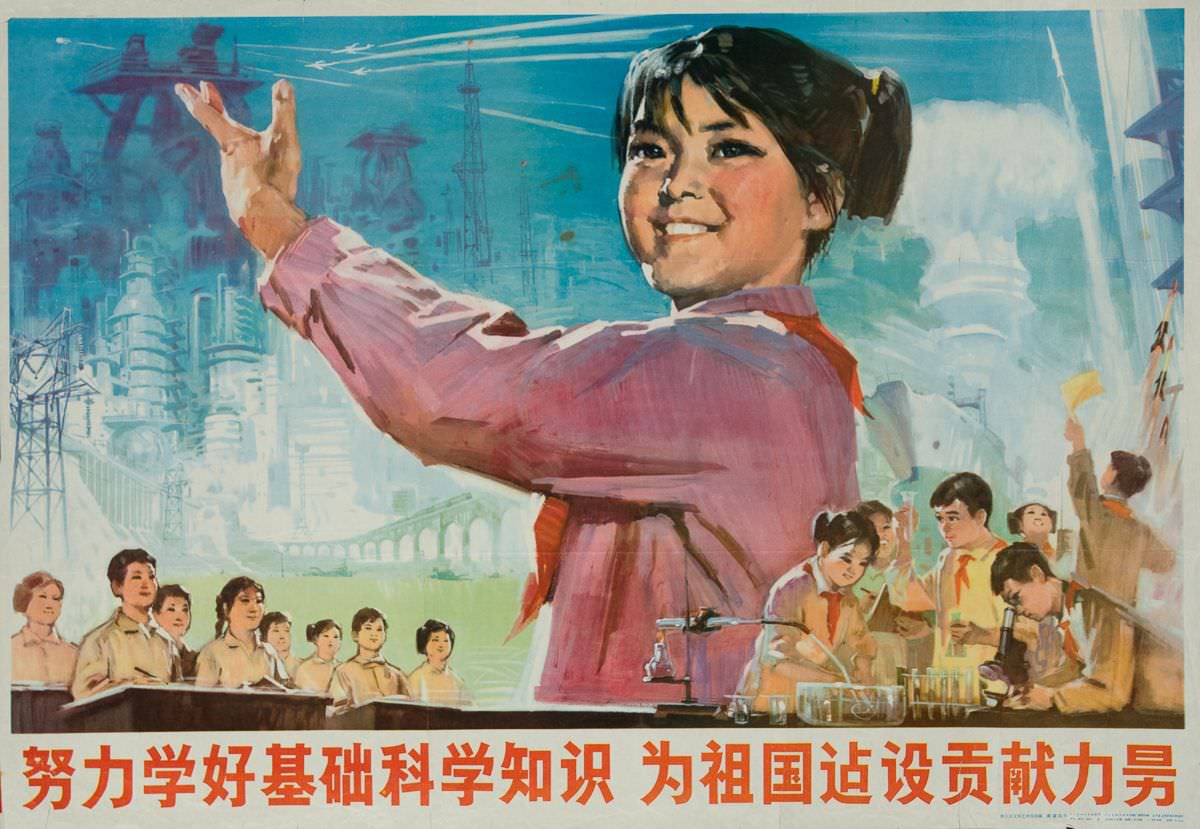
Education and science also appeared as poster subjects. The government pushed citizens to pursue knowledge in service of the state — not for personal gain, but to build China’s industrial and technological capacity. These posters targeted young people in particular, urging students to dedicate their skills to the collective good.
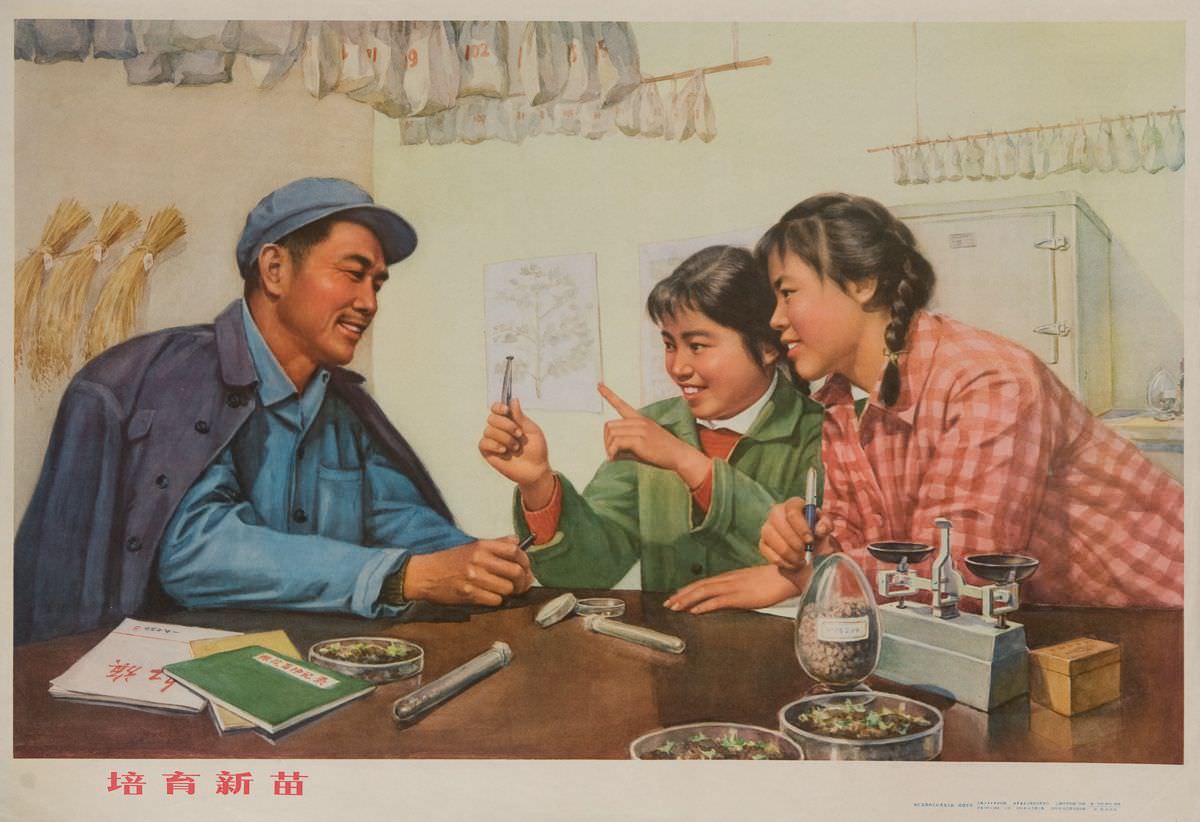
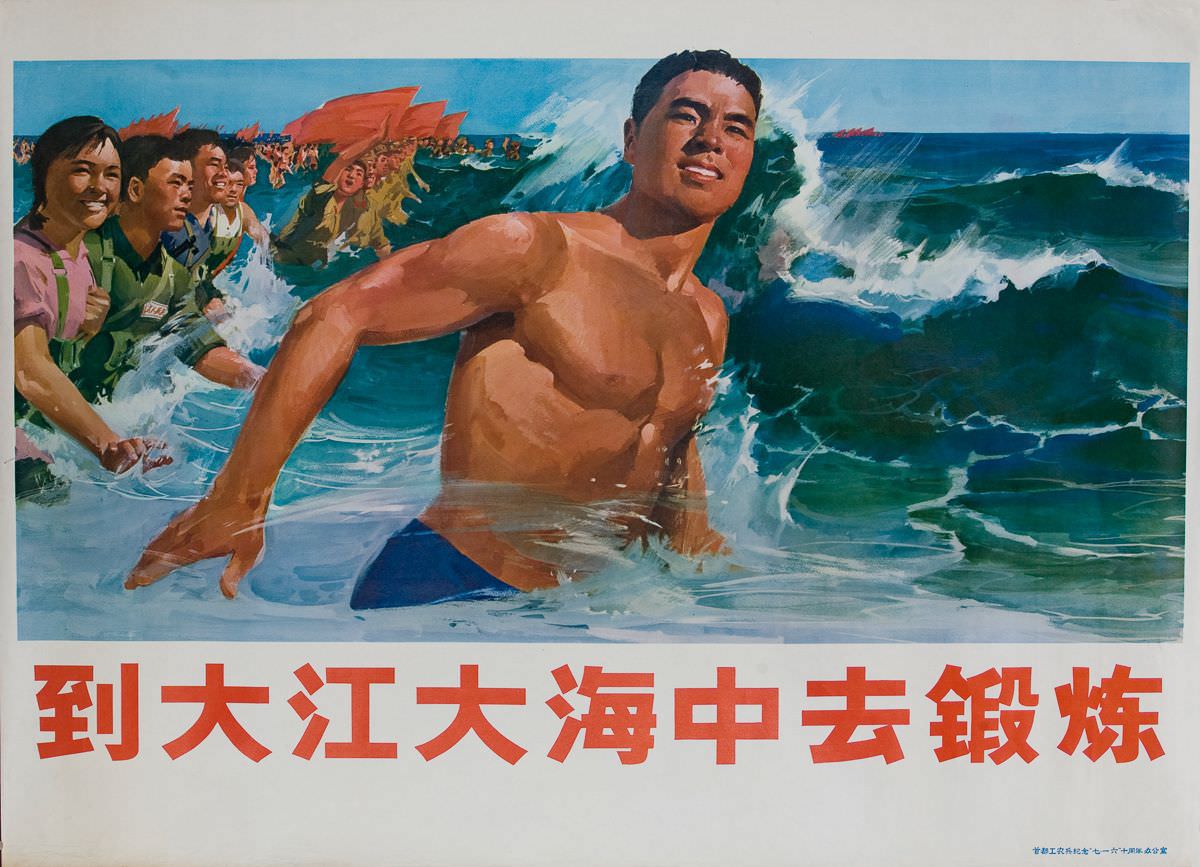
Physical fitness and athletic achievement were also celebrated in the propaganda art of this period. Swimming and ocean training appeared as symbols of strength, endurance, and readiness — values directly tied to Mao’s own public image as a swimmer.
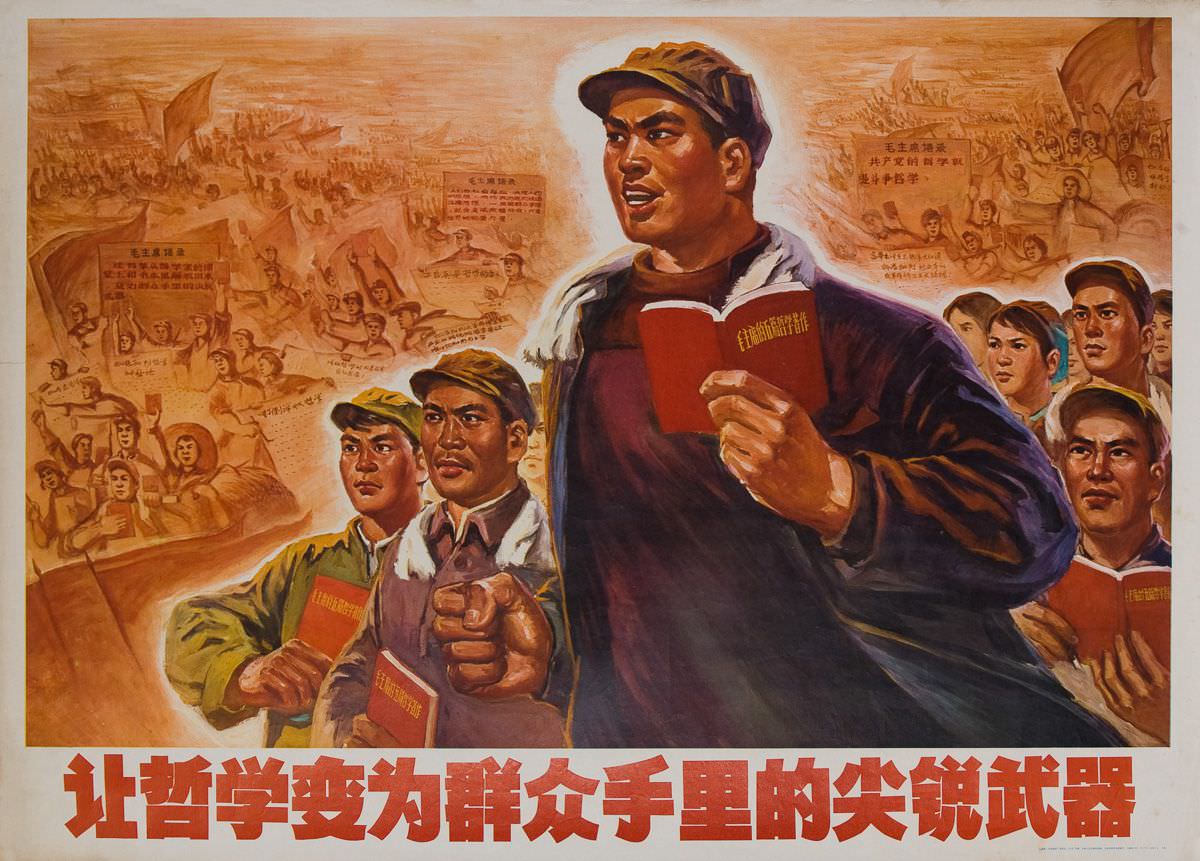
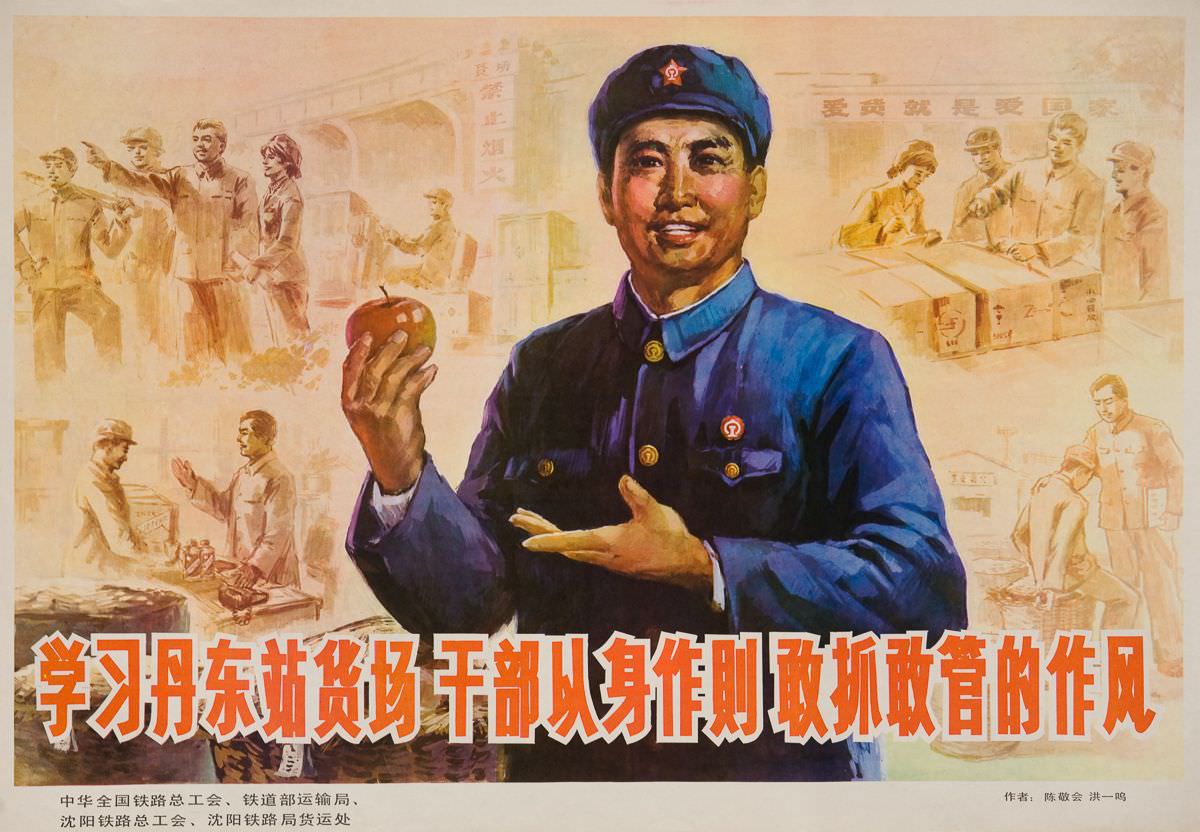
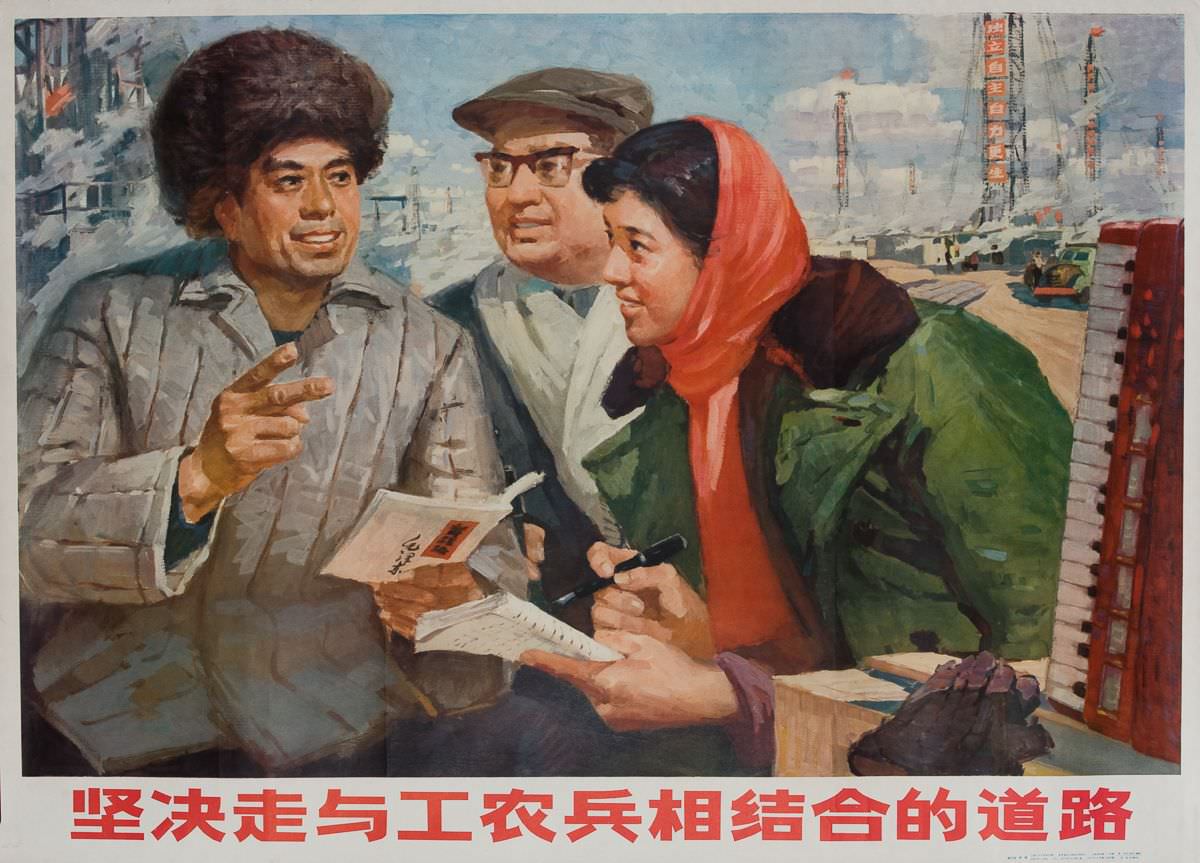
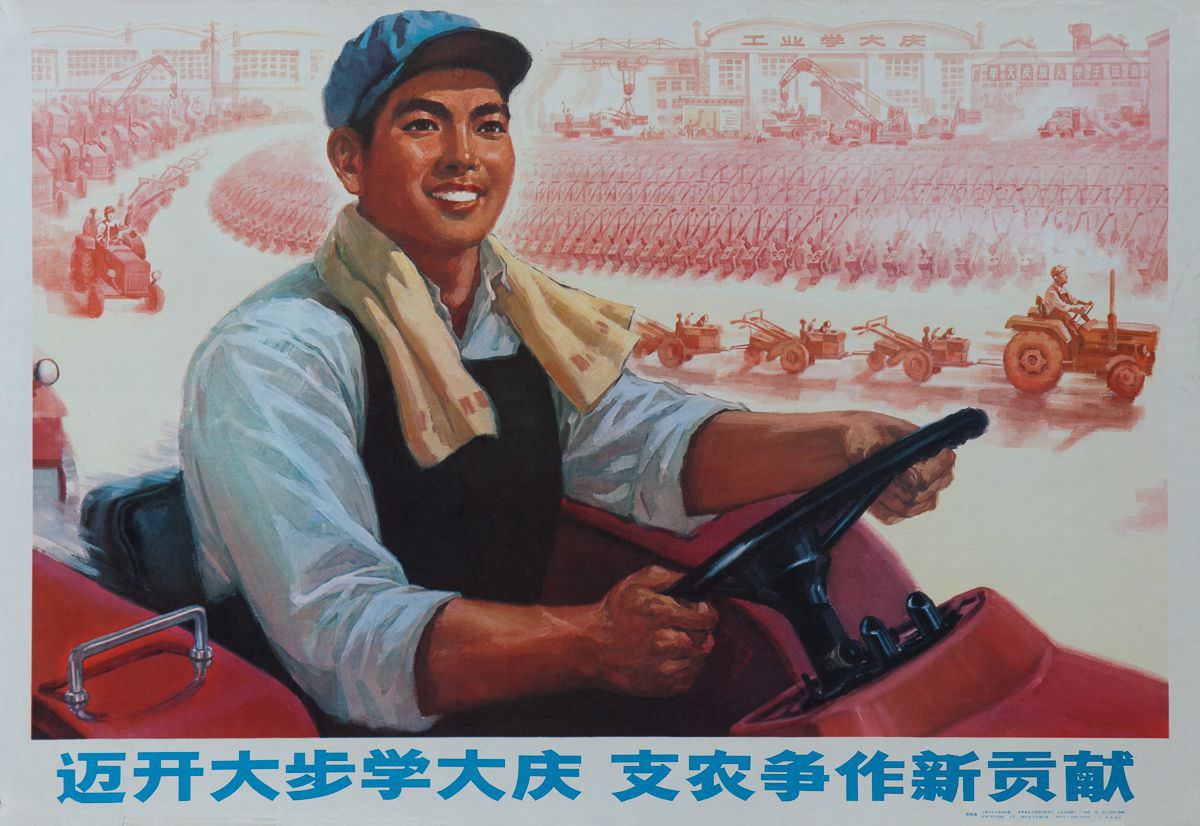
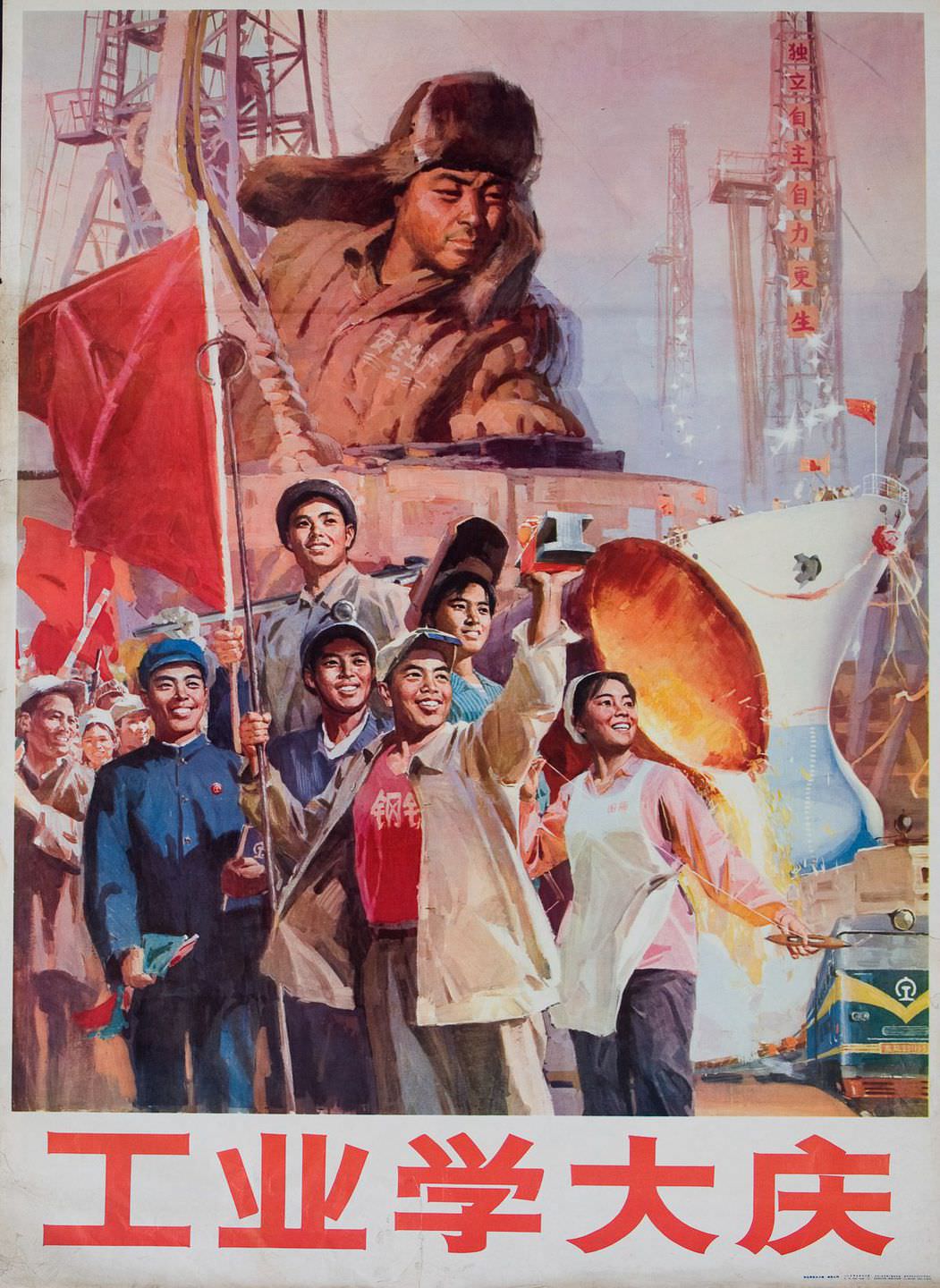
Posters also addressed internal party behavior. Officials and cadres were instructed to work alongside ordinary laborers rather than separate themselves through rank or privilege. Da Qing, an oil field in northeastern China, became a national model for industrial self-reliance and was regularly referenced in posters calling workers to follow that example.
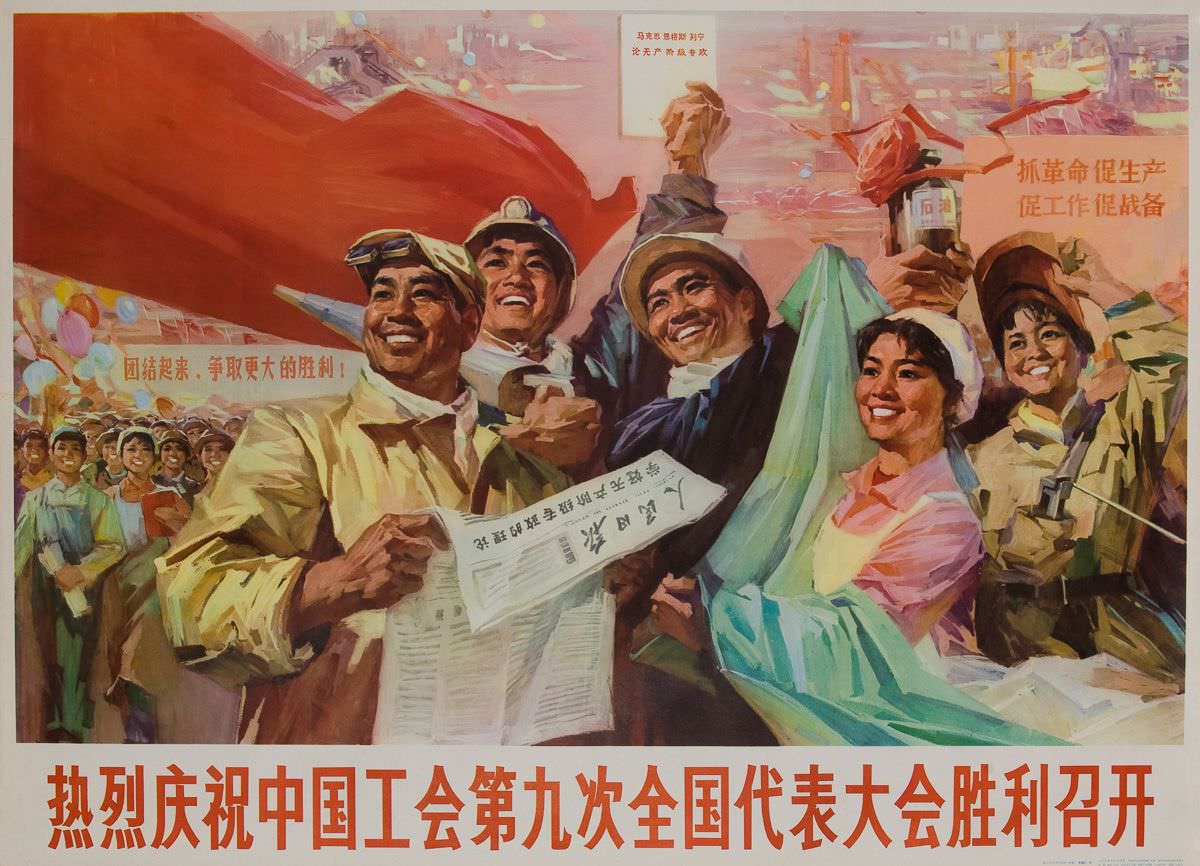
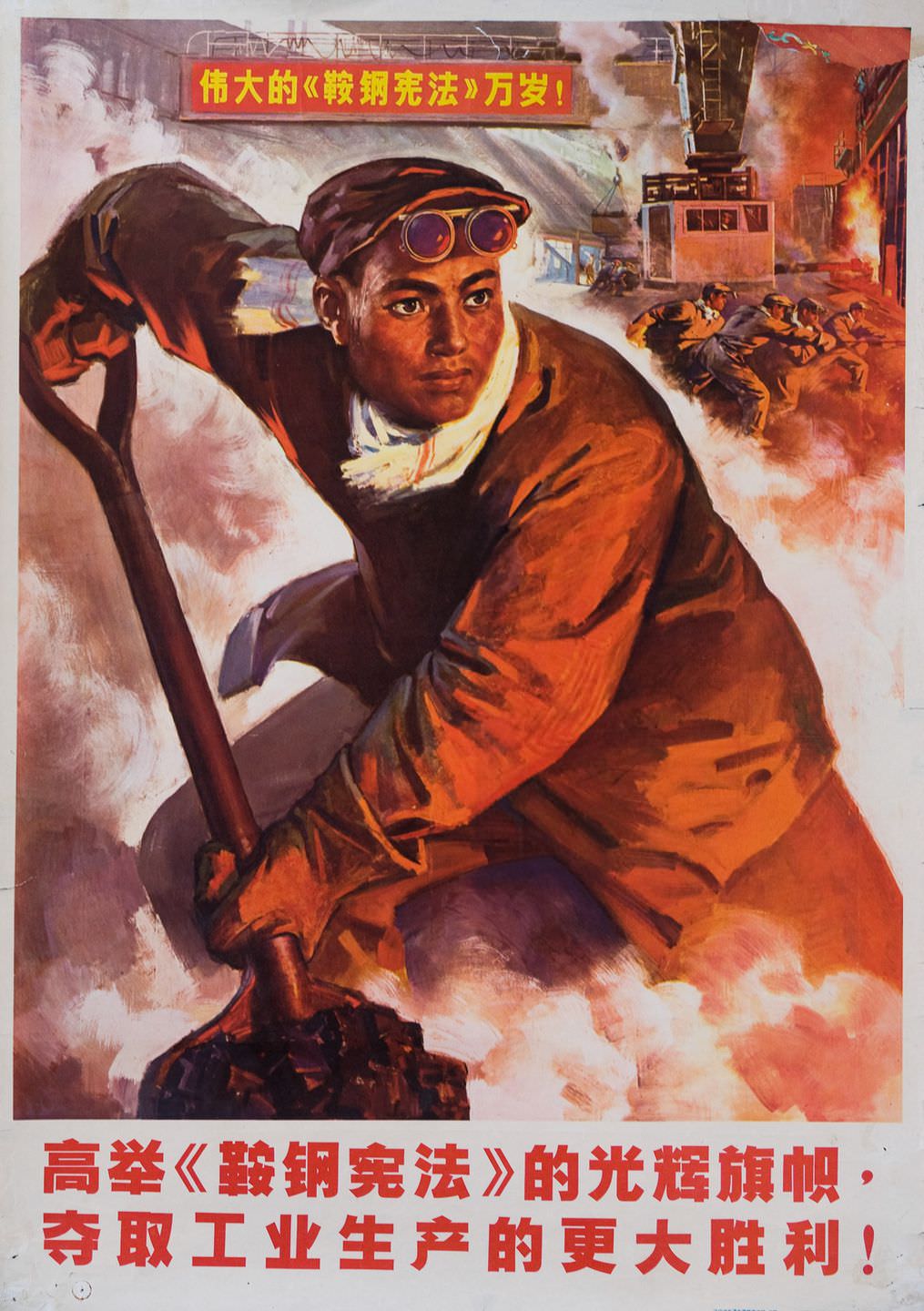
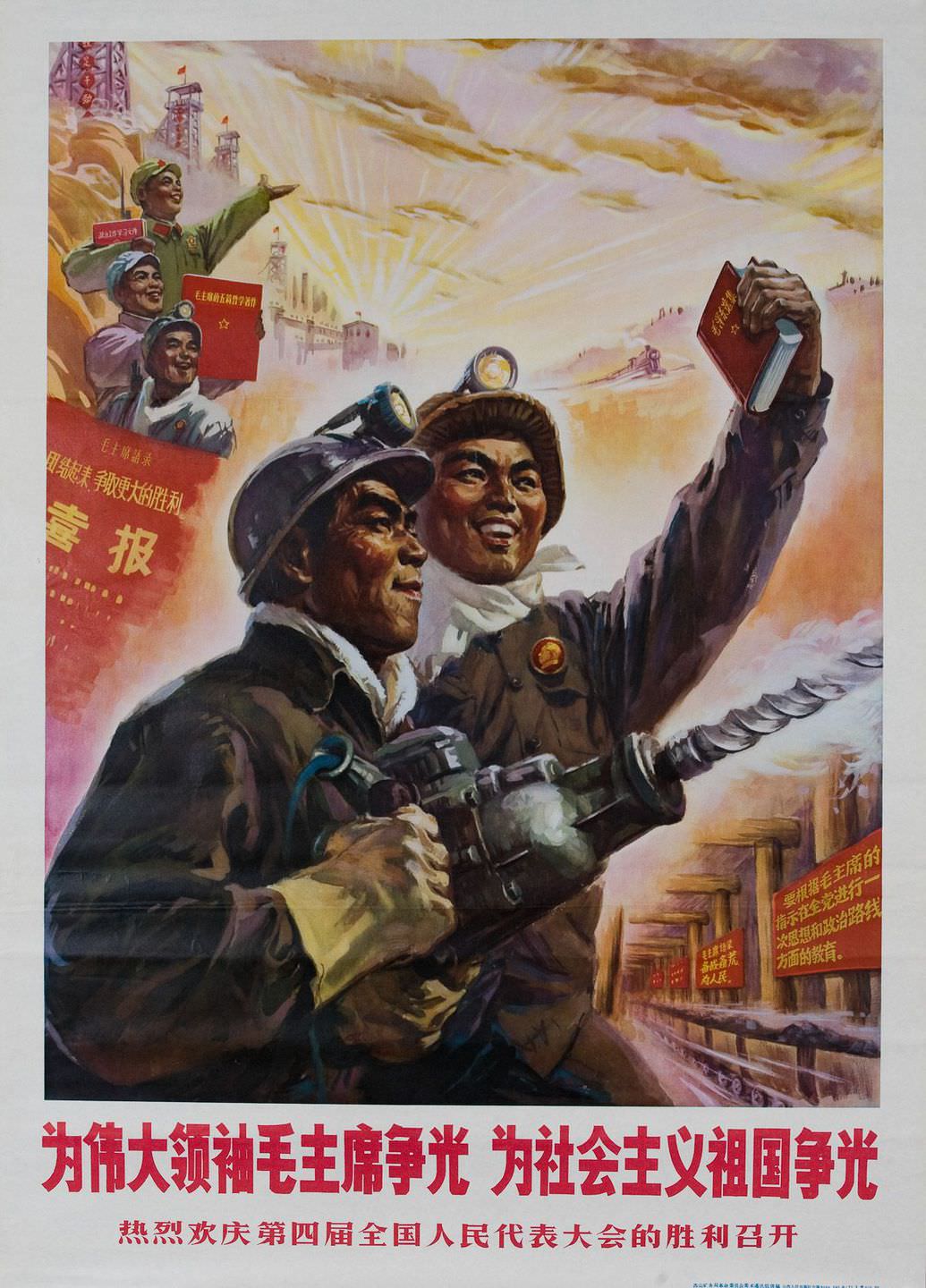
Labor unions and industrial congresses were celebrated in their own posters, marking collective achievements and urging continued effort. The visual language was consistent across all of them: raised fists, red flags, bright skies, and determined faces looking toward a shared future.
Military victory over foreign aggressors was a recurring narrative. Some posters explicitly called for the expulsion of American forces from Vietnam, placing China within a broader global struggle against imperialism. These images served a dual purpose — rallying domestic support while projecting China’s ideological stance to the wider world.
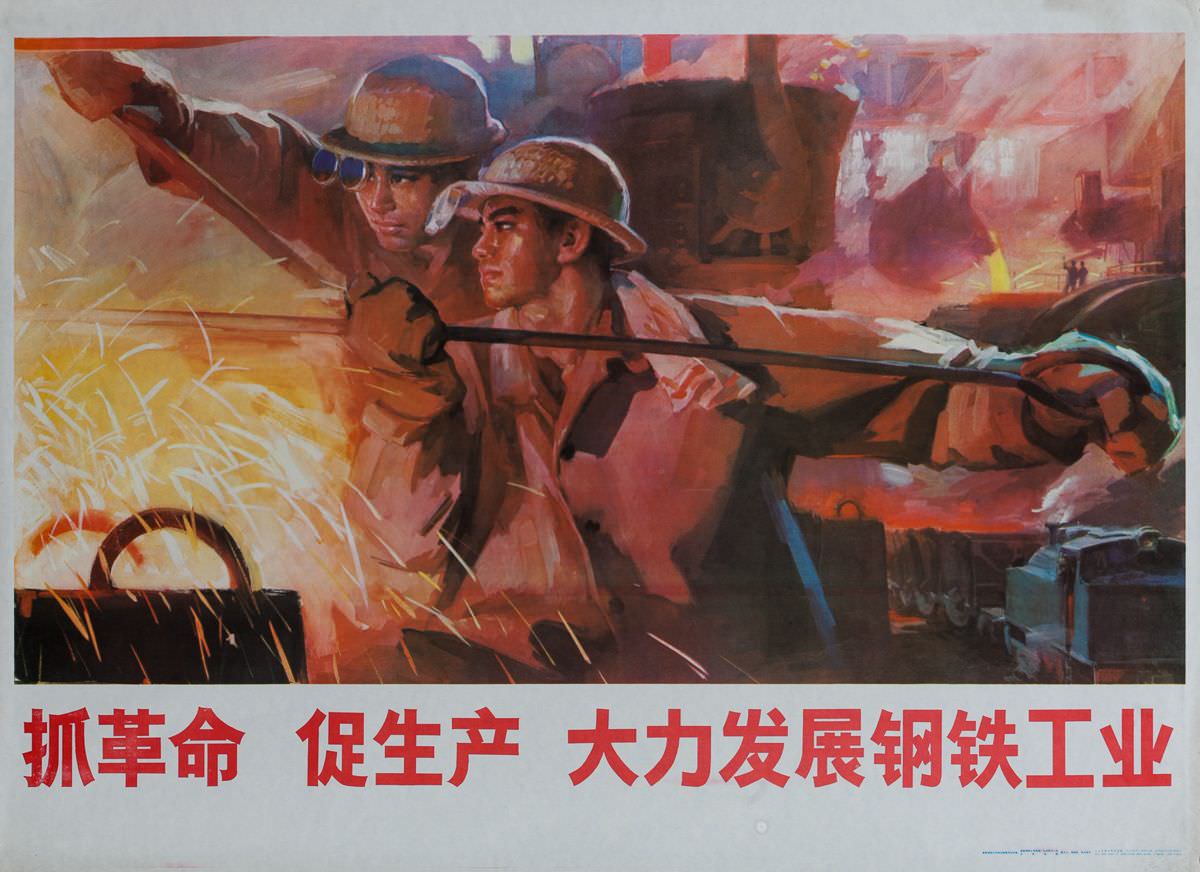
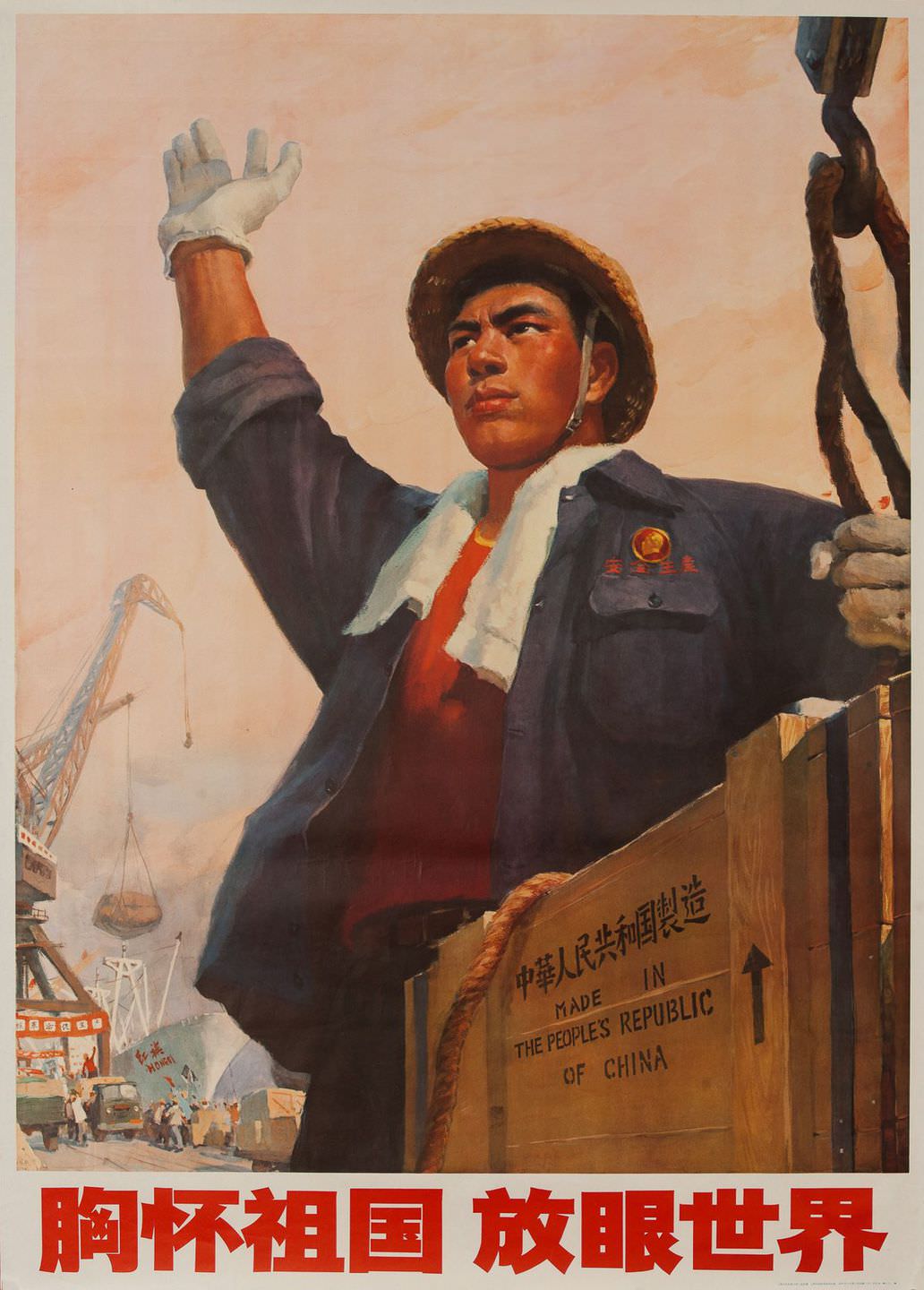
Shipyard workers, coal miners, and factory laborers all received their own dedicated posters. These images elevated physical labor as a noble and essential contribution to China’s rise. The shipyard posters specifically tied industrial production to national pride, drawing a direct line between a worker’s daily output and the strength of the socialist state.
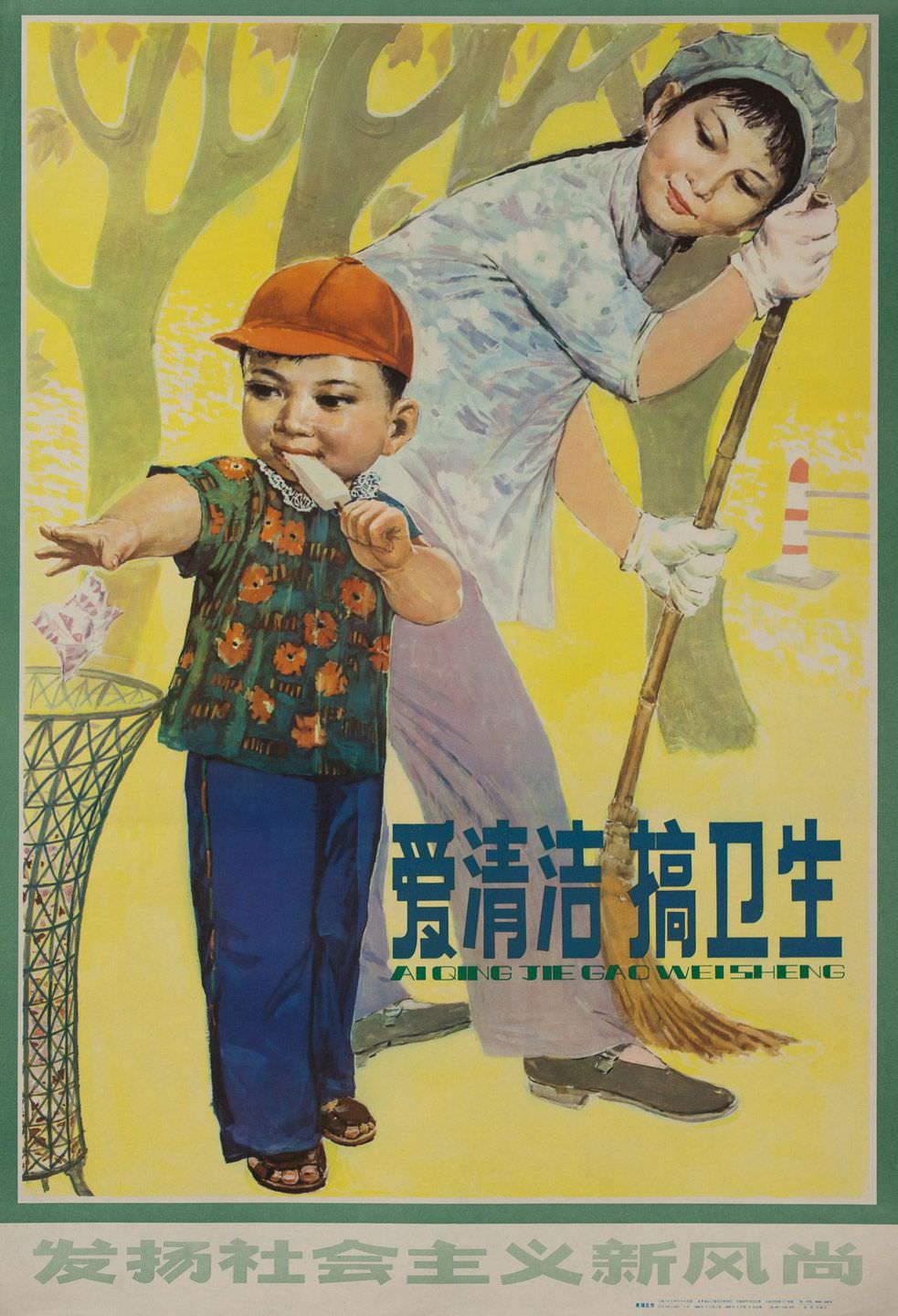
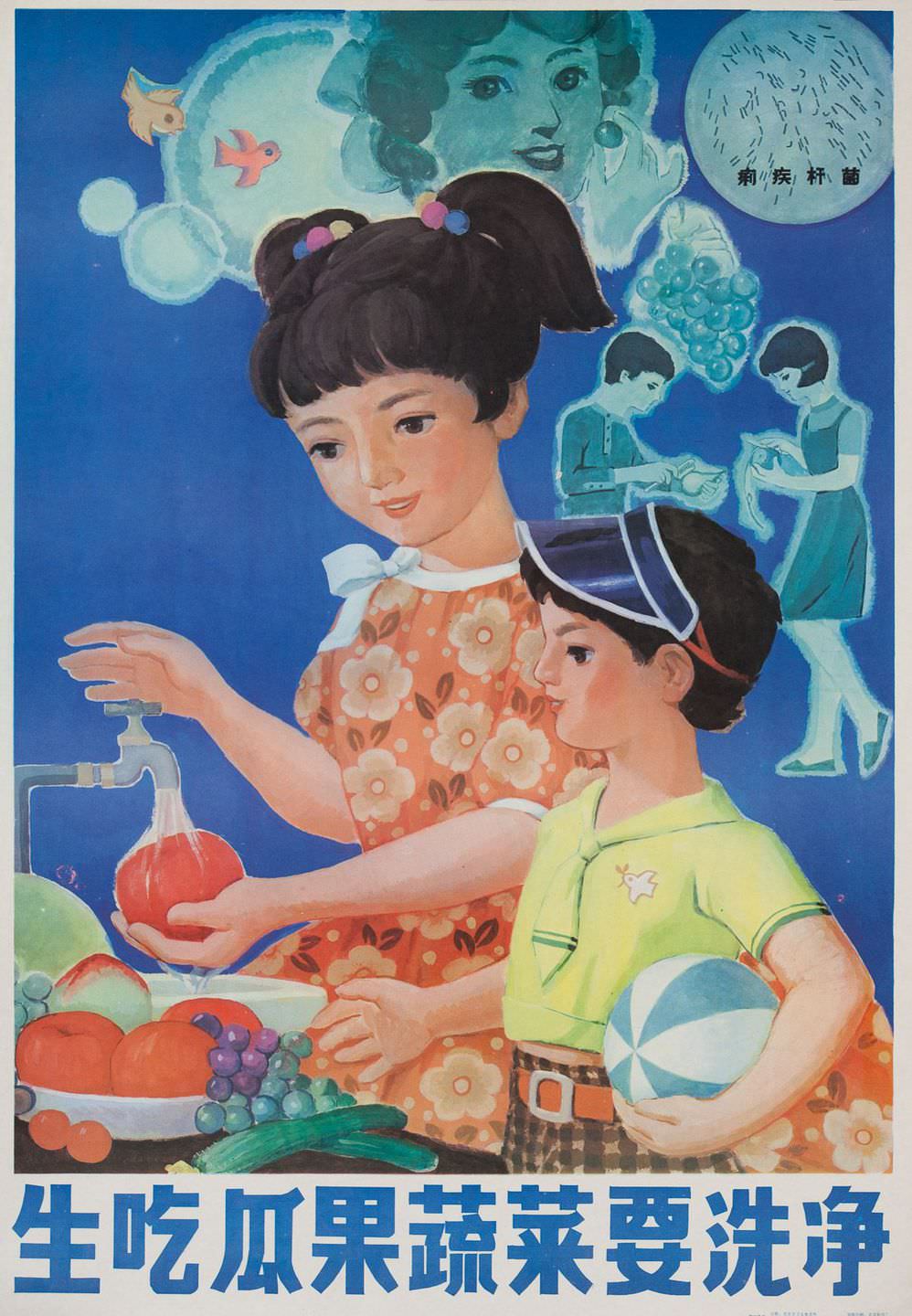
Hygiene posters were strikingly specific. Rather than offering general health advice, they addressed concrete behaviors — washing raw fruits and vegetables before eating, preventing hepatitis through handwashing, and keeping living spaces clean. Public health was framed as a collective responsibility, not a personal choice.
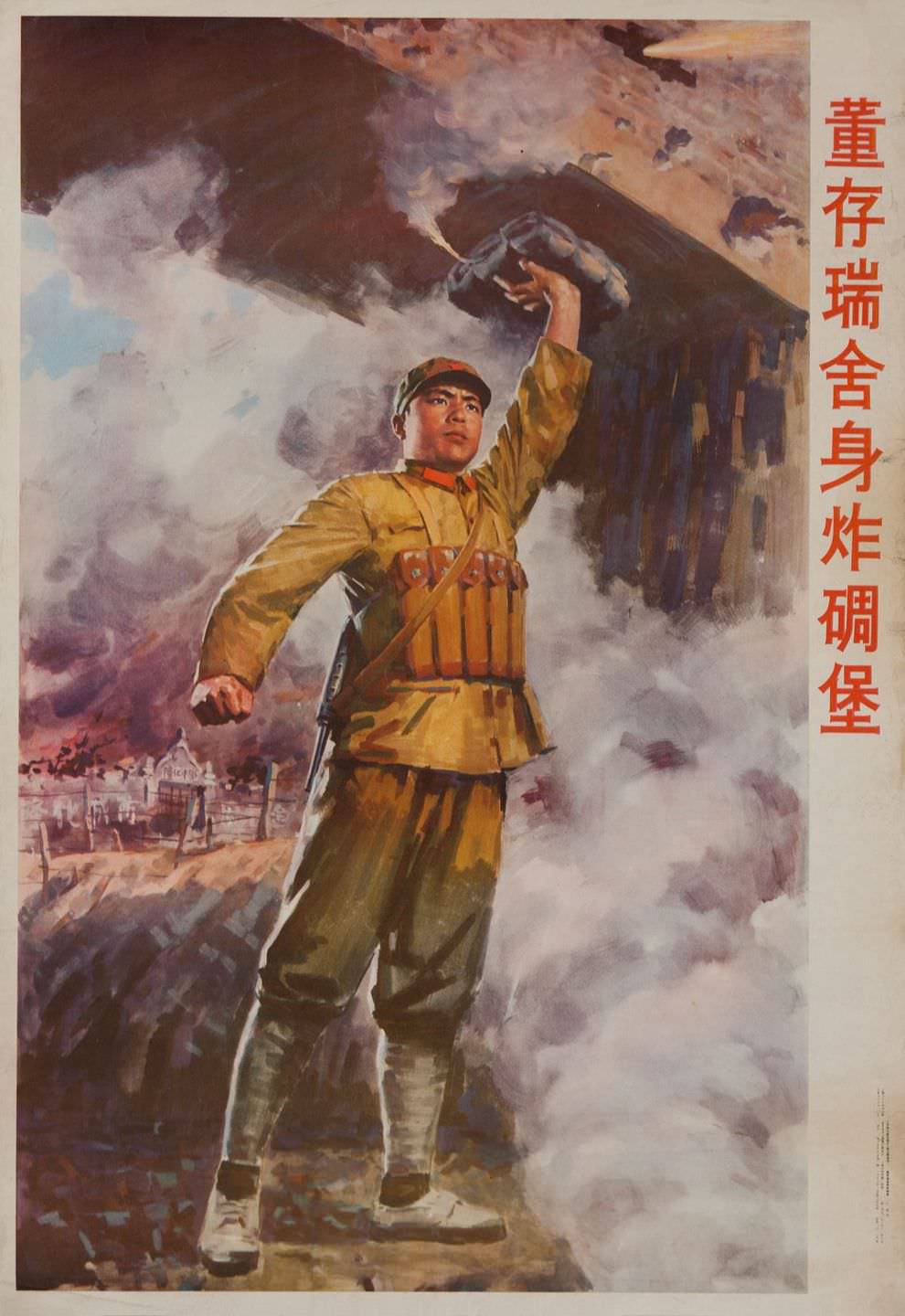
Some posters honored specific individuals who gave their lives for the revolutionary cause. Dong Cunrui was one such figure — a soldier who died in 1949 during the Chinese Civil War when he detonated explosives against an enemy bunker, sacrificing himself to ensure his unit’s advance. His story was held up as the ultimate model of selfless devotion to the revolution.
The broader worldview embedded in these posters was one of collective identity and outward-looking ambition. China was not just building itself — it was positioning itself as a model and a force within the global socialist movement. Posters urged citizens to think beyond their village or factory and see themselves as part of something far larger.
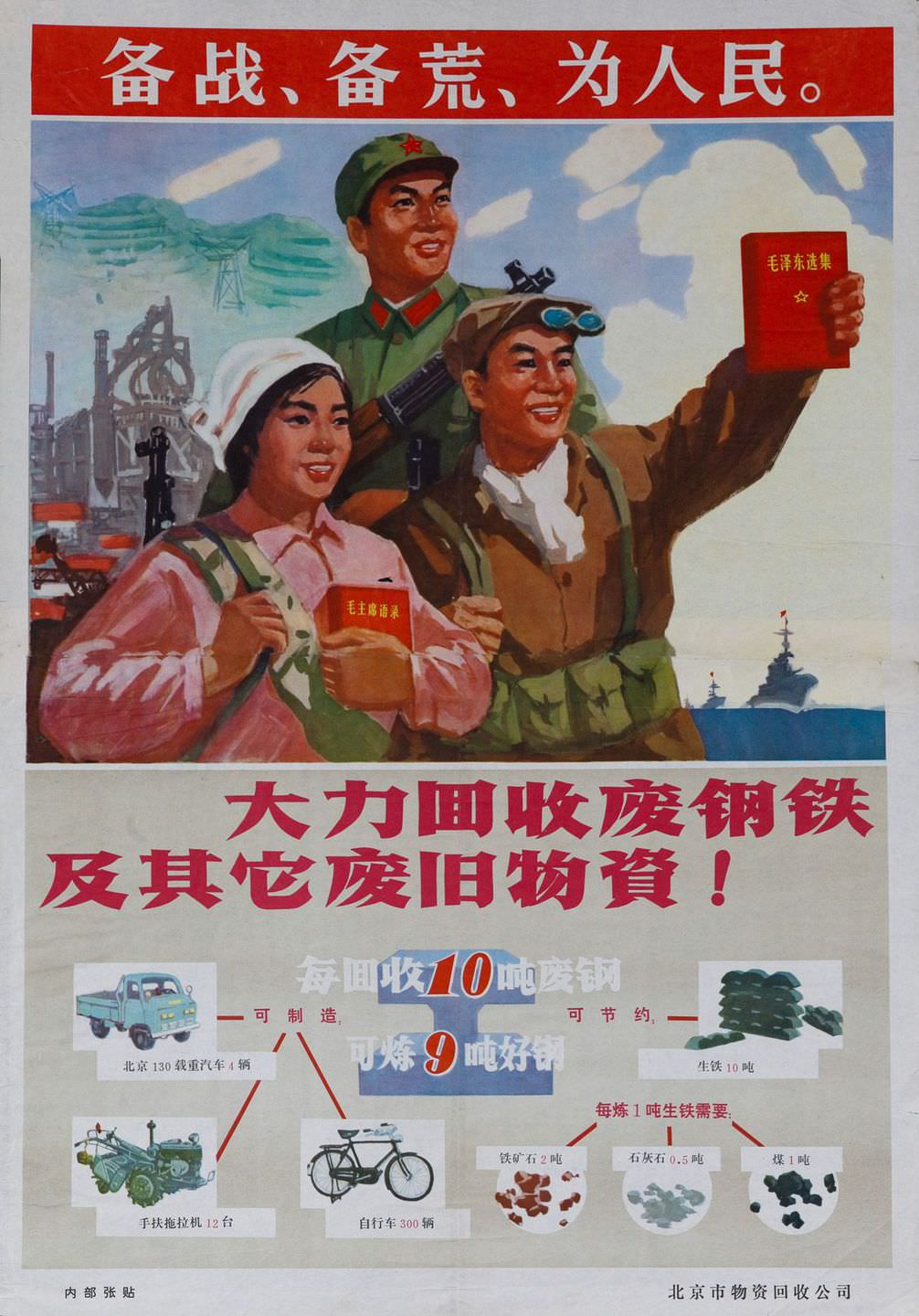
Even waste collection was turned into a patriotic act. Posters called on citizens to gather scrap metal and other discarded materials to be recycled back into industrial production. Nothing was too small to contribute to the state’s goals. Every action, down to sorting refuse, carried ideological weight.