
In the 1860s and 1870s, photography was still a young and demanding craft. Glass plates had to be coated, exposed, and developed on the spot, often in sweltering heat or cramped conditions. Despite these challenges, Scottish photographer John Thomson carried his equipment across China four times during the second half of the nineteenth century, producing one of the most detailed visual records of the country ever made by a Western lens.
Thomson was not simply a tourist with a camera. He moved through cities, villages, ports, and rural landscapes with a journalist’s eye, photographing people at every level of society — high-ranking officials and street vendors, monks and soldiers, wealthy traders and boat workers, brides and schoolchildren. His photographs from between 1868 and 1872 offer a direct window into a world that was already beginning to change under the pressure of trade, colonial expansion, and modernization.
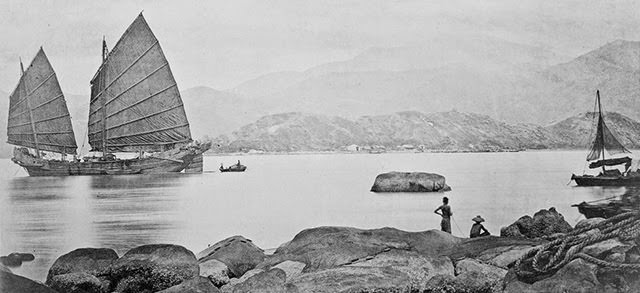
One of Thomson’s recurring subjects was the foreign presence in China’s port cities. Treaty ports like Shantou had carved out designated foreign settlements where Western merchants and diplomats lived under their own rules, physically and legally separate from the Chinese population surrounding them.
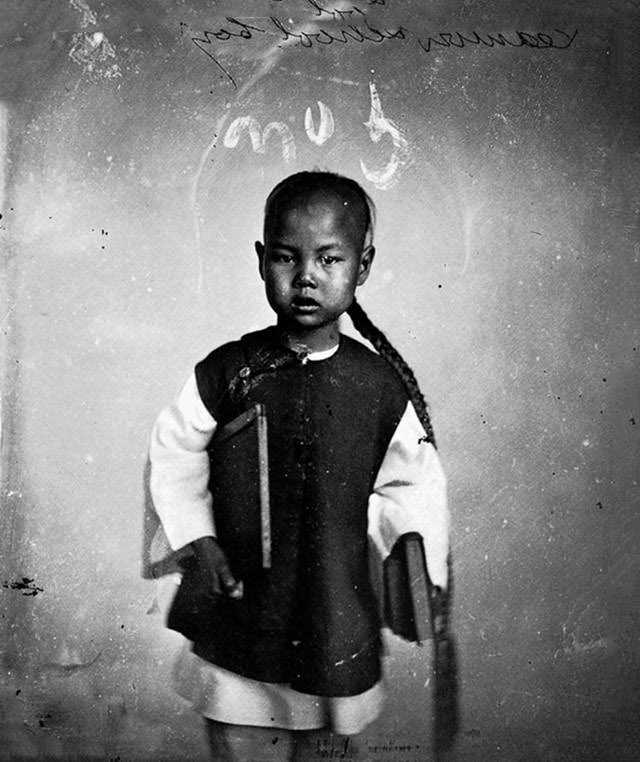
Thomson’s portraits of ordinary people are among his most compelling work. In Guangzhou, he photographed a schoolboy in his formal attire — a glimpse into the structured world of Cantonese education during the Qing dynasty.
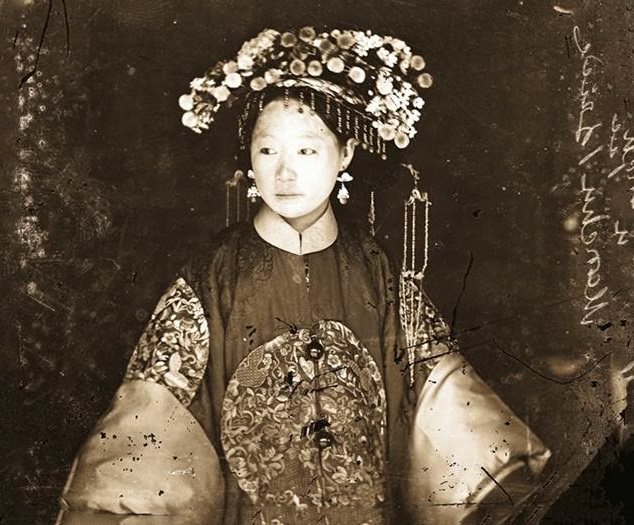
Thomson also documented formal occasions. In Beijing, he photographed a Manchu bride in full wedding dress. The Manchu were the ruling ethnic group of the Qing dynasty, and their wedding traditions differed from those of the Han Chinese majority. The bride’s clothing, headdress, and posture all reflect the formal customs of the imperial elite.
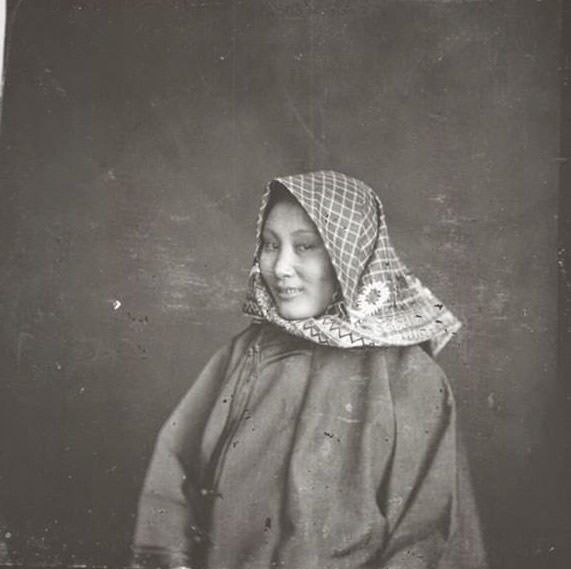
Life on the water was central to Guangzhou. Thousands of people lived permanently on boats along the Pearl River, and women often ran the vessels while men worked on shore. Thomson photographed one such boatwoman, capturing a figure whose daily life was entirely shaped by the river.
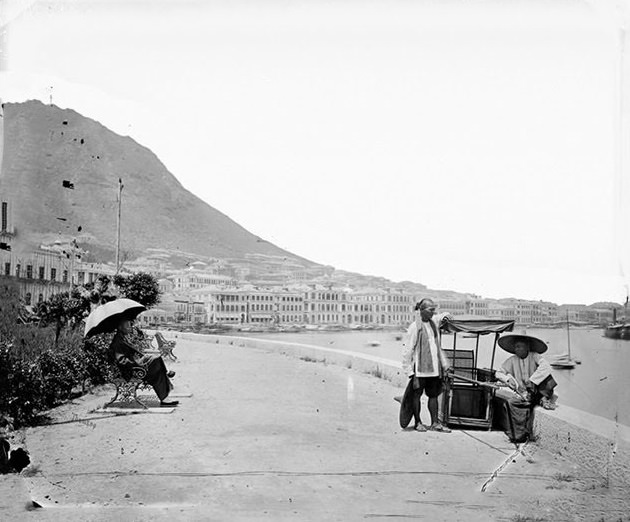
Thomson spent significant time in Hong Kong, which had been a British colony since 1842. The colony was a busy crossroads of Chinese and Western life, and Thomson documented both with equal attention. One early subject was the sedan chair — the standard mode of transport for wealthier residents and visitors moving through Hong Kong’s steep, narrow streets.
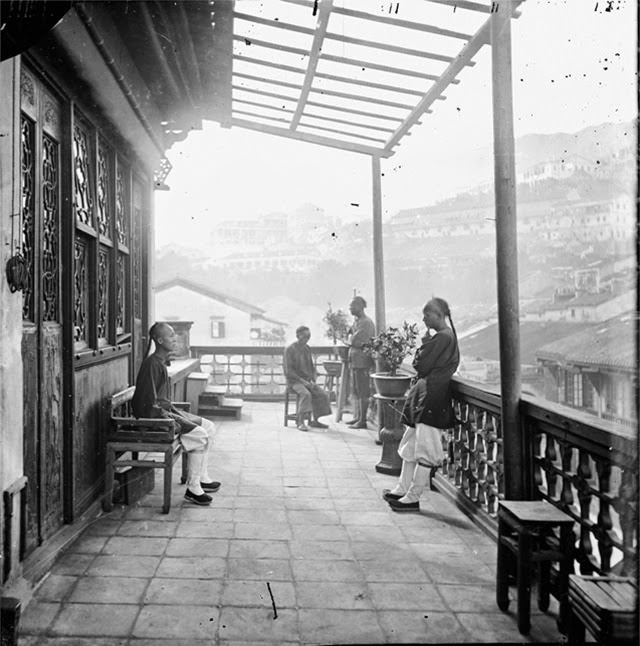
Teahouses were social anchors in Chinese communities throughout southern China, and Hong Kong was no different. Thomson photographed the veranda of one such establishment, where patrons could gather, drink tea, and watch the street below.
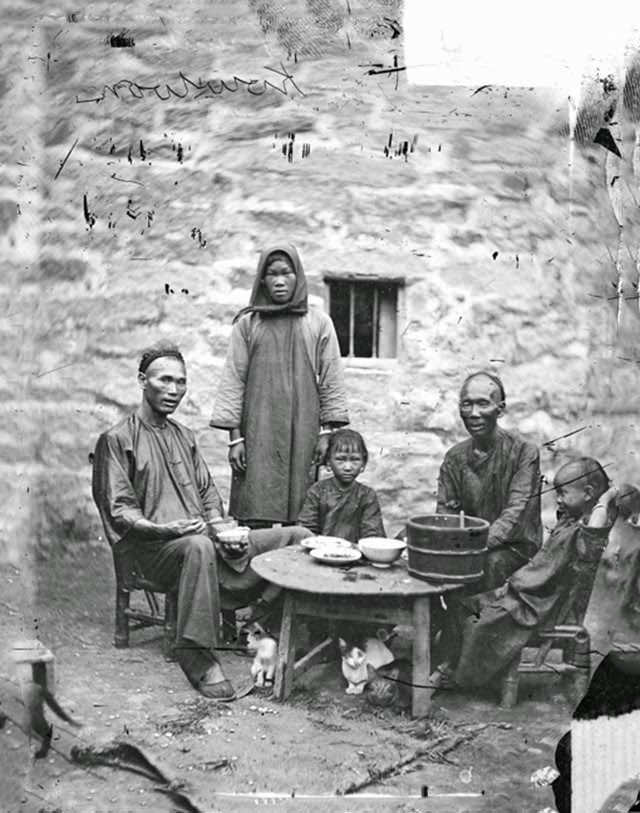
Across the harbor, Kowloon was still a largely rural area in 1869, home to farming and fishing families who had lived there long before the British arrived. Thomson photographed one Cantonese family there, presenting them not as curiosities but as residents of a specific place at a specific moment in time.
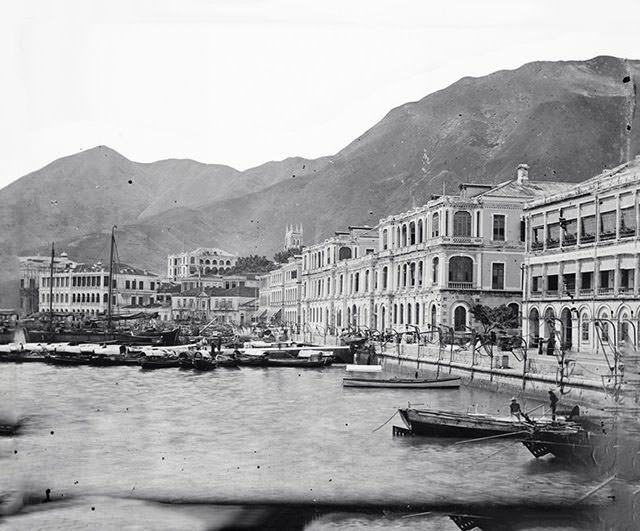
Hong Kong’s urban core was centered on the northern shore of Hong Kong Island. Praya — later known as Des Voeux Road — ran along the waterfront and was one of the colony’s main commercial arteries. Thomson’s photograph of it in 1869 shows a street already busy with trade and traffic.
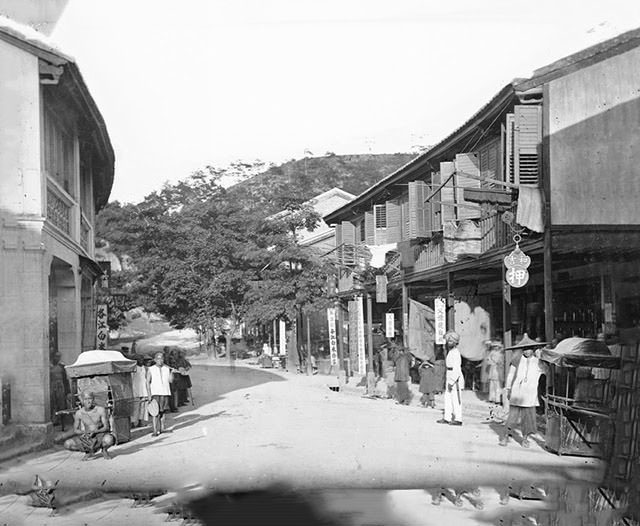
Moving inland from the waterfront, Thomson photographed the layered streets of Central Hong Kong. Cochrane Street, Wellington Street, and Lyndhurst Terrace intersect in one of his photographs, with a pawnshop visible on the northeast corner — a reminder that financial services for the working class were as much a part of the urban fabric as banks were for the wealthy.
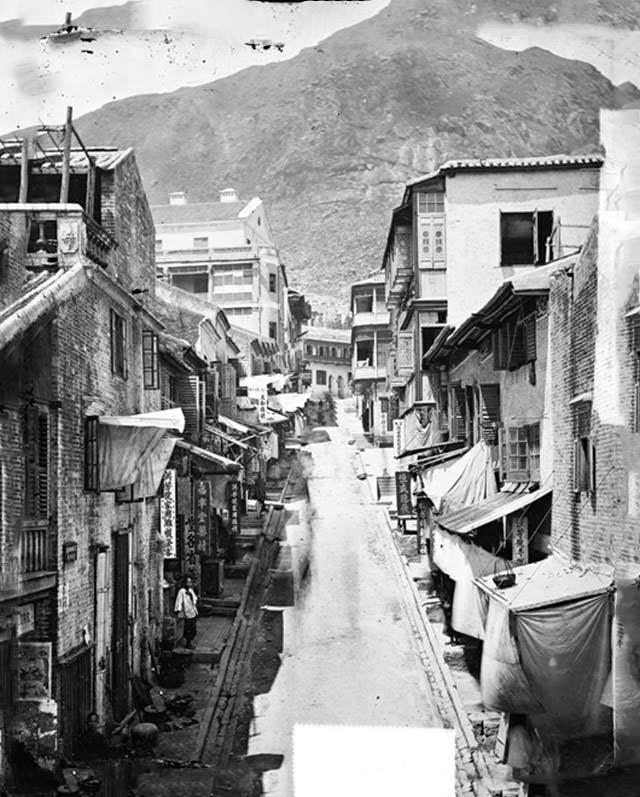
Further east along the island, Wanchai was a working-class neighborhood with its own commercial life. Queen’s Road East, close to the old Wanchai Market, appears in one of Thomson’s photographs as a street lined with shophouses and pedestrian activity.
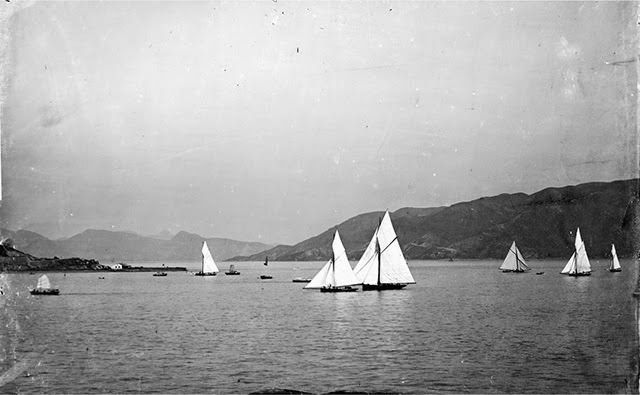
Victoria Harbour was the pulse of Hong Kong’s economy, and it also served as a venue for public spectacle. Thomson photographed a regatta held there in 1871, one of the colonial social events that marked British life in the Far East.
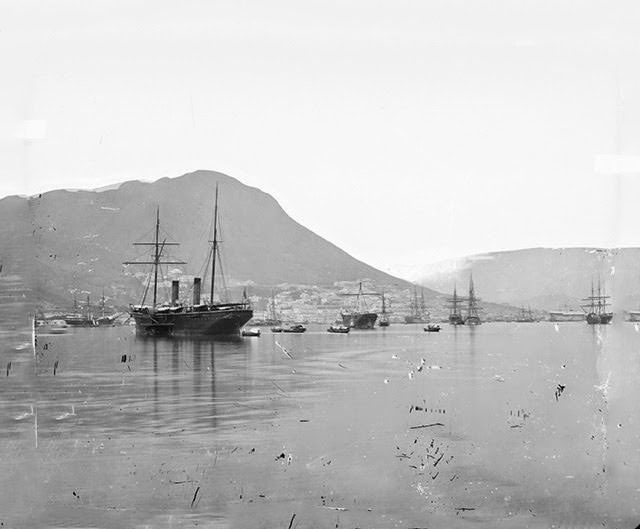
Not all of Thomson’s Hong Kong photographs date from his 1868–1872 visits. One image taken from Kellett’s Island looks westward across Wanchai toward Central and the Peak, with HMS Princess Charlotte visible in the harbor — a photograph dated to 1858, predating Thomson’s main travels but preserved alongside his collection.
Pedder Street was one of Hong Kong’s most prominent thoroughfares, running north from its intersection with Des Voeux Road down toward the waterfront. Thomson photographed it looking northward, capturing the scale and activity of what was already a well-established colonial street by 1869.
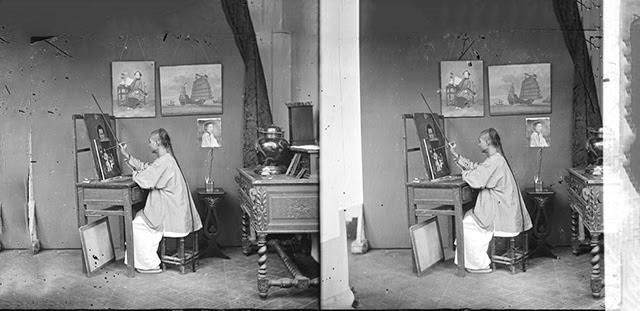
Thomson had a particular interest in craftspeople and artists. In Hong Kong, he photographed a Chinese portrait artist at work — someone who made a living producing likenesses of clients, operating in a tradition of painted portraiture that had existed long before photography arrived to compete with it.
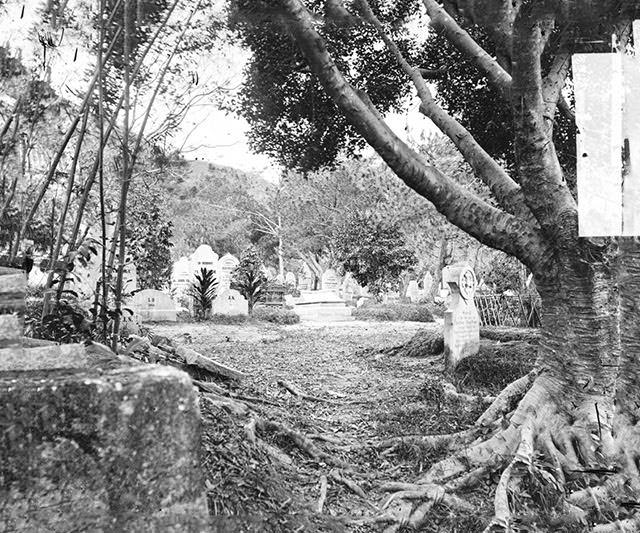
Happy Valley, on the eastern side of Hong Kong Island, contained both a cemetery and a racecourse — a pairing that said something about colonial priorities. The cemetery served the various foreign communities who died in Hong Kong, with separate sections for different nationalities and faiths. The Chapel of Ease, partially visible behind bamboo in Thomson’s photograph, served those communities.
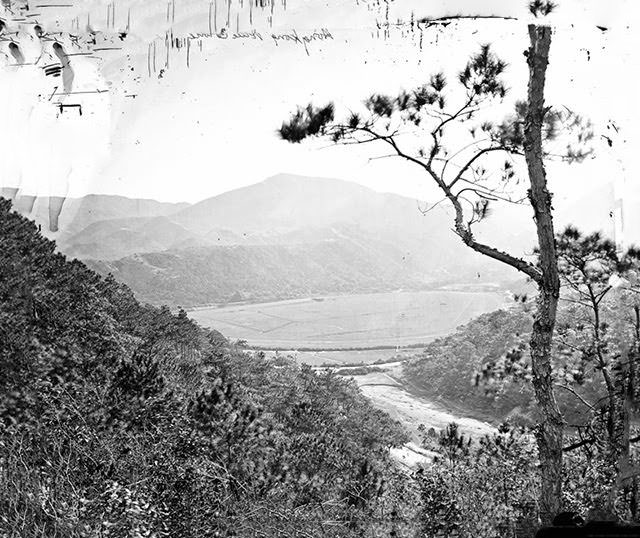
Just across from the cemetery, the Happy Valley Racecourse was a central fixture of colonial social life. Thomson photographed it from the south side of Morrison Hill, looking out over the track toward Jardine’s Lookout in the distance.
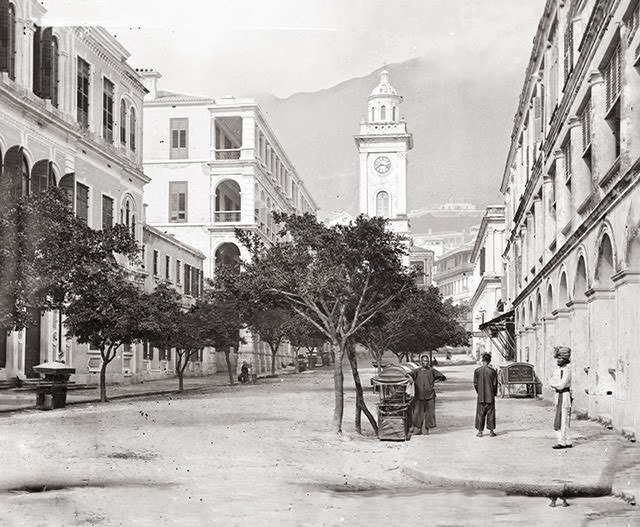
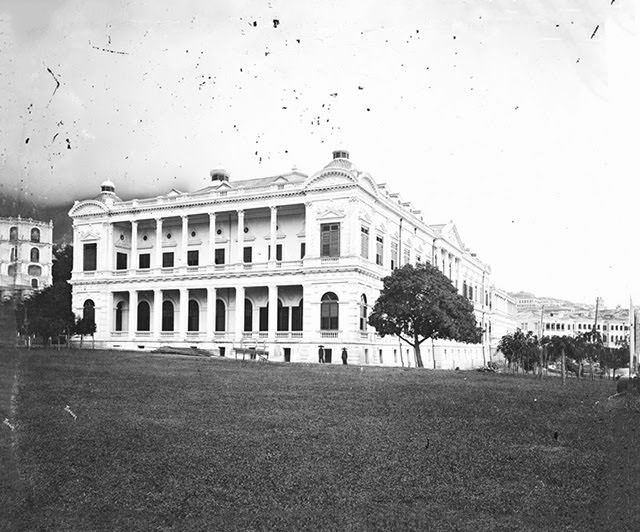
The City Hall was one of Hong Kong’s most significant colonial buildings, serving as a center for civic and cultural life. Thomson photographed it with two Chinese men posed at the base of its near corner — a deliberate compositional choice that placed local residents in direct relationship with the architecture of British administration.
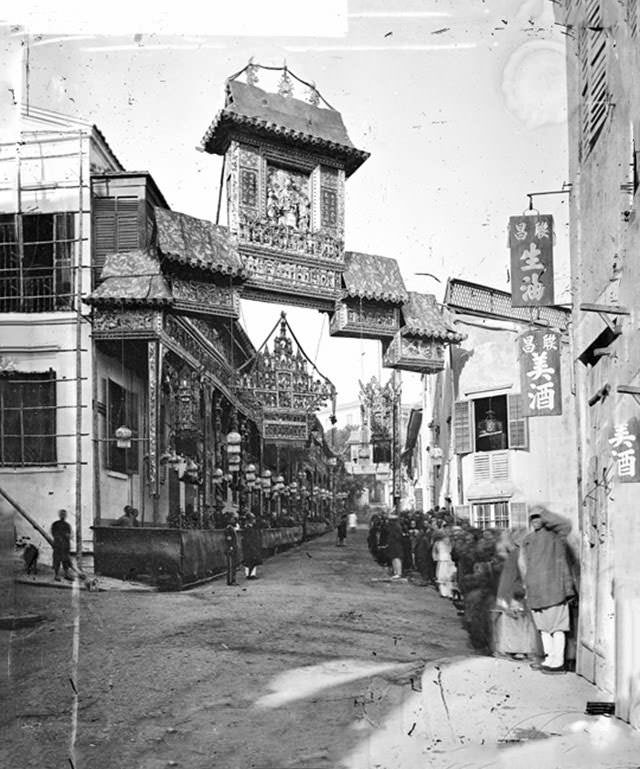
In 1869, Prince Alfred, the Duke of Edinburgh, made a brief visit to Hong Kong — the first member of the British royal family to visit the colony. Thomson documented the occasion, photographing Lyndhurst Street in Central as the city prepared to receive its royal guest.
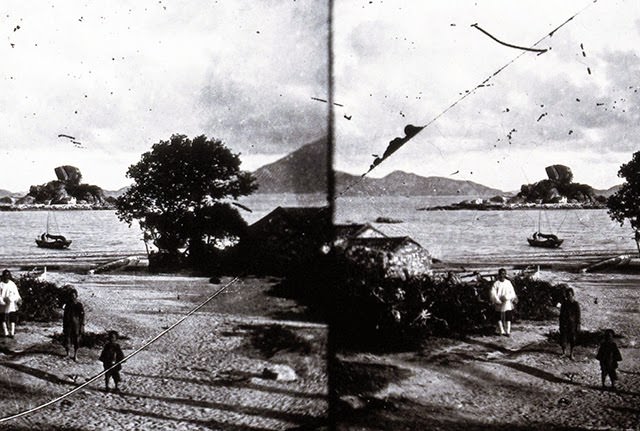
Off the Kowloon peninsula, a distinctive rock formation known as Fishtail Rock — or To Kwa Wan Island — sat in the waters near To Kwa Wan. Thomson photographed it in 1869, capturing a landmark that local residents would have known well.
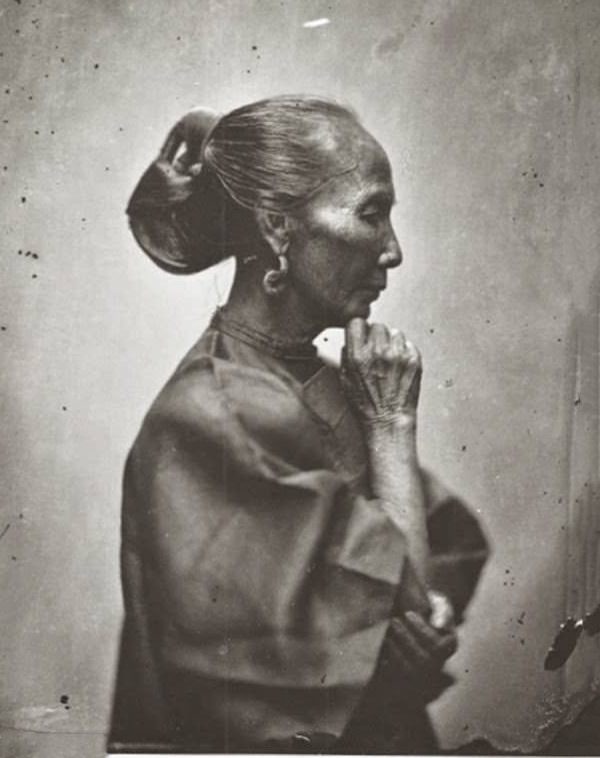
Back on the mainland, Thomson photographed street life in Guangzhou. An elderly woman caught on a Guangzhou street in 1868 is one of his more quietly powerful images — an unremarkable moment recorded with the kind of attention that turns an ordinary scene into a historical document.
Thomson also photographed Cantonese women in more formal portrait settings. One image shows a woman holding an open painted fan, standing before a folding screen — a composed studio-style portrait that reflects both the subject’s status and the visual conventions of the time.
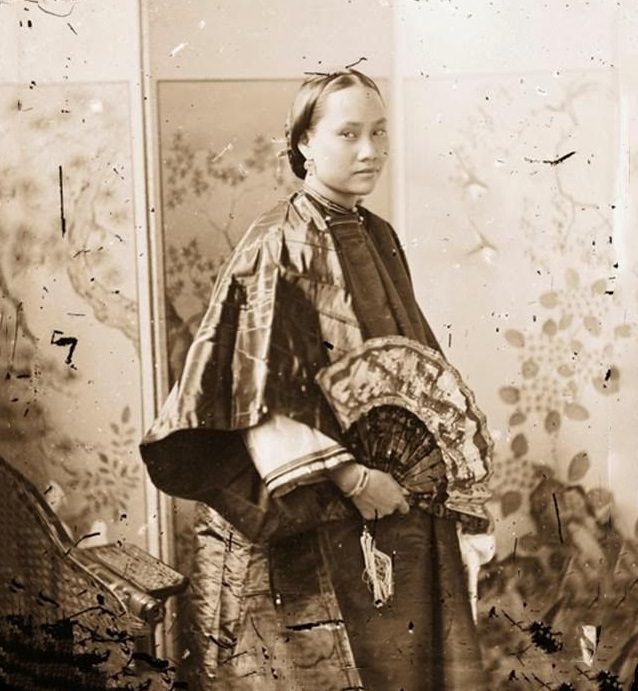
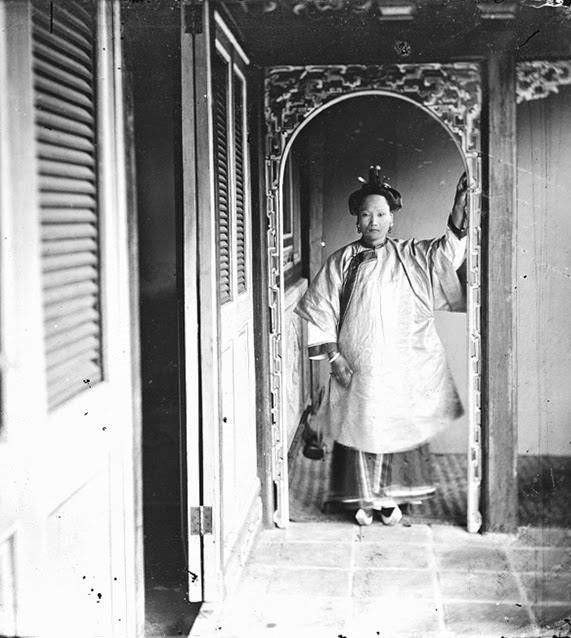
Thomson’s portrait work ranged from formal compositions to more direct, unadorned studies. A straightforward portrait of a Cantonese woman from Guangdong, taken in 1869, shows his ability to photograph subjects with clarity and respect, without theatrical staging or exoticism.
Across his four journeys through China, Thomson photographed a society at a turning point. The Qing dynasty was still intact, but the pressures of Western trade, unequal treaties, and internal rebellion had already reshaped Chinese life in fundamental ways. His photographs of Hong Kong show a colonial city growing fast, while his portraits from Guangzhou and Beijing record the faces of people who lived through that transformation without necessarily having any say in it. The images survive as one of the most complete photographic records of China from the nineteenth century.




