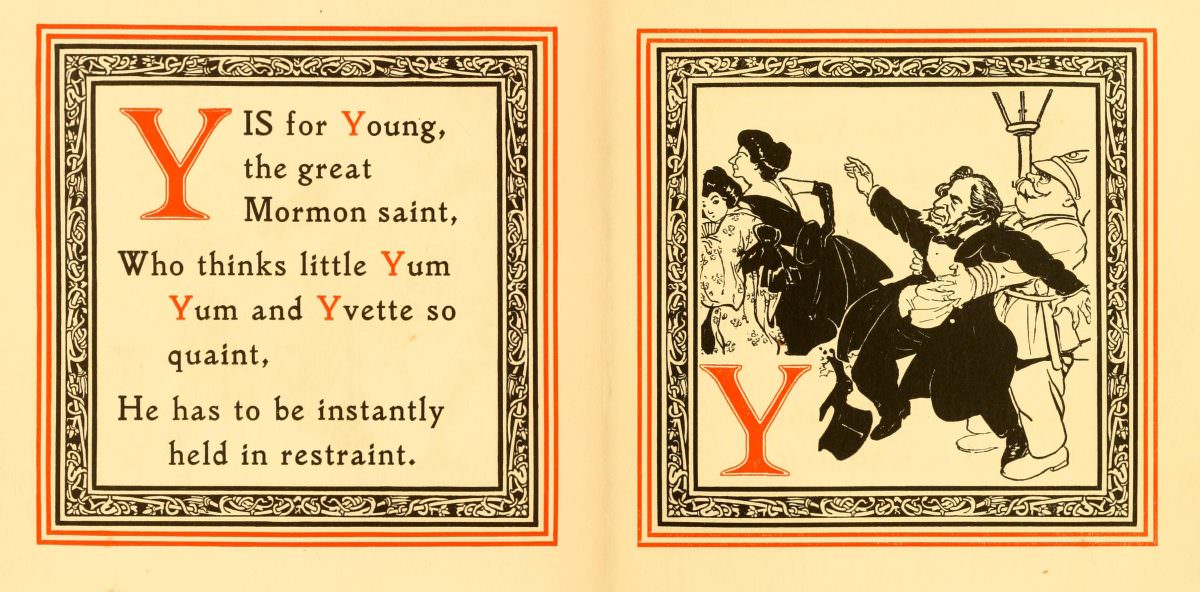
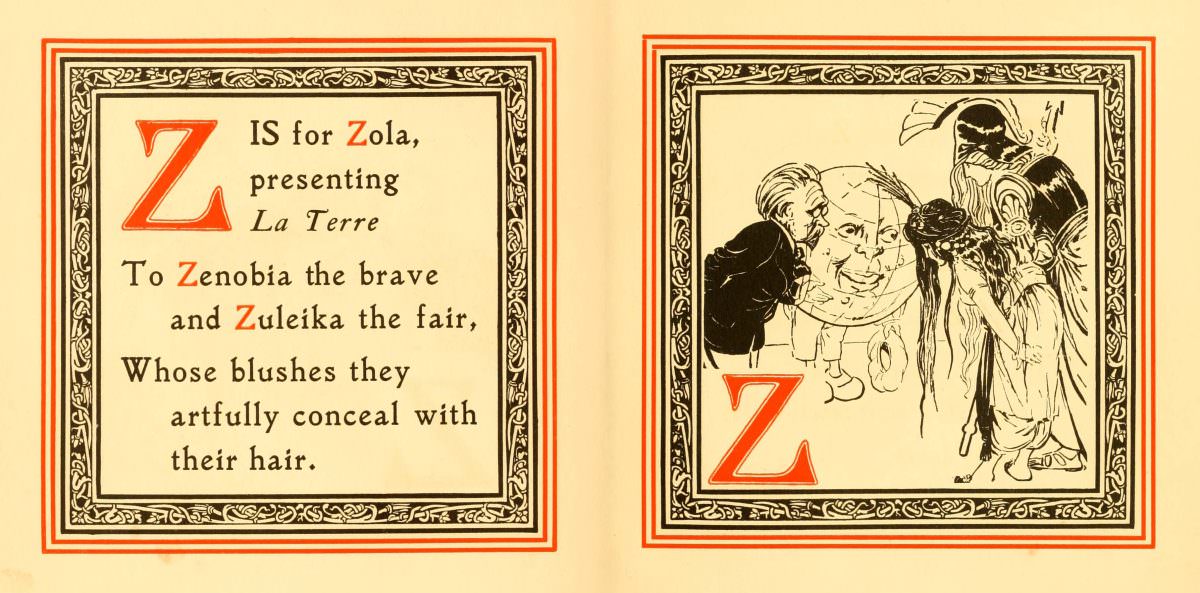
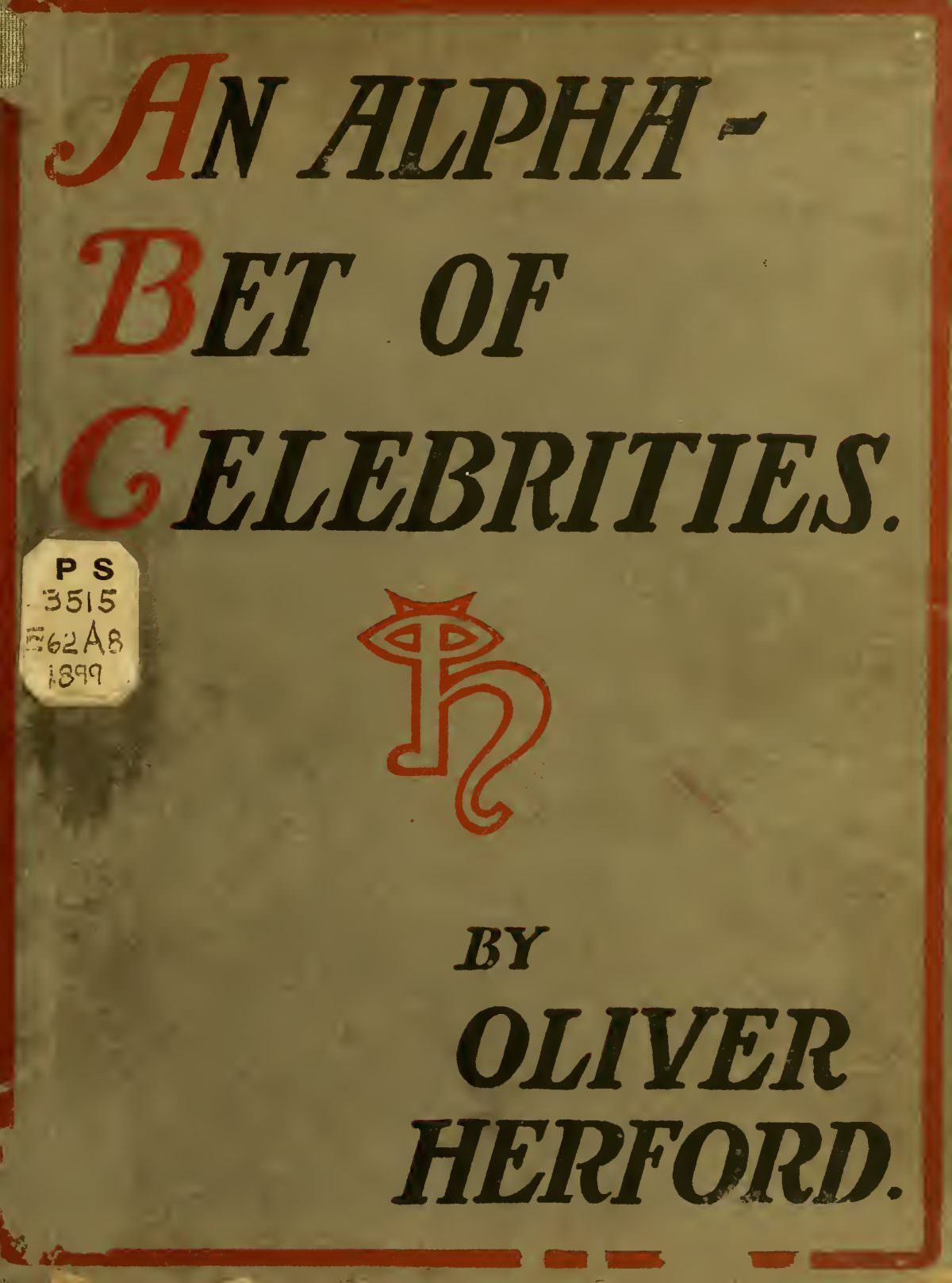
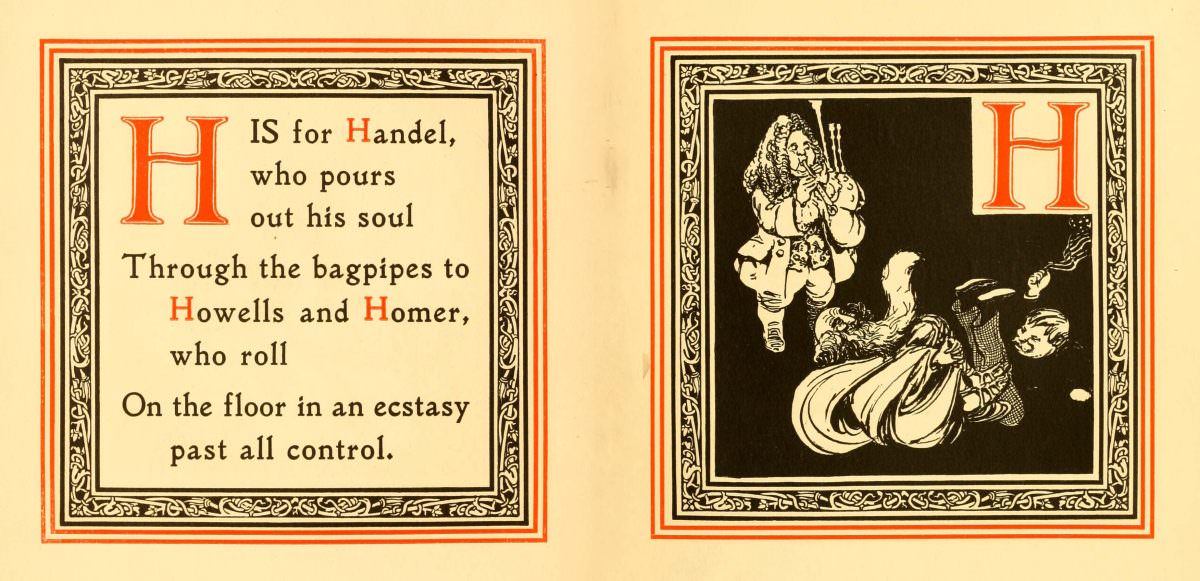
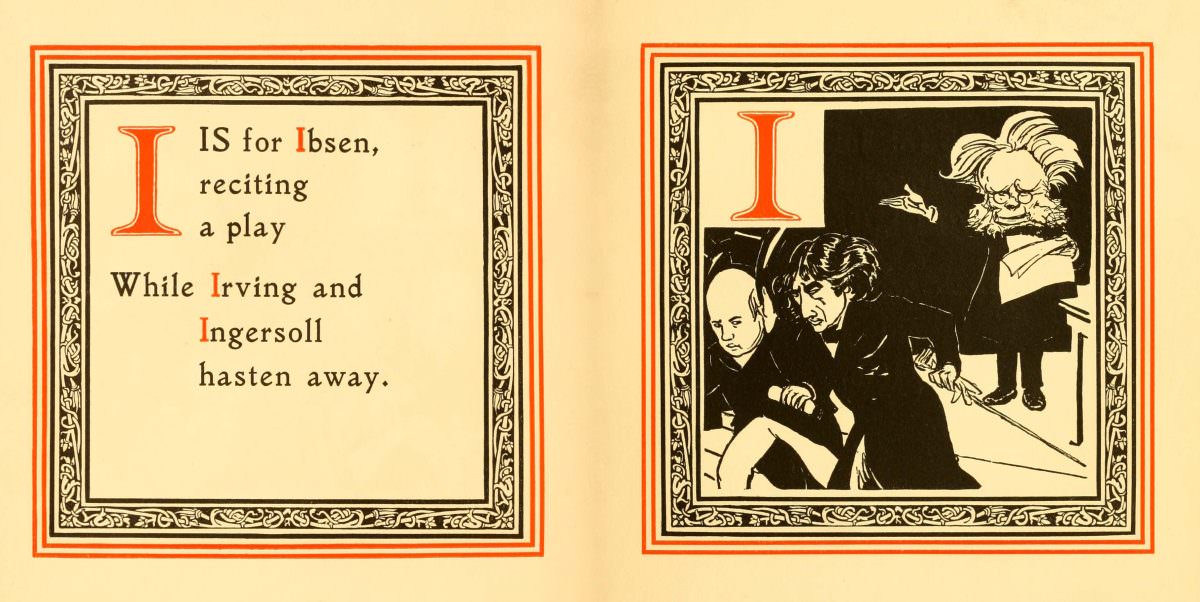
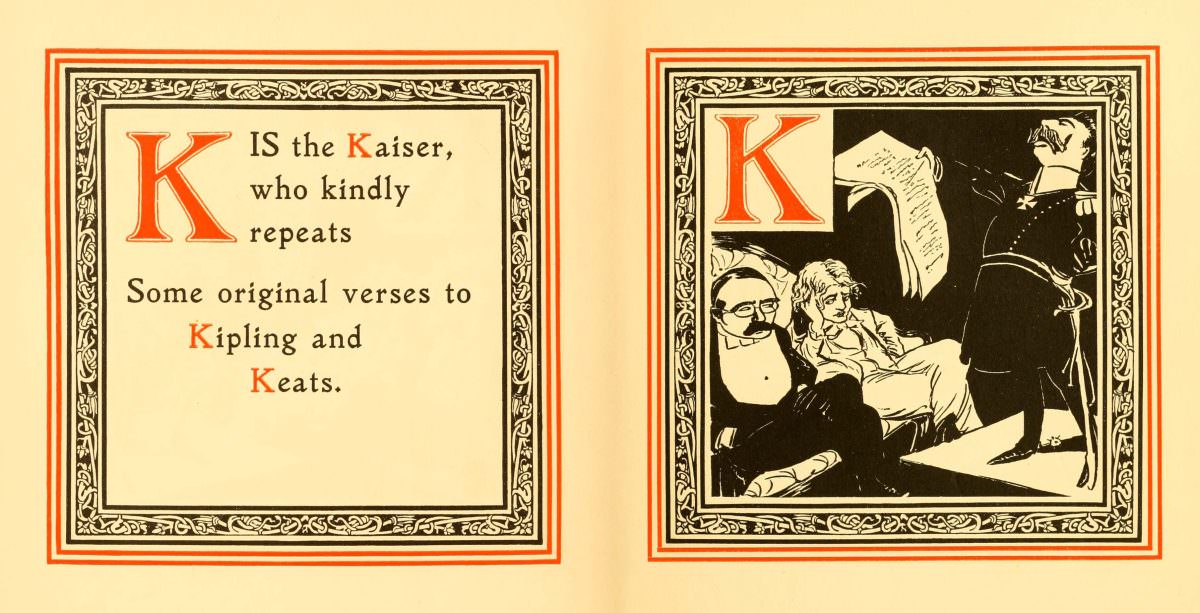
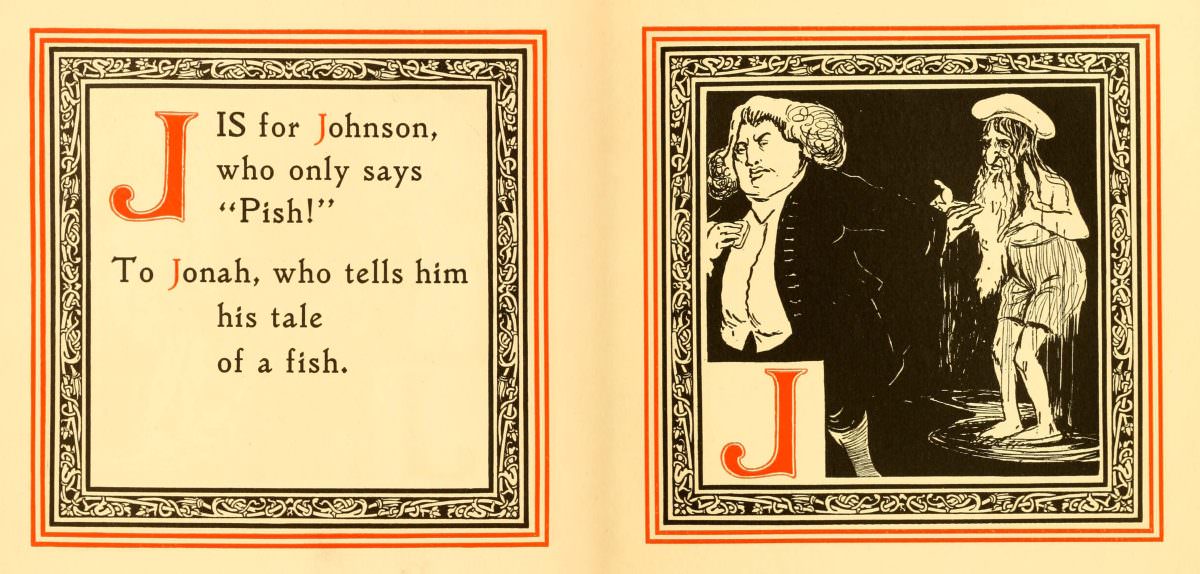
In 1899, writer and illustrator Oliver Herford published a slim but sharp little book called An Alphabet of Celebrities. The premise was simple: one poem for each letter of the alphabet, each one targeting a well-known figure or character of the era. But the execution was anything but ordinary. Herford paired every poem with his own hand-drawn illustration, turning the book into a two-part joke — the words set up the punchline, and the drawing delivered it.
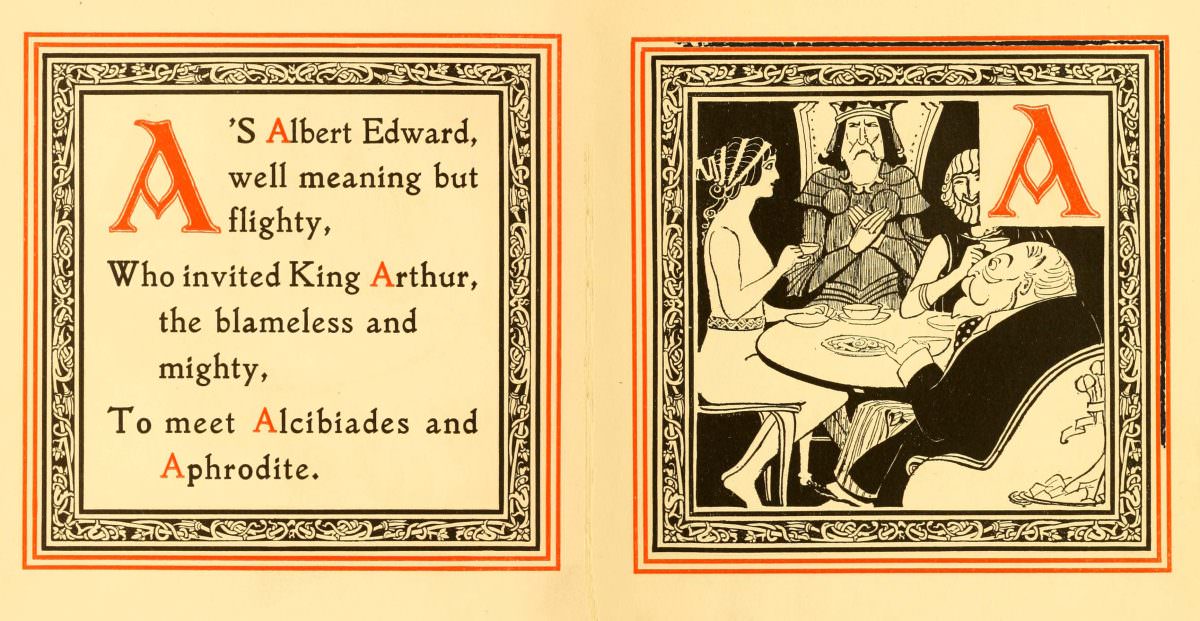
The book’s humor relied heavily on wordplay and puns. Herford had a gift for finding the absurd angle on a famous name or public reputation, and he used it relentlessly across all 26 entries. This wasn’t gentle flattery dressed up as verse — it was satire, aimed squarely at the celebrated and the self-important alike.
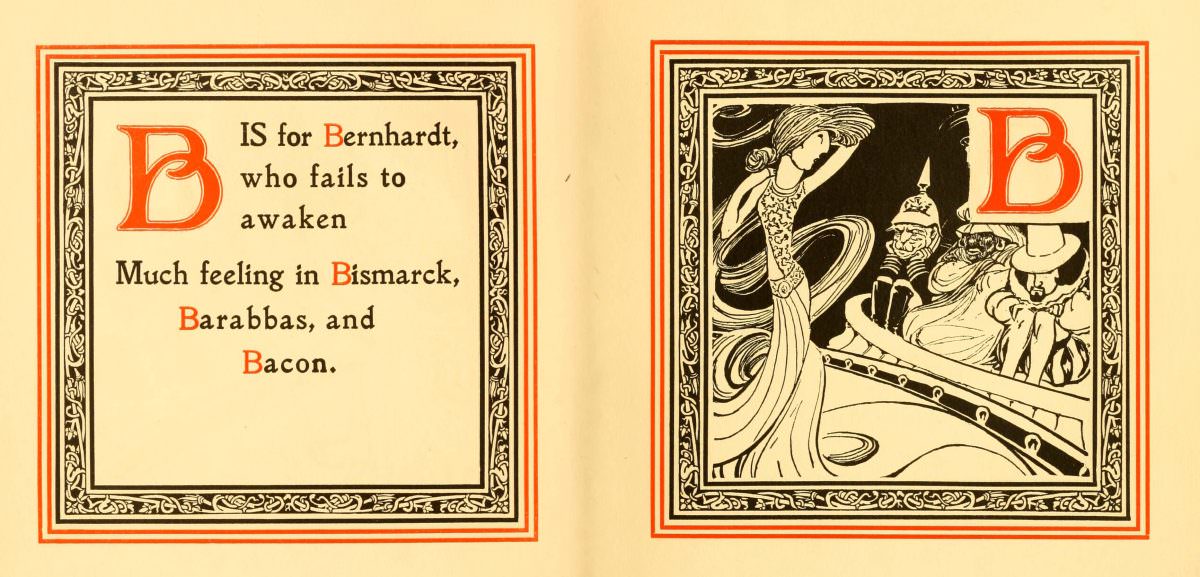
The cast of subjects ranged widely. Fictional icons like Alice from Alice in Wonderland appeared alongside real public figures such as Oscar Wilde. That mix of the imaginary and the actual gave the book an unusual texture — readers never quite knew whether the next page would skewer a living person or a beloved literary character.
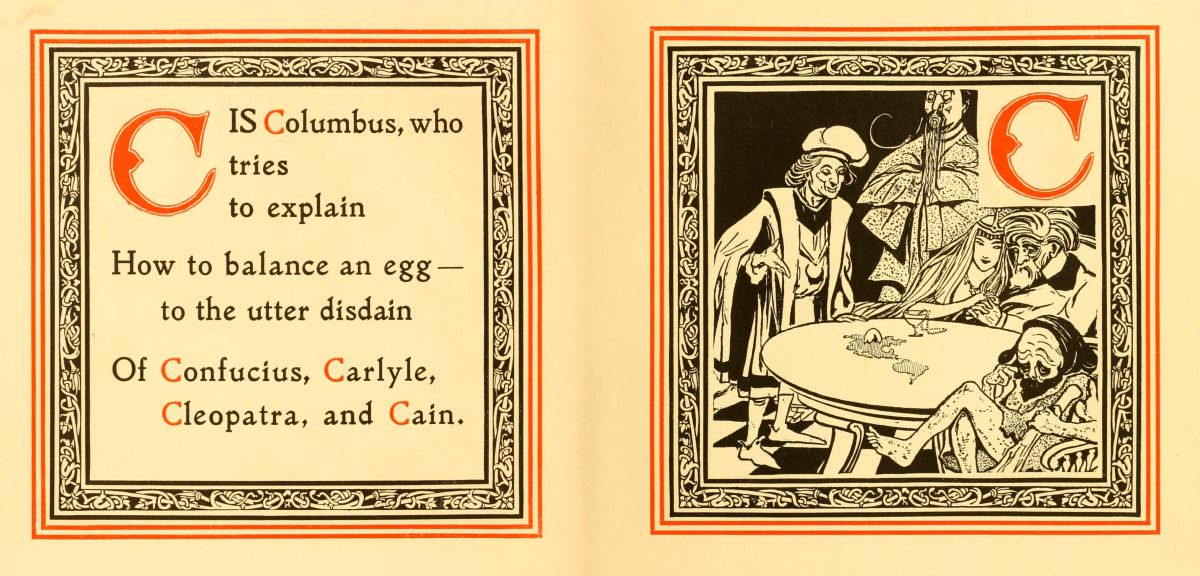
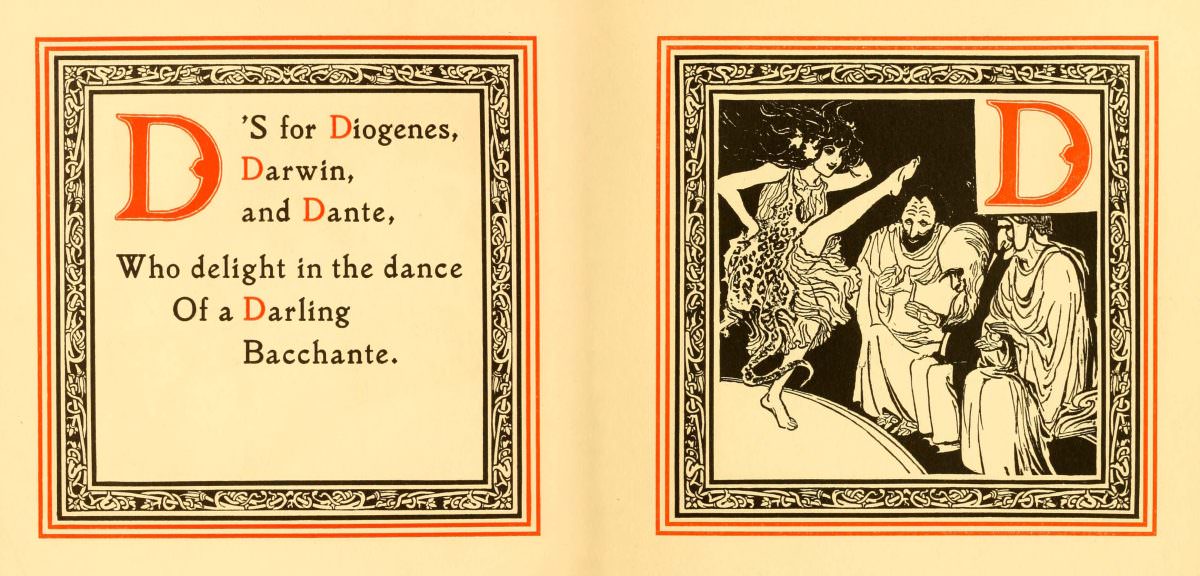
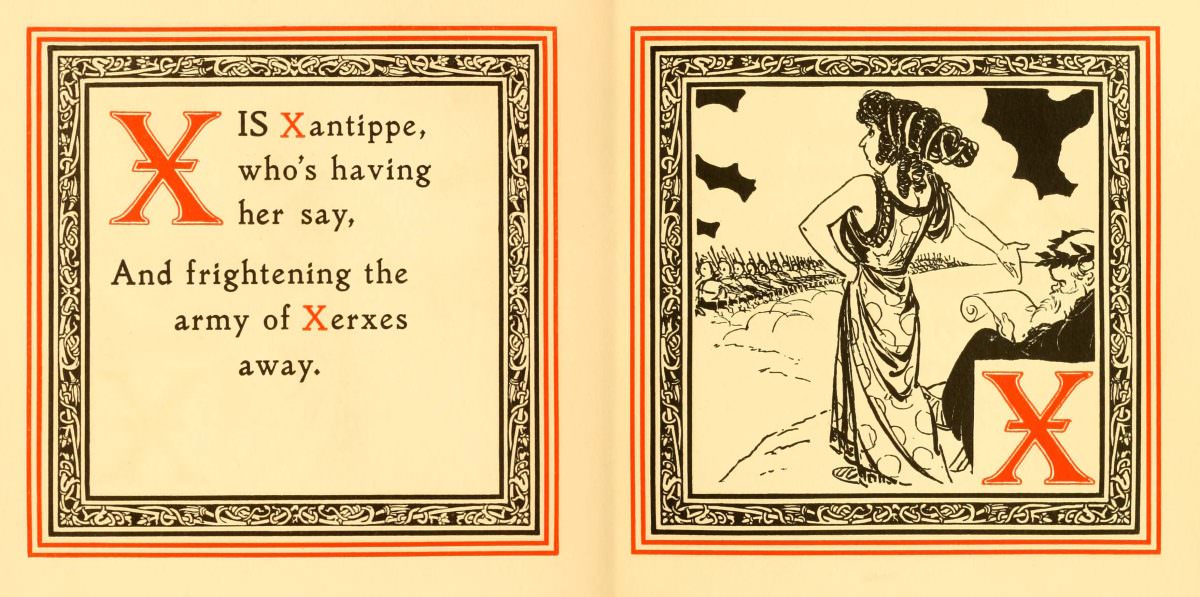
Herford’s illustrations matched the tone of the poems exactly. His drawings were witty and lively, capturing each subject with just enough exaggeration to make the joke land without tipping into cruelty. The art and the verse worked as a single unit — neither fully complete without the other.
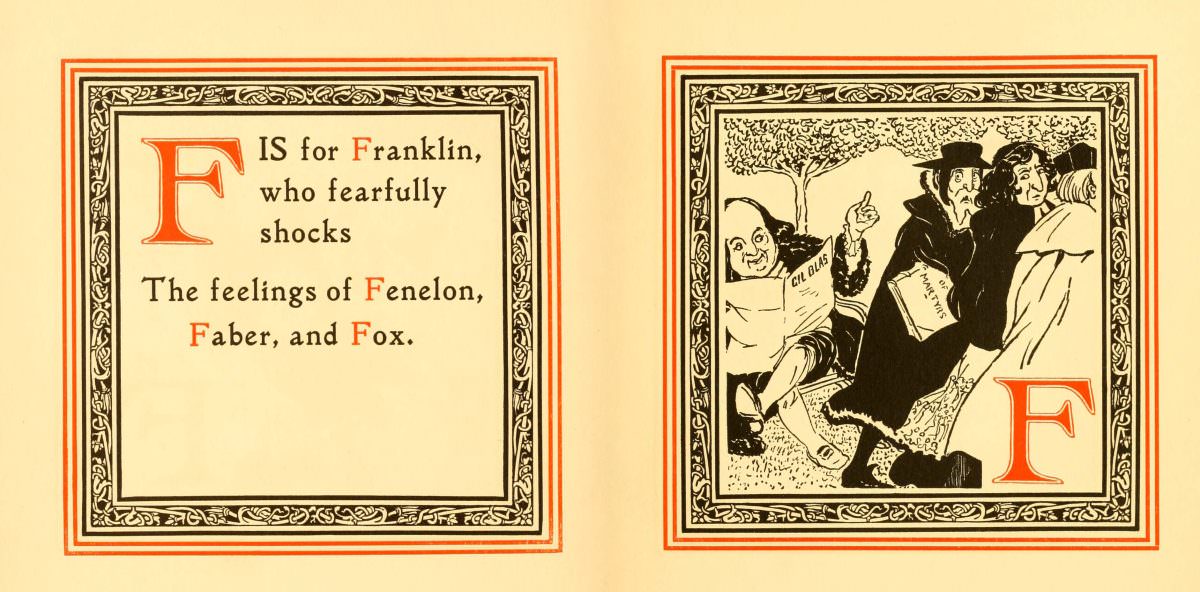
By the late 1890s, celebrity culture was already well established. Newspapers and magazines kept the public closely informed about actors, writers, politicians, and socialites. Herford understood that his readers would recognize the targets immediately — and that recognition was essential to the joke.
The alphabet format gave the book a built-in structure that kept it moving at a brisk pace. No subject lingered too long. Each letter brought a fresh face and a fresh angle, which made the book easy to read in one sitting or dip into at random.
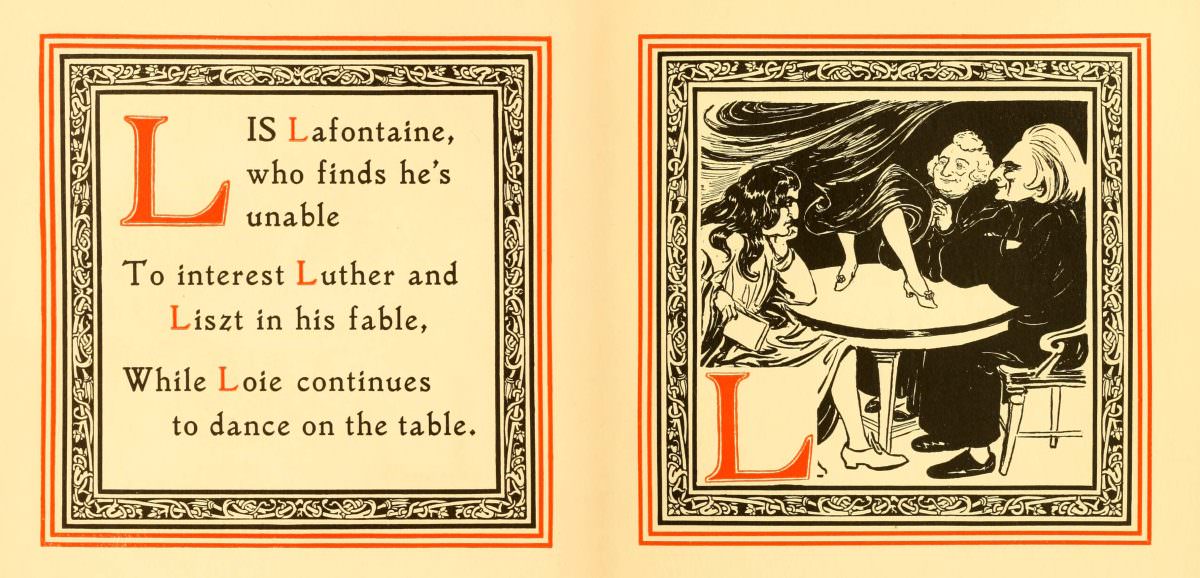
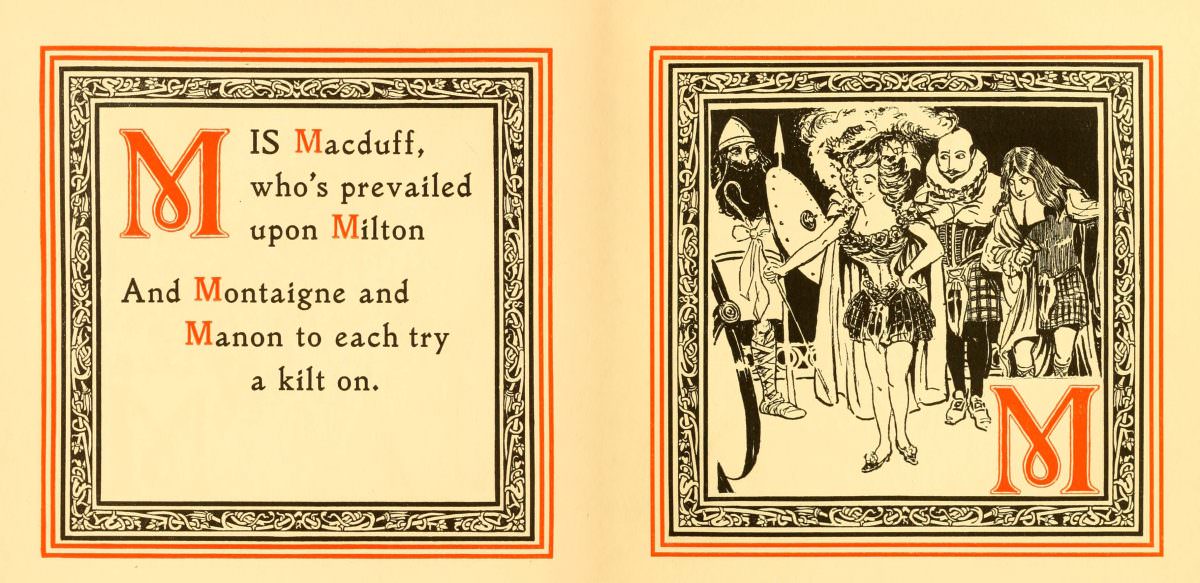
Herford was already a well-known humorist by the time the book appeared. He contributed regularly to magazines like Life and Harper’s, and his work was recognized for its intelligence and economy. An Alphabet of Celebrities fit neatly into that body of work — compact, clever, and precise.
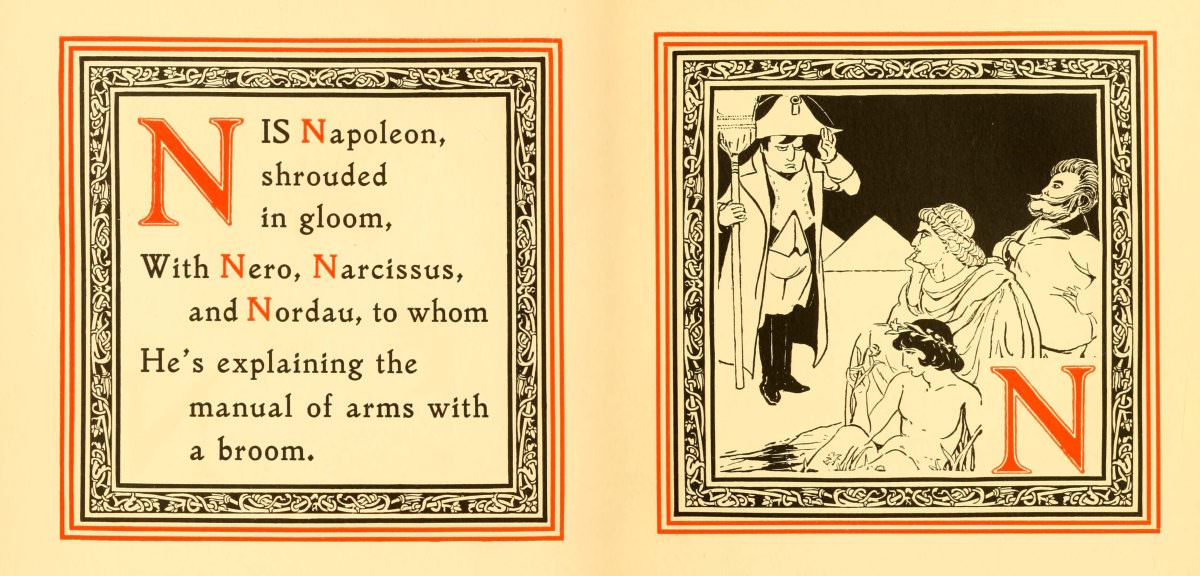
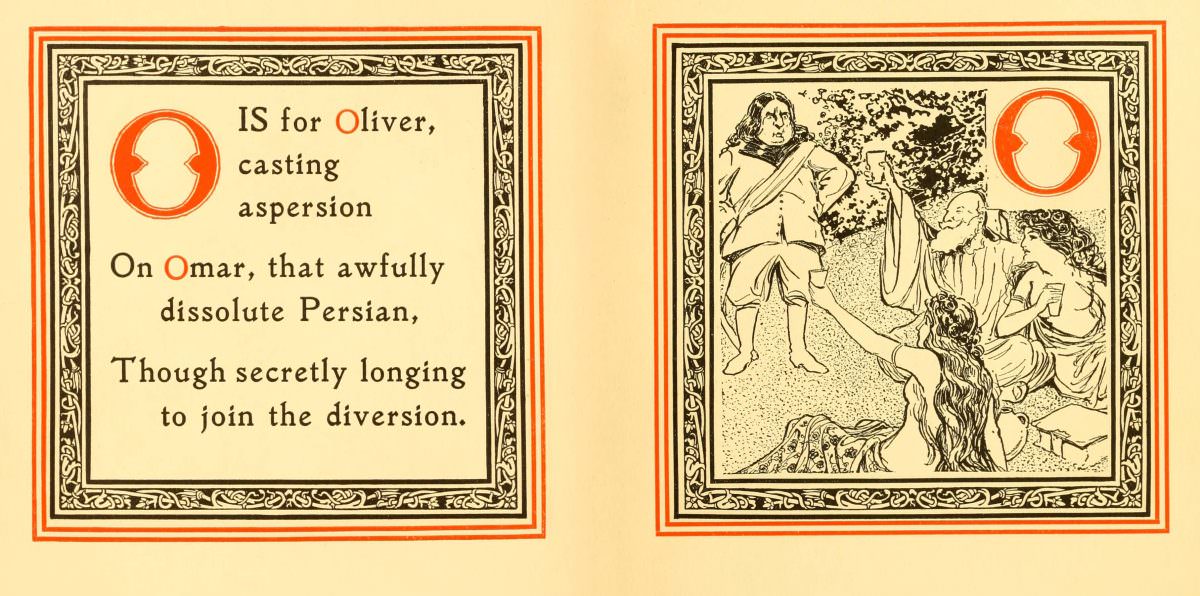
The book captured a specific moment in time. The celebrities it featured were the talk of the 1890s — some at the peak of their fame, others already sliding toward obscurity. Reading it today is like looking through a keyhole into a world that was confident, opinionated, and very much entertained by its own famous faces.
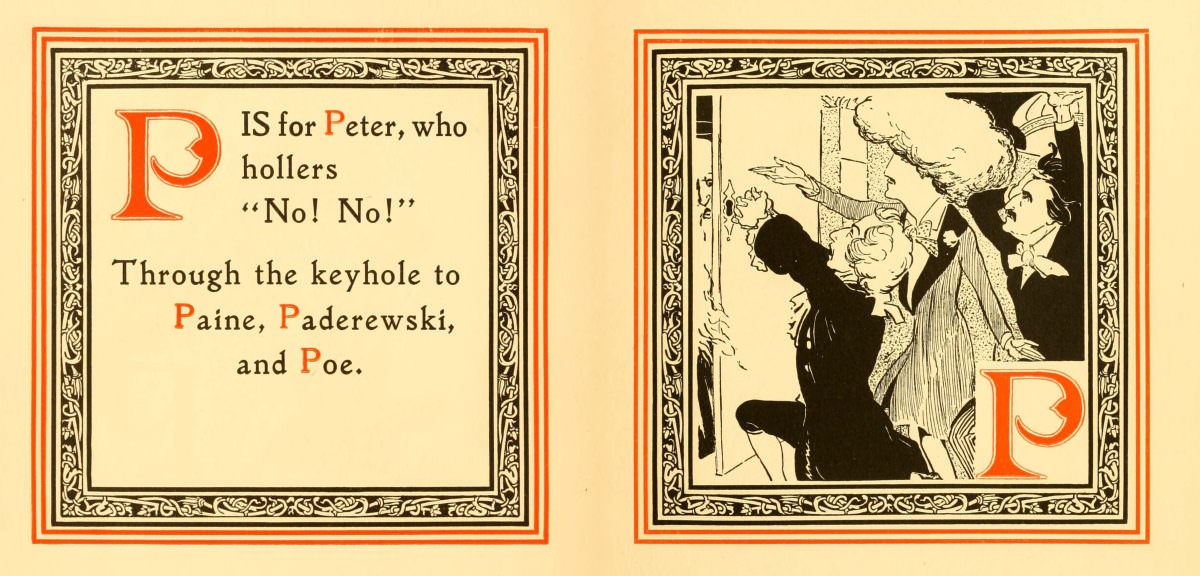
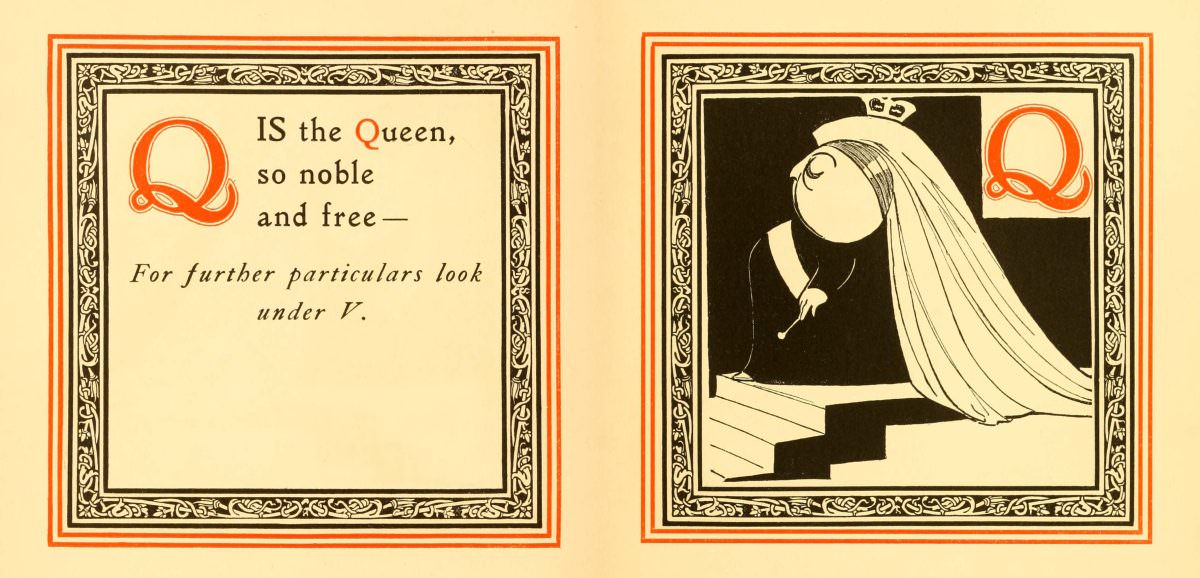
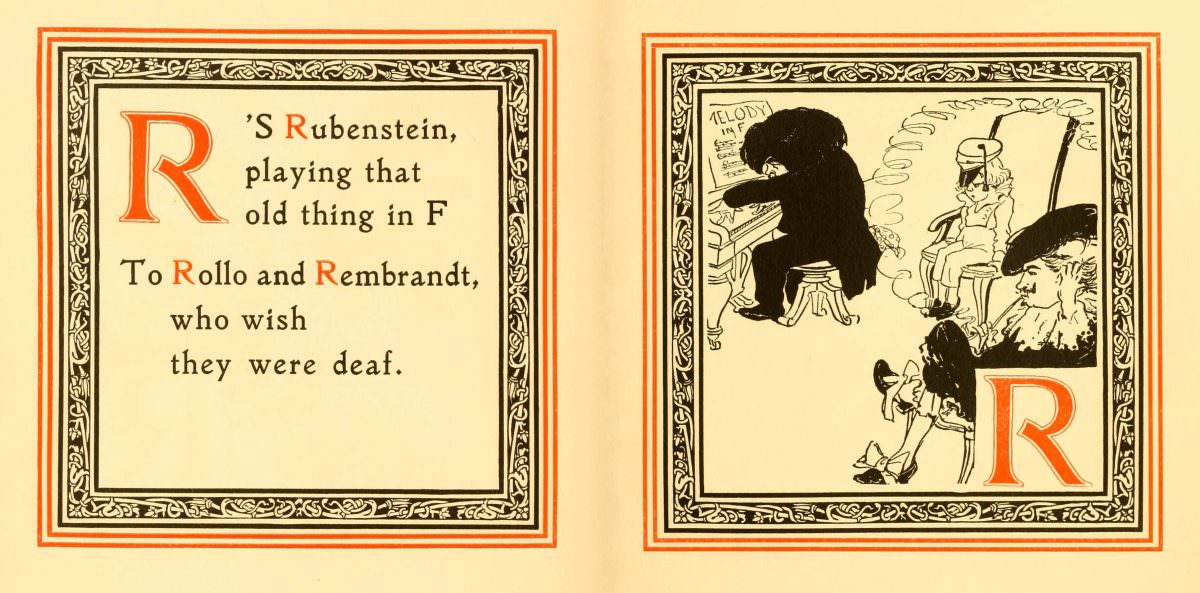
What made the book work as satire — rather than just mockery — was Herford’s evident affection for the material. He wasn’t dismissing these figures. He was engaging with them, finding the comic potential in their public personas and turning it into something that was funny precisely because it was also a little true.
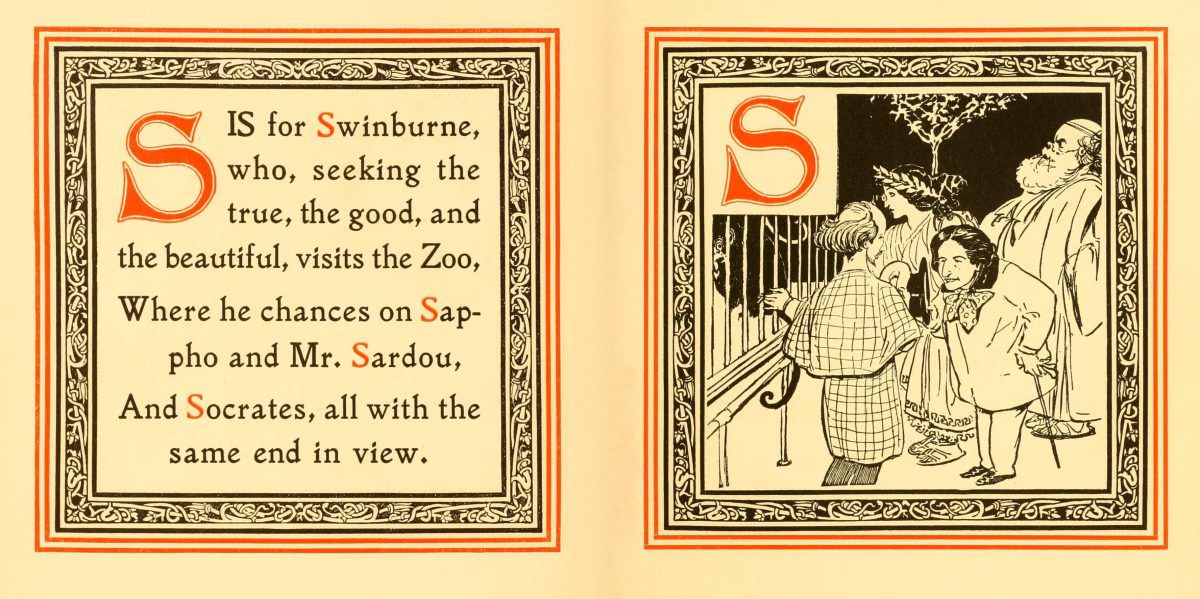
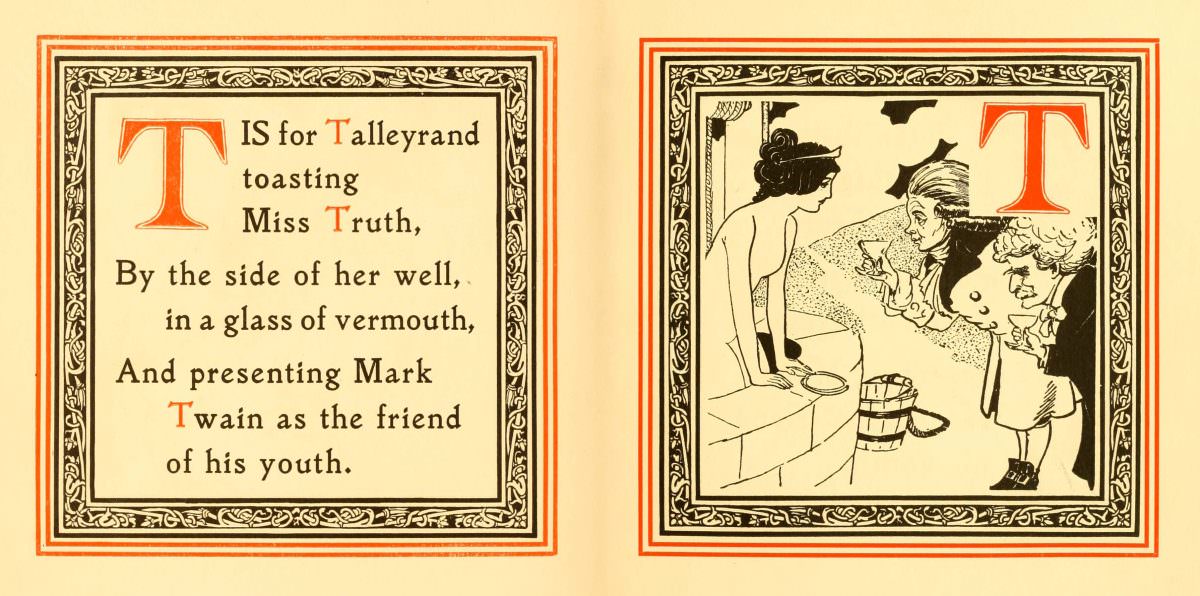
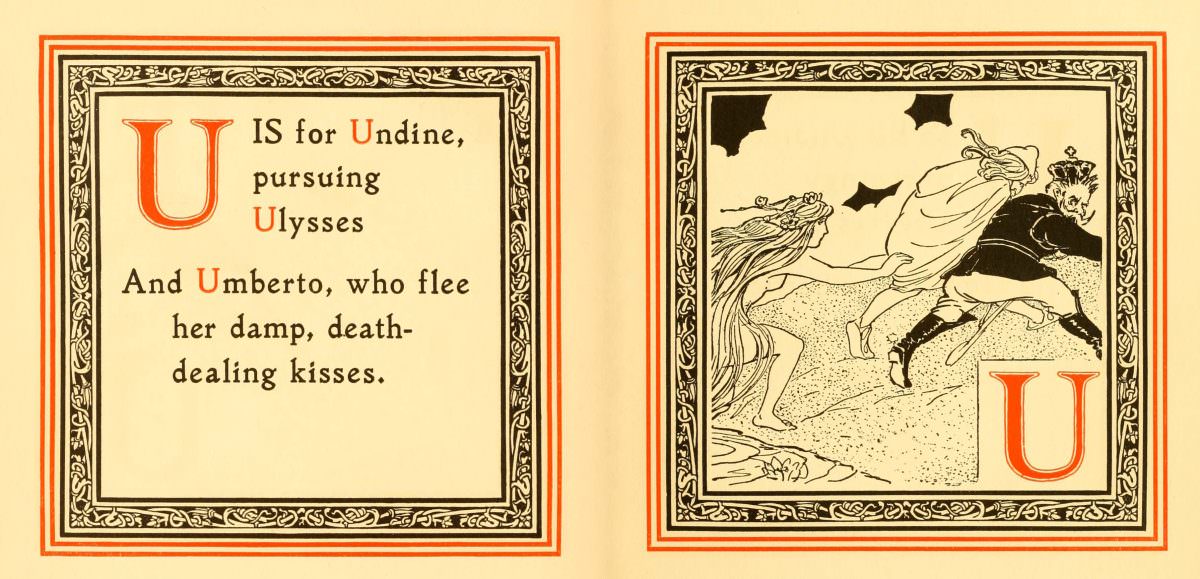
The 26 poems varied in tone and target, but the quality stayed consistent throughout. Some entries leaned harder on the puns; others let the illustration do the heavy lifting. The combination of both in every entry was the formula, and Herford stuck to it without letting the book become repetitive.
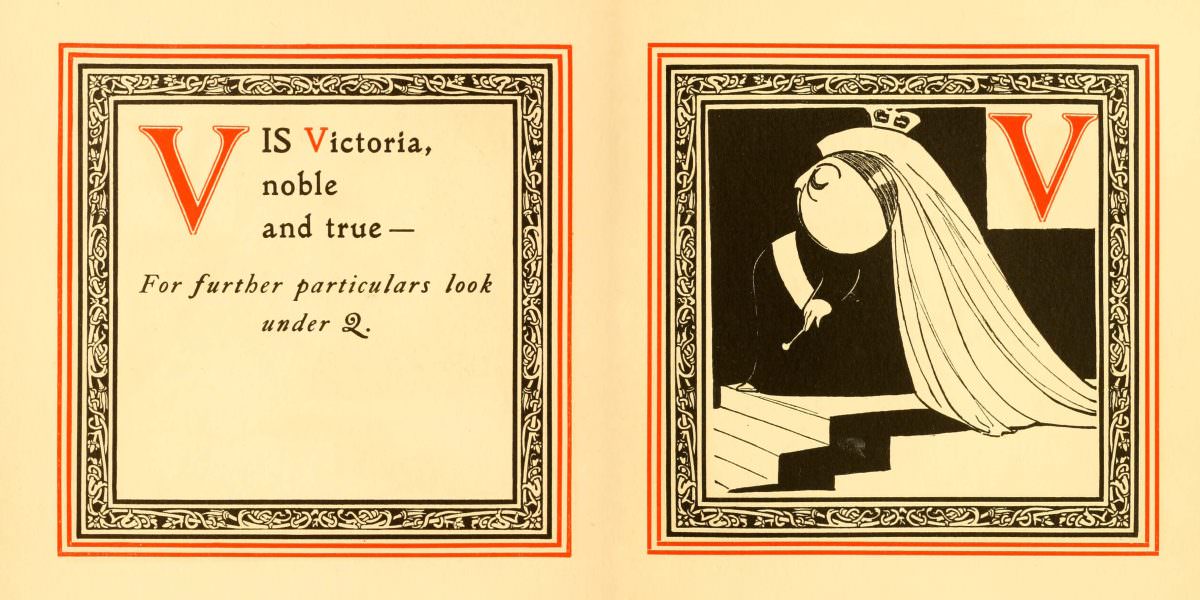
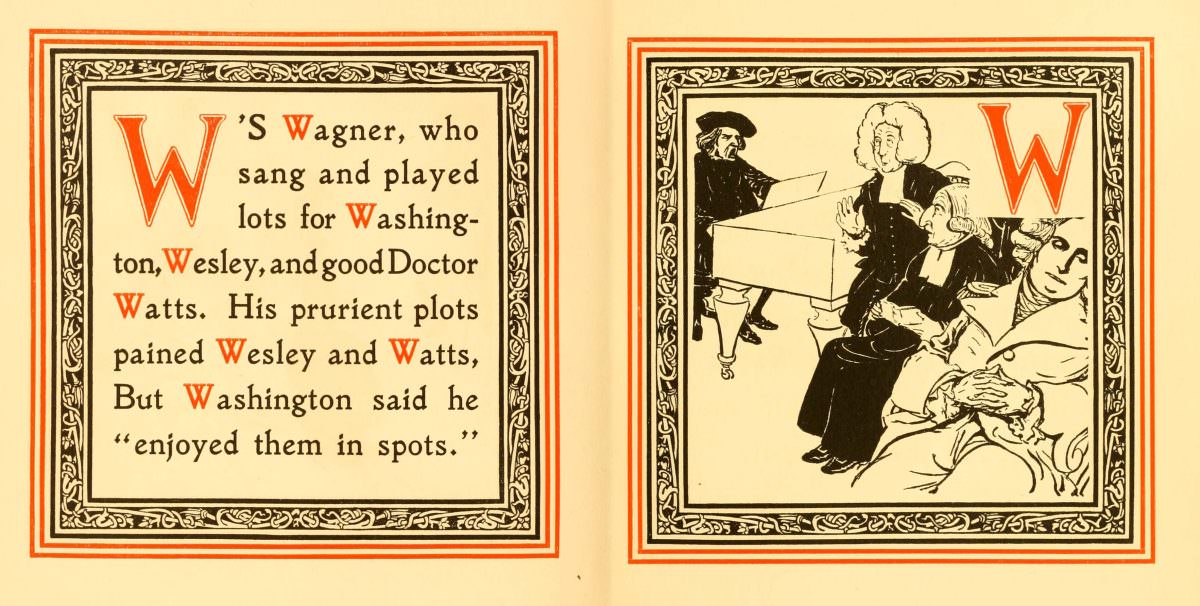
An Alphabet of Celebrities stands as a document of how people in 1899 saw their own cultural landscape — who mattered, who was worth laughing at, and who was famous enough to anchor a letter of the alphabet. Herford’s decision to write and illustrate the entire book himself gave it a unified voice that a collaboration never would have achieved.