The Cannes Film Festival is one of the most famous events in the world of cinema. It takes place every year in Cannes, a city on the southern coast of France. The first festival was planned for September 1939, but the outbreak of World War II shut down those plans entirely. It finally opened on September 20, 1946, with twenty-one countries bringing their films to what became one of the first major international cultural events of the postwar era.
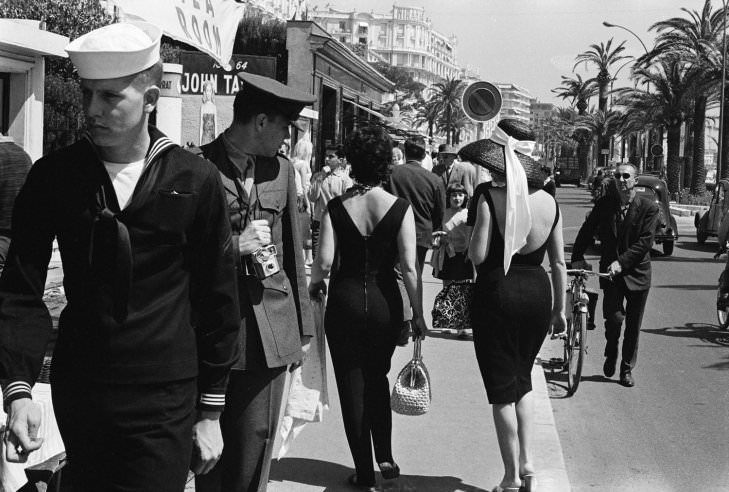
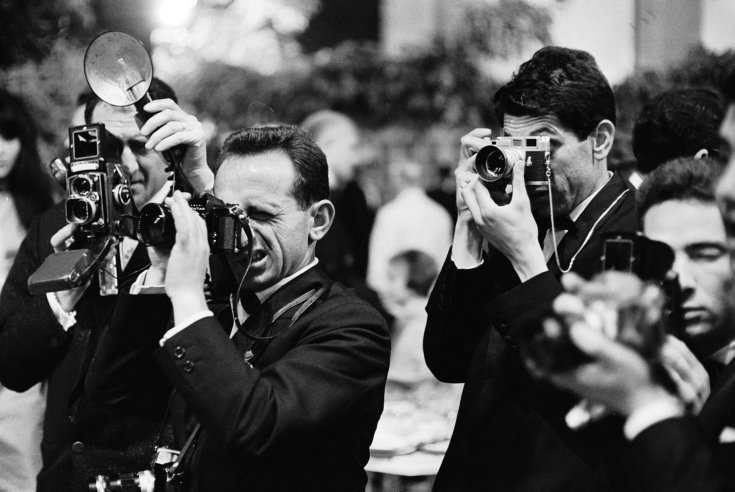
By the early 1950s, Cannes was no longer just a film competition. It had become a full-on spectacle. Photographers swarmed the beaches. Scandals filled the gossip columns. Stars, directors, and socialites from across the world descended on the French Riviera each spring, turning the Croisette — the famous seaside boulevard — into a stage of its own. The photos taken during those decades give us a rare, unfiltered look at some of the biggest names in entertainment at the height of their fame.
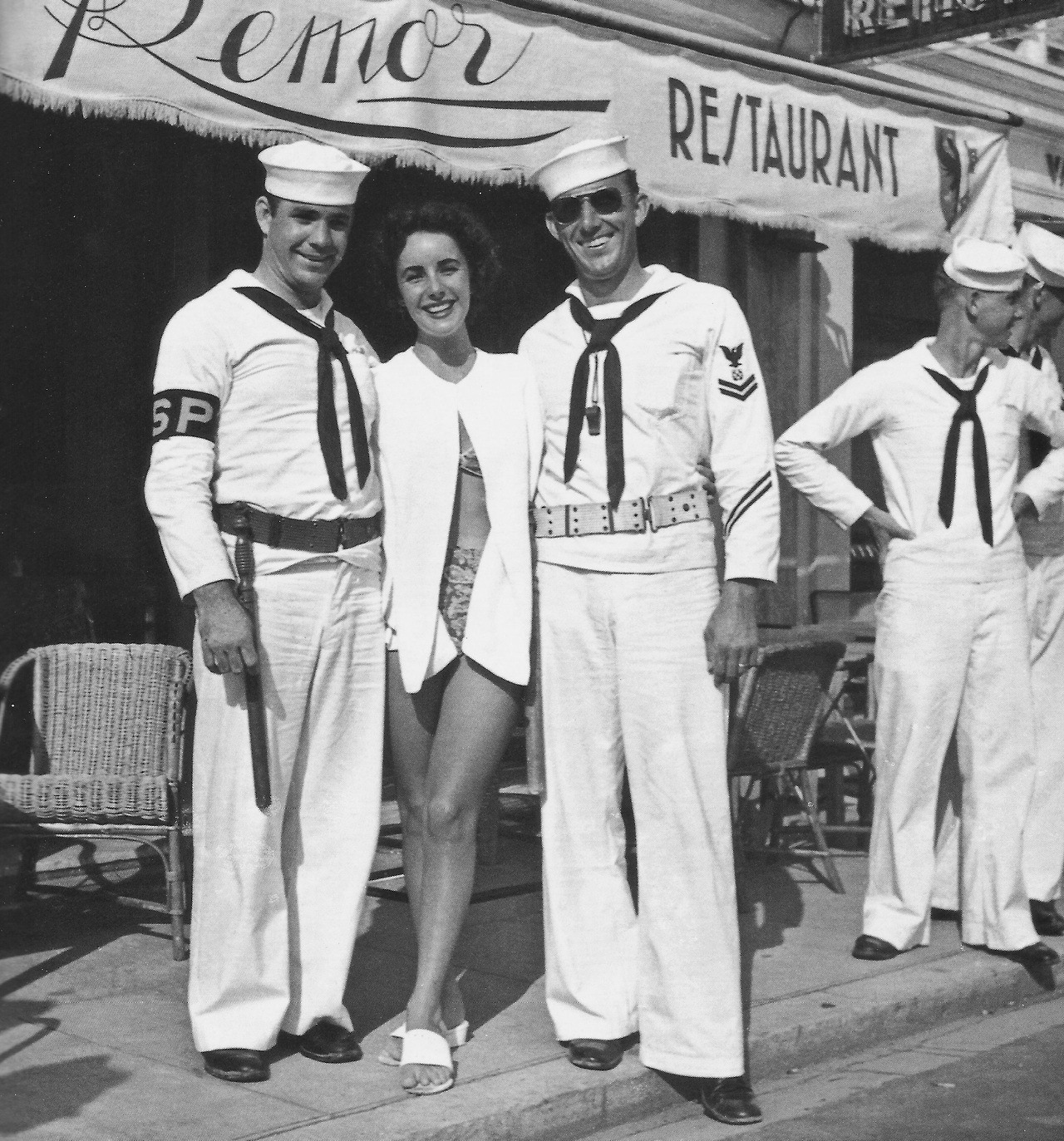
Elizabeth Taylor was already a recognizable face when she appeared at Cannes in 1950. Still a teenager, she was among the earliest Hollywood stars to make the trip to the French Riviera, signaling just how quickly the festival was drawing international talent. It would not take long for Cannes to become an annual pilgrimage for the biggest names in film.
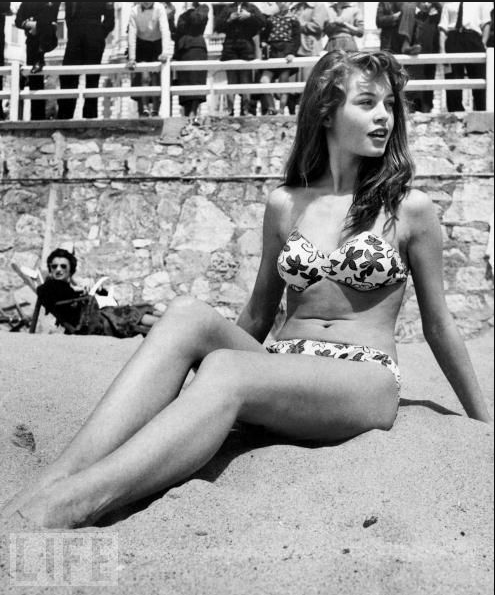
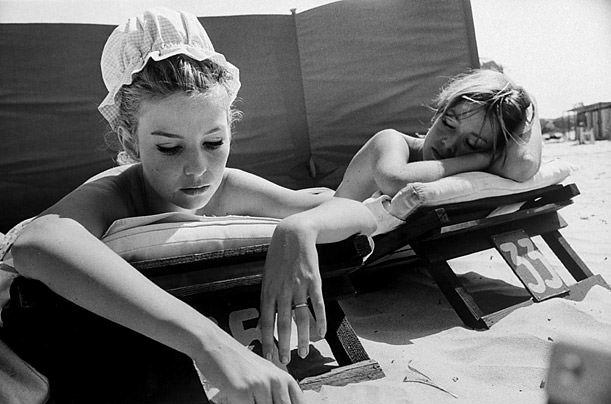
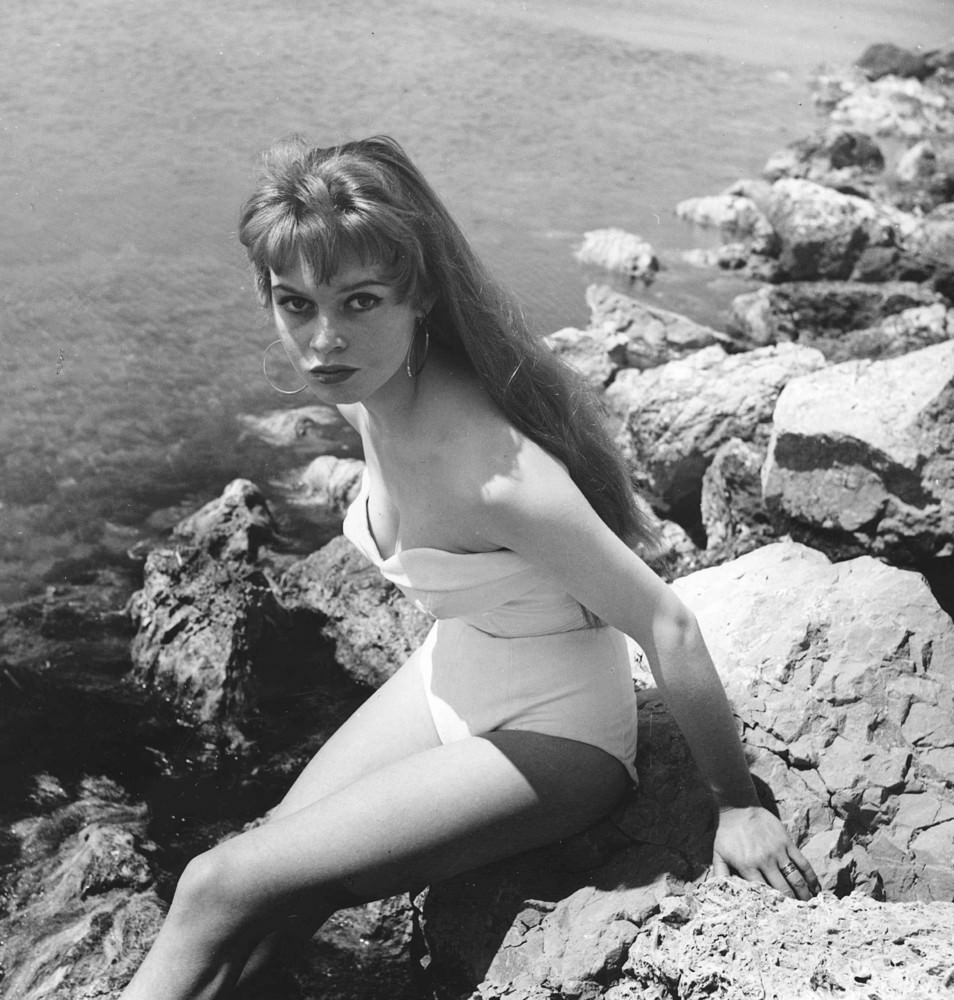
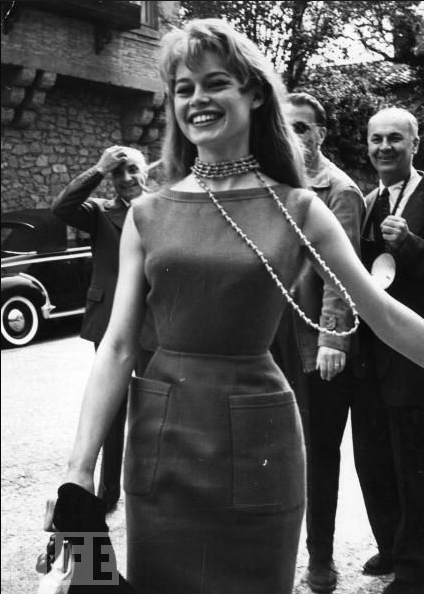
No figure became more associated with Cannes in the 1950s than Brigitte Bardot. She first appeared at the festival in 1953, when she was just beginning to attract serious public attention. Her presence on the beach drew photographers in droves. By 1956, after starring in “And God Created Woman,” she had become an international icon — and Cannes was a big part of how the world came to know her.
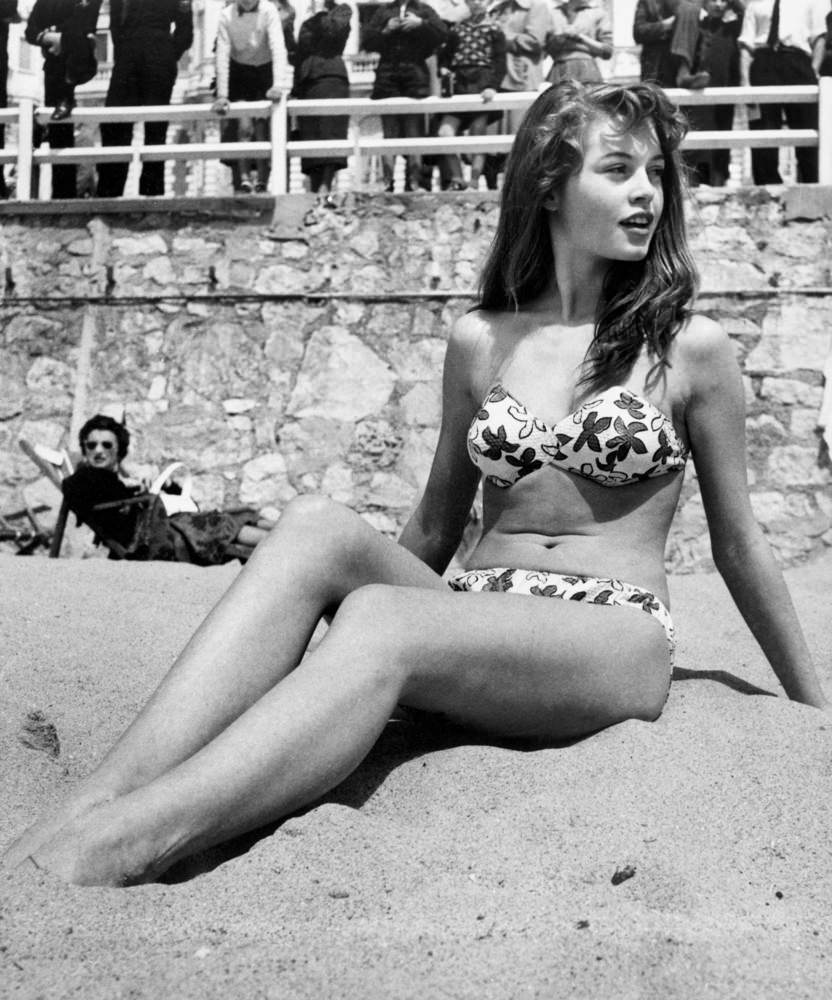
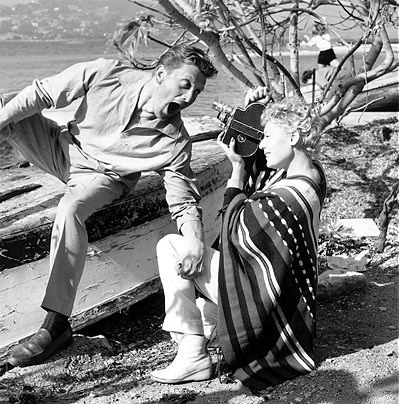
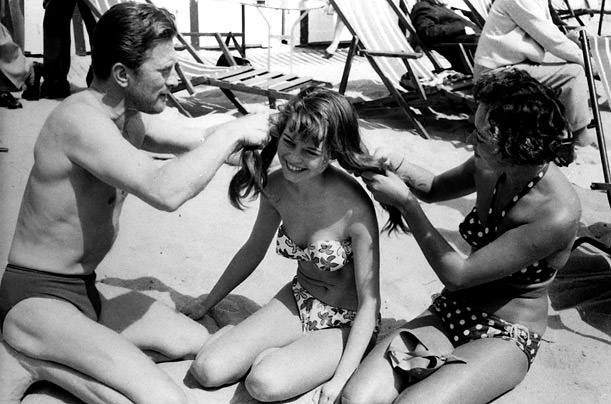
Kirk Douglas was also at the 1953 festival, and he made no effort to keep a low profile. He was photographed making faces while actress Tilda Thamar filmed him, and he was also spotted on the beach with the young Bardot — an image that perfectly captured the loose, sun-soaked energy of Cannes in those early years.
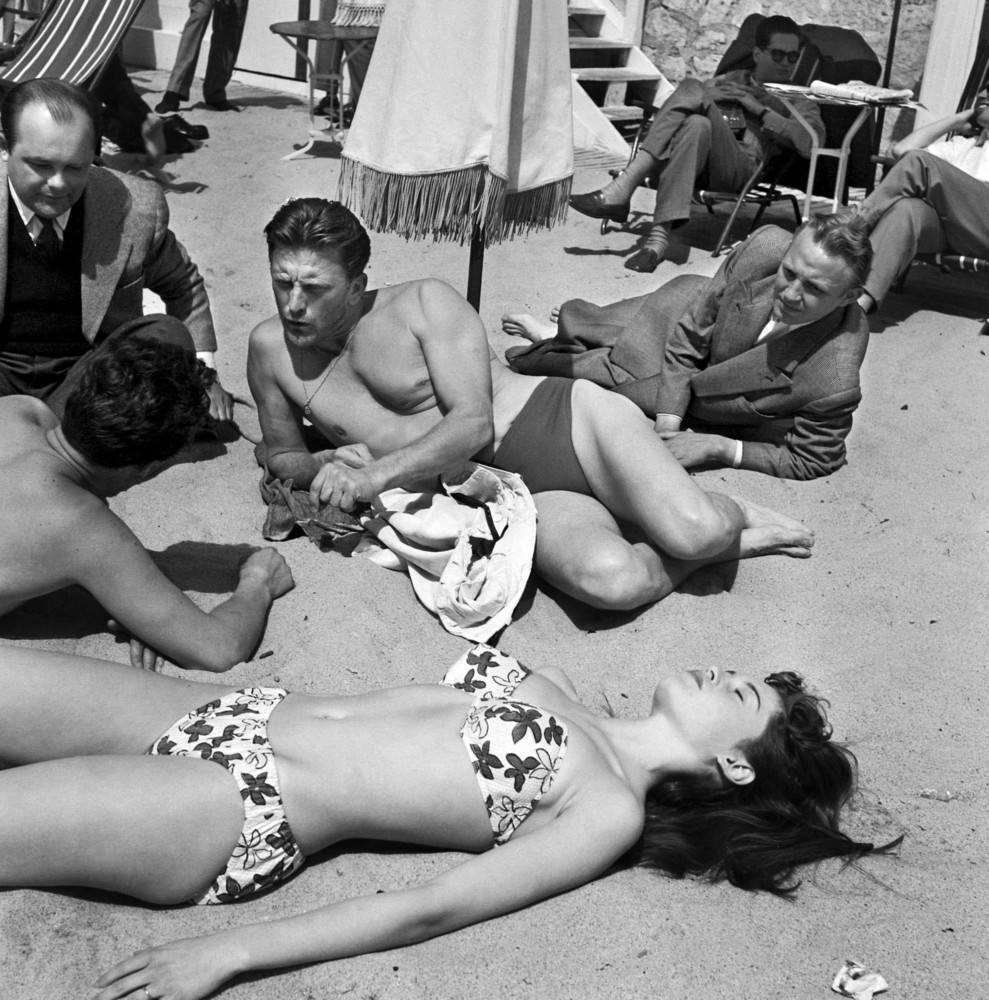
Brigitte Bardot and Robert Mitchum also shared the beach at Cannes in 1953, a meeting of two very different kinds of screen presence — Bardot’s playful sensuality and Mitchum’s rugged cool. It was the kind of chance encounter that only Cannes could produce.
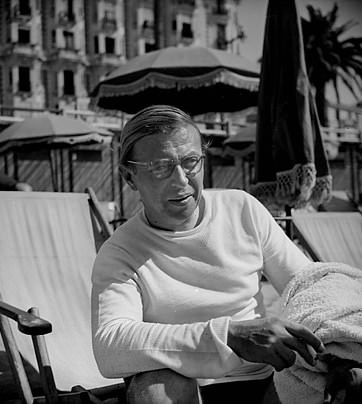
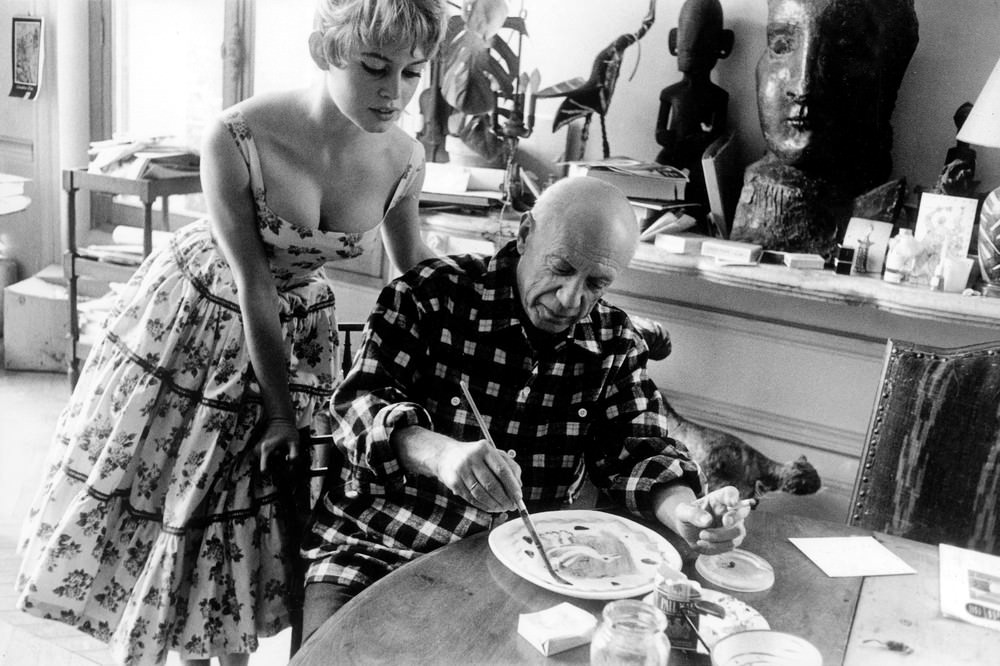
The 1953 festival also saw the appearance of French philosopher Jean-Paul Sartre, who had attended as early as 1947. His presence at Cannes reflected how the festival attracted not just film industry insiders, but also major cultural figures from literature, art, and philosophy. That same spirit brought Pablo Picasso into the orbit of the festival — Bardot was photographed watching Picasso work in his studio in the nearby town of Vallauris during the 1956 festival.
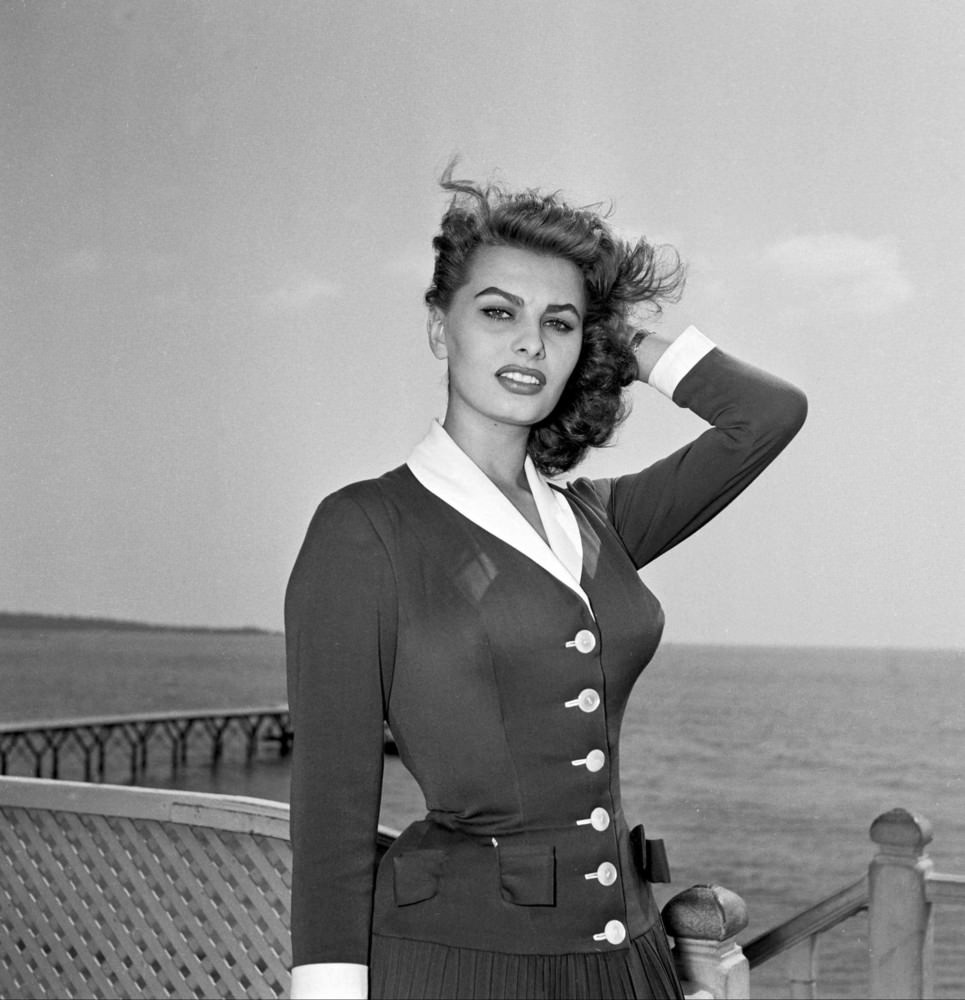
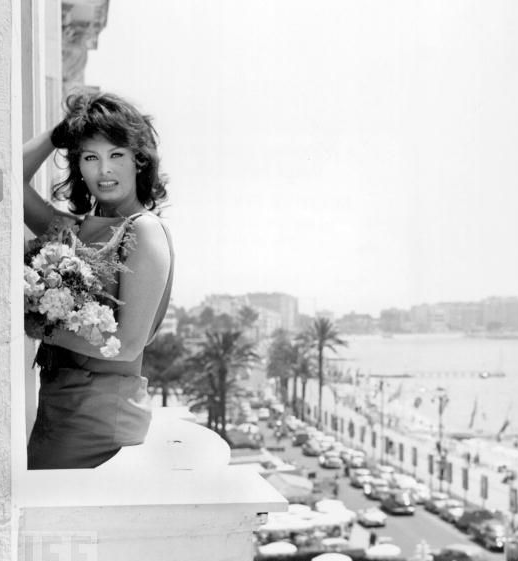
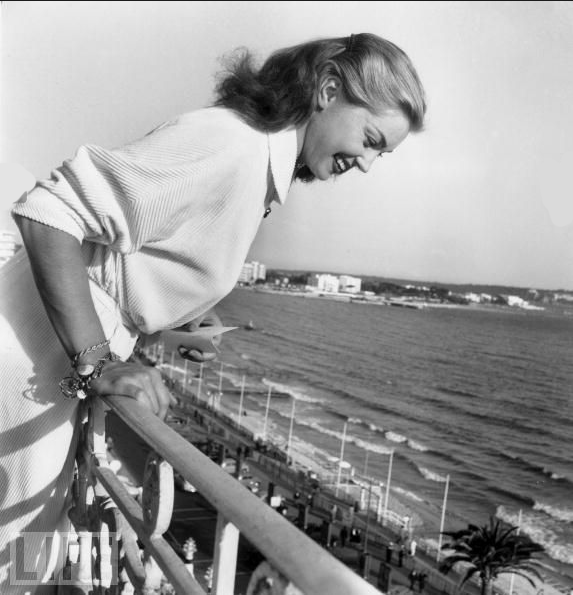
Sophia Loren was another constant presence at Cannes during the 1950s. She appeared at the festival in 1954 and again in 1959, when she was photographed on her hotel balcony holding a bouquet of flowers. Even in a candid moment, she carried herself with the kind of poise that made her one of the most photographed women in the world.
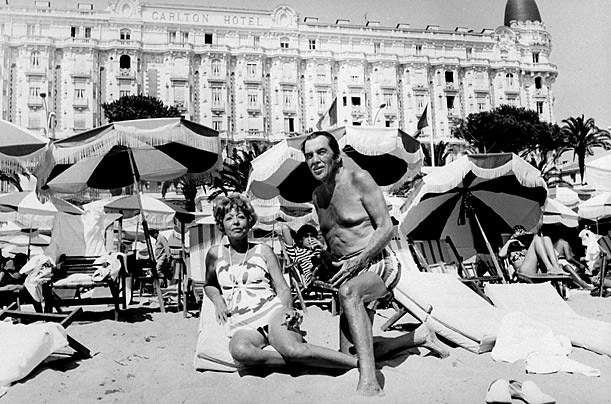
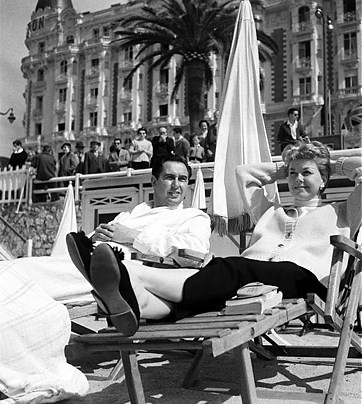
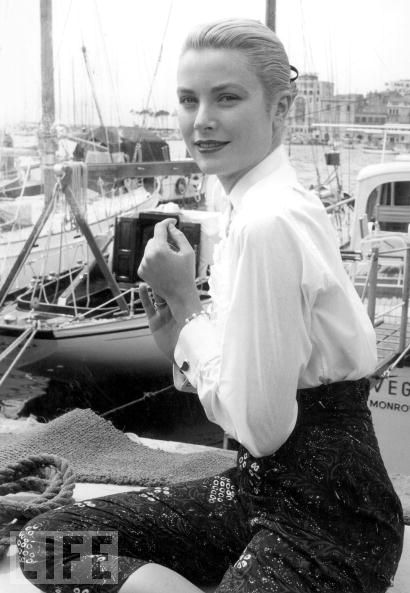
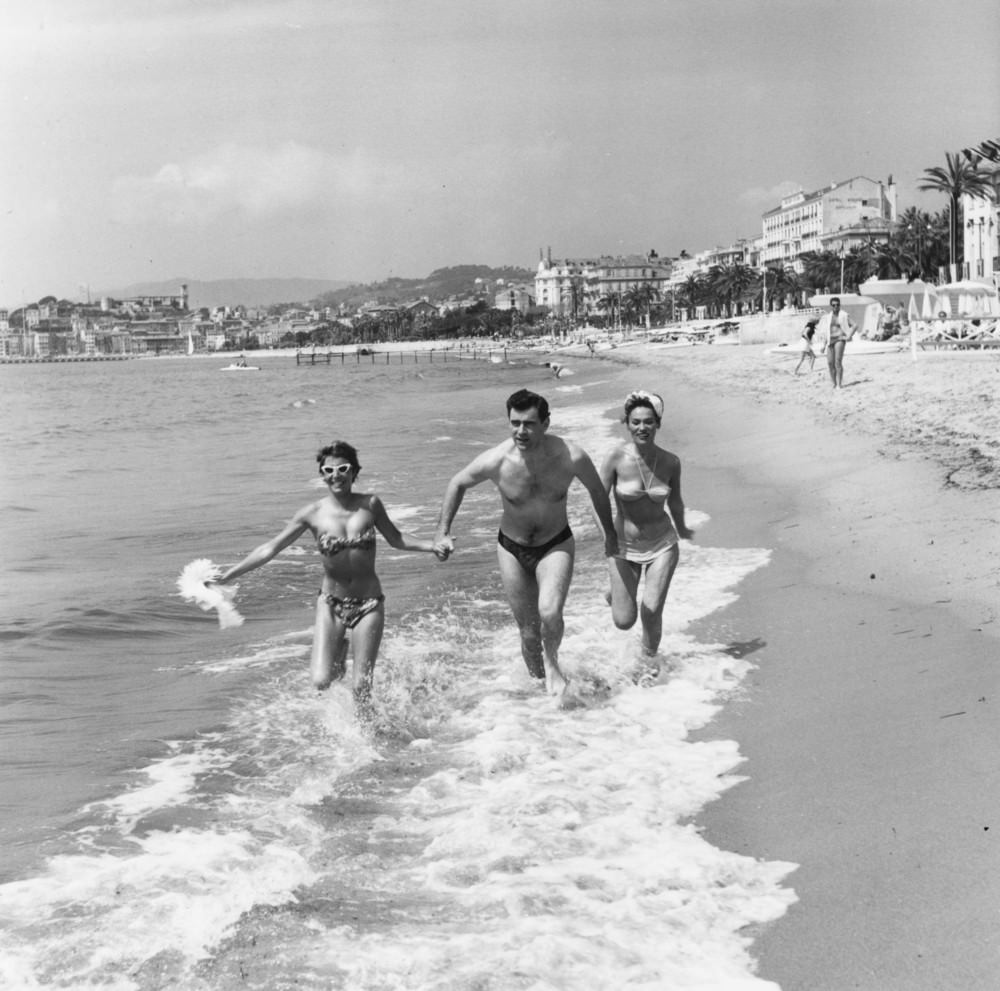
The 1955 festival brought Doris Day and her husband Marty Melcher to Cannes, where they relaxed on the beach in a surprisingly ordinary scene for two of Hollywood’s biggest names. That same year, Esther Williams — famous for her synchronized swimming films — threw autographs from a hotel balcony to the crowd below. And on May 6, 1955, Grace Kelly posed dockside in one of the most iconic images ever taken at the festival. Within a year, she would retire from acting and become Princess of Monaco.
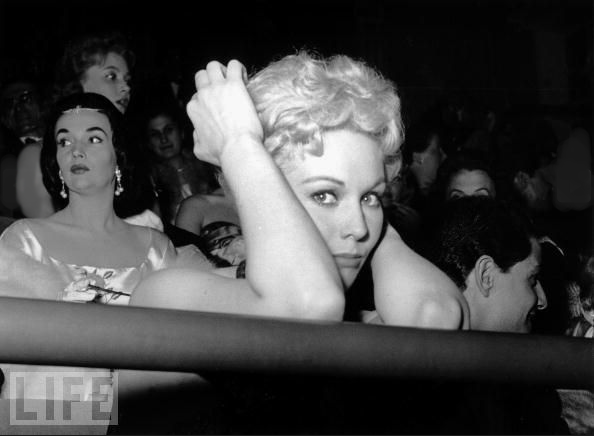
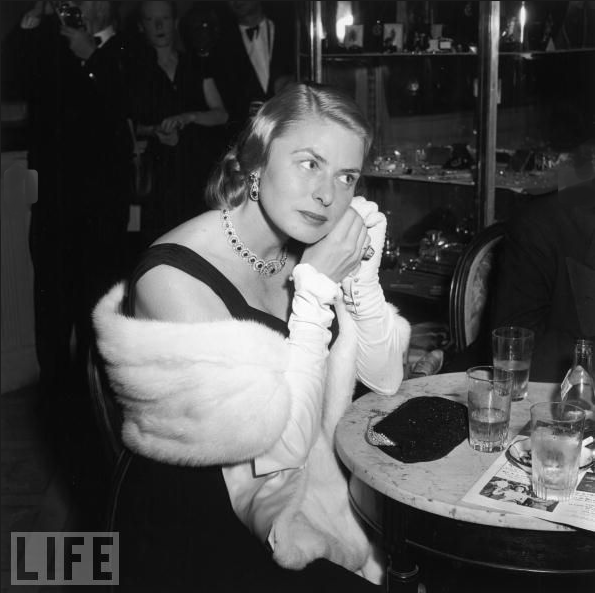
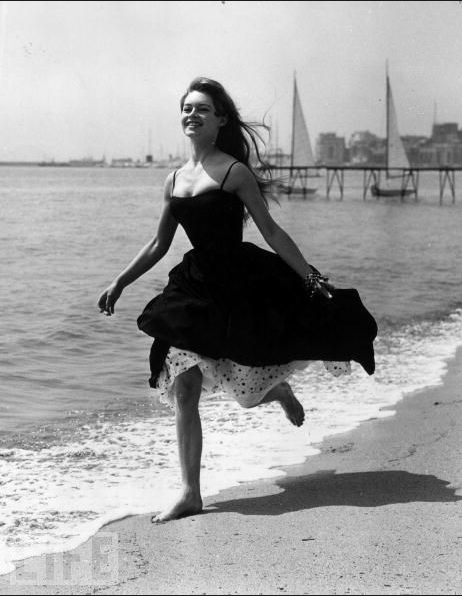
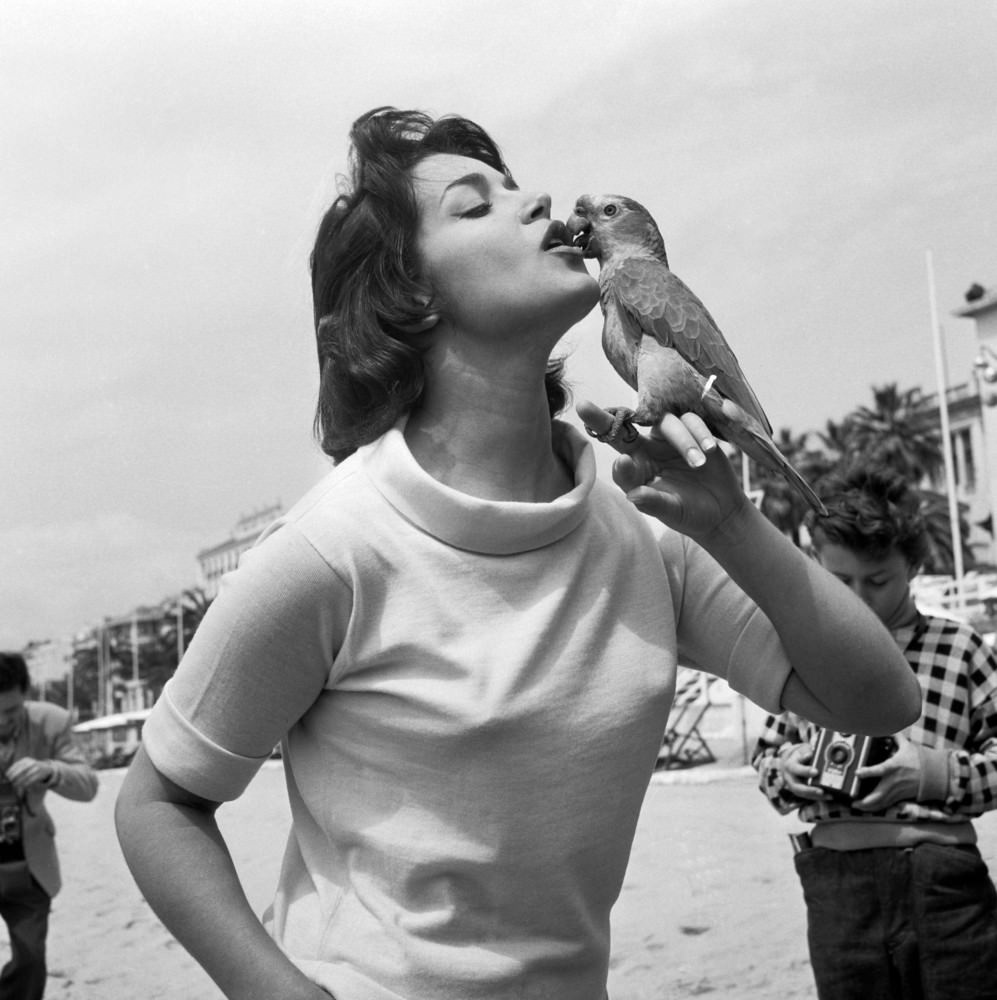
The 1956 festival was particularly star-studded. Ginger Rogers attended, as did Kim Novak and Ingrid Bergman. Bergman was photographed at a cocktail table adjusting an earring — effortlessly glamorous. That year, Jacques Cousteau’s documentary “The Silent World” won the Palme d’Or, the only documentary to take the top prize until Michael Moore’s “Fahrenheit 9/11” in 2004. Bardot also ran barefoot on the Cannes sand that year, just months after “And God Created Woman” had made her a global sensation.
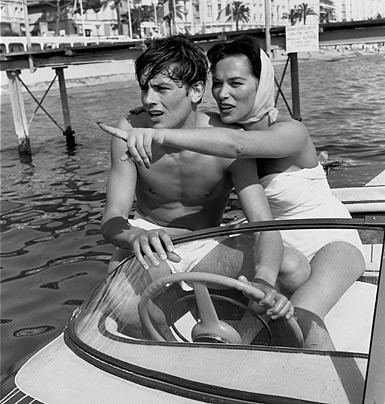
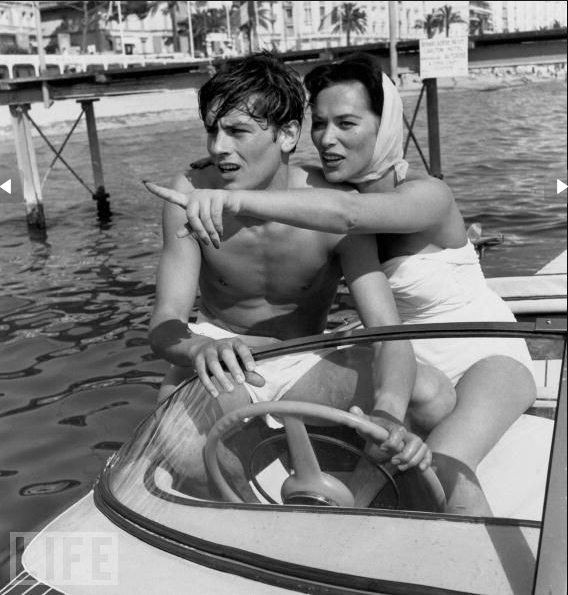
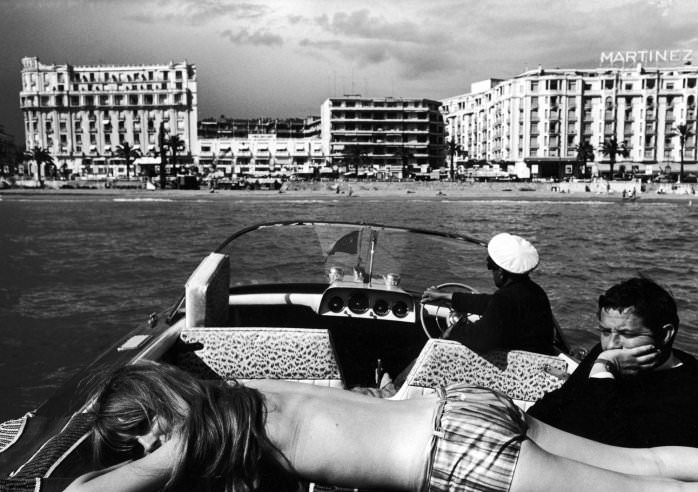
In 1958, a young Alain Delon — not yet the massive star he would become — was photographed boating along the Croisette with actress Bella Darvi. The image captured the easy, sun-drenched lifestyle that Cannes offered to those in its orbit. Delon’s charm and looks were already obvious, even in a casual snapshot on the water.
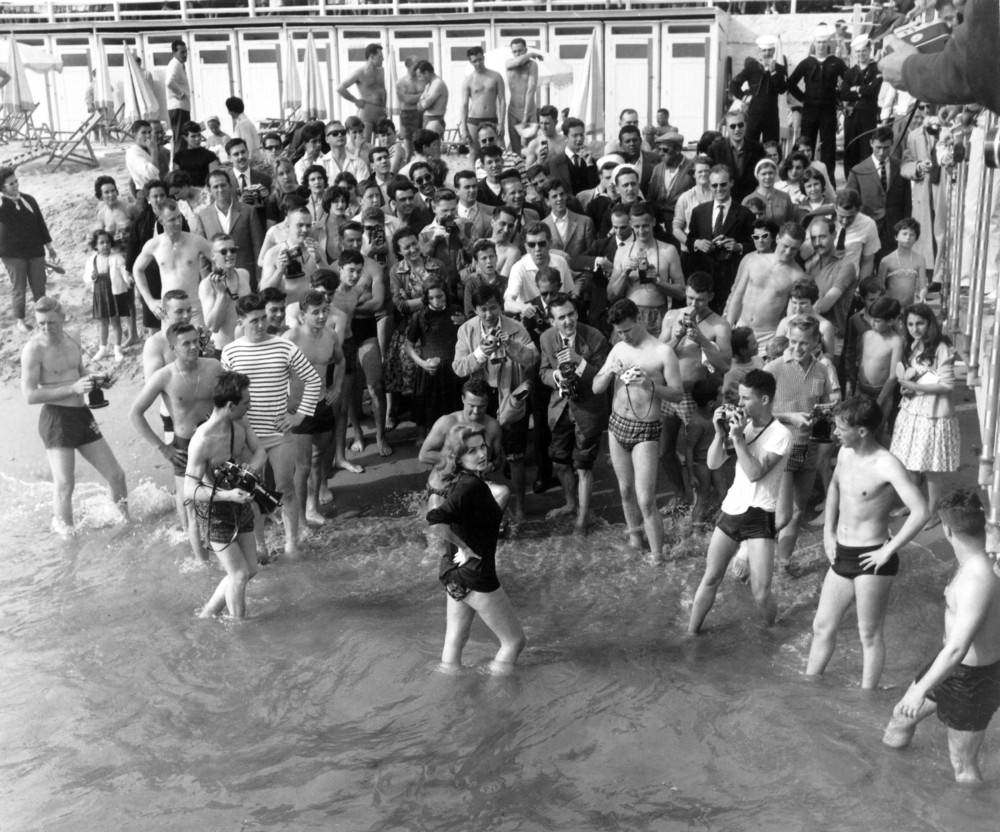
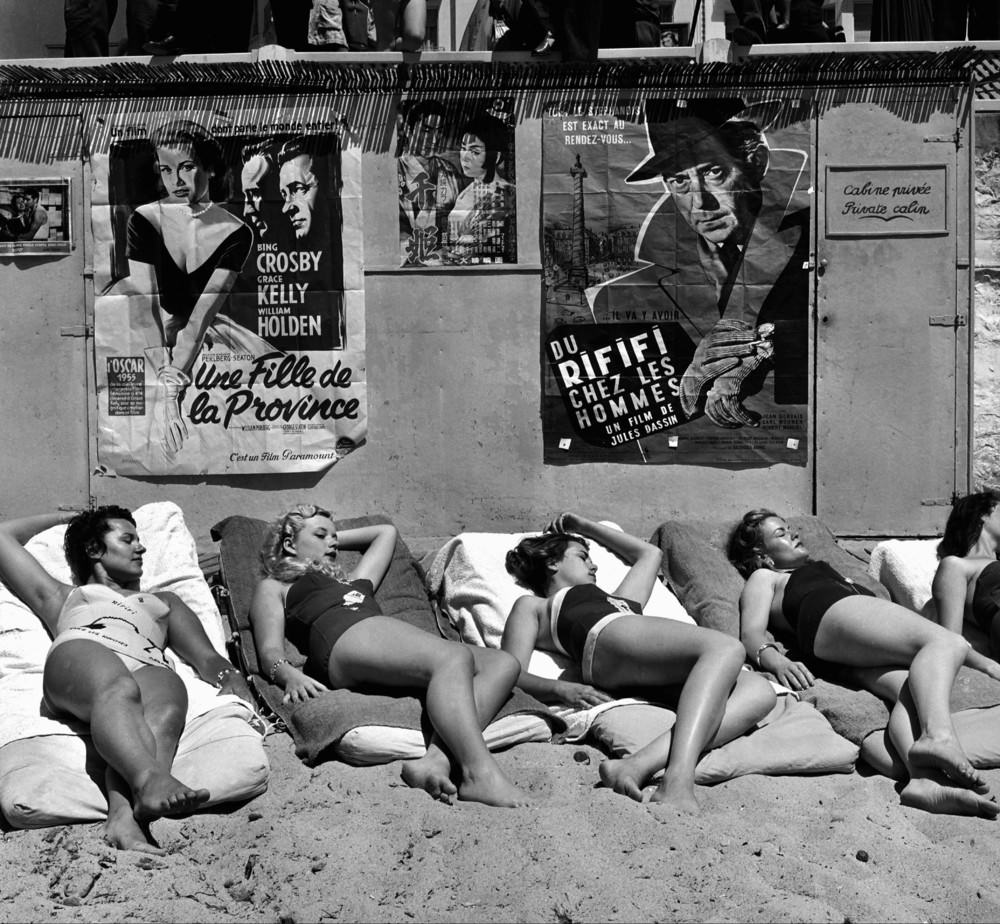
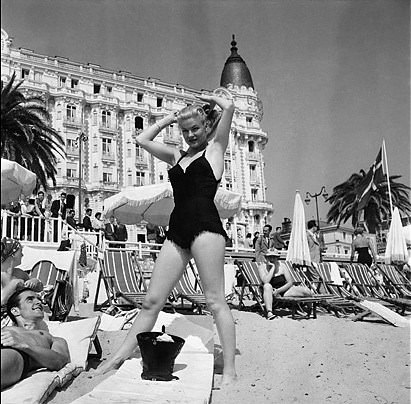
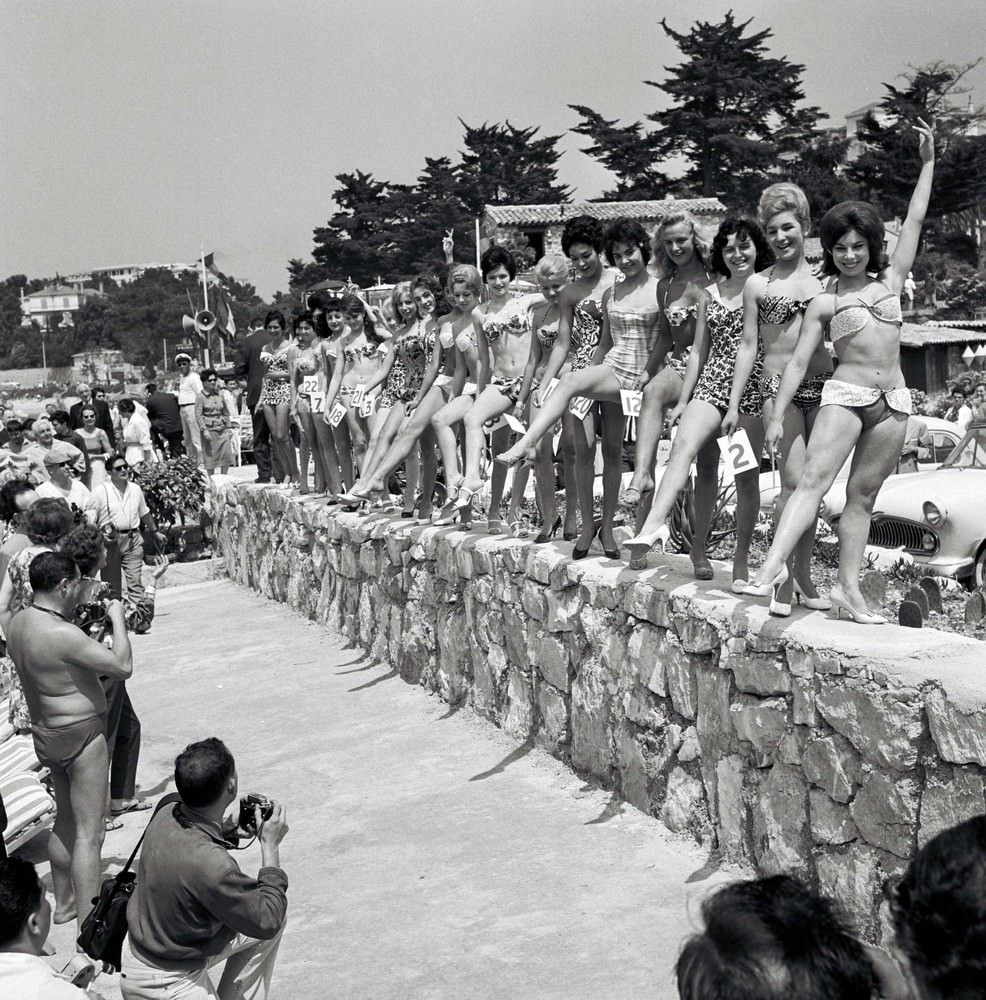
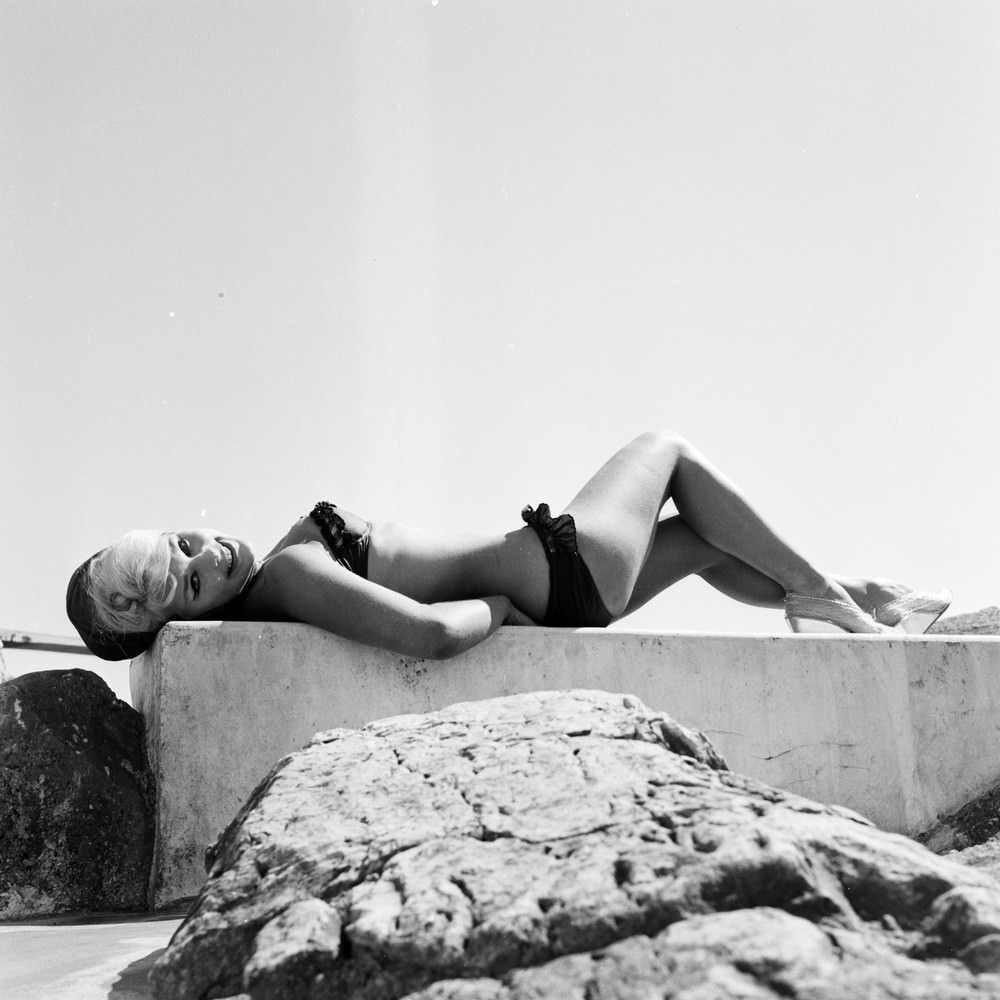
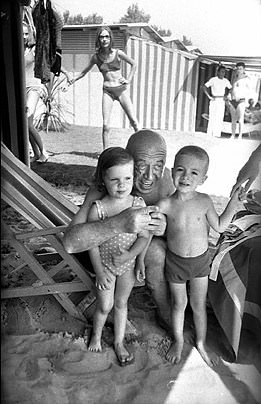
The 1960 festival brought French singer and actor Charles Aznavour together with film critic François Chalais on camera. Beauty contests were also held on the beach that year, with women in swimsuits competing in front of festival crowds — a practice that was common at Cannes throughout the 1950s and 1960s and reflected the festival’s dual identity as both a serious film competition and a seaside carnival.
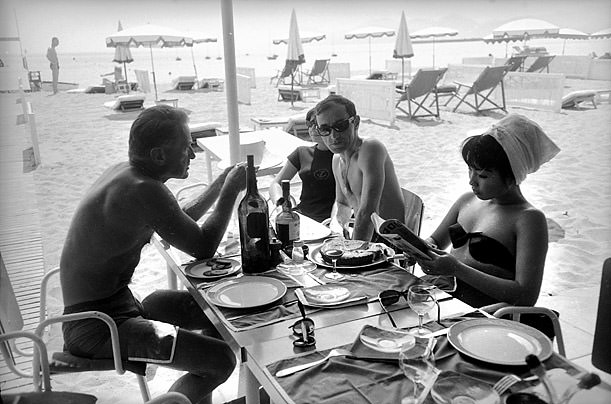
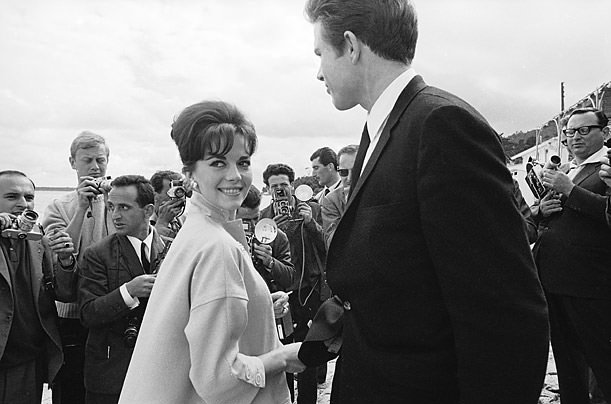
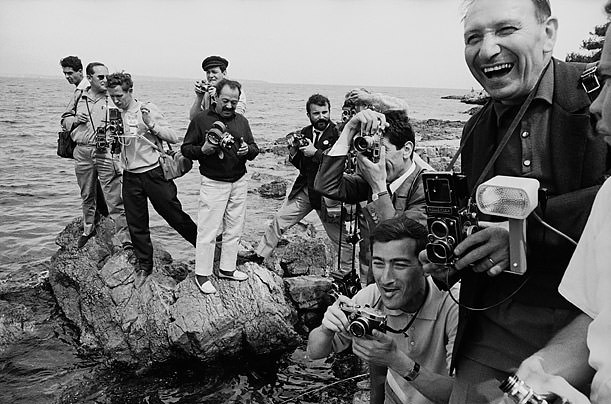
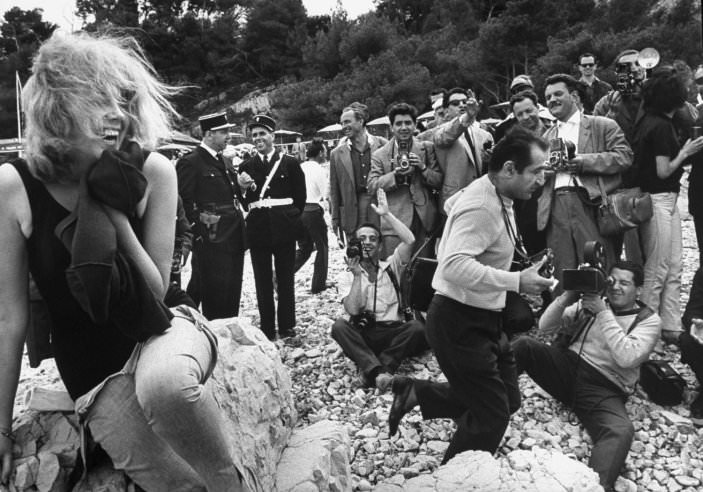
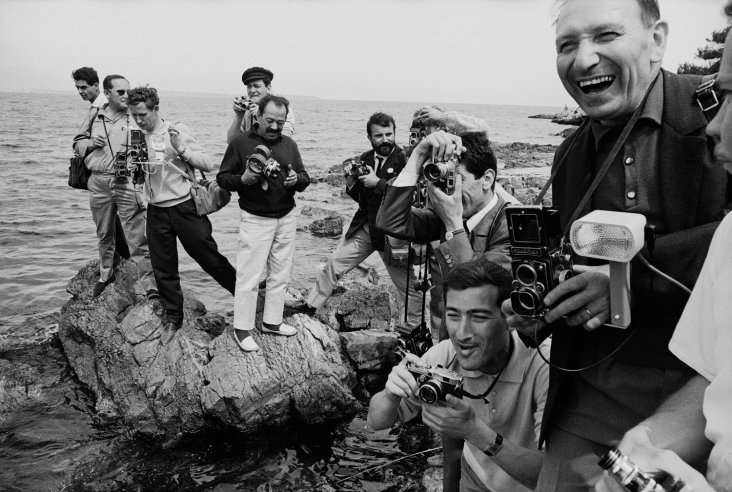
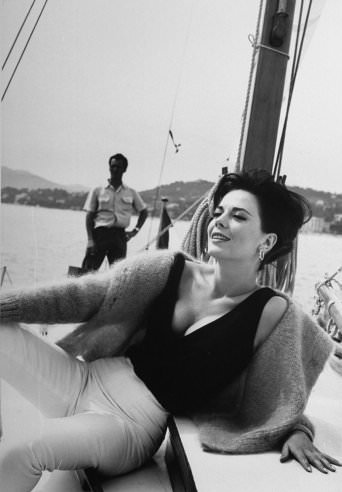
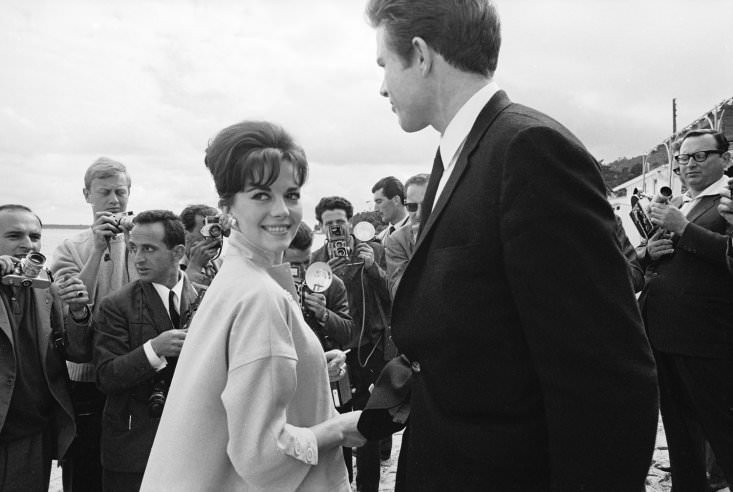
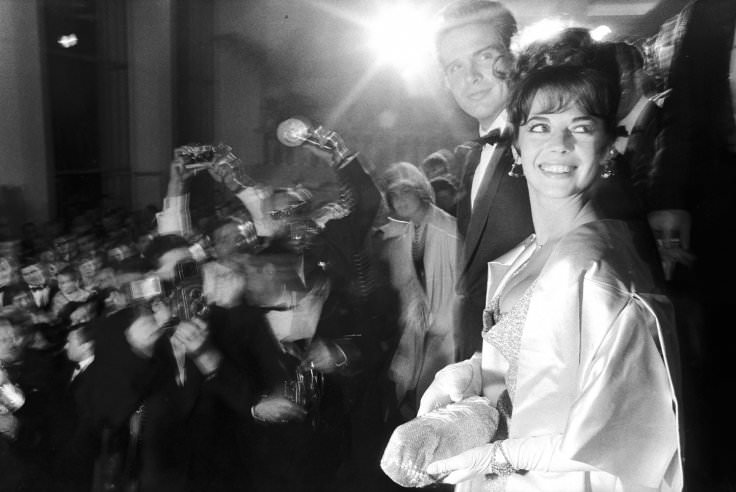
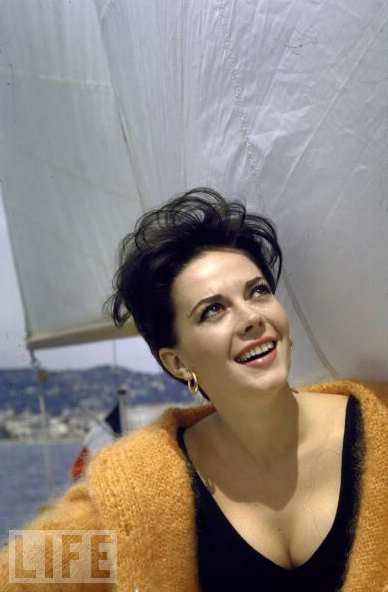
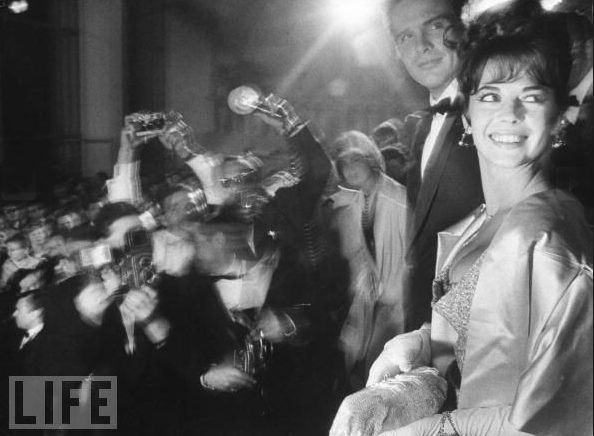
The 1962 festival was one of the most photographed in the event’s history, largely because of two people: Natalie Wood and Warren Beatty. The pair had just starred together in “Splendor in the Grass” and arrived at Cannes as one of the most glamorous couples of the moment. Photographers waded into the surf and climbed onto rocks just to get their shots. Wood also found quieter moments — relaxing on a sailboat, smiling up at the camera on the beach. The 1962 festival was also the first year of the International Critics’ Week, a sidebar event that still runs today.
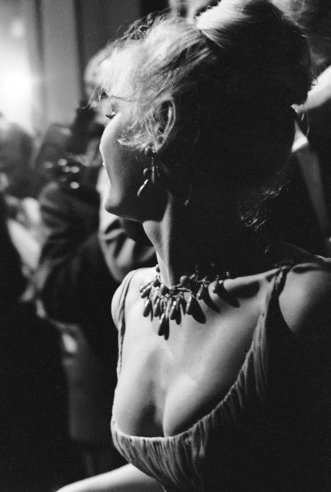
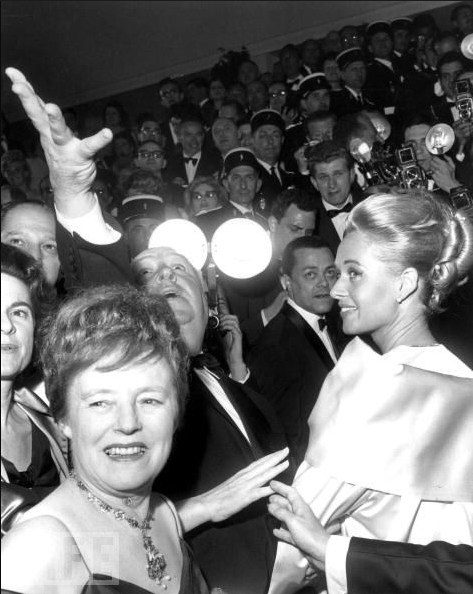
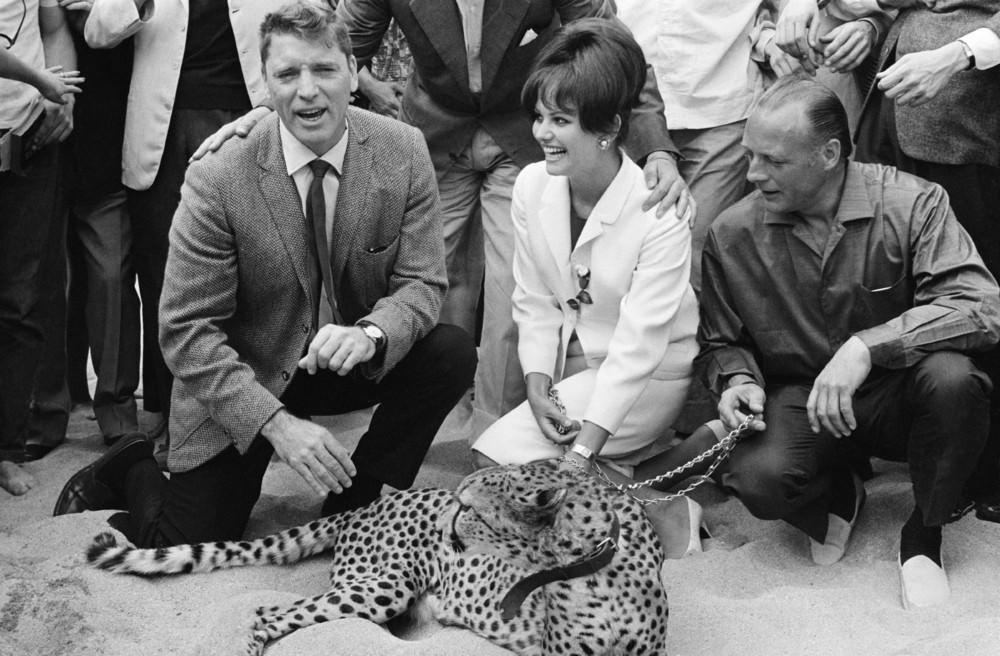
The 1963 festival saw Alfred Hitchcock arrive with his wife Alma Reville and actress Tippi Hedren to promote “The Birds.” The master of suspense had a flair for showmanship off-screen as well as on — he staged a theatrical pose for the cameras, completely in character. That same year, director Otto Preminger was also at Cannes, and Burt Lancaster and Claudia Cardinale appeared on the Croisette with an actual leopard to promote Luchino Visconti’s film of the same name.
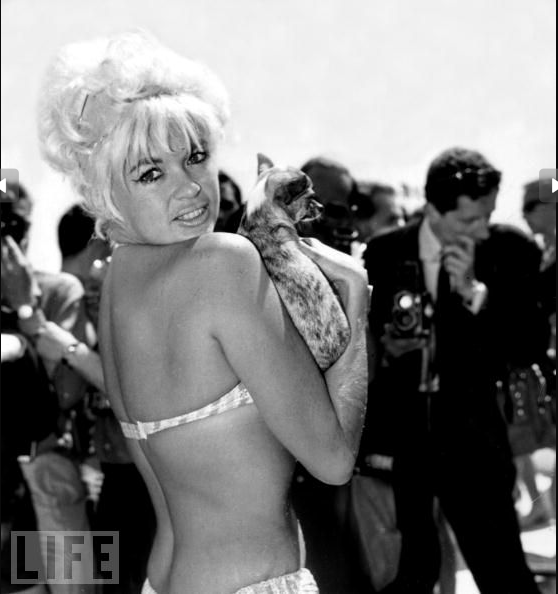
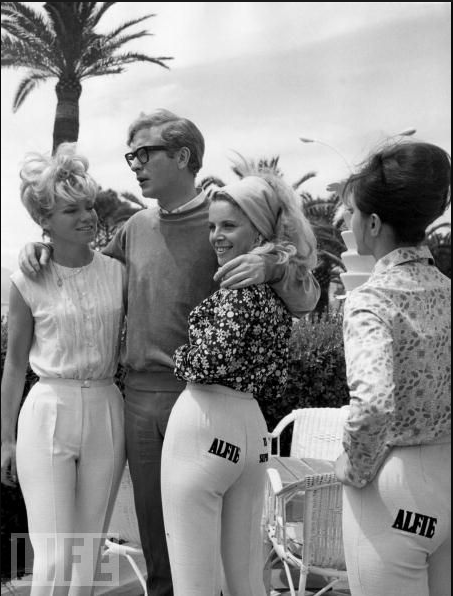
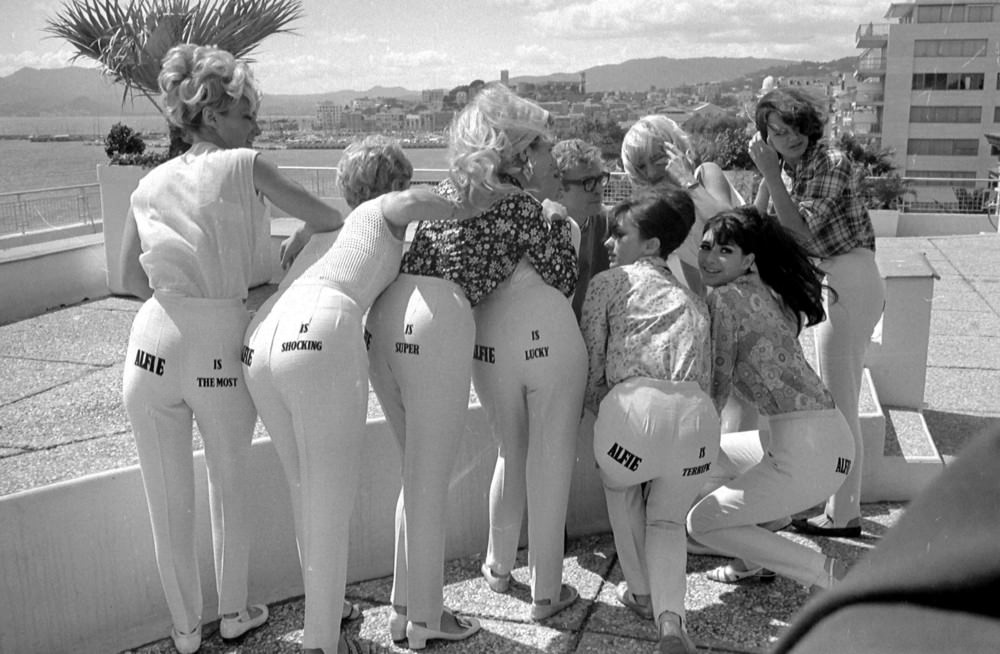
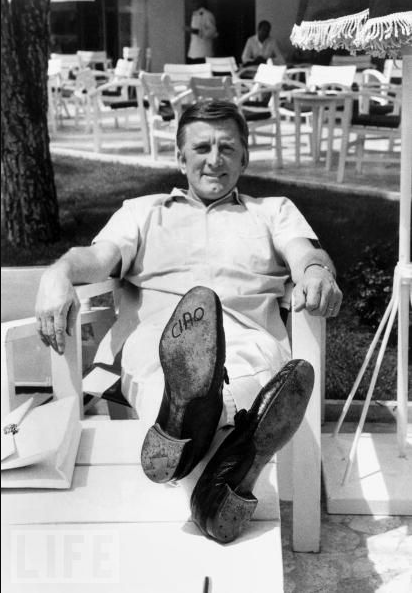
Jayne Mansfield walked the Cannes beach with her chihuahua in 1964, just a year after becoming the first mainstream American actress to appear nude in a major film. Michael Caine was at Cannes in 1966 promoting “Alfie,” surrounded by models and seemingly very comfortable in the role of festival darling. Kirk Douglas also turned up that year with a typically cheeky move — he lifted his foot to show the word “ciao” written on the sole of his shoe.
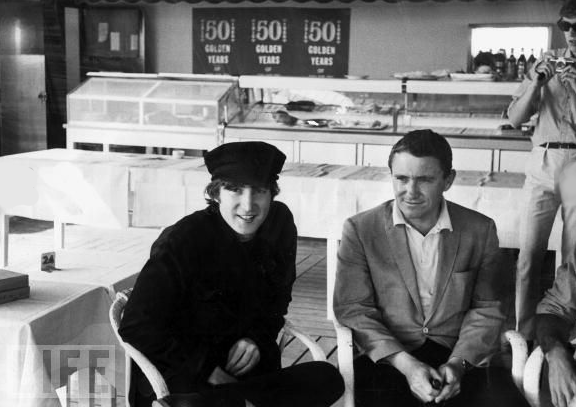
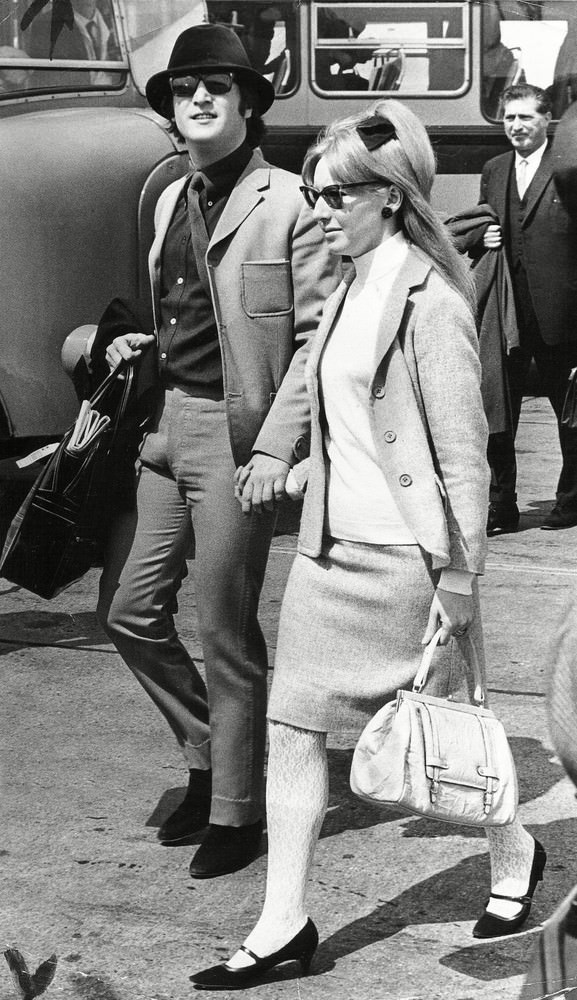
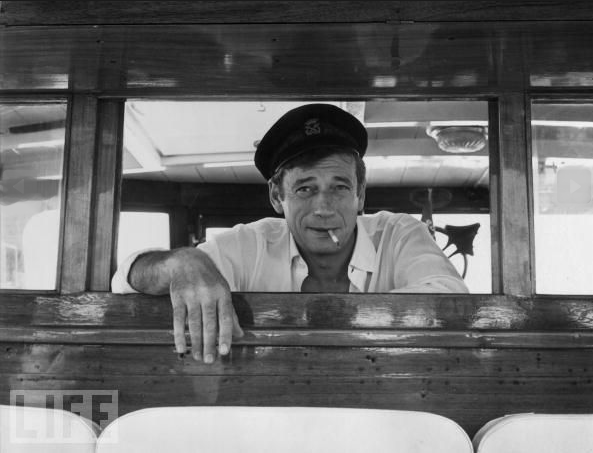
Talk-show host Merv Griffin interviewed John Lennon at Cannes in May 1965 for his television program. Lennon had flown in with his first wife Cynthia, reportedly trying to travel incognito in dark glasses and a green velour hat — a disguise that did not fool anyone. The following year, Yves Montand was photographed aboard his yacht on the Côte d’Azur, relaxed and at ease among his passengers.
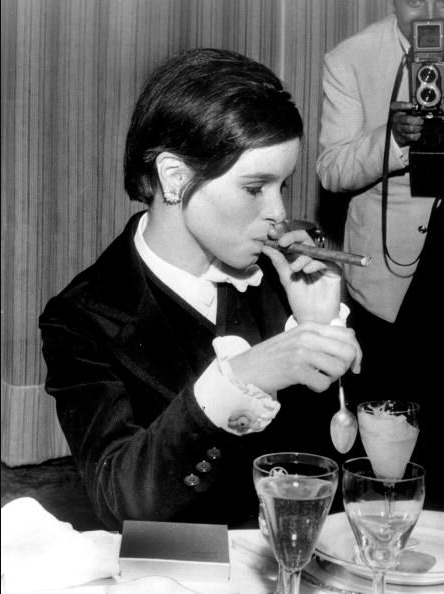
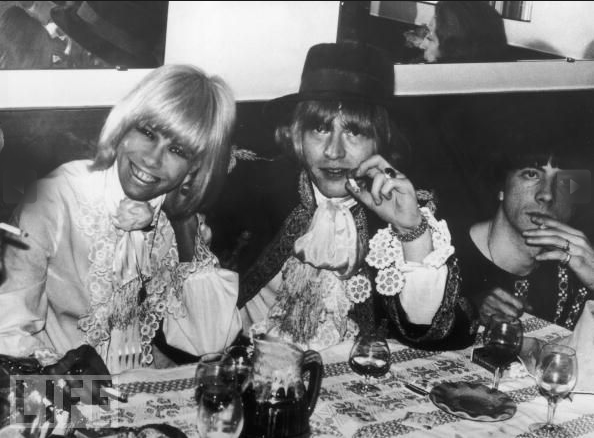
The 1967 festival had its own memorable moments. Geraldine Chaplin — daughter of Charlie Chaplin — was photographed smoking a cigar. Anita Pallenberg and Rolling Stones guitarist Brian Jones attended a party together, though that same year Pallenberg left Jones for his bandmate Keith Richards while on holiday in Morocco.
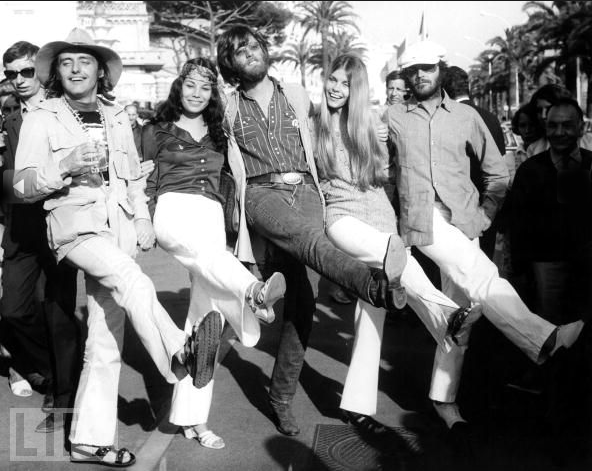
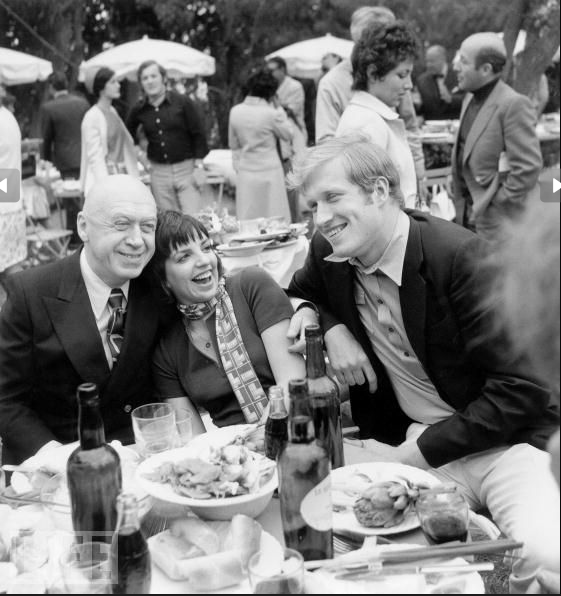
In 1969, Dennis Hopper, Peter Fonda, and Jack Nicholson showed up at Cannes to promote “Easy Rider” and kicked up their heels — literally — in a line-kick pose for photographers. It was a fitting image for a film that had blown open American cinema that year. By 1970, Otto Preminger was back at Cannes with Liza Minnelli and Ken Howard, dining together during the promotion of “Tell Me That You Love Me, Junie Moon.”
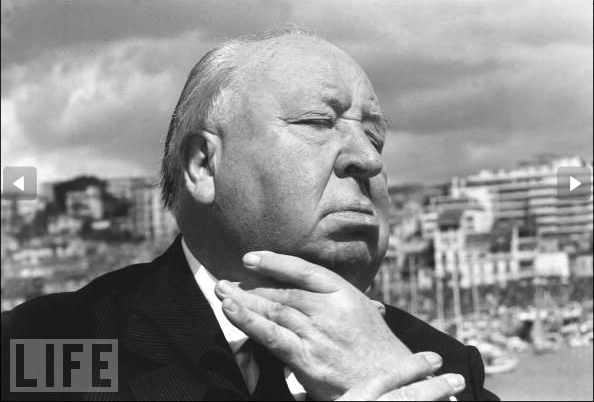
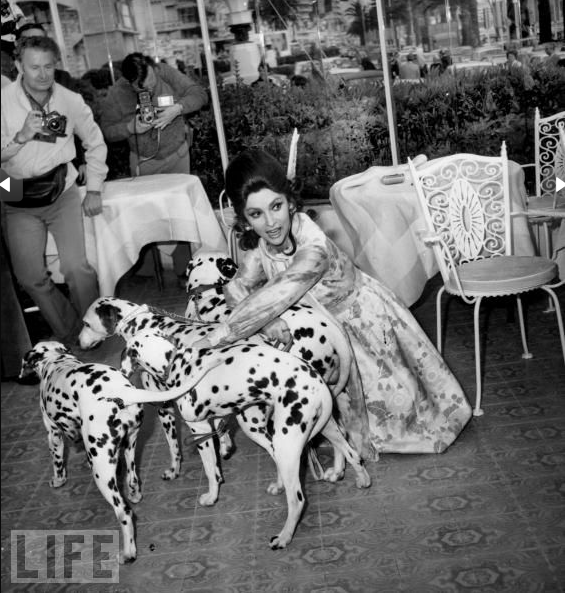
Alfred Hitchcock returned to Cannes in 1972 and staged a mock-suicidal pose for the cameras — a darkly theatrical joke entirely in keeping with his persona. That same year, Gina Lollobrigida arrived at the festival in a dress that, as one caption noted, rather matched her three dogs, and she was there to promote “King, Queen, Knave,” the film based on Vladimir Nabokov’s novel.
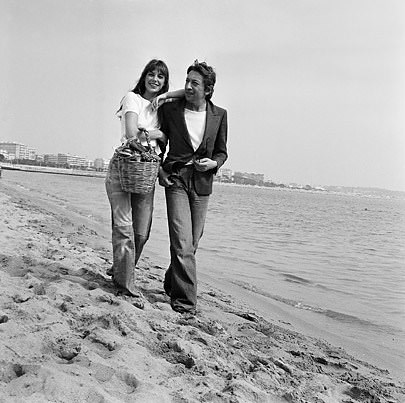
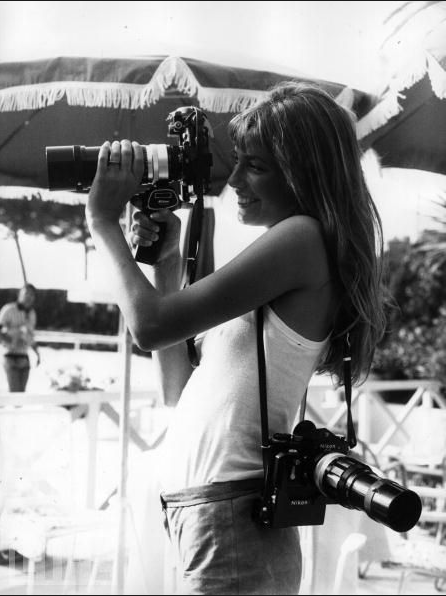
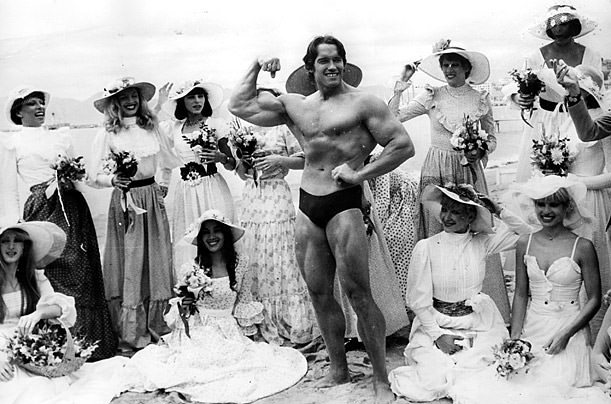
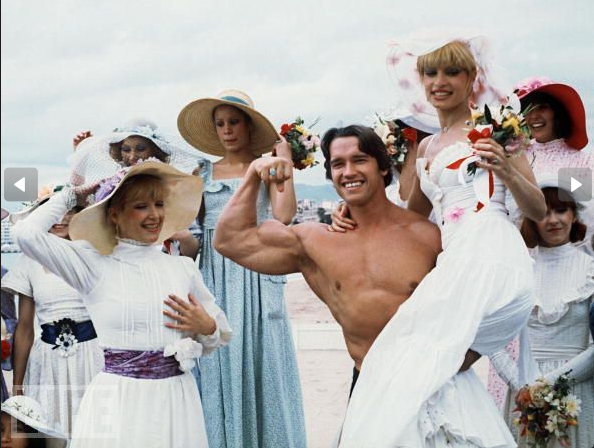
Serge Gainsbourg and Jane Birkin attended the 1974 festival together as a couple, part of a string of Cannes appearances for Birkin that stretched through the decade. By 1975 she was at the festival camera-in-hand, photographing the scene herself. Arnold Schwarzenegger also made his Cannes debut in a memorable way — first appearing on the beach with performers from the Folies Bergère, and then in 1977, promoting his documentary “Pumping Iron” at the 30th festival, flexing for a crowd that had no idea he would one day be one of the biggest movie stars on the planet.
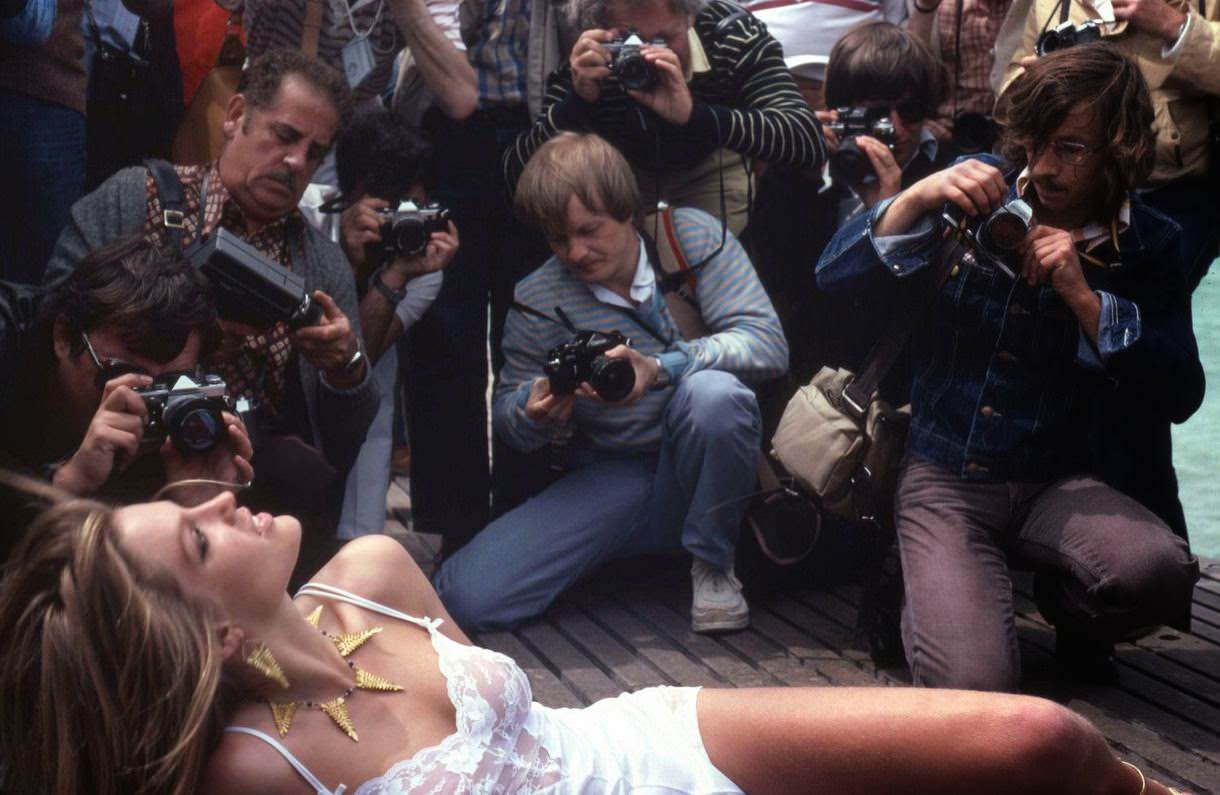
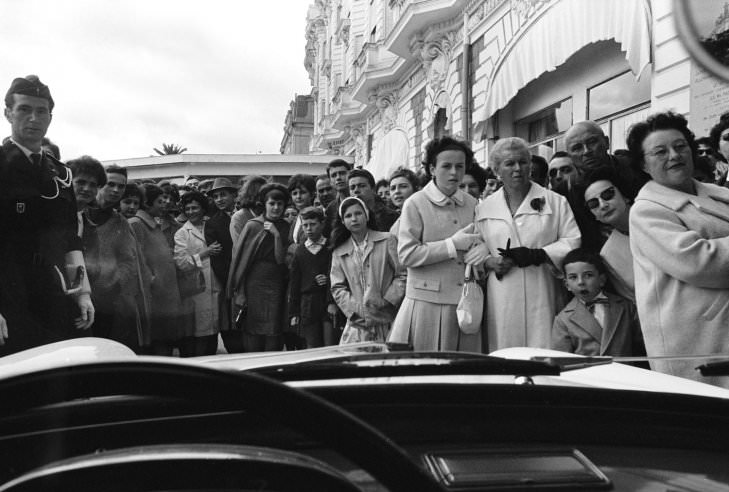
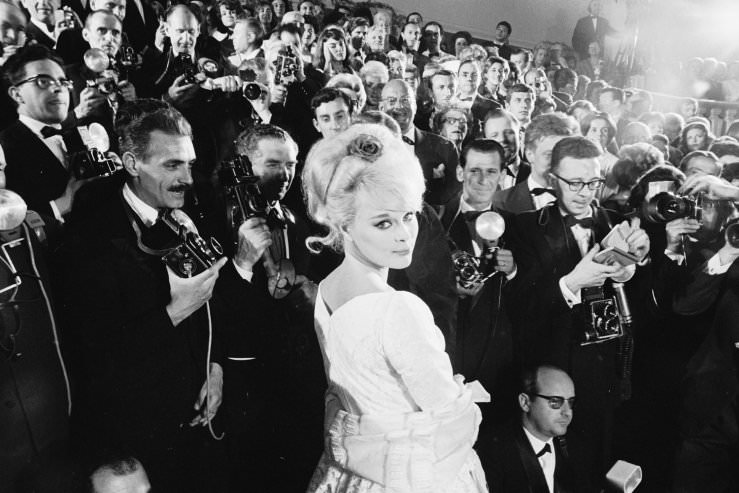
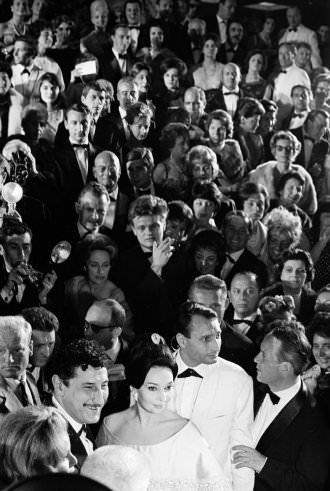
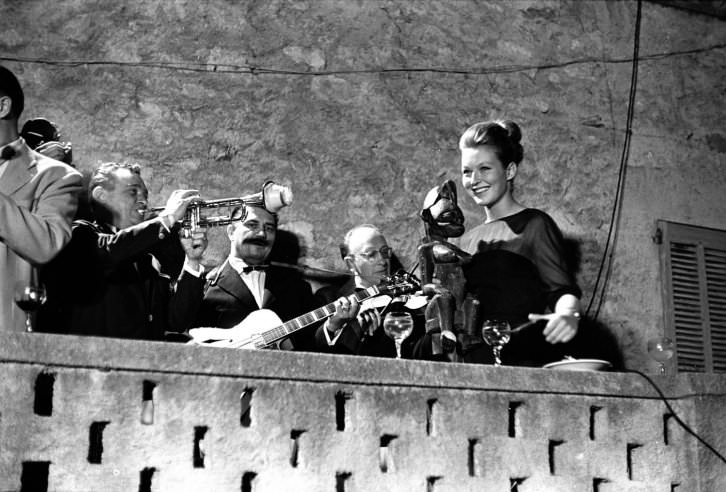
Beyond the stars, the photographs from these decades also capture the world around them — the photographers wading into the sea for a better angle, crowds pressed against barriers hoping for a glimpse of a famous face, orchestras playing at festival events, and ordinary people watching it all unfold. Cannes in its golden era was not just a place to screen films. It was a place where cinema and real life collided in full public view.