When Britain declared war on Germany in August 1914, Canada was pulled into the conflict alongside the rest of the Empire. At the time, Canada’s population was around eight million people — a relatively small number for a country being asked to fight a global war. Yet the nation’s response was extraordinary. More than 650,000 men and women served in the war. Over 66,000 died, and more than 172,000 were wounded. That level of sacrifice ultimately earned Canada a separate signature on the Peace Treaty, marking the country as a recognized force in its own right.
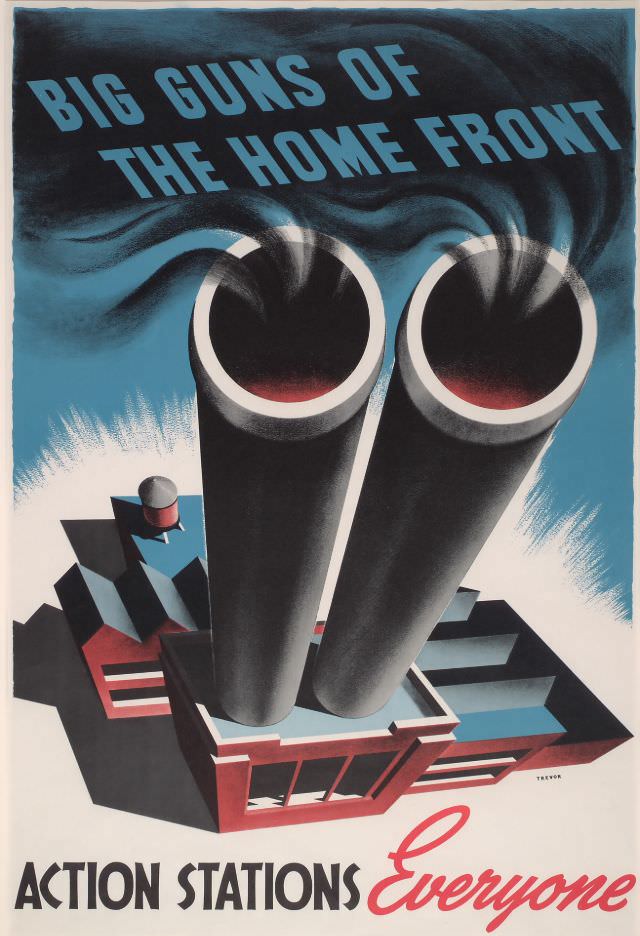
To sustain that effort, the Canadian government needed constant public support — for recruitment, for food conservation, and especially for war financing. One of the most direct tools the government used was the propaganda poster. Artists were commissioned to design bold, eye-catching images paired with slogans built to stir emotion and push Canadians to act. These posters were plastered in post offices, banks, railway stations, and storefronts across the country.
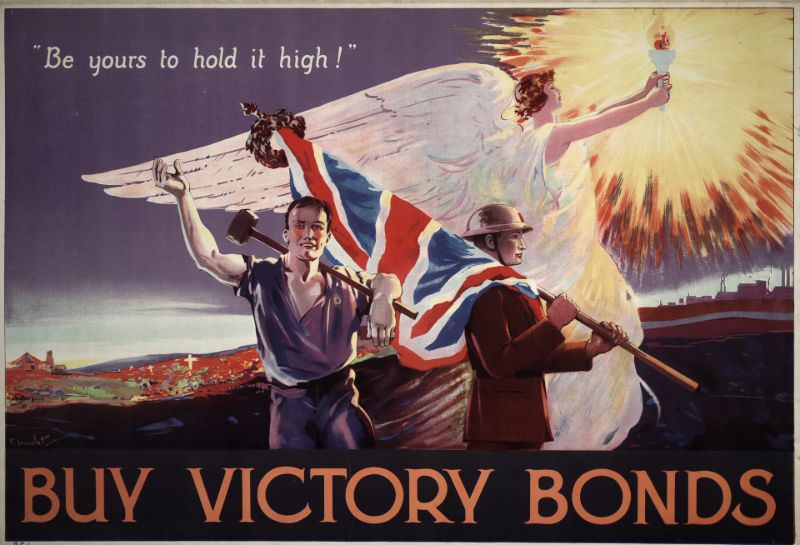
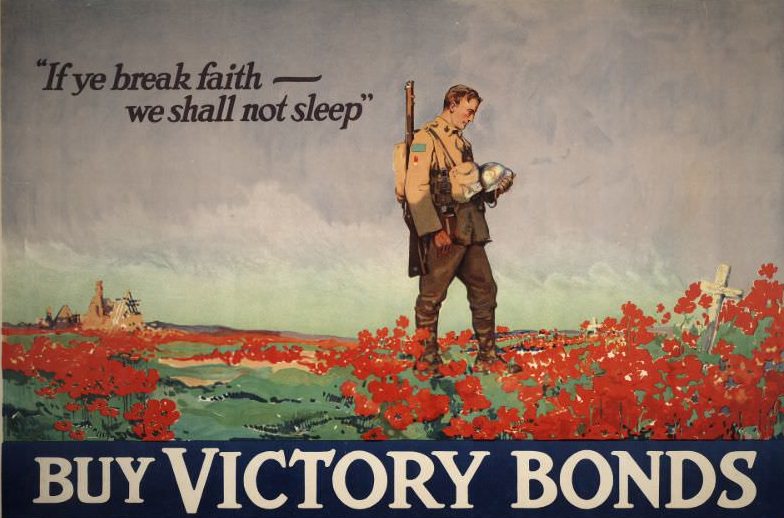
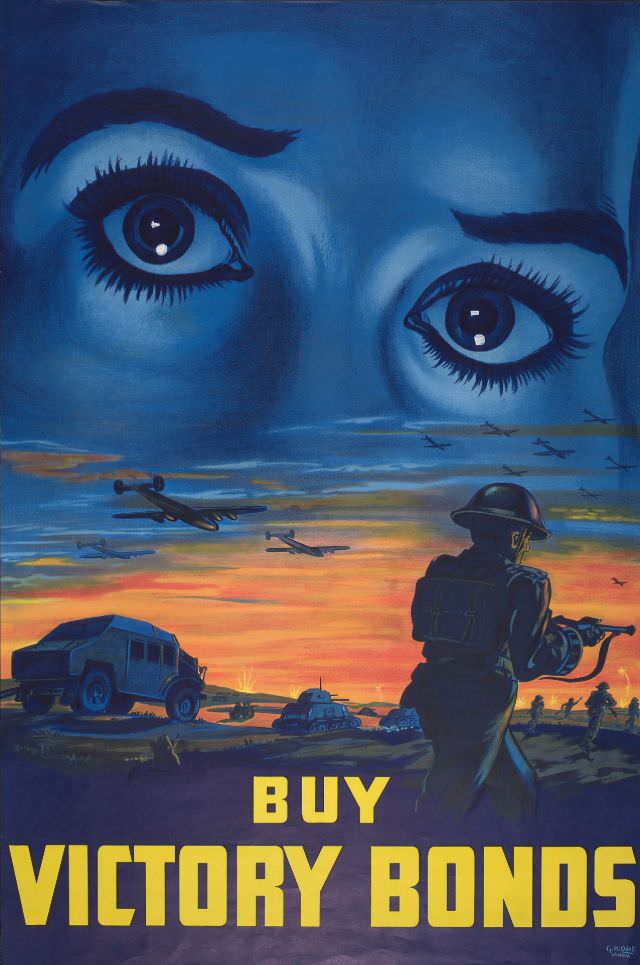
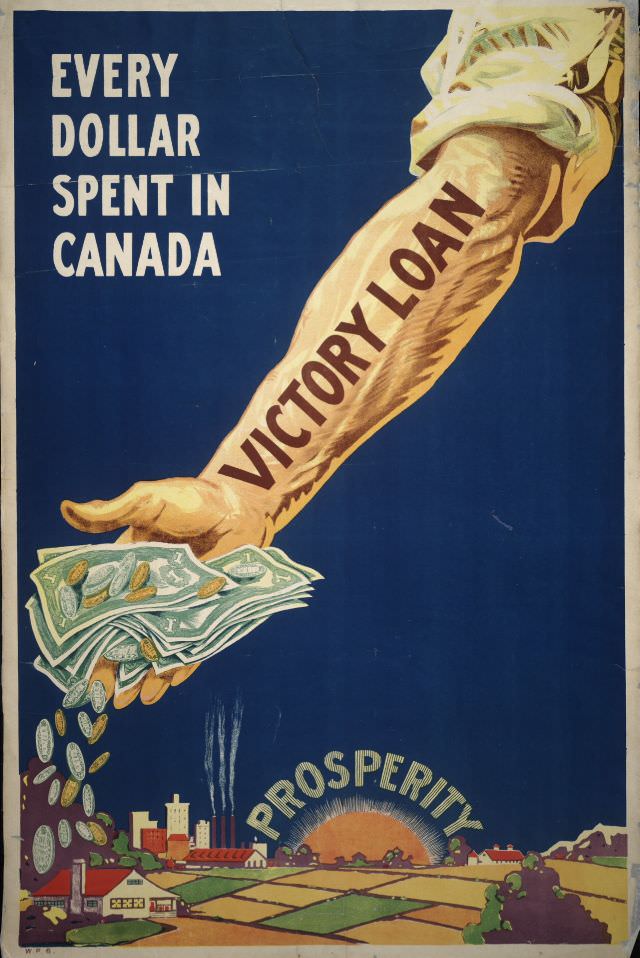
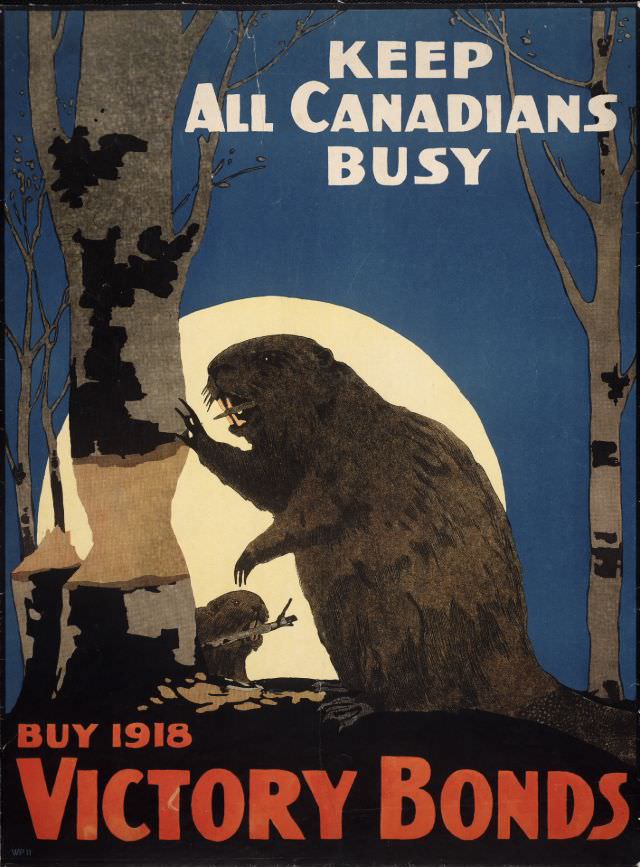
Victory Bonds were one of the Canadian government’s primary methods of financing the war. Citizens were asked to loan money to the government, which would be repaid with interest after the war. Posters advertising Victory Bonds flooded public spaces, each one designed to make buying a bond feel like a patriotic duty rather than a financial transaction.
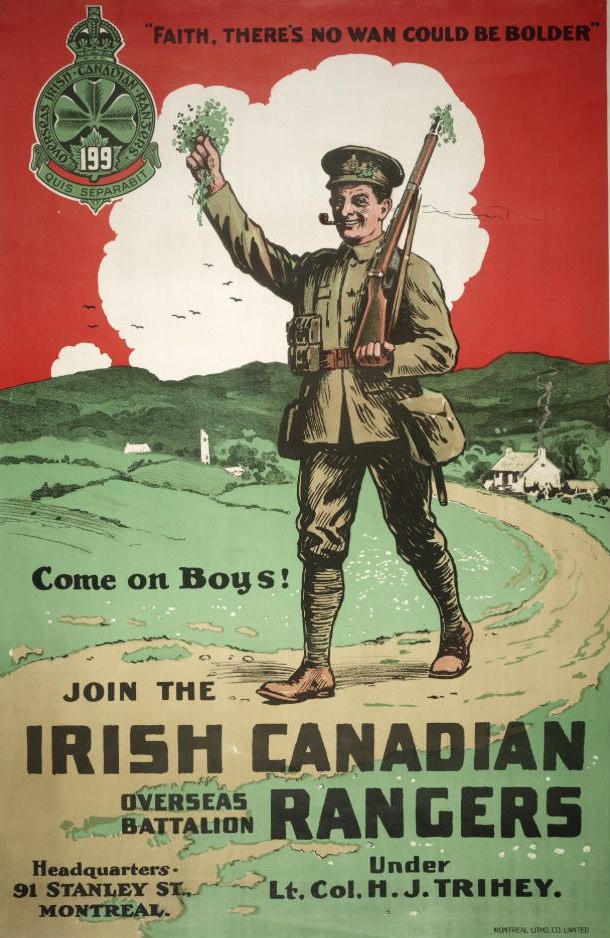
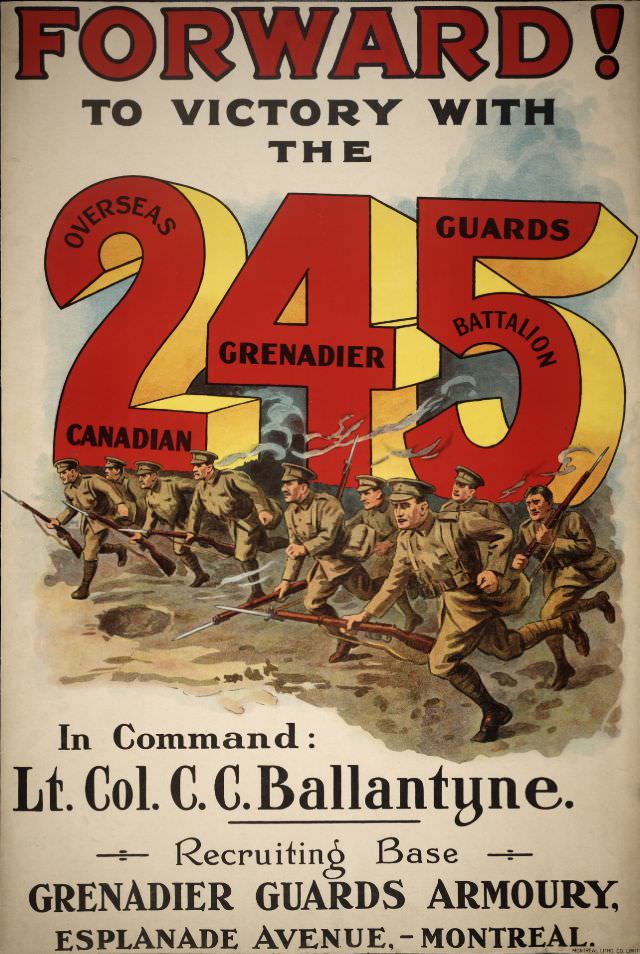
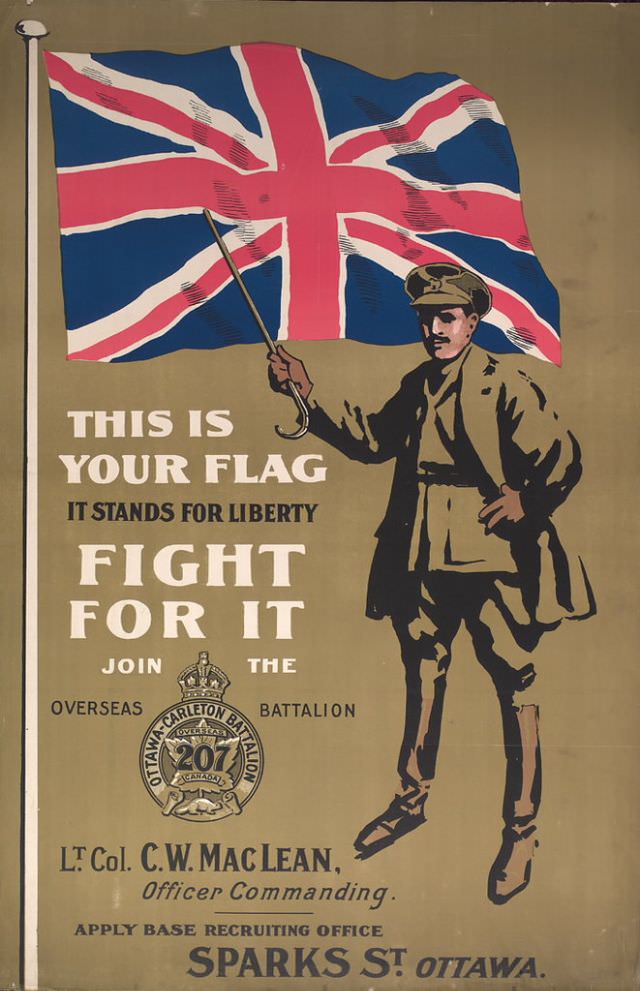
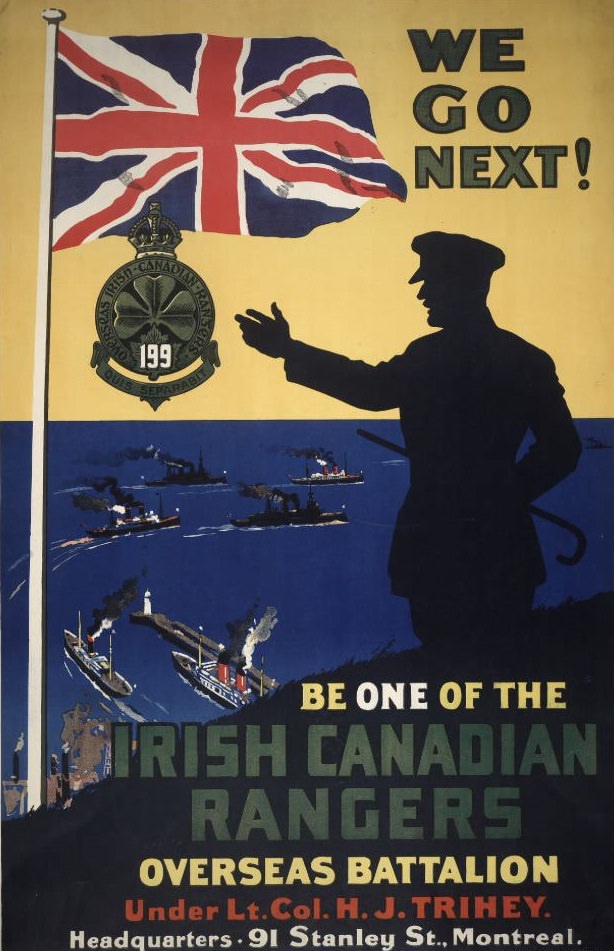
Recruitment posters targeted specific ethnic and regional communities within Canada. Irish Canadians, French Canadians, Scottish Canadians, and men from particular counties and towns all had posters made specifically for them. The goal was to make every man feel that his community expected him to enlist — and that his peers were already stepping forward.
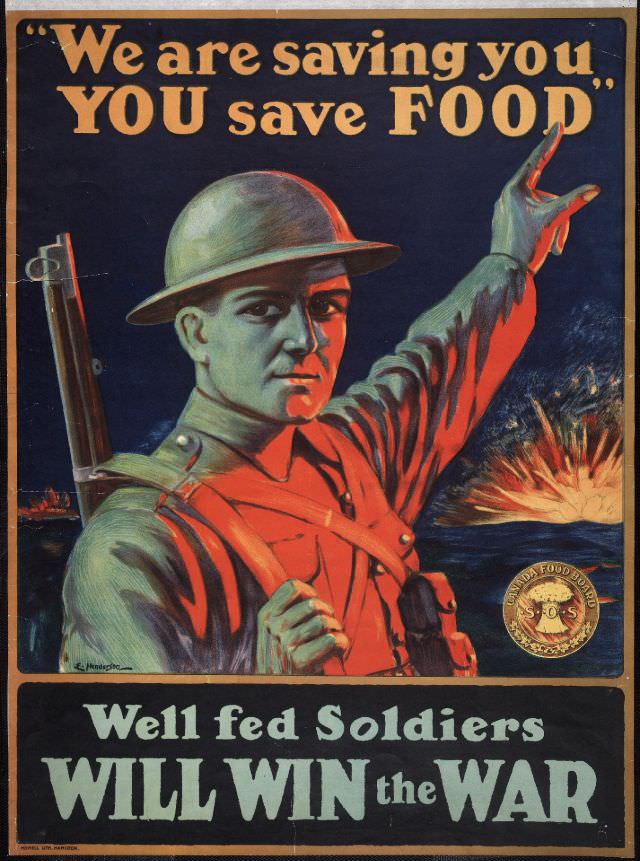
Not all wartime posters focused on fighting. Food conservation was just as important as battlefield numbers. Soldiers overseas needed to be fed, and that required careful management of food supplies at home. Posters reminded civilians that wasting food was not simply careless — it was a failure to support the men risking their lives abroad.
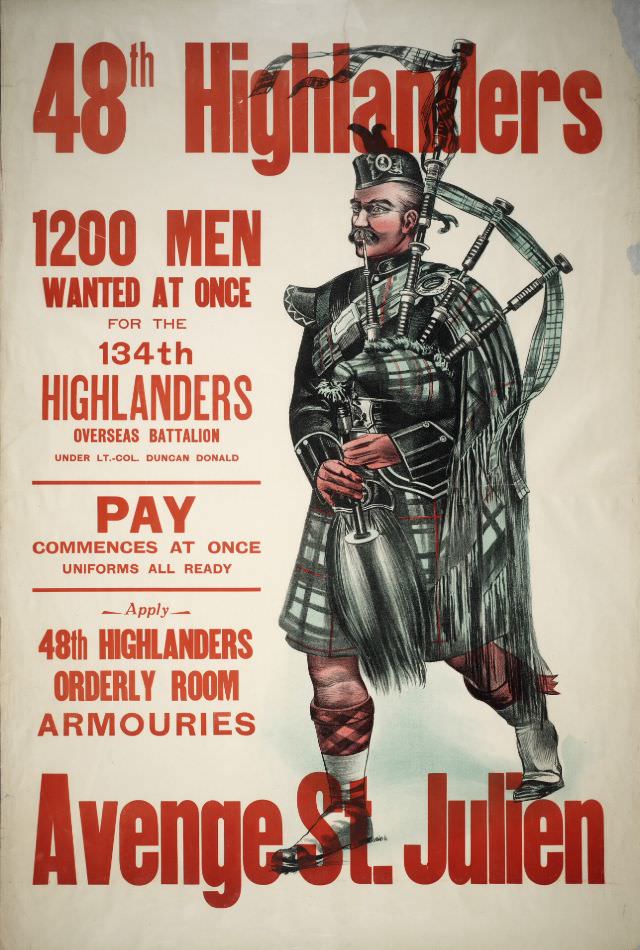
Some recruitment posters were strikingly direct, stating exactly how many men were needed and demanding immediate action. The 134th Highlanders poster called for 1,200 men “at once,” using the language of urgency to pressure men who had been hesitating. The use of specific numbers made the need feel concrete and personal.
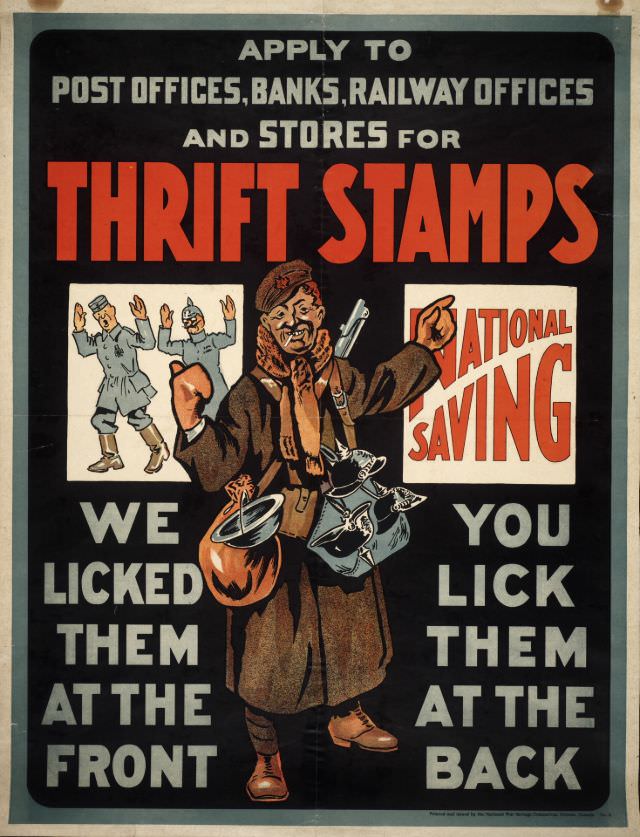
Thrift stamps were another financial tool aimed at Canadians who could not afford full Victory Bonds. By collecting smaller denomination stamps, ordinary working-class citizens could contribute to the war fund incrementally. Posters directed people to pickup points that were already part of their daily lives — post offices, banks, and railway stations — making participation as easy as possible.
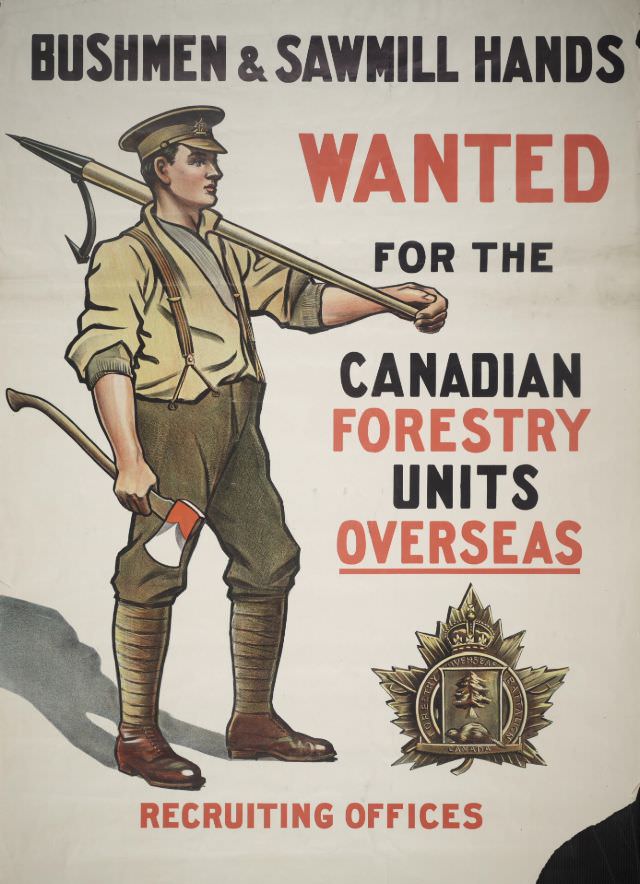
Canada’s war contribution extended well beyond infantry soldiers. The Canadian Forestry Corps recruited men with specific skills — loggers, bushmen, and sawmill workers — to support the enormous demand for timber overseas. Wood was essential for constructing trenches, dugouts, bridges, and railway lines near the front. These recruitment posters spoke directly to men in rural and resource-based communities.

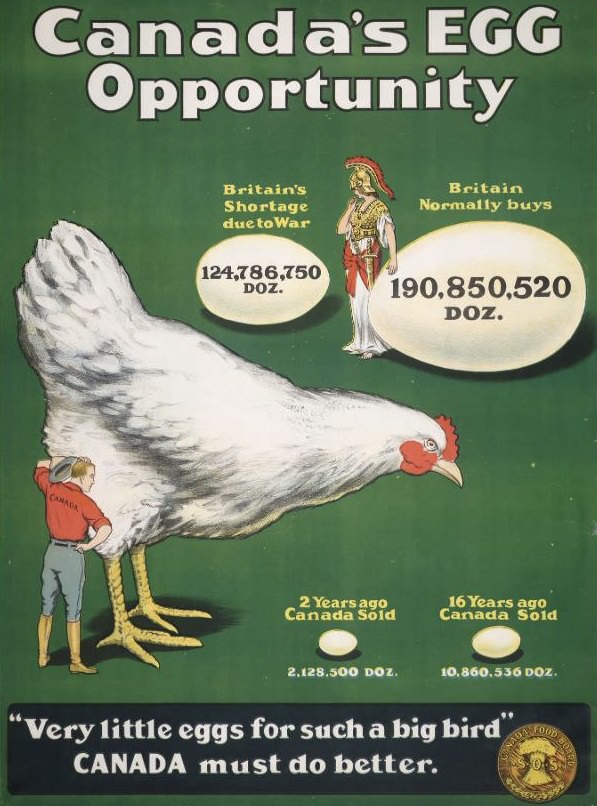
Several posters framed food production as both a patriotic duty and an economic opportunity. Campaigns around beef, pork, and eggs reminded Canadian farmers that their output directly fed Allied armies. This messaging served two purposes: it encouraged agricultural production and reinforced the idea that every Canadian, regardless of age or physical ability, had a role to play in winning the war.
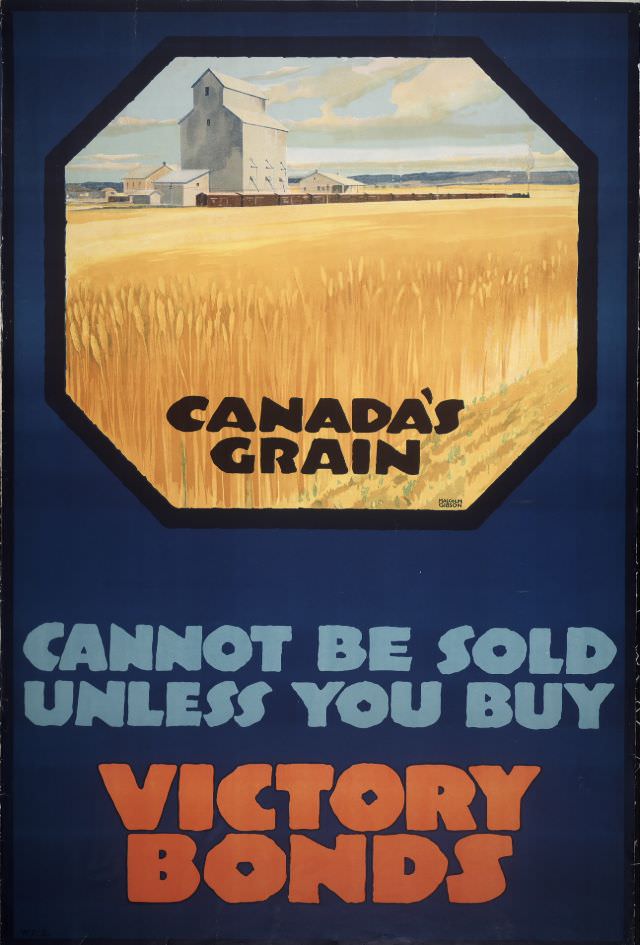
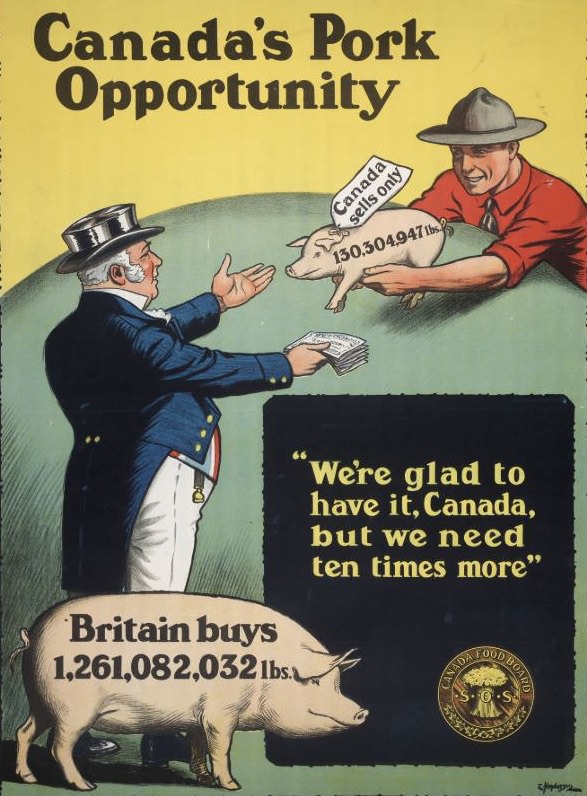
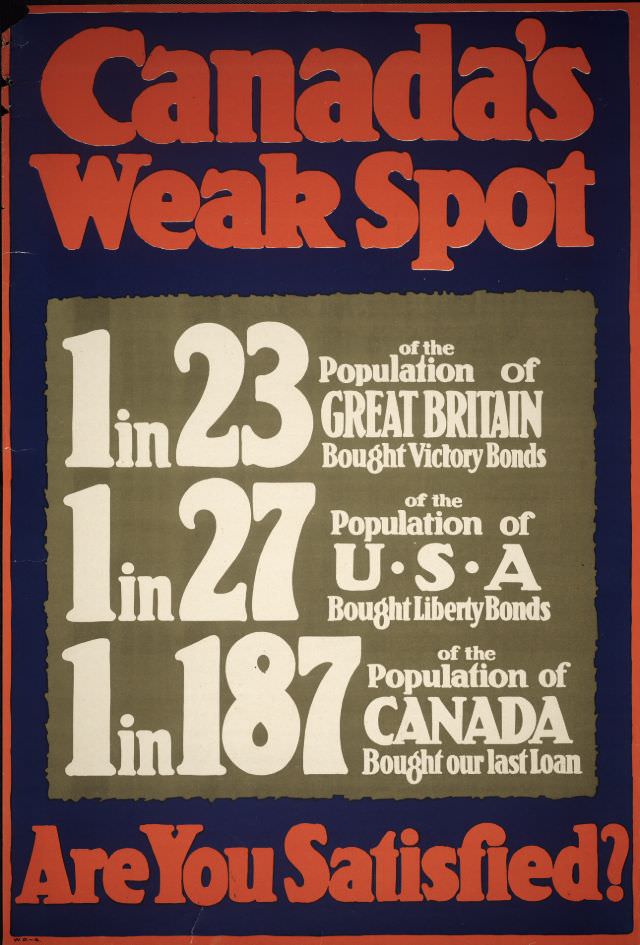
Some posters used economic logic to sell Victory Bonds rather than emotional appeals. Posters like “Canada’s Grain Cannot Be Sold Unless You Buy Victory Bonds” made a direct argument: the domestic economy and the war effort were linked. Buying bonds kept trade moving, which kept Canada’s agricultural and industrial sectors functioning.
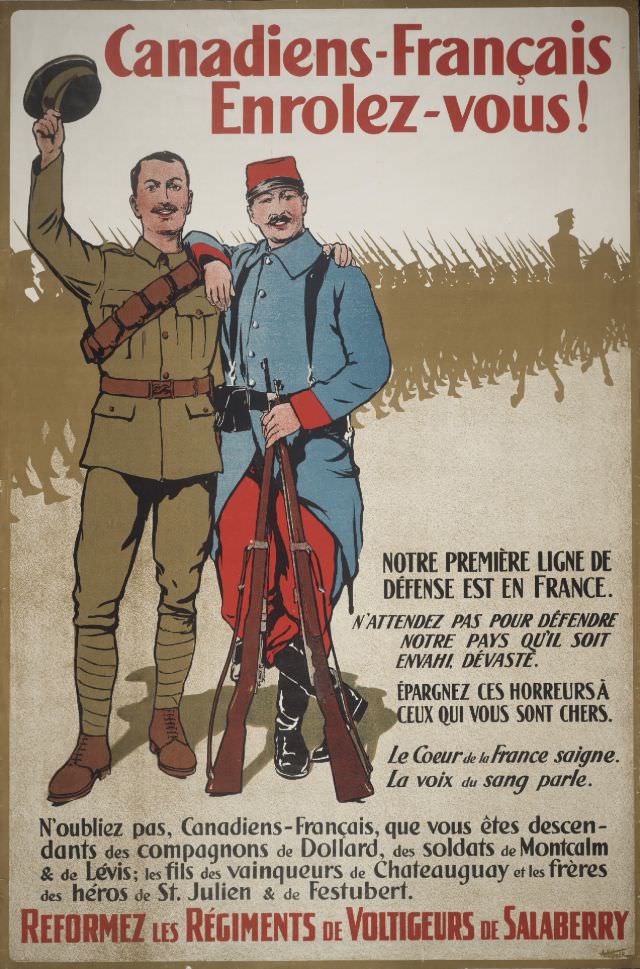
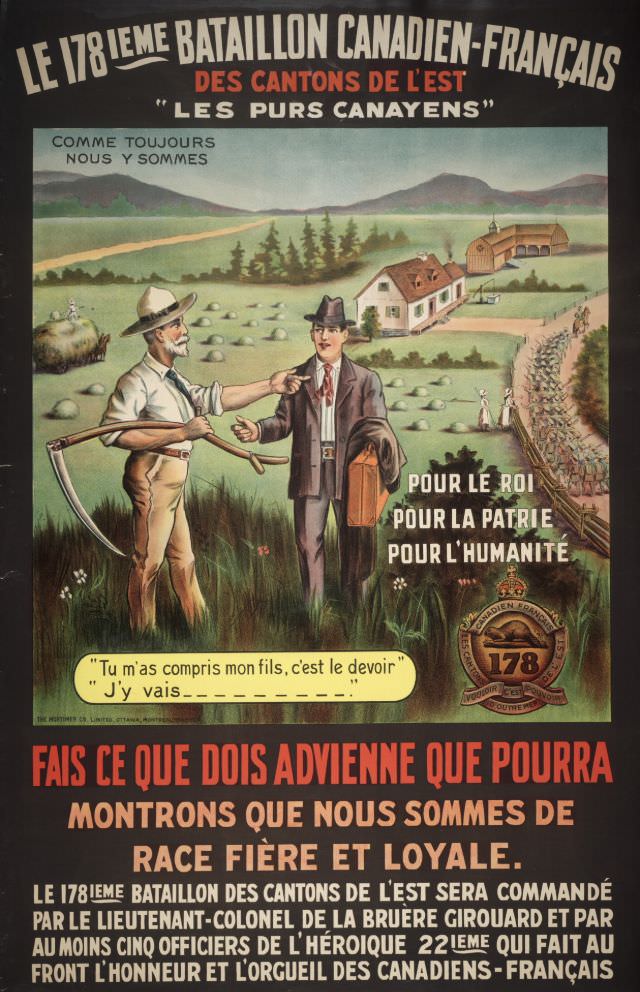
French-speaking Canadians were a significant part of the population, and the government produced recruitment materials in French to reach them. The poster “Canadiens-Français Enrolez-Vous!” — meaning “French Canadians, Enlist!” — was part of a broader effort to recruit from Quebec and other francophone communities. Separate French-language battalions, such as the 178th Canadian-French Battalion of the Eastern Townships, were formed to appeal to this group.
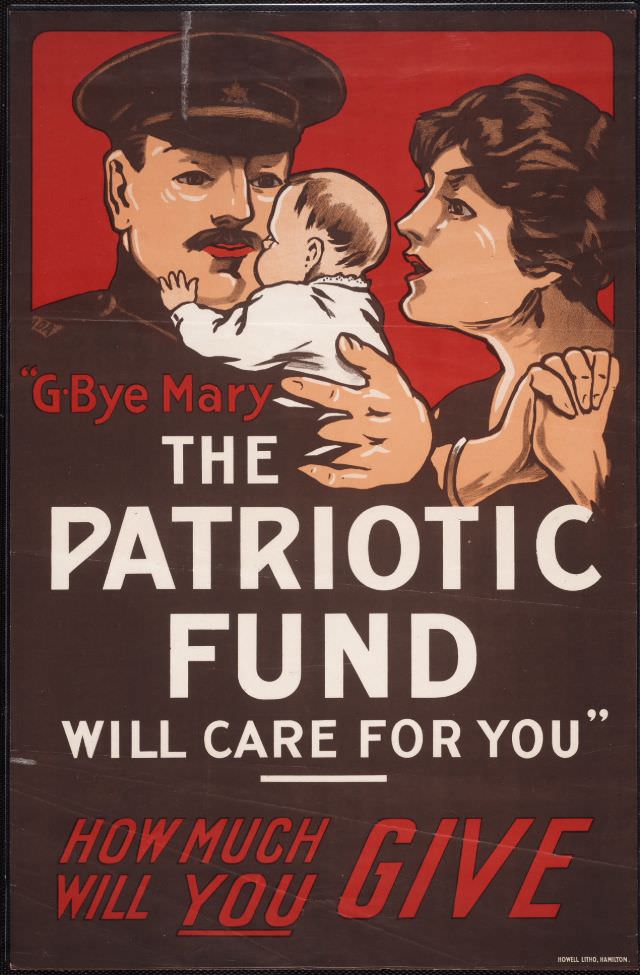
Posters also addressed the fears of families. The Canadian Patriotic Fund was set up to support the wives and children of men who had enlisted. The “G-bye Mary” poster directly reassured soldiers’ families that they would not be left without support. This kind of messaging reduced one of the biggest barriers to enlistment: the fear that enlisting meant abandoning one’s family to poverty.
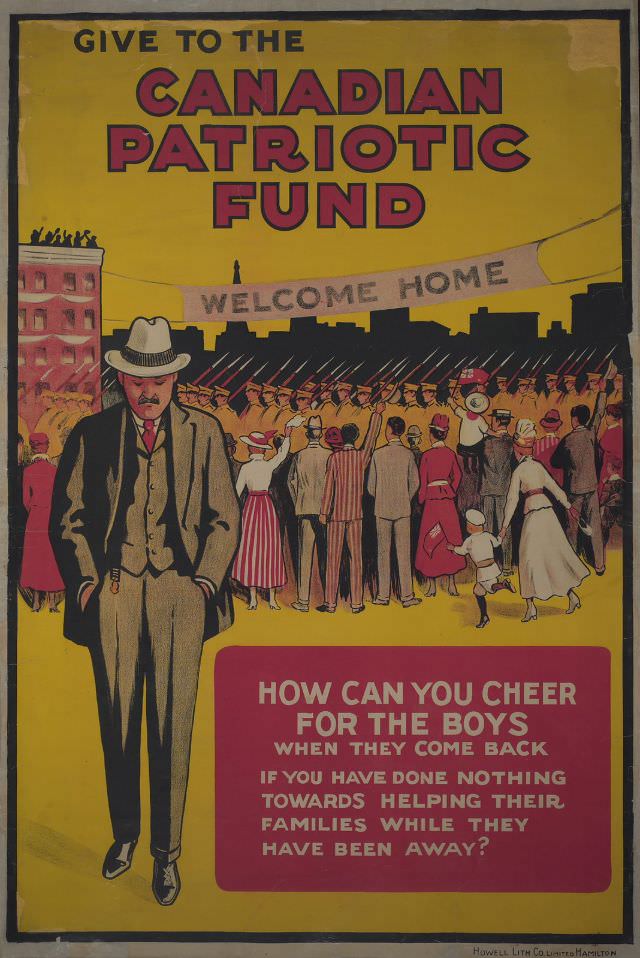
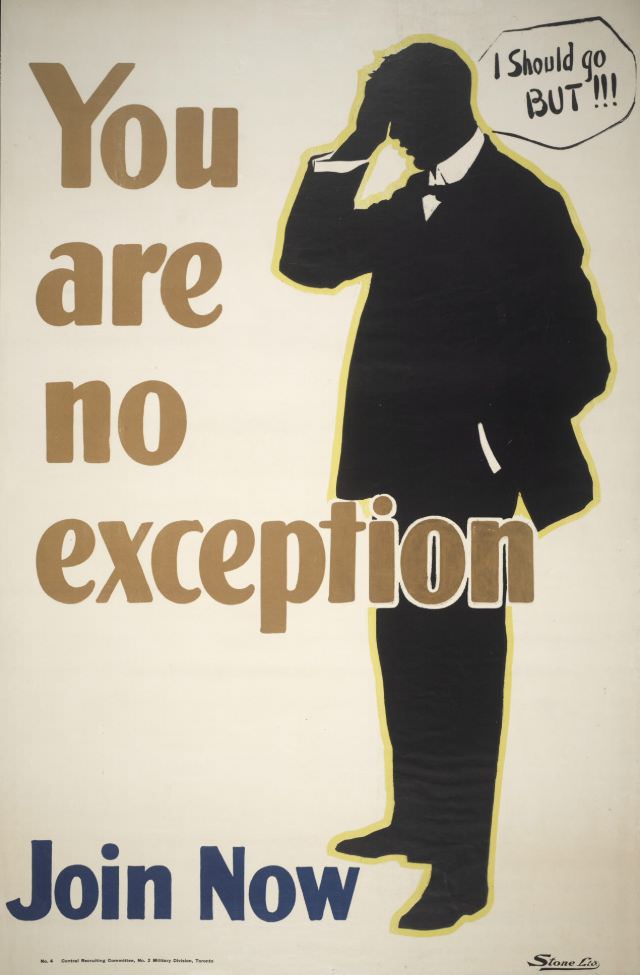
Guilt was a deliberate tool in the propaganda designer’s kit. Posters like “I should go BUT!!! You are no exception, Join Now” directly mocked men who had been making excuses. The message was blunt: whatever reason you have for staying home, it is not good enough. This type of poster applied social pressure by suggesting that exemptions and hesitations were cowardly rather than reasonable.
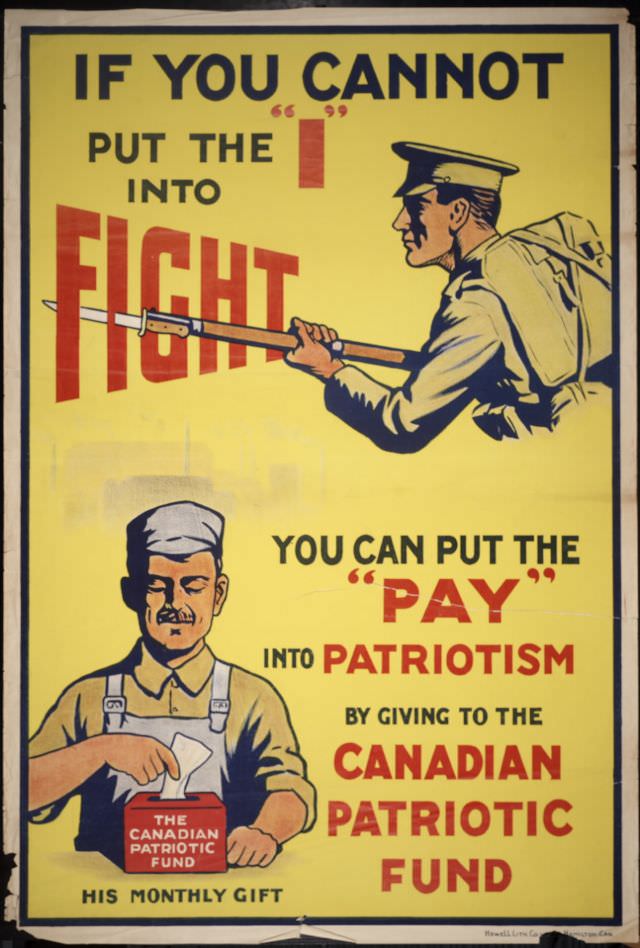
Not every Canadian was in a position to enlist, and the government acknowledged this. For those who could not serve militarily, financial contribution was positioned as an equally valid form of patriotism. The slogan “If You Cannot Put the ‘I’ Into Fight, You Can Put the ‘Pay’ Into Patriotism” gave men and women a way to feel they were doing their part without putting on a uniform.
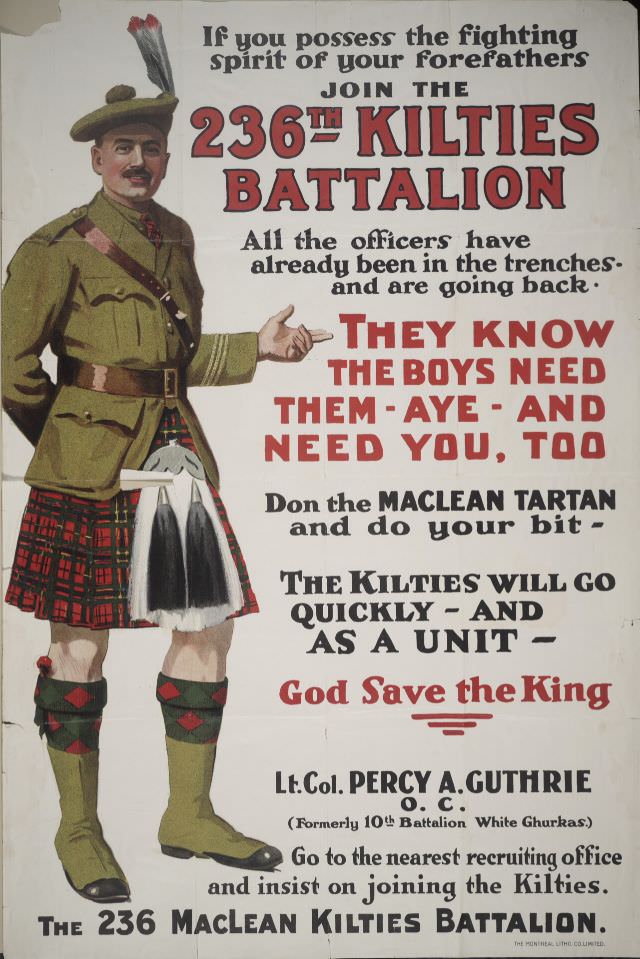
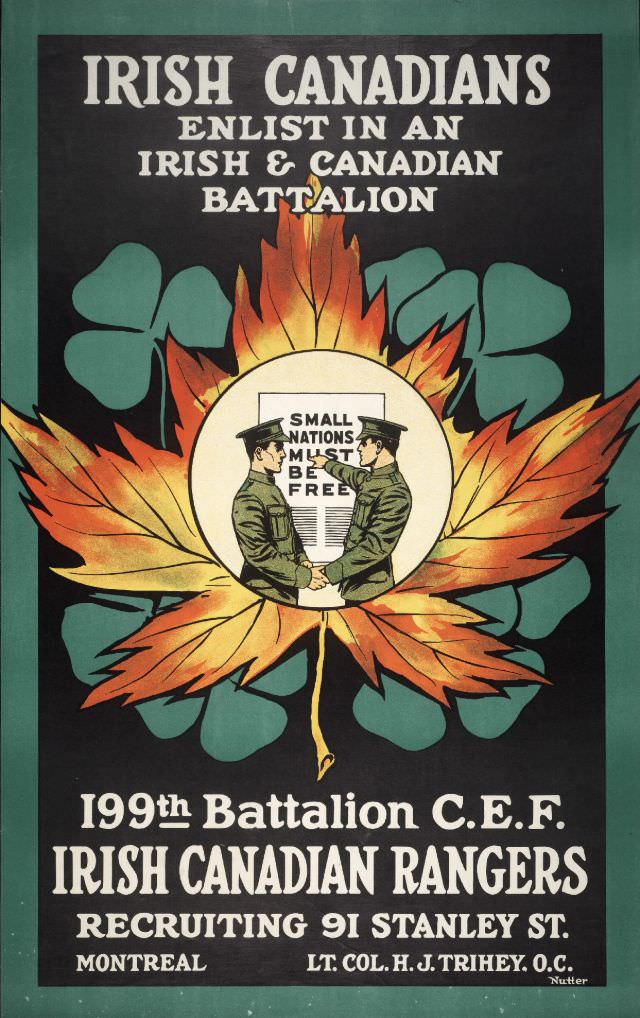
Appeals to ancestry were common throughout Canada’s recruitment campaigns. Posters targeting Scottish Canadians invoked the fighting traditions of their forefathers, while Irish Canadian posters played on community pride and solidarity. By tying military service to ethnic heritage, recruiters made enlistment feel like a matter of personal and family honor.
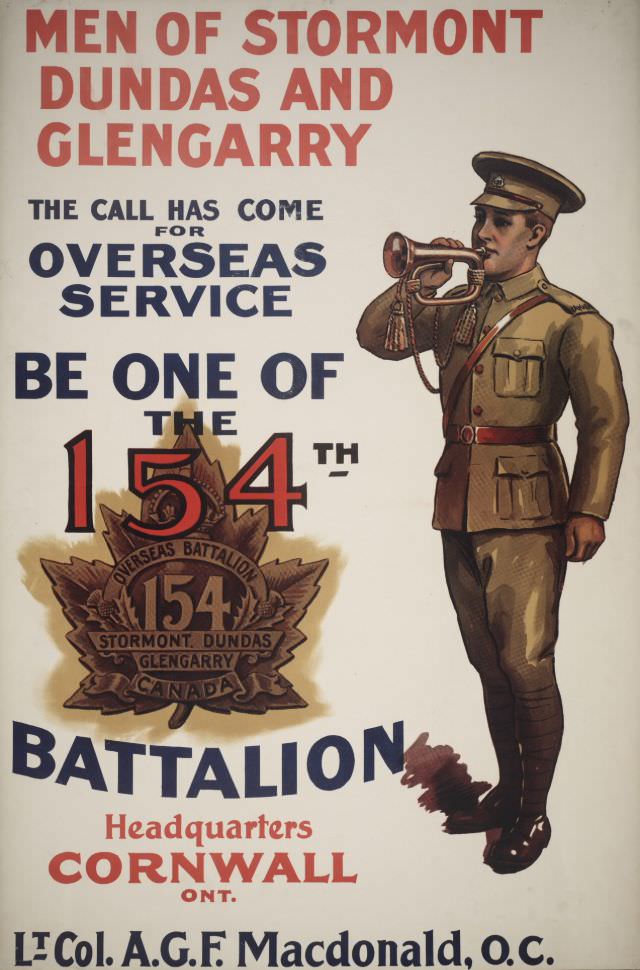
Hyper-local recruitment posters named specific counties and districts, targeting men from Stormont, Dundas, and Glengarry — counties in eastern Ontario with strong Scottish settler roots. By naming their home region directly, recruiters created an immediate personal connection that a generic poster could not achieve.
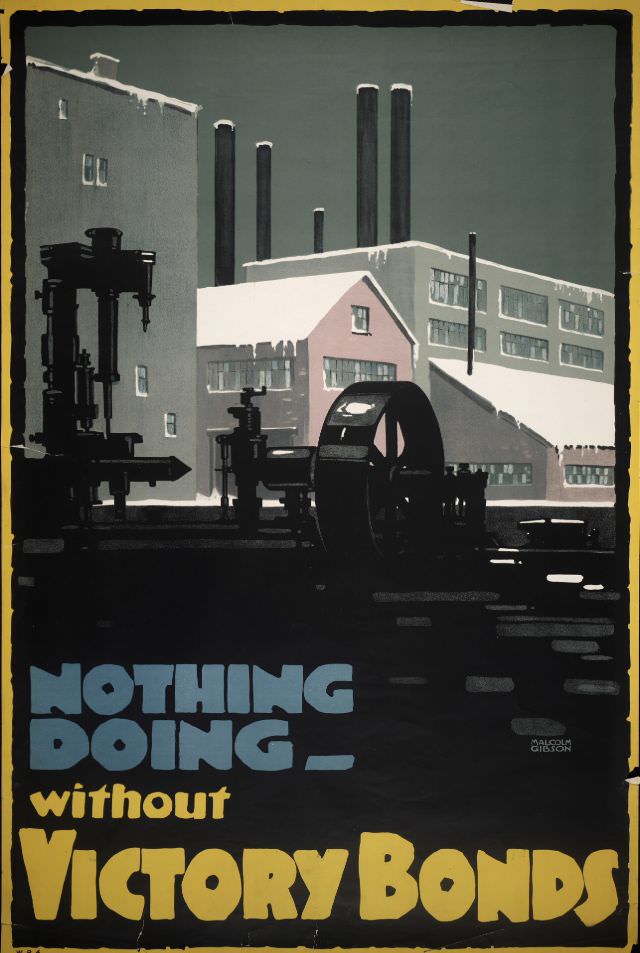
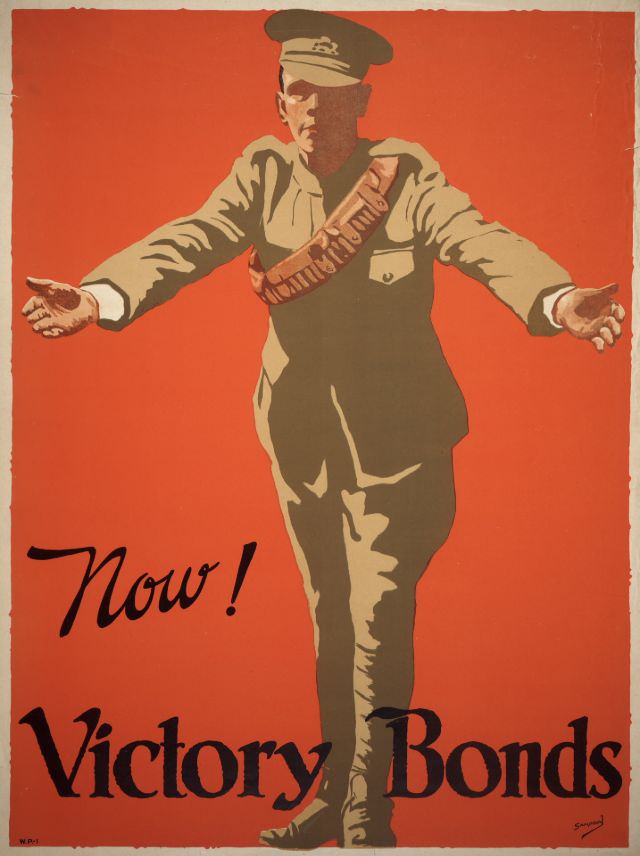
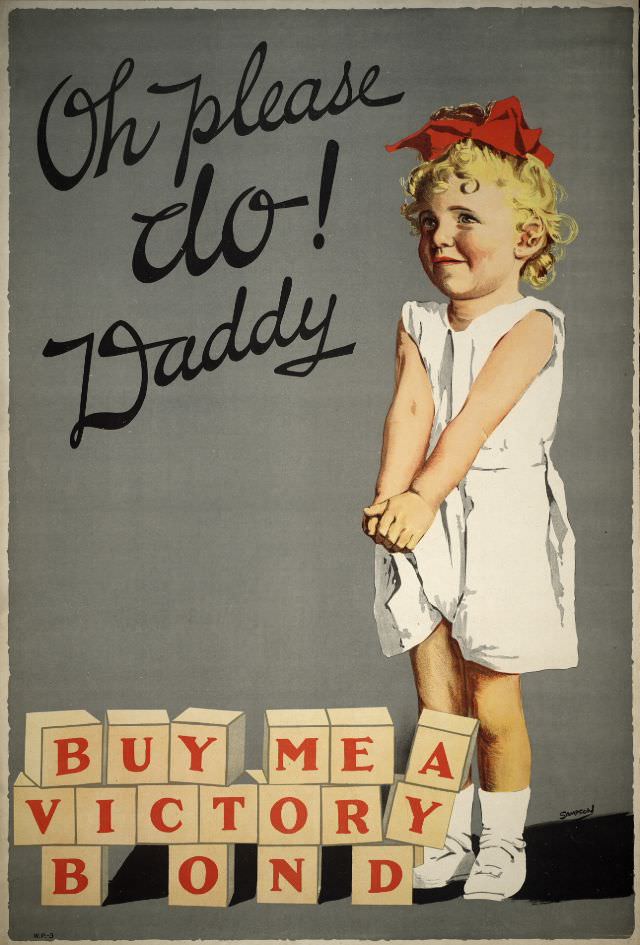
Some of the most emotionally manipulative posters used children to sell Victory Bonds. The image of a child pleading with their father to buy a bond used family sentiment to lower resistance. The message placed the burden of the request on a figure of innocence, making it nearly impossible for a father to refuse without feeling like he was letting down both his child and his country.
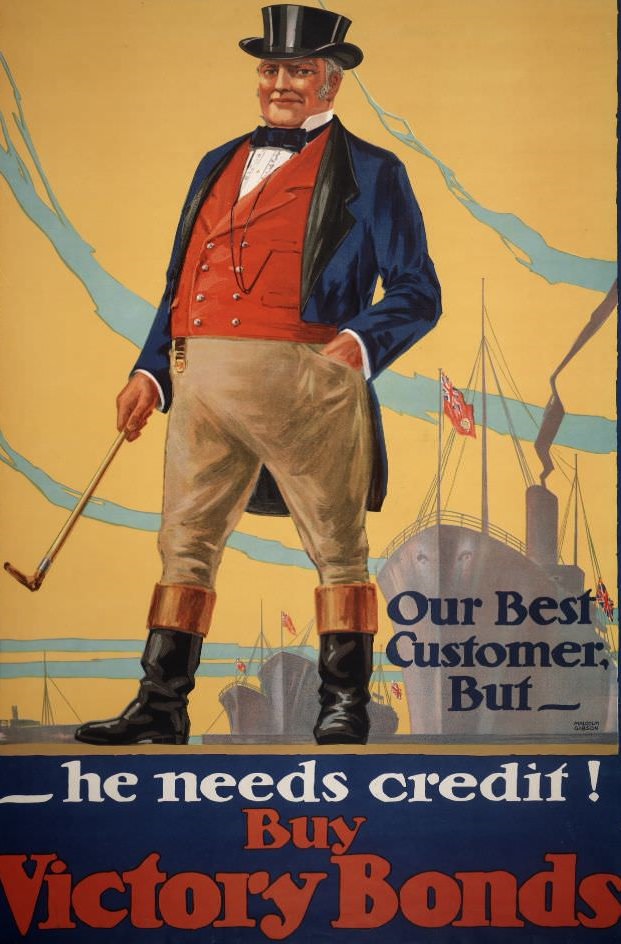
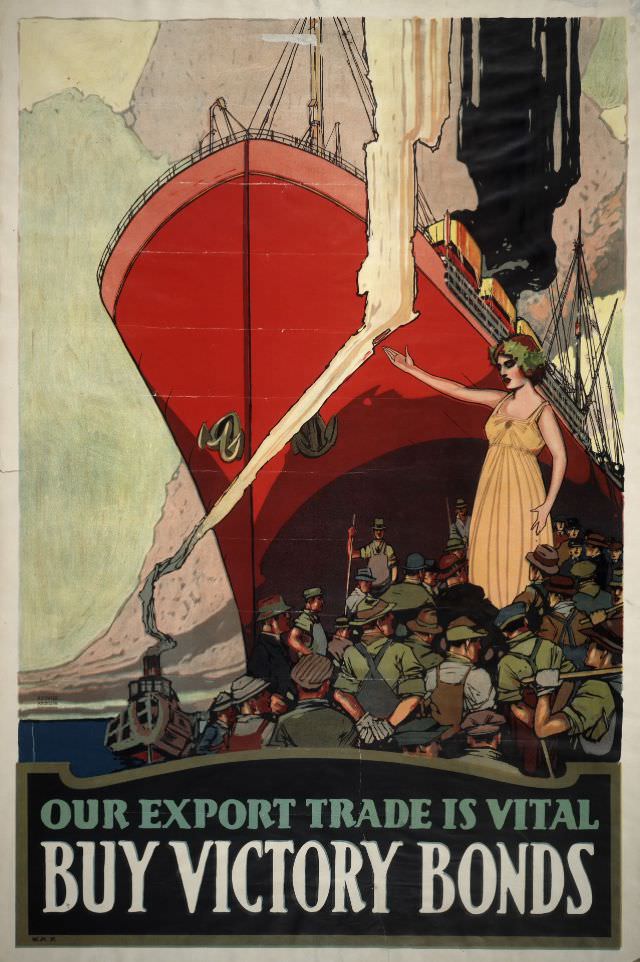
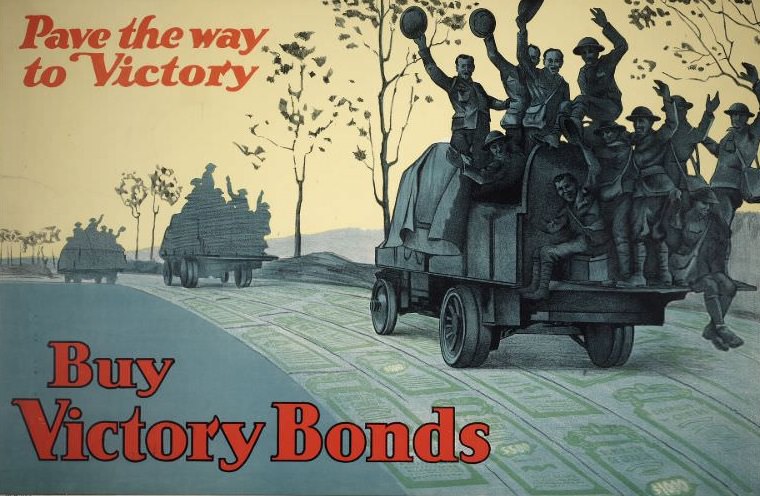
The Victory Bond campaign ran across multiple years and used dozens of different angles — emotional, economic, patriotic, and guilt-based. Posters framed bonds as essential to export trade, to military supply chains, and to postwar economic recovery. Every possible motivation was explored to reach as many Canadians as possible.
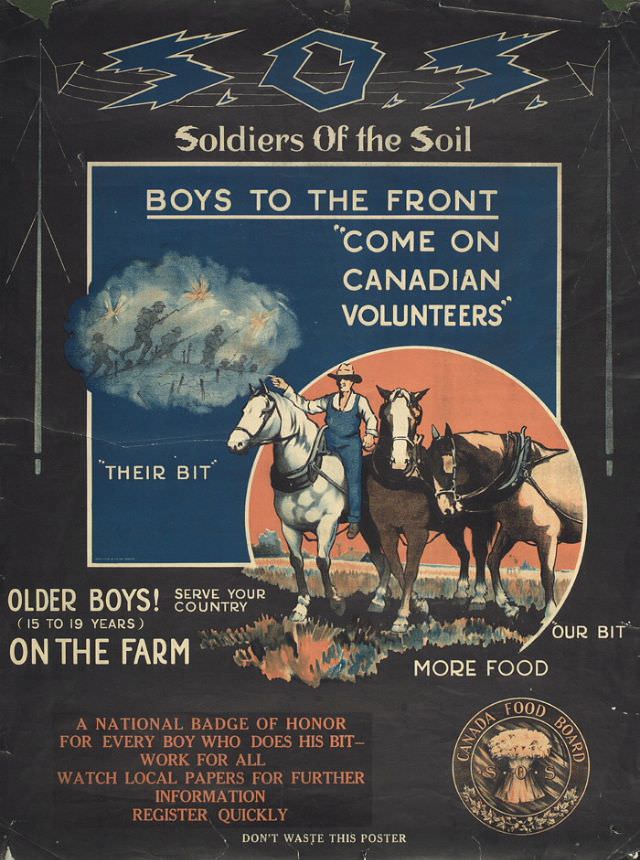
Boys between 15 and 19 years old were recruited through the “Soldiers of the Soil” program to work on farms during summer months while older men were away fighting. With a large portion of the adult male workforce overseas, agricultural labor fell critically short. These young workers helped keep Canada’s farms running and its food supply stable throughout the war.
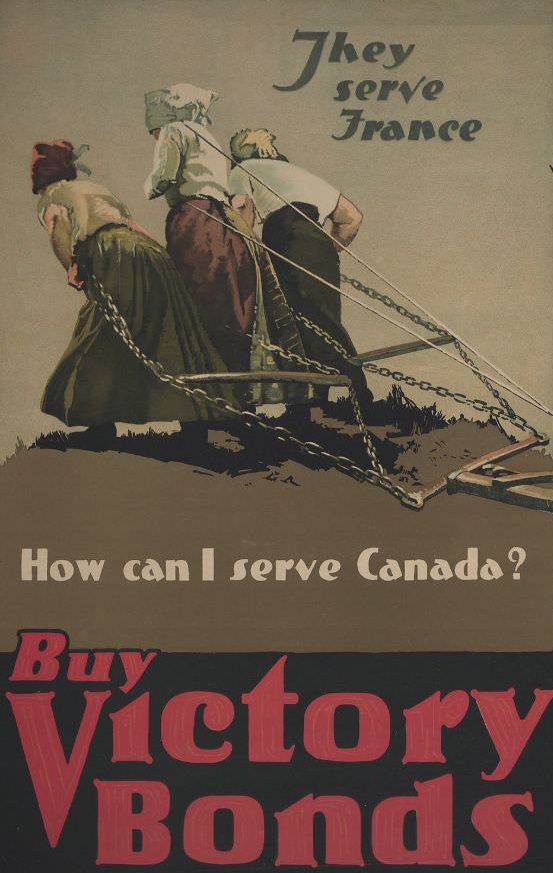
Comparative shame was another tactic used by propaganda designers. Posters like “They serve France. How can I serve Canada?” drew a direct parallel between French citizens sacrificing for their homeland and Canadian men who had yet to enlist. The implication was clear: if others are giving everything, what is your excuse?
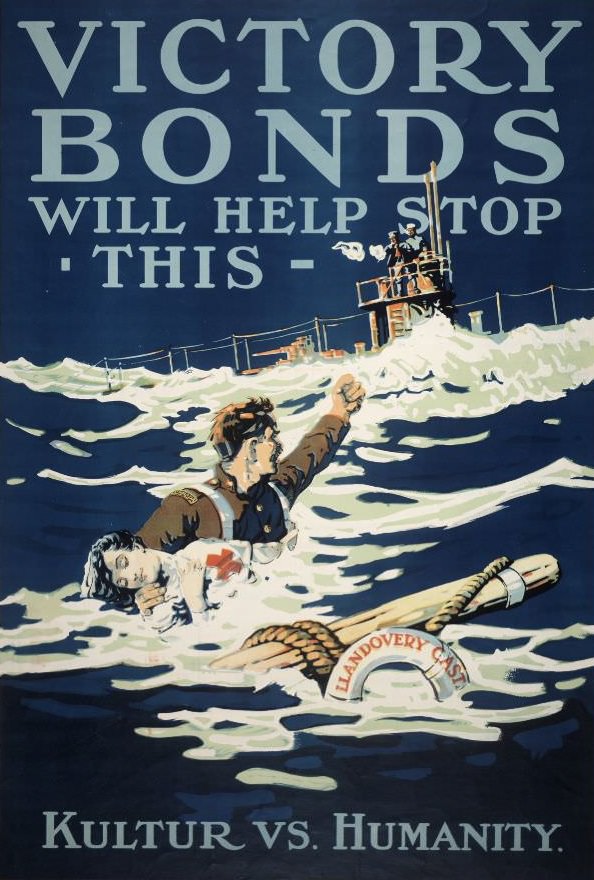
Among the most intense posters were those that depicted the enemy’s actions as barbaric. “Victory Bonds Will Help Stop This — Kultur vs. Humanity” used imagery of violence and suffering to argue that buying a bond was literally a vote against atrocity. The word “Kultur,” a German term for culture, was weaponized in Allied propaganda as a stand-in for German militarism and brutality.

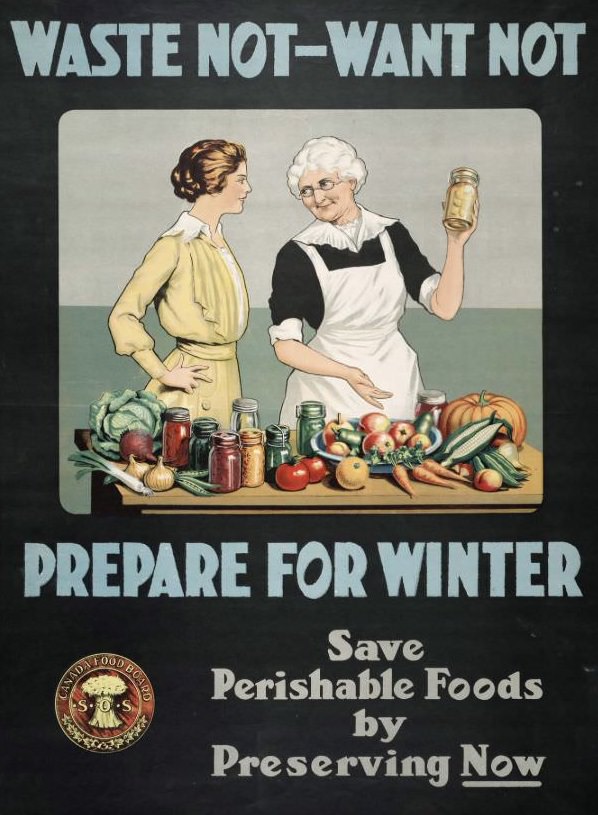
Resource conservation messages like “Waste Not — Want Not” reminded Canadians that even their daily habits at home had a direct effect on the war. Saving food, fuel, and money was framed not as personal thrift but as active participation in the national effort. Meanwhile, war loan posters connected individual savings directly to the strength of the British Empire.
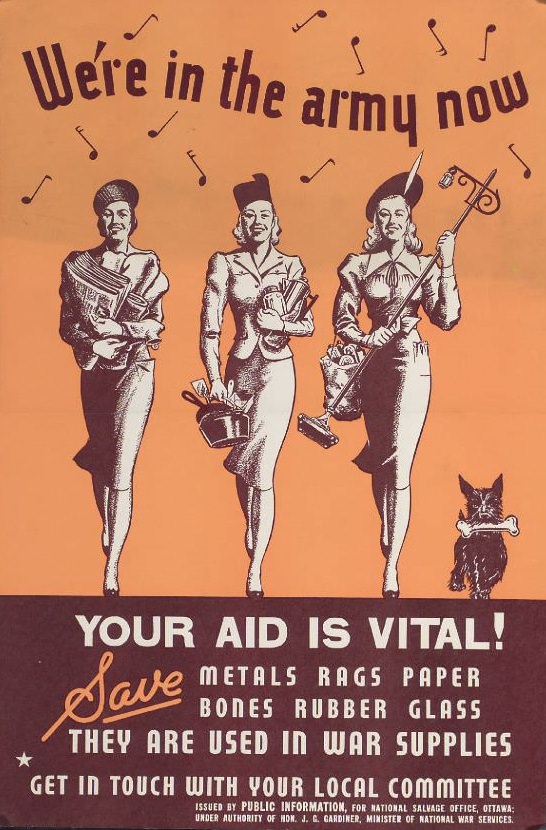
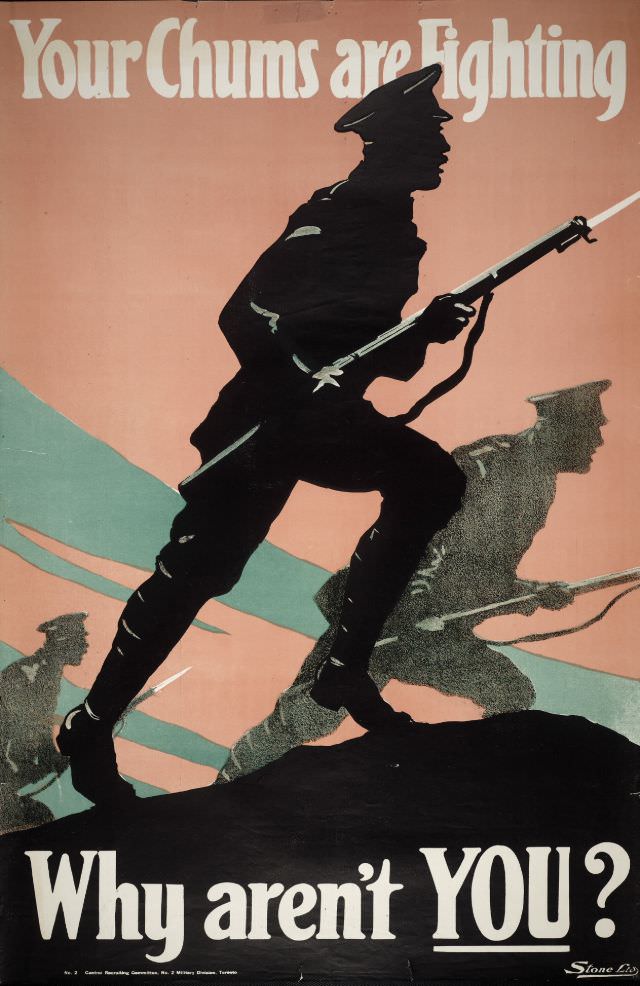
“Your Chums Are Fighting. Why Aren’t You?” was one of the most straightforward and personally confrontational posters in the entire Canadian campaign. It required no symbolism or complex argument. It simply pointed at the reader and demanded an answer. Across all these posters — recruitment drives, bond campaigns, food conservation, and labor calls — the Canadian government built one of the most comprehensive propaganda efforts of the war, touching nearly every aspect of civilian life.