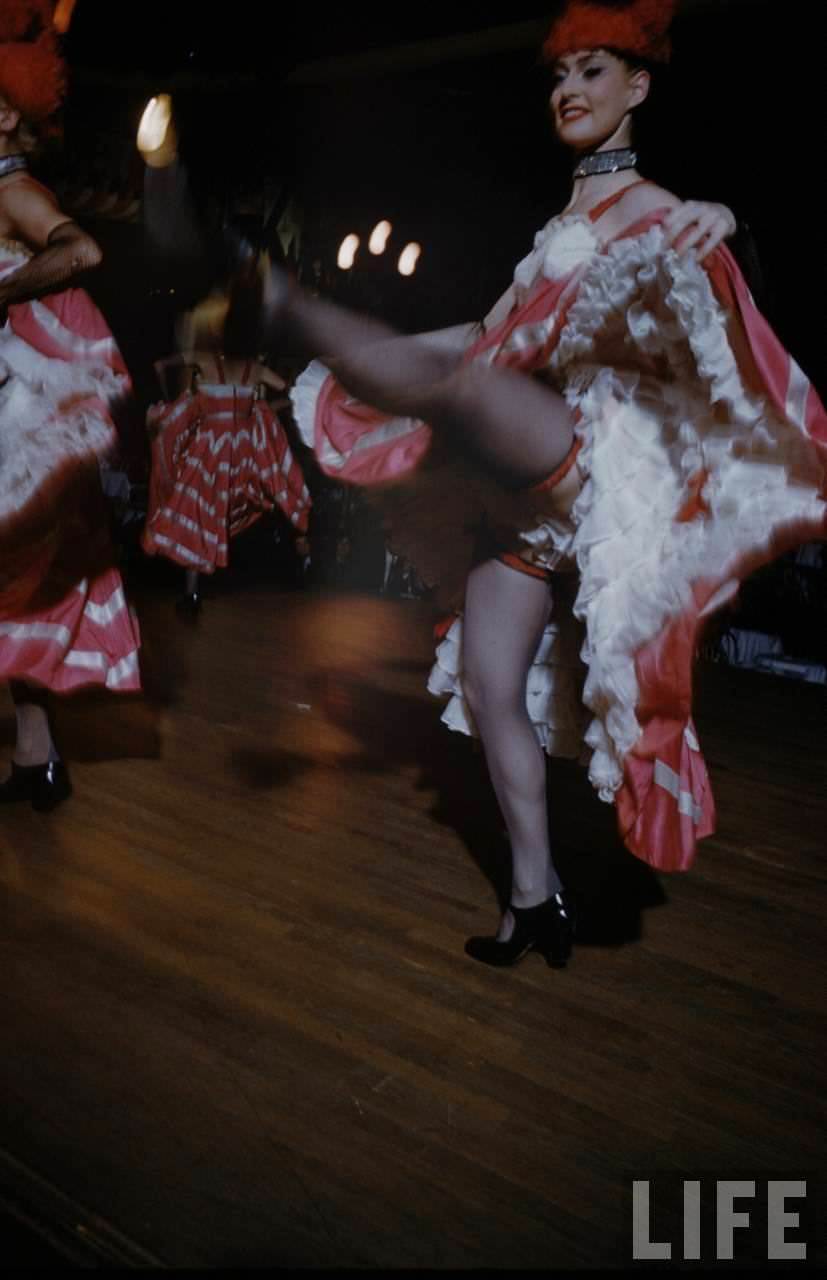
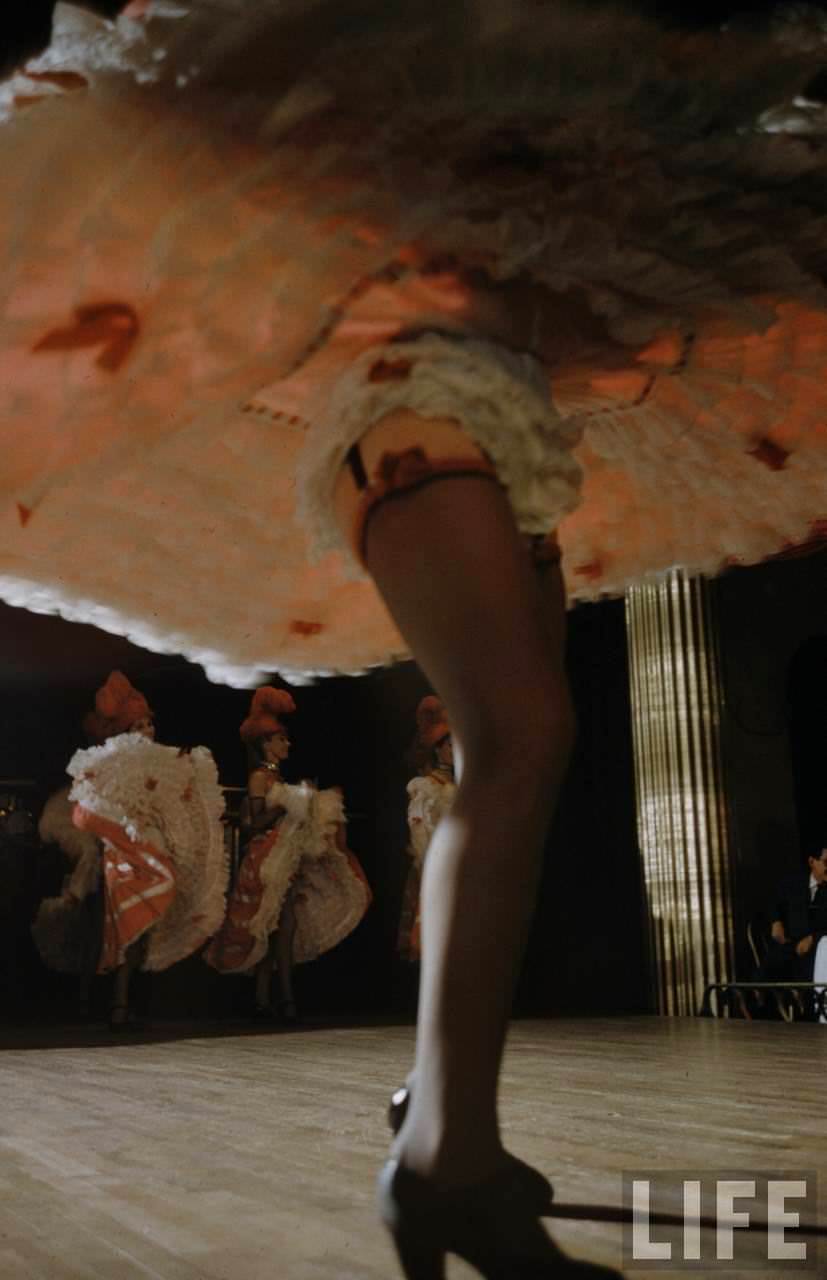
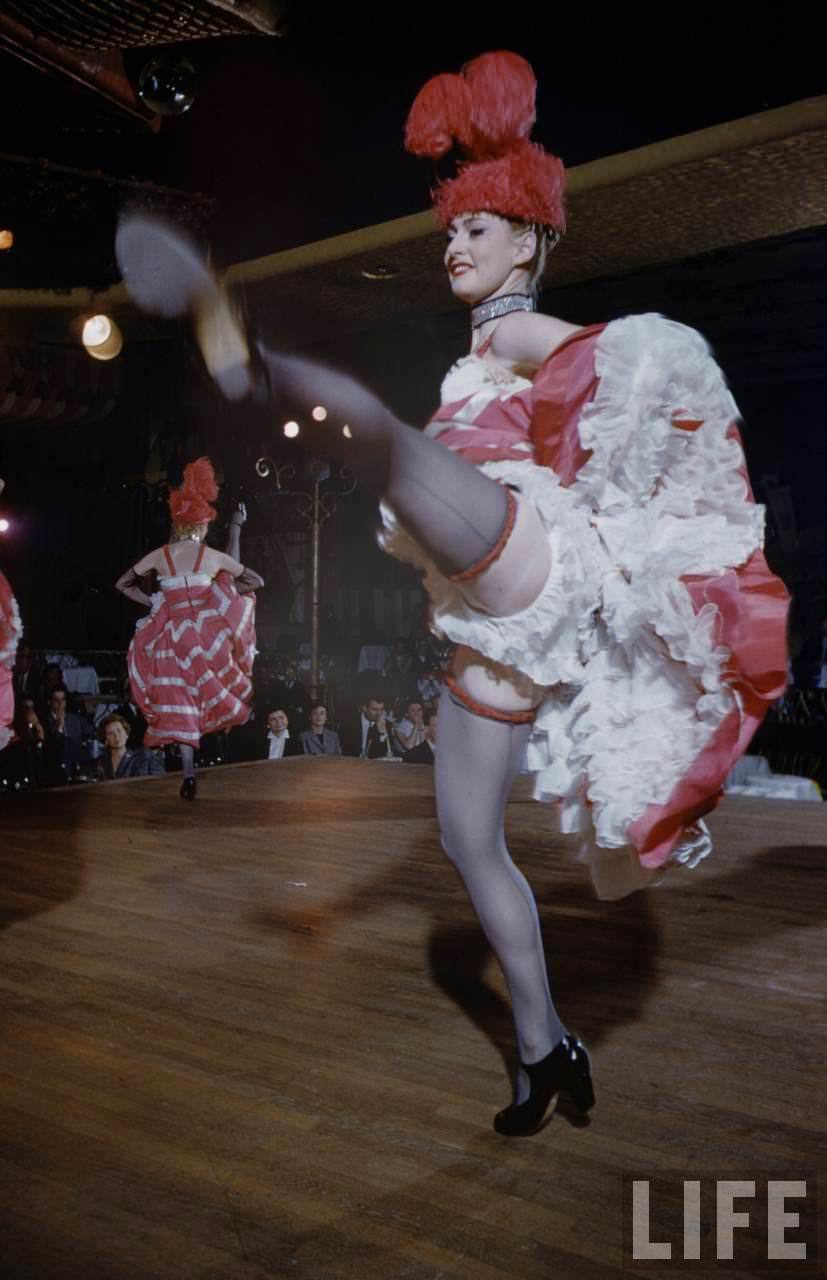
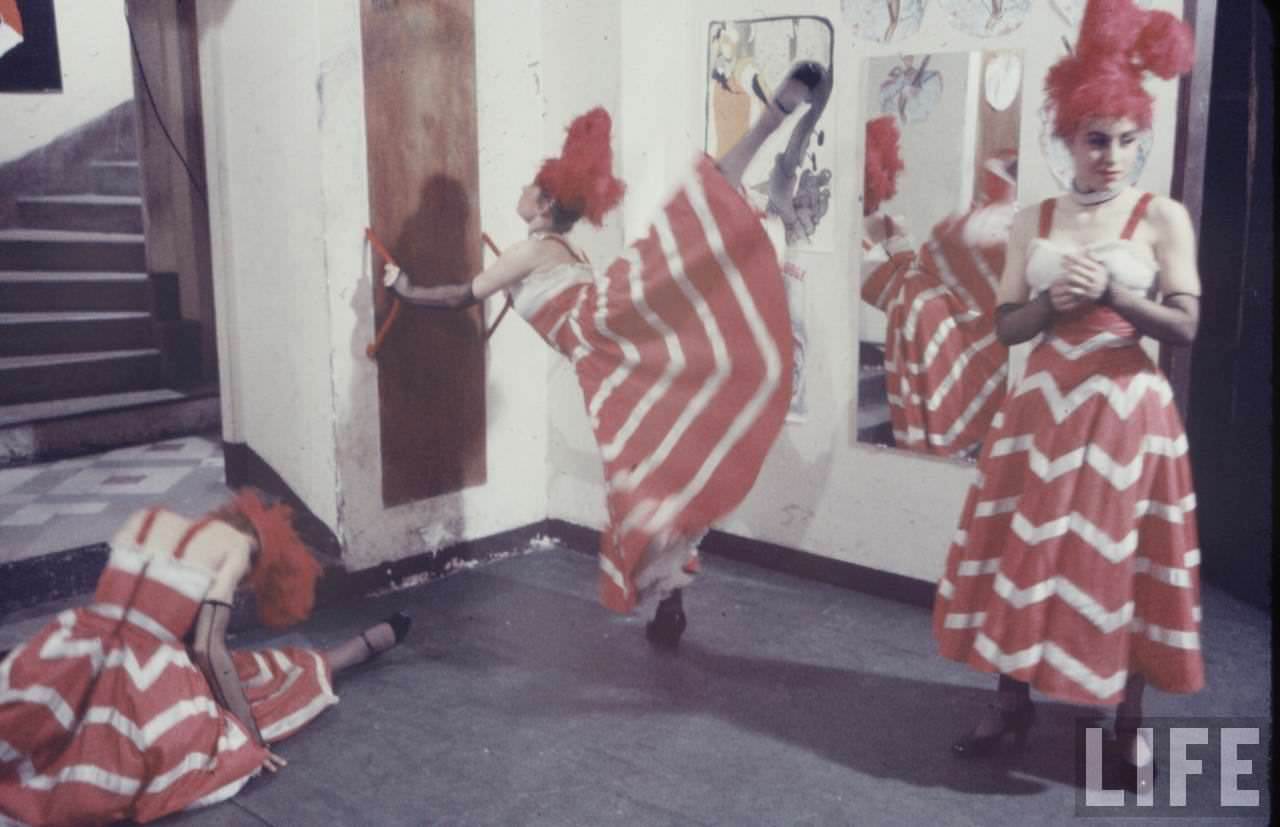
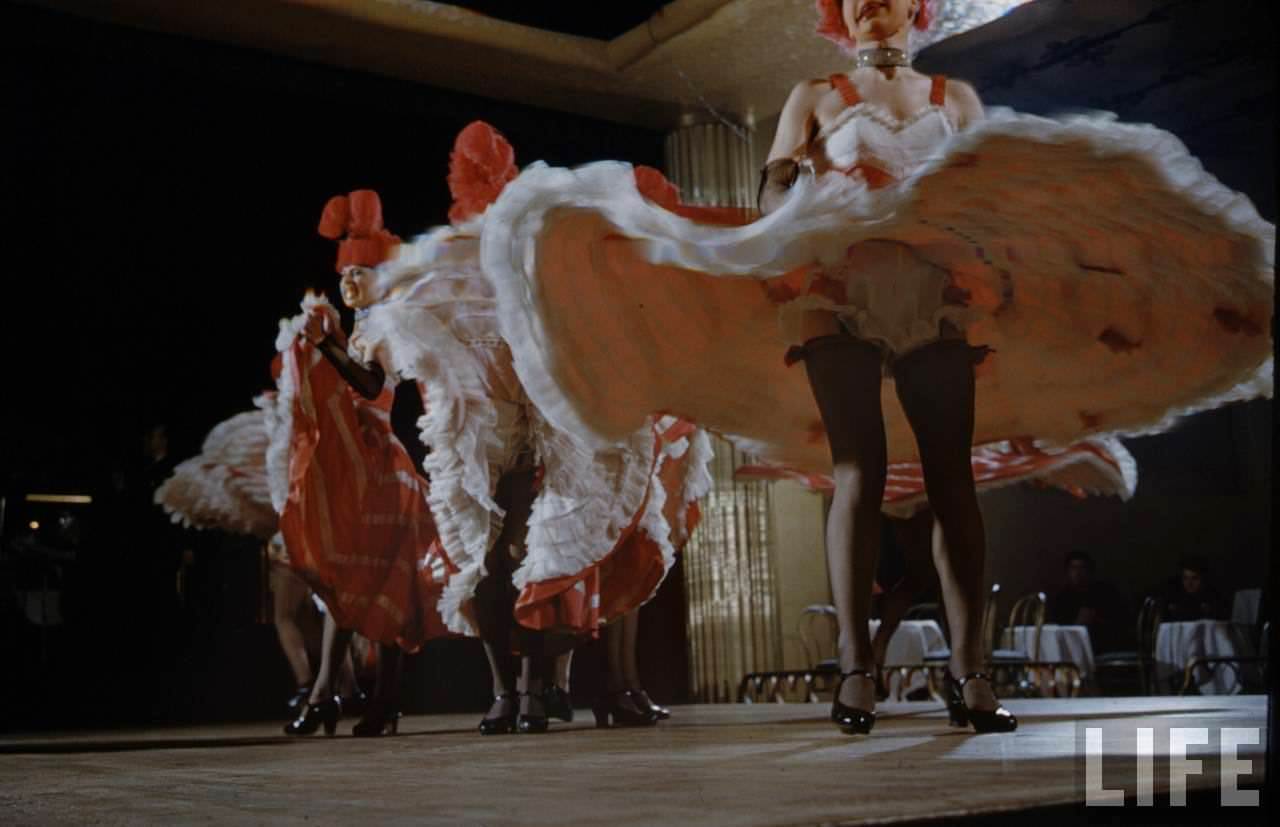
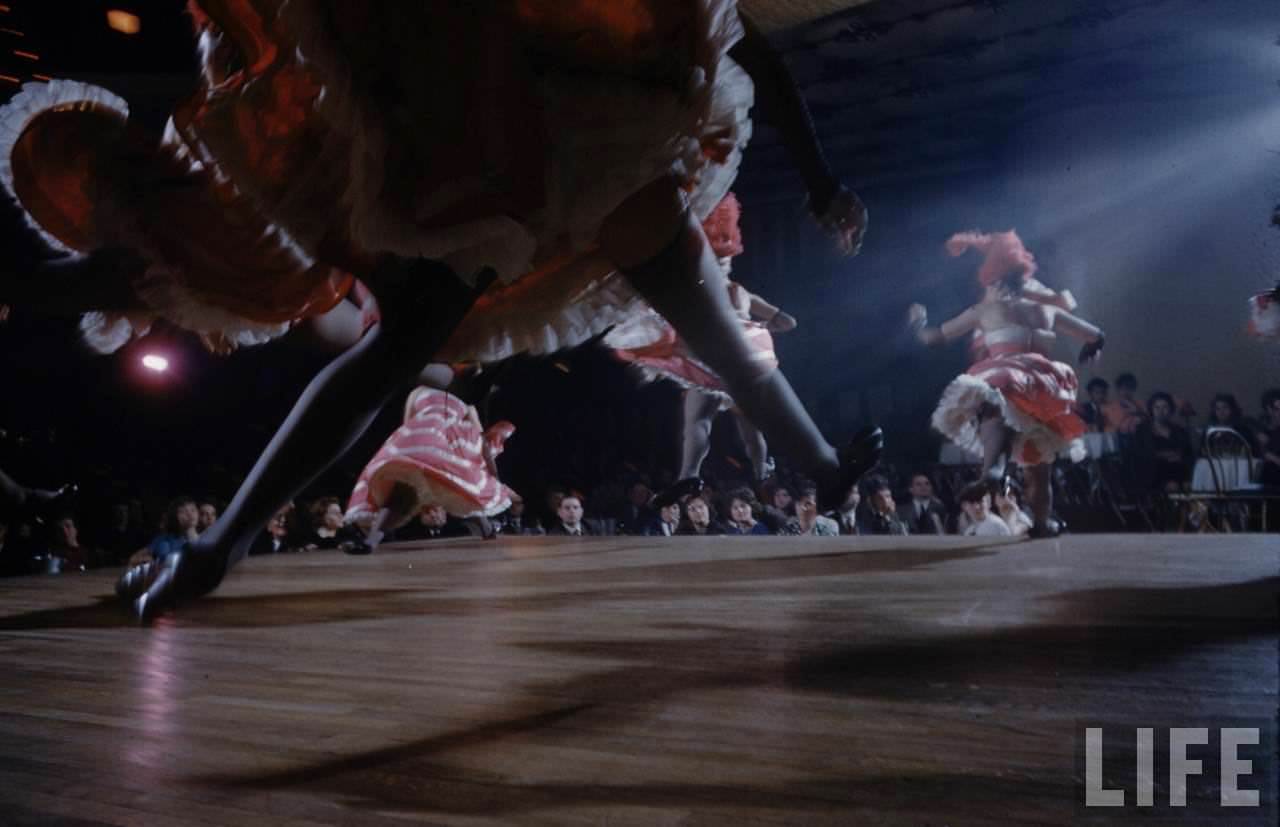
By the 1950s, the Moulin Rouge in Paris had already been the most famous cabaret in the world for over half a century. The red windmill on the Boulevard de Clichy was a landmark. But the real heart of the place was its dancers — the women who performed the French can can night after night for packed crowds of tourists and Parisians alike.
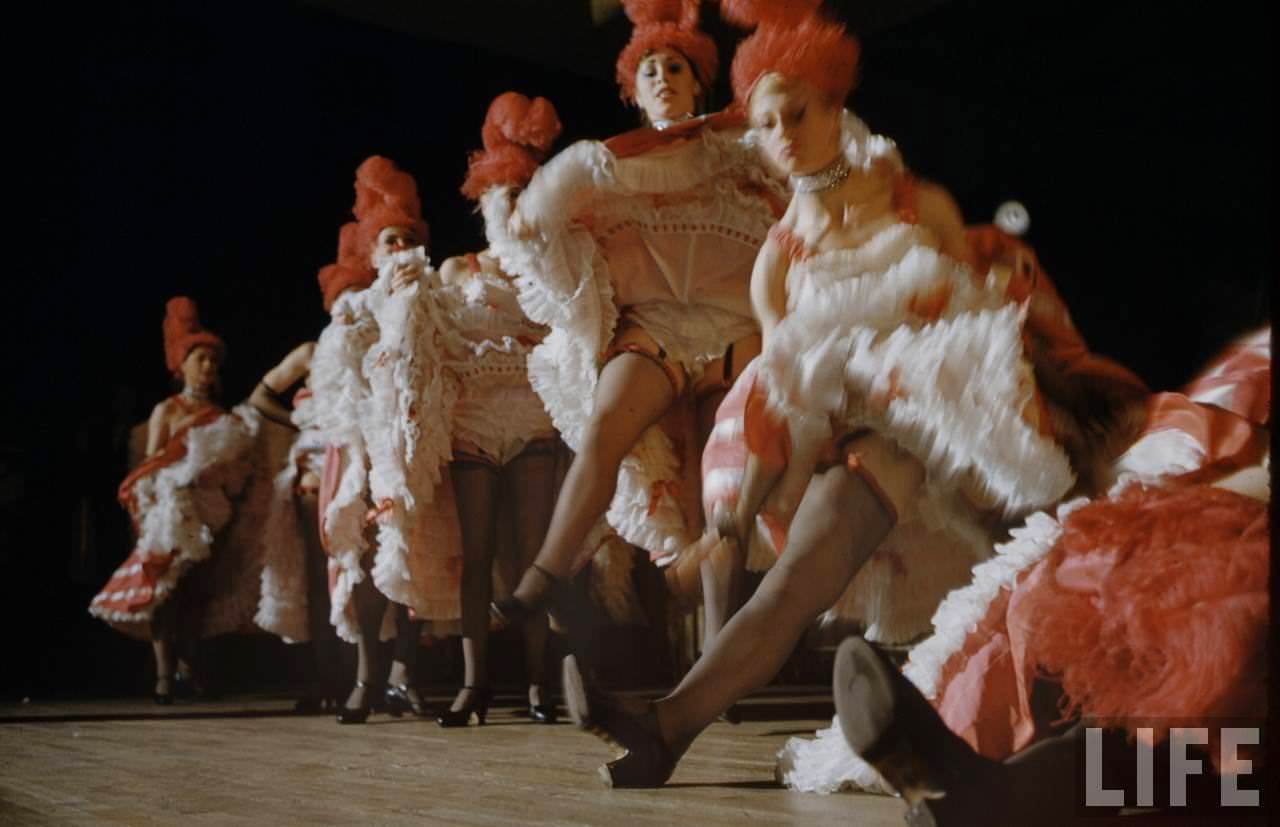
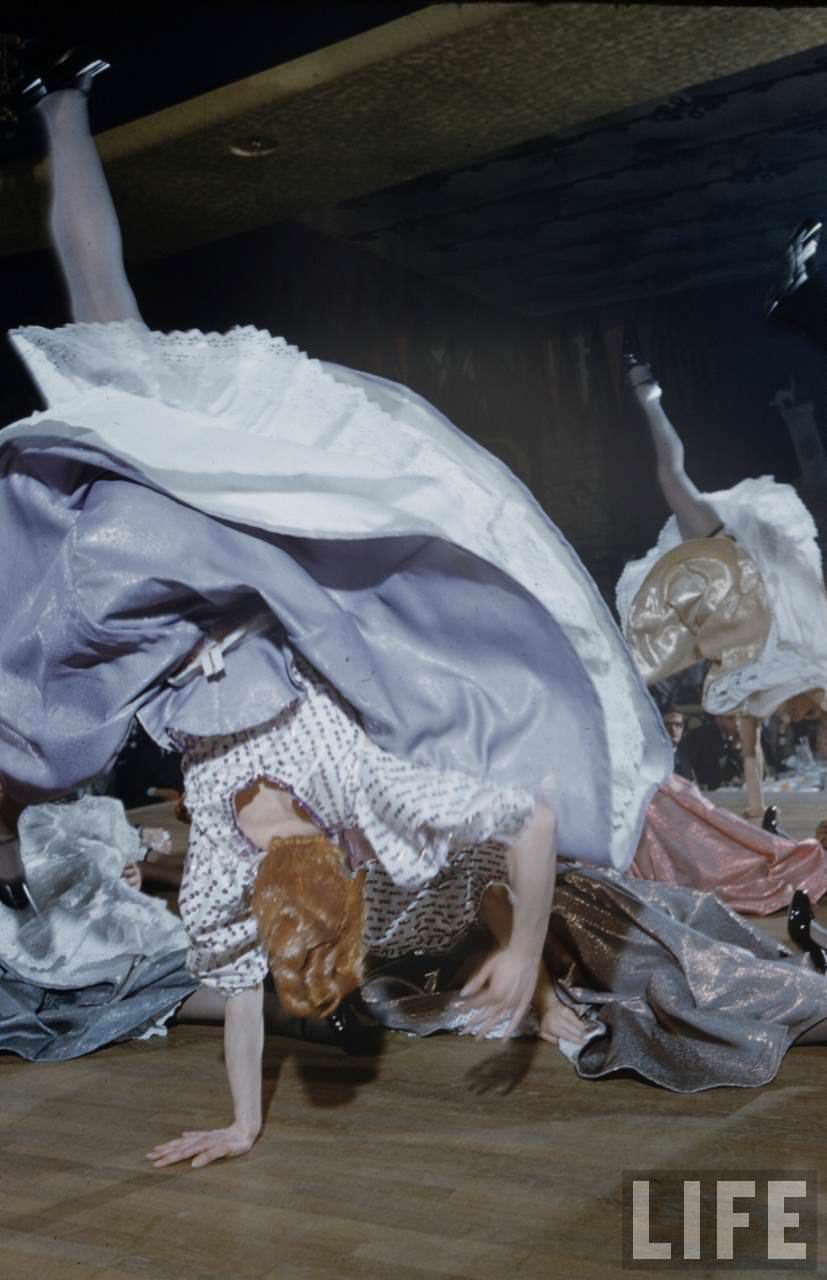
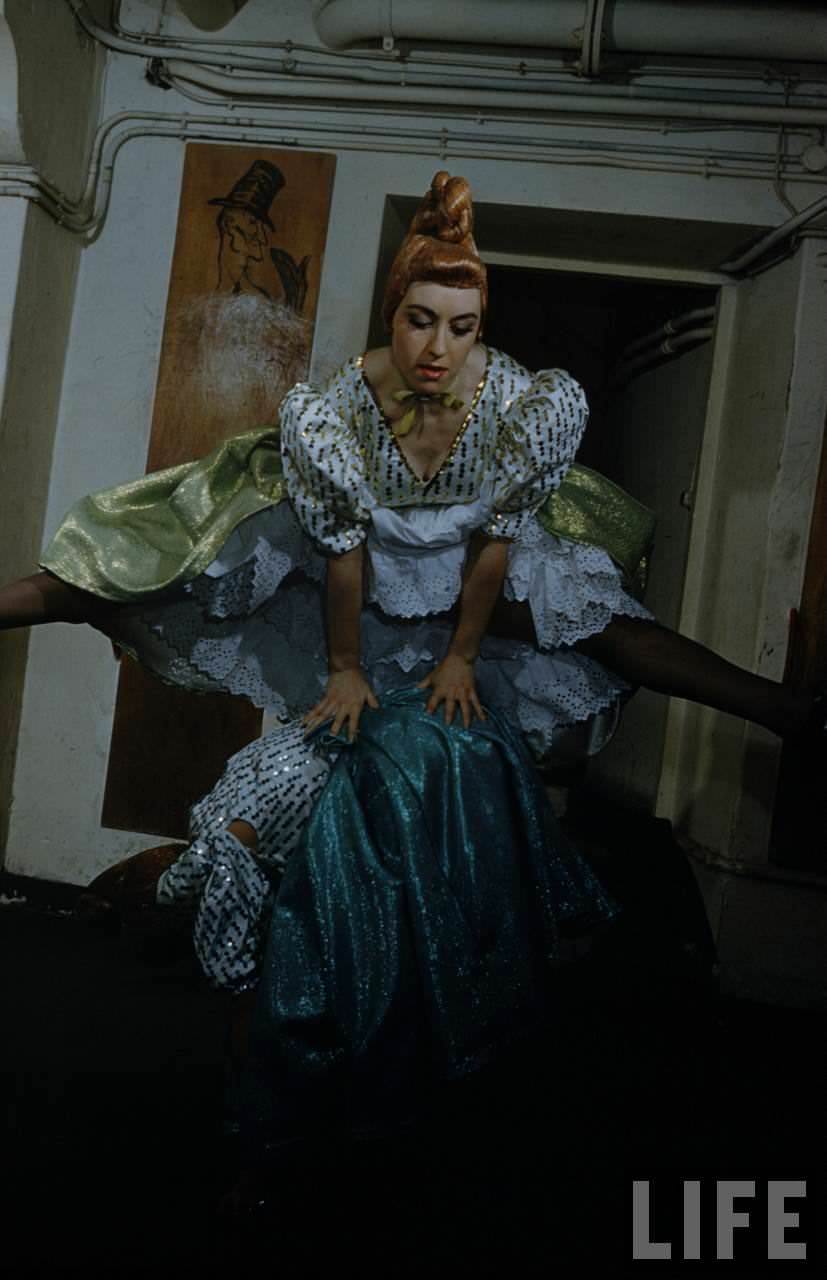
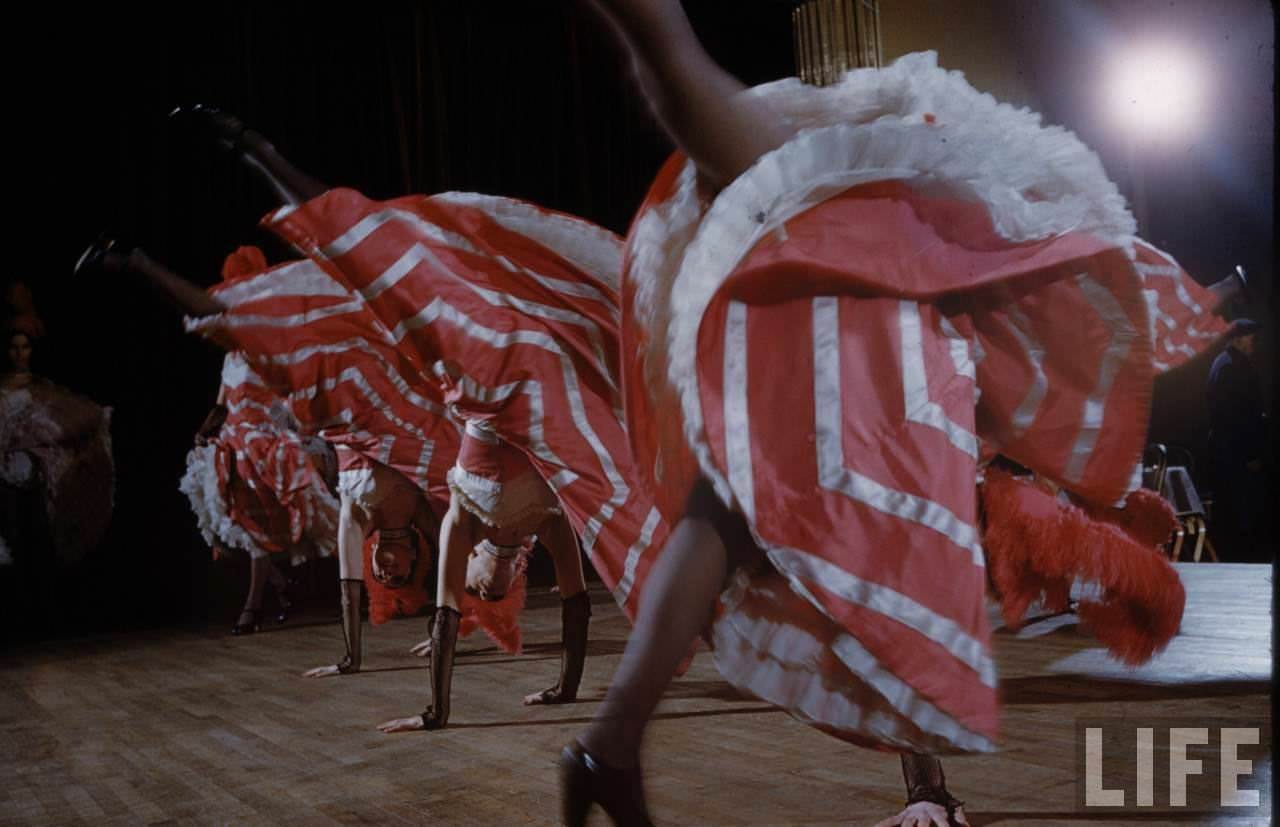
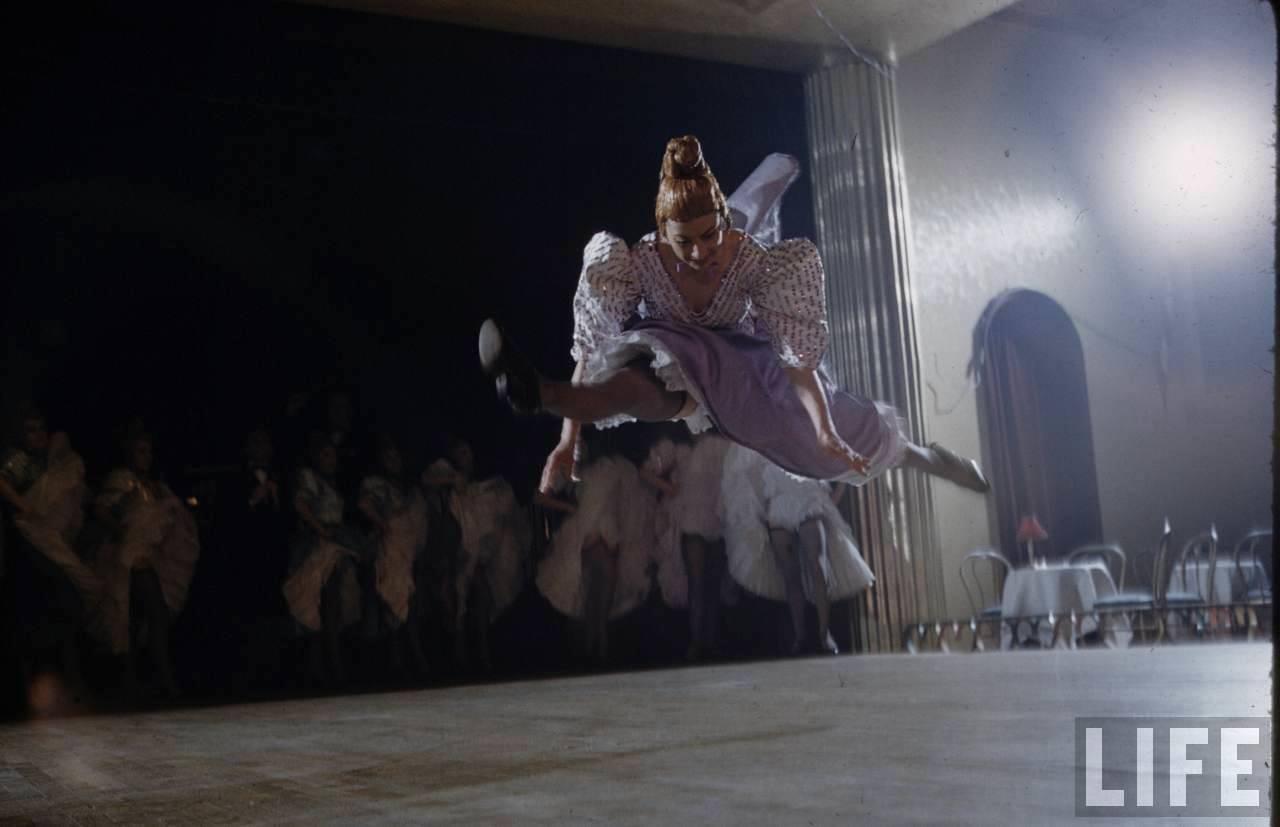
The can can is a physically demanding dance. It requires extreme flexibility, strength, and precise timing. The signature moves — high kicks, cartwheels, and flying leaps into full splits — put enormous strain on the body. A dancer dropping into the splits from a standing jump lands with her full weight on the floor. It takes years of training to build up the flexibility needed to do that without injury.
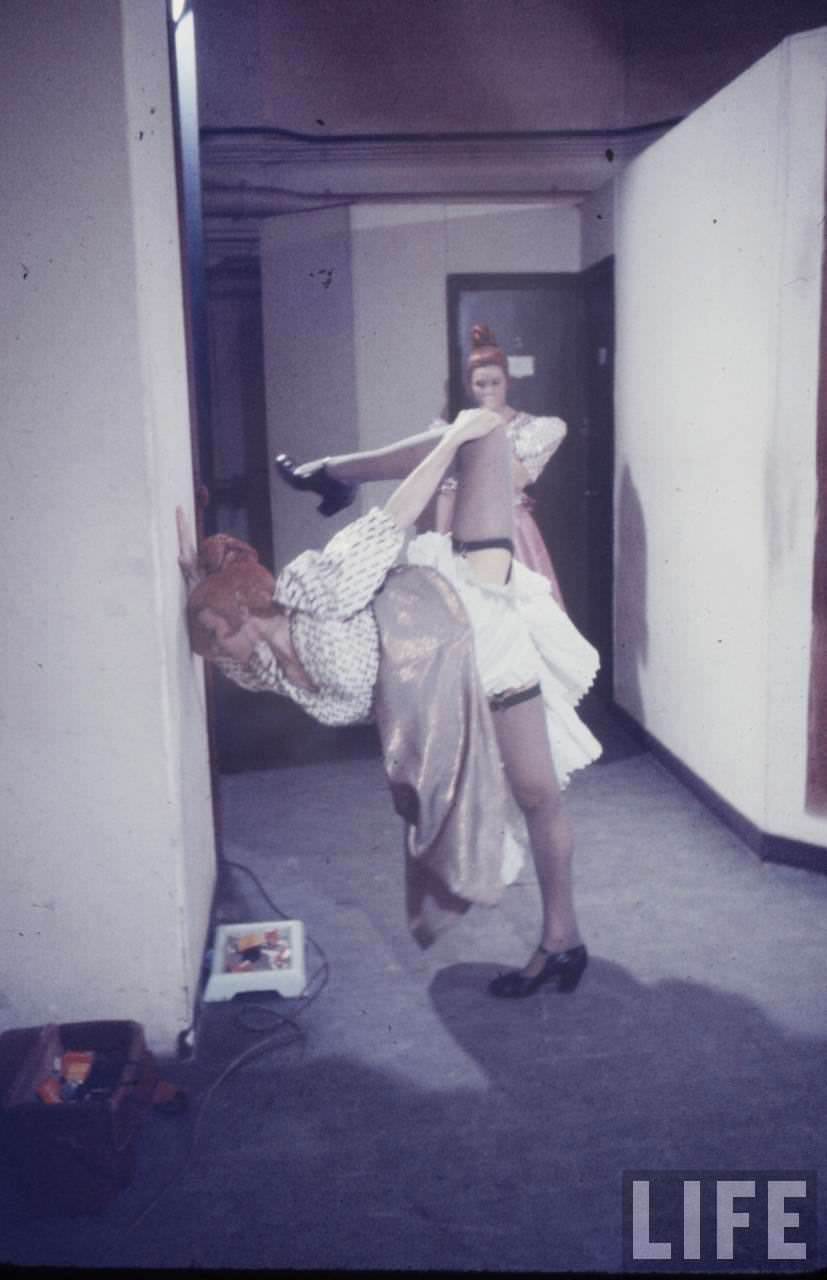
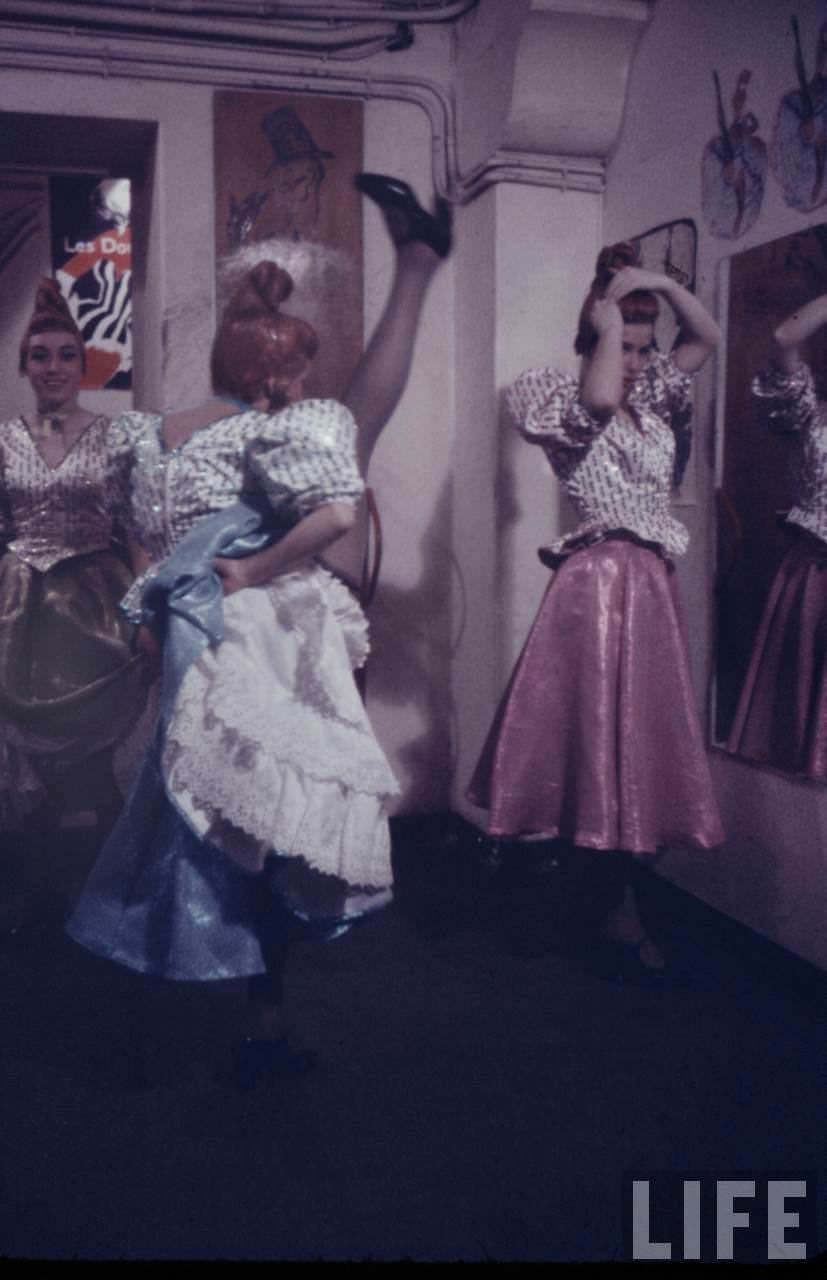
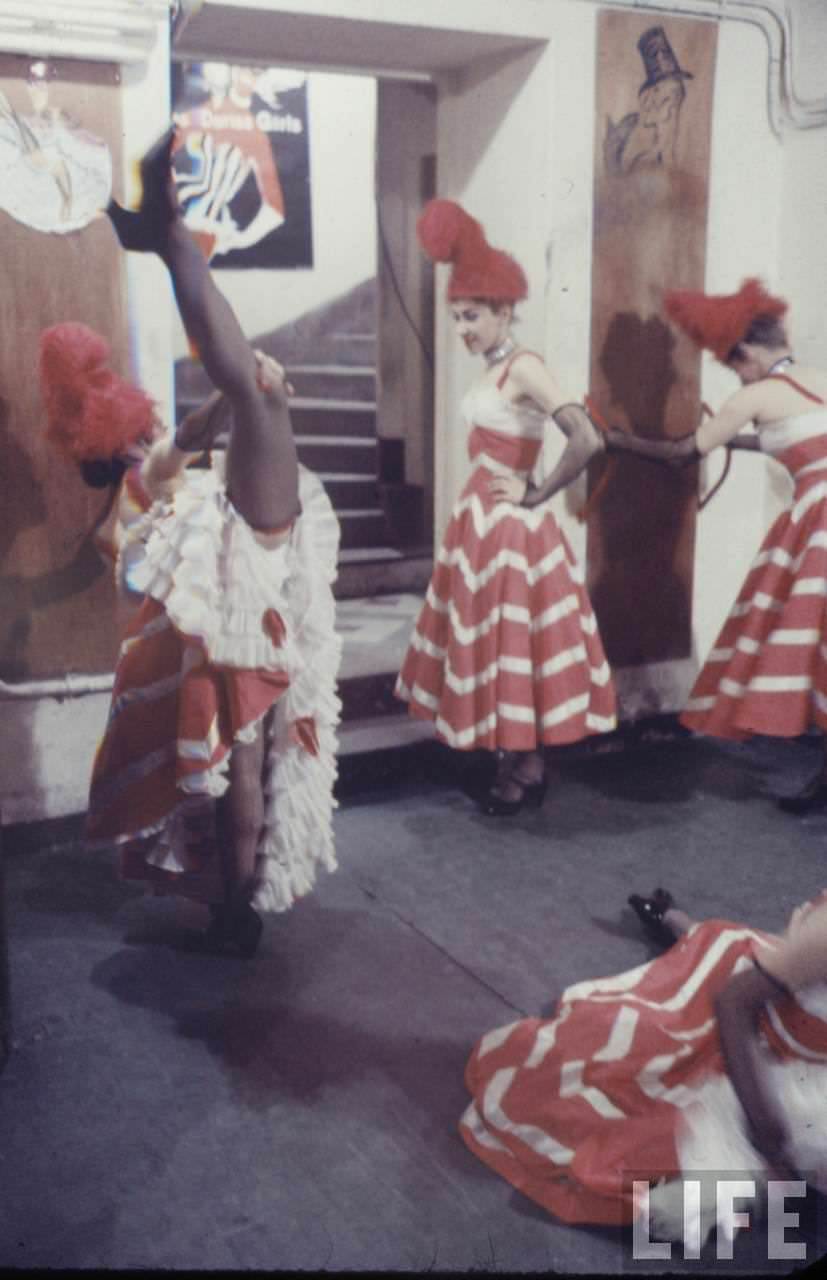
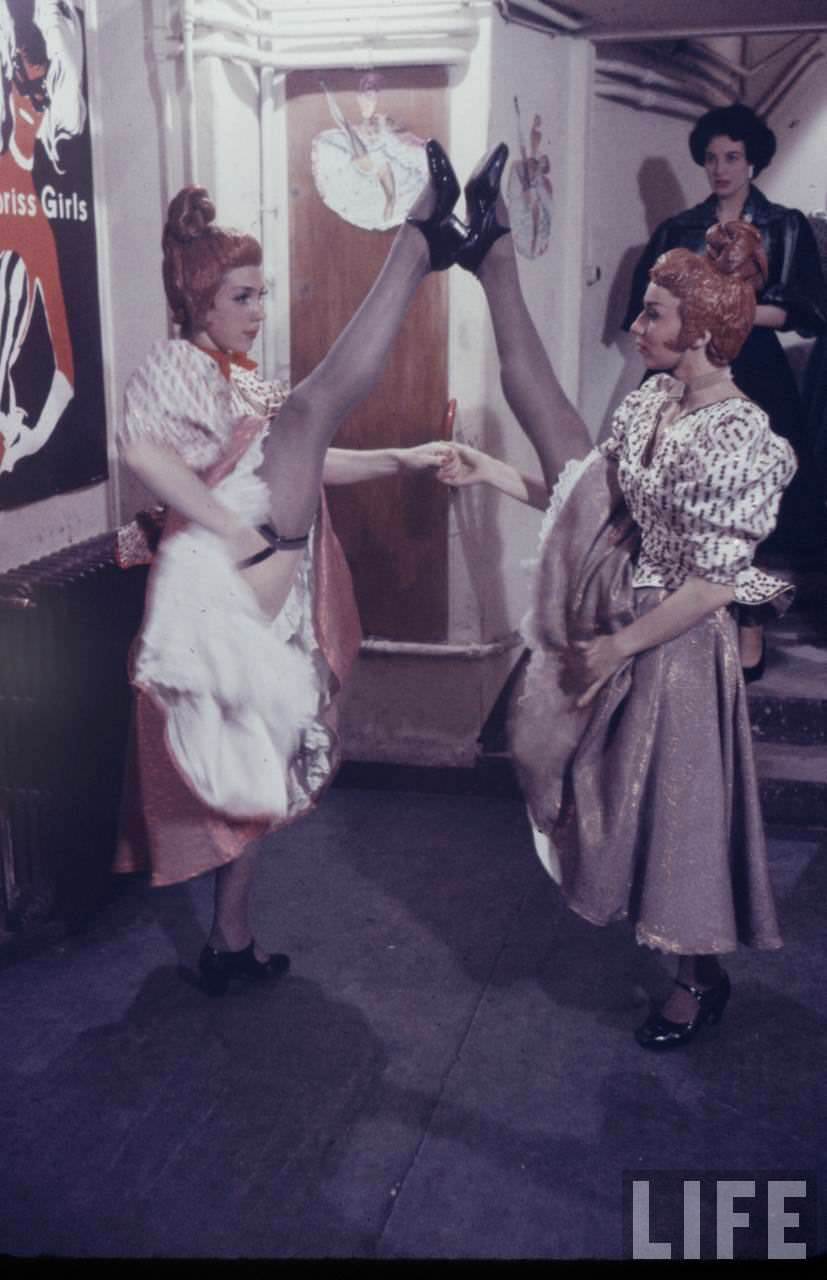
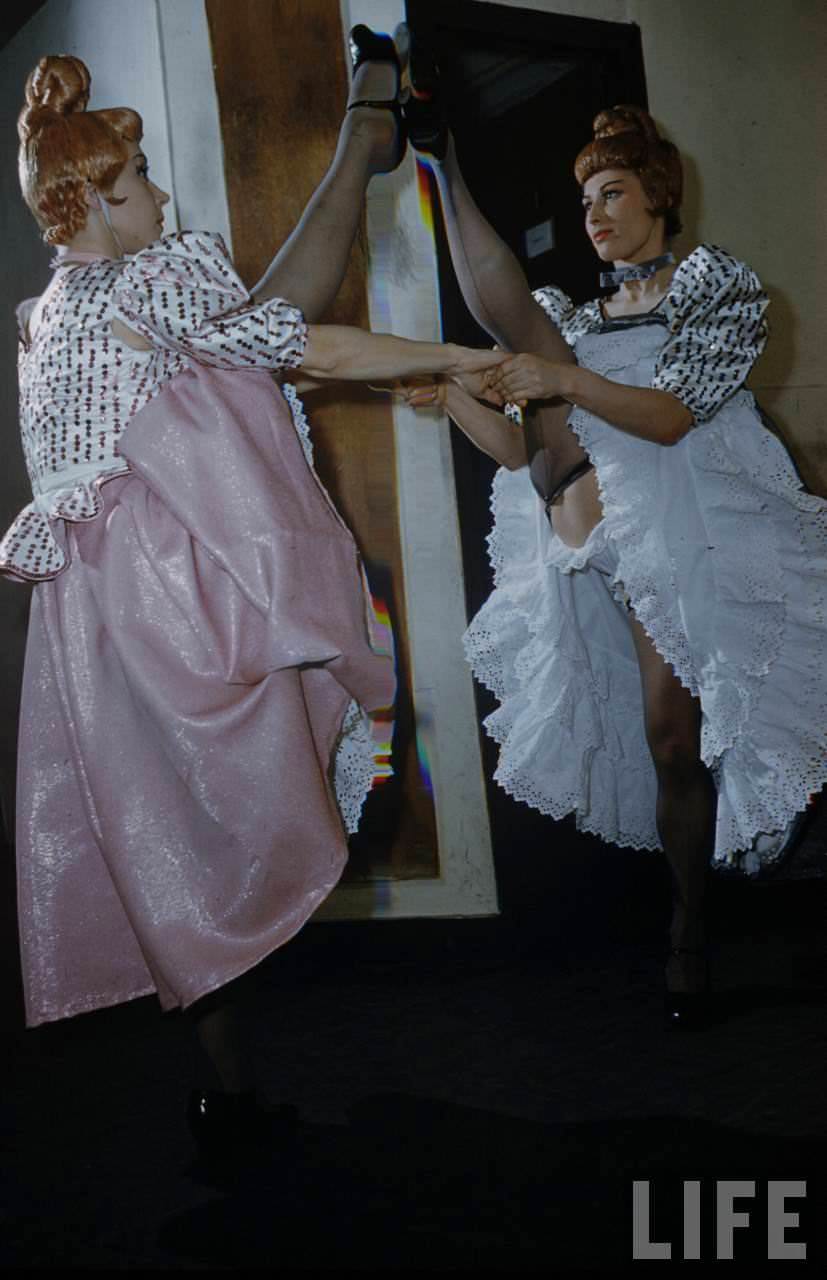
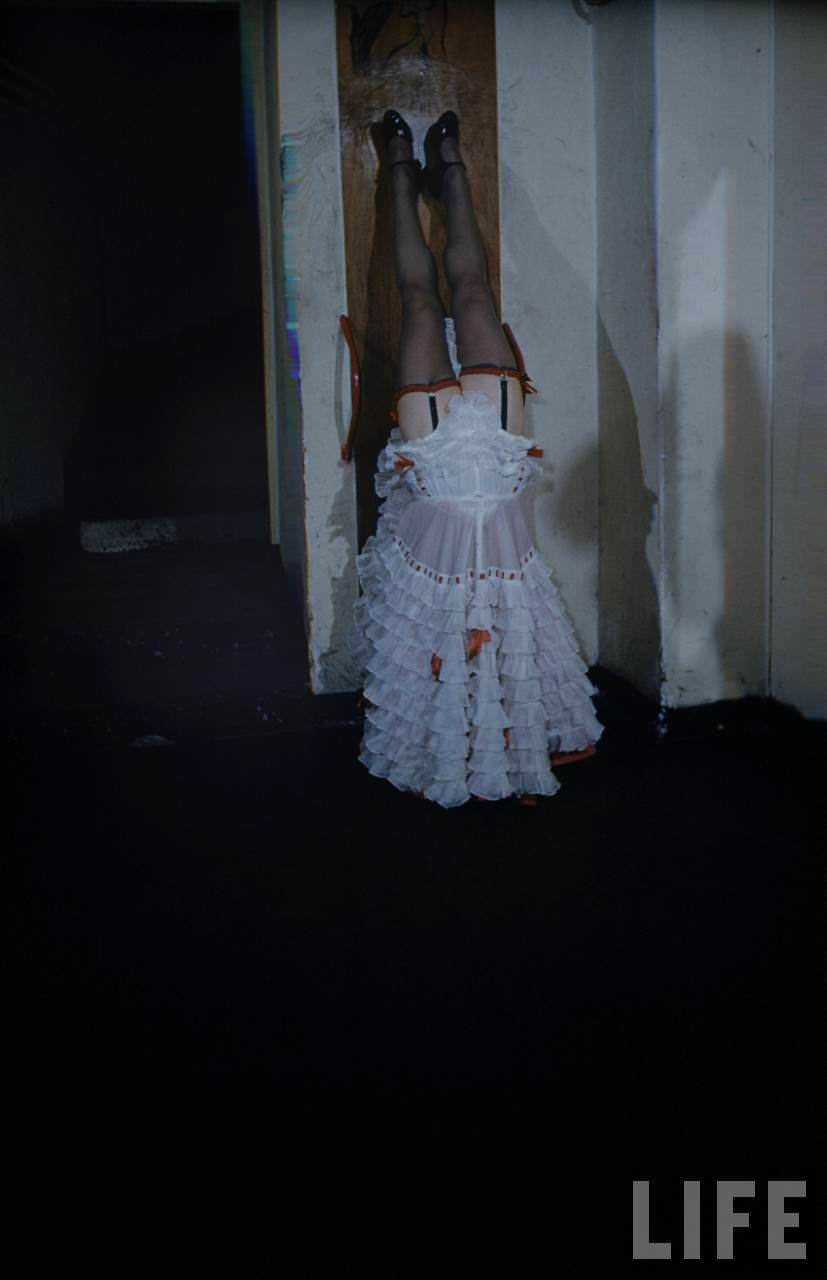
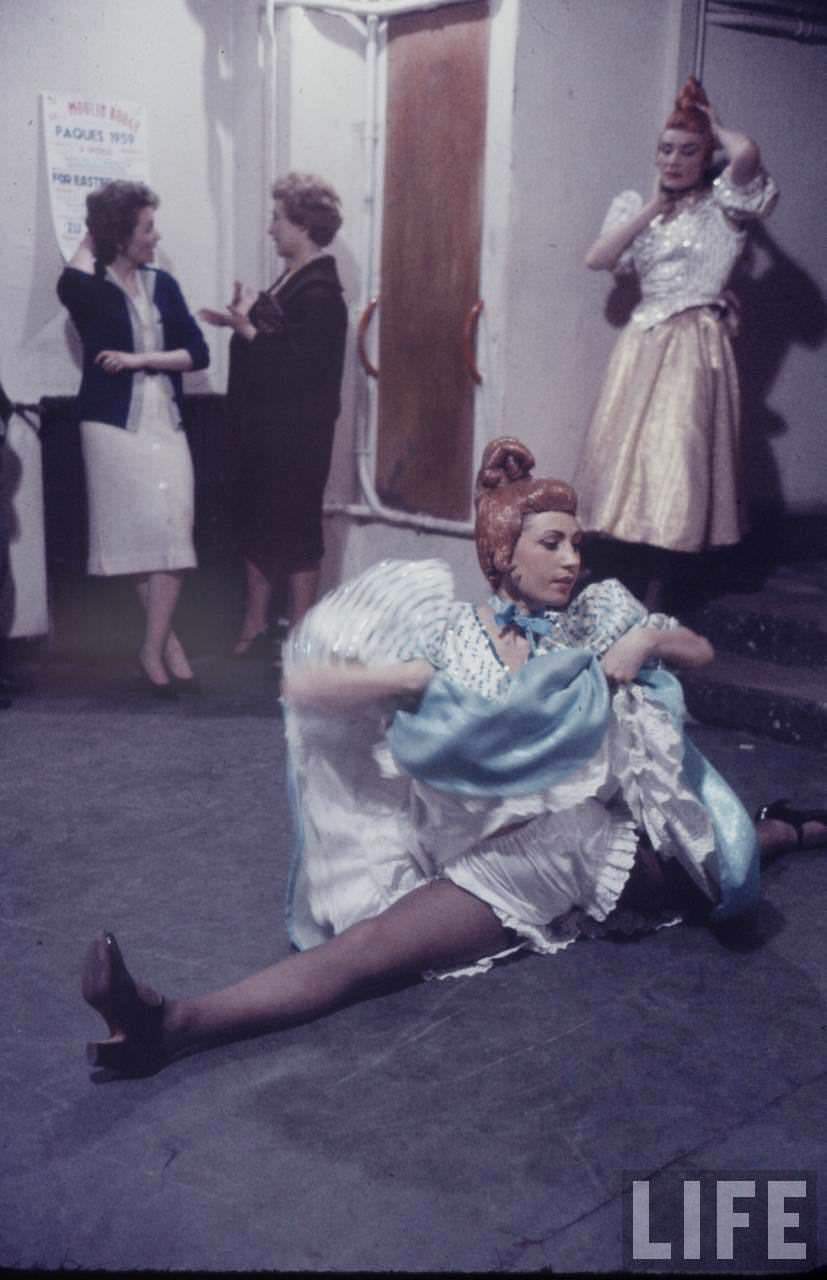
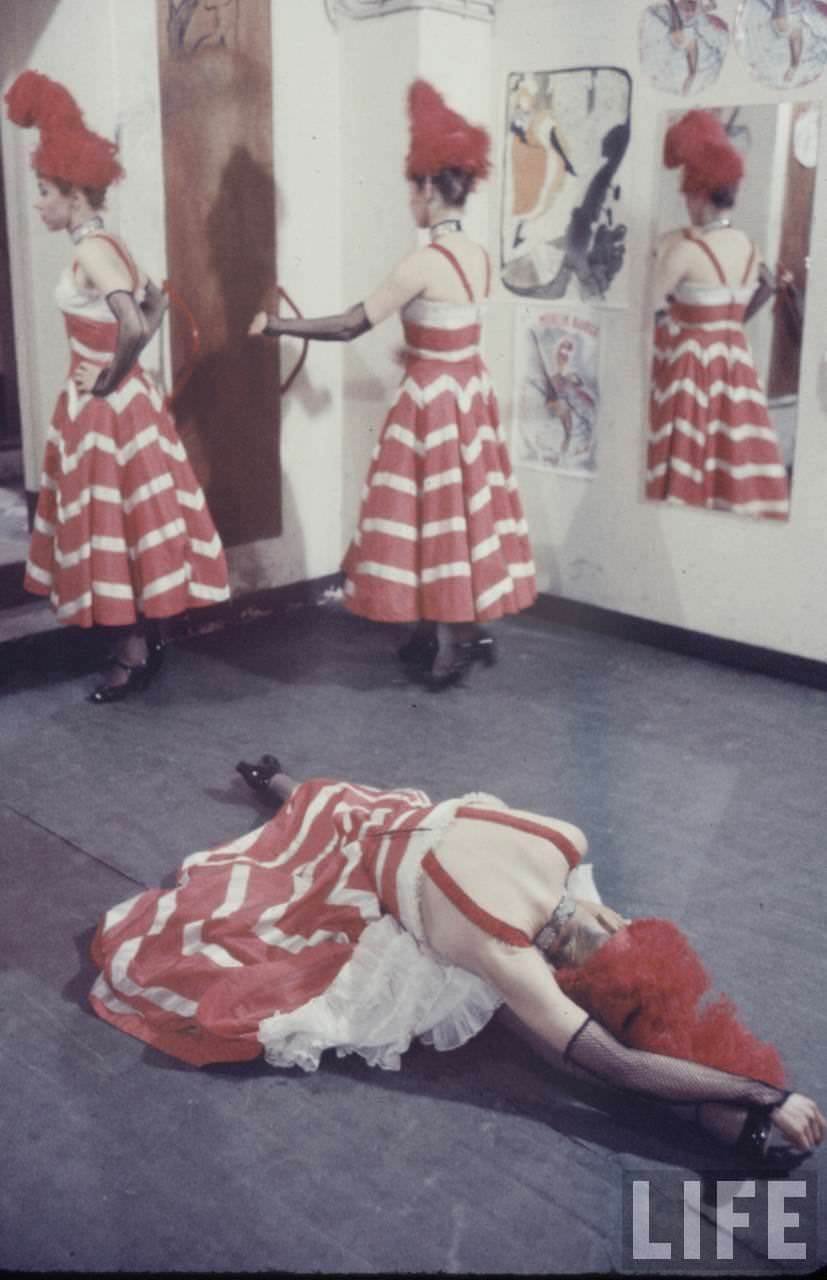
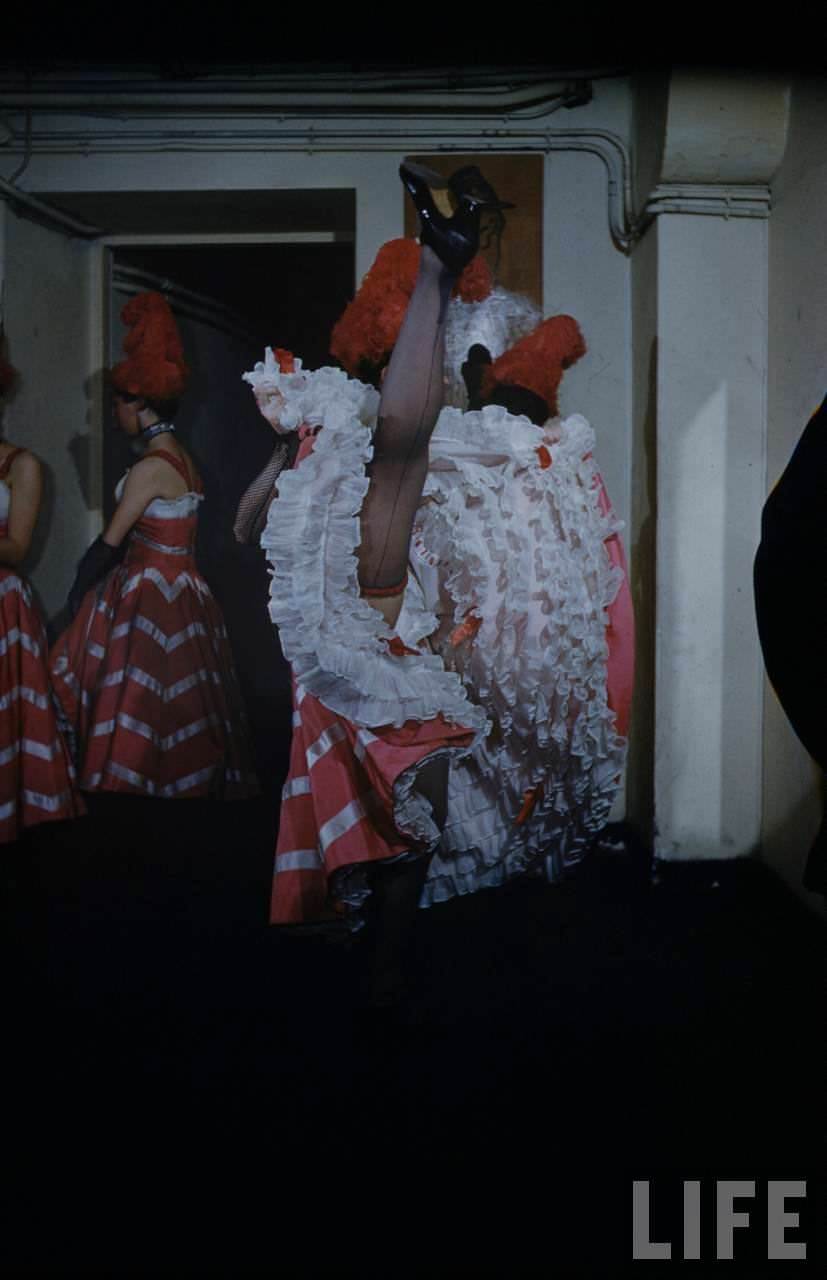
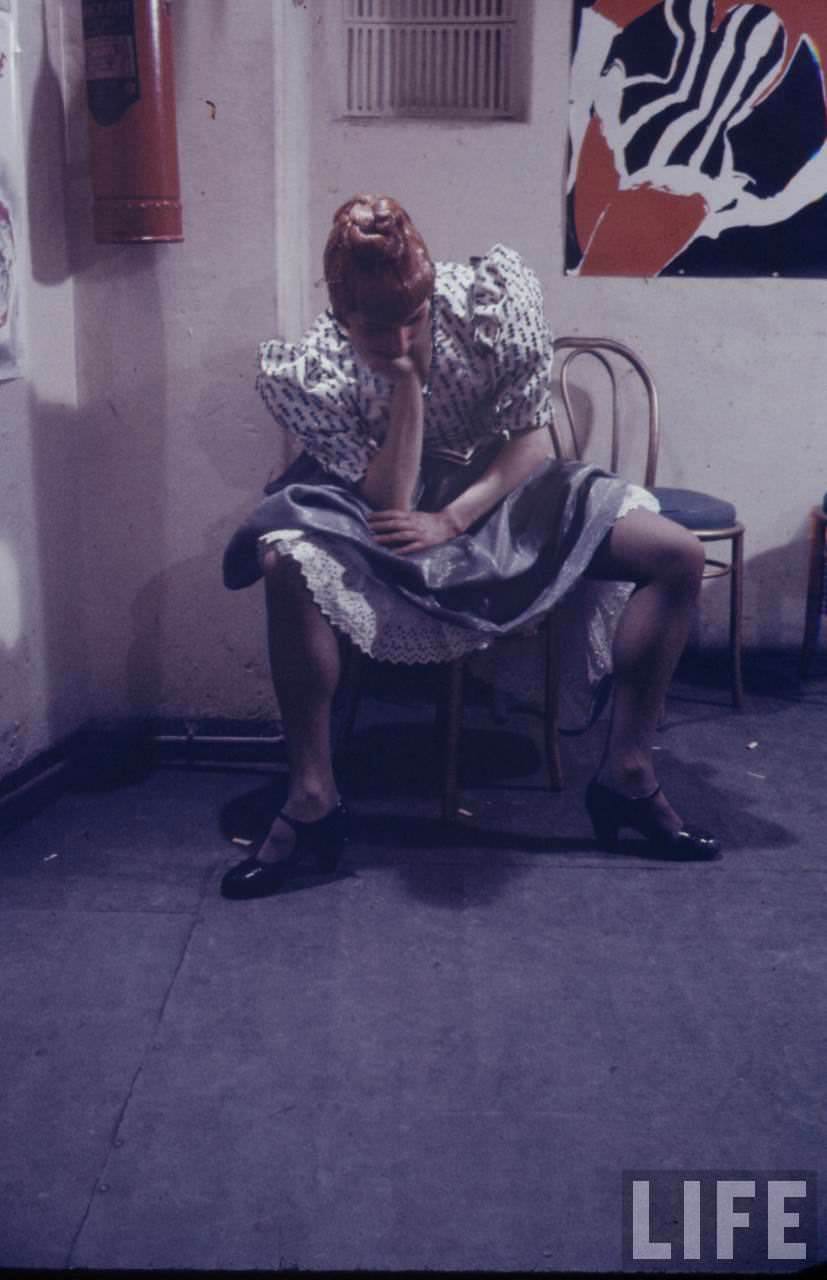
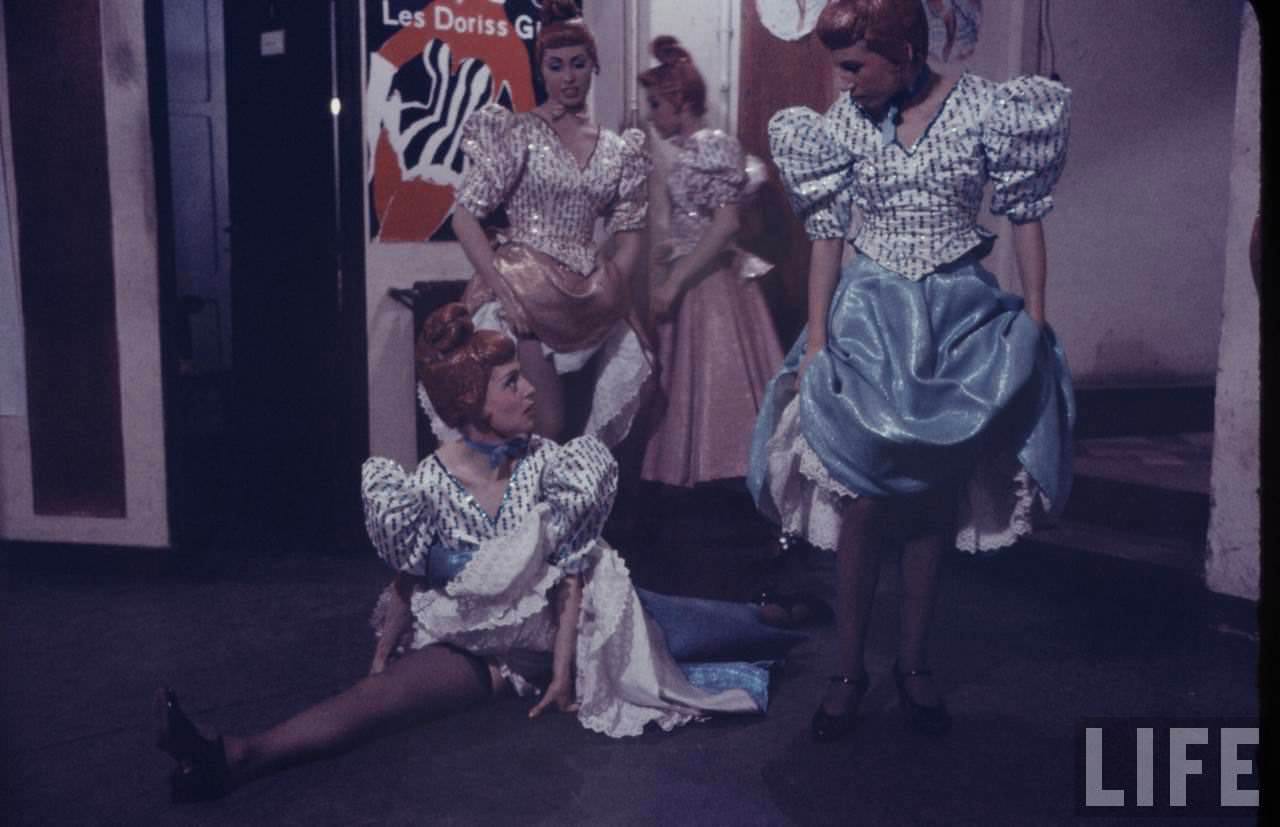
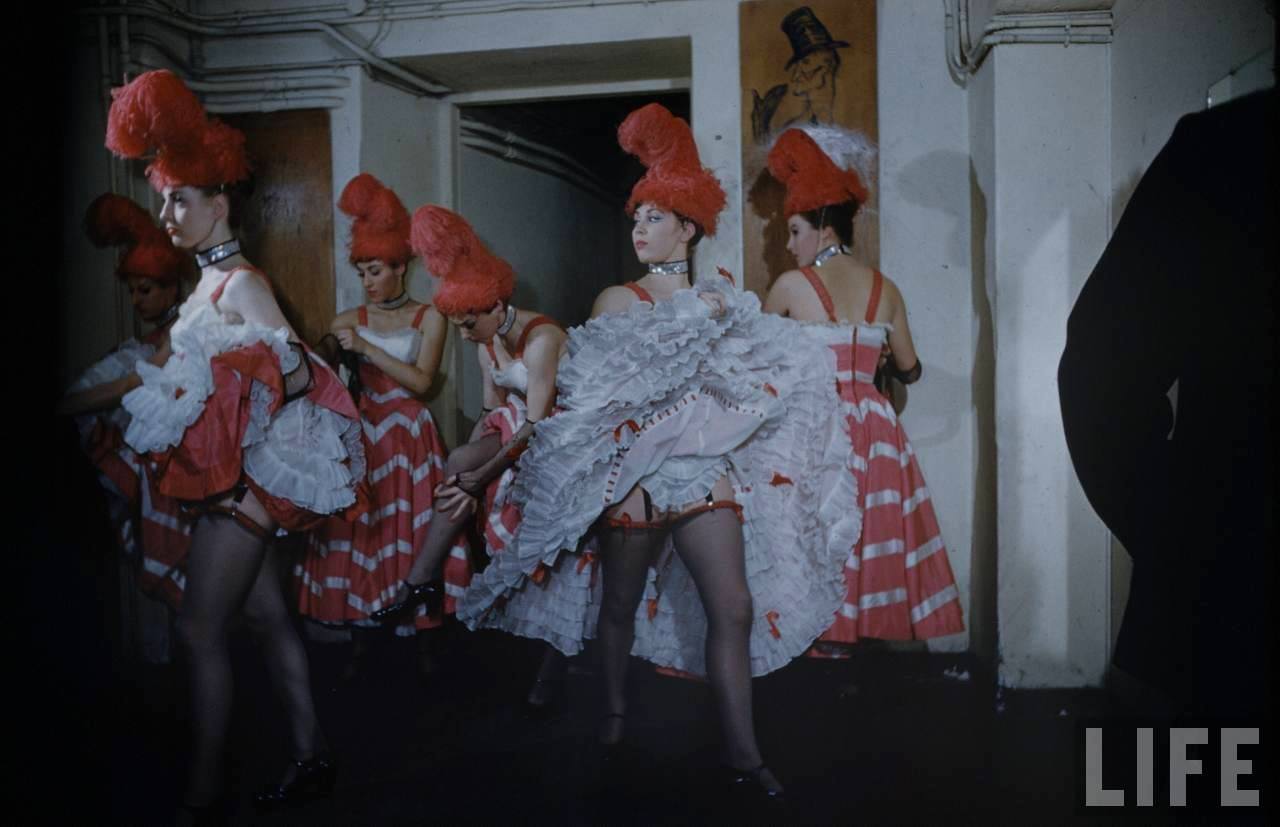
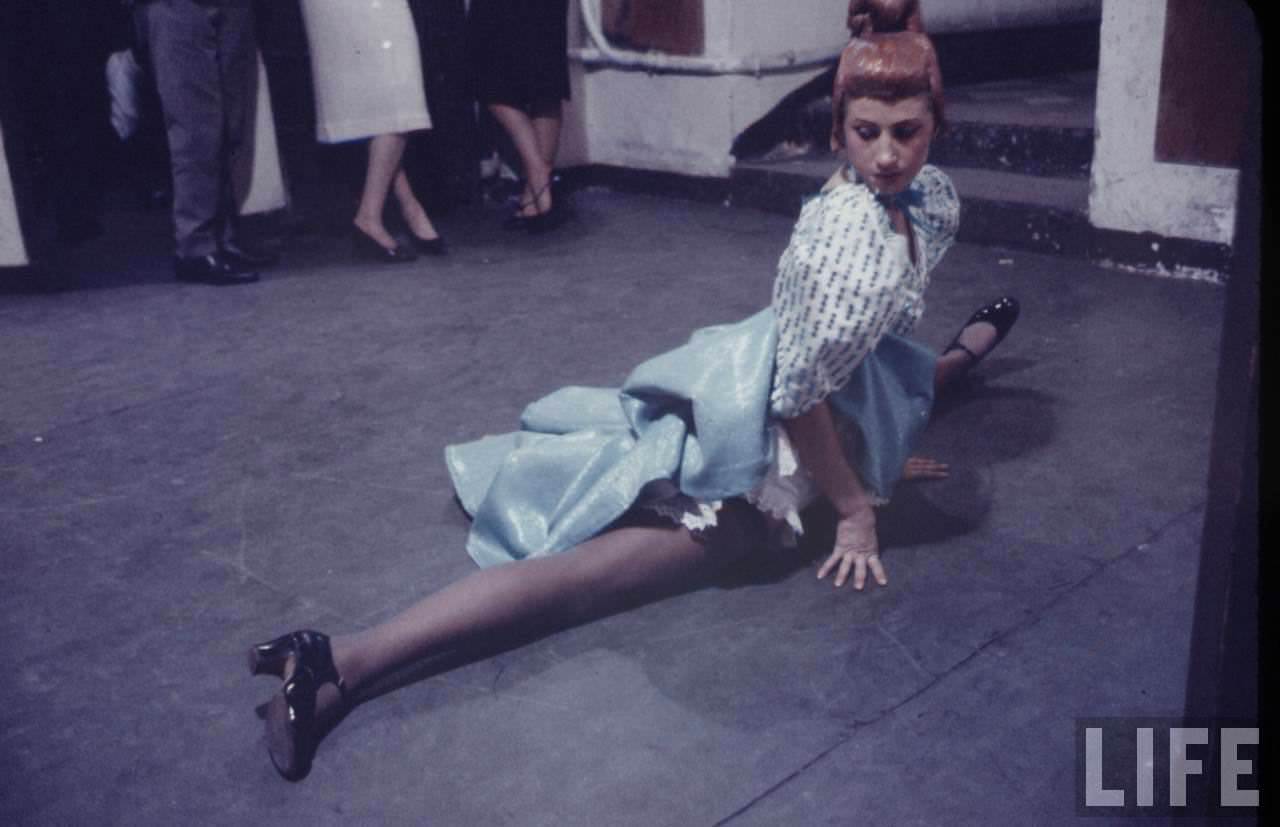
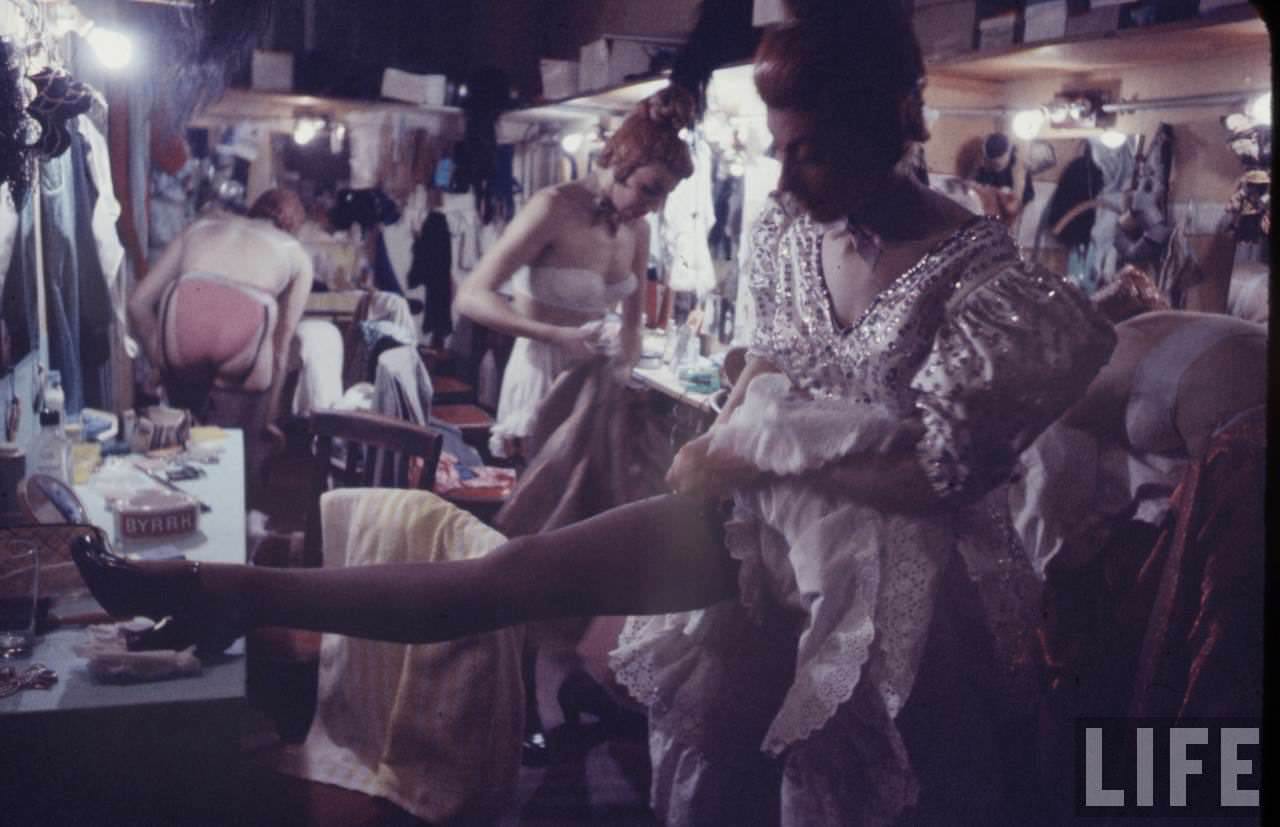
Backstage photos from this era show just how serious the preparation was. Before each show, dancers went through thorough warm-up routines — stretching on the floor, working their legs up against walls, and pushing their flexibility to its limits. The backstage area was cramped and busy, filled with the sounds of music drifting from the stage, the rustle of layered skirts, and the quiet focus of women getting their bodies ready for performance.
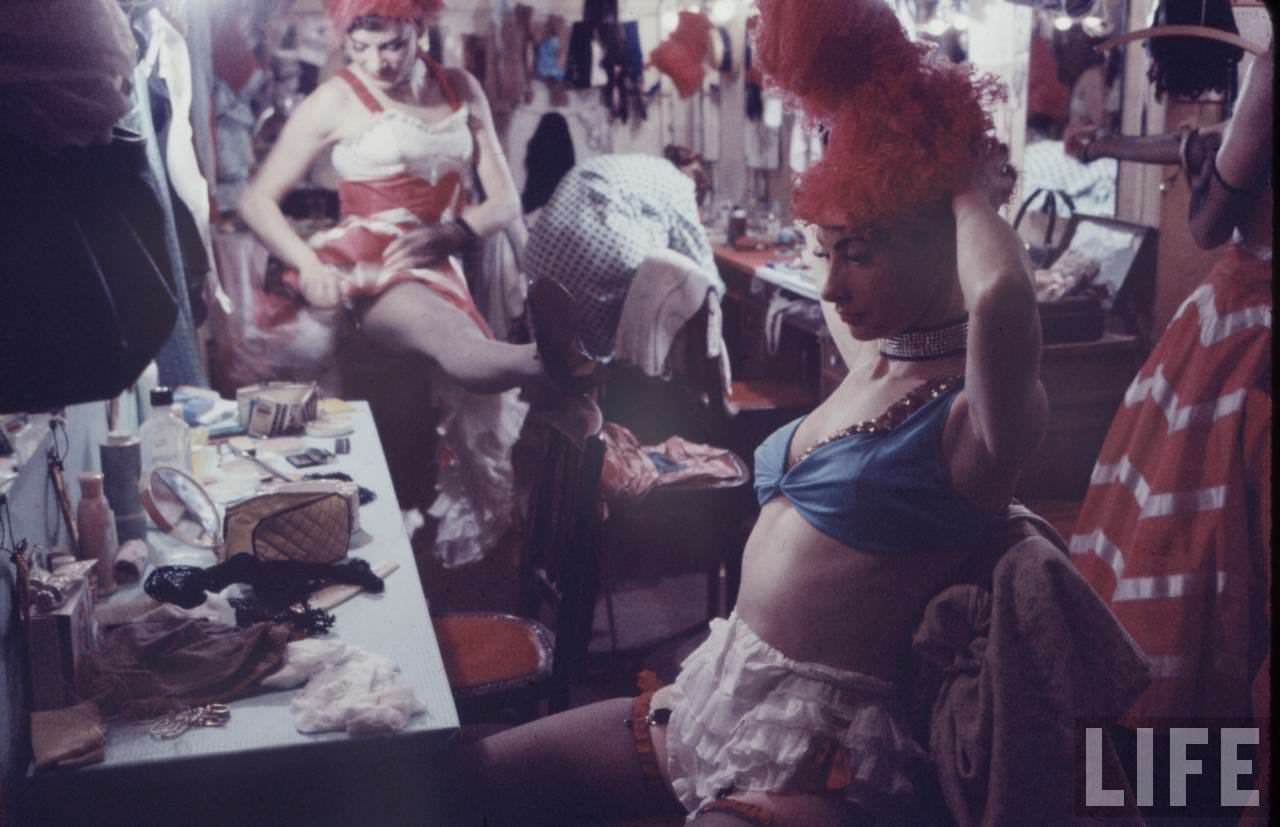
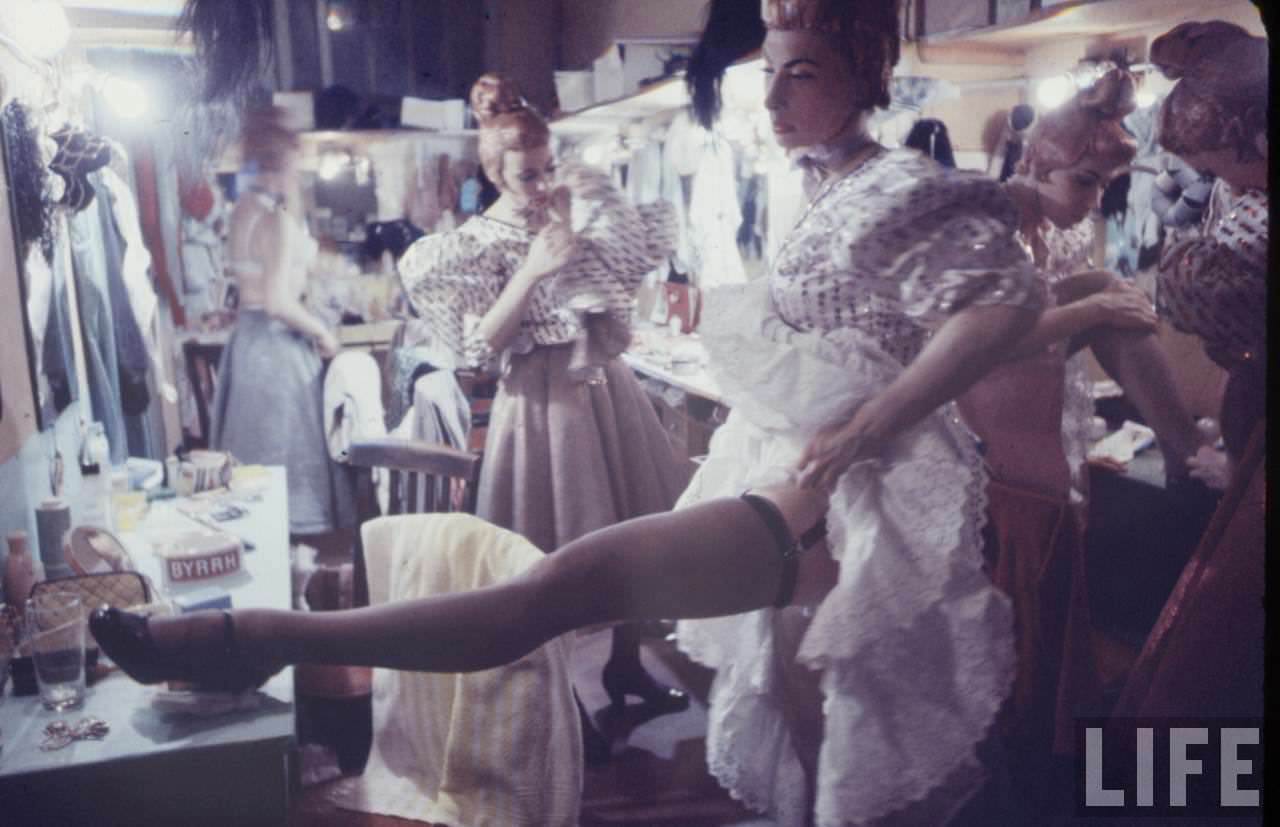
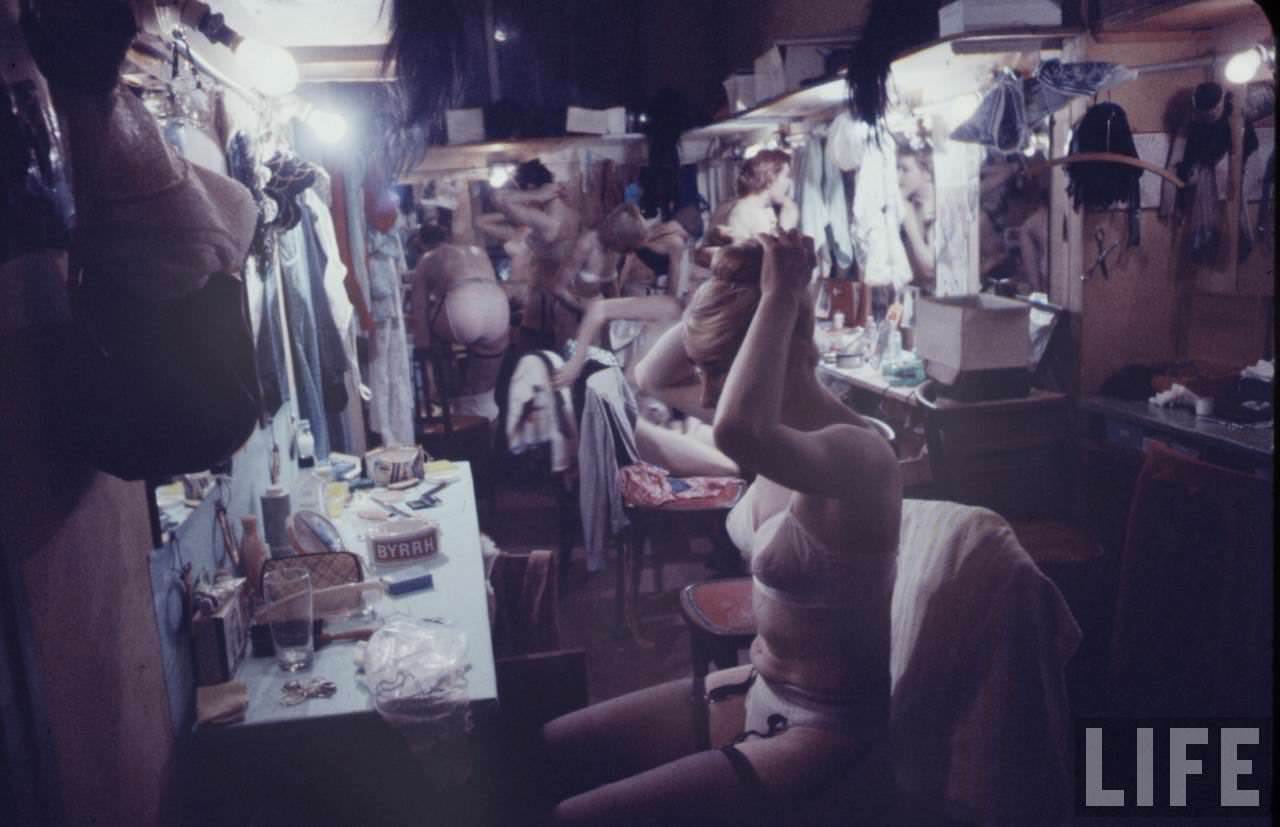
The hair and make-up styles of the 1950s dancers tell their own story. Bold, defined brows, heavy stage make-up built to read under bright theatre lighting, and carefully set hair styled in the fashion of the time. These details help date the photographs clearly to that decade. Up close, in the dressing room, the dancers look very different from the glittering figures seen from the audience — more human, more focused, mid-routine.
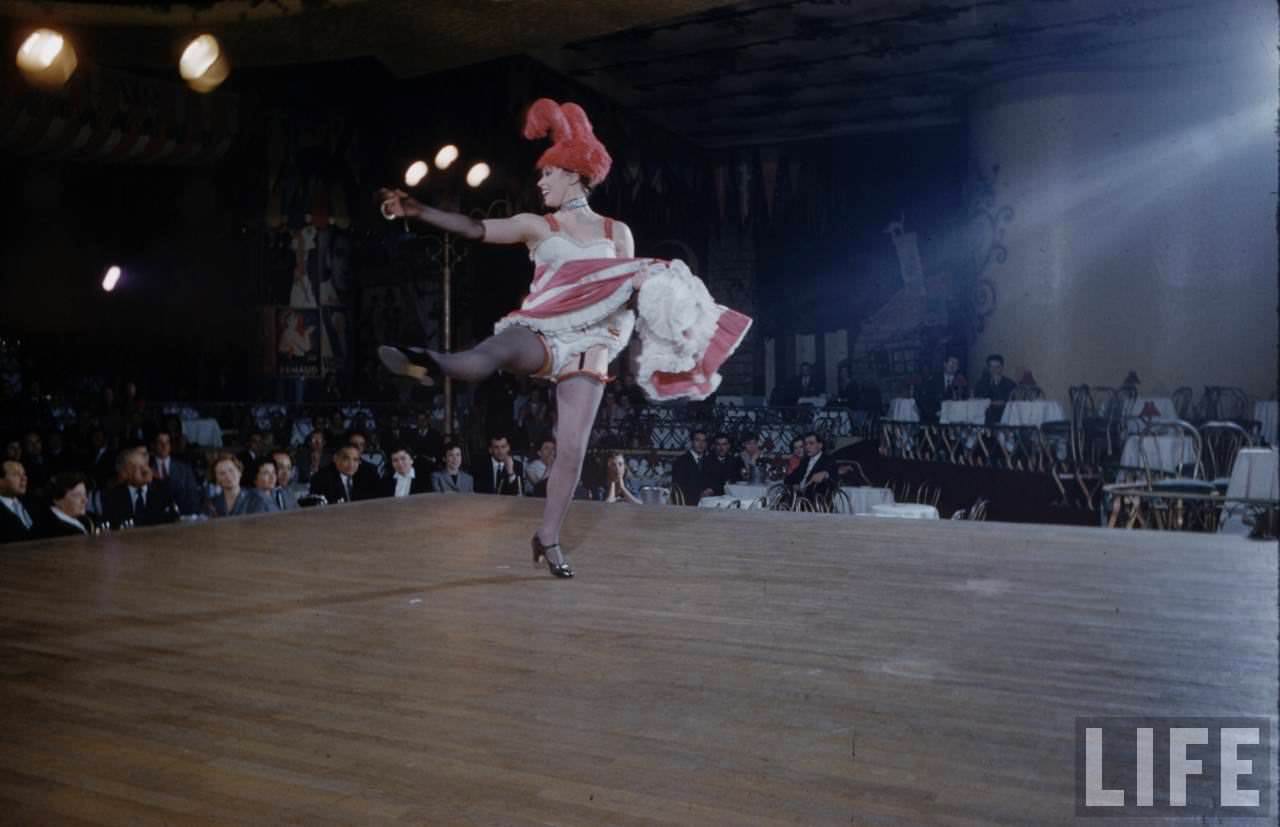
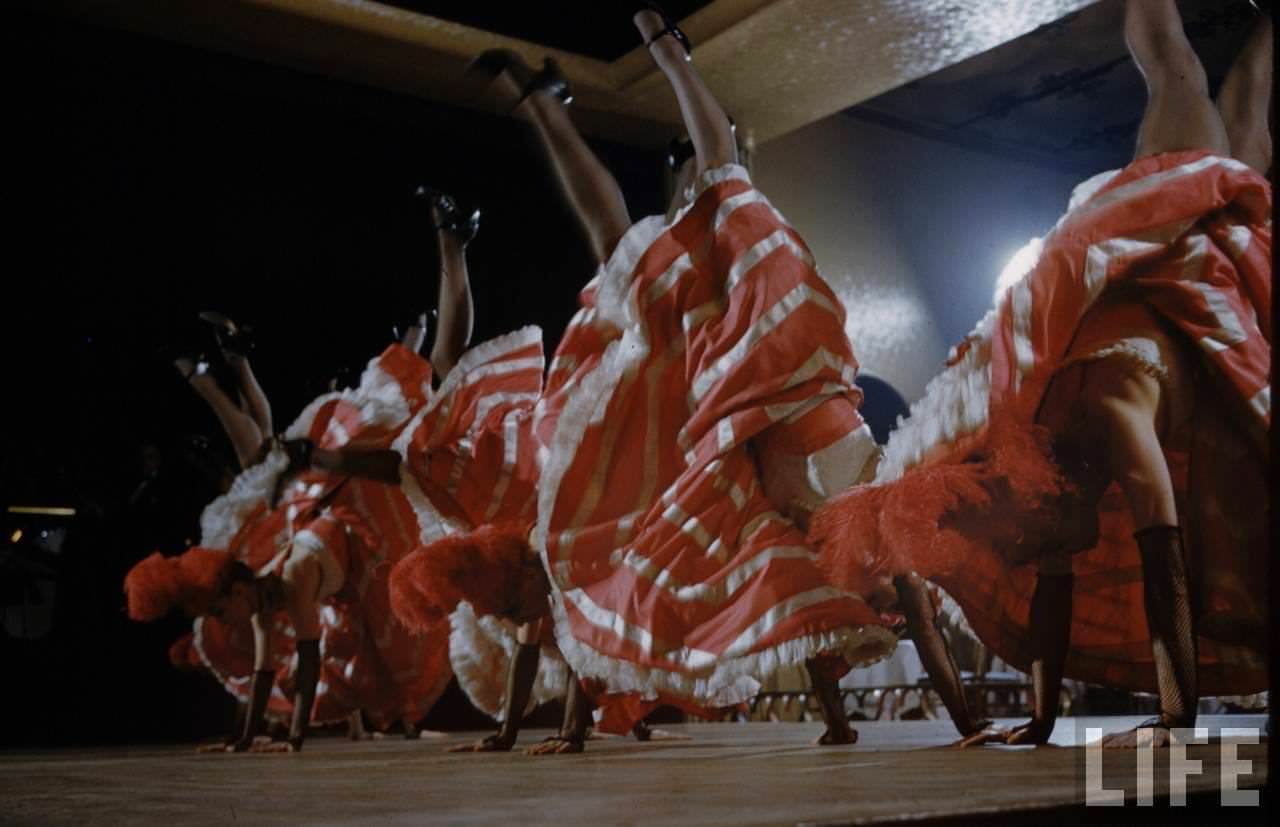
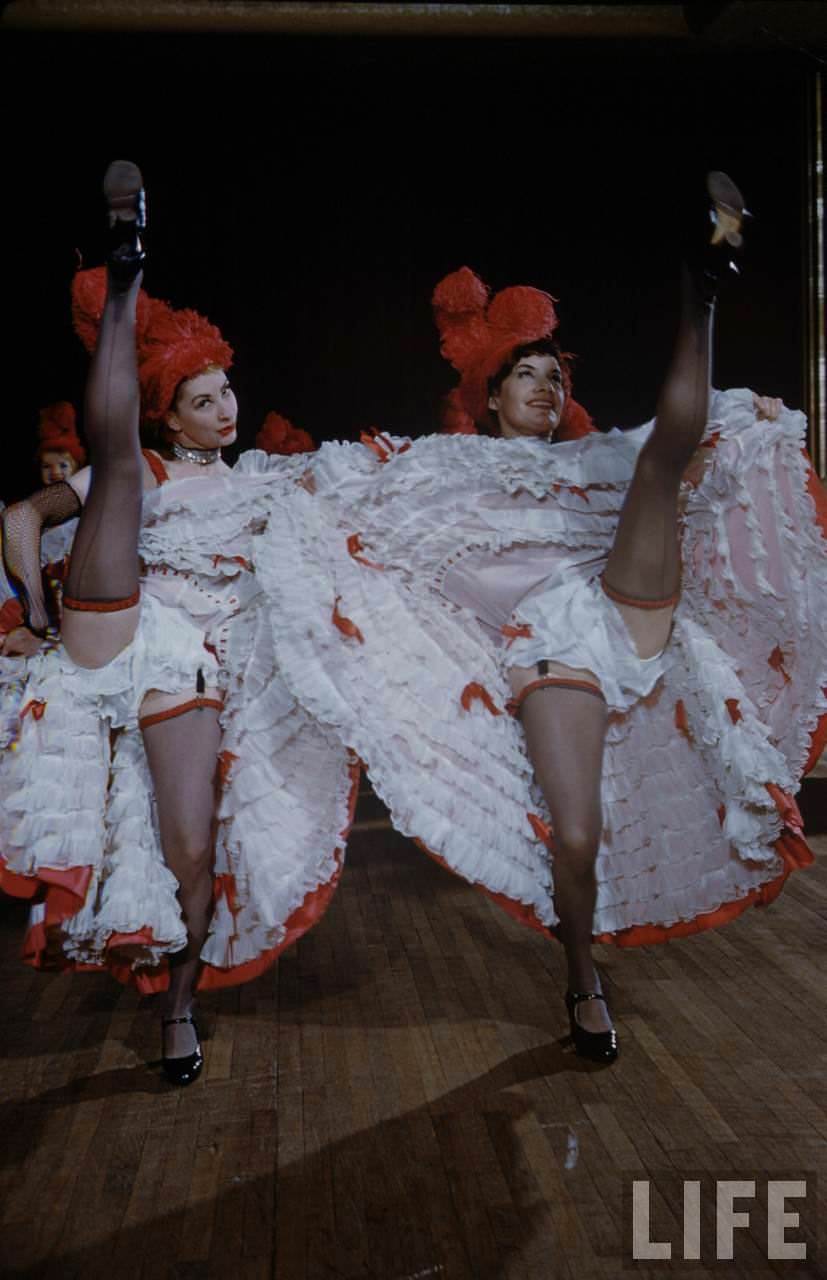
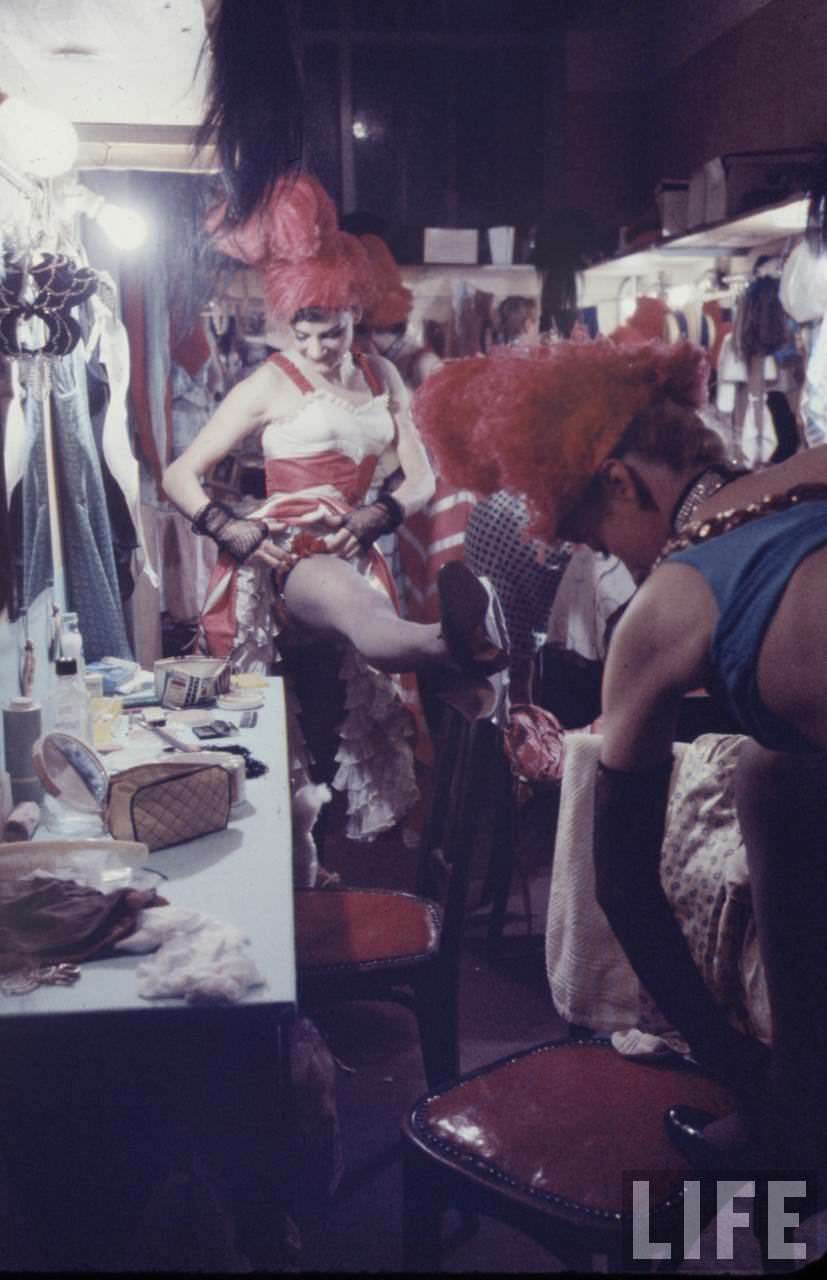
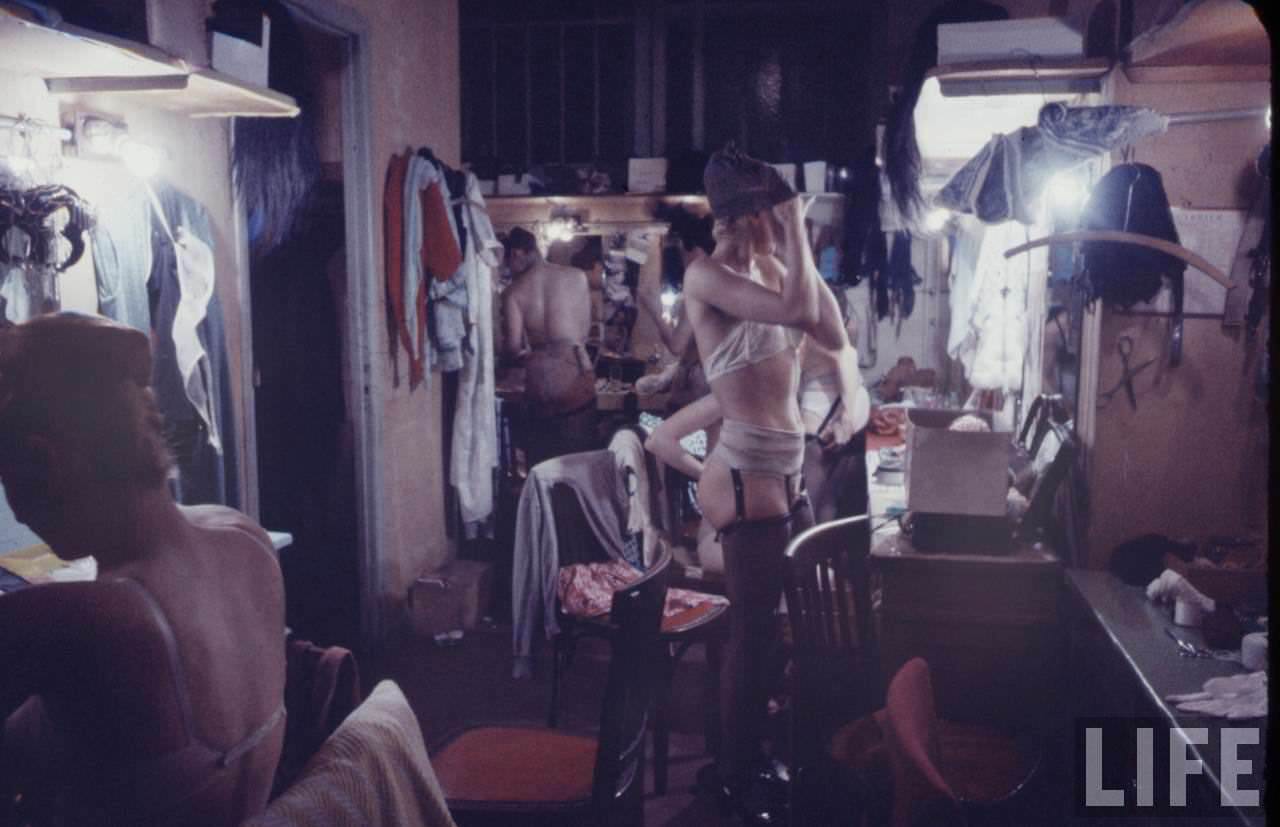
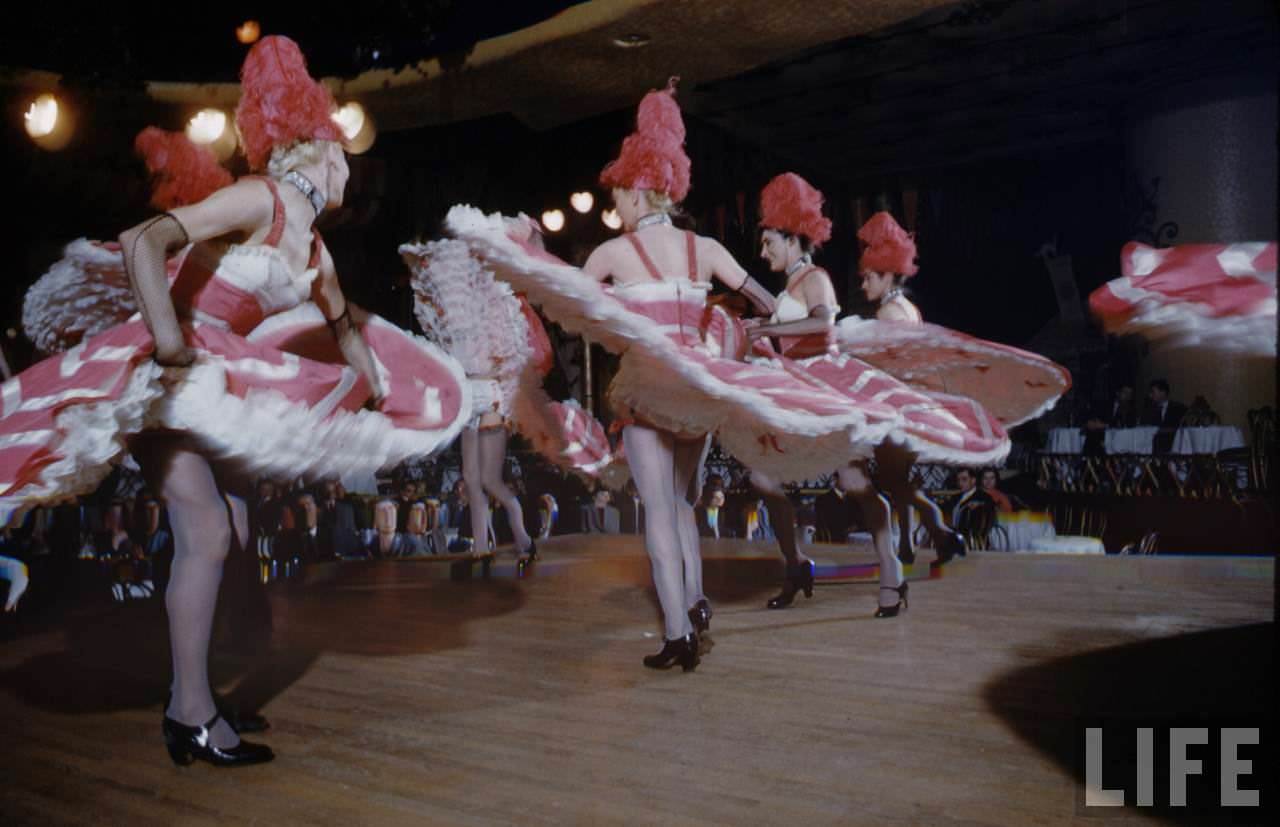
The costumes were elaborate. Layers of ruffled petticoats sat beneath wide skirts designed to flare dramatically during high kicks. Rhinestones and feathers decorated the bodices and headpieces. Every costume was built to catch the light and hold the audience’s eye. Getting into one took time, and dressers worked quickly backstage to have everyone ready on cue.
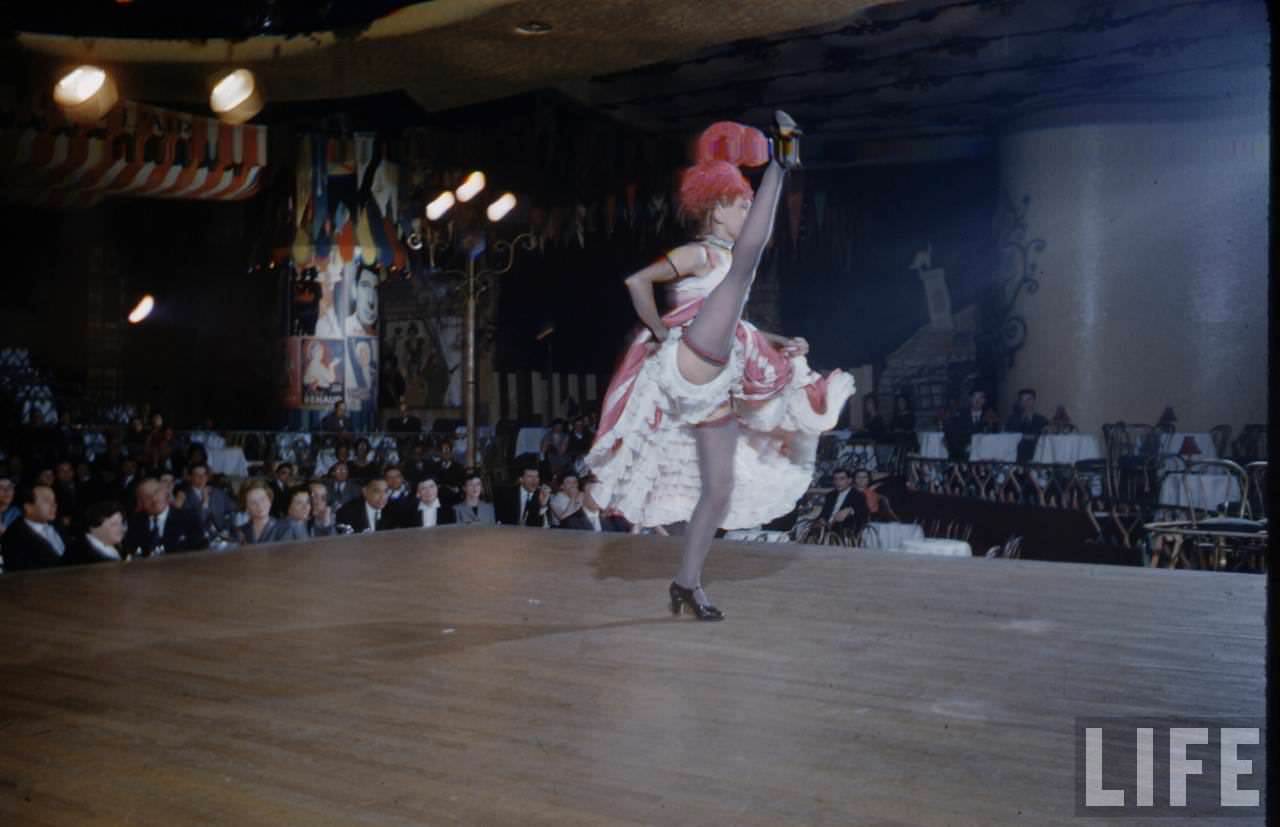
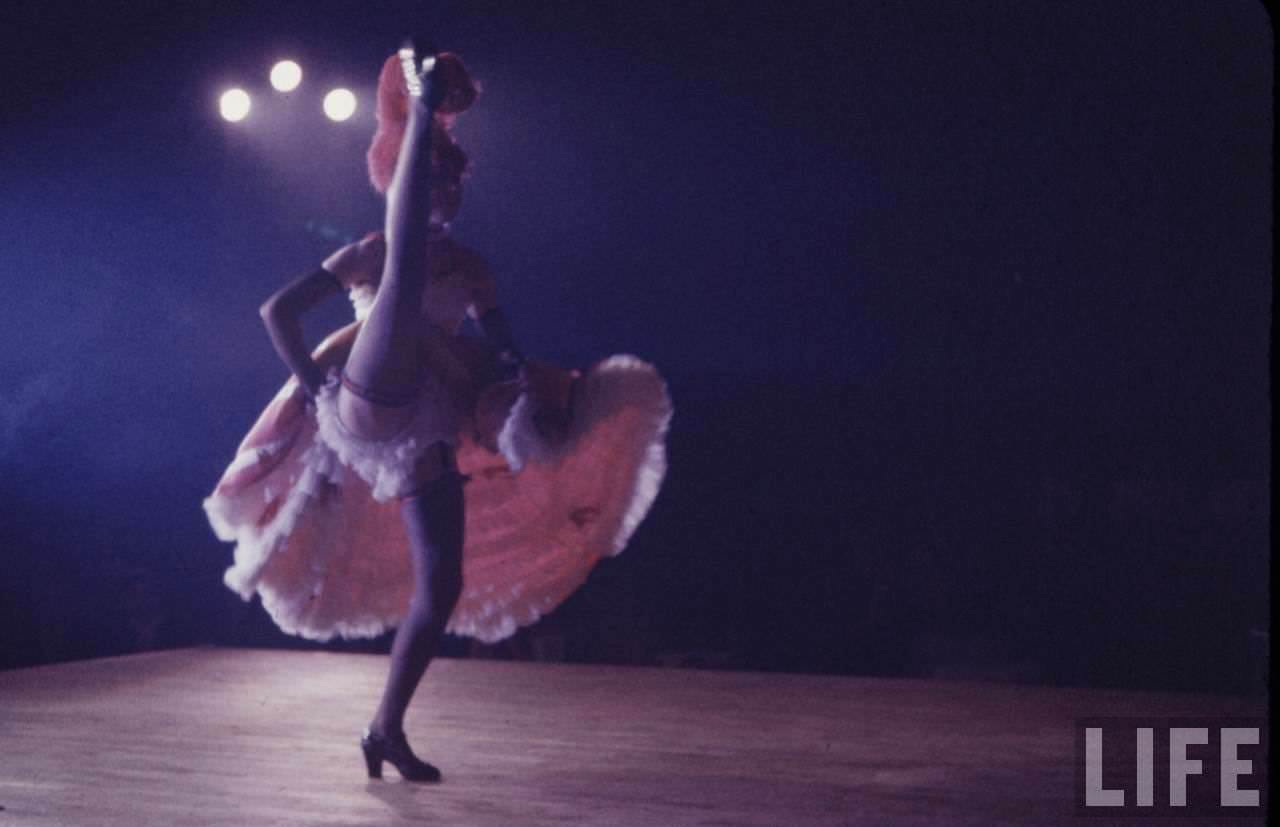
The French can can had its roots in the dance halls of 19th-century Paris, where it started as a wild, improvisational dance performed by both men and women. By the time the Moulin Rouge opened in 1889, the dance had been refined into a choreographed show piece. It became one of the defining symbols of Parisian nightlife and carried with it a reputation for freedom and boldness — women performing high kicks and acrobatics at a time when such displays were considered daring.
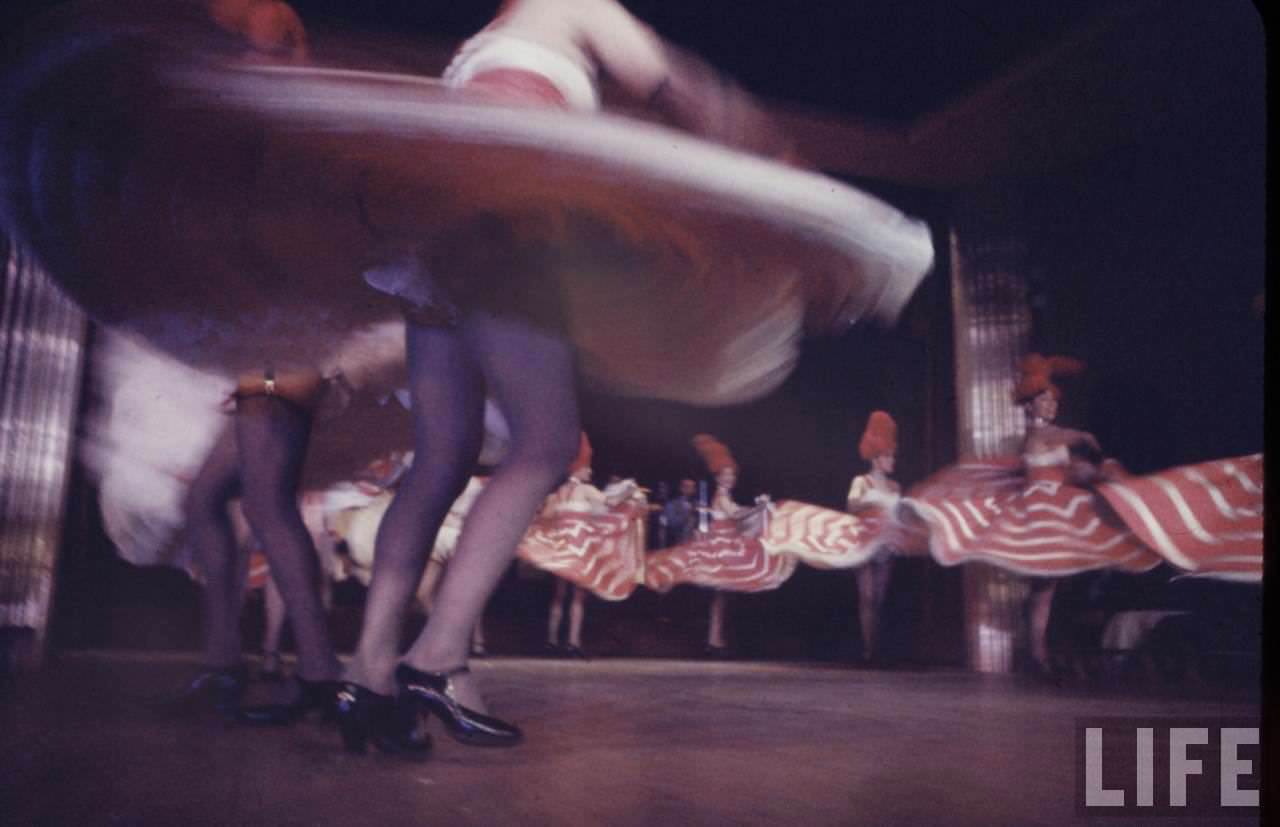
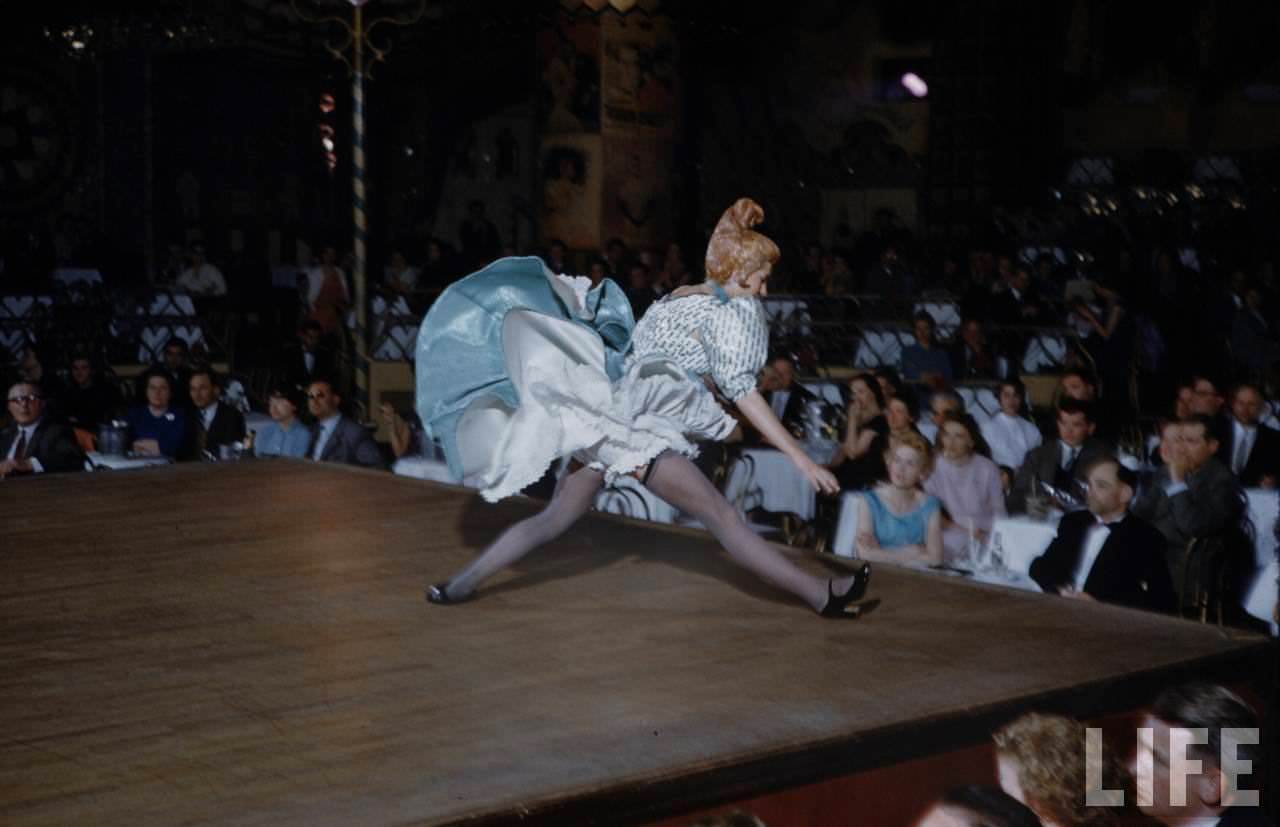
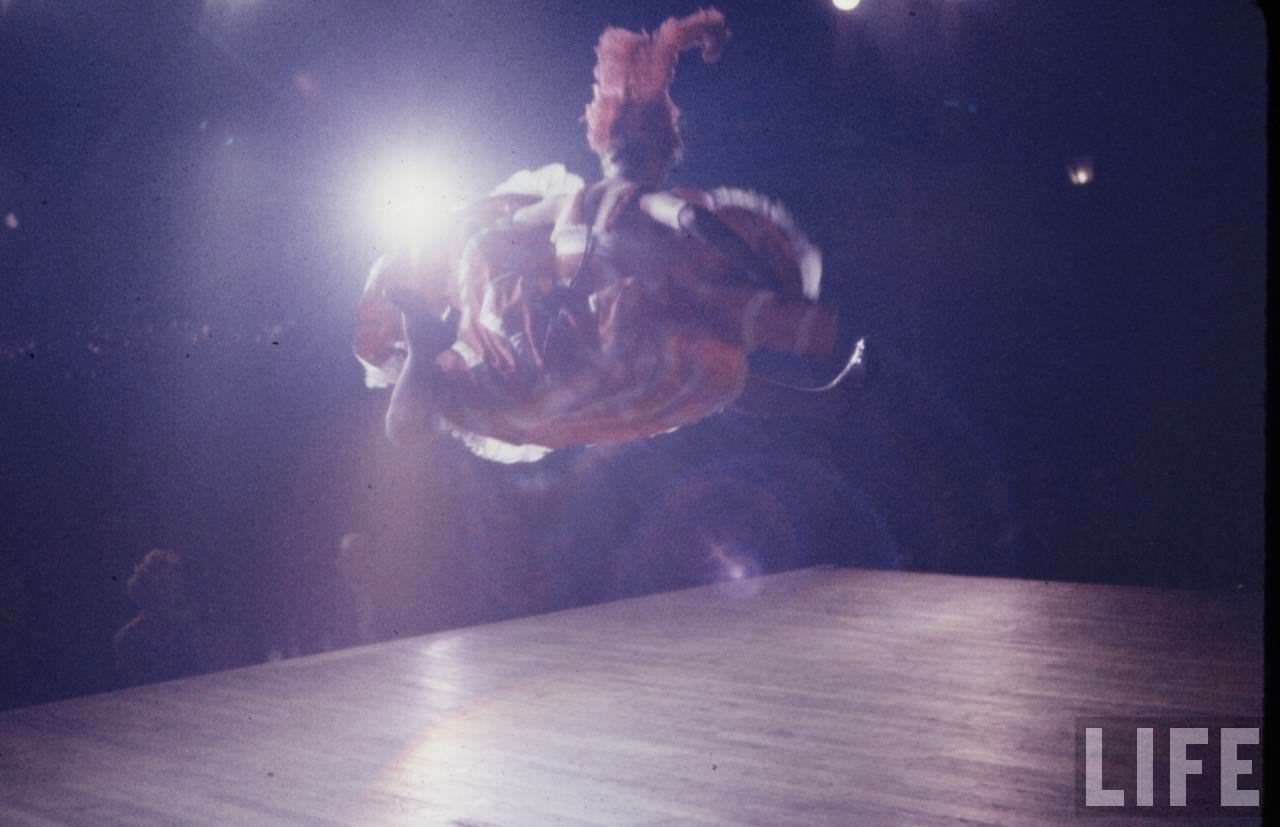
In the 1950s, the Moulin Rouge was drawing crowds from all over the world. Paris was rebuilding after the Second World War, and its entertainment scene was booming again. The cabaret shows were a major attraction for American and British tourists in particular. The dancers performed multiple shows per week, maintaining a grueling schedule that required them to stay in peak physical condition year-round.
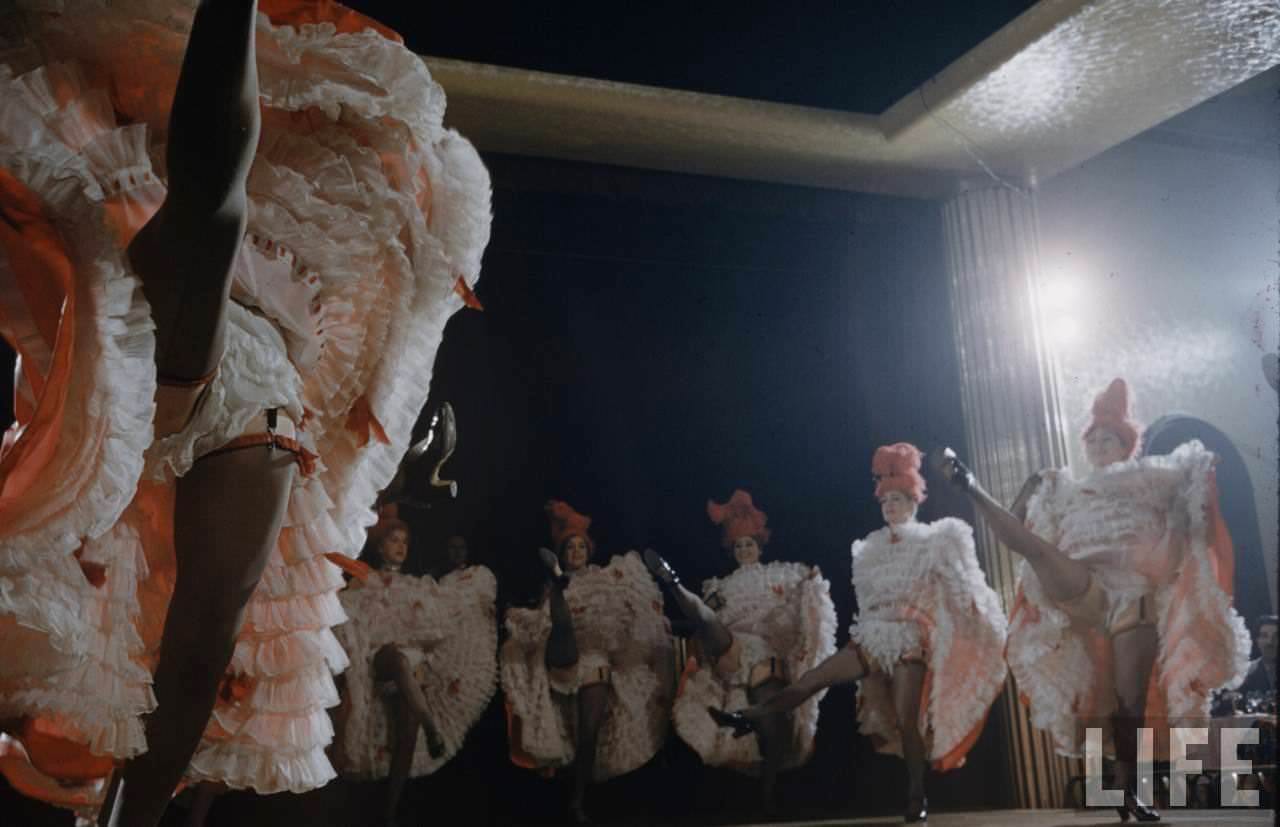
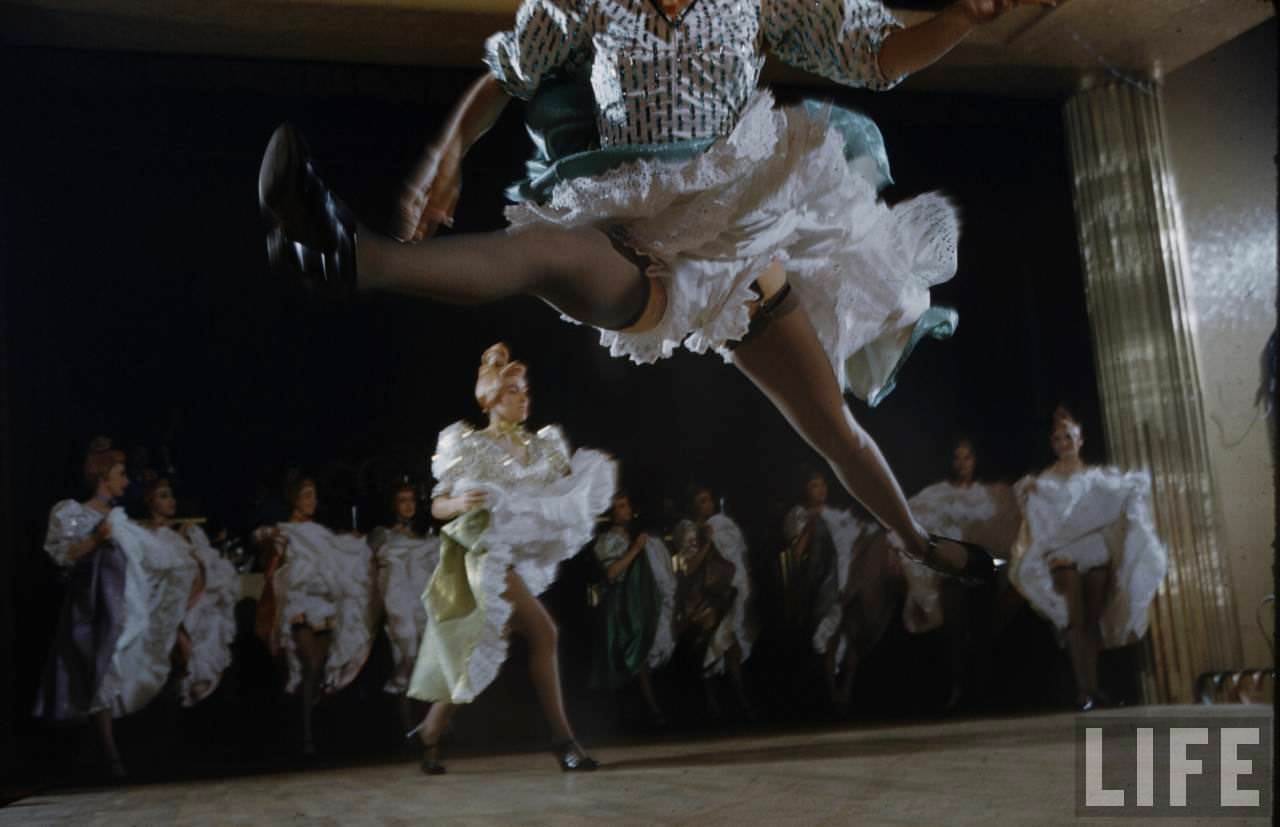
Warming up was not optional. The split jump — called the grand écart sauté — is one of the most physically taxing moves in the can can repertoire. Dancers practiced it repeatedly before each performance. Photos from backstage show them in various stages of this warm-up: seated on the floor with legs extended flat, bending forward over one leg, or easing down into a full split with a hand pressed to the floor for balance.
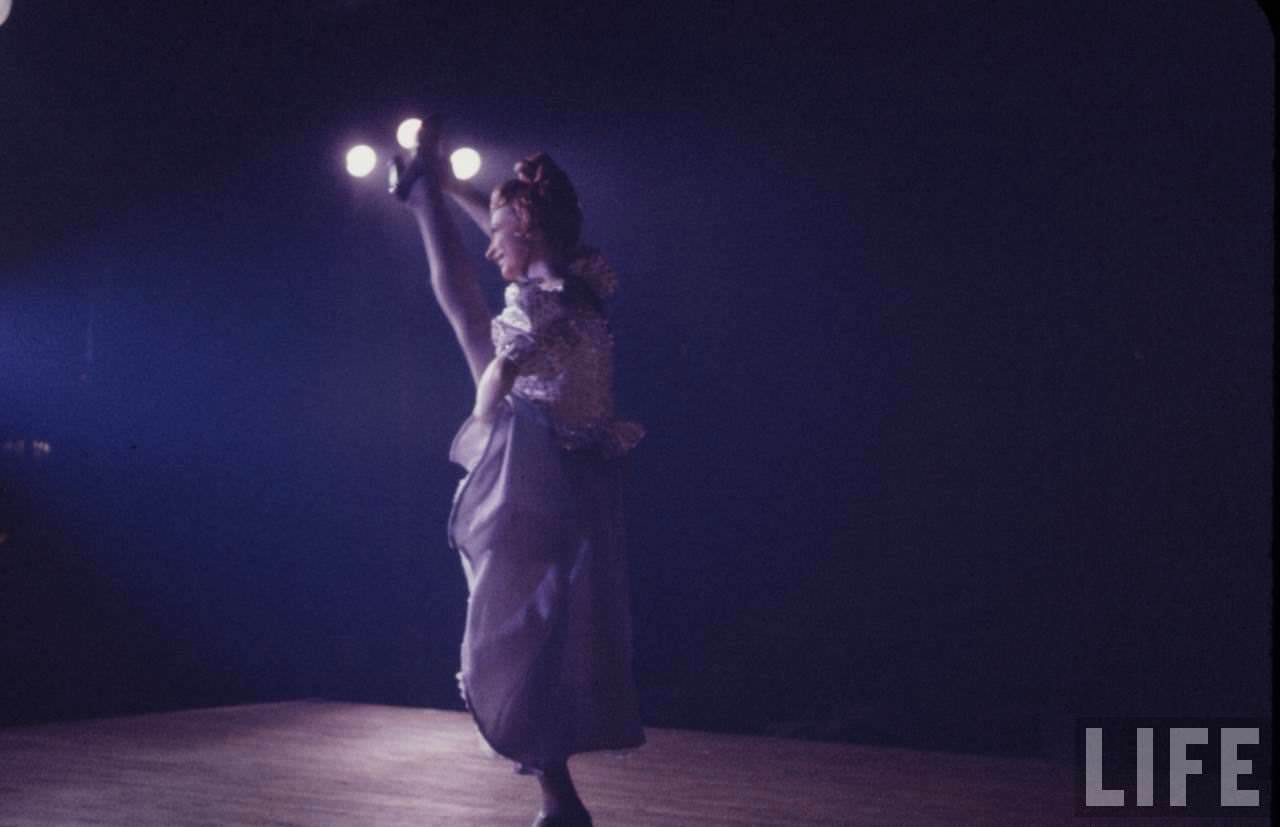
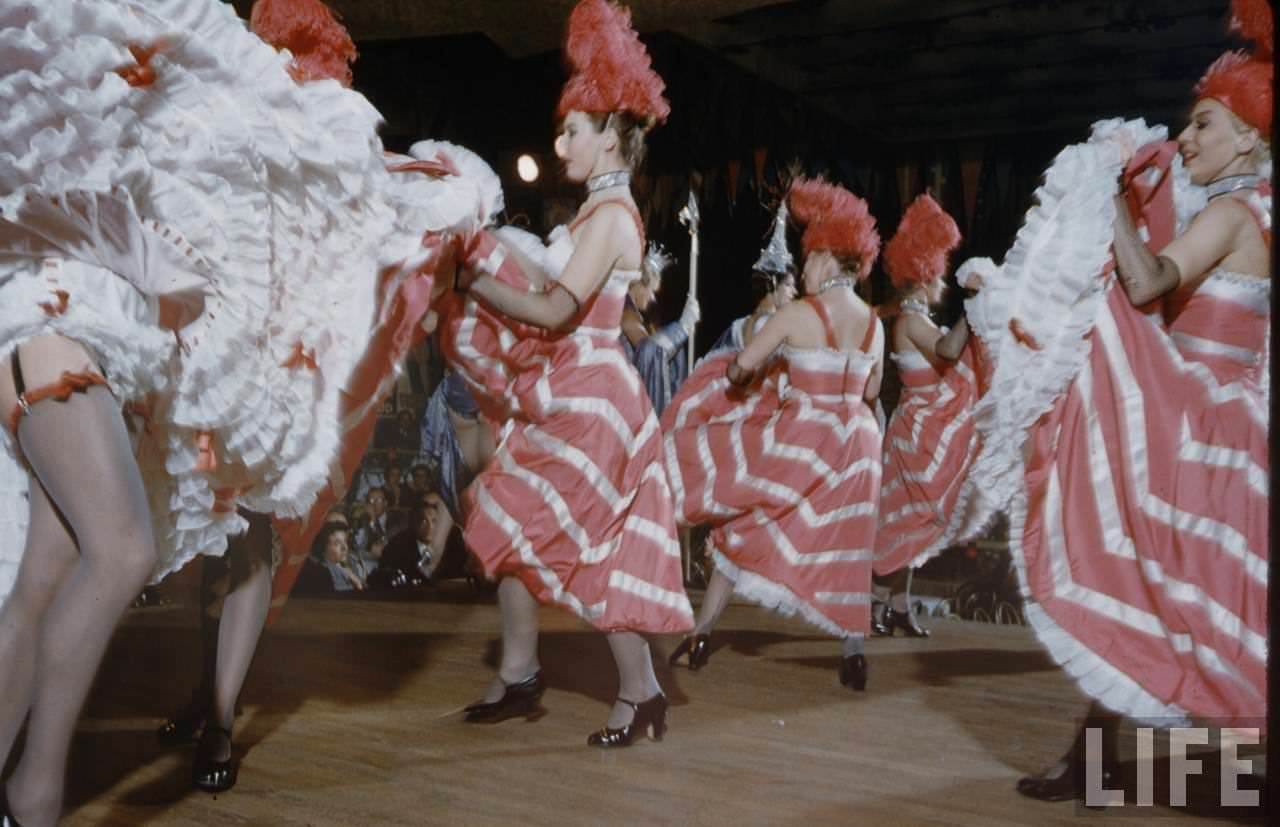
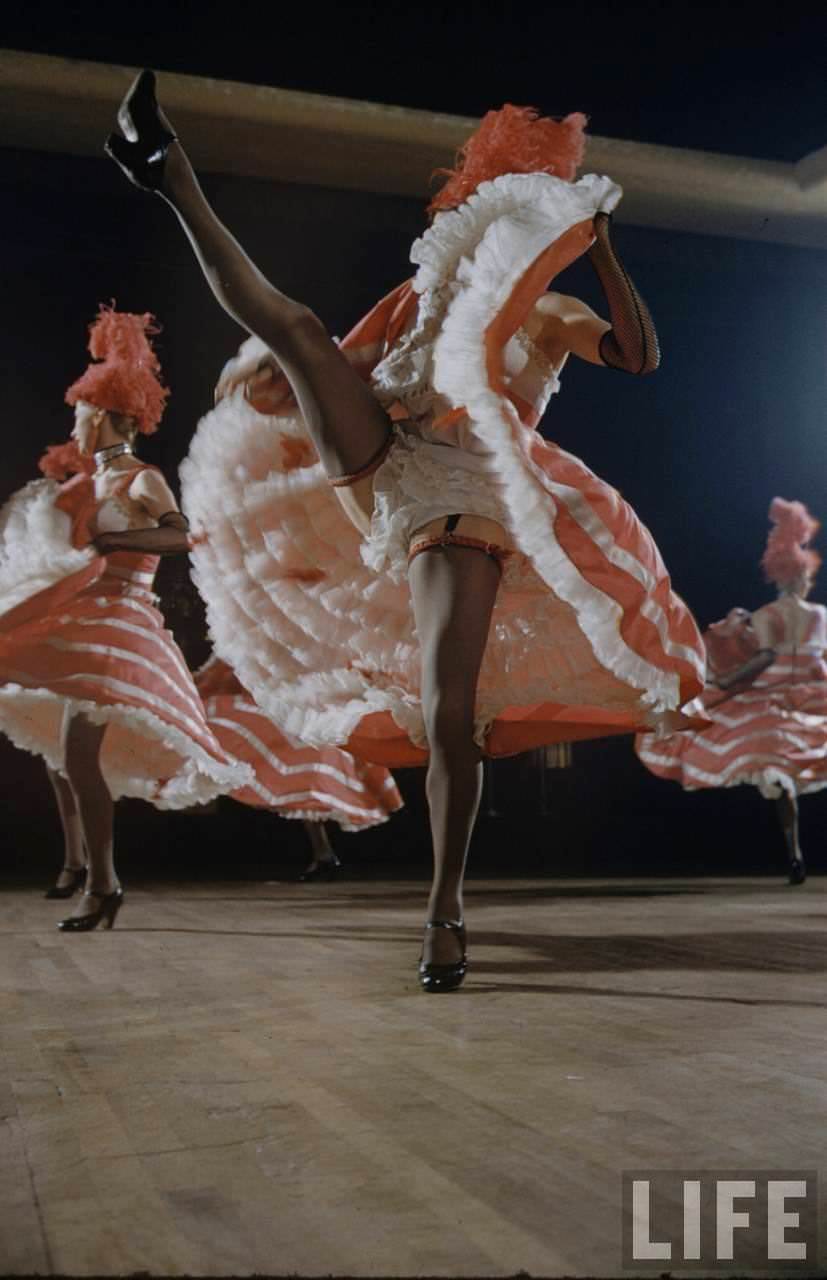
The group numbers were tightly choreographed. Lines of dancers kicked in unison, their timing exact. A single person out of step stood out immediately. Rehearsals were long and strict. The artistic directors at the Moulin Rouge held the performers to a high standard, and replacements were easy to find in a city full of trained dancers looking for work.
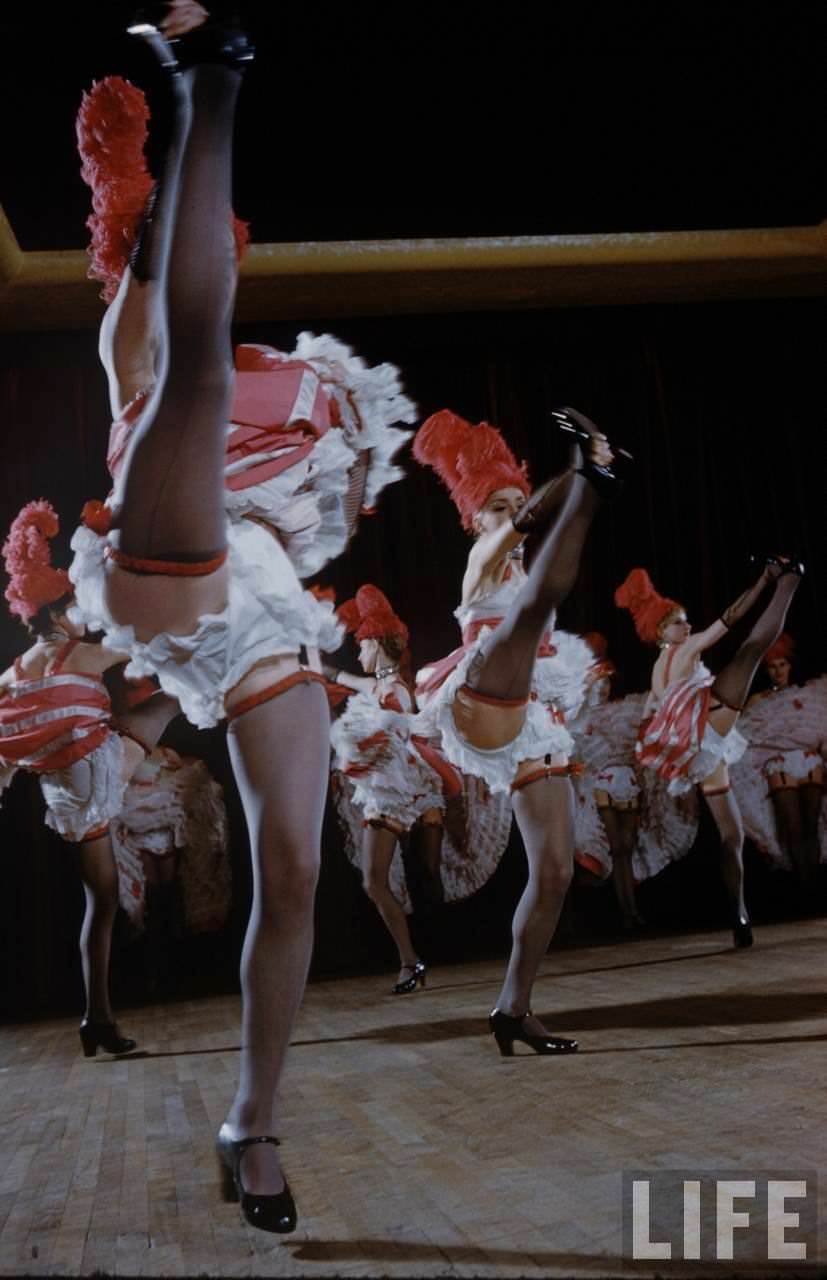
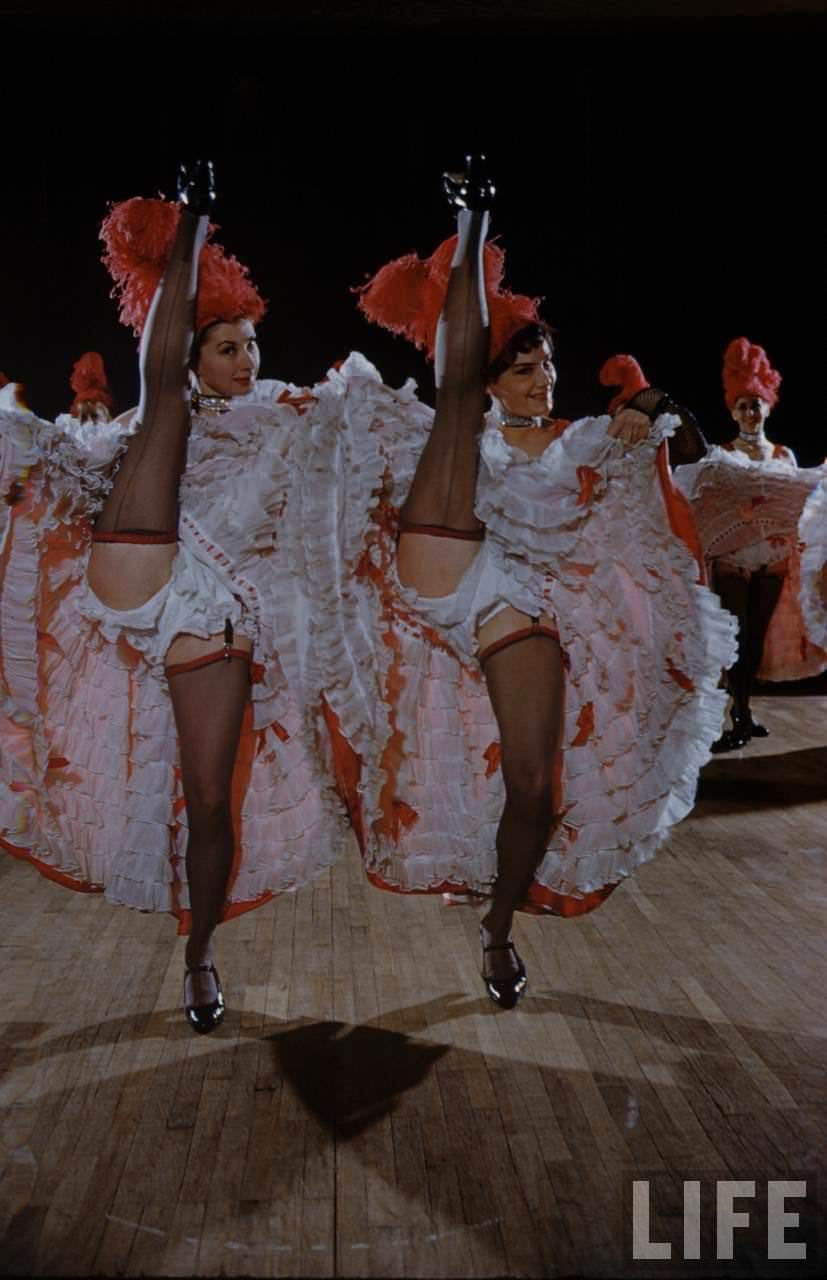
The dressing rooms themselves were tight spaces shared by many women at once. Mirrors lined the walls, surrounded by bare bulbs. Costumes hung on rails, accessories were sorted into trays, and the floor was often scattered with shoes and stockings. In between shows, dancers rested, touched up their make-up, and prepared for the next performance. Some nights, they did this more than once.
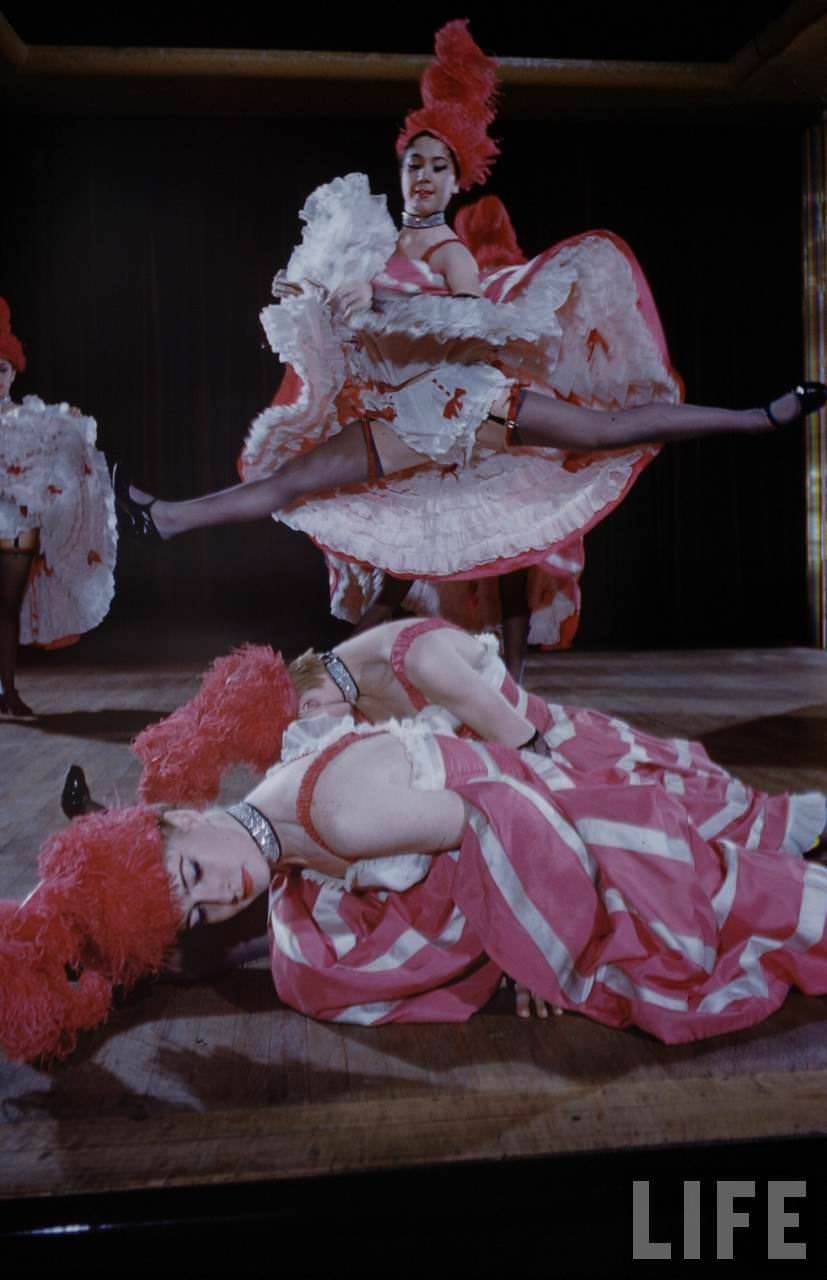

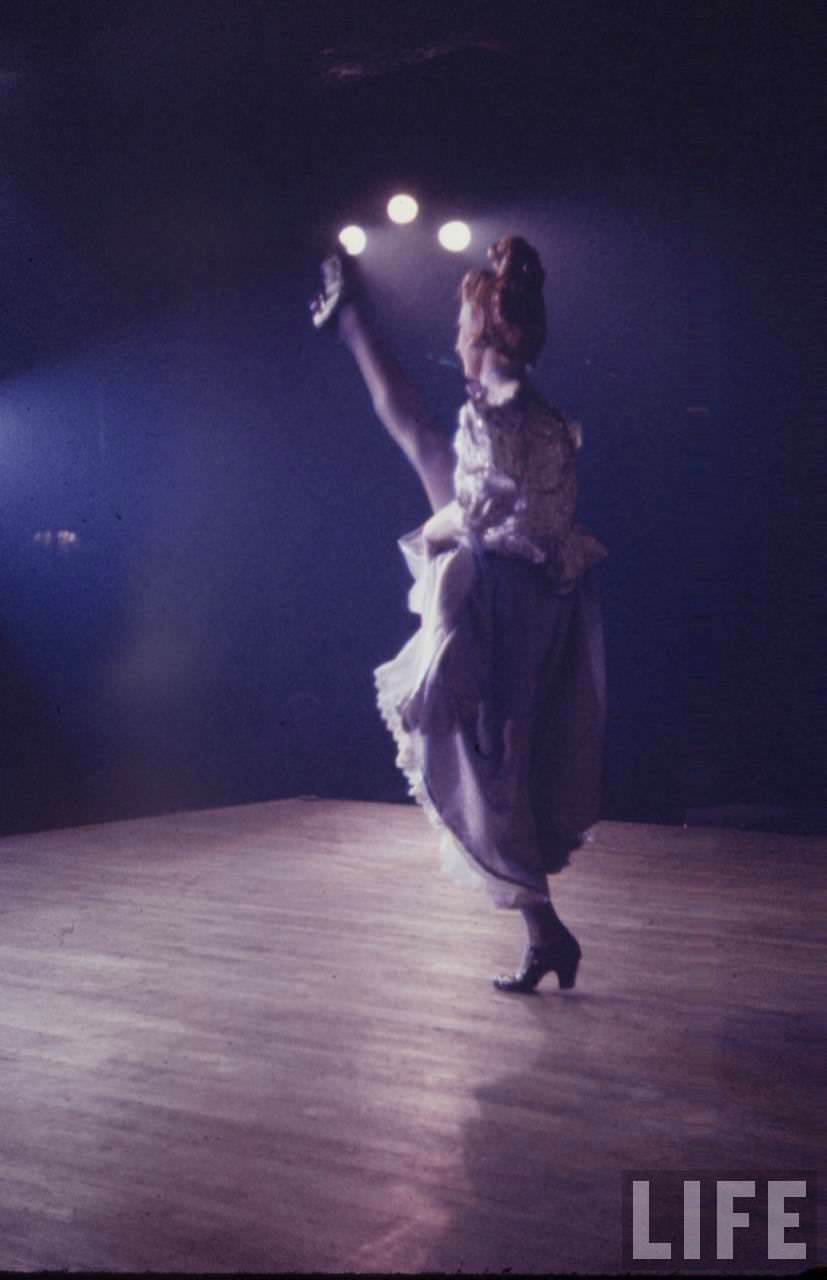
These photographs offer a rare window into both sides of the performance — the polished spectacle the audience saw, and the hard physical work that made it possible. The women in them are athletes as much as entertainers, their bodies trained to execute movements that most people could not do once, let alone repeatedly across a long show season.