
Britain in the 1970s and 1980s was a country under pressure. Racism was widespread, industrial disputes were erupting across the country, and street protests were a regular feature of life. For photographer Dave Sinclair, this was the world he documented — lens pointed at police lines, picket lines, and protesters — working for the socialist newspaper ‘The Militant’ throughout the 1980s. His photographs preserve a raw and largely unfiltered record of a society in conflict with itself.
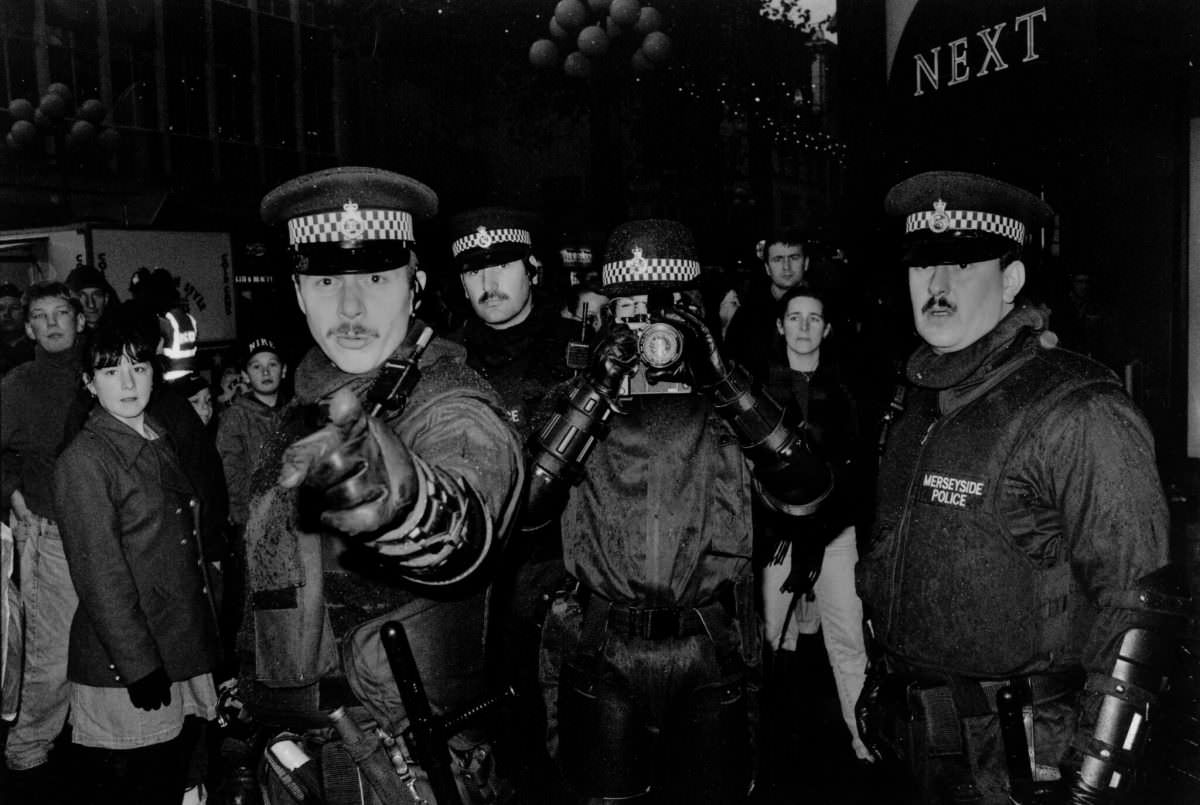
Sinclair covered unrest in three of Britain’s most turbulent cities during this period: Liverpool, Belfast, and London. Each had its own flashpoints, its own grievances, and its own confrontations between citizens and the state. What connected them all was the visible presence of police — often in large numbers — deployed against communities, workers, and activists.
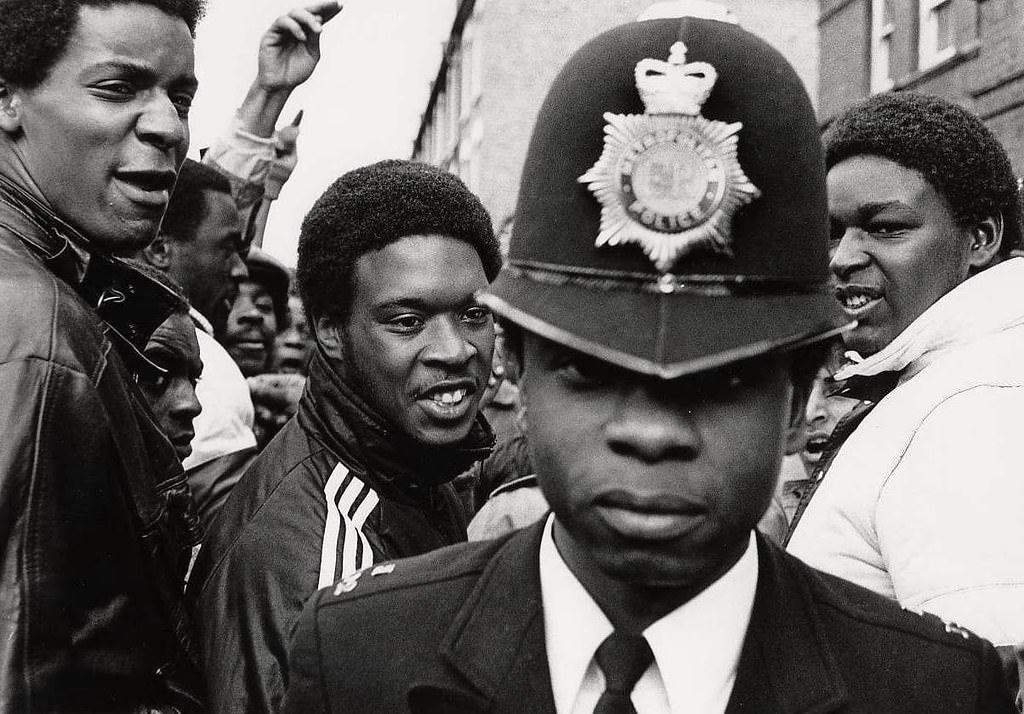
Racial violence in Britain during this era was not rare or isolated. Black, Asian, and immigrant communities faced routine harassment, physical attacks, and at times, murder. On 7 April 1984 in Newham, East London, a white gang drove through the area targeting random Asian people. Pakistani teenager Akhtar Ali Baig was murdered for a £5 bet. Another disabled Asian boy was dragged from his home and beaten with claw hammers. These were not isolated incidents — they were part of a broader pattern of racist violence that gripped parts of the country.
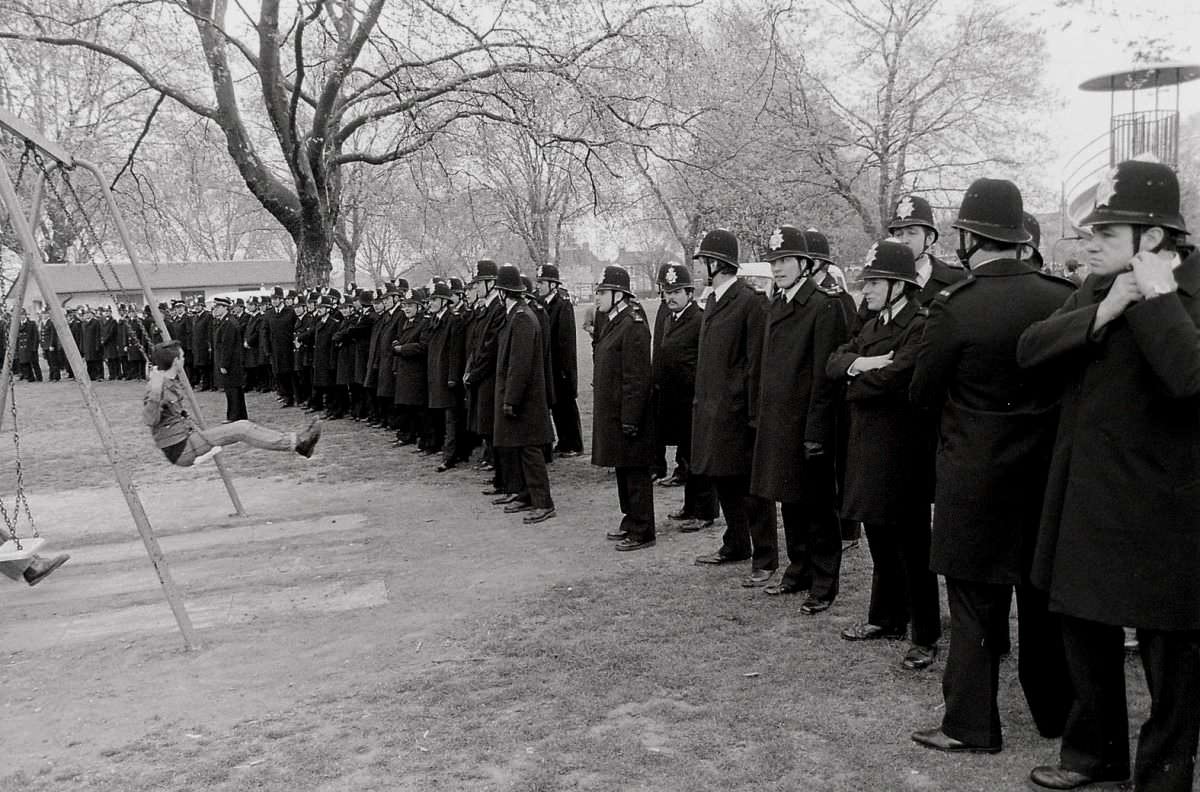
The response from communities was organized resistance. On 11 May 1985, more than 2,000 anti-racist demonstrators gathered in Plashet Park to protest the violence and demand action. The Newham 7 — a group of Black and Asian youths who had fought back against fascist attackers — became a cause that drew large crowds into the streets of London. These demonstrations frequently met a heavy police presence.
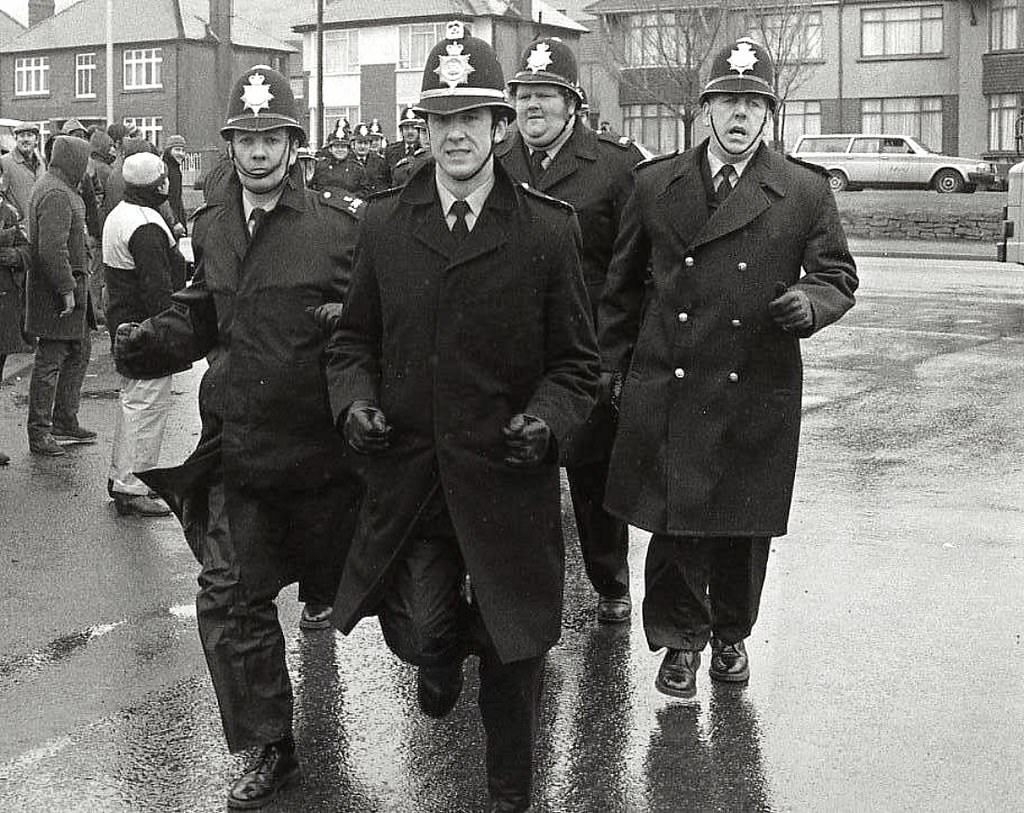
The Miners’ Strike of 1984–85 was one of the most bitter industrial disputes in British history. When the National Coal Board announced pit closures, miners across the country walked out. South Wales, Yorkshire, and the North West all became battlegrounds between striking miners and police forces deployed in enormous numbers. Sinclair was there from the beginning, documenting how authorities mobilized against working-class communities defending their livelihoods.
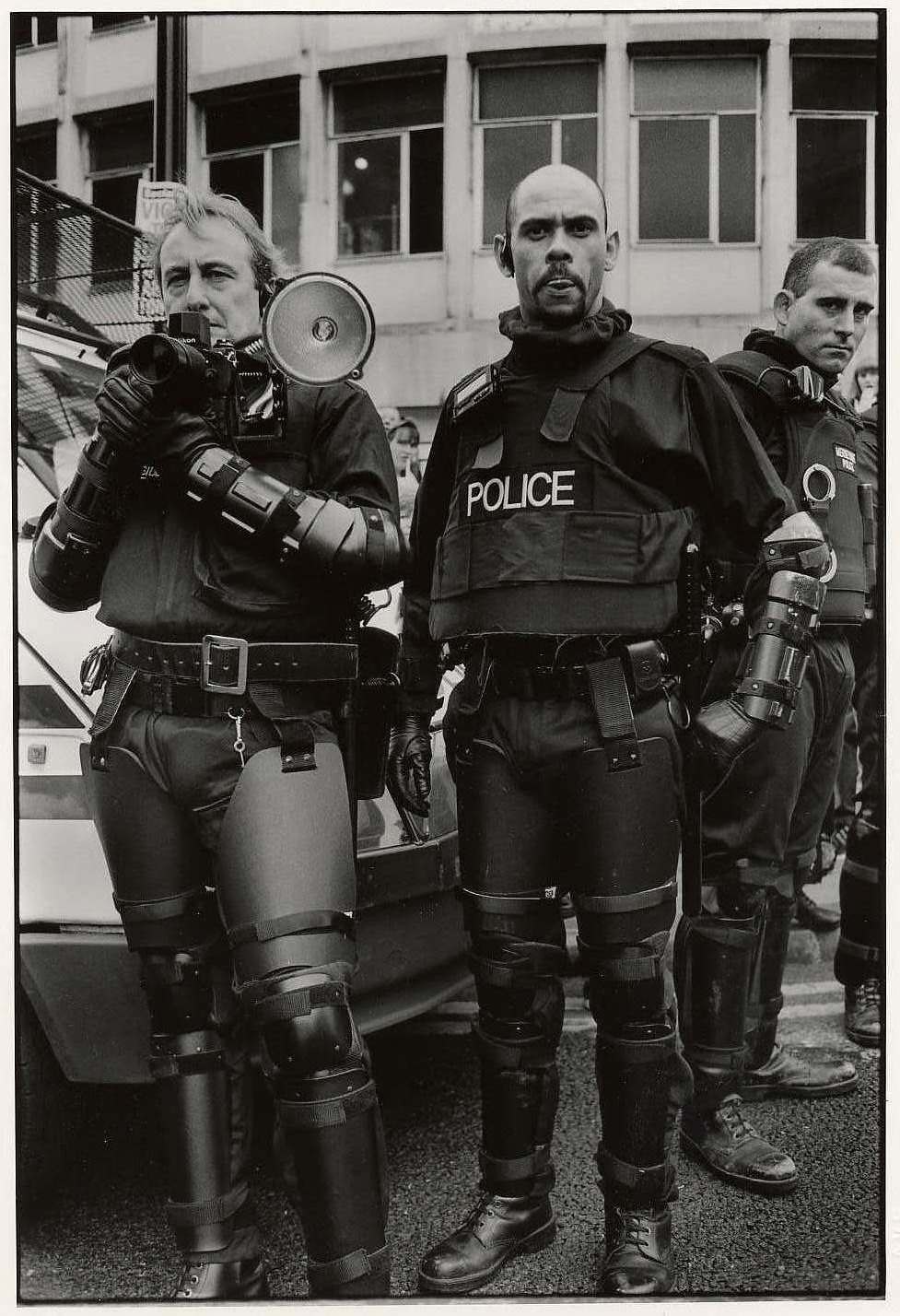
Even peaceful commemorations were not exempt from a large police response. The first anniversary demonstration of the strike drew mostly older men, women, and children — yet was met with what observers described as heavy-handed policing. Sinclair’s photographs from these events make the disproportion between crowd and police force visible in a way that news reporting alone rarely achieved.
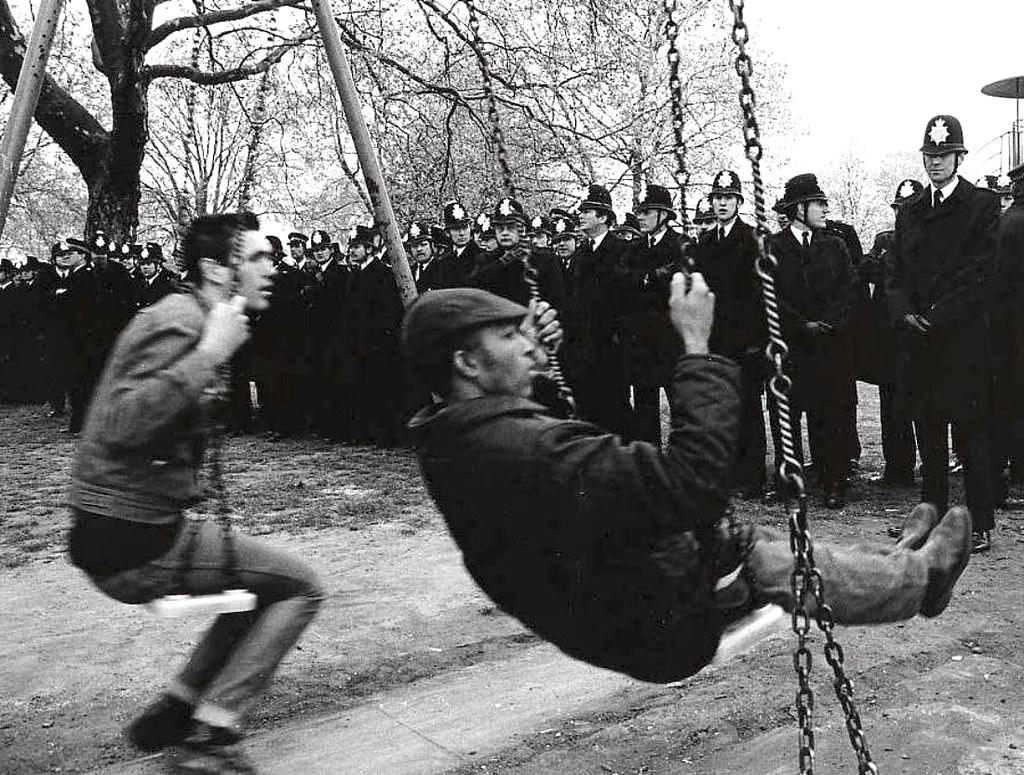
Newham, in East London, was one of the most charged locations Sinclair photographed. After the racial attacks of 1984 and the subsequent protests and arrests, police maintained a sustained presence in the area. His images from Newham show officers in formation on streets that were also home to the communities they were supposed to protect — a tension that runs through the entire body of his work.
By the late 1980s, Sinclair was documenting a new wave of protests. Students took to the streets in 1988 to oppose the introduction of student loans, which would replace maintenance grants. The sight of uniformed police at a student demonstration illustrated how broadly the state deployed its forces during this decade — from colliery gates to university campuses.
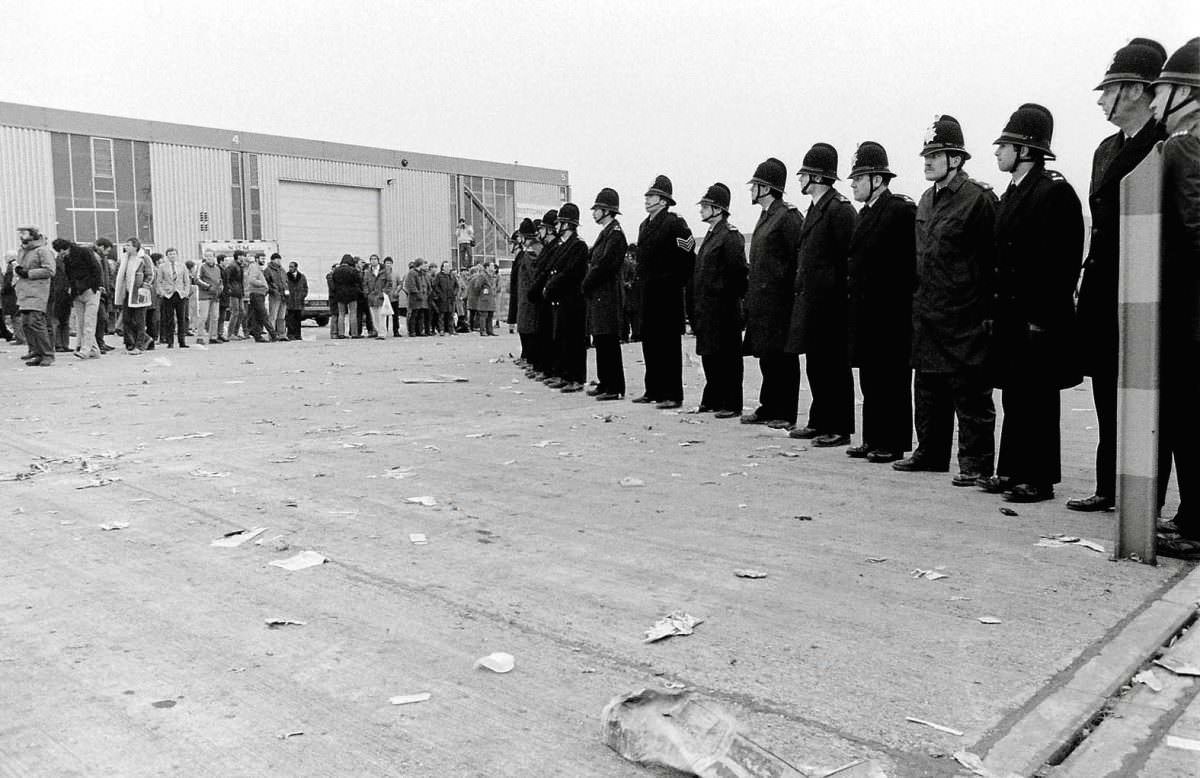
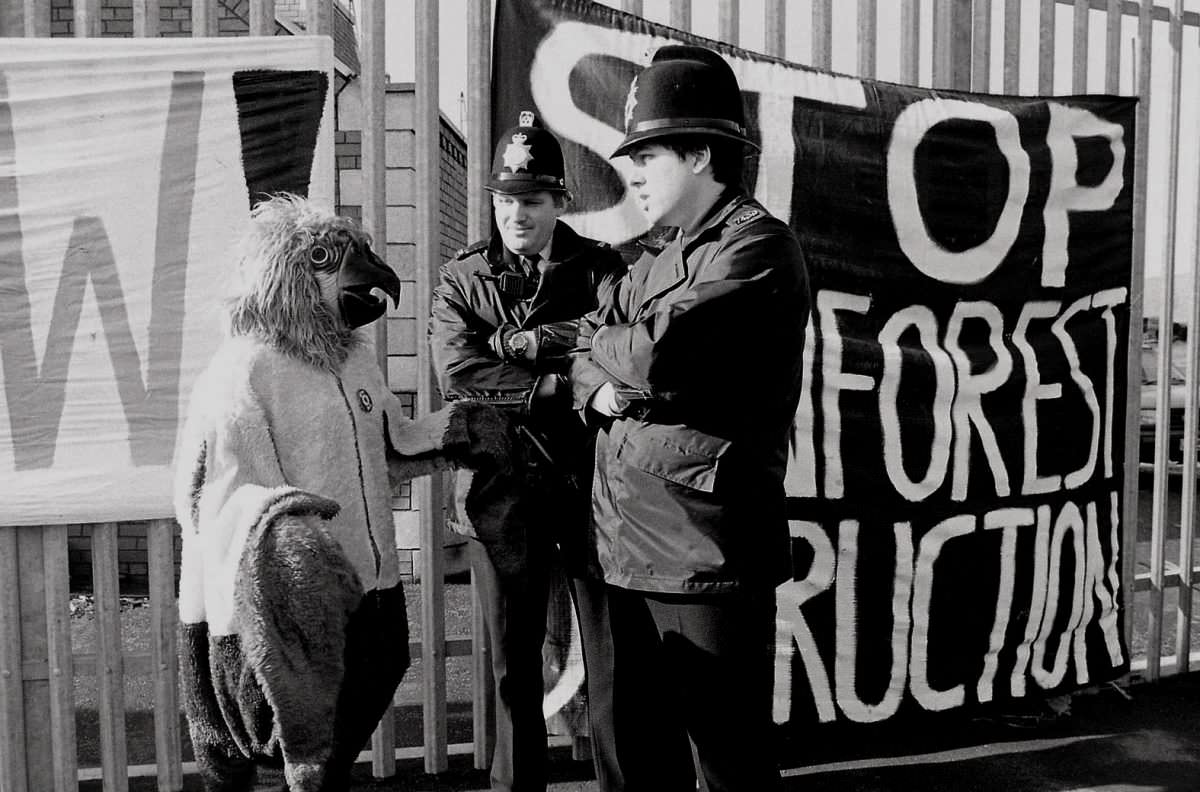
The print industry was another site of major confrontation. Eddie Shah’s Warrington Messenger became a flashpoint in 1983 and 1984 when Shah challenged union labor practices and dismissed striking workers. Police were stationed outside the plant in large numbers as pickets gathered. The dispute foreshadowed the even larger Wapping dispute with News International that would follow just a few years later.
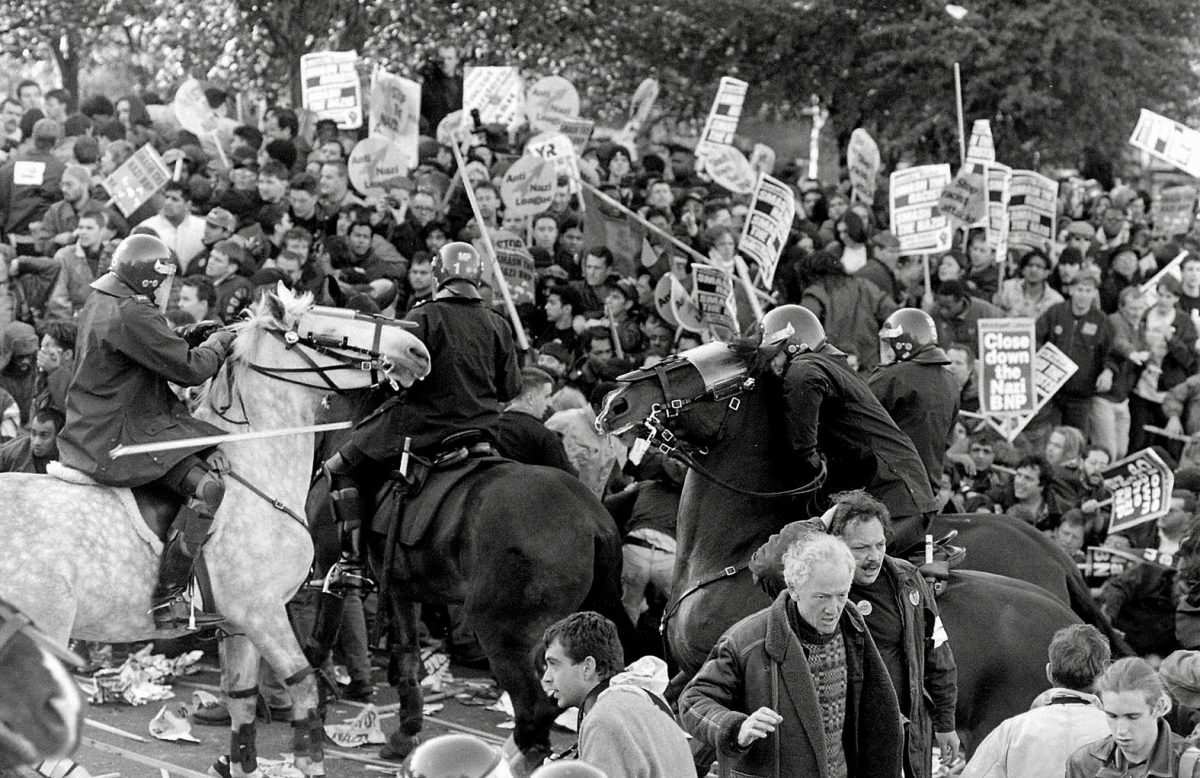
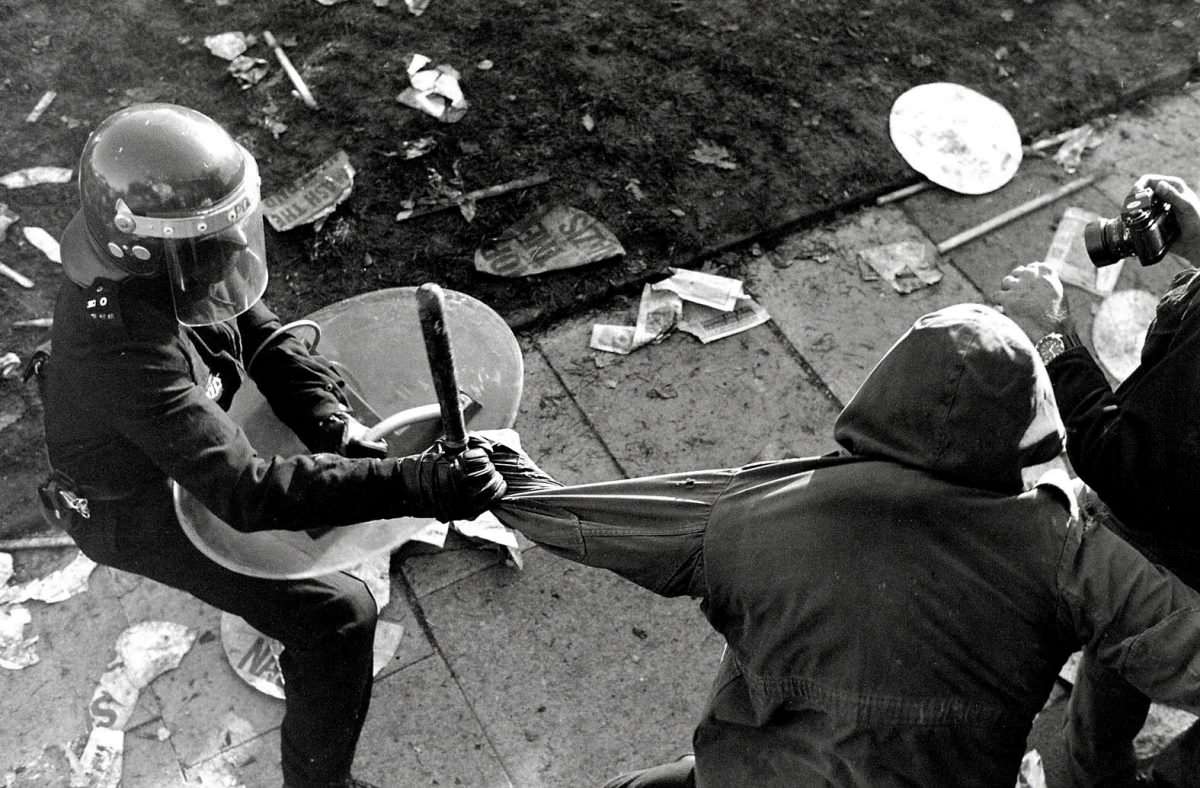
Sinclair’s work extended into the early 1990s. The Welling anti-fascist rally of 1993 drew thousands of protesters to Southeast London, where the British National Party had set up its headquarters. The march was one of the largest anti-fascist mobilizations of the era. Police blocked the route of the march, and fierce clashes broke out between protesters and officers — Sinclair captured it all.
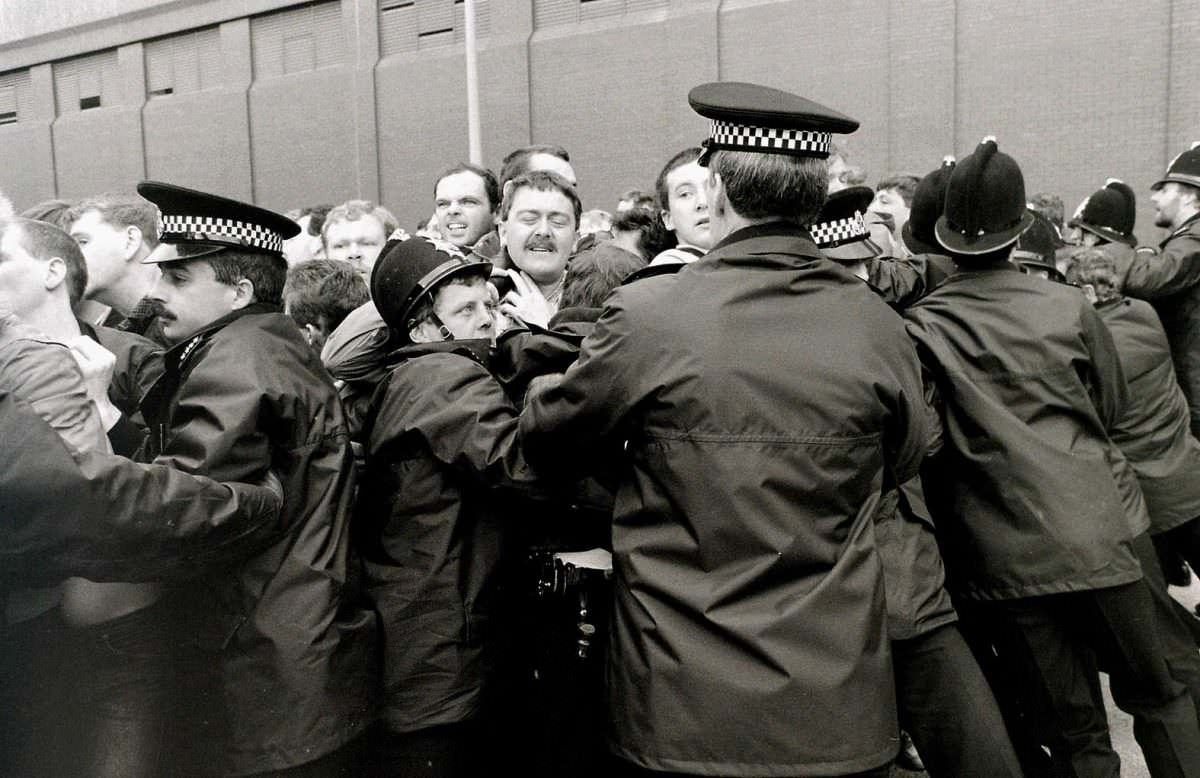
Liverpool was a city under particular strain throughout this period. High unemployment, cuts to public services, and conflicts between the left-wing city council and Margaret Thatcher’s government created a charged political atmosphere. The 1987 protest at Copperas Hill post office was one of many local flashpoints that Sinclair captured, showing how disputes over public services played out on city streets.
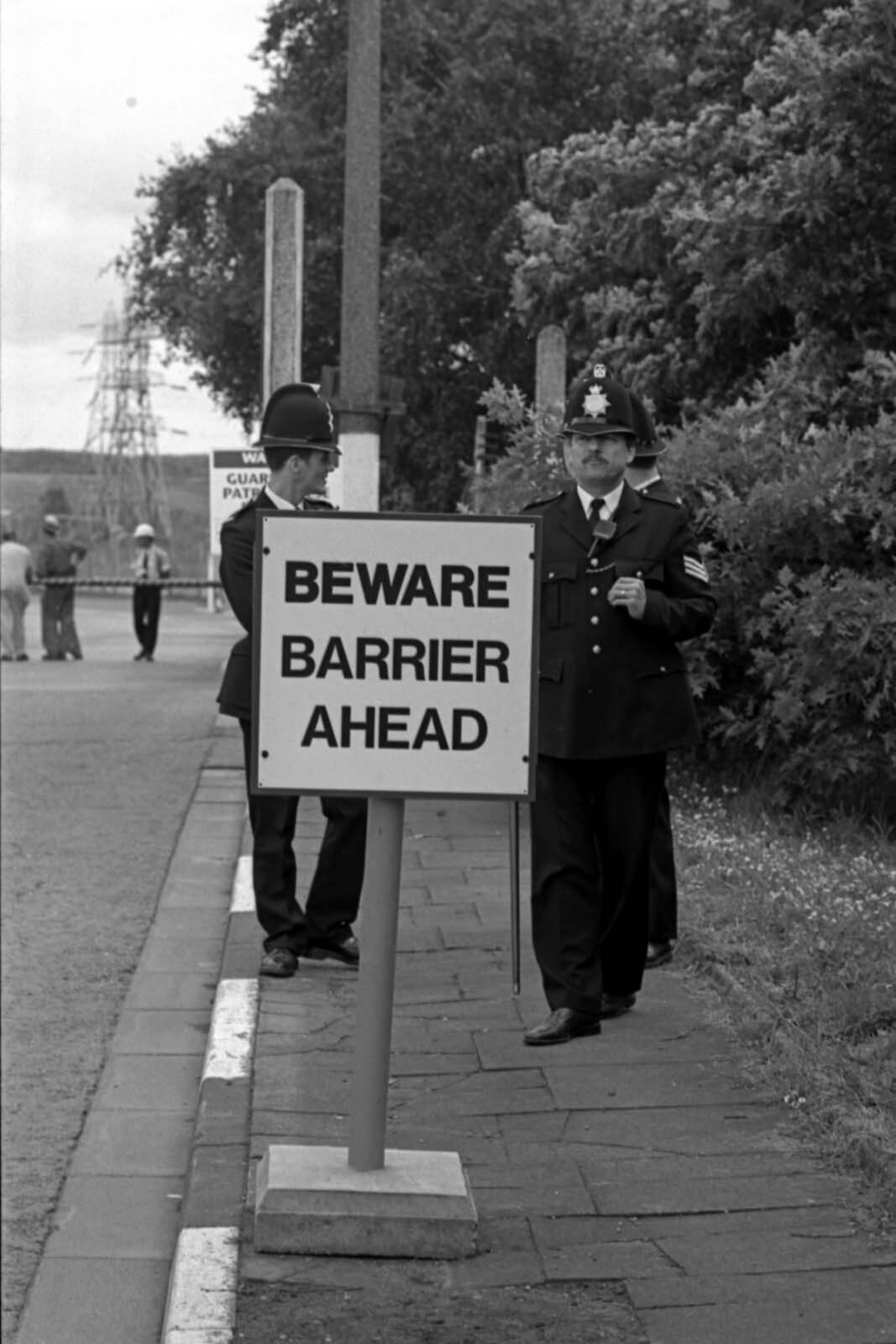
The collieries of St Helens in Merseyside were among the many pit sites where miners and police faced each other across picket lines during the 1984–85 strike. Parkside Colliery and Sutton Manor were both sites of tense standoffs and arrests. Sinclair’s photographs from these locations show police in organized lines, facing off against workers who believed their entire way of life was being dismantled.
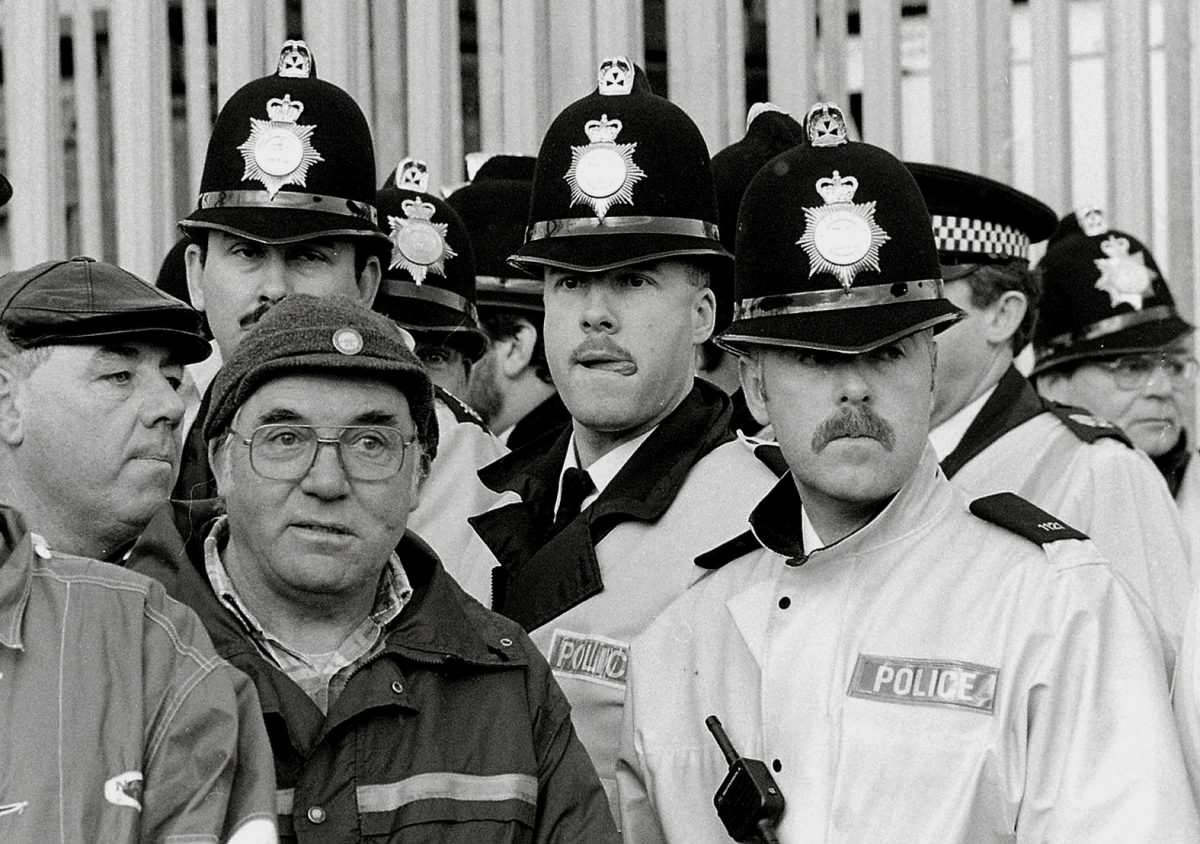
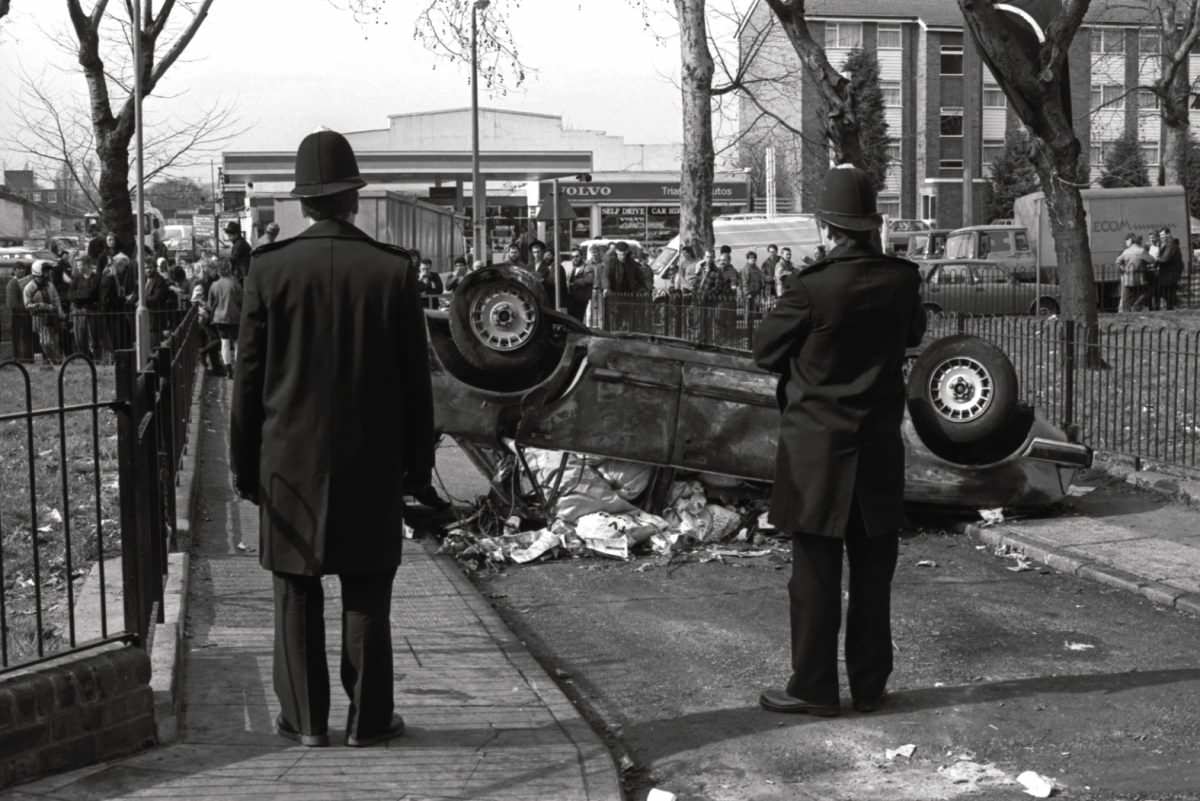
London’s Stamford Hill, photographed in 1988, offered a different kind of scene — one that showed the ongoing police presence in urban neighborhoods during a decade when policing and community relations were frequently strained. The stop-and-search powers used heavily against Black and minority communities had been a direct trigger for the Brixton riots of 1981, and tensions remained throughout the decade.
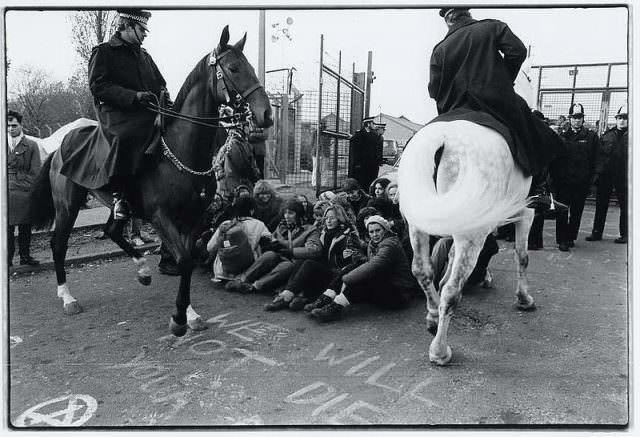
The Greenham Common Women’s Peace Camp was one of the most sustained protest actions of the entire decade. Women — and later men — camped outside the Royal Air Force base in Berkshire to oppose the deployment of American cruise missiles on British soil. Police regularly moved to evict protesters and arrest those who breached the perimeter fence. Sinclair documented the confrontations there as part of his broader record of protest and state response.
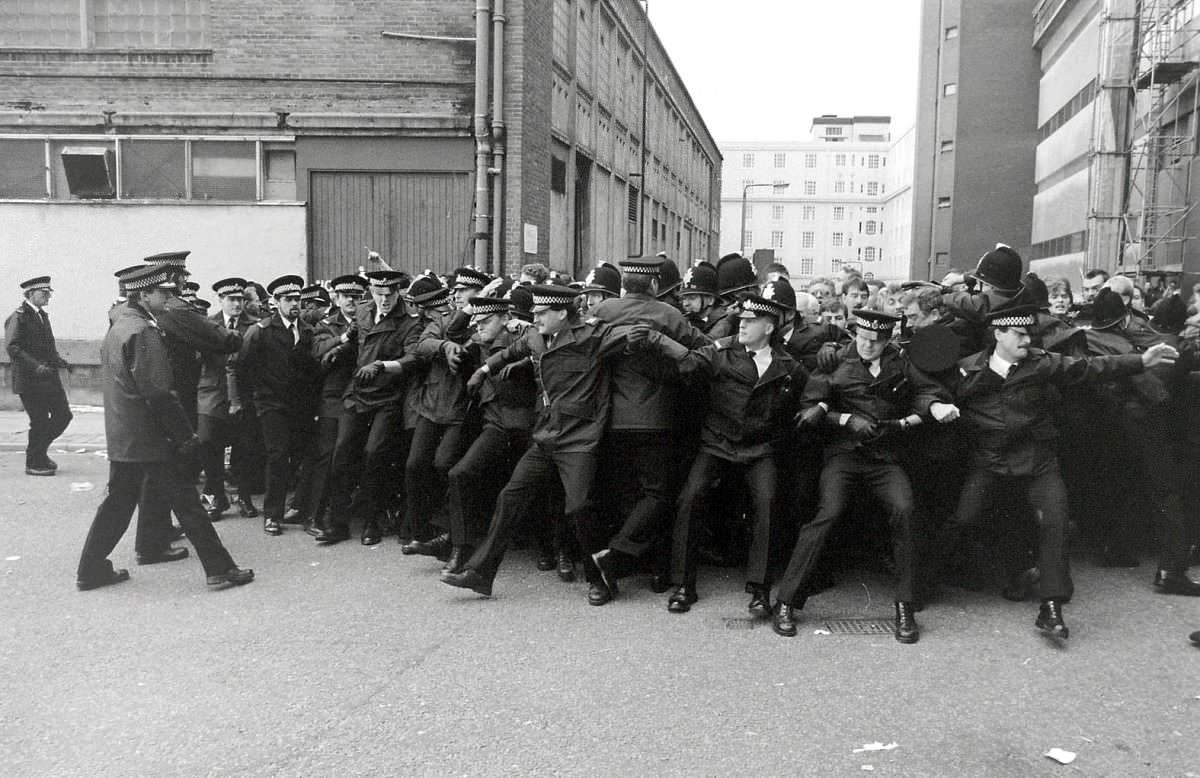
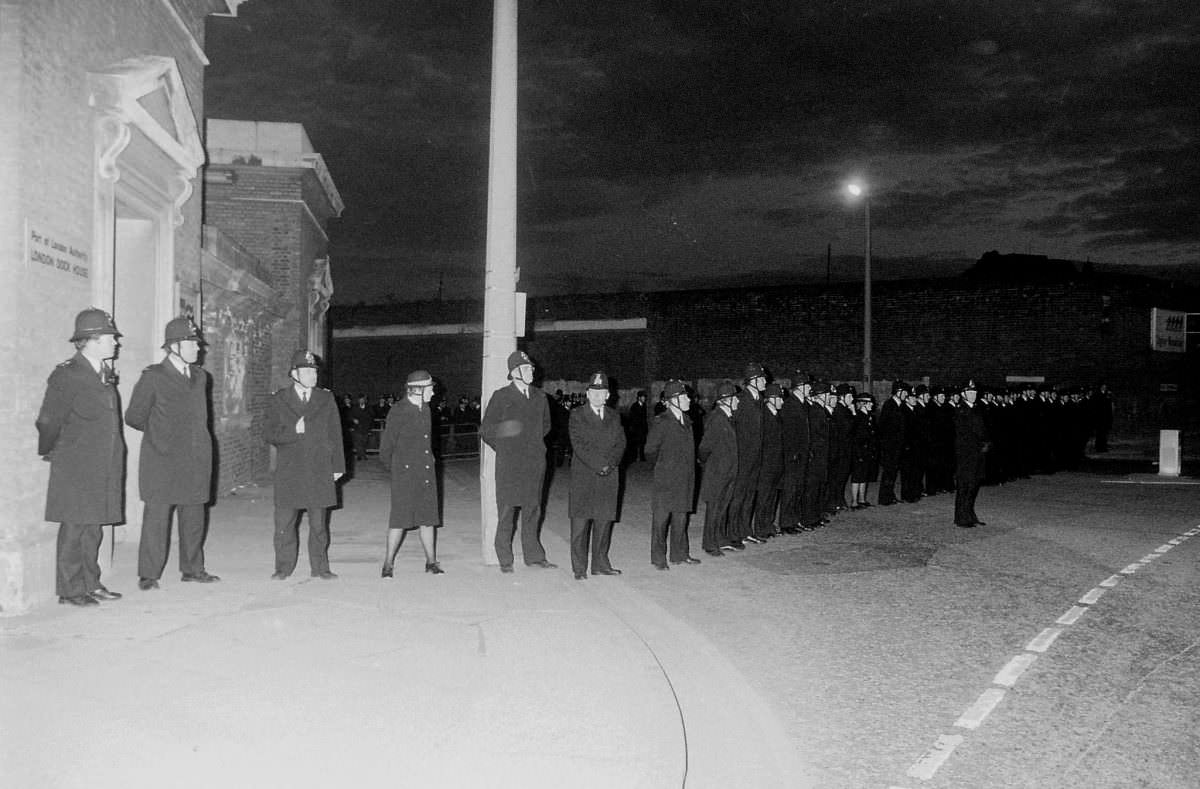
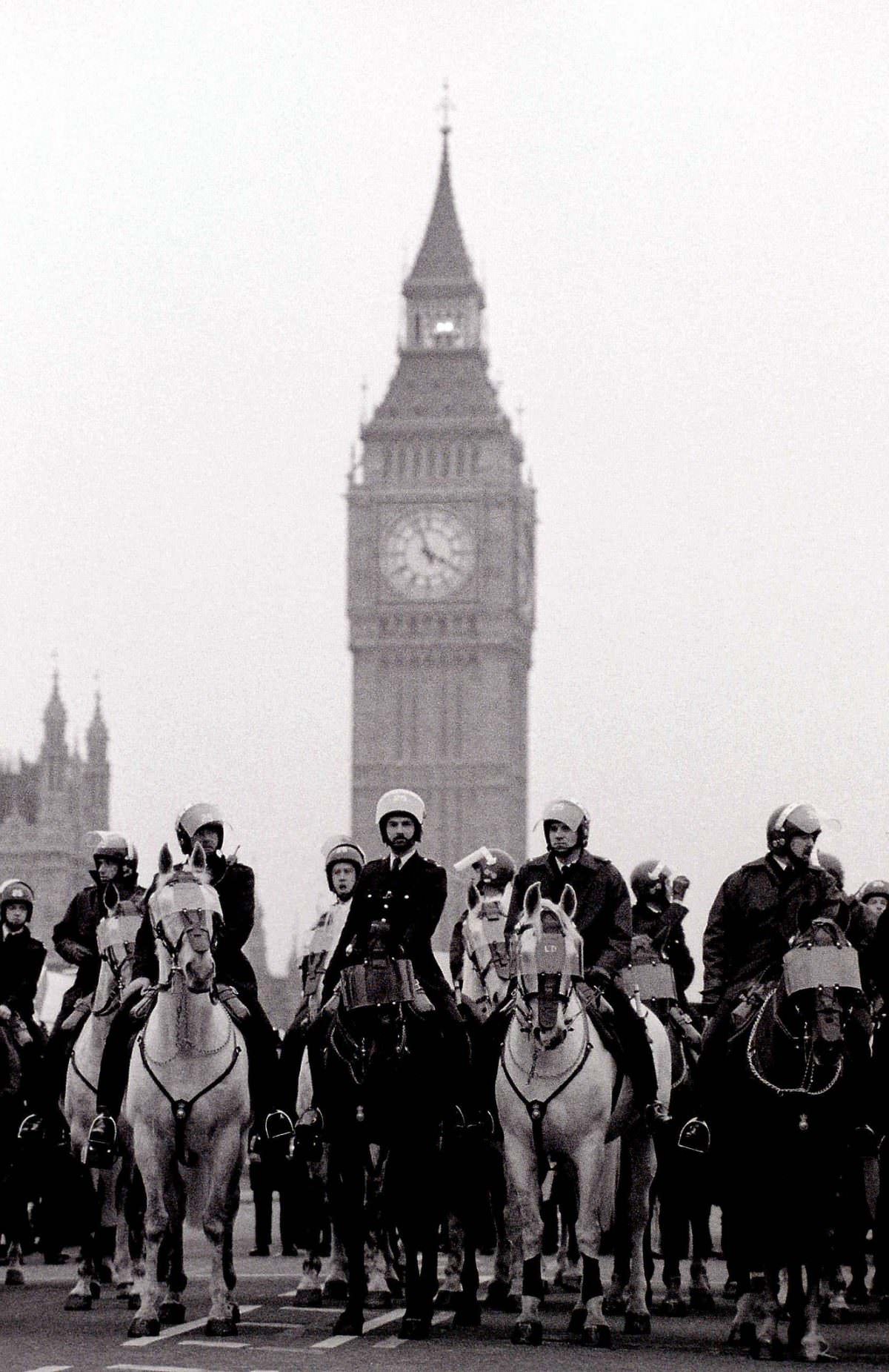
The Wapping dispute of 1986–87 saw News International — Rupert Murdoch’s British newspaper operation — move printing to a new plant in Wapping and lock out thousands of unionized workers overnight. For over a year, mass pickets gathered outside the plant and were met by police, often on horseback. Sinclair photographed the scenes at Wapping in 1987, capturing what became one of the defining industrial confrontations of the Thatcher years.
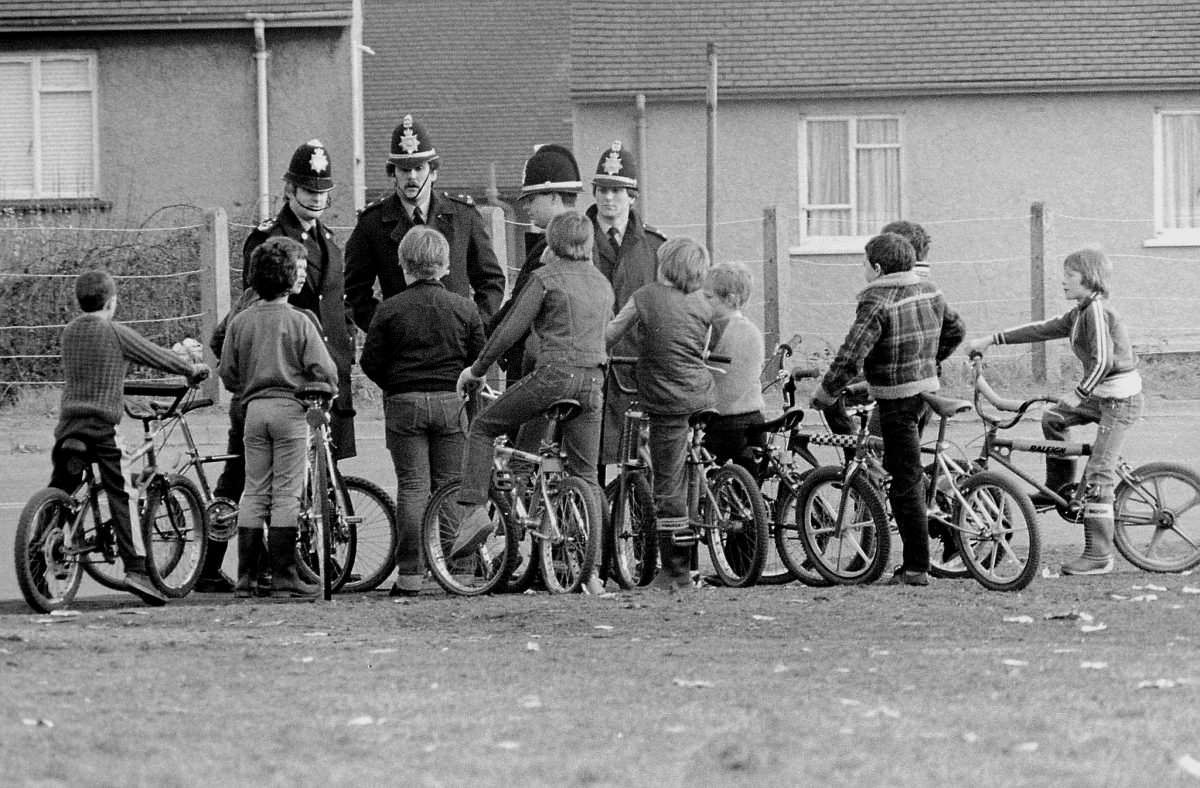
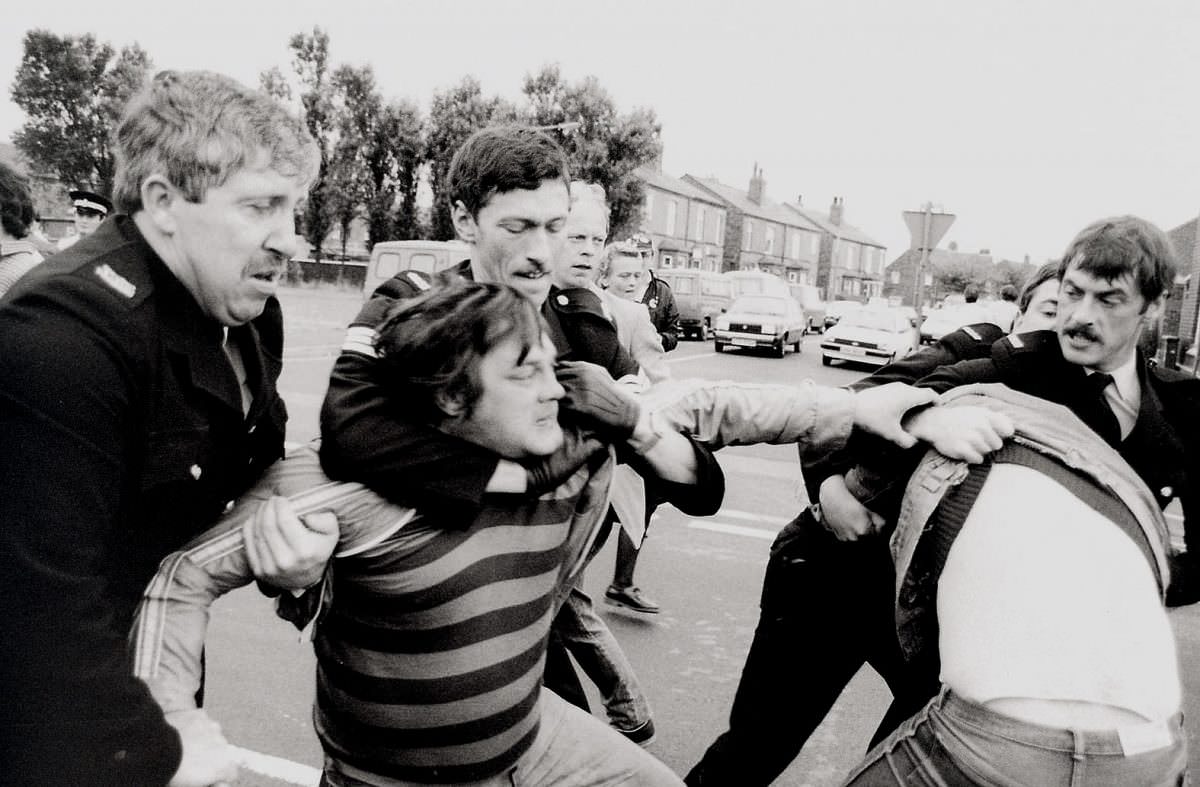
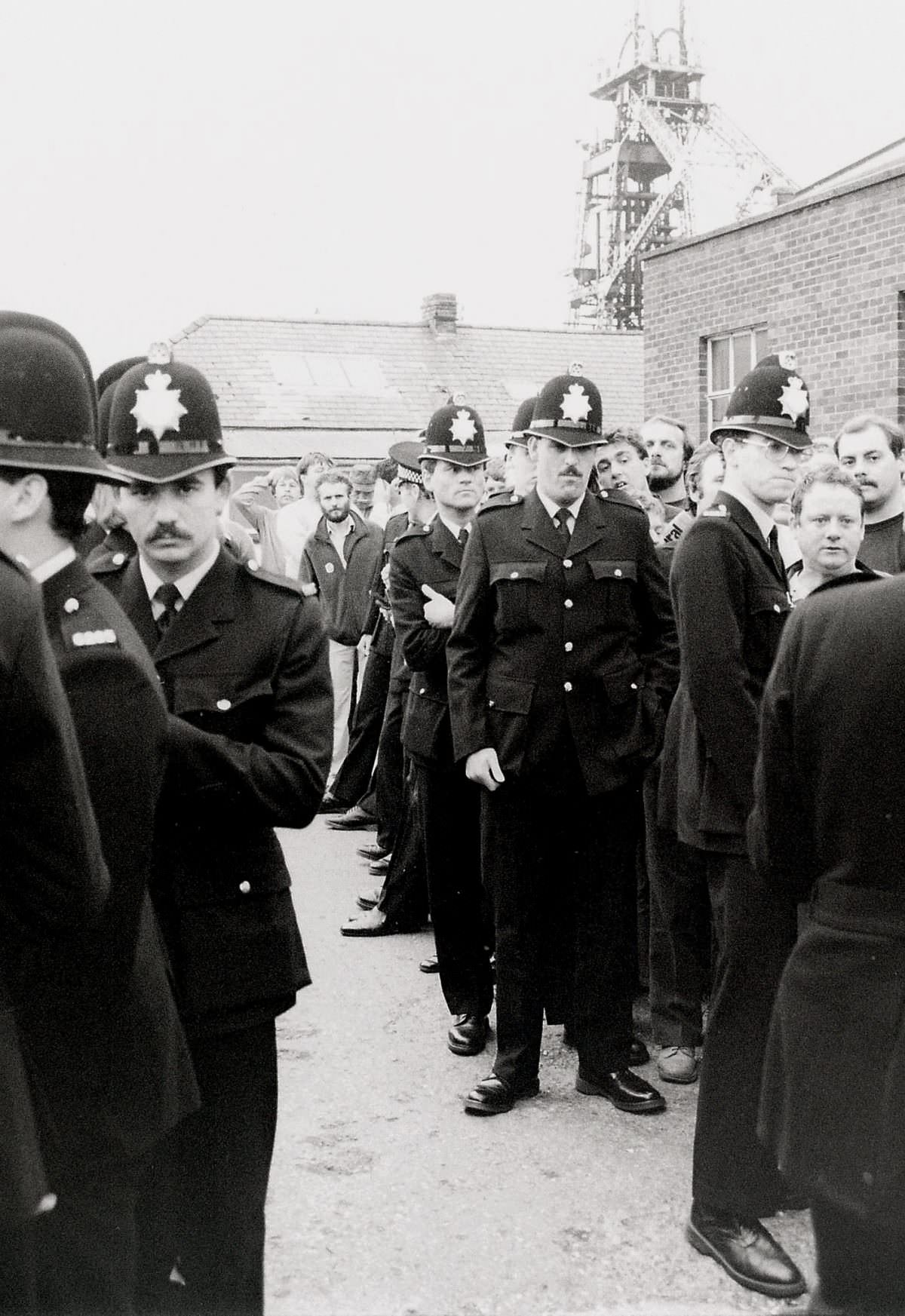
In Liverpool, the political battle over the Miners’ Strike intersected with local council politics in a direct way. Liverpool councillors — many aligned with the Militant tendency, the same organization Sinclair worked for — stood alongside miners on picket lines. His photograph of councillors and police at a 1984 miners’ picket captures that moment where local government and street protest met face to face with law enforcement.
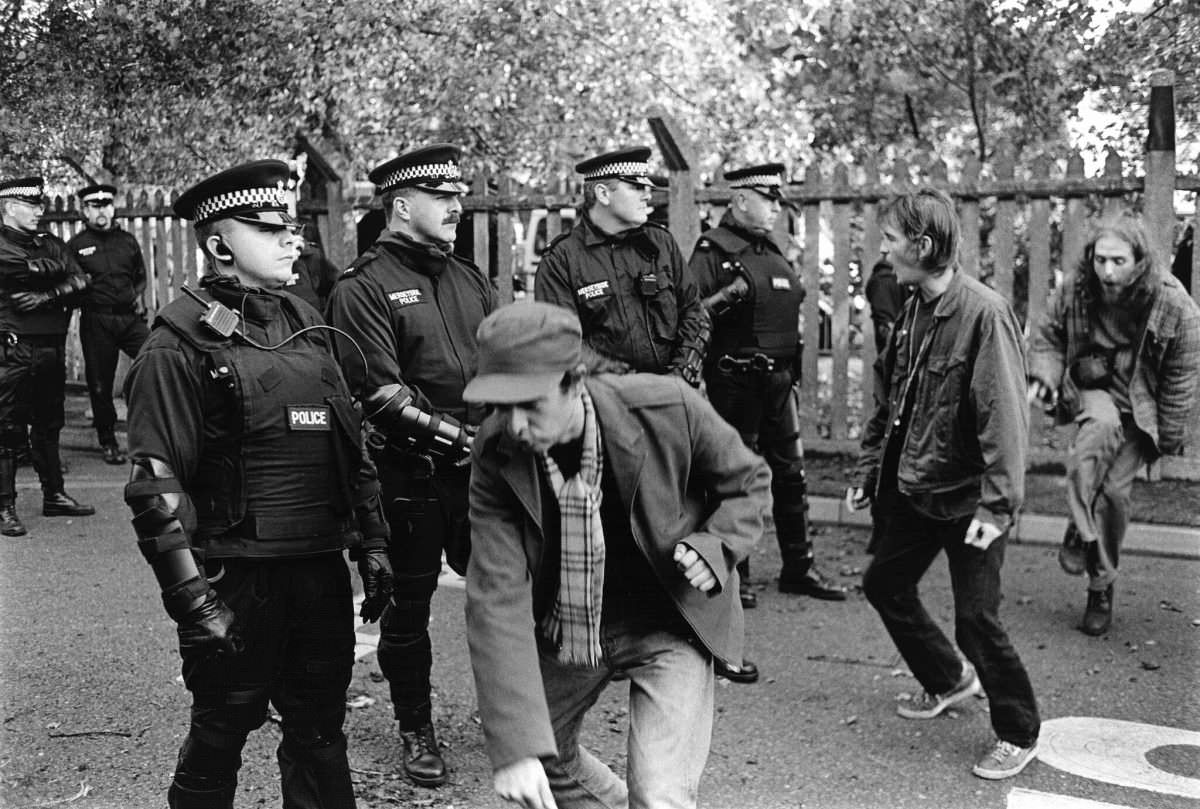
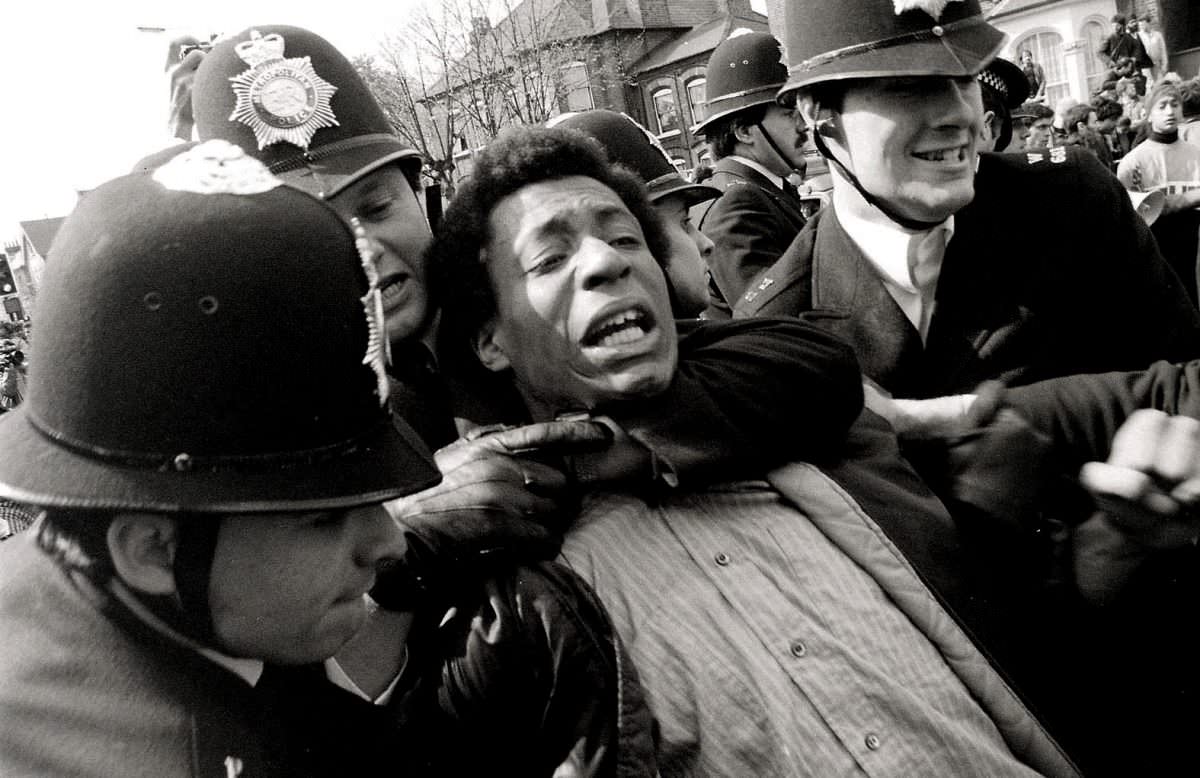
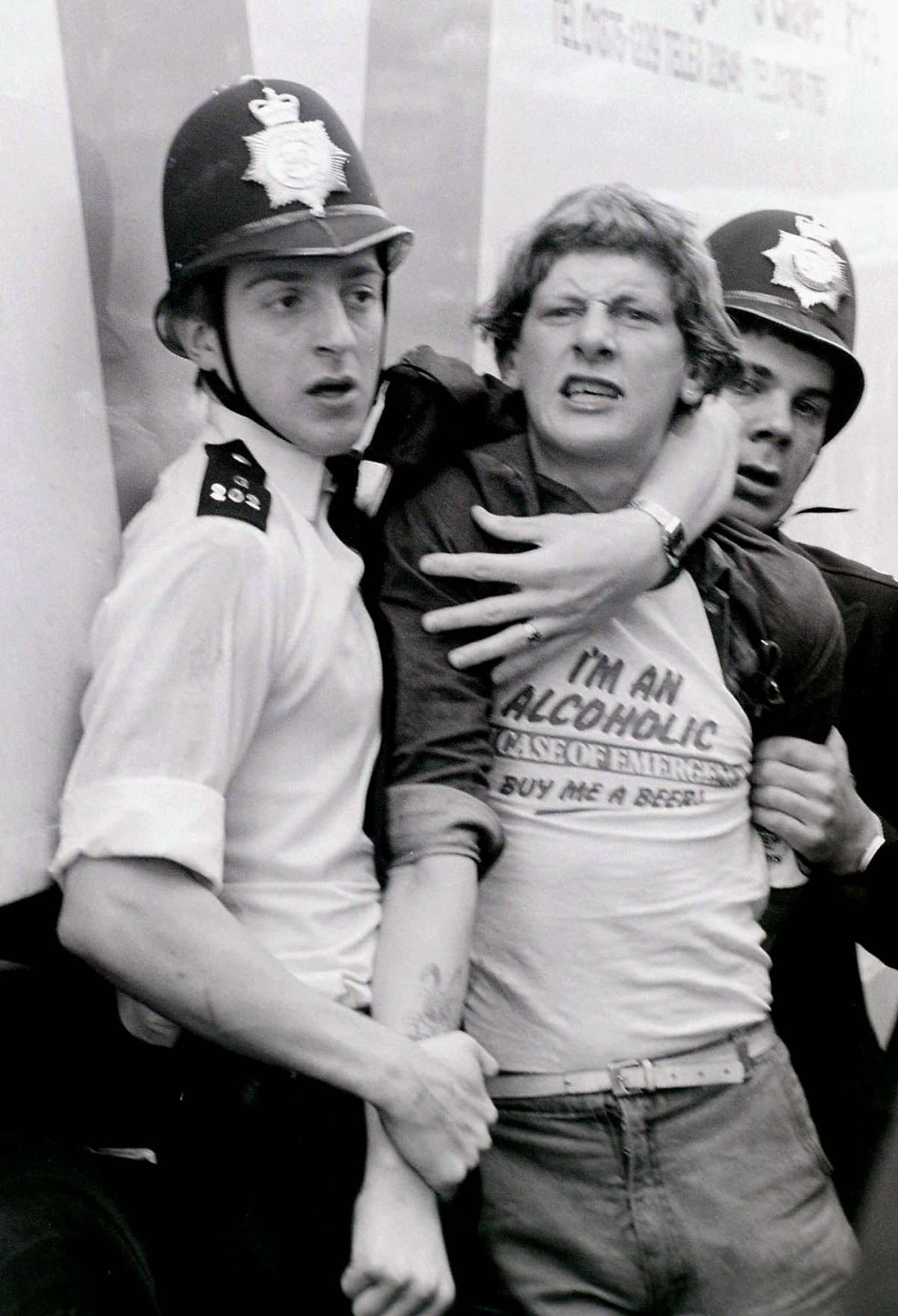
Arrests at the Newham 7 demonstration in 1985 were among the most politically charged that Sinclair documented. The case of the Newham 7 — young people prosecuted for defending themselves against fascist violence — had already galvanized anti-racist networks across the country. When police moved to arrest demonstrators at the protest held in their support, the scenes fed directly into broader arguments about whose side the law was on.
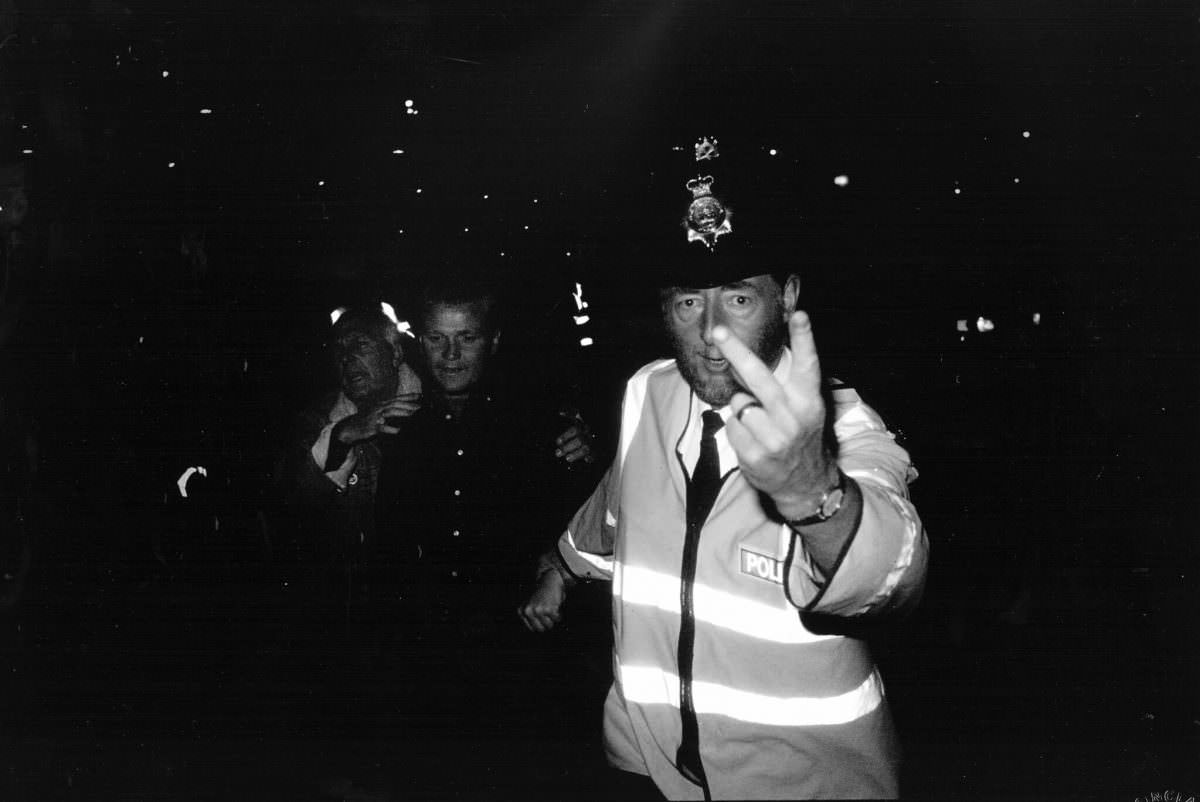
An early morning arrest in Seaforth, Merseyside, is among the quieter but no less telling images in Sinclair’s archive. Dawn raids and early arrests were a tactic used against strike activists and protest organizers throughout the decade. Sinclair’s decision to document not just the large crowd confrontations but also these smaller, sharper moments gives his body of work a depth that goes well beyond simple protest photography. Taken together, his images form a detailed visual record of what Britain looked like when large sections of its population were in open conflict with government policy — and with the police forces sent to enforce it.



Fascinating to see the police in the past.
At times, I believe that the far-right in the UK are not a serious threat, as I’m sure many of their supporters do not intend to harm others. However, reading about the violence in the 70s and 80s shows that it could become a genuine danger. The collection features many images of Liverpool and St Helens during strikes, as well as student loan protests from 1988. Although by today’s standards the student finance situation was much better then than it is today in 2023.
It would be great to see protesters on swings again, like in the old days. I’d like to believe that at least one officer was helping to push the swing.
Is that Michael Fuller, the former Chief Constable of Kent Police and DAC of the Metropolitan Police ?
Yes. Yes it is!
I’m fairly confident one of them is my dad…
Why are they all black & white? Colour photography did exist in the 80’s.
Not once did the photographer get stopped and searched for taking photographs of the police
Back then the police just took the camera and exposed the film to sunlight.
And they should have been done for criminal damage or perverting the course of justice if there was evidence on the film bit of course never were.
Simpler times.
Yeah they just filled them in instead