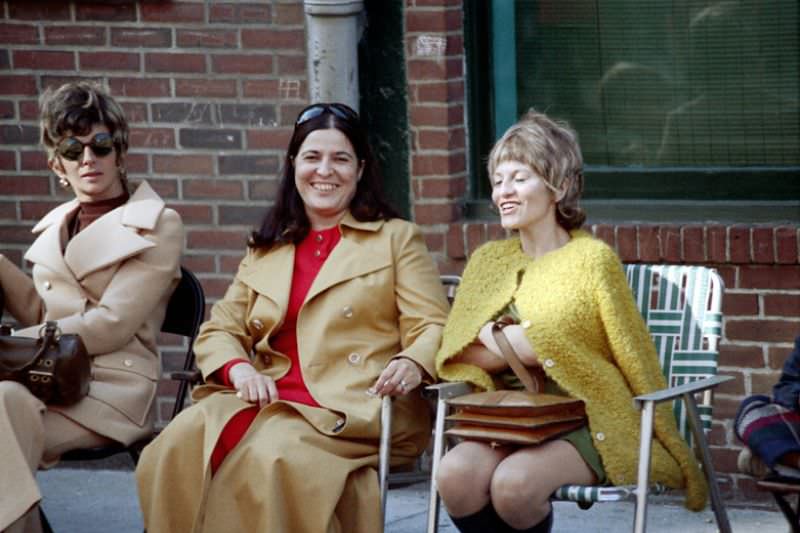
On October 12, 1971, the streets of Boston came alive for the annual Columbus Day Parade. The holiday marks the anniversary of Christopher Columbus’s arrival in the Americas on October 12, 1492, and by 1971 it was a well-established federal holiday in the United States. Boston’s Italian-American community, centered in the North End neighborhood, treated the day as one of the city’s biggest celebrations of the year.
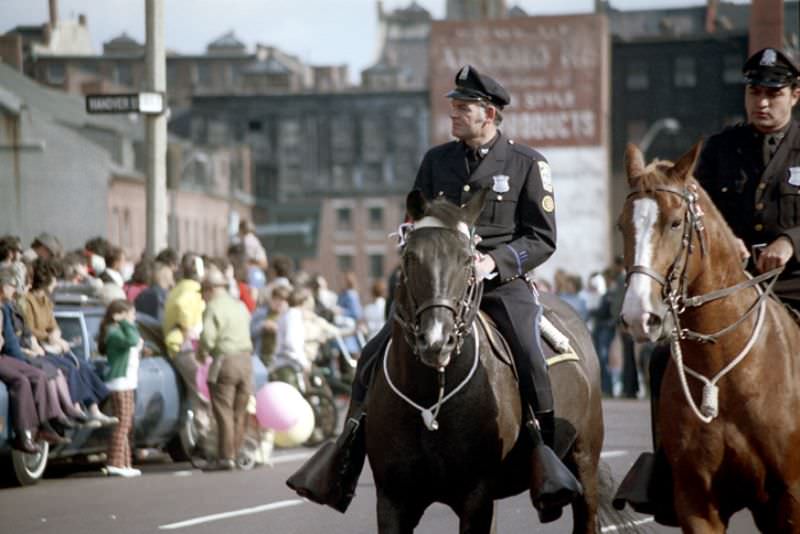
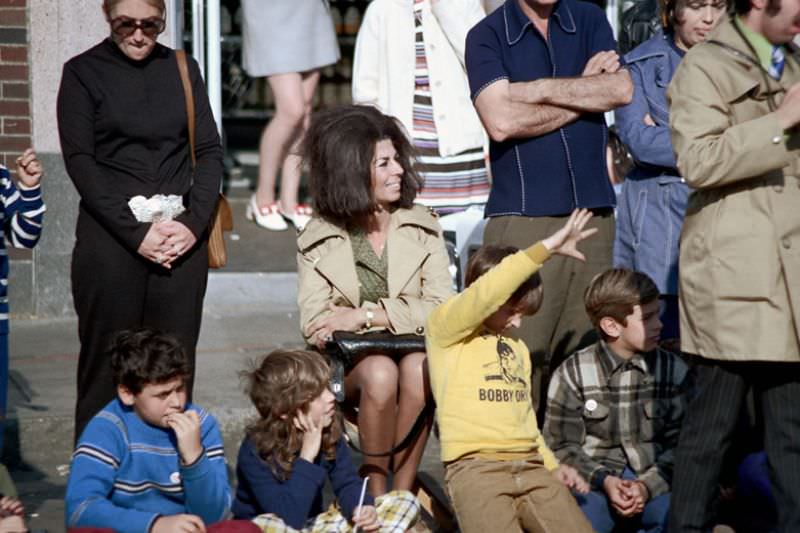
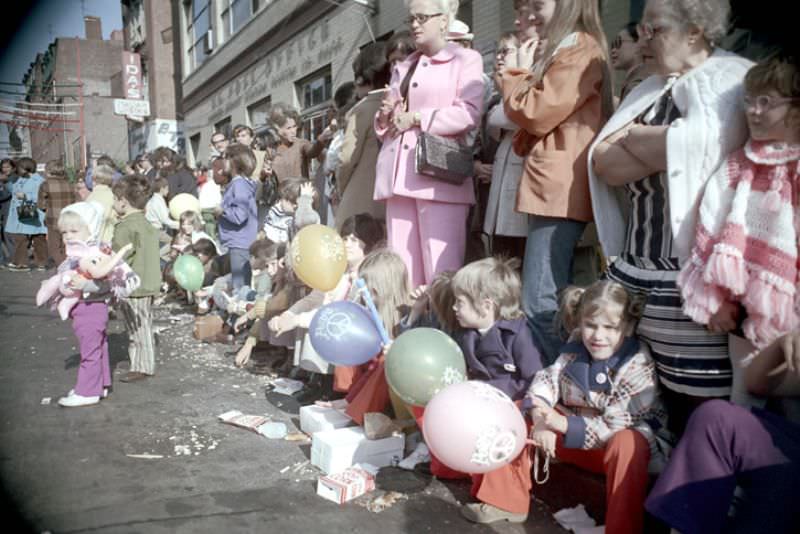
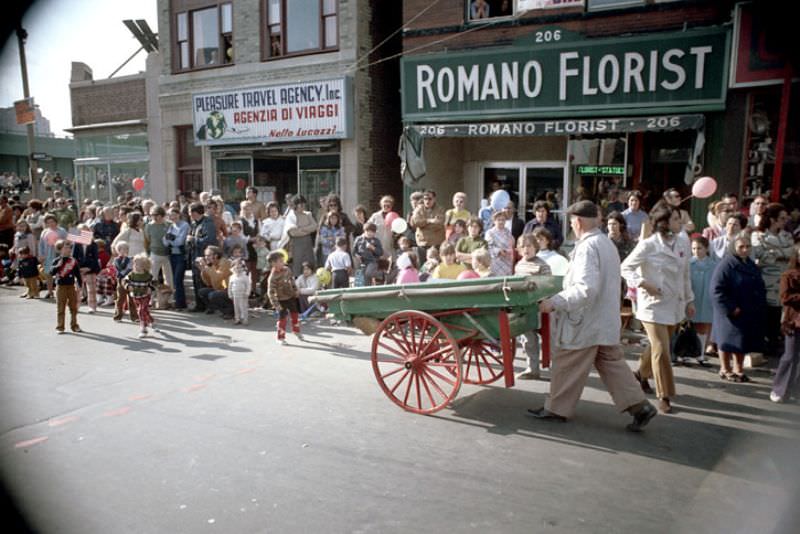
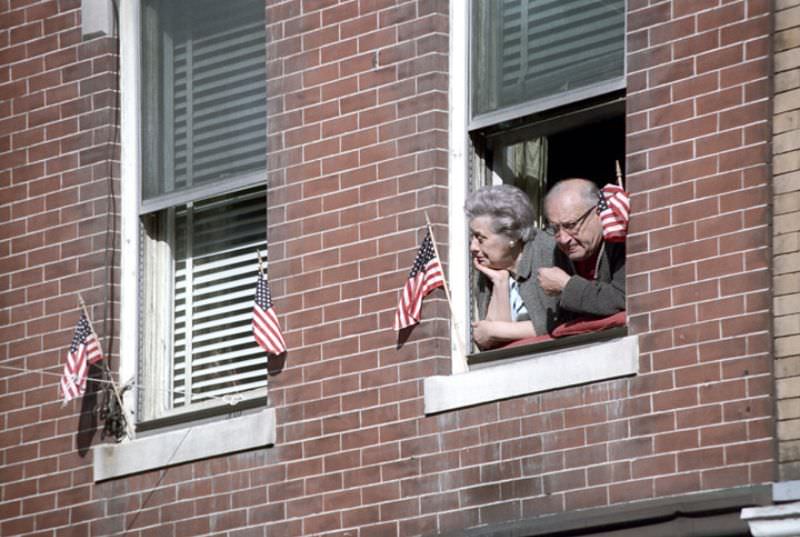
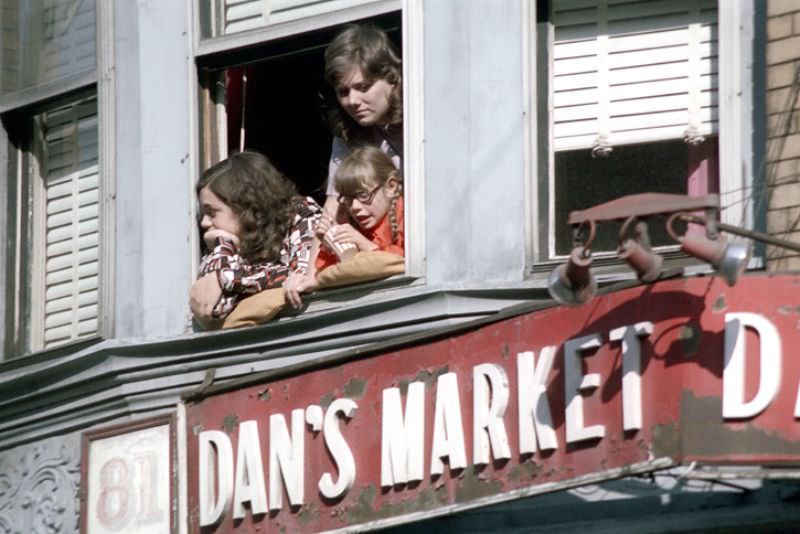
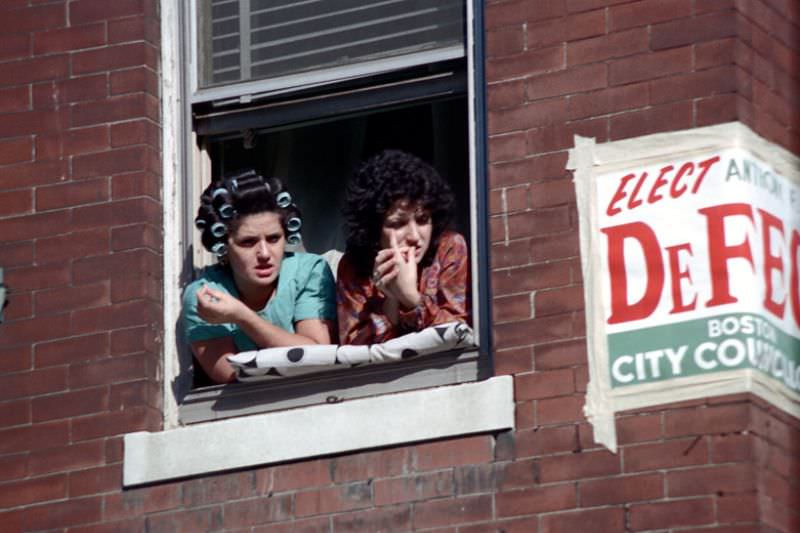
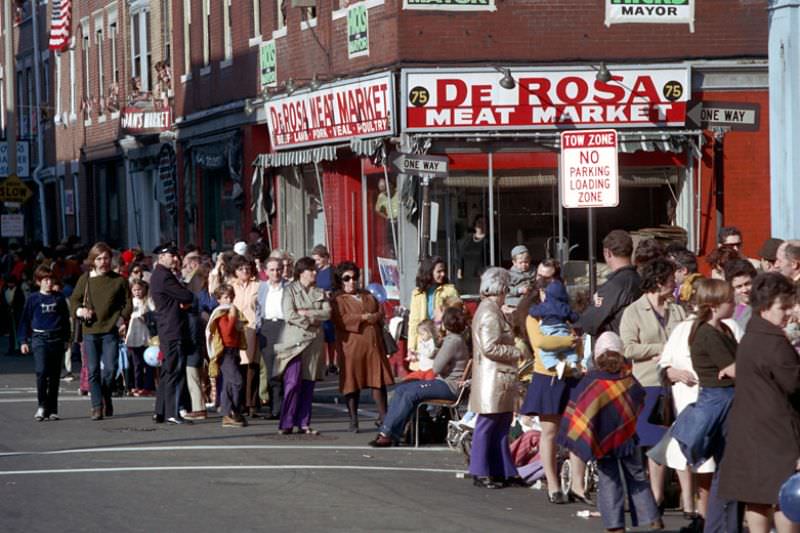
The North End served as the heart of the parade route. Crowds packed the sidewalks along narrow streets, with spectators spilling onto stoops and leaning from windows to get a better view. The neighborhood’s close-knit character was on full display, with families and longtime residents staking out spots along the curb well before the first marchers arrived.
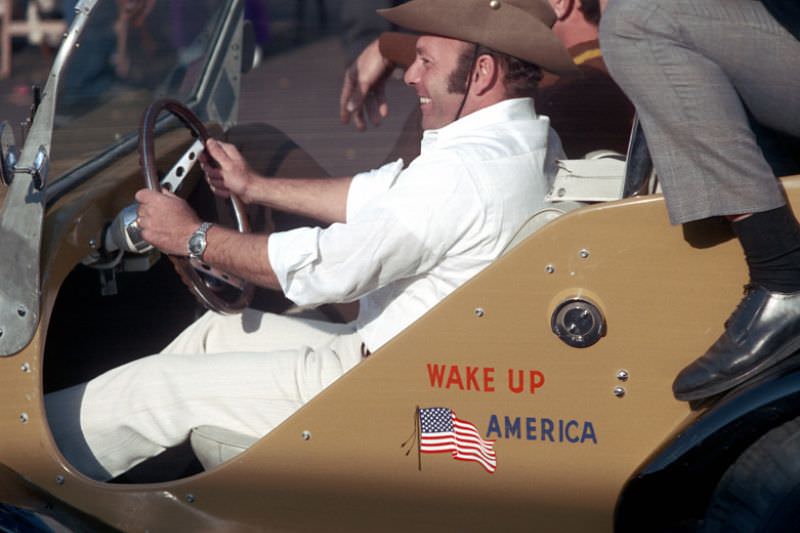
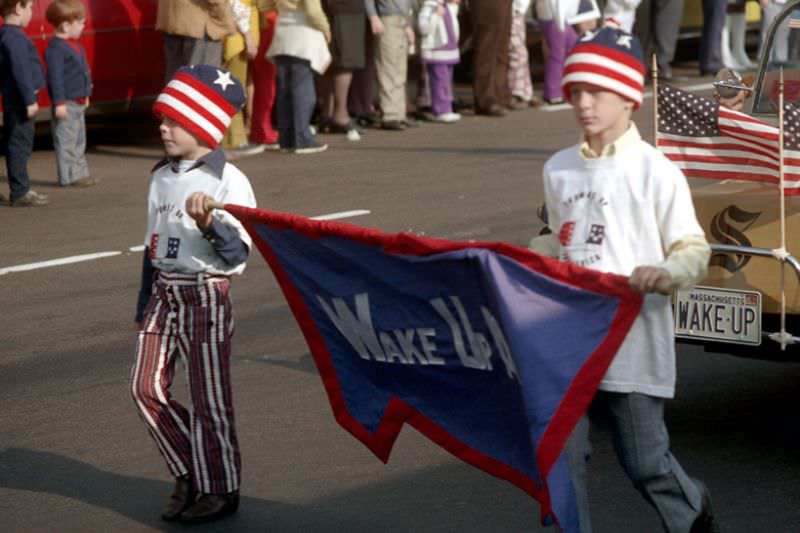
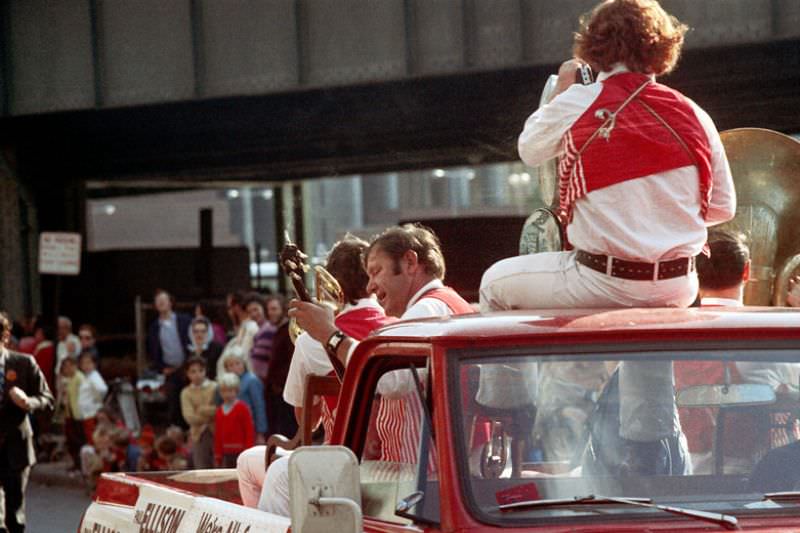
One of the more eye-catching entries in the parade was a “Wake Up America” dune buggy, a nod to the politically charged atmosphere of early 1970s America. The Vietnam War was still ongoing, and public life in the U.S. was saturated with patriotic appeals and political messaging. The dune buggy stood out among the more traditional parade entries.
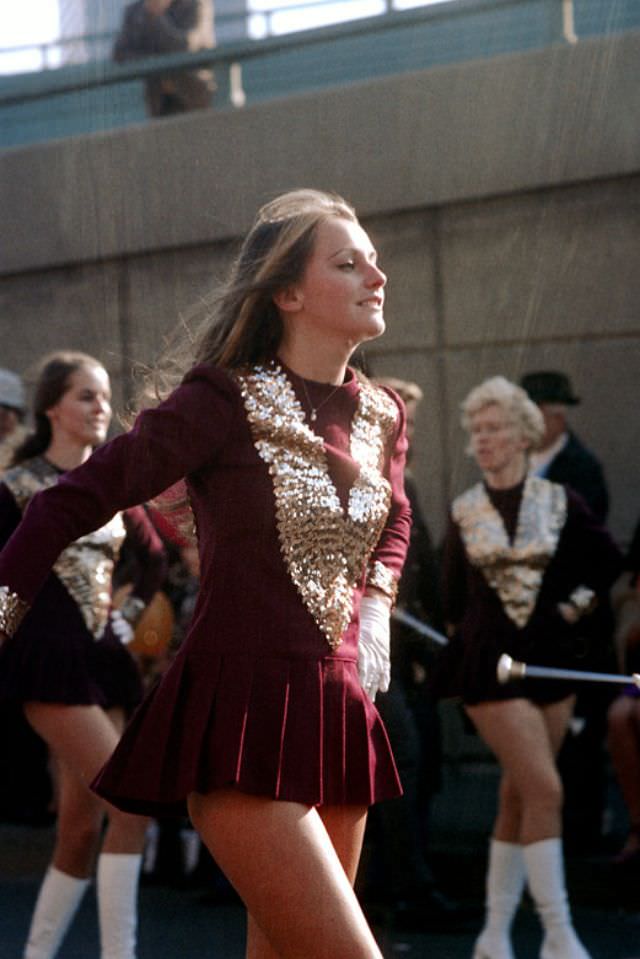
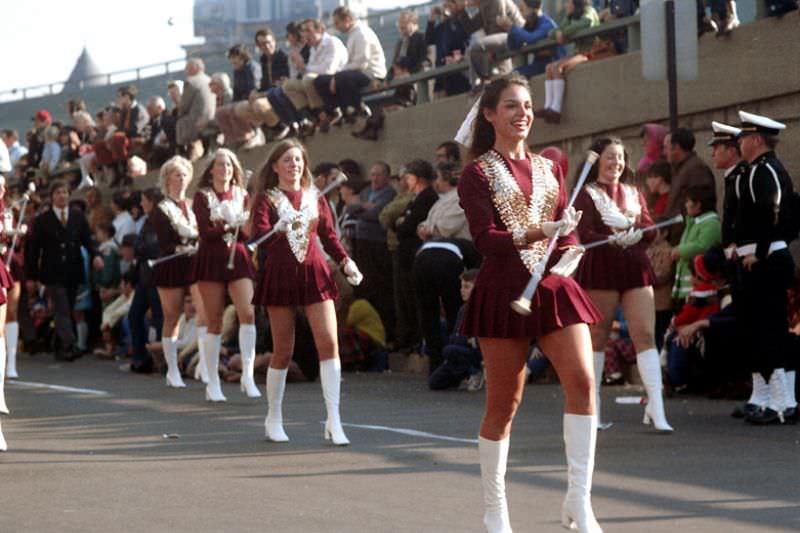
The Boston College marching band was one of the parade’s marquee performers. Their baton twirlers drew cheers from the crowd as they moved down the route in tight formation. Precision and showmanship defined their performance, and they were among several musical groups that kept energy high throughout the afternoon.
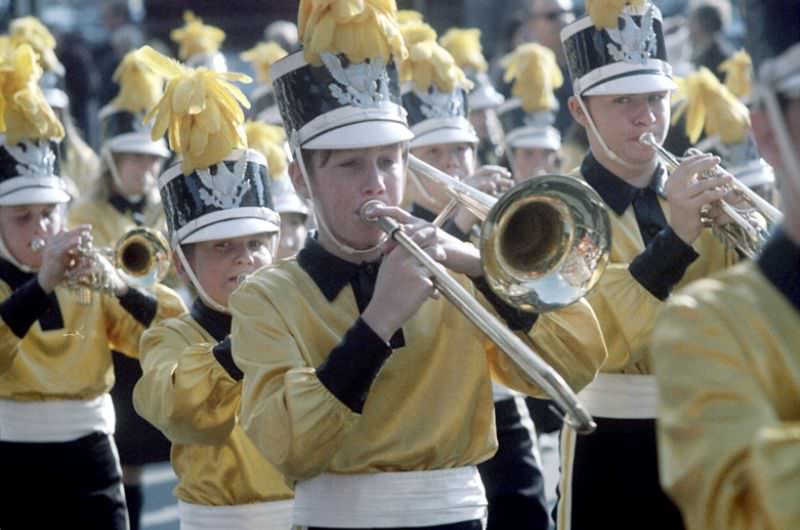
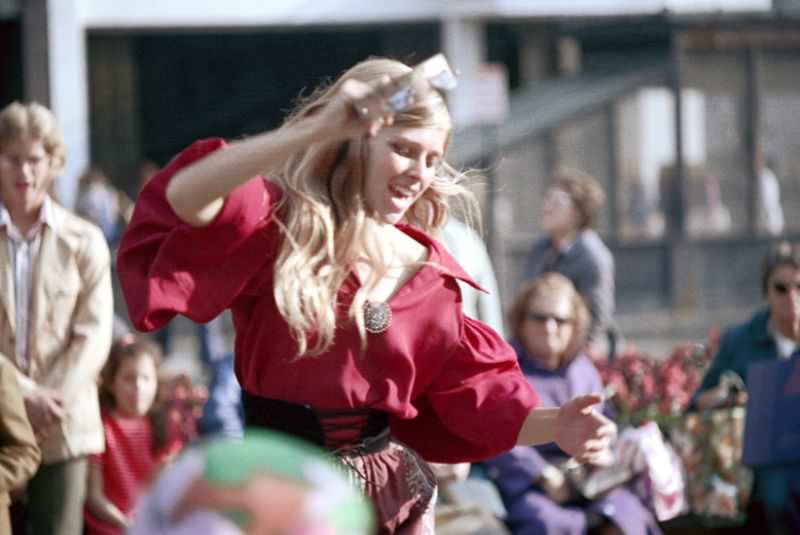
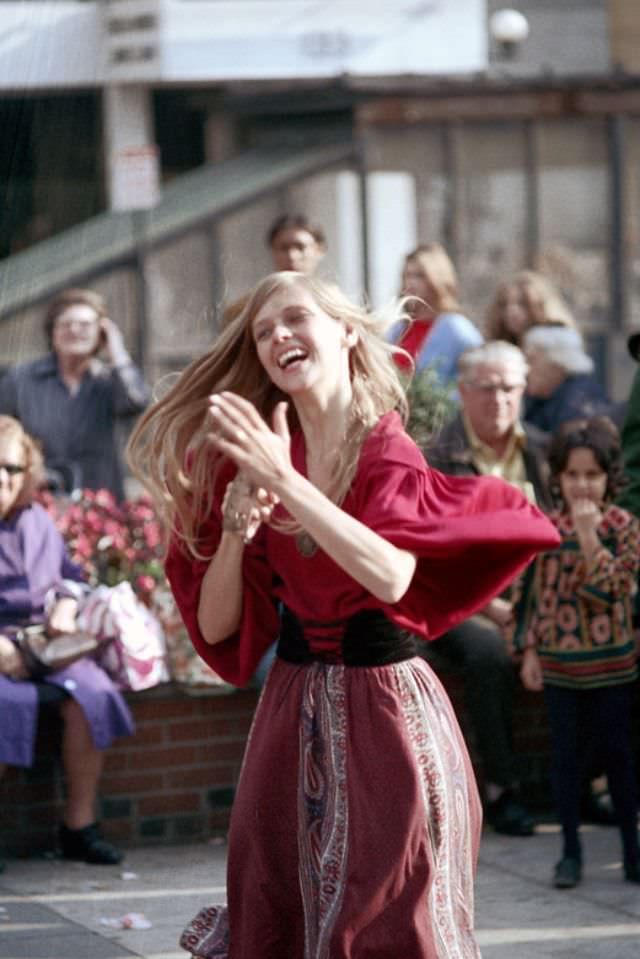
A Dixieland band also made an appearance, adding a looser, jazzier sound to the procession. Dancers with tambourines performed along the route, their movements drawing onlookers into the rhythm of the celebration. These performers reflected the parade’s mix of formal and informal entertainment.
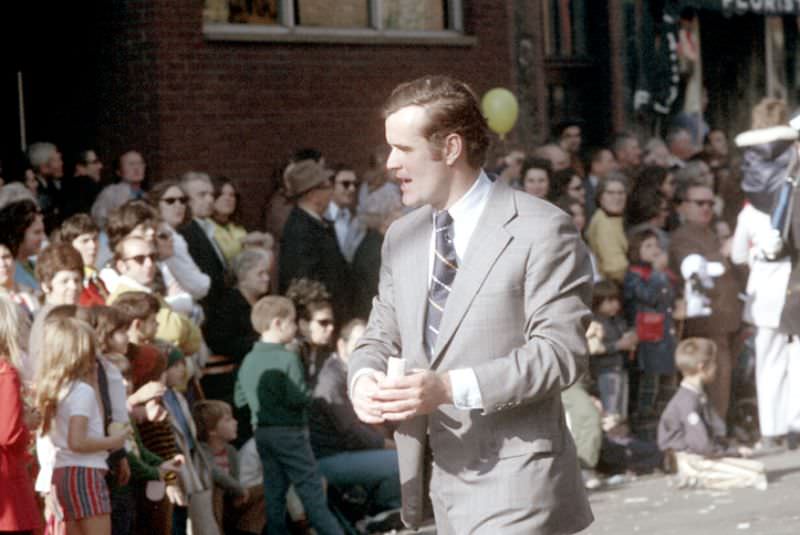
Local politicians took part as well. Joseph F. Timilty, a member of the Boston City Council, was photographed at the October event. His presence reflected how deeply the parade was woven into Boston’s civic life — elected officials regularly marched alongside community groups and performers.
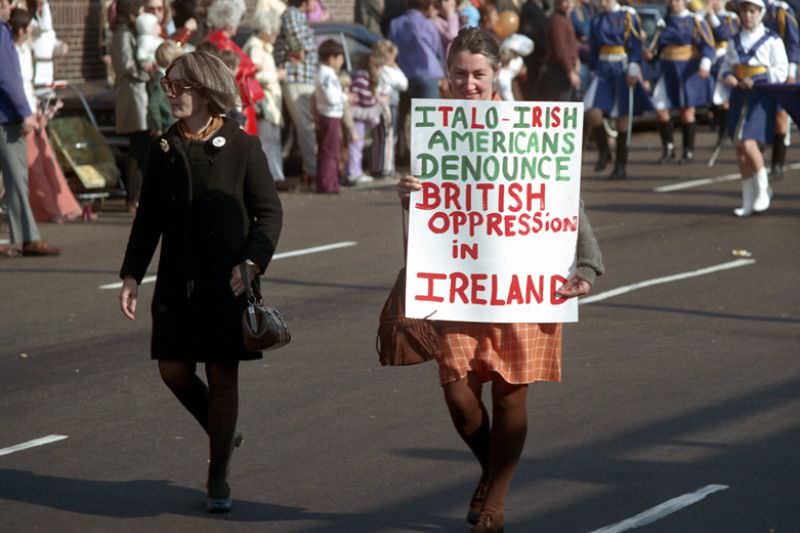
Not everyone on the streets that day was cheering. At least one protest sign appeared along the parade route, a reminder that Columbus Day was already drawing pushback by 1971. Critics objected to celebrating a figure whose voyages led directly to the colonization and suffering of Indigenous peoples across the Americas.
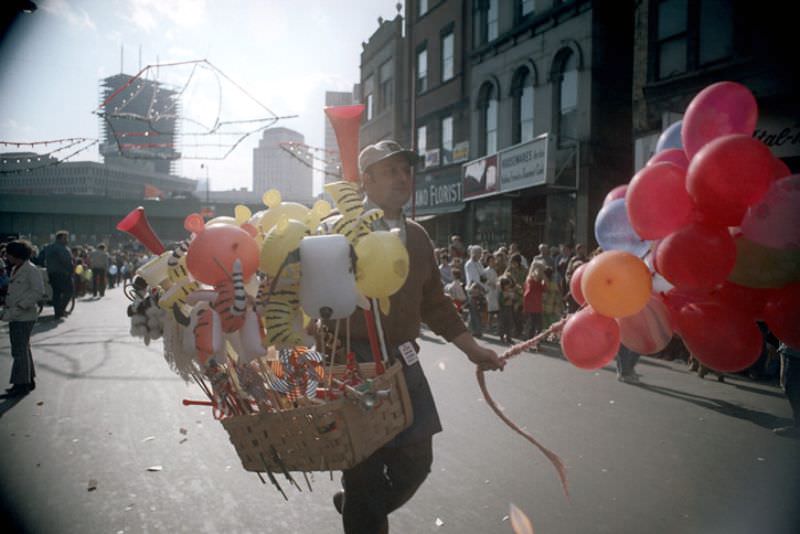
Street vendors worked the crowds between parade entries, selling food and souvenirs to spectators packed along the route. Children watched wide-eyed from the front of the crowd, many of them pressed close to the barriers for a clear view of the passing floats and performers.
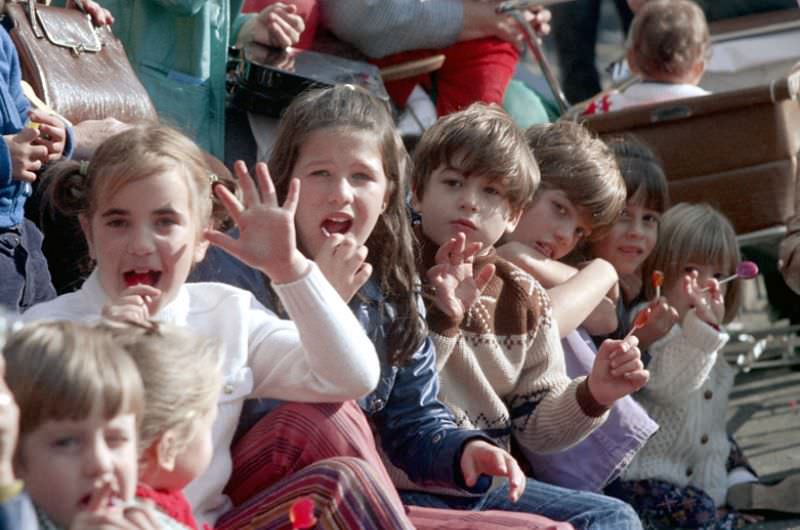
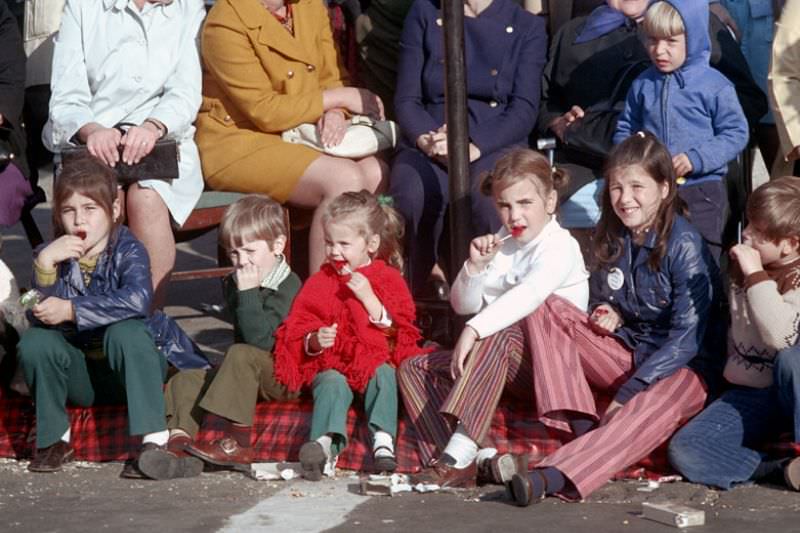
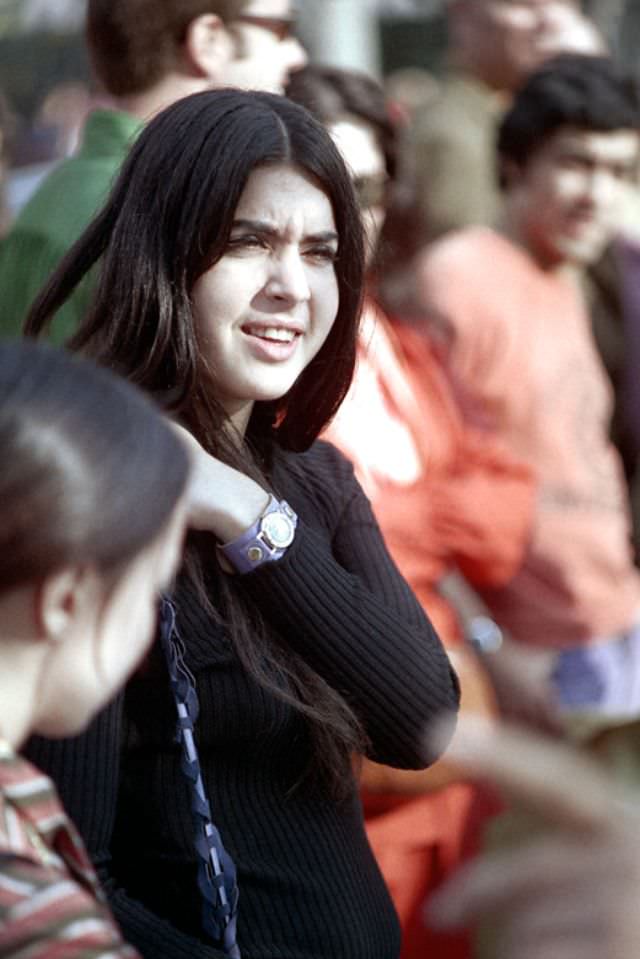
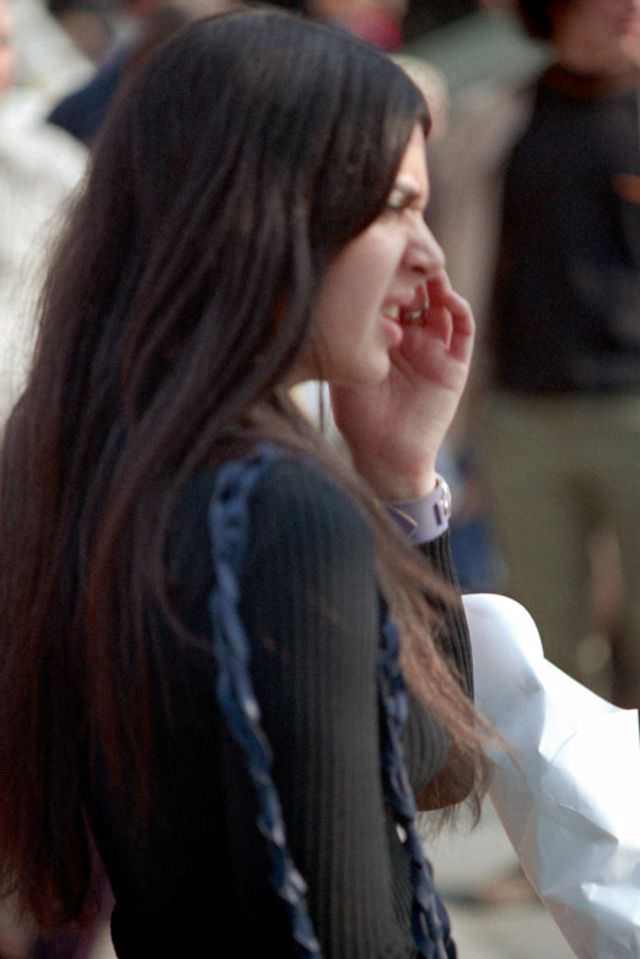
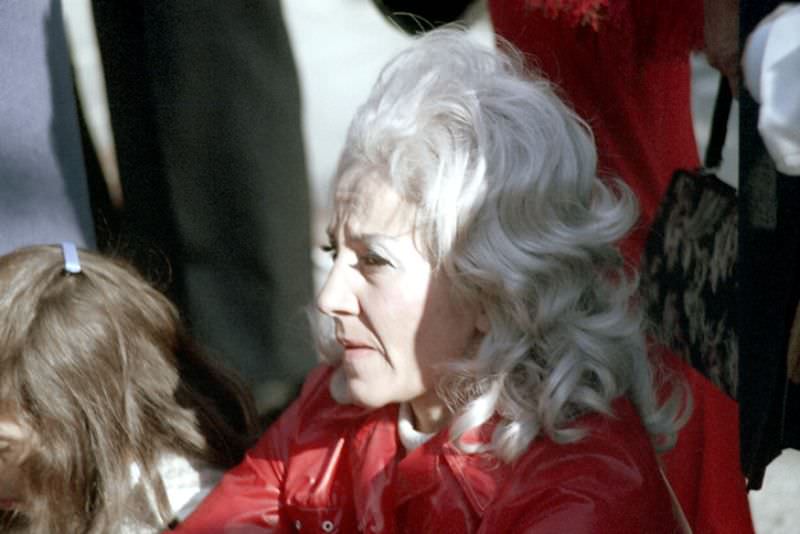
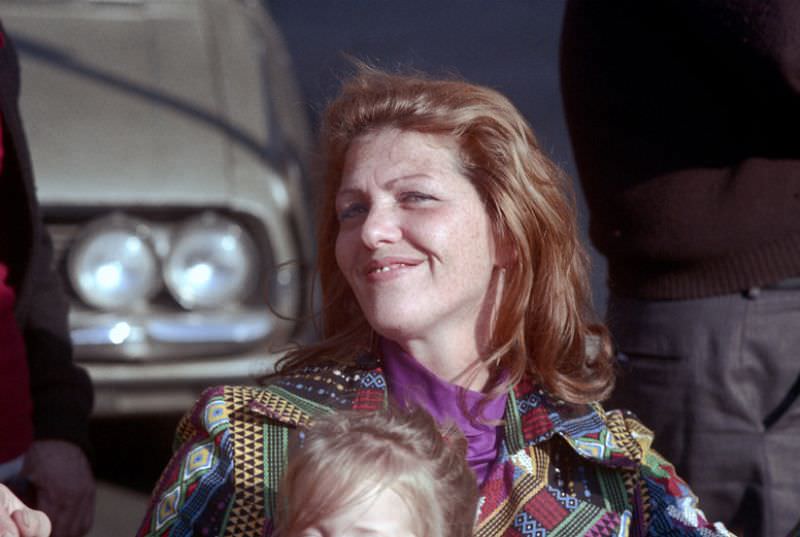
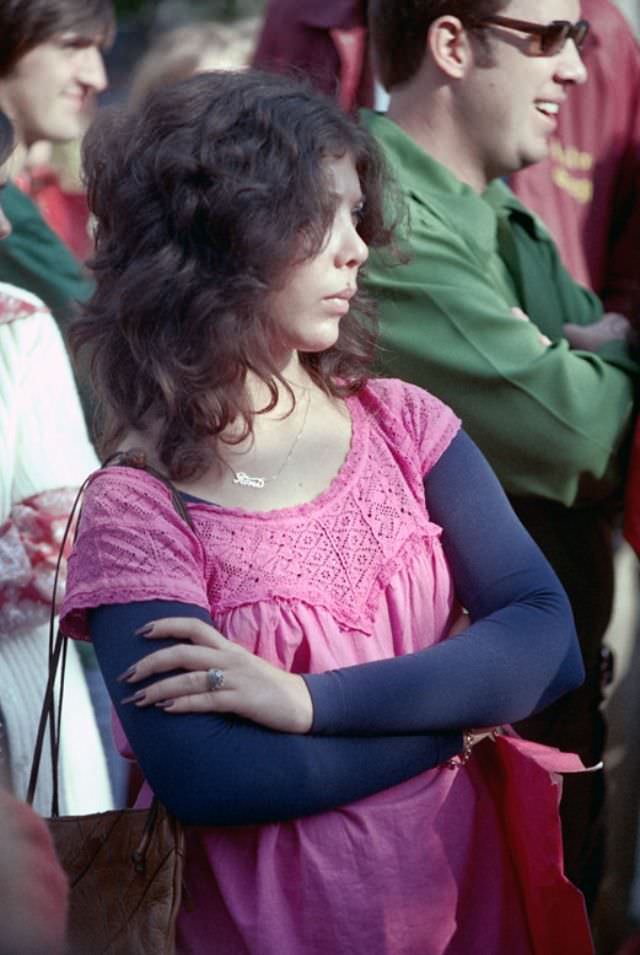
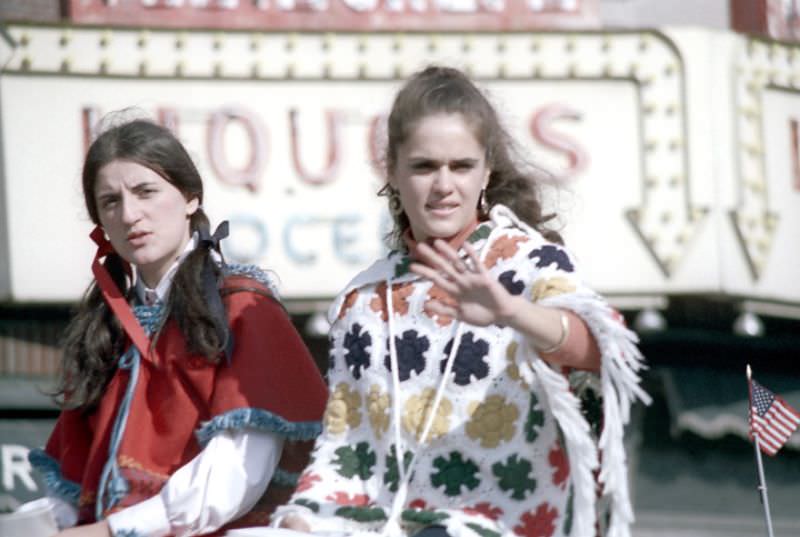
The faces in the crowd captured in these photographs tell as much about the day as the performers themselves. Thousands of Bostonians turned out — young and old, families and individuals — lining the sidewalks several people deep in many spots along the route.