
Bonn sits on the western bank of the Rhine River in what is now the German state of North Rhine-Westphalia, about 15 miles south of Cologne. Its history stretches back centuries. In the 13th century, it became the capital of the Electorate and Archbishopric of Cologne, a sovereign state that wielded considerable power in the region. After Napoleon’s defeat, the Congress of Vienna in 1815 awarded Bonn to Prussia, folding it into a rapidly growing empire. By the early 20th century, Bonn was a mid-sized university city with grand public buildings, a lively Rhine promenade, and deep cultural roots — most famously as the birthplace of Ludwig van Beethoven.
The photos below were taken between the 1920s and 1940s, a span of decades that saw the city shift from Weimar-era civilian life to the weight of the Second World War. Few collections capture that transition quite as vividly. We begin in January 1927, when the Rhine froze partially and photographers turned out to document the striking sight of Bonn’s old Rhine Bridge rising above sheets of river ice.
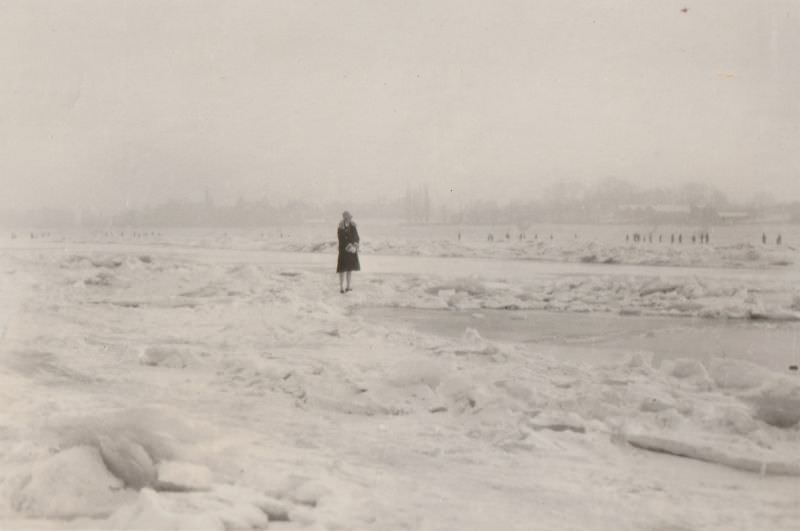
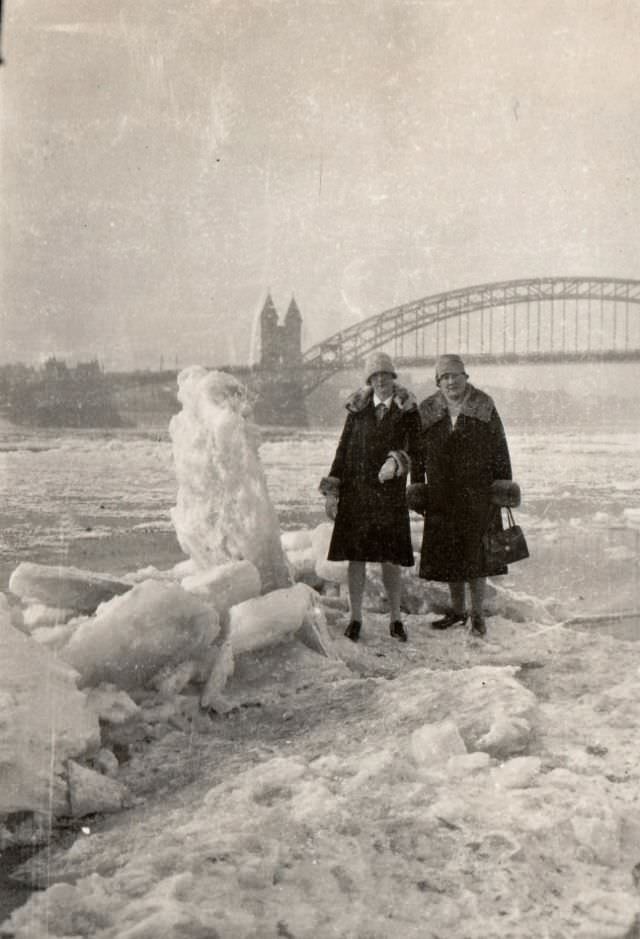
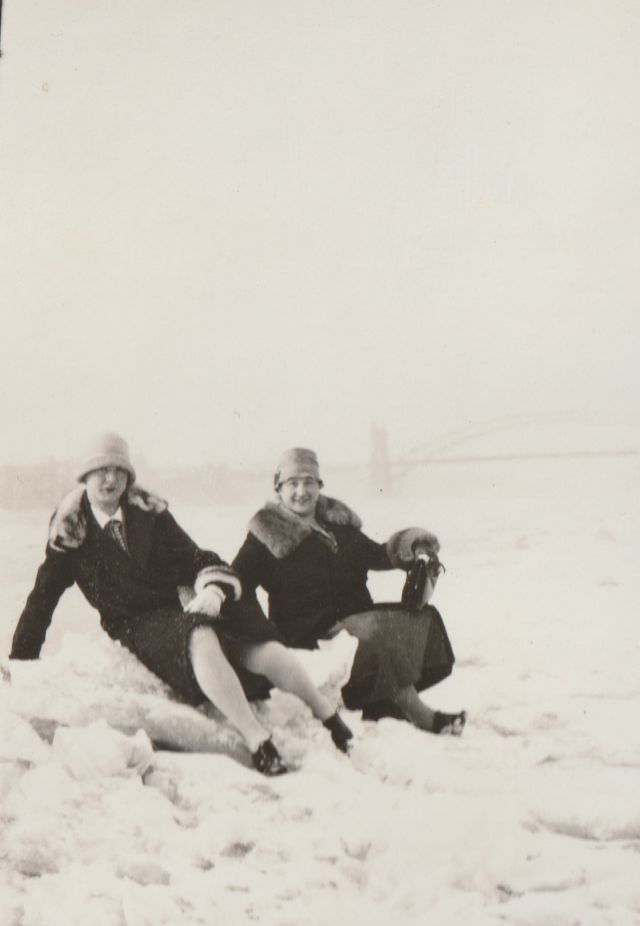
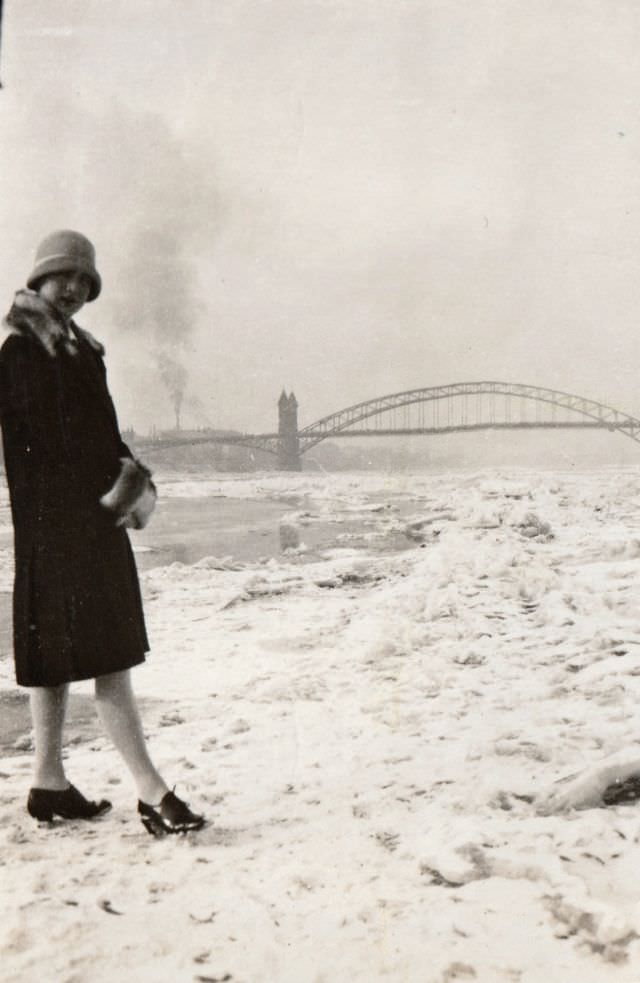
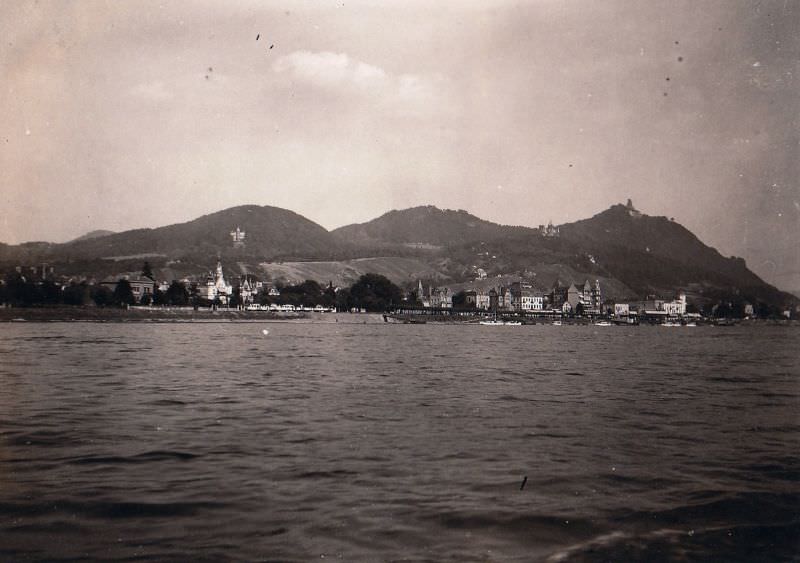
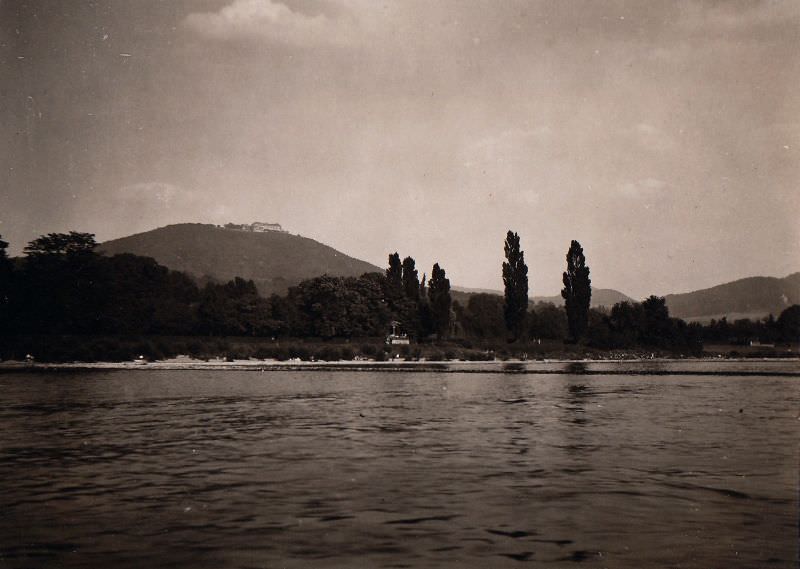
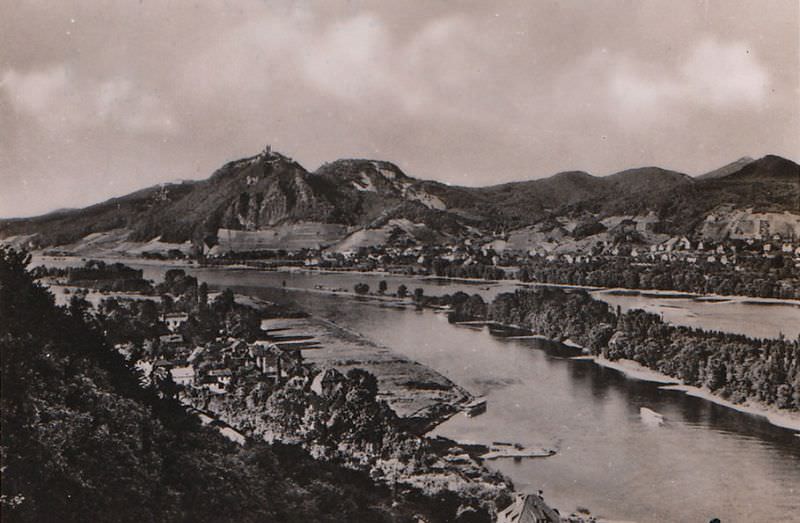
The summer of 1928 brought a very different view of the Rhine Valley. Travelers on the river looked east toward Königswinter and the Siebengebirge — the “Seven Mountains” — a range of volcanic hills that frame the Rhine’s eastern bank just south of Bonn. Rising above them was the Petersberg, a forested summit topped by a grand hotel. The area had long drawn visitors from across Germany and beyond.
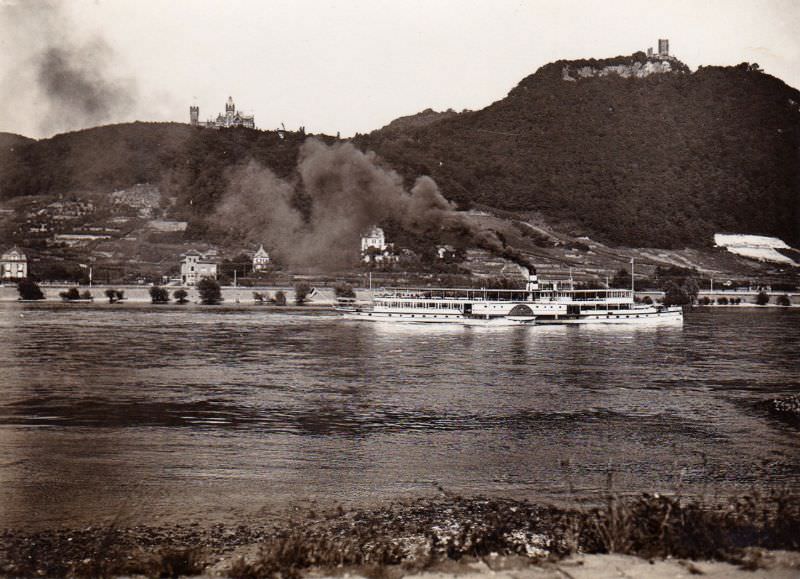
Two years later, in 1930, the Rhine Valley continued to draw photographers. A paddle steamer pushes upstream past Drachenburg Castle and the jagged Drachenfels rock, two of the most recognizable landmarks near Bonn. The Drachenfels — “Dragon’s Rock” — is the site of a ruined medieval fortress, and the neo-Gothic Drachenburg Castle below it was built in the 1880s. Seeing them from a moving boat on the Rhine gave travelers one of the most iconic views in all of western Germany.
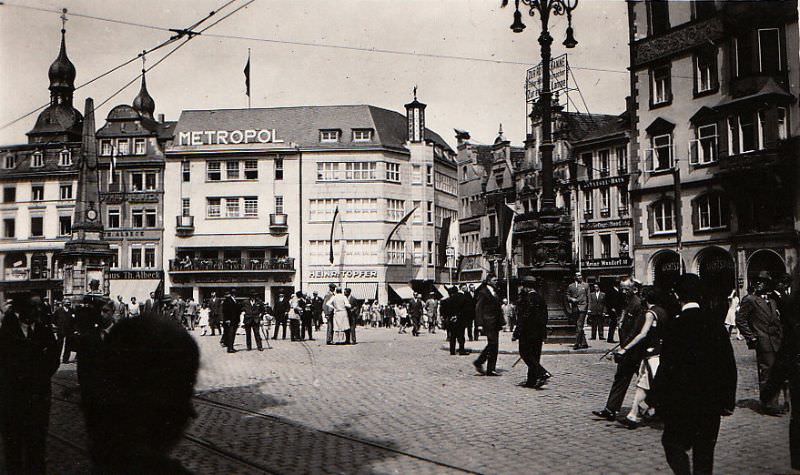
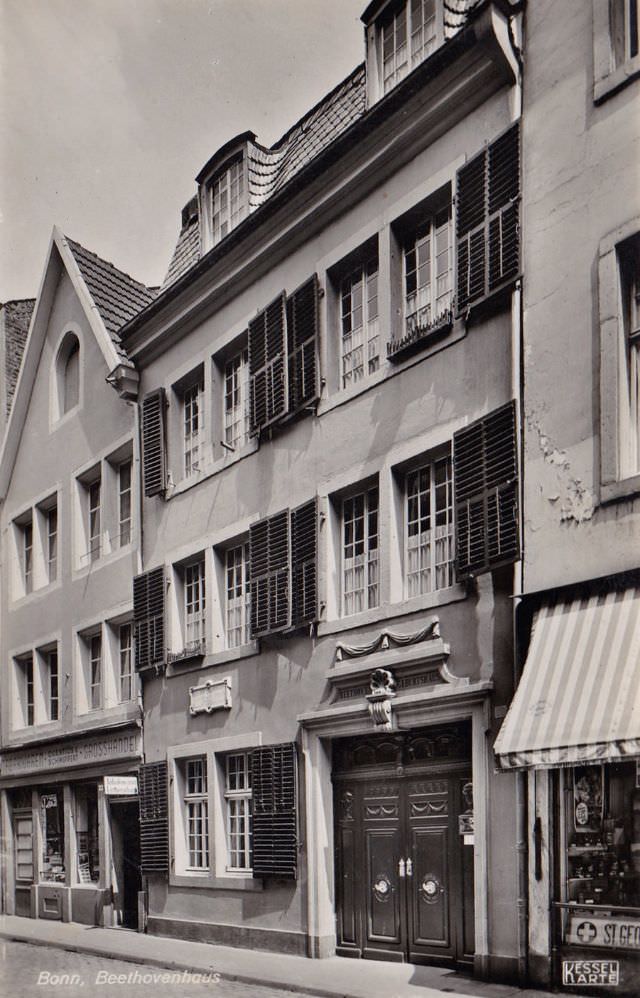
Back in the city itself, Bonn’s Marktplatz — the central market square — was a busy hub of daily life around 1930. Just a short walk away stood the house on the Bonngasse where Beethoven was born in December 1770. The building had been preserved as a museum since 1889 and remained one of the city’s most visited sites.
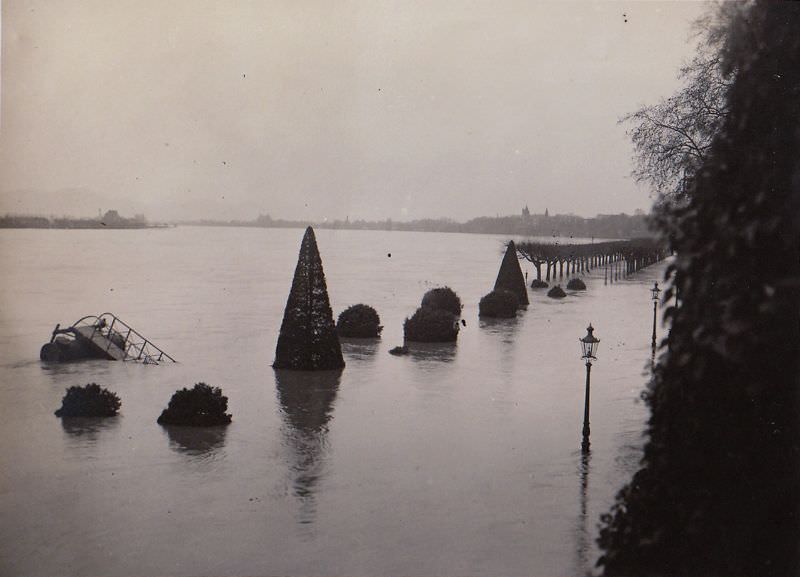
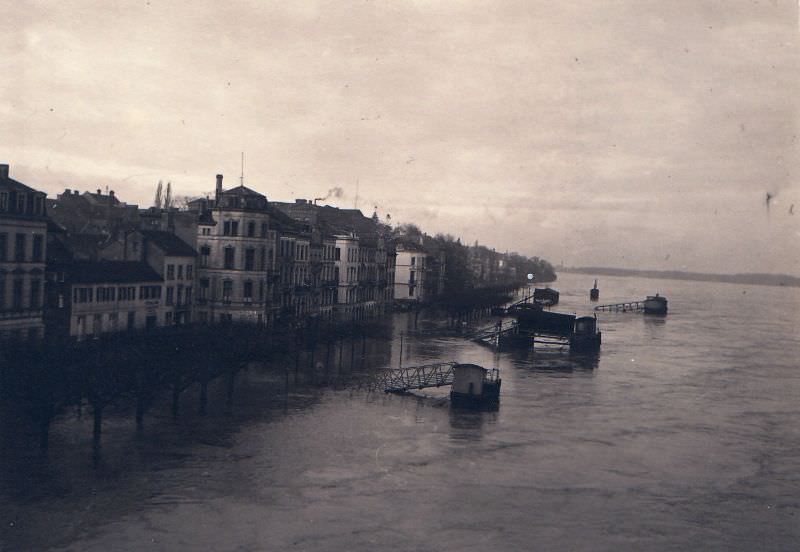
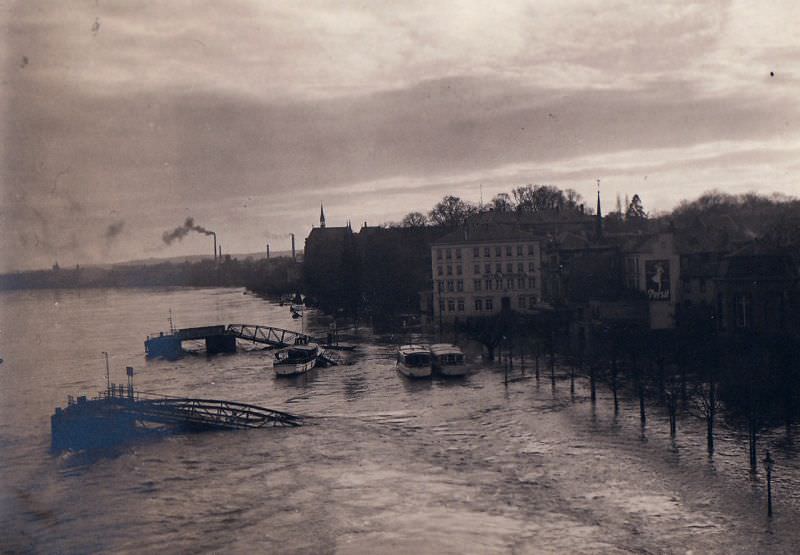
November 1930 brought serious flooding. The Rhine rose sharply, submerging riverfront streets and forcing residents to navigate the lower parts of the city by alternative routes. Three separate photographs taken on November 24 record the high water from different vantage points, showing how far the river had pushed beyond its normal banks.
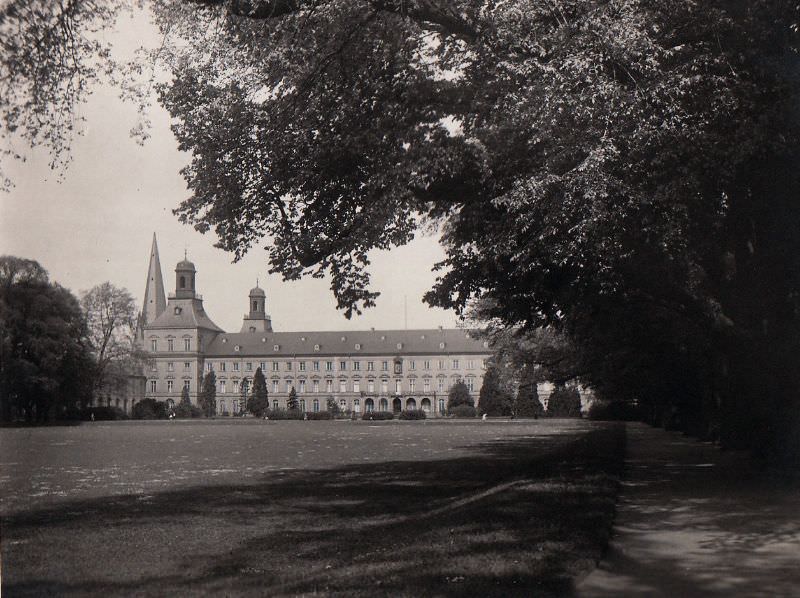
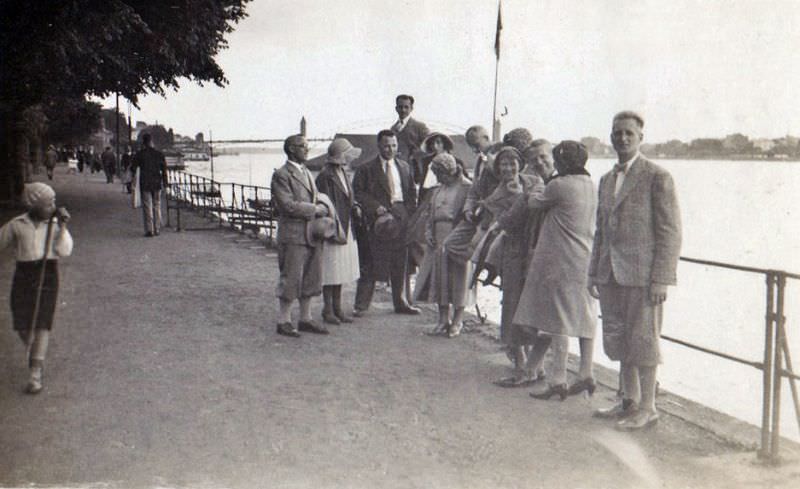
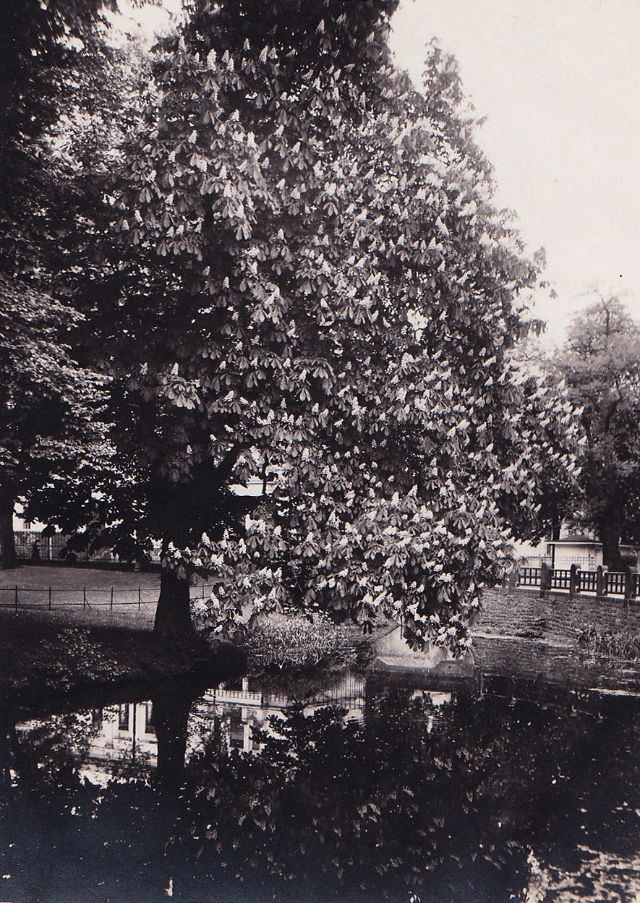
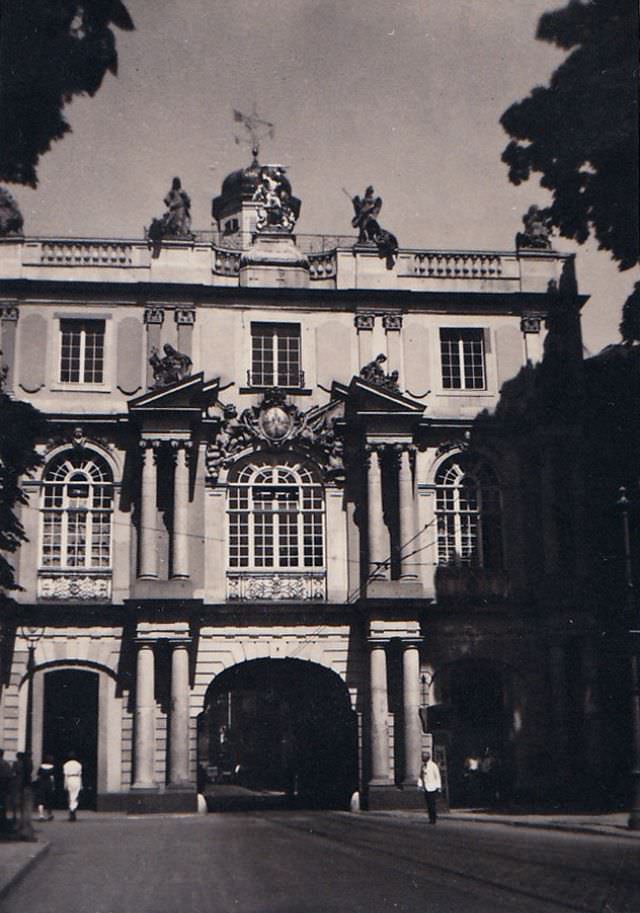
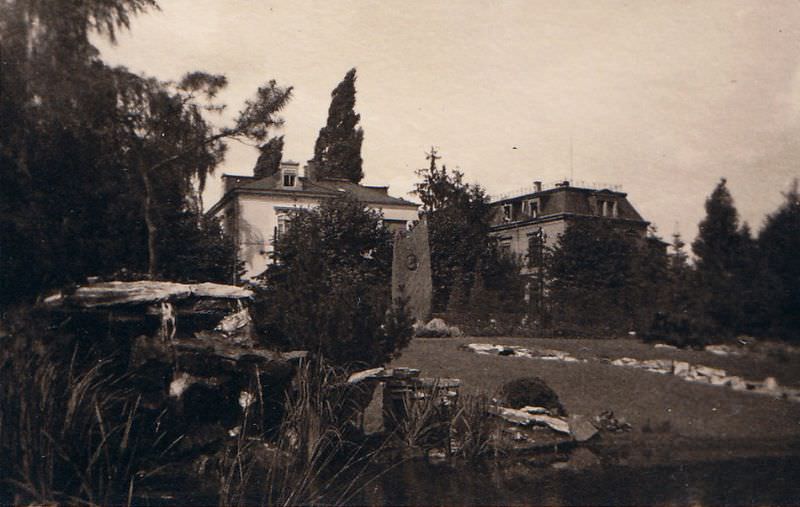
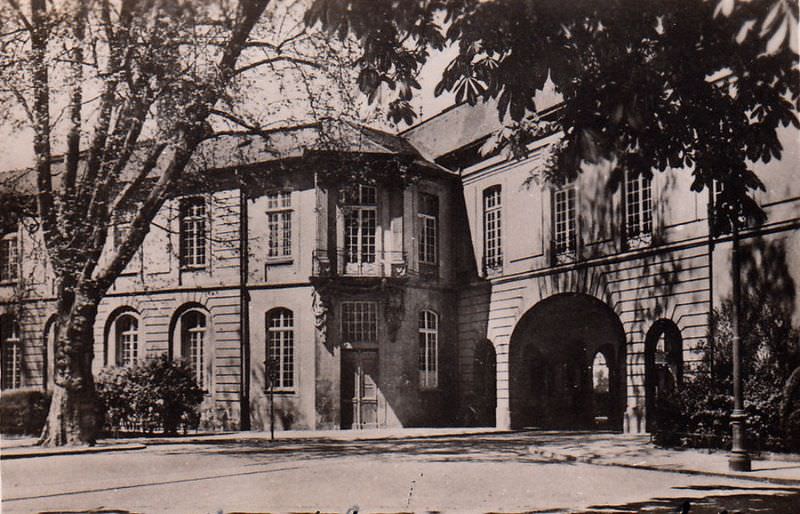
Spring and early summer of 1931 produced a range of scenes across the city. The Kurfürstliches Schloss — the Electoral Palace — was photographed in May. Built in the 18th century as the residence of the Archbishop-Electors of Cologne, it had become the main building of the University of Bonn by the early 19th century. Nearby, the Poppelsdorf district’s Melbweiher pond offered a quieter, more pastoral setting. On June 7, members of football club B.F.V. Bonn posed for a group photo along the Rhine Promenade — a snapshot of ordinary sporting life in a city that, within a few years, would be dramatically transformed by political upheaval.
In late May 1931, a photographer captured the landscape somewhere between Bonn and Cologne — flat Rhine lowlands dotted with trees and farmland, a view that had changed little over centuries.
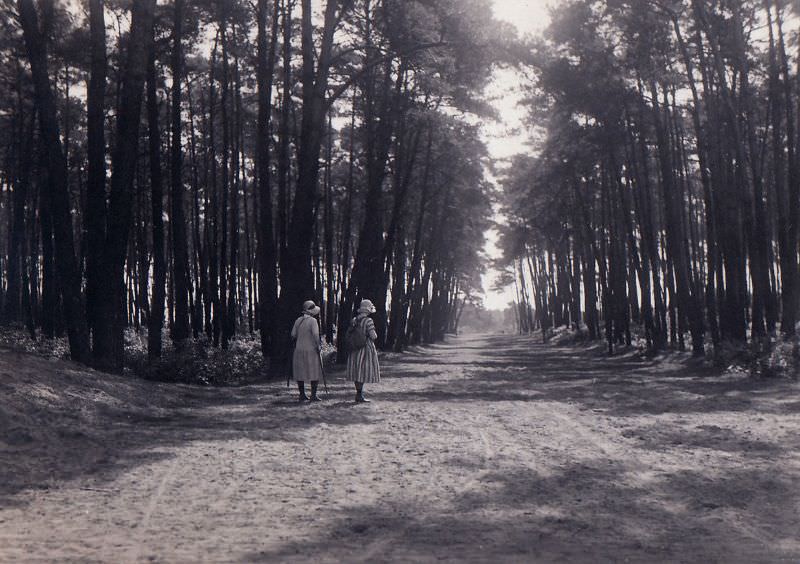
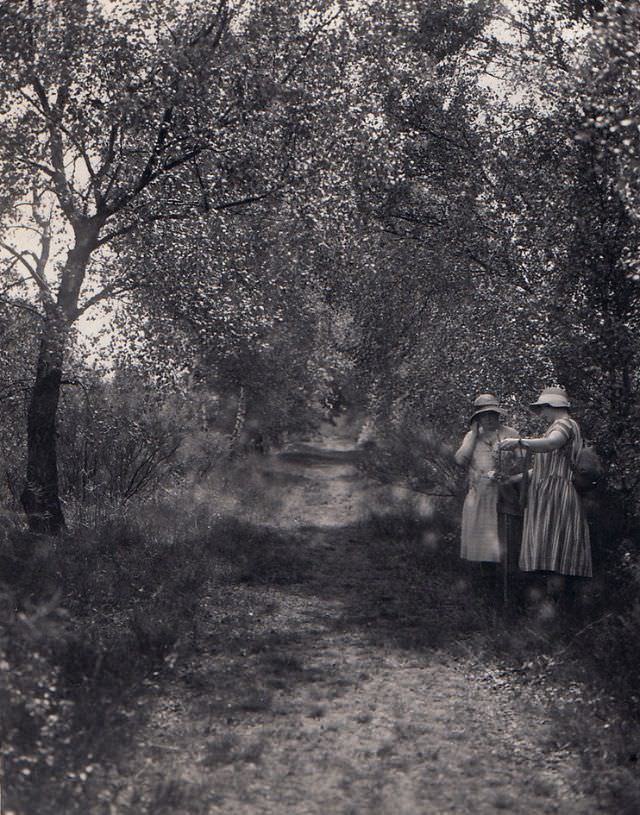
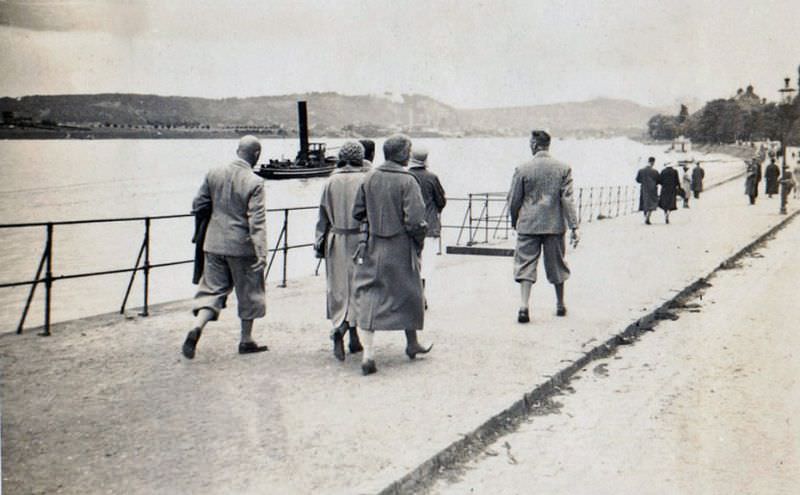
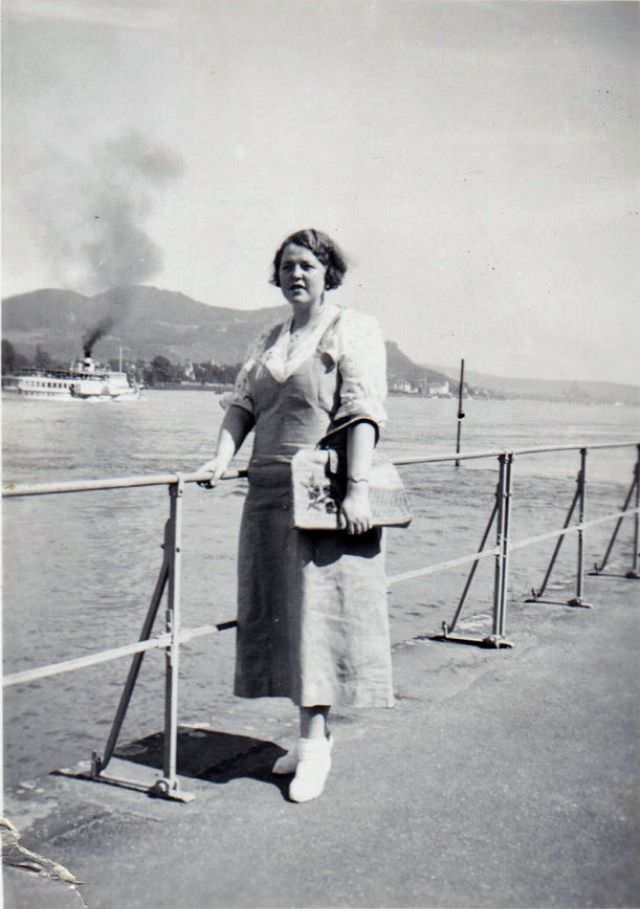
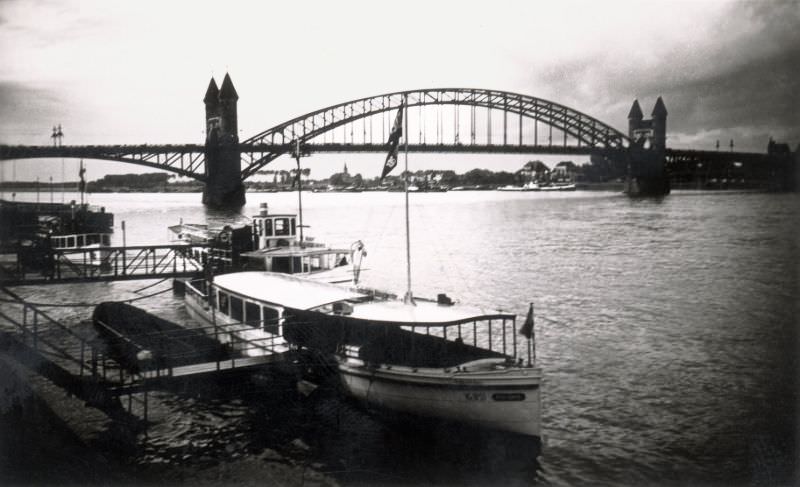
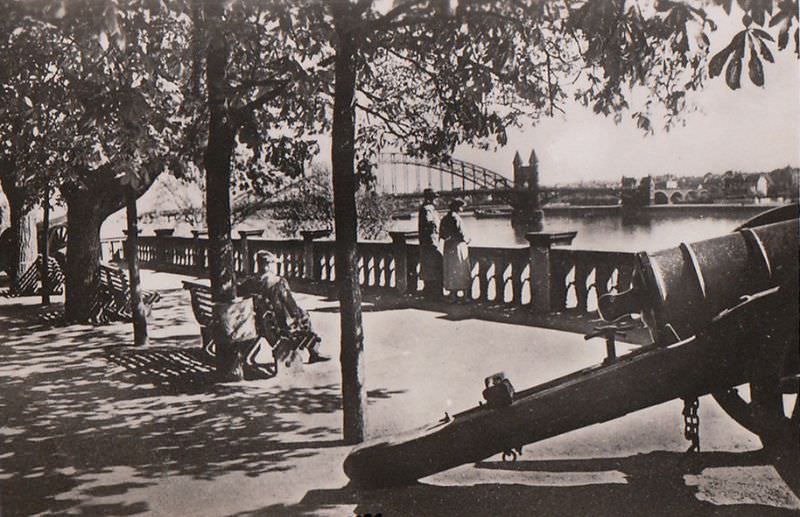
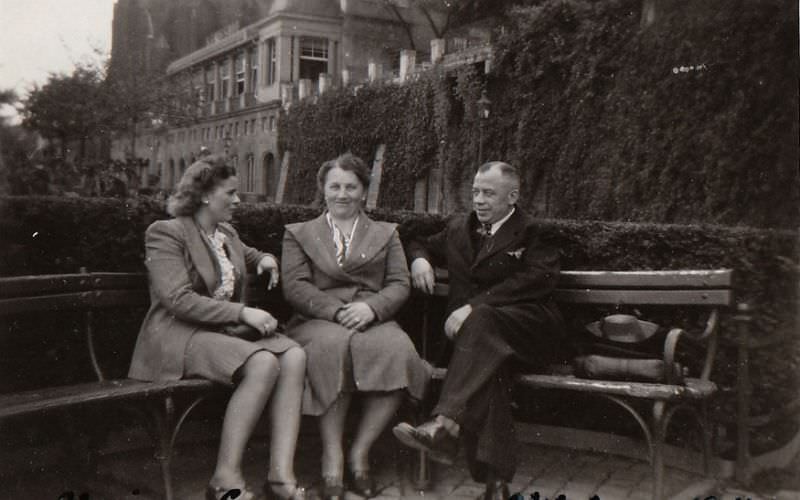
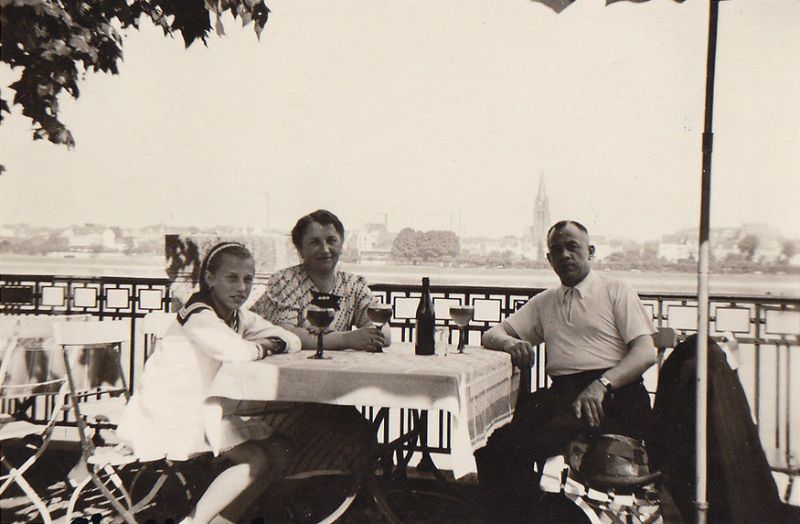
By 1935, Bonn’s Rhine Promenade remained a fashionable spot for an afternoon stroll. A well-dressed woman poses along the promenade on a bright summer day — a calm image that contrasts sharply with what the coming decade would bring. That same year, the old Rhine Bridge and the Kurfürstliches Schloss were photographed again, as was Bonn’s Münster — the Minster Basilica of St. Martin — one of the oldest and most important churches in the Rhineland, with construction dating back to the 11th century.
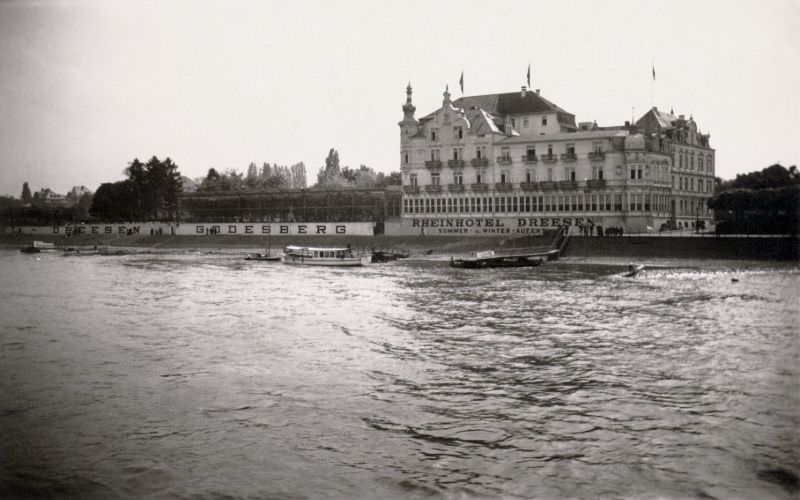
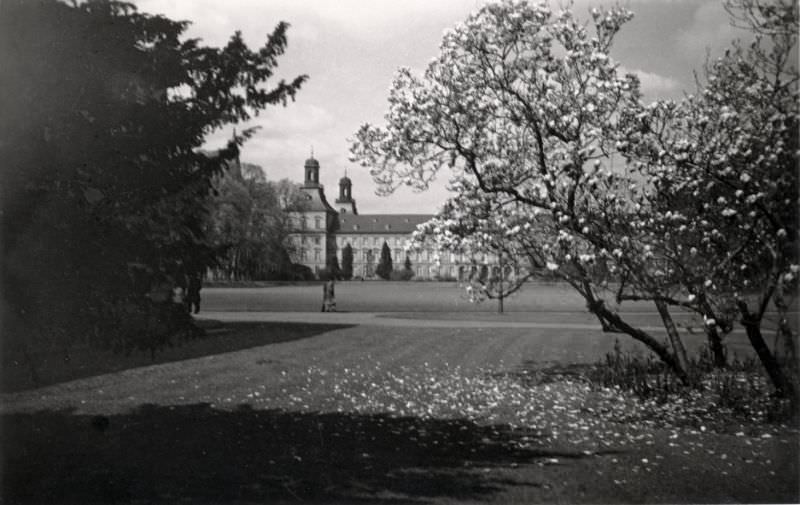
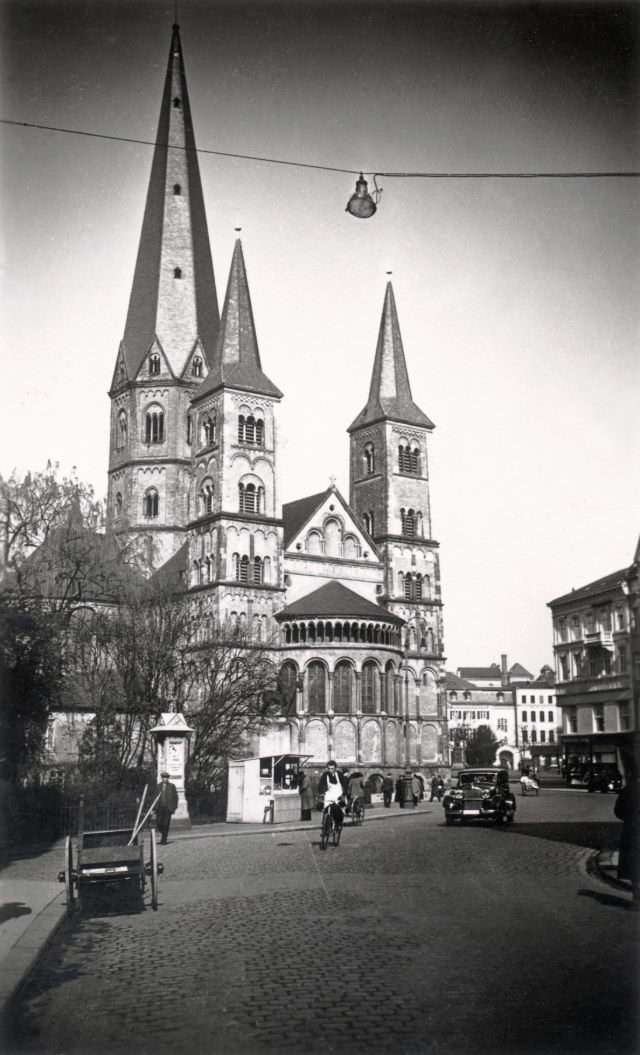
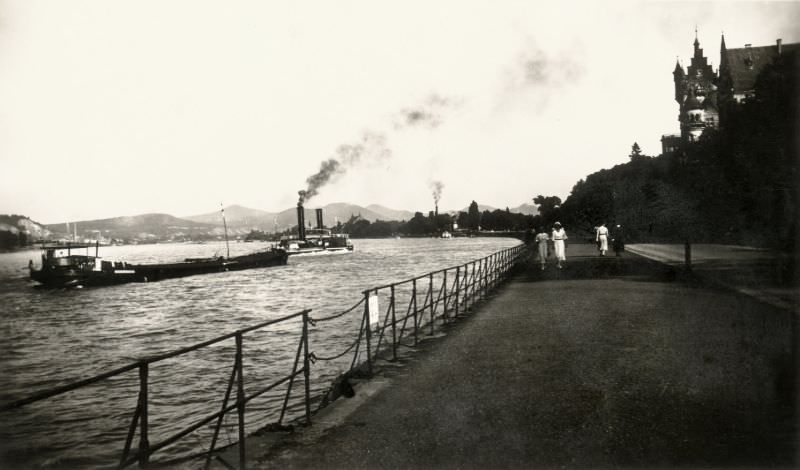
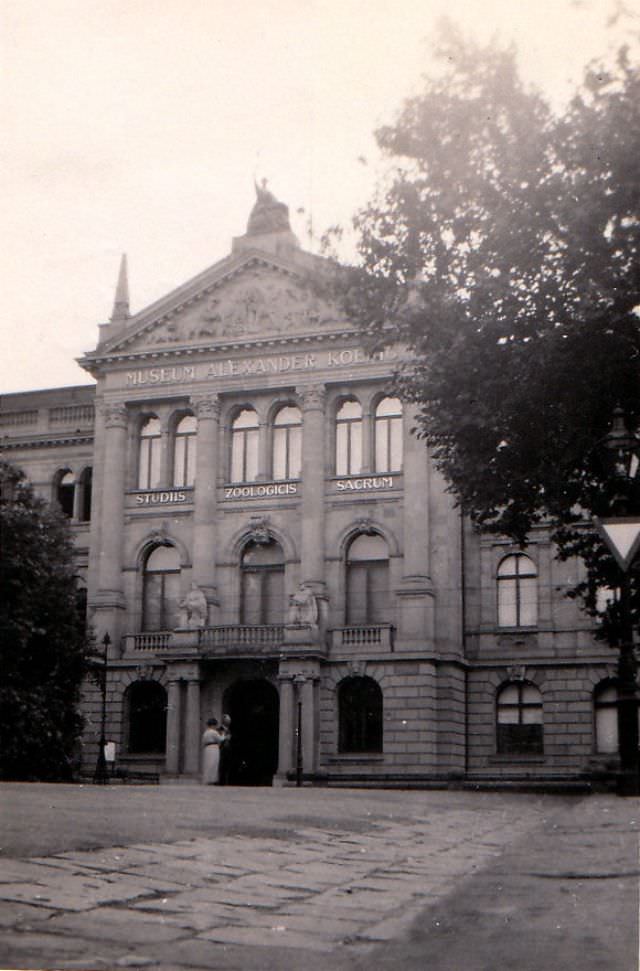
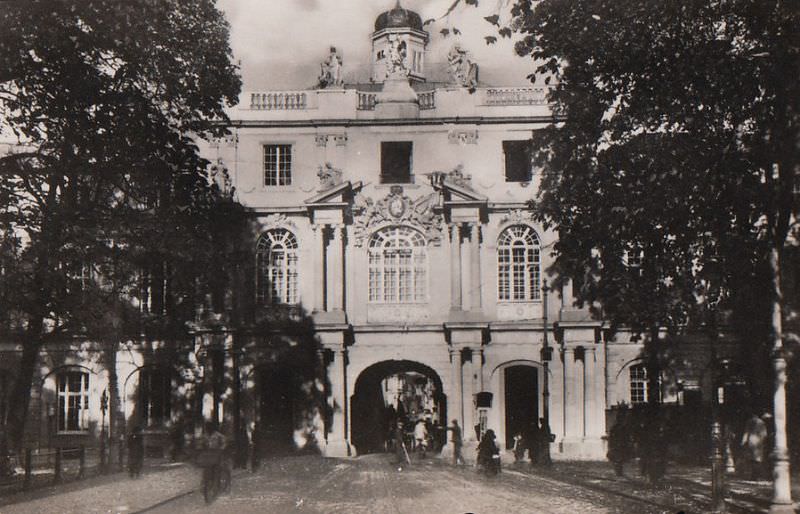
The summer of 1937 produced a series of city landmark photographs. The Koblenzer Tor — a surviving medieval city gate — was captured in full summer foliage. The Museum König, a natural history museum on the Adenauerallee that opened in 1912, was photographed on July 22. Views near the city showed the Rhine Valley in high summer, wide and unhurried.
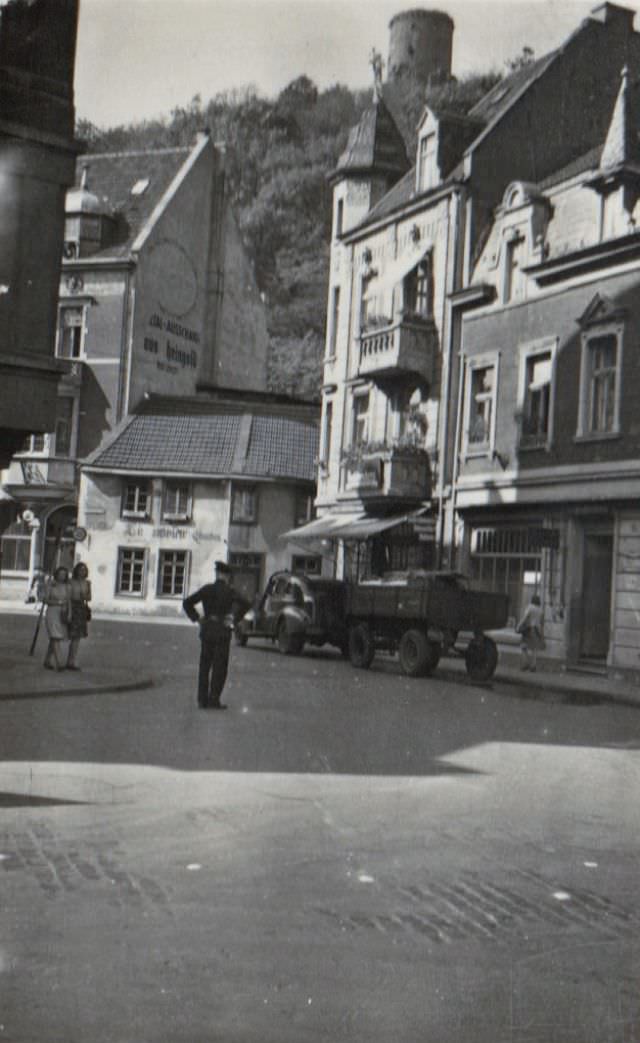
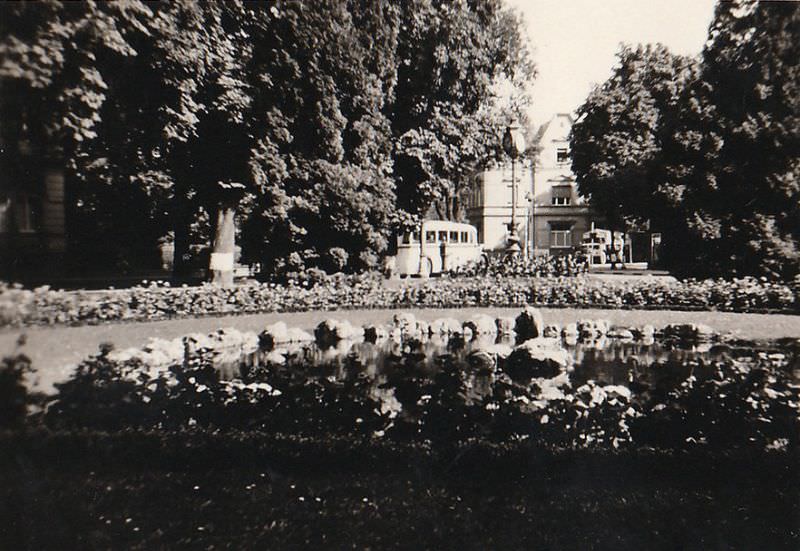
In 1938, the historic inn “Zur Lindenwirtin Ännchen” was photographed in the old town of Godesberg, a separate municipality south of Bonn that was merged into the city in 1969. The inn had been a local landmark for generations, its name tied to a popular German folk song. The following two years brought extensive documentation of Bonn’s landmarks — the old bridge, the Alter Zoll customs post on the riverbank, the Baumschulerwäldchen woodland, city gates, riverfront walks, and a sweeping view over Rolandseck and Nonnenwerth island toward the Drachenfels.
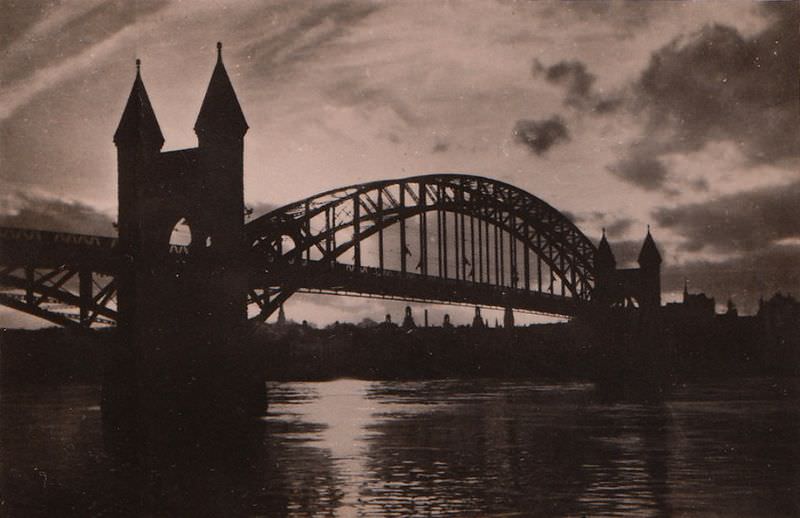
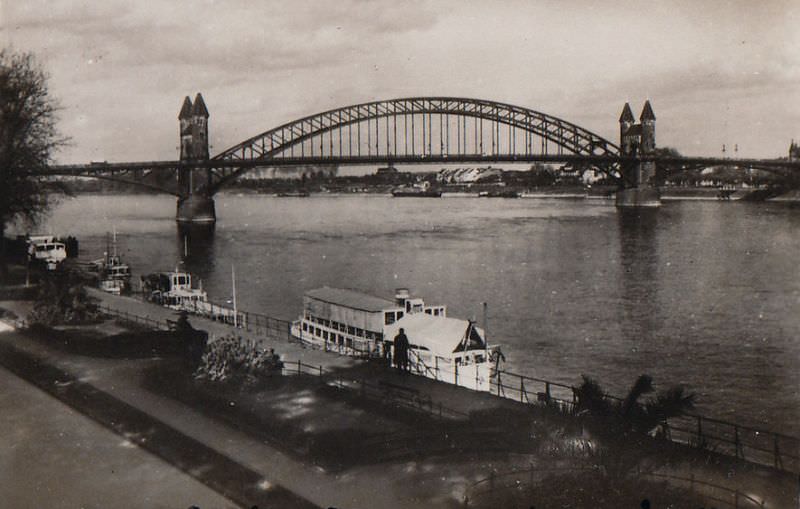
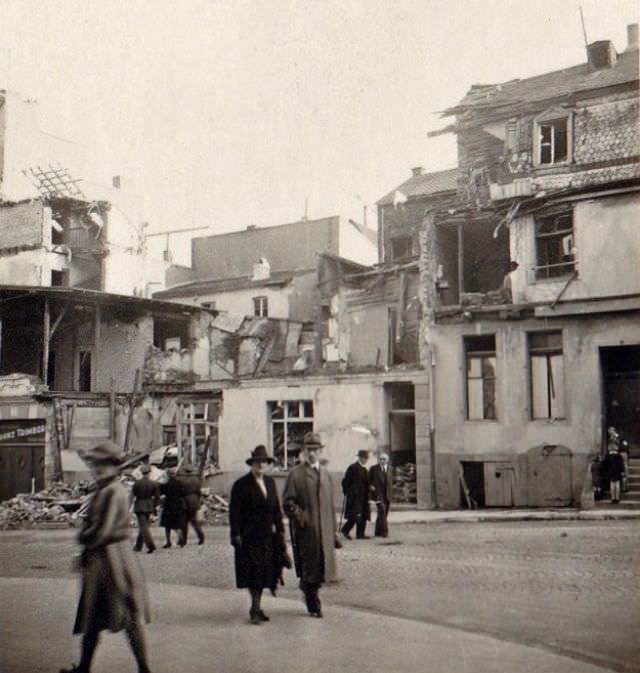
Bonn’s position on the Rhine made it strategically important during World War II. The river formed a natural defensive barrier against Allied forces advancing from the west, and the bridges at Bonn were critical crossing points. Allied bombing raids hit the city during the war, and by 1943 the damage to the downtown area was visible and severe. A photograph from around 1943 shows bomb damage in central Bonn. On August 12 of that year, the Boeselagerhof — a significant property near the river — lay in ruins alongside the old Rhine Bridge, both destroyed by the conflict.
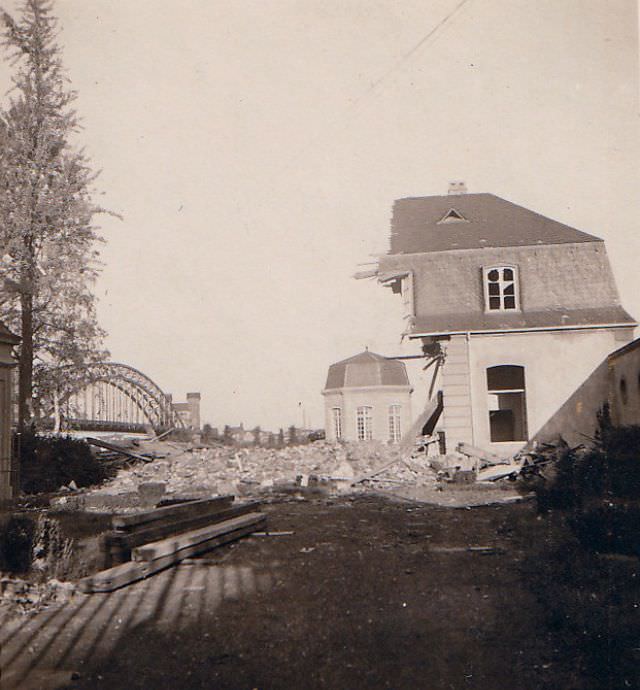
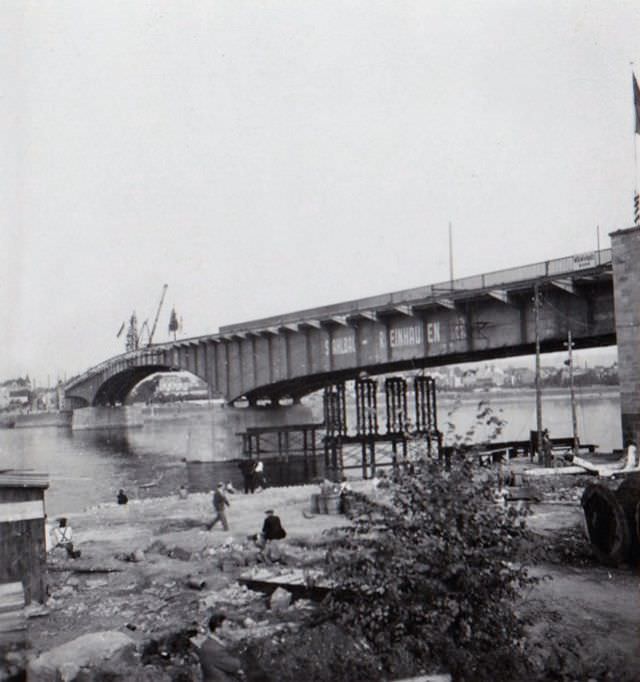
After Germany’s defeat in 1945, Bonn was selected in 1949 as the provisional capital of the newly formed Federal Republic of West Germany. The choice was deliberate — Bonn was small, manageable, and far from the Soviet-occupied east. With that new status came infrastructure investment, including the construction of a new Rhine bridge to replace the one destroyed during the war. A 1949 photograph shows that bridge mid-construction, a physical marker of the city’s transition from wartime ruin to postwar capital.





Superb pictures, it’s a shame that the bridge was destroyed.
I think today’s bridge is good too. The old one was just plain flat.
The railing on the banks of the Rhine still seems to be the same as it was back then. It’s a shame that the old bridge no longer exists. It looked nice.
It’s amazing how the paths on the Rhine look almost the same
Insanely interesting pictures.
Bonn was so beautiful without the Stadthaus back then. The railings on the Rhine banks (images 19 and 23) appear as they do today. Does it still have the same railing? I’m amazed at how long it lasts there, maybe an unspectacular fact.
A power pole from the 1930s can also be found. Since Bonn was relatively little damaged during the war, it is quite conceivable. I noticed that there is a driving area in picture 22 (Münster). I have a photo from the 50s taken at the same angle (with lots of bugs) where there is a parking lot. There is a square today that is no longer a driving zone, but only a pedestrian zone.
I’m still crying after the Metropol… Stupid Thalia, who needs that…
That is the Bonn my Grandmother, born 1918 in Kessenich has seen. Thank you for those pictures, they are very interesting to me.
Macht mich ja richtig traurig wie schön das damals waren und wir beschissen heute