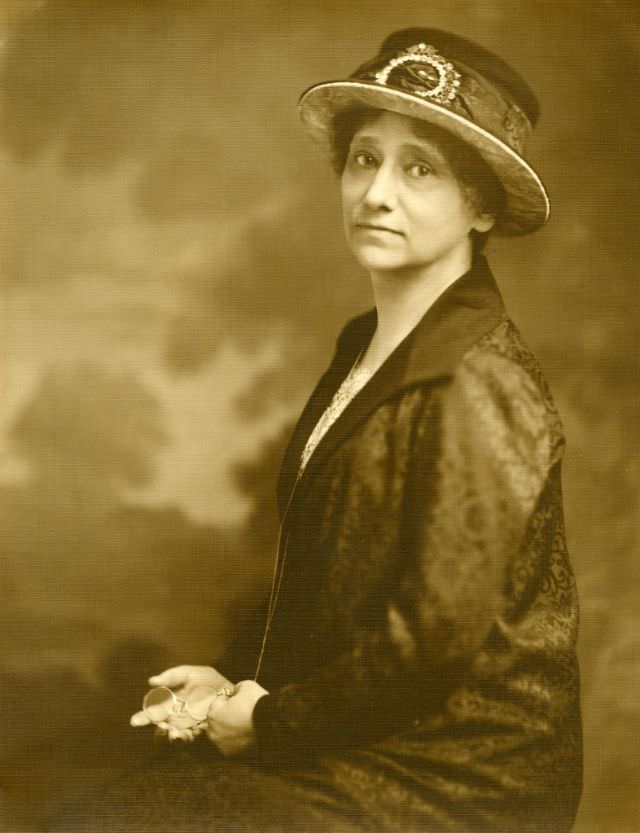
Bertha Maude Horack was born in 1871 to Czech immigrants Frank and Katherine Horack. When she was nine years old, her family relocated to Iowa City, Iowa. By the time she was seventeen, she had received her first camera and was already producing work that set her apart from most photographers of the era. She worked with large-format dry plate photography — a technically demanding process — and paired that skill with a sharp eye for composition and aesthetics. Her most celebrated photographs, taken primarily between 1890 and 1891, document daily life in the Amana Colonies. They remain some of the most valuable visual records of that community.
In 1897, Bertha married Benjamin Shambaugh, who served as the first superintendent of the State Historical Society of Iowa (SHSI). After her marriage, she used her camera far less frequently. But the photographs of her family home — both before and after the wedding — tell a detailed story of domestic life in Iowa City during the late 19th and early 20th centuries. Many of those images are now preserved by the SHSI. Bertha also went on to play a key role at the society itself, editing manuscripts, designing book covers, and building collections of historical objects and documents.
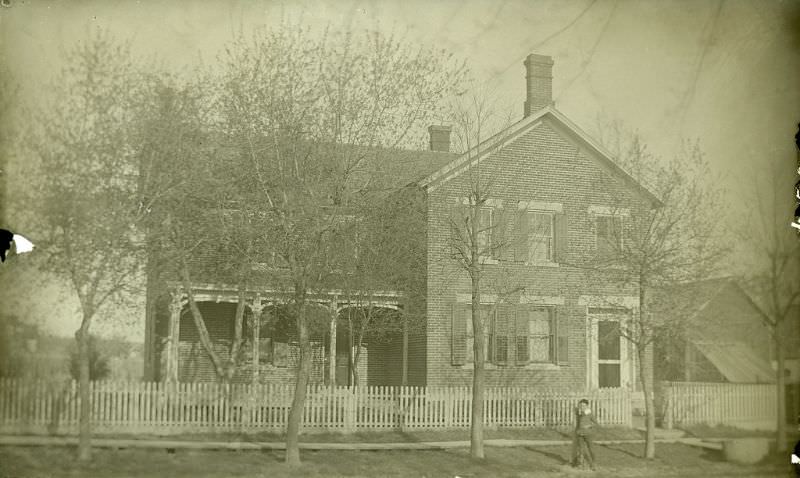
The photographs below capture the exterior and interior of the house at 219 N Clinton Street in Iowa City. The earlier images show the Horack family home before Bertha’s marriage, while the later ones document the Shambaugh house that she and Benjamin built nearby. Together, they offer a rare window into Victorian and Edwardian domestic life in a Midwestern university town. The sitting room is a good place to start — it shows just how carefully the Horack family arranged their living spaces according to the design tastes of the period.
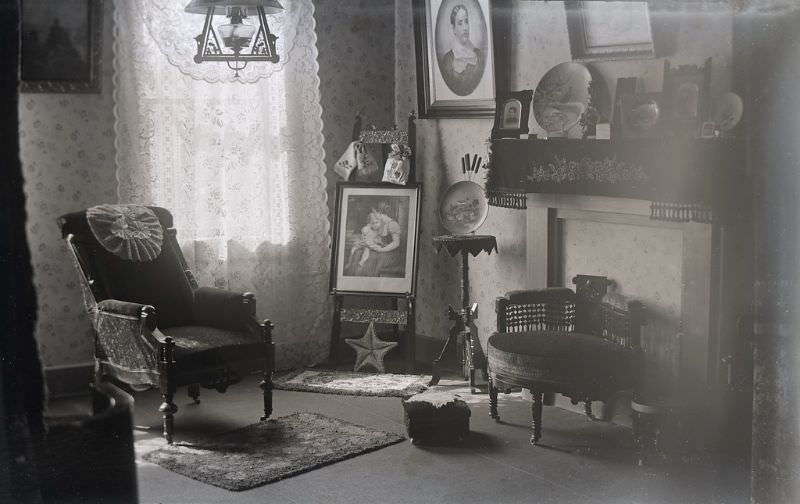
Victorian interiors prized visual richness — layered textiles, displayed artwork, and carefully chosen furniture all signaled taste and respectability. The Horack home reflected those values throughout. The facade of the house itself also made an impression, particularly in the bare-branch months when its architectural lines were fully visible.
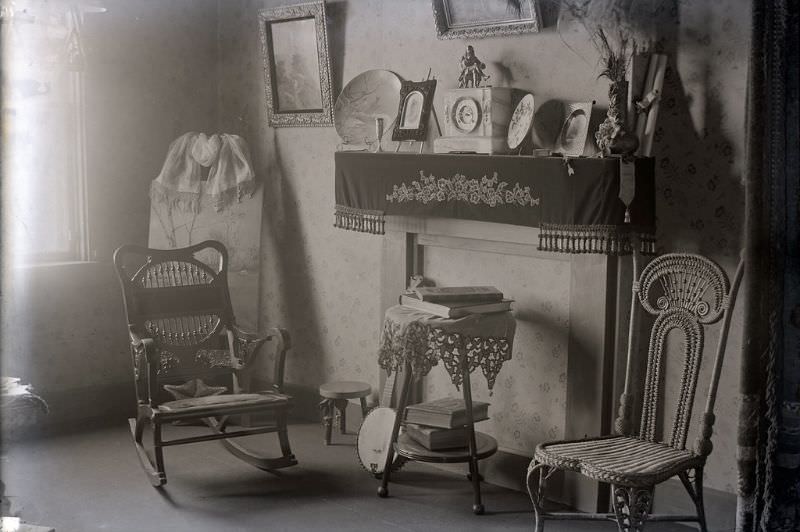
Inside, the parlor was one of the most important rooms in any Victorian household. It served as the formal receiving space for guests and was furnished accordingly. Wicker furniture, a popular choice in the late 19th century, gave parlors a lighter feel compared to the heavier upholstered pieces found in sitting rooms.
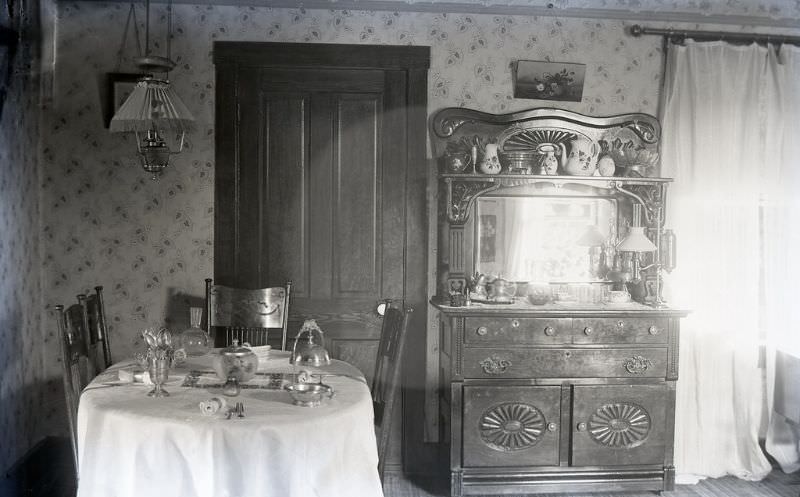
The dining area was equally well-appointed. A dining table and a buffet were standard fixtures in middle-class homes of the period, and the Horack home was no exception. Meals were a structured, formal affair, and the furniture reflected that seriousness.
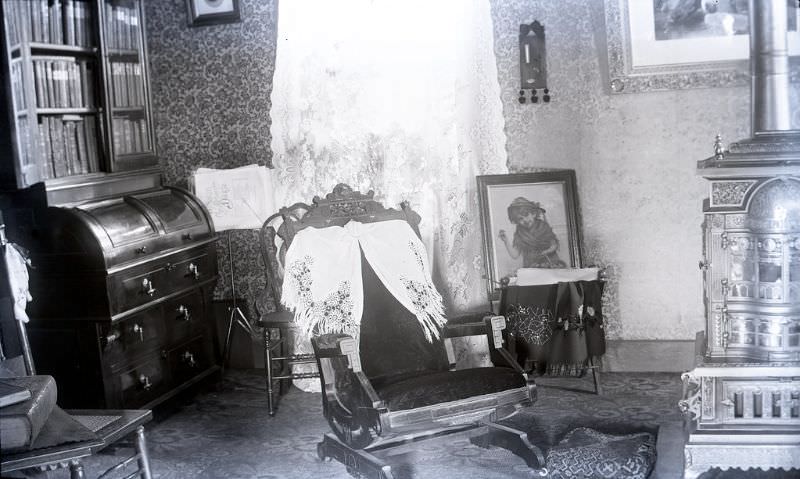
The parlor appears in multiple photographs taken across different years, each image showing subtle shifts in how the room was arranged and used. A Splendid stove provided heat, while a roll-top desk suggests the room served practical purposes beyond receiving visitors.
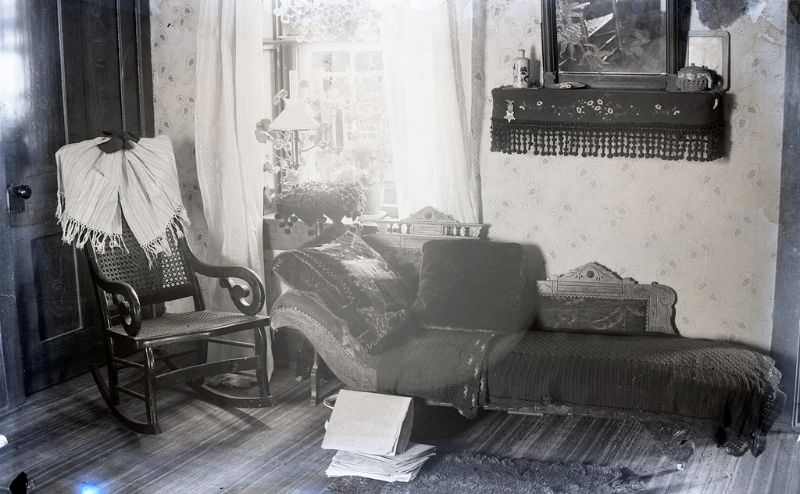
The sitting room, distinct from the formal parlor, was where the family spent more of their everyday time. A lounging sofa covered with a crochet blanket and a cane-back rocking chair near the door suggest a comfortable, lived-in space.
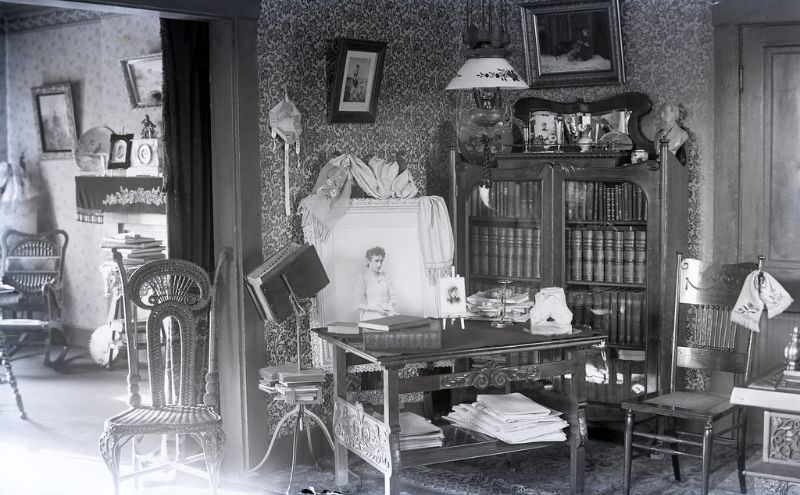
Among the most personal photographs from this period is an image of the parlor that includes a portrait of Bertha herself. Having one’s likeness displayed in the home was a common Victorian practice, and seeing the young photographer’s portrait hanging in her own family’s parlor adds a distinct sense of personality to the space.
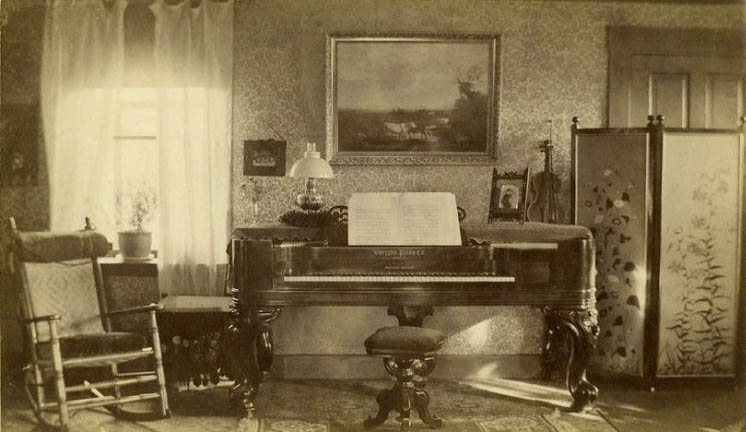
Music was a central part of Victorian domestic life, and the Horack parlor reflected that. A piano and violin appear together in a summer 1889 photograph of the room, alongside a decorative screen — another popular design element of the era.
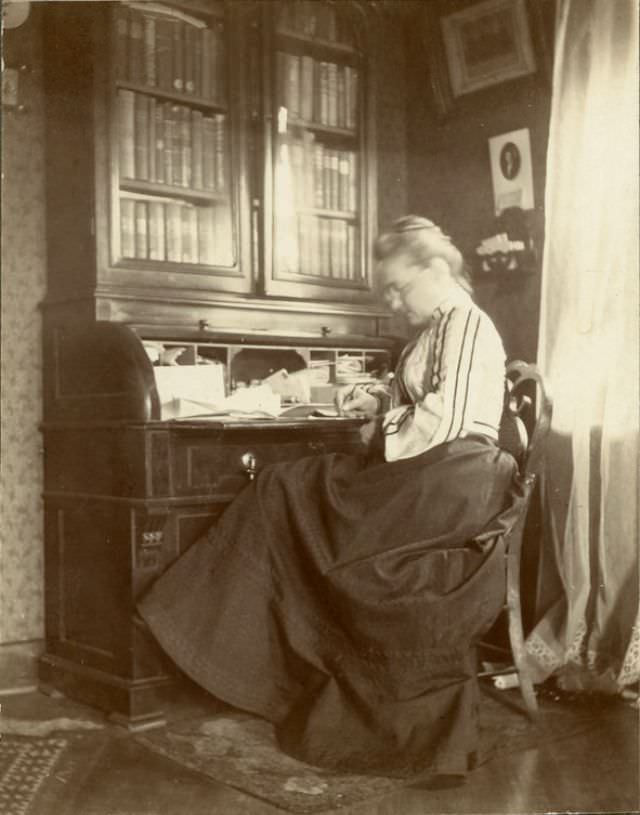
Katherine Horack, Bertha’s mother, appears in several of these photographs. In one sitting room image from the 1890s, she is caught in a moment of quiet concentration, pen in hand, writing at a desk. It is an unusually candid image for the period.
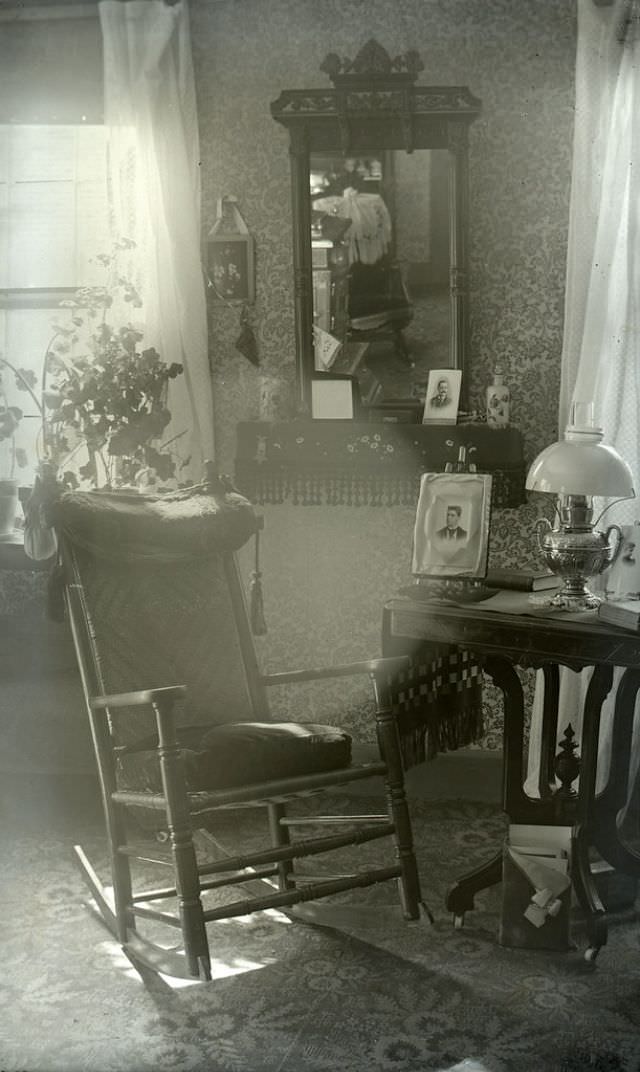
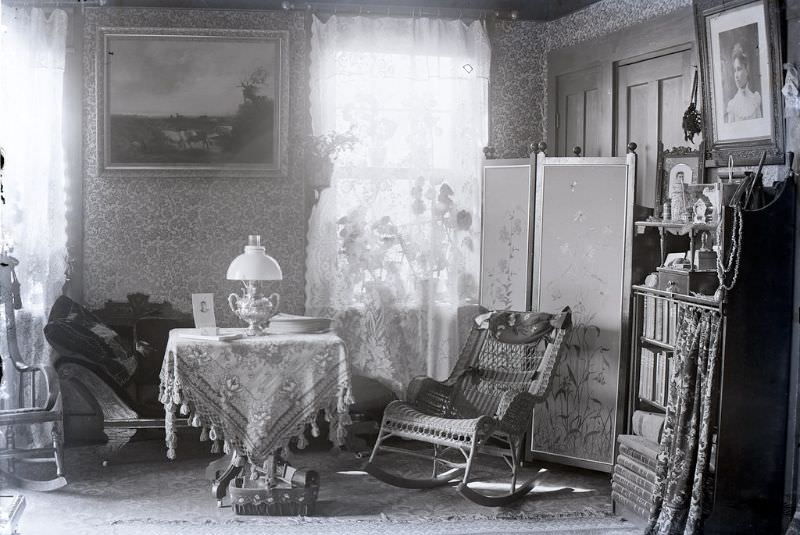
The parlor continued to be photographed into the 1890s and early 1900s. Across these images, the room’s furnishings shift — a rocking chair appears next to a large mirror in one version, while a wicker rocking chair and folding screen dominate another arrangement. These changes track both evolving tastes and the passage of time in the Horack household.
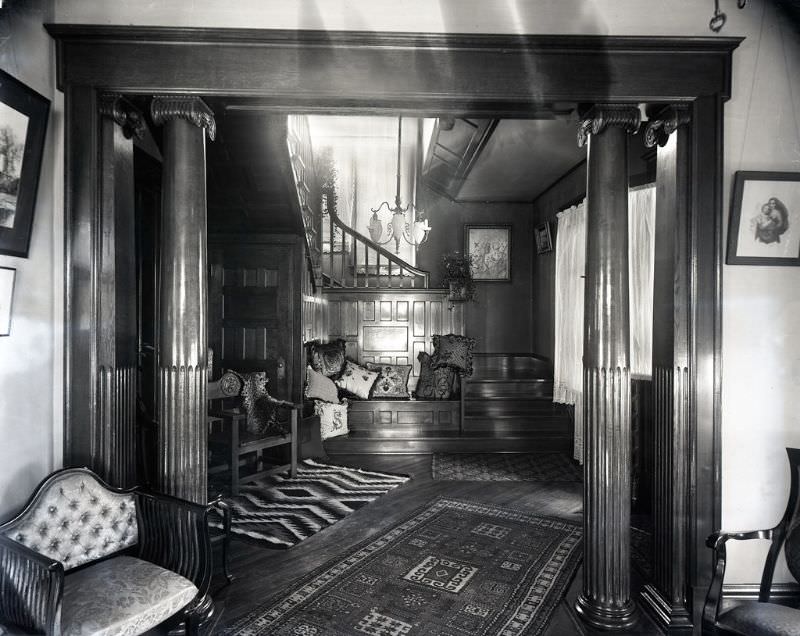
Not all of the photographs from this collection were taken by Bertha. Some were the work of L. G. Coover, who photographed several spaces in and around the Shambaugh house in the early 1900s. One of Coover’s 1892 images captures the hallway of the house, centering on a built-in bench seat piled with pillows — a small but telling detail about how the household balanced function and comfort.
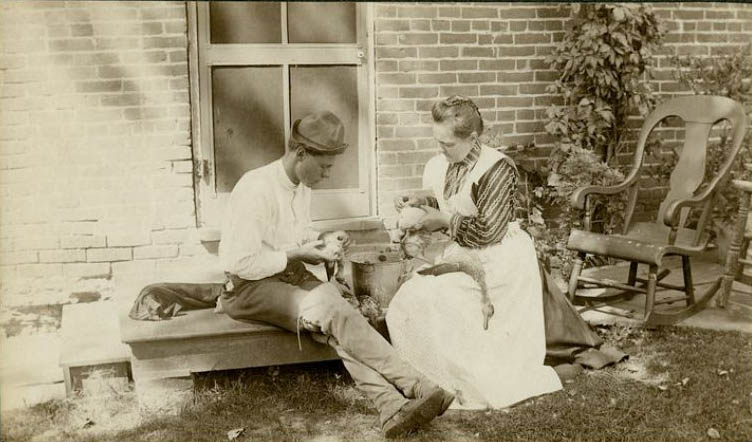
Life outside the house is captured just as vividly. A photograph from the mid-1890s shows Katherine Horack and her son, H. Claude Horack, seated on the back steps of their home. They are cleaning ducks, presumably ones that H. Claude had caught himself. It is an unguarded, practical scene — very different from the carefully composed interior shots.
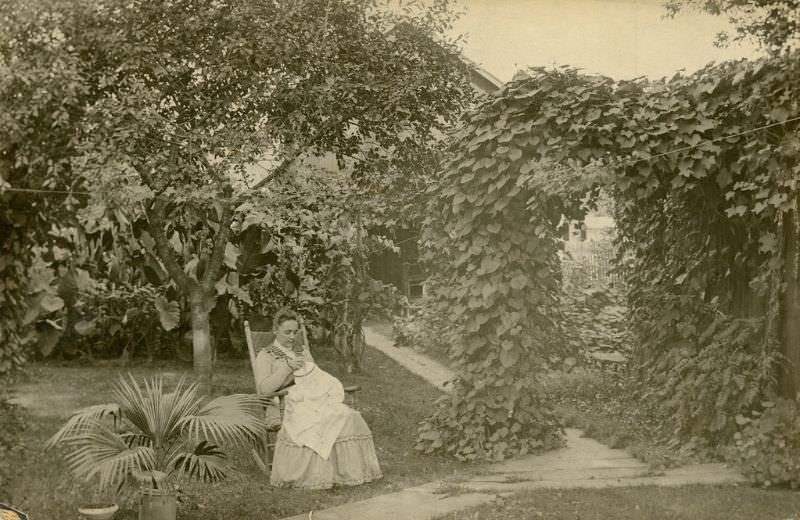
Another outdoor image from the same period shows Katherine at work in her garden, seated in a rocking chair. She is creating a drawn work tablecloth — a form of decorative needlework — intended as a gift for her daughter Bertha. The photograph places domestic craft firmly within the outdoor space, blurring the line between inside and outside.
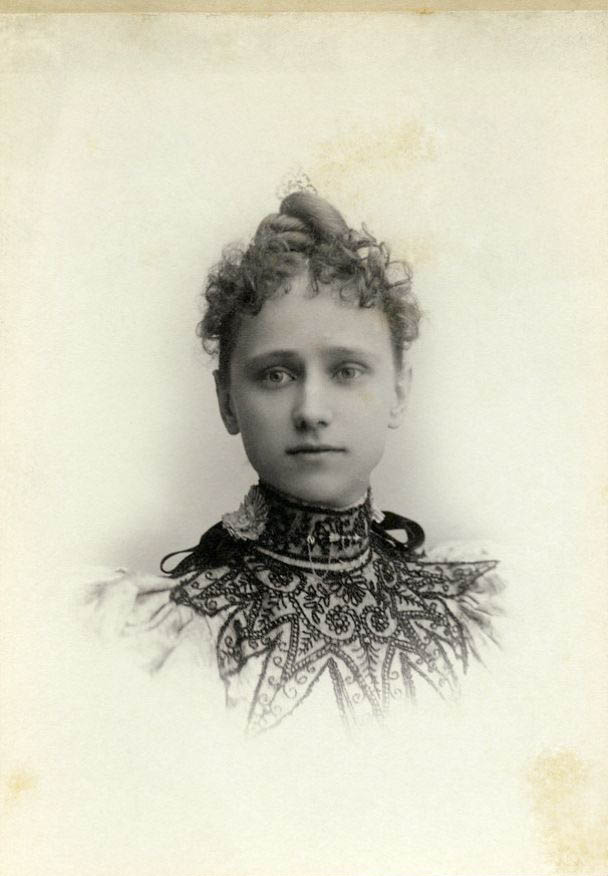
The year 1897 marked a significant turning point for Bertha. She married Benjamin Shambaugh that year, and a formal bust portrait was taken to mark the occasion. It captures her at the moment she transitioned from the Horack household to beginning a new chapter as Bertha Shambaugh.
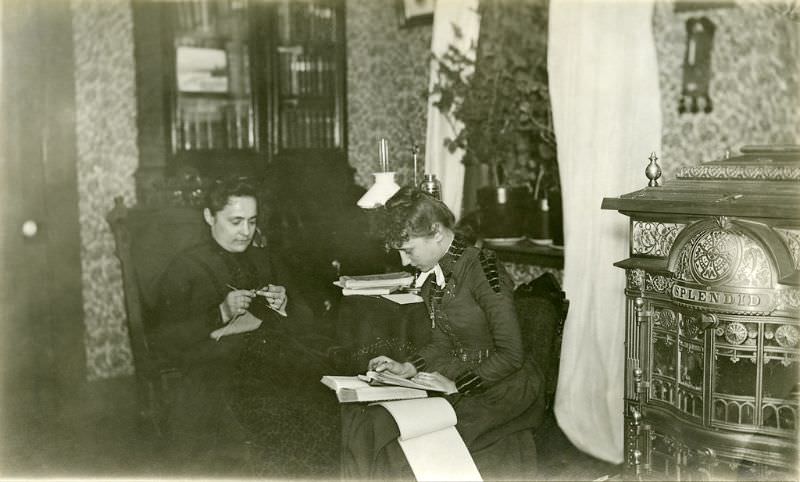
Even after Bertha’s marriage, the two households remained closely connected. A photograph from roughly 1897 to 1905 shows Katherine Horack knitting in the family parlor while Bertha, seated nearby, appears to be copying notes from a book on her lap. The image is a quiet record of two women engaged in separate but parallel tasks, sharing the same room.
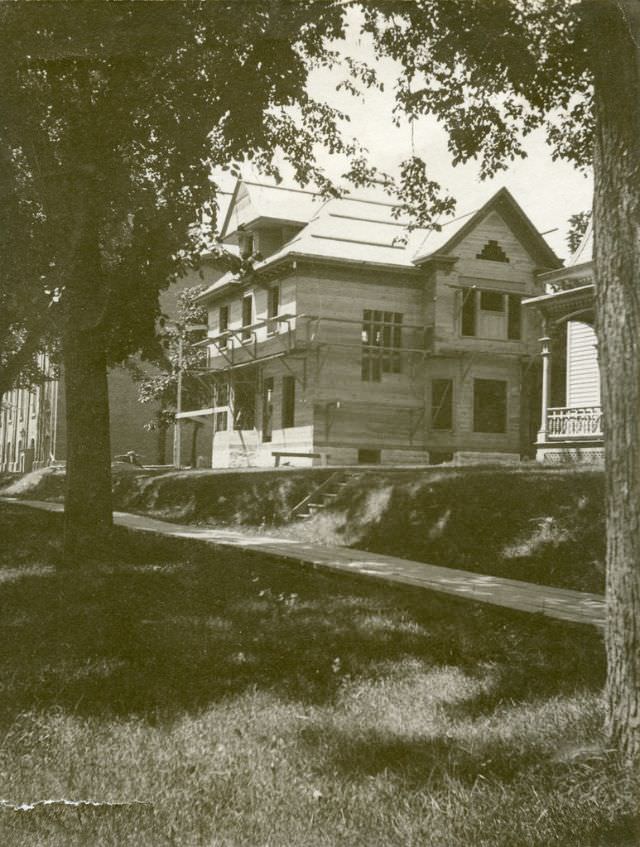
Around 1901, Bertha and Benjamin Shambaugh began construction on their own home. A photograph from that period documents the house mid-build, its frame exposed and structure not yet complete. It is one of the few images in this collection that captures the built environment in a state of becoming rather than completion.
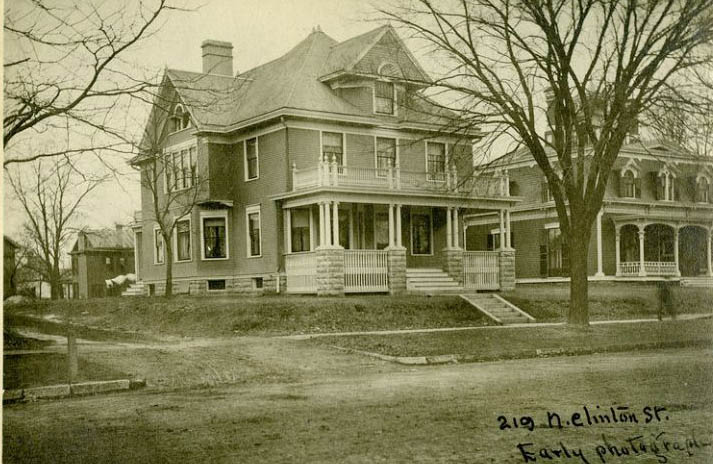
Once finished, the Shambaugh house presented a composed exterior that reflected the couple’s standing in Iowa City. An early photograph of the completed home — identified by a note written directly on the image — shows it shortly after it was built, between 1901 and 1905.
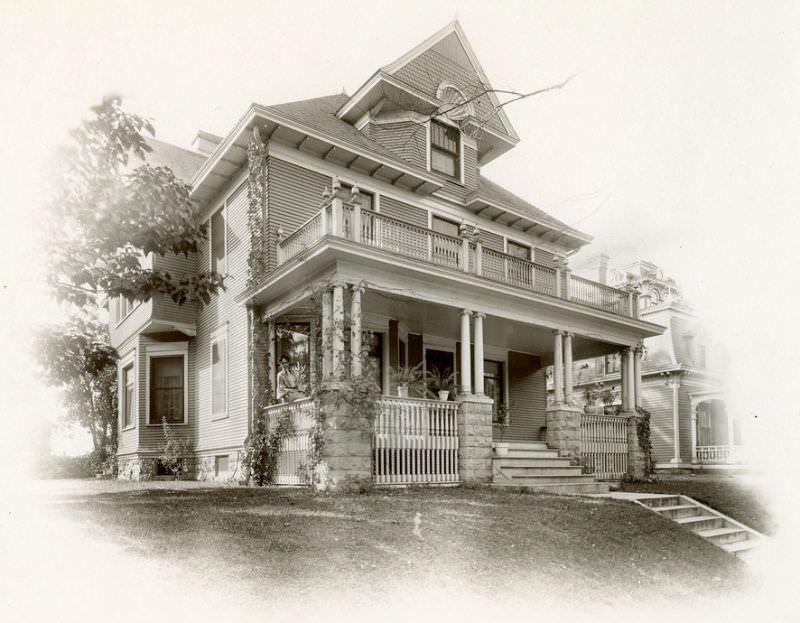
Bertha herself appears in a porch photograph from the same early period of the Shambaugh house. She sits on the porch railing, looking directly at the camera. Ferns and potted plants line the railings, and vines climb the corner of the house and wind around the porch columns — a deliberate effort to soften the exterior with greenery.
Inside the Shambaugh house, the library was one of the most photographed rooms. L. G. Coover captured it in 1904, and Bertha later annotated the image with notes about specific pieces of furniture: an armchair described as one of the first pieces of furniture they owned, and an oak chair bearing the university seal, both of which she noted as surviving items.
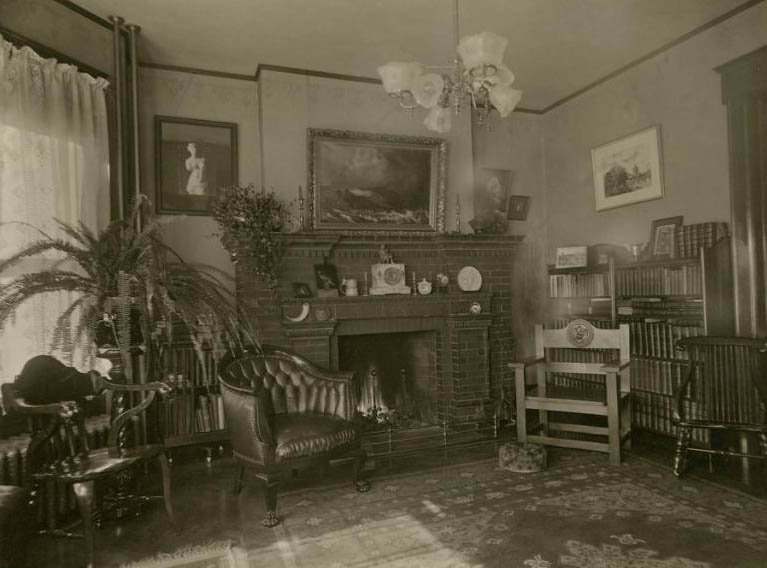
Coover also photographed the front room of the Shambaugh house, shooting from the hallway to capture the room beyond. A pencil note on the image identifies the photographer and year, while another inscription at the bottom of the photograph references a “wedding chair with spindles” — a specific piece of furniture that held personal meaning for the Shambaughs.
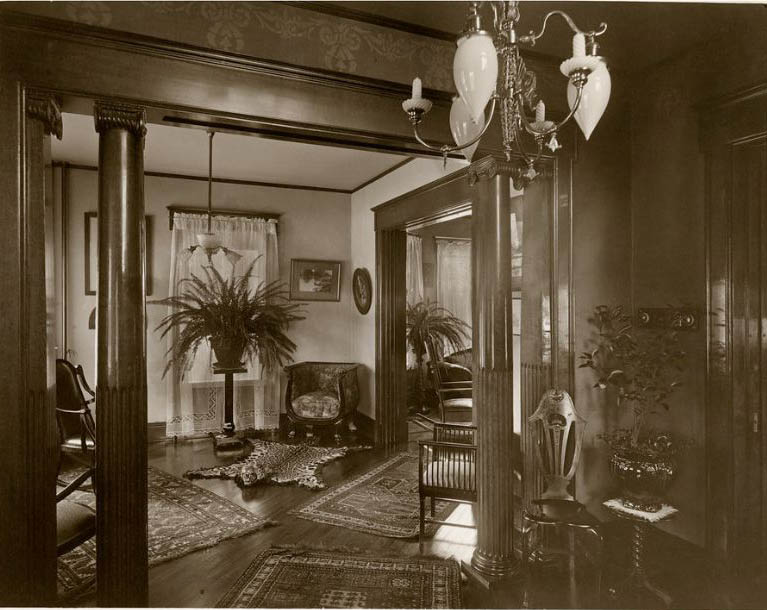
A wider view of the library taken the same year shows the room opening into the dining room beyond. The image gives a sense of how the interior spaces connected and flowed into one another — a design approach that was becoming more common in American homes of the early 20th century.
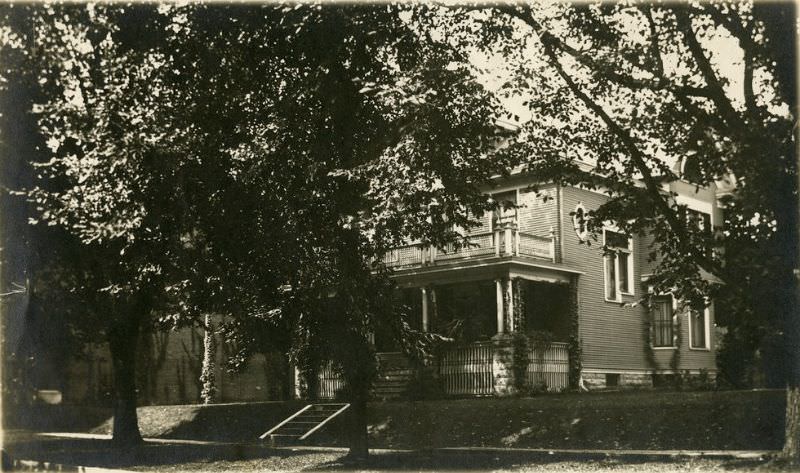
As the years progressed, exterior photographs of the Shambaugh house show the property becoming increasingly lush. By the mid-1900s to early 1910s, the trees surrounding the house had grown tall enough to partially obscure it from view. Bertha took one such photograph during the warmer months, when the foliage was at its fullest.
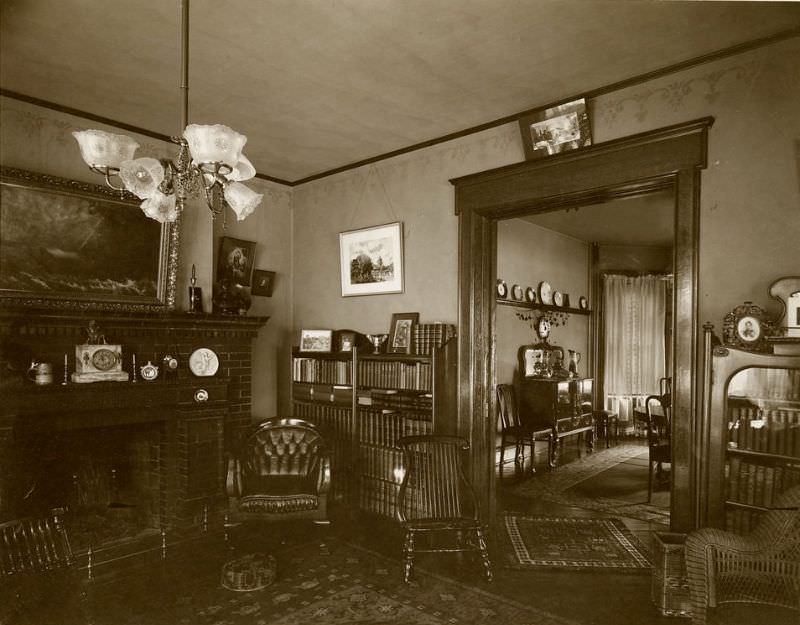
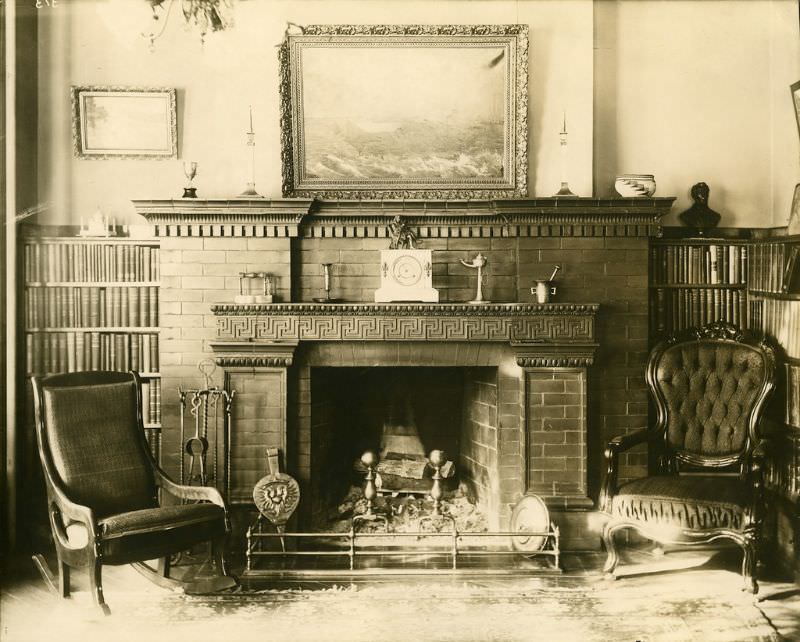
The library mantle, photographed between 1910 and 1920, features a Greek key pattern above the fireplace — a classical decorative motif that was popular in Arts and Crafts and early 20th-century interiors. Bookcases flank both sides of the fireplace, with a rocking chair positioned on the left and an armchair on the right. The room reads as one designed for long hours of reading and serious work.
The final photograph in this collection, taken around 1924, shows Bertha Shambaugh herself. She wears a jacket and skirt with a floral design, a hat with a matching decorative band, and holds a pair of glasses. By this point, decades had passed since she first picked up a camera at seventeen. The house at 219 N Clinton Street and the people and objects it contained had been carefully recorded through her lens and those of photographers who followed her lead.